April - June 2026
Volume 28 Issue 2
From Old San Juan to Untouched Flats: A Puerto Rico Fly-Fishing Adventure by
Nils Pearson
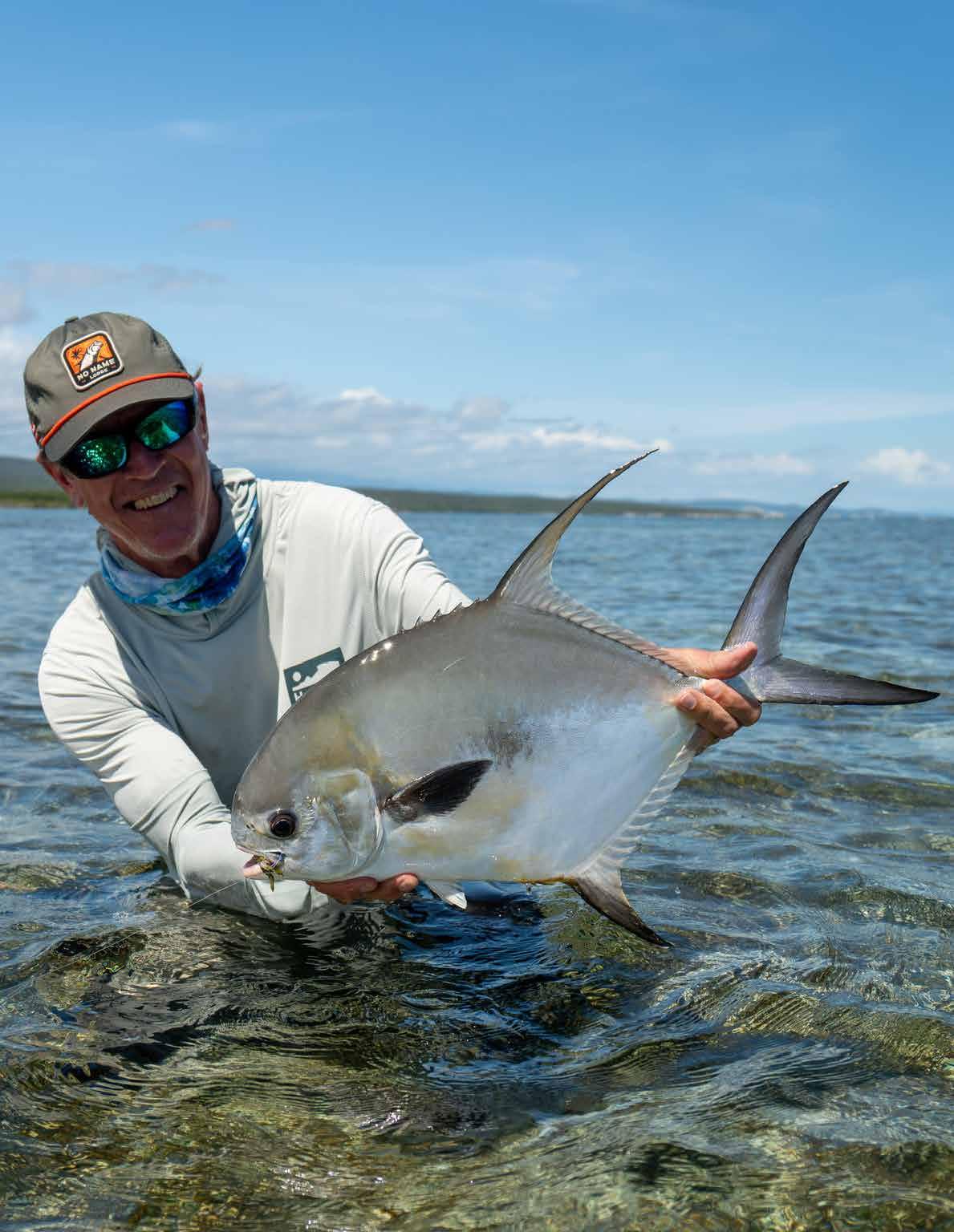
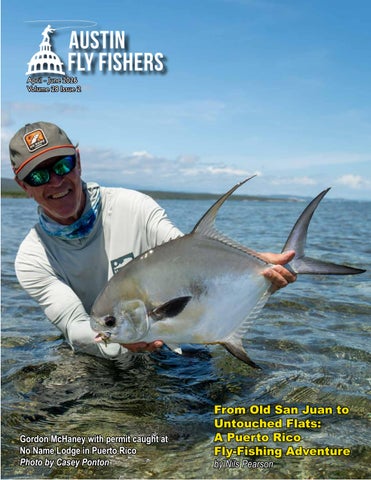
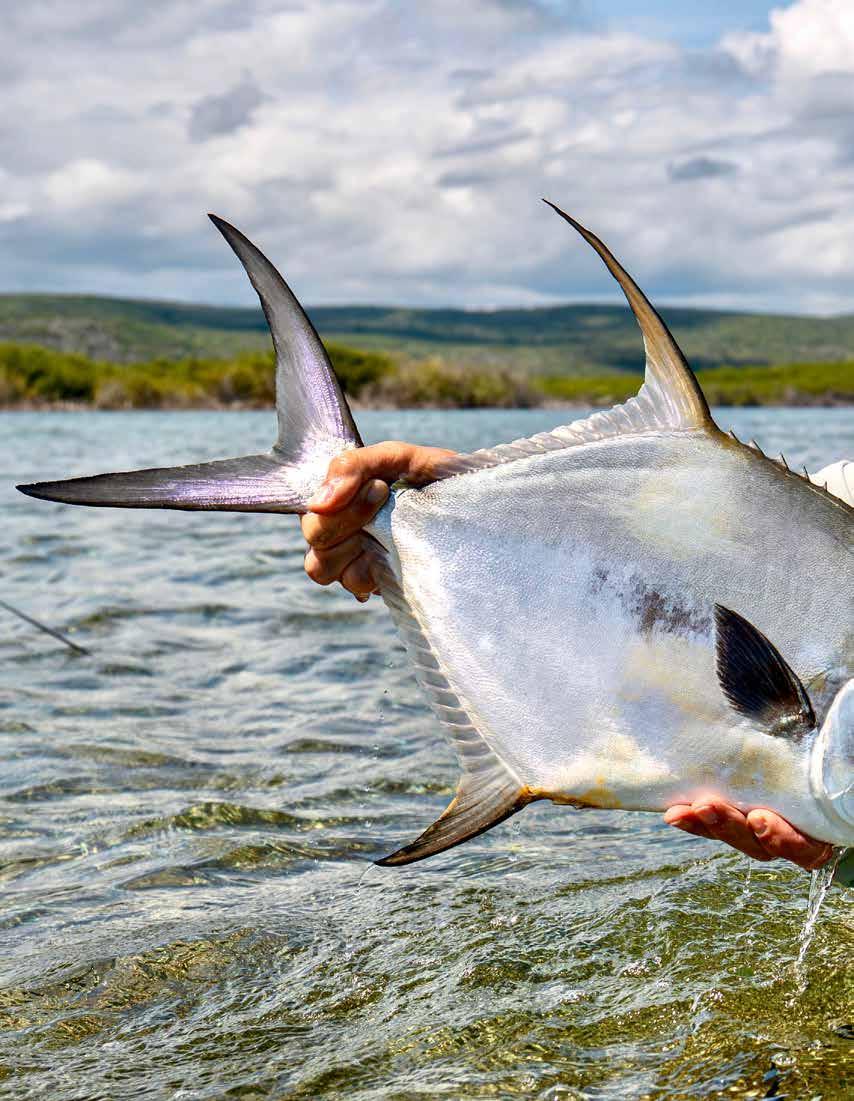
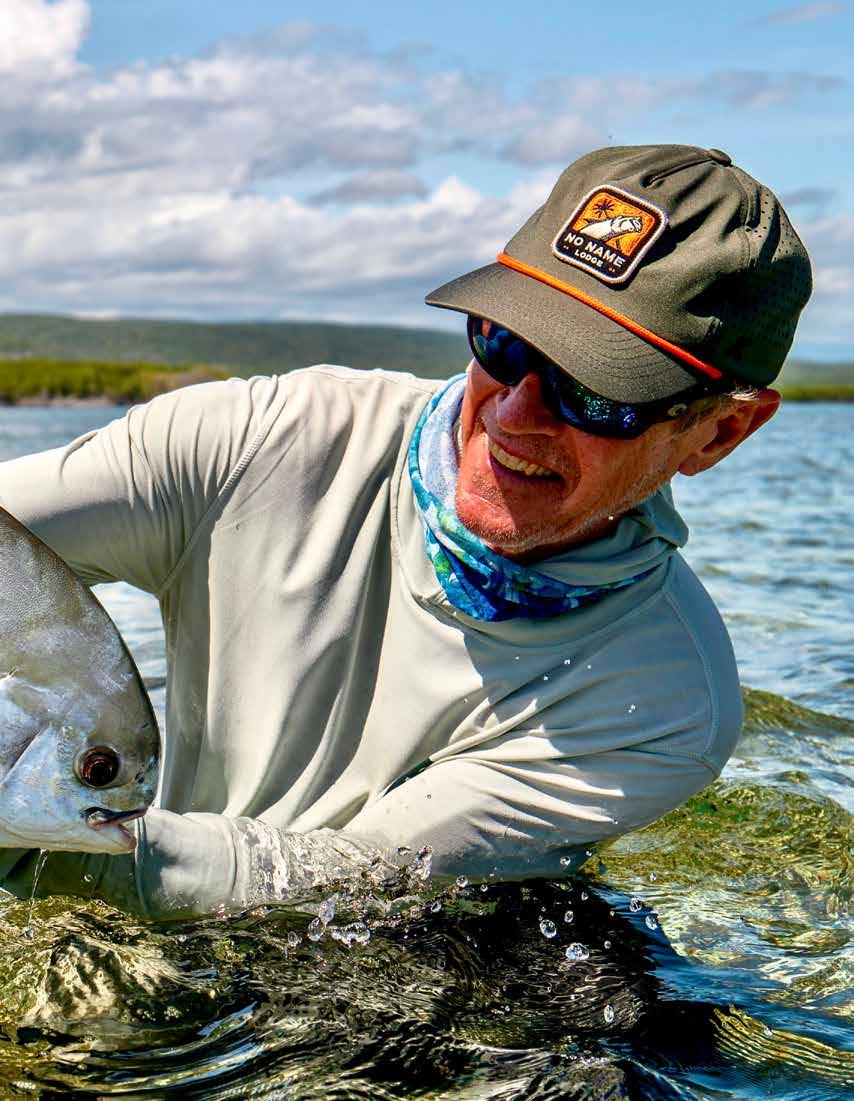
Gordon McHaney with permit caught at No Name Lodge in Puerto Rico
Photo by Casey Ponton
William
Nils
Treasurer
April - June 2026
Volume 28 Issue 2
From Old San Juan to Untouched Flats: A Puerto Rico Fly-Fishing Adventure by
William
Nils
Treasurer
By Nils Pearson
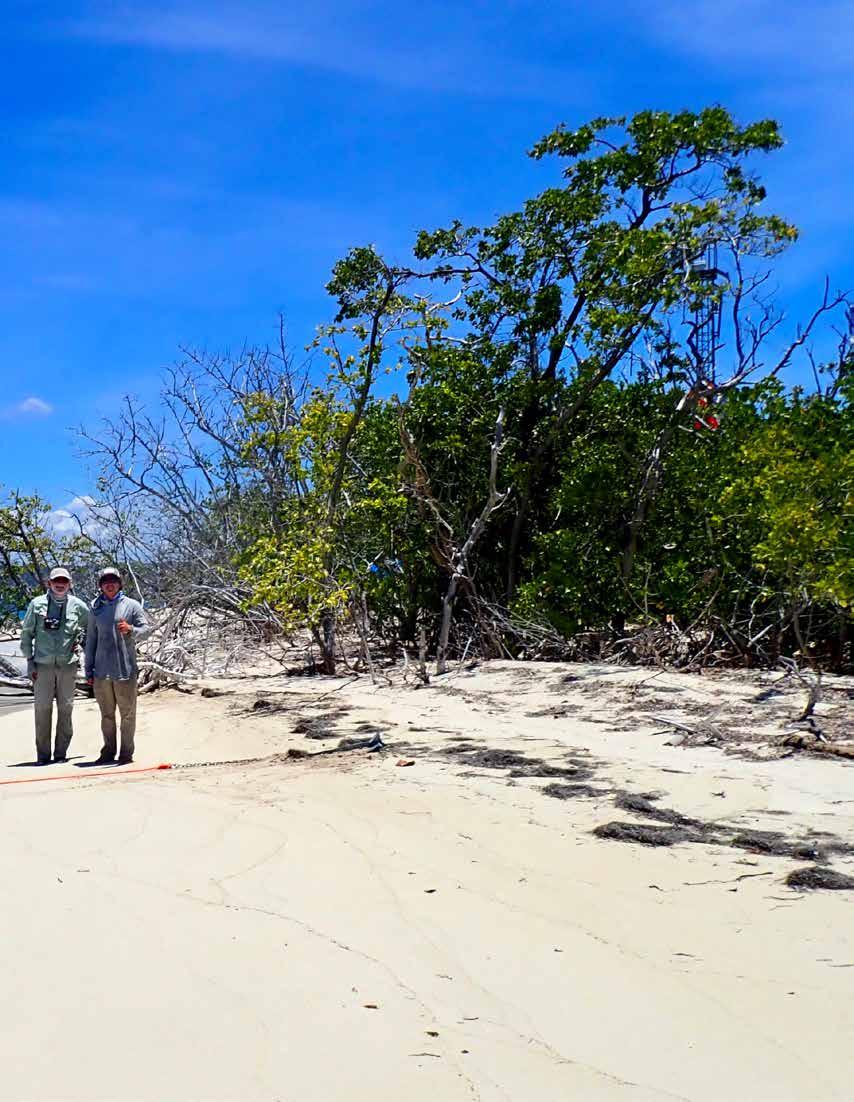
In my years of traveling to foreign fishing destinations, I’ve found that taking time to experience a new city, rather than heading straight from the airport to the fly-fishing destination, adds a richer, more memorable dimension to the trip. On a recent fly-fishing adventure to No Name Lodge in Boquerón, Puerto Rico, Brandon Rabke and I spent a day exploring San Juan before continuing on to the lodge. As we walked through the city, I was struck by how strongly it reminded me of my visits to Havana and yet how different the two cities are now.
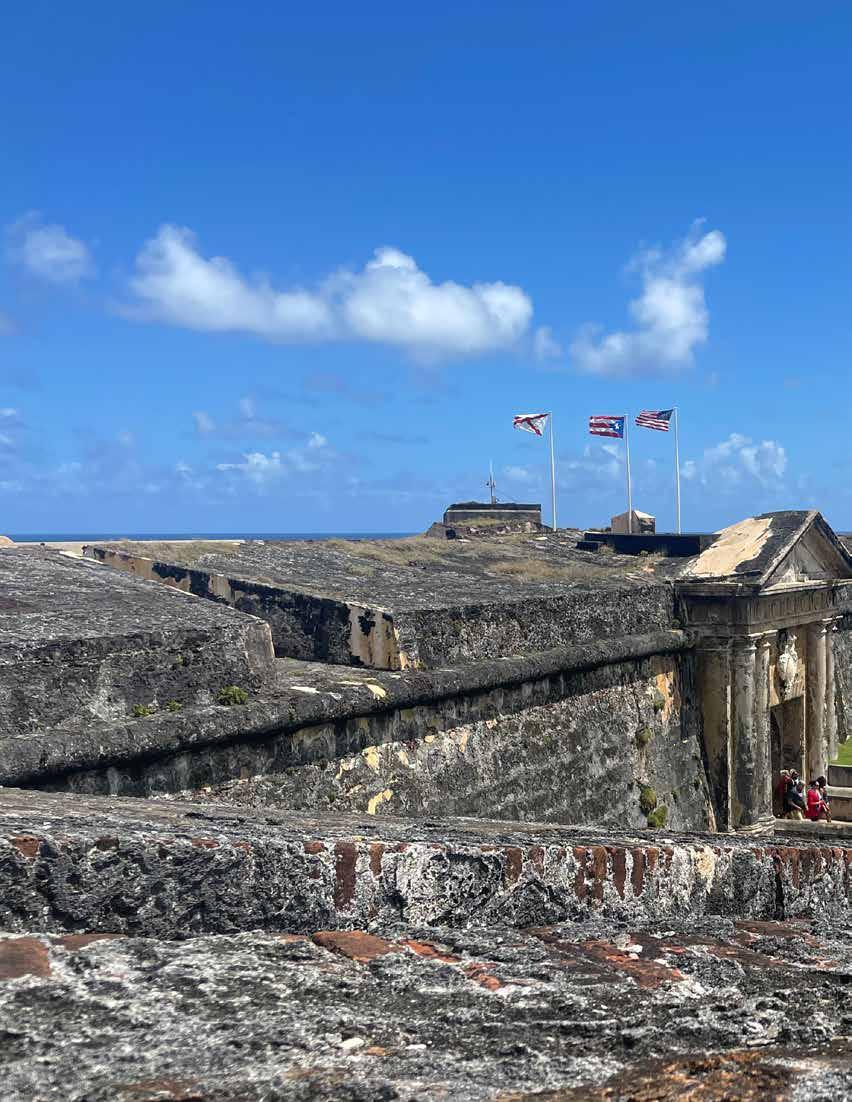
Both cities were established by Spain in the 1700s as fortified harbors supporting its empire. With deep ports, they served as key transatlantic resupply points for long journeys between the Americas and Europe. The massive stone fortresses guarding their entrances, Castillo San Felipe del Morro in Puerto Rico and Castillo de los Tres Reyes del Morro in Cuba, stand as testaments to Spain’s determination to repel rival maritime powers.
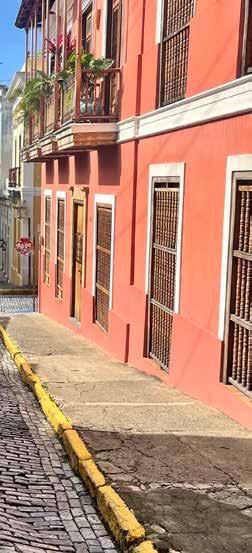
Over time, these defensive strongholds grew into cities. Narrow, winding streets emerged, lined with tightly packed two- and three-story buildings featuring balconies, courtyards, and heavy wooden doors. Fortunately, San Juan has prospered, preserving its colonial past while adding modern conveniences.
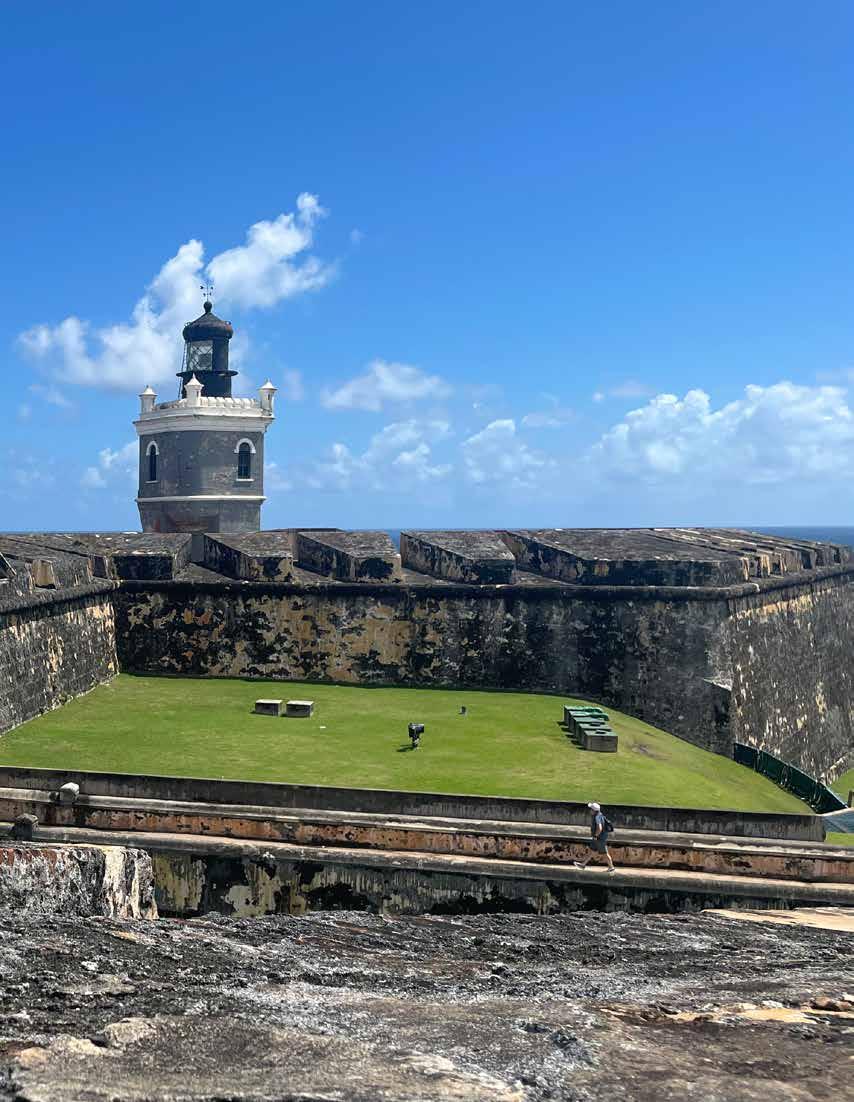
Puerto Rico is an unincorporated U.S. territory and thrives with its vibrant Spanish-Caribbean culture and cuisine. Havana, however, has not fared as well. In stark contrast to San Juan’s restored, brightly colored buildings and well-maintained cobblestone streets, many of Havana’s structures show decades of wear, with limited restoration since the 1950s. One can’t help but reflect on how political and economic conditions have shaped the divergent paths for these two historic Caribbean cities, influencing everything from urban preservation to daily life and economic opportunity.
On the day after our city tour, Brandon and I took an Uber to the airport to meet our companions, who had just landed. Gordon McHaney organized the trip and invited his friends John Thomas and Dean Kilgore. We boarded a van arranged by the lodge and drove from the northeast corner of the island to the southwest corner for our fishing site. Our friend Gary Geddes’s flight from Austin was delayed, so the lodge co-founder Cooper Beckett arranged for a driver to bring him to the lodge later that day.
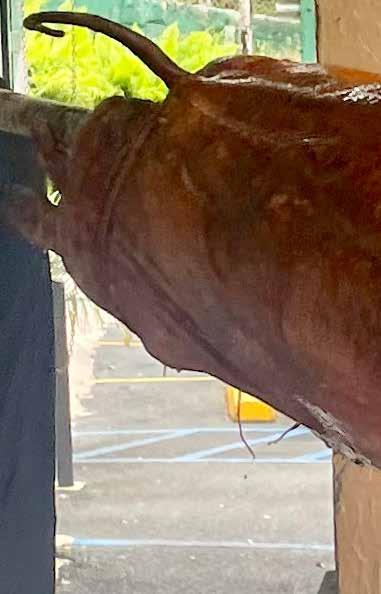
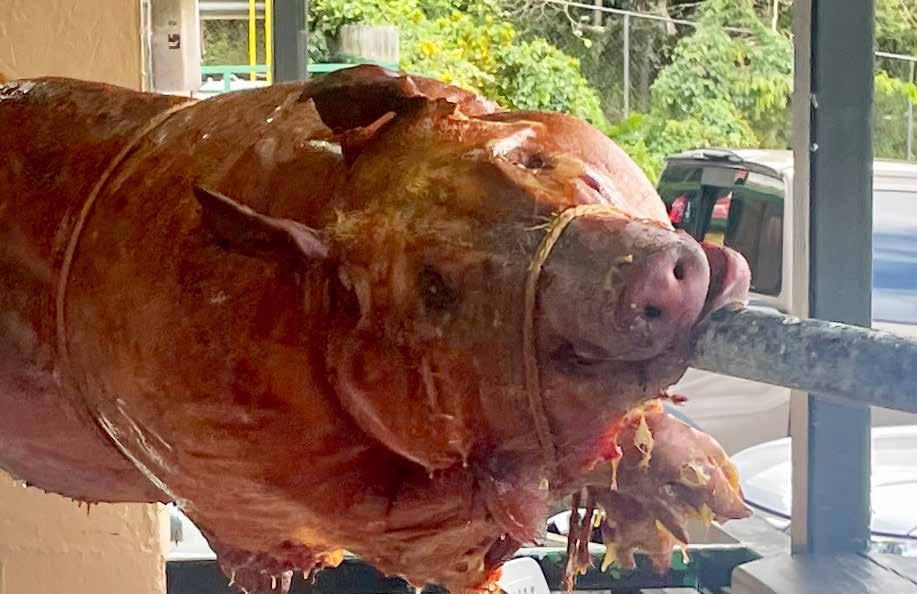
During our three-hour drive to the lodge, we stopped at Lechonera El Mojito for whole roasted hog cooked over coals. We queued up cafeteria-style, choosing from a variety of local dishes displayed behind the counter. In the kitchen a young man wielded a machete, chopping the whole hog into portions on his cutting block. We seated ourselves at picnic tables and watched as workers ferried whole hogs from the fire pit to the cutting block.

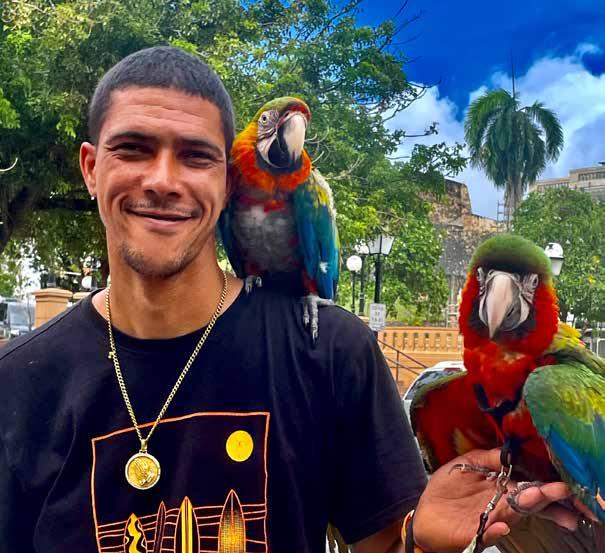
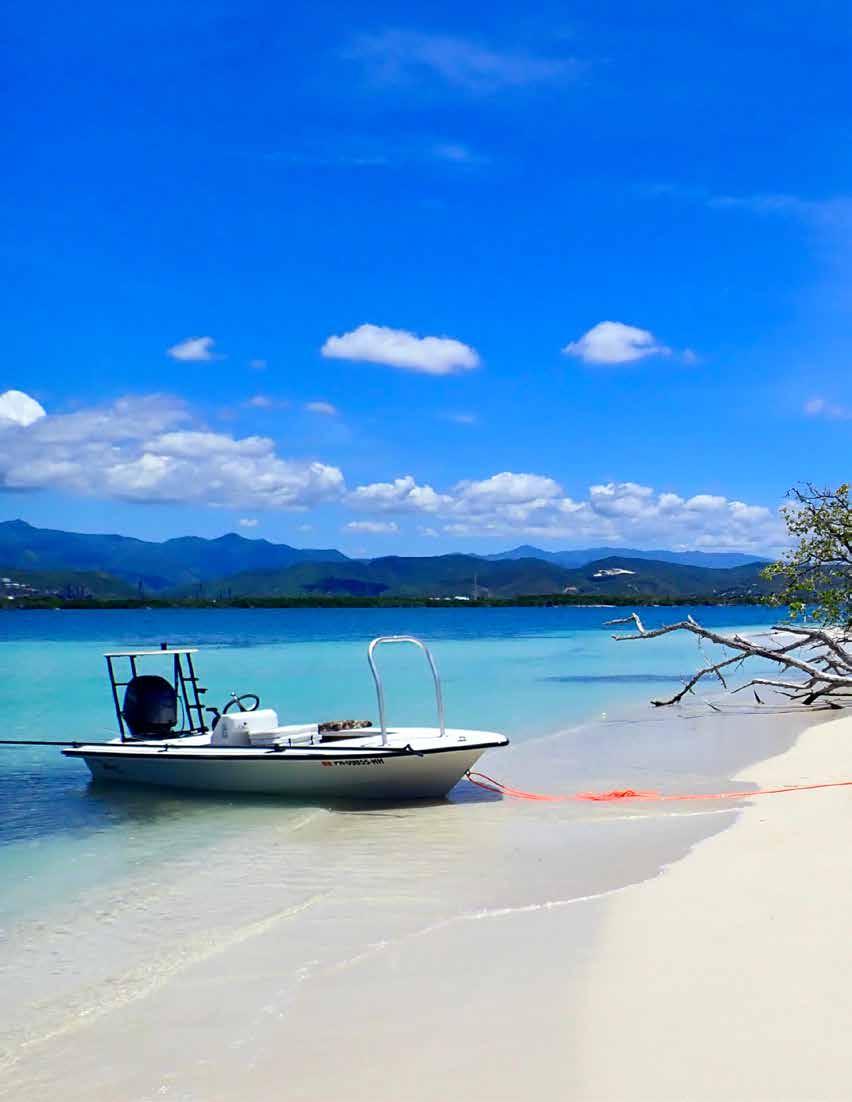
No Name Lodge fishermen are housed in a beautiful private residence just outside the town of Boquerón, complete with five bedrooms, four bathrooms, and all the modern conveniences. Each morning Su arrived early to prepare breakfast and pack our lunches and water for the day ahead. Our guides Andrew Spangler, Brian Scribner, and Casey Ponton pulled in at 6 a.m. to take us to the guide house where we hitched up trailers with modern skiffs and set off for different stretches of the coastline.
After leaving the house and hitching up the trailer, we’d drive anywhere from 10 minutes to an hour to reach different boat ramps, each offering access to prime tarpon and permit water. A day might begin in small marina teeming with massive tarpon, then move on to a channel beneath a bridge, a reef in an open bay, and wind up on a mangrove-lined shoreline. By mixing sight-casting with blind-casting, we found ourselves with plenty of shots at tarpon every day.
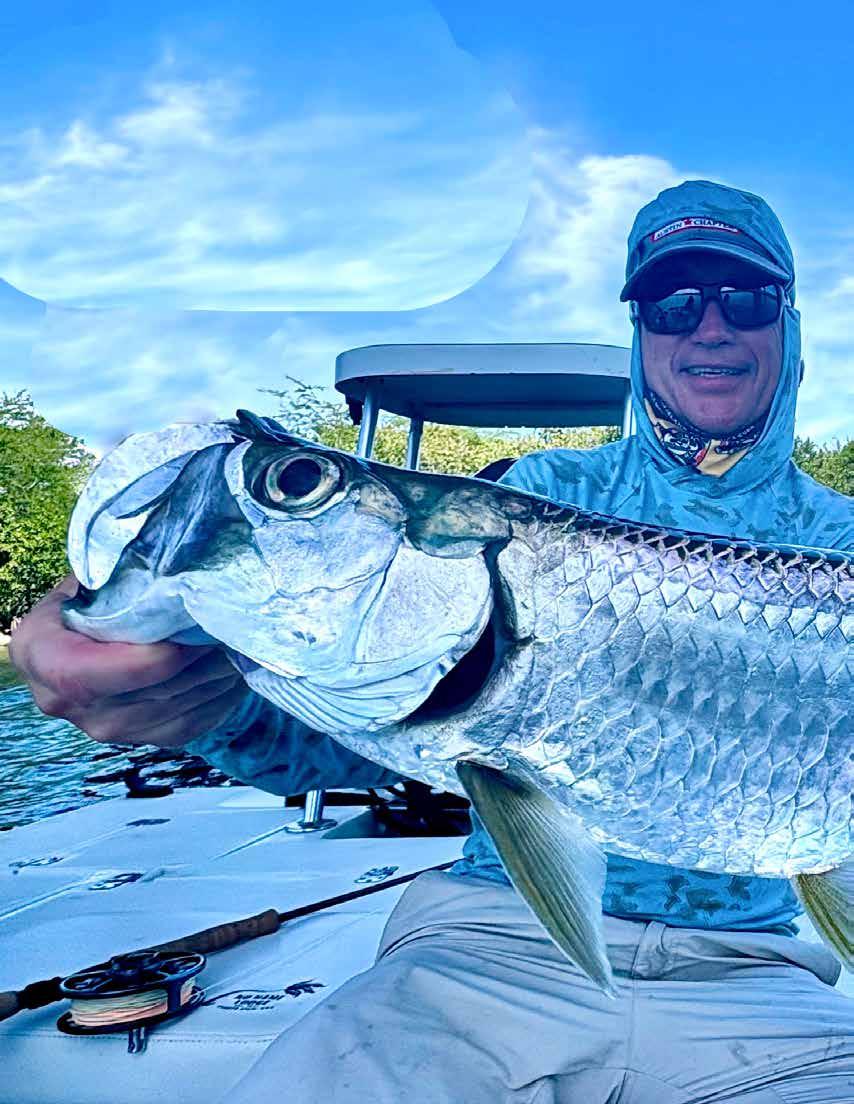
For whatever reason, the largest tarpon often seemed most at ease in both shallow, turbid water or pristine, clear water around mangroves. Once hooked, they launched into a series of acrobatic jumps just a short distance from the skiffs. They rarely made long runs but pulling them out of the mangroves was no easy task. Landing even a 20–30 lb tarpon typically meant a hard-fought battle lasting 10 to 15 minutes.
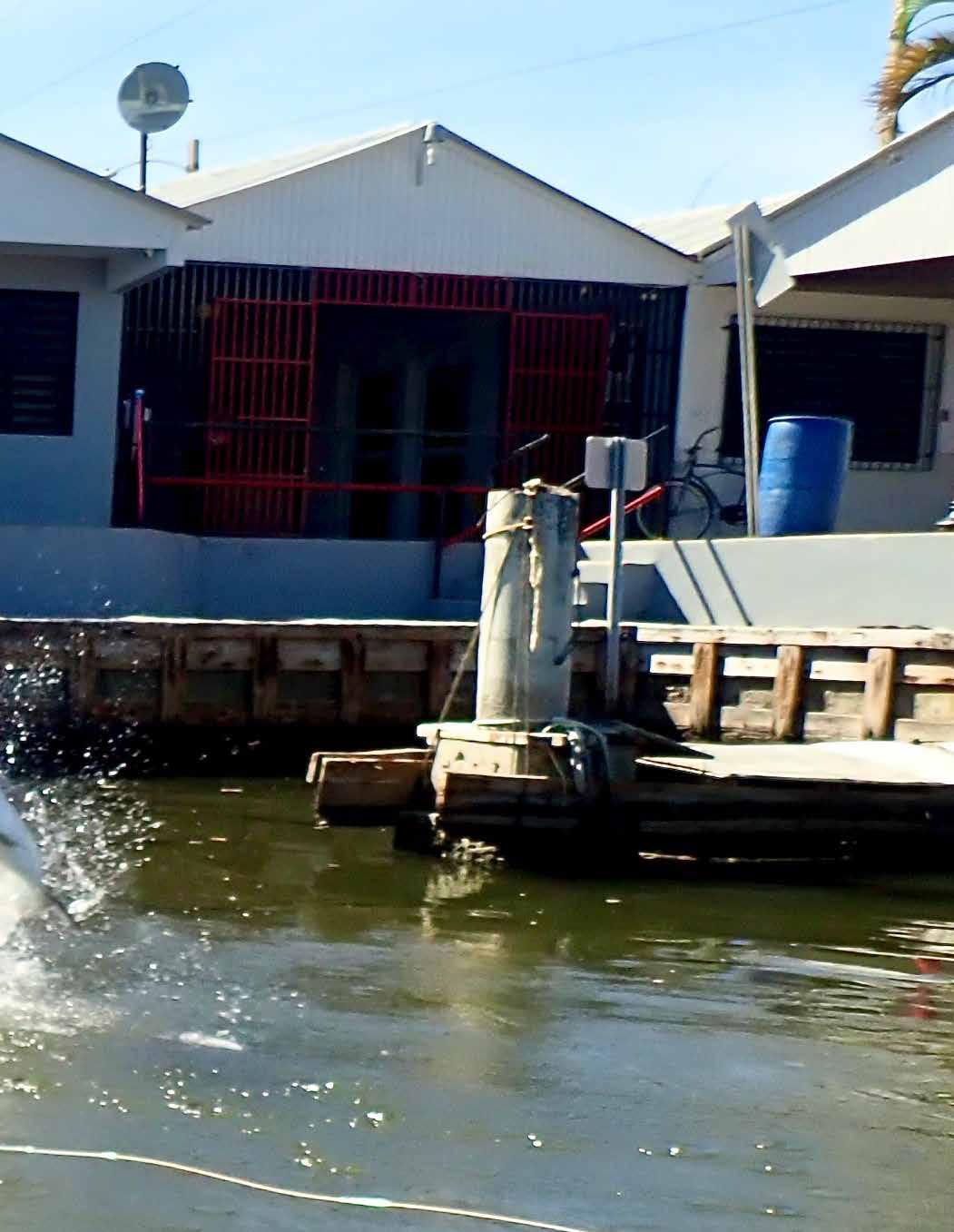
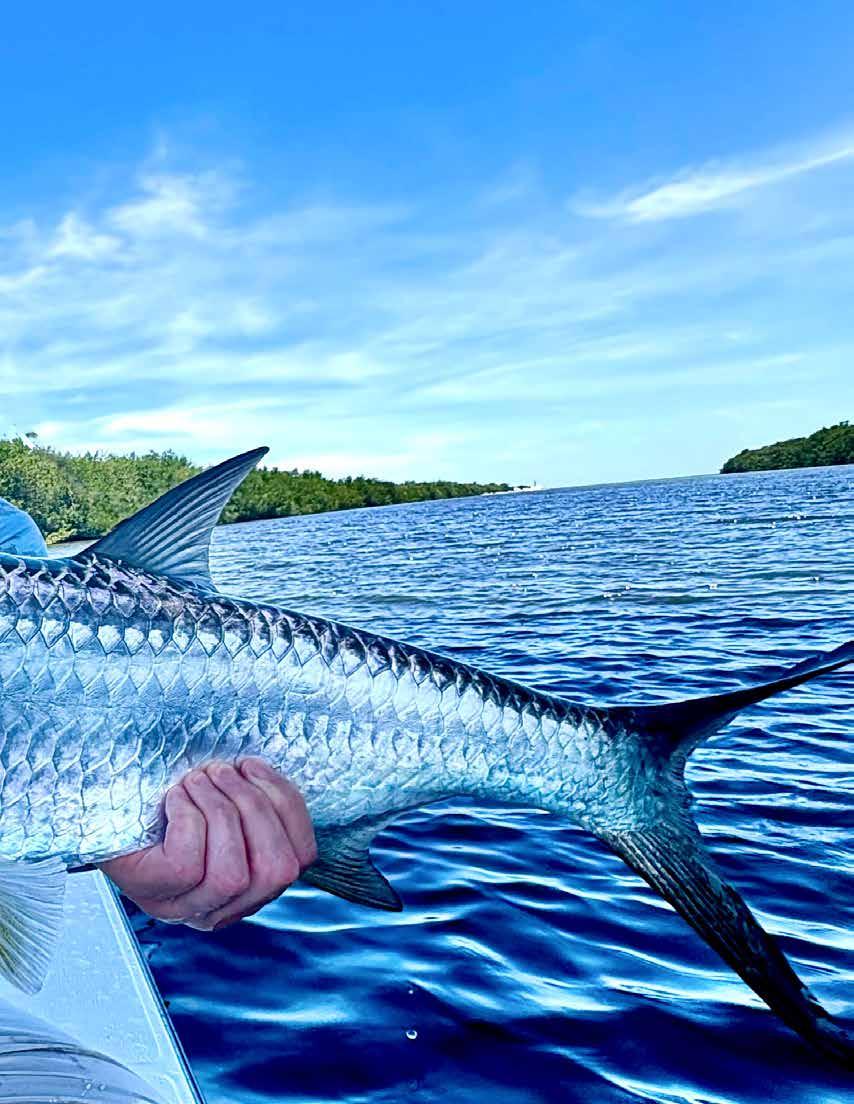
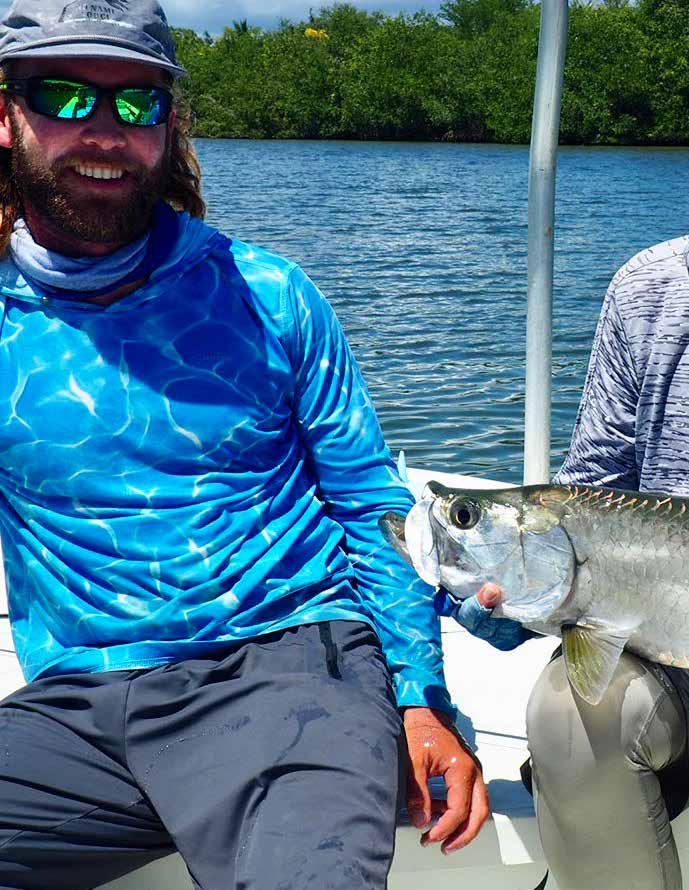
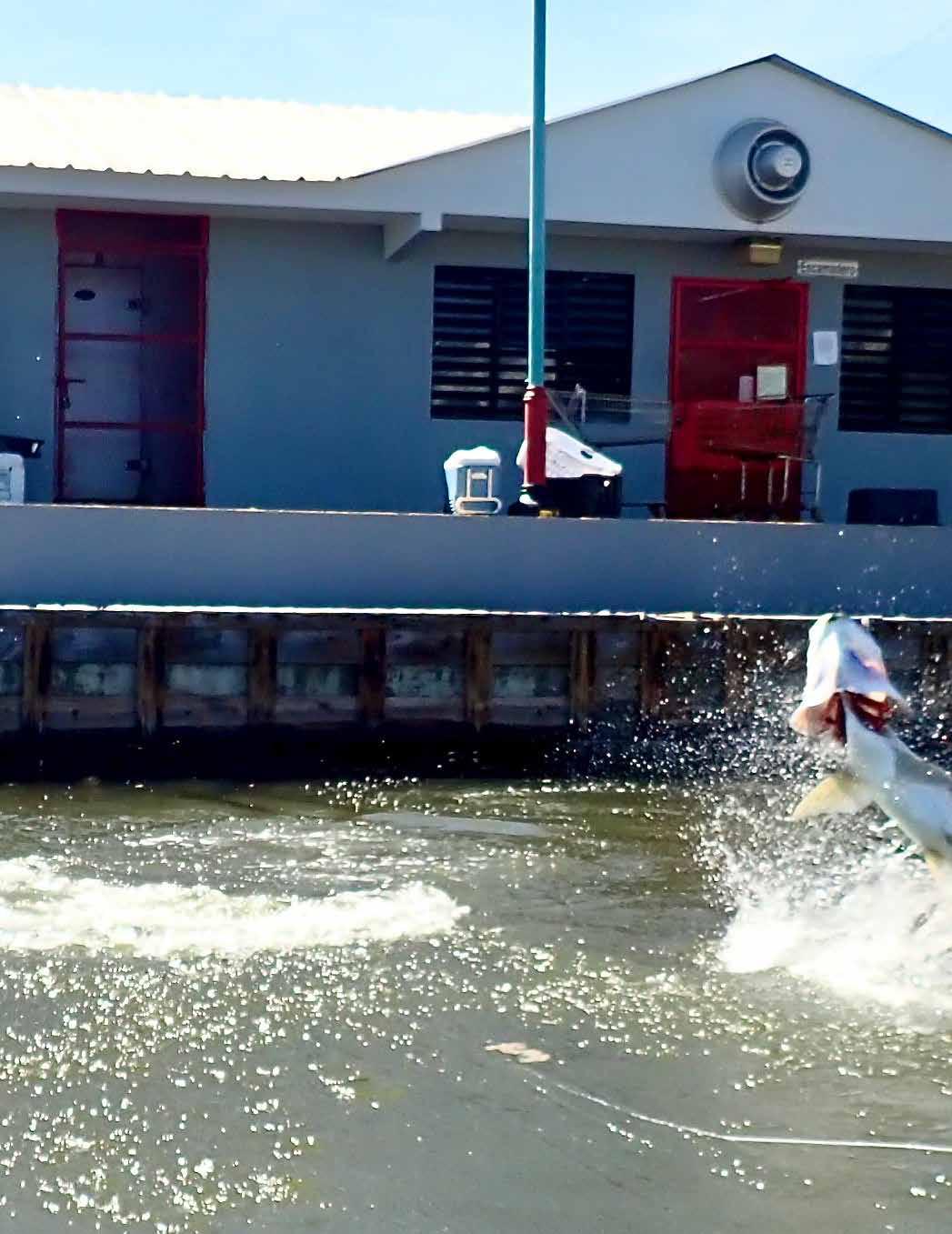
By far the most entertaining fishing spot was in Guánica. Brian launched our skiff and we made our way through a canal leading to a marina housing local fishermen preparing for the morning catch. As we approached the inlet, massive tarpon cruised around the boat in the muddy water. Brandon stepped onto the bow and fired cast after cast with a variety of flies, trying to tempt one the hulking shadows into striking.
After several unsuccessful attempts, Brian polled us quietly between rows of vacant boats tied along the docks. He instructed Brandon to cast deep into the back corner beneath the slips. Almost instantly a giant tarpon exploded on the fly. The fish launched into the air in a spectacular jump, drawing smiles from the nearby onlookers, before quickly throwing the hook. We couldn’t help but speculate that the people gathering along the dock regularly tossed scraps from their snacks and lunches into that corner of the marina, and the tarpon had learned to wait below for an easy handout.
Fortunately, aside from the many poorly executed casts that never had a chance of attracting a fish, I managed to make a very good shot despite the numerous obstacles. It happened while I was fishing with our young guide, Andrew. He spotted a tarpon tucked deep in a narrow channel carved into the mangroves. Somehow, I managed to thread a cast through the opening in the branches and dropped the fly right in front of the fish. The instant I made a strip, the tarpon inhaled the fly and headed toward
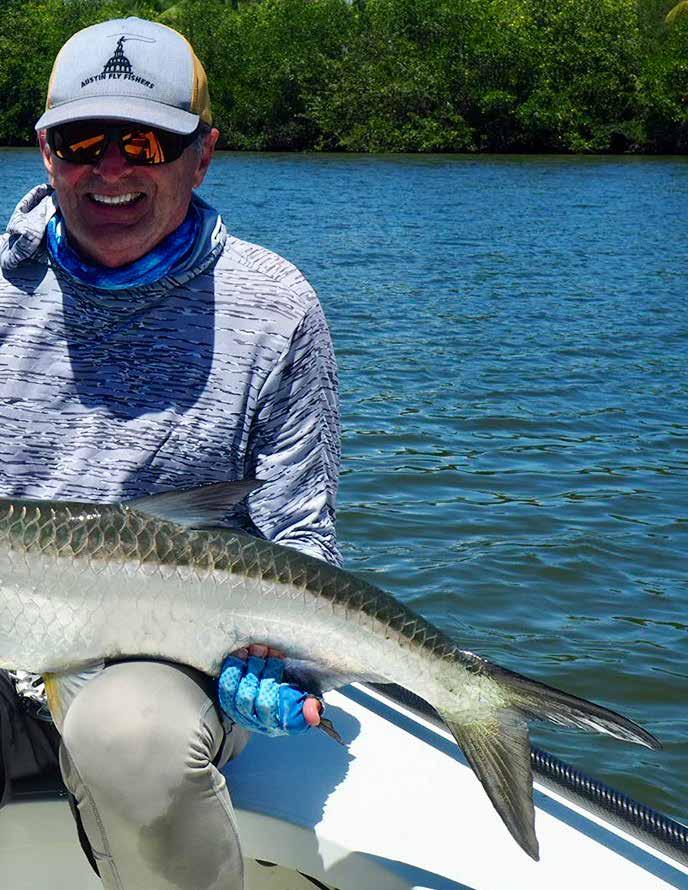
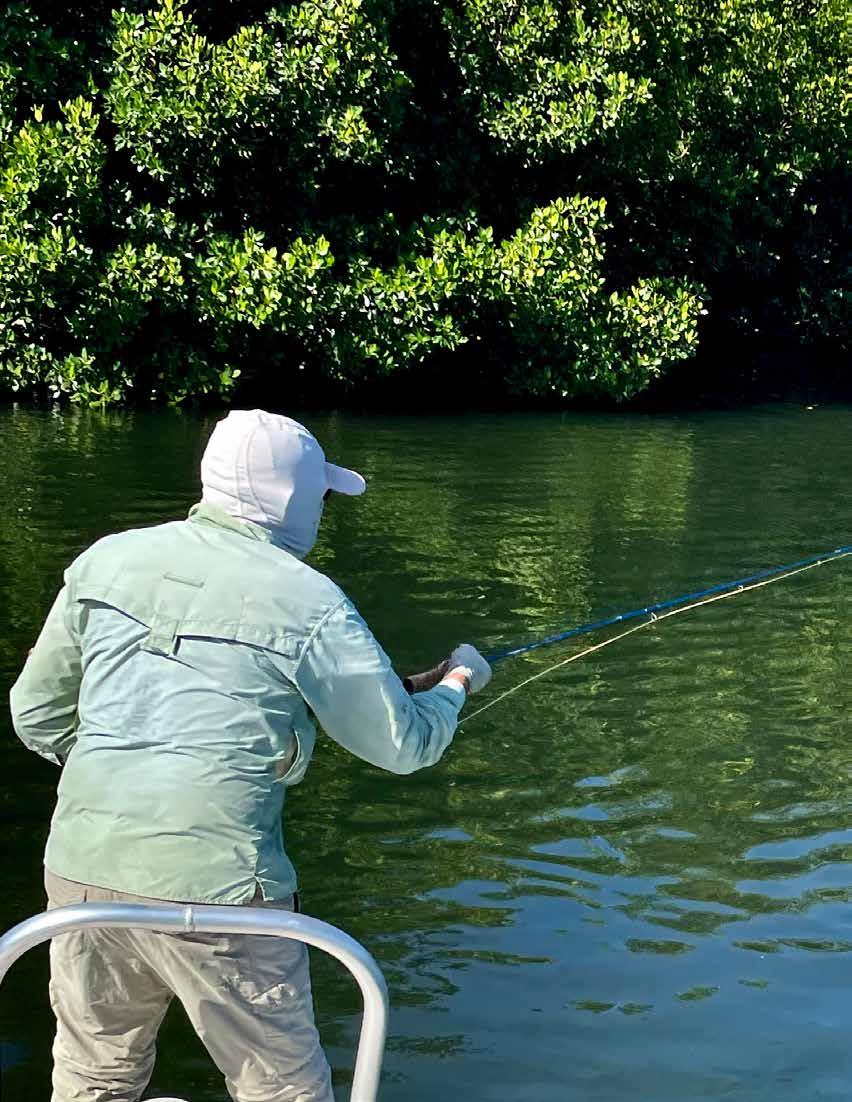
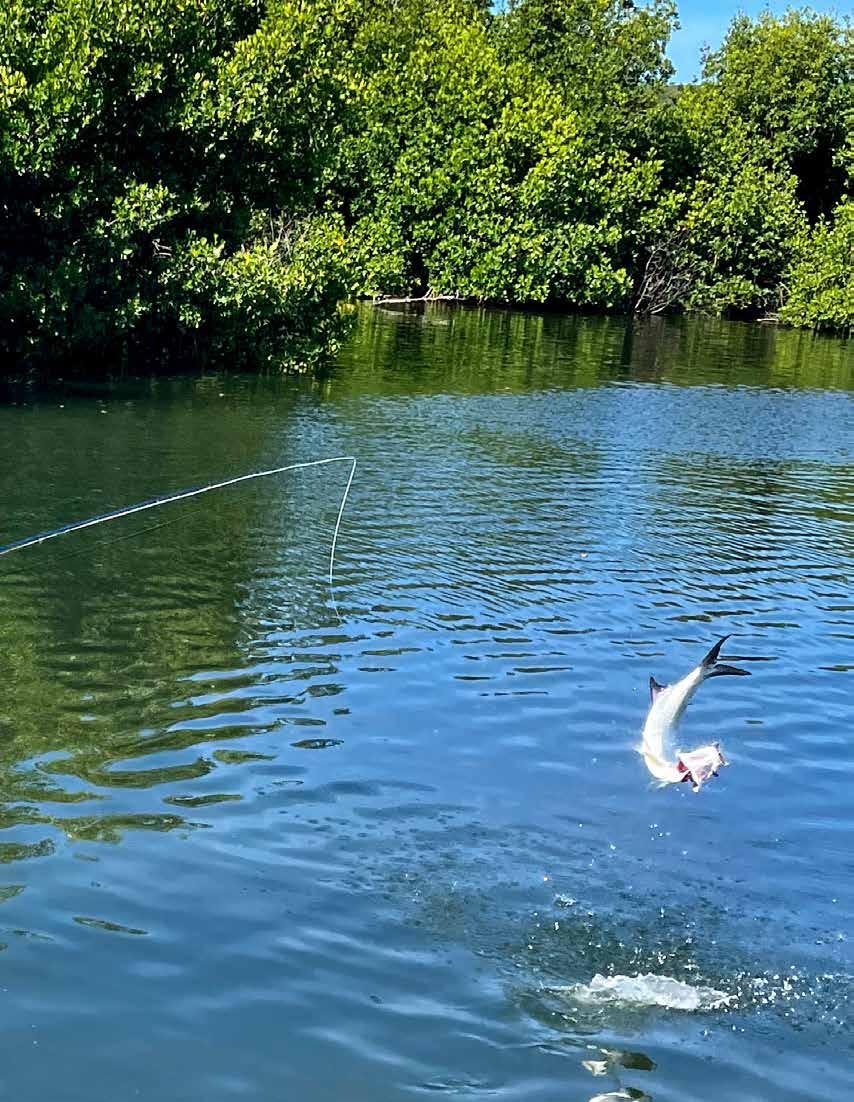
the bushes. As Andrew shouted, “Pull him out!” I set the hook and because I was using 40lb leader I stripped line through my gloved hands and hauled that bad boy back out of the mangroves. After I bowed to the King for several powerful jumps, we finally brought him to the boat.
When the tides were right, our guide Casey suggested that Brandon and I explore the flats in pursuit of permit. Unlike the more stationary tarpon, permit are constantly on the move, sometimes following nurse sharks, cruising the shallows, or even tailing momentarily as they fed along the reef bottom. Because of this, we had to deliver fast, precise casts to stand any chance against such wary fish. Brandon and I had a few opportunities but came up empty-handed on this trip. Gordon, however, dedicated most of his time to chasing the elusive permit and was the only one in our group to land this prized catch. Here’s Gordon’s account of catching the permit. His experience highlights not only the challenges, but also the determination and teamwork required when fishing for this elusive prey in less than ideal conditions.
No Name Lodge is primarily a tarpon destination, but I chose to visit for the opportunity to wade to unpressured tailing permit. I was not disappointed in the multiple chances each day to cast to feeding permit with tails in the air as well as some cruising fish. However, I did not fully appreciate that the Puerto Rican permit are some of the most difficult to catch due to the ever pres-
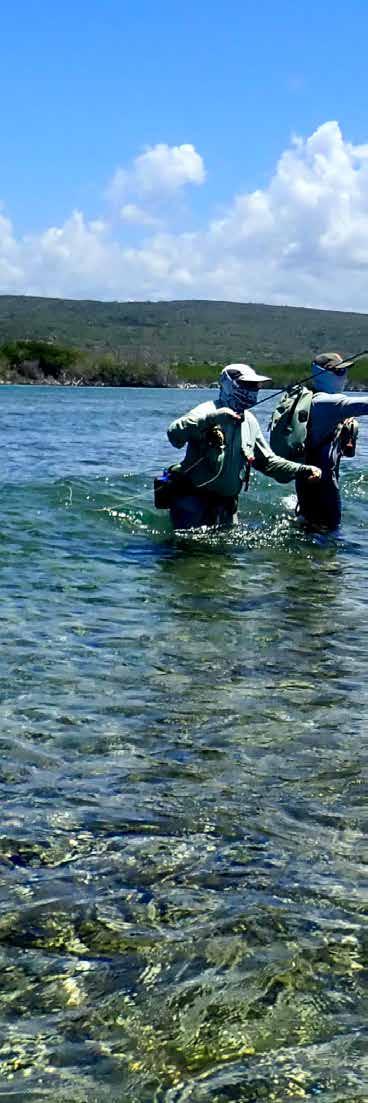
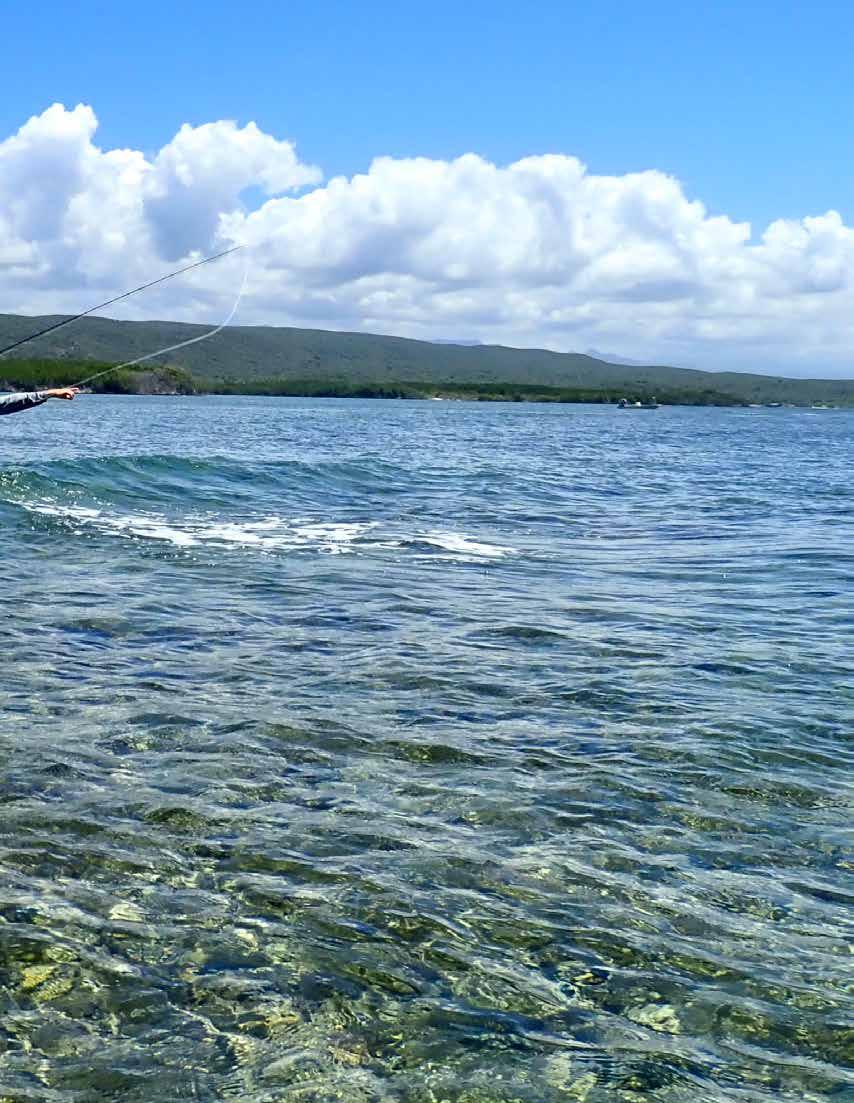
Guide Casey Ponton with Brandon Rabke searching for permit on a reef
ent current, breaking waves, sharp coral and maybe most importantly, the abundance of natural food available.
The success in landing a permit was in large part due to learning from my fishing partner, John, who lost his permit as it broke off on the coral while heading to deeper water despite the guide’s best efforts. That taught me to put the brakes on harder on my fish than I might otherwise have done. All the guides were excellent, and I look forward to returning.
The co-founders of the No Name Lodge, Cooper Beckett and Matt Pourbaix, have put together an exceptional experience for fly fishermen seeking the thrill of targeting tarpon and permit. Their guides, knowledge of the surrounding waters puts fishermen on carefully selected locations each day. While fishing this stretch of the island’s waters, it was striking how few other boats we encountered. Usually we had the entire fishery to ourselves. This combination of comfortable accommodations, competent guides, and abundant opportunities to pursue tarpon and permit in quiet surroundings, truly stand out as a unique fly-fishing experience. For more information go to
Puerto Rico Fly Fishing Lodge for Tarpon & Permit - No Name Fly Lodge
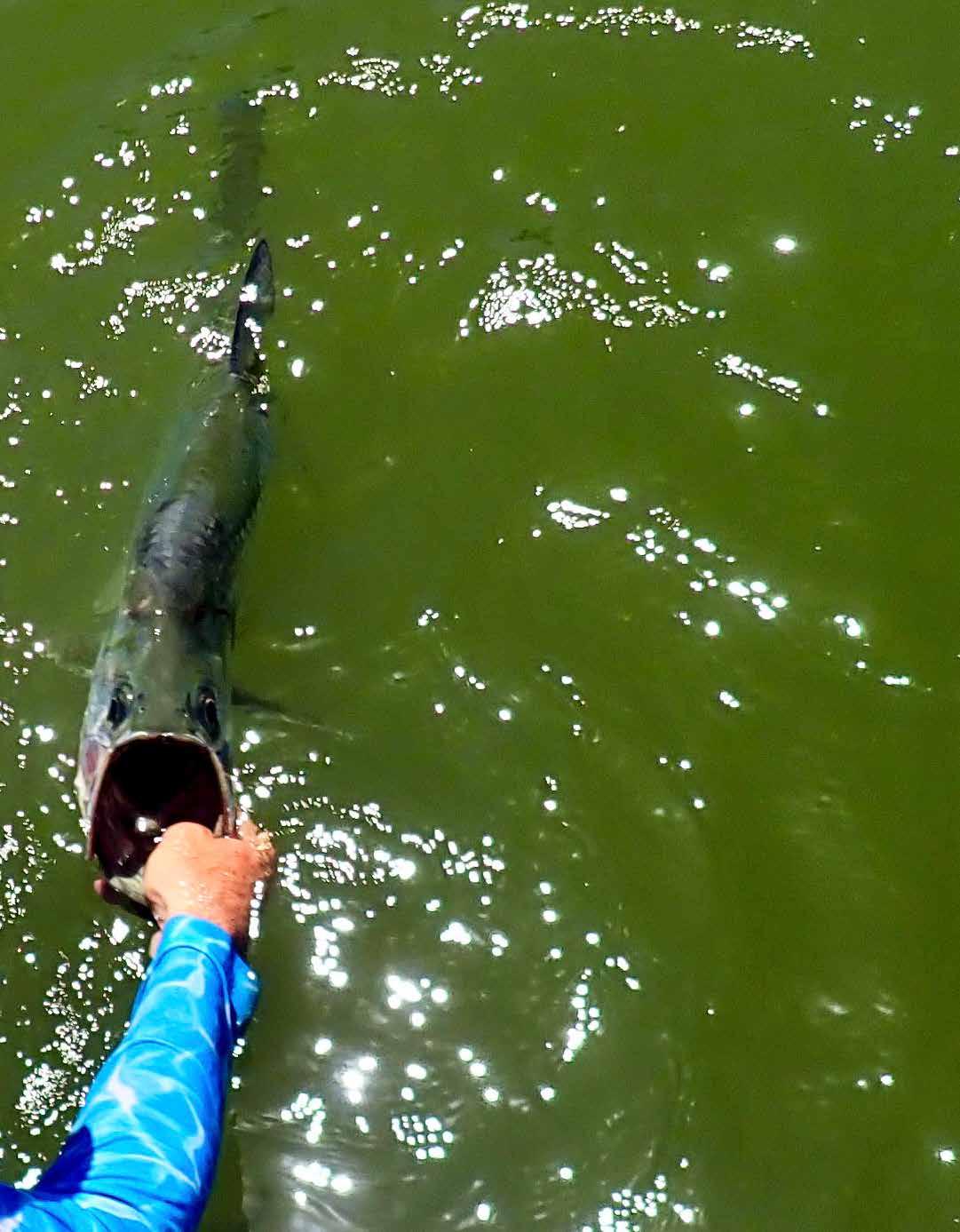
Guide Brian Scribner unhooks tarpon
By: Rasmus Ovesen
Few rivers are as famed as Årøyelva in Sogndal, Norway. Flowing into Barsnesfjorden, the river carries a long and fascinating history, and it was only in 2012 that fishing here was opened to the public — or at least the part of the public with considerable money in their accounts.
I HAVEN’T INHERITED TITLES OR MONEY. But at the age of eight, I inherited my grandfather’s well-worn ABU fiberglass fly rod. It was as heavy as a fence post, quickly sapping my frail arms of energy. The fly line, wound on an azure blue Record fly reel that frequently tangled, was cracked and poorly matched to the rod’s classification. To make matters worse, the line was double-tapered, which didn’t exactly help me achieve my lofty dreams of casting long and graceful loops. Standing there on my parents’ roughly cut lawn — out in the countryside — trying to cast, I probably looked slightly eccentric, swinging wildly in some uncontrolled frenzy, wielding a makeshift whip. Passersby on the road in front of the house must have wondered what on earth was going on. But they probably didn’t think, as I did with all my innocent childlike hopes, that it was a future member of a noble club standing there with flailing arms and a tongue stuck between teeth in concentration.
I realized early on that what I inherited from my grandfather was something far more than just the cursed fly rod (Sorry grandpa!) that kept draining my strength,
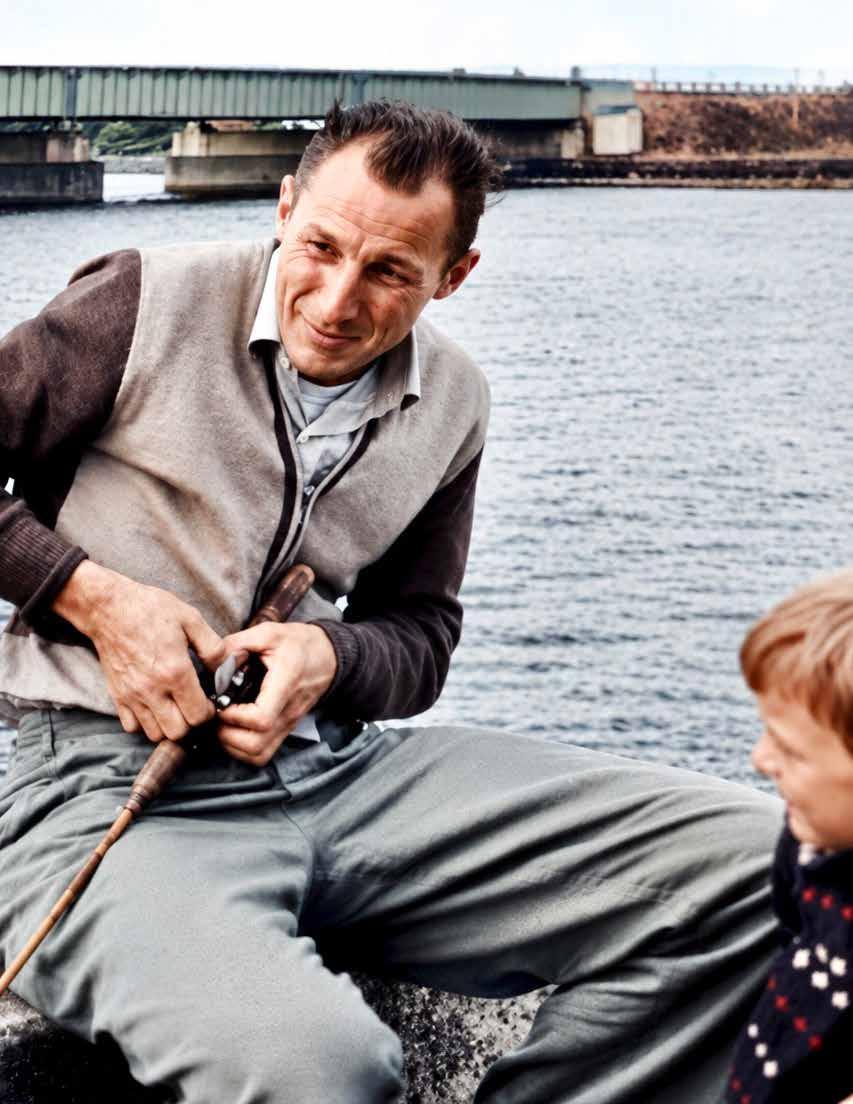
Grandpa Ovesen adjusting a baitcasting reel with his grandson looking on
tying Gordian knots in the leader, and making me look — and at times feel — like a hopeless, clumsy farm boy. What Grandpa had given me was actually a kind of admission ticket — much like the golden ticket in Roald Dahl’s famous 1964 story that grants poor Charlie and four other ecstatic children access to Willy Wonka’s wondrous chocolate factory and opens up a life full of adventure and sensory richness.
The only question remaining was whether I — like little, sympathetic Charlie — would triumph in this new realm or, like the other spoiled kids in the story, be ‘weighed and found wanting’ and eventually spat out. Unlike stoic Charlie, who left everything to fate with altruistic calm, I felt I needed to take matters into my own hands and fight - tooth and nail - for my potential membership. It’s a fight I’ve fought ever since.
Fast forward
Thirty years later, I lead an occasionally wandering life as a Gonzo fly fishing journalist and photographer. I’ve traveled the world with my fly rod in hand — not Grandpa’s, but one of those feather-light space-age carbon fiber ones (even though some people insist fiberglass isn’t dead).
Much has changed since my childhood, but not my mentality. Even though I occasionally get unique of-
fers (which I gratefully accept) for luxury fishing lodges in places like the Caribbean, the Indian Ocean, Iceland, and Canada, I still feel like I truly belong in the realm of public waters — up to my knees in mud on some mosquito-ridden riverbank or battling the wind and salt spray while deep-wading along a chilly coastal stretch.
For me, the problem with luxury fishing isn’t necessarily the often excessively wealthy clientele, who can range from Russian oligarchs to American crypto-millionaires or those with inherited titles and wealth. Nor is it the service or the accommodations (One can get used to those surprisingly quickly). The issue is that no matter how kind and polite the guests may be, I often feel out of place — like a beggar at a banquet, small and insignificant inside. Like a child.
Yet, I’ve carried with me something no multimillionaire can buy: Years of experience, a trained eye, and just enough talent for fly casting that not even my grandfather’s old fiberglass fly rod could stifle it. The combination of skill and confidence (not to be confused with self-esteem) has often made a noticeable difference on my trips — to the occasional despair of others — and I’ve always felt that my success was earned.
But then one day, I started salmon fishing with a two-handed rod…
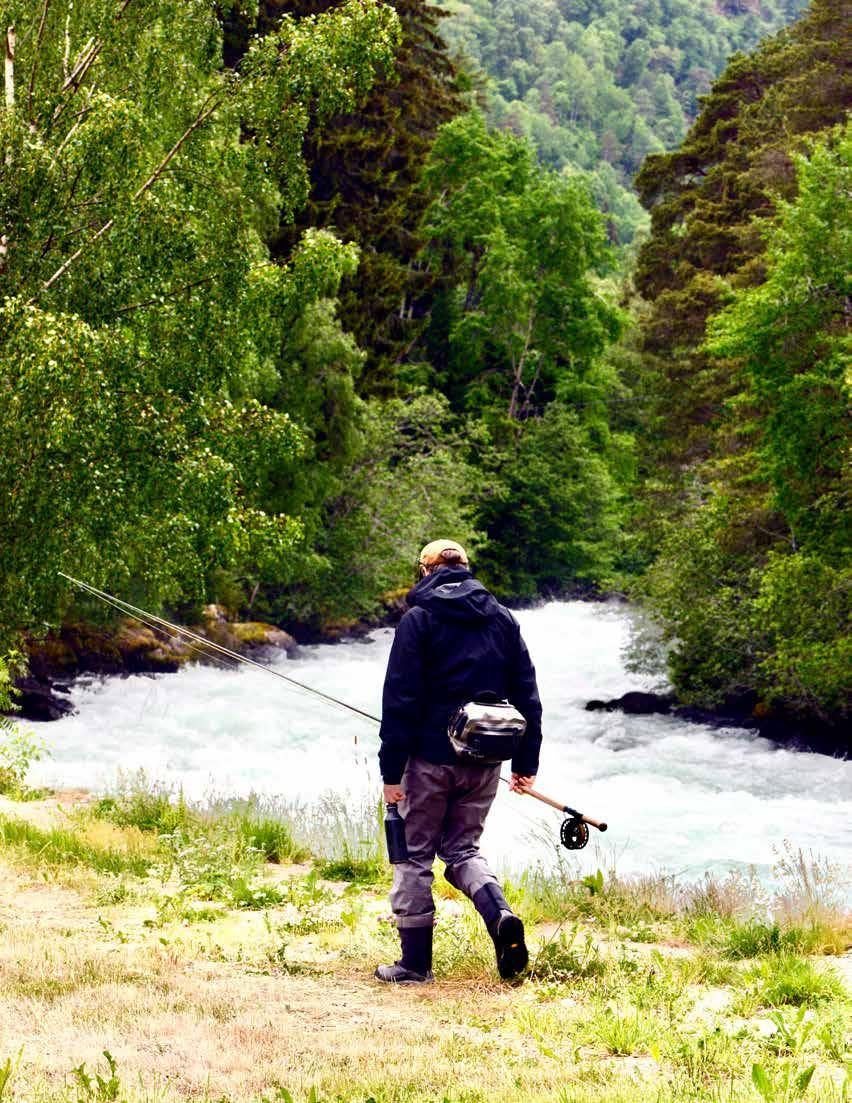
Here I am, gazing out over the Årøyelva River, comfortably holding my single-handed fly rod and taking in the beauty of the surroundings
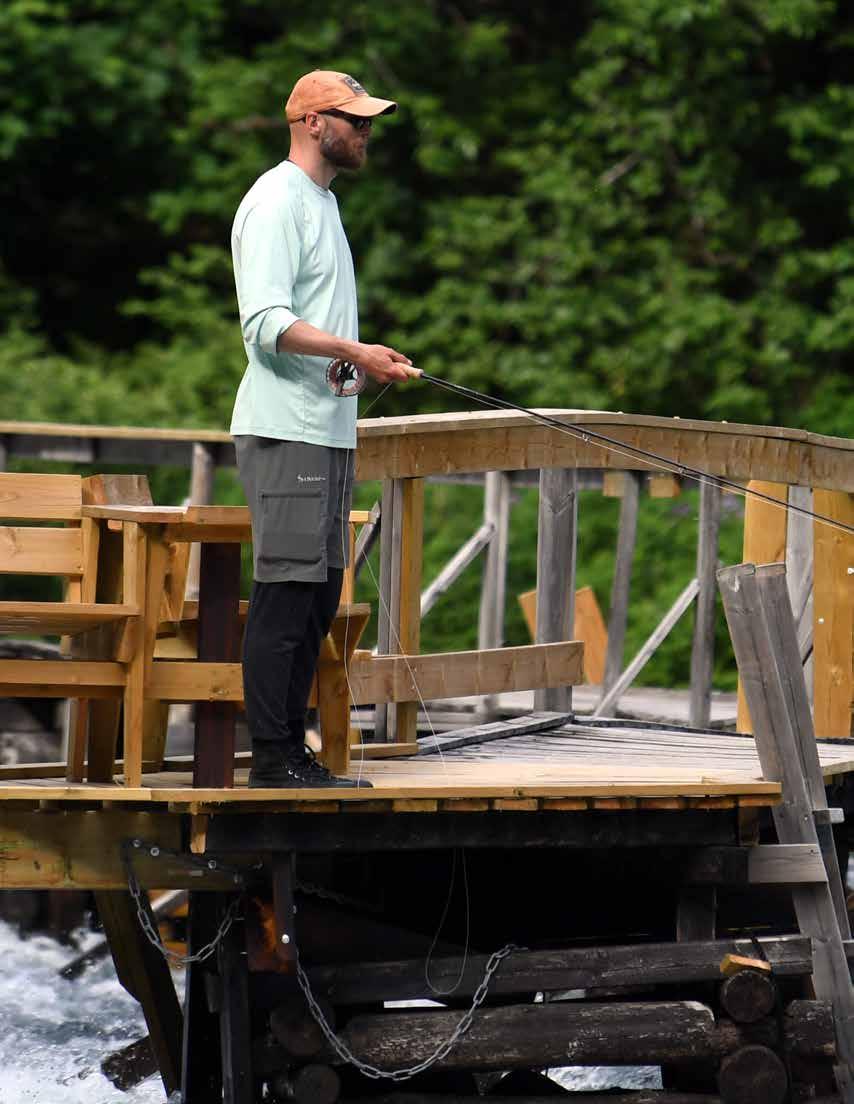
A well-executed two-handed cast is
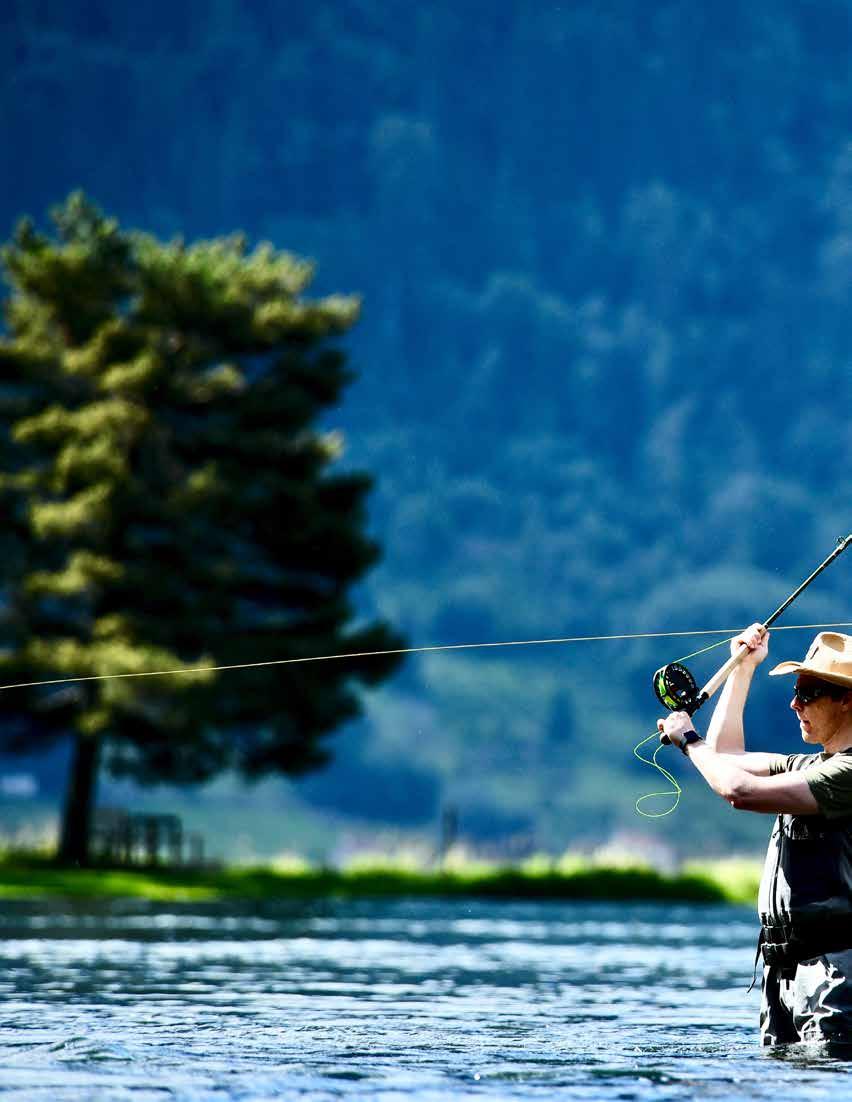
is an art form, a thing of beauty, and one of the most efficient ways to cast on a large river
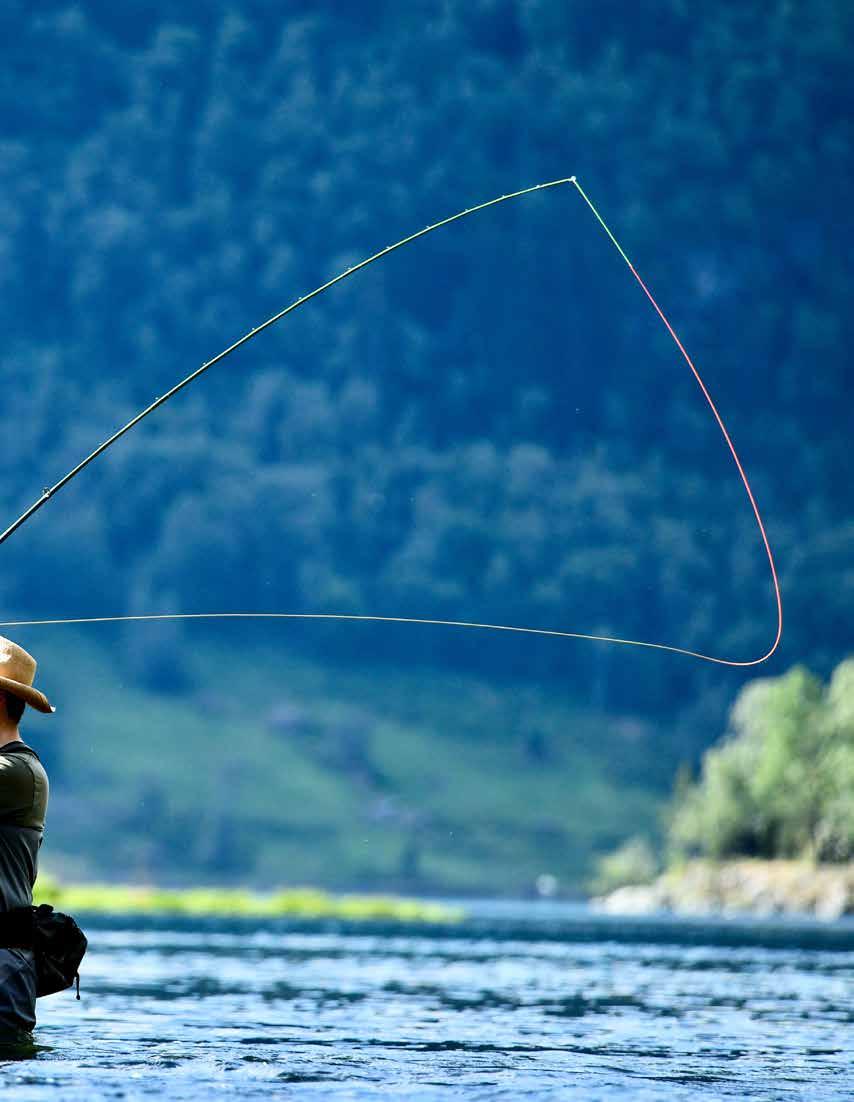
Årøyelva
In the summer of 2021, another unique opportunity presented itself: three days on the legendary Årøyelva in Sogndal. In the world of salmon fly fishing, Årøyelva hardly needs an introduction, but for the sake of clarity, it’s worth summarizing some of the river’s history.
Årøyelva has been family-owned since 1746 (almost ten generations). It was first fished by Bergen merchants in the 1840s and later by British businessmen who came to the area to purchase timber for the British navy, which had developed an unfortunate habit of being perpetually at war with the French.
The river’s salmon — evolutionarily adapted to the short, relentlessly rushing waters by becoming larger, more compact, and stronger than salmon elsewhere — quickly became a topic of conversation in elite British fly-fishing circles. With epic catches like Wilfred Kennedy’s 63lbs salmon from 1894 and Denisoff’s 68lbs and 76lbs salmon from 1923 and 1921 respectively, it’s no wonder the demand to fish here was high. Still, only a few people ever got the chance.
With the exception of the years during World War II, the fishing rights have been leased to wealthy individuals. In the early decades, it was mainly English aristocrats, officers, and lords
who fished the river. Lord Percy was one of them. He built “The English House,” a villa in English colonial style, on the riverbank, and even King Haakon visited shortly after his coronation to fish, accompanied by the Prince of Wales — later King George V.
Among other notable figures who have rented the river for fishing are an Indian maharaja, French hotel magnate Charles Ritz, fashion icon Coco Chanel, and Russian engineer Nicolas Denisoff, who was one of the key engineers behind the Trans-Siberian Railway.
In 2012, Frenchman Jacques Bamberg’s exclusive lease ended, and King Harald V inaugurated a fishing operation and a scenic fishing lodge that, after more than 150 years, was now open to the public. (The part of the public that is more than averagely affluent, to be clear.)
The air quivers over Årøyelva’s foaming waters, which sparkle with an emerald-green depth beneath towering, lush hillsides. Further downstream, the current eases, and Barsnesfjorden — bathed in sleepy morning light — calmly and steadfastly embraces the river, like a mother welcoming a child. As I move down to the water and onto the distinctive wooden bridges and platforms along the bank, which allow
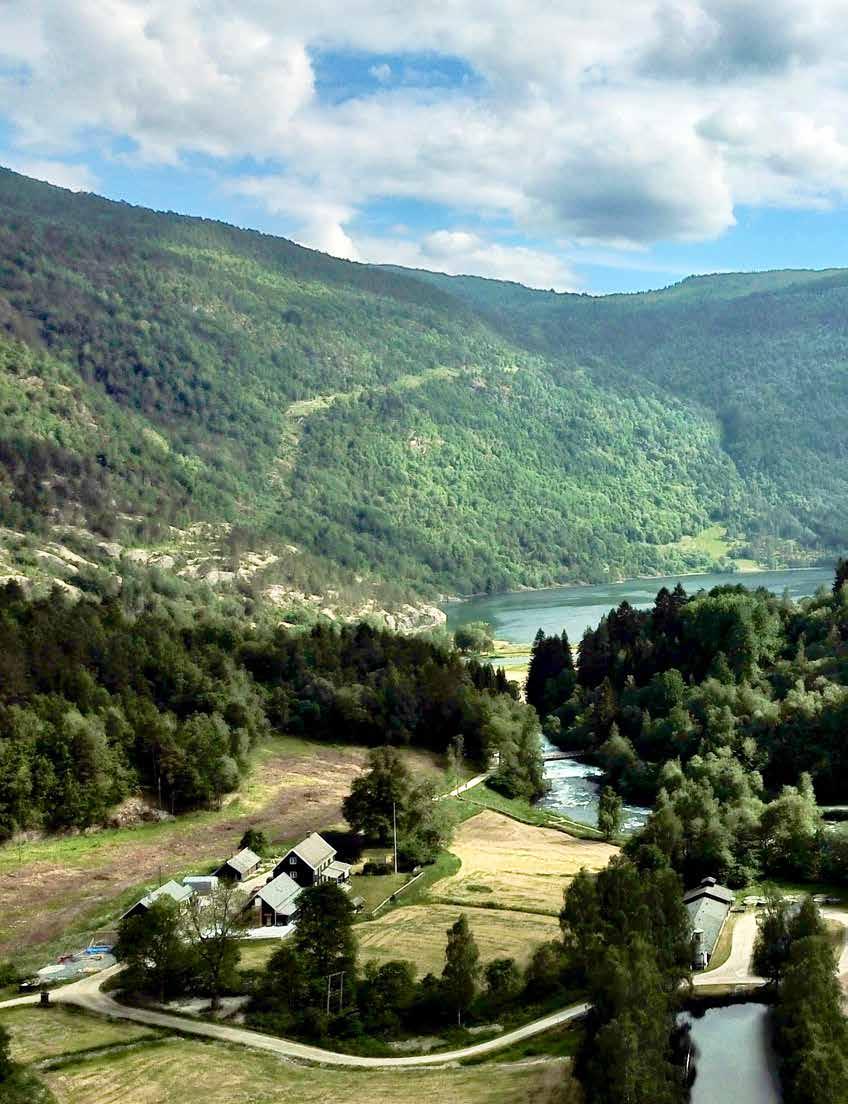
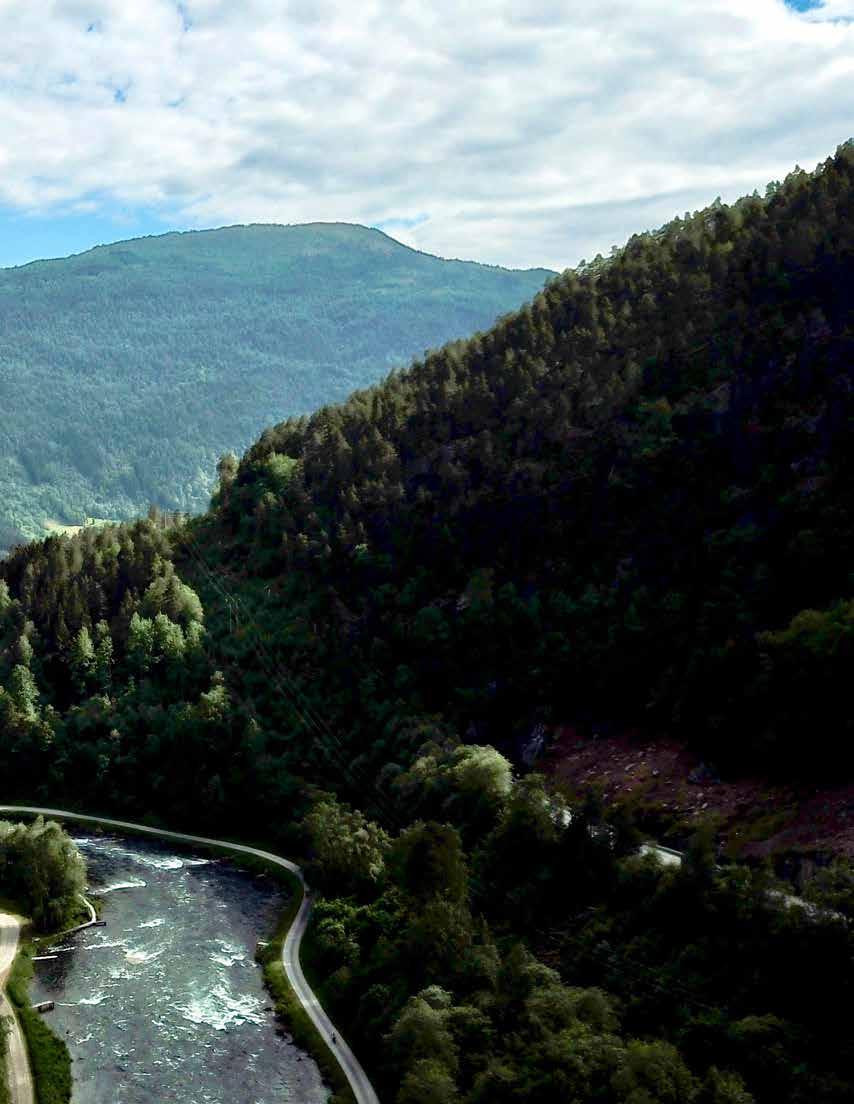
Overhead view of the Lodge along the Årøyelva River
even those who prefer a tweed jacket (or sandals and shorts) over waders to fish, I feel the past and present merging.
The season has just begun. The summer nights are bright and mild, and the atmosphere is relaxed and cheerful. We have three days of fishing ahead of us, with plenty of unforgettable culinary experiences in store. I’ll be taking photos along the way (a grateful task by the beautiful river), but I’ll also get a chance to fish. And just the thought of it makes me uneasy.
The prospect of fishing one of the most exclusive and legendary salmon rivers in the world, and experiencing accommodations and hospitality fit for a king, makes me feel slightly nauseous. And that feeling intensifies when I think about how - just the week before - I was in northern Norway, fishing for seatrout and living like a bum in a stinky rental car full of clutter, empty cinnamon roll wrappers, and lukewarm Pepsi bottles. Worst of all, I have neither the confidence nor the experience to rely on. What little experience I do have feeds a nagging notion that salmon are like phantom fish, a ghost that only sporadically materializes to mock me. The idea that they strike on a classic swing is a piece of hard evidence I’ve yet to become acquainted with.
I am practically meritless as a salmon fly fisherman (at least with a two-handed rod), and I impress no one with my casting skills. Thus, I can’t help but feel that many other skilled salmon fly fishers out there deserve this opportunity much more than I do. That I am unworthy of the place.
I’m not here with British lords or American tech millionaires but with three colleagues who have become close friends — and the world’s friendliest fly shop owner, Bjørnar. With the exception of Stig (I’m allowed to say this without offending him), they are all experienced and skilled salmon fly fishers. Two of them, Roy and Jarle, have even fished the river before. My main task, therefore, will be to photograph the pros in their rightful element, absorb experiences and vibes, try not to ruin too much water for the others, and otherwise strive to minimize the amount of embarrassing and humiliating moments. The latter goes well — as long as I stick to my photography…
Contrary to what some might believe, paying a lot of money for fishing is not a guarantee of catching a lot of fish. And hooking a fish in Årøyelva, which can be challenging enough in itself, is far from the same as landing one — especially early in the season when the large, bright salmon are making
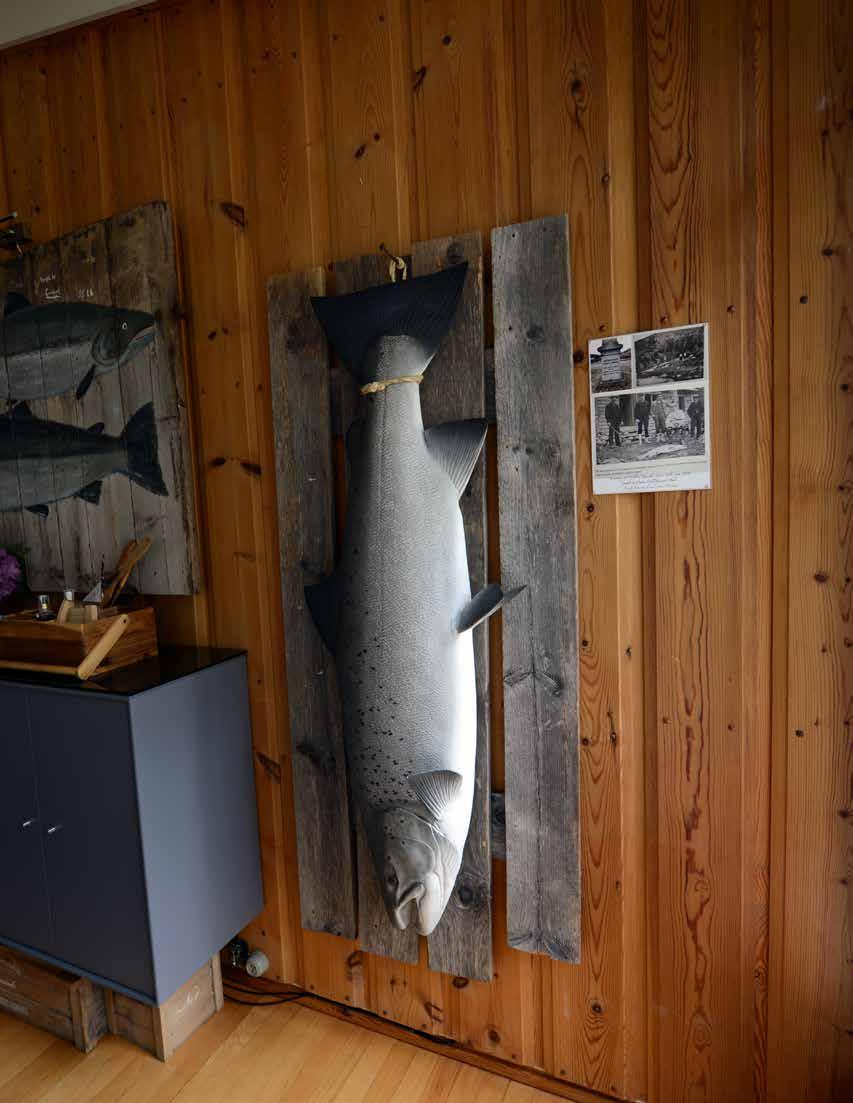
Trophy salmon caught in the Årøyelva River
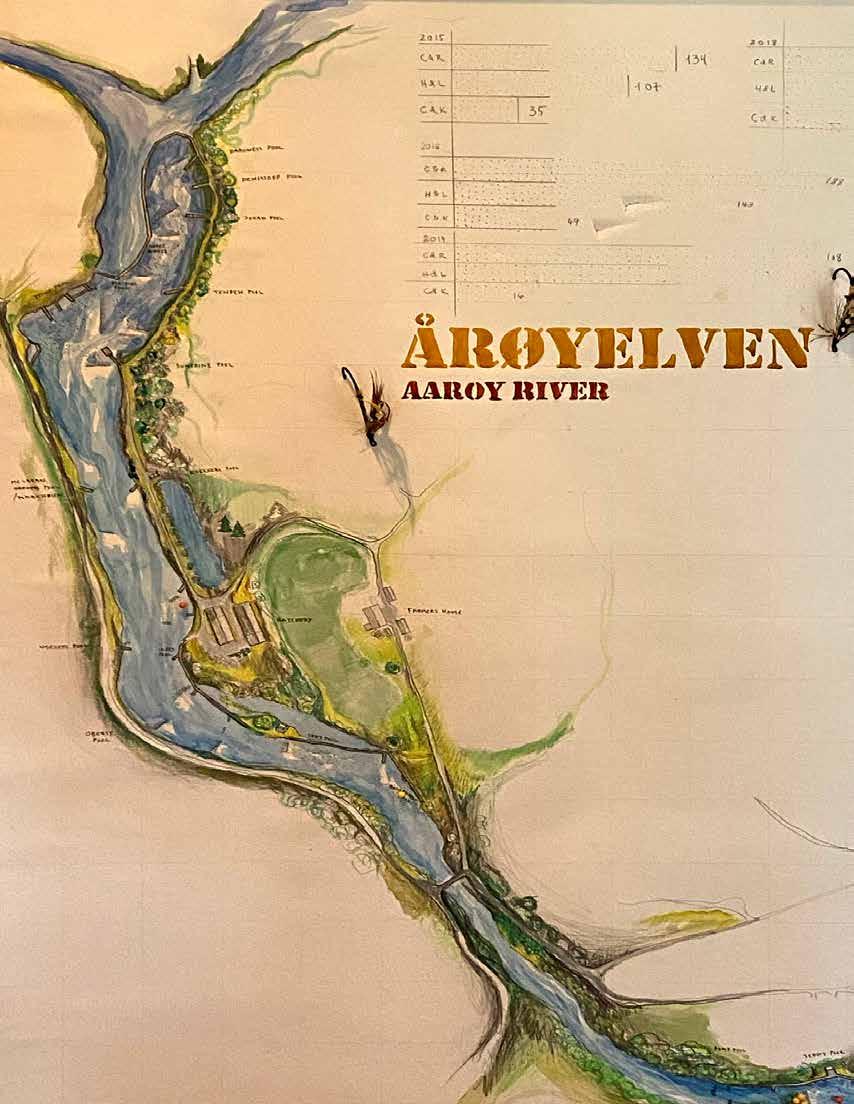
their way up the rushing river. Roy learns this lesson soon after hooking a solid fish in Pump Pool; a fish that will result in either a green pinhead (for a landed fish) or a yellow pinhead (for a lost fish) on the large map displayed on the lodge’s living room wall. (Despite the young season, there are already several yellow pinheads in the lower part of the river, but only a few green ones).
Roy fights the fish, while it thrashes violently in the river, seeking irresistibly toward the swift main current. Moments later, the line goes slack, and Roy reels in, disheartened, to find that the double hook has bent out. The group’s first yellow pinhead is officially secured – but it won’t be the last.
While landing fish in Årøyelva requires a bit of luck, it doesn’t mean that luck is all that’s needed to hook one. It certainly doesn’t feel that way during our time at the river. Neither Stig nor I manage to hook a fish. However, Jarle does. He secures the group’s first green pinhead by landing a gleaming bright salmon around 9 kilograms in Teddy Pool. He is followed by his close friend and business partner of 30 years, Bjørnar, who hooks a fish at White Stone: a perfectly formed creature weighing around 10–11 kilograms, fresh from the sea and exhibiting overwhelming explosiveness and raw power. Befittingly, Jarle nets the fish for him.
The sight of Jarle and Bjørnar sitting in the small, covered shelter upstream from White Stone on the opposite bank — in the last glowing light of the night sky — while toasting with cognac and (as far as I can tell from a distance) wearing these large, self-satisfied smiles across their faces, is one of the trip’s many highlights. Perfectly orchestrated and meaningful. It’s a moment that emphasizes the historical weight that guests bring to Årøyelva.
The last day’s fishing is also perfectly orchestrated and dramatic. Roy earns his well-deserved revenge with a beautifully bright fish weighing 10.5 kilograms — again from Pump Pool, but not before Stig proves that belief can move mountains, and that persistence sometimes trumps lazy excellence.
At the very bottom of Teddy Pool, Stig’s fly suddenly stops mid-stream. A heavy tug transmits through the line, and for the next 10 minutes — as the fish rushes up and down the river trying to rid itself of the inexplicably applied pressure — he is a nervous wreck. He has never been connected to such a large salmon, and when the lodge’s guide, Scot de Bruyn, finally slips the net under the fish and secures the catch, Stig raises a resolute fist in the air, letting jubilation and euphoria run free.
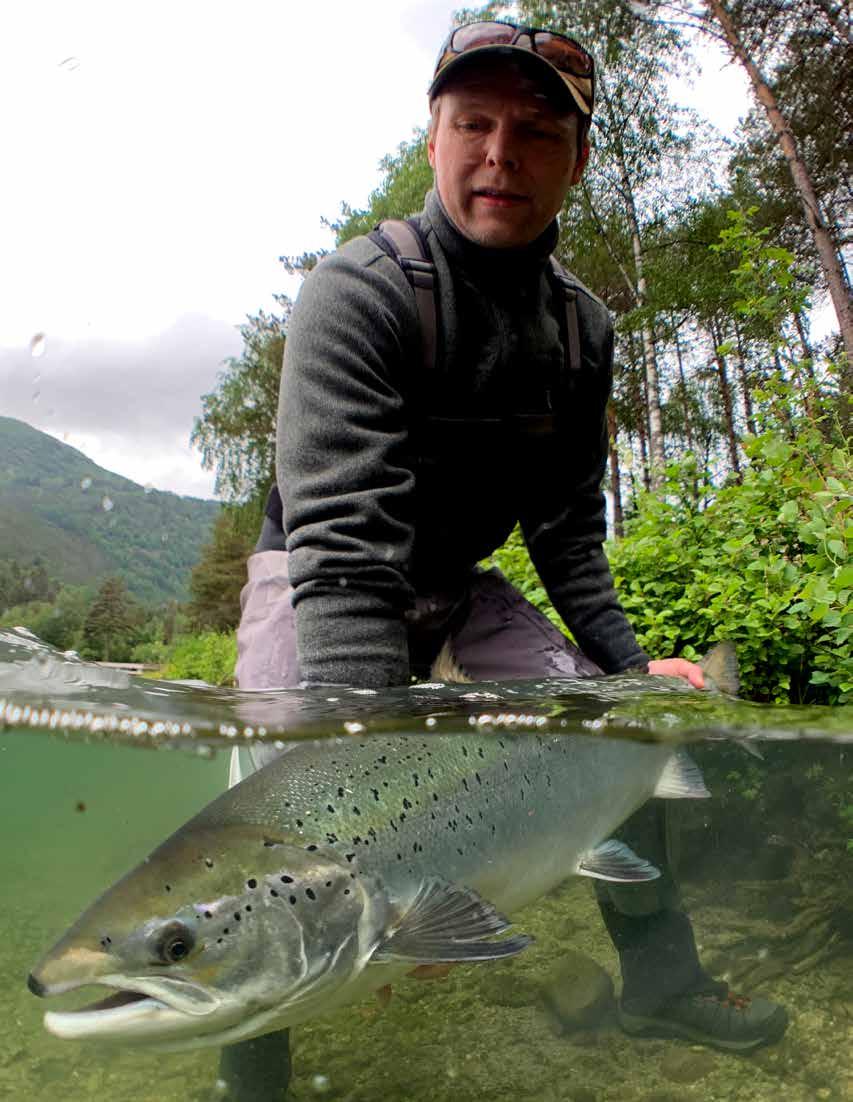
The fish is flawless; from the large fan-shaped tail, over the chrome-like muscular flanks, to the steely gill covers. It sparkles in the water like the purest silver. Plump and round as it is, the fish is estimated to weigh around 12.5 kilograms, and with it, we have effectively shattered the previous groups’ statistics by landing four out of five fish. Or “we” might be an exaggeration. My modest contribution to the statistics remains at 0% lost fish (out of none hooked), which is hardly something to be proud of.
A lot of my time has indeed been spent on photography, but now I am strongly encouraged to put the camera equipment aside and fish intensely for the last couple of hours of the trip. Clearly, new fish have come up with the high tide in the fjord, and Roy hands me a rod and directs me to Pump Pool, where I briefly sit down and prepare to send a red Kursk fly down through the short, rushing current in front of me.
Doomsday Strike
I’ve done it surprisingly often before: landed a big fish right at the last moment. And I already have an inkling of what will happen when I cast upstream, let the fly sink a bit, then tighten the line, and swing it toward the near bank: first, a light tap, then a steady pull, and then — as I lift the rod, an explosive tug. At that very moment, a fearsome large silver-bright fish breaks partially free from the wa-
ter, shoots upstream, then sets course downstream at uncontrollable speed.
I instinctively realize where this is heading, and I sprint desperately downstream, past the Home Pool shelter, where the rest of the group is celebrating the day’s fishing — with suddenly stunned expressions.
The reel is already partially stripped of backing, and soon the fish rounds the corner down by White Stone with a new course toward the sea, and there’s nothing I can do. The fish is lightning-fast and too strong. The tension on the line becomes too intense, and suddenly, the line slackens. I was helpless! The margins were absent...
For a moment, I’m unsure whether to laugh or cry. But I choose the former. I choose to think of it as a privilege to have been connected to one of Årøyelva’s legendary salmon — just like many lords, maharajas, cultural figures, and royalty before me. Now, I finally understand the full magic of this place: a magic that must feel the same regardless of background, upbringing, or economic status.
Whether the salmon weighed 15 kilograms, 20 kilograms, or even more, I’ll never know. (It certainly won’t get any smaller with time.) However, although it wasn’t an experienced, technically affluent, or elegant cast that lured the fish into striking, I know someone who would have been proud.
Thank you for the membership, Grandpa!
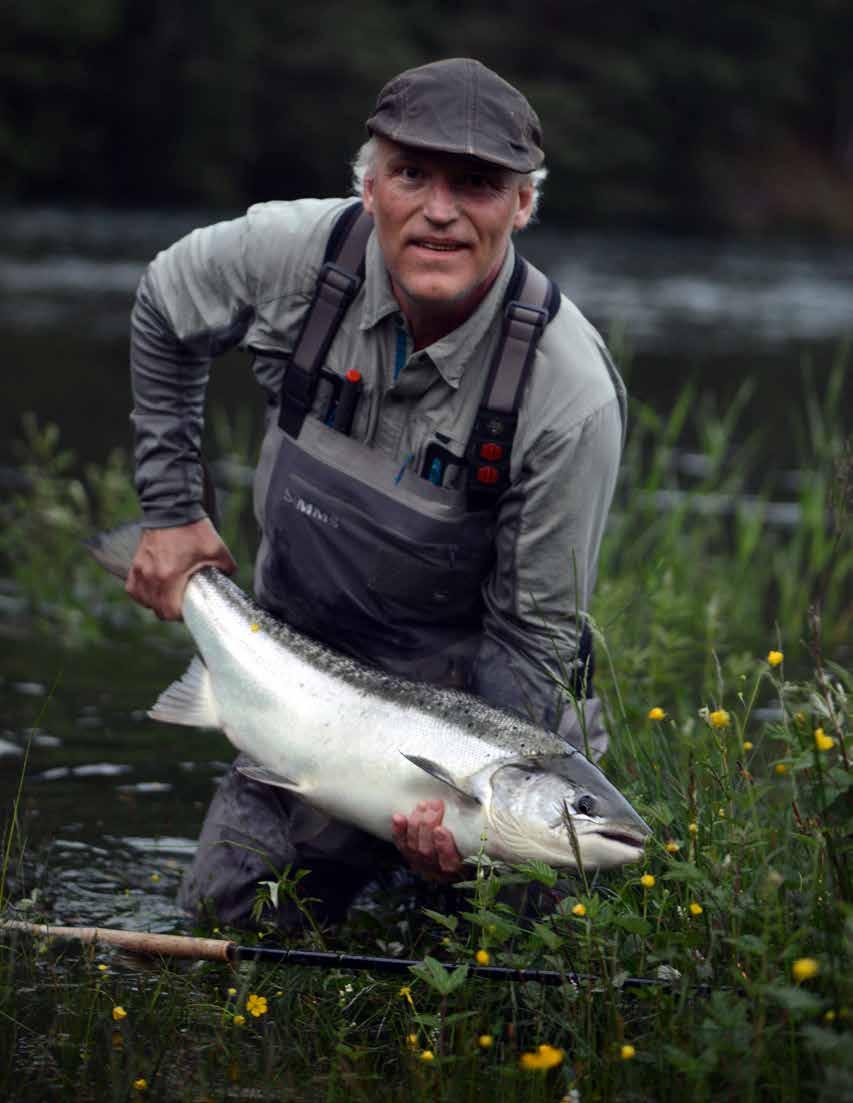
Dag Bjørnar Berg with salmon caught in the Årøyelva River
by Brandon Rabke
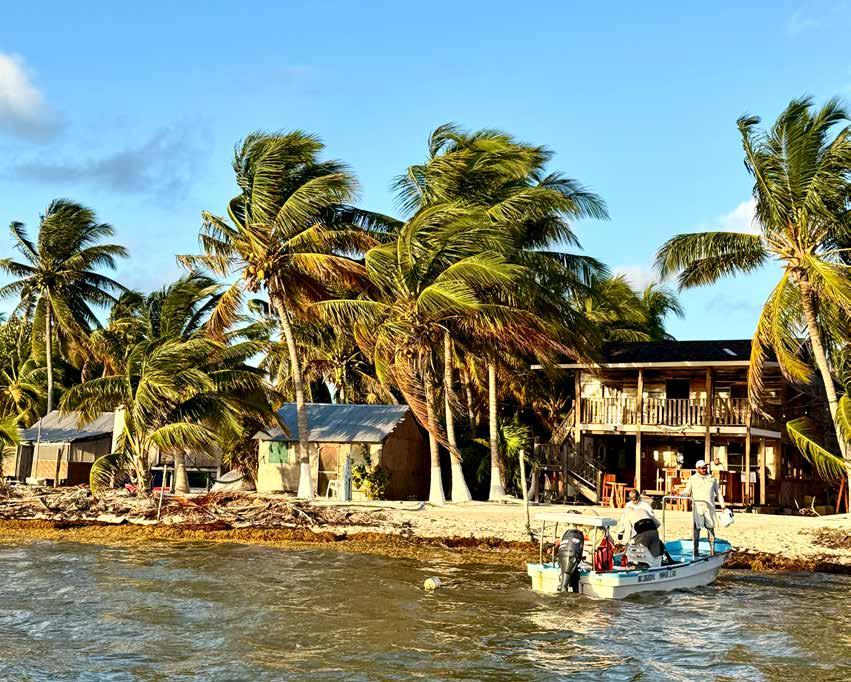
Earlier this year, I traveled to Mexico to fish Espíritu Santo Bay. I joined eight other anglers on a trip organized by Cattaraugus Creek Outfitters. We stayed at the Tail Inn Lodge. It was a long drive to get to the lodge from the Tulum airport; the first 2 ½ hours heading south on the Riviera Maya highway and the last 1 ½ hours down a bumpy dirt track winding through the dense coastal jungle of the Sian Ka’an Biosphere Reserve. It was late when we finally
arrived in the small fishing village of Punta Herrero, but the lodge staff was there to welcome us, carry our gear to our rooms, and then serve us a warm supper.
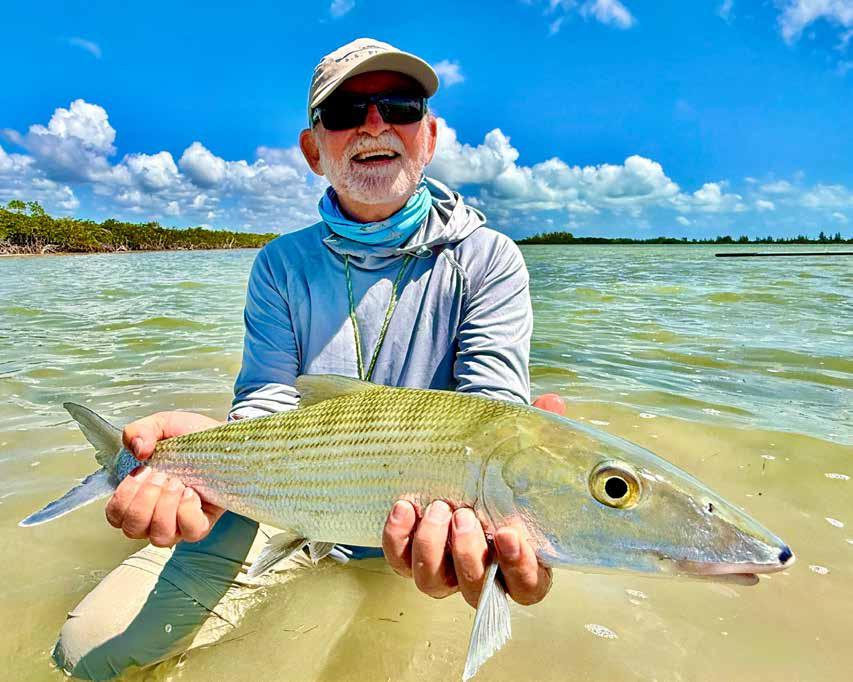
Espíritu Santo Bay (ESB) is known as an excellent permit fishery, and although I had several good shots at permit during the week, I never managed to hook one. I had better luck with the other two main species we targeted: tarpon and bonefish. Bonefish were plentiful, and some days I pursued them on foot while wading. My best bonefish—not only my best of the
trip, but the best for the week by any of us—ranks among my all-time top five. The day I caught it, we spotted the fish swimming slowly along a shallow shoreline, its large tail and dorsal fins exposed and glinting in the sun. We eased closer in the panga, and on my second cast it took a mantis shrimp fly. After several strong runs into my backing, I was fortunate to land the hefty bonefish.
We did most of our tarpon fishing while poling the panga up one of the four or five mangrove-lined creeks that drain into
ESB. One morning, using a Foxxy Griz Minnow (a Lee Haskin baitfish pattern), I landed several 25 to 40 inch tarpon, along with a few small snook and a couple of other small fish our guides called pinta.
As with most fishing trips, the week flew by, but I thoroughly enjoyed my time at ESB. The weather was pleasant, the lodge staff took great care of us, and the variety of fishing options each day kept things interesting. The jungle drives in and out— one at night, one by day—added to the sense of adventure. My
By Bill Buglehall
On May 16th, 2026, with big ambition and an even bigger backpack, I wondered into the Northwest Austin greenbelt that follows Bull Creek to its termination at the Colorado River. This was my third trip to Bull Creek and the third video I would make about it. In my previous two videos, I documented the fishability of this beautiful creek which was degraded and damaged in recent years by construction accidents and raw sewage spills.
My big ambition was to create another Bull Creek video in which I would document the spring time flow conditions of Bull Creek and the activity of its surviving fish species. During my last trip to Bull Creek, I was alarmed by the extreme low flow conditions and thought we may lose the surface creek all together.
My big backpack was full of the following equipment:
• 2-weight Moonlit Lunar S2 with Redington Zero click-paw reel, full float line, and 5x tapered leaderprimary rod
• 2-weight White River, Classic Glass Rod with same reel and line set up- backup rod
• Chest pack with Dry Flys, Nymphs, and streamer patterns
• Landing net
• DJI Pocket 3 - Gimbal Camera
• DJI Osmo 5 - Action Camera
• DJI Neo 2 kit - Flying camera and controller
• Assorted wireless microphones
• iPhone for still images, slow-mo, controlling other cameras, and emergencies of course
• Water and a snack for lunch
• Extra shoes for walking/wading if needed
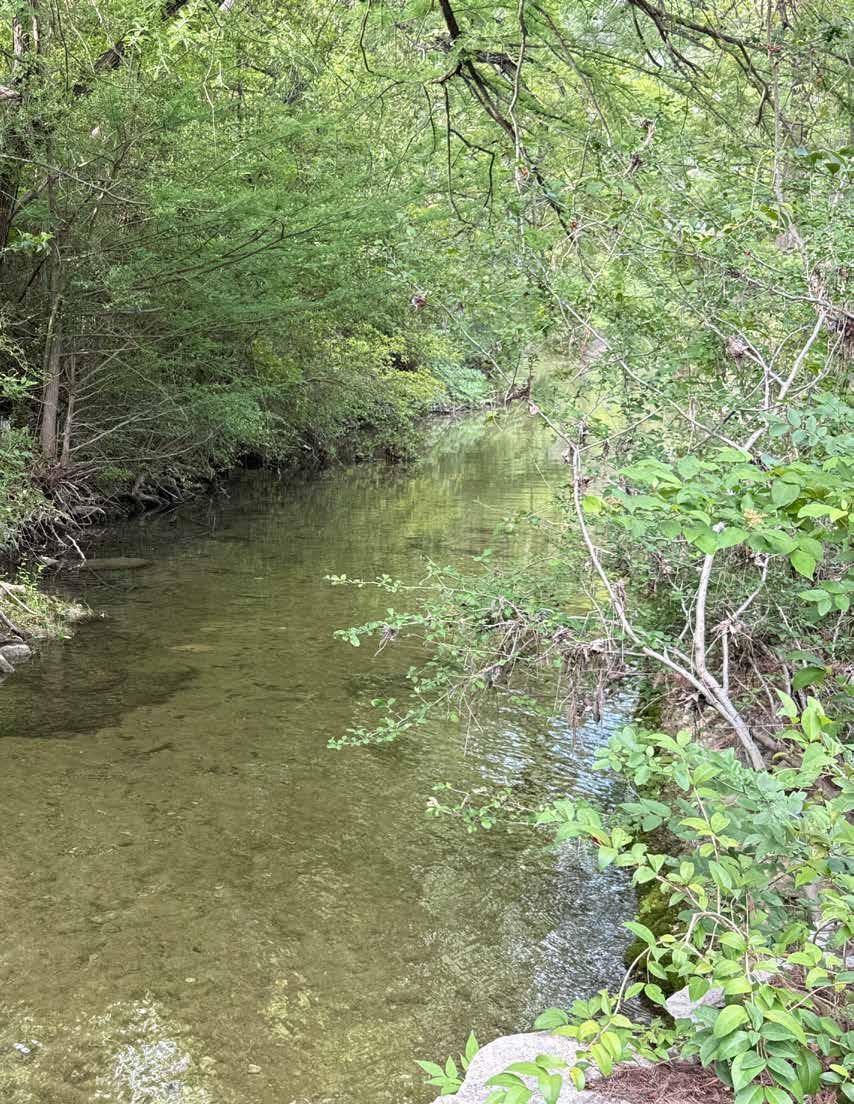
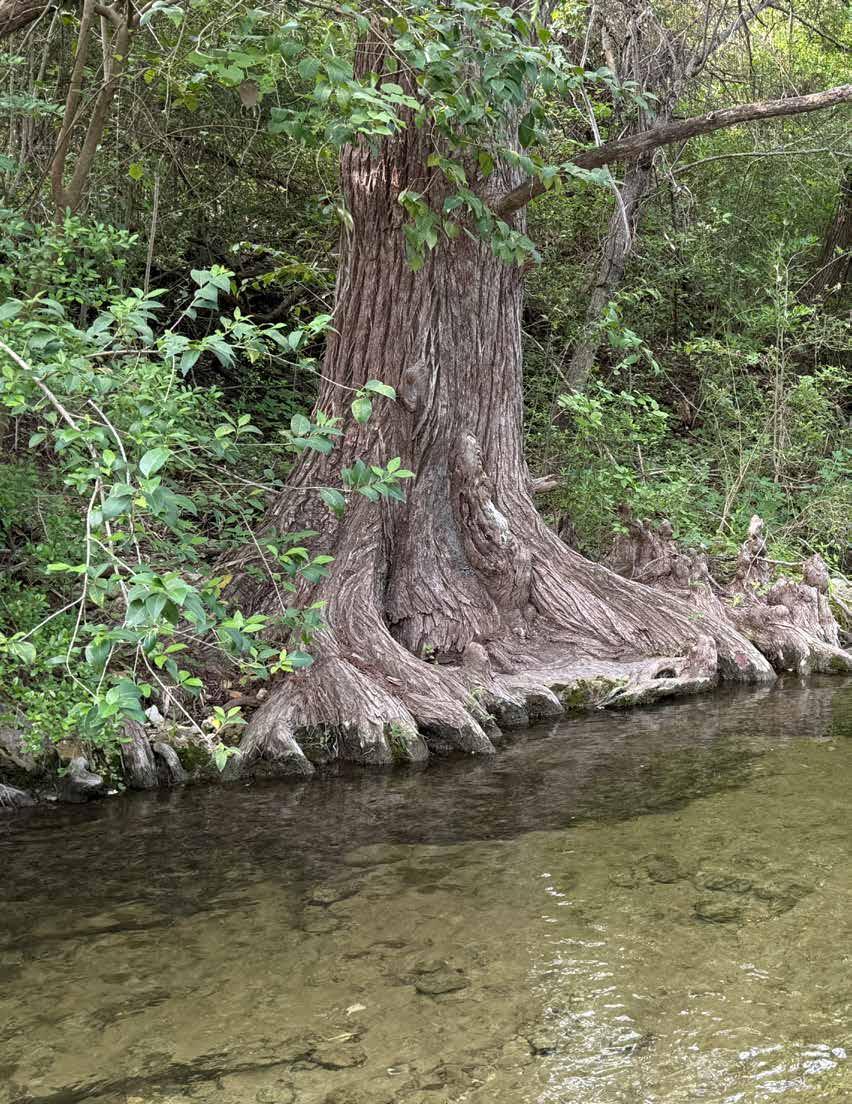
I fully expected to find a dry creek bed and dead fish but was pleasantly surprised that water was flowing cool and clear in the Cypress lined tributary and fish activity was evident. The scene was so beautiful that I wondered why no one really talks about this creek for fly fishing like they do with Brushy Creek. The farther I explored the better, and weirder, it got.
My awe over the beauty eventually gave way to happy frustration. I say “happy” frustration because I love a challenge. Well I found that challenge in a very small creek, lined by very large trees, super clear water, and big bass so spooky that you had to cast yesterday if you want to catch them today. This was truly the most difficult section of water (with fish) that I have ever casted line on.
Other frustrations, not so happy ones, was working with my camera gear which I was trying a new “professional” technique that led to me completely botching the exposure settings half the time and totally forgetting to pop on the ND lens filters when the light got brighter. The impact of this problem would manifest in a much worse way during post-production editing. Over 5 hours of recorded video on four different cameras reduce to just what you see now. Some of the discarded rushes were just editorial choice but a good amount of video, that I would have used, ended up on the proverbial cutting-room floor.
About half way down stream stuff started getting weird and I thought random
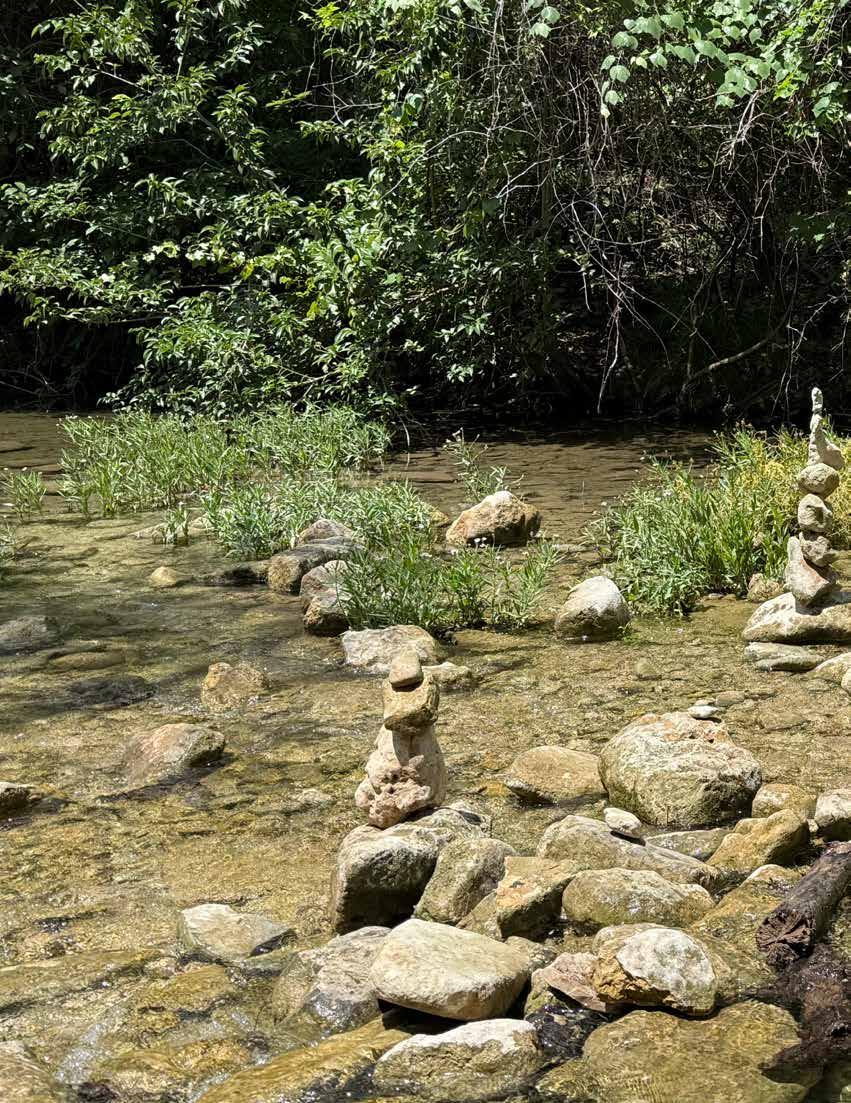
people were artistically littering the creek with random objects. I was perplexed by the weird things I found and didn’t know what the heck was going on until I talked to one of the people wandering around the creekside trails. He told me there was an art installation along the creek that day and he was one of the artists that had a display which you will see in the video. This discovery immediately changed my entire vision for the project. The experi ence was feeling less like a research mis sion and more like I was walking through a medieval woodland scene with artists, music, and little critters all dancing in the spring sun.
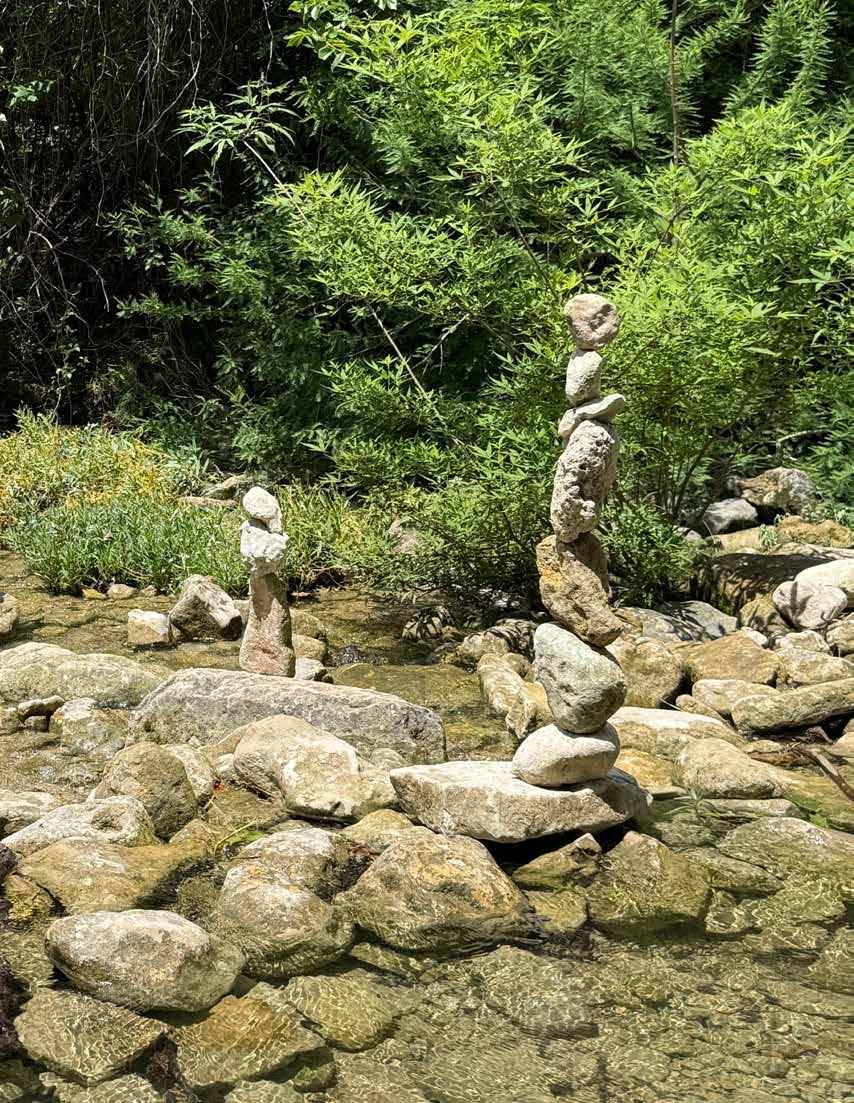
The whole scene was very surreal so tried my best to capture what I was feel ing this day as I explored this amazing section of Bull Creek. I hope you enjoy watching this video as much as I enjoyed making it and if you can get to Bull Creek I highly recommend wetting a fly, but only after you practice your bow and ar row cast. GPS coordinates where I parked and walked down stream from: 30.42007° N, 97.79377° W
creek by know talked around was that had video. my experimisthrough artists, the I feelamazing enjoy enjoyed Creek but arparked 30.42007°

By Keith Mars
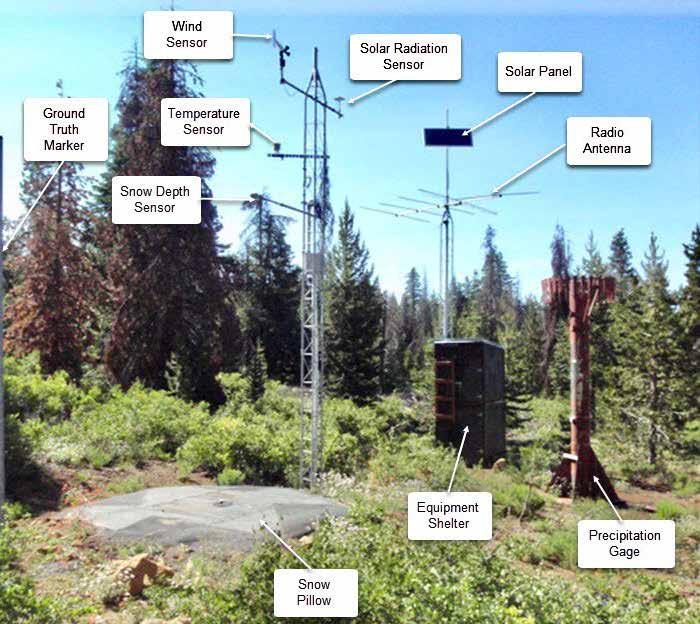
As fly fishers, our passion forces us to become amateur hydrologists. We spend our evenings studying USGS streamflow gauges, analyzing SNOTEL snow-water equivalent graphs, and tracking high-altitude weather patterns. We understand that a trout river is a dynamic, living system entirely dependent on the precise volume, timing, and temperature of the water moving through it.
For generations of Texas fly fishers, June through September sparks a familiar, necessary ritual: packing gear and planning the annual pilgrimage north and west to escape the sweltering Texas summer heat. The cold, oxygen-rich freestone rivers of the Rockies have long served as our alpine sanctuaries—places where we can step into icy currents while our home asphalt melts.
However, anyone heading north this season needs to prepare for a dramatically altered landscape. The high country is running on empty. A stark theme unites virtually every blue-ribbon watershed in the West: the intensifying grip of a severe winter “snow drought,” and an escalating societal battle over who gets the final drop.
To understand the water crisis currently unfolding across the Rocky Mountain West, look closely at the winter that wasn’t. The cold season delivered an exception-
ally lean snowpack across major western river basins. By early spring, comprehensive SNOTEL (Snowpack Telemetry) data revealed that overall snow accumulation across the Western United States registered at a staggering 65% below historic long-term averages.
In a healthy hydrological year, the high-altitude winter snowpack acts as a massive, frozen reservoir. It stores moisture throughout the winter months and gradually releases it during late spring and early summer. This slow-melting alpine sponge creates a sustained, predictable runoff that fills downstream reservoirs, keeps mainstem river channels full, and maintains water temperatures safely cool well into mid-summer.
This year, that crucial frozen reservoir never materialized. Because winter accumulation was incredibly thin, the meager high-country snowpack effectively evaporated into dry air or soaked straight into intensely parched alpine soils before ever reaching a river channel. What little peak runoff did occur happened weeks ahead of schedule and vanished with a whisper. By late May, mountain telemetry sensors were already registering zero snow-water equivalent across vulnerable lower-elevation slopes. The seasonal life-support system for premium western freestone trout streams was effectively cut off before summer even officially began.
When nature fails to deliver a robust supply of water to the mountains, regional legal frameworks dictate exactly where the remaining flows must be directed. Under the Western water law doctrine of prior appropriation—frequently summarized by the phrase “First in Time, First in Right”—water allocations are strictly determined by the historic chronological priority of the water right claim, rather than geographic proximity to the river or immediate ecological necessity.
The majority of absolute senior water rights belong almost exclusively to early agricultural irrigation districts and primary municipal entities established over a century ago. Conversely, environmental flows—the baseline amount of water legally designated to remain within a natural river channel specifically to sustain aquatic life—are a relatively modern legal development. Because of this late arrival, environmental allocations almost always hold junior water rights, leaving them legally unprotected when a severe shortage occurs.
The cold water flowing out of high Rocky Mountain headwaters is heavily spoken for long before it ever passes over the gills of a wild trout. It serves as the primary municipal drinking supply for rapidly growing urban populations and acts as the literal lifeblood for agricultural operations downstream. When regional reservoirs and river levels drop to critical thresholds, water resource managers face legally binding, uncompromising mathematics. They are mandated to fulfill senior downstream water calls first. This requires diverting high volumes of water out of natural river channels through industrial headgates and into agricultural canal networks, reducing the active river beds to absolute, skeletal baseline flows.
For wild trout, low water volume combined with high solar radiation is a physiological crisis. Trout are ectothermic
organisms, meaning their internal metabolic rates and cellular oxygen demands are entirely dictated by the temperature of their surrounding aquatic environment. As river volumes drop to historic lows under the intense summer sun, the thermal mass of the stream decreases dramatically. It takes very little thermal energy to rapidly heat a shallow, slow-moving river channel. When water temperatures climb past the critical physiological threshold of 68°F, the water’s natural physical capacity to hold dissolved oxygen drops exponentially. Concurrently, a trout’s internal metabolic rate spikes, vastly increasing its cellular requirement for oxygen at the exact moment the gas is least available in the water column.
When an angler hooks and plays a trout in water that has reached 68°F or warmer, the fish fights against the line while essentially suffocating. The physical exertion causes a rapid, lethal accumulation of lactic acid in the fish’s muscular tissue. Even if the fish appears to swim away strongly upon release, delayed mortality rates skyrocket over the subsequent 24 to 48 hours. Because of the severe low flows mapped out across the West this summer, wildlife agencies are likely implementing widespread, historically early “Hoot Owl” restrictions. These regulations legally prohibit all angling activities after 2:00 PM to eliminate fish handling during the hottest, most stressful hours of the day. On many legendary freestone waters lacking deep bottom-release reservoir buffers—such as
vulnerable sections of the Eagle, Roaring Fork, and upper Yellowstone rivers—anglers must prepare for total, emergency around-the-clock fishing closures to preserve wild broodstocks.
Part IV: The Ethical Traveler’s Protocol
Bottom line, go now. If not, be prepared for dawn patrol. Regardless here’s some tips for wetting a line this year and for years to come.
Become Thermometer-Obsessed: A reliable stream thermometer should be the most accessible piece of gear on your pack or lanyard. Never guess what the water temperature is based on how it feels against your bare hands or through breathable waders. Take active stream temperature readings every hour as the sun climbs higher in the sky.
The Strict 67°F Threshold: If your thermometer reads 67°F, it is time to stop fishing. Period. This ethical boundary must be maintained even if a prolific, once-in-aseason hatch is occurring and large trout are rising aggressively across the pool. Clip your fly securely to the hook keeper, step back from the water, and find a shady spot on the bank to observe the river. Navigating a world-class fishery with this level of restraint and respect is the true hallmark of a conservation-minded sportsman.
Adapt Your Geography: If your favorite western freestone river is suffering from low-flow thermal distress, proactively alter your angling strategy. Redirect your efforts entirely toward deep-release
tailwaters or high-altitude alpine lakes. Tailwaters—rivers flowing directly from the bottom-release gates of deep, large dams—receive a steady, regulated supply of icy water drawn from the dark depths of a reservoir. This infrastructure provides a critical thermal buffer that keeps trout safe, active, and well-oxygenated even during intense regional droughts. Alternatively, pack a lightweight fly setup, lace up your hiking boots, and journey into high-altitude alpine lakes situated well above 9,000 feet, where ambient temperatures remain low and the water stays cold and stable throughout the summer.
Conclusion: Speaking for the Waters
Water management in the West is inherently a game of intense compromise, defined by political maneuvering, complex legal precedents, and economic balance sheets. Growing cities will always demand drinking water, expanding industries will always demand processing water, and agricultural districts will always demand irrigation water.
But a mountain river that runs dry or heats to lethal levels in a parched valley is no longer a living river—and living rivers are part of the iconic mountain west. This summer, let’s ensure we step up and speak for the vulnerable mountain waters we share. Go early. Fish early and enjoy those Rocky Mountain streams for years to come.
– June 2026
by Bob Maindelle
Since my last update SKIFF has provided free fishing adventures to kids from several Fort Hood Army families during times of separation.
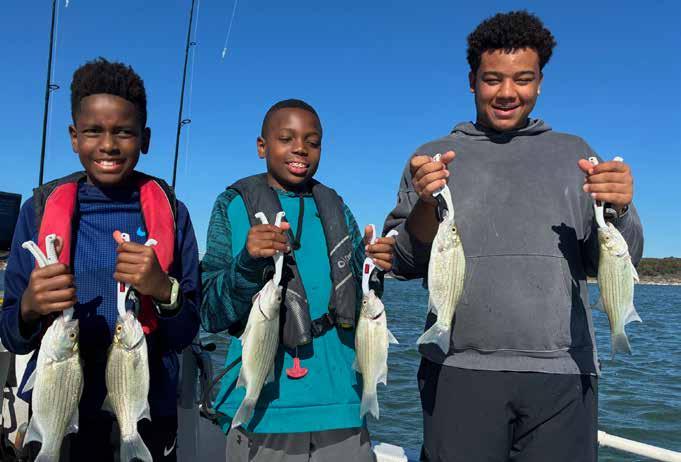
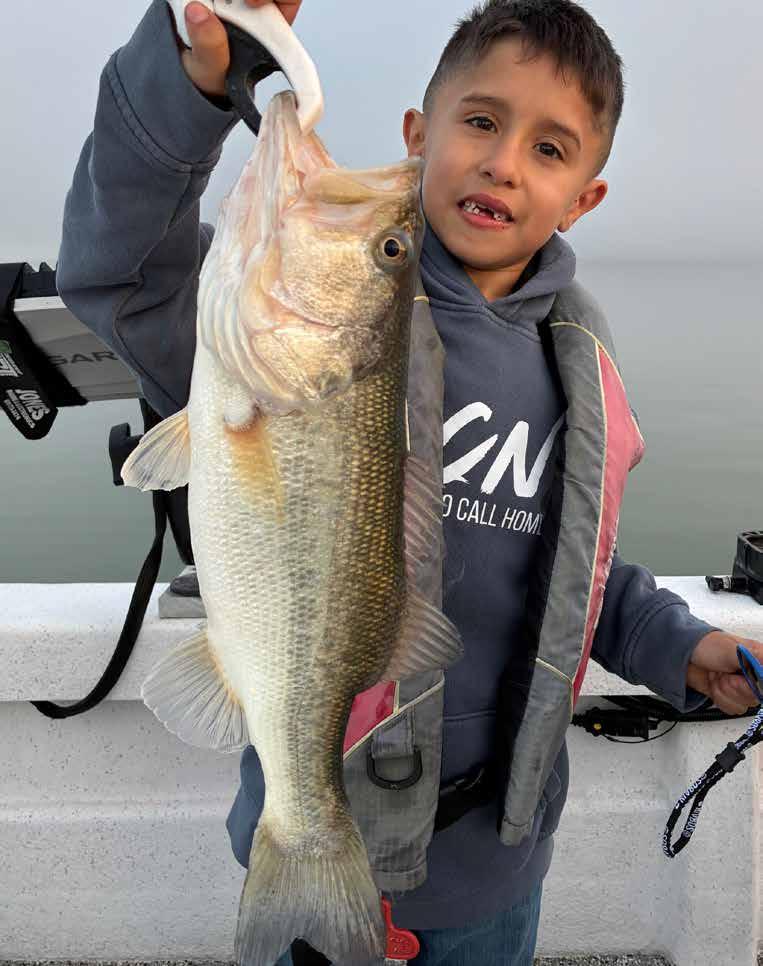
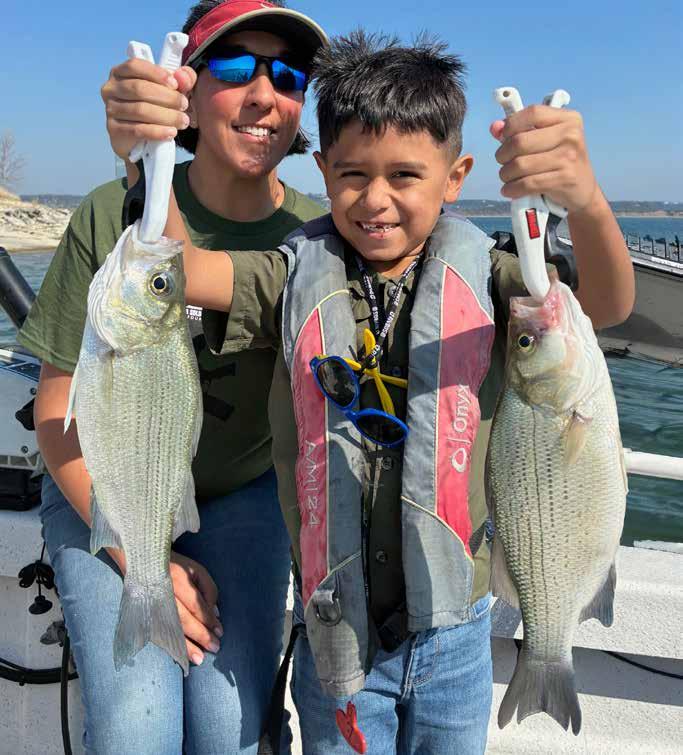
Earlier this year, the three sons of of U.S. Army Staff Sergeant Augustine Anukwu, Quincey (age 15), Malcolm, (age 11), and Wallace (age 9) landed 54 fish on Lake Belton as their dad served in Poland.
Next, William and Thomas Rawlinson, whose father passed away while on active duty, took advantage of our offering to Gold Star family members and fished with me individually, thus meeting a need for time away from their mom and one another which Sherril Rawlinson (the boys’ mother) felt they needed. William landed 25 fish, and Thomas tacked on another 40.
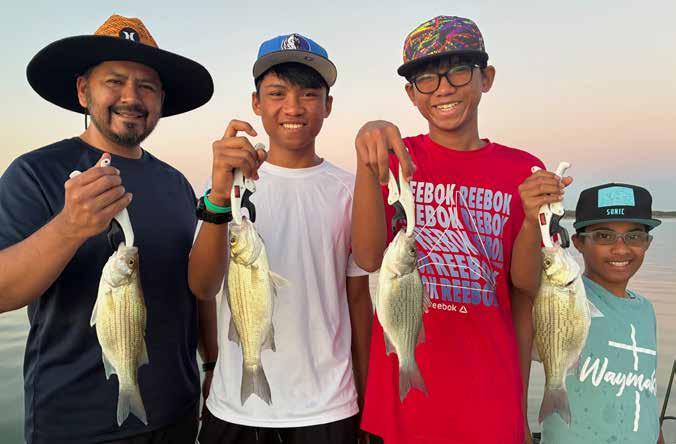
Most recently, I took the three adopted sons of Matt and Nikki Landry while he was sent to the National Training Center at Fort Irwin, California. Brian, Jacob, and Mark Landry put 49 fish in the boat, accompanied by their youth pastor, Frank Ayala.
Donations have continued to flow in to support this work. So far this year, SKIFF was awarded $900 by the Great Place Spouses’ Club at Fort Hood, $500 by the Great Place Thrift Store at Fort Hood, and $750 by the Women Helping Others group at Sun City in Georgetown, TX.
Getting the word out about what we have to offer has long been a challenge, as the families we serve often move to another post, thus we lose the “word of mouth” effect that is gained when dealing with longterm residents.
Regardless, this summer we are exploring a new approach working through the Killeen Independent School District. KISD has multiple Military Family Life Counselors (MFLC) covering their many campuses at all grade levels to address some of the unique situations kids from military families face, and we are working to get our summer calendar for mid-July to mid-August into the counselors’ hands and into the hands of the families they support.
Additionally, we are working with both the Great Place Thrift Store and the Great Place Spouses’ Club to get work out to their own followers, urging them to take advantage of the very program they saw fit to bestow grant monies to. Both have extensive social media followings.
Thank you all for your support. Since 2009, we have served 662 children!
Owner, Holding the Line Guide Service 254.368.7411 (call or text)
www.HoldingTheLineGuideService.com
Bob@HoldingTheLineGuideService.com www.Facebook.com/bobmaindelle www.Twitter.com/BobMaindelle

Video Link
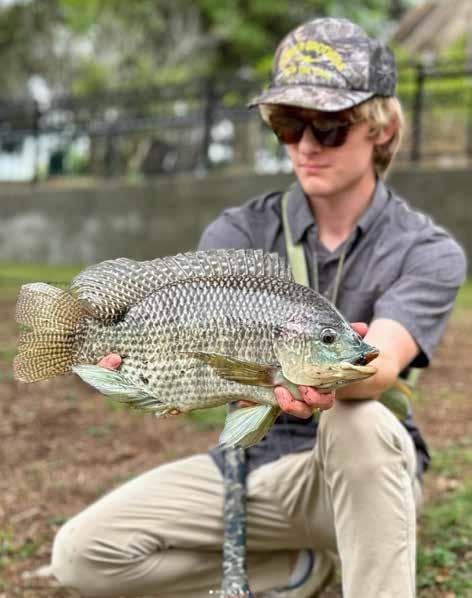
Aaron Newbury
Aaron is an experienced fly fishing guide and key figure at The Grateful Angler, a premier fly and lure shop and guide service based in Wimberley, Texas.. https://www.thegratefulangler.com
Captain Ron Ridgeway
Capt. Ron is a Fly Fishers tified Casting Instructor casting and guide for and Flounder through Matagorda Loops, in https://matagordaloops.com
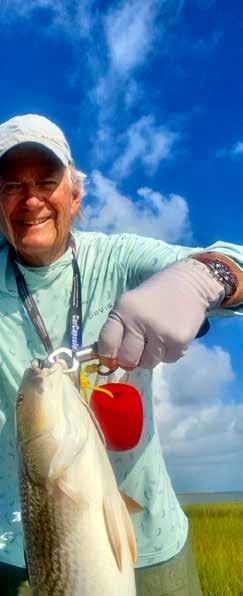
Ridgeway
Fishers International CerInstructor and regularly teach for Redfish, Speckled Trout through my guiding business, in Matagorda, Texas.
https://matagordaloops.com
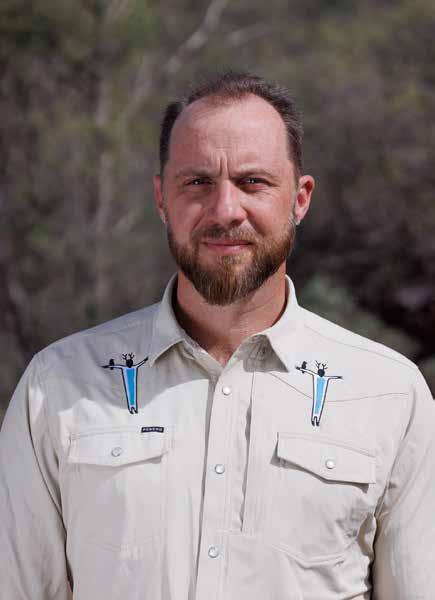
Romey Swanson
Romey Swanson is the Executive Director of the Devils River Conservancy, where he leads efforts to treasure, preserve, and protect one of the state’s last wild rivers and the ecologically important landscapes that surround it.
https://devilsriverconservancy.org
During the past two years, I have taken the time to look over the websites of other fly-fishing associations in the state of Texas, to see what they are doing. Every major city and other smaller cities have their own organized fly-fishing clubs or groups. I have signed up to receive other club newsletters and notices, and I attend a monthly FFI Texas Council online meeting with many of these Texas club presidents. One thing I have learned is that the Austin Fly Fishers Association is unique in two respects. Our club has a professionally produced quarterly newsletter, and our club helps to support two socially beneficial organizations, Casting for Recovery and Soldiers Kids Involved in Fishing Fun (SKIFF).
It is my hope that AFF members and others take the opportunity to read over the AFF newsletter each quarter. We would not have this newsletter without the extraordinary efforts and talent of Nils Pearson. I also want to thank all the AFF members and others who contribute their articles and their videos to this publication. When I meet people who might be interested in the club, the first thing I suggest to them is that they should take the time to go to the AFF website and read an issue of the club’s newsletter.
In every issue of the newsletter, you will find a summary of recent SKIFF trips. Bob Maindelle is the unique fishing guide who takes the children of military families on free professionally guided trips. This program started over 17 years ago after Bob spoke at an AFF monthly meeting. Since the inception of the SKIFF program over 650 children have taken one of the 312 SKIFF trips. The smiles of the kids’ faces tells the story of why such a simple program has been so beneficial to these military families. Bob is an amazing person, and our club is fortunate to be associated with him and this program. AFF members can tag along on a SKIFF trip too. The trip will be fun, you will meet some nice kids, and you will have a wonderful experience.
The mission of Casting for Recovery is to empower women in treatment or recovery from breast cancer through oncology informed retreats. These retreats connect women to each other and to nature, using the therapeutic sport of flyfishing. These retreats are offered at no cost to participants. The Austin Fly Fishers holds its annual Fishmas Christmas Party to celebrate the season and to raise funds for Casting for Recovery. Because of the work of club members and the generosity of donors, our club was able to make a $3756 donation to Casting for Recovery after the 2025 Christmas party. This recent donation will fund the retreats for two women. At this halfway point of this year, I would like to encourage all members to become more involved in the club and to find ways to volunteer. If you are a club member who has not attended a monthly meeting in some time, please take some time to make the next meeting. I hope to see you soon.
Tight lines, Manuel
Pena, President
Austin Fly Fishers