MAY 2026 | VOLUME 35, NUMBER 4
Four Distinguished Austin Bar Members Honored During 2026 Bench Bar Conference for Their Contributions




The Austin Bar is proud to announce the winners of our spring awards.
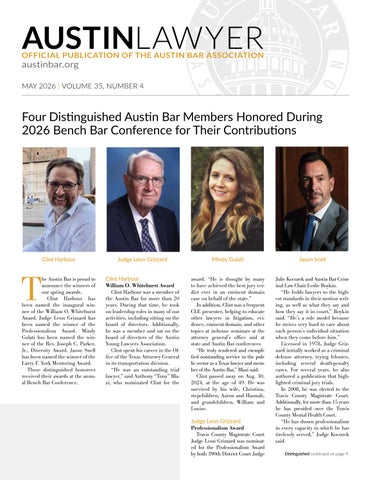
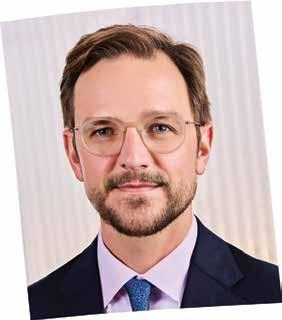
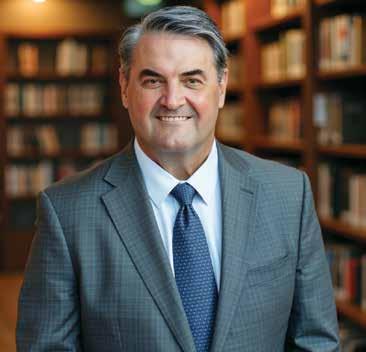
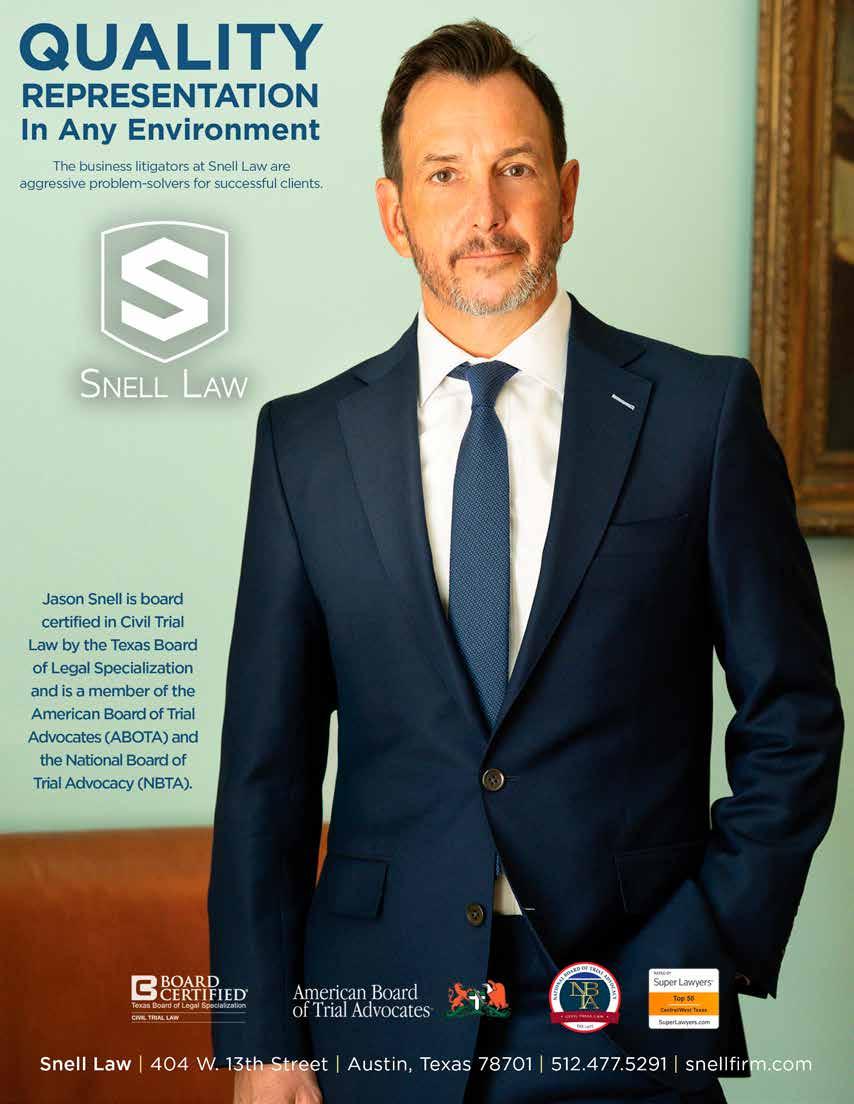
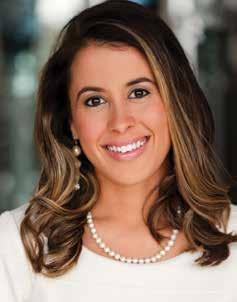
Clint Harbour has been named the inaugural winner of the William O. Whitehurst Award. Judge Leon Grizzard has been named the winner of the Professionalism Award. Mindy Gulati has been named the winner of the Rev. Joseph C. Parker, Jr., Diversity Award. Jason Snell has been named the winner of the Larry F. York Mentoring Award. These distinguished honorees received their awards at the annual Bench Bar Conference.
Clint Harbour
William O. Whitehurst Award
Clint Harbour was a member of the Austin Bar for more than 20 years. During that time, he took on leadership roles in many of our activities, including sitting on the board of directors. Additionally, he was a member and sat on the board of directors of the Austin Young Lawyers Association.
Clint spent his career in the Office of the Texas Attorney General in its transportation division.
“He was an outstanding trial lawyer,” said Anthony “Tony” Blazi, who nominated Clint for the
award. “He is thought by many to have achieved the best jury verdict ever in an eminent domain case on behalf of the state.”
In addition, Clint was a frequent CLE presenter, helping to educate other lawyers in litigation, evidence, eminent domain, and other topics at in-house seminars at the attorney general’s office and at state and Austin Bar conferences
“He truly rendered and exemplified outstanding service in the public sector as a Texas lawyer and member of the Austin Bar,” Blazi said.
Clint passed away on Aug. 30, 2024, at the age of 49. He was survived by his wife, Christina, stepchildren, Aaron and Hannah, and grandchildren, William and Louise.
Judge Leon Grizzard Professionalism Award
Travis County Magistrate Court Judge Leon Grizzard was nominated for the Professionalism Award by both 390th District Court Judge
Julie Kocurek and Austin Bar Criminal Law Chair Leslie Boykin.
“He holds lawyers to the highest standards in their motion writing, as well as what they say and how they say it in court,” Boykin said. “He’s a role model because he strives very hard to care about each person’s individual situation when they come before him.”
Licensed in 1978, Judge Grizzard initially worked as a criminal defense attorney, trying felonies, including several death-penalty cases. For several years, he also authored a publication that highlighted criminal jury trials.
In 2008, he was elected to the Travis County Magistrate Court. Additionally, for more than 15 years he has presided over the Travis County Mental Health Court.
“He has shown professionalism in every capacity in which he has tirelessly served,” Judge Kocurek said.
Clint Harbour
Judge Leon Grizzard
Mindy Gulati
Jason Snell
Faster payments, firm control.
Get paid faster, control your finances, and stay compliant with 8am LawPay, trusted by 115k+ legal professionals.
Next-business-day deposits that keep cash flowing
True IOLTA protection built for law firms
Endorsed by all 50 state bars, the ABA, and 60+ specialty bars

Discover why thousands of bar members trust LawPay

austinbar.org
austinlawyeronline.com
billy@austinbar.org
Austin Bar Association 712 W. 16th Street Austin, TX 78701
Austin Bar app available for iPhone and Android.

NEWS & ANNOUNCEMENTS
Austin Bar Foundation Now Accepting Grant Applications Please visit austinbar.org to learn about the requirements. This year’s grantmaking priorities are projects that facilitate and expand the availability of legal services, improve the administration of justice and the Travis County court system, promote public understanding of law, and/or provide assistance to lawyers in need. The deadline to submit an application is Friday, May 22, at 4 p.m. and must be mailed to 712 W. 16th St.
https://www.linkedin.com/ company/austin-barassociation
vimeo.com/austinbar


ADDICTION & MENTAL HEALTH RESOURCES
24-Hour Suicide & Crisis Lifeline - 988 - call or text | Live chat: SuicidePreventionLifeline.org
Texas Lawyers’ Assistance Program (TLAP) - 1-800-343-8527
TLAP is a 24-hour confidential crisis counseling and referral program to help lawyers, law students, and judges with substance use and mental health issues.
Justice Mack Kidd Fund
The Austin Bar Foundation administers the Justice Mack Kidd Fund, which can provide financial assistance to individuals seeking treatment for depression or similar illnesses. Visit austinbar.org/?pg=justice-mack-kidd-fund to learn more.
Personal Crisis Assistance Program (PCAP)
The Austin Young Lawyers Association Foundation provides grants and/or peer support for individuals suffering from a personal crisis.
Contact Debbie Kelly: 512-472-0279 x 105
Sheeran-Crowley Trust
Administered through TLAP, the trust provides financial help to Texas attorneys, judges, and law students who need treatment for substance use, depression, and other mental health issues. Visit sheerancrowley.org to learn more.
Alcohol & Drug Abuse
Austin Drug & Alcohol Abuse Program - 512-454-8180
Alcoholics Anonymous - 512-444-0071
Cocaine Anonymous - 512-479-9327
Narcotics Anonymous Counseling - 512-480-0004
Psychiatric Emergencies
Emergency Screening in a Psychiatric Crisis 24/7 - 512-472-4357
Samaritan Center (provides professional counseling services on a sliding scale) - 512-451-7337









AUST INL AW Y ER AL AL
OFFICIAL PUBLICATION OF THE AUSTIN BAR ASSOCIATION
AUSTIN BAR ASSOCIATION
Maitreya Tomlinson President
Judge Maya Guerra Gamble President-Elect
Sarah Harp Secretary
Ciara Parks Treasurer
Mary-Ellen King Immediate Past President
AUSTIN YOUNG LAWYERS ASSOCIATION
Jenna Malsbary President
Gracie Wood Shepherd President-Elect
Lena Proft Treasurer
Ben Evans Secretary
Emily Morris Immediate Past President
Austin Lawyer
©2026 Austin Bar Association; Austin Young Lawyers Association
EXECUTIVE OFFICES
712 W. 16th Street
Austin, TX 78701
Email: austinbar@austinbar.org Website: austinbar.org
Ph: 512.472.0279
DeLaine Ward Executive Director
Debbie Kelly Associate Executive Director
Roslyn Warner Assistant Editor
Samantha McCoy Assistant Editor
Abigail Ventress Assistant Editor
Billy Huntsman Managing Editor
Austin Lawyer (ISSN #10710353) is published monthly, except for July/August and December/January, at the annual rate of $10 membership dues by the Austin Bar Association and the Austin Young Lawyers Association, 712 W. 16th Street, Austin, TX 78701. Periodicals Postage Paid at Austin, Texas. POSTMASTER: Send address changes to Austin Lawyer, 712 W. 16th Street, Austin, TX 78701.
Austin Lawyer is an award-winning newsletter published 10 times a year for members of the Austin Bar Association. Its focus is on Austin Bar activities, policies, and decisions of the Austin Bar board of directors; legislation affecting Austin attorneys; and other issues impacting lawyers and the legal professionals. It also includes information on decisions from the U.S. District Court for the Western District of Texas and the Texas Third Court of Appeals; CLE opportunities; members’ and committees’ accomplishments; and various community and association activities.
The views, opinions, and content expressed in this publication are those of the author(s) or advertiser(s) and do not necessarily reflect the views or opinions of the Austin Bar Association membership, Austin Bar Association board of directors, or Austin Bar Association staff. As a matter of policy, the Austin Bar Association does not endorse any products, services, or programs, and any advertisement in this publication should not be construed as such an endorsement.
Contributions to Austin Lawyer are welcome, but the right is reserved to select and edit materials to be published. Please send all correspondence to the address listed above. For editorial guidelines, visit austinbar.org in the “About Us” tab.






















My family recently toured a sleep-away camp that my daughter will attend this summer. Among the many other amenities that the camps of our youth lacked, the camp director showed us some towering and elaborate ropes courses. (At this point, you’re probably asking how this is relevant to being a better lawyer and leader. I promise that I’m getting there.) The tour guide explained that these rope courses and similar amenities were “challenge courses.” He further explained the camp counselors used them to help our children grow by being encouraged to push themselves outside of their comfort zones.
While we attorneys are decidedly not children (and try to avoid acting like them most of the time), there are lessons to be learned from my family’s camp tour. The foremost is that we expe -
Becoming Better Lawyers and Leaders
MAITREYA TOMLINSON, AUSTIN BAR PRESIDENT
rience growth through challenges that remove us from our comfort zones. Although overcoming a fear of heights (or, more accurately, the rational application of rudimentary physics knowledge and the known effects of a relatively fragile object landing on an unforgiving surface) is not typically a growth-promoting challenge that we encounter as lawyers or leaders, we have many opportunities to challenge ourselves throughout our careers.
I’ll start by providing two examples that I have personally experienced (albeit one before I began practicing law). The first is applicable to both becoming a better lawyer and leader. When I first went to college, my school would hold mandatory large academic gatherings of primarily professors, staff, and administrators where I did not know anyone. I did fine in smaller groups, but interacting with large groups of strangers that could influence my academic career was intimidating. From that day on, however, I purposely put myself in equally intimidating situations to become more comfortable. As an attorney and leader, I now employ these skills regularly.
The second example involves being an inexperienced attorney. Early in my career, I had to learn how to practice law primarily on

my own. While I was not a solo attorney, I was expected to employ a baseline of knowledge that I had not gathered yet without receiving much guidance. I was also tasked with working in areas that my fellow attorneys lacked knowledge. Through this, I became very resourceful and unafraid to tackle new legal challenges. Consequently, I have benefited from my willingness to take on work that others would deem unfamiliar, complicated, or messy.
The good news is that we can all replicate the camp experience. Locally, we have several Inns of Courts and many other organizations (like the Austin Bar Association) that can provide us with opportunities to develop our social skills. We are also lucky to have a variety of pro bono or paying opportunities (like at litem appointments) that can involve training and access to more experienced attorneys as a resource. Lastly, local organizations requiring volunteers exist in relative abundance. These organizations offer ample opportunities to lead in areas (and ways) that stretch our perceived competencies.
While the first camp-tour lesson is important, we should not ignore the second. The second lesson is that others can help accelerate our growth. As adults, we don’t have the luxury of trained
camp counselors to gently push us. But we can seek out those who help bring out the best in us among our mentors, colleagues, and friends. We can also try to associate ourselves with those who we would like to emulate.
As camp season approaches, my wife and I are excited to see how our daughter grows from her experience. I am also excited when I see growth in myself and my colleagues as we utilize our own “challenge courses” and surround ourselves with those who help us become better lawyers and leaders. AL


New Members
The Austin Bar welcomes the following new members:
Abby Allen
Andy Brown
Diego Cantu
Alyson Chensasky
Ryan Clinton
Lindsey Coffman
Rebekah Duke
Daniel Fabian
Anna Fredrickson
Lauren Garcia
Sule Gocmen
Deborah Hensley Loewe
Candace Hicks
Andrew Liguez
Lauren Mamrosh
Vivian Noyd
Kyle Perkins
Lisa Rush
William Sollows
Michael Van Houten
Angela Villodas
Claire Walker
Jahnna Ward
Hailey Wozniak


ON THE MOVE
Congratulations to Stephanie Cagniart, who has joined as a partner in Alexander Dubose & Jefferson’s Austin office. Prior to joining the firm, Stephanie was a partner in the Austin office of Baker Botts and, before that, a federal prosecutor. She has represented clients in a wide range of matters in state and federal courts, including the United States Supreme Court, Supreme Court of Texas, and U.S. Courts of Appeals across the country. She also has extensive experience in Texas state and federal trial courts. She is a graduate of the University of Virginia School of Law.
KUDOS
Congratulations to Austin Bar President-Elect Sarah Harp, who has been named as a finalist in the Austin Under 40 legal category. Sarah practices criminal appellate law at the Office of the Texas Attorney General. She is a past president of AYLA and secretary of the Austin Bar. She is a graduate of the University of Tulsa School of Law.
Congratulations to AYLA board member Jillian French, who has




been named as a finalist in the Austin Under 40 legal category. Jillian is an attorney at the Eggleston Law Firm and is certified in family law by the Texas Board of Legal Specialization. She is active in the Austin Bar, the Travis County Women Lawyers’ Association, the Williamson County Inn of Court, the Texas Family Law Foundation, the Barbara Jordan Inn of Court, and the Young Women’s Alliance. She is a graduate of Texas Wesleyan University School of Law.
Congratulations to Kassi Gonzalez with the Texas Civil Rights Project, who has been named as a finalist in the Austin Under 40 legal category. Kassi is a senior staff attorney with the Beyond Borders program of the Texas Civil Rights Project. Prior to joining TCRP, Kassi was an Equal Justice Works Fellow at Texas Legal Services Center’s Medical-Legal Partnerships. She is a graduate of the University of Texas School of Law.
Congratulations to Kayvon Rashidi with Powers Kerr Rashidi, who has been named as a finalist in the Austin Under 40 legal category. Kayvon practices family
law exclusively and has been recognized as a Texas Super Lawyer Rising Star since 2019. In 2023, he became certified in family law by the Texas Board of Legal Specialization. He is active in AYLA, the Austin Bar, and TYLA. He is a graduate of the University of Texas School of Law.
Congratulations to Rekha Roarty with the Roarty Law Firm, who has been named as a finalist in the Austin Under 40 legal category. Rekha is a partner at the Roarty Law Firm, where she practices construction law and real-estate litigation. She is certified in construction law by the Texas Board of Legal Specialization. She is a graduate of Baylor University School of Law. AL

(from left): Cagniart, French, Gonzalez, Harp, Rashidi, Roarty.
Judge Grizzard will retire from the bench at the end of May 2026. A retirement celebration and portrait unveiling will take place on May 21 at 1 p.m. at the 403rd District Court at the Blackwell Thurman Criminal Justice Center.
Mindy Gulati
Rev. Joseph C. Parker, Jr., Diversity Award
Mindy Gulati is founder and CEO of Fundamental Advisory, a consulting firm focused on advising businesses, nonprofits, and law firms on issues related to diversity, equity, and inclusion. She designs strategic plans, drafts policies and procedures, and creates custom content and workshops for a wide range of organizations around the country.
Mindy is a frequent Austin Bar and AYLA speaker and recently gave a presentation to AYLA on de-escalation.
She is a graduate of the Thomas Jefferson School of Law and is a former criminal defense attorney, which she credits with developing her ability to have tough conver-
sations and forge unique connections.
“Every time Mindy talks, I learn something,” said Ketan Kharod, chair of the Austin Bar’s DEI Committee. “She pushes each of us to do better: how to balance calling people out and calling people in; how change may not be easy or comfortable, but how we have to move forward—sometimes by ourselves; and that we have to use whatever form of access or privilege we have to lift others up.”
Jason Snell
Larry F. York Mentoring Award
Jason Snell is a trial lawyer certified in civil trial law by the Texas Board of Legal Specialization. He has worked in Austin since 2007, and in Dallas and New York City before then.
He is a frequent Austin Bar and AYLA speaker. He’s also served as a teacher at the People’s Law School, as an instructor on construction law at the Pratt Institute, School of Architecture in New York, a lecturer for the Building Owners’ and Managers’ Institute, and a lecturer at Polytechnic University. A








The opinions expressed in Be Well are those of the author and do not necessarily represent the views of the Austin Bar Association membership or the Austin Bar Association board of directors
Lengthy work hours. Difficult clients and colleagues. Challenging legal matters. The fact that attorneys are inclined to higher rates of mental health and substance abuse issues than the general population isn’t fresh news, and rightly deserve clear awareness and resources. But when I graduated from law school just 10 years ago, no program existed to help students address these important issues. Many students and new lawyers were simply unprepared for the everyday, boots-onthe-ground life in a challenging industry.
Luckily, more legal programs–and law schools in particular–are addressing this critical issue. Laying out the statistics and available resources before a JD is rewarded is a crucial step in the right direction for equipping graduates with the knowledge they need to recognize the warning signs of depression and substance abuse before they become overwhelming.
The Statistics
According to the Anxiety & Depression Association of America, mental health disorders affect 40 million adults – roughly 19 percent of the population. That figure is vastly higher for attorneys. More than 45 percent of legal
Supporting a Healthy Law School Community
BY LEE SIMMONS, CAPMETRO

practitioners experience depression, with 12 percent reporting having suicidal thoughts at least once during their career. Of the 20 percent of attorneys self-reporting substance abuse issues, three-quarters say their problems began in law school.
Likewise, nearly 21 percent of attorneys and legal professionals are considered problem drinkers, according to a recent study by the ABA Commission on Lawyer Assistance Programs and the Hazelden Betty Ford Foundation. More specifically, 36 percent of attorneys report alcohol abuse struggles. Statistics further reveal that social drinking can boost earnings by as much as 14 percent compared to those who do not drink. And while not as common as alcohol addition, prescription drug abuse affects 9 percent of attorneys, as practitioners rely on prescriptions to work late hours or sleep at night.
The data is especially troubling in the law school community. For students, 72 percent report serious substance misuse. The stigma is particularly acute as students overwhelmingly keep the problem hidden to avoid the risk of disqualification from Bar admission.
Equipping Students
Many law firms support their young associates with mental health and substance abuse re -
UT Law’s health and wellness initiatives give future attorneys the chance to not only address mental health and substance abuse problems, but flourish in spite of them.
sources, including in-house programs and specialists equipped to handle the issues specific to the industry. And while not as prevalent just a few years ago, more schools are now following suit by providing students practical guidance on understanding the warning signs and utilizing resources to maintain a healthy work-life balance.
The UT School of Law’s Student Affairs Office is one such resource that provides students with guidance on mental health, stress management, physical fitness, and nutrition, regardless of insurance. A full-time counselor is additionally available at no charge. The Texas Law Resilience Fund further supports students with funding for mental health treatment, therapy, prescriptions, and emergency expenses. Free and confidential group therapy resources support law students in addressing the myriad emotional and academic concerns and finding community through peer interactions. The university’s Recreational Sports
program promotes physical fitness and healthy habits.
Like the Texas Lawyers Assistance Program and the American Bar Association’s Well-Being Pledge Campaign, UT Law’s health and wellness initiatives give struggling students and future attorneys the chance to not only address mental health and substance abuse problems, but flourish in spite of them.
For more information on UT Law’s Health and Wellness program, visit law.utexas.edu/students/wellness.
Lee assists clients navigating the complex puzzle of real estate, land use, and administrative law, with experience spanning the private and public sectors. His guidance includes negotiating purchase and sale agreements, leases, easement conveyances, and right-ofway use permits, as well as processing zoning changes and variance requests that come before city commissions and councils. A former journalist, Lee’s unique research and writing background equips clients with the clarity necessary to achieve favorable outcomes. AL

One of the questions I am most frequently asked during my year as president of the Austin Young Lawyers Association is how I manage to do “it all.” I am not entirely sure what “it all” includes, but I do know that I put my all into what I am able to do. I have been engaged in leadership and volunteer work since middle school, and as I leaned into my legal career, work naturally took priority over many other aspects of my life. As new chapters began, however, it never crossed my mind that I needed to close chapters that already meant so much to me simply to start another.
Family planning comes with significant pressures and stigmas, particularly for women. My husband and I did not have a specific plan; we simply decided that we wanted to grow our family. I was not willing to stop everything I had invested my time and energy into for a process that was largely out of our control. It took longer than we anticipated to grow our family, and those long-awaited months filled with tests and hope likely would have been far more difficult had I isolated myself from the leadership and volunteer work that brought me purpose and fulfillment.
There were times when I needed to slow down and prioritize rest, especially postpartum. During that period, I discovered the invaluable support of friendships and community through connecting with other parents and working parents. When I was ready, I knew I did not want to choose between being a mom, a leader, and a volunteer. Not working was never an option for our family, and continuing to stay engaged out-
Making the Most of It All: Balancing Work, Family, & Leadership
JENNA MALSBARY, AYLA PRESIDENT
side of work remained important to who I am.
I also want to acknowledge that my ability to stay involved while working and “momming” is supported by circumstances that are not universal. My children were and are healthy, we are able to afford childcare, and I have a supportive parenting partnership with my husband, who understands that leadership and service are integral parts of my identity. Every family’s situation is different, and many parents manage extraordinary challenges while doing their best for their families and careers. They are nothing short of miracle workers.
For women in particular, navigating work, family, and leadership presents unique challenges, as we continue to face heightened expectations and doubts about our abilities. The pandemic revealed that flexibility is possible, but evolving workplace expectations—whether inoffice, remote, or hybrid—remain a moving target. Childcare costs, school schedules, summer breaks, and the logistics of daily planning add layers of pressure to already demanding professional roles. When combined with the requirement to meet billable hours and professional obligations, the result is a complex balancing act. If you have ever seen my planner, you know it is full—often with appointments, deadlines, and the occasional doodle from my daughters.
I recognize that my continued involvement in leadership and service is a choice, and that some may perceive it as time taken away from family. In reality, my interest in leading and volunteering grew alongside my heart with the birth of my children, fueling a desire to help make the world a better place for them. Through leadership and service, I have learned that meaningful impact does not require large financial contributions; it requires making time and choosing to show up. Even the smallest acts of compassion can create ripples that grow into mean-
ingful change within a community.
I also want my daughters to see both of their parents modeling service and civic engagement. When possible, our involvement becomes a family effort. While my children are still young, I know there will be many opportunities in the future for us to serve together. One of my primary goals this year has been to emphasize that leadership and service through organizations like the Austin Bar and AYLA should not require members to choose between professional engagement and personal responsibilities.
It would be unrealistic—and hypocritical—to expect perfect attendance or uninterrupted availability from members when family and work obligations inevitably arise. AYLA has intentionally created family-friendly events that allow attorneys to include their families and chosen communities. I believe that evolving local bar organizations to offer opportunities that integrate family, networking, and service is essential to supporting and retaining working parents as members. No member should feel forced to choose between family, health, and career to remain engaged. I am so proud that our local organizations are evolving to function as communities that support, not shame, one another when members need to step away. Delegating responsibilities, appointing multiple
committee leaders, and encouraging connection help shift the expectation from always being present to being fully present when possible.
Another key factor in my ability to stay involved has been the ongoing work of establishing and maintaining boundaries. I have learned to say no when necessary and to communicate as clearly and proactively as possible. Each of us has different capacities, and honoring those boundaries begins with communication. While it has taken years to build these skills, clearly expressing what is needed—to attend a meeting, participate in a networking event, work late hours, or schedule a playdate— has made sustainability possible.
There are, of course, difficult days filled with deadlines, exhaustion, and the occasional tantrum. For Austin Lawyer readers navigating demanding practices alongside full lives outside the office, my hope is that this perspective offers reassurance rather than a prescription. Our legal community is strongest when it recognizes that engagement, leadership, and service do not require perfection or constant availability, but rather intention, flexibility, and mutual support. When we extend grace to ourselves and to one another, we create a more inclusive, sustainable profession—one that allows us to serve our clients, our community, and our families well. AL
UPCOMING EVENTS
TUE, MAY 21
AYLA Docket Call
5:30 - 7 p.m.
Hold Out Brewing 1208 W. 4th St.
Sponsored by Munsch Hardt Kopf & Harr
AYLA Member Spotlight Jamie Giron
Tell us a little bit about yourself and your law practice.
I am a 7-year attorney with a defense practice focused on product liability and personal injury litigation. I defend clients in the automotive, rideshare, technology, construction, and heavy machinery sectors. In my free time, I enjoy running and just completed my first marathon, the Houston Marathon, in 2025. My husband and I attend all of the UT football home games and together, we have two goldendoodles named Teddy and Bear.
How long have you been involved in AYLA and what has been your best AYLA experience so far?
I have been involved in AYLA for about 6 years now, and so far, my favorite AYLA experiences have been the holiday parties and the annual judicial receptions. These events are great ways to meet other lawyers outside of the office and in an enjoyable environment.
What was your childhood dream job?
When I was a little girl, my childhood dream job was to be a professional ballerina in New York City.
What are some of things you enjoy most about living in Austin?
There are so many things that I enjoy about living in Austin. We love paddleboarding on the lake, going to UT sporting events and concerts, trying new restaurants, and having several options for running, hiking and walking outdoors.
What’s your best piece of advice for young attorneys?
My best piece of advice for young attorneys would be to learn from and cherish the senior attorneys and partners who provide direct mentorship and guidance. Having mentors in the legal profession is so important and finding leaders who want to see you succeed can be essential to having an enjoyable practice. I am very grateful for those attorneys who mentored me when I had just passed the bar exam and will never forget the skills and legal strategies that they taught me. All of my mentors have played an important part in molding me into the attorney that I am today. AL
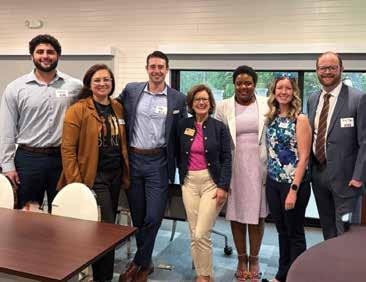
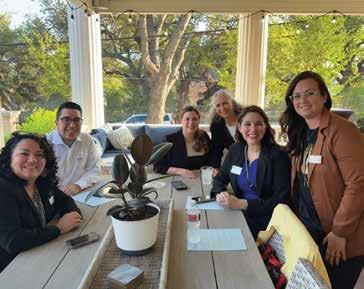
2026 Diversity Bar Mixer
The 2026 Diversity Bar Mixer was a great success. Members of our legal community came together to connect, collaborate, and celebrate the strength of diversity in the profession. The following organizations make this annual night of fellowship possible: Austin Asian American Bar Association, Austin LGBTQ+ Bar Association, Austin Black Lawyers Association, Austin Hispanic Bar Association, Austin Young Lawyers Association, Austin Bar Association, South Asian Bar Association of Austin, Travis County Women Lawyers’ Association. AL

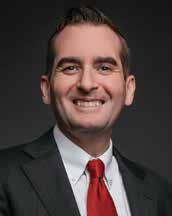
Ari Cuenin is a partner at Stone Hilton, where he litigates complex government disputes. He has presented more than 30 arguments in state and federal courts, and has been involved in more than a dozen U.S. Supreme Court cases for the State of Texas.
COSTS: Fifth Circuit affirms substantial prevailing-party cost award.
Clouse v. Southern Methodist University, No. 24-10860 (5th Cir. )
The Fifth Circuit affirmed a significant cost award under Federal Rule of Civil Procedure 54(d), holding that SMU qualified as a “prevailing party” and that the plaintiffs failed to overcome the strong presumption in favor of taxing costs. The underlying litigation involved Title IX and negligence claims by student-athletes, most of which were dismissed on limitations grounds. Although one plaintiff’s claims survived in part, the district court awarded over $184,000 in costs to SMU. On appeal, plaintiffs argued that SMU was not a prevailing party given the mixed outcome and that equitable considerations warranted denying costs. The Fifth Circuit rejected both arguments. It held that prevailing-party status is assessed based on a “material alteration of the legal relationship,” which was satisfied by SMU’s dispositive victories against eight plaintiffs. The court also emphasized that the equitable factors rarely overcome the presumption in favor of costs and found no meaningful showing of financial hardship, public benefit, or exceptional circumstances.
The court also addressed recoverability of both video and transcript deposition costs, joining other circuits in holding that both are taxable where “necessarily obtained,” not merely for convenience.
Clouse thus provides important guidance on recoverable litigation expenses, particularly in complex, multiparty cases. And the case strengthens the already robust presumption favoring cost awards, especially where there is no well-developed evidentiary record supporting denial.
POST-JUDGMENT RELIEF:
Court demands excusable-neglect analysis under Rule 60(b).
Deras v. Johnson & Johnson Services, Inc., No. 25-10977 (5th Cir.)
The Fifth Circuit vacated the denial of Rule 60(b) relief where a district court imposed an improper standard in evaluating a motion to reopen a case dismissed for failure to comply with a local rule requiring local counsel. The district court issued a notice that failure to comply with this rule may result in dismissal of the case “without prejudice or without further notice,” citing Campbell v. Wilkinson, 988 F.3d 798 (5th Cir. 2021), and Jones v. Meridian Security Insurance Co., No. 2310148 (5th Cir. Oct. 5, 2023) (per curiam).
The plaintiff’s counsel failed to timely designate local counsel as required, resulting in dismissal without prejudice under Rule 41(b). The plaintiff promptly moved to reopen under Rule 60(b)(1), citing excusable neglect due to a calendaring error.
The district court denied relief, requiring the plaintiff to show that the dismissal without prejudice functioned as a dismissal with prejudice (i.e., that the claim was time-barred). The Fifth Circuit held this was legal error. It clarified that cases like Campbell and Jones—which address appellate review of Rule 41(b) dismissals—do not impose any such threshold requirement in the Rule 60(b) context. Instead, Rule 60(b)(1) requires analysis of excusable-neglect factors, which the district court failed to consider.
Deras thus reflects a doctrinal correction: Rule 60(b) relief must be evaluated under its own standards, not conflated with Rule 41(b) dismissal review. For litigators, the case provides useful support to challenge rigid or extra-textual standards imposed by district courts. And it reinforces the importance of framing post-judgment relief arguments around the appropriate factors rather than downstream prejudice.
DISCOVERY: Court vacates discovery order over nonparty prosecutor’s work product.
Ayestas v. Harris County District Attorney’s Office, No. 25-70014 (5th Cir.)
A Fifth Circuit panel held that a discovery order directed at a nonparty prosecutor asserting work-product protection was immediately appealable under the collateral-order doctrine and vacated the order as improper. In federal habeas proceedings, a magistrate judge had compelled the Harris County District Attorney’s Office—a third party—to produce decades of internal charging memoranda and the full prosecutorial file, including materials traditionally protected as work product. The District Attorney’s Office appealed that ruling directly to the Fifth Circuit.
The court first addressed appellate jurisdiction. Although discovery orders are ordinarily not immediately appealable, the panel emphasized that nonparties are differently situated: unlike parties, they lack control over the litigation and cannot reliably obtain review after final judgment. The court distinguished privilege disputes involving parties from those involving nonparties, where disclosure itself causes irreparable harm. Because the order required production of sensitive prosecutorial materials and implicated substantial public interests, the order was effectively unreviewable later and fell within the collateral-order doctrine. The panel majority stressed that the work-product protection carried heightened institutional concerns, including protecting prosecutorial discre -
tion and avoiding the chill of law enforcement’s decision-making. These considerations dovetailed with the lack of an explicit jurisdictional deadline for nonparties to challenge adverse magistrate-judge discovery rulings under Rule 72 of the Federal Rules of Civil Procedure. Over Judge Southwick’s dissent, the panel majority concluded that the District Attorney’s Office had timely challenged the discovery ruling by appealing it under Rule 4 of the Federal Rules of Appellate Procedure. Because the underlying habeas claims were jurisdictionally barred, however, the panel ultimately concluded that the court below had lacked authority to compel any discovery at all. This decision strengthens appellate protections for nonparties resisting discovery, particularly government entities asserting privilege. It provides guidance for navigating timeliness around appealing those rulings. And it signals that courts will closely scrutinize discovery orders that intrude into prosecutorial deliberations or other high-value institutional privileges. AL



Laurie Ratliff is a former staff attorney for the Third Court of Appeals. She is board-certified in civil appellate law by the Texas Board of Legal Specialization and owner of Laurie Ratliff LLC.
The following are summaries of selected civil opinions issued by the Third Court of Appeals during March 2026. The summaries are an overview; please review the entire opinion. Subsequent histories are current as of April 9, 2026.
>FAMILY
LAW: Court reverses failure to follow premarital agreement.
Hutcherson III v. Hutcherson, No. 03-24-00297-CV (Tex. App.— Austin Mar. 19, 2026, no pet. h.). The parties signed a premarital agreement (PMA) that delineated each spouse’s separate property and the division of the community if they divorced. Wife filed for divorce after almost 30 years of marriage. The trial court awarded wife $900k in the division of the community estate and ordered spousal maintenance for 10 years. Husband’s separate-property businesses funded the parties’ lavish lifestyle; the community estate had little value. In an issue of first impression, the court of appeals held that Family Code Section 7.001’s just and right division does not apply with a valid and enforceable PMA that divides the community estate. The trial court could not deviate from the PMA. The court upheld the spousal-maintenance award. The court affirmed in part and reversed and remanded in part.
MANDAMUS: Court grants relief in a child-custody habeas.
In re Uzcategui, No. 03-26-00090CV (Tex. App.—Austin Mar. 18, 2026, orig. proceeding) (mem. op.). Mother and father obtained an agreed custody order in Venezuela granting mother exclusive possession of child. Father relocated to Texas. Mother and child later joined father. Parents ultimately separated and mother was deported. Father refused to return child to mother in Venezuela. The trial court denied mother’s habeas petition. The court of appeals observed that, if a party demonstrates a bare legal right of possession of the child, the trial court has no discretion to deny habeas unless the opposing party presents evidence raising a serious immediate question concerning the child’s welfare. The agreed custody order established mother’s bare legal right of possession. Father presented no evidence of imminent danger. The court further noted that a trial court cannot deny a child-custody habeas on best interests.
The court granted mandamus relief.
EMPLOYMENT: Court reverses dismissal of religious-discrimination claim.
Oksuz v. Harmony Public Schools, No. 03-25-00325-CV (Tex. App.—Austin Mar. 11, 2026, no pet. h.) (mem. op.). After Oksuz stopped participating in the Gulen movement, Harmony transferred him to a dead-end position and later terminated him. Oksuz sued Harmony for religious discrimination and retaliation. Harmony filed a plea to the jurisdiction on immunity grounds against the religious-discrimination claim only. The trial court granted the plea and dismissed both claims. The court of appeals considered whether the Gulen movement was a protected religious belief and noted that the sincerity of a person’s religious belief is a question of fact unique to each case. Oksuz’s evidence raised a fact issue on whether the Gulen movement was a religious belief under the TCHRA. The trial court further
erred in dismissing the retaliation claim when Harmony did not seek dismissal of it.
The court reversed and remanded.
PARENTAL TERMINATION: Court reverses summary-judgment terminating father’s parental rights.
D.L.J. v. M.D.S., No. 03-2500696-CV (Tex. App.—Austin Mar. 6, 2026, no pet. h.) (mem. op.). Mother and stepfather petitioned to terminate father’s parental rights and for stepfather to adopt child. After mother died, stepfather filed a motion for summary judgment based on father’s criminal conduct and current imprisonment. The trial court granted summary judgment terminating father’s parental rights. The court of appeals questioned granting summary-judgment on best interest when that determination requires weighing and balancing numerous factors. Stepfather’s summary-judgment evidence included an adoptive social study
favorable to him. Father’s summary-judgment evidence included child’s grandmother’s testimony of her willingness to care for child and Mother’s sworn statement that she wanted child’s grandmother to care for child if mother could not. Thus, there was not clear and convincing evidence that termination was in child’s best interest.
The court reversed and remanded for trial. AL
EMBRACING AI FOR LEGAL PROFESSIONALS
Gain practical AI fluency.
Reduce wasted time.
Strengthen your professional edge.
Learn how to use AI tools strategically and ethically in your practice.
the shift - don’t chase it.
self-paced - enroll now.


The following is a summary of selected criminal opinions issued by the Third Court of Appeals from September and October 2025. The summary is an overview; please review the entire opinions. The subsequent history is current as of April 13, 2026.
>SENTENCING – ALLOCUTION:
Defendant forfeited his right to allocution during trial.
Gonzales v. State, 722 S.W.3d 351 (Tex. App.—Austin 2025, no pet.). Gonzales was convicted of two counts of continuous sexual abuse of a child and sentenced to 25 years’ imprisonment for each count, with the sentences stacked. On appeal, Gonzales argued in part that the trial court violated his right to due process by denying him the common-law right to allocution before sentencing. Allocution refers to the defendant’s opportunity to speak for himself before the imposition of sentence and ask for mitigation. The court observed that the right to allocution is absolute under Texas statutory law: “Before pronouncing sentence, the defendant shall be asked whether he has anything to say why the sentence should not be pronounced against him.” Tex. Code Crim. Proc. art. 42.07. However, the statute provides that “[t]he only reasons
which can be shown, on account of which sentence cannot be pronounced, are that the defendant (1) has received a pardon; (2) is incompetent to stand trial; or (3) is not the person who has been convicted. Id. The common-law right to allocution contains no such restrictions.
Before pronouncing sentence, Gonzales was not “asked whether he has anything to say why the sentence should not be pronounced against him,” and he failed to notify the trial court of his desire to exercise his common-law right to allocation before the imposition of sentence. Gonzales acknowledged that appellate courts have held that such a failure waives any complaint on appeal, but he argued that he should not be held to have forfeited any error because the right to allocution should be considered a right “which must be implemented by the system unless expressly waived.” The appellate court observed that “[i]t is unclear whether the common law right to allocution sur vives article 42.07, much less that the common law right is a Cate gory 2 Marin right” that must be implemented by the system unless expressly waived. “Regardless,” the court agreed with other courts that had considered the issue and “held that the failure to assert the common law right to allocation at trial forfeits error.”
DNA TESTING: Favorability of evidence, due process concerns, and issues challenging the under lying conviction.
In re Roberson, 722 S.W.3d 367 (Tex. App.—Austin 2025, pet. ref’d). Roberson was convicted in 1998 of aggravated sexual assault and later filed a motion for DNA re-testing of samples associated with his conviction. The convict ing court ordered re-testing of the samples. After the test results came back, the court concluded that the results of the DNA test ing were “not exculpatory” and that, if they had been available during the 1998 trial, “it is rea sonably probable that [Roberson] would have been convicted.” The appellate court affirmed. It first considered the convicting
court’s conclusion that the results were not favorable. The court explained that the meaning of “favorable” is tied to whether the DNA evidence, if available at the time of trial, would have created a reasonable probability that the person would not have been convicted. In this case, it did not. Although the re-testing “undermine[d] the reliability of the most damning DNA evidence presented at the guilt-innocence phase of trial,” “the weakened inculpatory inference from the DNA evidence did not create a reasonable likelihood of a different outcome” because there was other scientific evidence in the case that connected Roberson to the crime.
Roberson also argued that the convicting court violated his due-process rights by failing to rule on his motions for counsel and for a free trial record on appeal. The appellate court held that “[t]he convicting court did not violate Roberson’s limited rights under Chapter 64.” Roberson re -
motion, and, after the test results came back and counsel moved to withdraw from representation, Roberson informed the convicting court he was not requesting replacement counsel. Moreover, “although indigent defendants have the right to a free trial record on direct appeal, they do not have that right for collateral attacks on their convictions,” and a Chapter 64 proceeding is “subsidiary to a collateral attack” on a conviction. Finally, the appellate court rejected Roberson’s evidentiary and sufficiency challenges to his underlying conviction. The court explained that “[t]hese trial-based claims are beyond the scope of a Chapter 64 appeal” and that “[t] he remedy in a Chapter 64 proceeding is limited to obtaining DNA evidence and findings based on any test results.” A
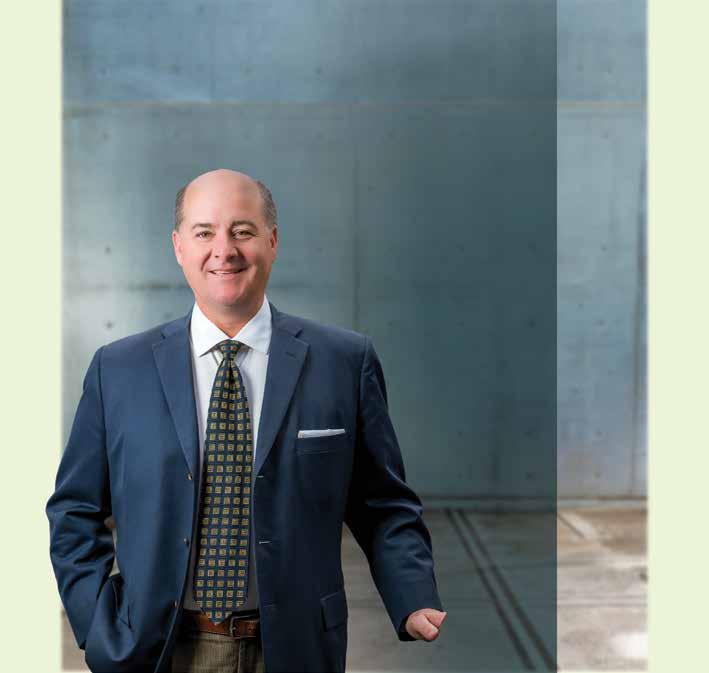

Zak Hall is a staff attorney for the Third Court of Appeals. The summaries that follow represent the views of the author alone and do not reflect the views of the Court or any of the individual justices on the Court.
March 2026 Jury Trials District And County Court Only
BY VELVA PRICE, TRAVIS COUNTY DISTRICT CLERK
CIVIL
Spot Surface, LLC, Cecyll Padilla v. CBA Design & Build Inc., 1111 Turtle Creek, LLC, 5205 Gladstone, LLC
Cause No: C-1-CV-21-005222
Judge: Todd Wong, Court at Law No. 1
Dates: March 19-27, 2026
Attorneys:
Plaintiffs: Nestor J. Lopez-Garcia, Law Office of Nestor J. Lopez, LLC (San Antonio)
Defendants: Sean Johnson, Joseph Brophy, Brophy & Johnson (Austin)
Summary: Plaintiffs sued Defendant for breach of contract, quantum meruit, and breach of fiduciary duty. Plaintiffs claimed they were hired to perform construction work. In the amended petition, Plaintiff claimed to have completed the work and submitted an invoice to the property owner on three separate contracts. The property owner paid the invoice, but a few days later disputed the payments made via credit card. A unanimous jury found as follows: Dorchester Property: CBA Design failed to comply with the agreement with Spot Surface, but Spot Surface did not fail to comply with the agreement with CBA Design. Damages awarded to fairly and reasonably compensate Plaintiff resulting from CBA Design’s failure to comply with the agreement: $7,655. CBA Design failed to promptly pay the amounts owed to Spot Surface with respect to the agreement, and CBA failure to pay promptly was not excused. CBA Design intentionally, knowingly, and with intent to defraud misapplied the construction trust funds of which Plaintiff was a beneficiary, and CBA Design misapplication of funds was not excused. Amount of construction trust funds of which Plaintiff and was not paid: $7,655. Exemplary damages against CBA Design: $1,531.
Aria Property: CBA Design
failed to comply with the agreement with Spot Surface, but Spot Surface did not fail to comply with the agreement with CBA Design. Damages awarded to fairly and reasonably compensate Plaintiff resulting from Defendant’s failure to comply with the agreement: $11,620. CBA Design failed to promptly pay the amounts owed to Spot Surface with respect to the agreement, and CBA failure to pay promptly was not excused. Amount of construction trust funds of which Spot Surface was a beneficiary and not paid: $8,120. Found by clear and convincing evidence that harm to Plaintiff by CBA Design resulted from fraud and malice. CBA Design intentionally, knowingly, and with intent to defraud misapplied the construction trust funds of which Plaintiff was a beneficiary, and CBA Design misapplication of funds was not excused. Exemplary damages against CBA Design: $1,624.
Clairmont Property: CBA Design failed to comply with the agreement with Spot Surface, and Spot Surface failed to comply with the agreement with CBA Design. Spot Surface failed to comply with the agreement first and did not substantially perform the construction obligations of the agreement with CBA Design. Damages awarded to fairly and reasonably compensate CBA Design resulting from Plaintiff’s failure to comply with the agreement: $0. CBA Design failed to promptly pay the amounts owed to Spot Surface with respect to the agreement, and CBA failure to pay promptly was not excused. Amount of construction trust funds of which Spot Surface was a beneficiary and not paid: $20,084. Found by clear and convincing evidence that harm to Plaintiff by CBA Design resulted from fraud and malice. CBA Design intentionally, knowingly, and with intent to
defraud misapplied the construction trust funds of which Plaintiff was a beneficiary, and CBA Design misapplication of funds was not excused. Exemplary damages against CBA Design: $4,016.80.
Branigan Mulcahy v. CPG 220 Holdings 2014, LLC and CPG 208 Nueces Holdings 2015, LLC
Cause No.: D-1-GN-21-005046
Judge: Jan Soifer, 345th District Court
Dates: March 23–25, 2026
Attorneys:
Plaintiff: Kevin Terrazas, Arambula Terrazas, PLLC (Austin)
Defendants: John Saba, Maria Broaddus and Matthew Gates, Wittliff Cutter PLLC (Austin) Summary: Plaintiff filed a breach of contract claim against Defendants, claiming that Defendants failed to pay the distribution owed. Plaintiff presented the following facts: In March 2014, Cielo Property Group, LLC, hired Plaintiff as a vice president of acquisitions. During Plaintiff’s employment, he received co-ownership of several companies, including CPG 220 and Third and Shoal. Plaintiff claims he was entitled to membership interest in the companies but did not receive a distribution made to shareholders when CPG was sold. The jury charge contained the following stipulations: Defendant CPG 220 breached its company agreement and notice of grant by failing to pay the required distributions to Plaintiff and owed $74,017. Third and Shoal breached its company agreement and notice of grant by failing to pay the required distributions to Plaintiff and owed $3,087,600. A unanimous jury awarded the following damages: $16,101.79 to fairly and reasonably compensate Plaintiff for damages related to IRS penalties and interest that were a natural, probable and foreseeable consequence of CPG 220’s failure to comply with the company agreement and notice of grant; $625,754.44 to fairly and reasonably compensate Plaintiff for his damages related to IRS penalties and interest that were the natural, probable, and foreseeable consequence of Third and Shoal’s failure to comply with
the company agreement and notice of grant.
WSH 71 TX Owner, LP v. Carina Urbina Padilla, Nicholas Valdez And All Other Occupants
Cause No.: C-1-CV-25-006847
Judge: Eric Shepperd, County Court at Law No. 2
Dates: March 23–25, 2026
Attorneys:
Plaintiff: Patrick G. Drake, Messner Reeves, LLP (Greenwood Village, CO)
Defendants: Self-Represented
Summary: This is an appeal of an eviction case. After Plaintiff and Defendant presented their case, Defendant presented an oral motion for a directed verdict, which was granted by the court. The defendant was awarded possession of the premises, delinquent rental of $10,092.67, and attorney’s fees of $5,100.
CRIMINAL
State of Texas v. Alejandro Aguilar Cause No.: D-1-DC-22-907122
Judge: Karen Sage, 299th District Court
Dates: March 2-3, 2026
Attorneys:
State of Texas: Konnor Rodriguez
Defendant: Albert Casias Machado (Austin)
Summary: Defendant was arrested for violating the bond conditions by contacting the victim directly several times and going to the victim’s residence. The jury found Defendant guilty of violating a bond/protective order two or more times within a 12-month period. The judge sentenced the defendant to community supervision for four years and required him to pay restitution to the crime victim.
State of Texas v. Justin Gutierrez Cause No.: D-1-DC-25-500105
Judge: Cliff Brown, 147th District Court
Dates: March 3-4, 2026
Attorneys:
State Of Texas: Maximillian Shaps
Defendant: Marc Anthony Chavez (Austin)
Summary: Defendant was accused of assault by impeding breath or circulation. The jury found the defendant guilty of assault by impeding breath or circulation and aggravated assault with a deadly weapon. Jury sentenced Defendant to 10 years and fined him $5,000 for each count. The jury suspended both sentences and determined Defendant should be placed on community supervision since the defendant has never been convicted of a felony in this state or any other state. The jurors did not waive the fines. The sentences were suspended, and the defendant was placed on community supervision for four years for each count. The sentences will run concurrently.
State of Texas v. Andreea Nica
Cause No.: C-1-CR-23-502300
Judge: Mary Ann Espiritu, County Court at Law No. 5
Dates: March 9-11, 2026
Attorneys:
State Of Texas: Raven Pena Defendant: Richard Michael (Austin)
Summary: Defendant was charged with assault with bodily injury arising out of a child custody exchange where the defendant forcefully shoved the door, and it closed on the victim’s leg, causing injury. The jury found the defendant guilty and sentenced the defendant to one year in confinement in Travis County Correctional Center and a $4,000 fine.
State of Texas v. Francisco Villafranca-Funes
Cause No.: D-1-DC-25-300528
Judge: Dayna Blazey, 167th District Court
Dates: March 9-12, 2026
Attorneys:
State of Texas: Jacob Salinas/ Emmanuel Ojomo
Defendant: Raymond Espersen (Austin)
Summary: In March 2026, the defendant was indicted for two counts of aggravated sexual assault of a child, two counts of sexual assault of a child, and two counts of indecency with a child by sexual contact. Defendant was found guilty of four of the six counts–two counts of aggravated

sexual assault of a child and two counts of indecency with a child by contact. Defendant was sentenced to 60 years for the sexual assault and 15 years for the indecency with a child.
State of Texas v. Neil Whorton Cause No.: D-1-DC-25-904091
Judge: David Crain, 390th District Court (visiting)
Dates: March 9-13, 2026
Attorneys:
State of Texas: Lorraine Garcia
Defendant: Amber Lyn Vazquez (Austin)
Summary: Defendant was accused of seven counts of continuous sexual abuse of a young child, indecency with a child by contact, and aggravated sexual assault of a child. The jury found the defendant not guilty of all seven counts.
State of Texas v. Indalecio Ariza Cause No.: D-1-DC-25-900010
Judge: Brandy Mueller, 403rd District Court
Dates: March 23-24, 2026
Attorneys:
State Of Texas: Bernard Ammerman
Defendant: Richard Michael (Austin)/Ben Florey, Dunham & Jones (Austin)
Summary: Defendant was charged with the offense of theft because the person unlawfully appropriated property with the intent to deprive the owner of the property, and the value is $2,500 or more but less than $30,000. The jury found Defendant not guilty of property theft.
State of Texas v. Jack Moore Cause No.: D-1-DC-24-208808; 303956
Judge: Leon Grizzard, Magistrate Court
Dates: March 26, 2026
Attorneys:
State of Texas: Jean Sullivan
Defendant: Brian Clarke Erskine, Erskine Law (Austin)
Summary: Defendant was indicted for murder, and the issue of competency was raised. The jury found the defendant mentally incompetent to stand trial. AL
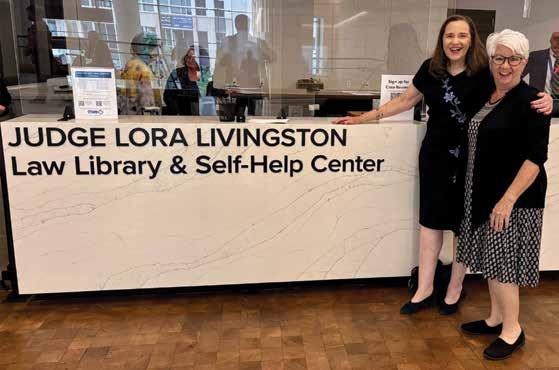
Travis County Law Library Renamed to Honor Judge Livingston
The Travis County Law Library and Self-Help Center has been renamed to the Lora Livingston Law Library and Self-Help Center. The change was celebrated with a dedication ceremony on March 31, 2026, at the Travis County Civil and Family Court Facility, where the law library is located
Judge Livingston, who retired from the 261st District Court in 2022, is a long-time supporter of self-represented litigants’ rights.
Judge Livingston first learned about the idea of establishing a self-help center for self-represented litigants while attending an American Bar Association program.
“When she got back from the conference, she bought an easel with her own money, which she set up in the middle of the first floor of the old courthouse, so the daily docket schedule could be posted in an easily accessible and visible place,” said Lisa Rush, director of the newly named law library.
The center helps individuals guide themselves through such legal matters as:
Expunctions
Small claims
Tenant-landlord issues
Wills and estate planning
Divorce
Paternity matters
Name changes
While the Center does not represent anyone, it does provide legal information to individuals,
which allows them to make informed decisions,” Judge Livingston wrote in a 2022 Austin Lawyer article recounting her career. “I appreciate that so many get this information with the help of the dedicated public-interest lawyers and other professionals committed to this cause. The SelfHelp Center is celebrating more than 20 years in operation, and I could not be prouder of this ac -

cess-to-justice initiative.”
At the March 31 event, speakers included Geoff Burkhart, county executive for Travis County Legal Services; 201st Civil District Judge Amy Clark Meachum; Travis County Law Library Director Lisa Rush; Harriet Miers, chair of the Texas Access to Justice Commission; Ronald Flagg, president of the Legal Services Corporation; and, of course,
Judge Livingston herself.
“The creation of the Travis County Self- Help Center, located in the Travis County Law Library, stands out as one of the things I am most proud of during my tenure on the bench,” Livingston wrote. AL
Judge Lora Livingston with Travis County Commissioner Brigid Shea. The Travis County Law Library and Self-Help Center, which is celebrating more than 20 years in operation, now honors Judge Lora Livingston (left) as its namesake. Judge Livingston first learned about the idea of establishing a self-help center while at an American Bar Association event.
HISTORY
of the Travis County Law Library and Self-Help Center
1891 Law library is established in district court courtroom.
1949 Law library fund is established.
2000 Number of self-represented litigant patrons begins to really increase
2002 Two half-time reference attorneys are hired in January and begin drafting forms and establishing procedures to assist self-represented litigants with uncontested family law matters. They begin seeing patrons at the beginning of March 2002. This becomes the first self-help program in Texas. There isn’t office space for them, so they sit at a table in the old law library on the fourth floor of the Heman Marrion Sweatt Courthouse. Later, the courthouse law library is moved to the first floor. The reference attorney “office” is created by creatively using tall bookcases. Reference attorneys attend the daily uncontested docket to assist self-represented litigants.
2011 The courthouse law library and the Ned Granger Building Law Library consolidate on the first floor of the Ned Granger building. By this time, the number of self-represented litigants really outnumbers the attorney patrons. We still have the books, and librarians still email cases, research, and forms to attorneys, but fewer and fewer attorneys come to the law library.
2018 Criminal records program begins. Reference attorney hired to help pro se litigants with expunctions and non-disclosures.
Austin Bar Foundation Veterans Legal Assistance Program Managing Attorney Doug Lawrence and Texas RioGrande Legal Aid open offices in the law library. In 2020, the offices were closed because of the pandemic and did not reopen.
Collaboration with Austin Bar Foundation’s CANLAw Clinic begins.
2018 2023 2024 2026
1909 Office of librarian is abolished. Janitors are paid $5 per month to look after the books.
1913 County law librarian is appointed.
2001 Judge Livingston forms the Pro Se Litigants Committee. She had been charged by the Civil District Courts to find a solution to the procedural impediments that prevent unrepresented litigants from receiving equal access to justice in Travis County.
Oct. 1 Travis County Commissioners Court funds the Law Library’s reference attorney program.
2004 The law library receives a grant to develop forms for self-represented litigants to be published on TexasLawHelp. The reference attorney who created the forms as part of that grant, Karen Speed Miller, is now the executive director of Texas Legal Services Center.
2012 A commissioners court proclamation recognizes the contributions of the reference attorney program on the 10th anniversary of the Self-Help Program.
2013 Driver’s license program begins. Reference attorney hired to help pro se litigants with driver’s license issues and occupational driver’s license orders.
2023 Law library moves from Granger building to new Civil and Family Court Facility.
2024 Law library recognized by commissioners court for its services to survivors of domestic violence.
March 31, 2026 Law Library & Self-Help Center dedication. Named in honor of Judge Lora Livingston.
Applications Are Now Open for the American Inns of Court
The Austin chapters of American Inns of Court are accepting applications for the 2026-2027 terms. The American Inns of Court are designed to improve the skills, professionalism and ethics of the bench and bar. Information about the American Inns of Court can be found at https:// home.innsofcourt.org/. Each Inn meets monthly. The deadline to apply is May 29, 2026. Interested applicants should submit a letter of interest, a current resume, and two letters of recommendation to the membership chairs below.
Robert W. Calvert Inn of Court
The Robert W. Calvert Inn of Court is the first Inn established in Austin has been awarded Platinum recognition by the American Inns of Court. Applications are welcome from any practicing attorney or judge in Travis County and contiguous counties Membership is open to all Licensed Texas attorneys without regard to area of practice or trial experience. Contact Kevin Terrazas (kterrazas@ atlawpllc.com) or Shelby O’Brien (shelby.obrien@butlersnow.com) for more information.
Barbara Jordan Inn of Court
The Barbara Jordan Inn of Court is accepting applications from any practicing litigation
attorney, government attorney, judicial law clerk/staff attorney, in-house counsel, or judge from Travis County or the contiguous counties. The Barbara Jordan Inn enjoys an enthusiastic and diverse community of members committed to honor Barbara Jordan’s legacy of collegiality, professionalism, and integrity. The Inn has received Platinum recognition by the American Inns of Court. Membership is open to all licensed Texas attorneys, and graduating 3Ls awaiting bar results, without regard to practice area or years of experience. Contact Grayson McDaniel (gmcdaniel@mvbalaw. com) for more information.
The Honorable Lee Yeakel Intellectual Property Inn of Court
The Honorable Lee Yeakel Intellectual Property Inn of Court focuses on intellectual property law. The Inn’s membership includes judges, judicial clerks, special masters, inhouse counsel, litigators, IP prosecution attorneys, transactional attorneys, professors, and law students. The Yeakel IP Inn accepts membership applications during the entire month of May each year. Contact Brian Nash (bnash@mofo.com) or Travis Wimberly (twimberly@pirkeybarber.com) and visit https://inns. innsofcourt.org/for-members/inns/ the-honorable-lee-yeakel-intellectual-property-american-inn-of-court/

application-information/, for more information.
Lloyd Lochridge Inn of Court
The Lloyd C. Lochridge American Inn of Court is dedicated to the promotion of excellence in professionalism, ethics, civility, and legal skills within the Austin litigation community. Applications are welcome from any practicing litigation attorney or judge. Membership is limited to the number of available openings. Contact Jacob Scheick (jacob@pilothouselitigation.com) and copy Christina Eischens (christina@pilothouselitigation.com) for more information.
Larry E. Kelly American Bankruptcy Inn of Court
The Larry E. Kelly American Bankruptcy Inn of Court is an organization of judges, lawyers, legal educators, and law students dedicated to promoting excellence in legal advocacy in all areas of bankruptcy practice. The LEK Inn has been awarded Platinum recognition by the American Inns of Court. Membership is available to practicing attorneys, bankruptcy judges and their law clerks, as well as law students interested in the practice of bankruptcy law. Contact Rhonda Mates (mates@slollp. com) for more information. AL

TOP USES FOR AI AT LAW FIRMS IN 2026
BY ROB HEIDRICK SPONSORED CONTENT
AI adoption has accelerated across the legal profession, reshaping how attorneys approach everyday work.
According to the 2026 Legal Industry Report from 8amTM, 69% of legal professionals reported using generative AI tools such as ChatGPT, Google Gemini, and Claude for work-related tasks—up from 31% in 2025. Many attorneys are also seeing significant efficiency gains from using AI tools, with 38% of respondents reporting time savings of one to five hours per week.
Below is a breakdown of the most common uses for generative AI at law firms in 2026, based on responses from over 1,300 legal professionals who participated in the 8am survey.
1. Drafting correspondence (58%)

Legal professionals rely on AI to generate client emails, follow-ups, case updates, and internal communications. Rather than starting from scratch, attorneys and legal staff can quickly produce a structured draft, adjust tone, and add context before sending. This helps them respond faster while maintaining a consistent, professional voice.
2. General research (58%) and brainstorming (54%)
AI supports early-stage case preparation by helping attorneys explore potential strategies, identify relevant legal issues, and outline arguments. This allows lawyers to move through initial analysis more efficiently and spend more time validating legal theories, prioritizing next steps, and crafting more effective case strategies.
3. Summarizing documents (47%)
AI tools can extract key points and produce concise summaries of lengthy filings, deposition transcripts, and discovery materials. Attorneys can quickly identify relevant facts, timelines, and inconsistencies across documents, making it easier to review complex records efficiently and focus on information that directly impacts case strategy.
4. Drafting legal documents (43%) and templates (39%)
Lawyers are using AI to generate early drafts of motions, suggest contract language, and build document templates. While these drafts still require human review, they provide a strong starting point that shortens drafting cycles and creates more time for substantive legal work.
5. Editing and improving writing (37%)
AI-powered writing assistants help legal teams improve the quality and structure of written materials. Attorneys can use these tools to tighten language, reorganize sections, and strengthen the flow of arguments, reducing time spent on manual editing while producing more concise, polished documents.
Keeping pace with AI in legal practice
As firms continue to incorporate legal AI tools into their workflows, operational efficiency will be a primary focus.
8am LawPay helps firms keep pace with the speed of AI-driven work by streamlining billing and payments, reducing administrative friction, and improving cash flow. Book a LawPay demo (www.lawpay.com/member-programs/austin-bar/) to see how it can help your firm modernize its operations and get paid faster.
For a deeper look at legal AI adoption and other trends across the legal profession, download the 2026 Legal Industry Report today (www.8am.com/reports/ legal-industry-report-2026/).

Rob Heidrick is a Senior Content Strategist for 8am, a leading professional business platform. He covers the latest advancements in legal technology, financial wellness for law firms, and key industry trends.
Second-Annual Austin Bar Association Golf Tournament
Thank you to everyone who supported the second-annual Austin Bar Association Golf Tournament!
Held at Lions Municipal Golf Course, the tournament had a total of 19 four-person teams registered.
The tournament kicked off with a shotgun start at 8 a.m., and concluded around 1 p.m.
After the tournament, a luncheon was held in the Lions ballroom, where raffle prizes and awards were given out.
In third place, with a score of 63, was the team of Greg Bakunas, Zach Hunter, Stephen Rye, and Mitch Thompson.
In second place, with a score of 60, was the team of Jesús Salinas, Joe Caputo, Jason Aldridge, and Judge Sylvia Holmes.
In first place, with a score of 58, was the team of Todd Ruff, Steve Garven, Tom Nesbitt, and Hugh Tien.
Thank you to all of our players and sponsors, who made this year’s tournament even more successful than last year. In particular, the Austin Bar thanks Title Sponsor Thomas J. Henry for their support. AL





The team of Tom Nesbitt, Hugh Tien, Todd Ruff, and Steve Garven putting.
(L-R): Chris Gamble, Hon. Rudy Metayer, Austin Bar President-Elect Judge Maya Guerra Gamble, and Bey Keyser.
(L-R): Noah Torres, Alexandra “Za” Leissner, County Court at Law #7 Judge Elisabeth Earle, and Paul Jacobs.
Fundraising Committee co-chair Alex Conant (L) and Austin Bar President Maitreya Tomlinson (R) pose with the team of (L-R) Todd Ruff, Steve Garven, Tom Nesbitt, and Hugh Tien, who won first place in the golf tournament with a score of 58.
(L-R): Austin Bar President-Elect Judge Maya Guerra Gamble, Austin Bar President Maitreya Tomlinson, Third Court of Appeals Justice and former Austin Bar President Chari Kelly, and Austin Bar Foundation Chair Mary-Ellen King.
Austin
Despite recent economic and political uncertainty, U.S. investment in Mexico and Latin America continues to accelerate. In 2025, Brazil saw $82 billion in foreign direct investment from U.S. companies alone. Mexico recorded over $40 billion in foreign direct investment during 2025 from U.S. companies, up 10% from 2024. This year, just in January and February, U.S. companies have announced total investments of $5.839 billion in Mexico. Colombia and Chile remain strong favorites for the U.S. to keep investing in their respective mining and energy industries.
Despite this growing trend, U.S. companies expanding into Mexico and Latin America often face regulatory shock when they encounter data protection frameworks that mirror Europe’s “omnibus” regime rather than the American “patchwork” model. Companies often assume that B2B transactions carry lower regulatory risk, only to discover that Latin American data protection laws apply regardless of whether the transaction involves consumers. In reality, these frameworks apply standardized data protections universally, regardless of the industry or context. This means that individuals—whether they are employees, volunteers, or suppliers—possess robust, enforceable rights that can quickly disrupt negotiations or delay transactions. These differences reflect two distinct legal philosophies: in the United States, regulators typ-
The Data Protection Surprise in Cross-Border Business
Doing business with Mexico and LATAM keeps trending up
BY JULIO A. LORET DE MOLA, BUDNIK & REED

ically treat data protection as a consumer-protection issue, while Mexico and the rest of Latin America treat data protection as a fundamental right, which justifies broader regulatory oversight of private actors. Understanding and addressing these differences early on in cross-border transactions can help companies avoid compliance surprises while building trust with customers, employees, and partners in the region.
What to Expect (Generally)
Compliance personnel often encounter several hoops through which they have to jump in Mexico and Latin America in order for their deals to run smoothly in the region without subjecting them to liability under data protection laws. Generally, five hurdles stand out to those new to the region: First, common U.S. practices in marketing and information monetization often qualify as regulated data processing that can trigger
violations of stricter consent and legal basis rules. Omnibus data protection statutes in Latin America have some of the broadest scopes of applicability, extending liability to U.S. based entities. Brazil’s omnibus data protection statute applies to processing carried out in Brazil, processing involving individuals located in Brazil, and processing intended to offer goods or services in Brazil.
Second, jurisdictions in the region make it (by design) much easier for a complaint to be filed against violations of data protection rights. These complaints can be filed both in court and before the administrative agencies in charge of enforcing data protection statutes. Colombia’s omnibus data protection statute grants the regulatory government agency in charge of its enforcement the authority to hear complaints for data protection violations and prosecute the alleged violators, regardless of whether the complainant is
a consumer, or any other specific type of data subject.
Third, private causes of action in data protection are far more common than in the United States. Mexico’s omnibus data protection statute allows affected data subjects to choose between an administrative complaint (before the government agency in charge of enforcing data protection laws) or a judicial cause of action (for general civil liability). The only requirement for data subjects to move forward with a complaint is to show they have been affected by an alleged breach of the data protection statute.
Fourth, liability does not stop at the entity in charge of processing, it can extend to individuals in the region. Mexico’s omnibus data protection statute goes as far as to impose criminal liability for purely data-processing actions, with penalties up to 5 years in prison. Without realizing it, a U.S. entity operating in Mexico through a do-
mestic subsidiary could be exposing local executives, compliance personnel, or data processors to individual liability.
Fifth, failing to comply can have a high cost to the company and violations can have consequences beyond mere monetary sanctions. U.S. entities that are new to the region should not make the mistake of assuming they can “afford” to be fined just because of the relatively small fines by comparison to the fines that can be seen in the United States. Accepting a fine by paying it (however small it may be) is also an acknowledgement of failure to comply with a statute. When this occurs, repeat violations from the same entity will render it a recidivist and can lead to automatic closure of a point-of-sale or an order to cease data processing activities.
The point of this is not to fear monger, it is a call for proactive compliance actions ahead of incurring into the region. U.S. entities should not be discouraged by the extensive regulatory landscape, they should see it as an opportunity and embrace it as a
guideline to ensure a friendly relationship with regulators.
Avoid Breaking the Law
Most of the hurdles U.S. companies run into while venturing into Mexico and Latin America can be addressed by consulting local counsel or a privacy professional. The most common measures companies should adopt prior to closing transactions in this region include:
Identifying all data subjects involved, do not make the mistake of assuming you are not subject to data protection laws just because your transaction does not involve consumers;
•Mapping your data, failure to identify all data storage and transfer points is very frowned upon by regulators;
•Harmonizing privacy policies, especially if a transaction involves permanent business in the region; and
•Prioritizing consent-gathering, almost all individual complaints are based on processing without or beyond given consent.
As cross-border data flows drive

global commerce, understanding the legal frameworks governing personal information is now an essential component of cross-border business strategizing. Consulting specialized counsel and privacy professionals prior to stepping on the gas pedal will save entities countless hours in the future addressing foreseeable problems. Cross-border data protection is not an area where companies can afford to “handle issues as they arise.” By the time problems surface, regulators are often already involved. AL
Julio A. Loret De Mola Gastélum is a Mexican-American attorney licensed since 2020 to practice Law in Mexico and currently preparing to sit for the Texas Bar Exam. He currently serves as Foreign Legal Advisor to Budnik & Reed PLLC. He obtained an LL.M. Degree from U.C. Berkeley, School of Law, in 2025, where he acquired the Certificate of Specialization in Law & Technology alongside such degree. He has also obtained the CIPP/US (Certified International Privacy Professional - U.S.) certification from the IAPP (International Association of Privacy Professionals). In the U.S., he has collaborated in
legal research for publications with the Electronic Privacy Information Center (EPIC) and in editing the Sixth Edition of Prof. Lothar Determann’s Field Guide to California Privacy Law. His academic background in Mexico includes a law degree (LL.B.) from Universidad Panamericana, as well as two postgraduate specialization degrees in commercial law and administrative law from Universidad Panamericana and Universidad Nacional Autonoma de Mexico (UNAM), respectively.


We have all heard “the justice system is broken.” But in efforts to seek justice, litigants must participate in the system. Individual litigants endure many losses to get to a just result and to let the government know its action or inaction violates people’s constitutional rights. It takes participants willing to bring a personal issue into the public eye instead of quietly accepting and plodding along with the status quo.
Asian immigrants and Asian Americans have persistently shaped constitutional protections and rights through many legal losses but also valuable wins. For Asian American and Pacific Islander Heritage month, I hope to showcase Asian and Asian American litigants whom painstakenly, through trial and error, help define the constitutional rights and protections for everyone within
Recognizing AAPI Litigants Fighting for Our Constitutional Rights
BY MARGARET KERCHER, TRAVIS COUNTY ATTORNEY’S OFFICE
the United States–citizens and non-citizens. These cases evidence their dedication to improving the justice system.
Congress ratified the 14th Amendment in 1868, requiring state governments to extend equal protection and due process to all people in the United States, as the 5th Amendment requires the federal government. Before the Supreme Court utilized selective incorporation to prevent state infringement of constitutional rights in the 20th century, individual litigants fought for their right to due process through the 5th Amendment.
In 1874, not yet a decade after the ratification of the 14th Amendment, Chinese immigrant Chy Lung, along with twenty-one women abroad the steamer Japan, departed China and arrived in an unwelcoming San Francisco.1 The Commissioner of Immigration in San Francisco presumptively labeled Chy Lung and the other women as “lewd and debauched women.”2 As a so-called “lewd and debauched woman,” Chy Lung’s entry into California statutorily required the vessel owner to pay a bond of $500 (approximately $14,265 today3).4 The statute stated that the bond money would

indemnify “every county, city, and town of the State against any expense incurred for the relief, support, or care of such person for two years thereafter.”5 Japan’s owner refused to pay the bond for all twenty-two women, so the local sheriff took them all into custody.6
Justice Field released the other women except Chy Lung by issuing writs of habeas corpus.7 Chy Lung contested the constitutionality of the statute requiring the vessel owner to pay bond for certain passengers. Justice Field characterized the statute as “skilfully framed” for it presented a win-win situation for the Immigration Commissioner, but not so for the vessel owner and passengers.8 Pursuant to the statute, if the vessel owner could not pay, then the passengers could not set foot in California, and the Commissioner kept out Chinese immigrants–the sole purpose of the statute.9 If the vessel owner paid the exorbitant bond amount and miscellaneous associated fees, then the Commissioner would collect twenty percent of the amount and the rest would go to the California Treasury.10 At no point could the passengers claim that the Commissioner mislabeled their status
nor could the vessel owner make the assertion that the fees did not apply. California did not contemplate due process for the vessel owner and the passengers.
Justice Field reasoned that the State of California cannot legislate “the admission of citizens and subjects of foreign nations to our shores” and deemed the statute invalid.11 Chy Lung endured her unconstitutional detainment so no other traveler crossing the Pacific would suffer the same fate.12 Success did not come for all petitioners trudging their way through the legal system to plead their case to the highest court, even though their arguments appear commonsensical to us today. Before Brown v. Board of Education, two Supreme Court cases involving public education did not question the doctrine of “separate but equal” but adhered to the Court’s decision in Plessy v. Ferguson 13 One of those cases, Gong Lum v. Rice, involved petitioners arguing that the school district denied the petitioners equal protection under the law by segregating non-white students from white students.14
Gong Lum, a resident of Mississippi within the Rosedale Consolidated High School District and

local taxpayer, had a daughter, Martha Lum–a U.S. citizen–who attended the Rosedale Consolidated High School for one morning.15 By noon of that first day of school, the superintendent sent Martha home and notified her father that she could not attend.16
Mr. Lum argued that he helped support and maintain the Rosedale Consolidated High School as a taxpayer, and therefore, his daughter had the right to attend that school, the only school she could attend in the district.17 He argued that his daughter was “not a member of the colored race nor is she of mixed blood, but that [was] pure Chinese.”18 By denying Martha’s right to attend the only school in the district, the school authority denied Martha’s right as a student to attend the local school.
The Court reasoned that Martha was not of white or Caucasian descent, and therefore, she could not attend a school designated for white children.19 The denial of her attendance at the district school did not conflict with the 14th Amendment because Martha still had access to education through a school which “receive[d] only colored children of the brown, yellow, or black races” in the county.20 For 58 years, the Court deemed constitutional the “separate but equal” doctrine, a decision which may seem unfathomable today. Without the persistent petitioners fighting within our imperfect justice system, the “separate but equal” doctrine may still be legal today.
Many have understood birth-
right citizenship to be concretely defined in United States v. Wong Kim Ark 21 This year, the U.S. Supreme Court will either confirm or change our long held understanding of the 14th Amendment’s citizenship clause–that all individuals born in the United States have the right to citizenship. Birthright citizenship exists in the United States because Wong Kim Ark courageously argued his case till it reached the Supreme Court. Like Chy Lung and Gong Lum, Wong Kim Ark understood that enacting change in a broken system meant participating in it. That persistence and participation must continue to preserve our constitutional rights. AL
Endnotes
1 Chy Lung v. Freeman et al., 92 U.S. 275, 276 (1975).
2 Id.
3 Today’s value calculated using https://www.in2013dollars.com/ us/inflation.
4 Id.
5 Id. at 277.
6 Id. at 276.
7 Id. at 277.
8 Chy Lung, 92 U.S. at 278.
9 Id
10 Id
11 Id. at 280.
12 Justice Fields, includes in the opinion a curious note about the parties’ attendance at oral argument: “…while the Attorney-General of the United States has deemed the matter of such importance as to argue it in person, there has been no argument in behalf of the State of California, the Commissioner of Immigration, or


“Information
is power, the not knowing is devastating ”
the Sheriff of San Francisco, in support of the authority by which plaintiff is held a prisoner….” Chy Lung, 92 U.S. at 277.
13 See Brown v. Board of Education of Topeka, 347 U.S. 485 (1954); see Plessy v. Ferguson, 163 U.S. 537 (1896); and see Cumming v. Richmond County Bd. of Ed., 175 U.S. 528 (1899).
14 Gong Lum v. Rice, 275 U.S. 78 (1927).
15 Id. at 80.
16 Id
17 Id. at 81.
18 Id
19 Id. at 84-5
20 Gong Lum, 275 U.S. at 85.
21 See United States v. Wong Kim Ark, 169 U.S. 649 (1898).

RDH@HOLCOMB-LAW.COM (512) 476-1121

IH-35, Suite 201 Georgetown, TX 78626


Featured in Forbes Magazine
Anji Maddox

She showered immediately. Not to destroy evidence, she had not even considered “evidence,” but because she needed to feel clean. By the time she told anyone, the evidence defense lawyers expect was gone. No kit. No photographs. No witnesses. This is where most sexual assault cases begin.
For the plaintiff’s lawyers, these cases present a unique challenge because they rarely resemble “traditional” cases. The evidence is different, the client’s behavior is often misunderstood, and the most significant harm is invisible—the psychological injury.
The Defense Calls It Missing Evidence. It’s Trauma.
The defense strategy is predictable: focus on the absences. No report. No exam. No physical proof. Perhaps no criminal conviction. If we add in perceived flaws in our client’s background with the “right” venue, the defense has already patted themselves on the back, filed their Motion for Summary Judgment, and rapidly presented their unfathomably low offer on cases of the most heinous assaults.1
But trauma science, along with William Barton’s framework on psychological injuries, emphasize that these “absences” and “flaws” are well understood patterns.2 What the defense perceives as baffling, bizarre, and in some cases, “belying” facts, are in fact the manifestations of adaptive trauma responses. As Plaintiffs’ counsel, we must not minimize or argue around these challenging facts but instead must anchor them in human behavior.
These Cases Don’t Sound Right—At First: Litigating Sexual Assault Civil Claims
BY ARIELLE ALLEN, RAMOS JAMES LAW
Indeed, jurors may expect emotion to look a certain way, but that expectation does not always match how trauma presents. Survivors may present as flat or detached, inconsistent in memory, and even calm when recounting traumatic events.3 Without context, jurors misinterpret this as dishonesty.
This is where clinical credibility becomes outcome-determinative. The most persuasive witnesses are treating providers, clinicians who explain behavior rather than merely diagnose it, and experts who connect symptoms to lived experience. They must do more than simply identify PTSD, they must explain how trauma affects memory encoding, why emotional responses vary, and how coping mechanisms develop.4
The Investigation
Critically, investigating institutional actors is key because the assailant-perpetrator is also on the jury charge. How do we convince a jury to assign fault to the perceived “passive” actor?
In these cases, the assault is rarely isolated. Search for prior complaints, internal warnings, patterns across locations, and any whistleblowers. This is a requirement in Texas, where Timberwalk primarily dictates the viability of sexual assault cases against institutions.
Specifically, Timberwalk requires premises owners to protect invitees from criminal acts when the risk is both foreseeable and unreasonable.5 The focus of our investigation must support the following foreseeability factors: (1) the proximity of previous crimes to the premises; (2) how recent previous crimes occurred; (3) how often previous crimes occurred; (4) the similarity of previous crimes to the crime at issue; and (5) the publicity surrounding previous crimes.
First, find the obvious evidence where the institution ignored warning signs, prioritized profit over safe-
ty, and/or otherwise allowed conditions where abuse could occur. Then, frame it through decisions. What would prevention have cost? Who chose not to implement it? What did they gain by doing nothing?
Take it further. Juxtapose the hotel clerk’s station to the office the executives occupy. Is it open to the public 24/7? Is it locked after dark? Is there an alarm system? Are there cameras? Is there ever only one person on the premises after dark? And, has anyone ever been robbed or assaulted on those secure premises?

Likewise, contrast the salary of those profiting from these “cost-saving” measures. What does the CEO make? How much would those security measures have cost in proportion to the executives’ salaries? What about the company’s profits for the year? How much did the company profit because of saving these costs? Are those costs worth more than a human life? Worth more than a human’s dignity?
Furthermore, finding multiple incidences and opportunities for the institutional defendant to prevent subsequent harm where they failed to do so opens the door for punitive damages, one of the most impactful vehicles for institutional change.
In summary, the investigation must shift the case from “a bad act occurred” to “they knew—and did nothing.”
Voir Dire
Sexual assault cases are often decided in jury selection. A common trial tip is to take all the things we fear about our case and talk to the
jury about them.6 This is especially true for sexual assault and harassment cases.
We simply must identify jurors who distrust psychological injuries, believe emotional harm is exaggerated, expect immediate reporting, and equate calm demeanor with lack of harm.7 Ask directly:
“Do you believe emotional injuries can be as serious as physical ones?”
“Do you expect someone who has been assaulted to report it right away?”
“How do you evaluate something you cannot see, like anxiety or PTSD?”
Transformative Advocacy
Trial lawyer Randi McGinn pioneers identifying the non-monetary relief that survivors often want most. Her clients create a wish list, typically including a written apology from the wrongdoer, which she then conditions settlement on.8 Structure the case to include policy reforms, training requirements, and institutional accountability. Finally, consider the ramifications of confidential settlements and how
“The Weeping Woman” is a series of paintings by Pablo Picasso, created in 1937, reflecting the emotional turmoil of the Spanish Civil War and symbolizing universal suffering. This is just one in the series.
refusing confidentiality can minimize public hazards.9
Closing
By closing, liability should be clear. Barton’s influence is strongest here: anchor damages in meaning, not numbers alone. What was taken? What cannot be restored? And, most importantly, what can the jury do about it now?
There are two possible outcomes after a verdict against institutions for this type of harm. One is the infamous Ford Pinto scenario, where the verdict is such that the company can simply factor in the cost of harm as part of their business model, and the other involves an institution finally putting safety first.10
Conclusion
In summary, sexual assault cases demand more from us. They require us to take facts that don’t “sound right” at first and explain them clearly. They require us to prove injuries that cannot be seen. And they require us to confront juror assumptions head-on instead of hoping they never come up. AL
Endnotes
1 Interestingly, conservative jurors tend to be preferrable as they tend to view the case through a prosecutorial lens. See William A. Barton, Recovering for Psychological Injuries (3d ed. Trial Guides 2010).
2 See Id; See W. O’Donohue, G. Carlson, L. Benuto & N. Bennett, Rape Trauma Syndrome, 21 Psychiatry, Psychology & Law 858 (2014).
3 See Impact of Trauma on Adult Sexual Assault Victims, Dep’t of Justice (2023), https://www.justice.gc.ca/eng/rp-pr/jr/ trauma/p4.html
4 See Bessel A. van der Kolk, The Body Keeps the Score: Brain, Mind, and Body in the Healing of Trauma (Viking 2014).
5 Timberwalk Apartments Partners, Inc. v. Cain, 972 S.W.2d 749, 751 (Tex. 1998).
6 See Keith Mitnik, Don’t Eat the Bruises: How to Handle Witnesses Who Will Hurt Your Case (Trial Guides, LLC 2017).
7 See Barton, Recovering for Psychological Injuries.
8 Randi McGinn, Representing Victims of Sexual Harassment, Assault, and Retaliation (Trial Guides, LLC 2019).
9 Secrecy Settlements as a Public Safety Issue, 26(19) The National Law Journal (Monday, January 12, 2004), cited by Barton, Recovering for Psychological Injuries.
10 See Douglas Birsch & John Fielder eds., The Ford Pinto Case: A Study in Applied Ethics, Business, and Technology (State Univ. of N.Y. Press 1994); See, e.g., Randi McGinn, Changing Laws, Saving Lives (Trial Guides, LLC 2014).
ADVERTISERS