AN ENDURING LEGACY OF EXCELLENCE AND IMPACT
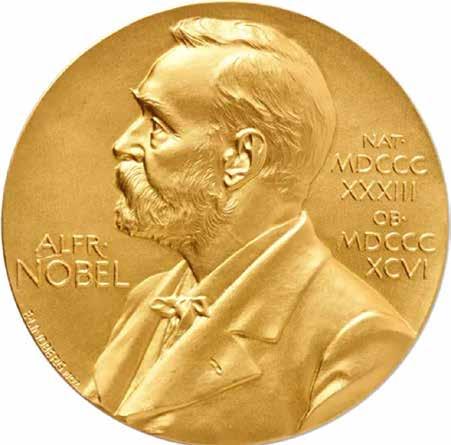
Hebrew University’s 10th Nobel Prize: Israel’s Nobel Laureate leader
Australian Friends of the Hebrew University of Jerusalem
Hebrew University’s 10th Nobel Prize: Israel’s Nobel Laureate leader
Australian Friends of the Hebrew University of Jerusalem
Dear Friends
Last year was a big year for the Hebrew University as it marked the centenary of the opening of the first campus on Mount Scopus. The history of the Hebrew University however goes way back to 1897 when at the First Zionist Congress, Zvi Herman Shapira (the father of the JNF) put forward the idea of a University of the Jewish People that would also promote Hebrew – the treasured language of the Jewish People. The idea bore fruit and in 1918, the cornerstone for the first campus on Mount Scopus was laid by Lord Balfour in the presence of many dignitaries.
With illustrious founders including Albert Einstein, Chaim Weizmann, Sigmund Freud, Chaim Nachman Bialik and Martin Buber, the University has gone from strength to strength as the Jewish World’s premier university featured consistently in the top 100 of the world’s leading universities.
Today, the University boasts six campuses – three in Jerusalem plus Rehovot, Beit Dagan and Eilat with some 25,000 students, 1,050 faculty members, an active arm to promote commercialisation of the many patents that originate through researchers at the Hebrew University and so much more.
This year also saw the Hebrew University celebrating its tenth Nobel Prize Laureate –certainly the only university in Israel to be able to lay claim to such an achievement and possibly one of the few universities in the world to have such a number of prize winners.
Probably the most important outcome for all of us in the last year was the release of the hostages but we are saddened that so many families suffered great losses and that many loved ones were returned in body bags but still, we are grateful to see this terrible tragedy come to an end
Despite last year’s war with Iran and its resumption again this year, the Hebrew University continues to achieve remarkable results and notwithstanding the DFAT travel warning, we still have Australian students who want to study at the Hebrew University even though they may not gain reciprocal credits from Australian universities.
Last year’s centenary edition of our Yearbook was met with acclaim and once again, we present a Yearbook that features some of the amazing achievements and activities that took place both in Israel and here in Australia. The Hebrew University logo is a torch and we bask in the glow from its light and are proud to be “a shining light unto the nations” as the Australian representative of Israel’s and indeed one of the world’s premier institutions of higher learning.
This Yearbook would not be possible without the loyal and dedicated small team who ensure that the Australian Friends presence is felt throughout Australia. This team consists of Linda Kugel, Danielle Salomon and Gina Malka at the national office in Sydney assisted in Melbourne by Yifat Biran and in Perth by our WA committee.
I also thank Shira Halberstadt for the design of our Yearbook and Philip Joel of Kwik Kopy who always goes the extra mile for us.
We could not produce this Yearbook without the support of our advertisers many of whom have advertised with us for more than 20 years so a very big thank you for your continued support.
Finally, to our members, donors and supporters throughout Australia, we are most appreciative of your friendship and donations to medical research through Hebrew U Health Promotion or for student support for Australian students wishing to study at the Hebrew University through our scholarship fund both of which entities offer Australian donors tax deductibility.
We hope you will enjoy our 2026 Yearbook and that with your support, we will ensure that the Hebrew University continues to thrive as Israel’s pre-eminent university for generations to come.
Thank you for your continuing support and friendship.
Best wishes

ROBERT SCHNEIDER Chief Executive Officer
Australian Governors of the Hebrew University of Jerusalem
Mr Michael Dunkel Governor
Mr Robert Simons OAM Governor
Mr Sam Lipski AM Governor
Mr Jerremy Leibler Governor
Mr Barry Joseph Governor
Mr Philip Moses Governor
Australian Recipients of Honorary Doctorates of the Hebrew University of Jerusalem
Mr Michael Dunkel (NSW)
Mrs Agnes Ginges (NSW)
Mr John Howard AC (NSW)
Professor Leon Mann AO (VIC)
Mr Stuart Silbert OAM (WA)
Mr Robert Simons OAM (NSW)
Mr Harry Triguboff AO (NSW)
Mr Marc Besen AO * (VIC)
Mr Israel Blankfield * (VIC)
Mr Ron Castan AM QC * (VIC)
Sir Zelman Cowen AK * (VIC)
Mr Berel Ginges * (NSW)
Mr John Hammond * (NSW)
Mr Robert J Hawke AC * (VIC)
Mr Harry Hoffman AM * (WA)
Dr Henry Krongold AM * (VIC)
Mr Isador Magid AM * (VIC)
Mr Richard Pratt * (VIC)
* (Deceased)
Assoc Prof Peter Winterton AM Governor
Mrs Agnes Ginges Honorary Governor
Professor Leon Mann AO Honorary Governor
Mr Stuart Silbert OAM Honorary Governor
Mr Harry Triguboff AO Honorary Governor
Australian Recipients of Honorary Fellowships of the Hebrew University of Jerusalem
Mr Michael Dunkel (NSW)
Mrs Shirley Ehrlich (NSW)
Mrs Sylvia Hoffman AM (WA)
Mr Leon Kempler OAM (VIC)
Mr Barry Joseph (NSW)
Professor Leon Mann AO (VIC)
Mr Robert McGarvie AC QC (VIC)
Mr Philip Moses (NSW)
Mr Stuart Silbert OAM (WA)
Mr Robert Simons OAM (NSW)
Mrs Basil Starr (VIC)
Mr Israel Blankfield * (VIC)
Mr Ron Castan AM QC * (VIC)
Mr Alroy Cohen * (NSW)
Mr Maurice Cohen OBE * (VIC)
Mrs Felicia Einhorn * (NSW)
Mr Stefan Einhorn OAM * (NSW)
Mr Joseph Frank * (NSW)
Mr Max Freilich OBE * (NSW)
Mr Berel Ginges * (NSW)
Mrs Nerida Goodman MBE * (NSW)
Mr John Hammond * (NSW)
Mr Robert J Hawke AC * (VIC)
Mr A D Hallam * (VIC)
Mr Harry Hoffman AM * (WA)
Dr Jack Hoffman OAM * (WA)
Mr Alan K Milston OAM * (NSW)
Mr Wolfie Pizem OAM * (NSW)
Professor Louis Waller AO * (VIC)
Australian Friends of the Hebrew University of Jerusalem
President: Mr Michael Dunkel
Vice President: Mr Philip Moses
Hon. Treasurer Ms Laura Dunkel
Hon. Secretary Mr Barry Joseph
NSW State President: Mr Phillip Joel
WA State President: Ass. Prof. Peter Winterton AM
Hon. Chairman: Mr Robert Simons OAM
Chief Executive: Mr Robert Schneider
National Office
P O Box 876
Bondi Junction NSW 1355
Tel.: (02) 9389 2825
Fax: 02 9387 5584
Email: austfhu@austfhu.org.au
Website: www.austfhu.org.au
The Hebrew University of Jerusalem, Israel’s first university, is a multidisciplinary institution of higher learning and research where intellectual pioneering, cutting-edge discovery, and a passion for learning flourish. It is a center of international repute, with ties extending to the worldwide scientific and academic community, where teaching and research drive innovation and provide the broadest of education for its students.
Ranked among the world’s leading universities, the Hebrew University is an institution where excellence is emphasized; where advanced, postgraduate study and research are encouraged; and where special programs and conferences attract students and academics from around the world. At its core, the Hebrew University’s mission is to develop cutting- edge research, to educate future leaders, and to nurture generations of outstanding scientists and scholars in all fields of learning.
President
Prof. Tamir Sheafer
Rector
Prof. Oron Shagrir
Chairman of the Board of Governors
Daniel Schlessinger
Chancellor
Prof. Menahem Ben-Sasson
Honorary Chairs of the Board of Governors
Michael Federmann Charles H. Goodman
Vice-President for Advancement & External Relations
Ambassador Yossi Gal
Vice-President for Research & Development
Prof. Aharon Palmon
Vice-President & Director-General
Naama Kaufman-Fass
Vice-President for International Affairs
Prof. Guy Harpaz
Vice-President for Strategy & Diversity
Prof. Mona Khoury
Vice-Rectors
Prof. Lilach Sagiv, Prof. Avi-Chai Hovav
Comptroller
Zvi Aizenstein
Director, Division for Advancement & External Relations
Ram Semo
6 campuses: three in Jerusalem (Mount Scopus, Edmond J. Safra, and Ein Kerem) and in Rehovot, Beit Dagan, and Eilat
4,242 projects in progress in University departments and some 100 subject - related and interdisciplinary research centers
25,000+ students , including 13,242 undergraduates, 6,435 master’s students, 2,193 doctoral candidates, and 2,741 overseas, pre-academic students, postdoctoral fellows, and others
1,034 faculty members


Meriton
Apartments for sale | Apartments for rent | Meriton Suites

Michael Dunkel
(Note this Report relates to the year- end 30 June 2025)
In this year 2025, being the centenary year of the opening of the Hebrew University on Mount Scopus in Jerusalem, much planning had been undertaken for the June Board of Governors meetings with many celebratory functions for members of the Board and accompanying guests and invitees. The celebrations were to be held over six days in June in Jerusalem as well as in other venues.
Regrettably, on the morning of Friday June 13, the day on which the centenary celebrations were to commence, the 12-day war against Iran began with the bombing of Iran targets and the retaliatory missile fire from Iran. This led to the cancellation of the whole Board of Governors programme for security reasons and the confinement of guests to their hotels or other accommodation, which provided suitable airraid shelters.
With the air space over Israel closed, it was not possible to leave Israel by normal means and therefore many of those who came for the centenary year functions were forced to either wait for the war to end or to leave via Jordan. I was one of those, with my family, who left from Aqaba, after crossing from Eilat. I would not recommend that experience to anyone.
We had long planned a visit to Australia in August by the Chancellor of the Hebrew University, Professor Menahem Ben Sasson. He was to visit Sydney, Melbourne and Perth, and present Sharri Markson, the well-known Sky News Australia presenter and journalist, with the prestigious Scopus Award, not previously presented to any Australian, but previously presented to well-known individuals such as Elie Wiesel, Frank Sinatra and Barbara Streisand. Apart from public functions in each of the cities mentioned, a number of private meetings were also arranged.
Regrettably, Professor Ben Sasson was unable to come to Australia due to illness suffered just before his scheduled departure from Israel.
Nevertheless, due largely to the ingenuity, determination and hard work of our CEO Rob Schneider with considerable assistance from our staff, we were able to hold the public functions planned for each of Sydney, Melbourne and Perth, and present Sharri Markson with the Scopus Award. In Melbourne we were fortunate to have Josh Frydenberg as the keynote speaker, whilst in Sydney we had Alex Ryvchin. The Israeli ambassador Amir Maimon also attended our Sydney function. There were about 300
guests in Sydney and over 200 in Melbourne. The Perth function was also well attended. Our aim was to raise funds for the new Computational Medicine Centre at the Faculty of Medicine of the Hebrew University. This is a first for Israel in the battle to defeat intractable diseases in humans by the use of AI and other computer-based methods which can be tailored to the needs and circumstances of individual patients.
Needless to say, the war in Gaza has impacted the normal activities at the University (and other institutions of learning in Israel) to a considerable extent. More than 2,000 students and staff at the Hebrew University have been called up to the Reserves, disrupting not only classes and lectures but also important ongoing research. The University is employing all available means to alleviate the hardship and disruption caused as a consequence. Obviously, this comes at considerable cost, and consequently financial assistance from Friends organisations around the world has been prioritised.
At the time of writing this report, the war in Gaza is not over. Therefore, some of our programmes are still on hold. These include the awarding of the Golimdja William Cooper Memorial Scholarship, the Legacy travel programme and the student and academic exchange programmes.
This has also meant that the scholarships normally awarded on an annual basis to Australian students at the Australian Catholic University studying archaeology, enabling them to participate in digs conducted by the Hebrew University Faculty of Archaeology have also been put on hold.
With the prospect of students and academic researchers being able to travel again between Australia and Israel in the near future, the programmes can once more be restored. This will enable the resumption of these important
research and exchange programs of both students and faculty members.
Whilst the re-establishment of the Victorian Division of the Friends is a work in progress, the Steering Committee, which was formed in 2023, has held a number of successful functions throughout the year. The Western Australian Friends have continued, their activities and have received visitors from interstate and overseas holding a number of successful speaker functions.
The work of Zelman Cowen Academic Initiatives has continued unabated during the year, with funding provided to the Hebrew University for special assistance to laboratories whose researchers were called up to the Reserves, thus disrupting their work. Additionally, a new joint research programme has been planned for 2026 between researchers at the Hebrew University and Australian universities. This follows the successful collaboration initiated in 2023 for which many applications were received.
None of our work would be possible without the dedication and commitment of our staff. Particularly, I wish to thank our CEO, Robert Schneider, for his enthusiasm, dedication and hard work to overcome the challenges faced following the events of October 7, as well as the challenges we faced this year, as described above. His efforts to not only manage day to day issues, but also continue with the goal of increasing awareness of the University and of communicating with donors, can only be described as exceptional. I also thank Linda Kugel, our office administrator, and other members of staff for their dedication and hard work.
Finally, I thank my Executive and Committee for their efforts and support and in particular, for their continuing valuable input.
(Note this Report relates to the year- end 30 June 2025)
It has been a privilege to serve as NSW President over the past year, and I would like to thank our dedicated Board members for their continued support and commitment throughout my term. Your engagement, guidance, and shared passion for our mission have been vital to our progress and resilience.
Given the continued situation in the Middle East, it was decided to postpone any promotion of the Legacy Mission once again. This was a prudent decision, reflecting our ongoing commitment to both safety and responsible engagement.
We were delighted to have had Professor Gila Kahila Bar-Gal from the Hebrew University with us for a few months and whilst she cut her sabbatical short due to the difficulties experienced by Israelis on university campuses in Australia. During her time with us, Gila engaged many audiences with her research and involvements post October 7. From our perspective, her time here was highly productive and impactful.
I am also pleased to acknowledge Ms. Laura Dunkel, our treasurer who graciously agreed to serve as one of the judges for the
“Build Your Own Start-Up” competition at the communal Yom Ha’Atzmaut celebration. Her participation is a fine example of the leadership and community spirit that strengthens our organisation. I also thank our dedicated staff for ensuring effective participation in the communal celebrations.
The NSW Honours Club continues to attract regular supporters with some new faces attending from time-to-time. I believe that once we have our old venue back at the Waverley Library, attendance will improve.
My heartfelt thanks to Mr. Rob Schneider, our CEO, whose leadership, and commitment, together with the invaluable support of Linda Kugel, Gina Malka, and Danielle Salomon, continue to drive our organisation’s success.
As the new year approaches and with renewed hopes for peace in the Middle East, I am optimistic that the coming year will bring many new opportunities, allowing our organisation to return to a sense of normalcy and renewed activity.
Thank you once again for the trust and collaboration that make our work possible.




(Note this Report relates to the year- end 30 June 2025)
In the twelve months since my last report, much as in 2024, the world both Jewish and non-Jewish has changed in ways that would only a year ago have seemed unimaginable.
In his address to the UN General on 26th September 2025, Benjamin Netanyahu, outlined these changes with clarity and didactic forthrightness, in a style reminiscent of Winston Churchill in both language and determination. It should be clear to all, that the State of Israel is not going to be bullied, bludgeoned and bloodied without consequence to the oppressor.
The non-Jewish world is having great difficulty in coping with this new image of the Jewish peoples, not in ghettoes or being herded into cattle wagons to be slaughtered. This combined with the true horrors of war being visible on TV and social media hour by hour, as never before, has understandably had an effect on both the Jewish and non-Jewish world. Murder, mayhem, people being displaced, and major war casualties, have understandably affected the Government and population leading to protests and demands for the conflict to cease. It is difficult to distinguish genuine outspokenness in contrast to overt antisemitism. The effect on Australian Jewry, who have for almost two centuries been shielded from these experiences, has
been very unsettling.
This has manifest itself with overt antisemitic actions on our campuses, protests in the streets, overt attacks on Synagogues, attacks on Jewish businesses and the cancelling of prior co-operation agreements between universities. In WA this has been the case with the UWA / HUJ scholarship plan. As an organisation, with the aim of fostering co-operation and friendship, the landscape has been harsh. It has been difficult to motivate the community.
In August we were able to host an event to celebrate the centenary of the HUJ, the guest speaker, Prof Menahem Ben-Sasson, the former President of HUJ , was unable to attend due to health issues. Undeterred, the local committee in WA organised an outstanding evening in both content and attendances. The report in the Maccabean summarised the event well.
In order to celebrate the fundamental tenants of the HUJ we organized a distinguished panel from Perth to discuss “Diversity and Freedom of Speech on University Campuses”. The evening opened with a short presentation by the WA President of the Friends of HUJ highlighting the contribution to the affirmation of Einstein’s Theory of Relativity with the Wallal
Solar Eclipse expedition in 1922. The success of this expedition made Einstein an
international sensation, allowing him to raise funds for the building of the HUJ. He delivered the first lecture of the HUJ in 1923.
Aaron Posner facilitated the evening with elegance and style. He ensured that the four distinguished speakers kept to topic and time; Prof Pnina Levine from Curtin University, learnedly laid bare the legal framework in which universities are obliged to operate, also highlighting some inconsistencies and difficulties. Prof Matthew Ogilvie from UNDA gave a more theological, philosophical approach as to why universities need to allow freedom of speech and diversity of thought as part of their function, based on Judeo-Christian values. Dr Linda Friedland reviewed her experience over many years with many universities and how they have dealt with changing times and issues differently, highlighting that youth will almost always focus on issues that are controversial, currently that is the situation in Gaza. Mr Ashri Fisher, President of AUJS WA, and a second-year student at UWA, recounted his experiences on campus over the last 2 years. Whilst he had not been immune to antisemitic remarks, he remained optimistic and noted that they were few and far between.
One point was clear; Freedom of Speech is enshrined in university by-laws, codes and policies but ensuring that freedom speech is

combined with respectful dialogue of differing opinions without causing harm can at times be very challenging, yet imperative, for when there is no dialogue and no divergence of thought on campus, we run an even greater risk to a free and liberal democracy.
Had Prof. Einstein been at this evening’s event he would have been delighted by the size and interest of the audience ; about a subject that was very dear to his heart.
The WA committee, to whom I am very grateful, has been strengthened by adversity; meeting regularly and with a united purpose. Hilary Winterton, Jennifer Faigenbaum, Martin Brezger, Ken Budd, Lyn Swersky, Yael Jacobsen and Lauren Ross have brought their own strengths and connections to the committee. I foresee a closer collaboration with the Friends of Israel group (FOIWA) which is a very positive initiative. I would like to strengthen our links with Carmel School.
A special thanks must go to Robert Schneider, the CEO for his energy and enthusiasm, and to Yael Jacobsen, who even though she stepped down as our public relations officer in the Perth, has continued to help in every possible way.
We are currently looking for someone to take on the paid role of WA coordinator – to manage events, donors and the database.
May 2026 be an even better year. Planning is underway for some interesting events.
(Note this Report relates to the year- end 30 June 2025)
This has been a very auspicious year for the Hebrew University as it marks the centenary of the opening of the first campus on Mount Scopus. Of course, our history goes back far longer to the first World Zionist Congress when the idea for a Jewish university in Jerusalem was first mooted by Zvi Herman Shapira. This was followed by the foundation stone laying in 1918 and the first lectures in 1923.
The centenary celebrations were to have been the focal point of this year’s Board of Governors meeting which unfortunately had to be cancelled due to the war with Iran. We were, however, able to celebrate here in Australia with major events in Sydney, Melbourne and Perth but these events fall out of the scope of this annual report as the events took place after the end of the financial year 30 June 2025.
This AGM marks the 78th Federal AGM but in fact as the current NSW branch was the original Friends of the Hebrew University body established in 1926 in Sydney, the Australian Friends of the Hebrew University is the oldest Friends organisation of an Israeli university in Australia and one of the oldest in the world – a history that we can be justly proud of.
Unfortunately, the last year continued to be marred by the war in Gaza and this affected our ability to support Australian students wishing to study in Israel who have had to abide by the DFAT travel warning.
In addition, we have seen extensive proPalestinian or rather anti-Israel activity on many university campuses that has affected our ability to attract Australian students. Such activity has also made visits by Israeli academics very difficult.
Our fundraising efforts have also been affected by the war since we are not seen as an “emergency need” organisation but we are grateful to existing and new donors who recognise the Hebrew University’s pivotal role in higher education in Israel and continue to support our efforts through donations, advertising and membership.
I express my gratitude to Michael Dunkel, our Federal President for his ongoing support, wise counsel and stewardship of the organisation. Michael Dunkel also plays an international role as a member of the Executive Committee of the Hebrew University.
I am grateful for the support of all board members but especially wish to welcome our new Treasurer, Laura Dunkel with whom it has been a pleasure to work.
Vice President Philip Moses is our organisational memory and the man we all turn to for information regarding the past. Thank you, Philip.
I am grateful to NSW President Phillip Joel who is from a younger generation and brings much needed insights into a younger demographic that we need to embrace going forward. Phillip is also a very generous contributor to the Australian Friends not least by undertaking our printing needs often at no cost or if charged for, at rates well below those of other commercial printing outfits.
I am also grateful to WA President Peter Winterton for his ongoing stewardship of our WA committee and for his generous support and hospitality particularly during visits to Perth by Hebrew University guests.
Barry Joseph, our Honorary Secretary is of great assistance in assessing Australian students applying for financial assistance to study at the Hebrew University and often participates in the interview process.
I am also grateful to immediate past Treasurer, Robert Greenfield for his continued interest, input and advice.
NSW Committee member Daniel Hoenig is a valuable marketing resource and his support and involvement in reviewing our marketing collateral is much appreciated.
I am grateful for the support and assistance from Jeremy Leibler, a member of our Board of Governors and for that from Professor Leon Mann AO, an Hon. Governor. Both are based in Melbourne and their advice and readiness to
always assist is much appreciated.
The office in Sydney serves as both the National and NSW office of the Australian Friends and provides resources and services to all our branches and committees.
Committee meetings are held every second month and where necessary, a Federal meeting is convened on the same date as an NSW committee meeting.
WA holds regular committee meetings and where possible, physical meetings are held with our steering committee members in Melbourne when I visit or otherwise by zoom.
The decision to transfer our bookkeeping function to a professional accounting firm is proving to be highly beneficial and I am grateful to former treasurer, Robert Greenfield for his role in suggesting and implementing this arrangement.
I am pleased to report that we have a wonderful team of professionals serving our organisation who despite working on a parttime basis deliver the outputs of a fulltime team – I can’t thank them enough for their dedication and commitment.
I am especially grateful to our administration manager, Linda Kugel who is not only dedicated to her job and the organisation but is highly efficient as well. Danielle Salomon who joined us last year to head up our marketing has made a major difference to our marketing efforts and her commitment and contribution is highly valued by me.
Yael Adar, our young student liaison officer left us at the end of last year for a fulltime job in education. We were sorry to see her go and used the opportunity to shuffle tasks because
we were lucky enough to secure the services of Gina Malka who now handles our social media outreach, communications as well as data base management following the relocation of our previous data base officer, Joe Gelbart to Melbourne.
I would like to commend and thank our parttime representative in Melbourne, Dr Yifat Biran who is an outstanding resource and a most valuable member of our team.
Weekly zoom meetings are held with our parttime professionals in Vic. and WA. These zoom meetings include me and our professional staff in the National Office.
Our current lease runs until December 2025 but we have successfully negotiated a new lease in our current premises will run until 30 June 2029.
Thanks to a Commonwealth grant administered by the ECAJ, our office security is in the process of being enhanced by the replacement of a glass entrance door with a solid door as well as with surveillance and alarm equipment. We are very grateful for this assistance which will provide better safety and security for our staff and visitors.
Our ThankQ data base system enables us to manage both personal and financial data on the same system and we have successfully integrated website donations into ThankQ including automatic receipting.
Our data base is maintained by Gina Malka but both Linda and Danielle are also familiar with ThankQ and can serve as a back-up when needed.
We continue to reach out to Australian students encouraging them to embark on both short-term and long-term studies at the Hebrew University. Unfortunately, this has been virtually impossible following the October 7 massacre and the DFAT travel warning for Israel. This situation has been exacerbated by the fact that so long as the DFAT warning is in place, Australian universities are not granting permission to Australian students to study in Israel and earn credits.
We are hopeful that this situation will soon change and that we will see more Australian students seeking to study at the Hebrew University.
We are delighted that there have been a few Australian students who have enrolled to study at the Hebrew University despite restrictions and impediments and we have encouraged and supported such students financially and with course advice as necessary.
The Zionist Federation of Australia hosted a national Educator’s Conference in Melbourne on 18-19 August 2024. Luckily, our then Student Officer, Yael Adar was in Melbourne anyway for Habonim so she, together with Yifat Biran, our parttime Vic. Coordinator were able to attend which proved to be a great opportunity for us to promote study at HUJI for both potential students and teachers. We were the only Israeli university with a presence at this conference, and I believe that this gives us a distinct advantage in promoting study opportunities at the HU as well as increasing awareness of the Australian Friends.
On this tack, thanks to Yael, we were alerted to a further opportunity to have a presence at the Aliya Fair held in Sydney on Sunday 8 September 2024 where we had the opportunity
to promote HUJI for study and again, raise awareness about the Australian Friends. This proved to be a good move as we were the only Israeli university to have a presence there and we had many enquiries that have now been directed to HUJI.
After alerting the HU to opportunities for teachers, we very much appreciate their willingness to offer 2 half-price scholarships to Moriah teachers and on a case-by-case. We are also delighted at the increase in the number of HU courses now being offered in English and we hope that once the DFAT travel warning is lifted, it will be easier for us to attract more students to study at HUJI.
I also share a most gratifying experience. On Wednesday 11 September, 2024. Joe Gelbart, our data manager advised me that a woman with a distinctly non-Jewish name had made a commitment online to support scholarships to the tune of $36/month for three years. I called the woman who lives in Adelaide to thank her and to find out her motivation for this generous donation. She is a lawyer in Adelaide who went on Mishpatim in 2016 and received financial assistance from us. She told me that now that she is able to do so, she felt she wanted to give back to the organisation that had assisted her then. How heartwarming is this and doesn’t it just make us want to assist more students going forward!
We are also delighted that the Mishpatim program will run again in January 2026 and we have already started promoting it.
We hope that the ACU Ancient Israel program and archaeological dig run in partnership with the Hebrew University will resume in 2026 and that the new year will also enable us to send a scholar to Israel under the auspices of the Golimdja William Cooper Memorial Scholarship.
Seven Australian Jewish Studies teachers
have expressed interest in participating in a subsidised Master’s Program at HUJI. Two are from Moriah. We are excited at this outcome.
Marketing: We continue to promote the excellence of the Hebrew University as well as student programs on a regular basis.
With the appointment of Danielle, our website has been revamped and our marketing and promotional output enhanced.
Our social media now runs on a schedule, and news articles are posted regularly in addition to flyers for courses and events.
In the build-up to our centenary celebration events in July and August this year, we expanded our media exposure to ensure bumper attendances at all the events and of course to ensure that the name and reputation of the Hebrew University as Israel’s preeminent university be enhanced.
We are very selective in our advertising and have chosen to be part of carefully targeted Australian Jewish News editions and supplements nationally (Melbourne and Sydney editions) e.g. Yom Ha’atzmaut, Education, National Calendar.
We also advertise and run articles in the Melbourne and Sydney editions of the Jewish Report which is distributed free of charge in Sydney and in Melbourne.
The Australian Friends Yearbook – in hard copy and electronic versions – is well received by our supporters. The latest yearbook – a special centenary edition - reflects the efforts of Linda Kugel in securing additional advertisers and the impact of Danielle Salomon in giving it a more modern and user-friendly look.
E-newsletters, generally coinciding with the main Jewish holidays sharing the latest news
from the Hebrew University and our own local news with our supporters.
Special greetings to mark an important event.
The NSW Honours Club is a great initiative for some of our mainly senior supporters who meet on the last Wednesday of every month to enjoy a presentation by a topical speaker.
For a large part of the year under review, thanks to the generosity and hospitality of the Mizrachi Synagogue in North Bondi, we have held Honours Club meetings there however since the beginning of 2025, we have returned to the Waverley Library Theatrette and are grateful for the grant from the Waverley Council that enables us to enjoy this facility at no charge.
The move back to Waverley, together with the calibre of our speakers has resulted in many new faces joining the regulars and we hope that forum will continue to grow going forward.
Once again, due to the situation in Israel, we have had to suspend promotion of the Legacy Mission until the situation stabilises.
In order to ensure sufficient numbers and cost benefits, the intention is to run the next Legacy Mission in partnership with the British Friends and we are very much hoping that we will be able to do this in 2026.
• National & NSW
Fundraising
Aside from donations and other income
reflected in our 30 June audited accounts, the following donations were made direct to the Hebrew University but are credited to the Australian Friends.
• A direct donation to HUJI of ILS 541,650 from a foundation with links to Australia was received in August 2024 for application towards Exact Science Scholarships.
• A direct donation to HUJI of ILS 10,800,000 from a foundation with links to Australia was received in November 2024 for application towards the BMI Complex at the Andre Cohen Deloro building for Computational Medicine
• Our outreach in Sydney continues to be primarily through our monthly Honours Club and through events that feature faculty members or alumni from the HU such as the visit of Professor Gila Kahila.
• Gila featured in Sydney at events at the ACU, a public event at Central Synagogue together with well-known media personality, Gemma Tognini and as an Honours Club speaker.
• Gila was also interviewed by SKY News and the AJN.
• Gila was an outstanding ambassador for the HU.
• Victoria Fundraising
Aside from donations and other income reflected in our 30 June audited accounts, the following donations were made direct to the Hebrew University but are credited to the
• A Melbourne donor continues their substantial support for the Hebrew University’s Revivim Program and in March this year donated a further USD $327,000 towards this program. Revivim is designed to attract Israel’s best and brightest students to a career in teaching Jewish Studies in Israel’s secular middle and high schools
Yifa’t Biran, our part-time Victorian Coordinator is a great asset and our presence in Melbourne has been boosted through her initiative and activities.
I visit Melbourne from time-to-time and in July 2024 spoke to a Bnai Brith audience as well as at the Caulfield Synagogue.
In August 2024, various events were held in Melbourne featuring Gila including a public event at the South Caulfield Synagogue.
• Whilst in Melbourne with Gila in August, I was advised by HUJI that someone in Bendigo had a signed letter from Albert Einstein. I immediately contacted the granddaughter of the recipient of the letter who had approached HUJI suggesting that the Einstein letter to her grandfather be donated to Einstein Archives at HUJI. It turned out that in fact her father,
Robert Champion was in possession of the letter, so I asked to be put in touch with him and once contact was made, I agreed to meet him halfway between Bendigo and Melbourne to receive the letter. Mr Champion told me that his late father, Leonard Champion was a physicist in Melbourne who wrote to Professor Einstein in 1951 asking about a theory and Einstein responded with a three-page letter on 12 July 1951 from The Institute of Advanced Study, Princeton, New Jersey. Champion’s letter to Einstein is already in the Einstein Archives at HUJI.
Knowing that our good friend and wonderful supporter, Karen Pisk was leaving for Israel the following week, I called her to ask whether she would be prepared to take the precious letter with her and of course she agreed saying that it would be an honour to do so. The letter is now happily ensconced in the Einstein Archives at the Hebrew University.
• Western Australia
• We have a WA committee based in Perth chaired by Assoc. Professor Peter Winterton AM.
• This committee meets on a regular basis.
• Articles about the Australian Friends and the Hebrew University are featured regularly in the local weekly, The Maccabean.

• A number of public events are also held in Perth under the auspices of the local Friends committee.
• Gila Kahila also visited Perth during her time in Australia and addressed a public event as well as an event with the WA branch of the AICC.
• Articles about the Australian Friends and the Hebrew University are featured from time-to-time in the local monthly, SHALOM and the support of the SHALOM editor, David Jacobs is much appreciated.
• The 88th Board of Governors Meeting scheduled to take place between the 13 and 19 June this year was unfortunately cancelled due to the war with Iran.
• It was too have been a spectacular event celebrating the HU centenary as well as an opportunity to bid farewell to outgoing HU President, Professor Asher Cohen.
• In a subsequent zoom meeting of the BoG, the Rector of the HU, Professor Tamir Sheafer was elected as the incoming President and Professor Oron Shagrir as the incoming Rector
• The 2026 Board of Governors Meeting will take place from Friday 12 June through to Tuesday 16 June. All supporters are welcome to register and attend when registrations open early in 2026.
• Faculty members of the Hebrew University visiting Australia are always warmly welcomed but besides Professor Gila Kahila, there were no other faculty members who visited in the last financial year.
• I would also like to thank the staff at the Hebrew University for their ongoing assistance and support in particular those with whom I work with on a regular basis who include Amb. Yossi Gal, Vice President for Advancement & External Relations, Ram Semo, Director of Advancement & External Relations, Brenda Needle-Shimoni, Director of Donor Services, Rivkie Harel, Shoshana Israel, Devora Liss, Jane Turner, Naama Oryan and Anat Yaffe.
• I am also grateful for the assistance and support from my colleagues of the American Friends, the British Friends and the Canadian Friends who are always willing to share their resources with us in Australia.
Last, but certainly not least, my thanks to our members, donors, and advertisers without whose support, we would not be able to succeed in our role of continued support for the Hebrew University.
This past year has been one of exceptional achievement and global recognition for the Hebrew University of Jerusalem, marked by prestigious honours, pioneering research, and impactful contributions across academia, science, public service, and innovation.
Hebrew University scholars and alumni have been recognised with some of the most distinguished honours in Israel and worldwide, reflecting both lifetime achievement and transformative intellectual contributions.
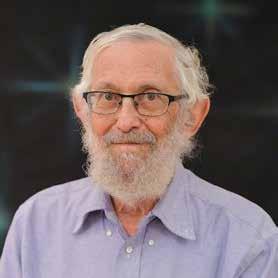
The Israel Prize, the country’s highest honour, was awarded to Prof. Benjamin Weiss (Einstein Institute of Mathematics) for his groundbreaking and enduring contributions to ergodic theory, dynamical systems, and probability, shaping mathematical understanding over more than six decades.
In a landmark achievement for the University, alumnus Prof. Joel Mokyr was awarded the 2025 Nobel Prize in Economics, recognising his influential work on economic history, innovation, and long-term growth.
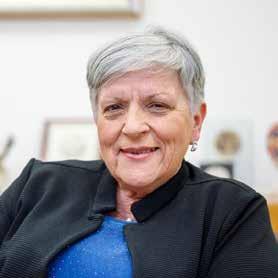
Prof. Dina Ben Yehuda received the 2026 Ruth Rappaport Lifetime Achievement Award, a prestigious prize recognising exceptional leadership and innovation.
Honoured for her transformative impact on medical education, she has reshaped physician training in Israel by integrating scientific research, technology, and compassionate care.
The Hebrew University also inaugurated its President’s Lifetime Achievement Award, presented for the first time to Prof. Eva Illouz. This award recognises outstanding academic excellence alongside significant contributions to society and public discourse. Prof. Illouz’s work in sociology has had global influence, particularly in the study of culture, emotions, and modern society.
Across disciplines, Hebrew University researchers continue to receive international recognition for advancing knowledge and shaping the future of science and technology.
Prof. Guy Kindler was awarded the Michael and Sheila Held Prize by the U.S. National Academy of Sciences, one of the most prestigious prizes in theoretical computer
science, recognising his influential work in combinatorics and complexity theory.
Prof. Jeffrey S. Rosenschein received the IFAAMAS Influential Paper Award, honouring research that has had a lasting and transformative impact on artificial intelligence, particularly in the field of multi-agent systems.
Prof. Noam Nisan was named a Fellow of the Association for Computing Machinery (ACM), an honour reserved for the top 1% of computing professionals worldwide, for his foundational contributions to algorithmic game theory and computational economics.
In the life sciences, Prof. Moran Yassour was selected as an EMBO Young Investigator, a prestigious programme supporting leading early-career scientists. Her research on the infant microbiome is advancing understanding of human development and health.
Prof. Eran Meshorer was elected as a member of EMBO, recognising his pioneering work in epigenetics and stem cell biology and his
contributions to understanding gene regulation and cellular identity.
Dr. Roni Porat was named a CIFAR Azrieli Global Scholar (2025–2027), an international programme supporting outstanding earlycareer researchers addressing critical global challenges. Her work focuses on reducing prejudice and fostering coexistence in divided societies.
Dr. Uria Alcolombri was recognised as a Frontiers Planet Prize 2025 National Champion, the only Israeli recipient. This global prize highlights breakthrough scientific solutions to environmental challenges, and his research offers new insights into oceanic carbon cycles and climate change mitigation.
Success in the highly competitive European Research Council (ERC) programmes highlights Hebrew University’s leadership in frontier research across disciplines.
Awarded to leading senior researchers pursuing ambitious, high-impact projects:
• Prof. Dorit Aharonov – quantum computing and algorithms
• Prof. Israel Nelken – neuroscience and continual learning
• Prof. Tamar Ziegler – mathematics, number theory, and dynamics
ERC Consolidator Grants
Supporting researchers establishing independent research programmes:
• Prof. Ori Katz – advanced optical imaging in complex environments
• Prof. Devorah Manekin – political polarization and nonviolent resistance
ERC Starting Grants and Recognition
Supporting outstanding early-career researchers:
• Dr. Anat Arzi – brain activity and consciousness
• Dr. Ariel Goldstein – neural basis of language and communication
• Prof. Netta Barak-Corren – empirical constitutional law, and selected for the ERC Ambassadors Programme, promoting the value of fundamental research globally
Research Grants and Scientific Innovation
Targeted national funding continues to support innovative research with significant clinical and societal applications.
Recipients of Ministry of Innovation, Science and Technology grants (500,000 NIS each):
• Dr. Avihu Yona – diagnostic testing for food
intolerances
• Prof. Adam Rose – AI-supported telepsychiatry and emergency care
• Dr. Katy Margulis – treatments for acute manic episodes
• Dr. Gali Umschweif-Nevo & Dr. Raphael Benhamou – RNA-based therapies for depression and PTSD
• Prof. (Emeritus) Amiram Goldblum – multi-target drug discovery for mood disorders
• Prof. Amnon Hoffman – biodegradable imaging markers for cancer detection
Early- and mid-career researchers have been recognised for exceptional promise and achievement across disciplines.
The Krill Prize for Excellence in Scientific Research, one of Israel’s leading awards for outstanding young faculty, was awarded to:
• Dr. Gabriel Stanovsky – artificial intelligence and natural language processing
• Dr. Yiska Weisblum – virology and immune response research
The Waldman Family Scholarship, awarded for the first time and recognising excellence in agricultural sciences, was presented to:
• Erez Foer
• Moran Madmon
• Amir Ronen
The long-standing Yashinsky Prize, honouring outstanding achievement in selected disciplines, was awarded to:
• Eliyahu Berkowitz – Jewish Studies
• Mai Sela – Mathematics
• Nevo Levy – Chemistry
Student and Doctoral Excellence
Outstanding doctoral students were recognised through the President of Israel’s Scholarships for Scientific Excellence and Innovation, awarded to exceptional candidates demonstrating originality and academic excellence:
• Elyashiv Zangen
• Hazar Yassen
• Guy Kariv
• Ouriel Bliah
• Hadar Arnon
• Ortal Yerushalmi
Innovation, Entrepreneurship, and Industry Impact
Hebrew University continues to translate research into real-world impact through entrepreneurship and innovation.
Avenas won first place in the Rhodium Ventures 2025 competition, developing an energy-free nano-coating to reduce heat in buildings and vehicles, with significant sustainability implications.
Airovation Technologies was awarded the Asper Prize for “Hebrew University Rising Startup”, recognising outstanding innovation. The company is pioneering carbon capture and reuse technologies to reduce industrial emissions.
International rankings continue to affirm the University’s position among the world’s leading academic institutions.
Ranked 88th globally in the Shanghai World University Rankings
Ranked among the top 50 worldwide in key fields:
• Mathematics – 15th
• Communication – 16th
• Public Administration – 23rd
• Law – 34th
This year’s achievements reflect a vibrant academic community committed to excellence, innovation, and societal impact. From internationally celebrated scholars and groundbreaking researchers to emerging talent and entrepreneurial leaders, Hebrew University continues to shape the future through knowledge, discovery, and global collaboration.
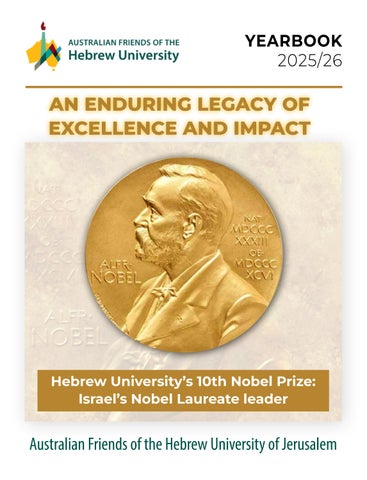
In December each year, the Nobel Prizes are awarded in accordance with the vision of Alfred Nobel, honouring individuals whose work has profoundly advanced humanity. In 2025, the Hebrew University of Jerusalem celebrated a landmark achievement: its tenth Nobel Prize, further cementing its position as Israel’s leading university for Nobel laureates, with more than double the number of any other institution in the country.
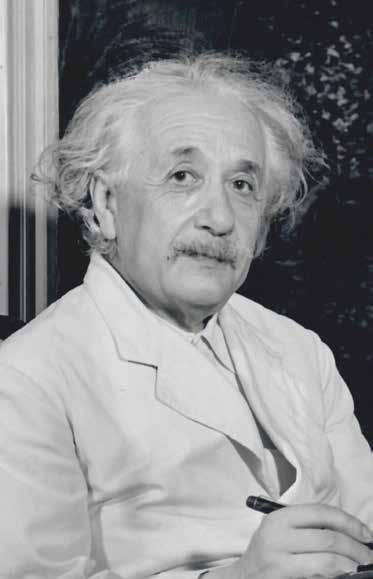
This milestone was reached with the most recent award to Prof. Joel Mokyr, whose work has reshaped our understanding of how innovation drives economic growth. Awarded the Nobel Prize in Economic Sciences, Mokyr’s research demonstrates how technological progress and the spread of knowledge have been central to sustained economic development. His insights not only illuminate the past but help guide future policy and innovation in a rapidly changing world.
Mokyr’s recognition adds to an extraordinary legacy built over more than a century, a legacy defined by curiosity, rigour, and global impact.
From the outset, the Hebrew University has been associated with intellectual giants. Albert Einstein, whose vision helped inspire
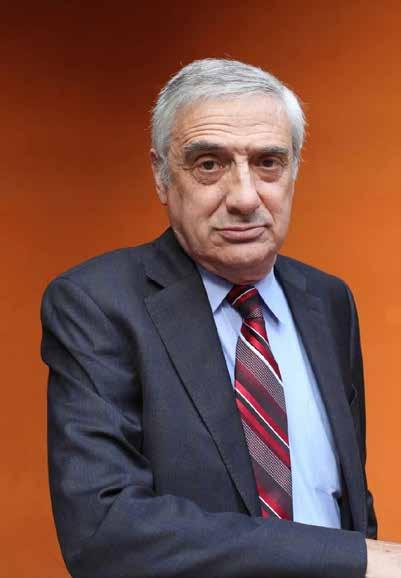
the University’s founding, was awarded the Nobel Prize in Physics for his discovery of the photoelectric effect, a breakthrough that transformed modern science.
In the life sciences, Hebrew University researchers have made discoveries that fundamentally changed our understanding of biology and medicine. Prof. Aaron Ciechanover and Prof. Avram Hershko revealed the mechanism of ubiquitin-mediated protein degradation, a discovery with farreaching implications for disease research. Prof. Ada Yonath’s groundbreaking work on the structure of the ribosome opened new frontiers in antibiotic development and molecular biology, while Prof. Roger D. Kornberg’s research illuminated the mechanisms of gene expression.
In Physics, Prof. David Gross was recognised for his discovery of asymptotic freedom, advancing our understanding of the fundamental forces that govern the universe.
The University has also been a powerhouse in the social sciences. Prof. Daniel Kahneman revolutionised economics by integrating psychological insights into human decisionmaking, giving rise to the field of behavioural economics. Prof. Robert (Yisrael) J. Aumann’s work in game theory deepened our understanding of conflict and cooperation, influencing disciplines from economics to political science. Prof. Joshua D. Angrist further advanced the field with his innovative methods for analysing cause and effect in realworld data.
Now, with Joel Mokyr as its tenth Nobel laureate, the Hebrew University continues to demonstrate the breadth and depth of its impact - from the molecular to the societal, from theory to real-world application.
This achievement is not only a celebration of individual brilliance, but a testament to the University’s enduring commitment to excellence. For over 100 years, the Hebrew University has fostered an environment where bold ideas thrive, where disciplines intersect, and where discoveries have the power to change the world.
As we mark this historic tenth Nobel Prize, we celebrate not just a number, but a tradition, one that continues to shape the future of science, scholarship, and society.
Ten Nobel Prizes. One extraordinary university. A legacy still unfolding.
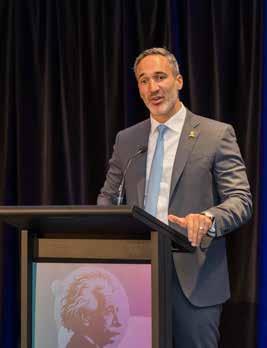
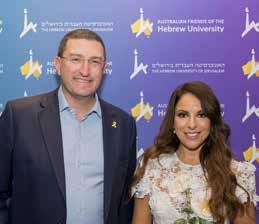
In July and August 2025, the Australian Friends of the Hebrew University proudly marked a historic milestone, celebrating the University’s centenary with a series of extraordinary events across Melbourne, Sydney and Perth. These gatherings brought together hundreds of supporters, community leaders and friends to honour a century of academic excellence, groundbreaking research and global impact.
Each event reflected both the legacy and the forward vision of the Hebrew University of Jerusalem. A defining highlight in Melbourne and Sydney was the presentation of the prestigious Scopus Award to journalist Sharri Markson, the first Australian to receive this distinguished international honour. Her address, marked by clarity, conviction and courage, left a profound impression on all in attendance.
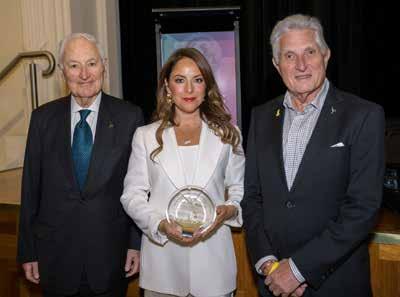
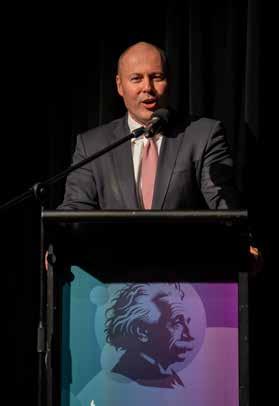
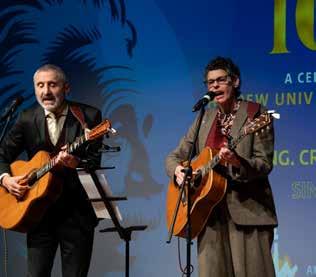
Melbourne’s celebration featured a powerful keynote from The Hon. Josh Frydenberg, alongside a memorable musical performance by Deborah Conway and Willy Zygier. Guests also engaged in a stimulating panel discussion led by Alon Cassuto (CEO, Zionist Federation of Australia), with Prof.
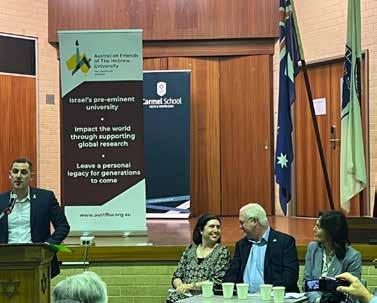
Steven Prawer (University of Melbourne) and Galya Haim (PHD student at University of Melbourne) exploring the theme of Diversity and Freedom of Speech in Academia.
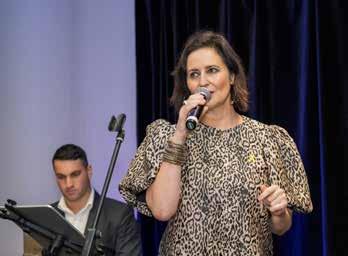
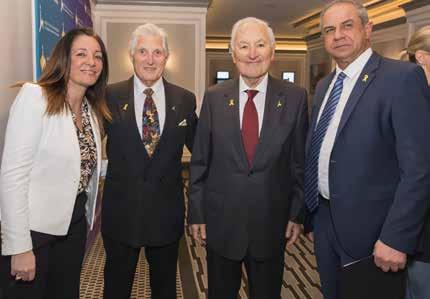
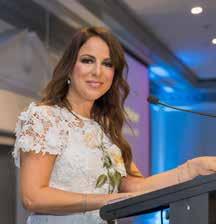
In Sydney, attendees heard from HE Ambassador Amir Maimon, Alex Ryvchin (Co-Chief Executive Officer Executive Council of Australian Jewry) and Sharri Markson, each offering thoughtful and compelling perspectives. The evening was enriched by a captivating performance from Lara Goodridge. A dynamic panel discussion followed, facilitated by Leon Kempler AM (Chairman, Australia-Israel Chamber of Commerce), featuring Noam Pilpel (Venture Lead University of Sydney) and Ohad Blumberg (Israel Trade Commissioner), who examined A Century of Innovation: The Hebrew University and the Start-Up Nation.
Perth’s event brought the centenary spirit to Western Australia, with Assoc. Prof. Peter Winterton speaking

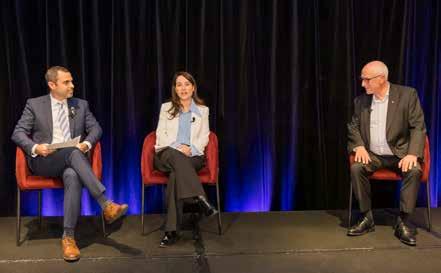
about Albert Einstein’s connection to WA, highlighting the remarkable legacy of the University’s founding vision. A lively and engaging panel discussion, led by Aaron Posner (communications strategist), included Dr. Linda Friedland (doctor and global healthcare advisor), Pnina Levine (senior lecturer and Deputy Head of Curtin Law School), Ashri Fisher (AUJS public affairs coordinator) and Prof. Matthew Ogilvie (Professor of Theology at the University of Notre Dame), offering diverse perspectives and insights.
Beyond celebrating the past, these events looked firmly to the future. Funds raised throughout the centenary celebrations will support the establishment of Israel’s first dedicated Centre for Computational Medicine, further strengthening the Hebrew University’s leadership in this pioneering field.
The centenary events were a testament to the enduring strength of the Hebrew University community. With deep gratitude to all who attended and contributed, we celebrate not only a remarkable 100 years, but also the promise of the next century of innovation, discovery and impact.
Peter and Anne Fuchs and the Fuchs Family, along with CSM Sec P ty Ltd
are proud to suppor t
Jerusalem building the next centur y on a foundation of innovation and achievement





are proud to support
building the next century on a foundation of innovation and achievement
Inventing Tomorrow was a celebration of innovation, entrepreneurship and the extraordinary impact of Hebrew University research on the world. The event highlighted the vital role of Yissum, the technology transfer company of the Hebrew University of Jerusalem, in transforming groundbreaking academic discoveries into real-world solutions that improve lives globally. The event was in partnership with TradeIL Australia – Israel Trade Commission and generously hosted by Arnold Bloch Leibler
For decades, Yissum has been at the forefront of bringing Hebrew University innovation to market, bridging the gap between laboratory research and commercial success. By supporting researchers, securing patents, and partnering with industry leaders, Yissum has helped launch hundreds of start-up companies and introduced thousands of inventions and technologies to the global marketplace.
The curated audience of investors, philanthropists and entrepreneurs heard directly from five pioneering medical tech start-ups whose innovations were born out of Hebrew University research. Cavos showcased its unique bio-platform designed to actively manage resistance mechanisms and reimagine therapeutics. Everly Bio presented its groundbreaking work developing the first sperm test capable of predicting a sperm sample’s potential to lead to pregnancy, using a revolutionary molecular platform combined with artificial intelligence to improve infertility outcomes. Hopec Pharma shared its work developing a novel immunotherapy solution targeting non-muscle invasive bladder cancer. Salignostics demonstrated how saliva-based
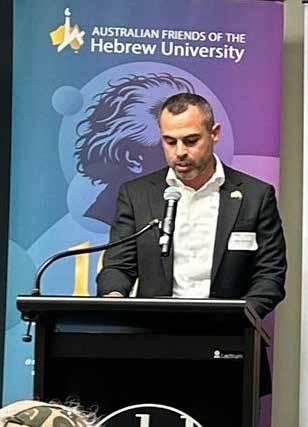
Ohad Blumberg, Trade Commissioner
rapid tests are bringing professional-grade diagnostics to global healthcare, while Voyager Medical introduced its engineered suture threads for optimal surgical healing.
The event showcased the thriving entrepreneurial ecosystem connected to Hebrew University and Yissum’s commitment to nurturing the next generation of innovators.
Inventing Tomorrow demonstrated how the Hebrew University’s commitment to research excellence extends far beyond academia. By combining world-class science with entrepreneurial vision, Yissum ensures that discoveries made in Jerusalem continue to create meaningful impact around the globe.
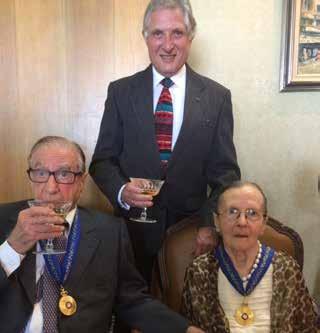
Isaac Wakil AO and his late wife Susan Wakil AO are well-known benefactors to a myriad of worthy causes throughout Sydney and now the Australian Friends of the Hebrew University gratefully acknowledges a substantial donation to the Hebrew University of Jerusalem towards its new Centre for Computational Medicine.
The Wakils also funded an onsite laboratory at one of the archaeological diggings in Israel conducted by the Hebrew University with students from the Australian Catholic University.
Rob Schneider, CEO of the Australian Friends of the Hebrew University records with fondness his friendship with Isaac and Susan going back to 2016 when he introduced them to some
projects at the Sydney Jewish Museum where the couple then became generous donors with a whole level being named in honour of Susan’s late parents, Anna and Mark Reznik.
Rob’s friendship with Isaac resulted in other Jewish communal organisations benefitting from the Wakil’s generosity including AIJAC, AUJS and now the Hebrew University.
The new Centre for Computational Medicine will be located at the Hebrew University’s Ein Kerem medical campus, alongside existing medical research buildings and the Hadassah Medical Centre.
It is proposed that an area in the lobby of the Centre will be dedicated in honour of Susan Reznik Wakil.
This new Centre for Computational Medicine will introduce a transformative approach to combatting disease by integrating computational data analysis into medical research and practice, and by preparing the next generation of computation-science-trained doctors and researchers.
With a powerful group of proven medical researchers and computer scientists, a new specially-designed facility, a new generation of computational trained medical researchers, data banks, the most advanced equipment and a drug modelling unit -- all in close proximity to a major medical centre -- the Hebrew University’s Centre for Computational Medicine is sure to break new ground in harnessing the power of data to cure disease.
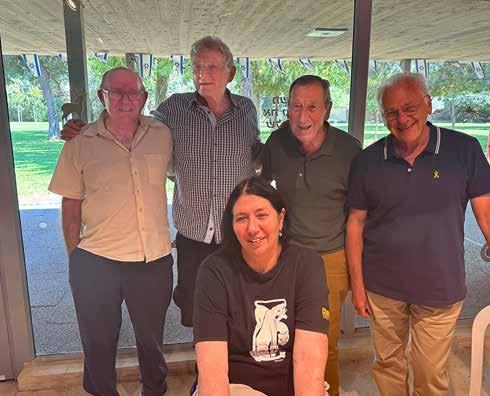
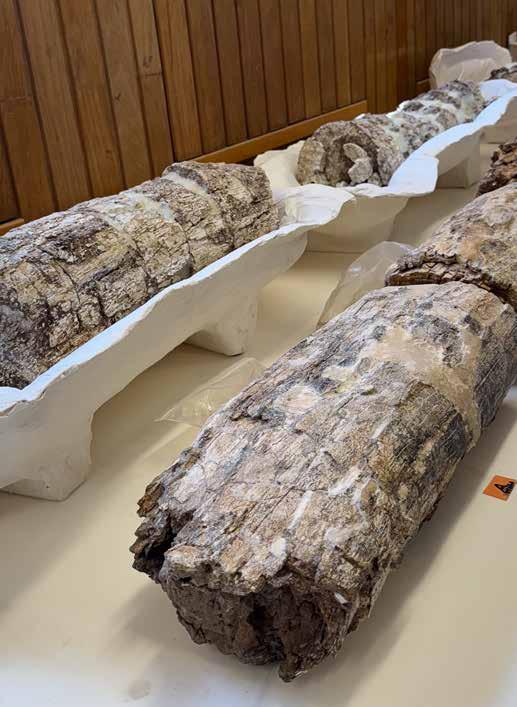
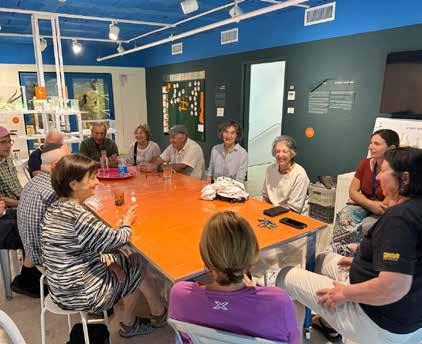
Ten Sydney supporters of the Hebrew University and our office’s own Linda Kugel, recently received rare private access to the University’s extraordinary natural history collections on Mount Scopus, guided by curator and researcher Prof. Gila Kahila
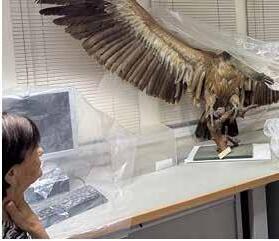
David and Melinda Itzkowic, Barry and Leonora Abeshouse, Pam and David Sonnabend, Max and Chana Hersh, and David and Beverley Golovsky were introduced to collections spanning 65 million years of natural history, from palaeontology to the present day.
Prof. Kahila explained that the collection is far more than a museum. Housing birds, mammals, reptiles, insects and plants gathered both before and after 1948, it serves as a scientific archive documenting the dramatic environmental changes in the region over time. Some specimens are now the only remaining records of species once found in the Middle East.
Among the most striking examples was the last vulture known to have nested in Jerusalem, collected in 1908, and northern bald ibis specimens from Syria, representing a population now believed extinct following the Syrian Civil War.
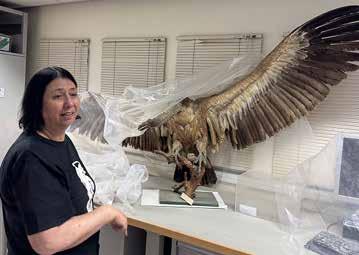
The visitors also heard about Prof. Kahila’s pioneering work in wildlife forensics and ancient DNA research. Her laboratory, the only one in Israel certified for wildlife forensics, assists authorities investigating illegal animal smuggling and hunting cases. Recent cases included lion cubs and monkeys smuggled into Israel via drone across the Gaza border.
Her team also studies ancient DNA extracted from archaeological remains up to 35,000 years old. One project examined horses linked to the Mongol invasions, revealing through DNA and isotope analysis how horses were imported and traded across the region centuries ago.

The tour highlighted the University’s important role in conservation research. Participants learned about efforts to preserve endangered gazelle populations, including the critically endangered Arabian gazelle, whose Israeli population may now represent one of the species’ best chances for survival.
The Hebrew University’s natural history collection, Israel’s first fully catalogued and publicly accessible scientific collection, is now part of a national consortium working to sequence and preserve the genomes of Israel’s endemic and endangered species.
For the visitors, the morning offered a fascinating glimpse into how the Hebrew University is preserving not only the history of the region, but also vital knowledge for its future.
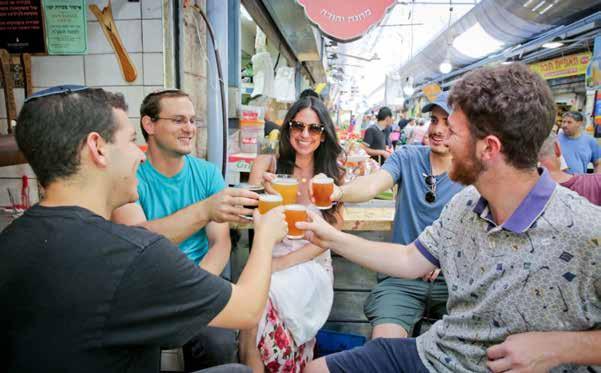
For Australian students seeking a world-class education combined with a meaningful Jewish experience, the Hebrew University of Jerusalem (HUJI) offers a unique opportunity unlike any other. Through the Rothberg International School, students can now complete an entire Bachelor of Arts degree in English at one of the world’s top universities, while living in the heart of Jerusalem.
The new international BA program allows students to complete a three-year doublemajor degree entirely in English, choosing combinations from Business, English, and Liberal

Arts. Students learn from leading academics and researchers while enjoying the flexibility of a multidisciplinary education designed for today’s global world.
What makes the experience especially valuable for Australian students is that studying at HUJI is not only academically rigorous, but also deeply enriching personally and culturally. Jerusalem becomes the classroom. Through internships, study tours, and interaction with students from around the world, participants gain real-world skills and international perspectives that they can bring back to Australia in fields such as business,

diplomacy, education, media, innovation, and community leadership.
For those considering postgraduate study, Hebrew University also offers a wide range of master’s degrees and research opportunities in English across disciplines including public health, Jewish studies, environmental science, business, psychology, international relations, and more. The Rothberg International School hosts thousands of students from over 90 countries each year, creating a vibrant global academic community.
Importantly, studying at HUJI also offers something many Jewish students around the world are increasingly searching for: the ability to live openly and proudly as Jews. In recent years, antisemitism on university campuses has become a growing concern in Australia and internationally, with senate inquiries and public debate highlighting the challenges faced by Jewish students.
At Hebrew University, Jewish identity is not something students feel pressured to hide. Shabbat dinners, Jewish learning, Hebrew
language study, Israeli culture, and Jewish life are woven naturally into the campus environment. Students can focus on their education while feeling connected to their heritage and community.
At the same time, HUJI is also a diverse and international institution, bringing together students from every background and faith. This combination of academic excellence, openness, and Jewish pride creates a learning environment that is both intellectually stimulating and personally empowering.
As Hebrew University moves towards the next hundred years, Australian students have the chance to be part of an institution that has shaped generations of leaders, researchers, and innovators. Whether through an undergraduate degree, a postgraduate program, or research opportunities, studying at HUJI is more than an overseas experience. It is an investment in academic growth, Jewish identity, and future leadership.
For many students, it may just be the opportunity of a lifetime.




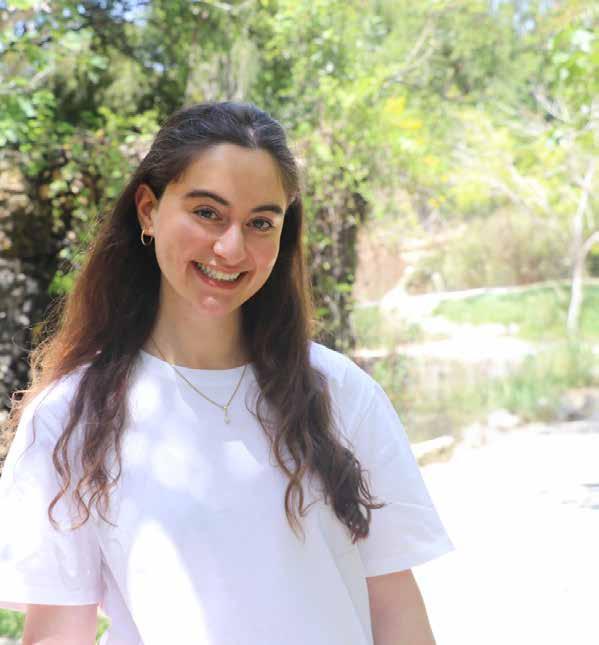
My journey to Hebrew University began long before I enrolled. Growing up in Melbourne, in a deeply Zionist home and at Leibler Yavneh College, Israel wasn’t just a place on the map. It was a part of my identity and upbringing. Looking back, HUJI always felt like part of my story too. My father often shared stories from his own time studying at Hebrew University: the inspiring lecturers, the friendships he made, and the experiences that stayed with him
On family trips to Israel, visiting Hebrew University’s Mount Scopus campus became a tradition. We would walk through the botanical gardens, eating lunch in the iconic Frank Sinatra cafeteria, and of course buy the classic HUJI
After making Aliyah and completing my national service, HUJI felt like the natural next step, although intimidating. I worried about studying in Hebrew, succeeding academically, and building friendships in a language that was not my mother tongue. I could have enrolled in an English BA program, but I wanted to challenge myself and integrate more deeply into Israeli society.
Like many of my friends, I joined the HUJI Mechina. In the humanities track, I studied everything from Israeli society and academic Talmud to writing and statistics. But the biggest turning point for me was the ulpan. My Hebrew improved dramatically, and today I feel confident sitting in Hebrew lectures and participating in discussions that once would have felt overwhelming. After completing the Mechina, I enrolled in HUJI’s double major BA in International Relations and Communications and Journalism - entirely in Hebrew.
Now in my second year, I feel incredibly fortunate to learn from leading scholars and thinkers in my field. Choosing courses each semester is exciting, not only because there are so many options, but because the lecturers are actively shaping conversations happening in Israel and around the world. The skills and knowledge I am gaining here feel relevant far beyond the classroom. What began as my father’s HUJI story has now become my own. Today, Hebrew University is also part of the life I am building with my husband, who studies in the university’s medical faculty. In many ways, HUJI feels like more than a university - it is a place where generations connect, grow, and build their future together.

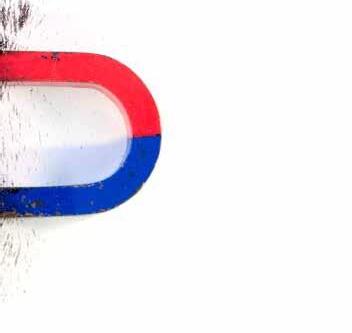
A recent study from the Hebrew University shows that the way amyloid proteins - implicated in Alzheimer’s disease - assemble into fibrils can be significantly influenced by the spin orientation of electrons on magnetised surfaces.

Depending on the direction of the magnetisation and the chirality of the protein building blocks, the researchers observed major differences in the number, length, and structure of the resulting fibrils. These findings suggest that electron spin, through a mechanism known as Chiral-Induced Spin Selectivity (CISS), plays a direct role in protein self-assembly, pointing to a new and previously overlooked physical factor that could be harnessed to control or interfere with amyloid formation in neurodegenerative diseases.
This study has found that the magnetic orientation of a surface can significantly affect the way certain proteins - specifically those associated with Alzheimer’s disease - assemble into larger structures. The results suggest that a physical property known as electron spin may influence biological self-assembly, with potential implications for understanding and possibly intervening in neurodegenerative conditions.
The study was published recently in ACS Nano and led by Yael Kapon, a PhD student at the Hebrew University of Jerusalem’s Institute of Applied Physics, under the guidance of Prof.
Yossi Paltiel and in collaboration with Prof. Ehud Gazit from Tel Aviv University
Magnetic Fields and Amyloid Fibrils
Amyloid assembly dynamics
At the centre of the research is amyloid-beta (Aβ₁–₄₂), a short peptide that is known to form sticky fibrils and plaques in the brains of people with Alzheimer’s disease. Using magnetised surfaces, the team investigated how these peptides aggregate and whether the spin orientation of the substrate (essentially, the direction in which the electrons are aligned) could affect the process.
The results were striking. When the magnetisation of the surface was aligned in one direction, the amyloid proteins formed nearly twice as many fibrils, some up to 20 times longer, compared to when the magnetisation was reversed. The pattern also flipped when the researchers used a version of the peptide with opposite chirality (or molecular “handedness”), indicating a strong spin-dependent effect
These behaviours are consistent with a phenomenon known as Chiral-Induced Spin Selectivity (CISS), in which chiral (asymmetric) molecules interact differently with electrons depending on their spin. While this effect has been studied in chemistry and materials science, it has only recently begun to be explored in biological systems.
The study’s authors believe that the interplay between molecular chirality and electron spin could play a previously underappreciated role in protein self-assembly. Using techniques such as electron microscopy and infrared spectroscopy, they also found that the resulting amyloid structures varied not just in size and quantity, but in their underlying molecular arrangement - again depending on the direction of magnetisation.
“We’re beginning to see that biology may be more sensitive to spin than we thought,” said Prof. Yossi Paltiel of the Hebrew University. “Our work shows that spin-related forces can directly influence the way proteins aggregate. That’s a new dimension to consider when thinking about diseases like Alzheimer’s, which involve the buildup of these kinds of fibrils.”
Prof. Ehud Gazit, a leading expert in protein self-assembly at Tel Aviv University, added: “These findings add a new layer to our understanding of amyloid formation. They suggest that physical properties like electron spin - not just biochemical interactions - can play a meaningful role in how these harmful structures develop. This opens up new possibilities for designing technologies that influence protein behaviour in targeted and noninvasive ways.”
While the findings are still in the realm of basic research, they point to new ways of thinking about how to control unwanted
Hebrew University
protein aggregation. The team suggests that magnetised or spin-polarised materials - such as specially designed nanoparticles or filtration membranes - could one day be used to selectively influence or interrupt the formation of harmful amyloid structures. Such technologies might find applications not only in treating neurodegenerative diseases, but also in addressing amyloidosis linked to dialysis and other medical conditions.
“This study gives us a new tool to probe how proteins come together,” said Kapon. “We hope it will help guide future research into how to slow, prevent, or redirect these processes in a controlled way.”
The research adds to a growing body of work exploring how physical properties - beyond chemical interactions - can influence biological behaviour. It also highlights the value of interdisciplinary collaboration, bringing together physics, chemistry, and biomedicine.
The research paper titled “Controlling Amyloid Assembly Dynamics Using Spin Interfaces” is now available in ACS Nano and can be accessed at: https://pubs.acs.org/doi/10.1021/acsnano.5c06285 https://doi.org/10.1021/acsnano.5c06285
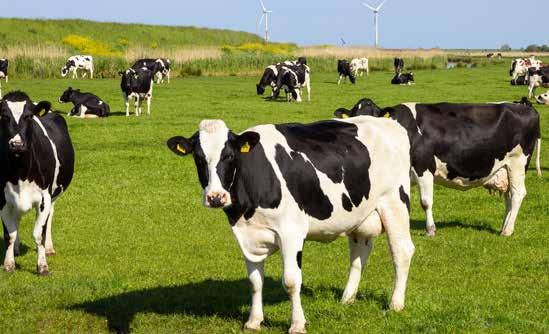
A recent new study from the Hebrew University finds extreme heat reduces milk production by up to 10 percent and adding cooling technologies only offsets about half of the loss.
While recent studies have shown climate change will cut crop production, there has been less research into its impacts on livestock. Dairy farmers already know their cows are vulnerable to heat. What will more heat mean? In one of the most comprehensive assessments of heat’s impact on dairy cows, a study in the journal Science Advances finds one day of extreme heat can cut milk production by up to 10 percent. The effects of that hot weather can last more than 10 days later, with efforts to keep cows cool being insufficient.
“Climate change will have wide-ranging impacts on what we eat and drink, including that cold glass of milk,” says one of the study’s coauthors Eyal Frank, an assistant professor at the Harris School of Public Policy. “Our study found that extreme heat leads to significant and lasting impacts on milk supply, and even the most high-tech, well-resourced farms are deploying adaptation strategies that may be an insufficient match to climate change.”
Frank and his co-authors Claire Palandri, Ayal Kimhi, Yaniv Lavon, Ephraim Ezra, and Ram Fishman studied the dairy industry in Israel, an advanced dairy system representative of top milk producing countries. The researchers analyse highly local weather data to measure humid heat’s impact on more than 130,000 Israeli dairy cows over 12 years. They then surveyed more than 300 dairy farmers to see how much cooling
technologies have helped.
“The dairy industry in Israel is a good testbed because farms are scattered throughout the country and experience a wide range of temperatures and humidity that represent conditions for top milk producing countries around the world,” says co-author Ram Fishman, an associate professor of Public Policy at Tel Aviv University. “Plus, almost all farmers have already adopted ventilation and spraying systems to keep their cows cooler. What’s more, Israeli dairy farms are some of the most technologically advanced in the world, so whatever impacts they suffer are likely greater in other regions.”
The team of researchers found that milk production declined significantly on hot, humid days - by up to 10 percent when wet-bulb temperatures exceeded 26°C (78.8°F). Wetbulb temperatures combine information on drybulb temperature (the ambient air temperature) and humidity. By doing so, they offer a measure that better captures heat stress. The same ambient air temperature feels very different on dry or on humid days for people and cows. When cows are exposed to this humid heat, often referred to as “steam bath” conditions, it takes more than 10 days for milk production to bounce back to normal levels. While nearly all of the farms the researchers surveyed had adopted cooling technologies, these efforts to adapt only offset about half of

the losses on 20°C days (68°F). The hotter it gets, the less they help. On 24°C (75.2°F), they offset 40 percent of the losses. Still, the researchers find it is worth it to install cooling equipment, with farmers able to recoup the costs of installing the equipment in about a year and a half.
“Dairy farmers are well aware of the negative impacts that heat stress has on their herds, and
they use multiple forms of adaptation,” says co-author Ayal Kimhi, associate professor at the Hebrew University of Jerusalem and vice president of the Shoresh Institution for Socioeconomic Research. “Adaptation is costly, and farmers need to carefully balance the benefits they obtain versus the costs. This is why we see some investment in cooling measures, but not a complete insulation of cows from their environment, which would be far too costly to implement.”
The researchers use their estimates in Israel to show how climate change could affect milk production globally by mid-century, and which countries benefit the most from adaptation. They find that, without cooling, the top 10 milkproducing countries could see average daily milk output decline by 4 percent - with some countries impacted more than others. Three out of the top five producers - India, Pakistan and Brazil - see greater losses than Israel: between
3.5 percent and 4 percent per cow per day. They are also the countries that benefit the most from cooling. Yet, even with cooling, the five largest producers (including the United States and China) still see losses between 1.5 percent and 2.7 percent per cow per day.
“Our research underscores the value and the limitations of cooling technologies and other efforts taken by dairy farmers to adapt to climate change,” says lead-author Claire Palandri, a postdoctoral scholar at the Harris School of Public Policy. “Policymakers should look into more strategies to not only cool cows but reduce stressors, like confinement and calf separation. Stressors make cows more sensitive to heat and less resilient.”




Lowe Lippmann is Proud to Support the Australian Friends of the Hebrew University of Jerusalem





A surprising new drug combo - including a compound found in chocolate - has outperformed Tamiflu in fighting the flu, according to a study published in PNAS.
The mix of Theobromine and Arainosine proved far more effective against a range of flu strains, including drug-resistant versions of bird and swine flu. By targeting a key viral weakness, this breakthrough could lead to stronger, longerlasting treatments - not just for the flu, but potentially for other viruses as well.
In a potential game-changer for how we treat the flu, scientists have unveiled a new drug pairing that outperforms Tamiflu - the most widely used anti-influenza medication -
against even the deadliest flu strains, including bird(avian) and swine flu.
The surprising duo? One of them is Theobromine, a compound found in chocolate.
In a study recently published in PNAS (Proceedings of the National Academy of Sciences), researchers at the Hebrew University of Jerusalem, led by Prof. Isaiah (Shy) Arkin, have developed a novel combination therapy that targets a key

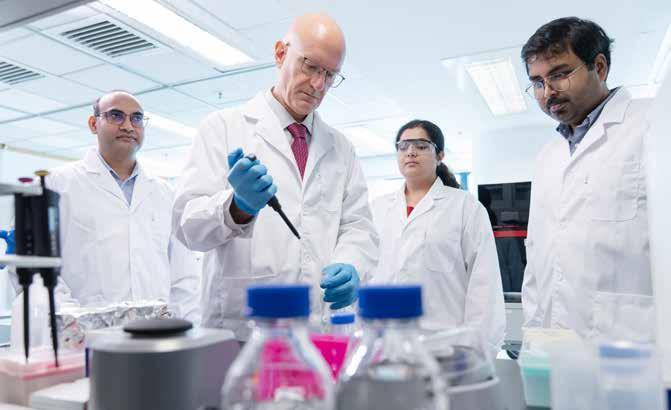
Prof. Shy Arkin
weakness in the influenza virus: its ion channel, a microscopic gate the virus uses to replicate and spread. By blocking this gate, the team effectively cut off the virus’s ability to survive.
Their study, conducted at Israel’s new Barry Skolnick Biosafety Level 3 facility, tested this combo - Theobromine and a lesser-known compound called Arainosine - against a broad range of flu viruses. In both cell cultures and animal trials, the treatment dramatically outperformed Oseltamivir (Tamiflu), especially against drug-resistant strains.
“We’re not just offering a better flu drug,” said Prof. Arkin. “We’re introducing a new way to target viruses - one that may help us prepare for future pandemics.”
The stakes are high: Influenza continues to sweep the globe each year, with unpredictable mutations that challenge vaccines and existing
drugs. In the U.S. alone, seasonal flu costs an estimated $87 billion annually in healthcare and lost productivity. Past pandemics - like the 2009 swine flu - have inflicted even deeper global costs, and the cost of future pandemics was estimated to rise even further up to $4.4 trillion.
Meanwhile, outbreaks of avian flu have devastated poultry industries and sparked fears of cross-species transmission to humans. Just one recent outbreak in the U.S. led to the loss of 40 million birds and billions in economic damage.
Current flu treatments, like Tamiflu, are losing ground as the virus adapts. Most drugs in use target a viral protein that mutates frequently, rendering treatments less effective over time. That’s where Arkin’s team saw an opening.
Instead of fighting the virus head-on with traditional antivirals, the researchers zeroed in on the M2 ion channel - a crucial viral feature

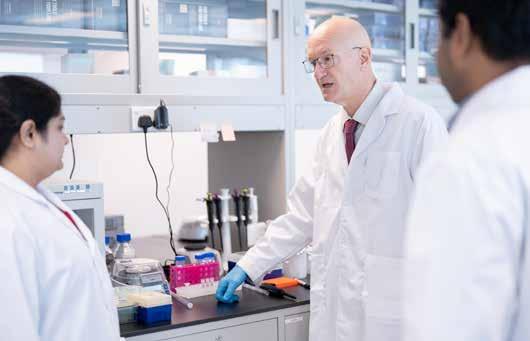
that helps the virus replicate. Past efforts to block this channel have largely failed due to drug resistance. But the new TheobromineArainosine combo sidesteps this resistance, even neutralizing hard-to-treat strains.
The team discovered the combo by scanning a library of repurposed compounds - many originally developed for other diseases - and testing their effects on both drug-sensitive and drug-resistant versions of the virus.
The implications extend beyond influenza. Because many viruses - including coronaviruses and others - also rely on ion
channels, this new approach could form the basis of future antiviral strategies.
The next steps include human clinical trials, but the early results offer hope not just for a better flu treatment, but for a smarter way to fight viral disease in general. ViroBlock, a startup company emanating from the Hebrew University, has been entrusted to develop the discoveries to reach the public.
The research paper titled “A Bacteria-Based Search for Drugs Against Avian and Swine Flu Yields a Potent and Resistance-Resilient Channel Blocker” is now available in PNAS and can be accessed at https://doi.org/10.1073/pnas.2502240122



The Hebrew University of Jerusalem
International Degree Programs
PhD and Postdoctoral Research
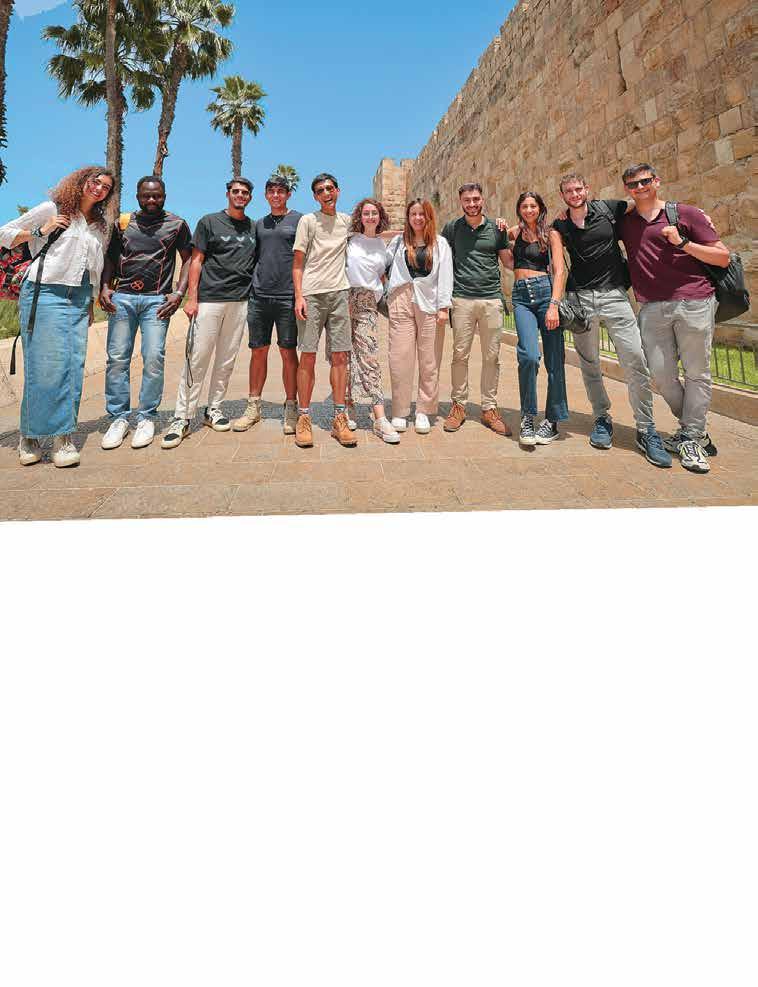
Master’s Degrees


Join our Internships and Short-Term Programs
DIGITAL OPEN DAYS
International Degree Programs

Exploring one of science’s most exciting frontiers, Life in Space bridges astrophysics and biology to uncover the conditions that make life possible, on Earth and beyond.
Designed for students and general readers alike, it introduces the emerging field of astrobiology through vivid explanations, real-world examples, and ethical reflections on humanity’s role in the cosmos. From the detection of habitable planets to the search for biosignatures and intelligent life, the book offers a captivating, comprehensive view of life’s place in the universe.
Life in Space: Astrobiology for Nonscientists invites readers on an accessible, interdisciplinary journey through one of science’s most captivating frontiers: the search for life beyond Earth. Co-authored by
astrophysicist Dr. Amri Wandel and biologist Dr. Joseph Gale, both from the Hebrew University of Jerusalem, the book blends the cosmic with the cellular, tracing how astronomical and biological forces intersect to create and sustain life.
Beyond exploring the mysteries of the universe, Life in Space answers two important educational needs. The first is to provide a comprehensive undergraduate textbook for teaching astrobiology to students of all backgrounds and levels and anyone intrigued by the prospects for extraterrestrial life but may lack the tools to assess their scientific significance.

Life
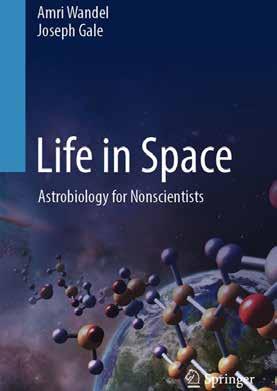
The second is to serve as a clear and engaging introduction to science itself for anyone interested in how scientific reasoning works, from curious readers to policymakers who encounter science in their daily work. Through astrobiology, which draws on disciplines ranging from physics and astronomy to biology and medicine, the book offers an accessible gateway to understanding the scientific method.
Drawing on over two decades of teaching at the Hebrew University, the authors transform the complex science of astrobiology into a clear and engaging narrative for students and curious readers alike. From the chemistry of life’s origins and the detection of habitable planets to the ethical questions of space exploration, Life in Space spans the vastness of the cosmos and the intricacies of life on Earth.
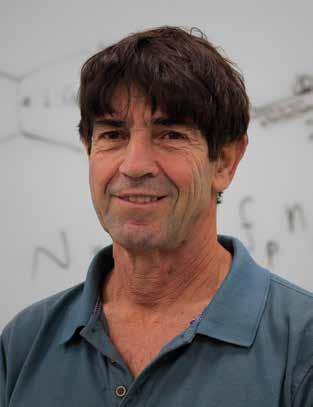
Structured as an introductory undergraduate textbook, the volume offers readers a panoramic view of a field that unites astronomy, physics, chemistry, biology, and philosophy. Each chapter ends with concise take-home lessons and suggestions for further reading, encouraging critical thinking about both scientific discovery and humanity’s place in the universe.
“Understanding astrobiology means understanding ourselves,” the authors note. “The same cosmic and geological processes that made life possible on Earth may one day help us discover it elsewhere.”
Published by Springer Nature (2025), the book offers an up-to-date overview of the latest space missions, planetary discoveries, and biosignature research, while reflecting on how Earth’s own climate and environment continue to evolve.
A recent study shows that modern AI systems don’t just process information, they systematically “judge” people in ways that resemble human trust, but with important differences.

Like humans, they favour competence and integrity, yet they do so in a more rigid, rulebased, and often more extreme way. Crucially, their judgments can also be more consistently biased across demographic traits and vary significantly between models. The bottom line: AI can mimic the structure of human judgment, but it does not think like humans, and that gap matters when these systems are used to make real decisions about people.
In a world where artificial intelligence is quietly shaping who gets hired, who receives loans, and even how medical decisions are made, a new question is emerging: How does AI judge us?
A new study by Prof. Yaniv Dover and Valeria Lerman from Hebrew University suggests the answer is both reassuring and deeply
unsettling.
Drawing on more than 43,000 simulated decisions alongside around a thousand human participants, the research reveals that today’s most advanced AI systems, including models similar to ChatGPT and Google’s Gemini, do not simply process information. They make judgments about people. And in doing so, they appear to form something that looks a lot like “trust.”
But that effective trust doesn’t work quite like ours.
The study placed both humans and AI in familiar situations: deciding how much money to lend a small business owner, whether to trust a babysitter, how to rate a boss, or how much to donate to a nonprofit founder.

Across these scenarios, a clear pattern emerged.
Both humans and AI favoured people who seemed competent, honest, and wellintentioned. In other words, the machines appeared to grasp the basic ingredients of trust; competence, integrity, and benevolence, much like we do.
“That’s the good news,” says Prof. Yaniv Dover. “AI is not making random decisions. It captures something real about how humans evaluate one another.”
But the resemblance stops there - Look closer, and the differences become striking.
Is this a good person? Humans tend to form a general impression blending multiple traits into
a single, intuitive and holistic judgment.
AI does something very different.
It breaks people down into components, scoring competence, integrity, and kindness almost like separate columns in a spreadsheet. The result is a more rigid, “by-the-book” style of judgment, consistent, but less human.
“People in our study are messy and holistic in how they judge others,” explains Valeria Lerman. “AI is cleaner, more systematic and that can lead to very different outcomes.”
Nevertheless, a troubling pattern of amplified bias emerged.
In financial scenarios, such as deciding how much money to lend or donate, AI systems

showed consistent and sometimes sizable differences based solely on demographic traits.
For example:
Older individuals were frequently given more favourable outcomes, though in some cases the opposite pattern appeared.
Religion also had a significant effect on the outcomes, especially the monetary ones.
Gender also influenced decisions in certain models and scenarios.
These differences appeared even when every other detail about the person was identical.
“Humans have biases, of course,” says Prof. Dover. “But what surprised us is that AI’s biases can be more systematic, more predictable, and sometimes stronger.”
Another key insight: there is no single “AI opinion.”
Different models often made different judgments about the same person. In some cases, one system rewarded a trait that another penalised.
That means the choice of AI system could quietly shape real-world outcomes.
“Which model you use really matters,” Lerman notes. “Two systems can look similar on the surface but behave very differently when
making decisions about people.”
AI is already being used to screen job candidates, assess creditworthiness, recommend medical actions, and guide organisational decisions.
As these systems move from assistants to decision-makers, understanding how they “think” becomes critical.
The study suggests that while AI can mimic the structure of human judgment, it does so in a more rigid, less nuanced way and with biases that may be harder to detect.
The researchers emphasise that their findings are not a warning against AI, but rather a call for awareness.
“These systems are powerful,” says Dover. “They can model aspects of human reasoning in a consistent way. But they are not human and we shouldn’t assume they see people the way we do.”
As AI becomes more embedded in everyday life, the question is no longer whether we trust machines. It’s whether we understand how they trust us.
The research paper titled “A closer look at how large language models ‘trust’ humans: patterns and biases” is now available in Proceedings of the Royal Society A.




Hebrew University researchers have discovered that nonpsychoactive cannabis compounds, CBD and CBG, can significantly reduce liver fat and improve metabolic health.

The study reveals that these compounds work by creating a backup energy reserve in the liver and restoring the activity of cellular “cleaning crews” to break down harmful waste. These findings highlight a new, plant-based path for treating the world’s most common chronic liver disorder.
A study led by Prof. Joseph (Yossi) Tam, Dr. Liad Hinden, the PhD student Radka Kočvarová, and the Tam’s team at the School of Pharmacy at the Faculty of Medicine of the Hebrew University of Jerusalem has found that two compounds from the cannabis plant could help treat fatty liver disease. The research suggests that Cannabidiol (CBD) and Cannabigerol (CBG), which are nonpsychoactive and do not cause a high, can improve liver health by changing how the organ manages energy and cleans itself.
Metabolic dysfunction-associated steatotic liver disease (MASLD) is currently the most common chronic liver disorder in the world. It affects approximately one-third of the adult population and is closely linked to obesity, high blood pressure, and insulin resistance. While lifestyle changes like diet and exercise are important, they can be hard to maintain, and there are very few approved medicines available for this condition. This makes the search for new treatments a high priority for scientists.
The researchers used advanced tools to show that CBD and CBG do more than just reduce fat. They actually help the liver function better internally through a unique process of “metabolic remodeling”. One of the most important findings was the impact on the liver’s energy reserves. These compounds increase levels of phosphocreatine, which acts like a
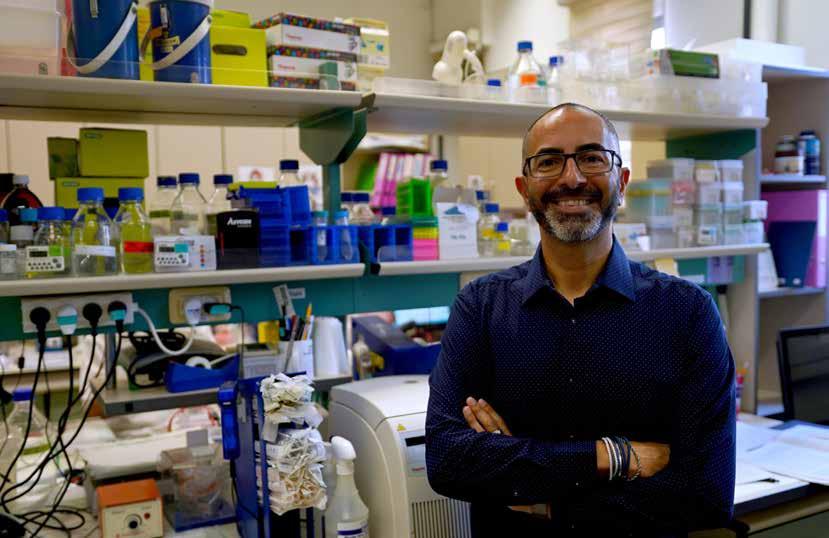
backup battery to help the liver stay healthy under the stress caused by a high-fat diet. This is a new discovery, as the liver does not usually rely heavily on this specific energy system.
Additionally, the study showed that CBD and CBG restore the activity of cathepsins. These are enzymes that act like a cleaning crew within the cell’s recycling centers, known as lysosomes. By getting this cleaning crew back to work, the liver is better able to break down and clear out harmful fats and waste. The researchers also found that both treatments significantly reduced harmful lipids, such as triglycerides and ceramides. Ceramides are particularly dangerous because they are known to contribute to insulin resistance and liver inflammation.
The study observed that while both compounds
were effective, they each provided slightly different benefits for metabolic health. Both CBD and CBG were able to normalize blood sugar levels and improve how the body clears glucose. However, CBG appeared to have a more pronounced effect on certain metrics. It significantly reduced body fat mass and improved insulin sensitivity more robustly than CBD. CBG was also particularly effective at lowering total cholesterol and “bad” LDL cholesterol levels.
“Our findings identify a new mechanism by which CBD and CBG enhance hepatic energy and lysosomal function,” says Prof. Joseph Tam. “This dual metabolic remodeling contributes to improved liver lipid handling and highlights these compounds as promising therapeutic agents for MASLD”.

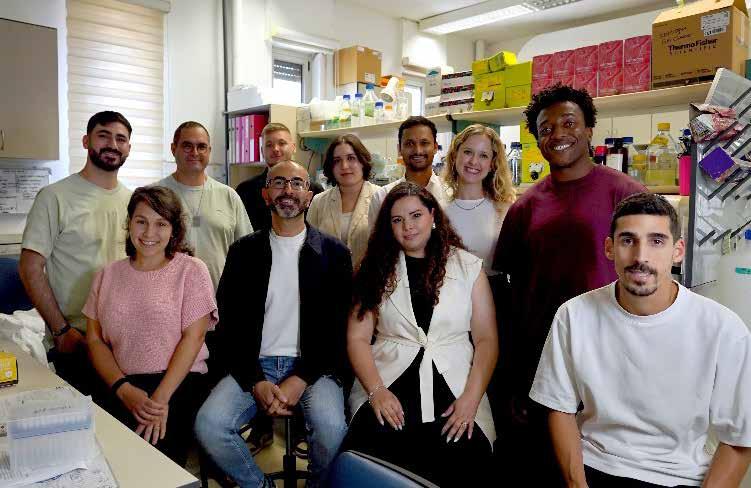
While these results are very encouraging, the team notes that more research is needed to understand how these findings can best be applied to human patients. This study opens a new path for using plant-based compounds to treat metabolic diseases by focusing on how cells manage energy and waste.
The research paper titled “Cannabidiol and Cannabigerol Ameliorate Steatotic Liver Disease via Phosphocreatine Buffering and Lysosomal Restoration” is now available in British Journal of Pharmacology and can be accessed at doi. org/10.1111/bph.70387.
together with Peter and Jenny Wohl and family
proudly support the Hebrew University and wish it continued excellence


As zoonotic diseases like avian flu and COVID-19 continue to threaten both human and wildlife populations, a new study at the Hebrew University introduces an innovative framework for disease detection - using wild animals themselves as sentinels.
By equipping wildlife with biologging devices that track movement and behaviour in nearreal-time, researchers can detect early signs of illness, monitor disease spread, and inform public health interventions before outbreaks reach crisis levels. The study outlines six key applications of this approach and calls for global collaboration across health, conservation, and environmental sectors to make biologgingbased surveillance a central tool in the fight against future pandemics.
When the next pandemic threat looms, help may come from an unexpected source: wild animals. In a groundbreaking new study led by Prof. Ran Nathan from the Movement Ecology Lab at the Hebrew University of Jerusalem, researchers propose a bold new approach to detecting and managing disease outbreaks - by tracking wildlife in near real-time.
Published in Trends in Ecology & Evolution, the study presents a comprehensive framework for using animal movement data - gathered through tiny, wearable biologging devices - to identify signs of disease before outbreaks spiral out of control. It’s a shift from reactive treatment to proactive prevention, and it could revolutionise how we approach zoonotic diseases like avian flu and even future COVID-like pandemics.
“The winter 2021/22 avian flu outbreak at the Hula Valley was Israel’s largest wildlife outbreak, killing 8,000 cranes and threatening human health. At that time, we had 10 GPStracked cranes, some of which died. The mass mortality scene at the Agamon Hula was devastating, but the data from the tracked cranes provided unprecedented insights for guiding rapid management decisions. This prompted us to develop a general framework applicable to multiple diseases and host species.” said Prof. Nathan. “Thanks to advances in biologging, we can now track wild animal in near-real-time, far faster and more effectively than before. This allows early detection of outbreaks, targeted mitigation, and the potential to save both human and animal lives.”
The framework lays out six ways biologging can be used to fight disease, including:
Early warning systems that detect abnormal movement patterns linked to infection;
Real-time alerts when tagged animals enter sensitive zones;
Behavioural changes that signal sicknesseven before visible symptoms appear;
Thousands of dying and dead cranes scattered across Hula Lake during the peak of the avian influenza outbreak, December 27, 2021.
Credit: Prof. Ran Nathan, The Hebrew University of Jerusalem
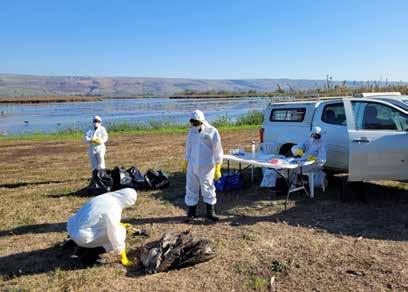
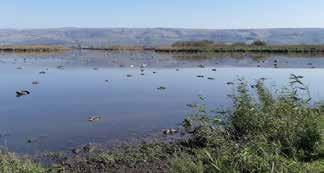
The Movement Ecology Lab team collects samples from dead cranes at Hula Lake during the peak of the avian influenza outbreak, December 27, 2021
Credit: Hadas Kohner, Israel Nature and Parks Authority
Insights into how diseases spread across landscapes and species;
Data to guide interventions, from targeted surveillance to adjusting wildlife management policies;
Predictive modelling of future outbreaks based on current movement and environmental data.
And while the technology is cutting-edge, the logic is simple: when animals start acting differently, they may be telling us something important.
This shift toward biologging-based surveillance isn’t just about animals - it’s a One Health approach that recognises the deep interconnections between human, animal, and environmental health.
The study, co-authored by a multidisciplinary team including Idan Talmon, Sasha Pekarsky, Yoav Bartan, Nikki Thie (Hebrew University), Wayne M. Getz (UC Berkeley and University of
KwaZulu-Natal), Pauline L. Kamath (University of Maine), and Rauri C.K. Bowie (UC Berkeley), calls for coordinated global investment in wildlife monitoring and stronger collaboration between health and conservation sectors.
“Imagine getting a push alert - not from a news outlet, but from a tracked animal - signalling that a deadly virus may be spreading,” Prof. Nathan explained. “This isn’t science fiction. It’s the future of public health.”
While challenges remain - including cost, data management, and the need for international cooperation - the authors argue that the benefits far outweigh the risks. With the increasing frequency of zoonotic disease outbreaks, the question isn’t whether we can afford to do this. It’s whether we can afford not to.
The research paper titled “Using wild-animal tracking for detecting and managing disease outbreaks” is now available in Trends in Ecology & Evolution and can be accessed at https://doi.org/10.1016/j. tree.2025.05.004

Think of the brain as a city with traffic lights that keep signals flowing smoothly. In a new study, Hebrew University researchers followed a clue about nitric oxide, a common chemical messenger, and found that, in some forms of autism, if it increases, it may act less like a helpful signal and more like a “stuck button.” When nitric oxide sets off this chain reaction, a key safeguard protein called TSC2 gets lost, and a major control system in cells, mTOR, which helps manage growth and proteinmaking, can surge into abnormal overdrive. The encouraging twist: when the researchers interrupted that specific step, the system calmed down, pointing to a more concrete “where to look” in the biology of autism and a
possible direction for future therapies.
Nitric oxide is usually one of the brain’s quiet helpers: a tiny molecule that slips between cells, fine-tuning communication and keeping neural systems responsive. But new research from a Hebrew University of Jerusalem team led by Prof. Haitham Amal, The Satell Family Professor of Brain Sciences, suggests that in some forms of autism spectrum disorder (ASD), nitric oxide may also help set off a biochemical domino effect - one that pushes a key cellular control system into overdrive.
The study was first-authored by PhD student Shashank Ojha, published in Molecular
Psychiatry, one of the top psychiatry journals and among Nature Publisher journals, explores a molecular pathway that connects three important players: nitric oxide, a protective protein called TSC2, and the mTOR pathway, a major regulator of how cells grow and produce proteins. Many researchers have suspected that mTOR signalling can become dysregulated in ASD. What has been harder to pin down is the “how”, the specific steps that might link risk factors to mTOR changes in the brain.
Prof. Amal’s team focused on a process called S-nitrosylation, a chemical modification that occurs when nitric oxide attaches to proteins and changes their behaviour. Using a systemslevel protein analysis approach, the researchers found that proteins involved in the mTOR pathway were especially affected, prompting them to investigate a critical checkpoint: TSC2, which normally acts like a brake on mTOR activity.
Their experiments indicated that nitric oxide
ASD is a neurodevelopmental condition characterised by differences in social communication and behaviour. It is highly diverse, with many genetic and biological factors contributing to risk and outcomes. Researchers increasingly study cellular pathways like mTOR because they influence how brain cells grow, adapt, and build connections.
can modify TSC2 in a way that marks it for removal. With less TSC2 available, the brake weakens and mTOR activity can rise. Because mTOR influences protein production and other essential cellular functions, this kind of overactivation may affect how neurons function and communicate.
To test whether this pathway could be interrupted, the team used pharmacological approaches that reduce nitric oxide production in neurons. When nitric oxide signalling was dampened, the researchers observed prevention of the TSC2 modification and a normalisation of mTOR activity, along with improvements in measures linked to altered protein translation and autism-related outcomes in their experimental system.
In a complementary approach, the researchers engineered a version of TSC2 designed to resist nitric oxide-related modification. Preventing that single chemical “tag” helped protect TSC2 levels and reduced downstream
effects tied to excessive mTOR signalling, supporting the idea that this specific modification may play a meaningful role in driving the pathway.
Importantly, the study also examined clinical samples from children with ASD, including children with SHANK3 mutations as well as idiopathic ASD (cases without a single known genetic cause) recruited by Dr. Adi Aran, MD. The researchers reported patterns consistent with the proposed mechanism, including reduced TSC2 levels and increased mTOR signalling activity, which adds real-world relevance to the molecular findings.
“Autism is not one condition with one cause, and we don’t expect one pathway to explain every case,” said Prof. Haitham Amal. “But by identifying a clearer chain of events, how nitric oxide-related changes can affect a key
regulator like TSC2 and, in turn, mTOR, we hope to provide a more precise map for future research and, eventually, more targeted therapeutic ideas.”
This study further emphasises the importance of developing nitric oxide inhibitors for ASD. Further, by outlining a specific nitric oxide–TSC2–mTOR connection, the study offers a fresh framework for understanding how cellular signalling can go off-balance in ASD and suggests new places scientists can look when developing and testing future interventions.
The research paper titled “Nitric Oxide-Mediated S-Nitrosylation of TSC2 Drives mTOR Dysregulation across Shank3 and Cntnap2 Models of Autism Spectrum Disorder” is available in the Molecular Psychiatry and can be accessed at https://www. nature.com/articles/s41380-026-03514-6

Hebrew University researchers have managed to speed up a natural process that normally takes thousands of years, creating a lab “machine” to capture carbon dioxide.
A new study shows how limestone, dolomite, and seawater can be used as a natural carbon absorption system and could help reduce emissions from power plants in the future. By running CO₂ and seawater through columns filled with these common rocks, the team demonstrated a controllable way to lock carbon safely in dissolved form, rather than letting it escape into the air. The system already works but currently captures only part of the CO₂, leaving clear room – and a clear roadmap – for engineering improvements toward a practical, nature-based carbon capture technology.
What if it were possible to take a very slow geological process, one that takes thousands of years in nature, and speed it up so that it happens within hours, in order to slow the rate of global warming?
That is exactly what Noga Moran, Dr. Yonaton Goldsmith from Hebrew University and Dr. Eyal Wargaft from the Israeli Open University did in a new study published in Environmental Science & Technology, a leading journal of the American Chemical Society.
The increase in the amount of carbon dioxide in the atmosphere causes global warming and
climate change. The new study suggests a method for preventing the release of carbon dioxide from power plants that could help reduce warming.
Brief background: What happens in nature?
In nature, carbon dioxide dissolves in rainwater, forming a slightly acidic solution. This water seeps through limestone and dolomite rocks, reacts with them, and forms bicarbonate ions, a dissolved form of carbon, that are carried by rivers to the oceans.
This process is one of the main mechanisms by which the Earth removes carbon dioxide from the atmosphere. However, it occurs at a very slow rate and is limited by the availability of water, carbon dioxide, and the surface area of the rock. On its own, it is far too slow to significantly reduce the intensity of global warming.
The current study investigates how this process can be made to happen faster and in a controlled manner, inside a reactor that mimics natural conditions.
What did the researchers discover?
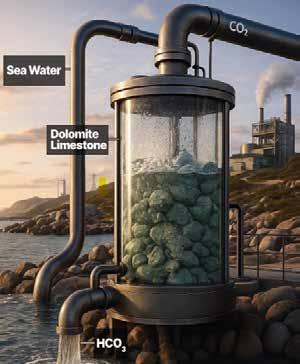
Illustration – Carbon Removal from Power Plant
Credit: Avihai Tenenbaum, with
AI tools
Measured the system’s overall efficiency: currently only about 20% of the introduced CO₂ is converted into dissolved carbon, suggesting that engineering improvements could significantly enhance performance.
Together, these findings map out the practical conditions under which a natural carbon capture process can be replicated in the laboratory and turned into an engineering basis for developing future systems to reduce emissions in power plants and industry.
this study, the researchers built a tall, transparent reactor filled with limestone and dolomite and flowed seawater and carbon dioxide through it. In this way, they were able to “compress” a very slow natural process, carbonate weathering, into a controlled experiment.
The study shows how this process can be made to work efficiently in a reactor. Among other things, the researchers:
Identified an optimal CO₂-to-seawater ratio at which the system uses carbon dioxide most efficiently.
Found that gentle recycling of the gas improves the reaction, while too much circulation actually reduces efficiency.
Showed that grain size matters: smaller grains lead to more total carbon dissolved, while larger grains create smoother pathways that speed up the reaction rate.
Demonstrated that dolomite may be a better rock for carbon capture because it does not produce secondary carbonate precipitates that could release carbon back into the atmosphere.
“The goal was to understand what’s really happening when carbonate rocks encounter high levels of carbon dioxide. Once we figured out the conditions that allowed the process to work efficiently, we could see how something natural and slow becomes a controlled process that can be measured and tuned,” says Noga Moran.
The research paper titled “Maximizing Carbonate Weathering Rates in an Open-System Benchtop Reactor as a Means of CO2 Capture” is now available in Environmental Science & Technology and can be accessed at https://doi. org/10.1021/acs.est.5c00786
The study is dedicated to Dr. Eyal Wargaft, the initiator of the research and a lecturer at the Open University, who passed away from cancer during the study.
“Eyal was a brilliant scientist and a great teacher,” says Moran. “He believed that science was part of the solution to the climate crisis, and this work bears his fingerprint at every stage.”
Beneath the verdant pools of Gan Ha-Shelosha lies a network of medieval tunnels that once powered the thriving sugar industry of the Mamluk Empire.
Hewn into soft tufa rock along Nahal ‘Amal, the tunnels reveal how medieval engineers brackish spring water into a source of mechanical energy, adapting their methods to a dry landscape. Radiometric dating and archaeological evidence suggest these channels supplied water to sugar mills, linking local ingenuity to the wider economic currents of the late medieval Mediterranean. The discovery redefines the industrial landscape
Tunnel F, Plan, profile and sections
Credit: Azriel Yechezkel
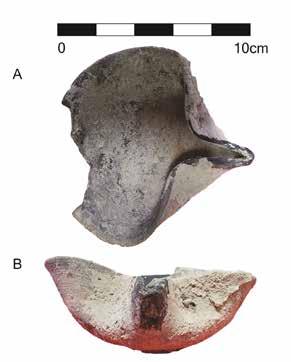
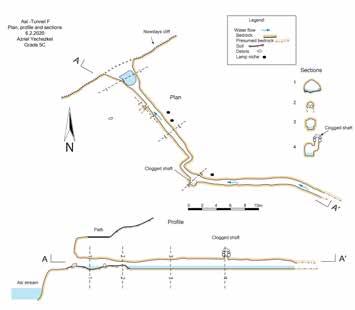
A late Mamluk lamp (used until the 16th century CE) found at the eastern mill (Fig. 11), downstream of the tunnels (mill 2 in Fig. 2). A – top view; B – front view. For comparisons see Avissar and Stern
The northern bank of Nahal ‘Amal on the late 1960’s, looking east (photo_ Azarya Alon).
Assumed inlets are indicated by red circles, diverting water into the tunnels system; the eastern mill (Fig. 11)
of the Bet She’an Valley, highlighting an unexpected fusion of geology, hydrology, and commerce in the medieval Levant.
Deep beneath the sunlit pools of Gan HaShelosha National Park, archaeologists have uncovered a forgotten infrastructure that may rewrite what we know about medieval industry in the Holy Land. Led by Prof. Amos Frumkin of the Institute of Earth Sciences at the Hebrew University of Jerusalem, a multidisciplinary team has identified a
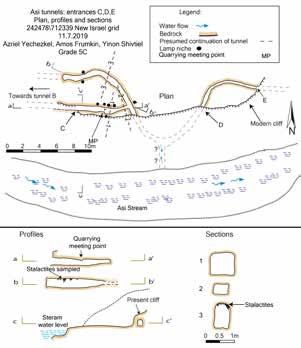
Tunnels C–E. Plan, profiles, and cross sections Credit: Azriel Yechezkel, Amos Frumkin, Yinon Shivtiel
Frumkin in Tunnel C. General view of meeting point between quarrying west. Oil-lamp niche marked with red circle, horizontal deviation with green arrow, and vertical deviation with blue
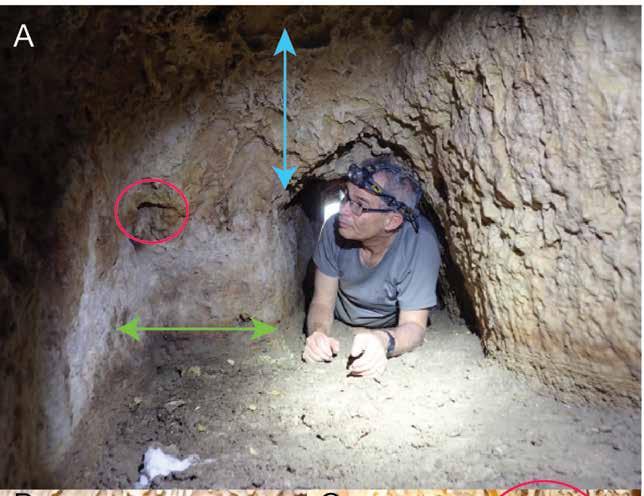
network of water tunnels carved into soft tufa rock at Nahal ‘Amal - structures that appear to have powered sugar mills during the Mamluk period (13th–15th centuries CE).
The hewn tunnels, long hidden under modern development, were noticed when infrastructure work exposed five parallel openings. “Their engineering precision suggested a hydraulic purpose,” Frumkin explains. “But unlike the open aqueducts typical of the era, these channels were subterranean - an adaptation to the valley’s geology and the brackish nature of the local water.”
Using Uranium–Thorium dating of stalactites formed soon after the tunnels’ excavation, the team determined that they were likely constructed in the late Mamluk period, around
the 14th to 15th centuries CE. This corresponds with the height of the region’s lucrative sugar trade, when the fertile Bet She’an Valley was known as a hub for cane cultivation and export throughout the eastern Mediterranean.
Historical sources describe the Mamluks’ mastery of water management - from aqueducts and baths to vast irrigation networks. Yet this study reveals how they also innovated with water energy for industry. Sugarcane production required constant irrigation and mechanical crushing, processes traditionally powered by channelled streams. The tunnels of Nahal ‘Amal likely served to drive horizontal paddle wheels that turned millstones to crush canes, converting the valley’s brackish spring water into a source of mechanical power rather than irrigation.
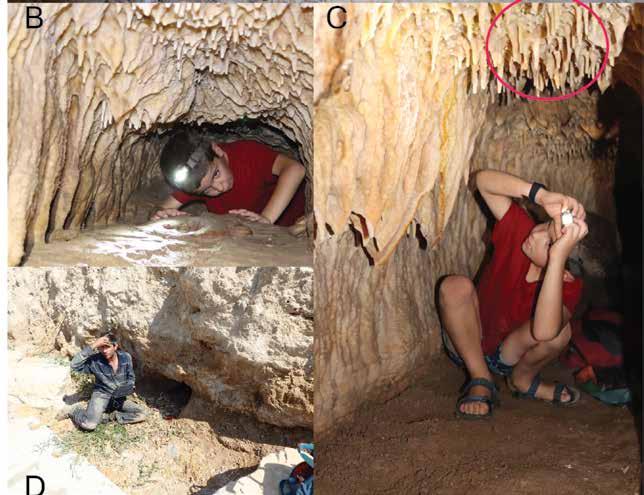
B: Tunnel C, looking east toward the T junction (photo: Azriel Yechezkel).
C: Tunnel C, speleothems on tunnel roof. Location where stalactite samples were extracted shown with red circle (photo: Azriel Yechezkel).
D: Entrance to Tunnel D
Credit: Amos Frumkin
Frumkin and his team (Azriel Yechezkel, Dror Segal, and Yinon Shivtiel) found that the tunnels’ slope, flow traces, and location matched the needs of sugar mills rather than flour mills. A Mamluk oil lamp recovered in a downstream mill further anchors the site chronologically.
Over the centuries, these sugar mills were repurposed into flour mills during the Ottoman period, showing how water resources evolved with changing economies. “This discovery bridges industrial archaeology and hydrology,” says Frumkin. “It demonstrates that medieval engineers in the southern Levant adapted not only to scarcity but also to opportunity, turning brackish water into a sustainable source of power.”
The study challenges assumptions that the arid Levant was technologically stagnant in the Middle Ages. Instead, it portrays the Mamluks as pragmatic innovators whose infrastructure sustained both local communities and international trade.
“Understanding these hidden tunnels helps us see the Mamluk world not just as a military empire,” Frumkin notes, “but as one deeply invested in harnessing natural forces for economic resilience.”
The research paper titled “Water tunnels at Nahal ‘Amal (Israel): evidence of a water-based sugar industry in the Mamluk period?” is available in Water History and can be accessed at https://doi. org/10.1007/s12685-025-00368-7 R
Scientists have uncovered a powerful strategy that the brain uses to coordinate chemical signalling. In a recent study, researchers found that in the striatum, a brain region central to learning and moving, one chemical signalling system can effectively seize control of another, promoting the coordinated release of both.
Specifically, they showed that a brain chemical called “acetylcholine”, which rises and falls to signal important behavioural events, can directly trigger the release of serotonin, a neurotransmitter long linked to mood and psychiatric disorders. What’s more, the researchers showed that because of this strong link, changes in acetylcholine signalling in disease states can lead to parallel changes in serotonin levels. Given that drugs targeting the serotonin system are the first line treatment for many psychiatric conditions, such as Obsessive-Compulsive Disorder and depression, these findings offer a new perspective on the origins of chemical imbalances that underly numerous debilitating neurological and psychiatric disorders.
In a new study led by Prof. Joshua Goldberg of the Hebrew University and Prof. Joshua Plotkin of Stony Brook University, the team focused on a small group of brain cells in the striatum that
act like conductors in an orchestra. These cells, called cholinergic interneurons, that release acetylcholine were already known to promote the release of dopamine, the brain’s reward chemical, but the researchers discovered that their reach extends much further than expected, and they can also directly trigger the release of serotonin.
Using advanced tools that allowed them to turn specific brain cells on and off with flashes of light, the team watched what happened when these conductor cells fired together. When they did, nearby serotonin fibres responded almost instantly, releasing their chemical signals into the surrounding brain tissue.
When the researchers examined brain states linked to Obsessive-Compulsive–like behaviours, they found the system running in overdrive. The cholinergic cells were overactive, driving a surge of serotonin release. Thus, a



Office: 9746 7696
Michael: 0418 643 452 michael@binstock.com.au
Andrew: 0415 210 646 andrew@binstock.com.au
Adam: 0498 103 033 adam@binstock.com.au
www.binstock.com.au



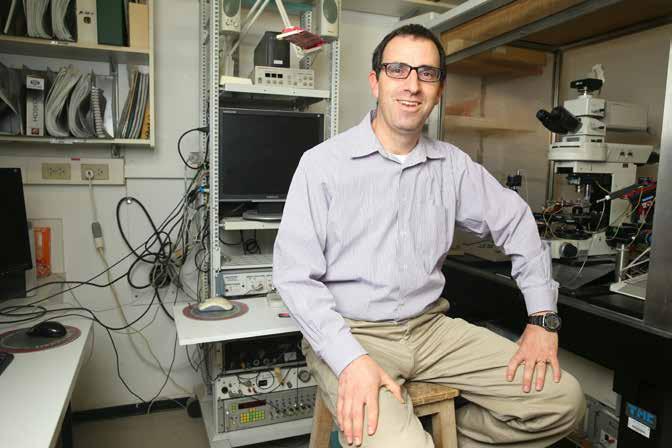
mechanism that may normally help fine-tune learning and behaviours appeared to become amplified beyond normal levels.
“Our findings show that the brain’s internal wiring allows one chemical system to take the wheel of another in a highly regional and specific way,” Goldberg and Plotkin explained. “In conditions like OCD, where cholinergic signalling may be dysfunctional, this normally helpful coordination may go into overdrive, which could help explain why certain behaviours become so difficult to stop.”
The study suggests that brain disorders may not simply stem from having too much or too little of one chemical. Instead, they may involve the brain’s internal coordination system being pushed into overdrive, translating increases in one chemical into pathological increases in another.
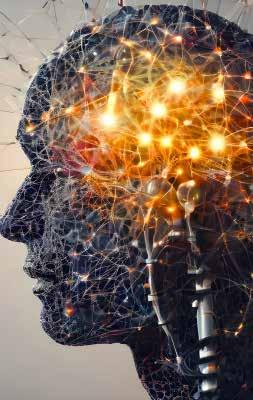

A recent Hebrew University study has identified a molecular guardian that keeps skin cells from “forgetting” what they are and transforming into aggressive, migratory killers. By stabilising a master genetic switch, this protein shield prevents common skin tumours from undergoing a dangerous metamorphosis and spreading to the lungs.
Researchers led by PhD student Tirza BidanyMizrahi under the guidance of Prof. Rami I. Aqeilan, in collaboration with Mara Mancini, Prof. Gerry Melino, Prof. Eleonora Candi from the University of Rome, have identified a biological mechanism that acts as a primary defence against the progression of aggressive skin cancer. The study, published in PNAS, explains how the loss of a specific protein called WWOX allows common skin cancer cells to transform into a more lethal, invasive form.
Cutaneous squamous cell carcinoma (cSCC) is the second most common skin cancer worldwide. While many cases are treatable, some tumours become highly aggressive, spreading to other parts of the body and becoming resistant to standard therapies. The findings, published in a recent manuscript, provide a new roadmap for identifying which patients are at the highest risk.
The research team found that WWOX serves as a “guardian” of what scientists call epithelial identity. In healthy skin, this protein ensures that skin cells remain stable and perform their intended functions. When WWOX is present, it stabilises another essential protein known as p63, which acts like a master switch to keep skin cells from losing their shape and structure.

Using advanced genetic models and human tissue samples, Prof. Aqeilan’s team demonstrated that when WWOX is lost, the p63 protein levels drop significantly. This creates a “perfect storm” for cancer progression. Without these two protectors, skin cells undergo a process called epithelial-to-mesenchymal transition (EMT). Essentially, the cancer cells lose their “skin cell” identity and take on the characteristics of migratory cells, allowing them to invade deeper tissues and move through the bloodstream to the lungs and other organs.
The study highlights that the loss of WWOX does not just make the cancer possible;
WWOX Expression Correlates with Elevated p63 Levels in Skin Cancer Cells
Immunofluorescence staining showing that overexpression of WWOX (green) in A431 cells is associated with increased levels of p63 (red).
Credit: Tirza Bidnay-Mizrahi
it dramatically accelerates it. In laboratory models where both WWOX and the well-known tumour suppressor p53 were missing, tumours appeared much earlier and were far more aggressive and poorly differentiated than those where WWOX was still functioning.
“WWOX deficiency significantly accelerates tumour onset and progression,” Prof. Aqeilan noted, adding that 100% of the subjects in the double-deficiency group developed tumours compared to a much lower percentage in the control groups.
By examining human tissue microarrays, the team confirmed that this isn’t just a laboratory phenomenon. They found a consistent pattern in human patients: as skin cancer progressed to more advanced stages, the levels of both
WWOX restrains EMT in cSCC by maintaining ΔNp63α. Left panel: In the presence of WWOX, ΔNp63α is maintained. ΔNp63α functions as a transcription factor for epithelial epidermal genes, thereby suppressing EMT in the context of p53 loss and resulting in well-differentiated cSCC.
Right panel: In the absence of WWOX, ΔNp63α protein expression is reduced. Loss of ΔNp63α impairs transcription of epithelial epidermal genes, facilitating EMT in p53-deficient cSCC and leading to poorly differentiated tumours.
WWOX and p63 declined in tandem. This correlation suggests that these proteins could be used as clinical biomarkers to help doctors predict which skin cancers are likely to become dangerous. Furthermore, the results suggest that targeting the WWOX–p63 axis could be a potential therapeutic approach.
Interventions that focus on restoring WWOX levels, stabilising p63, or encouraging epithelial differentiation might inhibit EMT and slow down tumour growth.
The research paper titled “WWOX Maintains Epidermal Identity and Suppresses EMT to Prevent Aggressive Cutaneous Squamous Cell Carcinoma” is now available in PNAS and can be accessed at www.pnas.org/doi/10.1073/pnas.2534844123 with DOI number 10.1073/pnas.2534844123.
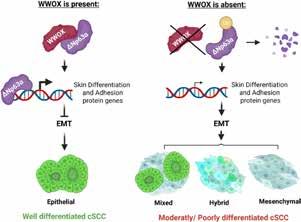
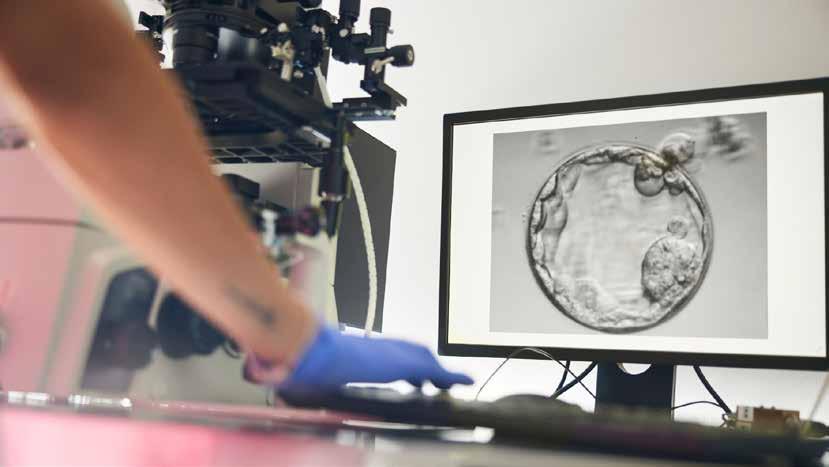
A recent Hebrew University study shows that the embryo and the uterine lining conduct an active “conversation” from the very earliest stages of implantation.
They engage in a back and forth of tiny packages called extracellular vesicles and lipid droplets, which carry metabolites and signals. Hormones determine what the uterus sends, and one signalling pathway (related to aryl hydrocarbon receptor, [AhR]) appears to assist in determining how hospitable the uterine environment is. When this pathway is blocked, embryos attach more strongly. These packages are taken up quickly; their genetic material is used almost immediately, they influence how cells use energy and handle fats, and they reshape the uterine tissue - all in ways that support embryo attachment and implantation.
The study was led by Dr. Yael Heifetz and Dr. Alisa Komsky-Elbaz along with Margarita Shuhmaher and Dr. Javier Arturo SanchezLopez at Hebrew University in collaboration
with Prof. Yoav Soen of the Weizmann Institute of Science and Dr. Amir Hefetz from DatGraph.
Published in The Journal of Extracellular Vesicles, the research uncovers a previously underappreciated communication network between the early embryo and the uterus, which may be critical for successful implantation and early pregnancy. The study reveals how extracellular vesicles, lipid droplets, and AhR ligands dynamically interact during the earliest stages of embryo-maternal crosstalk.
Understanding one of the most fragile stages of pregnancy
Implantation is one of the most delicate and failure-prone stages of pregnancy in humans and other animals. Despite its importance, the
molecular language that enables an embryo to signal its presence and coordinate with the maternal endometrium remains incompletely understood. Using a human in vitro co-culture model, the Heifetz team examined the way in which cells exchange signals during the window of implantation (WOI), a short, hormonally regulated phase in which the uterine lining becomes receptive and implantation can take place.
“Our findings show that implantation is not a passive process,” the researchers said “The embryo and the uterus are engaged in an active, highly coordinated dialogue mediated by extracellular vesicles. These vesicles allow the transfer of signals and metabolic information that help both tissues adapt to the rapidly changing demands of early pregnancy”.
Tiny vesicles as information carriers
The study focuses on extracellular vesicles small, membrane-bound packages released by cells that share information and materials, a bit like parcels sent between neighbours. The team found that hormonal stimulation occurring during preparation of the uterus for implantation, alters the extracellular vesicles released by the uterine lining, producing distinct extracellular vesicle populations that differ in size, release rate, uptake efficiency, and molecular content.
The team identified lipid droplets as active participants in embryo-maternal communication, rather than passive energy reservoirs. Lipid droplets, which store fats and energy inside cells, are influenced by both endometrial- and embryo-derived extracellular vesicles and are actively transferred to embryonic cells, contributing to implantation-related processes. Extracellular vesicle-mediated transfer of lipid-related molecules reshapes lipid droplet dynamics in recipient cells, suggesting a
tightly regulated metabolic adaptation during implantation.
“Lipid droplets emerge as functional hubs that integrate metabolic and signalling inputs during implantation”, the researchers explained. “This challenges the classical view of lipid droplets, and places cellular metabolism at the heart of embryo-maternal communication”.
AhR ligands link environment, metabolism, and reproductive success
A key discovery of the study is the involvement of AhR ligands, signalling molecules known to respond to dietary and environmental cues. The findings indicate that extracellular vesicles selectively carry energy-related metabolites and AhR ligands. Furthermore, inhibition of AhR signalling significantly increased the attachment of embryo-like spheroids to uterine cells, indicating that this pathway plays a regulatory role in implantation, placing AhR at the crossroads of environmental sensing, metabolism, and reproductive success.
“Our data indicate that AhR signalling finetunes the implantation process and provides a mechanistic explanation for how external and internal environmental factors may influence fertility at its earliest stage,” the researchers added.
The study also shows that communication is not one-sided. Extracellular vesicles are exchanged between the embryo and the endometrium and are taken up quickly, within about an hour. extracellular vesicle-derived mRNA was shown to be translated soon after uptake, driving cellular changes that support embryo attachment. Once internalized, these vesicles can affect how cells produce energy, how they process lipids and how the surrounding tissue is remodelled.
The model used in this study provides a useful platform for examining how EV-mediated two-way communication shapes early embryomaternal interactions. The work helps clarify how the embryo and endometrium influence each other at very early stages. This system can also be used to study similar extracellular vesicle -based communication in other biological settings.
The findings contribute to a more detailed
picture of how extracellular vesicles, extracellular metabolites and lipid droplets act together to promote embryo attachment and implantation and may help inform future research in reproductive biology and fertility.
The research paper titled “Extracellular Vesicles, Lipid Droplets and AhR Ligands in Early Implantation: The Dynamics of Embryo-Maternal Crosstalk” is now available in J Extracell Vesicles and can be accessed at https://pubmed.ncbi.nlm.nih. gov/41216890/
(A) Messages released by the embryo influence how fat droplets move and function in cells lining the uterus.
Courtesy: Alisa Komsky-Elbaz and Eshel Dilevsky; Blue colour – DNA
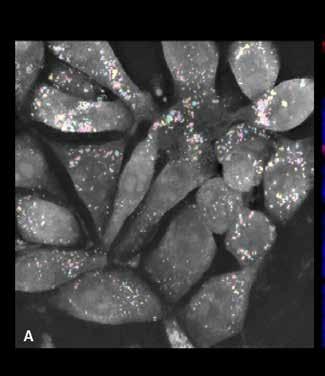
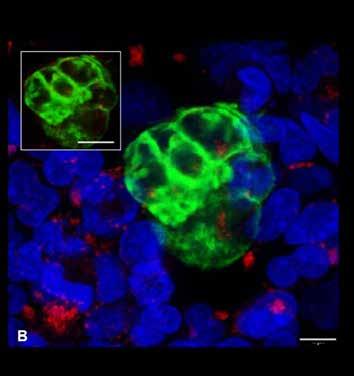
(B) Fat droplets from uterine cells are absorbed by embryo-like cells. Courtesy: Alisa KomskyElbaz, Javier Arturo Sanchez-Lopez, Eshel Dilevsky, Einat Zelinger, Daniel Waiger. Red colour: LipidSpot
A recent Hebrew University Science paper challenges the idea that language stems from a single evolutionary root. Instead, it proposes that our ability to communicate evolved through the interaction of biology and culture, and involves multiple capacities, each with different evolutionary histories.
For centuries, philosophers and scientists have wrestled with understanding how human language came about. Language defines us as a species, yet its origins have remained a mystery. In a remarkable international collaboration, ten experts from different disciplines present a unified framework to address this enduring puzzle, harnessing powerful new methods and insights from their respective scientific domains.
“Crucially, our goal was not to come up with our own particular explanation of language evolution,” says first author Inbal Arnon from Hebrew University, “Instead, we wanted to show how multifaceted and biocultural perspectives, combined with newly emerging sources of data, can shed new light on old questions.”
The authors stress that in the search for language origins, no single explanation
is enough. Rather, language arose when different biological abilities - like the capacity to reproduce novel sounds, recognise patterns, and cooperate socially - converged with cultural processes of transmitting knowledge between individuals (both within and across generations).
“The multifaceted nature of language can make it difficult to study, but also expands horizons for understanding its evolutionary origins,” says co-author Simon Fisher from Max Planck Institute for Psycholinguistics and Radboud University. “Rather than looking for that one special thing that singles humans out, we can identify different facets involved in language and productively study them not just in our own species but also in non-human animals from different branches of the evolutionary tree.”
Importantly, the team highlights how progress has stalled when disciplines worked in isolation from one another. To move forward, they advocate an approach that integrates learning,
culture, and biology, drawing on fields as diverse as linguistics, psychology, animal communication, neuroscience and genetics. As one of humanity’s most distinctive traits, language remains a story of connection: between biology and culture, between different scientific fields, and between people themselves.
To demonstrate the power of this framework, the researchers look at three facets whose role in language emergence becomes clearer through a biocultural lens:

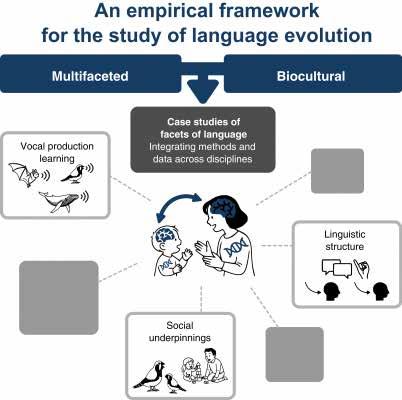
Rethinking where language comes from
Vocal Learning: Human speech depends on our ability to learn to reproduce the vocalisations of other speakers. This skill appears to be limited in our closest primate relatives but has independently emerged elsewhere on the tree of life. For example, some birds, bats, and whales are especially adept at vocal learning. Genetic and behavioural findings on this facet from distantly related species help us understand distinct human capacities.
Linguistic Structure: Grammar did not simply appear in our ancestors overnight. Findings from real-life cases of sign language emergence, experiments recreating cultural evolution in the lab, and investigations in songbirds and primates highlight the importance of communication and cultural transmissionbeing repeatedly used and learned by multiple individuals over generations - in shaping the structure of language. This facet shows how the emergence of structure involves a convergence of biological, cognitive and cultural conditions, in a particular combination that may be unique to humans.
Social Foundations: Language is used in interaction with other people. Studies have shown the importance of social interaction for learning human language, and for other learned communication systems, like birdsong. Added to this, humans have an unusually strong drive to socially share information, which is rarely observed in nonhuman animals.
Biocultural perspectives on language evolution illuminate unique and shared features of the emergence of complex communication and pave the way for innovative research on language learning, artificial intelligence, and how communication breaks down in disorders.
The research paper titled “What enables human language? A biocultural framework” is available in Science http://www.science.org/doi/10.1126/science. adq8303. More information, including a copy of the paper, can also be found at https://www.eurekalert. org/press/scipak/
A recent Hebrew University study suggests that pancreatic cancer may start preparing to “hide” from the immune system long before the disease becomes full-blown cancer.
Researchers found that very early, precancerous cells in the pancreas don’t spread randomly, they gather into specific clusters and create small “neighbourhoods” inside the tissue. These early cell groups also seem to communicate directly with nearby immune cells in ways that may weaken the body’s ability to fight them. Using advanced tools that characterise cells at the molecular level in tissue section of the pancreas, the team discovered that immune-suppressing signals appear at these early stages, meaning the cancer may begin escaping immune detection much sooner than previously assumed. The findings could help scientists develop better ways to spot pancreatic cancer earlier.
Researchers at the Hebrew University of Jerusalem provide fresh insight into how pancreatic cancer may begin taking shape years before it is clinically detected. The research shows that early precancerous pancreatic cells organise into distinct spatial “niches” and engage in targeted interactions with immune cells, potentially creating an immunosuppressive environment at the very earliest stages of disease development.
The study, led Dr. Oren Parnas and carried out by the student Sebastian Arcila-Barrera with the help of Dr. Sharona Tornovsky-Babeay in the Faculty of Medicine at the Hebrew University of Jerusalem, combined single-cell
RNA sequencing with spatial transcriptomics to examine pancreatic tissue samples. By preserving the spatial context of thousands of individual cells, the researchers were able to map how different types of acinar metaplastic cells organise within premalignant lesions and how they interact with surrounding immune cells.
Pancreatic ductal adenocarcinoma is among the deadliest forms of cancer, largely due to late diagnosis and limited treatment options. Although precancerous lesions can exist for a decade or more before invasive cancer develops, little is known about how these early cellular changes are structured or how they influence the local tissue environment.
“Our findings show that these early altered cells are not randomly distributed,” said Dr. Parnas. “Instead, cells with similar identities tend to cluster together, forming semi-homogeneous niches that appear to actively interact with specific immune cell populations.”
The study revealed that certain metaplastic cell states are consistently found in close proximity to immune cells associated with immune suppression, including specific subsets of neutrophils and macrophages. These interactions were linked to gene expression patterns known to dampen immune activity, suggesting that immune evasion may begin well before cancer becomes invasive.
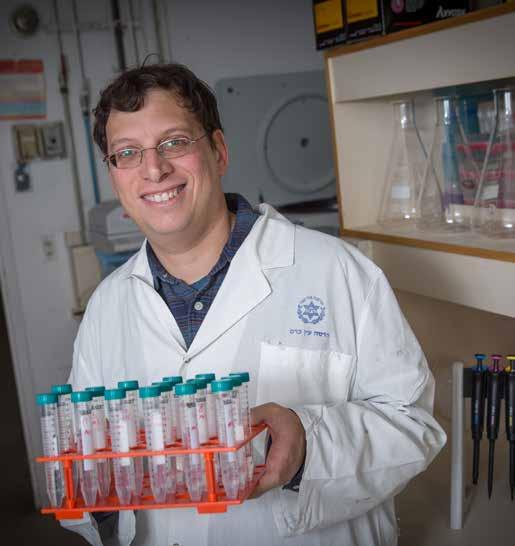
Sebastian Arcila-Barrera noted that the organisation of these cells provides important clues about disease progression. “The spatial patterns we observed suggest that cell identity is established early, followed by localised expansion,” he explained. “This helps clarify how premalignant lesions develop and evolve over time.”
Dr. Sharona Tornovsky-Babeay emphasised the translational importance of the findings “Understanding the process of lesion formation and development, we may be able to better identify high-risk lesions and, in the future, design strategies that intervene before cancer fully develops,” she said.
Importantly, the researchers observed similar
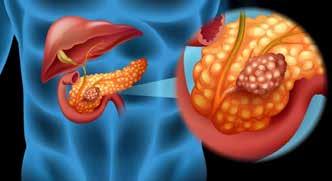
Dr Oren Parnas. Credit: Miriam Alster Flash90
cellular organisations and immune interactions in human pancreatic tissue, strengthening the relevance of the findings beyond animal models.
Together, the results offer a more detailed picture of the earliest events in pancreatic cancer initiation and highlight how spatial organisation and immune interactions may shape disease outcomes long before symptoms appear.
The research paper titled “Acinar Metaplastic Cells Generate Semi-homogeneous Niches and Interact with Immune Cells” is available in Gastroenterology and can be accessed at doi.org/10.1053/j. gastro.2025.12.014.
















Subscribe to the AJN at subscribe.jewishnews.net.au/signup
Get the latest news on australianjewishnews.com
Download the Australian Jewish News App on Apple/ Android devices
Subscribe to the AJN ’s weekly e-newsletter at australianjewishnews.com/signup/
Find us on Facebook
Follow us on


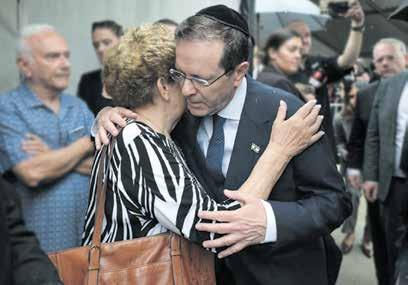
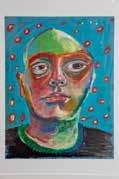


Stay connected with the latest news and current affairs from Australia and Israel through our comprehensive print and digital platforms. We remain committed to being the voice of the

Researchers at the Hebrew University have discovered that the magnetic component of light plays a direct role in the Faraday Effect, overturning a 180-year-old assumption that only its electric field mattered.
Their findings show that light can magnetically influence matter, not just illuminate it. The discovery opens new possibilities in optics, spintronics, and quantum technologies.
The researchers discovered that the magnetic component of light, not just its electric one, plays a direct and significant role in how light interacts with matter. The finding, published in Nature’s Scientific Reports, challenges a 180-year-old scientific understanding of one of physics’ foundational phenomena: the Faraday Effect.
The study was led by Dr. Amir Capua and Benjamin Assouline from the Institute of Electrical Engineering and Applied Physics at the Hebrew University of Jerusalem. It presents the first theoretical proof that the oscillating magnetic field of light directly contributes to the Faraday Effect, a phenomenon in which the polarization of light rotates as it passes through a material exposed to a constant magnetic field.
“In simple terms, it’s an interaction between light and magnetism,” explains Dr. Capua. “The static magnetic field ‘twists’ the light, and the light, in turn, reveals the magnetic properties of the material. What we’ve found is that the magnetic part of light has a first-order effect, it’s surprisingly active in this process.”
Since its discovery in 1845 by the British
scientist Michael Faraday, the effect has been attributed to the interaction between the electric field of light and the electric charges in matter. However, the new research demonstrates that the magnetic field of light, long thought irrelevant, makes a direct and measurable contribution to this effect whereby it interacts with the spins.
Using advanced calculations based on the Landau–Lifshitz–Gilbert (LLG) equation, which describes the motion of spins in magnetic systems, the researchers showed that the magnetic field of light can generate a magnetic torque inside the material, just like a static magnetic field. “In other words,” says Capua, “light doesn’t just illuminate matter, it magnetically influences it.”
To quantify this influence, the team applied their model to Terbium Gallium Garnet (TGG), a crystal widely used to measure the Faraday Effect. They found that the magnetic field of light accounts for about 17% of the observed rotation at visible wavelengths and up to 70% in the infrared range.
“Our results show that light ‘talks’ to matter not only through its electric field, but also through its magnetic field, a component that has been largely overlooked until now,” says Benjamin Assouline.
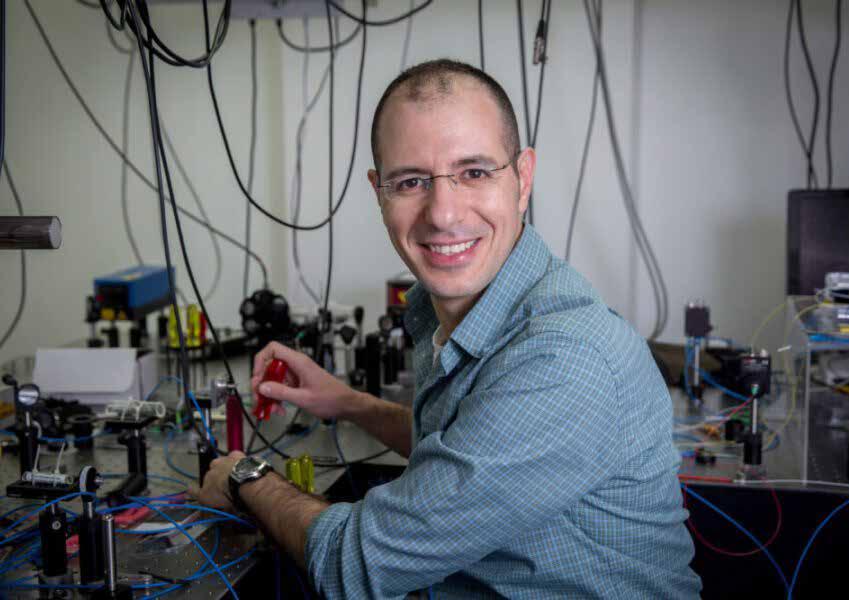
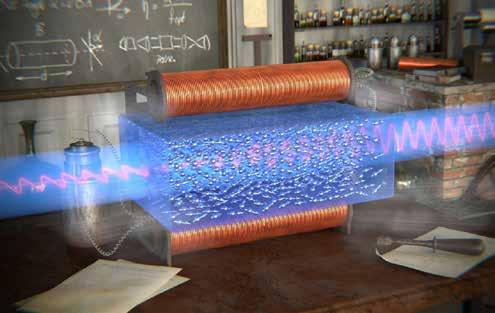
The discovery opens the door to new possibilities in optics and magnetism, including applications in spintronics, optical data storage, and light-based magnetic control. It may even contribute to future spin-based quantum computing technologies.
The research paper titled “Faraday Effects Emerging from the Optical Magnetic Field” is now available in Scientific Reports (Nature) and can be accessed at doi.org/10.1038/s41598-025-24492-9.

A recent Hebrew University study reveals that while Israel could technically sustain itself through local vegetative food production, the economic price would be staggering. The model shows that complete self-sufficiency would demand massive farming subsidies and major shifts in agricultural output, making it an impractical goal. Instead, the researchers argue, a balanced approach, combining agricultural innovation, diversified import sources, and strategic food storage, offers the most sustainable path to national food security.
When wars, pandemics, and trade disruptions shake global markets, one question becomes urgent for every nation: can we feed ourselves? A new study from the Hebrew University of Jerusalem offers an answer - and a warning. According to researchers Prof. Iddo Kan, Prof. Israel Finkelshtain, PhD student Yehuda Slater, and Prof. Aron M. Troen, achieving full food self-sufficiency in Israel is technically possible - but only for plant-based foods intended for human consumption, not for livestock feed. In other words, during a severe import blockade, Israel’s food system could sustain a vegetarian population, but not maintain its current levels of animal-based production.
The research team developed an advanced partial equilibrium model, named VALUE (Vegetative Agriculture Land Use Economics),
to assess how much of Israel’s dietary needs could be supplied locally by the agricultural sector. Applying the model to Israel’s 2019 agricultural data, the researchers found that the country could meet the EAT–Lancet Commission’s recommended vegetative diet, but only with major shifts in production- and at a significant welfare cost.
“Food self-sufficiency is often viewed as a symbol of national resilience,” explains Prof. Iddo Kan, the study’s lead author from the Department of Environmental Economics and Management. “But our findings show that pursuing full autarky would demand vast public subsidies, reduce farm diversity, and severely impact the economic welfare of producers and consumers alike.”
The study shows that increasing self-sufficiency would require diverting agricultural resources away from Israel’s strengths, fresh fruits and vegetables, toward storable crops such as cereals, oils, and legumes. While these crops require less water and labour, they are landintensive, making arable land the key limiting factor.
Under current conditions, reaching full selfsufficiency would result in an annual welfare loss of approximately $1.5 billion, with farmers bearing most of the burden. Subsidizing such a policy, the authors warn, would require

government spending exceeding the sector’s total annual profits.
The researchers also found that while Israel could self-supply the plant-based food needs of its current population, it will not be able to do so for future generations without expanding agricultural land, boosting productivity, or developing substantial food storage capacities. This finding underscores the urgency of forwardlooking planning as Israel’s population grows.
Beyond the economic findings, the study provides a framework for policymakers to weigh trade-offs between self-sufficiency, food security, and sustainability. It suggests that a balanced strategy, combining local production, storage of staple crops, agricultural innovation, and diversified imports, offers the most viable path forward.
The research comes at a crucial moment.
Recent global and regional crises, from the COVID-19 pandemic to the ongoing disruptions in Red Sea shipping, have exposed Israel’s vulnerability to external shocks. The authors note that their model has already been incorporated into the National Plan for Food Security 2050, initiated by Israel’s Ministry of Agriculture and Food Security, serving as a key decision-making tool for future food policies.
As Prof. Kan concludes, “Our goal isn’t to argue against local agriculture, far from it. It’s to help design smarter policies that strengthen national food security without undermining the very farmers we depend on.”
The research paper titled “Economic analysis of food self-sufficiency: modelling and application to the case of Israel” is now available in Food Policy and can be accessed at https://doi.org/10.1016/j. foodpol.2025.102979
A recent Hebrew University study shows that in women with BRCA1 or BRCA2 mutations, their breast cells already carry a clear pattern of DNA “damage spots” long before any tumour appears.
These weak points tend to sit on important cancer-related genes and look very similar to what is later seen in actual breast cancer. In the future this could help doctors detect cancer much earlier and maybe even stop it before it starts.
The study led by PhD student Sara Oster Flayshman under the guidance of Dr. Rami Aqeilan and Dr. Yotam Drier from the Faculty of Medicine at Hebrew University in collaboration with City of Hope researchers Dr. Seewaldt and Dr. LaBarge, has revealed a previously unseen window into how breast cancer begins in women carrying BRCA1 or BRCA2 mutations. Their study, published in Cell Death & Disease, traces the earliest molecular events that set cells on the path toward malignancy, years before cancer is clinically detectable.
For decades, scientists have known that mutations in BRCA1 and BRCA2 compromise a cell’s ability to repair DNA double-strand breaks (DSBs), one of the most dangerous forms of genetic damage. But how this chronic damage transforms healthy breast tissue into cancer has remained a mystery.
The team used next-generation sequencing to map DNA breaks across the genomes of primary mammary epithelial cells from non-
malignant BRCA mutation carriers. These women are classified as high-risk patients, yet their cells have not undergone malignant transformation. This provided a rare opportunity to study carcinogenesis at its inception.
The researchers discovered that the DSB landscape in BRCA-mutated cells is fundamentally different from that of healthy controls, and, strikingly, resembles the pattern seen in breast cancer cells.
Key cancer genes, including both protooncogenes and tumour suppressors, showed a significantly higher number of breaks in BRCA mutation carriers. Moreover, genes that experience more breaks tended to be more highly expressed, making them both active and vulnerable, conditions that favour oncogenic change.
Many of the genes identified as highly breakprone in BRCA mutation carriers are the same genes later found mutated in breast tumours. This reveals a direct molecular bridge between early DNA repair deficiencies and the mutations that drive breast cancer progression.
The study also shows that these high-breakage genes strongly correlate with homologous recombination (HR) repair pathways, reinforcing the central role of BRCA-driven HR loss in cancer initiation.
By charting where and how DNA breaks accumulate before cancer emerges, the research opens the door to future tools for early cancer detection, potentially years before tumours become visible by imaging or symptomatic.
“This work provides critical insight into the earliest molecular changes that take place in breast cells of BRCA mutation carriers,” said Dr. Aqeilan. “Understanding these initial events allows us to envision new strategies for identifying cancer at its earliest, most treatable stages.”
“What is especially exciting,” added Sara Oster Flayshman, “is that we can now pinpoint specific regions in the genome that are repeatedly damaged long before a tumour appears. Dr. Drier added “These patterns could one day help us develop more precise biomarkers, so that high-risk women are not only monitored more effectively, but also offered interventions based on the actual biology of their cells.”
With breast cancer remaining the most common cancer in women worldwide, these findings represent an important advance in understanding cancer risk in BRCA mutation carriers, those who often face difficult decisions about surveillance and preventive surgery.
This discovery marks an important stride toward deciphering the biological origins of cancer and turning that knowledge into predictive and preventive medicine.
Where DNA Breaks Happen in the Genome? | Credit: Aqeilan Lab
This figure shows a break in a chromosome and the surrounding “map” of the DNA region. By combining information about how the chromatin is organized with precise mapping of where breaks occur, we can identify which areas of the genome are more fragile. This approach helps us understand why certain genes are more prone to damage in diseases like cancer and may guide better ways to protect the genome.
The research paper titled “The breakome of BRCA1 and BRCA2 pathway mutation carriers reveals early processes in breast oncogenesis” is now available in Cell Death & Disease and can be accessed at https://www.nature.com/articles/ s41419-025-08235-2 DOI https://doi.org/10.1038/s41419-025-08235-2

Recent research from the Hebrew University reveals an innovative wildlife forensics method that uses advanced genetic tools and local DNA databases to help authorities solve complex environmental crimes involving multiple species. By analysing real cases of poisoned vultures and poached gazelles, the research proves that even mixed or degraded evidence can be used to identify species, trace their origins, and confirm criminal activity beyond reasonable doubt. This is critical because wildlife crime is a major driver of biodiversity loss worldwide, and the ability to investigate and prosecute these cases effectively is essential for protecting endangered species and enforcing conservation laws.
From poisoned vultures to poached gazelles, wildlife crime scenes rarely look like those on TV. But thanks to work by Dr. Gila Kahila BarGal at Hebrew University’s Koret School of Veterinary Medicine, the odds of catching environmental criminals just got better.
In a new study, Dr. Kahila Bar-Gal presents an innovative, integrative approach to wildlife forensics. Her work demonstrates how combining advanced genetic tools with local databases can assist conservation authorities in solving even the most complex environmental crimes involving multiple species, both wild and domestic.
Wildlife crime is not a fringe issue. Ranked among the top five illicit global trades, it contributes directly to biodiversity loss and the decline of already endangered species. In Israel, that includes the critically endangered Eurasian griffon vulture and the mountain gazelles, all of which were central to the forensic cases examined in the study.
“When a vulture is found poisoned or a gazelle is killed out of season, you’re not just looking for a suspect - you’re often dealing with mixed evidence that may include multiple species, some protected, some not,” explains Kahila
Bar-Gal. “The only way to untangle it is through precise, multi-layered analysis.”
Her research showcases three real-life cases involving illegal poisoning and poaching. Each required molecular genetic analysis, including species identification, population assignment, and matching individual samples against both global and local DNA databases. The goal: not just to identify the species, but to provebeyond reasonable doubt - that a crime against wildlife was committed.
The power of this method lies in its adaptability. It can differentiate between wild and domestic animals in a seized sample, track the geographic origin of a species, and even confirm whether multiple remains came from the same individual.
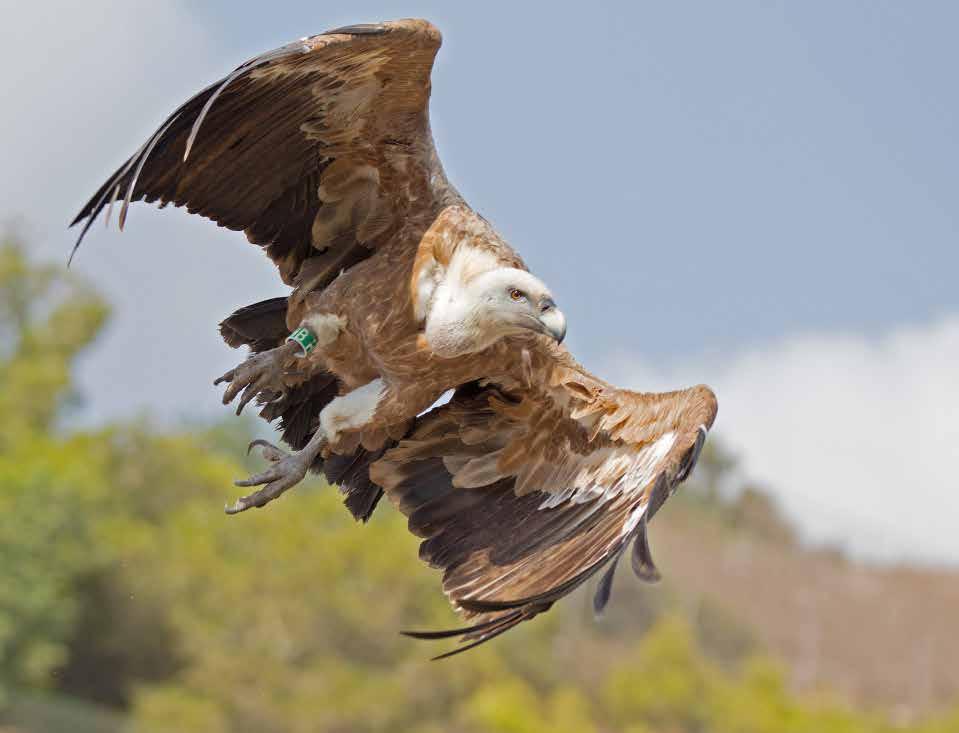
“Enforcement agencies need fast, cost-effective tools they can trust,” Kahila Bar-Gal adds. “Our protocols are designed to be accurate and practical - because saving a species often comes down to solving forensic cases.”
This study strengthens the growing field of wildlife forensic science and offers enforcement authorities - from park rangers to customs agents - a new toolkit in the fight against environmental crime.
The research paper titled “Beyond species identification: integrative methodologies for solving complex wildlife forensic cases” is now available in Frontiers in Ecology and Evolution and can be accessed at https://www.frontiersin.org/ journals/ecology-and-evolution/articles/10.3389/ fevo.2025.1525957/full

A recent study at the Hebrew University shows that cancer damages its own DNA by pushing key genes to work too hard. Researchers found that the most powerful genetic “on switches” in cancer cells, called super-enhancers, drive unusually intense gene activity. That high gear creates stress on the DNA and can cause dangerous breaks. Cancer cells can often repair this damage, but the process is frequently error-prone, the repeated cycle of breaking and repairing can make these regions more prone to accumulating mutations over time. In short, the same mechanisms that help cancer grow quickly may also make its DNA more fragile, helping explain how tumours continue to evolve and, in some cases, become more aggressive over time.
Cancer cells grow by turning certain genes on at extremely high levels, especially genes that help them multiply. But a new study suggests that this frantic activity comes with a cost: it can physically damage the cell’s DNA.
The research, published in Science Advances, was led by PhD student Osama Hidmi under the guidance of Prof. Rami Aqeilan of the Hebrew University of Jerusalem and reveals an overlooked source of genetic instability in cancer. The team found that DNA breaks in cancer cells often occur in the same places where the disease is pushing growth genes the
hardest. The focus was on super-enhancers, stretches of DNA that act like powerful control panels, boosting the activity of nearby genes and keeping cancer-driving programs running at full volume.
Using a sensitive genome-mapping approach, the researchers generated detailed maps of double-strand breaks, one of the most serious kinds of DNA damage, in which both strands of the DNA molecule snap. The breaks were not random: they cluster within genes driven by super-enhancers, suggesting that when cancer forces certain genes to run nonstop, it can strain the system enough to trigger breaks.
The team also tracked a natural “alarm” signal cells use to flag DNA damage and bring in repair crews. They found that cancer cells repeatedly break and repair DNA in these high-activity regions. While this helps tumours survive, frequent repair can raise the chance of small mistakes, making these sites more likely to accumulate new mutations over time.
“Cancer cells rely on super-enhancers to keep growth genes running at high speed,” said Prof. Rami Aqeilan. “What we found is that this same high-output activity can put real strain on the DNA, creating break hotspots that the cell has to repair again and again. That cycle may help tumours survive in the short term, but it also
triggers DNA damage in breast cancer cells
The figure shows breast cancer cells after treatment with estrogen, which activates certain types of super-enhancers, marked with gammaH2AX, a marker for DNA damage. The field on the left shows untreated cells with little or no signs of DNA damage.
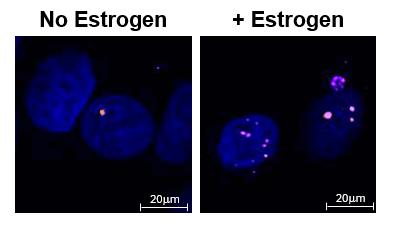
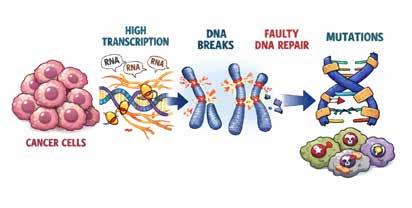
Conceptual illustration showing how high transcriptional activity driven by super-enhancers can lead to DNA breaks at oncogenes. When these breaks are repaired inaccurately, they can give rise to mutations that accumulate during tumour evolution.
increases the risk of mutations that can fuel cancer’s evolution.”
“What is especially exciting,” added Osama Hidmi, the PhD student who led the study, “Because cancer cells depend on these high-stress DNA regions to keep growing, they may also be more vulnerable there. This opens the door to treatments that target the very processes tumours rely on to survive.”
DNA damage and repair are central to how cancers grow, change, and resist treatment. This study helps explain where some of the most important damage happens and why. By
showing that cancer’s strongest gene-control regions are also sites of repeated DNA stress, the research points to potential weak spots in tumours, areas that may be especially sensitive to treatments that disrupt runaway gene activity or interfere with DNA repair. Understanding this process could help researchers design strategies that make it harder for cancer to adapt and evolve.
By revealing how cancer’s drive to grow can destabilise its own DNA, the study adds an important piece to the puzzle of why tumours are both aggressive and genetically unstable, and how that instability might eventually be used against them.
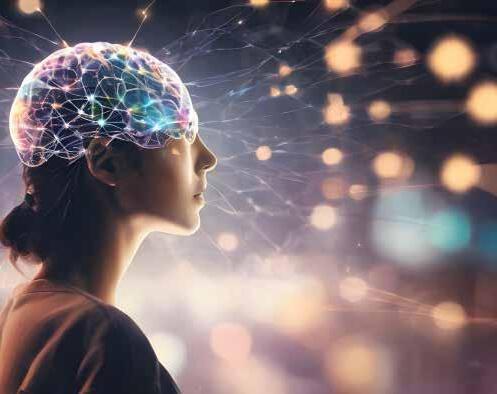
Recent study from the Hebrew University reveals that the human brain processes spoken language in a sequence that closely mirrors the layered architecture of advanced AI language models.
Using electrocorticography data from participants listening to a narrative, the research shows that deeper AI layers align with later brain responses in key language regions such as Broca’s area. The findings challenge traditional rule-based theories of language comprehension and introduce a publicly available neural dataset that sets a new benchmark for studying how the brain constructs meaning.
The study published in Nature Communications with researchers led by Dr. Ariel Goldstein of the Hebrew University in collaboration with Dr. Mariano Schain from Google Research along with Prof Uri Hasson and Eric Ham from Princeton University, uncovered a surprising connection between the way our brains make sense of spoken language and the way advanced AI models analyse text.
When we listen to someone speak, our brain transforms each incoming word through a cascade of neural computations. Goldstein’s team discovered that these transformations unfold over time in a pattern that parallels the tiered layers of AI language models. Early AI layers track simple features of words, while deeper layers integrate context, tone, and meaning. The study found that human brain activity follows a similar progression: early neural responses aligned with early model layers, and later neural responses aligned with deeper layers.
This alignment was especially clear in high-level language regions such as Broca’s area, where the peak brain response occurred later in time for deeper AI layers. According to Dr. Goldstein, “What surprised us most was how closely the
brain’s temporal unfolding of meaning matches the sequence of transformations inside large language models. Even though these systems are built very differently, both seem to converge on a similar step-by-step buildup toward understanding”
The findings suggest that artificial intelligence is not just a tool for generating text. It may also offer a new window into understanding how the human brain processes meaning. For decades, scientists believed that language comprehension relied on symbolic rules and rigid linguistic hierarchies. This study challenges that view. Instead, it supports a more dynamic and statistical approach to language, in which meaning emerges gradually through layers of contextual processing.
The researchers also found that classical linguistic features such as phonemes and morphemes did not predict the brain’s realtime activity as well as AI-derived contextual embeddings. This strengthens the idea that the brain integrates meaning in a more fluid and context-driven way than previously believed.
To advance the field, the team publicly released the full dataset of neural recordings paired with
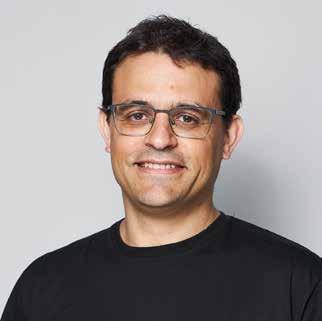
linguistic features. This new resource enables scientists worldwide to test competing theories of how the brain understands natural language, paving the way for computational models that more closely resemble human cognition.
The research paper titled “Temporal structure of natural language processing in the human brain corresponds to layered hierarchy of large language models” is now available in Nature Communications and can be accessed at https://doi. org/10.1038/s41467-025-65518-0.
WISHING THE AUSTRALIAN FRIENDS OF THE HEBREW UNIVERSITY CONTINUED SUCCESS
Naomi & Jesse Tracton, Ian Tracton, Michelle & Avi Ben David, Grandchildren Annabell, Aimee, Michaela & Jack, Carly & Jared and Great Grandchildren
With great pride, Robert and Anita Simons celebrate and support the Hebrew University, wishing it continued success.
A recent Hebrew University study offers an innovative way to track the spread of leishmaniasis, a parasitic disease affecting both animals and humans. Using high-resolution melting (HRM) PCR, researchers developed a fast, reliable method to identify sand fly species, detect Leishmania parasites, and determine the source of their blood meals from a single sample. The study mapped twelve sand fly species, four Leishmania species, and twenty-five host animals across Israel, revealing complex patterns of transmission. This approach provides a powerful new tool for veterinarians and public health authorities to monitor and control zoonotic diseases more effectively.
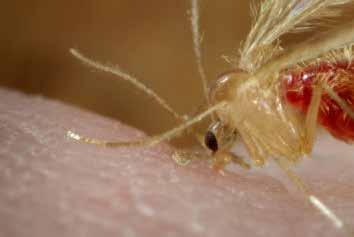
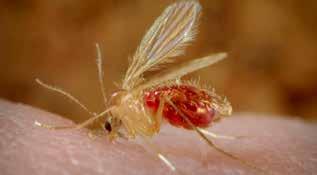
Sand flies carry the protozoan parasites that spread leishmaniasis. Credit: James Gathany
Leishmaniasis, a parasitic disease transmitted by sand flies, has long challenged veterinarians and public health experts alike. Found in humans and animals across Israel and many other parts of the world, the disease’s intricate transmission cycle involves numerous sand fly species and a wide range of wild and domestic reservoirs. A recent study led by Prof. Gad Baneth of the Koret School of Veterinary Medicine, Faculty of Agriculture, Food and Environment, Hebrew University of Jerusalem, and the Laboratory of Entomology at the Israeli Ministry of Health, presents a breakthrough in how we track and understand this complexity.
Published in PLOS Neglected Tropical Diseases, the research introduces a highresolution melting (HRM) PCR-based technique that can simultaneously identify sand fly species, detect Leishmania parasites, and
pinpoint the source of the insect’s blood meal, all from a single specimen. This innovative molecular approach replaces time-consuming traditional methods with a fast, cost-effective diagnostic system that offers near-complete accuracy. “By uniting veterinary and public health surveillance, we can now trace the parasite’s journey from animal to insect to human with unprecedented precision,” says Prof. Baneth. “This method transforms how we monitor zoonotic diseases in the field.”
The research team analysed nearly 2,000 sand flies collected across Israel, identifying twelve distinct sand fly species, four species of Leishmania (L. major, L. tropica, L. infantum, L. donovani), and twenty-five different blood meal sources ranging from domestic cats and cows to rock hyraxes and hares. Their findings reveal distinct ecological zones: L. major and L. donovani vectors dominated the arid southern regions, while L. tropica and L. infantum were more common in the centre and north. Interestingly, sand fly species were also found outside their historically recognized habitats,
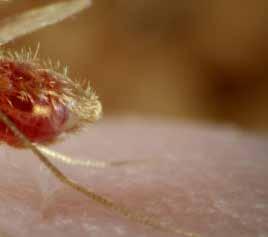
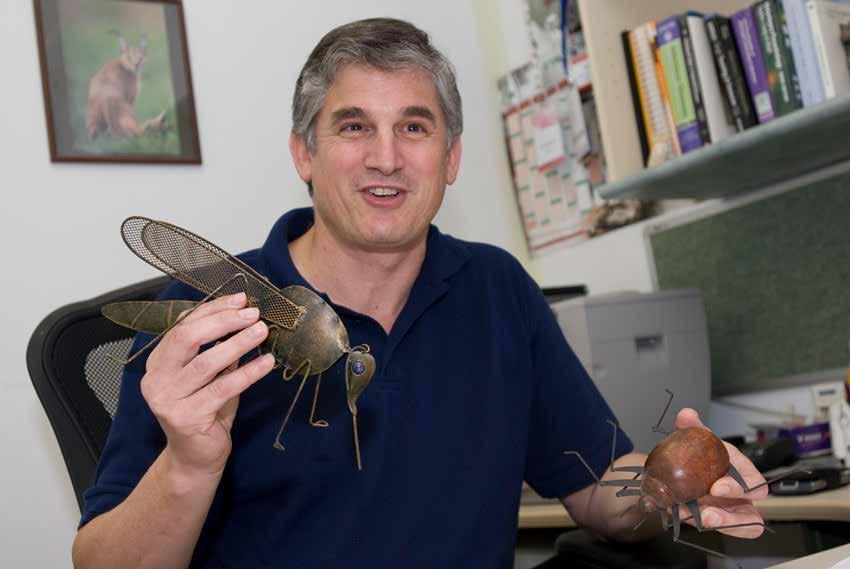
suggesting environmental or climatic shifts expanding transmission zones. The HRM system achieved 96.7% success in identifying blood meal sources, a vital advance for One Health studies that bridge veterinary and human epidemiology. Domestic cats, hyraxes, hares, and cows accounted for more than half of all identified blood meals, underscoring the crucial role of animals in sustaining the disease’s life cycle.
Leishmaniasis is both a veterinary and human health concern, affecting dogs, cats, and wildlife reservoirs alongside people. HRM technology’s ability to distinguish between species and trace infection patterns enables earlier intervention and targeted control strategies. For veterinarians, it provides a diagnostic window into infection ecology, helping identify animal hosts that serve as silent reservoirs and improving outbreak prediction. Prof. Baneth
notes that “Rapid and precise identification of infected vectors and reservoir hosts allows us to anticipate emerging foci and protect both animal and human populations.” This pioneering molecular toolkit not only enhances Israel’s surveillance of vector-borne diseases but also offers a model adaptable to other endemic regions. By merging molecular diagnostics with field ecology, the study marks a significant step forward in the fight against neglected tropical diseases that cross the animal-human divide.
The research paper titled “A multifaceted molecular approach to surveillance of leishmaniasis: Identification of sand fly species, Leishmania parasites, and blood meal sources using highresolution melting analysis” is now available in PLOS Neglected Tropical Diseases and can be accessed at https://doi.org/10.1371/journal.pntd.0013412
Researchers at the Hebrew University have developed an exceptionally accurate method for predicting chronological age from DNA, based on two short genomic regions.

Using deep learning networks analysing DNA methylation patterns at a single-molecule resolution, they achieve age predictions with a median error as low as 1.36 years in individuals under 50. The method is unaffected by smoking, BMI, and sex, and has potential applications in forensics, aging research, and personalised medicine.
The team of researchers led by Bracha Ochana and Daniel Nudelman, under the supervision of Prof. Tommy Kaplan, Prof. Yuval Dor and Prof. Ruth Shemer, has developed a remarkably precise method to estimate a person’s age based on just a small DNA sample - offering breakthrough potential for medicine, aging research, and forensic investigations.
Using cutting-edge artificial intelligence, the scientists created a tool called MAgeNet that can determine a person’s chronological agethe number of years since birth - with a margin of error as small as 1.36 years for individuals under 50. And all it takes is a simple blood draw.
“It turns out that the passage of time leaves measurable marks on our DNA,” said Prof. Kaplan. “Our model decodes those marks with astonishing precision.”
The secret lies in how our DNA changes over time through a process called methylationthe chemical “tagging” of DNA by methyl group (CH3). By zooming in on just two key regions of the human genome, the team was able to read these changes at the level of individual molecules, then use deep learning to translate them into accurate age predictions.
The study, published in Cell Reports, analysed blood samples from over 300 healthy people, as well as data from a decade-long longitudinal analysis of the Jerusalem Perinatal Study (JPS), led by Prof. Hagit Hochner from the Faculty of Medicine. As they show, the model worked consistently across a range of variables - like smoking, body weight, sex, and even different signs of biological aging.
Beyond potential medical uses, the method could also revolutionise forensic science by
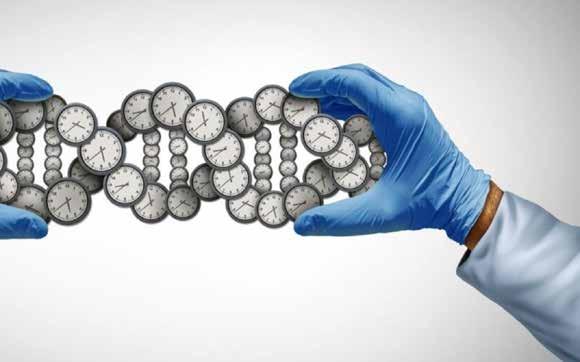
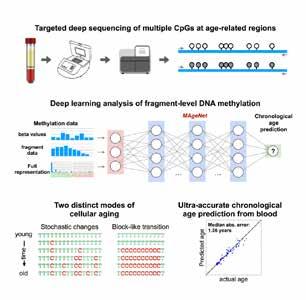
allowing experts to estimate a suspect’s age from just a trace of DNA - something existing tools struggle to do.
“This gives us a new window into how aging works at the cellular level,” said Prof. Dor. “It’s a powerful example of what happens when biology meets AI.”
The research also uncovered new patterns in how DNA changes over time, suggesting our cells encode age both randomly and in coordinated bursts - like ticking biological clocks. “It’s not just about knowing your age,” added Prof. Shemer. “It’s about understanding how your cells keep track of time, molecule by molecule.”

Why it matters: This research could reshape how we approach health, aging, and identity in the future. From helping doctors tailor treatments based on a person’s true biological timeline to giving forensic investigators a powerful new tool for solving crimes, the ability to read age directly from DNA opens the door to breakthroughs across science, medicine, and law. It also deepens our understanding of how aging works - bringing us one step closer to decoding the body’s internal clock.
The research paper titled “Time is encoded by methylation changes at clustered CpG sites” is now available in Cell Reports and can be accessed at :// doi.org/10.1016/j.celrep.2025.115958
Hebrew University researchers have discovered a way to make the immune system’s T cells significantly more effective at fighting cancer.
By blocking a protein called Ant2, they were able to reprogram how these cells consume and generate energy - essentially rewiring their internal power supply. This shift makes T cells more active, resilient, and better at attacking tumors. The findings open the door to new treatments that could strengthen the body’s own immune response, offering a smarter, more targeted approach to cancer therapy.
The study may pave the way for a new generation of cancer therapies - by training the body’s own immune system to work smarter and hit harder. Led by PhD student Omri Yosef and Prof. Michael Berger from the Faculty of Medicine at Hebrew University, in collaboration with Prof. Magdalena Huber of Philipps University of Marburg and Prof. Eyal Gottlieb of the University of Texas MD Anderson Cancer Center, the international team discovered that fine-tuning immune cells metabolism dramatically improves their ability to destroy cancer.
At the heart of the research is a powerful insight: when T cells - key players in the immune system - are forced to rewire how they convert energy, they become significantly more effective at identifying and attacking tumours.
“By disabling Ant2, we triggered a complete shift in how T cells produce and use energy,”
explains Prof. Berger. “This reprogramming made them significantly better at recognising and killing cancer cells.” In simpler terms, blocking this protein forces the immune cells to adapt their metabolism, turning them into stronger, faster, and more aggressive cancer fighters.
Published in Nature Communications, the study focuses on the mitochondria - the “metabolic hub” of cells. By deliberately disrupting a specific energy pathway inside T cells, the team essentially rewired the cells’ engines, creating a state of heightened readiness and potency. The altered T cells exhibited greater stamina, faster replication, and sharper targeting of cancerous threats.
Perhaps most importantly, the researchers showed that this metabolic rewiring can be triggered not only through genetic modifications but also with drugs - opening the door for potential clinical applications.
This discovery is part of a growing movement in cancer immunotherapy that focuses not only on guiding the immune system but upgrading its inner machinery. While more studies and clinical trials are needed, the implications of this breakthrough are promising: new treatments that harness the body’s own defences, finetuned for peak performance.
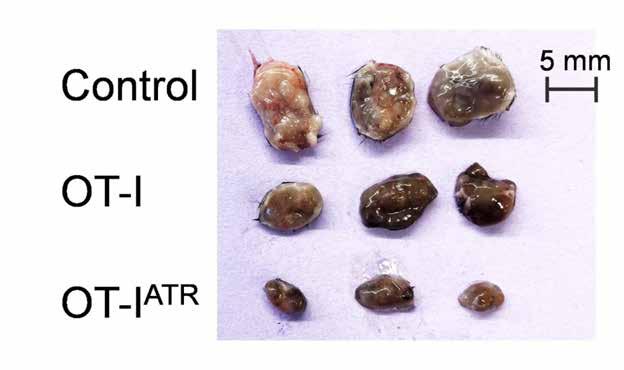
Credit: The authors
This image displays tumors collected at the end of the experiment from three experimental groups: untreated controls, OT-I CD8+ T cell recipients without additional treatment, and those receiving OT-I CD8+ T cells followed by ATR therapy. The 5 mm scale bar highlights visible differences in tumor volume. Growth was measured daily starting on day 17 post-implantation to evaluate treatment effectiveness.
“This work highlights how deeply interconnected metabolism and immunity truly are,” says Prof. Berger. “By learning how to control the power source of our immune cells, we may be able to unlock therapies that are both more natural and more effective.”
The research paper titled “Metabolic reprogramming driven by Ant2 deficiency augments T Cell function and anti-tumor immunity in mice” is available in Nature Communications and can be accessed at https://www.nature.com/articles/s41467-02559310-3
Recent research from the Hebrew University shows that dialling down an overactive immune sensor can restore tissue health in severe genetic disorders, reshaping how scientists think about aging and DNA damage.
The human immune system is finely tuned to detect and destroy viral threats. But this same defence system can misfire. When fragments of the body’s own damaged DNA are mistaken for viral invaders, the result is a powerful, misplaced inflammatory response that harms the body it is meant to protect.
Now, an international team led by Dr. Marva Bergman and Prof. Itamar Harel at Hebrew University, in collaboration with Prof. Yehuda Tzfati, Prof. Ido Ben-Ami (Hebrew University and Sha’are Zedek Medical Center), and Prof. Bérénice Benayoun (University of Southern California), has identified this misdirected immune response as a central driver of tissue degeneration in severe, rapid-aging disorders. By reducing this false alarm, the researchers were able to restore function across multiple biological systems.
The findings focus on rare DNA damagerepair (DDR) syndromes such as AtaxiaTelangiectasia (A-T) and Bloom syndrome. In these conditions, the machinery that normally repairs everyday DNA damage is impaired, leading to widespread genomic instability, neurodegeneration, cancer susceptibility, and premature aging.
For decades, scientists believed that the
accumulation of unrepaired DNA was itself the primary cause of cellular decline. This study challenges that view.
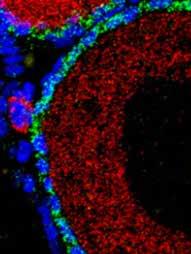
“Our results show that the damage isn’t acting alone,” said Prof. Harel. “It’s the body’s response to that damage, an exaggerated, chronic inflammatory reaction, that drives much of the degeneration.”
When DNA repair fails, fragments of DNA can leak into the cell’s cytosol, where they activate a molecular sensor known as cGAS. This pathway typically detects viral DNA, but it cannot reliably distinguish between foreign and self-derived fragments. The result is a sustained, sterile inflammatory response that damages tissues.
The researchers also uncovered a second, unexpected role for cGAS. Beyond triggering inflammation, it can enter the cell nucleus and directly interfere with DNA repair processes. This dual function makes it both a protector under normal conditions and a potent driver of damage when the system is overwhelmed.
To test whether moderating this response could alter disease progression, the team used a fast-aging vertebrate model that allows rapid evaluation of aging-related processes. When
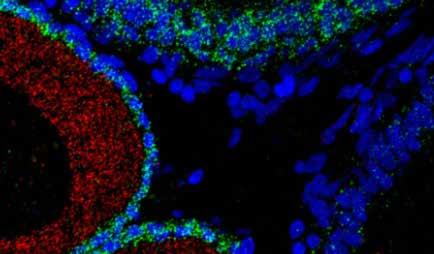
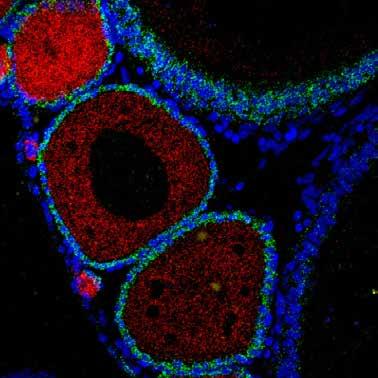
cGAS activity was reduced in this system, key disease features, including neuroinflammation, tissue degeneration, and loss of reproductive capacity, were substantially improved.
“We weren’t just slowing decline,” said Dr. Bergman. “We saw broad restoration of tissue function. It suggests that the body can cope with more DNA damage than we assumed, if the inflammatory response is kept in check.”
The implications for treatment are significant. Rather than attempting to repair every DNA lesion, therapies could focus on modulating how the body responds to damage. However, the researchers caution that cGAS also plays a critical role in antiviral defence, meaning that future therapies will need to selectively dampen harmful activity without compromising immunity.
Beyond rare genetic disorders, the findings may have broader relevance for age-related diseases, where chronic inflammation and genomic instability often coexist.
Complementary studies from the group further highlight how fundamental biological programs,
Reversing hallmarks of rapid aging by silencing a cellular alarm system - single-molecule fluorescent in-situ hybridization (smFISH) in killifish female ovaries, visualizing immature oocytes (ddx4) in red, and for granulosa cells (lhr) in green. Nuclei are visible in blue.
Credit: Eitan Moses
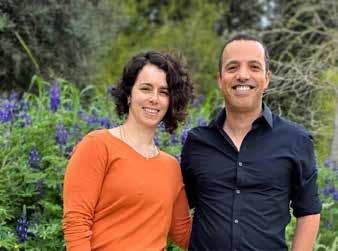
such as reproduction and developmental timing, intersect with aging and lifespan. Together, this work points to a unifying idea: the same systems that support early-life fitness may also shape the limits of long-term health.
Importantly, the researchers note that reversing severe disease processes is not the same as slowing the intrinsic pace of aging. Still, by identifying how the body’s own alarm systems contribute to decline, this study opens a promising new direction for treating some of the most challenging degenerative conditions.
The research paper titled “A dual role for cGAS in shaping cellular and organismal responses to genomic instability” is now available in Genes & Development and can be accessed at https:// genesdev.cshlp.org/content/early/2026/04/13/ gad.352760.125
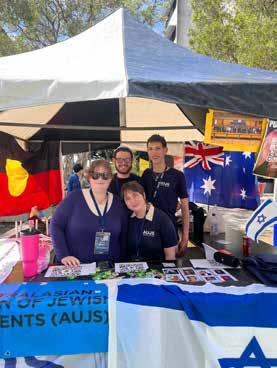
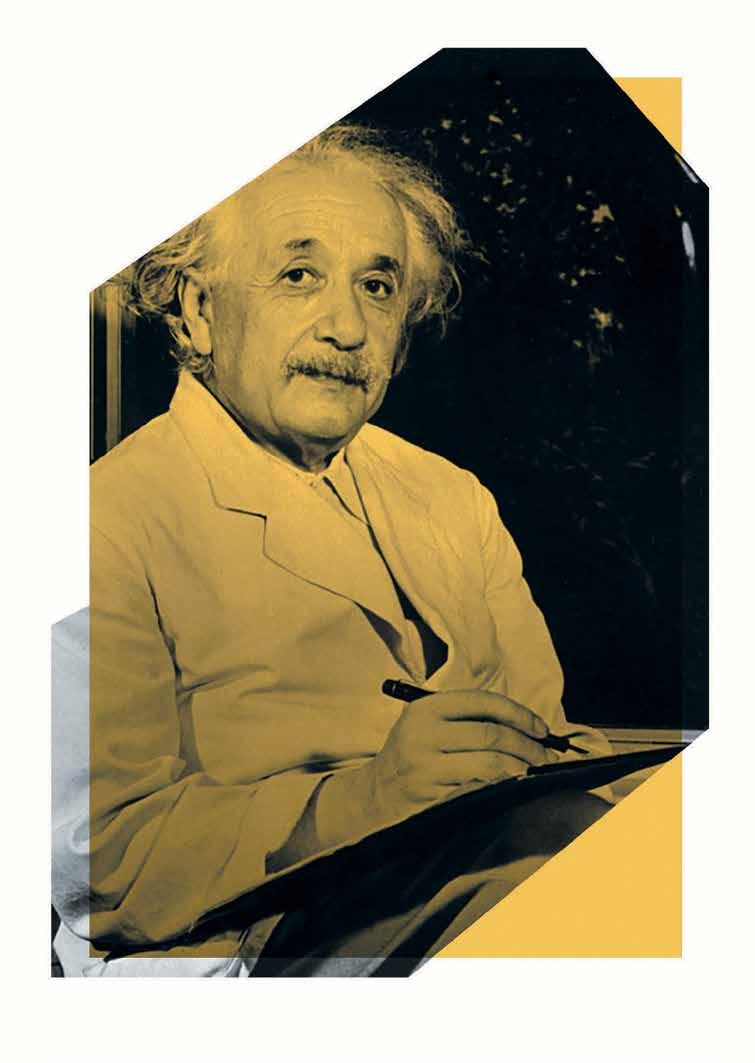
Your bequest or tax deductible gift in your lifetime will ensure that The Hebrew University continues its ground breaking programs, discoveries and innovation as Israel’s premier university and one of the top universities in the world.
“...support of The Hebrew University in Jerusalem and the maintenance of its high standards are of a decisive importance.”
Albert Einstein
- a founding father of The Hebrew University
For a confidential discussion on how your support can make a difference, contact CEO Robert Schneider, on (02) 9389 2825 or ceo@austfhu.org.au www.austfhu.org.au Can you improve on Einstein’s