Alison Sim and I were pleased to be able to step in as guest editors this month and get a sneak preview of this newsletter - There’s a real sense of momentum across the pain field right now! As we head toward the ASM, this issue offers plenty to whet your appetite, with insight into groundbreaking research and the people driving it.
You’ll read about the MRFF funded project happening at Flinders University by Dr Dusan Matusica and his team into a blood test to better understand nerve damage behind a person’s chronic pain. Scott Tagliaferri, Subhadra Evans, Josep Roman-Juan and Nardia-Rose Klem also give a snapshot of their forthcoming publications.
Former APS Newsletter Editor Lincoln Tracy brings us a preview of what to expect from international keynote Professor Yves De Koninck at the upcoming ASM. His interview offers a thoughtful glimpse into the science and ideas we will hear more about in Adelaide. If you have not registered yet, now is the time. It is shaping up to be a cracker!
This edition also includes a reminder from our Past President and Distinguished Member Trudy Maunsell about the enduring importance of keeping the care in healthcare. It is a message that feels especially timely.
We highlight the public release of the Australian Standards for Health Professional Pain Management Education, led by the Faculty of Pain Medicine with contributions from many APS members. After over two years of consultation, this milestone will be of great interest to many of you.
Finally, you’ll hear about recent exciting events such as the launch of the Pain Alliance in Canberra, attended by Bernadette Smith and me; as well as the recent New Zealand Pain Society’s ASM in Christchurch.
I hope you enjoy this edition and I look forward to seeing many of you in Adelaide.
Dr Alison Sim
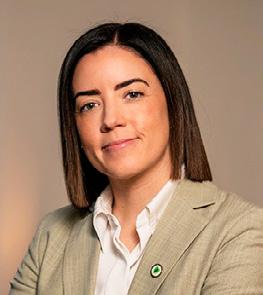
Dr Laura Prendergast
HAVE YOU REGISTERED YET?
If you have not yet registered for the APS Conference, we warmly encourage you to do so. This year’s program promises to be one of our most exciting and inspiring yet. We look forward to welcoming you to Adelaide for an engaging, enriching, and truly memorable ASM.
REGISTER HERE
President’s Report
Bernadette Smith
It has been a busy and energising month for the Australian Pain Society, with much to reflect on and even more to anticipate.
As this newsletter reaches you, we are on the doorstep of our Annual Scientific Meeting (ASM), one of the highlights of the APS calendar. The ASM is always a wonderful opportunity to come together as a multidisciplinary community, to share knowledge, reflect on practice, and strengthen the relationships that underpin highquality research and care.
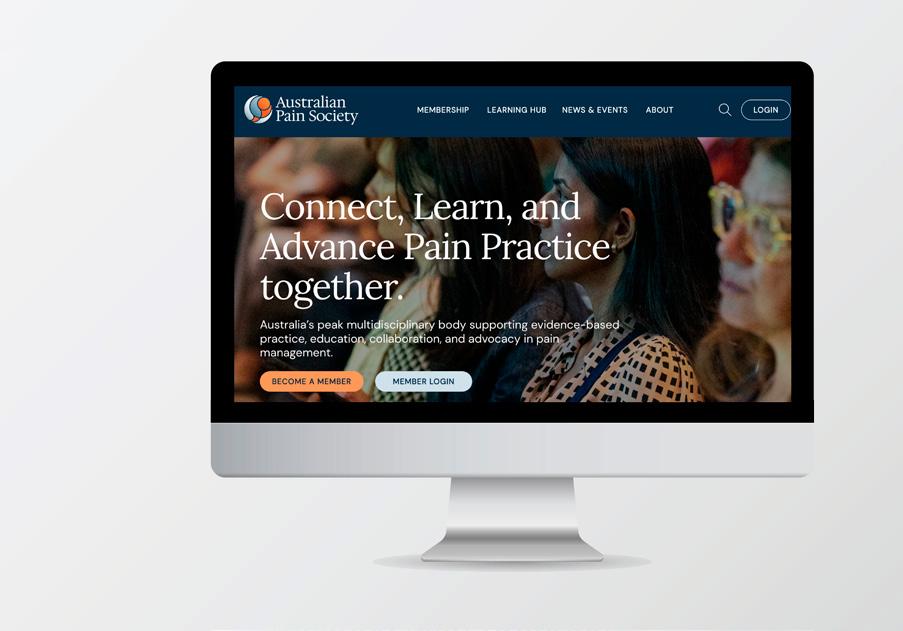
This year feels particularly exciting. At the ASM, we will be launching several important initiatives, including our new website, learning management platform, and membership system. These developments represent a significant step forward in how we support our members. They will make it easier to access education, engage with APS activities, and stay connected with one another throughout the year.
None of this would have been possible without the dedication and generosity of many. We extend our sincere thanks to our collaborators at SOUL Studio, our Board volunteers, particularly Dr Duncan Sanders for his leadership, with valued support from Anjelo Ratnachandra and Sinan Tejani, and our Secretariat team for their tremendous work in navigating this transition.
We are incredibly grateful to everyone involved in bringing this to life.
These platforms will continue to evolve, and your feedback will be vital. If you are attending the ASM, I warmly encourage you to visit the APS booth, explore the new systems, and share your thoughts. We are genuinely keen to hear how we can continue to improve and better support you.
STRENGTHENING CONNECTIONS ACROSS THE TASMAN
Beyond ASM preparations, March also provided valuable opportunities for connection and collaboration.
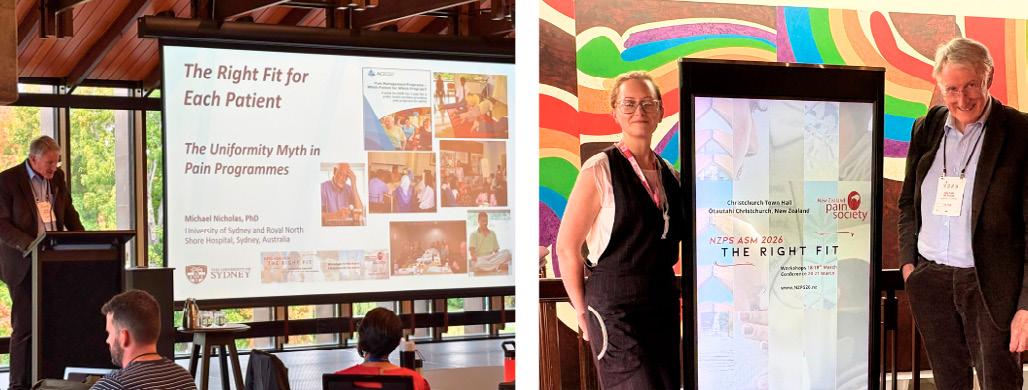
I had the privilege of attending the New Zealand Pain Society Annual Scientific Meeting in Christchurch. Congratulations to President Dr Karen Joseph and the organising committee for delivering such a thoughtful and engaging meeting. The theme, The Right Fit, was both timely and well reflected across a program that brought together clinical, research, and system perspectives.
The week also offered valuable opportunities to reconnect with colleagues across Australia and New Zealand, including our New Zealand FPM fellows and national and international partners such as Professor Andrew Rice, President of IASP, and Professor Michael Nicholas from the OPEN online pain education network and Dr Dillip Kapur & Martina Otten from FPM.
NATIONAL ADVOCACY AND THE LAUNCH OF THE NATIONAL PAIN ALLIANCE
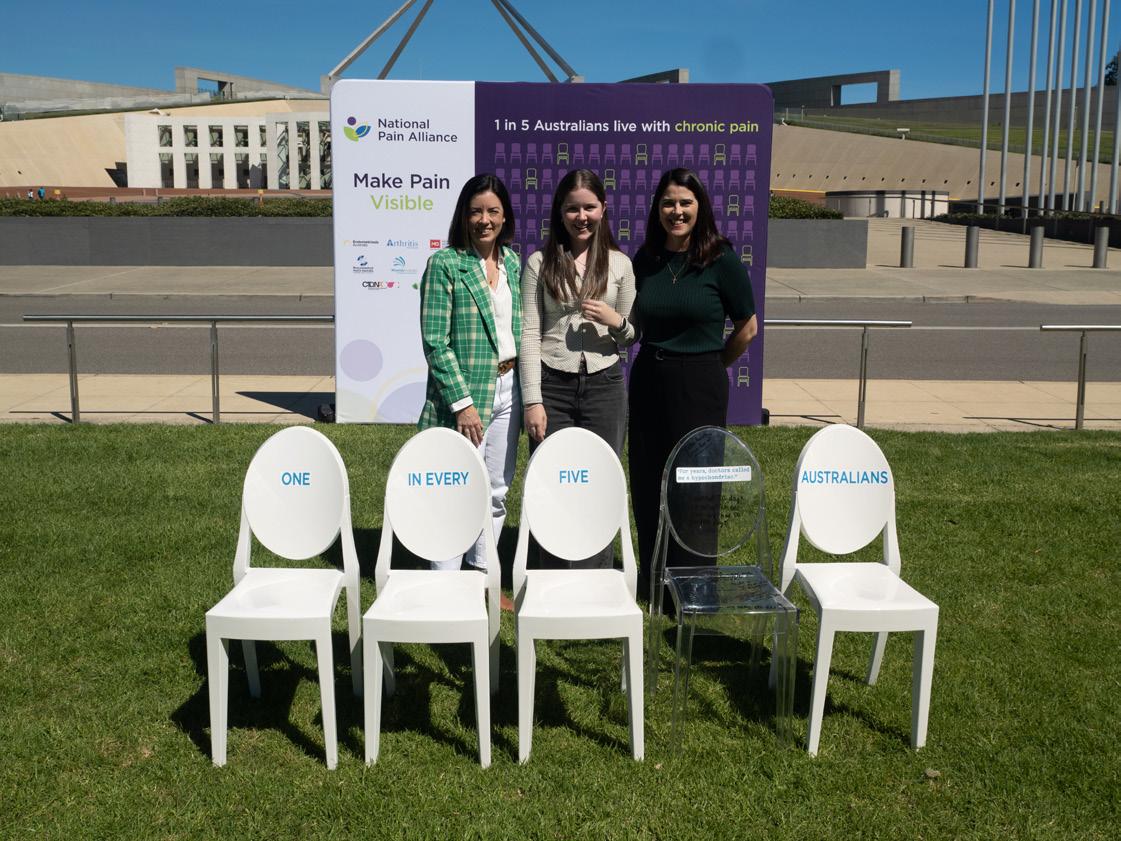
Laura Prendergast, President-Elect, and I also had the privilege of attending a parliamentary event hosted by Chronic Pain Australia, marking the launch of the National Pain Alliance.
This new consumer-led coalition brings together organisations representing people living with persistent pain across a wide range of conditions. It represents an important step forward in ensuring that lived experience is meaningfully embedded in policy, research, and system reform.
For our members, this is a significant development. It reinforces the importance of coordinated, multidisciplinary approaches that are both evidenceinformed and grounded in lived experience. It also highlights the critical role of allied health in supporting function, participation, and long-term selfmanagement.
ENGAGING WITH GOVERNMENT AND POLICY PRIORITIES
During this visit, we also had the opportunity to meet with several key parliamentarians, including the Hon. Rebecca White, Assistant Minister for Health, Aged Care and Disability, the Hon. Mike Freelander, and the Hon. Ged Kearney, Assistant Minister for Social Services and the Prevention of Family Violence.
These conversations were valuable in highlighting the breadth and impact of pain across the community, including its intersection with women’s health and conditions such as endometriosis.
Advocacy remains a core responsibility of APS. In this context, the Australian Government’s $109.9 million Chronic Conditions Prevention and Integrated Care Grants Program presents an important opportunity. With applications expected to open in mid-2026, there is a clear window to ensure that pain is embedded within this national reform agenda.
Media Release Here
HERE
APS is strongly positioned to contribute to this work, given our multidisciplinary leadership, national reach, and close connection to clinicians and researchers across the sector. Ensuring that pain is explicitly recognised within this funding stream will be critical to achieving meaningful, system-wide improvements for people living with pain across Australia.
As always, thank you for your ongoing engagement and support of APS. I look forward to connecting with many of you at the ASM and continuing our shared work in advancing care and support for people living with pain.
WITH SPECIAL THANKS
As we commence this year’s ASM, we would like to acknowledge and sincerely thank the APS Scientific Program Committee as they conclude their term.
Under the leadership of Professor Kevin Keay for more than a decade, the Committee has played a pivotal role in shaping the scientific direction and high calibre of the ASM. Kevin’s leadership has been marked by generosity, thoughtful mentorship, and a deep commitment to excellence, diversity, and inclusivity, helping to nurture the next generation of leaders within our community.
We extend our sincere appreciation to all members of the Committee for their time, expertise, and dedication:
Professor Tasha Stanton, Professor Wendy Imlach, Felicity Braithwaite, Aidan Cashin, Hayley Leake, Stephanie Mathieson, Joshua Pate, Aimie Peek, Karin Plummer, Simon Summers, Nicholas Veldhuis and Andrew Watson.
We also warmly acknowledge the outstanding work of Alex Robertson, Senior Conference Manager, and the broader DCC&A team for their professionalism, care, and attention to detail.
Their collective efforts have been instrumental in creating conferences that not only showcase excellence, but also foster meaningful connection across our community.
Bernadette Smith
National Pain Alliance Launched to Strengthen Structural Recognition of Chronic Pain
Nicolette Ellis
Following a parliamentary event hosted by Chronic Pain Australia, the National Pain Alliance has formally launched as a new, consumer-led coalition focussed on strengthening national recognition of chronic pain within Australia’s health and policy architecture.
The Alliance brings together leading national consumer organisations whose members live with ongoing and persistent pain across diverse conditions. Founding members include Chronic Pain Australia, Endometriosis Australia, Multiple Sclerosis Australia, Musculoskeletal Health Australia, Wounds Australia, Complex Regional Pain Syndrome Purple Bucket Foundation, Arthritis Australia and the Connective Tissue Disorders Network Australia.
While underlying diagnoses differ, chronic pain is often the shared and significant experience across these communities. It is a major contributor to disability and one of the leading drivers of lost productivity nationally, influencing workforce participation, absenteeism and early retirement. For children and adolescents, persistent pain can disrupt school attendance, engagement and educational outcomes, with implications extending beyond the health system.
Despite its prevalence and impact, chronic pain is not consistently recognised as a condition in its own right within national data and policy systems. It is frequently treated as a symptom of other diseases rather than as a cross-cutting health issue requiring coordinated measurement, governance and reform. There is no national minimum data set specific to chronic pain, no nationally agreed outcome framework, and limited systematic capture within current coding systems.
Within Commonwealth structures, chronic pain sits within broader chronic conditions policy areas but without a dedicated strategic program or crossportfolio coordination mechanism. Its impacts span primary care, mental health, disability, veterans’ affairs, aged care, education and workforce policy, yet no formal architecture links these domains in relation to chronic pain.
For allied health professionals, these structural gaps influence funding design, referral pathways and service configuration. Evidence supports multidisciplinary, biopsychosocial approaches to persistent pain. However, policy and funding settings do not consistently enable delivery of integrated, sustained models of care aligned with best practice.
The National Pain Alliance has been established to provide a unified consumer voice in national policy discussions and to strengthen alignment between lived experience, clinical evidence and system reform.
Nicolette Ellis, Chair of the National Pain Alliance and Chair of Chronic Pain Australia, said the Alliance was formed to address fragmentation at the policy level.
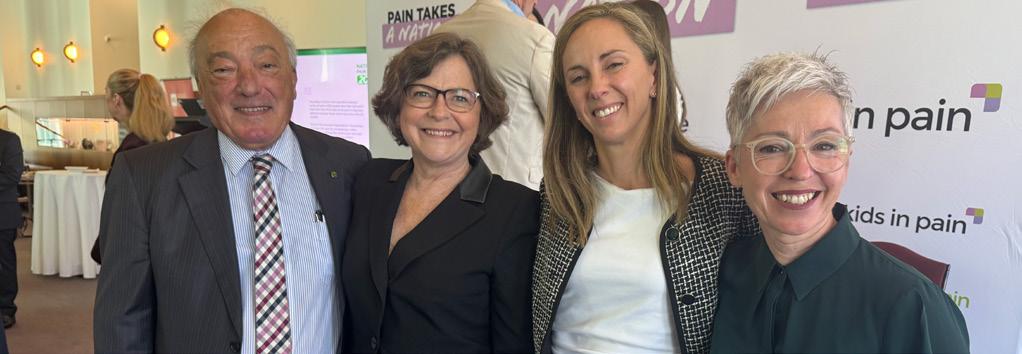
Photo L to R: Mike Freelander, Ged Kearney, Laura Prendergast & Bernadette Smith
organisations whose members live with ongoing and persistent pain across diverse conditions. Founding members include Chronic Pain Australia, Endometriosis Australia, Multiple Sclerosis Australia, Musculoskeletal Health Australia, Wounds Australia, Complex Regional Pain Syndrome Purple Bucket Foundation, Arthritis Australia and the Connective Tissue Disorders Network Australia.
While underlying diagnoses differ, chronic pain is often the shared and significant experience across these communities. It is a major contributor to disability and one of the leading drivers of lost productivity nationally, influencing workforce participation, absenteeism and early retirement. For children and adolescents, persistent pain can disrupt school attendance, engagement and educational outcomes, with implications extending beyond the health system.
Despite its prevalence and impact, chronic pain is not consistently recognised as a condition in its own right within national data and policy systems. It is frequently
By uniting consumer organisations whose members live with chronic pain across multiple conditions, the National Pain Alliance seeks to strengthen how pain is recognised, measured and governed. This has implications extending from clinics to classrooms and workplaces across Australia. Further, ensuring that chronic pain is appropriately recognised within national frameworks is critical to enabling sustainable, integrated models of care.
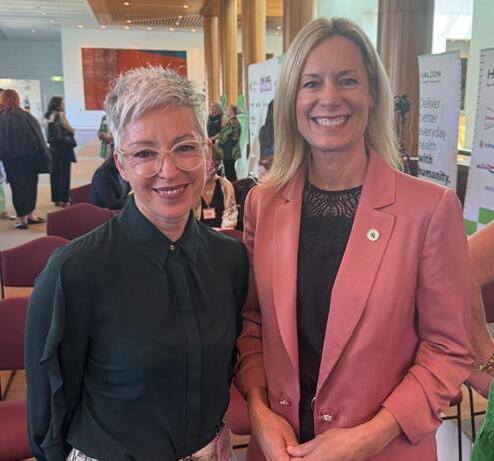
Photo L to R: Bernadette Smith & Assitant Minister White
Photo L to R: Nicolette Ellis with CPA consumer advocates - Laura McMahon and her mum Michelle
Reflections from NZPS: High-Value, Person-Centered Practice
Bernadette Smith
One of the most striking aspects of the recent New Zealand Pain Society Annual Scientific Meeting was not just the strength of the science, but the consistent call from keynote speakers to pause, reflect, and critically examine our practice.
Across the plenaries, a clear and at times uncomfortable message emerged: in working with people living with pain, doing more is not always doing better.
Professor Chris Maher’s work reinforced the growing evidence that many commonly used interventions offer little additional benefit over simpler, evidenceinformed approaches. Whether in acute spinal pain or emergency care settings, the findings were consistent, high-value practice is often less invasive, more targeted, and more sustainable, without compromising outcomes.
TAKE-AWAY: HIGH-VALUE PRACTICE IS OFTEN SIMPLER, SAFER, AND MORE SUSTAINABLE.
Professor Rachelle Buchbinder extended this challenge, highlighting the persistent gap between evidence and what happens in practice. Despite decades of research and global attention, low back pain remains the leading cause of disability worldwide. Interventions that are widely used. and often, expected frequently do not deliver meaningful benefit when rigorously evaluated. Her message was clear: we must be willing to let go of low-value and over-medicalised approaches, even when they are familiar or entrenched.
TAKE-AWAY: WE MUST BE WILLING TO MOVE AWAY FROM LOW-VALUE AND OVER-MEDICALISED APPROACHES, EVEN WHEN THEY ARE FAMILIAR OR EXPECTED
Building on this, Professor Andrew Rice brought a sobering perspective on treatment effectiveness, particularly in neuropathic pain. Drawing on a large body of evidence, he highlighted that while some pharmacological treatments have moderate evidence, most treatments only benefit a small proportion of people, with as few as one in nine experiencing meaningful improvement. This reinforces the limitations of a “one size fits all” approach and the need for more precise, stratified models of care.
He also challenged assumptions around emerging and popular therapies, including cannabinoids, where current evidence shows no consistent benefit over placebo alongside potential risks, particularly in relation to mental health and cognitive effects. These insights serve as an important reminder that evidence must remain central to decision-making, even in the face of strong public, commercial, or policy momentum.
THE KEY TAKEAWAY: EVIDENCE MUST REMAIN CENTRAL TO DECISION-MAKING, EVEN WHEN THERE IS STRONG PUBLIC OR COMMERCIAL MOMENTUM.
A particularly powerful thread throughout the conference was the contribution of Professor Michael Nicholas, who highlighted the central role of education in improving outcomes. His work emphasised that effective support is not simply about selecting the right intervention, but about equipping both clinicians and individuals with the knowledge, skills, and confidence to manage pain differently.
He reminded us that outcomes are often less about diagnosis and more about factors such as self-efficacy, beliefs, and the ability to engage in meaningful activity. Education, in this context, is not an adjunct but a core therapeutic intervention. Building capability across the workforce, and extending this into community and culturally responsive settings, is essential if we are to meet the scale and diversity of need.
Across all keynote sessions, several shared reflections stood out:
• The importance of trustworthy, high-quality evidence in guiding practice
• The need to actively reduce low-value and over-medicalised interventions
• Recognition of the limits of current treatments and the need for more tailored approaches
• A shift toward function, participation, and person-defined outcomes
• The critical role of education and workforce capability in enabling change
These themes strongly align with the current focus in Australia on delivering effective, safe, and evidence-informed support for people living with pain. They also highlight a key challenge is not just generating evidence, but ensuring it is meaningfully translated into practice, policy, and lived experience.
Perhaps the most important takeaway from the meeting was this: progress in this field requires not only new knowledge, but a commitment to reflection, education, and a willingness to change course when the evidence calls for it.
Australian Pain Society Annual Scientific Meeting
2026 Consumer Event
19 April 2026
SUNDAY | 11:00AM – 2:00PM
SAMHRI AUDITORIUM, NORTH TERRACE ADELAIDE - GROUND FLOOR (LEVEL 3)
Tickets Are Free Lucky Door Prizes and Give Aways For Attendees
As we look ahead to our own ASM, these insights provide a timely reminder of the role APS can play not only in advancing evidence, but in supporting clinicians and communities to translate that evidence into thoughtful, high-value, person-centred practice.
REGISTER HERE
The science of bringing people together: A conversation with Professor Yves de Koninck
with Dr Lincoln Tracy
Yves De Koninck is a Professor of Psychiatry and Neuroscience at Laval University and Scientific Director of the CERVO Brain Research Centre in Canada. His research focuses on synaptic transmission – the transmission of signals from one neuron to another – and the need for balance between excitatory and inhibitory signals in the brain and spinal cord. He uses a wide range of recording and imaging techniques and approaches to explore the physiological, pharmacological, and anatomical bases of synaptic transmission.
Professor De Koninck is an international keynote speaker at the upcoming 46th Annual Scientific Meeting (ASM) of the Australian Pain Society, which will be held in Adelaide from April 19-22, 2026. In the lead-up to the ASM, Professor De Koninck spoke with Dr Lincoln Tracy, a researcher and writer from Melbourne, Australia, discussing how coming from a family of academics shaped his approach to learning, his international collaborations, and the joy of travelling to the other side of the world for your work. This interview has been edited for clarity and length.
YVES, YOU COME FROM A FAMILY WITH A STRONG ACADEMIC BACKGROUND. TO WHAT EXTENT, IF ANY, DID THIS INFLUENCE YOUR DESIRE TO PURSUE A CAREER IN SCIENCE?
Yes, I come from a family of academics. We’re extremely diverse and span almost every corner of a university, but almost all of them were more in the humanities field than science. So, for me, it was a natural decision to continue my studies and pursue academia – there was no pressure whatsoever from my family. I think I was raised in an environment where the pursuit of knowledge and understanding things was like a second nature, which made it an easy path to follow. However, I didn’t really know if I was going to go into physics or biology, two very different fields, until I reached university. It was only at the last minute that I finally decided to go into biology.
But over the years I managed to join the two because although I’m a biologist by training, I’m interested in the aspects of biology that are more physics oriented. A lot of the work I’ve done since then has been at the interface of different areas and bringing together physical scientists, mathematicians, chemists, engineers, and biologists to work together. It’s been very rewarding to work with all these people, because one of the challenges in science nowadays is the language barriers between fields.
WHAT MADE YOU PICK BIOLOGY OVER PHYSICS ALL THOSE YEARS AGO, AND HOW DID THIS LEAD TO WORKING IN THE PAIN SPACE?
I was very interested in nature growing up and the world around me, so my original training was more about ecology. I was a big birdwatcher as a teenager
and loved to hang outside, and study animals to understand species and their behaviour. It was my interest in trying to understand the basics of behaviour that drove the conversations around where I should go after I finished studying at Laval. The courses that interested me the most were the ones that brought physiology into things. My advisors eventually told me, “Well, you’re interested in the physical basis of behaviour, so you’re actually interested in neuroscience and neurophysiology”. And that’s what drew me to working in the pain field.
Jim Henry, my first mentor at McGill University, was in the pain field. Pain was, and still is, a very good entry point into understanding the complexity of human behaviours, perception, and sensations. I feel my role in the world is to understand the neurological bases underpinning these complex behaviours. But the beauty of pain is that it’s both a sensory and an emotional experience. You can really study pain like a fundamental neurophysiologist – how signals in the environment around us are transduced into a signal that’s interpreted by our body; and how it plays a fundamental role in shaping our emotions, perceptions, and even our mental health.
IT SEEMS LIKE YOU WERE AN EARLY ADOPTER OF WORKING IN A MULTIDISCIPLINARY FASHION, WHICH IS SOMETHING THAT THE AUSTRALIAN PAIN SOCIETY PUTS A LOT OF EMPHASIS ON. HOW IMPORTANT HAS THIS BEEN IN YOUR WORK IN UNDERSTANDING THE MECHANISMS UNDERLYING SOMETHING AS COMPLEX AS PAIN?
Multidisciplinary work really is the current ethos of research. There seems to be a much better
appreciation if we want to understand the brain and all its complexities. Pain is definitely one area where we can appreciate the immense complexity of the brain – you need to work with different disciplines. You can’t work in siloes, or on little projects alone in your lab. You need to bridge out to other fields. And we are really seeing the importance of this with the accelerated developments in the computational world, be it fundamental mathematics, more complex approaches in mathematics, and even machine learning.
For example, in biology and some of the other physical sciences, we’re focusing on very molecular components of cells. Meaning many of the problems we are facing now are of great interest to the physicists. Forty years ago, when I started in research, I would hang out with a lot of physicists. At the time, they considered biology to be a soft science. But things have changed, and now the physicists are very interested in the challenges in the world of biology. It sounds really obvious that we should work together, but I really hope that the way they are converging now propels our fields to a completely new level.
SPEAKING OF MULTIDISCIPLINARY WORK, LAST YEAR YOU AND YOUR COLLABORATORS LAUNCHED THE DECODEPAIN INTERNATIONAL RESEARCH PROJECT. HOW ARE THINGS PROGRESSING WITH THAT WORK?
The DecodePain project aims to understand (1) pain, but also its (2) comorbidities, and how these two factors interact. It’s building on the foundations we have established over the years, especially with respect to enabling advances in technology and the work we do with engineers and implanted systems. The main idea is to develop the smartest systems that are autonomous, small, and multimodal so that you can study pain in its most natural environment. Of course, we’re starting in animal models, but have the ambition of going to full-scale clinical trials.
Another area is that we are looking at bringing optogenetics to pain therapy. I think we are on the verge of breaking through, but there are still technological and ethical obstacles relating to gene therapy and implanted technologies. However, I feel the pain field is probably one of the fields that will benefit the most from novel gene- or optogeneticbased therapies. It is also one of the fields most likely to pursue these kinds of approaches because there’s a lot of low-hanging fruit. We can think about controlling sensory nerves in the spinal cord to try and modulate pain signals, as it’s relatively simple to do there. Eventually people will want to address mental disorders with these technologies, but that’s a much more complicated approach.
Finding novel drug therapies is another key part of what we do, because it’s an important part of diversifying the arsenal of therapies for pain,
especially when there is such a need to find alternatives to using opioids. The mechanism that we’re focusing on is completely different from the targets of older drugs. Pharmacological approaches and other developing neurotechnologies complement each other. That is because if you’re trying to modulate the nervous system but the nervous system is malfunctioning, the result you end up with might be the opposite of what you want to do. We’ve seen that with some of the neurostimulation approaches, where things that were meant to be analgesic became hyperalgesic in chronic pain conditions.
WHAT MOTIVATES YOU TO KEEP DOING RESEARCH?
I feel that the brain is the most interesting organ in the universe, and that attempting to get a fundamental understanding of how it works is the most interesting scientific challenge. I’m an eternal student who loves to learn and work with people that are completely outside my field, to bring people together around the same problem and solve it.
That’s the ever-stimulating thing for me. And the pain field is a great environment to do this in, because the challenges are never ending. Each time we move a little bit further we realise there are a whole new set of complexities to deal with. And it’s not daunting or discouraging. It’s challenging and curious, and that’s the main driver for me.
Another big driver is fostering young career researchers. I spend an enormous amount of my energy not only as a scientist, but also as a director
of a research centre and many other initiatives, to really support young minds through training, mentoring, and sponsoring. It’s very rewarding to see young scientists thrive, and it builds long-term relationships. I think fostering the development of the scientific community is an important part of our work, even if figuring out how to best support the next generation keeps me awake at night.
IS THERE A PAPER OR PROJECT FROM YOUR CAREER THAT YOU ARE PARTICULARLY PROUD OF?
It’s probably not that original, but the discovery that we made 20-something years ago regarding a new mechanism underlying chronic pain, has certainly carried us throughout the years. One rewarding thing out of my career is that we have continued to build off this discovery, that we have developed drugs that have been picked up by industry, who are now developing the follow-up to our drugs. If these drugs work and help people, it will be a great demonstration of the importance of basic discoveries in the lab. And for me, that would be the most rewarding thing.
There are so many obstacles when you’re working in drug development. I have a slide that I show in a lot of my talks that presents the rollercoaster of drug development. You can identify the target and develop the drug, but probably 90% of the obstacles have nothing to do with the mechanism that you’ve identified. Unfortunately, this means that there are many drugs that just don’t make it to the end. And I think that we – and especially our neighbours in the south – are living through a real period where basic science and knowledge building are being questioned. So I’d like our work to contribute to strengthening or restoring faith about the value of basic discoveries.
I’m also proud of some of the research tools that we’ve developed. For example, we had a paper where we developed a microprobe that was both optical and electrical. It wasn’t necessarily a science-y paper, but it was about bringing things that were not previously able to talk to each other together in a way that meant you could probe cells at the single cell level in the brain. At some point after that photometry, or using fibre optics to measure activity through optogenetic tools, really took off. So, it’s also been pretty rewarding to see the tools we developed be used by the community.
Professor Yves De Koninck
Yves De Koninck is Professor of Psychiatry and Neuroscience at Université Laval and Director of the CERVO Brain Research Centre in Quebec, Canada.
His award-winning pioneering work uncovered spinal chloride dysregulation as a substrate of chronic pain, which launched the quest for chloride regulators as novel non-opioid analgesics.
MEET THE KEYNOTE SPEAKERS FOR THE 2026 APS ASM IN ADELAIDE
We bring you exclusive interviews with two of our brilliant keynote guests. They share insights into their work, what excites them in pain science:
• Professor Annina Schmid
• Professor Yves Koninck
REGISTER HERE
FINALLY, WHAT ARE YOU LOOKING FORWARD TO THE MOST ABOUT COMING OUT TO AUSTRALIA FOR THE ASM?
I have a lot of fond memories of Australia, which started with being involved in the Australasian Course in Advanced Neuroscience. ACAN is an intensive neuroscience summer school that was originally held on this island near Brisbane. I went to a marine biology program like this when I was an undergraduate, and getting to spend time with mentors on a one-on-one basis had a profound impact on me. You get to discover a whole lot about research and the field you are in that’s very, very different to what you might be working on a dayto-day basis. So, I was very excited to be invited to ACAN.
One of the good things about Australia is that when you’re invited to visit from North America, or somewhere else far away, people find out that you’re coming and want to take advantage of that, meaning you get invited to different places. This means that every time I come to Australia, I end up travelling between four or five universities or research centres. I’ve gotten to see a lot of the country over the years. So even though it’s a major time investment, I never say no because it’s just too much fun. On top of that, I feel there’s a natural affinity between Canadians and Australians in terms of our societies, politics, and the general way of doing things.
Dr Lincoln Tracy is a senior research fellow at Monash University and freelance writer from Melbourne, Australia. He is a member of the Australian Pain Society and enthusiastic conference attendee. You can follow him on X (@lincolntracy) or check out some of his other writing and interviews on his website.
Project to develop new chronic pain treatments receives MRFF grant funding
Wendy Imlach
Associate Professor Wendy Imlach is Head of the Pain Mechanisms laboratory and Deputy Head of the Neuroscience program in the Monash Biomedicine Discovery Institute, Monash University. Wendy and her team investigate changes in the nervous system that drive and maintain chronic pain states, in order to identify novel therapeutic targets and more effective treatments for neuropathic pain conditions.
Associate Professor Wendy Imlach has been awarded MRFF funding to identify new ways to treat chronic pain and develop safer and more effective therapeutics.
Beginning in February 2026, this project brings together colleagues at the Monash Institute of Pharmaceutical Sciences, partner organisation Frankston Pain Management, pain management physicians and a consumer advocate to develop novel allosteric modulators for the treatment of chronic pain.
Chronic pain is common, yet current treatments are often inadequate. The development of new pain drugs has been challenging, as the underlying changes in the nervous system that drive chronic pain are not well understood. As a consequence, there has only been one new pain drug approved by the FDA in over two decades. This new study will enable Monash researchers to develop new pain therapies that are both safer and more effective, focusing on pathways not targeted by existing drugs.
The multidisciplinary research team has uncovered new ways to reduce pain signalling by using positive allosteric modulators, which are compounds that bind to different parts of a receptor than traditional activators, enabling more precise and selective effects. By targeting key receptors involved in pain control, including the adenosine A1 receptor, the M4 muscarinic acetylcholine receptor and delta opioid receptors, their work shows it is possible to relieve chronic pain without the side effects or risk of addiction linked to many current treatments.
With MRFF support, the team will now advance these discoveries towards the clinic. Using state-of-the-art medicinal chemistry, pharmacology and behavioural studies, they will refine and test new drug candidates, evaluate their safety and effectiveness, and fast-track the most promising compounds. This approach will allow the team to simultaneously advance projects at various stages of development, increasing the chances of successfully delivering new treatments for people living with chronic pain.
Associate Professor Imlach said that she was very pleased to receive the MRFF funding.
“Too many people struggle with the daily burden of chronic pain without adequate relief” she said.
“With this funding we have the opportunity to change that by developing treatments that can genuinely improve quality of life”.
Wendy Imlach has nothing to declare. Wendy Imlach has received funding from the NHMRC and ARC for projects investigating allosteric modulation of receptors involved in pain transmission.
LEARN MORE
At a crossroads: The emergence of co-occurring chronic pain, mental ill-health, and neurodivergence in young people.
Scott Tagliaferri
In Australia, one-in-five young people aged 12-24 years live with chronic pain. Yet society continues to stigmatise and invalidate the presence of chronic pain in young people. Mental health disorders also peak in onset during this period and frequently co-occur with chronic pain. Young women, and youth living with neurodivergence, experience unique challenges and are at a heightened vulnerability to chronic pain and mental ill-health. Co-occurrence creates an inequitable healthcare burden on these young people, and the urgent development of youth-focused accessible and integrated solutions are required. During our topical session, we presented key data on the emergence of chronic pain, mental ill-health, and neurodevelopmental conditions in young people, and what should be considered for future research and in clinical practice.
Australian landscape of co-occurring chronic pain and mental ill-health in young people by Dr Scott Tagliaferri
Dr Scott Tagliaferri is an Accredited Exercise Physiologist (ESSAM) and Sir Randal Heymanson Fellow at the Centre for Youth Mental Health, University of Melbourne (Orygen). Scott is interested in investigating the links between co-occurring chronic pain and mental ill-health (particularly mood and anxiety disorders) in young people, as a subgroup that could benefit from early targeted and streamlined clinical support.
Depression, anxiety, self-harm, headache disorders, and low back pain are among the leading causes of disability adjusted life years for young people globally. I highlighted the Australian evidence on the co-occurrence between chronic pain and mental ill-health in young Australians. In Australia, two-thirds of young people attending tertiary chronic pain services report mental ill-health,1 and half of young people attending primary care youth mental health services report pain (onethird chronic pain).2 On a national level, I showed that approximately 16,000 (or 6%) of 18-year-old Australians live with both chronic pain and depression/anxiety (Tagliaferri, under review). I also showed these young people live with worse quality of life and higher levels of suicidal behaviours compared to their peers with only one or neither condition.
Menstrual pain and mental health in adolescence and early adulthood
by A/Prof Subhadra Evans
A/Prof Subhadra Evans is a Health Psychology researcher in the School of Psychology at Deakin University, Australia, where she leads the Mind-Body Research in Health (MiRth) Laboratory. Her research examines biopsychosocial factors in chronic pain and illness, with a particular focus on psychological and mind–body interventions that enhance quality of life for people with chronic health conditions, especially in girls and women.
Using data from the Longitudinal Study of Australian Children (LSAC), my research has shown around half of teenage girls experience moderate to severe period pain,3 with a substantial impact on daily life. Girls with period pain are three to five times more likely than their peers to miss school or university, and two to five times more likely to miss out on social and physical activities. My follow up research has recently shown at age 14, adolescents who experienced painful periods were twice as likely to have symptoms of anxiety and depression, compared to their peers without painful periods. Prospective data also showed adolescents with period pain reported higher levels of psychological distress as young adults, even after accounting for earlier mental health issues and socioeconomic factors.
Neurodevelopmental disorders and youth chronic pain by Dr Josep Roman-Juan
Dr Josep Roman-Juan, PhD, is a postdoctoral fellow at the University of Manchester and the recipient of the prestigious John J. Bonica Trainee Fellowship from the International Association for the Study of Pain. His research focuses on the interplay between structural, interpersonal, and individual predictors of chronic pain in youth, analysed through an international, intersectional, anti-oppressive, and transdisciplinary framework.
Attention-deficit/hyperactivity disorder (ADHD) and autism spectrum disorder (ASD) are common neurodevelopmental conditions among youth, yet their links to chronic pain remain underexplored.4,5 Using nationally representative U.S. data from approximately 37,000 youth aged 6-17—representing a population of 50 million—I showed that ADHD more than doubles the odds of chronic pain, with a 14% prevalence compared to 7% in neurotypical peers. These associations are more pronounced in children than in adolescents, and severe ADHD triples the odds compared to mild ADHD. Similarly, ASD elevates chronic pain odds, displaying a distinct dose-response association tied to condition severity. Findings highlight the compounded health burdens faced by neurodivergent youth, underscoring an urgent need for specialized pain management protocols in these young people.
Exploring integrated care options for young people with cooccurring chronic pain and mental ill-health through lived experience by Dr Nardia-Rose
Klem
Dr Nardia Klem is a practising Musculoskeletal Physiotherapist and Senior Research Fellow at Curtin University. With over a decade of clinical and research experience, her work centres on the intersection of pain and mental health in young people. She is developing and testing a novel framework to better understand these interactions and inform integrated models of care.
Exploring integrated care options for young people with co-occurring chronic pain and mental health conditions remains a critical priority for health systems.6 Young people frequently experience overlapping chronic pain and mental health challenges, yet services are often fragmented and difficult to navigate.7 My work examined opportunities for more integrated, person-centred approaches through the lens of lived experience.8,9 By engaging young people, the research seeks to identify gaps in current care pathways and highlight strategies that better connect chronic pain and mental health care. Insights from lived experience provide valuable guidance for the design of responsive models of care and digital health supports that are accessible, developmentally appropriate, and aligned with the needs of young people living with chronic pain and mental ill-health.
IMPORTANCE
Chronic pain, mental ill-health, and neurodevelopmental conditions are deeply intertwined in the lives of young people in Australia. Considering only one of these conditions, and not the others in clinical care, can lead to distress and service disengagement at a critical period of the development of these young people. Clinical care for chronic pain, mental ill-health, and neurodevelopmental conditions is currently siloed in Australia. Outside of some tertiary settings with very limited capacity, there are very few services with coordinated models of care that can address these conditions simultaneously. There is a need for integrated transdiagnostic models of care that can support chronic pain, mental ill-health, and neurodivergence to reduce the disability burden in young people experiencing these conditions.
REFERENCES:
1 Slater H, Waller R, Briggs AM, Lord SM, Smith AJ. Characterizing phenotypes and clinical and health utilization associations of young people with chronic pain: latent class analysis using the electronic Persistent Pain Outcomes Collaboration database. PAIN. 2025;166(1):67-86. doi:10.1097/j. pain.0000000000003326
2. Oosterwijk VA, Gao CX, Menssink J, et al. Estimating the longitudinal association between pain characteristics and clinical outcomes in young people with mental ill-health. Psychological Medicine. 2025;55:e207. doi:10.1017/S0033291725101104
3. Cameron L, Mikocka-Walus A, Sciberras E, Druitt M, Stanley K, Evans S. Menstrual pain in Australian adolescent girls and its impact on regular activities: a population-based cohort analysis based on Longitudinal Study of Australian Children survey data. Med J Aust. 2024;220(9):466-471. doi:10.5694/ mja2.52288
4. Garriga-Cazorla H, Roman-Juan J, Marti L, Solé E, Martínez-Leal R, Miro J. Chronic pain in autism: a systematic review. The Clinical journal of pain. 2025;41(8):e1296.
5. Battison E, Brown P, Holley A, Wilson A. Associations between Chronic Pain and Attention-Deficit Hyperactivity Disorder (ADHD) in Youth: A Scoping Review. Children. 2023;10(1):142. doi:10.3390/ children10010142
6. Slater H, Briggs AM. Strengthening the pain care ecosystem to support equitable, person-centered, highvalue musculoskeletal pain care. PAIN. 2024;165(11S):S92. doi:10.1097/j.pain.0000000000003373
7. Slater H, Jordan JE, Chua J, Schütze R, Wark JD, Briggs AM. Young people’s experiences of persistent musculoskeletal pain, needs, gaps and perceptions about the role of digital technologies to support their co-care: a qualitative study. BMJ Open. 2016;6(12). doi:10.1136/bmjopen-2016-014007
8. Klem NR, Slater H, Rowbotham S, et al. Lived and care experiences of young people with chronic musculoskeletal pain and mental health conditions: a systematic review with qualitative evidence synthesis. PAIN. 2025;166(4):732. doi:10.1097/j.pain.0000000000003407
9. Klem NR, Briggs AM, Rowbotham S, et al. “It’s kind of just like a never-ending cycle”: Young people’s experiences of co-existing chronic musculoskeletal pain and mental health conditions. The Journal of Pain. 2025;32:105412. doi:10.1016/j.jpain.2025.105412
Associate Professor David Champion Interview
Dr Laura Prendergast
In February, I had the pleasure to speak with the esteemed Associate Professor, David Champion. After an already long and illustrious career, David was named the Australian Pain Society (APS) Distinguished Member in 2020, and six years later, he’s still excited to be working on groundbreaking research with his networks.
In particular, investigations into iron deficiency and pain as well as multisensory sensitivity. We had a lovely conversation: there’s a steadiness in the way he talks about his career, not boastful, not hurried, just a gentle sense that one thing naturally led to another. His career has never followed a straight line. Instead, it has unfolded through a series of natural pivots — each driven by curiosity, collaboration, and a willingness to step into fields that didn’t yet have clear boundaries. It’s clear that even after so many years working in the field, he’s excited by his current projects and what is to come. I am sure you’ll enjoy hearing about it as much as I did.
COULD YOU START BY TALKING THROUGH HOW YOUR CAREER BEGAN AND THE EARLY HIGHLIGHTS?
I began in rheumatology at North Shore Hospital, training with Ray Robinson and Brian Corrigan. From there, I went to the Medical Research Council (MRC) Rheumatism Research Unit at Taplow for further training in both paediatric and adult rheumatology, and then to University of California, Los Angeles (UCLA), which was the foremost rheumatology department in the world at that time.
When I returned to Australia, I didn’t have a job lined up, but Professor Ron Penny at St Vincent’s took me on. I continued training in Immunology and started the Rheumatology Service there in 1974. Not long after (1976), I linked with Professor John Ziegler and Dr John Feller to establish Paediatric Rheumatology at the Prince of Wales Children’s Hospital (now the Sydney Children’s Hospital).
I should also mention that I trained in Clinical Pharmacology and completed a doctorate. This pathway grew out of early connections with Professor Denis Wade, a school friend, and Ric Day, my first trainee in Rheumatology and subsequently Professor of Clinical Pharmacology.
AND WHAT DREW YOU INTO PAIN MEDICINE?
In the early 1980s, we were seeing such conditions as fibromyalgia, Repetitive Strain Injury (RSI) and chronic regional pain in our weekly case presentations at St Vincent’s. We tried to apply rheumatology knowledge and concepts, which were not adequate at that time. The gaps in understanding were too great, so in the end Professor Milton Cohen and I essentially trained ourselves in pain medicine. And around the same time, I received an NHMRC Fellowship to develop better pain measures for children, and I established the Pain Research Unit at the Sydney Children’s Hospital with the help of Professor John Ziegler. That work led to the FACES Pain Scale and its revised form, which is now widely used internationally.
We learned a great deal from the needle-pain model — especially how strongly parents shape a child’s distress, which was strongly evident as early as four to six months of age. From there the Unit expanded into twin studies, attention, somatosensory testing and the family’s role in children’s pain. In 2003, we hosted the International Symposium in Pediatric Pain.
All the work with paediatric pain, opened up lots of opportunities for collaboration but also to rub shoulders with royalty! When I was co-convenor for the International Paediatric Pain Conference in 2003, I had the unusual honour of co-hosting thenPrincess Mary and Crown Prince Frederik at Sydney Children’s Hospital. I was heavily involved at the time with Twins Research Australia, and Princess Mary was the patron of both TRA and the Danish Twin Registry. So that was a bit of fun.
DAVID, YOU’VE PUBLISHED ABOUT 160 PAPERS, ALMOST ALL WHILE WORKING FULL-TIME IN PRIVATE PRACTICE. HOW DID YOU MANAGE THAT? I’ve sometimes said I have two strengths: one is ideas and the other is team building.
Those two things carried me through. But outside of clinical practice there were a lot of long hours doing research. I raised about a million dollars for paediatric pain research at Sydney
After retiring from clinical practice, I turned to medico-legal work primarily to fund research. Medicolegal practice has absolutely astonished me in just how valuable a resource it is, with records, documents and reports otherwise unobtainable. With the appropriate ethics approvals and research groups in place, it can be surprisingly fruitful. We’ve already published three papers from that work, and more are coming.
Children’s Hospital.
For clinicians in private practice who want to do research, I always suggest continuing straight from training if possible. Otherwise, link with someone in your hospital or university environment and just ask to tag along as an honorary research assistant and start from there. But I warn them: research is very catching. It gets into your blood a bit!
LOOKING AT YOUR CURRENT RESEARCH, WHAT’S MOST EXCITING NOW?
I’m particularly keen to discuss my work on iron deficiency and pain.
Our work with Twins Research Australia shows that a history of iron deficiency is associated with multiple pain conditions and with multiplicity (having several pain conditions at once). Virtually all responders to our surveys with a history of iron deficiency had been treated. Importantly, this is not the same as associations with current ferritin levels. If we had relied on serum ferritin, we wouldn’t have found the same revelations.
Iron deficiency influences pain directly and probably mainly indirectly through sleep disruption, anxiety, depression, restless leg syndrome, post-traumatic stress and multisensory sensitivity. Early-life deficiency has lasting lifelong effects in cognition and multiple other conditions.
The gender difference in a history of iron deficiency is striking. By adulthood, “30 to 35% of Australian women (compared to about 4 or 5% of men) have a history of iron deficiency. When considering the association between iron deficiency and pain, that alone probably explains a significant portion of the gender pain gap.”
THAT’S AN INCREDIBLE FINDING AND OPENS UP A LOT OF QUESTIONS ABOUT THE PUBLIC HEALTH AND PREVENTION IMPLICATIONS. PARTICULARLY CONSIDERING THE ROLE OF SOCIOECONOMIC STATUS, NUTRITION AND HEALTHCARE ACCESS.
Yes, and I confess I haven’t yet fully got to grips with the best methods for preventing iron deficiency, it’s a finding that I believe will be continued by others in this area. What is clear is that it begins early: women before and during pregnancy, infants, and then girls from menarche through adolescence. In adolescence,17% of girls and 4% of boys surveyed had a history of iron deficiency. And of course, social disadvantage increases the risk, and the challenge now is understanding these patterns well enough to improve outcomes.
From research into medico-legal resources we have recently found an amazing network of associated conditions, characterised by features of the central sensitivity syndromes with the important addition of predominantly paediatric factors. These factors include iron deficiency, childhood adversity, neurodiversity (ADHD and autism), and multisensory sensitivity.
AND HOW DOES MULTISENSORY SENSITIVITY FIT INTO THIS PICTURE?
This is my other great area of interest at the moment. Multisensory sensitivity is a rising concept, with exponential increases in recent years in publications. Multisensory sensitivity is a tendency for the nervous system to react more strongly to everyday sensory input.
We’ve been working with Professor Tami BarShalita in Tel Aviv, who is an international expert in multisensory sensitivity, and with Professor Laura Frey-Law, whose team developed the Multisensory Amplification Scale we use in adults. What we’ve learned together is expected confirmation in paediatric and adult twins that the trait of multisensory sensitivity is genetically influenced. It is also influenced by factors such as iron deficiency, stress and post-traumatic stress.
Multisensory sensitivity is strongly associated, just as is a history of iron deficiency, with vulnerability to multiple pain conditions rather than a single site of pain. The pattern of multiplicity has different causal influences, different brain effects and different later-life consequences compared with single pain conditions. A history of iron deficiency as a predictor is associated with high multisensory sensitivity and both evidently contribute to multiplicity. This is why it is so important to consider them in anyone presenting with multisite chronic pain or overlapping primary pain conditions.
EARLIER YOU MENTIONED YOUR WORK IN SLEEP MEDICINE, COULD YOU TALK A BIT MORE ABOUT WHAT YOU’RE DOING?
We’ve been working in that area for quite a while, specifically on restless legs syndrome, and have
published about seven papers with colleagues in the United States. What we’ve shown is that there are two quite distinct phenotypes. The painless form is largely driven by iron deficiency along with genetic influences, while the painful form is causally influenced by multisensory sensitivity. The painful phenotype is strongly associated with multiple pain conditions, and it is an area that really needs more research. Sleep becomes increasingly important as you get older, and in my age group everyone is very conscious of dementia, because so many contemporaries have developed it or died from it, so it’s a significant concern.
YOU’VE MENTIONED YOU’RE TRYING TO WIND DOWN YOUR WORK. HOW IS THAT GOING?
I’ve promised my remarkably supportive wife Caroline (Tommie) that I would do my best to finish everything up by the end of 2026. I turn 90 in 2027, which is a bit horrifying! But I’m still deeply involved. I’ve submitted a late-breaking abstract on multiplicity to the APS for this year’s conference, and continue to contribute to or lead research teams. Somehow the pile of books in my office behind me is growing - though I admit, I’m better at collecting books than reading them!
I CAN RELATE! AND FINALLY, WHAT ADVICE WOULD YOU GIVE TO YOUNG DOCTORS CHOOSING A SPECIALTY?
I would certainly encourage pain medicine. It
is a field where we need more practitioners. It pairs naturally with musculoskeletal medicine, and for those with research interests, there is enormous scope. I’ve always wondered why more rheumatologists don’t pursue it: they deal with pain all the time and oftentimes not that well, although we have a pain interest group. Perhaps there is more interest in interventions and immunomodulatory therapies, but there’s incredible richness in the work that pain medicine brings.
I wouldn’t change much in my career. Looking back, I would still choose private practice. It brought me patients from down-and-out dropouts, to prime ministers. Perhaps if I were starting research again, I’d go straight into the neuroscience of chronic pain. My other line of advice to young trainees, whether in rheumatology or other medical specialties is to get training in psychology. I’ve written several papers involving psychology now and I love it. I think it’s so fascinating and it adds such a dimension of understanding of the patients and being able to relate to them.
May I conclude by acknowledging, among many who should be acknowledged, Associate Professor Tiina Jaaniste and Dr Aidan Tan at Sydney Children`s Hospital, and Twins Research Australia.
THANK YOU SO MUCH FOR YOUR TIME TODAY DAVID. SEE YOU IN ADELAIDE!
Dr Laura Prendergast is a Senior Health Psychologist at Northern Health Persistent Pain Management Service in Melbourne and President-Elect of the Australian Pain Society. She is committed to practical, person-centred pain care, strong multidisciplinary teams, and pushing for better systems for people living with persistent pain.
THREE MINUTE THESIS (3MT) COMPETITION CALL FOR PARTICIPANTS
The Basic Pain SIG is inviting research students and early career researchers to take part in a Three Minute Thesis (3MT) competition as part of the Pre-Conference Workshop at the Australian Pain Society Annual Scientific Meeting 2026.
The Basic Pain SIG is inviting research students and early career researchers to take part in a Three Minute Thesis (3MT) competition as part of the PreConference Workshop at the Australian Pain Society Annual Scientific Meeting 2026.
The competition is open to Honours, Masters and PhD students, as well as junior postdoctoral researchers, and offers a valuable opportunity to present your research to a supportive audience of peers and colleagues working across the pain field.
The competition is open to Honours, Masters and PhD students, as well as junior postdoctoral researchers, and offers a valuable opportunity to present your research to a supportive audience of peers and colleagues working across the pain field.
INTERESTED TO PARTICIPATE?
If you are interested in participating or would like to nominate a student or junior postdoc from your lab, please contact wendy.imlach@monash.edu to register.
REGISTER HERE
Participants will have three minutes to communicate the essence and significance of their research, developing skills in clear, engaging scientific communication.
Participants will have three minutes to communicate the essence and significance of their research, developing skills in clear, engaging scientific communication.
This is a fantastic opportunity to showcase emerging pain research and support the next generation of pain scientists at the onference.
FPM Australian Standards for Health Practitioner Pain Management Education
Ms Genevieve Nolan
The Faculty of Pain Medicine (FPM) within the Australian and New Zealand College of Anaesthetists (ANZCA) is pleased to announce that the Australian Government has approved the “Australian Standards for Health Practitioner Pain Management Education” (“the standards”) and they are now publicly available via a dedicated online hub on ANZCA’s website.
This is a significant milestone for pain education in Australia and internationally. The standards establish a nationally consistent, evidence-based framework to guide pain management education across all health disciplines and all levels of training. Their development has only been possible through the thoughtful input, expertise and engagement of many stakeholders, including the valuable contributions of many members of the APS.
Developed during 2024–2025, the standards:
• Deliver on the first goal of the “National Strategy for Health Practitioner Pain Management Education”.
• Provide a nationally consistent, evidence-based framework to guide pain management education across all health disciplines and all levels of education are designed to sit above all relevant curricula, content and teaching approaches.
• Acknowledge the diversity of the Australian population and the influence of social, cultural and demographic factors on both the way individuals experience pain and the way they interact with the health system.
• Help address longstanding gaps in painrelated knowledge and skills across the health workforce.
The set of standards focuses on six key themes:
• Standard 1: Person-centred approach to care
• Standard 2: Best practice education
• Standard 3: Evidence-based content
• Standard 4: Reflective practice
• Standard 5: Communication
• Standard 6: Collaborative approach to care are voluntary at this stage.
The online hub includes the full standards as well as supporting resources to assist stakeholders’ understanding of the standards and encourage you and your organisation to use them in the planning, development, implementation, evaluation and improvement of your education and training initiatives.
Looking ahead, we anticipate further Australian government support for the next phase of this work, including:
• Promotion of the standards and raising stakeholders’ understanding of their use and benefit.
• Development of some high-level guidance materials to support stakeholders’ interpretation and practical use of the standards.
Finally, a more formal national launch of the Australian Standards for Health Practitioner Pain Management Education is likely to take place in the middle of the year.
HAVE NEW RESEARCH TO SHARE?
Help advance pain understanding by sharing your latest findings with the APS community. We welcome contributions from members working across research, clinical care and education.
Get in touch with our Assistant Editor, Joanne Harmon, to receive submission details.
SUBMIT YOUR RESEARCH
Anjelo Ratnachandra – Member Spotlight
Anjelo Ratnachandra
Anjelo Ratnachandra is an APA Titled Pain Physiotherapist and director of Beyond Pain. He is the author of the popular self-guiding book Beyond Pain, with readers in over 13 countries. Anjelo’s position is unique in that he has lived experience with chronic pain, and extensive clinical experience, having worked with chronic illnesses for almost two decades.
When you first meet Anjelo Ratnachandra, you are struck not by the scale of what he has endured, but by the calm clarity with which he speaks about resilience, pain, and possibility. His story is not simply one of survival. It is one of transformation.
Born in Sri Lanka, Anjelo immigrated to Australia as a young child with his parents and two siblings, fleeing a civil war in search of safety and opportunity. Growing up in Melbourne’s south-eastern suburbs, he learned early on about resilience, sacrifice, and hard work. Those lessons would later shape both his career and the way he navigated profound challenges.
Anjelo studied Physiotherapy at the University of Melbourne, graduating with honours in 2000. He began his career as an outpatient physio before moving into private practice. Even as a young clinician, he was drawn to helping people with complex and persistent pain: those whose injuries had healed but whose suffering had not. He was intrigued by the mind-body connection.
Adventure soon called. In 2003, armed with a backpack and ambition, he relocated to London. There, he worked across neurological rehabilitation, mental health, and various other settings, eventually securing a position within an internationally renowned multidisciplinary pain management service in central London. It was cutting-edge work that focused on the whole person — physical, psychological, and social. It felt like his perfect job.
THEN LIFE TOOK AN UNEXPECTED TURN.
In November 2005, Anjelo suffered a spontaneous pneumothorax (a collapsed lung) and was given just 48 hours to live. Five weeks in hospital and life-saving surgery followed. Recovery was slow, but he returned to work with a renewed appreciation for the fragility of life.
Just eight months later, in June 2006, tragedy struck again. While sitting at home watching television in the
living room of his East London share house, youths from a local gang smashed the window and threw a petrol bomb at him. They had targeted the wrong address. Anjelo sustained serious burns and survived what could easily have been a fatal attack.
THE PHYSICAL INJURIES HEALED. THE DEEPER WOUNDS DID NOT.
Chronic pain and post traumatic stress disorder became his new reality. He experienced firsthand the frustration, fear, and isolation that many of his own clients described. It was humbling and confronting. And ultimately, transformative.
Rather than being defined by these experiences, Anjelo chose to apply the very principles he teaches: focus on what you can control, move gently but consistently toward what matters, and build a life around purpose rather than pain. He resonated with Epictetus’ quote, “It’s not what happens to you, but how you react to it that matters.”
Anjelo returned home in 2007, determined to channel his lived experience into something meaningful. He founded Beyond Pain, a physiotherapy service dedicated to helping people living with persistent pain, fatigue, and complex health conditions reclaim their lives.
In 2010, he fulfilled a childhood dream by trekking to Everest Base Camp. The following year, he completed the Inca Trail. These were not simply travel milestones; they were personal declarations that life could still be expansive and adventurous, despite pain.
BUT ADVERSITY WAS NOT FINISHED WITH HIM.
In 2011, shortly before the birth of his first child, Anjelo was diagnosed with a rare cancer, leiomyosarcoma. A malignant tumour was surgically removed from his calf, and he continues to undergo annual medical reviews.
Understanding that chronic illness is never purely physical, Anjelo returned to study in 2015, completing postgraduate training in counselling to deepen his understanding of the emotional and psychological dimensions of long-term health conditions. In 2017, he also travelled to northern India to be trained as a yoga instructor in Ancient Himalayan Yoga, integrating mindful movement and breathwork into rehabilitation programs for people living with chronic illness.
Today, Anjelo lives in regional Victoria with his three children. His work continues to focus on empowering individuals who feel stuck, misunderstood, or defined by their diagnosis. He helps people move from “Why me?” to “What now?”,shifting the focus from suffering to possibility.
Professionally, Anjelo is recognised as an APA Titled Pain Physiotherapist and has worked in chronic illness management for nearly two decades. He has also worked in Occupational Rehabilitation and consults with corporations and government organisations on injury prevention and early intervention, and is a keynote speaker across various speaking circuits and delivers his own workshops across Australia. His selfguiding book, Beyond Pain, offers practical strategies for living well despite persistent symptoms.
His contributions have been widely acknowledged. He has received numerous awards in Occupational Rehabilitation, was the inaugural recipient of the WorkSafe Victoria Treating Health Practitioner Award in 2011, and was named Physiotherapist of the Year at the 2018 Australian Allied Health Awards.He continues to advance how pain is understood and managed in Australia, presenting at national and international conferences, and currently serves on the board of the Australian Pain Society
Yet for all the accolades, what defines Anjelo most is not the awards but his perspective. He understands pain and struggle not just clinically, but personally. He knows what it means to feel broken, uncertain, and afraid. And he also knows that recovery is rarely about eliminating pain. It is about taking control, feeling empowered, rebuilding identity, restoring confidence, and rediscovering meaning despite the struggle.
Outside of work, he enjoys motorbike riding, stand-up paddleboarding, and spending time with his children. These simple pleasures reflect his philosophy that life does not need to be pain-free to be fulfilling. Through lived experience, professional expertise, and unwavering optimism, Anjelo continues to help others realise that, while pain may shape part of their story, it need not define the ending.
HAVE YOU RECENTLY HAD AN ARTICLE ACCEPTED OR PUBLISHED?
We love celebrating the achievements of APS members and sharing new pain research across our community. Please contact our Assistant Editor, Joanne Harmon and we will send you the submission template. We look forward to showcasing your work in an upcoming issue.
The New Australian Pain Society Brand and Website Announcement
Duncan Sanders
At the 2025 APS Annual Scientific Meeting, members made one thing clear — the APS website and brand were ready for renewal. Your feedback was heard.
After a year of development, we are delighted to launch the new member-centric APS website — designed with, and for, our members. This refreshed platform reflects a clear purpose: to enhance usability, strengthen engagement, and deliver greater value to both current and future members of the APS community.
BUILT AROUND MEMBERS, DRIVEN BY VALUE
This new website is more than a visual refresh. It represents a shift toward a more connected, accessible, and functional member experience.
A key feature is the introduction of a monthly APS webinar series, showcasing topics across the full spectrum of pain science — from foundational research to clinical practice.
APS members will enjoy exclusive, complimentary access to both live sessions and on-demand recordings, supporting ongoing learning and interdisciplinary connection.
A SMARTER MEMBER PORTAL
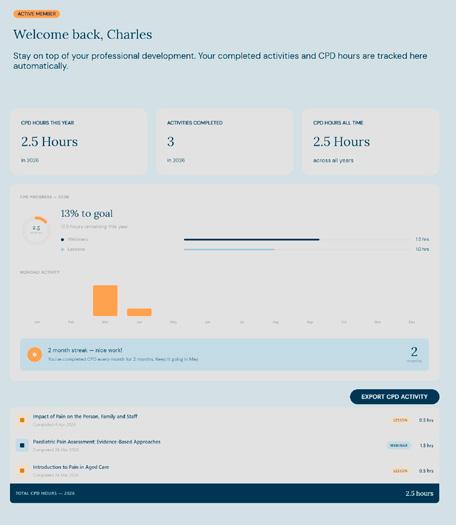
The new member portal has been designed to simplify how you manage your professional development. Members can now:
• Track CPD hours linked to APS activities
• Download CPD certificates and summaries
• Access discounts on external education, including programs such as OPEN
This functionality ensures your APS membership directly supports your continuing professional development in a practical and measurable way.
CONNECTING THE APS COMMUNITY
While still evolving, the platform lays the foundation for stronger member connection and collaboration.
Upcoming features include:
• Dedicated spaces for Special Interest Groups (SIGs)
• A new Early and Mid-Career Network to support emerging leaders
• A member directory to help you connect with colleagues across disciplines and locations — supporting referrals, collaboration, and continuity of care
EXPANDING OPPORTUNITIES
Members will also benefit from enhanced visibility and access to exclusive APS grants, including travel grants and a newly announced Early Career Research Grant, to be launched at the 2026 APS Conference.
A COLLECTIVE ACHIEVEMENT
This milestone has been shaped directly by member input — from surveys to conversations at events and across our community. Your insights have driven this transformation.
THANK YOU FOR YOUR CONTRIBUTION, YOUR ENGAGEMENT, AND YOUR CONTINUED COMMITMENT TO ADVANCING PAIN CARE.
APS Pain Research & Clinical Webinars
MONTHLY | FIRST WEDNESDAY | 7:00PM (AEDT, SYDNEY TIME)
A New Way to Connect, Learn and Lead in Pain Care
The Australian Pain Society is launching a new national webinar series designed to bring together clinicians, researchers, and emerging leaders across the pain community.
These sessions will showcase cutting-edge research and practical clinical insights, spanning the full spectrum of pain care — from primary care to complex multidisciplinary management.
OPEN TO EVERYONE. BUILT FOR THE APS COMMUNITY.
Live webinars are free for members and nonmembers, with exclusive access to recordings available to APS members.
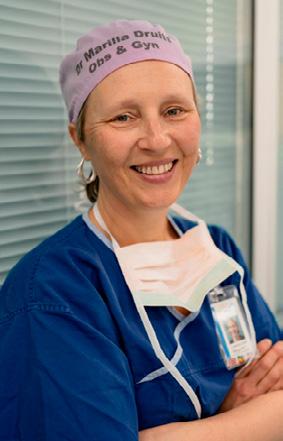
Dr Marilla Druitt
MAY 6 | 7:00PM (AEDT)
REGISTRATIONS
OPEN SOON
MAY WEBINAR
(LAUNCH
Hear directly from leading experts in pain research and clinical practice
Gain practical, evidence-based insights you can apply immediately
Stay connected with emerging trends, policy updates, and innovations
Be part of a growing, national interdisciplinary pain community
SESSION)
Managing pelvic pain in primary care – what to ask, what to assess, what to do next?
This highly practical session will explore:
• What non-pelvic pain clinicians should be asking
• When and where to refer
• How to identify and rule out serious pathology
• Key questions for effective clinical interviews
• Insights into emerging pelvic pain clinics
• Policy and system changes shaping care
Bio - Dr Marilla Druitt is an O&G in Geelong in public and private. She has completed an AGES surgical fellowship, does MRFF awarded research with Deakin on pain, is current President of Pelvic pain Victoria, and has been involved with RANZCOG - two editions of the endo guidelines, and current Victoria State Committee chair. She works with the department of health, politicians, anyone who will listen, really.
Dr Druitt will discuss: the current context of pelvic pain in Australia, the role of guidelines, working with advocacy groups, the unprecedented Victorian Women’s Pain Inquiry and would love to take questions.
COMING UP NEXT
JUNE
Prof. Michael Nicholas
Early Intervention in musculoskeletal injury
JULY
Dr Damien Boorman
Placebo analgesia: from neurobiology to chronic pain management
AUGUST
Prof Toby Newton-John
Partnering with the partner: why family matters in chronic pain care
MEMBER BENEFIT HIGHLIGHT
APS MEMBERS RECEIVE
• Exclusive access to webinar recordings
• Ongoing learning aligned to CPD development
• Priority access to future APS education initiatives
BE PART OF IT
This series marks an important step in strengthening accessible, high-quality pain education across Australia.
Register for the May webinar and explore the full series via the new APS website
SEPTEMBER
Dr Joshua Pate
How children learn what pain means, and why clinicians should care
OCTOBER
Prof Claire Ashton-James Communication and the social dimensions of pain
NOVEMBER
Prof. Damien Finniss
Harnessing Placebo Effects to Enhance Clinical Outcomes in Acute Pain
FEBRUARY 2027
Assoc Prof Gila Moalem-Taylor
IND 2026: Our Nurses, Our Future. Empowered Nurses Save Lives.
Trudy Maunsell
International Nurses Day, an initiative of the International Council of Nurses, is celebrated each May 12, coinciding with the birth date of Florence Nightingale.
This year’s theme is “Our Nurses. Our future. Empowered Nurses Save Lives”. Whilst I may be retired and decidedly older than many of our readers, I promise I am not old enough to have personally worked with Ms Nightingale, but I have seen a few changes over the years! I won’t address issues like workloads, resource allocation or models of care, but I would like to share my thoughts on this theme and reflect on what the implications are for pain management.
I must admit to feeling that the term “empowerment” is often perceived somewhat negatively – when you look at the definition from the Cambridge Dictionary it states that to empower someone is “to give someone official authority or the freedom to do something or to encourage and support their ability to do something”. Let’s focus on the positive aspects of this definition.
Empowerment comes with knowledge, perseverance, guidance and mentorship. We need to encourage and support all clinicians, regardless of discipline, to improve their pain management practice. A great start would be to provide pain management education in undergraduate programs in a multidisciplinary format - to all learn from experts in the field and to all hear the same message and information. Knowledge brings the power and confidence to improve patient care - this may be by providing best practice treatments or by assessing and investigating appropriately. Knowledge can be improved by undertaking online education programs and / or tertiary post graduate programs, by conference attendance, by membership of professional organisations, and by participating in initiatives such as mentorship programs and pain schools such as painSTAR .
Perseverance comes with patience, determination and resilience. To keep getting back up to try again when we aren’t successful with that job application or research paper, when we receive performance feedback that’s not as good as perhaps hoped for– when things don’t quite go to plan, is tough. Organisational cultures need to embrace zero tolerance for bullying and harassment but must also insist on accountability – I would suggest to you that care with no responsibility is not safe, but dangerous.
We need to guide and mentor beginning practitioners and those branching into different areas of practice or taking on new roles. Let’s support, guide and encourage people to learn and develop, to broaden their horizons, to challenge their beliefs and expectations about people in pain, to critically think about practice, research and education and to challenge the status quo.
There has been an explosion in digital and technological development of late and we now have many tools available to us to use – Chat GPT, fully integrated digital patient records, patient monitoring tools, advanced screening and investigative tools and the rapidly developing field of artificial intelligence. These tools can increase efficiency and streamline processes, but we must not lose sight of the human being in front of us. We can use the technology to assist with study, to improve documentation and communication but we must not forget to challenge those thoughts, to think about what’s being generated - read and acknowledge the decreasing functional activity score or increasing sedation score or alterations in other measurement tools - don’t forget to engage brain and take action! Many have heard me say over the years that a caring touch is not corny or unprofessional, it’s incredibly therapeutic. There’s nothing quite so lonely as being unwell or in severe pain. Let’s not forget the “care” part of health care.
Flinders University team awarded MRFF Catalyst Grant to advance blood test for chronic pain diagnosis
Associate Professor Dusan Matusica
Associate Professor Dusan Matusica leads the Pain and Sensory Cell Biology Lab at the Flinders Health and Medical Research Institute. His research integrates neuroscience, molecular biology, and diagnostic innovation to improve diagnosis and treatment monitoring for chronic pain. He develops novel biosensor platforms and translational tools through collaborations spanning nanofabrication, sensory testing, and clinical research integration.
A pioneering Flinders University project led by Dr Dusan Matusica, Associate Professor in Human Anatomy and Group Lead of the Pain and Sensory Cell Biology Lab at the Flinders Health and Medical Research Institute, has received funding through the Health Translation SA (HTSA) MRFF Catalyst Grant Scheme, supported by The Hospital Research Foundation Group.
The initiative aims to demonstrate that a simple blood test can identify the specific type of nerve damage responsible for a person’s chronic pain, and that this same tool can monitor treatment effectiveness over time. Using an innovative biosensor platform developed at Flinders, the team will analyse blood samples from neuropathic pain patients to validate its diagnostic and translational potential.
“The Catalyst Grant gave us the stability to bring people on board, including consumers and chronic pain sufferers, to ensure the project meets their needs rather than just our research,” said Dr Matusica.
“Their input is vital in designing solutions that are relevant, usable, and impactful.”
The project directly addresses a major unmet healthcare need, as neuropathic pain remains difficult to diagnose and treat effectively. By combining advanced biosensing, proteomics, and patient-reported outcome data, the team aims to deliver an objective and personalised approach to chronic pain management.
This work exemplifies how the HTSA Catalyst Scheme fosters innovative, consumer-centred research with the power to transform care across South Australia.
LEARN MORE
Start with OPEN — An online Clinical Pain Training Program for all healthcare professionals, in partnership with the Australian Pain Society.
PRACTICAL TOOLS FOR ALL HEALTHCARE PROFESSIONALS
“OPEN equips clinicians with the confidence and skills to apply their knowledge at the coal face, enabling pain care to be delivered directly at the point of care.”
JOYCE MCSWAN, CEO OPEN & PAINWISE
Kia Ora Aotearoa! OPEN Officially Launches in New Zealand
Joyce McSwan
We are thrilled to announce that the Online Pain Education Network (OPEN) has officially crossed the Tasman! This expansion marks a major milestone in our mission to deliver world-class, evidenceinformed pain management training across Australasia.
Following Professor Michael Nicholas’s presentation at the March 2026, New Zealand Pain Society Conference, the energy surrounding this launch is palpable. OPEN isn’t just another digital course; it is a social enterprise designed to bridge the gap between complex research and the frontline of clinical practice.
At the heart of OPEN is a commitment to building workforce capability. We want every clinician— regardless of discipline or location—to be equipped with a shared language and a consistent framework for care. The program is built to empower practitioners to do exactly what the modern clinical environment demands, with the patient at the heart of care:
Assess with precision.
Reason through complexity.
Adapt to the unique needs of every patient.
Whether you are working in a bustling metropolitan hospital or a rural primary care setting, OPEN provides the practical tools to navigate the complexities of chronic pain alongside your patients. By moving beyond siloed knowledge and focusing on interdisciplinary strategies, we ensure that people living with pain receive the right support as locally as possible.
We invite our New Zealand colleagues to join this vibrant, growing community. Looking forward to supporting our Australasian colleagues and transforming pain care together.
Pictured: Prof Michael Nicholas presenting at NZPS 2026; Prof Michael Nicholas with Dr Karen Joseph, President of the NZ Pain Society.
15 – 19 NOVEMBER 2026
NOVOTEL BAROSSA VALLEY RESORT, ADELAIDE HILLS
painSTAR brings together a group of exceptional clinical and early-mid career academic pain researchers to participate in an intensive program. Here, we focus on linking the bench to the bedside and the boardroom.
Pain Schools foster interdisciplinary collaboration, accelerated translation of research findings to care delivery, and the development of skills to help influence political/health service systems. These topics are critical for high quality translational pain research that are rarely covered in standard teaching/conference curriculum.
Amy Reynolds and Peter Rudland, our valued consumer representatives, will be joining us again. They ensure that the painSTAR program is centred in the voice of those with lived experience.
Our core faculty – Anne Burke, Rainer Haberberger, Wendy Imlach, Trudy Maunsell and Tasha Stanton – are back for another round and this year. We welcome Andrew Watson to the team!
Fiona Blyth returns as the 2026 IASP representative, and we’re thrilled to welcome Kevin Keay (University of Sydney) as our inspiring national keynote speaker.
Pain is common in older people, yet it is often missed or undertreated in residential and community aged care settings.
IF STAFF DON’T KNOW THE SIGNS OF PAIN, IT CAN EASILY GO UNNOTICED — IMPACTING QUALITY OF LIFE, MOBILITY, MOOD, AND CARE OUTCOMES.
WHAT IS PAINACT?
• 7 short, pain-focused training modules
• Practical and realistic videos and conversations with staff and residents in care settings
• Designed to be delivered as simple in-service sessions by a Registered Nurse
• Suitable for residential aged care, home care, community care and NDIS providers
THROUGH PAINACT, PERSONAL CARE WORKERS LEARN TO:
• Listen to residents’ concerns
• Validate and acknowledge pain experiences
• Recognise when pain requires further action or escalation
Improve pain care across your facility with this accessible, evidence-based training program.
Faculty of Pain Medicine (ANZCA) anzca.edu.au/fpm
International Association for the Study of Pain (IASP) www.iasp-pain.org
Australian Pain Society www.apsoc.org.au
New Zealand Pain Society www.nzps.org.nz\
Connect with us: APS is growing its social media community
One of our priorities this year is strengthening APS’s presence online, and we’d love for you to be part of it.
Over the past few months, we’ve been investing more intentionally in our social media channels, focusing on the quality and relevance of what we share. The shift has made a visible difference.
Since late 2025, we’ve seen a notable increase in engagement across our posts — more reactions, more shares, and clear signs that our content is finding its audience.
We’ve also lifted the standard of our content, with a sharper focus on the research, people and perspectives that make this community worth following, and we want to keep building on that with your help.
WHAT WE’RE SHARING
Our social media content is built around the things that matter most to APS members: emerging research, upcoming events, advocacy updates, and the people doing meaningful work across the pain sector. We’re also using our channels to build awareness of the APS Annual Scientific Meeting and to highlight what’s happening in pain care both here in Australia and internationally.
WE WANT TO SHARE YOUR WORK
If you have research findings, a recent publication, a professional milestone, or an announcement you’d like us to amplify, please let us know. Sharing member work is one of the most valuable things we can do on social media, and we’re actively looking for opportunities to spotlight the people and projects that make this community exceptional.
FOLLOW US AND JOIN THE CONVERSATION
If you’re not already connected with us, we’d love to see you there:
Whether you share our posts, leave a comment, or simply follow along — every connection helps us grow APS’s reach and visibility across the pain care sector. The stronger our community online, the louder our collective voice.
WE’RE JUST GETTING STARTED, AND WE’RE GENUINELY EXCITED ABOUT WHERE THIS IS HEADING. COME AND BE PART OF IT.
INTERNATIONAL CONSULTATION ON MEASURING CHRONIC PAIN IN POPULATION RESEARCH
An international collaboration (COMP³) is seeking feedback on a proposed brief question set for measuring chronic pain in population and epidemiological research. Current approaches vary widely and can produce substantially different prevalence estimates, limiting comparability across studies and settings. This work aims to develop a concise, practical tool aligned with existing definitions but better suited to population-level measurement and decision-making. We invite clinicians, researchers, others with an interest in pain epidemiology and people with lived experience to take part in a short consultation (5–10 minutes), open until 20th April 2026
COMP3 CONSULTATION: MEASURING CHRONIC PAIN IN POPULATIONS
10 APR 2026
We are developing a short set of questions for use in population surveys to measure the prevalence of chronic pain. This survey asks for your feedback on a proposed question set. It takes approximately 3-5 minutes. Responses are anonymous and will inform refinement of the final COMP3 question set.
TAKE THE SURVEY
HAVE NEW RESEARCH TO SHARE?
To submit something for consideration, reach out to us at aps@apsoc.org.au
SUBMIT YOUR RESEARCH
Renew your APS membership for 2026 — be part of an exciting year ahead
Thank you for being a member of the Australian Pain Society (APS) in 2025, and for your ongoing commitment to improving pain care across Australia. Your membership plays an important role in strengthening our collective voice in advocacy, education, and research.
Membership renewals for 2026 are now due, and a reminder email has been sent to all members.
AS AN APS MEMBER, YOU HELP ENSURE WE CAN CONTINUE TO:
Advance best-practice pain research and clinical care
Influence national policy, standards, and advocacy priorities
Build a strong, multidisciplinary pain community
We have many exciting initiatives, events, and opportunities planned for 2026. Renewing now ensures you remain fully connected and at the centre of APS activities in the year ahead.
MEMBERSHIP FEES
Members are asked to select their level of membership, as APS has operated on self-reporting subscription categories since 2009. Before renewing, please take a moment to update your membership profile online.
RENEW NOW
INVITE A COLLEAGUE TO JOIN APS
By inviting a colleague to become a member of APS, you can directly help our community grow, broaden our reach, and strengthen our influence in shaping better pain care across Australia.
Every new member amplifies our collective voice and increases our capacity to advocate for clinicians, researchers, and people living with pain.
Encourage your colleagues to join Australia’s leading multidisciplinary pain community and connect with the professionals and advocates shaping the future of pain care.
APS IS A REGISTERED CHARITY
The Australian Pain Society is a registered charity with the Australian Charities and Not-for-profits Commission (ACNC).
Any donation you choose to make is fully tax deductible and directly supports APS in advancing best-practice pain research, education, and clinical care.
Thank you for your continued support and membership of the APS.
Please note:
1 We understand that circumstances change, so each year we ask you to select your appropriate level of membership.
2 This system of self-reporting subscription levels was implemented in 2009 for the benefit and fairness of all members.
3 Membership fees have NOT increased
Please refer to the rates below for your 2026 membership
Calendar of Events
April
19–22 APRIL 2026
Australian Pain Society
2026 Australian Pain Society 46th Annual Scientific Meeting
Adelaide Convention Centre, Adelaide, SA
May
1 MAY 2026
Australian and New Zealand College of Anaesthetists & Faculty of Pain Medicine
2026 FPM Symposium – Kotahi tatou i te waka: United in the journey of pain care
JW Marriott Auckland Hotel, Auckland, New Zealand
1–5 MAY 2026
Australian and New Zealand College of Anaesthetists (ANZCA)
ANZCA 2026 Annual Scientific Meeting – Herenga Waka Herenga Tangata (From Home to Home)
New Zealand International Convention Centre (NZICC), Auckland, New Zealand
June
23–24 JUNE 2026
Occupational Therapy Australia
OT Exchange 2026: From Ideas to Impact
Brisbane Convention and Exhibition Centre, Brisbane, QLD
July
19–22 JULY 2026
Rehabilitation Medicine Society of Australia & New Zealand
RMSANZ 2026 9th Annual Scientific Meeting –Bridging the Rehabilitation Gaps
Darwin Convention Centre, Darwin, NT
August
07–09 AUGUST 2026
Neuromodulation Society of Australia & New Zealand
2026 NSANZ 19th Annual Scientific Meeting
Sheraton Grand Mirage Resort, Gold Coast, QLD
September
14–16 SEPTEMBER 2026
National Rural Health Alliance 18th National Rural Health Conference
University of Sydney Camperdown NSW 2006 Fiona.blyth@sydney.edu.au
Communications Coordinator
Mrs Bernadette Smith
Psychology Plus
South Burnie TAS 7320 03 6431 9959 03 6431 9950
Newsletter Editor
Clinical A/Prof Kylie Bailey
Sagacity Services
Mount Hutton NSW 2290 0447 905 085
Newsletter Assistant Editor
Dr Joanne Harmon
School of Clinical and Health Sciences
University of South Australia
Adelaide SA 5000 08 8302 1442
Grant Selection Subcommittee Co-Chairs
Emeritus Professor Maree Smith AC
Centre for Integrated Preclinical Drug Development
University of Queensland St Lucia QLD 4072
Professor Luke Henderson
Anatomy & Histology, School of Medical Sciences
Brain & Mind Centre
University of Sydney Camperdown NSW 2006
The Australian Pain Society is a multidisciplinary association whose purpose is to advance pain management through education, research, and advocacy for transformational improvements in clinical care.