
10 Things to Check Before Buying an Off-Road Caravan in Melbourne
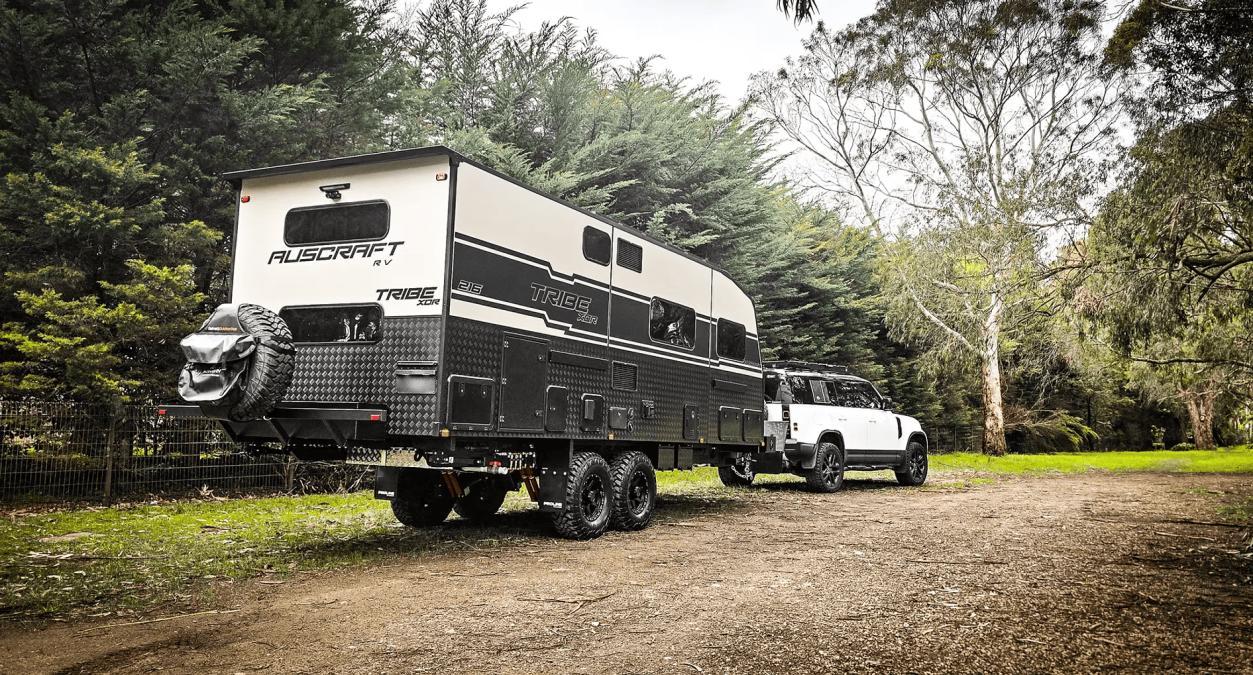
Investing in a rugged caravan opens up a world of remote travel across the Victorian high country, the Red Centre, and beyond. However, the market is flooded with options, and unfortunately, many standard highway trailers are simply dressed up with big tyres and an adventurous badge. If you want a rig that can genuinely handle corrugated outback tracks without structural failure, you need to use a strict inspection checklist to separate the true all-terrain performers from the lookalikes.
The Ultimate 10-Point Off-Road Inspection Checklist
When assessing a dirt-ready vehicle, you must look past the shiny composite cladding and inspect the underlying engineering and layout choices. A true off-road caravan requires specialized materials, specific mechanical ratings, and intelligent structural components designed to absorb heavy track punishment while keeping you safe.
1. Frame Material and Integrity
Traditional caravan builders have long relied on staple-gunned timber framing, which easily absorbs moisture, expands, and rots under continuous track vibrations. To protect your investment, look for advanced manufacturing techniques that discard

wood entirely, as choosing a fully welded aluminium frame ensures a rigid, durable monocoque skeleton that handles severe torsional stress without warping or loosening over time.
2. Underbody Shielding and Protection
Peek completely underneath the chassis to check how vulnerable components are mounted. A genuine off-grid rig must have all plumbing lines, electrical wiring runs, and plastic water tanks securely shielded behind heavy-duty metal plating or impactresistant stone guards to prevent damage from flying track debris.
3. Suspension Dynamics
Look past basic leaf springs or lightweight setups when planning to tackle rugged terrain. A capable dirt-ready caravan requires a heavy-duty independent trailing arm suspension system, ideally equipped with coil springs and dual shock absorbers per wheel to ensure flawless tracking and ride stability over deep washouts.
4. Off-Road Coupling and Hitch
Standard ball hitches do not offer the articulation required for severe outback tracks and can bind or detach during extreme track twists. Ensure the van is fitted with a genuine 360-degree articulated off-road coupling, such as a Cruisemaster DO35, which allows the caravan to flex independently from the tow vehicle.
5. Dust Suppression Systems
The vacuum effect created while towing on dirt roads will rapidly pull fine outback bulldust through fridge vents and door seals, ruining your interior. Inspect the roofline for an active, positive-pressure dust suppression system that pressurises the cabin while driving, keeping dust completely outside your living space.
6. Chassis Grade and Steel Source
The chassis is the absolute foundation of an off-road build and bears the brunt of all towing stress. Verify that the chassis is constructed from heavy-duty, locally sourced Australian steel rather than thin imported metals, and check for protective structural coatings like a rugged A-frame shield to fight stone chipping.
7. Off-Grid Lithium Power Autonomy
True freedom means staying away from crowded holiday parks for weeks on end without losing power. Check that the electrical system features a high-capacity lithium battery bank paired with a substantial roof-mounted solar array and a smart battery management system capable of running your major appliances anywhere.
www.auscraftrv.com.au

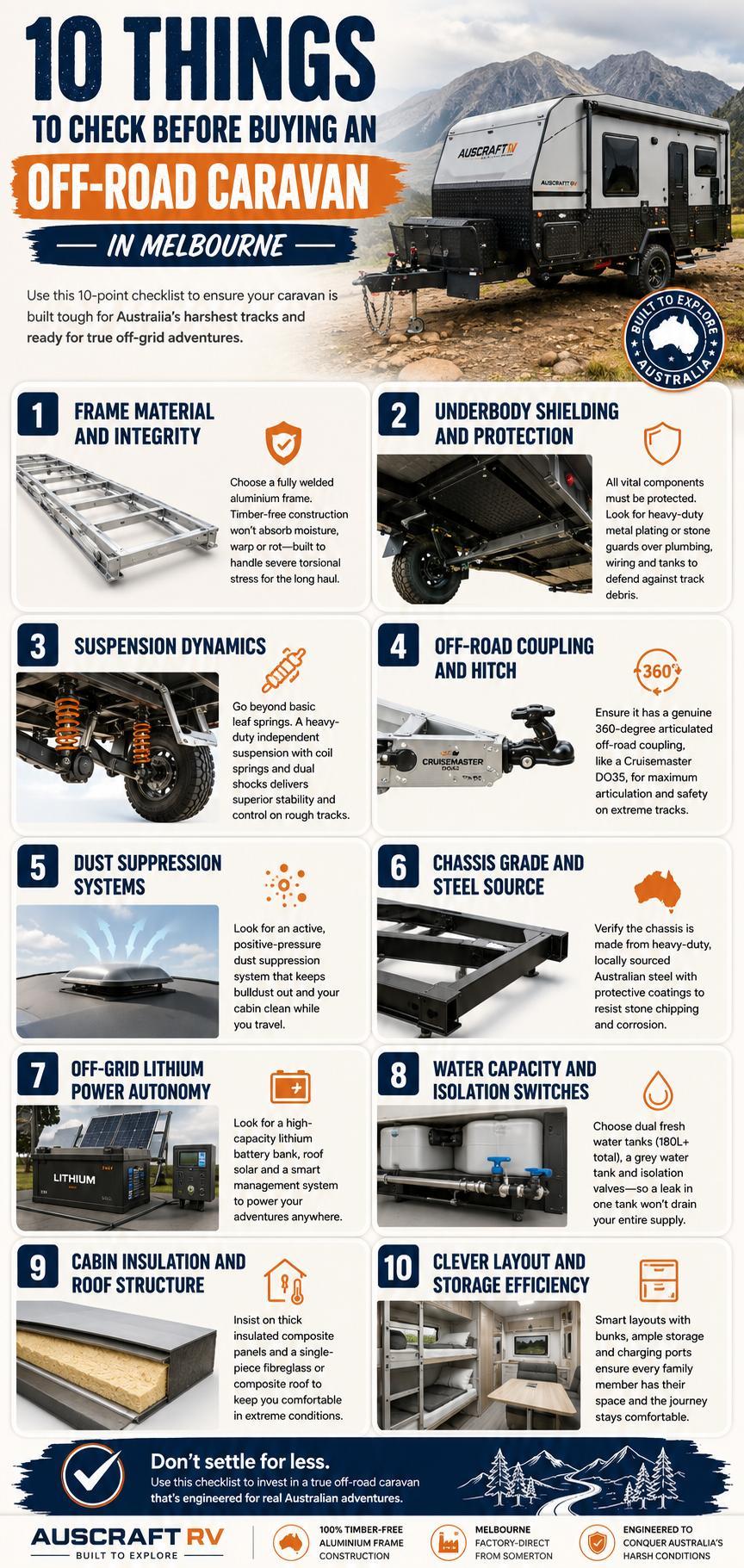
8. Water Capacity and Isolation Switches
A true remote explorer needs enough water capacity to survive long stays in national parks. Look for dual freshwater tanks with a combined capacity of at least 180 litres, a dedicated grey water tank for self-containment zones, and independent plumbing isolation valves so a single tank leak won’t drain your entire supply.
9. Cabin Insulation and Roof Structure
Extreme outback temperatures demand superior thermal protection. Inspect the caravan’s insulation properties, checking for thick composite side panels and a singlepiece fibreglass or composite roof structure, which eliminates the join seams that traditionally cause water leaks during heavy tropical downpours.
10. Clever Layout and Storage Efficiency
Beyond the mechanical specifications under the chassis, the internal configuration must perfectly match your long-term family travel dynamics. If you are touring with kids, space management is everything, making it essential to track down the best family caravans with bunks in Melbourne to guarantee that every family member has dedicated storage and charging ports without overcrowding the living zone.
Conclusion
Don’t risk your hard-earned travel savings on a standard highway trailer with a simple suspension lift. By focusing on a timber-free foundation, high-grade independent suspension, and a 10-point checklist that guarantees genuine off-grid capability, you will secure a vehicle ready for any territory.
Looking for uncompromised quality? The expert team at AusCraft RV manufactures premium, 100% timber-free aluminium frame caravans in Melbourne factory-direct from their Somerton workshop engineered explicitly to conquer the harshest Australian conditions.
Resource: 10 Things to Check Before Buying an Off-Road Caravan in Melbourne