
Sustainability Report 2025
Aura Light International AB | auralight.com
About this sustainability report in accordance with VSME
This sustainability report has been prepared in accordance with the VSME (Voluntary Sustainability Reporting Standard for SMEs) framework. The report provides an overall and transparent picture of how Aura Light works with sustainability, based on its role as a developer and supplier of energyefficient lighting solutions.
The purpose of the report is to meet increasing demands for sustainability information from customers, partners, and other stakeholders, as well as to establish a common foundation for
the continued development of the company’s sustainability work. Sustainability is integrated into Aura Light’s business model through a focus on energy efficiency, long service life, and resource efficiency, as well as through work on social and governance-related issues proportionate to the company’s size and operations. The CEO has overall responsibility for the company’s sustainability work. The operational responsibility for the report’s content, follow-up, and reporting lies with the Quality Compliance function and Marketing.
Company information
Company name: Aura Light Group (Aura Light International AB and its subsidiaries)
Company registration number: 556275-2278
Head office: Stockholm, Sweden
Production unit: Vimmerby, Sweden
Long-term responsibility
Sustainability is a natural part of Aura Light’s business. As a supplier of lighting solutions with in-house production in Sweden, we have the opportunity to influence both our own operations and how our products are used by customers. Our sustainability work encompasses environmental, social, and economic aspects, with a particular focus on energyefficient products, responsible material choices, and a safe working environment.
The majority of our climate impact occurs during the use phase of our products, making energy efficiency and intelligent control systems our most important contributions. This is our first sustainability report in accordance with VSME, and we see it as a step toward structuring and developing our work over time.
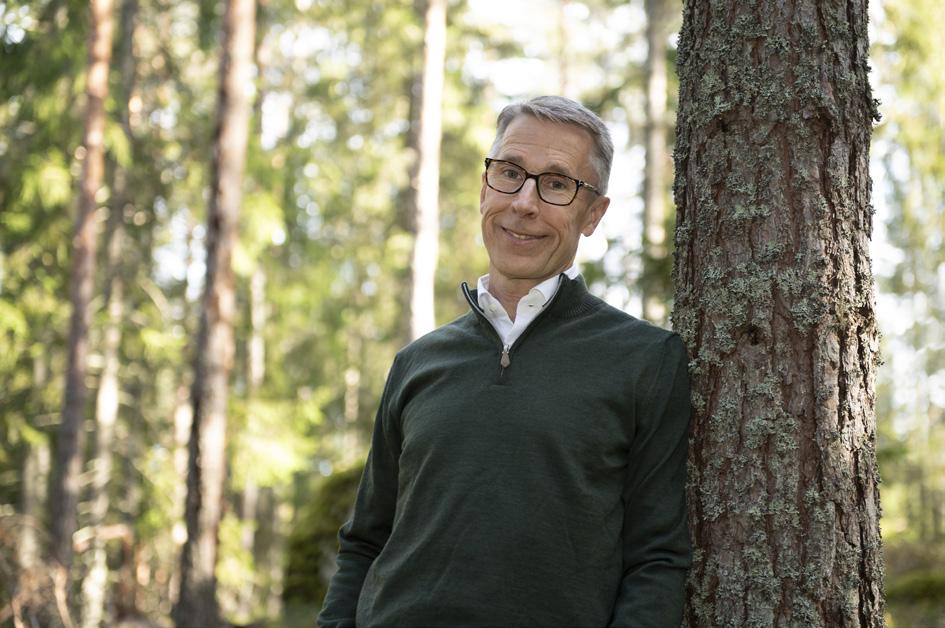
Henrik Håkansson CEO Aura Light
Number of employees: approx. 120
Revenue (Group): approx. SEK 350 million
Reporting period: 1 January – 31 December 2025
Governance and responsibility for sustainability
Aura Light’s sustainability work is integrated into the overall management of the business and is carried out in a structured and systematic manner. Through clear ways of working, established processes, and certified management systems, we ensure that sustainability aspects are considered both in daily operations and in long-term decisions.
Production is centralized at our facility in Vimmerby, providing strong control over processes, quality, resource use, and the working environment. Sustainability aspects are taken into account in investments in production, machinery, and energy supply, with a focus on efficiency, safety, and reduced environmental impact. The work is monitored within the framework of our management system and forms a natural part of business governance.
Quality, Environment and Safety
Aura Light is certified according to ISO 9001, ISO 14001, and ISO 45001, ensuring a structured approach to quality, environmental, and occupational health and safety management. Through these systems, we ensure compliance with relevant requirements, manage risks, prevent non-conformities, and drive continuous improvement via audits and regular follow-ups.
To strengthen this work, Aura Light strives, where relevant, to work in accordance with the principles of ISO 26000, thereby promoting responsible practices in areas such as working conditions, business ethics, human rights, and the value chain. This contributes to a long-term and coordinated approach to sustainability.
Materiality analysis
The purpose of the materiality analysis is to identify the sustainability issues that are most significant for the business and our stakeholders. The analysis has been carried out based on our business model and value chain, from product development and procurement to production, operation, and customer use.
The assessment of impact and the ability to influence outcomes has been conducted through internal discussions among different functions within the organization, as well as through an analysis of the company’s processes, products, and customer requirements. For each area, we have assessed both the impact the business has on the environment and people, and the significance of these issues for the company’s
long-term development. The areas identified as most material are those with a high level of impact and where we also have a strong ability to influence outcomes. These areas have therefore been prioritized in our sustainability work. The table below presents the identified sustainability areas, examples of key issues, how they contribute to value creation, and our ability to influence them.
The results of the materiality analysis are used as a basis for setting objectives, planning activities, and monitoring our sustainability work. In this way, we ensure that sustainability efforts are business-relevant, meaningful, and integrated into ongoing operations.
Product Development Supply Chain Operation
Area Production facility and development as well as in collaboration with strategic suppliers.
Questions
∙ Energy efficiency
∙ Conscious choice of materials
∙ Climate footprint
∙ Product lifetime
∙ Smart lighting
Value adding
∙ Reduced impact from products in use
∙ Contribute to circular flows
∙ Sustainable material choices to contribute less virgin material that needs to be extracted from the ground
∙ Long service life of the installation
Products are purchased from third parties as well as components for own production.
∙ Efficient transport
∙ Reduced energy consumption and reduced CO2 emissions
∙ Code of conduct and quality requirements for our suppliers
∙ Reduce emissions and waste management of products and components
∙ Production/deliveries in our nearby area
∙ Reduced CO2 emissions good for the climate
∙ More cost effective and climate-friendly transportation
∙ Ensured social sustainability
∙ Reduced waste and less emissions lead to better economic and ecological sustainability
About 120 employees in 3 countries, one production unit.
∙ Systematic work environment management
∙ Health and well-being
∙ Competence development
∙ Diversity and inclusion
∙ Energy efficiency and travel
Customer Choice
Sales of sustainable lighting to the the professional market.
∙ Communicate and retrain sustainable lighting solutions
∙ Guide the customer to energy efficient choices with long life
∙ Economy and sustainability go hand in hand
∙ Guide customers to good lighting planning for improved well-being
∙ Safety in the work environment
∙ Employee engagement
∙ Increased knowledge
∙ Inclusion and diversity boost innovation and decision-making
∙ CO2 savings
∙ Loyal customers
∙ Customers who install sustainable lighting solutions reduce their carbon footprint over the life of the product
∙ Educated customers and coworkers
∙ The sustainable solution is also economically beneficial during the period of use
Our Sustainability Focus Areas
Product Development
To increase our average product portfolio from 120 lm/W to 140 lm/W by the year 2030, starting from 2023. Current level: ~125 lm/W.
Supply Chain
Ensure that our strategic suppliers have signed the Code of Conduct.
Operations
Improve well-being within the organization through team focused activites and leadership development.
Halve energy consumption in our premises and emissions from our vehicles by 2030, starting from 2023.
Customer Choices
Increase sales of smart lighting controls by 10% annually until 2030, starting from 2023.
Sustainability will be our main focus in the customer meeting.
Product Development
Through our production facility in Sweden, we have strong opportunities to integrate sustainability throughout the entire product development process – from idea and design to finished product. The work focuses on energy efficiency, minimizing the use of virgin materials, and reducing product weight to enable environmentally efficient transportation. Design and packaging are developed with consideration for transport and resource efficiency. A long product lifetime is central to our sustainability efforts, and through conscious material choices, we strive for reuse and upgradability – where components can be replaced without the need to replace the entire product.
Supply Chain
The supply chain is an important part of our sustainability work. We require suppliers to comply with our Code of Conduct, which covers business ethics, working conditions, human rights, and environmental responsibility. Through dialogue and collaboration with suppliers, we work to ensure strong delivery performance, contributing to more efficient transportation and reduced waste. A key ambition is to work with suppliers in Europe and in our proximity, reducing transport distances and strengthening supply security.
Own Operations
Our employees are a central part of our business. We focus on strengthening collaboration, team spirit, and employee engagement across the organization.Through ongoing development in both leadership and coworkership – including shared responsibility, constructive communication, and active contribution to change – we aim to foster a safe and sustainable working environment.At our production facility in Vimmerby, systematic occupational health and safety work is carried out in accordance with ISO 45001. Energy efficiency improvements in facilities and reduced emissions from travel and transport are key parts of our climate efforts.
Customer Choice and Use Phase
Since a large share of our climate impact occurs during the use phase of our products, customer choices is a key factor. To support informed decision-making, we offer energy-efficient products with various smart lighting control solutions, as well as Environmental Product Declarations (EPDs). These provide transparent and comparable information on the environmental impact of our products. Knowledge-sharing and guidance are central to this work, and we continuously undertake initiatives to increase awareness and understanding of sustainable lighting solutions.
Environmental Responsibility in Products and Production
Aura Light works systematically to reduce its environmental impact through efficient use of resources, well-considered material choices, and responsible production. This work covers the entire business – from product development and material selection to production, packaging, and waste management – and is part of the company’s ambition to contribute to more circular material flows.
Waste and Recycling
Aura Light strives to minimize the amount of waste and ensure that residual and end-of-life materials are handled in a safe and responsible manner. Through established partnerships, waste is managed and recycled in accordance with applicable legal requirements. Recycling is an integrated part of the company’s environmental work and contributes to increased circularity in material flows.
Resource Efficiency and Reduced Waste
Resource efficiency is a key part of daily operations and includes both material usage and packaging solutions. Through adjusted working methods, the amount of cardboard waste has been reduced, for example by reusing corrugated cardboard as cushioning material in deliveries. This contributes to reduced use of single-use materials and plastics, as well as more efficient utilization of available resources.
Material Selection and Circularity
Material selection is an important part of Aura Light’s environmental work. In product development, materials are assessed based on lifespan, climate impact, and the potential for recycling or reuse. For certain product solutions, recycled aluminum is used, which requires less energy and results in a lower climate impact compared to virgin materials. This work is carried out in dialogue with suppliers and forms part of the company’s ambition to gradually develop more circular and resource-efficient products.
Production and Working Environment
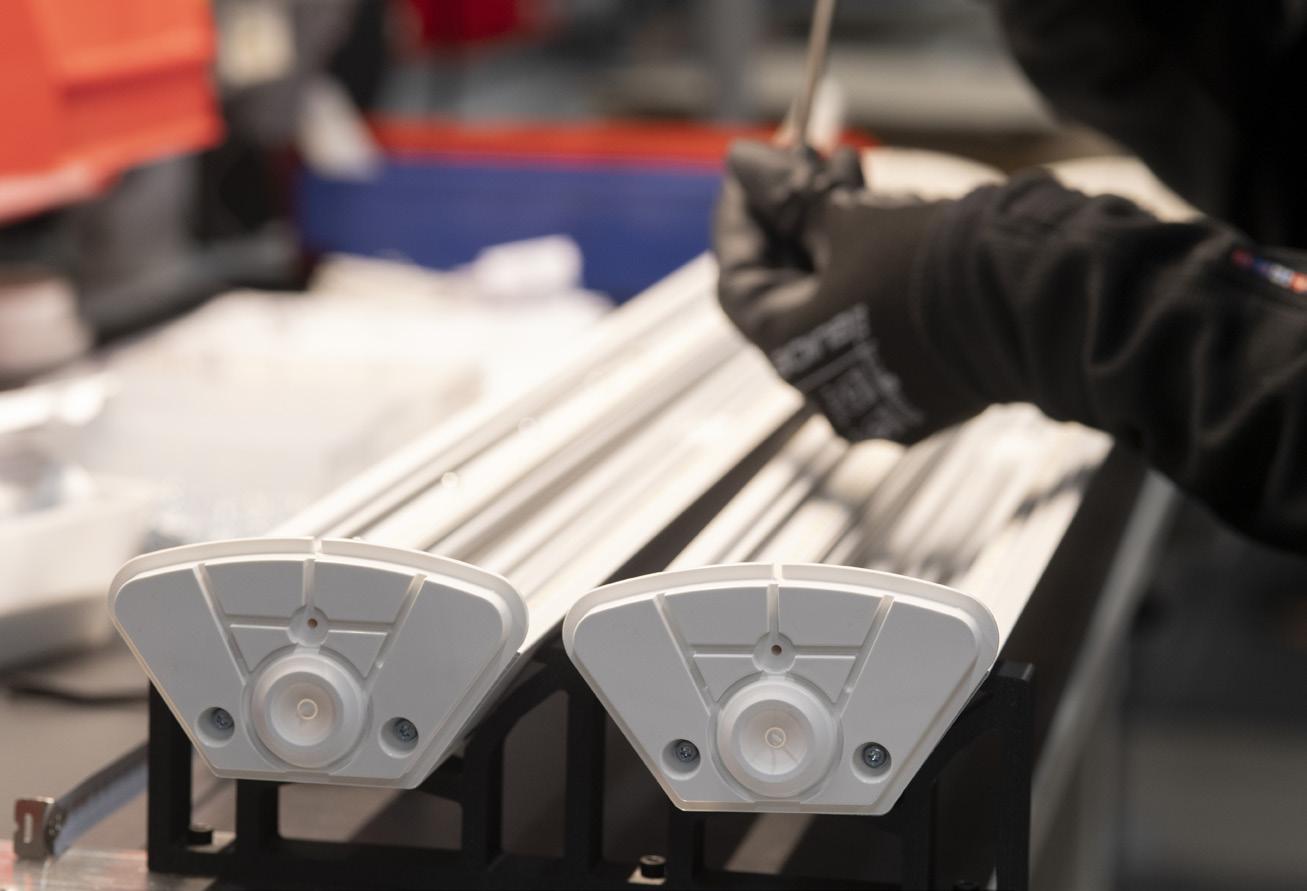
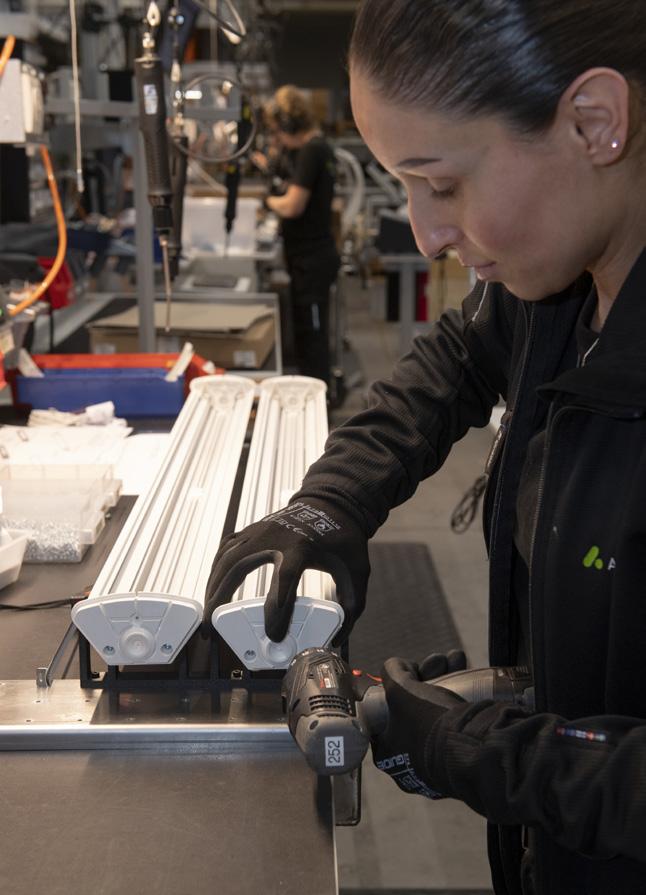
Aura Light’s production is consentrated at the facility in Vimmerby, where design, product development, assembly, testing, packaging, and delivery are carried out. This integrated production setup provides strong control over processes, resource use, quality, and the working environment, and enables a structured approach to environmental and occupational health and safety management. Sustainability aspects are considered in investments in machinery and equipment, with priority given to energy efficiency, reduced waste, and efficient material use. Production is conducted with a focus on safe chemical management, as well as a safe, healthy, and positive working environment for employees. The work is monitored within the framework of the company’s management systems.

Overview of total tons of CO 2
Climate Targets and Reduced Climate Impact
We have committed to the Science Based Targets initiative (SBTi) and set climate targets in line with the Paris Agreement. These targets guide our efforts to reduce emissions across the entire value chain and are considered in business and investment decisions. As part of this work, we have initiated the mapping of Scope 3 emissions and continuously work to collect and improve relevant data throughout the value chain.
This is SBTi
The Science Based Targets initiative (SBTi) is a framework that assists companies and organizations in establishing science-based climate targets aligned with the objectives of the Paris Agreement, which aims to limit global temperature rise to 1.5 degrees. A target has been established to reduce Scope 1 and Scope 2 emissions by 50 percent by 2030, using 2023 as the baseline year, in line with our efforts to reduce greenhouse gas emissions. The target has already been achieved, and efforts are ongoing to deliver further reductions.
The SBTi is a collaborative effort between the Carbon Disclosure Project (CDP), The United Nations Global Compact (UNGC), the World Resources Institute (WRI) and the World Wide Fund For Nature (WWF).
Scope 1 covers emissions that directly originate from our operational activities, such as those from own factories.
Scope 2 encompasses indirect emissions resulting from the consumption of purchased electricity, steam, heating, and cooling by the reporting company.
Scope 3 includes all other indirect emissions that occur in the value chain, including emissons from suppliers, transportation, waste management, and the use of sold products.

Employees and Working Environment
Employee Well-being Drives Success
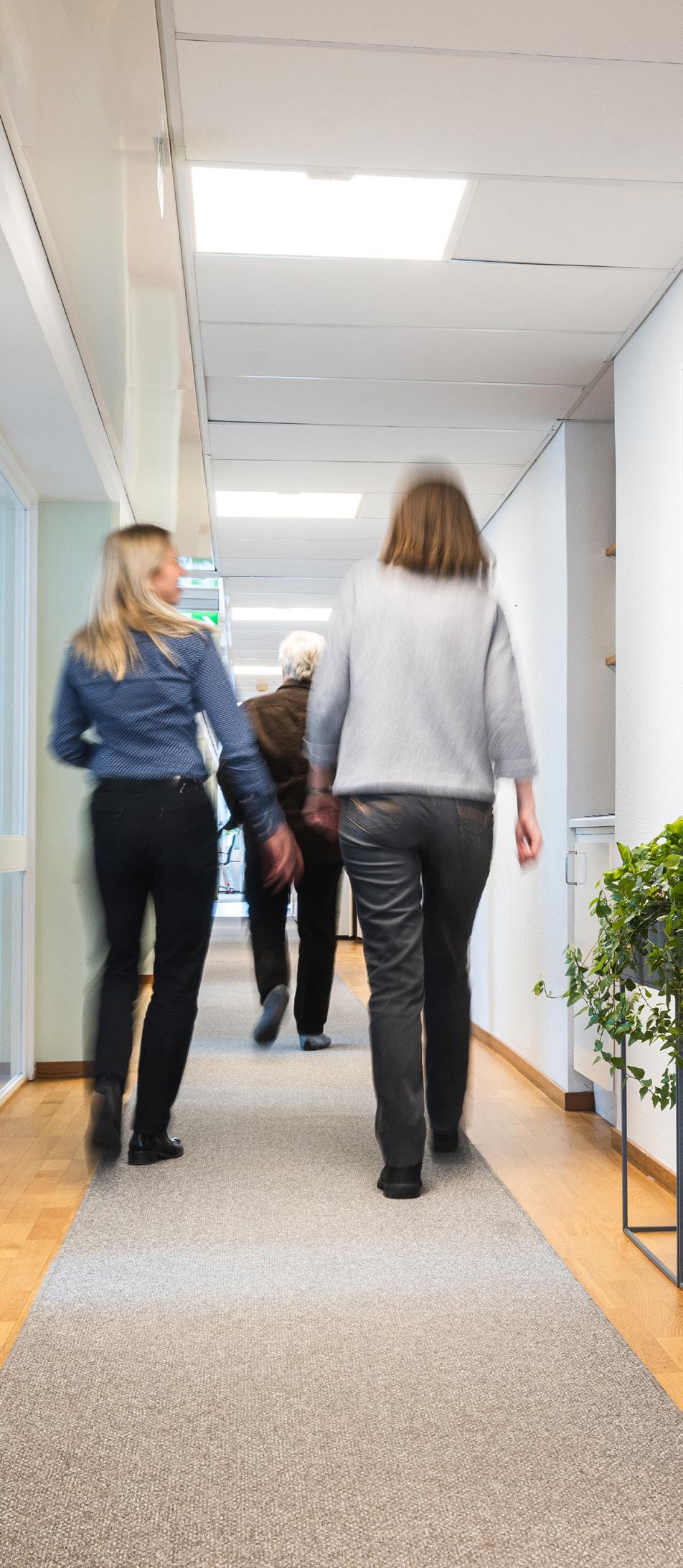
Aura Light works to create a safe and inclusive working environment where respect, participation, and collaboration are central. Occupational health and safety efforts are carried out systematically and in accordance with applicable legislation and internal procedures, covering both physical and organizational work environment aspects.
As part of the sustainability work, employee well-being is monitored through regular anonymous surveys. The results are used to identify areas for improvement and to implement relevant actions.
Relationships, both internal and external, are guided by the company’s Code of Conduct, which sets out principles for ethical, respectful, and inclusive behavior. Aura Light’s values –quality, commitment, flexibility, and speed – guide daily work and contribute to a sustainable workplace and long-term business relationships.
Energy Efficiency in Own Operations
As part of Aura Light’s environmental efforts, the factory in Vimmerby has been upgraded to energy-efficient and sustainable LED lighting. This measure contributes to reduced energy consumption and lower climate impact in the company’s own operations.
The new lighting solution is based on LED technology combined with a smart control system that enables monitoring and adaptation to actual needs. The transition results in lower energy consumption, longer luminaire lifetimes, and reduced maintenance and waste. At the same time, the lighting environment has improved, contributing to a safer and more functional workplace for employees.
This measure is an example of how energy efficiency and an improved working environment are integrated into Aura Light’s sustainability work.
Responsibility and Compliance
Aura Light takes responsibility for its operations throughout the entire value chain – from product development and delivery to business relationships and supplier collaborations. Our responsibility covers both how our products are managed from an environmental and lifecycle perspective and how we conduct our business in an ethical, lawful, and transparent manner.
Product Responsibility
Aura Light manages its products responsibly throughout their entire lifecycle, from transportation and delivery to the handling of end-of-life products. For transportation, we collaborate with established logistics partners to ensure efficient deliveries while considering environmental impact. The choice of transport mode is based on planning and efficiency, with air and express deliveries used only in exceptional cases. We are affiliated with approved collection systems for products covered by producer responsibility in the markets where we operate. This ensures that end-of-life products are collected and recycled in an environmentally sound and legally compliant manner, in accordance with applicable producer responsibility legislation.
Business Ethics and Compliance
Aura Light conducts its operations with high standards of business ethics, responsibility, and compliance with applicable laws and regulations. A fundamental principle is that business
is conducted in a transparent, accurate, and responsible manner. We do not accept any form of corruption, bribery, or other improper business practices. These principles apply throughout the organization and in our relationships with customers, suppliers, and other business partners. Our requirements regarding business ethics, human rights, working conditions, health, safety, and the environment are governed by internal policies as well as our Supplier Code of Conduct. Compliance with these requirements is essential for long-term and responsible business relationships.
Supplier Responsibility
Aura Light requires its suppliers to comply with applicable legislation, respect human rights, ensure fair working conditions, and conduct responsible environmental practices. These requirements are defined and monitored through our Supplier Code of Conduct, which is a central part of our efforts to ensure responsible and sustainable supplier relationships.
Alignment with the UN Sustainable Development Goals
Aura Light uses the United Nations Sustainable Development Goals (SDGs) as an overarching framework to place its sustainability work in a broader context. Our work with the SDGs is integrated into our operations through the areas identified in our materiality analysis, where we have the greatest opportunity to make an impact. Based on our business activities and offerings, we have chosen to focus particularly on goals that are closely linked to energy efficiency, innovation, and resource efficiency. These goals serve as guidance in product development, production, and in our dialogue with customers and suppliers.
Energy smart lighting
7.3 Through the development and sale of energy-efficient lighting and solutions with smart controls, we help reduce energy consumption during the use phase, where the majority of our products’ climate impact occurs.
Innovation as a core value
9.4 Innovation is a central part of Aura Light’s operations. Through continuous development of products, material choices, and production processes, we work to increase resource efficiency and create more sustainable technical solutions. Sustainable consumption.
Sustainable consumption
12.4, 12.5 och 12.8 We work to ensure responsible management of materials, chemicals, and waste, and to reduce resource use through long product lifespans, recycling, and reuse. Through knowledge sharing and dialogue with customers, we also contribute to increased awareness of sustainable lighting choices.
Forward-looking – focus for the coming year
Aura Light will continue to develop its sustainability efforts with a focus on energy-efficient products, responsible material choices, and reduced environmental impact in its own operations and throughout the value chain.
We will continue to strengthen follow-up and structure within sustainability governance, further develop collaboration with suppliers, and increase knowledge and awareness – both internally and externally – regarding sustainable lighting.
Our goal is for sustainability to remain an integrated part of our business and to contribute to long-term value creation for customers, employees, and society.
“Our goal is for sustainability to continue to be an integral part of our business and to contribute to long-term value creation for customers, employees, and society.”