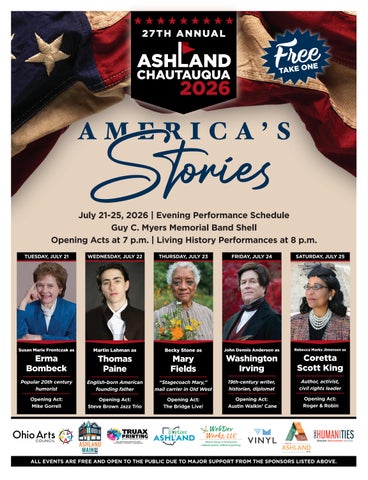
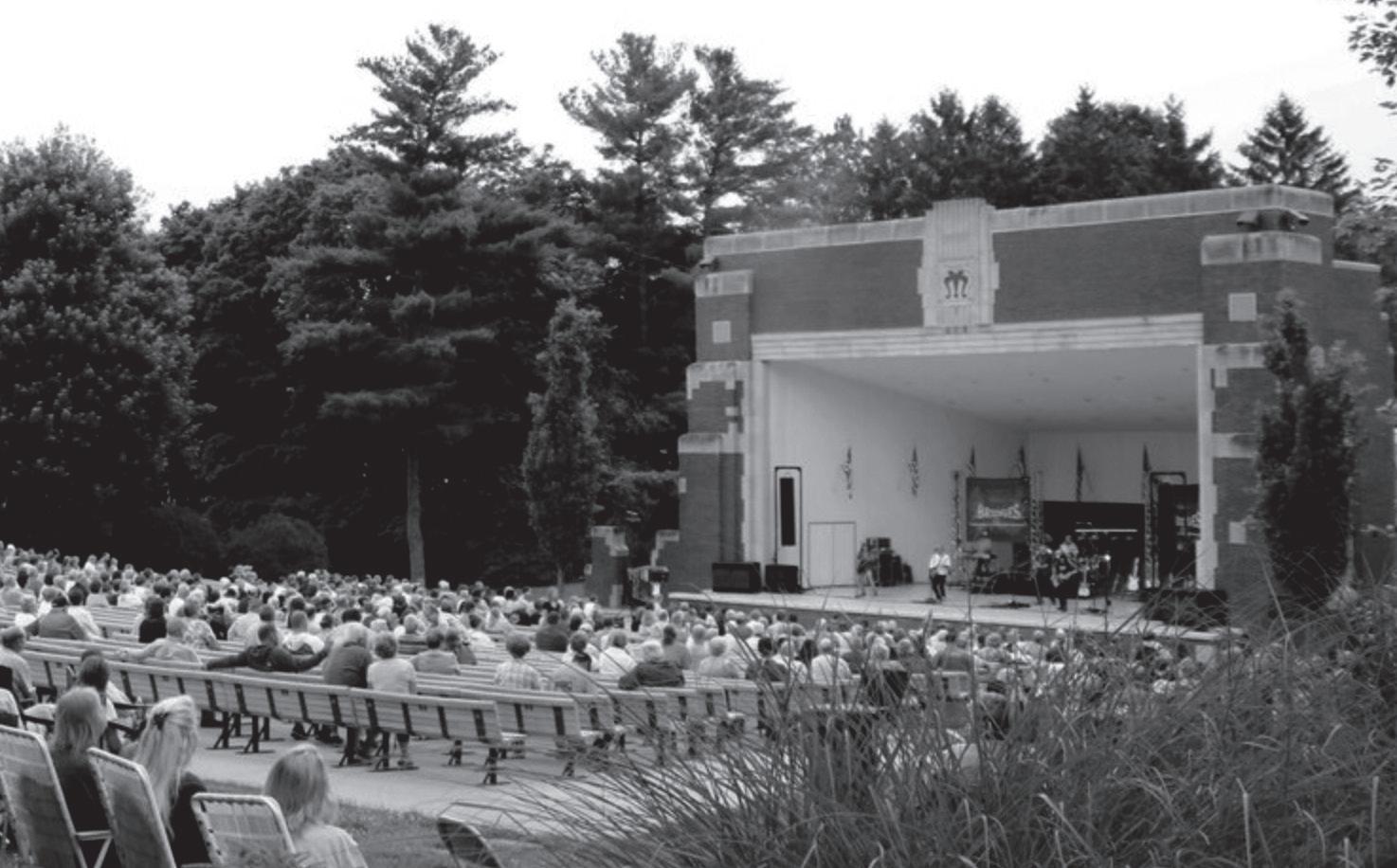
Guy C. Myers Memorial Band Shell Opening Acts at 7 p.m. | Living History Performances at 8 p.m.
TUESDAY, JULY 21
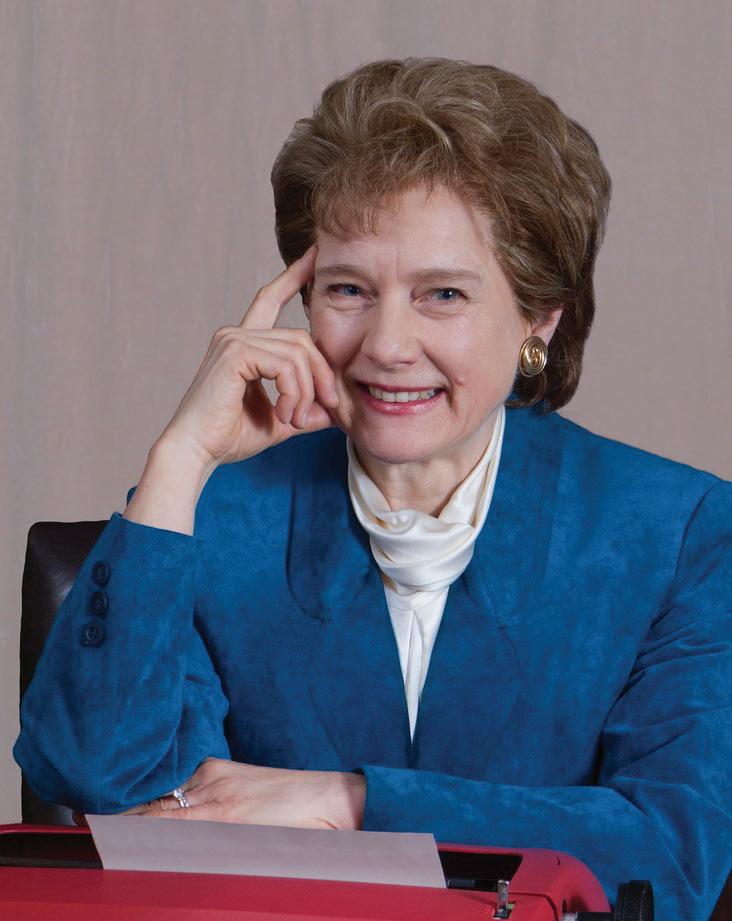
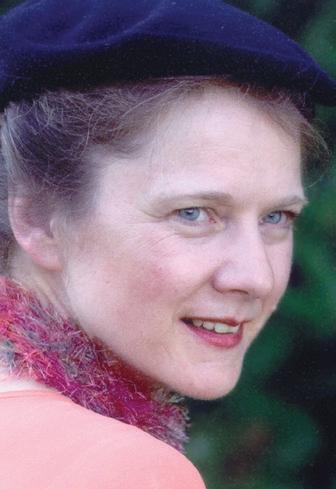
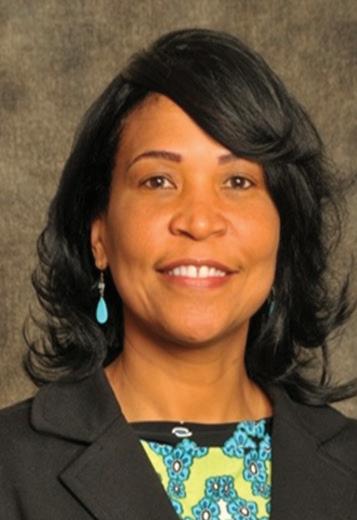
Marie
as Erma Bombeck
Popular 20th century humorist
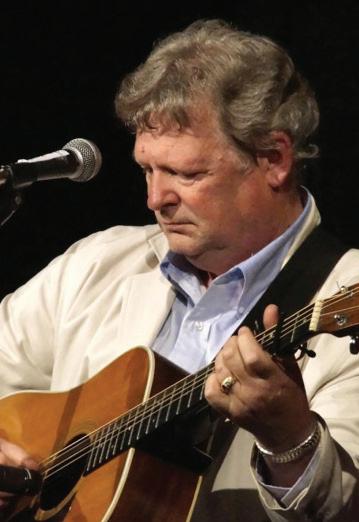
Opening Act: Mike Gorrell
WEDNESDAY, JULY 22
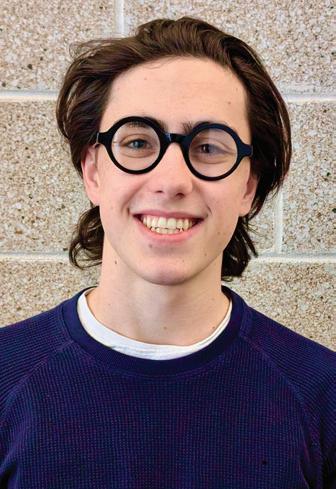
Martin Lahman as Thomas Paine
English-born American founding father
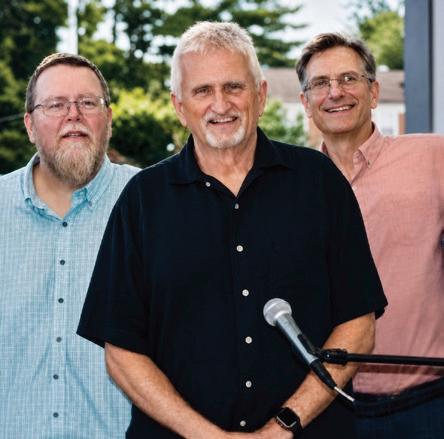
Opening Act: Steve Brown Jazz Trio
THURSDAY, JULY 23
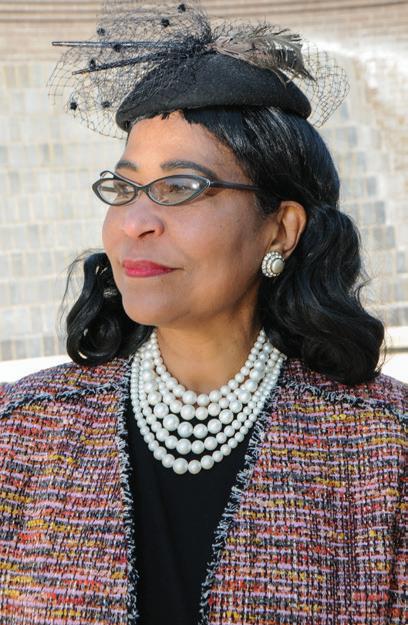
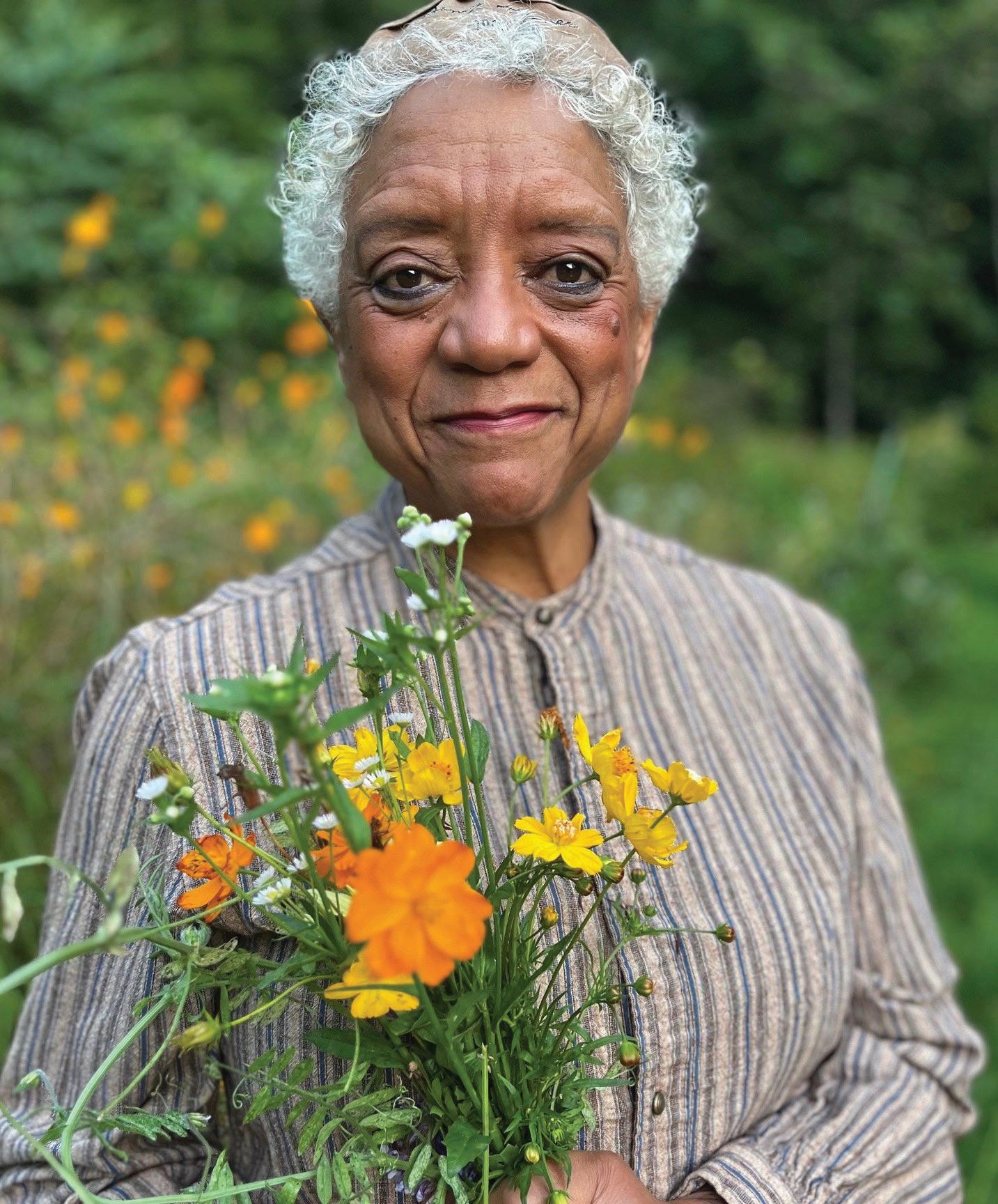
Becky Stone as Mary Fields
“Stagecoach Mary,” mail carrier in Old West
Opening Act: The Bridge Live!
FRIDAY, JULY 24
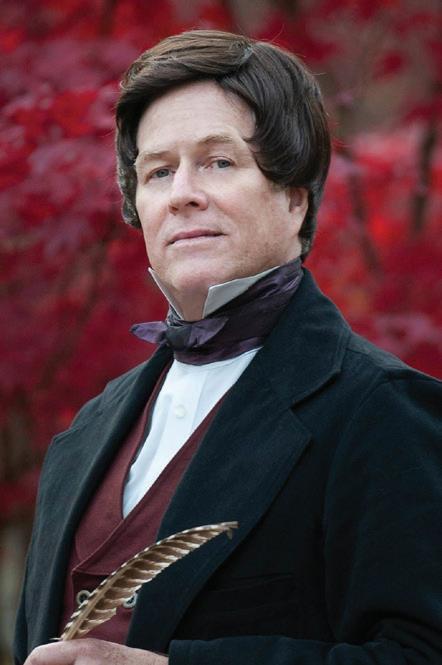
John Dennis Anderson as Washington
19th-century writer, historian, diplomat
Opening Act: Austin Walkin’ Cane
SATURDAY, JULY 25
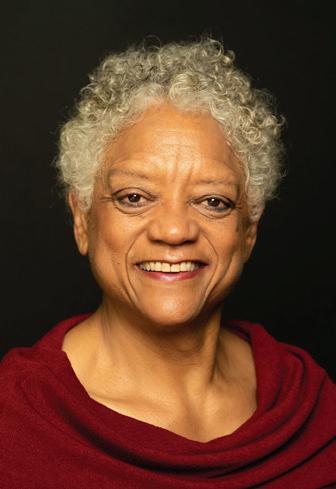
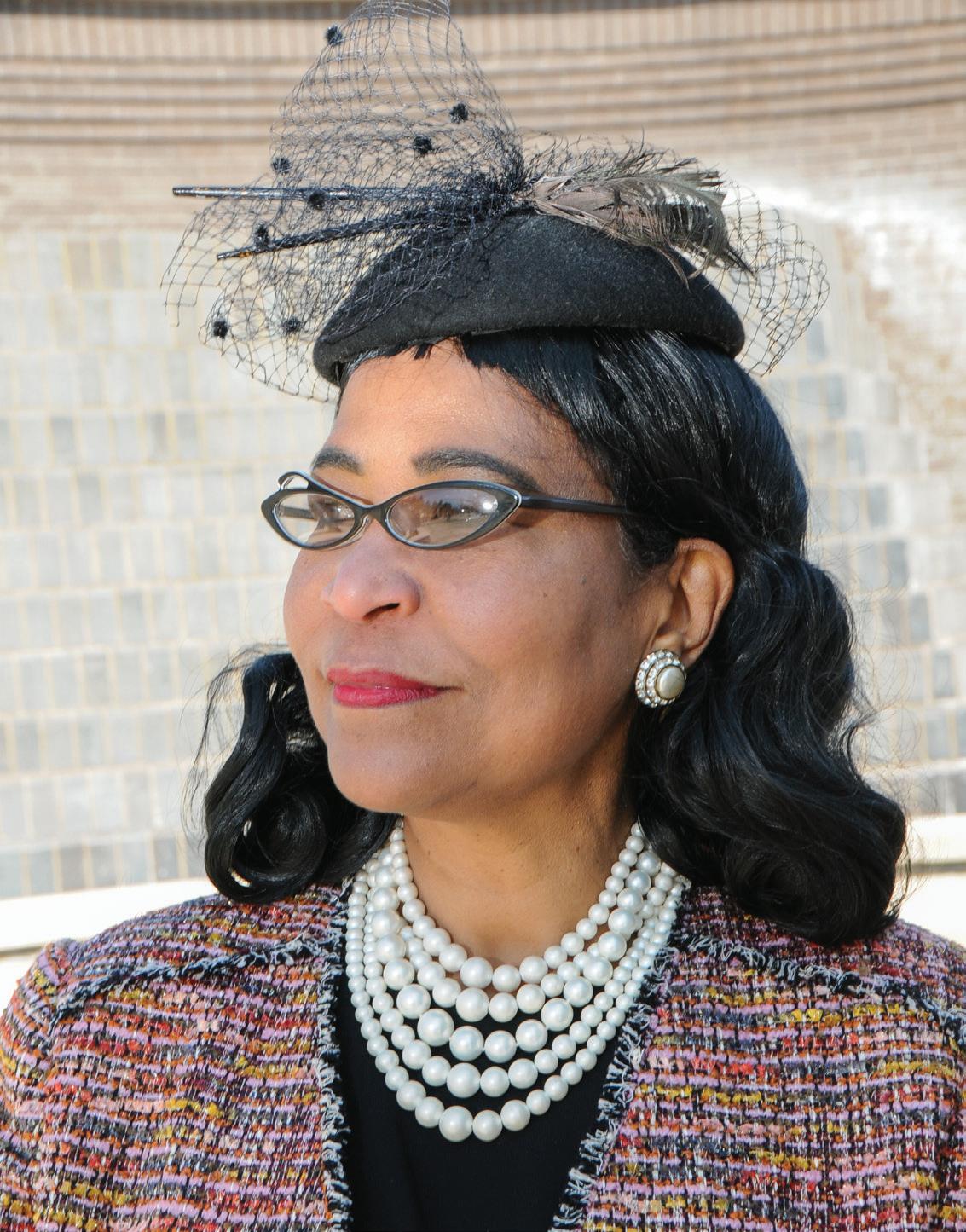
Marks Jimerson as Coretta Scott King
Author, activist, civil rights leader
Opening Act: Roger & Robin
Rebecca
Susan
Frontczak
Celebrating America’s 250 Years in Chautauqua’s Storied Style
If you are reading this page, you have already decided to check out how Ashland Chautauqua is celebrating 250 years of the United States of America. We will celebrate in true Chautauqua form, by bringing to Ashland five characters who will share their diverse array of stories spanning the American experience from the 18th century to the late 20th century. As usual, we will bring you some characters whose names you already know and at least one whose name is probably new to you. These characters, whether familiar or unfamiliar, will share details of their lives that will be new and revealing.
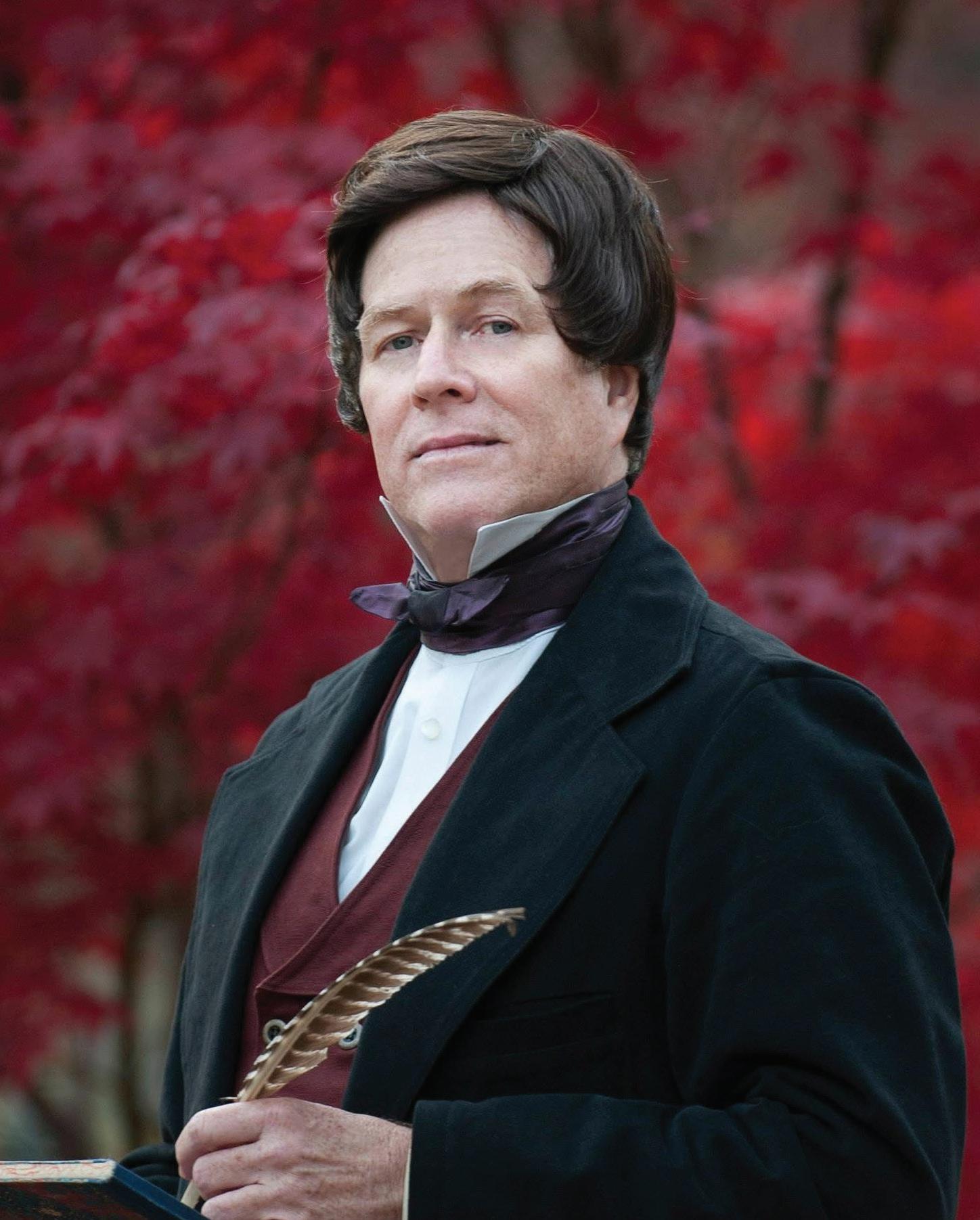
For example, you know that Washington Irving wrote The Legend of Sleepy Hollow and Rip Van Winkle. But what else do you know about his life? Be sure to attend Friday night’s performance. Irving might talk about his experiences as the American Ambassador to Spain. Irving will be portrayed by scholar John Dennis Anderson, a perennial favorite at Ashland Chautauqua.
Do you know anything about Mary Fields? Well, while she was born into slavery in Tennessee, let’s place her in Montana Territory in the 1880s, where she went from working at a convent school to delivering mail for the U.S. Postal Service. Mary’s story will be a wild ride on Thursday evening! It will be told by scholar Becky Stone, who portrayed Rosa Parks and Pauli Murray previously.
Other characters during the week include beloved humor columnist Erma Bombeck on Tuesday (scholar Susan Marie Frontczak); Thomas Paine, whose pamphlet Common Sense triggered sentiment for the American Revolution, on Wednesday (scholar Martin
Lahman); and Coretta Scott King, a civil rights leader in her own right, on Saturday (scholar Rebecca Marks Jimerson).
Our Chautauqua lineup of events includes daytime workshops by the scholars around Ashland County. See the schedule of workshops on page 3 and show up to enjoy and learn from Ashland Chautauqua’s best kept secret.
All evening performances and all workshops are free and open to the public. Our locations are accessible, and we attempt to meet the needs of audience members with sensory differences.
Be sure to pick up your 5-Nighter card Tuesday and have it marked by a Chautauqua volunteer every evening to be eligible for the prize drawing Saturday night.
Coffee with the Scholars will be held Thursday, Friday, and Saturday morning at the Ashland Area Chamber of Commerce (121 West Main Street), starting at 9:00 a.m. Everyone is welcome to get better acquainted with the scholars and learn about behind-the-scenes Chautauqua.
Ashland Chautauqua’s 2027 theme is “Music and Laughter.” Hearing music brings back so many memories and laughter is always an antidote for the stresses of life. Our characters and scholars will be Marvin Jefferson as Louis Armstrong; Leslie Goddard as Gilda Radner; JoAnn Peterson as Jenny Lind; Karen Vuranch as Cass Elliott; and Jeremy Meier as Charlie Chaplin. So be sure to mark your calendar a year ahead for July 20-24, 2027. Plan your summer vacation so you can be in town for the 2027 Ashland Chautauqua.
Schedule of Events
All Events are FREE and Open to the Public | All events are accessible and sensory-friendly
In case of inclement weather, evening events may be moved indoors. Daily updates will be available after 5 p.m. at: Website: www.AshlandChautauqua.org | Facebook: Facebook.com/AshlandChautauqua | Band Shell Hotline: 419-281-3018
TUESDAY, JULY 21
1 p.m.
Freedom Concerts for the Future
Youth workshop with Rebecca Marks Jimerson
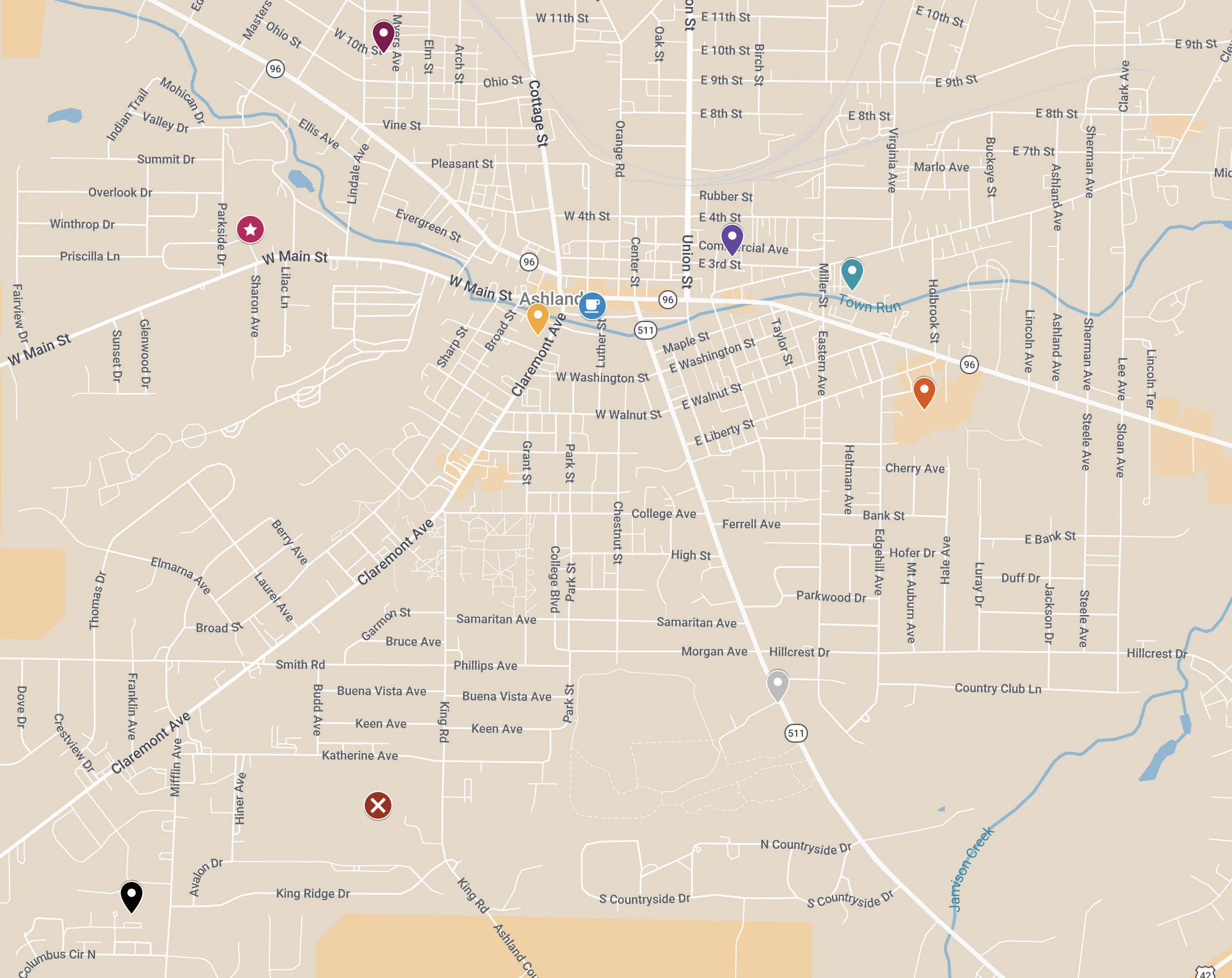
Location: Salvation Army Kroc Center
MYERS MEMORIAL BAND SHELL
7 p.m. Opening Act: Mike Gorrell
8 p.m. An Evening with Erma Bombeck
WEDNESDAY, JULY 22
10 a.m. African American Women in the Wild West
Adult workshop with Becky Stone
Location: The Golden Center at the Loudonville Public Library
1 p.m. Washington Irving in American Popular Culture
Adult workshop with John Dennis Anderson
Location: Ashland County Council on Aging
2:30 p.m. Hooked on Humor
Adult workshop with Susan Marie Frontczak
Location: Ashland Public Library
MYERS MEMORIAL BAND SHELL
7 p.m. Opening Act: Steve Brown Jazz Trio
8 p.m. An Evening with Thomas Paine
THURSDAY, JULY 23
9 a.m. Coffee with the Scholars Location: Ashland Area Chamber of Commerce
1 p.m. Ideology of Thomas Paine
Adult workshop with Martin Lahman
Location: Mill Run Place
2:30 p.m. “The Spectre Bridegroom”
Youth workshop with John Dennis Anderson
Location: Ashland Public Library
4 p.m. Voices of Change
Adult workshop with Rebecca Marks Jimerson
Location: Ashland County Senior Citizens Center
MYERS MEMORIAL BAND SHELL
7 p.m. Opening Act: The Bridge Live!
8 p.m. An Evening with Mary Fields
Ashland Chautauqua reserves the right to use any photograph/video taken at any event sponsored by Ashland Chautauqua, without the expressed written permission of those included within the photograph/video. Ashland Chautauqua may use the photograph/ video in publications or other media material produced, used or contracted by Ashland Chautauqua including but not limited to: brochures, invitations, books, newspapers, magazines, television, websites, etc.
FRIDAY, JULY 24
9 a.m. Coffee with the Scholars Location: Ashland Area Chamber of Commerce
10 a.m. Thomas Paine - Might of the Pen
Youth workshop with Martin Lahman
Location: YMCA Youth Camp at Myers Memorial Band Shell
Note: Rain site location is the Ashland YMCA
1 p.m. America’s Classical Stories for Children
Youth workshop with Susan Marie Frontczak
Location: The Freer Home
2:30 p.m. The Games Pioneer Children Played Youth workshop with Becky Stone
Location: Ashland Public Library
MYERS MEMORIAL BAND SHELL
7 p.m. Opening Act: Austin Walkin’ Cane
8 p.m. An Evening with Washington Irving
SATURDAY, JULY 25
9 a.m. Coffee with the Scholars Location: Ashland Area Chamber of Commerce
MYERS MEMORIAL BAND SHELL
7 p.m. Opening Act: Roger & Robin
8 p.m. An Evening with Coretta Scott King
EVALUATE ASHLAND CHAUTAUQUA
Please take a few minutes and complete a brief survey to help us improve our programming and provide suggestions for future Ashland Chautauqua characters. This is also crucial for our grant funding. The survey is online at: ashlandchautauqua.org or scan the QR code.
For help hearing spoken speech, try Live Transcribe
Download this free app to your phone. (Some newer Apple devices come with transcription. Check your IOS device.)
BOMBECK TIMELINE
1927 Erma Louise Fiste born in Dayton, OH
1942 Worked as a copygirl at Dayton Herald
1949 Graduated from University of Dayton; married Bill Bombeck
1953-1958 Erma and Bill had three children
1965 Newsday syndicated Erma’s column At Wit’s End
1976 Published The Grass is Always Greener over the Septic Tank
1979 Published Aunt Erma’s Cope Book
1978-1985 Presidential Advisory Committee for Women; Stumped for ERA
1983 Published Motherhood: The Second Oldest Profession
1985 Syndicated in 900 newspapers
1996 Died on April 22
Erma Bombeck
Finding Humor in Daily Life
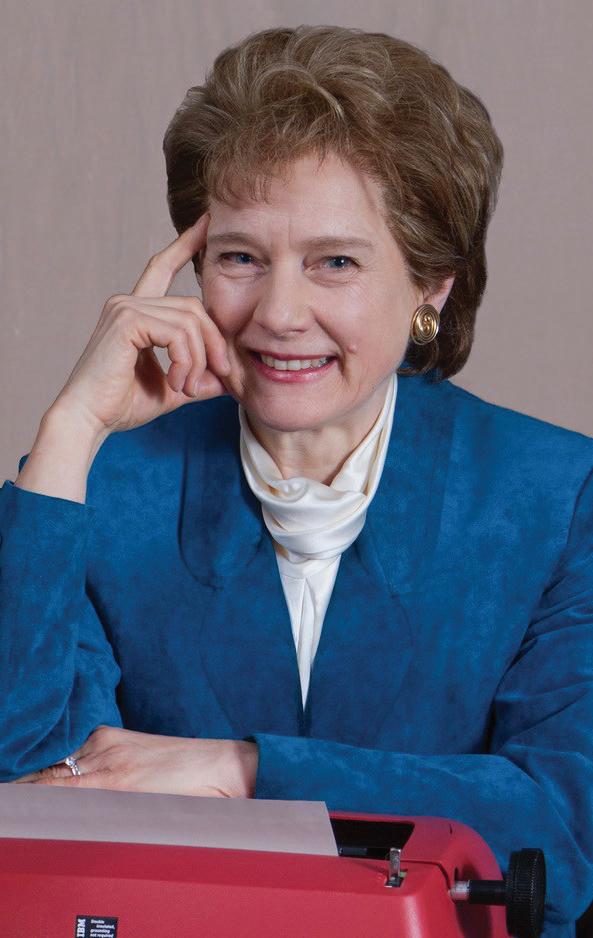
by Susan Marie Frontczak
Through the second half of the 20th Century, Erma Bombeck both captured and reflected how our day-to-day lives evolved during the emergence of suburbia. Her humor lifted the spirits of a major (and at the time much neglected) sector of our population: the housewife and mother. Her medium was the American newspaper. Her column, At Wits End, published three days a week for over 30 years (1965 to 1996) eventually appeared in over 900 newspapers across the country. How did this come about?
Between 1910 and 1920 the majority of the places that people in the U.S. called home shifted from rural to urban. During the war years 1941-1945, millions more moved to the cities for well-paying jobs; however, a different kind of migration followed the war. Due to housing shortages and the baby boom, in the quarter-century after World War II, some thirty million Americans left their urban homes, settling nearby areas collectively dubbed Suburbia. This flow did not slow in the decades that followed. By 1990, suburbia accounted for nearly half of the nation’s dwellings – and voters – outpacing both city and rural populations. Suburban living now dominated the economic, social, and cultural American pie chart. What caused this suburban explosion? In the years following World War II, some twelve million men came home, discharged from the military (including Erma’s husband-to-be, who signed up in 1945 at age 18 and came home in 1948). They wanted jobs – some relinquished reluctantly by the women who held them. The veterans married (Erma and Bill Bombeck in 1949) and started families (their kids came in 1953, 1955, and 1958), launching the baby boom. These families wanted and needed housing. Anyone who lived through that time remembers the housing shortage. My own mother (born in 1924, three years before Erma Bombeck) told me, “In 1950 you didn’t give notice on your apartment unless you expected to die within the week.” A building boom ensued through the 50s and 60s in the land surrounding the cities, to house families that were generally supported by a breadwinner commuting into the city for work.
This left the housewives, like Erma, on the suburban frontier, to negotiate uncharted technologies (such as blenders, electric can openers, toaster ovens, and crock pots) and heretofore unimagined responsibilities (such as Tupperware® parties, Little League® carpools, Girl Scout troop meetings, ballet recitals, PTA committees, and garage sales). Homemakers took all this on, on top of cooking meals, packing school lunches, washing clothes, ironing, sewing and mending, and cleaning house – all the while exhorted to perfection through well-meaning publications like House Beautiful, Family Circle, Good Housekeeping, and Better Homes and Gardens.
In 1963, Betty Friedan, in her book The Feminine Mystique, pointed out that motherhood, while demanding all the energy, focus, and time a woman had to give, left many without a stimulating outlet for their minds. Her research revealed that advertisers, eager to sell more appliances, wanted to keep wives and mothers in the home. The magazines complied with accommodating content. Friedan noted that housewives had no champion, no union, no voice.
No champion, that is, until Erma Bombeck of Dayton, Ohio figured out you had to be able to laugh at life to get through it. She poked fun at kids (“When my kids become wild and unruly, I use a nice, safe playpen; when they’re finished, I climb out”); diets (“I come from a family where gravy is considered a beverage”); and especially herself (“My idea of housework is to sweep the room with a glance”). She captured the essence of the housewife’s daily struggles in her column At Wits End three days a week and in a dozen books including The Grass is Always Greener Over the Septic Tank and If Life is a Bowl of Cherries, What Am I Doing in the Pits?
Erma also brought home the poignant: the catch in one’s throat when the youngest goes off to school; lessons learned from the grandfather who lives in a trailer park by himself; the father who finally realizes his son means more to him than the perfection of his lawn; the mother who loses a child.
Erma told stories from the heart of America. She brought to our awareness the frustrations, ironies, and triumphs of women whose lives often felt invisible and taken for granted. She let wives and mothers across America know: You are not alone. In fact, we number in the millions. I, too, am an American housewife, and I will laugh by your side.
DAYTIME PROGRAMS
ADULT WORKSHOP: Hooked on Humor
Wednesday, July 22, 2026 at 2:30 p.m.
Ashland Public Library
E. B. White wrote, “Analyzing humor is like dissecting a frog. Few people are interested and the frog dies.” Don’t worry: No amphibians are harmed in this workshop. Join Susan Marie in examining examples, eliciting pointers, and braving exercises that bring humor to oral or written stories. No experience or literary aspirations required. Warning: smiles, chuckles, or laughter may ensue.
YOUTH WORKSHOP: America’s Classical Stories for Children
Friday, July 24, 2026 at 1 p.m.
The Freer Home
Storytelling Program. Hear and join in on some of the great American Stories: Homer Price by Ohio author Robert McCloskey, Custard the Dragon by Ogden Nash, What Do You Do, Dear? by Maurice Sendek, and The Sneetches from Dr. Seuss.
ABOUT SUSAN MARIE FRONTCZAK
Susan Marie Frontczak has given over 950 presentations as Marie Curie, Mary Shelley, Irene Castle, Clara Barton, Eleanor Roosevelt and Erma Bombeck in the United States and abroad, in 25 years as a Living History scholar. She also works with adults and youth to develop their own Chautauqua presentations. She authored the Young Chautauqua coaching handbooks for Colorado Humanities. In 2022, she served on the faculty of the Chautauqua Training Institute run through North Dakota Humanities that coached 12 new Chautauqua scholars from across the country.
As a teen Susan Marie competed with her mother to snag the monthly Good Housekeeping magazine first to read Erma Bombeck’s column. She says the hardest part of presenting as Erma Bombeck is choosing what to include from a seemingly endless supply of priceless material. None of her other characters have given her so much to laugh at along the way.
OPENING ACT: MIKE GORRELL
As a solo artist, Mike Gorrell performs a wide range of material. His repertoire includes Country, Bluegrass, Folk, and classic Rock & Roll. He has performed in country and bluegrass bands all over the United States, Canada, and Great Britain. His music is fresh and aged, relaxing and exhilarating, familiar and, at the same time, unique. No matter what genre he is performing, his love of music shines through in his approach and heartfelt rhythmic style. Family style humor and a fast-paced stage show are trademarks of what you can expect from his performances. Website: nwtbluegrass.com
BOOKS ABOUT BOMBECK
The Grass is Always Greener Over the Septic Tank by Erma Bombeck
If Life is a Bowl of Cherries, What Am I Doing in the Pits? by Erma Bombeck
Aunt Erma’s Cope Book by Erma Bombeck
Motherhood: The Second Oldest Profession by Erma Bombeck
I Want to Grow Hair, I Want to Grow Up, I Want to Go to Boise: Children Surviving Cancer by Erma Bombeck
A Marriage Made in Heaven, or Too Tired for an Affair by Erma Bombeck
Just Wait Till You Have Children of Your Own by Erma Bombeck
Erma Bombeck: Writer and Humorist by Lynn Hutner Colwell
PAINE TIMELINE
1737 Born January 29 in Thetford, England to Frances Cocke and Joseph Paine
1774 Sailed to America, arriving January 1775, assumed editorial duties of Pennsylvania Magazine
1775 Published African Slavery in America, an attack on the institution of Slavery
1776 Published Common Sense under pseudonym, received immediate social reaction that helped spark the Revolutionary War, enlisted in Continental Army, fought at Trenton, crossed the Delaware on Christmas Day
1776-1783 Published American Crisis pamphlets in thirteen parts
1791 Defended French Revolution in The Rights of Man, attacking Edmond Burke and the idea of Monarchy
1792 Published Rights of Man, Part the Second, expanding on his ideas of freedom and the ideal State, elected to the French National Convention, tried for sedition in absentia in England, his home country, after fleeing and never to return
1793 Removed from the National Convention and incarcerated in France without a trial
1809 Died in New York City at age of 72
Thomas Paine
Adding Intellectual Energy to the American Revolution
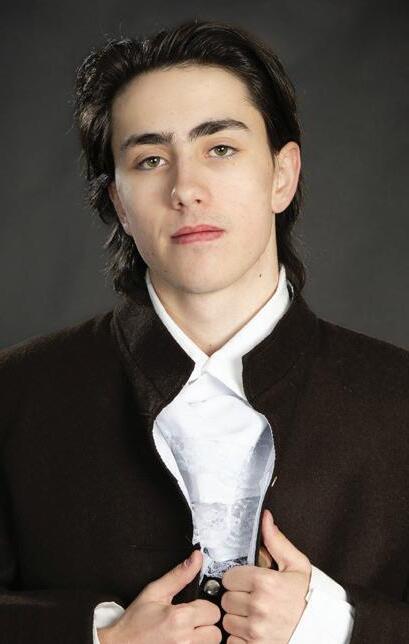
by Martin Lahman
On November 30th, 1774, Thomas Paine arrived in America—a man unknown on the continent and nearly forgotten in his hometown of Thetford, England. At thirty-six, he docked in Pennsylvania not as a celebrated thinker but as a failed corset maker, dismissed schoolteacher, and fired tax collector. Yet in less than two years on the American continent, he transformed himself into one of the most influential political voices of the Enlightenment era.
Paine arrived in Pennsylvania during a moment of intellectual energy and rising revolutionary sentiment. With a recommendation from Dr. Benjamin Franklin, he became editor of the Pennsylvania Magazine and immediately distinguished himself with a writing style that was bold, accessible, and unafraid of confrontation. He wrote against slavery, argued for women’s right to a voice in society, and championed democratic principles and the expansion of the franchise.
On January 10th, 1776, Paine published the work that would define his legacy in American history: Common Sense. The pamphlet demanded American separation from England, stating that separation was economically viable, tangibly possible and aligned with the will of God. Paine’s sharp attacks on King George III, written with sarcasm, clarity, and fire, echoed through the colonies. More than 500,000 copies circulated in eight years, and it is estimated that two-thirds of colonists either read or heard Common Sense read aloud. The pamphlet unified sentiment toward independence.
Throughout the Revolutionary War, Paine continued writing to support the American cause. His American Crisis pamphlets urged men to enlist, challenged wealthy colonists to contribute funds, and condemned the brothers Howe, making a mockery of their military strategy. Paine painted the Revolutionary War as a raging success that any person would be foolish not to contribute to and staked national pride on the revolution, presenting the colonies as one front against the King. Paine did not limit himself to commentary or propaganda — he served as a soldier, crossing the Delaware and fighting at the Battle of Trenton with George Washington. Paine donated all of the proceeds from Common Sense and The American Crisis pamphlets to the Continental Army, a decision that left him without land or money for a time.
After the war was won, Paine traveled to England and France to attempt to bring revolution to the Old World. Paine’s work, The Rights of Man, published in two parts, 1791 and 1792, set a storm of revolutionary republican thinking upon Britain and France. In the Rights of Man, Part One, Paine defended the 1790 French Revolution against his former
acquaintance and conservative political thinker, Edmund Burke. Paine made the case for a democratic system of government, arguing that all generations have the right to self-government and that the value of a commoner is higher than the value of a king.
In the Rights of Man, Part the Second, Paine laid out his vision of a social democratic state with ideas similar to social security and the modern welfare system. Paine advocated for women’s right to vote and the end of global slavery. He proposed socialized medicine for the elderly and the end of capital punishment.
Paine was persecuted for his work on the Rights of Man both in England and France; he was forced to flee England after its publication and was incarcerated in France without a charge.
Thomas Paine died in 1809. His vision of a republic free from monarchy had taken root, and many of the rights he championed—racial equality, suffrage, social welfare, labor rights, separation of church and state— would shape American political development for generations. Above all, Paine believed in free speech and the power of the written word. In that conviction, he helped forge the intellectual foundation of the United States.
Yet many of the systems he battled against still plague the world today. Paine wished for a republic with a more direct system of election, shorter terms for representatives and term limits for all legislators. He endorsed the ideas of Locke, Rousseau and Montesquieu. Paine fought for the rights of workers globally to be paid a fair wage and to receive a pension when they were too old to work. Thomas Paine was a truly enlightened man who teetered on the edge of what was found socially acceptable during his time. Whether Paine was right or wrong, he wrote with passion and inspiration to reshape the structure of Western government.
DAYTIME PROGRAMS
ADULT WORKSHOP: Ideology of Thomas Paine
Thursday, July 23, 2026 at 1 p.m. Mill Run Place
During this workshop, Martin will address Paine’s inspirations, Locke and Rousseau, as well as Paine’s thoughts on taxation, representation, religion, slavery, women’s rights, property, and capital punishment. Paine’s thought progression went from center to left over the course of his life. Learn how this was born out in his work.
YOUTH WORKSHOP: Thomas Paine – Might of the Pen
Friday, July 24, 2026 at 10 a.m.
YMCA Youth Camp at Myers Memorial Band Shell
This workshop will be in costume and will detail Paine’s ability to write critically and assess society around him - the actions of himself as well as his peers. Thomas Paine thought deeply about bettering the world for everyone and creating a place where people could talk about their concerns and vote to better their country. Participants will be writing and drawing in this workshop.
ABOUT MARTIN LAHMAN
Martin Lahman, a professional Chautauquan, is a junior at Metropolitan State University of Denver, majoring in Political Science with a focus on American Politics. He has a background in acting and debate and a passion for political history. He participated in High Plains Young Chautauqua for eleven years, performing as Andrew Johnson, Albert Einstein, Franklin Delano Roosevelt, John F. Kennedy, and J. Edgar Hoover, etc. He would like to thank everyone who helped him get started at High Plains Chautauqua, as well as the fantastic Chautauqua coaches of Greeley School District 6. When not performing as a Chautauquan, Martin enjoys refereeing soccer, mountain biking, hiking, and reading Kazuo Ishiguro.
OPENING ACT: STEVE BROWN
JAZZ TRIO
The Steve Brown Jazz Trio includes Steve Brown from Lexington on piano and vocals, Andy Cary from Wooster on guitar; and Ashland native Steve Berry on drums. The trio performs jazz, blues, and mellow pop music. stevebrownsmusic.com
BOOKS ABOUT PAINE
Thomas Paine: Apostle of Freedom by Jack Fruchtman Jr.
The Political Philosophy of Thomas Paine by Jack Fruchtman Jr.
Thomas Paine and the Clarion Call for American Independence by Harlow Giles Unger
Thomas Paine: Enlightenment, Revolution and the Birth of Modern Nations by Craig Nelson
Thomas Paine by A. J. Ayer
The Life of Thomas Paine, with a History of his Literary, Political and Religious Career in America, France and England, Volumes I and II by Moncure Daniel Conway
The Writings of Thomas Paine (4 Volumes) collected and edited by Moncure Daniel Conway
A New World Begins: The History of the French Revolution by Jeremy D. Popkin
FIELDS TIMELINE
1830-1832? Born enslaved in Hickman County, Tennessee, southwest of Nashville
1865 Freed
1868 Found work as a chambermaid on Mississippi River steamboat, the Robert E. Lee
Late 1870 Took Sarah Dunne (Sister Mary Amadeus) to the Ursuline Catholic Convent School for Girls in Toledo, OH
1885-1895 Worked at Ursuline School for Girls at St Peter’s Mission outside of Cascade, MT
1885 Moved from Toledo to the Birdtail Prairie, Montana Territory
1895 Left the Mission and opened “Mary’s Café” in Cascade
1885-1895 Worked as the first African-American female Star Route carrier
1903 Started her laundry business
1912 Registered to vote; house burned in retaliation?
1913 Voted in local election
1914 Attended the Montana State Fair Parade for Suffrage Sept. 25th in Helena, MT
1914 Died December 5 at Columbus Hospital in Great Falls, MT; buried in Cascade
Mary Fields
An Adventurous Woman in the Wild West
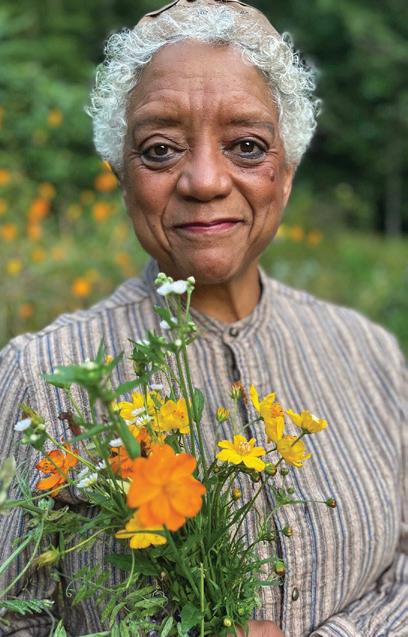
by Becky Stone
America’s Westward expansion has become iconic. When we think of the “Wild West,” we see images of covered-wagons, railroad trains, conflicts between settlers and Indians, farmers and ranchers, and cowboys and townsfolk. There are gunfights, saloons, bandits, and bounty hunters. Rarely do we see women. Still more rarely do we see women of color. Women were there; people of color were there. Americans of Mexican, Indian, Asian, and African descent carved out communities alongside white European settlers. It is time we acknowledge that we do not know the whole truth of our own history. Our popular stories do not include the non-white people who lived there. Their stories have been dropped from the narrative. But their stories are remarkable, often fun, and definitely worth knowing. We all can take pride in them.
Mary Fields’s story is one. Fields was born a slave in Hickman County, Tennessee. As is true of most enslaved people, Fields did not know her exact birth date. Researchers are not sure where she spent her enslaved years. She is rumored to have been owned by the Warners in Arkansas and somehow through them, she connected with the Dunne family. Then came freedom. Fields picked up odd jobs on her journey to a new life. She worked as a domestic in homes and on river steamboats until she reached Ohio. By then, her life had become entwined with that of a woman fourteen years her junior, Sarah Dunne. It’s likely Fields served Dunne’s family as a domestic. Sarah and Mary were fast friends before Sarah joined the order of the Ursuline nuns in Toledo, Ohio. Sarah became Sister Mary Amadeus. Mary Fields worked for the convent–cleaning, cooking, washing laundry, and managing the grounds. Fields remained at the convent when Sister Amadeus was called to serve at the St. Peter’s Mission in Montana. However, when word reached Mary that her beloved Mary Amadeus had pneumonia, Fields took off for Montana to nurse her friend back to health. Mary Fields lived in Montana the rest of her life.
There is no record of how Mary learned the skills she had mastered. Mary Fields was literate. That alone set her apart from most Americans at that time. She was as tall and strong as any man. She could build and repair structures at the mission. Fields was a crack shot with a rifle. She could wrangle, train, and drive horses. Mary could garden well enough to grow food for the people at the mission. She also cultivated flowers to give as gifts and to celebrate special occasions. Fields also grew many herbs for healing. All of these were skills needed to survive in the West. Yes, she smoked cigars and played cards with the men in the saloon. Yes, she had a temper. But, she also had patience with children and was a trusted babysitter in Cascade for many families.
And yes, she had many nicknames, the most notable being Stagecoach Mary. Stagecoach Mary was a legend in her own lifetime. But alas, she never drove a stagecoach. The U.S. Postal Service contracted with private carriers to serve remote and sparsely populated areas along what they called star routes. Those individuals had to provide their own mode of transportation, be it horses, wagons, dogsleds, boats, and later, motor vehicles. Star route carriers were expected to deliver the mail with “celerity (speed), certainty, and security.” The contracts were awarded to the lowest-bidder. Mary won the contract. She had no stagecoach to offer, but she did have a buckboard wagon and a horse and a lot of experience picking up and delivering supplies to the mission. Mary was about 62 years old when she started delivering the mail and about 70 when she retired. So, Stagecoach Mary was not an accurate appellation. However, I imagine she preferred it over “Black Mary” or “Nigger Mary.” Field’s closest friends honored her request to simply be called by her given name, Mary, with no descriptors. Mary embraced the nickname given to her by her Blackfoot friends – “White Crow.” Crows, mystical birds to the Blackfoot, are black. Crows are clever, brave, loyal and like to joke. The Blackfoot had never seen a person of Mary’s color. She had the qualities of the crow and yet knew the white person’s world. So, they called her “White Crow.”
The Blackfoot accepted Mary. Many white people accepted her. But there were many whites who could not accept her because of the color of her skin. Those who thought the color of her skin negated all of her good qualities never ceased in their efforts to oust her. They even attempted to kill her one night by burning down her home. Here was a former black slave who had become a trusted neighbor. Mary ran a successful laundry business. She was the only woman allowed to frequent the saloon. Her birthday was celebrated by the town’s children with an annual party at the schoolhouse. Mary was given the role of mascot of the Cascade baseball team. Mary’s story would have been lost if her neighbors hadn’t loved her so. Cascade held a huge funeral for her. They buried her at Hillside Cemetery, the halfway point between Cascade and St. Peter’s mission. (Was that because they would not bury her next to white settlers?) Eventually, the unmarked tin cross that headed Mary’s grave was replaced with a granite tombstone. The donor was a man who had been among the many children of Cascade who loved her. That headstone is inscribed just as Mary would have wished - no nicknames or embellishments. It reads simply: Mary Fields 1832-1914. And that, my friends, is the truth.
BOOKS ABOUT FIELDS
Portraits of Women in the American West
(Chapter 5: Finding Mary Fields: Race, Gender, and the Construction of Memory) by Dee Garceau-Hagen
Deliverance: Mary Fields: First African American Woman Star Route Mail Carrier in the United States: a Montana History by Miantae Metcalf McConnell
African American Women of the Old West
(Chapter 2: A force to be dealt with: Mary Fields) by Tricia Wagner Martineau
ABOUT BECKY STONE
Becky Stone was born and raised in Philadelphia. She currently lives near Asheville in Western North Carolina. She earned her undergraduate degree at Vassar College in Drama with a minor in French. Her M.A. is in Elementary Educational Counseling from Villanova University. She worked for seven years for the Philadelphia School System as a counselor and taught theater for 10 years at a classical Christian school in Fletcher, NC. Becky has been a Chautauqua scholar since 2003, when she first researched and presented Pauli Murray for the Greenville (S.C.) Chautauqua. Her other characters are Harriet Tubman, Rosa Parks, Maya Angelou, and Josephine Baker. Becky continues to act in theater. More often she is on stage as a storyteller at festivals, libraries, and schools.
OPENING ACT: THE BRIDGE LIVE!
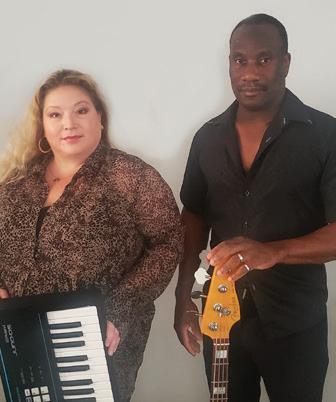
Mary Spayd and Glenn Armstrong have performed together for over 20 years in tribute bands and as a duo since 2009. Their concerts feature Mary’s amazing vocal talents and Glenn’s masterfully expressive bass guitar and music production. They incorporate their many years of experience to present a high-quality and energetic live music performance, where the biggest music of yesterday remains alive today! thebridgelivemusic.com
DAYTIME PROGRAMS
ADULT WORKSHOP: African American Women in the Wild West
Wednesday, July 22, 2026 at 10 a.m. Loudonville Public Library/Golden Center in Library basement meeting room
The Western Frontier was hard on women, especially the formerly enslaved. Hear the success stories of some African American women who ventured West and started anew, such as Mary Ellen Pleasant, Clara Brown, and Biddy Mason. They had a strong work ethic, a head for business, and a desire to create community – and in one case, the desire to find a daughter sold away from her in slavery.
YOUTH WORKSHOP: The Games Pioneer Children Played Friday, July 24, 2026 at 2:30 p.m. Ashland Public Library
Before the sophisticated games of today, children challenged each other with skill games, chase games, strategy games. They jumped rope, sang songs, did counting rhymes, and rhythm chants. We’ll explore the games children played when they had time to play out West. Children still play many of those games today. We’ll play as many of the games as possible – indoor, outdoor, quiet, or loud games for small and large groups as space allows.
IRVING TIMELINE
1783 Born in New York City on April 3
1804-1806 Made his Grand Tour of Europe
1809 Death of Matilda Hoffman; published History of New York
1815 Sailed to England to work in brothers’ import business
1818 Declared bankruptcy
1819-1820 Published The Sketch-Book of Geoffrey Crayon, Esq.
1826-1829 Researched and published books on the voyages of Columbus
1832 Published Tales of the Alhambra, returned to U.S., and toured Indian Territory
1835 Published A Tour on the Prairies and bought land for Sunnyside
1842-1846 Served as Minister to Spain
1859 Died on November 28 at Sunnyside
Washington Irving
America’s First International Literary Celebrity
by John Dennis Anderson
Washington Irving (1783-1859), best known today as the author of “The Legend of Sleepy Hollow,” was the first American author-celebrity with an international reputation. A diplomat and historian, as well as a storyteller, Irving is a figure of notable cultural, but also social and political significance. J. Woodrow McCree argues compellingly, in his 2021 monograph on Irving, subtitled Sketching a Vision of World Citizenship, that “Washington Irving was the United States’ first great advocate of a truly pluralistic American society” (169). McCree highlights the consistent tolerance for and love of cultural diversity across Irving’s extensive career.
Irving was born the year England officially recognized our new nation, ending the American Revolution. His life journey consisted of three distinct phases. In the first phase, lasting until he was 33 years old, Irving’s wealthy family indulged their youngest son and brother. His father was a New York City merchant, a self-made immigrant from Scotland. Groomed to be a lawyer, Irving took a grand tour of Europe in 1804-1806. His adventures abroad included being attacked by pirates while en route to Sicily.
Irving made his literary debut in a series of humorous Letters of Jonathan Oldstyle, Gent. (1802-03), and in 1807 he collaborated on Salmagundi, a literary “stew” of satirical essays. During this time, Irving fell in love with Matilda Hoffman, the young daughter of a judge, his employer. While he was writing his parodic History of New York, Matilda died of tuberculosis. Though in deep mourning, Irving completed this comic masterpiece in 1809, writing in the voice of Diedrich Knickerbocker.
The second phase of Washington Irving’s life commenced when he sailed in 1815 for Europe, not to return for 17 years. He helped run his older brothers’ import business, but low demand in the U.S. for trade goods from England due to the War of 1812 caused the business to fail. In 1818, the brothers declared bankruptcy. For the first time, Irving set out to write a commercially successful work. He succeeded wildly with The Sketch Book of Geoffrey Crayon, Gent. (1819-1820). Although only four of the 34 literary sketches in the book are about America, two enduring American classics (actually based on European folk legends) are among them: “Rip Van Winkle” and “The Legend of Sleepy Hollow.”
The success of The Sketch Book made Irving the first American man of letters to have an international reputation. He followed The Sketch Book with two more miscellaneous collections of sketches: Bracebridge Hall (1822) and Tales of a Traveller (1824).
In the 1820s, Irving traveled throughout Europe, making extended stays in
Dresden, Paris, and London. Finally, in Spain from 1826-29, he researched and wrote Life and Voyages of Columbus and A Chronicle of the Conquest of Granada. Enchanted by the Moorish palace in Granada, he was also inspired to write Tales of the Alhambra (1832), a Spanish Sketch Book. In 1829, Irving accepted an appointment as secretary at the American legation in London, eventually serving as acting chargé d’affaires until the new minister, Martin Van Buren, arrived in 1831. Irving’s wide circle of friends in England proved useful in negotiating trade agreements with England.
By 1832, Irving had been abroad for 17 years when he returned home to begin the third phase of his life, in America. Received with great ceremony in New York, Irving proceeded to travel throughout the fast-growing country, venturing to Ohio and Indian Territory (now Oklahoma) in the company of Commissioner of Indian Affairs Henry Ellsworth in October of 1832. He published his exciting account of this trip, A Tour on the Prairies, in 1835 and bought property on the Hudson River north of New York City. Over the years he expanded his home there, called “Sunnyside,” and received a steady stream of visitors. Sunnyside remains a popular tourist site for fans of Irving to this day.
The only time Irving ventured back to Europe in this last phase of his life was when President John Tyler appointed him Minister to Spain in 1842. After serving with distinction for four years, he returned to Sunnyside in 1846 to work on a monumental five-volume Life of George Washington. After completing it during a long period of declining health, he died at Sunnyside on November 28, 1859, almost the eve of the Civil War. His lifespan linked the two wars that forged our nation. He was, as William Makepeace Thackeray described, “the first ambassador sent by the new world of letters to the old.”
DAYTIME PROGRAMS
ADULT WORKSHOP: Washington Irving in American Popular Culture
Wednesday, July 22, 2026 at 1 p.m.
Ashland County Council on Aging
Hear how Irving and his work have been a pervasive presence in American pop culture, from Joseph Jefferson’s 40-year-run on stage as Rip Van Winkle, to Irving himself as a character in the 1938 Broadway musical Knickerbocker Holiday, to many comic book, film, and TV adaptations of his work, including Walt Disney’s 1949 animated version of The Legend of Sleepy Hollow, Tim Burton’s 1999 horror film Sleepy Hollow, and a popular 2013-2017 TV series.
YOUTH WORKSHOP: “The Spectre Bridegroom”: An Interactive Telling of the Story by Washington Irving
Thursday, July 23, 2026 at 2:30 p.m.
Ashland Public Library
Imagine your bridegroom announcing at the wedding feast: “I am a dead man—the grave is waiting for me!” and springing on his horse and dashing away. In this workshop, children in the audience will help show and tell a ghost story by Irving. Fans of “The Legend of Sleepy Hollow” will thrill to this similarly spooky story and learn if this Spectre Bridegroom is really a ghost—or not?
ABOUT JOHN DENNIS ANDERSON
John Dennis Anderson is a performance studies scholar and Professor Emeritus in the Dept. of Communication Studies at Emerson College, where he taught for 27 years. He has appeared at Ashland Chautauqua many times. John is a writer and scholar. He was the 2013 corecipient of the Leslie Irene Coger Award for Distinguished Performance from the National Communication Association. His website is jdanderson.org.
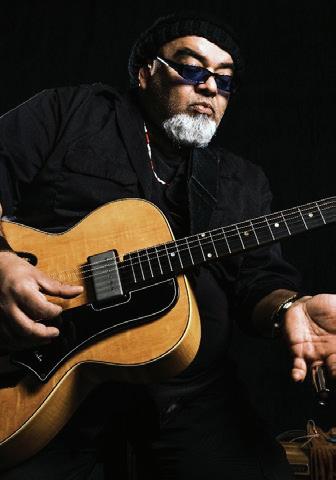
OPENING ACT: AUSTIN WALKIN’ CANE
Austin Walkin’ Cane is a blues singer, songwriter, and slide guitar impresario who performs both acoustic and electric guitar mediums. He has toured internationally and crossed the USA, most notably from New Orleans to Juneau, Alaska with only a guitar and suitcase in hand. His voice and original compositions recall Delta Blues, Chicago Blues, and Bourbon Street Jazz. Website: walkincane.com
BOOKS ABOUT IRVING
Bracebridge Hall, Tales of a Traveller, The Alhambra by Washington Irving (The Library of America)
History, Tales and Sketches by Washington Irving (The Library of America)
Three Western Narratives: A Tour on the Prairies, Astoria, The Adventures of Captain Bonneville by Washington Irving (The Library of America)
Tales of Adventurous Enterprise: Washington Irving and the Poetics of Western Expansion by Peter Antelyes
The Original Knickerbocker: The Life of Washington Irving by Andrew Burstein
Washington Irving: An American Original by Brian Jay Jones
Washington Irving’s Critique of American Culture: Sketching a Vision of World Citizenship by J. Woodrow McCree
The Western Journals of Washington Irving edited and annotated by John Francis McDermott
Adrift in the Old World: The Psychological Pilgrimage of Washington Irving by Jeffrey Rubin-Dorsky
The Life of Washington Irving, Volume I and II by Stanley T. Williams
KING TIMELINE
1927 Born April 27 in Heiberger, AL
1947 Enrolled at Antioch College in Yellow Springs, OH
1953 Married Martin Luther King Jr.
1955 Montgomery Bus Boycott
1960 “Freedom Concerts” SCLC
1963 March on Washington Martin Luther King Jr.’s “I Have a Dream” speech
1964 Civil Rights Act of 1964
1965 Selma-to-Montgomery March
1965 Delivered powerful speech at Antioch College
1968 Martin Luther King Jr. assassinated
1983 Martin Luther King Jr. Day national holiday
2006 Died January 30, in Rosarito, Mexico, at age 78
Coretta Scott King
Civil Rights Leader with Unwavering Dedication to Justice
by Rebecca Marks Jimerson
Coretta Scott King’s impact on the civil rights movement is both profound and enduring. Her journey from a small-town girl in Alabama to a towering figure in American history is a testament to her ingenuity, courage, and unwavering dedication to justice.
Her early life was marked by the harsh realities of racial discrimination, which fueled her determination to pursue education as a pathway to empowerment. In 1947, she enrolled at Antioch College in Yellow Springs, Ohio, a progressive institution known for its commitment to social justice. At Antioch, Coretta studied music and education, fields that would later become instrumental in her activism.
Antioch College was a transformative experience for Coretta. She not only excelled academically but also became deeply involved in the civil rights movement. The college’s inclusive environment and emphasis on activism exposed her to innovative ideas and methods of advocacy. It was here that she first encountered pacifism and the teachings of Mahatma Gandhi, concepts that would significantly shape her approach to social change.
Coretta’s move to Boston to study at the New England Conservatory of Music further broadened her horizons. It was in Boston that she met Martin Luther King Jr., a young theology student who shared her commitment to civil rights. The two married in 1953, forming a partnership that would become central to the civil rights movement. Throughout the 1950s and 1960s, Coretta used her musical talents to support the movement. She organized and performed in “Freedom Concerts,” which combined music, poetry, and narration to raise funds for the Southern Christian Leadership Conference (SCLC), an organization founded by her husband and other civil rights leaders. These concerts were not just fundraising events; they were powerful tools for educating the public and rallying support for the cause. The Freedom Concerts eloquently told the story of the civil rights movement, highlighting the struggles and triumphs of African Americans.
Coretta’s role as Martin Luther King Jr.’s partner was pivotal. Her insights, derived from her own experiences and observations, were invaluable. Coretta was not just a supportive spouse; she was a strategic thinker who contributed to the movement’s direction and tactics.
Their partnership was characterized by mutual respect and collaboration. Coretta’s steadfast support helped Martin remain focused and resilient, even in the face of immense danger and adversity. She understood the importance of his work and shared his vision of a more just and equal society, making personal sacrifices for the greater good of the movement.
Coretta played a crucial role in shaping SCLC’s strategies and policies. Her deep understanding of nonviolent resistance, combined with her eloquence and charisma, made her a formidable advocate for civil rights. She worked tirelessly alongside her husband, helping to plan marches, protests, and other key events that would bring national attention to the injustices faced by African Americans.
Coretta was able to connect the struggle for civil rights in the United States with broader global movements for justice and equality. She was an outspoken advocate for disarmament, women’s rights, and economic justice, recognizing that these issues were interconnected with the fight against racial discrimination. Her comprehensive approach to activism helped to broaden the scope and impact of the civil rights movement.
Coretta maintained a strong connection to Antioch College. In 1965, she returned to deliver a commencement address at her alma mater. Her speech emphasized the importance of nonviolence, social justice, and the role of education in achieving equality. This visit underscored her commitment to nurturing future generations of activists and leaders, reinforcing the values she had embraced during her time at Antioch.
Coretta Scott King emerged as a pillar of strength and resilience in the aftermath of her husband’s assassination on April 4, 1968. Determined to keep his dream alive, she took on a more prominent leadership role within the movement. She founded the Martin Luther King Jr. Center for Nonviolent Social Change in Atlanta. Coretta campaigned tirelessly for the establishment of Martin Luther King Jr. Day as a national holiday. In 1983, President Ronald Reagan signed the holiday into law.
Coretta Scott King’s life and work remind us that the fight for civil rights is an ongoing journey, one that requires both courage and ingenuity.
BOOKS ABOUT KING
My Life, My Love, My Legacy by Coretta Scott King and Rev. Dr. Barbara Reynolds
My Life with Martin Luther King, Jr. by Coretta Scott King
The Words of Martin Luther King, Jr. selected by Coretta Scott King and Martin Luther King, III
Coretta: The Story of Mrs. Martin Luther King, Jr. by Octavia Vivian
Voices of Freedom: An Oral History of the Civil Rights Movement from the 1950s through the 1980s by Henry Hampton and Steve Fayer
Coretta Scott King: A Life of Courage by Ntozake Shange
Coretta Scott King: A Life of Service by Angela Johnson
ABOUT REBECCA MARKS JIMERSON
Rebecca Marks Jimerson is an educator, cultural storyteller, playwright, and Chautauqua Scholar/performer. Her education includes a B.A. from the University of Oklahoma, an M.S. from Oklahoma State University and training at the University of Southern California’s School of Dramatic Arts. She has portrayed Coretta Scott King, Ida B. Wells, Bessie Smith, Tina Turner, Winnie Mandela, and Harriet Tubman throughout the United States and South Africa.
Rebecca co-wrote and produced the play “Two Cousins Walking Through Faith,” based on the memories of Mary Scott Hicks, cousin of Coretta Scott King. She performs Harriet Tubman annually in Galveston, Texas, the birthplace of Juneteenth.
OPENING ACT: ROGER AND ROBIN
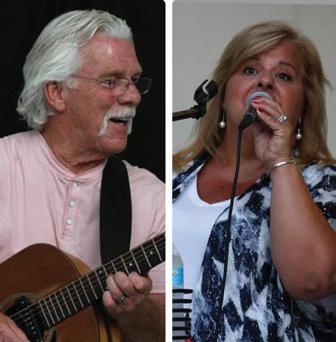
The group is led by a very talented and well-known area singer, songwriter, and musician, Roger Semer. He is joined by his singing partner, Robin Holthouse. The duo has been singing together since 2014. The band features a beautiful mix of two-part harmonies, accompanied by intricate acoustic guitar. They offer an eclectic assortment of classic rock, folk and country, featuring hits from the 50’s through today.
DAYTIME PROGRAMS
ADULT WORKSHOP: Voices of Change
Thursday, July 23, 2026 at 4 p.m.
Ashland County Senior Citizens Center
This workshop reflects on the civil rights movement and explores personal stories, using music and discussion to connect past and present experiences. Handouts will provide an overview of Coretta Scott King’s contributions and the significance of Freedom Concerts. Participants may recall and share their individual experiences of the civil rights era, sing iconic civil rights songs as a group, and write and share their own poems or stories. Reconnect with past experiences, find joy in shared musical activities, and feel empowered to share that wisdom with younger generations.
YOUTH WORKSHOP: Freedom Concerts for the Future
Tuesday, July 21, 2026 at 1 p.m.
Salvation Army Kroc Center
Join Rebecca to learn about the civil rights movement through music and storytelling; be encouraged to find your voice for social justice. This interactive workshop guides youth in creating their own songs or poems and posters and artwork inspired by civil rights themes. Participants will then perform their creations for their peers. Gain a deeper understanding of civil rights history, develop your creative expression, and be inspired to advocate for social justice in your community.
ASHLAND CHAUTAUQUA 2026
is made possible with additional support from:
CHARACTER SPONSOR
($1,200+)
Bob & Jan Archer
Carol Ann Dana
Marilyn Harshman
Dave Kowalka
The Norma Foundation
LEGACY ($150+)
Anonymous
Allan & Mary-Rose Anderson
Armstrong Group
Ashland Area Chamber of Commerce
John & Lori Byron
Jim & Starr Dobush
Annalee Hoover
Rob Hovis
Mike & Seiko Hupfer
Norman & Beth Lehman
Ben & Joyce Linnabary
Main Street Bank
Jeremy & Jennifer Meier
Peace Lutheran Endowment
Tom & Barb Slabaugh
The Stratton Family
Doris Wanamaker
Mike & Judy White
Susan Whitted
BUILDERS
($100-$149)
Ashland Noon Lions
Teresa Durbin-Ames & Larry Ames
FOUNDERS
($50-$99)
John & Bettilu Fraas
Henley Graphics
John & Penny Miller
IN-KIND
Ashland County Park District
Ashland Main Street
Ashland Public Library
Ashland University
Tommy & Laurie Beech
Starr & Jim Dobush
Explore Ashland
Farmers State Bank
Hampton Inn & Suites
Morris Sign Studio
Mike Ruhe
Vinyl Marketing
WebDev Works
Long-term supporters, Bob & Jan Archer, provided a challenge match again for 2026. They would match (up to $3,000 total) donations to Ashland Chautauqua. Our amazing donors stepped up for this challenge and over $3,000 was given by late April 2026. Thank you to each of our donors listed above and especially Bob & Jan Archer for giving $3,000 this year after the challenge was met!
IT’S NOT TOO LATE TO GIVE
Donations are greatly appreciated to sustain Ashland Chautauqua from year to year.
Please give what you can during the event through audience donation and consider donating throughout the year.
See our website for more information on how you can support Ashland Chautauqua: www.ashlandchautauqua.org/support.php
ASHLAND CHAUTAUQUA ENDOWMENT AT THE ACCF
Ashland Chautauqua has an endowment at the Ashland County Community Foundation (ACCF). This endowment fund provides Ashland Chautauqua with an additional source of funding for special projects and/or to expand features of the popular regular summer programming. However, this does not replace the annual donations to Ashland Chautauqua, which sustain the five evening performances and the workshops every summer. Contributions by donors and buckets passed during the events are vital funding sources of Ashland Chautauqua’s annual budget income.
To support Ashland Chautauqua, donations can be made online at www.ashlandforgood.org or by mailing a check with “Ashland Chautauqua Agency Fund” in the memo line to: Ashland County Community Foundation, 300 College Avenue, Ashland, Ohio 44805.
2026 CHARACTER SPONSORS
Ashland Chautauqua is extremely grateful to our 2026 Character Sponsors. These individuals and organizations gave $1,200 or more towards scholar costs (honorariums, accommodations, travel, etc.).
Bob & Jan Archer
Carol Ann Dana
Marilyn Harshman
Dave Kowalka
The Norma Foundation
Concerts are 8-9:15 p.m.
Event Hotline (after 5 p.m.) 419-281-3018
Free Admission & Open to All!
For more information: https://www.ashland-ohio.com/page/ guy-c-myers-band-shell Facebook (https://www.facebook.com/MyersBandShell/)
Sunday, July 26
ONE NIGHT WITH YOU – Reflections of Elvis
Thursday, July 30
SB MUSIC – A Soulful Explosion of Sound
Sunday, August 2
BLUE – A “Mystical Neo-Classical” Dreamscape
Thursday, August 6
RARE VINTAGE 10 – Jimmy Buffett Tribute
Sunday, August 9
ASHLAND REGIONAL BALLET
Thursday, August 13
PHIL DIRT & THE DOZERS Presents Surf’s Up
Sunday, August 16
HEAD GAMES unleashes Foreigner’s Greatest Hits
ASHLAND CHAUTAUQUA 2026 COMMITTEE
Deleasa Randall-Griffiths Ashland University
Laurie Beech Retired from McCready Interiors
Lori Byron Ashland University
Amy Daubenspeck Ashland Chamber of Commerce/ Explore Ashland
Starr Dobush OCALI Lifespan Transition Center
Barb Slabaugh Wayne County Community Foundation
Dorothy Stratton Ashland University (Professor Emerita)
Cindy Thomas Retired from The Good Shepherd
Former Member: Judith Webster Guy C. Myers Memorial Band Shell
FOUNDING MEMBER:
Tricia Smith Calver Ohio Northern University
SEAT CUSHIONS AVAILABLE!
Ashland Chautauqua seat cushions are available at the Information Table for a donation.
INTERESTED IN BEING A VOLUNTEER?
Let us know if you would like to help with Ashland Chautauqua. Contact us at 419-281-4584 or info@ashlandchautauqua.org
THE NIGHTER PASSPORT 5
Attend all five evening performances of the 2026 America’s Stories for your chance to win! Pick up your 5-Nighter Passport card on Tuesday and ensure it is stamped each night by an Ashland Chautauqua Committee member. Following the final performance on Saturday night, one completed passport will be drawn as our grand prize winner!
A SPECIAL THANK YOU TO THE FOLLOWING
Staging and transportation of staging provided by Ashland University
ASHLAND CHAUTAUQUA VIDEO
Check out our video produced by Vinyl Marketing on our website (ashlandchautauqua.org). It is also on our Facebook page and YouTube channel.
NEW LOCATION
COFFEE WITH THE SCHOLARS AT ASHLAND AREA CHAMBER OF COMMERCE
Join us for an informal gathering of the scholars and committee members for a casual conversation. Ask a scholar a question, hear more about the scholars, or learn about the characters the scholars portray. This will be held at the Ashland Area Chamber of Commerce (121 West Main Street) on Thursday, Friday, and Saturday mornings from 9-10 a.m. All are welcome to attend.