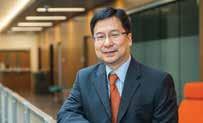
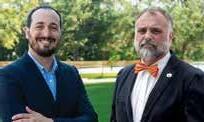
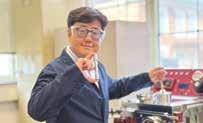
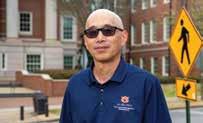
From the Dean
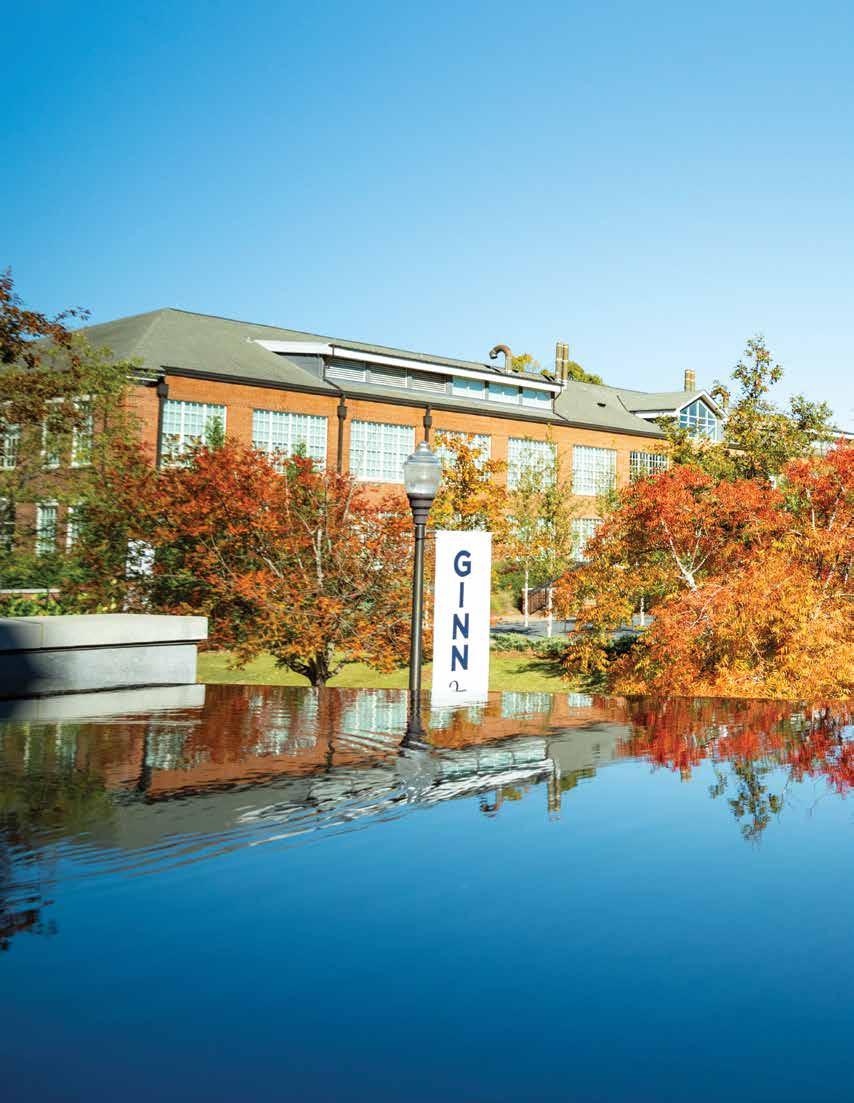
As we draw a close to this year’s 25th anniversary celebration of the naming of the Samuel Ginn College of Engineering, we have much to be proud of as we look toward the next 25 years.
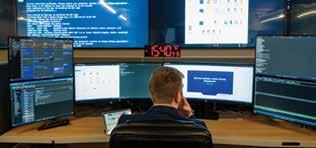
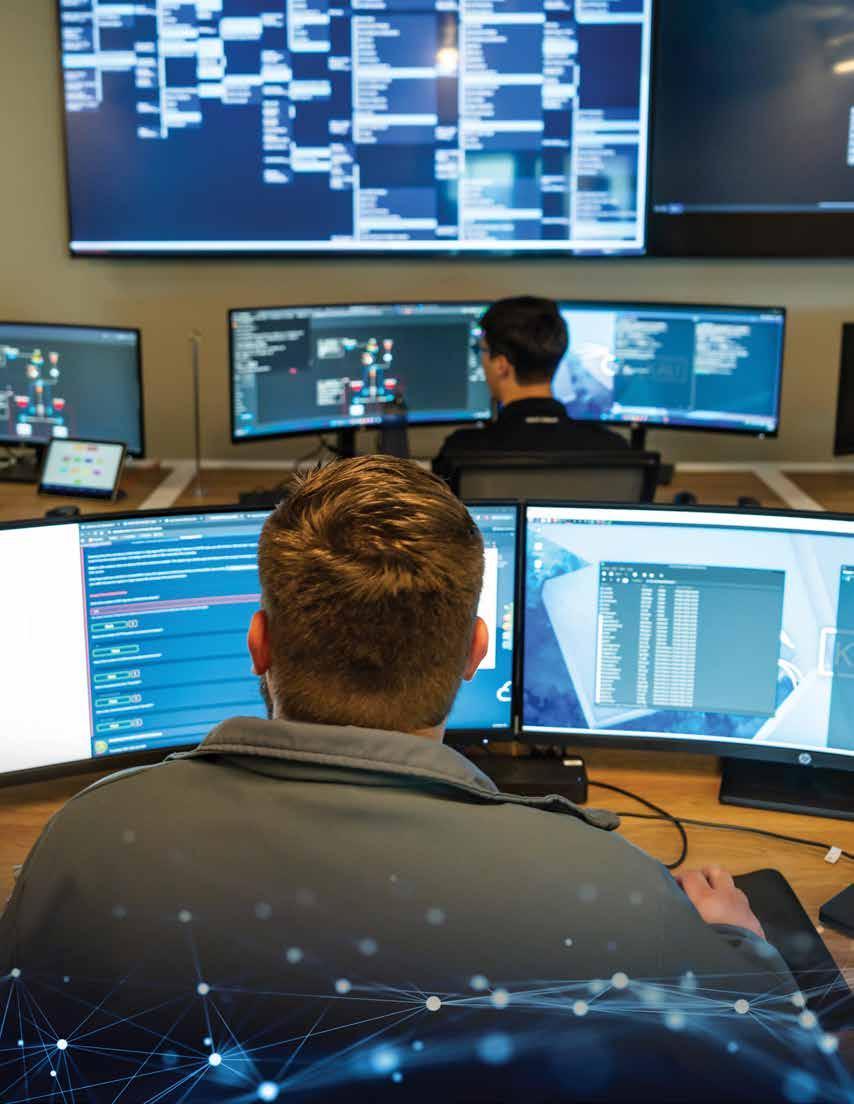
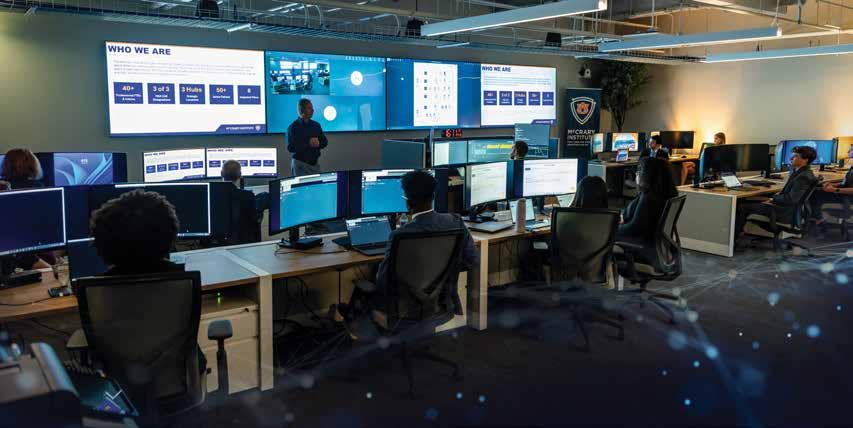
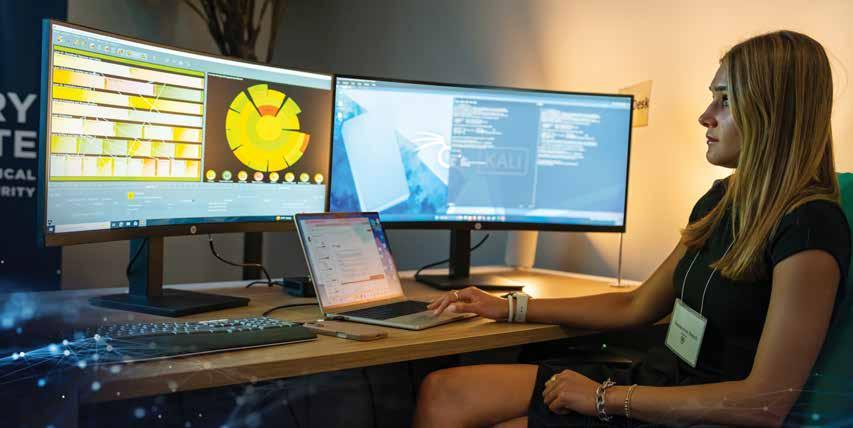
In this issue, you’ll read about the many accomplishments of our students, faculty, staff and alumni, including the work of our students in the McCrary Institute for Cyber and Critical Infrastructure Security, its affiliated Southeast Region Cybersecurity Collaboration Center (SERC3) and the Alabama Cybersecurity Intelligence Center (ACIC).
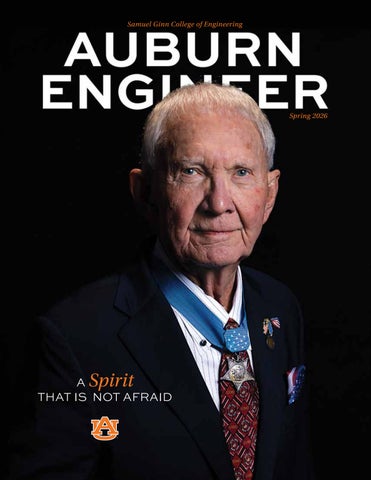
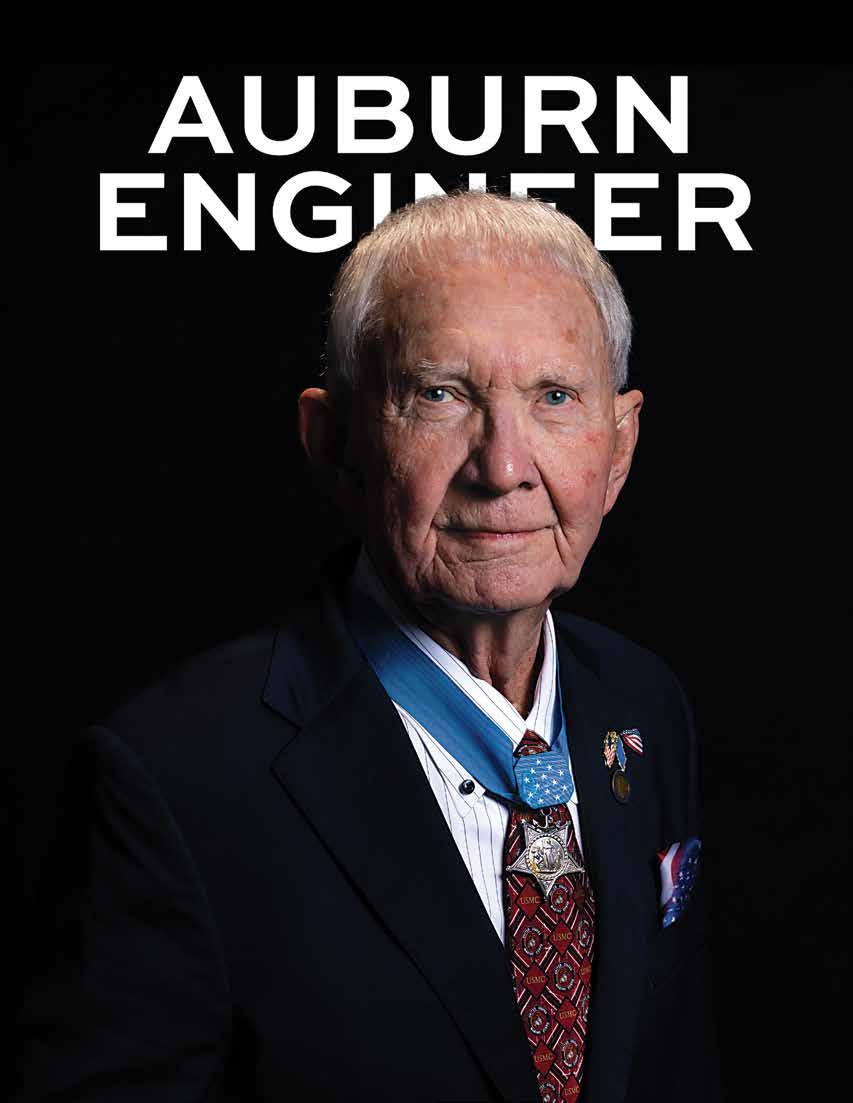
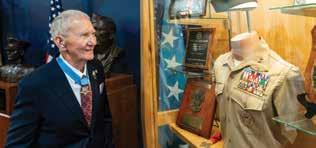
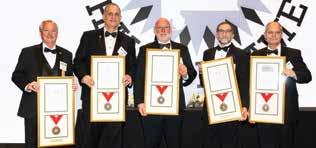
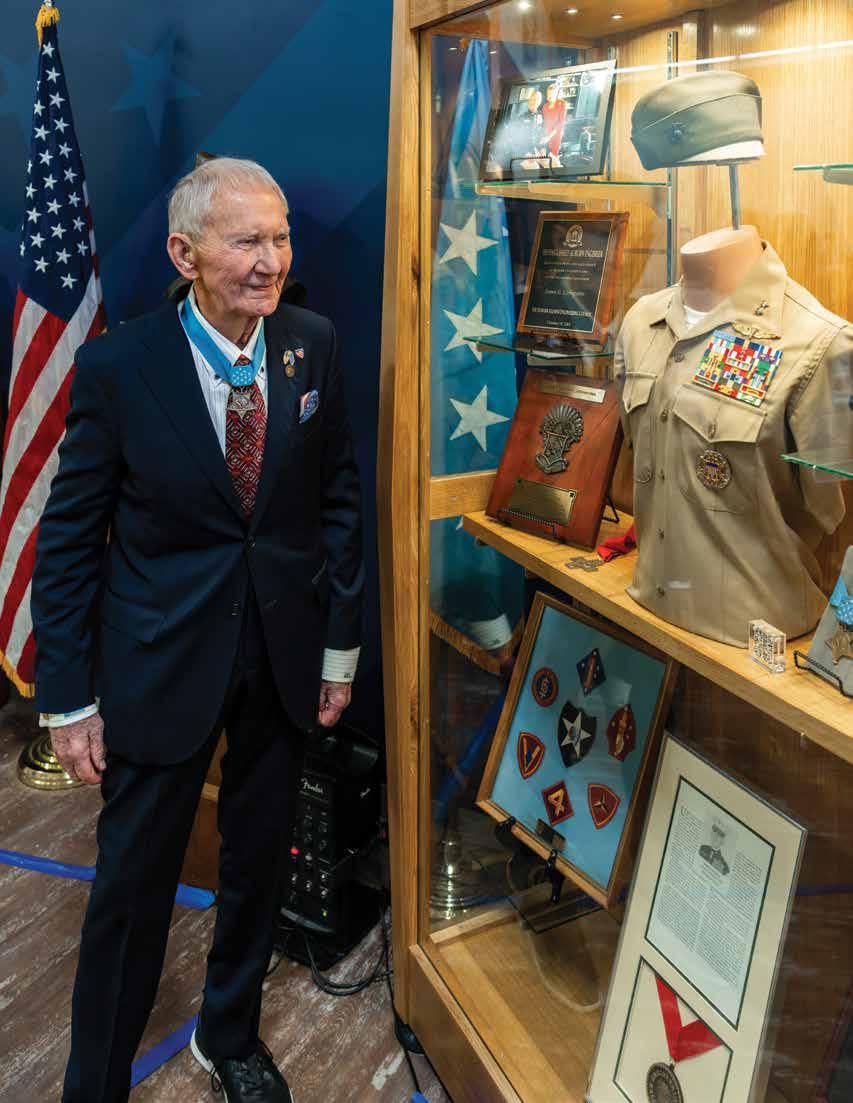
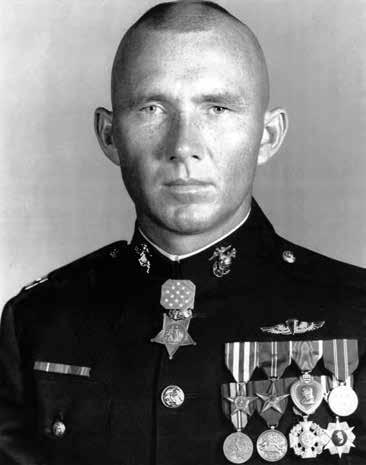
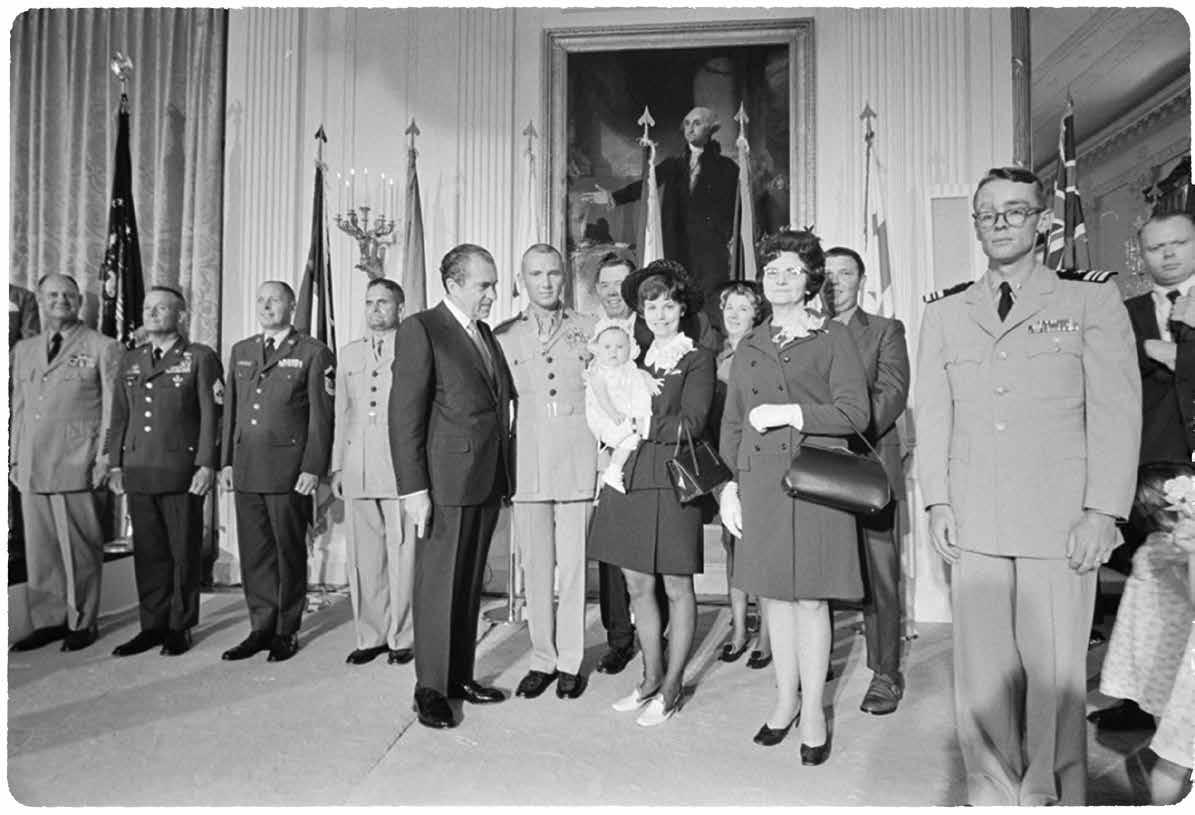
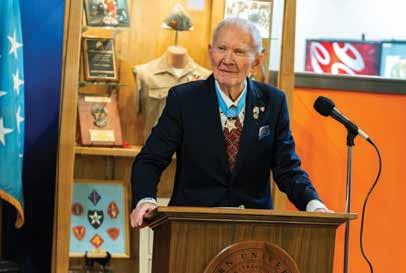
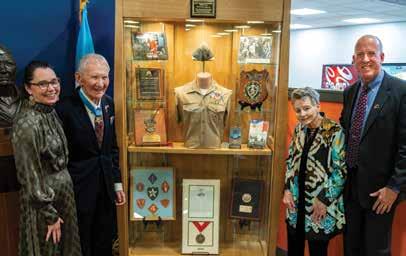
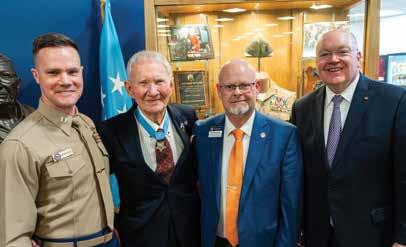
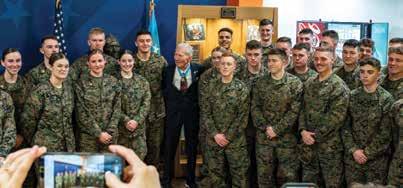
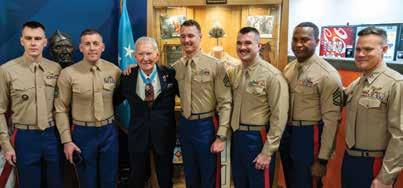
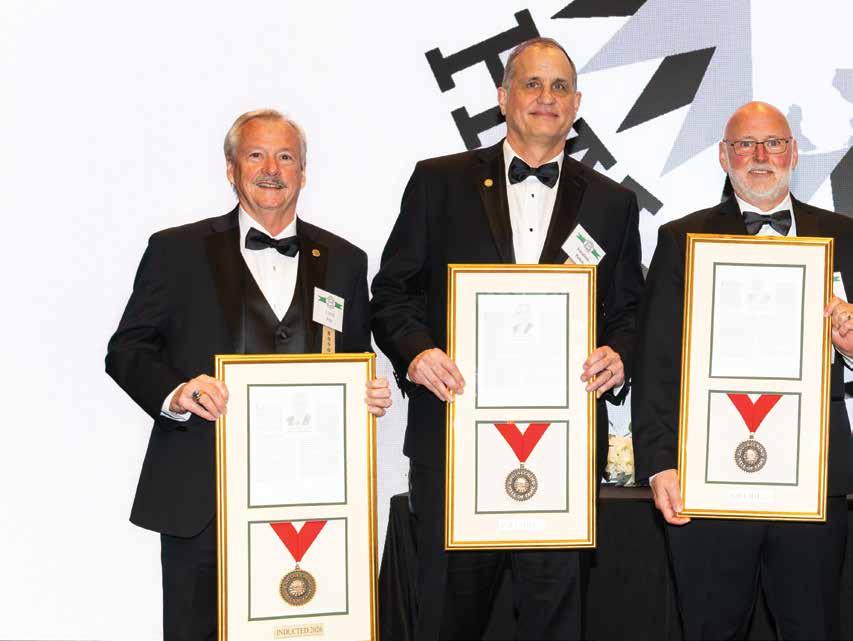
In February, the university unveiled a display featuring the Medal of Honor of one of our most distinguished alumni — Maj. Gen. James E. Livingston. The display features items and photos honoring Auburn’s history with the U.S. military, including Livingston’s medal, the only one of its kind among Auburn graduates.
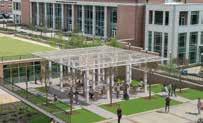
Also in February, the Auburn University Board of Trustees approved a project that will create an Analytical, Innovation and Manufacturing Laboratory underneath the plinth connecting the Brown-Kopel Center and the Gavin Engineering Research Laboratory. This 16,000 square-foot space will provide resources facilitating professional-grade electronics manufacturing, including an Inline Production PCB Assembly Line allowing students to build and test electronics at an industrial scale, and a high-mix assembly system capable of placing tiny components with extreme precision. In addition, it will feature a suite of powerful imaging tools typically found only in high-level research facilities. An MX1 X-Ray system will enable inspection of the internal integrity of manufactured electronics without damaging them. Cutting-edge microscopy will be supported by scanning electron microscopes, a transmission electron microscope and an ion beam microscope.
Perhaps even bigger, the project will boost the total footprint of our Design and Innovation Center — the largest student-run makerspace in the nation — from 12,000 square feet to more than 19,000 square feet. The expansion will include high-tech prototyping tools
such as Trotec laser cutters and approximately 40 additional 3D printers. It will also allow for integrated design resources such as AR/VR stations, large-format printers and a crafting station equipped with embroidery machines, heat presses and vinyl cutters.
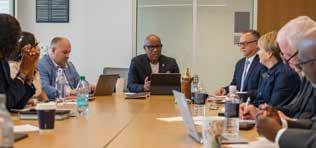
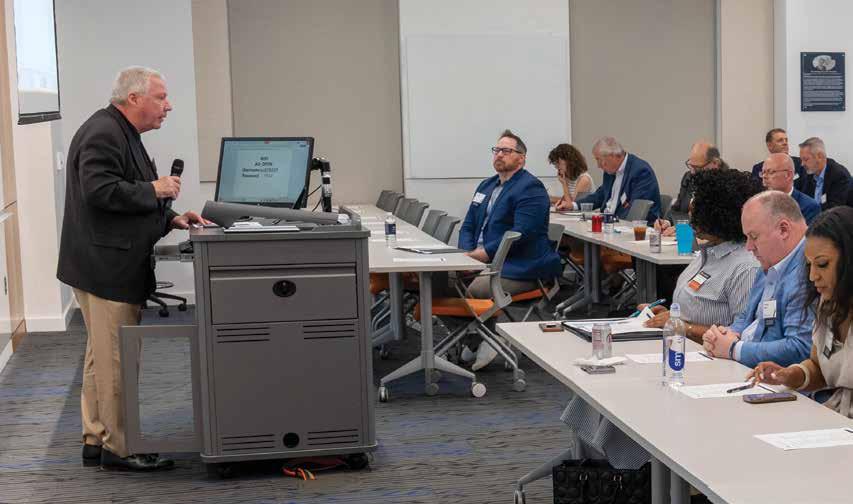
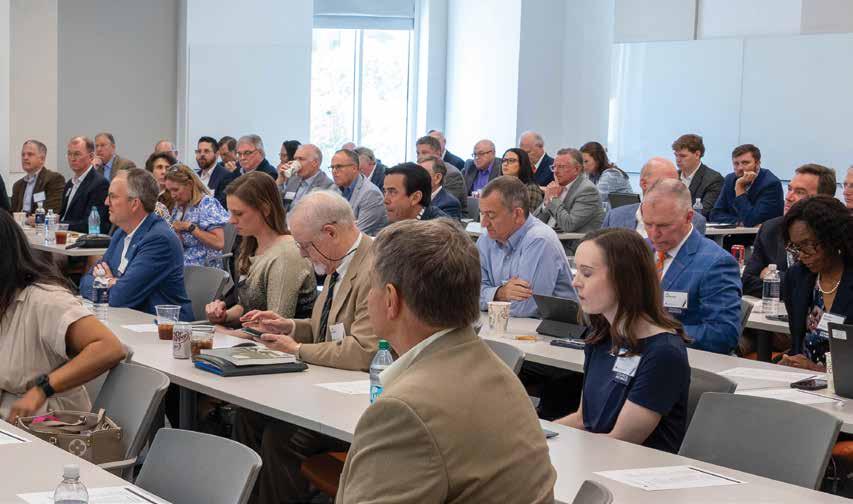
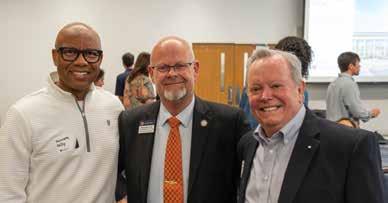
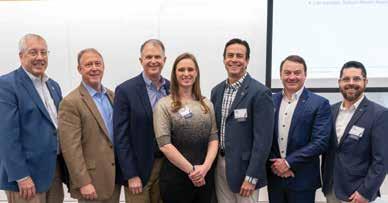
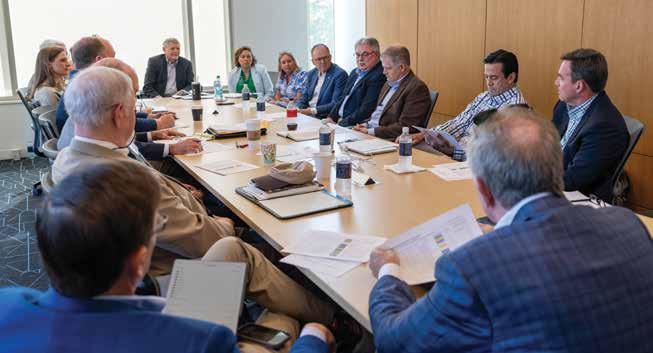
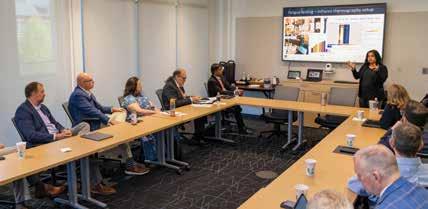
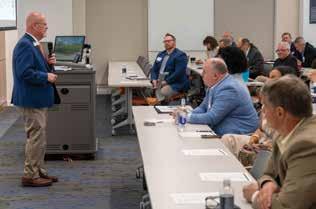
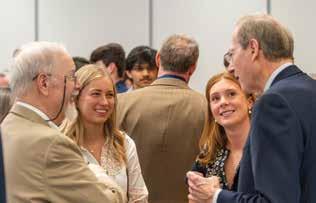
In April, our Auburn Alumni Engineering Council held its spring meeting and celebrated the 60th anniversary of its first meeting. The distinguished group was established in 1965 and held its first meeting in 1966. The council is a group of Auburn Engineering alumni who work together to support the vision and goals of the Samuel Ginn College of Engineering. The council meets twice annually to assist and advise the college, and its members serve on committees geared to the mission and operation of the college. The council provides leadership and participation in areas such as academics, fundraising, governmental affairs, public relations, research, the student experience and more.
We are extremely grateful to alumni such as those on the council and Maj. Gen. Livingston. These individuals give back to inspire future generations of engineering alumni, living out the words of the Auburn Creed by believing in “hard work, honesty, truthfulness and a spirit that is not afraid.”
War Eagle!
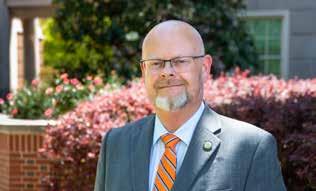
Mario R. Eden Dean of Engineering
Joe T. and Billie Carole McMillan Chair
The country’s best engineering college deserves the country’s best engineering podcast.
Look for the MIC icon to identify our guests and visit eng.auburn.edu/ginning to listen to each episode.
THE RILEY FACTOR / Episode 357
Visit Auburn Engineer online at eng.auburn.edu/magazine for videos, photos, podcasts and more. You may also submit news items, suggestions or comments by clicking the Contact Us tab.
Auburn Engineer is published twice yearly by the Samuel Ginn College of Engineering.
Engineering Communications and Marketing c/o Editor
1210D Shelby Center Auburn, AL 36849 334-844-2444
© 2026 Samuel Ginn College of Engineering Auburn University
Auburn University is an equal opportunity educational institution/employer.
Dean
Mario Eden
Editor & Director, Communications and Marketing
Austin Phillips
Contributors
Olivia Ballard
Nick Bowman
Dustin Duncan
Jeremy Henderson
Allison Killingsworth
Joe McAdory
Carla Nelson
Rachel Wingard
Manager, Creative Services / Graphic Design
Danny Doyle
Contributor
Greg Key
Website Management
Tyler Patterson
Contributor
Darahaas Nallagatla
Photography & Videography
Marcus Kluttz
John Sluis
Contributor
AU Photographic Services
Social & Digital Marketing
Anna Katherine Underwood
Auburn to construct worldclass engineering lab, expand nation’s largest student-run makerspace
Auburn Engineering began construction in May 2026 on a new advanced manufacturing laboratory while expanding the Design and Innovation Center, the nation’s largest student-run makerspace.
The Analytical, Innovation and Manufacturing (AIM) Laboratory will occupy 16,000 square feet beneath the Gavin Garden green space connecting the Brown-Kopel Engineering Student Achievement Center and the Gavin Engineering Research Laboratory. Nearly 40% of the space will expand the makerspace footprint from 12,000 to more than 19,000 square feet.
The facility will support electronics manufacturing, materials testing and advanced manufacturing. Planned equipment includes an inline printed circuit board assembly line for industrial-scale electronics production and imaging tools such as X-ray inspection systems and electron microscopes used to analyze manufactured components.
“This project is another demonstration of our commitment to provide the best student-centered engineering experience in America,” said Mario Eden, dean of engineering.
The project will be funded through Alabama’s FY23 supplemental budget supporting higher education initiatives in manufacturing and innovation.
Applied Research Institute advances defense innovation through Army partnership
Experts at the Auburn University Applied Research Institute (AUARI) are shaping the next generation of defense engineers while tackling military challenges through a collaboration model connecting research with operational needs.
Backed by an $863,000 award from the U.S. Army Combat Capabilities Development Command Army Research Laboratory’s Pathfinder Program, and in collaboration with the Civil-Military Innovation Institute, the group is advancing new signals intelligence capabilities for the Department of War.
Through the Army Research Laboratory’s Pathfinder Program, AUARI researchers work directly with Army scientists and soldiers to rapidly prototype, test and refine solutions in the field — an agile approach that replaces years of traditional contracting with hands-on engineering and immediate feedback.
“At the end of the day, Auburn’s greatest product is its people — exceptional engineers,” said Steve Mills, principal research scientist at the Auburn University Applied Research Institute and the project’s principal investigator. “By tackling real-world defense problems, we’re giving our students and researchers the experience and mindset to deliver practical, high-impact solutions in support of national defense.”
Auburn engineers key part of historic Artemis II mission
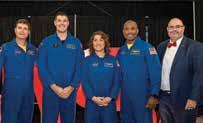
Auburn Engineering alumni played a role in NASA’s Artemis II mission, marking the first crewed deep space flight since 1972 and a major step in returning humans to the Moon. Launched April 1 and concluded with a successful splashdown April 10, the mission sent astronauts around the far side of the moon — the farthest humans have traveled from Earth in more than 50 years.
Auburn graduates contributed across multiple aspects of the mission, including spacecraft development, software, advanced manufacturing and communications, reflecting the university’s long-standing connection to NASA and human spaceflight.
“You can see Auburn’s fingerprints all over, not only what happened with Artemis II, but the things that we’re doing to move forward for the future missions that NASA has goals for,” said Joseph Pelfrey, ‘00 aerospace engineering, NASA Office of the Administrator senior executive and former director of NASA’s Marshall Space Flight Center. “Over 10% of our civilian workforce at Marshall has an Auburn degree. The technology work and research that’s going on in Auburn, especially in advanced manufacturing, is going to help propel us forward to even further missions out.”
From left: Reid Wiseman, Jeremy Hansen, Christina Koch, Victor Glover and Joseph Pelfrey
Collari named executive director of development for engineering
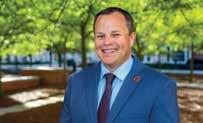
Ed Collari was named executive director of development for the Samuel Ginn College of Engineering.
Collari, who joined the college in 2022 as a development officer and was later promoted to senior major gifts officer, began his new role Nov. 1, 2025. He succeeds Jon Wilson, now senior director of advancement for the Harbert College of Business.
As executive director, Collari leads the college’s fundraising efforts and manages its development officers and coordinators. As a coach and mentor, Collari works with his team to execute the college’s strategic plans for stewardship and engagement.
“Having the chance to lead the advancement team at the Samuel Ginn College of Engineering is the opportunity of a lifetime,” Collari said. “It’s a testament to the college that it has so many impressive alumni — being able to work with them and our excellent group of development officers and coordinators represents the pinnacle of my career.”
Applied Research Institute names NASA veteran chief engineer
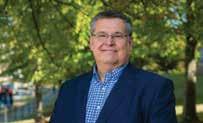
Larry Leopard, who spent the past 35 years shaping the nation’s space exploration capabilities at NASA’s Marshall Space Flight Center, was recently named chief engineer for the Auburn University Applied Research Institute in Huntsville. He will oversee the institute’s technical capabilities and coordination between Huntsville’s industrial ecosystem and Auburn’s engineering resources.
Auburn Engineering honors student named as Goldwater Scholar
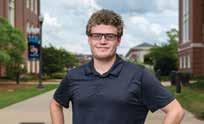
Eirik Mulder, a senior pursuing concurrent degrees in aerospace engineering and computer science, was awarded the Barry M. Goldwater Scholarship, one of the nation’s top honors for undergraduate researchers in science and engineering.
Mulder is also an Astronaut Scholar, a NASA Alabama Space Grant Consortium recipient and a University Space Research Association Distinguished Undergraduate.
He has contributed to an Auburn team that finished No. 1 in the U.S. at NASA’s Global Trajectory Optimization Competition and conducts research in the Space Dynamics Lab under Davide Guzzetti, associate professor of aerospace engineering, focusing on trajectory design and developing tools to make space mission planning more accessible.
Leopard brings extensive experience in propulsion systems, systems engineering and integration and advanced manufacturing. Beginning his career at Martin Marietta before joining NASA, Leopard later led multiple divisions and departments within Marshall’s Engineering Directorate before being named director of engineering. His teams most recently played pivotal roles in developing the flight software and integrated avionics for NASA’s Space Launch System.
“I’ve spent most of my career managing and developing technical capabilities and applying them to whatever problems arise,” Leopard said.
“That’s really what I do at heart — I’m an engineer. And that’s exactly what I’ve been asked to help do here at Auburn,” he added.
Mulder plans to pursue a doctorate in aerospace engineering and continue research in astrodynamics.
“The programs at Auburn have played a direct role in giving me experience to reach this achievement,” Mulder said. Listen to the #GINNING podcast with Eirik Mulder at eng.auburn.edu/ginning ↑
Larry Leopard
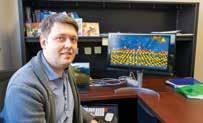
Ed Collari
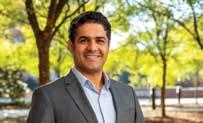
Eirik Mulder
Apple CEO, Auburn alumnus elected to National Academy of Engineering
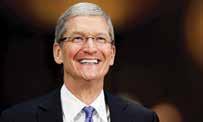
Tim Cook, ’82 industrial engineering and Apple CEO, has been elected to the National Academy of Engineering (NAE) as part of the Class of 2026, the NAE announced Feb. 10.
The NAE recognized Cook for his leadership in advancing technological innovation, environmental sustainability and transformative supply chain practices in consumer electronics.
Election to the NAE is among the highest professional distinctions awarded to engineers, recognizing individuals who have made outstanding contributions to research, practice or education.
“Tim Cook’s election to the National Academy of Engineering is a proud moment for Auburn University and the Samuel Ginn College of Engineering,” said Mario Eden, dean of engineering. “His contributions to innovation, sustainability and supply chain transformation demonstrate the global reach of engineering — and the kind of leadership Auburn engineers are capable of.”
Cook is the founding chair of the Auburn University Department of Industrial and Systems Engineering Alumni Council and has supported the department through an endowed Fund for Excellence, the Tim Cook Leadership Scholarship and the Tim Cook Endowed Professorship.
Human Systems Integration Center adopts new name reflecting people-centered research
Auburn Engineering’s Human Systems Integration Center has adopted a new name to better reflect its focus on people-centered research. The center was previously known as the Center for Occupational Safety, Ergonomics and Injury Prevention.
Highway Research Center marks 40 years of engineering innovation and statewide impact
For four decades, the Highway Research Center (HRC) has shaped the future of transportation in Alabama and across the nation. The center develops stronger bridges, safer highways and sustainable construction methods while training the next generation of civil engineers.
Housed within the Department of Civil and Environmental Engineering since 1985, the HRC’s mission is to improve Alabama’s transportation systems, making them safer, more efficient and more resilient.
Students working within the HRC gain hands-on experience through applied research projects, collaborating with faculty and using state-of-the-art facilities such as the Stormwater Research Facility and the Advanced Structural Engineering Laboratory.
“Our research doesn’t stop at the lab,” said Anton Schindler, HRC director.
According to Mark Schall, the center’s director, human systems integration is an approach that examines how people interact with technology, environments and organizational systems to improve safety, performance and effectiveness.
Housed in the Department of Industrial and Systems Engineering and established in 2017, the center builds on decades of occupational health and safety research supported by the National Institute for Occupational Safety and Health.
Schall said the rebrand will help the center expand partnerships and interdisciplinary collaborations while maintaining its longstanding mission.
“At its core, this is about keeping the human at the center,” Schall said.
“It goes directly into the field — into the bridges people drive over, the stormwater systems that protect our streams and the roads that connect Alabama’s communities. By applying sound engineering principles, we design transportation systems that improve the quality of life across our state and nation.”
Tim Cook
From left: Anton Schindler, David Timm, Corie McConnell and Katie Falls
Auburn Engineering jumps two spots to No. 18 in latest U.S. News online graduate program rankings
The Samuel Ginn College of Engineering rose to No. 18 in the U.S. News & World Report’s 2026 Best Online Graduate Engineering Programs rankings, marking six consecutive years in the top 20 and 10 years in the top 25. The college also ranked No. 14 among public institutions.
In specialty areas, Auburn’s online electrical engineering and industrial engineering programs climbed to No. 11, while the online computer science and software engineering program placed No. 17 nationally. Auburn Engineering was also ranked No. 13 among online programs for veterans.
Auburn Engineering offers 15 fully online master’s degrees and 24 graduate certificates, including new programs in space systems and artificial intelligence engineering. The programs prepare students for evolving workforce demands and real-world problem-solving. Auburn also partners with seven engineering technology companies to support employees pursuing graduate education.
“The quality of our online graduate programs, along with the hard work of our faculty and staff, are reflected year after year in our top 20 U.S. News rankings,” said Mario Eden, dean of engineering.
NATIONALLY RANKED
Auburn Engineering’s online cybersecurity engineering graduate program ranked No. 7 nationally
Auburn University’s online Master of Science in Cybersecurity Engineering program has earned national recognition for its rigorous technical curriculum and strong career outcomes. Programs.com ranked the program No. 7 nationally in its 2026 list of top online cybersecurity master’s degrees, citing Auburn’s blend of research depth and practical skill development.
Housed within the college’s Department of Computer Science and Software Engineering, the program trains students in network security, digital forensics, cloud systems, reverse engineering and advanced defensive techniques, culminating in a capstone project focused on protecting complex digital systems. Programs.com also highlighted Auburn as one of only 11 institutions with three National Center of Academic Excellence designations in cyber operations, cyber defense and cyber research.
The 33-credit-hour program is offered online, on campus or in a hybrid format. The recognition follows Auburn Engineering’s recent No. 17 ranking for online computer science and software engineering by U.S. News and World Report.
Auburn’s Electronics Packaging Research Institute leads AI revolution in semiconductor packaging
Pradeep Lall, the MacFarlane Distinguished Professor and Alumni Professor in mechanical engineering and director of Auburn University’s Electronics Packaging Research Institute, is using artificial intelligence (AI) to transform how engineers predict the life expectancy of electronics.
Historically, computational lag and unpredictable factors led to delays of days to weeks. Lall’s AI-driven approach enables real-time defect detection, process control and reliability assessment that can instantly identify cracks or damage in devices.
Lall’s approach has been widely adopted in extreme environment applications and stems from his experience with NASA’s Integrated Vehicle Health Monitoring Program. In partnership with the Institute of Electrical and Electronics Engineers, he recently developed a professional course on AI in semiconductor packaging.
“This is a massive leap forward from traditional methods because the AI doesn’t need days to run a simulation — it provides answers as things are happening,” Lall said.
Listen to the #GINNING podcast with Pradeep Lall at eng.auburn.edu/ginning
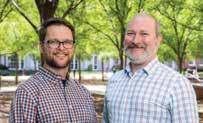
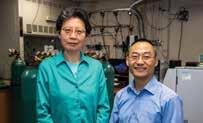
From left: Shriram Kulkarni and Pradeep Lall
Auburn Engineering recognizes outstanding students, faculty, staff, alumni at annual spring awards ceremony
SPRING AWARDS PHOTOS eng.auburn.edu/flickr
The Samuel Ginn College of Engineering hosted its annual spring awards ceremony in the Brown-Kopel Center Friday, April 10. Students, faculty, staff and alumni were recognized for outstanding leadership, achievement and service to the college.
“Our spring awards ceremony is a wonderful opportunity to recognize some of best the college has to offer,” said Mario Eden, dean of engineering. “We are extremely proud of all of the students, faculty, staff and alumni awardees for their amazing accomplishments this year.”
Below are the 2026 award recipients:
Alley Family Graduate Student Leadership Fellowship
• Ayden Kemp / Biosystems
100+ Women Strong Outstanding Departmental Annual Graduate Award
• Robin Weaver and Ana Barona Mejia Aerospace
• Ayden Kemp and Dative Niyonizeye Biosystems
• Jinny Cha and Tori Phillips Chemical
• Riana Rivera and Carolina Triboni Civil and Environmental
• Maryam Bigonah and Disharee Bhowmick Computer Science and Software
• Joshita Majumdar and Clara Meincke Electrical and Computer
• Maram Shaqir and Savannah Maples Industrial and Systems
• Steven Porterfield and Valentina Nesterova Materials
• Krista Dyer and Paxton Albright Mechanical
100+ Women Strong Leadership Graduate Student Award
• Samantha Mariano / Civil and Environmental
• Kate Handel / Chemical
100+ Women Strong Leadership Undergraduate Student Award
• Allison Brooks / Aerospace
• Sally Wingard / Biosystems
100+ Women Strong Graduate Student Fellowship Award
• Maryam Bigonah / Aerospace
• Shireen Singh / Biosystems
100+ Women Strong High Impact Award
• Manan Patel / Aerospace
• Lillian Elser / Aerospace
• Isabella Lowery / Chemical
• Nate Maehlmann / Civil and Environmental
• Yusuf Zengul / Electrical and Computer
• Jessica Johnson / Industrial and Systems
• PJ Green / Industrial and Systems
• James Barber / Industrial and Systems
• Skyla Vandive / Industrial and Systems
• Hayden Gross / Materials
• Mia King / Mechanical
• Max Lobato / Mechanical
100+ Women Strong Inspiring Leadership Faculty/Staff Award
• Frances O’Donnell / Civil and Environmental Vandegrift Co-op Student of the Year
• Marrin Morris / Biosystems
Auburn Alumni Engineering Council Award for Outstanding Student Organizations
• American Railway Engineering and Maintenance Association
• American Society of Agricultural and Biological Engineers
• Water and Environmental Student Organization
Fred and Mary Lou Birdsong Study Abroad Scholarship
• Alena Ha / Industrial and Systems
• Ellary Hackworth / Industrial and Systems
• Haley Morgan / Industrial and Systems
• Isabella Civello / Computer Science and Software
• Jack Stuckas / Mechanical
• Jaylynn Wilson / Civil and Environmental
• Kaylee Routh / Mechanical
• Mallory Whitt / Computer Science and Software
• Mary Frances Springfield / Chemical
• Tioma Turkic / Mechanical
Jeff and Linda Stone Leadership Awards
• Sara Davis / Aerospace
• James Barber / Industrial and Systems
• Malia Chitwood / Mechanical
• Benjamin Tzou / Mechanical
• Michael Reuss / Chemical
• Michael Stonecash / Mechanical
• Joseph McElroy / Computer Science and Software
Outstanding Departmental Student Awards
• Dakota Willingham / Aerospace
• Al Dean Francisco / Biosystems
• Daniel Burque / Chemical
• India Warren / Civil and Environmental
• John Lieb / Computer Science and Software
• Carter Williams / Computer Science and Software
• Jonathan Gunasekaran / Electrical and Computer
• Harrison Bonner / Electrical and Computer
• Kate Kinnamon / Industrial and Systems
• Nick Raciti / Mechanical
Samuel Ginn Outstanding Engineering Student Award
• Al Dean Francisco / Biosystems
Mark A. Spencer Creative Mentorship
• Davide Guzzetti and Eirik Mulder / Aerospace
• Missie Smith and Benjamin Tankersley / Industrial and Systems
Alumni Council High Impact Awards
• Kennedi Hawkins / Chemical
• Aubrey Footer / Computer Science and Software
• Parker Story / Civil and Environmental
• Christian Hamff / Computer Science and Software
Outstanding Departmental Faculty Awards
• Vrishank Raghav / Aerospace
• Tanzeel Rehman / Biosystems
• Bill Josephson / Chemical
• Lynnae Stypulkowski / Civil and Environmental
• Charles Shaffer / Computer Science and Software
• Clint Snider / Electrical and Computer
• Daniel Silva / Industrial and Systems
• Taylor Oldfather / Mechanical
Fred H. Pumphrey Teaching Award
• Lynnae Stypulkowski / Civil and Environmental
William F. Walker Teaching Awards Merit:
• Vishalini Ramnath / Computer Science and Software
• Nicoletta Fala / Aerospace
Superior:
• Steven Duke / Chemical
Research Awards for Excellence
Junior Faculty:
• Michael Howard / Chemical
Senior Faculty:
• Zhihua Jiang / Chemical
Outstanding Staff Award
• Emily Maddox / Mgr. of Salesforce and Data Administration
Staff Champion for the Student Experience Award
• Andrew McGill / Manager of Engineering Recruitment in the Recruitment Outreach and Scholarship office
Code of Conduct and Ethics Coin Award
• Alicia Harkless / Director of Engineering Online and Continuing Education
• Karen Clark / Student Services Coordinator in Mechanical Engineering
• Leah Blair / Manager of Corporate Relations for the Office of Career Development and Corporate Relations
Outstanding Departmental Alumni Awards
• Joel Sills / Aerospace
• Sherri Morgan / Biosystems
• Ashley Robinett / Chemical
• Mark Widdowson / Civil and Environmental
• Sundeep Myneni / Computer Science and Software
• Jeff Haars / Electrical and Computer
• Michael Gaines / Industrial and Systems
• Todd Dorough / Materials
• John Prunkl / Mechanical
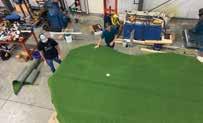
Auburn engineers construct floating golf green at Opelika venue
Auburn engineers built a floating golf green at Botanic, a restaurant and event space in Opelika, as a hands-on project in buoyancy, energy systems and real-world design.
Nicknamed “Botanic Island,” the platform includes waterproof sensors, analog electronics and feedback mechanisms that play the Auburn fight song for each hole-in-one. The project was led by Mal Jenkins, engineering associate, who worked with students and Lake Martin–based industry partner, JSC Docks. The green is modeled after the eighth hole of the Auburn University Club.
Christian Brodbeck, director of engineering research operations, said the project forced the team to balance natural design with long-term durability in the water.
“Nothing about this project was square or simple,” Brodbeck said. “We wanted it to look natural, with curves and topography, but everything also had to hold up in the water. Every step revealed challenges we hadn’t anticipated, and that’s where the learning really happened.”
Mario Eden, dean of engineering, said the project shows how Auburn students apply engineering concepts outside the classroom.
“It’s a great example of taking complex theoretical problems and solving them in ways that benefit our community,” Eden said.
NCAME expands defense supply chain research through industry partnerships
The National Center for Additive Manufacturing Excellence (NCAME) is expanding its applied research role in the defense supply chain through new partnerships with Amaero and Austal USA.
Amaero, a U.S. manufacturer of refractory and titanium alloy additive manufacturing powders for aerospace and defense applications, has partnered with NCAME researchers to evaluate the performance of two additive manufacturing powders.
“We’ve developed a high-throughput, iterative process development approach allowing Amaero to provide NCAME with minimal material and get a quick picture of the processstructure-property relationships,” NCAME Research Engineer Scot Carpenter said.
NCAT inducts industry leader into Wall of Honor
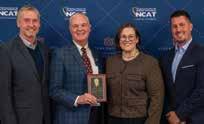
The National Center for Asphalt Technology (NCAT) at Auburn University has inducted Daniel “Dan” Joseph Gallagher into its Wall of Honor, recognizing his decades of leadership in the asphalt industry and longtime support of NCAT.
Established in 2011, the NCAT Wall of Honor recognizes individuals who have advanced asphalt research and education worldwide.
Gallagher was honored during a reception Nov. 13 at the NCAT Board of Directors meeting in Auburn, receiving a commemorative plaque. He served on the NCAT Board from 2003 to 2012, including four years as chair, and was later elected an
Austal USA, a shipbuilder with multiple Navy and Coast Guard construction and maintenance contracts, is also working with NCAME to address challenges caused by reduced access to conventional manufacturing capabilities in the U.S.
The collaboration focuses on developing material allowables — the stress and strain limits used to define how materials perform under load — which are critical for designing structural components and expanding additive manufacturing adoption.
Carpenter said those datasets help engineers better predict material performance in real-world applications.
emeritus member.
“Dan’s vision and his decades of service have left an indelible mark on this industry and on NCAT,” NCAT Director Randy West said.
“He has always led with courage and has shown what it means to build something that lasts — not just in pavements, but in relationships and respect.”
From left, Randy West, Dan Gallagher, Audrey Copeland and Brian Enders
ICAMS to launch statewide satellite model to expand advanced manufacturing access across Alabama
The Interdisciplinary Center for Advanced Manufacturing Systems (ICAMS) at Auburn University is launching a statewide initiative to expand access to advanced manufacturing technologies through an $8.3 million “satellite ICAMS” model embedded in Alabama’s community colleges.
The model brings sensor-equipped machines, data dashboards and instructor training closer to smalland medium-sized manufacturers that cannot travel to Auburn, while generating continuous production data for ICAMS researchers to develop predictive tools.
“A manufacturer in Jackson County, Alabama, for example, is unlikely to shut down operations for a multiday trip to Auburn,” said Greg Purdy, associate professor of industrial and systems engineering and principal investigator. “That same company, however, may visit a community college facility 20 minutes away.”
The three-year project will also expand Industry 4.0 curriculum, internships and K-12 outreach.
Funded by the U.S. Department of War, the initiative aims to strengthen Alabama’s manufacturing competitiveness by helping companies adopt technologies they otherwise could not implement.
ICAMS featured in NASCAR race at Talladega
Superspeedway
The Interdisciplinary Center for Advanced Manufacturing Systems (ICAMS) at Auburn University made an Oct. 19 appearance at Talladega Superspeedway. The center’s logo was featured on the BuildSubmarines.com race car, driven by Brad Keselowski, highlighting a partnership that connects advanced manufacturing innovation with America’s industrial base.
As part of the Maritime Industrial Base’s engagement with NASCAR’s RFK Racing team, featuring BuildSubmarines.com, ICAMS was showcased during the NASCAR Cup Series race. The collaboration highlighted a shared commitment between academia and industry to strengthen the nation’s manufacturing capabilities and workforce.
ICAMS and BuildSubmarines.com share a common mission: revitalizing U.S. manufacturing and rebuilding the skilled workforce needed to sustain it. Both organizations emphasize that the future of American industry depends not only on advanced technologies but also on preparing the next generation of workers to use them effectively.
Chemical engineering assistant professor earns $875K DOE Early Career Award
Cassandra Porter, assistant professor in the Department of Chemical Engineering, has received a fiveyear, $875,000 U.S. Department of Energy Early Career Award to study membrane-based lithium separation.
Her project will examine how membrane chemistry and operating conditions affect ion selectivity under real-world conditions to improve methods to recover lithium and other critical materials from water.
By making it easier to separate lithium from aqueous solutions, Porter’s research could help lower costs and improve the reliability of materials used in batteries, electronics and energy storage systems.
“Winning this award says that the Department of Energy doesn’t just believe in the specific project you proposed, but they also believe in you as a scientist,” Porter said.
“It’s about the difference they think you’re going to make not just with this project, but beyond.”
Listen to the #GINNING podcast with Cassandra Porter at eng.auburn.edu/ginning ↑
our magazine online at eng.auburn.edu/magazine to read more of these stories.
From left: Gregory Purdy and Greg Harris
From left: Joshua Whiting, Jack Walden, Johnathan Deery, John Price and Brad Keselowski
Cassandra Porter
ECE
AUTRI receives $1.9M to study smart tire technology for highway safety
Auburn University’s Transportation Research Institute (AUTRI) received $1.9 million from the Federal Motor Carrier Safety Administration to explore whether new radio frequency identification (RFID) technology can detect dangerous tire conditions before blowouts occur. Researchers will test sensor-enabled RFID tags placed inside truck tires to determine whether they accurately measure tire pressure under operating conditions.
The Auburn Engineering team includes Laurence Rilett, director of AUTRI; David Bevly, the Bill and Lana McNair Distinguished Professor of mechanical engineering and co-director of Auburn’s GPS and Vehicle Dynamics Laboratory; and Shiwen Mao, professor and Earle C. Williams Eminent Scholar Chair of electrical and computer engineering and director of Auburn’s Wireless Engineering Research and Education Center.
Testing will take place in Auburn laboratories and instrumented commercial vehicles operating at the National Center for Asphalt Technology Test Track. The research will help define the capabilities and limits of RFID technology.
↑ Listen to the #GINNING podcast with Laurence Rilett at eng.auburn.edu/ginning
professor joins $1.5M effort to strengthen AI’s mathematical
foundations
Shiwen Mao, professor and Earle C. Williams Eminent Scholar Chair in the Department of Electrical and Computer Engineering, is part of a $1.5 million collaborative research effort to establish a new theoretical framework for artificial intelligence (AI) and data science (DS) and apply it to solve practical engineering problems.
The National Science Foundationfunded project, “Building a Robust Mathematical Foundation for AI and Integrated Data Science at Auburn and Tuskegee University,” brings together 13 faculty members to develop new mathematical foundations for AI and DS.
Mao serves as a co-principal investigator for the Auburn portion of the project, led by principal investigator Yanzhao Chao, professor in the College of Sciences and Mathematics.
“This is a time of rapid technological advancement, particularly with the rise of artificial intelligence and data science,” Mao said.
“A deep mathematical foundation has become more essential than ever because mathematics provides the language and structure that underlie nearly all modern technologies, from machine learning algorithms and communication networks to cybersecurity and data analytics.”
CEE associate professors studying drilling data to improve road safety
Jack Montgomery, the Alice H. and John M. Ozier associate professor of civil and environmental engineering, and Brian Anderson, the Elton Z. and Lois G. Huff professor of civil and environmental engineering, have received a $249,998 contract from the Alabama Department of Transportation through the Highway Research Center to study Measurement While Drilling, a technology that collects real-time data during drilling operations.
The two-year project will examine how drilling data can help engineers better understand underground soil and rock conditions before construction begins — information that could improve roadway design and reduce costly surprises during infrastructure projects.
Traditional drilling methods rely on collecting soil samples at specific depths for later laboratory testing, which provides only a partial picture of subsurface conditions. Measurement While Drilling continuously records drilling data, offering engineers a more detailed view of what lies below the surface.
“Designing roadways or bridges requires understanding the soil and rock below the ground surface,” Montgomery said. “Our hope is that this additional information will allow us to create better designs and more reliable infrastructure.”
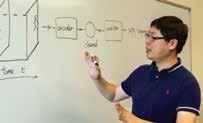
Shiwen Mao
From left: Dave Bevly, Laurence Rilett and Shiwen Mao
From left: Jack Montgomery and Brian Anderson
NSF backs Auburn-led research into rewriting rules of metallic materials
A research team led by Chanho Lee, assistant professor of mechanical engineering, received $2 million from the National Science Foundation’s Designing Materials to Revolutionize and Engineer our Future program to study how metals can be engineered to improve both durability and ductility.
The research focuses on how metals deform at the atomic level, with potential applications in hightemperature systems such as jet engines and rocket thrusters. Current nickel-based superalloys reach performance limits around 1100°C. Lee’s work aims to push that threshold to 1500°C, enabling greater efficiency, increased thrust and reduced fuel consumption.
“Leading a project of this scale carries tremendous meaning for me,” Lee said. “Securing this award with five professors from different institutions represents a strong vote of confidence in the ability of earlystage researchers to lead ambitious scientific efforts. It validates not only the scientific vision, but the ability to build a team united around a shared mission.”
CEE professor awarded $350,000 for pedestrian safety research
Huaguo Zhou, the Elton Z. and Lois G. Huff Professor of civil and environmental engineering, has been awarded $350,000 by the National Cooperative Highway Research Program to develop a standardized method for evaluating sight distance at pedestrian crossings.
Current roadway design standards focus on the driver’s perspective — how far a driver must see to stop or avoid a collision. Zhou’s research aims to establish guidelines for the visibility pedestrians need to safely judge traffic and cross.
The project will develop a data-driven framework that accounts for realworld pedestrian behavior, providing transportation agencies with a practical tool to assess crossing safety. The work builds on Zhou’s previous research using geographic information systems and LiDAR to measure sight distance at intersections.
“This is all to help bring pedestrian sight distance into everyday practice and support safer, more walkable streets nationwide,” Zhou said.
Mechanical engineering associate professor reports nanophotonics breakthrough
Siyuan Dai, the McWane Associate Professor in the Department of Mechanical Engineering, and his research team have demonstrated a new way to control light at the nanoscale — a discovery that could advance technologies ranging from optical circuits to quantum computing.
The researchers found that tiny step-like structures known as van der Waals terraces can convert one type of nanoscale light wave into another, allowing scientists to guide and manipulate light inside materials only a few atoms thick.
Using a specialized infrared microscope capable of imaging features as small as 10 nanometers, the team directly observed how these light waves transform when they encounter the step structures.
“Our work shows, for the first time, that we can intentionally convert one wave into another, creating new ways to route and process light on extremely small scales,” Dai said.
The findings were published in the December 2025 issue of Nature Communications. Co-authors include Pengyu Chen, Francis Family Associate Professor of Mechanical Engineering, doctoral candidate Byung-Il Noh and collaborators from the University of Houston and Kansas State University.
Chanho Lee
Huaguo Zhou
Siyuan Dai
Chemical engineering professor studies methaneeating microbe with DOE collaboration
Jin Wang, the Walt and Virginia Woltosz Professor of chemical engineering, is partnering with researchers at the Department of Energy’s Environmental Molecular Sciences Laboratory to investigate how a methane-consuming microbe responds to high oxygen levels.
The project focuses on Methylomicrobium buryatense 5GB1, a microbe capable of consuming methane. Wang’s team observed that when oxygen levels increase, the organism shifts into a hyper-metabolic state and begins producing large amounts of formate, a one-carbon compound with potential industrial value.
By combining laboratory data with advanced computational modeling, the team aims to understand why the metabolic shift occurs and whether the process can be controlled.
“If you think about how we could utilize the wasted methane, the ones emitted around the landfill… that not only removes the methane from the atmosphere, but also produces value,” Wang said.
Rather than relying solely on genetic modification, the research suggests environmental conditions such as oxygen levels may influence microbial metabolism in ways that could make methane conversion more efficient.
Chemical engineering assistant professor earns $298K USDA-NIFA grant to study plant water redistribution
Jean-Francois Louf, assistant professor in the Department of Chemical Engineering, has received a $298,000 grant from the U.S. Department of Agriculture’s National Institute of Food and Agriculture to study how plant roots redistribute water in soil.
The project focuses on hydraulic redistribution — the process by which plant roots move water from wetter soil to drier zones. Louf developed a transparent hydrogel-bead substrate that allows researchers to observe root behavior and real-time water movement.
Using the system, his team can identify root traits that improve redistribution in soybeans and peanuts. The research aims to predict which cultivars and plant pairings enhance water-use efficiency, inform planting strategies and train students to think quantitatively about biological systems.
The award builds on Louf’s work following a National Science Foundation CAREER Award in 2025 for research exploring how flowers process acoustic signals to increase nectar sugar concentration.
“When you see that your work could be useful for people, that’s incredibly fulfilling,” Louf said. “That’s why we do the job.”
ASEL advances faster steel construction with AISCfunded drop-in connection research
Auburn Engineering is continuing work on a new beam connection that could make steel-frame buildings faster and safer to construct as part of a two-year research project funded by the American Institute of Steel Construction (AISC).
The project builds on a national AISC competition that selected Auburn’s “drop-in” top flange connection concept for further development. The connection is designed to simplify how steel beams are joined during construction by allowing them to be lowered vertically into place and temporarily supported before bolting — a change that could save time on job sites.
Matthew Yarnold, director of the Advanced Structural Engineering Lab and associate professor of structural engineering in the Department of Civil and Environmental Engineering, is leading the research.
“This is where the research can have real-world impact and move from research into practice,” Yarnold said. “Practicing engineers will design using these connections, and contractors will build with them.”
Listen to the #GINNING podcasts with Jean-Francois Louf and Matthew Yarnold at eng.auburn.edu/ginning
Jean-Francois Louf
Jin Wang Matt Yarnold
Aerospace engineering professor to track orbits in cislunar space
Backed by a three-year grant from the U.S. Air Force Office of Scientific Research, Davide Guzzetti, associate professor of aerospace engineering, is leading a project to understand how spacecraft move through the stretch of space between Earth and the Moon — known as cislunar space — and develop better methods for tracking them.
The award, titled “An Integrated Topological Framework for Cislunar Space Domain Awareness,” supports research that could reshape how scientists and defense agencies describe, detect and predict orbital motion in one of the solar system’s most complex regions.
Guzzetti is partnering with Firas Khasawneh, assistant professor in Michigan State University’s Department of Computational Mathematics, Science and Engineering, to build mathematical tools capable of mapping orbital paths that defy traditional models.
The collaboration with Michigan State University bridges two disciplines — orbital mechanics and mathematical topology.
“That intersection is where innovation happens,” Guzzetti said.
Materials engineering assistant professor studies ‘holy grail’ of methane catalysis
Konstantin Klyukin, assistant professor of materials engineering, is investigating what scientists often call the “holy grail of catalysis” — developing stable, durable catalysts capable of converting methane from oil production into methanol and other liquid fuels.
Supported by a $110,000 Doctoral New Investigator award from the American Chemical Society’s Petroleum Research Fund (ACS PRF), Klyukin’s research could help reduce the need for methane flaring at oil production sites.
Methane is an abundant energy resource but difficult to store and transport because of its low volumetric energy density. As a result, large quantities are routinely flared into the atmosphere as waste.
Klyukin’s team will use density functional theory, molecular dynamics and machine learning to model how single-atom catalytic surfaces degrade or transform during operation.
“ACS PRF support will enable us to build domain expertise in petroleum science and train students to design catalysts with enhanced operational stability,” Klyukin said.
Engineering faculty receive NSF grant for undergraduate research program
This summer, Auburn Engineering will host students from across the country for a 10-week Research Experience for Undergraduates program funded by the National Science Foundation.
Russell Mailen, associate professor of aerospace engineering, is the principal investigator for the program, which will bring 10 undergraduate students to campus to conduct research under the mentorship of faculty affiliated with the Center for Polymers and Advanced Composites.
Kyle Schulze, assistant professor of mechanical engineering, serves as coprincipal investigator.
Participants will live on campus and work with faculty mentors while gaining hands-on research experience in advanced materials and composite technologies.
“We’re getting national recognition for what we can do,” Schulze said.
“I’m eternally impressed with all of the research that is currently coming out of this college. It is absolutely amazing work. I want people to think about us when they think about that high-caliber kind of research and education.”
Davide Guzzetti
Konstantin Klyukin
From left: Russell Mailen and Kyle Schulze
Electrical and computer engineering associate professor earns ADECA grant for 6G research
Yin Sun, the Godbold Associate Professor of electrical and computer engineering, received a $125,000 grant from the Alabama Department of Economic and Community Affairs to advance research on next-generation wireless systems designed to prioritize time-sensitive data.
Sun’s project, “Development of NextG Wireless Testbeds for Semantic and Goal-Oriented Communication,” focuses on improving how future 6G networks handle urgent information such as emergency alerts or crash warnings. Rather than transmitting all data equally, the system evaluates incoming information and prioritizes signals with the greatest safety impact.
“If you detect a dangerous situation but the information is already hours old, you can’t rescue anyone in time,” Sun said. “Our communication systems must be smart enough to recognize which information is most important and deliver it immediately.”
The project builds on Sun’s earlier research on real-time decisionmaking in networked systems, which earned a National Science Foundation CAREER Award. With support from NVIDIA, Sun’s team is developing two experimental wireless testbeds to study how time-sensitive communication performs in real-world environments.
CEE assistant professor developing early warning system for ground movement
Ali Khosravi, assistant professor of civil and environmental engineering, is leading a multi-phase research effort with the Minnesota Department of Transportation (MnDOT) to detect signs of ground movement before they cause visible damage. Landslides, sinkholes and other ground shifts often go unnoticed until they crack pavement or close highways.
Instead of reacting after damage appears, the new system uses satellite radar (InSAR), optical imagery and deep learning to scan for early warning signs of ground movement.
“InSAR has great potential for statewide monitoring because it offers broad coverage and access to historical data,” Khosravi said. “But it’s not perfect. Sentinel-1, which we’re starting with, struggles in areas with heavy vegetation or localized movement. That’s why this is a feasibility study — we’re testing how well it performs under Minnesota conditions.”
Khosravi’s team includes Jack Montgomery, the Alice H. and John M. Ozier associate professor of civil and environmental engineering and Anand Puppala, professor of civil and environmental engineering at Texas A&M University.
Chemical engineering professors part of $300K methane reduction project
Chemical engineering professors Jin Wang and Peter He are part of a $300,000 National Science Foundation-funded research project aimed at developing a biological system to remove methane from the atmosphere.
The project focuses on building a reactor that pulls ambient air through a system containing methaneconsuming bacteria. The approach could help reduce methane emissions from hard-to-control sources such as oil fields, landfills and coal mines, helping slow near-term global warming.
“Methane has a relatively short lifetime in the atmosphere, so methane removal can make a significant contribution to reducing global warming compared to carbon dioxide (CO2) removal,” Wang said.
Wang and He are developing a “dry” biofilm bioreactor designed to overcome methane’s low solubility in water. By eliminating the liquid phase, the system has demonstrated methane removal rates five times higher than previously reported during laboratory testing.
Following successful lab demonstrations, the researchers plan field testing and are exploring a modular, container-based system that could be deployed at remote sites.
Yin Sun
Ali Khosravi
From left: Jin Wang and Peter He
Listen to the #GINNING podcast with Ali Khosravi at eng.auburn.edu/ginning
NASA
astronaut and Auburn alumna Jan Davis honored with IQLA Lifetime Achievement
Award
Jan Davis ’77 mechanical engineering, and former NASA astronaut, was honored with the 2025 IQLA Lifetime Achievement Award at the 32nd annual International Quality of Life Awards Dec. 8 in Washington, D.C.
Davis has inspired generations through her career in space exploration and leadership. Over more than a decade at NASA, she served as a mission specialist on three space shuttle flights, spending more than 670 hours in space.
“I’m most appreciative and honored to receive this award, and I’m so glad the College of Human Sciences acknowledges those who contribute to the quality of life for others,” Davis said. “When I was selected to be an astronaut, the first person I called was my mother, who told me, ‘Put God first, then your country and go for it.’”
Davis’ accolades include being a member of the Alabama Engineering Hall of Fame and the Alabama Aviation Hall of Fame. In 2002, she was given the Presidential Rank of Meritorious Executive. Additionally, she has received NASA’s Exceptional Service Medal, Space Medal and Outstanding Leadership Medal.
Listen to the #GINNING podcasts with Jan Davis and Mario Eden at eng.auburn.edu/ginning
NCAT director named inaugural Wilson Distinguished Professor
Randy West, director of the National Center for Asphalt Technology (NCAT), has been named the inaugural holder of the Peter and Lisa Wilson Distinguished Professorship in the Samuel Ginn College of Engineering.
Established through a gift from Peter and Lisa Wilson, the endowed professorship supports faculty who demonstrate excellence in teaching, research and service while advancing NCAT’s mission to improve asphalt pavement technology through applied research and education.
West has led NCAT since 2007 and is widely recognized for his contributions to asphalt materials engineering. His work has influenced industry practices and transportation agency standards for reclaimed asphalt pavement, warm-mix asphalt, performance-based testing and sustainable pavement technologies.
“This professorship reflects a long-standing commitment to research that delivers practical, implementable solutions for the asphalt industry and public agencies,” West said. “I’m deeply grateful to Peter and Lisa Wilson for their support of NCAT’s mission and the people who carry it forward every day.”
Auburn Engineering dean appointed vice chair of AIChE Foundation Board of Trustees
Mario Eden, dean of engineering and the Joe T. and Billie Carole McMillan Chair, has been named vice chair of the Board of Trustees of the AIChE Foundation, the philanthropic arm of the American Institute of Chemical Engineers.
His appointment, which began Jan. 1, positions Eden in a leadership role supporting the foundation’s efforts to expand scholarships, professional development programs and global initiatives that advance the chemical engineering profession. He will serve two years, with a planned ascension to chair on Jan. 1, 2028.
As vice chair, Eden will continue to help lead fundraising efforts for AIChE’s Summer School for Chemical Engineering Faculty Endowment.
“The strength of our profession depends on how intentionally we cultivate leadership and innovation,” said Eden, who was elected an AIChE fellow in 2024. “I’m honored to serve in this role and to help guide philanthropic efforts that will broaden participation, elevate excellence and position chemical engineers to make an even greater global impact.”
Randy West
From left: Susan Hubbard, Robert Gates, Jan Davis and Christopher B. Roberts
Mario Eden
Chemical engineering professor elected to American Association for the Advancement of Science Class of 2025 Fellows
Elizabeth Lipke, the George E. and Dorothy Stafford Uthlaut Professor in the Department of Chemical Engineering, has been elected a fellow of the American Association for the Advancement of Science (AAAS), one of the nation’s highest scientific honors.
Lipke was recognized for “seminal contributions to cardiovascular and cancer tissue engineering.” Her research focuses on developing reproducible models of heart and cancer tissues to study how different cell types interact.
She has authored more than 40 publications and 2,000 citations, and co-founded VivoSphere, a startup that developed a 3D cell encapsulation device for cancer drug testing.
“As engineers, it is our role not only to use our tools to understand science, but to apply science to make the world a better place,” Lipke said.
Listen to the #GINNING podcasts with Elizabeth Lipke and Masoud Mahjouri-Samani at eng.auburn.edu/ginning
FLICKR PHOTO GALLERY eng.auburn.edu/flickr ONLINE MAGAZINE eng.auburn.edu/magazine
ECE associate professor named NAI senior member
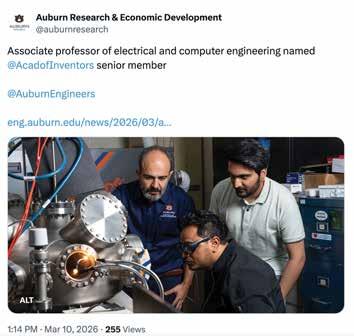
Masoud Mahjouri-Samani, the Godbold Associate Professor in the Department of Electrical and Computer Engineering, has been named a senior member of the National Academy of Inventors (NAI).
The recognition honors academic inventors who have demonstrated success in patents, licensing and technology commercialization while advancing innovation. Mahjouri-Samani was cited by the NAI for “remarkable achievements as an academic inventor and a rising leader in the field.”
Mahjouri-Samani also received recognition from FlexTech, a SEMI Technology community, which named him an environmental sustainability champion at the FLEX Conference in Phoenix.
He directs the LASE-END Lab in Broun Hall and founded NanoPrintek, a startup focused on sustainable manufacturing technologies. His research spans advanced materials, nano-scale additive manufacturing and high-resolution dry printing technologies, including the development of a dry, ink-free printing system designed to simplify electronics manufacturing.
“I’m honored and humbled by the recognition from these organizations,” Mahjouri-Samani said. “When you approach research with an inventor’s mindset, it leads to real outcomes.”
Aerospace engineering professor earns fourth Abe Zarem Educator Award
Joseph C. Majdalani, the Hugh and Loeda Francis Chair of Excellence in the Department of Aerospace Engineering, received the Abe M. Zarem Educator Award from the American Institute of Aeronautics and Astronautics (AIAA) for a record fourth time. The award is presented annually to two faculty members worldwide for excellence in student mentorship and education.
Since joining Auburn in 2013, Majdalani has advised 20 doctoral students and mentored graduate researchers whose work has earned 40 best paper and presentation honors, including 10 AIAA Best Paper Awards.
He also received the 2025 Solid Rockets Best Paper Award for research co-authored with a former student, later published in the International Journal of Heat and Mass Transfer.
A fellow of AIAA and the American Society of Mechanical Engineers, Majdalani has authored or coauthored more than 360 publications in rocket propulsion, fluid dynamics and analytical modeling.
Elizabeth Lipke
Joseph C. Majdalani
Masoud Mahjouri-Samani
AUTRI director receives national transportation lifetime achievement award
Auburn University Transportation Research Institute (AUTRI) Director Larry Rilett received the Council of University Transportation Centers Lifetime Achievement Award for Transportation Professional and Public Service.
The award recognizes individuals whose careers have substantially advanced transportation research and education through national, professional and public service.
Rilett was recognized for accomplishments in research, teaching and outreach, serving as principal or co-principal investigator on more than 60 projects, securing $65 million in funding and producing more than 250 publications. He has also supervised more than 70 students and received two teaching awards.
Rilett joined Auburn in 2021, helping drive growth in transportation research through the founding of AUTRI and doubling the institute’s technical outreach activities. He also led initiatives to collaborate with the Federal Railroad Administration and the Federal Motor Carrier Safety Administration.
“I am a big believer in the power of our public higher education institutions to change lives,” Rilett said in his acceptance remarks.
Three Auburn Engineering professors earn university Faculty Awards
Three Auburn Engineering faculty members were recognized for leadership, research, scholarship and service at the 19th annual Auburn University Faculty Awards in November.
Xiao Qin, professor and director of graduate programs in the Department of Computer Science and Software Engineering, received the Gerald and Emily Leischuck Endowed Presidential Award for Excellence in Teaching.
Jeffrey LaMondia, the Elton and Lois Huff Professor in the Department of Civil and Environmental Engineering, earned the President’s Award for Distinguished Faculty Leadership, becoming the only Auburn faculty member to receive the honor in 2025.
Virginia Davis, the Daniel F. and Josephine Breeden Professor in the Department of Chemical Engineering, received the Creative Research and Scholarship Award in the Sciences, Biomedical Sciences, Engineering and Agriculture category.
“We are extremely proud of Drs. LaMondia, Davis and Qin for their outstanding contributions to impactful research, excellent teaching and skillful leadership that help shape the future of Auburn University,” said Mario Eden, dean of engineering.
CEE professor honored with ACI Boase Award
Andrzej Nowak, Brasfield & Gorrie Professor of civil and environmental engineering, was awarded the American Concrete Institute Arthur J. Boase Award, recognizing his outstanding research contributions to structural concrete and advancements in concrete technology.
Nowak is a pioneer in developing design codes and improving structural safety through the calculation of load-carrying capacities and safety margins.
Nowak was also named a Precast/ Prestressed Concrete Institute Fellow in 2024 for his impact on the precast industry. He credits Auburn’s students, faculty and collaborative environment for fueling his commitment to research and teaching.
David Timm, chair of the Department of Civil and Environmental Engineering, praised Nowak for his dedication to the structural engineering field and his research on the design of concrete structures.
“As our former department chair, his accomplishments are truly remarkable,” Timm said. “We are extremely proud to have him on the CEE faculty.”
Listen to the #GINNING podcasts with Jeffrey LaMondia at eng.auburn.edu/ginning
↖
From left: David Noyce, Larry Rilett and Yinhai Wang
From left: Xiao Qin, Jeffrey LaMondia and Virginia Davis
Andrzej Nowak
Maj. Gen. James Livingston takes a moment to reflect on the objects donated to Auburn University, including his Medal of Honor, that are being displayed in Foy Hall on the Wall of Heroes.
Celebrating 60 Years of Service
The Auburn Alumni Engineering Council has been helping shape the college for decades
By Austin Phillips
They’re CEOs, founders and presidents of companies.
They’re doctors, lawyers and leaders of industry.
They’re Auburn men and women, and approximately 185 of them make up the Auburn Alumni Engineering Council.
The Auburn Alumni Engineering Council was established in 1965 and held its first meeting in 1966. The council is a group of Auburn Engineering alumni working together to support the vision and goals of the Samuel Ginn
College of Engineering. The council meets twice annually to assist and advise the college, and its members serve on committees geared to the mission and operation of the college. The council provides leadership and participation in academics, development, governmental affairs, public relations, research and more.
Council members reside in 25 states and even two countries outside of the U.S., including Canada and Australia. They also represent each of the college’s eight departments and three majors that have been phased out.
Maury Gaston, ’82 mechanical engineering who serves on the council’s Executive Committee as the State of Alabama Engineering Hall of Fame liaison, said he got involved to give back as others had done for him while he was a student.
“Well, my dad said, ‘When you get some Auburn sand in your shoes, you never shake it all out,’ and I wouldn’t want to shake it out,” said Gaston, who served three years as chair of the council.
“Every person with an Auburn Engineering degree, every person with an Auburn degree, is the beneficiary of
Auburn men and women who came before him or her. So, I’m all about being involved in giving back no matter what the organization is. Not only that, but you also get to meet some really, really nice people. Often, people love Auburn and they come together and work together for the betterment of Auburn,” he added.
Gaston’s involvement with the council came at the recommendation of one of the original members, Arthur Edge, who nominated Gaston for membership.
During his 25 years as a member of the council, he has served as chair of committees and of the whole council,
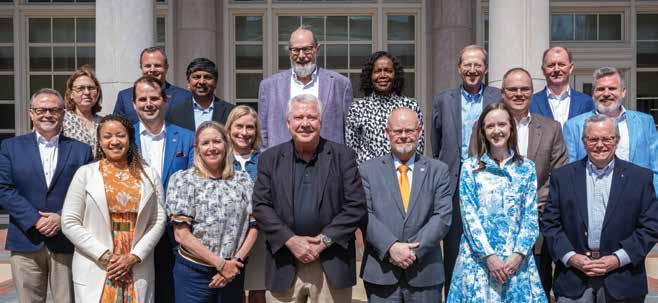
Top: The 2024-26 chair, Gerald Pouncey, welcomes the council to the 2026 spring meeting in April. Bottom: Members of the 2026 executive committee and administrators pose outside of the Shelby Center following the spring executive committee meeting.
but it’s those relationships with members of the past that he cherishes the most.
“I was very fortunate to have made acquaintances with Arthur Edge, Brooks Moore and many of those original members and have a connection to something that was the birth of a council I’m now a part of,” Gaston said.
“And I wouldn’t trade that for the world. I remember as I approached my retirement, I’d be walking down the hall
at work and all these giants of our corporate history and legends of Auburn Engineering, they would come to my mind when I passed by their old offices. I think it’s very important to remember where you came from and who contributed to your path.”
Beverly Banister, ’83 chemical engineering who retired as the EPA Deputy Regional Administrator for Region 4, serves as the chair of the council’s Cultivating the Auburn
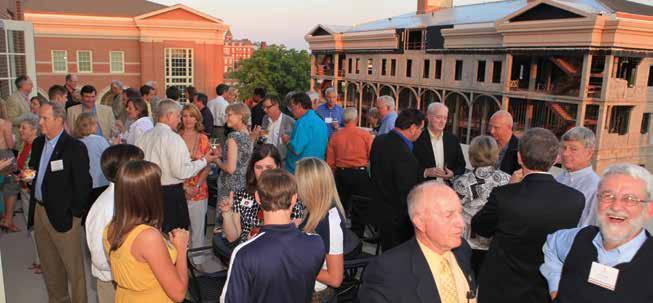
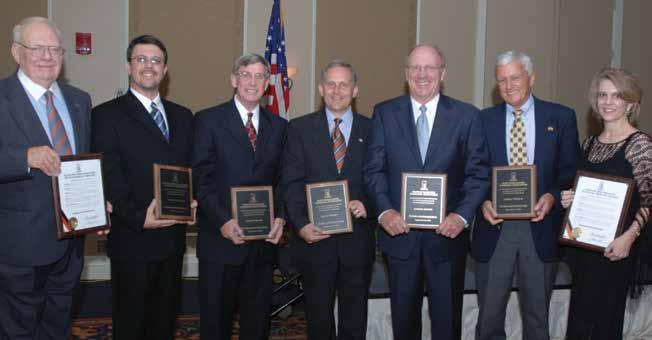
Top: Members of the council meet for the spring dinner in 2010 while the Woltosz Laboratory is under construction. Bottom: Recipients of the council’s 2005 awards pose for a group photo.
Creed Committee which focuses on aligning the Auburn experience with the values espoused in the creed.
“We are all blessed to have gotten a degree from Auburn, and I think that to have the opportunity to give back, to reach back, to share the knowledge, the skills and the experiences that we have had over our lifetime with these students, that’s a privilege,” Banister said. “To see the investment come alive in students, that is life changing. And that’s what we do. The council is about engaging, connecting and reinforcing that this is the best student-centered engineering experience in America.”
Bringing together people from all engineering majors, all backgrounds, from all over the nation, is what gives the council its strength, Banister said.
“I love working with other alumni. I love serving alongside other members of the college and advancing the work that is underway here,” Banister said. “One of the reasons I love being on the council is because we invest quite a bit of time. It’s a working council. You’re
AUBURN ALUMNI ENGINEERING COUNCIL 2026-27 EXECUTIVE COMMITTEE
Larry Monroe Chair
Pam Boyd Vice Chair/Treasurer
Gerald Pouncey Past Chair
Brad Christopher Second Past Chair
Steven Speaks Academics and Student Experience
Ashley Robinett Advancement
Jeff Stone Capital Campaign
Beverly Banister Cultivating the Auburn Creed
Mike Swinson Government Affairs
Kenneth Kelly Nominating
Casey Robinson Troutman Public Relations
Mark Miller Research
Maury Gaston State of Alabama Engineering Hall of Fame
Emily Traylor Young Alumni Council Liaison
Brad Corson At Large
Metrick Houser At Large
Keith Jones At Large
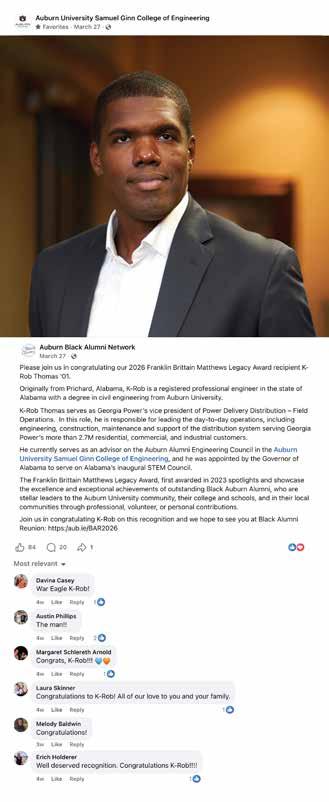
K-Rob Thomas At Large
Top: Mario Eden, dean of engineering, (center) poses with former council chairs Kennth Kelly (left) and Maury Gaston (right). Bottom: New council members who were installed in the spring are (L-R): Jeff Haars, Reggie Spivey, John Prunkl, Christa Musgrove, Russ Green, Kevin Gammill and Jason Gallaspy.
actually engaged, connected and really helping to make a difference. And one of the things that I absolutely love is that when you invest that time, you have confidence that you’re going to see a return on that time and the return on that time is taking those ideas and those perspectives and using those to inform the direction and policies going forward.”
Mario Eden, dean of engineering who previously served as chair of the Department of Chemical Engineering and a faculty member for nearly the past 25 years, has seen the impact of the council on many levels, especially now in his current role.
“The council is a phenomenal source of support, of advice, of direction, both strategic and tactical, for the college. It’s just an inspirational group of folks who are very, very successful and extremely dedicated alumni who really care deeply about this college, our faculty, our students and our staff,” Eden said.
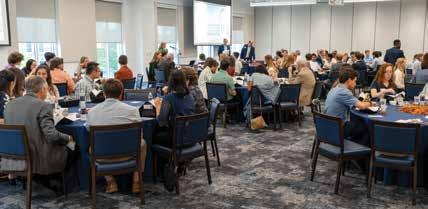
“Having a dedicated group of alumni for 60 years, serving in an advisory capacity, is just tremendous. I don’t know of any other college that has that. It shows a level of dedication and pride that others are envious of, and it really makes a tremendous impact on our day-to-day activities, because we know we have that steady hand
Top: Members of the council’s Academics and Student Experience Committee meet prior to the spring meeting in April. Bottom left: Members of the council’s Research Committee meet prior to the spring meeting in April. Bottom right: Mario Eden, dean of engineering, addresses the council during the dean’s report as part of the April meeting.
that is helping guide us and has the institutional memory going back for six decades. Many of my dean colleagues are truly envious of having something like that,” he added.
Some examples of how the council has supported, rewarded, inspired and encouraged the college’s students, faculty and staff include a working dinner with the student organization leaders; hosting the college’s research awards banquet and the council’s alumni awards banquet; sponsoring numerous awards through the college’s spring awards ceremony; namings in facilities; participating in dean selection committees; participation in the college’s accreditation process and much more.
“They have direct touchpoints with our students through a variety of activities with our organizations, our students in general, where they host panels and informative events. For our faculty, they provide guidance, input and access to potential research projects and feedback
on direction,” Eden said. “And then they serve a vitally important role in our accreditation process. In fact, the strength and commitment of our alumni base is one of the things that ABET highlights every time we’ve gone through the process.”
It’s that level of support, the bonds made between the alumni and the college they love, that Eden appreciates the most.
“These are people who become your friends. I think it makes it extra special because when the council members become friends, you can really trust their desire to help you and that they’ll give it to you straight and unfiltered. That speaks to the passion they have for the college, but also their genuine desire to help move our college forward and having that trust on an individual personal level. It just means the world,” he said.
SCAN THE QR CODE
Watch the video about 60 years of council
Members of the council and student organization leaders meet, mingle and learn from each other every spring during a working dinner on the Thursday evening prior to the council weekend meetings.
KATIE WOLFE / '24
Electrical Engineering and Theatrical Design
Walt Disney Imagineering / Ride Controls
It’s my JOB
By Nick Bowman
Why Auburn? What led you to such a unique double major?
I chose Auburn because it was the only school where I felt like I didn’t have to pick just one path. I’ve been drawn to engineering since I was a kid taking apart my dad’s toaster, but as I got older, I started to fall in love with the arts, too.
Auburn gave me the space to explore both seriously. Majoring in electrical engineering made sense because I’ve always loved problem-solving
and building things, but I didn’t want to lose the storytelling side of what I enjoyed.
That’s what led me to double major in electrical engineering and theatrical design. Entertainment engineering, in particular, sits right at the intersection of both my passions. It’s technical, but it’s also emotional and narrative-driven.
Auburn didn’t just “put up with” my two majors — it supported me class-by-class and through every scheduling conflict.
What do you do for Disney?
I work in ride engineering, where I get to contribute to the control systems that help bring attractions to life.
Day-to-day, that can involve coordinating between different disciplines, selecting hardware components, thinking through how systems interact and helping ensure everything comes together in a way that’s both functional and aligned with the creative vision.
What attracted you to working for Disney?
What attracted me to Walt Disney Imagineering is the level of intentionality behind every detail. I started as an intern, and I actually applied for that internship after riding Cosmic Rewind at Walt Disney World for the first time. My sister and I got off the ride and started talking about how fun it must be to design attractions, and now I’m here. For me, it boils down to the fact that at Walt Disney Imagineering, I get to design stories. Growing up, I was fascinated by the way theme parks made me feel, and now I get to be part of the team that creates that experience for other people.
What is it like combining the work of engineering with entertainment?
Getting to combine the arts and engineering is one of the most rewarding parts of what I do. Engineering gives you the tools to make something that works reliably and safely, while the arts make people feel something while they’re there. When you combine the two, you’re creating experiences that are both technically precise
and emotionally impactful. That’s themed entertainment. In themed entertainment and live experiences, you’re constantly balancing those two “opposites.”
You have to design a system that functions flawlessly for hundreds of thousands of guests, but it also has to disappear into the story. My goal for everything I design is for no one to ever think about it. I want them to just feel the result. That mix of feeling and technology is what makes the work so exciting.
How did Auburn Engineering prepare you for this work?
Auburn Engineering gave me a really strong technical foundation, but just as important, it taught me how to think through my designs with care and intention. A lot of the work I do now involves solving problems that don’t have a clear answer, working across multiple different disciplines and adapting quickly when things change.
Through the coursework, labs and projects I did at Auburn, I learned how to break down complex problems, communicate my ideas clearly and collaborate across a team. Auburn taught me how to
move between detailed engineering work and big-picture thinking, which has been incredibly valuable for me in themed entertainment.
What advice would you give to students and young alumni who are considering careers in fields that might seem unconventional to engineers?
Don’t feel like you have to fit into some predefined version of what an engineer is supposed to be. Some of the most interesting and impactful work happens at the intersections between different fields and disciplines.
If you’re interested in something unconventional, lean into it. Build skills in all areas, not just engineering, and look for ways to connect them. Most importantly, don’t be afraid to create your own path if one doesn’t already exist. Once you learn how to communicate what you want to do in a way that makes sense to people outside your field, doors start to open.
There’s a lot more room in engineering than people realize, and a unique combination of interests can end up being your biggest strength. Listen to
Student / BE THE CREED /
By Dustin Duncan
I BELIEVE THAT THIS IS A PRACTICAL WORLD AND THAT I CAN COUNT ONLY ON WHAT I EARN. THEREFORE, I BELIEVE IN WORK, HARD WORK.
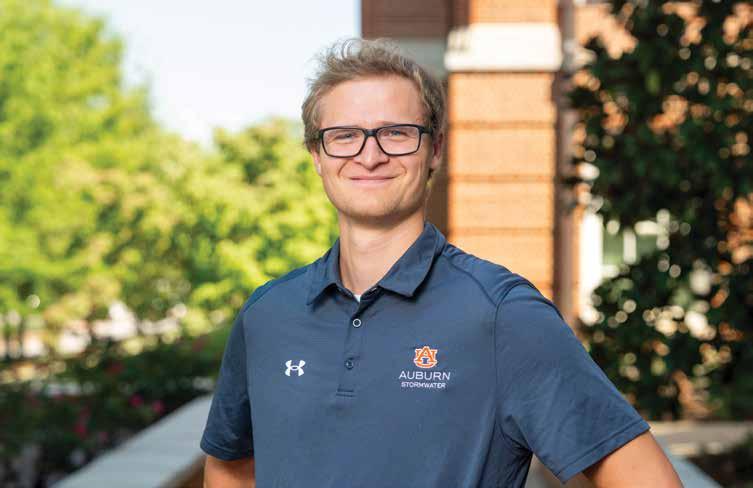
AIDAN BOSMAN
Civil and Environmental Engineering Graduate Research Assistant
Aidan Bosman has always been drawn to water — from growing up in drought-prone Colorado to pursuing civil engineering research that addresses pressing environmental challenges.
Now a graduate research assistant at Auburn University’s Stormwater Research Facility, he is applying that interest to projects designed to improve water quality and strengthen communities.
After earning his bachelor’s degree at Iowa State University, Bosman was introduced to Auburn through a personal connection. Recruited by Michael Perez, Brasfield & Gorrie Associate Professor and director of the Stormwater Research Facility, he saw an opportunity to turn his interests into hands-on research.
“I’ve always loved figuring things out and solving problems,” he said. “Stormwater research at Auburn was a perfect fit.”
That work is already making an impact.
Through his involvement in the city of Auburn's Hickory Dickory Park restoration project, Bosman has helped restore creek banks and implement stormwater control measures such as bioretention cells and swales — all aimed at reducing erosion and improving water quality at the popular park.
“Getting hands-on experience with a project like this gives you a deeper understanding of what it means to do work with real-life impact,” he said.
Listen to the #GINNING podcast with Aidan Bosman at eng.auburn.edu/ginning
Faculty / BE THE CREED / By
Dustin Duncan
I BELIEVE IN EDUCATION, WHICH GIVES ME THE KNOWLEDGE TO WORK WISELY AND TRAINS MY MIND AND HANDS TO WORK SKILLFULLY.
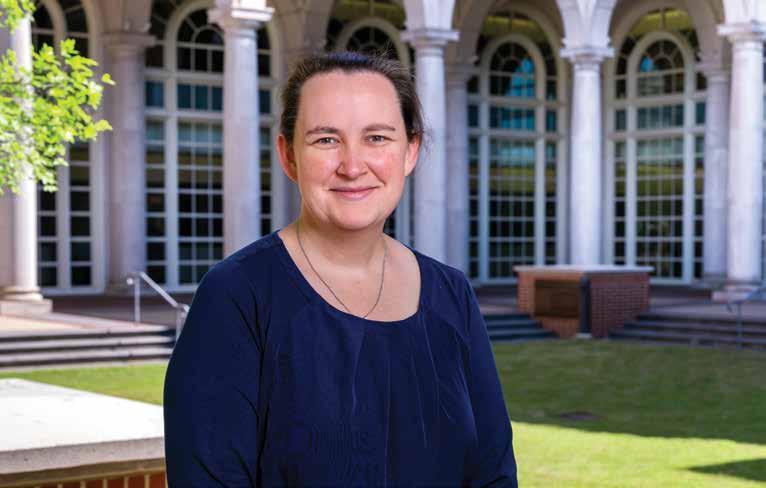
ERIN GARCIA
Industrial and Systems Engineering Senior Lecturer
At 12 years old, Erin Garcia didn’t just visit a Honda plant — she found a path that would shape her future.
Years later, that same clarity guides Garcia, now a senior lecturer in the Department of Industrial and Systems Engineering. But engineering was only one part of her path. She always wanted to teach — a goal she’s held since second grade — just not in a K-12 classroom.
By the time she earned her bachelor’s degree at Georgia Tech, she realized she didn’t have to choose. A career in higher education allows her to combine engineering with teaching at the collegiate level.
“I get to solve fun puzzles and help other people see why they’re fun too,” Garcia said.
That balance defines her classroom.
She says industrial engineering is about modeling complex problems and adapting them to practical constraints.
For Garcia, the most rewarding part is guiding students from frustration to understanding.
“In office hours, you can see the moment it clicks,” she said. “They go from ‘I don’t get this’ to being excited about it.”
Garcia has taught more than a dozen different courses at Auburn and developed new ones, including a healthcarefocused class shaped by industry input.
“I get to do things that I love and help other people see why they should love it too,” she said.
Staff / BE THE CREED / By
Joe McAdory
I BELIEVE IN HONESTY AND TRUTHFULNESS, WITHOUT WHICH I CANNOT WIN THE RESPECT AND CONFIDENCE OF MY FELLOW MEN.
EMMANUEL WINFUL
Engineering Administration
Engineering Health and Safety Manager
“Safe engineering is good engineering,” is more than a catchphrase to Emmanuel Winful. It’s the mindset that reshaped how Auburn Engineering approaches research.
“Striving for safe engineering doesn’t inhibit research progress,” said Winful, the college’s health and safety manager since 2018. “Safe engineering is finding ways to do things better and safer.”
Winful’s commitment to prevention began long before Auburn. Growing up in a Ghanaian mining town, he saw how unsafe practices led to injuries and unexplained illnesses. His experience sparked an interest in occupational safety and ultimately shaped his philosophy.
That perspective anchors an honored safety culture at Auburn Engineering, earning the 2024 Campus Safety, Health and Environmental Management Association Innovation Award and recognition as a National Safety Council Green Cross Award semifinalist — rare for an academic unit competing against major corporations.
The foundation for this success? Relationships.
“It’s important to build trust with colleagues and let them know there might be hazards in the processes they perform and what can be done to improve them,” he said. “Safety is everyone’s responsibility, and we are cultivating and sustaining cutting-edge research under the umbrella of safety.
Listen to the #GINNING podcast with Emmanuel
at eng.auburn.edu/ginning
Winful
Alumni / BE THE CREED / By Jeremy
Henderson
I BELIEVE IN A SOUND MIND, IN A SOUND BODY AND A SPIRIT THAT IS NOT AFRAID.
KRISTIN MCGHEE '18 & '20
Mechanical Engineering
Regional Sales Support Engineer at Schneider Electric
If the enrollment office at the university starts to get a surge in applications from Nashville — Auburn North, she calls it — go ahead and call it the Kristin McGhee effect.
From her social media to her wardrobe, the doubledegreed Auburn Engineer — a bachelor’s in mechanical engineering in 2018 and a master’s in materials engineering in 2020 — is a walking, talking billboard for Auburn Engineering.
“My mom signed me up for an Auburn tour when I was pretty locked on Clemson,” McGhee said. “But we were really blown away. I probably had one of the best
student experiences you can have. I was involved, I was everywhere, and I’m still involved and everywhere.”
As a student, the Alpharetta native belonged to Tri-Delta, swam for the university’s club team, marched with the AUMB drumline (alongside future husband and fellow Auburn alum Jacob McGhee, ‘18, ‘20 civil engineering), and served as Auburn chapter president of the American Society of Mechanical Engineers. As a graduate, she serves as president of the Greater Nashville Area Alumni Club and sits on the university’s Young Alumni Council.
“I just see these opportunities and I think, yeah, anything I can do to give back to Auburn,” she said. “Attending Auburn is the best decision I have ever made.”
Listen to the #GINNING podcast with Kristin McGhee at eng.auburn.edu/ginning
follow us
@auburnengineering
@auburnengineers
@auburnengineers
@auburnengineers
@auburnengineering
There’s always something happening at the Samuel Ginn College of Engineering, and the easiest way to stay current is to follow us on social media. From Facebook to LinkedIn, Instagram to X, conversations are sparked with current and former Auburn engineers and those interested in the groundbreaking engineering research happening on the Plains. JOIN US! #auburnengineering #wareagle ��
"Great engineering school producing top notch engineers."
— Rebecca P. Smith
Sabit Adanur, professor of mechanical engineering, was elected to the Editorial Advisory Board of Textile Science and Research Journal (Estonia) in September 2025.
Symone Alexander, assistant professor of chemical engineering, was selected to participate in the National Academy of Engineering’s China–America Frontiers of Engineering Symposium.
Gregory Harris, chair of the Department of Industrial and Systems Engineering and director of ICAMS, is serving on the awards committee for the Society of Manufacturing Engineering.
Hunter Burch, assistant professor of electrical and computer engineering, was elected secretary of Commission G: Ionospheric Radio and Propagation of the U.S. National Committee for the International Union of Radio Science in January.
Lorenzo Cremaschi, the Burt professor of mechanical engineering, was recognized as an American Society of Heating, Refrigerating and Air-Conditioning Engineers Fellow for “having attained distinction in the arts and sciences of heating, refrigeration, air conditioning or ventilation and having made substantial contributions to these arts and sciences.”
Virginia Davis, the Daniel F. and Josephine Breeden professor of chemical engineering, was honored with the university’s Creative Research Scholarship Award in the Sciences, Biomedical Sciences, Engineering and Agriculture category.
Pan He, assistant professor of computer science and software engineering, was appointed associate editor of IEEE Transactions on Image Processing and area chair for the Conference on Computer Vision and Pattern Recognition, two leading publications and conferences in the field.
Zhihua Jiang, the Auburn Pulp and Paper Foundation associate professor of chemical engineering, was elected to the 2026 Technical Association of the Pulp and Paper Industry Fellows Class. He also received an additional one-year $119,392 project from the U.S. Department of Agriculture for his project titled “Utilization of Soybean Hulls in Animal Feed Binder Applications.” The project received initial funding of $562,425 from USDA-ARS in 2020, and following its successful completion in 2024, USDA-ARS has continued to support it annually.
Bosen Lian, assistant professor of electrical and computer engineering, was recognized as an outstanding associate editor in 2025 for IEEE Transactions on Neural Networks and Learning Systems.
Elizabeth Lipke, the George E. & Dorothy Stafford Uthlaut professor, was elected to the American Association for the Advancement of Science Class of 2025
Listen to the #GINNING podcasts with Symone Alexander, Hunter Burch, Gregory Harris, Elizabeth Lipke and David Timm
Fellows. Her citation reads, “For seminal contributions to cardiovascular and cancer tissue engineering, including biomaterial design to support vascular re-endothelialization, advancing engineered cardiac tissue and cardiomyocyte biomanufacturing, and in vitro recapitulation of the tumor microenvironment.”
Shiwen Mao, professor and Earle C. Williams Eminent Scholar Chair and director of the Wireless Engineering Research and Education Center, received the Best Paper Award at the International Conference on Computing, Networking and Communications, co-authored a paper that won a Best Student Paper Award at the AAAI Conference on Artificial Intelligence Workshop on Machine Learning for Wireless Communications, published the book Positioning and Sensing Over Wireless Networks, was appointed director of magazines and vice chair of the Publications Council of the IEEE Communications Society for 2026–27, and was named a Clarivate Highly Cited Researcher.
II Signaling in Smooth Muscle Dysfunction in Hypertension.”
Saravanan Ramiah Shanmugam, assistant research professor of biosystems engineering, has been awarded a $591,000 grant from the U.S. Department of Agriculture’s National Institute of Food and Agriculture (USDA NIFA) as principal investigator. The project, titled “Upcycling Nutrients from Poultry Slaughterhouse Solid Wastes into Black Soldier Fly Larvae Feed Rich in Antimicrobial Peptides,” focuses on developing sustainable methods to repurpose agricultural waste into high-value feed products.
Missie Smith, assistant professor of industrial and systems engineering, has been appointed associate editor of IEEE Transactions on Visualization and Computer Graphics and selected by the International Symposium on Mixed and Augmented Reality (ISMAR) as the 2026 Scientific and Technical Papers Chair.
Jillian Maxcy-Brown, assistant professor of civil and environmental engineering, received the Best PolicyOriented Paper Award from the American Society of Civil Engineers’ Environmental & Water Resources Institute for research on statewide wastewater affordability.
Panagiotis Mistriotis, assistant professor of chemical engineering, was recognized as an Association of the Advancement of Blood & Biotherapies Foundation Scholar, one of only seven scholars to receive this recognition in 2025. He is also the principal investigator of a one-year, $77,000 American Heart Association award titled “Interplay of Mechanical and Angiotensin
David Timm, the Elton & Lois G. Huff Eminent Scholar Chair and chair of civil and environmental engineering, was elected president of the Association of Asphalt Paving Technologists, with his term running from March 2026 to March 2027.
Fan Yin, assistant director and associate research professor at the National Center for Asphalt Technology, received the 2026 Outstanding Academic Member Award from the Academy of Pavement Science and Engineering and was appointed to the Transportation Research Board’s Standing Committee on Asphalt Pavement Materials.