SHOW STORYLINE
Our performance begins with the men entering the fields to inspect the crops, only to discover that the harvest has failed. A wave of sorrow and defeat spreads through the village. Historically, in many West African societies, a failed harvest prompted urgent responses to prevent starvation. Communities relied on strategies such as diversifying crops, using stored grain reserves, turning to drought-resistant foods, and in extreme cases, migrating or entering forms of servitude. This moment reflects not only physical loss, but emotional and social strain.
As fear takes hold, the village erupts into panic - there is fighting, scrambling, and unrest driven by uncertainty. This chaos is suddenly silenced by the powerful entrance of Kakilambe, a sacred figure known in West African tradition as a messenger of prophecy and truth. Through song and presence, Kakilambe restores order. The villagers turn to prayer and receive a prophecy: a successful harvest is coming. Renewed with hope, the village is called back to action.
The men return to the fields, while the women stand with empty baskets - symbolizing both need and faith. We present Kassa, beginning with song, to depict the labor of planting and cultivating the land. This section embodies unity, discipline, and the shared effort required to rebuild.
As Kassa concludes, the village drummers transition into Dibon, building intensity and signaling a shift in energy. This culminates in a dramatic thunder and rainstorm - representing nature’s response and the long-awaited nourishment of the land.
When the storm passes, the men return to the fields and discover a thriving, successful harvest. This moment is expressed through Lafee, celebrating abundance and the reward of perseverance.
The joy continues as the village erupts into celebration with Soboninku. Because of the big harvest, the mask is invited in to bring the community together through dance with its playful and energetic movements. The celebration continues with Kuku, a dance of gratitude and communal pride. The once-empty baskets are now full, symbolizing not just physical provision, but restored hope and unity and celebration, an elder gathers the community and offers final words of gratitude for the harvest and the journey that led to it. This reflection transitions into the finale, He Lives in You, reinforcing our central message: the strength, resilience, and power to manifest abundance has always lived within us.
BIOS
Tony Browne, Founder and Director- Tony is a performing artist, musician, instructor, and engineer. He received his Bachelors of Science in Electrical Engineering from Prairie View A&M University. His Trinidad and Tobago roots, and the African influence on the Caribbean have inspired him to learn and study the culture of Africa and the African Diaspora. Tony has traveled extensively in order to continuously grow his knowledge and experience with African Music, Dance, and Culture. He has intensively studied under the tutelage of over 20 master teachers that currently reside across West Africa, the United States, Canada, and the Caribbean. He has traveled to West Africa on numerous occasions to study directly under master teachers and directly engage with the people and culture.
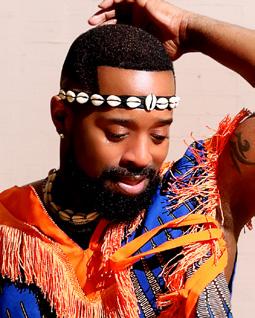
Terrance Thomas is a performer, choreographer, educator, drummer, and artistic director whose work celebrates the power of music, movement, and cultural storytelling. As a native of Waterloo, Iowa, Terrance was introduced to music and dance at an early age, laying the foundation for a lifelong passion for the performing arts. Terrance continued his artistic training at Columbia College Chicago, where he discovered traditional West African dance under the mentorship of Malik Camara of Muntu Dance Theatre. After relocating to Dallas in 2010, Terrance joined Bandan Koro African Drum and Dance Ensemble in 2011. Beginning as a dancer, he has since evolved into a dun dun player, instructor, choreographer, and now serves as the ensemble’s Artistic Director. In 2017, he directed his first full-length production, The Awakening, and has since helped shape the company’s artistic vision through major productions including Our Odyssey (Creative Director/Choreographer), Guinea Fare (Choreographer), and The Griots (Choreographer).
Ande Jones, is a founding member of Bandan Koro African Drum and Dance Ensemble and has been actively involved since its inception in 2009.
Jalil “JB” Williams is a Chicago native whose connection to African arts and culture began through his mother. Introduced to African artistic traditions at an early age, Jalil developed a lasting appreciation for music, culture, and community. He began performing with Bandan Koro in 2014 and became a member in 2016. His travels as a flight attendant deepened his love of cultural connection, which he continues to share through performance.
Edward Dogbe is from Ghana, West Africa, where he began dancing at age 10 with the Good News Cultural Group. He later joined a group founded by his older brother, serving as Artistic Director while performing as both drummer and dancer. After training in Dubai as a Drum Circle Facilitator, Edward relocated to Texas, rehearsed with Bandan Koro as a guest drummer in 2018, and became a member in 2019.
Kairi Lollar is a multi-instrumentalist, vocalist, and percussionist from Philadelphia whose love for West African and African diasporic music began at home. Introduced to the arts by his father, Kairi grew up surrounded by rhythm, tradition, and cultural values. A Bandan Koro member since 2012, he has also performed with Harambee Dance Company and Chiku Awali Dance Company, accompanying dancers with percussion and string instrumentation.
Tim Patterson is a musician and drummer originally from Los Angeles. Introduced to Bandan Koro African Drum and Dance Ensemble 16 years ago through a local drum class, he has dedicated the past 14 years to West African drumming and cultural arts as a company member. While balancing his career as a banking technology manager, Tim remains committed to honoring West African traditions and sharing the unifying power of the drum.
Derrick J. Garcia is an international dancer, choreographer, aerial movement specialist, and founder of the Derrick J. Garcia Entertainment Company. His credits include the 2012 World Expo in South Korea, the Moscow Kremlin, the Ford Amphitheater, and the Dorothy Chandler Pavilion. Derrick has worked in dance education, television production, celebrity instruction, and community mentorship, bringing passion, precision, and storytelling to stages, screens, and special events.
Theophilus “Theo” Nimpson is a dancer and performer from Frederick, Maryland, whose first artistic path was music. He began dancing at the University of Maryland, College Park, while studying science and discovered African dance in 2015 through Nigerian styles including Ekombi, Akoto, and Ugho. After moving to Dallas, Theo began training with Bandan Koro in 2023 and now balances performing with work in water grant management and community outreach.
Sharonda “Shae” Underwood is a Chicago native whose artistry began in dance and theater. A graduate of Boitsov Classical Ballet School, she performed with Najwa Dance Corps and later in Los Angeles, including the Debbie Allen Dance Academy Summer Intensive finale, the 2015 Special Olympics World Games, and LA Tap Fest. Since joining Bandan Koro in 2024, Shae performs, teaches, and serves as Costume Director, sharing West African dance with gratitude and purpose.
Quamisha McElrath, a native of Poughkeepsie, New York, began her artistic journey with stepping before developing a deep love for hip hop and traditional African dance. She trained with M*POWER Center for Cultural Fitness and performed with Ashietu Ensemble in Atlanta. A Bandan Koro performer for the past three years, Quamisha is committed to preserving African diasporic traditions. Beyond the stage, she serves in education leadership and consulting.
Shalome Unique, originally from Milwaukee, Wisconsin, is a movement artist, choreographer, educator, and multidisciplinary creative. With more than a decade of training in Afro Fusion, contemporary, jazz, heels, and African dance, she brings musicality, intention, and emotional expression to her work. Her experience spans live performance, film, choreography, and teaching, where she encourages artists to move with discipline, presence, and purpose while creating work that empowers and connects.
Jasmine Sargent-Miller, a Dallas native, is a dancer, choreographer, and educator. She holds degrees from Texas Woman’s University and the University of Texas at Arlington, and is an alumna of Booker T. Washington High School for the Performing and Visual Arts. Shaped by training across ballet, modern, jazz, hip hop, and African diasporic dance, Jasmine now serves Dallas ISD as a teacher and coordinator, sharing her love of dance and education with youth.
Journee Williams, a native of Poughkeepsie, New York, began dancing as a child while watching her older sister rehearse. She trained with M*POWER Center for Cultural Fitness and Art in Motion Dance Academy, earning regional honors in contemporary, lyrical, and hip hop. After studying at Columbia College Chicago and discovering traditional African dance, Journee moved to Dallas in 2026 and joined Bandan Koro, where this performance marks her African dance debut.
RHYTHMS/DANCES
Kakilambe: A masked dance and rhythm of the Baga people of Guinea, West Africa. It is associated with a protective spirit that appears from the forest during a ceremony of drumming, singing, and dance. As the mask rises, elders ask questions about the village’s health, wealth, and well-being.
Kassa: Kassa means granary and refers to a family of harvest rhythms. In village tradition, drummers played as people traveled to and worked in the fields, accompanied by women singing throughout the day. Related rhythms include N’koke, Soro, and others.
Dibon: A Malinke rhythm named for the Abyssinian ground hornbill. Its melodies are inspired by the bird’s calls and are often played with Kassa during harvest celebrations.
Laffe: A celebratory dance from Guinea, West Africa, performed after a good harvest. The movement reflects gathering and processing crops, then rejoicing in the abundance of a successful growing season.
Soboninku: A traditional West African rhythm and ritual dance of the Malinke people, performed with an animal-head mask. It is used as a harvest celebration that brings the community together after abundance, with the dancer accompanied by a griot and drummers.
Kuku: A popular rhythm from the Manian people of Guinea’s forest region near Beyla. It is played for many celebrations and was originally associated with women dancing as they returned from fishing. THANK YOU FOR THE SUPPORT!
Scan to donate to Bandan Koro!
Dallas Creatives: Unbridled/Unlimited/Unleashed
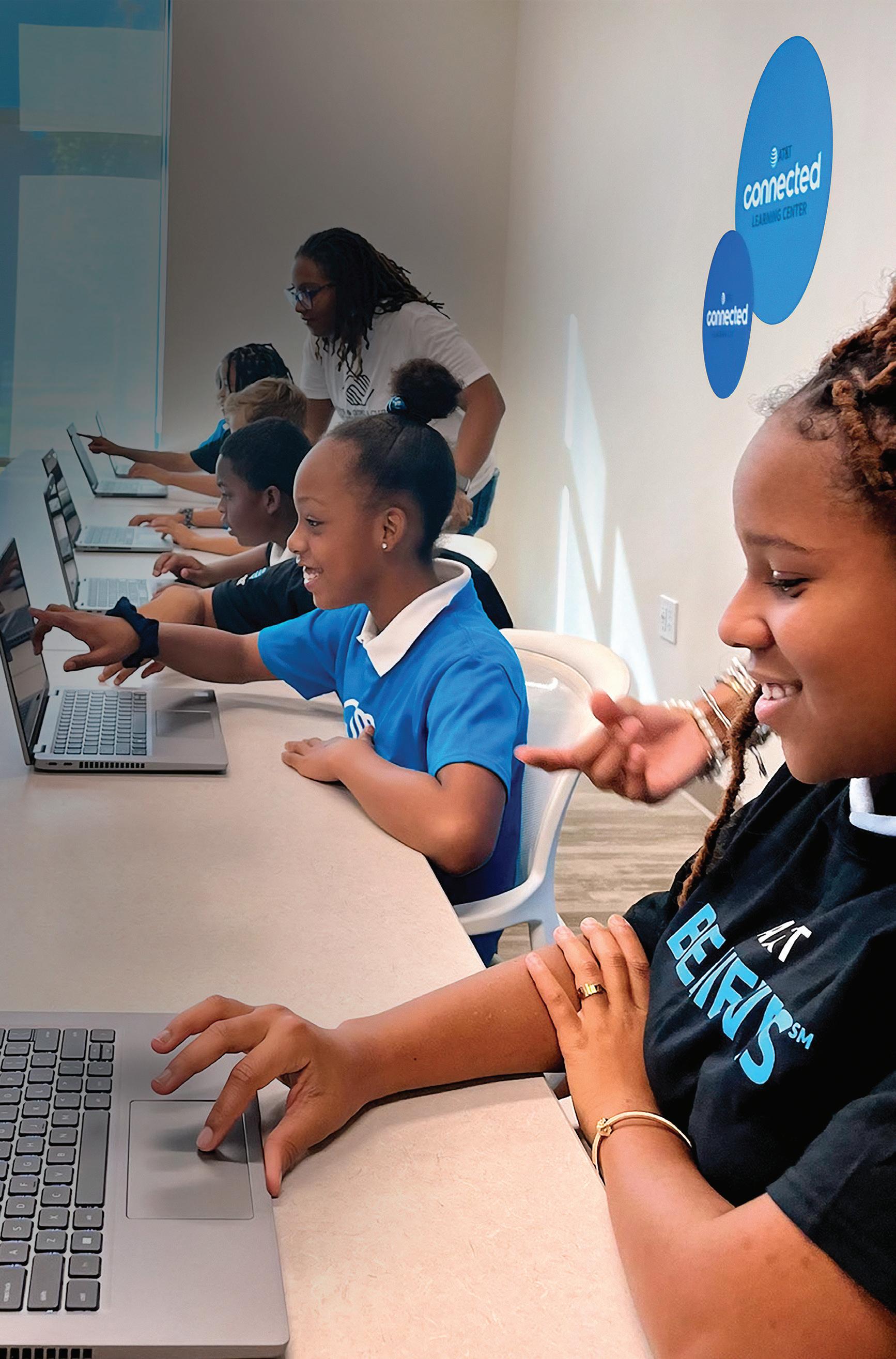
Connect every student, Change every future
Millions of students don’t have the necessary connectivity to learn from home. That’s why we’re helping to bridge the digital divide with AT&T Connected Learning Centers across the country. We’re helping families to stay connected with free access to high-speed internet, giving them the digital tools they need to succeed. By expanding access to affordable, high-quality connectivity in underserved communities, we’re giving more students an equal chance at a brighter future.