BY MATT POE, EDITOR
In healthcare, reusable textiles are effective for underpads, isolation gowns, surgical wrappers and surgical gowns.

That fact was most convincingly displayed during the pandemic.

“Many healthcare facilities, when faced with a shortage of disposable items (such as isolation gowns) turned to any reusable solution that they could find,” shares Jason Hartsell, vice president of operations for United Hospital Services (UHS) in Indianapolis.
Reusables vs. Disposables

“It was not so much that they wanted to move to a reusable product but more so that they had to move to something reusable. The FDA’s (U.S. Food and Drug Administration) Emergency Use Authorization (EUA) allowed companies to quickly bring isolation gowns to market during the pandemic without first obtaining FDA approval.”

Gabriel Boardman, president of the American Reusable Textile Association (ARTA) and vice president of product development for MIP Inc. in Montreal, adds, “The pandemic led to global supplychain disruption for both reusable and disposable supplies.
“As a result, reusables became the preferred and more reliable option since they can be laundered and quickly return to healthcare providers in dire need of replenishment.”
“During the pandemic, healthcare workers were offered unrestricted access to personal protective equipment (PPE) to provide a greater sense of confidence to undertake their jobs and an increased sense of personal safety,” says Bryan Bartsch, a director for ARTA and president of Ecotex Healthcare Linen Service in North America.
“Reusable PPE played a critical in meeting the demand and providing the most reliable supply of PPE.”
Scott Delin, legislative director for ARTA and vice president of healthcare sales for Superior Group of Companies/Fashion Seal Healthcare in Seminole, Florida, says laundry operators were able to guarantee delivery of contaminant-free products.

“No bacteria (hygienically clean),” he says, “and by using reusable, the contaminated disposables were no longer being tossed into the trash impacting negatively our environment.”
Laundry and linen services took steps to

try to continue reusable usage in healthcare facilities when the pandemic began to ease.
“Based on feedback from our members, some laundry/service providers took a more proactive approach than others to make the shift more permanent,” says Sarah Brobeck, executive director of the Association for Linen Management (ALM) in Richmond, Kentucky.

“Even when proactive, there were many considerations at hand and each varied by hospital. These considerations have a significant role in the long-term outcome of reusables versus disposables.
“The laundry providers with success in a permanent switch continue to be proactive in understanding the needs and concerns of their customers and providing viable solutions to address any potential barriers.


“They also provide continual data and feedback to the customers highlighting the benefits and cost savings associated with reusable products.”
“Some laundry/service providers put the necessary systems in place to continue to offer reusable linen,” Hartsell says. “This might be a tracking system such as RFID (radio-frequency identification) tags, barcodes, a QC (quality control) grid or adding the necessary additives to the wash process.”
“Laundry service providers took many steps, including educating users,” adds Rocco Romeo, treasurer for ALM and CEO of HLS Linen Service in Ottawa, Ontario.
RETURN TO DISPOSABLES
Unfortunately, the increase in reusable linen usage by healthcare facilities hasn’t continued beyond the pandemic.
“I feel that many healthcare providers
See Reusable on Page 6
Aramark announces board of directors for uniform services




PHILADELPHIA — Aramark recently announced the Board of Directors for Aramark Uniform Services, the independent public company that will be formed following the spin-off, which is expected to be completed at the end of the company’s fiscal year.
John Zillmer, Aramark’s CEO, says, “This is an important next step in our plan to create two independent companies.
“Both organizations are well positioned with an executive leadership team and Board that can focus exclusively on their respective businesses to deliver value-creating outcomes.”
Kim Scott, president and CEO of Aramark Uniform Services adds, “I am pleased to have this exceptional group of leaders on our Board that also reflect our company culture and values.
“As we seek to deliver long-term value to all of our stakeholders through the acceleration of profitable growth and the continued delivery of an exceptional service experience to our valued customers, we will benefit greatly from our directors’ deep knowledge, expertise and diverse perspectives.”
Aramark intends to appoint the following directors to its Uniform Services Board: Phillip Holloman, Chairman of the Board; Doug Pertz, Vice Chairman of the Board; Scott; Richard Burke; Tracy Jokinen; Lynn McKee; Mary Anne Whitney; and Ena Williams.
The Newspaper of Record for Laundry & Linen Management September 2023 • Volume 49, Number 09 www.americanlaundrynews.com
Laundries have tools to reinforce reusable usage in healthcare after gains during the pandemic
(Photo: © photography33/Depositphotos)
LATE NEWS
Survey: Status of automation in laundry operations

CHICAGO — Automation has been on the rise in laundry and linen services for some time, but with the effects of the past few years, some operations are taking a closer look at their operations.
In the most recent American Laundry News Your Views survey, readers were asked about current and future automation activities in their plants.
When asked how much of their operations are automated, 40% of respondents indicate 75% of their plants are automated. Those whose operations are 25% automated were also 40%. Survey takers who say half or none of their plants are automated were both 10%.
The area of facilities most automated is finishing, according to 30% of respondents. That’s followed by folding (26.7%) and wash (16.7%). Soil sort and drying were each indicated by 13.3% of those who took the survey. Ninety percent of respondents say their laundry has seriously considered automation in the past five years. And a major reason for that consideration is labor challenges.

“The more labor costs go up, it just makes sense,” a respondent writes. “We are in New York, so in addition to labor costs increasing 10-15% every year, there are many added regulations that go along with it, increasing the incentive to reduce manual labor.
“The problem being is in New York state, the population and customer base is shrinking, which ultimately shrinks the volume.”
Other reasons for considering automation include “expansion,” “to improve efficiency in the plant, and “reduce labor costs and injuries.” One respondent whose laundry isn’t looking at automation says that’s because the “cost to install a system for RFIDs on our garments is not in our budget.”
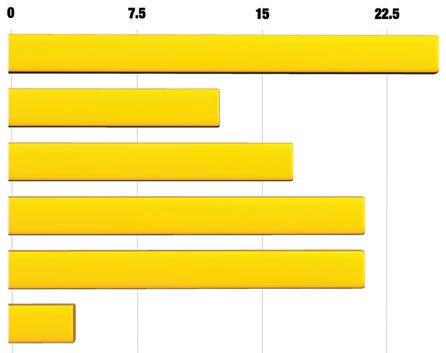
When asked “what areas of your operation would you like to automate in the future,” respondents indicate: Soil sort, 25%; Dry, 16.7%; Wash, 12.5%; Finish, 20.8%; Fold, 20.8%; and Other (total automatic cart washing and transport system), 4.2.
With the awareness and use of artificial intelligence on the rise, opinions on the progression of AI in laundry automation are mixed.
• It’s off to a good start but has a way to go.
• I would have to review it.
• Good.
• None at this time.
• I’m excited to see what our options will be.
• It’s amazing to see this technology but it is scary to think how easy it can be to replace humans in the workforce.
The most important reason for respondents’ laundries to automate is, of course, labor (60%) followed by cost savings and efficiency, both at 20%.
Not surprisingly, price is the greatest deterrent to using or increasing automation, according to 42.9% of respondents. That’s followed by “upper management moving slowly” at 21.4%.
Selecting the right equipment has slowed 14.3% of survey takers, and 7.1% are still analyzing their operations and choosing the right vendor partner. And 7.1% of respondents say their plants don’t need any further automation at this time.
Finally, one respondent cautions, “Just because it is automated doesn’t

mean it’s better.”
While the Your Views survey presents a snapshot of readers’ viewpoints at a particular moment, it should not be considered scientific. Due to rounding, percentages may not add up to 100%.
Subscribers to American Laundry News e-mails are invited to take the industry survey anonymously online each quarter. All managers and administrators of institutional/OPL, cooperative, commercial and industrial laundries are encouraged to participate, as a greater number of responses will help to better define operator opinions and identify industry trends.
Correction
Due to an editor’s error, the company name of Pellerin Milnor Corp. was misspelled in the August issue of American Laundry News on page 16 in the Product Showcase. We regret the error and any confusion it may have caused.





President Charles Thompson
Publisher Donald Feinstein
Phone: 312-361-1682
E-Mail: dfeinstein@ ATMags.com




Editorial Director
Bruce Beggs
Phone: 312-361-1683
E-Mail: bbeggs@ ATMags.com



Editor Matt Poe
Phone: 866-942-5694
E-Mail: mpoe@ ATMags.com
Production Manager Mathew Pawlak
Digital Media Director Nathan Frerichs
Phone: 312-361-1681
E-Mail: nfrerichs@ ATMags.com
Advisory Board David Barbe

Janice Ayers Davis • Nick Fertig
Deana Griffin • Cecil Lee
Edward McCauley
Jim Slatcher
Main Phone: 312-361-1700


Fax: 312-361-1685
Subscriptions
847-504-8175 ALN@Omeda.com

www.americanlaundrynews.com
endorse, recommend or guarantee any article, product, service or information found within. Opinions expressed are those of the writers and do not necessarily reflect the views of American Laundry News or its staff. While precautions have been taken to ensure the accuracy of the magazine’s contents at time of publication, neither the editors, publishers nor its agents can accept responsibility for damages or injury which may arise therefrom.
2
September 2023 | American Laundry News www.americanlaundrynews.com
01 Reusables vs. Disposables What’s the status of healthcare customers and reusable textiles a er the pandemic reusable use increase, and what’s the next battle eld/step? 02 Survey: Status of Automation in LaundryOperations 04 Increasing the Laundry Employee Candidate Pool Columnist-at-Large Richard Engler shares ways for laundries to be able to include more candidates in their hiring strategies 04 Feinstein Promoted to American Laundry News Publisher Thompson remains president of textile care B2B publications group, which includes American Coin-Op and American Drycleaner 08 Houston-area Laundry Adds Washer-Extractor Triple D Uniform & Linen Service puts in equipment to navigate market growth in Texas, where population is increasing quickly 08 ARTA Executive Director Retires, Association Management Firm to Lead Nancy Jenkins served 16 years, pursuing retirement career as a licensed professional counselor; Cra , an association management rm based in South Carolina and led by Jim Ritchie, to head 10 2023 Distributors Directory The annual listing of distributors of equipment, products and services to the laundry and linen services industry 18 Career Track 19 Classified Advertising 20 Source Directory 23 Trade Ticker 23 Calendar of Events INSIDE: What share of your laundry operation is automated, if any? About 75% About half About 25% No Automation 40% 10% 40% 10% What areas of your operation would you like to automate in the future? (Click all that apply) Soil sort Wash Dry Finish Fold Other 4.2% 0923ALN Your Views Charts.indd 1 8/8/23 2:56 PM What share of your laundry operation is automated, if any? About 75% About half About 25% No Automation 40% 10% 40% 10% What areas of your operation would you like to automate in the future? (Click all that apply) Soil sort Wash Dry Finish Fold Other 25% 12.5% 16.7% 20.8% 20.8% 4.2% 0923ALN Your Views Charts.indd 1 8/8/23 2:56 PM MEMBERSHIPS American Laundry News (ISSN 1091-9201) is published monthly. Subscription prices, payment in advance: U.S. 1 year $50.00; 2 years $100.00. Single copies: U.S. $10.00. Published by American Trade Magazines LLC, 650 West Lake Street, Suite 320, Chicago, IL 60661. Periodicals postage paid at Chicago, IL, and at additional mailing offices. POSTMASTER, Send changes of address and form 3579 to American Laundry News Subscription Dept., 125 Schelter Rd., #350, Lincolnshire, IL 60069-3666. Volume 49, number 9. Editorial, executive and advertising offices are at 650 West Lake Street, Suite 320, Chicago, IL 60661. Charles Thompson, President and Publisher. American Laundry News is distributed selectively to qualified laundry and linen management and distributors in the United States. © Copyright AMERICAN TRADE MAGAZINES LLC, 2022. Printed in U.S.A. No part of this publication may be transmitted or reproduced in any form, electronic or mechanical, without written permission from the publisher or his representative. American Laundry News does not
Milnor has a better solution through dilution.
When Milnor introduced PulseFlow® technology, CBW® washing was thrust into the future. The idea of balancing time, temperature, mechanical action and chemistry was missing one critical piece of the pie – DILUTION through the efficient use of water.

PulseFlow combines the innovative RecircONE® fast wet down and chemical immersion in the first module with standing bath washing in every spacious process module. Thorough and efficient dilution occurs by way of intermittent high velocity counterflow rinsing and traditional True Top Transfer.
The result is hygienically clean linen using less water (as low as 0.3 gallons per pound/2.5 liters per kilogram) and less energy as proven time and again by hundreds of PulseFlow tunnels in a variety of laundry applications worldwide.
Contact an authorized Milnor distributor or call 504-712-7656 to find out more.
www.milnor.com
*PulseFlow®, CBW® and RecircONE® are Pellerin Milnor’s registered trademarks.
Distributing what you need
Take a moment and think, what do you need most for your laundry operation right now?
You probably need some piece of equipment or chemical or some other product or service.
Now, how are you planning to get your hands on what you need?
This issue of American Laundry News can help you with that. Every September, we provide a listing of distributors of equipment, products and services for laundry operators like yourself.
Turn to page 10 for this Distributors Directory. The companies and offices are listed by state, alphabetically by city.
We’ve done our best to bring you the most up-to-
date distributor listing available.
Also in September, we open the application/nomination portal for the Panel of Experts (https://americanlaundrynews. com/panel-of-experts/application).
From Sept. 1-30, you can apply or nominate a peer to take part in one of several categories.

Just about every month Panel members answer a question from readers like you (which you can always send my way via mpoe@atmags.com).
Those selected for the Panel will be contacted at the end of October/beginning of November. Whether you need supplies or answers to questions, we’re here to help you keep it clean, everybody!
Feinstein promoted to American Laundry News publisher
CHICAGO — American Trade Magazines LLC (ATM), the parent company of textile care B2B publications American Coin-Op, American Drycleaner and American Laundry News, announces a change in leadership.

Effective Aug. 1, Associate Publisher and National Sales Director Donald Feinstein has been promoted to publisher, assuming responsibility for the group’s editorial, production, circulation, promotions and sales operations.
Charles Thompson, the longtime head of ATM, remains company president while taking a step back from overseeing day-to-day operations.

He joined the publications group in 1989 as a regional sales manager for then-parent company Crain Communications and earned promotions to national sales manager, associate publisher and publisher.
Thompson acquired the magazines from Crain in 2011 and retained Feinstein and two other ATM

Increasing the laundry employee candidate pool
Today’s employee marketplace, in this era of nearly full employment, presents significant challenges across the entire hiring spectrum.
While this is not news, we must remain cognizant of the diminished quantity of candidates, both qualified with hard skills and less qualified with soft skills and the importance of reevaluating the past prerequisites against the current marketplace’s available talent.
The candidate count rises as the number and intensity of the prerequisite skills qualifiers decline. The cost of unfilled positions within direct labor can easily exceed the expense of training new personnel on the hard skills of a potential candidate.
Skills-based hiring has always been a preferred strategy for talent acquisition historically; the question of the amount and benefit of substituting soft skills instead of hard skills is a question to be asked as part of adapting to the market changes.
When comparing the hard, or core, skills with the soft skills that lend to successful transitions, it helps to think of these items as “must skills” and “plus skills.” These can be weighted according to the ease of time to train the missing “must skills” with consideration of the benefit of the “plus skills” assisting in the accomplishment of the training.
veterans to ensure the publications’ continuity.
“Don has led our company’s sales department for more than a decade,” Thompson says. “And, as associate publisher, he’s excelled at handling many of a publisher’s duties.
“He’s earned the opportunity to take this next step in his career and I’m excited to watch his continued growth as an executive and a leader.”
Feinstein, a graduate of Drake University, joined the ATM team in 2001 as production manager before shifting to ad sales as a regional manager in 2005.

When Thompson acquired the magazine group, Feinstein was named national sales director, then several years later added the duties of associate publisher.
“In every position I’ve held with American Trade Magazines, I’ve had the opportunity and pleasure to interact with our industry’s leading manufacturers and distributors, as well as the amazing audience of laundry and drycleaning business owners, facility administrators and managers that our magazine group serves,” he says.
“I look forward to building on those relationships and continuing ATM’s tradition of industry service that Charlie has set.”
Ideally, the desired soft skills will aid in reducing the time needed to train.
The question of compensation should also be considered as the soft-skilled candidate is not yet ready to perform the task fully or independently and this brings into play a training wage, which may further offset the expense of providing training. The risk and concern here are most likely to be compensation and compatibility of the skills with the task.
The positive impacts of this can be highly impactful to the operation. A larger pool of candidates means fewer unfilled shifts and less overtime potential.
The recruiting turn time would also be reduced and further save expense. Soft-skill hiring will allow for a better team and organizational fit. The cringy feeling of having to untrain poor task practices of experienced candidates evaporates as there are no previous experiences to draw from with this team member.
Widening the hiring net will also allow for a more diverse group to draw from and the wider array of varied experiences could potentially offer more creative problem-solving solutions.
The risks are very apparent in this approach. However, in the new hiring landscape, the only certain way to guarantee to continue to struggle is to sit and wait for the pendulum to swing back … in my experience it rarely does.
Hiring a new team member who cannot yet perform the required tasks calls for a level of preparedness on how to provide the training effectively and efficiently to accomplish the task with careful consideration of the cost of achieving this goal.
During this period, the team member will likely feel dissatisfied and uncertain if their new job is really for them. Be prepared to proactively offset their misgivings and do not let them slip into a crisis of confidence through a lack of positive feedback from several levels of leadership.
It is critical to not forget their lack of professional experience in the assignment can easily lead to second-guessing without realtime feedback or performance improvement acknowledgment. Implementing these changes is not a single-step process. The support and confidence of the leaders at all levels is imperative.
•
•
•
•
Gathering your leadership team’s consent, agreement and support of the initiative will make or break the program. Leadership must understand the skills needed by trainees and why these skills are key qualifiers, how they differ from traditional qualifications— and why this distinction matters to everyone involved.
A fully developed training plan must be prepared and followed to ensure consistency in development. In addition, measuring suc-
See Column on Page 18
4 September 2023 | American Laundry News www.americanlaundrynews.com
From The Editor’s Desk
Top Stories Appearing on americanlaundrynews.com for the 30 Days Ending Aug. 15. NEWS • ARTA Announces Leadership Changes • Arway Linen Moving to New Facility in 2024 • Healthcare Laundry Business Compliance Platform Launches • Alliance Laundry Systems Distribution Expands West Region • Feinstein Promoted to American Laundry News Publisher COLUMNISTS/FEATURES • NY/NJ Laundry Soars to New Heights with New Equipment • Houston-area Laundry Adds WasherExtractor • Keeping Essential Laundry Equipment Parts on Hand • Strategies for Incorporating Tech Improvements, Training • Cash Family has ‘Good Rapport’ as Service Sales Representatives WE OUR SISTER WEBSITES From AmericanDrycleaner.com:
Profile: Incoming DLI President Kathy Benzinger
Professional Development for Dry Cleaning Owners From AmericanCoinOp.com:
How You Can Protect Your Laundromat from Criminals
Do You Deliver? Amazon
to Partner
You
is Looking
with
COLUMNIST AT LARGE Richard Engler
MATT POE
(WE) = WEB EXCLUSIVE
Thompson
remains president of textile care B2B publications group
FEINSTEIN





Everything. All the time. Live Inventory 24/7/365 Serving the laundry industry since 1947. monarchbrands.com (215) 482-6100 Our live inventory tracker contains every Monarch Brands item in our catalog, updated as every order is placed. If you see it, we have it in stock, and ready to ship. Visit our website or scan the QR Code to get started.
Reusable
Continued from Page 1
are returning to disposables for the same reasons they were using them in the first place: They offer convenience and less initial expense, and it’s what many healthcare providers were used to,” says Hartsell.
“The other factor that is playing into this return to disposables is that many of the products produced under the FDA’s EUA were of subpar quality. While we did not process any of the EUA isolation gowns, we did evaluate a variety of gowns that were being offered. What we found is that they were using fabric that was heavy, hot, uncomfortable and, not to mention, more difficult to launder.
“This was a complete about-face from what the reusable industry was touting in that their products were of a better quality and more comfortable to wear. If I was a healthcare provider and during the height of the pandemic, I had to wear a gown manufactured by the auto industry from Nylon 66, the same material used to make carpets and garden hoses, I would want to get back to my lightweight disposable gown.”
Brobeck says they are hearing several reasons for the return to disposables, including preference by hospital infection preventionists, logistical differences between reusable versus disposables, space constraints and consistent availability.
“Some of the return to disposables is being driven by excess disposable inventory purchased by government agencies during the pandemic,” adds Boardman. “These disposable supplies need to be used before their expiry date.”
Bartsch adds that healthcare organizations purchased an abundance of singleuse PPE during the pandemic.
“We are seeing some organizations attempt to ‘consume their single-use products,’ with an aim to decrease their carrying costs related to storage, use the product inventory that they have purchased, and consume these products before their expiration(s),” he says. “In some cases, they are also contractually committed to single-use products.”
“Old habits,” says Delin. “However, bills have been introduced in multiple states that healthcare facilities must now carry at least 50% reusable product in the event another pandemic hits and disposables are not available.
“Reusables seem like a no-brainer. They are delivered hygienically clean, not destroying our environment and reducing carbon footprint, and do not take up space in the healthcare facilities.”
EVIDENCE FOR REUSABLES
While laundry operations face challenges in convincing healthcare facilities and systems to continue using or switch to reusable products, there are solid arguments that can be employed.
“Now that we are past the pandemic, we need to get in front of the caregivers and the decision-makers inside the healthcare facilities and start touting, once again, the advantages of reusable textiles,” Hartsell says.
“We can start talking about how much better reusable products are for the environment. It’s also important that we, as an industry, make it clear that the EUA products were not representative of the type of reusable products available today.”
“Gaining buy-in from the clinical staff
and addressing any concerns through transparent communication and solution-based recommendations is key,” adds Brobeck. “Speak to your customer to understand initiatives in their healthcare facility that could support the use of reusable textiles.
“Understanding the focus of the customer and providing evidence-based case studies and/or a solid cost analysis is also important for the customer to make an informed decision.”
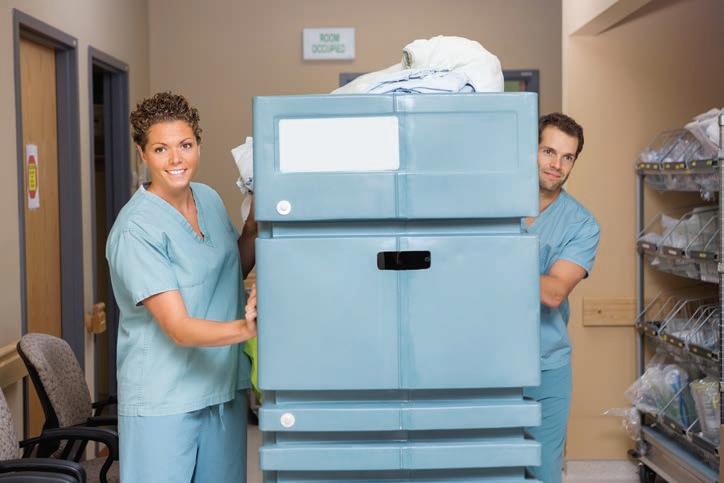
Romeo shares this example: 60,000 reusable isolation gowns can be stored on approximately 50 skids and represent 4.5 million disposable gowns. The same 4.5 million gowns in disposable would take up 3,750 skids of warehousing space to store representing 75 times more space for storage than reusable gowns.
“The disposable costs of 4.5 million gowns is significant compared to reusable gowns, which will be rewashed and recycled,” he says. “Laundry providers can also emphasize the environmental advantages of reusables.”
“It’s important to discuss the advantages of a reusable product as an emergency stock item,” Hartsell adds.
“If a reusable isolation gown, surgery gown, etc., can last 50-100 washes, that is much less product the healthcare organization will need to keep on hand.”
“The widespread shortages of disposables during the pandemic and environmental concerns are both raising awareness to the use of reusable textiles,” Brobeck shares.
“This is gaining the attention of lawmakers and they are taking steps to promote further examining the feasibility and potential benefits of reusable textiles in healthcare.”
ADVOCATING REUSABLE LEGISLATION
TRSA, the association for linen, uniform and facility services, shares that it recently confirmed sponsors for The Healthcare Worker Safety and Sustainability Act in New York state that requires a 50% threshold of reusable healthcare PPE in healthcare facilities.
In the state legislature, Assembly Member Amanda Septimo (D-84th District) introduced the bill (AB 6995) and Sen. Cordell Cleare (D-30th District) initiated the Senate companion measure. The legislation amends the New York public health law to require healthcare facilities to maintain this threshold of textiles as provided by a hygienically clean laundry service provider.
TRSA has been pushing for legislation to address healthcare employee safety concerns raised during the height of the pandemic as well as reduce the amount of waste health-
care facilities are sending to landfills.
“The linen, uniform and facility services industry made up for the shortfall of disposable healthcare items by stepping in to provide hygienically clean reusable products,” says Joseph Ricci, president and CEO of TRSA.
“It was a wake-up call to healthcare facilities that they need to reduce their dependence on disposable healthcare PPE. This legislation is a first step in identifying reusable healthcare PPE as a permanent solution to potential supply-chain shortages.”
“Introduction is the first step of a long legislative process; there are many initiatives that never even get drafted,” says Kevin Schwalb, TRSA’s vice president of government relations.
“Now that we have introduction, it is going to take effort from everyone in New York to move the process forward and ultimately pass the bill. This legislation is a direct result of the actions TRSA members took during our day in Albany (during TRSA’s New York Legislative Conference in April).”
Aside from New York, TRSA is working in other states such as California and Wisconsin to introduce and ultimately pass reusable operating threshold minimums.
TRSA is also urging its members to contact their respective legislators to prompt them to add their names to a letter from members of Congress asking the Department of Health and Human Services (HHS) to examine the feasibility and potential benefits of the increased use of reusable healthcare textiles (HCTs) in hospitals and other medical facilities.
Reps. Greg Landsman (D-OH-01) and Michael Carey (R-OH-15), encouraged by TRSA, were the original authors of the letter, which asks HHS Secretary Xavier Becerra to study the issue considering reusables’ value in protecting healthcare workers, addressing the rising environmental impact of disposables, preparing for future pandemics and potentially providing cost savings.
This letter is a major step in developing federal policy to require healthcare facilities to maintain an operating stock of reusable HCTs.
“This is a huge win for the linen, uniform and facility services industry,” Schwalb says. “Secretary Becerra will be compelled to respond to a congressional Inquiry, which usually leads to a form of federal policy being either legislation or regulation.”
While securing Reps. Landsman and Carey as chief co-signers was a major step, the more names on the letter, the more impact the letter will have at HHS, Schwalb adds.
TRSA has taken advantage of the Pandemic and All-Hazards Preparedness Act (PAHPA) reauthorization process to state the case for making reusable isolation gowns and other textiles more prominent in hospital inventories.
The association has provided the House Energy and Commerce Committee with key evidence that increased use of reusable textiles will support efforts to assure the nation is better prepared, further equipped, more transparent and fully accountable when taking on future emergencies.
TRSA’s response to a Request for Information (RFI) from Reps. Richard Hudson (R-NC) and Anna Eshoo (D-CA) as part of the reauthorization process was the most recent step in the association’s effort to impact hospital inventories under PAHPA.
The pictures of healthcare workers wearing trash bags as PPE highlighted PPE shortages at the onset of COVID-19.
PAHPA covers administration of the Strategic National Stockpile (SNS), which contained about 60 million surgical gowns and coveralls in October 2022, without clear accounting of how many were reusable or disposable.
TRSA has urged Congress to ensure that the SNS contains a suitable number of reusable PPE to be prepared for supply-chain disruptions during an emergency. This could be done by requiring a specific number or percentage of reusable PPE in the SNS.
In the U.S., more than 90% of healthcare PPE and operating room textiles are single use, even though ample supplies of reusable equivalents are available, TRSA notes.
In contrast, Canada and England maintain inventories of 80% reusables. The association cites studies showing that reusable textiles are as safe—if not safer—than their disposable counterparts and pointed out that reusable PPE can be laundered and returned to healthcare facilities without stressing the supply chain during an emergency.
FINAL THOUGHTS
Hartsell stresses that laundry providers aren’t alone in their struggle to convince healthcare operators of the benefits of reusable usage.
“Rely on the manufacturer for your educational material or to assist you in your presentation,” he says. “It’s in both of your interests to convert items to reusable.
“It is also beneficial to have the manufacturers involved because with some items the healthcare facilities may ask very technical questions that you, as a laundry, may not know the answer to.”
Hartsell also stresses the importance of research when identifying potential items to switch for a healthcare provider.
“Do they have any environmental initiatives? Are they trying to reduce HAIs? Did they have supply-chain shortages with disposable isolation gowns? Are they using disposable underpads on every single bed?
“From my research, I’m going to be able to offer a reusable solution that fits their needs versus coming at them with everything all at once.
“I’m also going to be willing to offer them a trial in a certain department. It’s important that if I trial an item, I get feedback from the caregivers in this department.”
Finally, Hartsell says a laundry must be uncompromising in its system if it has an item that is inspected or has cycle recording.
“The end-user has to have complete trust in your laundry, the products you offer and the process you have in place,” he concludes.
6 September 2023 | American Laundry News www.americanlaundrynews.com
(Photo: © SimpleFoto/Depositphotos)
The Power of Three
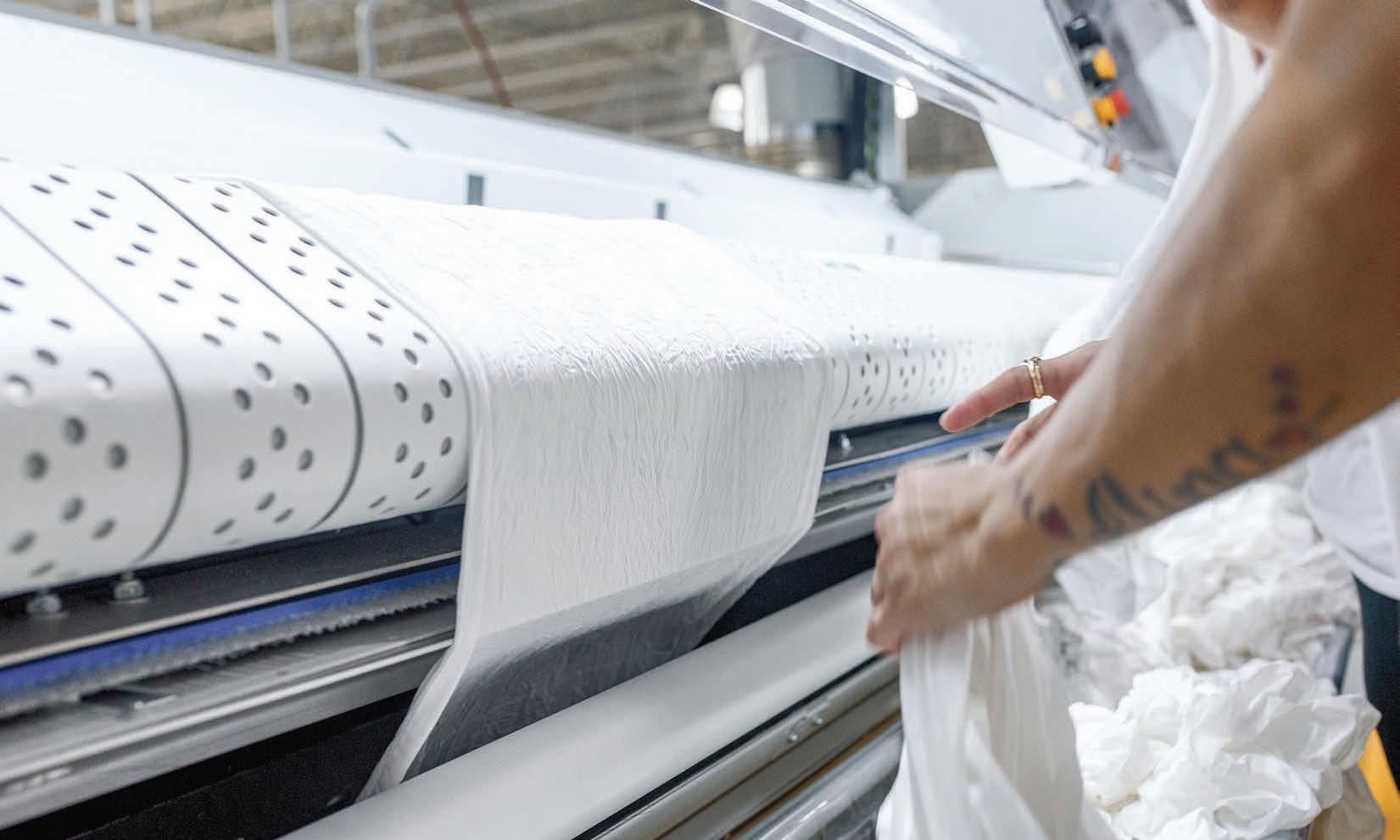
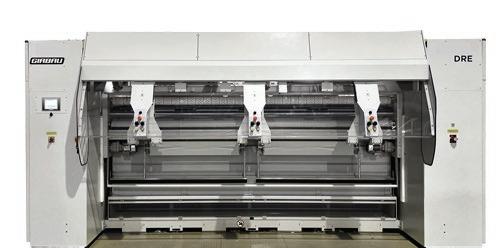
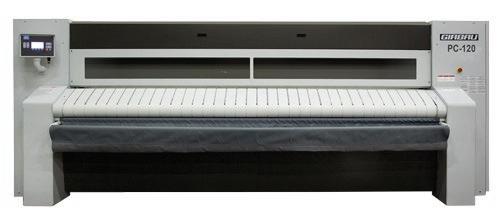
Leave behind the limitations of manual handling and embrace the power of automation with DR Series Feeders. Our advanced technology ensures precise large and small piece feeding — eliminating the risk of jams or misfeeds, reducing rework and saving valuable time. DR Feeders seamlessly integrate with any ironer in the market. Pair it with a PC Series Ironer and FR Series Folder and you’ve got the ultimate powerhouse. Together, they’ll take your laundry to a new level in productivity, programmability, versatility and quality.
Join the ranks of smart, e cient laundry operators who have upgraded their laundry game with Girbau Industrial.
Industry-Leading Warranties Flexible Financing Options Processing Versatility




INDUSTRIAL
girbauindustrial.com • 800-256-1073
PC Ironers
DR Feeders
FR Folders
Houston-area laundry adds washer-extractor
Triple D Uniform & Linen Service installs new equipment to navigate market growth
BEACON FALLS, Conn. — The old axiom that everything is bigger in Texas is alive and well. The state’s population is among the fastest growing in the United States, and well-run businesses like Triple D Uniform & Linen Service are responding to the challenge.
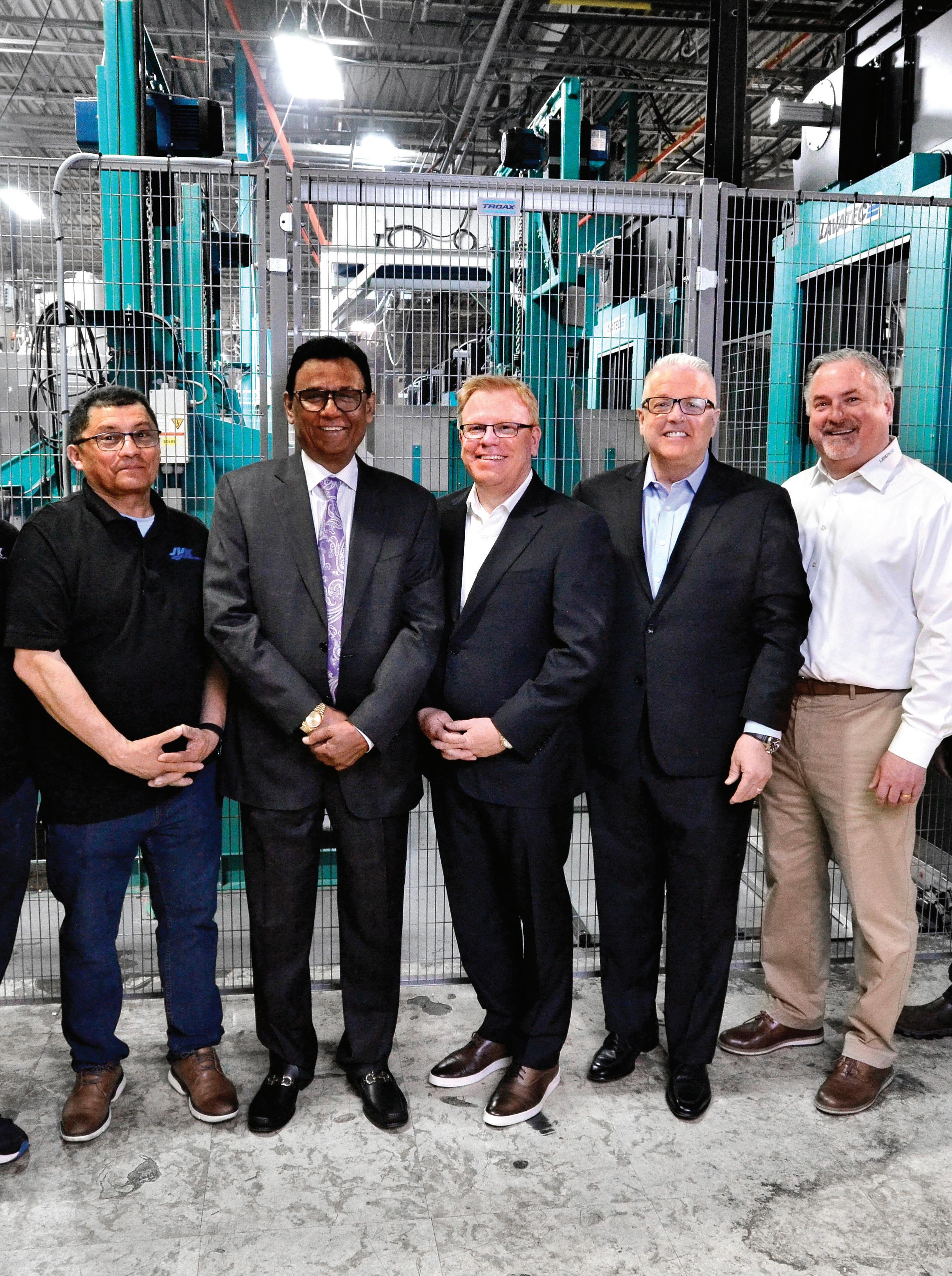
A local staple in Houston for over 50 years, they recently expanded service to markets in central Texas and turned again to LAVATEC to help handle the new demand.
“We recently purchased a LAVATEC LX460 washer-extractor to join the two smaller washers from them that we’ve had in service for 16 years,” says Jacy Henderson, Triple D’s vice president.
“These are workhorse machines and suit our needs perfectly. The newest machine has proven to be just as solid as the other two.”
LOCAL LEADER WITH LARGER GAME PLAN
Triple D is a third-generation-owned company that originally began as a uniform rental organization when it was run by Wayne McCullough.
The business has been operated by Doug McCullough and his wife, Cindy, since 2005. Its automated facility located on the northwest side of Houston now provides customers with state-of-the-art laundering, corporate apparel, custom embroidery and servicing technology.
The decision to expand comes after an unprecedented population boom.
According to statistics compiled by the U.S. Census Bureau, Texas showed a 43% increase from 2020 to 2022, making it the fourth largest growing state. The largest of the 48 contiguous states, it is now home to more than 30 million residents.
During the same period, Triple D has shown steady progression.
After processing 5.4 million pounds of linen in 2021, it ramped up to 6.9 million pounds last year and currently is averaging 150,000 pounds per week.
Henderson anticipates the company will
deliver about 7.8 million pounds by the end of the year.
“We are now servicing clients in Austin and San Antonio. That is in large part the reason for our increase,” says Henderson, who began working at Triple D as a route relief driver in 2007 after graduating from Texas A&M University.
“It was supposed to be a part-time gig, but 16 years later here I am. I ran the production floor for eight years before moving into my current role.”
Henderson manages the three uniform rental service programs Triple D makes available to its customers.
It includes the industrial side for healthcare and food service uniforms, restaurant services for chef wear that includes aprons, coats, pants and chef hats, and healthcare rental that covers lab coats, scrubs, isolation gowns and footwear.
He says healthcare clients account for 20% of the work—with industrial and hospitality evenly splitting the remainder—but
ARTA executive director
hospitality has been the fastest growth segment since the COVID-19 pandemic first arrived in 2020.
“We currently employ about 70 people and work a four-days-a-week schedule, Monday through Thursday,” Henderson says.
“Most of our accounts get serviced once a week, but some of the larger organizations require service two or three times per week.”
TRUSTED PARTNERSHIP WITH RESOLUTE EQUIPMENT, SERVICE
Henderson explains that it’s important to have trusted equipment to avoid downtime.
“We chose LAVATEC for their cost effectiveness and their reliability,” he says of the two older LX445 washer-extractors and the new LX460.
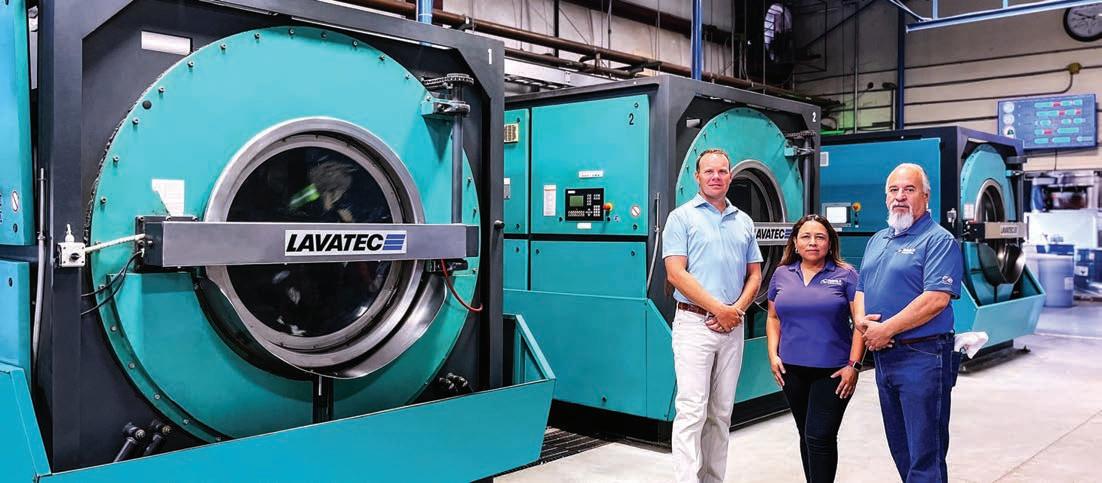
The LX445s have a 450-pound capacity compared to the larger LX460, which can accommodate up to 600 pounds.
All three are employee-friendly, frontloading machines.
“We are using the larger LX460 main-
ly to process our bar towels and mats,” Henderson shares. “We loved the idea of having the larger capacity.
“At the same time, we benefitted from the fact it didn’t take up much more floor space. I do believe the front loaders are more beneficial at reaching a higher extract speed with a full load of mats than some of the competitor models I have seen.”
When the inevitable does happen with a service interruption, Henderson knows that downtime will be limited.
“Occasionally there are the typical breakdowns, but the LAVATEC service team is very responsive,” he points out. “That’s reassuring because our customers know that we take care of business and deliver on our promise to provide a superior quality product.
“LAVATEC is always willing to spend the time needed to troubleshoot. With help from the service and parts teams, they get our needs taken care of and keep our machines up and running.”
retires,
association management firm
MISSION, Kan. — The executive director for the American Reusable Textile Association (ARTA) has retired and a South Carolinabased association management firm has been selected to lead the association.
After serving 16 years, Nancy Jenkins is leaving the association to launch her retirement career as a licensed professional counselor.
ARTA’s Board of Directors chose Craft, an association management firm based in South Carolina and led by Jim Ritchie, to
lead ARTA beginning Aug. 1.
Jenkins will help with the transfer before officially departing at the end of September.
“Nancy has been instrumental in helping grow ARTA’s education conferences, coordinate peer-reviewed LCA research and develop a robust website,” says ARTA President Gabriel Boardman. “And we wish her the best as she begins her next adventure.”
Jenkins joined ARTA in 2003 as editor of its bimonthly newsletter. In 2007, with the retirement of Bill Carroll, she stepped into the executive director role.

The ARTA Board of Directors began its search for new leadership late last year.
Based on its goals for the future, the Board believed that Craft was best positioned to help ARTA meet its growth objectives.
“Craft has the bandwidth to provide the
services our members need and want,” says Boardman. “And personally, we believe Craft and its staff are a good cultural fit for ARTA and the textile services industry.”
Craft opened its doors in Columbia, South Carolina, in 2017. It defines itself as a firm delivering realized value through difference-making strategies crafted with clear vision.
“We help our clients craft a roadmap to success,” says CEO Ritchie. “We do this by developing strategies built on strengthen-
to
lead Jenkins served 16 years, pursuing retirement career as a licensed professional counselor
ing member connectivity and improving the association’s impact.
“When our clients see tangible wins in their business from their membership investment, that drives the association forward and affects the greater good.”
Ritchie brings 30 years of legal and public policy experience to Craft, where his work focuses on association leadership, government relations and strategic planning for its clients.
Founded in 1982 by Nathan Belkin, Ph.D., ARTA’s mission is to create greater appreciation and demand for reusable textiles. Membership is open to all in the textile services industry, and its members include allied associates, suppliers, manufacturers, and commercial, institutional and cooperative laundry operators.
8 September 2023 | American Laundry News www.americanlaundrynews.com
Keeping the washers and other equipment performing at Triple D Uniform & Linen Service is the responsibility of, from left to right, Vice President Jacy Henderson, Production Manager Myriam Caceres and Chief Engineer David Lobos. (Photo: LAVATEC)
JENKINS RITCHIE
Central Laundry Plant in NY has Closed
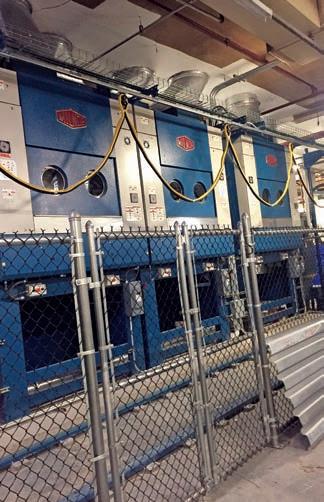
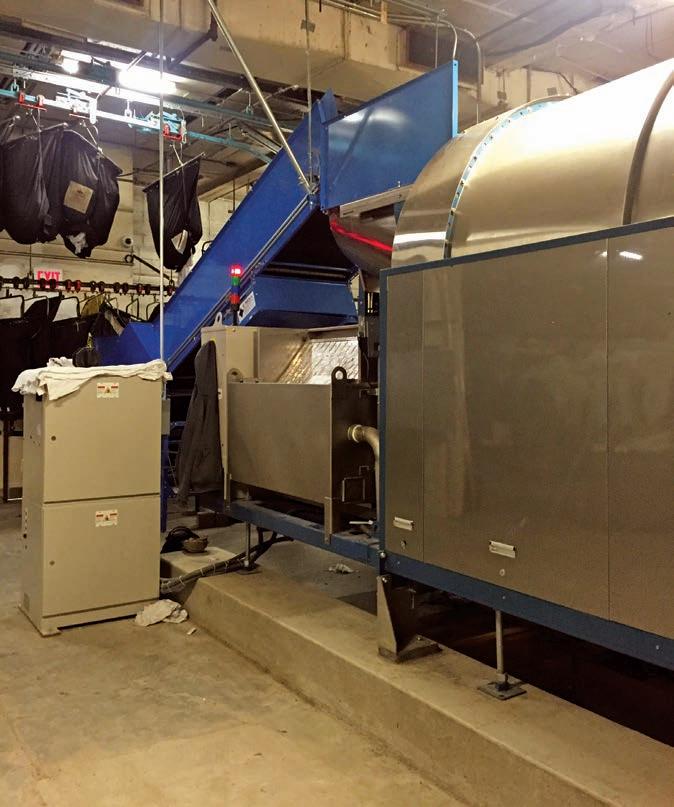
• Milnor 8 Module Pulse Flow CBW/Press with Monorail with slings

• (5) 64/58 up to 320 Lb Gas System Dryers (July 2015)



• (4) Chicago Century 2 Roll 52” Steam Ironer (2019), Various years
• Edge Maxx (2019) (4) Edge, Various years
• Chicago Skyline 1 Lane (2019)
• Skyline 4 Lane, (2) Skyline 1 Lane, Various years
• (3) Air Chicago XXL Blanket, Towel & Gown Folder, Various years
• (2) Braun Towel & Gown Folders
• (3) Milnor Soft Mount Open Pocket 140 LB Washers (2015)
• (2) Milnor M202 Gas Fire Dryers (20015)
• (2) 500 HP York Shipley Gas Boilers
• Colmac Connie Lab Coat Presser
• (3) Quincy Air Compressors
• Voss 75 Pound Tunnel Washer (1984)
• Multiple Linen Carts (350)
• Scissor Dock Lift
• Portable Scissor Dock Riding Lift FROM WELL MAINTAINED LINEN PLANT EQUIPMENT:
• 4- Roll American Super Sylon 110”
• 8- Roll American Sylon 120”
• (5) 8- Roll American Super Sylon 120”
• Jensen Olympic 3 Lane Folder
• Jensen 5 lane Napkin/3 lane for Apron
• Lavatec 5 Lane Napkin Folder
• (2) BB&D 3 Lane (2/1)
• Lavatec 3 Lane (2/1)
• Chicago Dryer Towel Folder
• Colmac Finishing Steam Tunel
• Gardner Denver Air Compressor
• Sullivan / Pallatek Air Compressor
• Hankison Air Dryer
• Puro Midi Oil Water Separator
• Air Tank
• Cleaver Brooks Boiler 500 HP
• Cleaver Brook DA Tank
• Cleaver Brook Hawk Control
• (2) Milnor Centrifugal Extractor
• (2) Norman 400 Gas Dryer
Please make an appointment to see equipment as it won’t last! EXCELLENT OPERATING EQUIPMENT. • Call Ron Hirsch • 516-938-4300
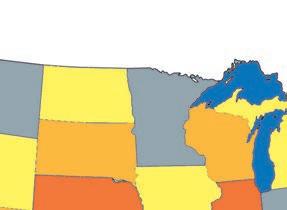
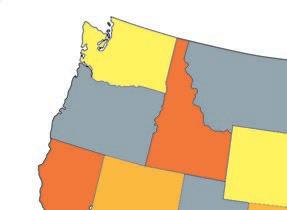
These distributors and suppliers responded to American Laundry News’ invitation to be listed. They provide laundry equipment, textiles, chemicals, parts, services, and/or other products or supplies, and are listed alphabetically by city and state.
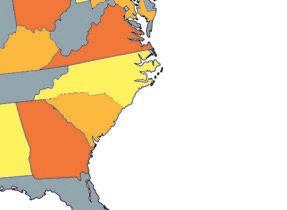
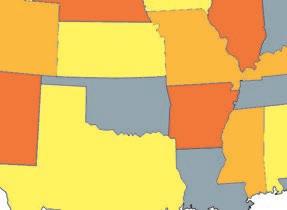
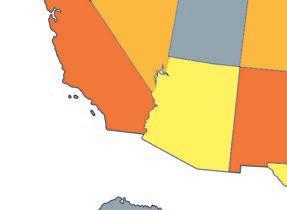
Contact distributors to determine their coverage area—local, regional or national. The map below indicates on which page a given state’s listings begin. No distributor information was received from states that have no listings. The Distributors Directory runs through page 17.

Compiled by Matt Poe, Editor
ALABAMA
FabriClean Supply C O of Birmingham
1200 2nd Ave. N. Birmingham, AL 35203
☎ 205-251-7272 or 800-626-8428
W www.fabricleansupply.com
☞ Steve Taylor @ info@fabricleansupply.com
Wholesale Commercial E P s O




Laundry Equipment Co. SE 2950 Highway 77 Southside, AL 35907
☎ 256-312-4761 or 866-544-7228
W www.alaundryman.com
☞ Russ Arbuckle @ thelaundryman1@gmail.com

ALASKA
Automated Laundry E C P s Systems & Supply 360 E. 100th Ave. Anchorage, AK 99515
☎ 907-561-1752
W www.autolaundrysystems.com @ sales@autolaundrysystems.com
ARIZONA
Pierce Machinery E P.O. Box 2110 Chandler, AZ 85244
☎ 602-538-5081
W www.piercemachinery.com @ plaundmach@aol.com

Astro Distributing E P s O & Leasing 4322 E. Winslow Ave. Phoenix, AZ 85040
☎ 602-267-7072
W www.astrodistributing.com @ admin@astrodistributing.com
C-PEC E P s 3120 W. Weldon Ave. Phoenix, AZ 85017
☎ 602-248-0808 or 877-835-5866 W www.cpec-laundry.com @ sales@cpec-laundry.com
Laundry & Cleaners E P s Equipment Co. 320 S. 25th St. Phoenix, AZ 85034
☎ 602-244-0800
W www.laundryandcleaners.com
☞ Tim Eckenrode @ teckenrode@laundryand cleaners.com

Southwest Laundry E P s Equipment LLC 2430 S. 11th Ave. Phoenix, AZ 85007
☎ 206-517-5463 or 602-253-9687
W www.azsle.com
☞ Neil Lind @ neil@lindindustries.com


Wardlaw Equipment E P s Consultants Phoenix, AZ 85014


☎ 520-791-2804 or 877-927-3529
W www.wardlawequipment consultants.com

☞ Kevin Wardlaw @ wardequip@aol.com
CG West E P s O 500 S. 52nd St., Ste. 302 Tempe, AZ 85281
☎ 623-937-0125 or 800-789-6412 W www.cg-west.com @ info@cg-west.com
C-PEC E P s 3202 S. Richey Ave.
Tucson, AZ 85713
☎ 520-790-7377 or 877-835-5867
W www.cpec-laundry.com
☞ Greg Svancara @ greg@cpec-laundry.com
ARKANSAS
FabriClean Supply C O of Arkansas 6600 Allied Way Little Rock, AR 72209
☎ 501-565-5288 or 800-442-7021
W www.fabricleansupply.com
☞ Omeed Esfandi @ info@fabricleansupply.com
Justin Laundry Systems E P s
5310 Baseline Rd. Little Rock, AR 72209
☎ 501-551-8600 or 888-403-9600
W www.justinlaundry.com
☞ Mark DeJesus @ mark@justinlaundry.com
Central Laundry E P s O Equipment
P.O. Box 324 Ward, AR 72176
☎ 501-843-3194 or 800-467-3194
W www.centrallaundryequipment.com
☞ Jeff Craig @ jeff@centrallaundryequipment.com
CALIFORNIA

Washex Machinery E P s of California 101 E. Santa Anita Ave. Burbank, CA 91502
☎ 818-840-8900
W www.washexcalifornia.com
☞ Mark Sanders @ mark@washexcalifornia.com
Western State Design E P s
17000 Marquardt Ave. Cerritos, CA 90703
☎ 800-633-7153
W www.westernstatedesign.com @ info@westernstatedesign.com
Consolidated E P s


3804 Main St., Ste. 1 Chula Vista, CA 91911
☎ 866-632-2298
W www.cicus.com @ sales@cicus.com
ATS/California Textiles T


P.O. Box 77306 Corona, CA 92877
☎ 951-272-1200
☞ Lenore Law @ catex1@att.net

Western State Design E P s O 2331 Tripaldi Way Hayward, CA 94545 ☎ 800-633-7153 W www.westernstatedesign.com @ info@westernstatedesign.com
Automated Laundry E P s O Systems 3626 S. San Pedro St. Los Angeles, CA 90011
☎ 818-556-6432 or 800-423-8045
W www.automated-laundry.com @ info@automated-laundry.com
United Fabricare Supply C O P.O. Box 01796 Los Angeles, CA 90001 ☎ 310-537-2096 W www.unitedfabricaresupply.com @ info@unitedfabricaresupply.com

Continental Girbau West E P s O 9830 Alburtis Ave. Santa Fe Springs, CA 90670
☎ 562-205-0140 or 866-950-2449 W www.cg-west.com @ info@cg-west.com
TheLaundryList.com Inc. E P s O 5010 Parkway Calabasas, Ste. 2020 Calabasas, CA 91302
☎ 818-789-8045
W www.thelaundrylist.com
☞ Brian Cohen @ sales@thelaundrylist.com
10 September 2023 | American Laundry News www.americanlaundrynews.com
KEY ☎ Phone W
☞ Contact @ E-Mail e Equipment C Chemicals T Textiles P Parts S Service o Other Products or Supplies
Website
Distributors Directory
WA 17 OR 14 CA 10 NV 14 UT 16 WY — MT 14 ND SD 16 NE 14 KS 12 AK 10 VT 17 DE NH 14 MA 13 RI 15 CT 11 NJ 14 MD 13 HI 12 PUERTO RICO 17 MN 13 IA 12 MO 13 AR 10 LA 12 MS 13 AL 10 GA 12 FL 11 TN16 SC 15 NC 14 KY 12 IL 12 WI 17 MI 13 IN 12 OH 14 WV 17 VA 17 PA 15 NY 14 ME — AZ 10 NM 14 TX 14 OK 15 CO 11 ID 12 2023
Alliance Laundry Systems E P s
DistributionWest Region Pittsburg Office
162 Harbor Ct Pittsburg, CA 94565
☎ 800-464-6866
W distribution.alliancelaundry.com/west
☞ Courtney Satterlee @ Courtney.Satterlee@alliancels.com
Alliance Laundry Systems E P s
DistributionWest Region San Diego Office 4876 El Cajon Blvd., Ste. B San Diego, CA 92115
☎ 858-560-6969
W distribution.alliancelaundry.com/west
☞ Courtney Satterlee @ Courtney.Satterlee@alliancels.com
Alliance Laundry Systems E P s
DistributionWest Region South Gate Office 12020 Garfield Ave. South Gate, CA 90280
☎ 323-721-8832
W distribution.alliancelaundry.com/west
☞ Courtney Satterlee @ Courtney.Satterlee@alliancels.com
Alliance Laundry Systems E P s
DistributionWest Region San Francisco Office 161 Starlite St., Ste. B South San Francisco, CA 94080
☎ 650-871-0300
W distribution.alliancelaundry.com/west
☞ Courtney Satterlee @ Courtney.Satterlee@alliancels.com
WASH E P s
2200 W. 195th St. Torrence, CA 90501
☎ 800-421-6897
W www.wash.com
ACE Commercial E P s O

Laundry Equipment 14404 Hoover St. Westminster, CA 92683
☎ 800-583-3203
W www.acelaundry.com @ acelaundry@gmail.com
COLORADO
Cowell Sales Co. E P s 2220 Downing St. Denver, CO 80205
☎ 303-861-8826 @ cowellsales@aol.com
Katzson Brothers E C T P s O 960 Vallejo St. Denver, CO 80204
☎ 303-893-3535 or 800-332-2417
W www.katzson.com
☞ Richard H. Right @ sales@katzson.com
Martin-Ray E P s O
Laundry Systems
2050 W. 9th Ave. Denver, CO 80204
☎ 720-359-8000 or 800-279-6622
W www.martinray.com
☞ Timm Mullen @ timm@martinray.com
Commercial Laundry E C P s O Systems of the Rockies
P.O. Box 974 Johnstown, CO 80534
☎ 970-587-2727 or 800-270-8539
W www.clsrockies.com
☞ Brenda Maetzold @ brenda@clsrockies.com
Clean Designs E P s 2800 S. Oak St. Lakewood, CO 80227
☎ 303-969-8288
W www.cleandesigns.com
☞ Tim Stoklosa @ tim@cleandesigns.com
CONNECTICUT
Lavatec Laundry E P s Technology 49 Lancaster Dr. Beacon Falls, CT 06403
☎ 203-632-8777
W www.lavatec.com
☞ Mark Thrasher @ m.thrasher@lavatec.com
Connecticut Laundry E P s O Equipment Co. P.O. Box 399 Fairfield, CT 06824
☎ 203-763-9163
☞ Steven Olmanni
@ ctlaundryequip@aol.com
MAXI-PRESS P s O Elastomeric Inc. 80 Turnpike Dr., Ste. 4 Middlebury, CT 06762 ☎ 203-527-5800 or 844-447-5559
W www.maxi-press.us
☞ Reiner Schmelcher @ r.schmelcher@maxi-press.us
FLORIDA
Commercial Laundry E P s Equipment 2054 Sprint Blvd. Apopka, FL 32703
☎ 407-886-1722 or 800-226-9449
W www.commerciallaundry.net
Alliance Laundry Systems E P s O DistributionSouth Region Gulf Breeze Office 1626 Tradewinds Dr. Gulf Breeze, FL 32563 ☎ 800-366-4168
Wdistribution.alliancelaundry.com/south
☞ Sam Husain @ sam.husain@alliancels.com
FabriClean Supply C O of Florida 11705 Industry Dr. Jacksonville, FL 32218 ☎
904-696-7685 or 800-442-7021 W www.fabricleansupply.com ☞ Dave LaPorte @ info@fabricleansupply.com OEM Laundry Parts LLC E P s 4020 University Blvd. Ct. Jacksonville, FL 32217 ☎ 904-240-0211 W www.oemlaundryparts.com ☞ Rebecca Sharpe @ parts@oemlaundryparts.com Davis Packaging E P s O 1002 N. Palmway Lake Worth, FL 33460 Miele-OPL-Benchmark-Coming Soon-7.75x10-Jun23-E.indd 1 7/6/23 9:01 AM ALN_Jr Page.indd 1 7/9/23 2:46 PM 11 American Laundry News | September 2023 www.americanlaundrynews.com Page 12
(Images: Background Image licensed by Ingram Image)
W www.pellerinlaundry.com @ sales@pellerinlaundry.com
Pierce Commercial E P s O
Laundry Distributors 22258 Marshall Rd. Mandeville, LA 70471
B 800-254-9274
W www.piercecommercial.com @ gpierce@piercecommercial.com
MARYLAND
Alliance Laundry Systems E P s O
DistributionEast Region Hagerstown Office 13015 Salem Ave. Hagerstown, MD 21740
☎ 800-866-6905
W distribution.alliancelaundry.com/east
☞ Andy Bingham @ Andy.Bingham@alliancels.com
Laundry Equipment Repair P s Service 3241 Lucky Dr. Street, MD 21154
☎ 410-452-5260
W www.laundryequipment repairservice.com
☞ Charlie Fitzpatrick @ lersco@gmail.com
Express Parts and Services P s 6908 Spring Hill Dr. Sykesville, MD 21784
☎ 410-563-9000 or 800-977-7278
W www.epslaundry.com @ service@calleps.com
Hynes & Waller E P s 16000 Trade Zone Ave., Bldg. 403 & 404 Upper Marlboro, MD 20774
☎ 301-249-9421 or 800-776-9424
W www.hynesandwaller.com @ sales@hynesandwaller.com
MASSACHUSETTS
National Conveyor
& Machine
16 Scenna Rd. Beverly, MA 01915
☎ 978-927-1281
W www.ncm1.com
☞ Bob Baker @ ncmtextile@aol.com
ERC Wiping Products O
19 Bennett St. Lynn, MA 01905
☎ 781-593-4000 or 800-225-9473
W www.ercwipe.com
☞ Valerie Sweeney @ erc@ercwipe.com
Garment Machinery Co. P s
10 Kearney Rd., Ste. 308 Needham, MA 02494
☎ 781-559-4077
W www.garmentmachinery.com @ info@garmentmachinery.com
Eastern Laundry Systems E
s 705 Myles Standish Blvd. Taunton, MA 02780
☎ 508-828-9274
W www.elsequip.com @ sales@elsequip.com
W www.enequipment.com
☞ Steve Casalou @l steve@enequipment.com
Eagle Star Equipment E P s 2329 Alger Dr. Troy, MI 48083
☎ 248-457-1140 or 800-482-3400
W www.eaglestarequipment.com @ general@eaglestarequipment.com
Universal Laundry E P s Machinery
38700 Webb Dr. Westland, MI 48185
☎ 734-727-0478 or 800-825-7787
W www.univlaundry.com
☞ Ryan Hubbard @ rhubbard@univlaundry.com
MINNESOTA
W www.kannegiesser-etech.com @ sales@kannegiesser-etech.com
Bobco Systems E P s O
12713 320th Ave. Princeton, MN 55371
☎ 763-389-3625
W www.bobcosystems.com @ tia@bobcosystems.com
BDS Laundry Systems E P s
2430 Enterprise Dr. St. Paul, MN 55120
☎ 651-688-8000 or 800-688-0020
W www.bdslaundry.com
☞ Karen Ganter @ sales@bdslaundry.com
MISSISSIPPI
Dongieux E P s
Kansas City, MO 64161
☎ 913-384-5200 or 800-383-9274
W www.laundrysolutionscompany.com
☞ Richard Gaar @ rgaar@laundrysolutions company.com
Loomis Bros. E P s O Equipment Co. 6110 Deramus Ave., Ste. B Kansas City, MO 64120
☎ 816-452-4115 or 800-783-6665
W www.loomisbros.com
☞ Drew Hoselton @ sales@loomisbros.com
Sav-A-Day E P s Laundry Machinery 55 Millwell Ct. Maryland Heights, MO 63043 ☎ 314-291-1910 or 800-489-9274
Aldrich Clean-Tech E
s Equipment 59 Webster Place Worcester, MA 01603
☎ 888462-2832
W www.aldrichcleantech.com @ info@aldrichcleantech.com
MICHIGAN
Allied Eagle Supply Co. E O 1801 Howard St. Detroit, MI 48216
☎ 313-230-0770 or 800-211-6244 W www.alliedeagle.com @ info@alliedeagle.com
Curtis Equipment Co. E P s 1410 W. Main (P.O.Box 209) Lowell, MI 49331
☎ 616-897-9810
W www.curtisequipmentco.com

☞ John Curtis @ john@curtisequipmentco.com
A&B Equipment Co. E P s 635 Wellington St. Saginaw, MI 48604
☎ 989-753-4764 or 800-369-4764
W www.ab-equipment.com
☞ Scott Clark @ sales@ab-equipment.com
E&N Equipment Co. E P s 6492 Malvern Dr. Troy, MI 48098
☎ 248-866-5500
The Minnesota E P s Chemical Co.
3750 Dunlap St. N. Arden Hills, MN 55112
☎ 651-646-7521 or 800-328-5689
W www.minnesotachemical.com
☞ Information Desk @ info@minnesotachemical.com
PROSParts P s 1630 91st Ave. N.E., Ste. 107 Blaine, MN 55449
☎ 800-359-0628
W www.prosparts.com
☞ Barry Victor @ barryv@prosparts.com
Darling’s Sales E P s O & Service Co. 10007 Baltimore St. N.E. Minneapolis, MN 55449
☎ 763-786-1803
W www.darlingsales.com
☞ Brad Darling @ bdar@darlingsales.com
E. Weinberg Supply Co. E C P s 7434 W. 27th St. Minneapolis, MN 55426
☎ 952-920-0888 or 800-279-0888
W www.weinbergsupply.com @ david@weinbergsupply.com
Kannegiesser ETECH E P s 2090 Elm St., S.E. Minneapolis, MN 55414
☎ 612-722-1366 or 800-344-0403
P.O. Box 9386 Jackson, MS 39286-9386
☎ 601-366-2636 or 800-844-3664
W www.dongieuxs.com
☞ John R. Schemmel @ dongieuxs@bellsouth.net
Ideal Chemical C O
106 Ware St. Jackson, MS 39208
☎ 601-932-4920 or 800-824-0356
W www.idealchemical.com
☞ Sam Block Jr. @ sblock@idealchem.com
Laundry South E P s O Systems & Repair
185 Country Place Hwy. Pearl, MS 39208
☎ 601-420-9414
W www.laundrysouth.com
☞ Robert Harris @ robert@laundrysouth.com
MISSOURI
Loomis Bros. E P s O Equipment Co.
409 Biltmore Dr. Fenton, MO 63026
☎ 636-343-8888 or 800-783-6665
W www.loomisbros.com
☞ Matt Lamons @ sales@loomisbros.com
Laundry Solutions Co. E P s O
3509 N. Kimball Dr.
W www.sav-a-day.com @ sales@sav-a-day.com
RJ Kool Co. E C P s 234 W. 12th Ave. North Kansas City, MO 64116 ☎ 816-474-9274 W www.rjkool.com @ info@rjkool.com
Phoenix Textile Corp. T 21 Commerce Dr. O’Fallon, MO 63366 ☎ 314-291-2151 or 800-325-1440 W www.phoenixtextile.com
☞ Mike Hayes @ mhayes@phoenixtextile.com
Centraz Industries C 4051 Bingham Ave. St. Louis, MO 63116
☎ 314-752-7627 or 800-695-7627 W www.centraz.com @ centrazind@centraz.com
Komro Supply Co. C O 2600 S. 2nd St. St. Louis, MO 63118
☎ 314-772-4360 or 800-264-6535 W www.komrosupplycompany.com
☞ Gary Thuro @ gary@komrosupply.com
John Morris Equipment E P s Company 2023 S. Glenstone Page 14
13 American Laundry News | September 2023 www.americanlaundrynews.com
E P s O
P
P
Distributors Directory 2023
@ info@tplaundry.com
R.W. Martin Company E P O 4675 Mogadore Rd. Kent, OH 44240
☎ 330-673-8712 or 800-635-4363
W www.rwmartin.com
☞ Jeff McLain @ info@rwmartin.com
Moore Services E P s 29500 Aurora Rd., Ste. 4 Solon, OH 44139
☎ 440-498-0200 or 800-941-MORE
W www.mooreservices.info
☞ Jerry Moore @ mooreservices@aol.com
OKLAHOMA
Laundry Solutions Co. E 713 S. 8th St. Broken Arrow, OK 74012
☎ 918-251-0800

W www.laundrysolutionscompany.com
☞ Nick Luzecky @ nluzecky@laundrysolutions company.com
Arrow Machinery Co. E 1121 N. Martin Luther King Ave. Oklahoma City, OK 73117
☎ 405-424-4318
W www.arrowmachinery.org @ arrow@arrowmachinery.org
Elite Equipment Co. E P s O 4400 S.W. 134th St. Oklahoma City, OK 73173
☎ 405-692-4800 or 800-335-3600
W www.eliteequipment.com
☞ Marty Jackson @ marty@eliteequipment.com
FabriClean Supply E P s O of Oklahoma 201 N. Ann Arbor Oklahoma City, OK 73127
☎ 405-232-9289 or 800-442-7021
W www.fabricleansupply.com
☞ Kenny Dillon @ info@fabricleansupply.com
AAdvantage Laundry E Systems



7626 E. 46th Pl. Tulsa, OK 74145
☎ 918-627-2138 or 800-880-2138
W www.aadvantagelaundry.com
☞ Daniel Kramer @ dkramer@aadvantagelaundry.com
OREGON
True Color Fabric Dyeing T 2305C Ashland St., #281 Ashland, OR 97520
☎ 541-488-5911
W www.fabricdyeing.com
☞ Sherry Smilo @ info@fabricdyeing.com

Peterson Equipment Co. E P s 151 N. Front St. Woodburn, OR 97071
☎ 503-981-4032
W www.peterson-equipment.com
☞ Russell Peterson @ russell@peterson-eq.com



PENNSYLVANIA
Olek Belts P s O
445B Mill Rd. Bensalem, PA 19020
☎ 215-638-4550 or 800-869-2683
W www.olekbelts.com
@ sales@olekbelts.com
Butler Staple Co. E P s O
241 North Rd. Butler, PA 16001
☎ 724-287-6980 or 800-821-8842
W www.butlerstaple.com @ ray@butlerstaple.com
Alliance Laundry Systems E P s O
DistributionEast Region Camp Hill Office
1440 W. State St., Ste. B Camp Hill, PA 17011
☎ 800-866-6905
W distribution.alliancelaundry.com/east
☞ Andy Bingham @ Andy.Bingham@alliancels.com
PAC Industries E P s O 950 River Rd. Croydon, PA 19021
☎ 215-638-1000 or 800-972-2292
W www.pacindustries.com @ info@pacindustries.com
Professional Laundry E P s Systems



950 River Rd. Croydon, PA 19021
☎ 215-354-0111 or 888-637-0600
W www.plslaundry.com @ info@plslaundry.com

M.C.H. Equipment E P s 421-A Philmont Ave. Feasterville, PA 19053
☎ 215-355-3778 or 800-399-5237
W www.mchequipment.com
☞ Bob Feldman @ info@mchequipment.com

PAC Industries E P s 5341 Jaycee Ave. Harrisburg, PA 17112
☎ 717-657-0407 or 800-692-6214
W www.pacindustries.com @ info@pacindustries.com
AC Power Co. E P s
77 Steamwhistle Dr. Ivyland, PA 18974
☎ 215-364-3430 or 800-362-1900
W www.acpowerco.com @ info@acpowerco.com
CILS E P s C O
36 N. 16th St. Lebanon, PA 17042
☎ 717-274-2693 or 888-820-2457
W www.cils-inc.com
☞ Tony Mohl or John Noss @ info@cils-inc.com
CILS Inc. North E P s C O 555 High St. New Berlin PA 17855
☎ 570-884-4644 or 888-978-4799
W www.cils-inc.com

☞ Tony Mohl or John Noss @ info@cils-inc.com
Alco Washer Center E P s O
1243 W. State St. New Castle, PA 16101
☎ 724-658-8808
W www.alcowasher.com @ alco.washer@verizon.net
Frankford Machinery E P s O 4500 Torresdale Ave. Philadelphia, PA 19124
☎ 215-289-3434
W www.frankfordonline.com
☞ Nick Kashkashian @ info@frankfordonline.com
Pittsburgh Laundry Systems E 7500 Washington Ave.
Pittsburgh, PA 15218 ☎ 412-351-4500
W www.pittsburghlaundry.com
☞ Sonny Rogalla @ sonny@pittsburghlaundry.com
Sea Isle Corporation T 5447 Guarino Rd. Pittsburgh, PA 15217
☎ 800-722-0429
W www.seaislecorp.com
☞ Bill Halpern @ bill@seaislandcorp.com
Central Pennsylvania E P s Laundry Equipment 231 Rear E. Main St. Shiremanstown, PA 17011 ☎ 717-761-3617 or 800-242-5520 W www.centralpalaundry.com
☞ Andy Priest @ centralpalaundry2@gmail.com
RHODE ISLAND
Norton Supply Co. E C O 4972 S. County Trl. Charlestown, RI 02813 ☎ 401-454-8380 or 800-869-7664 W www.nortonsupply.com
☞ Bill Mark @ sales@nortonsupply.com
SOUTH CAROLINA
Texchine Inc. E P


s 207 Beaufort St. Chapin, SC 29036 ☎ 803-345-5171 or 800-768-8205 W www.texchine.com Page 16 15 American Laundry News | September 2023 www.americanlaundrynews.com The Newspaper of Record for Laundry & Linen Management Find what you’re looking for wherever you are. Stay on top of the latest industry news and updates on your tablet, phone or in your mailbox. www.american laundrynews.com Laundries have tools to reinforce reusable usage in healthcare after gains during the pandemic www.americanlaundrynews.com Reusables vs. Disposables LATE NEWS 0923aln_ALN Digital Edition_Jr Half.indd 1 8/14/23 10:53 AM ALN_Jr Half.indd 1 8/2/23 8:53 AM Distributors Directory 2023
☞ Jay Dixon @ jaydixon@texchine.com
Consolidated Laundry E P s
Equipment
127 Overland Dr., #B Columbia, SC 29209
☎ 800-766-0926
W www.consolidatedlaundry.comm

☞ Gary Palmer @ gpalmer@consolidatedlaundry.com
FabriClean Supply C O of Carolina
1200 1st Street South Ext. Columbia, SC 29209
☎ 803-776-7988 or 800-442-7021
W www.fabricleansupply.com
☞ Debra Wilson @ info@fabricleansupply.com
Universal Unilink T C O
P.O. Box 2628
Greer, SC 29652
☎ 888-830-7872
W www.universal-unilink.com
☞ Sherryl Stoner @ sherrylstoner@universalpa.com
SOUTH DAKOTA
Horwath Laundry E P s Equipment
1880 Center St. Rapid City, SD 57703
☎ 605-343-3507
W www.aahorwath.com
☞ Jim Horwath @ origin@rushmore.com
Richard-Ewing E C P s O Equipment Co.
27121 S. Parklane Dr. Sioux Falls, SD 57106
☎ 605-368-2528 or 800-658-3368
W www.richardewingequipment.com
☞ Al Christianson @ al@richard-ewingequipment.com
Ryco Conveyors E P 1512 E. 17th St. Sioux Falls, SD 57104
☎ 605-610-4026
W www.rycoconveyors.com
☞ Todd Ramsey @ todd@ryco92.com
TENNESSEE
Cates Laundry Equipment E
s 1846 Vanderhorn Dr. Memphis, TN 38134
☎ 800-489-0023
W www.cateslaundry.com @ info@cateslaundry.com
Ideal Chemical C
4025 Air Park St. Memphis, TN 38118
☎ 901-363-7720 or 800-232-6776
W www.idealchemical.com
☞ Sam Block Jr. @ sblock@idealchem.com
Larry & Mike’s E P s O Laundry Services 6376 Winchester Rd. Memphis, TN 38115
☎ 901-546-8151 or 866-328-5173
W www.lmlaundryservices.com
☞ Mike Leake @ laundryservices@comcast.net
Allied Boiler &Supply E P s 419 S. Front St. Murfreesboro, TN 37129
☎ 615-890-6607 or 800-858-0484 W www.alliedboiler.com @ info@alliedboiler.com
FabriClean Supply C O of Tennessee 741 Massman Dr. Nashville, TN 37210
☎ 615-254-5192 or 800-442-7021
W www.fabricleansupply.com
☞ John Holt @ info@fabricleansupply.com
Star Distributing E P s 3729 Charlotte Ave. Nashville, TN 37209
☎ 615-298-5547 or 800-897-7570
W www.stardistributing.com @ info@stardistributing.com
Laundry Systems E P s C of Tennessee 1506 W. Meadow Ct. Sevierville, TN 37862
☎ 888-427-5743 W www.tnlaundry.com @ jeff@laundrysystems.com

TEXAS
FabriClean Supply C O of Amarillo
3412 W. Amarillo Blvd. Amarillo, TX 79106
☎ 806-374-2851 or 800-442-7021
W www.fabricleansupply.com
☞ Gary Mohon @ info@fabricleansupply.com
RAMCO Laundry E P s

Machinery 301 E. Stephens St., Ste. 100 Arlington, TX 76018
☎ 817-640-5100 or 800-878-5578
W www.ramcolaundry.com
☞ Ralph A. McMillan @ sales@ramcolaundry.com
FabriClean Supply C O of Austin/San Antonio
2089 Main St. Buda, TX 78610
☎ 512-295-5550 or 800-442-7021
W www.fabricleansupply.com
☞ Russ Massey @ info@fabricleansupply.com
Alliance Laundry Systems E P s O DistributionSouth Region Dallas Office 631 Southwestern Blvd., Ste. 140 Coppell, TX 75019
☎ 833-288-5700
Wdistribution.alliancelaundry.com/south
☞ Sam Husain @ sam.husain@alliancels.com
Ed Brown Distributors E P s 3236 Irving Blvd. Dallas, TX 75247
☎ 214-352-9494 or 800-929-5520
W www.edbrowndistributors.com
☞ Eric Arthur @ eric@edbrowndistributors.com
FabriClean Supply C O of Dallas
8301 Ambassador Row Dallas, TX 75247
☎ 214-826-4161 or 800-442-7021
W www.fabricleansupply.com
☞ Trevor Hericks @ info@fabricleansupply.com
AAdvantage Laundry P s
Systems
2510 National Dr. Garland, TX 75041
☎ 972-278-2138 or 800-880-2138
W www.aadvantagelaundry.com
☞ Marcela Veloz @ mveloz@aadvantagelaundry.com
Intex Distributing Co. C
1173 109th St. Grand Prairie, TX 75050
☎ 972-660-1900 or 877-649-9904
W www.intexdistco.com
☞ Ben Henke @ intexdallas@intexdistco.com
FabriClean Supply C O of Houston
9770 Wingfoot Houston, TX 77041
☎ 713-864-6373 or 800-442-7021
W www.fabricleansupply.com
☞ Trevor Hericks @ info@fabricleansupply.com
Professional Laundry E P s Solutions
2500 Wilcrest Dr., Ste. 300 Houston, TX 77042
☎ 210-272-9300
W www.prolaundrysolutions.com @ info@prolaundrysolutions.com
Scott Equipment E P s
5612 Mitchelldale Houston, TX 77092
☎ 713-686-7268 or 800-321-7268
W www.scott-equipment.com @ sales@scott-equipment.com
Skyline Equipment LLC E P s
5612A Michelldale St. Houston, TX 77092
☎ 281-445-9907 or 800-444-1227
W www.skylineequipmentco.com @ info@skylineequipmentco.com
Best Wash E P s

15012 Eddie Dr. Humble, TX 77396
☎ 281-441-2465 or 800-456-2378
W www.bestwashinc.com
☞ James West @ sales@bestwashinc.com
Brim Laundry Machinery Co. E P s
302 Nichols Dr. Hutchins, TX 75141
☎ 214-630-4517 or 800-527-5886
W www.brimldry.com @ website@brimldry.com
Intex Distributing Co. C 411 Tradesmens Park Dr. Hutto, TX 78634

☎ 512-474-6075 or 800-322-7131
W www.intexdistco.com
☞ Cliff Fitch
@ cliff.intex@gmail.com
Alliance Laundry Systems E P s O
Distribution -

South Region Houston Office 603 E. Sam Houston Pky. S., Ste. 100 Pasadena, TX 77503
☎ 800-888-0074
Wdistribution.alliancelaundry.com/south
☞ Sam Husain @ sam.husain@alliancels.com
Mustang Enterprises E 1238 W. Laurel San Antonio, TX 78201
☎ 210-734-3644 or 866-734-3644
W www.mustangenterprises.com @ info@mustangenterprises.com
Datamars O 1110 Industrial Blvd. Temple, TX 76504
☎ 254-598-3440
W www.textile-id.com
☞ Kevin Makowski @ kevin.makowski@datamars.com
UTAH
Mendenhall Equipment Co. E P s 880 W. 100 N. North Salt Lake, UT 84054
☎ 801-298-1133 or 800-537-0438 W www.mendenhallcle.com @ sales@mendenhallcle.com
Reliable XeVision P s 4245 Airport Rd. Ogden, UT 84405-3301 ☎ 801-622-7000 W www.xevision.com
☞ Dan Blumel @ dblumel@xevision.com
Reliable Commercial P s Laundry 269 N. Bluff St. St. George, UT 84770 ☎ 435-652-1330 W www.reliablecl.net @ reliablecl@infowest.com
Evans Commercial E P s Laundry Sales 3463 W. 1987 S. Salt Lake City, UT 84104 ☎ 801-972-6580 or 800-433-6859 W www.evanslaundryequipment.com
☞ Aaron Burningham

P
O
16 September 2023 | American Laundry News www.americanlaundrynews.com @AmericanLaundryNews facebook/americanlaundrynews www.americanlaundrynews.com FOLLOW US on Facebook & Twitter Share Our Content Tell Us What’s on Your Mind Distributors Directory 2023
@ aaron@evanslaundry.com
Katzson Brothers E T C P s O
3493 W. 1500 S. Salt Lake City, UT 84104
☎ 801-322-5757 or 877-534-4565
W www.katzson.com @ sales@katzson.com
VERMONT
Big Bill Work Wear T
294 Crawford Rd. Newport, VT 05855
☎ 800-992-6338
W www.bigbill.com @ service@bigbill.com

Foley Distributing C P s O
280 Seward Rd. (P.O. Box 99) Rutland, VT 05702
☎ 802-773-3738 or 800-950-3738
W www.foleydistributing.com @ info@foleydistributing.com

VIRGINIA
Consolidated Laundry E P s Equipment
209 Research Dr., #102 Chesapeake, VA 23320
☎ 800-227-6149
W www.consolidatedlaundry.com @ consolidatedlaundry1@gmail.com
Valley Washers E P O
18 W. Johnson St. Harrisonburg, VA 22803
☎ 540-434-8086 or 800-433-0506
W www.valleywashers.com @ valleywasher@ntelos.net
FabriClean Supply C O of the Mid Atlantic

4311 November Ave. Henrico, VA 23231
☎ 804-232-6703 or 800-442-7021
W www.fabricleansupply.com
☞ Dwayne Gwaltney @ info@fabricleansupply.com




Caldwell & Gregory E 129 Broad St. Rd., Ste. A Manakin-Sabot, VA 23103
☎ 877-784-6100
W www.caldwellandgregory.com @ info@caldwellandgregory.com
Virginia Dry Cleaning E P s O & Laundry Equipment




1565 Oakbridge Dr., Ste. H Powhatan, VA 23139
☎ 804-271-4401 or 800-767-1946
W www.vadrycleaning.com @ sales@vadrycleaning.com
Commercial Laundry E P s Equipment Co.
2507 Jefferson Davis Hwy. Richmond, VA 23234
☎ 804-231-9668 or 800-543-3499
W www.commlaundry.com @ office@commlaundry.com
Richclean C O 2810 Ackley Ave. Richmond, VA 23228
☎ 804-262-7433 or 800-237-5825
W www.richclean.com @ supplies@richclean.com
WASHINGTON
Washington Automated E P s 5801 23rd Dr. West, Ste. 103 Everett, WA 98203
☎ 425-743-7388 or 800-422-0380
W www.washingtonautomated.com
@ sales@washingtonautomated.com

Alliance Laundry Systems E P s
DistributionWest Region Pacific Northwest Office 12910 NE 125th Way B-3 Kirkland, WA 98034
☎ 800-595-0253
W distribution.alliancelaundry.com/west
☞ Courtney Satterlee @ Courtney.Satterlee@alliancels.com
Northwest Laundry Supply P s 624 N. Francher Rd. Spokane Valley, WA 99212
☎ 509-487-4800 or 800-487-4814
W www.northwestlaundrysupply.com
☞ Craig Moore @ craigm@northwestlaundry.com
WEST VIRGINIA
Char-Ann Equipment Co. E P s
2505 Elizabeth Pike Mineral Wells, WV 26150
☎ 304-489-9355 or 800-679-9350 W www.charannequipment.com
☞ Ed Boice @ charann@wirefire.com
WISCONSIN
Herb Fitzgerald Co. E P s O
13150 W. Glendale Ave. Butler, WI 53007-0465
☎ 262-783-5808 or 800-686-3489
W www.herbfitzgerald.com @ info@herbfitzgerald.com
Wausau Chemical C
13137 W. Glendale Ave. Butler, WI 53007
☎ 262-783-4500 or 800-236-2200
W www.wausauchemical.com @ support@wausauchemical.com
Belson Co. E P s C
730 Lambeau St. Green Bay, WI 54307
☎ 920-499-1451
W www.belsonprolaundry.com
☞ Jake Paider @ jpaider@belsonco.com

Commercial Laundry E P s O Sales
1130 Elizabeth St. Green Bay, WI 54302

☎ 920-437-0947 or 800-662-8356
W www.claundrysales.com
☞ Wayne Kuhn @ sales@claundrysales.com
The Minnesota E C P s O
Chemical Co.
N57W13250 Carmen Ave., Unit 4
Menomonee Falls, WI 53051

☎ 262-781-8630 or 800-328-5689
W www.minnesotachemical.com
☞ Dan Baker @ dan.baker@minnesotachemical.com





Badger Laundry Machinery E P s
3680 S. 60th St. Milwaukee, WI 53220
☎ 414-321-3636
W www.badgerlaundrymachinery.com
☞ Brad Brown @ badgerlaundry@gmail.com
Laundry Systems E P s C of Wisconsin
7276 Commerce Plaza Dr., Unit B Neenah, WI 54956
☎ 920-383-8200
W www.wisconsinlaundrysystems..com @ seth@laundrysystems.com
Haiges Machinery E P s 131 E. Wisconsin Ave. Pewaukee, WI 53072
☎ 800-542-2828
W www.haigesmachinery.com @ info@haigesmachinery.com



Wausau Chemical C 9919 Inovation Way Wausau, WI 54403 ☎ 715-842-2285 or 800-950-6656

W www.wausauchemical.com @ support@wausauchemical.com


Montequin Distributors E Calle 13 S.O. #903 Caparra, PR 00921 ☎ 787-781-6390 W www.montequin.com ☞ Felix Montequin @ office@montequin.com Universal Equipment E Sales & Service Corp. 1405 Ave. Fernandez San Juan, PR 00909 ☎ 787-724-2448 W www.universalequipmentpr.com @ info@universalequipmentpr.com 17 American Laundry News | September 2023 www.americanlaundrynews.com MISSED GETTING YOUR COMPANY LISTED? E-mail Digital Media Director Nathan Frerichs (nfrerichs@ atmags.com) to learn how your distributorship can be added to our free online Distributors Directory at AmericanLaundryNews. com and to next year’s print edition! -Laundry Wrappers ▪ Parts ▪ Wrap Wrap! Seal! Protect! Minimize Contamination and Loss Simplify Content Identification Enhance Appearance and Delivery Presentation Fully wrapped and sealed bundles... Keep Finished Laundry Clean and Protected Davis Wrapper Exclusives: Burn Guard, Height Adjust, Thermostat Guard, Easy Loading, Great Service! NEED PARTS? Davis, Felrap, HeatSeal in Stock! ALN_JR 3rd Page.indd 1 8/2/23 8:55 AM 092722 KE 4.75x4.75 JR_OL.pdf 1 9/28/22 11:16 AM Distributors Directory 2023
PUERTO RICO
Track Career
1Concier appoints Smith CEO
FORT LAUDERDALE, Fla.—1Concier, a provider of linen products formed through the merger of Riegel Linen, T-Y Group, and Harbor Linen, reports that Tony R. Smith has been appointed the company’s chief executive officer.
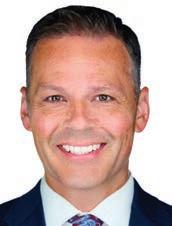
Smith succeeds outgoing CEO Chris Nelson, who has decided to step down to focus on his family.



Nelson was responsible for leading the integration of Riegel Linen, T-Y Group and Harbor Linen and rebranding them into 1Concier.
“Tony is a seasoned leader with an outstanding track record of accomplishments and success,” says Travis Dziubla, principal at Lion Equity Partners.
“With over 30 years of experience in the bedding and durable goods industry, he has held senior executive positions at Sealy Corporation, International Bedding Corporation, Simmons Bedding, and Serta Simmons Bedding, including CEO, COO and president.”
Smith comes to 1Concier from MITY Incorporated where he served as its CEO for the last four years. MITY Incorporated is a global supplier of furniture, fixtures, and mobility products serving many markets, including hospitality, senior living, restaurant and e-commerce.
“As we enter this new chapter, my vision for our company is to embrace transparency, collaboration, and accountability as the cornerstones of our culture,” Smith says. “By doing so, we aim to attract top talent, exceed customer expectations and foster sustainable growth.
“My management style is to create close partnerships within the internal 1Concier team, with our customers and with our vendors. My goal is to enable all our stakeholders to share in the remarkable achievements we will accomplish together.”
Southwick joins LAVATEC’s engineering team
BEACON FALLS, Conn. — Laundry equipment manufacturer LAVATEC, based here, reports that Thad Southwick has joined the company as an application and support engineer.
A commercial laundry industry veteran with more than 30 years of experience, he is based in Cincinnati and reports to President Mark Thrasher.
Since getting his start in the business with G.A. Braun in 1989, Southwick
has served in several capacities involving sales, facility design planning and project management.
After a 17-year run at Ellis Corporation USA where he was the director of sales for the North-Central region for 15 years, he moved on to VEGA Systems USA.
He was a project manager at the laundry systems manufacturer for five years and was the point contact for customers before joining LAVATEC.
“I’m excited to be part of LAVATEC. It’s a company that continues to make great strides in the industry,” says Southwick. “Throughout my career, I have found great satisfaction by collaborating with customers to help them reach their goals. For me, the most important accomplishment is to exceed a customer’s expectations.
“My focus now is on delivering efficient results with our equipment line by continuing to help customers old and new grow their businesses. I’m proud to be joining LAVATEC and be a part of the success Mark Thrasher and his team have built.”
Outside of work, Southwick maintains a busy schedule. He enjoys spending time with his family and writing music.
He plays the piano and has performed with a smooth jazz and R&B band in the Tri-State area, with gigs in Ohio, Indiana and Kentucky.
Adler retires from Cintas, Mattingley promoted
CINCINNATI — Cintas Corp. reports that Paul F. Adler, vice president, treasurer and investor relations, retired on July 31.
Jared S. Mattingley, currently the company’s corporate controller, was promoted to replace Adler effective July 1.
“I want to thank Paul for his leadership during his 26 years at Cintas,” said J. Michael Hansen, Cintas executive vice president and CFO. “During his career here, Paul has added tremendous value to Cintas by participating in many impactful acquisitions, leading our treasury and finance areas and developing many of our accounting and finance partners.
“His deep understanding of our business and our industry served him well in his work with our investor and shareholder community. I wish him and his family all the best in the future as they enjoy this new phase in life.”
Adler joined Cintas in 1997 as corporate development financial analyst. He’s held a variety of ascending roles at Cintas in the years that have followed, including controllers of Cintas’ Global Supply Chain, the Uniform Direct Sale Division (now known as Design Collective® by Cintas), and the Rental Division, before being promoted to corporate controller.
He was promoted to his current role of VP, treasurer and investor relations in June
2015 where he has led the treasury, finance and investor relations activities.
A 24-year Cintas employee-partner, Mattingley came to the company in 1999 as a staff accountant for the Rental Division and was later promoted to rental accounting manager and controller of Design Collective® by Cintas.

Since 2015, Mattingley has served as corporate controller where he has been responsible for Cintas’ consolidated accounting to meet SEC requirements and its annual financial audit, as well as the company’s real estate and financial systems functions.
“Jared has established himself as a leader in the accounting and finance team,” Hansen says. “He’s been a key figure in some of Cintas’ largest and most complex M&A activities to date.
“With his experience and leadership in so many aspects of our business, we expect a smooth transition with his new IR responsibilities and that Jared will be a great resource for the investment community.”
Ricci joins George Courey Inc.
LAVAL, Quebec — Healthcare and hospitality linen provider George Courey Inc. reports that Frank Ricci has joined its team as associate sales director, Canada.
With a Bachelor of Commerce from Concordia University, he brings a wealth of experience and a strong passion for customer care and sales leadership to his role, according to the company.
His decision to join George Courey Inc. stems from several factors. He highlighted the company’s highly engaged teams, adaptability and exceptional relationships, all built on the solid footing of its impres-
sive 113-year history as motivating factors. These factors, combined with the opportunity to contribute to nurturing existing customer connections and establishing new ones, made joining the company an easy decision.
The company says Ricci plays a crucial role in ensuring that the sales team provides exceptional care to customers throughout Canada. He works closely with the team to address the needs of customers, ensuring they receive the highest level of service and support.
His primary focus is to establish and grow strong relationships while identifying new opportunities for business growth.
Drawing upon his extensive background in the technology and aerospace industries, Ricci leverages his experience in customer care and key account management to excel in his current role.
George Courey Inc. says he understands the importance of actively listening to customers and meeting their needs with care and diligence. Additionally, he embraces the value of innovation and remains committed to providing customers with new and compelling options.
Ricci’s leadership and dedication to customer satisfaction make him the ideal fit for his new position, the company says. With a focus on maintaining market leadership in Canada, he collaborates closely with various stakeholders to ensure the company’s continued success.
His exceptional track record and results-oriented approach inspire confidence in his ability to deliver outstanding performance and contribute to the company’s long-standing reputation for excellence.
Continued from Page 4
cess will further enhance the program as it moves forward.
Utilize co-workers for training as well as leaders, which allows for a more vested interest from other team members in the trainee’s performance. Consider incorporating free online training options where appropriate.
When determining selection and training, keep in mind that the desired soft skills are very hard to teach, so rank selection aptitude accordingly. These include, but are not limited to, the ability and speed of learning, enthusiasm, and desire to achieve, ability to perform the tasks, positive attitude, and displayed behavior.

Solid references will augment the candidate’s potential.
Evolving with the continuously changing landscape we see today is a decision. Those who embrace change will lead all of us into our future.
SOUTHWICK
SMITH
ADLER RICCI
18 September 2023 | American Laundry News www.americanlaundrynews.com
MATTINGLEY
Column
Richard Engler is the general manager of the North Heights Linen Service in Amarillo, Texas. He has worked in healthcare linen and laundry, both in house and as a contractor, for various organizations during the past 30 years.









19 American Laundry News | September 2023 www.americanlaundrynews.com Classified Advertising 2023 CLASSIFIED RATES: One- to fivetime rate: $3.00 per word, boldface $3.05 per word. Minimum charge: $50.00 per ad. Call or write for our six- and 12-time rates. If box number is used, add cost of five (5) words. Display classified rates are available on request. All major credit cards are accepted.
Ads must be received by the 1st of the preceding month. For example, for a June ad, the closing date is May 1st. PAYMENT FOR CLASSIFIED ADS: Must accompany order. First Quality Healthcare Textiles Gowns-Bath Blankets-Sheets All at GREAT PRICING!! Call 757-448-8589 USED EQUIPMENT AVAILABLE 1998 Braun 200lb 2 Pocket Washer (5907, 5908) 2010 Unimac 100lb Washer (5909, 5910) 2003 B&C 60lb Washer (5911) 2002 Braun (5916) 2007 Braun 3 Roll Ironers (5915) 2001 Braun 2-Lane 3 Cross Fold Folder (5914) 2014 Chicago Edge Feeder w/Chi Touch 2004 Chicago 3 Roll Century 32ST(5831) 2015 Kannegiesser Thermal Ironer 1 Roll 48”x136” (5715) 2003 Chicago King Edge (5896) 2001 Braun 2-Lane 3 Cross Fold (5914) 2017 Chicago Express W/ CHITOUCH (5893) 2006 Chicago Skyline (5721) 2016 ADC 460lb Gas Dryer (5743) 1995 Consolidated 400lb Gas Dryer (4059) 2002 Lavatec 462lb Gas Dryer (5797) 2-Energenics MLP3636PP Lint Trap 2002-Milnor MLF2020 Lint Trap www.ineedjpequipment.com 800.925.3236 MMATS REPLACEMENT COMPUTER BOARDS For Folding Equipment AMKO AMERICA INC. New & Remanufactured Finishing Equipment WWW.JBILAUNDRYFOLDER.COM 561-863-9696 AmkoAmerica@gmail.com DISTRIBUTOR OFFERINGS EMPLOYMENT EQUIPMENT FOR SALE LINENS FOR SALE Place your ad AmericanLaundryNews.com ONLINE! KEEPING IT GREEN SINCE 1970 EQUIPMENT AVAILABLE: 1-2007 Braun Mini Folder 2-2000 Braun Sheet Stackers. 2-1998 Braun 400# Braun OP. 2-Braun Extract Motors for 600# OP. 1-2001 Chicago King Edge •PARTS•BOARDS•SHOCKS• We buy single items and complete plants. Plant Clean-Out Specialists. Please visit our website: www.stancoind.com E-mail: buyer@stancoind.com Stanco Industries, Inc. Serving The Textile Trades Since 1970 800-932-3769 Ask for Mike or Deb DISTRIBUTOR OFFERINGS The Griffin Group, Inc. “Recruitment Specialist” ® Call Deana Griffin 888-235-2365 www.thegriffingroup.cc deana@thegriffingroup.cc I FILL JOBS! www.AmericanLaundryNews.com American LaundryNews .com More than unique visitors monthly! 8 , 200 TO PLACE YOUR AD CALL DON FEINSTEIN 312-361-1682 www. AmericanLaundryNews .com
DEADLINE:
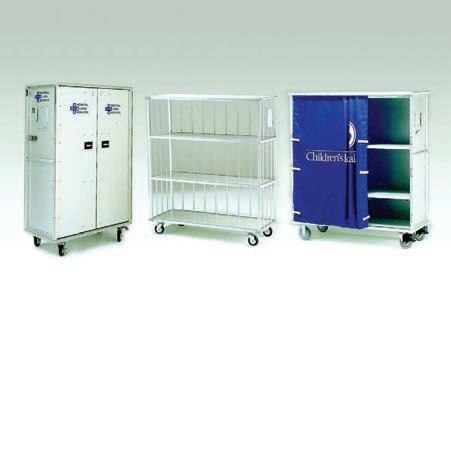







































20 September 2023 | American Laundry News www.americanlaundrynews.com Source Directory listings in American Laundry News are sold on an annual basis at the following rates: All Major Credit Cards Accepted 2023 Listings Regular Boldface All Caps Four Line Listing per Year $1,000 $1,265 $1,265 Display and additional line rates available upon request Source Directory A convenient guide to sources of products and services Quality For more information: G.S. Manufacturing 1-800-363-CART (2278) www.gsm-cart.com ...for the Long Haul. Precision built, all welded, anodized aluminum carts, specifically engineered for the extremes of loading, handling, cartwash and off-site transport in your busy laundry. Available in a wide range of models and sizes, and always to your custom requirements. Sani-Trux Carts Deliver a Larger Workload With Less Effort mcclurequotes@gmail.com www.mcclureindustries.com • 800-752-2821 80 different models • Won’t warp • Twice the life span as Poly Carts. 2000lb capacity Fire Retardant Rated ASTM E1354 • Many different options: caster upgrades, drain valves, bumpers, brakes, P-Locks, gas props, locking doors & push handles. www. AmericanLaundryNews .com PLACE YOUR AD HERE Don Feinstein • 312-361-1682 CONTACT US TODAY! TQind.com | 800.826.1245 | TQcarts@TQind.com Performance Driven PRECISION MADE CARTS Since 1961 as seen at CLEAN ’22 CARTS, TRUCKS & BASKETS CARTS, TRUCKS & BASKETS CARTS, TRUCKS & BASKETS Advertise Today Contact Don Feinstein • 312-361-1682 Reach 750 + Laundry Professionals American LaundryNews .com More than unique visitors monthly! 8,200 Check out our Digital Edition ONLINE! www.americanlaundrynews.com ALN_3x3 Source Directory.indd 1 7/1/23 8:08 AM












21 American Laundry News | September 2023 www.americanlaundrynews.com Source Directory listings in American Laundry News are sold on an annual basis at the following rates: All Major Credit Cards Accepted 2023 Listings Regular Boldface All Caps Four Line Listing per Year $1,000 $1,265 $1,265 Display and additional line rates available upon request Source Directory A convenient guide to sources of products and services Pellerin Milnor Corp. P.O. Box 400, Kenner, LA 70063 504-467-9591, Fax: 504-468-3094 www.milnor.com Pellerin Milnor Corp. P.O. Box 400, Kenner, LA 70063 504-467-9591, Fax: 504-468-3094 www.milnor.com TO PLACE YOUR AD C ALL D ON F EINSTEIN 312-361-1682 800-826-1245 • cleancyclesystems.com CCS MODELS AVAILABLE FOR ANY SIZE OF LAUNDRY OPERATION OPL Series Utility Free DLF Models Automatic Blow Down LINT LASSO In-Line Lint Filter as seen at CLEAN ’22 COIN/TOKEN OPERATED PARTS DRYER BOOSTER & EXHAUST FANS DRYERS — 100 POUNDS OR LESS DRYERS — 100 POUNDS OR MORE LINT COLLECTORS & FILTERS www. americanlaundrynews .com Place your ad ONLINE! www. americanlaundrynews .com
Pellerin Milnor Corp.











Box 400, Kenner, LA 70063 504-467-9591, Fax: 504-468-3094











22 September 2023 | American Laundry News www.americanlaundrynews.com Source Directory listings in American Laundry News are sold on an annual basis at the following rates: All Major Credit Cards Accepted 2023 Listings Regular Boldface All Caps Four Line Listing per Year $1,000 $1,265 $1,265 Display and additional line rates available upon request Source Directory A convenient guide to sources of products and services
Milnor Corp. P.O. Box 400, Kenner, LA 70063 504-467-9591, Fax:
www.milnor.com
Milnor Corp. P.O. Box
Kenner,
504-467-9591,
www.milnor.com
Milnor Corp. P.O.
504-467-9591,
www.milnor.com
www.milnor.com Company Page Company Page INDEX OF ADVERTISERS Continental Girbau 7 Davis Packaging 17 Direct Machinery 9 The Griffin Group 19 JENSEN 15 J.P. Equipment 19 Kannegiesser ETECH 17 Lavatec Laundry Technology 24 Miele 11 Monarch Brands 5 MoviTHERM / MoviMED 16 Pellerin Milnor Corp. 3 Royal Basket Trucks 13 Stanco Industries 19 MAT ROLLERS PRESSES — EXTRACTION SMALL-PIECE FOLDERS TUNNEL WASHER SYSTEMS WASHERS — CONTINUOUS BATCH WASHER-EXTRACTOR — 100 POUNDS OR LESS WASHER-EXTRACTOR — 100 POUNDS OR MORE www. AmericanLaundryNews .com www.AmericanLaundryNews.com 000+ Annual Visitors Advertise Today Contact Don Feinstein • 312-361-1682
Pellerin
504-468-3094
Pellerin
400,
LA 70063
Fax: 504-468-3094
Pellerin
Box 400, Kenner, LA 70063
Fax: 504-468-3094
P.O.
AJ Industries West owner wins SBA award
LAS VEGAS — Laundry equipment distributor AJ Industries West reports it won the 2023 Veteran-Owned Small Business of the Year at the Nevada Small Business Association (SBA) annual awards ceremony held May 4.
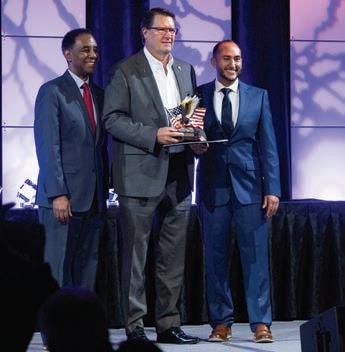
President and CEO of AJ Industries West, Joseph W. Dramise, is a U.S. Navy Disabled Veteran and served on the USS Forrestal CV-59 aircraft carrier.
“I am so incredibly honored to receive this SBA award,” Dramise says. “We started AJ Industries West with a focus on delivering excellence to customers in every aspect of the business—from the first meeting through to installation and beyond.
“Our list of loyal customers certainly stands as a testament to our entire staff’s commitment to excellent service.”
Opened in 2002, AJ Industries provides commercial laundry solutions to a variety of businesses in the greater Las Vegas area. Since opening, the company has been a
TRADE TICKER…

premier distributor of UniMac equipment. It’s also a leader in uniform automation systems.


In addition to the award, Dramise received letters of recognition from a variety of officials in the Nevada government (House of Representatives, U.S. Congresswoman Dina Titus; Special Congressional Recognition, U.S. Sen. Catherine Cortez Masto; and Nevada Gov. Joe Lombardo).
Alliance Laundry Systems Distribution expands West Region
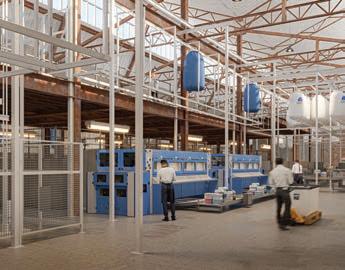
RIPON, Wis. — Alliance Laundry Systems, a provider of commercial laundry equipment, reports it has acquired the distribution assets of Kirkland, Washingtonbased Dynamic Sales and Service.
Dynamic has more than three decades of experience providing commercial laundry solutions in the Pacific Northwest and Alaska.
“We remain committed to partnering with distributors who have a long history of excellent service,” says Craig Dakauskas, senior vice president, Americas Commercial, Alliance Laundry Systems.
“Dynamic definitely fits that criteria and we are excited to bring them into Alliance Laundry Systems Distribution.”
Dynamic will become part of the Alliance Laundry Systems Distribution West Region while maintaining its Kirkland office.
Since its founding in 1990, Dynamic Sales and Service has been a go-to resource for customers in a variety of industries, including onpremises laundries, laundromats, dry cleaners and large-scale industrial linen plants.
It is a full-service distributor, offering technical service and replacement parts, representing Speed Queen and UniMac brands.
“From the start, we aligned with Alliance Laundry Systems because we felt they delivered excellence in every area,” says Dan Danhof, president and co-founder of Dynamic Sales and Service.
“We are proud that our history will con-
AWARDS AND HONORS … FINANCIAL REPORTS


tinue as part of Alliance Laundry Systems Distribution.”
EVI Industries to acquire ALCO Washer Center
MIAMI — EVI Industries Inc. reports it has executed a definitive agreement to acquire New Castle, Pennsylvania-based ALVF Inc. dba ALCO Washer Center, a distributor of commercial laundry products and a provider of related technical installation and maintenance services to the onpremises and vended laundry segments of the commercial laundry industry.
Terms of the pending deal were not disclosed.
Upon closing, ALCO will join EVI’s Northeast Group, increasing its customer base and expanding its distribution and service footprint in the Northeast region of the United States.
Arway Linen moving to new facility in 2024
PHILADELPHIA — Arway Linen & Uniform Rental Service, based here, reports it will be moving to a new state-of-the-art facility within the Port Richmond section of Philadelphia in 2024.
The company says the move will allow it to expand operations and better meet customer needs.

The new facility will provide the business with more space, enhanced technology, and improved logistics, all of which Arway says will enable it to increase production capacity and improve efficiency.
Arway Linen & Uniform Rental Service shares that it started in 1979 with a handful of products, a few employees and a lot of door knocking.
Over the years, the company says it has grown its family-owned and -operated laundry exponentially in all aspects, all while continuing to provide its customers with the highest level of service.
“We are confident that this move will immediately benefit both our company and our customers in the long run,” the company says.
Calendar of Events
703-519-0029
Consistent with EVI’s operating philosophy, the companys says ALCO will continue to operate under its current name and from its present location and have the full extent of EVI’s resources with which to execute various growth opportunities in its region.
The successful completion of the ALCO acquisition will represent EVI’s 25th acquisition of a successful family-owned commercial laundry business.
As a result of its successful acquisition program and various organic growth initiatives, EVI says it continues to be the fastestgrowing and only listed company devoted to the North American commercial laundry distribution and service industry.
The transaction is expected to close upon the satisfaction of customary closing conditions.
Healthcare laundry business compliance platform launches
TACOMA, Wash. — Compliance Shark, based here, reports it has launched its linen, laundry and infection prevention industry business compliance platform.

Co-founded by Gregory Gicewicz, founder and former CEO of Sterile Surgical Systems, and the former president of the Healthcare Laundry Accreditation Council (HLAC), the organization says it is set to transform patient care, facility maintenance and compliance culture in modern healthcare facilities.
Compliance Shark recognizes the crucial importance of comprehensive patient care, top-of-the-line facility maintenance and fostering a compliant culture within healthcare facilities.
Through close collaboration with healthcare facilities, Compliance Shark will offer a comprehensive range of services, including assessments, development, and implementation of tailored compliance programs, process monitoring and testing, staff training, and inspection preparedness support.
“Our founding principle at Compliance Shark is around patient safety,” Gicewicz shares. “Everything we do is dedicated to helping promote a safe patient experience through hygienically clean healthcare textiles every time. We believe that our healthcare provider partners, and our laundry partners all share this same goal.”
23 American Laundry News | September 2023 www.americanlaundrynews.com
September 13 ARTA Speaker Series: The State of Textiles 2023 Mission, Kan. Info: 863-660-5350 25-27 TXCA & CLE Texcare Asia & China Laundry Expo Shanghai, China Info: +86 021 6160 1155 ext. 885/887/886/839 26-28 TRSA 30th Annual Maintenance Management Institute (MMI) Hyattsville, Md. Info: 703-519-0029 October 10-12 TRSA 110th Annual Conference Naples, Fla. Info: 703-519-0029 11 ARTA Speaker Series: Making the Case for Reusable Healthcare Textiles with RFID Mission, Kan. Info: 863-660-5350 19 Association for Linen Management Webinar: Employee Onboarding 2023: Turning Candidates into Engaged Employees Richmond, Ky. Info:
14 TRSA
TRSA
859-624-0177 November
6th Annual Sales & Marketing Summit Memphis, Tenn. Info: 703-519-0029 15-16
12th Annual Healthcare Conference & Exchange Memphis, Tenn. Info:
… SUPPLIER NEWS … INDUSTRY EVENTS …
…
President and CEO of AJ Industries West, Joseph W. Dramise (center), accepts the 2023 Veteran-Owned Small Business of the Year from SBA representatives.
(Photo: AJ Industries West)
A rendering of Arway Linen & Uniform Rental Service’s new, state-of-the-art facility set to open in 2024. (Image: Arway Linen)