OSHA cites Alliance Laundry Systems
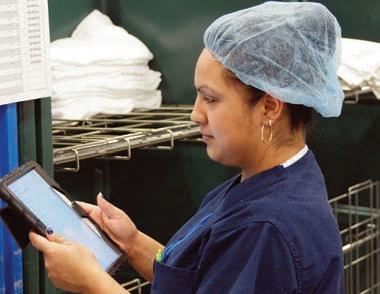
RIPON, Wis. — On Dec. 6, the U.S. Department of Labor’s Occupational Safety and Health Administration proposed penalties of $124,709 to Alliance Laundry Systems after the agency’s investigation of a July 20 workplace injury identified one willful safety violation, OSHA reports.

Inspectors found the Ripon-based company returned a hydraulic press to operation without adding safety guarding after a 65-year-old employee’s right middle fingertip was amputated as he lowered a press used to square parts for washing machines and dryers.
In a statement, Alliance says it disagrees with the characterization of the citation as “willful” and is contesting that classification. The company goes on to say it is confident that ultimately it will be proven that there is nothing willful about the case.
In addition, Alliance says, “We respect OSHA’s dedication to ensuring worker safety across the United States. We have and will continue to work closely with OSHA to resolve any issues around this particular incident and will immediately implement any actions they deem necessary to prevent future occurrences.” ALN
Good management key to UHS survival, growth
2002, knows the story well.
“The previous gentleman [James Hunt] that was running this facility before I got here was here for 27 years,” McCauley says. “He was hired to shut the place down, to get out of contract with everybody because it wasn’t working.
BY MATT POE, EDITOR
CHICAGO — In 1966, United Hospital Services (UHS) in Indianapolis opened its doors.
Today, more than 50 years later, it’s a thriving cooperative healthcare laundry service provider, serving 55 hospitals and more than 700 clinics.
It doesn’t sound like a laundry and linen service provider that almost didn’t make it, but it’s true: UHS almost didn’t make it past 15 years in business.
Ed McCauley, who has been president and CEO of UHS since
“He said, ‘You know what, guys, this just needs good management. You can make a go of this.’” McCauley says the company listened to Hunt and gave him one year to turn UHS around.
“Sure enough, he did,” he says.
It’s the quality of UHS management staff that McCauley cites as the reason for the company remaining in business to this day.

“Why did we stay in business? Good management always comes up,” he says. “You always got to say it’s the quality of the management staff here.”
McCauley says he’s done research into the founding of the company, which put its busi-

ness articles together in 1964 and opened its doors in 1966.
At that time, there were three other cooperative laundries in the country—one in Baltimore, one
Driving force behind laundry operations
POWER 101
BY MATT POE, EDITOR
CHICAGO — There are many factors that are necessary for laundry and linen service providers to function, but one thing is certain: without power, a laundry won’t be processing any goods.
An on-premises laundry (OPL) or commercial/industrial plant could have all of the latest equipment, the best delivery service, wonderful employees and clients with textiles and linens that need
care, but the laundry won’t be in business without energy.
There are several ways to power a laundry operation, and many more ways to improve efficiency and save money.

American Laundry News spoke with two experts in laundry design and construction, Ed Kwasnick and Bob Corfield, to get their insights into powering a laundry.
Kwasnick is director of business development for ARCO/Murray. The construction company, based

Panel of


What does it take to power a laundry? There are four main power sources for a laundry operation: natural gas, electricity, steam and compressed air.
“The primary energy in North America is natural gas and electric,” Corfield says. “In some urban areas, purchased steam is an option for some plants.”
Kwasnick says natural gas is used in burners to heat items such as dryers, ironers, tunnel finishers,
JANUARY 2017 Late News
in Boston and one in Los Angeles. “United Hospital Services is the one that remains in business
www.americanlaundrynews.com Volume 43, Number 1 INSIDE [20] See UHS on Page 6
The Newspaper of Record for Laundry & Linen Management
in Downers Grove, Ill., designs and builds laundry operations across the country.
Corfield is president and CEO
of Laundry Design Group out of Las Vegas, and assists laundries in creating effective laundry systems.
Experts
Meet the new Panel members and see what they can offer in 2017.
[4] See POWER on Page 10
Columnist at Large Eric Frederick suggests a critical review of strengths and weaknesses.
[16]
Experts share thoughts on energy sources, effective new builds/renovations and ways to improve efficiency
Indianapolis co-op laundry was year from shutting down until new manager made it work, says current president/CEO
“THE PRIMARY ENERGY IN NORTH AMERICA IS NATURAL GAS AND ELECTRIC. IN SOME URBAN AREAS, PURCHASED STEAM IS AN OPTION FOR SOME PLANTS.”
—BOB CORFIELD, LAUNDRY DESIGN GROUP
HEATGENERATING EQUIPMENT PRODUCT SHOWCASE
UHS has an aggressive capital investment program for equipment upgrades. (Photo: United Hospital Services)
Power:
Fire department fights … carcinogens
BY MATT POE, EDITOR
LUGOFF, S.C. — Being a firefighter is a dangerous job.
Fire, smoke, other noxious fumes—there are many hazards these front-line individuals face.
Most people, however, wouldn’t think that a firefighter’s gear could be a hazard, but it can be and it is.
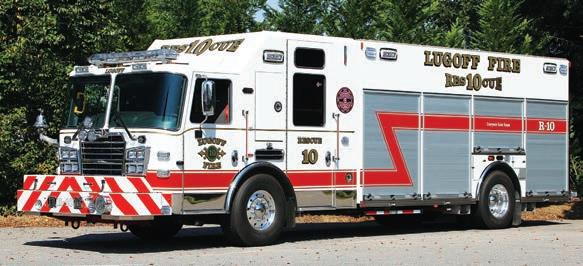
The gear needs to be laundered properly to remove carcinogens. The Lugoff, S.C., Fire Department learned about this potential health hazard and did something about it.
American Laundry News spent some time with Chief Dennis Ray to talk about the department’s recently purchased laundry equipment to help combat carcinogens in the gear.
In fall 2016, the Lugoff Fire Department bought new laundry equipment. Tell us about the new equipment and how it’s working for you.
Ray: We purchased a UniMac® 45-pound washer-extractor and the UniMac drying cabinet. Our main reason for purchasing the equipment was to quickly and efficiently decontaminate all of our firefighting gear to get it back in service as quickly as possible.
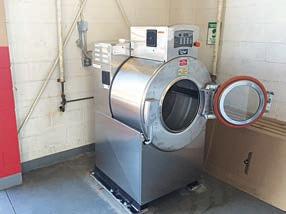
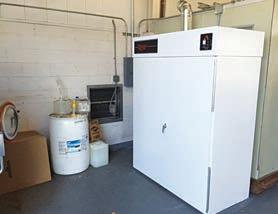
This is by far the quickest, most efficient way to decontaminate firefighting gear following an incident or fire. Previously, we would send our gear out to other departments to be cleaned, and it would take three to four days. Now it takes five to six hours for the gear to be decontaminated.
Our mission, and what we are trying to accomplish, is that firefighters will never need to put contaminated gear back on their body
after a fire or incident.
We understand there were many reasons for the upgrade, but the overarching theme was reducing carcinogens in firefighters’ gear. How did you learn about the carcinogens?
Ray: The South Carolina Firefighters Association launched a cancer awareness campaign throughout South Carolina. The campaign helps to raise awareness of all the contributing factors to cancer cases in firefighters, not only in the state, but throughout the nation. It brings out variables we can address as fire chiefs to minimize our firefighters’ exposure
to cancer-causing agents, which in our business are everywhere.
A lot of people think it is just the smoke that is the biggest cancercausing substance, and that is very important, but it is basically all of the by-products of fire and combustion that are exposing our firefighters to numerous carcinogens. The contamination on the turnout gear eventually absorbs into the skin.
Even if we do everything right by wearing the proper breathing apparatus and turnout gear, firefighters are still exposed to dangerous carcinogens through the by-products of combustion absorbing into our skin. One of the most recommended ways to protect the firefighters is to decontaminate gear immediately, or as soon as possible, after an incident. Before we had the equipment, we did not have this capability. We had to send our gear out to other departments to be cleaned.
You used a grant to purchase the new equipment. How did you learn about the grant and what was the approval process like?
Ray: This particular grant was a local grant in Kershaw County in South Carolina through a Help Foundation. The grant was advertised through many avenues, primarily through the local newspaper, which is where I learned about it. The grant was to provide funding for health-related deficiencies in agencies. Knowing about the South Carolina Firefighters Association
awareness campaign and cancer in the fire industry, I thought this would be a great opportunity.
We needed to fill out an application for the grant, providing a narrative reasoning for why the equipment was needed and how it is related to healthcare and health related issues. I also gave a 20-minute presentation in front of the grant panel, who evaluated and scored all of the different grant applications and presentations.
We were very fortunate to receive the grant, and they awarded us 100% of our grant request. With the grant, we were able to pay for the equipment in full, the cleaning agents used, and some wiring and plumbing work that needed to be done in order to install and operate the equipment. The grant fully paid for everything we needed for our equipment to be in service as it is today.
We are always looking for grant opportunities and continue to look for them to supplement our tax income. We are fully tax-based and the tax money keeps the firehouse open and operating, but we can be limited and need to be creative to find funding opportunities to meet a lot of the additional needs.
Besides reducing carcinogens, what other benefits have you seen from the new laundry equipment? What other laundry do you use it for?
Ray: The equipment is used
Publisher
Charles Thompson
Phone: 312-361-1680
E-Mail: cthompson@ ATMags.com
Editorial Director
Bruce Beggs
Phone: 312-361-1683
E-Mail: bbeggs@ ATMags.com
Editor Matt Poe
Phone: 231-740-2842
E-Mail: mpoe@ ATMags.com
Digital Media Director
Nathan Frerichs
Phone: 312-361-1681
E-Mail: nfrerichs@ ATMags.com
Advisory Board
Jim Buik • Richard Griffin
Greg Gurtler • Phil Hart
Janice Larson • Tom Marks Gerard O’Neill
Richard Warren
Production Manager
Roger Napiwocki
National Sales Director
Donald Feinstein
Phone: 312-361-1682
E-Mail: dfeinstein@ ATMags.com
Main Phone: 312-361-1700 Fax: 312-361-1685
Subscriptions
630-739-0900 x100 www.americanlaundrynews.com
American Laundry News (ISSN 1091-9201) is published monthly. Subscription prices, payment in advance: U.S. 1 year $46.00; 2 years $92.00. Foreign, 1 year $109.00; 2 years $218.00.

Single copies: U.S. $9.00; Foreign $18.00.
Published by American Trade Magazines LLC, 566 West Lake Street, Suite 420, Chicago, IL 60661. Periodicals postage paid at Chicago, IL, and at additional mailing offices.
POSTMASTER, Send changes of address and form 3579 to American Laundry News Subscription Dept., 440 Quadrangle Drive, Suite E, Bolingbrook, IL 60440. Volume 43, number 1. Editorial, executive and advertising offices are at 566 West Lake Street, Suite 420, Chicago, IL 60661. Charles Thompson, President and Publisher. American Laundry News is distributed selectively to qualified laundry and linen management and distributors in the United States.
© Copyright AMERICAN TRADE MAGAZINES LLC, 2017. Printed in U.S.A. No part of this publication may be transmitted or reproduced in any form, electronic or mechanical, without written permission from the publisher or his representative. American Laundry News does not endorse, recommend or guarantee any article, product, service or information found within.
Opinions expressed are those of the writers and do not necessarily reflect the views of American Laundry News or its staff. While precautions have been taken to ensure the accuracy of the magazine’s contents at time of publication, neither the editors, publishers nor its agents can accept responsibility for damages or injury which may arise therefrom.

MEMBERSHIPS INSIDE: January 2017 • Vol. 43 | No. 1 [12] Laundry Boiler Maintenance and Safety Experts share ideas for laundries to keep the heart of the operation producing steam … safely [14] NFL Laundries Struggle with Stains as Well Equipment managers look for ways to remove uniform stains, prevent yellowing, to shine on the field [22] Career Track [26] Trade Ticker [27] Calendar of Events [28] Classified Advertising [29] Source Directory
Laundry equipment helps remove cancercausing agents from firefighting gear Firefighters face carcinogens not just at a fire but even on their own gear. (Photos: Lugoff Fire Department) The Lugoff Fire Department had to send out its gear to be washed until it received a grant to purchase its own washer-extractor. The department’s new dryer cabinet allows it to dry fire hoses inside the station. See FD Q&A on Page 14 2 JANUARY 2017 | AMERICAN LAUNDRY NEWS www.AmericanLaundryNews.com
“ Only Milnor“
could offer the combined technology ”and support we expect.”
– Rick Hamlin, Crown Health Care, Columbia, MS
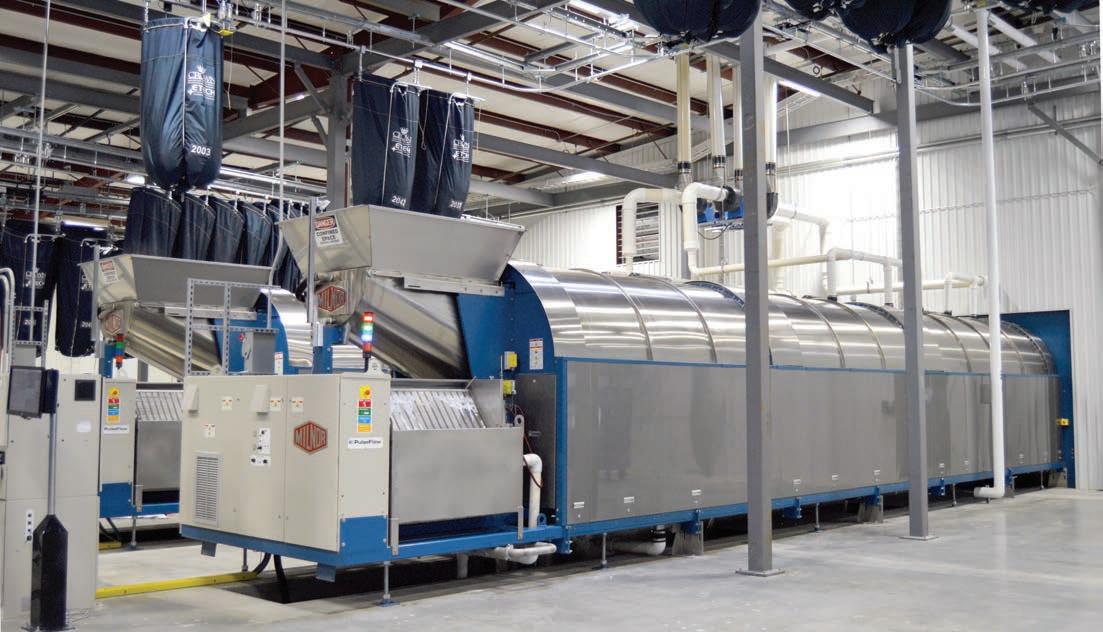
When Crown Health Care Laundry Services opened its fourth plant, it enlisted the help of longtime partner Pellerin Laundry Machinery Sales Company to design, equip, and install the most efficient laundry possible. The end result was a state-of-the-art laundry featuring two 76039 PulseFlow® Technology 10-module tunnels that creates a continuous workflow by integrating an E-Tech rail system to transport linen through the plant. Their Milnor 6464 dryer pod with GreenFlex™ Dryer Mode accepts new loads immediately after the discharge of the clean goods. This facility is designed to process over 25,000,000 lbs. of healthcare linen per year in a single shift operation, while consuming less than 0.5 gal/lb. Hamlin notes that “the project was seamless thanks to the combined efforts of Pellerin and Milnor.”
To find out how Milnor’s PulseFlow® Technology and GreenFlex™ Energy Mode can reduce your laundry’s utility consumption, contact an authorized Milnor distributor or call 504-712-7656.
To see how Crown Columbia’s state-of-the-art laundry works, scan this code.

www.milnor.com / pellerinmilnor
Get ready to power up
Y
ou hold in your hands a powerful issue of American Laundry News.
Well, I like to think they’re all powerful with the information provided, but maybe you saw that one of this issue’s cover stories is about powering a laundry.
In that article, two laundry construction and consulting experts shared their thoughts about laundry operations’ energy usage.
Of course, when you’re talking about laundries and power or energy, you have to talk about boilers. Because boilers are so powerful, a strict maintenance schedule and safety precautions must be observed.
Several boiler experts weighed in for the article on page 12 about
The Editor’s Desk MATT POE
what needs to be checked on a daily, weekly, monthly, quarterly and annual basis.

I’m sure you know this, but I should point out that while the boiler article offers some excellent
Letter to the Editor
information, it is only a starting point for maintenance and safety, not a comprehensive guide. Be sure to work with boiler technicians and manufacturers, the experts, on your boilers.
Other articles in the issue are “powerful” as well. Have you wondered what it takes for an NFL equipment manager to keep a team’s uniforms clean? Turn to page 14 for an inside peek.
Or turn to page 2 and see what a fire department in Lugoff, S.C., did to better clean its gear.
And what would a power/ boiler issue be without a Product Showcase of heat-generating equipment (page 20)?
I hope this issue gets you fired up for the new year!
Critical review vital for future
When was the last time you took the time to critically review your strengths and weaknesses? It is almost a universal desire to make more money and get a better job. Some of us wait for that to happen or anxiously wait for our boss to retire.
But how many of us take the time to develop a plan to improve our skills in preparation for our next job? If we are honest with ourselves, we will recognize that, even in our current positions, there are skills that need to be developed or improved so we can do a better job.
I have seen many stories over the years about people who played the lottery and finally won the big prize. Sadly, these stories often end tragically in seven to 10 years because they were ill-prepared to manage or handle that kind of wealth.
They lacked the self-discipline and money management skills to properly handle and invest such a large amount of money. It is spent foolishly and quickly disappears. Instead of blessing themselves and their children for generations to come, they quickly return to being poor.
Reader grateful for regular columnist, article on training new employees
To columnist Eric Frederick:
I just wanted you to know that I read your articles often in the American Laundry News, and you offer a great wealth of knowledge and expertise that you are able to articulate well.
The reason for this note, however, is to let you know that the recent article you published regarding training new employees [December 2016, page 4] was exceptional and deals directly with an issue we here at our plant are challenged with right now.
The article gives great feedback on why training is so important, specific techniques to become better at it, and is just a very well-written and applicable article.
I say that just to say thank you for what you do! I look forward to more articles.
JoeMax Tomlin Texas Healthcare Linen Abilene, Texas
Due to an editor’s error, Tom Vanden Heuvel’s name was misspelled in a Career Track photo caption on page 25 of the December issue.

American Laundry News regrets the error and apologizes for any inconvenience it may have caused. ALN

There are many resources we can turn to for helping us do a selfinventory of our skills and develop a plan to improve. Many human resources departments or local colleges can assist with this process.
Your fellow managers can also be a great resource. I would recommend that you talk with and spend a day job-shadowing a person at the next management level up. See what skills they use every day. Then, see if your current skills are adequate for the job.
“I AM ASKING YOU TO INVEST IN YOURSELF. AS MY MOTHER WOULD HAVE SAID, ‘IT IS TIME TO PUT YOUR ADULT PANTS ON AND SEE YOURSELF AS YOU REALLY ARE.’”
Taking time away from our family, our friends, our church and entertainment is not easy. Do I really want to work on a management degree or go on a pub crawl with my buddies? What I am asking you to do is to live like no one else so later you can achieve and live a better life. I am asking you to invest in yourself. As my mother would have said, “It is time to put your adult pants on and see yourself as you really are.”
Many hospitals are requiring key department managers to have at least a bachelor’s degree. I warned my company that it might overly limit the potential pool of applicants for my position when I retired, but they did not care.
It is part of a growing trend. If you want to run a large laundry or a central laundry, you best be sure you get a bachelor’s degree. I personally would recommend a business degree. Out of all the courses I took in college (my major was recreational land management from the Forestry Department at Utah State University), the contracts course I took as part of my business minor has been the most useful.
You need to become proficient in the use of Microsoft Word and Excel. You need to understand employment law and federal regulations as they relate to our business. You need to develop excellent customer service skills and work diligently on your communication skills.
COLUMNISTS/FEATURES
•
•
•
•
•
•
•
OUR SISTER WEBSITES
From
•
•
•
•
Yes, education without experience is useless, but experience alone will no longer consistently get you promoted. You need to blend the right amount of experience with the right amount of education to make yourself highly promotable. No one will do this for you.
You are in charge of your own destiny. It will take self-discipline and planning and a willingness to sacrifice fun activities today to achieve for a more wonderful future. In the end, your eventual success or failure will be the direct result of how you react to this message. ALN
Eric Frederick has retired from active laundry management after 44 years. He is available as a laundry operations consultant. He is a past president and two-time manager of the year of the Association for Linen Management. You can contact him by e-mail at elfrederick@ cox.net or by phone at 540-520-6288.
4 JANUARY 2017 | AMERICAN LAUNDRY NEWS www.AmericanLaundryNews.com
ALN
From
COLUMNIST AT LARGE Eric L. Frederick, RLLD
Top Stories Appearing on AmericanLaundryNews.com for the 30 Days Ending December 15 (WE) = WEB EXCLUSIVE NEWS • New Hospitality Laundry Tools, Linen Supplies Displayed at HX ... • NSF International Launches Healthcare Laundry ...
Voltea Opens Robotic Production Facility in Texas
Baltimore Company Building
Healthcare Laundry ...
Additional
Steiner-Atlantic Corp. Partner in Florida
Primus,
Eric Frederick: Training Program Essential for New-Employee Success
Physics and Chemistry Enter into Equipment Purchasing
Oregon Ducks Football Team Has Brand-New ‘Pond’
Managing Utilities to Reduce Usage, Save Money
AmericanDrycleaner.com:
New York State Considers New Drycleaning Regulations (WE)
Members of
Round Table’ Visit Puritan Cleaners
‘The
From AmericanCoinOp.com:
Express Laundry Center Contributes to Local ...
Gatlinburg Coin-Op Lends Hand During Wildfire Recovery (WE)
CORRECTION
more to healing
doctor



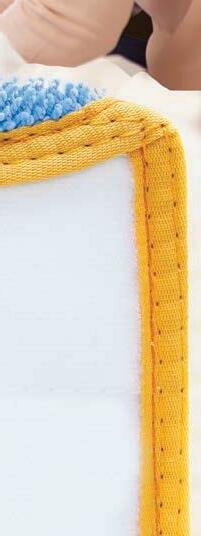
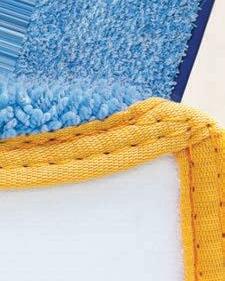
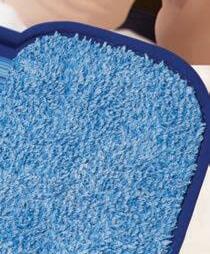
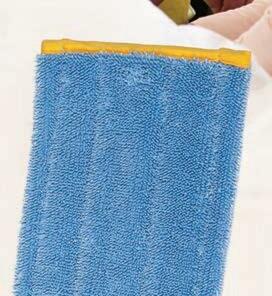
icrofi er has een ro en to eliminate o acteria, dirt, and other contaminants when used ro erly There is no other cleaning system on the lanet that is more e ecti e ndustrial, ood and e erage, ealthcare, os itality icrofi er is the remium cleaning solution or any industry or en ironment Our enhanced T old er design atent ending is first to mar et and est in class These remium wet dry com o mo ads e ciently dee clean oors and ase oards at the same time remium hoo loo ac ing assures a ready to use roduct o er and o er again








800 821 2221 americandawn com imagine americandawn com
Ask us about the American Dawn Microfiber Total Training Program! than a good
Theres
today out of the original four cooperative laundries,” McCauley says.
OPERATIONS
McCauley says the difference between UHS and other companies of similar size is that the others might be using three separate plants to get its work done, whereas UHS has a single plant.
“It’s not terribly different,” he says. “I just think if you’re organized properly within your facility, and you have enough systems in place, ordering systems and software systems and production control systems, all of these different things you have in place, now you’re ready to take on more business and to properly service the business you have.”
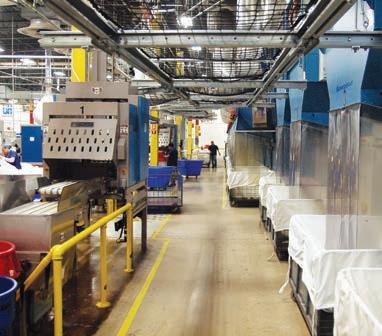
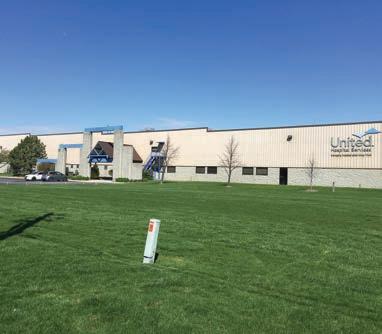
The plant UHS uses today opened around 1994. It has more than 115,000 square feet of space, with four tunnel washing systems, McCauley says.
The equipment is a mix of old and new, he says. UHS has a fairly aggressive capital project list every year to look at equipment and see what needs to be upgraded.
“For instance, in about 2008, we bought a new tunnel system,” says McCauley. “Three tunnel systems are original equipment, while one was new as of 2008. There’s a lot going on every year as far as equipment.”
In about 2010-11, the company put a new hanger system in, he says, and for the past three years, it’s been redoing a lot of its ironer systems. He says UHS has one ironer fitted with a camera system for quality control and in 2017 is going to outfit all of its ironers similarly.
“We pride ourselves on the quality side of the business,” says McCauley.
The company processes more than 38 million pounds of linens a year with all of that equipment. And UHS only needs one 10-hour shift, six days a week, to get the work done in a timely manner, with quality results.
But that’s changing this month, according to McCauley. He says the Indianapolis plant is adding a second shift because of growth, which will reach 47 million pounds processed. In total, the plant will employee 275 individuals.
Of course, with so many clients and so many pounds being processed, UHS has a backup plan in place in the event of a disaster.
McCauley says UHS has five or six backup laundry service contracts in place with other laundries. By contract, those laundries must help UHS with X number of pounds in X number of hours.
“We must also do the same for them in their hour of need,” he says.
While the company has a good backup plan in place today, that wasn’t always the case. McCauley says that just a few months after he joined UHS, the building was hit by a tornado.
“It came to light how ill-prepared we were for a catastrophe,” he says. “The good news is it hit 3 o’clock on a Friday afternoon, so all we really missed was Saturday and we were back up and running Sunday. But in the meantime, we were scrambling to find other laundries to help do the work.”
UHS has also learned what works best for the company when it comes to pickup and delivery of soiled and processed goods. McCauley says the company leases its fleet of vehicles from Penske.
“It’s probably not the cheapest way to go, but it certainly is the most convenient,” he says. “We are not experts in truck maintenance, so we allow the experts to do that kind of thing. Just like the hospitals allow us, the laundry and linen experts, to do their laundry and linen for them, we let Penske do that for us.”
At the end of 2016, UHS purchased a double-decker trailer for use on long routes, says McCauley.
“We have to travel two-and-ahalf hours, one way, for some of our hospitals, so we’ve found that the double-decker trailer is the way to go for that,” he says.
CONTINUED GROWTH
Just like the company continually upgrades its equipment and delivery options, UHS continues to look for growth opportunities in its business, McCauley says.

In 2005, UHS switched from a nonprofit to a for-profit company. He says the shift made sense because the company simply wasn’t doing many of the things that were put together in the ’60s for its 501(c)(3) status.
“They would have to do with simple things like the general manager of the facility must be an active employee of one of the hospitals, something like that,” McCauley says. “We had all these little things that when it was put together didn’t make sense anymore because we had grown, the hospital markets had changed over the years and so on and so forth. We felt that it was time to basically get out of the
501(c)(3) status and move toward a cooperative where the hospitals actually owned a piece of United Hospital Services.”
The process wasn’t easy, McCauley says, but after “a lot of legwork and lawyers,” UHS became a for-profit business.
“As an LLC, I can have an unlimited amount of for-profit business,” he says. “An LLC is basically what’s known as a ‘passthrough’ organization.
A pass-through organization passes either profits or losses to the owners, and the owners basically have to record profits and the losses of the organization on their books. So, it didn’t matter if we made a profit.”
UHS is working on its next area of growth in terms of warehousing and distributing goods. In Bloomington, Ind., the company opened what McCauley calls a depot. The warehouse/distribution center will aid the company in servicing clients located up to two hours away from the central plant.
He says plans are in the works for a second depot in northcentral Indiana.
“These are going to be depots where we will take linen in bulk and break them down; if they go on exchange carts, we’ll do it up there,” he says. “We’ll do all of the local delivering out of these depots, whether it’s in Bloomington or up north, wherever.”
The Bloomington site has been in operation for approximately four months, McCauley says. The depot in north-central Indiana will be up and running early this year.
And he says that UHS will continue to grow, continue to thrive.
“A lot of these smaller laundries in the area are going by the wayside because they don’t have the expertise (and) they don’t have the wherewithal to survive in today’s healthcare laundry market arena,” McCauley says.
He says that since he arrived in 2002, the company has “shut down” five or six laundries anywhere between half a million pounds a year to 5 million pounds a year.
“We’re able to do that because, again, we’re leaders in the industry with an excellent management staff and we’re growth-oriented,” McCauley says.
6 JANUARY 2017 | AMERICAN LAUNDRY NEWS www.AmericanLaundryNews.com
ALN Continued from Page 1
UHS
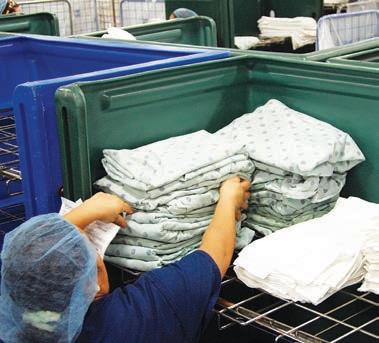
The cooperative laundry services 55 hospitals and more than 700 clinics.
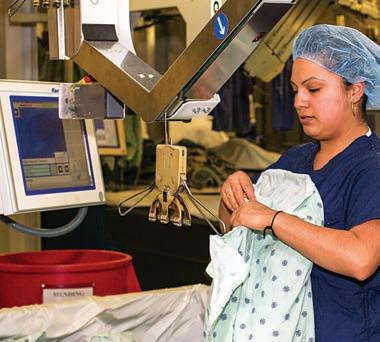
A new hanger system was installed in 2010-11.
UHS’ current plant was built in 1994. (Photos: United Hospital Services)
The plant houses more than 115,000 square feet of work space.
McCauley
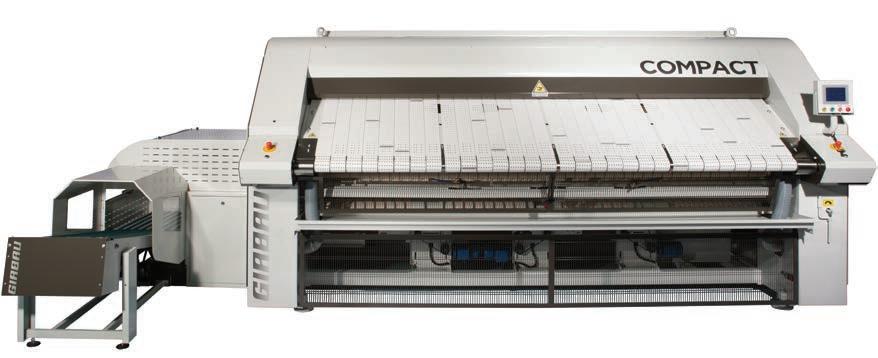
Featuring a compact design and flexibility that allows Whistler Laundry to automatically feed, iron, fold and stack a variety of items, the Compact fits perfectly into its designated spot at the laundry. Configurable for one, two or four working lanes, with one lane for sheets, two for table linens and four for small items, including napkins and pillowcases, it executes up to three-lane primary folds and single- or two-lane cross folds. A bypass option allows goods to exit the front or rear of the machine, and the Compact offers left or right discharge and front or rear stacker orientation to meet specific needs. Finally, it automatically adjusts ironing speed and moisture removal — processing goods with no dryer preconditioning.










Contact Girbau Industrial for a FREE ESTIMATE and discover how production automation can boost productivity and profits in your laundry! (800) 256-1073 • www.girbauindustrial.com
INDUSTRIAL Our first ironer improved production and revenue 30 percent. The new Compact 5-in-One elevated it another 30 percent. The Compact has opened the floodgates to new business and bigger clients.
Steve Wheeler, Co-Owner, Whistler Laundry Inc., British Columbia, Canada
New hospitality laundry tools, linen supplies displayed at HX: The Hotel Experience
BY RICHARD MERLI
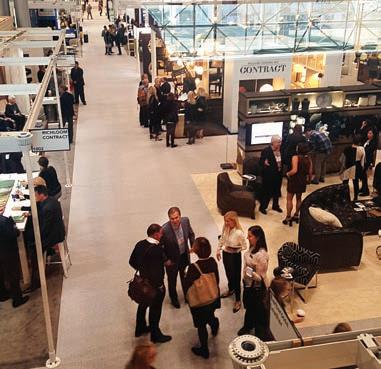
NEW YORK — Manufacturers of laundry machinery, linen and laundry chemicals exhibited a variety of cost-saving products at HX: The Hotel Experience, North America’s largest hospitality trade show for hotel and restaurant owners and managers.
The energy- and water-saving products were introduced at the Jacob Javits Convention Center in New York Nov. 13-15.
Many smaller hotel groups are in the midst of building new properties or expanding, according to C. David Carter, vice president of North American sales for Pellerin Milnor Corp., a manufacturer of washing and drying machinery based in Kenner, La. The company exhibited a 60-pound-capacity washer in an exhibit space shared with Chicago Dryer Co., which exhibited its Comet Executive, an ironer for table linen in the small-hotel market.
The equipment attracted the attention of Matthew Levin, director of hotels and marketing for the Bay View Collection, a group of three smaller hotel properties based in Camden, Maine. The properties include the Lord Camden Inn, the Grand Harbor Inn and 16 Bay View.
“We came down to the show to see what’s new in the industry,” says Levin. “Mainly, we wanted to see if there was any new cost-saving equipment. Seeing it firsthand gives us the ability to be one step ahead in our business.”
HX has long been “a show of national importance for the hotel industry,” says Mats Bruce, executive vice president of B&C Technologies, a manufacturer of washing and drying equipment based in Panama City Beach, Fla. The show draws local hotel owners and operators, as well as owners and operators from all over the United States and abroad.
“Many hotel owners are renovating their existing properties,” says Bruce. “That’s a big growth area at our company, so this is a very good venue.”
G.A. Braun Inc., a manufacturer of washing, drying and finishing systems, recently completed a 100,000-square-foot expansion of its facilities in Syracuse, N.Y., according to Pamela Simonetti, director of marketing for the company. The expansion doubles Braun’s capacity to produce washer-extractors, dryers, tunnel systems and finishing equipment, she says.
“We’ve experienced a big uptick in the sale of finishing equipment among hotels and linen companies,” adds Simonetti.
Braun is not alone in its plans for expansion.
Alliance Laundry Systems, whose UniMac brand manufactures wash-
ers and dryers, is currently undergoing a $60 million expansion of its facilities in Ripon, Wis., according to Aubrey Pollesch, marketing brand manager for the company.
The company, which displayed washing and drying equipment at HX, is building a new warehouse and converting an old warehouse into a new manufacturing facility. Alliance Laundry Holdings Inc. added a line of soft-mount washers through the purchase of the Primus Laundry Equipment Group in 2014.
“We are going gangbusters right now,” says Pollesch. “HX will help to generate a lot of leads for our equipment distributors.”
The HX show also provided hotel operators and managers an important opportunity to connect directly with the manufacturers of laundry systems capable of reducing their operating costs.
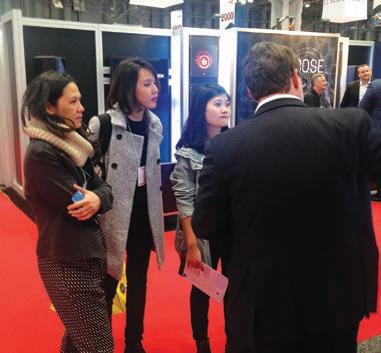
For Ofer Manor, general manager of Ocean Linen in North Miami Beach, Fla., that meant having an opportunity to view, firsthand, the laundry washers manufactured by Xeros and to meet with representatives of the company to close a deal.
In addition to a 110-poundcapacity washer, Xeros was exhibiting a new 55-pound-capacity, variable-load, soft-mount machine. Using its proprietary laundry bead washing technology, it’s designed to reduce energy use by up to 80% and water use by up to 90% in cold-water washing. Manor signed a purchase order at HX.
Xeros has installed its equipment systems in more than 200 hotels, industrial laundries and firehouses since it introduced the new technology at HX in New York four years ago, according to David Kaupp, vice president of marketing for the company, based in Manchester, N.H.
“We’ve sold many machines at this show over the years,” says Kaupp. “It’s always been a good show for us.”
TQ Industries, maker of TecniQuip carts, enjoyed success exhibiting at HX for the second time.
“We were delighted with the reception and acceptance by hotel managers and housekeeping personnel of our aluminum-fabricated hotel carts,” says Ryan Freudenberg, national sales manager for TQ Industries. “Our staff agreed there was a larger acceptance of our company’s non-traditional-style carts and, in particular, our customdesigned carts than in the previous year.”
The chemical and textile corners of the laundry industry also promised important savings and advantages for hotel laundry operators.
Ecolab has developed the Aquanomic Solid Laundry Program, which, combined with optimized low-temperature chemistry, is
designed to reduce water consumption by 30% and energy use by 40% in hotel laundries. The system uses a 5-pound capsule of solid laundry detergent to wash goods in low temperatures and to eliminate the threat of chemical spills in the laundry from drums containing liquids.
Procter & Gamble also offered hotels operational efficiencies and cost savings with its Tide Professional Coldwater detergent. Cold-water washing promises hotel laundries longer linen life and savings of up to 50% in energy and water costs, the company says. The hotel market now represents the largest segment in Tide’s professional laundry business, according to representatives.
Welspun U.S.A. displayed its Hygro Cotton towels, made from a proprietary spinning technology that produces yarn with a hollow core. The technology produces a more absorbent, longer-lasting towel, which can be washed up to 200 times in a hotel environment, according to Abhijit Datar, vice president and head of hospitality for the company based in Grove City, Ohio.
“The HX show provides us with many good leads,” says Datar.
The HX show also provided a good opportunity for Cuddledown, a manufacturer of sheets, blankets, comforters and pillows, based in Yarmouth, Maine. The company’s products have established a strong foothold in the hotel market, especially among boutique hotels, says Todd Cox, director of sales development.
Growth in the hotel market has also provided a strong opportunity for distributors of laundry machinery, such as Professional Laundry Systems of Deer Park, N.Y. The company exhibited a 22-pound-capacity washer-dryer, a 35-pound-capacity washer-extractor and a 60-poundcapacity washer-extractor at HX. The company represents such brands as LG, Electrolux and Dexter.
“We’ve been absolutely swamped in the hotel industry,” says Alex Harris, president of Professional Laundry Systems. “Our manufacturers can’t produce machines fast enough to keep up with the demand for new equipment.”
The company says it has experienced strong growth among both new and renovated hotel facilities, especially in Syracuse, Rochester and Buffalo, N.Y.
With the growth reported from the floor, HX 2016 was successful for laundry and linen companies and hotel properties alike. HX: The Hotel Experience will return to the Jacob K. Javits Center on Nov. 12-14 of this year.
ALN
Richard Merli, who resides in Brooklyn, N.Y., is a former editor of American Laundry News.
8 JANUARY 2017 | AMERICAN LAUNDRY NEWS www.AmericanLaundryNews.com
Hotel representatives from around the world attended the show, event managers say.
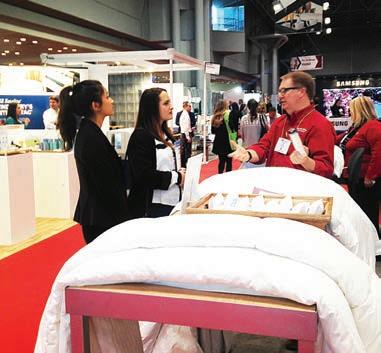
Hotel owners and operators examined laundry and linen products, like sheets and comforters.
HX filled the Jacob K. Javits Convention Center in New York. (Photos: Richard Merli)
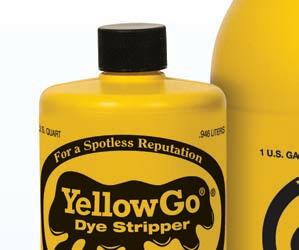
Results on whites are excellent. On colors, you have nothing more to lose and everything to gain by trying YellowGo. YellowGo may take out color you want to keep. But if it removes the unwanted dye without damaging the underlying color, you win! You won’t have to pay for the dye-stained garments and you won’t disappoint your customers.
So use YellowGo to keep your customers happy and keep them coming back.








information visit
or
or
YellowGo® removes unwanted dye from fabric. For more
AlWilson.com
call us at 800-526-1188
201-997-3300
wholesale linen for Hospitality & Institutional Facilities
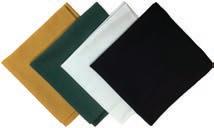
SPUN POLY APRONS AND NAPKINS
A staple item for all restaurant laundries, we offer durable poly aprons for chefs, waiters and baristas.
Power
and so on. Steam, too, can be used to heat items such as water, ironers and dryers. Electricity powers motors, lights and controls. Finally, compressed air is used to move things like machinery components, air cylinders, switches, etc.
“Natural gas, electricity and cold water are the primary utilities supplied by external sources such as utility companies, the city, a well, etc.,” Kwasnick says. “Water is not a power source. But it is the other major utility used primarily to wash things.”
Steam, compressed air and process water (hot and tempered) are secondary utilities produced in the laundry by machinery fed by the primary utilities, he says.
“For example, a boiler consumes water, natural gas and electricity to manufacture high-pressure steam,” says Kwasnick. “An air compressor consumes electricity to produce clean, dry compressed air. A process water system consumes water, electricity, natural gas and potentially steam to produce hot water.”
continuously even when steam is not needed,” he says. “They cannot shut down and start back up because of thermal stresses. These stresses cause cracking and other damage. However, some new boilers are designed to cycle on and off throughout the day to meet steam demands. This ability to shut down and start back up when not needed further reduces gas consumption.”
Kwasnick says that improvements in energy utilization and efficiency have been made in most equipment used in a laundry. For example, air compressors use VFDs (variable frequency drives) to meet compressed air demand, which uses less electricity than older models.
“We use systems such as heat reclaimers, stack economizers and vent condensers to capture waste heat from our boilers and waste water, use those free Btu to pre-heat the incoming water,” he adds.
Other equipment improvements Kwasnick notes include new dryers that are more efficient and consume less gas than they used to due to improved burners, controls and sensors that determine when the goods are dry, thus eliminating over-drying.
Route ready BAR Mops
Save time and money. Route ready bar mops are optically white and packed in bags of 25 so you never have to pre-wash or recount them prior to use.
IMPROVED TECHNOLOGY
Once a laundry is powered, it’s up to the company to make the best use of that energy. Over the years, evolving technology has made using those energy sources more efficient.
“In the 1990s, the major technological innovation was electrical motor drive technology, which had a considerable impact on electrical costs in large laundry plants,” Corfield says. “Inverter drives reduced the electrical demand curve from traditional motor starter technology and reduced electrical costs and maintenance.”
He says that tunnel technology continues to advance, using less water per gallon during the wash process. Also, more water is removed during extraction so goods don’t have to be dried as long, saving gas and electricity in the process.
Thermal fluid ironers eliminate the need for steam to heat the ironer chest, says Kwasnick. This eliminates all steam and condensate return piping, and all the losses associated with that piping. It also reduces the boiler steam load, lowering the boiler size.
TRUE COLOR towels
Ideal for colleges, country clubs, gyms, golf clubs, and hotels. These towels made from soft, ring spun100% cotton, with a dobby border.
white institutional sheets
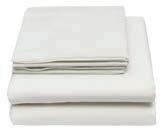
These 180TC 55/45 cotton/poly blend, are more durable than cotton sheets, and are made in China (Chinese sheets provide a softer feel than other imports).
ELITE collection WHITE towels

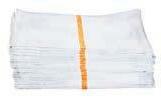
Made with 100% ring spun cotton and a blended ground to provide a perfect balance of comfort and durability. These are optically bright white, soft to the touch, and carton packed so they’re ready to use.
He says that in the early 2000s, reductions in water consumption were achieved through standing bath tunnel technology, high-pressure fast cycle press extraction and advances in water recycling technology.

“There is a direct correlation in water reduction and energy usage, and these technologies provided considerable cost reduction and productivity increases to warrant wide acceptance and usage in every part of the laundry industry,” Corfield says.
Boilers have become more efficient by improving the burner design and controls to reduce natural gas consumption, says Kwasnick.
“Traditional boilers are designed to run
While most technology related to energy reduction might focus on equipment, Corfield says a key innovation in the last 15 years has been in effective lower-temperature chemistry, specifically peracid (peroxyacetic acid blend) bleaching systems.
“Traditionally, peroxide bleaching requires temperatures of 170 degrees or higher to achieve optimum oxidizing effect,” he says. “Peroxyacetic acid blended with hydrogen peroxide allows highly effective bleaching at temperatures as low as 130 degrees. The 40to 50-degree reduction in energy required for large-volume healthcare processing is considerable, without compromise for quality or disinfection outcomes.”
Any discussion about power utilization and energy efficiency inevitably includes alternative sources. Both Corfield and Kwasnick say that alternative sources, such as wind turbines and solar panels, simply can’t handle
10 JANUARY 2017 | AMERICAN LAUNDRY NEWS www.AmericanLaundryNews.com minimums apply CALL FOR PRICING (800) 333-7247 monarchbrands.com
Continued
from Page 1
(Image licensed by Ingram Publishing)
the scale of powering a laundry operation.
“My company has worked on several solar conversion projects that had a laundry element,” Corfield says. “No matter how much we tried to use solar-heated water, the technology does not allow for the volume of water required for most laundry operations. The benefit of solar electrical systems does add a marginal benefit, but it is only mostly effective in only certain markets in the West and Southwest U.S.”
NEW BUILD, RENOVATION
When it comes to laundries looking to build a new facility or renovate its current operations, both Corfield and Kwasnick recommend creating the most efficient systems to best utilize power.
“In every new project, we specify lowenergy, ‘less steam’ production equipment and considerable water and energy recovery systems to target whole plant gas consumption of under 1,800 Btu per clean pound processed,” Corfield says. “The focus should be on less water and a reduction on the use of steam to heat water.”
Kwasnick has six pieces of equipment he recommends for a new build:
• A heat reclaimer
• A high-efficiency modular boiler
• High-efficiency LED lighting
• Thermal ironers
• Tunnel washer for linen or conventional washers with water reuse for industrial
• Air compressors with VFD
Equipment replacements for a renovation, says Corfield, depends on the type of outcomes required for the renovation.
“I would specify replacing steam ironers with gas-fired, self-contained thermal fluid ironers; new wastewater heat recovery systems to gain considerable energy reduction; and, if possible, I would change every dryer older than 20 years,” he says. “New dryers have considerable advantages over the last five to 10 years by utilizing higher airflows, air recirculation, and much improved gas burner technologies.”
ENERGY USAGE ADVICE
While a laundry looking to build or renovate will most likely look at the most efficient ways to utilize energy, most laundries are looking to best use power with what technology and equipment it has.
Both Corfield and Kwasnick have practical ideas for a laundry looking to improve efficiency while keeping most of its current equipment.
“If this is a tunnel washer plant, I would replace the press if it is over 15 years old and every dryer that has outdated technology or is benchmarked over 2,200 Btu per pound of water removed,” Corfield says.
Kwasnick has a laundry list of ideas to save on gas, electricity and water. To save natural gas, he recommends:

• First, install a heat reclaimer if they don’t already have one.
• If they have a traditional boiler, install a stack economizer to use the hot flue gases to pre-heat the incoming water.

• Insulate all steam, condensate return and hot water lines.
• Tune up equipment burners (boilers, dryers, etc.) annually to ensure they are operating at top efficiency.
• Keep the inside of the boiler surfaces clean and scale-free.
• Make sure all steam traps are operating properly.
• Fix all steam leaks ASAP.
• Maintain proper steam pressure.
• Do not overload or underload the dryers, as both scenarios require longer dryer times and use more gas.
To save electricity:
• Install high-efficiency lighting.
• Turn off lights and equipment when not in use.
• Stagger startup of equipment with high electrical loads (e.g., washers, air compressors, etc.) to minimize your electrical demand charge.
• Do not overload or underload the washroom equipment, as both scenarios use more electricity.
To save water:
• Install a water recycle system.
• Make sure you are getting proper credit on your sewer bill for water that was evaporated during the laundry process.
• Repair water leaks.
• Tighten up your wash formulas (e.g., eliminate unnecessary rinses).
Finally, both Kwasnick and Corfield recommend that laundries engage in three activities to best power a laundry operation: tracking, benchmarking, and setting standards.
“Track your utility consumption on a daily or weekly basis,” Kwasnick says. “Benchmark your results against the best, and set standards for energy usage just like you do for production output.”
“Monitor all electrical and gas against your clean pounds processed every day and target total energy to 4-6% of costs,” adds Corfield. “We have seen plants benchmark at 14% of costs. If you are not monitoring energy, you are likely wasting tens of thousands or hundreds of thousands (of dollars) per year, depending on the size of your plant.” ALN
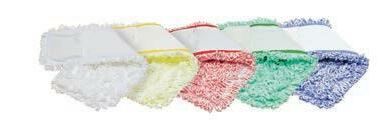
POCKET MOPS
ECONO WET MOPS
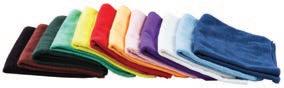
www.AmericanLaundryNews.com AMERICAN LAUNDRY NEWS | JA NU A RY 2017 11 minimums apply Promote your brand 24/7 with FREE logo label embroidery! • Personalized microfiber products, terry towels and bar mops • Ultimate control over your inventory •Carry your own product line •Help stop linen loss when you CUSTOM SOLUTIONS (800)333-7247 monarchbrands.com MICROFIBER CLOTHS • 16”x16” professional microfiber cloths •Use for wet or dry cleaning •Wide variety of colors 35¢
•Highly absorbent 18” side pocket mop •Industrial strength canvas backing •Matching hardware available $2.65
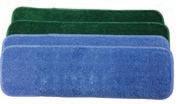
• Cut cleaning costs without sacrificing quality • Commercial quality microfiber looped flat mops •18” long with Velcro backing 95¢ From yarn manufacturing to edge stitching, we inspect SmartChoice Microfiber at every stage of construction. Learn why at monarchbrands.com
(Image licensed by Ingram Publishing)
(Image licensed by Ingram Publishing)
Boiler maintenance and safety
clothing around rotating machinery.
BY MATT POE, EDITOR
CHICAGO — The boiler.
It’s the “heart” of a laundry operation, so to speak, providing steam to make processing equipment function.
Just like the human heart, a laundry’s boiler needs to be kept in good health. A system of maintenance performed by laundry staff, manufacturer experts and boiler technicians is vital to help keep a boiler functioning properly and safely.
“On a steam boiler, you’re supposed to check soft water daily, and you’re supposed to check the low-water cutoff daily,” says Michael Leeming, national sales manager for Parker Boiler Co. in Los Angeles. “And in some jurisdictions, they require an attendant every hour. You’re supposed to go look at the water level and the steam pressure.”
He says that with a steam boiler, there are daily, weekly, quarterly and annual things that have to be checked and attended to.
STARTING CHECKLIST
What needs to be checked on a regular basis? While a complete list can’t be printed in one article, John Pabalan, vice president of field sales and service for Kemco Systems Co. based in Clearwater, Fla., has assembled a fairly comprehensive list of daily, weekly, monthly/quarterly and annual checks to provide a start for what maintenance is needed on a boiler.
Daily Checks:
• Polishing softener—Brine tank should be checked for recommended salt level.
• Check water hardness from the water softener.
• For open-feed water tanks, ensure tank temperature is maintained at optimal temperature for feed water chemistry (consult with boiler chemist); for deaerating systems, ensure temperature and pressure is maintained as prescribed. Log these temperatures once per shift.
• Check and log boiler feed chemical(s) levels.
• Bottom-blow the boiler in accordance with operating procedures once per shift.
• Surface blow—ensure surface blowdown valve is opening based on set point.
• Check blower inlet filter, schedule for cleaning/replacement if necessary.
• Check boiler stack temperature and record.
• Visually inspect boiler water level.
• Visually inspect boiler makeup tank level.
• Address all alarm conditions.
• Average firing rate during slow times and busy times in production.
Weekly Checks:
• If an hours meter is available for the boiler feed pump, change lead to lag pump every seven days of operation.
• Check all steam traps for proper operation.
• Operation hours for multiple boilers.
• Check eyewash station/emergency shower water supply and operation.
Monthly/Quarterly Checks:
• Feed pumps and boiler blower fan—Lubricate bearings, if applicable, in accordance with manufacturer recommendations.
• Perform calibration on automatic blow down probe (or after recommended number of hours of operation).
• Have a boiler chemist conduct a monthly check on chemical usage/perform sampling.
• Check burner mechanical linkages; lubricate, if necessary, in accordance with manufacturer recommendations.
• Open, inspect and rebuild steam traps, if necessary.
• Visual inspection of steam and condensate line insulation.
• Gas train and combustion air safeties testing.
• Flame scanner testing.
Annual Checks:
• Boiler inspection conducted by boiler inspector. Have boiler chemist on-site at the same time, if practical.
• Burner pull and inspection (by a boiler technician).
• Blower disassembly and inspection (by a boiler technician).
• Check safety relief valves (by a boiler technician).
• Open and inspect sample cooler.
SAFETY
Of course, laundry personnel who work with the boiler, or even get near it, should follow appropriate safety precautions.
“Typical boiler room safety considerations are risk of explosion exists, high-pressure steam, combustion gases, chemicals, moving machinery, electrical hazards and hot surfaces,” says Pabalan.
His first safety recommendation is when cycling steam valves open and shut, always cycle slowly and wear gloves. Leeming also recommends safety glasses. Also, employees should not wear loose
Finally, Pabalan says fire safety, chemical safety and lockout/ tagout procedures should always be adhered to.
“The only difference between a laundry boiler and a ‘regular’ boiler is you have more makeup if you’re doing live injections, say in a tunnel washer,” Leeming says. “You have to pay a little more attention to the feed water temperature to make sure you got all the oxygen out of the water, and you have to be more sensitive to your water treatment because you’re making up a lot of water in a laundry steam boiler.”
Laundries also need to be aware of state and local regulations when it comes to boiler safety, Leeming says.
“Every jurisdiction has different requirements,” he says. “Like in Ohio, if you go over 360 square feet in heating surface, you have to have a licensed fireman on duty babysitting the boiler 24/7. California, you need a warm body. In Los Angeles and Seattle, you need an engineer. All they do is sit there and look at the boiler all day long. It’s expensive.”
Leeming says laundry operators need to be conscious of the operating pressure and the water level in the boiler.
“If a fire-tube loses its water level and then water goes back into it, it’ll level the building,” he says. “A water-tube boiler like ours, you get the floor wet.”
OTHER BOILER OPTIONS
There are other options besides a steam boiler for laundry operations. One is a direct-contact water heater.
Greg Thorn, sales engineer and service manager for Ludell Manufacturing based in Milwaukee, says the ideal directcontact water heater equipment room should be secure and clean.

“The room should not be used for other purposes than intended,” he says. “The room should be provided with adequate clean makeup air for combustion.”
As with any boiler, manufacturer-recommended clearances and access for maintenance should be followed in the positioning of the water heater. All local, up-to-date building codes should be followed.
Similar to a boiler, Thorn says a direct-contact water heater should be inspected daily and a log kept.
“Items to log would be inlet fresh water pressure and temperature, outlet water temperature, exhaust flue gas temperature, ambient air temperature and inlet gas pressure, to name several,” he says. “A visual inspection of water level and the burner’s flame should also be made.”
Again, he says it’s a good idea to refer to the direct-contact water
heater manufacturer’s operation and maintenance manual provided with the equipment and any other component literature included for additional detailed requirements, such as lubrication.
A direct-contact water heater should be checked semiannually in accordance with the manufacturer’s recommendation for scale buildup due to hard water, Thorn says. The water heater’s safeties should be tested at a minimum annually by a professional service company.
“The safeties on a direct-contact water heater are typically the inlet fresh water pressure switch, exhaust flue gas temperature switch, rear wall temperature switch, water wall or jacket level switch, and the sump level switch,” he says. “It should also have at a minimum an annual combustion test and tune-up by professional burner service company.”
Signs that a direct-contact water heater is in need of repair or replacement are lack of hot water, either in volume or temperature, Thorn says. The water heater has a number of safeties that provide both audible and visual alarms to assist in troubleshooting.
“These safeties must be satisfied before the burner will run,” he says. “In addition, the burner manufacturer provides a flame safeguard that provides insight into any burner faults encountered, such as loss of flame.”
To limit downtime, Thorn says it is a good idea to keep spare parts on hand that are not readily available locally. Most direct-contact water heaters do not use proprietary parts that are only available through their maker. Frequently, direct-contact water heater manufacturers have in their operation and maintenance manual a section
on recommended spare parts.
Thorn says a direct-contact water heater’s shell and heat transfer packing are constructed out of stainless-steel material and are operated atmospherically.
“Typically, a direct-contact water heater manufacturer will warranty their heater shell for 10 years from defect of materials or workmanship,” he says. “These are very corrosion-resistant shells that can last a much longer time.”
A “newer” trend Leeming sees in regards to boiler technology is the steamless option. Steamless laundries, he says, basically use a closed loop, such as a system with which a building is heated.
“These use heat exchangers,” he says. “With that closed loop, you’re never making up any water, you don’t have any flash steam loss, you don’t have any traps going black, you don’t have any makeup water or any blowdowns, and you don’t have annual inspections.”
Leeming says the only other reason a steamless laundry would use steam would be for ironers.
“And they just went to a thermal fluid heater,” he says. “That’s the same thing, a closed loop heating the ironers. You can heat hotter with thermal fluid for the higher thread counts.”
THE BOTTOM LINE
While there are other boiler options on the market, Leeming estimates that 90% of laundries are using steam boilers. That means most laundries need to be aware of boiler maintenance and safety.
Laundries need to be conscious of what type of boiler it is using and stay in close contact with the manufacturer to be sure maintenance activities happen in a timely, correct and safe fashion.
12 JANUARY 2017 | AMERICAN LAUNDRY NEWS www.AmericanLaundryNews.com
ALN
Experts share ideas for laundries to keep producing steam … safely
(Image licensed by Ingram Publishing)

















IF YOU WANT YOUR LAUNDRY TO RUN LIKE A WELL-OILED MACHINE, YOU NEED TO PARTNER WITH ONE. UNIMAC® LAUNDRY SOLUTIONS AT YOUR SERVICE. When you replace your laundry lineup with new UniMac® equipment, you get more than just durable, high-performance machines. You get a total laundry solution designed to make and keep your operation running at peak efficiency. Our global network of distributors is always by your side to answer any of your questions. Our expert team of service technicians with over 4,500 years of combined experience will help you keep your machines up and running. And when you’re ready to upgrade, UniMac Funding makes financing your equipment fast and easy. Because it takes a well-oiled machine to know one. Find your certified UniMac sales technician at UniMac.com/Service
Laundry in the NFL: Yes, it gets dirty
Equipment
BY MATT POE, EDITOR
CHICAGO — As the NFL winds down the regular season and heads into the playoffs, most people are focused on which teams will be in the hunt—and who has the best chance to win the Super Bowl.
Folks in the laundry and linen services industry, on the other hand, might notice that even after a full season of grass, dirt and blood stains, the teams’ uniforms still have bright colors and gleaming whites.
That’s because each team has an equipment manager who, in addition to maintaining all of the other gear, makes sure a team’s uniforms are spotless throughout the season.
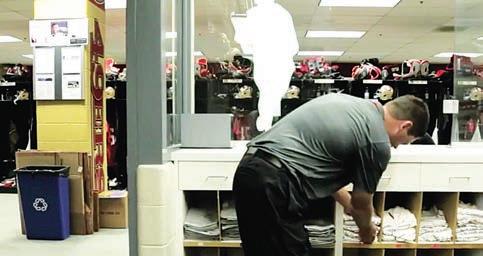
“The game uniform is where you really take your time to have pride in it because that’s what’s seen on your biggest stage,” says Chris Valenti, equipment manager for the Denver Broncos, which won Super Bowl 51 last year.
And it’s not just grass and dirt and blood. Some stadium field maintenance personnel paint their fields green to look brighter on television, which is yet another stain to deal with.
One might assume that teams have a new uniform for every game, and they do use special uniforms, like historic throwback uniforms, for special games. The reality is, however, they wear the same uniforms, either a home or away version, most games.
“That’s our job,” says Steve Urbaniak, equipment manager for the San Francisco 49ers. “So that every game, it looks like the players are coming out there in a new uniform, even though they’ve worn the same one for maybe eight games.”
While it seems like the state of uniforms would be the last thing on the minds of the players and coaches, it does get noticed.
“When I knew the head coach was unhappy that things were yellow, I worried about it,” says Allen Wright, equipment manager for the Kansas City Chiefs. “I lost sleep over it. He had only been my boss for a month, and the first thing he had said was, ‘Why are things so yellow?’ To be able to hit a home run right with the very first thing that I dealt with our head coach was extremely important to me.”
Teams like the Broncos, 49ers and Chiefs
use commercial on-premises laundry (OPL) equipment. Often, though, it isn’t the washers and dryers that create an issue with the uniform—it’s the chemicals used.
“We were finding our reds were fading really fast, and the whites started to yellow,” Urbaniak says. “We had to really struggle getting it clean. What we were using, it just faded again faster and the whites got dingier and yellower really quick.”
“The stains we get on the white pants are probably the biggest concern,” Valenti says. “It’s always been the bane, if you will, for me, getting those grass stains out of the pants.”
All three teams turned to the Tide Professional Laundry system to help get out the stains and remove yellowing.
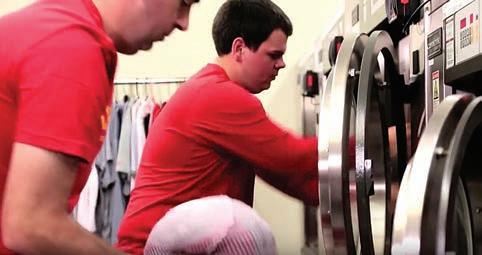
“We brought in a few different systems, one of them being the Tide system, and we knew after we did the first load that there was a difference,” Wright says.
So, how does a laundry supplier like Tide Professional Laundry become part of an NFL team?
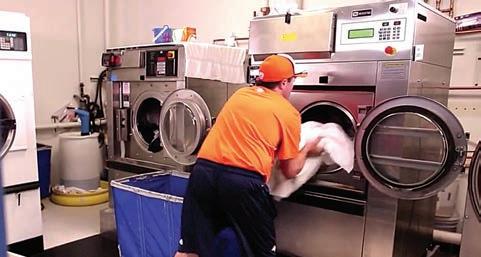
“The process for working with NFL teams is very similar to how we work with all new customers,” says Renee Buchanan, communications manager for P&G Professional. “We identify the top laundry and cleaning needs of the customer, in this case a professional football team, and then we set a meeting with the equipment manager to discuss the issues they may be having and what we can do to help.”
She says that in many cases, the company is referred by another customer (or team in this case) who is already using the system.
“The NFL equipment manager group is a small network of people who like to help each other out and often pass along recommendations to each other,” she says. “In other cases, equipment managers may contact us because they are having problems with their current products and/or systems and we come in to help them.”
Valenti says Denver has a “tricky issue” because the water at the Broncos facility is extremely hard.
Buchanan says the company works closely with the equipment managers to identify not only the issues, but how to ensure the laundry system works best with the material being laundered, taking into account regional factors, such as water quality.
100% for firefighting gear and our hoses, and it has provided many benefits. The greatest benefit is that it is helping more than our department. Other fire departments are bringing their gear to us to be cleaned. It has been a great aid to them, because within one day their gear is cleaned and dried, and many of these are volunteer fire stations.
Additionally, the gear is placed back into service so much quicker
than it was. This has been a big difference. We also use the drying cabinet for the fire hose. It is decontaminated outside and then we place it on the shelf of the cabinet. Previously, it would have to dry outside for a few days, and now it is back in service significantly faster.
Another benefit is the washerextractor decontaminates bloodborne pathogens, which is something we did not have before. There is a separate cycle for the decontamination of blood-borne pathogens, which we are exposed to and respond to frequently, and that cycle is followed up by a normal wash cycle.
Since purchasing the equipment, have you been in contact with other fire departments (or other laundries) wanting to hear about your experience?
Ray: Yes, we have had two fire departments in our county that have come out to look at our equipment. We have also shared our grant narrative so that they can apply for similar opportunities. One of the departments recently received the grant; the other is still pending on the federal level.
Additionally, numerous fire personnel have asked about the equipment and I’ve spoken to them in
detail about how the equipment is used and how important it is.
If you could share some of your experience with other fire department laundries, what would you tell them?
Ray: First, I would tell them the importance of doing everything we can as fire chiefs and public safety directors to provide safety for our personnel, and to try to protect them from unnecessary exposures as best as we can. This is one of the areas we can improve on as a fire service to make sure our personnel have better protection from dangerous chemicals.
The danger we face in this job is every day. It’s a normal part of our job to face these dangers, especially by-products of combustion and fire, so we need to step up and find better ways to protect our personnel since we know that these dangers are there.
Additionally, the minimal expense of purchasing the equipment compared to the benefits it provides for decontamination is incomparable. Agencies and departments need to be creative to find other grant and funding opportunities outside of normal income to make these types of projects happen.
14 JANUARY 2017 | AMERICAN LAUNDRY NEWS www.AmericanLaundryNews.com
“We create a custom solution for each team to keep them happy and help ensure the players feel their best when taking the
field,” she says. “We are honored to be a part of the NFL, even if it is behind the scenes.”
ALN
ALN Continued from Page 2 FD Q&A
managers look for best ways to remove uniform stains, prevent yellowing
Denver’s equipment manager, Chris Valenti, loads towels used by Broncos players. (Photos: P&G Professional)
Employees in the Chiefs laundry room load soiled gear gathered from the locker room.
Steven Urbaniak, equipment manager for the 49ers, tracks down gear for players.
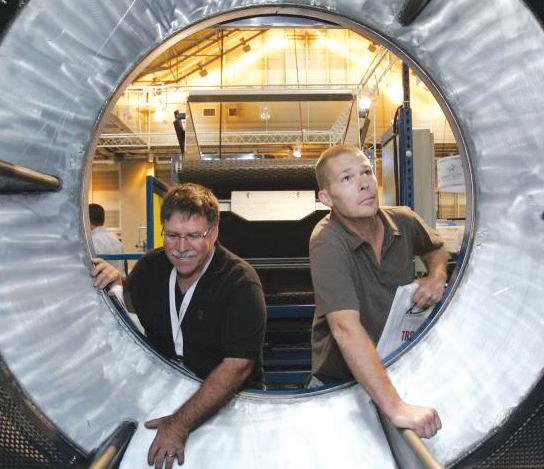
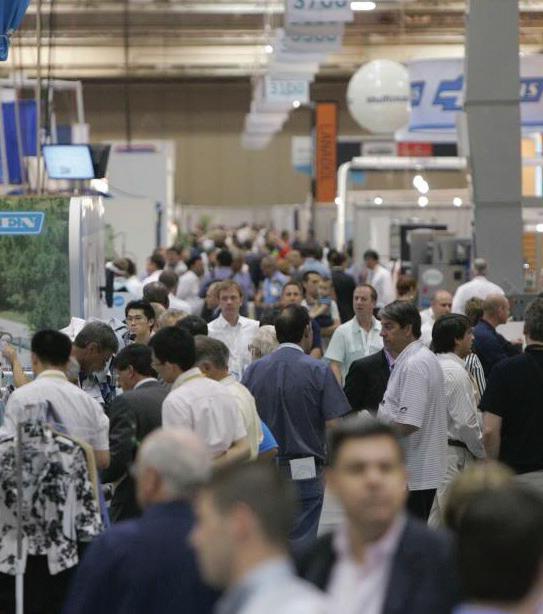
LAS VEGAS, NEVADA USA LAS VEGAS CONVENTION CENTER JUNE 5–8, 2017 CLEAN 2017 WHERE THE INDUSTRY COMES TOGETHER WE’RE ALL COMING TOGETHER FOR THE INDUSTRY’S BIGGEST EVENT. REGISTRATION NOW OPEN! WWW.CLEANSHOW.COM Come together with over 400 exhibitors and 10,000+ people to view live demonstrations of the latest equipment and technology. Network with manufacturers, suppliers and industry peers. Learn from over 30 hours of educational seminars. It’s all here.
PANEL OF EXPERTS
2017 Panel excited to share knowledge
(OPL). There were 13 employees, three Washex washers, one retired Ryder truck and 12,500 square feet of space. I was a fish out of water and learned some hard lessons in the early going.
Iam the director of laundry programs for Medline Industries, textile division, and am based in Sun Prairie, Wis. Medline Industries, based in Northfield, Ill., has been in operation since 1966 and is a global leader in medical supply manufacturing and distribution, including textiles.

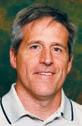
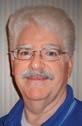
In my 25 years of experience in healthcare laundry, I’ve had the opportunity and benefit of working with and getting to know laundries from every region, practically every state, and in sizes from 200,000 pounds per year to 82 million pounds per year.
In my current role, I provide consultative support to Medline customers on issues facing the industry today, including accreditation and certification, market changes related to the Affordable Care Act, operational throughput and efficiency, process troubleshooting, equipment choices, building design and infection control and safety.
The most common issue discussed today is infection prevention as it relates to laundry. With the growing focus and uncertainty from healthcare about infection control practices in laundry, it is critically important that laundries seek information and education about these rapidly evolving expectations.
I started in the industry when I went to work for my fatherin-law, Ray Gehrig, at Superior Health Linens in Wisconsin after graduating from college in 1991. I was a soil sorter in the morning, a washroom operator in the middle of the day, a finishing tech in the afternoon and a truck driver at 3 p.m. On Saturday mornings, I learned maintenance.
Our customer (not plural) was a 265-bed hospital that sold us their linen and equipment and gave us a fair contract to outsource their on-premises laundry
Fifteen years later, I was hired as the CEO of HLS in Chicago and ultimately served 60 hospitals and 450 clinics with 500 employees and three unions in a plant that was 20 times the size of the one I had started in. The early lessons learned on that wash floor, on the truck, in the shop and on the streets doing sales continue to pay dividends every day.

I’m still learning every day, too. One of the best things about this industry is the openness and willingness of people to share their knowledge, passion and experiences, to answer questions, and to mentor new people into the industry they love. I welcome this opportunity to share some of my experiences and knowledge accumulated by working with and for countless mentors in the industry.
I served on the board of directors and the advisory board of the Healthcare Laundry Accreditation Council (HLAC), and I’m an active member of the Textile Rental Services Association (TRSA), TRSA’s Hygienically Clean Healthcare Advisory Group and the American Reusable Textile Association (ARTA).
throughout a laundry, utilizing visual dashboards, real-time reporting and other productivity tools. Spindle is a division of Dober, whose other divisions supply innovative chemistries and technologies for a wide range of applications. This great, family-run business, founded in 1957, is committed to customer service, innovation and providing exceptional resources for applied research and development.
Spindle’s original productivity monitoring software has delivered significant savings for our customers by helping to reduce labor costs. The evolution to our current, more robust platform was driven by the need to address additional major cost considerations within a laundry, maximizing overall equipment effectiveness and efficient utility consumption.
Spindle achieves these goals by providing the right information to the right people, at the right time—from the shop floor to the back office. In addition to engaging employees through the visual workplace to increase their performance, Spindle also features employee tracking, task tracking, analysis and a KPI Scorecard. Its real-time reporting helps laundry operations make better decisions, on their schedules.
tion for the benefit and growth of our industry.
received that it has remained in production for decades.
I have been fortunate to attend every Clean Show since 1981, meeting customers and equipment manufacturers. I enjoy working with our laundry customers, learning what they want from their vendors and working to solve their problems.
Iwork as the director of engineering for U.N.X Inc. I design chemical systems for U.N.X., working with our sales and marketing departments and many customers. I’ve been involved with new laundry chemical system designs, upgrading existing plant systems and wholesale replacement of the equipment in the entire facility, and have had the pleasure of working with some of the finest chemical representatives in the industry.
From small motels to plants with multiple tunnel washers, our focus is the same: To help our customers get the maximum usage out of the goods at a reasonable cost. To this end, we manufacture dispensing systems of all types.
I have participated in the Panel of Experts previously and am excited to be part of it again. I have met some of the past and present members and enjoy their insights and advice. I hope that I can contribute some ideas that will help our industry and perhaps spark some more changes in the future.
After receiving my degree in textile engineering technology from Southern Tech, I began my career in 1993 as a vendor of industrial automation systems to the textile rental and textile manufacturing industries. I joined Spindle as sales manager in 2012.

Spindle is focused on using the latest technology and development tools to provide realtime feedback and data access
Throughout my career, I’ve had the opportunity to work with personnel from the production floor to the corporate office and learn about the challenges facing our businesses. My goal in partnering with customers has always been to improve efficiency, quality and safety. In each of my professional roles, I have supported process controllers, automation systems and operations management software through all stages of design, sale, installation and training.
It’s an honor to be selected to serve on American Laundry News’ Panel of Experts. There often seems to be an endless list of concerns for the laundry industry: operating costs, quality, customer service, and many others. This panel format provides an excellent opportunity to share ideas and experiences that can lead to breakthroughs. I look forward to providing informa-
When I started working for U.N.X. in 1978, most of our customers used powdered chemicals. Over the past 38 years, I’ve seen the industry transition to primarily liquid chemicals.
Just as washing machines have changed from paper chart controls with lots of relays and motors to programmable machines with variable-speed drives and/or hydraulic functions, the technology to add chemicals has changed from scoops and pails to highly automated microprocessorcontrolled systems.
Formula counts, classes of chemicals and the number of chemicals per classification have increased. At the same time, electronics have become faster, better and less expensive. It’s probably the only thing anyone purchases that is less expensive.
I hold multiple patents for laundry chemical injection systems and am constantly designing more equipment to meet customer needs. Some of our equipment has been so well
It is an honor to have been selected to serve on this panel again for 2017. I am the manager of the environmental services department at Ascension Senior Living-Franciscan Woods, a 120-bed transitional care facility. I began my career with the organization 17 years ago and became the department manager in 2009.
We launder the personal clothing of all of our patients and residents on-site, and the service is available eight hours a day, seven days a week. We wash, dry and return all the clothing within 24 hours. Our operation also maintains inventories and provides labels on all clothing for our patients and residents. We also stock and maintain the linen closets within the facility.
It remains a challenge to keep the items in-house that we launder, as they are sometimes mistakenly sent out to our system’s main laundry service, which handles bed linens and towels. Things that go out can be difficult to get back in a timely fashion.
One of the biggest joys that
16 JANUARY 2017 | AMERICAN LAUNDRY NEWS www.AmericanLaundryNews.com
Our new panelists introduce themselves and their operations, share their accomplishments and discuss the challenges of their industry segments
Chemicals Supply David Barbe U.N.X. Inc., Greenville, N.C.
Equipment/ Supply Distribution
Chuck Rossmiller
Medline Industries, Sun Prairie, Wis.
Consulting Services
See EXPERTS on Page 18
Jon Witschy Spindle, Woodridge, Ill.
Long-Term Care Laundry Kathrine Flitsch
Ascension Wheaton Franciscan Healthcare Brookfield, Wis.



























800 821 2221 | imagine@americandawn.com | americandawn.com
by TM The LunchkinTM is intended to extend the color o ering of The Greenie. Six additional colors to replace paper napkins in any lunch setting. Beyond the environmental benefits of The Greenie, The Lunchkin creates a fine dining experience -- at lunch. And the cost is about the same or less than paper napkins! Made in USA Fabric
Made in USA Fabric
Replaces single use paper napkins at a lower cost
Creates a better dining experience and sets you apart in the marketplace
Lasts over 100 wash cycles
ironed, less energy use
Saves up to 5 billion pounds of trash per year Signature Plus is a registered trademark for
& Company for fabrics.
Smaller 15” x 12” Lap Size
Your table linens touch every Customer at every event. Your linen needs to speak their language… fresh, clean, safe, consistent, reliable, and yes - elegant. They count on it. Together, ADI and Milliken have set the standard of linen excellence for decades. USA made Signature Plus fabric. Soft luxurious hand, consistent long-lasting color. Whites that stay white, and colors that stay bright. ADI American Dawn. The world’s leading supplier of Milliken Signature table linen products. Count on us. The Greenie® is America’s choice to replace paper napkins! At breakfast and lunch, if every American uses reusable linen napkins instead of paper, we can save 60,000,000 trees per year! That means cleaner air, less water use, less energy use, less waste in landfills, less toxic paper production chemicals. And the best part... Money raised through the sale of this product is given back - to educate our children on keeping the planet clean and safe. 84% of Americans prefer cloth vs paper at the table. The Greenie® Because it’s the right thing to do.
Lunchkin
By Milliken.
By Milliken. •
•
•
• Never
•
Milliken
•
Experts
Continued from
comes with working in our laundry department is the look of happiness when residents get their clothing back clean and ready to wear.
In the coming months, I look forward to being able to share with you my insights on our laundry process. I am always open for suggestions on how to make the process better for all those that we serve.
Now, my attention is directed to the same problem we all face every day: How to provide the best possible product at the lowest possible cost. I look forward to serving on this panel and providing any insight my experiences have brought me.

Services (working for my fatherin-law, Max Stettner). It was here that I found my passion for the commercial industrial laundry business. At Penn Linen, we processed linen and uniforms used for the industrial, hospitality and, of course, healthcare markets. In fact, at one time we processed and rented linen to all the major hospitals in the Philadelphia market as well as parts of North Jersey.
every single day.
There’s never a dull moment, and every day something “new” comes along—whether it’s a market opportunity, a problem to solve, a new product or process or just a fresh twist against an age-old issue. I love this industry and feel so fortunate to be able to work with all of you, every day.
Within one year, we had explosive growth. I sold that company to my partner at the time and took my handsome reward on to another, bigger project.
Let me start by saying, it is an honor to be selected for this panel.
The laundry industry is fastpaced, challenging and always exciting. I took my first job within the industry, as a junior in college, at Cintas running their stockroom and my own small uniform delivery route. Since then, I have had the pleasure of running operations in the facility service and uniform settings, healthcare laundry and, most recently, hospitality linen. These laundries have ranged in size from 10 million to 40 million pounds annually and have operated in both union and nonunion environments.
I have a wealth of experience in production, distribution and service management, financial analysis and guest satisfaction.

For the past five years, I’ve operated the laundry operation that services both the Walt Disney Swan and the Walt Disney Dolphin hotels. As the manager of laundry services for The Walt Disney World Swan and Dolphin, I’m responsible for the day-to-day service, production, distribution, maintenance and procurement for this worldrenowned hotel’s laundry and drycleaning operations.
We recently finished our first complete laundry operation upgrade since the opening of these hotels 25 years ago. The renovation saw the combining of two independent laundries into one state-of-the-art operation housed within the Walt Disney Dolphin hotel. Every piece of machinery was removed and replaced, including our boiler systems, air-handling unit and all necessary plumbing. It was a daunting project, but with the help of our partners at SteinerAtlantic, we completed on time and at budget.
First and foremost, I would like to thank American Laundry News for selecting me to join the 2017 Panel of Experts. For me, to be recognized and considered a member of an elite group of laundry/linen managers and industry experts, is a real honor.
Having more than 35 years experience in the textile and laundry industry, I have been very fortunate to meet a lot of knowledgeable people who have taught me a lot and provided me with new insight about our industry. I am extremely appreciative of the long-term friendships that have developed and flourished throughout this journey.
Growing up in the coal region in Northeast Pennsylvania, I first got involved in textiles while working in my family’s business, cutting and sewing ladies’ sportswear. Upon graduating from Philadelphia College of Textiles and Sciences (now known as Philadelphia University), with a degree in apparel management and business sciences, I packed my bags and all my worldly possessions into my orange Chevy Monza and moved from Philadelphia to Gaffney, S.C.
There, I joined the textile rank-and-file, taking employment at Oxford Industries, a leading manufacturer of ladies’ sportswear. While working for Oxford, I was responsible for locating and developing cut-and-sew factories in the Southern states to manufacture Oxford’s line of women’s apparel. After four years of cutting my teeth and honing my skills in the apparel industry, I moved back to Pennsylvania to join forces with my father in running our family cut-and-sew operation, producing ladies’ sportswear.
As imports started to increase, more and more apparel production was moved offshore, causing stateside manufacturing to fall drastically. A decision was made to close the family business, at which time a new chapter in my life started.
I then jumped from one frying pan (working with my father) into another one—Penn Linen, Uniform & Healthcare
After Penn Linen was sold, and a short stint with Unitog (eventually sold to Cintas) and then a local family laundry operator, my passion for this industry continued to burn inside. I was fortunate enough to join Superior Uniform Group, a leading manufacturer for apparel for the healthcare, cleanroom and career apparel markets, as a territory sales manager. In this position, I was responsible for working with commercial laundries and healthcare systems in the MidAtlantic states as well as upstate New York.
As my concentration and success in selling healthcare continued to grow, I was promoted to national market executive for Fashion Seal Healthcare, a division of Superior Uniform Group.
Today, I am proud to serve and represent Fashion Seal Healthcare, as its vice president of sales in healthcare, where I utilize my 35-plus years of experience in the laundry arena. Our team at Fashion Seal Healthcare continually works alongside laundries, hospitals and other healthcare facilities to develop successful uniform programs for their related markets that not only meet their expectations but exceed them as well.
I actively serve as a member of the Textile Rental Services Association (TRSA) Healthcare Committee and am an active member of the American Reusable Textile Association (ARTA) and its board of directors. I also serve as a member of the Healthcare Laundry Accreditation Council (HLAC) Advisory Committee.
It is an honor to be chosen for this Panel of Experts, and I look forward to contributing articles as we move forward into 2017.
Now, it is such an honor to serve on this Panel of Experts for 2017. It’s my third time, and I love it.
My business experience in our industry started at the age of 9, when I became my father’s janitor at his local garage in the Midwest. He issued me work uniforms and told me I would wear them with pride—showing up on time, buttoned up, clean and ready for important work. Given my physical size at 9, I can say without a doubt that I truly learned the importance of garment “fit” and “image” in the uniform business, and how those factors impact one’s pride at work.
Later in my life, at 21, my father’s route service representative was terminated by his company, Todd Uniform. With some family coaxing, I interviewed for that job, and the rest is history—five years on a route, the last two achieving national route rep of the year honors.
Promoted on to stockroom manager, plant manager, sales manager, assistant plant manager and finally opening a new plant in Los Angeles—achieving a 50,000-pounds-per-week operating level, with profitability in the first two years.
After four years as GM, I moved to Aramark as a group GM to run its plant system in Southern California. I led a marvelous team of associates to turn around both growth and profitability with historic performance results on a 1 million-poundsper-week, multi-plant operation.
Another five years later, I followed my passion to move to the supplier side and became a territory manager for Red Kap, quintupling my sales in just a few years. I was promoted to senior business development manager, where I was charged with developing the licensed image apparel market (mostly in the automotive markets); 35 national image programs later, representing over $500 million in annual revenues to our industry, I proudly “owned” the automotive image market, as well as opened many other licensed markets for the industry, all of which are now core products in uniforms today.
Another partner and I then started a work apparel manufacturing company called Basic Apparel, which at the time was to be the first “imported” basic work pant and shirt offering as an option to U.S.-made fabrics. That product initiative didn’t work as planned, and I exited the business after 18 months.
Just after that venture, I joined ADI American Dawn as a territory manager. Four years ago, I was promoted to its director of market solutions (CMO). Vyto Tozer (the executive VP) and I restructured the company into one pillar and now have national responsibility for the company’s corporate growth and profitability. I am honored to be a part of the ADI team, as we have quadrupled our company over the past 10 years and have extended into new and exciting market segments.
Over the past 10 years, I have also been honored to teach at the Textile Rental Services Association’s (TRSA) EMI and PMI, as well as many industry conferences, associations and collegiate settings, both inside and outside our industry. These have been fantastic opportunities to learn as well as teach.
Over these incredible 39 years, the experiences, successes, failures, regroups and sometimes just luck have given me a knowledge base that I truly hope brings value to this panel. So, in advance, I thank you for engaging, thank the rest of the panel for contributing, thank American Laundry News for hosting and thank my company for allowing me this opportunity. They call me “KBach,” and I’ll see you next month.
It is an honor to be selected for this panel, as I have always enjoyed the insight from American Laundry News on many topics in our industry.
O
ur industry is a wonderful and exciting space in which to work. Over the past 39 years, I’ve met hundreds of talented, passionate, professional experts, and I have the pleasure of learning from them—new things
Ten years later, I asked for an early retirement from VF (with continued consulting) to start my own direct sale product company, called Image ApparelBrand Identity Solutions, serving the middle of the market.
I am the director of national accounts for Kannegiesser USA and have been with the company for more than six years. Our U.S. headquarters in Grand Prairie, Texas, serves as the direct sales and support of all Kannegiesser laundry equipment in North America. Working for a company with such innovative technology has had a positive impact on both our customers and my overall career experience.
18 JANUARY 2017 | AMERICAN LAUNDRY NEWS www.AmericanLaundryNews.com
Page 16
Hotel/Motel/ Resort Laundry
Nick Fertig
Walt Disney Swan and Dolphin, Orlando, Fla.
Equipment Manufacturing Tony Jackson Kannegiesser USA, Grand Prairie, Texas
Textiles
Steve Kallenbach
ADI American Dawn, Los Angeles, Calif.
Uniforms/ Workwear Manufacturing
Scott Delin Fashion Seal Healthcare Seminole, Fla.
The Kannegiesser factories are all located in Germany, and I have been responsible for the sales portion primarily in the Midwest territory for the U.S. market. I recently moved with my wife and son to Texas after having lived in a couple places within my territory. This recent move has allowed me to get more involved in other aspects in our business, while also focusing the efforts of continued growth in direct sales.
The laundry industry is an interesting business, and there are many great people who serve all functions. Having the ability to visit many plants on a weekly basis has allowed me to see the core challenges of each laundry and assist when possible.
On the other hand, these visits also enable individuals to show me unique solutions to a common issue, satisfying the everchanging innovation at the plant and corporate levels.
With attending conferences throughout the year, it appears there are some similar common threads with emerging trends and ideas for efficiencies. Both the minimum wage rate and utility costs continue to climb and therefore create a necessity in an overall reduction of both to be sustainable.
Although I can assist with some issues, I feel we as a panel and laundry community will be able to help each other, and I look forward to the opportunity to provide another approach.
Presently, I serve as general manager of the Irvington, N.J., laundry facility for CleanTex, a large regional healthcare and long-term care laundry services company.


The year 2016 was a tremendous year of growth for CleanTex, and 2017 is shaping up to be even better.
We successfully completed a conversion to solar power at our Trenton facility, along with the installation of a third batch washer and state-of-the-art steam tunnel. More projects and further expansion are on the
horizon, which makes for exciting times.
Going forward, the challenges I face daily are the challenges
faced by our entire industry: providing the best possible
UPGRADE
It’s an honor to be selected once again to serve on the American Laundry News Panel of Experts for 2017. I hope to be able to share the benefit of my experience with you.
I have been in the commercial laundry industry for more than 30 years, having operated healthcare, hospitality, hotel, longterm care and uniform laundries throughout the United States. These laundries have ranged in size from 10 million to 50 million pounds annually and have operated in both union and nonunion environments.
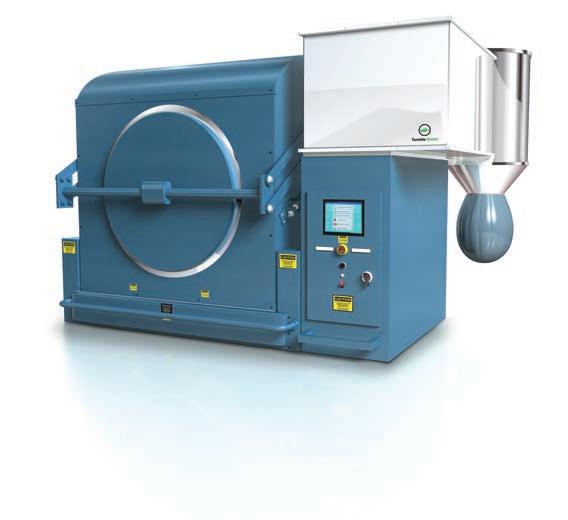
I have a wealth of experience in production, distribution and service management, as well as budget preparation and financial analysis—skills honed during seven years on Wall Street.
Additionally, I have served on the faculty of New York University, teaching laundry and drycleaning operations as part of the university’s Hospitality Management Program.
•
www.AmericanLaundryNews.com AMERICAN LAUNDRY NEWS | JANUARY 2017 19
products and services at the lowest possible cost. ALN
YOUR
CLM leads the way in dryer technology and provides an upgraded replacement for your old Challenge Pacesetter Our Model 165 fits the Challenge Pacesetter footprint perfectly and gives you technology that no one else o ers, including a fully integrated production management system.
CHALLENGE PACESETTER
Upgraded heat system with improved efficiency and lower emissions
PLC upgrade with LAN and Blue Tooth communications • PLC now prepared for flow process management systems • 2-stage variable speed basket drive with 3-port load door. • Soft start to reduce component wear, lower utility use. • Heavy-gauge basket, includes removable steel basket panels
Long-lasting ceramic coating available on removable basket panels. • Configurable exhaust location • Configurable control/burner location Call CLM to replace your Challenge Pacesetter dryers, or for information on our broad range of industrial dryers. 323-232-2417 Model 165 shown with Tumble Green® configuration See Us at Booth 2560 at The Clean Show 211 Erie Street, Pomona, CA 91768 | T: (323) 232-2417 | www.clmco.com ALN_Jr Page.indd 1 11/18/14 2:36 PM 0515aln_CLM.indd 1 4/13/15 4:46 PM Healthcare Laundry Charles Loelius CleanTex, Irvington, N.J.
• Micro-Command III
•
PRODUCT SHOWCASE
PARKER BOILER CO.
The
Parker Boiler
Indirect Fired Water Heaters are heavyduty, packaged boilers used to heat water for laundries, coin-operated laundries and industrial laundry applications, the company says.
The WH Series boilers are available from 300,000 to 3,000,000 Btu input. They can heat water in the lowtemperature, 60-degree to 100-degree range without flue gas condensation, and up to 190 degrees without burning out the heat transfer coil.
Boilers are available in natural gas, propane and lowNOx firing, and the company also offers 316 stainless-steel heat exchangers or copper/ nickel heat exchangers as an option.
The company says it offers the TC Series of condensing hot water boilers available in sizes from 399,000 to 5,443,000 Btu input with stainless-steel construction for resistance to corrosion at low operating temperatures.
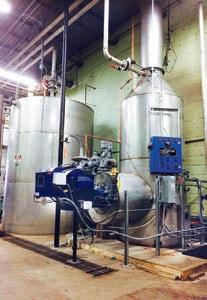
The units are available with conventional gas burners or lowNOx power-type burners.
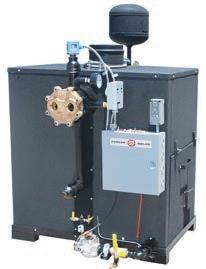
www.parkerboiler.com 323-727-9800
tributor maintains uniform distribution of water over the entire heat exchange zone, regardless of incoming water flow rates or pressures. Unlike spray nozzles, the flow distributor never requires replacement and never plugs.
With a touchscreen control panel and programmable logic controller, the TEA DC Heater has a sophisticated control system, allowing remote monitoring, control and troubleshooting from a remote location, says TEA. The heater is fully assembled and tested at the factory, reducing field installation time and costs, ensuring quicker, and smoother, startups.
Fully assembled water manifolds, exclusive inlet water distributor, high-velocity combustion zone cooling and Smart Touch Controls make the TEA DC Heater excellent water-heating equipment, according to the company.
www.teatucson.com 520-888-4000
KEMCO SYSTEMS
Kemco Systems designs, engineers and manufactures fully integrated water systems to match plant requirements, the company says.
THERMAL ENGINEERING OF ARIZONA
Thermal Engineering of Arizona’s (TEA) DC Heater provides near 100% energy efficiency for the most economical water heating available, the company says.
TEA says its exclusive flow dis-
Kemco says water heating is the first step in unsurpassed fuel savings, wastewater heat energy reclamation, water conservation and sewer cost savings. While conventional gas water heaters operate at about 70% efficiency, the company says its Kemco Direct Contact
Water Heater guarantees 99.7% fuel efficiency. That’s a $29.70 difference in fuel costs for every $100 spent.
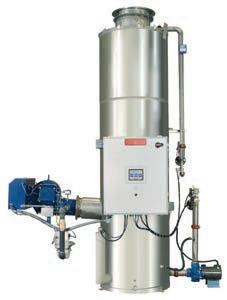
Continuing on cost savings, Kemco says its patented direct contact between flame and water burns as much as 80% of the oxygen in the water, which reduces oxidization that causes corrosion in pipes and plumbing. The heater does not require boiler feed chemicals or have high maintenance costs. The company says that in many cases, the Kemco Direct Contact Water Heater eliminates the need for steam entirely.
Kemco field engineers examine plant needs, on-site,
Efficiencies up to 99% can be achieved and hot water provided instantaneously, Ludell says.
A boiler utilizes tubes within a pressure vessel and a heat exchanger to heat the water, while the Ludell high-efficiency water heater design simplifies the energy heat transfer by placing the process water in direct contact with the combustion source, according to the company. That is, the process water is heated directly by the combustion exhaust gas of the burner.
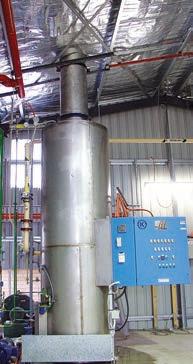
Ludell says it can maximize profits by supplying a stainlesssteel system with a compact footprint and easy-to-assemble, pre-piped and pre-wired match marked pump and valve assemblies. The complete system concept greatly reduces installation time and on-site setup.
HAMILTON ENGINEERING
Hamilton Engineering says its 3VO has many of the features laundries have come to expect with the company’s water heaters and boilers.
The 3VO is a marriage of today’s cutting-edge technology and the simple boiler design of past eras, says Hamilton. This results in state-of-the-art water heating that is easy to use and maintain.
Full-system, single-point utility connections that are fully control-configured and tested saves days in the install and commissioning process, according to the company. Hamilton says it defines the term “Plug and Play” with every system it ships.
Removable heads with straight tubes are individually cleanable (inside and out) and replaceable, says Hamilton.
Finally, the company says its own Heating Optimization Technology (HOT™) control system simplifies system setup and operation and provides realtime, accurate operating data—as well as component-specific aging information—to make all preventative maintenance cost-effective and timely.
www.hamiltonengineering.com 800-968-5530
evaluating the water supply to the existing equipment, the processing goals, the sewer requirements and many more aspects of an operation to ensure that correct sizing and all technical specifications are met for installation of equipment, the company says.
www.kemcosystems.com 800-633-7055
LUDELL MANUFACTURING
The Ludell Direct Contact Water Heater is designed for energy efficiency, the company says. It heats water by a method different from that of a conventional boiler.
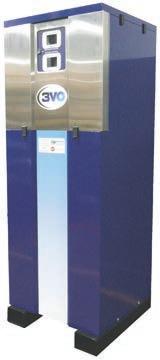
The company says benefits include no required special pressure vessel permits, no required certified boiler inspections, no tubes to rod-out or replace, no need to chemically treat or deaerate feed water, stainless-steel construction for equipment longevity, hot water available instantly, a quick return on investment (with 30% fuel savings being typical), minimal equipment maintenance, reduced thermal pollution, a stack exhaust temperature of less than 100 degrees, and easy operation and installation.
www.ludellmanufacturing.com 800-558-0800
ALN 20 JANUARY 2017 | AMERICAN LAUNDRY NEWS www.AmericanLaundryNews.com [Hamilton Engineering]
[Parker Boiler Co.]
[Thermal Engineering of Arizona]
[Kemco Systems]
[Ludell Manufacturing]
COMPILED BY MATT POE, EDITOR
TRSA Production Summit agenda features tours of 2-year-old plants
ALEXANDRIA, Va. — Visits to two textile services facilities opened in 2014 and filled with laundry and material-handling systems that maximize efficiency and throughput highlight the agenda for the Textile Rental Services Association’s (TRSA) Production Summit and Plant Tours, Feb. 8-9 in Houston, the association reports.
The Alsco Inc. operations process reusable textiles for specialty medical and food and beverage customers, respectively, TRSA says. Plant management representatives and suppliers will guide attendees through the 101,000and 85,000-square-foot facilities. They will provide further insight into their techniques in a discussion after the tours, giving Summit attendees even more ideas about how what they’ve seen can point them to adopt new strategies in their everyday work, according to the association.
HealthAssure by Alsco uses two eight-module (260-pound) tunnel washers, as well as washer-extractors and small washers. Featured systems include a load-build conveyor with packing tickets, a linen-scanning camera for quality assurance, and automated shrink wrapping.
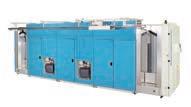
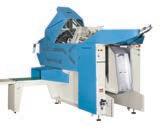

Admiral Linen and Uniform Service by Alsco, the food and beverage plant, uses a similar wash aisle equipment combination, with a single 12-module tunnel as the centerpiece. Vacuum soil sorting and a highly automated rail system are among this facility’s productivity gems, TRSA says.

Summit tours and presentations give textile services executives and managers ideas for new plant operations strategies, provide updates on emerging industrywide best practices, and facilitate new and ongoing contact with peers and technology experts. Attendees evaluate how processes and management techniques apply to their own businesses, interacting with speakers, panelists and other attendees who are TRSA members, recognized in the industry as productive and profitable organizations.
Sessions at the Summit host hotel, the Hilton Houston Post Oak, will include Mat Safety and Legal Repercussions. Tips will be provided on how proper mat washing, drying, rolling and delivery minimize slip-and-fall risk.
Diversity in Production Leadership will provide attendees with a process to improve diversity without reducing or ignoring merit in hiring and promotion.
Talent Recruiting and Development will look at new ways to locate and attract individuals for management, and line positions
will be explored with emphasis on securing employment prospects who can recognize and seize opportunities to improve results.
Tactics presented will lead to better identification of current employees worthy of promotion and strengthening of procedures long used to train and motivate.
Best Fleet Practices Across Indus-


tries, offering techniques recognized for exceeding the norm in increasing efficiencies, will be presented from businesses other than textile services that truck goods repeatedly to the same business customers.
Finally, for Manufacturers as Laundry Role Models, a representative of the U.S. manufac-


turing sector will discuss business improvement techniques applicable to textile services. The presentation will portray manufacturers’ diligence for analyzing their processes to control costs from raw material procurement to distribution and their expertise in functions that include change order processing, inventory track-

ing and IT systems architecture. Presentations begin at 8 a.m. Wednesday, Feb. 8, with a reception that evening. The plant tours will be Thursday morning, Feb. 9, with a debriefing at the hotel following and concluding at 12:30 p.m. To register, go to www.trsa.org/production summit.
ALN

www.AmericanLaundryNews.com AMERICAN LAUNDRY NEWS | JANUARY 2017 21
kannegiesser-usa.com 800.344.0403 THE LEADER IN LAUNDRY TECHNOLOGY
folding possibilities from one smart robot. Overalls, scrubs, isolation gowns, aprons – and the list goes on and on. The Kannegiesser FA-X Folding Robot automatically adapts to a never-ending range of workwear, including garments with reflective materials. It’s outfitted with a patented folding process, garment recognition sensors and advanced controls. Our manual model also comes with an ergonomically friendly feeding station, and our fully automated robot can be used with the XMT, the most energye cient steam tunnel in the industry. Either way, there’s no limit to what it can handle. FA-X 900 Folding Robot FA-X M Folding Robot Tunnelfinisher XMT 5th Generation ALN_Jr Page.indd 1 11/8/16 3:05 PM
Infinite
OSHKOSH, Wis. — Continental Girbau Inc. reports it recently welcomed Peter (PJ) Grasee, of Ripon, Wis., as inside sales and customer care associate; Sarah Griffin, of Fond du Lac, Wis., and Courtney Krepline, of Brillion, Wis., as graphic/ web designers; Mike Lynch, of Oshkosh, as Girbau Industrial senior technical support specialist; and Alessander Marinho, of Oshkosh, and Jay VonOhlen, of Hendersonville, Tenn., as senior Girbau Industrial technicians.
In his new role as inside sales and customer care associate, Grasee interfaces with Continental staff, distributors and customers on a daily basis, manages Continental’s lead qualification process, and handles inside sales and customer relations duties, according to the company. He earned a bachelor’s degree in media studies from University of WisconsinPlatteville in 2015.
Continental says Griffin and Krepline, who are both graphic/web designers, orchestrate a number of design and web development functions within the marketing department.
Krepline earned a bachelor’s degree in digital studio practice from the University of WisconsinMilwaukee in 2016 and holds three years of augmented reality, design and production experience.
Griffin, who brings 16 years of design, marketing and web design experience to Continental, holds a bachelor’s degree in graphic design from Viterbo University, in La Crosse, Wis.
As Girbau Industrial senior technical support specialist, Lynch provides daily technical service, warranty processing and parts/equipment orders for Girbau Industrial, the company
Track Career
says. He holds 16 years of electromechanical experience, including nine years directly related to industrial laundry systems.
Lynch, who most recently served as a field service technician for a major industrial laundry system manufacturer, also holds experience as an avionics electrician and supervisor for the U.S. Marine Corps. He earned an associate’s degree in general studies from Columbia College in Ft. Worth, Texas.
As senior Girbau Industrial technicians, Marinho and VonOhlen offer technical support for Girbau Industrial products from the field, according to the company.
Marinho is a certified electro-technical and electro-mechanical field service technician who holds expertise in Girbau-specific laundry automation, hydraulics, programming, pneumatics and more. He comes to Continental from Girbau Brasil LTDA, in Sao Paulo, Brazil, where he served nine years and installed, maintained, repaired and tested Girbau laundry systems. While serving as technical manager there, he worked closely with customers and grew product sales, the company says.
VonOhlen brings 30 years of extensive experience in laundry plant management and engineering to Girbau Industrial.

He holds a Class A Boiler Operator National License 1000HP, as well as an electrical technologies degree from Buffalo State in Buffalo, N.Y.
Whirlpool taps industry vets for sales, field service
ST. JOSEPH, Mich. — Whirlpool Corp. Commercial Laundry has hired Michelle Suhy and Chris Wright to drive customer experience, the company reports
“To succeed in this market, our entire organization has to not only be ambitious, but possess the aptitude to drive results and
strengthen key customer relationships. It’s imperative to surround our customers and deliver a holistic experience at every touch point,” says Trey Northrup, general manager of Whirlpool Corp. Commercial Laundry. “With Michelle Suhy and Chris Wright in place, delivering optimal customer experience will be a seamless process.”
The company says Suhy is a leader in complex business initiatives, making her the ideal person to fill its national sales manager role. Adding to her successful 19-year track record within sales and marketing, Suhy will be responsible for creating sales growth programs and driving crossfunctional synergies throughout the company’s three commercial laundry brands.

As field service manager, Wright is accountable for service training across all brands and products within the Whirlpool Corp. Commercial Laundry portfolio, according to the company.
Wright is passionate about commercial laundry and providing customers with specialized product solutions, so it only makes sense he now serves as the hands, eyes and ears for quality assurance, and responding to service inquiries, Whirlpool says.
“We’re continuing to invest in people and support to ensure we can work together to design the most effective solutions for our customers,” adds Northrup.
Braun strengthens customer support
SYRACUSE, N.Y. — G.A. Braun Inc. has hired Zachary Lois as project manager for its inside sales and project management team, the company reports.




Braun says Lois holds a bachelor’s degree from the University of Wisconsin-La Crosse. Over the past several years, Lois has held a variety of roles in establishing and successfully executing operational processes, project management and detailed logisti-


cal planning responsibilities as a member of the U.S. Army Special Forces.
In his new role, Lois will be responsible for working with Braun’s commercial sales team to qualify equipment for positioning with clients, working with customers and third-party partners to coordinate equipment installation requirements, and managing the execution of projects.
“We are extremely excited to have Zach join Team Braun. I am confident that he will further strengthen capabilities, our ability to develop solutions for our dynamic customer base, and support our strategic growth initiatives,” says Cliff Quick, Braun’s director of inside sales and project management.
Tingue appoints Morfitt Midwest sales representative
PEACHTREE CITY, Ga. — Laundry product supplier Tingue has named Jordan Morfitt sales representative serving laundries in Minnesota, North and South Dakota, Michigan’s Upper Peninsula, Northern Iowa, Wisconsin and Manitoba, the company reports.
Morfitt offers a wide range of knowledge in laundry machine parts, premiumquality laundry textiles and supplies, and handson product installation services, to help laundry managers process linens fast, safely and efficiently, according to Tingue.
A former U.S. Army operations officer and project engineer with expertise in training and logistics, Morfitt understands the importance of delivering a high level of support on time, every time, according to Regional Sales Manager David Rovetto.
“I know that Jordan, as a native to this region, will implement his commitment to service and attention to detail, to serve our customers, his own neighbors, well,” says Rovetto.
In the months since joining Tingue, Morfitt has noted increasing interest in its line of belting products such as Mato Lacing, which protects linens from rust and snags, and Black
Knight belting, which is becoming known for its longevity and affordability, the company says.
“I’m naturally inclined to help people, so offering a line of quality products that helps our customers solve costly problems gives me great satisfaction,” says Morfitt.
He earned a bachelor of science degree in nuclear engineering from the U.S. Military Academy at West Point. He resides in Prior Lake, Minn.
SanMar hires VP of human resources to support employees


ISSAQUAH, Wash. — SanMar® Corp., a supplier of apparel, bags and caps, reports that Jennifer Larson has joined its team as vice president of human resources.
In this role, Larson will lead employee engagement and retention, including hiring, benefits, training and cultivating SanMar’s core values, according to the company.
“One of the things that struck me first about the culture were the SanMar Family Values and how important they are to everyone at this company,” says Larson. “I look forward to supporting the needs of our growing company and our 4,000-plus employees.”
SanMar says Larson brings a strong history of human resources and people management to the company, most recently serving as director of human resource operations and global support for the Fred Hutchison Cancer Research Center in Seattle. She spent 15 years at the center, during which she helped with the organization’s expansion into infectious disease research in Africa and established the human resource practices and operations required overseas.
Larson also has more than 12 years of apparel industry experience from her days at Eddie Bauer, where she held various positions in the HR department.
“Jennifer has the experience we need to continue to evolve as a people-centric company,” says Jeremy Lott, president of SanMar. “We know our people are at the heart of everything we do. We are thrilled to have Jennifer on board as an ambassador for our SanMar Family Values and the culture we’ve developed over the past 45 years as a proud family-owned company.”
Voltea names
Continental Girbau welcomes new team members
DALLAS — Voltea, which
Cavitt chief operating officer
VonOhlen
Krepline
Marinho
Suhy
Lois
Griffin
Lynch
Morfitt
Wright
22 JANUARY 2017 | AMERICAN LAUNDRY NEWS www.AmericanLaundryNews.com
Grasee
provides membrane-capacitive deionization (CapDI©), has added Timothy Cavitt as its new chief operations officer (COO), the company reports. Cavitt joins Voltea’s executive management team, reporting to CEO Bryan Brister.







In his new role, Cavitt will be responsible for execution of Voltea’s product development, engineering and operations strategy, which includes manufacturing facilities in Dallas and Sassenheim, The Netherlands, according to the company.
“Timothy brings great breadth and depth of international operations experience to Voltea,” says Brister. “I am fully confident he is the right leader for our operations team as we continue to grow commercially and need scalable operations processes and quality systems to ensure fulfilment capability. His history of success developing and implementing strategy, building and leading operations teams, and driving growth will be transformative for Voltea.”
Regarding his new role at Voltea, Cavitt says, “I am excited to join Voltea’s growing team and energetic culture. Clearly, Voltea’s commercial traction dictates the need for scalable operational processes and the implementation of a world-class quality system. I look forward to working with the team to drive the company forward.”
Voltea says Cavitt has more than 24 years of experience leading and managing complex operations organizations. He has developed, launched and led successful manufacturing turnarounds in multiple business sectors, from automotive to healthcare. In addition, Cavitt has extensive experience as a global operations leader working in Fortune 500 companies, as well as in private equity portfolio companies, as a global vice president of operations.
Gurtler hires for St. Louis, SE Fla. markets

SOUTH HOLLAND, Ill.
— Gurtler Industries Inc., a manufacturer of advanced detergents and specialty chemicals for the commercial laundry industry, has hired Jamie McClellan and Jhon Ocampo, the company reports.

McClellan is manager






of market development in the St. Louis area, according to Gurtler.
McClellan joined Gurtler Industries in October. The company says he brings 12-plus years of experience in the laundry industry.
Ocampo also joined Gurtler Industries in October and will be manager of market develop-

ment in the southeastern Florida area, the company says. Ocampo brings with him 10-plus years of experience in the laundry industry.
Leonard Automatics adds Burton for service support

DENVER, N.C. — Leonard Automatics has hired Howard Burton III as service support technician/programmer, the company reports.


Burton collaborates with






Leonard’s engineering team to design the electrical controls and the programmable logic controllers (PLC) that are present in many of Leonard’s machines, according to the company.


Leonard says Burton received his first formal electronics training in the Navy in the maintenance of communications
systems working as an interior communications electrician. His responsibilities included maintenance and troubleshooting of controls for atmospheric indicators, ship control, phone systems, boiler systems and steam turbines.
Burton has more than 40 years of experience in electrical control systems, including work in the textile, plastics and composites industries, as a technician and a supervisor. His most recent role was working for an automotive parts supplier as an automation engineer. ALN
It’s not just print anymore. BY MATT POE, EDITOR CHICAGO — AmeriPride Linen & Uniform Services, headquartered in Minnetonka, Minn., provides linen and towels, uniforms, floor mats, and restroom and cleaning supplies to nearly 150,000 customers across the United States and Canada, according to Ben Saukko, spokesperson for AmeriPride and Canadian Linen. “We are recognized as one of the largest textile rental and supply companies in North America,” he says. Those goods are processed at more than 115 production facilities and service centers. And that means lot of pickups and deliveries. Saukko says that AmeriPride’s fleet includes 2,000 vehicles. How does a company with so many goods to be picked up and delivered, and so many vehicles, keep track of it all? How does it do it efficiently, both in terms of service and energy use? “At AmeriPride, we believe that efficient pickup and delivery is achieved as result of our newer vehicles, our eco-friendly technology, better planning and comprehensive training and service management,” says Saukko. AmeriPride’s delivery model offers laundry and linen service companies that pick up and deliver goods some ideas for creating a more efficient delivery service— from the fleet to technology to driver training. DECEMBER 2016 Late News he Newspaper of Record for Laundry Linen Management www.americanlaundrynews.com Volume 42, Number 12 INSIDE 18 on Page BY MATT POE, DITOR GLOVERSVILLE, N.Y. — One hundred years ago, Century Linen & Uniform didn’t exist here. To be honest, it didn’t exist until last year. Up until 2015, Century was known as Robison & Smith Inc. “My grandfather, Willard Smith, started the business in 1915 with [Frank] Robison,” says Dick Smith, president and CEO and the third generation of the Smith family to run the company. “It became Robison & Smith … until our 100-year anniversary, which was October 2015.” At that point, Dick’s son, Matt Smith, was moving into more of leadership role within the business. “I came back in 2012, and started working on routes, drove routes for a summer,” says Matt. “Before 2012, worked here for many years through high school, started off washing trucks and opening new sheets and copy-marking them. worked in our drycleaning department, and then I came back full time after going to college and working for someone else. “After riding routes, got into service management, basically a route supervisor/account manager. Then worked with our sales team, and then became one of our regional managers. did that for 2 years. And now I’m vice president of our hospitality and With Matt moving up in the company, Dick says it was time to “freshen up our identity,” rebrand. “The name Robison & Smith never said what we did,” Dick says. “It could have been a law firm. It could have been an accounting firm, different things. We were missing a lot of electronic media contact—we were kind of missing the boat on the Internet. It was hard for our sales reps to go to customers, ‘This is so-and-so from Robison & Smith Inc. We are in the blah, blah, blah business.’ Now it’s just Century Linen & Uniform, and it’s just self-explanatory.” The Smith family acquired Effective, efficient laundry route service strategies Century Linen & Uniform at 101: Past, present and future 4] See CENTURY on Page 10 JENSEN, ABS team to form Gotli Labs AG PANAMA CITY, Fla. — JENSEN GROUP and ABS Laundry Business Solutions have joined forces to form a new company, Gotli Labs AG, JENSEN reports. The purpose of the new company is to consolidate data management in heavy-duty laundries. Both companies have been offering similar applications for productivity management. JENSEN Cockpit provides real-time information to overview and track-and-trace the entire laundry process together with a wide range of production statistics. The Production Information Management System (PIMS) by ABS helps to increase the efficiency of available resources by planning and measuring staff and equipment. PIMS is also built to record time and attendance data and export that to a payroll system. JENSEN says Gotli Labs AG is merging these two products into one solution for production management: Globe— Gotli Labs’ Operational Business Expert. The new company will operate independently from ABS Laundry Business Solutions and the JENSEN-GROUP, and be headquartered in Steinhausen, Switzerland. ALN Columnist at Large Eric Frederick discusses the importance of training programs. Third-generation laundry business doesn’t rest on laurels 16 Textile rental and supply company AmeriPride uses technology, optimized vehicles to accomplish efficient delivery AmeriPride uses newer vehicles, eco-friendly technology, better planning and comprehensive training and service management to be efficient at delivery, the company says. (Photo: AmeriPride) PRODUCT SHOWCASE DETERGENTS, CHEMICALS & INJECTION SYSTEMS DETERGENTS, CHEMICALS & INJECTION SYSTEMS Panel of Experts Our experts look back at 2016 and ahead to what may come in 2017. American Laundry News can now be viewed on tablets and other mobile devices – great ways to stay on top of the latest industry news and updates.
The Newspaper of Record for Laundry & Linen Management 2016aln_House Digital1_jr page_master.indd 1 12/8/16 2:17 PM www.AmericanLaundryNews.com AMERICAN LAUNDRY NEWS | JANUARY 2017 23
www.americanlaundrynews.com
Cavitt
Ocampo McClellan
Burton
Texcare Forum Singapore addresses market conditions, tours three local laundry plants
SINGAPORE — Texcare Forum Singapore, an affiliated event of Texcare Asia, successfully concluded in early November, welcoming more than 200 delegates from 11 countries and regions, reports show organizers Messe Frankfurt (Shanghai) Co. Ltd. and the China Light Industry Machinery Association.
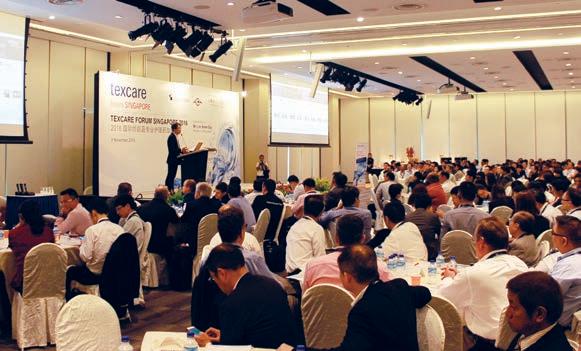
The Forum took place here Nov. 9-10, consisting of a full-day conference addressing Southeast Asian market conditions and demands, as well as a factory visit to three local laundry plants.
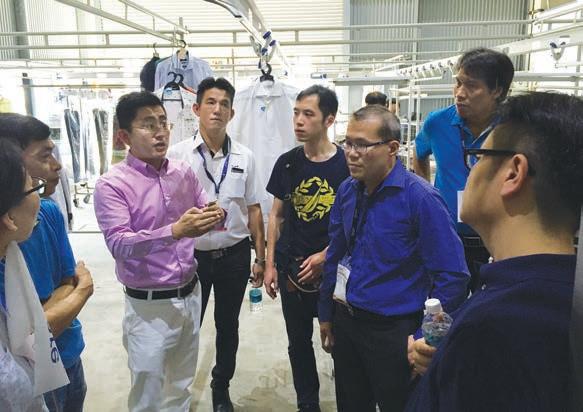
“The Texcare Forum is an integral part of Texcare Asia, which is renowned for offering a wealth of opportunities through business networking and knowledge exchange,” says Richard Li, general manager of Messe Frankfurt (Shanghai) Co. Ltd. “In the past, similar events were successfully held in Hong Kong and Macau to connect industry players and foster understanding of the two cities’ laundry markets.
“This year’s Forum was strategically held in Singapore, a promising market landscape that benefits from rapid regional economic growth. The synergistic collaboration of both the exhibition and Forum under the Texcare brand encouraged industry peers to capitalize on market opportunities and reshape the business agenda of the industry altogether.”
Organizers say the Forum was supported by the Singaporean government. Lim Swee Say, the government’s minister for manpower, was the guest of honor. Say shared the current industry conditions and challenges posed by the progressive shortage in manpower and an aging workforce, according to organizers.
The event was also fostered by two Singaporean organizations: Employment and Employability Institute (e2i) and the TCA Textile Care Training Centre, as well as backed by VDMA Garment and Leather Technology from Germany.
Collectively, more than 200 local and international industry professionals from equipment manufacturers, laundry and drycleaning businesses, hotel and healthcare sectors, research institutes and public agencies were in attendance.
Gilbert Tan, CEO of e2i, says, “In today’s fast-changing business environment, innovative ideas to improve productivity
are one of the key differentiators and catalysts to progress in a new manpower-lean landscape. Understanding the fact that SMEs (small and medium enterprises) are an integral part of our economy, e2i is committed to act as an enabler to assist progressive SMEs in redesigning jobs and tapping into technologies to transform.
“We are pleased that Texcare Forum Singapore is a truly international platform that connects us with the overseas experts, who are potentially our partners helping us take our businesses to the next level.”
Representing the commercial laundry business in Singapore, Poh Wee Yong, assistant general manager, projects and engineering, of Systematic Laundry & Uniform Services Pte. Ltd., shared his insights on the topic of Reinventing Laundry Business with RFID Technology. He was impressed by the results, say organizers.
“It is our pleasure to give a presentation on our views at Texcare Forum Singapore, which is so well organized. Besides delivering my speech, I can learn about what is going on around Asia by meeting participants from China, Hong Kong, Taiwan and around the world. The panel discussion also encourages us to set goals of what needs to be established now,” says Yong.
“It is essential to meet a pool of suppliers since they may have different strengths. And through this Forum, leading suppliers are gathered under one roof so that we can better understand how new solutions work and explore the possibility of having different systems and equipment integrated and applied in our factories. The Forum is very rewarding.”
In addition to the focus on the Singapore market, the Forum invited speakers from the Philippines, Indonesia and Malaysia to deliver the market overview of their respective countries. Virgilio Sia, chairman and CEO of Versia Corp. in the Philippines, was one of the members in the lineup.
“The laundry business in my country is in an early development stage. Texcare Forum Singapore serves as a valuable chance to elaborate on our expectations, particularly from the hotel suppliers’ point-of-view, to numerous industry peers and potential partners,” he says. “The event is
interactive, and I have had interesting conversations with many attendees who gave me feedback on my speech. As a newcomer in the industry, there is a lot for me to learn and I am glad that I have actually learned a lot during the event.”
Coupled with the Forum, a networking area was set up in the neighboring hall to offer manufacturers and sales agents an extended sales opportunity, organizers say.
Long-term exhibitor at Texcare Asia, Jiangsu Sea-lion Machinery Group (Corp.) from China, also signed up for this event. Congxun Wu, the company’s general sales manager, says, “Texcare Asia is a significant communication platform, which enables us to reach
our existing partners and meet new ones.
“Since the exhibition takes place every two years, we are delighted that the Forum is held in between each edition to help us maintain and even expand our sales network in some specific regions in Asia. During the event, I have talked to several existing local clients to learn about their feedback. It means a lot to our development and through this activity we can collect their indepth ideas in an easy and timely manner.”
After Singapore, Shanghai will once again become the focus of the international laundry and drycleaning industry, as the next edition of Texcare Asia is set to commence at the Shanghai New
International Expo Centre in China. Running Sept. 27-29, 2017, the fair is expected to occupy an expansive space of almost 183,000 square feet, housing around 160 exhibitors from around the world, say show organizers.
Texcare Asia is a biennial event organized by Messe Frankfurt (Shanghai) Co. Ltd. and the China Light Industry Machinery Association. It is also a sister event of Texcare International.
Every four years, Texcare International, the World Market for Modern Textile Care, provides an international venue for the textile care sector in Frankfurt, Germany.
The next edition of Texcare International is scheduled for June 20-24, 2020. ALN
24 JANUARY 2017 | AMERICAN LAUNDRY NEWS www.AmericanLaundryNews.com
The first day of Texcare Forum Singapore consisted of a conference about the Southeast Asia market. (Photos: Messe Frankfurt [Shanghai] Co. Ltd.)
Forum attendees toured three laundry plants around Singapore on day two of the event.
Texcare Asia-affiliated event strategically held in growing Singapore market, says general manager
Healthcare laundry community gathers in Nashville to discuss trends, best practices and innovations
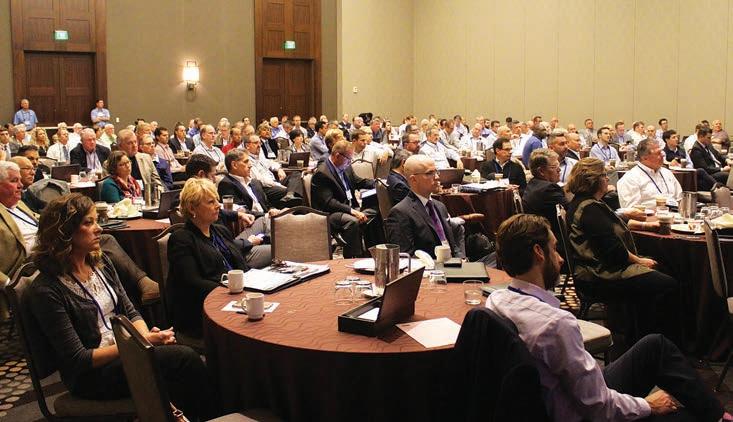
Nixon, Paris, Superior Health, Textile Care, UniFirst and Unitex, as well as all the major equipment manufacturers, chemical and linen supply partners.

NASHVILLE — More than 200 commercial laundry professionals participated in the Textile Rental Services Association’s (TRSA) Healthcare Conference & Plant Tour here Nov. 30-Dec. 1, the association reports. Attendees of the event hosted by the Omni Hotel included nearly 100 operators representing companies responsible for processing nearly 90% of all healthcare linens, garments and uniforms in North America, according to TRSA. The two-day conference
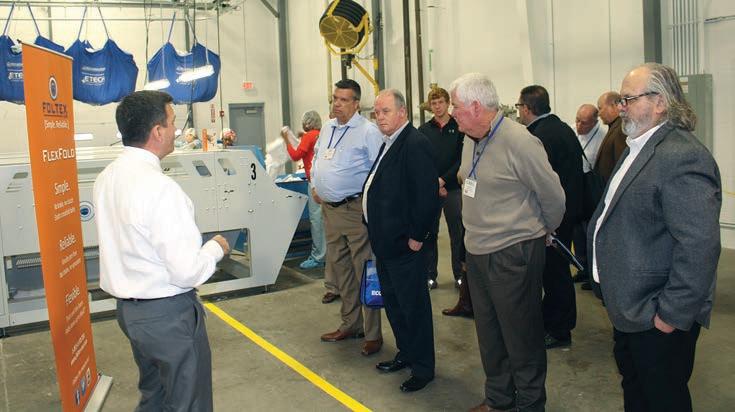
featured informative, interactive discussions and panels on healthcare processing-related trends, best practices and innovations.
TRSA says the Healthcare Conference, an international event focused on processing linens, garments and uniforms for the healthcare sector, attracted senior executives from Alsco Health Assure, AmeriPride, Cintas, Crothall, Crown, Ecotex, Emerald, Faultless, Florida Linen, ImageFirst, K-Bro, Linen King, Foussard Montague, Mission,
The conference kicked off with a presentation by Dr. Manny Alvarez, senior managing health editor for Fox News, offering his views on Healthcare’s Future - What’s Next? focusing on the current healthcare environment and healthcare reform, including his perspectives on what the Trump presidency may mean for the future of the law.
Innovative Market Driven Services panel representatives from healthcare laundry companies discussed the latest customer requirements pertaining to reducing waste and increasing patient safety and satisfaction.
The panel was moderated by Scott Delin, Fashion Seal Healthcare, and included Jim Buchbinder, Economy Linen and Towel Service; Josh Ramirez, Medico Professional Linen Service; and Carey Scurria, Crothall Healthcare. Quality Product Innovations, a panel selected by the TRSA Healthcare Committee, included presentations by Ecolab on disinfectant chemical treatments, Jensen on the latest equipment efficiency advancements and Standard Textile on therapeutic linen developments.
Matthew Oglesby, MHSA, Healthtrust corporate director of environmental services for Supply Chain, offered a healthcare linen customer perspective on Infection Prevention Critical Control Points, including equipment, performance and physical facility expectations, perceptions and responsibilities for delivery, storage, distribution and collection.
The association says additional sessions covered integrated healthcare delivery network trends, cart cleaning and disinfection,
and RFID. The day closed with a panel presentation focused on the design and construction of the recently completed NOVO Health Services plant that attendees would tour the following day.
NOVO Health Services’ 46,000-squarefoot facility currently processes 10 million pounds per year and will undergo secondphase expansion to increase capacity to 24 million pounds, according to TRSA. The tour provided opportunities for participants to speak directly with representatives from manufacturers who equipped the facility and other suppliers, as well as NOVO executives.
In addition, participants received an update from Kevin Schwalb, TRSA vice president of government relations, regarding the impact of the new Trump administration on labor and tax policy, health reform and more, as well as updates on TRSA healthcare-related resources, including the Six Cs: Handling Soiled Linen in a Healthcare Environment training video (distributed to nearly 1,500 healthcare facilities) and a customizable healthcare linen loss animation, says the association.
Prior to the Healthcare Conference, TRSA’s Hygienically Clean Healthcare Advisory Council met to address evolving best practices and requirements. In addition, TRSA facilitated the first faceto-face meeting of the Hygienically Clean Users Group, composed of individuals representing
more than 100 plants
www.AmericanLaundryNews.com AMERICAN LAUNDRY NEWS | JANUARY 2017 25
ALN
the
that have earned Hygienically Clean Healthcare Certification.
TRSA’s Healthcare Conference featured informative, interactive discussions and panels on healthcare processing-related trends, best practices and innovations. (Photos: TRSA)
Attendees toured the recently completed NOVO Health Services plant and had the opportunity to meet with representatives of comp anies that equipped the facility.
TRSA says representatives from nearly 90% of North America’s healthcare laundry processing companies were in attendance
“PRIOR TO THE HEALTHCARE CONFERENCE, TRSA’S HYGIENICALLY CLEAN HEALTHCARE ADVISORY COUNCIL MET TO ADDRESS EVOLVING BEST PRACTICES AND REQUIREMENTS.”
—TRSA
MIP’s Daigle earns IAHTM ‘2016 Lifetime Achievement’ award
POWELL, Ohio — The International Association for Healthcare Textile Management (IAHTM) recently named Gerry Daigle of MIP Inc. its “2016 Lifetime Achievement” award recipient, the company reports. The honor was presented during IAHTM’s Annual Meeting and Education Conference in Vancouver, B.C.
Daigle maintains an executive role within MIP Inc., a global manufacturer and distributor of reusable healthcare textiles and related products based in Montreal, Quebec, Canada.
IAHTM is a nonprofit membership organization for healthcare laundry cooperatives, providing senior-level textile managers with resources and support to maximize their laundries’ efficiencies and control costs without compromising quality or patient focus.
Each year, IAHTM recognizes an individual with its Lifetime Achievement award for his or her career-long contributions to, and accomplishments in, the textile industry.
According to MIP, Daigle was nominated for the award by IAHTM board members who noted his active
role in communicating and educating healthcare laundries on the use of reusable incontinent products as an alternative to disposables; helping to introduce to the industry the benefits of knitted hospital linens vs. woven bed linens; supporting through education sponsorship industry organizations like IAHTM, Association for Linen Management (ALM) and American Reusable Textile Association (ARTA); and continually participating and volunteering in proactive efforts to promote the educational aspects and growth of the industry.
“Gerry has lots of fans in the industry who have recognized that, in many ways, it’s because of the career-long contributions and support of folks like him that we’re able to enjoy continued success,” IAHTM board member Paul Seigel says. “We’re happy to salute Gerry Daigle with our ‘2016 Lifetime Achievement’ award.”
During the conference, IAHTM also paid tribute to United Hospital Services (UHS) of Indianapolis with a special award in honor of the healthcare linen processing company’s 50 years in business.
“We are especially proud to receive this recognition from IAHTM,” says Ed McCauley, president and CEO of UHS. “Not long ago, the only requirements for a laundry was to wash, dry and fold your linen. But those days are gone. Today, the processing of healthcare linens requires a laundry that specializes in the washing and handling of these items. It’s because of the work of organizations like IAHTM that United Hospital Services is able maximize on its performance—we regularly draw on the expertise of its members.”
Rocco Romeo, president of IAHTM, adds, “IAHTM is a network of experts in textile management and this includes the wisdom learned from the ongoing and steady participation of United Hospital Services. We’re proud to have them as a member. And we’re pleased to acknowledge with this recognition their enduring, exemplary contribution to the industry.”
Voltea opens robotic production facility in Texas
DALLAS — Voltea, a company that offers electrodesalination to commercial laundry operations through its Membrane Capacitive Deionization (CapDI©) solu-

tion, has opened an advanced manufacturing, robotic production facility here, the company reports.
Voltea says it acquired an automated production robot for the purpose of manufacturing CapDI module stacks. The robot enables a faster, more efficient way of building the internal components of modules with improved quality and faster production throughput.
“Voltea’s global commercial growth has outpaced our ability to manufacture CapDI modules using traditional manual assembly methods. We acquired a custom-built robotic assembly asset, which increases our production capacity while also improving product quality,” says Voltea CEO L. Bryan Brister.
Due to commercial growth of CapDI technology in the North American market, Voltea says opening a U.S.based facility was a crucial need for sales, service and training purposes.
“The Dallas facility will expand the capabilities of the service team on the American continent, in addition to being a valuable resource for the local training and support of resellers,” says Josh Summers, Voltea’s global field services leader. “The technology demonstration and FAT of equipment for customers will be an important feature of this new facility as well.”
Carlos Camero, senior vice president for global business development, adds, “The pipeline of existing and potential customers in North America is growing fast, which demands that we expand our sales team in the region to support that commercial growth.”
Ellis Corp. customers learn DIY methods at annual maintenance seminar
ITASCA, Ill. — Ellis Corp. hosted its annual WasherExtractor Maintenance Seminar here in late September, the company reports.
According to Ellis, seminar attendees enjoyed tours, hands-on workshops and classroom sessions at the Ellis facilities.
In-house technicians in attendance learned the value of preventive maintenance, improved their ability to troubleshoot and make repairs, and expanded their overall knowledge of the Ellis Side Loader, the company says.
26 JANUARY 2017 | AMERICAN LAUNDRY NEWS www.AmericanLaundryNews.com
Company Page Company Page INDEX OF ADVERTISERS A.L. Wilson Chemical Co. 9 ADI American Dawn 5, 17 Clean Show 15 Consolidated Laundry Machinery 19 Direct Machinery Sales Corp. 28 Girbau Industrial 7 The Griffin Group, Inc. 28 Hamilton Engineering 27 J.P. Equipment 28 Kannegiesser USA 21 Kemco Systems 26 LaundryCareers.com 28 Lavatec Laundry Technology 32 Monarch Brands 10, 11 Pellerin Milnor 3 PSP Industrial 28 Stanco Industries 28 U.N.X. Inc. 28 UniMac 13 ALN_3rd Page.indd 1 12/8/16 8:43 AM
Gerry Daigle (center) of MIP Inc. receives his Lifetime Achievement Award from Paul Seigel (left), IAHTM treasurer, and Rocco Romeo, IAHTM president. (Photo: IAHTM)
Ellis says it started the annual maintenance seminar 20 years ago to aid in-house technicians in their efforts to keep Ellis equipment operating at top capacity without service calls.
Primus, Steiner-Atlantic Corp. partner in Florida
RIPON, Wis. — Commercial laundry equipment manufacturer Primus ® has entered into partnership with Miami-based distributor Steiner-Atlantic Corp., which now will offer Primus equipment to customers in Florida.
“We are honored to welcome SteinerAtlantic into the Primus distributor network,” says Mark Schram, North American sales manager for Primus. “Steiner-Atlantic has been a long-time partner of Alliance Laundry Systems, and we are thrilled that they will now be offering cutting-edge Primus equipment to their customers.”
Primus, which offers a full line of equipment for on-premises and vended laundries, says its products are eco-friendly and efficient, helping to reduce water and energy consumption.
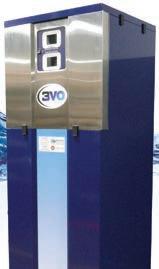
“At Steiner-Atlantic, we are committed to providing our customers with highquality equipment featuring leading technologies,” says Michael Steiner, CEO and president, Steiner-Atlantic. “We know that the Primus equipment will meet our customers’ needs and that this efficient and reliable equipment will help our customers’ businesses succeed.”
Steiner-Atlantic has served the laundry,
boiler and drycleaning industries for more than 50 years, the company says.

“Primus commercial laundry equipment has been recognized as an industry leader in Europe for over 100 years, and we are proud that our Primus distributor network is continuing to grow with distributors like SteinerAtlantic, who have had tremendous success in the industry for many years,” says Schram.
Mission Linen Supply teams with Golden 1 Center in Sacramento
SANTA BARBARA, Calif. — Mission Linen Supply, a provider of rental and direct-sale linens and uniforms, supplies and related services, has a new partnership with the Golden 1 Center, home of the National Basketball Association’s Sacramento Kings, the company reports.
Through this partnership, Mission Linen Supply says it will be a key textile rental provider for Golden 1 Center.
Besides sports, the center is an arena for music, entertainment, culture, food and more, according to the company.
“Mission is widely recognized for its ability to understand, anticipate and meet its customers’ needs,” says Kevin Pariseault, Mission’s regional sales director. “We provide top-quality, environmentally friendly goods and services, which will help support the venue’s sustainability practices while also ensuring the best customer service experience possible. We look forward to what is sure to be a successful partnership with Golden 1 Center.” ALN
Calendar

January
18 Textile Rental Services Association Webinar: OSHA’s New Recordkeeping Rule and TRSA’s Safety Report Arlington, Va. Info: 703-519-0029
26 Association for Linen Management Webinar: Ask the Experts: Part 1 Productivity Richmond, Ky. Info: 859-624-0177

February
8-9 Textile Rental Services Association Production Summit & Plant Tours Houston, Texas Info: 703-519-0029
15 Textile Rental Services Association Webinar: Innovative Chemical Products for the Healthcare Market

Arlington, Va. Info: 703-519-0029
23 Association for Linen Management Webinar: Managing from Afar Richmond, Ky. Info: 859-624-0177






March

8 Textile Rental Services Association Webinar: Recruitment/ Retention: Putting an Effective Plan in Place for Advancement Arlington, Va. Info: 703-519-0029

20-21 Textile Rental Services Association Leadership & Legislative Conference Washington, D.C. Info: 703-519-0029

www.AmericanLaundryNews.com AMERICAN LAUNDRY NEWS | JA NU ARY 2017 27
ALN facebook/ americanlaundrynews Like our Facebook page Share our content Comment: Tell us what’s on your mind LIKE 0616aln_House Facebook jr_half.indd 1 5/5/16 5:19 PM WHY 3VO? It’s simple! Hamilton Engineering has over 15 years of condensing water heating production experience, leading to the next generation of high e ciency water heaters and boilers. We’re setting the bar higher than ever with the 3VO— something the industry has not yet seen. It’s yesterday’s simplicity, tomorrow’s technology. • Easy to use • Lowest installed and commissioned cost • Fully serviceable heat exchanger • Exclusive Heating Optimization Technology (HOT™) controls system Call 1.800.968.5530 for details ALN_Jr_half.indd 1 12/7/16 8:42 AM
Ozone Sales Positions Available






Wet-Tech, the ozone people is seeking qualified sales people to assist in generating quality leads in OPL and industrial laundry facilities. We offer competitive commissions and support. A laundry background is required. Qualified candidates can call 508-831-4229 or email jackreiff@wet-tech.com
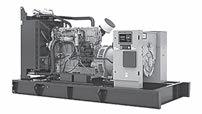
GENERAL MANAGER
For more than 85 years, Mickey’s Linen has been a market leader in linen & uniform rentals. We are seeking a results driven General Manager to lead the growth of one of our existing locations.
The ideal candidate should have a demonstrated sales, and customer service background within the industry. We are looking for a passionate leader to build, develop and actively manage a strong team.
Qualified candidates should email resumes and salary requirements in confidence to our HR Department: careers@mickeyslinen.com
28 JANUARY 2017 | AMERICAN LAUNDRY NEWS www.AmericanLaundryNews.com Classified Advertising POSITIONS AVAILABLE Call Craig Lloyd toll free at 877.295.5693 between 9 a.m. – 9 p.m. EST. Please visit www.laundrycareers.com to review current industrial/institutional laundry management openings. ADVANCE YOUR CAREER The Griffin Group, Inc. “Recruitment Specialist” Need to FILL a position? Call Deana Griffin 888-235-2365 www.thegriffingroup.cc deana@thegriffingroup.cc ® American LaundryNews .com More than unique visitors monthly! 5,250 PARTS FOR SALE For more classifieds visit: .com www. AMERICANLAUNDRYNEWS U.N.X. INCORPORATED“ ” grow & expand U.N.X.! U.N.X. INCORPORATED WASHEX PARTS Hard-to-find Washex parts, on-site rebuilding, tech support. LAUNDRY PARTS CENTER 800-352-4492 Fax: 305-827-3991 PARTS, PARTS, PARTS Huge stock of parts for most laundry equipment & boilers. Also traps, valves and lubricants. Overnight delivery. Steiner-Atlantic, 800-333-8883 Fax: 305-751-8390 parts@steineratlantic.com
EQUIPMENT FOR SALE EQUIPMENT FOR SALE We worry about it so you don’t have to Project Management, Consulting, Facility Planning, Rigging, Turn Key Installations, Equipment Appraisals & Reports. O ering turn key Laundry Solutions nationwide. IN STOCK EQUIPMENT FOR SALE: Qty Jensen SEP72MP Press 1 Chicago Edge Maxx Feeders 2 Chicago King Edge & Kannegiesser Feeders 3 Chicago Skyline Sheet Folders 6 Lavatec TT745GU Gas Dryers 8 Braun Towel Folders 9 Challenge 400 LB Gas Tunnel Dryers 6 Rebuilt Milnor 170 LB W/X 1 Jensen EXPG-12 Self Contained Gas Ironer 1 Chicago Century 2 Roll x 42 Steam Ironer 1 www.pspindustrial.com Main: 1.800.517.1432 / 305.517.1421 Please visit our website for our complete inventory www.ineedjpequipment.com 800/925-3236 “Expect Excellence” • Bagging Machine, T-1000 Advanced Poly-Packaging Bagger, 2015 • Colmac Steam Tunnel CFS2100-2G/S, 1998, runs well • 50 HP Atlas Copco Rotary Screw Air Compressor, 2002 • 50HP Gardner Denver Rotary Screw Air Compressor + Air Dryer, 2000, well maintained • 350lb Washex, 2 Pocket Side Loader, 2000 • 50lb IPSO Washer • 110lb Milnor Softmount Washer, 1998 • 135lb Milnor Rigid Mount, 2006 • 135lb Milnor Rigid Mount, 1999 (bearings recently replaced) • 200lb Braun TSL, 2006 and 1997 • 400lb Braun Medicade, 1994 • Drums for Braun OP Washers, 400lb and 600lb • 175lb Milnor Gas Dryer, 2003 • 200lb ADC Gas Dryer, 2008 and 1999 • 2 - Cain Ind Stack Economizers - Increase your boiler efficiency! • 1998 Chicago Tristar 28” - no stacker conveyor • 1993 Chicago Imperial 48”x120” Gas Ironer • 2008 Jensen Logic Feeder • Chicago Pik Quik, 2008 and 2005 Tunnel Systems Available: • Milnor G2 Tunnel System, 9 Mod - 90lb, 2 Stage Press, 4 Gas Dryers, 1995 Complete System • Passat Tunnel (UT5012, 1997), Press (EP 865-35, 2002) and Load Conveyor (5LLC45W, 1994) • Milnor Classic Tunnels with 58058 Dryers, lots of stock AMKO AMERICA, INC. Remanufactured Finishing Equipment Delta Ironers, Omega Folders & Towel Folders PARTS, IRONER SUPPLIES & NEW EQUIPMENT ALSO AVAILABLE “NEW” SELF CONTAINED IRONERS Contact: (561) 863-9696 AmkoAmerica@gmail.com MACHINERY WANTED ATTENTION HOSPITAL & HOTEL LAUNDRY MANAGERS PLEASE SHOW THIS AD TO YOUR CHIEF ENGINEER WE BUY NATIONWIDE INDUSTRIAL LAUNDRY MACHINERY STANDBY GENERATORS, HIGH PRESSURE STEAM BOILERS, CHILLERS & ALL TYPES OF FREON FROM HOSPITALS & HOTELS LONE STAR MACHINERY SERVING CALIFORNIA & NEVADA CALL: 916-910-3607 E-MAIL: lonestarmachine7@aol.com POSITIONS AVAILABLE Starr Textile Services New Orleans,
DESCRIPTION For Pricing call Ron Hirsch 516.938.4300 • 516.315.7426 Hicksville, NY • www.directmachinery.com FOR NEW OR USED LAUNDRY EQUIPMENT, DM IS YOUR SOURCE FOR ALL YOUR NEEDS Milnor 72072 500lb Gas Pass-Through System Dryers (2006) (2) Chicago Edge Spreader Feeders Challenge Reconditioned Pace Setter Gas Dryers (1) Braun Rear Discharge Small Piece Folders (3) Braun 600lb Top Side Loader Kemco Kemco Stainless Steel Storage Tank and Heat Reclaimer (2) Washex 2002 135lb soft mount (1) Pik-Quik Sheet Sorter (1) ADG 175lb Gas Dryers (2) Milnor 120lb Steam Dryers (2) DISTRIBUTOR OFFERINGS Stanco Industries, Inc. Serving The Textile Trades Since 1970 800-932-3769 k for Mike or Deb KEEPING IT GREEN SINCE 1970 ----------- GENERATORS FOR SALE --------------Your customers require Uninterrupted Service. Quality Pre-Owned 100Kw up to 1700Kw. Emergency Power units in stock. Diesel-Natural Gas-Propane. Stanco Industries, Inc. 800-932-3769 Ask for Mike or Deb or e-mail: stanco2626@aol.com www.StanCoInd.com
www.steineratlantic.com
LA Searching for Top Maintenance Techs Salary – DOE. Must have prior experience with ETech, Milnor & Chicago Equipment and Strong in Electrical Troubleshooting Contact Chuck Davis: CDavis@StarrTextileServices.com 251-284-4635

















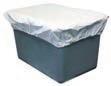



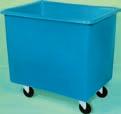








www.AmericanLaundryNews.com AMERICAN LAUNDRY NEWS | JANUARY 2017 29 Source Directory A convenient guide to sources of products and services APPAREL FINISHING basis at the following rates: All Major Credit Cards Accepted 2017 Listings Regular Boldface All Caps Four Line Listing per Year $890 $1,115 $1,115 Display and additional line rates available upon request CARTS, TRUCKS & BASKETS CARTS, TRUCKS & BASKETS ● Tunnel Finishers ● Cart Washers sales@leonardautomatics.com http://leonardautomatics.com ● Pressing Equipment ● Garment Conveyors ph: 704.483.9316 For more information, visit our Web site at: www.duracast.com Please call and reference promotion #17ALN to receive your special freight rate. M c C LURE INDUSTRIES, INC. 800-752-2821 • www.mcclureindustries.com email: kim@mcclureindustries.com Sani-Trux is the only molded cart to pass rigorous independent laboratory testing for NFPA fire codes Made of durable fiberglass making the cart life at least twice that of a poly cart Easy to maneuver even in tight spaces Built with quality components to last years longer than other carts Visit our website for other models and avaliable options. We sell direct to all parties! K5106 - K5120 ® Optional, durable nylon or vinyl covers securely protect contents. UTILITY TRUCKS & LINERS Our trucks and liners are seamless polyethylene with smooth, rounded corners for easy cleaning. Curled flanges reinforce strength and ease of handling. Liners replace vinyl or canvas bodies and can be ordered in 4 wall thicknesses. l-800-275-2436 l-800-275-2436 maxi-movers.com Email:sales@maxi-movers.com Chm ALN Utility Trks / Lnrs:Layout 1 12/2/16 3:18 M.I.T. POLY-CART 211 CENTRAL PARK WEST, NEW YORK, NY 10024 800-234-7659, FAX: 212-721-9022 WWW.MITPOLYCART.COM Diversified Plastics, Inc. 1309 Highway 917 West, Latta, SC 29565 800-768-7636, www.dpirotocarts.com E-mail: sales@dpirotocarts.com Fax: 843-752-7798 Our sturdy workhorse holds more laundry on the same, classic footprint and fits neatly into your cart fleet. Optional, lockable, waterproof lid and door. Call now for free quote. DEPENDABLE We Put More Into Our Carts So You Can, Too! Call 800.829.4535|questions@MODROTO.com | MODRoto.com 72P






















30 JANUARY 2017 | AMERICAN LAUNDRY NEWS www.AmericanLaundryNews.com Source Directory A convenient guide to sources of products and services FLATWORK IRONERS Knowhow In Action Your Tingue rep is a fully trained master of finishing equipment operation, maintenance and installation. Call for: • Pads, covers, belts, waxes, tapes and more • Carts, trucks, baskets and bags • Parts, rebuilds and repairs 800.829.3864 www.Tingue.com TalleyMachinery.com MODRoto.com TBR-Associates.com To website C & W EQUIPMENT (800) 443-3573 FLATWORK IRONER SPECIALISTS REMANUFACTURED IRONERS: Super Sylon Sylon Hypro’s Super Pro Jensen SS700 SS800 Ultima Lavatec UPGRADE KITS: Chain Drive Conversion Vacuum Systems Herringbone Conversion Canopies Inverters Side Covers Roll Springs Jensen Drives SUPPLIES: Aprons Pads Covers Belts Waxes Cleaners PARTS/REPAIRS: All Brands New/Refurbished/Hard to Find COMMITTED TO EXCELLENCE Your friendly Rep can help with: • Pads, Covers, Wax Cloths, Cleaning Supplies • Rebuilding your ironer • Parts, Sales, Service, Rigging (602) 253-9687 • www.azsle.com The Flatwork Ironer Specialists Pellerin Milnor Corp. P.O. Box 400, Kenner, LA 70063 504-467-9591, Fax: 504-468-3094 www.milnor.com DRYERS – 100 POUNDS OR MORE Pellerin Milnor Corp. P.O. Box 400, Kenner, LA 70063 504-467-9591, Fax: 504-468-3094 www.milnor.com DRYERS – 100 POUNDS OR LESS LINT COLLECTORS & FILTERS CART-WASHING SYSTEMS DRYER BOOSTER & EXHAUST FANS www.energenics.com ENERGENICS KARTWASHERS FULLY AUTOMATIC KARTWASHER PREMIER W/TOUCHPAD 1470 Don St. • Naples, FL 34104 • 800-944-1711 Designed to wash and sanitize all popular laundry carts • Automatic two minute cycle • Dries and sanitizes • Minimum water useage Concentrates wash effectiveness on the cart interior Fast automatic washing, sanitizing and drying insure optimum cleaning • 15 second detergent wash and sanitizing rinse cycle • Adjustable automotive car wash style drying 1116aln_Energenics Cart Washers SD.indd 1 9/27/16 3:30 PM What Every Laundry Needs In A Cart Washer: M c C LURE INDUSTRIES, INC email: kim@mcclureindustries.com 800-752-2821 • www.mcclureindustries.com A cart washer that works continuously for 15-20 years. The ability to install your cart washer in a cross-contamination barrier wall. A cart washer that really, truly cleans each cart of bio-contaminents inside and out. One that uses existing utilities - no remodel costs. Time selectable efficient cycles that use a minimum amount of water. www.energenics.com ENERGENICS CORPORATION TALK TO OUR DESIGN AND ENGINEERING STAFF ABOUT YOUR NEEDS 1470 Don St. • Naples, FL 34104 • 800-944-1711 ›› Our In-Line Lint Filter mounts inside, saves space! ›› OPL Duct Mounted Lint Filters 1,000 to 2,700 CFM ›› Fiberglass or Stainless Steel Dry Filters ›› Hundreds Sold Annually GO TO: www.AmericanLaundryNews.com TO PLACE YOUR AD ONLINE MISSED OUR DEADLINE? Source Directory listings in American Laundry News are sold on an annual basis at the following rates: All Major Credit Cards Accepted 2017 Listings Regular Boldface All Caps Four Line Listing per Year $890 $1,115 $1,115 Display and additional line rates available upon request Get the info you need online... www.AmericanLaundryNews.com
Pellerin
Corp. P.O. Box 400, Kenner, LA 70063 504-467-9591, Fax: 504-468-3094 www.milnor.com











Pellerin
Pellerin
Pellerin

www.AmericanLaundryNews.com AMERICAN LAUNDRY NEWS | JANUARY 2017 31 Source Directory A convenient guide to sources of products and services PARTS PARTS & SUPPLIES • Door Handles • Door Locks • Print Boards • Bearing Kits • Drain Valves • Shocks • Heating Elements • Inlet Valves and more! QUALITY LAUNDRY PARTS, GREAT PRICES For questions and custom orders email info@FrontecStore.com (941)726-0808 • Bearing Kits • Drain Valves • Shocks • Heating Elements • Inlet Valves and more! For questions and custom ordersFrontecStore.com (941)726-0808 CINCINNATI LAUNDRY EQUIPMENT We stock all the parts you need! We have something for everybody! Parts for All Major Manufacturers 2648 Spring Grove Avenue Cincinnati, OH 45214 Phone: 513-542-5000 • Fax: 513-542-5022 www.cincinnatilaundry.com cle@cincinnatilaundry.com Your #1 AJAX Source! AJAX • CISSELL LAVATEC • ALLIANCE IPSO • HUEBSCH JENSEN HYPRO/SUPER SYLON HOFFMAN • VOSS PERMAC • Hotel • OPL • Coin Op • Dry Cleaners • Industrial • Commercial • Cruise Industry Dry or Wet Style Filters to Work with “ALL” Dryer Sizes or Multiple Situations, Fiberglass or Stainless and Custom for Unique Situations! Lint Filters Model Big and Small – We’ve got a model for you! In-line Duct” Models – the Lint Lasso and Lint Sock –in production since 2011 All manufacturing done on premise 800-826-1245 www.cleancyclesystems.com • ccsystems@tqind.com LINT COLLECTORS & FILTERS
Milnor Corp. P.O. Box 400, Kenner, LA 70063 504-467-9591, Fax: 504-468-3094 www.milnor.com
WASHERS – CONTINUOUS BATCH WASHER-EXTRACTOR – 100 POUNDS OR LESS WASHER-EXTRACTOR – 100 POUNDS OR MORE MICROFIBER
MAT ROLLERS
Milnor Corp. P.O. Box 400, Kenner, LA 70063 504-467-9591, Fax: 504-468-3094 www.milnor.com
SMALL-PIECE FOLDERS
Milnor Corp.
LA
504-468-3094
P.O. Box 400, Kenner,
70063 504-467-9591, Fax:
www.milnor.com
PRESSES – EXTRACTION Gardner Machinery Corporation P.O. Box 33818, Charlotte, NC 28233 Ph.: (704)372-3890; Fax: (704)342-0758 www.gardnermachinery.com MATERIAL HANDLING / CONVEYORS Source Directory listings in American Laundry News are sold on an annual basis at the following rates: All Major Credit Cards Accepted 2017 Listings Regular Boldface All Caps Four Line Listing per Year $890 $1,115 $1,115 Display and additional line rates available upon request
Milnor