Unitex to close Middletown plant temporarily to evaluate future
MT. VERNON, N.Y. — Unitex Textile Rental Services plans to close its Middletown, N.Y., plant temporarily, while it weighs options for the future of the facility, according to the company and news reports.
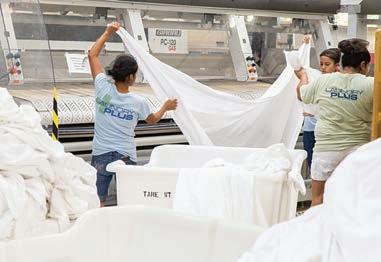
“Unitex is temporarily suspending operations at the site to review the ongoing needs of the physical plant,” says Sr. Vice President David Potack. “The nature of the evaluation is such that the review required that we cease operations at this point.
“Once the process is complete, we will evaluate the long-term viability of the plant and determine the next steps.”
The closure, slated for Jan. 7, will force the layoffs of 65 employees.
Potack says that Middletown employees affected by the temporary closure were offered jobs at other Unitex facilities.
The company says it gave notice of the closure of the Middletown plant to the New York state Department of Labor on Oct. 7.
State officials recently made the information available to the public, according to news reports.
ALN


 BY MATT POE, EDITOR
CHICAGO — Automation, simply put, is the use of various types of control systems to operate equipment and processes—without human interaction being necessary.
Automation is seen in the production of cars and trucks, food and beverage processing, even in flying an airplane.
The laundry industry has turned to automation as well.
A main objective of laundry automation is to reduce labor costs by reducing the “number of physical touches” that employees have with the linen, which results in increasing PPOH, (pounds per operator hour), according to

David Carter, vice president of North America sales for equipment manufacturer Pellerin Milnor Corp.
He says another objective is to reduce utilities usage per pound processed. Finally, the automation should help manage linen inventory levels and related investment without compromising customer service.
“Automation has become very important in the laundry with the drastic increases in labor costs,” says Tony Jackson, director of national accounts for equipment maker Kannegiesser USA. “It is much safer for employees, especially in the washroom, to not manually load washer-extractors in large batches.”

Joe Gudenburr, president of equipment manufacturer G.A. Braun Inc., agrees that automation can afford a laundry operation a great many benefits. Improvements can reduce labor, overall operating hours, and energy, water and chemical consumption, and result in improved


Setting laundry operations on automatic Training the ‘face of the company
Finding and keeping top-tier RSR talent is critical.
BY CHRIS MAYER
FORT MILL, S.C. — Training for route service representatives (RSRs) is paramount to any successful business. We all know that they’re the face of your company to your customers.
With an average route running $10,000 per week, they’re the chief operating officer (COO) of a substantial small business of $500,000 annually. Simply stated, they’re a big part of the impact on your financial results, and they do far more than just being a “driver.”
Studies on the cost of employee turnover are all over the board. A more conservative study by the Center of American Progress (CAP) states that turnover costs a minimum of 20% of salary. For a person making $40,000 a year, that’s $8,000 in recruiting and training expenses.
Many of us can remember when a route service rep received two weeks of training with another rep before they went solo. Maybe it worked then, but it’s the “doom loop” in today’s world, and it has become extremely expensive.
Many companies wonder why their turnover is so high in the first six months. The initial onboarding training program is typically the
No. 1 reason.
There are five key things to consider when it comes to route service rep training:
inventory control and turn rates and better finished-product quality.
He says the improvements can be achieved and sustained as long as the appropriate process controls, discipline and operational
’
• Core Process, Branded Training vs. Tribal Knowledge
• Consistent Repetition vs. One and Done
• Daily Check-in Training vs. Cash-outs
• Follow-up Verification vs. “Hope They Got It”
• Route Rep-Conducted Meetings vs. ManagerDirected Meetings

CORE PROCESS, BRANDED TRAINING VS. TRIBAL KNOWLEDGE
Tribal knowledge is how most RSRs are trained in our industry. It’s passed down from the RSR or manager before them who learned from another RSR or manager before them.
Panel of Experts
Our experts look at efficient, effective sorting and arranging.

NOVEMBER 2016 Late News
www.americanlaundrynews.com Volume 42, Number 11 INSIDE [18] See AUTOMATIC on Page 6
The Newspaper of Record for Laundry & Linen Management
[4] See CONTACT on Page 10
Columnist at Large
With
retirement
nearing, Eric Frederick reflects on his long career.
[16]
Route drivers are key points of contact for laundry services
Plants look to automation to save labor costs, increase pounds per operator hour
Feeders, ironers, folders and stackers can significantly decrease labor and operational costs while bolstering throughput. (Photo: Girbau Industrial)
“MANY OF US CAN REMEMBER WHEN A ROUTE SERVICE REP RECEIVED TWO WEEKS OF TRAINING WITH ANOTHER REP BEFORE THEY WENT SOLO. MAYBE IT WORKED THEN, BUT IT’S THE ‘DOOM LOOP’ IN TODAY’S WORLD...”
—CHRIS MAYER, PERFORMANCE MATTERS
From Service to Business In-house laundries can make money— by adding commercial work.
When is it time to rebrand?
MEMPHIS, Tenn. — Robert Caen, marketing manager for Uniform Masters, had a problem as the company was reaching its 70th anniversary this year.
His company is a uniform vendor but its logo didn’t convey anything about the business to anyone who saw it. The solution? Create a new logo to rebrand the company.
American Laundry News spent some time with Caen, learning about the business and its rebranding effort.
Tell us a little of the history of Uniform Masters.
Uniform Masters was founded in 1946 as Mechanics Laundry Service by Morris and Lenore Caen, my grandparents, after moving to Memphis from New Jersey with their two children, Richard, who is the current president, and Judy.
With few relationships in Memphis and little money, Moe started the business delivering laundry out of a 1940s Ford Woody station wagon. There was no rental service at this point in time. By the late 1940s, Moe had built the business to four routes. Rental had not yet been introduced, and the workweek consisted of six days. To minimize cash requirements, accounts were serviced twice per week, either Monday-Thursday, TuesdayFriday or Wednesday-Saturday.
Our own production facilities began in the early 1950s. We were located across the street from what is now Bass Pro Shop, better known as the Memphis Pyramid in the heart of down-
town Memphis. Over several years, we grew from one floor of one building to two floors of three buildings. In 1974, we moved to our current location across the street from the Memphis International Airport.
Whatbroughtaboutthedesire to update, rebrand, the business?
When did the process start?
When did the new logo go into service?
The catalyst for jumping into a large rebranding was rooted in our desire to better convey why a customer experience with Uniform Masters is truly different than with other companies and to overcome the phrase so commonly heard, “We didn’t know there was a local vendor.”
In short, finding effective ways to leverage a competitive advantage of being the oldest industrial launderer in the Mid-South against the perception that all uniform vendors are the same.
We are always hearing, “Uniform businesses all look and sound the same,” and we kept asking ourselves how can we
break out of this appearance of being a commodity in the service industry. We knew inside our office walls we were different, and our customers know that we are different, but how can we better convey at first glance to a prospect that this company has charisma fueled by real people who have a passion for the services they provide, and that we aren’t an answering service with trucks that roam countless customers to make “deliveries”?
We provide a live person who answers phones. We have a service team that is proactive and has intimate knowledge of each of our clients. We take our work very seriously, but we are a family business—we wouldn’t be who we are if we couldn’t have a little fun and weirdness as well. It’s part of what makes our associates a unique bunch to the industry; there is a shared passion for doing the job right.
Did you work with a design company? How did you decide how the new logo should look? What message are you trying convey with the new logo?
We worked with Trace Hallowell of Tactical Magic; his team is based here in Memphis. Trace has worked with 100-plusyear-old companies on rebrands in our local market, as well as with corporate giants like McDonald’s. We really found confidence in Tactical Magic’s encompassing strategic approach to looking at our audience as well as the history of what worked for the last 70 years to get us to today.
When approaching the design for the new logo, we really did a lot of research within our own organization and within our customer base in an effort to define our brand personality and values. Some words and phrases that guided us were “respectful,” “positive attitude,” “responsive,” “knowledgeable” and “having a sense of humor.” Also, “having pride in good results,” “credible
but not corporate,” “blue collar chic” and “fashionably retro.”
Whatdidtheoldlogolooklike and how long had it been in use?
The old logo was designed in the late ’90s with an ambiguous marque that really didn’t convey any sort of message or feeling.
Our branding evolution has progressed as follows:
• Mechanics Laundry Service, “Work Clothes Specialist,” 1946–mid 1970s.
• Mechanics Uniform Service, “We Do the Dirty Work,” 1970s into the early 1990s.
• Master Service Systems, two divisions: Uniform Masters and Mat Masters, early 1990s to late 1990s.
• Uniform Masters, “Apparel and Floor Mat Solutions,” early 2000s to present day.
What has been the response to the new logo?
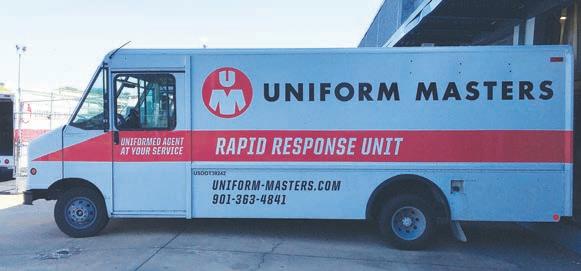
It typically gets a chuckle, and a “I see what you did there” response. People have had a big reaction to the new design of our truck livery, as it reads “Rapid Response Unit.”
Our goal is to be noticed and to create a memorable experience. I recently attended an evening meet-and-greet that one of our clients had for a big motorsports event and was asked about our rebranding, which turned into a handful of new leads solely off seeing our trucks’ new design around town.
What does the future hold for Uniform Masters?
We are working diligently to improve all facets of our sales experience, from internal technology upgrades to seeing that the rebrand/marketing voice is reflected in all levels of our sales process, from how we build proposals to direct mail campaigns.
As we celebrate our 70th anniversary, we are looking forward to giving the same great service our customers have come to trust.
Publisher
Charles Thompson
Phone: 312-361-1680
E-Mail: cthompson@ ATMags.com
Editorial Director
Bruce Beggs
Phone: 312-361-1683
E-Mail: bbeggs@ ATMags.com
Editor
Matt Poe
Phone: 231-740-2842
E-Mail: mpoe@ ATMags.com
Digital Media Director
Nathan Frerichs
Phone: 312-361-1681
E-Mail: nfrerichs@ ATMags.com
Advisory Board
Jim Buik • Richard Griffin
Greg Gurtler • Phil Hart
Janice Larson • Tom Marks
Gerard O’Neill
Richard Warren
Production Manager
Roger Napiwocki
National Sales Director
Donald Feinstein
Phone: 312-361-1682
E-Mail: dfeinstein@ ATMags.com
Main Phone: 312-361-1700
Subscriptions
630-739-0900 x100 www.americanlaundrynews.com
American Laundry News (ISSN 1091-9201) is published monthly. Subscription prices, payment in advance: U.S. 1 year $46.00; 2 years $92.00. Foreign, 1 year $109.00; 2 years $218.00.

Single copies: U.S. $9.00; Foreign $18.00. Published by American Trade Magazines LLC, 566 West Lake Street, Suite 420, Chicago, IL 60661. Periodicals postage paid at Chicago, IL, and at additional mailing offices.
POSTMASTER, Send changes of address and form 3579 to American Laundry News Subscription Dept., 440 Quadrangle Drive, Suite E, Bolingbrook, IL 60440. Volume 42, number 11. Editorial, executive and advertising offices are at 566 West Lake Street, Suite 420, Chicago, IL 60661. Charles Thompson, President and Publisher. American Laundry News is distributed selectively to qualified laundry and linen management and distributors in the United States.
© Copyright AMERICAN TRADE MAGAZINES LLC, 2016. Printed in U.S.A. No part of this publication may be transmitted or reproduced in any form, electronic or mechanical, without written permission from the publisher or his representative. American Laundry News does not endorse, recommend or guarantee any article, product, service or information found within. Opinions expressed are those of the writers and do not necessarily reflect the views of American Laundry News or its staff. While precautions have been taken to ensure the accuracy of the magazine’s contents at time of publication, neither the editors, publishers nor its agents can accept responsibility for damages or injury which may arise therefrom.

MEMBERSHIPS
ALN
Uniform Masters attracts attention with its new logo
2 NOVEM BE R 2016 | AMERICAN LAUNDRY NEWS www.AmericanLaundryNews.com INSIDE: November 2016 • Vol. 42 | No. 11 [14] 2017 Predictions to Help with Planning In this month’s OPL 101 column, read about three trends to watch in the coming year that could impact operations [22] New Take on TRSA’s Annual Conference The Textile Rental Services Association staged its annual conference in September with new, one-on-one meetings [23] Career Track [26] Trade Ticker [27] Calendar of Events [28] Classified Advertising [29] Source Directory Q&A
People around Memphis, Tenn., are responding to Uniform Masters’ new logo and newly designed “Rapid Response Unit” trucks. (Photo: Uniform Masters)
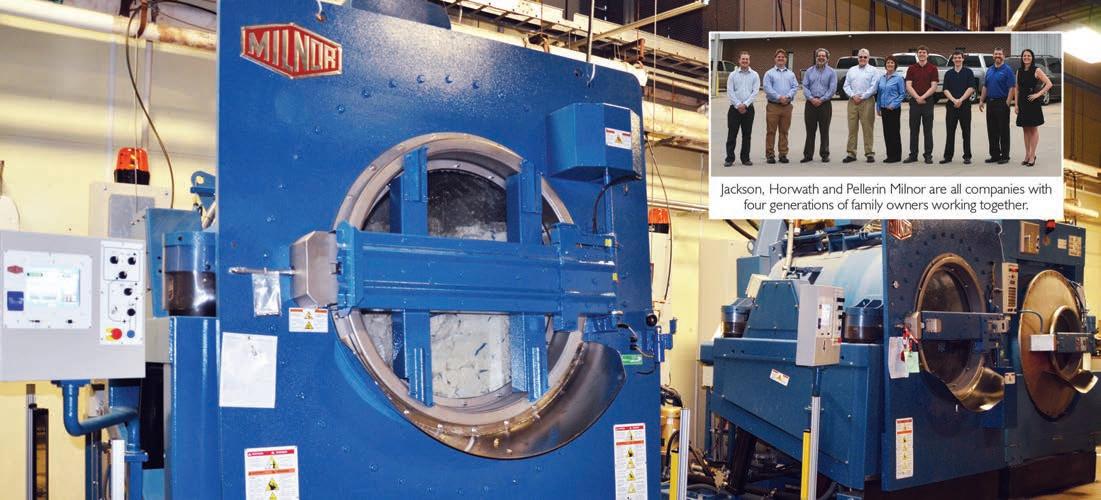
20-year old Milnor tunnel is still working so well, we couldn’t bring ourselves to replace it.”
Jackson has trusted Horwath Laundry Equipment, the local authorized Milnor distributor, for four generations. President Jim Horwath said, “We would not normally recommend opting out of replacing a 20-year-old workwear tunnel. Milnor’s ability to support their products (well beyond the life compared to most manufacturers), made us comfortable with this solution.”
Recently, Jackson Services installed four new 6464 pass-through dryers, one 48040 M7K 275 lb. capacity tilting washer-extractor, and a 68036 M5K 400-500 lb. capacity tilting washer-extractor. Milnor worked to update the veteran tunnel with new software and integrate it with the new Milnor M-series washer-extractors, pass-through dryers, and rail system. Jackson is proud to say that productivity is increasing steadily. “At times we’ve had to throttle the washroom to slow it down because production is so fast that the rest of the plant has to catch up!”
To find out how Milnor’s long-lasting machinery can save you money, contact an authorized Milnor distributor or call 504-712-7656.

To read about Jackson Services, scan this code.

www.milnor.com / pellerinmilnor
“Our
– Jesse Jackson, President, Jackson Services, Columbus, NE
The more things change...
S
omeone once said, “Change is the only constant in the universe.”
As we head into the last two months of 2016, it makes sense to look ahead to possible changes the coming new year will present.
On an individual level, a familiar face to American Laundry News readers will make a major change at the end of December.
Eric Frederick, who has written a column here since 1999, is retiring from his position at Carilion Laundry Service to enjoy life outside laundry a bit more. He plans to remain active in our industry, and will remain a fixture in this magazine for the foreseeable future. (To my right, read more about his plans.)
Also this month, we look at
From The Director’s Chair BRUCE BEGGS
change on a business level.
If your operation is an onpremises laundry, then you’ll want to turn to page 14 to read this month’s OPL 101 column.
In it, UniMac’s Bill Brooks presents three trends to watch for
in 2017. They aren’t “new,” but you’ll find each has a special twist for the coming year.
Maybe you run an in-house laundry and are looking for ways to enhance your department’s value in the eyes of management. One way to do that would be to become a source of income for your organization.

In an educational session covered by Editor Matt Poe, Laundry Design Group’s Bob Corfield discusses converting linen service into linen business. His key piece of advice: “You have to do that smartly.”
Indeed, laundries must be smart when it comes to changes. I hope this issue will help as you map out your business plans for 2017.
UniFirst Corp. acquires Arrow Uniform
WILMINGTON, Mass.
— UniFirst Corp. recently completed an acquisition of Arrow Uniform for approximately $122 million, the company reports. The deal is structured as an asset acquisition, with UniFirst acquiring essentially all of Arrow’s assets and virtually none of its liabilities.
UniFirst, based here in Wilmington, is a provider of workplace uniforms and facility services to businesses, large and small, within a wide range of industries throughout the United States and Canada. Arrow is also a uniform and facility service provider, headquartered in Taylor, Mich., with 12 locations in five Midwestern states, nearly 700 employees and thousands of business customers.
With the acquisition of Arrow, UniFirst says it strengthens its presence in Michigan and the surrounding areas. (Photo: Arrow Uniform)
to be recognized as the leading provider of managed uniform and facility service programs, striving for total customer satisfaction, the company says.

The acquisition will allow UniFirst to continue its mission
“Arrow is a highly respected organization with a solid reputation in the marketplace and a culture based on delivering service excellence to their business customers,” says Ronald D. Croatti, UniFirst president and CEO. “The company has been
a strong player in our industry since 1937, and we’re very pleased to have them join the UniFirst family.”
Croatti says business acquisitions have historically been an integral part of UniFirst’s growth strategy, adding, “Through this acquisition, UniFirst further strengthens its market presence in the greater Michigan and surrounding areas—a strong business environment for the kinds of uniform and facility service programs we provide. This improved service coverage will help us better serve existing and prospective local, regional, and national customers in this area of the country.”
UniFirst expects the Arrow acquisition to add more than $60 million to its revenues for fiscal year 2017. ALN
Planning an active laundry retirement
I started in the laundry business in August 1972 and will officially retire from active laundry management on December 21, 2016. It has been a great ride, and a career I have really enjoyed. Along the way, I have had the opportunity to work with and get to know a tremendous number of people.
I fell into the laundry business by accident, and the first position I accepted was that of a washer/dryer operator in a hospital laundry in Salt Lake City, Utah. I told myself it was a temporary job until I could get a job in my major—outdoor recreational management, or the management of national parks and forest recreation facilities. Well, that temporary job lasted a little longer than I thought it would.
I had a department director who believed in the industry and took time to sell me on the great future that could be mine. I had minors in business and sociology. I had a strong background in chemistry because my father, Kenneth Jacob Frederick, had been a research chemist with Abbott Laboratories while I was growing up. In fact, my father discovered dry bleach during World War II.
So, I figured it was simply fate that I ended up working in the laundry business.
I have seen many changes over the years. When I started in the laundry industry, all sheets were 100% cotton, and we used tallow soap.
“I HAVE SEEN MANY CHANGES OVER THE YEARS. WHEN I STARTED IN THE LAUNDRY INDUSTRY, ALL SHEETS WERE 100% COTTON, AND WE USED TALLOW SOAP.”
I witnessed the advent of the poly-cotton sheets and the early 100% polyester sheets. I witnessed the following items being added to the laundry business: thermal fluid ironers, corner feeders, sheet pickers and blanket folders. All these have been marvelous advancements for the laundry industry.
I have seen the rise and fall of a number of health initiatives, and the ever-increasing use of computers in the laundry industry. I have witnessed over the past 14 years the development of highquality, real-time productivity management systems. The challenge today is educating managers and supervisors as to how to get the most out of these systems.
While I will retire from active laundry management on Dec. 21, I have no plans to disappear to a tropical beach and listen to the waves all day. I have enjoyed this industry and will stay active in a number of ways.
I plan to continue to write my monthly column and will dust off my consulting shingle and be available if someone needs my assistance. I may combine the numerous columns I have written in the past 20-plus years into an e-book on laundry management. I will welcome the opportunity to speak at laundry meetings and may try to write a great American novel.
I have a number of projects at home I have been putting off because of a lack of time, including all the genealogical files that my dad left me on the Frederick family in America. I have my large garden plot to keep me busy, and my five children and 10 grandchildren who are scattered all over the United States.
•
•
•
•
WEBSITES
For those young managers in the laundry business, I would encourage them to catch the vision of the future of this great industry and develop the talents needed to meet the challenges that will come along. I for one believe in the future of the industry and marvel at the quality of the managers who accidentally fall into this career.
I hope this column will answer the questions that keep coming my way as to why my current position is posted and what I am planning to do in the immediate future.
Eric Frederick is director of laundry services for Carilion Laundry Service, Roanoke, Va., and a past president and manager of the year of the Association for Linen Management. You can reach him by e-mail at efrederick@carilion.com.

4 NOVEMBER 2016 | AMERICAN LAUNDRY NEWS www.AmericanLaundryNews.com
ALN
COLUMNIST AT LARGE Eric L. Frederick, RLLD
ALN
Top Stories Appearing on AmericanLaundryNews.com for the 30 Days Ending October 15 (WE) = WEB EXCLUSIVE NEWS • Study Finds Ionic Silver Treatment Decreases Microbial ... • UniFirst Corp. Acquires Arrow Uniform • HX: The Hotel Experience Expands New Look and Feel ... • EnviroStar to Acquire Fellow Distributor Western State Design ... • Crown Linen Purchases Laundry Plus
• Solution for Healthcare Laundry Infection Control • OPL 101: Constant Connection to Improve Laundry Operations, Costs • Eric Frederick: Old-Fashioned Attitude Needed in Laundry ... • Do Dollars Spent on New Equipment Really Pay Off? OUR
AmericanDrycleaner.com:
COLUMNISTS/FEATURES
SISTER
From
Exclusive: Getting the ‘In-Tide’ Story (WE)
Be Safe Every Day at Your Dry Cleaner
From AmericanCoinOp.com:
Whirlpool
Creates
...
Commercial Laundry
‘Ultimate
Biz Dev Loan to Help Fund
NY Cleaner’s New Laundromat

















800 821 2221 | imagine@americandawn.com | americandawn.com BECAUSE PROFESSIONAL WAIT STAFF DESERVE CLEAN APRONS THE INDUSTRY’S FIRST RENTAL APRON FOR THE FRONT OF THE HOUSE The ADI Server Pro Collection M ade from Rental Friendly Spun Polyester Server Apron Has 3 Pockets For Straws, Pens, Checks Bistro Apron Has 2 Pockets (Available in Black or White) M ade With The Professional Waiter In Mind O2311BLKMTIM O7529BLKIM O7529WHTNWI
maintenance protocols are put into place and factored into the design and implementation of any automated solution.
“A failure to design, plan and optimize the strategy for implementing automated solutions will result in a less-than-desired outcome,” Gudenburr says. “In some cases, it can actually negatively impact operational efficiency. The importance of due diligence, and a qualified process for designing and implementing solutions, cannot be overstated.”
AREAS OF OPERATION TO AUTOMATE
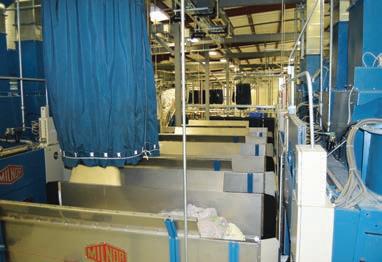
When it comes to figuring out where a laundry can automate, Carter first looks at material handling—soil sorting and overhead soil- and clean-rail linen storage systems.
“These systems reduce the number of employee physical touches with the linen,” he says.
Gudenburr agrees that the soil room is an area that has a high labor need, which typically can benefit significantly in productivity gains and has the potential for significant workman’s compensation-related injuries.
“The implementation of conveyors, sort-on-rail capabilities and rail delivery systems can have a significant impact on operations,” he says. “However, it is critical that operators realize that in order for downstream process areas to benefit from such an implementation, they must become very disciplined in how they schedule and sequence soil into the washroom.”
Next, Carter says that wastewater recovery systems can recover a high percentage of the water as well as heat in the water, and reduce water and sewer costs along with water-heating cost.
Finally, Carter suggests that a laundry use management information systems that track employee activities (including employee process production rates), compare these employee production rates to employee process production standards, and provide realtime feedback to the production employees and management for opportunity to make immediate corrective action.
Jackson sees three key areas for a laundry to automate (dependent on the type of laundry). First is to transition from manual washerextractors and dryers to a tunnel washing system. Then, a system for garment sorting and another for dry folding.
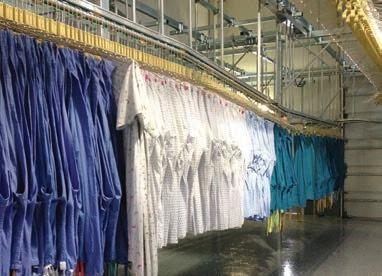
“For the dry-fold area, having small-piece folders perform quality folds helps efficiencies by taking out the manual folding process of towels, etc.,” he says. “Automated garment systems help greatly with both labor and utilities. Having the ability to go directly from extrac-
tion to the garment steam tunnel saves in dryer capacity and gas costs. In addition, the articles are automatically sorted and folded, which provides tracking and greater quality to customers.”
Carter also recommends installing washer-extractors that provide controls to reduce water usage and increase production/output per wash formula. He says batch washing systems can reduce water consumption to under 0.5 gallons per pound processed.
Similar to Jackson’s point, Seth Willer, national sales manager for equipment manufacturer Girbau Industrial, says that the two areas most positively impacted by automation are washing and ironing/ folding.
“The washroom is the first area where a facility can use automation to shave operational costs, improve efficiency and boost throughput,” he says. “Generally, if your laundry is doing 1,500 pounds of laundry per hour, it’s time to consider automation in the form of a continuous batch washing system (tunnel system).”
Willer says his company’s system can be configured with five to 12 modules to meet volume needs up to 3,300 pounds per hour. However, he says he sees positive returns using a batch tunnel washing system to process as few as 1,500 pounds per hour.
Tunnel systems offer efficiency gains as well, according to Willer. Water reuse, filtration, a heat reclaim system, top transfer and programmability by module are offered.
“So, in a very small space, an operation pushing out 1,500 pounds of laundry per hour, or more, will realize huge savings in efficiency and labor over using open-pocket washers,” he says. “Keep in mind, it only takes one person to load a batch tunnel washer, which uses approximately 0.6 gallons of water per laundry pound versus an open-pocket washer, which uses 1.8 to 3 gallons per laundry pound. The water reclaim system significantly cuts water usage.
“Simultaneously, the heat reclaim system uses the heat from drain water to preheat water coming into the tunnel from outside. This cuts natural gas (to heat the water) usage by 30%. The savings go on and on, even for smaller laundries.”
In addition to increased efficiency, Willer says a tunnel system cuts labor costs.
“The equipment is automated, but really simple to use and operate,” he says. “So, it takes one person to put laundry loads onto the loading conveyor. The loads are automatically fed into the tunnel washer. They travel through each tunnel module, where linens are pre-washed, washed and rinsed according to how the modules are programmed. Then, loads are automatically pressed and shuttled into an open dryer. From there, loads are automatically unloaded
for folding or ironing, depending on what’s being washed and dried.”
“There is no need today to have a washroom that requires more than one or two operators per shift, depending on type of equipment and market segment serviced,” adds Gudenburr. “With the advent of highly sophisticated tunnel systems and automated conventional washrooms, there should be no need for a large workforce that spends its days pushing carts and performing the back-breaking tasks of loading and unloading machines.”
Willer says the most laborintensive area of a laundry is on the finishing side because it involves folding. By adding automation, such as feeders, ironers, folders and stackers, he says hospitals and hotels can significantly decrease labor and operational costs while bolstering throughput.
“Let’s use the following example to show the impact of towelfolding automation. A person can fold about 120 pieces/towels per hour,” Willer says. “By comparison, Girbau Industrial’s FT LITE, a dry-goods folder, automatically folds and stacks 400 to 600 pieces per hour. Similarly, the FT-MAXI automatically sorts, folds and stacks 650 to 1,000 pieces of varying sizes per hour. A small-piece folder doesn’t take much space and is relatively inexpensive. Yet, it makes a huge impact on operation costs.”
By adding an ironer with a sheet folder, hospitals and hotels cut operational costs further still, Willer says, while boosting throughput and quality.
“There are many laundries that don’t iron for quality,” he says. “Rather, they use ironers and folders to reduce labor costs and improve throughput.”
To illustrate this, Willer looks at sheet processing with and without automation.
Without automation, he says an operator unloads a washer full of sheets, loads them into a dryer and runs the dry cycle. Then, an operator removes the dried sheets and folds and stacks them by hand.
With automation, an operator unloads a washer and feeds the sheets directly into the ironing/folding system, according to Willer. The items are automatically dried in the ironer and then automatically folded and stacked.
“In this scenario, we are speeding up the folding process and eliminating the dryer,” he says.
Gudenburr agrees that textile finishing is an area ripe for automation.
“Through the use of ‘dynamic’ processing lines, and automated delivery and take-away/pack-out solutions, there is a significant opportunity to reduce touch labor, material handling, infrastructure and operating space via a reduction in equipment density,” he says.
Gudenburr says dynamic finishing solutions can reduce full-timeequivalent requirements and site
operating hours and provide for a flexible operating environment that can support business growth.
“The same holds true for the implementation of small-piece folding equipment,” he says.
“There still are many locations that are manually folding terry products that can quickly benefit from said systems.”
Gudenburr notes that in some smaller on-premises laundries, a manual or semi-automated environment may exist. However, even in these cases, he says there are solutions available to simplify tasks and assure efficient turn rates.
In terms of route solutions, Gudenburr says there are a host of simple systems that can be put into place to reduce material handling and exposure points to material handling, and improve the efficiency of loading and delivering routes to end-users.
There are also automation solutions for areas that a laundry operation might not have considered, according to Gudenburr. Safety systems is one such area. He says that operations often do not think about the significant costs that an unsafe facility presents.
“Many in the industry say they want to be safe, but once the cost of implementing proven solutions is presented, these same individuals tend to ‘roll the dice’ rather than invest,” Gudenburr says. “Unfortunately, it only takes one serious injury, or God forbid, a fatality to essentially pay for the noted safety systems. There are solutions available today that weren’t a few years ago.”
He says the solutions have eliminated a great deal of the upfront capital associated with a complete
6 NOVEMBER 2016 | AMERICAN LAUNDRY NEWS www.AmericanLaundryNews.com
Continued from Page 1 Automatic See AUTOMATIC on Page 12
Conveyors, sort-on-rail capabilities and rail delivery systems can have a significant impact on laundry operations. (Photo: Pellerin Milnor Corp.)
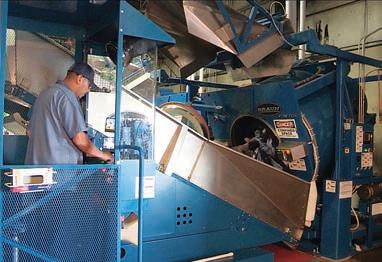
Automation can also improve employee safety. (Photo: G.A. Braun Inc.)
Sorting technology offers better workflow, high accuracy and a reduced cost per garment processed. (Photo: Kannegiesser)
LOOK BETTER. SPEND LESS.













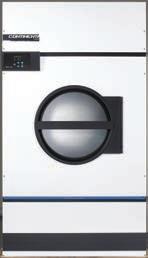
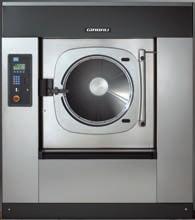
Your clients expect the highest quality – and they should. Girbau Industrial washers and dryers provide a high-caliber clean while extending linen life. Add an Ironer to your equipment mix and linen is perfectly ironed straight from the washer. It feels soft and looks crisp, which is what your clients expect. Thanks to Girbau Industrial laundry equipment, you’ll heighten laundry productivity using less labor, while decreasing utility costs. Even better? Clients will thank you!










Contact Girbau Industrial for a FREE ESTIMATE to see how you can deliver more productivity to your laundry while increasing product quality! (800) 256-1073 • www.girbauindustrial.com INDUSTRIAL
HLAC marks 10 years of inspecting, accrediting healthcare-related laundries
PLAINFIELD, Ill. — The Healthcare Laundry Accreditation Council (HLAC) is marking its 10th year of inspecting and accrediting laundries that process reusable textiles for hospitals, nursing homes and other healthcare facilities, the organization reports.
“Ten years is a milestone worth noting,” says John Scherberger, board president of HLAC. “There have been many dedicated individuals who have been involved in the advancement of the organization and its mission, and in the development and evolution of its nationally recognized standards. We can all take great pride in knowing that HLAC today is an important part of the safety solution in healthcare’s ever-urgent effort to protect patients through the prevention of infections.”
Scherberger says HLACaccredited laundries have a “firm and fast connection” with their healthcare customers that gives them an edge over their competitors.

“Because they’re HLACaccredited, they can tell their clients they share their patient safety goals, that they’ve raised the bar on how a laundry should process healthcare textiles, that their clients can have confidence in the laundry’s highest of standards and that their practices are the industry’s best and most current available,” he says. “It should go without saying that laundries without HLAC accreditation come up short in these comparisons.”
HLAC began inspecting and accrediting laundries in 2006 in response to years of requests from textile professionals for an independent accrediting body that would create a program
acknowledging that a laundry organization meets the highest standards for processing textiles.
Reino Linen Service of Gibsonburg, Ohio, was one of the first healthcare laundries to receive HLAC accreditation a decade ago and has stayed accredited ever since, going through the required inspection process every three years, HLAC says.
Judy Reino is president of the second-generation, familyowned and -operated business that was founded in 1943.
“Because of our HLAC accreditation, Reino Linen Service has been able to keep pace with the growing complexity of processing healthcare linens,” she says. “It’s HLAC standards that make the difference. These standards cover the complete textile processing cycle, from handling and transporting soiled healthcare textiles to in-plant processing and delivery back to the customer. They ensure our laundries are built right, equipped properly and staffed with qualified and trained personnel for processing product.”
Reino notes that her company doesn’t hesitate to communicate these qualities that make Reino Linen Service different from others in her marketplace.
“We believe our HLAC accreditation is an important message to convey to current and prospective customers,” she says. “It’s clearly a competitive advantage.”
HLAC says the accreditation process is to inspect, alongside its predetermined standards, a healthcare laundry’s own processes—its systems, procedures, etc.—for ensuring that product being shipped from the laundry is clean and free from any danger to the patient. The fee-based
inspection is entirely voluntary and takes a day. Inspectors, who are hired and trained by HLAC, are independent contractors who have a wide range of experience and expertise in the healthcare laundry industry.
Thomas J. Fitzgerald was HLAC’s first inspector, hired 10 years ago.
“The inspection is an important part of the accreditation process,” Fitzgerald says. “HLAC inspections place significant
weight on factors such as design, equipment, practices, training, protocols and adherence to regulatory body requirements.”
Fitzgerald says the process can be intimidating to some. “In my 10 years of doing these inspections, I’ve seen the gamut, from laundries that have gone the extra mile to prepare to those that simply aren’t up to the challenge of meeting HLAC’s rigorous standards.”
He adds, “Going through the
inspection process should help a laundry to unite its efforts to become much stronger, smarter and more competent in processing healthcare textiles, and this should enable them to provide their healthcare customers with an improved level of service, ultimately benefitting patient safety.”
Nancy B. Bjerke, BSN, RN, MPH, CIC, is an independent consultant with Infection Control Associates who provides consultation services to diverse healthcare practice settings, including program management, onsite assessment, best practice strategies, employee education and outbreak investigation. Bjerke is one of the original authors who helped develop HLAC’s Accreditation Standards document, which was recently updated.
“The HLAC Accreditation Standards are quite comprehensive and were established as the minimum acceptable practice for the preparation of hygienically clean, reusable healthcare textiles for patient care, implemented and executed by accredited laundry facilities processing reusable healthcare textiles,” Bjerke says.
“These standards are continually under review and are changed as HLAC learns from experience, education and expertise. New guidelines and regulations are incorporated so, for example, what was once a non-mandatory provision might evolve to become a mandatory requirement.”
Bjerke says she has seen HLAC’s standards both expand and contract as the organization endeavors to keep them relevant and focused both on the safety of the laundry workers and the endusers who are typically patients but include healthcare staff.
“Clearly, laundries that successfully meet these standards are, so to speak, the best of the batch,” she says. ALN
8 NOVEMBER 2016 | AMERICAN LAUNDRY NEWS www.AmericanLaundryNews.com ALN_Tab_1-4_H.indd 1 10/3/16 3:11 PM
Laundry owner, inspector and infection control specialist share views of accreditation
HLAC says laundries that are accredited can tell clients they share the clients’ patient safety goals. (Image licensed by Ingram Publishing)
Notice Anything?






















InkGo® Is Now Odor Free!






InkGo has been reformulated to remove its odor… and to improve its performance.


















InkGo is still the environmentally friendly,* safe way to remove ink stains from all types of fabric. It’s still great at removing autoclave tape and adhesives. And since it’s odor-free, InkGo is more pleasant to work with.






Does odor really matter? As more drycleaners position themselves as good environmental stewards, keeping chemical odors in the plant to a minimum can help them differentiate from their competition. And odor-free is a real plus if you’re working on ink for an extended period of time.



Now that’s worth noticing!



*InkGo is Biodegradable and is California Prop-65 and California VOC Compliant.













Become a STAIN WIZARD at ALWilson.com

To learn more, visit ALWilson.com or call 800-526-1188 A. L. WILSON CHEMICAL CO.


STOP LINEN LOSS!

Contact
Continued from Page 1
If you rode on five of your routes, how many different processes would you see while servicing the customer? It’s an age-old problem in our industry.
Just recognize that the way your customers are serviced is your brand. Your route reps are your brand. Your vehicle may have the same name and logo on it, but the service you provide is how your customers perceive you. When each RSR provides a different type of service, your overall company brand is eradicated.
The U.S. military is arguably the best training organization in the world. They repeat the same training tactics over and over again with their soldiers. The repetition can seem overwhelming, but they keep doing the same exercises again and again. It builds consistency and reliability.
Whatever training you provide your people, it can’t be a “one and done.” Many people need to go through the same training multiple times before the lightbulb goes on.
Our industry processes have a lot of moving parts. Even the 20-year veteran will have a new learning experience each day or week, as long as you establish an active and ongoing training environment.
WITH FREE LINEN BRANDING

According to The Economist, between 5% and 20% of linens are stolen annually. Shrinkage is real, especially in hospitals and hotels where guests feel they have paid enough to justify taking a set of towels when they leave.

The truth is simply this: “A logo, whether it’s from the hospital or the company providing the linen, can be a deterrent for textiles to “leave” a healthcare facility.” - American Laundry News

We will help you stop linen loss while promoting your brand 24/7 with complimentary branded labels when low minimums are met.


Stop linen shrinkage. Increase your bottom line. Gain control over your inventory. Call or go online to speak with a linen expert today.

Review whether you have detailed documented processes for your RSRs. Are they an active part of your service team/culture, or are they a written manual sitting on the shelf collecting dust?
DAILY CHECK-IN TRAINING VS. CASH-OUTS
The daily check-in is the classic game changer if done correctly. As mentioned, our industry has a lot of moving parts. Some call it simple, but it’s anything but simple. Just look at your RSR job description. Overseeing product inventories, renewing service agreements, delivering acceptable product quality, conveying exceptional communication, resolving service issues, requesting money for “past due” balances … and it goes on and on.
Because of the complexity of the job, daily coaching and communication between the manager and their RSR is critical. The few minutes that they debrief on how the day went and what tomorrow looks like is a training opportunity.
Look into other training options such as online service training for which the content is visual and dynamic, utilizing multiple training aids such as videos and graphics. Not everyone can learn by reading content from a manual.
Do you use one trainer for new route service reps or multiple trainers? Just make sure your route trainers are delivering the same training and communicating the same process that your company sanctions.
Finally, when your managers complete route ride training, make sure there is a documented form that the manager utilizes to observe and correct process deviations by your route service reps.

CONSISTENT REPETITION VS. ONE AND DONE
We’ve all heard the term “ongoing training.” There’s a reason.
It’s because there is always a wide range of content comprehension with adult learners. We all absorb information at a different pace. It’s rare when a person can go through a training program and achieve 100% comprehension and application.
Look at your end-of-day communication process and ask yourself if it’s a cash-in or a high-value check-in or debriefing. Better yet, sit in on the meeting and see for yourself. A cash-in or paperwork audit can be done by your office staff. That’s the financial and administrative part.
The true value occurs when the training and coaching is performed correctly with each RSR on a daily basis.
FOLLOW-UP VERIFICATION VS.
‘HOPE
THEY GOT IT’
Learners don’t always gain complete comprehension right away.
Some people need to hear a message multiple times before comprehending that message. Other people are visual learners. They need to see it firsthand. Still others are physical learners; they need to actually “do it” to internalize it.
This is why you need to follow up with the person to see that they achieved complete comprehension of the message, content or process. Viewing it firsthand is the best way,
10 NOVEMBER 2016 | AMERICAN LAUNDRY NEWS www.AmericanLaundryNews.com
(800) 333-7247 monarchbrands.com
Training is vital in making route service reps the face of a laundry services company. (Image licensed by Ingram Publishing)
RECOGNIZE THAT THE WAY YOUR CUSTOMERS
SERVICED
YOUR BRAND. YOUR ROUTE REPS
YOUR BRAND.”
“JUST
ARE
IS
ARE
See CONTACT on Page 11
—CHRIS MAYER, PERFORMANCE MATTERS
Crown Linen purchases Laundry Plus

MIAMI — Crown Linen completed its purchase of Laundry Plus on Sept. 15, the company reports.


Financial terms of the deal were not disclosed.
Crown Linen says the purchase extends its service area to all of Florida’s hospitality hubs.
“Laundry Plus is an outstanding addition to our portfolio,” says Crown Linen Managing Partner Pablo Lucchesi. “They are our fifth laundry, giving us complete coverage of the state of Florida’s major tourist areas. With the opening of two new facilities, and the acquisition of Laundry Plus, Crown Linen has now more than doubled its facilities in just one year.
“Having facilities close to our customers
is key, and we’re thrilled to be able to offer superior products and services to a new set of clients in West Central Florida.”
Crown Linen is headquartered in Miami and has operations in Miami, Orlando, Fort Myers and Haines City. Laundry Plus’ service area includes Bradenton, Sarasota, St. Petersburg and Tampa.
Rick Rone, owner of Laundry Plus, says that the company is “excited about the future as a part of the Crown Linen team. We could not have found a better partner due to their position on ecology and providing the ultimate quality and service at the best value. The Laundry Plus ideologies coincide extremely well with those of Crown Linen and it makes for a great acquisition.”
ALN
Prudential Overall Supply breaks ground in New Hampshire
131,000-square-foot commercial laundry facility to be built on 14-plus-acre tract
NASHUA, N.H. — Prudential Overall Supply, a provider of reusable image work apparel and related textiles, broke ground in September for its cleanroom and industrial laundry processing facility here, the company reports.
“Our team is thrilled to be building our newest facility in Nashua, N.H.,” says Tom Watts, president of Prudential. “The location will provide our Northeast customers with additional products and service offerings, and will help with our company’s expansion into additional markets.”
The project is a 131,371-square-foot commercial laundry facility on a 14.23acre tract, according to the company.
Prudential says it is building a one-story facility in three phases, which will include offices, industrial space, employee areas and loading docks, with 136 parking spaces on site for staff.
The company says it plans to build a 70,091-square-foot building during the first phase. That will be followed by a 45,000-square-foot section and, lastly, a 16,280-square-foot addition. The building will occupy 12.2 acres of the site.
“We are pleased to welcome Prudential Overall Supply to Nashua,” says Mayor
Jim Donchess. “As a community, we make economic development a top priority. Whether you are a merchant on Main Street or a small business on Amherst Street, Nashua is grateful for your investment. As a city and region, we are poised to benefit from this positive economic impact. There will be approximately 50 good, high-paying jobs associated with this project. We are excited to assist in bringing these jobs to the Gate City.”
The engineering contract was awarded to American Laundry Systems of Haverhill, Mass.; the civil engineer contract was awarded to Hayner/Swanson Inc. of Nashua; and the construction manager contract was awarded to Dacon Corp. of Natick, Mass.
POCKET MOPS


ECONO WET MOPS
Continued from Page 10
but just getting the person to recite it back to you can also be effective.
ROUTE SERVICE REP-DIRECTED MEETINGS VS. MANAGERCONDUCTED MEETINGS
When it comes to route service meetings, peer-to-peer training provides an open setting within which route service reps can grow and learn in multiple ways.
The RSR presenter shares success stories and best practices that can create a high level of impact with fellow RSRs. Peer trust goes a long way for a message to be received in a positive manner. A good rule of thumb is
“We are very pleased to welcome Prudential Overall Supply to Nashua,” says Jeffrey Rose, commissioner of the New Hampshire Department of Resources and Economic Development. “The capabilities it provides are vital to the many companies whose advanced manufacturing processes require high-tech industrial laundry services. We look forward to watching them grow and prosper in New Hampshire.”
ALN
that the route service reps facilitate 75% of the meeting.
A manager lecturing to the team creates a far different message. Though the manager needs to help facilitate the meeting, it doesn’t mean that they have to dominate the meeting.
Studies show that a 10% increase in workforce education level led to an 8.6% gain in total productivity, while a 10% increase in the value of equipment increased productivity just 3.4%. Don’t ever underestimate how training can impact your top-line growth and your bottom-line profit—especially when it comes to your route service reps. ALN
www.AmericanLaundryNews.com AMERICAN LAUNDRY NEWS | N OV EM B ER 2016 11 Minimums apply Promote your brand 24/7 with FREE logo label embroidery! • Personalized microfiber products, terry towels and bar mops • Ultimate control over your inventory • Carry your own product line • Free advertising for your business CUSTOM SOLUTIONS (800) 333-7247 monarchbrands.com MICROFIBER CLOTHS • 16”x16” professional microfiber cloths • Use for wet or dry cleaning • Wide variety of colors 35¢
• Highly absorbent 18” side pocket mop • Industrial strength canvas backing • Matching hardware available $2.65
• Cut cleaning costs without sacrificing quality • Commercial quality microfiber looped flat mops • 18” long with Velcro backing 95¢
Chris Mayer is senior consultant for Performance Matters, a company that helps textile rental businesses grow and manage assets wisely. He is also a member of the 2016 American Laundry News Panel of Experts. Contact
safety-rated washroom and the life-cycle costs associated with maintaining the various monitoring solutions that used to be part of such systems. He adds that it has been proven that these systems positively impact productivity.
Another area Gudenburr points to is shuttle-less operating environments.
“Through the advent of patent-pending technology, there are solutions like chute-loaded dryers that eliminate the need for material-handling shuttles, improve system productivity and afford a great deal of site design flexibility,” he says. “These systems are just starting to be embraced in the tunnel operating space, and are available for the conventional washroom as well.”
CHOOSING EQUIPMENT
If a laundry decides that automation would benefit its operations, then it needs to take the next step: purchase the right equipment.
When it comes to selecting automated equipment, Carter recommends that a laundry establish specific criteria. He says the automation should be “scalable”; the investment needs to result in a specific payback.
tions from a supply chain perspective. Make certain that the solution provider is a healthy and proven entity. Take the time to go and see the solutions in use, to understand how they are designed, produced and what the long-term support systems and services are for said solutions.
“It is great when a solution gets implemented and works, but it is not good when it becomes unsupported and overly complex to own and operate as it ages.”
Willer says there are always two costs when a laundry buys automated equipment. Those are the cost of the machine and the cost of ownership with or without that machine.
“The cost of the machine may seem like a lot, but what’s its operational impact?” he says. “Compare your finance payment to operational cost savings. Many times, the difference in labor costs will make up for your financed equipment payment each month.”
“Manufacturers, such as Maytag Commercial Laundry and ADC, engineer a wide range of their washers and dryers with automated technology that can help laundry operations maximize throughput and run more efficiently,” says Steve Hietpas, international sales manager, Whirlpool Corp.
Commercial Laundry.
He says that microprocessor controls are highly important to the laundry operation and offer an easy-to-use system with one-touch program selection that can control all aspects of the washing process. This helps to minimize user error and maximize efficiency.
Programmable water levels and cycles allow smooth and seamless staff efficiencies, removing some of the guesswork, and can also help reduce the overall laundry spend, Hietpas adds.
The S.A.F.E. System senses heat rise representative of a spontaneous combustion, turns the fan off, and tumbles the drum for 99 minutes to self-extinguish—helping to eliminate fire concerns.
“Overall, it is very important to talk to your distributor,” says Hietpas. “As technologies continue to advance, keeping up-to-date on all machine features will help benefit laundry operations.”
Keith Ware, vice president of sales for equipment manufacturer Lavatec Laundry Technology, says there are a few questions to answer and some key items a laundry needs to understand before selecting an automated piece of equipment.
processed through the system.
“To catch up on towels, the operator then runs 30 transfers of toweling, often overloading the dryers and causing the system to go on hold, which affects overall plant throughput.”
Another question Ware deems important: Does the return on investment justify the purchase?
“Don’t just factor in the cost of the equipment,” he says. “Ask what the startup and training costs are, plus the maintenance cost of keeping an automated system operating. If these all pencil out, then your selection is a good decision.”
initiatives build upon those already in place, and that the infrastructure is in place to support future site enhancements at the lowest cost possible,” he says. “Businesses must perpetually be evaluating their cost structure, quality of the products and services they provide and looking at ways to raise the bar on performance. This is a must to remain competitive, and for the business to grow in a prosperous manner.”
Gudenburr recommends that a laundry investing in automation also invest in team member skills, training and the support infrastructure before implementing automated solutions. In order to be most productive, plants must be able to achieve self-sufficiency once the original equipment manufacturers have completed the implementation and training of staff members.
“Too often, staff skills are not retained due to excess labor turnover, and sites fail to take ownership of automated solutions because they are either intimidated by them or lack the skill level and resources to support them,” he says.
“During a recent tour, many operators were excited about a new ironer feeding process,” Gudenburr says. “All said they wanted to buy one of these, so we then asked the chief engineer of a plant how he liked the system. His words were, ‘Hate it, hate it, hate it.’ When asked why, he spoke of the labor needed to keep the automation operating, the cost of parts and frequent downtime. His realworld experience did not match the promises of automation.”
“Typically,
He also says that automation equipment should have real-time feedback that provides production data, utility consumption usage data and linen inventory levels.
“When compared to defined standards, real-time management information systems enhance the opportunity to take corrective actions to improve laundry operation performance,” he says.
Gudenburr says it’s important that an automation strategy is well-defined and that it takes into consideration all of the input and output variables and process areas before it is implemented.
“This helps prioritize the sequence by which solutions are implemented and assures that the maximum return is achieved from said products,” he says. “Make certain that you fully evaluate solu-

Residual moisture control measures moisture in a load and reduces the heat input, while continuing to run the tumbler—helping to prevent overdrying, increasing linen life and reducing utility costs, according to Hietpas. Singlephase reversing helps to reduce dry times, and therefore, utility costs.
Chemical injection systems help to ensure the optimal amount of detergent and chemicals are precisely dispensed, taking additional guesswork out for staff, he says.

“One of the best ways to incorporate automation and improve laundry efficiency is by using multi-load, high-speed washers,” Hietpas says. “Extracting water in the washer instead of the dryer allows linens to dry more quickly and gently, and decreases the amount of energy consumed.”
He recommends that facility owners and managers look for softmount washers with a G-force, or spin speed, of at least 350 for a high level of performance.
In addition, Hietpas says operators who have safety top of mind may want to invest in machines with a Sensor Activated Fire Extinguishing (S.A.F.E.) System.
“Laundry automation should be carefully chosen by any laundry operator, and they should not get caught up in the latest and greatest without proven results from the supplier,” Ware says.
First, does the system provide the results you require? He says automation should result in an improvement over any current manual process; if there is not a large enough variance, reconsider the purchase.
Next, can the team manage the automated process? Ware says automation often requires more planning, preparation and understanding of the entire process being utilized.
“For example, when operating a wash deck with washer-extractors, you can change the wash pattern of goods to be washed. When utilizing an automated process, you need to understand the impact these changes have on the entire system,” he says. “Many times, the finishing side will request more sheets. The tunnel operator often runs sheets for 20 to 30 transfers, so this affects your throughput since the dryers are often left empty with no dried items being
And finally, is the engineering staff capable of maintaining more sophisticated equipment? Ware notes that automation often requires control and programmable logic controller knowledge.
OTHER CONSIDERATIONS
Gudenburr says that the first step for any laundry looking into automation is to understand its processes, core operating metrics and its operating costs. By doing so, the process of identifying nonvalue-adding operations, waste and inefficiency can begin.
“As this effort advances, operators will be able to gain a clear understanding of where the ‘lowhanging fruit’ lies, and it will help them prioritize those initiatives that afford the greatest financial return to the business,” he says. “Typically, in the laundry these opportunities result in some form of process automation being implemented.”
Gudenburr says taking a comprehensive approach to evaluating the operations affords the ability to think beyond the immediate opportunities, so that a structured plan for improvement and possible automation can be developed.
“This ensures that sequential
As a laundry automates, Gudenburr says it is important that operators “embrace the reality that their world will change.”
“There will be a need to break from historic operating norms, the old brute force and manual intervention process, and to top-grade the skills and abilities of those who will be tasked to operate and maintain said solutions,” he says.
“Once again, if this reality cannot be embraced, the implementation of an automated solution will fall short of its intended objective. There is no ‘silver bullet’ solution to achieve operational success.”
Gudenburr stresses that automation can help advance capabilities, but to sustain them and build upon them, a great deal of operational discipline must be put into place, either while or before implementing any solution.
“If the laundry and its staff can make this shift in operating discipline and structure, the benefits will quickly manifest in operating efficiencies, and profits,” he says.
“Automation is a wonderful opportunity for a laundry to help lower labor costs, improve operator efficiency and plant throughput, but it’s like choosing a pet,” says Ware. “Make sure you make the right choice for your operation. Technology is great until it doesn’t work.”
12 NOVEMBER 2016 | AMERICAN LAUNDRY NEWS www.AmericanLaundryNews.com
the higher laundryprocessing volume provides the opportunity for justification of the capital investment in automation,” says Carter.
ALN Continued from Page 6 Automatic
Tunnel systems increase operating capacity, along with efficiency. (Photo: Lavatec Laundry Technology)
“ONE OF THE BEST WAYS TO INCORPORATE AUTOMATION AND IMPROVE LAUNDRY EFFICIENCY IS BY USING MULTI-LOAD, HIGHSPEED WASHERS.”
—STEVE HIETPAS, WHIRLPOOL
Selecting the right machines to speed up laundry and save labor is simpler with ADC. Our EcoWash lineup o ers a range of equipment choices, including rigid and soft-mount machines with load capacities up to 60 lbs. and water-extracting performance up to 350 G-Force on most sizes. And all EcoWash models feature full stainless-steel cabinets. Because we’re as serious about making things last as we are about making you productive.



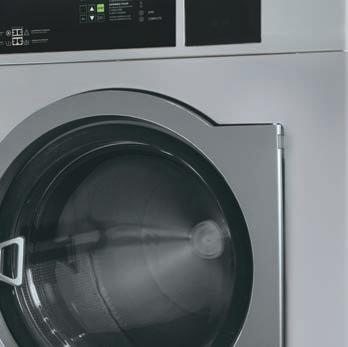


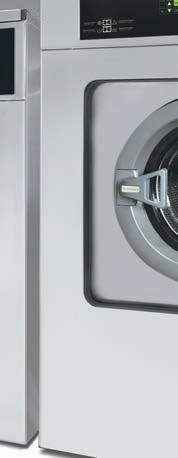

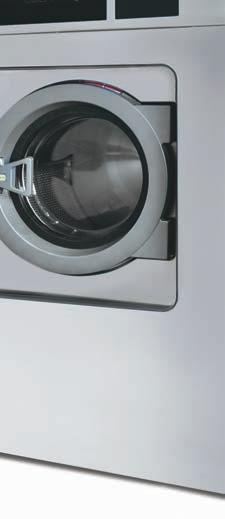


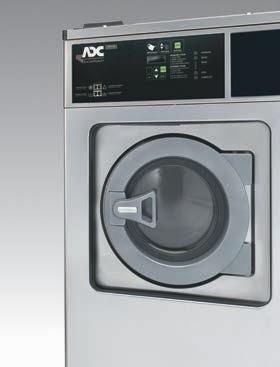

The EcoWash lineup delivers productivity-boosting options.
the labor savings you need. And the
you want.
See adclaundry.com for complete warranty details. Get
size
Financing as low as 1.49% for 12 months. Low fixed financing rates, terms up to 60 months available. Subject to credit approval and individual’s credit profile. This promotion is valid through December 31, 2016. 508.678.9000 | www.adclaundry.com
Predictions for 2017 to aid with on-site laundry planning
 BY BILL BROOKS
As we wrap up another year and plan for 2017, it’s an appropriate time to look ahead at what’s to come for on-premises laundries (OPL).

Over the years, OPL equipment and machines have undergone numerous advancements that are helping increase facility efficiencies. For example, today’s equipment has seen a drastic improvement in its ability to reduce energy and water consumption, increasing efficiencies and lowering utility and labor expenses.
In addition, advanced control systems and monitoring capabilities have revolutionized how OPL managers do their jobs— they’re able to stay constantly connected to their laundry operation, keeping a close eye on machine performance at all times.
When you think back on the innovation that has occurred with OPL equipment over the past decade, it’s exciting to anticipate where this next year will take us. Here are three top OPL trends that you should take into consideration when setting goals for the year ahead.
KEEP AN EYE ON EFFICIENCY
One of the strongest trends in 2017 is continual improvement of efficiency in the laundry room.
OPL managers will continue to be faced with the need to increase throughput while reducing operating expenses. Advanced control systems and high-end, cloud-based monitoring and reporting tools help meet these goals by providing key laundry operation data and performance reports that managers can use to make immediate adjustments to improve efficiency, assure quality and lower operating costs.
UniMac® Sales Manager Scott Peregoy believes that managing the efficiency of the laundry room operation through technology is a trend that will get more traction in 2017.
“I would say the majority of the industry is not there yet,” says Peregoy. “But as customers start to fully understand this technology, and how it has an impact on efficiencies as well as
their bottom line, we will see more and more facilities adopt monitoring capabilities.”
These advancements in realtime and remote monitoring capabilities also enable distributor service departments to assist OPL managers in monitoring their facilities, ensuring machines are running at maximum efficiency.
us assist OPL managers in running their facilities smoothly,” says Higgins. “Our service department is able to monitor the machines and can alert the facility when things aren’t working properly. This helps avoid unnecessary, costly downtime.”
SUSTAINED EFFORT TO BE ENVIRONMENTALLY CONSCIOUS

Working hand in hand with a need for greater efficiency in laundry facilities is the need for more of them to adopt “green” laundry technology. Conservation of water and energy is a win-win for all laundry facilities. These efforts not only help enhance bottom lines and produce a high wash quality, but also help make an operation more environmentally responsible overall.
These tools help Eric Higgins, vice president of sales and coowner of Bestway Laundry in Corona, Calif., keep an eye on how his customers’ machines are running. Through this technology, Bestway, which services and sells laundry equipment for the hospitality and healthcare industries, as well as sporting venues, is able to monitor its customers’ machines remotely.
“Monitoring capabilities help


The idea of operating in a “green-friendly” manner is always top of mind for Higgins, who services facilities in an area of California that has largely been affected by drought.
“In California, water is always a big concern,” he says. “We’re constantly looking for ways we can either use less water or clean and reuse water through recycling.”
That’s why Higgins recommends his customers consider state-of-the-art washer-extractors, which are engineered with water savings in mind. For example, technology is available that
is designed with unique spray hardware and software that minimizes the water required to rinse a load and reduces cycle time with highly effective rinsing. This technology uses less water than a bath rinse alone, while also reducing cycle rinse times and removing wash formulas to preserve linens. Because the spray rinse carries away dirt and chemicals and leaves less residue, the result is a superior wash.
Advancements in energy savings will also be a major focus of green technology to come. While energy is about 15% of an OPL’s operations cost, tumble dryers account for 70% of that cost. It’s important for OPL managers to look for ways to lower drying times, which will in turn lower their facilities’ utility bills and save them a significant amount of energy, making their operation friendlier to the environment.
Laundry facility managers should consider using tumble dryers that accurately sense dryness levels. For example, OPL tumble dryers with cutting-edge technology can stop the machine at the exact moment that your ideal dryness level is reached, eliminating expenses associated with drying loads too long. Sensors running the entire length of each commercial
tumble dryer lifter connect to a rotary transfer switch to offer accurate readings throughout the entire load, ensuring that your laundry stops precisely at your desired dryness level. This type of technology provides an average savings of eight minutes a load and more than $5,000 annually in utility and labor costs.
Peregoy agrees that one of the most environmentally friendly steps you can take in your facility is to reduce washing and drying times.
“The greenest thing you can do is use your machines less and get more production out of them,” says Peregoy. “The more throughput you get for your machines, the greener you’ll be by default. You’ll be running them less, using less water and using less electricity because you’re getting better production.”
ADDRESSING THE NEED FOR SPACE AND TRAINING
Laundry rooms have consistently gotten smaller over the years, and that trend will likely continue in 2017. Therefore, laundry room spaces and equipment mixes will need to be conscientious of space.
“When I started in the industry 30 years ago, they gave us big laundry rooms that we could fill with bulky equipment,” says Higgins. “Now, we have to be very smart when designing equipment mixes. With limited space comes the need to outfit facilities with equipment that’s efficient in its footprint.”
In addition to an effective laundry room footprint, training of laundry room staff will become imperative in the year or years to come. Staff should be trained on how to best operate advanced controls in order for the machines to operate at optimal efficiency.
“Given that advanced controls are the future of OPL facilities, it’ll be important for laundry room staff to properly manage the machines’ functions and capabilities,” says Peregoy. “That way, you’ll get the most out of your equipment.” ALN
Brooks
Bill Brooks is North American sales manager for UniMac®, a provider of on-premises laundry equipment. To learn more about UniMac, visit www. unimac.com/opl101 or call 800-587-5458.
14 NOVEMBER 2016 | AMERICAN LAUNDRY NEWS www.AmericanLaundryNews.com OPL 101
Three trends to watch for in the year ahead
“NOW, WE HAVE TO BE VERY SMART WHEN DESIGNING EQUIPMENT MIXES. WITH LIMITED SPACE COMES THE NEED TO OUTFIT FACILITIES WITH EQUIPMENT THAT’S EFFICIENT IN ITS FOOTPRINT.” —ERIC HIGGINS, BESTWAY LAUNDRY
(Image licensed by Ingram Publishing)







LAS VEGAS, NEVADA USA LAS VEGAS CONVENTION CENTER JUNE 5–8, 2017 GO ALL IN ON THESE DATES See everything the industry has to offer • 400 exhibitors and 10,000+ people from around the world • Live demonstrations of the latest equipment and technology • Discover new ideas and proven strategies • Network with manufacturers, suppliers and industry peers • Learn from over 30 hours of educational seminars FOR MORE INFORMATION ABOUT CLEAN® 2017 VISIT US AT WWW.CLEANSHOW.COM CLEAN 2017 WHERE THE INDUSTRY COMES TOGETHER
PANEL OF EXPERTS
Best practices for sorting, arranging product



spot to put it in, helps us keep track of things and saves all of us time. Using labeled carts and marking systems helps us get the right item to the right person.
In the end, it saves us time and money. Making sure our residents get their clothing back to them at the end of the day is our main goal.
Each person that works in our laundry takes great pride in the work they do, as well as in keeping the workspace organized.
Our facility handles the personal clothing of our residents. Being organized plays a huge part in what we do. Upon admission to the facility, each piece of clothing is inventoried and labeled with the patient’s name and room number.
Once the laundry is sent down to be washed, we process it and then get it ready for delivery. We have several delivery carts. Each floor has its own cart, which is divided by room numbers. We place the clothing on the cart according to the patient’s room number.
The cart then goes to the floor where we deliver the clothing. We double-check each piece of clothing we take off the cart to be sure it is the right patient, right room and right closet.
By having a system in place for labeling the laundry, we are quickly able to identify whose clothing is it is and where it needs to go. Our inventory sheets help us keep track of what residents have, in case things go missing. We have detailed descriptions of the items and can begin a more detailed search.
Our linen room is also labeled so that when the order is put away, it has a place that it goes. By having the shelves labeled and everything placed in the correct spot, we are able to order our linen more effectively, as we can see what we have on hand at all times.
Our linen delivery cart is laid out the same way. Each item has a specific spot, and when the spot is empty, we know what to fill it with.
Having a simple process in place, such as putting things where they belong and having a





While others who weigh in on this question will likely have better insight into how to best pre-sort and arrange linens in order to maximize washroom efficiency, one often overlooked yet critical component of production efficiency in on-premises laundries (OPLs) involves maintaining proper linen inventory and its extraordinary impact on a laundry’s ability to produce linen in an effective, timely and cost-effective manner.
Inadequately maintained linen pars in hospitality and healthcare facilities make staging, sorting and loading linens to maximize efficiency an impossible task.
Too often, physical inventories of linens that I have participated in have revealed par levels on certain daily-use items at less than one par. A par of linen in this case is defined as “the total use of an individual linen item consumed by a resident/guest per daily period” (not “one such item per person per day”).
In the scenario described, some items are required to be washed more than once per day and distributed again to the respective rooms in order to prevent a critical run-out of linen at the point of use. At the laundry level, this condition requires the laundry to process what it has in the soil room immediately as it is received, often mixed with other classifications that should be sorted separately in order to fill washers to capacity, or it forces operators to run partial loads to
get the work processed and back up to the floors.
Therefore, some items will either be washed longer or harder than necessary, increasing costs and decreasing linen life, or the washer will be underloaded, resulting in wasted time, energy and labor.
In order to run an efficient and effective laundry operation in an OPL, linen levels must be such that the laundry is washing linen today for tomorrow’s use at the very least. (Most Departments of Health actually require three par of linen to be in circulation, and while this may not be feasible for some facilities because of cashflow or space considerations, two par is a likely minimum threshold for each item’s inventory control.)
With proper linen par levels in circulation, the laundry operation can stage its daily requirements appropriately, wash all like items together on the best-suited wash formula,
dry each item only the appropriate amount of time and thereby effectively and efficiently process each day’s linen requirements with the least amount of related expenses (and stress) possible.
Make it easy. Include all of your detergents and laundry supplies on a wheeled cart that can be maneuvered easily from your storage area to your workspace. Each attendant is responsible for keeping the cart fully stocked at the end of their shift. This prevents multiple trips back and forth, leaving laundry and supplies unattended and taking extra time. It also makes updating inventory and needed items much simpler.
Efficiency in a laundry is a great way to save money. This is important whether it is an employee operating drop-off or a self-serve customer utilizing your machines. These six tips are primarily focused on the retail laundry providing drop-off service but could certainly be utilized for a commercial laundry with a few tweaks.
Mobility equals efficiency.
Create stations. In your work area or back room, you should have dedicated workstations from the initial receiving area all the way through completion. Workstations may include some or all of the following:
• Receiving or Intake: This area is equipped with computer, labels and counter space.
• Processing: This is where your items are waiting to be laundered in either bins, hampers or bags.
16 NOVEMBER 2016 | AMERICAN LAUNDRY NEWS www.AmericanLaundryNews.com
“A laundry has to operate quickly, but effectively. What ideas do you have for sorting and arranging product throughout the operation in order to be most efficient—and effective?”
Care Laundry
Long-Term
Wheaton Franciscan Healthcare Brookfield, Wis. Chemicals Supply Scott Pariser Pariser Industries Inc., Paterson, N.J. Equipment/ Supply Distribution Todd Santoro CleanWash Laundry Systems Inc., Omaha, Neb.
Kathrine Flitsch
Labor movement/management can assist in efficiency of production. (Image licensed by Ingram Publishing)
• Folding/Ironing/Bagging: This allows you to complete the order in whatever manner is requested by the customer. You may include hanging racks and/or shelves for storage.
• Supply Station: A storage place for your carts and an area for refilling your product.
Automate anything that can be automated. If it cannot be automated, streamline the process and be certain that it is posted for future reference. The most common automation can be in the choice of computer system that you use for your laundry services.
Implement an incentive program for your employees. Some people discount incentive programs, but they can be quite effective if you know what motivates your employees. If you can determine what will drive your employees to excel, use that as the incentive for efficiency and accuracy. Make sure that your productivity measurements are fair and easily measured.
Cleanliness is key. Keeping the laundry work area clean and the aisles free of impediments makes it easier to move about, whether it is for your attendant or your self-serve customer.
If building new or renovating your laundry, be certain to provide easy access. Group like items together, and any items, such as vending machines, should be grouped out of the main thoroughfare of the laundry so as not to obstruct movement. Make sure corners are easy to navigate with a cart, and aisles are extra-wide.
without interruption.
For instance, is the soil sorted by load, pre-weighed and ready for the wash floor? Is the dried or conditioned product stationed up behind the next finish operation? Is the finished product arranged and shelved in a way most efficient in pulling your new loads? Is the soil washed and finished in an order that allows full loads to be readied for the routes, without having to go back and finish the fill?
These are all questions that should be addressed with a fresh
look at the operation. And many times, good vendor partners can provide such efficiency audits at no charge, providing a fresh view of the operation.
In addition to product flow, labor movement/management can assist in efficiency of production.

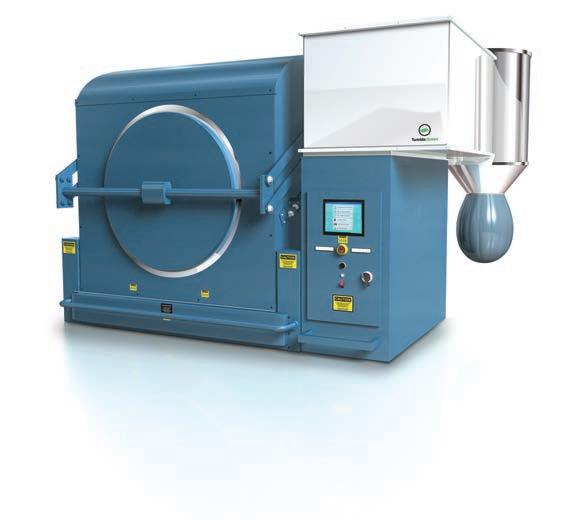
For instance, you may have certain times of the day when the largest amount of specific product is running through machinery, such as ironers. It is important to have those machines at full capacity, even if you have to pull labor from
other departments to make sure that all the lanes are running. This not only maximizes labor use, but also reduces utilities in some cases.
With regard to soil sorting, one would think that an industry such as ours has that part covered. But a review of this part of the textile journey can sometimes increase efficiency, as well as cleanliness of the product.
For instance, there are some table linens that can and should be washed together, that are not obvious. Milliken’s Checkpoint and Signature® Stripes are
UPGRADE
Many laundry plants have been in existence for decades. In some cases, the operations are even separated into different buildings. In looking at efficiencies in “product flow,” it would be a great exercise to start with a fresh, empty map of the operation.
Look at how product would flow in a U-shaped or “straightthrough” configuration, where soiled product comes in one side and exits the other, or flows from one side—in a “U”—to the other. This exercise will undoubtedly bring some insight into possible improvements in product flow and efficiency.
It’s not only the direction of product flow, but also the staging of product in front of machines and operations so that production is continuous and
designed to wash with pure whites. Many operators are not aware of this.
Other products should not be washed together, such as any microfiber product mixed with cotton textiles.
A review of soil sorting with your vendors is a good idea, especially concerning table linens.
The key elements are product soil mix, staging at all parts of the process, labor station management, and final product shelving. Good management of these elements all point to production efficiency. ALN
www.AmericanLaundryNews.com AMERICAN LAUNDRY NEWS | N OV EM B ER 2016 17
YOUR CHALLENGE PACESETTER CLM leads the way in dryer technology and provides an upgraded replacement for your old Challenge Pacesetter Our Model 165 fits the Challenge Pacesetter footprint perfectly and gives you technology that no one else o ers, including a fully integrated production management system. • Upgraded heat system with improved efficiency and lower emissions • Micro-Command III PLC upgrade with LAN and Blue Tooth communications • PLC now prepared for flow process management systems • 2-stage variable speed basket drive with 3-port load door. • Soft start to reduce component wear, lower utility use. • Heavy-gauge basket, includes removable steel basket panels • Long-lasting ceramic coating available on removable basket panels. • Configurable exhaust location • Configurable control/burner location Call CLM to replace your Challenge Pacesetter dryers, or for information on our broad range of industrial dryers. 323-232-2417 Model 165 shown with Tumble Green® configuration See Us at Booth 2560 at The Clean Show 211 Erie Street, Pomona, CA 91768 | T: (323) 232-2417 | www.clmco.com ALN_Jr Page.indd 1 11/18/14 2:36 PM 0515aln_CLM.indd 1 4/13/15 Textiles Steve Kallenbach ADI American Dawn, Los Angeles, Calif.
Adding commercial business to in-house laundries
BY MATT POE, EDITOR
CHANDLER, Ariz. — What is an in-house laundry service?

For Bob Corfield, CLLM, president of Laundry Design Group LLC in Las Vegas, linen service is usually an internal department within a healthcare or hospitality business that services internal customers with linen and laundry services.
But an in-house laundry is something else in terms of an organization.
“You are a cost, that’s what you are internally,” Corfield says.


How can an in-house service move from being a cost to a potential profit center? By taking on commercial laundry business.
Corfield spoke about how this can be done during an Association for Linen Management (ALM) educational session titled Converting Your Linen Service into Your Linen Business
There is always a continuous push to reduce costs in regards to in-house operations. If a laundry can bring in additional revenue, Corfield says, as long as it’s done correctly, the laundry has the ability to become more valuable to the overall organization in the revenue production area, as well as reducing overall costs.
“If you’re an in-house laundry, providing in-house services, and now you want to become a profit center, potentially, or have additional revenue coming into your operations, you have to learn how to get into the commercial side of business,” he says. “You have to do that smartly.”
TYPE OF SERVICE

Once an in-house laundry starts moving toward commercial business, Corfield says the operator
needs to figure out the type of service the laundry will provide.
“Are you going to be customerowned goods (COG), where you process it and bring in an outside customer’s work?” Corfield says. “Are you going to rent? Are you going to take your pool of linen and you’re now going to make it available to others? You need to determine what type of service you’re going to be. Maybe specialty items. Are you going to do the hard-to-do item that people want to get done but don’t want to do their own laundry?”
Sometimes the opportunities in the marketplace come with massive challenges, he cautions. For example, Corfield notes that some customers could want specialty items processed, and the weight of those goods is higher than what is normally processed.
“Are you set up for it?” he asks. “You want to get into that business—are you set up for it? Look at the opportunities that may develop there and determine if you are set up for it.”
Another issue, according to Corfield, is if the in-house laundry is going to deliver processed goods to the customer.
“It’s one of the biggest ‘misses’ that happen when you convert from a linen service to a linen business—delivery, transportation, logistics,” he says. “Your part in this could determine whether or not you’re profitable. Maybe you’re actually taking on something that’s not going to become a driver of your operation.”
In order to determine the type of business an in-house laundry can take on, Corfield recommends a complete survey of the laundry operations.


“When I say survey your operations, we’re looking at everything,”


he says. “What type of customer can your operation accept? If you are a healthcare plant, can you take on hotel work, will that fit? Can you take on long-term care? Can you take on specialty items, whatever that might be?”
Another factor Corfield recommends covering in a survey is transportation. Are there challenges with bringing a truck to the plant to drop off soiled goods or pick up processed goods? Will the
laundry be using a delivery service?
He notes that when a truck comes into a loading area, the laundry may need to hold up to 40 carts of laundry until they can be processed. Is there enough interim storage?
“And then how are you going to process it? As a lot? Are you going to process group COG?” Corfield says.

When it comes to processing, he says another factor to consider is how the commercial work will affect overall productivity of the in-house laundry. The laundry manager may have to add operating hours to process that work. What will that look like, and how will the laundry operate in order to process internal and commercial goods?

“Primarily, it’s the ability, it’s an ongoing challenge; basically, it’s going to bounce between delivery and acceptable quality,” he says.

Then there is the equipment.
Corfield says that understanding what it means for total hours on equipment and all of the wear and tear is “absolutely essential.”
“Be honest in this survey, because I tell you what, more places than not, you’re not really looking at your operations effectively. You take on additional work, and for lack of a better term, they
choke on the work,” he says.
As a cautionary tale, Corfield says he has a client that built a brand-new, highly automated, modern laundry as a for-profit business. It functions primarily as a mixed plant, with a broad mix of work, processing uniforms, mats,


kitchen tabletops, napkins and some retail.
“They took on a resort casino, thinking it was additional opportunity and revenue for them,” he says. “Their plant really wasn’t set up for it, and I can tell you that when we did analysis after they built this laundry facility, they kind of choked on that work. Towels took longer, along with ironing, folding, feeding, and then they also took a COG for-profit rental.
“Even large plants make a mistake of taking the wrong profile of
18 NOVEMBER 2016 | AMERICAN LAUNDRY NEWS www.AmericanLaundryNews.com
“EVEN LARGE PLANTS MAKE A MISTAKE OF TAKING THE WRONG PROFILE OF WORK... ”
—BOB CORFIELD, LAUNDRY DESIGN GROUP
for laundries to move from cost to profit center for organizations
Potential
There are many questions an in-house laundry must consider before taking on commercial work. (Images licensed by Ingram Publishing)
Costs should be calculated as if the in-house laundry is a stand-alone business.
work based on the plant’s design or income and throughput capabilities.”










An in-house laundry needs to understand and assess its workstations, Corfield says, looking at soil storage, viable internal transportation, shipping carts—every area of the laundry.


“I can’t tell you how many times that you bring work in and, quite frankly, you’re now interrupting the service inside your hospital,” he says. “You might be impacting delivery services for an entire facility. Or, you have to do delivery at night. You can’t accept work coming until 10 p.m. Understand, be realistic about, internal logistics and what that might entail. Will your equipment process the intended work?”
Corfield says that an in-house laundry also needs to understand enough about the commercial goods to be processed, whether it’s COG or a pool of linen that the laundry is going to bring in. Operators need to make sure the laundry has the equipment that can process it properly.



Another essential part of an inhouse laundry’s survey is understanding the marketplace.
“For example, if your standards are 500 sheets an hour and yet you know the competitor marketplace down the road puts out 750 sheets an hour, what is your cost rate going to be versus his and can you realistically do it?” Corfield says. “What does he have that you don’t have? Make sure you’re looking at an honest survey when it comes to the price.
“Sometimes either you’re handed something or the contract says, ‘By the way, get ready for it,’ versus you being strong enough to say I really don’t have the equipment to handle it. A bath towel for a hotel versus a bath towel for a hospital, the weight of those could be as much as doubled and your equipment chokes on it. It’s not going to process it effectively.”
FINANCING
The next step, after a plant survey, is to get a handle on the financing side of a commercial laundry business, Corfield says. The big question is if the organization can support commercial invoicing and financing for the laundry.

“Last year, we did feasibilities at six facilities where commercial contracting was going on, and the CFO asked us, ‘Are we making money at this? Are we actually successful at doing this commercial work, or is this costing us money?’” he says. “The CFO suspected it, but it’s really important to understand, is your organization set up as a commercial business?
“Your finance department, accounts receivable, all the rest, are you set up that way that you can actually do commercial contracting and successfully get that money back?”
That’s a key financial consideration, according to Corfield. Will revenue from the laundry service
be returned to the laundry department for wear and tear on the equipment?






“You’re doing this for future costs, but are you going to be able to withstand the wear and tear, additional maintenance hours, all the other things, all of the other impact issues? Are you going to be able to do that?” he says. “Be really clear before you support commercial contracting and understand how that’s working.”
Corfield says that too many facilities that are in-house services start to take on commercial laundry work but none of the resulting
revenue is actually returned to the department.
“I’ve been in organizations where we were seeing $750,000 in commercial contracts and none of







the money got back to the laundry,” he says. “We helped the CFO to understand that he is wearing his equipment down, which he was complaining about, but now he realizes that he is not actually reinvesting in his service as you would at a stand-alone business.”
In many instances, Corfield says the income generated goes into a pool. If the revenue did make it back to the in-house laundry, then it would have money for capital replacement and for other essential functions, such as maintenance and hours.
“If you put more wear and tear
on your equipment, you’re actually putting your core service at risk,” Corfield says. “Understand your core mission. When you’re an inhouse service, that’s your main job. Provide quality, reliable service to your owner or your internal customer. Make sure you do not put your core mission at risk by taking external business.”
Finally, Corfield says an inhouse laundry needs to figure out whether or not the organization has resources to support shortterm capital for a new customer.
www.AmericanLaundryNews.com AMERICAN LAUNDRY NEWS | NOVEMBER 2016 19
kannegiesser-usa.com 800.344.0403 THE LEADER IN LAUNDRY TECHNOLOGY Infinite folding possibilities from one smart robot. Overalls, scrubs, isolation gowns, aprons – and the list goes on and on. The Kannegiesser FA-X Folding Robot automatically adapts to a never-ending range of workwear, including garments with reflective materials. It’s outfitted with a patented folding process, garment recognition sensors and advanced controls. Our manual model also comes with an ergonomically friendly feeding station, and our fully automated robot can be used with the XMT, the most energyefficient steam tunnel in the industry. Either way, there’s no limit to what it can handle. FA-X 900 Folding Robot FA-X M Folding Robot Tunnelfinisher XMT 5th Generation ALN_Jr Page.indd 1 9/30/16 5:20 PM
YOUR
CORFIELD, LAUNDRY DESIGN GROUP See CONVERT on Page 20
“UNDERSTAND
CORE MISSION ... THAT’S YOUR MAIN JOB.” —BOB
He says that the organization needs to have the internal structure so that if the laundry needs to purchase goods for the customer, it can go buy them. If new trucks are needed, is the organization able to get those in place? Additional staffing, drivers, shifts—is the organization set up to be able to support that?
Corfield says that these big questions don’t always get asked or considered.
“Too often, you take on that commercial work, and these considerations aren’t fully considered, and all of the sudden you’re having a cash shortfall, struggling on how to make it happen,” he says. “It’s really important that you not miss on finances. It can be the difference in being successful with that commercial work or absolutely crushing your costs and causing failure.”
BUSINESS CONSIDERATIONS
Beyond considerations an inhouse laundry needs to make in terms of the type of service to offer and the ability to offer that service, Corfield says there are several business-related items that a commercial enterprise needs to look at.

The first is licensing. An inhouse laundry going into the commercial marketplace needs to look into what business and transport licenses are required. Corfield says that an internal service does not require licenses if it’s going to deliver to itself. That’s part of a normal internal logistics plan.
“If you’re going to actually start transporting for commercial activity, more and more states and counties require licenses to go through them,” he says. “You cross state lines, let’s say you’re in Kentucky but you also go to Ohio and Indiana, this might require you to conform to commercial carriage transport laws and regulations.”
If the laundry is going to base service on weight, its scales need to be certified for commercial use, Corfield says.
“You may be able to get around that if you contract on price per piece, but that brings up another question: How are you going to contract?” he says. “Weight? Pieces? Per occupied day? There are lots of different ways to contract.”
Another business consideration Corfield brings up is systems for accounting and routing. He says it’s important for an inhouse laundry to understand how to track and develop purchases and billing for an account. Will the laundry use the organization’s invoicing system, or at least a commercially viable one? The in-house laundry may need to develop or purchase a billing and accounting program.
Corfield also says it’s important for in-house laundries planning to deliver to have a route management program so managers can understand what the routes are and how those are developed.
“Anything that actually leaves the door, you can really understand and track what you’re doing with this piece here,” he says. “Accounting, billing, shipping and confirmation.”
That’s key when it comes to providing rental services, says Corfield. The organization may want the laundry to track the additional purposing separately from what is done in-house.
“For tax purposes, there are a lot of expenses that come into that piece,” he says.

Speaking of taxes and profits, in-house laundries need to establish whether or not they can actually engage in commercial activities, according to Corfield.
“If you are considered notfor-profit, sometimes you’re not allowed to do any commercial contracting, except for other nonprofits,” he says. “It depends on the rules of your state. They might allow a certain percentage of contract work. You really need to understand the rules for your kind of business, what kind of customer you can take.”
Another major business question, Corfield says, relates to staffing. The in-house laundry needs to determine if it is under union contract.
“If you need to hire additional staff to support this additional business you’re going to take in, how many of you are under union contract?” he says. “You’re not able to simply hire and let go. You have to be very careful. If you lose a $100,000-a-month account, you may have to bear the cost of that labor longer than the revenue from the account lasts.”
If an in-house laundry is considering healthcare-related business, he says that it should consider certification or accreditation.
“If you’re not going to do this, then model your services as if you were,” Corfield says. “You need to look at those lists, understand what that means with all aspects of accreditation and walk that line.”
On top of what an organization can support in terms of finances, he says that laundries need to find out if the company can support all the insurance requirements, independent of any other commercial activity it may be involved with. And the insurance needs to cover both work and safety.
“I have a client who does work on a military base,” says Corfield. “The security requirements that they have to get on the base is really extensive. That driver, to go in you have to be on a list of drivers approved, you also have to carry specific insurance. Your driver who enters their space, dock, their location, you now have liability in case they back up the truck and hit the building, or hit another car while they’re trying to back up the
laundry truck. Make sure that you understand the insurance requirements.”
Here’s another big miss that Corfield points out. A portion of an in-house laundry workforce is now working under a commercial activity versus an in-house activity. Different states have different requirements, but workplace accident investigations look at whether what the employees was working on was the commercial activity work or the in-house activity when the accident occurred.
Finally, Corfield says in-house laundries entering the commercial sector should consider specialized engineering and safety training for staff.
“If you’re adding activity and putting in new processes, make
sure you’re looking at anything here that can impact what that personnel activity may require,” he says. “Like hazardous chemicals and chemical transfers. You need to make sure you have specialized training over and above what your facility may require.”
COSTS AND PRICING
The whole point of taking on commercial laundry business is for the in-house plant to make money. Corfield says that leads to the question, “What should the in-house laundry charge for its services?”
Above all, he says that the laundry needs to understand its true costs.
“The most successful people who commercially contract, they



establish a higher fixed rate of cost,” says Corfield. “They understand everything that costs and they start there. Any critical activity that doesn’t require additional staffing or something like that can reduce the total operating cost.”
He says that a laundry needs to understand all possible connected points. Even if it’s not in the laundry’s budget, it needs to capture utilities, insurance, overhead, even depreciation if it’s in the organization.
“You need to capture all true costs as if you were a stand-alone operating business, even up to the space you’re in,” says Corfield. “It’s a true cost of business and you have to capture it.”
For example, he says that some facilities are charging the laun-
20 NOVEMBER 2016 | AMERICAN LAUNDRY NEWS www.AmericanLaundryNews.com
Continued from Page 19
Convert
An in-house laundry adding commercial work needs to be sure a contract is to its advantage.
dry $450,000 a year for occupying 28,000 square feet of space. That’s an internal cost, an internal transfer, but it’s still a cost the laundry needs to capture if it takes on commercial work.
“I have a client, they were operating five days a week. They took on two commercial accounts. They are now operating Saturdays and occasionally Sundays,” says Corfield. “Here’s the thing. They’re processing the external accounts on Tuesdays and Thursdays. The rate they used was their normal labor rate. Unfortunately, when they work weekends, they go into differential mode. They pay a higher labor rate.”
When the client calculated the laundry contract, he says, the company only saw it as operations on Tuesdays and Thursdays. However, they were pushing their core service into Saturday. That costs more money for the organization.
“So what rate should they have used for the commercial contract? The weekend rate? Or the Tuesday-Thursday rate?” asks Corfield. “They chose the wrong rate because it drives its core business to Saturday, and you have 19 employees working on Saturday, plus drivers, at a higher rate.”
When it comes to delivery, if an in-house laundry decides to offer that as part of its commercial services, Corfield says that the laundry doesn’t have to be in the trucking business.
“More times than not, we recommend to our customers that they not own their trucks, that they work with a third-party logistics company and that they use them for delivery,” he says. “You’re not in the delivery business; you’re in the laundry business.”
Another facet of delivery is: Who is going to provide the carts? The laundry? The customer? Corfield says an in-house laundry has to consider the upfront cost of acquiring carts, ownership of the carts, maintenance of the carts, in addition to what the laundry already has.
“Some places want to own their own carts,” he says. “They want them color-coded, bar-coded, tare weight. Really understand what you’re going to provide in this area.”
Beyond trucks and carts is the strategy for soil and clean transport, Corfield says.
“If you’re dealing with smaller clinics or smaller hotels, then you’re going to be transporting both at some point in time; some places allow this, with soil and clean kept separated on the cart,” he says. “Otherwise, your transportation cost is that you basically drop off one way and then pick up soil on the way home. You need to determine, is there a cost associated with that.”
Corfield says that once the laundry understands its total costs, it’s time to develop a budget for the types of service that will be provided, from processing to transportation.
“Ensure you calculate a profit margin for your services. Make sure that you’re going to make money, not just trade dollars,” he says. “If your cost is 65 cents and you sell your services for 65 cents, you’re not going to be successful if you factor in all of the costs, and wear and tear, it has to be factored in. You’re going to be using your equipment more, and you have to make sure some of the revenue is going to come back.”
Once the budget and pricing is set, Corfield says it’s time for the laundry to prepare contracts and service agreements. He stresses the



 BOB CORFIELD, LAUNDRY DESIGN GROUP


laundry needs to make sure the contract makes sense for the laundry and the organization.
“Be careful when you’re forced
to sign someone else’s contract. Make sure you cover as many eventualities as possible, the whatifs,” he says. “Make sure you’re not obligating your organization to something it can’t get out of or that is not to your advantage.”
Before taking on a contract, Corfield says that an in-house laundry needs to survey the customer.
“If you’re going to take on a hotel, you need to go there and look at their linen room, look at what their current level of service is, look at their certain level of quality,” he says. “Document it, understand as much of that as you







possible can to avoid customer problems moving forward. It is really important serving the customer.


“Also, make sure, if you’re going to do COG, that they have enough linen to allow you to provide the service.”







There are many factors for an in-house laundry to consider when looking at the possibility of taking on commercial business. However, as Corfield points out, if done right, a laundry can actually reduce its operating profile within an organization and possibly become a profit center. ALN

www.AmericanLaundryNews.com AMERICAN LAUNDRY NEWS | NOVEMBER 2016 21
www.ecolab.com | 800.553.8683 | laundry@ecolab.com COMING SOON! $ LOW TEMPERATURE NON-CHLORINATED OXIDIZING WASH PROGRAM DESIGNED WITH INNOVATIVE, PATENT PENDING TECHNOLOGY TO MAINTAIN YOUR BRIGHTEST WHITES AND EXTEND THE QUALITY AND LIFETIME OF YOUR LINEN . ALN_Jr Page.indd 1 8/10/16 2:10 PM “ENSURE YOU CALCULATE A PROFIT MARGIN FOR YOUR SERVICES. MAKE SURE THAT YOU’RE GOING TO MAKE MONEY...”
TRSA’s 2016 Annual Conference draws 225 textile services pros to Arizona
New one-on-one Executive Exchange meetings highly rated, says association
CHANDLER, Ariz. — Operator member textile services launderers and associate member suppliers offered rave reviews of the Textile Rental Services Association’s (TRSA) Annual Conference staged here Sept. 19-21, the association reports.
TRSA says that attendees gave especially high marks to the new Executive Exchange, sessions of scheduled one-on-one meetings between operators and associates to discuss future collaboration between them.
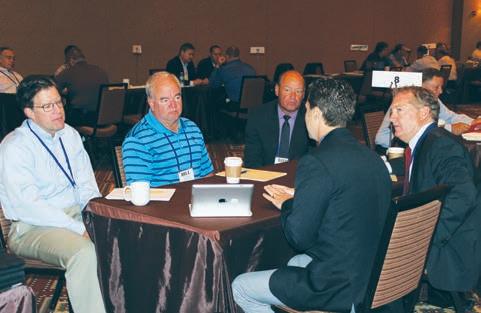
The event drew 225 textile services professionals, including more than 65 operators from nearly 50 companies, TRSA says. Participating companies in the Exchange numbered about 30 each from the operator and associate memberships.
Both were unaccustomed to the Exchange format, in which meetings took place simultaneously at tables in a large conference room that otherwise would be devoted to associates’ tabletop exhibits. Operators rotated between associates’ Exchange tables for two two-hour sessions; in total, they could meet with 12 suppliers for 15 to 20 minutes each.
“It exceeded my expectations. There were takeaways from every meeting,” says Liz Remillong, strategic alliance vice president, Crothall Healthcare, Wayne, Pa. “Such a short period of time for each meeting ensured highly focused and productive discussion.”
From the associate side, Scott Delin, healthcare sales VP, Fashion Seal, Seminole, Fla., viewed operators recognizing the importance of supply chain matters to increasing their competitiveness.
“Everyone’s looking for that one edge. We’re here to provide that edge,” he says, adding that associates benefited from receiving new insights into operators’ emerging business needs.
Keynote presentations highlighted the agenda, according to the association. Each year, appealing to executives in the highest ranks of textile services operator companies, the conference program covers industry developments and economy-wide business and human resources trends to fuel the organizations’ results-driven strategic planning.
Keynoters this year included:
• Capt. Mark Kelly, the combat pilot who became a Space Shuttle commander, shared his experiences as an aviator and family member that influenced his leadership style and philosophies of defining and achieving success.

• Scott Stratten, author of UnMarketing: Stop Marketing. Start Engaging, discussed online and offline methods to stay in front of target audiences, emphasizing listening to customers and validating their concerns as key selling activities.
• Jason Young, author of Culturetopia: Ultimate High Performance Workplace and a Southwest Airlines veteran, provided practical, easy-to-implement guidelines for a healthier and more productive and profitable organization culture.
The conference was also a milestone for TRSA leadership as its top volunteer office (chairman) changed hands as planned, with the completion of the term of Douglas Waldman, CEO, Superior Linen Service, Tulsa, Okla. According to TRSA, Waldman was honored with donations to his charity of choice, the Folds of Honor foundation. TRSA says members gave more than $15,000 to this group, which provides educational support to families of fallen U.S. soldiers.
Members elected David Potack, senior vice president, Unitex Textile Rental Services, Mount Vernon, N.Y., to fill this post through 2018. Jim Buik, Roscoe Co., Chicago, succeeds Potack as vice chairman over the same term.
Waldman remains with them on the executive committee, TRSA says. Joining this committee as TRSA’s new treasurer and, like the others, continuing on the board, is Noel Richardson, Shasta Linen Supply, Sacramento, Calif.
Elected to the Board were:
• Baba Devani, Berendsen PLC, London.
• Jim Lee, Aramark Uniform & Career Apparel, Burbank, Calif.
• Milton M. Magnus III, M&B Hangers, Leeds, Ala.
• James Vaudreuil, Huebsch Services, Eau Claire, Wis.
• Tom Watts, Prudential Overall Supply, Irvine, Calif.
TRSA says the following individuals completed their terms on the Board of Directors and/or its Executive Committee:
• Carl Bjorkman, Hr Bjorkmans Entremattor, Arlov, Sweden.
• David DiFillippo, UniFirst Corp., Wilmington, Mass.
• Jim Doro, Doritex Corp., Alden, N.Y.
• Bill Evans, AmeriPride Services, Minnetonka, Minn.
• Ed Kwasnick, ARCO/Murray, Downers Grove, Ill.
Other members were honored during the conference as well, says TRSA.
Steve Bryant, CEO emeritus of Wildman Business Group, Warsaw, Ind., received the Operator Lifetime Achievement Award.
Ralph W. Howard Jr., founder and director, Kleen-Tex Industries, LaGrange, Ga., took home the Maglin/Biggie Associate Lifetime Achievement Award. Both honorees are 40-plus-year veterans of the industry.
TRSA also says it honored more than 200 individuals from member companies who have worked for 25 years or more in the industry. Two 50-year honorees, L.K. McCullough, Linen King, Tulsa, Okla., and Potack, received their Service Awards at the conference.
The association says it also honored individuals for sharing knowledge and experience to support specific TRSA programs as committee chairs and in other roles. They include:
• Steve Florence, Starr Textile Services, Foley, Ala., Education Committee chair, Production Management Institute
(PMI) faculty.
• Russell Holt, Superior Linen Service, Tulsa, Okla., Safety Committee chair.
• Kelly Saliba, Economy Linen & Towel Service, Dayton, Ohio, Human Resources Committee chair, PMI faculty.
• Zach Sonnenklar, Iron City Workplace Services, Pittsburgh, Marketing/PR Committee chair.
According to the association, social events during the conference fostered and renewed professional relationships and took advantage of the conference’s picturesque setting near Phoenix: the Gila River Indian Community, owners of the host hotel, the Sheraton Grand Wild Horse Pass Resort and Spa, TRSA says.
Attendees were treated to hoop-dancing and fire-juggling displays at outdoor receptions and golfed on the hotel course, which features spectacular mountain views and rolling terrain that preserves vegetation indigenous to the area.
“I liked the venue and it was a great conference,” says Leonard McCullough, CEO and owner of Oklahoma-based Linen King textile service. He described the Executive Exchange as productive and very helpful for operators, “and it seemed like the vendors got a lot out of it, too.”

22 NOVEMBER 2016 | AMERICAN LAUNDRY NEWS www.AmericanLaundryNews.com
ALN
Attendees praised the new Executive Exchange. (From left) Wiz Wyatt and Bill Evans from AmeriPride meet with Tom Grawe, Jake Gurtler and Greg Gurtler of Gurtler Industries. (Photos: TRSA)
Capt. Mark Kelly, the combat pilot who became a Space Shuttle commander, delivers a keynote address.
TRSA Annual Conference attendees were treated to hoop-dancing and fire-juggling displays at outdoor receptions.
Crimmins named regional sales manager for Lavatec

BEACON FALLS, Conn.
— Sean Crimmins, a career laundry professional with management experience at several facilities on the East Coast, is the new Northeast regional sales manager for Lavatec Laundry Technology, the company reports.
Crimmins began in the laundry industry in 1997 and most recently was general manager of CleanTex Laundry Services in Irvington, N.J., according to Lavatec.

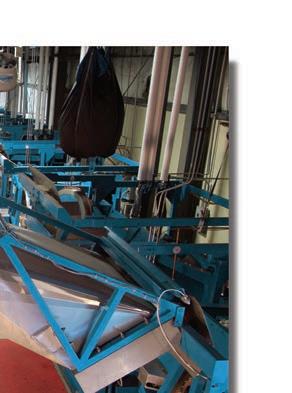
He previously served as a plant manager for Alsco in Alexandria, Va., after stints in Pennsylvania with Penn Linen Laundry, Sodexo and HCSC Enterprises, where he managed various healthcare and senior care laundry operations.
“I have a strong operations management background and oversaw 140 employees in my position at CleanTex. I also helped improve employee productivity, and we had record sales during my time there,” says Crimmins. “I have worked in every capacity since I started in the industry as an hourly worker. I accepted this position because I have a good idea of what plants need to get the job done today. Lavatec equipment is reliable, it helps make workers more efficient, and it produces the kind of results facility owners will appreciate.”
AmeriPride makes director appointments and promotions

MINNEAPOLIS — AmeriPride Services, a textile rental services and supply company, recently made several new director appointments and promotions.
Kristin LeBre was appointed director of U.S. Labor Relations and human resource, according to the company. LeBre is an experienced senior legal counselor with expertise in labor and employment law, compliance and litigation management.
She started her career at
Track Career
Winthrop & Weinstine and has served as in-house counsel for several public and privately held companies, including ShopNBC, Musicland, Nash Finch and Fingerhut, AmeriPride says.
LeBre has a juris doctorate from the University of Iowa, is active in the Minnesota Association of Corporate Counsel, and has served on the Minnesota State Bar Association Employment Law

Governing Council.
Kathy Jennings has been promoted to senior director/ operations controller, the company reports. Jennings oversees accounts payable, accounts receivable, general accounting
and payroll teams, as well as a variety of special projects to standardize and centralize back-office processes.

AmeriPride says Jennings was recently named to the Finance & Commerce “Top
Women in Finance” List, which recognizes women who are making notable contributions to their professions, their communities and society at large. She is also a leader in the company’s community outreach and volunteer programs, including the annual MS150 ride.
Schlachter has been appointed director of direct

Braun Selected To Provide Plant Wash Aisle and Safety


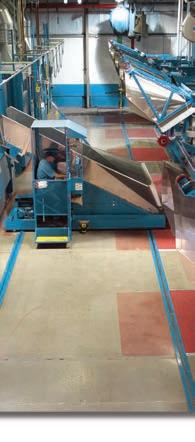
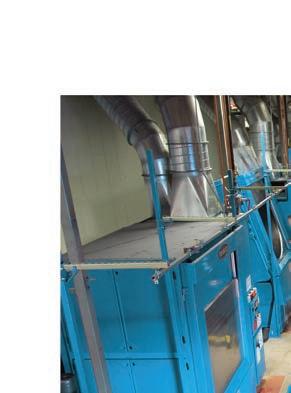
Braun recently installed complete state-of-the-art wash aisles and proprietary safety solutions at four new domestic locations. Along with its many site retooling and point solution awards. Braun has developed a strategic partnership in product development, safety solutions, and operational efficiency, with these client partners.
These accounts have made a significant commitment to safety and operational best practices, and we are pleased with the value that our solutions have provided these clients, and their workforce.
- Joe Gudenburr, President, G. A. Braun. For more information visit www.gabraun.com
Todd
Jennings
LeBre
See CAREER on Page 24 www.AmericanLaundryNews.com AMERICAN LAUNDRY NEWS | NOVEMBER 2016 23
Crimmins
System.
“Our new safety solutions for automated washrooms have significantly reduced our clients upfront capital spending requirements, eliminated many life cycle costs associated with such systems, and have positively impacted productivity for our clients”
Parts. Service. Support. Second to None! All Braun Products are Proudly Manufactured in the U.S.A. ALN_Jr Page.indd 1 9/28/16 4:35 PM
sales and will now lead this function across the United States and Canada, the company says. He and his team will work to enhance and promote AmeriPride’s direct sales capabilities while presenting an integrated rental and purchase solution for customers.


Schlachter started with the company in 1994 and has excelled in various service and sales positions during his tenure, most recently as a sales director in the Eastern United States and Canada, AmeriPride says. He works out of the company’s Canadian headquarters in Toronto.
“Our people are our most important asset,” says Bill Evans, president and CEO of AmeriPride. “I am very pleased with these recent organizational changes and confident that these appointments will help us continue to find success and profitable growth in our key markets.”
Ellis Corp. welcomes additions to technical staff
ITASCA, Ill. — Ellis Corp.,











It’s not just


which manufactures commercial laundry, water heating and wastewater systems, has appointed Josh Stewart and Russell Stout technical support engineers, the company reports. Stewart will operate out of Milwaukee, the company says. He started work with Ludell, an Ellis subsidiary, work-

ing in assembly, following in the footsteps of his father, who was a welder for Ludell for 20 years.
Ellis says that due to his mechanical abilities, Stewart was promoted to the technical staff after just eight months on the line. With a solid grounding on the mechanics of Ludell equipment, he was selected to crosstrain on Ellis laundry machinery as part of an initiative to broaden the skills and expertise of Ellis technicians.
The company says this will allow him to oversee installations and troubleshoot for multiple types of equipment across the Ellis and Ludell brands.

Stout will be based out of Phoenix.


anymore.





A 20-year Navy veteran, Stout used his technical skills to keep things running on USS Elrod (FFG 55), a guided missile frigate that served in the Atlantic, the Persian Gulf, the Mediterranean, the Black Sea and the Caribbean, says the company.
He also served as maintenance coordinator for the Navy radio and TV station in Guantanamo Bay, Cuba.
Stout’s biggest technical challenge to date was keeping Elrod operational despite budget cuts and lack of proper parts. Relying on a network of fellow sailors to find spare parts and pieces as needed, he brings with him an innate ability to think outside of the box due to this experience, Ellis says.
Redmond appointed engineering mgr. by Thermopatch

SYRACUSE, N.Y. — Thermopatch, which supplies garment/textile identification labeling systems, has appointed Roger Redmond to the position of engineering manager, the company reports.

Redmond’s responsibilities will include directing the efforts of the engineering department, quality control and facilitating all development efforts on identification equipment, according to the company.
Thermopatch says Redmond has more than 25 years of experience in product development, manufacturing and project management in various industries. He has a bachelor of science degree

24 NOVEMB E R 2016 | AMERICAN LAUNDRY NEWS www.AmericanLaundryNews.com Continued from Page 23
Career
print
BY MATT POE, EDITOR EUGENE, Ore. — Aaron Wasson was a busy man at the beginning of September. As director of equipment operations for the University of Oregon, Wasson was in the middle of getting gear ready for the nationally ranked Ducks’ first football game. He was also overseeing his department’s transition into newly reconstructed facility. “We’re in the process of moving in as well,” Wasson says. “It’s a pretty big equipment space, and we have construction trailers and tractor trailers, shipping containers around that we’ve had stuff in for while.” The new equipment space is part of the university’s new Marcus Mariota Sports Performance Center, which was named after the university’s Heisman Trophywinning quarterback (2014). Mariota is now the starting quarIncluded in Wasson’s equipment space is new laundry area, fittingly called the Pond. And as he was preparing the team’s equipment, Wasson was preparing his laundry team for its first game-day processing. “We’re about three weeks in to using the laundry,” says Wasson. Up to that point, the laundry had only seen workout gear, not game-day laundry. But, with a doubled capacity, Wasson was sure OCTOBER 2016 Late News The Newspaper of Record for Laundry & Linen Management www.americanlaundrynews.com Volume 42, Number 10 INSIDE 28 See OREGON on Page 6 BY MATT POE, EDITOR NEW YORK — HX has some exciting new features to highlight this year, now in the second year of multimillion-dollar rebrand from the International Hotel, Motel + Restaurant Show (IHMRS) to HX: The Hotel Experience—Rooms to Restaurants, according to show organizer Hospitality Media Group (HMG). The rebranded event drew more than 12,000 visitors in 2015, and HMG is expecting the 2016 turnout to be just as strong. “2015 was a year of bold changes for the International Hotel, Motel + Restaurant Show (IHMRS). The rebrand from IHMRS to HX: The Hotel Experience—Rooms to Restaurants thrilled our audiences and gave a whole new life to the show in its 100th year,” says Phil Robinson, HX Group show director. “HX is now well-positioned to serve the sourcing, education and networking needs of the hospitality industry going forward.” The 2016 show will take place Nov. 13-15 at the Jacob K. Javits The three-day event will feature more than 400 inventive exhibitors, knowledgeable speakers and eye-catching demos—all on one enterprise feature areas on the show floor, says HMG. HX: TECH, sponsored by MasterCard, is home to technology est tech tools and gadgets. HX: ONSTAGE-HOTEL will feaPanel of Experts Our experts examine what to track in a laundry operation.
HX: The Hotel Experience expands new look and feel for 2016 edition of show [4] on Page 10 EnviroStar to acquire Western State Design for $28 Million MIAMI — Commercial laundry equipment distributor EnviroStar Inc. (EVI) reports it has executed a definitive asset purchase agreement to acquire substantially all of the assets of California-based Western State Design LLC, also a distributor of commercial, industrial and coin-operated laundry products, and provider of installation and routine maintenance services. Closing of the transaction is subject to certain conditions, including financing. Pursuant to the agreement, the purchase price is $28 million, of which $18 million will be paid in cash at closing—which is expected to occur by mid-October— and $10 million in shares of EVI’s common stock. Western State Design will operate as a wholly owned subsidiary of EVI under its current name, from its present West Coast locations, led by its existing management team and employees, and with the added benefit of EVI’s support and resources to assist Western in execution of its growth plans. EnviroStar, which has served the laundry industry since 1959, also distributes drycleaning equipment, industrial boilers, and related parts, supplies and technical services. ALN Columnist at Large Eric Frederick discusses the old-fashioned value of loyalty. Second year to include more technology, demos [22] Laundry that took ‘half the night’ now done in 1.5 hours, says director of equipment operations The University of Oregon’s new football laundry features six washers and six dryers. (Photos: Eric Evans, Oregon Athletic Communications) “HX IS NOW WELLPOSITIONED TO SERVE THE SOURCING, EDUCATION AND NETWORKING NEEDS OF THE HOSPITALITY INDUSTRY GOING FORWARD” —PHIL ROBINSON, HX GROUP NAPERY & TABLE LINENS PRODUCT SHOWCASE 1016aln_p01,06,10-12.FINAL.indd 9/16/16 4:12 PM American Laundry News can now be viewed on tablets and other mobile devices – great ways to stay on top of the latest industry news and updates. www.americanlaundrynews.com The Newspaper of Record for Laundry & Linen Management 2016aln_House Digital1_jr page_master.indd 1 10/4/16 10:48 AM
University of Oregon football team has brand-new ‘Pond’
Schlachter
Redmond
Stewart Stout
in mechanical engineering from McNeese State University in Lake Charles, La.
He has a professional affiliation with the American Society of Mechanical Engineers and certifications related to product quality.
Redmond and his family reside in Syracuse.
Whirlpool creates ‘ultimate customerfocused team’
ST. JOSEPH, Mich. — Equipment manufacturer Whirlpool Corp. Commercial Laundry recently restructured its management team to deliver “unrivaled knowledge and expertise,” the company says.

Whirlpool says its “newly transformed … all-star team” is serving up innovative solutions and services that aim to exceed the industry’s varied needs.
“Enhancing our team’s talent is one of the many steps we are taking to deliver on our long-term vision, which includes continuous improvement projects that drive our renewed commitment to operational excellence and standout customer experience,” says Trey Northrup, the team’s leader and general manager.
“Steve Hietpas, Randy Karn, Nick Koukourakis and Rebecca Ross not only bring fresh out-ofthe-box ideas to their new roles, they help us examine our efforts and the industry in a refreshing new light.”


Described by Whirlpool as an “intercontinental expert and savvy leader,” Hietpas is the team’s new international sales manager. A commercial laundry industry veteran of nearly 20 years, Hietpas has spent nearly two-thirds of his career in the field working closely with key distributor contacts. This experience, along with his team approach, makes him an ideal fit for this role and the perfect team member to unearth untapped opportunities abroad, Whirlpool says.
Hietpas will have full profitand-loss ownership and “own” the long-range strategic plan for international business.
Helping deliver the corporation’s customer experience is Karn, who has transitioned to global service manager. He will coordinate internal and external initiatives
and programs to support the company’s long-range plan. His Iowa State education, 35 years in the industry and positive attitude will serve him well in his new role, Whirlpool says, and Karn’s “voice of customer” work will provide a strong foundation. His strategic leadership will help guide the product development process.


Building on his mechanical engineering degree, extensive technical background and more than 15 years of marketing and sales experience, Koukourakis is
the ideal person for the multi-load product management job, according to Whirlpool.



With a deep-rooted passion, Koukourakis will help bridge market gaps and engineer multi-load products that continue to exceed customer expectations, efficiency standards and industry needs, the corpora-










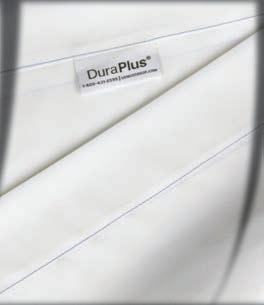






tion says.
Whirlpool calls Ross strategic and resourceful with a desire to drive brand loyalty, which fits perfectly in her latest corporate role: commercial laundry brand manager.
Driven by working closely with trade team members, she thrives in cross-

functional team settings, Whirlpool says. Since joining the corporation in 2002, she has held various roles with increasing responsibility in brand marketing, co-marketing and channel marketing.
In addition to these appointments, Whirlpool believes that recent investments in product, research and development, testing and training will drive a “robust, holistic 360-degree customer experience” that will make it the preferred industry partner. ALN


www.AmericanLaundryNews.com AMERICAN LAUNDRY NEWS | N OV EM BER 2016 25
With Venus Group Sheets EXTREMELY DURABLE • EXTRAORDINARY COMFORT EXCELLENT RETURN ON INVESTMENT Increase Profit, Improve Customer Service, Enhance Patient Experience Sheets for Healthcare, Hospitality, and Institutional Applications ™ Performance Twill with INVICTUS TECHNOLOGY ™ C M Y CM MY CY CMY K VenusGroup_ALN_Sheets_Healthcare_NOV2016_Print.pdf 1 10/4/16 1:17 PM ALN_Jr Page.indd 1 10/5/16 10:18 AM Hietpas
Karn
Koukourakis
Ross
Study finds ionic silver treatment decreases microbial contamination
HAYWARD, Calif. — A peer-reviewed study titled “Reduction in bacterial contamination of hospital textiles by a novel silver-based laundry treatment” published in the September issue of the American Journal of Infection Control (AJIC) found microbial contamination significantly decreased in healthcare textiles treated with SilvaClean®, says Applied Silver, maker of the product.

The study’s authors looked across three different community hospitals at the effectiveness of SilvaClean, an ionic silver antimicrobial applied to linens after each washing. Addressing environmental cleanliness through textiles is
a critical issue for hospitals, the company says. Hospitalacquired infections (HAIs) are potentially lethal for patients and pose significant financial risks for hospitals.
According to a Centers for Disease Control & Prevention (CDC) report, HAIs kill nearly 200 people in the United States every day and affect 1 in 25 hospital patients. These numbers do not include infections acquired at skilled nursing, long-term acute care and outpatient surgery facilities.
Published research shows that 60% of hospital staff uniforms were colonized with potentially pathogenic bacteria, including drug-resistant organisms such as the superbugs Methicillin-resistant Staphylococcus aureus (MRSA) and Carbapenem-resistant Enterobacteriaceae (CRE), and a separate published research paper shows 55% of clean bed linens were contaminated before contact with the patient. Contracting MRSA increases a patient’s chance of acquiring a staph infection within the following 12 months.

The new peer-reviewed study in AJIC compares SilvaClean-treated hospital sheets and patient gowns to untreated hospital sheets and patient gowns, both before and after patient use. The authors found that treating sheets and gowns with SilvaClean resulted in decreases in microbial contamination before patient use of 88% and 89%, respectively.
SilvaClean was found to be persistent, reducing total bacterial counts by 30% on sheets and 45% on gowns after patients had used them. SilvaClean treatment of the textiles resulted in 100% decreases of Staphylococcus aureus on sheets and gowns before patient use and decreases after patient use of 74% on sheets and 89% gowns, the company says.
“The data confirms that SilvaClean is a leading technol-






ogy for hospitals to help rapidly establish the cleanest possible environment and confidently maintain it over time,” says Bill Morris, co-founder and director of efficacy and chemistry at Applied Silver. “A cleaner environment is the essential platform that allows hospitals to meet stringent performance targets and offer the comfortable, low-risk bedside experience that patients now expect.”
Eighth Mission Linen Supply facility accredited by HLAC
SANTA BARBARA, Calif. — Mission Linen Supply’s Lancaster, Calif., facility has earned national accreditation from the Healthcare Laundry Accreditation Council (HLAC), Mission Linen reports.
HLAC’s recognized accreditation criteria include every aspect of textile processing, from handling soiled healthcare linens to in-plant processing and delivery back to the customer. To earn this national recognition, Mission’s Lancaster facility had to ensure that all products, systems and procedures met HLAC’s high quality standards, the company says.
This involved an evaluation of the overall layout of the facility as well as training procedures, customer service, storage, equipment maintenance and protocols, according to Mission Linen Supply.
“Earning accreditation from HLAC adds value to our business across the board,” says Chet Gilliatt, district manager overseeing Mission’s Lancaster facility. “Receiving this third-party recognition makes us a better company and gives our customers peace of mind. It not only helps
26 NOVEMBER 2016 | AMERICAN LAUNDRY NEWS www.AmericanLaundryNews.com
ALN_Jr_half.indd 1 9/1/16 11:25 AM facebook/americanlaundrynews Like our Facebook page Share our content Comment: Tell us what’s on your mind LIKE Company Page Company Page INDEX OF ADVERTISERS A.L. Wilson Chemical Co. 9 ADI American Dawn 5 ADC 13 Clean Show 15 Consolidated Laundry Machinery 17 Direct Machinery Sales Corp. 28 Ecolab 21 Energenics Corp. 27 G.A. Braun 23 Girbau Industrial 7 The Griffin Group, Inc. 28 J.P. Equipment 28 Kannegiesser USA 19 LaundryCareers.com 28 Lavatec Laundry Technology 32 Monarch Brands 10, 11 Pellerin Milnor 3 PSP Industrial 28 Royal Basket Trucks 8 SonicAire 26 Stanco Industries 28 U.N.X. Inc. 28 Venus Group 25
Up to 100% of Staphylococcus aureus contamination decreased, according to the report. (Photo: Janice Haney Carr/CDC)
communicate our commitment to achieving the highest possible standards in processing healthcare textiles, but also provides our customers with transparency about our procedures.”
Mission’s Lancaster facility is the company’s eighth to receive HLAC accreditation, according to the company. With regional operations throughout the West, Mission’s other accredited laundry operations include California facilities in Chino, Oxnard, Salinas, Fresno and Bakersfield, as well as facilities in Albuquerque, N.M., and Phoenix.
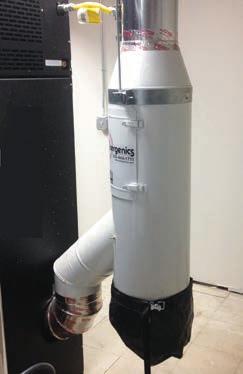
Each HLAC accreditation must be renewed every three years, and Mission says it is currently one of only five companies to hold the HLAC accreditation in California.
Up To Date Laundry marks its 70th anniversary


BALTIMORE — Up To Date Laundry Inc. celebrated its 70-year anniversary of
service to the Baltimore community and the Mid-Atlantic region at the end of September, the company reports.

Up To Date Laundry launched its business in Baltimore in 1946, servicing ships arriving at the Baltimore Harbor from New York and Virginia, as well as the retail clientele of the local community. In 1956, it began servicing Franklin Square Hospital, which was the beginning of its venture into the healthcare industry, according to the company.
In 1994, Nancy Stair-Carter assumed leadership of the company after the death of her father, William Stair Sr.
“We are very proud of our 70 years of accomplishment at Up To Date Laundry. My father was always on the leading edge of advancing the laundry industry—it was his passion,” says Stair-Carter.
Up To Date Laundry says it operates a fully redundant laundry processing facility with a complete disaster recovery plan that includes a power generator to operate the entire plant, an on-site fuel distribution system to service delivery trucks for weeks, and a fully stocked warehouse that can supply products to its customers at a moment’s notice.
The laundry says it recycles 90% of all waste and has multiple environmental initiatives throughout its facility.
In 2011, it launched the non-acute healthcare division, and in 2015, with a big demand for industry experts to support hospital laundry operations, it launched UTD Consulting, the company says. ALN
Calendar

November
3 Belenky Inc.
Laundry Service School Akron, Ohio
Info: 800-235-3659, ext. 205
17 Association for Linen Management Webinar: Benefits of Using a Linen Management System Richmond, Ky. Info: 859-624-0177
30- Textile Rental Services Association Dec. 1 TRSA Healthcare Conference Nashville, Tenn. Info: 703-519-0029
December
2 Textile Rental Services Association

TRSA CEP/Executive Roundtable-Healthcare Nashville, Tenn. Info: 703-519-0029
6-9 Kannegiesser

2016 Service Seminar Fort Worth, Texas Info: 972-641-3163
January
26 Association for Linen Management Webinar: Ask the Experts: Part 1 Productivity Richmond, Ky. Info: 859-624-0177
February
23 Association for Linen Management Webinar: Managing from Afar Richmond, Ky. Info: 859-624-0177
March
23 Association for Linen Management Webinar: At Your Service! Creating a Customer-Driven Culture Richmond, Ky. Info: 859-624-0177 ALN
www.AmericanLaundryNews.com AMERICAN LAUNDRY NEWS | N OVEMBER 2016 27
Staff at Mission Linen Supply’s Lancaster, Calif., facility display its recent HLAC accreditation. (Photo: Mission Linen Supply)
www.energenics.com Fully Automatic-Self Cleaning ENERGENICS OPL UTILITY FREE OPL DUCT MOUNTED LINT FILTERS 800-944-1711 DUCT MOUNTED AIRFREE LINT FILTER AF-1-S 1470 Don St. Naples, FL 34104 • No energy or utilities required • Cost effective (duct in-duct out) • Prevents damage to air handling equipment • Meets state and national EPA discharge standards • Self cleaning–eliminates labor • Eliminates the lint bypass up to 98% • Zero operating cost • Reduces lint build-up in ducts downstream, increasing fire safety • Optional fire suppression • Sizes Up to 2,700 CFM 0316aln_Energenics Lint Collectors tab hlf.indd 1 1/28/16 3:36 PM
of

Office of
American Trade Magazines LLC, 566 West Lake St., Suite 420, Chicago, IL 60661-1410 Cook County. Contact Person: Charles Thompson, 312-3611700. 8. Complete Mailing Address of Headquarters or General Business Office of Publisher: American Trade Magazines LLC, 566 West Lake St., Suite 420, Chicago, IL 60661-1410 Cook County. 9. Full Names and Complete Mailing Addresses of Publisher, Editor, and Managing Editor. Publisher: Charles Thompson, American Trade Magazines LLC, 566 West Lake St., Suite 420, Chicago, IL 60661-1410 Cook County. Editor: Matt Poe, American Trade Magazines LLC, 566 West Lake St., Suite 420, Chicago, IL 60661-1410 Cook County. Managing Editor: Bruce Beggs, American Trade Magazines LLC, 566 West Lake St., Suite 420, Chicago, IL 60661-1410 Cook County. 10. Owner: American Trade Magazines LLC, 566 West Lake St., Suite 420, Chicago, IL 60661-1410 Cook County. Charles Thompson, American Trade Magazines LLC, 566 West Lake St., Suite 420, Chicago, IL 60661-1410 Cook County. Bruce Beggs, American Trade Magazines LLC, 566 West Lake St., Suite 420, Chicago, IL 606611410 Cook County. Donald Feinstein, American Trade Magazines LLC, 566 West Lake St., Suite 420, Chicago, IL 60661-1410 Cook County. Nathan Frerichs, American Trade Magazines LLC, 566 West Lake St., Suite 420, Chicago, IL 60661-1410 Cook County. Suhler Family Investment Office LLC, 200 Long Neck Point Rd., Darien, CT 06820 Fairfield County. 13. Publication

Title: AMERICAN LAUNDRY NEWS 14. Issue Date for Circulation Data Below: September 2016

15. Extent and Nature of circulation: (average number of copies each issue during proceeding 12 months=”X”) (Number copies of single issue published nearest to filing date = Y”) (a) Total Number of Copies (Net press run): X=15,416, Y=15,342. b. Legitimate Paid and/or Requested Distribution (By Mail and Outside the Mail).
(1) Outside County Paid/Requested Mail Subscriptions stated on PS Form 3541. (Include direct written request from recipient, telemarketing and Internet requests from recipient, paid subscriptions including nominal rate subscriptions, employer requests, advertiser’s proof copies, and exchange copies.) X=10,547, Y=10,332.
(2) In-County Paid/Requested Mail Subscriptions stated

on PS Form 3541. (Include direct written request from recipient, telemarketing and Internet requests from recipient, paid subscriptions including nominal rate subscriptions, employer requests, advertiser’s proof copies, and exchange copies.) X=0, Y=0. (3) Sales Through Dealers and Carriers, Street Vendors, Counter Sales, and Other Paid or Requested Distribution Outside USPS®: X=0, Y=0. (4) Requested Copies Distributed by Other Mail Classes Through the USPS (e.g. First-Class Mail®): X=0, Y=0. (c) Total Paid and/or Requested Circulation (Sum of 15b (1), (2), (3), and (4)): X=10,547, Y=10,332. (d) Nonrequested Distribution (By Mail and Outside the Mail). (1) Outside County Nonrequested Copies Stated on PS Form 3541 (include Sample copies, Requests Over 3 years old, Requests induced by a Premium, Bulk Sales and Requests including Association Requests, Names obtained from Business Directories, Lists, and other sources): X=4,679, Y=4,851. (2) In-County Nonrequested Copies Stated on PS Form 3541 (include Sample copies, Requests Over 3 years old, Requests induced by a Premium, Bulk Sales and Requests including Association Requests, Names obtained from Business Directories, Lists, and other sources): X=0, Y=0. (3) Nonrequested Copies Distributed Through the USPS by Other Classes of Mail (e.g. First-Class Mail, Nonrequestor Copies mailed in excess of 10% Limit mailed at Standard Mail® or Package Services Rates): X=0, Y=0. (4) Nonrequested Copies Distributed Outside the Mail (Include Pickup Stands, Trade Shows, Showrooms and Other Sources): X=30, Y=8. (e) Total Nonrequested Distribution (Sum of 15d (1), (2), (3) and (4)): X=4,709, Y=4,859. (f) Total Distribution (Sum of 15c and e): X=15,256, Y=15,191.
(g) Copies not Distributed (See Instructions to Publishers #4, (page #3)): X=160, Y=151. (h) Total (Sum of 15f and g): X=15,416, Y=15,342. (i) Percent Paid and/ or Requested Circulation (15c divided by f times 100): X=69.13%, Y=68.01%.
16. Publication of Statement of Ownership for a Requester Publication is required and will be printed in the November 2016 issue of this publication. 17. Signature and Title of Editor, Publisher, Business Manager, or Owner: I certify that all information furnished on this form is true and complete. I understand that anyone who furnishes false or misleading information on this form or who omits material or information requested on the form may be subject to criminal sanctions (including fines and imprisonment) and/or civil sanctions (including civil penalties): Charles Thompson, Date 9/22/2016
28 NOVEMBER 2016 | AMERICAN LAUNDRY NEWS www.AmericanLaundryNews.com Classified Advertising POSITIONS AVAILABLE Call Craig Lloyd toll free at 877.295.5693 between 9 a.m. – 9 p.m. EST. Please visit www.laundrycareers.com to review current industrial/institutional laundry management openings. ADVANCE YOUR CAREER The Griffin Group, Inc. “Recruitment Specialist” Need to FILL a position? Call Deana Griffin 888-235-2365 www.thegriffingroup.cc deana@thegriffingroup.cc ® PARTS FOR SALE U.N.X. INCORPORATED“ ” grow & expand U.N.X.! U.N.X. INCORPORATED WASHEX PARTS Hard-to-find Washex parts, on-site rebuilding, tech support. LAUNDRY PARTS CENTER 800-352-4492 Fax: 305-827-3991 PARTS, PARTS, PARTS Huge stock of parts for most laundry equipment & boilers. Also traps, valves and lubricants. Overnight delivery. Steiner-Atlantic, 800-333-8883 Fax: 305-751-8390 parts@steineratlantic.com www.steineratlantic.com Place your ad americanlaundrynews.com ONLINE! EQUIPMENT FOR SALE EQUIPMENT FOR SALE We worry about it so you don’t have to Project Management, Consulting, Facility Planning, Rigging, Turn Key Installations, Equipment Appraisals & Reports. O ering turn key Laundry Solutions nationwide. IN STOCK EQUIPMENT FOR SALE: Qty Jensen SEP72MP Press 1 Chicago Edge Maxx Feeders 2 Chicago King Edge & Kannegiesser Feeders 3 Chicago Skyline Sheet Folders 6 Lavatec TT745GU Gas Dryers 8 Braun Towel Folders 9 Challenge 400 LB Gas Tunnel Dryers 6 Rebuilt Milnor 170 LB W/X 1 Jensen EXPG-12 Self Contained Gas Ironer 1 Chicago Century 2 Roll x 42 Steam Ironer 1 www.pspindustrial.com Main: 1.800.517.1432 / 305.517.1421 Please visit our website for our complete inventory www.ineedjpequipment.com 800/925-3236 “Expect Excellence” DISTRIBUTOR OFFERINGS • Bagging Machine, T-1000 Advanced Poly-Packaging Bagger, 2015 • Colmac Steam Tunnel CFS2100-2G/S, 1998, runs well • 50 HP Atlas Copco Rotary Screw Air Compressor, 2002 • 50HP Gardner Denver Rotary Screw Air Compressor + Air Dryer, 2000, well maintained • 350lb Washex, 2 Pocket Side Loader, 2000 • 50lb IPSO Washer • 110lb Milnor Softmount Washer, 1998 • 135lb Milnor Rigid Mount, 2006 • 135lb Milnor Rigid Mount, 1999 (bearings recently replaced) • 200lb Braun TSL, 2006 and 1997 • 400lb Braun Medicade, 1994 • Drums for Braun OP Washers, 400lb and 600lb • 175lb Milnor Gas Dryer, 2003 • 200lb ADC Gas Dryer, 2008 and 1999 • 2 - Cain Ind Stack Economizers - Increase your boiler efficiency! • 1998 Chicago Tristar 28” - no stacker conveyor • 1993 Chicago Imperial 48”x120” Gas Ironer • 2008 Jensen Logic Feeder • Chicago Pik Quik, 2008 and 2005 Tunnel Systems Available: • Milnor G2 Tunnel System, 9 Mod - 90lb, 2 Stage Press, 4 Gas Dryers, 1995 Complete System • Passat Tunnel (UT5012, 1997), Press (EP 865-35, 2002) and Load Conveyor (5LLC45W, 1994) • Milnor Classic Tunnels with 58058 Dryers, lots of stock Stanco Industries, Inc. Serving The Textile Trades Since 1970 800-932-3769 k for Mike or Deb View photos at www.stancoind.com KEEPING IT GREEN SINCE 1970 AMKO AMERICA, INC. Remanufactured Finishing Equipment Delta Ironers, Omega Folders & Towel Folders PARTS, IRONER SUPPLIES & NEW EQUIPMENT ALSO AVAILABLE “NEW” SELF CONTAINED IRONERS Contact: (561) 863-9696 AmkoAmerica@gmail.com
Publication Title: AMERICAN LAUNDRY NEWS
Publication Number:
Filing Date:
4. Issue Frequency: Monthly 5. Number of Issues
Annual Subscription Price:
1.
2.
1091-9201 3.
9/22/16.
Published Annually: 12 6.
$46.00. 7. Complete Mailing Address
Known
Publication:
STATEMENT OF OWNERSHIP, MANAGEMENT, AND CIRCULATION HELP WANTED Chemical Sales Position A Northeast regional company providing service to the Commercial Laundry Market is seeking a professional level sales person to join our team.Compensation: Salary, Commissions, Car Allowance Mail resumes to Metro-Chem, Inc. P. O. Box 401 Kearny, NJ 07032 or Fax to 973-589-8444 or E-mail: metrochemoffice@aol.com FOR SALE: • 1995 Chicago 2 Roll 32” Gas Ironer sku 903-1 • 1999 Lavatec 2 Lane Folder with Sheet Stacker sku 904-4 • 1995 Braun Omega Folder sku 903-6 • 1999 Braun Sigma RTF, Premium Condition sku 950 • Unipress Dry Cleaning Press sku 955 3-1997 Braun 600# Gas Dryers, Mod 200H, 1 Door, 2 Way Tilt sku 952-2 3-1999 Cissell 170# Gas Dryers sku 904-2 1-1999 Huebsch 80# Gas Dryer sku 904-3 2-1997 Braun 600# Open Pocket Washer Extractors 2-1999 Braun 400# Pass Thru Washer Extractor sku 904-1 4- 2002 Washex 175# Floatair Washer Extractor with Inverter, Steam Injection and Micro Processor sku 630 POSITIONS AVAILABLE Starr Textile Services
LA
for Top Maintenance Techs
Must have prior experience with ETech, Milnor & Chicago Equipment and Strong in Electrical Troubleshooting
DESCRIPTION For Pricing call Ron Hirsch 516.938.4300 • 516.315.7426 Hicksville, NY • www.directmachinery.com FOR NEW OR USED LAUNDRY EQUIPMENT, DM IS YOUR SOURCE FOR ALL YOUR NEEDS Braun Folder/Crossfolder with Stacker (1) Milnor 72072 500lb Gas Pass-Through System Dryers (2) Chicago Edge Spreader Feeders (2) Challenge Reconditioned Pace Setter Gas Dryers (1) Braun Rear Discharge Small Piece Folders (3) Braun 600lb Top Side Loader Kemco Direct Contact 3 Million BTU with Heat Recovery and Storage Washex 2002 135lb soft mount (1) Pik Quick Sheet Sorter (1)
New Orleans,
Searching
Salary – DOE.
Contact Chuck Davis: CDavis@StarrTextileServices.com 251-284-4635









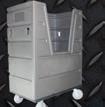















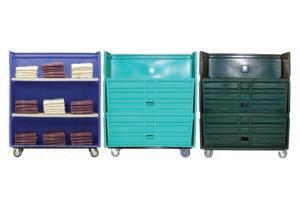



www.AmericanLaundryNews.com AMERICAN LAUNDRY NEWS | N OV EM BER 2016 29 Source Directory A convenient guide to sources of products and services APPAREL FINISHING CARTS, TRUCKS & BASKETS Source Directory listings in American Laundry News are sold on an annual basis at the following rates: All Major Credit Cards Accepted 2016 Listings RegularBoldface All CapsAll Caps, Boldface Four Line Listing per Year $885 $1,110 $1,110 $1,175 Display and additional line rates available upon request CARTS, TRUCKS & BASKETS CARTS, TRUCKS & BASKETS AmericanLaundryNews.com More than unique visitors monthly! 5,250 CARTS, TRUCKS & BASKETS Round-Tripper_6.25x3:Layout 1 6/17/14 12:04 PM Page 1 M c C LURE INDUSTRIES, INC. 800-752-2821 • www.mcclureindustries.com email: kim@mcclureindustries.com Sani-Trux is the only molded cart to pass rigorous independent laboratory testing for NFPA fire codes Made of durable fiberglass making the cart life at least twice that of a poly cart Easy to maneuver even in tight spaces Built with quality components to last years longer than other carts Visit our website for other models and avaliable options. We sell direct to all parties! DOBERMAN TUFF LAUNDRY CARTS www.dobermantuff.com 706-376-4793 ♦ RUGGED ♦ DURABLE ♦ QUALITY FINISHES TUFF STUFF, NOT TUFF PRICES • Tunnel Finishers • Cart Washers • Pressing Equipment • Garment Conveyors sales@leonardautomatics.com http://leonardautomatics.com ph: 704.483.9316 l-800-275-2436 l-800-275-2436 maxi-movers.com Email:sales@maxi-movers.com M2424 FLARE TRUCKS Designed for easy loading / unloading of bulky items and feature steel reinforced extra-strength sides. Some models offer metal reinforced Spring Lift Platforms which gradually elevate contents. Chm #9819 ALN Flare Trucks'16:Layout 1 10/3/16 2: NEVER LOSE ANOTHER SHELF Call 800.829.4535|questions@MODROTO.com | MODRoto.com We Put More Into Our Carts So You Can, Too! shelves. No more shelf matching, no more lost shelves. See action video at MODRoto.com and call for free quote. clean to soiled in seconds without removing the



















30 NOVEMB E R 2016 | AMERICAN LAUNDRY NEWS www.AmericanLaundryNews.com Source Directory listings in American Laundry News are sold on an annual basis at the following rates: All Major Credit Cards Accepted 2016 Listings RegularBoldface All CapsAll Caps, Boldface Four Line Listing per Year $885 $1,110 $1,110 $1,175 Display and additional line rates available upon request Source Directory A convenient guide to sources of products and services FLATWORK IRONERS Knowhow In Action Your Tingue rep is a fully trained master of finishing equipment operation, maintenance and installation. Call for: • Pads, covers, belts, waxes, tapes and more • Carts, trucks, baskets and bags • Parts, rebuilds and repairs 800.829.3864 www.Tingue.com TalleyMachinery.com MODRoto.com TBR-Associates.com To website C & W EQUIPMENT (800) 443-3573 FLATWORK IRONER SPECIALISTS REMANUFACTURED IRONERS: Super Sylon Sylon Hypro’s Super Pro Jensen SS700 SS800 Ultima Lavatec UPGRADE KITS: Chain Drive Conversion Vacuum Systems Herringbone Conversion Canopies Inverters Side Covers Roll Springs Jensen Drives SUPPLIES: Aprons Pads Covers Belts Waxes Cleaners PARTS/REPAIRS: All Brands New/Refurbished/Hard to Find COMMITTED TO EXCELLENCE Pellerin Milnor Corp. P.O. Box 400, Kenner, LA 70063 504-467-9591, Fax: 504-468-3094 www.milnor.com DRYERS – 100 POUNDS OR MORE Pellerin Milnor Corp. P.O. Box 400, Kenner, LA 70063 504-467-9591, Fax: 504-468-3094 www.milnor.com DRYERS – 100 POUNDS OR LESS CARTS, TRUCKS & BASKETS CART-WASHING SYSTEMS DRYER BOOSTER & EXHAUST FANS Gardner Machinery Corporation P.O. Box 33818, Charlotte, NC 28233 Ph.: (704)372-3890; Fax: (704)342-0758 www.gardnermachinery.com MATERIAL HANDLING / CONVEYORS www.energenics.com ENERGENICS KARTWASHERS FULLY AUTOMATIC KARTWASHER PREMIER W/TOUCHPAD 1470 Don St. • Naples, FL 34104 • 800-944-1711 Designed to wash and sanitize all popular laundry carts • Automatic two minute cycle • Dries and sanitizes • Minimum water useage Concentrates wash effectiveness on the cart interior Fast automatic washing, sanitizing and drying insure optimum cleaning • 15 second detergent wash and sanitizing rinse cycle • Adjustable automotive car wash style drying 1116aln_Energenics Cart Washers SD.indd 1 9/27/16 3:30 PM What Every Laundry Needs In A Cart Washer: M c C LURE INDUSTRIES, INC email: kim@mcclureindustries.com 800-752-2821 www.mcclureindustries.com A cart washer that works continuously for 15-20 years. The ability to install your cart washer in a cross-contamination barrier wall. A cart washer that really, truly cleans each cart of bio-contaminents inside and out. One that uses existing utilities no remodel costs. Time selectable efficient cycles that use a minimum amount of water. M.I.T. POLY-CART 211 CENTRAL PARK WEST, NEW YORK, NY 10024 800-234-7659, FAX: 212-721-9022 WWW.MITPOLYCART.COM Diversified Plastics, Inc. 1309 Highway 917 West, Latta, SC 29565 800-768-7636, www.dpirotocarts.com E-mail: sales@dpirotocarts.com Fax: 843-752-7798 100% RECYCLED 800.304.4600 www.FIBERTECHINC.net We Create Environmentally Responsible Solutions • SAME DURABILITY • SAME CAPACITY • SAME PERFORMANCE BETTER PRICE GO TO: www.AmericanLaundryNews.com WANT TO SEE MORE LISTINGS?
Pellerin


P.O. Box 400, Kenner, LA 70063 504-467-9591, Fax: 504-468-3094






P.O. Box 400, Kenner, LA 70063 504-467-9591, Fax: 504-468-3094 www.milnor.com





www.AmericanLaundryNews.com AMERICAN LAUNDRY NEWS | NOVEMBER 2016 31 Source Directory A convenient guide to sources of products and services Source Directory listings in American Laundry News are sold on an annual basis at the following rates: All Major Credit Cards Accepted 2016 Listings Regular Boldface All Caps All Caps, Boldface Four Line Listing per Year $885 $1,110 $1,110 $1,175 Display and additional line rates available upon request PARTS PARTS PARTS & SUPPLIES • Door Handles • Door Locks • Print Boards • Bearing Kits • Drain Valves • Shocks • Heating Elements • Inlet Valves and more! QUALITY LAUNDRY PARTS, GREAT PRICES For questions and custom orders email info@FrontecStore.com (941)726-0808 • Door Handles • Door Locks • Print Boards • Bearing Kits • Drain Valves • Shocks • Heating Elements • Inlet Valves and more! For questions and custom ordersFrontecStore.com (941)726-0808 CINCINNATI LAUNDRY EQUIPMENT We stock all the parts you need! We have something for everybody! Parts for All Major Manufacturers 2648 Spring Grove Avenue Cincinnati, OH 45214 Phone: 513-542-5000 • Fax: 513-542-5022 www.cincinnatilaundry.com cle@cincinnatilaundry.com Your #1 AJAX Source! AJAX • CISSELL LAVATEC • ALLIANCE IPSO • HUEBSCH JENSEN HYPRO/SUPER SYLON HOFFMAN • VOSS PERMAC • Hotel • OPL • Coin Op • Dry Cleaners • Industrial • Commercial • Cruise Industry Dry or Wet Style Filters to Work with “ALL” Dryer Sizes or Multiple Situations, Fiberglass or Stainless and Custom for Unique Situations! Lint Filters Model Big and Small – We’ve got a model for you! In-line Duct” Models – the Lint Lasso and Lint Sock –in production since 2011 All manufacturing done on premise 800-826-1245 www.cleancyclesystems.com • ccsystems@tqind.com LINT COLLECTORS & FILTERS
Pellerin Milnor Corp.
WASHERS – CONTINUOUS BATCH WASHER-EXTRACTOR – 100 POUNDS OR LESS WASHER-EXTRACTOR – 100 POUNDS OR MORE SMALL-PIECE FOLDERS MAT ROLLERS
Milnor Corp.
Pellerin Milnor Corp. P.O. Box 400, Kenner, LA 70063 504-467-9591, Fax: 504-468-3094 www.milnor.com PRESSES – EXTRACTION www.energenics.com ENERGENICS CORPORATION TALK TO OUR DESIGN AND ENGINEERING STAFF ABOUT YOUR NEEDS 1470 Don St. • Naples, FL 34104 • 800-944-1711 ›› Our In-Line Lint Filter mounts inside, saves space! ›› OPL Duct Mounted Lint Filters 1,000 to 2,700 CFM ›› Fiberglass or Stainless Steel Dry Filters ›› Hundreds Sold Annually PACKAGING SYSTEMS & SUPPLIES TO PLACE YOUR AD CALL DON FEINSTEIN 312-361-1682
Milnor Corp.
www.milnor.com
Pellerin
P.O. Box 400, Kenner, LA 70063 504-467-9591, Fax: 504-468-3094 www.milnor.com















ANNIVERSARY TH
