Biloxi VA Medical Center opens new textile processing facility
Xeros signs deal with New York City’s eLaundry.com

MANCHESTER, N.H. — New York City-based eLaundry.com has signed a deal to add Xeros polymer bead cleaning laundry systems to its business, Xeros reports.
The deal is reportedly in excess of $1 million.
“Xeros has been a great investment for our business. Xeros’ green and sustainable laundry system enables us to dramatically reduce our water, energy and detergent usage while delivering exceptional cleaning results for our customers,” says Charles Sakkal, owner of eLaundry.com.
To promote the new Xeros laundry services, according to the company, eLaundry.com will introduce Xeros as an ingredient brand in its storefront, on delivery vehicles and throughout the business.

eLaundry.com provides on-demand laundry service to commercial customers and consumers in New York City, Xeros says. They include hotels, spas, salons, colleges and universities, health clubs and restaurants. eLaundry.com processes more than 3.6 million pounds of laundry per year, according to the company.
Xeros says its laundry system replaces up to 80% of the water with 1.5 million polymer beads that gently massage textiles for cleaning. ALN
BY MATT POE, EDITOR
BILOXI, Miss. — The Gulf Coast Veterans Health Care System (GCVHCS) hosted an open house in late January to unveil its new Textile Processing Facility here.
The facility located at the Biloxi VA Medical Center marks the first time since Hurricane Katrina destroyed the GCVHCS laundry facilities 10 years ago that the medical center is processing its own textiles, along with those from other facilities in the healthcare system and other military stations, according to the U.S. Department of Veterans Affairs (VA).
“We are very excited about our new state-of-the-art, stand-alone
textile care facility,” says Gabriele McAdory, chief of environmental management service for the GCVHCS.
The new facility, which also houses dietetic services, has the capability to process 10 million pounds a year.
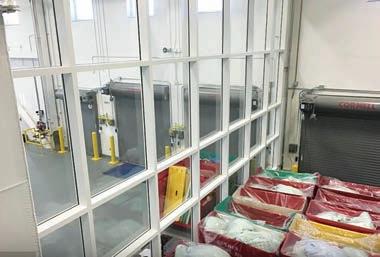
“Our employees love this facility, and I am, as well as others, still in awe of its capability and operation,” says Anthony Gayden, laundry plant manager for the facility.
In 2004, the GCVHCS was comprised of two campuses in Mississippi: Biloxi VA Medical Center and Gulfport VA Medical Center.
The two campuses had been in operation since the 1930s, but by 2004, plans were in place to expand and combine the campuses as part of VA’s Capital Asset Realignment for Enhanced Services (CARES) program.
Then, on Aug. 29, 2005, Hurricane Katrina devastat-
ed the Gulf Coast, and a tidal surge destroyed the Gulfport VA Medical Center.
The destruction included the laundry that processed millions of pounds of soiled goods for the hospital and military stations in the area.
The medical services were immediately transferred to the Biloxi site, which had only sustained minor damage. Laundry services had to be handled miles away.
Infection control will change healthcare laundry
 BY NANCY JENKINS
SHAWNEE MISSION, Kan. — It’s the “hot-button” issue of the decade—superbugs and how to effectively fight and control outbreaks of infection in healthcare and hospitality environments. Specifically known by such names as Methicillin-resistant Staphylococcus aureus (MRSA), Carbapenemresistant Enterobacteriaceae (CRE), Clostridium difficile (C. diff) or norovirus, these types of superbugs cost U.S. industry billions of dollars a year, not to mention the hardship on persons who contract such infections. Death and prolonged illness are common.
Companies that provide linen
and uniform services have been implicated in the chain of infection more than once. While the problem has been typically linked to improper delivery or storage of textiles at the client location, rather than the laundry process itself, more and more launderers are proactively signing up for certification or accreditation to prove that their facilities follow the highest processing standards possible.
Understanding how customers view the situation and how they are preparing to tackle the problem in the future are key for profitability in the 21st century. This article attempts to provide perspective on the issue of infection control in the healthcare arena and how clients
view its impact on future operations.
THE BILLION-DOLLAR CHALLENGE
In 2009, the Centers for Disease Control and Prevention (CDC) published The Direct Medical Costs of Healthcare-Associated Infections in U.S. Hospitals. At that time, the report estimated that the overall annual direct medical costs of healthcare-associated infections (HAIs) to U.S. hospitals ranged from $28.4 billion to $33.8 billion [adjusting to 2007 dollars using the consumer price index (CPI) for all urban consumers] and $35.7 billion to $45 billion [adjusting to 2007 dollars using the CPI for inpatient hospital services]. Those are seri-
ously big numbers.
From the human perspective, according to the same report, more than 1.7 million patients will contract HAIs each year. The U.S. Department of Health and Human Services (HHS) translates that number to be one in 25 patients contracting an HAI each year. And most sobering, nearly 100,000 deaths result from HAIs annually.
Both the CDC and HHS have declared battling the problem of HAIs a top priority.
The CDC has redefined its standards for environmental services in healthcare to help minimize pathogen contamination. The new

MARCH 2016 Late News
www.americanlaundrynews.com Volume 42, Number 3 INSIDE [8] [24] See BILOXI on Page 6
The Newspaper of Record for Laundry & Linen Management
[4] See INFECTION on Page 6
Columnist at Large Eric Frederick looks at the power of a smile and a “Good morning.”
Company Directory
Attendees at the Biloxi VA Medical Center Textile Processing Facility open house toured the delivery area and saw the clean/soil barrier. (Photos: Erik Bakko/Biloxi VA Medical Center)
Product/Service Directory
Laundry services return to Gulf Coast VA 10 years after Hurricane Katrina
Survey: Laundry managers mostly positive in regards to upper management
CHICAGO — Commercial and on-premises laundry (OPL) managers, in general, have a positive attitude toward upper management regarding relationship and direction. That’s the result of February’s Your Views survey by American Laundry News
Asked to name one thing to change about their relationship with upper management, one respondent writes, “I cannot think of anything. We have a good relationship. I have seen many changes over the past 27 years working here. Each day is a learning experience, and that’s how we grow and understand.”
When asked to agree or disagree with the statement, “Upper management treats me with respect,” 40% of respondents strongly agreed. One quarter of those who took the survey somewhat agreed with the statement, while 15% selected “neither agree nor disagree.”
Only 15% of respondents were more negative about respect from upper management, with 5% answering “somewhat disagree,” while 10% strongly disagreed.
What would respondents like to see improved?
“I would like a more regular/frequent dialogue,” writes one.
Another echoes the sentiment: “To keep me in the loop about some things.”
For the majority of respondents, that respect is reflected when it comes to purchases for their laundries. Asked to agree or disagree with the statement, “Upper management considers my input when it comes to purchases,” 45% strongly agreed. Almost 33% somewhat agreed.
Only 12.5% selected “neither agree nor disagree” when it comes to purchasing input, and 7.5% and 2.5% answered “somewhat disagree” and “strongly disagree,” respectively.
Attitudes when reacting to the statement, “Upper management understands the problems I face and provides me with the resources and training I need to solve them,” were less positive than other responses. Only 20% strongly agreed with the statement, and 40% answered “somewhat agree.”
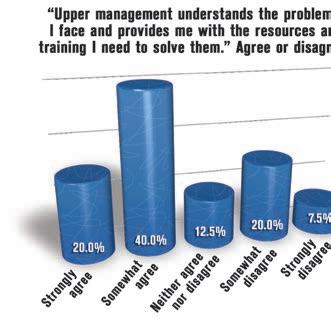
The statement garnered the largest negative sentiment, with 20% answering “somewhat disagree,” and 7.5% saying they “strongly disagree.” Roughly 13% answered “neither agree nor disagree.”
“Upper management needs to take a more active role to support the laundry operations,” writes a respondent.
“They need to be out on the floor once in a while and see some of the daily operations,” writes another. “A quick pass-through while heading to their office is not going to give you much insight to daily operations.”
One respondent puts it more bluntly: “They should spend more time on the floor getting a dose of reality.”
When asked to agree or disagree with the statement, “I’m satisfied with our company’s strategic direction,” once again, respondents were positive about upper management.
The answers “strongly agree” and “somewhat agree” were selected by 40% and 32.5% of respondents, respectively. Approximately 13% neither agreed nor disagreed with the statement, while 10% somewhat disagreed and 5% strongly disagreed.
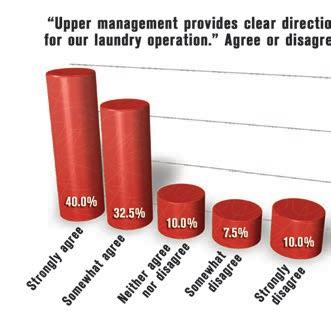
To the statement, “Upper management provides clear direction for our laundry operation,” respondents answered almost the same as to the direction statement. There was just a slight shift to the negative, with 10% strongly disagreeing with the statement and almost 8% somewhat disagreeing. Another 10% didn’t agree or disagree.
“They need to have more knowledge of the laundry industry,” writes a respondent. “Sometimes management is assigned without having any experience in the field.”
Another 40% of respondents strongly agreed that “Upper management has a long-term view and seems willing to invest in our laundry operation.” Roughly 28% somewhat agreed, while 15% neither agreed nor disagreed. Close to 13% somewhat disagreed with the statement and 5% strongly disagreed.
While the Your Views survey presents a snapshot of readers’ viewpoints at a particular moment, it should not be considered scientific. Due to rounding, percentages may not add up to 100%.
Subscribers to American Laundry News e-mails are invited to take the industry survey anonymously online. All managers and administrators of institutional/OPL, cooperative, commercial and industrial laundries are encouraged to participate, as a greater number of responses will help to better define operator opinions and identify industry trends. ALN
Clean Show has new address
ATLANTA — The Clean Show and its management company, Riddle & Associates, have moved to new offices here, the company reports. Their new address is 2751 Buford Hwy., Ste. 100; Atlanta, GA 30324.
Correction
Due to an editor’s error, Yamamoto Japan Inc. was incorrectly identified in the LargeCapacity Washer-Extractors Product Showcase published in the
The phone number remains the same, 404-876-1988. The new fax number is 404-968-9800.
Clean 2017 is slated for June 5-8, 2017, at the Las Vegas Convention Center. Exhibit sales will open in spring 2016. ALN
February issue.
American Laundry News regrets the error and apologizes for any inconvenience it may have caused.
ALN
Publisher
Charles Thompson
Phone: 312-361-1680
E-Mail: cthompson@ ATMags.com
Editorial Director
Bruce Beggs
Phone: 312-361-1683
E-Mail: bbeggs@ ATMags.com
Editor
Matt Poe
Phone: 231-740-2842
E-Mail: mpoe@ ATMags.com
Digital Media Director
Nathan Frerichs
Phone: 312-361-1681
E-Mail: nfrerichs@ ATMags.com
Advisory Board
Jim Buik • Richard Griffin
Greg Gurtler • Phil Hart
Janice Larson • Tom Marks
Gerard O’Neill
Richard Warren
Production Manager
Roger Napiwocki
National Sales Director

Donald Feinstein
Phone: 312-361-1682
E-Mail: dfeinstein@ ATMags.com
Main Phone: 312-361-1700 Fax: 312-361-1685
Subscriptions
630-739-0900 x100 www.americanlaundrynews.com
American Laundry News (ISSN 1091-9201) is published monthly. Subscription prices, payment in advance: U.S. 1 year $46.00; 2 years $92.00. Foreign, 1 year $109.00; 2 years $218.00.

Single copies: U.S. $9.00; Foreign $18.00. Published by American Trade Magazines LLC, 566 West Lake Street, Suite 420, Chicago, IL 60661. Periodicals postage paid at Chicago, IL, and at additional mailing offices.
POSTMASTER, Send changes of address and form 3579 to American Laundry News, Subscription Dept., 440 Quadrangle Drive, Suite E, Bolingbrook, IL 60440. Volume 42, number 3. Editorial, executive and advertising offices are at 566 West Lake Street, Suite 420, Chicago, IL 60661. Charles Thompson, President and Publisher. American Laundry News is distributed selectively to qualified laundry and linen management and distributors in the United States.

© Copyright AMERICAN TRADE MAGAZINES LLC, 2016. Printed in U.S.A. No part of this publication may be transmitted or reproduced in any form, electronic or mechanical, without written permission from the publisher or his representative. American Laundry News does not endorse, recommend or guarantee any article, product, service or information found within. Opinions expressed are those of the writers and do not necessarily reflect the views of American Laundry News or its staff. While precautions have been taken to ensure the accuracy of the magazine’s contents at time of publication, neither the editors, publishers nor its agents can accept responsibility for damages or injury which may arise therefrom.

MEMBERSHIPS
2 MARCH 2016 | AMERICAN LAUNDRY NEWS www.AmericanLaundryNews.com
INSIDE: March 2016 • Vol. 42 | No. 3 [8] 2016 Buyer’s Guide: Product/Service Directory [24] 2016 Buyer’s Guide: Company Directory [36] Classified Advertising [37] Source Directory
“
They have done everything they promised and more.”
– John Ambrose Magliocco, Arrow Linen, Garden City, NY
From

Arrow Linen first purchased their three Milnor CBW® tunnels two decades ago to replace conventional washer-extractors in their original laundry located in Brooklyn, NY. Since then, Arrow’s business grew to warrant a second laundry. In 2013, Arrow expanded operations–and raised their roof 11 feet! Arrow could have chosen any manufacturer to equip their new washroom, but they knew that would get longevity, durability, and accountability with Milnor.
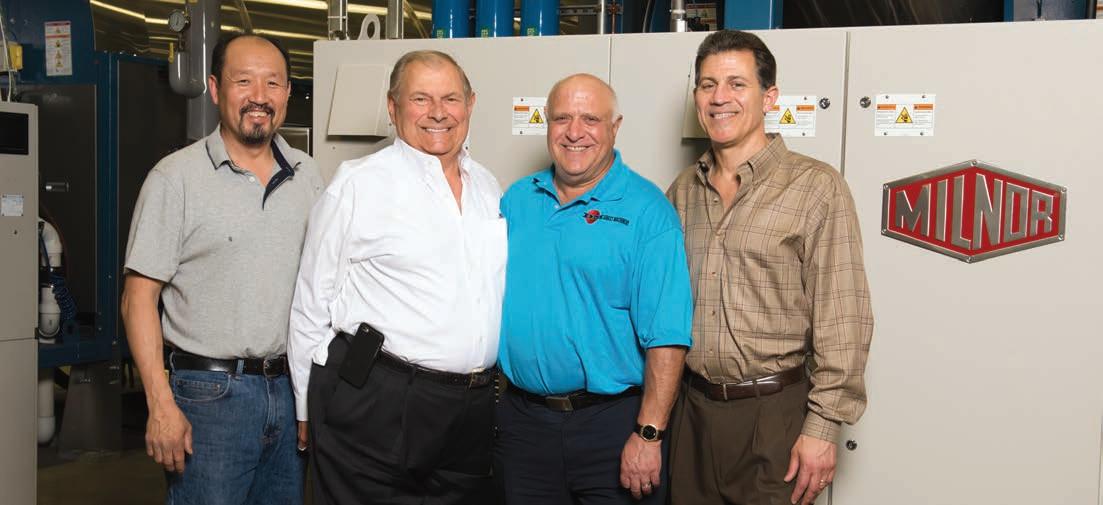
Arrow’s customers’ restaurant linen requires frequent color and soil change formulas, but the quality is not compromised. Corporate Engineer Frank Park boasted the tunnels “have increased our workload over 40% without increasing energy, water, or labor costs we experienced when we converted the conventional washers to CBW® tunnels over 20 years ago. The major improvements from the CBW® to PBW™ are far superior washing capability with only 50% water consumption.”
To find out how PulseFlow® can cut your water bill in half, contact an authorized Milnor distributor or call 504-712-7656.
www.milnor.com / pellerinmilnor
Scan to read Arrow’s success story.
left to right: Frank Park, John Ambrose Magliocco, Ron Hirsch, and John Anthony Magliocco
A vital reference resource
If you’re among the laundry/ linen managers looking to invest in new equipment — or perhaps are looking to restock your supplies — look no further than our 2016 Buyer’s Guide to help navigate you to the leading manufacturers and unique suppliers that specialize in serving the textile care industry.
Simply locate the product or service that you’re in the market for in our Product/Service Directory starting on page 8.

It lists companies that manufacture or exclusively distribute things like bar code equipment, carts, detergents, dryers, linens of all types, patient wear, washerextractors, and anything else you may need to run your laundry/ linen services operation.
Once you’ve found your pre-
From The Director’s Chair BRUCE BEGGS
ferred company, simply flip to the Company Directory beginning on page 24 to find their pertinent contact information: mailing address, phone numbers, website address and e-mail address.
As I’ve said many times, the ability to acquire and process
information is often what separates one business from another.
I’m sure that, during the course of managing your laundry/linen services operation, you rely on any number of resources to provide the means necessary for your staff and front-line workers to sort, wash, dry, fold, package and transport the goods in a safe, easy and efficient fashion.
This annual Buyer’s Guide adds a vital reference resource to your toolbox.
Keep this Guide handy, as I’m certain you’ll find it useful throughout the year. But if you should find yourself in need of it while on the road, fear not — our online version is available 24/7 at www.americanlaundrynews.com; click “Directories,” then “Buyer’s Guide.” ALN
Cart manufacturer R&B Wire Products marks 70th anniversary
SANTA ANA, Calif. — R&B Wire Products, a manufacturer of laundry carts, is celebrating its 70th anniversary this year, the company reports.
The self-service laundry industry was in its infancy when R-B Company started in 1946. World War II had ended, and the ingenuity of product design and development shifted from the war effort to practical products that improve the lives of everyday Americans. R&B set about filling the need for a handy cart to transport laundry from washers to dryers.
By 1966, Rea Rawlins was at the helm of R&B, while son Rick, a high schooler, worked weekends and summers welding and assembling laundry carts. These wire carts became the foundation for the company.
As R&B matured and Rick Rawlins graduated from college, the father and son became a dynamic team, the company says. Rick became R&B’s
president and CEO in the late 1980s when Rea decided to retire. Later, Rick followed in his father’s shoes yet again by becoming CLA board chairman in 2001.

Today, R&B Wire Products serves the commercial laundry, healthcare, hospitality, coin laundry, janitorial supply and material-handling market sectors with a global company presence, says Rick Rawlins.
“Celebrating 70 years of ‘Manufacturing Excellence’ is overwhelming and hard to conceive,” he shares, “but it certainly is something I am very proud of. I look back with a real sense of pride and thanks to our R&B distributors who have been instrumental in the development of R&B over this time.”
He further attributed R&B’s longevity to its commitment to a “Satisfaction Guaranteed” philosophy. ALN
The power of a smile and a ‘good morning’
I have a diverse work crew with 11 different languages spoken among my 75 employees. I live with cultural diversity every day. I am understandably proud about how well the crew gets along and works as a team to get the job done. I think an essential part of the success can be attributed to a daily ritual I have developed.
Every day when I get to work, before I dive into the challenges of managing a large central hospital laundry, I take a walk through my laundry and make sure I say “Good morning” to everyone in the laundry. When I started this, my employees were a little shocked and not sure what the crazy boss was doing. My motivation for doing this was to make sure that every employee felt like a valuable part of the team and to make the boss a little less scary.
It is easy to say that you have an open-door policy and employees are always welcome to come ask you questions. The fact that you have important decisions to make and an office is most often all the intimidation line employees need to keep them away. Your management position puts you in a position of power over them, and to keep the lines of communication open and to reduce turnover, a manager needs to do something different.
In my case, it was simply walking around and saying “Good morning” to every employee every day. A simple smile and a “Good morning” lets them know I see them as a part of the team and that I care about them. A smile, a wave and a “Good morning” gives them a connection to the boss.
“A SIMPLE SMILE AND A ‘GOOD MORNING’ LETS THEM KNOW I SEE THEM AS A PART OF THE TEAM AND THAT I CARE ABOUT THEM. A SMILE, A WAVE AND A ‘GOOD MORNING’ GIVES THEM A CONNECTION TO THE BOSS.”
I just had an employee retire after 46-plus years on the job. Working for the laundry was the only job she ever had. She enjoyed coming to work every day. We were her family. I am sure that, over the years, she had lots of opportunities to take other jobs for more pay and less physical work, but she decided to stay at the laundry. When I asked her why she stayed for all those years, the answer was simple, but powerful—“I feel like I belong here.”
Some say turnover is inevitable in entry-level jobs like those in the laundry industry, that employees will always be looking for something that pays more or is less physically demanding. I have never believed that this statement is true. Instead, I have always believed that people work where they feel valued. They work where they are treated with respect. A simple “Thank you” is treasured by our employees.
I watched with interest as a linen company went out of business a number of years ago. Toward the end, the people they hired to be supervisors had to fit a certain physical body type. They had to be tall (at least 6 foot, 3 inches), they had to be built like a football player, and their presence had to be intimidating. They managed by fear. Sadly, that works for a while, but it will never develop employee loyalty or goodwill.
I challenge you to be more open to your employees. Take the time to smile and say “Good morning” to each employee. If you are going to do this, then make sure you do not miss anyone or they will wonder what they have done wrong. It is most likely the most valuable 15 to 20 minutes of your day. ALN
Eric Frederick is director of laundry services for Carilion Laundry Service, Roanoke, Va., and a past president and manager of the year of the Association for Linen Management. You can reach him by e-mail at efrederick@carilion.com.

4 MARCH 2016 | AMERICAN LAUNDRY NEWS www.AmericanLaundryNews.com
COLUMNIST AT LARGE Eric L. Frederick, RLLD
Top Stories Appearing on AmericanLaundryNews.com for the 30 Days Ending February 15 (WE) = WEB EXCLUSIVE NEWS • Washing Systems Completes Recapitalization • Carnegie Exits NYC Hotel Linen Market to Focus on Valet ... (WE) • Study Shows Reusable Mattress Covers Can Reduce HAIs (WE) • Fibertech Inc. Installs Ferry RS-4000 Rotational Molder (WE) • Maxi-Movers Expands in California—Plus Georgia ... (WE) COLUMNISTS/FEATURES • OPL 101: Using Technology, Distributor Support to Stay ... • Eric Frederick: Need to Control Lint is Manifold • Emergency Preparedness Takes Planning • Capital Improvement Approval Made Easier OUR SISTER WEBSITES From AmericanDrycleaner.com: • NCA/DLI Makes Annual Trek to Sunny Mexico (WE) • Plant Design Awards— Outstanding Strip Location ... From AmericanCoinOp.com:
Firestone Financial Introduces Application-Only Loan ... (WE)
Distributor HK
Equipment Relaunches ... (WE)
•
•
Laundry



























800 821 2221 | imagine@americandawn.com | americandawn.com
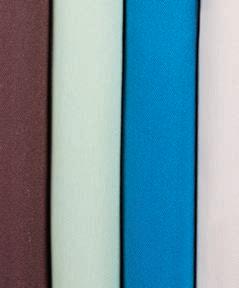
by TM The LunchkinTM is intended to extend the color o ering of The Greenie. Six additional colors to replace paper napkins in any lunch setting. Beyond the environmental benefits of The Greenie, The Lunchkin creates a fine dining experience -- at lunch. And the cost is about the same or less than paper napkins! Made in USA Fabric
Milliken. Made in USA Fabric By Milliken.
Replaces single use paper napkins at a lower cost
Creates a better dining experience and sets you apart in the marketplace
Lasts over 100 wash cycles
Never ironed, less energy use
Saves up to 5 billion pounds of trash per year Signature Plus is a registered trademark for Milliken & Company for fabrics. • Smaller 15” x 12” Lap Size
Your table linens touch every Customer at every event. Your linen needs to speak their language… fresh, clean, safe, consistent, reliable, and yes - elegant. They count on it. Together, ADI and Milliken have set the standard of linen excellence for decades. USA made Signature Plus fabric. Soft luxurious hand, consistent long-lasting color. Whites that stay white, and colors that stay bright. ADI American Dawn. The world’s leading supplier of Milliken Signature table linen products. Count on us. The Greenie® is America’s choice to replace paper napkins! At breakfast and lunch, if every American uses reusable linen napkins instead of paper, we can save 60,000,000 trees per year! That means cleaner air, less water use, less energy use, less waste in landfills, less toxic paper production chemicals. And the best part... Money raised through the sale of this product is given back - to educate our children on keeping the planet clean and safe. 84% of Americans prefer cloth vs paper at the table. The Greenie® Because it’s the right thing to do.
Lunchkin
By
•
•
•
•
•
Biloxi
contractors to determine which machines and systems would be most beneficial, effective and efficient for our customers.”
“It was problematic, we had to send our employees and laundry to Tuscaloosa initially so that it could be processed, then to Houston where laundry was processed until our new facility was rebuilt,” says McAdory. “We had to arrange transportation through the contracted services of Glory Enterprises, utilizing trailers to house and store soiled and cleaned linen.”
The plan to combine the campuses was accelerated, according to the VA, and master planning and development jump-started for a major clinical addition, blind rehabilitation center, mental health unit, community living center, and support facilities consisting of a laundry and dietetics building, a parking garage and a utility plant.
The clinical addition, blind rehabilitation center, mental health unit and community living center opened in 2011 and 2012.
Now, the support facilities, including the new laundry, are opening to help serve the more than 60,000 veterans along the Alabama and Mississippi Gulf Coast, and the Florida Panhandle, the VA says.
“Many meetings with contractors and engineers took place that determined a facility should be built with energy efficiency, reduced maintenance and quality improvement savings to VHA,” McAdory says. “Our employees have been very conscientious, working closely with vendors and
Gayden says the new laundry facility utilizes a state-of-the-art steamless processing center.
“The steamless technology laundry equipment will reduce the building’s energy and water consumption,” he says. “I was not working for the VA system prior to Hurricane Katrina, but I understand that they are not close in comparison.”
All of the employees assigned to the processing facility, including Gayden, he admits, had no experience in laundry processing. Still, after just one week of training, the facility was processing its own laundry.
“This system is so automated, basic computer training is a must for all employees,” says Gayden.
He says that the Textile Processing Facility has been designated as the training facility for all prospective laundry managers within the VA system.
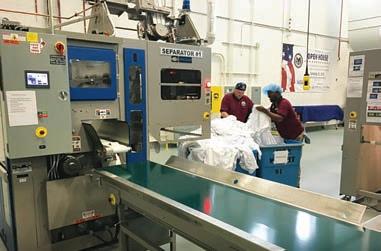
The facility has a “laundry list” of new equipment, which is expected for a facility that can process 10 million pounds annually and is a manager training ground.
Gayden says the new equipment includes:
• From Pellerin Milnor Corp., two 150-pound, 10-pocket tunnel washers; 350-pound and 450-pound conventional washer-extractors; three 90-100-pound conventional washer-extractors; eight 220330-pound gas-heated drying and conditioning tumblers with external lint collection systems; three 125-150-pound gas-heated drying and condi-

tioning tumblers; and a 450pound gas-heated drying and conditioning tumbler with lint collection system.
• From Chicago Dryer Co., a blanket folder, three smallpiece folder-stackers, three sheet spreaders and folders and three automatic linen separators.
• A Colmac steam tunnel gar-
ment finisher.
• A Felins shrink wrap system and a tying system.
• A Jensen garment folder.
• A six-head and a one-head embroidery system from SWF.
• Six lint collection scrubbers from Energenics.
With all of that equipment, the facility has another “laundry list” that is growing: the textiles that it
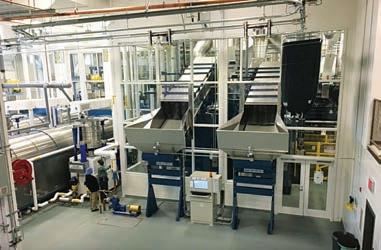
processes for the healthcare facility and other customers.
The Textile Processing Facility processes sheets (operating room [OR] and white), thermal blankets, washcloths, bath towels, patient gowns, reusable pads, baby items, bedspreads, comforters, slings, laundry bags, scrubs (OR and clinical), lab coats, pillowcases, huck towels, wet and dry mops, and microfiber rags.
“As I said before, this system is so automated, there are no challenges for this staff,” Gayden says. “But there is one item that is timeconsuming—scrubs. They have to be sorted by size and colors first, then processed.”
While the facility is capable of processing 10 million pounds annually, Gayden says it is on track to process up to 1.6 million in 2016. This includes all of the textiles from the healthcare facility, plus outside customers.
“That’s how much we’ll process, unless other customers come aboard,” he says. “Some pre-Hurricane Katrina customers are projected to come back to our system, but there is no confirmed date.”
Gayden says the pre-Katrina customers include the Air National Guard Base, New Orleans, VA; Jackson, Miss., VA; and the Naval Air Station in Pensacola, Fla.
“I am currently working with the Air National Guard Base to secure their business,” he adds. “The staff here at the Gulf Coast Veterans Health Care System, Textile Care Processing Facility, look forward to consistently providing high-quality linen and customer service to both new and current customers as well as training projected laundry plant managers throughout the VA system.” ALN
guidelines require stringent infection prevention measures to reduce environmental bioburden and invisible organism counts on all patient care surfaces. Included in these guidelines are daily cleaning with advanced tools and products, testing beyond visual inspections and more personnel training.
THE HEALTHCARE PERSPECTIVE
Gone is the term “housekeeping” from healthcare job descriptions. Instead, the term “environmental service (EVS) technician” more accurately defines the advanced role required of EVS staff in 2016. And responsibility for clean facilities has moved beyond EVS. It’s become standard that hospitals now have designated infection control staff that work closely with nursing teams and EVS. And even the C-suite is involved.
According to one chief financial officer (CFO) interviewed in Becker’s Infection Control & Clinical
Quality newsletter, Pamela Hess of Saint Thomas Midtown and Saint Thomas West Hospitals in Nashville, Tenn., “In the past, I wasn’t involved in many of the quality and infection control meetings, but with readmissions [due to HAIs] impacting reimbursement, I had to get involved.
A study on the patient cost of C. diff was conducted at Barnes-Jewish Hospital in St. Louis and later published in Infection Control and Hospital Epidemiology. The study consisted of researchers analyzing the records of nearly 4,000 patients who developed C. diff infections between 2003 and 2009. The result? Researchers found that the average cost of recurrent C. diff infections in patients during the study period was $11,361 (and that is in 2009 dollars).
WHAT INFECTION SPECIALISTS SAY
“For many years, we focused on the transmission of organisms from staff to patient and then back to staff,” says Peggy Leubbert, MS, CIC, CHSP, CBSPD, certified infection preventionist at Nebraska Orthopedic Hospital in Omaha, Neb. “But in the past five years,
we have recognized that transmission through the environment is a big issue, too. Any inanimate object that serves as a fomite that workers may touch is an area of concern for infection control. The focus today is to prevent or minimize any transmission between surfaces and people, as well as between people.”
Luebbert says many hospitals look to OSHA’s Hierarchy of Control in regard to infection prevention. This includes a focus on protecting workers in order of importance: eliminate hazards, engineer solutions, follow procedural controls and the use of personal protective equipment (PPE).
In the future, she believes healthcare will see even more engineered controls, such as safe textiles that
prevent the growth of organisms.
“We already have some excellent safe textiles on the market and expect them to get even better in the future,” she says.
Some doubt there will ever be engineered solutions effective enough to prevent the growth of dangerous bacteria.
“There are many new products that strive to prevent infection, but what we are seeing is that there is no silver bullet. You must couple these ideas with good practice of the basics of infection prevention” says Barb Connell, MS, MT(ASCP)SH, vice president of Clinical Services for Medline, Mundelein, Ill.
“I believe that in the future we will see a new focus on the basics. Ebola really opened people’s eyes as to how ill-equipped our healthcare organizations were to deal with the disease,” she says. “It was an extreme example, but we learned that basic gowning procedures weren’t being followed for PPE.”
GOING FORWARD
What are the implications for the textile services industry? On the supplier side, engineered advances in textile technology, chemistry and
machinery can help minimize or, in the future, perhaps eliminate the spread of bacteria. On the laundry side, incorporating the highest standards for processing healthcare textiles is critical. Certification or accreditation of one’s facility makes good sense.
Beyond that, training employees and clients in the proper handling and storage of linen is of paramount importance. It can’t be overstated. Many laundries conduct regular inservice training with clients on best practices for linen handling. But it’s a challenge to get clients to attend these events.
“We need more education for healthcare workers on why and how they should follow best practices for infection control,” says Connell. “Hospitals provide mandatory training in CPR, but not for standard contact precautions. I think we might see this change — it is probably the most important thing we can do to help keep staff and patients safe.” ALN
Nancy Jenkins is the executive director of the American Reusable Textile Association (ARTA). You can reach her at njenkins@ARTA1.com.
6 MARCH 2016 | AMERICAN LAUNDRY NEWS www.AmericanLaundryNews.com
Continued
from Page 1
The medical center’s processing facility features several new washer-extractors.
Facility staff load the flatwork separator and conveyor system during the open house.
Continued from Page 1
EMPLOYEES AND CLIENTS IN THE PROPER HANDLING AND STORAGE OF LINEN IS OF PARAMOUNT IMPORTANCE.”
Infection
“TRAINING
TWO ARE BETTER THAN ONE.
Happy with the productivity, efficiency and flexibility of his first Girbau Industrial (GI) tunnel system, Rick Rone of Laundry Plus maintains the decision to invest in a second identical system was a no-brainer. He likes the security they bring.
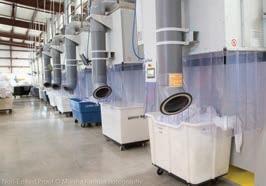



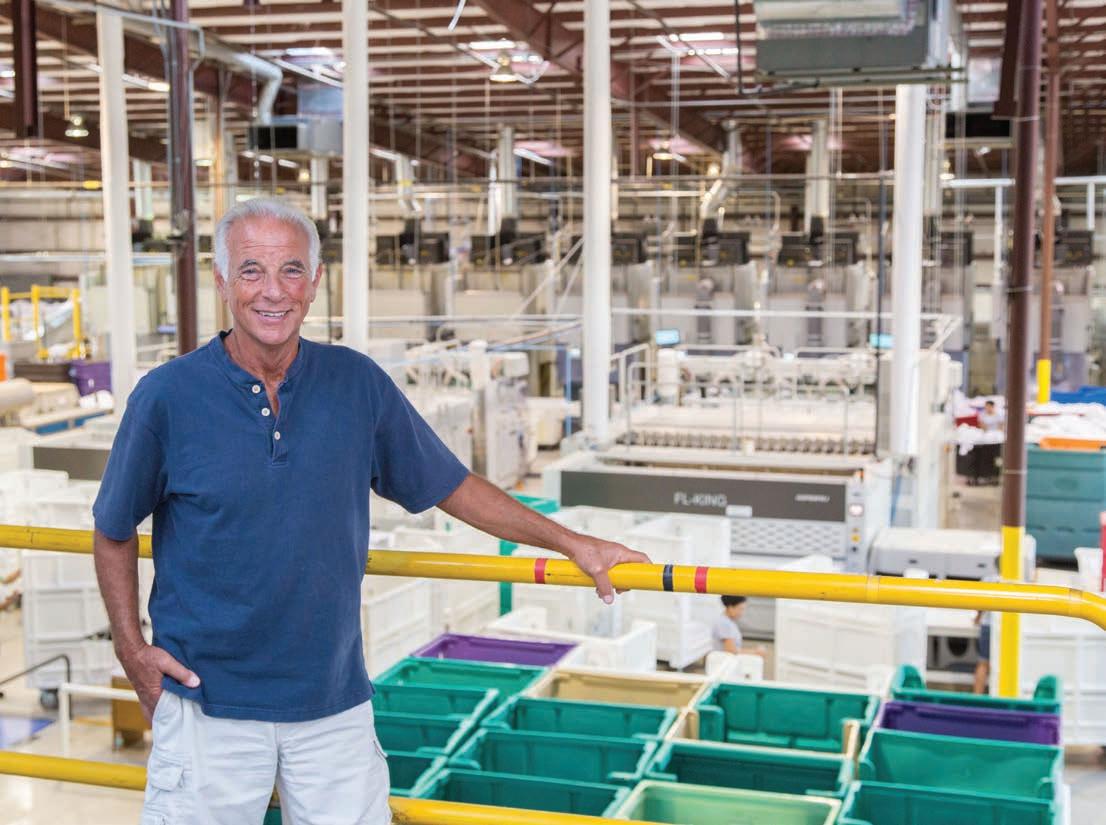
By adding a second GI tunnel system and moving equipment from two buildings into one, Rone enjoys streamlined production. The new plant – with its arsenal of high-performance equipment – opens the floodgates to new business, ensures backup in case of a mechanical failure, and allows Rone to launch a new linen rental program.



Since moving to the new plant and installing its second tunnel, another ironing line and additional open-pocket washers, Laundry Plus has boosted pounds of laundry per operator hour (PPOH) by 15-18 percent.


LAUNDRY SOLUTIONS FOR WET
ON-PREMISE
CONTACT GIRBAU INDUSTRIAL TO SEE HOW WE CAN INCREASE YOUR PPOH!
CLEANING,
& INDUSTRIAL LAUNDRIES
Rick Rone
www.girbauindustrial.com • (800) 256-1073 INDUSTRIAL
Laundry Plus, Bradenton, Florida
Product / Service Directory

Welcome to the 2016 American Laundry News Buyer’s Guide, which is being circulated to all segments of the laundry/linen services industry.

Our annual Buyer’s Guide begins here on Page 8 with a directory of products and services that are important to institutional/on-premise laundries or textile rental companies (commercial, industrial or linen supply).

It continues on Page 24 with a directory of companies that responded to our request for updated information.
The contact information, including e-mail addresses, is subject to change without notice.
Air Vacuum Units
Hoffman-New Yorker
Rema Dri-Vac Corp.
Steiner-Atlantic Corp.
Vaporpress by Leonard
Alkalies
Caled Chemical
Ecolab
Economic Laundry Solutions
Epic Industries
Faultless Starch
Gurtler Industries
Innovative Chemical Systems
Klipper Group
Norchem Corp.
Pariser Industries
Santec
Seitz
Simoniz USA Inc.
Sunburst Chemicals
Team Systems Unichem Corp. U.N.X. Inc.
Wausau Chemical Corp.
World Cleaning Solutions
Antimicrobial Laundry Additive

EDMAR Chemical Co.
Gurtler Industries
Aprons (Garment)
ADI American Dawn
American Associated Companies
At Work Uniforms
Best Textiles Acquisition
Calderon Textiles
Chef Works
Encompass Group
Euclid Vidaro Mfg. Co.
Harbor Linen
K-Tex
Medline Industries
Omni Apparel
Orr Textile Co.
Riegel div. Mount Vernon Mills
SanMar
Southern Converters
Spector Textile Products
Standard Manufacturing Co.
Superior Uniform Group Venus Group
Bags, Conveyor
A-1 Flatwork Ironer Specialists
Bobco Systems
E-Tech
The Green Garmento
Industrial Bag & Specialties
K-Tex
Lavatec Laundry Technology
Lubbert Supply Co.
Material Flow Systems
Ryco Conveyors
Storms Industries
Tingue
Bags, Laundry
A-1 Flatwork Ironer Specialists
ADI American Dawn
Advanced Poly-Packaging
American Associated Companies
Bobco Systems
C&W Equipment Co.
California Textiles
Carolina Textile Products
Encompass Group
Euclid Vidaro Mfg. Co.
The Green Garmento
Hagco Industries Harbor Linen Hot Bag
Industrial Bag & Specialties
K-Tex
LanCha Textiles
Laundry Loops
Material Flow Systems
Medline Industries
MIP
Olek Belts
Orr Textile Co.
Plexus Industries
R&B Wire Products
Royal Basket Trucks
Royal Blue International Ryco Conveyors
The Sewing Source
Shamron Mills
Southern Converters
Spector Textile Products
Standard Manufacturing Co.
Standard Textile
Steele Canvas Basket Corp.
Storms Industries
Streamline Solutions Tingue
Venus Group
Bags, Sling
A-1 Flatwork Ironer Specialists
Bobco Systems
C&W Equipment Co. Carolina Textile Products Covers Etc.
E-Tech
FLM Fairfield Laundry Machinery Gardner Machinery Corp. The Green Garmento
Industrial Bag & Specialties Jensen USA
K-Tex
Lubbert Supply Co.
Material Flow Systems
MODRoto Olek Belts
Orr Textile Co.
Plexus Industries Ryco Conveyors
Softrol Systems Southern Converters Speed Check Conveyor Storms Industries
Tingue
Bar Code Equipment/Supplies
Automation Dynamics Centrex Technologies Computype EzProducts Intl.
IPC-Tags Material Flow Systems
Metalprogetti USA
Phoenix Scale Co.
Sharp Packaging Systems Texas Automation Products
Thermopatch
Baskets
A-1 Flatwork Ironer Specialists
American Associated Companies
Iowa Techniques
R&B Wire Products
Royal Basket Trucks
Steele Canvas Basket Corp.
Steiner-Atlantic Corp.
Storms Industries
Tecni-Quip Carts

Tingue, Brown & Co.
Basket Liners/Covers
A-1 Flatwork Ironer Specialists
American Associated Companies
Carolina Textile Products
K-Tex
MODRoto
R&B Wire Products
RAMCO Laundry Machinery
Royal Basket Trucks
Southern Converters
Spector Textile Products
Steele Canvas Basket Corp.
Storms Industries Streamline Solutions
Tingue
Belts
A-1 Flatwork Ironer Specialists
Consolidated International Corp.
Lubbert Supply Co.
MODRoto
New Jersey Wire Cloth Co.
Olek Belts Texchine Inc.
Blankets/Spreads
ADI American Dawn
American Associated Companies
At Work Uniforms
Calderon Textiles
Domestic Fabrics & Blankets
Encompass Group
K-Tex
Medline Industries

MIP
Orr Textile Co.
Phoenix Textile Corp.
Riegel div. Mount Vernon Mills
Royal Blue International
Standard Manufacturing Co.
Standard Textile
United Feather & Down
Venus Group
White Knight Engineered Products
Blazers/Jackets
Chef Works
Codet Newport Corp. (Big Bill)
Dickies
Encompass Group
Standard Manufacturing Co.
Standard Textile
Superior Uniform Group Workrite Uniform Co.
Bleach
Adco Products
Advanced Blending & Packaging
Anderson Chemical Co.
D.W. Davies & Co.
Economic Laundry Solutions
Epic Industries
Faultless Starch
Gurtler Industries
Innovative Chemical Systems
Kingsfield
Klipper Group
Kreussler
Norchem Corp.
Pariser Industries
Procter & Gamble Professional Sani Wash
Santec Seatex
Seitz
Simoniz USA Inc.
Spartan Chemical Co.
Team Systems
TMA/Chemnet Systems Unichem Corp. U.N.X. Inc.
Venture Labs Washing Systems Wausau Chemical Corp. World Cleaning Solutions
Boilers & Related Systems
Armstrong International
Clayton Industries
Cleaver-Brooks
Columbia Boiler
The Fulton Companies
General Boiler
Hamilton Engineering
Hoffman-New Yorker
J.P. Equipment
Lattner Boiler Co.
The Laundry List, Inc.
Ludell Manufacturing
R.W. Martin & Sons
MultiTherm
National Combustion Co.
Pacific Steam Equipment
8 MARCH 2016 | AMERICAN LAUNDRY NEWS www.AmericanLaundryNews.com
ALN_Tab_1-4_H.indd 1 2/2/16 9:51 AM ▲
Notice Anything?























InkGo® Is Now Odor Free!






InkGo has been reformulated to remove its odor… and to improve its performance.

















InkGo is still the environmentally friendly,* safe way to remove ink stains from all types of fabric. It’s still great at removing autoclave tape and adhesives. And since it’s odor-free, InkGo is more pleasant to work with.






Does odor really matter? As more drycleaners position themselves as good environmental stewards, keeping chemical odors in the plant to a minimum can help them differentiate from their competition. And odor-free is a real plus if you’re working on ink for an extended period of time.



Now that’s worth noticing!



*InkGo is Biodegradable and is California Prop-65 and California VOC Compliant.












Become a STAIN WIZARD at ALWilson.com

To learn more, visit ALWilson.com or call 800-526-1188 A. L. WILSON CHEMICAL CO.


A HISTORY OF EXCELLENCE, A FUTURE OF POSSIBILITIES
A & B Wiper Supply is now Monarch Brands. We have changed our name to better reflect the full breadth of high quality and valuepriced textiles from manufacturers around the world. From global textile sourcing to private label programs, we have you covered, whatever your needs may be. Leverage our experience and purchasing power to find the perfect blend of quality and price point for your company.
PRODUCT / SERVICE DIRECTORY
Parker Boiler Co.
RAMCO Laundry Machinery
Raypak
Reimers Electra Steam
Rema Dri-Vac Corp.
Sellers Manufacturing Co.
Stanco Industries
Steamgard
Thermal Engineering of Arizona
Topog-E Gasket Co.
Washburn Machinery Wausau Chemical Corp.
Carts/Trucks
AMKO America/JBI Industries
Bayhead Products Corp.
Bobco Systems
C&W Equipment Co.
Chem-Tainer Industries
Cornerstone Equipment & Rigging
Diversified Plastics
Doberman Tuff
Domus
Dura-Cast Products
Durable Superior Casters
E-Tech
Ebco Industries Fibertech
Gardner Machinery Corp.
George O’Day’s
Granger Plastics Co.
G.S. Manufacturing
Iowa Techniques
J.P. Equipment
Leebaw Mfg. Co.
McClure Industries
M.I.T. Poly-Cart Corp.
MODRoto
Olek Belts
Orr Textile Co.
Precision Conveyors
Production Design Products
R&B Wire Products
RAMCO Laundry Machinery
Rotational Molding
Royal Basket Trucks
Ryco Conveyors
Southern Converters
Steele Canvas Basket Corp.
Steiner-Atlantic Corp.
Storms Industries
Techstar Plastics
Tecni-Quip Carts Tingue
Unifuse
Cart Covers
A-1 Flatwork Ironer Specialists
ADI American Dawn
American Associated Companies
Bobco Systems
C&W Equipment Co.
Carolina Textile Products
Chem-Tainer Industries
Diversified Plastics
Dura-Cast Products
Durable Superior Casters Encompass Group
Euclid Vidaro Mfg. Co.
Gourmet Table Skirts & Linens
G.S. Manufacturing
Industrial Bag & Specialties
Iowa Techniques
K-Tex
McClure Industries
Medline Industries
MODRoto
Orr Textile Co.
PHS West
Plexus Industries
R&B Wire Products
RAMCO Laundry Machinery
Royal Basket Trucks
Southern Converters
Spector Textile Products
Standard Manufacturing Co.
Steele Canvas Basket Corp.
Steiner-Atlantic Corp.
Storms Industries
Streamline Solutions
Tecni-Quip Carts
Tingue
White Knight Engineered Products
Cart/Truck Dumpers
Automation Dynamics
Bobco Systems
Direct Machinery Sales Corp.
Durable Superior Casters
E-Tech Granger Plastics Co.
J.P. Equipment
McClure Industries
Orr Textile Co.
R&B Wire Products
RAMCO Laundry Machinery
Speed Check Conveyor Steele Canvas Basket Corp. Steiner-Atlantic Corp. Tingue
Cart/Truck Movers/Tuggers
Appleton Mfg. Division
Lift Free Products
PHS West
Cart Washers
Automation Dynamics
Cornerstone Equipment & Rigging Direct Machinery Sales Corp. Energenics Corp. Jensen USA
J.P. Equipment
The Laundry LIst, Inc.
R.W. Martin & Sons
McClure Industries
Production Design Products
RAMCO Laundry Machinery Steiner-Atlantic Corp.
Tingue
WET-TECH, The Ozone People
Casters/Wheels
Bobco Systems

Caster Connection Durable Superior Casters Tingue
Ceiling Cleaning Systems
Material Flow Systems SonicAire
Chemical Dispensers/Injection
Caled Chemical
Custom Control Systems
Ecolab
Economic Laundry Solutions Epic Industries Faultless Starch Gardner Machinery Corp. Gurtler Industries Hydro Systems Co. Innovative Chemical Systems Knight Kreussler Norchem Corp. Pariser Industries Procter & Gamble Professional RD Industries Sani Wash Santec Seitz
Seko Dosing Systems Corp. Shepard Bros. Simoniz USA Inc.
Softrol Systems Sunburst Chemicals
TCD Parts Team Systems Unichem Corp. U.N.X. Inc.
Urine-Off by Bio-Pro Research
Venture Labs
Washing Systems
Wausau Chemical Corp. World Cleaning Solutions Zep Inc.
Chemicals, Water Treatment
AquaRecycle
Armstrong International Caled Chemical D.W. Davies & Co.
Direct Machinery Sales Corp. Economic Laundry Solutions Kingsfield Klipper Group
Norchem Corp. Pariser Industries Royaltone Co.
Santec Shepard Bros. Unichem Corp. U.N.X. Inc.
Walchem
Washing Systems Wausau Chemical Corp.
WET-TECH, The Ozone People
10 MARCH 2016 | AMERICAN LAUNDRY NEWS
or
to
Call 800-333-7247
visit monarchbrands.com
learn more.
Zep Inc.
Cleanroom Equipment
G.A. Braun
Electrolux
Jensen USA
Laundrylux
Material
Flow Systems
R&B Wire Products
RAMCO Laundry Machinery
Steiner-Atlantic Corp.
UniMac
WET-TECH, The Ozone People
Coats
ADI American Dawn
American Associated Companies
Chef Works
DenLine Uniforms
Dickies
Encompass Group
Euclid Vidaro Mfg. Co.
Medelita
Omni Apparel
Royal Blue International
SanMar
The Sewing Source
Superior Uniform Group
Venus Group
Vestagen Technical Textiles
Walls Industries
White Knight Engineered Products
Workrite Uniform Co.
Coils
Armstrong International Commercial Coils
MultiTherm
RAMCO Laundry Machinery Thermal Engineering of Arizona
Compressed Air Equipment
Armstrong International
Direct Machinery Sales Corp.
Kaeser Compressors
The Laundry List, Inc.
RAMCO Laundry Machinery
Saylor-Beall Mfg.
Stanco Industries
Steiner-Atlantic Corp.
Texas Automation Products
Topog-E Gasket Co.
Connectors/Tubing
Industrial Specialties Mfg. TCD Parts
Consulting Services
(Contact companies for specifics)
Active Vision
Alliant Systems
American Laundry Systems
Aquawing Ozone Laundry Systems

ARCO/Murray Natl. Const. Co.
Armstrong International Arnopole & Associates
Astar
John Barry & Associates
Bobco Systems
Centrex Technologies
Cleaver-Brooks
Computer Software Architects
Direct Machinery Sales Corp.
Dsquared Design Solutions
Dye Systems
Economic Laundry Solutions
Electrolux
Encompass Group
Fike & Fike, Inc.
Gardner Machinery Corp.
J.P. Equipment
Kannegiesser USA
Klipper Group
Victor Kramer Co.
Laundry Design Group
Laundry-Consulting.com
Laundrylux
Lavatec Laundry Technology
Medline Industries
Ozone Water Technologies
Pariser Industries
Performance Matters
Pertl & Alexander
Phoenix Textile Corp.
Positek RFID
Precision Conveyors
Procter & Gamble Professional
Production Design Products
RAMCO Laundry Machinery
Sani Wash
Spindle
Steamgard
Steiner-Atlantic Corp.
Standard Manufacturing Co.
Standard Textile
John D. Stepnes Co.
TBR Associates
Technical Consulting Associates, LLC 3E Technologies
Turn-Key Ind. Engineering Services
Vaporpress by Leonard Victor Kramer Co.
Wascomat
Water Energy - Laundry Consulting WET-TECH, The Ozone People World Cleaning Solutions

Continuous Towels/Cabinets
Calderon Textiles
Darman Manufacturing Co.
Direct Machinery Sales Corp.
George O’Day’s
Kennedy Hygiene
Midwest Specialty Products
Steiner-Atlantic Corp.
Venus Group
Continuous Towels Processing Equipment
Darman Manufacturing Co.
Conveyor Equipment & Parts

Automation Dynamics
Bobco Systems
Consolidated Laundry Machinery
Cornerstone Equipment & Rigging
Direct Machinery Sales Corp.
Durable Superior Casters E-Tech Felins USA
Forenta
Gardner Machinery Corp.
Girbau Industrial Jensen USA
Lavatec Laundry Technology
Material Flow Systems Metalprogetti USA MODRoto
New Jersey Wire Cloth Co.
RAMCO Laundry Machinery
RK Conveyors
Ryco Conveyors
Sankosha USA
Softrol Systems Speed Check Conveyor Steiner-Atlantic Corp.
Tingue
Uniflo Technologies
Conveyors
AMKO America/JBI Industries
Bobco Systems
Colmac Industries
Consolidated Laundry Machinery
Direct Machinery Sales Corp.
E-Tech Ellis Corp.
Felins USA
FLM Fairfield Laundry Machinery
Forenta
Gardner Machinery Corp.
Girbau Industrial Jensen USA
J.P. Equipment
The Laundry List, Inc.
Lavatec Laundry Technology
Leonard Automatics
Material Flow Systems
Metalprogetti USA
Olek Belts
RAMCO Laundry Machinery
RK Conveyors
Ryco Conveyors
Sankosha USA
Shrink Tech Systems
Softrol Systems
Speed Check Conveyor
Steiner-Atlantic Corp.
Uniflo Technologies
Vega Systems USA
Counting/Monitoring Systems
Automation Dynamics
Colmac Industries
Computer Software Architects
Custom Control Systems
Direct Machinery Sales Corp.
Gardner Machinery Corp.
•
•
•
•
•
•
•
CUSTOM
▲
products
needs.
Institutional Sheets
Cabana & Spa Towels
First Quality Collections
In addition to customer favorites, we now carry even more
to service your
Download our full catalog at monarchbrands.com. •
•
•
Eclipse Towel Lines
Route Ready Bar Mops
Performax Microfiber Lines
Microfiber Cloths & Mops
SmartChoice Wet Mops
Poly Spun Napkins
Personalized Product Lines
OFFERINGS INTRODUCTORY SPECIALS • Save up to 70¢/dozen when you eliminate pre-washing and counting these 32oz bar towels • Soft packed, optically white, and ready to use • Pre-packed bundles of 25 Promote your brand 24/7 with complimentary logo label embroidery! • Personalized microfiber products, terry towels, and bar mops • Ultimate control over inventory • Carry your own product line • Free advertising for your brand Call us to learn how you can carry your own lines for no additional cost!
NEW
SOLUTIONS • Wide variety of colors • Price breaks for bulk orders • 16”x16” microfiber cloths • Use for wet or dry cleaning 35¢ MICROFIBER CLOTHS • Commercial quality microfiber looped flat mops • 80% Polyester, 20% Polyamide • Cut your cleaning costs without sacrificing quality • 18” long with Velcro backing 95¢ SMARTCHOICE WET MOPS $3.25/doz ROUTE READY BAR MOPS Call 800-333-7247 or visit monarchbrands.com to learn more.
AMERICAN LAUNDRY NEWS | MARCH 2016 11
PRODUCT / SERVICE DIRECTORY
Jensen USA
Leonard Automatics
Material Flow Systems
Pennsylvania Scale Co.
Phoenix Scale Co.
Sharp Packaging Systems
Softrol Systems
Spindle
Stanco Industries
Steiner-Atlantic Corp.
TAGSYS RFID WesVic Systems
Coveralls/Jumpsuits
ADI American Dawn
Codet Newport Corp. (Big Bill)
Dickies
Encompass Group
Euclid Vidaro Mfg. Co.
Omni Apparel
Orr Textile Co.
Standard Manufacturing Co.
Superior Uniform Group
Walls Industries
White Knight Engineered Products
Workrite Uniform Co.
Deodorizing/Odor Control Equipment/Products

Adco Products
EDMAR Chemical Co.
F-Matic
Gurtler Industries
Kennedy Hygiene
Neuhaus Chemical Products
Urine-Off by Bio-Pro Research
Vaportek
West Sanitation Services
Detergents
Adco Products
Advanced Blending & Packaging
Anderson Chemical Co.
Caled Chemical
D.W. Davies & Co.
Ecolab
Economic Laundry Solutions
Epic Industries
Esporta Wash Systems
Faultless Starch
Gurtler Industries
Innovative Chemical Systems
Kingsfield
Klipper Group
Kreussler
Miele Professional
Norchem Corp.
Pariser Industries
Royaltone Co.
Sani Wash
Santec
Seatex
Seitz
Shepard Bros.
Simoniz USA, Inc.
Spartan Chemical Co.
Sunburst Chemicals
Team Systems
TMA/Chemnet Systems Unichem Corp. U.N.X. Inc.
Vaska Venture Labs
Washing Systems
Wausau Chemical Corp.
World Cleaning Solutions Zep Inc.
Detergent-Free Laundry Technology
Aqua Solutions
Drain Troughs/Lint Interceptors
Cornerstone Equipment & Rigging H-M Co.
Dryer Controls/Repair
ALJ Electronics
AMKO America/JBI Industries
B&C Technologies
Consolidated Laundry Machinery
Continental Girbau
Custom Control Systems
Direct Machinery Sales Corp. Ellis Corp.
Girbau Industrial Huebsch Jensen USA
Kannegiesser USA
Lavatec Laundry Technology
PODAB
RAMCO Laundry Machinery
Softrol Systems
Speed Queen Steiner-Atlantic Corp.
UniMac
Dryers, 100 Pounds or Less
Alliance Laundry Systems
American Dryer Corp. (ADC)
AMKO America/JBI Industries
B&C Technologies
Cincinnati Laundry Equipment
Consolidated Laundry Machinery
Continental Girbau
Cornerstone Equipment & Rigging
Danube International
Dexter Laundry
Direct Machinery Sales Corp.
Domus
EDRO Corp. Electrolux Ellis Corp. Huebsch Imesa USA IPSO
J.P. Equipment Laundrylux
Lavatec Laundry Technology
LG Maytag Commercial Laundry Miele Professional Milnor Laundry Systems
PODAB
Primus
RAMCO Laundry Machinery
Sani Wash
Speed Queen Stanco Industries
Steiner-Atlantic Corp.
Trevil America
UniMac
Vaporpress by Leonard Wascomat
Washburn Machinery WashTech
Yamamoto Japan Inc.
Dryers, 101 to 400 Pounds
American Dryer Corp. (ADC)
AMKO America/JBI Industries
B&C Technologies
G.A. Braun
Cincinnati Laundry Equipment
Consolidated Laundry Machinery Continental Girbau
Cornerstone Equipment & Rigging Danube International
Direct Machinery Sales Corp.
Domus
EDRO Corp. Electrolux Ellis Corp. Girbau Industrial Imesa USA J.P. Equipment Kannegiesser USA
The Laundry List Inc.
Laundrylux
Lavatec Laundry Technology R.W. Martin & Sons
Maytag Commercial Laundry Milnor Laundry Systems
RAMCO Laundry Machinery Sani Wash
Speed Queen
Stanco Industries
Steiner-Atlantic Corp. Trevil America UniMac
Vaporpress by Leonard Vega Systems USA Wascomat Washburn Machinery WashTech Yamamoto Japan Inc.
Dryers, 401 Pounds & Larger
American Dryer Corp. (ADC)
AMKO America/JBI Industries B&C Technologies G.A. Braun
Consolidated Laundry Machinery Cornerstone Equipment & Rigging Danube International Direct Machinery Sales Corp. Ellis Corp. Jensen USA J.P. Equipment Kannegiesser USA
The Laundry List Inc. Lavatec Laundry Technology R.W. Martin & Sons Milnor Laundry Systems RAMCO Laundry Machinery Stanco Industries
Steiner-Atlantic Corp. Vaporpress by Leonard Vega Systems USA Yamamoto Japan Inc.
Dryer Exhaust Systems Tjernlund Products
Dyes/Dyeing Bonneau Co. California Textiles Dye Systems KeyColour
Mountville Mills
Norchem Corp.
Orr Textile Co.
True Color Fabric Dyeing Washing Systems
Emblems
American Patch & Emblem Co.
CSE Emblems
Ensign Emblem Omni Apparel Penn Emblem Co.
Thermopatch
World Emblem International
Embroidery/Monogramming
Century Place
Chef Works CSE Emblems
Encompass Group
Ensign Emblem Harbor Linen
Medline Industries Omni Apparel Orr Textile Co. Penn Emblem Co.
Phoenix Textile Corp. World Emblem International
Energy Conservation Equipment
AquaRecycle
Aquawing Ozone Laundry Systems
Articlean Ozone Laundry Systems
Automation Dynamics
B&C Technologies
Cleaver-Brooks Continental Girbau
Ellis Corp. Girbau Industrial
Innovative Chemical Systems
Jensen USA
Kemco Systems
Lavatec Laundry Technology
R.W. Martin & Sons
National Combustion Co.
Norchem Corp.
Ozone Water Technologies
Pneu-Mech Systems Mfg. Rototherm Corp.
Sellers Manufacturing Co.
Solar Panels Plus Spindle Steamgard Thermal Engineering of Arizona 3E Technologies
Water Energy - Laundry Consulting
Enzymes
Gurtler Industries TMA/Chemnet Systems U.N.X. Inc.
Equipment Financing/Leasing
Huebsch
Primus
Speed Queen
TCF Equipment Finance UniMac U.S. Capital Corp.
Equipment Rebuilds
C&W Equipment Co.
Gardner Machinery Corp.
Talley Machinery Corp.
Extractors, Centrifugal
Cornerstone Equipment & Rigging
Direct Machinery Sales Corp. Ellis Corp.
Jensen USA
Kannegiesser USA
The Laundry List Inc.
Lavatec Laundry Technology Norchem Corp.
Milnor Laundry Systems Steiner-Atlantic Corp. Vaporpress by Leonard Voss Laundry Solutions
Extractors, Hydraulic
Direct Machinery Sales Corp. Ellis Corp.
Kannegiesser USA
The Laundry List Inc.
Lavatec Laundry Technology
Milnor Laundry Systems Steiner-Atlantic Corp.
Vaporpress by Leonard
Extractors, Press
B&C Technologies G.A. Braun
Cincinnati Laundry Equipment
Cornerstone Equipment & Rigging Direct Machinery Sales Corp. Ellis Corp.
Girbau Industrial Jensen USA
Kannegiesser USA
The Laundry List Inc.
Lavatec Laundry Technology R.W. Martin & Sons
Milnor Laundry Systems
RAMCO Laundry Machinery Steiner-Atlantic Corp. Vaporpress by Leonard Vega Systems USA
Fabrics/Textiles
A-1 Textiles & Hospitality ADI American Dawn
American Laundry Products C&W Equipment Co.
Calderon Textiles Covers Etc.
Domestic Fabrics & Blankets Encompass Group W.L. Gore & Associates Harbor Linen K-Tex
LanCha Textiles
Medline Industries Milliken & Co.
Phoenix Textile Corp. Protect-A-Bed Shamron Mills
Southern Converters

Spector Textile Products Standard Manufacturing Co. Standard Textile UMF Corp.
White Knight Engineered Products
Feeders,
Flatwork Ironer
AMKO America/JBI Industries
B&C Technologies ▲
ALN_Tab_1-4_H.indd 1 2/4/16 2:41 PM
12 MARCH 2016 | AMERICAN LAUNDRY NEWS www.AmericanLaundryNews.com
THE







THEY SEEM TO

For over half a century, dependable Maytag® Commercial Laundry machines have stood up to daily use that would have lesser washers and dryers crying for a repairman. They’re also energy-efficient—increasing throughput, while lowering utility and labor costs. To learn more about our products and their comprehensive warranties, visit maytagcommerciallaundry.com


















credit approval
individual’s credit
promotion is valid
LESS ATTENTION OUR MACHINES NEED, THE MORE
GET. Finance rates as low as 3.49%* Up to 36 months. Low fi xed fi nancing rates, terms up to 96 months available. Subject to
and
profile. This
through March 31, 2016.
®/ ™ ©2016 Maytag. All rights reserved.
G.A. Braun
C&W Equipment Co.
Chicago Dryer Co.
Consolidated Laundry Machinery
Cornerstone Equipment & Rigging
Danube International
Direct Machinery Sales Corp. Ellis Corp.
Foltex USA
Girbau Industrial Jensen USA
Kannegiesser USA
The Laundry List Inc.
Lavatec Laundry Technology
R.W. Martin & Sons
RAMCO Laundry Machinery Sani Wash
Stanco Industries
Steiner-Atlantic Corp.
Vaporpress by Leonard Vega Systems USA
Voss Laundry Solutions
Fender/Seat Covers
American Associated Companies
Calderon Textiles
California Textiles
Carolina Textile Products
Industrial Bag & Specialties
K-Tex

Orr Textile Co.
Spector Textile Products Venus Group
Finishers, Garment/Shirt
Cincinnati Laundry Equipment
CMV Sharper Finish
Colmac Industries
Cornerstone Equipment & Rigging
Danube International
Direct Machinery Sales Corp.
Domus Ellis Corp.
Forenta Hoffman-New Yorker
Imesa USA
Kannegiesser USA
The Laundry List Inc.
Leonard Automatics Inc.
R.W. Martin & Sons
RAMCO Laundry Machinery
Sani Wash
Sankosha USA
Stanco Industries
Steiner-Atlantic Corp.
Trevil America
Unipress Corp.
Vaporpress by Leonard
Flame-Resistent Garments Walls Industries
Fire Suppression Products

FireXonline
Floor Coatings
Milamar Coatings
Folder/Crossfolders, Flatwork
AMKO America/JBI Industries
B&C Technologies
Cincinnati Laundry Equipment
CMV Sharper Finish
Consolidated Laundry Machinery
Continental Girbau
Danube International
Direct Machinery Sales Corp.
Electrolux Ellis Corp.
Girbau Industrial Jensen USA J.P. Equipment
Kannegiesser USA
The Laundry List Inc.
Laundrylux
Lavatec Laundry Technology R.W. Martin & Sons
RAMCO Laundry Machinery Sani Wash
Stanco Industries Steiner-Atlantic Corp.
Vaporpress by Leonard Vega Systems USA
Voss Laundry Solutions
Folders, Garment
G.A. Braun
Cincinnati Laundry Equipment
Direct Machinery Sales Corp. Ellis Corp.
Foltex USA
Girbau Industrial Jensen USA J.P. Equipment Kannegiesser USA
The Laundry List Inc. R.W. Martin & Sons
RAMCO Laundry Machinery
Steiner-Atlantic Corp.
Vaporpress by Leonard
Folders, Small-Piece

AMKO America/JBI Industries
B&C Technologies G.A. Braun Chicago Dryer Co.
Cincinnati Laundry Equipment
Consolidated Laundry Machinery
Continental Girbau Cornerstone Equipment & Rigging Direct Machinery Sales Corp. Ellis Corp. Foltex USA Forenta Girbau Industrial Jensen USA
J.P. Equipment JPE Inc.
Kannegiesser USA
The Laundry List Inc.
Lavatec Laundry Technology R.W. Martin & Sons
RAMCO Laundry Machinery
Stanco Industries
Steiner-Atlantic Corp.
Vaporpress by Leonard Vega Systems USA
Folders, Towel
AMKO America/JBI Industries B&C Technologies G.A. Braun
Consolidated Laundry Machinery
Continental Girbau
Cornerstone Equipment & Rigging
Direct Machinery Sales Corp.
Ellis Corp.
Foltex USA
Girbau Industrial Jensen USA
J.P. Equipment Kannegiesser USA
The Laundry List Inc.
Lavatec Laundry Technology R.W. Martin & Sons
RAMCO Laundry Machinery Sani Wash
Stanco Industries
Steiner-Atlantic Corp.
Vaporpress by Leonard Vega Systems USA
Voss Laundry Solutions Yamamoto Japan Inc.
Frocks/Smocks
ADI American Dawn
American Associated Companies Best Textiles Acquisition
Dickies
Encompass Group
Euclid Vidaro Mfg. Co.
Medline Industries
Omni Apparel
The Sewing Source Shamron Mills Superior Uniform Group Venus Group
White Knight Engineered Products
Garment Bagging Machines Metalprogetti USA Rennco LLC Sankosha USA
Garment/Linen Dispensers
George O’Day’s Metalprogetti USA Penco Products Positek RFID R&B Wire Products
Hampers
American Associated Companies Ebco Industries Encompass Group Medline Industries R&B Wire Products



Royal Basket Trucks Spector Textile Products Steele Canvas Basket Corp. Streamline Solutions Tecni-Quip Carts
Hand Cleaners/Sanitizers
EDMAR Chemical Co. F-Matic Kennedy Hygiene Sierra Hygiene Products
Hangers
American Associated Companies Gourmet Table Skirts & Linens Material Flow Systems
Healthcare Linen Services

Clarus Linens
Heat Reclaimers
The Fulton Companies
J.P. Equipment
The Laundry List Inc. Lavatec Laundry Technology Ludell Manufacturing R.W. Martin & Sons
MultiTherm Norchem Corp. Rototherm Corp. Steiner-Atlantic Corp. Thermal Engineering of Arizona ThermalRecycle



Heat-Sealing Equipment
Advanced Poly-Packaging
Direct Machinery Sales Corp. Ensign Emblem EzProducts Intl. IPC-Tags Mark-N-Mend R.W. Martin & Sons
Metalprogetti USA Penn Emblem Co. Rennco LLC Stahls’ Hotronix Steiner-Atlantic Corp.
Texas Automation Products Thermopatch Tingue, Brown & Co.
Topog-E Gasket Co. World Emblem International Ensign Emblem
EzProducts Intl. Mark-N-Mend Metalprogetti USA Penn Emblem Co. Steiner-Atlantic Corp. Texas Automation Products Thermopatch Tingue
Heaters, Fluid
The Fulton Companies
Hydro-Thermal Corp.
The Laundry List Inc. MultiTherm Parker Boiler Co. Pick Heaters ProSonix RAMCO Laundry Machinery Topog-E Gasket Co.

Hot Oils - Thermal Fluids
B&C Technologies MultiTherm Paratherm Corp. RAMCO Laundry Machinery Steiner-Atlantic Corp. Wausau Chemical Corp.
Housekeeping Products
Adco Products
American Associated Companies Anderson Chemical Co. Chef Works D.W. Davies & Co.
ERC Wiping Products
The Green Garmento
Hagco Industries
Kennedy Hygiene
Lift Free Products
Medline Industries
Phoenix Textile Corp.
Procter & Gamble Professional R&B Wire Products
Royal Basket Trucks Sani Wash
Sunburst Chemicals TCD Parts Team Systems
Tecni-Quip Carts UMF Corp. U.N.X. Inc.
Urine-Off by Bio-Pro Research World Cleaning Solutions Zep Inc.
Identification Tape




Ensign Emblem



Mark-N-Mend Penn Emblem Co.
Thermopatch World Emblem International
Incontinence Care Products
ADI American Dawn
American Associated Companies
Beck’s Classic Manufacturing Inc.
Comfort Concepts
Encompass Group
Harbor Linen

Kennedy Hygiene
LanCha Textiles
Medline Industries
MIP

Phoenix Textile Corp. Protect-A-Bed Royal Blue International


The Sewing Source
Standard Manufacturing Co. Standard Textile Star Linen & Supply

Insurance Services Brown & Brown Co.
Ironer Aprons & Tapes
A-1 Flatwork Ironer Specialists


AMKO America/JBI Industries F.H. Bonn Co.
C&W Equipment Co.
Calsco
Cincinnati Laundry Equipment Clenacorp
CMV Sharper Finish
Continental Girbau Covers Etc.
Girbau Industrial Lubbert Supply Co.
R.W. Martin & Sons
MODRoto
Olek Belts
Orr Textile Co.
RAMCO Laundry Machinery Southern Converters Steiner-Atlantic Corp. Storms Industries

PRODUCT / SERVICE DIRECTORY 14 MARCH 2016 | AMERICAN LAUNDRY NEWS www.AmericanLaundryNews.com
l-800-275-2436 RepsAvailable8 AM-8 PM (EST) ssaalleess @ @ m m aaxxii-- m m oovveerrss..ccoo m m Six Decades as America’s Leading Linen Transporters • Bulk Delivery • Spring Lift • Turnabout • Shelf • Flare & Utility Trucks • Sorting Tables Maxi-Movers by Chem-Tainer continues to dominate the Commercial and On-Premise laundries nationwide. And drawing from our experience, we continue to grow by adding new manufacturing plants. Now with 11 U.S. facilities T T h hee C C a arrt t G G u uyys s serve customers with carts for every application... promptly and economically. ® Chm #9758 ALN 1/4 BG 1/29/16 2:47 PM Page 1 ALN_Tab_1-4_H.indd 1 1/29/16 3:48 PM
IF



YOUR LINENS AREN’T THE ONLY ONES TAKING A BATH.
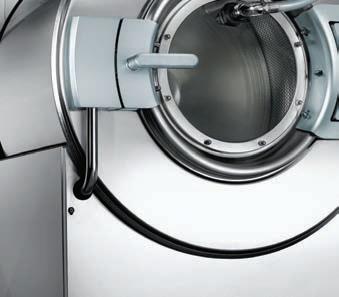
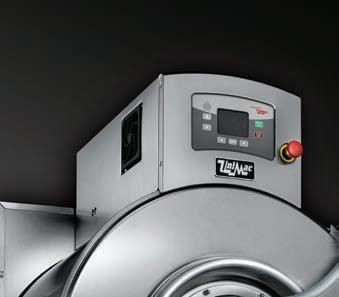
An inefficient rinse is money down the drain. With a combination of bath and spray rinses, new OPTispray ™ Rinsing Technology utilizes unique spray hardware and exclusive software to minimize the water and time needed to rinse a load while also delivering far superior rinse results. OPTispray uses less water, saving up to $2,110 in yearly utility expenses compared to popular models with only bath rinses. To lower costs even further, industry-leading 400 G-Force extraction delivers maximum water removal and increased throughput. Innovative features like UniLinc ™ paired with OPTidry ™ offer complete laundry room control, minimize operating costs and optimize efficiency to save you even more time and money. It all combines to deliver the industry’s absolute lowest cost of ownership. Contact an authorized UniMac distributor today to run a laundry operating analysis and see how you can cut costs and save money. Visit UNIMAC.COM/OPTISPRAY or call 1-800-587-5458.
CUSTOMIZED FINANCING designed specifically for on-premises laundry.



YOU
™
DON’T HAVE OPTISPRAY
Ironer/Press Cleaner
A-1 Flatwork Ironer Specialists
B&C Technologies C&W Equipment Co.
Cincinnati Laundry Equipment Clenacorp
CMV Sharper Finish
Direct Machinery Sales Corp.
J.P. Equipment
Lubbert Supply Co.
Meese Orbitron Dunne Co.
RAMCO Laundry Machinery Sani Wash
Southwest Laundry Equipment Steiner-Atlantic Corp. Storms Industries Tingue
Ironer Covers & Pads
A-1 Flatwork Ironer Specialists
American Laundry Products AMKO America/JBI Industries B&C Technologies F.H. Bonn Co.
C&W Equipment Co.
Calsco
Cincinnati Laundry Equipment
Clenacorp
CMV Sharper Finish Covers Etc.
Direct Machinery Sales Corp.
Lavatec Laundry Technology
Lubbert Supply Co.
R.W. Martin & Sons
MODRoto Olek Belts
Orr Textile Co.
RAMCO Laundry Machinery Sani Wash
Southern Converters

Southwest Laundry Equipment Steiner-Atlantic Corp. Storms Industries Tingue
Ironers, Flatwork
AMKO America/JBI Industries
B&C Technologies G.A. Braun
C&W Equipment Co.
Chicago Dryer Co.
Cincinnati Laundry Equipment
CMV Sharper Finish
Continental Girbau
Cornerstone Equipment & Rigging
Danube International
Direct Machinery Sales Corp.
Domus Electrolux Ellis Corp. Girbau Industrial Huebsch
Imesa USA
Jensen USA
J.P. Equipment
Kannegiesser USA
Lapauw USA
The Laundry List Inc.
Laundrylux
Lavatec Laundry Technology R.W. Martin & Sons
RAMCO Laundry Machinery
Sani Wash
Speed Queen
Stanco Industries
Steiner-Atlantic Corp.
Storms Industries
Talley Machinery Corp.
Trevil America
UniMac
Vaporpress by Leonard
Voss Laundry Solutions
Wascomat
Yamamoto Japan Inc.
Labels/Tags
Computype
IPC-Tags
Metalprogetti USA
Orr Textile Co.
Penn Emblem Co.
Spector Textile Products Stahls’ Hotronix
TAGSYS RFID
TCD Parts
Thermopatch
World Emblem International
Garnier-Thiebaut
LanCha Textiles
Medline Industries Monarch Brands
Orr Textile Co.
Phoenix Textile Corp.
Riegel div. Mount Vernon Mills
Royal Blue International
The Sewing Source
Standard Manufacturing Co. Standard Textile Star Linen & Supply Thomaston Mills
Venus Group
Linen, Bed
A-1 Textiles & Hospitality
ADI American Dawn
American Associated Companies Best Textiles Acquisition
Calderon Textiles
California Textiles Comfort Concepts The Comphy Co.
LanCha Textiles
Medline Industries
Milliken & Co. Monarch Brands
Orr Textile Co. Phoenix Textile Corp.
Riegel div. Mount Vernon Mills
The Sewing Source Standard Manufacturing Co. Standard Textile Star Linen & Supply Venus Group
Lint Collectors/Filters
AquaRecycle
Automation Dynamics Cincinnati Laundry Equipment
Clean Cycle Systems
Consolidated Laundry Machinery
Direct Machinery Sales Corp. Energenics Corp.
FLM Fairfield Laundry Machinery Jensen USA
J.P. Equipment
E-Tech JPE Inc.
Material Flow Systems
Milnor Laundry Systems Mountville Mills Positek RFID
Production Design Products Steiner-Atlantic Corp. Texas Automation Products
Microfiber Products
Calderon Textiles
Darman Manufacturing Co. Encompass Group
ERC Wiping Products Golden Star
Hagco Industries Monarch Brands Moonsoft International Standard Manufacturing Co. Standard Textile UMF Corp.
Mobile Computing
Laundry/Linen
Management Software/Systems
ADI American Dawn G.A. Braun
Colmac Industries
Computer Software Architects
Encompass Group
Fike & Fike, Inc.
Gurtler Industries
Innovative Management Designs
Lavatec Laundry Technology
Medline Industries
Phoenix Scale Co.
Phoenix Textile Corp.
Positek RFID
Softrol Systems
Standard Manufacturing Co.
Standard Textile
Steiner-Atlantic Corp.
Textile Technologies
Laundry Straps/Ties
Laundry Loops MBH Enterprises
Lift Tables
Automation Dynamics
FLM Fairfield Laundry Machinery
J.P. Equipment
Lavatec Laundry Technology
R.W. Martin & Sons
Production Design Products
RAMCO Laundry Machinery Ryco Conveyors
Steiner-Atlantic Corp.
Tingue
Linen, Bath
A-1 Textiles & Hospitality
ADI American Dawn
American Associated Companies
Boca Terry
Best Textiles Acquisition
Calderon Textiles California Textiles
Domestic Fabrics & Blankets
Encompass Group Harbor Linen
Domestic Fabrics & Blankets Encompass Group Harbor Linen
Garnier-Thiebaut LanCha Textiles
Medline Industries MIP
Monarch Brands Orr Textile Co. Phoenix Textile Corp.
Protect-A-Bed
Riegel div. Mount Vernon Mills Royal Blue International
The Sewing Source
Standard Manufacturing Co. Standard Textile Star Linen & Supply Thomaston Mills
Venus Group
White Knight Engineered Products
Linen, OR, OB
ADI American Dawn American Associated Companies Best Textiles Acquisition Encompass Group Harbor Linen K-Tex
LanCha Textiles Medline Industries Orr Textile Co.
Phoenix Textile Corp. Riegel div. Mount Vernon Mills
The Sewing Source Shamron Mills Standard Manufacturing Co. Standard Textile
Linen, Table
ADI American Dawn American Associated Companies At Work Uniforms
Best Textiles Acquisition
Calderon Textiles California Textiles Gourmet Table Skirts & Linens Harbor Linen
Garnier-Thiebaut K-Tex
The Laundry List Inc.
Lavatec Laundry Technology
RAMCO Laundry Machinery Sani Wash
Steiner-Atlantic Corp. Storms Industries
Tecni-Quip Carts Thermal Engineering of Arizona Tingue
Vaporpress by Leonard
Lockers, Garment Exchange
George O’Day’s
Material Flow Systems Penco Products Steiner-Atlantic Corp.
Management Recruiting/Search
The Griffin Group LaundryCareers.com
Marking Equipment/Supplies
Metalprogetti USA Steiner-Atlantic Corp. Thermopatch World Emblem International
Material-Handling Controls
Automation Dynamics
Bobco Systems G.A. Braun
E-Tech Ellis Corp.
Gardner Machinery Corp. Material Flow Systems
Production Design Products Softrol Systems Speed Check Conveyor Steiner-Atlantic Corp. TAGSYS RFID
Mats
American Associated Companies Covers Etc. Mountville Mills Tingue
Mats, Processing & Handling
Consolidated Laundry Machinery
ABS Laundry Business Solutions Alliant Systems
Innovative Management Designs TAGSYS RFID

Monorail/Rail Systems
Automation Dynamics
Bobco Systems Direct Machinery Sales Corp. E-Tech
FLM Fairfield Laundry Machinery Gardner Machinery Corp. Jensen USA
J.P. Equipment
Kannegiesser USA
The Laundry List Inc.
Lavatec Laundry Technology R.W. Martin & Sons
Material Flow Systems Metalprogetti USA
Precision Conveyors
RAMCO Laundry Machinery Ryco Conveyors
Softrol Systems Steiner-Atlantic Corp. Tingue
Voss Laundry Solutions
Mops/Mitts
ADI American Dawn California Textiles
Darman Manufacturing Co. Encompass Group ERC Wiping Products Golden Star
Hagco Industries Medline Industries Moonsoft International Orr Textile Co.
Phoenix Textile Corp. Royal Blue International UMF Corp.
Venus Group
Nets
A-1 Flatwork Ironer Specialists

Bobco Systems Carolina Textile Products Industrial Bag & Specialties
www. FashionSeal Healthcare.com info@ FashionSeal Healthcare.com Blog. FashionSeal Healthcare.com

1-888-491-5818
THEOFHEALTHCARE™ Your Single-Source Provider The most comprehensive line of industrial-laundry friendly healthcare and support staff apparel. Combining years of experience and passion for innovation. ALN_Tab_1-4_H.indd 1 1/29/16 11:09 AM
PRODUCT / SERVICE DIRECTORY 16 MARCH 2016 | AMERICAN LAUNDRY NEWS www.AmericanLaundryNews.com ▲
EcoWash
labor
Selecting the right machines to speed up laundry and save labor is simpler with ADC. Turn to our EcoWash lineup for a range of equipment choices, including rigid and soft-mount machines with load capacities up to 60 lbs. and water-extracting performance up to 350 G-Force on most sizes. Plus, all EcoWash models feature full stainless-steel cabinets and the backing of a 10-year limited manufacturer’s warranty.* Because we’re as serious about making things last as we are about making you productive.
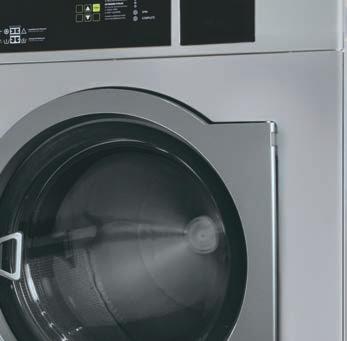

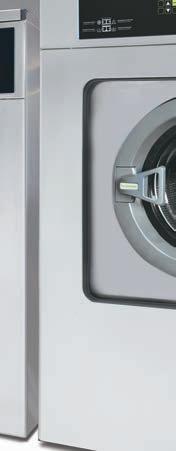
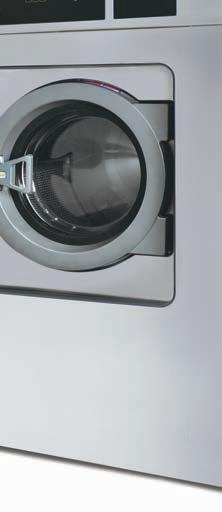

* 10-year warranty limited to frame, tub, cylinder and cylinder’s shaft, seals, bearings and bearing housing.
Ask about low financing rates. 508.678.9000 | sales@amdry.com | www.adclaundry.com



Simply reliable by design.




The
lineup delivers productivity-boosting options.
Get the
savings you need. And the size you want.
Medline Industries
Orr Textile Co.
Ryco Conveyors
Southern Converters

Spector Textile Products
Steele Canvas Basket Corp.
Tingue
Nonstick Coating for Dryers
Plastics Consulting & Mfg. Co.

Optical Brighteners
Advanced Blending & Packaging
Ecolab
Economic Laundry Solutions
Gurtler Industries
Kingsfield
Klipper Group
Kreussler
Santec
Seitz
Unichem Corp.
Washing Systems
Wausau Chemical Corp.
World Cleaning Solutions
Ozone Equipment Systems
AirTrona
AquaRecycle
Aquawing Ozone Laundry Systems
ArtiClean Ozone Laundry Systems

B&C Technologies
BluOx Laundry
Bodycare Ozone Equipment
ClearWater Tech
DEL Ozone
Economic Laundry Solutions
EDRO Corp.
Guardian Manufacturing, LLC
Innovative Chemical Systems
Iowa Techniques
Lavatec Laundry Technology
R.W. Martin & Sons
The Ozone Company
Ozone Laundry Systems
Ozone Water Technologies
Pneu-Mech Systems Mfg.
RAMCO Laundry Machinery
Steiner-Atlantic Corp.
3E Technologies
Water Energy - Laundry Consulting
WET-TECH, The Ozone People
Packaging Equipment/Supplies
Advanced Poly-Packaging
B.H. Bunn Co.
Davis Packaging
EAM-Mosca Corp.
Felins USA
Felrap World
The Green Garmento Plas-Ties Co.
RAMCO Laundry Machinery
RD Industries
Rennco LLC
Sharp Packaging Systems
Shrink Tech Systems
Streamline Solutions
Texchine Inc.
Wausau Chemical Corp.
Pants
American Associated Companies
Chef Works
Codet Newport Corp. (Big Bill)
Dickies
Encompass Group
Euclid Vidaro Mfg. Co.
Landau Uniforms
Medline Industries
SanMar
Shamron Mills
Superior Uniform Group
Venus Group Walls Industries
Workrite Uniform Co.
Patient Wear
ADI American Dawn
American Associated Companies
Best Textiles Acquisition
Boca Terry
Calderon Textiles
Comfort Concepts
Encompass Group
LanCha Textiles Medline Industries MIP
Orr Textile Co.
Phoenix Textile Corp.
Royal Blue International

The Sewing Source
Shamron Mills
Standard Manufacturing Co.
Standard Textile
Venus Group
Vestagen Technical Textiles
Pillows
Harris Pillow Supply
Orr Textile Co.
Standard Manufacturing Co.
Standard Textile United Feather & Down
Pillow-Cleaning Equipment
Harris Pillow Supply
Plant-Cooling Equipment
Aqua Products Co.
AquaCool ArctiChill
Big Ass Fans
Chiller Mfg. Commercial Coils
COOLSPACE
Movin Cool/DENSO Products and Services Americas, Inc.
Quietaire Cooling Schaefer Ventilation Equipment
Topog-E Gasket Co.
Plant Layout/Design/ Installation/Construction Services
American Laundry Systems
ARCO/Murray Natl. Const. Co.
Arnopole & Associates
John Barry & Associates
Bobco Systems
Dsquared Design Solutions
Gardner Machinery Corp.
Jensen USA
Laundry Design Group
Turn-Key Ind. Engineering Services
Vaporpress by Leonard
Polymer Bead Cleaning System
Xeros
Polyurethane Wheels
Industrial Wheels
Press Pads
A-1 Flatwork Ironer Specialists
AMKO America/JBI Industries F.H. Bonn Co.
C&W Equipment Co.
Cincinnati Laundry Equipment Colmac Industries Covers Etc.
Direct Machinery Sales Corp. Lubbert Supply Co. Olek Belts Sani Wash Sankosha USA Steiner-Atlantic Corp. Tingue Vaporpress by Leonard
Presses
AMKO America/JBI Industries
Cincinnati Laundry Equipment Colmac Industries Danube International
Direct Machinery Sales Corp. Forenta Girbau Industrial Hoffman-New Yorker Imesa USA J.P. Equipment Kannegiesser USA
The Laundry LIst, Inc. Mark-N-Mend R.W. Martin & Sons
RAMCO Laundry Machinery Sani Wash Sankosha USA Stanco Industries Steiner-Atlantic Corp. Trevil America Unipress Corp. Vaporpress by Leonard
Printer/Shop Towels/Wipers
Calderon Textiles ERC Wiping Products K-Tex
Midwest Specialty Products Monarch Brands Riegel div. Mount Vernon Mills Spector Textile Products Venus Group
Production Management Systems
ABS Laundry Business Solutions Arnopole & Associates Computer Software Architects Fike & Fike, Inc. Kannegiesser USA Victor Kramer Co. Jensen USA
Lavatec Laundry Technology Material Flow Systems Softrol Systems Spindle John D. Stepnes Co. WesVic Systems
Pumps/Pump Systems
AquaRecycle
ArctiChill
Armstrong International Economic Laundry Solutions Ellis Corp.
The Fulton Companies Hanning Elektro-Werke Ingersoll Rand Kemco Systems
Knight
Lavatec Laundry Technology
Ludell Manufacturing National Combustion Co. Parker Boiler Co.
Pneu-Mech Systems Mfg. RD Industries
Rema Dri-Vac Corp.
Seko Dosing Systems Corp. Steiner-Atlantic Corp. Thermal Engineering of Arizona Topog-E Gasket Co. Walchem Wausau Chemical Corp.
Racks, Garment/Flow
Bobco Systems
Direct Machinery Sales Corp. E-Tech
Gardner Machinery Corp. Iowa Techniques K-Tex
The Laundry List, Inc.
R.W. Martin & Sons
Material Flow Systems
Production Design Products
Ryco Conveyors
Speed Check Conveyor Steiner-Atlantic Corp. TCD Parts Tingue
Radio Frequency ID Tags/ Scanners
Centrex Technologies
CYNTAG RFID Systems Datamars
Innovative Management Designs Metalprogetti USA Positek RFID TAGSYS RFID
Repellency Restoration EDMAR Chemical Co. Gurtler Industries M & M Technologies
Replacement Parts/Supplies
Bobco Systems
Cincinnati Laundry Equipment Talley Machinery Corp. TCD Parts Texchine Inc. Vaporpress by Leonard Voss Laundry Solutions
Restroom Sanitation Products
Anderson Chemical Co. EDMAR Chemical Co. F-Matic Kennedy Hygiene Penco Products UMF Corp.
Route Accounting Systems
ABS Laundry Business Solutions
Alliant Systems
Centrex Technologies
Computer Software Architects Fike & Fike, Inc.
Innovative Management Designs Softrol Systems Textile Technologies
Scales
Air-Weigh
Automation Dynamics
Direct Machinery Sales Corp. Iowa Techniques
J.P. Equipment
The Laundry List Inc.
Lavatec Laundry Technology R.W. Martin & Sons Pennsylvania Scale Co. Phoenix Scale Co. R&B Wire Products
RAMCO Laundry Machinery Royal Basket Trucks
Steiner-Atlantic Corp.
Tingue
Scrubs
ADI American Dawn American Associated Companies
Best Textiles Acquisition
Chef Works
DenLine Uniforms
Dickies
Encompass Group
Euclid Vidaro Mfg. Co. Harbor Linen Landau Uniforms
Medelita
Medline Industries Orr Textile Co. Phoenix Textile Corp. Royal Blue International SanMar
The Sewing Source Shamron Mills
Standard Manufacturing Co. Standard Textile Superior Uniform Group Venus Group Vestagen Technical Textiles White Knight Engineered Products Security Systems
Active Vision TAGSYS RFID
Separators, Flatwork
B&C Technologies Chicago Dryer Co.
Cornerstone Equipment & Rigging Direct Machinery Sales Corp. Ellis Corp. Jensen USA
Kannegiesser USA
Lavatec Laundry Technology R.W. Martin & Sons
Steiner-Atlantic Corp.
Vaporpress by Leonard
Sewing Equipment/Supplies
Direct Machinery Sales Corp. Steiner-Atlantic Corp. ▲
Building Smarter Laundries for Smarter Operators
With the ever increasing cost of utilities, production staffing and added operational costs your laundry needs to be as efficient as possible to save you time and money.
We offer the following services: Consulting, Design and Installation Building Construction
Operations Assistance Production Management Training and Maintenance Support
We are the first company in North America to develop 100% Steam-Less Technology and implement the system in a large scale healthcare laundry facility.
THE EAGLE HAS LANDED
You need American Laundry Systems ALN_Tab_1-4_H.indd 1 2/9/16 10:01 AM PRODUCT / SERVICE DIRECTORY 18 MARCH 2016 | AMERICAN LAUNDRY NEWS www.AmericanLaundryNews.com
eomech.com | 978.373.1883
ADI American Dawn
BECAUSE THERE’S NOTHING UNIFORM ABOUT FLEET REQUIREMENTS.







With Freightliner Custom Chassis, it’s all about delivering greater profits through increased productivity and proven fuel economy. Our commercial chassis feature heavy-duty components that are designed to surpass automotive-class vans for maximum uptime and unbeatable driver safety. FCCC chassis also provide the ultimate flexibility for box configurations to meet your needs. Most importantly, as an FCCC owner, you have access to 24/7 factory support and the largest nationwide service network.

FUEL EFFICIENCY



No matter which power you choose, you can count on the MT to lead the way in fuel efficiency that translates into enhanced profitability.
SAFETY
From heavy-duty braking to maneuverability, ergonomics and curbside access – driver safety is our top priority.








QUALITY







As part of the Daimler family, FCCC chassis are developed with legendary resources for design, engineering and manufacturing processes.
UPTIME









With 24/7 factory support and the largest nationwide service network, issues are quickly resolved to keep you on the road.
FUEL OPTIONS
Choose from gas, diesel, propane and CNG to best meet the needs of your delivery fleet.

REAL COST OF OWNERSHIP™ 1-800-545-8831 | freightlinerchassis.com For ordering details, contact your local dealer. Specifications are subject to change without notice. Freightliner Custom Chassis Corporation is registered to ISO 9001:2008 and ISO 14001:2004. Copyright ©2016 Daimler Trucks North America LLC. All rights reserved. Freightliner Custom Chassis Corporation is a subsidiary of Daimler Trucks North America LLC, a Daimler company.
Shelving/Linen Storage
Direct Machinery Sales Corp.
Durable Superior Casters
Material Flow Systems
Medline Industries
M.I.T. Poly-Cart Corp.
Penco Products
RAMCO Laundry Machinery
Steiner-Atlantic Corp. Tecni-Quip Carts
Shirts
ADI American Dawn
American Associated Companies
Best Textiles Acquisition
Century Place
Chef Works
Codet Newport Corp. (Big Bill)
Dickies
Encompass Group
Euclid Vidaro Mfg. Co.
Landau Uniforms
Medline Industries
Omni Apparel
SanMar
The Sewing Source
Shamron Mills
Venus Group Walls Industries
Workrite Uniform Co.
Sizing/Starch
Adco Products
Caled Chemical
Ecolab
Economic Laundry Solutions
Faultless Starch Gurtler Industries
Innovative Chemical Systems
Klipper Group
Kreussler
Norchem Corp.
Royaltone Co. Sani Wash
Santec Seatex Seitz
Team Systems
TMA/Chemnet Systems
Unichem Corp. U.N.X. Inc.
Washing Systems
Wausau Chemical Corp.
World Cleaning Solutions
Skirts (Apparel)
Dickies
Encompass Group
Landau Uniforms
Medline Industries
Omni Apparel
The Sewing Source
Shamron Mills
Superior Uniform Group
Venus Group
Softeners (Fabric)
Advanced Blending & Packaging
Anderson Chemical Co.
Caled Chemical
D.W. Davies & Co.
Dye Systems
Ecolab
Economic Laundry Solutions
EDMAR Chemical Co.
Epic Industries
Faultless Starch
Gurtler Industries
Innovative Chemical Systems
Klipper Group
Kreussler
Miele Professional Norchem Corp. Pariser Industries Procter & Gamble Professional Sani Wash
Santec Seatex Seitz
Simoniz USA, Inc.
Spartan Chemical Co. Sunburst Chemicals Team Systems
TMA/Chemnet Systems Unichem Corp. U.N.X. Inc.
Vaska
Venture Labs
Washing Systems
Wausau Chemical Corp. World Cleaning Solutions Zep Inc.
Solar Heating Systems
Hamilton Engineering
Solar Panels Plus
Sorting Systems
Automation Dynamics
Bobco Systems
TM
Cornerstone Equipment & Rigging E-Tech
Gardner Machinery Corp. Jensen USA J.P. Equipment Kannegiesser USA
The Laundry List Inc. Material Flow Systems Metalprogetti USA
Positek RFID Production Design Products Ryco Conveyors
Sharp Packaging Systems
Softrol Systems
Speed Check Conveyor Steiner-Atlantic Corp. TAGSYS RFID
Sours
Adco Products
Anderson Chemical Co.
Caled Chemical D.W. Davies & Co.
Dye Systems
Ecolab
Economic Laundry Solutions
Epic Industries
Faultless Starch Gurtler Industries
Innovative Chemical Systems Klipper Group Norchem Corp. Pariser Industries Sani Wash Santec Seatex Seitz
Simoniz USA, Inc.
Spartan Chemical Co.
Sunburst Chemicals
Team Systems
TMA/Chemnet Systems
Unichem Corp. U.N.X. Inc.
Venture Labs
Washing Systems
Wausau Chemical Corp.
WET-TECH, The Ozone People World Cleaning Solutions
Zep Inc.
Spotting Agents
Adco Products
Anderson Chemical Co.
Caled Chemical D.W. Davies & Co.
Ecolab
Faultless Starch
Kreussler
Miele Professional Neuhaus Chemical Products
Royaltone Co. Seitz
Spartan Chemical Co. Sunburst Chemicals
/ SERVICE DIRECTORY 20 MARCH 2016 | AMERICAN LAUNDRY NEWS www.AmericanLaundryNews.com
PRODUCT
NEXT GENERATION, INDUSTRY LEADING NPE-FREE TECHNOLOGY • Best-in-Class Cleaning Performance • Excellent soil removal on tough industrial and heavy food soils • Wide-ranging temperature e cacy • Maximizes wash-aisle e ciencies and plant productivity • Produces brighter, softer, longer-lasting textiles • Ultra-concentrated, multi-surfactant detergent system Spectrum
Wash it Forward. 800.272.1974 WWW. WASHINGSYSTEMS .COM Delivering comprehensive technological innovations in the cleaning, processing and servicing of textiles. ALN_Jr Page.indd 1 2/12/16 11:24 AM
Team Systems
TMA/Chemnet Systems
Unichem Corp. U.N.X. Inc.
Urine-Off by Bio-Pro Research Wausau Chemical Corp.
A.L. Wilson Chemical Co.
World Cleaning Solutions Zep Inc.
Stackers
AMKO America/JBI Industries
B&C Technologies
G.A. Braun
Continental Girbau
Cornerstone Equipment & Rigging
Direct Machinery Sales Corp. Ellis Corp.
Foltex USA
Girbau Industrial Jensen USA
J.P. Equipment
Kannegiesser USA
Lavatec Laundry Technology R.W. Martin & Sons
RAMCO Laundry Machinery Steiner-Atlantic Corp.
Vaporpress by Leonard
Stain Removers or Repellents
Adco Products
Advanced Blending & Packaging
Anderson Chemical Co.
Caled Chemical
D.W. Davies & Co.
Dye Systems
Ecolab
Epic Industries
Gurtler Industries
Innovative Chemical Systems
Kreussler Norchem Corp.
Procter & Gamble Professional Sani Wash Santec
Seitz
Simoniz USA, Inc.
Sunburst Chemicals
Unichem Corp. U.N.X. Inc.
Urine-Off by Bio-Pro Research
Vaska Venture Labs
Wausau Chemical Corp.
A.L. Wilson Chemical Co.
World Cleaning Solutions Zep Inc.
Static Control
Caled Chemical Ecolab
EDMAR Chemical Co. Kreussler
Tingue
Steel Bases for Washer-Extractors
Machinery Mountings
Strapping/Tying Equipment
B.H. Bunn Co.
Cornerstone Equipment & Rigging
EAM-Mosca Corp.
Felins USA
Plas-Ties Co.
Shrink Tech Systems
Tingue
Surgical/Isolation Gowns
ADI American Dawn
American Associated Companies
Best Textiles Acquisition
DenLine Uniforms
Encompass Group
W.L. Gore & Associates
LanCha Textiles
Medline Industries


The Sewing Source
Shamron Mills
Standard Manufacturing Co.
Standard Textile
Sweaters
Omni Apparel
Superior Uniform Group
Tables
Automation Dynamics
Bobco Systems
Chem-Tainer Industries
Gardner Machinery Corp.
Leonard Automatics
Meese Orbitron Dunne Co.
Phoenix Textile Corp.
Production Design Products
RAMCO Laundry Machinery
Ryco Conveyors
Speed Check Conveyor Steiner-Atlantic Corp.
Tanks
ArctiChill
Chem-Tainer Industries

Dura-Cast Products
Economic Laundry Solutions
General Boiler
Granger Plastics Co. Kemco Systems
R.W. Martin & Sons
National Combustion Co.
Norchem Corp.
Parker Boiler Co.
Raypak
Rema Dri-Vac Corp.
Sellers Manufacturing Co.
Steiner-Atlantic Corp. Thermal Engineering of Arizona
Trucks/Walk-in Vans
Freightliner Custom Chassis Corp.
Morgan Olson
Utilimaster Corp.
Tumblers
Alliance Laundry Systems B&C Technologies G.A. Braun
Cincinnati Laundry Equipment
Continental Girbau
Cornerstone Equipment & Rigging
EDRO Corp.
Electrolux
Girbau Industrial Huebsch IPSO
Jensen USA Kannegiesser USA
The Laundry List Inc.
Laundrylux Lavatec Laundry Technology
Primus
R.W. Martin & Sons
RAMCO Laundry Machinery
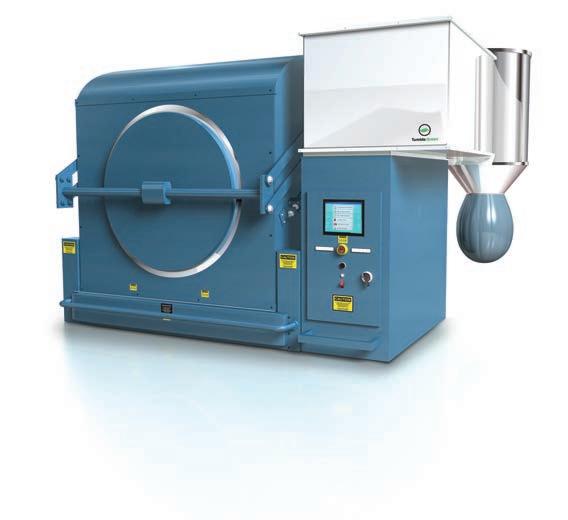
Sani Wash
Speed Queen Steiner-Atlantic Corp.
UniMac
Vaporpress by Leonard Wascomat
Tunnel Finishers
Cincinnati Laundry Equipment
Colmac Industries
Cornerstone Equipment & Rigging Direct Machinery Sales Corp. Jensen USA
J.P. Equipment
Kannegiesser USA
The Laundry List, Inc. Leonard Automatics
R.W. Martin & Sons
RAMCO Laundry Machinery Stanco Industries
Steiner-Atlantic Corp.
Vaporpress by Leonard
YOUR CHALLENGE PACESETTER CLM leads the way in dryer technology and provides an upgraded replacement for your old Challenge Pacesetter Our Model 165 fits the Challenge Pacesetter footprint perfectly and gives you technology that no one else o ers, including a fully integrated production management system. • Upgraded heat system with improved efficiency and lower emissions • Micro-Command III PLC upgrade with LAN and Blue Tooth communications • PLC now prepared for flow process management systems • 2-stage variable speed basket drive with 3-port load door. • Soft start to reduce component wear, lower utility use.
Heavy-gauge basket, includes removable steel basket panels
Long-lasting ceramic coating available on removable basket panels. • Configurable exhaust location • Configurable control/burner location Call CLM to replace your Challenge Pacesetter dryers, or for information on our broad range of industrial dryers. 323-232-2417 Model 165 shown with Tumble Green® configuration See Us at Booth 2560 at The Clean Show 211 Erie Street, Pomona, CA 91768 | T: (323) 232-2417 | www.clmco.com ALN_Jr Page.indd 1 11/18/14 2:36 PM 0515aln_CLM.indd 1 4/13/15 4:46 PM www.AmericanLaundryNews.com AMERICAN LAUNDRY NEWS | MARCH 2016 21 ▲
UPGRADE
•
•
Uniforms
ADI American Dawn
American Associated Companies
Best Textiles Acquisition
Century Place
Chef Works
DenLine Uniforms
Dickies
Direct Machinery Sales Corp.
Encompass Group
Harbor Linen

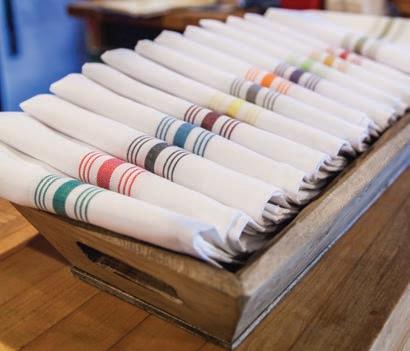


Landau Uniforms
Medelita
Medline Industries

Phoenix Textile Corp.
SanMar
The Sewing Source
Shamron Mills
Standard Manufacturing Co.
Superior Uniform Group
Venus Group Walls Industries
Workrite Uniform Co.
Washer Controls/Repair
Alliance Laundry Systems
ALJ Electronics
AMKO America/JBI Industries
B&C Technologies
Continental Girbau
Custom Control Systems
Direct Machinery Sales Corp.
EDRO Corp.
Ellis Corp. Girbau Industrial Huebsch
IPSO Kannegiesser USA
Lavatec Laundry Technology
Norchem Corp.
Primus
RAMCO Laundry Machinery
Softrol Systems

Speed Queen
Steiner-Atlantic Corp. UniMac
Vibration/Noise Isolation Pads Airloc
Washer-Extractors, 100 Pounds or Less
Alliance Laundry Systems
AMKO America/JBI Industries
B&C Technologies
Cincinnati Laundry Equipment
Continental Girbau
Cornerstone Equipment & Rigging
Danube International
Dexter Laundry
Direct Machinery Sales Corp.
Domus
EDRO Corp.
Electrolux Huebsch

Imesa USA
IPSO
J.P. Equipment
The Laundry List Inc.
Laundrylux Lavatec Laundry Technology
LG
R.W. Martin & Sons
Maytag Commercial Laundry Milnor Laundry Systems Primus
RAMCO Laundry Machinery
Sani Wash
Speed Queen Stanco Industries
Steiner-Atlantic Corp.
Trevil America
UniMac
Vaporpress by Leonard Wascomat
Washburn Machinery WashTech Yamamoto Japan Inc.
Washer-Extractors, 101 to 400 Pounds
AMKO America/JBI Industries
B&C Technologies G.A. Braun
Cincinnati Laundry Equipment
Continental Girbau
Cornerstone Equipment & Rigging Danube International
Direct Machinery Sales Corp.
Domus
EDRO Corp.
Electrolux Ellis Corp.
Esporta Wash Systems Girbau Industrial Imesa USA
IPSO
J.P. Equipment Kannegiesser USA
The Laundry List Inc.
Laundrylux
Lavatec Laundry Technology R.W. Martin & Sons
Maytag Commercial Laundry Milnor Laundry Systems
RAMCO Laundry Machinery Sani Wash
Speed Queen Stanco Industries
Steiner-Atlantic Corp. Trevil America
UniMac
Vaporpress by Leonard Wascomat Washburn Machinery WashTech Yamamoto Japan Inc.
Washer-Extractors, 401 Pounds and Larger
AMKO America/JBI Industries B&C Technologies G.A. Braun
Cornerstone Equipment & Rigging Danube International
Direct Machinery Sales Corp. EDRO Corp. Ellis Corp. Girbau Industrial Jensen USA
J.P. Equipment
Kannegiesser USA
The Laundry List Inc.
Lavatec Laundry Technology R.W. Martin & Sons
Milnor Laundry Systems

RAMCO Laundry Machinery
Stanco Industries
Steiner-Atlantic Corp.
Vaporpress by Leonard
Washers
Alliance Laundry Systems
AMKO America/JBI Industries G.A. Braun
Cincinnati Laundry Equipment Continental Girbau
Cornerstone Equipment & Rigging
Dexter Laundry
Direct Machinery Sales Corp. Electrolux Ellis Corp.
Esporta Wash Systems
Girbau Industrial Huebsch
IPSO Jensen USA
J.P. Equipment
Kannegiesser USA
The Laundry List Inc.
Laundrylux
Lavatec Laundry Technology
LG
R.W. Martin & Sons Miele Professional
PRODUCT / SERVICE DIRECTORY 22 MARCH 2016 | AMERICAN LAUNDRY NEWS www.AmericanLaundryNews.com
• Superior Durability • Fade Resistant Colors • Seamless Rounds Up To 132” In Many Colors! (on most orders) (5 working days or less) Over 35 Colors In Stock Same Day Shipping Quick Turnaround On Special Colors/Sizes DOMESTIC MANUFACTURING & DISTRIBUTION Foothill Ranch, CA | Houston, TX | Edison, NJ Fort Lawn, SC | Chicago, IL | Portland, OR A Rainbow Of Colors Are Available Made In The USA Call our CUSTOMER CARE hot-line (800) 421-6599 go to www.VenusGroup.com for additional information We offer every colored bistro napkin under the sun! Ask about our low minimums! C M Y CM MY CY CMY VenusGroup_MAR2016_JuniorPage_ALN_PRINT.pdf 1 2/1/16 9:56 AM ALN_Jr Page.indd 1 2/18/16 11:32 AM
Milnor Laundry Systems
Sani Wash
Speed Queen
Stanco Industries
Steiner-Atlantic Corp.
3E Technologies
UniMac
Vaporpress by Leonard Wascomat
Washburn Machinery
Washers, Continuous-Batch
B&C Technologies
G.A. Braun
Cincinnati Laundry Equipment
Cornerstone Equipment & Rigging
Direct Machinery Sales Corp. Ellis Corp.
Girbau Industrial Jensen USA
J.P. Equipment
Kannegiesser USA
The Laundry List Inc.
Lavatec Laundry Technology
R.W. Martin & Sons
Milnor Laundry Systems
RAMCO Laundry Machinery
Stanco Industries
Steiner-Atlantic Corp.
3E Technologies
Wastewater Treatment Systems
AquaRecycle
Cornerstone Equipment & Rigging
Ecolab
Ellis Corp.
Guardian Manufacturing, LLC
Hydro-Thermal Corp.
Industrial Waste Water Services
J.P. Equipment
Kemco Systems
The Laundry List Inc.
Lavatec Laundry Technology
Ludell Manufacturing R.W. Martin & Sons
Norchem Corp.
Parker Boiler Co.
Pneu-Mech Systems Mfg.
RAMCO Laundry Machinery
Shepard Bros.
Thermal Engineering of Arizona
Topog-E Gasket Co.
Walchem
Wastewater Resources Water Energy - Laundry Consulting
Water Analysis Kits
LaMotte
Water Heaters
Aqua Products Co.
Armstrong International
Cincinnati Laundry Equipment
Cleaver-Brooks
Direct Machinery Sales Corp. Ellis Corp.
The Fulton Companies Hamilton Engineering
Hydro-Thermal Corp.
J.P. Equipment
Kemco Systems
The Laundry List Inc.
Lavatec Laundry Technology
Ludell Manufacturing
R.W. Martin & Sons
National Combustion Co.
OGI Process Equipment
Paloma Industries
Parker Boiler Co.
Pick Heaters
ProSonix
RAMCO Laundry Machinery
Rinnai
Raypak
Sellers Manufacturing Co.
Solar Panels Plus
Stanco Industries
Steiner-Atlantic Corp.
Thermal Engineering of Arizona
Topog-E Gasket Co.
Water Reuse/Recycling Systems
AquaRecycle
Continental Girbau
Cornerstone Equipment & Rigging
Electrolux
Ellis Corp.
Girbau Industrial Innovative Chemical Systems
J.P.
Equipment
Kemco Systems
The LaundryList Inc.
Laundrylux
Lavatec Laundry Technology
Ludell Manufacturing
R.W. Martin & Sons
Norchem Corp.
Ozone Water Technologies
Pneu-Mech Systems Mfg.
Steiner-Atlantic Corp.
Thermal Engineering of Arizona
3E Technologies
Topog-E Gasket Co.
Wascomat
Wastewater Resources
Water Energy - Laundry Consulting WET-TECH, The Ozone People
Water Softeners
Cleaver-Brooks
Cornerstone Equipment & Rigging
Dye Systems
Ellis Corp.
The Fulton Companies
Hamilton Engineering
J.P. Equipment
Klipper Group
The Laundry List Inc.
Marlo Inc.
R.W. Martin & Sons
Pariser Industries
Parker Boiler Co.
Pneu-Mech Systems Mfg.
RAMCO Laundry Machinery
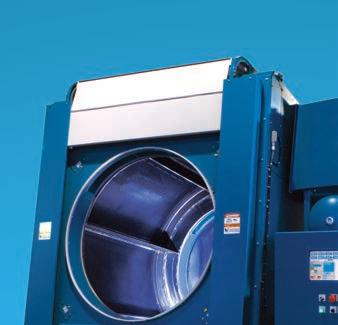
Steiner-Atlantic Corp.
Thermal Engineering of Arizona
Wetcleaning Equipment
B&C Technologies
Continental Girbau
Danube International
Direct Machinery Sales Corp.
Electrolux
Esporta Wash Systems
Girbau Industrial
Hoffman-New Yorker
Imesa USA
Laundrylux R.W. Martin & Sons
Miele Professional
Milnor Laundry Systems
Sankosha USA Seitz
Steiner-Atlantic Corp. Trevil America
UniMac
Vaporpress by Leonard
Wascomat
Wrapping Systems/Products
B.H. Bunn Co.
Cornerstone Equipment & Rigging
Davis Packaging
Felins USA
Lavatec Laundry Technology R.W. Martin & Sons
RAMCO Laundry Machinery Rennco LLC
Sharp Packaging Systems
Shrink Tech Systems
www.AmericanLaundryNews.com AMERICAN LAUNDRY NEWS | MARCH 2016 23
I ntroducing the Newest Ellis WHISPERDRYer » Terry towels (nominal 450 lb. weights) averaged 21.76 minutes at 1651 BTU’s per lb. of water removed. » Terry towels (nominal 250 lb. weights) averaged 15.23 minutes at 1910 BTU’s per lb. of water removed. 800-611-6806 FASTEST, QUIETEST, MOST EFFICIENT To receive the complete
test data document, email us
our
solutions,
In our commitment to continuous improvement for our customers, we have added additional space saving features and standard parts across the Ellis dryer product lines.
ALN_Jr Page.indd 1 2/4/16 4:06 PM
Tingue ALN
WHISPERDRYer
at info@elliscorp.com. For more information on
Industrial Laundry
visit our new website.
ellislaundry.com
Company Directory

Aa
A-1 Flatwork Ironer Specialists 47 Oakley Pl. Staten Island, NY 10306
T 718-980-0682
C Steve Brusca stevenjbuddy@aol.com
A-1 Textiles & Hospitality P.O. Box 5259 Chatsworth, CA 91313
T 800-351-1819 W www.a1textiles.com linen@a1textiles.com
ABS Laundry Business Solutions

4246 Smithsonia Ct. Tucker, GA 30084
T 775-224-6343 W www.abslbs.com info@abslbs.com
Active Vision
711 Koehler Ave., Ste. 6 Ronkonkoma, NY 11779 T 631-585-0088 W www.active-vision.com C Don Spolar web-sales@active-vision.com
Adaptable Blending & Packaging 200 Motel Dr. Alvin, TX 77511 T 281-585-9943 W www.adaptableblending.com sales@adaptableblending.com
Adco Products
1706 Ledo Rd. Albany, GA 31707
T 800-821-7556 W www.adco-inc.com sales@adco-inc.com
ADI American Dawn 401 W. Artesia Blvd. Los Angeles, CA 90220
T 800-821-2221 W www.americandawn.com C Steve Kallenbach skallenbach@americandawn.com
Advanced Poly-Packaging 1331 Emmitt Rd. Akron, OH 44306
T 330-785-4000 or 800-754-4403 W www.advancedpoly.com sales@advancedpoly.com
Agaia 200 E. Broward Blvd., Ste. 1100 Fort Lauderdale, FL 33301
T 800-992-4242 W www.agaiainc.com learnmore@agaiainc.com
Air-Weigh 1499 E. 6th St. Beaumont, CA 92223
T 800-424-7929 W www.airweighinc.com sales@awscales.com
Airloc 5 Fisher St. Franklin, MA 02038
T 508-528-0022 or 800-922-3019 W www.airloc.com info@airloc.com
AirTrona 1040 S. Service Rd. Stoney Creek, ON L8E 6G3 T 289-656-1264 W www.airtrona.com info@airtrona.com
ALJ Electronics 1306 E. Imperial Ave. El Segundo, CA 90245 T 310-524-0011 or 800-255-2522 W www.aljco.com info@aljco.com
Alliance Laundry Systems
Shepard Street - P.O. Box 990 Ripon, WI 54971-0990 T 920-748-3121 W www.alliancelaundry.com info@alliancelaundry.com
Alliant Systems 909 Lake Carolyn Pkwy. #1450 Irving, TX 75039 T 972-331-5060 or 888-513-9293 W www.alliantsystems.com C Eric Smith esmith@alliantsystems.com
American Associated Companies 116 Bethea Rd. Fayetteville, GA 30214 T 800-608-0301 W www.directlinensource.com
C Dale Connell dalestowels@aol.com
American Dryer Corp. (ADC) 2901 Lakeshore Dr. St. Joseph, MI 49085 T 269-923-5345 W www.adclaundry.com
C Steve Hietpas steven_d_hietpas@whirlpool.com
American Laundry Products
1691 Edgefield Rd. North Augusta, SC 29860
T 803-663-6606 or 800-663-9901 W www.americanlaundry products.com C Gene Williams info@americanlaundryproducts.com

American Laundry Systems 800 Broadway Haverhill, MA 01832
T 978-373-1883 W www.eomech.com C Cathy Menzel info@eomech.com
American Patch & Emblem Co. 125 Stratford Ave., Ste. 125, Bldg. #3 Wayne, PA 19087
T 610-688-5200
or 800-752-1667 W www.americanpatch.com
C Martin Grossman info@americanpatch.com
AMKO America/JBI Industries 8011 Monetary Dr., Ste. B5 Riviera Beach, FL 33404
T 561-863-9696 W www.jbilaundryfolder.com C Jurgen Bischoff jurgenb@bellsouth.net
Anderson Chemical Co. 325 S. Davis Ave. Litchfield, MN 55355
T 800-366-2477 W www.theintegraprogram.com C Alex Carlson integra@accomn.com
Appleton Mfg. Division 1025 Breezewood Ln. Neenah, WI 54956 T 920-751-1555 or 800-531-2002 W www.appletonmfg.com
Aqua Products Co. P.O. Box 39 Prosperity, SC 29127 T 803-321-0246 or 800-849-4264 W www.aquaproducts.us C John Seppamaki apc@aquaproducts.us
Aqua Solutions 12 Montana Pl. Huntington Station, NY 11746
T 631-470-4773 W www.aquasolutions.co.il C Samuel Hochman samuel@ctgholding.com
AquaCool P.O. Box 670849 Dallas, TX 75367-0849 T 214-890-9888 or 800-955-4330 W www.aquacool-gaffney.com C Harry Gaffney gaffnews@aol.com
AquaRecycle/ThermalRecycle 1861 W. Oak Pkwy. Marietta, GA 30062 T 770-565-8488 or 866-272-9253 W www.aquarecycle.com www.thermalrecycle.com C Mindy Kenney mindy.kenney@aquarecycle.com
Aquawing Ozone Laundry Systems 45 Priscilla Ln. Auburn, NH 03032 T 888-296-4777 W www.aquawingozone.com C Brett Daniels brett@aquawingozone.com
ARCO/Murray National Construction Co. 3110 Woodcreek Dr. Downers Grove, IL 60515 T 331-251-2726 W www.arcomurraylaundry.com C Elliot Mata emata@arcomurray.com
ArctiChill 200 Park Ave. Newberry, SC 29108
T 803-321-1891 or 800-849-7778 W www.arctichill.com sales@arctichill.com
Armstrong International 816 Maple St. Three Rivers, MI 49093 T 269-273-1415 W www.armstronginternational.com marketing@armstronginternational.com
Arnopole & Associates P.O. Box 699 Volcano, HI 96785 T 808-987-4233 W www.laundryhelp.com C Ken Arnopole info@laundryhelp.com
ArtiClean Ozone Laundry Systems 129 Fieldview Dr. (P.O. Box 455) Versailles, KY 40383 T 866-748-9274 W www.articlean.com C Danny Kirk danny@articlean.com
Astar P.O. Box 336 Metairie, LA 70004 T 504-831-8262 W www.astarllc.com C Randy Stiver info@astarllc.com
At Work Uniforms 26953 Canal Rd. (P.O. Box 40) Orange Beach, AL 36561 T 251-981-6701 or 800-683-1374 W www.atworkuniforms.com C Chuck Campbell chuckcampbell@atworkuniforms.com
AUPS Conveyor 2901 Bayview Ave. #91149 Willowdale, ON M2K 2Y6 T 647-932-2496 or 866-712-7575 W www.uniformconveyor.com info@uniformconveyor.com
Automation Dynamics 605 N. High St. Independence, MO 64050 T 816-461-8989 or 877-482-7200 W www.adllc.com C Steven Twombly stwombly@adllc.com
Bb
B&C Technologies
17740 Ashley Dr. Ste., 109 Panama City, FL 32413 T 850-249-2222 W www.bandctech.com
C Al Adcock sales@bandctech.com
John Barry & Associates 3020 Newport Blvd. Newport Beach, CA 92663 T 949-675-3551 W www.jbateam.com C Ted Barry ted.barry@jbateam.com
Bayhead Products Corp. 173 Crosby Rd. Dover, NH 03820
T 603-742-3000 or 800-BAYHEAD W www.bayheadproducts.com
C Gregg Moore sales@bayheadproducts.com

Beck’s Classic Manufacturing 50 Emjay Blvd. Brentwood, NY 11717
T 631-435-3800 W www.becksclassic.com C Steven Beck or Jeff Bloom info@becksclassic.com
Best Textiles Acquisition 145 N. Church St. Spartanburg, SC 29306
T 800-241-5060 W www.besttextiles.com C Gary Bird gbird@besttextiles.com
Big Ass Fans 2348 Innovation Dr. Lexington, KY 40511 T 877-BIGFANS W www.bigassfans.com
BluOx Laundry
860 Johnson Ferry Rd., Ste. 140-195 Atlanta, GA 30342
T 866-458-0146 W www.bluoxlaundry.com C Jim Konides jimk@bluoxlaundry.com
Bobco Systems P.O. Box 216 Princeton, MN 55371
T 763-389-3625 W www.bobcosystems.com C Tia Ott tia@bobcosystems.com
Boca Terry 3000 SW 15th St. Deerfield Beach, FL 33442
T 954-312-4406 or 877-421-6001 ext. 206 W www.bocaterry.com C Laura Lewis laura@bocaterry.com
Bodycare Ozone Equipment
29-18 Daoyi 3rd St. Shenbei New District Shenyang /Liaoning/110136, P.R. China
T 86-24-8972-2179 W www.bcozone.com bcozone@188.com
F.H. Bonn Co. 4300 Gateway Blvd. Springfield, OH 45502
T 937-323-7024 or 800-323-0143 W www.fhbonn.com customerservice@fhbonn.com
Bonneau Co. 3334 S. Tech Blvd. Miamisburg, OH 45342
T 937-886-9100 or 800-394-0678 W www.bonneaudyes.com C Lisa Bubp lisa@kingscotechemicals.com G.A. Braun P.O. Box 3029 Syracuse, NY 13220 T 315-475-3123 or 800-432-7286
24 MARCH 2016 | AMERICAN LAUNDRY NEWS www.AmericanLaundryNews.com
T Telephone W Website C Contact Key
W www.gabraun.com

C Pamela Simonetti psimonetti@gabraun.com
Brown & Brown Northwest
2701 N.W. Vaughn St., Ste. 340 Portland, OR 97210
T 503-274-6511 or 800-344-5581 W www.bbnw.com info@bbnw.com
B.H. Bunn Co. 2730 Drane Field Rd. Lakeland, FL 33811
T 863-647-1555 or 800-222-BUNN W www.bunntyco.com info@bunntyco.com
Chem-Tainer Industries 361 Neptune Ave. West Babylon, NY 11704
T 631-661-8300 or 800-275-2436 W www.chemtainer.com sales@chemtainer.com


Chicago Dryer Co. 2200 N. Pulaski Rd. Chicago, IL 60639 T 773-235-4430 W www.chidry.com C Thomas Egebrecht chicago@chidry.com
Chiller Mfg. 137 Harrison Ave. Jeffersonville, IN 47130
T 812-288-8413 or 800-334-2665 W www.chillermfg.com
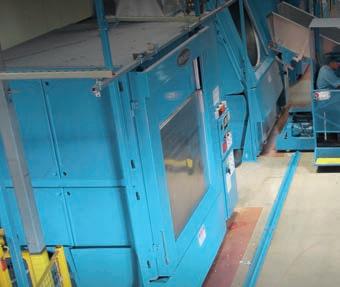
C Craig O’Dell craig@chillermfg.com
Cincinnati Laundry Equipment 2650 Spring Grove Ave. Cincinnati, OH 45214
T 513-542-5000 or 877-542-3300
W www.cincinnatilaundry.com cle@cincinnatilaundry.com
Clarus Linen Systems Buffalo, NY
W www.claruslinens.com C Patti Friedrich patti.friedrich@claruslinens.com
Clayton Industries 17477 Hurley St. City of Industry, CA 91744
T 626-435-1200 or 800-423-4585
Cleaver-Brooks 221 Law St. Thomasville, GA 31792 T 229-226-3024 or 800-250-5883 W www.cleaver-brooks.com C Howard Hill info@cleaverbrooks.com

Clenacorp 1200 Industrial Rd. #3 San Carlos, CA 94070
CcC&W Equipment Co. 1114 Ferris Rd. Amelia, OH 45102
T 800-443-3573 W www.candwcorp.com sales@candwcorp.com
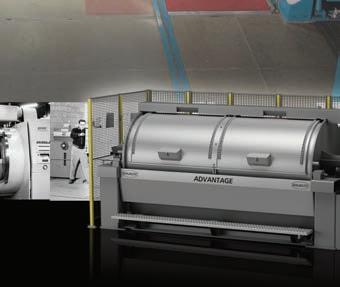
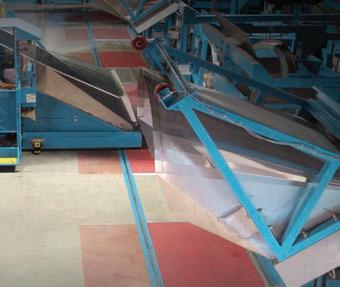
Calderon Textiles 6131 W. 80th St. Indianapolis, IN 46278
T 888-742-1998 W www.calderontextiles.com cs@calderontextiles.com
Caled Chemical 26 Hanes Dr. Wayne, NJ 07470
T 800-652-2533 W www.caledclean.com
C Jack Belluscio info@caledclean.com
California Textiles
P.O. Box 77306 Corona, CA 92877
T 951-272-1200 W www.catextiles.com
C Lenore Law catex1@att.net
Calsco 1114 Ferris Road Amelia, OH 45102
T 513-753-9750 or 800-443-3573 W www.calscocorp.com
C Bob Folchi bob.folchi@candwcorp.com
Carolina Textile Products 7 Caraway Ct. Elgin, SC 29045
T 877-239-0229
W www.carolinatexpro.com
C Eric Dixon info@carolinatexpro.com
Caster Connection 2380 International St. Columbus, OH 43228
T 800-544-8978
W www.casterconnection.com sales@casterconnection.com
Centrex Technologies 2021 Midwest Rd., Ste. 200 Oak Brook, IL 60523
T 800-768-0700 W www.ctrx.com salesusa@ctrx.com
Century Place 900 Pressley Rd. Charlotte, NC 28217
T 800-438-1246
W www.centuryplace.com info@centuryplaceapparel.com
Chef Works 12325 Kerran St. Poway, CA 92064
T 858-643-5600 or 800-372-6621
W www.chefworks.com customerservice@chefworks.com
A HISTORY OF SCIENTIFIC WASHROOM INNOVATIONS.
From increased performance and durability to space-saving designs, Braun has been using our proven scientific data to lead the industry in safety, automation and data management washroom technology.
To see how our science stands the test of time, visit www.gabraun.com/conventionalwashroom
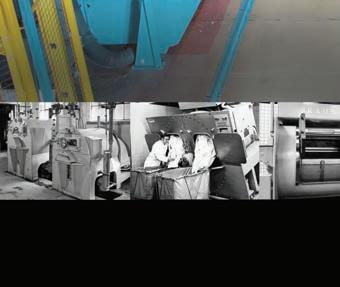
AMERICAN LAUNDRY NEWS
OF
EXPERIENCE THE EVOLUTION
CONVENTIONAL WASHROOM TECHNOLOGY
ALN_Jr Page.indd 1 1/18/16 11:21 AM COMPANY DIRECTORY AMERICAN LAUNDRY NEWS | MARCH 2016
W www.claytonindustries.com sales@claytonindustries.com
Clean Cycle Systems 960 Crossroads Blvd. Seguin, TX 78155 T 830-401-4400 or 800-826-1245 W www.cleancyclesystems.com C Mike Reilly or Dave P. ccsystems@tqind.com ClearWater Tech 850 Capitolio Way San Luis Obispo, CA 93401 T 805-549-9724 or 800-262-0203 W www.ecotexozone.com C Tim Chew sales@ecotexozone.com
▲
T 650-591-1733
W www.clenacorp.com
CMV Sharper Finish
4500 Augusta Blvd. Chicago, IL 60651
T 773-276-4800 or 800-247-4766 W www.cmvsharperfinish.com
C Mark Camelotto sales@cmvsharperfinish.com
Codet Newport Corp. (Big Bill) 294 Crawford Rd. Newport, VT 05855
T 800-992-6338 W www.bigbill.com usa@bigbill.com
Colmac Industries
P.O. Box 72 Colville, WA 99114
T 509-684-4505 or 800-926-5622

W www.colmacindustries.com
C Justin Shamion sales@colmacind.com
Columbia Boiler
P.O. Box 1070 Pottstown, PA 19464
T 610-323-2700 W www.columbiaboiler.com cbcsales@columbiaboiler.com
Comfort Concepts
501 Broad Ave., Unit 7 Ridgefield, NJ 07657
T 800-935-2241
W www.comfortconcepts.com
C Gary or Bobby Mass info@comfortconcepts.com
Commercial Coils Inc.

213 Chesterfield Industrial Blvd. Chesterfield, MO 63005
T 636-532-1523 or 800-532-2645 W www.comcoil.com patrick@comcoil.com
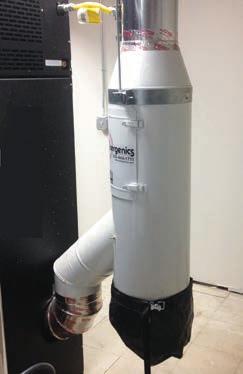
The Comphy Co. 7034 Portal Way #110 Ferndale, WA 98248
T 323-225-8234 W www.comphy.com helpdesk@comphy.com
Computer Software Architects
7 Park St., 2nd Floor Bath, ME 04530
T 207-443-8014 W www.linenmaster.net C Jim Adler sales@linen-master.com
Computype

2285 W. County Rd. C St. Paul, MN 55113
T 800-328-0852 W www.computype.com contactus@computype.com
Consolidated International Corp.
2500 Hoover Ave., Ste. A Chula Vista, CA 91911
T 866-632-2298 W www.cicus.com sales@cicus.com
Consolidated Laundry Machinery (CLM)
211 Erie St. Pomona, CA 91768 T 323-232-2417 W www.clmco.com
C Gabriel Camacho gabriel@clmco.com
Continental Girbau
2500 State Rd. 44
Oshkosh, WI 54904
T 920-231-8222 or 800-256-1073 W www.continentalgirbau.com
C Joel Jorgensen info@continentalgirbau.com
COOLSPACE
315 N. Madison St. Fortville, IN 46040
T 317-577-0417 or 800-557-5716 W www.cool-space.com sales@cool-space.com
Cornerstone Equipment & Rigging

2535 Burton Ave. Indianapolis, IN 46208
T 317-920-1850 or 877-773-1850 W www.cornerstonemachinery.com
C Eric Trudo eric@cornerstonemachinery.com
Covers Etc. 925 W. Harris Rd. Arlington, TX 76001 T 817-467-5030 or 800-451-6593 W www.coversetc.com C Jim Laleman jim@coversetc.com
CSE Emblems 14505 Parallel (P.O. Box 459) Basehor, KS 66007 T 913-724-1000 or 800-624-5537
W www.2cse.com basehor@houseofapparel.com
Custom Control Systems
45 Sherrill Ln. New Hartford, NY 13413
T 315-732-1990 W www.customcontrol systems.com C Kevin Hagberg khagberg@customcontrolsystems.com
CYNTAG RFID Systems 898 U.S. Hwy. 62E Cynthiana, KY 41031
T 859-235-0036 W www.cyntag.com info@cyntag.com
Dd
Danube International
Parc d’activites de Sologne Lamotte Beuvron, France 41600

T 33-06-0721-4146 W www.danube-international.com C Bernard Jomard b.jomard@danube-international.com
Darman Manufacturing Co. 1410 Lincoln Ave. Utica, NY 13502
T 315-724-9632 or 800-732-4107 W www.darmanco.com C Danny McCoy dan@darmanco.com
Datamars 250 W. Cummings Park Woburn, MA 01801
T 781-281-2216 W www.datamars.com
D.W. Davies & Co. 3200 Phillips Ave. Racine, WI 53403
T 800-888-6133 W www.dwdavies.com
Davis Packaging 1002 N. Palmway Lake Worth, FL 33460

T 561-290-0412 or 800-622-3015
W www.davispackaging.net
C Tim Davis davispkg@aol.com
DEL Ozone 3580 Sueldo St. San Luis Obispo, CA 93401
T 805-541-1601 or 800-676-1335 W www.delozonelaundry.com
C John Grillo jgrillo@delozone.com
DenLine Uniforms 301 Oak St. Quincy, IL 62301
T 217-228-9272 or 800-336-5463 W www.denlineuniforms.com customerservice@denlineuniforms.com

Dexter Laundry 2211 W. Grimes Fairfield, IA 52556
T 641-472-5131 or 800-524-2954
W www.dexterlaundry.com
C Jaimie Johnson jjohnson@dexter.com
COMPANY DIRECTORY 26 MARCH 2016 | AMERICAN LAUNDRY NEWS www.AmericanLaundryNews.com
www.energenics.com Fully Automatic-Self Cleaning ENERGENICS OPL UTILITY FREE OPL DUCT MOUNTED LINT FILTERS 800-944-1711 DUCT MOUNTED AIRFREE LINT FILTER AF-1-S 1470 Don St. Naples, FL 34104 • No energy or utilities required • Cost effective (duct in-duct out) • Prevents damage to air handling equipment • Meets state and national EPA discharge standards • Self cleaning–eliminates labor • Eliminates the lint bypass up to 98% • Zero operating cost • Reduces lint build-up in ducts downstream, increasing fire safety • Optional fire suppression • Sizes Up to 2,700 CFM 0316aln_Energenics Lint Collectors tab hlf.indd 1 1/28/16 3:36 PM
COMPANY DIRECTORY
Dickies
509 West Vickery Blvd. Fort Worth, TX 76104
T 866-411-1501 W www.dickies.com customerservice@dickies.com
Direct Machinery Sales Corp. 50 Commerce Pl. Hicksville, NY 11801
T 800-572-5573 W www.directmachinery.com C Ronald Hirsch rhirsch@directmachinery.com
Diversified Plastics

1309 Highway 917 West Latta, SC 29565
T 843-752-7145 or 800-768-7636
W www.dpirotocarts.com sales@dpirotocarts.com
Doberman Tuff 300 Fisher Dr. Hartwell, GA 30643
T 706-376-4793
W www.dobermantuff.com jax@dobermantuff.com
Domestic Fabrics & Blankets
2002 West Vernon Ave. Kinston, NC 28504
T 252-523-7923 W www.domesticfabrics.com sales@domesticfabrics.com
Domus
C/Energia 12 - P.I. La Quintana 08504 Sant Julia De Vilatorta Barcelona (Spain) T 34-93-8887153 W www.domuslaundry.com/home domus@domuslaundry.com
Dsquared Design Solutions 2301 Brafton Ct. NW Acworth, GA 30101 T 770-529-6349
C Darrell Doggett
Dura-Cast Products 16160 Hwy. 27 Lake Wales, FL 33859 T 863-638-3200 or 800-683-4116
W www.duracast.com
C Fred Wilson fwilson@duracast.com
Durable Superior Casters 2801 E. Abram St. Arlington, TX 76010
T 800-848-4517 W www.durablecasters.com info@durableusa.com
Dye Systems 2211 Industrial South Rd. Dalton, GA 30721 T 706-277-1266 or 800-440-7481

W www.dyesystems.com
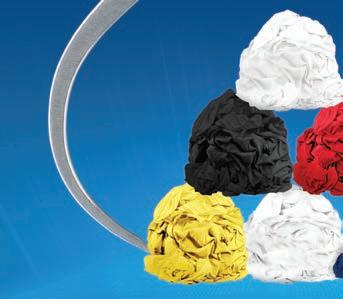
C Debbie Bagley orders@dyesystems.com
Ee
E-Tech 2090 Elm St. S.E. Minneapolis, MN 55411
T 612-722-1366
W www.etechsystems.com tschult@etechsystems.com
EAM-Mosca Corp. 675 Jaycee Dr. Hazle Township, PA 18202
T 570-455-2442 or 800-456-3420
W www.eammosca.com
C Marie King info@eammosca.com
East Coast Water Systems 520 Folly Rd., Ste. P Charleston, SC 29410
T 866-513-7170
W www.eastcoastwatersystems.com
contact@eastcoastwatersystems.com
Ebco Industries
7851 Alderbridge Way Richmond, BC V6X 2A4
T 604-276-1491 W www.ebco.com/carts
C Dan Baum dan_baum@ebco.com

Ecolab
370 Wabasha St. N. St. Paul, MN 55102
T 800-553-8683 W www.ecolab.com institutionalorders@ecolab.com


Economic Laundry Solutions 14 Cinnamon Dr.
Hockessin, DE 19707 T 877-652-5742 W www.economiclaundry solutions.com sales@economiclaundrysolutions.com
EDMAR Chemical Co. 539 East Washington St., POB 598 Chagrin Falls, OH 44022 T 440-247-9560 or 800-401-4780 W www.edmarchem.com www.mrsa-solutions.com
C Jack Binder sales@edmarchem.com
EDRO Corp. P.O. Box 308 East Berlin, CT 06023
T 860-828-0311 or 800-628-6434 W www.edrocorp.com C Ed Kirejczyk sales@edrocorp.com

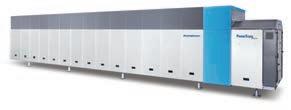
Electrolux — Distributed by Laundrylux 461 Doughty Blvd. Inwood, NY 11096 T 516-371-4400 or 800-645-2205 W www.laundrylux.com info@laundrylux.com
Ellis Corp. 1400 W. Bryn Mawr Ave. Itasca, IL 60143 T 630-250-9222
or 800-611-6806 W www.elliscorp.com C Craig Mundt sales@elliscorp.com
Encompass Group
615 Macon St. McDonough, GA 30253 T 800-284-4540 W www.encompassgroup.net info@encompassgroup.net
Energenics Corp. 1470 Don St. Naples, FL 34104 T 239-643-1711 or 800-944-1711 W www.energenics.com
AMERICAN LAUNDRY NEWS
AMERICAN LAUNDRY NEWS | MARCH 2016
kannegiesser-usa.com 800.344.0403 THE LEADER IN LAUNDRY TECHNOLOGY A washing system that is loads smarter. If efficient is smart, then our PowerTrans batch washing system is pure genius. It’s built to reduce waste with intelligent water management, maximize loading volumes and shorten rinsing times. The versatility of complete standing batch washing and rinsing also allows for color changes without the need for empty pockets. And our ultramodern 22” touchscreen control panel puts you in command of efficient washroom production. PowerPress Batch Extractor PowerTrans Plus Batch Washer PowerDry Automated Batch Dryer ALN_Jr Page.indd 1 1/8/16 4:33 PM ▲
C Bryant Dunivan dunivan@energenics.com
Ensign Emblem
1746 Keane Dr. Traverse City, MI 49686
T 800-521-0575 W www.ensignemblem.com
C Gayle Zreliak gayle@ensignemblem.com
Epic Industries 1007 Jersey Ave. New Brunswick, NJ 08901
T 732-249-6867 or 800-227-5536
W www.epicindustries.com
C Sam Levine slevine@epicindustries.com
ERC Wiping Products
19 Bennett St. Lynn, MA 01905
T 781-593-4000 or 800-225-9473 W www.ercwipe.com
C Valerie Sweeney erc@ercwipe.com
Esporta Wash Systems
1015 Crowley Ave. Unit 101 Kelowna, BC V1Y 9R6
T 800-881-7781 W www.esporta.ca
C Howard Sures howard.sures@esporta.ca
Euclid Vidaro Mfg. Co.
P.O. Box 550 Kent, OH 44240
T 330-673-7413 W www.vidaro.com
C Howard Fleischmann hfleischmann@vidaro.com
EzProducts Intl. 612 North Florida Ave. Wauchula, FL 33873
T 863-767-0155 or 877-906-1818 W www.ezpi.us
C Diane Rue diane@ezproductsinc.com
Fike & Fike, Inc. 1701 Clearwater Ave., Ste. D Bloomington, IL 61704
T 309-663-5254 or 800-525-3678
W www.fikeandfike.com
C Sheena Dryer sales@fikeandfike.com
FireXonline P.O. Box 242 Clawson, MI 48017
T 248-752-7110 or 800-338-9010
W www.ongard.biz ongardsales@gmail.com
FLM Fairfield Laundry Machinery
5 Montesano Rd. Fairfield, NJ 07004
T 973-575-4330 or 800-962-7032 W www.flmcorp.com
C Dennis Hall info@flmcorp.com
Foltex USA P.O. Box 34628 Seattle, WA 98124-1628
T 855-436-5839 W www.foltex-usa.com
C Arnaud Henrard arno@foltex-usa.com
Forenta P.O. Box 607 Morristown, TN 37814
T 423-586-5370 W www.forentausa.com C D. Stanley King info@forentausa.com
Freightliner Custom Chassis Corp. 552 Hyatt St. Gaffney, SC 29341
T 864-487-1700 W www.freightlinerchassis.com fcccservice@daimler.com
The Fulton Companies 972 Centerville Rd. Pulaski, NY 13142
T 315-298-5121 W www.fulton.com C Mike McLean mike.mclean@fulton.com
Golden Star 6445 Metcalf Ave. Overland Park, Kansas 66202
T 816-842-0233 or 800-821-2792 W www.goldenstar.com goldenstar@goldenstar.com
W.L. Gore & Associates 555 Paper Mill Rd. Newark, DE 19711 T 410-506-7787 W www.gore.com
Gourmet Table Skirts & Linens 9415 W. Bellfort Houston, TX 77031
T 713-666-0602 or 800-527-0440 W www.tableskirts.com C Howard Kammerman howard@tableskirts.com
Granger Plastics Co. 1600 M.A.D.E. Industrial Dr. Middletown, OH 45044
T 513-424-1955 or 866-510-9701 W www.grangerplastics.com C Shawn Cravens sales@grangerplastics.com
The Green Garmento 20109 Nordhoff St. Chatsworth, CA 91311 T 323-512-2600 W www.thegreengarmento.com sales@thegreengarmento.com
The Griffin Group 207 Stonewall Jackson Blvd. Staunton, VA 24401 T 540-213-8773 W www.thegriffingroup.cc C Deana Griffin deana@thegriffingroup.cc
G.S. Manufacturing 760 Burnett St. Kingston, ON K7M 5W3 T 613-389-7026 or 800-363-2278 W www.gsm-cart.com C Cathy Ballow cballow@gsm-cart.com
Hanning Elektro-Werke GmbH & Co. KG
Holter Str. 90 D-33813 Oerlinghausen, Germany T 49-5202-7070-0 W www.hanning-hew.com info@hanning-hew.com
Harbor Linen 2 Foster Ave. Gibbsboro, NJ 08026 T 856-435-2000 or 800-257-7858 W www.harborlinen.com C Jim Carey jcarey@harborlinen.com
Harris Pillow Supply 3026 Trask Pkwy. Beaufort, SC 29906 T 800-845-8240 W www.harrispillow.com
Hoffman-New Yorker 46 Clinton Pl. Hackensack, NJ 07601 T 201-488-1800 W www.hoffman-newyorker.com info@hoffman-newyorker.com
Hot Bag P.O. Box 51304 Phoenix, AZ 85076 T 520-404-9077 W www.hot-bag.net C Pat Conti patconti05@yahoo.com
Huebsch Shepard Street (P.O. Box 990) Ripon, WI 54971 T 800-553-5120 W www.huebsch.com
Hydro Systems Co. 3798 Round Bottom Rd. Cincinnati, OH 45244 T 513-271-8800 or 800-543-7184 W www.hydrosystemsco.com contact-hydro@hydrosystemsco.com
Willoughby, OH 44094
T 440-954-8010 W www.industrialwheelsinc.com C Gary Cochran gary@industrialwheelsinc.com
Ingersoll Rand
800 Beaty St. Davidson, NC 28036
T 704-655-4000 W www.ingersollrand.com
Innovative Chemical Systems
First Prize Industrial Center
76 Exchange St. Albany, NY 12205
T 800-777-1728 W www.icschemicals.com C Robert J. Strong rstrong@icschemicals.com
Innovative Management Designs
P.O. Box 868 Gray, Maine 04039 T 440-334-1949 W www.imdlive.com sales@imdlive.com
Iowa Techniques
524 Tradesmens Park Dr. Hutto, TX 78634
T 800-727-1592 W www.iowatechniques.com info@iowatechniques.com
IPC-Tags
1527 State Hwy. 114 West, Ste. 500 Grapevine, TX 76051
T 817-714-8400 W www.ipc-tags.com C Debbie Schuster debbie@ipc-tags.com
IPSO
Shepard Street (P.O. Box 990) Ripon, WI 54971
T 800-872-4776 W www.ipsona.com ipso.sales@alliancels.com
FfF-Matic 299 S. Millpond Dr. Lehi, UT 84043
T 801-768-2000 or 800-824-9994
W www.fmatic.com
C Alicia Lewis info@fmatic.com
Faultless Starch 1025 W. 8th St. Kansas City, MO 64101
T 800-846-1230
W www.faultless.com www.faultlessbynature.com info@faultless.com
Felins USA 8306 W. Parkland Ct. Milwaukee, WI 53223
T 800-843-5667
W www.felins.com sales@felins.com
Felrap World
P.O. Box 297 Warren, RI 02885
T 401-245-4796 or 800-969-4940
W www.felrap.com
C Joseph Fernandes sales@felrap.com
Fibertech 11744 Blue Bell Rd. Elberfeld, IN 47613
T 812-983-2642 or 800-304-4600
W www.fibertechinc.net
C Natalie Young nyoung@fibertechinc.net
Gg
Gardner Machinery Corp. 700 N. Summit Ave. (P.O. Box 33818) Charlotte, NC 28216 (28233)
T 800-352-6496 W www.gardnermachinery.com C Dick Gardner gardner@gardnermachinery.com
Garnier-Thiebaut 3000 S. Eads St. Arlington, VA 22202
T 888-812-6670 W www.gtlinens.com info@gtlinens.com
General Boiler
1546 E. Adams Blvd. Los Angeles, CA 90011
T 323-233-1005 W www.generalboiler.com sales@generalboiler.com
George O’Day’s 19 E. 143rd St. Hammond, IN 46327
T 800-253-1160 W www.oday.com sales@oday.com
Girbau Industrial 2500 State Rd. 44 Oshkosh, WI 54904
T 920-231-8222 or 800-256-1073 W www.girbauindustrial.com C Joel Jorgensen info@girbauindustrial.com
Guardian Manufacturing LLC 2971A Oxbow Cir. Cocoa, FL 32926 T 321-631-4580 W www.guardianmfg.com C Tom Allen tom.allen@guardianmfg.com
Gurtler Industries 15475 S. LaSalle St. South Holland, IL 60473 T 708-331-2550 or 800-638-7300 W www.gurtler.com C Steven Tinker sjtinker@gurtler.com
Hh
H-M Co. 2305 Gilbert Ave. Cincinnati, OH 45206 T 513-281-3832 or 800-365-1900 W www.draintroughs.com C Joe Stern hmco123@aol.com
Hagco Industries 1052 N. Main St. River Falls, WI 54022 T 715-425-7994 W www.hagcoultramicrofiber.com C Traci Hagberg hagcoinc@comcast.net
Hamilton Engineering 34000 Autry St. Livonia, MI 48150 T 734-419-0200 or 800-968-5530 W www.hamiltonengineering.com sales@hamiltonengineering.com
Hydro-Thermal Corp. 400 Pilot Ct. Waukesha, WI 53188 T 262-548-8900 or 800-952-0121 W www.hydro-thermal.com info@hydro-thermal.com
Ii
Imesa USA P.O. Box 2329 Livingston, NJ 07039 T 973-535-8305 or 877-873-8451 W www.imesa.it C Stuart Ilkowitz imesausa@aol.com
Industrial Bag & Specialties 4220 6th St. Wyandotte, MI 48192 T 248-559-5550 or 800-334-9695 W www.industrialbag.com C Kenneth Borin sales@industrialbag.com
Industrial Specialties Mfg. 4091 S. Eliot St. Englewood, CO 80110 T 303-781-8486 or 800-781-8487 W www.industrialspec.com sales@industrialspec.com
Industrial Waste Water Services 3881 Hollywood Hwy. Clarkesville, GA 30523 T 706-839-1722 or 800-457-5641 W www.iwwsllc.com info@iwwsllc.com
Industrial Wheels 4293B Hamann Pkwy.
JjJensen USA
99 Aberdeen Loop Panama City, FL 32405
T 850-271-5959 W www.jensen-group.com C Norbert Gittard norbert.gittard@jensen-group.com
J.P. Equipment
4024 Millersville Rd. Indianapolis, IN 46205
T 317-432-5915 or 800-925-3236 W www.ineedjpequipment.com C Patrick Bowers pbowers@ineedjpequipment.com
JPE Inc.
4024 Millersville Rd. Indianapolis, IN 46205
T 317-546-7158 or 800-925-3236 W www.ineedjpe.com
C Patrick Bowers pbowers@ineedjpequipment.com
Kk
K-Tex
6547 Corsica Dr. Memphis, TN 38120
T 901-680-9026 W www.k-texllc.com C Joe Kaminsky joe@k-texllc.com
Kaeser Compressors
P.O. Box 946 Fredericksburg, VA 22404
T 540-898-5500 or 866-516-6888 W www.us.kaeser.com info.usa@kaeser.com
MARCH 2016 | AMERICAN LAUNDRY NEWS
COMPANY DIRECTORY
COMPANY DIRECTORY
Kannegiesser USA
2425 109th St.
Grand Prairie, TX 75050
T 972-602-8766 or 800-344-0403
W www.kannegiesser-usa.com
C Phil Hart sales@kannegiesser-usa.com
Kemco Systems
11500 47th St. North Clearwater, FL 33762
T 727-573-2323 or 800-633-7055
W www.kemcosystems.com
C John O’Hehir sales@kemcosystems.com
Kennedy Hygiene
Brookside
Uckfield, East Sussex, UK TN22 1YA
T 0044-1825-768141
W www.kennedy-hygiene.com
C Jeffery Woods jwoods@kennedy-hygiene.com
KeyColour
3002 W. Weldon Ave. Phoenix, AZ 85017
T 602-424-9990 or 800-274-4393
W www.keycolour.net orders@keycolour.net
Kingsfield
1 Dewolf Rd., Ste. 210 Old Tappan, NJ 07675
T 201-767-0414
W www.kingsfieldinc.com
C Ryan Choi info@kingsfieldinc.com
Klipper Group 33 S. Service Rd., Ste. 126
Jericho, NY 11753
T 516-750-9745 or 877-KLIPPER W www.klippergroup.com info@klippergroup.com
Knight 20531 Crescent Bay Dr. Lake Forest, CA 92630
T 949-595-4800 or 800-854-3764 W www.knightequip.com C Ted Do tdo@idexcorp.com
Victor Kramer Co. P.O. Box 130 Oceanport, NJ 07757
T 201-935-0414 or 800-835-0414 W www.victorkramer.com
C Tom Mara vkcompany@aol.com
Kreussler 6103 Johns Rd., Ste. 7 Tampa, FL 33634 T 813-884-1499 W www.kreussler-chemie.de info@kreussler.com




South St. Paul, MN 55118
T 888-517-7890 W www.lanchatex.com C Lance Peifer lancep@lanchatex.com

Landau Uniforms 8410 W. Sandidge Rd. Olive Branch, MS 38654
T 662-895-7200 or 800-238-7513 W www.landau.com sales@landau.com
Lapauw USA 2150 South 1300 E., Ste. 500 Salt Lake City, UT 84106
T 801-990-2836 W www.lapauwusa.com info@lapauwusa.com
Lattner Boiler Co. 1411 9th St. SW Cedar Rapids, IA 52404 T 319-366-0778 or 800-345-1527 W www.lattnerboiler.com sales@lattner.com
Laundry Loops P.O. Box 5167 Bozeman, MT 59717
T 406-582-7550 or 888-246-5667 W www.laundryloops.com C Peggy Durney info@laundryloops.com
LaundryCareers.com 1114 Fearrington Post Pittsboro, NC 27312 T 877-295-5693 W www.laundrycareers.com C Craig Lloyd craig@laundrycareers.com
Laundry-Consulting.com 2516 Partridge Dr. Winter Haven, FL 33884 T 941-447-2155 W www.laundry-consulting.com C Jim Windham jw@laundry-consulting.com
T 800-841-8083 W www.leebaw.com
C John C. Leek john.leek@leebaw.com
Leonard Automatics Inc. 5894 Balsom Ridge Rd. (P.O. Box 501) Denver, NC 28037 T 704-483-9316 W www.leonardautomatics.com C Dan Farnsworth sales@leonardautomatics.com
LG 1000 Sylvan Ave. Englewood Cliffs, NJ 07632 T 201-816-3157 W www.lgcommerciallaundry.com

Lift Free Products
14260 W. Greenfield Ave., Ste. 202 Brookfield, WI 53005
T 262-754-6990 W www.liftfreeproducts.com
LlLaMotte
802 Washington Ave. (P.O. Box 329) Chestertown, MD 21620
T 410-778-3100 or 800-344-3100 W www.lamotte.com
LanCha Textiles 953 S. Concord St., Ste. A
Laundry Design Group 5940 S. Rainbow Blvd. Las Vegas, NV 89118 T 855-226-3500 W www.laundry-design.com C Bob Corfield bcorfield@laundry-design.com
The Laundry List Inc. 4525 Sherman Oaks Ave. Sherman Oaks, CA 91403 T 818-789-8045 W www.thelaundrylist.com sales@thelaundrylist.com
Laundrylux 461 Doughty Blvd. Inwood, NY 11096 T 516-371-4400 or 800-645-2205 W www.laundrylux.com info@laundrylux.com
Lavatec Laundry Technology 49 Lancaster Dr. Beacon Falls, CT 06403 T 203-632-8777 W www.lavatec-laundry.com
C Mark Thrasher m.thrasher@lavatec-laundry.us
Leebaw Mfg. Co. P.O. Box 553 Canfield, OH 44406
C Robert Hansen bob@liftfreeproducts.com
Lubbert Supply Co.
626 Surf Ave. Stratford, CT 06615
T 203-690-1105 or 855-922-1705 W www.lubbertsupply.com C Eric Lubbert eric@lubbertsupply.com
Ludell Manufacturing 5200 W. State St. Milwaukee, WI 53208 T 414-476-9934 or 800-558-0800 W www.ludellmanufacturing.com
been involved in the development of
that not only solve quality problems that exist at the moment, but also provide long term benefits to the customer and the environment in which we live.
AMERICAN LAUNDRY NEWS
AMERICAN LAUNDRY NEWS | MARCH 2016
For
U.N.X. INCORPORATED
products
U.N.X. was built on the foundation of improving the industry in which we participate. U.N.X. prides itself on being an industry leader with state-of-the-art products and dispensing equipment, and our plans for the future are extraordinary. With a Research and Development team second to none, U.N.X. is in a position to provide the industry with the most technologically advanced products and dispensers as possible. U.N.X. INCORPORATED 707EArlingtonBlvd Greenville,NC27858 (252)756 8616 www.unxinc.com ALN_Tab_half 10/9/12 2:40 PM Page 1 See us at the Clean Show • Booth #2502 0513aln_UNX.indd 1 4/26/13 10:48 AM ALN_Tab_half.indd 1 8/6/13 11:38
▲
over 50 years
has
C Greg Thorn sales@ludellmfg.com
Mm Mm
M & M Technologies
4023 Kennett Pike, #252 Wilmington, DE 19807
T 302-658-7007 or 800-658-5958 W www.fluidrepellent.com
C Richard J. Moody mmtech@fluidrepellent.com
Machinery Mountings
11 Constance Ct. Hauppauge, NY 11788-4200
T 631-851-0480
C Steve Kass
Mark-N-Mend
38151 Airport Pkwy. #54 Willoughby, OH 44094
T 440-951-2003
W www.marknmend.com
C Carol Burry carol@marknmend.com
Marlo Inc. 2227 South St. Racine, WI 53404
T 262-681-1300 W www.marlo-inc.com
C Steve LaMere slamere@marlo-inc.com
R.W. Martin & Sons
310 Park Ave. Kent, OH 44240
T 330-673-8712 or 800-635-4363
W www.rwmartin.com
C Chip Ottman
info@rwmartin.com
Material Flow Systems LLC 2160 S. Hellman Ave. Ontario, CA 91761
T 909-930-6151 W www.materialflowsystems.com
C Jason Cassady jasonc@materialflowsystems.com
Maytag Commercial Laundry (Whirlpool Corp.) 2901 Lakeshore Dr., MD 8600 St. Joseph, MI 49085
T 800-662-3587 W www.maytagcommercial laundry.com
C Steve Hietpas steven_d_hietpas@whirlpool.com
MBH Enterprises 7963 Sailboat Key Blvd., Ste. 703 S. Pasadena, FL 33707
T 727-360-8243 or 844-333-4808 W www.rope-ties.com
C Milton Heilweil info@rope-ties.com
McClure Industries 9051 S.E. 55th Ave. Portland, OR 97206
T 503-777-2821 or 800-752-2821
W www.mcclureindustries.com
C Richard Michael sanitrux@aol.com
Medelita 1046 Calle Recodo, Ste. D San Clemente, CA 92673
T 949-542-4100 or 877-987-7979 W www.medelita.com
C Joe Francisco
contact.us@medelita.com
Medline Industries One Medline Pl. Mundelein, IL 60060
T 847-949-5500 or 800-633-5463 W www.medline.com/textiles service@medline.com
Metalprogetti USA 8 E Sunnyslope Ln. Phoenix, AZ 85020
T 602-944-2923 W www.metalprogetti.it C sales@metalprogetti.com
Midwest Specialty Products 110 Washington St. Winneconne, WI 54986 T 920-582-7254 or 800-296-1884 W www.mspconverting.com C John Morgan jmorgan@mspconverting.com
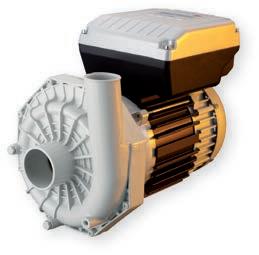
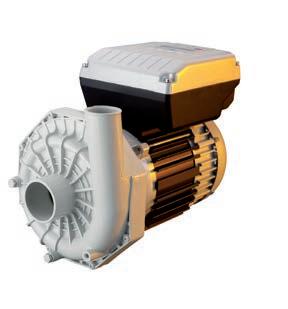

Milamar Coatings 311 NW 122nd St., Ste. 100 Oklahoma City, OK 73114 T 405-755-8448 or 800-459-7659 W www.milamar.com milamar@cassploymers.com
Miele Professional 9 Independence Way Princeton, NJ 08540 T 609-419-9898 or 800-991-9380 W www.miele-pro.com C Rudie Smit proinfo@mieleusa.com
Milliken & Co. 920 Milliken Rd. M143
Spartanburg, SC 29304 T 800-322-8326 W www.millikentablelinens.com tablelineninfo@milliken.com
Milnor Laundry Systems P.O. Box 400 Kenner, LA 70063 T 504-467-9591 W www.milnor.com milnorinfo@milnor.com
MIP P.O. Box 448 Champlain, NY 12919-0448 T 800-361-4964 W www.mipinc.info C Mark Mann mmann@mip.ca
M.I.T. Poly-Cart Corp. 211 Central Park West New York, NY 10024 T 212-724-7290 or 800-234-7659 W www.mitpolycart.com C Marty Winnick info@mitpolycart.com
MODRoto 1745 Cragmont St. Madison, IN 47250 T 800-829-4535 W www.modroto.com info@modroto.com
Monarch Brands 5601 Paschall Ave. Philadelphia, PA 19143 T 800-333-7247 W www.monarchbrands.com C Hal Kanefsky halk@monarchbrands.com
Moonsoft International 3808 N. Sullivan Rd., Bldg. 12, Ste. Q Spokane, WA 99216 T 509-892-9363, ext. 103, or 877-892-9360 W www.moonsoftcorp.com C Dan Simmons dan@moonsoftcorp.com
Morgan Olson 1801 S. Nottawa St. Sturgis, MI 49091
T 800-624-9005 W www.morganolson.com info@morganolson.com
Mountville Mills 1729 S. Davis Rd. LaGrange, GA 30241 T 706-882-2961 or 800-241-5549 W www.mountville.com mats@mountville.com
Movin Cool/DENSO Products and Services Americas, Inc. 3900 Via Oro Ave. Long Beach, CA 90810
T 800-264-9573 W www.movincool.com C Eddie Stevenson info@densodrive.com
MultiTherm P.O. Box 579 Devault, PA 19432
T 610-408-8361 or 800-225-7440 W www.multitherm.com C Marianne Landi techinfo@multitherm.com
Nn
National Combustion Co. 104-11 180th St. Jamaica, NY 11433 T 718-291-8400 or 888-OK-NATCO W www.nationalcombustion.com
C Daniel Orr sales@nationalcombustion.com
Neuhaus Chemical Products 5727 Mobud

San Antonio, TX 78238-1820 T 210-684-2411 or 800-776-8688 W www.jinxink.com
C Robert S. Neuhaus ncpinc@att.net
New Jersey Wire Cloth Co. 55 Park Slope Clifton, NJ 07011 T 973-340-0101 W www.njwirecloth.com C John Rafanello john@njwirecloth.com
Norchem Corp. 5649 Alhambra Ave. Los Angeles, CA 90032
T 323-221-0221 or 800-442-4360 W www.norchemcorp.com info@norchemcorp.com
OoOGI Process Equipment 8939 W. 21st St. Sand Springs, OK 74063
T 918-246-1600 W www.ogipe.com sales@ogipe.com
Olek Belts 443 Mill Rd. Bensalem, PA 19020 T 215-638-4550 or 800-869-2683 W www.olekbelts.com C Tony Olek olekbelts@aol.com
Omni Apparel Inc. 113 Kingsbridge Dr. Carrollton, GA 30117 T 770-838-1008 W www.omniapparel.com C Brenda Horsley oapparel@bellsouth.net
Orr Textile Co. 4777 Blalock Rd. Houston, TX 77041 T 713-939-7788 or 800-346-4918 W www.orrtextile.com sales@orrtextile.com
The Ozone Company 4901 Prairie Dock Dr. Madison, WI 53718 T 888-437-4403 W www.theozonecompany.com
Ozone Laundry Systems
434 Crystal Spring Dr. (P.O. Box 817) Draper, UT 84020 T 801-747-0306 or 888-283-0306 W www.ozonelaundrysystems.com sales@ozonelaundrysystems.com
Ozone Water Technologies 77 Maple St. (P.O. Box 1437)
Tryon, NC 28782 T 828-859-2015 or 828-279-5000 W www.ozonewatertech.com
C Jim Gross jimg@ozonewatertech.com
Pacific Steam Equipment
10648 Painter Ave. Santa Fe Springs, CA 90670
T 562-906-9292 or 800-321-4114 W www.pacificsteam.com sales@pacificsteam.com
Paloma Industries
2151 Eastman Ave. Oxnard, CA 93030 T 805-278-5499 W www.palomatankless.com
C Hadi Takeuchi
COMPANY DIRECTORY 30 MARCH 2016 | AMERICAN LAUNDRY NEWS www.AmericanLaundryNews.com
Pp
Technical specifications: 1.5 bar, 600 l/min 100 – 240 V, 50/60 Hz Very smooth running and delivers high power density POWERFUL AND EFFICIENT FOR YOUR PUMP APPLICATIONS haflowtic varicon compact synchronous drive PSE 60 HANNING ELEKTRO-WERKE GmbH & Co. KG Holter Straße 90, D-33813 Oerlinghausen,Germany, Tel +49 (5202) 707-0 www.hanning-hew.com Rugged synchronous motor without sensors Customized frequency inverter with membrane keypad Controlled via CAN/Modbus or digitally High speed accuracy and precise concentric run-out HEW_haflowtic_120,65x171,54.indd 1 05.02.16 11:01 ALN_Jr_half.indd 1 2/8/16 9:56 AM
palomausa@raypak.com
Paratherm Corp.
31 Portland Rd. West Conshohocken, PA 19428
T 800-222-3611 W www.paratherm.com info@paratherm.com
Pariser Industries 91 Michigan Ave. Paterson, NJ 07503
T 973-569-9800 W www.pariserchem.com
C Scott Pariser info@pariserchem.com
Parker Boiler Co. 5930 Bandini Blvd. Los Angeles, CA 90040
T 323-727-9800
W www.parkerboiler.com
C Michael Leeming sales@parkerboiler.com
Penco Products 1820 Stonehenge Dr. Greenville, NC 27858
T 800-562-1000 W www.pencoproducts.com
C Frank Berlino frank.berlino@pencoproducts.com
Penn Emblem Co. 10909 Dutton Rd. Philadelphia, PA 19154
T 215-632-7800 or 800-793-7366
W www.pennemblem.com
C Michelle Burgess micbur@pennemblem.com
Pennsylvania Scale Co.
665 N. Reservoir St. Lancaster, PA 17602
T 717-295-6935 or 800-233-0473 (ext. 101) W www.pascale.com C Rob Woodward rsw@pascale.com
Performance Matters 2764 Pleasant Rd., #11018 Fort Mill, SC 29708
T 803-897-0044 W www.performance-matters.com
C Troy Lovins info@performance-matters.com
Pertl & Alexander 6 Academy St. Skaneateles, NY 13152
T 888-419-3444 W www.pertl-alexander.com
C Matt Alexander matt.alexander@pertl-alexander.com
Phoenix Scale Co. 6802 N. 47th Ave., #9 Glendale, AZ 85301
T 623-435-9511 or 800-326-9860 W www.laundrytrak.com C Bruce Bettis bbettis@laundrytrak.com
Phoenix Textile Corp. 21 Commerce Dr. O’Fallon, MO 63366
T 314-291-2151 or 800-325-1440 W www.phoenixtextile.com
C Scott Rodgers salesinfo@phoenixtextile.com


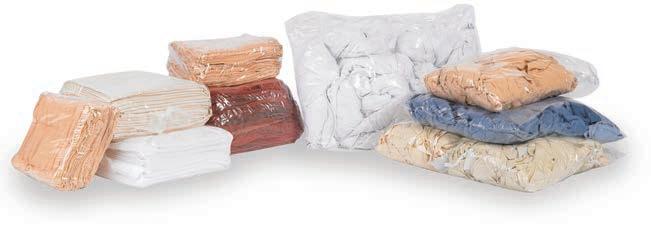
PHS West 6704 Bleck Dr. Rockford, MN 55373
T 763-498-7576 or 888-639-5438
W www.phswest.com info@phswest.com
Pick Heaters 730 S. Indiana Ave. (P.O. Box 516) West Bend, WI 53095
T 262-338-1191 or 800-233-9030 W www.pickheaters.com info1@pickheaters.com

Plas-Ties Co. 14272 Chambers Rd. Tustin, CA 92780
T 800-854-0137 W www.plasties.com C Jesse Garcia info@plasties.com
Plastics Consulting & Mfg. Co. 1431 Ferry Ave. Camden, NJ 08104
T 856-963-7700 or 800-222-0317 W www.pcmco.com/ SPO-coating.html C Jonathan Sinrich sales@pcmco.com
Plexus Industries 402 W. Broadway, Ste. 400 San Diego, CA 92101 T 619-888-7173 W www.plexusind.com C Scott Benjamin scott@plexusind.com
Pneu-Mech Systems Mfg. 201 Pneu Mech Rd. Stateville, NC 28625 T 704-873-2475 or 800-358-7374 W www.pneu-mech.com info@pneu-mech.com
PODAB 1330 Main St. Floor 2 Sarasota, FL 34236
T 941-726-0808 W www.podab.us sales@podab.us
Positek RFID 1210 Stanbridge St. Norristown, PA 19401 T 610-275-2905 W www.positekrfid.com sales@positekrfid.com
Precision Conveyors 4203 Mara Lane Monroe, NC 28110 T 859-743-2010 C Ken Messer kenmesser1@yahoo.com
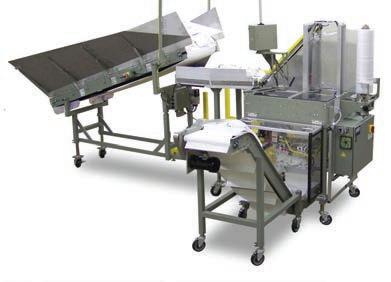
Primus Shepard St. (PO Box 990) Ripon, WI 54971 T 877-724-0187 W www.primuslaundry.com C Primus Sales
Procter & Gamble Professional
1 Procter & Gamble Plaza Cincinnati, OH 45202
T 800-332-7787 W www.pgpro.com
Production Design Products 14161 Basalt St. N.W. Ramsey, MN 55303 T 763-421-4260 or 800-486-5249 W www.pdpi.com C Kufre Akpan kufre.akpan@pdpi-solutions.com
ProSonix P.O. Box 26676


Milwaukee, WI 53226-0676 T 800-849-1130 W www.pro-sonix.com C Tom Podwell info@pro-sonix.com
Protect-A-Bed 1500 S. Wolf Rd. Wheeling, IL 60090 T 866-297-8836 W www.protectabed.com info@protectabed.com
Qq
Quietaire Cooling 505 N. Hutcheson Houston, TX 77003 T 713-228-9421 W www.quietaire.com info@quietaire.com
Quicksort 3200 Shackleford Rd., Ste. 10 Little Rock, AR 72205 T 501-216-8093 W www.garmentmanagement.com
Rr
R&B Wire Products 2902 W. Garry Santa Ana, CA 92704
T 714-549-3355 or 800-634-0555 W www.rbwire.com C Frank Rowe frowe@rbwire.com ▲
COMPANY DIRECTORY www.AmericanLaundryNews.com AMERICAN LAUNDRY NEWS | MARCH 2016 31
SOLUTIONS LAUNDRY PACKAGING • Easy to load • Single and dual arrangement • By count or weight • Reduce labor • One film size so no stocking of various pre-made bags • CF material on a roll Rennco.com/ Laundry ∙ 800-409-5225 • Reliable, Versatile & Cost-effective Automation PO Box 116, 300 Elm St ∙ Homer, MI 49245 USA ALN_Tab_half.indd 1 1/26/16 10:54 AM
RAMCO Laundry Machinery
301 E. Stephens St., Ste. 100

Arlington, TX 76018
T 817-640-5100 or 800-878-5578
W www.ramcolaundry.com
C Ralph McMillan sales@ramcolaundry.com
Raypak 2151 Eastman Ave. Oxnard, CA 93030
T 805-278-5300 W www.raypak.com
RD Industries 7417 N. 101 St. Omaha, NE 68122
T 402-455-8553 or 800-759-7090
W www.rdindustries.com sales@rdindustries.com
Reimers Electra Steam
4407 Martinsburg Pike Clear Brook, VA 22624
T 540-662-3811 or 800-872-7562
W www.reimersinc.com
C Bill Hutton sales@reimersinc.com
Rema Dri-Vac Corp. 45 Ruby St. Norwalk, CT 06850
T 203-847-2464
W www.remadrivac.com
C Barry Gunderson/Jay Reed info@remadrivac.com; remadri@aol.com

Rennco LLC 300 Elm St. Homer, MI 49245
T 517-568-4121
or 800-409-5225
W www.rennco.com
C Jeanne George jgeorge@rennco.com
Riegel div. Mount Vernon Mills
51 Riegel Rd. Johnston, SC 29832
T 803-275-2541 or 800-845-2232 W www.riegellinen.com C Bob Bailey riegel2@comcast.net
Rinnai American Corp. 103 International Dr. Peachtree City, GA 30269
T 800-621-9419 W www.rinnai.us C Nina Knight nknight@rinnai.us
Rotational Molding
17038 S. Figueroa St. Gardena, CA 90248
T 310-327-5401 W www.rotationalmoldinginc.com info@rotationalmoldinginc.com
Rototherm Corp. 1501 Oxmead Rd. Burlington, NJ 08016 T 609-387-0884 W www.rototherm.net info@rototherm.net
Royal Basket Trucks
201 Badger Pkwy. Darien, WI 53114
T 262-882-1227 or 800-426-6447 W www.royal-basket.com C Cindy Lapidakis sales@royal-basket.com
Royal Blue Textiles 6820 S. Victoria Ave. Los Angeles, CA 90043
T 310-888-0156 or 800-693-5426 W www.royalblueintl.com C Sam Kahen sales@royalblueintl.com
Royaltone Co. 7211 N. Harrison Ave. Shawnee, OK 74804 T 405-878-0537 or 800-331-5506 W www.royaltone.com C Carl Randall carl@royaltone.com
Ryco Conveyors 27151 Aberdeen Ave. New Prague, MN 56071 T 952-758-4178 W www.rycoconveyors.com
Rick Reichow ryco@ryco92.com
Ss
Sani Wash 58-90 55th St. Maspeth, NY 11378 T 718-729-1700 or 800-288-7264 W www.saniwash.com C Richard Gettinger sales@saniwash.com
Sankosha USA 1901 Landmeier Rd. Elk Grove Village, IL 60007 T 847-427-9120 or 888-427-9120
W www.sankosha-inc.com
C Wes Nelson info@sankosha-inc.com
SanMar 22833 S.E. Black Nugget Rd., Ste. 130 Issaquah, WA 98029
T 206-727-3200 or 800-426-6399 W www.sanmar.com C Barb Herman barbherman@sanmar.com
Santec 1420 E. Linden Ave. Linden, NJ 07036
T 908-912-2500 or 888-726-8323 W www.cleanneeds.com C Charles Zahler czahler@cleanneeds.com
Saylor-Beall Mfg. 400 N. Kibbee St. (P.O. Box 40) St. Johns, MI 48879 T 989-224-2371 or 800-394-7644 W www.saylor-beall.com sales@saylor-beall.com
Schaefer Ventilation Equip. P.O. Box 460 Sauk Rapids, MN 56379 T 320-251-8696 or 800-779-3267 W www.schaefer ventilation.com sales@schaeferventilation.com
Seatex 445 TX 36 (P.O. Box D) Rosenberg, TX 77471 T 713-357-5300
W www.seatexcorp.com
C Scott Childers schilders@seatexcorp.com
Seitz, The Fresher Company Inc.
5101 Tampa West Blvd., Ste. 300 Tampa, FL 33634
T 813-886-2700 W www.seitz24.com/en C Kurt Wickiser kurt.wickiser@seitz24.com
Seko Dosing Systems Corp. 1103 Branagan Dr. Tullytown, PA 19007
T 215-945-0125 or 866-651-4323 W www.sekousa.com
C Bill DeCristofano info@sekousa.com
Sellers Manufacturing Co. 918 W. Walnut Danville, KY 40422
T 859-236-3181 W www.sellersmfg.com
The Sewing Source
802 E. Nash St. (P.O. Box 639) Spring Hope, NC 27882
T 252-478-3900 or 800-849-6945 W www.thesewingsourceinc.com
C Janet Sload jsload@thesewingsourceinc.com

Shamron Mills
242 W. 38th St. New York, NY 10018
T 212-354-0430 or 800-426-1414 W www.shamron.com
C Ronnye B. Shamam
COMPANY DIRECTORY 32 MARCH 2016 | AMERICAN LAUNDRY NEWS www.AmericanLaundryNews.com
C
ALN_Jr_half.indd 1 2/8/16 4:41 PM We promise to support you from start to FINISH. PO Box 501 Denver, NC 28037 ph: 704.483.9316 / fax: 704.483.4538 sales@leonardautomatics.com http://leonardautomatics.com We guarantee nothing but the best in support and satisfaction. 3,5 and 6 lane Stack-N-Store Tunnel Finishers Cart Washers ALN_Jr_half.indd 1 2/8/16 10:38 AM
COMPANY DIRECTORY
ronnye@shamron.com
Sharp Packaging Systems

N62 W22632 Village Dr. (P.O. Box 124) Sussex, WI 53089
T 262-246-8815 or 800-634-6359
W www.sharppackaging.com
C Jondon “JD” Oray jondon@sharppackaging.com
Shepard Bros.
503 S. Cypress St.
La Habra, CA 90631
T 562-697-1366 or 800-645-3594
W www.shepardbros.com
C Carlos Colorado carlos_colorado@shepardbros.com

Shrink Tech Systems
1226 Ambassador Blvd. St. Louis, MO 63132
T 314-997-4259
W www.shrinktechsystems.com
C Mel Meyer mel@shrinktechsystems.com
Sierra Hygiene Products
4749 Bennett Dr., Ste. B








Livermore, CA 94551
T 866-449-4436
W www.sierrahygiene.com info@sierrahygiene.com
Simoniz USA Inc.
201 Boston Turnpike Bolton, CT 06043
T 800-227-5536
W epicindustries.com
C Sam Levine slevine@simoniz.com
Softrol Systems 1100 Northpoint Pkwy. S.E. Acworth, GA 30102
T 770-974-2700 or 888-763-8765 W www.softrol.com
C Tim Grandy info@softrol.com
Solar Panels Plus 2133 Smith Ave. Chesapeake, VA 23320
T 757-549-1494 or 866-576-5277
W www.solarpanelsplus.com info@solarpanelsplus.com

SonicAire 3831 Kimwell Dr. Winston-Salem, NC 27103

T 336-712-2437 W www.sonicaire.com
C Jordan Newton sales@sonicaire.com
Southern Converters 309 Dividend Dr. Peachtree City, GA 30269 T 866-841-5618 W www.southernconverters.com
C Donna Price dprice@southernconverters.com
Southwest Laundry Equipment 2430 S. 11th Ave. Phoenix, AZ 85007
T 602-253-9687 W www.azsle.com sales@azsle.email
Spartan Chemical Co. 1110 Spartan Dr. Maumee, OH 43537 T 419-531-5551
or 800-537-8990 W www.spartanchemical.com spartan@spartanchemical.com
Spector Textile Products 10 Embankment St. (P.O. Box 315) Lawrence, MA 01842
T 800-533-3501 W www.spectortextile.com C Howard Flagler sales@spectortextile.com








Speed Check Conveyor 5345 Truman Dr. Decatur, GA 30035
T 770-981-5490 or 800-241-0990 W www.speedcheckconveyor.com sales@speedcheckconveyor.com
Speed Queen Shepard Street (P.O. Box 990) Ripon, WI 54971 T 800-590-8872 W www.speedqueen commercial.com
Spindle
11230 Katherine’s Crossing, Ste. 100 Woodridge, IL 60517
T 630-410-7300 or 800-323-4983 W www.spindleservices.com C Jon Witschy spindleinfo@spindleservices.com
Stahls’ Hotronix
One Industrial Park Carmichaels, PA 15320
T 515-835-9344 or 800-727-8520 W www.clothingidlabel.com C Julie Coleman info@clothingidlabel.com
Stanco Industries 2626 Jefferds Ave. Fort Wayne, IN 46803
T 260-420-2600 or 800-932-3769
W www.stancoind.com C Mike Stanley stanco2626@aol.com

Standard Manufacturing Co. 750 2nd Ave. Troy, NY 12182 T 518-235-2200 or 800-227-1056
W www.sportsmasterapparel.com customerservice@sportsmasterapparel.com
Standard Textile One Knollcrest Dr. Cincinnati, OH 45237
T 513-761-9255 or 800-999-0400
W www.standardtextile.com
C Barb Williams bwilliams@standardtextile.com
Star Linen & Supply 1501 Lancer Dr. Moorestown, NJ 08057
T 856-231-0700 or 800-782-7999 W www.starlinen.com C Joe Haughey jhaughey@starlinen.com



Steamgard 730 Forest Edge Dr. Vernon Hills, IL 60061 T 847-913-8400 or 800-258-6771 W www.steamgard.com info@steamgard.com
Steele Canvas Basket Corp. 201 Williams St. Chelsea, MA 02150
T 617-889-0202 or 800-541-8929
W www.steelecanvas.com info@steelecanvas.com
Steiner-Atlantic Corp. 290 N.E. 68th St. Miami, FL 33138

T 305-754-4551 or 800-333-8883 W www.steineratlantic.com
C Michael Steiner sales@steineratlantic.com
John D. Stepnes Co. P.O. Box 10003 Pensacola, FL 32524
T 850-748-2828 stepnesj@bellsouth.net
Storms Industries 1500 S. Western Ave. Chicago, IL 60608
T 800-426-4964
W www.stormsindustries.com
C David Murphy sales@stormsindustries.com
Streamline Solutions
P.O. Box 560775 Orlando, FL 32856
T 561-350-4995 or 866-244-7700
W www.soiledlinenbags.com C Ross Sanders info@streamlinesolutionsusa.com
Sunburst Chemicals 220 W. 86th St. Bloomington, MN 55420
ALN_Tab_half.indd 1 2/16/16 9:11 AM
www.AmericanLaundryNews.com AMERICAN LAUNDRY NEWS | MARCH 2016 33
▲
COMPANY DIRECTORY
T 952-884-3144 or 800-899-7627
W www.sunburstchemicals.com
C Pat Laughlin sales@sunburstchemicals.com
Super Laundry Group
234 Crossways Park Dr. Woodbury, NY 11797-2015
T 516-678-4404 or 888-678-9274 W www.superlaundry.com
Superior Uniform Group/ Fashion Seal Healthcare 10055 Seminole Blvd. Seminole, FL 33772
T 800-727-8643 W www.superioruniformgroup.com C info@superioruniformgroup.com
T 800-652-0717 W www.teamsystemsinc.com info@teamsystemsinc.com
Technical Consulting Associates, LLC






144 Cypress Lancing Dr. Mooresville, NC 28117
T 315-882-2950 W www.technicalconsulting1.com
C Sam Garofalo sam@technicalconsulting1.com
Techstar Plastics 15400 Old Simcoe Rd. Port Perry, ON L9L 1L8
T 800-263-7943 W www.techstarplastics.com sales@techstarplastics.com
Tecni-Quip Carts
960 Crossroads Blvd. Seguin, TX 78155
T 830-401-0600 or 800-826-1245 W www.tqind.com
W www.teatucson.com
C Jeff Kosek sales@teatucson.com
Thermopatch
2204 Erie Blvd. East Syracuse, NY 13224
T 800-252-6555 W www.thermopatch.com sales@thermopatch.com
Thomaston Mills 135 Greenwood Ave. Wyncote, PA 19095
T 877-474-3300 W www.thomastonmills.com mail@thomastonmills.com
3E Technologies 77 Maple St. (P.O. Box 1437) Tryon, NC 28782
T 828-859-0464 or 828-279-5000 W www.3etechnologies.net C Jim Gross jimg@3etechnologies.net
Mamaroneck, NY 10543
T 877-TREVIL-1 W www.trevilamerica.com C Stuart Ilkowitz trevilamerica@aol.com
True Color Fabric Dyeing 2305C Ashland St. #281 Ashland, OR 97520 T 541-488-5911 W www.fabricdyeing.com C Sherry Smilo info@fabricdyeing.com
Turn-Key Industrial Engineering Services 1524 Insurance Ln., Ste. C Charlottesville, VA 22911 T 434-227-6706 W www.turnkeyengineering.com C Chip Malboeuf cmalboeuf@turnkeyengineering.com
Uu
TtTAGSYS RFID

785 Voie Antiope 13600 La Ciotat, France
T 33-4-4218-8900 W www.tagsysrfid.com contact.usa@tagsysrfid.com
Talley Machinery Corp. 7009 Cessna Dr. Greensboro, NC 27409
T 336-664-0012 or 800-222-9954 W www.talleymachinery.com
C Randy Vansparrentak rvansparrentak@talleyparts.com
TBR Associates 535 N. Midland Ave. Saddle Brook, NJ 07663
T 973-809-5349 W www.tbr-associates.com
C J.R. Ryan jryan@tingue.com
TCD Parts 19450 Highway B Edgerton, MO 64444
T 800-823-8313 W www.tcdparts.com Matt Fisher matt@tcdparts.com
Team Systems 2723 Dove Country Dr. Stafford, TX 77477
C Ryan Freudenberg tqcarts@tqind.com
Texas Automation Products
1014 Dalworth Dr. Mesquite, TX 75149
T 972-288-5000 or 800-872-1960 W www.texasautomation products.com
C Dewayne Whitling info@texasautomationproducts.com
Texchine Inc.
207 Beaufort St. Chapin, SC 29036
T 803-345-5171 or 800-768-8205 W www.texchine.com C Bill Rowell billrowell@texchine.com
Textile Technologies
6407 Shorewood Dr. Arlington, TX 76016
T 817-561-1273 or 800-536-7652 W www.textile-tech.com
C Joe Dulworth joe.dulworth@textile-tech.com
Thermal Engineering of Arizona 2250 W. Wetmore Rd. Tucson, AZ 85705
T 520-888-4000
Tingue 309 Dividend Dr. Peachtree City, GA 30269
T 800-829-3864 W www.tingue.com questions@tingue.com
Tjernlund Products 1601 9th St. White Bear Lake, MN 55110 T 800-255-4208 W www.tjernlund.com C Bob Tjernlund fanmail@tjfans.com
TMA/Chemnet Systems 2335 Buttermilk Crossing, Ste. 308 Crescent Spring, KY 41017 T 859-727-7854 or 877-395-7627 W www.chemnet-systems.com C Tom Fyan fyant@chemnet-systems.com

Topog-E Gasket Co. 1224 N. Utica Tulsa, OK 74110 T 918-587-6649 W www.topog-e.com C Edwin Thomas info@topog-e.com

Trevil America P.O. Box 127
UMF Corp. 4709 Golf Rd., Ste. 300-A Skokie, IL 60076
T 847-983-8627 W www.perfectclean.com info@perfectclean.com
Unichem Corp. 1201 W. 37th St. Chicago, IL 60609 T 800-862-2436 W www.unichemco.com
Conveyors by Uniflo/ IHD Solutions 1201 Burlington North Kansas City, MO 64116 T 816-221-9700 or 888-646-3700 W www.ihdsolutions.com C Rick Simon rsimon@ihdsolutions.com
Unifuse 2092 Rt. 9G Staatsburg, NY 12580 T 845-889-4000 W www.unifuse.com C Jeff Bookstein info@unifuse.com
UniMac Shepard Street - P.O. Box 990 Ripon, WI 54971-0990
T 800-587-5458 W www.unimac.com
C Bill Brooks bill.brooks@alliancels.com
Unipress Corp. 3501 Queen Palm Dr. Tampa, FL 33619
T 813-623-3731 W www.unipresscorp.com C Tom Stites info@unipresscorp.com
United Feather & Down 520 W. Erie St., Ste. 300-A Chicago, IL 60654
T 847-296-6610 or 800-932-3696 W www.ufandd.com customerservice@ufandd.com U.N.X. Inc. 707 E. Arlington Blvd. (P.O. Box 7206) Greenville, NC 27858
T 252-756-8616 W www.unxinc.com C Jessica Nobles jessica@unxinc.com
Urine-Off by Bio-Pro Research
1140 Tate Blvd. S.E. Hickory, NC 28602
T 877-874-6363 W www.urineoff.com customerservice@bioproresearch.com
U.S. Capital Corp. 2800 West Higgins Rd. Hoffman Estates, IL 60169 T 866-590-8506 W www.uscapcorp.com support@uscapcorp.com

Utilimaster Corp.
603 Earthway Blvd. Bristol, IN 46507
T 800-582-3454 W www.utilimaster.com upfit@utilimaster.com
Vv
Vaporpress by Leonard
5894 Balsom Ridge Rd. (P.O. Box 501) Denver, NC 28037
T 704-483-9316 W www.vaporpress.com
AMERICAN LAUNDRY NEWS
34 MARCH 2016 | AMERICAN LAUNDRY NEWS www.AmericanLaundryNews.com
e ve o you covered! aun r Wrappin Equipment upp ies Equipment • Parts • Wrap nta t a ispa a in net ▪ a ispa a in net 800-622-3015 / 561-290-0412 ua ns es un e arr traps ini un ers inimi e ss an ntaminati n imp i ntent enti i ati n an e i er tep p ur e i er Presentati n aun r Wrap ALN_3rd Page.indd 1 1/26/16 9:08 AM ALN_3rd Page.indd 1 12/9/15 8:57 AM
Vaportek W226N6339 Village Dr. Sussex, WI 53089
T 262-246-5060 or 800-237-6367 W www.vaportek.com info@vaportek.com
Vaska 2332 5th St. Berkeley, CA 94572
T 510-644-2111 W www.vaskahome.com info@vaskaproducts.com
Vega Systems USA
1400 W. Bryn Mawr Ave. Itasca, IL 60143
T 800-611-6806 W www.vegasystemsusa.com inquiries@vegasystemsusa.com
Venture Labs 4345 WI-33 West Bend, WI 53095
T 262-353-3980 W www.venturelabs.com support@venturelabs.com
Venus Group 25861 Wright St. Foothill Ranch, CA 92610
T 949-609-1299 or 800-421-6599
W www.venusgroup.com
C Kris Patel kris@venusgroup.com
Vestagen Technical Textiles
1301 W. Colonial Dr. Orlando, FL 32804
T 407-781-2570 W www.vestagen.com
C Lorrie Anderson lorrie.anderson@vestagen.com
Voss Laundry Solutions 300 Great Hill Rd. Naugatuck, CT 06770
T 203-723-1122 W www.vosslaundrysolutions.com info@vosslaundrysolutions.com
Ww
Walchem, an Iwaki America Co. 5 Boynton Rd. Holliston, MA 01746
T 508-429-1110 W www.walchem.com info@walchem.com
Walls Industries 125 S. Jennings Fort Worth, TX 76104
T 844-259-2557 W www.walls.com wallsb2c@dickies.com
Wascomat — Distributed by Laundrylux 461 Doughty Blvd. Inwood, NY 11096
T 516-371-4400 or 800-645-2205 W www.laundrylux.com sales@laundrylux.com

WashTech P.O. Box 1369 Hickory, NC 28637 T 800-314-8081 W www.washtech.ws
C Steve Cash or Tim Glenn cashse39@numail.org; tim@kleentechinc.com
Washburn Machinery 175 Gaylord St. Elk Grove Village, IL 60007
T 847-364-9274 or 800-245-8425 W www.washburnmachinery.com sales@washburnmachinery.com
Washing Systems 167 Commerce Dr. Loveland, OH 45140
T 800-272-1974 W www.washingsystems.com sales@washingsystems.com
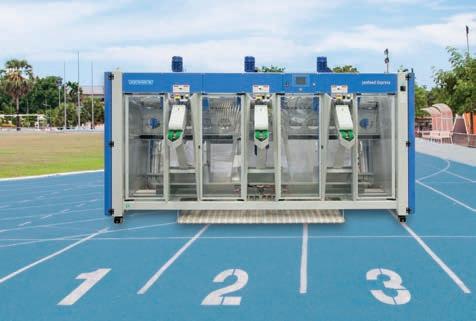
Wastewater Resources 9318 N. 95th Way, Ste. 102 Scottsdale, AZ 85258
T 480-391-9939 W www.h2oreuse.com info@h2oreuse.com
Water EnergyLaundry Consulting 9741 Tappenbeck Dr. Houston, TX 77055



T 713-464-2580 W www.waterenergy.com info@waterenergy.com
Wausau Chemical Corp. 2001 N. River Dr. (P.O. Box 953) Wausau, WI 54402-0953
T 800-950-6656 W www.wausauchemical.com C Susan Vernick svernick@wausauchemical.com
West Sanitation Services 2158 Beaumont Dr. Baton Rouge, LA 70806
T 225-302-5570 W www.westsanitation.com info@westsanitation.com
WesVic Systems 2924 Geer Rd. Turlock, CA 95382
T 209-648-5811 or 866-781-8130 W www.wesvic.com C Chad Boucher sales@wesvic.com
WET-TECH, The Ozone People 1102 Pleasant St. Worcester, MA 01602-1232
T 508-831-4229 W www.wet-tech.com C Jack J. Reiff jackreiff@wet-tech.com
White Knight Engineered Products 9525 Monroe Rd., Ste. 100 Charlotte, NC 28270
T 888-743-4700 W www.wkep.com info@wkep.com
A.L. Wilson Chemical Co. P.O. Box 207 Kearny, NJ 07032 T 201-997-3300 or 800-526-1188 W www.alwilson.com C Fred Schwarzmann help@alwilson.com
Workrite Uniform Co. 1701 N. Lombard St., Ste. 200 Oxnard, CA 93030 T 800-521-1888 W www.workrite.com info@workrite.com
World Cleaning Solutions P.O. Box 1416 Muskegon, MI 49443 T 866-894-1100 W www.worldcleaning solutions.com C Donald Spokes
don@worldcleaningsolutions.com
World Emblem International
1500 N.E. 131st St. Miami, FL 33161
T 800-766-0448 W www.worldemblem.com C Nicolas Restrepo sales@worldemblem.com
Xx
Xeros
250 Commercial St., Ste. 4002A Manchester, NH 03103 T 844-207-1099 W www.xeroscleaning.com
Yy

Yamamoto Japan Inc. 1010 Aspen Dr. Smithville, MO 64089 T 816-729-1223 or 866-204-0519 W www.yamamotolaundry.com sales@yamamotolaundry.com
Zz
Zep Inc. 1310 Seaboard Ind. Dr. Atlanta, GA 30318 T 404-352-1680 or 877-IBUYZEP W www.zep.com customer.service2@zep.com
World Market for Modern Textile
AMERICAN LAUNDRY NEWS ALN_Jr_half.indd 1 1/15/16 11:46 AM 62322-008_TEX_AZ_American_Laundry_News_120,65x171,45 • FOGRA 39 • C M Y K • mr: 18.01.2016 DU: 29.01.2016 USA
New: Texcare in Halls 8 and 9! ALN_Jr_half.indd 1 2/1/16 2:43 PM
Care June 11 – 15, 2016, Frankfurt, Germany Even bigger. Even broader. Texcare International 2016. The world’s leading trade show for the laundry, cleaning and textile rental sectors is the number one venue for the entire industry. Your chance to get information on –and inspiration from – the latest trends, talking points and issues driving the market: digitization, automation, energy and resource efficiency, and of course innovations in textiles. For all the latest news and information, go to www.texcare.com Can’t miss event: The Texcare Forum will feature high-caliber presentations to help you further create new business opportunities. info@usa.messefrankfurt.com Tel. 770.984.8016
AMERICAN LAUNDRY NEWS | MARCH 2016
COMPANY DIRECTORY
ALN
Field Service Technician
For over five generations, Ellis Corporation has been a leader in manufacturing and supporting industrial laundry, wastewater and energy recovery equipment. Due to increased sales and our desire to offer our customers valued support, we are searching for additional Field Service Technicians.
Primary Job Responsibilities: Provide start-up, training and repair services of Ellis and Vega equipment in the field as well as maintaining a high level of customer satisfaction through proper communication with the customers.

Requirements:

~ High School Diploma or equivalent required


~ Must have and maintain a valid driver’s license
~ Must possess or obtain a valid passport within one month of hire
~ Must possess strong communication skills
~ Project management experience helpful
~ Technical vocational schooling a plus; electro-mechanical preferred
~ Knowledge of Windows and Microsoft Office software products preferred
Physical Demands:
~ Must be able to travel approximately 85% overnight (home most weekends)
~ Position requires frequent kneeling and bending and considerable use of hand tools
~ Must own and carry a tool kit with hand tools and basic test equipment
Ellis Corporation offers an excellent benefits package including health, dental, vision and 401K, along with a friendly work environment. Salary commensurate with experience.
Please send resume with salary requirements to:
Ellis Corporation
Attn: HR Manager 1400 W. Bryn Mawr Ave. Itasca, Il 60143 hr@elliscorp.com • (630) 773-5902 fax www.elliscorp.com
36 MARCH 2016 | AMERICAN LAUNDRY NEWS www.AmericanLaundryNews.com
Advertising EQUIPMENT FOR SALE EQUIPMENT FOR SALE AMKO AMERICA, INC. Remanufactured Finishing Equipment Delta Ironers, Omega Folders & Towel Folders PARTS, IRONER SUPPLIES & NEW EQUIPMENT ALSO AVAILABLE “NEW” SELF CONTAINED IRONERS
(561) 863-9696 AmkoAmerica@yahoo.com POSITIONS AVAILABLE POSITIONS AVAILABLE DISTRIBUTOR OFFERINGS www.ineedjpequipment.com 800/925-3236 EQUIPMENT FOR SALE: • American Hypro 141, 6 Roll, Steam, Perforated Rolls, Rebuilt in 2003 - New: Sprockets, Link & Oiler, 20 HP direct Drive w/Chain • 900lb Ellis Completely Reconditioned, New controls by Ellis • 400lb Brim OP, 1996 • 400lb Braun TSL, 3 pocket, 1993 • 135lb Milnor Washer, 1999 • 400lb Challenge Dryer, Gas, P/T, 1998 • Chicago Pik Quik, 2008 • Chicago Tristar32 + Chicago Fastrack • Chicago Tristar 24 PCS w/OPL Chicago Imperial Ironer, IMP36, Gas, 2001 • Economizers for 50HP and 70HP Boiler • TEA Heat Exchanger, Dual Pump Package • 50HP Parker Boiler, 2005 • 14’ Soil Sorting Conveyor with Platform Deals on Chicago Feeders & Folders! Lots of stock. “Expect Excellence” JP Equipment, Inc. buys and sells used industrial laundry equipment. We have been in the used industrial laundry business since 1998 and sell equipment worldwide. What separates us from most of our competitors is that we own almost all of our equipment outright giving us the flexibility to sell equipment “as is”, cleaned and tested, or fully reconditioned. We also sell equipment on consignment. We provide unparalleled service whether you are buying or selling equipment, building a new laundry or upgrading an existing facility. Call Craig Lloyd toll free at 877.295.5693 between 9 a.m. – 9 p.m. EST. Please visit www.laundrycareers.com to review current industrial/institutional laundry management openings. ADVANCE YOUR CAREER The Griffin Group, Inc. “Recruitment Specialist” Need to FILL a position? Call Deana Griffin 888-235-2365 www.thegriffingroup.cc deana@thegriffingroup.cc ® QTY DESCRIPTION 1 Edge Spreader Feeder 2000 1 Pik-Quik Sheet Separator 1 Milnor 170lb Soft Mount 2000 Milnor Washers; 60lb, 100lb, and 140lb Rebuilt 1 Milnor 120lb Steam Dryer 1 275lb Milnor Open Pocket Rebuilt 2003, Excellent 1 CFS 150lb Colmac Steam Tunnel 1 Mini Neptune Vacuum Feeder 1 Unipress Single Buck Lightning Shirt Unit 1 450lb Washex Open Pocket 2002 1 Single Lane Skyline Folder 1 Braun 2 Roll 32 Steam Ironer 1 Braun Omege 2-Lane / Crossfolder w/Accumulator 1 Braun Rear Discharge Towel Folder 1 Reconditioned Jensen Ultima 36 – 2-Roll Steam Ironer 1 Reconditioned Challenge Pacesetter 1 Forenta 2013 Single Buck, Sleever and Collar Cuff 1 Washex 700lb Side Loader (1995) For Pricing call Ron Hirsch 516.938.4300 • 516.315.7426 Hicksville, NY • www.directmachinery.com FOR NEW OR USED LAUNDRY EQUIPMENT, DM IS YOUR SOURCE FOR ALL YOUR NEEDS EXCELLENT CONDITION Stanco Industries, Inc. Serving The Textile Trades Since 1970 800-932-3769 k for Mike or Deb KEEPING IT GREEN SINCE 1970 WE ARE LOOKING FOR THE FOLLOWING EQUIPMENT: WASHING • DRYING • FOLDING FEEDING • IRONING • FINISHING MATERIAL HANDLING • BOILERS CONTINUOUS BATCH WASHING STACKERS • CART DUMPERS DON’T BE LEFT WITHOUT POWER Emergency Generators Available 50KW to 1000KW Natural Gas & Diesel Stanco Industries, Inc. 800-932-3769 Ask for Mike or Deb or e-mail: stanco2626@aol.com www.StanCoInd.com The trusted source for quality pre-owned We Specialize in Used Industrial Laundry Equipment Sales, Service and Installations. IN STOCK EQUIPMENT FOR SALE: Qty Chicago Century 2 Roll x 52 Complete Finishing Line inc. King Edge, Skyline & Pik-Quik 1 Chicago Skyline Folders 6 G.A Braun 250 lb Open Pocket W/X 1 Jensen Silverline Plus Folder 1 Jensen P50-16 Complete Tunnel System 1 Challenge 400 lb Gas Dryers 6 We BUY & SELL all major brands. www.pspindustrial.com Email: info@pspindustrial.com Main: 1.800.517.1432 / 305.517.1421 Much more in stock! Please visit our website for our complete inventory Company Page Company Page A.L. Wilson Chemical Co. 9 ADI American Dawn 5 American Laundry Systems 18 American Dryer Corp. 17 Chem-Tainer Industries 14 Consolidated Laundry Machinery 21 Davis Packaging 34 Direct Machinery Sales Corp. 36 EDRO Corp. 8 Ellis Corporation 23 Energenics Corporation 26 Freightliner Custom Chassis Corp. 19 G.A. Braun 25 Girbau Industrial 7 The Griffin Group, Inc. 36 Hamilton Engineering 32 Hanning Elektro-Werke 30 J.P. Equipment 36 Jensen 35 Kannegiesser USA 27 Kemco Systems 34 LaundryCareers.com 36 Lavatec Laundry Technology 40 Leonard Automatics 32 Maytag 13 Monarch Brands 10, 11 Pellerin Milnor 3 PSP Industrial 36 Rennco 31 Royal Basket Trucks 12 Stanco Industries 36 Superior Uniform Group 16 Texcare International 35 Unifair Laundry Expo 33 UniMac 15 U.N.X. Inc. 29 Venus Group 22 Washing Systems, Inc. 20
OF ADVERTISERS PARTS, PARTS, PARTS Huge stock of parts for most laundry equipment & boilers. Also traps, valves and lubricants. Overnight delivery. Steiner-Atlantic, 800-333-8883 Fax: 305-751-8390 parts@steineratlantic.com www.steineratlantic.com WASHEX PARTS Hard-to-find Washex parts, on-site rebuilding, tech support. LAUNDRY PARTS CENTER 800-352-4492 Fax: 305-827-3991 PARTS FOR SALE INTERNATIONAL EQUIPMENT GROUP Dealers in all Types, Makes & Sizes of pre-owned Laundry Processing Equipment & Supplies * buy * sell * liquidate * locate * * rigg & transport * email: loustanley69@hotmail.com Phone: 260 409-2547
Classified
Contact:
INDEX
SALES
of Institutional Linen goods desires sales person with textile sales experience to textile rental, commercial, healthcare and hospitality laundries. Excellent
all territories available
PART-TIME/FT
REPRESENTATIVE Importer
commissions,
Call Sam 800-693-5426 or e-mail: skahen@royalblueintl.com
.com
For more classifieds visit:
www. AMERICANLAUNDRYNEWS




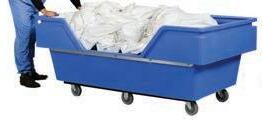









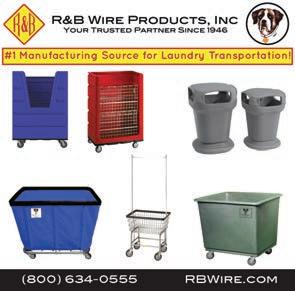


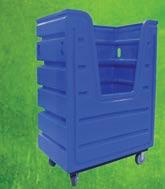















www.AmericanLaundryNews.com AMERICAN LAUNDRY NEWS | MA RC H 2016 37 Source Directory A convenient guide to sources of products and services APPAREL FINISHING CARTS, TRUCKS & BASKETS Source Directory listings in American Laundry News are sold on an annual basis at the following rates: All Major Credit Cards Accepted 2016 Listings RegularBoldface All CapsAll Caps, Boldface Four Line Listing per Year $885 $1,110 $1,110 $1,175 Display and additional line rates available upon request CARTS, TRUCKS & BASKETS CARTS, TRUCKS & BASKETS AmericanLaundryNews.com More than unique visitors monthly! 5,250 CARTS, TRUCKS & BASKETS Round-Tripper_6.25x3:Layout 1 6/17/14 12:04 PM Page 1 GO TO: www.AmericanLaundryNews.com WANT TO SEE MORE LISTINGS? Call 800.829.4535|questions@MODROTO.com | MODRoto.com 54P-40E We Put More Into Our Carts So You Can, Too! SPRING-LOADED SAFETY TRUCKS Show your commitment to worker safety with ergonomic, spring-loaded carts and trucks from the spring-loaded technology leader. Our signature, rotationally molded and vinyl-covered spring platforms rise as goods are removed to keep work positioned at the right height. See action video at MODRoto.com and call for free quote. Right Company Right Cart LAUNDRY CARTS 800.304.4600 www.FIBERTECHINC.net DOBERMAN TUFF LAUNDRY CARTS www.dobermantuff.com 706-376-4793 ♦ RUGGED ♦ DURABLE ♦ QUALITY FINISHES TUFF STUFF, NOT TUFF PRICES














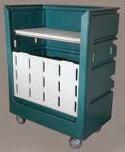





38 MARCH 2016 | AMERICAN LAUNDRY NEWS www.AmericanLaundryNews.com Source Directory listings in American Laundry News are sold on an annual basis at the following rates: All Major Credit Cards Accepted 2016 Listings Regular Boldface All Caps All Caps, Boldface Four Line Listing per Year $885 $1,110 $1,110 $1,175 Display and additional line rates available upon request Source Directory A convenient guide to sources of products and services FLATWORK IRONERS Knowhow In Action Your Tingue rep is a fully trained master of finishing equipment operation, maintenance and installation. Call for: • Pads, covers, belts, waxes, tapes and more • Carts, trucks, baskets and bags • Parts, rebuilds and repairs 800.829.3864 www.Tingue.com TalleyMachinery.com MODRoto.com TBR-Associates.com To website C & W EQUIPMENT (800) 443-3573 FLATWORK IRONER SPECIALISTS REMANUFACTURED IRONERS: Super Sylon Sylon Hypro’s Super Pro Jensen SS700 SS800 Ultima Lavatec UPGRADE KITS: Chain Drive Conversion Vacuum Systems Herringbone Conversion Canopies Inverters Side Covers Roll Springs Jensen Drives SUPPLIES: Aprons Pads Covers Belts Waxes Cleaners PARTS/REPAIRS: All Brands New/Refurbished/Hard to Find COMMITTED TO EXCELLENCE Pellerin Milnor Corp. P.O. Box 400, Kenner, LA 70063 504-467-9591, Fax: 504-468-3094 www.milnor.com DRYERS – 100 POUNDS OR MORE Pellerin Milnor Corp. P.O. Box 400, Kenner, LA 70063 504-467-9591, Fax: 504-468-3094 www.milnor.com DRYERS – 100 POUNDS OR LESS CARTS, TRUCKS & BASKETS CART-WASHING SYSTEMS Sani Wash - McClure Industries, Inc. 9051 SE 55th Ave., Portland, OR 97206 800-752-2821, www.mcclureindustries.com, info@mcclureindustries.com DRYER BOOSTER & EXHAUST FANS ENVIRONMENTAL SOLUTIONS • Wash Temperature Reduction • Tunnel Washer Experts • EPA Regulations • Environmental Concerns • Infection Control • Waste Water Treatment New Horizons In Ozone Solutions, Inc 508-831-4229 wet-tech.com Gardner Machinery Corporation P.O. Box 33818, Charlotte, NC 28233 Ph.: (704)372-3890; Fax: (704)342-0758 www.gardnermachinery.com MATERIAL HANDLING / CONVEYORS M.I.T. POLY-CART 211 CENTRAL PARK WEST, NEW YORK, NY 10024 800-234-7659, FAX: 212-721-9022 WWW.MITPOLYCART.COM Diversified Plastics, Inc. 1309 Highway 917 West, Latta, SC 29565 800-768-7636, www.dpirotocarts.com E-mail: sales@dpirotocarts.com Fax: 843-752-7798 www.energenics.com ENERGENICS KARTWASHERS FULLY AUTOMATIC KARTWASHER PREMIER W/TOUCHPAD 1470 Don St. • Naples, FL 34104 • 800-944-1711 Designed to wash and sanitize all popular laundry carts • Automatic two minute cycle • Dries and sanitizes • Minimum water useage Concentrates wash effectiveness on the cart interior Fast automatic washing, sanitizing and drying insure optimum cleaning • 15 second detergent wash and sanitizing rinse cycle • Adjustable automotive car wash style drying 2460-30 SPRING PLATFORM UTILITY CART M c C LURE INDUSTRIES, INC. 800-752-2821 • www.mcclureindustries.com email: info@mcclureindustries.com Spring Platform Internal Mechanism FEATURES: • 1-piece molded construction • reinforced bottom • poly Hi-Tech casters • thread guards • 9 colors • spring platform • nestable l-800-275-2436 l-800-275-2436 maxi-movers.com Email:sales@maxi-movers.com Clean linen delivery truck easily converts to soiled linen bulk transport by simple shelf repositioning Ask about our lockable zippered Security Covers in vinyl or nylon to protect contents! M8592 w/ Poly Shelves MAXI POLY TRUCKS ® Chm #9763 ALN Poly Trucks '16:Layout 1 2/3/16 2:2
Pellerin Milnor Corp.
P.O. Box 400, Kenner, LA 70063 504-467-9591, Fax: 504-468-3094 www.milnor.com
Pellerin Milnor Corp.
P.O. Box 400, Kenner, LA 70063 504-467-9591, Fax: 504-468-3094 www.milnor.com
Pellerin Milnor Corp.
P.O. Box 400, Kenner, LA 70063 504-467-9591, Fax: 504-468-3094 www.milnor.com
Pellerin Milnor Corp.




P.O. Box 400, Kenner, LA 70063 504-467-9591, Fax: 504-468-3094 www.milnor.com


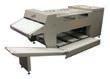






www.AmericanLaundryNews.com AMERICAN LAUNDRY NEWS | MARCH 2016 39 Source Directory A convenient guide to sources of products and services Source Directory listings in American Laundry News are sold on an annual basis at the following rates: All Major Credit Cards Accepted 2016 Listings Regular Boldface All Caps All Caps, Boldface Four Line Listing per Year $885 $1,110 $1,110 $1,175 Display and additional line rates available upon request PARTS PARTS PARTS & SUPPLIES STORE • Door handles • Door locks • Print boards • Bearing kits • Drain valves And MORE! www.frontecstore.com For more information or custom orders contact us: info@FrontecStore.com FRONTEC • Hotel • OPL • Coin Op • Dry Cleaners • Industrial • Commercial • Cruise Industry Dry or Wet Style Filters to Work with “ALL” Dryer Sizes or Multiple Situations, Fiberglass or Stainless and Custom for Unique Situations! Lint Filters Model Big and Small – We’ve got a model for you! In-line Duct” Models – the Lint Lasso and Lint Sock –in production since 2011 All manufacturing done on premise 800-826-1245 www.cleancyclesystems.com • ccsystems@tqind.com LINT COLLECTORS & FILTERS
WASHERS – CONTINUOUS BATCH WASHER-EXTRACTOR – 100 POUNDS OR LESS WASHER-EXTRACTOR – 100 POUNDS OR MORE SMALL-PIECE FOLDERS MAT ROLLERS
PRESSES – EXTRACTION RFID GO TO: www.AmericanLaundryNews.com TO PLACE YOUR AD ONLINE MISSED OUR DEADLINE? PACKAGING SYSTEMS & SUPPLIES www.energenics.com ENERGENICS CORPORATION TALK TO OUR DESIGN AND ENGINEERING STAFF ABOUT YOUR NEEDS 1470 Don St. • Naples, FL 34104 • 800-944-1711 ›› Our In-Line Lint Filter mounts inside, saves space! ›› OPL Duct Mounted Lint Filters 1,000 to 2,700 CFM ›› Fiberglass or Stainless Steel Dry Filters ›› Hundreds Sold Annually WWW.INEEDJPE.COM 800/925-3236 Exclusive OLMA Obifold Representative The affordable premium folder to handle all of your dry goods. WWW.INEEDJPE.COM 800/925-3236 Exclusive Inwatec Representative "The best mat rolling machines on the market"