AmeriPride Services acquires First Class Linen in Mississippi
MINNEAPOLIS — AmeriPride Services has acquired First Class Linen in Mississippi, according to a company press release. The production facility in Durant and its two service centers in Richland and Olive Branch will now operate as AmeriPride’s 30th U.S. branch.
“We believe this is a great addition to the AmeriPride family,” says Bill Evans, president and CEO of AmeriPride. “The acquisition will help us expand our geographic territory and further solidify our market leadership in this region, and supports our ongoing efforts to grow profitably.”

The purchase of the First Class Linen was completed on Sept. 16.
In addition to the customers, facilities and equipment, AmeriPride has kept almost the entire workforce, the company says. Most employees and key management have agreed to stay on board, including Dan Wills, former vice president of sales and service, who will take over as the general manager.
“AmeriPride has a great reputation in the industry, and I fully expect this to be a smooth and seamless transition,” says Wills. “Our production facility and service centers will remain open at full capacity, and customers should only see positive changes.”
Small changes can make big differences
BY MATT POE, EDITOR
CHICAGO — What does it take to improve the productivity, efficiency and profitability of a laundry?
Hiring more employees?
Acquiring the latest, most advanced high-tech equipment?
A plant redesign and overhaul?
In fact, making plant improvements doesn’t have to take a lot of time, effort and money.
“Some laundries have realized a 30 to 40% increase in labor productivity through improved scheduling, reduction of congestion and production monitoring,” says Matt Alexander, president of consulting firm Pertl & Alexander LLC in Skaneateles, N.Y. “Even small improvements in utility efficiency have added up to large savings.”

Small changes are sometimes the most ignored, but when combined, a group of small changes together in the operational aspects of the laundry could impact the business in a tremendous manner.

IT PAYS TO MEASURE
Bob Corfield, president of Laundry Design Group LLC in Phoenix, Ariz., has explored the
question of small changes for laundries over the years. His main recommendation? Benchmarking.
“If a plant is not benchmarking their operations for productivity, utilities and profitability/costs, then they need to bite the bullet and engage in a comprehensive program to measure all that can be measured,” Corfield says. “Once they have fully committed to a program, and have some initial data points, they should seek out viable comparisons and see where they stand.
“This is no easy task, but commitment and consistency is required, and it costs very little.”
Armed with benchmarking comparisons, Corfield says, a laundry can set out looking for small improvements in a variety of areas, in some cases with little or no investment. He names a few example areas, such as workflow scheduling, improved route scheduling, energy projects related to water and equipment tuning and, most importantly, customer evaluation.
“Each of these are high-value, essential activities that can have a dramatic impact on your plant and business, regardless if you are OPL or commercial,” he says.
“Laundry productivity is largely a factor of your people, your


processes and your technology, the equipment,” Gicewicz says. “Before making any changes, it is best to first understand where you are in terms of efficiency and then work intelligently to improve in the
Time to go high-tech in healthcare?
ing linens with antimicrobial properties using a variety of processes and materials.
However, the industry is just in the beginning stages of this new technology. There are several factors that healthcare facilities and laundries need to consider before investing in these new linens.
BY MATT POE, EDITOR
ATLANTA — Linen processing in the healthcare industry is changing.
That’s because the linens are changing.
The sheets and gowns and other products used by healthcare facilities were all once made from traditional fibers. Today, those fibers are going high-tech.
In order to help combat hospital-acquired/ associated infections (HAI), vendors are creat-
A panel discussed these considerations at this spring’s Clean Show here during the educational session titled Going Hi-Tech: Emerging Textile Technologies. The panel included James Mangini, director of linen services at Maine Medical Center; Ty Acton, global sales VP, Tingue, Brown & Co.; Dr. Fontaine Sands, an associate professor at Eastern Kentucky University; Joe Scully, president of In Textiles LLC; and Doug Story, VP of corporate support for Gurtler Industries.
From a textile manufacturer’s point of view, according to Scully, the proper antimicrobial technology is the “holy grail.” He says that there are many different types of technology See TEXTILES on Page 19
Texcare Asia Reaches Growing Markets
Find out how the show is ready to welcome technology and market leaders to Shanghai, China, Nov. 25-27.
Panel of Experts
Tackling Laundry at Washington State
Milton Neal, director of equipment operations at Washington State University, made sure its new laundry gets the stains out.
Gregory Gicewicz, president of Sterile Surgical Systems (a.k.a. Textile Services Inc.) in Tumwater, Wash., agrees with Corfield that laundries first need to get a measure of their operations.
NOVEMBER 2015
Late News
ALN
www.americanlaundrynews.com Volume 41, Number 11
The Newspaper of Record for Laundry & Linen Management
INSIDE [12] [14] See CHANGES on Page 15
How can loading and unloading become more efficient in a plant?
[6]
(Image licensed by Ingram Publishing)
Several factors need to be considered before taking action
“THE WORLD IS CHANGING, IN MY VIEW, AND FROM A PROCESSING STANDPOINT, WE’RE SUPPOSED TO BE THE EXPERTS.”
—JAMES MANGINI, MAINE MEDICAL CENTER
Survey: Linen loss major problem for laundries and customers
CHICAGO — When it comes to the problems that laundry managers or their customers face, linen loss is one of the biggest, according to respondents to American Laundry News’ latest Your Views survey.
More than 55% of managers who took the survey say that linen loss “is one of our biggest issues.” In comparison, 27.6% say that linen loss is “no worse than any other issue” the laundries or their customers face.
For nearly 8% of respondents, however, “it’s the No. 1 problem.” With all of the concern about linen loss, that begs the question: Where does the linen go?
When it comes to patients or guests that use the linens at facilities, most managers taking the unscientific survey say that improper disposal is the most common factor. Almost 60% say that patients or guests throw away items before the laundry can attempt to clean them.
Close to 53% of respondents say that patients or guests believe that linens or textiles can be taken after a stay or visit. Fifty percent say patients or guests take the linens even though they know the items are supposed to stay at the facility.
Another 50% of managers who took the survey say that linens/textiles are lost because the items are used improperly.
“Patient transfers result in our linen ending up in facilities we do not service,” writes a respondent. “We rarely get the linen back. This is loss, but not abuse or theft.”
Linen loss isn’t limited to healthcare patients or hospitality guests. Respondents indicate employees also contribute to loss.
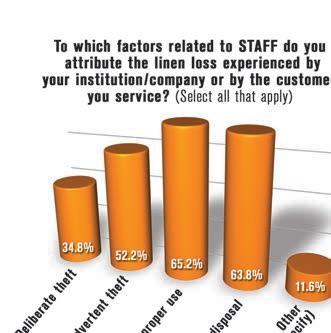
“Abuse/improper use” by employees was the leading cause of linen loss attributed to on-site staff, according to 65.2% of managers who responded. The second-most selected answer was “improper disposal” by staff (63.8%).
“In my mind, it’s more about, ‘What steps can we take to preserve our linen from staining, losing its fluff and developing holes?’” a respondent writes. “A recent article about using lower heat and shorter drying time
was quite good, as it provided me with consensus from the industry that I could share impartially with my staff.”

Another writes, “Both the procurement and wash process are big contributors to linen loss as well. To be responsible, you must buy the proper linen items and then wash them in a manner that maintains tensile strength and is positive to the life of use.”
Managers who took the survey say that in terms of staff theft, most loss was “inadvertent theft” (52.2%), such as employees wearing scrubs or lab coats home. “Deliberate theft” was selected by only 34.8% of respondents.
“The individuals don’t have an investment in the linen items and have virtually no interest in the proper handling and disposal of the items,” a respondent writes. “No skin in the game!”
“I sometimes feel that there is a sense of entitlement that leads direct patient care staff to believe that it’s not their responsibility to take care of the linen and make sure to use it wisely,” writes another.
While some of the managers who took the survey believe that some individuals don’t care about the linens used, more than three-quarters of respondents believe that their company or institution values its linen enough to commit attention and resources to protecting it.
Interestingly, only about 55% of those who took the survey say that their laundry uses linen management software to track usage.
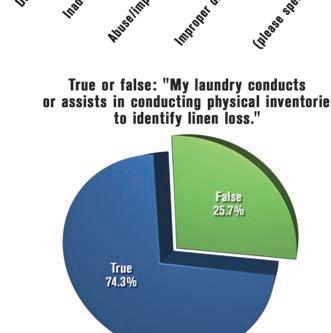
However, almost 75% of respondents say, “My laundry conducts or assists in conducting physical inventories to identify linen loss.” In addition, 72.5% of managers who took the survey say their laundry offers loss prevention education to end-users or customers.
While the Your Views survey presents a snapshot of readers’ viewpoints at a particular moment, it should not be considered scientific. Due to rounding, percentages may not add up to 100%.
Subscribers to American Laundry News e-mails are invited to take the industry survey anonymously online each month. All managers
of institutional/OPL, cooperative, commercial and

laundries are encouraged to participate, as a greater number of
Publisher
Charles Thompson
Phone: 312-361-1680
E-Mail: cthompson@ ATMags.com
Editorial Director
Bruce Beggs
Phone: 312-361-1683
E-Mail: bbeggs@ ATMags.com
Editor
Matt Poe
Phone: 231-740-2842
E-Mail: mpoe@ ATMags.com
Digital Media Director
Nathan Frerichs
Phone: 312-361-1681
E-Mail: nfrerichs@ ATMags.com
Advisory Board
Jim Buik • Richard Griffin
Greg Gurtler • Phil Hart
Janice Larson • Tom Marks
Gerard O’Neill
Richard Warren
Production Manager
Roger Napiwocki
National Sales Director

Donald Feinstein
Phone: 312-361-1682
E-Mail: dfeinstein@ ATMags.com
Main Phone: 312-361-1700 Fax: 312-361-1685
Subscriptions
630-739-0900 x100 www.americanlaundrynews.com
American Laundry News (ISSN 1091-9201) is published monthly. Subscription prices, payment in advance: U.S. 1 year $39.00; 2 years $73.00. Foreign, 1 year $89.00; 2 years $166.00.
Single copies: U.S. $7.00; Foreign $14.00. Published by American Trade Magazines LLC, 566 West Lake Street, Suite 420, Chicago, IL 60661. Periodicals postage paid at Chicago, IL, and at additional mailing offices.
POSTMASTER, Send changes of address and form 3579 to American Laundry News, Subscription Dept., 440 Quadrangle Drive, Suite E, Bolingbrook, IL 60440. Volume 41, number 11. Editorial, executive and advertising offices are at 566 West Lake Street, Suite 420, Chicago, IL 60661. Charles Thompson, President and Publisher. American Laundry News is distributed selectively to qualified laundry and linen management and distributors in the United States.
© Copyright AMERICAN TRADE MAGAZINES LLC, 2015. Printed in U.S.A. No part of this publication may be transmitted or reproduced in any form, electronic or mechanical, without written permission from the publisher or his representative. American Laundry News does not endorse, recommend or guarantee any article, product, service or information found within.
Opinions expressed are those of the writers and do not necessarily reflect the views of American Laundry News or its staff. While precautions have been taken to ensure the accuracy of the magazine’s contents at time of publication, neither the editors, publishers nor its agents can accept responsibility for damages or injury which may arise therefrom.

MEMBERSHIPS
2 NOVEMBER 2015 | AMERICAN LAUNDRY NEWS www.AmericanLaundryNews.com
Association for Linen Management
and
responses will help
better
operator opinions
try trends. ALN INSIDE: November 2015 • Vol. 41 | No. 11 [4] Textile Distribution (Part 1) Columnist at Large Eric Frederick discusses how people and locations create challenges in textile distribution [6] Texcare Asia Preview Biennial show is set to take up more than 17,000 square meters at Shanghai New International Expo Centre [8] Third-Party Certification NSF International develops protocol and certification program to validate that laundries produce clean napery [10] Finding Hidden Efficiencies In this month’s OPL 101 column, three distributors discuss less-seen ways to improve laundry production [12] Panel of Experts: Loading and Unloading “What can I do to make loading and unloading linens and textiles more effective?” [20] Classified Advertising [21] Source Directory
administrators
industrial
to
define
and identify indus-
MORE THAN 55% OF MANAGERS WHO TOOK THE SURVEY SAY THAT LINEN LOSS “IS ONE OF OUR BIGGEST ISSUES.”
“
They have done everything they promised and more.”
– John Ambrose Magliocco, Arrow Linen, Garden City, NY
From

Arrow Linen first purchased their three Milnor CBW® tunnels two decades ago to replace conventional washer-extractors in their original laundry located in Brooklyn, NY. Since then, Arrow’s business grew to warrant a second laundry. In 2013, Arrow expanded operations–and raised their roof 11 feet! Arrow could have chosen any manufacturer to equip their new washroom, but they knew that would get longevity, durability, and accountability with Milnor.
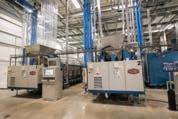
Arrow’s customers’ restaurant linen requires frequent color and soil change formulas, but the quality is not compromised. Corporate Engineer Frank Park boasted the tunnels “have increased our workload over 40% without increasing energy, water, or labor costs we experienced when we converted the conventional washers to CBW® tunnels over 20 years ago. The major improvements from the CBW® to PBW™ are far superior washing capability with only 50% water consumption.”
To find out how PulseFlow® can cut your water bill in half, contact an authorized Milnor distributor or call 504-712-7656.
www.milnor.com / pellerinmilnor
Scan to read Arrow’s success story.
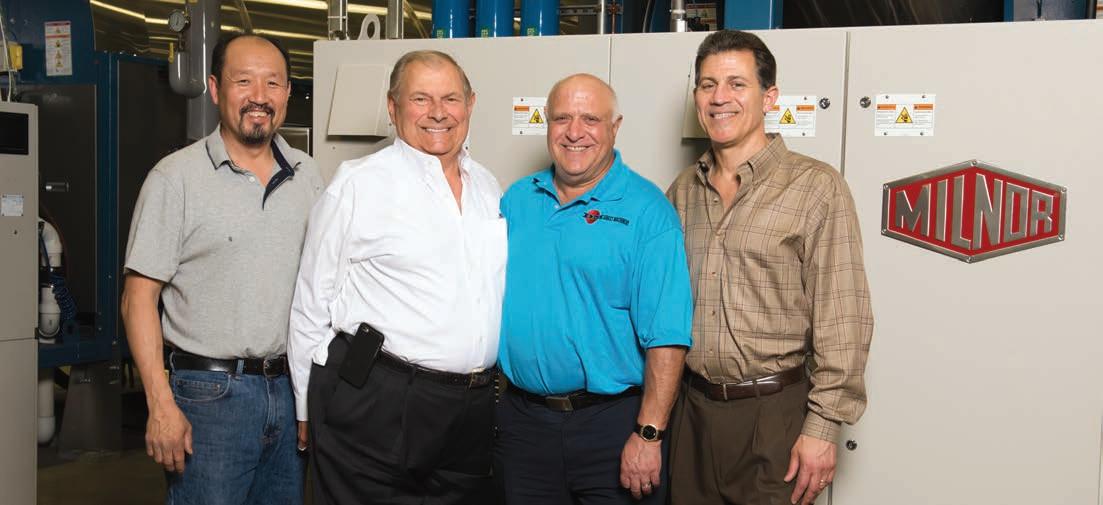
left to right: Frank Park, John Ambrose Magliocco, Ron Hirsch, and John Anthony Magliocco
Going small to save big?
The November issue of American Laundry News is going small—at least in terms of plant operations.
In this issue, we look at some of the smaller actions that laundry managers can take to make an impact on overall throughput.

There are several factors within laundries that affect operations, from your employees to the equipment on the wash floor.
Editor Matt Poe spoke with laundry managers, design consultants and manufacturers. They shared many ideas that don’t cost too much or take too much time, but the resulting differences after implementation could be amazing.
This month’s OPL 101 takes a similar line—finding hidden effi-
From The Director’s Chair BRUC E B EGG S
ciencies. Three equipment distributors discuss factors behind lowering costs and increasing efficiency that may not be obvious to every manager.
Speaking of efficiency, I hope you’ll read the story about the Washington State University

Cougars football laundry.
If you’ve ever wondered how a college football team’s onpremises laundry tackles its job, this article provides the inside scoop on what it takes to get all those grass stains out.
The story also offers insight into planning a laundry redesign.
Milton Neal, director of equipment operations for the university, used knowledge and experience he gained from a previous facility upgrade to ensure that his latest laundry would remove the stains in a timely manner.
Read on. I think you’ll find there are plenty of small ways to improve your laundry, thanks to this issue.
As the saying goes, “it’s the little things in life that matter.” ALN
Often, the distribution and control of textile products is far more challenging than achieving a smooth, well-operating laundry facility. The challenges are based in the number of people and locations involved in the textile distribution system. Each person has one simple goal and that is to not run out of the textiles they need. Their perspective is narrow-minded and personal: “Do I have the textile products that I require to properly handle the needs of my patients?”
The textile distribution system increases in complexity as we move the laundry processing facility off-site from the end-users or as we add additional customers (buildings) to the textile distribution system. It is important that we understand how each component of the system is designed to work in order for us to understand how to properly maintain it.
New dates announced for next Clean Show: June 5-8, 2017
ATLANTA
Clean 2017 will be taking place a little earlier than what was announced at Clean 2015. The show is now scheduled for June 5-8, 2017, at the Las Vegas Convention Center. Riddle & Associates, the show management company, announced the new dates in a press release.
“We are extremely pleased that we were able to find these dates for Clean 2017,” says John Riddle, Clean Show manager and president of Riddle & Associates. “The show was originally scheduled for the very end of June, with move-out dates running through the first week of July. We feel these dates will work better for both our exhibitors and attendees.”

The World Educational Congress for Laundering and Drycleaning, as the show is formally known, attracts every facet of the textile care and textile rental services industry—industrial, commercial, institutional, retail, commercial, and coin/card laundering and dry cleaning. It is the world’s largest exhibition of textile care products featuring working equipment, according to Riddle & Associates.
The management company says that Clean 2015 in
Atlanta featured more than 430 exhibiting companies and more than 30 hours of classroom education. It drew 11,264 people representing all 50 U.S. states and 88 other countries.
“The response to Clean 2015 was overwhelmingly positive and generated great excitement about Clean 2017,” says Clean 2017 Chairman Mary Scalco, CEO of the Drycleaning & Laundry Institute. “The early June, Monday to Thursday pattern has always worked well for the Clean Show when we have been to Las Vegas in years past, and we are looking forward to another great success at Clean 2017.”
Riddle & Associates says that exhibit sales will open to Clean 2015 exhibitors in spring 2016 and to new exhibitors soon thereafter.
The Clean Show is sponsored by five national industry associations: Association for Linen Management (ALM), Coin Laundry Association (CLA), Drycleaning & Laundry Institute (DLI), Textile Care Allied Trades Association (TCATA) and the Textile Rental Services Association of America (TRSA). ALN
The basic level of any textile distribution is the textile storage area within a using area. Even this basic unit can become complicated. Since I was just in the hospital for a total knee replacement surgery, let’s first look at a nursing unit. The particular nursing unit that I was in had two textile closets, one on each end of the unit. All the textile products for that unit are supposed to be stored in those closets. The closets are inventoried (counted) once a day (count is entered into a computer) and then restocked at a pre-set time (by use of a printed delivery ticket generated from a computer system).
This nursing unit will have all the textile products it needs for a 24-hour period—if the closets are big enough to hold the required textiles, if inventory levels have been properly set, if the laundry has delivered sufficient amounts of textiles, if the delivery personnel have properly performed their jobs and if end-users have not created alternative safety stock locations.
The first parameter is that the actual delivery quantities actually reflect what is needed by the unit on a daily basis. One potential pitfall in this area is taking too broad a sample. An area that normally only operates at a high census five days per week should not be averaged out over a week’s period of time. The average usage plus 10% safety stock may not meet the daily needs of the end-users.
There is a tendency in some facilities to ignore recommended stocking levels and stuff the floor textile rooms with as much linen as possible. The drawback to this approach is that overfilling the shelves leads to overuse and more linen falling from the shelves. It is human nature to fill the shelves with the most available textile product and underfill on those in the shortest supply. Having an extra 50 flat sheets will not help the unit if it runs out of patient gowns.
If the storage shelves will not actually hold enough textiles to cover a 24-hour period, then either a larger storage closet needs to be found or twice-a-day delivery will need to be established.
Administration needs to be clearly informed that twice-a-day delivery is required for an area if the closets are too small. It is an ongoing operational expense vs. a one-time relocation expense.
OUR SISTER WEBSITES
The next area of concern: Have the actual linen stocking levels in each closet been reviewed in the past 12 months? It is amazing how many units have not looked at their stocking levels in the past five years. Unit directors will always understand what textile products are frequently in short supply but have no idea what items are overstocked or for which they never run short on. There is a finite amount of space in every textile closet, and sometimes the only way to get more of one item in the closet is to put less of another in.
Working in close cooperation with the unit staff, conduct a textile usage study on an annual basis. The staff of the area can assist you in knowing which are the normal peak days. You are looking for peak usage, not average usage. Textile products need to be consistently available when they are needed.
•
•
4 NOVEMB ER 2015 | AMERICAN LAUNDRY NEWS www.AmericanLaundryNews.com
COLUMNIST AT LARGE Eric L. Frederick, RLLD
ALN
Top Stories Appearing on AmericanLaundryNews.com for the 30 Days Ending October 15 (WE) = WEB EXCLUSIVE NEWS • Robison & Smith Inc. Rebrands as Century Linen & Uniform (WE) • Primus Laundry Equipment Makes North American Debut • Continental Partners with The Laundry Shop, Atlantic ... (WE) • In Memoriam: Michael J. Klosinski, St. Michael’s Laundry ... • New Dates for Next Clean Show: June 5-8, 2017 COLUMNISTS/FEATURES • Eric Frederick: Chapter 6 (C): Barrier Retreatment for Surgical Linen • Changing Textiles Changes Laundering Practices • Berks Heim Finds Energy and Chemical Cost Savings Through ...
RFP Equipment Acquisition Success in Details
Eric Frederick is director of laundry services for Carilion Laundry Service, Roanoke, Va., and a past president and manager of the year of the Association for Linen Management. You can reach him by e-mail at efrederick@carilion.com.
Textile distribution PART 1:
•
Missouri Laundry Provides Meaningful Employment to ...
AmericanDrycleaner.com:
August Drycleaning Sales, First-Half Profits Up ... (WE)
Suspect Faces Murder Charge in Death at Fla. Dry ... (WE)
AmericanCoinOp.com:
Davis Commercial Laundry Solutions is Newest ...
From
•
•
From
•
Staying Out of Hot Water
—
“TH E B A SIC LEVEL OF ANY TE XTI LE DISTRIBUTI ON IS THE TE XTI LE STO R AGE AR EA WITHI N A USI NG AR EA.”
Microfiber has been proven to eliminate 99.9% of bacteria, dirt, and other contaminants when used properly. There is no other cleaning system on the planet that is more effective. Industrial, Food and Beverage, Healthcare, Hospitality... Microfiber is the premium cleaning solution for any industry or environment.





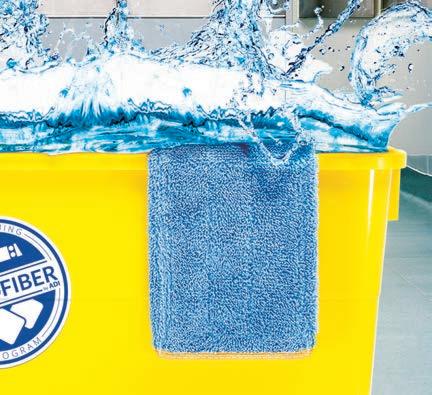


Our enhanced ULTRAFIBER™ “FoldOver” design (patent pending) is first to market and best in class. These premium wet/dry combo mop pads efficiently deep-clean floors and baseboards at the same time. Premium hook & loop backing assures a ready to use product over and over again. Ask us about the American Dawn Microfiber Total Training Program!

800 821 2221 | imagine@americandawn.com | americand awn.com
microfiber. removes 99% of bacteria. eliminates dirt.
Texcare Asia trade fair to reach growing markets


Exhibitors to showcase goods in Shanghai Nov. 25-27
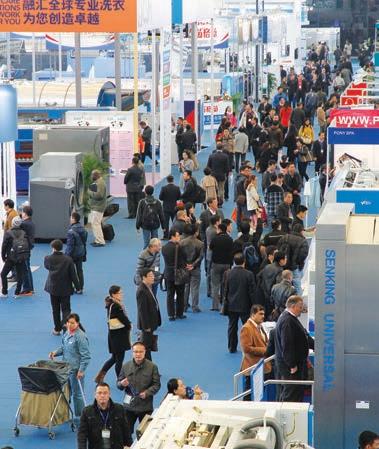
SHANGHAI, China — Texcare Asia, the region’s largest international trade fair for the textile care industry, returns here Nov. 25-27 at the Shanghai New International Expo Centre, eager to welcome technology and market leaders alike.
Organized by Messe Frankfurt Shanghai Co. Ltd. and China Light Industry Machinery Association (CLIMA), the biennial show will occupy more than 17,000 square meters of exhibition space and feature more than 150 exhibitors from 15 countries and regions, showcasing the latest equipment, machinery and solutions in laundry, dry cleaning, ironing and dyeing in addition to textile management systems.
In 2013, more than 8,500





professionals from 55 countries and regions visited the show in Shanghai to network, discover new products and observe market trends.
International exhibitors regard the show as an important event to enhance their presence in the Asian market and update the industry on their recent achievements.
Gerda Jank, head of communication for JENSEN-GROUP, a long-term exhibitor at Texcare Asia, shared her company’s plan: “Visitors to our booth will be introduced to the latest technologies for the washroom, flatwork and garment finishing sections. We will also focus on automation solutions and performance improvement features that guarantee the highest productivity with the low-
est impact for the environment.”






















































The United States’ Alliance Laundry Systems has confirmed the biggest booth at the 2015 show to date, occupying 500 square
meters of booth space. The brand will collectively display products from six brands, including Speed Queen, UniMac, Huebsch and IPSO, together with the recently
acquired Deli and Primus.
Jennifer Yang, the company’s marketing manager for Asia/
6 NOVEMBER 2015 | AMERICAN LAUNDRY NEWS www.AmericanLaundryNews.com
ALN_Tab_1-4_H.indd 1 9/30/15 3:52 PM
TEXCARE ASIA 2015 EXHIBITOR LIST (as of Oct. 15)
See TEXCARE on Page 17
The 2015 edition of Texcare Asia will feature more than 150 exhibitors from 15 countries and regions. (Photos: Messe Frankfurt/Texcare Asia)
TWO ARE BETTER THAN ONE.
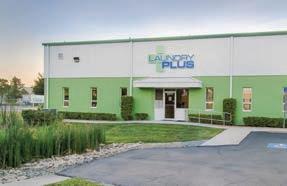
Happy with the productivity, efficiency and flexibility of his first Girbau Industrial (GI) tunnel system, Rick Rone of Laundry Plus maintains the decision to invest in a second identical system was a no-brainer. He likes the security they bring.



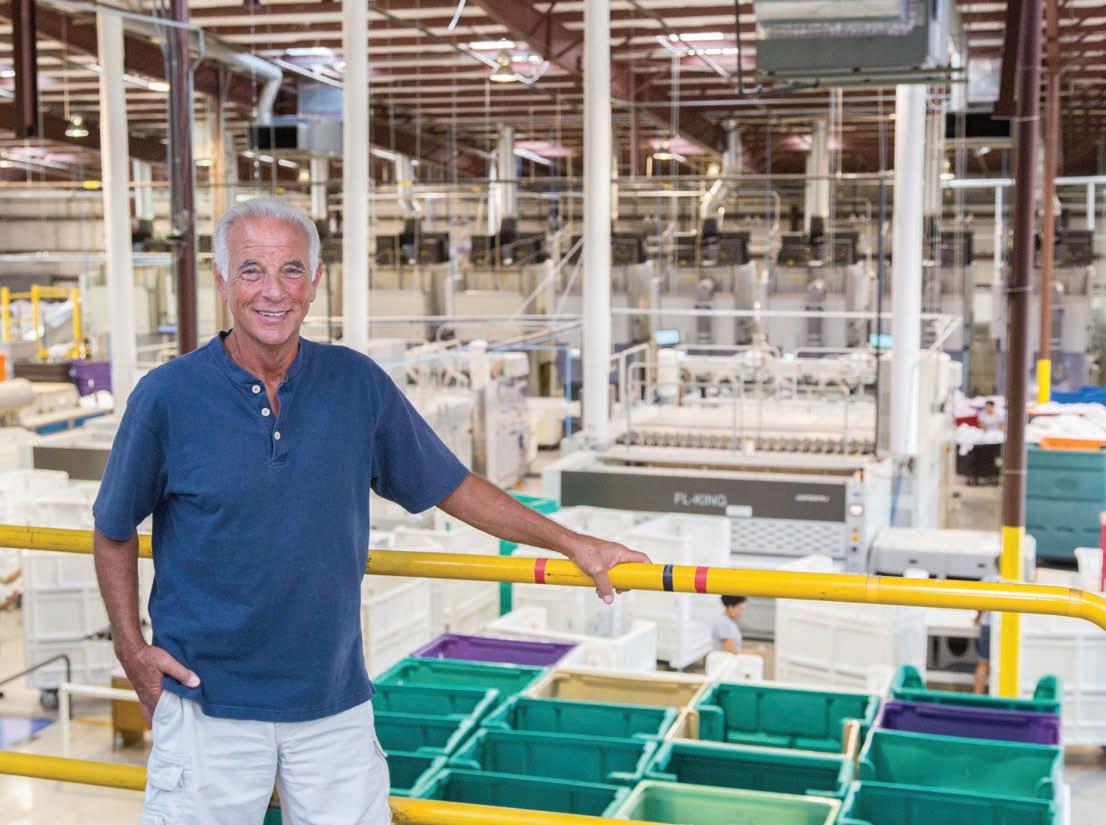
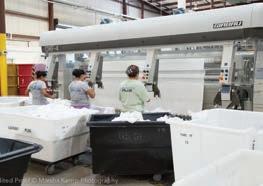
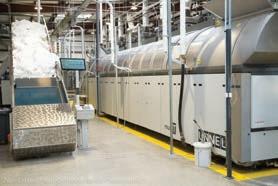
By adding a second GI tunnel system and moving equipment from two buildings into one, Rone enjoys streamlined production. The new plant – with its arsenal of high-performance equipment – opens the floodgates to new business, ensures backup in case of a mechanical failure, and allows Rone to launch a new linen rental program.



Since moving to the new plant and installing its second tunnel, another ironing line and additional open-pocket washers, Laundry Plus has boosted pounds of laundry per operator hour (PPOH) by 15-18 percent.


LAUNDRY SOLUTIONS FOR WET
ON-PREMISE
CONTACT GIRBAU INDUSTRIAL TO SEE HOW WE CAN INCREASE YOUR PPOH!
CLEANING,
& INDUSTRIAL LAUNDRIES
Rick Rone
www.girbauindustrial.com • (800) 256-1073 INDUSTRIAL
Laundry Plus, Bradenton, Florida
Third-party certification program and protocol designed to ensure cleanliness of table linens
 BY ASHLEE BREITNER
As managers of commercial and industrial laundry operations, what keeps you awake at night?
Do you ever ask yourself, “Was that napkin really, truly clean? Or did it still contain organisms that, if a customer was exposed to them, could cause potential harm to them—and to my business’ reputation?”
If you haven’t in the past, then you may start asking that question now. Dirt, grime and bacteria lurk on many of the surfaces we touch every day, but of the many products and services trying to protect the public’s health and safety, which of them can help ensure that foodservice linens or napery (napkins, tablecloths, towels) are truly clean? Which can ensure that your brand’s and facility’s reputation is protected?
Restaurants and catering venues are scrutinized for potentially unsafe equipment, unsanitary conditions and improper food preparation or storage on a regular basis by food safety inspectors, but what is being done to ensure the linens that consumers wipe their hands on, wipe their face on or even often eat off of are cleaned properly? In the past, restaurants and hotels have relied on the launderer’s word to ensure the process was efficient enough to remove all of the soil and bacteria from the linens before they are returned to the restaurant for reuse.
There is a third-party option for this service. NSF International has developed a consensus-based protocol, NSF P413: Hygienically Clean Napery in Commercial Laundering Operations, and a third-party certification program to validate that companies meet specific requirements to ensure a hygienic product, free from disease-causing microorganisms,
is produced through laundering each and every time.
Alsco Inc. was the first to earn certification to this napery protocol for 69 of its facilities throughout North America.
Alsco-laundered naperies that are NSF-certified to be hygienically clean include its Milliken Signature® napkins, Milliken Signature® tablecloths and Bon Appétit napkins.
“Now restaurants using Alsco’s NSF hygienically clean-certified table linens can be assured that Alsco’s napkins and tablecloths not only protect their customers from the bacteria that may be found on tables and other surfaces, but also that the linens themselves are hygienically clean,” says Jim Divers, director of sales and marketing for Alsco.
The protocol and certification program consists of three main components to ensure consistency within the laundering process. These three requirements are designed to work together to ensure that the laundering facilities have procedures in place to evaluate and demonstrate qualitycontrol measures indicating that the laundering process is capable of removing potential pathogens or other unacceptable bacterial organisms from soiled napery.
The first element is the process planning and evaluation to set forth facility requirements that control points in the laundering process are documented, monitored and audited, and that documented corrective actions are implemented if those processes are not within specification.
Based on a process flow configuration, each facility must prepare and implement an organizational management system that includes process evaluation of critical control points within the process. These include everything
from wash resources to the wash procedure to the handling of the final product.
The next program element is product sampling and testing for microorganisms. Random sampling is completed on finished product after it is run through the laundering process. These samples are then collected and sent to a laboratory for microbiological testing to verify the total aerobic plate, total yeast and molds, Staphylococcus aureus, Pseudomonas aeruginosa and Escherichia coli counts. Finished product testing is done to confirm repeatability and validity of the organizational management system’s effectiveness.
The final element is the onsite facility audit. This is a compliance check that the organizational management system has been effectively implemented and that all control points follow the expected procedure on a consistent basis. The audit is conducted to additionally ensure hygienic napery each and every time it runs through the certified process.
From improper separation of soiled linens to out-of-specification control limits for detergents to inconsistent press temperatures, there are a multitude of elements within the laundering process that could create potential for product contamination. Developing a consistent and appropriately designed process can eliminate many of these potential risk factors.
Food establishments today have so many factors to consider in their supply chain, and the primary focus is often on the food and kitchen equipment. In addition to safety concerns, they also face the trending concern of using environmentally friendly products and services. Using linen napery is one solution to help to alleviate this increasing pressure on restau-
rants, hotels and banquet facilities. However, reusable linen napery is a critical element of their day-today operations and shouldn’t be overlooked as a source of potential harm to consumers and employees alike.
A verbal guarantee that your linens are hygienic just is not enough for these establishments; thirdparty guarantees or certification are becoming ever more specified. Alsco recognized this opportunity and has taken proactive measures to ensure that its napery meets
hygienic standards. Working with a quality, third-party-certified laundering operation can take this additional risk out of sight and out of mind. ALN
Ashlee Breitner is business unit manager of NSF International’s Commercial Laundering and Nonfood Compounds Certification Programs. Further information about NSF P413: Hygienically Clean Napery in Commercial Laundering Operations can be found at www.nsf.org
8 NOVEMBER 2015 | AMERICAN LAUNDRY NEWS www.AmericanLaundryNews.com
ALN_Tab_1-4_H.indd 1 4/28/15 3:25 PM
(Image licensed by Ingram Publishing)
Results on whites are excellent. On colors, you have nothing more to lose and everything to gain by trying YellowGo. YellowGo may take out color you want to keep. But if it removes the unwanted dye without damaging the underlying color, you win! You won’t have to pay for the dye-stained garments and you won’t disappoint your customers.

So use YellowGo to keep your customers happy and keep them coming back.









information visit
or
or
YellowGo® removes unwanted dye from fabric. For more
AlWilson.com
call us at 800-526-1188
201-997-3300
Finding hidden efficiencies to improve your laundry operation
BY BI LL B ROO KS
Managing an on-premises laundry (OPL) operation means always being on the lookout for hidden efficiencies and ways to improve production, whether it’s through labor, utilities, water usage, laundry room design or technology.
If you’re building or remodeling a laundry room, or you’re wondering how to improve efficiency and decrease the costs associated with your current laundry operation, here are perspectives from three distributors serving the OPL industry on factors to consider:
Q:How can OPL managers use technology to improve efficiency and increase production?

Ryan Lucken, operations manager, Washington Automated: OPL managers who don’t utilize technology to understand their laundry operation may not realize they are working blindly. Technological advancements allow you to receive daily, weekly and yearly reports via e-mail, detailing how your laundry operation is doing, which can help you find and implement efficiencies.
For example, the right technology will be able to provide information on a machine’s idle time—the delay between when the dryer stops and when it’s opened to remove clothing—as well as in-depth data about programming details to ensure the right cycles are being chosen by your staff for optimal production. This information can then be utilized to make any necessary adjustments to improve efficiency and increase production.
Embracing technology is a great starting point; however, it’s not enough to simply purchase machines with advanced technology and expect results. Learning how to use the technology and analyze the data it provides will help give you a behind-thescenes look at your operation, establish benchmarks and find ways to improve it.
Craig Dakauskas, vice president, Commercial and Coin Laundry Equipment Co.: Technology makes the whole laundry process easier and more efficient, allowing OPL managers to successfully manage a laundry operation without being physically present. The latest technology is cloud-based, so this information can be accessed at any time from anywhere in the world with an Internet connection.
Information can be analyzed quickly with easy-to-read reports, which enables you to find efficiencies, compare production and set benchmarks that will help improve production.
Tom Schwartz, sales engineer, Washburn Machinery: Technology can help OPL managers keep track of maintenance schedules for their equipment, as well as diagnose problems. You can sign up to receive text messages or e-mails as reminders to check equipment, such as cleaning out lint screens or greasing the bearings, which is especially important for high-speed machines. You can also be alerted when a load is complete, as well as
when a washer or dryer may need maintenance, which is more efficient and convenient than keeping a manual maintenance log.
When machines do inevitably need fixing, advanced diagnostics can quickly determine what is wrong and display an error code, the cycle it occurred during, as well as how to repair it. All of these things reduce equipment and labor downtime.
Q:
What can OPL managers do to reduce labor costs?
Lucken: As previously mentioned, the best thing OPL managers can do to reduce labor costs is embrace new technology and make sure all equipment is up-to-date with the latest programming and reporting capabilities. As an OPL manager, your goal should be to utilize the technology and programming options on your machines so that they can manage themselves as much as possible, reducing the amount of work and monitoring you and your housekeeping staff have to do.
The technology that is featured on modern equipment includes faster extraction speeds, moisture-sensing drying and reports that monitor production, all of which can allow you to increase the amount of loads you complete in a day and/or be able to send housekeeping staff home earlier, cutting down on labor costs.
Dakauskas: If their machines are outdated, OPL managers can reduce labor costs by investing in new equipment. This may cost a bit more upfront, but it will pay off in a short time when you factor in the labor and utility savings new machines provide, as well as linen preservation. You can work with your distributor to determine the right equipment mix for your operation.
Another way to reduce labor costs is to analyze your laundry operation’s productivity and only schedule staff when necessary, which is when laundry is coming in and going out. For example, OPL managers can start a load of laundry first thing in the morning and schedule staff to start working once that first load is complete; this eliminates idle time during the first load when employees don’t have any work to do yet.
Q:What changes in laundry room design and layout can OPL managers make to maximize production?
Dakauskas: An on-premises laundry room should be organized to optimize throughput. Personally, I would recommend the flow of an ideal laundry room to be designed as follows: A washer is the first thing a housekeeping employee sees and can access upon walking into a laundry room with a laundry bin. He or she can then move on to the dryer, then an ironing
table and folding table if applicable. Finally, on the way out, there should be room to store clean linens and laundry bins. This laundry room layout can help make the jobs of housekeeping staff easier and ensure maximum throughput, which can in turn cut down on labor costs.
Schwartz: Laundry room design should be set up to flow from the “dirty” side of the room (where the unwashed linens are) to a clean side. On the clean side should be laundry carts and tables designated only for clean linens. OPL managers should also aim to ensure that their housekeeping staff can move from machine to machine easily. You can help maximize throughput by ensuring that washers and dryers are close enough to each other that your staff doesn’t have to walk far to transfer linens but far enough away that they still have room to maneuver.
Q:
What are some ways that OPL managers can reduce utility costs?

Lucken: Aside from utilizing technology to ensure all programming is fixed to the most efficient settings, utility cost reduction can be found in new, quality equipment. Most machines have specific “Eco” cycles that reduce water and energy usage. Some washers have rinse cycles that spray through the linens like a shower—instead of a washer that fills up like a bath—which can save as much as 39% in water use and leave behind 22% less chemical residue on linens. High-speed extractors, with a G-force exceeding 300, help reduce drying time by extracting more water in the washer before linens are even placed in the dryer. This extraction speed actually reduces energy usage.
Dakauskas: Dryers with moisture-sensing technology greatly reduce drying time by automatically shutting the machine off when linens get to a certain temperature and level of dryness. This technology can cut a dry cycle by around 30%. We’ve even seen some cycles decrease from 40 minutes to 19 minutes. This drying technology eliminates operator error and running a dryer longer than is necessary, cutting down on energy usage.
Q:
What can OPL managers do to more efficiently clean linens while preserving linen life?
Lucken: The No. 1 thing OPL manag-
ers can do to preserve linen life is ensure they are using dryers with moisture-sensing technology that shuts the machine off when linens are dry. Extending linen life comes down to eliminating overdrying, which is caused by keeping linens in a hot dryer for longer than is necessary.
Scorching linens will cause OPL managers to have to buy new linens more frequently. One way to determine if your dryers are overdrying your linen is to look at how much lint is produced during each cycle; excessive lint is a sign of overdrying.
Dakauskas: In addition to utilizing moisture-sensing dryers, there is technology out there that allows you customize programming and cycles to match specific linen types, as well as to use less heat (in both washer and dryer) on specific cycles. The longer you dry linens, the rougher they get. You can extend linen life by reducing the amount of heat they’re exposed to.
Schwartz: The right washer will clean linens quickly while maximizing the little time they do spend inside with a spray rinse. A washer-extractor sprays your linens clean, instead of soaking them in a tub of water, which helps preserve linen life by better removing chemicals and substances (e.g., bleach, detergent, soil) that can deteriorate linen. Different loads require different amounts of chemicals for the optimal wash, and washing different linen types together can have adverse effects. Avoid washing a load that’s either too large or too small; this can affect the amount of chemicals linens are exposed to and either not clean them completely or damage them.
Managing an on-premises laundry operation often means looking for ways to improve efficiency and maximize production without having to put in a significant amount of additional work. This can be done by embracing technology and analyzing labor processes, machine programming, laundry room layout and equipment mix; however, you can’t improve what you can’t measure, so ensuring you have the capabilities to analyze your operation and set benchmarks is crucial.
• • • • •
At the end of the day, the distributors agreed that having the right equipment can save time and money while increasing the production of a laundry operation. ALN
Bill Brooks is North American sales manager for UniMac®, a provider of on-premises laundry equipment. To learn more about UniMac, visit www.unimac.com/ opl101 or call 800-5875458.
10 NOVEMBER 2015 | AMERICAN LAUNDRY NEWS www.AmericanLaundryNews.com
OPL 101
Brooks
(Image licensed by Ingram Publishing)
E ciency isn’t just about energy.
Count on the EcoWash lineup to boost your productivity.

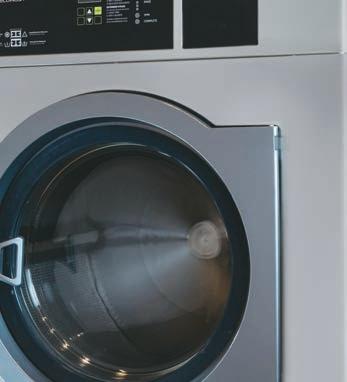
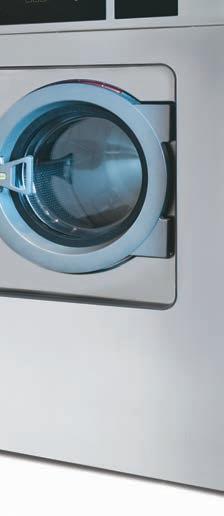
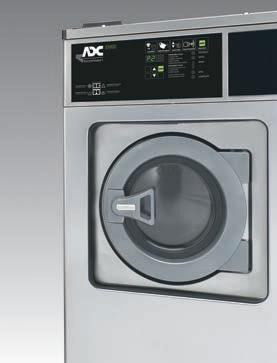
Selecting the right machines to speed up laundry and save labor is simpler with ADC. Turn to our EcoWash lineup for a range of equipment choices, including rigid and soft-mount machines with load capacities up to 60 lbs. and water-extracting performance up to 350 G-Force on most sizes. Plus, all EcoWash models feature full stainless-steel cabinets and the backing of a 10-year limited manufacturer’s warranty.* Because we’re as serious about making things last as we are about making them e cient.

* 10-year warranty limited to frame, tub, cylinder and cylinder’s shaft, seals, bearings and bearing housing.


Ask about low financing rates. 508.678.9000 | sales@amdry.com | www.adclaundry.com

Simply reliable by design.


PANEL OF EXPERTS
Loading and unloading effectiveness





Many laundry owner/operators today are familiar with, and operate, tunnel washer systems. I imagine this is in a big part due to their operational efficiencies, ergonomics and labor savings provided by the available automation of loading, unloading, and linen and data transfer throughout their integrated washing and drying process.
The technology also exists today that provides a similar material and data flow between drying systems and flatwork and full-dry finishing machines for both loading and unloading goods on this equipment.
To incorporate a system of this type not only helps to ensure a continuous supply of work to each finishing workstation, but also the data flow that is transferred along with each batch throughout the finishing floor. This optimized data flow is most important to help ensure operator and machine performance can be maximized on a consistent basis throughout the workday.

The automation for logistics of goods throughout the finishing department can be accomplished in many ways, depending on available space and working conditions of a facility, via smart conveyor combinations, overhead rail or even vacuum transport systems. In each case, the data and identifying information of each batch can be tracked and passed to the finishing equipment it is being directed to.
Along with this data transfer, the pre-set operating parameters of the automated batch separation equipment and finishing equipment can be automatically adjusted to the linen type and customer specification of that specific batch. These technological advancements provide for improved machine operator efficiencies by allowing them to focus more on their primary task at hand of feeding goods into the machine.
The many systems that are available today can vary greatly in sophistication to meet specific




needs of a customer’s project. For example, limited available spacing in front of an existing ironer with a new feeder and folder may limit a design solution to still pulling goods from carts at the feeding stations, but having a bar-code scanner for reading printed tickets from a washing system’s dryers that identify data from that batch’s information and transfers it to the finishing line.
The systems can go all the way to a complete new installation with fully automated batch and informational data transfer from a linen transport system, or to an ergonomic automated batch separation machine, linen delivery conveyors to each feeding station for a continuous flow of textiles to feeding station operators, and a high-production feeding machine, complete with a new, higher-capacity ironer can be included to fully optimize the feeding of finishing lines.
Similar technology also exists to automate the unloading of finishing equipment as well, eliminating manual functions behind the machinery completely. The aforementioned automatic “batch” data transfer now becomes “stack” data that is passed from a flatwork or full-dry folder to a central takeaway smart conveyor that receives goods automatically via a stack transfer device. This technology establishes trackable positioning of stacks down the conveyor of all goods to a central collection point.
This automation can also be tailored to meet different needs of a customer’s specific requirement, from a simple smart conveyor for goods that provides traffic control of stacks from multiple machines from the transfer device to transferring finished stacks from each folder only when an available slot is available on the conveyor to avoid collisions. Or the added automation of then tracking and sorting the individual stacks by customer and/or linen type onto separate roll-off conveyors at the central collection area for packout.
As the operational demands and competitive landscape for laundries seem to be ever increasing, the new technologies becoming available to our industry today are providing systems that streamline both production and data flows throughout the entire soil and clean production floor.
Production efficiencies and quality improvements can be realized by reducing manual transport of linen and automating these loading and unloading functions—one more way of assisting the industry in meeting if not overcoming these current and future market demands.
was allowed a total of 20 minutes to unload (10 minutes) and load (10 minutes) the washer. While this was reasonable, the time would generally expand as the day went on. The expectation was to produce six loads for each eighthour shift.
Textiles
This would produce 3,600 pounds over eight hours and 30 minutes. That equates to 360 minutes of washing and 120 minutes of loading and unloading, with thirty minutes to spare (510 total minutes available).
capable of producing, whether traditional cotton or blended fabric. Underloading produces less product, increases the costs of utilities and chemicals, and lengthens the production day.
In a tunnel washer, maximizing loads is about the loading systems working properly. Whether loading by conveyor or soil bags, it is important that the system flows. There must be enough water utilized for wetting of the product in the first pocket to ensure proper transfer and continuity.
Loading and unloading machinery in a laundry has been a conversation focal point surrounding logjams for years. Whether because of equipment, methodology or people, loading and unloading is a process that must be managed.
My most vivid memories involve loading a 600-pound side loader. Side loaders are machines that force the basket of the washer through the water. This was a very tough and fine piece of equipment, which can also be labor-intensive. The basic wash/extract formula was for 60 minutes. The operator
The successful story here is that there were expectations for the number of loads and for the time lost between loads. Without such expectations, fewer loads would be processed, which would mean fewer pounds were processed and delivered.
Summertime had its special problems of hand cramping from the heat of the season, while every other season deemed the expectations reasonable.
Additionally, the pockets required the same or like items to assist in balancing the machine. It was “artwork” to load, putting the blankets in “just so” such that the entire load could be installed. It is also important to get the pounds out of the machine that it is
Conventional, semi-automatic, open-pocket washers are generally easier to load. It is important not to overload. Overloading increases rewash and can produce twisted/ tangled linen, which ends up inhibiting production on the clean side.
12 NOVEMBER 2015 | AMERICAN LAUNDRY NEWS www.AmericanLaundryNews.com
“I’ve been tracking operations in my laundry, and I see that the process gets bogged down when it comes to loading and unloading machines. What can I do to make loading and unloading linens and textiles more effective?”
Ibelieve that this greatly depends on the size of laundry that you
Cecil B. Lee Standard Textile, Cincinnati, Ohio
Equipment Manufacturing Kelly Outram
Kannegiesser USA, Grand Prairie, Texas
Commercial Laundry Rick Rone
Laundry Plus, Bradenton, Fla.
(Image licensed by Ingram Publishing)
are running and the capacity that you need to achieve. The other area that must be considered is your engineering/maintenance department.



Automation of any type can be of tremendous benefit if utilized properly. If not, quality, as well as productivity, can suffer greatly. Remember, most often, the more automation is implemented, the fewer trained human eyes are scanning each and every piece for cleanliness and process quality. Traditionally, other than soil sort, the first machines that would need to be loaded in a commercial laundry would be the washers. Depending on whether you utilize tunnel washing technology or standard washer-extractors, there are varied ways to automate the loading of these machines. If tunnels are utilized, your options are compartmentalized, inclined conveyors or sling loading. Both have their benefits and drawbacks.
Inclined conveyors are quite easy to maintain and do an exceptional job but take up a lot of valuable floor space. Sling or bag loading systems, on the other hand, can be maintenance-intensive for proper use but utilize otherwise unusable space off the floor. If your property is using conventional washer-extractors, the options are somewhat limited. These types of washers can be purchased with either one- or two-way tilt for ease of loading or unloading and therefore could utilize the same sling or bag system.
In general, the same can be said for all the remaining areas in your facility. When properly used, automation can save substantial resources and assist in gaining potentially needed productivity. If you are not properly set up for it, the effects can be devastating. Choose wisely!
and machines that tilt to load and unload make this easy. But, if you are using washers and dryers without the ability to tilt, there are still things you can do.
Look closely at the procedures. Ensure that employees are responding quickly when washers or dryers are finished. If the machines sit for five to 10 minutes before someone starts unloading, that time is gone. Check the end signals to be sure they work, are loud and are programmed; see that employees don’t just silence the signal and leave. Teach them to respond as soon as possible and start unloading.
Make the process as streamlined as possible. Soiled goods should be queued up and ready to be loaded. I’ve seen laundries where the employees start getting the next cart of linen ready and close by whenever they hear a washer start extracting. One employee can move the unloaded goods away while another starts loading. Be sure your employees understand that the priority is to keep the washers and dryers producing goods.
Have enough carts to receive all unloaded goods without waiting. Use carts with spring platforms to minimize bending over to reach
goods. Consider modifying your carts to fit as close as possible to the washer’s opening height, with the goods at an easy-to-reach level. Perhaps you can use a platformtype cart, which can enable someone to slide the goods into the washer. Be creative.
If you have small items that are repetitive to handle, consider net bags. Although it affects washing action some, and takes time to load, it sure makes it easier to put goods into and pull them out of the washer. Be sure your washer is programmed to tumble the goods after the extract so it isn’t necessary to peel them from the drum. If the
goods are too hot to grab, change the programming.
There is no substitute for studying a difficult problem and trying different things to see what works and what doesn’t. ALN
Iwas at a laundry once where a used, 600-pound, open-pocket washer was installed beyond the overhead rail system. The plan was to save time by using this big washer to launder a large volume of shop rags, instead of the smaller washers currently being used.
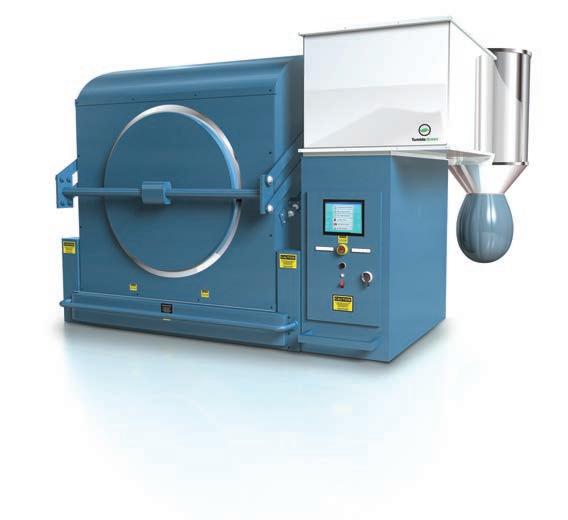
However, after hand-loading six large carts of shop rags, washing them and then unloading all those rags, they found the loading and unloading time exceeded the run time of the formula. It was horrible. The only solution was to extend the rail system to load faster.
With the constraints of the machines you already own, speeding up loading and unloading is sometimes very difficult. Obviously, overhead sling systems
www.AmericanLaundryNews.com AMERICAN LAUNDRY NEWS | NOVEMBER 2015 13
YOUR CHALLENGE PACESETTER CLM leads the way in dryer technology and provides an upgraded replacement for your old Challenge Pacesetter Our Model 165 fits the Challenge Pacesetter footprint perfectly and gives you technology that no one else o ers, including a fully integrated production management system. • Upgraded heat system with improved efficiency and lower emissions • Micro-Command III PLC upgrade with LAN and Blue Tooth communications • PLC now prepared for flow process management systems • 2-stage variable speed basket drive with 3-port load door. • Soft start to reduce component wear, lower utility use. • Heavy-gauge basket, includes removable steel basket panels • Long-lasting ceramic coating available on removable basket panels. • Configurable exhaust location • Configurable control/burner location Call CLM to replace your Challenge Pacesetter dryers, or for information on our broad range of industrial dryers. 323-232-2417 Model 165 shown with Tumble Green® configuration See Us at Booth 2560 at The Clean Show 211 Erie Street, Pomona, CA 91768 | T: (323) 232-2417 | www.clmco.com ALN_Jr Page.indd 1 11/18/14 2:36 PM 0515aln_CLM.indd 1 4/13/15 4:46 PM Chemicals Supply David Barbe U.N.X. Inc., Greenville, N.C. FOR MORE STORIES FEATURING OUR PANEL OF EXPERTS, VISIT WWW. AMERICANLAUNDRYNEWS. COM!
UPGRADE
Cougar pride: on field and in laundry
BY MATT POE, EDITOR
PULLMAN, Wash. — The Washington State University Cougars are having a good football season.

But there are some losses staining the team’s record.
However, that’s not the case with its uniforms. Tune in at the beginning of a WSU game, and the uniforms are bright and stain-free.
That’s due to an updated laundry facility in the university’s new football complex—and the pride and passion of Director of Equipment Operations Milton Neal.
“I’ve been doing laundry, this is my 31st year, so I’ve got a little bit of experience with athletic laundry,” says Neal. “Laundry is the one thing that I’m always trying to learn new things. Anytime I can find a little trick, I’m all ears. It’s just constantly trying to look for any new trick that might get a stain out.
“A lot of people don’t have a clue about football laundry.”
Most people don’t watch a football game and wonder how the team gets the uniforms so clean, he says.
“It takes a little pride, a little time and a little know-how to get them bad boys white again,” says Neal.
His pride, time and know-how were key to the new laundry facilities being designed and built just right at the new football complex. He says the new laundry room was “born out of the things that our other equipment room didn’t have, things we learned over a 15-year period.”
Fifteen years ago, the university redesigned its athletic laundry space, says Neal.
“We lived in Bohler Gym, which was built in 1927,” he says. “At the end of 1997, everybody moved out, and they updated and re-did Bowler Gym, and our space was a part of that.”
Neal says that redesign was a great learning experience because he was an assistant at the time. Before the redesign was complete, he became head of equipment, which includes the laundry.
“I made a lot of mistakes,” he says. “We didn’t have a lot of say in the design of that room, but basically we took this new room and how we designed it, the things that drove us nuts in the other place, we addressed here.”
Neal says that when Bohler Gym was redesigned, the equipment staff knew immediately that there weren’t enough washers and dryers put in.
“We were doing all 17 sports
and we only had 300 pounds of capacity. In our new room, that’s football-only, we have 465 pounds of capacity,” he says. “We learned our lesson, basically, is what I’m getting at.”
Neal learned his lesson, but getting the increased capacity for just the football program was a challenge.
“I had to fight a little bit because the people here on campus were like, ‘Well, Milton, you had 300 pounds capacity for 17 sports. Why do you need 465 for one sport?’” he says. “I invited those folks to come do laundry with me in the evening, which they didn’t take me up on. Basically, what I told them was when we redesigned Bohler Gym, we didn’t have enough capacity. So, what our goal was in the new room, that was football-only, was to put enough capacity in there that we could turn around football practice laundry, because that’s what we do the most of.”
For the equipment, Neal knew he wanted UniMac. In the Bohler Gym laundry, which today handles laundry of the other 16 sports at the university, UniMac machines were used. Where the old machines have to be manually programmed, Neal quickly became enamored with the new UniLinc feature, which allows program changes via computer.
“Being in here 16 months, we’ve got it pretty well finely tuned to where we want them,” he says. “When it came time for us to design this new room, I’ll be honest with you, I didn’t even know UniLinc was a feature. It was kind of a pleasant surprise.”
The feature also helped with the move-in, according to Neal, because he was able to transfer preferred cycles from the old units to the new ones. Then it was a simple matter of fine-tuning.
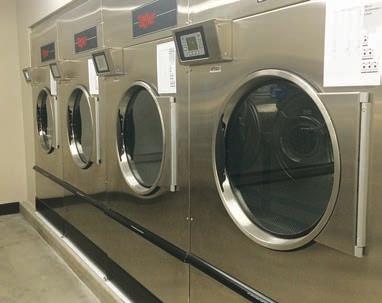
Neal worked with Washington Automated, a local distributor, to select the machines for the new laundry room. For washer-extractors, he says they have four 100pound units and a 60-pound unit, plus five tumble dryers.
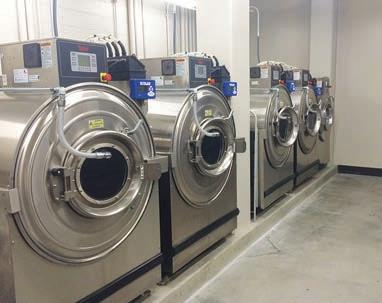
“Seven days a week and all year. Them bad boys, they get a workout,” Neal says. “We use them every day.”
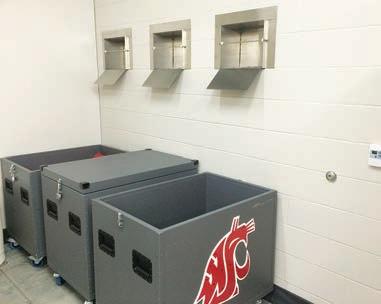
Neal says they do football laundry twice a day on a regular basis. During the summer months, the team runs in the morning and then lifts weights in the afternoon. The players put their gear on a “Laundry Loop” that is numbered for each player, and then they drop the loop through a chute into a bin. Neal says he moves the bin 10 feet and then washes and dries the gear.
From that point, the gear is placed into a mailbox system. In a small hallway on the other side of the laundry, the players retrieve their gear, Neal says. Each player has a code to get his own, clean laundry.
Things get a lot heavier and more intensive during the season, he says.
“Daily laundry, like today, they’re just wearing T-shirts, shorts, sock, girdle, up in the weight room lifting,” says Neal. “The loop from practice is way
bigger because it has a practice jersey on it and practice pants. When it turns cold, there will be sweats on there. So the actual practice laundry from when they go out to practice, it’s way bigger than when they’re just lifting or running.”
Then there’s game laundry.
“When we do game laundry, it takes a while,” he says. “What will change that is if we play on artificial turf or on natural grass. That’s a long night when you play on natural grass because you’re scrubbing stains. When it comes to natural grass stains with our new equipment, we program in a soak cycle.”
The Cougars’ home turf is artificial, but several away-game opponents have natural grass fields. And those away uniforms don’t get washed at the opponent’s facility; WSU flies the dirty jerseys and pants back on the plane with the team, Neal says.
“We bring the uniforms back with us on the airplane because we don’t want them sitting in the back of a truck with stains setting in,” he says.
Neal says he sorts out the uniforms with the worst stains. He sets those to soak for four hours,
and then he goes home to sleep for four hours before heading back to the laundry to pull out each jersey and each pant to make sure the grass stains are gone.
“You’ve got to take a little pride in it, to take your time,” he says. “The easy thing to do would be to pull them out after a soak, because you’re tired, just grab them out of that washer, cross your fingers and throw them into the dryer, but that’s where your pride comes in a little bit. Man, that’s on me if we play this next game and there’s grass stains still on the jerseys. That don’t look too good on me or the university.”
That may sound like a lot of work, and it is, but it’s much easier than before, according to Neal. He says that he and his assistant can actually get home to see their families during the football season.
“One of the nice things about the new laundry room is that we designed it so we’re not up here doing laundry all hours of the night, and that’s been a gamechanger for us,” Neal says. “The new machines, the technology in 15 years, it’s night-and-day difference. They’ve made our life good is the bottom line.” ALN
14 NOVEMBER 2015 | AMERICAN LAUNDRY NEWS www.AmericanLaundryNews.com
Washington State’s washer-extractors are only 10 feet away from the chutes where the soiled laundry is deposited.
With the new washer-extractors and the pictured dryers, WSU equipment staff can turn around daily football laundry in just over an hour.
Players drop their Laundry Loops through the chutes into transport bins. (Photos: Milton Neal/ Washington State University)
New laundry room at Washington State University football complex keeps gear clean
correct areas.”
He says that a good first step is to establish the key productivity metrics that align best to the bottom line. While there are general, industry-used metrics and benchmarks, it is best to determine which metrics work best for a particular plant and then measure the operation against those.
Some typical focus areas and their associated metrics that Gicewicz notes include the following:
• Plant labor productivity — Pounds per operator hour
• Plant labor productivity — Dollars earned per operator hour
• Plant labor productivity — Labor dollars spent as a percentage of revenue earned
• Individual labor productivity —Pieces processed per hour
• Water efficiency — Gallons consumed per pound processed
• Natural gas efficiency — Btu consumed per pound processed
• Electrical efficiency — kWh consumed per pound processed
• Chemical efficiency — Chemical cost per hundredweight

• Linen replacement — New linen dollars spent per pound processed
To this list, Alexander adds pounds of laundry processed per square foot of plant and revenue per pound of laundry processed.
He also recommends looking at the textiles themselves as focal points for change. These include:
• The cost to maintain textile inventory based on a cost per pound of clean linen processed.
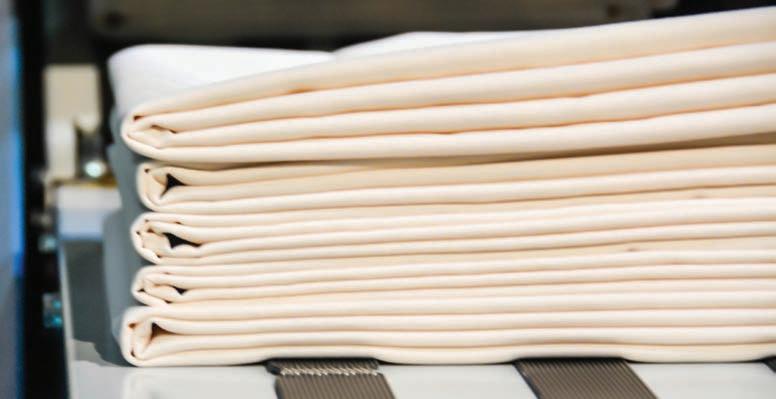
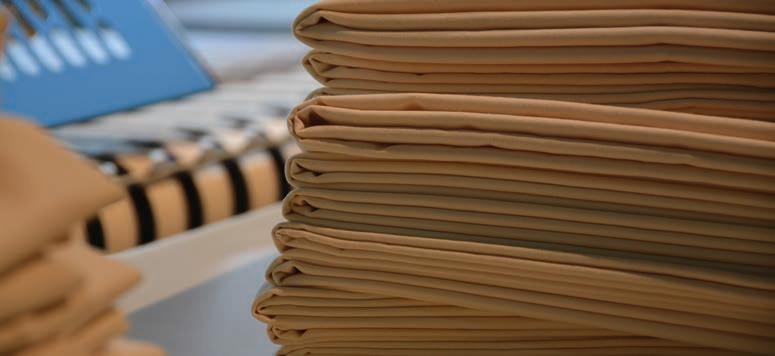
• The value of textiles that are lost in service—delivered to use areas and never returned.
• The percentage of production that is subjected to stain reclamation processing after an initial wash process.
• The percentage of laundry processed that is removed from service—ragged out.
Besides looking at the textile benchmark noted, he recommends making sure that companies are getting the new linens and textiles ordered.
“Inspect all new-linen deliveries,” says Alexander. “Check the specified weight and quality of products.”
LABOR
After a company benchmarks its processes, one of the most costly areas it will find is labor. There are many small ways a laundry can make a big difference in its operations when it comes to labor. Gicewicz has several suggestions.
His first is aimed at supervisors— always be on the floor.
“This sounds intuitive, but supervisors and managers must be on the floor, always focused on the personnel and on the big picture. Not at their computer. Not in the
office. Not in the lunchroom. Not on their smartphone. On the floor,” says Gicewicz. “The floor will not run itself. The orchestra needs an orchestra conductor to make beautiful music. In the same way, the laundry plant needs its ‘conductor’ on the floor in order to produce beautiful laundry beautifully.”
Every 10 hours per day in labor saved translates into about $50,000 per year in total savings, according to Gicewicz. Saving 10 hours per day requires only saving 12 minutes per day across 50 employees.
Gicewicz’s next suggestion is to measure employee productivity against a standard; many plants do


not measure individual operator productivity, he says.
“Most operators want to do a great job and they want to be recognized for it,” he says. “If individual productivity is measured and communicated regularly, it will almost always drive improved performance.”
There are different ways to accomplish this, says Gicewicz, including more expensive software systems. There are also highly effective solutions that don’t require expensive capital outlays.
“Even most older laundry equipment comes with piece counters,” he says. “Have operators write
down how many pieces they process in a given time and compare this against a standard.”
In addition, Gicewicz says, “Schedule the wash day and finish personnel such that finishers have ‘a little too much work and a little too much product.’ They will be forced to work faster and more efficiently.”
Alexander adds that the production workforce and distribution should be scheduled to most effectively complement production and reduce soiled- and clean-linen holding.
“In on-premises laundries, this typically means pushing the production schedule back so that laun-



dry operations don’t commence before soiled linen starts coming down the chute—generally between 9 and 10 a.m., although most onpremises laundries start around 6 a.m., thereby requiring work be stranded overnight in the laundry,” says Alexander. “At commercial laundries, this may mean scheduling a truck route during the day (when regular delivery is in the evening or overnight) to collect soiled linen, which allows production to get a ‘head start’ on the next day’s work and reduces soiled holding requirements.”
www.AmericanLaundryNews.com AMERICAN LAUNDRY NEWS | N OV EM B ER 2015 15
THE LEADER IN LAUNDRY TECHNOLOGY kannegiesser-usa.com•800.344.0403 EMX Cornerless High Performance CFM FoldMaster EFFICIENT - Cornerless Feeding - Multiple Buffer Positions - Up to 1200 pcs/hr ERGONOMIC - Adjustable Height Loading Stations VERSATILE - Optional Small Piece Feeding - 120-158” Models Available SHM - Self-Supporting Rolls - Uniform Pressure HPM - Fully Heated Bridge - Flexible Stainless Steel Heating Band - Excellent Thermal Conductivity VERSATILE - Steam or Gas Options Available PRECISE FOLDING - Continuous Measuring - Adjustable Pressure Air Blast on First Fold - Mechanical Blade & Thickness Adjustment on Cross Folds VERSATILE - Optional Small Piece & Multiple Lane Folding - Sorting or Single Stacker Models Available IRONERS ALN_Jr Page.indd 1 8/25/15 7:22 PM Continued from Page 1 Changes See CHANGES on Page 16
EQUIPMENT
Equipment is another major cost for laundries, and by making small changes, plants can help keep equipment functioning properly, along with maintaining or improving energy efficiency.
J.R. Ryan, president of TBR Associates in Saddle Brook, N.J., notes one simple fix that can make a big difference: Check for leaks in
“TBR recently helped a client save 1 million gallons of water per month,” he says. “Beyond the conservation benefits, the real cost savings is actually in the sewer discharge expense, which can amount to 10 times the cost of the water.”
Ryan also recommends reviewing production standards to ensure they are up to date and in line with the current equipment lineup and types of textiles being processed. For example, workers in finishing may be expected to process a given number of pieces per hour. Then, the laundry adds an automated feeder, which enables the workers to pro
“It’s important to update the production standards so the formal expectations match the improved productivity,” says Ryan.
Alexander notes that improving workplace ergonomics in equipment use can also aid in productivity. Some of his suggestions include:
• Placing anti-fatigue mats at finishing stations.
• Using spring-bottom carts or roll-up bottom carts at finishing stations.
• Using sorting tables and/or conveyors at the discharge of soiled-linen chutes to keep work off the floor and improve pro
While equipment purchases aren’t small change, Alexander says that being aware of available workflow aids and looking toward future equipment acquisitions with enhanced productivity in mind can help.

“Consider materials-handling equipment, including sheet separators, spreader-feeders, large- and small-piece stackers, and sling systems to aid workflow,” he says.
“Plan for eventual replacement of washer-extractors and dryers that are not gravity-loaded or unloaded with equipment that exposes the door to the line of gravity and that
volume exceeds 1,500 pounds per hour and you’re processing hospitality or healthcare work in washerextractors, consider a batch tunnel washing system.”
For Emerald Textiles in San Diego, Calif., the small change did involve equipment.
The company needed a folding solution for healthcare garments that could not be processed on conventional terry folding machines. The problem was that Emerald had a high number of long-sleeved warm-up jackets, isolation gowns and bathrobes. These items required folding by hand. The task often required five employees, and the garments can be slick and difficult to process by hand.
Emerald reached out to manufacturer Kannegiesser, which suggested its FAX-M Garment Folding Robot. The machine contains a single-wide belt, which allows it to fold Emerald’s garments and even process items with tie strings that would normally cause jamming in an automatic folder.
And only one person is needed to operate the machine.
“The Kannegiesser folder has helped streamline our operation and enable our employees to be even more productive,” says Tom Gildred, Emerald’s CEO. “The crisp appearance of the finished stacks of linen provided by the folder is excellent. We are very happy with our investment in this equipment.”
Richard Warren, general manager of The Linen King in Conway, Ark., has an equipment-related suggestion, which costs almost nothing, that he says can help reduce full-time employees (FTE): Move everything closer together.
“You don’t want to fall over it, of course, but why carry it five extra feet?” he asks. “I had a new employee feeding sheets. We were doing 10,000 sheets per day, per machine, with two FTEs feeding each machine, and this FTE wouldn’t keep the sheets close to him. He was a tall man, and we measured his one pace. It was 2.5 feet. He would walk back 2.5 feet to pick up a sheet and then walk back to the feeder another 2.5 feet. That’s five feet per sheet, times 5,000 sheets. I had him do the calculations, and he was surprised to learn he was walking about five miles a day.”
Warren makes the point that plants don’t want employees falling over equipment, and along those same lines, Gicewicz adds that clutter is a productivity killer.
“A clean, clutter-free plant is a safer plant and a more efficient plant,” he says. “If left out of control, clutter builds up quickly in a plant and negatively impacts safety, quality and productivity. Product becomes difficult to move. Make it a policy that all carts and product in the plant are addressed that day so the next day starts fresh.”
Effective laundry management is a process of continuous refinement of processes, says Alexander. Small changes collectively and over time have the potential of making a big difference.
16 NOVEMBER 2015 | AMERICAN LAUNDRY NEWS www.AmericanLaundryNews.com
ALN ALN_Jr Page.indd 1 9/30/15 3:13 PM Continued from Page 15
Changes
Texcare
Australia-Pacific, shared her excitement: “Texcare Asia is a golden opportunity for us to present our brands and innovations to global customers, especially those from the Asia Pacific region. At the 2015 show, we will highlight the Speed Queen washers and dryers for coin laundry, as well as the latest commercial-grade home laundry machines. Key products also include the newest Deli washer, extractor and dryer, in addition to the recent designs for soft-mount washers.
“Greater China has become a new business region for us since early 2015. Texcare Asia is the perfect channel where we can spread the news and show people our efforts in the region.”

Returning exhibitor Tolon Laundry Machines hails the success of its debut at the 2013 fair, which enabled the company to expand market share and strengthen distributorships in the Far East.


“Texcare Asia offers us the perfect platform where we can promote our latest machines and search suitable buyers,” says Ali Riza Ozkan, foreign trade minister for the 70-year-old Turkish enterprise. “In 2015, the key products at our booth will be the latest variety of Tolon washers, extractors, tumble dryers and towel folders.”
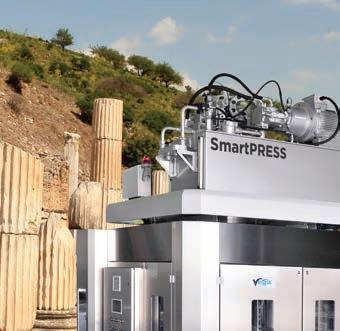
Chinese exhibitor Shanghai Shenguang Laundry Machinery Group Co. Ltd. is preparing product launches for the fair.
“Texcare Asia offers the best platform for us to display our laundry equipment for clients and to communicate with suppliers and partners,” says Qian Zhigen, company chairman. “We will once again utilize the shows to unveil our new products, such as the customizable heating solutions by SNS (Shenguang Non-steamheated System), the newest generation of high-capacity, tilting, auto washer-extractors, as well as the auto folder which was added to our finishing series recently.”

Staged concurrently on Nov. 25-26 will be the Texcare Forum Asia, a series of educational presentations. Jointly organized by Messe Frankfurt, CLIMA and CINET, the International Committee of Textile Care based in the Netherlands, the forum will address the latest market developments and offer a networking platform for industry experts and professionals.
The theme for the Nov. 25 agenda is The Exciting Asian PTC Business Perspective. The half-day session will cover the latest technological advancements and market updates in Asia.
Scheduled speakers include Dr. Geert Bottger, liaison officer of CINET; Stefan Phang, director, sustainability and corporate social responsibility, Sealed Air; and Timme Lucassen, technical project
manager, TKT.
Also planned is an “Implementation of New PTC Technologies Panel” featuring representatives from BÖWE, Büfa, Ecolab, JENSEN, Kannegiesser and VEIT, and a roundtable panel discussion including managers and association representatives from around the world.

The full-day session on Nov. 26 is themed The Trick of Earning Money in PTC. It will feature distinguished specialists who will share cost-saving and marginmaximizing strategies applicable to the ever-evolving industry.
Among the scheduled present-
ers are Riccardo Mazzolini, general manager of the Textile ID business unit of Datamars; Aad van den Berg, CEO of Senso Technics; Masashi Shimenoki, chairman of the Japan Textile Care Institution; Otto Burger, director of sales for Kannegiesser; and Dominique Suttheimer, sales director of Büfa. Texcare Asia is a sister event of Texcare International, which is staged every four years in Germany. The next edition of Texcare International is slated for June 11-15 in Frankfurt.
To learn more about Texcare Asia, visit the show’s website at www.texcare-asia.com ALN
www.AmericanLaundryNews.com AMERICAN LAUNDRY NEWS | N OV EM B ER 2015 17
800.611.6806 www.VegaSystemsUSA.com www.EllisCorp.com ATLAS FRAME STANDARD FRAME Solid rectangular steel frame for superior weight distribution Two-part construction reduces critical operational elements Pressure concentrates at the most vulnerable points - the posts Multiple structural components means multiple opportunities for failure OUTLASTS COLUMNS. Our unique ATLAS Frame eliminates the weak points from traditional four-column hydraulic press construction. Its joint-free design ensures maximum strength, integrity and operational reliability up to 62 bar pressure. Two solid rectangular frame elements are cut from 8” solid steel slabs along with the top and bottom platforms. Leave the columns to the Romans. Let Vega Systems and Ellis keep your laundry productive, year after year. ALN_Jr Page.indd 1 7/28/15 2:59 PM
pens,
Continued from Page 6
At the 2013 show in Shanghai, attendees came armed with
paper and digital cameras to document their findings.
CONGRATS






WINNERS!
of our iPad and Android tablet give away at the Clean Show


Lori Benson The
Guy LLC, Toms River, New Jersey









Join them in reading our digital edition on your tablet too! Once you subscribe you’ll get instant access! And your digital magazine can be where ever you are, whatever you’re doing!





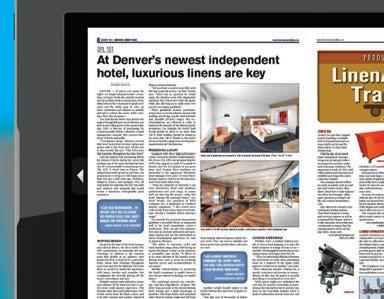

Heidle Baskin Baskin Laundry LLC, Canton, Texas











 Towel
Towel
Textiles
out there, but “I don’t think the ‘holy grail’ has been found yet.”
In the manufacturing process, there are two types of applications of antimicrobials to textiles. Scully says that one is inherent, wherein the antimicrobial agent is introduced into the synthetic polymer prior to the extrusion of the fiber.
“They put the antimicrobial agent into the fiber and then it is spun into a yarn, typically blended with cotton, something like that,” he says.
The antimicrobial agents last longer on the inherent side, typically, but it is more expensive. Scully says that the cost of production with the chemical used on the linen could be an additional 20-30%.
The other alternative is post treatment of the fiber with the antimicrobial agent, he says.
“That’s usually applied during the finishing process, usually in the final processing rinse cycle,” says Scully. “This gives you a lower cost of application, but typically it’s not as durable as the inherent process.”
Scully says he has seen in post treatment that the additional cost could be as low as 6% on a finished garment to upwards of about 15%. But that doesn’t translate into the price of the textiles, he says, because the price includes branding and research and design, and there are royalties usually involved with the brand name. That could translate into a higher cost of acquisition.
“Typically when a new technology comes onto the market, it’s going to be very highpriced because of all the R&D that was put into it,” says Scully. “You’ll see those new technologies developed in the U.S. and Europe. Like on microfiber towels. They were originally introduced in Europe and the price was very, very high on them. Also with the 100% synthetic sheets developed in the U.S. When they first came out, the price was very high, but then as soon as you start commoditizing that technology, the price goes way down. Once the manufacturing shifts out of the U.S. base and European base and goes to Asia, you see the price go lower.”

Besides acquisition cost consideration, when it comes to processing emerging healthcare textiles, there are learning curves.
“Every time there are new technologies or new additives in the linen, they don’t really consider, for example, the flatwork department,” says Acton. “Sometimes it’s just trial and error to deal with some of the issues that arise.”
Mangini says he has seen this firsthand.
“There are a whole bunch of different products coming at us. I’ve tested a few different ones, and I can tell you even if you have the perfect system today, I’ve seen some linen come through that I could not run through my chest [ironer] at 300 degrees,” he says. “We actually had to reduce heat to get it to go through.”
Mangini recommends developing a close working relationship with vendors before a high-tech linen product gets into a healthcare system.
“You need to get ahead of it,” he says. “The world is changing, in my view, and from a processing standpoint, we’re supposed to be the experts. There’s nothing worse than having someone say, ‘Hey I’ve heard about this, we need to do it,’ and we don’t know about it.”
Different products are going to react dif-
ferently in your system, Mangini says, but many of these new healthcare linen products are so new that they haven’t been tested in laundry equipment.
Testing brings up another area that was discussed by the panel: Do these high-tech healthcare linens really work? According to the panelists, conclusive testing hasn’t been done yet.
“This is possibly a new technology,” says Sands. “We just don’t have the evidence, yet, that says this could actually significantly reduce HAIs. In a vacuum, you can come up with any product. You can show testing done in a vacuum in a lab, but there are so many variables in a healthcare setting that affect infection control.”
Story says that the EPA (Environmental Protection Agency) has not certified antibacterial products to specific microorganisms.
“They’ll give you categories, but so far, not specific,” he says. “Just a general inhibitor. Where fabrics today fall is it stops germs from growing or it slows growth. You don’t see detail from EPA.”
The EPA does look at processes, however, according to Story. He says that in terms of approval, the EPA goes into a plant and asks for the validation of the processes of creating hygienically sanitized or sterile areas.
“You can’t buy a sanitized product and just throw it in the washer with soap and say it’s sanitized,” he says. “They’re going to ask for the processes each one of you in the healthcare industry use—how do you validate the processes that you’re following? It’s a long, involved process. It’s not just the sheet. The sheet is the ultimate result of that process whether it is a non-sterile producing sheet or whether it is a sheet that is antimicrobial. Both of them have to be validated by these processes.”
According to Story, the EPA wants to be able to follow a piece of material through a plant and, when it comes out the other end and is delivered to the healthcare facility, know that it’s going to be just as clean as it was when it was brand-new or the last time it was washed and certified.
When it comes to hygienically clean linen processes, Sands suggests looking at the plant before looking at the linens.
“My take on this is if your healthcare organization and you, yourself, in your laundry industry are not doing all of the evidence-based prevention practices that should be done 100% of the time, then you shouldn’t be spending money on technology that is very expensive that you don’t have any evidence at this point is going to actually have an impact at a patient level,” she says.
Looking at a laundry’s systems, Sands says there are certain things that can be controlled. These include water quality and temperature, amount of agitation, proper loading, the appropriate amount of time and chemicals, and the heat/temperature. She says that also includes physical separation of clean and soiled linens, proper ventilation, and proper cleaning and disinfecting of the area.
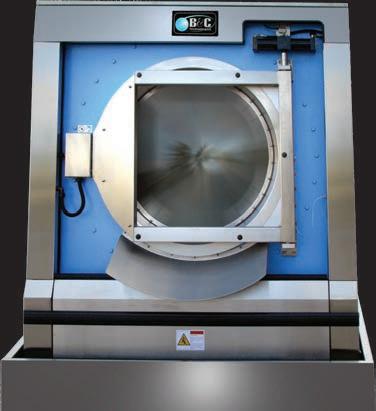
“All of those things need to be in place,” she says. “One piece of that cycle affects everything else. We know, based on what the literature says, hygienically clean laundry has very low risk. If we do everything on the laundry side, once it gets to the hospital side, if we handle the laundry appropriately, then there shouldn’t be a significant contamination to affect our patient.
“I’m not saying that the technology, in the end, might not be a beneficial technology, but you have to do all the basic things.” ALN
www.AmericanLaundryNews.com AMERICAN LAUNDRY NEWS | N OV EM B ER 2015 19 ALN_Tab_half_V.indd 1 4/10/15 8:48 AM Continued from Page 1
PSP Industrial Laundry Equipment
“The trusted source for quality pre-owned” Largest inventory of in stock used industrial laundry equipment. We BUY & SELL all major brands; Chicago, Braun, Milnor, ADC, Jensen, Kannegiesser, Lavatec Visit our website @ www.pspindustrial.com Email: info@pspindustrial.com 305.517.1421
WASHEX PARTS
Hard-to-find Washex parts, on-site rebuilding, tech support. LAUNDRY PARTS CENTER 800-352-4492 Fax: 305-827-3991
PARTS, PARTS, PARTS
Huge stock of parts for most laundry equipment & boilers. Also traps, valves and lubricants. Overnight delivery. Steiner-Atlantic, 800-333-8883 Fax: 305-751-8390 parts@steineratlantic.com www.steineratlantic.com
Equipment Sales – Kansas City



Loomis Bros. Equipment Company is seeking a highly motivated sales professional to take over a well-established sales territory. Large existing account base plus great opportunity to grow market share in OPL and vended laundry markets throughout Kansas and western Missouri. Representing Milnor, Chicago and other top brands. We offer excellent income potential and good benefits. Send resume in confidence to: dloomis@loomisbros.com
STATEMENT OF OWNERSHIP, MANAGEMENT, AND CIRCULATION

Complete Mailing Address of Known Office of Publication: American Trade Magazines LLC, 566 West Lake St., Suite 420, Chicago, IL 60661-1410 Cook County. Contact Person: Charles Thompson, 312-361-1700. 8. Complete Mailing Address of Headquarters or General Business Office of Publisher: American Trade Magazines LLC, 566 West Lake St., Suite 420, Chicago, IL 60661-1410 Cook County. 9. Full Names and Complete Mailing Addresses of Publisher, Editor, and Managing Editor. Publisher: Charles Thompson, American Trade Magazines LLC, 566 West Lake St., Suite 420, Chicago, IL 60661-1410 Cook County. Editor: Bruce Beggs, American Trade Magazines LLC, 566 West Lake St., Suite 420, Chicago, IL 60661-1410 Cook County. Managing Editor: Bruce Beggs, American Trade Magazines LLC, 566 West Lake St., Suite 420, Chicago, IL 606611410 Cook County. 10. Owner: American Trade Magazines LLC, 566 West Lake St., Suite 420, Chicago, IL 606611410 Cook County. Charles Thompson, American Trade Magazines LLC, 566 West Lake St., Suite 420, Chicago, IL 60661-1410 Cook County. Bruce Beggs, American Trade Magazines LLC, 566 West Lake St., Suite 420, Chicago, IL 60661-1410 Cook County. Donald Feinstein, American Trade Magazines LLC, 566 West Lake St., Suite 420, Chicago, IL 60661-1410 Cook County. Nathan Frerichs, American Trade Magazines LLC, 566 West Lake St., Suite 420, Chicago, IL
60661-1410 Cook County. Suhler Family Investment Office LLC, 188 Long Neck Point Rd., Darien, CT 06820 Fairfield County. 13. Publication Title: AMERICAN LAUNDRY NEWS 14. Issue Date for Circulation Data Below: September 2015 15. Extent and Nature of circulation: (average number of copies each issue during proceeding 12 months=”X”) (Number copies of single issue published nearest to filing date = Y”) (a) Total Number of Copies (Net press run): X=15,474, Y=15,426. b. Legitimate Paid and/or Requested Distribution (By Mail and Outside the Mail). (1) Outside County Paid/Requested Mail Subscriptions stated on PS Form 3541. (Include direct written request from recipient, telemarketing and Internet requests from recipient, paid subscriptions including nominal rate subscriptions, employer requests, advertiser’s proof copies, and exchange copies.) X= 9,921, Y=10,657. (2) In-County Paid/ Requested Mail Subscriptions stated on PS Form 3541. (Include direct written request from recipient, telemarketing and Internet requests from recipient, paid subscriptions including nominal rate subscriptions, employer requests, advertiser’s proof copies, and exchange copies.) X=0, Y=0. (3) Sales Through Dealers and Carriers, Street Vendors, Counter Sales, and Other Paid or Requested Distribution Outside USPS®: X=0, Y=0. (4) Requested Copies Distributed by Other Mail Classes Through the USPS (e.g. First-Class Mail®): X=0, Y=0. (c) Total Paid and/or Requested Circulation (Sum of 15b (1), (2), (3), and (4)): X=9,921, Y=10,657. (d) Nonrequested Distribution (By Mail and Outside the Mail). (1) Outside County Nonrequested Copies Stated on PS Form 3541 (include Sample copies, Requests Over 3 years old, Requests induced by a Premium, Bulk Sales and Requests
including Association Requests, Names obtained from Business Directories, Lists, and other sources): X=5,335, Y=4,601. (2) In-County Nonrequested Copies Stated on PS Form 3541 (include Sample copies, Requests Over 3 years old, Requests induced by a Premium, Bulk Sales and Requests including Association Requests, Names obtained from Business Directories, Lists, and other sources): X=0, Y=0. (3) Nonrequested Copies Distributed Through the USPS by Other Classes of Mail (e.g. First-Class Mail, Nonrequestor Copies mailed in excess of 10% Limit mailed at Standard Mail® or Package Services Rates): X=0, Y=0. (4) Nonrequested Copies Distributed Outside the Mail (Include Pickup Stands, Trade Shows, Showrooms and Other Sources): X=62, Y=12. (e) Total Nonrequested Distribution (Sum of 15d (1), (2), (3) and (4)): X=5,397, Y=4,613. (f) Total Distribution (Sum of 15c and e): X=15,318, Y=15,270. (g) Copies not Distributed (See Instructions to Publishers #4, (page #3)): X=156, Y=156. (h) Total (Sum of 15f and g): X=15,474, Y=15,426. (i) Percent Paid and/or Requested Circulation (15c divided by f times 100): X=64.77%, Y=69.79%. 16. Publication of Statement of Ownership for a Requester Publication is required and will be printed in the November 2015 issue of this publication.
17. Signature and Title of Editor, Publisher, Business Manager, or Owner: I certify that all information furnished on this form is true and complete. I understand that anyone who furnishes false or misleading information on this form or who omits material or information requested on the form may be subject to criminal sanctions (including fines and imprisonment) and/ or civil sanctions (including civil penalties): Charles Thompson, Date 9/28/2015

20 NOVEMBER 2015 | AMERICAN LAUNDRY NEWS www.AmericanLaundryNews.com
Advertising PARTS FOR SALE EQUIPMENT FOR SALE EQUIPMENT FOR SALE AMKO AMERICA, INC. Remanufactured Finishing Equipment Delta Ironers, Omega Folders & Towel Folders PARTS, IRONER SUPPLIES & NEW EQUIPMENT ALSO AVAILABLE “NEW” SELF CONTAINED IRONERS Contact: (561) 863-9696 AmkoAmerica@yahoo.com POSITIONS AVAILABLE DISTRIBUTOR OFFERINGS www.ineedjpequipment.com 800/925-3236 EQUIPMENT FOR SALE: • Rennco CF4000 Single Lane Bar towel Bagger, 2009 • 400lb Braun OP W/E, 1996, Single motor drive • 250lb Jensen OP, currently running • 2005 Chicago Air • 900lb Ellis, 1998 • 400lb Challenge Dryer, Gas, P/T, 2002, 1998 & 1995 • Chicago TriStar 32-136PCS, Gas, 2010, w/ OPL & Stacker Convey • Chicago Tristar32 + Chicago Fastrack • Chicago Tristar 24 PCS w/OPL • Chicago Imperial Ironer, IMP36, Gas, 2001 • 900lb Ellis Completely Reconditioned, New controls by Ellis • 110lb Milnor 2 Stage Press, 1997 Nice Condition • 150lb Lavatec Press, LP582, 2001 • Economizers for 50HP and 70HP Boiler • 50HP Parker Boiler, 2005 “Expect Excellence” Expect excellence from the leader in used industrial laundry equipment sales and installation. Keep up to date with equipment for sale, and the latest industry news by subscribing to our monthly newsletter. Go to www.ineedjpequipment and sign up TODAY! About JP Equipment JP Equipment is a trusted, full-service, used industrial laundry equipment sales and installation company. We pride ourselves on providing unparalleled service, whether you are building a new laundry, or upgrading your current facility. Call Craig Lloyd toll free at 877.295.5693 between 9 a.m. – 9 p.m. EST. Please visit www.laundrycareers.com to review current industrial/institutional laundry management openings. ADVANCE YOUR CAREER The Griffin Group, Inc. “Recruitment Specialist” Need to FILL a position? Call Deana Griffin 888-235-2365 www.thegriffingroup.cc deana@thegriffingroup.cc ® Stanco Industries, Inc. Serving The Textile Trades Since 1970 800-932-3769 k for Mike or Deb KEEPING IT GREEN SINCE 1970 QTY DESCRIPTION 1 Edge Spreader 2000 1 Air Chicago XXL 1998 1 Unipress Single Buck Lightning Shirt Unit 1 450lb Washex Open Pocket 2002 1 275lb Milnor Open Pocket Rebuilt 2003 6 Washers; 60lb and 100lb Rebuilt 1 Single Lane Skyline Folder 1 Braun 2 Roll 32 Steam Ironer 1 Braun Omege 2-Lane / Crossfolder w/Accumulator 1 Braun Rear Discharge Towel Folder 1 Milnor 120lb Steam Dryer 1 Braun Rear Discharge Towel Folder 1 Reconditioned Jensen Ultima 36 – 2-Roll Steam Ironer 1 Reconditioned Challenge Pacesetter 1 Forenta 2013 Single Buck, Sleever and Collar Cuff – Never Used For Pricing call Ron Hirsch 516.938.4300 • 516.315.7426 Hicksville, NY • www.directmachinery.com FOR NEW OR USED LAUNDRY EQUIPMENT, DM IS YOUR SOURCE FOR ALL YOUR NEEDS HOSPITAL LAUNDRY CLOSING EXCELLENT EXCELLENT CONDITION -------------------- EQUIPMENT FOR SALE ---------------------2006 Chicago King Edge with vacuum, Extra Wide. 2006 Chicago Skyline S-16 Folder with sheet stacker and Accumulator, Extra Wide. 2005 Chicago Air Towel Folder with conveyors. 2002 Chicago 32x120 Thermal Heated Ironer with Remote Heater. 1995 Braun 2 roll 32” Thermal Heated Ironer with Remote Heater. 2005 Braun Omega 2 lane with Sheet Stacker. 1995 Braun Accumulator. Culligan Water Softener System on 5’x8’ skid. 2005 Atlas Copco 50hp Screw Air Compressor with Air Dryer --------- DON’T BE LEFT WITHOUT POWER -------Emergency Generators Available 50KW to 1000KW Natural Gas & Diesel Stanco Industries, Inc. 800-932-3769 Ask for Mike or Deb • www.StanCoInd.com 1. Publication Title: AMERICAN LAUNDRY NEWS 2. Publication Number:
3. Filing Date: 9/28/15. 4. Issue Frequency: Monthly 5. Number
Issues Published
Classified
1091-9201
of
Annually: 12 6. Annual Subscription Price: $39.00. 7.





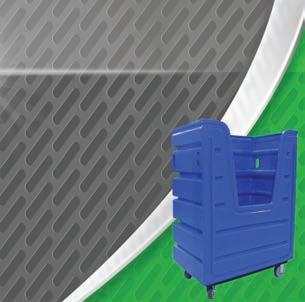

www.AmericanLaundryNews.com AMERICAN LAUNDRY NEWS | N OV EM B ER 2015 21 Source Directory A convenient guide to sources of products and services APPAREL FINISHING CARTS, TRUCKS & BASKETS Choose your favorite low-cut front for ergonomic access, roll safe and easy on advanced poly base with premium casters—all included as standard. Easy Reach, Easy Roll Call 800.829.4535 or visit MODRoto.com for a FREE QUOTE. 72P 72N Leadership in Every Cart Source Directory listings in American Laundry News are sold on an annual basis at the following rates: All Major Credit Cards Accepted 2015 Listings RegularBoldface All CapsAll Caps, Boldface Four Line Listing per Year $850 $1,070 $1,070 $1,130 Display and additional line rates available upon request Sani Trux - McClure Industries, Inc. 9051 SE 55th Ave., Portland, OR 97206 800-752-2821 www.mcclureindustries.com, info@mcclureindustries.com M.I.T. POLY-CART 211 CENTRAL PARK WEST, NEW YORK, NY 10024 800-234-7659, FAX: 212-721-9022 WWW.MITPOLYCART.COM CARTS, TRUCKS & BASKETS CARTS, TRUCKS & BASKETS Diversified Plastics, Inc. 1309 Highway 917 West, Latta, SC 29565 800-768-7636, www.dpirotocarts.com E-mail: sales@dpirotocarts.com Fax: 843-752-7798 AmericanLaundryNews.com More than unique visitors monthly! 5,250 CARTS, TRUCKS & BASKETS Round-Tripper_6.25x3:Layout 1 6/17/14 12:04 PM Page 1 • ECO FRIENDLY • MADE IN USA • DURABLE LAUNDRY CARTS 800.304.4600 www.fibertechinc.net l-800-275-2436 maxi-movers.com Email:sales@maxi-movers.com • Designed to handle the demands of industrial and institutional laundry requirements in 6 capacities. • Extra heavyeight poly bodies and powder coated steel bases INDUSTRIAL / INSTITUTIONAL LAUNDRY TRUCKS Chm #9487 Instit-Industrial ALN Class. 10/2/15 9:
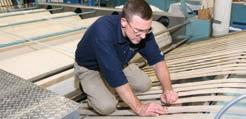






22 NOVEMBER 2015 | AMERICAN LAUNDRY NEWS www.AmericanLaundryNews.com Source Directory listings in American Laundry News are sold on an annual basis at the following rates: All Major Credit Cards Accepted 2015 Listings RegularBoldface All CapsAll Caps, Boldface Four Line Listing per Year $850 $1,070 $1,070 $1,130 Display and additional line rates available upon request Source Directory A convenient guide to sources of products and services FLATWORK IRONERS FLATWORK IRONERS PARTS Knowhow In Action Your Tingue rep is a fully trained master of finishing equipment operation, maintenance and installation. Call for: • Pads, covers, belts, waxes, tapes and more • Carts, trucks, baskets and bags • Parts, rebuilds and repairs 800.829.3864 www.Tingue.com TalleyMachinery.com MODRoto.com TBR-Associates.com To website C & W EQUIPMENT (800) 443-3573 FLATWORK IRONER SPECIALISTS REMANUFACTURED IRONERS: Super Sylon Sylon Hypro’s Super Pro Jensen SS700 SS800 Ultima Lavatec UPGRADE KITS: Chain Drive Conversion Vacuum Systems Herringbone Conversion Canopies Inverters Side Covers Roll Springs Jensen Drives SUPPLIES: Aprons Pads Covers Belts Waxes Cleaners PARTS/REPAIRS: All Brands New/Refurbished/Hard to Find COMMITTED TO EXCELLENCE Pellerin Milnor Corp. P.O. Box 400, Kenner, LA 70063 504-467-9591, Fax: 504-468-3094 www.milnor.com DRYERS – 100 POUNDS OR MORE Pellerin Milnor Corp. P.O. Box 400, Kenner, LA 70063 504-467-9591, Fax: 504-468-3094 www.milnor.com DRYERS – 100 POUNDS OR LESS • Hotel • OPL • Coin Op • Dry Cleaners • Industrial • Commercial • Cruise Industry Dry or Wet Style Filters to Work with “ALL” Dryer Sizes or Multiple Situations, Fiberglass or Stainless and Custom for Unique Situations! Lint Filters Model Big and Small – We’ve got a model for you! In-line Duct” Models – the Lint Lasso and Lint Sock –in production since 2011 All manufacturing done on premise 800-826-1245 www.cleancyclesystems.com • ccsystems@tqind.com LINT COLLECTORS & FILTERS LINT COLLECTORS & FILTERS H Our In-Line Lint Filter mounts inside, saves space! H Fiberglass Wet Filters - 6,000 to 40,000 cfm H Fiberglass or Stainless Steel Dry Filters ENERGENICS CORPORATION Talk with our Design and Engineering Staff about your needs. Hundreds Sold Annually. 800-944-1711 www.energenics.com CARTS, TRUCKS & BASKETS Energenics Corp., Kartwasher
Don St., Naples, FL 34104
CART-WASHING SYSTEMS Sani Wash
McClure Industries, Inc.
Portland, OR 97206
DRYER BOOSTER & EXHAUST FANS ENVIRONMENTAL SOLUTIONS GO TO: www.AmericanLaundryNews.com TO PLACE YOUR AD ONLINE MISSED OUR DEADLINE? • Wash Temperature Reduction • Tunnel Washer Experts • EPA Regulations • Environmental Concerns • Infection Control • Waste Water Treatment New Horizons In Ozone Solutions, Inc 508-831-4229 wet-tech.com
1470
800-944-1711 www.energenics.com
-
9051 SE 55th Ave.,
800-752-2821 www.mcclureindustries.com, info@mcclureindustries.com
Pellerin Milnor Corp.
P.O. Box 400, Kenner, LA 70063 504-467-9591, Fax: 504-468-3094 www.milnor.com
A.L.


ADI




WASHERS – CONTINUOUS BATCH





Pellerin Milnor Corp.
P.O. Box 400, Kenner, LA 70063 504-467-9591, Fax: 504-468-3094 www.milnor.com
WASHER-EXTRACTOR
Pellerin Milnor Corp.
100 POUNDS OR LESS
P.O. Box 400, Kenner, LA 70063 504-467-9591, Fax: 504-468-3094 www.milnor.com
WASHER-EXTRACTOR



Pellerin Milnor Corp.



100 POUNDS OR MORE
P.O. Box 400, Kenner, LA 70063 504-467-9591, Fax: 504-468-3094 www.milnor.com



www.AmericanLaundryNews.com AMERICAN LAUNDRY NEWS | NOVEMBER 2015 23 Source Directory A convenient guide to sources of products and services Source Directory listings in American Laundry News are sold on an annual basis at the following rates: All Major Credit Cards Accepted 2015 Listings Regular Boldface All Caps All Caps, Boldface Four Line Listing per Year $850 $1,070 $1,070 $1,130 Display and additional line rates available upon request PARTS PARTS & SUPPLIES information or contact us: info@FrontecStore.com FRONTEC STORE • Door handles • Door locks • Print boards • Bearing kits • Drain valves And MORE! www.frontecstore.com For more information or custom orders contact us: info@FrontecStore.com ALN 5/28/15 8:11 PM
–
–
Get the info you need online... www.AmericanLaundryNews.com
Web Site Page Company
Site Page
PRESSES – EXTRACTION
Company
Web
Wilson Chemical Co. www.alwilson.com 9
5
Dryer Corp. www.amdry.com 11
for Linen Management www.almnet.org 16
Technologies www.bandctech.com 19
Laundry Machinery www.clmco.com 13
Machinery Sales Corp. www.directmachinery.com 20
Corp. www.edrodynawash.com 8 Ellis Corporation www.elliscorp.com 17
Industrial
7
Griffin Group, Inc.
20
Equipment
20
USA
15
20
Laundry Technology
24
Milnor
3
Basket Trucks www.royal-basket.com 6 Stanco Industries www.stancoind.com 20 INDEX OF ADVERTISERS
more classifieds visit: .com www. AMERICANLAUNDRYNEWS
American Dawn www.americandawn.com
American
Association
B&C
Consolidated
Direct
EDRO
Girbau
www.girbauindustrial.com
The
www.thegriffingroup.cc
J.P.
www.ineedjpequipment.com
Kannegiesser
www.kannegiesser.com
LaundryCareers.com www.laundrycareers.com
Lavatec
www.lavatec-laundry.com
Pellerin
www.milnor.com
Royal
For
RFID