Whirlpool to acquire American Dryer Corp.
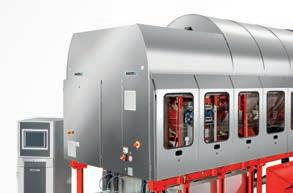
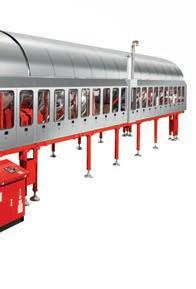
BENTON HARBOR, Mich., and FALL RIVER, Mass. — Whirlpool Corp. has entered into an agreement to acquire American Dryer Corp. (ADC), a privately held manufacturer of coin-operated, on-premise, industrial and specialty laundry equipment.

Whirlpool brand Maytag Commercial Laundry and ADC each made the announcement via separate press releases.
Terms of the planned transaction will not be disclosed, the companies say.
Whirlpool says the planned acquisition gives its commercial laundry business a platform to reach new markets and channels.
“Acquiring ADC strengthens our commitment to the commercial laundry industry and is aligned to our objectives of driving growth in adjacent businesses,” says Jeff M. Fettig, Whirlpool Corp. chairman and CEO.

“The acquisition of ADC by Whirlpool is an important milestone in the evolution of innovative global commercial laundry equipment,” says Chris FitzGerald, CEO of ADC.
Whirlpool expects to close on the ADC purchase in early July, with integration activities happening throughout the balance of 2015. ALN
The right vehicle can boost laundry operation effectiveness
 BY MATT POE, EDITOR
CHICAGO — Bryan Henke, marketing manager for Freightliner Custom Chassis, knows that his company’s delivery vehicles aren’t the least expensive on the market.
Unfortunately, he sees many fleet buyers in the commercial laundry industry focusing on cost and purchasing cheaper vehicles.
“It’s always been attractive to try to do your job in a panel van, cargo van, or in a cutaway box truck,” Henke says. “They appear attractive initially to someone in the laundry industry. The buyer just sees that price and goes, ‘I need to move this stuff to here, and I don’t really understand the efficiencies of a walk-in van, I’m just looking for the lowest price.’”
That’s why panel vans and box trucks are so prevalent in the laundry industry. The problem with that, according to Henke, is that the cheap-
er vehicles aren’t made to handle laundry loads. “They’re very inexpensive, but light-duty,” says Henke. “We’re not the cheapest on the market because our vehicles have been designed
for those functions.”
When a laundry purchases vehicles that have
OSHA reality check: Is your facility safe?

 BY MATT POE, EDITOR
ATLANTA — Edwin Foulke Jr. knows a thing or two about safety.
He is a partner in Fisher & Phillips LLP, and he co-chairs the firm’s Workplace Safety and Catastrophe Management Practice Group.
Before that, Foulke was assistant secretary of labor for occupational safety and health and was the head of the Occupational Safety & Health Administration (OSHA) under President George W. Bush.
During an educational session here at Clean 2015, Foulke revealed that the laundry industry isn’t as safe as it needs to be.

“I do a lot of inspections with my clients, and a lot of times I get

called in after they get the citations,” says Foulke. “You’re in an industry that’s targeted. Like it or not, OSHA is targeting you and your facility.”
Too many laundry operators, in Foulke’s view, think they have great safety because they have safety manuals. They have 4- to 5-inch thick manuals filled with procedures that employees and management are supposed to follow—and those manuals sit on the shelf.
“Don’t try to pretend that you have great safety, because like it or not, you don’t have great safety,” Foulke says. “You may not have had lost time due to injury this year, but it may be just by luck.”
He adds that, statistically, a facil-
ity can have no injuries, fatalities or illnesses in a year or two years but the company still can have an inadequate safety program.
“It is critical to have a great
safety program if you want to maximize your profits and be as competitive as you can possibly be,” says Foulke.
WHAT IS “SAFE”?
Foulke says that if safety is practiced just when somebody is watching or when the boss is there, if it’s just a “sometimes” thing, laundry facilities are never going to have “great” safety.
Without a full-time focus on safety, according to Foulke, companies won’t maximize profits and are not going to be as competitive as possible.
Even worse, there is the poten-
Panel of Experts
A contingency plan can help maintain service during severe weather.
JUNE 2015
Late News
www.americanlaundrynews.com Volume 41, Number 6
The Newspaper of Record for Laundry & Linen Management
INSIDE [14] [18] See FLEET on Page 8
See OSHA on Page 10 [6] Clean 2015 Attracts
Companies exhibited many products in Atlanta. Load capacity, fuel efficiency, driver aids among selling points
Attention
Hourly Employees Strategies to help find, and keep, hourly laundry employees who excel at, and have satisfaction in, what they do.
Retaining
(Image licensed by Ingram Publishing)
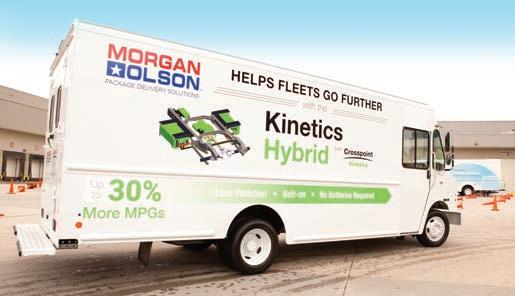
Hybrid vehicles like this Morgan Olson model can help laundries be more fuel-efficient and reduce emissions, experts say. (Photo: Crosspoint Kinetics)
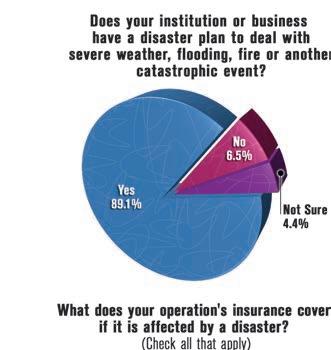
CHICAGO — The majority of laundry/linen managers who took May’s American Laundry News Your Views survey believe that their business is prepared to deal with a catastrophic event, such as a fire or hurricane: 89.1% have a disaster plan in place, while 6.5% say they don’t have a plan. Roughly 4.4% aren’t sure if they have a plan in place or not.
Responses show that laundry/linen facilities can experience a variety of disasters:
• “We had a power outage during an ice storm. We used our contingency contract to process the laundry in another plant.”
• “Complete evacuation of prison population due to wildfire. Laundry at the guest facility was able to complete wash and dry operations on schedule.”
• “Hurricane. We had no power for 72 hours, and the roads were blocked due to trees down.”
• “A car crashed into our building. We had some damage but limited downtime.”
It’s no surprise that most managers believe their staff is prepared to respond in the event of a disaster. About 45.7% of respondents said that their staff is “extremely prepared,” and 43.7% believe they are “somewhat prepared.”
“We had an equipment fire where staff efficiently and effectively minimized damage to property, successfully evacuated employees and enacted the contingency plan,” a respondent said.
Roughly 4% said that staff is “neither prepared nor unprepared.” The remaining 6.5% responded that personnel are “somewhat unprepared.” No one polled described his/her staff as being “extremely unprepared.”
The staff preparedness illustrated by the survey results is borne out in the number of institutions and businesses that conduct drills related to severe weather or fire: almost 83% of respondents said that their organization conducts drills.
“The insurance company even asked for a copy of the video for training purposes after our event because of the way staff immediately went into damage-control mode while remaining safe,” said one respondent.
Still, 17.4% of managers answered that they do not conduct drills.
A large share of respondents reported that their business carries some sort of insurance as part of a disaster plan. Close to half (47.8%) said their insurance covers full replacement and/or repair of buildings and equipment.
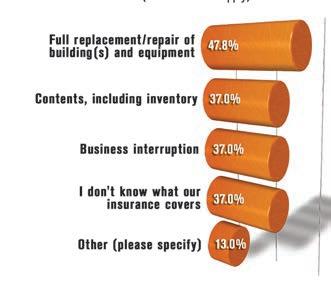
Equal shares of 37% said their insurance covers both contents (including inventory) and business interruption.
“The loss we had was 100% supported by insurance to include cleanup, business interruption, additional business expense and brand-new equipment replacement,” a respondent said.
Of the 13% who responded “other” in terms of insurance coverage, options listed included being self-insured, renting, and being a government facility.
And 37% of respondents reported they don’t know what their operation’s insurance covers in event of a disaster.
While the Your Views survey presents a snapshot of readers’ viewpoints at a particular moment, it should not be considered scientific; due to rounding, percentages may not add up to 100%.
Subscribers to American Laundry News e-mails are invited to take the industry survey anonymously online each month. All managers and administrators of institutional/OPL, cooperative, commercial and industrial laundries are encouraged to participate, as a greater number of responses will

Publisher
Charles Thompson
Phone: 312-361-1680
E-Mail: cthompson@ ATMags.com
Editorial Director
Bruce Beggs
Phone: 312-361-1683
E-Mail: bbeggs@ ATMags.com
Editor
Matt Poe
Phone: 231-740-2842
E-Mail: mpoe@ ATMags.com
Digital Media Director
Nathan Frerichs
Phone: 312-361-1681
E-Mail: nfrerichs@ ATMags.com
Advisory Board
Jim Buik
• Richard Griffin
Greg Gurtler • Phil Hart
Michael Kirsch, CLLM
Janice Larson • Tom Marks
Atisha Mireles • Gerard O’Neill Richard Warren
Production Manager
Roger Napiwocki
National Sales Director

Donald Feinstein
Phone: 312-361-1682
E-Mail: dfeinstein@ ATMags.com
Main Phone: 312-361-1700 Fax: 312-361-1685
Subscriptions
630-739-0900 x100 www.americanlaundrynews.com
American Laundry News (ISSN 1091-9201) is published monthly. Subscription prices, payment in advance: U.S. 1 year $39.00; 2 years $73.00. Foreign, 1 year $89.00; 2 years $166.00.
Single copies: U.S. $7.00; Foreign $14.00. Published by American Trade Magazines LLC, 566 West Lake Street, Suite 420, Chicago, IL 60661. Periodicals postage paid at Chicago, IL, and at additional mailing offices.
POSTMASTER, Send changes of address and form 3579 to American Laundry News, Subscription Dept., 440 Quadrangle Drive, Suite E, Bolingbrook, IL 60440. Volume 41, number 6. Editorial, executive and advertising offices are at 566 West Lake Street, Suite 420, Chicago, IL 60661. Charles Thompson, President and Publisher. American Laundry News is distributed selectively to qualified laundry and linen management and distributors in the United States.

© Copyright AMERICAN TRADE MAGAZINES LLC, 2015. Printed in U.S.A. No part of this publication may be transmitted or reproduced in any form, electronic or mechanical, without written permission from the publisher or his representative. American Laundry News does not endorse, recommend or guarantee any article, product, service or information found within. Opinions expressed are those of the writers and do not necessarily reflect the views of American Laundry News or its staff. While precautions have been taken to ensure the accuracy of the magazine’s contents at time of publication, neither the editors, publishers nor its agents can accept responsibility for damages or injury which may arise therefrom.
Due to an editorial department error, the listing for Moonsoft International was inadvertently omitted from the May Buyer’s Guide issue.
American Laundry News regrets the error and apologizes for any inconvenience it may have caused.
2 JUNE 2015 | AMERICAN LAUNDRY NEWS www.AmericanLaundryNews.com
Association for Linen Management
MEMBERSHIPS
help
better
operator opinions
INSIDE: June 2015 • Vol. 41 | No. 6 [4] Determine Where Things Stand Columnist at Large Eric Frederick continues his series by looking at why visiting customers is the best first step [6] Retention Plan Can Help Keep Hourly Employees A basic retention plan covers five areas: recruiting, hiring, training, employee treatment and tracking the numbers [12] Inner Workings of Las Vegas Linen Company In an OPL 101 column, Joseph Dramise takes you inside his Apex Linen to see the challenges it faces [14] Panel of Experts: What’s Your Backup Plan? “What sort of contingency plan should the average laundry have in place to maintain service?” [18] Clean Show Report: Atlanta Intros We sample some of the exhibiting companies and the products they showed off in Atlanta [26] Trade Ticker [27] Calendar [28] Classified Advertising [29] Source Directory
Most managers say laundries prepared for catastrophic events Moonsoft International 3808 N. Sullivan Rd.,
12,
Q Spokane,
T 509-892-9363,
W www.moonsoftcorp.com C Dan Simmons dan@moonsoftcorp.com Microfiber Products Mops/Mitts
to
define
and identify industry trends. ALN
Survey:
Bldg.
Ste.
WA 99216
ext. 103, or 877-892-9360
Correction
“ Only Milnor“
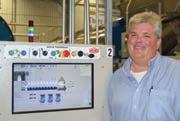
could offer the combined technology ”and support we expect.”
– Rick Hamlin, Crown Health Care, Columbia, MS
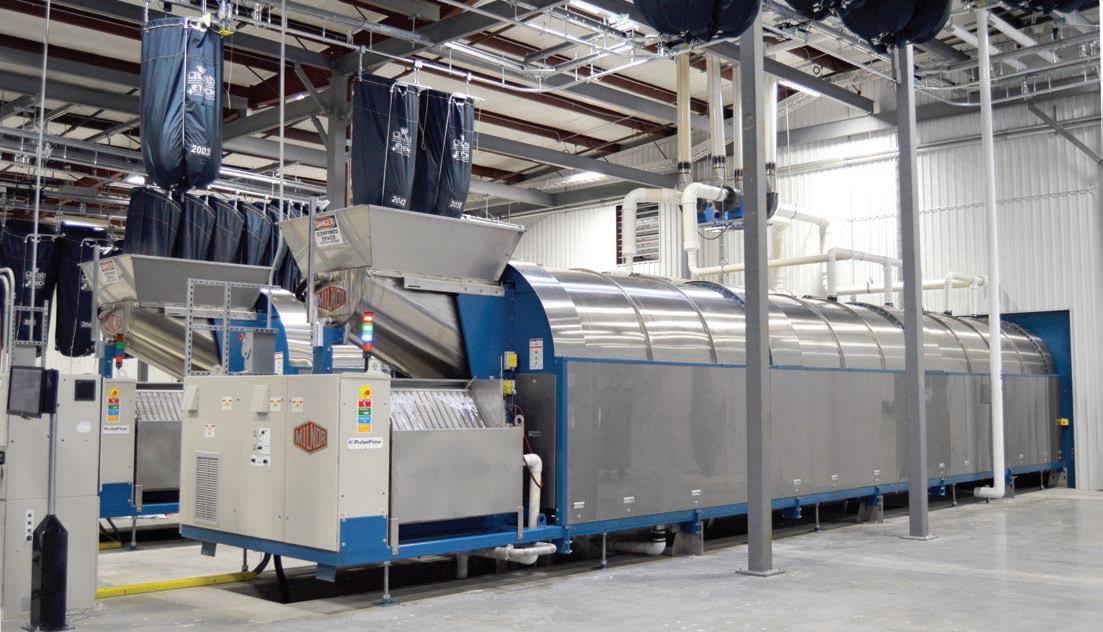
When Crown Health Care Laundry Services opened its fourth plant, it enlisted the help of longtime partner Pellerin Laundry Machinery Sales Company to design, equip, and install the most efficient laundry possible. The end result was a state-of-the-art laundry featuring two 76039 PulseFlow® Technology 10-module tunnels that creates a continuous workflow by integrating an E-Tech rail system to transport linen through the plant. Their Milnor 6464 dryer pod with GreenFlex™ Dryer Mode accepts new loads immediately after the discharge of the clean goods. This facility is designed to process over 25,000,000 lbs. of healthcare linen per year in a single shift operation, while consuming less than 0.5 gal/lb. Hamlin notes that “the project was seamless thanks to the combined efforts of Pellerin and Milnor.”
To find out how Milnor’s PulseFlow® Technology and GreenFlex™ Energy Mode can reduce your laundry’s utility consumption, contact an authorized Milnor distributor or call 504-712-7656.
To see how Crown Columbia’s state-of-the-art laundry works, scan this code.

www.milnor.com / pellerinmilnor
Atlanta return earns callback
Sometimes during the first day of a Clean Show, it’s not unusual to hear grumbles from certain exhibitors if the event doesn’t seem to be going well.
In Atlanta, there was no grumbling to be heard. But I saw plenty of smiles.
For at least the first two full days, the staffs working many of the booths barely had time to grab lunch or even take a bathroom break. It was that busy.
Companies told tales of running out of brochures, specialordering more, then running out of them
From The Director’s Chair BRUCE BEGGS
Sure, by the afternoon of the third day, things had slowed measurably, and the final day was
predictably sparsely attended.
No matter, because the show’s performance had already guaranteed a return to Atlanta in 2021.
Matt Poe, our new editor, crisscrossed the show floor during the four-day event in April, grabbing a few minutes in this aisle before shuffling off to meet someone else in that one.
From his Hall B travels comes our Clean Show Report, which opens on page 18. If you listen closely, you just may be able to hear the echoes of sales made, leads collected, and a service industry hard at work. ALN
Poe named editor of American Laundry News
CHICAGO — American Trade Magazines LLC, the parent company of American Laundry News, has hired Matt Poe as the magazine’s new editor, effective immediately. He reports to Editorial Director Bruce Beggs.
Poe assumes day-to-day responsibility for the magazine, replacing Theresa Boehl, who departed earlier this year to take a position outside the laundry/ linen industry. Beggs, who served as American Laundry News editor in 1999-2011, oversees the publication while also directing sister publications American Coin-Op and American Drycleaner and other editorial projects for American Trade Magazines.
Poe, who was born and raised in Muskegon, Mich., holds a bachelor of arts degree in English, professional and creative writing from Grand Valley State University, Allendale, Mich.
Poe’s interest in writing began when, while working as a janitor at the Muskegon Chronicle newspaper, he befriended the editorial
staff. He started work as a sports clerk after his junior year of college. After a year, he moved to sports and news stringer.
In 1999, he started work at Group Tour Magazine and grew to love working in trade publishing, he says, advancing to managing editor. Over the years, he has worked on group travel, travel agent, education and pageant publications.
Most recently, Poe was editor in chief for Serendipity Media LLC, where he planned, assigned, edited and wrote for eight publications and related websites and social media over a 10-year period. Since 2013, Poe has owned and operated IHN Editorial Consulting.
“I immediately got a sense of Matt’s determination when he threw himself into the fray that is the Clean Show,” says Beggs. “In Atlanta, Matt embraced the opportunity to immerse himself in the laundry/linen industry. He was unafraid to ask questions of vendors or launderers as he
began to familiarize himself with the issues and challenges that you all face.”
“Over the years, American Laundry News has established itself as the go-to information resource for those who manage institutional and industrial laundries, as well as textile rental companies,” says Charlie Thompson, president and publisher of American Trade Magazines LLC. “I’m confident that Matt will continue to build upon its strong legacy.”
“I can say that trade industry publications are my passion, and now I count the laundry and linen industry in that,” Poe says. “Clean ’15 was an eye-opening experience and fueled my desire to work with the people in the industry. I’m looking forward to learning more and more and doing my part to inform the industry through American Laundry News.”
Poe and his wife of 24 years, Amy, have a 10-year-old daughter, Megan. He counts creative writing, fishing, reading, hiking and biking among his hobbies.
Poe can be reached at mpoe@ atmags.com, 231-740-2842. ALN

CHAPTER 4:
Take time to determine where things stand
This month’s column will contain the best advice I can ever give a manager who has just been promoted or who has taken over a new laundry.
It is exciting to take over the leadership of a laundry. We all want to dive straight in, roll up our sleeves and get to work trying to improve the operation. My advice: Resist that temptation and spend the first two to four weeks visiting your customers. Why would anyone spend their first precious weeks visiting customers when they can see so much that could be improved in the operation? The answer is simple: It helps us prioritize what needs to be done.
I can remember when I took over the Aurora Central Laundry in Milwaukee. I was hired to help fix customer unrest; my boss told me they were unhappy because there were linen shortages on the weekends. I had my secretary set up meetings with numerous nurse managers at the hospitals we serviced, then spent almost the entire first month attending meetings at those facilities. By the end of that month, I had a comprehensive plan to improve the laundry.
The list of action items was:
• Fix the retail cart-exchange system so deliveries were made seven days per week instead of only six.
• Correct the issue of the IV gowns, patient robes and pajama pants all being constructed of the same material, as there were frequent problems with personnel grabbing the wrong item off a cart.
• Improve the quality of the bath towels and washcloths that were in use.
• Improve the purchasing system to avoid product shortages.
• Add reusable incontinent pads.
• Develop a “linen products standard” committee to review the existing linen inventory and make changes as needed.
These items represented what was important to my customers. They represented the biggest payback for my efforts. I wanted to make a strong, positive impression. By listening and then working to solve the problems that frustrated customers the most, it bought me a great deal of goodwill.
In a meeting one day, the nurse manager said I would be a real miracle worker if I could show her a system to prevent the loss of socks in the home laundry. I lifted my pants and showed her my dress socks that had snaps on the tops; each time I took off my socks, I simply had to snap them together.
That would never work in her home, she said, because she could never get her husband to snap them together. I then told her my backup plan was to simply purchase socks in one style and one color. That way, it did not matter if one got “side-tracked” under the bed or left in a closet. In the end, everything worked out.
•
•
•
•
•
•
If I had addressed the more pressing concerns of changing washroom chemical vendors, correcting the padding system on the ironers, and improving the soil-sort classifications, things might have turned out differently. All three of those items needed to be corrected, but none of them would have solved the customer complaints for which I was hired to fix in the first place.
By spending time with the end-users on the front end, I was able to direct my efforts where they did the most good. ALN
Eric Frederick is director of laundry services for Carilion Laundry Service, Roanoke, Va., and a past president and manager of the year of the Association for Linen Management. You can reach him by e-mail at efrederick@carilion.com.



4 JUNE 2015 | AMERICAN LAUNDRY NEWS www.AmericanLaundryNews.com
COLUMNIST AT LARGE Eric L. Frederick, RLLD
Poe
“BY LISTENING AND THEN WORKING TO SOLVE THE PROBLEMS THAT FRUSTRATED CUSTOMERS THE MOST, IT BOUGHT ME A GREAT DEAL OF GOODWILL.”
Top Stories Appearing on AmericanLaundryNews.com for the 30 Days Ending May 15 (WE) = WEB EXCLUSIVE NEWS • Positive Atlanta Return to Bring Clean Back There in 2021 (WE) • Alsco Acquires Admiral Linen and Uniform Rental Services • Continental Welcomes New On-Premise Laundry Distributors • Westex by Milliken, Cone Denim Partner to Provide... • Meese Orbitron Dunne Co. Changes Name to MODRoto COLUMNISTS/FEATURES • Good Customer Service Starts at the Top • Growth Potential: Tapping into Promising Laundry Markets
Calif. Super 8 Delivers on Promise with Pay-Per-Use Laundry System
Eric Frederick: Chapter 3: Monitor Your Utility Expenses! OUR SISTER
AmericanDrycleaner.com:
WEBSITES From
With Spring Comes Bloom of Caramelized Sugar
Positive Atlanta Return to Bring Clean Back There in 2021 (WE)
AmericanCoinOp.com:
From
Managing Rising Water Cost, Wage Increases
Laundry Receives ‘Visionary Award’
WASH
... (WE)







TM info @americandawn.com | 800 821 2221 | americandawn.com Fold-free processing with minimal labor Cuts re-wash levels to nearly zero Superior quality and feel Lasts 2-3 times longer Dries in half the time FINALLY, A WAY TO ACCESS THIS MARKET WITHOUT CAPITAL INVESTMENT
Retention plan can help keep hourly employees
 BY MATT POE, EDITOR
ALEXANDRIA, Va. — It’s not easy to find, hire and keep good employees.
During a recent Textile Rental Services Association (TRSA) webinar, Kelly Saliba, SPHR, vice president of human resources for Economy Linen & Towel Service in Zanesville, Ohio, shared that turnover is one of the biggest challenges in business today.
“It seems like just a few short years ago, we placed an ad in the local newspaper, and we received about five times the applicants that we needed to fill the positions that were open. People stayed a long time and pretty much focused their efforts on processing the linen in our plants,” says Saliba. “That’s no longer the situation.”
She notes that some turnover is desirable, especially if an employee has stopped working but remains on the payroll. However, turnover is always costly in terms of training and productivity.
Raising wages may seem like a step in the right direction, but Saliba says that throwing money at the problem doesn’t always help. Likewise, traditional recruiting methods aren’t cutting it.
She says that businesses in the laundry and linen industry need to have a retention plan in place. A basic retention plan covers five areas: recruiting, hiring, training, employee treatment and tracking the numbers.
RECRUIT RIGHT






To recruit right, Saliba says a laundry must take steps to become an “employer of choice.” The company needs to take steps to make itself attractive to good employees.
“If you recruit right, you have more candidates to choose from, which allow you to make better hiring decisions, which should allow your training to be much smoother because you’re training the right people and not just whoever comes in the door,” she says.
Portray the image of a business that treats people fairly and provides a good work environment. Saliba says the company also needs to be involved in the community and let the public know about those good deeds.
“If you have a reputation for treating people fairly and respectfully, then that makes your recruiting efforts easier, which makes your hiring easier, which makes your training easier, which makes it easier in that supervision and management have more time to treat them properly,” she says.
When it comes to recruitment methods, a combination of traditional and nontraditional methods should be used, according to Saliba.
Traditional methods include
help wanted ads, job fairs and employment (“temp”) agencies.


On the nontraditional side, Saliba encourages businesses to try recruiting in places they wouldn’t normally consider, like placing a hiring ad in a newspaper section other than “Help Wanted.” Try radio ads, or intermission ads at the movie theater. Other ideas include posting flyers in supermarkets, holding an open house, or even simply wandering around the neighborhood.
Follow-up is important, says Saliba. Launderers need to have a constant source of potential employees from whom to choose. Constant contact and interaction with recruiting sources can help keep the well full.
“The nature of our business is relationships, and the recruiting sources that we rely on, whether private or public agencies or other groups, there are other companies and organizations vying for talent,” says Steve Kulchin, vice president of human resources for Mission Linen Supply in Santa Barbara, Calif. “The more that you can differentiate yourself as an employer of choice, they are going to be more inclined to recruit for you.”
The hiring process for new employees, according to Saliba, begins when management hires front-line supervisors. Unless those supervisors know how to manage and communicate effectively, the chances a new hire won’t last increases.
TRAIN RIGHT
Communication is vital to employee retention, according to Saliba. Launderers must be able to communicate how the job is to be done and how valuable the employees are to the business.
“You should train them on not only the production standards but the safety and quality standards as well,” Saliba says. “If you train your employees correctly, then they will feel like they’ve been given a fair chance to be part of your team.”
trained, have them sign off on it.
It’s during the training period that companies have the chance to manage non-performing employees, according to Saliba. If a launderer doesn’t manage and further train those employees, the workers could potentially be rewarded for lackluster performance through raises and even union protection.
If a laundry does have an employee who doesn’t meet expectations, she says, it only means that the job isn’t a good fit for the employee’s skills.
TREAT THEM RIGHT
Again, Saliba points to the value of communication when it comes to treating employees right. The most important relationship an employee has is the one with his or her immediate supervisor.
TRACK YOUR NUMBERS


Saliba suggests tracking the numbers on every aspect of the recruitment process, including the effectiveness of your recruitment sources and the average length of stay for employees.
“If the turnover that you are having is averaging, say, at the end of the second week or third week, then that’s where you have to put more of your efforts into,” she says. “If you can find out the point where you’re losing the people you’re losing, you can focus your efforts there.”
Track training, and don’t just assume it’s being done. Use exit interview forms to track voluntary quits. However, while exit interviews are important, a “stay” interview can be just as important.
Information is important when it comes to hiring. Both the company and the potential employee need to have as much knowledge as possible in order to make a good choice.
Companies must check references listed on applications to assess whether or not the potential hire has some of the basic skills necessary for the job.

However, potential employees also need to know what they’re getting into. Saliba suggests providing potential hires with a short history of the company, what it does, the hours and expectations, and a facility tour.
“A picture is worth a thousand words, and to hire somebody in our industry without at least letting them have a view of what the work looks like, if you don’t do that, it puts you behind the 8-ball on hiring,” she says.



Cathy Warrin, vice president of human resources for Nixon Uniform Service and Medical Wear, New Castle, Del., adds, “Consider having someone assigned as a buddy. Put together a group of associates to be a buddy and give them some simple tips for what it’s like to be a buddy. This will help to reinforce the culture and company values to the new hire.”
Again, for Saliba, in order to train employees right, the business must have supervisors who can train effectively. That includes ongoing training.
“Just because someone maybe meets production standards doesn’t necessarily mean they are effective in communicating, explaining and teaching others how to do the same,” she says.
Training must be a deliberate process. There should be training checklists for all positions, Saliba says, and once an employee is
Supervisors need to connect with employees and treat them with dignity and respect, she says. Communicate often and openly, and recognize employees for their efforts to make them feel like an important part of the business.
Treating employees right also means firing them right, says Saliba. If an employee is not performing, apply discipline fairly and equally.
Firing right also help retains good employees, she explains. Companies will lose good people if the “bad fits” remain employed.
“If someone is fired right, and they should have been fired, the odds are that the people around them knew it should have happened a while ago,” says Mission Linen’s Kulchin.
“You have to fire when necessary,” adds Saliba. “When you realize that you’ve made a bad hiring decision, the best thing you can do is reverse that decision.”
“A stay interview is interviewing and getting feedback from the people who decide to stay,” says Saliba. “What makes them decide to stay? What do they think as a company you can do to get people to stay within your organization? They’re the experts, and they usually have really good insight.”
Track turnover by department and by reason, and make supervisors accountable for their turnover numbers.
But all of this tracking will mean nothing if the launderer doesn’t act on what the numbers are telling it.



It takes time, effort and money to train, develop, motivate, and listen to employees. But, Saliba asks, which is more expensive—the cost of doing what it takes to retain employees, or the cost of losing and replacing them?
“You can manage turnover with a retention plan, or you can let it manage you.”
6 JUNE 2015 | AMERICAN LAUNDRY NEWS www.AmericanLaundryNews.com
HIRE RIGHT
ALN
YOU TRAIN YOUR EMPLOYEES CORRECTLY, THEN THEY WILL FEEL LIKE THEY’VE BEEN GIVEN A FAIR CHANCE TO BE PART OF YOUR TEAM.”
“IF
—KELLY SALIBA, SPHR ECONOMY LINEN & TOWEL SERVICE, ZANESVILLE, OHIO
(Image licensed by Ingram Publishing)























BETTER. SPEND
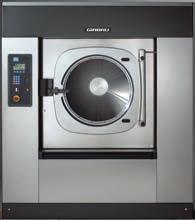
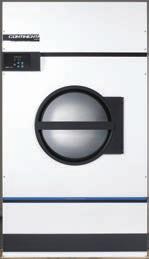
Your clients expect the highest quality – and they should. Girbau Industrial washers and dryers provide a high-caliber clean while extending linen life. Add an Ironer to your equipment mix and linen is perfectly ironed straight from the washer. It feels soft and looks crisp, which is what your clients expect. Thanks to Girbau Industrial laundry equipment, you’ll heighten laundry productivity using less labor, while decreasing utility costs. Even better?
will thank you! Contact Girbau Industrial for a FREE ESTIMATE to see how you can deliver more productivity to your laundry while increasing product quality! (800) 256-1073 • www.girbauindustrial.com DRY
LOOK
LESS.
Clients
been designed for the loads, the miles, and the needs of the driver, efficiencies go up and costs come down.
PAYLOAD
Kenn Klein, marketing manager for Morgan Olson, knows how important it is to address the load capacity of laundry delivery vehicles.
From a gross vehicle weight ratings (GVWR) standpoint, linens are not light. To maximize payload, linen industry vans and trucks need heavier, higher payload chassis. That capacity can have a major impact on a laundry’s delivery capabilities. Klein says that Morgan Olson looks for ways for launderers to put more product on a truck. The effect is that the facility can reach farther, to more customers, before having to return to the plant.
“Whatever size route they have or whatever the laundry company desires, we can do,” adds Brian Caudell, OEM account manager for Freightliner. “We can build chassis that will accommodate a 14-foot body up to a 30-foot body.”
In terms of GVWR, Caudell says his company’s chassis can accommodate from 14,990 pounds all the way up to 30,000 pounds.
In terms of making vehicles that handle heavier loads, Caudell says that providing a reliable, durable product is how vehicles can make the uniform and linen industry more efficient.
“Outside of the uniform and linen industry, one of our largest customers, UPS, buys our custom chassis,” he says. “They bought over 4,000 of them last year, and they expect to get 20 to 25 years out of those vehicles.”
Caudell notes that his company is making chassis for trucks and many times are competing with automotive-type delivery vehicles. The use that laundries get out of those vehicles, he asserts, is not as long, is not as durable, is not as reliable as a custom chassis.
“All the peripheral cost doesn’t get taken into consideration,” Caudell says. “We’re looking at the fleet itself as how often do you want to maintain the vehicle, if you want to extend your maintenance intervals, we’ve got those options available on our chassis.”
FUEL EFFICIENCY
John McNichols, product director for Crosspoint Kinetics, a company that makes commercial vehicle products that capture, conserve and reuse energy, sees laundry delivery vehicles becoming more effective and efficient, especially in an urban environment.
“For a laundry in an urban setting, the stop-start environment is hard on fuel efficiency,” he says.
Crosspoint Kinetics is in a partnership with Morgan Olson, working on hybrid systems for laundry vehicles. McNichols says the system saves energy as the vehicle slows down and then uses the stored energy for acceleration.
“This energy usage has the effect of reducing emissions,” he says.
McNichols says that more and more metropolitan areas are paying attention to low-emission standards. Many enforce idle-free zones so that textile delivery trucks engines cannot continue to run while the driver is moving linens in and out of the vehicle.
McNichols notes that the federal government’s next-level emission standards will go into effect this month.
Caudell says that Freightliner is also working on fuel-efficient options.
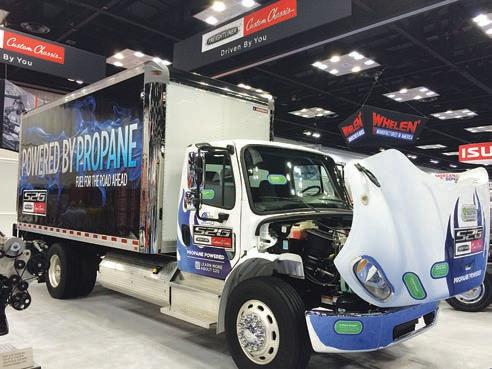
“What we build right now for the walk-in vans, we build a diesel. We are the only diesel engine manufacturer of chassis in the industry,” Caudell says. “We’ve also built that in a gasoline version as well that can be used as gasoline or can be converted to propane if they wanted to use that fuel source, which is very affordable. It cuts the
cost down for the uniform and linen industry. We’ve built other types of vehicles over the years, hybrid electric vehicles, hydraulic hybrid.”
MANEUVERABILITY
Another important facet of laundry/linen transportation is maneuverability, according to Klein.
“These vehicles often need to make some sharp turns and get into tight spots,” he says. “The maneuverability of our walk-in vans is very good. They have a 50to 55-degree turning radius, and a good turning radius is key for downtown maneuverability.”
Caudell notes that Freightliner’s wheel cut on the front is also 55 degrees, which, as Klein noted, makes vehicles more efficient because they can get in tighter areas to turn the vehicle.
“It enhances their backing time,” says Caudell. “Most delivery accidents occur when backing, and we eliminate that with the uniform and linen vehicles.”
DRIVER AIDS
From a driver standpoint, delivering textiles can be tedious. It can be hard on the body if they don’t have the right equipment. There’s also the issue of safety.
“That’s always been key to the uniform and linen industry, safety, and ergonomics, being easy on the driver,” says Henke. “Easy on the driver’s day-to-day activity, and easy on the body.”
In normal cutaway-type vehicles, Henke says, the driver can’t just get out of the seat and go back to the cargo area. He/she has to get out of the vehicle—typically on the street—and come walking around the back and open up the back to get inside.
Driver fatigue can be caused by poor ergonomics. Some laundry delivery vehicles offer lift gates. Again, this keeps the driver out of the traffic, and it makes the driver more efficient by not having to hop out.
“A lot of worker’s comp claims in a cab-forward vehicle come because the driver has to exit the vehicle, go around to the back, and they have a 45-inch ground floor height they have to hop in and out of,” Caudell says. “That’s where drivers are getting injured.”
Klein notes that laundries can add options, including cameras, to aid the driver in maneuvering the vehicle safely. Rear-view and side-view cameras can assist when the driver is backing into a delivery zone or parking area.
A safe-driver console is a key component for the effectiveness of the cameras and technology used in one of Morgan Olson’s walk-in vans. The console features a touch screen with a color monitor to assist in usage of the cameras.
“Most of the safety items are installed by the body company, such as the back-up cameras and the mirrors,” says Caudell.
However, he notes that his company has some safety and maintenance items on the chassis, like battery disconnect.
Route-planning technology is available that can assist drivers in using the most effective, fuel-efficient route. However, McNichols points out that the tools available for drivers go well beyond simple route planning. Some systems provide onboard feedback and coaching for drivers.
“Many insurance companies offer discounts to companies that use technology to coach drivers,” McNichols adds.
MAKING THE DECISION
Fleet buyers for laundry services need to be aware of the options and costs related to purchasing delivery vehicles, and suppliers of these vehicles are there to help.
“We interface with the [laundry] facility itself to determine its needs,” says Klein. “Each laundry uses certain size bins and bags. We want to create a system to assure the transfer from the laundry to the truck and to the customer is as efficient as it can be.”
Caudell says he’ll visit a uniform and linen industry customer and help determine what the route requires and how much weight it wants to carry.
“If they have a large manufacturing company that they’re going to be carrying a lot of linens out of there, that will be a lot of weight, we can give them the GVWR that they’re looking for,” Caudell says. ALN
8 JUNE 2015 | AMERICAN LAUNDRY NEWS www.AmericanLaundryNews.com Fleet Continued from Page 1
ALN_Tab_1-4_H.indd 1 4/27/15 4:39 PM
The Freightliner Chassis S2G comes with the option to use propane power. (Photo: Freightliner Custom Chassis/Ferguson Advertising)
Notice Anything?





















InkGo® Is Now Odor Free!





InkGo has been reformulated to remove its odor… and to improve its performance.


















InkGo is still the environmentally friendly,* safe way to remove ink stains from all types of fabric. It’s still great at removing autoclave tape and adhesives. And since it’s odor-free, InkGo is more pleasant to work with.









Does odor really matter? As more drycleaners position themselves as good environmental stewards, keeping chemical odors in the plant to a minimum can help them differentiate from their competition. And odor-free is a real plus if you’re working on ink for an extended period of time.



Now that’s worth noticing!


*InkGo is Biodegradable and is California Prop-65 and California VOC Compliant.














Become a STAIN WIZARD at ALWilson.com

To learn more, visit ALWilson.com or call 800-526-1188 A. L. WILSON CHEMICAL CO.


tial that employees can be injured or killed.
“I’ve heard companies say, ‘If we can get our incident ratio down to 0.4, we’re going to have a great year. Our goal is 0.4. That means it’s OK if somebody gets injured,’” Foulke says. “You need to have a goal of zero year in and year out.”
The top 20 cited OSHA violations in laundries, according to Foulke, are:
• Hazard communication
• Wiring methods, components, equipment for general use

• Control of hazardous energy (lockout/tagout)
• Electrical—general requirements

• Personal protective equipment—general requirements
• Bloodborne pathogens



• Maintenance, safeguards and operational features for exit routes

• Sanitation—general environment
• Respiratory protection
• Machine and machine guarding—general requirements

• Walking/working surfaces— general requirements


• Guarding floor and wall openings and holes
• Permit-required confined spaces




• Medical services and first aid
• Portable fire extinguishers
• Laundry machinery and operations
OSHA) include the Bureau of Alcohol, Tobacco, Firearms and Explosives; Department of Transportation (DOT) agencies; the Chemical Safety Board: and the U.S. Justice Department.
Foulke also says that not being in compliance with safety regulations could leave a laundry facility open to potential liabilities. In terms of civil liability, they could be open to workers’ compensation claims (including safety penalties), personal injury claims and property damage, and insurance coverage disputes.
Then there are the possible ways a facility could be subject to criminal liability. OSHA could make a criminal referral if it is believed a fatality occurred due to a willful violation. Charges could be made for reckless endangerment or fraud.
We all make mistakes, Foulke acknowledges. And when mistakes are made, management has to make sure that the work site is such that the employees don’t get killed or seriously injured. The responsibility for this falls on the owner, manager and supervisor.
“That’s the basis of safety,” he says. “Identifying workplace hazards and then eliminating or lowering them so that employees won’t get killed or seriously injured.”
TOP 20 CITATIONS
To get an idea of what OSHA is checking at a laundry facility when the agency conducts inspections, Foulke lists the 20 standards most frequently cited in the laundry services industry.
Why go over the top 20 citations? Foulke finds that many employers don’t adequately understand the regulations pertinent to the industry and their facilities. This list provides a road map to the things OSHA keeps finding and citing in laundries—to help a laundry facility create a road map to safety.
• Powered industrial trucks
• Mechanical power—transmission apparatus
• Forms—record keeping
• Design and construction requirements for exit routes



“I find quite often in the laundry industry that lockout/tagout procedures aren’t very clear,” says Foulke. “Or they didn’t have a procedure for a particular machine, or they haven’t done the periodic inspection.”
Foulke adds that many companies in the United States don’t have simple safety requirements such as first aid stations, or the employees aren’t trained to use them. OSHA has figured this out.
THE REALITY CHECK
There are some big risks to laundries that don’t have a road map for safety—and haven’t made sure its facility and equipment meet OHSA regulations.
For starters, Foulke points out, several federal and local agencies could become involved in an investigation into the facility, depending on the violations. Agencies that could become involved (besides
Criminal liabilities are at the extreme end of possible consequences for not making safety a top priority. However, the monetary penalties for not being in compliance with OSHA regulations can be catastrophic to a laundry business.
As an example, Foulke points out that, by the beginning of 2015, laundries were supposed to have all of their employees trained on the new OSHA standards that were set in fall 2014. That may not seem like a big deal, but Foulke says if OSHA inspects a plant and finds no proof that employees have been trained, they can be fined $7,000—per employee.
“I have two small clients, both less than 50 employees. One received $1.9 million in penalties.




The other received $2.1 million in penalties,” says Foulke. “You need to understand that just because you’re a small employer doesn’t
mean you’re not going to get hit. If you get hit by a $2.1 million penalty, is it going to affect your ability to stay competitive and stay in business? Yes.”
SAFETY IS NO. 1
While there can be financial and even criminal consequences for being in violation of OSHA regulations, of not truly making safety No. 1, Foulke points out the real reason to create a safety road map: Without a plan in place, employees could be killed or injured.
The goal for each plant, Foulke says, should be to have zero incidents a year.
He points out several steps to ensure that a laundry facility makes safety its top priority. The first is to make safety top of mind, mentioning it in the company’s mission, vision and value statements. Facilities also need to have defined goals and a way to measure and demonstrate the effectiveness of


the safety programs.
Another way to place safety first, Foulke says, is to have employees be engaged with the plan, and make sure they know, understand and can implement safety procedures. Along those lines, it’s a good idea to let employees have “stop work” authority if a safety issue is discovered.
“You have to get employees engaged, because once you do that, it dramatically increases the effectiveness of the safety program,” Foulke says. “It reduces incidents and illnesses and the associated causes.”
But Foulke’s recommendations don’t stop at employees—management has to demonstrate its commitment to safety, too. Every level of management must care about and take an interest in safety, along with consistently speaking with employees about it, he says. And both management and employees should have a regularly scheduled safety-performance assessment.
“If you don’t have a road map, you don’t know how you’re going to get to zero incidents and know that the things you are actually doing are working,” Foulke says. ”You can’t just tell employees that ‘You’re going to get to zero, now go do it.’ You have to tell them how they’re going to get there, why it’s important.” ALN
10 JUNE 2015 | AMERICAN LAUNDRY NEWS www.AmericanLaundryNews.com
(Image licensed by Ingram Publishing)
OSHA Continued from Page 1 ECWS Plug-N-Play Selling Customer Service FIRST! • OEM Distributor for RBI Water Heaters • 24/7 Technical Support • Laundry Consulting • Serving Commercial Laundries and Prisons across North America and the Caribbean We offer: • Hot Water Heaters 199-6 mil btu • ECWS Hot Water Storage Tanks • Water Softeners • Pre-plumb packages Call us for a quote using our SizeNet sizing program Phone: 1-866-513-7170 www.eastcoastwatersystems.com Fax: 843-225-6258 0415aln_ECWS ad.indd 1 4/13/15 2:33 PM “YOU HAVE TO GET EMPLOYEES ENGAGED, BECAUSE ONCE YOU DO THAT, IT DRAMATICALLY INCREASES THE EFFECTIVENESS OF THE SAFETY PROGRAM.” —EDWIN FOULKE JR., FORMER OSHA HEAD (Image licensed by Ingram Publishing)
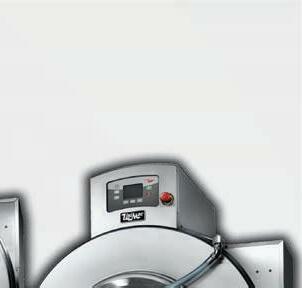
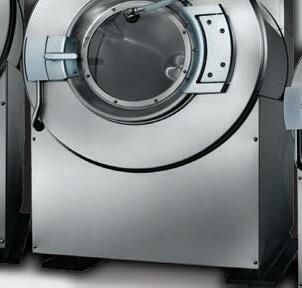


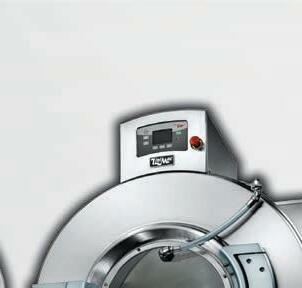
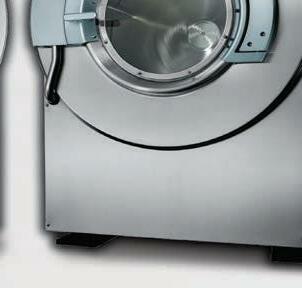


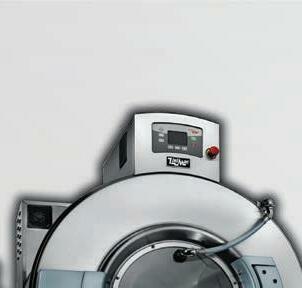
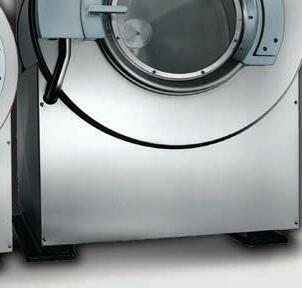










Proudly based in Ripon, Wisconsin, USA, UniMac is dedicated to research, development and testing to provide equipment that delivers industrial strength and long-lasting quality. Our products undergo a 5-Stage Product Development Process and are pushed beyond their limits in our state-of-the-art test lab to ensure they exceed the toughest demands of the commercial environment and meet our customers’ highest standards. Our redesigned UniMac ® UW85-160 lb hardmount washer-extractors now offer the same revolutionary design as our UW45-65 hardmount washer-extractors. That means the entire UW line of industrial-strength heavyweights features cutting-edge technologies that no competitor can match. UNILINC™ CONTROLS AND 300 G-FORCE OPTIMIZE PRODUCTIVITY DESIGNED WITH THE STRONGEST FRAME WE’VE EVER BUILT BEARINGS CAN HANDLE 200% MORE FORCE SO YOUR MACHINE LASTS LONGER MOTOR OFFERS 67% MORE HORSEPOWER FOR AROUND-THE-CLOCK USE OPTISPRAY™ RINSING TECHNOLOGY DELIVERS SUPERIOR RINSING WITH LESS WATER INCREASED CAPACITIES FEATURE A SLEEK, MODERN NEW DESIGN Pay only $85/month for any UniMac washer model up to a UW65, and get a 4.99% FINANCE RATE on new UniMac washers and dryers.* Visit UNIMAC.COM/LOWRATE to learn more. BIGGER, FASTER, STRONGER. WELCOME TO THE CLUB, UW85-160 MACHINES. *Limited-time offer. $85/month for the first 12 months. Other terms and conditions may apply. Contact your authorized UniMac distributor for details.
Inner workings of a Las Vegas linen company
BY JOS E PH W. DRAMIS E
LAS VEGAS — For the more than 41 million tourists who visit Sin City each year, what happens in Vegas stays in Vegas. This includes the dirty laundry—no pun intended—that’s left behind after visitors have returned home.
Every day, the inevitable piles of used linens, bedding, tablecloths and towels from one wave of visitors must be turned around quickly for the next. As the owner of a local linen service company, I’m reminded daily of the streamlined process necessary to ensure fresh linens greet every guest at many of the city’s renowned hotels. The unique logistics we face to ensure we meet our clients’ expectations, and thus their customers’ expectations, for a steady supply of quality linens may impress you as well.
24/7 DEDICATED SERVICE
At the simplest level, a linen service company’s job is to transport soiled and clean linens from point A to point B, and vice versa. Look a little closer, and it’s easy to see there is much more involved in the process.
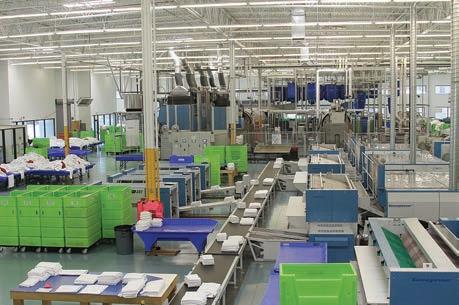
There are more than 150,500 hotel/motel rooms in Las Vegas, according to the city’s Convention and Visitors Authority. With 10 major hotels on our client list, Apex Linen’s throughput easily tops 180,000 pounds per day. Besides the obvious sheets, pillowcases and bath towels that are exchanged daily, ancillary items such as curtains, throw pillows and blankets must undergo regular cleanings. If the hotel has a fitness center, spa, restaurant and/ or bar, other specialty items must also be laundered. That’s where a hotel’s on-premises laundry (OPL), or a commercial laundry service like Apex comes in.
To ensure linen inventory in each client’s hotel is fulfilled at all times, 10 of our 300 total
employees are designated to work off-site at a specified hotel. These full-time specialists, called linen inventory personnel, are the facility’s eyes and ears to a hotel’s linen needs. He or she continuously takes stock of inventory to make sure par levels are fulfilled and that customers are satisfied with quality.
This employee also facilitates the daily pickup of soiled laundry and drop-off of clean laundry, which occurs at designated hours 365 days a year. At any given time, 14 trucks cruise the Strip and surrounding areas to collect or distribute laundry carts containing clients’ linens and ancillary items.
STREAMLINED PROCESS
Back at the facility, a diverse equipment mix gives us the capabilities to process whatever the item may be, eliminating the need for a hotel to outsource linens to several vendors at a time. With such a high daily throughput, time is of the essence. As such, keeping machines in working order is critical to keep clean linens flowing. Our machines run as many as 20 hours per day, which is why we only install those known for reliability, combined with technologies that make our operation more productive and cost-effective.
For example, 15 washer-extractors and 12 tumble dryers are designated to process clients’ ancillary items. This can include floor mats, uniforms, decorative pillows, spa or beverage service items. These items comprise about 15% of our daily volume, yet require special attention. But the process does not have to be burdensome.
With machines that allow us to
customize cycles based on typical loads, processing is as easy as selecting the appropriate program and pressing the start button. Another key capability of our machines is that their control systems record a history of what cycles were used (and therefore what materials were processed), cycle times, and time between cycles.
These performance indicators are important because they allow managers to ensure quality is maintained and that workflow is as productive as possible. We can also use this information to make improvements to the operation, and to ensure water and utility usage is at its lowest—a business practice that is becoming ever-important, especially on the West Coast.
To process the other 85% of items that come through our doors, which includes bedding and towels, we rely heavily on radio-frequency identification (RFID) technology. This tool allows us to take inventory of full laundry carts in seconds, before they are washed in continuous batch washers.
An electronic reader scans a cart, and can determine exactly how many pieces of linen and what materials a cart contains. We can then track this batch of linens throughout its time at the facility—a process that includes unloading, washing, drying, folding, sorting and loading.
With such a high volume of linens going in and out of our doors each day, this technology keeps us accountable to our clients, because it ensures the correct items are being laundered and returned to the proper hotel in a timely fashion. It also eliminates the need to manually track linens, saving time and money.
LUXURY EXPERIENCE
The nature of the laundry business makes downtime lethal—if one machine goes out, the whole operation is thrown off-kilter. That’s why only the most dependable and innovative equipment is installed, minimizing the chance of maintenance issues.
Additionally, equipment and systems that allow us to reuse water and heat demonstrate that we’re doing our part to conserve resources. When an expansion to our facility is completed later this year, we’ll be able to process an additional 100,000 pounds per day. Some may see that as an opportunity for more to go wrong, but by extending the processes in place that currently make us successful, I see it as a chance to provide even more luxury hotels with quality linens and punctual service.
The next time you visit a Las Vegas hotel, or a hotel anywhere for that matter, take a look around. The linens, textiles and fabrics that fill the building are carefully selected to give guests a premium experience. As laundry experts, it is our job to maintain this quality and, therefore, guests’ satisfaction throughout their stay.
Guests may see a napkin, pillowcase or towel simply for what they are, but we in the laundry industry know and appreciate the journey these items take from a guest’s room, to a hotel’s OPL or commercial laundry service, and back again, 365 days a year.
Amidst Las Vegas’ 24-hour gaming, endless entertainment and world-class dining, the significance of that journey can remain our little secret. ALN
Joseph W. Dramise is the president and owner of AJ Industries West, a distributor of UniMac® onpremises laundry equipment, as well as president and owner of Apex Linen Service. For more information on UniMac, visit www.unimac.com/OPL101 or call 1-800-587-5458. Dramise

ALN_Tab_1-4_H.indd 1 4/28/15 3:25 PM 12 JUNE 2015 | AMERICAN LAUNDRY NEWS www.AmericanLaundryNews.com OPL 101
An overview of Apex Linen taken in 2014. The linen service company’s throughput easily tops 180,000 pounds per day in serving a client list that includes 10 major Las Vegas hotels. (Photo: Apex Linen)
THE LESS ATTENTION OUR MACHINES NEED, THE MORE THEY SEEM TO GET.




For over half a century, dependable Maytag Commercial Laundry machines have stood up to daily use that would have lesser washers and dryers crying for a repairman. They’re also energy-efficient—increasing throughput, while lowering utility and labor costs. To learn more about our products and their comprehensive warranties, visit maytagcommerciallaundry.com

















®/™ ©2015 Maytag. All rights reserved.
PANEL OF EXPERTS
Should the power go out, are you prepared?
or redundancy of capital and mechanical room equipment.
Ihave the good fortune to assist Kannegiesser-USA’s customer base throughout the Southeastern area of the United States … from the high plains of Texas and Oklahoma to the coastline of Florida. Included within this region are states that fall into the area commonly known as “Tornado Alley,” and others that are included in the Atlantic and Gulf Coast regions where hurricanes are an ongoing threat.
(In fact, as I am writing this article at my home here in northcentral Texas, the local news is reporting flash flooding, strong wind and hail damage, and multiple reports of tornadoes touching down today throughout this region of the state.)

As a result of these elevated levels of inclement and/or severe weather throughout the region, many laundry operators have discussed with me the comprehensive and documented contingency plans they have in place.
These plans involve multiple layers of external backup for utilities services, and linen supplies redundancy, that have included:
• Electrical power generators
• Large propane storage tanks
• Extra water storage capacity
• “Safety” par of new linen
• Storage of a one-day supply of processed, clean linen, and
• A prearranged reciprocal agreement with another laundry(s) to help ensure uninterrupted linen service to their customer base during a catastrophic weather event.
However, many times these conversations also involve their internal operational contingency plans as well. Topics here have included:
• Their ongoing maintenance procedures of existing equipment
• Ascertaining possible bottlenecks of the linen flow throughout the facility, and

• Identifying potential needs for added production capacity



In the case that a facility does experience stoppages in production, a truly complete contingency plan includes an improved assurance of sustainable and reliable machine operation, thoughtful plant-design and production-flow efficiencies, and adequate or even reserve production capacity.
These internal aspects of the plan help to ensure their ability to adequately respond to a disruptive event and to quickly get production and deliveries back to their normal schedule in a minimal number of days following said event.
about how bad weather left some businesses without power for days, I’m concerned that our laundry may not be protected from interruption should something similar happen here. What sort of contingency plan should the average laundry have in place to maintain service?”

Ithink the first question a business needs to ask itself is, “How will our customers be impacted by our inability to operate?” Will it be a minor inconvenience to them, as in, “I can’t get my dry cleaning back”? Or, in the case of a healthcare laundry, will your continued operation be critically important to people’s health?
If your customers won’t be needing goods during a disaster, ceasing operations is not a problem. In the latter case, the next question is, “How can we cope with this problem?”

If the problem is strictly a local issue, can arrangements be made with a nearby laundry to help with production? Or, if the problem is of regional size, can enough backup power be economically procured to keep your laundry going?
And, remember, you need water, power and, probably, gas to operate. Some of these resources will be difficult to back up. Identify key production requirements. Perhaps limited operation is an option. In the worst case, use of disposables may be the rational choice. If so, a stock of such items must be available prior to being needed. Note that if transportation isn’t available, this stock should be at the
customers’ locations. With our company located in an active hurricane area, we are acutely aware of the problems of prolonged utility interruptions. Occasionally, we’ve been without power for days at a time. And, our water supply has been interrupted for long periods, too. Sadly, this happens enough that we have plans and options.
Obviously, the time to plan for such situations is before they occur. Generators large enough to actually run a large plant are fabulously expensive. They can be rented, but unless a rental agreement is signed prior to a large outage, they may not be available. If rental is your best option, work with an electrician to install suitable connections ahead of time as part of your contingency plan. Think about water. If you use a well, great! Otherwise, discuss your supply with the utility company. Based on their level of preparation, you may be able to depend on them. If not, other solutions may have to be considered.
Finally, don’t forget about nuisance outages. Say a bad driver knocks down the power pole down the street. Or, the utility company has a problem for 10 minutes or so. Do you have a

UPS—uninterruptible power supply—system on your computers? Is all your equipment properly designed to be restarted gracefully and controllably? Talk to your IT people and electrician.
To summarize, the key things to consider are the operating needs, the possible level of interruption and the practicality of any solutions. But the most important thing is to think, plan and prepare while everything is still operating normally.

we could properly back up each. With downtime a potential situation for all laundries, it is important that you have a backup plan in place. Whether winter snow, spring thunderstorms, tornadoes or hurricanes, things happen. There should be agreements in place with other laundries that would serve to process all or a portion of your volume under certain conditions.
You should have agreements that are local in nature, and agreements that are considered to be “long distance” so that your backup would not be suffering from the same problem of no gas, electricity or water.
Memories of Y2K came flooding back to me with this question. As you may recall, that was the time of the anticipated computer glitch that did not account for the computer’s internal calendar going past 1999. During that time, there was concern as to whether water, natural gas and electricity supplies would continue to flow. We literally had to make assessment as to whether
Many laundries have backup generators or connection points for portable generators in the event the issue is electrical. This is excellent, in that such an issue can be taken care of almost instantaneously, or within the matter of a few hours.
Downtime situations also illuminate the need to have enough pars of linen in the system, a backup linen inventory, and linen vendor relationships that would allow you to receive linen in emergencies to cover your needs. Pre-laundered linens can also be a great asset in this situation. In many cases, it can be
14 JUNE 2015 | AMERICAN LAUNDRY NEWS www.AmericanLaundryNews.com
“Reading
(Photo: © iStockphoto/Grassetto)
Textiles
Cecil B. Lee Standard Textile, Cincinnati, Ohio
Equipment Manufacturing
Kelly Outram Kannegiesser USA, Grand Prairie, Texas
Chemicals Supply David Barbe U.N.X. Inc., Greenville, N.C.
delivered directly to the facility that needs it.
Conservation plans play an important role in these scenarios, too. Your relationship with customers should be such that you would inform them of your inability to service at normal levels and ask that they go into “conservation mode” by way of making only necessary bed changes, keeping the general use of linen to a minimum, and potentially rescheduling highlinen-use procedures (such as in the case of a medical facility).
Most emergencies are temporary, and most laundries have the ability to run longer hours and more days to recover from a short-term shutdown.
Having managed plants that ran two shifts per day over five days, I am acutely aware that there are 21 shifts available over a seven-day period. If I have two tunnel washers and were to lose one to downtime, for example, I am losing five shifts over a fiveday period. Since I normally use 10 shifts each week, I have the ability to make up the lost time by spreading it over the 11 additional 11 shifts.
I will never forget the time when I had to do this for almost three weeks. I said my prayers every night! Luckily, most situations are not this drastic, but having this plan worked.
operate at full capacity. What a luxury! What then will the facilities do if they have no such power station to keep them operational?
My experience includes only an isolated outage of less than 24 hours, so I asked a Cintas maintenance engineer, Bruce Krause, about his experience during a regional, multi-day power outage.


He explained that, during this outage, the company had a plan in place that worked effectively. As his facility had no mini power station, it had multiple vendors in place that could supply it with a power generator (and a mini gas storage tank) to
restore the power.
Now that power was restored to the plant, getting water to it was the next hurdle to overcome. This problem was solved, Krause says, by having water trucks with a capacity of 70,000 gallons rolling through every hour to supply the plant. This went on around the clock until the power was restored. Thus, during the 2003 power outage that affected the Midwest and Northeast, the plant operated and customers were serviced. In turn, they were able to service their community.
Along with getting equipment operational again, such con-
tingency plans need to include outlines for personnel scheduling, which will be affected.
Operations with truck routes may find it difficult for their fleets to get gas during such a crisis, but it’s possible with good planning.
During a crisis, we do not want to forget the issue of safety. Equipment may contain linens that could combust without a cool-down cycle.
Remember, anything is possible during a power outage. The only way of getting through it without any added stress is planning well before the emergency happens.
Recently, while doing some spring cleaning, I had a bunch of stuff to take to our local recycle center. When I hopped into my son’s Jeep that had been sitting idle on the street the last few
Acontingency plan is probably the most important yet leastused procedure in your facility. But, how effective is it?
In the laundry/linen world, such a plan is highly important to our customers. To them, a linen supply has become just as important as water in the desert.
It is never enough, so imagine how terrible it would be if we could not supply them during a power outage? How could hospitals respond to patients? How would employers continue their service to the community that is experiencing the same emergency? It is up to the laundry industry to keep things going so that people can be serviced.
We all have dealt with some type of contingency plan in our facility. Usually, it’s when major equipment breaks down, requiring us to truck our linens to another facility so they can be laundered. This is a little inconvenient, but it works, and customers are satisfied.
When the power goes out locally, some facilities have “mini” power stations that operate on diesel fuel and supply enough power to the plant to
www.AmericanLaundryNews.com AMERICAN LAUNDRY NEWS | J UNE 2015 15
YOUR CHALLENGE PACESETTER CLM leads the way in dryer technology and provides an upgraded replacement for your old Challenge Pacesetter Our Model 165 fits the Challenge Pacesetter footprint perfectly and gives you technology that no one else o ers, including a fully integrated production management system. • Upgraded heat system with improved efficiency and lower emissions • Micro-Command III PLC upgrade with LAN and Blue Tooth communications • PLC now prepared for flow process management systems • 2-stage variable speed basket drive with 3-port load door. • Soft start to reduce component wear, lower utility use. • Heavy-gauge basket, includes removable steel basket panels • Long-lasting ceramic coating available on removable basket panels. • Configurable exhaust location • Configurable control/burner location Call CLM to replace your Challenge Pacesetter dryers, or for information on our broad range of industrial dryers. 323-232-2417 Model 165 shown with Tumble Green® configuration See Us at Booth 2560 at The Clean Show 211 Erie Street, Pomona, CA 91768 | T: (323) 232-2417 | www.clmco.com ALN_Jr Page.indd 1 11/18/14 2:36 PM 0515aln_CLM.indd 1 4/13/15 4:46 PM See EXPERTS on Page 16 Uniforms/ Workwear Manufacturing Scott Delin Fashion Seal Healthcare Seminole, Fla. Textiles/ Uniform Rental Angelo Crespo Cintas Corp., Westland, Mich.
UPGRADE
months, the car would not start. I immediately needed to resort to my contingency or backup plan: a spare car battery we had in our garage. Upon replacing the battery, I loaded the Jeep and off I went.
On my drive to the recycling center, I started to think about how lucky I was that I had a contingency plan to fall back on. If not, I would have had to make other arrangements that would have cost me time and money.
In today’s environment, laundry operators must have contingency plans in place so that a disaster, boiler breakdown or equipment failure will not interrupt or otherwise affect our service to our customers.
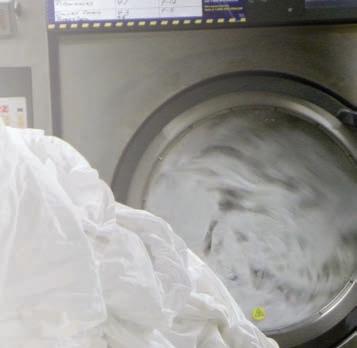
In some cases where laundry operators have multiple plants, the plants could be strategically placed so that in the event one plant might go down, production could be shifted to another so as not to miss a beat with production and delivery.

Sure, there will be some minor headaches in logistically moving product from one location to the










next, but the bottom line here is that the laundry is still processed and delivered to the end-user on a timely basis like nothing has happened.
Contingency plans within laundries might also entail having a spare boiler on-site that can be instantly fired up in the event the main boiler should go down. Spare generators also play a role should there be an electrical interruption.
Another contingency could be having extra or “emergency” linen set aside in a warehouse, either on-site or locally, that is accessible to fulfill immediate needs until the problem at hand is resolved.





When it comes to logistics and delivery, some operators may have spare trucks or vans in their fleet that could be used in the event of a breakdown. Or, they may have a relationship with a local vehiclerental service that can be counted upon should a truck be required for emergency service.
If we look around, successful businesses have contingency plans that they can fall back on in the event of a disaster or immediate business interruption. Having these plans readily available gives operators peace of mind knowing that should anything catastrophic happen, there is a backup to ensure timely deliveries.
Thank God I had that extra
battery to use for the Jeep. It allowed me to complete my task at hand on time and get out to the golf course, where, unfortunately, I have no contingency plan whatsoever.
must take into consideration the strength of the company, its backup plans, and how the company is stocked with parts and technicians as well as trained personnel in all facets of business.
up for the problem.
Laundry Plus, Bradenton, Fla.
It would seem to make no difference what segment of the industry you are involved in. Backup plans and the ability to provide continuity of service should be a staple of business rather than an afterthought.
Especially in our segment (outsourced hospitality laundry), it is a daily thought and an integral portion of our business model. We always need to realize that our customers carry a minimum basic inventory (par level) and that they are trusting us to provide a daily professional service and will not accept anything less.
I believe that it starts with the choices we have when spec’ing out new machinery and never actually stops. When reviewing new-machinery acquisitions, one
As a laundry grows in size as well as daily volume, there gets to be a point where your friends and competitors might not have the ability to “bail you out” in case of an emergency. You need to control your own destiny! If your laundry is designed to run 24 hours a day, and you are at full capacity, it leaves no time for challenges, whether they are from machinery breakdowns or other sources over which you have no control.
The contingency plan should include, if possible, other laundries to take your volume if you go down. That gets to be a real challenge on many levels. If that is not feasible, backup of parts as well as backup of complete machines is a must.
We run our plant on a 50HP air compressor but also maintain 30HP and 20HP machines in case the main goes down. The same thing should pertain to every piece of machinery in your plant.
We designed our new plant to run 12 to 18 hours per day. If one of the larger machines, like a tunnel, goes down, we have the ability to run additional hours to make
If you have the space as well as the budget, an auxiliary generator is a most valuable piece of machinery. It does not need to be big enough to run your complete plant. Due to the fact that you can usually stagger your machinery as well as personnel, you can usually get by with something smaller.
Quite often, you might be able to approach your various utilities and arrange for a program where in exchange for providing them (their emergency response team) with laundry services, they will get you back up and running prior to everybody else.
I am not sure that it is possible to provide for every possible occurrence but with prudent planning, we can all minimize the negative effects of a service interruption. ALN
FOR MORE STORIES
FEATURING OUR PANEL OF EXPERTS, VISIT WWW. AMERICANLAUNDRYNEWS. COM!

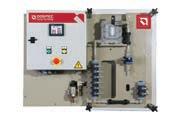
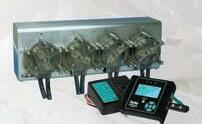
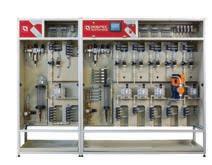
Hydro Systems & Dositec Sistemas Announce Strategic Partnership
Hydro Systems Company is pleased to announce a partnership with Dositec Sistemas of Spain. The partnership is a strategic partnership to grow Hydro Systems’ commercial laundry systems segment in North America and other select regions around the globe.
Hydro Systems is now the exclusive supplier of Dositec Sistemas chemical management systems in North America. Hydro Systems has long been the innovation leader in the commercial OPL laundry segment globally. Dositec Sistemas is a premier manufacturer of OPL and commercial laundry systems.


The Dositec Sistemas partnership provides Hydro Systems with a complete line of commercial laundry equipment for both new and existing customers. The partnership broadens the existing product line to include systems for multiple washer extractors and tunnel washers of varying sizes.
16 JUNE 2015 | AMERICAN LAUNDRY NEWS www.AmericanLaundryNews.com
We now offer a full range to meet all of your laundry dispensing needs • Unparalleled customer service & support • Industry-leading technology hydrosystemsco.com
OPL & Industrial Chemical Management Systems
Call: 800-543-7184 ALN_Tab_half.indd 1 5/5/15 10:16 AM
Continued
Experts
from Page 15
Commercial Laundry
Rick Rone
TRSA’s Executive Management Institute celebrates 50 years in August
ALEXANDRIA, Va. — A halfcentury of dedication to developing textile services company leaders will be continued and celebrated Aug. 9-13 when the Textile Rental Services Association (TRSA) convenes this year’s Executive Management Institute (EMI), 50 years to the month after the annual event began in Washington.
EMI returns to the main campus of the University of Maryland (College Park Marriott Hotel & Conference Center, D.C. sub-
urbs), where it’s been held most often. The program provides participants with practical insight specific to the industry and its operations that can be immediately applied to motivate and inspire co-workers and employees to streamline production, improve productivity and increase profitability, TRSA says.
Edward Zelasko, GM of Morgan Services’ Chicago laundry, attended EMI for the first time last year and describes the program as “a
good mix of videos, lectures, group projects, case studies. I am better prepared to analyze the responses of my direct reports, understand them and help them solve problems.”
The program’s founders were textile services association executive Bernard Ehrlich and industry owner-operator Gerald Stempler, both based in the Washington area. The first weeklong session (begun Aug. 27, 1965) covered human relations, delegation of
work, decision-making, motivation/morale and leadership quality. These topics are still covered at EMI, to which attendees return for a week in three subsequent years to complete the program.
Prior EMI attendees are welcome to join the celebration by attending the 50th Anniversary Celebration on Aug. 11, at Lucky Strike in downtown Washington.
EMI attracts attendees from all segments of the textile services industry, from independent com-




panies’ owners, executives and next-generation leaders to chains’ headquarters (including HR/ administration) and plant- and depot-based management (GMs, branch and department heads). TRSA member associates attend as well.
Individuals who have achieved TRSA’s Certified Professional Laundry Manager (CPLM) certification receive 31 credit hours toward recertification by attending EMI.
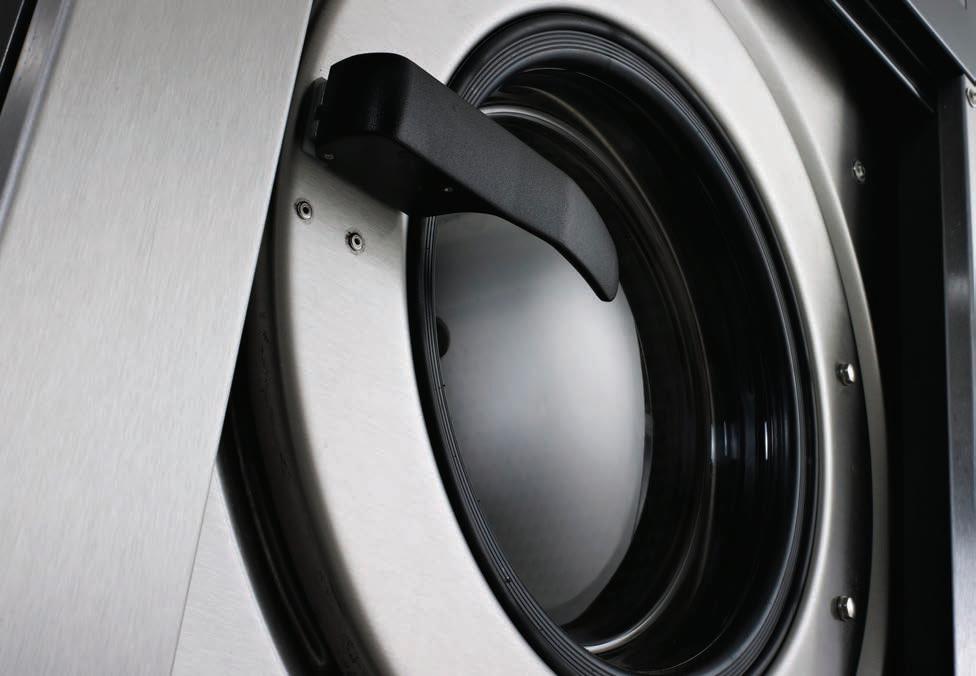 ALN
ALN
80% of booth space already reserved for Texcare Asia 2015: organizers
HONG KONG — The 2015 edition of Texcare Asia, the region’s largest international trade fair for the textile care industry, will be the largest ever, according to show organizers.
The show will have 17,000 square meters (approximately 183,000 square feet) of exhibit space at the Shanghai New International Expo Centre in China. The biennial show—scheduled to take place Nov. 25-27—is organized by Messe Frankfurt Shanghai Co. Ltd. and the China Light Industry
Machinery Association.
By April, more than 80% of booth space had been reserved by exhibitors hailing from 13 countries and regions, including Belgium, China, Germany, Hong Kong, Italy, Japan, Malaysia, the Netherlands, Taiwan and the United States.
A number of returning brands enlarged their booth space to display their state-of-the-art machinery, equipment and management systems, Texcare organizers report.
“I am delighted to see the





enthusiasm of our loyal partners and newcomers at the 2015 show,” says Richard Li, general manager of Messe Frankfurt (Shanghai) Co. Ltd.
“To date, we have confirmed the Germany Area, which is formed by some of the top German brands, for instance Büfa, Seitz, Maxi Press and Kreussler. The international popularity of this show proves that Texcare Asia has distinguished itself as a premier platform for prominent brands to tap into the expanding markets in China and
other Asian regions.
“I look forward to seeing all innovations and new-generation solutions covering the complete supply chain at the fair.”
Included in the list of innovations and solutions mentioned by Li are Alliance and Jiangsu Lion, whose showcase will occupy 500 square meters of space. Other enterprises participating at the 2015 event include Chuandao, Shenzhen Castic-SMP, Shanghai Weishi, Jensen Group, Shanghai Sailstar, Herbert Kannegiesser,
Girbau S.A., Jinan Oasis, Shanghai Shenguang, Shanghai Baiqiang, United Electric, Sankosha, Y.A.C., Lapauw, Vega and Zhonghang.
In addition to the exhibitions, the Texcare Forum Asia will again be jointly organized by Messe Frankfurt and CINET, the International Committee of Textile Care based in the Netherlands. The forum will feature industry experts and vendor representatives to highlight the latest advancements in the industry and share market insights. ALN
For laundry done on time and on budget, there’s no better choice than IPSO ® Forty years of European ingenuity, rugged industrial construction, flexible installation, superior G-Force extraction, and our intuitive Maestro controls all add up to help you achieve your ultimate goal — maximum throughput at a minimized cost. Learn more about how IPSO helps you get the job done at IPSO.com/industrial.
Work with your IPSO finance expert to learn about customized financial solutions for your business.
IPSO USA 1.800.USA.IPSO
INDUSTRIAL PERFORMANCE. Optimal Efficiency. Maximized Throughput. ALN_Tab_half.indd 1 3/13/15 3:31 PM www.AmericanLaundryNews.com AMERICAN LAUNDRY NEWS | JUNE 2015 17
CLEAN SHOW REPORT
Atlanta intros attract lots of attention
BY MATT POE, EDITOR
ATLANTA — Clean 2015 attracted a lot of attention.
It had been 28 years since the city had hosted the Clean Show, and the turnout couldn’t have been better for the April 16-19 event at the Georgia World Congress Center.
Registration numbers show that attendance increased more than 9% from Clean 2013 in New Orleans, and there was about a 6% increase in exhibit space from the 2011 show in Las Vegas.
“Clean 2015 exceeded our expectations with huge crowds, dynamic exhibits and the kind of education and networking that may only be found at the Clean Show,” says Brian Wallace, chair of Clean 2015 and president/ CEO of the Coin Laundry Association, one of Clean’s five sponsoring associations. “Judging by the positive energy in the hall, the garment and textile care industry is thriving in 2015.”
The World Educational Congress for Laundering and Drycleaning, the show’s formal
name, attracted a range of visitors from the textile services industry with products that piqued the interest of operators in retail, commercial, coin/card, institutional and industrial laundering, and dry cleaning.
Clean 2015 drew 11,264 people. The list included people from all 50 U.S. states and 88 foreign countries. They were able to roam a whopping 195,400 net square feet of booth space that featured 437 exhibiting companies.
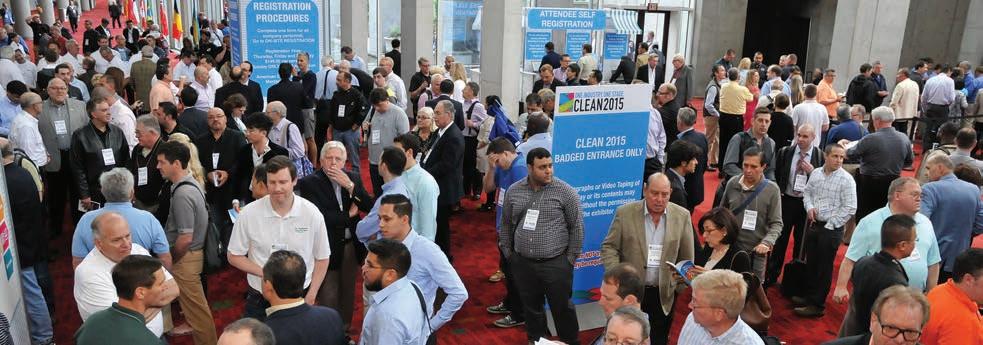
Sponsors are the Association for Linen Management (ALM), the CLA, the Drycleaning and Laundry Institute (DLI), the Textile Care Allied Trades Association (TCATA) and the Textile Rental Services Association of America (TRSA).
Many companies took advantage of the biennial Clean Show to introduce brand-new products, roll out newly improved products or exhibit well-established product lines. Still others exhibited at the show for the first time.
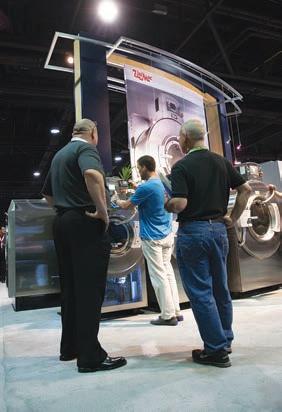
American Laundry News presents this report describing just some of the companies and the products they exhibited in Atlanta.
Considering the show drew 437 exhibitors, this article isn’t intended to be all encompassing. Readers are encouraged to follow American Laundry News and www.americanlaundrynews.com during the coming months for product announcements from these companies and others.
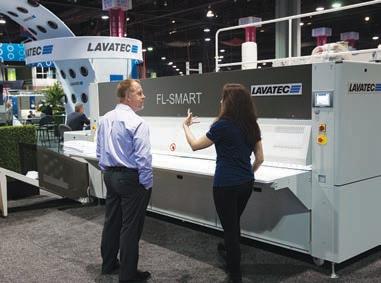
Beck’s Classic
Beck’s Classic featured the Laundry Friendly Arid Touch Underpad. Part of the Arid Series, this reusable underpad is designed for moisture management.
It’s said to have improved absorbency and wicking by using a special low-profile soaker quilted to a face fabric, all created to bolster faster wicking without the bull’s-eye moisture spot. Plus, the laminated Vintex Vinyl barrier helps prevent shrinkage and bunching, Beck’s says.
All these improvements give
Arid Touch a new look and the ability to be washed either by chlorine- or peroxide-based systems.
Jensen Group
The Jensen Group booth was set up for business. Examples of the company’s equipment lined the outside of the display area, while representatives conversed with attendees at tables and chairs in the center.
The company unveiled new sorting and handling equipment, including the COMBI-Sort, and a new bay maintenance system. Also of note was new optical character recognition so that operators could identify laundry bags by number.
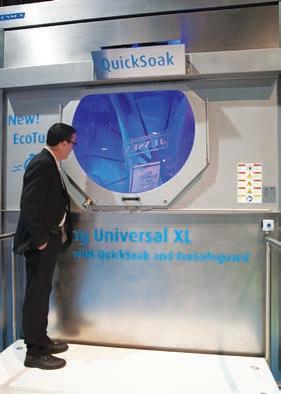
But the star of the show, Jensen says, was its new feeder system. According to representatives, a new conveyor and driving cogs make it one of the fastest in the industry.
LifeThreads
LifeThreads debuted a new line of antimicrobial linens that the company says inhibit the growth of bacteria on their surface.
The linen product family includes bedsheets and pillowcases made from a new spun-poly fabric called Grace that is reportedly more durable than cotton or filament polyester. The fabric maintains the look and feel of cotton and other blends, LifeThreads says, but will not shrink or lint, and is inherently stain-resistant.
Foltex

Foltex, a manufacturer of finishing equipment, garnered attention at its first Clean Show. Founder Arnaud Henrard showed visitors why his company is driven by two words: simple and reliable.
The company’s products are made to be easy to fix (customers can find parts in their area), if

18 JUNE 2015 | AMERICAN LAUNDRY NEWS www.AmericanLaundryNews.com
Attendees were eager to get to the trade show floor on Clean 2015’s opening morning.
(Photos: Nathan Frerichs; Bruce Beggs; Riddle & Associates)
An attendee gets an upclose look at Jensen’s Senking Universal XL tunnel washer with QuickSoak and EcoSafeguard.
A Lavatec Laundry Technology representative discusses the features of the company’s Lavafold FL-SMART folder.
UniMac displayed its washer-extractors and its new TotalVue System.
there is a problem, Henrard says. The inner workings of each product are accessible by one panel.
“We want the owner to be able to fix his own machine,” he says.
The company’s line of equipment includes drywork folders (its staple product), stand-alone smallpiece stackers, flatwork feeders, flatwork folders and a bathrobe folder. Unveiled at Clean was its Simple Fold Stacker.
Lavatec Laundry Technology
Lavatec Laundry Technology showed off an array of products, including the 35KG tunnel washer along with a press, a washerextractor, dryers, feeders, folders and ironers.
“We wanted visitors to take a really close look ‘under the hood,’ so to speak,” says President Mark Thrasher. “Only then can they see how Lavatec machines are thoughtfully, thoroughly designed for simplicity, to ‘engineer out’ extraneous parts, maintenance time/costs and operator steps found in other makes.”
A collaborative manufacturing agreement reached in October 2014 enables Girbau to offer Lavatec industrial laundry products, and vice versa, through Lavatec distributors.
UniMac
Alliance Laundry Systems brand
UniMac unveiled its TotalVue™ Powered by UniLinc™ system.
TotalVue is a cloud-based monitoring and reporting management tool that helps on-premises laundry managers take control of laundry efficiency.
TotalVue provides easy, webbased access to key laundry operation data and advanced performance dashboard reports that can be used to make immediate adjustments that improve efficiency and minimize costs.
“TotalVue gives facility managers and executives the ability to manage their laundry operation more like a business—with access to real-time, quantitative data, and from anywhere in the world,” says Bill Brooks, North American sales manager for UniMac.
Voltea
Voltea made its first-ever appearance at Clean in Atlanta to introduce its CapDI© technology.

“Overwhelming booth traffic every day of the show confirms that our industry is ripe with opportunities for innovative technologies that allow operators to utilize resources more efficiently and meaningfully reduce operating costs,” says CEO Bryan Brister.
CapDI works in a two-step process: purification and regeneration. During purification, saline water passes between oppositely charged electrodes, which electrostatically remove dissolved ions, leaving pure water flowing out of the cell.
Regeneration is marked by feedwater flushing through the cell at a lower flow rate while the electrode
polarity is reversed. The trapped ions are then ejected from the electrode surface, concentrated in the flow channel and flushed from the cell. Both steps are executed at water temperatures up to 140 F (60 C), so there is no need to cool the water to ambient temperature before TDS removal, Voltea says.
Novozymes
Novozymes educated Clean attendees about the uses of enzymes in laundry/linen care during a demonstration involving stains on textiles and using the product to help remove the soil.
in laundry applications, enzymes break down soil and dirt on textiles into smaller and more water-soluble fragments, thereby contributing to the general cleaning process.
A.L. Wilson Chemical Co.
A “wizard” at the A.L. Wilson booth showed the folks at Clean how the company’s products help remove soils from fabrics. Attendees saw how the company’s line of products— TarGo, YellowGo, RustGo, EasyGo, QwikGo, BonGo, SpotsGo and SoGo—did their job as stain
Company representatives used a three-legged stool as an analogy for laundry. The first leg of the stool represents proper cleaning, the second leg represents correct finishing and the third leg represents complete and safe stain removal. If any one of these legs is missing, the stool will topple.
A launderer who fails to remove stains fails his customer as surely as a two-legged stool falls over, A.L. Wilson asserts.
ADI-American Dawn
ments it covers, including industrial, food and beverage, hospitality and healthcare.
According to the company, “game changers” that were unveiled include the first tangible “Clean Green” napkin product, a healthcare textile system, and a new web online services presence.
IPSO
Alliance Laundry Systems brand IPSO showed off its SmartWAVe technology for its 20- to 70-pound IY soft-mount washer-extractors. The patented technology is said
With an extensive presence in Atlanta, the company unveiled
See CLEAN on Page 20
post installation service differentiated solutions Manufactured in the
features that are patent pending!
The Advantage Side Loader has many unique
productivity while reducing operational costs.
operating platform that will improve
Braun machine controls provide an efficient
The unique direct drive system, and standardized
and needs of the market!
machine have answered the requests
automated step, and the ergonomic design of this
The use of Braun's proven cylinder locking system,
develop the Advantage Tilting Side Loader ®
its expertise in washroom and safety technology to
U.S.A. ON ITS SIDE.
Experience Braun’s Advantage ® Side Loader Efficiency | Reliability | Easy to Maintain | Safe to Operate
Braun listened to the desires of the market and leveraged
THE LAUNDRY INDUSTRY
BraunJune ALN AD_Layout 1 5/1/15 1:31 PM Page 1 ALN_Jr Page.indd 1 5/1/15 2:22 PM
visit gabraun.com WE’VE JUST TURNED
www.AmericanLaundryNews.com AMERICAN LAUNDRY NEWS | JUNE 2015 19
To learn more about our line of washroom, textile
finishing, design and consultative support, and All Braun Products are Proudly
to significantly reduce an OPL’s water and energy consumption by adjusting water levels based on linen material.
SmartWAVe automatically senses a load’s water-absorption level and adjusts water use accordingly at each stage of the wash cycle, reducing water and utility use, without compromising wash quality.
American Dryer Corp. (ADC)
American Dryer Corp. (ADC) launched its newest innovation, IntelliLint . It removes lint automatically and effortlessly by cap-
turing it in water and automatically disposing of the lint/water mixture in a standard drain. It is said to eliminate the need for lint screens and will be available on ADC’s full range (35-120 pound capacity) of i-Series dryers, the company says.
“This is a revolutionary invention,” says Tony Regan, VP of global sales. “IntelliLint addresses the real-world laundry challenge of removing lint from dryers. It will streamline daily maintenance for laundries and on-premise operations, saving time and money. We are confident it will fundamentally change the way the industry handles lint.”
B&C Technologies
B&C Technologies’ booth took
attendees on a tour that showed how the company “is focused on building equipment designed to exceed the toughest standards while maintaining the lowest cost of ownership.”
At the show, attendees saw that each B&C design begins with a solidly built frame and utilizes simple design to ensure minimal downtime while maximizing savings and productivity.
B&C premiered its line in 2001 with 100 machines and has since expanded to offer a full line of
washers, dryers, drying cabinets, folders and ironers, all available from one source.
Chicago
Dryer Co.
Chicago Dryer Co. showed attendees why it’s been around for more than 100 years, specializing solely in flatwork finishing equipment.
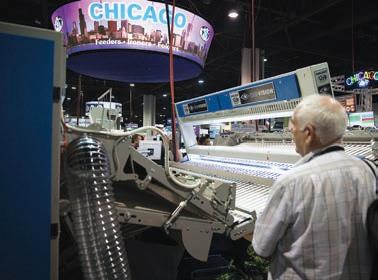
Some of the machines on display were Skyline automatic folders and Air Chicago small-piece folders for processing all types and sizes of textiles.
Other products that attendees saw in action were the Blanket Blaster finishing system, the King Edge cornerless spreader-feeder for large items, and the Rapid Feed, a small- and large-piece vacuum feeder.
Consolidated Laundry Machinery (CLM)
Consolidated Laundry Machinery (CLM) presented its Tumble Green dryer series, the newest addition to the product line.
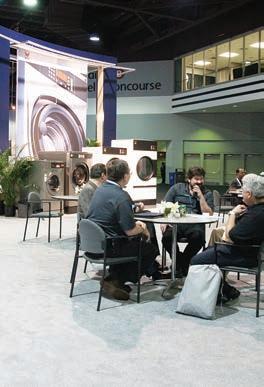
Tumble Green is available in all the same models
and sizes as CLM’s standard gasheated dryers, and it incorporates a low-NOx burner as standard equipment, making these dryers highly efficient, while generating low emissions, the company says.
East Coast Water Systems
East Coast Water Systems (ECWS) showed off its variety of products and expertise to the laundry industry. The company offers hot water heaters, water softeners and storage tanks.
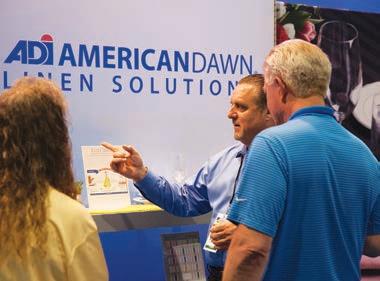
While representatives say that the heaters that the company provides have proven themselves in some of the most demanding installations anywhere, ECWS’ new launch, the Plug-N-Play, makes it easier to customize products for their clients.
Ellis Corp.
Ellis Corp. introduced the SmartPRESS RP Extraction Press from Vega Systems. According to representatives at the show, the press can remove water at an energy cost savings that is 8.5 times greater than a dryer or ironer.
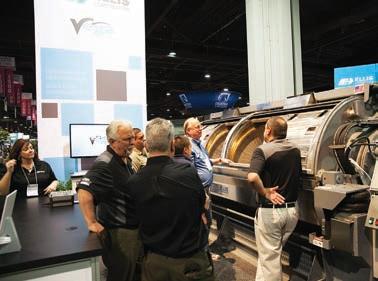
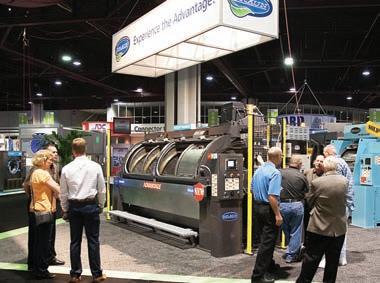
The SmartPRESS RP features a frame cut from one piece of Uniform Certified Steel (UCS) with only four main parts, Ellis says. This joint-free steel frame has no “operation-critical” elements and avoids weak points or fatigue associated with fretting or corrosion in conventional tie rods or posts.
G.A. Braun
Braun unveiled several new laundry machines. Its new chuteload dryers, for example, feature a patent-pending chute loading system. Sling bags are released and positioned over the chute on the dryer where goods are dropped for processing, providing for what Braun calls “exceptional turn times and system efficiencies.”
Also available was the SmoothFlow® Batch Tunnel Washer Press. The machine has new features, such as moats that are external to the press guards, a design that directs all water being pressed from the linens into the water collection tanks, and a door and guarding design that enhances visibility and is easily removable.
Gurtler Industries
Gurtler Industries presented a new chemical dispensing system—the Vis-Tex dispenser. Company representatives say the space-saving pump module has more pumps to allow for greater chemical-usage flexibility. Also, newly designed diaphragm pumps require minimal service and can operate for 5 million strokes with no maintenance, Gurtler says.
Attendees also learned about Work•Clean, Gurtler’s newest addition to its line of industrial products. This duo consisting of a built alkali (Work) and AE detergent (Clean) are specifically formulated to tackle the ground-in soils often found in industrial uniforms,
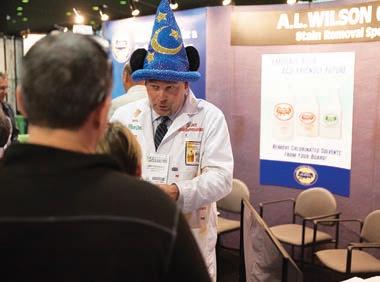
20 JUNE 2015 | AMERICAN LAUNDRY NEWS www.AmericanLaundryNews.com
Continued from Page 19
according to the company.
Clean
There were many in-depth discussions during the show, like these at the IPSO booth.
A.L. Wilson Chemical Co.’s resident “wizard” demonstrated how the company’s products aid in stain removal.
Visitors listen intently as an ADI American Dawn representative describe his company’s varied linen solutions.
An attendee gets a good look at a Chicago Dryer feeder. The company showed booth visitors why it’s been a leader in flatwork finishing equipment for many years.
G.A. Braun representatives show visitors the company’s latest laundry equipment, including new chute-load dryers.
New in the Ellis Corp. booth was the SmartPRESS RP Extraction Press, featuring a joint-free steel frame, from Vega Systems.
Hydro Systems
Hydro Systems Co.’s big announcement was its new partnership with Dositec Sistemas of Spain.
Hydro Systems is now the exclusive North American supplier of Dositec Sistemas chemical management systems. Attendees were given a look into the system in the company’s booth.
The partnership provides Hydro Systems with a complete line of commercial laundry equipment for new and existing customers, broadening its existing product line to include systems for multiple washer-extractors and tunnel washers of varying sizes.




SonicAire
Things were moving at the SonicAire® booth, where Integrated Environmental Solutions (IES) representatives showed off their newest product: the SonicAire 1.5 fan.
It’s designed especially for the laundry industry. Every SonicAire fan is engineered to prevent the accumulation of combustible fiber on overhead ductwork, structures and equipment.

SonicAire 1.5 is named for its 1.5 HP TEAO motor. This smaller motor is said to deliver new ben efits, including energy cost sav ings and being quieter to allow employees to have a more pleasant “white noise” when the fans are close to their workstations.
Parker Boiler
Parker Boiler debuted its new cellular-based alarm system.
The ParkerView-Alarm (PVA) is simple to set up, use, and maintain for use on boilers or other devices, the company says. It allows the owner or opera tor of the boiler or other device who is off-site to be alerted when an alarm condition is detected, cleared, or when there is a power loss.
When an alarm condition is detected, PV-A will text up to three phone numbers to indicate there is a problem. If the alarm is cleared, an additional text is sent to let an off-site owner or operator know.

Norchem Corp.
The big story at the Norchem booth was its wastewater system. The ULTRAPURE wastewater treatment and water recycling system uses patented, proprietary ceramic filters. The company says it can lower sewer costs, meet some of the most stringent sewer discharge limits, and recover heat from wastewater.
Other Norchem products that attendees learned about included NORBRITE APE-free green detergent and the NORFLOW-WIN G3 & G4 Liquid Dispenser.
Pellerin Milnor Corp.


Pellerin Milnor Corp. intro duced its latest large, open-pocket washer-extractor.


The 72046 M5K washerextractor (with a capacity of 600700 pounds) has active balancing. The two-way tilt, single pivot point provides optimal load and discharge heights.
The 300-G-force washerextractor features Milnor’s infinitely programmable MilTouchEX controller and 16 liquid supply ports, both of which allow for greater flexibility. The 72046 M5K’s high ribs and large perforated open area maximize M.A.F. (Mechanical Action Factor) and dilution, the company says.
from water and debris intrusion.
U.N.X. Inc.
U.N.X. Inc. gave Clean attendees a look into the future. How?
By granting booth visitors a sneak peek of its prototype chemical dispenser slated to go online later this year.
Besides the prototype dispenser, company representatives provided attendees with information on U.N.X. detergents and specialty chemical products.
Venus Group
booth. Attendees learned about the many products provided by Venus Textiles while browsing shelves and racks full of linens and apparel.
Products on display included tablecloths, napkins, aprons, sheets, towels, hospital linens and chef apparel.
Softrol Systems
Visitors to the Softrol Systems booth were introduced to LOIS. But LOIS isn’t a person. No, it’s Softrol’s entry into total plant management.
plant operations from anywhere. With dashboards for each Softrol product line, managers can view today’s production information at a glance.
LOIS also offers drill-down capability for date ranges, so more extensive reports can be viewed for comparisons and past production performance.
Xeros
Xeros, which is gaining interest for its polymer bead cleaning system, unveiled high-performance dryers.

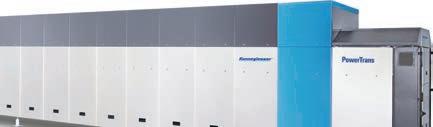
www.AmericanLaundryNews.com AMERICAN LAUNDRY NEWS | JUNE 2015 21
FLEXIBILITY Batch sizes ranging from 90 - 285 lbs Production capacities from 550 - 11,000 lbs Rinse options: counterflow rinsing, standing bath rinsing and JET-rinsing PERFORMANCE Superior mechanical action Maximum compression EFFICIENCY Intelligent water management Insulated drums minimize heat loss Carewash drum perforation is gentle on textiles THE LEADER IN LAUNDRY TECHNOLOGY HIGH PERFORMANCE BATCH WASHER kannegiesser-usa.com 800.344.0403 PowerTrans ALN_Jr Page.indd 1 5/4/15 10:01 AM
Xeros is offering 80- and 120pound OPL dryers. Company representatives say that both provide high-performance, industry-leading efficiencies; optimized energy use; shorter dry times; and safer, more reliable operation.
Kannegeisser
Kannegiesser encouraged visitors to “Get Ready for the Future.”
Machines from the company’s
entire product line were showcased with emphasis on how Kannegiesser machinery can take a laundry to a future of higher productivity and superior quality.
Demonstrations on Kannegiesser’s ergonomically friendly finishing lines, including highspeed feeding and folding systems, ran continuously throughout the show.
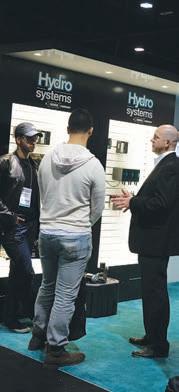
Also on display was the PowerTrans batch washer system with PowerPress extractor, PowerDry automated batch dryer and PowerSpin centrifugal extractor. Clean 2015 debuted the latest in high-speed folding technology
for fully dried items, the XFM Speedline and BlanketMaster.
Brim Laundry Machinery Co.
Brim Laundry Machinery Co. presented its line of Pacesetter dryers. Brim’s acquisition of Washex’s intellectual property made it possible for the company to add the Pacesetter CPG 400 and CPG 600 dryers to its product line.
Besides the dryers, the company showed off its large washerextractors that, according to representatives, blend technology and common sense with rugged and proven industrial machine designs
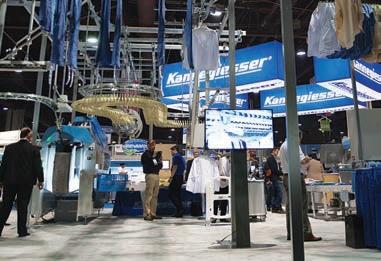
to provide maximum productivity and quality.
Davis Packaging
Laundry-wrapping systems don’t have to be large to be effective, Davis Packaging demonstrated for attendees.
Representatives showed how the 36-inch tabletop bundler could offer smaller operations a way to provide crisp, clean storage for linens.
They also tossed a few shrinkwrapped packages to show the product’s non-slip stackability.
EDRO Corp.
The buzz around the EDRO booth was the C-SERIES of commercial tumbler dryers introduced this year. With this new line, EDRO says it has combined its experience with years of extensive research to create the perfect balance of quality and affordability.
The result is a series of gas, steam and electric tumbler dryers available in various capacities that is designed to meet the needs of virtually every on-premise and commercial laundry facility.
Continental Girbau
Continental Girbau’s presence at Clean 2015 was the most global,
22 JUNE 2015 | AMERICAN LAUNDRY NEWS www.AmericanLaundryNews.com
Continued from Page 21 Clean I ntroducing the New Ellis WHISPERDRYer » New terry towels (nominal 450 lb. weights) averaged 21.76 minutes at 1651 BTU’s per lb. of water removed. » New terry towels (nominal 250 lb. weights) averaged 15.23 minutes at 1910 BTU’s per lb. of water removed. 800-611-6806 FASTEST, QUIETEST, MOST EFFICIENT To receive the complete WHISPERDRYer test data document, email us at info@elliscorp.com or call 800-611-6806. For more information on our OPL & Industrial Laundry solutions, visit our new website. www.EllisLaundry.com ALN_Jr Page.indd 1 5/12/15 5:06 PM
Attendees learn about Hydro Systems’ partnership with Dositec Sistemas on new chemical management systems.
Kannegiesser encouraged attendees to “Get Ready for the Future.”
interactive and product-rich in company history, according to Joel Jorgensen, Continental vice president of sales and customer services.
“Booth traffic volume was incredibly constant throughout the show, and the Continental team fielded a historic number of inquiries related to on-premise laundry equipment and systems,” he says.
The company highlighted the 70-pound G-Flex® and 60-pound E-Series® Washer.
Encompass Group
Encompass showcased its full line of synthetic underpads, intent on meeting its company goal of providing enhanced patient protection.
New is the Fusion™ underpad, intended to provide the ultimate in patient comfort and care, according to representatives. This is in addition to the DermaCare pad.
Fusion and DermaCare Patient Care underpads are designed with Stay-Dry technology to wick mois ture away as quickly as possible to help prevent skin breakdown.
Fibertech
Fibertech was another Clean Show first-timer, and company representatives say that their expectations were exceeded.
“In this industry, the Clean Show provides the best environ ment for customers to take the time to help us better understand their needs while learning how we can help them,” says Stephen Latowski, account manager at Fibertech.
Fibertech featured its F-LT67 laundry cart’s new design, plus a new 16-bushel utility cart, the UC16.
Fibertech’s rotationally molded laundry carts include new verti cal and horizontal ribbing on the body, reinforced plastic base, and industrial-strength casters.
Felins USA
Felins USA displayed its packag ing abilities, including a new semiautomatic shrink-wrap machine.
By demonstrating tying, shrinkwrapping and bundling automa tion, company representatives illustrated how laundry operators could use Felins machines to pack
age everything from high-end hospitality linens and shop towels to sanitized hospital linens and even rolled rugs.
Consolidated International Corp. (CIC)
Consolidated International Corporation (CIC), a manufacturer and distributor of industrial laundry machines, parts, textiles and supplies, offered attendees a look into its extensive line of products.
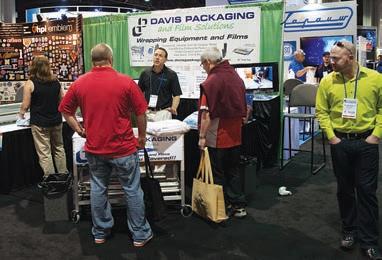
Categories on display included
tion and cleaners; power control parts; laundry carts and casters; laundry slings and bags; and drycleaning press pads and plates.
The DECC Co.
This was the second Clean Show for DECC, and representatives had plenty to share with attendees this year.
“We ran out of brochures and had to have more next-day-aired to our hotel, and then ran out of those,” says Mike Michalak, with marketing and sales for DECC.
abrasion-resistant coating to dryer panels. Being relatively new to the industry—only about three years—the company had some performance history notes to share.

DECC has also begun coating lint screens, without clogging the fine mesh, which aids in cleaning and functionality, the company says.
EcoTex
EcoTex representatives shared that the company’s Advanced
www.AmericanLaundryNews.com AMERICAN LAUNDRY NEWS | JUNE 2015 23
ALN_Jr Page.indd 1 5/11/15 10:10 AM See CLEAN on Page 24
A Davis Packaging
representative demonstrates one of the company’s wrapping machines.
energy-efficient ozone laundry technology that starts saving money the minute they are turned on.
It’s a cold-water alternative, the company says, combining the power of ozone and oxygen to reduce energy, water and labor costs.
MODRoto/Tingue
The buzz around the Tingue booth was Meese Orbitron Dunne Co. officially changing its name to MODRoto (see page 25 for more details). The new product discussed was the ComplianceCaddy™

The ComplianceCaddy can accumulate solvent-contaminated wipes on a screen set inside a rotationally molded, polyethylene container and automatically separate, drain and contain the free liquids in the container bottom. Included sorbent products in the base absorb the free liquids to permit transport for cleaning or disposal.
Girbau Industrial
Girbau Industrial’s (GI) booth represented the brand’s newest technologies and industrial system offerings. GI highlighted the expansion of its tunnel system product line, thanks to a partnership with Lavatec Laundry Technology.


The company also introduced the DRB Feeder and enhanced PLC Control. The DRB Feeder allows for automatic feeding of items from one or two lanes, as well as manual feeding—with or without vacuum assistance—from
one to four lanes, GI says. The PLC Control delivers systematic networking between feeders, ironers and folders.

Rennco



Rennco, a brand of Pro Mach, exhibited its Model VerticL-PP packager with load hopper infeed.
The Model VerticL-PP (pouch pack) system was in operation running hand towels by piece count.

“The attendance at the Clean Show was a high caliber of person-
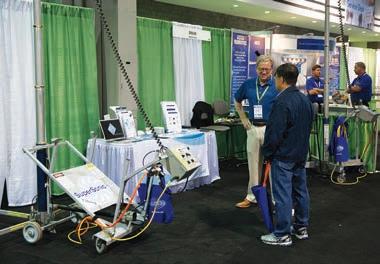
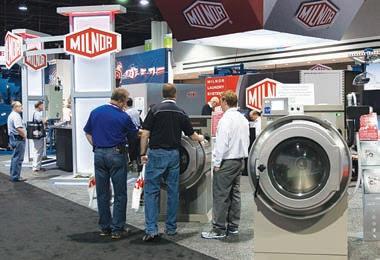
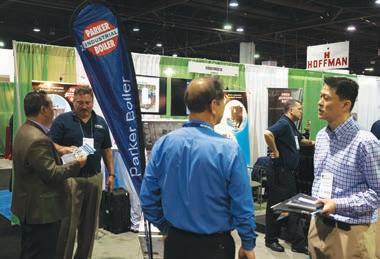



nel that were very interested in the equipment we have to offer,” says Eric Vorm, Rennco’s general manager. “We look forward to working further with the laundry industry to satisfy their needs to bag towels, linens, shop rags, etc.”
Performance Matters
Performance Matters, a strategic consulting firm dedicated solely to the independent textile rental and linen service organizations in the market, showed off its





High Performance Team training program.
High Performance Team training is a modular, comprehensive online learning experience.


Representatives say it instills the principles of world-class customer service that delivers measurable, proven results in higher profits and growth.

Yamamoto Japan
Since 2012, Yamamoto Japan has strived to build quality laundry
The new combo machines— washer/extractor/dryer, all in one unit—are said to reduce production time and can use either steam or gas drying.
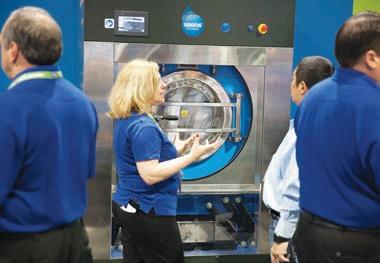
Also shown were the company’s triple-sort and single-sort smallpiece folders, which Yamamoto says will operate as fast as the operator and stop when the operator stops. ALN

24 JUNE 2015 | AMERICAN LAUNDRY NEWS www.AmericanLaundryNews.com e ve o you covered! Affordable Professional Laundry Wrapping Equipment & Supplies Multi Roll Consoles Package Carry Straps and Film Solutions Avoid loss and contamination Wrap, deliver, & store in clear presentable packages Bundlers ALN_3rd Page.indd 1 5/15/15 8:52 AM (Nor woman either.) American Laundry News can now be viewed on tablets and other mobile devices – great ways to stay on top of the latest industry news and updates. www.americanlaundrynews.com
live by print alone. The Newspaper of Record for Laundry & Linen Management “Print Alone“ Jr. 1/3 Page ad for American Laundry News Advertiser: American Trade Magazines Contact: Donald Feinstein 312-361-1682 Ad Trim size: 4.75” x 4.75” Art contact: Shelley Timm-Thompson, 708-771-9948 Insertion Date: Ongoing
Man does not
products. The company put its quality on display with the new Barrier Washer Combo.
Continued from Page 23 Clean
Attendees learn about Parker Boiler’s new ParkerView-Alarm system.
Pellerin Milnor Corp. had several new machines on display in its large booth.
Xeros, known for its polymer bead washing technology, unveiled dryers at Clean 2015. Visitors were “blown away” by IES’ SonicAire 1.5 fan, designed to keep ceilings dust-free.
ASHTABULA, Ohio — At Clean 2015 in Atlanta, Bob Dunne, president of Meese Orbitron Dunne Co., officially announced that the longtime cart maker had changed its name and corporate identity to MODRoto.

American Laundry News sat down with Dunne to learn more about the name change, the thought process behind it, and what it means to the company and its customer base.
Q: This is a company that dates back to 1931. Why the name change?
A: Yes, we were founded as Meese Inc. in 1931, selling a container called the Shamrock Shipper, along with carts and baskets for the laundry industry. That’s where the famous shamrock logo originated.
When it became clear that plastics would be the material of choice for laundries, Meese began offering plastic poly carts.
In 1978, Meese was acquired by Tingue, Brown & Co., which was already a leading brand in the laundry industry. In 1993, Meese acquired two custom plastics molders, Dunne Plastics and Orbitron Industries. That’s when the name became Meese Orbitron Dunne Co., and it gradually transitioned into MOD.
After more than 80 years working very closely with laundries, the Meese name became well known. Our laundry customers love their Meese carts, but a lot of our recycling customers don’t know Meese as well. Customers talk about some of our other product lines as MOD products and they don’t always know how much more we offer. Now, we’re all MODRoto.
This path stays true to the history of our heritage companies; it builds on our past innovations and defines the course of our future growth.
Q: Why MODRoto, specifically?
A: People can see our product design capabilities in our new product introductions, and they recognize our superior product quality, but not everyone knows that our design expertise and manufacturing skill in producing carts and containers come from our many decades of experience in custom product design and development with rotational molding. We wanted to keep the “MOD,” which suggests modern and forward thinking and applies to all of our product lines, in place while bringing our rotomolding expertise to the forefront. At heart, we’re really a team of custom product designers who enjoy solving problems, whether it’s how to move linens from point A to point B with the most efficiency or how to help people comply with EPA regulations for shop towels or fuel
tank vapor emissions so they can run their operations safely and with peace of mind.
Q: What exactly is the relationship with Tingue, Brown & Co.?
A: MODRoto is a member of the Tingue family of companies, along with Talley Machinery, the parts and equipment manufacturer, and TBR Associates, a consulting firm, and,
of course, Tingue, Brown & Co. We have access to 113 years of wisdom and experience, along with their capital and global footprint via the sales team.
Q: What don’t people know about the company that they need to know?
A: We run 25 rotational molding machines in four plants across the continent, and we’re ranked as
the 16th largest rotomolder in North America by Plastics News
Our customers are some of the largest household names in the world. We have local representation worldwide. Also, we do design, engineering, 3-D modeling, assembly and a whole set of secondary services in-house. We even have our own recycling line to reprocess and reuse any excess and scrap material.
We offer a large operational scale yet we make sure our people
are within an easy reach.
Q: What’s your outlook like for the next couple of years?
A: One thing I’ve learned over the years is it’s not worth trying to predict the ups and downs of the economy. There will be ups, and there will be downs. We have to be aggressive and visible enough to capitalize on the ups and to weather the downs. Right now, I like where our company is headed.
www.AmericanLaundryNews.com AMERICAN LAUNDRY NEWS | JUNE 2015 25
A patent-pending process that combines signi cant utility reductions, completely green chemistry, and veri ed hygienic cleanliness. • Deliver superior cleaning performance • Produce whiter, brighter, softer textiles • Reduce water and fuel consumption • Increase plant capacity through machine time savings • Clean with completely green chemistry ClearPathTM Be Clean. Be E cient. Be Hygienic. 800.272.1974 WWW. WASHINGSYSTEMS .COM The Way Forward in the care of textiles. ClearPath TM ALN_Jr Page.indd 1 3/19/15 1:07 PM
ALN
Q&A: MODRoto
name
Dunne
president talks new company
Braun receives patent on loading equipment for manual wash aisles

SYRACUSE, N.Y. — G.A. Braun has received a patent for its Manual SafeLoad System®.



The Manual SafeLoad was designed to support the loading of washers in a manual wash aisle-operating environment. Braun says the system removes the potential for serious injury to the operator from pushing bags into a moving washer cylinder.

“Laundry operators and suppliers are working together to improve wash floor safety,” says Braun President Joe Gudenburr. “We take safety very seriously and have imbedded it into the design and operational criteria for all of our products.”
The company pointed out several key design features of the Manual SafeLoad, including that it is a solution for manual wash rooms with rail height restrictions and adjusts for varying washer heights for Braun and non-Braun machines. In addition, the prime mover is equipped with a horn and a built-in backup crush provision, and it plugs into a standard electrical wall outlet for recharging.
This product complements Braun’s other patent-pending safety solutions, including the SafeLoad Shuttle System®.
2015 marks centennial for distributor The Minnesota Chemical Co.


ST. PAUL, Minn. — The Minnesota Chemical Co. celebrated its 100th anniversary in May—a milestone made even more remarkable by the fact the company is still owned and actively managed by the same family that established in 1915.
Today, the company provides a full range of equipment and supplies to dry cleaners and commercial, institutional and coin-operated laundries throughout the Upper Midwest.

Family ownership began with R.P. Baker, who founded the company in the Midway area of St. Paul with several other immigrants from Ireland. The company initially focused on supplying local customers with a variety of soaps and cleaning compounds that the company made in a small
building on Wycliff Avenue.
Company founders were originally attracted to the area for two reasons: proximity to the Minnesota Transfer Railroad’s hub, and the presence of meat processing plants; those plants provided beef tallow, a critical component in soap manufacturing. At that point, The Minnesota Chemical Co. was manufacturing soap and distributing its products to creameries, laundries and dry cleaners.
Except for a move to a larger building a block away in 1937, the company has been in the “Midway Transfer” area for a century.
Increasing popularity in the company’s products fueled expansion. By the late 1920s, the company was selling cleaning compounds and soaps throughout an eight-state area in the Midwest.
Upon R.P. Baker’s death in 1943, the family’s second generation—sons Robert, Dan and John Baker—took over the company. The three had all been involved in key management roles—Dan as sales manager, John as plant manager, and Robert as a specialty salesman—prior to the outbreak of World War II.
Within a decade, the “Baker boys” had moved the company away from manufacturing soap and instead refocused it on distributing national brands of laundry and drycleaning supplies and equipment.
In 1952, they opened a sales office and warehouse in Milwaukee, Wis. A decade later, an equipment sales and service office was added in Waverly, Iowa.
In 1985, the “Baker boys” retired together, transitioning the company to their sons, Mike (John’s son), Steve and Dan (Robert’s two sons).

Now, a fourth generation of Bakers, Mike’s son, James, is working for the company.
Today, The Minnesota Chemical Co. provides laundry and drycleaning supplies and equipment to customers in Minnesota, Iowa, North Dakota, South Dakota and Wisconsin. Its supply and equipment sales staff, and parts and service department, serve dry cleaners and industrial, institutional, commercial and coin-operated laundries.
Huber, Becker earn top honors from Association for
Linen Management
RICHMOND, Ky. — The Association for Linen Management (ALM) has named G. George Huber, RLLD, manager of laundry and linen services at Gundersen Health System, La Crosse, Wis., its 2015 Heywood Wiley Manager of the Year, and Angela Becker, Ecolab, Eagan, Minn., its 2015 Allied Tradesperson of the Year.

Huber demonstrated “outstanding leadership, chapter involvement, community service, dedication and devotion” to ALM and the textile care service industry in earning the award named for ALM’s founder, the association says.

“I am deeply honored to receive this award,” says Huber. “Ten years ago, I knew nothing about this business.


Huber


Everything I have learned so far has come from the wonderful help of all the experts in the allied trades and all of my ALM friends, both nationally and through the Upper Mississippi Valley Chapter, which I’ve served as treasurer for 10 years.”
Becker is the senior technical account program leader for Textile Care RD&E at Ecolab. Her vast knowledge of the
SAVE DATES THE 6 th Annual 2016 Education Conference March 9-11, 2016 JW Marriott Grande Lakes Orlando, Fla. For information go to: www.ARTA1.com or contact Nancy Jenkins at njenkins@ARTA1.com ARTA ad.indd 1 5/4/15 7:23 PM Consolidated international Corporation 866-632-2298 | cicus.com Setting the Standards for Industry Leading Products and Solutions Exceeds OEM Belting Specifications! • Vaderline Premium Cotton 2” and 3” wide x any length up to 100 meters • Vaderline Extra-Strong Cotton (VX) 2” wide x any length up to 100 meters • Vaderline Anti-Static 2” and 3” wide x any length up to 100 meters • Vaderline Premium Two-Ply Cotton 2.5” and 4” wide x any length up to 100 meters • Vaderline Anti-Static Rubber Grip 2” wide x any length up to 100 meters Call today and mention this ad to receive 10% Off your first or next order! Source code: CICALN0115. Consolidated laundry Belting Made from only the highest quality fabrics and textile materials found around the globe, Consolidated custom makes ironer, feeder and folder belts. We can make all industry standard sizes of the materials listed below. - Anti-Static Cotton - Polyester - Anti-Static Rubber Grip - Polyester Vacuum - Aramid Felt - Rubbergrip, Nat. & Syn. - Cotton, Single/Double Ply - Rubbergrip, Marker - Cotton, Marker Belting - Rufftop, Brown & Black - Elastic, White - Rufftop, Green PVC - Nomex Belting - Smooth White Rubber - Pebbletop, White - Smooth Green PVC Laundry Belting top-Quality Belting for industrial laundries Consolidated ALN_3rd Page.indd 1 1/9/15 2:32 PM 26 JUNE 2015 | AMERICAN LAUNDRY NEWS www.AmericanLaundryNews.com
(From left) Dan, Mike and Steve Baker took over Minnesota Chemical Co. leadership in 1985 from the second generation of Bakers who had led the company for 40 years. (Photo: The Minnesota Chemical Co.)
industry, her involvement in her chapter and outside community, and willingness to “go the extra mile” made her the association’s top allied tradesperson.
“I am honored to receive this wonderful award from the Association of Linen Management,” says Becker. “Representing Ecolab as a leader in the commercial laundry business through working with ALM has been a wonderful experience. The support and feedback from my team, the commercial laundry community, and the Upper Mississippi Valley Chapter of ALM has had a great impact on my professional growth.”
The awards announcement was made at ALM’s member reception during the Clean Show in Atlanta.
ALM originated in 1939 as the National Association of Institutional Laundry Management (NAILM), and promotes itself today as the industry’s resource for information and support to textile care services professionals.
New Tide® Professional system earns Edison Award

CINCINNATI — The Tide® Professional Coldwater Laundry System has been named a 2015 Award Winner by the internation-
ally renowned Edison Awards™, according to P&G Professional™, the away-from-home division of Procter & Gamble.
“We’re proud to receive the Silver Edison Green Award for our Tide Professional Coldwater System,” says Carrie Rathod, brand manager, P&G Professional. “Tide Professional Coldwater offers a host of environmental benefits to hotel operators and guests. It’s designed to use significantly less water at colder temperatures compared to traditional on-premise laundry systems, yet still delivers the clean, white, soft linens and towels customers and guests expect from Tide.”
This, according to Rathod, helps hotels reduce their energy and water costs, as well as reduce reliance on limited resources made increasingly important by drought.
The company says the laundry system enables hotel facilities to reduce the energy needed to heat the water in a commercial washer by as much as 75% and to reduce the water used in a commercial washer by up to 40%.
Calendar

June
Jensen USA
9-11 Service Seminar: Senking Batch Washing/Extraction/Drying Sys.
16-17 Service Seminar: L-Tron Washer/Extractors
17-18 Service Seminar: L-Tron DTX Tumbler/Dryers
23-25 Service Seminar: Flatwork Finishing Systems Panama City, Fla. Info: 850-589-0845
18 Association for Linen Management Webinar: Spring Cleaning— Getting to the Nitty Gritty Info: 859-624-0177
July
Info: 877-770-9274
13 Association for Linen Management Webinar: Managing Textile Replacement Costs Info: 859-624-0177

September
9-11 Textile Rental Services Association Annual Conference Isle of Palms, S.C. Info: 877-770-9274
JULY
Feature: Next Generation of Laundry/Linen Managers We explore the business approaches of tomorrow’s leaders, including their take on technology and innovation.
Product Showcase: Small-Capacity Dryers
Editorial Submission Deadline — May 15
AUGUST
Features: Trendy Textiles Learn the basics of textiles along with innovations that will influence the way various goods are processed.
Product Showcase: Linen Garment & Transport
Editorial Submission Deadline — June 15
SEPTEMBER
Features: Distributors Directory Our audience relies year-round on this annual directory issue listing distributors of laundry equipment, textiles, chemicals and other supplies.
E ditorial Submission Deadline — July 15
OCTOBER
Feature: Hotel/Motel Laundering Preview the International Hotel, Motel + Restaurant Show and get caught up on the latest hospitality industry trends.
Product Showcase: Guestroom Linens

Editorial Submission Deadline — August 15
ALN
The Edison Awards, inspired by Thomas Edison’s persistence and inventiveness, recognize innovation, creativity and ingenuity in the global economy. Specifically, the Edison Green Award is designed as a platform to recognize efforts by an organization to reduce carbon footprint, create “Green Collar” jobs through new innovation methods, and improve community health and self-sufficiency.
16 Association for Linen Management Webinar: Infection Prevention on the Clean Side Info: 859-624-0177
August
9-13 Textile Rental Services Association Executive Management Institute College Park, Md.
17 Association for Linen Management Webinar: Avoiding Mistakes in OSHA Compliance Info: 859-624-0177

30- Universal Unilink Oct. 2 Business Development Conference 2015 Isle of Palms, S.C. Info: 888-830-7872 ALN
Boiler Tech Support
Topog-E® Gasket Company, formulates and mixes its own rubber, and manufactures superior molded rubber handhole and manhole gaskets for steam, hot water boilers, water heaters, softeners, deaerators, make-up tanks, and other selected pressure vessels. Topog-E® Gaskets have become an industry standard since 1956. Topog-E® Gaskets seal quickly, completely, preventing seepage, corrosion and pitting. They peel off easily leaving clean surfaces for inspection.

Topog-E® Gasket Company offers a FREE Technical Specification and Usage Guide containing useful information about boiler maintenance safety. Also, FREE a pocket slide rule that charts steam temperature versus pressure.

For more information contact:
Topog-E Gasket Company

1224 North Utica Tulsa, OK 74110
Tel: 800-587-7123
I Fax: 918-587-6961 www.topog-e.com I info@topog-e.com
www.AmericanLaundryNews.com AMERICAN LAUNDRY NEWS | JUNE 2015 27 IN EVERY ISSUE: • Tools of the Trade • Your Views Survey Results • Career Track • Trade Ticker • Panel of Experts • Upcoming Events • Source Directory • Classifieds Want to send a press release or submit a story?
editorial
today!
DON’T MISS OUT HERE’S WHAT’S COMING UP
AMERICAN LAUNDRY NEWS...
Contact Bruce Beggs,
director,
Phone: 312-361-1683 E-mail: bbeggs@ATMags.com
IN
...and much more! 0615aln_EditCal_JuniorHalf.indd 1 5/12/15 2:28 PM
0613aln_Topog-E.indd 1 7/9/13 3:46 PM
Becker






28 JUNE 2015 | AMERICAN LAUNDRY NEWS www.AmericanLaundryNews.com PARTS, PARTS, PARTS Huge stock of parts for most laundry equipment & boilers. Also traps, valves and lubricants. Overnight delivery.
800-333-8883 Fax: 305-751-8390 parts@steineratlantic.com www.steineratlantic.com A large Textile mill specializing in hospitality and institutional linens with warehousing in Orlando and California is looking for experienced sales rep to market and sell their Terry towel, Bed linens, Table linens, and Bar mop. Kindly apply with Interest at linensforhire@gmail.com WASHEX PARTS Hard-to-find Washex parts, on-site rebuilding, tech support. LAUNDRY PARTS CENTER 800-352-4492 Fax: 305-827-3991 Classified Advertising PARTS FOR SALE EQUIPMENT FOR SALE AMKO AMERICA, INC. Remanufactured Finishing Equipment Delta Ironers, Omega Folders & Towel Folders PARTS, IRONER SUPPLIES & NEW EQUIPMENT ALSO AVAILABLE “NEW” SELF CONTAINED IRONERS Contact: (561) 863-9696 AmkoAmerica@yahoo.com POSITIONS AVAILABLE POSITIONS AVAILABLE GO TO: www.AmericanLaundryNews.com MISSED OUR DEADLINE? DISTRIBUTOR OFFERINGS Call Craig Lloyd toll free at 877.295.5693 between 9 a.m. – 9 p.m. EST. Please visit www.laundrycareers.com to review current industrial/institutional laundry management openings. ADVANCE YOUR CAREER The Griffin Group, Inc. “Recruitment Specialist” Need to FILL a position? Call Deana Griffin 888-235-2365 www.thegriffingroup.cc deana@thegriffingroup.cc ® Grow Your Career at Ecolab Ecolab is seeking highly motivated sales and service professionals to join our
Stanco Industries, Inc. Serving The Textile Trades Since 1970 800-932-3769 k for Mike or Deb KEEPING IT GREEN SINCE 1970 QTY DESCRIPTION 1 King Edge 2002 1 Milnor (2000) 8 Mod 130lb CBW with Loading Conveyor 1 Milnor Two Stage Press and Shuttle 3 58058 Gas Dryers 1 Edge Spreader 2000 1 Air Chicago XXL 1998 1 Unipress Single Buck Lightning Shirt Unit 1 Challenge Pacesetter 400lb Gas Dryer 1 450lb Washex Open Pocket 2002 2 275lb Milnor Open Pocket Rebuilt 2002 1 Milnor Washers; 60lb, 100lb and 160lb 1 Single and 2-Lane Skyline Folders with Stackers 8 400lb Braun & Lavatec Batch Dryers with Shuttle 1 Braun 2 Roll 32 Steam Ironer 1 Braun Omega/Crossfolder with Accumulator For Pricing call Ron Hirsch 516.938.4300 • 516.315.7426 Hicksville, NY • www.directmachinery.com FOR NEW OR USED LAUNDRY EQUIPMENT, DM IS YOUR SOURCE FOR ALL YOUR NEEDS HOTEL CLOSING SUPER EQUIPMENT HOSPITAL LAUNDRY CLOSING EXCELLENT EXCELLENT CONDITION RIGGING, PLANT DECOMMISSIONING Over 40 years experience. One item, or complete facility. We will remove and relocate your equipment, and buy your surplus. CALL FOR A QUOTE. DON’T BE LEFT WITHOUT POWER Emergency Generators Available 50KW to 1000KW Natural Gas & Diesel Stanco Industries, Inc. 800-932-3769 Ask for Mike or Deb or e-mail: stanco2626@aol.com www.StanCoInd.com
Steiner-Atlantic,
fast growing Textile Care field division. We offer exceptional opportunities enabling you to leverage your commercial laundry background with long-term career potential and a chance to positively impact the industry. Visit http://jobs.ecolab.com and enter keyword “Textile” to view current opportunities and apply online today!

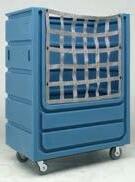
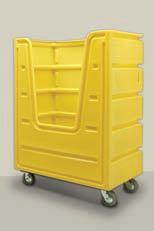










www.AmericanLaundryNews.com AMERICAN LAUNDRY NEWS | J U NE 2015 29 Source Directory A convenient guide to sources of products and services APPAREL FINISHING CARTS, TRUCKS & BASKETS Choose your favorite low-cut front for ergonomic access, roll safe and easy on advanced poly base with premium casters—all included as standard. Easy Reach, Easy Roll Call 800.829.4535 or visit MODRoto.com for a FREE QUOTE. 72P 72N Leadership in Every Cart Source Directory listings in American Laundry News are sold on an annual basis at the following rates: All Major Credit Cards Accepted 2015 Listings RegularBoldface All CapsAll Caps, Boldface Four Line Listing per Year $850 $1,070 $1,070 $1,130 Display and additional line rates available upon request Sani Trux - McClure Industries, Inc. 9051 SE 55th Ave., Portland, OR 97206 800-752-2821 www.mcclureindustries.com, info@mcclureindustries.com M.I.T. POLY-CART 211 CENTRAL PARK WEST, NEW YORK, NY 10024 800-234-7659, FAX: 212-721-9022 WWW.MITPOLYCART.COM CARTS, TRUCKS & BASKETS CARTS, TRUCKS & BASKETS Diversified Plastics, Inc. 1309 Highway 917 West, Latta, SC 29565 800-768-7636, www.dpirotocarts.com E-mail: sales@dpirotocarts.com Fax: 843-752-7798 AmericanLaundryNews.com More than unique visitors monthly! 5,250 CARTS, TRUCKS & BASKETS Enclosed_Carts_6.25x3:Layout 1 6/18/14 4:23 PM Page 1 BAGS, SLINGS & COVERS 619-888-7173 • www.plexusind.com • PVC Coated Mesh • Woven PE • Fluid Resistant Bio Bags Variety of sizes and colors Customization • Ship same day
1470 Don St., Naples, FL 34104 800-944-1711 www.energenics.com


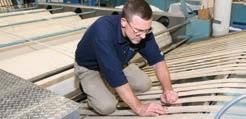
Sani Wash - McClure Industries, Inc. 9051 SE 55th Ave., Portland, OR 97206 800-752-2821 www.mcclureindustries.com, info@mcclureindustries.com
Pellerin Milnor Corp. P.O. Box 400, Kenner, LA 70063 504-467-9591, Fax: 504-468-3094 www.milnor.com
Corp. P.O. Box 400, Kenner, LA 70063 504-467-9591, Fax: 504-468-3094 www.milnor.com


30 JUNE 2015 | AMERICAN LAUNDRY NEWS www.AmericanLaundryNews.com Source Directory listings in American Laundry News are sold on an annual basis at the following rates: All Major Credit Cards Accepted 2015 Listings Regular Boldface All Caps All Caps, Boldface Four Line Listing per Year $850 $1,070 $1,070 $1,130 Display and additional line rates available upon request Source Directory A convenient guide to sources of products and services FLATWORK IRONERS FLATWORK IRONERS Knowhow In Action Your Tingue rep is a fully trained master of finishing equipment operation, maintenance and installation. Call for: • Pads, covers, belts, waxes, tapes and more • Carts, trucks, baskets and bags • Parts, rebuilds and repairs 800.829.3864 www.Tingue.com TalleyMachinery.com MODRoto.com TBR-Associates.com To website C & W EQUIPMENT (800) 443-3573 FLATWORK IRONER SPECIALISTS REMANUFACTURED IRONERS: Super Sylon Sylon Hypro’s Super Pro Jensen SS700 SS800 Ultima Lavatec UPGRADE KITS: Chain Drive Conversion Vacuum Systems Herringbone Conversion Canopies Inverters Side Covers Roll Springs Jensen Drives SUPPLIES: Aprons Pads Covers Belts Waxes Cleaners PARTS/REPAIRS: All Brands New/Refurbished/Hard to Find COMMITTED TO EXCELLENCE
Kartwasher
Energenics Corp.,
DRYERS – 100 POUNDS OR MORE CART-WASHING SYSTEMS
Milnor
DRYERS – 100 POUNDS OR LESS
www.olekbelts.com 1-800-869-2683 Free www.olekbelts.com We’re your flatwork finishing and conveying O.E.M. Belt Match H.Q. Get the real thing for a Lot less $$$. O.E.M. Needlefelt Ironer Pads too! Better Belts, Better Prices, Better Service Visit our Website or Call 1-800-869-2683 For free, no obligation, price quotations and for your Free copy of our Product Catalog with over 40 samples. Ironer pads, covers, aprons, guide tapes, carts, slings, cleaners, waxes & more… • Hotel • OPL • Coin Op • Dry Cleaners • Industrial • Commercial • Cruise Industry Dry or Wet Style Filters to Work with “ALL” Dryer Sizes or Multiple Situations, Fiberglass or Stainless and Custom for Unique Situations! Lint Filters Model Big and Small – We’ve got a model for you! In-line Duct” Models – the Lint Lasso and Lint Sock –in production since 2011 All manufacturing done on premise 800-826-1245 www.cleancyclesystems.com • ccsystems@tqind.com LINT COLLECTORS & FILTERS ★ Our In-Line Lint Filter mounts inside, saves space! ★ Fiberglass Wet Filters - 6,000 to 40,000 cfm ★ Fiberglass or Stainless Steel Dry Filters ENERGENICS CORPORATION Talk with our Design and Engineering Staff about your needs. Hundreds Sold Annually. 800-944-1711 www.energenics.com PACKAGING SYSTEMS & SUPPLIES FLATWORK SUPPORT CARTS, TRUCKS & BASKETS #1 Manufucturing Source for Laundry Transportation! (800) 634-0555 RBWire.com For more classifieds visit: .com www. AMERICANLAUNDRYNEWS
Pellerin
MATERIAL
Gardner
PARTS & SUPPLIES

Consolidated
Consolidated
EDRO
The
PARTS PARTS
Pellerin Milnor Corp.
P.O. Box 400, Kenner, LA 70063 504-467-9591, Fax: 504-468-3094 www.milnor.com
INDEX
WASHERS – CONTINUOUS BATCH
Pellerin Milnor Corp. P.O. Box 400, Kenner, LA 70063 504-467-9591, Fax: 504-468-3094 www.milnor.com
WASHER-EXTRACTOR
Pellerin Milnor Corp.
P.O. Box 400, Kenner, LA 70063 504-467-9591, Fax: 504-468-3094 www.milnor.com
WASHER-EXTRACTOR
Pellerin Milnor Corp.
P.O. Box 400, Kenner, LA 70063 504-467-9591, Fax: 504-468-3094 www.milnor.com
IPSO www.ipso.com 17
Kannegiesser USA www.kannegiesser.com 21
LaundryCareers.com www.laundrycareers.com 28
Lavatec Laundry Technology www.lavatec-laundry.com 32
Maytag www.maytagcommerciallaundry.com 13
Norchem Corp. www.norchemcorp.com 23

Pellerin Milnor www.milnor.com 3
Royal Basket Trucks www.royal-basket.com 8
Service Textiles www.servicetextiles.com 28
Stanco Industries www.stancoind.com 28
Topog-E Gasket Co. www.topog-e.com 27
UniMac www.unimac.com 11
Washing Systems, Inc. www.washingsystems.com 25
www.AmericanLaundryNews.com AMERICAN LAUNDRY NEWS | JUNE 2015 31 Source Directory
convenient guide to sources of products and services Source Directory listings in American Laundry News are sold on an annual basis at the following rates: All Major Credit Cards Accepted 2015 Listings Regular Boldface All Caps All Caps, Boldface Four Line Listing per Year $850 $1,070 $1,070 $1,130 Display and additional line rates available upon request
A
– 100
POUNDS OR LESS
– 100
POUNDS OR MORE
Machinery Corporation P.O. Box 33818, Charlotte, NC 28233 Ph.: (704)372-3890; Fax: (704)342-0758 www.gardnermachinery.com
HANDLING / CONVEYORS
CONTACT US TO BOOK YOUR AD TODAY! CLASSIFIEDS@AMERICANTRADEMAGAZINES.COM
Web Site Page Company Web Site Page
Wilson Chemical
9
American Dawn
5
PRESSES – EXTRACTION
Company
A.L.
Co. www.alwilson.com
ADI
www.americandawn.com
ARTA www.arta1.com 26
International Corp. www.cicus.com 26
Laundry Machinery www.clmco.com 15
Davis Packaging www.davispackaging.net 24
28
Direct Machinery Sales Corp. www.directmachinery.com
East Coast Water Systems www.eastcoastwatersystems.com 10
Corp. www.edrodynawash.com 12
Ellis Corporation www.elliscorp.com 22
G.A. Braun www.gabraun.com 19
Girbau Industrial www.girbauindustrial.com 7
Griffin Group, Inc. www.thegriffingroup.cc 28
Hydro Systems www.hydrosystems.com 16
OF ADVERTISERS