ATLANTA — The Clean Executive Committee has selected Shepard Exposition Services to serve as general contractor for Clean 2015, reports the show’s management company, Riddle & Associates.
John Riddle, president of Riddle & Associates, praised the firm for its work on Clean 2011, Las Vegas.

“We were pleased with their unique concierge program that gave individual attention to the needs of each exhibitor, and we look forward to repeating this success for Clean 2015,” says Riddle.
Clean 2015 booth sales opened recently to Clean 2013 exhibitors, and are “off to a good start,” according to Riddle & Associates.
The management company adds that for the first time in the show’s history, exhibitors can electronically submit their exhibit space application and deposit online.
The biennial trade show, officially titled the World Educational Congress for Laundering and Drycleaning, was recently named 112th among 2013 TSNN’s Top 250 Trade Shows, attracting more than 10,000 people across all segments of the laundry and drycleaning industry, and featuring more than 400 companies exhibiting their products and services, says Riddle & Associates.
The Clean Show is sponsored jointly by five national industry associations. ALN
Benchmarking strategies help laundry/linen managers reach goals for production, costs
 BY THERESA BOEHL, EDITOR
CHICAGO — A lot of effort, energy and resources goes into producing clean linen every day at laundries across the country. Keeping costs low and production high are always key goals, but how can laundry/linen operators be sure they’re meeting these goals? What’s the best way for them to know where they stand, and to use the information to improve operations? For those surveyed by American Laundry News, benchmarking is the clear answer.
“Leading firms in whatever industry you’re in benchmark, whether you’re in manufacturing, or service or transportation,” says David Chadsey, managing director at LaundryConsulting.com. “If you want to be a leader in what you do and you want your company to thrive, you’re a company that benchmarks.”
Glen Phillips, owner of international consulting and engineering firm Phillips & Associates, agrees that managers who want to be “at the best of their game” will need to have a firm understanding of the activity and production in their plants.
“They will hardly ever be able to reach their goals if they don’t benchmark somehow,” he says.

Though there may be some geographical or climate differences, many laundry operations in the U.S. are run in much the same way and are therefore in a perfect position to compare themselves to other similar businesses in the industry, according to Jim Doro, Textile Rental
Services Association (TRSA) chairman, and president and owner of Doritex Corp. Doing so can help businesses stay competitive in a tough economic climate.
Report: Linen efficiency campaign reduces use by 12%
BY JOANNE BRASCH
SACRAMENTO, Calif. — The healthcare community at large continues to grapple with ways to reduce linen use and minimize losses as a means to lower costs.
At the UC Davis Health System (UCDHS), the repeated discussion of how to improve linen conservation led to the creation of the Linen Task Force (LTF).
The LTF began work in 2012 with the systemwide launch of its “Linen Efficiency Campaign.”
Two years later, UCDHS has experienced a 12% reduction in average pounds of linen per adjusted patient day (APD), annualized to a $30,000 cost savings.
LINEN EFFICIENCY CAMPAIGN
The LTF objective is to develop and implement linen/textile-related projects with a focus on cost savings and waste minimization. The composition of this task force is unique in that it represents leadership from various stakeholders in the health system, including managers of infection prevention, environmental services and distribution, as well as representation from clinical staff. Having these key decision-makers present for the project development process provides the support needed as the project rolls out.
BASELINE ASSESSMENT
The initial baseline assessment involved surveying nurses in each
department to identify opportunities to improve the linen efficiency at UCDHS. As a result of the baseline assessment, the LTF recommended the following changes as part of a linen efficiency campaign:
1. Eliminate daily linen-change requirements.
2. Reduce use of incontinent pads and thermal blankets.
3. Refrain from bringing extra linen into patient rooms.

4. Promote proper hamper use, including adding a linenreject bag.
INTRODUCTION OF A NEW LINEN POLICY
The first step of the campaign involved officially revising the linen-change policy from a man-
datory daily change to a “change as needed” policy. The original policy did not outline the recommended bed linen composition and staff interviews suggested a general lack of consistency. The new policy clearly states the mandatory items for each bed, and the items, such as incontinence pads and thermal blankets, that were to be used when clinically necessary.

This change was communicated clearly with all clinical staff through staff meetings, educational posters and regular updates with nurse managers and senior leadership. Bedside tent cards were made available to those departments interested in communicat-
ALM Educational Conference
A report on last month’s gathering in Florida.
Panel of Experts Keeping linens clean during storage and transport is essential.
OPL 101: Measuring Operations for Success
Bill Brooks: The right mix of strategy and technology can help operators set standards for better production.
JU LY 2014
Clean execs select general contractor, open booth sales
Late News
www.americanlaundrynews.com Volume 40, Number 7
The Newspaper of Record for Laundry & Linen Management
INSIDE [12] [16] See BENCHMARK on Page 6
See 12% on Page 9
[10]
(Photo: ©iStockphoto/Dražen Lovric )
Survey: Networking, education biggest draws for industry events
CHICAGO — More than 86% of laundry managers polled say they find worth in attending industry events such as conferences, trade shows and service schools, according to the results of June’s American Laundry News Your Views survey.
Industry events are regarded as a “somewhat worthwhile” investment by the majority (59.3%) of laundry managers surveyed.
Close to 9% of respondents are indifferent about attending these industry events (“neither worthwhile or worthless”), while more than a quarter of respondents say conferences, trade shows and service schools are “very worthwhile” to attend.
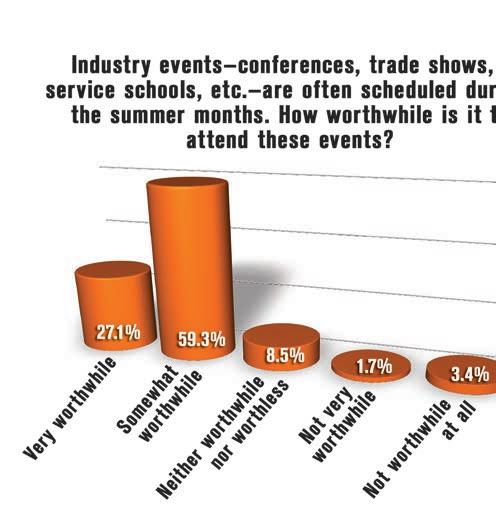
Only small percentages believe these events are “not very worthwhile” (1.7%) or “not worthwhile at all” (3.4%).
“Learning about new products, processes and technologies” is the biggest draw in attending laundry/linen industry events for 43.1% of respondents, while roughly 14% say they enjoy the “networking opportunities and catching up with colleagues.”
A small slice of respondents say they attend industry events to “[receive] advice on management and business growth” (5.2%), while roughly 2% listed “other” attractions for attending.
While no respondents attend these events solely for “social activities,” roughly 36% say they look forward to all of the benefits listed.
In terms of their reasons for not attending laundry/linen industry events, equal shares of 36.8% say their “facility can’t/won’t spare the expense” or that their “schedule is too busy.”
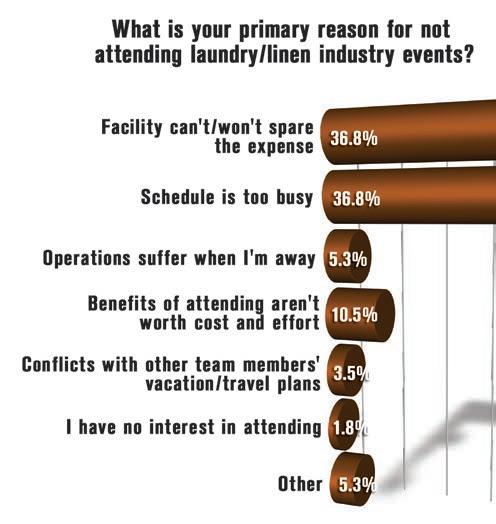
Close to 11% say the “benefits of attending aren’t worth [the] cost and effort,” while some listed “other” (5.3%) reasons for not attending. “Some of the events may not be interesting, while others are,” one respondent says. “We attend events that will benefit our operation.”
Other respondents say the scheduling of industry events “conflicts with other team members’ vacation/travel plans” (3.5%), while close to 2% “have no interest in attending” at all.
Another 5.3% of respondents say they do not attend industry events because their “operations suffer when [they are] away.” Overall, respondents say their travel plans impact their operations, with 22.4% saying “plant issues aren’t dealt with in a timely manner.”
For 12.1% of respondents, “customer and/or employee dissatisfaction increases” while they are away, while 6.9% say “employees aren’t as productive” during their absence.
Close to 2% of laundry managers listed “other” ways their facility suffers while they are away, while the majority say that their “absence doesn’t affect operations” at all (56.9%).
When traveling for business, many laundry managers say they cannot leave without bringing their electronic devices, like tablets, laptops and cell phones, while others listed business cards as the must-bring item.
To maximize their experience at these laundry/linen industry events, respondents stress the importance of preparedness.
“Give staff enough notice of your travel. Have all priorities completed in advance. Complete your mission as to what you want to accomplish at the event(s),” says one.
“Plan it out in advance and know your agenda for the conference and be flexible to try out new things during the event,” says another.
While the Your Views survey presents a snapshot of readers’ viewpoints at a particular moment, it should not be considered scientific. Subscribers to American Laundry News e-mails are invited to take the industry survey anonymously online each month. Due to rounding, percentages may not add up to 100%.
All managers and administrators of institutional/OPL, cooperative, commercial and industrial laundries are encouraged to participate, as a greater number of responses will help to better define operator opinions
The Tools of the Trade section in the April issue of American Laundry News included an announcement of the enhanced MilTouch-EX™ touchscreen control feature available for Pellerin Milnor’s X-Series suspended washer-extractors. Due to an editor’s error, the 60-poundcapacity model was omitted from the list of washer-extractors with the new feature. American Laundry News regrets the error and apologizes for any inconvenience it may have caused.
Publisher
Charles Thompson
Phone: 312-361-1680
E-Mail: cthompson@ americantrademagazines.com

Editorial Director
Bruce Beggs
Phone: 312-361-1683
E-Mail: bbeggs@ americantrademagazines.com
Digital Media Director
Nathan Frerichs
Phone: 312-361-1681
E-Mail: nfrerichs@ americantrademagazines.com
Editor
Theresa Boehl
Phone: 708-280-1750
E-Mail: tboehl@ americantrademagazines.com

Production Manager
Roger Napiwocki
Contributing Editor Jean Teller
Editorial Assistant
Carlo Calma
Interns
Lauren Dixon, Charles Thompson II
National Sales Director

Donald Feinstein
Phone: 312-361-1682
E-Mail: dfeinstein@ americantrademagazines.com
Main Phone: 312-361-1700 Fax: 312-361-1685
Subscriptions
630-739-0900 x100 www.americanlaundrynews.com
American Laundry News (ISSN 1091-9201) is published monthly. Subscription prices, payment in advance: U.S. 1 year $39.00; 2 years $73.00. Foreign, 1 year $89.00; 2 years $166.00. Single copies: U.S. $7.00; Foreign $14.00. Published by American Trade Magazines LLC, 566 West Lake Street, Suite 420, Chicago, IL 60661. Periodicals postage paid at Chicago, IL, and at additional mailing offices.
POSTMASTER, Send changes of address and form 3579 to American Laundry News, Subscription Dept., 440 Quadrangle Drive, Suite E, Bolingbrook, IL 60440. Volume 40, number 7. Editorial, executive and advertising offices are at 566 West Lake Street, Suite 420, Chicago, IL 60661. Charles Thompson, President and Publisher. American Laundry News is distributed selectively to qualified laundry and linen management and distributors in the United States. No material appearing in American Laundry News may be reprinted without written permission. The publisher reserves the right to reject any advertising for any reason.
© Copyright AMERICAN TRADE MAGAZINES LLC, 2014. Printed in U.S.A.
MEMBERSHIPS
2 JULY 2014 | AMERICAN LAUNDRY NEWS www.AmericanLaundryNews.com
Association for Linen Management
INSIDE: July 2014 • Vol. 40 | No. 7 [8] Tools of the Trade [10] ALM Educational Conference Laundry/linen professionals gathered for the three-day event that included educational sessions and networking opportunities [12] Panel of Experts: Keeping ‘Clean Linen’ Clean “What measures should we be taking to make sure linens are kept clean during storage and transport?” [16] OPL 101: Measuring Operations for Success Invest time and resources in setting benchmark standards to help your laundry service thrive [17] Career Track [18] Trade Ticker [19] Calendar
and industry trends. ALN
Correction
ALN
The PulseFlow changed my mind on tunnel washing.”
–
Tim King, Partner/General Manager at ImageFIRST, Clearwater, FL
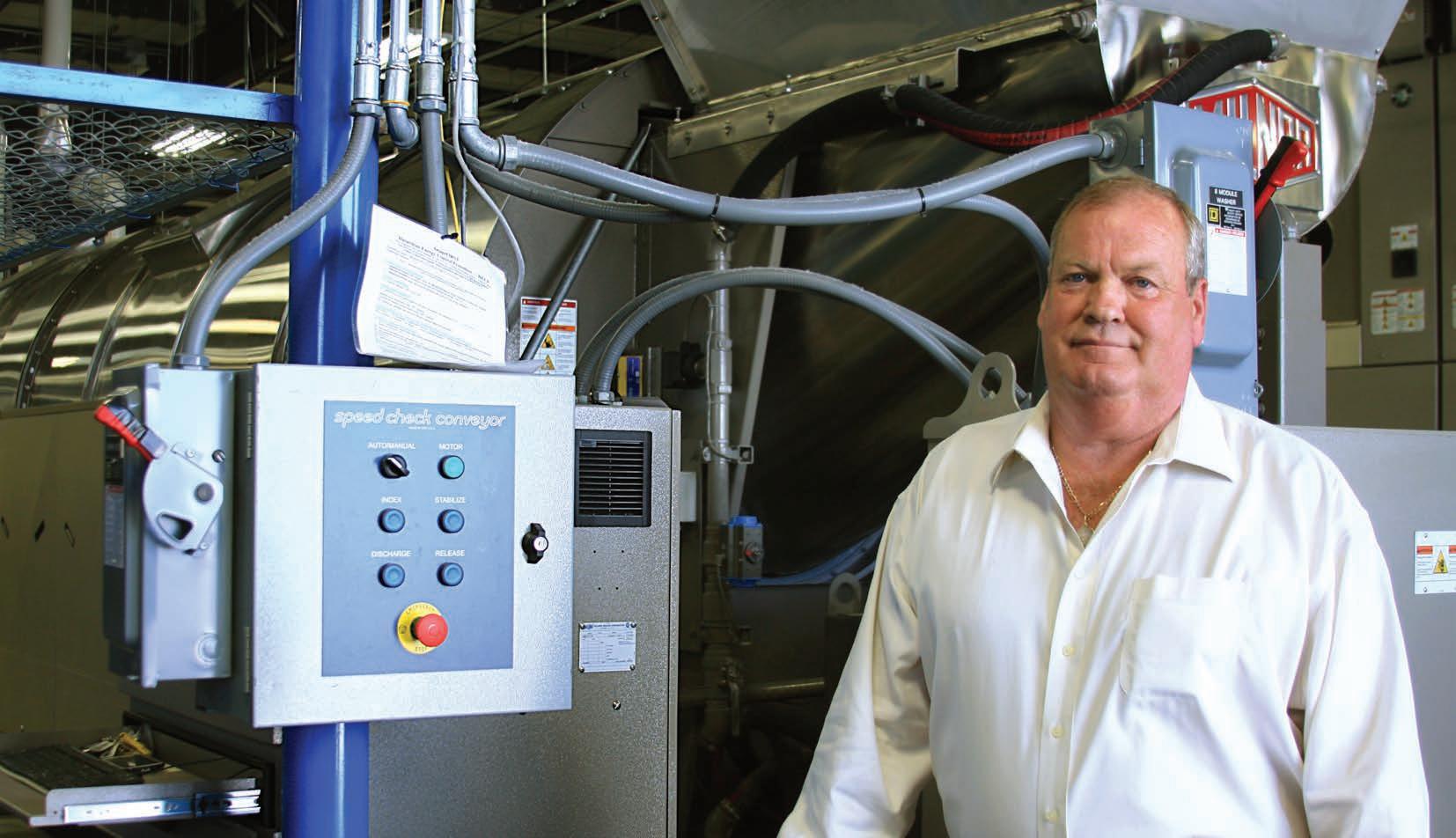
Tim King admits he was a skeptic of tunnels, but understood that the production would benefit from a tunnel washer. “I saw firsthand how white the linen came out. PulseFlow is what changed my mind about tunnel washing. With a top-transfer tunnel, you get the lift-and-drop effect just as you do as in a washerextractor.” ImageFIRST Clearwater now runs as much linen as possible through the tunnel because of its inherent savings. Since the plant began using the PBW™ tunnel, the laundry’s water and sewer bills have been cut in half... even with the continued use of their aging two large open-pocket washer-extractors.
To find out how Milnor can cut your water bill in half, contact an authorized Milnor distributor or call 504-712-7656.

www.milnor.com/pulseflow_technology / pellerinmilnor
“
To see how PulseFlow CBW Tunnels work, scan this code.
Managing by the numbers
When I first began editing
American Laundry News more than a decade ago, consultant Glen Phillips was one of the first industry experts I met.
It was during an Association for Linen Management conference that featured Phillips as one of its speakers. As I recall, his focus was on hotel/motel laundering, but what he discussed was relevant to any laundry operation: You can’t manage what you don’t measure.
The Director’s Chair BRUCE BEGGS
I’m paraphrasing, of course, but his point was that if you’re not tracking important data
LETTER TO THE EDITOR
such as pounds per operator hour, utility costs, things like that, how can you expect to make knowledgeable decisions about your laundry operation?
Nearly 15 years have passed and Phillips is still a proponent of benchmarking. He and a few other industry experts accepted Editor Theresa Boehl’s invitation this month to discuss just what’s involved and how a laundry/linen operation can benefit.
Check out Theresa’s cover story; I’m counting on you. ALN
GM takes exception to panelist’s perspective in May issue

This response is directed at an article in the May Panel of Experts section written by Sam Garofalo. As a general manager for a highly diversified healthcare laundry workforce with more than 11 different nationalities, I must set the record straight regarding this article and the many claims it makes, as well as its extremely narrow focus.
The “face” and dream of America is that of a land of opportunity for anyone of any nationality to be able to work hard and achieve their goals and dreams. Regardless of ancestry, all peoples place the word “American” after their country or nation of origin, such as African-American, Irish-American or Mexican-American; this is where our focus and unity should be.
Every American should have an equal opportunity to be hired and should receive an honest day’s pay for an honest day’s work. I have found hardworking, loyal, dedicated workers from all walks of life, from every culture and nation. I have also found the opposite. Rather than divide one group against another as this article does, my goal is to find employees who embrace the vision and mission of the company and want to advance themselves.
I, therefore, take extreme exception to the following statements from this article, as they divide us as a nation and industry and do not unify.
1. “They (Hispanics) will do what entry-level English-speaking jobseekers will not do.” Is it being suggested that Hispanics do not speak entry-level English? Who are these entry-level
English-speaking jobseekers who are lazy and unwilling to work? Evidently, according to this article, they are not Hispanic, but who are they?
2. “They (Hispanics) will work 12 hours a day and longer if needed.” Is this even legal to say that someone is going to work 12 hours or longer if needed? Is the author suggesting that we should eliminate other races from job selection because they are unwilling (in his mind) to work 12-plushour days? Where is this information coming from?
3. “One of the methods that has been proven to successfully assimilate this powerful workforce into the system is to let them have some control.” Let them have some control? Why not give them an equal opportunity to move ahead in the organization, provide training and education, and then reward your best employees with opportunities to advance?
To allow this article, with all of its inherent errors, divisiveness and insults to other cultures and to our industry, to be published in a section entitled “Experts” is appalling to me. Is there an editor screening this? Do you actually, as a magazine, endorse this article and believe it to be helpful? I am disappointed as a reader, a manager and an American. I wouldn’t even dare to show this to my HR department!
Tom Singe General Manager Bates Troy Healthcare Linen Services Binghamton, N.Y.

Cost reduction ideas for laundry/ linen managers
This month I thought I would reflect on some of my favorite cost-reduction ideas. I have developed these over my 42 years in the healthcare laundry business. Good cost-cutting ideas can be divided into two categories: those that directly result in cost savings for the laundry and those that result in cost savings for other areas of the organization. Reusable isolation gowns, reusable surgical wrappers, reusable surgical towel packs, reusable surgical gown and surgical towel packs are all examples of items that support cost-cutting, and they’ll also help the environment. These ideas may increase the cost of operating the laundry, but save hundreds of thousands of dollars for the organization. The increased value your laundry provides to the organization should help keep the competition at bay.
Other cost-saving ideas usually involve reducing operational costs through work simplification, inventory simplification, energy-cost reduction or reducing linen replacement costs by reducing abuse, theft or staining. My emphasis this year has been in the area of energy reduction.
Many healthcare organizations are struggling with staining problems caused by chlorhexidine gluconate. The active ingredient in some hand soaps, it will change from a clear liquid into a nasty brown or yellow stain in the presence of chlorine.
Changing from chlorine bleach to hydrogen peroxide bleach can help reduce the stain, provided that the normal chlorine content in the water is not sufficient to set the stain. Laundries in areas with a high chlorine content in the water will need to add hydrogen peroxide bleach into the first rinse to neutralize the chlorine.
Recently I have been investigating a new bath protocol that would require nursing to add several ounces of 1% hydrogen peroxide to the wash basin before they give the bed bath.
THE
KEY TO THESE REDUCTIONS
IS THE ABILITY TO GET THE ENDUSERS TO SEE LINEN AS A HOSPITAL SUPPLY WITH A DEFINED COST, INSTEAD OF A FREE ITEM.
This small amount of hydrogen peroxide would neutralize the chlorine in the tap water and prevent the chlorhexidine gluconate from setting a stain during the bed bath. This step, combined with using hydrogen peroxide in the first flush of the wash cycle, could potentially solve this expensive linen-replacement problem.
Billing the end-user for linen usage has proven effective in reducing the amount of linen used, as well as the associated replacement costs due to theft or abuse. The key to these reductions is the ability to get the end-users to see linen as a hospital supply with a defined cost, instead of a free item. Linen should be budgeted for by the end-users just like other supply items.
COLUMNISTS/FEATURES

•
•
•
•
•
•
•
OUR SISTER WEBSITES
From AmericanDrycleaner.com
•
•
From AmericanCoinOp.com:
•
•
The labor cost associated with operating a laundry is directly proportional to the number of times a piece of linen must be handled, from the time it arrives in the laundry until it is ready to be returned to the end-user. A careful review of the workflow will lead to areas where handling can be reduced, thus saving labor.
One of my favorite ways to reduce linen costs is in the finishing of washcloths. Many facilities either stack washcloths flat in stacks of 50 to 100, or fold them in half before they stack them. Either way, it requires a large amount of labor. Inspecting washcloths and then tossing them into a plastic bag positioned on a scale so the correct quantity (50 or 100) can be determined by weight has the potential of reducing 60% of the labor used in finishing washcloths. Many organizations are already stuffing knitted fitted sheets into a bag for delivery to end-users. Why not do the same thing with washcloths?
4 JULY 2014 | AMERICAN LAUNDRY NEWS www.AmericanLaundryNews.com
From
COLUMNIST AT LARGE Eric L. Frederick, RLLD
Top Stories Appearing on AmericanLaundryNews.com for the 30 Days Ending June 15 (WE) = WEB EXCLUSIVE NEWS
Reported Linen Contamination at NOLA Hospital Serves as...
AmeriPride Services Acquires Wood City Laundry
•
•
HLAC Seeks Public Comment on Proposed Standards Changes
Fowler Equipment Co. Earns Maytag’s Highest Honor
Tunnel Washers: The Answer to Rising Labor, Utility Costs?
Career Track: Companies Welcome New Hires, Report Personnel...
OPL 101: Wash Formulas, Equipment: Some Key Considerations
Panel of Experts: Solving Language, Communication Issues in the Laundry
OSHA Inspections:
Know Your Rights, Responsibilities
:
Customer Service at the Dry Cleaner: The Best Kept Secret
Supplemental Stain Removal: An Eye on Longevity
CG West Conference Focuses on Boosting Store Profits
Extra Services, Extra Profit
See COST on Page 6
VILLA DI BORGHESE products are fashioned from the finest materials and meticulously designed to provide the highest quality available. The assortment extends far beyond basic sheeting and includes duvet covers, shams, throws, blankets, bed runners and accessories. Our bath products include towels, robes, slippers and amenities. We also offer a wide selection of table linen. In stock for immediate delivery.


Welcome to the beauty of Borghese. Exclusively by AMERICANDAWN®



Corporate Headquarters 401 West Artesia Boulevard Los Angeles, CA 90220
New York Showroom & Office 290 Fifth Avenue New York, NY 10001
as
| adihospitality.com
L
Vegas Showroom & Office 7440 Dean Martin Drive Las Vegas, NV 89118 800 821 2221
“Our industry is going through a price compression. We’re charging probably half today what we charged in 1972, and that’s not half with inflation—that’s half in raw dollars,” says Doro. “In order to keep up, we have to define best practices, and benchmarking is a good way to do that.”
AREAS TO CONSIDER
So what areas of operations should managers focus on?
All line items on a laundry’s chart of accounts are fair game for benchmarking, Phillips says, adding that while labor and utilities will be the biggest items for most laundries, textile and fringe benefits costs, for example, are lessrecognized areas that should not be overlooked.
Chadsey agrees that every line item is worth looking at in detail, from labor and utilities to equipment and insurance costs.
Breaking down the functions within an operation will help managers identify where resources are being used. Those areas that represent the biggest pieces of the operational pie will be areas where operators can look to tighten costs.
“If something’s only 1% of our operating costs, it’s not going to be a significant savings opportunity,” Chadsey says. “If labor is 30% of our operating cost, there’s a lot of opportunity there.”
Managers need to keep in mind, too, that it’s not a “one-and-done”
process. Benchmarking is a committed, ongoing activity that tracks an operation’s costs and performance over a length of time.
“It is extremely important for you to know what you need to process in your plant on an hourly basis, a daily basis and a monthly basis,” says Phillips.
“The more recent that track is, the easier it is to make adjustments,” Chadsey comments. “If we’re talking on June 3 about what happened on June 2, we can be a little more responsive.”

But Doro warns operators to remember that benchmarking should not focus only on the activities taking place within the walls of the laundry operation.
“I think as we get away from the plant, both in service and in sales, there’s opportunities for a better job in benchmarking,” he says. “One area that I think of often is route optimization or how much time is spent driving versus servicing the customer.
There’s not a whole lot of data on that, and there’s not even universal agreement on what is the best way to optimize a route.”
Both Chadsey and Phillips advise managers to look beyond pounds processed to get a true picture of what’s going on in an operation.
“People talk about their cost per pound—what they process—and that’s really not good enough,” says Chadsey.
Phillips agrees, adding that the most important thing is “understanding the number of pieces that you’ve put through the plant each
day.” This will help managers pinpoint differences in rates of pieces handled by individual employees.



A SHARED RESPONSIBILITY?
Managers have a lot on their plates already. Adding the additional effort for benchmarking can seem overwhelming. So should the responsibility for benchmarking be extended to front-line workers as well?
For Phillips, it’s a resounding “no.”
“It should be the manager’s responsibility to know his operation well enough to know what every cost item is in his plant,” he says. “Front-line employees will never, ever, ever understand or care about the interpretation of those numbers.” But Phillips adds that managers seriously committed to sharing the task with front-line workers need to spend a significant amount of time explaining benchmarking and helping those workers understand its goals, protocols and interpretations.
Chadsey, on the other hand, sees a lot of potential for involving others in the operation, especially as it can increase competition within crews or teams. He gives the example of a laundry he visited where employees were recognized on a daily basis for their production milestones.
into your plant—he’s going into other plants that are similar to yours.”
Benchmarking techniques and calculators available from the Association for Linen Management (ALM) as part of its CLLM and RLLD certification programs are another good resource for professionals looking to compare their operations to others, he says.
“Fortunately, we’ve got some really good organizations in the laundry industry that provide help with benchmarking,” he says. Chadsey is president of the Florida Textile Management Association, ALM’s chapter in the state.
“If you find that somebody’s got numbers better than yours, it’s a simple matter of either sending an e-mail or calling them on the phone and asking, ‘How are you able to get your numbers so low?’” he says.
Doro agrees that getting in contact with individuals at better-performing plants can help managers interpret their numbers and decide on a plan of action for improving them.
Does the plant to which you’re comparing your own have better numbers because of newer equipment or newly automated processes?
If so, doing a cost-benefit analysis to determine the return on a future investment for your own operation might be a next step, according to Doro.
While thorough tracking and analysis can have benefits for a laundry operation, keep in mind that mistakes are easy to make.
from Page 4
Those facilities that have gone to bagging washcloths have found a reduction in the number of washcloths used per patient. One theory behind this reduction involves how easy it is to grab more washcloths than you need off of a stack, while it is harder to get extra ones out of a bag.
Do not try to save big dollars on washroom chemicals. Washroom chemicals represent a very small portion of your overall budget, but poor performance in this area can result in higher costs in both labor and linens.
The most efficient way to produce linen is to do it right the first time. The largest cost in operating a linen-rental operation is labor and the second largest cost is linen replacement. The goal of your wash formula should be to maximize the life of your textile products while minimizing the amount of rewash (wasted labor).
There are many opportunities to reduce energy costs in your
laundry operation. They include fixing steam and air leaks. New, more energy-efficient textiles are on the market that require less time to dry. Faster dryer times represent less energy consumption and increased capacity. Lowering the washing temperature can also result in lower energy consumption.
We have recently switched our thermal spread to a 100% polyester product along with our knitted contour sheet. We expect to see decreased dry times in about six months with the full savings being available in 18 months. We also expect to see a longer life on the product and a more consistent color in the thermal spreads.
The opportunity to lower costs in the laundry business are numerous and seemingly unending. Once you start looking for them, one idea quickly leads to another.
ALN
Eric Frederick is director of laundry services for Carilion Laundry Service, Roanoke, Va., and a past president and manager of the year of the Association for Linen Management. You can reach him by e-mail at efrederick@carilion.com.
“They involved those line operators so they’re thinking about it, and it’s not just numbers that management’s crunching in the back room,” he says.

TOOLS AND RESOURCES
Once managers have solid data on costs and performance, it’s a good idea not only to measure internally, but to find external resources for comparison with other laundry operations.
“You have to measure yourself against your colleagues, against your competitors, against everybody that has any involvement in the laundry industry,” Phillips advises.
For benchmarking at Doro’s plant, surveys from TRSA and resources from various cost bureaus have proven helpful. Doro says that one advantage of TRSA’s benchmarking surveys are their clear definitions, which help operators make sure they’re comparing apples to apples, so to speak. TRSA members who submit data for the benchmarking surveys receive the reports for free.
Equipment that monitors productive labor or energy usage is also available to help gather analytics, he says.
“I think vendors are a very good source,” says Chadsey. “Your chemical vendor doesn’t just come
Phillips’ laundry consulting firm has published a benchmarking report every two years since the late ’80s. He says the report was “really widely accepted as being the benchmarking information for the industry, by not only institutional laundry managers, but by commercial laundry managers, by linen suppliers [and] by uniform rental plants.”
The last revenue and expense report compiled by Phillips & Associates was published in 2012. Phillips has plans to release reports from more recent years soon.
MAKING USE OF DATA
Ultimately, the goal of benchmarking is not only to understand and track cost and production, but also to use that data to make improvements within an operation.

“Sometimes you get the data and you smile, and sometimes you get the data and you cry,” says Chadsey.
Regardless of where your numbers fall, reaching out to others in the industry and sharing your results is one way to make use of the information, according to Phillips.
Phillips reminds managers of the importance of thoroughness, saying that only measuring onetenth of a pint of milk is not measuring the whole gallon.
“It is not a hit-or-miss operation,” he says. “Either you do it all correctly, or don’t do any of it at all, because all you’re doing is wasting your time.”
And be careful not to assume that the benchmark data from other plants is attainable in your own plant in every case, Doro advises, as there might be any number of reasons for the difference, such as technology, equipment and automation that just aren’t available in your plant.
“You have to look at what all went into that number,” he says.

A defensive approach to benchmarking will never get the desired results, according to Chadsey, who says all too often operators use their numbers as proof that there’s no room for improvement.
“The operators doing 140 pounds an hour are always looking for somebody doing 150,” he says. “And if you have that benchmarking culture, the likelihood is that you’re going to be more efficient than if you’re kind of turning inward and just trying to explain why you don’t perform as well as other people.”
ALN 6 JULY 2014 | AMERICAN LAUNDRY NEWS www.AmericanLaundryNews.com
Continued from Page
Benchmark
1
Cost Continued
(Photo: ©iStockphoto/Ridofranz)
“SOMETIMES YOU GET THE DATA AND YOU SMILE, AND SOMETIMES YOU GET THE DATA AND YOU CRY.”
—DAVID CHADSEY, LAUNDRY-CONSULTING.COM
IF YOU DON’T HAVE OPTISPRAY
YOUR LINENS AREN’T THE ONLY ONES TAKING A BATH.
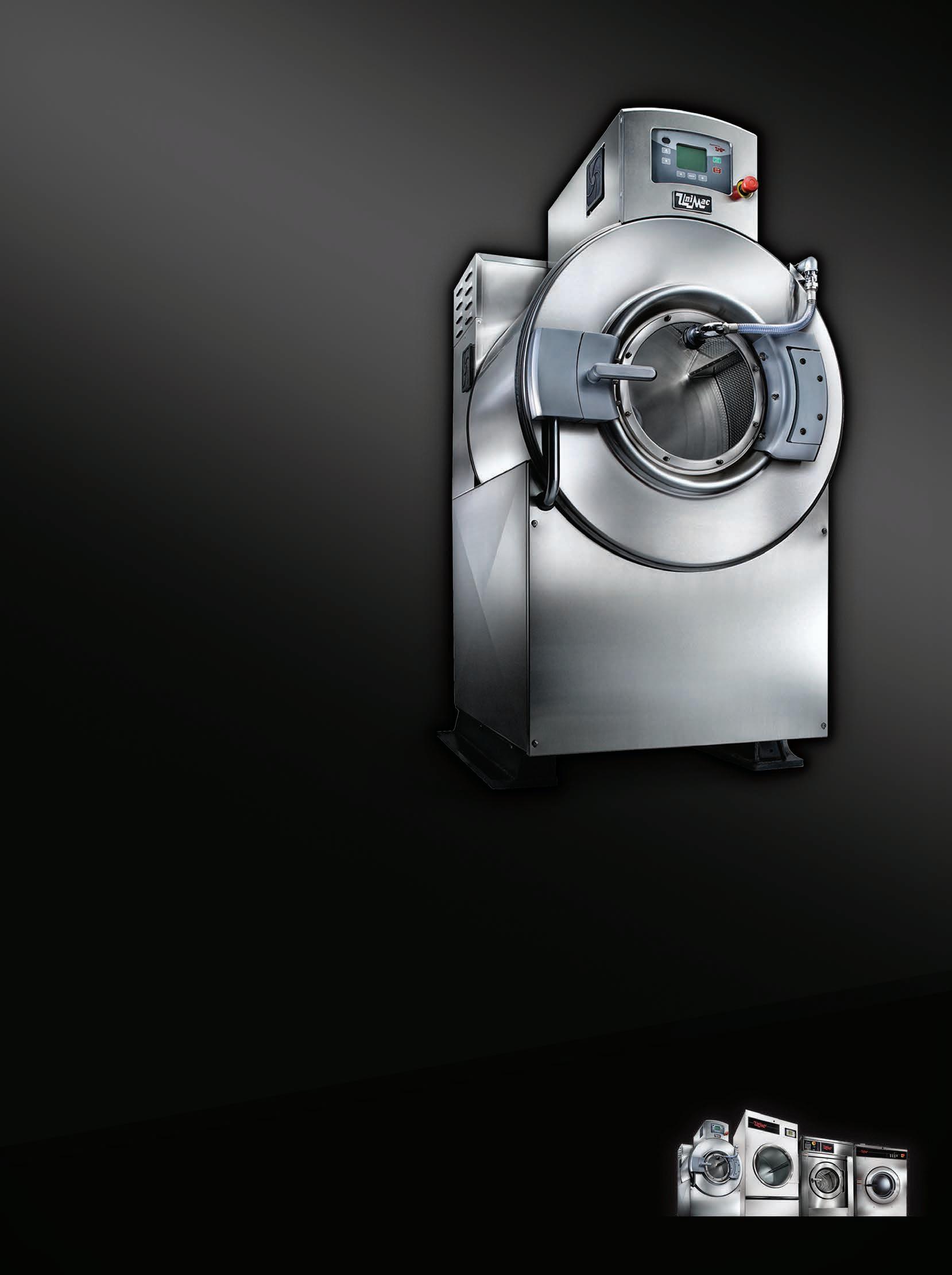
An inefficient rinse is money down the drain. With a combination of bath and spray rinses, new OPTispray ™ Rinsing Technology utilizes unique spray hardware and exclusive software to minimize the water and time needed to rinse a load while also delivering far superior rinse results. OPTispray uses less water, saving up to $2,110 in yearly utility expenses compared to popular models with only bath rinses. To lower costs even further, industry-leading 400 G-Force extraction delivers maximum water removal and increased throughput. Innovative features like UniLinc ™ paired with OPTidry ™ offer complete laundry room control, minimize operating costs and optimize efficiency to save you even more time and money. It all combines to deliver the industry’s absolute lowest cost of ownership. Incredibly-low monthly payments and a 4.50% FINANCE RATE now available on new UniMac washers and dryers. Limited-time offer.
Contact an authorized UniMac distributor today to run a laundry operating analysis and see how you can cut costs and save money. Visit UNIMAC.COM/OPTISPRAY or call 1-800-587-5458.
™
Tools f the Trade
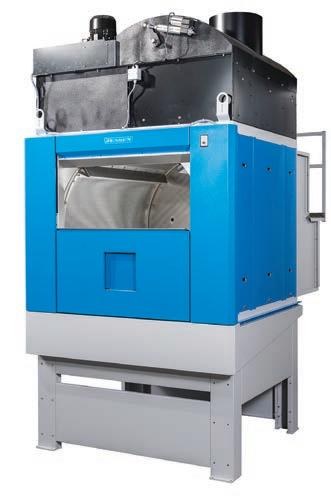
With its new WR series of dryers, JENSEN aims to help laundries reduce energy costs and increase drying efficiency. The equipment is designed so that energy bills can be reduced by up to 15%, and the new dryers have a 10% higher capacity for evaporation, the company says.
Features that contribute to this higher-performing dryer include frequency-controlled fans, variable recirculated air control, heat exchangers that can be fully integrated, and a well-insulated drum housing, according to JENSEN.
Additionally, a large drum diameter allows for an optimal drop curve for drying. The company says that these factors
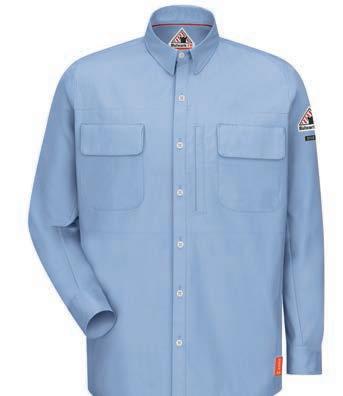
Bulwark, in partnership with Milliken & Co., has added new flame-resistant garments to its Bulwark iQ line of workwear. The apparel is breathable, lighter-weight and offers greater mobility and moisture management, the company says.
The iQ Series includes six knits and three wovens in both men’s and women’s styles.
“We embarked on this extensive journey and created the world’s most comfortable FR apparel, because FR wearers shouldn’t risk their lives just
Huebsch has introduced the HT200, a 200-pound tumble dryer for on-premises laundry accounts, the company reports.
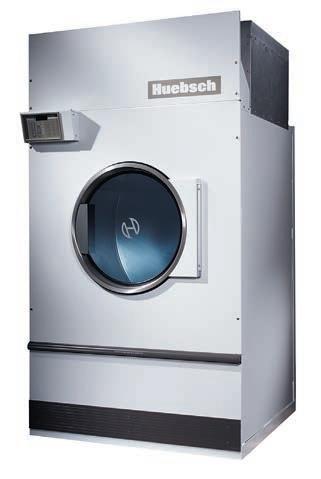
Designed to increase staff productivity and utility efficiency, the single-pocket dryer is available with Galaxy™ controls that feature 30 programmable cycles, three cycle types and reversing technology, which Huebsch says allows for greater drying consistency.
Over-dry prevention technology can be added to the system to ensure the dryer automatically shuts off once
contribute to an efficient machine with optimal airflow through textiles.


When designing these new machines, JENSEN focused on maintenance costs. In order to ease maintenance, the lint filter has been modified to have only one central attachment that allows for easy cleaning and replacing.
The company says that with the WR series, “drying has never been more efficient, ecological and comfortable...with all-time low costs per piece of linen.” www.jensen-group.com 850-271-5959
World Emblem International will be offering its high-visibility striping options—applied to uniforms worn in low-lit and potentially hazardous working environments—through its online catalog.
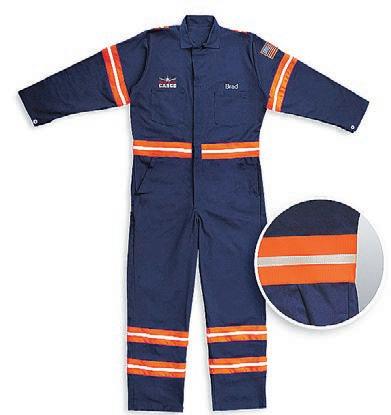
Ten available trims and 48 placement locations allow uniforms to be completely customizable, the company reports.



The new online ordering options are designed to completely streamline the ordering process, according to the company. After clients select their desired trim, garment type, placement of the stripes and additional branding options, the online catalog will generate a digital proof and a free quote within 24 hours.
The addition of the company’s online ordering system “will make
to be comfortable on the job,” says Chris Holcombe, Bulwark vice president and general manager.
The line, which the company says was developed after extensive field research and interaction with workers in occupations with elevated fire risk, debuted publicly at The American Society of Safety Engineers Trade Show in June, according to Bulwark. www.bulwark.com/iqseries 800-223-3372
Meese Orbitron Dunne Co. has released the new spring-loaded Poly-Trux® 28P-18, which features a plastic spring platform housed inside a 56-inch-long plastic cart.
The feeder truck fits across two flatwork feeder, ironer or folder lanes in order to allow increased efficiency of linen processing. The
combining all of your apparel decoration needs easier than ever,” the company says.
www.worldemblem.com 800-766-0448
the desired level of dryness is reached.
The HT200 features a high-performance heater box, sealed cylinder rims, a concentrated airflow pattern and a self-cleaning lint screen, according to the company. Huebsch’s Combustion Auto Response Equipped (CARE) system, which monitors for excessive cylinder temperatures, can also be added to the dryer.
www.huebsch.com/info 800-553-5120
Manufacturers: Have you introduced a new product? Revamped your system? Released a new catalog? E-mail your product news, along with a high-resolution image, to news@ americantrademagazines.com and we’ll consider publishing your news free in Tools of the Trade.

To address the degradation of flatwork ironer padding by residual chemicals on ironer chests, Tingue, Brown & Co. has developed the TingueFelt® ChemGuard Gold premium flatwork ironer felt.
The new product features a proprietary needle felt fabric that combines polyester, Aramid and heat-resistant fiber material with an Aramid scrim cloth.

According to the company, this results in a felt that can have a longer service life in laundries whose water conservation efforts often cause ironer felts to decay after repeated interaction with chemicals.

company says that by reducing bending and reaching by workers, the potential for injuries in the workplace can be reduced and productivity increased.
In an effort to help workers handle heavy, damp linens, the feeder truck includes a rust-resistant, steel-support rim. It is made from rotationally molded polyethylene that is 100% waterproof, according to the company. The springloaded truck also features non-marking rubber casters that come in a variety of colors. Custom colors and graphics are also available for this new product.
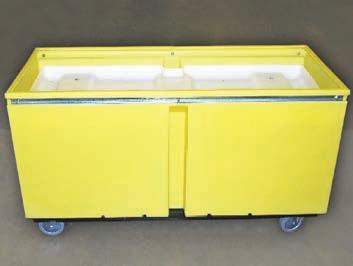
www.modlaundry.com 800-829-4535

TingueFelt ChemGuard Gold is available in 130-, 150- and 168inch widths at a standard weight of 24 ounces per square yard. The product is available exclusively from Tingue representatives.
www.tinguebrownco.com 800-829-3864
8 JULY 2014 | AMERICAN LAUNDRY NEWS www.AmericanLaundryNews.com
Spring-loaded laundry truck made for efficiency, ergonomically safe feeding
Online ordering process features option to add high-visibility striping to uniforms
Flatwork ironer padding developed to combat effects of residual chemicals
Large-capacity tumble dryer features options designed for better performance
New line of flame-resistant garments aims to increase comfort for workers New line of dryers built for efficiency, higher performance, easier maintenance
ing the new linen change policy to patients and their families somewhere other than the admission packet.
SIGNIFICANT RESULTS
Working closely with our laundry representative and in-house analysts, the LTF has tracked and monitored the linen usage for the past two years. Since the policy change in February 2012, UCDHS has reduced the average pounds of linen APD by more than three pounds. That’s a 12% reduction in linen used per patient. In September 2013 and November 2013, UCDHS expanded linen service to four additional clinics, so the total linen volume increased, but the health system still continued to reduce the pounds per APD.
CRUCIAL SUCCESS FACTORS

The success of the Linen Efficiency Campaign has been largely attributed to good communication and the close involvement of the LTF with each sector of the health system affected by the changes. The LTF continually updates nurse managers, conducts in-service training for staff and shares results with executive leadership.


Good communication is critical, especially when any procedural changes can have an effect on patient safety and satisfaction.
It has been important to check in with managers to ensure patient satisfaction scores do not drop and infection rates do not rise. The education component of the campaign highlighted additional benefits to the clinical staff, such as labor savings and environmental impact reduction.
In many healthcare environments, the discussion of costs and savings is nothing new to staff members, but the LTF gained staff interest by positioning the conversation around time savings and hospital sustainability.
TIPS ON OVERCOMING IMPLEMENTATION

CHALLENGES
As with most projects, implementation of the new linen program faced some challenges. Staff acceptance of changes in practice and policy was a hurdle, especially with staff members who had established less-efficient linen habits. To address this challenge, members of the LTF conducted routine linen audits on random departments once a week, looking for improper bed composition, linen storage and hamper usage.
The LTF remained flexible to customize solutions for each department since many deal with different issues given unique patient populations (e.g., neonatal intensive care units) and storage areas. Posters were provided for each department and
updated annually to remind staff members of the Linen Efficiency Campaign and the importance of their involvement.
The most recent posters focused on diverting all linen products from the trash and red bags to promote proper hamper use and retain linen. Having an LTF member on the floors opens a dialogue with staff members that has contributed ideas for future projects.
IMPROVING ON SUCCESS
As UCDHS moves forward with its Linen Efficiency Campaign, new products and processes will be evaluated to further improve

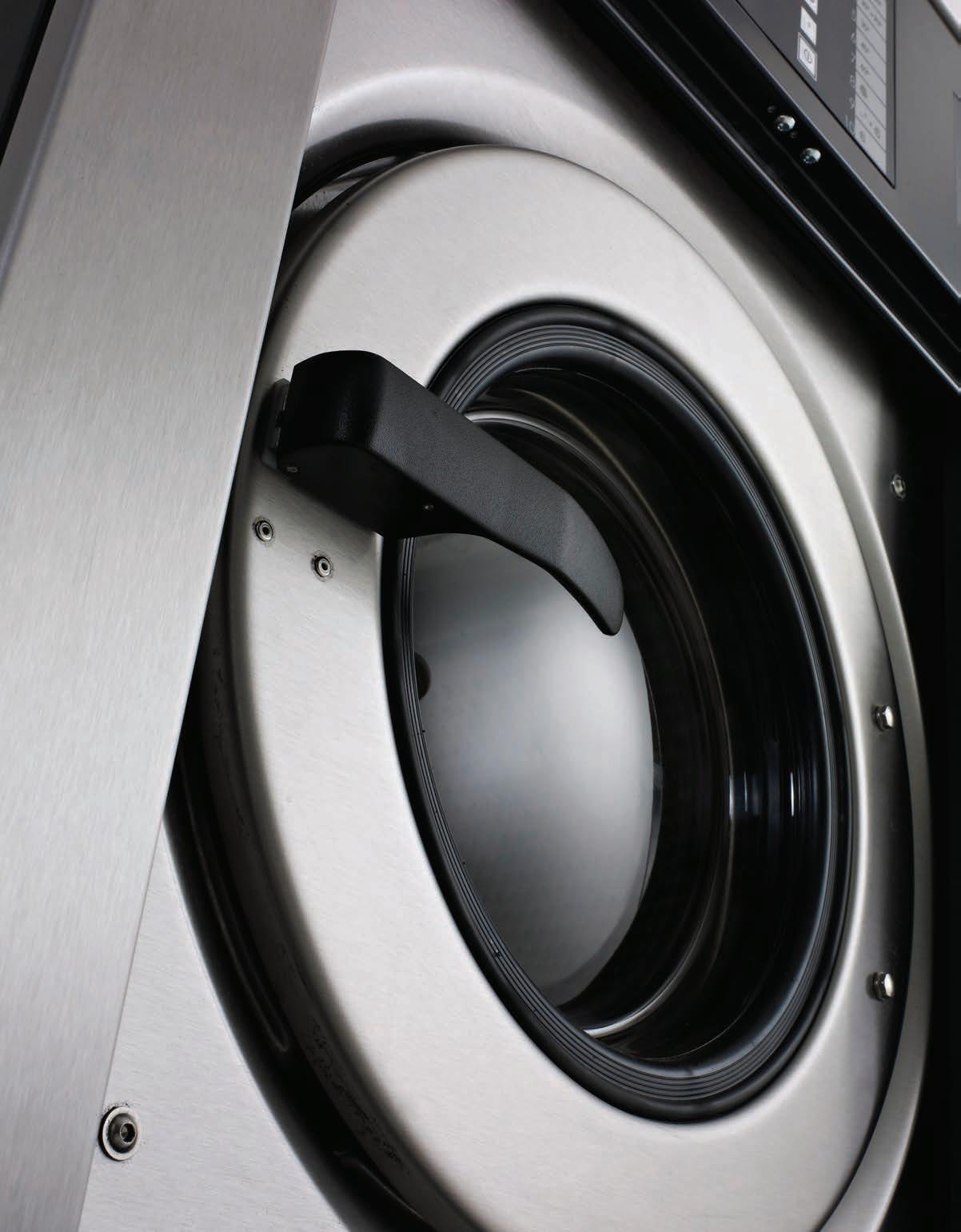
the health system’s linen utilization program.
For example, a reusable-pillow project has already diverted thousands of pillows from the waste stream and saved money in the trial departments. We can expect continued savings as more departments adopt the reusable pillows over the disposable counterparts. Both pillow types are offered to departments, but the LTF encourages use of reusables primarily and disposables when clinically necessary.
Reusable isolation gowns, surgical linens and warm-up jackets could be possible future projects,

if the cost analyses give the green light to a trial.
ACKNOWLEDGEMENTS
A special thank you to Nancy Jenkins from the American Reusable Textiles Association (ARTA), for her continued support and encouragement for ongoing research from the UC Davis Division of Textiles and Clothing; John Danby and Troy Taylor from UCDHS, for being leaders in the field of healthcare sustainability; and Paula Paiva from Angelica, for
her contributions to the success of this project.
REFERENCES

Encompass Group, LLC (2011). “Acute Care National Average Database.” ALN
Joanne Brasch is an associate instructor at UC Davis and sustainability researcher at UC Davis Health System. She is currently pursuing her doctorate degree at UC Davis in textile economics and environmental analysis, with specific interests in the industrial ecology of hospitals.

www.AmericanLaundryNews.com AMERICAN LAUNDRY NEWS | JULY 2014 9
DSS Dist Ad July 2014 jr page 7.75x10 Focused on providing prompt and thorough service, Dynamic Sales and Service aims to exceed expectations for our customers in Washington, Idaho, Montana and Alaska. Count on us through the entire process from new construction to upgrading your equipment. With industrial-strength IPSO ® machines that feature innovative technology, we can help maximize the efficiency and performance of your laundry operation to ensure your continued success. Contact Dynamic Sales and Service to upgrade to IPSO equipment today. TOGETHER, WE MAKE ONE DYNAMIC DUO FOR LAUNDRY SUCCESS. dynamicss.com • 800.595.0253 12910 NE 125th Way, B-3 • Kirkland, WA 98034 INDUSTRIAL BY DESIGN 4534-4_Distributor Print Ad-DSS_July_vF.indd 1 6/3/14 9:44 AM ALN_Jr Page.indd 1 6/3/14 11:19 AM Continued from Page 1 12%
Brasch
ALM annual conference highlights challenges, opportunities for
professionals
BY THERESABOEH L , E DITOR
WESLEY CHAPEL, Fla. —
Celebrating its 75th anniversary, the Association for Linen Management (ALM) hosted its annual educational conference in mid-June at the Saddlebrook
Resort near Tampa, Fla.
The event included three days of educational and networking opportunities—including general sessions, breakout sessions and social activities—all with the goal of helping laundry/linen professionals understand the growth
CLM
opportunities and challenges facing the industry.
More than 110 attendees were present at the conference, according to Linda Fairbanks, ALM executive director.
“This destination is the perfect setting to learn what your cus-
tomers may be experiencing as a result of healthcare reform and to explore what potential impacts might reach your laundry,” Randy Wendland, CLLM, ALM president, wrote in a welcome letter. He added that the conference aimed to address issues affecting laun-
dries serving all market segments and to provide creative opportunities for growth.
DAY ONE
The conference opened with a golf tournament on the Palmer Course, with proceeds benefiting the ALM scholarship fund for the American Laundry and Linen College. The day’s education breakout sessions covered topics such as lean processing, succession planning and linen’s role in valuebased purchasing.
An afternoon general session focused on the impact of the Affordable Care Act on the industry. Later, attendees had the chance to reconnect with long-time colleagues and to meet new colleagues at a welcome reception held onsite at the resort.
DAY TWO
On the second day, ALM offered attendees the chance to tour the Saddlebrook’s laundry facilities. Rudolf Mompoint, laundry manager and assistant executive housekeeper at the resort, showed tour participants the equipment and
workflow in the facility. He says during busy times, the laundry can process 4,000-5,000 pounds of linen per day for the resort’s various facilities.
The laundry employs 12 workers plus two delivery truck drivers. Equipment includes six washers: four at 125 pounds, one at 275 pounds and one at 65 pounds. The facility’s dryers include three 175-pounders and a 95-pounder. For finishing, the laundry has one feeder, one flatwork ironer and one folder. Smaller items like hand towels and washcloths are folded by hand.
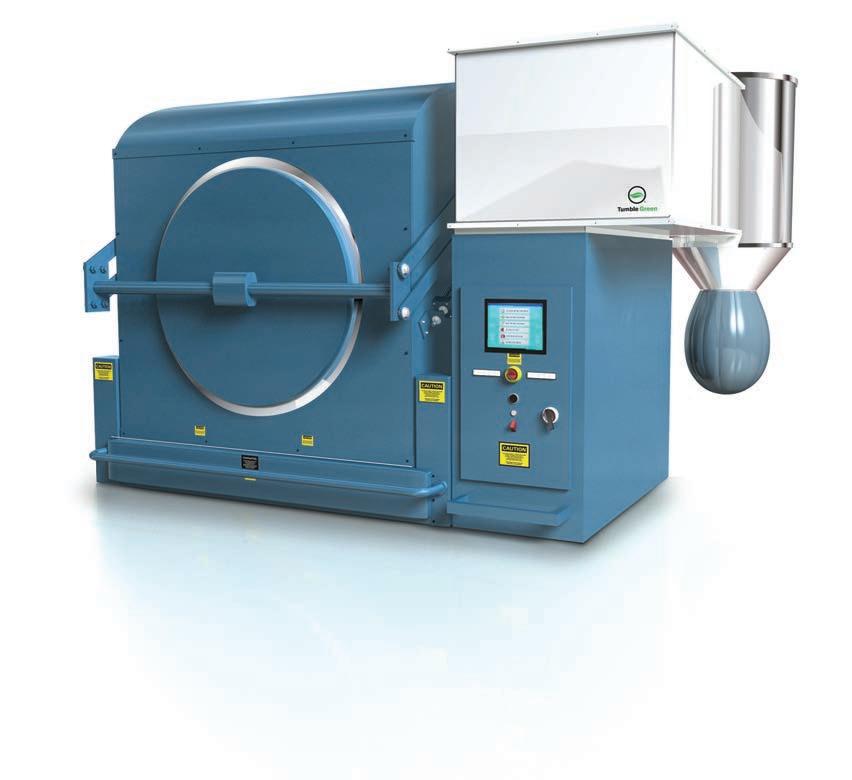
Mompoint says the resort’s laundry building was built after its former facility was destroyed by fire. The equipment has been in use since the facility opened more than a decade ago.
Educational breakout sessions covered new business opportunities in the long-term care market; the lifetime value of a custom-
10 JULY 2014 | AMERICAN LAUNDRY NEWS www.AmericanLaundryNews.com
MEETS THE CHALLENGE CLM leads the way in advancements in dryer technology and provides a replacement for your Challenge equipment. Our Model 165 fits the Challenge footprint perfectly and gives you technology that no one else o ers, including a fully integrated production management system. Take the challenge with CLM. • Upgraded heat system with improved e ciency and lower emissions • Micro-Command III PLC upgrade with LAN and Blue Tooth communications • PLC now prepared for flow process management systems • 2-stage variable speed basket drive with 3-port load door. • Soft start to reduce component wear, lower utility use. • Heavy-gauge basket, includes removable steel basket panels • Long-lasting ceramic coating available on removable basket panels. • Configurable exhaust location • Configurable control/burner location Call CLM to replace your Challenge dryers, or for information on our broad range of industrial dryers.
211 Erie Street, Pomona, CA 91768 | T: (323) 232-2417 | www.clmco.com ALN_Jr Page.indd 1 4/8/14 4:42 PM
Model 165 shown with Tumble Green configuration
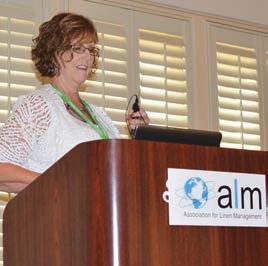
Linda Fairbanks, ALM executive director, greets attendees. (Photos: Theresa Boehl)
laundry/linen
er; mergers and acquisitions in healthcare; managing staff in times of change; and developing new business in the hospitality industry. The morning’s general session, The Playmaker Mentality, featured inspirational speaker Dave Davlin, who called on unsuspecting conference attendees for his highenergy demonstrations.
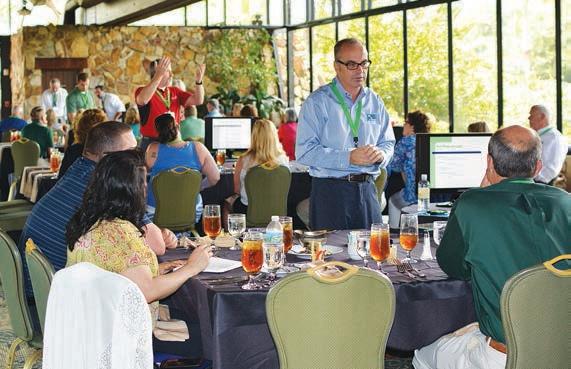
For lunch, attendees were invited to a “Lunch and Learn” session, an event new to the educational conference. A group of speakers provided rotating mini educational sessions on various topics while attendees dined.
The first dining group listened to Today’s Technology in Flatwork Automation by Milnor/Chicago Dryer, Lean Process Improvement by FV Consulting, Enhance Your Productivity with Spindle’s Automated Monitoring by Spindle, and Cart Basics 101: Advantages of Lint Filtration for Laundry Dryers by TQI.
The second dining group was presented with The Importance of Proactive Maintenance by G.A. Braun, Construction Budgeting: Retrofitting for Your Plant by Laundry Design Group, Determining Ozone’s Application in Your Plant by Guardian Manufacturing, and Textiles 101: An Introduction to Textile Manufacturing and Specifications by Calderon Textiles.
Later, attendees gathered for the evening’s social activity, the Cabana Crawl, with refreshments provided by MIP and Fashion Seal Healthcare.
DAY THREE
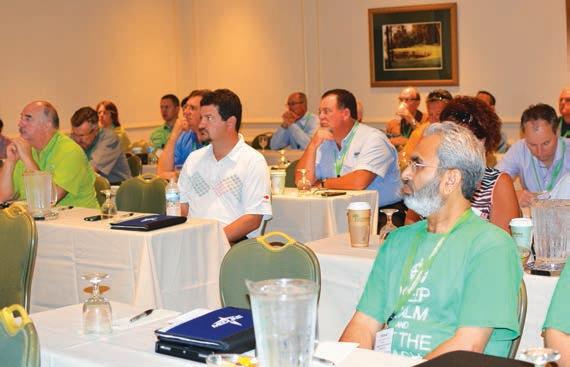
The final day’s educational breakout sessions covered linen usage tracking systems; the value of reusables; PowerPoint as a sales tool for linen-based offerings; business plan development; building a foundation to thrive; and managing a disengaged workforce.
For the afternoon’s “Breezeway Chat,” an open-format Q&A general session was offered from a panel of participants that included Doug Story; David Bernstein, Turn-Key Industrial Engineering Services; Jeff Cohen, MedAssets Advisory Solutions; and Glen Phillips, Phillips & Associates. Mike Justice, Venus Group, moderated the session.
That evening, ALM presented its annual awards reception and dinner. Attendees were invited to browse association memorabilia, and motivational speaker Nick Hall presented I Know What to Do, So Why Don’t I Do It?
The event closed with the announcement of ALM’s award winners. For the first time ever, the Heywood Wiley Laundry Manager of the Year award went to two recipients as the result of a tie in voting: Richard Hoelscher, Parkland Health and Hospital System, and Vicky Vessey, Textile Care Services. Receiving the Allied Tradesperson of the Year award was Robin Holmes of Encompass Group. ALN
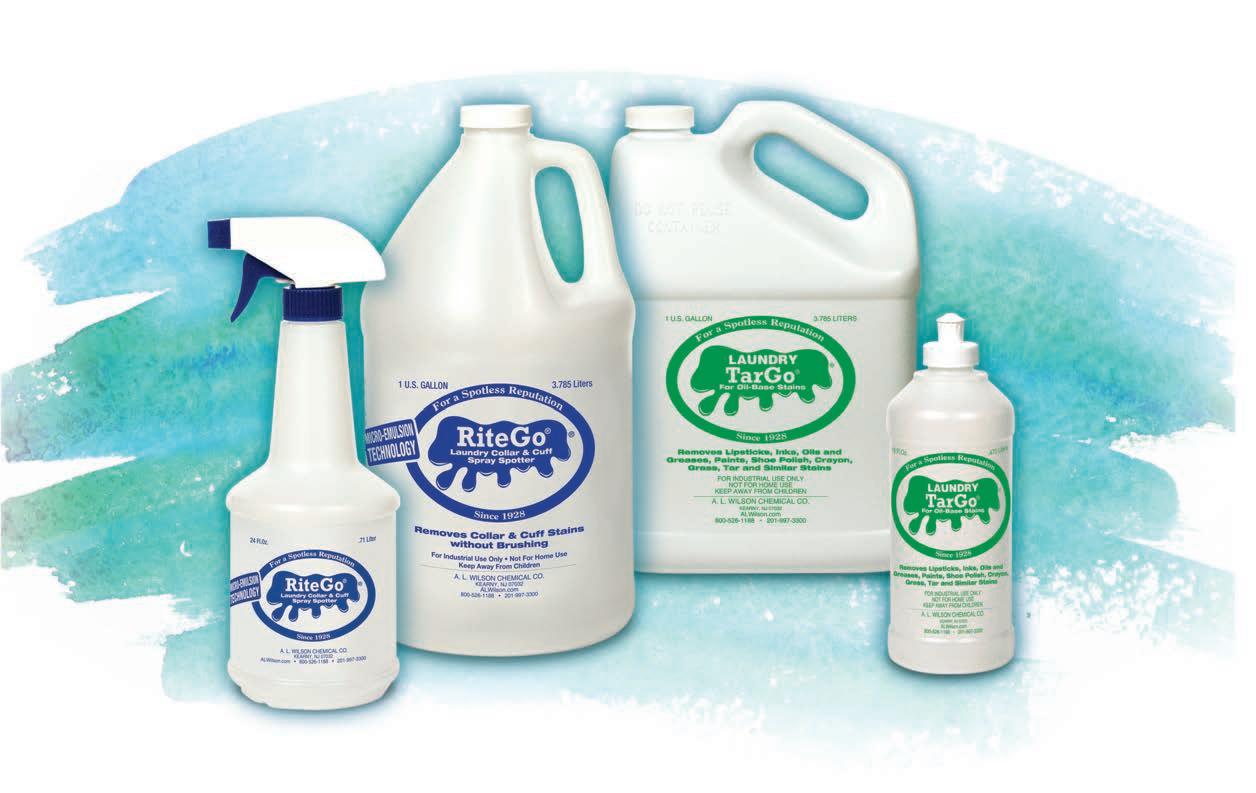
RiteGo® laundry spray spotter quickly penetrates to absorb collar & cuff stains, perspiration, ground-in soil and more, all without brushing. Turn to Laundry TarGo® to remove any tough oil based stains that remain behind. Use The Laundry Two with confidence on shirts, wedding gowns... anything you're washing or wetcleaning.
are
free, biodegradable, noncombustible and California 2013 VOC and Prop-65 compliant.
Use them to deliver stain-free laundry and wetcleaning. You'll build your reputation for quality - which is what keeps customers coming back.
www.AmericanLaundryNews.com AMERICAN LAUNDRY NEWS | JULY 2014 11
When dealing with laundry stains, your reputation rides on getting the outstanding results The Laundry Two deliver.
RiteGo
Both Laundry TarGo and
chlorinated-solvent
FROM COLLARS AND CUFFS THE LAUNDRY T WO ™ ARE RIGHT FOR YOU! TO THE REALLY TOUGH STUFF... FROM COLLARS AND CUFFS THE LAUNDRY T WO ™ ARE RIGHT FOR YOU! TO THE REALLY TOUGH STUFF... To learn more, visit ALWilson.com or call 800-526-1188 A. L. WILSON CHEMICAL CO. Become a STAIN WIZARD at ALWilson.com ALN_Jr Page.indd 1 2/5/14 3:59 PM
Presenters speak at the “Lunch and Learn” event, new to ALM’s annual educational conference. Attendees of ALM’s annual educational conference listen to a presenter during a breakout session.
PANEL OF EXPERTS
Cleanliness during storage, transport
ed to your facility? What does the inside of the transporting vehicle look like? What do clean-linen carts look like? Is there an approved infectionprevention guideline supported by facility and vendor staff, including clean-linen carts completely covered while in transport?
When the linen item arrives to the patient, all staff members who have supported the cleaning, storage, distribution and handling of that linen item should feel confident that they’re giving the patient the very best product. It’s the safe and right thing to do.
time to overreact. The guidelines that you need as processors have already been written and are readily available. In most cases, the smart operators have already implemented and are maintaining these programs.
employed in this case, if any, were seriously deficient.
Alinen/laundry service’s highest priority is to ensure that linen for patients is clean in appearance and guaranteed germ-free.
Hospitals, clinics, surgery centers and doctors’ offices have never been busier. How can we demonstrate this most important service for such environments on a daily basis?
My top six “must do’s” and observations are:
1. Frequent non-scheduled/ unannounced inspections of your self-operated or vendor laundry operation, from the point of soiled-linen drop-off to a clean-linen cart ready for transport. With this should come clear and concise communication from laundry management regarding any inspection issues that need follow-up action plans, such as the following: dust control; poor visual quality of linen items; inaccurate bleaching/disinfecting dispensers; laundry employee infectionprevention concerns; and a lack of documentation for equipment preventive maintenance or replacement.
2. In the case of vendor laundries, how is linen transport-


3. For self-operated laundries, is there a very clear and distinctive visual difference between the soiled and clean sides of the laundry? What structurally separates the two areas? Is there an approved infection-prevention guideline supported by facility and department staff defining the purpose of these two areas?
4. What does the clean-linenroom storage area look like? Is your first impression that it is clean? Will an inspection support that? Are all cleanlinen-room carts and shelving completely covered?
5. How is your clean linen distributed throughout the facility? Are carts completely covered at all times while in transport? What do the “final destination” storage areas, carts and rooms look like? Are they scheduled for cleaning? Is the cleaning completed? Do inspections support that?
6. How do you handle clean linen at the point of use? Has support and clinical staff been given orientation and training on the correct handling of clean linen?
Think of it this way: Would you allow your mother to use that linen item?
If you feel that you don’t need a good program, think again! Get copies, integrate the procedures into your process and maintain them. The patients, of course, are the first concern; however, your colleagues who were involved in this preventable disaster have had their worlds turned upside-down forever!

So what should you do? Chances are you’re already in some semblance of compliance just by default, so an approved standards program should be fairly easy to implement and maintain in your plant. You can bet it’s a lot cheaper than explaining to a jury why you shouldn’t be responsible for the deaths of innocent children, not to mention having to live with yourself!
The question is timely, although it focuses on transportation, when it should cover everything from the healthcare facility’s loading dock back to the bed!

My comments reflect my opinion based on observations and experiential data from my world. No judgment is implied or intended.
We have all heard of the tragic deaths of several young people in a hospital in New Orleans from what has been described as a lapse in acceptable laundry procedures. Horrifying as this news is, we must put things into the proper perspective.
Our industry has provided billions of pounds of clean and hygienic linen products to healthcare facilities for decades. This is not a time to panic; this is not a

This was an isolated incident exacerbated by carelessness and a lack of following accepted practices. We will probably never know what really happened, as very little factual information has been released and the slant has been self-serving to say the least. The one fact that jumped out at me was that the return carts (trucks) had no poly liners! Having no poly liners in itself is a serious breach of acceptable procedures. This to me is a huge red flag and indicates that the systems
The end result of laundry processing is clean linens. As you achieve this goal, there should be extra steps put into place to ensure cleanliness. One thing that we try to do is keep the linen on shelves and wrap the items if they will be stored for a long period of time. Also, when the shelves are empty, wipe and clean them so dirt, dust and lint doesn’t collect and soil your linen.
Another way to keep linens clean, especially in transit, is to wrap your carts in plastic. There are vendors that carry these liners for baskets and covers, which ensure that the linens will stay clean while being transported to the chosen destination.

ALN_Tab_1-4_H.indd 1 7/16/13 3:58 PM 12 JULY 2014 | AMERICAN LAUNDRY NEWS www.AmericanLaundryNews.com
“As managers, we know that delivering clean, safe products means extra vigilance and care even after linens are washed and dried. What measures should we be taking to make sure linens are kept clean during storage and transport?”
Hotel/Motel/ Resort Laundry James Brewster, RLLD The Resort at Glade Springs Daniels, W.Va.
Consulting Services
Sam Garofalo Technical Consulting Associates Charlotte, N.C.
GUIDELINES
“THE
THAT YOU NEED AS PROCESSORS HAVE ALREADY BEEN WRITTEN AND ARE READILY AVAILABLE.”
—SAM GAROFALO
Long-Term Care Laundry
Brian Barfoot
Aberdeen Village/ Aramark Olathe, Kan.
Always try to keep things disinfected as much as possible, especially on the clean end of your laundry. Your chemical vendor could give some insight on what products work best for your work environment. For instance, folding tables that are made of wood or plastic may require a certain chemical for disinfection.
The extra effort required for these tasks will pay for itself in the end. Stay safe and clean.
ination of linen if proper training, cleaning and procedures are not enforced.
Be sure to clean transport or distribution carts with a hospitalgrade disinfectant prior to loading the carts with the clean linens. Cover the carts to keep the linens from airborne contaminants.
Enclosing the linens from the bottom up helps keep them clean, depending on the cart manufacturing. If it’s a mesh-like cart, the wheels can kick up dirt, water, etc.
Covers used for the clean linens require routine cleaning. A hardsurface cover can be wiped down
with a hospital-grade disinfectant cleaner; a soft-surface cover may be washed. If the storage room is dry and clean with proper airflow and does not have much personnel traffic, cleaning frequency would be less than if storing in an area such as a hallway or dock area with more potential for airborne dirt and human contact. Wherever the storage may be, cleaning and disinfecting procedures—for the carts, floors, vents, covers and general area—are necessary.


Routine hand washing for personnel transporting the clean
linen and distributing the linen helps prevent contamination.
Providing waterless hand sanitizers in transport trucks and storage areas or in closets for use prior to transporting linen carts or touching the linen helps keep the linens clean.
Evaluate the transport route from drop-off from the laundry to the storage area, including time from drop-off to storage and location of stopping points during the transportation process. If clean-linen carts are dropped off at an outside dock area and not attended to for an extended
period of time, there is potential for the linen and/or the carts and covers to become contaminated. It is important that the clean linen is transported to the clean, dry storage area in as short a time as possible.
Conduct routine education and training on the importance of hand washing, cleaning, transporting and keeping aware of what the linens may be exposed to. Install hand sanitizing stations and posters in areas where the clean linens are transported
The obvious answer is to put a cover on the clean linen. Some facilities wrap bundles and some line the carts and tie the top, while others cover the linen, cart and all. In any event, the linen should not be exposed to the atmosphere.
Trucks should be disinfected each day or after each run. The disinfectant doesn’t cost a lot, and it doesn’t take much time. However, there are probably quite a few trucks that are not disinfected.
The location where the day’s shipment of clean linen is delivered needs to be as carefully monitored as the processing facility or the user’s facility. Sometimes the linen is kept outdoors for hours and not secured, or the room is lacking in hygiene. It could be exposed to the community atmosphere through wind and other kinds of weather. Also, if it isn’t secured, the linen could be pilfered.
Laundries should have pest control service so customers can have a secure feeling about their linen.
Be sure the carts are clean and disinfected. Housekeeping must be done with protecting the clean linen in mind. Letting lint balls float in the air over clean linen is a bad idea. In terms of sterile linen, the industry doesn’t expect it, but some individuals do.
Common sense must prevail.
Washing of the linen is only one part of the process of providing clean linens for storage. Each stage in the linen flow cycle from wash, finishing, transport, storage and point of use involves various opportunities for contam-



www.AmericanLaundryNews.com AMERICAN LAUNDRY NEWS | JULY 2014 13 See EXPERTS on Page 14 ALN_Jr Page.indd 1 5/30/14 10:57 AM
Commercial Laundry
Richard Warren
Linen King Conway, Ark. Chemicals Supply
Carrie Armstrong Ecolab Eagan, Minn.
and stored. Train, educate and issue continued reminders of how important it is to keep the linens clean in the facility. It is a team effort, from the laundry to the point of use.
dures that should be automatic, everyday protocol within our laundries when processing linen, textiles and uniforms for our customers. As laundry owners and/ or managers, it is our duty and obligation to constantly deliver clean, sanitized, soil-free products to our customer base.
As managers, we go to great lengths to ensure we are processing clean linen, textiles and uniforms. This includes implementing needed steps so no cross-contamination occurs on the clean side once the product is processed. For starters, we need to:
• Process our soiled linen in a separate area from our clean linen.

• Process using chemicals that are more friendly to our environment.


uct to our customers, we need to make sure the cleanliness of our product remains intact by polybagging the uniforms and linen. It is important that all clean products, once processed, are stored in a designated area that is far from the soiled area.
Our fleet also plays an important role in ensuring the delivery of clean products. Steps and procedures need to be implemented and monitored to make sure the bins and hampers used for transporting product to the enduser are cleaned on a daily basis. Trucks also need to be kept clean of trash and bacteria.
cessful, we must be vigilant in mandating procedures to ensure we are processing and delivering clean products to our customers.
protective liners help to contain the linen from exposure.
When the cart is fully loaded, the plastic liner should be securely knotted. This further ensures that clean linens are fully contained during transport. This method of packing and transportation protects the textiles from physical damage and minimizes microbial contamination from surface contact or airborne deposition.
Recently my son came home from college and brought with him a present for my wife—a large, plastic laundry basket overflowing with his dirty laundry. After the basket was emptied, my wife, a nurse practitioner in neurology, immediately took several disinfectant wipes and began the long-overdue task of wipe-down and cleaning of the dreaded plastic laundry basket.
While watching this, I was reminded of the necessary proce-











• Mandate procedures on our soiled-linen side that will reduce waste and have an impact on our carbon footprint.

• Outfit the employees throughout our facilities in crisp, clean uniforms and gloves to help reduce the possibility of any type of cross-contamination of bacteria onto the clean product.
• Strive to keep our plants clean. Prior to delivering clean prod-
Many plants today are also looking to the Healthcare Laundry Accreditation Council (HLAC) and the Textile Rental Services Association (TRSA) to have their processing plants inspected and to undergo an accreditation process to ensure and demonstrate that their plants meet the demands of our industry and those of customers for hygienically clean products. For more information on this process, I would strongly suggest contacting HLAC or TRSA.
While the healthcare market is changing, and we’re constantly looking for ways to make ourselves better, we need to keep in mind that in order to be suc-



In the healthcare laundry business, the wash process is only one step for providing hygienically clean linens for patient care. How clean linen is handled once it has been laundered and processed is critical in today’s healthcare environments.

With the many antibiotic-drugresistant microorganisms that invade our environment today, maintaining clean linen is essential for good patient care. Proper handling and distribution of clean healthcare linens is crucial for the patient.
Within the laundry, processed clean linens need to be placed in properly sanitized linen-distribution carts. Prior to loading clean linens in these bulk-linen carts, each cart should be lined with properly sized plastic liners. These

Just like the clean-linen transportation vessels, delivery motor vehicles must also be cleaned and sanitized prior to the loading and securing of clean-linen carts for transport.
Once received at the healthcare institution, clean linens need to be stored in a clean-linen room or storage area. The plastic cart liners should only be opened as linen items are needed for replenishment, or for loading fresh unit carts for distribution throughout the healthcare facility. Properly sized and secured cart covers should always be used to protect the clean linens during internal transport, as well as to protect them from improper handling and contaminants.
Even after all these measures have been taken to ensure that healthcare patients always receive fresh, clean linens, caregivers often place piles of clean linen
MAKE SMALL SPACES BIG
Feed, iron, fold, stack & accumulate … all with one machine!
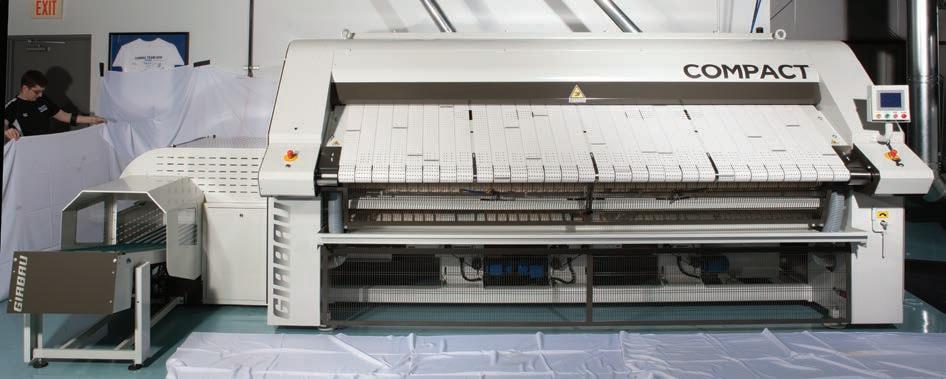
Introducing the Compact 5-in-One Ironing System
It’s like nothing else. The Girbau Industrial Compact 5-in-One Ironing System delivers a compact design and superior flexibility that allows medium- and high-production laundries to quickly feed, iron, fold, stack and accumulate. It processes a variety of items using up to four lanes and offers a two-lane crossfold option. This space-saving system generates processing speeds of up to 82-feet-per-minute; is available in 24-, 32- and 48-inch diameters with 102- and 130inch finishing widths; and features natural gas or liquid propane (LP) heat sources.
Contact Girbau Industrial today to see how the Compact 5-in-One can deliver more productivity to your laundry! (800) 256-1073 • www.girbauindustrial.com
CompactAd-ALN-sized.indd 1 6/9/14 8:05 AM ALN_Tab_half.indd 1 6/9/14 9:28 AM
14 JULY 2014 | AMERICAN LAUNDRY NEWS www.AmericanLaundryNews.com
Page 13
Experts Continued from
Uniforms/ Workwear Manufacturing
Scott Delin Fashion Seal Healthcare Seminole, Fla.
Healthcare Laundry
Michael Kirsch, CLLM
HCSC Laundry Allentown, Pa.
in chairs, on bedside tables and on windowsills, just to save a few steps in their daily routine. When this is done, the chain of supplying clean linen for the patient is then broken. That’s pretty sad when you think of all that we in the laundry business do to try to supply hygienically clean linen for their patients.
contact handling of linens once they are cleaned is part and parcel of this process. Material handling of finished linens has evolved to a high level in our industry and is available for the processing of everything from garments to stacks of sheets. But sooner or later, someone is handling the linen, and if one institutes and maintains proper clean-linen handling processes, one does not have to incur the expense of not having such processes.
The poly-wrapping of linen is commonly seen in F&B plants and certainly provides an effective
barrier as linen is handled and transported. What happens to all this poly-wrap may be a “green” concern to some, and if the linens being wrapped are damp or wet, the storage of these linens in a non-permeable-type wrapping may lead to a mold/mildew condition.
With that, we are left with common sense and the basic principles of storage and transportation of linens used for decades.
Clean linen is always transported in a covered container designated as clean. This clean designation comes from a docu-
Taking a couple steps back in the process, it is important that the statement starts with “properly washing and drying linens.” The storage and transportation of linen becomes a moot point if the linen is not processed to a hygienically clean state. Hygienically clean means “free of pathogens in sufficient numbers to cause a human illness.”
If the mission is to deliver linens that meet this standard, then the processed linens must meet the standard once dried. Their condition will not improve downstream during the storage/delivery process. Technically, the only way to confirm this is through sample testing. While testing a base set of samples may not confirm that processes in place are being accomplished 100% of the time, testing will at least show that the washing/drying processes used in a facility have the ability to produce hygienically clean linen.
With a process now in place that identifies the product is hygienically clean, what can we do to keep it that way? It starts with people. First are the operators coming into direct contact with the linens who should follow proper hand-washing procedures and handling processes and be in good health themselves.
Maybe the timing was right for this panel question, but recently a study came out regarding the transmission of norovirus in the foodservice industry. The article identified the most common causes of transmission as ill employees coming into work, or improper hand-washing procedures.
I am of the opinion that to some level, the same applies to operators in a laundry. Are we making sure our employees follow proper hand-washing procedures?
Are we training our staff to know that we do not want them coming to work if they are ill, and sending them home if they show up for work sick? Do these policies extend to apparel policies? There are a host of regulations to protect staff from soiled-linen conditions. What are we doing to protect the linen from the staff?
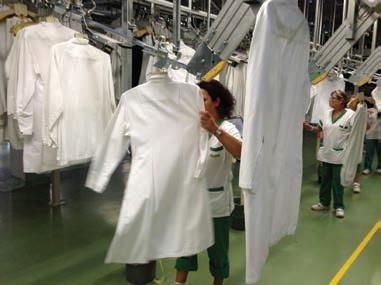
Working to reduce direct-

mented cleaning process the container goes through before clean linen is placed in it. If it can be shown the container is a “clean only” container, it may not have to be cleaned after each use, but a documented process of keeping the “clean only” container clean needs to be identified.
Storage of linen is another matter. As noted earlier, linen put away damp could develop an issue during storage. Also, linen in a pack that may have a stain or other substance not removed in the wash process could lead to issues in storage.
But as far as I know, the only regulations regarding the shelf life of linen and the need to reprocess it involve linen designated as sterile. So if linen is stored in the same clean designation process that one follows with transportation, I would say linen could be stored for a pretty long time and retain a clean designation. ALN
European Laundry
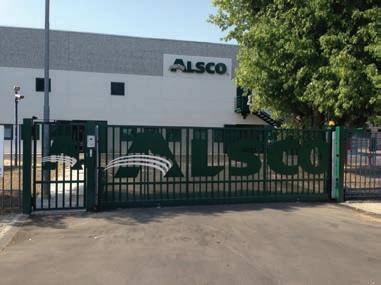
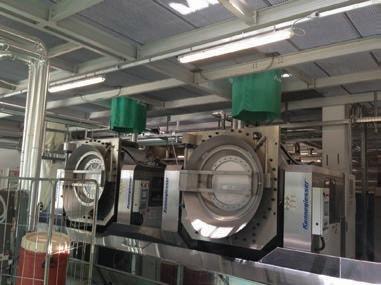
October 6–11, 2014 Seven Great Plants, One ‘Magni co’ Destination Visit technologically advanced and high-productivity facilities serving the industrial, F&B, hospitality and healthcare markets at the conclusion of the EXPOdetergo International Show in Milan: Alsco Italia (2), Hotel Service SRL, Lavanderia Donati, New Cleaning, Orio Team, So.Ge.Si Overnight stays will be in: • Lake Como: popular aristocrats’ retreat since Roman Empire • Verona: U.N. World Heritage Site for value, importance of historic buildings • Venice: 117 islands, 177 canals, 409 bridges • Florence: Cradle of the Renaissance, palaces, medieval architecture Tour Details & Registration: www.trsa.org/ItalyTour, 877.770.9274 Trade Show: https://bit.ly/EXPOdetergoTRSA Alsco Italia, Merlino Lodi, outside Milan ALN_Jr Page.indd 1 5/8/14 4:15 PM www.AmericanLaundryNews.com AMERICAN LAUNDRY NEWS | JULY 2014 15 FOR MORE STORIES FE ATURING OUR PA NE L OF EXPERTS, VISIT WWW.AMERIC A NL A UNDRYNEWS.COM! Equipment Manufacturing Gary Ostrum G.A. Braun Syracuse, N.Y.
TRSA
Tour (Italy)
BY BI LL BROOKS
Management’s No. 1 priority is keeping their customers happy, whether they’re hotel guests, residents of long-term care facilities or hospital patients. A well-run on-premises laundry operation is vital to creating a clean, comfortable and enjoyable experience for these customers.
One of the best ways to ensure a laundry is operating as effectively as possible is through benchmarking. By taking time and investing in the appropriate resources to set benchmark standards, an OPL manager can save time and money and run a more efficient business.
ESTABLISHING BENCHMARKS
Without a doubt, the most important piece of the benchmarking puzzle is determining labor efficiency. It’s estimated that labor costs represent 50% of a laundry’s operating budget. Given
it’s often the most expensive cost, establishing measures to optimize your labor process is most critical. Other factors that are important in setting benchmarks are equipment usage and the types of cycles being programmed.
For managers just starting to benchmark, their authorized laundry equipment distributor or chemical supplier can help determine what cycles are best for their unique industry and operation. These knowledgeable professionals will be able to share industry standards and ensure you have the right cycles to meet your linen needs. For instance, it is common for an OPL in a healthcare setting to process 1.2 loads per hour, while it is closer to 1.5 loads per hour for hospitality venues.
If staff is not being as productive as it could be, not only can this cost you money, but the impact it has on the customer can be substantial. Consider this: If a hotel’s staff is not producing the adequate
loads per hour, guests may need to wait to check in until the appropriate linens are cleaned and processed.
Additionally, the use of an advanced control system, which provides detailed reports and offers many features to increase staff productivity, can be a great tool to evaluate operational baseline measurements.
MONITORING BENCHMARKS
If managers can spend even a short period of time establishing these benchmarks, then monitoring and identifying areas for improvement becomes a much easier process.
In addition to helping evaluate baseline measurements, equipment featuring an advanced control system can aid in monitoring the standards in place. Such systems can actually generate detailed reports on how well the laundry is performing, which helps significantly reduce the amount of time a manager needs to commit to monitoring.
Advanced controls also make operational information available


immediately with on-machine displays and have one-touch operation, making it simple to select and start a cycle. These features can help aid laundry staff in being as productive as possible.

Hershal Patel, along with his father Dennis Patel, owns and operates four hotels on the East Coast. In their newest hotel, the Residence Inn by Marriott of Chicopee, Mass., the partners installed equipment with advanced control systems to more efficiently run their business. The partners agree that using equipment with innovative technology has made all the difference.
“It was an intriguing concept to us because it provided the ability to measure efficiency in the laundry operation. This is something that we know is lacking in our other hotels. The wireless network allows us to get a first-hand look at the laundry operation and is a valuable tool for employee productivity,” says Hershal Patel.
IMPROVING BENCHMARKS THROUGH TECHNOLOGY



Knowing an operation’s bench-







marks is one thing, but improving the laundry’s performance is another. While it may seem like an intimidating task, recent technological advances can help positively impact an operation’s bottom line. More than 75% of commercial laundry managers and distributors believe OPLs over-dry linens by more than eight minutes per cycle. By installing tumble dryers that feature integrated moisturesensing technology, a manager can take much of the guesswork out of dry times, and will save on labor and energy costs and extend the life of the linens.
When this technology is paired with an advanced control system’s reporting, a manager can see whether that guideline is being followed, or if staff is programming in extra drying time “just to be safe.”
“As compared to our other properties, we have seen a measurable difference in less drying time as a result of the 400-G-force washers coupled with the dryers’ over-dry prevention technology.
16 JULY 2014 | AMERICAN LAUNDRY NEWS www.AmericanLaundryNews.com
OPL 101 Measuring operations for O PL success Download Magazine Central and read American Laundry News on your iPad or Android Tablet Step 1: Go to your App Store and type Magazine Central into search bar Step 3: Open the Magazine Central App Step 2: Click the box to install the app (you won’t have to do this again) Step 5: Click Download Step 6: Click View Step 4: Type AmericanLaundry News into the search bar The app stays on your tablet. Check back monthly to download the latest issue. Step 7: Read & enjoy! 0414aln_Mag Central tab half.indd 1 3/12/14 4:59 PM See OPL 101 on Page 19 Setting benchmarking standards can help businesses save time and money
MOD
sales managers
ASHTABULA, Ohio — Meese Orbitron Dunne Co. (MOD) has added David McHugh and Don Fowler as regional sales managers, the company reports.
With 25 years of laundry experience, McHugh will oversee the company’s Northeastern territory, including the Canadian provinces of Quebec, Newfoundland, Labrador, New Brunswick and Nova Scotia.
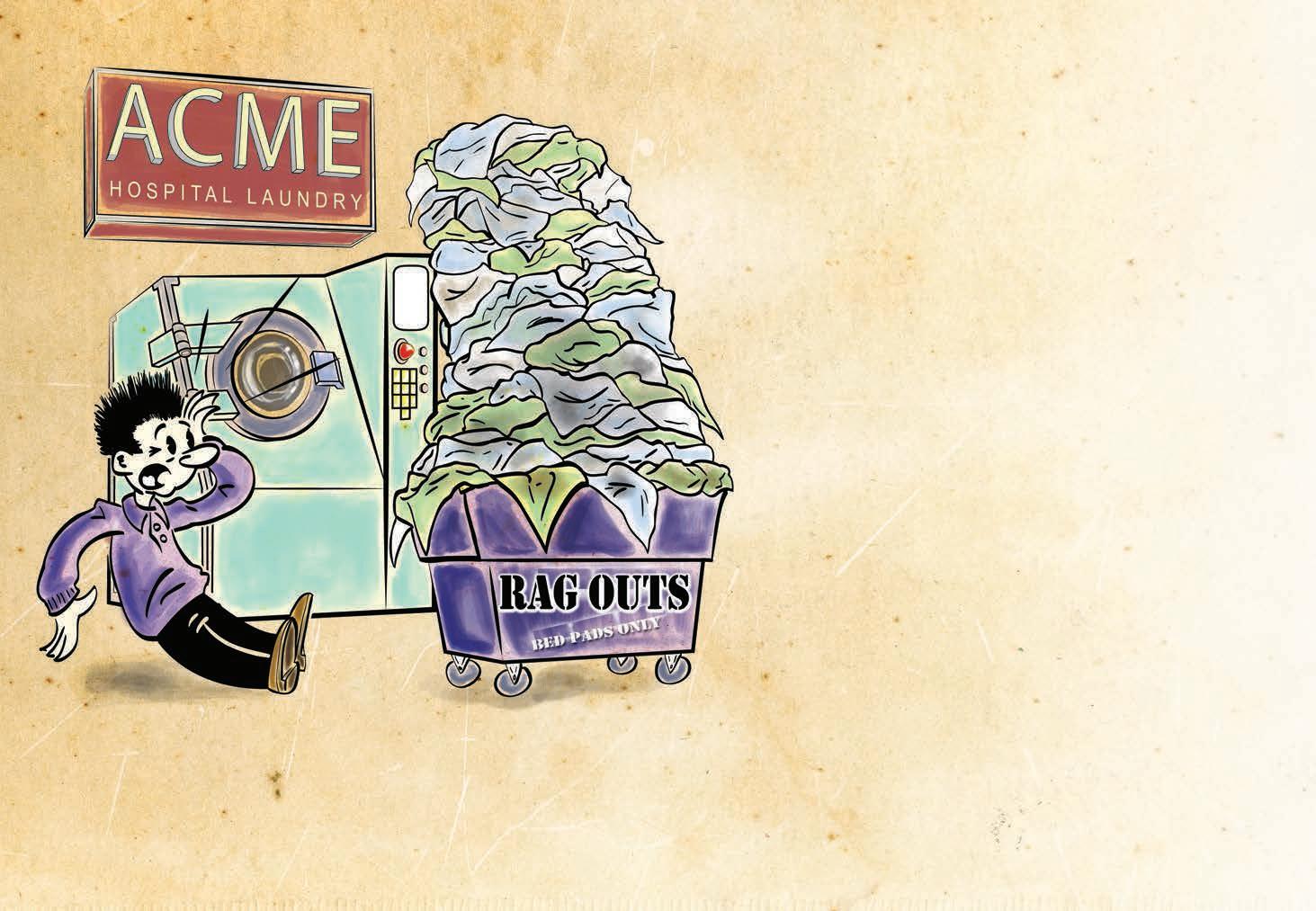
Fowler brings a “wide range of expertise” in plastics, packaging, warehousing and industrial safety to the company’s Southeastern territory, encompassing Arkansas, Alabama, Mississippi, Georgia, Florida, North Carolina, South Carolina and Puerto Rico.
McHugh and Fowler will be responsible for the company’s
Track Career
proprietary laundry and materialhandling product lines, according to MOD.
“Both Dave and Don bring proven track records to their customers,” says Jack Smylie, national sales manager for MOD.

Diamond Chemical adds Litwin to roster
EAST RUTHERFORD, N.J. — Diamond Chemical has added Michael Litwin as account executive of its Institutional Group, the company reports.

He has almost 30 years of experience in sales and sales management, most recently working for a large warewashing company, according to Diamond Chemical.
“Michael brings to Diamond the experience and knowledge of not only years of sales and marketing experience, but a high level of customer service capabilities,” the company says.
Priest succeeds Wells at Jensen USA
PANAMA CITY, Fla. — Jensen USA Inc. Production Manager Ed Wells has retired after 13 years with the company, Jensen USA reports.


Taking his place is newcomer James Priest, who has more than 10 years of experience in the manufacturing industry and is Six Sigma Green Belt-certified. He holds a bachelor’s degree in operations management.
“All at Jensen USA Inc. wish Ed the best in his future,” the company says. Wells worked in the laundry industry for 40 years, which included spending 27 years at American Laundry
Machinery, Inc. in Cincinnati. Simon Nield, president of Jensen USA, says that the company is “pleased that James has decided to join [their] team” and adds that his “knowledge and experience will be an asset to Jensen and a benefit to our customers.”
Venus Group adds two sales reps to East Coast staff
FOOTHILL RANCH, Calif. — Venus Group has welcomed John Barnhill and Scott Sunday as sales representatives to its East Coast operations.
Barnhill, a 35-year industry veteran, has taken over as senior regional sales manager of the company’s institutional sales efforts in the Eastern United States.
He began his career with Artex International in 1980, developing
a 20-year tenure with the company, holding the positions of vice president of manufacturing and vice president material utilization. When Best Textiles Acquisitions purchased Artex in 2004, he continued as vice president inventory management and distribution sales.
After starting his own sales company, Barnhill returned to Best Textiles Acquisition, most recently serving as vice president of sales and new product development.
Barnhill has a bachelor of science degree in administrative management from Clemson University.

A 22-year industry veteran, Sunday will oversee Venus Group’s Southeast operations. He began his work for Aramark Services in 1992. In 2001 he served as general manager for Alsco in Oklahoma City, later becoming general manager for the company’s operations in Pensacola, Fla., and Orlando for the next 10 years. Most recently, he served as vice president of sales and service for Alliance Linen Services, West Palm Beach, Fla.

Sunday has an associate’s degree from Oklahoma Junior College. ALN
A growing number of polyurethane
adds McHugh, Fowler as regional
Litwin Wells
Fowler
Priest
bonded underpads rag out too early increasing costs for the laundry. These pads are not designed to meet the demands of institutional laundries and are removed from circulation due to delamination or leaks caused in the extraction process. Beck’s Classic Arid Touch underpads are the proven “Patient & Laundry Friendly Pad”. The face fabric provides fast wicking of moisture away from the patient for enhanced skincare bene ts combine that with Vintex’s Uniply Lite bonding process which maximizes the life of the pad. This allows the underpad to be washed with both Chlorine and Peroxide based systems, unlike polyurethane pads. GET BACK TO QUALITY AND RELIABILITY, ASK FOR THE BECK’S ARID TOUCH UNDERPAD UNDERPADS LAST 50% LONGER 50 Emjay Blvd (p) 516-868-3200 Brentwood, NY 11717 (f) 516-868-8282 USA pads@becksclassic.com ALN_Tab_half.indd 1 3/11/14 1:45 PM www.AmericanLaundryNews.com AMERICAN LAUNDRY NEWS | JULY 2014 17
AmeriPride suits CSRs with ‘new look’

MINNEAPOLIS — In honor of its 125th anniversary, uniform rental and linen supply company AmeriPride has revamped the uniforms of its customer service representatives (CSRs). The company says the uniforms “exhibit a fresh, consistent look across the organization,” and are “safer, more comfortable, durable and functional.”
“Launching the new CSR uniforms is a great way to celebrate our anniversary,” says Andrew Steiner, vice president of marketing and customer operations. “For 125 years, our company has been providing uniforms and linens to customers all over North America, and it was time for a new, fresh look.”
The new uniforms include a color-block crew shirt from Red Kap® VF Imagewear, featuring a “modern fit with better durability…uniquely branded ‘AmeriPride green’ color,” and reflective taping, the company says, and will be consistently branded with embroidered logos and name patches.
Red Kap cargo pants and a soft-shell jacket, as well as shorts, winter parkas, long-sleeve undershirts, ball caps and winter hats will complete the new look, AmeriPride adds, while pants pockets specifically sized for ABS handheld computers, “ripstop fabric” on shirts, and wind- and stain-resistant jackets provide for functionality.
“We are not just a laundry company,” says Steiner. “We are a service provider that helps our customers with their image, and the new uniforms help demonstrate to our customers what a clean, professional image can do for a business.”
Wholesale Commercial Laundry Equipment expands services
SOUTHSIDE, Ala. — Wholesale Commercial Laundry Equipment S.E. LLC is now serving all of Delaware, as well as several counties in Pennsylvania and New Jersey, the company reports.
It will continue serving on-premises laundry customers in the Florida Panhandle, Alabama, Mississippi, Georgia, South Carolina and Tennessee.
With a new territory comes a new representative. Greg Whitman will manage the area as president of sales, Northeast region, according to the company.
“Greg is a very experienced and diligent laundry industry professional who works closely with our customers—coaching them on methods for improving laundry efficiency, productivity and profitability,” says company President Russ Arbuckle. “We are excited to offer on-premises laundry equipment— backed by unrivaled service before and after the sale—to these new Northeastern geographic areas.”
Wholesale Commercial Laundry Equipment is a distributorship offering laundry equipment, installation, technical service, parts and customer service, according to Arbuckle.
“When I started Know Hope, I had no money to invest, so I had to make it happen one bag sale at a time,” says Connie Baker, founder of Know Hope. “The textile donations from Cintas are going to allow us to produce a steady supply of bags and make a big impact on families who are less fortunate.”
In the past, Know Hope has built an orphanage in Tijuana, Mexico, and made improvements to an orphanage in Guatemala. The organization has also provided breakfast programs for Lo Mejor del Trigo ministry in Tijuana and supplied food packs for citizens in Africa and Haiti. Blankets have also been supplied for people in shanty towns of Tijuana.
Cintas’ most recent donation of material will help fund Know Hope’s Orphan Adoption Grant through Show Hope.
“The average U.S. citizen throws away 70 pounds of textiles each year, but corporations also have a responsibility to help divert this waste from landfills,” says Melanie Boyle, manager of sustainability at Cintas. “This partnership is a win-win because we’re supporting a local non-profit in their mission to make the world a better place while maintaining Cintas’ commitment to both sustainability and being a good corporate citizen in the communities in which we do business.”
Choice Hotels International selects Xeros as qualified vendor
MANCHESTER, N.H. — Xeros, provider of an ultra-lowwater cleaning system for laundries, has been selected as a qualified vendor for Choice Hotels International and its more than 5,000 franchises, the company reports.
CINCINNATI — Cintas Corp. has partnered with Know Hope in an effort to reduce textile waste.
Know Hope is a Cincinnati-based non-profit organization that helps impoverished individuals in third-world countries. The charity will sell reusable burlap bags that are lined with leftover material from Cintas’ uniform production process. Proceeds will benefit families in Mexico, Africa, Haiti and Guatemala.
“Print Alone“ Jr. 1/3 Page ad for American Laundry News


“We were one of a select group of qualified laundry vendors that showcased the Xeros system at the recent 60th Annual Choice International Convention and the franchisees showed great interest,” says Jonathan Benjamin, president of Xeros North America. “We were selected by Choice because of our extensive expertise in sustainable laundry and our ability to deliver a cost-effective solution with a culture deeply rooted in customer service.”
Advertiser: American Trade Magazines Contact: Donald Feinstein 312-361-1682
Ad Trim size: 4.75” x 4.75”
Art contact: Shelley Timm-Thompson, 708-771-9948
Xeros says its laundry system uses polymer bead technology to deliver water, detergent and energy savings. ALN
Insertion Date: Ongoing
Man does not live by print alone.
(Nor woman either.)
American Laundry News can now be viewed on tablets and other mobile devices – great ways to stay on top of the latest industry news and updates.
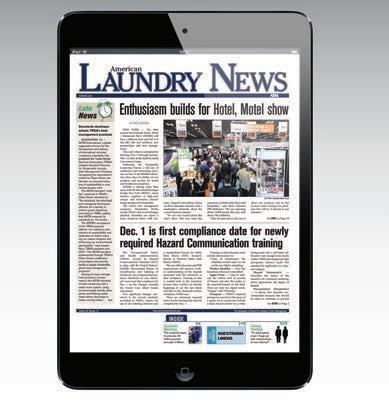

www.americanlaundrynews.com
The Newspaper of Record for Laundry & Linen Management
18 JULY 2014 | AMERICAN LAUNDRY NEWS www.AmericanLaundryNews.com
Cintas partners with Cincinnati non-profit to reduce textile waste
New uniforms for AmeriPride’s CSRs feature “AmeriPride green,” reflective taping and consistent branding, the company says. (Photo: AmeriPride)
OPL
















101
The additional benefit is the difference in our linen life. By eliminating over-drying, our linens are softer, and we can provide our guests with a better experience,” says Patel.
With washer-extractors, a laundry’s benchmarks can be improved through the use of spray-rinse technology, which pulls wash chemistry through the load and carries away dirt and chemicals. Not only does this provide a more effective rinse, but this practice minimizes the water required to rinse a load, reducing cycle time and potentially improving throughput by as much as 12%.
OTHER CONSIDERATIONS



Keeping in mind that every operation is different, here are some additional examples of what managers should consider when setting, monitoring and/or improving benchmarks:

The downtime spent between the moment when washer-extractors stop and when the drying process begins can quickly add up. For example, during the noon hour productivity stops, but the lunch break is a valuable time to run the longest cycle of the day. Through benchmarks and monitoring, a manager who thought he had to add more labor may discover all he really needs is to train personnel in how to make
the transfer more efficiently.
Setting a benchmark that “x” number of loads should be processed each shift can prompt laundry staff to load dirty linens and program an advanced start for the following morning. This way, linens are washed and ready to be transferred to a tumble dryer as soon as the morning shift arrives, saving about a half hour of time and labor costs.
A typical hotel laundry operation processes high volumes of lightly soiled linens. As bedding and towels are not typically very dirty after one-time use, they can be washed in a light-soil cycle. Doing so not only takes less time, but is more efficient by using less water. Knowing one’s light-soil benchmark, which is typically 80% of all loads for hotels, can help a manager save on labor and utility costs.
While the practice of setting and monitoring benchmarks may initially seem like a time-intensive one, a manager can greatly improve his or her operation’s efficiency and productivity by embracing the newest technology and engaging with a knowledgeable distributor and chemical partner. When fully integrated, these strategies can achieve week-over-week, month-over-month and year-over-year improvements in a laundry’s operations. ALN
Bill Brooks is national sales manager for UniMac®, a provider of onpremises laundry equipment. He can be reached at bill.brooks@alliancels. com or 920-748-4437. For more information on UniMac, visit www. unimac.com/OPL101 or call 800587-5458. Brooks
Calendar

July

17-18 Textile Rental Services Association Sales and Marketing Summit Baltimore, Md. Info: 877-770-9274

August
7 Association for Linen Management Webinar: Analyzing ROI Before You Build, Buy or Expand Info: 800-669-0863







10-14 Textile Rental Services Association Ehrlich-Stempler Executive Management Institute (EMI) Hyattsville, Md. Info: 877-770-9274


September
11-13 Ellis Corp. Free Maintenance Seminar on the Ellis Washer-Extractor Itasca, Ill. Info: 630-250-4848
16-18 Continental Girbau, Inc. Eastern Regional Service School East Point, Ga. Info: 800-256-1073
18 Association for Linen Management Webinar: PM—It’s All in the Planning Info: 800-669-0863




























22-24 UniMac OPL Advanced Service Training Ripon, Wis. Info: 800-587-5458















23-25 Jensen USA Service Seminar – Senking Batch Systems Panama City, Fla. Info: 850-271-5959

24-25 Wisconsin Association of Textile Services Fall Conference and Golf Outing Delavan, Wis. Info: 414-529-4702 ALN





Since 1919 Parker boilers have been engineered for more efficient operation (whether gas, oil, or combination gas/ oil fired) for delivery of hot, dry steam in less than 10 minutes. And Parker boilers have a longer service life for a greater return on your investment.
All Parker boilers are delivered complete, ready to connect to utilities. What’s more, every boiler is test fired before it leaves the factory so you can count on getting up and running as soon as possible.
Parker boilers are designed for ease of routine maintenance, annual inspections, and on site repairs, so there is less down time, more reliability. Parker boilers also have extra heavy, insulated, double-wall steel cabinet construction (Stainless steel cabinet lids and/or sides available).
Kompact mounted return systems are available on 3 to 25 hp boilers to save on installation costs.
All of Parker’s superior quality boilers are available at competitive prices and have been distributed through our regional representatives for over 60 years.
Parker boilers are ULor ETLlisted and ASME and NB registered. All our Low ALN_Jr_half.indd 1 2/6/14 9:12 AM













NOx models are certified to SCAQMD Rule 1146.2 emission requirements. Industrial-Laundry Friendly •Performance Fabrics•Retail-Inspired CUSTOMERS’ EXPECTATIONS EXCEED YOUR NEW Scrub Catalog View On Our Website NEW BRUSHED POPLIN SCRUBS 1-800-727-8643 • info@FashionSealHealthcare.com www.FashionSealHealthcare.com • blog.FashionSealHealthcare.com ALN_Jr_half.indd 1 5/23/14 10:35 AM








www.AmericanLaundryNews.com AMERICAN LAUNDRY NEWS | JULY 2014 19
Parker boilers are UL or ETL listed and ASME and NB registered. All our Low NOx models are certified to SCAQMD Rule 1146.2 emission requirements.
Continued from Page 16
17 Association for Linen Management Webinar: Proactive Customer Service Info: 800-669-0863
PARTS FOR SALE
















20 JULY 2014 | AMERICAN LAUNDRY NEWS www.AmericanLaundryNews.com
stock of parts for most laundry equipment & boilers.
traps, valves and lubricants. Overnight delivery.
Fax:
parts@steineratlantic.com www.steineratlantic.com WASHEX PARTS Hard-to-find Washex parts, on-site rebuilding, tech support.
PARTS CENTER 800-352-4492 Fax: 305-827-3991 Classified Advertising
PARTS, PARTS, PARTS Huge
Also
Steiner-Atlantic, 800-333-8883
305-751-8390
LAUNDRY
EQUIPMENT FOR SALE EQUIPMENT
AMKO AMERICA, INC. Remanufactured Finishing Equipment Delta Ironers, Omega Folders & Towel Folders (1 year parts warranty) Like new at half the cost. PARTS, IRONER SUPPLIES & NEW EQUIPMENT ALSO AVAILABLE Contact: (561) 863-9696 jurgenb@bellsouth.net POSITIONS AVAILABLE DISTRIBUTOR OFFERINGS www.ineedjpequipment.com 800/925-3236 EQUIPMENT FOR SALE: (1) 110lb Milnor CBW Module, Completely Reconditioned (2) 400lb or 600lb Braun Open Pocket Drums, $10,000 each (2) 60lb UniMac Washers, 2009 with Touchscreen Controls (2) 75lb Milnor Gas Dryers, MLG758D, 2004 (1) Chicago TriStar28, Gas, 2000 (1) Hypro ll, 6 Roll, Rebuilt in 2010 (1) Chicago Air, 2011 (1) 2008 Jensen Logic (1) 2005 Kannegiesser Feeder - make an offer! (1) Chicago King Edge, Chi Touch Control, 2012 (1) 2005 Braun Omega, 2 Lane, B&R Controls, Stacker/Conveyor (1) Multiple Chicago Edge, King Edge & Skylines (1) Braun SPFRF, Meter-wide, B&R Controls, (1) Central Blanket Feeder & Folder, 1999 (1) Lavatec Masterfeed & Masterfold, 2007make an offer! “Expect Excellence” Expect excellence from the leader in used industrial laundry equipment sales and installation. Keep up to date with equipment for sale, and the latest industry news by subscribing to our monthly newsletter. Go to www.ineedjpequipment and sign up TODAY! About JP Equipment JP Equipment is a trusted, full-service, used industrial laundry equipment sales and installation company. We pride ourselves on providing unparalleled Call Craig Lloyd toll free at 877.295.5693 between 9 a.m. – 9 p.m. EST. Please visit www.laundrycareers.com to review current industrial/institutional laundry management openings. ADVANCE YOUR CAREER The Griffin Group, Inc. “Recruitment Specialist” Need to FILL a position? Call Deana Griffin 888-235-2365 www.thegriffingroup.cc deana@thegriffingroup.cc ® Stanco Industries, Inc. Serving The Textile Trades Since 1970 800-932-3769 k for Mike @ ext 203 KEEPING IT GREEN SINCE 1970 QTY DESCRIPTION 1 Braun 600lb Top Side Loaders 2000 1 Braun 400lb Steam Dryer Model 123 1 Jensen 2 Roll 36” Steam Ironer 1992 with Inverter Drive 2 Milnor 120lb Steam Dryers 2006 2 Milnor 36026V5J 100lb Washers 2004 2 Milnor M122 Gas Dryers 1 Chicago S-10 Skyline Folder 2000 1 Shaper Steam 12” Ironer by 120” For Pricing call Ron Hirsch 516.938.4300 • 516.315.7426 Hicksville, NY www.directmachinery.com FOR NEW OR USED LAUNDRY EQUIPMENT, DM IS YOUR SOURCE FOR ALL YOUR NEEDS Sign up for our entire used equipment list. Email us! We broker your used equipment. Call us! We Buy Used Equipment...and much more. Pictures on website. Get the info you need online... www.AmericanLaundryNews.com CONTACT: CLASSIFIEDS@AMERICANTRADEMAGAZINES.COM MISSED OUR DEADLINE? Place your ad ONLINE! ------------------------------ WANTED -----------------------------Kannegiesser 10-14 Mod CBW System Milnor 12-14 Mod CBW System 4-Lane folder-cross-folders 5-6 Lane Napkin Feeders 5-Lane Napkin Stackers Open-Pocket Washer-Extractors 100hp to 300hp Boilers Direct Contact Water Heaters Chicago Deep Chest Ironers Kannegiesser Deep Chest Ironers --------- DON’T BE LEFT WITHOUT POWER -------Emergency Generators Available 50KW to 1000KW Natural Gas & Diesel Stanco Industries, Inc. 800-932-3769 Ask for Mike @ ext 203 www.StanCoInd.com
FOR SALE
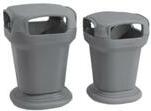

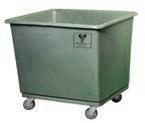

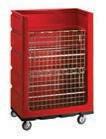
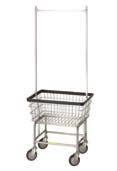
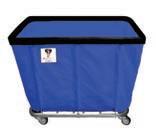






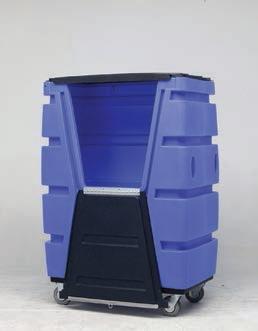







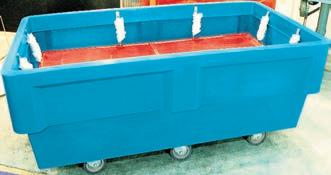
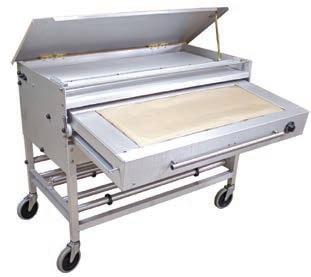





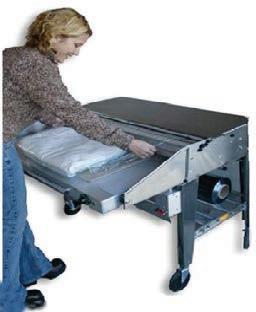



www.AmericanLaundryNews.com AMERICAN LAUNDRY NEWS | JULY 2014 21 Source Directory A convenient guide to sources of products and services APPAREL FINISHING CARTS, TRUCKS & BASKETS #1 Manufucturing Source for Laundry Transportation! (800) 634-0555 RBWire.com “This lid and door fits flush in the cutout—MOD gets the details right.” – Randy Bernstein, Maricopa Integrated Health System Meese Orbitron Dunne Co. Seal-Tight, Secure Roof and Door 72S Call 800.829.4535 or visit MODLaundry.com for a FREE QUOTE. New! l-800-275-2436 RepsAvailable8 AM-8 PM (EST) maxi-movers.com The Cart Guys FLARE TRUCK ■ Designed for easy loading and unloading with reinforced sides. ■ M2440 shown, has a special double-wall flange rib and optional spring lift platform designed to raise the contents. Chm #9598 Flare Truck ALN Class. 6/3/14 2:11 PM Source Directory listings in American Laundry News are sold on an annual basis at the following rates: All Major Credit Cards Accepted 2014 Listings Regular Boldface All Caps All Caps, Boldface Four Line Listing per Year $820 $1,030 $1,030 $1,090 Display and additional line rates available upon request Sani Trux - McClure Industries, Inc. 9051 SE 55th Ave., Portland, OR 97206 800-752-2821 www.mcclureindustries.com, info@mcclureindustries.com M.I.T. POLY-CART 211 CENTRAL PARK WEST, NEW YORK, NY 10024 800-234-7659, FAX: 212-721-9022 WWW.MITPOLYCART.COM CARTS, TRUCKS & BASKETS CARTS, TRUCKS & BASKETS Diversified Plastics, Inc. 1309 Highway 917 West, Latta, SC 29565 800-768-7636, www.dpirotocarts.com E-mail: sales@dpirotocarts.com Fax: 843-752-7798 AmericanLaundryNews.com More than unique visitors monthly! 5,250 www.nortonsupply.com • 800.869.7664 • sales@nortonsupply.com Heavy Duty Rhino Wrapping Machine Rhino Console Wrapper for finished laundry. Stainless steel construction. Solid state controlled electric cut-off rod. In-stock for immediate delivery. FREE Roll of Laundry Wrap with Rhino Wrapper Purchase The FELRAPPER® Console F240 The Fastest, Most Economical Way To Wrap! Supported Sliding Sealing Drawer (Won’t Bind or Stick) STAINLESS STEEL CONSTRUCTION Holds 2 Rolls of Wrap—Up to 40” wide Each Width Instantly Available Check Out Our Web Site For Spare Parts On All Brands of Wrappers, Tech Info and Laundry Wrap FELRAP WORLD, INC. 800-969-4940 • www.felrap.com
Wash - McClure Industries, Inc. 9051 SE 55th Ave., Portland, OR 97206 800-752-2821 www.mcclureindustries.com, info@mcclureindustries.com





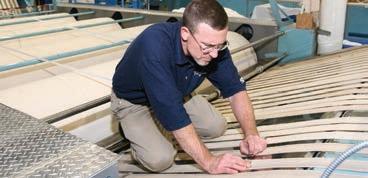
Pellerin Milnor Corp. P.O. Box 400, Kenner, LA 70063 504-467-9591, Fax: 504-468-3094 www.milnor.com
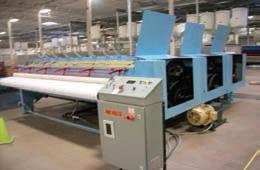
















22 JULY 2014 | AMERICAN LAUNDRY NEWS www.AmericanLaundryNews.com Source Directory listings in American Laundry News are sold on an annual basis at the following rates: All Major Credit Cards Accepted 2014 Listings Regular Boldface All Caps All Caps, Boldface Four Line Listing per Year $820 $1,030 $1,030 $1,090 Display and additional line rates available upon request FINANCIAL SERVICES Source Directory A convenient guide to sources of products and services FLATWORK IRONERS FLATWORK IRONERS PARTS Knowhow In Action Your Tingue rep is a fully trained master of finishing equipment operation, maintenance and installation. Call for: • Pads, covers, belts, waxes, tapes and more • Carts, trucks, baskets and bags • Parts, rebuilds and repairs 800.829.3864 www.Tingue.com TalleyMachinery.com MODLaundry.com TBR-Associates.com To website (480) 205-1293 (602) 763-7416 www.azsle.com Whether your ironer needs pads and covers, wax cloths or cleaning supplies, or needs to be completely rebuilt, there is no job too big or too small for Southwest Laundry Equipment • Financing of all OPL, industrial and related equipment • Competitive rates • Flexible terms • No prepayment penalty 1-800-851-1001 ext. 209 | laundry@firestonefinancial.com www.firestonefinancial.com EQUIPMENT FINANCING COMMERCIAL & INDUSTRIAL FINANCING
Energenics Corp., Kartwasher 1470 Don St., Naples, FL 34104 800-944-1711 www.energenics.com
DRYERS – 100 POUNDS OR MORE CART-WASHING SYSTEMS
DRYERS – 100 POUNDS OR LESS
Gardner Machinery Corporation
33818, Charlotte, NC
(704)342-0758 www.gardnermachinery.com MATERIAL HANDLING / CONVEYORS Setting the Standard in Lint Filters for 25 Years • Hotel • OPL • Coin Op • Dry Cleaners • Industrial • Commercial • Cruise Industry Dry or Wet Style Filters to Work with “ALL” Dryer Sizes or Multiple Situations, Fiberglass or Stainless and Custom for Unique Situations! All manufacturing done on premise 800-826-1245 www.cleancyclesystems.com • ccsystems@tqind.com LINT COLLECTORS & FILTERS ★ Our In-Line Lint Filter mounts inside, saves space! ★ Fiberglass Wet Filters - 6,000 to 40,000 cfm ★ Fiberglass or Stainless Steel Dry Filters ENERGENICS CORPORATION Talk with our Design and Engineering Staff about your needs. Hundreds Sold Annually. 800-944-1711 www.energenics.com
Pellerin Milnor Corp. P.O. Box 400, Kenner, LA 70063 504-467-9591, Fax: 504-468-3094 www.milnor.com
Sani
P. O. Box
28233 Ph.: (704)372-3890; Fax:
Pellerin Milnor Corp.
P.O. Box 400, Kenner, LA 70063 504-467-9591, Fax: 504-468-3094 www.milnor.com
WASHER-EXTRACTOR






Pellerin Milnor Corp.
P.O. Box 400, Kenner, LA 70063 504-467-9591, Fax: 504-468-3094 www.milnor.com
Pellerin Milnor Corp.





























P.O. Box 400, Kenner, LA 70063 504-467-9591, Fax: 504-468-3094 www.milnor.com





www.AmericanLaundryNews.com AMERICAN LAUNDRY NEWS | JULY 2014 23
– 100 POUNDS OR MORE
WASHERS – CONTINUOUS BATCH WASHER-EXTRACTOR
– 100 POUNDS OR
LESS
Milnor Corp.
Box 400, Kenner, LA 70063
PRESSES – EXTRACTION Source Directory A convenient guide to sources of products and services PLANT DESIGN & INSTALLATION Source Directory listings in American Laundry News are sold on an annual basis at the following rates: All Major Credit Cards Accepted 2014 Listings Regular Boldface All Caps All Caps, Boldface Four Line Listing per Year $820 $1,030 $1,030 $1,090 Display and additional line rates available upon request Company Web Site Page Company Web Site Page INDEX OF ADVERTISERS www. .com A.L. Wilson Chemical Co. www.alwilson.com 11 American Dawn www.americandawn.com 5 Beck’s Classic www.becksclassic.com 17 Consolidated Laundry Machinery www.clmco.com 10 Direct Machinery Sales Corp. www.directmachinery.com 20 Fashion Seal Healthcare www.fashionsealhealthcare.com 19 Girbau Industrial www.girbauindustrial.com 14 G.S. Manufacturing www.gsm-cart.com 18 IPSO www.ipso.com 9 J.P. Equipment www.ineedjpequipment.com 20
USA
13
20
Laundry Technology
24
Boiler
19
Milnor
3
Basket Trucks www.royal-basket.com 12 Stanco Industries
20
Griffin Group, Inc.
20 TRSA
15 UniMac www.unimac.com 7 THE WIRE The latest news, straight to your inbox, 2X a week A & B WIPER SUPPLY You’re probably not getting enough for your linen discards! We pay TOP DOLLAR for your discarded sheets, towels, thermal & flannel blankets. Call us for an immediate quote: 800-333-RAGS (7247) We’re Hiring! Textile Buying & Sales Executive Positions Available E-mail Résumés to resumes@bestrags.com RAGS WANTED FOR CASH OR TRADE
Pellerin
P.O.
504-467-9591, Fax: 504-468-3094 www.milnor.com
Kannegiesser
www.kannegiesser.com
LaundryCareers.com www.laundrycareers.com
Lavatec
www.lavatec-laundry.com
Parker
www.parkerboiler.com
Pellerin
www.milnor.com
Royal
www.stancoind.com
The
www.thegriffingroup.cc
www.trsa.org