Milliken acquires FR fabrics manufacturer Westex Inc.
SPARTANBURG, S.C. — Milliken & Co. is reporting that it has acquired flame-resistant (FR) fabrics manufacturer Westex Inc.


The company says the acquisition strengthens its “commitment to providing superior flame-resistant fabrics for protective clothing” for industrial workers who need protection from thermal hazards.

“We look forward to welcoming the Westex team to Milliken & Co.,” says Jeff Price, president, specialty fabrics division. “As we look to the future, we are committed to changing the experience for industrial workers with FR innovations that further improve comfort and productivity.”
“All of us at Westex look forward to joining a strong, values-based company with a long heritage of innovation,” says Mike Enright, Westex vice president of sales and marketing. “Westex has a proven track record of developing FR technology, products and strong enduser relationships that help customers develop successful programs.”
Reported linen contamination at NOLA hospital serves as industry wake-up call
BY THERESA BOEHL, EDITOR
CHICAGO — A tragic event that happened several years back at a children’s hospital in New Orleans recently grabbed the attention of the general public and gained national media headlines.
Between August 2008 and July 2009, five children who were patients at Children’s Hospital in New Orleans died after an outbreak of mucormycosis, a fungal infection that can be fatal only in rare situations, such as in the case of patients with severely compromised immune systems.
What caused renewed concern about the case was an article published in the Pediatric Infectious Disease Journal summarizing an investigation of the circumstances of the outbreak and of several areas within the hospital and its contracted launderer’s facility. In their report, the authors ultimately identify what they believe is the main transmission vehicle for the fungus: the hospital’s linens.
The authors of Mucormycosis Outbreak
Associated with Hospital Linens, some of whom represented the Centers for Disease Control and Prevention, tested linens processed by an outsourced laundry provider and found cases of the fungus in the linen, exposure to which was the only common factor to all of the patients, who

occupied several different wards in the hospital. In the article, the authors state: “In this outbreak, we suspect the contamination of clean linen occurred at the laundry facility or during
BY CARLO CALMA, EDITORIAL ASSISTANT
ALEXANDRIA, Va. — Visit the Occupational Safety & Health Administration’s (OSHA) website’s “newsroom” page and you’ll see them— “whistleblower” news releases detailing companies that have been fined by the agency for violating workplace safety regulations.
corporations, have all faced citations from OSHA in some form, according to Foulke, which, in recent years, have ranged from as low as $509,000 to as high as $87 million.
“Don’t think that because you’re a small- or medium-sized employer that you can’t have citations like this,” says Foulke.
then when they violate those programs, they can be disciplined,” he says, adding that discipline can be used as an “affirmative defense” to demonstrate to OSHA that the employer has taken steps to prevent employee misconduct.
“By combining our collective R&D talent, deep customer knowledge, and market access, we will strengthen our capabilities and offer workers the highest levels of FR protection and comfort,” adds Enright.
In addressing these fines, Edwin G. Foulke Jr., partner for the Atlanta office of law firm Fisher & Phillips LLP, stresses the need not only for workplace safety programs, but also for employers to know their rights during OSHA inspections.
Foulke addressed these topics in a recent Textile Rental Services Association (TRSA) webinar titled Effectively Handling an OSHA Inspection: How to Legally Protect Your Rights.
THE SUPERVISOR’S/EMPLOYEE’S LEGAL ROLE

Before issuing a citation, however, OSHA must have “burden of proof” that the employer “had knowledge of the safety hazard, or the violation,” Foulke explains.
Because of this, above all, Foulke stresses the importance of having a list of safety rules established, and ensuring that all employees are aware of these rules as part of a safety program.
Foulke also emphasized the importance of documenting employee training, and that not only should workplace safety accountability fall on employees, but on supervisory personnel as well, since they will be the ones assisting the OSHA compliance officer during inspections.
“[The OSHA officer] may be asking questions and that’s why it’s very critical that the person who’s answering the questions understands his/ her responsibilities because whatever he/she says as a manager or supervisor [is] going to be imputed to the company, and that’s going to be

ALN
Workplaces, from small companies to major
“Make sure that they are aware of that list and
JUNE 2014
Late News
www.americanlaundrynews.com Volume 40, Number 6
The Newspaper of Record for Laundry & Linen Management
INSIDE [14] [8] [20]
of Experts Group offers tips for taking control of ever-increasing operational costs. Laundries encouraged to review processes, procedures in light of children’s deaths See LINEN on Page 6 See OSHA on Page 12
inspections: Know your rights, responsibilities Maximizing Linen Distribution Methods Consider the many variables that can affect how linen is supplied, replaced and managed for healthcare facilities.
Panel
OSHA
(Photo: ©iStockphoto/camgonline)
Survey: Laundry managers
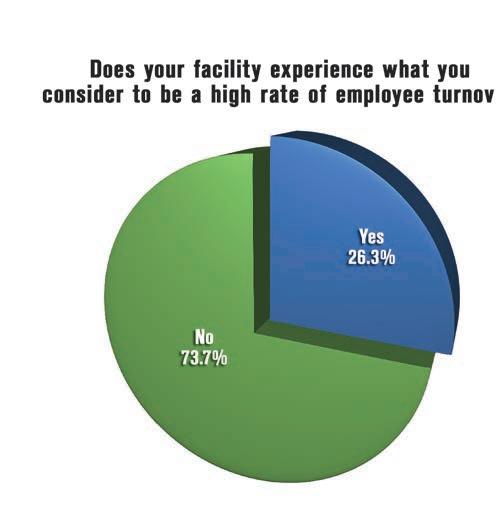
CHICAGO—The majority of laundry and linen managers polled in May’s American Laundry News Your Views survey—almost 75%—say they don’t deal with what they consider a high rate of employee turnover.
In cases where high turnover exists, respondents list a range of positions that are vacated frequently, with the most common being soil-sort employees, drivers and production employees.
Others point to part-time, seasonal and new employees as the most likely to leave after a short period, in addition to sales, housekeeping and engineering staff.
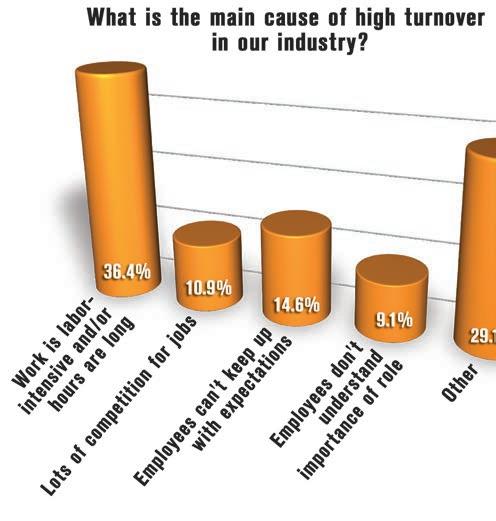
But what are the main reasons for high turnover in the industry? More than 35% attribute it to the nature of the work, which can be labor-intensive with long working hours.
Other respondents mention stiff competition for jobs (10.9%) and employees’ inability to keep up with what is expected of them (14.6%). Around 9% say employees simply don’t understand the importance of their role. Nearly 30% list “other” causes, including low wages, the lure of full-time positions elsewhere, and behavioral issues.
“This is just another job to most applicants,” one respondent comments. “There is really no way to recruit, so we must make every effort to train the new workers to be successful.”
Keeping staff members happy is an “extremely important” undertaking, according to more than 70% of respondents. A little more than a quarter of respondents believe it’s “somewhat important” to consider employees’ satisfaction in their positions, and small shares (1.8% in both cases) are either neutral on the issue or believe that keeping staff happy is not a high priority.
“I think a favorable relationship between an employee and their direct manager is essential to general morale and helping to control turnover,” says one operator.
Retaining employees involves a number of approaches, according to 75% of operators polled: recognizing employee accomplishments; compensating fairly; communicating expectations more effectively; and providing advancement opportunities. Small shares point to just one of the actions named above, and others list suggestions of their own.
“Treat employees well, pitch in when needed, listen to their input, walk a mile in their shoes,” says one respondent.
“Have good, working equipment so that they have the tools to do their jobs,” says another.
When there are frequent fluctuations in staff, an operation runs less efficiently, costing both time and money, according to almost half of those polled. Time and energy lost in trying to find replacements is the primary consequence of high turnover for about 22% of respondents.
Others mention the challenge of keeping employees up to speed on operational requirements (12.7%), a weaker effort toward building teamwork and camaraderie (9.1%), and the tendency for less experienced workers to make more mistakes (1.8%). One respondent among the 5.5% who point to “other” consequences cites the increased workload on remaining staff as a negative result of high turnover.
“Let’s face it—the laundry business is not glamorous or romantic,” says one respondent, adding, “It is a good business, and it has been good to me for many years.”
While the Your Views survey presents a snapshot of readers’ viewpoints at a particular moment, it should not be considered scientific. Subscribers to American Laundry News e-mails are invited to take the industry survey anonymously online each month. Due to rounding, percentages may not add up to 100%.
All managers and administrators of institutional/OPL, cooperative, commercial and industrial laundries are encouraged to participate, as a greater number of responses will help to better define operator opinions and industry trends. ALN
Publisher
Charles Thompson
Phone: 312-361-1680
E-Mail: cthompson@ americantrademagazines.com

Editorial Director
Bruce Beggs
Phone: 312-361-1683
E-Mail: bbeggs@ americantrademagazines.com
Digital Media Director
Nathan Frerichs
Phone: 312-361-1681
E-Mail: nfrerichs@ americantrademagazines.com
Editor
Theresa Boehl
Phone: 708-280-1750
E-Mail: tboehl@ americantrademagazines.com
Production Manager
Roger Napiwocki
Contributing Editor Jean Teller
Editorial Assistant Carlo Calma
Advertising Sales
National Sales Director

Donald Feinstein
Phone: 312-361-1682
E-Mail: dfeinstein@ americantrademagazines.com
Office Information
Main Phone: 312-361-1700 Fax: 312-361-1685
Subscriptions
630-739-0900 x100 www.americanlaundrynews.com
American Laundry News (ISSN 1091-9201) is published monthly. Subscription prices, payment in advance: U.S. 1 year $39.00; 2 years $73.00. Foreign, 1 year $89.00; 2 years $166.00. Single copies: U.S. $7.00; Foreign $14.00. Published by American Trade Magazines LLC, 566 West Lake Street, Suite 420, Chicago, IL 60661. Periodicals postage paid at Chicago, IL, and at additional mailing offices.
POSTMASTER, Send changes of address and form 3579 to American Laundry News, Subscription Dept., 440 Quadrangle Drive, Suite E, Bolingbrook, IL 60440. Volume 40, number 6. Editorial, executive and advertising offices are at 566 West Lake Street, Suite 420, Chicago, IL 60661. Charles Thompson, President and Publisher. American Laundry News is distributed selectively to qualified laundry and linen management and distributors in the United States. No material appearing in American Laundry News may be reprinted without written permission. The publisher reserves the right to reject any advertising for any reason.

© Copyright AMERICAN TRADE MAGAZINES LLC, 2014. Printed in U.S.A.
MEMBERSHIPS
May’s Panel of Experts response credited to panelist Michael Kirsch, CLLM, HCSC Laundry, was submitted at Kirsch’s request by a colleague, Michael Paulsen, vice president of operations for HCSC Laundry. Kirsch informed American Laundry News of this prior to publication but the magazine failed to properly credit the work due to an editor’s error.
American Laundry News regrets the error and any inconvenience it may have caused.
2 JUNE 2014 | AMERICAN LAUNDRY NEWS www.AmericanLaundryNews.com
Association for Linen Management
INSIDE: June 2014 • Vol. 40 | No. 6 [8] Maximizing Linen Distribution Methods Following best practices is key to refining a facility’s linen distribution processes: ALM webinar [10] Career Track [13] Georgia Linen Services Opens The new plant serves as a solution for several nearby healthcare institutions seeking local laundry options [14] Panel of Experts: Combating Rising Costs “What are some strategies for keeping rising operational costs under control?” [20] Exhibit in Print Tour the “booths” to learn about new products and services, just as you would at a live trade show [33] Calendar [34] Trade Ticker
keep employees happy to keep them around Correction
ALN
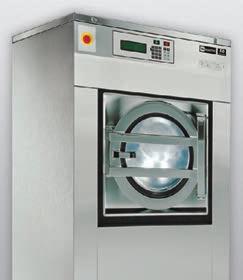
With over 50 years strong on the job, we know there are no small parts when it comes to delivering big dependability. In fact, we use all we’ve learned to build durable, longerlasting machines. Machines you can trust with the tough chore of keeping your operation up and running even as they handle the largest of loads. And no matter who’s operating the equipment, our user-friendly controls always keep it easy, shift after shift. Visit mclaundry.com for digital brochures, or for more information, visit our website at maytagcommerciallaundry.com or call 800-662-3587.







We don’t overlook a single belt, bearing or bolt when it comes to reliably easier-to-do laundry.
*Visit
® /™ ©2014 Maytag. All rights reserved. * Financing as low as 0%** **0% for 24 months. Offer effective April 1–June 30, 2014. Terms up to 96 months. Subject to credit approval and individual’s credit profile. Contact your distributor for details.
maytagcommerciallaundry.com for warranty details.
From the comfort of...
In the absence of the Clean Show, arguably this industry’s premier trade exhibition, American Laundry News presents this month its Exhibit in Print, or “the trade show that fits in your briefcase.”
This issue’s display advertisers have set up “booths” to acquaint readers with their latest products and services, or to better acquaint readers with their company or brand.
There’s no travel expense, no wanding or full-body scan at security, no need to invest in new
Director’s Chair BRUCE BEGGS
shoes for walking “miles of aisles” in a huge convention hall.
It’s just another of the valuable tools and resources we provide without you having to leave the comfort of your plant or office.
American Trade Magazines LLC, the publisher of this magazine and two others dedicated to textile care, just celebrated its third anniversary.
A milestone like that is a perfect opportunity for me to thank you for your continued support of this publication. We couldn’t do this without you. ALN
Director of engineering weighs in on wash formula development
Ienjoyed part one of your article on wash formulas in American Laundry News [Choosing Wash Formulas: Accounting for changing variables key to good results, posted online May 6]. It was thorough and covered many considerations.
My suggestion is to focus on one of the observations that was made referring to customer considerations, such as processing time and wastewater costs. I think that this leads to what should be the key point of the article: I would say that a professional formulator should first and foremost consider the laundry’s entire situation, needs and capabilities before deciding on wash formula strategies.
Your article touched on many of these, and a formulator has to consider all factors, yet to be successful they must concentrate on the most critical goals and any parameters that are unfortunate, but unchangeable.
For example, I would say that it’s a given that specific formulas tailored to the goods and soil can
be more efficient and cost-effective than any general formula. However, one has to consider the machinery that is present and the operator training. If the washers being used have only 20 possible formulas, yet there are more classifications of goods than 20, compromises must be made.

Also, if the operators aren’t going to consistently select the correct formulas, sort properly and load properly, then high quality at the lowest cost isn’t going to be achievable. Or, if the washers have an inadequate supply of hot water, have poor-quality water, or are poorly maintained, results are going to be disappointing.
My point is that I would start designing a wash program of chemicals and formulas from the limitations present, both physical and economic. Then, one can deal with materials, speed requirements, soil and water conditions, etc.
Another decision process involves the type of chemicals to be used and how many. For instance,
being employed by a chemical manufacturer, I’m very aware of the specialty products that can solve particular problems. I also know that combination products can reduce inventory issues and eliminate other complications such as the washers only having five chemical signals.
Also, sometimes the economics of the account only support the use of less-than-ideal injection equipment. (When a customer only buys a small amount of product per year, the chemical company cannot install the most expensive dispenser available to them for free.) So, again, one should focus on the most critical goals and the given parameters.
What I’m trying to say is that every situation is different, so start by identifying goals, then limitations, then economic realities. Make all the decisions based on these three factors.
David Barbe Director of Engineering U.N.X. Inc. Greenville, N.C.

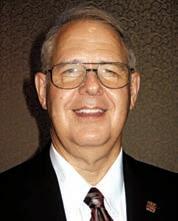
How many languages are spoken in your laundry facility?
It all started with my move to northern Alabama 16 years ago. I opened a new laundry that was located a number of miles from our traditional source of employees. In staffing that laundry, I saw an influx of Spanish-speaking workers applying for entry-level jobs.
Most were recent immigrants or documented aliens here to make a better life for themselves and their families. Like the immigrants of earlier times, they were seeking opportunity and access to the American dream by entering the labor market in entry-level jobs. I have found this group of employees to be reliable and very productive.
My first management job was at the LDS Hospital laundry in Salt Lake City, Utah, back in 1974. I was responsible for a shift of 45 employees, the majority of whom did not speak English. There was a large group of Polynesian employees from the Island of Tonga who spoke their native language; three to four workers who spoke Vietnamese; four who spoke Spanish; and one who spoke Portuguese. Out of the entire crew, I was the only person who spoke English as a primary language.
I learned to train employees using the “show-and-do” method made popular by the Boy Scouts of America. First, I would show the employees what they were to do and then I would have them do it. I would correct errors in technique by example and would stay with employees until they could do the job correctly. Training in this manner is, in my opinion, far superior to just telling someone what to do.
I enlisted several bilingual employees to help explain company policies to the employees. I learned a few words in each language so I could say hello, thank you, and good morning or afternoon. I felt like I needed to know a little just to make them feel comfortable and welcome.
The current employment market makes it important that we broaden our search for good workers. A number of industries in my current location of Roanoke, Va., have started to court the nonEnglish-speaking population. As the economy continues to grow in this area, the demand for entry-level employees will increase. This means as a manager I must also worry about the retention of all my workers.
I have learned several lessons the hard way about working with non-English-speaking staff. The first lesson is that you must quickly gain an appreciation for their cultural differences.
This was brought to my attention quickly in Salt Lake City when I began to work with Vietnamese workers. The normal hand gesture used to call someone over in our country—the uplifted hand with four fingers motioning toward your body—was a major insult to these people. It seems that in their culture, this is used only for calling dogs, pigs and cattle. Their normal hand signal is the hand straight in front of you, the palm down and the fingers flexed toward your body. A small difference to me, but a huge difference to them.
I also learned about the extended Polynesian family. I learned that there were basically only four major family names on the island of Tonga. As a result, it seems that everyone on the island was related in some form to everyone else. When I had to discipline one of my Polynesian workers, I hurt the feelings of them all. It was very important that I be overly fair and above reproach on everything I did or I risked losing 30 workers instead of one.
I learned that there are strong prejudices among what appeared to be homogenous groups. I learned that residents of each Polynesian island believes that they are the only “true” Polynesians and the people from the other islands are inferior. It therefore would have been extremely difficult to hire a few Samoans to work in conjunction with the Tongans on my staff.
•
•
To facilitate the use of the available non-English-speaking work-

4 JUNE 2014 | AMERICAN LAUNDRY NEWS www.AmericanLaundryNews.com Top Stories Appearing on AmericanLaundryNews.com for the 30 Days Ending May 15 (WE) = WEB EXCLUSIVE NEWS • Edison Laundry Corp. Acquires Marriott NJ Laundry Facility • Mission Linen Supply Adds More CNG, Propane Vehicles to Fleet • Annual ALM Conference Aims to Tackle Changing Needs of Industry • HLAC Accreditation Standards Awarded AORN Seal... (WE) • EPA Rep: TRSA’s Voluntary NPE Phase-Out ‘Remarkable’ (WE) COLUMNISTS/FEATURES • OPL 101: Benefits of Using Multi-Par Linen System • Panel of Experts: Staying ‘On Par’ Presents Ongoing Challenge • Choosing Wash Formulas • Placing Blame Never Hard to Do • Setting Production Standards to Improve Your Bottom Line OUR SISTER WEBSITES From AmericanDrycleaner.com: • Tide Dry Cleaners Opens 20th Store with Charlotte Location
Ten Things Your Lawyer May Not Tell You From AmericanCoinOp.com:
•
CLA Finalizes Schedule for Excellence in
Conference (WE)
Laundry
Laundromats in the Digital Age
COLUMNIST AT LARGE Eric L. Frederick, RLLD
From The
• • • • See LANGUAG ES on Page 13
LETTER TO THE EDITOR
•

















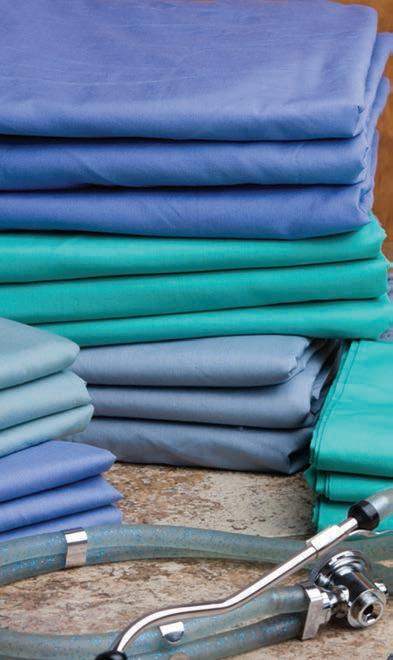














10 DISTRIBUTION CENTERS ACROSS NORTH AMERICA healthcare@americandawn.com 800 821 2221 americandawn.com With
goods
ADI delivers. The right product.
value. The
time.
LEADER IN REUSABLE TEXTILE SOLUTIONS SM The gold standard in textiles; including towels, bathrobes & slippers, sheets & blankets, basic bedding, table linen and apparel. Deep inventories. Immediate Shipping. collection
over $60 million dollars of finished
on hand,
The right
right place. On time, every
GLOBAL
Linen
delivery, after the linen had been washed and dried. The movement of clean linens from the end of the laundry process to the hospital is the time during which the chance of contamination is greatest.”
The report highlighted several opportunities for transmission, pointing to incidents during transport and storage of the clean linens where they were uncovered and exposed to outside air and potentially to construction dust. Rhizopus, a form of mold that causes mucormycosis, is found abundantly in dirt and soil.
While Children’s Hospital has insisted that mucormycosis was “not the primary cause of death in any of the patients,” authors of the journal article say that the hospital has since made major changes to its linen processing and handling protocols, switching to a new laundry vendor, getting rid of old linens, and cleaning and disinfecting linen storage areas.
According to various news reports, civil lawsuits filed against Children’s Hospital by families of the victims are pending. The hospital did not respond to requests from American Laundry News for comment.
FACING THE RISKS
For laundry operators who serve the healthcare market or any other where contamination could be a risk, this reported linen contami-





nation case serves as an alarming wake-up call.
“Contamination should always be a concern,” says Joseph Ricci, president and CEO of the Textile Rental Services Association (TRSA), who adds that businesses like restaurants and hotels also need to be aware of how linen cleanliness can affect the health and experience of customers.

“I think it will raise concern or heighten awareness with, ‘If this could happen in this organization, what about us?’” says Lisa Waldowski, infection control specialist at the Joint Commission, an organization that accredits healthcare organizations and programs.
“Obviously, you don’t think when you’re looking at laundry that it could potentially pose a threat to the patient safety,” she says, adding that when it does, it’s important to step back and take a hard look at processes.
Linda Fairbanks, executive director of the Association for Linen Management (ALM), encourages laundry operators to be vigilant every step of the way when processing, handling and delivering linens.
“It’s a process from the time it enters your door till the time it reaches your patient. And that’s the one thing that the New Orleans [Children’s Hospital] can teach us,” she comments, adding that laundries should not wait for an external push to measure quality and set standards and expectations.
“We focus so long on the wash wheel and wash formulas and chemicals and chlorine or oxy-
gen bleach. And we focused on all these issues, yet this is the other side of that wall,” she says. “This is the clean side, the finishing side.”
While much of the effort for getting textiles hygienically clean and ready for use happens within the walls of a structure, procedures for ensuring that patients receive clean linens shouldn’t stop once the laundry leaves the processing facility.
“I’d say probably 95% of the laundries I’ve been in provide great service at that point,” Fairbanks says. “However, from that point on is an area that I have great concern about... How many hands are going to touch it before it gets to the patient? And where’s it going to be stored until it gets to the patient?”
FOLLOWING PROCEDURES
Those interviewed by American Laundry News had specific suggestions for actions that laundry operators can take to make sure they are following tried-and-true procedures.
Gregory Gicewicz, president of the Healthcare Laundry Accreditation Council (HLAC), says laundries that serve healthcare institutions need to follow HLAC standards and best practices (accreditation by the organization is voluntary).
“Quite simply put, had they followed the standards or had they been accredited, the likelihood of this happening would have been severely minimized,” he says, adding that HLAC’s standards cover processes beyond the washing and drying of linens—including the cleaning of delivery trucks, the covering and disinfecting of carts, proper loading and unloading procedures, and separation on loading docks—all in a processbased approach.
“So what we really preach with this process approach is make sure that you have really well-established, well-defined processes in your laundry, before and after; make sure that your people are trained in those processes; and make sure that you’re constantly, as part of executing these processes, doing your validations of them,” says Gicewicz.
Ricci reports that TRSA member operators have been receiving an influx of calls from their customers, who want to ensure that the laundries are using proper procedures.
“One thing we’ve been talking to our members about is [that] there certainly are best practices in place that would have helped to avoid this kind of situation,” he says.

Sometimes this means that laundries serving as suppliers to healthcare facilities need to put their foot down when it comes to sticking to those established procedures.
“I think you have to sort of insist as a provider—and some-
times that’s difficult to insist that your customer do something they don’t necessarily want to do—but I think you have to do that,” says Ricci.
He adds that accreditation and certification for laundries are an “extra step” toward making sure proper protocols are followed. A statement released by TRSA addressed an article in The New York Times titled A Deadly Fungus and Questions at a Hospital, which highlighted the incident at Children’s Hospital. The association outlined several recommendations and standards, such as the CDC standards for packaging, transporting and storing clean textiles.
TRSA also listed its Healthcare Service Operations Manual and Hygienically Clean – Healthcare certification as resources for related guidelines.
But Ricci has a word of warning about relying too heavily on certification and accreditation.
“[W]hile the certification process … shows your commitment to the hygienically clean process, and can help ensure that you’re taking the right steps, there’s no guarantee, because there’s not somebody there monitoring every day from any of the certification programs, [ensuring] that you’re doing it right every day,” he says. “So it really becomes incumbent upon the launderer and their customer to work together and really be diligent about these protocols.”
Waldowski says the Joint Commission’s accreditation manual doesn’t specifically refer to laundry or linens, but that it can be identified as a risk factor and assessed by an infection prevention professional as needed. She says one of the Joint Commission’s leadership standards involves monitoring contracted service agreements “to make sure they’re provided safely and effectively.”
In its own response to The New York Times article, ALM outlined its suggestions for oversight of laundry services: accreditation by the Joint Commission, Det Norske Veritas or the Healthcare Facilities Accreditation Program (HFAP); use of hospital licensing authorities that inspect for compliance with Centers for Medicare & Medicaid Services (CMS) standards and any state-specific statutes; and following CMS standards regarding the responsibility of a hospital’s governing body to ensure that contractors comply with regulations and standards.
According to ALM’s statement, “Adherence to sound practice such as the OSHA Bloodborne Pathogens regulations and voluntary standards such as the Association for the Advancement of Medical Instrumentation’s AAMI/ANSI ST65 contributes to the industry’s longstanding reputation for quality.”
“Being aware is half the bat-
tle—you’ve still got to follow all the guidelines,” Fairbanks warns. She says accreditation can help laundries get reacquainted with standards and regulations and be a good check-and-balance system, but it’s not an “end-all, be-all.”
“The laundry [for Children’s Hospital] should have known. The standards are out there,” she says.
INDUSTRY REACTIONS
As laundries examine their own processes in light of the tragedy at Children’s Hospital, it’s important to remember that deaths due to contaminated linens are exceedingly rare, Ricci says.
“The big piece that we’ve been telling our folks is that we don’t want to overreact, because we’re sort of in a culture where people sort of overreact to things—especially when there’s a tragedy, when we look at pictures of children who have lost their lives. Obviously, [that’s] something no one wants to be involved in,” he adds.
Fairbanks, too, believes focusing on the tragedy may have some unintended side-effects in the form of new regulations that will “increase costs and not improve safety for patients.”
“Unfortunately, it is going to cause knee-jerk reactions and an increase of regulation within [states] to try to make sure it doesn’t happen to them, which is not a solution,” she says. “We’ve got plenty of guidelines right now—let’s just make sure they’re followed.”
LESSONS LEARNED
So what lessons can be gleaned from the details of the Children’s Hospital outbreak?
Ricci says that it’s an opportunity for the industry as a whole to “look back and re-examine their processes and make sure things are going right,” so that professionals can make something positive out of a negative episode.
Waldowski agrees that comparing your own methods to those of Children’s Hospital can prove beneficial.
“Have you checked it out thoroughly and do you feel like the accountability in your process is a safe and effective one? You know, just taking a deeper dive and maybe checking things a little more in detail based on lessons learned and what steps this organization [took] after this was identified,” she says.
Gicewicz believes that the contamination has made it clear that laundries processing healthcare textiles should be accredited.
“[W]e’re an industry of a couple hundred thousand people, processing millions of pounds of linen every day,” says Ricci. “It’s just something that should remind us of the importance of focusing on the basics, focusing on those practices and principles that we’re supposed to put in place every day and ensuring that these things don’t happen.”
6 JUNE 2014 | AMERICAN LAUNDRY NEWS www.AmericanLaundryNews.com
ALN Continued from Page 1
(Photo: ©iStockphoto/sshepard)
“ONE THING WE’VE BEEN TALKING ABOUT TO OUR MEMBERS IS [THAT] THERE CERTAINLY ARE BEST PRACTICES IN PLACE THAT WOULD HAVE HELPED TO AVOID THIS KIND OF SITUATION.”
-JOSEPH RICCI, TRSA
Out-think the box.
As a small business owner, we understand you’re always looking for ways to improve efficiencies and increase profits. An FCCC walk-in van is just the vehicle to get you there with proven reliability, superior performance, efficiency and durability that deliver maximum return on your investment. Affordable in diesel- or gas-powered models, FCCC walk-in vans offer easy entry and exit for fast and convenient deliveries.
Outfitting your business for success has never been so easy. Let us show you at www.freightlinerchassis.com or call (800) 545-8831.

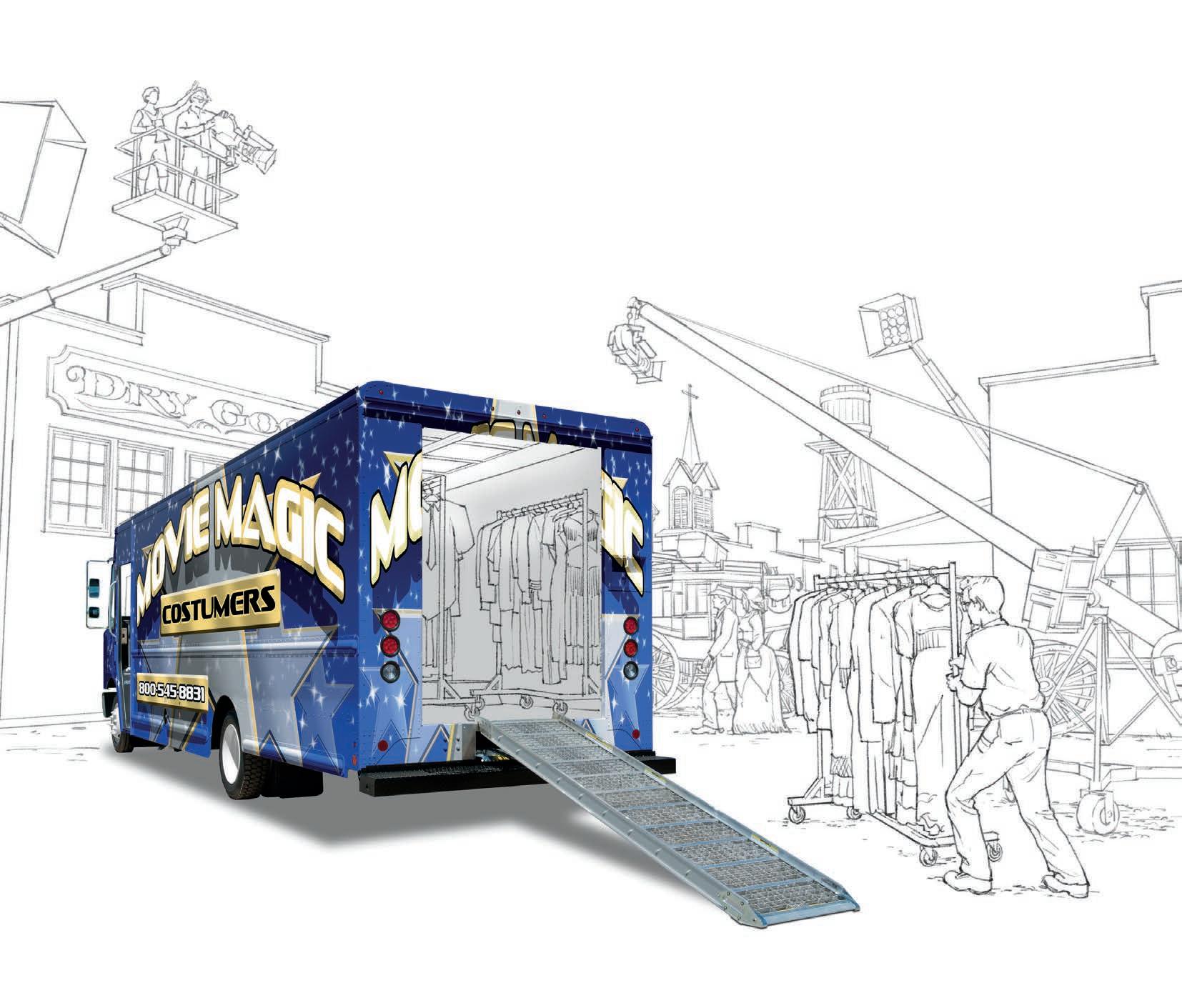
Your vehicle to wrinkle-free business operations.
Specifications are subject to change without notice. Freightliner Custom Chassis Corporation is registered to ISO 9001:2008 and ISO 14001:2004. Copyright © 2014 Daimler Trucks North America LLC. All rights reserved. Freightliner Custom Chassis Corporation is a subsidiary of Daimler Trucks North America LLC, a Daimler company.
MT Gas Chassis
Maximizing linen distribution methods
BY CARLO CALMA, EDITORIAL ASSISTANT
CHICAGO — For Sarah James, RLLD, MBA, and director of product management at Innovative Product Achievements, linen is a “unique commodity.”
“It’s unlike a disposable supply, in that by being reusable and by having a circulating inventory, and different places where the inven-
tory is located at all times, it kind of makes it very complex to manage,” she says.
James, along with Eva Granado, linen distribution manager at Texas Health Harris Methodist, Fort Worth, Texas, spoke on best practices healthcare laundry managers can make to fine-tune and refine their facility’s linen distribution processes in an Association for Linen Management (ALM)
webinar titled Maximizing Linen Distribution Methods
“The goal of linen distribution is to provide clean, reusable quality products and adequate supply on a timely basis in a convenient location, and making sure that you’re supporting patient care and the staff linen needs, and managing the replacement cost and the processing cost for managing the inventory,” says James.
COORDINATION AND BALANCE
Achieving this overall goal requires coordination of a laundry’s staff, textiles and processes, says James, and a balance of variables unique to every healthcare facility—among them, fluctuating patient volume.
“When you’re trying to balance your goals, try to base it in your user areas on the maximum
amount of patients that can occupy that section,” says Granado. “That way, you’re not having to do just-in-time [inventory] for that particular area.”
“I know sometimes we try to cut back in certain areas because the usage isn’t very high and we’re always adjusting our pars, but look at what the max is, especially when you start having to cut back your labor,” Granado adds.
Labor costs and budget restrictions are among other variables laundry managers must consider when refining their linen distribution methods, according to James, adding that an overall effective program provides “the right products at the right time, and the right quantity, [in] the right place.”
“[Another] thing you have to think about, especially when you’re cutting back on staff, is the right people,” adds Granado. “If you don’t have the right person doing the job for you, sometimes you’re destined to fail. They have to care about the product and the end-user and making sure that it works.”
CIRCULATING AND MAXIMIZING INVENTORY
Current linen distribution systems run the gamut from exchange carts to floor closet stock, according to James, but regardless of the system, ensuring the “optimal amount of each linen item” is circulating is key in order to meet demand.
“[This] goes back to the balancing of the budget and the resources [for] what you’re able to do,” she says. “For example, if you are required to cut 10% out of your budget, obviously that’s going to impact your circulating inventory, so you might not be able to have a model where you only have linen distribution every 24 hours.”
And in terms of maximizing linen inventory and par levels, James advises managers to create models based on the hospital’s capacity, not the cart itself.
“You want to make sure that you’re not just putting linen on a linen cart just because it fills the cart up,” says James.
“Make sure that you’re adjusting your par levels regularly. Volumes do tend to shift and change inside the hospital and you want to make sure that you’re adjusting your inventory accordingly, and this is going to make sure that you’re circulating inventory as well.”
DISTRIBUTION AND UTILIZATION
Distributing linen must support end-users’ work routines and schedules, according to James, and each distribution location must have a “defined set of products and par levels.”
8 JUNE 2014 | AMERICAN LAUNDRY NEWS www.AmericanLaundryNews.com ALN_Jr Page.indd 1 5/13/14 2:38 PM
See DISTRIBUTION on Page 35
Purify.
AquaRecycle® has taken clean water to a new level!
Our award-winning patented recycle process has now added Ultra Filtration to our recycle systems to “polish” and to PURIFY the recycled water to drinking water quality. AquaRecycle® now delivers the most comprehensive and e ective recycling system in the industry today. AquaRecycle® continues to o er the highest quality products at the lowest prices in the industry for unprecedented 2 YEAR or LESS payback.

Healt H care • Hospitality • c ommercial • c orrectional • Governmental
information
an estimate,
or
www.aquarecycle.com
For more
or
call toll-free 1-866AQCYCLE
1-866-272-9253
At Work Uniforms adds Barnes to sales roster

ORANGE BEACH, Ala. — At Work Uniforms, apparel and uniform manufacturer and wholesale distributor catering to the hotel, resort and casino gaming industries, has hired Bobby Barnes as sales manager for Louisiana, the company reports.
Track Career












Barnes will focus on working with existing hotel, resort and casino customers, as well as new prospects, throughout Louisiana, the company says. He will report directly to co-owner and President Chuck Campbell.
A graduate of the University of New Orleans, Barnes holds a bachelor of science degree in marketing. He made his start in the sales industry for a consumerbrands brokerage business in Jacksonville, Fla. Barnes also previously worked for Chicago-

based Uniforms To You, selling to hotels and casinos in Louisiana. He was later promoted to serve as district sales manager, according to At Work Uniforms.
In 2002, Barnes stepped away from the uniform apparel business and began selling medical equipment to physicians and therapists at clinics and home healthcare companies in Louisiana and southern Mississippi. He later found an opportunity laying out
and installing on-site laundry facilities for multi-unit housing community property owners in several Gulf Coast states.





“We are extremely excited about recruiting Bobby Barnes to At Work’s team,” Campbell says. “His personality and determination make him a great fit into our corporate culture of ‘Whatever It Takes,’ with respect to the customer.”
Diamond Chemical adds Picard as vice president of Institutional Group


EAST RUTHERFORD, N.J. — Diamond Chemical Co. has welcomed Roland Picard as vice president of its Institutional Group, the company reports.
Picard has 27 years of experience in the sanitizing, food safety, cleaning and infection control chemicals industry, the company says, working his way up from associate territory manager to assistant vice president for a “major institutional chemical manufacturer.”
His work experience includes managing and mentoring a sales force, and he is “skilled in building alliances and partnerships, as well as new business development,” the company adds.
Robertson to rep Tingue, Brown & Co. in Ontario area
SADDLE BROOK, N.J. — Tingue, Brown & Co. has chosen Patrick Robertson to be the company’s Ontario representative. Robertson, a graduate of Laurentian University, Sudbury, Ontario, lives in the Hamilton, Ontario, area and will represent the company throughout the province.


“I want to be sure that Tingue, Brown achieves the recognition [that] its years of industry service and fine products merit,” says Robertson about his new position.
“Patrick’s enthusiasm, outstanding attitude and strong work ethic will serve our Canadian customers well,” says Ty Acton, national sales manager. “We’re excited and proud to have Patrick representing the Tingue, Brown & Co. team.”
ALN_Jr Page.indd 1 5/7/14 11:10 AM
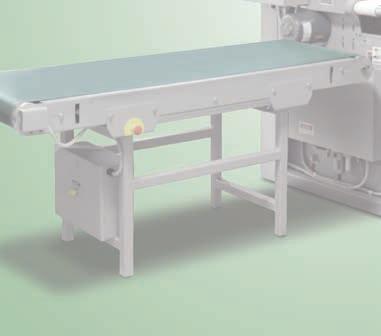
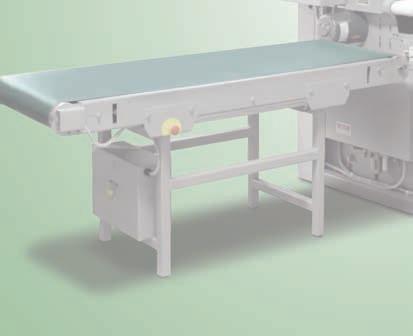
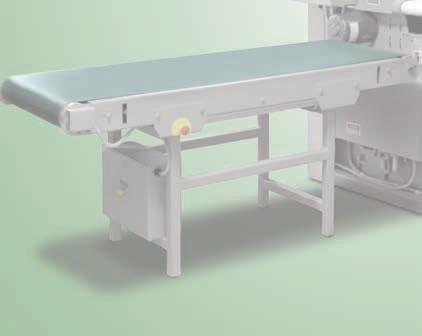
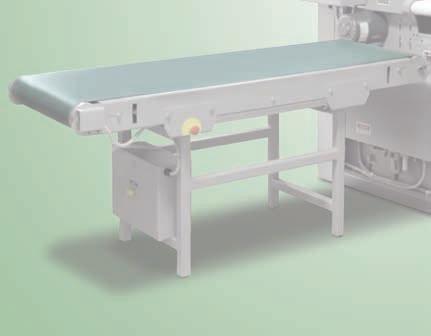
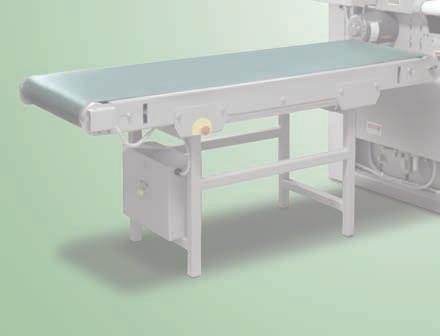
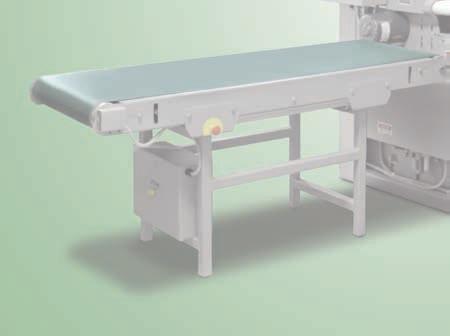
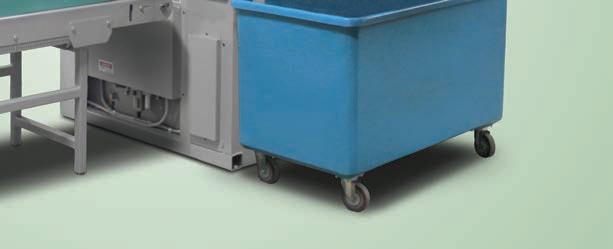
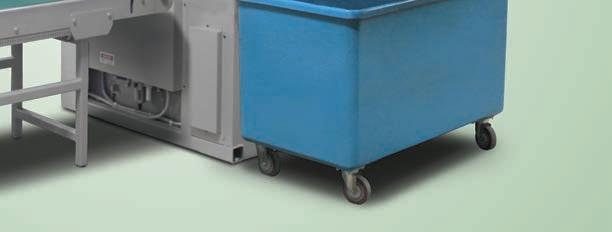
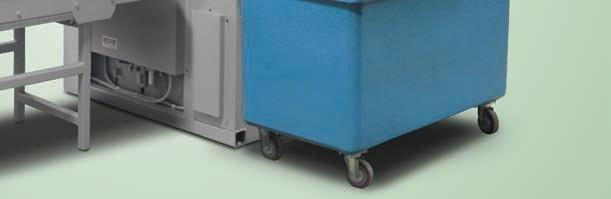
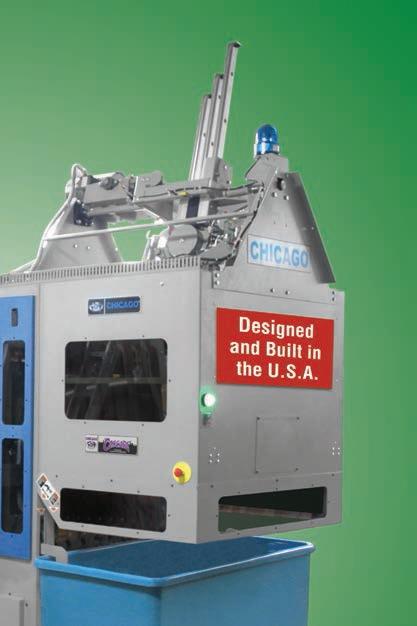
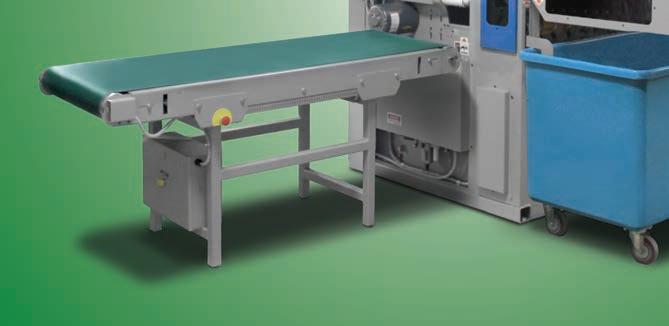
Shown with the optional Chicago LinenStream Conveyor System
Barnes
Robertson
10 JUNE 2014 | AMERICAN LAUNDRY NEWS www.AmericanLaundryNews.com
Picard
Negron joins ARCO/Murray’s Laundry Division

OAKBROOK TERRACE, Ill. — Javier Negron has joined ARCO/ Murray as project manager in its Laundry Division, the company reports.
Negron graduated from Marquette University with a degree in civil engineering and was previously a project engineer with Walsh Construction in Chicago. He brings estimating and operations experience to the new project management role, ARCO/ Murray says.

Colmac Industries promotes Akana to production manager
COLVILLE, Wash. — Colmac Industries has promoted Kao D. Akana to production manager, the company reports.

In his new role, Akana’s responsibilities will include organizing and streamlining the company’s production schedule, as well as evaluating processes to increase efficiency.
A graduate of Eastern Washington University with a bachelor of science degree in manufacturing technology, Akana has also earned his Six Sigma Black Belt certification, and has begun to implement the system’s methods at Colmac, the company says.
dent, Finance & Strategy, and vice president, Corporate Controller & Chief Accounting Officer.
Jokinen holds a bachelor’s degree in accounting from Saint Cloud State University.
“Tracy is a respected finance leader, who will be a terrific addition to G&K’s executive team,” says Douglas A. Milroy, G&K chief executive officer. “Tracy brings the right combination of financial expertise, strategic perspective and proven leadership to help G&K continue to advance our game plan and deliver profitable growth.”
Wright will continue in his post through June 28, and will remain with the company through a short transition period, G&K says.
“I’d once again like to thank Jeff for his 15 years of leadership at G&K and for his support ensuring a smooth transition,” says Milroy.
Encompass Group names Larson VP Clinical Resources and Consulting
MCDONOUGH, Ga. — Encompass Group LLC has
promoted Janice Larson to vice president of Clinical Resources and Consulting, the company reports.


In her new role, Larson will be leading the company’s Clinical Resource team, Encompass says. This team comprises RN consultants and educators across the U.S. whose mission is to educate and act as a clinical resource for customers, supporting the company’s various therapeutic, preventive and comfort lines of products, in addition to assisting with linen utilization and cost management.
“Janice and her team provide tremendous value to customers such as nurse clinicians and managers, nursing education, linen committees, environmental and laundry managers and staff, among others,” says Steve Berg, executive vice president of Encompass’ Healthcare Division.
MINNEAPOLIS — G&K Services, Inc. has appointed Tracy C. Jokinen as its next chief financial officer, effective June 29. Jokinen will succeed Jeffrey L. Wright, who announced his planned retirement last October, the company says.
Jokinen comes to G&K from paints and coatings manufacturer Valspar Corporation, where she worked for 22 years, recently serving as its vice president of corporate finance. Her previous positions at the company included vice presi-
Jokinen to succeed Wright as CFO for G&K Services
ALN ALN_Jr Page.indd 1 5/9/14 9:45 AM www.AmericanLaundryNews.com AMERICAN LAUNDRY NEWS | JUNE 2014 11
Negron
Jokinen
Larson
Akana
OSHA
evidence of knowledge of the violation [and] it could be used for basis for a willful violation,” says Foulke.
Frequently cited OSHA standards in the commercial laundry industry, according to Foulke, are violations in lockout/tagout, hazard communication and general requirements for walking/ working surfaces, among others.

PRE-INSPECTION PLANS
In the event of an OSHA inspection, Foulke explains, one of the “pre-inspection action plans” employers should have established is their “assignment of responsibilities.”

“If OSHA shows up, who’s responsible to meet with [them] and handle that inspection?” he asks.
One other preparation employers should be mindful of is having recordkeeping of training on hand.
“If you don’t document [employee training], you’re not going to have anything to prove that you did it.”
Another document to keep updated is OSHA’s 300 form for logging workrelated injuries and illnesses, according to Foulke, who adds that though OSHA can only cite companies for occurrences in the last six months, it can be used as an indicator for repeat violations.
“It’s a road map for them to [see] where you’re having most of your injuries. This is a way to expand the inspection because they’re entitled to the OSHA 300 logs,” says Foulke. “They’re going to look at that and if they see [that] 60% of the injuries they see in the logs are all occurring in Department A … obviously, there’s some safety hazards there. Now, they have a basis for [inspecting] that area.”
Staying on top of previous citations is key, he adds, particularly for those with multiple facilities.
“OSHA is going to know your previous history. They’re going to know what you were cited for,” says Foulke. “If you’ve been cited for the same thing at that facility, or another facility, in the last five years, they can cite you for that as a repeat [violation].”
INSPECTION RIGHTS
The depth of OSHA inspections can vary, according to Foulke.
While employee-based inspections are “limited to the complaint itself,” other inspections, like “high-hazard industries” and “special emphasis programs” inspections, may provide for “wall-to-wall” analysis of a facility, says Foulke.
Regardless of what type of inspection OSHA shows up for, Foulke stresses, facility owners do have rights, including asking for the credentials of the OSHA compliance officer, and having the inspection conducted at a reasonable time and manner.
“If OSHA shows up at 2 a.m., and the only person there is a guard or maintenance person … that’s not a reasonable time,” he says. “The other thing is they have to complete the inspection within six months [and] must issue citations within that time period.”
Foulke adds that OSHA will not give “advance knowledge,” or notice of an inspection, and will not “come back later.”
“They will wait an hour,” he says, “[but] any longer than that and they’ll treat that as a refusal of entry.”
“But, we always want to make it clear to them that we’re not denying them entry, we’re just making sure the right company people are present to be able to assist him/her on [the] inspection,” he says.
MAINTAINING CONTROL
Foulke advises that throughout the inspection, employers and managers should treat the OSHA compliance officer in a professional manner, maintain control and also be “cooperative and responsive.”
This is of importance particularly during the inspection’s “opening conference,” which he explains should be done in the privacy and safety of a conference room.
It is during this time, he says, that employers can really “set the parameters” and “ascertain [the] purpose of the inspection.”
“You need to find out why [they’re there],” says Foulke. “If it’s a complaint inspection, then you need to [request] a copy of the complaint … you’re entitled to that. Secondly, you need to have that in order to be able to determine [the] scope of the inspection, because you want to limit that inspection to that area.”
Limiting an inspection to a particular area is key, he says, due to a “plainview doctrine,” which can expand an inspection should the compliance officer notice other violations throughout the facility.
To curb this, Foulke recommends that at least one management team member escort the OSHA compliance officer around the plant at all times.
“One person should be taking notes as to what’s going on [and] where the inspection was,” says Foulke, who encourages management to “do everything the [compliance officer] does,” including taking photos or videos, and even conducting tests like air sampling and noise monitoring.
Foulke advises employers to only allow “side-by-side sampling or monitoring” in such cases, adding, “If we’re not doing the same monitoring at the
sign something, it’s a legal document.”
Among Foulke’s other tips is maintaining control—never “volunteer information.”
“Some people think that if they tell OSHA everything that they’ll somehow make everything all right. … The more information you give, the more likely you’re going to get additional citations.” Above all, Foulke says, “The most important thing [is] to tell the truth … this is critical.”

CLOSING CONFERENCE
An inspection’s “closing conference” is a time for the employer to do a “free discovery,” says Foulke.
“OSHA is going to advise you of the unsafe conditions that they’ve observed, and you need to ask them what [they are] specifically. It’s a good way to get additional information from the inspector,” he says, adding that the closing conference is “not a time for debate.”
If a citation is issued, Foulke advises managers to ensure that it is in writing; that the violation is described “with particularity;” and that the proposed penalty is specified, which can range from $7,000 per violation up to $70,000 for willful or egregious violations.
Citation options, according to Foulke, can include an agreement to pay the full penalty; an informal/formal settlement; and a notice of contest, which should be filed within 15 days for federal OSHA citations.
“We really want to make sure that … we’re safe, but more than that, we want to make sure that we know our rights during the inspection, and we assert them,” Foulke says.
same time, we have no evidence to defend against that.”
He also advises managers that they are not required to sign/initial statements prepared by the compliance officer.
“If you are going to sign a statement, then you need to read [it] really carefully to make sure what you said is what the inspector wrote down,” says Foulke, adding that a copy of the statement should be requested. “Once you
“If you show them that you know your rights, and that you’re going to assert your rights … the inspection will go a lot better.”
ALN
12 JUNE 2014 | AMERICAN LAUNDRY NEWS www.AmericanLaundryNews.com
Continued from Page 1
licensed
Ingram Publishing)
(Image
by
Georgia Linen Services aims to serve hospitals, local community
BY THERESA BOEHL, EDITOR
MOULTRIE, Ga. — A new laundry business has been created here with a two-part goal: to serve area healthcare institutions and to provide jobs to local residents.
Georgia Linen Services opened in December in a 17,000-square-foot facility on four acres. Jim Matney, CEO and president of Colquitt Regional Medical Center here in Moultrie, came up with the idea for the new business.
Concerned about the expense of sending linens to faraway facilities—an expense he says totaled about a half-million dollars a year—he decided to partner with local residents on a plan to create an independent laundry business that could serve his institution and others facing similar laundering challenges.
Mel Harrill, president of Georgia Linen Services, says Matney approached him about running the laundry.
“[Colquitt Regional Medical Center] didn’t have the room on-site to build it,” Harrill explains. “They didn’t have the experience, either.” He says he has more than 40 years of experience in the laundry business, mostly “on the equipment side.”
Georgia Linen Services employs 14 people and can process 4-5 million pounds of linen per year, mostly for Colquitt Regional facilities and a few other area medical institutions. The company plans to bring additional business onboard every few months.
Harrill hopes to employ between 30 and 35 people as business expands. He stresses that all employees are local residents, some of whom secured employment through Easter Seals, a nonprofit organization that works to find job opportunities for individuals with disabilities. These employees are given tasks like hand-folding and stacking.
“Any job we can [give to] a local from Easter Seals—that’s what we want to do,” says Harrill. “It’s something good for the community. Moultrie needs the jobs.”
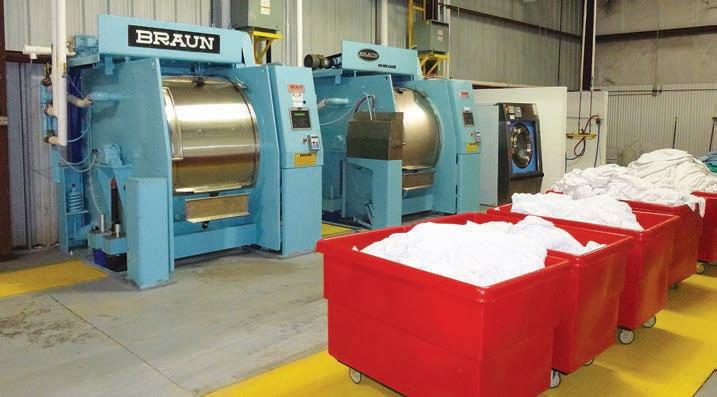
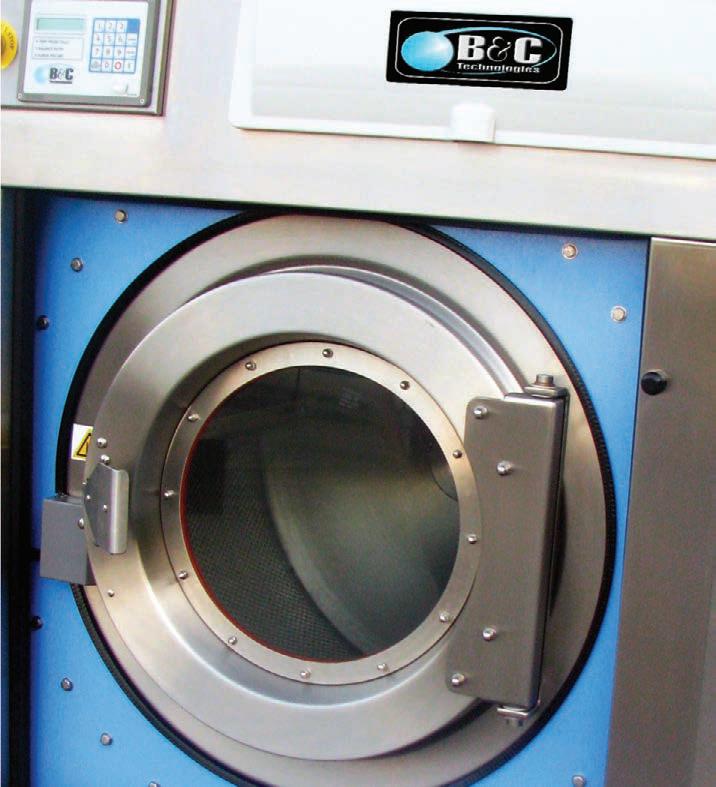
Equipment in the facility includes two Braun 450-pound washer-extractors, one B&C Technologies 100-pound washerextractor and three American Dryer Corp. 170-pound dryers. Flatwork equipment includes a Braun spreader-feeder; a two-roll, 32-inch steam ironer by Braun; a Lapauw two-roll, 32-inch thermal ironer; two Braun folder/crossfolders with stackers; and two Braun small-piece folders.
The laundry also purchased a Hurst boiler with a stack economizer, a Kemco hot water system and a Kibler water softener, among other equipment.
Harrill says the facility has the space for adding equipment as necessary.
Both Harrill and Matney are pleased with the partnership and the employment opportunities it has given area residents.
“I talked Mel into doing the laundry, and it’s been a real success,” says Matney. “I think it’s a wonderful idea for a lot of hospitals to do.”
ALN
Languages
Continued from Page 4
force, we have offered a salary premium to bilingual employees and an additional premium to individuals willing to serve as translators. This helps management effectively communicate with employees and resolve misunderstandings when they arise. Our entire management staff has learned some basic words in each language so that we can make the employees feel comfortable and welcome. Nine different languages are spoken in our laundry. We realize that our ability to communicate using these languages may have an impact on our ability to recruit and retain this workforce.
We have also started a school in our laundry for learning English as a second language. The instructor is paid by the laundry, but the employees attend on their own time. We have seen tremendous progress in the students’ language skills. Many of them have the goal of improving their ability to communicate and read English so they can apply for U.S. citizenship.
We believe our future success is dependent upon our ability to recruit and retain quality employees.
ALN


Eric Frederick is director of laundry services for Carilion Laundry Service, Roanoke, Va., and a past president and manager of the year of the Association for Linen Management. You can reach him by e-mail at efrederick@ carilion.com.
www.bandctech.com






Your never laundry had it so good.
www.AmericanLaundryNews.com AMERICAN LAUNDRY NEWS | JUNE 2014 13
ALN_Tab_half_V.indd 1 4/28/14 2:10 PM
Georgia Linen Services opened in Moultrie, Ga., to serve area institutions. (Photo: Mel Harrill, Georgia Linen Services)
PANEL OF EXPERTS
Keeping rising costs under control


to the blogs and spam we are swamped with these days.
As the manufacturer representative among this fine group, I know there are those who are expecting me to talk about the incredible impact one can make on an operation by just spending more money on new high-tech equipment. But I will leave the discussion of washing without water, drying without heat and ironing without roll pressure
Not quite a decade ago, G.A. Braun embarked on the quest of becoming an ISO-9001 certified manufacturer. We still hold this certification today. In my opinion, the processes that this certification program and others make available to all in our industry—Six Sigma, lean practices, kaizen principles, etc.—afford laundry operators the best opportunity to reduce operational costs and increase efficiencies.
These programs also afford the best opportunity to improve quality, client/end-user satisfaction, speed to market and technological advancements.
My attempt to explain any of
these programs in the upcoming paragraphs would not do them justice, but I see some major points defined within most effective programs.
1. Understand and define the capability of what one has now—not only with equipment and operator production, but in every department and team in one’s facility.
2. Measure and have metrics based on optimal quality and production levels for everything, with quality and client/ end-user satisfaction topping the list. If one does not have a target and goal to meet, one won’t succeed.
3. Cut out all waste. How many steps are wasted by one staff
member? How many unnecessary miles driven by one’s trucks? How many steps in cutting a PO, hiring a new employee? How many times does not measuring twice before we cut double our costs of operation?
4. The program must be bought into by the entire organization, starting at the top of the organization. If we talk the talk, we must walk the walk.
5. Reviews, enhancements and modifications to the process must occur regularly and consistently, and should include the entire team. There is no “one and done” here. If the processes are not maintained and improved,
they will be lost. It is no different from a piece of equipment. The efficiency of one’s newly purchased, highefficiency piece of equipment can be lost with a single OEM operating specification being out of line.
How does one go about implementing such programs in a facility?
Private companies that specialize in these activities are fee-based and therefore somewhat committed to your facility’s success in getting certified or achieving the desired end results, due to their mission and expertise.

Universities, non-profit organizations and local business associations may provide help establish-

over 50 years U.N.X. INCORPORATED has been involved in the development of products that not only solve quality problems that exist at the moment, but also provide long term benefits to the customer and the environment in which we live.

U.N.X.
With a Research and Development team second to none, U.N.X. is in a position to provide the industry with the most technologically advanced products and dispensers as possible. U.N.X. INCORPORATED 707EArlingtonBlvd Greenville,NC27858 (252)756 8616 www.unxinc.com ALN_Tab_half 10/9/12 2:40 PM Page 1 See us at the Clean Show • Booth #2502 0513aln_UNX.indd 1 4/26/13 10:48 AM ALN_Tab_half.indd 1 8/6/13 11:38 14 JUNE 2014 | AMERICAN LAUNDRY NEWS www.AmericanLaundryNews.com
For
was built on the foundation of improving the industry in which we participate. U.N.X. prides itself on being an industry leader with state-of-the-art products and dispensing equipment, and our plans for the future are extraordinary.
“With many operational costs—such as utilities and labor—continuing to rise, how can I cut expenses? What strategies can you suggest for running a more cost-efficient laundry?”
Equipment Manufacturing Gary Ostrum G.A. Braun Syracuse, N.Y.
ing such programs with little or no cost. As they’re a “get-whatyou-pay-for” scenario, one has to realize that the representative may have great intentions but little experience and/or expertise.





For a program such as ISO certification, one must go through a fee-based formal process. But every organization has team members who come from various backgrounds. One may have a Six Sigma black belt, a background as a kaizen team member with a past employer, or have experience in lean practice concepts. It is great for an organization to recognize such team members and put them in a position to improve the entire organization.
I started my answer this month a little light-hearted, and of course new technologies are available to reduce operating costs in one’s plant in just about every area imaginable.
But the money spent on these technologies can only come back to the operation when expectations are met, exceeded and maintained.
door seals and washer dump valve seals were in good condition. The list is a long one and it needs to be reviewed as part of your equipment preventive maintenance efforts.

Lastly, equipment itself can cost you money. Most of the newer technology is far more efficient.

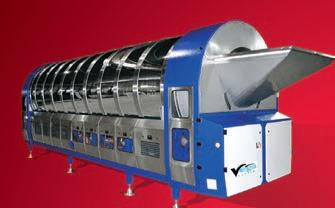
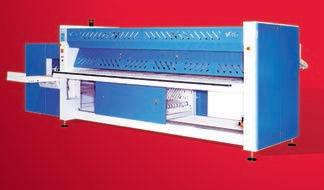
Washers use less water, electric dryers use less Btu per pound and newer fabric blends dry faster.






Many parts now are generic and not specific to a single vendor. Do cost comparisons with all vendors to get the best pricing. Investing in newer technology may require
substantial capital outlay and a proper ROI should be determined
before investing. Labor costs and the associated employee benefits continue to rise. Improving efficiencies is one way to at least maintain your current cost position.
Some of the methods for insuring this are:
1. Develop a productivity rate for every item you ship from your plant. Do time studies if necessary. Minimize handfolding items and if possible, machine fold. You will produce 50% more per hour.

2. Hold people accountable for producing 100% of the
established rate. Ensure everyone understands the goal. Take corrective action as necessary.



3. Review your plant layout/ design. Determine where you can improve your process workflow to eliminate the bottlenecks. Minimize the number of times an item is handled from the time you receive it in soil until it goes back out the door (count in your own facility and you will be surprised at the number).
This month, Michael Paulsen, vice president of operations at HCSC Laundry, will contribute to the discussion on my behalf: In running any plant in the current business environment, it can no longer be a “business as usual” atmosphere. Every owner/ manager needs to question and review everything.

I believe our experiences in 2008-2009 related to the cost of natural gas, and the devastating impact that $14/dth can have on a company, taught many of us a huge lesson. We review both our natural gas and electricity vendor contracts on a regular basis.
You can lock in your pricing with various suppliers as opposed to playing the market. But the pricing is only one part of the picture; the other part is the consumption. Every plant should track and know how much they use each day. We track daily Btu, kilowatt hours and gallons on a per-pound basis. Set a benchmark for usage and compare that to others in our industry.
Some of the ways that we found to improve include changing the entire plant lighting (rebated back through the electric supplier); installing a water reuse system for our washers; installing soft-starts and variable frequency drives for equipment (to lessen peak demand charges); replacing steam traps and fixing air leaks; and ensuring all dryer
www.AmericanLaundryNews.com AMERICAN LAUNDRY NEWS | JUNE 2014 15
“REVIEWS, ENHANCEMENTS AND MODIFICATIONS TO THE PROCESS MUST OCCUR REGULARLY AND CONSISTENTLY, AND SHOULD INCLUDE THE ENTIRE TEAM.”
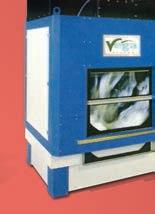
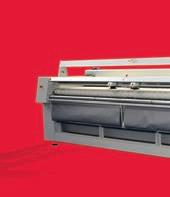
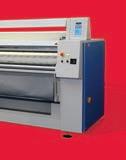
See EXPERTS on Page 16 SYSTEMS A new company has been formed to exclusively distribute Vega products: Highly engineered washing, extracting, finishing equipment with superior functionality, fit and finish and non proprietary parts. Our equipment is 2nd to none. One source and many solutions. Introducing Vega Systems USA. Call today for more information; 630-250-9222 , or visit our website at www.vegasystemsusa.com . For confidential distributor inquiries please contact us at: inquiries@vegasystemsusa.com ONE SOURCE – MANY SOLUTIONS. 124566 r5_EllisCorp_VegaIntro_ALN.indd 1 10/4/13 12:26 PM ALN_Jr Page.indd 1 10/4/13 2:46 PM
HCSC Laundry
Pa.
—GARY OSTRUM
Healthcare Laundry Michael Kirsch, CLLM
Allentown,
Add material handling aids where applicable. This will improve productivity and reduce potential injuries.
4. Review your equipment. Is it in good operating condition capable of producing at 100%? If you change to a new machine, can you reduce full-time equivalents (FTEs)?
Know what an FTE costs you (not just wages, but all benefits). If you add stackers or conveyors, will that reduce staff? Review fixed position responsibilities—packers, wash operators, material handlers, etc.
Lastly, to help all of us improve, talk to others in our business to see what they are doing, whether it is through our trade organizations, at conventions and expos, via email, through online information or by going to visit another facility. Most of them will be proud to share what they have done.
It is easy to cut expenses. Turn off all the machinery and send everyone home. It would be hard to keep up with the laundry demand, though!
Hypothetically, if we could start over and use only the
equipment that was absolutely necessary, thereby not paying to run everything if we didn’t need it, what changes would we make? Same theory for the workers; can any of them “double up”? Are any of them so weak that we have to pull them along? Would we need all of them?
Traditionally, the day starts with the soiled sorters, followed by washing, and then the finish workers start. Is there a way that sorting can start a half hour later, and the finish workers start a half hour earlier? That would make the day more compact,
thus lessening the use of motors, air compressors, etc.
You could get involved with buying groups to pool information about where the lowest price for a given item, or perhaps a better item, can be found. The winning vendors like that idea since it gives them additional sales with virtually no extra effort. The vendor may offer further incentives to get the business.

How you buy and where you buy has been researched to death. The percentages are usually small, and oftentimes one of the members of the group will need to alter his or her specifications in order to standardize the product and make the incentives possible. That could be a hard sell, but one that could be profitable.
Truck fuel routinely costs more than the truck itself. There may be a better way to purchase fuel rather than random selection of vendors. Planning your truck routes and monitoring and enforcing those routes can pay off in lower fuel bills.
Contracting for future natural gas purchases has been successful for some operations.
Of course, the big expense is labor, and the most dramatic improvement in cost reduction, or profit enhancement, will come as production improves. It will also help the reduction of other related costs, since equipment will be running more efficiently and for fewer hours. Labor is the 800-pound gorilla. I think that is where the search for lower expenses needs to begin.
There was an article in the April issue of American Laundry News regarding improving production by setting standards [Setting production standards to improve your bottom line]. While I disagree with several assumptions that were made, I also agree with other assumptions. My point is that we need to look for things we can do better and not worry about whose idea it was.
In the same vein, anytime a machine can be purchased to accomplish a task, it is usually the best choice. The ROI is a consideration, but at some point the machine will be fully depreciated, whereas the employee will always require a paycheck.
Also, ALN exposes all of us to many cost saving devices, from water reclamation to capturing generated, but not completely expended, heat.
Another consideration is reducing costs as a percentage of revenue. Some costs are fixed and will not increase if there is more volume. Some are semivariable costs that will not necessarily increase on a one-to-one basis. Is there some additional business out there that is being
When
overlooked?
you
you
options
appearing—and
are many options. 16 JUNE 2014 | AMERICAN LAUNDRY NEWS www.AmericanLaundryNews.com Experts Continued
Page 15
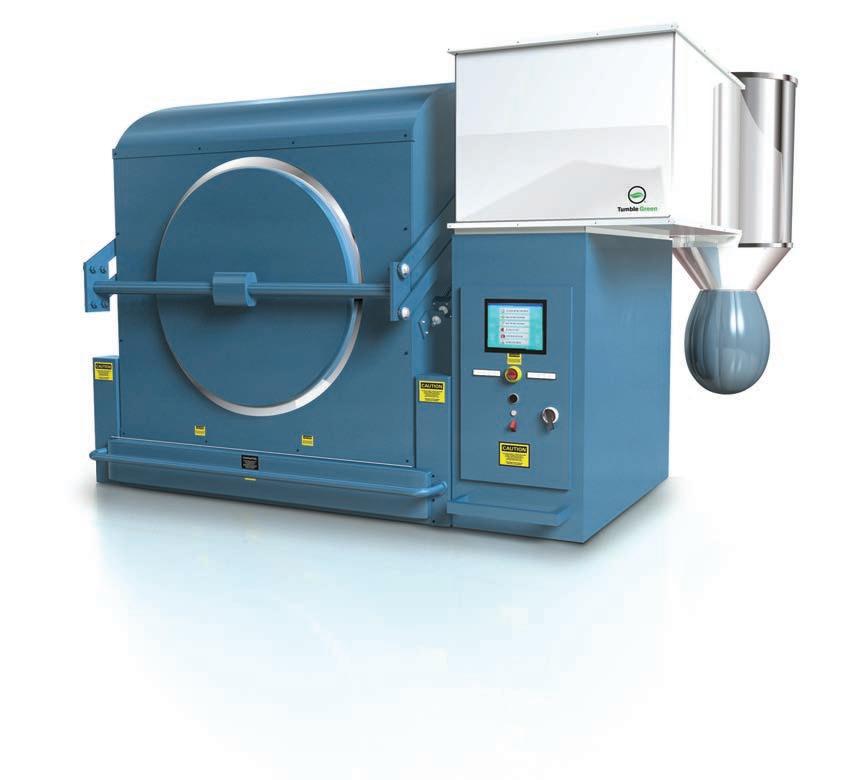
MEETS THE CHALLENGE CLM leads the way in advancements in dryer technology and provides a replacement for your Challenge equipment. Our Model 165 fits the Challenge footprint perfectly and gives you technology that no one else o ers, including a fully integrated production management system. Take the challenge with CLM. • Upgraded heat system with improved e ciency and lower emissions • Micro-Command III PLC upgrade with LAN and Blue Tooth communications • PLC now prepared for flow process management systems • 2-stage variable speed basket drive with 3-port load door. • Soft start to reduce component wear, lower utility use. • Heavy-gauge basket, includes removable steel basket panels • Long-lasting ceramic coating available on removable basket panels. • Configurable exhaust location • Configurable control/burner location Call CLM to replace your Challenge dryers, or for information on our broad range of industrial dryers. Model 165
Tumble Green configuration 211 Erie Street, Pomona, CA 91768 | T: (323) 232-2417 | www.clmco.com ALN_Jr Page.indd 1 4/8/14 4:42 PM
start thinking about what
can control,
start
there
from
CLM
shown with
Commercial Laundry Richard Warren Linen King Conway, Ark.
Whether you’re laundering and/or distributing 50,000 or 5 million pounds of laundry each year, two things are for certain— cost will increase and we’ll be asked to manage a budget as lean as possible!
“What more can be done for managing overall laundry expense?” is the frequent question asked during fiscal year budget preparations. Utilizing industry best practices and the consistent daily focus on the core of our business is what I think of first when having to address our financial realities.

To begin with, what are the highest costs in our business?
Here’s my top three list:
1. Labor. Usually No. 1 on anyone’s budget.
2. Textiles. Cotton pricing has changed the game for how manufacturers make their products. How many different types of blends can we possibly have?
3. Utilities. Shouldn’t we have this figured out by now? When’s the last time a capital expense was approved for equipment replacement to utilize the latest efficiency improvements?
So, what can we really do to manage an ever-increasing financial challenge? Here’s my top-five list:
1. Labor. What do your employee production schedules look like? Do you consistently observe and verify that you’re getting a full day’s work for a full day’s pay? Is the prevailing wage competitive within the industry based on economic measures in your region, state, county, city or town? Is your HR supportive of tracking this annually? Sometimes you really do get what you pay for! What is being done with employee development, recognition and corrective action within
your department? Are your new-hire onboarding and ongoing training programs resulting in having long-term team members who support the consistency and efficiency needed?
2. Preventive maintenance Ensure your systems are running at maximum efficiency. Do you have the experienced staff to guarantee this?
3. Textiles. How is your relationship with your textile provider? Are they continually supporting your costsaving purchasing efforts?
Require that they provide you with at least an annual review of what they and the manufacturers are doing to help. Sometimes this discussion needs to be monthly, based on the uncertainty of the global textile market. Do you need the “Cadillac” towel or washcloth for every use?
4. Par/inventory controls. Do you have a linen utilization committee or some type of group within the organization that can meet, review and provide action plans for daily use of linen within a

hospital, senior living facility, clinic, etc.? Is someone in your laundry department tracking and reporting usage on a daily basis? In a hospital patient’s room, does the linen need to be changed daily?

5. Outsourced laundry services. Are you getting the maximum efficiency with your local laundry? Are they returning what they picked up? What does that relationship look like?
Introducing Braun's new 300 PBS Side-By-Side Dryer! This true side-by-side design offers the smallest footprint in its class with no spacing required within each set of dryers. The patent-pending, side-by-side chute load dryer solution allows great flexibility when it comes to the placement of dryers within the plant and is perfect for sites with multiple conveyor systems. With reports of a 40% increase in production from clients, this dryer boasts a 12% increase in energy efficiency when compared to the previous generation's machines. Both the chute load and non-chute load machines provide an efficient pull process and optimize dryer turns, contributing to undeniable savings. Change the game at: www.gabraun.com/sidebysidedryers
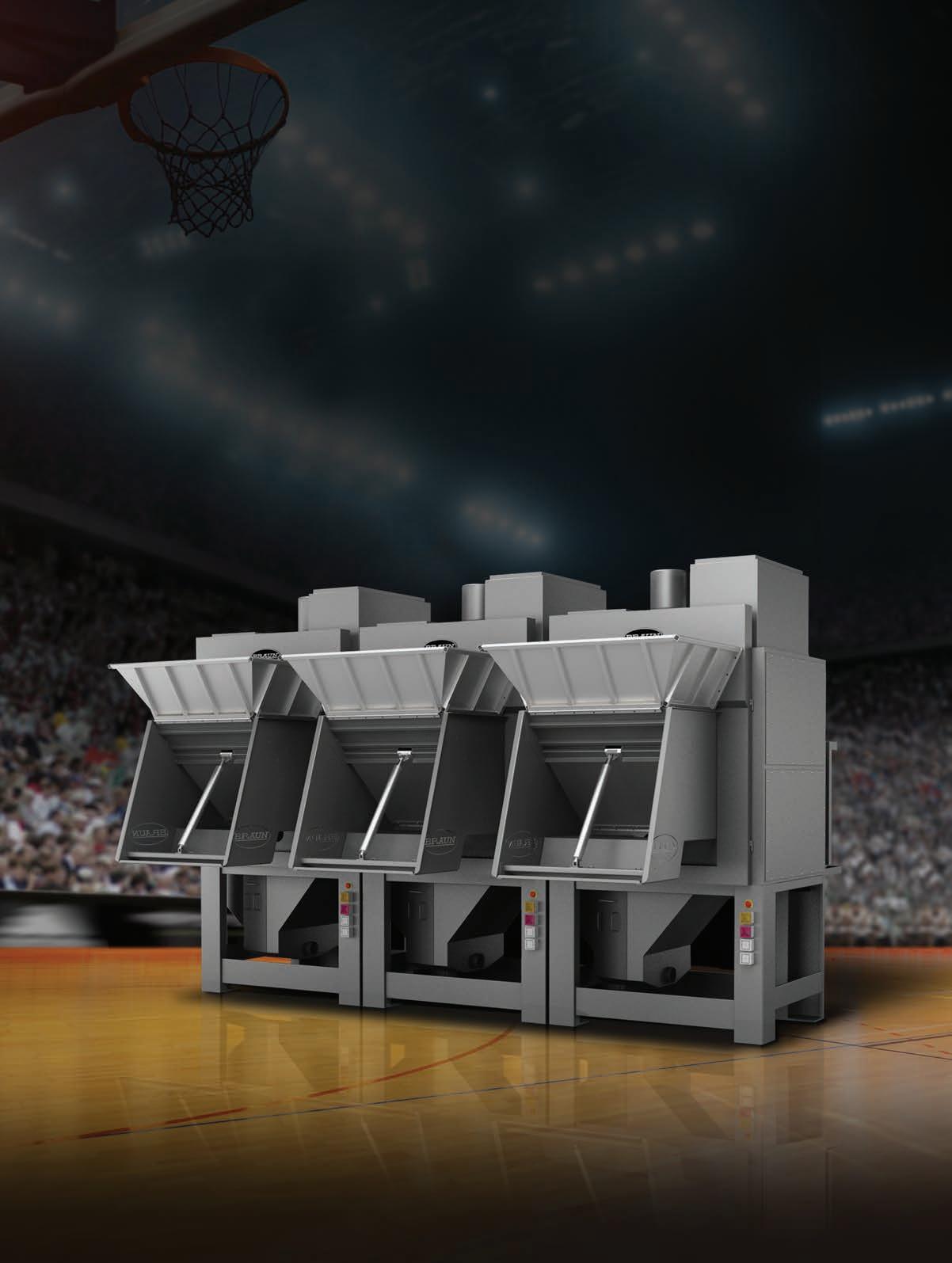
CHUTE LOAD SIDE-BY-SIDE DRYERS (ALSO AVALIBLE IN NON-CHUTE LOAD CONFIGURATION) MADE IN THE U.S.A ISO 9001 CERTIFIED Braun_GameChanger_ALN–June_Layout 2 5/19/14 11:57 AM Page 1 ALN_Jr Page.indd 1 5/19/14 11:10 AM www.AmericanLaundryNews.com AMERICAN LAUNDRY NEWS | J UNE 2014 17 See EXPERTS on Page 18
THE GAME CHANGER!
Long-Term Care Laundry
Brian Barfoot
Aberdeen Village/ Aramark Olathe, Kan.
Experts
he operational costs of running a laundry are on the rise. Some increases in labor, energy, linen, water, gas, electricity and chemicals are substantial. To run a more costefficient laundry, knowing the numbers is a start.
Reduction in operational costs is a long-term project, and one that requires continual evaluation, data analysis and updating. It is a project that requires partnering with your vendors for linen, equipment and chemicals.
Consultation with your vendors will help you through the sharing of responsibility for cost reduction, and also afford you expert advice on achieving the goal of running the most cost-efficient laundry. With their help, a plan can be made to help reduce costs, become more efficient and provide clean, quality textiles.
In a laundry, many operational costs are interrelated. If one aspect of the process is changed, it affects others. These can be positive or negative effects. Each of the main operational costs could be discussed in detail; however, I’m going to touch on just a few procedures of processing laundry from soil sort to finishing.
What are the soil sort procedures? Are the textiles sorted by classification, soil level and textile type? Are the required wash formulas available? Are the formulas selected properly? Are the formulas and chemistry structured for quality and extended linen life? Is the machine loaded to optimum? Is the equipment in good working condition? Are the machines unloaded and directed to the finishing area promptly?
Each question affects the other,as well as overall costs. Sorting heavy soil and light soil may result in rewash if washed on a light-soil formula, leading to increased labor, energy, water and chemistry and reduced linen life. An overloaded washer may also result in rewash with the same consequences. Reduced linen life results in increased linen replacement costs.
Start with the numbers and develop a plan that includes consulting with your chemical supply representative on how to increase efficiencies in the laundry; your equipment vendor on the laundry equipment; and your linen supply vendor on quality linens.
Keeping you informed of current technologies that can help laundries become more efficient and reduce costs, as well continuing to develop new technologies, are the goals of the industry.
Operational costs are continuing to rise and more than likely, that trend will continue in the future.
There are some things that one can do to cut expenses. Labor, for instance, is the highest expense, but it is also the most controllable.
Look for machinery that can cut down on cycle times and enable higher extraction speeds so that your drying time will be reduced. Small increments can mean bigger savings over the course of a year. This, in turn, will reduce utility costs, with shorter times resulting in electric and natural gas savings, along with labor savings.

Look at water lines, too. Perhaps a bigger line will fill your washer faster, and in doing so, will result in shorter cycle times. The savings over time will be larger and increase the overall performance of your operation.
With that being said, you may have to pay more up front for the betterquality machines, but the savings on the back end will pay off and will be worth it.
For a more cost-efficient laundry, some utility companies will actually give breaks to laundries for running an operation during “off-peak” hours. Since most people work during the day, the grid becomes taxed. Running a “graveyard shift” during the night can reduce the cost of energy.
Creativity is how you will get the job done. It is all about trial and error, but if you invest the time to look, there are ways to control the costs.
tom line: utility costs, material costs, distribution costs and, of course, labor costs.



As suppliers and manufacturers usually deal with yearly contracts and, in some cases, purchase orders, longer-term agreements are one answer for controlling costs and bringing them back from the unknown area to the known.
We need to take a closer look at our current suppliers and stop taking past business practices for granted. We need to ask ourselves, “Are our current vendors just providing us product at whatever cost, or are they truly our partners?”
Vendors who are true partners in cost control will offer products at competitive pricing; take that extra step to continually analyze our usage and needs; and bring us solutions and suggestions that will help us save dollars and be more profitable while not deviating from quality.
Longer-term agreements also allow for negotiation of better pricing with vendors. Through a willingness to put some skin in the game and do some long-term planning based upon previous historical data, suppliers are able to plan and forecast production in an effort to obtain more competitive pricing. This long-term planning can also remove some of the uncontrollable, unforeseen production variables that may have an impact on rising costs.

Another strategy for running a more cost-efficient laundry is to examine the current product line and offerings that are being utilized in the laundry. With all the new fabric technology and new garment styling, product life can be increased, having a direct impact on garment replacements.
Energy costs and processing costs might also be reduced due to the new fabric technology being introduced to laundries and the market.
This past week, while going through the mail I received at home, I came across several notices from both our township and our local utility companies informing us of forthcoming increases to our utilities and township services: gas, electric, sewage, water and trash removal.
My first thoughts were, “How can this be, and why is this all happening at the same time? What are my options as a consumer or what strategies can I use to gain a better control over these proposed increases and bring my costs back into line?”
As I pondered my dilemma, I immediately thought about how my issues parallel similar concerns we as laundry operators face on a daily basis as we run our businesses.
Today’s business environment is more competitive than in years past. All of us are looking more closely at variables that directly impact our bot-
Just as we look at new fabric technology, we should consider the new-and-improved technology behind our processing equipment as well. It has been proven that new equipment today uses less water and energy, and in some cases, less labor, to process garments and textiles, helping laundries reduce processing costs and unnecessary out-of-pocket expenditures. As these fabrics process better and last longer, while using less energy and less labor, they ultimately bring replacement costs down, allowing those dollars to be deposited into the bank.
18 JUNE 2014 | AMERICAN LAUNDRY NEWS www.AmericanLaundryNews.com
Identifying the cost issues in a laundry operation is a lot easier than implementing and maintaining a successful cost reduction program. Plant operators routinely walk by thousands of dollars in visible savings every
Continued from Page 17
Uniforms/ Workwear Manufacturing Scott Delin Fashion Seal Healthcare Seminole, Fla.
Chemicals Supply
Carrie Armstrong Ecolab Eagan, Minn.
Hotel/Motel/ Resort Laundry James Brewster The Resort at Glade Springs Daniels, W.Va.
Consulting Services
Sam Garofalo Technical Consulting Associates Charlotte, N.C.
single day and ignore the problem because over time they have become desensitized to the details.
In my practice, while discussing the findings with clients, it’s common to hear someone acknowledge that they already knew about this or that. My response is, “If you saw this problem, why didn’t you do something about it?” The reality is that even the most efficient management team falls prey to apathy and a “blinders on” paradigm.

A serious, open and focused look at your operation, with one of several different industry standard manuals in hand, is the perfect way to start. Industry standards are usually “one size fits all,” which is OK because you are looking for reasonable numbers to set your benchmarks.
Produce an accumulator report to track the line items weekly. Department heads should provide data from their departments on a weekly basis. This data should be entered into the accumulator by the owner or general manager, who will compare your numbers to the industry standards.
In most cases, labor will be your highest cost. As an example, plants that are messy and cluttered can add as much as 20% to labor costs simply because the workers can’t move carts around.
Another good source of data can be the chemical injection system, which should give you invaluable information on how many formulas were run and the costs per formula. Chemistry is usually only 2-3% of costs; however, this data will isolate the wash aisle, which is the heart of your production. Also included in this data should be soiled weight logged, aiding in showing the soiled-to-clean weight ratios. If there is one indicator that is really important, it’s making sure that you get the proper load sizes.
At some point after the cost trends of your facility are clear and stable, you may want to address the efficiency of your production equipment and how it impacts your costs. My feeling is that you shouldn’t spend one dime on production equipment until you have a sustainable cost accumulator in place. A good program in place and consistent data will not only guide you in the right direction, it will direct you to the best place to spend your capital expenditure dollars.

Equipment/ Supply Distribution
is that when the garments make it to the dryer, the dry time will be shorter, as there will not be as much water in the fabric. Less dry time equals gas/energy savings as well as labor savings. The shorter the dry time, the more through-

put the laundry will see, which therefore lessens the necessity of paying employees overtime.

When purchasing newer machinery, make sure you look at the optional features that might be available. Dryers have some pretty cool features, such as residual moisture control, which will sense when the clothes are dry and shut the machine off. Another key dryer feature is a reversing cylinder, which will prevent tangling of garments. This helps improve the overall dry time of the laundry.
Most new washers today are
very customizable in their programming. Some washers use an automatic weighing system, where the machine will sense the weight of a load and then choose the right amount of water for washing. This is a huge utility saver in itself.
Again, setting equipment costs aside for just a moment, I would encourage all laundry-room operators to weigh the pros and cons of putting new machinery in your facility. The energy savings alone might be enough of a reason to replace machinery sooner rather than later.
ALN



Installing the most energy-efficient machinery in your laundry will help you cut expenses, such as utility costs and labor. Let’s face it—not much has changed in the way commercial washers and dryers look. However, what’s inside of the machines is how a laundry owner is able to save money.
The faster a washer spins, the more water gets extracted from the garments. The end result here
www.AmericanLaundryNews.com AMERICAN LAUNDRY NEWS | JUNE 2014 19 ALN_Jr Page.indd 1 5/1/14 9:05 AM
FOR MORE STORIES FEATURING OUR PANEL OF EXPERTS, VISIT WWW. AMERICANLAUNDRYNEWS.COM!
Justin Oriel Garment Machinery Co. Needham, Mass.
The biggest trade show in our industry is the Clean Show—the one place that manufacturers, suppliers, managers and operators can come together to check out the latest products, services and more.
But Clean only meets every other year, and there is no major textile care industry show set in the States this year. American Laundry News is helping fill this void by hosting its “trade show you can fit in your briefcase”—the Exhibit in Print!
Our Exhibit in Print has many of the benefits of a live trade show but won’t require you to walk long distances in a massive exhibit hall.
The “booth” articles have been submitted by the exhibiting companies. Any claims made in Exhibit in Print are those of the participating companies, not American Laundry News. Let’s hit the floor!
McClure Industries
What makes McClure Industries’ Sanitrux® significant to decision makers is a high return on investment, ergonomic design, strength, maneuverability, fire-retardant certification, and a long service life of 15 to 20 years—three to four times longer than other carts.
The company’s Sanitrux carts exceed all NFPA and IFC fire codes and are proven to not add fuel to a fire. Many models come with fire-suppression lids that close automatically. Many other cart brands hold an FM 6921 certification. The fire test for this certification consists of paper ignited inside a cart that is allowed to burn for 15 seconds. After 15 seconds, a person manually closes the lid. If paper under the cart or cheesecloth suspended 18 inches above it doesn’t catch fire, it’s pronounced “fire-retardant.”
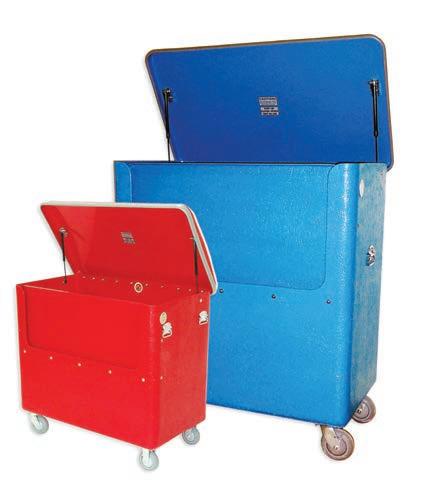
Most facility fires cannot be detected or extinguished in 15 seconds. The only test for certification recognized by fire professionals is the cone calorimeter test, according to ASTM-E 1354. Sanitrux cart material has been tested to ASTM-E 1354 and is Certified Class II Fire Retardant by Warnock/Hersey Intertek. This certification ensures a fire-retardant cart.
There’s no greater eyesore than an ugly utility cart in a beautiful facility. Sanitrux carts are made specifically for the facility where they will be used, and can be
customized to harmonize with the facility’s colors and bear its logo. McClure offers repair services to extend cart life.
The company invites customers to try Sanitrux and see if they agree with industry customers who say their carts are the longest lasting, most attractive and safest in the industry.
www.mcclureindustries.com | 800-752-2821
Consolidated Laundry Machinery
Combining reliability with leading-edge technology, Consolidated Laundry Machinery produces costeffective industrial dryers, folders, conveyors, vacuum feeders and mat-rolling systems.
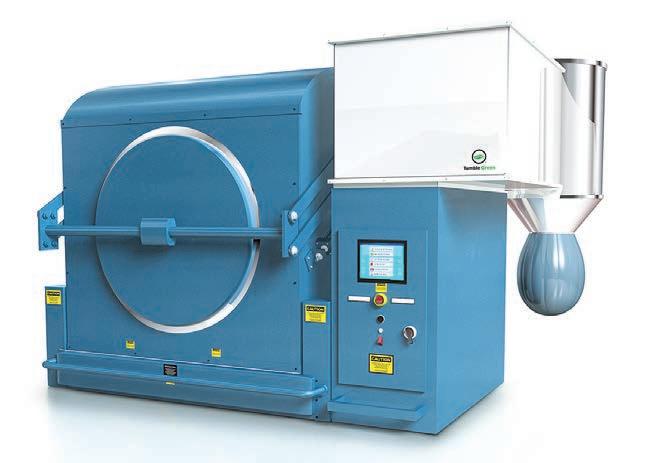
The company, which has been in business for more than 50 years, features a range of technology, including a fully integrated production management system.
CLM’s broad line of industrial dryers ranges in capacity from 250 pounds to 1,200 pounds dry weight, including the popular Model 165.
The entire line of dryers includes features such as upgraded heat systems with improved efficiency and lower emissions; Micro-Command III programmable logic controller
upgrade with LAN and Bluetooth communications; a PLC for flow process management systems; twostage variable-speed basket drive with three-port load door; and a “soft start” to reduce component wear and to lower utility use. Heavygauge baskets, including removable steel basket panels, are available with long-lasting ceramic coating. All units are available with configurable exhaust and control/burner locations.
CLM also offers on-site dryer upgrading and refurbishing, including PLC conversions, which can significantly improve dryer efficiency and cost-effectiveness.
www.clmco.com | 323-232-2417
IES, Home of SonicAire Fans
The innovative line of IES, home of SonicAire™ fans, gives laundries a level of clean that they’ve been looking for, but its value doesn’t stop there: It delivers the level of clean required by rigorous OSHA regulations on combustible dust and lint.
The Clean Fan Technology used is patentpending, but has already changed the way laundries prevent lint buildup. IES offers two types of fans with a full spectrum of oscillation: The SonicAire fan, easily installed anywhere in a laundry, and the portable SuperSonicAire fan.
Both fans provide laundries with these advantages:
Eliminates manual cleaning and related expenses
Features variable speeds for ultimate versatility
Cools employees to keep them comfortable
“I ordered two SonicAire fans so I could have peace of mind that our plant would be safe from an electrical spark igniting a major lint fire,” says Tom Clark, Sudbury Steam Laundry. “When I started the SonicAire fans, I could not believe the gray snowstorm that was falling inside the plant. Keep in mind, only weeks earlier we had thoroughly cleaned the whole laundry. I would be happy to speak with anyone [about] this remarkable innovation.”
www.iesclean.com | 336-712-2437
20 JUNE 2014 | AMERICAN LAUNDRY NEWS www.AmericanLaundryNews.com
Beck’s Classic
Beck’s Classic is based in the United States, and for more than 25 years has been producing reusable incontinence products such as underpads, clothing protectors, diapers and briefs.
The company has chosen to stay in America, and the decision has paid off with the proven construction and reliability expected by the company’s customers.
The manufacturing and corporate offices are located in
IPSO
IPSO® has been a preferred commercial laundry manufacturer in Europe for more than 40 years. The brand’s washer-extractors, tumble dryers and small-chassis machines are engineered for heavyduty performance and maximum productivity. Because of its focus on laundry, IPSO has created an unparalleled five-stage product development and testing process designed to produce dependable and efficient industrial equipment.
Committed to providing customers with quality equipment and state-of-the-art technology, IPSO offers the Cygnus control system, which gives on-premises laundry managers complete control of a laundry operation. The intuitive control drives down energy expenses through new levels of efficiency and outstanding wash results. Programmable cycle options and available wash data increase
Brentwood, N.Y., all under one roof, which helps the company maintain efficient production, top quality and competitive pricing. Without a middleman or broker to go through, the customer deals and speaks directly with the factory.
Beck’s also has the capability to respond quickly to customer needs in production, scheduling, sampling and general inquiries.
The company’s experience and knowledge in producing reusable
productivity, flexibility and serviceability, while SmartWAVe waterabsorption verification technology and overdry prevention technology are designed to reduce utility use and operating costs without compromising wash and linen quality.
IPSO is a brand of Alliance Laundry Systems LLC, based in Ripon, Wis., and a global manufacturer of commercial products for Laundromats, multi-housing laundries and on-premises laundries. In-house financing is available through IPSO Financial, which helps managers equip an on-premises laundry room with the right mix of machines and technology to meet their laundry needs.
www.ipso.com | 800-USA-IPSO
incontinence products for the healthcare industry has helped many well-known companies.
631-435-3800
EDRO Corp.
Available in end-loading and barrier-type pass-through for cleanroom configurations, the DynaWash® threepocket washer-extractor range is based on EDRO’s patented “3-D” stainless steel basket design.
The three “Ds” deliver a dynamic wash action for superior cleaning results, maximizing whiteness retention while reducing tangling of goods and minimizing tensile strength loss, all ideal for processing larger items such as linens that tend to bind up during the washing process.
The “D” describes the shape of each equal-sized compartment: a flat, perforated floor for easy loading/unloading; top- and bottom-angled baffles for load separation and balancing stability; and a fully perforated outer basket wrap with lifting rib for superior mechanical action and maximum wash/water saturation.
The unique basket construction lowers the machine’s center of gravity, allowing for a more compact machine and significant reduction in vibration transmission. This means a stable washing platform and more washing capacity in less space.
With a production run of more than 5,000 DynaWash washer-extractors, EDRO has continually improved the machine through customer feedback, resulting in product innovations such as an energy-efficient inverter with single motor drive and high-slip brake; variable step extract speed control; innovative HMi DynaTrol touch-screen controller; and an onboard DynOzone-DynaWash Ozone System.
www.edrodynawash.com | 800-628-6434
Girbau Industrial
Girbau Industrial engineers industrial laundry systems for commercial and industrial laundry clients throughout North America. Each piece of Girbau Industrial equipment is precisely designed to heighten laundry efficiency and productivity, while reducing labor.
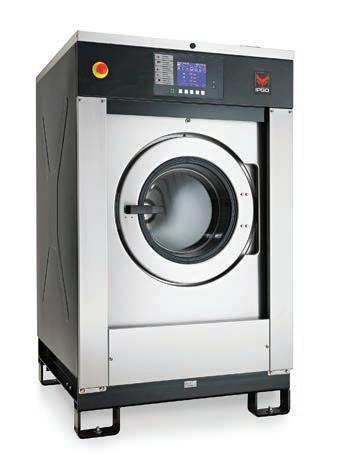
The company provides a robust product offering, including large-capacity washerextractors and drying tumblers, highvolume flatwork ironers, continuous batch tunnel washing systems, presses, feeders, folders, conveyor systems and related system machinery.
The Girbau Industrial Continuous Batch Washing System—designed to process more than 3,000 laundry pounds per hour—includes the TBS-50 Batch Tunnel Washer, SPR-50 Press, ST-1300 or ST-100 Dryers with vacuum load, and an auto-
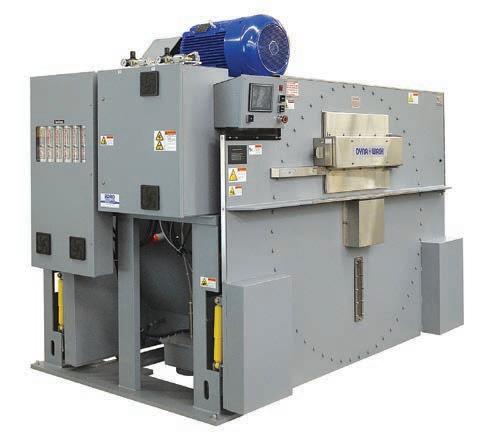
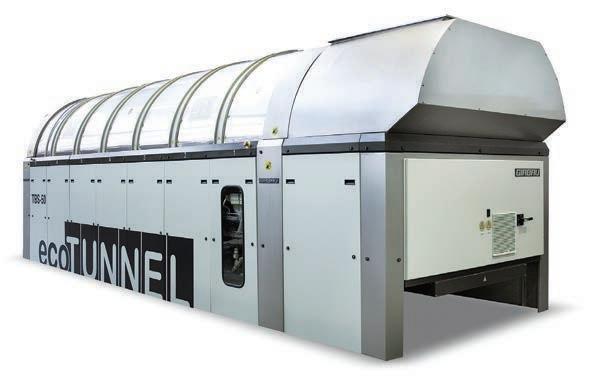
mated conveyor system. Each element of the system is controlled by a central touchscreen control.
The company serves the complete laundry production and efficiency needs of virtually any application. Proven durable and reliable, Girbau Industrial laundry systems are in place at hospitals, hotels, casinos, resorts, drycleaning plants and commercial laundries across North America.
The company’s distributors provide customers with expert recommendations for improving laundry productivity and efficiency, including laundry design and operational studies; equipment sizing, selection and installation; flexible financing; and service after the sale.
www.girbauindustrial.com | 800-256-1073
www.AmericanLaundryNews.com AMERICAN LAUNDRY NEWS | JUNE 2014 21
Jensen USA
Jensen’s Express/Blanket is a high-production blanket feeding and folding system in two working widths—118 inches and 130 inches. Moving up to 1,000 pieces each hour, this duo system helps eliminate a bottleneck in any laundry.
The Jensen Express/Blanket consists of the Jenfeed Express two-station cornerless spreader-feeder and a Jenfold Blanket single-lane folder-crossfolder making up to two lateral folds and up to three crossfolds in both bath and thermal blankets. Production management members as well as maintenance departments appreciate the simple, rugged design of the Jenfeed Express. Its high-performance capabilities, coupled with a high level of uptime, allow for consistent productivity.
A unique feature of the Jenfeed Express is that the “leading edge remains as the leading edge” when discharged into the Jenfold Blanket folder. The blanket folder is based on a proven multi-decade design. The lateral folds are made via programmable high- or low-air pressures. The first crossfold is made via knife blade, the second crossfold is made via reverse belting and an airblast, and the third crossfold is made via reverse belting and a knife blade. The lateral folding and crossfolding method produces an exceptional finished product.
Add a Jenstack Maxstack large-piece stacker and conveyor to complete the system, the company suggests.
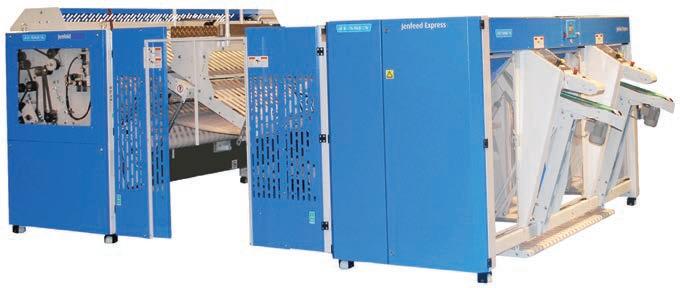
www.jensen-group.com | 850-271-5959
B&C Technologies

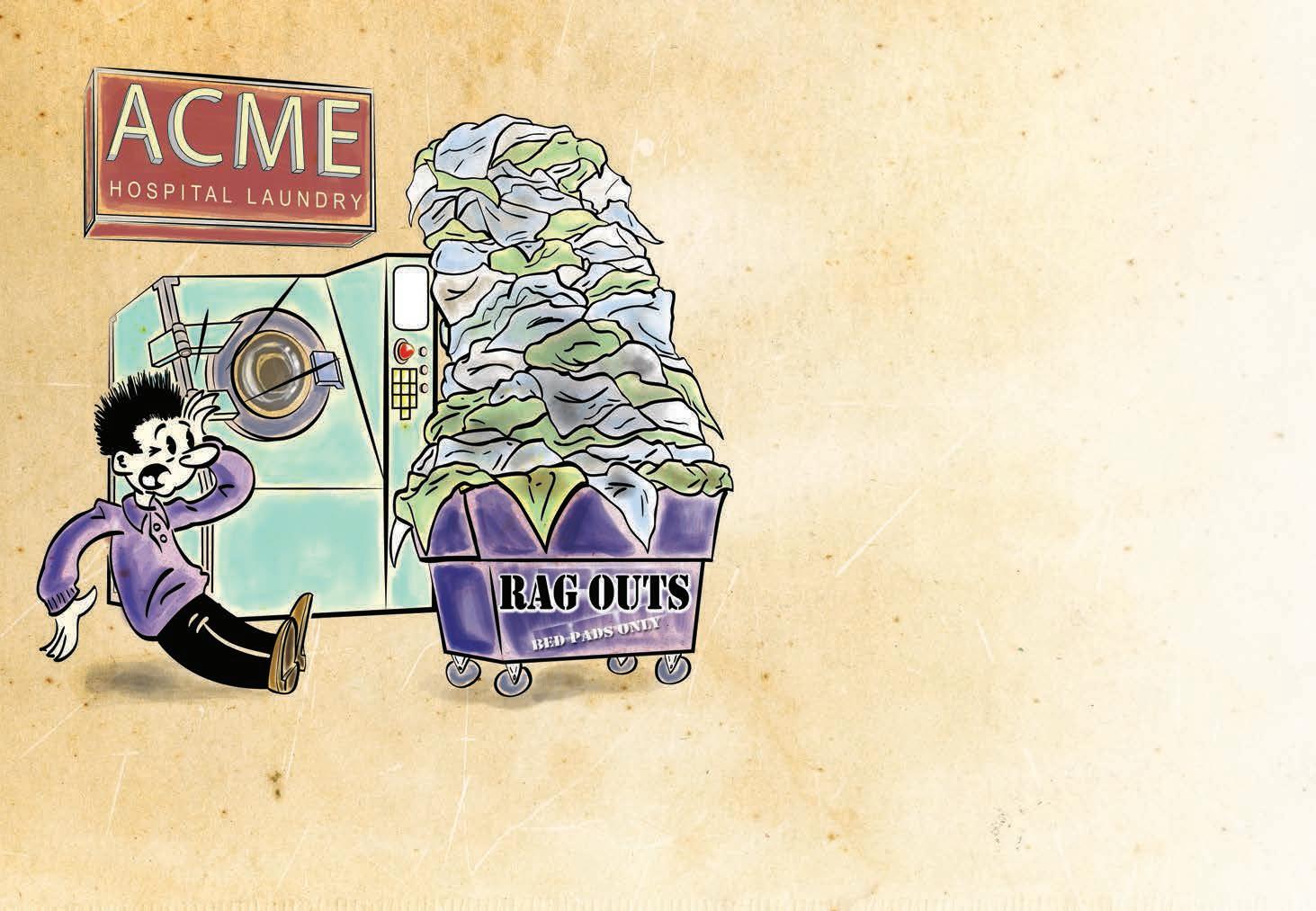
Based in Panama City, Fla., B&C Technologies has focused on building a line of equipment designed to exceed tough standards while maintaining low cost of ownership. Bengt Bruce and Bob Cowen have more than a century of combined experience in the laundry industry and have relied on their engineering backgrounds to produce a dependable machine.
Each B&C design begins with a solidly built frame and utilizes simple design to ensure minimal downtime while maximizing savings and productivity. Each engineer on the B&C team has a complete understanding of the requirements to build a machine that will last.
B&C premiered its line in 2001
with 10 machines and has expanded to more than 100 different machines to offer a full line of washers, dryers, drying cabinets, folders and ironers, all available from a single source. In addition to a complete line of machines, B&C has an extensive parts department, accessible technical support and customer service.
www.bandctech.com | 850-249-2222
A growing number of polyurethane bonded underpads rag out too early increasing costs for the laundry. These pads are not designed to meet the demands of institutional laundries and are removed from circulation due to delamination or leaks caused in the extraction process.
Beck’s Classic Arid Touch underpads are the proven “Patient & Laundry Friendly Pad”. The face fabric provides fast wicking of moisture away from the patient for enhanced skincare bene ts combine that with Vintex’s Uniply Lite bonding process which maximizes the life of the pad. This allows the underpad to be washed with both Chlorine and Peroxide based systems, unlike polyurethane pads.
22 JUNE 2014 | AMERICAN LAUNDRY NEWS www.AmericanLaundryNews.com
GET BACK TO QUALITY AND RELIABILITY, ASK FOR THE BECK’S ARID TOUCH UNDERPAD UNDERPADS LAST 50% LONGER 50 Emjay Blvd (p) 516-868-3200 Brentwood, NY 11717 (f) 516-868-8282 USA pads@becksclassic.com ALN_Tab_half.indd 1 3/11/14 1:45 PM
Chicago Dryer Co.
The Chicago CASCADE® is a fast, automated linen-separation system. This all-in-one, free-standing, labor-saving system helps laundries tackle untangling sheets, table linen and blankets at a rate that keeps up with the fastest automated spreader-feeder/ironing lines.
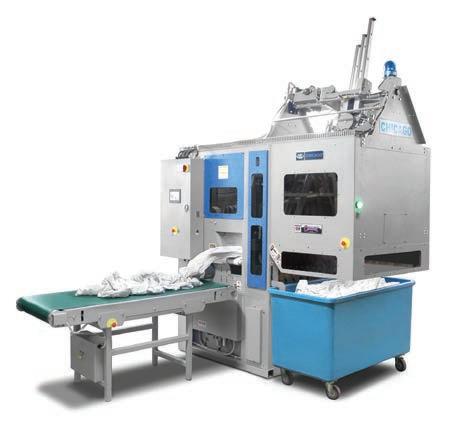
The system’s multi-step process divides and spreads out even the most difficult work into stages to assure longer service life. Alternating dual-pick heads have a continuous pick rate of more than 1,600 cycles per hour, with the exclusive intermediate holding area providing a buffer supply of linen required so a high-speed finishing line can run without interruption. In the meantime, a fresh cart or overhead sling (autoload conveyor available) of

tangled linen is moved into place.
The unique, rugged compact unit can be placed directly in front of a finishing line, or remotely placed for a “separated and ready to go” cart transfer. It automatically separates and unloads extracted, tumbled or caked work of any size from a wide variety of laundry carts, or overhead or lateral conveyor delivery systems, and it presents easily handled separated items directly to operators. Linen can be discharged to a feeding table, cart or optional Chicago® Linen Stream conveyor.
www.chidry.com | 773-235-4430

Maytag Commercial Laundry

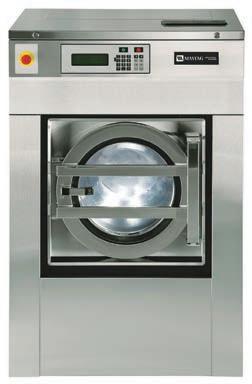
The Maytag Commercial Laundry® Energy Advantage™ lineup addresses utility cost and energy efficiency concerns, offering several sizes and models to meet the diverse needs of on-premises laundry markets. Equipment includes multi-load, rigid-mount washers that come standard with the TurboWash™ System. The system allows for savings on energy costs as baffles deliver water directly where needed for complete saturation with less water. The computer-controlled TurboWash System tumble patterns continuously turn laundry through the wash cycle.
The company offers multi-load, soft-mount washers also equipped with the Maytag Commercial Laundry TurboWash System. The soft-mount washers are easy to install and operate, and they feature high-speed extraction of up to 350 G-force to help save additional energy usage and drying


time. There are 15 pre-programmed cycles, plus the capability to create additional unique cycles.



Also in the Maytag lineup are multi-load dryers. The 75-pound onpremises laundry dryers feature moisture-sensing technology, improved airflow for faster dry times and a reverse-tumble feature. The dryer utilizes a residual moisture control (RMC) system to measure the presence of moisture in the load. The dryer senses when the load is dry and shuts the unit down to prevent overdrying, thus saving time and utility costs, and helping to extend linen life.
www.maytagcommerciallaundry.com | 800-662-3587

www.AmericanLaundryNews.com AMERICAN LAUNDRY NEWS | JUNE 2014 23
For laundry done on time and on budget, there’s no better choice than IPSO ® Forty years of European ingenuity, rugged industrial construction, flexible installation, superior G-Force extraction, and our intuitive Cygnus controls all add up to help you achieve your ultimate goal — maximum throughput at a minimized cost. Learn more about how IPSO helps you get the job done at IPSO.com/industrial. Work with your IPSO finance expert to learn about customized financial solutions for your business. IPSO USA 1.800.USA.IPSO INDUSTRIAL BY DESIGN. Optimal Efficiency. Maximized Throughput. INDUSTRIAL BY DESIGN ALN_Tab_half.indd 1 2/3/14 11:00 AM
Moonsoft International
MEDPRO+ is Moonsoft International’s new line of microfiber cleaning textiles designed for hospital and healthcare facilities and the laundries that support them.
MEDPRO+ mopping system aids in the prevention of healthcare-associated infections and, by design, helps prevent cross-contamination. The MEDPRO+ mop pad removes bacteria and germs but will not promote their growth. It is a “green” product with an evolutionary design, using less energy to launder
and requiring a shorter drying time.
MEDPRO+ is also designed to use the correct amount of solution to clean an area, reducing waste and increasing performance to clean and lower the spread of bacteria and germs.
MEDPRO+ and its components hold up better to low-pH solutions and higher process temperatures, giving textiles a longer service life and better performance, the company says.
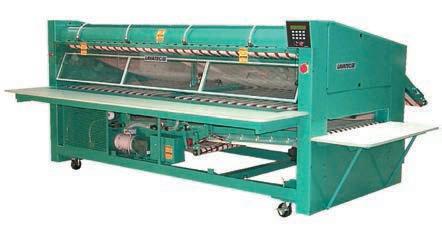
Moonsoft International is always looking to improve the cleaning textile marketplace, with innovation and problem-solving helping to keep the company creating new products and materials.
www.moonsoftcorp.com | 877-892-9360
G.S. Manufacturing

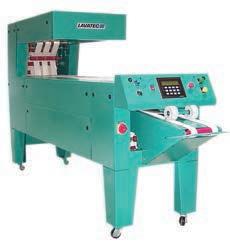
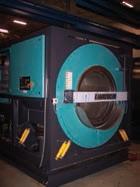
The G360-BD linen cart from G.S. Manufacturing is built with the same robust strength and durability that the company’s customers have come to depend on, while maintaining its ergonomically and fuel-friendly low cart weight.
The new G360 back-door cart allows staff to gain access to the soiled-return linen through the back of the cart. The 31-inch door swings a full 180 degrees to the open position, and is held in place by a magnetic catch. The door is secured in the closed position with two spring-loaded slide bolts.
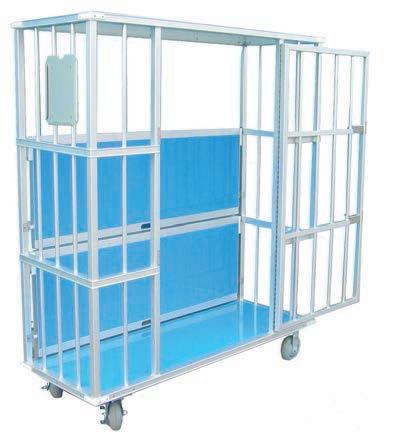
The back door offers a clear ergonomic advantage by allowing the staff unrestricted access to the soiled-linen bags. With greater access, the job is easier and staff members are allowed to work within their personal ergonomic safe zone.
www.gsm-cart.com | 800-363-2278
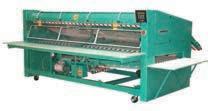
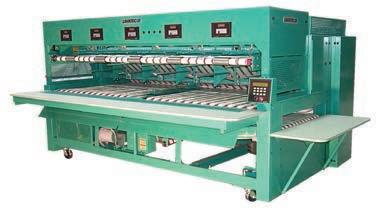
Lavatec Inc.

300 Great Hill Road Naugatuck CT 06770 - USA
Toll Free: 1 800 255 2515 Tel: 203 723 1122 Fax: 203 729 4977 Email: info@lavatec.com www.lavatec.com


Service: Lavatec, Passat, Washex, Challenge Cook MADE IN USA Lavatec Feeders & Folders Remanufactured Equipment Dealer Inquiries Welcome Master Eclipse Two machines in one Towel Folder Master Fold Spare Parts Ironers U.S. DISTRIBUT0R OF LP571 LX445 Master Eclipse Master Fold ALN_Tab_half 3/9/12 3:34 PM Page 1 0513aln_Lavatec Inc.indd 1 2/14/14 1:50 PM 24 JUNE 2014 | AMERICAN LAUNDRY NEWS www.AmericanLaundryNews.com
Textile Rental Services Association






There are 165 textile services facilities certified as Hygienically Clean or Clean Green by the Textile Rental Services Association, reflecting these designations’ growing popularity among launderers for their value in impressing laundry customers with the third-party credibility only TRSA can provide.
Another 50 industry operations are being vetted for the certifications.


Hygienically Clean maximizes customers’ confidence in textile product cleanliness by ensuring ongoing, quantifiable quality measures. Microbial testing documents the eradication of pathogens on textile products, which then pose no threat of human illness. Inspection verifies that laundry management consistently monitors laundering processes, prevents infection in laundry personnel and maintains a well-designed, properly functioning textile services facility. Monitoring reduces subjectivity by focusing on proven outcomes based on international standards and best management practices (BMPs).
Clean Green validates laundries’ sustainability

with TRSA authentication of their consumption of water and energy, and their deployment of BMPs for reusing, reclaiming and recycling resources. These criteria are ASTM International-approved and reviewed by top technical experts, scientists and environmental professionals worldwide who develop and deliver voluntary consensus standards unparalleled in helping to build consumer confidence in product and service quality. Laundry customers are ensured their items are washed, dried and finished with processes that limit resource use and minimize waste in line with the industry’s longstanding commitment to conservation.
www.trsa.org/certification | 877-770-9274
G.A. Braun
Braun’s new 300 PBS Side-by-Side dryers are a “game changer” in a tunnel procession environment, the company says. In a side-by-side configuration, no space is required between dryers. All dryers are identical, and there are no left- or right-hand requirements because of the side-by-side design.
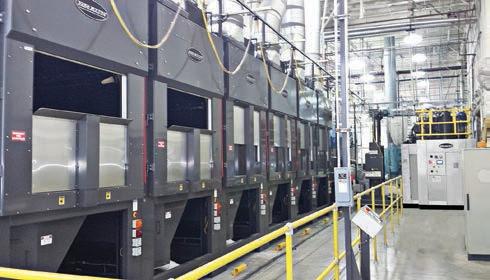

The dryers can be installed together endlessly, unlike other machines that require installation in pairs. The configuration enhances space utilization, minimizes number of spare parts needed, and enhances productivity and efficiency within a tunnel system. The patented lint collection system allows for better performance, airflow optimization, and a better utilization of available space within the facility.
Clients have reported a 40% increase in production and a 12% increase in energy efficiency when compared to previous generations of the machines, Braun says.


Additionally, the machine has been designed with a patent-pending chute-loading option; the static chute on the front of each machine allows for a more seamless integration with a rail system, improves turn times, and eliminates moving parts and maintenance costs inherent in the use of cross conveyors for dryer loading—all of which helps improve overall plant efficiency in a multiple-tunnel location.
www.gabraun.com | 800-432-7286, ext. 217





Introducing the ST-1300 Dryer with Vacuum Loading
The patented Vacuum Loading System on Girbau Industrial’s ST-1300 dryer allows operators to quickly load items into the dryer without a conveyor. A powerful suction pulls items inward with minimal effort and no risk or hazard to attendants. In less than one minute, attendants can fully load up to 140 pounds of laundry into the dryer. From the same area, items are then automatically unloaded—increasing productivity, reducing labor and boosting profits for your laundry.
Contact Girbau Industrial today to see how the ST-1300 can reduce labor costs in your laundry!

LIGHTEN
[on your employees and your budgets]
ST1300Ad-ALN.01-14.indd 1 1/13/14 3:20 PM ALN_Tab_half.indd 1 1/13/14 3:30 PM www.AmericanLaundryNews.com AMERICAN LAUNDRY NEWS | JUNE 2014 25
THE LOAD
Visit www.girbauindustrial.com to see Girbau Industrial’s complete range of products for industrial laundries. (800) 256-1073 • www.girbauindustrial.com
Kannegiesser USA
Kannegiesser leads the way in flatwork finishing with a complete range of automatic spreader-feeders, highproduction ironers and precision flatwork folder-stacker combinations for any laundry application, the company says.
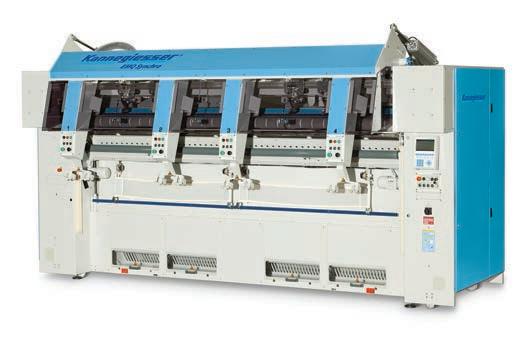
The versatile EMQ/EMT Synchro Spreader-Feeder line incorporates the use of vacuum assistance to ensure the items being processed are held in the proper position while feeding. Additional quality attributes include spreading brushes and a trail-edge vacuum chute to eliminate wrinkles before ironing.

Another feeding option includes the EMX sheet feeder, which incorporates a noclip style of automated feeding that is ergonomically efficient for operators. The EMX technology includes multiple “micro-buffers” in the feeding sequence that help ensure a high
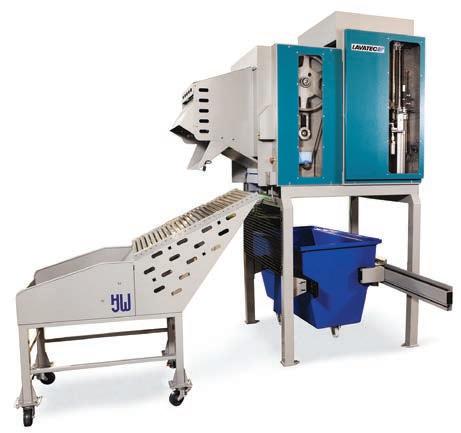
rate of productivity.
Kannegiesser offers a wide range of ironers specifically designed for customers’ needs. The SHM offers both steam-heated models and gas-fired thermal systems that can be sized to any application with roll sizes from 32 inches to 52 inches in diameter. Completing the finishing line is precision folding from the CFM.II and SFM.II models. Both incorporate air-jet folding for the primary folds, and positive blade-topinch roll for crossfolding.
www.kannegiesser-usa.com | 972-641-3169
Lavatec Laundry Technology
A leader in laundry equipment throughout Europe, the Far East, and South and North America—and with more than 6,000 machines in the United States, the company says—Lavatec Laundry Technology has introduced a new labor-saving automated picking machine that is ideal for high-volume commercial laundry operations.
The Double-UP™ LavaPik UP-22 picker (shown) meets the demands for productivity and efficiency in today’s marketplace. Its double-jaw grip allows for 20% more picking productivity with identical twin jaws fully coming up on nearly every stroke. When measured against a single-jaw picker in picking up two cakes of identical-weight sheets, the Double-UP moved every piece of linen with just 113 strokes, nearly 25% fewer than a single jaw’s 150 strokes.
The LavaPik UP-22 picker further emphasizes LLT’s ability to deliver commercial laundry equipment engineered to last.
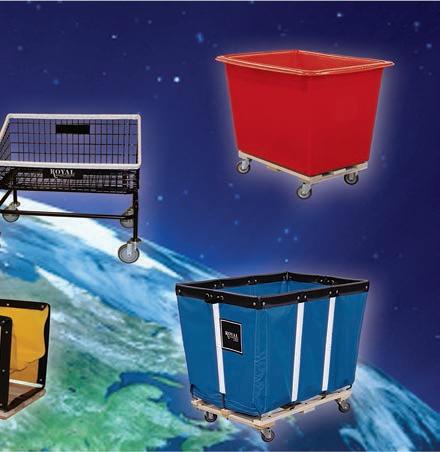

Simple design, durable construction, userfriendly operation and low maintenance are hallmarks of long-lasting LLT machines that help produce higher returns.
Lavatec Laundry Technology also produces a full line of tunnel washers, extractors, dryers, ironers, folders and other products.
www.lltusa.com | 203-632-8777
EAM-Mosca
EAM-Mosca’s walk-up strapping systems have been successfully used in many commercial and industrial laundry facilities. The company offers two product lines: ROM Fusion, an entry-level system available in two track sizes with heat-seal technology, and the new ROMP Evolution, a high-end line available with heat-seal or ultrasonic sealing Sonixs technology and various options.
While walk-up models in these lines have met the needs of most facilities, some com-
panies are looking at automation options to increase production output. EAM-Mosca recently introduced the Evolution strapping systems with belt conveyors that can be used to automate a throughput of up to 40 bundles per minute. The systems can be integrated into virtually any automated production line, and the Standard 6 Strap-way has been proven for strap-feed reliability.
The strap can be quickly disassembled without tools for convenient cleaning and ser-
vicing. Strap threading is fully automatic.
For operator convenience, coils can be changed from the front of the cabinet, or, when installed in a conveyor line, from the side via a sliding drawer. The conveyor tables hinge up past 90 degrees from the horizontal home base for easy maintenance and convenient servicing. Conveyor speeds vary from zero to about 190 feet per minute.
www.eammosca.com | 800-456-3420
ALN_Tab_1-4_H.indd 1 7/16/13 3:58 PM 26 JUNE 2014 | AMERICAN LAUNDRY NEWS www.AmericanLaundryNews.com
Dexter Laundry Inc.
As an industry leader in on-premises and vended laundries, Dexter Laundry Inc. has been raising the bar on quality laundry equipment for more than a century. Fully employee-owned, Dexter offers a complete line of frontloading washers and dryers made in America.
Headquartered in Fairfield, Iowa, Dexter annually reinvests millions of dollars into continuously improving the laundry experience for its customers, the company says. The resulting products are some of the most durable and reliable on the market today. Born out of hard work and research, Dexter machines are at the cutting edge of industry progress and are backed by an industry-leading, 10-year, limited-parts warranty.
Each product features heavy-duty bearings and durable AISI 304 stainless steel panels. Dexter washers feature a sump-less outer tub design that further enhances performance by saving water on every cycle, while Dexter dryers feature perforated tumblers and balanced radial airflow for maximum efficiency. When paired, these products make for an efficient and valuable addition to any laundry. Dexter washers and dryers are available in a wide range of sizes with models available for both on-premises and vended applications.
www.dexter.com | 800-524-2954
U.N.X. Inc.
Since 1958, U.N.X. Inc. has formulated innovative laundry chemicals for all the markets it serves. The company says it was among the first to make extensive use of new surfactant technology, and to introduce the first successful heavy-duty enzyme products. U.N.X. Inc. is a proven leader in the development of new products for the laundry industry.
Selling and satisfying laundry and institutional customers are the company’s primary objectives. Extensive field experience and technical know-how enable the U.N.X. Research Laboratory to formulate new and better products to arrive at custom solutions for meeting the needs of its customers, according to the company. U.N.X. represents stability, independence, integrity and security.
Its territory managers aim to find a better way and involve themselves beyond the role of supplying chemical specialties to their customers. They are experts in the technology of the laundry industry, and by concentrating on their specific areas of expertise, they are able to provide the quality assistance their customers demand. Complete customer satisfaction is their goal, and the company recognizes that its people provide hometown service with national support.
U.N.X. knows its reputation and future depend on the quality of personal service provided to the customer. It trains and develops territory managers so that they’re the most capable technicians available.
Professional service, proven cleaning formulations and state-of-the-art dispensing systems have built a solid reputation for U.N.X., and the company’s specific function is to provide the best chemical detergents and specialties to key consumer industries.

www.unxinc.com | 252-756-8616
Davis Packaging
For more than 35 years, Davis Packaging, a family-owned business, has provided unique and affordable stretch-and-shrink laundry wrapping equipment and films tailored to laundry operations of all sizes. From the tabletop mini bundlers to the full-size TD362 console, the company’s systems help provide quality laundry service for hospitality, hospitals and individual consumers.
Increase efficiency and reduce expenses by avoiding costly rewashing, contamination and loss. The company’s systems provide easy-to-wrap, sealed, durable, professional-looking laundry packages costing pennies per package. Clear wrap keeps contents
together and allows identification tags to show through to help control loss, speed sorting and allow customers to easily identify items without opening packages. The non-slip, stackable packages also ensure contents remain secure and clean during transport, storage and delivery.
Davis Packaging is dedicated to providing high-quality products manufactured in the United States to customers of all sizes, with no minimum-quantity requirements.
www.davispackaging.net | 800-622-3015
www.AmericanLaundryNews.com AMERICAN LAUNDRY NEWS | JUNE 2014 27 ALN_Tab_1-4_H.indd 1 2/11/14 2:14 PM
Hamilton Engineering
Hamilton Engineering’s EVO Companion water heaters are the ideal water heating solution for any laundry. The heaters are compact, requiring only a minimal footprint. They are efficient—the most efficient water heater available rated at over 99% efficiency, according to Hamilton—and they have no flow restriction, nor will they limit the hot water supplied. They also have the longest warranty in the industry at 10 years for the heat exchanger and the tank.
If a laundry is in an area of poor water quality and the water heater suffers from scale build-up, then the Indirect Companion is an excellent solution. Poor water quality could be hard water, a




high pH, or a water chemistry that is prone to scale in the water heater. The Indirect Companion heats the scale-forming water without risk of developing scale build-up and the loss of efficiency that comes with it.


Hamilton Engineering will help a laundry owner determine the right water heater for each laundry, for the available water quality, and for an owner’s budget.
If a laundry is upgrading washers, Hamilton recommends looking at the water heater as well; it could be oversized and inefficient.
www.hamiltonengineering.com | 800-968-5530
American Laundry Systems
American Laundry Systems is a mechanical contracting and engineering corporation that caters exclusively to the commercial laundry industry, including hospitality, healthcare, linen and industrial laundries.


With more than 25 years of experience and 75 major laundry projects, the company’s officials are confident their industry experience will assure a seamless project from start to finish. Since no two laundries are identical, American Laundry Systems offers numerous services tailored to each client’s specific needs. The following are some of the services offered by American Laundry Systems: facility consulting services; autoCAD services; design engineering of major
plant projects; design engineering of existing facility renovation projects; equipment installation services; process mechanical engineering and installation; project management; and general construction services.
“Our experience with American Laundry Systems has been very positive,” says Susan Witcher, Faultless Linen. “ALS had the experience we were looking for and a strong reputation for honesty, integrity, and looking out for their customers’ best interests.”
www.eomech.com | 978-373-1883







Download Magazine Central and read American Laundry News on your iPad or Android Tablet Step 1: Go to your App Store and type Magazine Central into search bar Step 3: Open the Magazine Central App Step 2: Click the box to install the app (you won’t have to do this again) Step 5: Click Download Step 6: Click View Step 4: Type AmericanLaundry News into the search bar The app stays on your tablet. Check back monthly to download the latest issue. Step 7: Read & enjoy! 0414aln_Mag Central tab half.indd 1 3/12/14 4:59 PM 28 JUNE 2014 | AMERICAN LAUNDRY NEWS www.AmericanLaundryNews.com
Freightliner Custom Chassis Corp.
As a leader in the design and development of a wide range of mediumduty, heavy-duty and alternativepower chassis for the laundry and linen industry, Freightliner Custom Chassis Corp. knows a good chassis is one that’s out on the road, making its rounds, and helping make a company successful.
FCCC builds a family of chassis manufactured to meet the specific needs, challenges and goals of the laundry business, and the company also
builds a chassis powered by both traditional and alternative fuels, including gas, diesel, hybrid-electric, hydraulic hybrid, all-electric and CNG.
In addition to these alternative fuels, FCCC also leads the way in the development of LPG and propaneautogas technologies for the walk-in van market in the form of two new products hitting the market soon: the S2G propane-autogas truck; and a new LPG version of the company’s popular MT-45 and MT-55 chassis. During the 2014 Work Truck Show, it was announced that UPS is purchasing up to 1,000 LPG MT-45s for deployment in its fleet—the largest purchase of LPG trucks ever.
www.freightlinerchassis.com | 864-487-1700
Kemco Systems

With today’s shortage of water plus high water utility costs, it is becoming increasingly difficult for laundries to operate efficiently without compromising quality. Kemco Systems provides a solution with its state-of-the-art Ceramic Membrane Filtration system, one of the most efficient methods available for achieving a high water-recycle rate for all laundry applications. CMF removes suspended and emulsified contaminants from wastewater without the addition of treatment chemicals, turning dirty water clean. The CMF system is capable of recycling 65% or more of process water requirements, saving laundries thousands of dollars in operating costs, Kemco says.
Recycle rates can increase up to 80% with the addition of Kemco’s Reverse Osmosis system. Reverse osmosis removes total dissolved solids to produce water quality of the highest standard.
This system will provide the purity necessary for sensitive rinse operations.
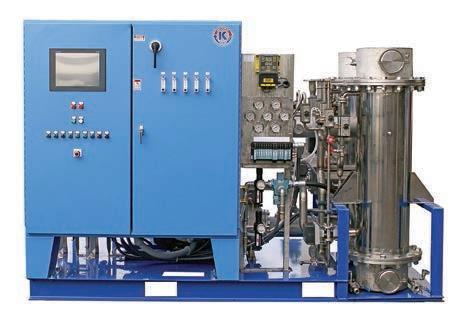


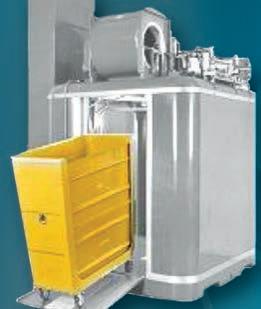
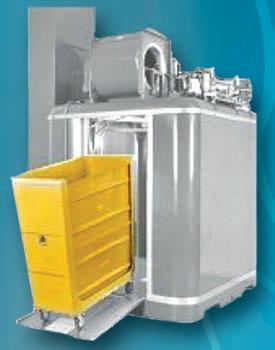

The filtration system is highly effective in reducing the cost of energy and water, reducing wastewater compliance issues, and can provide a rapid return on investment.


www.kemcosystems.com | 800-633-7055


Southwest Laundry Equipment

(480) 205-1293 • (602) 763-7416 www.azsle.com

Help Fight Breast Cancer with Southwest Laundry Equipment!
In keeping with our New Year’s resolution, Southwest Laundry Equipment wants to continue to help fight breast cancer. At the beginning of the year, we initiated a program where we will be selling exclusive cotton belting and guide tape. Specifically, these top-quality, premium herringbone belts will have two pink stripes down the middle, representing the fight against breast cancer, and will be available in 2”, 2-1/2”, and 3” widths. Furthermore, our select guide tape is heat-treated and made of polyester, with pink stripes down the middle as well, available in 3/4” width. We are happy to provide samples on request.
This special promotion started in February and will continue to run until October, Breast Cancer Awareness Month. We wish to give a special thanks for the remarkable support of Admiral Linen and Uniform Service, ALSCO, AmeriPride Linen and Apparel Servies, Angelica Corporation, Braun Linen Service, Crothall Laundry Services, Delta Uniforms and Linens, Job Options, Maricopa Medical Center, Mastel Linen, MGM Grand, Mission Linen Supply, Nevada Linen Supply, Scottsdale Plaza, and Specialty Textile Services.
As previously mentioned, for every yard of cotton belting sold, Southwest Laundry Equipment will donate 10 cents to the American Cancer Society. Moreover, 25 cents will be donated for every box of 100 yards of guide tape, with 400 yard spool orders increasing the donation to $1.00. Of course, we will continue to sell all of our other first-rate flatwork ironer products.
If you have any questions regarding our campaign against breast cancer, or any of our other helpful merchandise, please feel free to contact our main office at (480) 205-1293, or visit us online at www.azsle.com
IT MAKES DOLLARS AND SENSE TO FILL A GROWING NICHE CART WASHER SANI-WASH ® • Cost effective • Return on investment • Resource efficient • Easy to maintain • Uses half the water of other system • Operated by one person • Long-life system • Can be rebuilt to extend life McClure Industries, Inc. www.mcclureindustries.com 1-800-752-2821 • Fax: 503-775-2828 McClure Industries, Inc. www.mcclureindustries.com 1-800-752-2821 • Fax: 503-775-2828 Now Available With UV Lights! • Increased concern of epidemic • Attract new customers • Increased need for sanitized carts • Increase your profit margin • Increased concern of epidemic • Attract new customers • Increased need for sanitized carts • Increase your profit margin 0614aln_McClure.indd 1 5/19/14 9:07 AM
0614aln_Southwest Laundry.indd 1 5/8/14 11:29 AM www.AmericanLaundryNews.com AMERICAN LAUNDRY NEWS | JUNE 2014 29
American Dryer Corp.
American Dryer Corp. continues its legacy of innovative products with the introduction of the “I” series dryer lineup. These “Intelligent” dryers, available in various sizes, are engineered for performance, durability, reliability and efficiency.
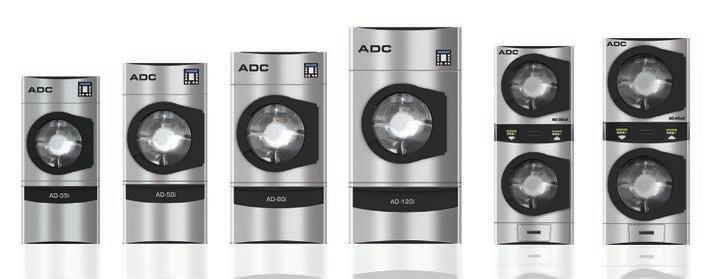
The “I” series dryers incorporate a trans-axial airflow to maximize efficiency; feature a unique preburner chamber that introduces warm, dry air to the burner; and offer a variable speed drive and phase-7 micro control that are calibrated with a patented auto-dry system. The VSD adjusts the speed of the drum to prevent lighter items from adhering to the drum away from the path of warm air, helping to reduce dry times and lower wear and tear.
The 35-, 50-, 80- and 120-pound models feature a heavy-duty trunnion and bearing assembly supported in front by high-temp rubber rollers to avoid costly repairs. A patented Automatic Airflow Compensator option senses, calculates and maintains proper airflow and maximizes efficiency and performance.
Single-phase reversing baskets are standard with all “I” series dryers. Reversing tumbler action prevents uneven drying of larger items. ADC’s patented SAFE (Sensor Activated Fire Extinguishing) system is standard. When connected to water, the SAFE system will activate after sensing an abnormal

rise in temperature, then shut itself off to minimize cleanup, and, in the event a fire re-ignites, it will reactivate.
www.adclaundry.com | 508-678-9000
Southwest Laundry Equipment
For laundries ready for an ironer pad with a long service life that improves linen presentation while reducing operation costs, Southwest Laundry Equipment offers Steel Master Pads. The stainless steel padding—formerly called BesTeel—offers select, quality-ensuring properties that the company’s customers can depend on for their ironing needs.
AquaRecycle
AquaRecycle® is a global leader in recycling water and energy for laundries in the hospitality, healthcare, commercial and correctional industries. With more than 5 billion gallons recycled and 250 recycle systems in operation worldwide, the company’s product line is as diversified as its customers.
AquaRecycle is among the most effective and efficient recycle systems worldwide, reducing incoming water usage by 80% as well as reducing energy costs by as much as 50%, the company says. The AquaRecycle system uses special media filtration for a natural process of contaminant removal with a multi-assault disinfection strategy. The latest technology provides further polishing with the company’s new Purify and Perfection technology.
AquaRecycle systems are completely automated, require virtually no maintenance and are monitored daily, for free, through a remote computer access system called AquaSmart™. An AquaRecycle system reduces total capital costs by paying for itself in 24 months of operation or less, the company says. AquaRecycle systems qualify for Leadership in Energy and Environmental Design (LEED) credits in up to five categories, providing additional savings from state and local government rebates and incentives.
www.aquarecycle.com | 866-272-9253
Given their designed ability to retain a roll’s circumference, Steel Master Pads provide true graduation, resulting in a superior finish on linen with fewer wrinkles, the company says. Additionally, being made of steel, they can reach ironing temperatures more quickly and retain heat longer than synthetic pads, thus requiring less boiler horsepower. Further, thanks to the decreased resistance of these pads to extract moisture from linen, ironer vacuums can be more efficient. Consequently, textiles are drier and ironer covers last longer, says Southwest Laundry Equipment.
Introduced more than 50 years ago, Steel Master Pads have faced the test of time,
usually lasting between three and five years with proper installation; the company is aware of instances where the padding has lasted more than a decade.
When reinstallation is necessary, however, these metal pads may be recycled, making them the “green” pads of the future. The metallic padding is available for all makes of flatwork ironers on the market.
www.azsle.com | 480-205-1293

• Consulting, Design, Plant Installation • Full Construction Services • Training & Maintenance Support • Operations Assistance We have now partnered with HBD Construction. We are the one and only laundry service company in North America offering a wide range of services including building construction, plant operations and support.
WE DO IT ALL. ALS soup2nutsqthorz .pdf_Layout 1 1/8/14 8:47 AM Page 1 ALN_Tab_1-4_H.indd 1 2/4/14 3:28 PM 30 JUNE 2014 | AMERICAN LAUNDRY NEWS www.AmericanLaundryNews.com
Building Smarter Laundries for Smarter Operators. www.eomech.com Or call 978.373.1883
Lavatec Inc.
Lavatec Inc., based in Naugatuck, Conn., supports parts and service needs for Lavatec equipment from its 58,000-square-foot facility. Customers continue to depend on the expertise and experience of the company’s parts and engineering professionals. Lavatec Inc. is also the North American distributor for Lapauw of Belgium, offering Lapauw’s entire line of equipment, from its popular Pullman
Mediwave barrier washer to the quality gas-heated thermal TurboFan ironers.
Lavatec Inc.’s innovative folding equipment continues to grow in popularity, both for its robust operation and its state-of-the-art PLC controls. The Master Eclipse leads the way, offering both large-piece folding with optional stacking as well as small-piece drape stacking in one machine.
All original Lavatec Inc. folding equipment is manufactured at the Connecticut facility, the company says.

The Lavatec Inc. “remanufactured” tunnel systems offer an excellent value and are sold with a warranty. The concept is popular with customers seeking economy and automation without the capital outlay associated with new equipment. These systems are sold looking and operating as new for a percentage of the cost of new. Washer-extractors, presses, shuttles and dryers are also available as remanufactured machines, the company says.
www.lavatec.com | 800-255-2515
Lubbert Supply
Lubbert Supply Co. announces its new line of flatwork ironer, waxing and cleaning cloths, along with a new and improved flatwork ironer apron. During the past year, the company has invested in a new sewing operation designed to manufacture a number of new and innovative products.
The Falcon Wax and Clean Cloth is made with a heavier 12-ounce duck cloth to extend the life of the product. It is available in 72-, 110-, 120-, and 130-inch widths.
The Grizzly Pass-Through Ironer Chest Cleaning Pad combines a large, dual-action cleaning surface—made with an abrasive grit screen and stainless steel mesh—with a heavy-duty, 28-ounce cotton duck cloth.
The Tiger Continuous Cleaning Cloth has been re-engineered with heavy-duty cloth and a new fastening system, allowing the cloth to be used a number of times. Its new design allows for a “hands-free” self-feeding system as well.
The Eagle Apron features a heavy-duty, 28-ounce construction and ripstop design, along with a premium edge for tracking. These features are combined with the best pricing in the industry, Lubbert says.
All of these products are available through Lubbert Supply Co. and Rolltex Inc. distributors.
www.lubbertsupply.com | 855-922-1705
JULY
Feature: Benchmarking For those laundry managers unsure about what it really costs to produce a pound of clean linen, we detail how to accurately compare their operation to others in the industry.
Editorial Submission Deadline — May 15

AUGUST
Feature: Boiler Maintenance and Safety It pays to maintain and follow a rigid boiler maintenance and inspection schedule, and operator safety cannot be overemphasized.
Editorial Submission Deadline — June 15

SEPTEMBER
Feature: Distributors Directory Our audience relies yearround on this annual directory issue listing distributors of laundry equipment, textiles, chemicals and other suppliers.
OCTOBER
Feature: Hotel/Motel Laundering Preview the International Hotel, Motel + Restaurant Show and get caught up on the latest hospitality industry trends.
Showcase: Napery and Table Linen
Editorial Submission Deadline — August 15
NOVEMBER
Feature: Niche Markets They aren’t your typical OPL users, but fire departments, car washes, party rental firms, cruise ships and other businesses need laundry equipment, too.
Editorial Submission Deadline — September 15
Editorial Submission Deadline — July 15 ...and much more!
IN EVERY ISSUE: • Tools of the Trade • Your Views Survey Results • Career Track • Trade Ticker • Panel of Experts • Upcoming Events • Source Directory • Classifieds Want to send a press release or submit a story?
Contact Bruce Beggs, editorial director, today!
DON’T MISS OUT HERE’S WHAT’S COMING UP IN AMERICAN LAUNDRY NEWS
Phone: 312-361-1683 E-mail: bbeggs@americantrademagazines.com
0614aln_EditCal_JuniorHalf.indd 1 5/8/14 4:02 PM ALN_Jr_half.indd 1 5/1/14 10:32 AM www.AmericanLaundryNews.com AMERICAN LAUNDRY NEWS | JUNE 2014 31
Ellis Corp.
The Ellis/Vega Smartpress has the structure to control the pressure exerted on textiles in the extraction process. The machine is available in sizes from 90to 225-pound capacities.
Powered by a Rexroth hydraulic system, the Smartpress is programmable in cycle, cycle pattern and pressure settings up to 66 bar, depending on model selection.
Features include the only moisture-extraction press to employ a contiguous cast end frame in lieu of the standard column designs. Side frames and upper and lower decks are cut from two 8-inch steel slabs; there are no corner columns, which provides an 8-inch square, or 64-square-inch, support structure
as opposed to a 4-inch-diameter round column, or 12.57-square-inch, support per corner.
Most structural failures are a result of corner column failures; in time, the metal between the columns and the decks begins to oxidize, creating movement between the columns and the upper and lower decks, which eventually results in structural failure. By eliminating the columns, the Smartpress has eliminated the possibility of failure due to column or plate-surface oxidation.
www.elliscorp.com | 630-250-9222

Royal Basket Trucks
American Dawn
ADI-American Dawn manufactures, imports and distributes textiles for hospitality, healthcare, industrial, home and salon markets worldwide. ADI offers towels, bath mats, bed linens, robes, apparel, patient apparel, scrubs, custom apparel and table linens.

Decorative products include duvet covers, blankets, bed scarves, matelasses and pillows.
Founded in 1900, American Dawn is fourth-generation family owned and operated.
Headquartered in Los Angeles, the company has operational service distribution centers in Los Angeles, Chicago, Atlanta, Bridgeport, Canada, Mexico and Central America. ADI’s standing inventory allows same-day shipping with nextday delivery to most major cities.
www.americandawn.com | 800-821-2221
Poly Scale carts offer efficiency and process improvement along with energy and financial savings. Load weight matched with the equipment capacity provides efficient chemical, water and energy usage. Reprocessing costs money, as does the additional energy needed when loads are too large—not to mention the impact on equipment maintenance schedules. These carts are a perfect addition to many environments, both small and large. Certified scales are also available.
Royal Basket Trucks offers a full line of molded plastic carts, vinyl and canvas carts for bulk handling and transport to small sorting functions. The company is located in Darien, Wis., and all Royal products are made in the USA and available through a vast network of authorized distributors.
www.royal-basket.com | 800-426-6447
Just one, strong PP strap automatically applied to a bundle of towels, bedding, scrubs or other textiles means secure, neat bundles that stay intact. Choose from entry level ROM Fusion or ROMP-6 Evolution available in walk-up or fully automated conveyorized models. Call for more details or visit our website today!
EAM-Mosca Corporation www.eammosca.com info@eammosca.com 1-570-459-3426 1-800-456-3420
Innovative Technology. Practical Solutions. Superior Performance.
ALN_3rd Page.indd 1 5/5/14 10:53 AM 32 JUNE 2014 | AMERICAN LAUNDRY NEWS www.AmericanLaundryNews.com
Cost Effective, Secure Bundles with Mosca!
June
18-19 Textile Rental Services Association
Third Annual Safety Summit Nashville, Tenn. Info: 877-770-9274
26 Wisconsin Fabricare Institute Annual Convention, Auction and Trade Show Mequon, Wis. Info: 414-529-4707
July
17 Association for Linen Management Webinar: Proactive Customer Service Info: 800-669-0863
17-18 Textile Rental Services Association Sales and Marketing Summit Baltimore, Md. Info: 877-770-9274
August
7 Association for Linen Management Webinar: Analyzing ROI Before You Build, Buy or Expand
Info: 800-669-0863
10-14 Textile Rental Services Association Ehrlich-Stempler Executive Management Institute (EMI) Hyattsville, Md. Info: 877-770-9274
September
18 Association for Linen Management Webinar: PM—It’s All in the Planning Info: 800-669-0863

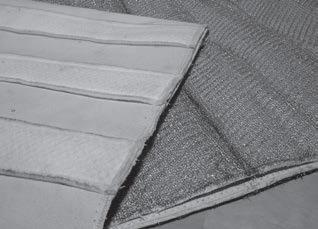
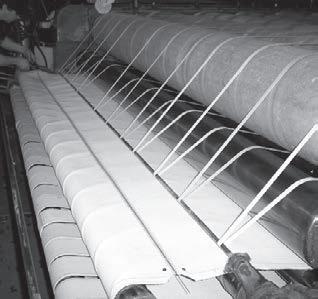
22-24 UniMac OPL Advanced Service Training Seminar Ripon, Wis. Info: 800-587-5458
24-25 Wisconsin Association of Textile Services Fall Conference and Golf Outing Delavan, Wis. Info: 414-529-4702
29- Textile Rental Services Association Oct. Annual Conference and Exhibits 1 Las Vegas, Nev. Info: 877-770-9274
October
9 Association for Linen Management Webinar: Be Kind to My Linen— Your Budget Will Thank Me Info: 800-669-0863
15-17 Textile Rental Services Association
Production Summit and Plant Tours Oklahoma City, Okla. Info: 877-770-9274
20-22 G.A. Braun
Service School: Washer/Extractors Syracuse, N.Y. Info: 800-432-7286, ext. 254

23-24 G.A. Braun Service School: Dryers Syracuse, N.Y. Info: 800-432-7286, ext. 254 ALN
NEW GRIZZLY IRONER CHEST CLEANING PAD
The new heavier, more durable design makes this dual-action cleaning pad much stronger and effective.
The Grizzly Pad is available exclusively from Lubbert Supply and Rolltex distributors.
NEW & IMPROVED EAGLE APRON
Our New Eagle Apron has a clean finished edge designed to eliminate any fraying or loose threads.
The Heavy Duty Eagle Apron is the best choice for price, durability and performance.
Lubbert Supply Co., LLC is a leading supplier of Aprons, Pads, Covers, Belts, Tapes, Baskets, Slings, Cleaning Cloths and more!
E-mail: Sales@LubbertSupply.Com | Phone: 203-690-1105 | Toll Free: 855-922-1705 Fax: 203-690-1107 | Visit us on the web at: www.LubbertSupply.com The Source for your Finishing Equipment needs. 0614aln_lubbert.indd 1 5/9/14 11:20 AM ALN_Jr_half.indd 1 5/9/14 3:43 PM www.AmericanLaundryNews.com AMERICAN LAUNDRY NEWS | JUNE 2014 33
Calendar
AmeriPride acknowledged for fundraising efforts by Greater Twin Cities United Way
MINNEAPOLIS — AmeriPride Services Inc. has received the “Best in Show” award from Greater Twin Cities United Way for its 2013 efforts incorporating “best practices in fundraising and philanthropy, employee engagement and campaign innovation,” the company reports.
“Support of United Way and other charitable organizations through participation and donations helps strengthen our ties to the communities we serve,” says Bill Evans, president and CEO of AmeriPride. “It’s nice to know that as we continue to grow our business, we also continue to grow our charitable giving programs.”
The company reports it has raised more than $110,000 for United Way through its annual golf tournament, other fundraising efforts, and corporate, vendor and employee contributions, increasing donations by 22% over the previous year, and more than 80% over 2011.
“We were very pleased to present AmeriPride with this prestigious award for their outstanding efforts in 2013,” says Sarah Caruso, president and CEO of Greater Twin Cities United Way. “The company and its employees have demonstrated their generosity and dedication to creating lasting change in the communities where it does business.”
HLAC seeks public comment regarding proposed revisions to
accreditation standards
FRANKFORT, Ill. — The Healthcare Laundry Accreditation Council (HLAC) is seeking public comment on proposed revisions to its 2011 Accreditation Standards for Processing Reusable Textiles for Use in Healthcare Facilities

Proposed revisions on HLAC’s standards are displayed in three parts, and are open for public comment through surveys available at HLAC’s website. Public comments will be accepted through June 30.
The survey will ask participants if they agree or disagree
with the revised standard, and the rationale for the decision, according to HLAC. Participants may comment on all revisions, or choose to comment only on revisions where their views, opinions or ideas are strongest.
“HLAC encourages all professionals who serve the healthcare industry, or use or process healthcare textiles, to participate in the survey and make responsible comments on the proposed revisions to the Standards,” says Gregory Gicewicz, HLAC president.
The next revision of the HLAC Standards will become effective Jan. 1, 2016.
To access the proposed revisions of the HLAC Standards, and its accompanying survey, visit www.hlacnet.org
Cintas location receives federal OSHA VPP Star designation
PROVIDENCE, R.I. — Cintas Corp. is reporting that its rental facility here has recently received Voluntary Protection Program (VPP) Star certification from the federal Occupational Safety and Health Administration (OSHA).
VPP is OSHA’s highest recognition for the practice of, and commitment to, exemplary occupational safety and health, and “Star” is its highest distinction, Cintas says.
Now the 22nd Cintas facility to receive the federal OSHA designation, the Cintas Providence rental facility began its journey toward VPP certification in 2009, requiring “strict and rigorous audits and close collaboration between management and employee partners,” the company says.
“We are extremely proud of our Rhode Island rental employee-partners and their managers for earning the prestigious OSHA VPP Star Award,” says Dan Braun Sr., vice president of Value Improvements Initiatives at Cintas. “We are also very proud of all of our Cintas VPP sites throughout the nation, and those currently on the path to gaining this distinction.”
The designation makes the Cintas Providence location the fifth company in all of Rhode Island to earn an OSHA VPP Star, making it “among the safest organizations” in the state, New England and in the U.S., according to Cintas.
Cintas Corp. has approximately 330 facilities throughout the world actively pursuing VPP recognition by OSHA, or the equivalent under a similar certifying body, the company says.
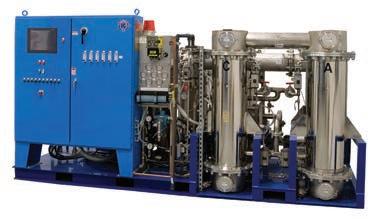
Superior Linen and Apparel Services earns TRSA ‘clean’ certifications

ALEXANDRIA, Va. — Superior Linen and Apparel Services has recently received Textile Rental Services Association’s (TRSA) Clean Green and Hygienically Clean certifications, joining the ranks of just 10 textile services companies in North America to receive both certifications, TRSA reports.
The Clean Green certification recognizes companies for their efforts in water and energy conservation, and adhering to industry best practices for reusing, reclaiming and recycling resources, according to TRSA, while the Hygienically Clean certification process subjects laundered textile products to third-party, quantified biological testing and inspection to ensure they achieve TRSA’s hygiene standard.

“Congratulations to Superior Linen on their attainment of this industry milestone,” says Joseph Ricci, TRSA president and CEO. “Clean Green builds their customers’ confidence that Superior is sustainable, capable of perpetually offering high value. Hygienically Clean documents that Superior has taken the steps necessary to prevent human illness in laundered linen, garments, towels and other products.”
Being a “green” business goes beyond “environmentally friendly,” according to Ricci. Demonstration of conservation practices and increasing efficiencies is also key, says TRSA, to assure buyers that sellers can uphold long-term commitments.
The association adds that its Hygienically Clean certification “maximizes objectivity” in ensuring textiles cleaned in a laundry “meet hygiene standards appropriate for medical facilities,” and that the inspections evaluate techniques for compliance with federal and healthcare industry standards acknowledged by the federal Centers for Disease Control and Prevention, Centers for Medicare and Medicaid Services and the American National Standards Institute, among others. ALN
0513aln_Kemco.indd 1 7/9/13 3:28 PM 34 JUNE 2014 | AMERICAN LAUNDRY NEWS www.AmericanLaundryNews.com
One other aspect James highlighted in establishing distribution guidelines is to take utilization and patient requirements into consideration.
“Make sure that the products that they have are going to benefit their needs. For example, you don’t want to put a gown with a metal snap inside the radiology department,” says James.
“Your utilization is really going to be more linked to the acuity of the patient,” she adds. “For example, you’re going to use more linen in an ICU area than you are in an emergency department, because the acuity of the patient is different.”
Periodically checking linen usage is the key to adjusting par levels.
“[Check] your usage data by product and/or by pounds for each location,” says James. “You might be delivering them 50 towels every day, but if they’re constantly only using 35 … you have a little bit of room to reduce their inventory in that area.”
LINEN DISTRIBUTION COSTS
According James, the industry standard cost for linen distribution (including labor, benefits, supplies, and clean delivery and soil retrieval) is 5 cents per pound.
A hospital utilizing 4 million pounds of linen, for example, would be spending $200,000 per year in linen distribution.
“What does this mean for the hospital? If you don’t have adequate inventory controls and linen distribution processes, obviously, your costs are going to be uncontrollable,” says James, which can lead to “a frustration with nursing [staff] because the linen isn’t provided in a timely manner or in the quantities that they need, and it impacts patient care.”
Once linen distribution cost is determined, James advises managers to consider the hospital’s benchmarks, which she says differ for each facility.
“If your hospital has a large footprint and you are delivering floor stock … you’re taking bulk linens around, and replenishing different closets or carts in each department, then your costs are going to have a tendency to be a little higher on the labor component,” she says.
FTE REQUIREMENTS
AND TIME STUDIES
Ensuring linen is being replenished and is circulating in the system relies on the labor of those in the laundry staff. How can laundry managers determine the proper staffing, or full-time equivalents (FTEs), requirement suitable for their facility?
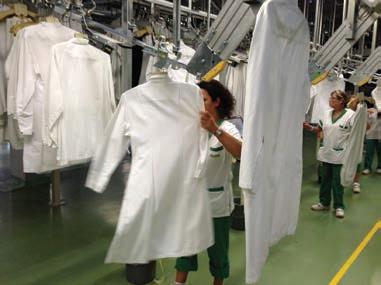
James advises managers to consider the actual linen distribution system in use; the number of distribution points in the facility; the number of soiled-linen collection points; and even the physical layout of the hospital.
“If it’s an older hospital … that’s going to increase the amount of labor that you’re going to need, as opposed to that brand-new facility where everything is laid out nicely and all the linen distribution points are easily accessible,” she says.
Having these variables in mind, James advises managers to then consider the actual circulating
linen inventory, and the “space in distribution points” to further determine staffing requirements.
“Can you fit 24 hours of par in the distribution points that you have, or will the space only allow for 12 hours’ worth of linen to be in there to where the staff has to go back and restock?” she asks.
She also asks managers about the system’s distribution ability.
“What are the requirements that are currently set up in there? Do you really have staff with only one shift, or are you fully staffed one shift, but you have one FTE that is there in the evening?”
James adds that managers
should also conduct a time study to increase distribution efficiency.
“This is going to be specific to each hospital because … the constraints of each facility are going to be different,” she says, “[but staff] need to understand the time that it takes to complete the tasks and the variables that are in there.”
A CUSTOMIZED APPROACH
For establishing or refining a healthcare laundry facility’s linen distribution methods, James stresses the need to analyze specifics.
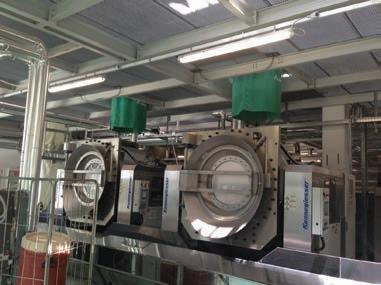
“You’re going to want to make sure that you identify specific requirements and constraints for
the hospital, evaluate the hospital benchmarks, complete your time studies and then use that information to piece together the customized approach for linen distribution,” she summarizes.
In addition to specifics, Granado also highlighted the importance of re-evaluation.
“Whenever you have a new area open, set it [up] like you think it ought to be, watch it for two weeks [and] you’ll be surprised; sometimes you have to make changes up right away,” she says. “If you don’t need [linen in a certain area], take it out, [and] put it where you need it.” ALN
www.AmericanLaundryNews.com AMERICAN LAUNDRY NEWS | JUNE 2014 35
TRSA European Laundry Tour (Italy) October 6–11, 2014 Seven Great Plants, One ‘Magni co’ Destination Visit technologically advanced and high-productivity facilities serving the industrial, F&B, hospitality and healthcare markets at the conclusion of the EXPOdetergo International Show in Milan: Alsco Italia (2), Hotel Service SRL, Lavanderia Donati, New Cleaning, Orio Team, So.Ge.Si Overnight stays will be in: • Lake Como: popular aristocrats’ retreat since Roman Empire • Verona: U.N. World Heritage Site for value, importance of historic buildings • Venice: 117 islands, 177 canals, 409 bridges • Florence: Cradle of the Renaissance, palaces, medieval architecture Tour Details & Registration: www.trsa.org/ItalyTour, 877.770.9274 Trade Show: https://bit.ly/EXPOdetergoTRSA Alsco Italia, Merlino Lodi, outside Milan ALN_Jr Page.indd 1 5/8/14 4:15 PM Continued from Page 8 Distribution















36 JUNE 2014 | AMERICAN LAUNDRY NEWS www.AmericanLaundryNews.com Classified Advertising EQUIPMENT FOR SALE EQUIPMENT FOR SALE AMKO AMERICA, INC. Remanufactured Finishing Equipment Delta Ironers, Omega Folders & Towel Folders (1 year parts warranty) Like new at half the cost. PARTS, IRONER SUPPLIES & NEW EQUIPMENT ALSO AVAILABLE Contact: (561) 863-9696 jurgenb@bellsouth.net POSITIONS AVAILABLE DISTRIBUTOR OFFERINGS www.ineedjpequipment.com 800/925-3236 EQUIPMENT FOR SALE: (1) 2x32 Chicago Thermal Ironer, 2004$22,500 Loaded (1) Chicago TriStar28, Gas, 2000 Hypro ll, 6 Roll, Rebuilt in 2010 (1) 2008 Jensen Logic (1) Chicago King Edge CT, Chi Touch Control, 2012 (1) 2005 Braun Omega, 2 Lane, B&R Controls, Stacker/Conveyor (1) Chicago Skyline SP-4, 4 Lane w/Single Option, 2002 (1) Braun SPFRF, Meter-wide, B&R Controls, 2006 (1) Central Blanket Feeder & Folder, 1999 (1) 140lb Milnor Softmount, E-P PLUS control, 2006 (1) 250lb Milnor washer, Hydrocushion, 1996 (1) 450lb Milnor Staf Guard, 2 Pocket, 1992 (2) 400lb Braun OP w/ Inverter sold as is or completely Reconditioned (16) 35lb Coin Op Machines, make an offer (2) 75lb Milnor Gas Dryers, MLG758D, 2004 2 - 120lb Milnor Gas Dryers, MLG122D, 2005 “Expect Excellence” Expect excellence from the leader in used industrial laundry equipment sales and installation. Keep up to date with equipment for sale, and the latest industry news by subscribing to our monthly newsletter. Go to www.ineedjpequipment and sign up TODAY! About JP Equipment JP Equipment is a trusted, full-service, used industrial laundry equipment sales and installation company. We pride ourselves on providing unparalleled Call Craig Lloyd toll free at (877) CWL-LOYD between 9 a.m. – 9 p.m. EST. Please visit www.laundrycareers.com to review current industrial/institutional laundry management openings. ADVANCE YOUR CAREER The Griffin Group, Inc. “Recruitment Specialist” Need to FILL a position? Call Deana Griffin 888-235-2365 www.thegriffingroup.cc deana@thegriffingroup.cc ® Stanco Industries, Inc. Serving The Textile Trades Since 1970 800-932-3769 k for Mike @ ext 203 KEEPING IT GREEN SINCE 1970 -------------- Equipment For Sale -------------1 2007 Lavatec Masterfold 2-Lane Folder 2 2007 UniMac 65# Washer-Extractors 3 2007 Huebsch 75# Gas Dryers 1 2000 Chicago 32” Gas TRI-STAR New Arrivals / Parts visit our website ----- DON’T BE LEFT WITHOUT POWER ----Emergency Generators Available 50KW to 1000KW Natural Gas & Diesel Stanco Industries, Inc. 800-932-3769 Ask for Mike @ ext 203 www.StanCoInd.com QTY DESCRIPTION 1 Braun 600lb Top Side Loaders 2000 1 Braun 400lb Steam Dryer Model 123 1 Jensen 2 Roll 36” Steam Ironer 1992 2 Milnor 120lb Steam Dryers 2006 2 Milnor 36026V5J 100lb Washers 2004 2 Milnor M122 Gas Dryers 1 Chicago PikQuik 1 Chicago S-10 Skyline Folder 2000 1 Shaper Steam 12” Ironer by 120” For Pricing call Ron Hirsch 516.938.4300 • 516.315.7426 Hicksville, NY www.directmachinery.com FOR NEW OR USED LAUNDRY EQUIPMENT, DM IS YOUR SOURCE FOR ALL YOUR NEEDS Sign up for our entire used equipment list. Email us! We broker your used equipment. Call us! We Buy Used Equipment...and much more. Pictures on website. Get the info you need online... www.AmericanLaundryNews.com B & C GAS IRONER FOR SALE MODEL - IS18120 YEAR 2010 Good condition • $20,000 Call for more information 201-727-4700 Ext. 4888. Ask for Kevin or E-Mail keving@partyrentalltd.com MISSED OUR DEADLINE? CONTACT: CLASSIFIEDS@AMERICANTRADEMAGAZINES COM



















www.AmericanLaundryNews.com AMERICAN LAUNDRY NEWS | JUNE 2014 37 Source Directory A convenient guide to sources of products and services APPAREL FINISHING CARTS, TRUCKS & BASKETS #1 Manufucturing Source for Laundry Transportation! (800) 634-0555 RBWire.com “This lid and door fits flush in the cutout—MOD gets the details right.” – Randy Bernstein, Maricopa Integrated Health System Meese Orbitron Dunne Co. Seal-Tight, Secure Roof and Door 72S Call 800.829.4535 or visit MODLaundry.com for a FREE QUOTE. New! Source Directory listings in American Laundry News are sold on an annual basis at the following rates: All Major Credit Cards Accepted 2014 Listings Regular Boldface All Caps All Caps, Boldface Four Line Listing per Year $820 $1,030 $1,030 $1,090 Display and additional line rates available upon request Sani Trux - McClure Industries, Inc. 9051 SE 55th Ave., Portland, OR 97206 800-752-2821 www.mcclureindustries.com, info@mcclureindustries.com M.I.T. POLY-CART 211 CENTRAL PARK WEST, NEW YORK, NY 10024 800-234-7659, FAX: 212-721-9022 WWW.MITPOLYCART.COM CARTS, TRUCKS & BASKETS CARTS, TRUCKS & BASKETS AmericanLaundryNews.com More than unique visitors monthly! 5,250 www.nortonsupply.com • 800.869.7664 • sales@nortonsupply.com Heavy Duty Rhino Wrapping Machine Rhino Console Wrapper for finished laundry. Stainless steel construction. Solid state controlled electric cut-off rod. In-stock for immediate delivery. FREE Roll of Laundry Wrap with Rhino Wrapper Purchase The FELRAPPER® Console F240 The Fastest, Most Economical Way To Wrap! Supported Sliding Sealing Drawer (Won’t Bind or Stick) STAINLESS STEEL CONSTRUCTION Holds 2 Rolls of Wrap—Up to 40” wide Each Width Instantly Available Check Out Our Web Site For Spare Parts On All Brands of Wrappers, Tech Info and Laundry Wrap FELRAP WORLD, INC. 800-969-4940 • www.felrap.com
Energenics Corp., Kartwasher 1470 Don St., Naples, FL 34104 800-944-1711 www.energenics.com





Sani Wash - McClure Industries, Inc. 9051 SE 55th Ave., Portland, OR 97206 800-752-2821 www.mcclureindustries.com, info@mcclureindustries.com

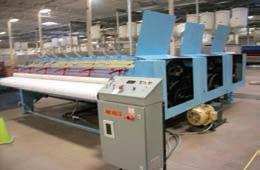





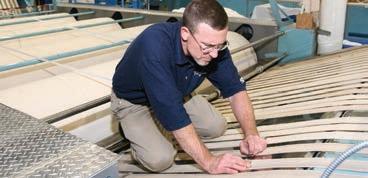
Pellerin Milnor Corp. P.O. Box 400, Kenner, LA 70063 504-467-9591, Fax: 504-468-3094 www.milnor.com
Pellerin Milnor Corp. P.O. Box 400, Kenner, LA 70063 504-467-9591, Fax: 504-468-3094 www.milnor.com












38 JUNE 2014 | AMERICAN LAUNDRY NEWS www.AmericanLaundryNews.com Source Directory listings in American Laundry News are sold on an annual basis at the following rates: All Major Credit Cards Accepted 2014 Listings Regular Boldface All Caps All Caps, Boldface Four Line Listing per Year $820 $1,030 $1,030 $1,090 Display and additional line rates available upon request FINANCIAL SERVICES Source Directory A convenient guide to sources of products and services FLATWORK IRONERS FLATWORK IRONERS PARTS Knowhow In Action Your Tingue rep is a fully trained master of finishing equipment operation, maintenance and installation. Call for: • Pads, covers, belts, waxes, tapes and more • Carts, trucks, baskets and bags • Parts, rebuilds and repairs 800.829.3864 www.Tingue.com TalleyMachinery.com MODLaundry.com TBR-Associates.com To website (480) 205-1293 (602) 763-7416 www.azsle.com Whether your ironer needs pads and covers, wax cloths or cleaning supplies, or needs to be completely rebuilt, there is no job too big or too small for Southwest Laundry Equipment • Financing of all OPL, industrial and related equipment • Competitive rates • Flexible terms • No prepayment penalty 1-800-851-1001 ext. 209 | laundry@firestonefinancial.com www.firestonefinancial.com EQUIPMENT FINANCING COMMERCIAL & INDUSTRIAL FINANCING Place your ad ONLINE!
DRYERS – 100 POUNDS OR MORE CART-WASHING SYSTEMS
DRYERS – 100 POUNDS OR LESS
HEAT SEALING SUPPLIES/TAPE FLATWORK SUPPORT www.olekbelts.com 1-800-869-2683 Free www.olekbelts.com We’re your flatwork finishing and conveying O.E.M. Belt Match H.Q. Get the real thing for a Lot less $$$. O.E.M. Needlefelt Ironer Pads too! Better Belts, Better Prices, Better Service Visit our Website or Call 1-800-869-2683 For free, no obligation, price quotations and for your Free copy of our Product Catalog with over 40 samples. Ironer pads, covers, aprons, guide tapes, carts, slings, cleaners, waxes & more… Gardner Machinery Corporation P. O. Box 33818, Charlotte, NC 28233 Ph.: (704)372-3890; Fax: (704)342-0758 www.gardnermachinery.com MATERIAL HANDLING / CONVEYORS Setting the Standard in Lint Filters for 25 Years • Hotel • OPL • Coin Op • Dry Cleaners • Industrial • Commercial • Cruise Industry Dry or Wet Style Filters to Work with “ALL” Dryer Sizes or Multiple Situations, Fiberglass or Stainless and Custom for Unique Situations! All manufacturing done on premise 800-826-1245 www.cleancyclesystems.com • ccsystems@tqind.com LINT COLLECTORS & FILTERS ★ Our In-Line Lint Filter mounts inside, saves space! ★ Fiberglass Wet Filters - 6,000 to 40,000 cfm ★ Fiberglass or Stainless Steel Dry Filters ENERGENICS CORPORATION Talk with our Design and Engineering Staff about your needs. Hundreds Sold Annually. 800-944-1711 www.energenics.com
PLANT DESIGN & INSTALLATION
WASHERS – CONTINUOUS BATCH



Pellerin Milnor Corp. P.O. Box 400, Kenner, LA 70063 504-467-9591, Fax: 504-468-3094 www.milnor.com

WASHER-EXTRACTOR
Pellerin Milnor Corp.
POUNDS OR LESS
P.O. Box 400, Kenner, LA 70063 504-467-9591, Fax: 504-468-3094 www.milnor.com
WASHER-EXTRACTOR
Pellerin Milnor Corp.
POUNDS OR MORE
P.O. Box 400, Kenner, LA 70063 504-467-9591, Fax: 504-468-3094 www.milnor.com
Pellerin Milnor Corp.

P.O. Box 400, Kenner, LA 70063 504-467-9591, Fax: 504-468-3094 www.milnor.com
INDEX


American Dawn www.americandawn.com 5
American Dryer Corp. www.amdry.com 11

American Laundry Systems www.eomech.com 30
AquaRecycle www.aquarecycle.com 9
B&C Technologies www.bandctech.com 13

Beck’s Classic www.becksclassic.com 22
Chicago Dryer Co. www.chidry.com 10
Consolidated Laundry Machinery www.clmco.com 16
Davis Packaging www.davispackaging.net 17
Dexter Laundry www.dexterlaundry.com 8
Direct Machinery Sales Corp. www.directmachinery.com 36


EAM Mosca www.eammosca.com 32
EDRO Corp. www.edrodynawash.com 27
Ellis Corporation www.elliscorp.com 15
Freightliner Custom Chassis Corp. www.freightlinerchassis.com 7
G.A. Braun www.gabraun.com 17
Girbau Industrial www.girbauindustrial.com 25
G.S. Manufacturing www.gsm-cart.com 32
Hamilton Engineering www.hamiltonengineering.com 33
IES
www.iesclean.com 18

























IPSO www.ipso.com 23
Jensen www.jensen-group.com 31
J.P. Equipment www.ineedjpequipment.com 36
Kannegiesser USA www.kannegiesser.com 19
Kemco Systems www.kemcosystems.com 34
LaundryCareers.com www.laundrycareers.com 36


Lavatec Inc. www.lavatec.com 24
Lavatec Laundry Technology www.lltusa.com 40
Lubbert Supply www.lubbertsupply.com 33
Maytag www.maytagcommerciallaundry.com 3
McClure Industries www.mcclureindustries.com 29
Moonsoft International www.moonsoftcorp.com 12

Royal Basket Trucks www.royal-basket.com 26
Southwest Laundry Equipment www.azsle.com 29
Stanco Industries www.stancoind.com 36
The Griffin Group, Inc. www.thegriffingroup.cc 36
TRSA www.trsa.org 35
U.N.X. Inc. www.unxinc.com 14
www.AmericanLaundryNews.com AMERICAN LAUNDRY NEWS | JUNE 2014 39
– 100
– 100
– EXTRACTION Source Directory A convenient guide to sources of products and services
PRESSES
All Major Credit Cards Accepted
Listings Regular Boldface All Caps All Caps, Boldface
$1,030 $1,090 Display
additional line rates available upon request
Source Directory listings in American Laundry News are sold on an annual basis at the following rates:
2014
Four Line Listing per Year $820 $1,030
and
Site Page Company
Site Page
Company Web
Web
.com
OF ADVERTISERS www.
THE WIRE The latest news, straight to your inbox, 2X a week A & B WIPER SUPPLY You’re probably not getting enough for your linen discards! We pay TOP DOLLAR for your discarded sheets, towels, thermal & flannel blankets. Call us for an immediate quote: 800-333-RAGS (7247) We’re Hiring! Textile Buying & Sales Executive Positions Available E-mail Résumés to resumes@bestrags.com RAGS WANTED FOR CASH OR TRADE