La Quinta, Standard Textile partner to set new world records
CINCINNATI — On March 14, La Quinta Inns & Suites and Standard Textile partnered to break three Guinness World Records®. Using more than 2,500 red, white and blue towels donated by Standard Textile, La Quinta employees formed a 26,390-square-foot U.S. flag “Towel Mosaic,” the world’s largest, in Hawaii’s Waikoloa Bowl near Honolulu.
Participants also made the longest “Human Towel Chain,” with 1,113 participants, and the longest “High-Five Chain,” with 1,110 participants.
All of the towels were later donated to Fisher House – Tripler Army Medical Center in Honolulu. Fisher House Foundation provides a network of comfort homes near major military and VA medical centers nationwide. These homes allow military and veterans’ families to stay nearby at no cost while a loved one receives treatment.
All three records were set in 90 minutes by La Quinta employees who were in Hawaii for the company’s annual meeting. Guinness World Records® adjudicator Alex Angert was present at the event and made the records official.
Video highlights of the record-setting event can be found at http://youtu.be/a1l8KqXrco ALN
Setting production standards to improve your bottom line
 BY CARLO CALMA, EDITORIAL ASSISTANT
CHICAGO — Jon Witschy, sales manager of Spindle Technologies’ management software team, is a true believer of the adage, “What gets measured gets managed.”
“It’s very important to have good criteria for determining how well things are going in the business,” he says.

Witschy stressed the importance of creating standards and criteria for laundry processes in a recent Association for Linen Management (ALM) webinar, Set Expectations, Track Results and Make an Impact on Your Bottom Line.
“Standards allow you to review the inner workings within a facility to make improvements possible in various areas, and to zero in on issues, whether it’s with personnel or production equipment, or process flow,” says Witschy, who adds that standards ultimately create structure and cohesion within a business.

“The standards, and the analysis of the standards, become a language that is understood at all levels of the organization, from the plant floor to management.”
NEED FOR STANDARDS
One metric of determining whether a business is accomplishing cohesion is through the work performance of its team members.
“Operators benefit from detailed feedback on their individual performance, and that can’t really be measured [without standards],” says Witschy. “[Standards] make it more possible to coach employees.”
This is especially true for laundry operators who manage multiple locations, he says.
“Multi-site operations have the opportunity to set benchmarks so that production performance evaluation can zero in on the differences between facilities. … Standards become those ‘eyes’ that are always on.”
TRSA unveils certification for laundries serving food manufacturing/processing
ALEXANDRIA, Va. — TRSA (the Textile Rental Services Association) has added a new certification for laundries serving the food manufacturing/processing sectors to its series of certifications for the textile services industry.
TRSA President and CEO Joseph Ricci introduced the Hygienically Clean Food Safety program at the recent American Reusable Textile Association (ARTA) Education Conference.
The program aims to emphasize best practices for laundry processes and quality control, and will
be verified though facility inspection and microbial testing of reusable textiles by independent, third-party testers, TRSA says.
Evaluation of a plant’s hazard analysis procedures, its use of an operational flowchart, and confirmation of other handling and processing practices are among key activities for certification, and will be conducted in an initial inspection.
The inspection will additionally verify that laundries are adhering to U.S. Food and Drug Administration (FDA) and



Centers for Disease Control and Prevention (CDC) directives.
As part of the certification process, facilities must undergo monthly bacteriological testing. A laundry that passes inspection and three consecutive months of testing will be awarded certification, and to maintain it, tests must be replicated every six months and the plant must pass inspections every three years.
The Hygienically Clean certification program was the first in the U.S. to establish measurable microbial limits for laundered
textiles, TRSA says. The new food safety program was developed from Hygienically Clean for Healthcare, a program introduced in 2013.
“Hygienically Clean provides a quantitative measure that ensures ongoing adherence to best practices and outcomes based on internationally recognized, proven and accepted testing for bio-contamination,” Ricci says, emphasizing that TRSA does not mandate laundry practices, but evaluates the effectiveness of a laundry’s chosen techniques.
OPL

101: Benefits of Multi-Par System
Bill Brooks: Rotating three sets of linen through a cycle helps make hotel housekeepers more efficient, preserves linen.
ALN APRIL 2014
Late News
Record
Laundry & Linen Management www.americanlaundrynews.com Volume 40, Number 4
The Newspaper of
for
PRODUCT SHOWCASE COUNTING, MEASURING & MONITORING SYSTEMS
INSIDE [6] [12] [16]
of
Group offers tips for maintaining an adequate, secure linen inventory.
(Image licensed by Ingram Publishing)
Panel
Experts
See
STANDARDS on Page 19
chief among
CHICAGO — The majority of laundry/linen operators polled say they can keep calm under pressure in most situations, according to March’s American Laundry News Your Views survey.
Only a small percentage of respondents (3.4%) say that when they discover their operation’s pounds/pieces per operator hour are declining, for example, their blood pressure “soars.” For more than a third (39%), the discovery is a cause for a slight rise in blood pressure, while a little more than a quarter (25.4%) say their blood pressure “holds steady” in such a situation. Roughly 32% say it’s rarely or never an issue.
Equipment breakdowns garner slightly higher stress levels, as more than half of respondents (54.2%) admit that such a scenario would be cause for concern.
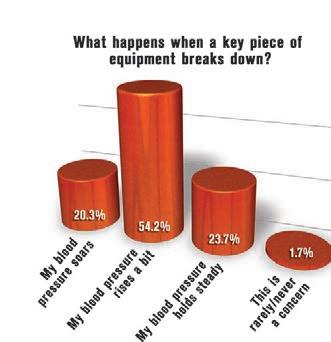
Roughly 20% say their blood pressure soars when equipment fails, while 23.7% say blood pressure holds steady when that happens. A small fraction (1.7%) say they rarely or never experience such breakdowns.
“I am part of a government entity, so when there’s a breakdown, it’s a horrifying experience if it turns into getting new equipment,” says one respondent.
“It is extremely difficult to manage a laundry when you do not have your own maintenance person,” says another. “When you have to depend on in-house maintenance, you are in real trouble. That is why my blood pressure soars.”
More than a third (39.7%) of laundry/linen operators polled say they’re able to keep calm for scheduled inspections, while 29.3% say inspections aren’t a concern at all. But for roughly 22% of respondents, inspections are a cause for a slight increase in blood pressure, and a small percentage (8.6%) admit that stress levels skyrocket during these times.
“Being a general manager is a very stressful job,” one respondent comments. “You have to learn how to handle it and never let them see you sweat.”
Respondents had a range of reactions to losing an account or learning that their institutions are considering outsourcing their in-house laundry services. The largest share (35.6%) say such a scenario is rarely or never a concern, while roughly a quarter of respondents (25.4%) say it can be a major stress inducer.
For 23.7%, losing an account or dealing with the prospect of outsourcing only leads to a slight increase in blood pressure, and 15.3% say their stress levels don’t vary much in such situations.
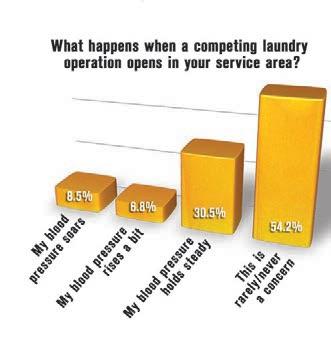
When a competing laundry operation opens in their service area, roughly 54% of operators polled do not see it as a concern at all. For 30.5%, that situation means a steady stress level, but stress increases a bit for some (6.8%) and a lot for others (8.5%) when competition comes to town.
When asked about the stresses of managing a laundry operation, respondents pointed to a number of additional factors not listed in the survey, including weather, power outages, personnel issues and lack of qualified staff to fill vacated positions.
“Being a new operation, my major stress is establishing accounts,” says a respondent.
“Stress is a normal part of running a plant in this industry,” says another. “It does no good to let it control your health or make poor decisions because you choose to let it bother you.”
While the Your Views survey presents a snapshot of readers’ viewpoints at a particular moment, it should not be considered scientific.
Subscribers to American Laundry News e-mails are invited to take the industry survey anonymously online each month. All managers and administrators of institutional/OPL, cooperative, commercial and industrial laundries are encouraged to participate, as a greater number of responses will help to better define operator opinions and industry trends.
Publisher
Charles Thompson
Phone: 312-361-1680
E-Mail: cthompson@ americantrademagazines.com

Editorial Director
Bruce Beggs
Phone: 312-361-1683
E-Mail: bbeggs@ americantrademagazines.com
Digital Media Director
Nathan Frerichs
Phone: 312-361-1681
E-Mail: nfrerichs@ americantrademagazines.com
Production Manager Roger Napiwocki
Contributing Editor Jean Teller
Editorial
Assistant Carlo Calma
Advertising Sales
National Sales Director

Donald Feinstein
Phone: 312-361-1682
E-Mail: dfeinstein@ americantrademagazines.com

Office Information
Main Phone: 312-361-1700 Fax: 312-361-1685
Subscriptions
630-739-0900 x100 www.americanlaundrynews.com
American Laundry News (ISSN 10919201) is published monthly. Subscription prices, payment in advance: U.S. 1 year $39.00; 2 years $73.00. Foreign, 1 year $89.00; 2 years $166.00. Single copies: U.S. $7.00; Foreign $14.00.
Published by American Trade Magazines LLC, 566 West Lake Street, Suite 420, Chicago, IL 60661. Periodicals postage paid at Chicago, IL, and at additional mailing offices.
POSTMASTER, Send changes of address and form 3579 to American Laundry News, Subscription Dept., 440 Quadrangle Drive, Suite E, Bolingbrook, IL 60440. Volume 40, number 4. Editorial, executive and advertising offices are at 566 West Lake Street, Suite 420, Chicago, IL 60661. Charles Thompson, President and Publisher. American Laundry News is distributed selectively to qualified laundry and linen management and distributors in the United States. No material appearing in American Laundry News may be reprinted without written permission. The publisher reserves the right to reject any advertising for any reason.
© Copyright AMERICAN TRADE MAGAZINES LLC, 2014. Printed in U.S.A.
MEMBERSHIPS
2 APRIL 2014 | AMERICAN LAUNDRY NEWS www.AmericanLaundryNews.com
Association for Linen Management
INSIDE: April 2014 • Vol. 40 | No. 4 [6] Panel of Experts: Linen Inventories/Security “What aspects of inventorying and securing textiles pose the biggest challenge, and why?” [8] Tools of the Trade [12] Product Showcase: Counting, Measuring & Monitoring Systems [15] Apex Linen: Elevating Processing Standards Large enough to handle 300,000 pounds a day, plant eyes seamless production and inventory system [16] OPL 101: Benefits of Multi-Par System Rotating linen sets through cycle helps make housekeepers more efficient, preserves linens [18] Trade Ticker [19] Calendar
Equipment breakdowns
manager stressors Clarification Fashion Seal Healthcare
logo
its concentrated efforts
healthcare
this brand
Fashion Seal Healthcare,
brand of Superior Uniform Group
Blvd. Seminole, FL 33772 T 800-727-8643 W www.superioruniformgroup.com C Scott Delin
ALN
Survey:
recently released a new
reflective of
in the
industry. In light of
update, American Laundry News is updating the company’s Buyer’s Guide listing originally published in March:
a
10055 Seminole

Managing by the numbers
ther than developing a system for properly processing the goods that flow through today’s laundry plants, perhaps the most important aspect of textile services is linen management.
A manager’s ability to accurately track, protect and maintain a linen supply directly impacts the bottom line, and this month’s issue includes several articles related to the topic.


Our Panel of Experts addresses the challenges of inventorying and securing textiles. Our Product Showcase features Counting, Measuring & Monitoring Systems. And Bill Brooks’ OPL 101 column examines the benefits of using a multiple-par linen system.
By now, I hope you’ve noticed that we’ve begun offering
BRUCE BEGGS
American Laundry News as a digital edition that you can read on your iPad or Android tablet.
Readers love having the option of scrolling through our latest issue using Mirabel Technologies’ Magazine Central app (free from the App Store or Google Play).
And we love having the opportunity to introduce special
features for our “e-readers.” For example, we now can link audio files to key stories to enhance your reading experience.

Stepping outside your comfort zone about risk, reward
Do you see the microphone tag above? If you’re reading our digital edition, tap the icon now to listen to exclusive audio content.

I’ve started the ball rolling with a special introduction this month. Expect to see other “Sounds of the Industry” tags to unlock audio in future issues.
Remember, this special content is available only via the digital edition. If you’re reading this in our print edition, aren’t you at least a tiny bit curious to hear what I have to say?
TCATA preps for annual gathering
FAIRFIELD, N.J. — The Textile Care Allied Trades Association (TCATA) will present its Annual Management and Educational Conference April 30-May 3 at the Ritz-Carlton Golf Resort in Naples, Fla.
Henry Padron, Industrial Equipment and Supplies, Miami, is chair of the conference, which focuses on the theme of Taking Charge of Change
“It is obvious that change is inevitable and that its pace has accelerated tremendously in recent
years – that is a fact of life,” Bryant Dunivan, TCATA president, wrote in his report on the association’s web site. “We can either bemoan the pace of change and become its ‘victim,’ or we can take charge of it.”
The conference’s business program includes three speaker sessions: Gene Marks, Marks Group PC, will present a talk titled Your Business, Your Future: Cloud, Mobile, Social and Other Innovative Ways Smart Businesses Will Grow in a Slow Economy; David Dawson,
consultant at R.R. Street and past president of TCATA, will present Is Self-Service Better?; and Noah Rickun, speaker and author of books on sales, will present Principles of Sales Greatness
In addition to the business program, the event will feature a number of social activities, including a golf tournament, a trolley tour of Naples arranged for spouses, and several receptions and dinners.
To learn more about this year’s event, visit the association’s website at www.tcata.org ALN
A

re you a creature of habit? Do you order something different every time you go to your favorite restaurant or do you order the same thing every time? We know what we like, and we are sure of the end result. Many people tend to go to the same place every year for vacation; it is safer and requires less planning and work.
We managers often fall into using predictable procedures—ruts—because we know what to expect and there is little risk associated with our choice. When it comes to investing, I like to keep my risks down to a reasonable level, but eliminating risk means reaping little reward.
The laundry/linen industry is rapidly changing around us. New fabrics, new blends and new equipment are being introduced every year. These new products and equipment represent opportunities to improve our operation or our customer satisfaction. They also represent risk because not everything always turns out as expected. There is danger in embracing new technologies, procedures and linen, but there is also the potential for great reward.
Are you capable of operating outside of your comfort zone? What is required to get you to try something new? I have found in my own life that it all starts with trying to keep an open mind. The longer I have been in the industry, the harder it is to take a new product seriously without remembering the failure of other similar products. I have to fight the feeling that I know it all and there is nothing new to learn. The truth is, we never stop learning.
At the last Clean Show, I took time to listen to a company’s presentation on its new linen system. I quickly determined that it was not appropriate for my operation, and tried to determine what would be the best application for this system. I found merit for select applications (my review was based on the system as a whole, not on its individual parts) and moved on to the next booth.
Earlier this year, I started looking for more energy-efficient textile products for use in my healthcare laundry. A linen company representative recommended that I look at a certain spread blanket that was part of a larger system. My initial reaction was “been there, done that, and it was a disaster.”
Way back in 1976, I tried to process a 100% polyester yellow thermal blanket. It was easy to wash and dry, but quickly discolored as the fibers collected fugitive dyes from other linen. I moved away from the product and had not ventured that way again.
But I decided it was time to revisit the issue, and started working with several companies on higher-polyester or 100% polyester thermal spreads. I found that the newer blankets had some of the older blankets’ restrictions. I had to reduce dryer temperature as well as time. Over-drying encouraged static electricity to develop. Some blankets processed better through folding equipment than others. In the end, I was surprised at how well one type of thermal spread felt, washed and processed through the laundry. I will move into wider testing on this product.
During phase one (testing) and phase two (limited customer testing), I tried to limit the risks. In phase one, I could damage a piece of equipment or frustrate my employees by giving them hard-tohandle items. In phase two, I added the concerns of wasting money and dissatisfying customers. But the potential rewards of meaningful energy reductions, longer linen life and improved patient/customer satisfaction balance out the potential risks.
I still have a tendency to order a favorite meal at my local restaurant, but I also delight periodically in trying something new and different, and perhaps stumbling upon a new favorite item. We must learn to manage our fear of risk if we are to earn a better reward. ALN
Eric Frederick is director of laundry services for Carilion Laundry Service, Roanoke, Va., and a past president and manager of the year of the Association for Linen Management. You can reach him by e-mail at efrederick@carilion.com.


4 APRIL 2014 | AMERICAN LAUNDRY NEWS www.AmericanLaundryNews.com Top Stories Appearing on AmericanLaundryNews.com for the 30 Days Ending March 15 (WE) = WEB EXCLUSIVE NEWS • Alliance Laundry to Acquire Primus Laundry Equipment Group • Crothall Healthcare Unveils Brand Refresh • TRSA: Textile Services Safety Data Highlights Importance... • AmeriPride Implements Initiatives in Celebrating 125th Anniversary • Standard Textile Among ‘Healthiest 100 Workplaces in America’ COLUMNISTS/FEATURES • Advances in Linen Distribution • Panel of Experts: How to Compare, Conquer Soils, Stains • Career Track: Companies Add Team Members, Announce Appointments... • OPL 101: How Does One Decide to Replace Equipment? • Eric Frederick: Be Careful Not to Fall Into Those Life Traps OUR SISTER WEBSITES From AmericanDrycleaner.com: • Drycleaning Chemical Disclosure Rule Takes Effect in NYC • Spotting Tips: Pampering Fragile Garments From AmericanCoinOp.com: • Miles City’s Quick Wash and Fido-Cleaning • Protecting Customer Data
O
ALN
From The Director’s Chair
COLUMNIST AT LARGE Eric L. Frederick, RLLD
Coming Up in Next Month’s Issue ... Chemicals: Choosing Wash Formulas What factors — internal and external — in uence the hows and whys of this important skill? • • • • •
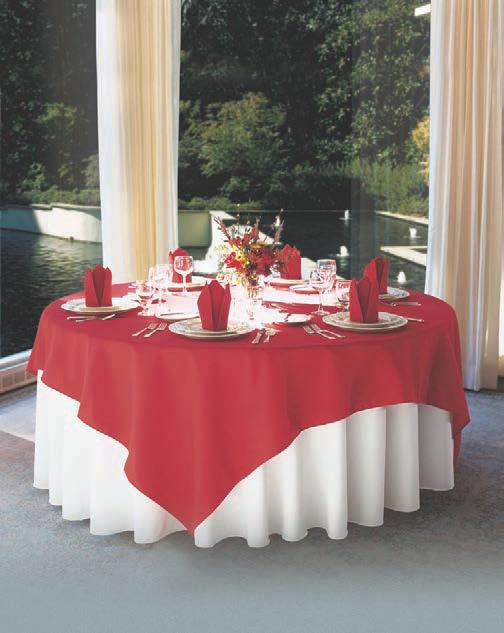
together, aDi and milliken create best in class table linens for your customers. signature® Plus fabrics, with a soft and luxurious feel, have technology that releases stains and soils, for whites that stay white and colors that stay bright. american Dawn & milliken... setting the standard in table linen excellence.






10 Distribution centers across north america hospitality@americandawn.com 800 821 2221 americandawn.com






PAneL of exPeRts
Staying ‘on par’ presents ongoing challenge
costs for the laundry room operators’ overtime work just to keep the existing linen in circulation, or hiring an outside service to provide linen to an establishment, can create huge expenses that are unnecessary.
A
lthough my company does not sell textiles directly to the enduser, it is my experience that laundry room managers who exhibit good managerial skills can prevent and overcome any challenges that might arise through the inventorying and securing of textiles for a laundry room.
When my company sells new washers and dryers into a new laundry room, we discuss three things with the laundry room manager. We determine what the initial textile inventory should be. We discuss what the facility should have in overall circulation of this textile. And third, we work with the operator to try to gauge what the annual textile replacement of inventory is going to be for this property.
For a new facility looking to purchase linen for its business, it is important to purchase the average amount of linen used over a seven-day period. For example, the formula that my salesmen use to determine the amount of particular textile needed is to divide the amount of textiles used in a seven-day period by seven, then multiply the result by four to obtain the initial purchase amount.
Having the right amount of inventory circulating through a facility is key to the success of running a laundry. One of the worst experiences for a laundry room manager is a textile shortage. In order to avoid this problem, managers are better off keeping track of the textile usage on a weekly basis, rather than a daily basis. This will allow them to make sure their linen par is always adequate.
It is also important to make sure that textile replacement funds are available throughout the year. The costs for a laundry room without the right amount of linen on the shelf are substantial. Labor
Again, using the right managerial skills and having the best personnel to operate a laundry room will assure a smooth operation moving forward.
guest or patient room, one par on the shelf to “rest,” one being washed, one in transit if outsourcing, one in stock for emergencies and one in stock for linen replacement due to wear, damage or theft. For this recommendation for a six par, which I see as being ideal, the challenge will be establishing a budget to have this available.
are necessary to make sure you have the proper par levels, assuming you have the budget to bring levels up to where they need to be. This ensures that you maximize linen life, and it also exposes your linen distribution points. You can see where “hoarding” is occurring and what adjustments are necessary to correct this.
Ifind the first challenge would be to have an effective linen management program that controls costs while maintaining enough linen available for daily operation. Part of the program involves establishing a par level.
I suggest six as an ideal par level: one needed to fully stock a



With a limited par level, controlling the inventory level of the textiles requires standard policies and procedures for laundering, transporting, stocking, storing and replacement. A physical inventory is required to know what items are available and in storage. If the inventory is not adequate for daily operation, shortages will reduce the productivity of the employees. Customer satisfaction scores may decrease due to patient/ guests waiting for cleaned rooms. If outsourcing laundry service, a missed delivery due to a snow or ice storm will result in being short of required textiles.
Insufficient inventory will negatively impact employees. They will become frustrated at not having textiles available, and thus they may stash and hoard linen. Employee job satisfaction may decrease with the lack of adequate supplies to conduct their jobs efficiently. Linen life will be decreased due to over-processing the inventory, resulting in additional shortages. Inadequate replacement of worn or damaged textiles will give a displeasing look. Customer satisfaction scores will suffer. The laundry, either on-premises or off-site, will be stressed to deliver the results and textiles required.
To conclude, insufficient inventory impacts the entire operation in some way, which hinders controlling overall costs.
If you have lower-thanadequate par levels, you will constantly run into the “just in time” category, always processing and sending the linens out to the end-user. This does not allow the linens to relax and will drastically shorten their life, causing the linen cost to rise faster than normal. If you maintain proper levels and conduct inventories, you will see a smoother operation.
Par level is one of the most important aspects of any laundry operation. Regular inventories


It is important for all who are involved with textiles to realize that these goods are extremely expensive. People can relate to the cost of a single unit, but may well have trouble getting their arms around how many units are involved, and how quickly large volumes will disappear. It is not uncommon for the users to feel that taking inventory is a needless exercise.
The concept of taking inventory is not a popular one. It takes time and is rather tedious. But it is part of everyday life. We inventory our bank account, our gasoline tank, and the milk in the refrigerator. And the reason we do is to keep from running out of that commodity.
But instead of impacting only our personal lives, there is a significant impression on all who use or process the linen. Once there is a shortage, the hoarding begins, which leads to more shortages, and so on. Also, the blame game starts as we try to get someone to solve the problem. Everyone is making excuses. The whole scenario is nonproductive.
Not enough linen results in the
6 APRIL 2014 | AmeRIcAn LAundRy news www.AmericanLaundryNews.com
“What aspects of inventorying and securing textiles pose the biggest challenge, and why?
In what ways can an insufficient inventory impact the rest of my operation?”
chemicals supply Carrie Armstrong Ecolab Eagan, Minn.
Hotel/motel/ Resort Laundry James Brewster The Resort at Glade Springs Daniels, W.Va.
equipment/ supply distribution
Justin Oriel
Garment Machinery Co. Needham, Mass.
(Image licensed by Ingram Publishing)
commercial Laundry Richard Warren Linen King Conway, Ark.
turnaround of each piece taking place more quickly. This causes the linen to be used more often in a given amount of time, and replacements are needed more frequently. And it’s all caused by not knowing how much linen is in service, or how much is actually needed.
What commonly happens is that while new linen is injected, there are still shortages. If you inject 100 units, but you are 150 units short, you are still short and can’t understand it because you just injected a lot of linen. And, by the way, after three days, you won’t be able to see the new linen since it is now used and blended with the linen already in service.
It is imperative to know how much linen is used per day, and to know how much linen is in service. Regular inventories are a necessity.
Having the proper linen levels will help the operation on different levels. It will lower the stress caused by shortages, and it will stop the scramble by staff members that probably have better things to do. Conducting regular counts will give you a heads-up on items that may have a shrinking inventory, and those items can be injected prior to anyone becoming alarmed.
Securing the linen is another matter. People help themselves to the supply if they assume there is a shortage. If there is plenty of stock, the urge to raid the cleanlinen room is diminished. But if it is put under lock and key, human nature will invent some way to abscond with the goods.
cotton fibers, as hot linen is brittle and needs to rehydrate (articles about inventory depletion and its effects are available on my website, www.technicalconsulting1. com). Simply put, if we wait for that call, we’ve already failed ourselves and our customer. Linen utilization is a seven-days-a-week effort that needs to be addressed with our customer before it hits critical mass and we lose them.
The laundry operator’s biggest challenge is communicating to the customer the necessity of a linen management system.


Historical data clearly indicates
that pilferage from the property or facility accounts for 80% of all linen losses. A linen management system with tracking software and data should be in place as part of a business’ marketing plan before it ever hits the street. Linen utilization software and new RFID technology are available and will pay for themselves in customer retention and linen replacement costs. Technology can take the human aspect out of inventory and linen requisition issues.
On a side note, I was on a flight home from Las Vegas recently when I noticed two couples
returning from a vacation. The ladies on both sides of the aisle had awesome new towels covering their legs. They had been taken from the hotel, which was no doubt blaming its linen provider for the losses. The couples were from different parts of the East and didn’t know each other. In one row on a 31-row plane, there were two pilfered towels.
specific to clean-linen distribution/soiled-linen removal, the biggest challenges to textile inventory is the daily effective distribu-


tion and pickup of all linens, along with overall utilization.
This requires consistent daily management of the overall laundry operation. The key for secure


reversing the order of the questions, let’s talk about the effects that insufficient inventory or low par levels (LPL) have on a laundry operation. LPL usually start with a phone call from the property or facility, saying that the laundry is losing their linen or not sending everything back. In most cases, the laundry will send a rep to sooth them. After a brief conversation, the problem of LPL becomes glaringly visible.
When the laundry tells the property that it has LPL, they ask, “What did you do with our linen?” They say that the laundry service has to spin the remaining inventory faster. But spinning it faster will seriously impact operations, production and trucking schedules, possibly costing a small profit margin.

Another factor is that linen processed in the morning and sent to the property still “hot” can cause further damage to the

www.AmericanLaundryNews.com AmericAn LAundry news | AP ri L 2014 7
consulting services
Sam Garofalo Technical Consulting Associates Charlotte, N.C.
Long-Term care Laundry
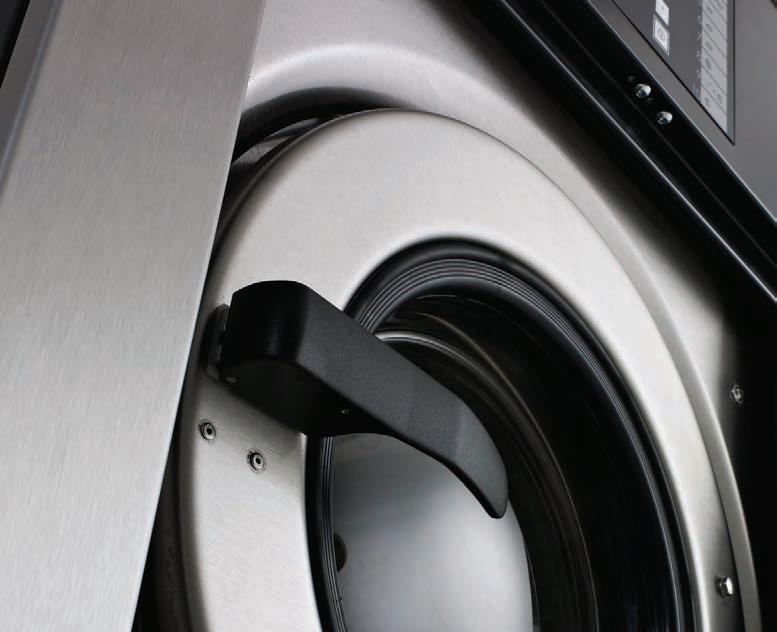
See EXPERTS on Page 9 Since 1981, CLI Enterprises has offered laundry managers in the state of Arkansas premium products, expert knowledge and total laundry solution packages. We’re proud to partner with IPSO ® to offer a complete lineup of industrial-strength washer-extractors and dryers. When it’s time to add new equipment or replace your old equipment, nothing performs like IPSO. Come in today, and let us show you how energy-saving features like SmartWAVe and OPT (Over-dry Prevention Technology) make IPSO the best solution for your business, and how payments as low as $99/month at a special rate of 5.50% make getting your new equipment easier than ever. For all questions, contact Scott Johnson at 501.350.8788 or laundrymanscott@yahoo.com. INDUSTRIAL-STRENGTH EQUIPMENT. INDUSTRY-LEADING SERVICE. CLIEnterprises.com P.O. Box 468 • Bryant, AR 72089 • 501.794.0107 INDUSTRIAL BY DESIGN ALN_Jr Page.indd 1 3/7/14 3:38 PM • • • • •
Brian Barfoot Aberdeen Village/ Aramark Olathe, Kan.
Tools f the Trade
New laundry truck manufactured from first-run polyethylene scrap
G&K
tive trim designed to offer greater visibility in lowlight conditions.
The workwear also protects workers from arc flash, flash fire, combustible dust or molten metal.
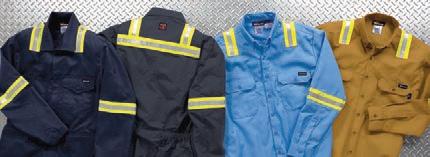
Pants, shirts, coveralls and jackets in both UltraSoft®
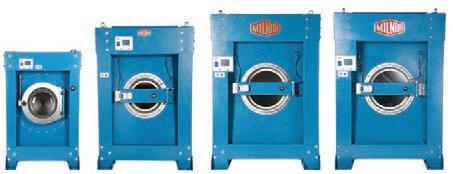
New features are available on the X-Series suspended washer-extractor from Pellerin Milnor, according to the company.
The enhanced MilTouch-EX™ touchscreen control is available on 100-pound, 140-pound and 170pound models in the X-Series line. This feature allows the user complete access to the machine’s function at
and GlenGuard® FR fabric are available. G&K can supply these items through a variety of customized programs, according to the company.
“Our new flameresistant, enhancedvisibility uniforms offer businesses and their employees improved protection and safety,” says Dave Euson, G&K’s vice president of marketing and sales.
“These uniforms are ideal for workers who require FR garments, but currently have to layer on visibility vests in limited-light conditions.”
www.gkservices.com 800-452-2737
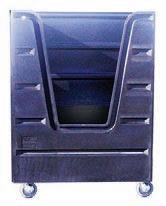
Maxi-Movers has introduced its M7091 laundry truck, which is made from 100% virgin polyethylene material left over from various manufacturing processes by parent company Chem-Tainer.
Excess plastic is trimmed from units during production, and material is also gathered from factory seconds and rejects and reprocessed into polyethylene feedstock. Only first-run polyethylene scrap is used for Chem-Tainer’s in-house recycling process.
Through this process, ChemTainer maintains a reliable source of contaminant-free recycled material with a minimal carbon footprint, and prevents scrap or waste material from entering a landfill or ecological system, the company says.
This recycled “re-grind” material
every level and wash/rinse step (within safety limits), Milnor says.
The MilTouch-EX control can be interfaced with specialized options such as metered water and integrated reuse tanks.
Standard on the product line is software designed to save water and energy by reducing two rinse steps, and a dynamically tuned suspension aims for reduced maintenance and more efficient design.
Milnor says the washer-extractors in this series allow greater exchange of chemistry and water in wash loads.
www.milnor.com 504-712-7656
A product for sorting hangers developed by Dura-Cast Products is now available as part of the company’s laundry and linens line of products.
is available upon request and at a discount for the Maxi-Movers line of laundry trucks. The company says finished units manufactured from re-grind are generally dark gray in appearance, but can have a slight blue or green tint.
www.maxi-movers.com 800-275-2436
Talley Machinery Corp. offers two standard models of lighted inspection tables that shine fluorescent, white light upward through a table’s surface to illuminate defects in textiles and surface imperfections in machine parts, according to the company.
The tables are designed to reveal holes, blood stains, oils, adhesives, loose threads, excess lint and other flaws that can remain undetected by the naked eye, the company says.
The tables stand at a height of 3 feet and are offered with a
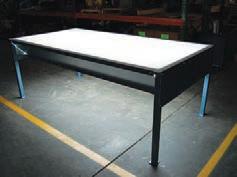


durable, steel frame, and a smooth, acrylic top. They are built especially for installation in cleanrooms in textile services plants, hospitals, nursing homes and other healthcare facilities where defective and/or contaminated sheets, towels, surgical gowns and other healthcare linens need to be safely removed from service for repair or disposal, Talley says.
www.talleymachinery.com 800-222-9954



Fashion Seal Healthcare®, a signature brand of Superior Uniform Group, introduces a new line of SimplySoft™ scrub apparel in its newly released scrub catalog.
The retail-inspired line is industrial laundry-friendly and includes scrub shirts, pants and warm-ups with a soft brushed finish in a 65/35 poplin, the company says.
The line of scrubs features options such as unisex and ladies’ styles, vibrant colors, side-flex panels and cargo pockets. The scrubs are said to provide a comfortable wear for users.
“The SimplySoft line offers stylish scrub uniforms in rich colors, packed with great features and is the first brushed

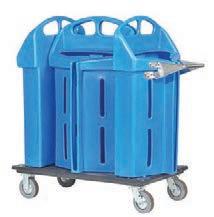
The Dura Hanger Caddy was originally a hanger-sorting solution for a major theme park and resort, but Dura-Cast is now looking to expand distribution to any industry that works with hangers, including hotels and dry cleaners.
The hanger caddy was designed to contribute to safer work environments by preventing hanger tangling and protrusion, and other causes of snags and cuts.
Available configurations include storage for 500 to 2,000 hangers, and the company says it can customize the product for larger, more recognized chains.
www.duracast.com 800-683-4116
product developed specifically for the industrial laundry atmosphere,” says Lisa Stewart, vice president of design.
www.fashionsealhealthcare.com 800-727-8643
8 APRIL 2014 | AmeRIcAn LAundRy news www.AmericanLaundryNews.com
Services’ new safety workwear assortment includes flame-resistant (FR) uniforms with reflec-
Flame-resistant uniforms with reflective trim designed to improve worker safety
Enhanced touchscreen control among new features available on suspended washer-extractor line
Hanger caddy aims to address sorting, storage problems, provide safety benefits
E-mail
manufacturers: Have you introduced a new product? Revamped your system? Released a new catalog?
your product news, along with a high-resolution image, to news@ americantrademagazines.com and we’ll consider publishing your news free in Tools of the Trade.
Lighted inspection table designed to reveal defects in textiles, surface imperfections in machine parts
Scrub apparel line designed to withstand industrial laundry processes
inventory of textiles is having a central supply storage that is managed with secure access, as well as secured access to all linen distribution points/locations. Effective daily quality controls must also be managed.
Basic controls would be:

1. Making linen staff accountable for their production of distribution and pickup.
2. Supervision of staff members who inspect the supply room daily, and random, unannounced inspections of delivery carts, linen supply carts and linen supply distribution points/locations.
3. Scheduled, unannounced observations of organizational staff and customer usage.
4. Consistent communication and detailed reporting to and with organizational leadership via a linen committee. Ultimately, insufficient inventory negatively impacts the customer. During busy usage periods, the frontline staff members providing the linen item to the patient or resident end up taking precious extra time to find the linen they need.
Communication from the customer to staff can be challenging, and subsequently, these service failures reduce overall laundry production. Time is then spent on service recovery. As well as coaching and re-training, corrective action comes with any laundry staff responsibility.
remains incurable. Security of linen in hospitals is never an easy task. End-users of linen are often in the thousands.
Even more important than door locks is education of endusers and staff. By training linen staff on proper inventory control practice and educating end-users on better linen use practice while promoting linen security and loss prevention, especially in the ERs, we can greatly reduce our exposure to linen loss.
One of the most challenging textile items to manage is scrubs. There are two things said
to walk out of hospitals: people and scrubs. In most cases, scrubs walk out before they wear out. Such clichés often describe one of the biggest inventory and security challenges in the healthcare linen business.

Scrubs security is an essential part of managing inventory. In larger facilities, scrub dispensing machines often become the only option to help control inventory and reduce scrub loss. No matter what efforts are utilized—scrub awareness, using hospital security personnel to monitor scrubs leaving the facility, utilizing
scrub machines, or perhaps even all three options—sadly, scrub loss will still occur.
Managing scrub loss is, and probably always will be, a huge challenge.
Just like patient linen loss, scrub loss is an industry problem that we can all try our best to control, but this is more like an industry virus that will most likely never see a cure. Then again, maybe with all the financial pressure this industry is currently facing, hospitals may start viewing scrub loss as just what it is—theft of hospital property.
As it has been more than two decades since I was responsible for the securing and inventorying of textiles for a laundry facility, I will leave this portion of the
In the linen rental business, lack of good inventory control practices leads to depleted inventory, which then inevitably leads to huge production issues, inefficiencies, costly remedies and, most of all, unhappy customers.

In the hospital linen rental business, training clients on good inventory control practices and promoting linen security measures throughout the facility help to create a better partnership.
The one thing every healthcare linen and laundry provider knows is that maintaining adequate inventory is a crucial aspect of management. We also know that, in healthcare, linen replacements are not only inevitable, they are ongoing. To date, this is an industry virus that
www.AmericanLaundryNews.com AmerIcAn LAundry news | AP r IL 2014 9 ALN_Jr Page.indd 1 3/3/14 8:50 AM
experts continued from Page 7
on Page 10
See EXPERTS
equipment manufacturing
Gary Ostrum
G.A. Braun Syracuse, N.Y.
Healthcare Laundry
Michael Kirsch, CLLM
HCSC Laundry Allentown, Pa.
experts
question to my fellow panelists with more recent experience.
As far as negatively impacting one’s operation, I look at insufficient inventory as one of the major reasons, if not the No. 1 reason, for cost overages within an operation. This holds true for commercial plants and OPLs. Also, the negative impact on one’s operation is far-reaching, from direct issues related to this to a host of indirect issues.
All too often, the linen budget gets the ax and replacements are cut with little or no thought to the downstream effect.
The most obvious impact is on labor and operating hours. Nothing affects that coveted pounds-per-employee-hour figure more than having equipment operators run out of work. In addition, this hole in production can now only be filled by additional labor and operating hours.
Those who rent linens get paid for every piece or pound of linen they send out, so lack of inventory is seldom seen in such operations. However, it is almost an accepted practice within the hotel OPL side of things. I walk into a host of such operations operating two or more shifts simply because as soon as any linen is soiled, it needs to be immediately washed and ready for the next room that needs it.
The additional cost is not only felt within the laundry, but it transitions over to housekeeping, where staff must stay on longer to make up the rooms—not to mention the indirect cost to the property, as new guests checking in must wait for the room to be made up.
The negative impact continues regarding energy costs. Insufficient inventory usually means washers/tunnels/dryers will be underloaded. Once underloaded, all the equipment noted will now operate at a higher cost
per pound processed, whether the increase comes from gas, water, electricity or air.
There are new technologies out there that allow equipment to make adjustments for these underloaded conditions. But now one is increasing the cost of the equipment purchased to make up for lack of inventory, and we are back to additional hours again.
Having an insufficient inventory does not reduce the cost of linen replacement—it increases it.
First, having an insufficient inventory creates a panic type of linen purchase which brings in a feast/famine environment. As proper inventory levels are not really well known, the operation, now reacting to a crisis, just dumps linen into the system. Now there is too much linen, leading to excessive, increased loss due to theft as linen is sitting around unprotected on shelves, etc.
Second, while I have yet to see a scientific study on this, our industry seems to concur that when textiles get to “rest” before being used, they last longer. So putting a textile into use as soon as it is dry seems to shorten the life cycle of that product.
Looking at this issue positively, let’s work to take accurate inventories (make them perpetual, if possible), set up our linen purchases on the inventory results, and prevent having insufficient inventories that negatively affect our operations.
the challenging environment of healthcare linens.
Forecasting demand is equal parts art and science. As with many disciplines, an understanding of the art portion is usually acquired over many years of trial and error. Knowing the variables unique to your institution and understanding the factors that drive demand within your system is a skill learned over time.

A less subjective tool is the application of statistical equations to determine appropriate inventory levels and reorder points.

Although there are numerous statistical models and software tools used to determine appropriate levels, they all start with an accurate on-hand inventory level and a determination of the amount of that product actually in circulation.
Through the use of basic principles of standard deviation of demand and service level factors, one can determine appropriate levels of inventory to have in any system “by the book.”
Taking the next step to determine how much of that inventory is actually in circulation requires that we put the book aside and make our way to the floors, storerooms and patient rooms where caregivers are utilizing our products.
Through daily routine, convenience and/or unwritten procedure, caregivers and other staff will hoard linen. In many cases, driven by an apprehension of running out of linen, staff will find hiding places outside of the circulating inventory cycle.
that includes independent best practice recommendations.
Regardless of who performs the survey, being seen on the floors conducting a linen utilization survey will demonstrate professional oversight of this valuable facility resource.
Textile/uniform Rental
number of each type of linen that is needed to outfit all guest rooms one time. Shortages occur when the inventory level for linen is set too low. If set too high, excessive amount of cash resources get tied up in overstock.
Linens are the most important recycled inventory items under the executive housekeeper’s responsibility. The par number established for linen inventories is the standard stock level needed to accommodate typical housekeeping operations.
Higher linen inventory levels can reduce costs. But how, you might ask, can spending more of your budget on linen inventory help reduce your overall linen costs?
Many healthcare and hotel facilities that provide laundry processing of their own linen make the common mistake of not having an adequate inventory level (or “par level”) to maximize the number of cycles their linen can sustain. In large commercial laundries that rent or deliver linen to off-site premises, the correct par level of inventory is critical to their bottom line. Too much inventory or too little inventory can have extreme effects on their profitability.
For establishing pars of linen, the executive housekeeper needs to consider the laundry cycle, replacement linen and emergency situations. To effectively manage linen inventories, the executive housekeeper needs to develop standard policies and procedures that govern how and where linens will be stored, when and to whom they will be issued, and how to monitor and control the movement of linen through the laundry cycle.
As a stocking distributor, we understand the need to maintain inventory levels to service our customers.
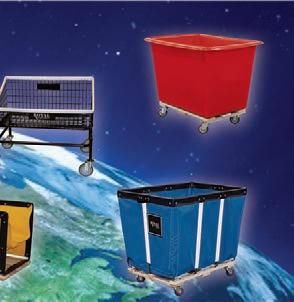


All laundries are challenged with forecasting demand for individual products and having those products on hand to fulfill that demand. This is especially true for
Identification of these hidden stores and an all-out effort to educate staff on the impact of this practice is a critical step in maintaining appropriate inventory levels. Since competing interests can come into play, a team approach is recommended when addressing this issue.
Soliciting the assistance of a trusted vendor partner to conduct a linen survey at the floor level for the purpose of producing a formal linen utilization study can both formalize the process and at the same time result in a document
As initial planning for opening takes place, systems and procedures must be designed to facilitate inventory control. Personnel training plans must be generated to familiarize the staff with how to take care of equipment, use supplies and account for items of value.
Storage must be organized and allotted according to the various categories of material; pars must be established; accounting methods must be coordinated with the controller’s office; and fiscal inventory rules and procedures must be established. It is essential to have proper organization, systems and inventory control to overcome unnecessary loss and waste.
One par of linen equals the total
Linen can be stored in the department’s main linen room, in distribution rooms near the laundry, or in floor linen closets for easy access by room attendants. An effective method of control is to maintain floor pars for all floor linen closets. Occupancy reports generated by the front desk can be used to determine linen distribution requirements for each floor linen closet.
Room attendants will record the number of soiled linen, by type, that are removed from guestrooms and delivered to the laundry. At the end of the day shift, the floor linen closets are restocked. This brings each floor linen closet back up to full par in preparation for the next day’s work. Damaged linen should be placed in a special discard container and hand-delivered to the main linen room.
A physical inventory of all linen items in use and in storage is the most important part of managing linen inventories. A complete count must be conducted at least once a month.
All uniforms should be inventoried at least quarterly. The same
ALN_Tab_1-4_H.indd 1 7/16/13 3:58 PM 10 APRIL 2014 | AmeRIcAn LAundRy news www.AmericanLaundryNews.com
continued
from Page 9
Michael Brock
Monarch Textile South Bend, Ind.
Textiles
Hal Herweck Phoenix Textile Corp. O’Fallon, Mo.
general principles that pertain to taking physical inventories of linen supplies apply to counting uniforms.
Lastly, regular physical inventories should be made of each property storeroom.

on how we purchase and manage our textiles and uniforms.

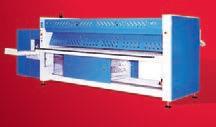

Offshore manufacturing continues to grow, and unrest in many of our international markets has become more noticeable.

As a result, many laundries today are looking at programs and avenues with their suppliers to guarantee that keeping large inventory on hand is no longer needed and now rests on the shoulders of their supplier.
However, many laundries also realize that a true partnership means having to put some skin in the game as well, in order to




develop a program with suppliers to ensure proper inventory levels for the “I want it and I want it now” customer. This new programmatic commitment comes with some challenges.
By taking a close look at historical data and working closer with our suppliers, we might be able to come up with some sort of reliable usage estimate for a suitable influx of inventory needed. This would ensure on-time delivery, whether it be weekly, monthly or quarterly. These figures should also be revisited and tweaked more often than not, as our deliv-
ery times from offshore production stock replenishment can at times be a moving target.


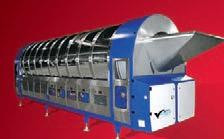
By working closely with our suppliers and now issuing longterm purchase orders, we can ensure products are manufactured and delivered as specified and our needs are met on a timely basis.



Insufficient inventory levels can and will have a direct impact on how we deliver and react to our customers’ needs. For the ones who value relationships and deliver product as needed, their business will grow and flourish.
For the few who incessantly play
it close to the vest and continually mismanage inventory levels, it is just a matter of time before the laundry chutes close and they lose a customer or two, thus having a negative impact on cash flow.
With so many factors in play, maybe it is time to consider developing long-term programs with our suppliers to guarantee proper inventory levels are kept and delivered on a well-defined timetable. This will allow us to maximize our space and meet our customers’ daily expectations and needs, taking care of the “I want it and I want it now” mantra.
ALN
“iwant it and I want it now.”
This is the battle cry we as suppliers and laundry providers hear constantly these days. This new mantra is one that dictates “just-in-time delivery,” so our customers’ needs can be taken care of promptly and efficiently.
As more laundries spend massive dollars to retool, expand or re-engineer their facilities or even build new ones, the dollars once used for securing textiles and keeping inventory on the shelf are now being redirected.
Storage space in our facilities, once used for keeping inventory, is now becoming prime real estate for accommodating growth. This, however, is causing a ripple effect on all of us as we search for the answers on how to inventory and secure product to deliver to our customers while managing our own costs.

How can we successfully walk this tightrope of money, inventory, sourcing and delivery issues while continuing to maximize our growth? The answer is programs and commitment. In order to be successful in this business, we need to commit and get smarter
ONE SOURCE – MANY SOLUTIONS.
Introducing Vega Systems USA.




A new company has been formed to exclusively distribute Vega products: Highly engineered washing, extracting, finishing equipment with superior functionality, fit and finish and non proprietary parts. Our equipment is 2nd to none. One source and many solutions.



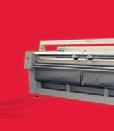




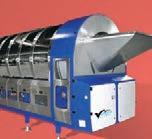
Call today for more information; 630-250-9222 , or visit our website at www.vegasystemsusa.com .
For confidential distributor inquiries please contact us at: inquiries@vegasystemsusa.com
SYSTEMS
124566 r5_EllisCorp_VegaIntro_ALN.indd 1 10/4/13 12:26 PM ALN_Jr Page.indd 1 10/4/13 2:46 PM www.AmericanLaundryNews.com AmericAn LAundry news | AP ri L 2014 11
uniforms/ workwear manufacturing Scott Delin Fashion Seal Healthcare Seminole, Fla.
PRODUCT SHOWCASE
COUNTING, MEASURING & MONITORING
SYSTEMS
PHOENIX SCALE CO.
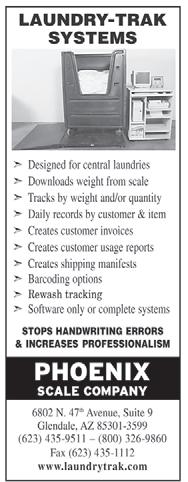
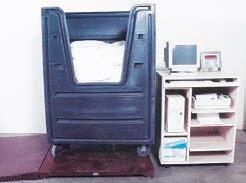
The Laundry-Trak System from Phoenix Scale Co. is a software program designed to help central laundries track linen flow in and out of the plant.
The program downloads the weight directly from digital scales, helping to eliminate errors or the need to record weights manually, according to the company. Each shipment is recorded by weight and/or quantity, and this information is used to produce shipping manifests, history reports, invoices and receiving reports. Production reports and cart tracking reports are also produced by the system.
Cost savings are realized through reduction in cart losses, more accurate billing, and increased professionalism and management information for more efficient productivity, says the company.
www.laundrytrak.com 800-326-9860
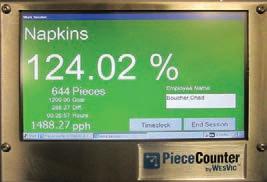
helps to track a worker’s production efficiency as well as time away from a workstation.

www.wesvic.com 866-781-8130
SPINDLE SERVICES
Commercial laundries can lose up to 40% capacity in unplanned downtime and speed losses, according to Spindle Services data.
Spindle’s Equipment Module helps identify, analyze and eliminate maintenance and production downtime in any laundry operation, the company says.
Production and maintenance staffs receive alerts and can log maintenance and production downtime codes on a thin client login station.

WESVIC
The PieceCounter from Wesvic helps pace front-line workers on ironers, folders and steam tunnels to consistently meet productivity standards, Wesvic says. The screen changes color based on an operator’s efficiency so both the operator and management can see at a glance if goals are being met.

All production data is uploaded to the cloud so management can see real-time production reports anywhere they have Internet access.
The PieceCounter tracks a worker’s time and efficiency while at his or her workstation, and it
The visual workplace shows production requests for maintenance attention as well as equipment and work areas that the engineering team is working on in real time. This helps to measure response time and repair effectiveness and allows for prioritization of maintenance teams, the company says.
It also helps increase the visibility of production downtime losses from planning and logistical issues that result in no product to process, downstream delays, and employee availability.
The Equipment Module complements the Direct Labor Module, which is already in use to help teams to increase pounds
per operator hour and reduce labor cost per pound, according to the company.
www.spindle services.com 800-323-4983
GARDNER MACHINERY
Gardner’s Piece Count Light
Frame counts items as they move through a 25-inch-high-by-21inch-wide opening. The frame is stainless steel, and the 14-beam retro-reflective array is protected by a piece of replaceable tempered glass. The frame may be mounted on a tabletop or along a sorting conveyor in a horizontal or vertical position, says the company.
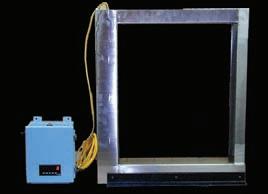

The counter goes to 99,999 with a response time of 25 milliseconds, and can be reset with a simple push of a button. By means of a scale factor, the counter can be programmed to display approximate weight instead of pieces. The counter and power supply can be remotely mounted at a convenient location for the operator.
www.gardnermachinery.com 800-352-6496
JENSEN
The Jensen Cockpit is a monitoring, visualization and reporting tool that helps laundry managers collect real-time data, such as machine status; presence of operator(s); type of garment or textile being processed; and pro-
duction per machine, per batch or per operator, as well as the consumption of water, gas, steam and electricity, the company says.
The system features key performance indicators to help foster an efficient operation by providing essential tools for laundry management, according to Jensen.
The Track-and-Trace function tracks goods through the entire plant, from the soil-sort area to the clean-goods belt conveyors.
www.jensen-group.com 850-271-5959
FIKE AND FIKE
TexTrax® from Fike and Fike is a web-based program that can be easily implemented anywhere with Internet access, according to the company. The program processes daily deliveries for exchange carts, top-off, supplementals, bulk deliveries, route loads, client remote orders and more.
Utilizing tablets, smartphones and bar coding, the program allows orders and deliveries to be fully mobile, the company says. Online tutorials explain how to operate specific functions, such as client remote order and inquiry.
TexTrax® generates comprehensive reports such as usage, shortages, fill rates, par analysis, departmental ranking, inventory, graphing and more.
Laundries and depots are able to process inventory
and deliverable goods as they move between inventory rooms, prep areas, weigh stations and docks, says Fike and Fike. Cart pack lists and truck manifests can be printed; cart weight entry screens interface with most scales; and additional modules can be added, including soiled-jobs tracking, inventory, garment tracking and physical cart tracking.
For laundries that also service a volume of smaller clientele, TexTrax® provides full routeaccounting functions, including frequency-based pricing, discounting and automated surcharges. On-site receipts and signature capture can be done via tablets and mobile printing. Invoices can be itemized a variety of ways and can be printed or directly e-mailed, the company says.
www.textrax.net 800-525-3678
PELLERIN MILNOR CORP.
Pellerin Milnor Corp.’s tunnel controls software has been updated with realistic graphics, a user-friendly interface and touchscreen controls, the company reports.
The Mentor controller for Milnor’s tunnels helps to control goods as they progress through various washing stages. The touch-screen controller helps to both simplify and speed laundry programming and to help provide vital production data at a glance, according to the company. The controller is also available as a retrofit for many older Milnor CBW® washers.
The Mentor controller can accept up to 1,000 formulas and features pull-down menus that offer a variety of options and onscreen “help” messages for quick assistance, Milnor says. It can also make some operations automatic,
12 APRIL 2014 | AMERICAN LAUNDRY NEWS www.AmericanLaundryNews.com
[Gardner Machinery]
[Jensen]
[Phoenix Scale Co.]
COMPILED BY JEAN TELLER, CONTRIBUTING EDITOR
[Wesvic]
www.AmericanLaundryNews.com AmericAn LAundry news | AP ri L 2014 13
and it provides programming shortcuts.
The Mildata computer management system is a computer-based management tool that can link Milnor CBW® systems to other Milnor machinery.
It can monitor and report on an entire washroom from a centralized or even a remote location. The system can generate a variety of reports, monitoring machines, employees and everything in between.
Programming operations allow users to change formulas “on the fly” with no interruption to operating equipment, Milnor says.
The personal computer that the Mildata system operates on can also be used for other office applications, including spreadsheets and word processors.
www.milnor.com 504-712-7656
ChiCago Dryer Co.
Chicago Dryer Co. offers CHITouch, a touchscreen control that can be connected to CHI-Trac, the company’s data accumulating and reporting system.
in diagnostics and production counters into a PC-based, full-color, large-format touchscreen control.
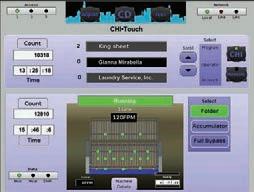
The screen’s open architecture allows for secure, multiple access levels to be designated for specific laundry employee categories and full programming customization, the company says. Easily added custom items and operator names via the built-in virtual keyboard provide an almost unlimited number of ways to view, manage and customize production data per product and user, according to Chicago®.
Color-coded, on-screen pacing indicators, based on user-defined standards, provide a real-time indication of machine and operator efficiency.
[Chicago Dryer Co.]
The CHI-Touch incorporates all the traditional CHI-Panel control functionality, such as automatic operation, self-testing, fault display, built-
The CHI-Touch allows laundry employees to use its many features to help increase their own efficiency as well as that of the equipment, according to the company. The system also has the flexibility to work with current and future networked reporting technology.

www.chidry.com 773-235-4430
Softrol

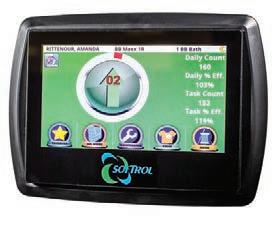
PulseNet Production System, a




production management system from Softrol, is now available with user-friendly and customizable touchpad-screen controls. Extending beyond direct labor productivity, the SmartStation and Daily Requirement Plan software monitors the overall plant production throughput, according to the company.
Utilizing real-time data, the SmartStation system helps identify production bottlenecks and alerts management of production deviations. Each SmartStation provides immediate on-pace/off-pace performance feedback as well as indicators for other production tasks. It can also be used to customize daily messages for employees, the company says.
www.softrol.com 1-888-763-8765

Computer Software arChiteCtS
LinenMasterNet laundry management software from Computer Software Architects helps to capture data from a laundry’s entire operation, then present it in reports and dashboards on displays and mobile devices, according to the company. The system also provides e-mailed alerts when key performance indicators fall behind or are not met.
Utilizing LinenMasterNet, a laundry operator can capture every piece and pound produced and delivered at scale workstations and record production statistics from each machine, workstation and operator, Computer Software Architects reports. Managers and operators can view production requirements and progress on large-screen monitors throughout the plant.
LIGHTEN THE LOAD
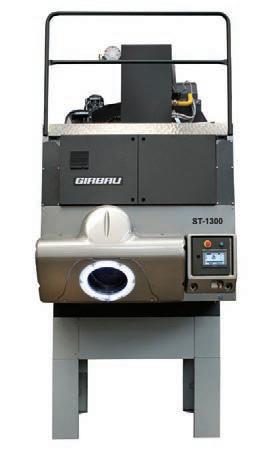
Introducing the ST-1300 Dryer with Vacuum Loading
The patented Vacuum Loading System on Girbau Industrial’s ST-1300 dryer allows operators to quickly load items into the dryer without a conveyor. A powerful suction pulls items inward with minimal effort and no risk or hazard to attendants. In less than one minute, attendants can fully load up to 140 pounds of laundry into the dryer. From the same area, items are then automatically unloaded—increasing productivity, reducing labor and boosting profits for your laundry.
Contact Girbau Industrial today to see how the ST-1300 can reduce labor costs in your laundry!
(800) 256-1073 • www.girbauindustrial.com
[on your employees and your budgets]
Visit www.girbauindustrial.com to see Girbau Industrial’s complete range of products for industrial laundries. ST1300Ad-ALN.01-14.indd 1 1/13/14 3:20 PM ALN_Tab_half.indd 1 1/13/14 3:30 PM
Employing smartphones and tablets on routes, drivers can record delivery events as well as capture delivery signatures with time stamps and geo-locations to verify on-time delivery, the company says. Garments and other assets with bar codes and RFID
[Pellerin Milnor Corp.]
[Softrol]
➢
tags can be tracked at the plant as well as at customer locations.
LinenMasterNet can be integrated with soil-counting, garment-dispenser and garmentsortation systems; set to automatically read utility meters to monitor and track resource consumption; and import payroll hours and costs for additional metrics on productivity and efficiency.
www.linenmaster.com 207-443-8014

Leonard automatics
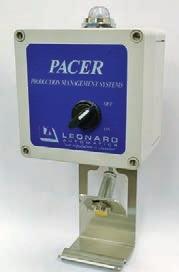
The Leonard Automatics
PACER™ Production Manage-












ment System is a real-time production monitoring and reporting system. It provides a simple way to help increase operator productivity, train new operators and collect production data, the company says.
The system works with indicator lights located at each operator’s station. When the operator is below the expected performance rate, the indicator light is “off.”
When the operator is at a “settable” percentage of his or her expected performance rate, the indicator light “flashes.”
When the operator achieves or exceeds the set production rate, the light stays “illuminated.” At a glance, management can see in real time if an operator is achieving a set production rate.
PACER™ can be used anywhere there is a separation of product, such as a tunnel finisher, garment presses, flatwork irons and mat rollers, the company says. Production reports can be saved or exported to spreadsheet programs to give management the flexibility to format the information.
www.leonard-automatics.com 800-483-9316

coLmac industries
The Colmac AccuCounter system is an automated counting and productivity package that tracks operator production, soiled count and classification functionality directly to a laundry’s internal “soil ticket” number, the company reports.
The software captures individual item counts from incoming soiledlinen bags tagged with a customer
capable of generating a variety of reports, including “item summary reports,” total weight or piece counts, linen abuse and excess debris or hazardous items reports.
The system also provides “realtime” counts for all classifications across all accounts, Colmac says.
The system tracks an individual worker’s production rates, shift tracking, breaks and day-end activities. The AccuCounter host software can accept and provide data in fixed-field-length or comma-delimited formats.
www.colmacind.com 800-926-5622
decisions and determine if key metrics are being met, according to the company.
invoice soil ticket. The multilingual operator interface allows adjustments to counts, identification of abused items and display of operator productivity statistics. The AccuCounter’s host server stores count information for reporting and uploading to various route accounting programs.
The system’s office computer is
G.a. Braun
G.A. Braun’s Washnet® software solution provides access to realtime data to help laundry managers make timely and proactive
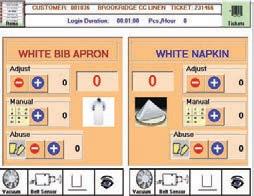
From monitoring equipment status to managing wash and dry formulas and obtaining production history and throughput, Washnet® provides easy-to-use reports, live status screens, equipment alarm history and more, Braun says. Washnet® also allows technicians to provide remote support.
www.gabraun.com 800-432-7286
Download Magazine Central and read American Laundry News on your iPad or Android Tablet Step 1: Go to your App Store and type Magazine Central into search bar Step 3: Open the Magazine Central App Step 2: Click the box to install the app (you won’t have to do this again) Step 5: Click Download Step 6: Click View Step 4: Type AmericanLaundry News into the search bar The app stays on your tablet. Check back monthly to download the latest issue. Step 7: Read & enjoy! 0414aln_Mag Central tab half.indd 1 3/12/14 4:59 PM 14 APRIL 2014 | AmeRIcAn LAundRy news www.AmericanLaundryNews.com
ALN
[Leonard Automatics]
[Colmac Industries]
LARge-cAPAcITy dRyeRs
[G.A. Braun]
comIng uP In AugusT’s PRoducT showcAse:
Apex Linen tech investment elevates local processing standards

LAS VEGAS — Apex Linen was built in 2011 to provide a hightech, cost-effective, environmentally conscious laundry plant for the local resort and business community. The company combines state-of-the-art laundry technology, scientific concepts, advanced plant design, purchasing power and strong work values in an effort to elevate local industry standards.
Incorporating equipment from manufacturers such as Kannegiesser and UniMac, Apex’s strategic partner, AJ Industries West, helped to develop, design, set up and manage the state-of-theart facility.
Apex maintains a $6 million inventory of hotel linens, uniforms and textiles at all times for rental purposes, backed by an $18 million equipment investment, computerized laundry applications, use of radio-frequency identification (RFID) technology, and a highlevel management system.
Large enough to handle 300,000 pounds of linen per day, the plant interfaces laundry/uniform software and hardware for a seamless production and inventory system.
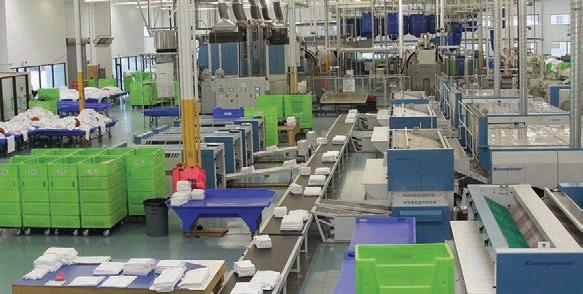

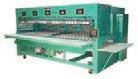
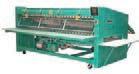
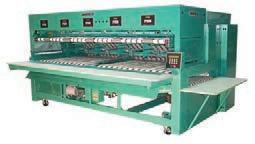
17-module batch tunnel washers, plus press extractors and dedicated flatwork and small-piece finishing units. UniMac washer-extractors and tumble dryers are used to process smaller load classifications.
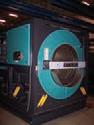
Apex says it is one of the first industrial laundry services in the world to invest in Union drycleaning machines using non-toxic, biodegradable SolvonK4 solvent for sustainable dry cleaning.
Apex employs its own service technicians, computer support specialists, engineers, maintenance staff, dispatchers and training personnel. The company maintains a controlled environment at all times, taking extra steps to ensure employee safety, reaping the benefits of 90% staff retention.
“I’ve had the privilege to work with teams from over 160 companies and seven different countries who operate Kannegiesser equipment,” says Phil Hart, president of Kannegiesser USA, in describing his company’s relationship with Apex Linen President/CEO Joseph W. Dramise. “[The Apex] team is among the elite in that they extract the best end product that the equipment can supply.”
the fact that it has a “Europeanclass laundry” and is producing linens that “would be at home in the finest hotels of Paris, Berlin or Zurich.”
it unique in Southern Nevada, the company says.
The company believes using RFID technology provides huge advantages, in that client partners are able to track their textiles in real time, with online access to transportation and delivery status.
ALN_Tab_half
The plant’s machinery incorporates overhead automated rails that feed the two Kannegiesser
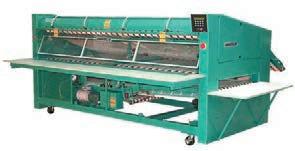
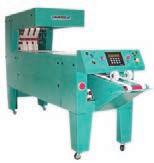
He continues by saying that Apex Linen should take pride in
UniMac Sales Manager Scott Peregoy credits his 20-year working relationship with Dramise, and the manufacturer’s product performance, for being able to bring the proper mix of equipment to the plant to ensure premium results.
Apex Linen’s use of RFID technology for quality control makes

Apex’s total loss percentage and reject factor amount to less than 2%, the company reports. Working in a high-volume industry demands the level of accountability that RFID technology provides.
“Simply put, we’re motivated by our commitment to provide our clients with accountability, quality end products and value,” says Dramise. “Our dedication to our customer base, combined with the incorporation of Kannegiesser’s and UniMac’s quality industrial laundry equipment and team knowledge, has established Apex Linen as a leader in the industry with a strong track record of success for being on time and on budget.”
Lavatec Inc.

300 Great Hill Road Naugatuck CT 06770 - USA
Toll Free: 1 800 255 2515 Tel: 203 723 1122 Fax: 203 729 4977
Email: info@lavatec.com www.lavatec.com

Service: Lavatec, Passat, Washex, Challenge Cook MADE IN USA Lavatec Feeders & Folders Remanufactured Equipment Dealer Inquiries Welcome Master Eclipse Two machines in one Towel Folder Master Fold Spare Parts Ironers U.S. DISTRIBUT0R OF LP571 LX445 Master Eclipse Master Fold
3/9/12 3:34 PM Page 1 0513aln_Lavatec Inc.indd 1 2/14/14 1:50 PM www.AmericanLaundryNews.com AmericAn LAundry news | AP ri L 2014 15
ALN
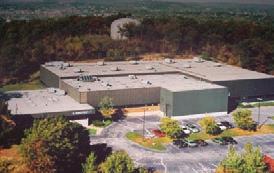
An overview of the Apex Linen plant. Its two batch tunnel washers can be seen at the far end of the production floor. (Photo: Apex Linen)
Benefits of using multi-par linen system
By BILL BRooks
As many on-premises laundry managers know, labor makes up 45-50% of a laundry operation’s expenses. Second only to labor
is the cost of linen replacement.
In order to better preserve luxury linen investments and save money on labor, housekeeping departments can adopt a three-par linen system.
“Many-flavored ice cream“ Full page, bleed ad for American Laundry News




Advertiser: American Trade Magazines Contact: Charlie Thompson 312-361-1680





Ad Trim size: 10.75” x 14.5”

Art contact: Shelley Timm-Thompson, 708-771-9948
Insertion Date: Ongoing
Once an OPL understands all of the benefits of investing in a threepar system, it is important to consider how to best care for linens, including new laundry technologies that will help ensure the best
wash results and increase labor productivity.
HOW TO BE ON PAR
A par level refers to the number of linen sets an OPL, most com-







monly in a hotel, currently has on hand. For example, if a hotel only had one complete set of linens for every bed, that would equate to one par. Ideally, each hotel should have three sets of linens on hand at all times, or three par.
These linen sets rotate through a cycle that helps to make the housekeeping staff more efficient and preserves the linens: one set is currently being used by guests; a second set is being laundered and processed; and the final set of linens is already folded and resting for a minimum of 24 hours.
While having a three-par linen system is ideal, par levels do not need to be full sets. If a hotel is not continuously reaching capacity, they may want to invest in a 21/2-par system. This means that only a portion of the beds need to be changed daily, rather than every room.
MULTIPLE PAR IN PRACTICE
Amanda Hedtke, general manager at the Appleton Residence Inn in Appleton, Wis., updated her hotel’s bedding to triple sheeting (a style of bedding found in highend hotels that involves multiple sets of sheets) when the property went through renovations in 2012.
After purchasing higher-quality linens, Hedtke knew she needed to protect her investment, which meant investing more in additional sets of linens up front to avoid overuse and the increased fiber deterioration that it causes.
As Hedtke quickly realized, there are several benefits to having multiple sets of linens on hand— most importantly, labor expenses and linen life.
STAFF PRODUCTIVITY
“For the hospitality industry, time is money—especially when it comes to housekeepers. I have seen hotels that don’t have multiple sets of sheets available and housekeepers have to leave the front desk notes to put sheets on a bed before checking guests into a room,” says Hedtke. “This stalls not only your housekeepers, but eventually starts to impact the work at the front desk and, ultimately, the customer.”
Having a set of linens, be it towels, sheets or pillowcases, readily available for the housekeeping staff helps all team members function more efficiently. With labor being the largest expense for laundry managers, it is best to have a well-organized system in place for laundering, folding and storing all of the additional linens.
“After our laundry is done being processed, we have a folding system to ensure our resting linens are easy to organize and grab,” Hedtke says. “Our staff folds all of the bedding for one bed together
16 APRIL 2014 | AmeRIcAn LAundRy news www.AmericanLaundryNews.com
OPL 101 Rotating linen sets makes housekeeping more efficient, preserves inventory many-flavored ice cream many-flavored American Laundry News The more flavors the better! In addition to our print edition, check out our tablet, mobile and website versions when you crave the latest industry news and updates. www.americanlaundrynews.com to align with the United Nations’ Globally Harmonized System of Classification and Labeling of Chemicals. Any company that produces, distributes or uses chemicals must train their employees by Dec. on the changes, remindsuse new labeling elements and known as Material Safety Data requirements will improve worker understanding of the hazards associated with the chemicals in their workplace. Training on this is needed early in the transition process since workers are already completed by Dec. 1. Type of information the employee would expect see on the new labels, including: Signal Word — Used indicate the relative level of severity of hazard and alert the reader to the potential hazard on the label. black hazard symbol on whiteficiently wide enough to be clearly visible. OSHA has designated eight pictograms (shown) under this standard for application to hazard category. hazard(s) of chemical, including, where appropriate, the degree of Precautionary Statement(s) — A phrase that describes recannual International Hotel, Motel Restaurant Show (IHMRS) will have different look and feel to this fall, with new pavilions, new partnerships and new manageconference and networking activi-ture three days of exhibits of new products and services for hotels and foodservice properties. IHMRS sharing some floor space with the 4th annual Boutique Design New York (BDNY), which features suppliers of high-end, unique and innovative interior design products for hospitality. The event’s new managementmate, targeted networking events; on-floor education theatres; and experience in both trade shows and hospitality,” says Show Director about new products, and we feel we have many exciting new prodStandards developer management practices of international voluntary published the Textile Rental Services Association (TRSA)for Sustainable Laundry Best Management Practices recognizing the association’s criteria for Clean Green cer--fies” practices in TRSA’s “the structural, non-structural and managerial techniques” effective for laundry to achieve green objectives, according to TRSA, adding that ASTM reviewed itsmitment to sustainability anding our carbon footprint and enhancing our environmental stewardship,” says Joseph Ricci, TRSA president and CEO. “The ASTM standard, implemented through TRSA’s Clean Green certification, Among the best management practices incorpoinclude conserving with a water reuse system; using environmentally friendly detergents; and filtering wastewater before discharge to Late News Enthusiasm builds for Hotel, Motel show Dec. 1 is first compliance date for newly required hazard communication training inSiDe [ [16 Trendy Textiles [22 Product showcase guestroom linens on Page Goodwill Opening annually in Miami. ▲ Mobile and Website ▼ Print Tablet
The Newspaper of Record for Laundry & Linen Management ALN_Full_Page.indd 1 11/11/13 2:24 PM ALN_Jr Page.indd 1 3/19/14 10:52 AM
so that the housekeeping staff can neatly stack more on each cart and does not have to spend time counting linens when he or she is trying to prepare for incoming guests.”
LINEN RETENTION
After the linens are folded and put away, they are given 24 hours to rest before being fitted to beds. While it may not seem like a vital part of the process, this time allows the fibers to relax, evens out wrinkles and prevents linens from becoming stiff.
“The initial linen investment is definitely worthwhile in the long term; guests appreciate the improved sleep quality that accompanies linens that still feel like new,” Hedtke comments. “The three-par system prevents overuse so the linens do not feel like they have been repeatedly laundered, and aren’t faded and hardened with time.”
OVERDRY PREVENTION
Operators can further preserve their linen investment by taking a closer look at the drying process. A recent survey found that 79% of commercial laundry professionals believe that laundries overdry linens by eight minutes per cycle.
Overdrying is the quickest way to destroy a luxury linen investment. To prevent this from happening, OPL managers should consider investing in a tumble dryer that has an automatic shutoff system, which can sense the dryness level of the linens and stop when the desired level is reached. This automatic shut-off eliminates the need for OPL staff to stop and start the machines and make judgment calls as to whether or not the linens are dry.
Additionally, managers have the ability to save up to an estimated $4,866 per year in labor costs when using a machine equipped with overdry prevention technology.
While a multiple-par linen system allows the linens to rest— a pre-condition for longer linen life—without a quality tumble dryer, an on-premises laundry’s initial investment in additional linens may be wasted. Perhaps, most importantly, when making the jump to investing in a multiple-par linen system, make sure you have the laundry technology to support and maintain it.
Ultimately, owning several sets of linens has a large and quick return on investment, meaning an increased linen life and a happy, well-rested hotel guest. ALN
Bill Brooks is national sales manager for UniMac, a provider of on-premises laundry equipment. He can be reached at bill.brooks@ alliancels. com or 920748-4437.

After the Appleton (Wis.) Residence Inn updated its bedding to triple sheeting, General Manager Amanda Hedtke quickly realized there are several benefits to having multiple sets of linens on hand.

ALM 2014 Educational Conference June 9-11, 2014 Saddlebrook Resort Tampa Bay, Fla.


Register online now at www.almnet.org/event/conferenceregistration.

www.AmericanLaundryNews.com AmericAn LAundry news | AP ri L 2014 17
Is the healthcare evolution about to turn your world upside down?
“As our healthcare delivery system evolves, it is going to be imperative that all of us keep up to date on the changes as they occur. The ALM conference is the conduit for the latest information on how the healthcare evolution will drive changes in the laundry.” – Doug Story Don't Miss This Conference.
ALN_Jr Page.indd 1 3/4/14 9:25 AM
Brooks
(Photo: Marriott International)
Fashion Seal Healthcare donates 30,000 garments to Haiti
SEMINOLE, Fla. — Fashion Seal Healthcare, a brand of Superior Uniform Group, has donated approximately 30,000 garments to Haiti through Global Missions Ministries and Matthew 25 International, the company reports.
Global Mission Ministries and Matthew 25 International work with various churches and organizations in bringing relief to the people of Haiti, the company says. The garments will be used in sewing training centers, where adult-sized garments are tailored into clothing for school-age children.
Students are presented with their own sewing machines after two years at the sewing training center, where they learn to design and produce garments. There are 12 sewing centers throughout Port Au Prince.
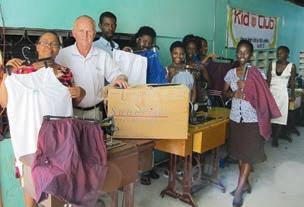
The training, when combined with the equipment, ensures these individuals can find employment, says Fashion Seal Healthcare.
“We would like to express our thanks to Fashion Seal Healthcare for helping us meet the needs of the poor,” says
John Kimball, president of Matthew 25 International. “This generosity has not gone unnoticed, and is allowing us to be ‘your hands’ extended to areas of great need.”
“Fashion Seal Healthcare is proud to support the residents of Haiti by donating clothes and giving its citizens the ability to learn a skill,” says Charles Sheppard, vice president of Global Sourcing & Distribution for Superior Uniform Group. “Supporting these on-the-ground charitable groups in this manner allows our donations to get directly into the hands of those who need them the most. Fashion Seal Healthcare has had a manufacturing presence in Haiti since 2007 and is steadfast in its support of self-sustaining charitable efforts.”
April 11 golf outing to raise scholarship funds in Skidmore’s memory
DAVENPORT, Fla. — The Florida Textile Management Association (FTMA), a regional chapter of the Association for Linen Management, will host a golf outing this month in honor of FTMA Past President James Skidmore, who died unexpectedly in October 2012.
FTMA’s Florida Classic Spring Golf Outing at the Providence Golf Club, west of Orlando, on April 11 will raise funds for the Jim Skidmore Engineering Scholarship, to be awarded for the first time in April 2015.
Skidmore was assistant director of Florida Hospital Laundry in Apopka, Fla.
“Jim was an innovator, educator, good friend, and past president of FTMA,” the group said in a press release. “As a chapter, we want to do something significant to honor his memory.”
Advance registration is required. Contact Jerry Branham, 863-293-1121, ext. 3171, jerry.branham@sodexho.com, for details. For sponsorship information, contact David Chadsey at 321-287-4448, dc@laundry-consulting.com
Florida Gov. Rick Scott recognized B&C along with two other companies on March 18 during a meeting of the Florida Cabinet. Bengt Bruce, president of B&C, was presented with a medal for the achievement.

“This will encourage our company to do better and provide more jobs for Florida, especially since we are expanding our business in Panama City with a production of high-technology small-piece towel folders for the laundry industry,” says Bruce.
B&C Technologies opened in Panama City Beach in 1995 with two employees, and has since grown to 25 employees, the company reports. It operates a 60,000-square-footfacility in Panama City Beach and has plans to relocate to a 70,000-square-foot facility in the next six months.
TALLAHASSEE, Fla. — B&C Technologies has received
“With Florida’s unemployment down to 6.1% and more than 500,000 private-sector jobs created since December 2010, businesses like B&C Technologies help Florida continue to create an opportunity economy,” says
18 APRIL 2014 | AmeRIcAn LAundRy news www.AmericanLaundryNews.com
B&C Technologies receives Governor’s Business Ambassador Award
the Governor’s Business Ambassador Award for its commitment to creating jobs and opportunities in North Florida, the company reports.
Scott. ALN
Bengt Bruce (third from left), president of B&C Technologies, accepts the Governor’s Business Ambassador Award on his company’s behalf. Also pictured are (from left) Florida Attorney General Pam Bondi; Florida Gov. Rick Scott; Catharina Whitehead, CFO of B&C Technologies; Florida CFO Jeff Atwater; and Florida Commissioner of Agriculture Adam Putnam. (Photo: Florida Governor’s Office)
Ervin Hosak, director of manufacturing for Fashion Seal Healthcare (second from left), is surrounded by students and instructors at a sewing training center in Haiti, where students are taught how to design and produce garments to find employment. The company recently donated 30,000 garments to the program through Global Missions Ministries and Matthew 25 International. (Photo: Fashion Seal Healthcare)
April
6-10 Textile Rental Services Association
Roger F. Cocivera Production Mgmt. Institute
Doubletree Hotel Dallas near the Galleria
Info: 877-770-9274
8-9 JENSEN USA
Service Seminar: L-Tron Washer-Extractors

Panama City, Fla.
Info: 850-271-5959, ext. 129
8-10 G.A. Braun
Finishing Equipment Service School Syracuse, N.Y. Info: 800-432-7286, ext. 254
9-10 JENSEN USA
Service Seminar: L-Tron DTX Tumblers/Dryers
Panama City, Fla. Info: 850-271-5959, ext. 129
17 Association for Linen Management Webinar: Maximizing Linen Distribution Methods Info: 800-669-0863
Standards
Continued from Page 1
The need for developing operational standards is also important for operators whose facilities employ unionized labor workers, he adds.
“For unionized labor, the contract is typically based on a standard, which needs to be mutually beneficial,” according to Witschy. “The use of the objective [standards] will prevent, or can be used to counter, any possibility for grievances.”
WHAT SHOULD BE MONITORED?
In a laundry facility, processes that involve a piece count; operations tracked by weight; activities producing bulk units; and jobs that have a desired time limit are some of the many areas where operators can develop and implement a standardized process, according to Witschy.

“Pieces running across an ironer or the weight sorted in the soil slings may be pretty straightforward, but some processes might not immediately appear to have an easily determined standard,” he says, stressing the need for operators to think creatively.
“You might go ahead and set a weight for processing, as opposed to counting the carts that go out, or you might set a number of exchange carts per hour, recognizing that the performance against that standard might go up and down during the day.”
DEVELOPMENT OF STANDARDS
For operators looking to set up or refresh their current operational standards, Witschy advises them to turn to
22-24 JENSEN USA
Service Seminar: Senking Batch Washing Sys. Panama City, Fla. Info: 850-271-5959, ext. 129
23-24 B&C Technologies Service School
Panama City, Fla. Register: http://bandctech.com/service.php
29- JENSEN USA
May Service Seminar: Flatwork Finishing Systems 1 Panama City, Fla. Info: 850-271-5959, ext. 129
30- Textile Care Allied Trades Association May Annual Management & Educational Conference 3 Ritz-Carlton Golf Resort, Naples, Fla. Info: 973-244-1790
equipment vendors that can provide specifications, or to use benchmarks established by industry associations.
He points to industrial engineering time studies as another source that can provide minute details of a process, from where a cart should be positioned in the facility to how the operator should pull goods from the cart.
“They’re specific to the operation, the equipment, the products in a plant, and they can include time and motion analyses that might even … deliver an improvement to the performance in a plant,” he says.
OPEN TO MODIFICATION
Regardless of which method an operator takes to establish operational standards for his or her facility, standards should never be set in stone, Witschy stresses.
“All standards should be regularly reviewed for potential modification down the road,” he says. “As you change process flow, or equipment, or even a type of product, such as moving from a natural product to a synthetic product, you should be open to change within the standards in order to better suit the operation.”
Setting standards should account not only for the performance of an employee, but for the equipment as well.
“You may have two ironers or two folders that are right next to each other, and one of them might be significantly older than the other, and thus you have to have different standards for each of those pieces of equipment.”
CHANCES FOR IMPROVEMENT
At the core of establishing operational standards lie the opportunities for improvement, according to Witschy.
“With the information you’re obtain-
ing as you collect against the standards, it indicates where changes can be made to improve the operation.”
If individual employees are having difficulty perfecting a specific procedure, for example, Witschy says, “look elsewhere in the operation to see where they might be a star at another particular process so we can either retrain them, or reassign them.”
Standards can also pave the way to equipment analysis.
“One of the other things [about] having standards and having the performance percentage … is you’ve got the information to justify a costly repair or even a replacement of [a] machine,” he says.
IMPORTANCE OF FEEDBACK
When collecting performance numbers based on these standards, relaying the progress to team members, celebrating their efforts, and constant coaching is of importance, according to Witschy.
“Visibility of standards adds peer performance as a motivator,” he says. “Obviously, no one wants to be at the bottom of the list [when] looking at the overall performance numbers.”
And in terms of how often feedback is given, “real time” works best.
“When operators receive that feedback more regularly … It actually prevents any anxiety or any concerns about what’s going to take place at a performance review, because when they see their numbers daily, they know exactly where they are,” he says, adding that standards push operators to do their best.
“We start to kind of change the attitudes that the operators have and really how they look at their individual performance.”
www.AmericanLaundryNews.com AMERICAN LAUNDRY NEWS | APRIL 2014 19
ALN
Calendar
WASHEX PARTS






Hard-to-find Washex parts, on-site rebuilding, tech support.
LAUNDRY PARTS CENTER 800-352-4492 Fax: 305-827-3991






PARTS, PARTS, PARTS
Huge stock of parts for most laundry equipment & boilers. Also traps, valves and lubricants. Overnight delivery.
Steiner-Atlantic, 800-333-8883 Fax: 305-751-8390 parts@steineratlantic.com www.steineratlantic.com



Yellowstone National Park Lodges in Yellowstone National Park is seeking a fulltime Chief Engineer – Laundry for our laundry facility located in Gardiner, MT. A complete job description and application is available at www.yellowstonejobs.com. Please submit an application and resume online. Contact mdoran@xanterra.com for further questions. AA/EOE/M/F/D/V

20 APRIL 2014 | AMERICAN LAUNDRY NEWS www.AmericanLaundryNews.com
B & C GAS IRONER FOR SALE MODEL - IS18120 YEAR 2010 Good condition • $20,000 Call for more information 201-727-4700 Ext. 4888. Ask for Kevin or E-Mail keving@partyrentalltd.com Classified Advertising PARTS FOR SALE PARTS FOR SALE EQUIPMENT FOR SALE EQUIPMENT FOR SALE AMKO AMERICA, INC. Remanufactured Finishing Equipment Delta Ironers, Omega Folders & Towel Folders (1 year parts warranty) Like new at half the cost. PARTS, IRONER SUPPLIES & NEW EQUIPMENT ALSO AVAILABLE Contact: (561) 863-9696 jurgenb@bellsouth.net POSITIONS AVAILABLE POSITIONS AVAILABLE DISTRIBUTOR OFFERINGS www.ineedjpequipment.com 800/925-3236 EQUIPMENT FOR SALE: (1) 2003 Chicago Mini (1) Milner Single Stage Press (35Bar), 2 Cake Shuttle, Multitrac Controls, all 2004, Available March (3) Milnor 64058 Steam Tunnnel Dryers w/ Teflon Coated Cylinder, 2004-2005, Available March (1) Energenics Lint Filter (MLF2020) w/ Side Discharge, Available March (1) 2009 Jensen Logic Feeder (1) 100 GPM DAF System (Installed/Running/ Ready to disconnect) (1) 1996 400lb Braun OP, Single Motor Drive, Reconditioned, New Inverter, Bearings, Boards, etc. (1) 1991 Milnor 8 MOD “Classic” Tunnel System. All wearable parts replaced on the tunnel. Includes Load Conveyor, Tunnel, 2-Stage Press,4 Dryers and Milnor Lintvac. (1) 2002 Chicago SP 4 w/Cross Fold and (1) 75 kva Transformer Primary Voltage: 480 Secondary Voltage 208/120 “Expect Excellence” Expect excellence from the leader in used industrial laundry equipment sales and installation. Keep up to date with equipment for sale, and the latest industry news by subscribing to our monthly newsletter. Go to www.ineedjpequipment and sign up TODAY! About JP Equipment JP Equipment is a trusted, full-service, used industrial laundry equipment sales and installation company. We pride ourselves on providing unparalleled Call Craig Lloyd toll free at (877) CWL-LOYD between 9 a.m. – 9 p.m. EST. Please visit www.laundrycareers.com to review current industrial/institutional laundry management openings. ADVANCE YOUR CAREER MISSED OUR DEADLINE? PLACE YOUR AD ONLINE: www.AmericanLaundryNews.com The Griffin Group, Inc. “Recruitment Specialist” Need to FILL a position? Call Deana Griffin 888-235-2365 www.thegriffingroup.cc deana@thegriffingroup.cc ® Stanco Industries, Inc. Serving The Textile Trades Since 1970 stanco2626@aol.com 800-932-3769 Visit Our Website: www.stancoind.com -------------- Equipment For Sale -------------1 2001 Chicago 36” Gas Ironer 1 2001 Chicago 4-Lane Folder & Stack 1 2001 Milnor 165# Soft Mount w/e 1 1993 Braun 3-Roll Delta Ironer 1 1993 Braun 4-Lane Folder & Stacker 1 ADC 170# Gas Dryer 3 Huebsch 120# Gas Dryers 1 Huebsch 110# Gas Dryer 1 Milnor 50# EP-Plus Washer 1 UniMac 85# Washer 1 Chicago King Edge Spreader Feeder 1 Twin City Rail System with 2 Wheel Trollies BOILERS • WATER HEATERS • CARTS–––“Many items can be viewed in operation” “We buy single items and complete plants” Stanco recycles everything KEEPING IT GREEN SINCE 1970 QTY DESCRIPTION 3 Braun 600lb Top Side Loaders 2000 2 Braun 400lb Steam Dryer Model 123 1 Braun Omega 2 Lane Folder/Crossfolder 2003 1 Jensen 2 Roll 48” Steam Ironer 2005 2 Milnor 120lb Steam Dryers 2006 2 Milnor 36026V5J 100lb Washers 2004 2 Milnor M122 Gas Dryers 1 Chicago PikQuik 1 Chicago S-10 Skyline Folder 2000 1 Shaper Steam 12” Ironer by 120” For Pricing call Ron Hirsch 516.938.4300 • 516.315.7426 Hicksville, NY www.directmachinery.com FOR NEW OR USED LAUNDRY EQUIPMENT, DM IS YOUR SOURCE FOR ALL YOUR NEEDS We Buy Used Equipment • Pictures on website Get the info you need online... www.AmericanLaundryNews.com Laundry-Consulting.Com Professional laundry consulting support. New and upgraded plant designs. Process evaluation and improvement. HLAC prep. Used equipment locator services. Contact David Chadsey, 321-287-4448, dc@laundry-consulting.com. CONSULTING SERVICES




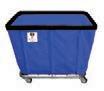













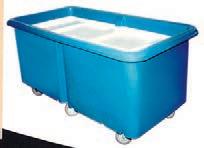
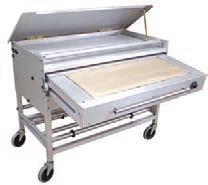





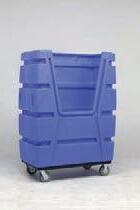
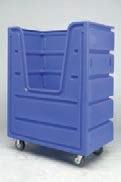


www.AmericanLaundryNews.com AMERICAN LAUNDRY NEWS | APRIL 2014 21 Source Directory A convenient guide to sources of products and services APPAREL FINISHING CARTS, TRUCKS & BASKETS #1 Manufucturing Source for Laundry Transportation! (800) 634-0555 RBWire.com Energenics Corp., Kartwasher 1470 Don St., Naples, FL 34104 800-944-1711 www.energenics.com Pellerin Milnor Corp. P.O. Box 400, Kenner, LA 70063 504-467-9591, Fax: 504-468-3094 www.milnor.com DRYERS – 100 POUNDS OR MORE SPRING LIFT PLATFORM TRUCK • Spring lift platform, brings the material up to the worker for efficient and safe operation. • ModelsM2914, M2820 and M2920 are designed to handle smaller linens such as washcloths, towels and pillow cases. l-800-275-2436 RepsAvailable8 AM-8 PM (EST) maxi-movers.com Fax: 631-661-8209 •Email:sales@maxi-movers.com Th C t G Chm #9463 Spring Lift 3" ALN Class. 3/5/13 1:53 P Source Directory listings in American Laundry News are sold on an annual basis at the following rates: All Major Credit Cards Accepted 2014 Listings Regular Boldface All Caps All Caps, Boldface Four Line Listing per Year $820 $1,030 $1,030 $1,090 Display and additional line rates available upon request CART-WASHING SYSTEMS Sani Trux - McClure Industries, Inc. 9051 SE 55th Ave., Portland, OR 97206 800-752-2821 www.mcclureindustries.com, info@mcclureindustries.com M.I.T. POLY-CART 211 CENTRAL PARK WEST, NEW YORK, NY 10024 800-234-7659, FAX: 212-721-9022 WWW.MITPOLYCART.COM CARTS, TRUCKS & BASKETS CARTS, TRUCKS & BASKETS Pellerin Milnor Corp. P.O. Box 400, Kenner, LA 70063 504-467-9591, Fax: 504-468-3094 www.milnor.com DRYERS – 100 POUNDS OR LESS Diversified Plastics, Inc. 1309 Highway 917 West, Latta, SC 29565 800-768-7636, www.dpirotocarts.com E-mail: sales@dpirotocarts.com, Fax: 843-752-7798 Sani Wash - McClure Industries, Inc. 9051 SE 55th Ave., Portland, OR 97206 800-752-2821 www.mcclureindustries.com, info@mcclureindustries.com www.nortonsupply.com • 800.869.7664 • sales@nortonsupply.com Heavy Duty Rhino Wrapping Machine • Rhino Console Wrapper for finished laundry. • Stainless steel construction. • Solid state controlled electric cut-off rod. In-stock for immediate delivery. FREE Roll of Laundry Wrap with Rhino Wrapper Purchase CONTACT US TO BOOK YOUR AD TODAY! CLASSIFIEDS@AMERICANTRADEMAGAZINES COM Latest carts—brilliantly engineered for lighter tare weights—so consistent you can skip the weigh-in, ensure accurate billing. Staffers welcome the easy rolling, too! When You Care About Tare...Weights Call 800.829.4535 • MODLaundry.com • FREE QUOTE 72P 72S Meese Orbitron Dunne Co.





















22 APRIL 2014 | AMERICAN LAUNDRY NEWS www.AmericanLaundryNews.com Source Directory listings in American Laundry News are sold on an annual basis at the following rates: All Major Credit Cards Accepted 2014 Listings Regular Boldface All Caps All Caps, Boldface Four Line Listing per Year $820 $1,030 $1,030 $1,090 Display and additional line rates available upon request Gardner Machinery Corporation P. O. Box 33818, Charlotte, NC 28233 Ph.: (704)372-3890; Fax: (704)342-0758 www.gardnermachinery.com MATERIAL HANDLING / CONVEYORS FINANCIAL SERVICES Source Directory A convenient guide to sources of products and services FLATWORK IRONERS FLATWORK IRONERS HEAT SEALING SUPPLIES/TAPE Setting the Standard in Lint Filters for 25 Years • Hotel • OPL • Coin Op • Dry Cleaners • Industrial • Commercial • Cruise Industry Dry or Wet Style Filters to Work with “ALL” Dryer Sizes or Multiple Situations, Fiberglass or Stainless and Custom for Unique Situations! All manufacturing done on premise 800-826-1245 www.cleancyclesystems.com • ccsystems@tqind.com PARTS Knowhow In Action Your Tingue rep is a fully trained master of finishing equipment operation, maintenance and installation. Call for: • Pads, covers, belts, waxes, tapes and more • Carts, trucks, baskets and bags • Parts, rebuilds and repairs 800.829.3864 www.Tingue.com TalleyMachinery.com MODLaundry.com TBR-Associates.com To website FLATWORK SUPPORT www.olekbelts.com 1-800-869-2683 Free www.olekbelts.com We’re your flatwork finishing and conveying O.E.M. Belt Match H.Q. Get the real thing for a Lot less $$$. O.E.M. Needlefelt Ironer Pads too! Better Belts, Better Prices, Better Service Visit our Website or Call 1-800-869-2683 For free, no obligation, price quotations and for your Free copy of our Product Catalog with over 40 samples. Ironer pads, covers, aprons, guide tapes, carts, slings, cleaners, waxes & more… LINT COLLECTORS & FILTERS ★ Our In-Line Lint Filter mounts inside, saves space! ★ Fiberglass Wet Filters - 6,000 to 40,000 cfm ★ Fiberglass or Stainless Steel Dry Filters ENERGENICS CORPORATION Talk with our Design and Engineering Staff about your needs. Hundreds Sold Annually. 800-944-1711 www.energenics.com C & W EQUIPMENT (800) 443-3573 FLATWORK IRONER SPECIALISTS REMANUFACTURED IRONERS: Super Sylon Sylon Hypro’s Super Pro Jensen SS700 SS800 Ultima Lavatec UPGRADE KITS: Chain Drive Conversion Vacuum Systems Herringbone Conversion Canopies Inverters Side Covers Roll Springs Jensen Drives SUPPLIES: Aprons Pads Covers Belts Waxes Cleaners PARTS/REPAIRS: All Brands New/Refurbished/Hard to Find COMMITTED TO EXCELLENCE (480) 205-1293 (602) 763-7416 www.azsle.com Whether your ironer needs pads and covers, wax cloths or cleaning supplies, or needs to be completely rebuilt, there is no job too big or too small for Southwest Laundry Equipment • Financing of all OPL, industrial and related equipment • Competitive rates • Flexible terms • No prepayment penalty 1-800-851-1001 ext. 209 | laundry@firestonefinancial.com www.firestonefinancial.com EQUIPMENT FINANCING COMMERCIAL & INDUSTRIAL & INDUSTRIAL
WASHERS – CONTINUOUS BATCH


















Pellerin Milnor Corp.
P.O. Box 400, Kenner, LA 70063 504-467-9591, Fax: 504-468-3094 www.milnor.com
WASHER-EXTRACTOR
Pellerin Milnor Corp.
POUNDS OR LESS
P.O. Box 400, Kenner, LA 70063 504-467-9591, Fax: 504-468-3094 www.milnor.com
WASHER-EXTRACTOR



Pellerin Milnor Corp.


















POUNDS OR MORE
P.O. Box 400, Kenner, LA 70063 504-467-9591, Fax: 504-468-3094 www.milnor.com
www.AmericanLaundryNews.com AMERICAN LAUNDRY NEWS | APRIL 2014 23
– 100
– 100
Milnor Corp. P.O. Box 400, Kenner, LA 70063
PRESSES – EXTRACTION Source Directory A convenient guide to sources of products and services PLANT DESIGN & INSTALLATION Source Directory listings in American Laundry News are sold on an annual basis at the following rates: All Major Credit Cards Accepted 2014 Listings Regular Boldface All Caps All Caps, Boldface Four Line Listing per Year $820 $1,030 $1,030 $1,090 Display and additional line rates available upon request Company Web Site Page Company Web Site Page INDEX OF ADVERTISERS www. .com American Dawn www.americandawn.com 5 Association for Linen Management www.almnet.org 17 Davis Packaging www.davispackaging.net 18 Direct Machinery Sales Corp. www.directmachinery.com 20 Ellis Corporation www.elliscorp.com 11 G.S. Manufacturing www.gsm-cart.com 18 Girbau Industrial www.girbauindustrial.com 13 IES www.iesclean.com 19 IPSO www.ipso.com 7 Kannegiesser USA www.kannegiesser.com 9 J.P. Equipment www.ineedjpequipment.com 20 LaundryCareers.com www.laundrycareers.com 20 Lavatec Inc. www.lavatec.com 15 Lavatec Laundry Technology www.lavatec-laundry.com 24 LG www.lgcommerciallaundry.com 3 Phoenix Scale Co. www.laundrytrak.com 11 Royal Basket Trucks www.royal-basket.com 10 Stanco Industries www.stancoind.com 20 The Griffin Group, Inc. www.thegriffingroup.cc 20 THE WIRE The latest news, straight to your inbox, 2X a week A & B WIPER SUPPLY You’re probably not getting enough for your linen discards! We pay TOP DOLLAR for your discarded sheets, towels, thermal & flannel blankets. Call us for an immediate quote: 800-333-RAGS (7247) We’re Hiring! Textile Buying & Sales Executive Positions Available E-mail Résumés to resumes@bestrags.com RAGS WANTED FOR CASH OR TRADE
Pellerin
504-467-9591, Fax: 504-468-3094 www.milnor.com