Linen loss: gone before their time
ALM, ARTA launch campaign to reduce ‘Red Bag’ waste

Linen loss: gone before their time
ALM, ARTA launch campaign to reduce ‘Red Bag’ waste
According to the associations, “healthcare laundry operators estimate that over the course of a year, as much as 25% of their linen that is saturated with blood or bodily waste is disposed of as Red Bag waste.”
Occupational Safety and Health Administration (OSHA) regulations, however, require such materials be placed in impermeable, soiled-linen bags.
“Essentially, [clients] are paying twice; paying to replace the linen, and paying 18 to 33 cents per pound to dispose of it as Red Bag waste,” say the associations.
ALM and ARTA have requested that OSHA review the issue of “Red Bag” waste, and declare a Statement of Intent, which would clarify and affirm proper handling of saturated linen. ALM Executive Director Linda Fairbanks has been working with the Kentucky OSHA to secure the statement, as a request for review has been sent to the federal agency.
The associations expect a response later this year.
By JeAn TeLLeRNEW ORLEANS — Reducing losses of scrubs and patient linens is of major concern for many medical facilities, according to an educational session, Gone Before Their Time: Reducing the Loss of Patient Linen and Scrubs, presented by the Association for Linen Management (ALM) on the Clean Show’s opening day.
Moderator Janice Larson, with Encompass Group, and panelists Mary Ann Curtis, Innovative Products Achievement (IPA); Eva Granado, Texas Health Harris Methodist Hospital in Fort Worth, Texas; and Liz Remillong, Crothall
By CARLO CALMARICHMOND, Ky. — “Do no harm” remains the cardinal rule for healthcare professionals, and the “Safe Patient Handling” programs instilled in many facilities today aids them in ensuring that patients receive proper care when being moved or transferred.
“What it comes down to is providing patient handling, with the use of equipment with the effort to [reduce] injuries associated to manual moving, lifting [and] transferring of patients,” says Steve Hoffman, director of education and training for patient lift systems manufacturer Medcare Lifts.
Hoffman partnered with the Association for Linen Management (ALM) to host the webinar Maintenance and Utilization Practices for Patient Safety Devices

to discuss best practices for healthcare facilities and the use of patient safety devices, particularly slings and lifts.
Slings and lift systems are important to the health of patients, and to the health of care providers as well, according to Hoffman.
“Healthcare professionals, those that provide direct care to patients, are in the top two of all professions out there for rates of back injuries, and specifically those injuries that lead to days away from work,” says Hoffman.

He further outlined that “the majority of all nursing injuries are related to patient transfers” and that up to 52% of all nurses have complained of chronic back pain, with up to 12% of them leaving the profession altogether.
“The cumulative result in all this is that we are seeing a percentage
of nurses completely leaving the profession.”

To combat this, many hospitals and healthcare facilities utilize slings and lift systems.
“We’re getting rid of the old ‘heave-ho’ approach,” says Hoffman. “With slings and lifts, we … move away from that approach to a more modern, engineering, controlled approach to getting rid of these injuries … both for patients and staff.”
Lift systems and slings not only mitigate the tension that comes with transferring or moving patients, it lessens the number of staff members needed altogether.
“In the manual approach, when we’re dealing with heavy patients, oftentimes it will take [up to] six staff members to move that patient,” says Hoffman. “With the use of a lift and a sling, oftentimes
Late News The newspaper of Record for Laundry & Linen Management www.americanlaundrynews.com Volume 39, number 9
(Image licensed by Ingram Publishing)
such as stockpiles, overstocking or hoarding.
we can see that reduced to one or two staff.”
There are many types of slings available in the market today, with most reusable ones made from a polyester or polyester-nylon blend, he explains.
Slings like the seated sling, or the full body sling, are considered “the most universal,” as they assist in lifting a patient out of their bed into a chair, “which is one of the most common types of transfers,” according to Hoffman.
But regardless of their specific use, laundry professionals also play an important role in their continued usefulness.
“The laundry folks … become a very key piece to this puzzle in making sure that slings are properly laundered, taken care of,

Ramadan Scheduling
CHICAGO — Many laundry operators and administrators have a backup plan in place in the event of a temporary shutdown, according to results of August’s American Laundry News Your Views survey.
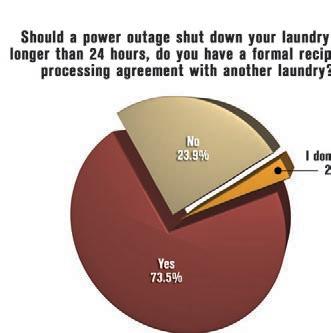
When asked if they have a “formal reciprocal processing agreement with another laundry” in the event of a power outage, almost threequarters of respondents (73.5%) say that they do, while 23.9% say they do not. A small share was unsure if they had such an agreement (2.7%).
“Major utility outages are covered with reciprocal agreements and/ or informal agreements with other laundries,” says one operator. “Equipment redundancy is critical to compensate for major equipment downtime.”
Approximately 38% of respondents say their facility utilizes a backup power source to keep their laundry operational in the event of a temporary power outage. The remaining 62.8% say their facility does not.
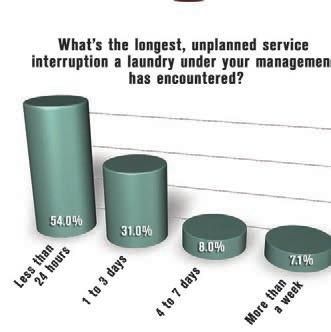
Every laundry operator surveyed has experienced an unplanned service interruption, with more than half (54.0%) experiencing a delay of less than 24 hours, 31.0% of one to three days, 8.0% of four to seven days, and 7.1% of more than a week.
The primary reason, according to roughly half of respondents (46.9%), was an area power outage. Another 22.1% say it was due to a natural disaster. Other causes were major equipment shutting down (17.7%) or other problems such as fire, construction and even water contamination (13.3%).
Roughly 68% of operators have had their facility assist another by temporarily supply textile services.
While the Your Views survey presents a snapshot of readers’ viewpoints at a particular moment, it should not be considered scientific.

Subscribers to American Laundry News e-mails are invited to take the survey anonymously online each month. All managers and administrators of institutional/OPL, cooperative, commercial and industrial laundries are encouraged to participate, as a greater number of responses will help to better define operator opinions and industry trends. ALN
BURBANK, Calif. — ARAMARK has unveiled plans to construct a state-of-the-art uniform servicing plant in Pompano Beach, Fla., that is expected to bring 80 to 100 jobs upon opening this fall.
“We are excited about our expansion in South Florida and the investment we are making in a new industry-leading facility, and in the communities we are serving,” says Gene West, group manager for ARAMARK Uniform Services operations in Florida.
The new 79,000-square-foot facility will be the third addition to ARAMARK Uniform’s network of facilities in South Florida, and is situated between Palm Beach and Miami Dade counties, with easy access to transportation infrastructure.
ARAMARK says that the new facility will employ state-of-the-art energy and water conservation technologies, enabling it to become environmentally friendly, while expanding service. Better space configuration in the new location will also assist in process efficiency, the company adds. ALN
The July 2013 American Laundry News article titled Tunnels ease workflow, boost efficiency for Detroit co-op described a laundry installation at Metropolitan Detroit Area Hospital Services (MDAHS).
The laundry equipment was sold to MDAHS in 2006 and installed in its Detroit facility in 2007 under the auspices of Lavatec Inc.
Today, a different company, Lavatec Laundry Technology Inc., has an ongoing business relationship with MDAHS that includes the sale of spare parts and the provision of troubleshooting and technical support services, among other services, to the Detroit facility.
Lavatec Inc. and Lavatec Laundry Technology Inc. are separate, unrelated companies.
American Laundry News regrets the error and apologizes for any confusion it may have caused. ALN
Publisher
Charles Thompson
Phone: 312-361-1680
E-Mail: cthompson@ americantrademagazines.com

Bruce Beggs
Phone: 312-361-1683
E-Mail: bbeggs@ americantrademagazines.com
Nathan Frerichs
Phone: 312-361-1681
E-Mail: nfrerichs@ americantrademagazines.com
Editorial Assistant Carlo Calma
National Sales Director

Donald Feinstein
Phone: 312-361-1682
E-Mail: dfeinstein@ americantrademagazines.com
Office Information
Main Phone: 312-361-1700 Fax: 312-361-1685
Subscriptions
630-739-0600 www.americanlaundrynews.com
American Laundry News (ISSN 1091-9201) is published monthly. Subscription prices, payment in advance: U.S. & possessions, 1 year $39.00; 2 years $73.00. Foreign, 1 year $89.00; 2 years $166.00. Single copies: U.S. & possessions $7.00; Foreign $14.00.
Published by American Trade Magazines LLC, 566 West Lake Street, Suite 420, Chicago, IL 60661. Periodicals postage paid at Chicago, IL, and at additional mailing offices.
POSTMASTER, Send changes of address and form 3579 to American Laundry News, Subscription Dept., 440 Quadrangle Drive, Suite E, Bolingbrook, IL 60440. Volume 39, number 9. Editorial, executive and advertising offices are at 566 West Lake Street, Suite 420, Chicago, IL 60661. Charles Thompson, President and Publisher. American Laundry News is distributed selectively to qualified laundry and linen management and distributors in the United States. No material appearing in American Laundry News may be reprinted without written permission. The publisher reserves the right to reject any advertising for any reason.
© Copyright AMERICAN TRADE MAGAZINES LLC, 2013. Printed in U.S.A. Association
More than 100 PulseFlow® Batch Washers are operating around the world and the effects are staggering. Together, Milnor PBWTM tunnel customers are saving millions of gallons of fresh water... over 500 million gallons this year alone.
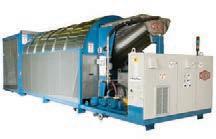
But that is just the tip of the iceberg-sized savings. Thanks to Milnor’s revolutionary PulseFlow® Technology, True Top transfer and RecircONE® pump arrangements, their laundry is getting cleaner than ever before.
Learn more about this radical approach to tunnel washing and how you can save. Contact an authorized Milnor distributor or call 504-712-7656.

It’s our pleasure to bring you the annual American Laundry News Distributors Directory issue, full of listings for laundry/linen distributors and suppliers with offices and warehouses around the country.
You’ll want to keep this issue close for the foreseeable future.
These companies are listed alphabetically by city and state from Alabama to Wisconsin, plus Puerto Rico. There are nearly 370 listings in this year’s Directory.
The average distributor may be best known for providing parts and service to its customers,
 From The Director’s Chair BRUCE BEggS
but distributor services can range from laundry planning and design to on-site training to equipment selection and installation.
When was the last time you took a close look at your distributor? It may be offering some resources that you’re not aware of.
Most managers are generally satisfied with the distributor or distributors serving them, based on a recent survey we conducted.
But it hasn’t stopped many of them (more than half, according to our unscientific survey) from shopping for a new distributor serving their region during the past year.
When it comes time for you to shop for a new distributor, our Directory can point you in the right direction. ALN
COLUMBIA, S.C. — Standard Textile has announced plans to expand its existing manufacturing operations in Union County, S.C., investing more than $2.5 million in the project, the company says.
“We are excited about the opportunity to expand our existing operations in Union County,” says Russ Ogle, plant manager for Standard Textile. “South Carolina has provided us with a skilled workforce and an excellent environment in which to do business. We appreciate all the support we’ve received from state and local officials.”
The investment is to “expand, consolidate and incorporate new innovations in terry towel finishing” in the company’s terry towel manufacturing operations, the company says.
The expansion is expected to be finished by the end of this month.
“It’s exciting to see another one of our existing businesses expand,” says South Carolina Gov. Nikki
Haley. “We celebrate Standard Textile’s decision to invest $2.5 million and create 15 new jobs in Union. Today’s announcement is also another win for one of our state’s rural areas.”
South Carolina has recruited more than $9 billion in capital investment, and more than 23,000 jobs in the manufacturing sector since January 2011, and during that same time period, more than $1.28 billion and more than 8,700 jobs have been created in rural counties, according to the state’s Department of Commerce.
“Manufacturers continue to locate and grow operations in all parts of [South Carolina],” says Secretary of Commerce Bobby Hitt. “We appreciate Standard Textile’s continued commitment to South Carolina. Every one of these new jobs will have an impact in Union County.”
“I am delighted with Standard Textile’s announcement to increase
its investment in Union County and to provide more job opportunities for our citizens,” says Union County Council Chairman and Supervisor Thomas L. Sinclair. “Standard Textile and Union County both have a long, rich history and legacy in the textile industry. The expansion at their Union facility is evidence of the continuing and increasing confidence that industry has in our community and our workforce.”
“It is very exciting to see a textile company expand after decades of these facilities downsizing their operations,” adds Joe F. Nichols, City of Union utilities director and chairman of the Union County Development Board. “I want to especially thank the City of Union for working closely with Standard Textile’s local management as well as their corporate management to work through critical wastewater issues and for accommodating the company’s expansion criteria.” ALN
It is always a challenge for our mainstream American culture to show proper sensitivity to the needs of other ethnic groups. America has always been the great melting pot, absorbing people from many lands. They come with the expectation of a better life, religious freedom, and the ability to choose their own professions and make a better life for their children. It is expected that they will learn English and what it means culturally to be an American.
President Barack Obama recently held a state dinner to honor those who were observing Ramadan. This month-long event is significant in the life of practicing members of the Muslim religion. Part of the observance is eating only one meal a day, and only after sunset.
To pay honor to their belief, we altered our afternoon-shift meal schedule for those who were observing Ramadan to allow them to take their meal period after the sun had set.
Ramadan ended on Aug. 7 this year with the sunset feast known as Eid al Fitr. This celebration is very special to practicing Muslims, and many of our employees have missed work to participate in the celebration in the past.
I like to compare Aug. 7 to Christmas Eve and Aug. 8 to Christmas Day. Which date is most important to be off work is like the difference between families who traditionally open their presents either on Christmas Eve or Christmas Day.
In the past, we have tried to handle this time under our normal scheduling policy that limits the number of people who can be off on any given workday; our limit is three. This year, there were 14 employees—or 22% of my workforce—who observed this holiday and wanted to take the day off.
Our laundry has never operated on Christmas Day, and we make a special effort to get all our employees home early on Christmas Eve. Our employees appreciate our efforts and are able to plan for special time during the holiday with their families.
In our attempt to be more culturally sensitive this year, we closed early on Aug 7 and remained closed on Aug. 8. But to accomplish this, much like Christmas, we worked three 10-hour days that week plus a shift that Saturday. (Our laundry normally doesn’t operate on Saturday, but we will do it if needed around Thanksgiving, Christmas and New Year’s so our employees can actually have the day of the holiday off.)
What surprised me about this year is the number of employees who complained about having their schedule altered to honor a Muslim holiday. I heard some say that foreign workers should adapt to the “American way of life.” It was said, “When they come to America, they should expect to leave their old traditions in their home country.”
I marveled at their lack of understanding of our religious freedom and their lack of historical perspective as to what drove people to come here in the first place.
I had to spend time explaining why we were doing what we were doing and why it was good for the laundry. I had to point out that, in the past, we have often had to work the Saturday after Eid al Fitr because of poor production during the week due to excessive absences.
I suspect that a part of their reaction was due to the negative stories surrounding radical Muslims and their desire to do harm to our country. The Boston Marathon bombings are still fresh on everyone’s mind.
•
•
•
Despite the vocal pushback, I believe that honoring my Muslim employees’ religious holiday will pay benefits this year and into the future.
Eric Frederick is director of laundry services for Carilion Laundry Service, Roanoke, Va., and a past president and manager of the year of the Association for Linen Management. You can reach him by e-mail at efrederick@carilion.com.

I MARvELED AT ThEIR LACk of UNDERSTANDINg of oUR RELIgIoUS fREEDoM

According to Larson, about 5% of a facility’s employees are responsible for about 60% of the losses of garments and linens, visitors about 30%, and patients about 12%.
Theft accounts for about 40% of the loss, with hoarding at about 23%, followed by misuse at 23%, and trashed items at 15%.
The sources of major linen loss in most medical facilities, according to a Philips & Associates report, as well as the panelists, are hoarding and theft by a variety of entities. The panelists also distinguished between inadvertent theft and the deliberate taking of garments and linens.
“Several years ago, we published a campaign about stopping linen loss,” Larson says. The campaign identified ways to understand how much was lost, where it was coming from in a facility, and which items were most likely to go missing. The campaign looked at soil ratio analysis, determining linen loss through observation, replacement factor analysis and physical inventory.
Encompass Group suggested a number of methods to control the loss, including education, policies to help change behavior, amnesty programs, trash audits, automa-
tion, bar-coding systems, and scrub kiosks.
Curtis says IPA has found that there are two areas of true linen loss: trashing or premature tossing of the item, or inadvertent theft of linen by emergency personnel or through patient transfers, open access to scrub carts and shelves, and unlocked supply rooms.
Secondary is the artificial loss: the item is somewhere but is unavailable for use, such as overstocking of carts and cabinets, hoarding, or staff wears the scrubs home and don’t return the items.
Eighty percent of the loss comes when an item is not returned, Remillong says. Twenty percent of the lost linen can no longer be put into use, mainly through sticky residue left by tape or tags. She emphasizes that each facility is different.
In Granado’s experience, most loss comes through non-emergency transfers or when a newborn goes home with a number of garments and blankets from the hospital. These items are then “lost” to the hospital; while it may be great for a new mom, it’s not great for a facility’s bottom line.
The panel agreed that scrubs were the most often missed item, although Granado says her hospital group is experiencing a higher loss of stretcher sheets, mainly through sticky residue that the laundry process cannot erase. Her hospital has
gone to automation to help with the loss of scrubs and jackets; she says jackets are the No. 2 item to go missing most frequently, followed by clothing for newborns, and pillows.
Remillong says the most frequently replaced items are washcloths while the most expensive are flat sheets. Curtis says hospital staffers are flustered when they are unable to find the correct scrubs, which may be why many of them take such items home. She suggests educating staff on the dangers of washing scrubs at home, since home washing has been proven to be considerably less effective in eliminating bloodborne pathogens than industrial or commercial laundering.
Being able to measure the loss is paramount, panel members say, and benchmarking is key. Remillong says there are several options for measuring loss, including a soil-to-clean ratio, a count by specific item, and soil weight per item. Her company also uses bar coding and RFID.
Granado uses all of the methods except for bar coding. Her facility has had good luck with a linen management software system as well, though she says it goes back to the people factor. “We have to make sure our staff puts in accurate numbers. And, we conduct annual inventories.”
A new emergency department at
Granado’s hospital is going entirely to automation, and she thinks they will see reduced scrubs-and-linen loss.
Doing a physical count is helpful, Curtis says, and good data is essential and empowering.
All five experts says that benchmarking is extremely important, particularly when it comes to showing staff members where other facilities are experiencing their highest rates of loss. Curtis suggests starting with a quarterly physical inventory, and looking at usage by activity and by department.
“Benchmarking is critical,” Remillong says. “The first thing to do is to lessen the cost of linen loss. One way to do that is by getting more turns per piece than what you are currently getting.”
Granado says reports and benchmarking are essential to back up the data of linen loss, in order to prove to the staff what is going on, as well as helping to get the backing and cooperation of staff and upper management.
Education and awareness, automation, and data collection are among the best ways of stopping the loss of patient linens and scrubs, according to the panelists.
They all agree that education is top of the list. “If your facility does not have an active program in place,” Remillong says, “the staff is not aware of what’s going on. Just
talking about it helps the loss numbers go down. Most people don’t know the cost involved. Talking about it, putting a dollar amount on it, makes a difference.”
“A strong linen committee helps with communication, awareness and education,” Curtis says. She suggests going to departmental billing, rather than the cost of replacement linen and garments coming from a central office, and she says an automation program helps lessen loss considerably.
Larson says that, with all the new regulations out there concerning bloodborne pathogens, communicating the safety factor will likely resonate more with hospital staff members used to taking their scrubs home.
Granado offered a somewhat humorous means of lowering the loss of scrubs – many of her hospital’s personnel would wear home the garments, so the staff implemented a program in which security issued tickets or citations to those wearing the hospital’s scrubs as they left the building. “Bring back the scrubs with the ticket, and they don’t have to pay a fine,” she says. An amnesty program also is quite successful, she says.
Overall, the panelists agree that automation is likely to be the future solution to linen and scrub loss, and that while the initial cost of equipment can be a deterrent, the eventual cost savings, plus the goodwill of staff members, can make the program worthwhile. ALN
to launder them, he says.
Blurring the laundering process is the fact that there are no industry “standards for cleanliness” when it comes to slings.
continued from page 1
inspected and [that] ultimately, a proper supply is made available to the care staff,” says Hoffman.
He stressed that laundry professionals have a first-hand account of inspecting the integrity of the slings, especially during the initial stages of laundering.
“[Laundry professionals] are coming across and getting [their] hands on each and every one of these slings on a regular basis, so that provides … an opportunity for somebody to inspect [the slings],” says Hoffman. “The laundry process itself can affect the integrity of [slings]. Harsh chemicals [and] high drying temperatures are implemented, [which] can greatly reduce the lifespan of these slings.”
So what exactly are the signs of wear and tear in slings? Look for rips, tears and even discoloration, Hoffman advises.
“Just about every manufacturer’s sling comes in a particular color. One of the reasons for these slings to be in color … is so that you can identify a sling that has been bleached, and you can identify the wear and tear.”
In terms of standard laundering procedures for reusable slings, each manufacturer has its own set of instructions and guidelines. Refer to those guidelines when it comes time
“We know that our devices are Class I, non-critical items,” says Hoffman. “Class I devices are not intended for use in supporting or sustaining life, or to be substantial in human health. … They’re non-invasive devices. They’re the lowest level of medical devices and so therefore there aren’t any specific guidelines for laundering these slings.”
Generally, it isn’t necessary to sterilize slings. A machine wash using mild detergents, with a maximum water temperature of 165 F, is all that is needed to launder his company’s slings, for example. Spot cleaning between washing is also recommended, he adds.
“This isn’t to say that someday in the near future, we won’t see a standard or some more specific guidelines on these devices, but for now, this is what’s going on with patient slings,” says Hoffman.
He cautions against using bleach or other harsh chemicals when washing slings. “Bleach is one of those chemicals that laundry folks feel very confident when they use it. [But] harsh chemicals are not what we recommend during a laundering cycle.”
Another factor that plays an important role in sling laundering is the drying time, which can vary by manufacturer, according to Hoffman. “Medcare does allow drying of their slings up to 175 F, and I’ve seen more and more … manufacturers [allow] tumble dry.”
But, there are also slings that are specifically made to hang-dry only, which Hoffman says can affect replenishment of the sling
supply back to the nursing staff.
“Some of these factors not only affect how laundry departments do their job, but can also impact the safe patient program as a whole, and again tying back to the time and the process of returning slings back to staff, and how that affects the availability and quantities available to staff,” he says.
Hoffman recommends that healthcare facilities involve the laundry when making sling purchases.

“Laundry plays a critical role in handling, arguably, the most critical component of this whole safe patient-handling process,” he says. “I would encourage [laundry professionals] to speak up and get involved, because you’re the ones that are going to have to deal with the laundering process.”
He stresses the importance of healthcare facilities researching laundering instructions and procedures of slings to know just how it will impact its overall Safe Patient Handling program.
“This whole area is often overlooked, and so knowing what the [laundering] process is, how long it takes and using that information to come up with a purchasing ratio or a par level that ultimately provides adequate quantities of slings.”
“Some of these facilities are spending large amounts of capital dollars on Safe Patient Handling equipment, and so overlooking an area like slings and [the] laundering process can really impact negatively on the ROI that we typically see when this equipment is purchased and properly used.”





















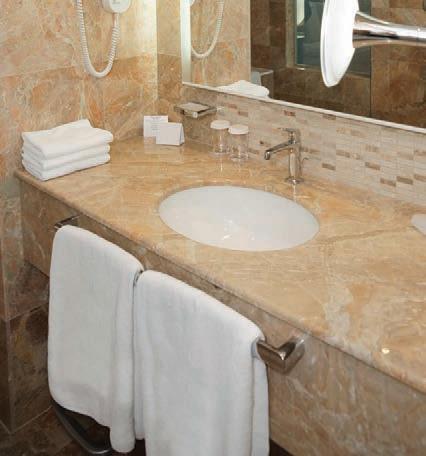
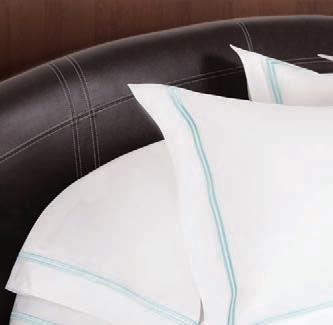
aDi-american Dawn manufactures, imports, and distributes textiles for hospitality, food and beverage, healthcare, industrial, microfiber, home fashion and salon markets worldwide. aDi offers textile collections in bath, pool, kitchen towels, bed linens, robes and table linens; as well as top of the bed accessories from duvet covers, bed scarves, matelasses and decorative pillows.

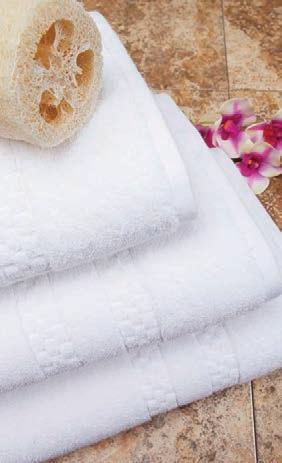




Villa Di Borghese™ hospitality products are fashioned from the finest materials; meticulously designed to capture an exquisite sense of Italian beauty, fashion and style.
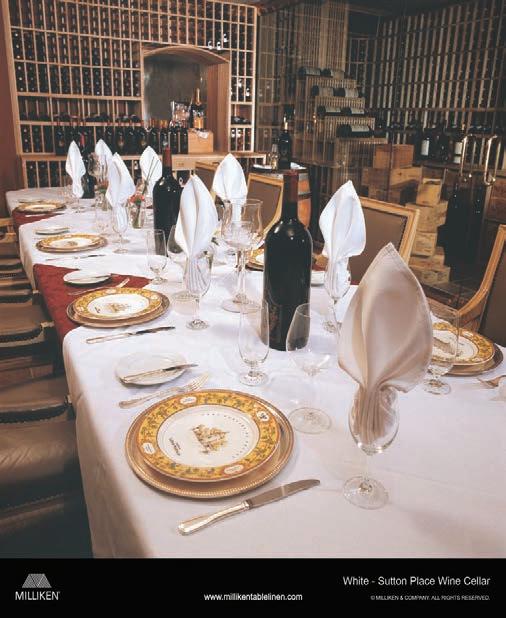
Made In USA Signature Plus™ fabric outperforms all challengers in elegance, soft touch, color consistency and soil/stain release. American Dawn and Milliken... setting the standard of table linen excellence.







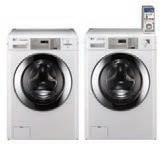
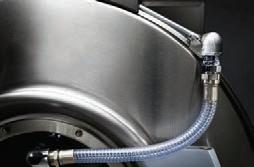
UniMac introduces the new OPTispray™ Rinsing Technology and ECO Cycles to the UniLinc™ control system, features that can reduce water use and improve time and energy savings on the company’s UW45 and UW65 machines.
OPTispray allows OPL operators to minimize water use with highly effective rinsing, the company says. The exclusive technology delivers optimized rinsing through unique bath and spray rinse intelligence, which can provide a 12% faster cycle rinse time and increased throughput, according to UniMac.
OPTispray’s spray nozzle pulls wash chemicals and dirt through the load, effectively removing them. Alternatively, a bath rinse simply dilutes chemicals and dirt, leaving residue behind on the linens, the company claims.
When operators combine OPTispray with one
of the nine new ECO Cycle wash programs, they consume as much as 39% less water than competing brands, while still maintaining optimal wash and rinse quality, according to UniMac. The cycle options are part of the 41 total UniLinc cycles available.
UniLinc provides data pinpointing specific areas where operators can increase efficiency and reduce operating costs associated with labor, linen replacement, utilities and maintenance. Cycles can be customized to fit any market need.



OPTispray and ECO
Cycles are available on the UW45 and UW65 hardmount washer-extractors with UniLinc, engineered to be long-lasting, durable products, UniMac says. unimac.com 800-587-5458
Rennco, a brand of Pro Mach, announces its newest bagging system for the uniform and drycleaning industries.

The Garment Guard™ unit is a wrapping/bagging machine that automatically packs single or multiple garments into a poly bag. The system can be used as a standalone unit or integrates with upstream and downstream conveyance systems, the company says.
The U.S.-made bagger utilizes stock tubing material, and is a fully automatic system that will sense the incoming garment size to make the appropriate size bag around the
laundered/ironed items.
Once the bag is produced, the system releases the item to the operator or to an out-feed conveyance system.
rennco.com 800-409-5225
The MSL Modular Solid Laundry dispensing system from Sunburst Chemicals is an expandable dispenser that offers as many as six adaptable modules.
Flexco recently introduced the Clipper® Laundry Patch Fastener System, which the company says makes splicing quicker and more efficient than conventional installation methods.
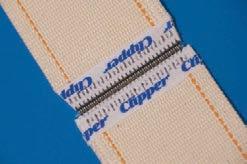
The fasteners integrate Clipper Wire Hooks with a heat- and pressure-sensitive polyester patch. When applied using the custom lacer with heated jaws, the fasteners are installed simultaneously with the application of the patch material, the company says.
The adhesive melts and permeates the laundry tapes to bind the fibers. Once cooled, a strong, long-lasting splice is achieved.
“The installation is two and a half times faster, without even taking into account the dipping and drying process used in the conventional methods,” says Beth
Miller, director of marketing. “Once installed, the hooks are covered by the patch material, which prevents linens from catching on the splice in the laundry feeding and folding equipment.”
Available in either galvanized or 316L stainless steel, the fasteners are pre-cut to belt widths with leading and trailing ends. Corrugated Perlon corrosion-free hinge pins are included with each box of fasteners, providing lubrication to the splice joint while discouraging pin migration.
Patches come in 35 mm widths and can be used on PVC, PU, Cotton and cotton mix tape, and filter belts with thicknesses ranging from 1 mm to 3 mm.
flexco.com 630-971-0150


The system can be readily customized into any combination of pumps and bowls for use with both solid and liquid laundry products.
This also allows for multiple bowls to be used for one product, making the dispenser ideal for larger washers (greater than 50 pounds),
according to Sunburst.
“This is our third generation of Solid Laundry dispensing and the improved cost, functionality and flexibility are a real game changer for us,” says Patrick Laughlin, vice president of sales and marketing.
The MSL dispensing system features a signal input module to isolate and control electrical interference from the washer for enhanced reliability.
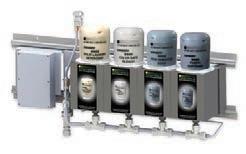
All serviceable parts are visible and simply accessed for easy troubleshooting, Sunburst says. A mounting rail system allows for easy mounting and installation, and brass valve components provide durability and strength.
sunburstchemicals.com 800-899-7627
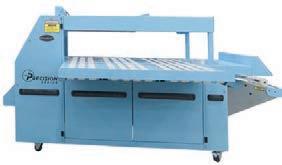
All three models of Braun’s new Precision Series™ Small Piece Folders (Return-to-Feeder, Rear Discharge, and Triple Sort) have the same features and functionality as their predecessor Sigma series but boast an expanded processing capability while retaining a small footprint, the company says.
The Rear Discharge model has been redesigned and will process goods 37% thicker than the former Sigma models, according to Braun, including the “plushest hospitality towels without sacrificing the ability to process thin items like hand towels or baby blankets.”
Auto width detection automatically adjusts fold width depending on the item being fed.
Precision Series small-piece folders use a maximum of 7.5 cfm of air with air boost at the highest setting, constantly on, running 1,000 pieces per hour, Braun says.
In-feed wheels are user-selectable between two and four wheels based on operator preference. Two wheels are ideal for small pieces, Braun says, and four for large pieces as they help to ensure a smooth feed and taut leading edge.
A lint blow-off feature automatically cleans the photo-cell lenses, reducing maintenance.
The equipment also features 24-volt touchscreen controls, according to the company.
gabraun.com 800-432-7286, ext. 217
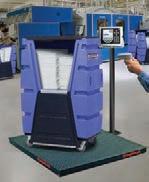
Alliance Scale has introduced a new, comprehensive laundry management system that can be customized for hospitals, hotels and other high-volume institutional requirements.
The Alliance Scale Laundry Weighing & Tracking System was developed for institutions that use outside laundry services that charge by the pound, the company says. Featuring an easy-to-use barcode scanner, programmable weight indicator, and a calibrated floor scale, the system includes software for auditing actual weights of soiled linen, processing bulk laundry, and
comparing activity to the invoices received.
Providing the ability to monitor laundry operations and export Excel® spreadsheets, including cart number, time and date in and out, gross weight, tare weight, and net weight, the system allows carts to be compared, current vs. original when full, to track actual usage.
The weight indicator can be connected to a network and polled for activity analysis, validating charges, and other management tasks.
alliancescale.com 800-343-6802
New spray-rinse technology, eco-friendly cycles added to hardmount washer-extractors
Laundry patch fastening system engineered to speedily splice tapes, prevent linen snags
Modular laundry chemicals dispenser offers increased flexibility
Small-piece folder line boasts expanded processing capability in compact footprint
Weighing,
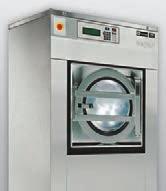
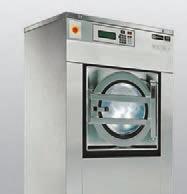
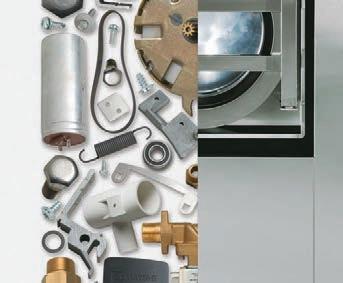
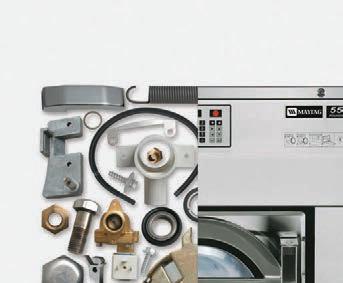
With over 50 years strong on the job, we know there are no small parts when it comes to delivering big dependability. In fact, we use all we’ve learned to build durable, longerlasting machines. Machines you can trust with the tough chore of keeping your operation up and running even as they handle the largest of loads. And no matter who’s operating the equipment, our user-friendly controls always keep it easy, shift after shift. Visit mclaundry.com for digital brochures, or for more information, visit our website at maytagcommerciallaundry.com or call 800-662-3587.







These distributors and suppliers responded to American Laundry News’ invitation to be listed. They provide laundry equipment, textiles, chemicals, parts and service, and/or other products or supplies, and are listed alphabetically by city and state. Contact distributors to determine their coverage area—local, regional or national. No distributor information was received from states that aren’t listed. The Distributors Directory runs through page 23.
Phenix Supply Co. C
1200 2nd Ave. North Birmingham, AL 35203
B 205-251-7272 or 800-626-8428
O phenixsupply.com r Steve Taylor l sales@phenixsupply.com
Wholesale Commercial E P O
Laundry Equipment Co. SE 2950 Hwy. 77 Southside, AL 35907 B 256-312-4761 or 866-544-7228
O alaundryman.com l thelaundryman@verizon.net
Automated Laundry E C P Systems & Supply
5020 Fairbanks St. Anchorage, AK 99503 B 907-561-1752 or 800-478-1752
O autolaundrysystems.com
r Dick Wells l info@autolaundrysystems.com
Pierce Machinery E 505 E. Boston Cir. Chandler, AZ 85225 B 480-732-1485
O piercemachinery.com
r Pat Pierce l plaundmach@aol.com
Sunshine Sales E P O 6064 N. 57th Ave. Glendale, AZ 85301 B 623-937-0125 or 800-789-6412
O sunshinesalesaz.com
r Bob Ropp l bobropp@sunshinesalesaz.net
Arizona Coin & E C P O
Commercial Laundry Equip. 402 S. 50th St. Phoenix, AZ 85034
B 602-258-9274 O az258wash.com l jbailey@laundryandcleaners.com
Astro Distributing E P O & Leasing
4329 E. Magnolia St. Phoenix, AZ 85034 B 602-267-7072 or 800-362-7876 O astrodistributing.com
C-PEC E P 3120 W. Weldon Ave. Phoenix, AZ 85017 B 602-248-0808 or 877-835-5866
O cpec-laundry.com r Dave Svancara l sales@cpec-laundry.com
C-PEC E P 3202 S. Richey Ave. Tucson, AZ 85713 B 520-790-7377 or 877-835-5867 O cpec-laundry.com r Greg Svancara l greg@cpec-laundry.com
Wardlaw Equipment E P Consultants
414 W. Colter St. Phoenix, AZ 85013 B 520-791-2804 or 877-927-3529
O wardlawequipmentconsultants.com r Kevin Wardlaw l wardequip@aol.com
FabriClean Supply C O Arkansas 6600 Allied Way Little Rock, AR 72209 B 501-565-5288 or 800-482-1283 O fabricleansupply.com l belindah@fabricleansupply.com
Justin Laundry Systems E P 5310 Baseline Rd. Little Rock, AR 72209 B 501-551-8600 or 888-403-9600 O justinlaundry.com r Mike Worthy l mworthy@justinlaundry.com
Central Laundry E P O Equipment P.O. Box 324 Ward, AR 72176 B 800-467-3194
O centrallaundryequipment.com
H & E Distributing E
111 S. Halcyon Rd. Arroyo Grande, CA 93420 B 800-689-8687
O foryourrentals.com
r Rick Cocchia l sales@foryourrentals.com
Washex Machinery E P of California 101 E. Santa Anita Ave. Burbank, CA 91502 B 619-233-1487
r Mark Sanders l washexcasales@aol.com
Western State Design E P 17000
ALC Drycleaning E P O & Laundry Systems 937 Lee Ln. Concord, CA 94518 B 510-815-2297 O cleaners-laundry.com r Lyman Caulk l lyman@cleaners-laundry.com
Bestway Laundry E Solutions 1035 E. 3rd St. Corona, CA 92879 B 800-542-6166 O bestwayls.com l sales@bestwayls.com
California Textiles T C P.O. Box 77306 Corona, CA 92877
B 951-272-1200 or 800-992-3102
O catextiles.com r Lenore Law l catex1@att.net
Innovative Laundry E P Systems
1270 W. Winton Ave. Hayward, CA 94545
B 510-259-1494 or 877-777-3727
O innovativelaundry.com r Ron Nomura l ayang@innovativelaundry.com
Western State Design E P O
Nickel Pl.
800-633-7153
Imagine a washer smart enough to weigh the load size and add precisely the correct amount of water. Imagine a laundry chemical controller smart enough to adjust dosing for accurate water ratio each time.






Electrolux Professional washers do all that and more! Introducing AWS & SmartDosing.


Underloading washers is a common problem in many laundries, wasting water, chemicals, and energy. That’s why Electrolux developed AWSTM, a UNIQUE feature that automatically matches water consumption to load size. Combine that with SmartDosingTM which adjusts laundry chemicals to water ratio, and you will see immediate savings and superior wash results – every time, automatically.
Electrolux’s SmartDosingTM controller automatically dispenses the correct amount of chemicals for the weight load.



r Candice Hunt (ext. 265) l candiceh@medicolinen.com
PWS–The Laundry Co. E P
6500 Flotilla St.
Los Angeles, CA 90040
B 323-721-8832 or 888-979-7462 O pwslaundry.com
United Fabricare Supply C O P.O. Box 01796 Los Angeles, CA 90001 B 310-537-2096
O unitedfabricaresupply.com l unitedfabricare@aol.com
Consolidated E T P International Corp. 2500 Hoover Ave., Ste. A National City, CA 91950 B 866-632-2298
O cicus.com r Chris Prunk l cprunk@cicus.com
Golden State E P Laundry Systems
1729 Coolidge Ave., Ste. B National City, CA 91950 B 619-477-8364 or 800-465-8300 O gsls4laundry.com
Pride Laundry Systems E P
8321 De Celis Pl. North Hills, CA 91343
B 818-920-2400 or 800-660-7743 O pridelaundry.com r Mark Goodman l mark@pridelaundry.com
Taylor Houseman E P O
162 Harbor Ct.
Pittsburg, CA 94565
B 925-432-0323 or 800-464-6866
Golden State E P Laundry Systems 1984 E. Gladwick St. Rancho Dominguez, CA 90220 B 310-223-2240 or 800-465-8300 O gsls4laundry.com
Clenacorp C P O 1200 Industrial Rd., #3 San Carlos, CA 94070 B 650-591-1733
O clenacorp.com r Jeff Chaknova l clenacorp@aol.com
John Taylor Systems E P 11689 Sorrento Valley Rd. Ste. A San Diego, CA 92121 B 858-792-9085 or 800-587-7286
r John Taylor l jtslaundrysystems@yahoo.com
Pride Laundry Systems E P 7765 Arjons Dr., #A San Diego, CA 92126 B 858-271-5885
r John Pawoll O pridelaundry.com
PWS–The Laundry Co. E P O 7370 Opportunity Rd., Ste. I San Diego, CA 92111 B 858-560-6969
O pwslaundry.com
Continental Girbau West E P 9830 Alburtis Ave. Santa Fe Springs, CA 90670 B 562-205-0140 or 866-950-2449 O continentalgirbauwest.com r Robert Speirs l robert.speirs@ continentalgirbauwest.com
TheLaundryList.com E P O
4525 Sherman Oaks Ave. Sherman Oaks, CA 91403 B 818-789-8045
O thelaundrylist.com r Brian Cohen l sales@thelaundrylist.com
McGregor Supply Co. C O 8181 State St. South Gate, CA 90280 B 323-566-0658
Sea-lion Americas E P O 1943 N. Campus Ave. Upland, CA 91784 B 909-985-8739 O chinasealion.com
Cowell Sales Co. E P 2220 Downing St. Denver, CO 80205 B 303-861-8826 or 800-861-8826
Katzson Brothers E T C P O 960 Vallejo St. Denver, CO 80204 B 303-893-3535 or 800-332-2417
O katzson.com r Richard H. Right l sales@katzson.com
Laundry Specialists E P 3777 Quentin St. #103 Denver, CO 80239 B 303-928-7900 or 800-622-1060 O laundryspecialists.com l sales@laundryspecialists.com
Martin-Ray E P O
Laundry Systems 2050 W. 9th Ave. Denver, CO 80204 B 720-359-8000 or 800-279-6622 O martinray.com
Clean Designs E P 2800 S. Oak St. Lakewood, CO 80227 B 303-969-8288 or 800-444-4580
O cleandesigns.com
Lavatec Laundry E P Technology 49 Lancaster Dr. Beacon Falls, CT 06403 B 203-632-8777
O lltusa.com r Mark Thrasher l m.thrasher@lavatec-laundry.com
Cromwell Textile T P.O. Box 1099 Cromwell, CT 06416
B 860-828-3946 or 800-996-3268 r Dave Gagnon l sales@cromtex.com
Mac-Gray E P
266 Prestige Park Rd. East Hartford, CT 06108
B 888-622-4729 O macgray.com r Thomas Heffernan l customercare@macgray.com
Connecticut Laundry E P O Equipment Co. P.O. Box 399 Fairfield, CT 06824 B 203-763-9163 r Steven Olmanni l ctlaundryequip@aol.com
Lubbert Supply Co. P O 626 Surf Ave. Stratford, CT 06615 B 855-922-1705 O lubbertsupply.com r Eric Lubbert l sales@lubbertsupply.com
Commercial Laundry E P Equipment 2054 Sprint Blvd. Apopka, FL 32703 B 407-886-1722 or 800-226-9449 O commerciallaundry.net r Jed Broitman l jed@commerciallaundry.net
PSP Industrial E P Laundry Equipment 20533 Biscayne Blvd., Ste. 924 Aventura, FL 33180 B 305-517-1421 or 800-517-1432 O pspindustrial.com r Eric Zamora l info@pspindustrial.com
Interglobal Products T 2 Granville Cir. Daytona Beach, CA 32118 B 386-451-8297 r Neal Patel l ypatel2906@aol.com
Prins Commercial E P O Laundry Equipment 3008 N.E. 19th Dr. Gainesville, FL 32609 B 352-377-6827 or 800-342-0391
Commercial & Coin E P Laundry Equipment Co. 1626 Tradewinds Dr. Gulf Breeze, FL 32563 B 850-932-8348 or 800-366-4168 O clecco.com r Craig Dakauskas sl sales@clecco.com
Allen Wholesale Supply O 2403 Market St. Jacksonville, FL 32206 B 800-874-0548 O steamsuppliers.com l sales@steamsuppliers.com
Automated E P O Laundry Systems 2849 Dawn Rd. Jacksonville, FL 32207 B 800-518-9274 O alstoday.com
Phenix Supply Co. C O 11705 Industry Dr. Jacksonville, FL 32218 B 904-696-7685 or 800-553-9040 O phenixsupply.com l sales@phenixsupply.com
Coin-O-Matic E P O 3950 N.W. 31st Ave. Miami, FL 33142 B 800-642-9525 O coin-o-matic.com
Steiner-Atlantic Corp. E P O 290 N.E. 68th St. Miami, FL 33138 B 305-754-4551 or 800-333-8883 O steineratlantic.com r Ralph Tuccillo
Worldwide Laundry E P 3325 N.W. 97th Ave. Miami, FL 33172 B 305-418-4030 or 877-953-9433 O worldwidelaundry.com r Marco Giancola l sales@worldwidelaundry.com
Dry Cleaners & C O Laundry Supply 1924 N. Rio Grande Ave. Orlando, FL 32804 B 407-648-7083 or 800-486-9274
Streamline Solutions O P.O. Box 560775 Orlando, FL 32856 B 866-244-7700 O streamlinesolutionsusa.com r Ross Sanders l rsanders@streamlinesolutionsusa.com
B&C Technologies E T P O 440 W. 11th St. Panama City, FL 32401 B 850-249-2222 O bandctech.com r Bengt Bruce l sales@bandctech.com
Jensen USA E P O 99 Aberdeen Loop Panama City, FL 32405 B 850-271-5959 O jensen-group.com l norbert.gittard@jensen-group.com
Mesmen Inc. E P 3178 N. Andrews Ave. Pompano Beach, FL 33064 B 954-973-2714 or 800-637-6365 r Jon Menard l mesmen@earthlink.net
AMKO America/ E P JB Industries 8011 Monetary Dr., Ste. B-5 Riviera Beach, FL 33404 B 561-863-9696 O jbilaundryfolder.com r Jurgen Bischoff l jurgenb@bellsouth.net
FRONTEC P
P.O. Box 2257 Sarasota, FL 34230-2257 B 941-726-0808 O frontec.us l sales@frontec.us
PODAB E P O P.O. Box 2257 Sarasota, FL 34230-2257 B 941-726-0808 O podab.us r Peter Fredriksson l sales@podab.us
5122 W. Knox St. Tampa, FL 33634
B 813-886-1477 or 800-876-1477
O coinlaundryeq.com or clwf.net r Dennis Leto l clwf@msn.com
Phenix Supply Co. C O 6401 Badger Dr., #200 Tampa, FL 33610
B 813-623-3553 or 800-282-2924
O phenixsupply.com l sales@phenixsupply.com
Commercial Laundry E P Equipment Co. 1114 53rd Ct. South West Palm Beach, FL 33407 B 561-848-0054 or 800-638-1869
O commerciallaundryequip.com l bhensel@ commerciallaundryequip.com
Piper Enterprises P 12584 72nd Ct. North West Palm Beach, FL 33412
B 561-791-8003
O piperenterprises.net r Ken Piper l piperenterprises@aol.com
Atlantic Coast Textiles T 3132 Oakcliff Industrial St. Atlanta, GA 30340
B 770-458-0772 or 800-533-0228
O atlanticcoasttextiles.com r Warren Bearden III l sales@actextiles.com
Phenix Supply Co. C O 5330 Dividend Dr. Decatur, GA 30035 B 770-981-2800 or 800-688-3032
O phenixsupply.com l sales@phenixsupply.com
Calsco T P O 5493 Westmoreland Plz. Dr., Ste. D-100 Douglasville, GA 30134
B 770-949-9060 or 800-443-6846
O candwcorp.com r Roger Plunkett l sales@calscocorp.com
Southern Automatic E P O Machinery Co.
133 N 85 Pkwy. Fayetteville, GA 30214
B 770-892-0098 or 800-969-7627 O southernautomatic.com l sales@southernautomatic.com
Laundry Pro of Florida E P O 3920 Holden Rd. Lakeland, FL 33811 B 863-701-7714 or 800-232-5736 O laundryproofflorida.com r Ron Jansen or Joel Edris l jedris@laundryproofflorida.com
Hicks Laundry E P Equipment Corp. 4475 28th St. North St. Petersburg, FL 33714 B 727-522-0644 or 800-574-8738 O hickslaundry.com l parts@hickslaundry.com
Commercial Laundries E of West Florida
Cutting
6305 Ashwood Ln. Hoschton, GA 30548
B 678-352-9100
O vaporpress.us r Paul Gerling l paul@cslgroup.us
Southeastern Laundry E P Equipment
1105 Shana Ct. Marietta, GA 30066
B 770-928-0080 or 800-522-9274
O selaundry.com r Joe Cole l joe@selaundry.com
Tingue, Brown & Co. T O 309 Dividend Dr. Peachtree City, GA 30269
B 770-486-0371 or 800-829-3864
O tingue.com r Ty Acton l tacton@tingue.com

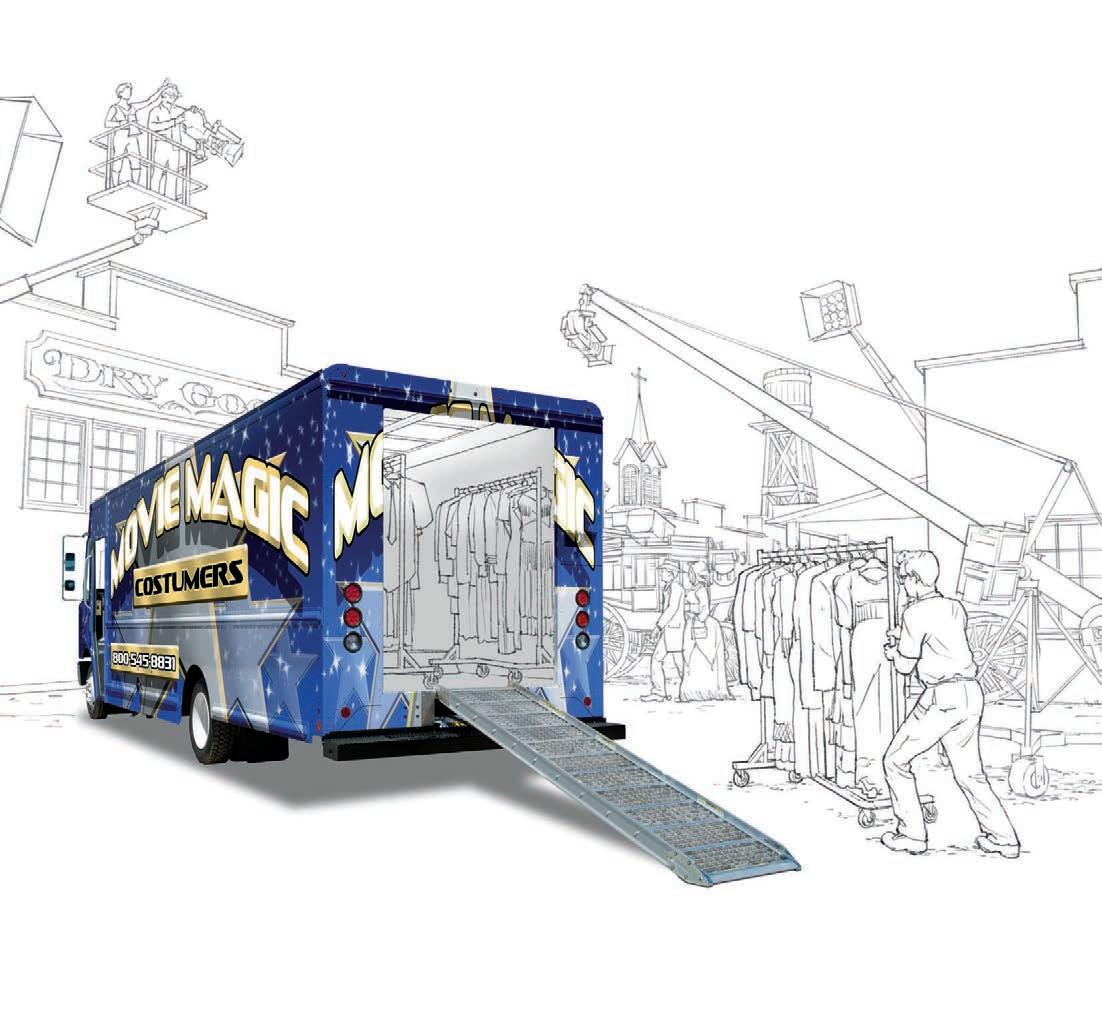
Out-think the box.
As a small business owner, we understand you’re always looking for ways to improve efficiencies and increase profits. An FCCC walk-in van is just the vehicle to get you there with proven reliability, superior performance, efficiency and durability that deliver maximum return on your investment. Affordable in diesel- or gas-powered models, FCCC walk-in vans offer easy entry and exit for fast and convenient deliveries.
Outfitting your business for success has never been so easy. Let us show you at www.freightlinerchassis.com or call (800) 545-8831.
Tri-State Technical E P Services/TLC Equipment Co.
1800 Lake Park Dr., Ste. 201 Smyrna, GA 30080
B 678-564-1100 or 866-278-0106
O tristatetechnical.com r Janice Ayers l jayers@tristatetechnical.com
Tri-State Technical E P Services
912 Francis St. Waycross, GA 31503 B 912-338-9110 or 866-278-0106
O tristatetechnical.com r Chris Duffett l cduffett@tristatetechnical.com
Associate Chemicals E C P O & Supplies
810 Gulick Ave. Honolulu, HI 96819 B 808-841-2423
r Clinton C.C. Lee l ccclee@aol.com
Commercial Laundry E Equipment Sales 555 Kiholo St. Honolulu, HI 96821 B 808-373-5747
Happy Valley Service E P 3259 Koapaka St. Honolulu, HI 96819 B 808-833-0800
O happyvalleyservice.com r Victor Flocco l victor@happyvalleyservice.com
Sadd Supplies P O 1359 Colburn St. Honolulu, HI 96817 B 808-841-3818
r Michael C. Sadd l saddsupplies@yahoo.com
WLSN Pacific E T C P O
P.O. Box 1185 Kapaau, HI 96755 B 808-896-6454
O wlsnpac.com r Francis Wilson l info@wlsnpac.com
Happy Valley Service E P 42 Kaniela St. Wailuku, HI 96793 B 808-244-4677
O happyvalleyservice.com r Victor Flocco l victor@happyvalleyservice.com
Thompsons Inc. E P O
1707 Broadway Ave. Boise, ID 83706 B 208-344-5179 or 800-881-5179
O thompsonsinc.com r Scott K. Thompson l scott@thompsonsinc.com
Laundry Concepts E P 302 S. Stewart Ave. Addison, IL 60101 B 800-845-3903 O laundryconcepts.com
Dolphin Laundry Services E P 1080 Entry Dr. Bensenville, IL 60106 B 630-350-8302 O dolphinlaundry.net l kmeyer@dolphinlaundry.net
D&M Equipment Co. E P O 4822 W. Fullerton Ave. Chicago, IL 60639 B 773-889-5500 or 800-451-2676 O dandmequipment.com r Joe Frankian l info@dandmequipment.com
Midwest Laundries E P 431 W. Pershing Rd., Ste. 500 Chicago, IL 60609 B 773-538-7892
O midwestlaundries.com r Lauren Schultz l customercare@midwestlaundries.com
Washburn Machinery E P 175 Gaylord St. Elk Grove Village, IL 60007 B 847-364-9274 or 800-245-8425 O washburnmachinery.com r Jeff Fox l info@washburnmachinery.com
Haiges Machinery E P 11314 E. Main St. Huntley, IL 60142 B 847-669-3300 or 800-542-2828 O haigesmachinery.com r Jenni Losch l info@haigesmachinery.com
Great Lakes E P O Commercial Sales 7920 N. Harker Dr. Peoria, IL 61615 B 262-790-5885 or 800-236-5599
O greatlakeslaundry.com r Tom White l info@greatlakeslaundry.com
Soap Center/ E C P Hales Equipment 1607 Fulton Ave. Rockford, IL 61103
B 815-965-8767
O halesequipment.com
r Ben Hales l ben@halesequipment.com
Green4All Energy O Solutions
P.O. Box 3961
St. Charles, IL 60174
B 855-GO-G4ALL
O g4all.net
r Daniel Handley l info@g4all.net
Equipment Intl. Ltd. E P O 8237 N. Kimball Ave. Skokie, IL 60076
B 847-679-2211 or 800-364-0657
O equipment-international.com
r Steve Zabrin l sales@equipment-international.com
Tingue, Brown & Co. T O 10024 Skokie Blvd., Ste. 315/317 Skokie, IL 60077
B 224-233-1030
O tingue.com
r David Tingue l dtingue@tingue.com
American Hotel E T C P O Register Co.
100 S. Milwaukee Ave. Vernon Hills, IL 60061 B 800-323-5686
O americanhotel.com
Stanco Industries E 2626 Jefferds Ave. Fort Wayne, IN 46803 B 260-420-2600 or 800-932-3769 O stancoind.com r Michael Stanley l stanco2626@aol.com
Cornerstone Equipment E & Rigging 2535 Burton Ave. Indianapolis, IN 46208 B 877-773-1850 O cornerstonemachinery.com
Great Lakes E C P O Commercial Sales 4381 W. 96th St. Indianapolis, IN 46268 B 317-228-9545 or 800-577-7103 O greatlakeslaundry.com r Rick Sharp l info@greatlakeslaundry.com
Haiges Machinery E P 8527 Zionsville Rd. Indianapolis, IN 46268 B 317-876-8900 or 800-382-4253 O haigesmachinery.com l info@haigesmachinery.com
J.P. Equipment E 4024 Millersville Rd. Indianapolis, IN 46205 B 800-925-3236 O ineedjpequipment.com r Patrick Bowers l pbowers@ineedjpequipment.com
Laundry City E P O Equipment 2450 N. Shadeland Ave. Indianapolis, IN 46219 B 317-783-6175 or 800-622-4480 O superlaundry.com r Tony Corrice l tcorrice@laundrycity.com
Loomis Bros. E P Equipment Co. 5363 W. 86th St. Indianapolis, IN 46268 B 317-472-9979 or 800-783-6665 O loomisbros.com r Curtis McDowell l sales@loomisbros.com
O’Dell Equipment E P 133 Harrison Ave. Jeffersonville, IN 47130 B 812-283-0355 or 800-333-0355 O odellequipment.com
CKS Co. E P 6857 E. Watson Rd. Mooresville, IN 46158 B 317-831-7940 or 888-257-6044 O ckscompany.com
Kay Equipment E P 604 N. Hill St. South Bend, IN 46617 B 574-234-0171 or 800-348-5257 O kayind.com r Gregory Shroff l gashroff@kayind.com
Ultra Clean Sales E P O 419 E. Winona Ave.
Warsaw, IN 46580 B 574-267-3254 or 800-523-8349 r Wade Frauhiger l ultracleanwarsaw@gmail.com
Ross Chemical E C P O Systems
P.O. Box 523 Altoona, IA 50009 B 515-244-1788 or 800-870-2702 O rosschemicalsystems.com r Mike Ross l mriross@mchsi.com
Century Laundry E 5001 J St. S.W. Cedar Rapids, IA 52404 B 800-791-9321 O centurylaundry.com
FabriClean Supply C O Lenexa 14400 W. 97th Terr. Lenexa, KS 66215 B 913-492-1743 or 800-832-0096 O fabricleansupply.com l belindah@fabricleansupply.com
Midwest Commercial E P O Laundry Equipment 616 E. North St. Salina, KS 67401 B 785-827-9017 or 800-533-6253 O mcle-inc.com l mcle@tri.net
FabriClean Supply C O Wichita 1040 E. MacArthur Wichita, KS 67216 B 316-529-8555 O fabricleansupply.com l belindah@fabricleansupply.com
O’Dell Equipment E P P.O. Box 3366 Louisville, KY 40201 B 812-283-0355 or 800-333-0355 O odellequipment.com
REM Co. E P O P.O. Box 455 Versailles, KY 40383 B 800-292-5070 O remlaundry.com r Jeff Sanders l jeff.sanders@remlaundry.com
FabriClean Supply C O Baton Rouge 8666 Kiowa Baton Rouge, LA 70815 B 225-237-3045 or 800-738-7380 O fabricleansupply.com l belindah@fabricleansupply.com
Jim Welsh Inc. E P 7517 Townsouth Ave. Baton Rouge, LA 70808 B 225-766-8905 O jimwelshlaundryeqpt.com
Ideal Chemical C O 3848 Industrial Cir. Bossier City, LA 71112 B 318-746-4358 or 800-231-6776 O idealchemical.com r Sam Block Jr. l sblock@idealchem.com
Allyson Supply C O
247 Hord St. Harahan, LA 70123 B 504-734-1863
r Chris Eichhorn l chriseichhorn111075@yahoo.com
Ideal Chemical C O 5800 Jefferson Hwy., Ste. B Harahan, LA 70123
B 504-733-3531 or 800-233-6776
O idealchemical.com r Sam Block Jr. l sblock@idealchem.com
Pellerin Laundry E P Machinery Sales Co.
731 Jackson St. Kenner, LA 70062
B 504-467-9593 or 800-535-8754
O pellerinlaundry.com r Scott McClure l sales@pellerinlaundry.com
Commercial & Coin E P O Laundry Equipment Co.
226 Goldman St. Lafayette, LA 70501
B 337-234-4377 or 800-366-4168 O clecco.com r Craig Dakauskas l sales@clecco.com
Pierce Commercial E P O Laundry Distributors
22258 Marshall Rd. Mandeville, LA 70471 B 800-254-9274 O piercecommercial.com
Dixie Paper Co. C 148 Country Club Cir. Minden, LA 71058 B 800-924-0348 O www.dixiepaperco.com
United Machinery Corp. E P 2530 Canal St. New Orleans, LA 70119
B 504-486-5356 or 800-486-5356 r Chris Rodick l umcldyequi@aol.com
Nelson & Small E P O P.O. Box 1420 Portland, ME 04104 B 207-775-5666 or 800-341-0780 O nelsonsmall.com
Mac-Gray E P O
5 Karen Dr., Ste. 11-12 Westbrook, ME 04092 B 888-622-4729
O macgray.com r Thomas Heffernan l customercare@macgray.com
FMB Laundry E P
P.O. Box 27174 Baltimore, MD 21230 B 800-832-6193
O fmblaundry.com
Easco Laundry Systems E P O 822 Snow Hill Rd. Salisbury, MD 21802 B 410-749-7037
O eascolaundry.com r Danny Massey l info@eascolaundry.com
Laundry Equipment E P Repair Service 3241 Lucky Dr. Street, MD 21154 B 410-452-5260







[on your employees and your budgets]






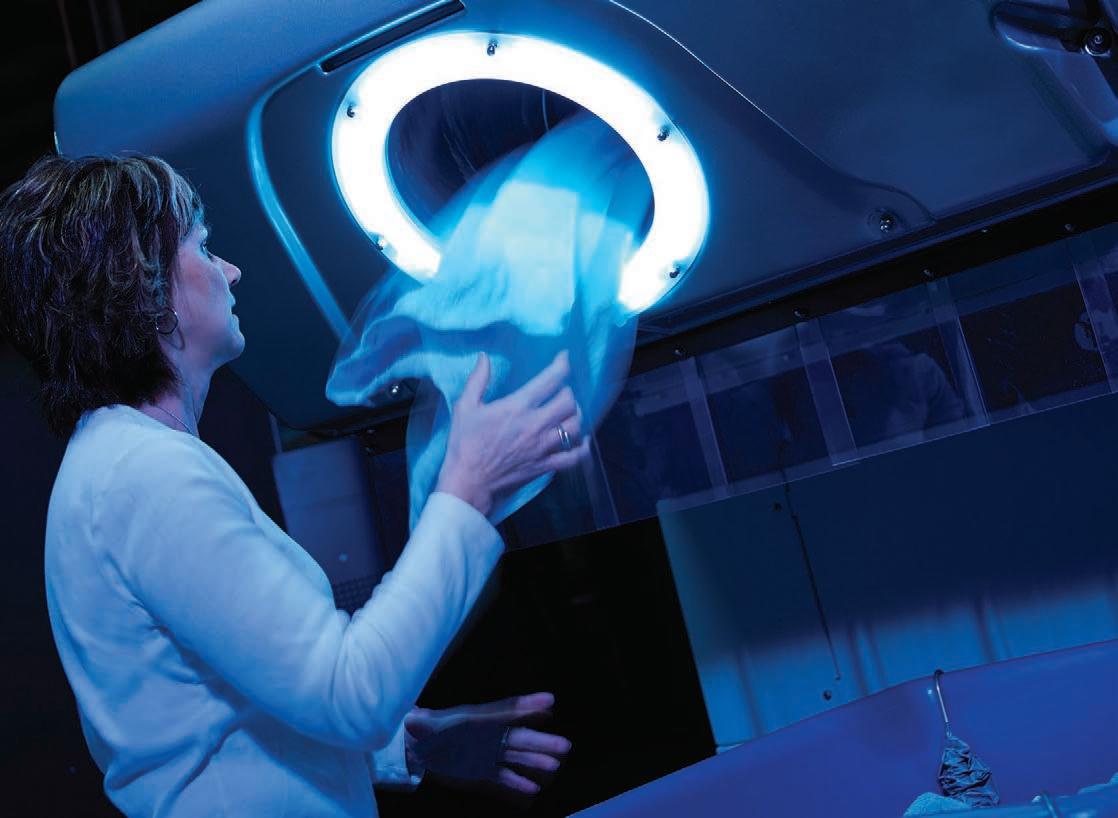
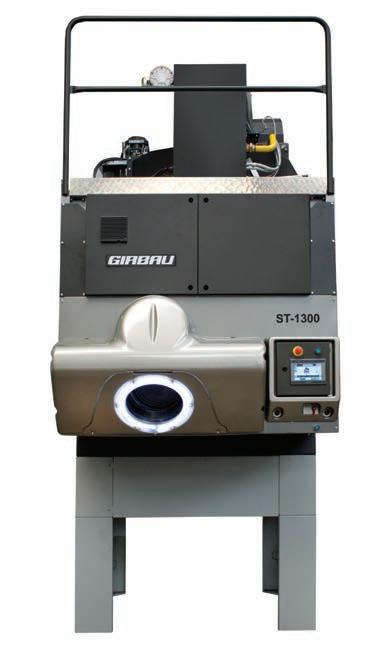
The patented Vacuum Loading system on Girbau Industrial’s ST-1300 dryer allows operators to quickly load items into the dryer without a conveyor. A powerful suction pulls items inward with minimal effort and no risk or hazard to attendants. In less than one minute, attendants can fully load up to 140 pounds of laundry into the dryer. From the same area, items are then automatically unloaded—increasing productivity, reducing labor and boosting profits for your laundry.
Visit www.girbauindustrial.com to see Girbau Industrial’s complete range of products for industrial laundries.



Contact Girbau Industrial today to see how the ST-1300 can reduce labor costs in your laundry! (800) 256-1073 • www.girbauindustrial.com
O laundryrepairservice.com
Hynes & Waller E P
16000 Trade Zone Ave., Bldg. 403 & 404
Upper Marlboro, MD 20774
B 301-249-9421 or 800-776-9424
O hynesandwaller.com l sales@hynesandwaller.com
Package Supply Corp. T C
355 Bodwell St.
Avon, MA 02322
B 508-583-8066 or 800-366-8066
O packagesupply.net
National Conveyor E P O
& Machine
16 Scenna Rd. Beverly, MA 01915
B 978-927-1281
O ncm1.com
r Bob Baker l ncmtextile@aol.com
Laundry Parts Market E P
301 Sykes Rd. Fall River, MA 02720
B 888-217-2717
O laundrypartsmarket.com
r Sarah Moniz
ERC Wiping Products T
19 Bennett St. Lynn, MA 01905
B 781-593-4000 or 800-225-9473
O ercwipe.com
r Valerie Sweeney l erc@ercwipe.com
M&R Machinery Corp. E P O
505 Lynn St. Malden, MA 02148
B 781-324-3395
r John G. Carozza l mrmachinerycorp@aol.com
Garment Machinery Co. E P
220-20 Reservoir St. Needham, MA 02494 B 781-559-4077
O garmentmachinery.com
LLS Wholesale Direct E T C 87 Kingston Rd. Waltham, MA 02451 B 781-891-8505 or 800-426-4560 O llsdirect.com
Automatic Laundry E P Service
45 Border St. West Newton, MA 02465
B 800-422-5833 617-969-4340
O automaticlaundry.com
Datamars O
250 West Cummings Park Woburn, MA 01801 B 781-281-2216
O datamars.com r Daryl Kuna l ussales@datamars.com
Mac-Gray
61 Holton St. Woburn, MA 01801 B 888-622-4729
Lowell, MI 49331
B 616-897-9810 or 800-594-9004 O curtisequipmentco.com r John Curtis l john@curtisequipmentco.com
E&N Equipment Co. E P 30335 Stephenson Hwy. Madison Heights, MI 48071 B 248-866-5500 O enequipment.com
A&B Equipment Co. E P O 635 Wellington St. Saginaw, MI 48604 B 989-753-4764 or 800-369-4764 O ab-equipment.com r Scott Clark l sales@ab-equipment.com
Eagle Star Equipment E P 2329 Alger Dr. Troy, MI 48083 B 248-457-1140 or 800-482-3400 O eaglestarequipment.com l info@eaglestarequipment.com
Darling’s Sales E P & Service Co. 10007 Baltimore St. N.E. Minneapolis, MN 55449 B 763-786-1803
O darlingsales.com r Ralph or Brad Darling l bdar@darlingsales.com
E. Weinberg E C P Supply Co. 7434 W. 27th St. Minneapolis, MN 55426 B 952-920-0888 or 800-279-0888 O weinbergsupply.com l info@weinbergsupply.com
Ryco Conveyors E P O 27151 Aberdeen Ave. New Prague, MN 56071 B 952-758-4178 O rycoconveyors.com l ryco@ryco92.com
Ideal Chemical C O
106 Ware St. Jackson, MS 39208
B 601-932-4920 or 800-824-0356
O idealchemical.com r Sam Block Jr. l sblock@idealchem.com
Aadvantage Laundry E P O Systems
2215 Hwy. 80 East, #B Pearl, MS 39208
B 601-420-9414 or 800-880-2138 O aadvantagelaundry.com r Robert Harris l rharris@aadvantagelaundry.com
Commercial Coils P
213 Chesterfield Industrial Blvd. Chesterfield, MO 63005
B 636-532-1523 or 800-532-2645
O macgray.com r Thomas Heffernan l customercare@macgray.com
WET-TECH,
The Ozone People 1102 Pleasant St. Worcester, MA 01602-1232 B 508-831-4229
Great Lakes E C P O
O wet-tech.com r Jack J. Reiff l jackreiff@wet-tech.com
Master Clean E P O Equipment Co.
4040 Atlas Rd. Davison, MI 48423 B 248-212-5270
r David Galloway l davidngalloway@hotmail.com
P.B. Gast & Sons/ E C P Allied-Eagle Supply Co. 355 Cottage Grove Grand Rapids, MI 49507 B 616-245-0574 O pbgast.com r Peter Gast l info@alliedeagle.com
Curtis Equipment Co. E P 1410 W. Main (P.O. Box 209)
Commercial Sales 1987 Larchwood Dr. Troy, MI 48083 B 248-733-9420 or 888-492-0181 O greatlakeslaundry.com r Tom Meisner l info@greatlakeslaundry.com
Universal Laundry E P Machinery 38700 Webb Dr. Westland, MI 48185 B 734-727-0478 or 800-825-7787 O univlaundry.com r Mark Hubbard l mhubbard@univlaundry.com
Great Lakes Laundry E C P O
Commercial Sales 3455 Byron Center Ave. S.W. Wyoming, MI 49519 B 616-531-8810 or 800-821-8846 O greatlakeslaundry.com r Chris Jenkins l info@greatlakeslaundry.com
PROS Parts P T 1630 91st Ave. N.E., Ste. 107 Blaine, MN 55449 B 800-359-0628 O prosparts.com r Barry Victor l barryv@prosparts.com
Bobco Systems E P O P.O. Box 216 Princeton, MN 55371 B 763-389-3625 O bobcosystems.com
BDS Laundry Systems E P O 2430 Enterprise Dr. St. Paul, MN 55120 B 651-688-8000 or 800-688-0020 O bdslaundry.com r Jim Louwagie l sales@bdslaundry.com
The Minnesota E T C P O Chemical Co. 2285 Hampden Ave. St. Paul, MN 55114 B 651-646-7521 or 800-328-5689 O minnesotachemical.com r Michael F. Baker (ext. 205) l mfbaker@minnesotachemical.com
Delta Laundry E P Equipment Co. 4201 Hwy. 82 East Greenwood, MS 38930 B 662-453-6768 O deltalaundry.com l info@deltalaundry.net
Dongieux’s E P P.O. Box 9386 Jackson, MS 39286-9386 B 601-366-2636 or 800-844-3664 O dongieuxs.com r John R. Schemmel l dongieuxs@bellsouth.net
O comcoil.com r Patrick Jovanovic l patrick@comcoil.com
Loomis Bros. E P Equipment Co. 409 Biltmore Dr. Fenton, MO 63026 B 636-343-8888 or 800-783-6665 O loomisbros.com r Carl Rees l sales@loomisbros.com
S Q S E P O
410 Silver Maple View Fenton, MO 63026 B 888-443-7180 O sqslaundry.com
JETZ Service Co. E P O
3737 N.E. Great Midwest Dr. Kansas City, MO 64161 B 816-454-9274 O jetzservice.com
KeeWes E C P O Equipment Co.
3509 N. Kimball Dr. Kansas City, MO 64161 B 913-384-5200 or 800-383-9274 O keewes.com r Richard Gaar l rgaar@keewes.com
Loomis Bros. E P Equipment Co.
4000 N.E. 33rd Terr., Ste. 5 Kansas City, MO 64117
B 816-452-4115 or 800-783-6665 O loomisbros.com r Ira Maxwell l sales@loomisbros.com
ZEP Sales & Service C O
4102 W. Riverside St. Kansas City, MO 64150
B 636-293-9621 or 877-428-9937
O zep.com
r Bill Hipkins l bill.hipkins@zep.com
Sav-A-Day E P
Laundry Machinery
55 Millwell Ct. Maryland Heights, MO 63043
B 314-291-1910 or 800-489-9274
O sav-a-day.com
r Jeff Seele l sales@sav-a-day.com
RJ Kool Co. E C P
234 W. 12th Ave.
North Kansas City, MO 64116
B 816-474-9274 or 800-345-4551
O rjkool.com
r William Kimmel l bkimmel@rjkool.com
MidAmerica E C P
Equipment & Supply Co.
1019 Liberty Industrial Dr.
O’Fallon, MO 63366
B 636-978-6345 or 866-440-2646
O midamericaequipment.com l midamerica@ midamericaequipment.com
Phoenix Textile Corp. T 21 Commerce Dr.
O’Fallon, MO 63366
B 314-291-2151 or 800-325-1440

O phoenixtextile.com l generalinfo@phoenixtextile.com
H.H. Coleman Co. E C O
979 Portwest Dr., Ste. 101 St. Charles, MO 63303
B 800-747-1247
O hhcoleman.com
Centraz Industries C 4051 Bingham Ave. St. Louis, MO 63116
B 314-752-7627 or 800-695-7627
O centraz.com
r Dennis Miller l centrazind@centraz.com
Komro Supply Co. C O 2600 S. 2nd St. St. Louis, MO 63118
B 314-772-4360 or 800-264-6535
O komrosupply.com

r Gary Thuro l gary@komrosupply.com
KeeWes E C P O
Equipment Co. 4629 W. Calhoun Springfield, MO 65802
B 417-862-8464
O keewes.com
John Morris Equipment E P & Supply Co. 2023 S. Glenstone Springfield, MO 65804
B 417-881-1215 or 800-725-5055
O johnmorrisequipment.com l tara@johnmorrisequipment.com
Altimus Distributing E C P O 21 8th St. West Billings, MT 59102
B 406-259-9816 or 800-999-9816
O altimusdistributing.com
r Kevin Graf
r Wayne Hoppal
l reliablecl@infowest.com
Laundry Systems E P of Nevada
1217 Gator Way Sparks, NV 89431
B 775-322-5481
O laundrysystemsofnevada.com
AWOIS AquaWing E
Ozone Injection System
45 Priscilla Ln. Auburn, NH 03032
B 888-296-4777
O aquawingozone.com
l brett@aquawingozone.com
Daniels Equipment Co. E P
45 Priscilla Ln. Auburn, NH 03032
B 603-641-9487 or 800-258-3570
O danielsequipment.com
r Lisa Mahan l sales@decequip.com
Yankee
Systems
GMC Co. E P
81 Farnworth Close Freehold, NJ 07728
B 732-866-1616
R&R Steam E 4057 Hwy. 9, Ste. 215 Howell, NJ 07731
B 718-983-5767
O rrsteam.com
r Robert Rosofsky l robert@rrsteam.com
Super Laundry E P Equipment
1500 W. Blancke St. Linden, NJ 07036
B 908-862-2200 or 800-992-7269
O superlaundry.com
r Dick Luca l dluca@superlaundry.com
Edgeco America E T
P.O. Box 338 Little Ferry, NJ 07643 B 201-641-3222
O edgecoamerica.com
Imesa USA E O
Cutting Systems Ltd./ E Vaporpress
50 Walnut Dr.
Upper Saddle River, NJ 07458
B 201-236-9213 O vaporpress.us r Paul Gerling l paulg@cslgroup.us
Katzson Brothers E T C P O 8500 Los Volcanes Rd. NW Albuquerque, NM 87121 B 505-884-8513 O katzson.com
Martin-Ray E P O Laundry Systems 2525 Madison N.E. Albuquerque, NM 87110 B 505-883-7277 or 877-645-6671 O martinray.com
Western Equipment Co. E 909 Virginia St. N.E. Albuquerque, NM 87108 B 505-891-4030
Cleaner’s Supply O 1059 Powers Rd. Conklin, NY 13748 B 800-568-7768
O cleanersupply.com r Page Walker l customerservice@cleanersupply.com
Mac-Gray E P O
27 Corporate Cir., #4 East Syracuse, NY 13057 B 888-622-4729
O www.macgray.com r Thomas Heffernan l customercare@macgray.com
Direct Machinery E P Sales Corp. 50 Commerce Pl. Hicksville, NY 11801 B 800-572-5573 O www.directmachinery.com
Hercules Corp. E P 550 W. John St. Hicksville, NY 11801 B 800-526-5760
O herclaundry.com
P.O. Box 630 (15 Glass Ln.)
Barrington, NH 03825
B 603-868-6691 or 800-239-9265
O yankeeequipment.com
r Ted Ristaino l info@yankeeequipment.com
Equipment Marketers E P
100 Melrose Ave.
Cherry Hill, NJ 08003
B 856-428-3355 or 800-233-1376
O equipmentmarketers.net
r Richard LaMaina l maytag@equipmentmarketers.net
P.O. Box 2329 Livingston, NJ 07039
B 973-535-8305 or 877-873-8451 O imesa.com
r Stuart Ilkowitz l imesausa@aol.com
Star Linen & Supply T 1501 Lancer Dr. Moorestown, NJ 08057
B 856-231-0700 or 800-782-7999 O starlinen.com
r Joe Haughey l starinfo@starlinen.com
AJ Industries E P O 1120 Springfield Ave. Mountainside, NJ 07092 B 908-789-9990 O aj-industries.com l east@aj-industries.com
Tingue, Brown & Co. T O
535 N. Midland Ave. Saddle Brook, NJ 07663 B 201-796-4490 or 800-829-1335 O tinguebrownco.com r Dan Koebel l dkoebel@tingue.com
Fowler Equipment Co. E P
565 Rahway Ave. Union, NJ 07083
B 908-686-3400 or 800-334-1824 O fowlercompanies.com r Susan Gaspar l sgaspar@fowlercompanies.com
Ultra Clean Laundry E P Equipment
P.O. Box 614 Cloudcroft, NM 88317-0614 B 888-267-5553 O ultracleanlaundry.com
Innovative Chemical C Systems
First Prize Industrial Park 76 Exchange St. Albany, NY 12205 B 800-777-1728 O icschemicals.com r Robert J. Strong l rstrong@icschemicals.com
HK Laundry Equipment E P O 530 Main St. Armonk, NY 10504 B 914-273-5757 or 800-229-4572 O hklaundry.com r Karl Hinrichs l leads@hklaundry.com
Graham Laundry E P Machinery Co. 1710 Pacific St. Brooklyn, NY 11213 B 718-493-5285 O grahamlaundrymachinery.com r Homayoun Harsini l info@grahamlaundrymachinery.com
Laundrylux E P 461 Doughty Blvd. Inwood, NY 11096 B 516-371-4400 or 800-645-2205
O laundrylux.com r Kim Shady l info@laundrylux.com
Hercules Machinery E P 21 Alabama Ave. Island Park, NY 11558 B 516-889-0088
O herculesmachinery.net
Gold Coin Laundry E P O Equipment 91-26 143rd St. Jamaica, NY 11435 B 718-658-2646 or 888-658-2646
O goldcoinlaundry.com r David Hoffman l goldcoineq@aol.com
Metropolitan Laundry E P Machinery Sales 127-19 101st Ave. Jamaica, NY 11419 B 718-441-4000 or 800-214-9300
O metropolitanmachinery.com r Marc Katzman l info@metropolitanmachinery.com
Trevil America E O P.O. Box 127 Mamaroneck, NY 10543 B 973-535-8305 or 877-873-8451
O trevil.com r Stuart Ilkowitz
l trevilamerica@aol.com
Sani Wash E C P 58-90 55th St. Maspeth, NY 11378
B 718-729-1700 or 800-288-7264 O saniwash.com l info@saniwash.com
Wascomat Distributors E 20 Sintsink Dr. East
Port Washington, NY 11050 B 516-304-5930
O wascomatdistributors.com r Jim Colletti l jcolletti@wascomatdistributors.com
Gauch Distributing E P 474 N. Greenbush Rd. Rensselaer, NY 12144
B 518-283-8302
O gauchdist.com r Ben Gauch l info@gauchdist.com
Empire Laundry E P Machinery
860 Linden Ave. Rochester, NY 14625-2718
B 585-218-9810 or 800-359-6262 O empirelaundryny.com l gerry@empirelaundryny.com
Statewide Machinery E P O
60 Pixley Industrial Pkwy. Rochester, NY 14624
B 585-426-3870 or 800-527-2219
O statewidemachinery.com r Tony Longo l tlongo@statewidemachinery.com
K & D Laundry E P O Equipment
201 Maple Ave. Sarasota Springs, NY 12866
B 518-587-3559
O kanddlaundry.com
A-1 Flatwork T O Ironer Specialists
47 Oakley Pl. Staten Island, NY 10306 B 718-980-0682
Latest Products Corp. O P.O. Box 190 Syosset, NY 11791 B 800-288-3547 O latestprod.com
D.J. Giancola Exports E P 4317 E. Genesee St. (P.O. Box 4) Syracuse, NY 13214 B 315-446-1002
O djgexports.com
Super Laundry E P
Equipment Corp.
234 Crossways Park Dr. Woodbury, NY 11797-2015
B 516-678-4404 or 888-678-9274
O superlaundry.com
Highland Equipment Co. E P
788 Fairview Rd. Asheville, NC 28803
B 828-274-7343
O highlandequipment.com
r Barry Carter
l carter@highlandequipment.com
B&G Lieberman Co. E C P O
2420 Distribution St. Charlotte, NC 28203
B 704-376-0717 or 800-438-0346
O bglieberman.com
r Larry Lieberman
l bgl@bglieberman.com
Consolidated Laundry E O
Equipment
714F Montana Dr. Charlotte, NC 28216
B 704-395-1234
O consolidatedlaundry.com
Gardner Machinery Corp. E P 700 N. Summit Ave. Charlotte, NC 28216
B 704-372-3890
O gardnermachinery.com
r Tim McClure l gmc@gardnermachinery.com
T & L Equipment Sales E P
1001-A N. Church St. Charlotte, NC 28206
B 800-423-7937
O washcycle.com l sales@washcycle.com
Fuller Supply Co. C O
P.O. Box 1261 Concord, NC 28026
B 704-782-0214 or 800-323-3699
l fullersupply@vnet.net
TLC Equipment Co. E P 5257 Pit Road South Concord, NC 28027
B 704-454-7220 or 800-634-7429
O tristatetechnical.com
r Chris Duffett l cduffett@tristatetechnical.com
Aadvantage Laundry E P O Systems
101 High Hope Lande Garner, NC 27529
B 919-615-2834 or 800-880-2138
O aadvantagelaundry.com
r Ryan Smith l rsmith@aadvantagelaundry.com
Talley Machinery Corp. E P 7009 Cessna Dr. Greensboro, NC 27409
B 336-664-0012 or 800-222-9954
O talleymachinery.com
r Randy Vansparrentak
l rvansparrentak@talleyparts.com
Wade Johnson Corp. E P 6215 Swing Ct. Greensboro, NC 27409
B 800-833-1946
O wadejohnsoncorp.com
l wadejco@infionline.net
Hulon McCraw Inc. C P O 5222 Brevard Rd. Horse Shoe, NC 28742
B 828-891-8871 or 800-962-5631
O mccraws.com
l info@mccraws.com
Tri-State Laundry E P Equipment Co.
1031 E. Mountain St., Bldg. 315
Kernersville, NC 27284
B 336-992-5218 or 866-885-5218
O tristatelaundryequipment.com
r Kevin Lawson l kevin@tristatelaundryequipment.com
Consolidated Laundry E O Equipment
530 Maywood Ave. Raleigh, NC 27603
B 919-832-4624 or 800-227-6149
O consolidatedlaundry.com
Rocky Mount Cord Co. T
381 N. Grace St. Rocky Mount, NC 27804
B 252-977-9130 or 800-342-9130
O rmcord.com
r Andy Barker (ext. 124) l abarker@rmcord.com
N.S. Farrington & Co. C P O 2355 Farrington Point Dr. Winston-Salem, NC 27107
B 336-788-7705 or 800-722-0374
kenf@nsfarrington.com
Advantage Equipment E C P
1660 Scenic Way
Akron, OH 44310
B 330-475-8220 or 888-676-5079 O advantageequipment.net r Scott Vlahos l svlahos@advantageequipment.net
Belenky Inc. E P 1601 Frederick Blvd. Akron, OH 44320 B 330-867-3333 or 800-235-3659 O belenkyinc.com r Robert Minster (ext. 207)
l info@belenkyinc.com
The M&L Supply Co. E C P O
P.O. Box 4598 Akron, OH 44310 B 330-633-6241 or 800-328-6000 O m-lsupply.com r John Berardi l john@m-lsupply.com
C&W Equipment E T C P O 1114 Ferris Rd. Amelia, OH 45102 B 513-753-9750 or 800-443-3573 O candwcorp.com r Matt Wright l m.wright@candwcorp.com
Cincinnati Laundry E P O Equipment
2650 Spring Grove Ave. Cincinnati, OH 45214
B 513-542-5000 or 877-542-3300
O cincinnatilaundry.com r Ron Randolph l cle@cincinnatilaundry.com
H-M Co. O
2305 Gilbert Ave. Cincinnati, OH 45206
B 513-281-3832 or 800-365-1900
O www.draintroughs.com r Joe Stern l hmco123@aol.com
Machinex
7654 Production Dr. Cincinnati, OH 45237
B 513-771-4020
Great Lakes E C P O
Commercial Sales
417 Helke Rd. Vandalia, OH 45377
B 937-435-4382 or 888-877-4382
O greatlakeslaundry.com r Daniel Naumann l info@greatlakeslaundry.com
O machinexonline.com
Bernzweig Supply C O 2061 Gehring Ave. Cleveland, OH 44113 B 216-781-3720
Lakeside Laundry E Equipment Co. 26851 Richmond Rd. Cleveland, OH 44146 B 216-475-2040 or 800-628-2588 O lakesidelaundry.com
Hildreth’s Commercial E P O
Laundry Equipment 1282 Essex Ave. Columbus, OH 43201
B 614-297-1480 or 888-282-0201
O hildrethnet.net l jhildreth@hildrethnet.net
Super Laundry E P O
dba Ohio Laundry Equipment 1303 Alum Creek Dr. Columbus, OH 43209
B 614-258-5147 or 800-466-1262 O superlaundry.com
Teeters Products E P 125 E. Second St. Fletcher, OH 45326 B 937-368-2376 or 800-521-9864 O teetersproducts.com l info@teeterproducts.com
R.W. Martin & Sons E P
310 Park Ave. Kent, OH 44240 B 330-673-8712 or 800-635-4363 O rwmartin.com l info@rwmartin.com
Moore Services E C P 29500 Aurora Rd., Ste. 4 Solon, OH 44139 B 440-498-0200 or 800-941-MORE
O mooreservices.info r Jerry Moore l mooreservices@aol.com
KeeWes E C P O Equipment Co. 713 S. 8th Broken Arrow, OK 74012 B 918-251-0800 O keewes.com
Arrow Machinery Co. E P
1121 N. Martin Luther King Ave. Oklahoma City, OK 73117 B 405-424-4318 or 800-835-WASH O arrowmachinery.org l arrowmachinery@arrowmachinery.org
Elite Equipment Co. E P O
4400 S.W. 134th St. Oklahoma City, OK 73173 B 405-692-4800 or 800-335-3600
O eliteequipment.com r Marty Jackson l marty@eliteequipment.com
FabriClean Supply E P O Oklahoma 201 N. Ann Arbor Oklahoma City, OK 73127 B 405-232-9289 or 800-654-4117 O fabricleansupply.com l belindah@fabricleansupply.com
Aadvantage Laundry E P O Systems 7626 E. 46th Pl. Tulsa, OK 74145 B 918-627-2138 or 800-880-2138 O aadvantagelaundry.com r Daniel Kramer l dkramer@aadvantagelaundry.com
FabriClean Supply E P O Tulsa 808 S. Yorktown Tulsa, OK 74104 B 918-582-6846 or 800-828-3481 O fabricleansupply.com l belindah@fabricleansupply.com
True Color Fabric Dyeing T 2305C Ashland St., #281 Ashland, OR 97520
B 541-488-5911
O fabricdyeing.com r Sherry Smilo l info@fabricdyeing.com
Arent Machinery Co. E P O 15815 S.E. 135th Ave. Clackamas, OR 97015
B 503-657-3000 or 800-547-2527
O arentmachinery.com r Jay-Dee Arent l jaydee.arent@arentmachinery.com
Absolute Laundry E P Systems Co. 4800 S.W. Meadows Dr., Ste. 300 Lake Oswego, OR 97035 B 503-534-5344 or 877-461-3523
O absolutelaundry.com r Lisa White l sales@absolutelaundry.com
Northwest Laundry E P O Supply 6722 N.E. Columbia Blvd.
Portland, OR 97218 B 503-282-1455 O northwestlaundrysupply.com
Washington Automated E P 7236 S.W. Durham Rd., Ste. 700 Portland, OR 97224 B 503-570-3350 or 800-422-0380 O washingtonautomated.com l info@washingtonautomated.com
Western State Design E P 6722 N.E. Columbia Blvd. Portland, OR 97210 B 503-222-4288 or 800-633-7153 O westernstatedesign.com r Jim Wright (ext. 103) l jwright@westernstatedesign.com
Peterson Equipment Co. E P 151 N. Front St. Woodburn, OR 97071 B 503-981-4032 or 800-981-4032 r Russell Peterson l russell@peterson-eq.com
MedSystems International T 155 State St. Baden, PA 15005 B 412-367-7222 O msitextiles.com
Olek Belts P O 443 Mill Rd. Bensalem, PA 19020 B 215-638-4550 or 800-869-2683 O olekbelts.com r Denise Crooks l olekbelts@aol.com
Butler Staple Co. E P O 241 North Rd. Butler, PA 16001 B 800-821-8842 O butlerstaple.com
PAC Industries E P O 66D Progress Ave. Cranberry Township, PA 16066 B 724-772-3780 or 866-722-7253 O pacindustries.com
PAC Industries E P O 950 River Rd. Croydon, PA 19021 B 215-638-1000 or 800-972-2292 O pacindustries.com
M.C.H. Equipment E P 421-A Philmont Ave. Feasterville, PA 19053 B 215-355-3778 or 800-399-5237 O mchequipment.com l info@mchequipment.com
The M&L Supply Co. E C P O 1515 William Flynn Hwy. Glenshaw, PA 15116 B 330-633-6241 or 800-328-6000 O m-lsupply.com r John Berardi l john@m-lsupply.com
PAC Industries E P 5341 Jaycee Ave. Harrisburg, PA 17112 B 717-657-0407 or 800-692-6214 O pacindustries.com r Joseph Leo l sales@pacindustries.com
AC Power Co. E P O 77 Steamwhistle Dr. Ivyland, PA 18974 B 215-364-3430 or 800-362-1900 O acpowerco.com l info@acpowerco.com
CILS E P 36 N. 16th St. Lebanon, PA 17042 B 717-274-2693 or 888-820-2457
O cils-inc.com r Tony Mohl or John Noss l info@cils-inc.com
Alco Washer Center E P O 1243 W. State St. New Castle, PA 16101 B 724-658-8808 O alcowasher.com l alco.washer@verizon.net
Frankford Machinery E P O 4500 Torresdale Ave. Philadelphia, PA 19124 B 215-289-3434
O frankfordonline.com r Nick Kashkashian Jr. l info@frankfordonline.com
Pittsburgh Laundry E Systems 7500 Washington Ave. Pittsburgh, PA 15218 B 412-351-4500 O pittsburghlaundry.com
Sea Isle Corp. T 5447 Guarino Rd. Pittsburgh, PA 15217 B 800-722-0429 O seaislecorp.com r Bill Halpern l bill@seaislecorp.com
Super Laundry E P Equipment 1201A Brighton Rd. Pittsburgh, PA 15233 B 412-697-9201 or 877-404-7278 O superlaundry.com r Bob Guyer l bob@superlaundrypa.com
Central Pennsylvania E P Laundry Equipment
231 Rear E. Main St. Shiremanstown, PA 17011 B 717-761-3617 or 800-242-5520 O centralpalaundry.com r Andy Courtney l cple1@verizon.net
Norton Supply Co. E C O 65 Bath St. Providence, RI 02908 B 401-454-8380 or 800-869-7664 O nortonsupply.com r Bill Mark l sales@nortonsupply.com
Texchine Inc. E P 207 Beaufort St. Chapin, SC 29036 B 803-345-5171 or 800-768-8205 O texchine.com
East Coast Water Systems E P 520 Folly Rd., Ste. P Charleston, SC 29412 B 843-225-6252 O eastcoastwatersystems.com
ALTEC Laundry E P Equipment
1308 Cook Ave. Columbia, SC 29203 B 803-936-1124 or 877-872-5832 O goaltec.com l altecinfo@goaltec.com
Phenix Supply Co. C O 1200 1st St. South Ext. Columbia, SC 29209
B 803-776-7988 or 800-272-0540
O phenixsupply.com l sales@phenixsupply.com
American Wiping Cloth T O P.O. Box 26172 Greenville, SC 29616 B 864-288-5454
O americanwipingcloth.com r Rusty Sutton l rusty@americanwipingcloth.com
Richard-Ewing E C
Equipment Co.
27121 S. Parklane Dr. Sioux Falls, SD 57106
B 605-368-2528 or 800-658-3368
O richard-ewingequipment.com
Phenix Supply Co. C O 4123 Appalachian Way Knoxville, TN 37918
B 865-689-1221 or 800-888-2234
O phenixsupply.com l sales@phenixsupply.com
Cates Equipment Co. E P 1846 Vanderhorn Dr. Memphis, TN 38134 B 901-387-0023
O catesequipment.com l info@catesequipment.com
Ideal Chemical C O 4025 Air Park St. Memphis, TN 38118
B 901-363-7720 or 800-232-6776 O idealchemical.com r Sam Block Jr. l sblock@idealchem.com
Larry and Mike’s E P Laundry Service 6376 Winchester Rd. Memphis, TN 38115 B 901-546-8151 or 866-328-5173 O lmlaundryservices.com r Mike Leake l laundryservices@comcast.net
Allied Boiler & Supply E P O 419 S. Front St. Murfreesboro, TN 37129 B 800-858-0484 O alliedboiler.com
PartsKing.com E P 3729 Charlotte Ave. Nashville, TN 37209 B 800-462-4814 O partsking.com
Phenix Supply Co. C 741 Massman Dr. Nashville, TN 37210
B 615-254-5192 or 800-622-3479 O phenixsupply.com l sales@phenixsupply.com
Star Distributing E T C P O
3729 Charlotte Ave. Nashville, TN 37209
B 615-298-5547 or 800-897-7570 O stardistributing.com
Williams Sales E P 221 Shady Grove Rd. Nashville, TN 37214
B 615-885-2310 or 800-535-3733 r Dan Williams l williamssales@aol.com
Commercial E C P O
Equipment Co.
15551 Wright Brothers Addison, TX 75001
B 972-991-9274 or 800-899-9379
O washerdryer1.com
r Joe Thorn
l joe@commercialequipmentco.com
FabriClean Supply C O
Amarillo 3412 Amarillo Blvd. Amarillo, TX 79106
B 806-374-2851 or 800-648-9665
O fabricleansupply.com
l belindah@fabricleansupply.com
Intex Distributing Co. C 1624 E. 4th St.
Austin, TX 78702
B 512-474-6075 or 800-322-7131
O intexdistco.com
r Gerald Henke
l intex123@swbell.net
FabriClean Supply C O
Austin 2089 Main St. Buda, TX 78610
B 512-295-5550 or 888-301-4555
O fabricleansupply.com
l belindah@fabricleansupply.com
Gulf Coast Paper Co. C O 1101 S. Padre Island Dr.
Corpus Christi, TX 78416
B 361-852-5252
O gulfcoastpaper.com
Atlas International E P O
2663 Freewood Dr. Dallas, TX 75220
B 214-350-1234 or 800-727-9274
l sales@atlaslaundry.com
Ed Brown Distributors E P 2705 Hawes Ave. Dallas, TX 75235
B 214-352-9494 or 800-929-5520
O edbrowndistributors.com
FabriClean Supply C O
Dallas 8301 Ambassador Row Dallas, TX 75247
B 214-826-4161 or 800-442-7021
O fabricleansupply.com
l belindah@fabricleansupply.com
Texas Coin & Commercial E
Laundry Distributors
8700 Chancellor Row Dallas, TX 75247
B 214-634-2080 or 800-888-0254
O txcoinlaundry.com
r Kellie Blumberg
l kblumberg@txcoinlaundry.com
Western Equipment Co. E 7024 Alameda Ave.
El Paso, TX 79915
B 915-781-7060
AAdvantage Laundry E P O Systems
3836 Dividend Dr. Garland, TX 75042
B 972-278-2138 or 800-880-2138
O aadvantagelaundry.com
r Ryan Smith
l rsmith@aadvantagelaundry.com
Intex Distributing Co. C P O
1179 109th St.
Grand Prairie, TX 75050
B 972-660-1900 or 877-649-9904
O intexdistco.com
r Ben Henke l intexdallas@intexdistco.com
Kannegiesser-USA E P O
2425 109th St.
Grand Prairie, TX 75050
B 972-602-8766 or 800-344-0403
O kannegiesser-usa.com
r Phil Hart l sales@kannegiesser-usa.com
Pellerin Laundry E P
Machinery Sales Co.
2009 108th St., Ste. 903
Grand Prairie, TX 75050
B 972-641-9590 or 888-830-6276
O pellerinlaundry.com
RAMCO Laundry E T P O Machinery
2925 114th St.
Grand Prairie, TX 75050
B 817-640-5100 or 800-878-5578
O ramcolaundry.com
r Ralph A. McMillan l sales@ramcolaundry.com
FabriClean Supply C O Houston 9770 Wingfoot Houston, TX 77041
B 713-864-6373 or 800-233-4240 O fabricleansupply.com l belindah@fabricleansupply.com
Scott Equipment E P 5612 Mitchelldale
Houston, TX 77092 B 800-321-SCOTT O scott-equipment.com
Best Wash E P O
15012 Eddie Dr. Humble, TX 77396 B 281-441-2465 or 800-456-2378 O bestwashinc.com r James West l sales@bestwashinc.com
Mustang Enterprises E 1238 W. Laurel San Antonio, TX 78201 B 210-734-3644 or 800-929-5870
Rosenberg Supply T C P O 1608 N. Flores San Antonio, TX 78212 B 210-736-1873 or 800-777-1873 r Reuben Briseno l rosenbergsupply@hotmail.com
Dixie Paper Co. C 3010 Hwy. 31 East Tyler, TX 75702 B 800-556-5002 O dixiepaper.net
Dixie Paper Co. C 323 N. Industrial Dr., Ste. N Waco, TX 76710 B 254-741-6751
O dixiepaper.net
Ozone Laundry Systems E
434 Crystal Spring Dr. Draper, UT 84020
B 801-747-0306 or 888-283-0306
O ozonelaundrysystems.com
Mendenhall E P Equipment Co.
880 W. 100 North North Salt Lake, UT 84054
B 801-298-1133 or 800-537-0438
O mendenhallequip.com
l office@mendenhallequip.com
Reliable Equipment
& Engineering
4245 Airport Rd. Ogden, UT 84405-3301
B 801-622-7000 or 800-366-4415
O reliableequipment.com
r Bill Blumel
l wblumel@xevision.com
Reliable Commercial E P O
Laundry
243 N. Bluff St.
St. George, UT 84770
B 435-652-1330 or 800-776-7197
O www.reliablecl.com
r Wayne Hoppal l reliablecl@infowest.com
Brody Chemical C
6125 W. Double Eagle Cir.
Salt Lake City, UT 84118
B 800-488-2436
O brodychemical.com
Evans Laundry Equipment E P
3463 W. 1987 South Salt Lake City, UT 84104
B 800-433-6859
O evanslaundryequipment.com
Katzson Brothers E T C P O
3493 W. 1500 South Salt Lake City, UT 84104
B 801-322-5757 or 877-534-4565
O katzson.com
Big Bill Work Wear T O
294 Crawford Rd. Newport, VT 05855
B 800-992-6338
O bigbill.com
Foley Distributing C P O
280 Seward Rd. (P.O. Box 99) Rutland, VT 05702
B 802-773-3738 or 800-950-3738 O foleydistributing.com
Consolidated Laundry E O Equipment
209 Research Dr., Ste. 102 Chesapeake, VA 23320
B 757-547-5350
O consolidatedlaundry.com
Valley Washers E P O 18 W. Johnson St. Harrisonburg, VA 22803 B 540-434-8086 O valleywashers.com l nemo@valleywashers.com
Caldwell & Gregory E 129 Broad St. Rd. Manakin-Sabot, VA 23103 B 804-784-6100
O caldwellandgregory.com
Commercial Laundry E P Equipment Co. 2507 Jefferson Davis Hwy. Richmond, VA 23234 B 804-231-9668 or 800-543-3499

O commlaundry.com l commerciallaundry@comcast.net
Phenix Supply Co. C O 4311 November Ave. Richmond, VA 23231 B 804-232-6703 or 800-446-3006

O phenixsupply.com l sales@phenixsupply.com
Richclean C O 2810 Ackley Ave. Richmond, VA 23228 B 804-262-7433
O richclean.com
Virginia Dry Cleaning E P O & Laundry Equipment 2617 Egee Dr. Richmond, VA 23237 B 804-271-4401
ValueLinen Resource T O P.O. Box 65460 Virginia Beach, VA 23467 B 757-471-2071 or 877-210-7078
O valuelinen.com
Washington Automated E P 5801 23rd Dr. West, Ste. 103 Everett, WA 98203
B 425-743-7388 or 800-422-0380
O washingtonautomated.com
r John E. George l info@washingtonautomated.com
Dynamic Sales E P O & Service
12910 N.E. 125th Way, Bldg. B-3 Kirkland, WA 98034
B 425-823-4300 or 800-595-0253
O dynamicss.com r Daniel Danhof l dan@dynamicss.com
American Meter E P & Appliance
1001 Westlake Ave. North Seattle, WA 98109
B 206-285-5050 or 800-562-2858
O www.american-meter.com
r Rich Stallnecht l richs@american-meter.com
CESCO E P O
20830 International Blvd. Seattle, WA 98198
B 206-824-9055 or 800-662-4612
O www.cescoweb.net
r Rich Boyd l rich@cescoequipment.com
Lind Industries E P 9615 Stone Ave. North Seattle, WA 98103
B 206-517-5463 or 866-517-5463
O lindindustries.com r Neil Lind l sales@lindindustries.com
Northwest Laundry E P O Supply
6446 S. 144th St.
Seattle, WA 98168
B 206-242-5500
O northwestlaundrysupply.com
Northwest Laundry Supply E O
624 N. Fancher Rd.
Spokane, WA 99212
B 509-487-4800 or 800-487-4814
O northwestlaundrysupply.com
Western State Design E O
14241 N.E. Woodinville Duvall Rd. Woodinville, WA 98072
B 425-483-5642 or 800-633-7153
O westernstatedesign.com
r Rick Hall (ext. 102)
l rhall@westernstatedesign.com
Laundry Equipment E T P O Services
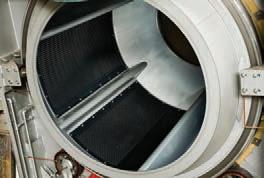
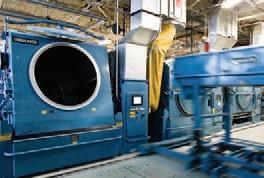
141 Business Park Cir.
Berkeley Springs, WV 25411
B 304-258-9023 or 800-866-6905
O leslaundry.com
r Steve Clark l sales@leslaundry.com
Char-Ann Equipment Co. E P
2505 Elizabeth Pike
Mineral Wells, WV 26150
B 304-489-9355 or 800-679-9350
r Ed Boice l charann@wirefire.com
Great Lakes E C P O
Commercial Sales
12705 Robin Ln.
Brookfield, WI 53005
B 262-790-5885 or 800-236-5599
O greatlakeslaundry.com
r Don Kilian l info@greatlakeslaundry.com
Herb Fitzgerald Co. E O
13150 W. Glendale Ave. Butler, WI 53007-0465
B 262-783-5808 or 800-686-3489
O herbfitzgerald.com
Wausau Chemical C
13137 W. Glendale Ave. Butler, WI 53007
B 262-783-4500 or 800-236-2200
O wausauchemical.com
Belson Co. E
730 Lambeau Green Bay, WI 54303
B 920-499-1451 or 800-242-6324
O belsonprolaundry.com
r Jake Paider
l laundry@belsonco.com
Commercial Laundry E P
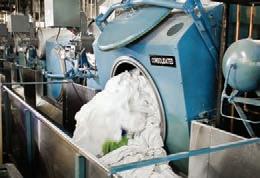
Sales
1130 Elizabeth St. Green Bay, WI 54302
B 920-437-0947
O claundrysales.com
The Minnesota E C P O
Chemical Co.
N57W13250 Carmen Ave. Menomonee Falls, WI 53051
B 262-781-8630 or 800-328-5689
O minnesotachemical.com
r Dan Baker
l dabaker@minnesotachemical.com
Haiges Machinery E P
131 E. Wisconsin Ave.
Pewaukee, WI 53072
B 262-523-4105 or 800-236-1144
O haigesmachinery.com
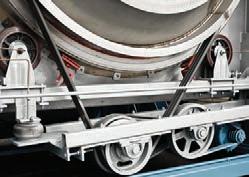
r John Kubczcak l info@haigesmachinery.com
Wausau Chemical C 2001 N. River Dr. Wausau, WI 54402-0953
B 715-842-2285 or 800-950-6656
O wausauchemical.com
Badger Laundry
Machinery
1917 S. 60th St. West Allis, WI 53219-1552
E P
B 414-321-3636
O badgerlaundrymachinery.com r Jim H. Brown l badgerlaundry@msn.com
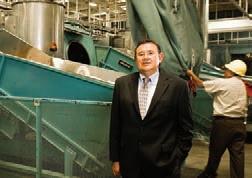
Montequin Distributors E Calle 13 S.O. #903 Caparra, PR 00921 B 787-781-6390
montequin.com r Felix Montequin
monteprc@coqui.net
Manuel Gomez E
Esteves Inc.
P.O. Box 11380
San Juan, PR 00922-1380
B 787-251-4560
r Freddie De Jesus l mpereyo@coqui.net
Universal Equipment E Sales & Service Corp.
P.O. Box 194048 San Juan, PR 00919-4048 B 787-724-2448 O universalequipmentpr.com r Eng. Pablo Hernandez l pablo_uess@hotmail.com
E-mail Digital Media Director Nathan Frerichs, nfrerichs@ americantrademagazines.com, to learn how your distributorship can be added to our free online Distributors Directory at AmericanLaundryNews.com and to next year’s print edition!




SANTA BARBARA, Calif. — John Ross is the next president and chief executive officer of Mission Linen Supply, effective immediately, the company has announced.
Ross replaces Karl Willig, who retired from the post but remains executive vice chairman of Mission’s board of directors.

Ross, who joined the company in December, was leading Mission Linen’s operating plants and branches throughout the West as vice president of operations prior to the promotion.
“I am excited about this opportunity and look forward to working with the Mission team to strengthen and grow our company while continuing to provide outstanding products and services to our customers,” says Ross, who also joined the company’s board
of directors.
Ross graduated from the U.S. Military Academy at West Point and served for five years as a commissioned officer in the Army. After completing his service, he earned an MBA degree from the University of California at Irvine. He worked for Cintas Corp. and Swisher Hygiene before joining Mission Linen.
BEACON FALLS, Conn. — Jim Stiles, who has worked in various commercial laundry equipment sales positions since 1985, has joined the Lavatec Laundry Technology (LLT) staff as regional sales manager. He will manage the Southern regional office in Huntsville, Ala., where he has been based since 1997.
“Jim has enjoyed success throughout his career,” says Tom Washbrook, LLT’s vice president of operations. “He has a knack for identifying with customers and finding the right fit for each and every commercial laundry operation. Jim understands the new
direction our company is taking in developing products with benefits that elevate productivity and profitability for our customers. I expect him to be a good addition to our team.”
LLT’s positioning in the marketplace influenced Stiles’ decision to join the company, he says.
“Lavatec Laundry Technology offers energyefficient, quality-manufactured, sturdy equipment, and they have an expanding presence in our industry,” Stiles says.

members—Kevin Steinbraker, senior marketing manager and product business team leader; Chris Brick, regional sales manager; Ben Hopkins, product development manager; Bryan Rausch, regional sales manager; and Brian Nilsson, field service manager.
“In an effort to best serve our customers, we’ve recently expanded the breadth and experience of our team,” says Bob English, general manager. “With a combined 60 years of industry-related experience, our five new team members make us better poised to support our customers in all facets—new product development, service and selling.”
Steinbraker brings a demonstrated record of developing and executing strategies for growth and improved profitability earned throughout his nine-year tenure with Whirlpool Corp., Maytag says. In his new position, he is responsible for profit-and-loss performance, product development, marketing, advertising and strategy development.
ing for Maytag distributors, he opened more than 35 coin stores and developed many sales tools still in use by them today.
Hopkins’ new responsibilities include new product development, where he brings a strong focus on embedding trade partner insights with the management of existing product performance and quality. He’s spent the majority of his 10-year career in the Whirlpool laundry division, where he led projects within the household laundry technology organization.
Rausch rejoins the Maytag team after a six-year hiatus. With more than 13 years in the laundry industry, he has gained extensive experience working with coin-op and OPL distributors and route operators throughout the United States and Canada, Maytag says.
ST. JOSEPH, Mich. — Maytag® Commercial Laundry recently welcomed five new team
With 12 years of commercial laundry experience, Brick has an extensive background in coin and OPL sales. In his decade of work-
As the new field service manager, Nilsson will serve Maytag’s customer base in the eastern one-third of the U.S. Though new to the company, he’s been involved with Maytag distributors for more than 15 years. For the past decade, he has served as corporate technical training manager for Mac-Gray, Maytag’s largest customer. ALN
Maytag welcomes quintet of new team members
WINONA, Minn. — The Winona ORC (Occupational Rehabilitation Center) officially opened the doors to its new, $1.2 million, 9,600-square-foot healthcare laundry facility on Aug. 1.
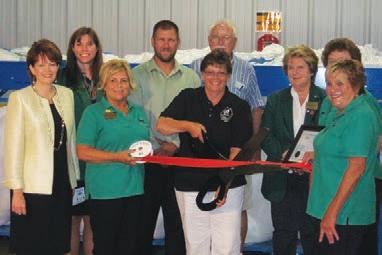
The organization, which provides job opportunities for people with disabilities in the Southeast Minnesota area, sought to open the laundry facility to provide a more stable source of employment for disabled workers.
“One of the issues that we currently have with our manufacturing work, and have always had, is that it comes and goes,” says Todd Olson, director of operations. “Being in the employment industry ... we were looking for types of jobs that would be long-term that we have some control of ... and something that had a little bit of stability throughout the year.”
The organization had always considered opening a laundry facility, but concrete plans didn’t materialize until about five years ago. Because Winona ORC had no experience processing laundry, it had to do its research.
“I don’t think any of us knew what a commercial laundry meant,” says Olson. “We went to a couple of commercial laundries within the region and we were just blown away at what a commercial laundry really was.”
The organization consulted with Shane Woodson from National Industries for the Severely Handicapped (NISH) in figuring out the construction, layout and logistics. After deliberating the venture’s financial aspects, Winona ORC decided that opening a laundry would be beneficial.
“We said at that point ... this is a wonderful long-term fix for us ... it’s really good work because it provides a variety of skills sets [from] simple tasks like folding washcloths, all the way up to fairly complex tasks, like running machines,” says Olson.
Winona ORC reached out to local donors to raise funds. The organization was able to cut costs by rehabilitating one of its existing production facilities.
“Over the course of time, we’ve done a lot of [production jobs] in there, and we just felt like it was better served as a laundry than
those other jobs,” says Olson.
Construction, which began in February, included the installation of new plumbing.
“We really took the specs that [NISH] used to design a facility for a [veterans] hospital. We have a barrier wall that divides our soiled side from the clean; we’ve got an incoming dock on the soiled side; we’ve got an outgoing dock on the clean side, so our linens never bypass each other,” says Olson.
“We’ve got pass-through washers that are built into the wall … and then we pump 10 air exchanges per hour into the clean side through to the soiled side and out so we also have that air barrier.”
The facility uses two 200-pound Braun pass-through washers and two 200-pound Milnor dryers, amongst others, with room for more to be installed.
“To date, with the equipment we have, [capacity is] about 1 mil-


lion pounds a year, and as we grow and add washer capacity, the facility was constructed to be able to handle about 3 million pounds a year,” says Olson.
At this writing, Winona ORC is in the contract stages with three local healthcare institutions, and has been in talks with nine other local companies.
In the meantime, the plant has been able to acquire “practice” linen from the Gundersen Health System.

“We were able to get a couple thousand pounds from them, and so our people are now sorting and washing and we’re running all of our machines and getting a good four hours a day of actual practice on those linens,” says Olson.
The new facility will add about 60,000 hours of work annually for Winona ORC’s employment system, he says.
“It’s beyond exciting to see it all actually come together,” says Olson. “It’s really special to be able to take something that we’ve worked so long and hard on and then actually share it with the community … was pretty gratifying.”
over 50 years U.N.X. INCORPORATED has been involved in the development of

that not only solve quality problems that exist at the moment, but also provide long term benefits to the customer and the environment in which we live.
ALNFAIRFIELD, N.J. — With attendance up 18% over recent conferences, the Textile Care Allied Trades Association (TCATA) deemed its 2013 Annual Management & Educational Conference a “big success.” The Rancho Bernardo Inn in San Diego played host to the four-day meeting that ended Aug. 3.
More than 20% of attendees took in their first-ever TCATA conference. “I was very pleased to see such a strong attendance of ‘first timers’ at the conference – the involvement of so many new people in our industry is a good sign for the future of TCATA,” says Bryant Dunivan, association president.
Covering a wide range of topics, the business program received high ratings from attendees. Featured speakers included Beth Ziesenis, who addressed low-cost or free technology tools for busy executives; Barry Maher, on improving communication skills; and Mike Marks, on how to survive in the “new normal.” Several attendees commented that they planned to immediately implement several ideas they picked up from the speakers.
A special conference highlight was a dinner at nearby Marine Corps Air Station Miramar, where attendees had an opportunity to see fighter jets and mix with active-duty personnel. A portion of the fees paid to the event management team, as well as sales of T-shirts, caps and military memorabilia, goes to a charity fund for the Marines.
The meeting ended with a closing dinner during which conference chair Kim Shady of Laundrylux thanked all committee members and Dunivan presented awards to two companies celebrating many years of TCATA membership: American Trade Magazines (publisher of American Laundry News), Chicago, 75 years; and R.W. Martin & Sons, Kent, Ohio, 25 years.
Next year’s TCATA conference is scheduled for April 30-May 3 in Naples, Fla.
NEW ORLEANS — During Clean ’13, Chicago Dryer Co. hosted the Chicago VooDoo Krew party in the French Quarter. As part of the festivities, the equipment manufacturer honored its outstanding distributor organizations and personnel with the following:
• President’s Award — Derek Ward, Pellerin Laundry Machinery Sales Co.
• Rising Star — Amr M. Hussein, AIRahden Co., Saudi Arabia.
• Best of the Best Distributors — PAC Industries, Pellerin Laundry Machinery Sales Co., Steiner-Atlantic Corp., and Western State Design.
• Outstanding Performance by Sales Personnel — Bill Bell, Steiner-Atlantic Corp.; Phil Charlton, Western State Design; Ron Hirsch, Direct Machinery Sales Corp.; Tom Marks, Western State Design; Fernando Ousset, Luis Ousset R., S.A.; and Ralph Tuccillo, Steiner-Atlantic Corp.
• Teamwork — Gema Cacho Aldaco, Luis Ousset R., S.A.; Jim and Jeff Fitzgerald, Herb Fitzgerald Co.; Timm Mullen, Martin-Ray Laundry Systems; and Trudy Schiro and Tiffany Romano, Pellerin Laundry Machinery Sales Co.

NEW ORLEANS — ADC (American Dryer Corp.) kicked off its Clean Show 2013 with a bam, hosting a customer appreciation party at Emeril’s New Orleans the night before the show opened. And to end the festive evening, CEO Joe Bazzinotti presented his company’s inaugural Martin Slutsky Award to Hercules Corp.
Hercules is the largest family-owned laundry room outsource provider in the country, ADC says, and has been a leader in the New York, New Jersey, Connecticut and Pennsylvania multi-housing markets for more than 50 years.

“Hercules has been a valued customer for over 30 years,” Bazzinotti says as he presents Adam May and Paul Finkelstein with the glass sculpture award. “A collaborative effort between our companies has resulted in innovative products that drive our industry forward!”
The high honor was designed to pay homage to ADC founder Martin Slutsky. ADC continues to build upon his philosophy by offering products and services that invest in

new technology, seamless design, and innovative capabilities.
Slutsky’s most renowned accomplishment was inventing the 30-pound stack dryer to help coin laundries double drying capabilities, increase sales and save space.

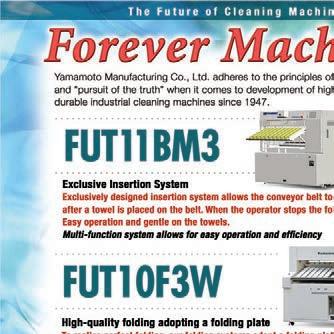
RIPON, Wis. — UniMac recently presented Southeastern Laundry Equipment with its 2012 Distributor of the Year award, marking the 15th time that Southeastern has won this award.
“It’s no surprise that Southeastern Laundry continues to be recognized with the UniMac Distributor of the Year award— they do everything well,” says Bill Brooks, North American sales manager for UniMac. “Southeastern is the perfect partner and a complete expert in the on-premises laundry industry.”
The Distributor of the Year award is given to the top-performing UniMac distributor based on total sales volume for the year. However, beyond just sales totals, Southeastern has proven its value through consistent growth and broad experience in the OPL industry, Brooks notes.
“We are honored to win UniMac’s Distributor of the Year award,” says Cindy Richie, vice president and general manager of Southeastern Laundry Equipment. “It is a true testament to our sales and service staff and to the superior equipment and support provided by UniMac.”
Southeastern sets the foundation for yearover-year sales growth by maintaining longterm, tenured employees who fully understand the value of knowledgeable customer service, she adds.
Trebor Brown founded Southeastern Laundry in 1976 in Marietta, Ga., and the company has been a UniMac distributor from its beginning. Southeastern now
employs roughly 50 staff members in providing services to Georgia, Florida, Alabama and southern Tennessee.
MINNEAPOLIS — AmeriPride Services has unveiled a new cleaning chemicals management program available to all existing and prospective customers in the United States and Canada.
AmeriPride is now offering businesses cleaning products and supplies, “helping save time and money by consolidating services and reducing product stored on premise,” the company says.
“The company already delivers linen, uniforms, floor mats, restroom products and other facilities services to its customers on a regular schedule,” says President and CEO Bill Evans. “Expanding into cleaning chemicals is a natural extension for the business and a strong addition to our portfolio.”
The program includes a variety of cleaning products, including all-purpose cleaners, multipurpose disinfectants, glass and surface cleaners, and more.
“Cleaning chemicals are available in three product offerings, including Ultra Concentrates used in dispensing systems; Concentrates that are mixed on-site and used in spray bottles, mop buckets and auto scrubbers; and Portion Packs that are precisely measured for dilution in 32-ounce spray bottles,” the company says.
AmeriPride reached out to Custom Chemical Solutions, a division of Washing Systems, as a “strategic partner.”
“We’ve always taken a customer-centric approach and we’re always looking for ways to provide additional value to our customers,” says Evans. “By helping reduce costs and streamline processes, we are deepening relationships with customers while fueling growth for the company.” ALN

10-11 Textile Rental Services Association Fundamentals of Commercial Laundry Risk Management Program G.A. Braun manufacturing facility Syracuse, N.Y. Info: 877-770-9274
15-18 Association for Healthcare Environment EXCHANGE 2013 Indianapolis (Ind.) Convention Center Info: 312-422-3860
16 Association for Linen Management Manager Series Webinar: Coaching Staff to Save Money and Product Resources Info: 800-669-0863
18-19 Wisconsin Association of Textile Services Fall Conference and Golf Outing Lake Lawn Resort & Spa, Delavan, Wis. Info: 414-529-4702
22-25 Textile Rental Services Association Annual Conference Fairmont Sonoma Mission Inn & Spa, Sonoma, Calif. Info: 703-519-0029, ext. 108
29-2 Independent Textile Rental Association Annual Convention Silverado Resort and Spa, Napa, Calif. Info: 706-637-6552
7-11 Pellerin Milnor Corp.
Continuous Batch Washer (CBW®) and PulseFlow (PBW™) Tunnel Systems Service Seminar New Orleans, La. Info: 504-712-7716, service@milnor.com
14-16 G.A. Braun
Washer-Extractors Service School Syracuse, N.Y. Info: 800-432-7286, ext. 254; btoman@gabraun.com
16 Textile Rental Services Association
Production Summit Westin Peachtree Plaza Atlanta, Ga. Info: 703-519-0029, ext. 108
17 Textile Rental Services Association Executive Roundtable - F&B Westin Peachtree Plaza Atlanta, Ga. Info: 703-519-0029, ext. 108
17-18 G.A. Braun
Dryers Service School Syracuse, N.Y. Info: 800-432-7286, ext. 254; btoman@gabraun.com
22-25 Pellerin Milnor Corp.
Washer-Extractors Service Seminar New Orleans, La. Info: 504-712-7716, service@milnor.com
Commercial/Industrial Laundry Equip


Service Tech Position serving MidAtlantic: WV,VA,MD,PA,DC. Experience w/ Volt Meter, Wiring Schematics, 1 and 3 Phase power. Physical activity and lifting reqd. Customer relation skills and good driving record reqd. Travel and work 40+ hours per week. Independent work, knowledge w/ plumbing, electric. 800-866-6905 cameron@leslaundry.com



Tristate TLC a dynamic Milnor/Chicago/ ADC Distributing Company requires a salesperson to manage well established territory. Candidate will need to reside or relocate to Atlanta and be responsible for laundry equipment sales in Central and Northern Georgia. Resume to classifiedsales13@ gmail.com or call Chris Duffett 912-3389110 or email cduffett@tristatetechnical.com

Sani Wash - McClure Industries, Inc. 9051 SE 55th Ave., Portland, OR 97206 800-752-2821 www.mcclureindustries.com, info@mcclureindustries.com
















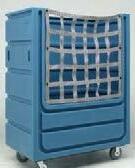

Gardner Machinery Corporation
P. O. Box 33818, Charlotte, NC 28233 Ph.: (704)372-3890; Fax: (704)342-0758 www.gardnermachinery.com





Pellerin Milnor Corp.



P.O. Box 400, Kenner, LA 70063 504-467-9591, Fax: 504-468-3094 www.milnor.com




American Dawn www.americandawn.com 7
American Dryer Corp. www.amdry.com 19
American Laundry Systems www.eomech.com 16
Consolidated Laundry Machinery www.clmco.com 23
Cornerstone Equipment & Rigging www.cornerstonemachinery.com 28
Direct Machinery Sales Corp. www.directmachinery.com 28
EDRO Corp. www.edrodynawash.com 21
EZProducts International www.ezproductsinc.com 26
Freightliner Custom Chassis Corp. www.freightlinerchassis.com 13
The Griffin Group, Inc. www.thegriffingroup.cc 28
G.S. Manufacturing www.gsm-cart.com 22
Girbau Industrial www.girbauindustrial.com 15
Hamilton Engineering www.hamiltonengineering.com 22
Ingersoll Rand www.ingersollrandproducts.com 26
IPSO www.ipso.com 17
Source Directory listings in American Laundry News are sold on an annual basis at the following rates:

J.P. Equipment
Pellerin Milnor Corp.
P.O. Box 400, Kenner, LA 70063 504-467-9591, Fax: 504-468-3094 www.milnor.com
Pellerin Milnor Corp.
P.O. Box 400, Kenner, LA 70063 504-467-9591, Fax: 504-468-3094 www.milnor.com

Pellerin Milnor Corp.
www.ineedjpequipment.com 28
Kannegiesser USA www.kannegiesser.com 24
LaundryCareers.com www.laundrycareers.com 28
Laundrylux www.laundrylux.com 11
Lavatec Laundry Technology www.lavatec-laundry.com 32
LG www.lgcommerciallaundry.com 5
Maytag www.maytagcommerciallaundry.com 9
NATCO www.nationalcombustion.com 27
Pellerin Milnor www.milnor.com 3
Royal Basket Trucks www.royal-basket.com 18
Stanco Industries www.stancoind.com 28
U.N.X. Inc. www.unxinc.com 25
Washburn Machinery www.washburnmachinery.com 28
Yamamoto www.yamamotolaundry.com 27