EPA rule reduces regulatory burden on solvent wipes
WASHINGTON —
The U.S. Environmental Protection Agency (EPA) on July 23 modified the hazardous waste management regulations under the Resource Conservation and Recovery Act (RCRA) to conditionally exclude solvent-contaminated wipes provided that businesses clean or dispose of them properly.
The so-called “shop towel” rule is based on EPA’s final risk analysis that concluded wipes contaminated with certain hazardous solvents do not pose significant risk to human health and the environment when managed properly.
Wipes are used in conjunction with solvents for cleaning and other purposes by many facilities in numerous industrial sectors, such as printers and automobile repair shops. Reusable wipes are cleaned by industrial laundries and returned to customers.
To be excluded from the regs, solvent-contaminated wipes must be managed in closed, labeled containers and cannot contain free liquids when sent for cleaning or disposal. Also, facilities generating solvent-contaminated wipes must comply with certain record-keeping requirements and may not accumulate wipes for longer than 180 days.
Passage was applauded by the Textile Rental Services Association (TRSA), which has actively advocated for the rule since it was introduced nearly 10 years ago. ALN
rikers island laundry upgrade pays dividends for nyc
 Story and PhotoS by richard Merli
EAST ELMHURST, N.Y. —
A $5 million renovation of the on-premise laundry at the Rikers Island jail is rapidly producing dividends for the city of New York, not only by reducing energy and water consumption, but also by making the facility a resource.
After Hurricane Sandy devastated the New York City area last fall, the laundry pitched in and processed thousands of pounds of linen and personal clothing for people in emergency shelters. It was the first time Rikers’ laundry was used to help in a citywide emergency, according to the New York City Department of Corrections.
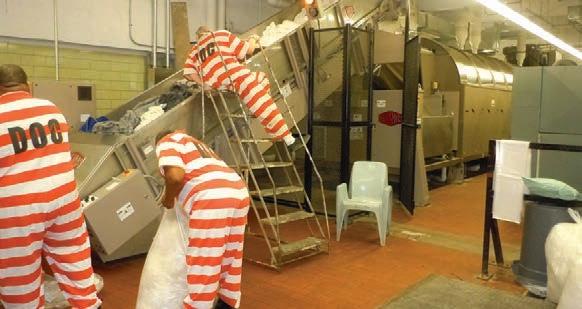

The laundry produces approximately 2,000 pounds of clean goods per day, or about 500,000 pounds per year, including sheets, towels, washcloths, pillowcases, wool blankets and inmate jumpsuits, for the inmate population at Rikers and the city’s other jails. But the plant was designed with the capacity to process up to 3,600
pounds of laundry per hour. The expanded capacity enabled it to play an important role in the wake of Hurricane Sandy.

“They’ve been incredibly successful to date,” says Ron Hirsch, president of Direct Machinery, the equipment distributor based in Hicksville, N.Y., which managed the renovation. “The project was predicated on energy and water
savings. The savings have been beyond major in that area, but they also provided the city with tremendous support during the crisis. They were a huge asset to the city.”
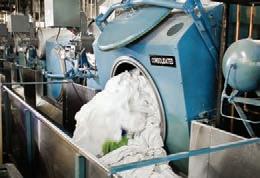
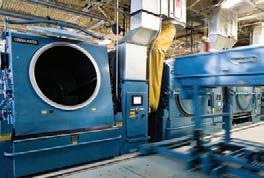
The cornerstone of the project was the installation of a Milnor tunnel washing system. The PulseFlow tunnel washer uses, on average, 0.35 gallons of water per pound of soiled linen, compared to approximately 3 gallons of water per pound using washer-extractors. Plant management expects the new washing system will save approximately 2.3 million gallons of water annually.
Management also estimates the new equipment will save approximately $231,000 a year in gas and electric costs. Rikers operates its own power plant.
Most of the project’s funding came from a $5 million American Recovery and Reinvestment Act (ARRA) grant, earmarked for the New York Power Authority (NYPA) and administered by the Department of Citywide Administrative Services (DCAS).
Installation of the tunnel system and new drying and ironing
equipment has enabled the laundry to improve workflow and to minimize the handling of goods, according to Darrell Jennings, laundry superintendent at Rikers.
“With this system, we can tackle anything efficiently,” he says. “It’s a much faster process. We keep feeding the tunnel until all the work is done. There’s no waiting time or downtime. The production efficiencies in the new system are excellent.”
During the renovation in JulyAugust 2012, the laundry removed six side-loading washer-extractors, seven dryers and three ironers.
The new Milnor eight-module tunnel system reduces not only the use of water but also the need to heat water. Its Mentor computer management system enables management to track the status of goods in the tunnel.
The Milnor system includes a loading conveyor that feeds the tunnel; an extraction press; and elevating shuttle conveyors that load 150-pound wash cakes into the four automated 320-pound
Panel of Experts
Clean Show Report: Eye on Efficiency

a UGUSt 2013
Late News
Volume 39, number 8
the newspaper of record for laundry & linen Management
www.americanlaundrynews.com
inSide [6] [12]
A clean workplace boosts morale and promotes proper safety.
The final attendance total is in, plus we take a peek at some of the products and services exhibited in New Orleans. [19] Product showcase Water reuse/ recycling systems See RIKERS on Page 2
Inmates load soiled goods into a conveyor that feeds the new Milnor tunnel washer in the Rikers Island laundry in New York.
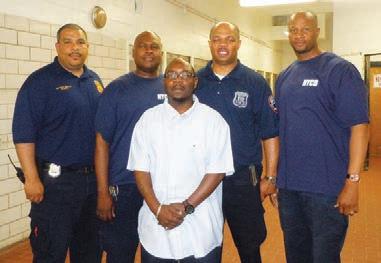
A staff of five oversees the Rikers Island laundry operation: (from left) Captain Estanislao Perez, Corrections Officer Dennis Phillips, Laundry Supervisor Darrell Jennings, Corrections Officer George Person, and Corrections Officer Michael Joyner.
Survey: Most attendees satisfied with
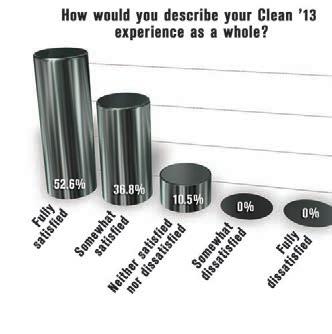
CHICAGO — Many of the laundry managers and textile rental operators who attended the Clean Show last month in New Orleans were, on some level, satisfied with their experience as a whole, according to July’s American Laundry News Wire survey.
Nearly 53% were “fully satisfied” and 36.8% were “somewhat satisfied.” The remaining 10.5% of respondents were “neither satisfied nor dissatisfied.”
Among the survey’s respondents, 65.5% attended the event and 34.5% did not. The majority of those who did not attend cited budget constraints (60%). Another 40% couldn’t work it into their schedule. Though a small percentage were not able to attend the show personally, other staff members were able to make the trip (10%).
The show’s experimental three-day schedule produced a mixed bag of reactions. While a majority of respondents liked the new format, one wasn’t as receptive. “All three days did was cut out a busy day.”
Among respondents, 94.7% attended the show’s first two days. The percentage dropped to 63.2% on the closing day.
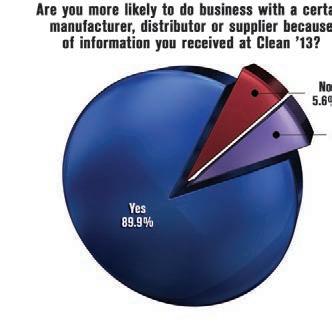
Linen vendors and suppliers, bagging equipment, and flatwork folders were among the most sought-after exhibit categories, according to the survey. Nearly nine out of 10 respondents reported they are “more likely to do business with a certain manufacturer, distributor or supplier because of information (they) received at Clean ’13.”
Several trade associations sponsored educational sessions throughout the event. All in all, 42.1% of respondents sat in on at least one educational session: 15.8% attended four or more, 15.8% attended two, and 10.5% attended one. The majority of attendees, however, opted to not attend any educational sessions (57.9%).
Overall, many managers and operators left the show upbeat. “The staff was very helpful with directions and information,” writes one attendee. “(The show was) well organized, (and the) industry (was) well represented by both suppliers and buyers,” adds another.
While the Wire survey presents a snapshot of readers’ viewpoints at a particular moment, it should not be considered scientific.
Subscribers to Wire e-mails are invited to take the industry survey anonymously online each month.

All managers and administrators of institutional/OPL, cooperative, commercial and industrial laundries are encouraged to participate, as a greater number of responses will help to better define operator opinions and industry trends. ALN
Rikers
pass-through dryers. A computerized Miltrac system enables laundry management to track the status of clean goods in the drying system. Inmates process clean goods through three new Chicago Dryer Co. Imperial 232 steamheated ironers. The laundry kept its Washex finishing equipment.
Inmates in the laundry earn 39 cents per hour, but also acquire job skills that could one day prove useful in the outside world, according to Jennings.
The laundry did not experience downtime during the renovation. “It was very challenging working at night while the old laundry continued operating,” says Hirsch.
Good coordination among contractors and the laundry made for a smoother transition. Project planning began two years before the actual work began. One major challenge involved replacing steel beams and reinforcing the floor beneath the tunnel system, according to Richard Turchiano, president
of Richard’s Plumbing and Heating Company, based in Brooklyn.
“We had to plan very carefully with facility management,” he says.
The timing of the laundry installation was fortuitous and proved to be a boon for the city when Sandy struck, says Hirsch.
With 8,500 uniformed staff, Rikers is a miniature city within a city, sometimes referred to as New York City’s sixth borough. Spread over 400 acres and isolated in the East River, the jail has its own schools, infirmary, power plant, auto shop, car wash, chapels, commissary stores, barbershops, bakery, tailor, print shop, and athletic fields and gyms.
Access is restricted to a narrow, two-way bridge overseen by security checkpoints at either end.
Approximately 10,000 inmates are incarcerated on Rikers Island; 80% of them have been sentenced to a year or less in jail, while the remainder are awaiting trial.
Among the Rikers Island facilities are a jail for sentenced males, another for sentenced and detainee females, and a detention center for adolescent males aged 16 to 18. Seven other jails there house adult male detainees.
Publisher
Charles Thompson
Phone: 312-361-1680
E-Mail: cthompson@ americantrademagazines.com

Editorial Director
Bruce Beggs
Phone: 312-361-1683
E-Mail: bbeggs@ americantrademagazines.com
Digital Media Director
Nathan Frerichs
Phone: 312-361-1681
E-Mail: nfrerichs@ americantrademagazines.com
Production Manager
Roger Napiwocki
Contributing Editor Jean Teller
Editorial Assistant Carlo Calma
Advertising Sales
National Sales Director

Donald Feinstein
Phone: 312-361-1682
E-Mail: dfeinstein@ americantrademagazines.com
Office Information
Main Phone: 312-361-1700 Fax: 312-361-1685
Subscriptions 630-739-0600 www.americanlaundrynews.com
American Laundry News (ISSN 1091-9201) is published monthly. Subscription prices, payment in advance: U.S. & possessions, 1 year $39.00; 2 years $73.00. Foreign, 1 year $89.00; 2 years $166.00. Single copies: U.S. & possessions $7.00; Foreign $14.00.
Published by American Trade Magazines LLC, 566 West Lake Street, Suite 420, Chicago, IL 60661. Periodicals postage paid at Chicago, IL, and at additional mailing offices.
POSTMASTER, Send changes of address and form 3579 to American Laundry News, Subscription Dept., 440 Quadrangle Drive, Suite E, Bolingbrook, IL 60440. Volume 39, number 8. Editorial, executive and advertising offices are at 566 West Lake Street, Suite 420, Chicago, IL 60661. Charles Thompson, President and Publisher. American Laundry News is distributed selectively to qualified laundry and linen management and distributors in the United States. No material appearing in American Laundry News may be reprinted without written permission. The publisher reserves the right to reject any advertising for any reason.
© Copyright AMERICAN TRADE MAGAZINES LLC, 2013. Printed in U.S.A. Association
MEMBERSHIPS
2 AUGUST 2013 | AMERICAN LAUNDRY NEWS www.AmericanLaundryNews.com
for Linen Management
Clean
INSIDE: [4] OPL 101: Training Employees on New Equipment OPL managers may not consider the training process until equipment buying decisions have already been made [4] Reflections on Clean Show 2013 Columnist Eric Frederick says he’ll remember the 2013 show as the “year of the textile revolution” [6] Panel of Experts “What tasks should we be performing regularly to keep our facility clean?” [12] Clean Show Report: Eye on Efficiency We examine a sampling of the products and services exhibited in New Orleans [18] Laundry Care Efficiency and Effectiveness Finding ways to conserve valuable resources is a never-ending quest for launderers [19] Product Showcase: Water Reuse/Recycling August 2013 • Vol. 39 | No. 8
’13
ALN
Continued from Page 1

One last Clean sweep
he numbers from New Orleans are in and I’m not surprised they are down a little from the Las Vegas show of two years ago. I was pleased when exhibitors told me the crowd included many decision-makers focused on acquiring tools to bolster their business.
Attendance is the simplest indicator of a show’s “success” (from the exhibitor’s perspective, a greater number of people equals greater chances to make a sale), but I believe the true value of the Clean Show may not be known for months or even years. Clean isn’t so much about
making the sale on the spot as it is about making an impression, getting a foot in the door. And there was plenty of that this year.
• • • • •
The September issue will feature our annual Distributors Directory. Distributors, if you haven’t been contacted about updating your company’s listing (we solicit information for the free listings solely by e-mail now), e-mail Digital Media Director Nathan Frerichs at nfrerichs@ americantrademagazines.com to remedy that. ALN
Training on-premise laundry employees on new equipment
by mike hAnd
On-premise laundry managers may not consider the training process until equipment buying decisions have already been made, but discussing training needs with a distributor before purchasing equipment can help ensure a smooth transition to new machines.
In addition to recommending durable machines that are easy to use, a knowledgeable distributor should offer training resources that empower customers to operate an efficient and safe laundry facility.
Two-Part Process
To best address these elements, deploy a two-part training process. The first part should involve
a group meeting of managers, operators and technicians during which a distributor provides highlevel introductory information about the machine’s features and benefits.
After this initial meeting, the group can be split into two sections for more specialized individual training. The front office, which can include the general manager, an assistant or a facilities maintenance person or engineer, requires much more extensive training programs than the actual laundry operators do.
Whether it is a hospital, hotel or nursing home, all managers are looking for the best way to maximize throughput, decrease utility and labor costs, and extend the life of their linens. The management

training process starts by introducing this group to the machines and control system so they have a complete understanding of all the features available to help meet their goals.
The distributor also works with the back-of-house employees, including the head of the laundry facility and other laundry personnel. This group is trained specifically on the operational side of the machine, such as selecting laundry cycles and responding to maintenance error codes.
Easy-to-Use Control System
Training is simplest for all involved when machines feature an upgraded, easy-to-use control
reflections on clean Show ’13
The 2013 edition of the Clean Show is now history. I have to follow up with a number of vendors on several key projects that I have been investigating.
I enjoy thoroughly losing myself in Clean. Over the 40 years I have been actively involved in the laundry industry, I have attended 17 of the 19 Clean Shows.
Each show has had its own flavor and sense of adventure. I will remember this year’s show in New Orleans as the year of the textile revolution. I was shown two competing systems that offered the laundry and end-users various benefits.
The first system I will discuss is one presented by MIP. The company engineered a line of bed linen that is designed to resist stains, reduce drying times, eliminate the ironing and folding for a number of items (sheets, pillowcases, patient gowns), reduce required processing labor, reduce lint and increase linen life expectancy. Such claims require further investigation, and I willingly sat through a half-hour presentation during the show.
I can see the system working real well in a small in-house hospital laundry or nursing home. The fact that the system virtually eliminates the need for an ironer can be a real advantage for this type of facility. The polyester linen reduces drying time, which would be a real advantage for most nursing homes that lack adequate dryer capacity.
Regarding a large central laundry, the need to produce large quantities of linen and bulk-deliver them to customers would make the system less practical. In my case, it would require all my customers to accept the change in order for me to reap maximum rewards from the program. Trying to run a traditional linen system and the MIP system through the same laundry at the same time would be most complicated, I believe.
The other system that caught my eye was a therapeutic bedding technology presented by Standard Textile. The company’s literature indicates that it is a “new family of specially designed antimicrobial fabrics for bed linens and patient apparel, which are cleaner, drier and smoother. These therapeutic fabrics address the microclimate surrounding the patient, with the purpose of minimizing friction, shear, moisture and heat – all are important factors in proper skin care.” A flat sheet, contour sheet, pillowcase, bed pad and two sizes of patient gowns are being marketed.
A number of hospitals in my immediate market area are trying out this linen. Preliminary results indicate instances of pressure ulcers have dropped dramatically and hospital stays have been shortened. The white material looks and feels much like the yellow reusable barrier isolation gown material but is designed to absorb and wick moisture away from the patient.
Processing and packaging this therapeutic fabric is a challenge. The lightweight material will not hold a cake and therefore is not a good candidate to be processed in a tunnel washer. The nature of the fabric will reduce moisture retention and make it possible to go directly from the washers to the flatwork finishing section of the laundry. The pads and gowns will dry faster than their traditional counterparts. The product’s “slick” nature will require additional packaging in order to be properly handled through the linen distribution system.
I found both of these systems interesting, and there should be ample applications for both in the healthcare laundry industry. ALN
Eric Frederick is director of laundry services for Carilion Laundry Service, Roanoke, Va., and a past president and manager of the year of the Association for Linen Management. You can reach him by e-mail at efrederick@carilion.com.

4 AUGUST 2013 | AmericAn LAUndry newS www.AmericanLaundryNews.com Top Stories Appearing on AmericanLaundryNews.com for the 30 Days Ending July 15 (WE) = Web exclusive news • Crown Uniform & Linen Unveils Plan to Build New Facility • Chicago Dryer Co. Files Patent Infringement Lawsuit vs. Jensen
Construction Begins on Starr Textile Services Plant
Cintas, GK Direct Among NAUMD Image of Year Winners
AHE Announces Speaker Lineup for EXCHANGE 2013 Conference Columnists/Features • Need to Lower Costs? Try Increasing Linen Life • OPL 101: Principles to Consider When Choosing Distributor Partner • Global Market Changes Heighten Textile Sourcing, Selection Challenges • Refining Your Company’s Safety Standards • Making Your Laundry’s Case for Capital Improvements our sister websites From AmericanDrycleaner.com: • Numbers Are In: Clean 2013 Drew 10,300 to New Orleans • Clean Show Bids Farewell... From AmericanCoinOp.com:
Numbers Are In: Clean 2013 Drew 10,300 to New Orleans
Effectively Managing Multiple Coin Laundries
•
•
•
•
•
T
Columnist At lArge Eric L. Frederick, RLLD
“eAch Show hAS hAd iTS own fLAvor And SenSe of AdvenTUre.
i wiLL remember ThiS yeAr’S Show in new orLeAnS AS The yeAr of The TexTiLe revoLUTion.”
From The Director’s Chair brUce beGGS
See OPL 101 on Page 11 OPL 101:
HOSPITALITY SOLUTIONS





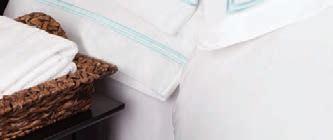













aDi-american Dawn manufactures, imports, and distributes textiles for hospitality, food and beverage, healthcare, industrial, microfiber, home fashion and salon markets worldwide. aDi offers textile collections in bath, pool, kitchen towels, bed linens, robes and table linens; as well as top of the bed accessories from duvet covers, bed scarves, matelasses and decorative pillows.

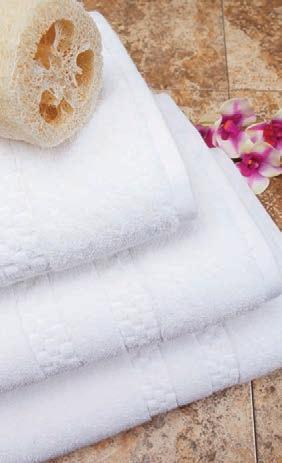




Villa Di Borghese™ hospitality products are fashioned from the finest materials; meticulously designed to capture an exquisite sense of Italian beauty, fashion and style.
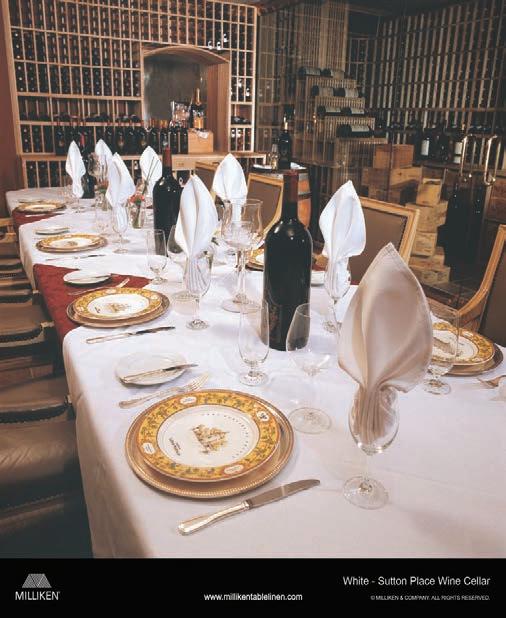
Made In USA Signature Plus™ fabric outperforms all challengers in elegance, soft touch, color consistency and soil/stain release. American Dawn and Milliken... setting the standard of table linen excellence.







10 Distribution centers across north america
®
800 821 2221 americandawn.com
hospitality@americandawn.com
PAneL of exPerTS
Clean workplace promotes morale, safety




we fail to keep the production floor clean and organized. Being clean and organized helps boost employee morale, provides a safe and secure environment, cuts down on equipment downtime, helps extend the life of equipment, and leads to both lower costs and improved productivity.
T
he plant that looks good runs well.
One time, many years ago, in a large commercial laundry plant that I ran, my production management team set out to break the plant’s weekly pounds per operator hour (PPOH) record.
Its focus was sharp, honed to a fine edge, thinking of nothing but PPOH. Indeed, my production management team was successful in achieving the highest PPOH in the plant’s history!
Bravo! Or so they thought.
The following Monday, I gathered the team in the conference room for what they thought was to be a celebration. Instead, while congratulating them on their achievement, I asked the team what was sacrificed to achieve this goal. When the group could not provide an answer, I took the team on a tour of the plant.
Stained and reclamation work, which was always completed weekly, hadn’t been touched. The same was true for the ragouts and rejects. Equipment that had always been cleaned off by the operators at shift’s end was dusty.
The housekeeping at the workstations was noticeably lacking, where only a week before it had been top-notch.
Similarly, the soil-sort belt and soil-room floor that were routinely cleaned and scrubbed at the end of each night were filthy.
These were the sacrifices made to “improve” the plant’s productivity. In essence, the very things that made us a successful operation in practice were scrapped to make us look better on paper.
The lesson for my team was that getting caught up in one measurement of performance to the exclusion of all else was detrimental and would only lead to failure.

I tell this story to make my point that we should never get so caught up in getting work processed and out the door that
Daily cleaning tasks provide a significant contribution to good housekeeping, and they can be done quickly at the end of each day using production personnel. They include:
• Cleaning soil-sort conveyor
• Cleaning soil-sort floor
• Clean all lint filters
• Wipe/blow down all equipment
• Sweep/vacuum/blow down under all equipment
• Sweep production floor
• Visually inspect all equipment for leaks, bad belts, etc.
The tops of all equipment should be clean and organized. The equipment operators should be trained to “clean as they go” in order to properly maintain their workstations.
Lint removal is both a housekeeping and safety initiative. Exhaust ducts should be cleaned of lint weekly. At a minimum, plants should be blown down quarterly.
Plant housekeeping and equipment preventive maintenance go hand in hand. Both are necessary to protect company assets and provide cost-effective, high-quality products.
How often equipment undergoes preventive maintenance depends on how often the machine is used. An ironer running two shifts every day of the week will need to replace pads and covers more frequently than an ironer operating one shift five days a week.
At a minimum, each piece of laundry equipment needs a thorough maintenance check, lasting two to three hours, every six months. During this time, check and replace (if necessary) the belts, door gaskets, handles, locks, hoses, drains, bearings, chains, sprockets, solenoid valves, level switches, inverters, clutches, motors, lint screens, valves, blowers, timers, etc.
Drain and replace any oil. Remove all lint build-up inside
the equipment. A fresh coat of paint on the equipment’s exterior panels will enhance the laundry’s overall appearance.
Employees feel better working in—and customers feel better entrusting work to—a clean, cared-for facility.
This great topic is one that every laundry in America can work on. The main enemy of a laundry is lint, lint and more lint. How do we keep the laundry clean when we generate so much lint? The industry has some equipment that can help in the fight against lint buildup: external lint collectors for dryers, 360-degree fans that remove lint from ceilings, and lint “busters” that will trap lint in filters.
Compressed air and shop vacuums are another weapon against lint. Blowing down and vacuuming your equipment to remove lint will not only make the workspace more enjoyable for your employees, it also optimizes your equipment. Most flatwork equipment uses photo-eyes, which do not like dirt and lint. If you are experiencing jams or poor-quality folds on your sheet folder, the photo-eye may be covered with lint.
The simple practice of blowing down the equipment first thing in the morning prior to start-up can improve quality, efficiency and the overall work environment. Another area to examine is your process. For example, are you generating too much lint by over-drying your textiles? Newertechnology dryers with microprocessor controls and moisture detection can reduce over-drying. Benchmark with your local chemical and equipment vendor to make sure that you’re using your chemistry and equipment correctly.
Make cleaning a priority, and make it part of your preventive maintenance. Give your engineer-
Sometimes, we get so caught up in getting the work processed and out the door that we don’t keep the laundry production areas as clean as they should be. What tasks should we be performing regularly to keep our facility clean? To what degree do we need to clean our equipment and how often?
ing team a portable Shop-Vac®. Open up the panels of your equipment to vacuum the lint trapped inside.
During my laundry visits, I am amazed how often I see washers that are only a few years old but look like they are 20 years old because no one has wiped them down. Conversely, I have seen 20-year-old washers that look brand-new because they have been cleaned on a regular basis.
As managers, the hardest thing to manage is people. Getting your employees to buy into your procedures is the key. Simple housekeeping chores can make a world of difference for not only a cleaner environment but a safer one as well.
And don’t think that performing daily and weekly preventive maintenance on machinery and trucks doesn’t contribute to this mission. All of these tasks, plus many more not mentioned here, are extremely important to maintaining a smooth-running, successful operation with productive employees.
One of the most exciting parts of my job is getting to visit many different laundries every week. These laundries come in all shapes and sizes, but one common denominator I see in the most successful, profitable laundries is the cleanliness of the facilities.
The well-uniformed staff proudly represents their company’s brand, and morale is high. The floors are spotless. The product is clean and crisp-looking. And the machinery hums like one of today’s Top 10 songs. These plants shout, “We Are Successful!”
Growing up, I would constantly hear that one universal battle cry chanted by all mothers to their children: “Clean up that mess!” It’s funny, because some 50 years later, I not only hear my wife taking part in that same ritual with our three kids, at times I even find myself leading the chant. When I first started in the laundry industry, working for my father-in-law, the first lesson he taught me was the importance of a clean workplace. He took me into the plant and showed me that a clean, spotless workplace promotes employee morale and safety and fosters success.
By working in a clean, safe environment, employees are proud of what they do and go that extra mile in paying attention to the quality of products they are producing for their customers while performing their daily tasks.
To maintain this standard, everybody has a task, whether it is sorting soil, emptying the dryers, feeding sheets into the flatwork ironer, feeding uniforms into the steam tunnel, putting up the routes or even sweeping the floors and blowing down loose lint from the rafters and lights.
These plants are the one thing every successful salesman dreams of. Once a potential client who is “on the fence” visits one of these clean, bright, shiny facilities, it is game over. Move another opportunity into the win column with the knowledge that a quality product will be delivered.
U
pon reading this question, my mind went to thoughts of periodic blow-down in order to remove accumulated lint from ceilings and rafters. I also thought of the need to keep floors swept regularly; to remove accumulated lint from folders; the waxing of ironers; the immediate cleaning of spills to prevent slips, trips and falls; and other periodic and ad hoc cleaning that is necessary in today’s laundry operations.
But I have decided to address one particular area that is near and dear to my heart, and one that is too often ignored when it
6 AUGUST 2013 | AmericAn LAUndry newS www.AmericanLaundryNews.com
equipment/ Supply distribution
Bill Bell
Steiner-Atlantic Corp. Miami, Fla.
Hotel/motel/ resort Laundry
See EXPERTS on Page 8
Charles Loelius The Pierre New York New York, N.Y.
Uniforms/ workwear manufacturing Scott Delin Superior Uniform Group Seminole, Fla.
consulting Services
David Bernstein
Turn-Key Industrial Engineering Services Charlottesville, Va.
WE WERE GOING TO DO AN AD COMPARING UNIMAC ® TO OUR NEAREST COMPETITOR.


BUT WE COULDN’T FIND THEM.


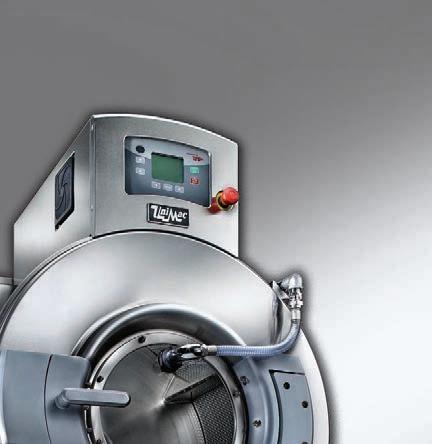
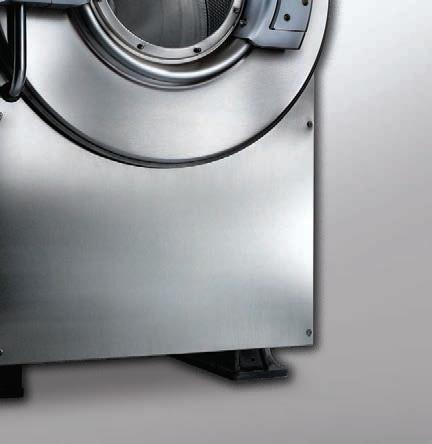
UniMac ® has been leading the industry for more than 60 years. With the all-new UW45 & 65 hardmount washer-extractors, that leadership has been taken to another level. These industrial-strength workhorses are the first in the market to offer an astounding 400 G-force extraction speed while our competitors now have 300 G-force — something we accomplished two decades ago. The result is more money in your pocket due to superior water removal, which reduces dry time and maximizes throughput. Innovative features like UniLinc ™ and OPTidry ™ offer complete laundry room control, optimize efficiency and minimize operating costs. These cutting-edge machines are part of our full line of versatile products designed to deliver the industry’s absolute lowest cost of ownership. Contact an authorized UniMac distributor today to run a laundry operating analysis and see how you can cut costs and save money. Visit UNIMAC.COM/LEADER or call 1-800-587-5458.

SPECIAL FINANCING AVAILABLE. 4.50% finance rate on UniMac washers and dryers. Limited-time offer.
comes to important cleaning tasks that can have a direct and significant impact on productivity, efficiency and throughput.
I have often said that the drying department is one of the most important, yet one of the most ignored, departments in many commercial, industrial and onpremise laundries.
I’ve come to believe that many owners, managers, supervisors and production employees must think of dryers as they do the Energizer bunny or a Timex watch—they just “keep going and going” or they “take a lickin’ and keep on tickin’.”
The reality is that while a well-

manufactured modern dryer will indeed keep going no matter how it is abused, ignored or otherwise improperly maintained, failure to properly clean and perform even simple maintenance will result in a slow, almost imperceptible, degradation in productivity and efficiency.
The first component of a dryer that requires regular cleaning is the perforated portion of the basket (the little holes that allow air to enter the machine and mix with the goods). The heat inside a drying chamber is hot enough to melt onto the basket any plastic items found inside, clogging the holes, thereby reducing drying efficiency and productivity and increasing dry times. One of the biggest reasons why your 2-year-old dryer is taking twice as long to dry loads today as when it was new is clogged basket perforations.
(For purposes of this article, I’m addressing those of you whose dryers do not have removable panels, automated plasticremoval systems, or baskets coated with non-stick materials.)
Obviously, the cheapest and easiest way to remove plastic from dryer perforations is to stop it from entering the machine in the first place. Retraining and monitoring your soil-sort employees will go a long way in this regard. Keep in mind, though, that no matter how diligent your soil sorters are, some plastic is still likely to make its way into your dryers.
The best time to remove plastic is immediately after the load has been removed from the machine while the material is still warm and pliable. Train operators to inspect dryers after every load and to remove melted plastic immediately. Metal baskets may still be too hot for operators to touch with their bare hands, so make sure your operators use gloves and a plastic putty knife. If your dryers are large, requiring someone to enter the machine, be certain to follow proper lock-out/ tag-out procedures and, where required, confined space rules.
If you’re faced with the accumulation of months or years of plastic buildup, removing the plastic manually means hours of scraping, punching or using a wire brush to get the hard-as-concrete plastic out of your dryers. But once clean, you should be able to keep your dryers that way simply and easily in the future.
For those of you who would prefer to clean your dryers through other means, consider hiring a service that uses a truck-mounted pressure washer combined with dry ice to blast, freeze and remove plastic from your machines. These services are not inexpensive, but they are effective in removing heavy build-up.

A less expensive, albeit much noisier, alternative involves placing ceramic balls, about the size of golf balls, inside an empty dryer and allowing them to roll and tumble around, knocking off and removing accumulated plastic.
Next, clean your dryers’ fans and motors, including the main exhaust blower fan and the burner blower motor. Regular cleaning will ensure that the dryer continues to pull the same amount of air through the machine as it did when it was brand new. Perhaps more importantly, you must ensure that the burner blower motor is kept clean, because a dirty blower may not supply enough combustion air to the burner, decreasing efficiency and increasing fuel usage.
And bear in mind that when you clean the motors and fans, be sure to use a vacuum and not compressed air. Compressed air will force accumulated lint, dirt and other debris farther into the motor, instead of removing these contaminants.
“no mATTer whAT Size PLAnT or bUdGeT, There exiSTS Some SimPLe ThinGS To do ThAT Are Proven To benefiT one’S overALL ProdUcTiviTy, SAfeTy And ProfiTAbiLiTy.”
— PhiliP Bodner
Next, it is time to check and clean your lint collectors and lint collection bags. Failure to keep lint bags emptied and/or to inspect and ensure the proper operation of the lint screen and blow-down mechanism on your lint collectors could cause a decrease in dryer efficiency, an increase in dry times, and an increased risk of scorching or fire.
Lint bags should be emptied on a regular basis, preferably several times per shift, and lint screens and operation and observation of the lint blow-down process should become part of your regular preventive-maintenance schedule.
Finally, make sure that you regularly clean (and calibrate) your dryers’ thermocouples (i.e. temperature sensors) and humidity sensors to ensure that your machines’ computer controls are receiving the proper readings in order to maintain peak efficiency and productivity.
The topic of maintaining a clean wash room and production area is one that really resonates with me. I believe that a light routine of scheduled cleaning and organization, and that little extra effort to paint what needs painting and throw out or recycle what needs to go, will pay off in so many ways.
I get to visit many laundry operations of various types and sizes. I call on independent linen and uniform plants as well as shirt laundry and institutional facilities. I’ve seen some pretty nasty operations, and some plants that are like well-oiled clocks—as clean and organized as you can imagine.
The better-maintained plants have the ability to produce better quality and realize a more efficient production stream. The employees are happier because they work in a clean, safe, organized environment that allows them to be more productive and a proud part of the operation that employs them. No matter what size plant or budget, there exists some simple things to do that are proven to benefit one’s overall productivity, safety and profitability.
There is nothing more rewarding at home than a good spring cleaning and subsequent purging of everything that doesn’t work, doesn’t fit or hasn’t seen the light of day in years. A laundry opera-
8 AUGUST 2013 | AmericAn LAUndry newS www.AmericanLaundryNews.com
ALN_Tab_1-4_H.indd 1 7/16/13 3:58 PM (Image: ©Ingram Publishing/patrimonio)
continued from Page 6
experts
chemicals Supply
Philip L. Bodner
See
Page 10
Metro-Chem Kearny, N.J.
EXPERTS on
Gurtler has the solution.
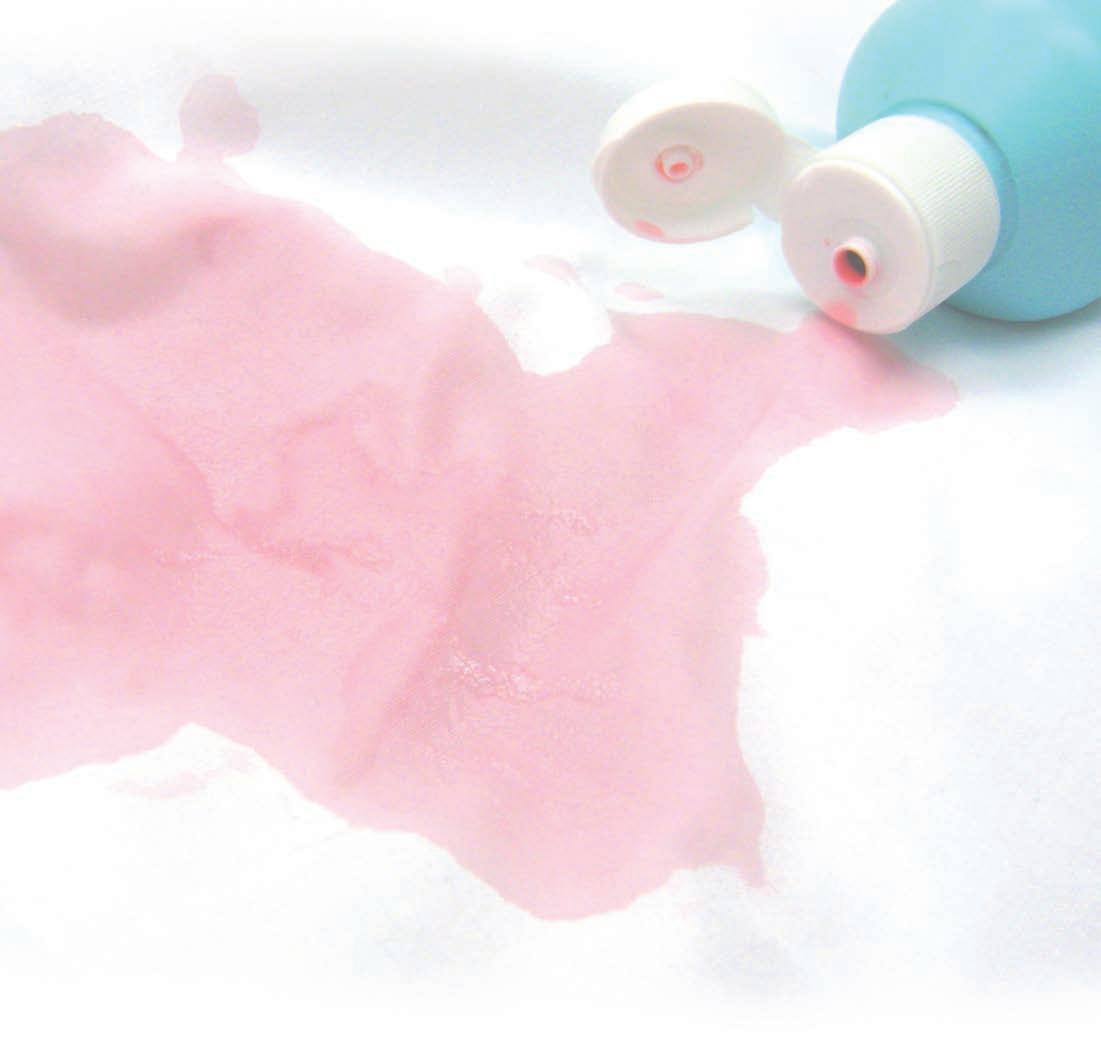
Everyone in the Healthcare Laundry field has experienced the skin sanitizer stain that won’t go away. Now you can prevent those stains in one washing cycle with the new patent pending Magi-ClensTM chemical laundry product from Gurtler Industries. Plus you can eliminate the costly changes you made to avoid the dreaded permanent stains from Hibiclens® or similar Chlorhexidene Gluconate (CHG) products that your healthcare partners use.
And you will be able to address those infection control issues you have faced. We specialize in laundry chemical product technology...it’s our main focus. That’s why we have developed some of the most advanced and trusted laundry chemical products in use today. New Magi-Clens is only available from Gurtler Industries.



Contact your local Gurtler sales consultant today for a free magical demonstration!



Magi-Clens™...eliminates skin sanitizer stains like magic!

Gurtler...The Laundry Chemical Experts, Family Owned & Customer Driven! The
Call Gurtler today! 1.800.638.7300 or visit our website at www.gurtler.com Come see for yourself. Stop by booth #2210 ©2013, Gurtler Industries, Inc.
Pink Monster
Hibiclens is a registered trademark of Mölnlycke Healthcare US, LLC and is not affiliated with Gurtler Industries, Inc.
tion is no different, if only for the fact that we spend much of our waking hours there.
Start by losing those dead laundry carts that are falling apart or have no wheels. Toss the old, yellowing, dead-linen inventory that will never be used and only takes up space. Make arrangements to remove unused obsolete equipment. I know it costs money to remove “Old Betsy” from your plant, and it’s the only good place to hang your calendar and jacket, but its departure will leave you with newfound production space.
“on The eqUiPmenT Side oF oPerATionS, PrevenTive mAinTenAnce And reGULAr cLeAninG To mAnUFAcTUrerS’ SPeciFicATionS iS ALwAyS recommended. ... There needS To be A cLeAr And docUmenTed cLeAninG And mAinTenAnce SchedULe PoSTed ThroUGhoUT The FAciLiTy.”
— Steve hietpaS
Some simple musts include blowing down lint from all surfaces on a regular basis. This should include rafters, light fixtures, fan guards, folders, etc. Less lint means less chance of potential fire hazard and a better chance that electric eyes on folding equipment will function correctly. While at it, make sure to clean lint from all air-intake screens on sides of washer controls and other fancooled equipment, which will reduce heat-related electronic issues and failures of costly inverter units and other circuit boards.
The frequency of cleaning and waxing of pressing equipment or flatwork ironers should be based on their production volume. A
busy shirt laundry doing 2,500 or more shirts a week should properly clean all pressing surfaces at least once a week. All flatwork ironers should be maintained with a prescribed regimen of cleaning cloth, cleaning paste and ironer wax on a fixed schedule. Busy table-linen plants may do this every morning and sometimes again at midday. Consult with your pad and cover providers for ideas, materials and instructions to accomplish the correct cleaning procedures.
Both the soil-sort area and wash alley are usually ground zero for accumulation of dirt and clutter. This is where we receive all the dirt, grime and surprise goodies that our end-users send back in the linen. Soil-sorting rooms and areas should be swept clean daily and either hosed down or mopped regularly. This lessens potential slip-and-falls and also removes food sources for insects and rodents, both of which can and will damage textiles.
Right before you sweep up is a good time to flip over laundry carts to remove debris—and hose them out if they are really bad. In the summer months, carts can get quite smelly from soils and molds. After cleaning and hosing, try spraying with unscented disinfectant spray to control residual odors and partially inhibit mildew growth.
Sweep wash-room floors with a stiff broom and hose them down at the end of every production day. If your plant is not keeping up with this practice, then you are probably saddling yourself with unnecessary linen- and uniformreplacement costs.
Linen on the floor is walked on or rolled over by a cart. Combine that pressure and weight with floor grime and you’ve got a virtual “printing press” that spells immediate disaster for otherwise viable linens. I’ve seen many a perfect image of the bottom of a sneaker smack in the middle of an expensive tablecloth. Once these “cement stains” occur, there is no reliable, sensible way to remove them, so help yourself by curtailing them.
There are many other com-

mon areas that may stretch over into preventive maintenance that should be common practice in all laundries.
Some include keeping good records of lubrication periods on your machinery; checking washer and dryer baskets for fabric-tearing burrs by wearing a wool glove and rubbing your hand on all surfaces to feel for snags; updating and correctly labeling the breaker switches in the electrical boxes powering your machines; and replacing burnt-out lighting with upgraded bulbs that save energy while allowing your employees to see what they’re doing.
I’d say that “shining a light” on these issues will help everyone involved in day-to-day production.
I could go on, but once you make a move toward keeping things clean, organized and serviced, you’ll discover other areas and items that can and will be improved. If you follow a cleaning program routinely at little or no cost, the tangible benefits are well worth the effort.
cially at points of linen contact when unloading. Disinfect the wash-room floor every day.

Lint will collect on your exhaust fans, and when you shut the fans off, that lint will fall. Keep the fans clean. Overhead blowers will collect lint when they sit idle. When turned on, it looks like a blizzard! That lint lands somewhere, but hopefully not on the clean linen or in empty carts. Discretion and care are vitally important. Sweep out and disinfect the truck boxes daily.
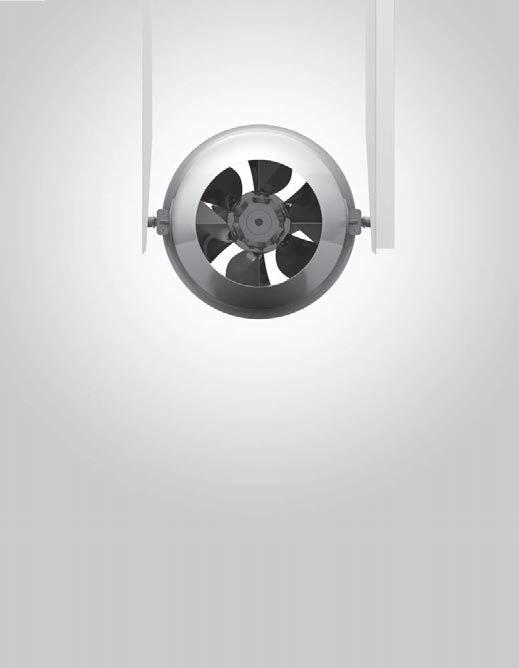
You can mop your floors with neutral cleaner and a disinfectant. It may not get the floor as clean as something else would, but it will be disinfected in a one-step process. Or, you may mop with a higher-pH cleaner and follow with a spray disinfectant. That takes more time but is a more effective procedure, I believe.
One of the things that give customers excessive heartburn is the presence of lint on or around the ceiling; dust and lint must be removed daily. Insulation looks like lint to most observers, so cut it down or cover it up. Assess and address that situation monthly. Pest control is also an important part of this equation.
Facility operators and employees should mop and sanitize the production area each shift and the general facility on a daily basis. In addition, workers should pay extra attention to ensure all docks (i.e. soiled, sorted, production, clean finishing, etc.) are as segregated as possible throughout the cleaning process. This attention to detail helps to increase the cleanliness of the overall facility.
Keeping the facility neat and clean is an important exercise, since laundries are in the business of producing clean, neat linen that feels and smells nice.
We also have visitors from time to time and the impression they leave with will influence how they feel about our work, as well as impact our reputation. The things our customers see and look for need to be addressed, of course, but there are other points to consider.
In many laundries, the soiled sheets and blankets come into contact with the floor, so that area must be disinfected daily. Same goes for the conveyors for the washers and soil sort. The washers require daily disinfection, espe-
The old standby is to blow everything down using compressed air. Safety people get all excited about compressed air, and rightly so. I’m not the safety police, but I have to say we would all do better with a vacuum. There are units that will clean the highest ceilings, clean out the dryers, clean machines and the floor, even suck up soda cans. They are big, bulky, and take some getting used to, but they certainly ease housekeeping problems. Vacuuming collects the lint instead of moving it to another surface.
One of the best things a manager can do is get all employees into the habit of picking trash off the floor. Clean break rooms and restrooms will help establish your expectations. When this cleanliness becomes habit, the next step is for all operators to wipe down their machines after each break. We all have some bad habits, so let’s create some positive ones.
On the equipment side of operations, preventive maintenance and regular cleaning to manufacturers’ specifications is always recommended. Routine maintenance and cleaning is not a “one-sizefits-all” solution. Instead, reference individual product manuals, as manufacturer maintenance and cleaning recommendations are not all the same for all washers and dryers. In fact, sometimes, different models within the same washer or dryer lineup can require different cleaning methods or frequencies.
Finally, there needs to be a clear and documented cleaning and maintenance schedule posted throughout the facility. High visibility of this “checklist” will encourage employees to be more cognizant and stringent about cleaning, and serves as a friendly reminder when specific cleaning tasks must be accomplished. One employee per shift should be accountable for ensuring the tasks are performed properly and completely. ALN
ALN_Tab_1-4_H.indd 1 7/8/13 9:44 AM 10 AUGUST 2013 | AmericAn LAUndry newS www.AmericanLaundryNews.com
continued
Page
commercial Laundry Richard Warren Linen King Conway, Ark.
experts
from
8
equipment manufacturing Steve Hietpas
Maytag® Commercial Laundry St. Joseph, Mich.
For more STorieS FeATUrinG oUr PAneL oF exPerTS, viSiT AmericAnLAUndrynewS.com!
system. A distributor can help customers choose a control system that is consistent across both washers and dryers so employees do not need to learn to operate two different machine control panels. A dual-capability control system provides ease of use across all machines and can ultimately help employees achieve maximum efficiency.
One obstacle some distributors and managers may face when training laundry employees is a language difference. The solution is to train non-English-speaking employees on a control system that is intuitive and easy to understand. The newest control systems offer customizable language settings to create multilingual operation options that can eliminate the language barrier altogether.
Managers can also simplify training by locking in certain wash and dry cycles so laundry personnel choose only from a select group of options. By doing so, managers can decrease the risk for potential mistakes and make the training of employees for different linen wash cycles as easy as possible.

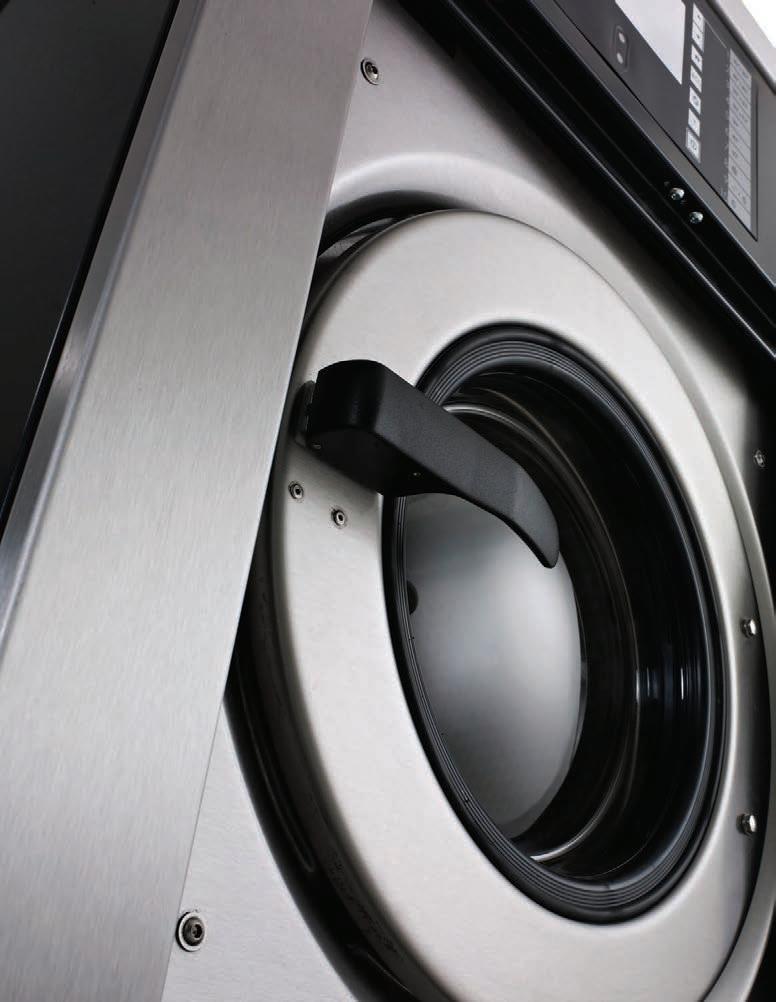
Managers should also be trained on the importance of cycle modification. Managers understandably want their most efficient work crew to handle heavier and more important linen loads. Once managers understand the control system and how to modify cycles, they can give each shift the appropriate setting and linen type to wash and dry.
A control system can provide vital data about how machines are functioning and being used. However, if a manager isn’t properly trained, he or she could fail to make the best use of this information, either because they were unaware it existed, or didn’t know how to pull it up.
It is vital that the management staff is trained to understand and analyze all of the data alerts and diagnostics available with an advanced control system. By understanding recorded cycle times, managers can monitor labor and utility usage. Perhaps even more important is that a control system provides such data; you can’t improve what you can’t measure.
To maintain maximum throughput, it’s essential to avoid machine breakdown. This is why it is critical that managers and laundry staff are trained to recognize and appropriately respond to service warnings provided by the control system. Understanding the data reports will help on-site technicians troubleshoot and quickly diagnose and correct problems.
Distributors should provide free service training for technicians that will help cut down an operator’s long-term maintenance costs.
Finally, in some settings, managers are required to provide proof

the water temperatures are high enough to kill bacteria, germs or anything else that may be present on linens and could cause infection. It is important managers are well-versed in control system reports and understand the data so they can ensure each cycle meets code standards.
Possible Risk Factors
Training should also ensure that laundry operators follow standard safety precautions and procedures. Best practice states that employees should wear gloves to protect them from bacteria and other infec-
tious agents that can contaminate unwashed laundry. Employees should also be trained on how to properly handle laundry chemicals, which can be caustic. In addition, there are certain industries that require employees to be more thoroughly prepared for potential risks involved when working with linens.
For example, when not properly treated, linens that contain gasoline, cooking oils, cleaning waxes, drycleaning solvents or other flammable substances have the potential to ignite when being dried. This makes the training of OPL
personnel at long-term care, fire, drycleaning, restaurant and food processing establishments incredibly important since they must be able to identify these substances. As a laundry expert, a distributor will be able to provide insight to potential risk factors of a customer’s specific OPL.
All of these common oversights and errors, including under-loading machines, wasted labor and wasted utility, can be prevented when OPL employees are properly trained. When paired
with the most productive equipment, proper training can lead to a safer work environment, longer machine life and increased throughput. ALN
Mike Hand is a sales manager at Super Laundry Ohio, a UniMac® distributor. Super Laundry Equipment has grown to include seven regional offices in New York, Michigan, Ohio, Indiana, New Jersey and Pennsylvania. Hand can be contacted at mhand@ohio laundry.com or 614-258-5147.

www.AmericanLaundryNews.com AmericAn LAundry news | A u G usT 2013 11 american laundry news jr page 7.75x10 For laundry done on time and on budget, there’s no better choice than IPSO ®. Forty years of European ingenuity, rugged industrial construction, and our intuitive Cygnus controls all add up to help you achieve your ultimate goal — maximum throughput at a minimized cost. Learn more about how IPSO helps you get the job done at IPSO.com/industrial INDUSTRIAL BY DESIGN Work with your IPSO finance expert to learn about customized financial solutions for your business. IPSO USA 1.800.USA.IPSO IPSO.com/industrial INDUSTRIAL BY DESIGN. Optimal Efficiency. Maximized Throughput. 3929_IPSO OPL_jrPg amerlaundnews v2.indd 1 2/6/13 4:29 PM ALN_Jr Page.indd 1 continued from Page 4 OPL 101
Hand
New Orleans intros keep eye on efficiency
COVERAGE BY BRUCE BEGGS, JEAN TELLER AND NATHAN FRERICHS
NEW ORLEANS — The 2013 Clean Show officially drew 10,300 people here from the United States and 83 foreign countries, reports show manager Riddle & Associates.
That’s down 8% from the 11,200 registrants who visited Clean in Las Vegas in 2011 but up 4% from the 9,902 attendance tallied in New Orleans in 2009.
New Orleans’ Morial Convention Center welcomed 422 exhibitors covering 195,140 net square feet of booth space — a 6% increase in exhibit space from the 2011 Las Vegas show.
Clean’s sponsoring associations introduced some firsts this year: they offered educational sessions each afternoon on the show floor, made available a smartphone app to help attendees navigate the event, and posted monitors depicting live Twitter feeds throughout the three-day show.
The next edition of Clean will convene in Atlanta’s Georgia World Congress Center in April
2015. The Clean Executive Committee is gathering feedback from exhibitors and attendees regarding this year’s “experimental” three-day show before deciding if the 2015 show will remain three days in length or shift back to the traditional four days.
Many companies took advantage of Clean ’13 to introduce brand-new products, roll out newly improved products or exhibit well-established product lines. Still others exhibited at the biennial show for the first time.
American Laundry News presents this report describing just some of the companies and the products they exhibited in New Orleans. With 422 companies having exhibited at the June show, this article isn’t intended to be allencompassing.
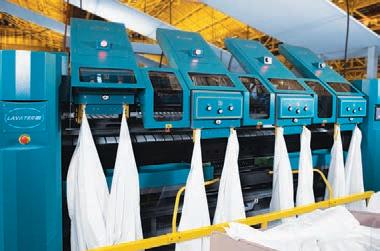
Readers are encouraged to follow American Laundry News in print and online (AmericanLaundryNews.com) during the coming months for product announcements from these companies and others.
G.A. Braun
Braun demonstrated its new
Precision Series Small-Piece Folders. All three models (Returnto-Feeder, Rear Discharge, and Triple Sort) come standard with the same features and functionality as their predecessor, the Sigma Series, but boast an expanded processing capability while retaining their small footprint.
Also in the Braun booth were the company’s new Manual Safeload System, a shuttle designed to remove the potential for serious injury to an operator from pushing bags into a moving washer cylinder, and the 300 PBS Chute Load Automated Dryers, featuring a non-tilt design that improves load and unload times. There is no spacing between dryers in a side-by-side configuration, and they can be installed together endlessly to best utilize production space.
Harbor Linen Bed, Bath & Beyond’s recent acquisition of Harbor Linen resulted in a full laundry line by the corporation, and Harbor Linen is now taking point with different products introduced at the Clean Show. Gary Geiger, vice president of laundry services, singled out the Softwear Plus microfiber sheeting for hospitality and healthcare industries as being a big hit. The company’s terry line aimed mainly at hospitality is now moving into long-term and acute healthcare facilities as well. Geiger says the acquisition will help Harbor be more innovative and better able to serve its customers. He says the company will continue to change through acquisitions in the near future, to become bigger and better.
Lavatec Laundry Technology
Lavatec Laundry Technology Inc. used the Clean Show to
trumpet the announcement that President Mark Thrasher had “significantly expanded” his ownership of German-based parent company Lavatec Laundry Technology GmbH to 49%. It strengthens Thrasher’s partnership with the CEO and managing partner, broadens his involvement as co-manager in global operations, and reflects both parties’ confidence and commitment to asserting LLT leadership in the industrial and commercial laundry marketplace.
The company introduced some new products as well, including the Lavafold SFO 53 Quadruple Sort. In addition to automated four-stack sorting capability, the folder provides vacuum laydown on its in-feed conveyor; crossfold by blade for crisper, sharper folds; and first-fold dual air jets for superior French folding on heavy items, LLT says.
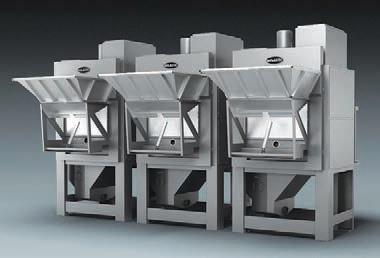
Also new is an automated picking machine called Double-UP™. The LavaPik UP-22 picker with double jaw grip allows for 20% better picking productivity with its identical twin jaws coming up full of linen on nearly every stroke, LLT says.
Thrasher called the show a success. “First, it generated a lot of sales leads, so the show was successful since it met one of our most important goals. This event also gave us a stage to showcase our new company, unveil our new look and marketing strategy, and introduce several new pieces of equipment that were well received by the audience.”
Gurtler Industries
The chlorhexidine gluconate (CHG) products used by healthcare facilities has been a longtime problem for laundries. Permanent orange-brown stains are created by residue of Hibiclens® or similar CHG skin sanitizer products when they are laundered with chlorine bleaches. Gurtler Industries demonstrated the effectiveness of Magi-Clens™, its pre-wash laundry additive that removes CHG stains, prevents CHG stains from being permanently set on textiles, and allows laundries to utilize chlorine bleach for stain removal.
Beck’s Classic
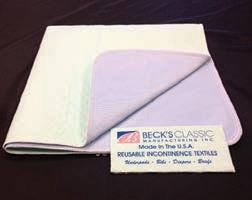
The maker of reusable incontinence products introduced the laundry-friendly Arid Touch
12 AUGUST 2013 | AMERICAN LAUNDRY NEWS www.AmericanLaundryNews.com
CLEAN SHOW REPORT PART II
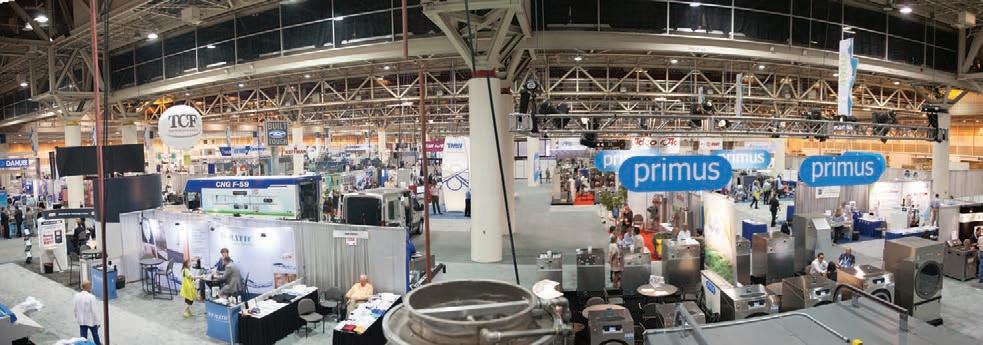
A view from above the Clean 2013 exhibit floor, which housed 422 exhibitors on nearly 200,000 net square feet of space. (Photo: Nathan Frerichs) [Braun 300 PBS
Chute Load Dryers]
[Lavatec Laundry Technology Quadruple Sort]
underpad. With its modern enhancements of improved absorbency and wicking by using a special low-profile soaker quilted to a face fabric, the Arid Touch was created to bolster faster wicking without the “bull’s-eye” moisture spot.
The laminated Vintex vinyl barrier helps prevent shrinkage and bunching. The U.S.-made pad can be laundered safely using chlorineor peroxide-based systems.
Royal Basket Trucks
The 2013 Clean Show was a good one for Royal Basket Trucks, says Cindy Lapidakis, vice president of sales and marketing. The company has attended three previous shows, and continuously updates and evolves products, she says.
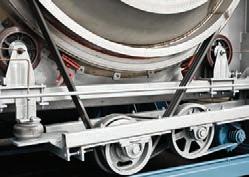
There are no rules as to what can be done with the Wisconsin company’s U.S.-made containers on wheels. The company has expanded its lines for carts specific to route trucks, turnabout lines, the types of materials used, the accessory lines and more, Lapidakis says. The focus the last year has been to promote Royal Basket’s determination to adjust and modify products to customer standards, and that items are built to order and is shipped within a week.
Parker Boiler
Parker Boiler manufactures steam boilers, hot water boilers, thermal liquid heaters and indirect water heaters, and was eager to share its technology with attendees.
“We have always been a popular boiler west of the Mississippi but have been making a significant impact in the laundry and dry cleaning market on the East Coast, mostly from stories from owners in this industry talking about their experience and satisfaction with our products,” says Michael Leeming, national sales manager.
Standard Textile
Since the last Clean Show, Standard Textile has added DermaTherapy® bedding designed for long-term care, along with patient gowns and incontinence packs. The company also offers a versatility sheet that functions as a fitted sheet without elastic or latex.
The company, says Judy Sroufe, director of brand marketing and communications, also is working toward demonstrating its industry
commitment with an expanded research and development center that will include a full-size industrial laundry operation. The center will open in the fall at the company’s Cincinnati headquarters.
IPSO
Clean Show. Prior to that, the brand launched its “Industrial by Design” platform to communicate that the equipment is engineered, tested and built for heavy-duty performance, according to Gary Dixon, North American sales manager.
“This renewed focus on North America represents the next step in IPSO’s evolution to a truly global brand,” Dixon said in an interview a few weeks before Clean. “IPSO has been a premier OPL brand in Europe for more than 40 years, and is sold in 90 countries around the world.”
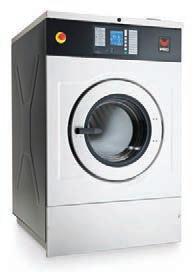
IPSO introduced a new line of on-premise hard- and soft-mount washer-extractors. Available in nine capacities, the soft-mount washer-extractors use high G-force extraction to reduce drying times by up to 80%, and also feature an improved design for easier installation and maintenance. The hard-mount models feature a rugged frame design and high spin speeds, as well as optimized standard wash cycles. Alliance says they are an excellent choice
Alliance Laundry Systems is restaging its IPSO equipment brand for the North American market beginning with the
www.AmericanLaundryNews.com AmericAn LAundry news | A u G usT 2013 13 Our Business is Dryers. Your Business is Our Priority. Save time and money with CLM’s technologically advanced industrial dryers. • Units from 250 lbs dry weight to 1200 lbs dry weight • Precise control over heat system and fuel use • AutoDry™ formulas to take the guesswork out of cycle termination Let us show you how our flexible-design dryers work with your specific laundry operation needs. See our entire line of dryers at www.clmco.com or contact us at 323-232-2417. • Heavy-duty construction to perform in the most difficult environments • Capability to work with any wash system • Low NOx version, TumbleGreen™, available • Distributor sales and support locally An industry leader since 1983, CLM Dryers feature: 211 Erie Street, Pomona, CA 91768 | T: (323) 232-2417 | www.clmco.com Use the Savings Calculator at www.clmco.com to see how you can increase your ROI. ALN_Jr Page.indd 1 11/30/12 2:19 PM 0413aln_CLM.indd 1 7/9/13 5:18 PM See CLEAN on Page 14 [Beck’s Classic Arid Touch] [IPSO OPL Washer-Extractor]
for ground-floor installations. Both lines come equipped with the intuitive Cygnus control system.
UniMac
The Clean Show gave the Alliance Laundry Systems brand the opportunity to strengthen relationships with existing customers and to start building lasting relationships with new ones, says Kathryn Rowan, senior director of marketing and brands for Huebsch’s parent company.
“There was a lot of talk about how there were fewer attendees at Clean 2013 than in Las Vegas two years ago, but our booth was very busy,” she says. “We do not necessarily define our success by the number of customers we see walking the Show floor but by the quality of business that gets done in our booth.”
UniMac introduced several new products for industrial laundries, including:
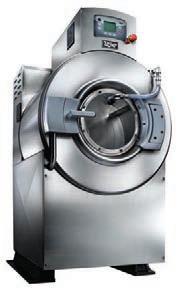
• The UT200 tumble dryer, expanding the line with capacities from 25 to 200 pounds. The 200-pounder not only has an extra-large capacity, it pro-
vides superior efficiency with a high-performance heater box, UniMac says. The brand’s Combustion Auto Response Equipped (CARE) system is an added option.
• Networked control UniLinc™, now available on tumble dryers, which UniMac says makes it the first manufacturer to offer the same control for washer-extractors and dryers.
As a dryer control, UniLinc offers 41 programmable autodry and time-dry cycles with extended tumble dry options. Operations can begin with the push of two buttons. Cycle names are clearly displayed in words for easy selection, with six customizable languages for multilingual operation and simplified training.
• OPTispray™ Rinsing Technology and ECO Cycles to the UniLinc control system for UW45 and UW65 washer-extractors. OPTispray is a spray-rinse technology that minimizes water use with highly effective rinsing, UniMac says. When combining OPTispray with one of nine new ECO Cycle wash programs, operators consume as much as 39% less water than competing brands while maintaining optimal wash and rinse quality, the company adds.
CLM
The Tumble Green series is the manufacturer’s newest addition to its dryer product line. Available in the same sizes as CLM’s standard gas-heated dryers, Tumble Green incorporates a low-NOx burner as standard equipment, making the dryers highly efficient while generating low emissions, the company says.
The component-saving basket drive with soft-start has been updated to provide full variablespeed control to basket rotation, which allows users to adjust basket speed to obtain the correct material drop through basket center. The
new design includes full ducting around the burner for high-level reduction in sound and ambient heat.
Cleaver-Brooks
Cleaver-Brooks introduced a new line of tubeless boilers made specifically for the laundry and dry cleaning industry. The CBT can achieve 80% efficiency and emit less than 20 ppm NOx. Features include a robust pressure vessel designed for long life, a standard integrated control with user-friendly interface, and a horizontal burner design that provides easy operation and maintenance.
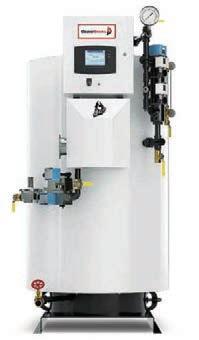
Elizabeth Brown, the company’s marketing communications manager, says the line offering models in five sizes between 9.5 and 30HP will be released in the fall.
Cleaver-Brooks also highlighted its ClearFire®-H horizontal, gasfired, steam boiler in its booth.
fugitive dust from accumulating on steel structures, pipes, ducts and process equipment. The newest model designed to keep areas clear of potentially combustible dust and lint is the SonicAire 1.c. The “C” stands for compact, because the company designed it for customers, particularly dry cleaners, that wanted a cleaning fan but had limited ceiling space.
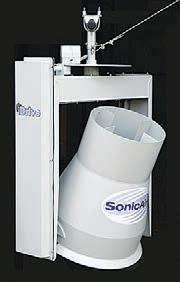
President Brad Carr says the show exceeded his expectations and that his company set a new record for the amount of sales closed there.
NATCO
National Combustion Co. (NATCO), which has supplied the laundry industry with water heating solutions for more than 50 years, invited attendees to look over some of its well-known models, including the Fire Coil copper tube water heaters, the Next-Gen and Super-E high efficiency water heaters, and the flexible WallNat wall-hung water heating system.
IES
IES kept things breezy, displaying several of its SonicAire fans, all of which clean with high velocity and high mass airflow to create an overhead barrier that prevents
Among its newest offerings is the FlexFlame 94, with 94% thermal efficiency and usable with or without a hot water tank. Temperature or instantaneous flow rate can be prioritized. The water heater incorporates a 316L stainless steel flexible heat exchanger with a large 3/4-inch interior diameter.
JENSEN-GROUP
The large JENSEN booth offered plenty of room for its customers to experience exhibits, discuss the latest developments in automation, and enjoy some hospitality, the company says.
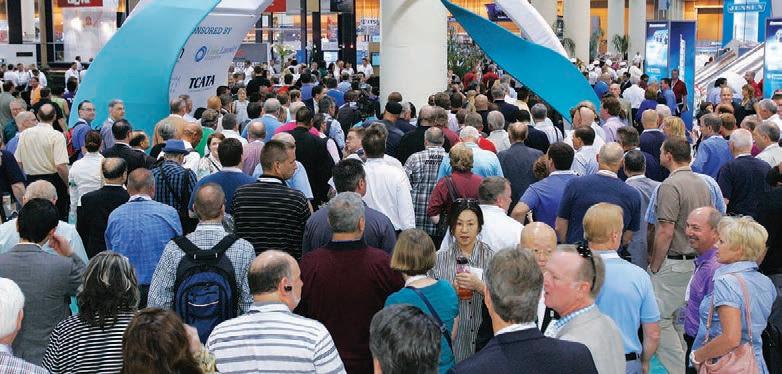
Products on display included a 450-pound L-Tron washer-extractor with Load Assist, an essential feature for the sling loading of open-pocket washer-extractors or the new Senking 220-pound XL tunnel washer with batch exchange rinsing and QuickSoak (an extra first-compartment shower for maximum soaking/drenching of linens) features.
Others were a Futurail loop with new stainless steel rail; Jenfold Rapid, a high-speed smallpiece folder; Jenfold Tematic Pro, a high-quality small-piece folder with sorting capability; and the Jenfold Butterfly Fox, an allpurpose garment folder.
“We are pleased to report a successful Clean Show 2013, although the new three-day format did mean less time with our customers,” says Simon Nield, president of JENSEN USA. “We succeeded in getting the maximum out of it, and already look forward to meeting with our customers again at Clean Show 2015 in Atlanta.”
American Dawn
The longtime manufacturer, importer and distributor of textiles and garments came to New Orleans eager to share the news of its four companies’ vertical alignment into “one voice,” says Steve Kallenbach, director of market solutions.
American Dawn has streamlined its current divisions (Institutional, Hospitality and Healthcare) under one management team and is offering more application-specific products along with ready-to-market solutions. “We’re going to be selling to OPLs for the first time, and have been awarded a number of contracts,” Kallenbach says.
Most recently, the company negotiated an exclusive licensing agreement with leading cosmetic, skin care and fragrance company Borghese Inc. to produce a luxury collection of hospitality bedding and bath textile products. The Italian-inspired collection is being licensed in the United States and Canada under the “Villa di Borghese” brand.
Kannegiesser
Kannegiesser had two large booths at this year’s Clean Show, each with a specific theme and distinct message. One was titled “Modernizing Your Laundry” and focused on ways that laundry operators can modernize their operations for higher efficiency in terms of labor and energy, as well as improved ergonomics for employees. Products such as the batch washing system PowerTrans PLUS and press extractor PowerPress were shown there.
The second was titled
14 AUGUST 2013 | AMERICAN LAUNDRY NEWS www.AmericanLaundryNews.com
Continued from Page 13
Clean
Attendees pour onto the 2013 Clean Show floor immediately after the ceremonial cutting of a ribbon to open the event. (Photo: Riddle & Associates)
[UniMac UW65 Washer-Extractor]
[Cleaver-Brooks CBT Tubeless Boiler]
[IES SonicAire2.0]
has formed a new company, Vega Systems USA, to exclusively distribute Vega’s highly engineered washing, extracting and finishing equipment in North America.
Ellis/Vega will sell, service and, eventually, assemble Vega equipment in the company’s Illinois factory, says Bob Fesmire Jr. Reaction to the new product lines, an addition to Ellis’ well-established industrial laundry, wastewater and energy recovery equipment, has been “really positive,” he adds.
Topog-E Gasket
The company has been fabricat-


ing proprietary molded rubber gaskets used primarily to seal handhole and manhole inspection openings in steam boilers and other related pressure vessels for more than 40 years. Topog-E still mixes its own compound and manufactures gaskets on site, making approximately 1 million annually in more than 300 different stock sizes.
Chicago Dryer Co. The detailed map made finding one’s way around the Chicago® booth a breeze, and the company’s new flatwork finishing systems
can show today’s laundries how to reach greater heights in production and quality.
CHI•Vision® Automatic Linen Inspection and Quality Control Scanning System automatically detects and recognizes stains, tears and holes to assure consistent finishing production and delivery of high-quality bed and table linen.
CHI•Vision sorts based on holes, tears, stains, flaws, colors, piping, logos, sizes and shapes; all parameters are touchscreen customizable by color, size and linen zone
“Kannegiesser Garment Processing” and highlighted the concept of total solutions for industrial uniform and healthcare garment processing; washing, finishing, folding and distribution.
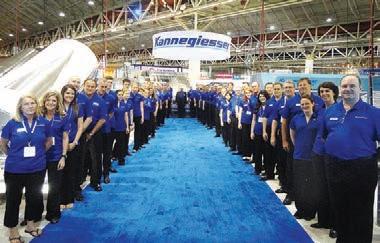
Here, attendees could see the PowerTrans PLUS JET configured for uniform and garment processing, along with the PowerSpin PLUS centrifugal extractor. Also continually demonstrated was an automatic garment finishing system including hanging station, the XMT steam tunnel finisher, and the high-speed folding robot FA-X 900.
“In both booths, we had numerous machines in constant demonstration mode,” says Phil Hart, who was recently promoted to president of Kannegiesser USA. “These two booths represented a significant investment by Kannegiesser, but we feel it was well worth it to be able to showcase our full product range.”
Ellis Corp./ Vega Systems USA
Ellis Corp., which has served the laundry industry for more than a century, announced that it

A. L. WILSON CHEMICAL CO.
www.AmericanLaundryNews.com AmericAn LAundry news | A u G usT 2013 15
See CLEAN on Page 16
• Kearny, NJ 07032 THE RITE STUFF For Collars and Cuffs! RiteGo. The Rite Stuff for Collars and Cuffs! To learn more, visit ALWilson.com or call 800-526-1188 No Brushing Required Just spray it on and wash it out… no need to brush. You save time and labor. And because brushing causes damage, customers’ garments last longer. You Deliver Better Quality By delivering stain-free garments with RiteGo, you build your reputation for quality – and that’s what keeps customers coming back. New Micro-Emulsion Technology RiteGo penetrates quickly to absorb perspiration and collar & cuff stains, and to release ground-in soil, etc. Environmentally Friendly RiteGo is environmentally friendly. It’s biodegradable, non-combustible, and California 2013 VOC and Prop-65 compliant. RiteGo® Laundry Spray Spotter Now with Micro-Emulsion Technology ALN_Jr Page.indd 1 5/6/13 10:33 AM
[Kannegiesser’s staff awaiting booth visitors]
to meet any progressive laundry operator’s needs.
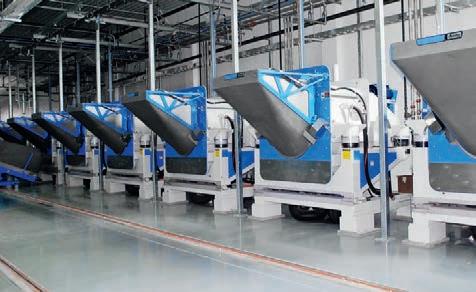
Meanwhile, CHI•Trac is a data accumulation and reporting system that seamlessly distributes vital production data to a laundry’s control and management center where it’s needed most to ensure that the entire finishing area is operating at peak efficiency, the company says. Working in conjunction with CHI•Touch PC machine control, CHI•Trac adds built-in modules, USB ports and an easy-to-use reporting system
for all important system information, with the ability to export data to other laundry systems.
Dickies Occupational Wear
Dickies unveiled at Clean the Ecopride line, an environmentally responsible uniform offering crafted from cotton polyester fabric containing a minimum of 23% recycled polyethylene terephthalate (PET) plastic. The Ecopride line features four garments: a fivepocket jean, carpenter jean, longsleeve poplin shirt, and relaxed-fit twill work pant.
“Dickies Ecopride line uses REPREVE® recycled polyester, created from post-industrial fiber waste and post-consumer plastic bottles, with the brand’s durable cotton fabric to create Ecopride line garments,” says Claudia Zavala, general manager of occupational wear at Dickies. “This unique blend is remarkably soft and lightweight while maintaining Dickies’ signature durability and comfort.”
In addition to the Dickies Ecopride line, the Occupational Wear division recently launched a head-to-toe uniform solution, service expansion to Canada and Mexico, and
garment embroidery services.
Laundrylux Equipment
distributor
Laundrylux unveiled a brand-new approach to on-premise laundry service. PLUS—Professional Laundry Utility Service—is a “payas-you-use” system that utilizes Electrolux equipment.
Laundrylux determines a facility’s unique laundry needs, selects the right equipment based on available space and other requirements, then installs the equipment and trains facility staff. PLUS tracks usage as the facility uses the washers and dryers, then invoices once a month for actual usage at a fixed price per cycle. The local Laundrylux distributor will provide parts and service at no cost.
A facility whose laundry needs fluctuate seasonally, for example, will be able to budget more precisely using PLUS, says Kim Shady, senior executive vice president for OPL and National Accounts. “Everything is like a utility. Why can’t laundry equipment be considered a utility?”
“If you have an old laundry room that needs new equipment now but no budget for it, PLUS is the perfect solution,” says Cody Milch, PLUS product manager. “PLUS is a smart alternative to buying.”
Ecolab
Ecolab unveiled the Performance™ Industrial Program, which addresses the high-performance cleaning needs of industrial laundries while helping to minimize environmental impact. It is a three-product system that uses patented NPE-free chemistry to effectively remove the heaviest industrial soil—and to meet growing industry expectations for sustainable operations.
The program’s distinctive blend of surfactants, conditioner and soil suspension agents effectively removes petroleum, oil and grease and delivers an exceptional level of whiteness, Ecolab says. Currently in use with multiple industrial laundries, the Performance Industrial Program delivers soil removal and whiteness results comparable to detergents using NPE chemistry.
The Performance Industrial Program also delivers operational savings through first-pass cleaning and easier rinsing; shortening wash cycles, reducing rinse steps and helping customers to conserve water and energy.
A.L. Wilson Chemical Co.
The company reintroduced its reformulated RiteGo Laundry Spray Spotter, a high-performance, high-value laundry spray
that delivers clean collars and cuffs. Its micro-emulsion technology allows it to penetrate quickly to absorb perspiration and collar and cuff stains, and to release ground-in soil without the need to brush, the company says.

A.L. Wilson President Fred Schwarzmann says the show was better than he expected but that he prefers a four-day show format. “It allows for more scheduling flexibility and for more interaction, both on the floor and after hours,” he says.
Pellerin Milnor Corp.
Milnor’s extensive product range is well known in the industry, and the company has
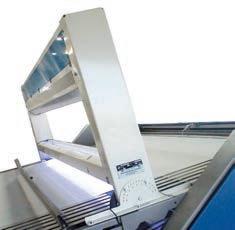



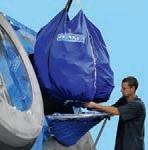
Boiler Tech Support
Topog-E® Gasket Company, formulates and mixes its own rubber, and manufactures superior molded rubber handhole and manhole gaskets for steam, hot water boilers, water heaters, softeners, deaerators, make-up tanks, and other selected pressure vessels. Topog-E® Gaskets have become an industry standard since 1956. Topog-E® Gaskets seal quickly, completely, preventing seepage, corrosion and pitting. They peel off easily leaving clean surfaces for inspection.

Topog-E® Gasket Company offers a FREE Technical Specification and Usage Guide containing useful information about boiler maintenance safety. Also, FREE a pocket slide rule that charts steam temperature versus pressure.

For more information contact:
Topog-E Gasket Company 1224 North Utica Tulsa, OK 74110
Tel: 800-587-7123
I Fax: 918-587-6961 www.topog-e.com I info@topog-e.com
1
16 AUGUST 2013 | AmericAn LAUndry newS www.AmericanLaundryNews.com L-Tron
The Large Capacity Washer Extractor for both automated and stand-alone systems JENSEN USA Inc. · 99 Aberdeen Loop Panama City FL 32405 · United States www.jensen-group.com The JENSEN L-Tron Open Pocket Washer Extractor takes hands off laundry processes to the next level with many configurations to choose from: – 450 lb. and 800 lb. capacities – Auto-Pro load chute or standard loading door Featuring an operator panel with touch screen ....as well as a 300 „G“ extract. JENSEN’s L-Tron Open Pocket is now also available with the NEW Load Assist – an essential feature for the sling loading of open pocket washer extractors that improves work efficiency. FAST Load times... as fast as 2 minutes! ALN_Jr_half.indd 1 7/15/13 10:03 AM
Washer/Extractor
0613aln_Topog-E.indd
7/9/13 3:46 PM
continued from Page 15
[CHI•Vision]
clean
[A.L. Wilson Chemical Co.’s RiteGo]
improved several components in yielding the wash/rinse quality that Milnor machines are known for.

It has increased the G-force on its 60-pound rigid-mount washer-extractors for the OPL market with the introduction of the 30022 VRJ (200G) and 30022 V8Z (300G). The higher extraction rate reduces residual moisture, saving on both dryer time and energy.

Milnor introduced its MilTouch™ control on the 60-pound 30022 V8Z washerextractor two years ago, and now has expanded the touchscreen control to the V-Series machines with 80-, 100-, 140- and 160pound capacities.
The company is now offering the new M200 large open-pocket dryer. It features a standard stainless steel basket and industrial roller drive system. Various tilt options accommodate virtually any laundry process, allowing for optimal ergonomics and efficient loading and unloading of goods.


Milnor’s PulseFlow continuous batch washing technology has been gaining momentum since 2009, and there are now more than 100 of the tunnel washers in use in healthcare, hospitality and food-and-beverage applications across the United States, the company says.
ADC
New for on-premise laundries is the id-series (Intelligent Dryer Series) from ADC. As the first company to introduce stack dryers to the industry and the first to utilize computers in commercial dryers, ADC continues its legacy of cutting-edge technology, the company says. The id-series is “more aggressive, eye-catching, and innovative than any dryer in the marketplace today,” ADC says, all backed by a five-year warranty.
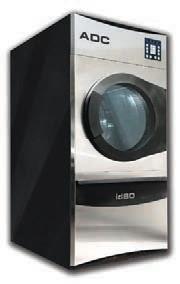
The new line is available in single-pocket models of 35, 50, 80 and 120 pounds, and in stack models of 30 and 45 pounds.
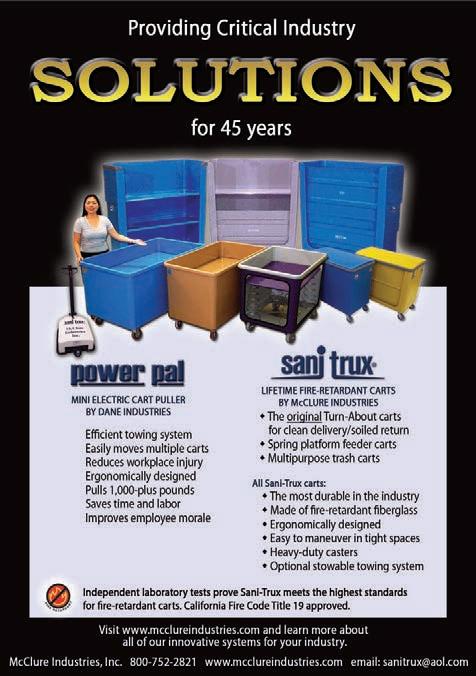
Maytag Commercial Laundry
Among the new product offerings in the company’s booth were Energy Advantage™ Multi-Load Stack Dryers, Maytag Connect 360° web-based laundry communication and management system, and the Energy Advantage™ TopLoad Laundry Pair, among other well-established Maytag product lines for on-premise and coin laundries.
Randy Karn, national sales manager, deemed the show successful. “It was apparent that vendors put significant time and effort into showcasing their latest and greatest products and services to the more than 10,000 show visitors.”
Although he says it appeared that end-user attendance was down slightly, there was a strong distributor presence, especially those from North America, Latin America and Asia.
Yamamoto
It was the first time that Yamamoto Japan had exhibited at Clean, which gave the company the chance to explain the differences and benefits of its equipment to other brands on the market, says Vice President Graeme Fuller. He called the WUD161S, a combination washer and dryer, the “show stopper.”
“It did not take people too long to understand the advantages of having a washer and dryer in the same footprint, and being a versatile machine that would also double as a wetcleaning machine, while still have the ability to wash up to 99 other classifications.”
EzProducts International
The company introduced several new labeling products in New Orleans, including interchangeable platens for its Model-7® digital presses. The QuickChange™ Mini-9 Platen™ is designed to apply large labels to laundry bags. EzProducts says several dry cleaners are using small labels on their customers’ clothing and a larger label on laundry bags; it’s easy to switch platens for both purposes.
“Attendance was very good, and we have purchase orders and great leads to follow up,” says Vice President Diane Rue. “(It was) the best Clean Show in years for buyers.”
World Emblem
World Emblem now offers name badges and reflective striping for garments, new since the last Clean Show, says
Jamie Carr, president of sales. The global company, which has 15 plants around the world, will be coming out with a computer app that will allow small companies to order samples from anywhere with only a few clicks of a mouse.
Rennco
Rennco unveiled a new bagging system for the uniform and dry cleaning industry called the Garment Guard. It’s a wrapping/ bagging machine that automatically packs single or multiple garments into a poly bag. The system can be used as a standalone unit or integrates with upstream and downstream conveyance systems in a facility. ALN
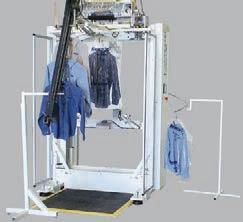
www.AmericanLaundryNews.com AmericAn LAundry news | A u G usT 2013 17 PARKER BOILER CO. Steam Boilers • Parker Industrial Steam Boilers 1-1/2 to 150 HP 15 to 250 PSI Feed Systems • Boiler Water – Carbon Steel Lined or Stainless Steel Feed and Condensate Return Systems 1-1/2 to 450 HP • 15-250 PSI • SS Condensate Transfer System Feedwater Deaerators (Tray and Spray Type) • 3,500 to 90,000 lbs/hr • Oxygen Removal to .005 cc/l (7ppb), CO2 Removal to virtually 0 • SS Internals Stack Economizers • Stack Economizers 8” to 32” • Save up to 10% - Heat Laundry Water for Free! Blowoff Tanks • Boiler Blowoff Tanks and after Cooler Assemblies 1-1/2 to 450 HP Thermal Fluid Heaters • Parker High Temperature Thermal Fluid Heaters 126M to 6250M BTU, for operating temperatures to 650° F and pressures to 300 PSI Indirect Water Heaters • Parker Indirect Hot Water heaters 300M to 3000M BTU for heating water from 80°F to 190° F, atmospheric fired • Natural Gas, Propane, Bio Gas. Automatic Water Softeners • 45,000 to 750,000 grain capacity, time clock or meter initiated, simplex or duplex. ASME Hot Water Storage Tanks and Heat Exchangers • Tanks
2950 gallons
Glass
Storage Tanks
Stainless
ASME
rise • Tank heater bundle or shell and tube type heat exchangers 5930 Bandini Boulevard ● Los Angeles CA 90040 Phone (323) 727-9800 ● Fax (323) 722-2848 YOUR ONE STOP SHOP FOR ALL YOUR LAUNDRY, DRY CLEANING OR TEXTILE NEEDS www.parkerboiler.com Steam Boilers and Thermal Fluid Heaters available in Atmospheric Gas or Propane. Power Gas, Straight Oil or Combination Fired using Natural Gas, Propane, Oil, Bio Gas or Digester Gas. Low NOx available on all models. Indoor or Outdoor available on all models. LDC Needs-5.25x7.5.indd 1 5/15/2012 4:03:05 PM 0813aln_Parker Boiler.indd 1 7/11/13 11:28 AM
from 4.6 to
•
Lined
119-5,695 Gallons •
Steel Tanks 91-12,818 Gallons •
Heat Exchangers from 100 GPH to 2500 GPH at 120° F
[ADC’s id-80 Dryer]
[Rennco’s Garment Guard]
Laundry care efficiency and effectiveness
 By Steve KovacS
A constant challenge for today’s launderers is improving their current operation and making choices that increase productivity. Two priorities that should drive laundry care operations are efficiency and effectiveness.

Management must regularly review its laundry procedures to find ways to maximize performance, protect linen investments, improve cleaning results and, ultimately, provide cost savings and customer satisfaction.
In today’s tough economic climate, it’s crucial that management establish and update policies and procedures. Following are best practices to help launderers evaluate and improve their commercial laundry operations to boost efficiency and effectiveness.
Choose the Right Detergent
There are two major types of detergents— alkaline and near neutral. Alkaline detergents have a high pH formulation, which is effective in removing body soils, grease and the like; however, linens require multiple rinses, or the use of an acid rinse to return the pH as close to neutral as possible. Alkaline detergents are also corrosive; cause safety concerns in handling among employees; and cause linens to retain mineral encrustation (creating stiff, rough-feeling fabrics), resulting in greater wear and tear, which leads to more frequent linen-replacement needs and costs.
Near neutral detergents can also provide effective cleaning. Products that are phosphate-free with a near neutral pH formula can extend linen life and make fabrics noticeably softer to the touch. There is no need for pH correction through use of an acid; there’s less wear and tear on fabrics, and it is noncorrosive and safer for employees to handle.
Extending linen life can result in greater cost savings as linen replacement needs decrease. In one example, testing has shown that a leading detergent with a near neutral pH helped reduce operational costs by providing up to 55% savings in linen replacement costs due to worn fabrics.
Consider choosing a total laundry system that works together for effective cleaning to get the job done right the first time. A laundry system should encompass a complete suite of commercial products from near neutral pH detergents for a variety of cleaning needs, to fabric softeners and stain fighters. Together these products can rejuvenate, protect and extend the life of linens, while producing familiar softness and freshness on fabrics.
Stain Removal
Before washing, staff should treat tough stains with an appropriate stain remover. There are multi-purpose stain removers to treat general stains; rust stain removers to remove stubborn stains like rust, tea and coffee; as well as stain fighters designed to treat foodservice linens by helping prevent “locked-in” grease stains. Spot check any tough stains on clothing and linens and apply the treatment before washing. This will help keep your laundry looking like new.
Sustainable Cleaning
Every laundry operation should have a sustainable laundry care program, which can be accomplished in several ways. By simply doing things right the first time, staff can reduce rework and repeated use of products for cleaning the same linens. In fact, source reduction is usually the most
cost-effective approach to sustainable cleaning. Concentrated detergents are important as their smaller, concentrated bottles means using less product for each load, less packaging per bottle and ultimately less trucks on the road transporting products for sale.
Make sure laundry care products do not contain phosphates, known carcinogens, APEs or NPEs, or other reproductive toxins, and that they meet the California Code of Regulations maximum allowable volatile organic compounds (VOC) levels. Management should also ensure that laundry care products are safe for employees to use.
Commercial launderers should use energy-saving equipment and features to help boost performance and utility conservation. Make sure to have procedures to ensure equipment is running at optimum levels, and remember that preventive, routine maintenance is a must. This will save time, effort and money down the road.
Another consideration of being “green” is social sustainability. One way to be socially responsible is to donate “unusable” linens to local shelters and other charitable organizations. This can be a great way to give back to the community and further extend the use of the linens.
Ensure Ideal Wash Conditions
Create and utilize proper procedures for ideal wash conditions. Review and follow linen guidelines, pre-sort laundry properly and treat soiled items immediately. Keep rewash rates below 5% by setting wash times and temperatures correctly. Load linens and fill the water properly, as underfilling or overfilling can reduce cleaning efficacy.
Keep linen inventory levels up to help extend linen life. Inventory levels that are too low result in linens being washed too frequently, causing fading and wear and tear at a more rapid pace. Make sure you have the proper amount of linens in stock and have a process in place to reorder when needed.
Make a Good First Impression
You only get one chance to make a good impression. Consider customer service in every aspect of your laundry operation. Do not send unacceptable pieces of linen to guests or customers that could potentially be returned and give a bad impression. It can also cause unplanned rework and a potential bottleneck in overall laundry operations.
Train staff properly and provide checklists to keep things running efficiently. Employee training does not start and end with the hire. Effective, continual education on following proper procedures can be the key to achieving productivity and results that keep customers satisfied.
For all of these reasons, facility managers must take a good, hard look at their commercial laundry operations and work with their suppliers and product manufacturers to ensure the best results. By establishing effective procedures and using the latest innovations in laundry care, management can decrease operational costs through a reduction in linen replacement needs and labor costs, plus enjoy the benefit of customer satisfaction by providing bright, white and fresh towels, bedding and clothes. ALN
Steve Kovacs is R&D section head at P&G Professional, where he leads product development and customer understanding for cleaning product solutions provided for P&G’s Hospitality, Healthcare and Building, Cleaning and Maintenance businesses. Prior to joining P&G Professional, he held R&D positions at Procter & Gamble. He holds bachelor’s and master’s degrees in chemical engineering from the University of Louisville and an MBA degree from Xavier University, and is an inventor on seven U.S. patents.
18 a UGUSt 2013 | american LaUndry newS www.AmericanLaundryNews.com 0513aln_Kemco.indd 1 7/9/13 3:28 PM 0813aln_EzPi.indd 1 7/10/13 11:07 AM
Kovacs
Finding ways to conserve valuable resources is never-ending quest for launderers
WATER REUSE/ RECYCLING SYSTEMS
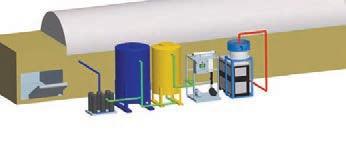
PURIFY process can be added to any Premium and CBR products as an upgrade or added to an existing recycle system, AquaRecycle says.
aquarecycle.com 866-272-9253
energy and water costs, to reduce wastewater compliance issues, and to help provide a rapid return on investment, the company says.
kemcosystems.com 800-633-7055
CHRISTEYNS
RESOURCE RECOVERY CO.
The MaxiMizer™ Water Recovery/Treatment systems from Resource Recovery Co. use ceramic membrane technology engineered to help lower operating costs by recovering water and energy normally lost to the sewer system, while providing a significant reduction in potential sewer surcharges.
Resource Recovery Co. is a turnkey provider of MaxiMizer™ Total Water systems, including wastewater heat recovery, boiler stack gas heat recovery, water recovery/ treatment, direct fired water heating, and hot and tempered water systems.
All MaxiMizer™ products come with programmable logic control and BTU monitoring systems. The system helps lower carbon dioxide emissions and limits a laundry’s carbon footprint.
rrcusa.net 800-680-4328
PURCLEAN/PURWATER
The PurWater™ LaundryCare H2o Recovery System
(patent pending) from New Wave Industries is engineered to capture, filter and reuse wash water, reducing demand for fresh water and minimizing effluent discharge. As a result, the operator may reduce water and sewer costs by as much as 65% without negatively impacting wash quality, New Wave says, and see a typical return on investment within 24-36 months.
The PurWater™ system provides a “Smart Water Recovery System,” which is operated by a variable frequency drive; a programmable logic controller; succession filtration technology; and ozone injection. The system provides the targeted laundry process with sanitized, odor- and colorfree processed water on demand,
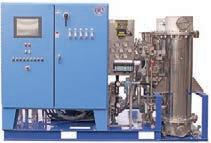
its manufacturer says.
The Laundry-Care H2o Recovery system is engineered as a platform design and is scalable to a targeted application. It can incorporate effluent filtration options to meet local municipal standards, simple retrofit or new construction; and it can benefit operators on new installations by reducing incoming plumbing lines and associated fees.
purclean.com 800-818-8868
AQUARECYCLE
AquaRecycle recently introduced its latest ultra filtration system to its CBR product series. The new PURIFY process has been added to the CBR system and is designed to work independently with tunnel washer operations, where some of the toughest washing environments exist due to low water usage per pound of linen washed, the company says.
Whether as a superpolishing process or as a prefilter to the new ARROW™ reverse osmosis system, the


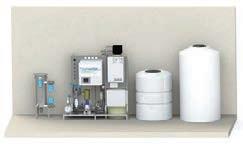
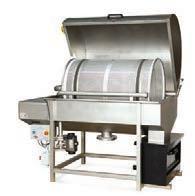

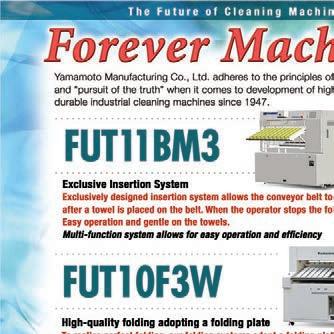
KEMCO SYSTEMS
Kemco Systems now offers a stateof-the-art Ceramic Membrane Filtration system (CMF), which the company calls one of the most efficient methods available for achieving a high water-recycle rate for all laundry applications.
CMF turns dirty water clean by removing suspended and emulsified contaminants from waste water without adding treatment chemicals. The system is capable of recycling 65% or more of process water requirements, says the company, helping to save laundries thousands in operating costs.
Recycle rates may increase up to 80% with the addition of Kemco’s Reverse Osmosis System (RO), which removes total dissolved solids to produce a higher water quality.
Kemco’s filtration system is
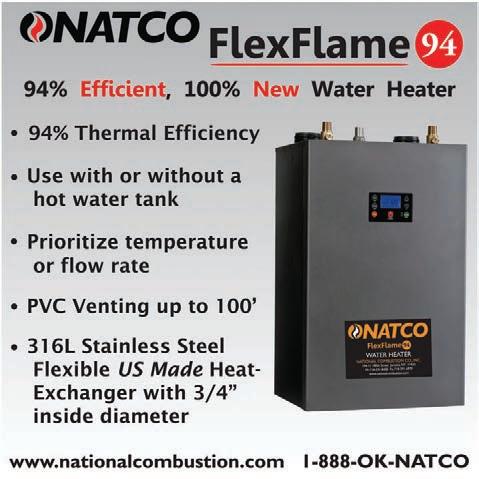
The Lint-X Rotor rotating drum filter from Christeyns provides filtration of the process water from tunnel or washers. It filters lint, suspended solids and large objects or particles larger than 105 micrometers out of polluted water, the company says.
Lint-X Rotor can be applied in-process on a tunnel washer or as an end-of-pipe installation for filtration of waste water, and it allows the reuse of laundry process water up to 50% (when used in combination with its Low Impact Washing or Compact ONE concepts).
christeyns.com 617-203-2169
ALN_3rd Page.indd 1 7/12/13 10:35 AM www.AmericanLaundryNews.com AMERICAN LAUNDRY NEWS | AUGUST 2013 19
[Christeyns] [PurWater™] [AquaRecycle] PRODUCT SHOWCASE
[Kemco Systems]
COMPILED BY JEAN TELLER, CONTRIBUTING EDITOR
licensed by Ingram Publishing)
(Image
CRUISESHIP LAUNDRY INFORMATION NEEDED:



Applied Silver, Inc. is a specialized laundry equipment manufacturer seeking an individual or firm to provide information relating to cruise ship laundry facilities and operations. Compensation for services will be offered and rates are negotiable. Experience with a variety of sizes and types of cruise ships is desirable. Questions will be technical in nature and include such topics as equipment types, layout and space requirements, regulatory compliance and shipboard systems including; electrical, plumbing, fresh water, compressed air and chemical delivery and storage. If interested, email your response to Roger Volk at roger@appliedsilver.com. Please include your background, experience and other qualifying information.
Wanted: Seasoned salesman to take over established territory with major distributor of OPL, industrial and coin laundry equipment. We represent the premier lines including Milnor, Chicago Dryer and Maytag. This is an excellent opportunity with high potential earnings. Full benefits. Will relocate the right candidate. If interested call 516-938-4300


20 August 2013 | AmericAn LAundry news www.AmericanLaundryNews.com www.cornerstonemachinery.com Quality used and reconditioned equipment Rigging and relocation services Satisfaction guaranteed Complete inventory on our website Please call or email John or Eric john@cornerstonemachinery.com | eric@cornerstonemachinery.com 877-773-1850 PARTS, PARTS, PARTS Huge stock of parts for most laundry equipment & boilers. Also traps, valves and lubricants. Overnight delivery. Steiner-Atlantic, 800-333-8883 Fax: 305-751-8390 parts@steineratlantic.com www.steineratlantic.com WASHEX PARTS Hard-to-find Washex parts, on-site rebuilding, tech support. LAUNDRY PARTS CENTER 800-352-4492 Fax: 305-827-3991 classified Advertising www.directmachinery.com For pricing, please call Ron Hirsch (516) 938-4300 Office • (516) 315-7426 50 Commerce Place • Hicksville, NY 11801 Fax (516) 932-8095 QTY DESCRIPTION Excellent Preowned equiPment WILL SELL QUICKLY 1 Unipress Vacuum Single Buck Shirt Unit 2 Milnor 120lb Steam Dryers 2006 1 Shaper Steam 12” Ironer by 120 1 Milnor 110lb Soft Mount 2000 1 Chicago Comet Ironer 1 Wascomat Soft Mount 30lb Washer 1 Wascomat Soft Mount 50lb Washer Pictures are on Website DIRECT MACHINERY SALES CORP. pArts for sALe pArts for sALe equipment for sALe equipment for sALe AMKO AMERICA, INC. Remanufactured Finishing Equipment Delta Ironers, Omega Folders & Towel Folders (1 year parts warranty) Like new at half the cost. PARTS, IRONER SUPPLIES & NEW EQUIPMENT ALSO AVAILABLE Contact: (561) 863-9696 jurgenb@bellsouth.net positions AvAiLAbLe heLp wAnted www.ineedjpequipment.com 800/925-3236 EQUIPMENT FOR SALE: (1) 2010 Chicago King Edge 136” Wide New Condition w Vac w/Option for 120” Wide (1) 2007 Jensen 5-Lane Drape and Store (2) Light Tables for Pack Room (1) 1993 Chicago XL Small Piece Folder (1) 400lb Braun OP Rebuilt (3) Milnor Tunnel Systems in stock We’ll install – Call for Quote (1) 2003 Chicago King Edge w/Vac (2) 2000 Chicago King Edges (1) 2005 Chicago Fastrack Feeder Great for King Sheets (5) Fiberglass Lint Traps (2) 2002 200lb Braun TSL (2) Chicago Classic Ironers - Gas (2) Chicago Skyline Folders w/Stackers (1) Chicago Edge Feeder (2) 2004 Milnor Single Stage Presses (1 35 bar/1 50 bar) (1) 2004 Chicago Thermal 32” 2-Roll Ironer (2) 1999-2000 Chicago 2-Roll 32 Steam Ironer (1) 2007 Lavatec Masterfeed 2007 Lavatec Masterfold w/Dual Stackers/ Conveyors Braun 200lb TSL “Expect Excellence” Stanco Industries, Inc. Serving The Textile Trades Since 1970 stanco2626@aol.com 800-932-3769 Visit Our Website: www.stancoind.com -------------- Equipment For Sale -------------BLANKET FOLDING SYSTEM 2002 Chicago Edge Blanket Feeder 2002 Chicago B13 Blanket Folder 2002 Chicago Blanket Stacker, with Conveyor BOILERS 2002 Superior 500hp 150psi Gas/Oil fired OTHER ITEMS 2001 Lavatec 600# Open-Pocket Washer/Extractor Lavatec Master Eclipse BB&D Lavatec BB&D 5-Lane Napkin Stacker 2004 Braun 4-Station Spreader- Feeder 1999 Chicago Air Small Piece Folder (3) 1994 Braun 440# Gas dryer, 2-Door. Former Clean Room operation. 1994 Chicago 18X120 Gas Ironer. 1998 Forenta 3-piece Shirt Unit. 2001 Chicago King Edge Spreader Feeder ------- BOILERS • WATER HEATERS • CARTS
MISSED OUR DEADLINE?
distributor offerings distributor offerings Expect excellence from the leader in used industrial laundry equipment sales and installation. Keep up to date with equipment for sale, and the latest industry news by subscribing to our monthly newsletter. Go to www.ineedjpequipment and sign up TODAY! About JP Equipment JP Equipment is a trusted, full-service, used industrial laundry equipment sales and installation company. We pride ourselves on providing unparalelled service, whether you are building a new laundry, or upgrading your current facility. Call Craig Lloyd toll free at (877) CWL-LOYD
–
visit
to
laundry
ADVANCE YOUR CAREER Place your ad online: www.AmericanLaundry n ews.com The Griffin Group, Inc. “Recruitment Specialist” Need to FILL a position? Call Deana Griffin 888-235-2365 www.thegriffingroup.cc deana@thegriffingroup.cc ®
between 9 a.m.
9 p.m. EST. Please
www.laundrycareers.com
review current industrial/institutional
management openings.
Sani Wash - McClure Industries, Inc. 9051 SE 55th Ave., Portland, OR 97206 800-752-2821 www.mcclureindustries.com, info@mcclureindustries.com


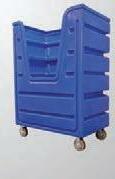


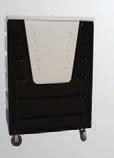










www.AmericanLaundryNews.com AmericAn LAundry news | A ugust 2013 21 source directory A convenient guide to sources of products and services APPAreL FinisHing cArts, trucKs & BAsKets Energenics Corp., Kartwasher 1470 Don St., Naples, FL 34104
cHemicALs/inJectOr systems Gurtler Industries, Inc. 15475 S. LaSalle St., South Holland, IL 60473
708-331-1210 www.gurtler.com Pellerin Milnor Corp. P.O. Box 400, Kenner, LA 70063 504-467-9591,
504-468-3094 www.milnor.com dryers – 100 POunds Or mOre Pack 25% More On Same Size Cart Call 800.829.4535 or visit MODLaundry.com for a FREE QUOTE. Premium Quality Casters Included! 72S Meese Orbitron Dunne Co. Stronger design for big payloads, yet lighter tare weight for easy handling. The Best of Both Worlds Source Directory listings in American Laundry News are sold on an annual basis at the following rates: All Major Credit Cards Accepted 2013 Listings Regular Boldface All Caps All Caps, Boldface Four Line Listing per Year $790 $990 $990 $1,050 Display and additional line rates available upon request cArt-wAsHing systems Sani Trux - McClure Industries, Inc. 9051 SE 55th Ave., Portland, OR 97206 800-752-2821 www.mcclureindustries.com, info@mcclureindustries.com M.I.T. POLY-CART 211 CENTRAL PARK WEST, NEW YORK, NY 10024 800-234-7659, FAX: 212-721-9022 WWW.MITPOLYCART.COM cArts, trucKs & BAsKets cArts, trucKs & BAsKets Pellerin Milnor Corp. P.O. Box 400, Kenner, LA 70063 504-467-9591, Fax: 504-468-3094 www.milnor.com dryers – 100 POunds Or Less Rotational Molding, Repair, Recycling...Your Complete Plastic Solution 11744 Blue Bell Rd. Elberfeld IN 47613 800-304-4600 www.fibertechinc.net Diversified Plastics, Inc. 1309 Highway 917 West, Latta, SC 29565 800-768-7636, www.dpirotocarts.com E-mail: sales@dpirotocarts.com, Fax: 843-752-7798
800-944-1711 www.energenics.com
800-638-7300, Fax:
Fax:












22 august 2013 | american Laundry news www.AmericanLaundryNews.com Source Directory listings in American Laundry News are sold on an annual basis at the following rates: All Major Credit Cards Accepted 2013 Listings Regular Boldface All Caps All Caps, Boldface Four Line Listing per Year $790 $990 $990 $1,050 Display and additional line rates available upon request Gardner Machinery Corporation P. O. Box 33818, Charlotte, NC 28233 Ph.: (704)372-3890; Fax: (704)342-0758 www.gardnermachinery.com materiaL HandLing / conveyors source directory A convenient guide to sources of products and services FLatworK ironers Setting the Standard in Lint Filters for 25 Years • Hotel • OPL • Coin Op • Dry Cleaners • Industrial • Commercial • Cruise Industry Dry or Wet Style Filters to Work with “ALL” Dryer Sizes or Multiple Situations, Fiberglass or Stainless and Custom for Unique Situations! All manufacturing done on premise 800-826-1245 www.cleancyclesystems.com • ccsystems@tqind.com parts Knowhow In Action Your Tingue rep is a fully trained master of finishing equipment operation, maintenance and installation. Call for: • Pads, covers, belts, waxes, tapes and more • Carts, trucks, baskets and bags • Parts, rebuilds and repairs 800.829.3864 www.Tingue.com TalleyMachinery.com MODLaundry.com TBR-Associates.com To website FLatworK support www.olekbelts.com 1-800-869-2683 Free www.olekbelts.com We’re your flatwork finishing and conveying O.E.M. Belt Match H.Q. Get the real thing for a Lot less $$$. O.E.M. Needlefelt Ironer Pads too! Better Belts, Better Prices, Better Service Visit our Website or Call 1-800-869-2683 For free, no obligation, price quotations and for your Free copy of our Product Catalog with over 40 samples. Ironer pads, covers, aprons, guide tapes, carts, slings, cleaners, waxes & more… Lint coLLectors & FiLters H Our In-Line Lint Filter mounts inside, saves space! H Fiberglass Wet Filters - 6,000 to 40,000 cfm H Fiberglass or Stainless Steel Dry Filters ENERGENICS CORPORATION Talk with our Design and Engineering Staff about your needs. Hundreds Sold Annually. 800-944-1711 www.energenics.com Get the info you need online... AmericanLaundryNews.com parts C & W EQUIPMENT (800) 443-3573 FLATWORK IRONER SPECIALISTS REMANUFACTURED IRONERS: Super Sylon Sylon Hypro’s Super Pro Jensen SS700 SS800 Ultima Lavatec UPGRADE KITS: Chain Drive Conversion Vacuum Systems Herringbone Conversion Canopies Inverters Side Covers Roll Springs Jensen Drives SUPPLIES: Aprons Pads Covers Belts Waxes Cleaners PARTS/REPAIRS: All Brands New/Refurbished/Hard to Find COMMITTED TO EXCELLENCE Your Ad Should Be Here
Pellerin Milnor Corp.
P.O. Box 400, Kenner, LA 70063 504-467-9591, Fax: 504-468-3094 www.milnor.com
Pellerin Milnor Corp.

P.O. Box 400, Kenner, LA 70063 504-467-9591, Fax: 504-468-3094 www.milnor.com

The
Kemco Systems www.kemcosystems.com 18 LaundryCareers.com www.laundrycareers.com 20

Lavatec Laundry Technology www.lavatec-laundry.com 24
LG www.lgcommerciallaundry.com 3
McClure Industries www.mcclureindustries.com 17
NATCO www.nationalcombustion.com 19
Parker Boiler www.parkerboiler.com 17
Royal Basket Trucks www.royal-basket.com 8
Stanco Industries www.stancoind.com 20
Topog-E Gasket Co. www.topog-e.com 16
UniMac www.unimac.com 7
Yamamoto www.yamamotolaundry.com 19
www.AmericanLaundryNews.com AmericAn LAundry news | A ugust 2013 23
wAsHer-eXtrActOr – 100 POunds Or Less wAsHers – cOntinuOus BAtcH tying mAcHines
UsA, inc. Milwaukee, Wi Tying, Banding & Automated shrink Wrap systems 800-843-5667 sales@felins.com For more information visit us at www.felins.com wAsHer-eXtrActOr – 100 POunds Or mOre
Milnor Corp.
Box 400,
LA 70063
504-468-3094
Milnor Corp.
Presses – eXtrActiOn source directory A convenient guide to sources of products and services PLAnt design & instALLAtiOn Source Directory listings in American Laundry News are sold on an annual basis at the following rates: All Major Credit Cards Accepted 2013 Listings Regular Boldface All Caps All Caps, Boldface Four Line Listing per Year $790 $990 $990 $1,050 Display and additional line rates available upon request company web site Page company web site Page INDEX OF ADVERTISERS A.L. Wilson Chemical Co. www.alwilson.com 15 American Dawn www.americandawn.com 5 Consolidated Laundry Machinery www.clmco.com 13 Cornerstone Equipment & Rigging
20
Packaging
15
Machinery Sales Corp.
20
International
18
Felins
Pellerin
P.O.
Kenner,
504-467-9591, Fax:
www.milnor.com Pellerin
P.O. Box 400, Kenner, LA 70063 504-467-9591, Fax: 504-468-3094 www.milnor.com
www.cornerstonemachinery.com
Davis
www.davispackaging.net
Direct
www.directmachinery.com
EZProducts
www.ezproductsinc.com
Griffin Group, Inc.
20
9
10
11
20
16
www.thegriffingroup.cc
Gurtler www.gurtler.com
IES www.iesclean.com
IPSO www.ipso.com
J.P. Equipment www.ineedjpequipment.com
Jensen www.jensen-group.com
THE WIRE The latest news, straight to your inbox, 2X a week rAgs wAnted FOr cAsH Or trAde
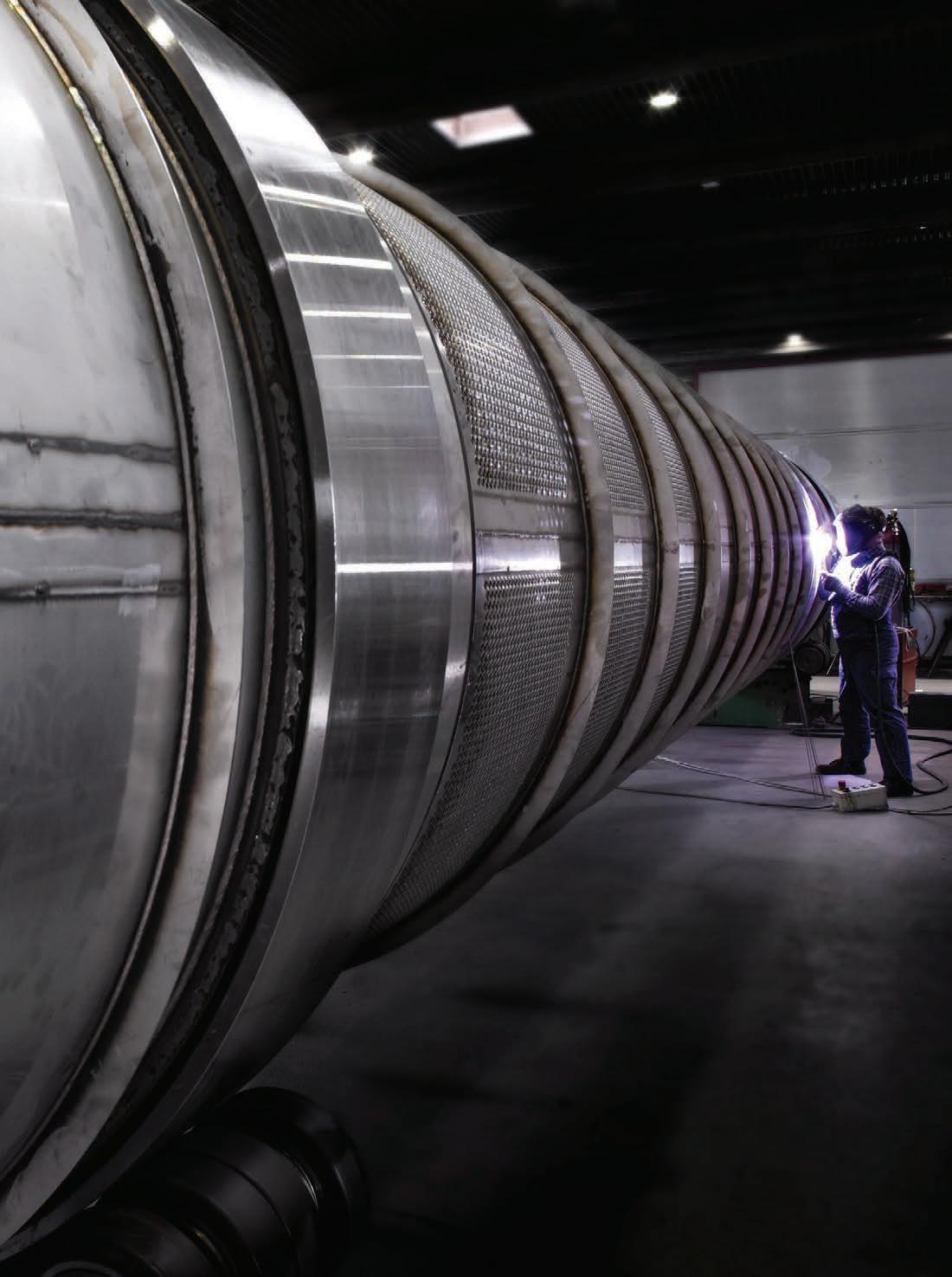
BECAUSE TUNNELS ARE LONG-TERM INVESTMENTS, LLT BUILDS THEM TO HANDLE THE TOUGHEST JOBS FOR DECADES.
of
operate,
ENGINEERED FOR A HIGHER RETURN www.lltusa.com 203.632.8777
With LLT, you get the kind
forethought and execution that can bring to your laundry the exact kind of tunnel it needs. A tunnel that’s simpler to
maintain and retro-fit. A tunnel with versatility to handle up to 95 wash programs. A tunnel with the intelligence to minimize water, energy and chemical consumption. A tunnel with the muscle to handle high temperatures and long hours for decades of productivity with minimal service.
