Virginia VA medical center refreshes laundry services

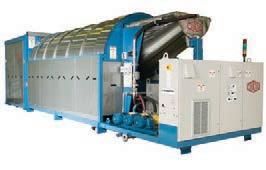
RICHMOND, Va. — The U.S. Department of Veterans Affairs reports that it has contracted with Western State Design, Hayward, Calif., for new laundry equipment for the Hunter Holmes McGuire VA Medical Center (VAMC).

The $7.8 million contract will provide a steamless system—the latest in design and first of its kind for a VA medical center—resulting in a more efficient, and energysaving laundry, the VA says.
The OPL serves the medical center, Hampton VAMC, Ft. Lee, Fayetteville VAMC, Camp Perry, Ft. Eustis, and Langley Air Force Base. The new equipment will greatly enhance its capacity and offer the medical center and community partners the opportunity for additional services, the VA says.
More than 4 million pounds of laundry is processed annually through the Richmond facility. Equipment has been maintained but as newer technologies became available, renovations became necessary.
Sylvia Small, production leader, has for the last 25 years led a team of 40 employees responsible for washing, drying, folding and sorting linens and other items for the VAMC and other community partners.
She’s seen the increase in partners utilizing the laundry service over the years and says she is looking forward to the new equipment. The features are expected to be installed, tested and in use by this fall. ALN
Delivery fleets require constant attention
By Bruce Beggs, editorial director
CHICAGO — Route operations is an important function of any successful rental or commercial laundry and requires constant attention.
The Textile Rental Services Association (TRSA) says the textile services industry deploys a combined fleet of 25,000 trucks weekly to deliver goods to thousands of healthcare and hospitality facilities, and to businesses such as restaurants, auto repair shops, and others.
TRSA calculates that 1.8 million U.S. business locations are textile services customers generating roughly 15 billion pounds of laundry per year delivered by the third largest fleet of vehicles (behind only FedEx and UPS).
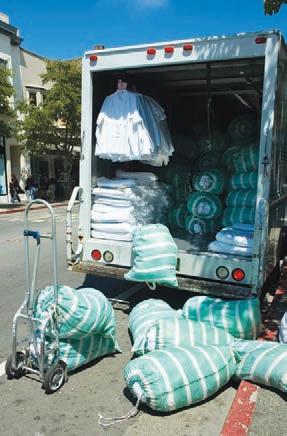
Efficient delivery of clean goods and pickup of soiled goods is what separates one textile service operation from the next.
ROUTE OPTIMIZATION
Route optimization can help companies eliminate routes and potentially reduce their costs by thousands of dollars per route.
Ask yourself: Do your drivers stop where it is most cost-effective for your organization, or do they stop where they want to stop and that’s
efficient for them?
Cyndi Brandt, Roadnet Technologies (formerly UPS Logistics), once addressed the value of logistics during a TRSA meeting presentation.
It isn’t enough to use index cards or pushpins and colored string to map out this week’s routes, she says. There’s a variety of routing software products on the market that can provide as much or as little planning help as is desired.
The traditional approach of focusing on daily, tactical route planning leads to what Brandt calls “reactive” planning, which can find a operator tweaking their routes due to volume fluctuations, making off-day deliveries and pickups, and even adding vehicles when capacity falls short, all of which create added costs and headaches.
She favors a more proactive approach, even using more than one route scheduling method to gain the greatest business advantage. Keys to best practices are to plan a transportation strategy, collect data in support of your strategy, analyze that data regularly and then implement changes based on your analysis, she says.

Restaurant association recognizes value of TRSA’s Clean Green certification

ALEXANDRIA, Va. — The Green Restaurant Association (GRA) has incorporated TRSA’s Clean Green certification for textile services operations into its Green Restaurant program, enabling restaurants to earn points toward the Green Restaurant designation by using a Clean Greencertified laundry.
“This recognition by the Green Restaurant Association reflects the relevance of the TRSA Clean Green program and the importance of supply chain partners’
green practices to restaurants’ sustainability,” says TRSA CEO & President Joseph Ricci.

The textile services industry provides restaurants and other foodservice operators with pickup/delivery service of laundered reusable products such as napkins, tablecloths, garments, towels, floor mats and other hygiene and reusable textile products. Clean Green certification differentiates launderers by verifying their adherence to a well-defined list of green management practices and compliance
with energy and water conservation standards.
Boston-based Green Restaurant Association provides environmental certification for restaurants, designating them as “Green” through a point system that assesses their sustainability. A restaurant must qualify initially by attaining 100 points from a variety of practices related to water, energy and waste. Each restaurant must then recertify annually, making an additional 10 points worth of improvements to maintain certification.
Any restaurant utilizing a Clean Green-certified laundry now can receive a total of four points toward Green Restaurant certification: two in the energy practices category and two in water practices. Verification of standards must be provided. In addition, utilizing reusable napkins adds six points.
Clean Green quantifiably validates the reusable textile industry’s positive environmental impact and will soon receive ASTM International approval, TRSA says.
J u N e 2013
Late News
www.americanlaundrynews.com Volume 39, Number 6
the Newspaper of record for laundry & linen Management
ALN
iNside [4] [6] [20] See ROUTE on Page 19 Clean Show Expectations Willingness to fully participate will decide event’s true value: Frederick
NOLA Know-How What to see and do while in New Orleans for Clean Show Panel of Experts Doing laundry in cramped quarters leads to sloppy work RunninG The RouTe:
(Photo: © iStockphoto/Eliza Snow)
CHICAGO — The laundry administrators and managers who responded to May’s American Laundry News Wire survey expressed little interest in having their facilities independently accredited or certified by third-party organizations, according to the survey data.
Just 8.3% of respondents reported that their textile services operation is accredited or certified in some way by an organization independent from their own. Another 8.3% said they were “not sure.” The remaining 83.3% reported having no such accreditation or certification.
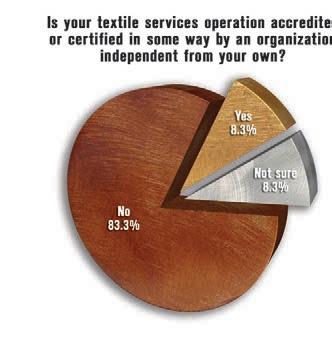
Organizations such as the Healthcare Laundry Accreditation Council (HLAC) and the Textile Rental Services Association (TRSA) can certify laundry facilities as being in compliance with industry standards and protocols. Respondents who reported their facilities as accredited/certified said this standing came from HLAC and the Occupational Safety and Health Administration’s (OSHA) Voluntary Protection Programs (VPP).
Roughly 42% of respondents said that they are “currently seeking” to receive accreditation/certification, or to renew accreditation/certification, within the next year. The remaining 58.3% are not.
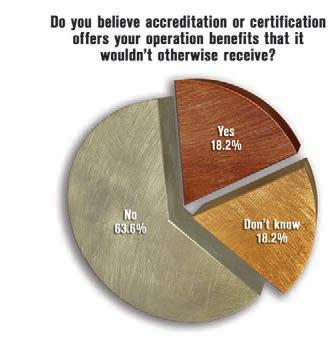
Approximately 18% of respondents believe that accreditation/certification offers their operation benefits that it would not otherwise receive, and another 18.2% are unsure. The remaining 63.6% don’t believe accreditation/certification offers benefits.
Do you think independent accreditation/certification of laundry facilities should be mandatory in the United States? Only 16.7% of respondents believe that it should, while 66.7% say no. The remaining 16.7% “don’t know” if accreditation/certification should be mandatory.
While the Wire survey presents a snapshot of readers’ viewpoints at a particular moment, it should not be considered scientific.
Subscribers to Wire e-mails are invited to take the industry survey anonymously online each month. All managers and administrators of institutional/OPL, cooperative, commercial and industrial laundries are encouraged to participate, as a greater number of responses will help to better define operator opinions and industry trends.
Crown Health Care Laundry Services to open Miss. plant
COLUMBIA, Miss. — Mississippi Gov. Phil Bryant and officials from Crown Health Care Laundry Services announced recently that the company is locating laundry processing operations in Columbia’s Marion County Industrial Building. The project represents a company investment of $6 million and will create 150 jobs.
“I am grateful to the company for selecting Columbia as the home of its newest operation and creating so many jobs for the area’s residents,” Gov. Bryant says.
“Today marks another strategic milestone in the continued growth and expansion of Crown Health Care Laundry Services in the Southeast,” says company President Don Haferkamp.
The Mississippi Development Authority (MDA) provided assistance in support of the project for modifications to the publicly owned building. The County provided assistance for building modifications and the City of Columbia provided utility infrastructure assistance.
“I am happy to welcome Crown Health Care Laundry Services to our state, and I am pleased MDA could provide assistance for the project,” says MDA Executive Director Brent Christensen.
Based in Pensacola, Fla., the company is an independent, full-service health care laundry processor and linen rental company. It has been a linen service provider throughout Alabama, Florida, Georgia, Louisiana, Mississippi and South Carolina for more than 50 years.
Publisher
Charles Thompson
Phone: 312-361-1680
E-Mail: cthompson@ americantrademagazines.com

Editorial Director
Bruce Beggs
Phone: 312-361-1683
E-Mail: bbeggs@ americantrademagazines.com
Digital Media Director
Nathan Frerichs
Phone: 312-361-1681
E-Mail: nfrerichs@ americantrademagazines.com
Production Manager Roger Napiwocki
Contributing Editor Jean Teller
Editorial Assistant Carlo Calma
Advertising Sales
National Sales Director

Donald Feinstein
Phone: 312-361-1682
E-Mail: dfeinstein@ americantrademagazines.com

Office Information
Main Phone: 312-361-1700 Fax: 312-361-1685
Subscriptions 630-739-0600 www.americanlaundrynews.com
American Laundry News (ISSN 1091-9201) is published monthly. Subscription prices, payment in advance: U.S. & possessions, 1 year $39.00; 2 years $73.00. Foreign, 1 year $89.00; 2 years $166.00. Single copies: U.S. & possessions $7.00; Foreign $14.00.
Published by American Trade Magazines LLC, 566 West Lake Street, Suite 420, Chicago, IL 60661. Periodicals postage paid at Chicago, IL, and at additional mailing offices.
POSTMASTER, Send changes of address and form 3579 to American Laundry News Subscription Dept., 440 Quadrangle Drive, Suite E, Bolingbrook, IL 60440. Volume 39, number 6. Editorial, executive and advertising offices are at 566 West Lake Street, Suite 420, Chicago, IL 60661. Charles Thompson, President and Publisher. American Laundry News is distributed selectively to qualified laundry and linen management and distributors in the United States. No material appearing in American Laundry News may be reprinted without written permission. The publisher reserves the right to reject any advertising for any reason.
© Copyright AMERICAN TRADE MAGAZINES LLC, 2013. Printed in U.S.A.
MEMBERSHIPS
Association for Linen Management
interest
laundry
or certification 2 JUNE 2013 | AMERICAN LAUNDRY NEWS www.AmericanLaundryNews.com INSIDE: [6] Refining Your Company’s Safety Standards Former OSHA administrator Edwin G. Foulke Jr. offers suggestions for improving your safety program [8] Tools of the Trade [10] NOLA Know-How We’ve researched some of the things to see and do while you’re in New Orleans for the Clean Show [20] Panel of Experts “My laundry isn’t large. What general suggestions can you give me about how best to operate in cramped quarters?” [24] Career Track [26] Trade Ticker [27] Calendar [25] Technology Enables OPLs to ‘Go Green’ Recent advances in equipment and system design are enabling OPLs to sustain both environment and budget June 2013 • Vol. 39 | No. 6
ALN Survey: Respondents show lukewarm
in
accreditation
ALN
Come


There is a better way to save on laundry.

Take control of your conservation efforts instead of leaving them in the hands of your guests. Milnor has a new solution for mid-sized hotels and hotel compounds looking to save both time and money. Milnor’s five-module “short” tunnel washers can have a significant effect on your water and energy consumption, without compromising linen quality your guests deserve. We’re talking about using as little as 0.3 gallons of fresh water per pound of room linen instead of 2 or more gallons in a large washer-extractor.
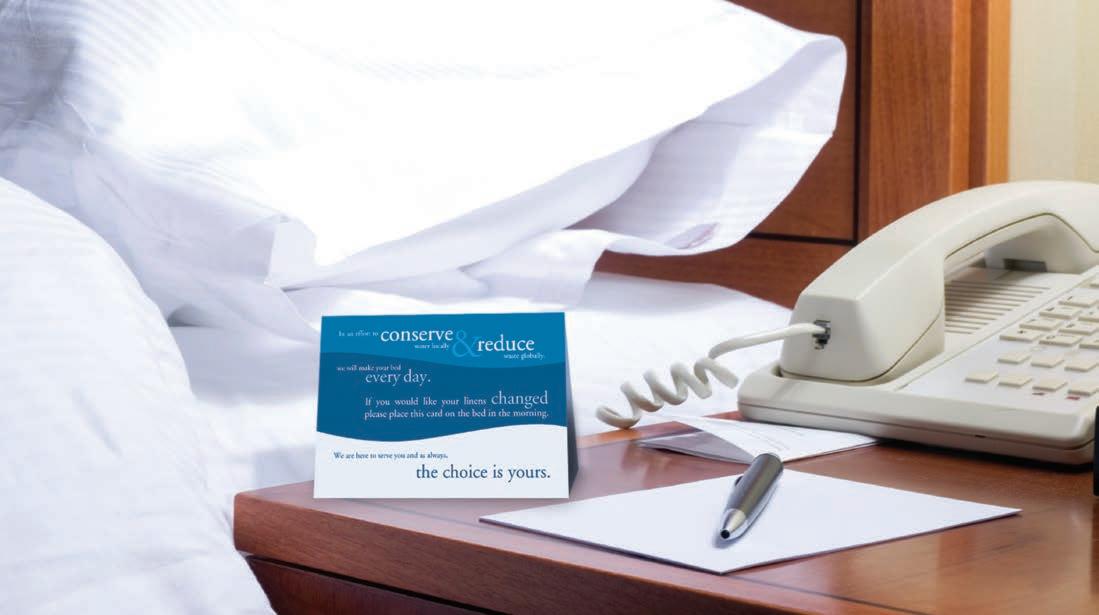
No matter what level of soil or class of goods, facilities across the country have seen remarkable improvement in wash quality with a dramatic reduction in water usage and energy. All-told PulseFlow®* tunnels have saved more than 500,000,000 gallons of fresh water so far. And now, if your facility washes 1,000 pounds of linens an hour or more, you can take advantage of PulseFlow technology in a new, smaller tunnel.
Contact an authorized Milnor distributor or call 504-712-7656 to find out more about getting big savings with a modest footprint.
www.milnor.com/pulseflow_technology / pellerinmilnor To see how a PBWTM works, scan this code. *Patent applied for
BOOtH #3443
see where Milnor machinery is made before CLEAN ’13! Register for the June 19th Open House at Milnor!
As the convention closes
here’s always so much to do to prepare for the Clean Show, which will convene this month in New Orleans
And I know that once I’m there, I’ll spend each day on the move. So it’s always enjoyable to take a break when the convention day has ended.
If you feel the same, then you’ll want to read Carlo Calma’s NOLA Know-How, beginning on page 10. He’s researched some of the Crescent City’s leading hot spots, including attractions, shopping and dining.
It’ll give you a good idea of just some of the diversions you can find beyond the convention center doors.
The Clean Show is, of course, about finding solutions to
From The Director’s Chair BrUcE BEggs
improve your operation. But if you’re not going to make it to New Orleans this year, this issue still has plenty of content aimed at boosting your bottom line.
Our Panel of Experts offers its thoughts on overcoming the restrictions of operating
in cramped confines. I’m sure none of you folks in on-premise laundries know anything about that, right? You can find Tips for making the most of tight quarters beginning on page 20.
If your laundry’s safety record has been a concern for you lately, you should read Refining your company’s safety standards, featuring insights from Edwin G. Foulke Jr., once administrator of the Occupational Safety & Health Administration (OSHA). That story starts on page 6.
Plus, we’ve got a slew of hiring announcements, product news, an updated events calendar ... yes, there’s still more in this issue, but like the Clean Show, you’ll need to get a move on to find it. Laissez les bons temps rouler! ALN
ARTA forms Cleanroom Committee to fund reusables life-cycle analysis
MISSION, Kan. — The American Reusable Textile Association (ARTA) has announced the formation of a Cleanroom Committee to undertake life cycle assessment (LCA) research on behalf of the reusable cleanroom garment industry.
The idea to form the committee and undertake LCA research came from textile manufacturer and ARTA member Precision Fabrics Group (PFG).
At the time, PFG’s John Smith was serving on the ARTA board of directors and shared his observations on the cleanroom marketplace (and the encroachment of disposable garments).
Smith has since retired, but his successor, Steve Glosson, and a
half-dozen other representatives from companies serving the market for reusable cleanroom garments, have answered the call to action.
Members of the ARTA Cleanroom Committee include fabric manufacturers, suppliers and operators.
Active members to date include:
• Mike Rataj, Aramark, Cleanroom Division

• Dianne Knitter, Prudential Overall Supply, Cleanroom Division
• Jan Eudy, Cintas, Cleanroom Division

• Steve Glosson, Precision Fabrics Group
• Dennis Moore, ITG/Burlington
• Scott Delin, Superior Uniform Group
• Doby Byers, Hi-Tech Garments
In addition, Dr. Mike Overcash and Dr. Evan Griffing of Environmental Clarity LLC will conduct the life-cycle analysis.
ARTA officers and directors serving on the committee include President Ed McCauley of United Hospital Laundry, Past President Steve Tinker of Gurtler Industries, and Director Don Pedder of Reino Linen.
The committee is working to gather data and define parameters of the research, which is to be completed by spring 2014.
ARTA intends to provide an update during its 2014 Education Conference, scheduled for Feb. 26-28, at the Orlando World Center Marriott.
ALN
clean show expectations
The Clean Show is just around the corner. Like so many other major events in our life, what we get out of attending Clean will be based on our expectations.
The Clean Show will provide all attendees a chance to see the latest laundry equipment on the market. It will provide hours of education and unparalleled opportunities to network with others in the industry. What key concerns will you bring with you to New Orleans?
The Clean Show will provide me with an opportunity to discuss with a number of textile suppliers the new, specialized healthcare linen being developed to help reduce bed sores. This linen is extremely expensive and can be a challenge to wash, process and package for delivery.
I hope to get guidance from the linen companies and other managers in attendance about the best wash formula and the easiest way to process the linen. Now seems like a poor time to enter into longterm fixed price contracts for linen rental. But this linen is being marketed to the nursing staff and skin care specialists, and it is up to us to figure out how best to handle it.
I will be looking for ways to reduce my operation’s energy consumption. Alternative fuel vehicles will be of great interest. I will explore ways to reduce energy at each stage of my operation, from the boiler room to delivery.
Going hand in hand with this will be attempts to make the operation more eco-friendly. How can I, as a trained environmentalist, reduce my impact? Part of this “section” will include how to make sure I get maximum life from my textiles without negatively impacting the environment.
I will be looking for ideas on how to create more flexible contracts that will allow me to partner with my customers to meet the challenges facing us in the world market. Many of us grow nervous when we see the rapid escalation of gas prices. How soon they will go up again is anyone’s guess, but it does appear to be far from a stable commodity.
I will look for labor-savings equipment, and network with other managers about labor-savings procedures. Wages continue to go up every year, and we must find ways to improve our workers’ productivity or lose our competitive edge.
I will revisit the real-time productivity monitoring system that was first shown at Clean 2011. The ability to give continuous feedback to employees about how they are performing minute to minute is appealing. And making such information available to my management staff should help improve their training and oversight of the workflow through the laundry.
Through networking, I will develop a list of employee recruitment techniques that really work. And I will enter into discussions about employee training and motivation. This show provides a unique opportunity to investigate what others are doing in other parts of the country and even around the world.
The Clean Show is that rare time when the entire laundry industry comes together in a special learning environment. We can come with our specific lists of equipment we want to see or vendors we like to visit, but the show is so much more. The value of attendance will be determined by your willingness to fully participate in the educational and networking opportunities available only at an allindustry show.
•
•
•
•
•
•
•
•
•
•
•
•
•
•
Make plans now to be there all three days, because the full value of the show cannot be realized without investing the proper time. Educational programs will be offered every day. Networking opportunities begin with breakfast and end when you return to your room at night. Make the most of your travel and registration by getting full value from this year’s show.
Eric Frederick is director of laundry services for Carilion Laundry Service, Roanoke, Va., and a past president and manager of the year of the Association for Linen Management. You can reach him by e-mail at efrederick@carilion.com.
4 JUNE 2013 | AmEricAN LAUNdry NEws www.AmericanLaundryNews.com Top Stories Appearing on AmericanLaundryNews.com for the 30 Days Ending May 15 (WE) = Web exclusive news
OSHA Fines New Jersey Laundry $219,000 for Reported Safety... (WE)
Lavatec Inc. Now Headquarters for Lapauw of America
Virginia VA Medical Center Refreshes Laundry Services
Clean Show Releases Free Mobile App for Smartphones
Prudential Overall Supply Celebrates 80-Plus Years...
Columnists/Features
Panel of Experts: Controlling Linen Loss is Key to ‘Saving Par’
Eric Frederick: The Fine Art of Fine-Tuning: Tunnel Washers
Consider Every Angle Before Building New Laundry
On the Trail of Textiles
Use SMART Goal Setting for Laundry Business Growth our sister websites From AmericanDrycleaner.com:
Deliver What Your Customers Want
JPB Capital Partners Buys Controlling Interest in ZIPS... From AmericanCoinOp.com:
Calvary
Attendants and Atmosphere Energize...
Laundromat:
Coin-Op 101: What to Look for in Coin Laundry Distributor
T
Columnist At lArge Eric L. Frederick, RLLD
ALN
Manufacturers, suppliers, operators join forces in support of reusable coveralls















Refining your company’s safety standards
 By cArLo cALmA, EditoriAL AssistANt
CHICAGO — “Safety first” has become the mantra for many workplace environments, so it goes without saying that the safety and well-being of employees remains a top priority for many companies today. Is yours among them?

Edwin G. Foulke Jr., a partner in the Atlanta law firm of Fisher & Phillips LLP, in conjunction with the Textile Rental Services Association (TRSA), recently hosted a webinar covering how companies can improve their safety program.
Foulke’s experience speaks for itself. In addition to serving as co-chair of Fisher & Phillips’ Workplace Safety and Catastrophe Management Practice Group, he’s served as assistant secretary of labor for the Occupational Safety and Health Administration (OSHA), and was appointed by President George W. Bush to head OSHA from 2006 to 2008.
First Steps
The key to improving safety standards lies in first identifying why safety regulations are broken. Oftentimes, Foulke explains, many policies set in place are broken because they have become too hard to follow.
“We make sure our safety programs are such that we’re avoiding safety health hazards [but] we don’t want to have our program such that we’re so strict, or so cumbersome,” says Foulke. “We don’t want to get it to that point where we make it so difficult. We don’t want to make our safety program where it’s just so rigid that it doesn’t protect employees.”
Determining which OSHA safety and health standards are applicable to a company’s operations, and staying abreast of your company’s OSHA recordkeeping audits, should be your first steps
toward safety improvement.
While determining which safety standards apply to a company can be “self-evident,” Foulke advises business owners to look at their Standard Industrial Classification (SIC) or National Advisory Committee on Ergonomics (NACE) Code to know for sure.
“Make sure that OSHA properly classifies your establishment and you’re not classified wrongly because there are some things, like recordkeeping, [that] certain companies [or] certain industries are not required to do,” Foulke says.
He also recommended that business owners get themselves prepared for an OSHA inspection, and that they understand their legal rights.
“OSHA can’t just come in there and ask for every document you have. They’re not entitled to [them],” Foulke explains. “They just can’t walk around by themselves...[you’re] entitled to accompany them during an inspection.”
It’s critical that you assert your rights. If you give the inspectors every document you have, and you sign statements, neither of which you’re required to do, you’ll be hurting yourself. “And in the long run, the inspection is not going to go well for you, and you’re going to end up having a lot more penalties [and] a lot more citations.”
Low-Hanging Fruit
Regarding recordkeeping, Foulke advises owners to keep track of their company’s OSHA 300 Log. It can help an opera-
tor keep track of accidents in the workplace, plus possibly pinpoint patterns of where they maybe occurring.
“If 90% of the injuries in your 300 Log are occurring in Department A, you have a problem there that you need to address,” he says. “It could open up a whole array of OSHA standards that you may be violating, and if they see a pattern... the inspection starts to expand.”
To prevent inspections from expanding into other departments, Foulke advises company owners to audit their workplaces for “lowhanging fruit,” or common safety and health violations that could easily draw OSHA fines.
Standard (HCS).
The HCS has been “aligned with the Globally Harmonized System of Classification and Labeling of Chemicals (GHS),” according to OSHA, meaning that the update will “provide a common and coherent approach to classifying chemicals and communicating hazard information on labels and safety data sheets.”
Under this revision, safety data sheets will be more standardized and detailed, and employers will have until Dec. 1 to train all employees on how to use them, according to Foulke.
Keep Track of Abatements, Citations
Foulke highlighted the abatement of past citations (correction of the safety or health hazard/violation that led to a citation) and keeping record of any such abatement.
Program. “If you have a fatality, if you’re a high-hazard industry, if you get OSHA citations and you get a bunch of egregious citations, then you’re going to be put in the Severe Violators program.”
Companies on the list receive not only follow-up inspections, but are placed on a “priority inspection list for wall-to-wall inspections” for all facilities owned, and also receive enhanced settlement provisions, among other penalties.
In addition to staying on top of its own citations, a company should pay heed to OSHA’s MultiEmployer Citation Policy, and how the company’s relationship with other contractors or companies they employ could affect them, Foulke says.
Blocked exits, extinguishers and electric panels; improper handling and racks; recordkeeping errors; and housekeeping problems are among the common violations that companies can easily avoid, according to Foulke.
One other precaution that applies specifically to textile care facilities is the handling of hazardous chemicals, under OSHA’s revised Hazard Communication
“We need to make sure that we’re reviewing all our past abatements and making sure that those abatements have stuck, and that we don’t have them anyplace else in our facilities, because that will be the basis for repeat [violation],” he advises.
Failing to abate past citations can be costly, he warns. “We’re talking about $7,000 for each day you didn’t abate it, so we’re talking about some serious money there.”
Not only can repeat citations hurt a company financially, it can also subject it to even stricter inspection visits under OSHA’s Severe Violators Enforcement
Not only can OSHA issue an open inspection on a contractor on a company’s site, it can also issue the same inspection on the hosting company because “[they’re] the controlling employer.”
“The part of that problem is OSHA gets a complaint from one of your contractors on site, by one of their employees [so] the contractor will get cited for that violation,” says Foulke. “But you could also get cited because maybe your employees are exposed.”
“[You] have to recognize how contractors, or vendors or suppliers, [can] create safety hazards that could potentially expose [your] employees, too, and [how you’re] going to be brought into that.”
To avoid this issue, Foulke
6 JUNE 2013 | AmEricAN LAUNdry NEws www.AmericanLaundryNews.com
See SAFETY on Page 18
electric panels;
All of the pieces are in place. The best just got even better. We have now strategically partnered with HBD Construction, who is committed to delivering quality and integrity on every construction project, from conception to completion and FV Consulting, Inc., the efficiency specialist for your lean process improvements. We are now the one and only laundry service company in North America to offer full services from building construction through to plantoperations and support. Building Smarter Laundries for Smarter Operators 978.373.1883 | www.eomech.com
(Photo © IStockphoto/NuStock) Blocked
exits, extinguishers and
recordkeeping errors and housekeeping problems are among common violations that companies can easily avoid.
David Mertens Sr. VP Operations ALS PUZZLE AD_Layout 1 5/15/13 3:20 PM Page 1 ALN_Tab_1-4_H.indd 1 5/15/13 2:40 PM
Gerard
O’Neill President/CEO

Tools f the Trade
New barrier washer-extractors built on

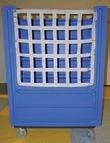
A new Secure Net design on the PolyTrux® 72N bulk laundry truck from Meese Orbitron Dunne Co. (MOD) allows durable cargo netting to crisscross the cart’s open, ergonomic front and secure linens inside for transport.
The optional Secure Net can be partially removed for quick, easy access to the linens and/or completely removed for cart washing and cart makeup. It can be replaced in seconds with no tools.
World Emblem International introduces its latest apparel decoration product: High-Visibility Striping.
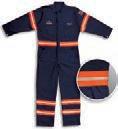
Such striping is a standard uniform requirement for many low-lit and potentially hazardous working environments, World Emblem says, and can be applied to work shirts, pants, coveralls and vests.
World Emblem offers six different trims and 48 standard placement locations for the
Designed for textile rental companies, OPLs and others balancing efficiency, safety and linen security, the 72N handles payloads stuffed to 800 pounds in a rotationally molded plastic cart set atop a poly base and premium casters.
A choice of standard and optional custom colors and a range of custom accessories are offered.

modlaundry.com 800-829-4535

striping, and can create custom templates, the company says. A free quote and digital design proof is available within 24 hours, it adds.
Customers can drop-ship their garments from vendors to World Emblem’s Atlanta manufacturing plant. Once an order is complete, the company can even blind-ship it directly to the end-user. worldemblem.com 800-766-0448

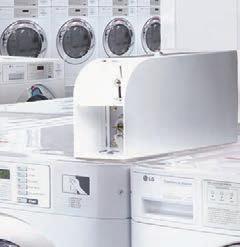
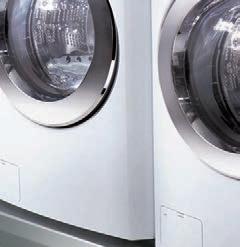
Electrolux Professional’s Evolution range of barrier washer-extractors offers the healthcare industry, hospitals and nursing homes a laundry solution built on ergonomics and user-friendly technologies. The equipment is available in the United States via distributor Laundrylux. The Evolution range is designed
to meet the utmost hygiene standards.
It offers an optimal working height for loading/unloading, as well as newly designed reversible doors.
The Compass Pro® interface offers up to 55 programs and is available in 18 languages.
laundrylux.com/electrolux 800-645-2205
OPL dispensing system offers flexibility, ease in copying programs
The V-Line series of laundry dispensing systems from DEMA Engineering is specifically designed for OPL and small commercial applications.
Through a streamlined digital programming interface, an opera-


tor can easily create different user modes. Cut-and-paste programming means that copying programs between multiple dispensers is quick and easy, DEMA says. demaeng.com 800-325-3362

8 JUNE 2013 | AmEricAN LAUNdry NEws www.AmericanLaundryNews.com
Bulk laundry cart features new secure net design that keeps linens in place but removes easily for access
High-visibility striping enhances safety in low-lit and potentially hazardous work environments
ergonomics, user-friendly technologies
For over 50 years U.N.X. INCORPORATED has been involved in the development of products that not only solve quality problems that exist at the moment, but also provide long term benefits to the customer and the environment in which we live. U.N.X. was built on the foundation of improving the industry in which we participate. U.N.X. prides itself on being an industry leader with state-of-the-art products and dispensing equipment, and our plans for the future are extraordinary. With a Research and Development team second to none, U.N.X. is in a position to provide the industry with the most technologically advanced products and dispensers as possible. U.N.X. INCORPORATED 707EArlingtonBlvd Greenville,NC27858 (252)756 8616 www.unxinc.com ALN_Tab_half 10/9/12 2:40 PM Page 1 See us at the Clean Show • Booth #2502 0513aln_UNX.indd 1 4/26/13 10:48 AM
IF YOU DON’T HAVE OPTISPRAY
YOUR
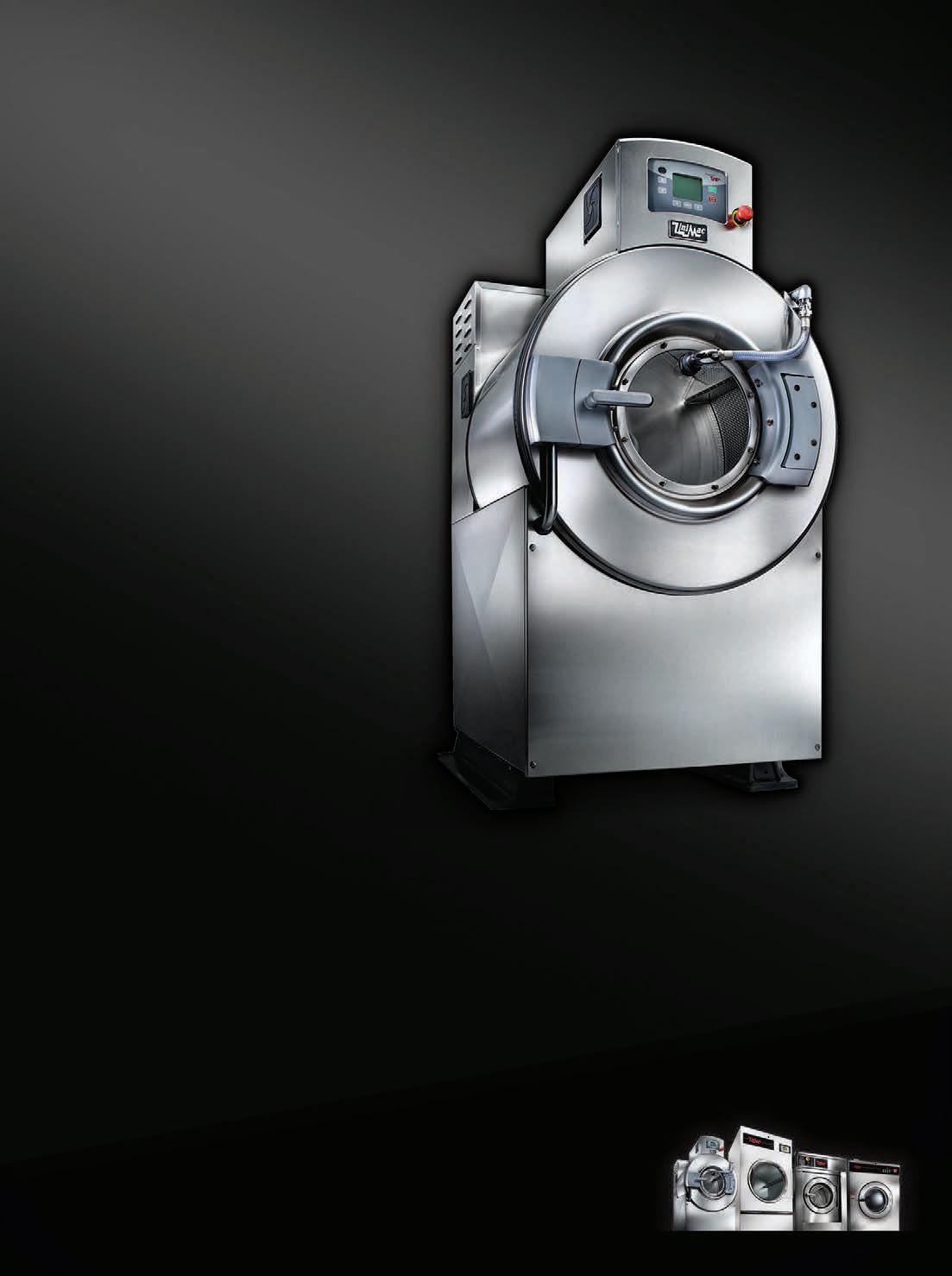
An inefficient rinse is money down the drain. With a combination of bath and spray rinses, new OPTispray ™ Rinsing Technology utilizes unique spray hardware and exclusive software to minimize the water and time needed to rinse a load while also delivering far superior rinse results. OPTispray uses less water, saving up to $2,110 in yearly utility expenses compared to popular models with only bath rinses. To lower costs even further, industry-leading 400 G-Force extraction delivers maximum water removal and increased throughput. Innovative features like UniLinc ™ paired with OPTidry ™ offer complete laundry room control, minimize operating costs and optimize efficiency to save you even more time and money. It all combines to deliver the industry’s absolute lowest cost of ownership. SPECIAL FINANCING AVAILABLE. 4.50% finance rate on UniMac ® washers and dryers. Limited-time offer. Contact an authorized UniMac distributor today to run a laundry operating analysis and see how you can cut costs and save money. Visit UNIMAC.COM/OPTISPRAY or call 1-800-587-5458.
™
LINENS AREN’T THE ONLY ONES TAKING A BATH.
NOLA Know-How
BY CARLO CALMA, EDITORIAL ASSISTANT
NEW ORLEANS — The Clean Show—officially the World Educational Congress for Laundering and Drycleaning—will settle once again this month in the Crescent City for the fifth time in the show’s 36-year history.


At press time, more than 400 companies from the laundry and dry cleaning industry were registered to exhibit their products and services at this year’s event, encompassing approximately 200,000 net square feet of the Ernest N. Morial Convention Center.

Though the show schedule is shorter than years past—beginning Thursday, June 20, wrapping Saturday, June 22—plenty has been packed into the three days.
With all the hustle and bustle that the show can bring, however, New Orleans does have plenty to offer visitors for relaxation and ways for people to take it easy in the city known as the Big Easy.

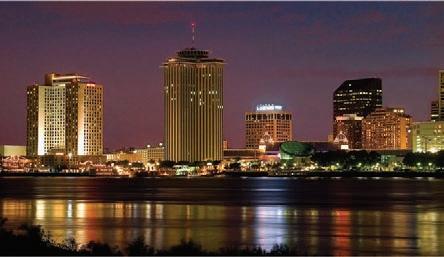
With a world of culture right outside the Convention Center doors, visitors at the end of each convention day have every opportunity to do as the locals do: “Laissez les bons temps rouler,” or let the good times roll.
GETTING AROUND
Before taking to the streets of New Orleans, have a plan for navigation. Upon arrival, the cheapest way to get from Louis Armstrong International Airport to New Orleans’ Central Business District (CBD) is via the Jefferson Transit (JeT) bus line. The Airport-Downtown Express (E-2) Bus, which picks up passengers outside the airport’s upper level at Entrance 7, costs $2 and takes about 35 minutes to get to the city.
The E-2 bus then makes stops outside the CBD, circling Tulane Avenue, Elk Place, Pydras Street and Lasalle Street.
In terms of taxi service, a cab ride will cost up to two passengers about $33 to get to the CBD, according to Armstrong International Airport’s website. For those who want to arrive in style, Airport Limousine provides service at rates starting at $58.
Once in the city, the Clean Show will provide complimentary shuttle bus service to and from the Convention Center during show hours at all headquarter hotels, and within two blocks of all other Clean 2013 official hotels. Bus pick-up will be every 15 to 20 minutes. Three shuttle bus routes are planned to run from 7 a.m. to
11:30 a.m. and from 3:30 p.m. to 6 p.m. on Thursday, June 20. Buses will get started a little later, 7:30 a.m., on Friday and Saturday, June 21-22, but will otherwise follow the established schedule.
Cab fare around the CBD, according to Taxi Fare Finder, costs a flat $3.50 plus $2 for each additional mile.
But to get the authentic NOLA experience, hop on a Regional Transit Authority (RTA) streetcar, which provides service to various points of interest around the greater New Orleans area. The oldest
10 JUNE 2013 | AMERICAN LAUNDRY NEWS www.AmericanLaundryNews.com ALN_Tab_half 6/6/12 4:27 PM Page 1 Visit our Booth #2343 at CLEAN ’13 0613aln_B&C Tech.indd 1 5/6/13 10:18 AM
See NOLA on Page 12
(Photo: Alex Demyan and NewOrleansOnline.com)
What to see and do while in New Orleans for the
Clean Show
Electrolux smart washers will forever change the way you do laundry.
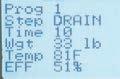
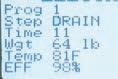
Imagine a washer smart enough to weigh the load size and add precisely the correct amount of water. Imagine a laundry chemical controller smart enough to adjust dosing for accurate water ratio each time.





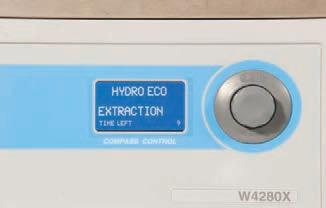
Electrolux Professional washers do all that and more! Introducing AWS & SmartDosing.

Underloading washers is a common problem in many laundries, wasting water, chemicals, and energy. That’s why Electrolux developed AWSTM, a UNIQUE feature that automatically matches water consumption to load size. Combine that with SmartDosingTM which adjusts laundry chemicals to water ratio, and you will see immediate savings and superior wash results – every time, automatically.
Electrolux’s SmartDosingTM controller automatically dispenses the correct amount of chemicals for the weight load.




To learn more visit www.laundrylux.com
Experience the Electrolux difference – the #1 selling on-premise laundry brand in the world. Special financing available. Call to learn more. Laundrylux® (800)381-7222 info@laundrylux.com
Electrolux washers adjust water and chemicals to correctly match the weight of the load. Laundry Chemicals Dispenser Control FuLL Loa Load 60-65 LBS PLeaSe doSe detergent Load 30-33 LBS PLeaSe doSe detergent Attending the Clean Show? Visit us in Booth #3103!
NOLA
continued from Page 10
line, the St. Charles Streetcar, has been in operation since 1835.
Managing the streetcar lines is fairly simple. Head to Julia Station on Julia Street and Port of New Orleans Place, for example, and hop on the Riverfront Streetcar to the Jackson Park area and disembark at the world-famous French Market.
For those who prefer to travel on a more local route, the RTA also has 32 bus routes that operate throughout the city. Standard fare for both buses and streetcars are $1.25 one-way, but the RTA does offer day passes (“Jazzy Passes”) that start at $3 for a one-day pass, $9 for a three-day pass.
THE FRENCH QUARTER
Ask anyone what comes to mind when they think of New Orleans, and its worldfamous French Quarter will likely be the answer.
The oldest neighborhood in the city, the French Quarter—or Vieux Carre as it was originally called—was established by the French colonists who settled in the area in
1718. Canal Street, Decatur Street, Esplanade Avenue and Rampart Street square off the Quarter, which showcases influences from the French, Spanish, Italian, Sicilian, African and Irish, amongst other cultures.
One street that many associate with the French Quarter is the colorful Bourbon Street, where many of the city’s street festivals, including Mardi Gras, take place.
Bourbon Street is turned into a pedestrian mall each evening, allowing visitors to walk freely. Every night, the “party” starts at the intersection of Canal Street and Bourbon, and stretches 13 blocks toward Esplanade Avenue.
Though Mardi Gras occurs only once a year, the party and events never stop in the French Quarter, where many of its bars, restaurants and music halls along other streets continue to celebrate life on a nightly basis. One such locale rests right in the heart of the Quarter off St. Peter Street, where true New Orleans jazz still plays on. Originally built as a residence in the 1750s, Preservation Hall touts itself as a “sanctuary to protect and honor New Orleans jazz.”
If the rhythm of the city still has you captivated, just hop over to Royal Street, where it not only presents some of New Orleans’ well-preserved architecture, but is also home
Food & dining
Cafe Du Monde. This NOLA staple has been located in the French Quarter since 1862. Enjoy its famous beignets, while sipping some chicory coffee au lait. Perfect for night owls, as it’s open 24 hours. 800 Decatur St., 504-5870833.
Brennan’s. Touted as the home of the decadent dessert Bananas Foster, Brennan’s also serves up a bevvy of classy breakfast options such as sauteed baby veal topped with poached eggs and Hollandaise sauce. 417 Royal St., 504525-9713.
Praline Connection. What started as a home delivery service in 1990 has become a local favorite for Cajun-Creole cuisine. Sample soul food favorites, as well as delicacies, such as fried alligator sausage. 542 Frenchmen St., 504-9433934.
Meltdown. This “artisinal ice pop” shop began as an ice cream truck in 2008. A year later, the owners opened their shop in the French Quarter, serving ice cream bars made of seasonal and locally sourced ingredients. 508 Dumaine St., 504-301-0905.
Acme Oyster House. Opened in 1910, Acme Oyster House is a New Orleans staple, serving chargrilled oysters and oyster shooters. 724 Iberville St., 504-522-5973.
Mr. B’s Bistro. Chef Michelle McRaney dishes up authentic Creole food at this restaurant top-rated amongst Yelp users. Menu items include fresh takes on Southern favorites such as signature barbequed shrimp and pasta jambalaya. 201 Royal St., 504-523-2078.

NOLA Restaurant. Owned by celebrity
NOLA is housed in a renovated warehouse and features Southern favorites that include gumbo, remoulade and po’boys, alongside rarities such as duck confit and fried egg pizza. 534 St. Louis St., 504-522-6652.
Cafe Amelie. If its menu items that include muffaletta, jumbo shrimp and grits, or chicken and andouille gumbo don’t draw you in, let its lush courtyard setting be the reason you stop by. 912 Royal St., 504-412-8965.
Commander’s Palace. Looking for an upscale experience? Chef Tory McPhail dishes up unique, sophisticated takes on Creole favorites, as well as delicacies such as grilled wild Texas antelope, worth dressing up for. 1403 Washington Ave., 504-899-8221.
Red Fish Grill. This eatery serves up a bevvy of surf ’n turf options from crispy Mississippi catfish to grilled filet mignon. Seafood enthusiasts unsure of what to eat can order the Seafood Sampler, featuring BBQ blue crab claws; chili pepper crusted oyster lettuce wraps; and Creole marinated gulf shrimp. 115 Bourbon St., 504-598-1200.
www.AmericanLaundryNews.com ALN_Tab_half_V.indd 1 4/10/13 11:32 AM
chef Emeril Lagasse,
See no LA on Page 14
(Photo: Joyce Bracey/New Orleans Convention & Visitors Bureau)





BIGGER JUST GOT A WHOLE LOT DEPENDABILITY MAYTAG® COMMERCIAL LAUNDRY INDUSTRIAL PRODUCTS
*Visit
for warranty details. ®/ TM ©2013 Maytag. All rights reserved. * Available in 180-lb., 230-lb. and 275-lb. capacities.
us at Clean Show 2013 Booth #3405, June 20–22.
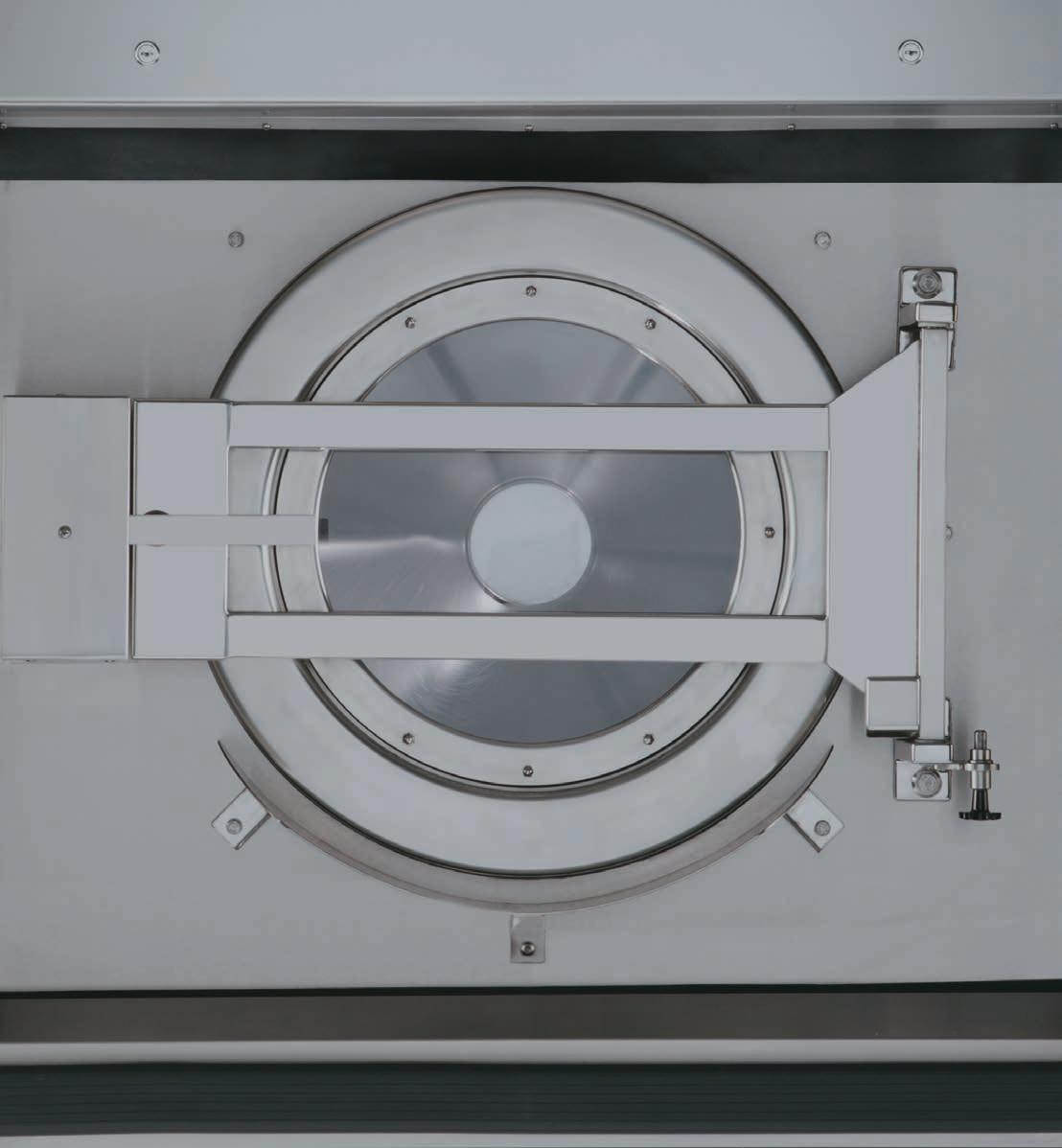
With more than 50 years on the job, Maytag® Commercial Laundry has become synonymous with performance you can count on. And now we’re bringing that same lasting quality to our largest applications yet. Our industrial washer/ extractors are engineered to keep you up and running, and to make your operation as efficient as possible—today, and far down the line. See our industrial equipment at maytagcommerciallaundry.com.
maytagcommerciallaundry.com
Visit
to many street performers.
If Bourbon Street’s nighttime festivities are a bit too raucous for your liking, Royal Street’s daytime events may be up your alley. Like Bourbon, Royal is closed off to vehicular traffic for pedestrians.
From 11 a.m. to 4 p.m. each day, Dixieland jazz bands, puppeteers, magicians and vaudeville showmen overtake the street to provide live entertainment to passersby.
For those that feel that Lady Luck is on their side during Clean, venture over to Harrah’s New Orleans Casino on Canal Street.


Featuring more than 2,000 slots, 200 table games, comedy shows and a myriad of dining options under one roof, Harrah’s is just minutes away from the French Quarter area.
SEE THE SIGHTS
While the Big Easy has plenty of lively entertainment, those looking for a more relaxing experience can find solace in the myriad of tours the city has to offer. For an old world-style tour, try
Royal Carriages’ distinct muledrawn carriage rides, where tour guides highlight various landmarks around the city, including courtyards, iron-laced balconies, Bourbon Street and the Mississippi River, amongst others, according to its website.
Tours start at 8:30 a.m. through midnight daily, and embark at the corner of St. Louis and Royal Streets. A half-hour tour of the French Quarter for four people starts at $90.
With the Mississippi River running through the city, a different way to experience New Orleans is on tours aboard the Steamboat
Natchez, or the paddle-wheeler Creole Queen. Both offer a variety of daytime or dinner cruise options, while the Creole Queen also offers a unique 21/2-hour tour of the Chalmette Battlefield from the 1815 Battle of New Orleans.
Swamp boat tours offer a unique perspective of the sights and sounds of the Louisiana bayous. A 25-minute drive south to Marrero, La., for example, will give tourists a chance to see the Jean Laffitte National Historical Park and Preserve through the Jean Laffitte Swamp Airboat Tour.
Airboats accommodating up to 98 passengers travel along the park’s

meandering bayous filled with local wildlife, including alligators.
For those who want to venture out on their own, the city also has the Audubon Aquarium of the Americas; The Cabildo, the site of the signing of the Louisiana Purchase; and The Ogden Museum of Southern Art, according to travel advisor site Frommer’s.
SHOP AND DINE



Considering the eclectic aura that thrives here, this melting pot of cultures shines when it comes to food and dining.
A quick hop back on the Riverfront Streetcar to the French Market will lead hungry hounds to the Cafe du Monde, famous for its French-inspired beignets (square fried pieces of dough covered in powdered sugar) and chicory coffee au laits.
If you’re looking for a taste of savory Creole cuisine, The Praline Connection, located at 542 Frenchmen Street just off the French Quarter, serves up crawfish or shrimp etouffee, alligator sausage, barbecue oysters, as well as other favorites.
For those looking for a sweet fix, Brennan’s has the cure with its famous Bananas Foster, served since 1951. A marriage of butter, sugar, cinnamon, rum, banana liqueur and bananas is flambéed in a pan, creating a caramelized concoction, served with a side of vanilla ice cream.
If shopping is on your agenda, Magazine Street’s six miles of shops run the gamut from clothing boutiques to art galleries.
The lower part of the street was initially used as a commercial and industrial storage area. Centuries later, Magazine Street is now teeming with more than 150 stores, according to Frommer’s. Retail shops begin at the intersection of Magazine Street and Felicity street, or “Lower Magazine,” pick up at Washington Avenue, and again at Jefferson.
During your shopping excursion, set aside some time to veer off course and stroll around the Garden District around Washington Avenue. The city’s historic antebellum mansions can be found here, and up toward the intersection of Prytania Street and Washington Avenue lies another area for shopping enthusiasts.
Of course, another shopping destination is the French Market, where you can buy local produce at the farmers market, and practice your bargaining skills at its flea market. Purveyors of various goods from all over the world flock here to sell crafts, fashions, New Orleans memorabilia and more. Hours vary by vendor, according to the French Market’s site, but vendors are usually open between 9 a.m. to 6 p.m.
Word to the wise for international visitors flying in for Clean—save your shopping receipts. Louisiana offers interna-


















Jr. Page 14 JUNE 2013 | AmEricAN LAUNdry NEws www.AmericanLaundryNews.com
SYSTEMS Introducing Vega Systems USA. VISIT US AT THE CLEAN SHOW BOOTH #5043 Call today for more information; 630-250-9222 , or visit our website at www.vegasystemsusa.com For confidential distributor inquiries please contact us at: inquiries@vegasystemsusa.com ONE SOURCE – MANY SOLUTIONS. A new company has been formed to exclusively distribute Vega products: Highly engineered washing, extracting, finishing equipment with superior functionality, fit and finish and non proprietary parts. Our equipment is 2nd to none. Find out more at our booth … One source and many solutions. ALN_Jr Page.indd 1 5/9/13 10:23 AM continued from Page 12 NOLA See NOLA on Page 16
Gurtler has the solution.
Everyone in the Healthcare Laundry field has experienced the skin sanitizer stain that won’t go away. Now you can prevent those stains in one washing cycle with the new patent pending Magi-ClensTM chemical laundry product from Gurtler Industries. Plus you can eliminate the costly changes you made to avoid the dreaded permanent stains from Hibiclens® or similar Chlorhexidene Gluconate (CHG) products that your healthcare partners use.
And you will be able to address those infection control issues you have faced. We specialize in laundry chemical product technology...it’s our main focus. That’s why we have developed some of the most advanced and trusted laundry chemical products in use today. New Magi-Clens is only available from Gurtler Industries.



Contact your local Gurtler sales consultant today for a free magical demonstration!



Magi-Clens™...eliminates skin sanitizer stains like magic!


Gurtler...The Laundry Chemical Experts, Family Owned & Customer Driven! The
Call Gurtler today! 1.800.638.7300 or visit our website at www.gurtler.com Come see for yourself. Stop by booth #2210 ©2013, Gurtler Industries, Inc.
Pink Monster
Hibiclens is a registered trademark of Mölnlycke Healthcare US, LLC and is not affiliated with Gurtler Industries, Inc.
nOLA
from Page 14
tional visitors a sales tax refund at nearly 900 of its stores, including most of the major shopping centers in the city. Simply present an international passport or an official picture identification upon your purchase, and you’ll receive a voucher to obtain your refunds at the Refund Center at Armstrong International Airport, or the Downtown Refund Center in the Riverwalk Marketplace.
WEATHER THE WEATHER
In the words of the New Orleans Convention and Visitors Bureau, the city has a “subtropical climate with pleasant year-round temperatures.” It sees sunshine an average of 67% of the time in June, but with the rays comes the summer heat. Average June temperatures can top 90 F.
To stay up-to-date on local weather, many smartphone apps can deliver concise weather forecasts. But for those who truly want to dress according to the weather, Swackett provides fun, visual outfit recommendations for you to consider.
Frommer’s explains that
T-shirts and shorts are acceptable attire at most establishments (the exceptions being fine restaurants), so loose, light clothing is the way to go when sightseeing.
But for fashion-conscious travelers who don’t want to compro-
mise fashion for the extreme heat, lightweight fabrics such as cotton, linen or madras provide style not only during the day, but when dressing up for the nighttime. A linen blazer and linen dress pant can make up a perfect outfit for
a more formal dinner, without feeling too stuffy.
Those who are unable to bear the New Orleans humidity can take comfort in indoor activities, as many establishments are airconditioned. Those who absolute-
Shopping
Riverwalk Marketplace. Home to more than 100 shops, this marketplace combines the joys of retail therapy set along the Mississippi River. 500 Port of New Orleans Pl., 504-522-1555.

Lakeside Shopping Center. Featuring more than 120 retail shops, this center is perfect for those looking for a one-stop shopping destination. 3301 Veterans Memorial Blvd., 504-835-8000.
French Market’s Flea Market. Browse and bargain over clothing, jewelry, antiques and other wares from merchants from all over the world in this open-air market (pictured). 1008 N. Peters St., 504-522-2621.
Frenchmen Art Market. Night owls looking to spot a deal on handmade art and goods made by local and regional artists can flock here Thursday through Saturday night, from 7 p.m. to 1 a.m. 619 Frenchmen St., 504-941-1149.
NOLA Merchandise. Want to bring the celebratory culture of New Orleans back home? NOLA Merchandise’s stock of Mardi Gras beads, boas, Venetian masks and other souvenir items will help you relive your NOLA experience. 425 Decatur St., 985-236-9560.
Perlis. Considered uptown New Orleans’ “premier clothing store,” Perlis sells men’s, women’s and children’s clothing emblazoned
ly can’t stand the heat can wait to go out until the evening, as June lows average around 70 F.
ENJOY THE BIG EASY
Still undecided about what to do, or which sights to see? Trying
with the company’s trademark crawfish insignia. 6070 Magazine St., 504-8958661.
Louisiana Music Factory. Boasts a wide selection of New Orleans jazz, Zydeco and Cajun records. Bring the soundtrack of the city back home. 210 Decatur St., 504-586-1094.
Southern Candymakers. This family-owned candy store has a bevvy of chocolates and sweets to bring back home, including their award-winning pralines. 334 Decatur St., 800-344-9773.
Vintage 329. Featuring authentic autographed memorabilia, barware and other rare collectibles, it’s the perfect shop for those looking to snag a piece of history. 329 Royal St., 504-525-2262.
Fleur D’Orleans. Inspired by local architecture, it sells jewelry featuring historical designs, such as the iconic Fleur-de-lis. 3701A Magazine St., 504-899-5585.
16 June 2013 | AmericAn LAundry news www.AmericanLaundryNews.com Untitled-1 1
continued
(Photo: Chris Granger/New Orleans Convention & Visitors Bureau)
to fit some sightseeing into a threeday show schedule can be challenging, but online resources such as Frommer’s and TripAdvisor have multiple listings and ideas of attractions to visit on a limited schedule.
The New Orleans Metropolitan Convention and Visitors Bureau at 2020 St. Charles Ave. can also help you navigate your way, and even make trip recommendations around your specific interests, according to Frommer’s.
The Visitor Information Center at 529 St. Ann St. can also make recommendations. Open Tuesday through Saturday between 9 a.m. to 5 p.m., the center has walking and driving tour maps and booklets on local sights.
AttrActions & EntErtAinmEnt
One other resource: the locals. Don’t be shy to ask the grocer at the farmer’s market which restaurant he recommends for authentic Cajun cuisine, or the shopkeeper at the antique store which museums to check out. Not only can
they direct you to local attractions, they can also point you toward some hidden gems.
With many things to see and do in New Orleans, make sure you relish in the local flavor during Clean 2013. ALN
The National WWII Museum. In addition to its many exhibits memorializing the “war that changed the world,” The National WWII Museum (pictured) also hosts special performances in its Stage Door Canteen auditorium. Playing during Clean will be Two on Tap. 945 Magazine St., 504-528-1944.

The Ogden Museum of Southern Art. Settled in the campus of University of New Orleans, this museum boasts the “largest collection of Southern art in the world.” Be sure to check out its Ogden After Hours music series Thursday, June 20. 925 Camp St., 504-539-9600.
Royal Carriages. Tour the Big Easy aboard its signature mule-drawn carriage rides. Tour guides will escort visitors past NOLA landmarks, courtyards and famous eateries. 1824 North Rampart St., 504943-8820.
Jean Lafitte Swamp Tours. Venture out of the city to marvel at the unique
Louisiana bayous aboard the Jean Lafitte Airboat Tour. Airboats navigate through the Jean Lafitte National Historical Park and Preserve, where local wildlife, including alligators, lurk in its murky waters. 6604 Leo Kerner Lafitte Parkway, Marrero, LA. 504-689-4186.
The Steamboat Natchez. Touted as the “last authentic Steamboat” on
the Mississippi River, the Steamboat Natchez provides tours of the city on the Mississippi amid live jazz music and optional dinner and lunch packages. 400 N. Peters St., Ste. 203, 504586-8777.
Creole Queen Paddlewheeler. In addition to providing picturesque tours of the Mississippi River, this paddlewheeler also throws in a side trip to the Chalmette Battlefield, site of the 1815 Battle of New Orleans; the Malus-Beauregard House; and Chalmette Monument. #1 Poydras St., Riverwalk Marketplace, 504-529-4567.
Harrah’s New Orleans Hotel and Casino. Lady Luck on your side during Clean? Live up to the motto of the city and let the good times roll at Harrah’s casino, which features more than 2,000 slots and
200 table games. 8 Canal St., 504-5336000.
Preservation Hall. Visit this “sanctuary” where New Orleans jazz is protected and honored. Live New Orleans jazz emanates 8 to 11 p.m. nightly from this former art gallery. 726 St. Peter St., 504-5222841.
Audubon Zoo/Aquarium. Witness the Audubon Zoo’s exotic mix of animals set upon unique natural habitat exhibits, such as the Louisiana Swamp and Jaguar Jungle. Those looking for aquatic animals can find refuge at the Audubon Aquarium’s 400,000-gallon Gulf of Mexico Exhibit. 6500 Magazine St./1 Canal St., 504-5814629.
Southern Food & Beverage Museum. Food enthusiasts looking to learn more about the culinary heritage of the South will enjoy the museum’s exhibits, demonstrations and tastings. 500 Port of New Orleans Pl., 504-569-0405.
www.AmericanLaundryNews.com AmericAn LAundry news | June 2013 17 4/22/13 11:08 AM
(Photo: Richard Noritz/New Orleans Convention & Visitors Bureau)
safety
advises using teleconferences among other plants to share information on best practices, and how to apply them to similar situations they could face at their facility.
Ergonomic Standards
There are currently no ergonomics standards, Foulke says, and OSHA has proposed including musculoskeletal disorders in its
300 Logs. OSHA currently utilizes the General Duty clause to issue ergonomic citations, he explains, which can be more costly than other types of citations.
“They’re going to be asking for your audits, and if your audits identify ergonomics issues, then you now have knowledge of that and it makes it easier for them to establish a General Duty clause violation,” says Foulke. “And if you have knowledge and did nothing about it, then arguably, it’s a willful violation, so now you go from a maximum of $7,000 for [a serious violation] to $70,000 for [a willful violation].”
Metric for Safety

With these precautions in mind, Foulke identifies one metric that business owners can use to avoid repeating a violation. While many owners look to lagging indicators—including lost-time injury rates and worker’s compensation—as a tool to measure workplace safety improvement, Foulke explains that such indicators can actually exhibit weaknesses in a workplace safety program.
Instead, he recommends business owners look toward leading indicator tools, such as a job safety analysis, in which they can identify workplace hazards to increase
employee training and supervision. And although there are many leading indicator tests that business owners can look at, Foulke says that studying near-misses is one of the most important.
Other Avenues of Safety

Creating an emergency action/ response plan focusing on natural disasters, pandemics and manmade disasters, with an emphasis on evacuation plans and exit/ egress compliance, is one of the other requirements OSHA looks at during inspections, according to Foulke.
He also addressed the health
and well-being of employees, saying that workplace injuries can be the result of an employee’s health and fitness. He particularly highlighted the obesity problem among American teenagers.
Developing a safety program, which also focuses on health and wellness, is the solution, Foulke advises, and not having one in place can ultimately cost a company a lot of money in the long run.
“If you don’t develop a comprehensive wellness program for your facilities, and really address obesity...you’re going to go out of business,” Foulke warns. “Just imagine [what the] direct cost is going to be—healthcare costs and workers’ compensation costs, it’s going to be huge.”
The overall cost of an injury to an employee can be “very dramatic,” he says, but having a safety program in place can actually become a “profit center” for a company.
“If we have a comprehensive safety management system…we’re going to reduce our injuries and illnesses and fatalities, which in turn, is going to reduce our worker’s compensation costs,” Foulke says. “We’re going to be productive and more competitive because of the savings that we [have] there.”
Safety at Company Core
Ultimately, for Foulke, ensuring that safety is top priority in a company’s core values is the integral part of establishing or refining a workplace safety program.

“If you’re going to have safety as No. 1, it has to be core value,” he says. “And what that means as a core value is that we do not do the job, unless it’s done safely. If it cannot be done safely, you do not do the job.”
Not having safety at the core, according to Foulke, creates a domino effect in the workplace.


“In order to have great productivity, efficiency and quality, you have to have great safety. If you don’t have great safety, someone gets injured. If someone gets injured, they don’t show up for the job the next day. If they don’t show up for the job the next day, their productivity is zero.”
Creating or refining a workplace safety program should involve everyone in the company, Foulke says, from front-line employees to the corporate level. “When upper management makes it clear that safety is a priority, that it’s a core value, it drives all the way down.”
High performance and thru-put are paramount in the most demanding industrial laundries and the AD-464 provides the highest performance in its class. Utilizing a state-of-the-art power burner system and heat reclamation, the AD-464 ensures fast dry times while providing unsurpassed dependability. The industrial roller drive system and standard stainless steel tumbler means durability and the internal lint collection makes routine cleaning fast and simple. Pre-programmed cycles, and touch button operation allows for ease of use and multi-lingual display options. ADC’s AD-464 assures powerful, consistent, and reliable operation. For more information please visit: www.adclaundry.com or contact us directly at sales@adclaundry.com
Involving employees in the safety management process not only helps a company avoid facing other legal problems, it ultimately harmonizes the relationship between employer and employee.
“If you show employees that you care, then you may not get a union organizing drive against you, or you may not get someone filing a class-action age discrimination case, because they feel like you do care about them, and therefore you’re trying to treat them right,” Foulke says.
ALN
Innovative
Exceptionally Innovative
Exceptionally Engineered Proud of our Past...Excited for our Future www.adclaundry.com 508.678.9000 ALN_Jr Page.indd 1 4/2/13 3:02 PM 18 June 2013 | AmericAn LAundry news www.AmericanLaundryNews.com
continued from Page 6
Top
Top Performance
It’s critical for both drivers and your sales force to embrace your transportation strategy, because either can short-circuit attempts to get things headed in the right direction.
Global positioning system (GPS) technology can “follow” any vehicle that carries the GPS unit under the hood. During another TRSA event, attendees watched a large screen as icons representing buses moved from point to point along a map of Jersey City, N.J. Scrolling over one of the icons immediately popped up a smaller screen that identified the vehicle, the driver, the speed of the vehicle and its location.
Such data is useful in tracking a driver’s progress (is he on time or does he seem to be stalled?) as well as help prevent theft and misuse of company vehicles.
FLEET SAFETY
With so many textile service trucks and step vans on our nation’s highways every day, fleet safety has to be a priority.
For example, Cintas Corp. has used telematics to reduce the number of vehicle incidents that its drivers experience. The company initially installed inthinc’s telematics technology in 1,200 vehicles in its Uniform Rental division.
Cintas Corps. has used telematics technology to reduce the number of vehicle incidents that its uniform rental drivers experience.
“The system uses state-of-theart technology to influence driving behaviors and reduce risk in a real-time environment,” says Rick Gerlach, director of safety at Cintas. “But the most important benefit of the technology is that it not only allows us to identify drivers who could benefit from some additional safety training at the wheel, but also provides an opportunity for Cintas to recognize and reward our drivers who make safety a core value at all times.”
Cintas reduced its number of speeding events by 85% and increased seat belt use by 89% within one year of implementation, the company says. Overall, it translates to a 46% decrease in vehicle incidents.
ALTERNATIVE-FUEL
VEHICLES
It costs a great deal of money to keep their fleets on the road, so fuel efficiency is always on the mind of an operator managing a delivery fleet. G&K Services, Mission Linen Supply and Bates Troy Healthcare
Linen Services are among the textile services companies that have explored using alternative-fuel vehicles.
In California, G&K Services is testing diesel electric hybrid step vans to assess the potential of replacing standard diesel trucks, where feasible, to increase fuel efficiency. “G&K is focused both on maximizing the fuel economy of our delivery fleet and being good stewards of the environment,” says Dick Stutz, G&K’s senior vice president of operations.
After a successful pilot program in Santa Barbara, Calif., Mission Linen Supply has begun using six
CNG (compressed natural gas) trucks in Morro Bay, Calif., and Phoenix, Ariz., to deliver linens, uniforms and restroom supplies.
CNG was one of several alternative fuels that Mission Linen considered as it was seeking to increase its commitment to sustainability. It favored CNG’s reduced impact as compared to the threat caused by disposal of batteries used in hybrid applications, the company says.
CNG-powered engines are capable of reducing NOx (nitrogen oxide) emissions by as much as 98%, thereby reducing smog. They are also capable of reducing carcinogenic particulate matter by 99%.
The overall reduction in greenhouse gas emissions for Mission Linen will be 30% or greater.
carbon footprint,” says Don Bock, director of risk management. “We’re thrilled that we can have a positive impact on the environment and save money, making the case for other companies in our industry to follow suit.”
Bates Troy Healthcare Linen Services has used a test truck powered by a HybriDrive® parallel propulsion system in its healthcare linen service deliveries and pickups. The electric-hybrid propulsion system complements BAE Systems’ HybriDrive series system. It was designed to respond to the specific needs of the heavy-duty vocational truck market. ALN
www.AmericanLaundryNews.com AmericAn LAundry news | J une 2013 19
“Since we depend on trucks to conduct our business, we are committed to finding ways to increase fuel efficiency while reducing our
ALN_Jr Page.indd 1 4/5/13 3:28 PM continued
Braun ALN JR Page Ads_Braun JR Ads 4/2/13 3:24 PM Page 1
routefrom Page 1
Fuel efficiency is always on the mind of a textile services operator managing a delivery fleet.
PANEL of ExPErts

Tips for making the most of tight quarters


Irecently decided to tackle my garage and finally clean it out so we could use it for what it was intended: parking our cars. I was immediately faced with two dilemmas: 1) what to do with our excess belongings and 2) how to maximize storage and free up the area where our cars should be.
I realized that as my family continues to grow, we accumulate additional belongings with no solution as to where to store them all. Similar to many laundries today, as we add business and our volume increases, our physical storage capacity begins to choke us and bog things down. Lack of free space could directly impact daily production flow.
Then, I had an epiphany. I remembered what we had done in our laundry when faced with a sudden need for more storage and space. The only direction to go was up.
As laundries continue to grow, two tips to make the most out of existing production space and improve production flow involve going vertical. One could try adding an overhead rail system for garment storage and route makeup and/or adding a mezzanine.
By installing an overhead rail system, you free up valuable space to enhance production flow and allow for immediate growth. It is a good solution for storage of both soiled linen and garments, and also an excellent way to store and move clean garments prior to ship-out.
INDUSTRIAL BY


Adding a mezzanine is a perfect way to maximize the height of your building and, in some cases, possibly double and/or triple your storage capabilities. These systems allow you to gain more precious space by going up as opposed to going out.
The beauty of these two systems is that you can design them as needed to fit your specific facility but they can later be dismantled, moved and reinstalled if desired.
american laundry news jr page 7.75x10 For laundry done on time and on budget, there’s no better choice than IPSO ®. Forty years of European ingenuity, rugged industrial construction, and our intuitive Cygnus controls all add up to help you achieve your ultimate goal — maximum throughput at a minimized cost. Learn more about how IPSO helps you get the job done at IPSO.com/industrial VISIT US AT THE CLEAN SHOW, BOOTH 3621, JUNE 20-22
Work with your IPSO finance expert to learn about customized financial solutions for your business. IPSO USA 1.800.USA.IPSO IPSO.com/industrial
BY DESIGN. Optimal Efficiency. Maximized Throughput. 3929_IPSO OPL_jrPg amerlaundnew snipe v3a.indd 1 4/4/13 4:19 PM ALN_Jr Page.indd 1 4/5/13 10:10 AM
DESIGN
INDUSTRIAL
20 jUNE 2013 | AmErIcAN LAUNdry NEws www.AmericanLaundryNews.com
“My laundry isn’t all that large.
I am always looking for tips and advice to make the most of our production space. What general suggestions can you give me about how best to operate in cramped quarters?”
Uniforms/ workwear manufacturing Scott Delin
Superior Uniform Group Seminole, Fla.
It takes space to do laundry.
There are rules of thumb regarding how much space is required to do a given amount of linen. I have seen them range from .7 square feet to 1.7 square feet per pound processed per day. Check with an equipment distributor about this.

I would find out where the laundry stands within those parameters. Doing laundry in cramped circumstances leads to stress, fatigue, errors, sloppy work and lowered production. Increasing space is not the sole answer to those problems, but a lack of space certainly contributes to poor performance.

If there is clearance, you can go to overhead rails and slings, giving more storage space in the same floor space. Folders and other items not permanently anchored may be moved closer together to gain some room. If you have pony carts, go to fullsized carts. Any equipment that hasn’t been used in a while could be disposed of.
If possible, operate more hours with fewer people per shift. If you are using trucks to deliver the goods, you may wish to store linen in those trucks. If possible, change the collection/distribution schedule.
Another contributing factor may be unprocessed goods stored in the facility, consuming more space than necessary. If that is the case, increased production will get it out of the laundry facility.
Does new linen waiting for injection take up a lot of room? How about cart covers, wrap, and trash/laundry bags? Can these items be stored in an outside storage facility?
None of these ideas by themselves will solve the problem. By using some of them, and some that others will put forward, you will begin to evolve your operation into something that may be more manageable.
• • • • •
In the case of a hotel, designing a laundry facility is largely a matter of positioning equipment and tables to allow for easy movement by the housekeeping staff—regardless of the amount of space.
Maximizing equipment size is integral to the success of running a smaller, yet efficient laundry operation. Obviously, washers and dryers that handle bigger loads require a larger footprint, but typically, two larger-capacity washers will occupy less floor space than three smaller-capacity washers.
With a smaller laundry area, it may also be necessary to add
a shift or a half-shift to keep up with laundry demands. For example, instead of running a more typical 8-hour laundry operation, one may have to adjust to a 12- or 15-hour operation to process all linens.
Once the size and amount of equipment is determined, ensure that the washers and dryers are running at optimal efficiency. This typically means matching washer and dryer cycle times.
Historically, facilities experienced long dry times due to washers’ slow final spin speeds. This led to carts of wet linens occupying valuable floor space and slowing
down the laundering process.
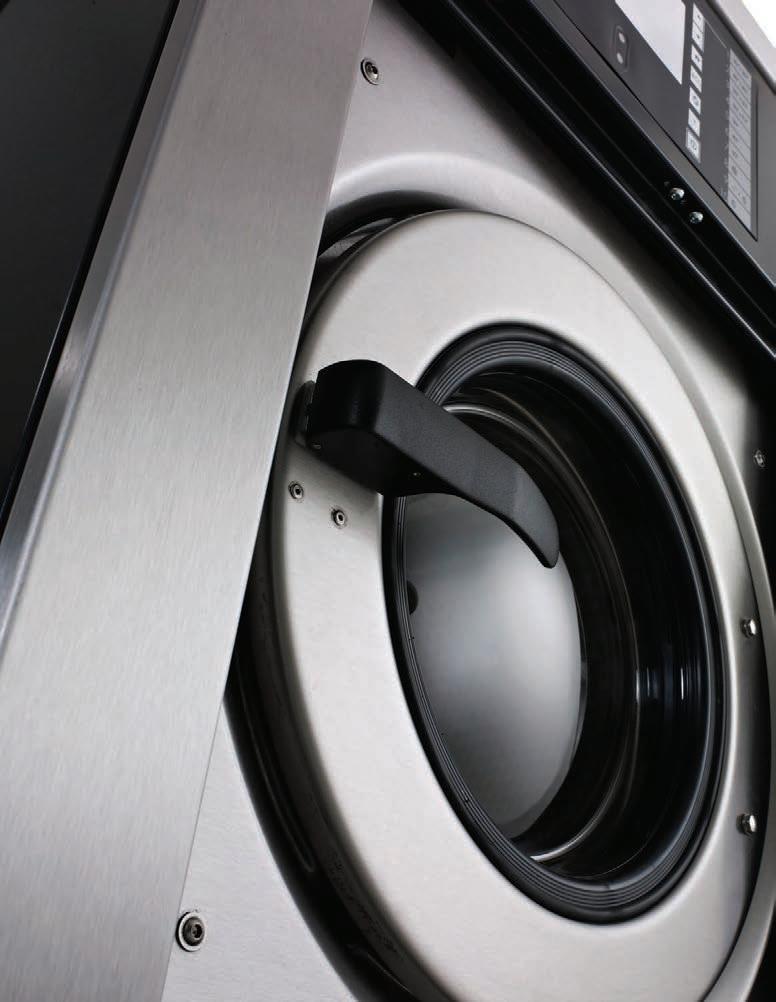
For the highest level of performance, look for soft-mount washers with a G-force exceeding 300. A 350-G washer will leave up to 30% less water in the linens when compared to 100-G washers. This can significantly
reduce dry times, leading to a much more cost-efficient laundry operation.
Besides the overall efficiency in space and labor, this facility can also see reduced linen costs as shorter dry times help linens last longer, saving on replacement.
• • • • •
Operating within tight quarters can be challenging, but working with a well-organized, utilitarian space can also help optimize efficiency and profit.
Companies that utilize production space effectively can benefit from lower utility costs, rents, taxes, personnel benefits, etc. In


periods of growth, companies can analyze the profitability of existing accounts, looking at opportunities to apply price increases or to substitute some accounts with those that offer greater projected value.

www.AmericanLaundryNews.com AmerIcAn LAundry news | j une 2013 21
commercial Laundry
Richard Warren
Linen King Conway, Ark.
ALN_Jr Page.indd 1 4/5/13 3:31 PM
on Page 22
Braun ALN JR Page Ads_Braun JR Ads 4/2/13 3:25 PM Page 2
See EXPERTS
equipment manufacturing Steve Hietpas
Maytag® Commercial Laundry St. Joseph, Mich.
Textile/uniform rental
Tom Peplinski Golden West Oakland, Calif.
To help optimize your plant layout (large or small):
• Plan — Start with a diagram or layout of your plant and organize production flow. Once areas of improvement are identified, implementing the physical-plant change is a simple matter of time management. Creating a smooth workflow—soil to wash to dry to fold to load-out and, finally, to load-in—can greatly improve efficiency and safety.
• Analyze — Examine every foot of floor and wall space. Moving from horizontal storage to vertical overhead storage can free up valuable production space. Remember to brace and secure all storage for a safe environment.
• Identify — Identify those items in your plant that are not needed with present production and dispose of them or store them off-site.

• Explore — Think outside the box on your “who, what, where, when, why and how” approach to production. Explore the what-ifs and don’t be afraid to implement change. Adopt this credo: If I am not changing, I am not improving.
• Schedule — Can the hours of production be changed, split, etc.? Do the hours of operation take advantage of available low utility and operating costs?

• Empower — Chances are that you have employees who are looking for an opportunity to grow and take on new challenges. Find the person in your plant who is best at creating a neat, orderly area and select him/her to lead your plant’s reorganization as “project manager.”
• Clear — Keep pathways clear of clutter, electrical cords, baskets, boxes, etc.
• Consolidate — While large plants have the capacity to preweigh and stage individual loads for washing, small plants may need to store multiple loads in bulk linen trucks. These loads can still be weighed within a single storage container by the use of canvas or some other product as an indicator/separator for the multiple weights.
There’s a difference between running out of room because of growth within your business, and running out of room because you have a disorganized plant.
Managers who figure out a way to keep their plants running smoothly and efficiently, with little clutter, maximize their contribution to a healthy bottom line.
feeder/ironer/folder/stacker in minimal space. By sizing a largecylinder ironer, you can actual reduce the number of dryers by not having to condition the sheets or pillowcases. In addition, wash technology has improved; we sell a washer-extractor that offers a fast wash cycle while saving water. Another space-saving area is in drying. For example, we have a 75-pound dryer that uses the same cylinder diameter as a 120pound dryer but with 20% more air flow and Btu than a traditional 75-pound model, plus it fits through a 36-inch door.
Everybody understands that it takes space to process linen. Another area that is often overlooked is the ceiling. Putting the soiled and clean linen in overhead monorail bags not only saves space but can help reduce labor. Because of new technology, we also have some batch washing systems that produce the same number of pounds per hour but in a much smaller footprint than the tunnel washers of the past. This is a big space-savings opportunity.
The best suggestion I can give about how to effectively operate in cramped quarters is to simply reclaim the space that is being improperly used in the first place.
Many operators have an aversion to discarding obsolete inventories and supplies. These items contribute nothing to the operation, and take up valuable space that could be used to generate revenue. Take a hard look at your operation and remove any clutter and obsolete items from the premises.
Let your suppliers store your inventories and supplies. Utilize just-in-time ordering practices wherever possible.

Make it a practice to have an annual “spring cleaning” in order to sustain and maintain an organized plant.
A clean, organized workplace, in addition to reclaiming needed production space, will also boost employee morale, which will serve to improve productivity.
It’s rare to find any laundry that has extra space. In fact, most on-premise laundries have such limited space that soil sorting and clean pack-out areas are almost nonexistent.
Several of my customers actually sort the linen at the chute before it makes it way down to the laundry. Having housekeepers presort terry from flatwork certainly helps the laundry run more efficiently in a smaller footprint.
Some types of equipment can help reduce a laundry’s footprint. For example, a 300-room hotel can use a space-saving all-in-one
Unfortunately, if your maximum space already exists, then you have to work with what you have. Benchmarking with your equipment vendors, chemical vendors and fellow laundry managers on their best practices can be a big help in freeing up valuable real estate.
Look for areas where you can improve your operation. Maybe cutting down on rewash by working with your chemical supplier, increasing your pounds per operator hour, or creating some outside-the-laundry storage areas can help.
The faster you can turn the linen around, the less space it will take up in the laundry production area.
Organize your operation. By organization, I refer not only to proper housekeeping, but to production organization as well. The more storage hampers, carts and bins you have at your disposal, the more hampers, carts and bins you will use for items that should be disposed of. Utilize work carts only for their intended use: moving work through the plant.
Proper washing procedures will cut down on rewash, which will reduce the number of bins.


Utilize vertical space wherever possible. While this will work best in offices, any space gained is a plus.
Train and empower employees to follow the new housekeeping and organization practices in order to keep the plant from reverting back to being cluttered.

Limited or confined work space can be a big challenge for those of us in the laundry business. Though you may feel it is a problem specific to your operation, it is more common than you may think.
Several steps can be taken to help improve utilization of work space. One is to look at the facility in terms of cubic feet instead of square feet. In other words, utilize spaces above. For instance, using upright storage space, mezzanines, etc., can greatly decrease the amount of space needed at ground level, thereby opening up work space.
If ceiling height allows, the use of overhead rails to move goods throughout the facility will further clear up floor space and can actually increase wash-aisle productivity. The automated movement of goods through the wash and finish processes frees up employees who could be better utilized elsewhere in processing.
Finally, looking at the facility’s workflow is vital to those who have limited space. Simply improving the flow of goods

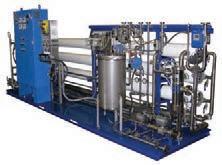
22 jUNE 2013 | AmErIcAN LAUNdry NEws www.AmericanLaundryNews.com
continued from Page 21
Experts
Equipment/
supply distribution
ALN_3rd Page.indd 1 5/10/13 10:05 AM See us at the Clean Show Booth 4901 ALN_3rd Page.indd 1 4/5/13 2:54 PM
Bill Bell Steiner-Atlantic Corp. Miami, Fla.
Hotel/motel/ resort Laundry Charles Loelius The Pierre New York New York, N.Y.
Healthcare Laundry
Judy Murphy, RN, BSN, CLLM, RLLD North Mississippi Medical Center (NMMC) Tupelo, Miss.
through the process, using automation, and placing key processing stations will positively affect output and productivity.
implement a new, more timeand space-efficient production schedule.
Next, create a value stream map of each step (that’s a fancy way of saying you need a flow chart) as a visual aid in understanding how products go from soil to clean in your operation. Inefficiencies, bottlenecks and unnecessary steps in your process once invisible will stand out and signal the most immediate items to remove.
keep in mind that you always want to “pull” goods through the plant, so that they arrive when they’re needed, not just piled up waiting to be processed.
Processing work through your facility faster, without sacrificing quality, is another way to ensure that you use your space more efficiently.
purchases a no-brainer.

If you don’t have that kind of capital budget, increased productivity and throughput can still be achieved by applying and enforcing sound, documented production standards.
Many of us are familiar with Parkinson’s Law: “Work expands to fill the time available for its completion.” This same theorem has been applied to available work space.
Understanding the challenges associated with laundry processing yields the conclusion that no matter how large a laundry you build, eventually it will not be large enough to handle the production, throughput and storage requirements you place on it.

The design for a new laundry should begin with a thorough understanding of products and volumes that will be processed now and in the foreseeable future, thereby allowing for the most efficient layout of the building, processing equipment, storage and mechanical spaces and, most importantly, the flow of work to match what will be processed.
Beyond the floor layout, it is also critical to “use the cube,” maximizing the utilization not just of the building’s square footage, but also its cubic footage.
Providing adequate ceiling heights not only allows for the efficient storage and transportation of goods in the soil and clean areas of your plant via overhead rail systems, but also for more efficient garment sortation, multiple levels of route-ready garment storage, multi-level stockrooms and storage areas, garment finishing on a mezzanine level, and other improved efficiencies.
As a bonus, employees are kept more comfortable as higher ceiling heights keep rising warm air away from the work floor.
For the majority of you who can’t solve your space limitations by building new plants, take heart. There are ways you can increase your efficiency, throughput and productivity without added labor, shifts or gray hair.
The first step is to refine your production schedule and processes to try to eliminate work in process.
Start with a thorough analysis of your hourly, daily and weekly production needs, including the ebb and flow of goods through the plant during a typical day and across shifts. Then create a schedule showing how and when items move through your plant.
Compare this against a second schedule showing when items are needed by your service team and your customers, then use this information to modify and


Using value stream maps is an essential tool in Lean Six Sigma implementations, but you don’t need to be a black belt to create, use and learn from them. Just
This can be accomplished by purchasing new equipment such as spreader-feeders, folder/crossfolders, automated small-piece folders, tunnel washer systems, etc. The efficiencies and returns on investment that can be realistically achieved oftentimes make

Time and motion studies can be quickly and inexpensively completed, yielding standards that have been derived using accepted industrial engineering methods and procedures. Training your employees, monitoring employee performance, and mandating (or incentivizing) performance will ensure that the work gets done correctly and efficiently, without
taking up space in the facility. Finally, whenever someone mentions a lack of space in their facility, I always remind them to consider the tired phrase that our parents used to throw out whenever they wanted us to clean up our rooms. They’d say, “There’s a place for everything, and everything should be in its place.” And they were right!
Parkinson’s Law may be an immutable force of nature, but implementing some of the tips I’ve outlined will allow you to process more goods faster, while maintaining quality and customer satisfaction.
ALN
L.
CHEMICAL CO.
Kearny, NJ 07032
RITE STUFF For Collars and Cuffs! RiteGo. The Rite Stuff for Collars and Cuffs! To learn more, visit ALWilson.com or call 800-526-1188 No Brushing Required Just spray it on and wash it out… no need to brush. You save time and labor. And because brushing causes damage, customers’ garments last longer. You Deliver Better Quality By delivering stain-free garments with RiteGo, you build your reputation for quality – and that’s what keeps customers coming back. New Micro-Emulsion Technology RiteGo penetrates quickly to absorb perspiration and collar & cuff stains, and to release ground-in soil, etc. Environmentally Friendly RiteGo is environmentally friendly. It’s biodegradable, non-combustible, and California 2013 VOC and Prop-65 compliant. RiteGo® Laundry Spray Spotter Now with Micro-Emulsion Technology ALN_Jr Page.indd 1 5/6/13 10:33 AM www.AmericanLaundryNews.com AMericAn LAundry news | June 2013 23
A.
WILSON
•
THE
consulting services
David Bernstein Turn-Key Industrial Engineering Services Charlottesville, Va.
Third generation of Milch family Joins Laundrylux team
INWOOD, N.Y. — Cody Milch recently joined Laundrylux® as OPL Plus product manager, making him the third generation of the Milch family to work in the industry.
“I am delighted that Cody has joined the company,” says CEO Neal Milch, “and particularly pleased that we have initiated entry of the third generation into the commercial laundry business following myself and our founder Bernard Milch. Cody’s sister, Julia, may be joining, too, after completing her MBA.”
Cody Milch is playing a key role in Laundrylux’s PLUS business development. The company will “revolutionize the industry” when it introduces PLUS technology and new Generation 7 Wascomat and Electrolux coin models at the Clean Show this month in New Orleans, Neal Milch says.
“Laundrylux is a unique platform for the distribution, marketing, technical support, and financing of commercial products throughout North America,” says Cody Milch. “There is no independent company of comparable scope and strength like Laundrylux anywhere in the world. The major investments we have made in state-of-the-art ERP systems, professional sales training, greatly expanded sales staff, distributor development, and innovative technology are paying off — and I want to be an integral part of this long-term success story.”
Cody Milch will focus on the OPL market, which is experiencing what Laundrylux calls “rapid growth” under the leadership of Kim Shady, senior vice president
Track Career
of OPL and National Accounts.
“I’m delighted to have ‘the boss’ son’ on my team,” Shady says. “This is a wonderful endorsement of our strategy and our commitment to deploy whatever resources are necessary to drive high growth rates in OPL.
“I have no doubt that Cody, who has already run his own successful business for two years, will make an invaluable contribution to Laundrylux and the industry in the years ahead.”
Bruggeman to head Alliance’s global product mgmt.

RIPON, Wis. — Alliance Laundry Systems has hired Ron Bruggeman as its director of global product management. He will develop marketing objectives and product plans and oversee product performance and life cycle.
Bruggeman brings 25 years of experience in marketing and management positions at businesses that include Illinois Tool Works Inc. and USG Corp. While at USG, he was appointed president and general manager of a newly created subsidiary after holding positions such as sales field representative, product manager and director of marketing.
“Ron is an accomplished general manager and marketing professional with strong experience in product and strategy development, technology road-mapping and change management,” says Mike Schoeb, Alliance’s president and CEO. “His experience and expertise leading cross-functional teams will help us to further our vision and leadership to proactively drive Alliance’s brands and products as clear global leaders in
Bruggeman has a bachelor’s degree from the University of Illinois and a master’s degree from Ohio State University.
Kannegiesser hires Self as customer service manager
GRAND PRAIRIE, Texas — Rob Self has joined the Kannegiesser USA staff as customer service manager, the company reports.



Self brings a wealth of supervisory and leadership experience to the team, Kannegiesser says, having managed service technicians with a wide variety of disciplines. His manufacturing and distribution experience will be a complement to the company’s established service team.
While Self’s technical experience is varied, he is most experienced in the electrical field, Kannegiesser says. He has led and developed service teams, including electricians, plumbers and conveyor technicians, for largescale logistics installations. He is also experienced in obtaining and administering multi-faceted service contracts with industrial clients, Kannegiesser says.
American Dawn adds Houvener to management team
LOS ANGELES — As part of American Dawn’s (ADI) new growth initiatives to expand market share in healthcare, hospitality and microfiber textiles, Duane Houvener has been named the company’s national manager for


value added solutions effective June 1.
Houvener comes to ADI with more than 15 years of laundry industry experience. He was most recently executive director at West Michigan Shared Hospital Laundry, a 30-million-pound healthcare co-op operation.
He has vast experience in proper linen utilization as well as healthcare in-service training, plus he has developed national training programs in microfiber cleaning products.
He currently serves as an Association for Management (ALM) chapter president, and is a former board member for the International Association for Healthcare Textile Management (IAHTM).
“We intend to utilize Duane’s formidable talents in healthcare linens and microfiber products, to support the industry through technical expertise, and provide much needed value-added training,” says Vyto Tozer, American Dawn executive vice president.
Braun adds Lamb as field regional sales manager
SYRACUSE, N.Y. — G.A. Braun announces that it has added Gregory Lamb as the company’s newest field regional sales manager. For the past three years, he served as a project manager for Braun.
Lamb, who has a bachelor of science degree in interdisciplinary engineering and management from Clarkson University, recently completed part two of the Production Management Institute (PMI) and will be receiving CPLM certification, Braun says.
Lamb’s background includes field sales experience with Saint-
Gobain Abrasives, and Goodrich Corp.’s Power Transmission Systems Division.

“Greg Lamb brings to our customer base exceptional knowledge and experience in plant assessments and operations, which results in the keen ability to deliver optimum laundry equipment solutions,” says Gary Ostrum, Braun’s East Coast regional vice president of sales.
Lamb will cover Braun’s Mid-South territory, including the District of Columbia, Delaware, Kentucky, Maryland, North Carolina, South Carolina, Tennessee, Virginia and West Virginia. He will reside in Charlotte, N.C.
Bates Troy hires chief engineer Ryan
BINGHAMTON, N.Y. — Laundry and dry cleaning services provider Bates Troy Inc. recently hired John Ryan as chief engineer. Ryan brings 30 years of maintenance management experience, including more than 12 years working in healthcare laundries.
He has worked throughout the United States and South America in technical support, maintenance management and chief engineer positions.
Ryan will oversee the Bates Troy maintenance department, including personnel, planning, organizing and directing the maintenance and repair of production equipment and buildings and grounds management.
Ryan and his family are relocating to the Binghamton area. ALN
ALN_Tab_1-4_H.indd 1 4/10/13 12:05 PM
Cody Milch
Houvener
Self
Lamb
Bruggeman
24 JUNE 2013 | AmEricAN LAUNdry NEws www.AmericanLaundryNews.com
Ryan
Expanding technology enables OPLs to ‘go green’
 By BiLL Brooks
When the issue of making laundry operations “green” arises, management’s concern has been to avoid losing green from the bottom line in order to show progress on the sustainability front.
The good news is that recent technological advances in equipment and system design are enabling on-premise laundries (OPLs) to sustain both the environment and healthy operating budgets.
Bath vs. Spray Rinse — Since the days when sticks at the riverbank pounded clothes, laundry soaps and chemicals have basically gone through a bath to rinse them out of the fabric. But bath rinses are time-consuming and somewhat ineffective; they dilute the soap and dirt rather than completely carrying them away. The residue affects wash quality and linen life.
New spray-rinsing technology takes a different approach. It uses spray hardware managed by innovative software to minimize the water needed to rinse a load, to reduce rinse cycle time and to carry chemicals away from the
laundry. Studies show this process uses up to 39% less water than traditional bath rinsing while providing a higher wash quality.
Using less water means it take less time to extract water from the load. When you combine a spray rinse’s water use with decreased rinse cycle time, the reduced power demand can save an OPL a couple thousand dollars a year in utility costs – while increasing throughput.
Giving Sustainability a Good Spin — Drying laundry demands a high amount of energy to generate heat and to drive the rotating dryer drum. Low-G-force washerextractors can leave significant amounts of water in the laundry, which means the dryer has to work harder and longer. When running fabrics such as all-cotton terry cloth through a low-G-force washer, water retention could be as high as 90%.
Dramatically increasing the drum’s rotating speed puts centrifugal force to work, maximizing water removal and minimizing power consumption. High G-force extraction speeds reduce the amount of moisture left in the linens by up to 47%, decreasing
drying times and gas usage by as much as 35%. The lighter dryer load also puts less strain on the machine’s drive parts for longer equipment life.
Knowledge is Power
Electronic monitoring and control has found its way into almost all phases of manufacturing, processing and even service industries. These systems help operations run more efficiently and thus more sustainably. Now it is the laundry room’s turn to put technology to work.
Thanks to new monitoring and control systems, one can dial up a wash program designed to minimize water and energy use while still delivering a superior wash. These systems provide the ability to select a cycle based on the kinds of fabrics passing through the laundry room for the most economical water levels, temperature requirements and wash times.

In order to provide the waterand power-saving performance that is needed, the equipment should be operating as efficiently as possible. Electronic monitoring systems keep an eye on the equipment to diagnose and trou-
bleshoot problems, while providing maintenance reminders so the laundry can stay ahead of the game. For example, e-mails can warn of real-time problems for a quick response.

These capabilities include automatic leak detection. Typically, small debris that comes along with the wash can obstruct proper operation of drain valves. This could go undetected for months, resulting in increased water usage. The early notification provided by a monitoring system alerts maintenance to check the drain, preventing a little problem from becoming a big issue.
OPL equipment can be wirelessly networked for remote monitoring of multiple machines and locations. Based on a selected interval, the system generates reports on equipment performance, enabling management to better audit both machines and employees. Managers can receive snapshot reports or a comprehensive account of a machine’s operational and service history. This data can help one optimize the OPL by, for example, alerting prin-
cipals when poor loading practices are causing a machine to be out of balance.
Benefits Beyond
Sustainability achieved through improved laundry technology can lead to better OPL management.
For those facilities that have made a commitment to achieving LEED (Leadership in Energy and Environmental Design) certification, the water and power savings coming from OPLs could contribute to a higher rating. And for those businesses and institutions with a public face (such as hotels and hospitals), less chemical residue on linens and controlled drying times result in quality that customers, guests and patients can feel.
Thanks to new environmentally friendly laundry systems now available, doing the right thing goes hand in hand with smart management. ALN
Bill Brooks is the national sales manager for UniMac, a provider of on-premise laundry equipment. He can be reached at bill.brooks@alliancels.com or 920-748-4437. Brooks

Boiler Tech Support
Topog-E® Gasket Company, formulates and mixes its own rubber, and manufactures superior molded rubber handhole and manhole gaskets for steam, hot water boilers, water heaters, softeners, deaerators, make-up tanks, and other selected pressure vessels. Topog-E® Gaskets have become an industry standard since 1956. Topog-E® Gaskets seal quickly, completely, preventing seepage, corrosion and pitting. They peel off easily leaving clean surfaces for inspection.

Topog-E® Gasket Company offers a FREE Technical Specification and Usage Guide containing useful information about boiler maintenance safety. Also, FREE a pocket slide rule that charts steam temperature versus pressure.


For more information contact:
Topog-E Gasket Company 1224 North Utica Tulsa, OK 74110
Tel: 800-587-7123
I Fax: 918-587-6961 www.topog-e.com I info@topog-e.com
us at
Booth #5115 0613aln_Topog-E.indd 1 5/9/13 2:33 PM www.AmericanLaundryNews.com AmericAn LAundry news | J une 2013 25
Visit
Clean Show
TCATA, DLI teaming up to host Clean Show bash in New Orleans

LAUREL, Md. — The Textile Care Allied Trades Association (TCATA) and the Drycleaning & Laundry Institute (DLI), both sponsors of the Clean Show, are partnering to host a “blockbuster meet-and-greet networking party” for top industry suppliers and DLI members at Clean 2013 this month.

All TCATA and DLI members are welcome at the party slated for 5:30 to 7 p.m. Friday, June 21, in the Royal Sonesta Hotel’s Grand Ballroom.
The cooperative effort between major industry associations is designed to strengthen ties between cleaners and the companies who supply them. The party is a way for both associations to thank members for supporting the industry, says DLI CEO Mary Scalco.
“The bond between cleaners and their suppliers is incredibly strong,” she says. “One of our most important roles at the Institute is to create opportunities for our members to associate, network, get together, or whatever you prefer to call it. By working with TCATA on this event, we are creating an informal atmosphere where suppliers and cleaners can relate on a personal level.”
“There has always been a natural synergy between TCATA and DLI, as many members of both organizations have enjoyed a business relationship for many years,” says TCATA CEO David Cotter. “Co-hosting this reception serves as a tangible representation of the closer bond between TCATA and DLI that was formalized earlier this year.”
“TCATA members and DLI members all want the fabricare industries to thrive,” says Fred Schwarzmann, president of A.L. Wilson Chemical Co., DLI Allied Trades director, and a former TCATA board member. “For the last six months, representatives from the TCATA and DLI boards have been setting up protocols under which both boards will see some of the materials their counterparts are broadcasting to their respective members, and each association is starting to report out on the other’s programs and initiatives in their respective newsletters.”
Pierce Commercial Laundry receives Maytag’s OPL Excellence Award

ST. JOSEPH, Mich. — Pierce Commercial Laundry, Mandeville, La., recently received the On-Premises Laundry (OPL) Excellence Award during Maytag® Commercial Laundry’s 55th Annual Meeting in Amelia Island, Fla. The award acknowledges a distributor’s effective and efficient service to its OPL customers.
“Pierce Commercial Laundry’s highly trained staff works tirelessly to provide its OPL customers with the ultimate experience,” says Bob English, general manager at Maytag® Commercial Laundry. “This company’s constant attention to detail and deep understanding of our products makes it the ideal recipient for this award.”
“We are honored to receive this award from such a reputable industry leader,” says George Pierce, owner of Pierce Commercial Laundry. “We strive to offer our customers the best experience possible and stake our reputation on it.”
Established in 1993, Pierce Commercial Laundry distributes Maytag equipment to a wide variety of facilities, including hotels and healthcare facilities, health clubs and salons,
apartment complexes and college dormitories, as well as coin stores, throughout Louisiana, Mississippi, the Gulf Coast of Alabama and the Florida Panhandle.
In Memoriam: John C. ‘Jack’ Haried, founder, Energenics Corp.
NAPLES, Fla. — John C. “Jack” Haried, the founder of Energenics Corp., died March 3 at the age of 91.

Haried began his career in Aurora, Ill., where he worked for the Haried Co. with his father, selling and installing heating, ventilating and air conditioning equipment for commercial and residential customers. He started two businesses, Weatherbee and Energenics, both focused on developing and manufacturing cost-effective equipment that conserved and reused energy. He moved Energenics to Naples in 1985.
Haried was an inventive engineer, Energenics says, earning patents for a number of designs. He sold the company to investors in 1992.
Surviving Haried are his wife, Peg; two daughters, Kathryn and Margaret; two sons, John and James; seven grandchildren; and three great-grandchildren.
Memorials may be made to the Alzheimer’s Support Network or the First United Methodist Church, both of Naples.
OSHKOSH, Wis. — Continental Girbau Inc. recently partnered with RJ Kool Co., a full-service laundry distributor headquartered in Kansas City, Mo. As a result, RJ Kool now provides Girbau Industrial brand products to high-volume laundries throughout Missouri, Kansas, Southern Illinois and Northern Oklahoma.
“We were looking for a top-level manufacturer that shared our same values and commitment to quality,” says RJ
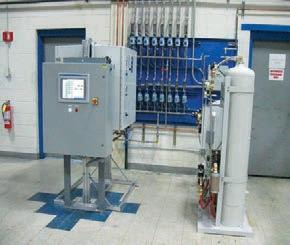
26 june 2013 | AmericAn LAundry news www.AmericanLaundryNews.com
Continental partners with RJ Kool to distribute Girbau Industrial products
Haried
BEST AVAILABLE TECHNOLOGY EnviroSaver II VOC & Sludge Removal Sized to fit YOUR needs Industrial Commercial Healthcare Hospitality Increase Plant Efficiency Call for your fitting Contact a local Wet-Tech distributor or call us at 508-831-4229 www.wet-tech.com Visit us at the Clean Show. Booth 4740 0513aln_Wet-Tech.indd 1 3/22/13 2:18 PM
(From left) Randy Karn, The Maytag® Repairman, Rion Battistella, Laura Battistella, George Pierce, Kim Pierce , Steve Hietpas, and Bob English.
Kool’s Tiffanni Sanstra, marketing coordinator. “Girbau Industrial products have filled some voids for us in the industrial market. We are blown away with the quality of these products.”
Established in 1961, RJ Kool provides a full range of products and services tailored to the on-premise, industrial and vended laundry markets. The company, which is customer-focused, offers large parts and service departments, as well as equipment rental and financing solutions, Continental says.
The new partnership strengthens Continental’s professional distributor network, according to Joel Jorgensen, Continental vice president. “Without a doubt, RJ Kool is a top-tier distributorship sharing the same customer-focused values as Continental. They deliver much more than just product sales, they provide customers with real laundry solutions and support before and after the sale.”
G&K Services’ Denver facility receives enviro excellence award
MINNEAPOLIS — The G&K Services facility in Denver was recently awarded a 2012 Gold Award from the Denver Metropolitan Wastewater Reclamation District for perfect compliance with wastewater pretreatment requirements and a demonstrated commitment to environmental excellence, the company says.
G&K was one of only 12 organizations, and the only industrial laundry operation, in the Denver metropolitan area to receive the 2012 award.
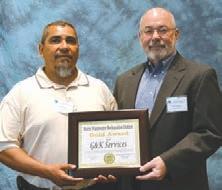
“This is a great honor for our company, which reflects G&K’s commitment to environmental stewardship and water conservation,” says Dick Stutz, G&K’s senior vice president of operations. “Over the past two years, our team in Denver has made a concentrated effort to improve wastewater treatment and reduce fresh water usage. This
Last year, the facility completed the installation of a water treatment system that allows wastewater generated in the laundry process to be cleaned and reused in subsequent wash cycles. The plant is now reusing approximately 65% of its wastewater, G&K says.
Cottage Health System renews contract with Mission Linen Supply
SANTA BARBARA, Calif. — Cottage Health System, described as the single notfor-profit provider of acute hospital care in the greater Santa Barbara area, has renewed its longtime contract with Mission Linen Supply, the linen supply company reports.
Under the agreement, Mission Linen will continue to launder all patient linens for three Cottage Acute Care facilities, as well as provide kitchen products, lab coats, floor care products and uniforms for 10 additional labs, clinics and dietary accounts.
The agreement is for two Cottage hospitals in Santa Barbara and Goleta, Calif., and for Santa Ynez Hospital in Santa Ynez, Calif. Plants in Santa Barbara and Santa Maria, Calif., will service the facilities. ALN
Calendar

June
19 Textile Rental Services Association Clean Show Reception House of Blues, New Orleans Info: 703-519-0029, ext. 108
20-22 Clean Show World Educational Congress for Laundering and Drycleaning Morial Convention Center, New Orleans Info: cleanshow.com
21 American Reusable Textile Association/ Healthcare Laundry Accreditation Council Breakfast at Clean Morial Convention Center, New Orleans Info: njenkins@arta1.com
July
18 Association for Linen Management Manager Series Webinar: Building a Successful Linen Quality Assurance Program Info: 800-669-0863
23-24 Textile Rental Services Association Textiles Summit Waldorf-Astoria, New York, N.Y. Info: 703-519-0029, ext. 108
25 Textile Rental Services Association Executive Roundtable — Hospitality (Hotel & Lodging) Waldorf-Astoria, New York, N.Y. Info: 703-519-0029, ext. 108
31-3 Textile Care Allied Trades Association
Annual Management and Educational Conference Rancho Bernardo Inn, San Diego, Calif. Info: 973-244-1790
August
11-15 Textile Rental Services Association Executive Management Institute University of Maryland, College Park Info: 703-519-0029, ext. 108
15 Association for Linen Management Manager Series Webinar: Zero Waste Stream Info: 800-669-0863
25-29 International Association for Healthcare Textile Management 2013 Annual Member Meeting Banff Springs Resort, Banff, Alberta, Canada Info: iahtm.com
29 Association for Linen Management Technician Series Webinar: Role of Team Leaders/Supervisors Info: 800-669-0863
September
15-18 Association for Healthcare Environment EXCHANGE 2013 Indianapolis (Ind.) Convention Center Info: 312-422-3860
www.AmericanLaundryNews.com AmericAn LAundry news | june 2013 27
award validates the success we’ve achieved.”
Jay Parra (left), plant manager of G&K Services’ Denver facility, and Steve Rohacs, general manager of G&K Denver, receive the 2012 Gold Award from the Denver Metro Wastewater Reclamation District. (Photo: Denver MWRD)
ALN
Maintenance Manager/Chief Engineer (Milwaukee)
We’re looking for a Maintenance Manager/Chief Engineer. The selected individual is responsible for managing preventive maintenance, fixing safety concerns and maintaining the facility. Daily accuracy and productivity of work is necessary for inventory control and accountability. Additional responsibilities include adherence to all health and safety standards.
To the qualified candidate we offer:

· Competitive Base Salary
· Excellent Benefit Package
Reporting directly to the General Manager of our family-owned and operated company locations.
Requirements
The right candidate for this job will have a background which includes:
· 3-5 years experience in building and machine maintenance required.
· 4-5 years experience with HVAC, plumbing, boilers, pumps, valves, electrical maintenance.

· 4 -5 years experience in a production environment.
· Minimum of at least two years of supervisory experience.
· Stationary Engineer’s Operating License is a plus.
Please send your resume´ to: Resumes-milw@mickeyslinen.com
U.N.X. INCORPORATED seeks skilled professionals in the laundry industry to foster new growth and expansion. With 55 years experience in health care, hospitality and industrial operations, we are an industry leader with the most technologically advanced chemical products and “state of the art” injection systems available.
If you have had successful selling experience in high volume laundry plants, come grow & expand with U.N.X.!
Territory Managers will have advancement opportunities.
U.N.X. is an equal opportunity employer. To apply, contact us at: U.N.X. INCORPORATED
PART-TIME/FT SALES REPRESENTATIVE

Excellent commissions, Importer of Institutional Linen goods desires salesperson with textile sales experience to textile rental, commercial, healthcare and hospitality laundries. Call Sam 800-693-5426 or e-mail: skahen@royalblueintl.com
Hotelier Linen Services in Miami is currently looking for experienced maintenance mechanics. Send your resume to hr@hotelierlinen.com . Competitive compensation package.
Field Service Technician
Ludell Mfg Co.-Milwaukee, WI, an equipment manufacturer of large industrial water heating equipment, heat exchangers, economizers, tanks and pumping systems is searching for a motivated technician to join our expanding field service department. Must be capable of traveling to customer jobsites to perform service, equipment start-up, repairs, modifications, maintenance, inspections, troubleshooting and operator training. Experience with combustion equipment, water pumping systems, electrical controls and PLC programming is a requirement. Travel is expected to average 50% annually. When not performing service duties, technician will assist in the engineering and production departments. Benefit package is provided. Email resume to: sales@ludellmfg.com
28 JUNE 2013 | AMERICAN LAUNDRY NEWS www.AmericanLaundryNews.com www.cornerstonemachinery.com Quality used and reconditioned equipment Rigging and relocation services Satisfaction guaranteed Complete inventory on our website Please call or email John or Eric eric@cornerstonemachinery.com 877-773-1850 PARTS, PARTS, PARTS Huge stock of parts for most laundry equipment & boilers. Also traps, valves and lubricants. Overnight delivery. Steiner-Atlantic, 800-333-8883 Fax: 305-751-8390 parts@steineratlantic.com www.steineratlantic.com WASHEX PARTS Hard-to-find Washex parts, on-site rebuilding, tech support. LAUNDRY PARTS CENTER 800-352-4492 Fax: 305-827-3991 Classified Advertising www.directmachinery.com For pricing, please call Ron Hirsch (516) 938-4300 Office • (516) 315-7426 50 Commerce Place • Hicksville, NY 11801 Fax (516) 932-8095 QTY DESCRIPTION Excellent PREOWNED EQUIPMENT WILL SELL QUICKLY 1 Milnor 30022V6J 60lb Washer with Steam Injection 2 Milnor 120lb Steam Dryers 2006 1 Shaper Steam 12” Ironer by 120 1 Milnor 110lb Soft Mount 2000 1 Air Chicago XL Blanket Folder/Small Piece Folder 1 Chicago Comet Ironer 1 Wascomat Soft Mount 30lb Washer 1 Wascomat Soft Mount 50lb Washer 2 Milnor 42026V6J 140lb Washer 2006 with Steam 1 Cissell 150lb Gas Fired Dryer 1 Sharper SF1200 Steam 120” Ironer Pictures are on Website DIRECT MACHINERY SALES CORP. The Griffin Group, Inc. “Recruitment Specialist” Call Deana Griffin 888-235-2365 deana@thegriffingroup.cc Call today to schedule an appointment with me at the Clean Show in regards to your recruiting needs. PARTS FOR SALE EQUIPMENT FOR SALE AMKO AMERICA, INC. Remanufactured Finishing Equipment Delta Ironers, Omega Folders & Towel Folders (1 year parts warranty) Like new at half the cost. PARTS, IRONER SUPPLIES & NEW EQUIPMENT ALSO AVAILABLE Contact: (561) 863-9696 jurgenb@bellsouth.net Call Craig Lloyd toll free at (877) CWL-LOYD between 9 a.m. – 9 p.m. EST. Please visit www.laundrycareers.com to review current industrial/institutional laundry management openings. ADVANCE YOUR CAREER POSITIONS AVAILABLE POSITIONS AVAILABLE www.ineedjpequipment.com 1-800-925-3236 J.P. EQUIPMENT INC. We will buy/sell/trade EQUIPMENT FOR SALE: (1) 2006 Chicago Tristar 24 (1) Jensen 1-Roll Steam w/Folder Stacker (1) Ellis Pump (Rebuilt) for 900lb 1 yr warranty 400lb Steam Dryer 2010 Chicago King Edge 136” Wide New Condition Jensen 5-Lane Drape and Store (1) Braun 2-Roll 48” Steam Ironer Perfect Condition (1) 200lb Braun OP Rebuilt (1) 400lb Braun OP Rebuilt (3) Milnor Tunnel Systems We’ll install – Call for Quote (1) 2003 King Edge with Vac (2) King Edge w/o Vac (1) 2005 Chicago Fast Trac Feeder Great for King Sheets (2) Norman Lift Tables with 5 Carts (1) Conveyor 30’ Long x 30” Wide (5) Fiberglass Lint Traps 1993 Chicago Gas Dryer We want your used equipment, please call or e-mail. “Why buy new when you can trust our used” Stanco Industries, Inc. Serving The Textile Trades Since 1970 stanco2626@aol.com 260-420-1232 Fax Visit Our Website: www.stancoind.com -------------- Equipment For Sale -------------2-SUPER SYLON 8-Roll. All Options 2004 Braun 4-Station Spreader 2002 Jensen Variant Spreader 2001 Chicago King Edge Spreader Feeder 2004 Chicago 32” Thermal Ironer 1-Roll 1994 BB&D 5-Lane with 1/2 Fold option 2000 Challenge 600# Gas 2-Door 1999 Chicago Air Folder (4 available) 2000 UniMac 85# w/e 1992 Braun 440# 2 Door Gas Dryer 2002 Ipso 100# Washer/Extractor 1995 Milnor 550# Open Pocket W/E 1992 Washex 250# Open Pocket ------- BOILERS • WATER HEATERS • CARTS Stanco Industries, Inc. 800-932-3769 Serving The Industrial Trades Since 1970 PLACE YOUR AD ONLINE: www.AmericanLaundryNews.com MISSED OUR DEADLINE?
DISTRIBUTOR OFFERINGS
PO BOX 7206 Greenville, NC 27835 Fax: (252) 756‐2764 armstrong@unxinc.com
® AmericanLaundryNews.com More than unique5,250 visitors monthly!
www.unxinc.com
Wash -


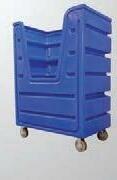


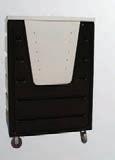


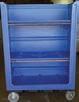










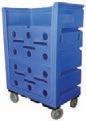





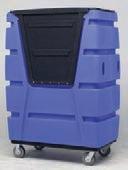

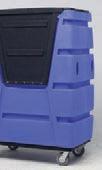

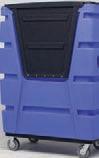

Industries, Inc. 9051 SE 55th Ave., Portland, OR 97206 800-752-2821 www.mcclureindustries.com, info@mcclureindustries.com



www.AmericanLaundryNews.com AMERICAN LAUNDRY NEWS | JUNE 2013 29 Source Directory A convenient guide to sources of products and services APPAREL FINISHING CARTS, TRUCKS & BASKETS Energenics Corp., Kartwasher 1470 Don St., Naples, FL 34104 800-944-1711 www.energenics.com CHEMICALS/INJECTOR SYSTEMS Gurtler Industries, Inc. 15475 S. LaSalle St., South Holland, IL 60473 800-638-7300, Fax: 708-331-1210 www.gurtler.com Pellerin Milnor Corp. P.O. Box 400, Kenner, LA 70063 504-467-9591, Fax: 504-468-3094 www.milnor.com DRYERS – 100 POUNDS OR MORE Pack 25% More On Same Size Cart Call 800.829.4535 or visit MODLaundry.com for a FREE QUOTE. Premium Quality Casters Included! 72S Meese Orbitron Dunne Co. Stronger design for big payloads, yet lighter tare weight for easy handling. The Best of Both Worlds l-800-275-2436 RepsAvailable8 AM-8 PM (EST) maxi-movers.com Fax: 631-661-8209 •Email:sales@maxi-movers.com The Cart Guys M8594 New POLYTRUCK Our new M8594 Maxi-Poly Shelf converts easily and quickly from a clean linen shelved delivery truck to a soiled linen bulk transport by simply repositioning the shelves. ■ Poly bases available. ■ 11 U.S. facilities save shipping costs. BoothSeeUsat #2053 Chm #981 M8594 Poly Trk" ALN Class. 5/16/13 5:50 Source Directory listings in American Laundry News are sold on an annual basis at the following rates: All Major Credit Cards Accepted 2013 Listings Regular Boldface All Caps All Caps, Boldface Four Line Listing per Year $790 $990 $990 $1,050 Display and additional line rates available upon request CART-WASHING SYSTEMS Sani Trux - McClure Industries, Inc. 9051 SE 55th Ave., Portland, OR 97206 800-752-2821 www.mcclureindustries.com, info@mcclureindustries.com M.I.T. POLY-CART 211 CENTRAL PARK WEST, NEW YORK, NY 10024 800-234-7659, FAX: 212-721-9022 WWW.MITPOLYCART.COM CARTS, TRUCKS & BASKETS CARTS, TRUCKS & BASKETS Pellerin Milnor Corp. P.O. Box 400, Kenner, LA 70063 504-467-9591, Fax: 504-468-3094 www.milnor.com DRYERS – 100 POUNDS OR LESS Rotational Molding, Repair, Recycling...Your Complete Plastic Solution 11744 Blue Bell Rd. Elberfeld IN 47613 800-304-4600 www.fibertechinc.net Diversified Plastics, Inc. 1309 Highway 917 West, Latta, SC 29565 800-768-7636, www.dpirotocarts.com E-mail: sales@dpirotocarts.com, Fax: 843-752-7798
Sani
McClure














30 JUNE 2013 | AmEricAN LAUNdry NEws www.AmericanLaundryNews.com Source Directory listings in American Laundry News are sold on an annual basis at the following rates: All Major Credit Cards Accepted 2013 Listings Regular Boldface All Caps All Caps, Boldface Four Line Listing per Year $790 $990 $990 $1,050 Display and additional line rates available upon request source directory A convenient guide to sources of products and services FLATwOrK irONErs The latest news, straight to your inbox, 2X a week Setting the Standard in Lint Filters for 25 Years • Hotel • OPL • Coin Op • Dry Cleaners • Industrial • Commercial • Cruise Industry Dry or Wet Style Filters to Work with “ALL” Dryer Sizes or Multiple Situations, Fiberglass or Stainless and Custom for Unique Situations! All manufacturing done on premise 800-826-1245 www.cleancyclesystems.com • ccsystems@tqind.com pArTs contact us to book your ad today! dfeinstein@americantrademagazines.com 312-361-1682 800.829.3864 www.Tingue.com KnowhowInAction TALLEY M ACH INERY YourTinguerepisafullytrainedmasteroffinishingequipment operation,maintenanceandinstallation.Callfor: •Pads,covers,belts,waxes,tapesandmore •Carts,trucks,basketsandbags •Parts,rebuildsandrepairs Tingue_Knowhow_3x3_ads:Layout 1 2/12/10 12:05 PM Page 1 FLATwOrK sUppOrT www.olekbelts.com 1-800-869-2683 Free www.olekbelts.com We’re your flatwork finishing and conveying O.E.M. Belt Match H.Q. Get the real thing for a Lot less $$$. O.E.M. Needlefelt Ironer Pads too! Better Belts, Better Prices, Better Service Visit our Website or Call 1-800-869-2683 For free, no obligation, price quotations and for your Free copy of our Product Catalog with over 40 samples. Ironer pads, covers, aprons, guide tapes, carts, slings, cleaners, waxes & more… LiNT cOLLEcTOrs & FiLTErs H Our In-Line Lint Filter mounts inside, saves space! H Fiberglass Wet Filters - 6,000 to 40,000 cfm H Fiberglass or Stainless Steel Dry Filters ENERGENICS CORPORATION Talk with our Design and Engineering Staff about your needs. Hundreds Sold Annually. 800-944-1711 www.energenics.com Get the info you need online... AmericanLaundryNews.com 0113aln_aln.com_class.indd 1 pArTs C & W EQUIPMENT (800) 443-3573 FLATWORK IRONER SPECIALISTS REMANUFACTURED IRONERS: Super Sylon Sylon Hypro’s Super Pro Jensen SS700 SS800 Ultima Lavatec UPGRADE KITS: Chain Drive Conversion Vacuum Systems Herringbone Conversion Canopies Inverters Side Covers Roll Springs Jensen Drives SUPPLIES: Aprons Pads Covers Belts Waxes Cleaners PARTS/REPAIRS: All Brands New/Refurbished/Hard to Find COMMITTED TO EXCELLENCE
Presses
Pellerin Milnor Corp.
eXTrAcTiOn
P.O. Box 400, Kenner, LA 70063 504-467-9591, Fax: 504-468-3094 www.milnor.com
TyinG mAcHines
Felins UsA, inc. Milwaukee, Wi Tying, Banding & Automated shrink Wrap systems 800-843-5667 sales@felins.com For more information visit us at www.felins.com
Pellerin Milnor Corp.
P.O. Box 400, Kenner, LA 70063 504-467-9591, Fax: 504-468-3094 www.milnor.com
wAsHer-eXTrAcTOr
Pellerin Milnor Corp.
P.O. Box 400, Kenner, LA 70063 504-467-9591, Fax: 504-468-3094 www.milnor.com
Pellerin Milnor Corp.
P.O. Box 400, Kenner, LA 70063 504-467-9591, Fax: 504-468-3094 www.milnor.com

INDEX OF ADVERTISERS
A.L. Wilson Chemical Co. www.alwilson.com 23
American Dawn www.americandawn.com 7
American Dryer Corp. www.amdry.com 18
American Laundry Systems www.eomech.com 6
B&C Technologies www.bandctech.com 10
Cornerstone Equipment & Rigging www.cornerstonemachinery.com 28
Davis Packaging www.davispackaging.net 27
Direct Machinery Sales Corp. www.directmachinery.com 28
Ellis Corporation www.elliscorp.com 14
G.A. Braun www.gabraun.com 19, 21
The Griffin Group, Inc. www.thegriffingroup.cc 28
G.S. Manufacturing www.gsm-cart.com 27
Gurtler www.gurtler.com 15
IES www.iesclean.com 12, 24
IPSO www.ipso.com 20
J.P. Equipment www.ineedjpequipment.com 28
Kemco Systems www.kemcosystems.com 22
LaundryCareers.com www.laundrycareers.com 28
Laundrylux info@laundrylux.com 11
Lavatec Laundry Technology www.lavatec-laundry.com 32
LG www.lgcommerciallaundry.com 5
Maytag www.maytagcommerciallaundry.com 13
McClure Industries www.mcclureindustries.com 25
NATCO www.nationalcombustion.com 26
Pellerin Milnor www.milnor.com 3
Royal Basket Trucks www.royal-basket.com 16, 17
Stanco Industries www.stancoind.com 28
Topog-E Gasket Co. www.topog-e.com 25
U.N.X. Inc. www.unxinc.com 8, 28
UniMac www.unimac.com 9
Wet-Tech www.wet-tech.com 26
Yamamoto www.yamamotolaundry.com 22
www.AmericanLaundryNews.com AmericAn LAundry news | J une 2013 31
– 100
POunds Or Less
wAsHers – cOnTinuOus BATcH
– 100
wAsHer-eXTrAcTOr
POunds Or mOre
–
source directory A convenient guide to sources of products and services
Caps
request rAGs wAnTed FOr cAsH Or TrAde
site Page company
site Page
Source Directory listings in American Laundry News are sold on an annual basis at the following rates: All Major Credit Cards Accepted 2013 Listings Regular Boldface All
All Caps, Boldface Four Line Listing per Year $790 $990 $990 $1,050 Display and additional line rates available upon
company web
web
ENGINEERED FOR A HIGHER RETURN
