OSHA fines laundry $165,000 for safety, health violations

PATERSON, N.J. — The U.S. Department of Labor’s Occupational Safety and Health Administration (OSHA) has cited Brite Services Inc., doing business as Star Laundry, for 39 serious safety and health violations found at its commercial laundry facility in Paterson, the agency reports.
Inspectors were prompted by a complaint alleging the company would not allow workers to leave the building during an emergency. Proposed penalties total $164,700.
OSHA found electrical hazards and an obstructed and improperly marked exit route, the agency says. Some of the alleged violations include:
• Allowing employees to potentially be struck by traffic while transporting laundry bins from one building to another while crossing a public street.
• Failing to provide a cover and guardrails for open pits, and a handrail for the stairway.
• Failing to evaluate the workplace for permitrequired confined spaces, to post signs informing workers of confined spaces, and to develop a written confinedspace permit program.
Brite Services was given 15 business days from receipt of the citations to comply, request an informal conference with OSHA, or contest the citations and proposed penalties before the independent Occupational Safety and Health Review Commission.
On the trail of textiles
CHICAGO — Those who manage laundry/linen services or textile rental firms find that tracking and counting the goods streaming in and out of their plants improves productivity and inventory control.
Yes, washing, drying and finishing goods for an end-user or client is only part of a professional launderer’s job. Keeping track of the linen, garments or mats flowing into and out of their facility is just as important.
So, how does a laundry go about tackling that task in the most efficient way possible?
RFID SYSTEMS

Radio-frequency identification, or RFID, first used for item tracking and access-control applications, made its way into the textile service industry in the 1990s. Key components of an RFID system generally include a tag or chip (packaged into a rugged plastic casing specially designed to withstand harsh industrial laundry processes), an antenna connected to a reader, and a reader connected to a software system that collects and manages the data collected. The tag or chip is affixed to a garment or
linen in some fashion.
“Such devices come in many forms and sizes, from small wires and tags to tiny chips,” says Ecolab’s Jim Mitchell, who discussed linen tracking while a member of the American Laundry News Panel of Experts. “Using these devices to track linen flow is becoming commonplace, especially with more expensive linens such as uniforms, bed linens and silks.
“Although some laundries use RFID tags or chips for inventorying, sorting and tracking of all linens, having these devices applied to common linens such as sheets and terry may not be practical or economical in your operation.”
RFID technology is constantly improving, according to Mitchell, and devices on the market are smaller, more cost-effective and offer greater resistance to adverse
cleaning elements.
There are many instances of organizations using RFID tracking to better maintain their inventories. For example, Four Winds Casinos recently selected InvoTech’s RFID Multi-Property Uniform Tracking System to centrally consolidate uniform inventory, tracking and purchases for
shop towels pose no health risk to workers: study
Laundered
claims by the disposables industry, according to the Textile Rental Services Association (TRSA), which sponsored the study.
ALEXANDRIA, Va. — A scientific study released by ARCADIS, an international research firm specializing in environmental issues, found no evidence that laundered reusable shop towels pose any health risk to workers, refuting
The study refutes previously published reports by the disposables industry used to frighten workers who use shop towels to perform their jobs, claiming that residues imbedded in laundered reusable shop towels pose a health risk despite decades of use without
any reported issues.
“As the trade association representing facilities that process laundered reusable shop towels, we felt we had an industry responsibility to conduct a health assessment to quantify if any real health risk existed,” says TRSA President/CEO Joseph Ricci, CAE.
“This study reconfirms decades of experience, that laundered reusable shop towels are not only safe
but are the most efficient, costeffective and sustainable option.”


The ARCADIS study collected laundered reusable shop towels from 10 different laundering companies and facilities, measuring residue leachability to conduct a quantitative health risk assessment. Towels were incubated in synthetic human sweat to represent the

APRIL 2013
Late News
www.americanlaundrynews.com Volume 39, Number 4
The Newspaper of Record for Laundry & Linen Management
reusable
INsIde [4] [6] [10] See TEXTILES on Page 4 See TOWELS on Page 4 Fine-Tuning: Wash Room Eric Frederick examines opportunities to fine-tune the wash room.
TRSA-sponsored study refutes claims made by disposables industry ALN Product showcase flatwork separators & feeders Panel of Experts Controlling linen loss is the biggest key to “saving par.”
(Photo: © iStockphoto/Amanda Rohde)
Survey: Laundry managers report job causes at least ‘moderate’ stress
CHICAGO — Managing or overseeing an institutional, commercial or industrial laundry causes at least moderate stress, according to more than three-quarters of respondents to March’s American Laundry News Wire survey. And their stressors range from a co-worker or customer/end-user to any number of other variables, including the nature of their job and/or the volume of work.
The level of stress felt by most survey-takers is either “Moderate” (47.1%), “Low” (29.4%) or “Serious” (23.5%). No one deemed their stress to be “Extreme.”
For about one in five respondents, their job stress is chiefly caused by their relationship with another person they work with. The same holds true for respondents who say a customer or end-user causes their job stress.
Aside from these troublesome relationships, the nature of their job and its responsibilities causes stress for nearly 40% of respondents, followed closely by workload (30.8%). Condition of equipment (23.1%), lack of resources (15.4%), fear of service being outsourced/losing account (15.4%), the physical work environment (7.7%) and personal health issues (7.7%) were also cited. (Respondents could check as many options as applied and/or an “Other” option.)
Nearly half of the respondents did select “Other,” describing stressors that include family issues, the U.S. economy, communication issues, expectations by upper management, and the quality of finished linen being received from a commercial laundry.
Roughly 41% say they feel job stress even when they’re away from their workplace, and approximately 35% say their stress level previously has reached a point where they considered looking for another job or possibly even another line of work.

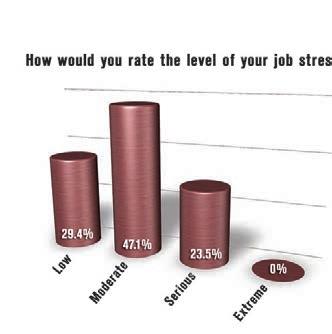
But for all the negatives this survey may have generated, virtually every respondent said their job has positive aspects. Helping others, working with people, and creating customer satisfaction were just some of the positives they shared.
“I get to do what I love every day,” wrote one respondent. “I have an incredible opportunity to coach and grow the leaders and managers of our company.”
“Rewarding to work with people with disabilities,” wrote another. “When the going is good, it feels really good.”
Respondents ranged in rank from laundry managers and directors of housekeeping/laundry to general managers and plant owners.
While the Wire survey presents a snapshot of readers’ viewpoints at a particular moment, it should not be considered scientific.
Subscribers to Wire e-mails—distributed twice weekly—are invited to
take the industry survey anonymously online each month. All managers and administrators of institutional/OPL, cooperative, commercial and industrial laundries are encouraged to participate, as a greater number of responses will help to better define operator opinions and industry trends. ALN
Magazine names UniFirst one of ‘50 Best Companies to Sell For’
WILMINGTON, Mass. — UniFirst Corp. was recently named one of the “50 Best Companies to Sell For” in North America by Selling Power magazine.
All companies earning a spot were assessed on factors such as salary, incentive pay plans, training programs, career mobility, and more. The magazine’s corporate research team also conducted supplemental research on all “best companies.”
Following a detailed analysis, companies were given favorability scores and 25 were ranked under a “Service” category; another 25 under “Manufacturing.” UniFirst garnered the No. 19 spot within the Service category. Other companies appearing on this list were Google (No. 21) and Marriott International (No. 24). ALN
A story published in the March issue of American Laundry News, titled Five Star Laundry adds second tunnel, automates much of plant, did not list the project contributions of ARCO Murray’s Laundry Division.
They included the concrete infrastructure for the new tunnel and press, process piping and electrical connections for the Braun and E-Tech equipment, equipment venting of the new Braun dryers, structural roof supports for the new vents, and the maintenance office build-out. ALN
Publisher
Charles Thompson
Phone: 312-361-1680
E-Mail: cthompson@ americantrademagazines.com

Editorial Director
Bruce Beggs
Phone: 312-361-1683
E-Mail: bbeggs@ americantrademagazines.com
Digital Media Director
Nathan Frerichs
Phone: 312-361-1681
E-Mail: nfrerichs@ americantrademagazines.com
Production Manager Roger Napiwocki
Contributing Editor Jean Teller
Editorial Assistant Carlo Calma
Advertising Sales
National Sales Director

Donald Feinstein
Phone: 312-361-1682
E-Mail: dfeinstein@ americantrademagazines.com


Office Information
Main Phone: 312-361-1700 Fax: 312-361-1685
Subscriptions 630-739-0600 www.americanlaundrynews.com
American Laundry News (ISSN 1091-9201) is published monthly. Subscription prices, payment in advance: U.S. & possessions, 1 year $39.00; 2 years $73.00. Foreign, 1 year $89.00; 2 years $166.00. Single copies: U.S. & possessions $7.00; Foreign $14.00.
Published by American Trade Magazines LLC, 566 West Lake Street, Suite 420, Chicago, IL 60661. Periodicals postage paid at Chicago, IL, and at additional mailing offices.
POSTMASTER, Send changes of address and form 3579 to American Laundry News, Subscription Dept., 440 Quadrangle Drive, Suite E, Bolingbrook, IL 60440. Volume 39, number 4. Editorial, executive and advertising offices are at 566 West Lake Street, Suite 420, Chicago, IL 60661. Charles Thompson, President and Publisher. American Laundry News is distributed selectively to qualified laundry and linen management and distributors in the United States. No material appearing in American Laundry News may be reprinted without written permission. The publisher reserves the right to reject any advertising for any reason.
© Copyright AMERICAN TRADE MAGAZINES LLC, 2013. Printed in U.S.A.
MEMBERSHIPS
Association for Linen Management
2 APRIL 2013 | AMERICAN LAUNDRY NEWS www.AmericanLaundryNews.com INSIDE: [4] Fine-Tuning: Wash-room Operations Columnist Eric Frederick examines the factors and opportunities available when fine-tuning a laundry operation [6] Panel of Experts: Inventory Control Nothing has a greater impact on a laundry’s operation and reputation than an inadequate circulating linen inventory [8] Tools of the Trade [10] Product Showcase: Flatwork Separators & Feeders [14] OPL 101: Technology Wrings Out Costs Distributor Joe Cole describes how technology has helped create smarter, faster laundry equipment that saves money April 2013 • Vol. 39 | No. 4 Clarification


















Pressure’s on, productivity
fine-tuning:
roductivity is the hallmark of every successful business, don’t you agree?
P
It’s certainly important in the laundry industry, where plants like yours are called on to produce virtually around the clock.
After reading the results of March’s Wire survey (read our story on page 2), it got me thinking about how productivity—or a lack thereof—is tied to job stress.
It’s hard enough to be productive during normal times. I would argue that there is no more trying time to be productive than now.
Towels
continued from Page 1
releasable quantity of each residue that could be transferred to workers’ hands from laundered reusable shop towels. Subsequent hand-tofood or hand-to-mouth transfers were modeled with the risk assessment framework used by the U.S. Environmental Protection Agency (EPA) and other authoritative agencies.
The study’s findings indicate that residues including metals in laundered reusable shop towels do not present any health hazard to workers using the towels, with exposure levels typically 100 or more times
And by “now,” I mean the time during which I’m writing this
column, which is late March.
The opening week of the NCAA men’s basketball tournament, featuring the commensurate number of buzzer beaters and top-seed upsets, just wrapped.
Plus, another winter in Chicago has passed and there are signs that spring has arrived. How am I ever going to stay focused on work?
What is your secret to remaining productive when life is filled with distractions? Drop me a line at bbeggs@americantrade magazines.com and let me know how you keep on plugging. ALN
wash-room operations
It seems that making the required adjustments in your laundry operation is a never-ending process. There are a number of variables to be considered when making periodic adjustments. With this in mind, I have decided to, over the next several months, discuss the factors and opportunities available to every manager in finetuning his or her operation.
lower than EPA acceptable levels.
“Reusable cloth shop towels have been used by millions of workers for more than 100 years with no indications that laundered reusable shop towels have any impact on worker health,” says Ricci. “By measuring leachability, ARCADIS simulated a conservative, realistic model of potential transfer of residue that reaffirmed our confidence that there is absolutely no risk to reusable shop towel users.”
Unlike previous studies of reusable shop towels, TRSA retained independent analysis from an industrial hygienist, Dr. Patrick N. Breysse, Johns Hopkins University, who conducted a systematic evaluation of previous studies.

These “estimates of exposure, data and assumptions used a deter-
Textiles
continued from Page 1
all of its properties to reduce labor and purchasing costs.
Four Winds uses the InvoTech system coupled with a White Conveyors system to automatically deliver uniforms to employees’ hands. InvoTech centrally tracks uniform use, controls inventories, monitors laundry cycles, and consolidates purchasing for more than 10,000 uniforms.
“We now have an accurate combined uniform inventory count for all properties on one database and can purchase in larger numbers to benefit from higher-volume buys,” says Jennifer Lasiewicz, Four Winds Casinos’ vice president of hotel operations.
Four Winds launders its own uniforms and uses an RFID dropchute reader to record when staff returns soiled items.
“It reads each uniform’s RFID chip as the garment is dropped,” Lasiewicz says. “We do not manually count every piece the staff returns to our laundry. With a large number of employees, that
would take a long time. InvoTech monitors uniforms coming and going at all properties, and we maintain a central bulk inventory at Four Winds New Buffalo to simplify our operation.”
Some hotels are even using RFID technology to deter theft. They are sewing tags into pricey linens such as towels, bathrobes and highthread-count sheets. When a tag is read by a strategically placed RFID reader, a system instantly alerts staff that an item is in danger of being pilfered.
A Hawaii hotel which introduced the technology a couple years ago claimed to have reduced theft of its pool towels from 4,000 a month to just 750, saving $16,000 in replacement costs monthly.
BAR-CODE LABELING
Bar coding is a more mature, simpler technology than RFID. Such a system can provide a launderer with information about each individual item, including when it was last turned in, how many times it has been processed, and when it was originally issued. Bar codes are generally thought to be less expensive than RFID tags.
But bar-code labeling has some
ministic analysis that cumulatively overestimated worker exposures,” says Breysse, and the ARCADIS study, “while conservative, provides a more refined and realistic health assessment.”
TRSA’s findings indicate there “is little or nothing to be concerned about with the use of clean, laundered shop towels,” Breysse observes, expressing disbelief in the prior overestimates of exposure.
For example, the amount of lead exposure from shop towel use previously calculated was equivalent to the quantity faced by workers who manufacture lead batteries. In contrast, the TRSA study put the daily dose of lead from shop towel use at 1,000 to 10,000 times below the acceptable exposure level, “by far a more realistic result.” ALN
This month, let’s look at the wash room. There are certain universal principles that apply to all washing equipment, whether it is a tunnel washer or a conventional washer-extractor. The first principle is deciding how big a load you wish to put into your washing machine. Sounds simple enough, but the answer can and should vary based on the type of linen you are washing and the moisture content of the linen to be washed.
To illustrate, I will use my operation’s tunnel washer. Its rated load capacity is 110 pounds per pocket, but if I were to fill each pocket with 110 pounds, I would be dramatically under-loading the tunnel. We wash micro-filament mops through our tunnel washer. Because of the moisture content in the soiled mops, we load each pocket to 165 pounds. This load easily fits into the extractor at the end of the tunnel, and the load comes out looking clean and smelling great.
There is a danger in putting too much linen into a tunnel-washer pocket. An overly large load will not come clean, and may not fit efficiently into the extractor at the end of the tunnel or may not come out at all. Anyone who has experienced a jam up inside the tunnel washer knows that it is something you want to avoid.

limitations. It requires line of sight, which RFID does not in most cases. RFID systems can read multiple tags simultaneously, while bar codes are read one at a time. Many RFID tags are read/write, while a bar code is read-only. And most fixed RFID readers don’t require human involvement to collect data, while most bar-code scanners require a human to operate them.
Some large plants apply a barcode label as well as an RFID tag to goods, so if something prevents the RFID tag from being read, the bar code serves as a backup.
Regardless of how one goes about tracking their textiles, gathering the information is just the first step. Then one has to decide what the data means and then put it to use it in their operation.
“Item tracking with RFID chips, bar codes, electronic route accounting, etc., are all important opportunities to help you control your merchandise,” says American Dawn’s Steve Kallenbach, a former member of the American Laundry News Panel of Experts. “However, if you don’t have good reconciliation processes, any of these systems will only allow you to know what’s missing!”
There is, however, a compelling reason to accurately determine the proper load size for each type of linen. We were able to increase our average load size from 100 pounds per pocket to 125 pounds per pocket. That is a 25% increase in output without adding time or equipment.
We wash a large amount of reusable barrier surgical linen each day. This linen is made from 100% polyester fibers and weighs very little per piece. If I were to load this type of linen to 100% of normal capacity, the linen would be so tightly packed in the washing machine that water may not reach the center of the load.
The key to this type of linen is to have enough goods in the washer to provide good mechanical action and effective cleaning. Underloading the washer will cause the linen to float on the water’s surface; overloading will end up producing no mechanical action at all. We have found that a general rule of thumb is to start testing at 70% of rated capacity.
The most effective way to wash linen is to do it right the first time. The wash room is not an area where you want to try to save money. Poor-quality washing will result in unhappy customers, higher labor costs and higher linen-replacement costs. Since labor and linen represent two of the largest expenses in a linen rental plant or in-house laundry, we should focus our attention on managing these costs.
It is for this very reason that I personally despise the use of guaranteed cost-per-pound-of-linen wash-room chemicals contracts. I want to be able to exercise my managerial control and to dictate the quality level coming out of my wash process. I want to be able to reduce my labor and linen replacement costs.
Many fixed-cost contracts end up using far too much chlorine bleach (extremely inexpensive) and less-than-desirable amounts of alkali and detergents. Instead of having a chemical representative trying to find ways to make a profit on his or her contract, I want them spending time trying to keep my quality up, my replacement costs down, and my productivity high. I personally believe that these are two entirely different types of service and are mutually exclusive.
4 APRIL 2013 | AmeRIcAn LAundRy news www.AmericanLaundryNews.com
Columnist At lArge Eric L. Frederick, RLLD
See WASH-ROOM on Page 15
The mosT effecTIve wAy To wAsh LInen Is To do IT RIghT The fIRsT TIme.
ALN
From The Director’s Chair BRuce Beggs

PAneL of exPeRts
Controlling linen loss is key to ‘saving par’
stocking at the customer not only renders linen inaccessible, it precludes generating additional rental revenue via “turning” the linen.
Abraham Lincoln once said, “You can’t do business from an empty wagon.” Nothing has a greater impact on a laundry’s sales, service, operation, and reputation than an inadequate circulating linen inventory.
The lack of a sufficient amount of linen in circulation necessitates operating the plant longer hours than would otherwise be necessary. Labor, maintenance and utility costs increase, while both efficiency and morale plummet. Operating costs increase without the benefit of added revenue.
Laundering the linen more frequently than would otherwise be necessary shortens its life, resulting in higher depletion and additional replenishment cost.
Equally important, insufficient circulating linen results in decreased fill rates. The inability to provide complete orders negatively impacts both revenue and customer confidence.
The first step in managing circulating linen inventory is to recognize that linen loss will occur. The next step is to ascertain where this loss is prone to occur, and develop policies and programs to prevent unnecessary depletion.
Planned losses, such as discards and rag-outs, are the result of quality control programs. Planned depletion, along with a corresponding linen replenishment program, is necessary to maintain a viable circulating linen inventory.
There are two types of linen depletion: actual and artificial. Actual loss represents a permanent depletion in circulating linen (the linen is not retrievable). This is the result of discard, abuse and theft, either deliberate or inadvertent. Artificial loss represents linen that, while not accessible to circulating inventory, is still retrievable. This is caused by linen being overstocked at the enduser location, which results in an underutilized inventory.
In linen rental operations, over-



Conducting physical inventories on a regular basis will provide the information needed to determine if the amount of linen in circulation is sufficient for the operation. Physical inventories also help in the planning of future purchases, and are essential in determining linen loss.
Due to storage limitations typical at a Manhattan hotel, it is necessary to employ the practice of just-in-time ordering. Ordering less linen more often reduces the space needed for storage, but increases the reliance on accurate physical inventories.
Conducting precise physical inventories will also serve as the basis for determining unexplained linen loss. This loss can be determined through this formula: Prior Inventory – Discards + Linen Injections – Current Inventory = Unexplained Loss
Conducting physical inventories at the customer’s premises is a daunting task, but is necessary to properly gauge both linen loss and linen utilization. Complete inventories should be conducted at least annually. Salient information can also be gleaned from “informal” inventories, shelf counts, and linen abuse “spot checks” that can be conducted as part of sales, service, and goodwill calls.
Linen loss and abuse charges, as well as linen utilization fees, when implemented and enforced, can aid in reducing both actual and artificial linen losses.
Regardless of the laundry operation type, it is crucial to involve, educate and monitor the end-users, in properly controlling the linen at their disposal.
linen, especially in surgery, critical care, and isolation or restricted areas. Developing a relationship with that end-user and working together to stress the importance of linen in patient care increases the likelihood of success and provides an avenue for honest feedback that can be used for performance improvement.
Timing of the inventory process is critical. One must work with those involved to determine the date, time, etc. Asking overwhelmed employees to add more work to their already busy schedules can set the project up for failure. Working together will allow the team to forecast any “snags” or concerns and to make plans to address them. The manager will also have his/her buy-in up front.
The process of supplying linen to our customers has several ongoing steps that are difficult to halt while the inventory count is being done. To complicate this further, linen is kept in multiple areas throughout the customer’s facility/unit, so establishing a starting and ending point can be a challenge. Recognizing and addressing any challenges up front will contribute significantly to the success of the inventory process.
In a market with decreasing reimbursements, increased production/process issues, dwindling capital funding, etc., maintaining an adequate budget for linens can pose a problem.
The laundry manager faces an uphill battle in justifying the need for an adequate linen purchase/ replacement budget. It is imperative that he or she has accurate data to forecast needs, and that planning is in place to address any increases or decreases in customer demands. This effort will assist the manager in decreasing the frequency of rush/panic orders and resulting increased delivery costs, thereby resulting in an overall savings opportunity.
decreased return on investment, storage issues, linen degradation, as well as possible contamination with lint, dust, or insect infestation.
Software that provides the manager with an actual daily/ weekly/monthly/annual usage figure can be used to identify overages and shortages, which can be addressed with appropriate par-level adjustments. These figures should be reviewed with the customer and any changes determined together so that they won’t come as a surprise to anyone.
Though zero loss would be ideal, it is unrealistic. Even if proper processes are in place, and the security and utilization of linen is appropriate, the laundry manager must still take into consideration other variables, including type of operation (healthcare, hospitality, correctional), region of the country/world you’re serving, type of chemistry used, etc. In addition, each linen item will have a different loss rate.
There are benchmarks available that can be used for comparison. I recommend the manager check with his or her linen supplier, in that these vendors are excellent resources of information. One such source states that benchmarks can range from an overall linen replacement average of 78% (this would be considered “best practice”) to 113%.
This “stretch” goal is achievable. The manager must concentrate on driving consistent, accurate, and focused efforts to purchase, process, and inventory linen utilizing a team approach that involves those who have a vested interest.
level of 3 has been a minimum and 4 has been a plus. In today’s economy, every extra dollar is being put to use in all aspects of operations. Just-in-time inventory has become more of a normal procedure than stocked inventory. Linen replacement averages 5-6% annually.
Under the just-in-time philosophy, OPLs must monitor inventory on a monthly or quarterly basis. Processes and procedures must be implemented to keep this percentage as low as possible. It is suggested that each station have a linen processing area with containers for each classification for linen type (mixed linen, torn linen and stained linen). Training all associates in the classification separation to be collected is important to the laundry’s success.
Working with your chemical provider to set up an aggressive, comprehensive stain formula in treating stained linen can help reduce or at least keep your linen replacement levels at 5-6%. A reclamation program to monitor and track discarded linen items will help with getting your correct items for inventory.
Benchmarking with other laundries—sharing problems or success stories—is a great idea. Different locations may face different challenges. For example, a laundry in Orlando, Fla., has to deal with suntan lotion stains, while a laundry in Boise, Idaho, may not have this problem.
In a healthcare setting, the challenge of taking a physical inventory can be overwhelming. One must enlist the help of clinical staff and/or the customer to count
Too little linen results in shortages to customers (may result in hoarding), increased linen processing, decreased linen life, decreased customer satisfaction, increased stress on laundry personnel (must “hurry through” the processing steps), inefficient use of equipment and staff time, increased chemical costs, etc.
Too much linen can result in a
Linen “misconduct” is another inventory issue. Washcloths, pool towels, robes, hospital blankets, and patient gowns tend to leave with the guest or patient. Educating nurses, housekeeping employees, patients and hotel customers is the most efficient way to control inventory being misplaced. There is not a foolproof way to control theft, but by pulling together we may deter the end-users from making poor choices.
P
ar: This word has many uses in the English language. For part-time golfers like me, this is a number we strive for. In the real world, it is used to establish inventory management and safety levels.
For many hotel operators, a par
In the end, without proper inventory control, the guest or patient experience is not going to be favorable. Consumers expect clean linen, and sometimes extra linen, at their disposal. It all leads back to saving par.

6 APRIL 2013 | AmeRIcAn LAundRy news www.AmericanLaundryNews.com
See EXPERTS on Page 16
Hotel/motel/ Resort Laundry
Charles Loelius
The Pierre New York New York, N.Y.
What aspects of inventorying and securing textiles pose the biggest challenge? What percentage of losses would you consider to be acceptable if the proper controls were in place? And how could an insufficient inventory impact the rest of my operation?
Healthcare Laundry
Judy Murphy, RN, BSN, CLLM, RLLD North Mississippi Medical Center (NMMC) Tupelo, Miss.
equipment/ supply distribution
Bill Bell Steiner-Atlantic Corp. Miami, Fla.
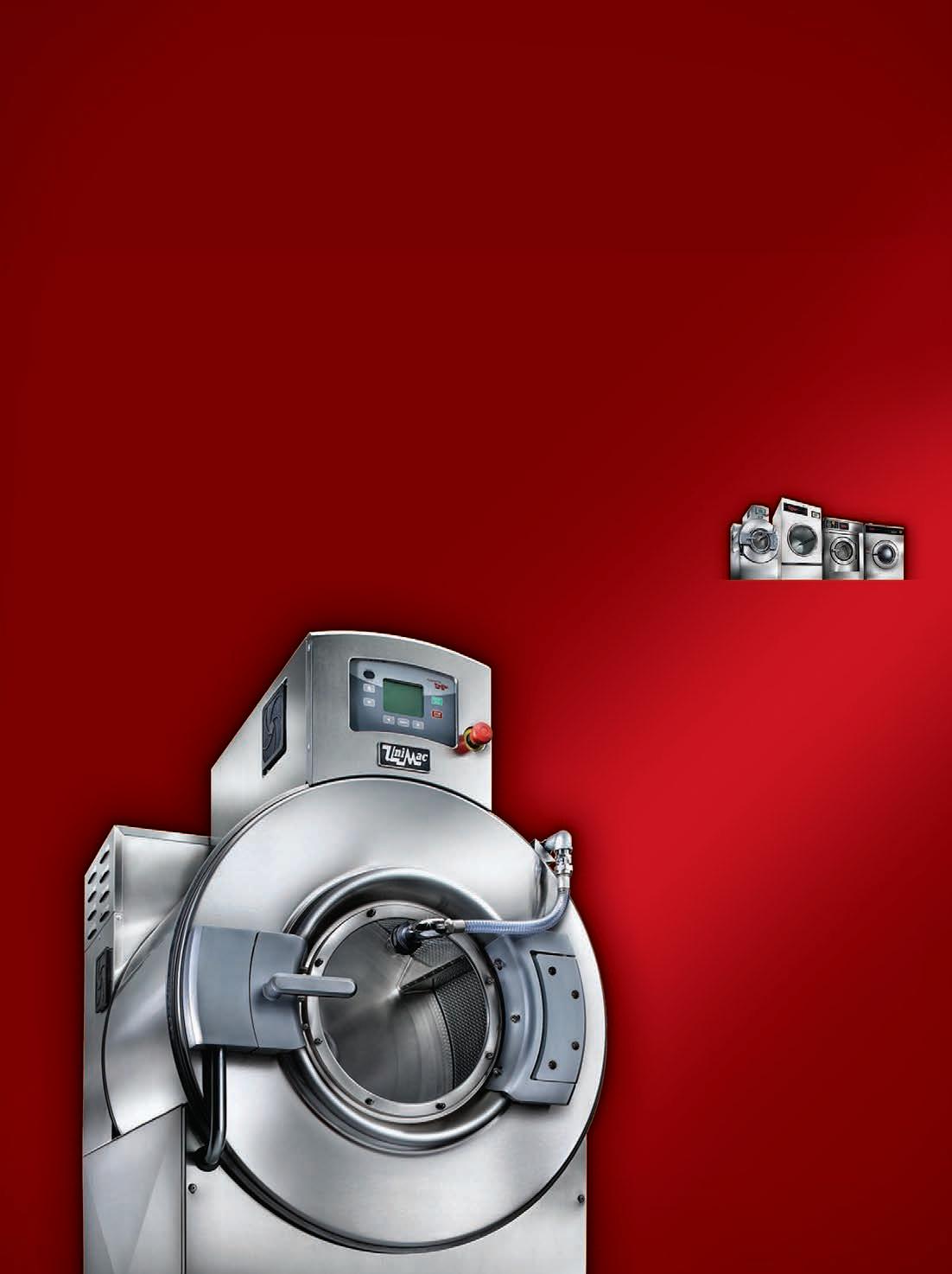
RATHER THAN DEBATE WHETHER OR NOT TIME IS MONEY, WE’LL JUST SAVE YOU BOTH.
FINANcINg AVAILABLE . 4.50% finance rate on UniMac washers and dryers. Limited-time offer.
distributor today to run a laundry operating analysis
cut costs and save money. Visit UNIMAc.cOM/TIMEANDMONEY
On-premises laundry has to be done on time and on budget. And nobody saves more time and money than UniMac®. Revolutionary UniLinc™ controls monitor your laundry’s performance, allowing you to pinpoint areas where you can increase efficiency, and reduce labor, utility and maintenance costs. Unprecedented 400 G-Force extraction and a Spray Rinse with 200% quicker fill time put even more money back in your pocket by further reducing operating expenses and maximizing throughput. Industry-exclusive OPTidry ™ over-dry prevention technology introduces cutting-edge sensors that automatically stop the tumbler once the ideal dryness level is reached, saving up to $2,000 in utilities, $6,000 in labor costs and decreasing the need for linen replacement with 31% less fiber loss. These groundbreaking innovations combine with unmatched durability and performance to provide commercial laundries of all sizes with the absolute lowest cost of ownership in the industry. SpEcIAL
Contact an authorized UniMac
and see how you can
or call 1-800-587-5458.
Tools f the Trade
Emblem maker launches laser-cut names for apparel personalization
Cintas Corp. has released its 2013 Uniform Book, featuring more than 100 new colors and styles and three new suiting collections. The 108page catalog showcases sharp, retailinspired and innovative apparel for professionals in a wide range of industries, including healthcare, hospitality and foodservice, Cintas says.

Marrying premium fabrics with runway-inspired designs, the Jay Godfrey™ Suiting Collection—exclusive to Cintas—features slim-fitting silhouettes with narrow lapels, high-notch collars and shell buttons wrapped in stainless steel. Featuring Godfrey’s signature dot-lining with magenta piping, the collection is environmentally-friendly and offers a flattering fit for men and women, regardless of size and body shape.
Also new to the catalog, the AR Red™ Suiting Collection blends contemporary style with functionality, environmental responsibility and attention to detail. The collection is comprised of wool, recycled polyester and Sorona®, a plant-based fiber. Other new additions include new ties and scarves, stylish blouses and shirts, two polo collections, functional banquet jackets and industriallaunderable housekeeping. To help keep wearers dry and comfortable and extend uniform life, the company uses several high-performance fabric finishes, including moisturewicking management, mechanical stretch and wrinkle-resistant technology and UV sun protection. cintas.com/shop 800-UNIFORM
World Emblem International launches Laser Names, designed to give the look of direct embroidery without the uncomfortable pellon backing and wrinkled appearance, the company says.

Laser Names can be made in a wide variety of polyester fabric colors. With the same fonts and sizes of current embroidery available for Laser Names as well, each name can be laser-cut into a choice of script and block font styles.
Each name is produced on an adhesive tape and a urethane backing, making for easy heat-seal application, World Emblem says. Unlike direct embroidery, Laser Names are completely removable, allowing for garments to be reused with other emblems and apparel
The new Compact 5-in-One Ironing System from Continental Girbau is designed to process up to 82 feet of linen per minute, and works seamlessly with an optional feeder, stacker and small-piece accumulator to quickly accomplish feeding, ironing, folding, stacking and accumulating, the company says.
Continental models are available in 24- and 32-inch diameters, 130-inch finishing widths, and natural gas or liquid propane heat sources.
The system offers high-volume linen handling to laundries that require quality results from a compact machine with a small footprint, Continental says. It supports linen handling and ironing needs for facilities that can’t accommodate ironing/folding systems.
“When space is at a premium, the Compact offers unmatched productivity and finishing quality for an array of laundries with medium to high production needs, including hotels, casinos, resorts and hospitals,” says Joel Jorgensen, Continental Girbau vice president.
Featuring an optional, vacuum-assisted feeding table, the Compact 5-in-One offers one, two or four working lanes, with one lane for sheets, two for table linens and four for small items, including napkins and pillowcases, the company says.
Folds are performed using air jets, reversing conveyors and knife-blade assistance. A simple push of a button automatically rejects stained or torn items, and a wide, inclined feeding table provides a better view of items while feeding.
When the optional folder and stacker are teamed with the Compact, it feeds, irons, folds and stacks while maintaining speeds up to 82 feet per minute.
Equipped with an intuitive control offering 20 pre-set and 20 customizable programs, the Compact provides touch-screen control over ironing parameters, faults, alarms or alterations in processing and diagnostics.
continentalgirbau.com 800-256-1073
New size added to biohazard transport container line
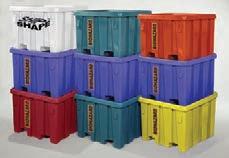
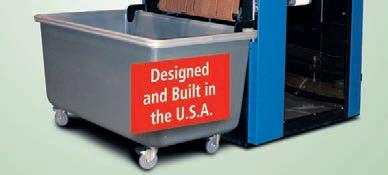
Meese Orbitron Dunne Co. (MOD) has introduced the P-291 Biohazard Ship Shape™ bulk container. Adding another size to the company’s line of biohazard transport containers, the P-291 Biohazard container earned the U.N. 11H2 design qualification documenting its ability to safely transport hazardous materials such as soiled laundry, infectious waste, biomedical waste, regulated medical waste, oily shop rags, and other flammable solid and non-fluid materials.
Rotationally molded in a single, leak-proof piece from 100% polyethylene for strength, durability and chemical resistance, the MOD P-291 hazmat container combines a rigid plastic container with a companion plastic cover and closure that seals hazardous materials inside. The reusable container remains
closed even if flipped, rotated or dropped, MOD says.
Permanently moldedin biohazard warning labels that meet OSHA’s marking requirement in 29 CFR part 1910.1030 for bloodborne pathogens are included, while a variety of options such as vinyl liners, tamper-evident security locks, casters and custom colors are available.
The plastic container holds 32 cubic feet of material on a standard 44-inch-by-44-inch footprint, stacks when covered, and nests for efficient empty storage and returns, according to MOD. shipshapecontainers.com 800-829-4535
decorations. The first letter of the name is capitalized at 5/8th of an inch, with the following letters in 5/16th-inch lowercase.
Laser Names are available to be stocked in-house, removing the need to ship garments for personalization.
worldemblem.com 800-766-0448
Company unveils online library of flatwork
To help laundry operators quickly access maintenance, repair and operational information for keeping their flatwork ironers running at peak efficiency, Talley Machinery Corp. has unveiled a free, online library of flatwork ironer parts and instruction manuals.
Accessible at talley machinery.com/ironer_manuals. shtml, the ironer manual library features original, illustrated parts and operators manuals provided as downloadable PDFs for American Laundry Machinery Inc., Hypro,
Sylon and Super Sylon flatwork ironer models.

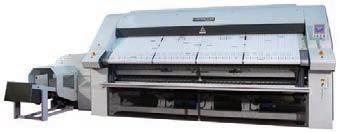
“Every time a flatwork ironer changes hands or is moved from one facility to another, it creates a chance for the manuals and maintenance records to disappear,” says Talley Machinery Vice President Randy Vansparrentak. “We’re hoping this saves people some time and hassle in operating and maintaining their ironers.”
talleymachinery.com 800-222-9954



G.A. Braun introduces its new 300 PBS Chute Load Dryers, featuring a non-tilt design that improves load and unload times, the company says.
In a side-by-side configuration, there is no spacing required between the dryers, Braun says. All are identical; there are no left-hand or right-hand dryers because of this unique side-by-side design.
They can be installed together endlessly, the company says. This enhances space utilization, minimizes the amount of spare parts needed and enhances the productivity and efficiency within a tunnel system, according to Braun.
Additionally, the machine has been designed with a patent-pend-

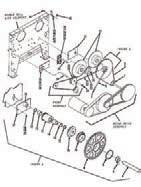

ing chute-loading option. This static chute on the front of each machine will allow for a seamless integration with a rail system, will improve turn times, and eliminates the moving parts and main-
tenance costs inherent with the use of cross conveyors for dryer loading, Braun says.
gabraun.com 800-432-7286
8 APRIL 2013 | AmeRIcAn LAundRy news www.AmericanLaundryNews.com
New apparel catalog features more than 100 new colors, styles, three suiting collections
Compact ironing system designed to process up to 82 feet of linen per minute
ironer manuals
Non-tilt design of chute load dryers improves load/unload times
™
Product S how CAS e
ChiCago Dryer Co.
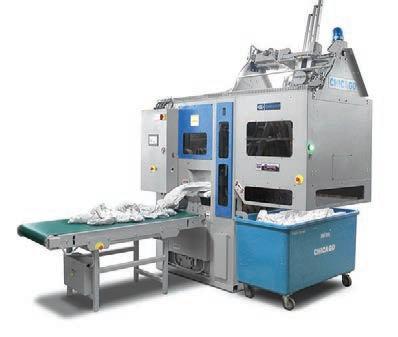
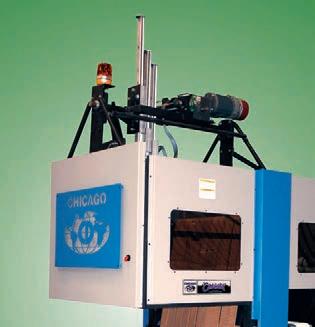
The Cascade® (bottom of page) from Chicago Dryer Co. is a fast, automated linen-separation system. The free-standing laborsaving system helps laundries to produce a continuous volume of separated linen to supply to the automated spreader-feeder/ ironing lines, the company says.
The machine’s multi-step process divides and spreads the work out in stages to assure longer service life. Alternating dual pick heads have a continuous pick rate exceeding 2,000 cycles per hour, Chicago® says, and the intermediate holding area provides a buffer
supply of linen that allows a highspeed finishing line to run without interruption while a fresh cart or overhead sling (an autoload conveyor is available) of tangled linen is moved into place.
This compact unit can be placed directly in front of a finishing line or located remotely for a separated and ready to go cart transfer. It automatically separates and unloads extracted, tumbled, or caked work of any size from a wide variety of laundry carts or overhead or lateral conveyor delivery systems, the company says, and presents easy-to-handle separated items directly to opera-
tors. Linen can be discharged to a feeding table, cart, or optional Chicago® conveyor.
The Edge Maxx® (at left) from Chicago® is designed for highspeed feeding of sheets primarily for the healthcare market. The Ultra Maxx model also is available for processing larger sheets used in deluxe hospitality settings.
The unique patented cornerless dual input feeding system on the Edge Maxx removes machine speed limitations at the input side and is designed to run with up to 200 FPM ironing lines, Chicago® says. With a two-second mechanical cycle time, sheets can be ironed end-to-end at faster speeds, with a theoretical potential rate up to 1,800 pieces per hour, the company adds.
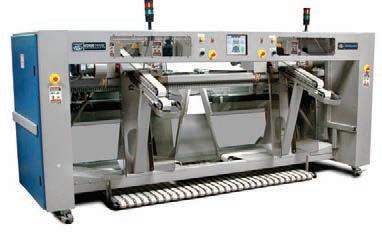
Edge Maxx has an ergonomically friendly design to help with increased production and laborsaving results. Using lateral separation of two independent continuously moving feed inputs, operators have their own Edge to work with. Faster speed capability and 50% more storage capacity ensure that even the fastest operator has no limitations and zero wait time, according to the company.
The Edge Maxx is controlled by CHI•Touch, an easy-to-use PC-based touch control system that provides operating, management and diagnostic controls through a full-color touch-screen display.
chidry.com 773-235-4430
Kannegiesser Usa
Kannegiesser USA offers a complete line of spreading and feeding equipment with ergonomic feeding stations designed for increased operator safety, the company says.
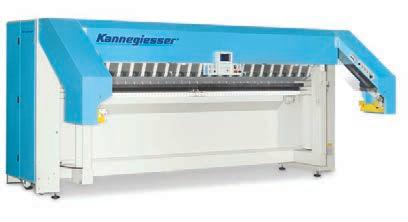
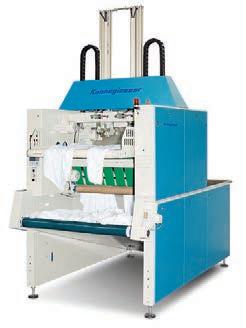
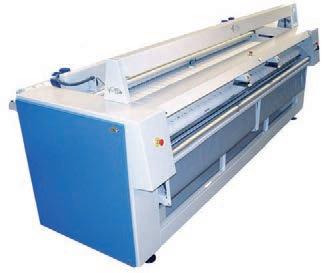
For high-capacity ironer lines where high productivity, ergonomics and quality are required, it recommends the new two-station Cornerless Feeding System Model EMX (above).
The EMX’s non-moving feeding mechanism receives the linen from the operator in an ergonomically correct process that minimizes manual feeding steps and avoids safety issues that are involved with moving conveyors, Kannegiesser says. Each feeding station also can be independently adjusted to the operator’s desired height for added comfort and productivity. The EMX provides up to 1,200 cycles per hour in a single lane for large pieces, and it can be equipped with a smallpiece package for added versatility, according to the company. Apart from machine technology, the capacity of an ironer line also depends on its operators. To further improve ergonomics in the finishing department, the EMX can be coupled with a compact batch separating and Pick-Up System Model PU-12 (above right). The work required when operators untangle articles in a laundry cart is eliminated by the PU-12’s ability to continuously deliver separated articles to each feeding station, thus improving the flow of linen and output through the ironer line, Kannegiesser says.
The PU-12’s dual picking arms with sensorcontrolled clamps provide consistent lifting of items, which are then
transferred to pressure rollers, and a discharge conveyor disperses tension on the article for complete separation of the batch. As a result, the operator is relieved from the manual task, reducing the risk of injuries and improving productivity, the company says.
kannegiesser-usa.com 800-344-0403
B&C TeChnologies
10 APRIL 2013 | AmeRIcAn LAundRy news www.AmericanLaundryNews.com [B&C Technologies]
The VS-1 Spreader Feeder (below) supplied by B&C Technologies is
[Chicago Dryer Co.]
The handling of damp, tangled linen can pose a number of different physical challenges for today’s laundry worker, not to mention slow down a plant’s production. Automated linen separators and flatwork feeders, such as the models featuring in this month’s Product Showcase, offer the ability to optimize plant performance while keeping the staff happy and healthy.
[Kannegiesser USA]
cOmPILed By JeAn TeLLeR, cOnTRIBuTInG edITOR
ideal for ultra-high-quality feeding of large pieces, especially table linen, on medium-speed ironers, the company says. A single feeding station at machine center has two clamps. After inserting two corners of the piece into the clamps, the VS-1 spreads, centers and lays the front edge of the piece onto the belts leading to the ironer. Feeding can be done by a lone operator or by two operators alternating or working in conjunction with each other.
A fast-rotating roll whips the trailing edge into a vacuum box while brushes moving laterally from center spread the piece. Another set of brushes, on top and underneath the piece, move laterally from center to smooth out the edges. A sandwich conveyor briefly holds the back of the piece so that the leading edge can be stretched by the ironer feed table. These three features result in top feeding quality at medium production rates, B&C says.
With the touch of a button, the feeding head moves forward so small pieces can be fed directly onto the conveyor leading to the ironer. Suction under the perforated belts and the vacuum box for the trailing edge ensure quality work on small pieces as well as larger pieces, the company says.

The VS-1 is a freestanding, compact machine, with a low, ergonomic feeding height.
Programming is by PLC touchscreen control.
bandctech.com 850-249-2222
Lavatec Laundry technoLogy

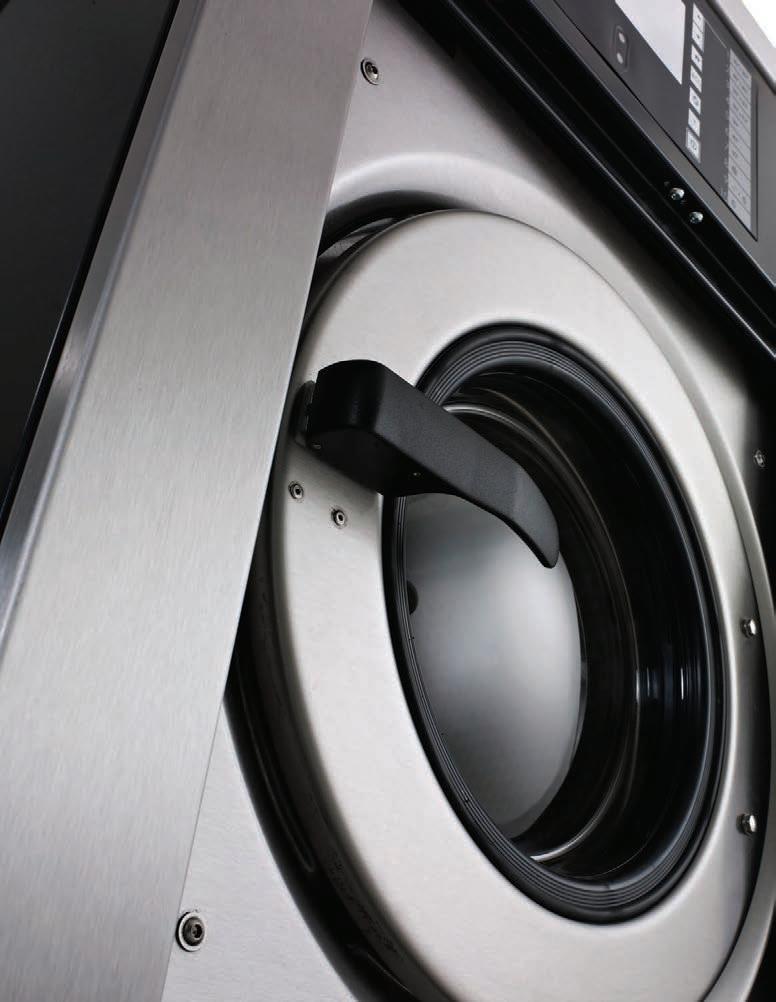
The Autoprep (above) supplied by Lavatec Laundry Technology is designed to automatically separate tangled loads of laundry and present articles directly to feeding machine operators. Workloads in a suitably sized laundry truck can be loaded direct into an Automatic Truck Mover. Alternatively, workloads can be loaded via overhead bag systems or from purpose-built conveyors, the company says.
The Autoprep comes standard with a Twin Picking Jaw that facilitates a 20% increase in productivity over earlier models, says the
company, yielding approximately 1,400 sheets per hour. The Twin Picking Jaw also is available as a
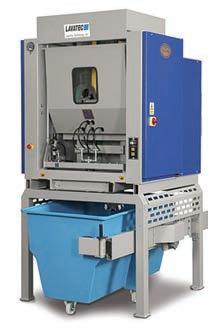
field retrofit for existing models.
The Autoprep can be located at the most convenient point in the
production line and easily connected to electricity and compressed air.
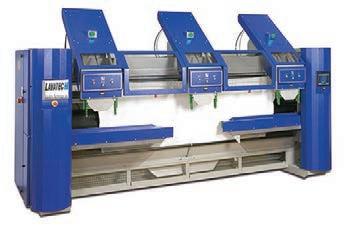
Also supplied by Lavatec Laundry Technology is the Vacfeed Low Line Feeder (left), a single-lane multi-station spreaderfeeder designed to present both large and small items to a flatwork ironer. Unique and simple-tooperate loading clips on each load, in addition to a patented spread, transfer and lay system, allow operators to process larger items of linen such as sheets, duvet covers and tablecloths, the company says.
The feeder comes standard
with ergonomically positioned load stations that can be raised to gain access to the main feed conveyor, allowing both small and shaped linen to be manually placed on the suction surface. Pacing lamps for individual feed stations provide visual detection of operator efficiency, and the I.S.E. (Intelligent System Electronics) control technology features a simple selection procedure utilizing a touch-screen interface with 100 available programs, the company says.
lavatec-laundry.com 203-632-8777
www.AmericanLaundryNews.com AmericAn LAundry news | AP ri L 2013 11
american laundry news jr page 7.75x10 For laundry done on time and on budget, there’s no better choice than IPSO ®. Forty years of European ingenuity, rugged industrial construction, and our intuitive Cygnus controls all add up to help you achieve your ultimate goal — maximum throughput at a minimized cost. Learn more about how IPSO helps you get the job done at IPSO.com/industrial INDUSTRIAL BY DESIGN Work with your IPSO finance expert to learn about customized financial solutions for your business. IPSO USA 1.800.USA.IPSO IPSO.com/industrial INDUSTRIAL BY DESIGN. Optimal Efficiency. Maximized Throughput. 3929_IPSO OPL_jrPg amerlaundnews v2.indd 1 2/6/13 4:29 PM ALN_Jr Page.indd 1
➢
[Lavatec Laundry Technology]
Girbau industrial
Girbau Industrial’s DRF
Automatic Feeder (above) automatically straightens and feeds a variety of items, large and small, directly into a corresponding flatwork ironer. Available in 130and 138-inch working widths, the DRF feeder can process more than 1,200 large-sized items per hour, with the capability to handle anything from duvets, bedspreads and sheets to tablecloths, napkins and pillowcases, Girbau says.
The DRF is quickly convertible to handle both large- and smallpiece goods, without moving the machine, allowing high-volume laundries to handle a variety of items. It accommodates one to four operators and one or two lanes simultaneously. The vacuum table assists with small-piece feeding.
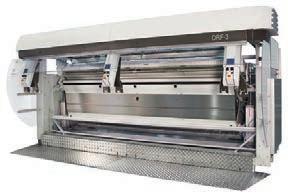
The DRF “dresses” wet linens straight from the washer, Girbau explains. The machine clasps an item’s leading edge while a vacuum pulls wrinkles from the fabric.
The DRF is engineered with a transferring vacuum bar, a suction feeding conveyor, suction drawer and spreading brushes to provide top feeding quality. Items are automatically straightened as they move through the feeder directly into the ironer, a seamless process that enhances laundry productivity. The DRF’s feeding conveyor speed is adjustable from 16 feet to 164 feet per minute, the company says.
girbauindustrial.com 800-256-1073

Jensen usa
Jensen USA’s Jenfeed Express (far right) has been developed for fast feeding of sheets with special focus on optimizing capacity per operator hour; it is designed for the healthcare sector, the company says.
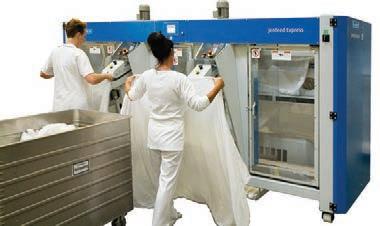
The optimized capacity was achieved by combining a cornerless feeding principle with a newly designed operator feeding station that uses a divided conveyor, which helps increase productivity per operator, Jensen says. The divided conveyor creates a builtin buffer to allow a new piece of linen to be fed into the feeding bill while two pieces are in a transfer position, thus reducing the machine’s cycle time.
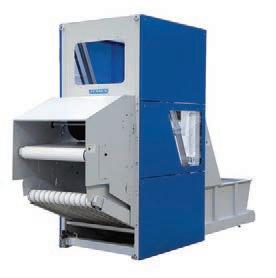
The Viking 2000 Separator (below) is a fully automatic separator for large pieces, helping to eliminate operator stress by reducing manual separation and preparation at the feeder.
With the separator in front of an ironing line, the operators at
the feeder are continuously supplied with separated linen, which leads to less physical stress, the company says. The separator performs by means of sensor-controlled pickers mounted on a lifting arm, which separates the linen and leaves it on a delivery conveyor. From there, the linen can be delivered directly in front of the feeder by optional conveyors.
The Viking 2000 is available as a Model A (with a trough and three pickers) or a Model D (with a cart lifter and two pickers). Both feature programmable pickers, which allow the Viking separator to use one, two or three pickers to separate batches into different lot sizes, depending on a finishing code, the company says.
jensen-group.com 850-271-5959

G.a. braun
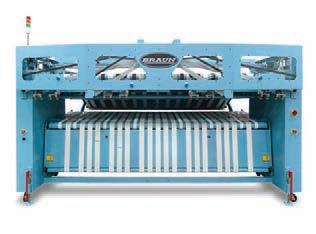
Braun Spreader/Feeders are engineered for flexibility of use and top performance for healthcare, hospitality and linen-processing markets, the company says.
The new generation of Braun spreader/feeders incorporates technology utilizing an auto feed and transfer system that leverages optical sensors to improve ergonomics, cycle speeds and feed quality.
The automatic leading-edge and width-sensing system allows for a seamless transition for plants that process mixed items in a single lane, Braun says. It also relieves stress and tension created by spreading products at a high speed. This capability allows for a smooth transfer from the spread mechanism to the feed table.
12 APRIL 2013 | AmeRIcAn LAundRy news www.AmericanLaundryNews.com
Visit TRSA at Booth #1733 • Visit Textile Services at Booth #4610 Join TRSA for Our Clean Show Activities in New Orleans Wednesday, June 19 • TRSA Welcome Reception (House of Blues) • 5:30–7:30 pm Mix with the largest group of textile services professionals to be assembled this year as TRSA members and nonmember operators plus institutional, large central and co-op laundries celebrate TRSA’s “Stronger Together” theme. Admission cost includes donation supporting education of industry customers’ employees. Register at www.trsa.org/cleanreception. Thursday, June 20 • TRSA Seminars & Town Hall (Convention Center) 8–9 am Regulatory and Legislative Update 9–10 am Textile Services Contracts and Negotiations Noon–2 pm Town Hall for Institutional, Central & Co-op Laundries Friday, June 21 • TRSA/International Textile Services Alliance Seminars (Convention Center) 8–9 am European Textile Services Market 9–9:30 am Today’s and Tomorrow’s Consumer Needs in Emerging International Markets 9:30–10 am Future International Textile Services Market Demand: Business Opportunities 3:30–4:30 pm TRSA Clean Green and Hygienically Clean Certification Programs: Quantifying Your Commitment to Cleanliness and Sustainability Saturday, June 22 • TRSA Seminars (Convention Center) 8–9 am Disposables vs. Reusables: Research that Quantifies the Sustainability Advantages of Napkins, Shop Towels and Barrier Gowns 9–10 am Developing a Culture of Safety More info: www.trsa.org/cleanshow • 877.770.9274 • info@trsa.org ALN_Tab_half.indd 1 3/11/13 8:37 AM [Girbau Industrial]
[Jensen USA]
Braun’s swing-down and discharge conveyor allows operators to access the ironer for maintenance without having to move the feeder. Each piece is squared and centered to provide a crisp, straight leading edge.
gabraun.com 800-432-7286
Ellis Corp.

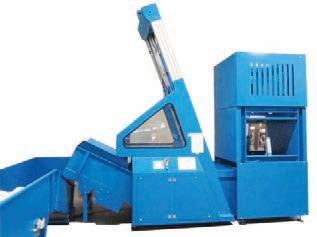
Ellis Corp., North American agent for Vega Systems, offers a complete product line of finishing equipment, the company says.
A featured product is the Vega Picker (bottom of page), an automatic separating machine for tangled linens. Utilizing a machine to untangle and separate linens assists with feeding to help increase productivity. Bulk loads of sheets or other large pieces are delivered to the Picker via cart, conveyor or rail system.
The PLC-controlled unit comes standard with a transport conveyor to feed the two inverter-driven gripping heads that cycle approximately 1,000 times per hour. The heads have adjustable clamping pressure, allowing the system to handle different types of materials. The standard lift height is 9 feet 6 inches to best separate linens as well as reduce tangling. A bypass conveyor also is standard.
The Transfeed Large Piece Feeder (below) also is capable of feeding small
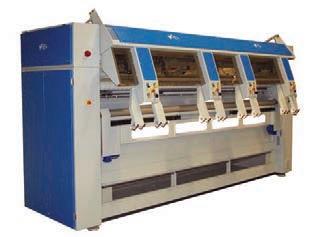
pieces. This machine is available with either a three- or four-station feed and a one- or two-lane operation, Ellis says. All clipping stations are located in front of the machine and offer height adjustment to complement the operators. The feeder uses vacuum assist in spreading and lay-down. A standard feature is the automatic speed synchronization and suction box to improve quality of the trailing-edge lay-down, along with brushes. A central dustcollection system also is standard.
elliscorp.com 800-453-9222
ConsolidatEd laundry MaChinEry
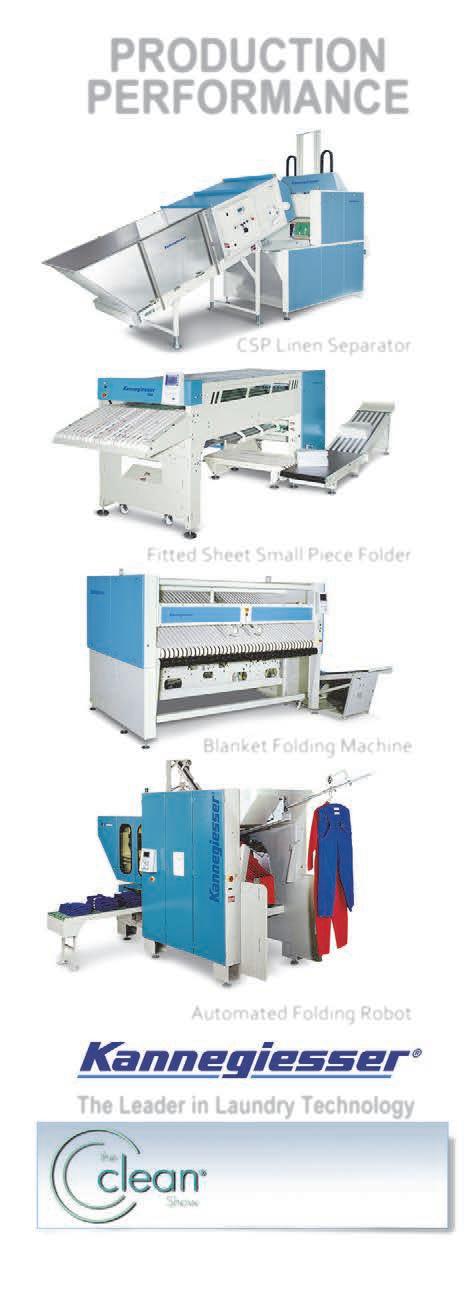
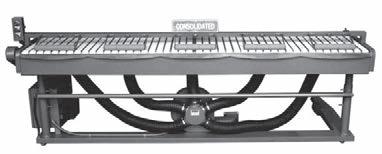
Consolidated Laundry Machinery’s NapkinFaster, VacFeed, and FeedFaster are three tools to help increase efficiency and productivity of any plant operation, the company says.
The NapkinFaster (below) installs in minutes and helps increase production of small items up to 25% by minimizing loss of ironer capacity between items. Operation is easy, requiring no additional training or
supervision, CLM says. The NapkinFaster uses five lanes for napkins and other small items. It is fully adjustable, allowing easy and quick change of the unit’s height and suction power. Belt speed automatically changes to accommodate ironer speed.
The VacFeed vacuum feeder, for feeding of tabletops and other large pieces, helps to improve ironer efficiency by minimizing loss of ironer capacity between items, and it works with most ironers, the company says. Operators place the linen on the feed ribbons. Once the leading edge of each item is fed, the VacFeed takes over, and workers are free to pick up the next item. The machine spreads, straightens and squares the linen as it enters the ironer, helping to eliminate creases. The VacFeed features adjustable height and works with a simple downdraft of air.
CLM’s FeedFaster vacuum spreader-feeder has a chest and roller for sheets and other large items. It takes up only 10 inches in front of the ironer, and small pieces can be fed over the unit without disturbing the set-up. Since it is mounted on casters, the unit can easily be moved. clmco.com 323-232-2417
www.AmericanLaundryNews.com AmericAn LAundry news | AP ri L 2013 13
ALN
[Ellis Corp.] ALN_Tab_half_V.indd 1 3/6/13 6:14 PM
[G.A. Braun]
[Consolidated Laundry Machinery]
Technology wrings costs out of laundry operations
By JOe cOLe
Sustainability, efficiency, and the bottom line are on the minds of every business owner. Laundry operations, whether on-premise laundries or linen services, are no expection.
Technology advances are significantly changing business
operations and the way services are delivered in every sector. In laundry rooms, they are helping equipment to run smarter and even to contribute useful data to the decision-making process.
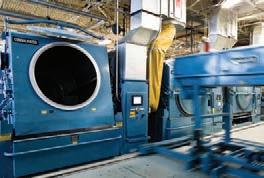
Improvements are leading to reduced labor costs, increased productivity, maximized energy efficiency, lower utility costs and
enhanced linen life. Here is how these evolving machines enable these cost centers to take up a smaller part of the operating budget, while ensuring that the overall operation runs smoothly.
GETTING A JUMP
Typically, when laundry operators punch in, the first thing they
do is load linens, uniforms or other washables into the machines, start them up, and then enter a 35- to 45-minute “dead” period waiting for the first loads. This is no way to start the morning.
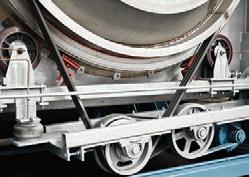
Thanks to an advanced-start function engineered into newer washer-extractors, today’s laundry crew could be greeted by a
machine filled with freshly washed clothes and linens. It allows workers to load up the machines at the end of their shift and to program them to turn on the next morning about an hour before the morning shift arrives.
The loads will be just finishing and almost ready for the tumble dryer when the first shift comes onto the floor. This feature also shortens the previous day’s last shift. The time saved adds up to lower labor costs. In addition, having loads already washed to start the day ensures that parts of the operation that depend on their availability can be reliably supplied by mid-morning. More timely availability could enable a smaller inventory of linens and uniforms to handle daily demand for on-premise laundries.
USE THE G-FORCE
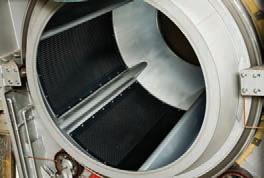
Tumble dryers should be asked to deal with as little water as possible. Low-G-force washer-extractors can leave significant amounts of water in the laundry, which means the dryer has to work harder and longer. When operators run fabrics such as all-cotton terry cloth through a low-G-force washer, there can be as much as 90% water retention.
Water-heavy goods present potential ergonomic problems for workers who have to lift laundry into the dryer. It also requires extra drying time, which means more energy to heat the air. It also reduces throughput. High-G-force extraction removes more water from linens, leading to decreased drying times. It can reduce the amount of moisture left in linens by up to 47%, decreasing gas or electricity usage by as much as 35%.
CAN’T BEAT THE CLOCK
You can’t improve what you don’t measure. Using the advanced controls now available is like having somebody in the laundry room with a notepad, recording information on every cycle run, monitoring machine performance and tracking maintenance history. This can be especially valuable for facilities that run more than one shift.
For example, a chemical company had a customer who complained about the quality of finished laundry. The control system that monitors the equipment pinpointed the problem. Reports showed that operators on the 2-6 p.m. shift were advancing the machines, skipping the bleach step and skipping a rinse step.
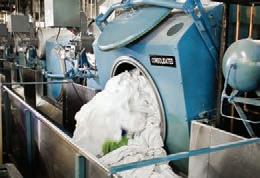
The chemical company was able to show that the problem was not with chemicals but with how the workers were using the machines.

14 APRIL 2013 | AmeRIcAn LAundRy news www.AmericanLaundryNews.com
OPL 101 Our Business is Dryers. Your Business is Our Priority. Save time and money with CLM’s technologically advanced industrial dryers. • Units from 250 lbs dry weight to 1200 lbs dry weight • Precise control over heat system and fuel use • AutoDry™ formulas to take the guesswork out of cycle termination Let us show you how our flexible-design dryers work with your specific laundry operation needs. See our entire line of dryers at www.clmco.com or contact us at 323-232-2417. • Heavy-duty construction to perform in the most difficult environments • Capability to work with any wash system • Low NOx version, TumbleGreen™, available • Distributor sales and support locally An industry leader since 1983, CLM Dryers feature: 211 Erie Street, Pomona, CA 91768 | T: (323) 232-2417 | www.clmco.com Use the Savings Calculator at www.clmco.com to see how you can increase your ROI. ALN_Jr Page.indd 1 11/30/12 2:19 PM See Us at The Clean Show Booth #2143 3/6/13 3:23 PM
The reports provided by these control systems help administrators better understand and manage workloads and increase throughput. The information also helps determine whether they need to add more machines.
Washer-extractors and tumble dryers equipped with advanced controls have a real-time clock telling the operator how long the machine has been sitting idle. Laundry operations paying overtime can check to see whether the extra hours are really necessary.
IN TOTAL CONTROL
Advanced washer equipment
wash-room
controls enable the operator to match each load with one of 30 different water levels for optimal water and chemical use without compromising cleanliness. This feature can help save thousands of gallons of water each year, which also reduces heating energy costs.
Some new tumble dryers make use of moisture-sensing technology to prevent linens from being scratchy and to ensure longer life for linens and uniforms. Operators set the desired moisture level, usually 4-5%.
Over-drying is one of the biggest wasters of utilities and labor in the laundry room. Impatient
operators sometimes check to see whether clothes are dry by stopping the machine and sticking a hand in every now and then. Not only does this waste the operator’s time, it also wastes energy. In addition, improved technology that prevents over-drying can reduce fiber loss by 31%.
NOT DOWN THE DRAIN
One problem with technology is that sometimes management doesn’t want to invest in it. But that ignores real dollars-and-cents benefits. There is a big difference between lowest cost and lowest price. Whether a laundry service
or an on-premise laundry, operations that resist upgrading or that choose a less expensive machine can spend $100 per month for the next 12 to 15 years on additional energy, water, and labor.
Break down the budget of a typical laundry operation. About half of every dollar spent in the laundry goes to labor. Another 10-12% goes to equipment, 10-12% to linen replacement, 8-12% to chemicals, and 10% to utilities. Equipment maintenance completes the cost schedule at 3%.
Spending money wisely on equipment can affect the other pieces of the cost pie, reducing them while making better use of the laundry workforce by increasing productivity and throughput. ALN
Joe Cole is the sales and marketing manager for Southeastern Laundry Equipment Sales, a Marietta, Ga.-based UniMac distributor that services parts of Georgia, Florida, Alabama and Tennessee. He can be reached at 770-928-0080 or joe@selaundry.com Cole
The next area to focus on in the wash room is turnaround time. How long does it take from the time a wash cycle is completed until the next load is started? This is extremely important for conventional washers but also should be looked at for tunnel washers (hold time).
We track turnaround time for every load on our conventional washers, and have found that having a place to unload the washer into “ready” and “waiting” helps reduce turnaround time. Having the next load prepared and ready to be loaded also reduces this time.
When we first starting looking at turnaround time, we found that we were not doing a good job processing traditional wet mops. Housekeeping was bagging the mops in plastic bags and sending them to the laundry. Our soil sorters set these bags to the side until there were enough for a wash load. The cart was then taken to the wash room where, after the washer was emptied, the wash person would slowly open each bag and place the mops into the washer. This system required 30 minutes to load the washer.
By having the soil sorters remove the mops from the bags and sort only the mops into the carts, we were able to greatly reduce the amount of time it took to load the washer.
Running a tunnel washer faster than the dryers can handle the linen causes the tunnel to go on “hold.” To me, a tunnel on hold is wasted time. It is better to lengthen the tunnel wash time per pocket than to allow it to constantly go into a hold situation.
Proper scheduling of the linen mix going through a tunnel can help keep the equipment running smoothly.
ALN
Eric Frederick is director of laundry services for Carilion Laundry Service, Roanoke, Va., and a past president and manager of the year of the Association for Linen Management. You can reach him by e-mail at efrederick@carilion.

www.AmericanLaundryNews.com AmericAn LAundry news | AP ri L 2013 15
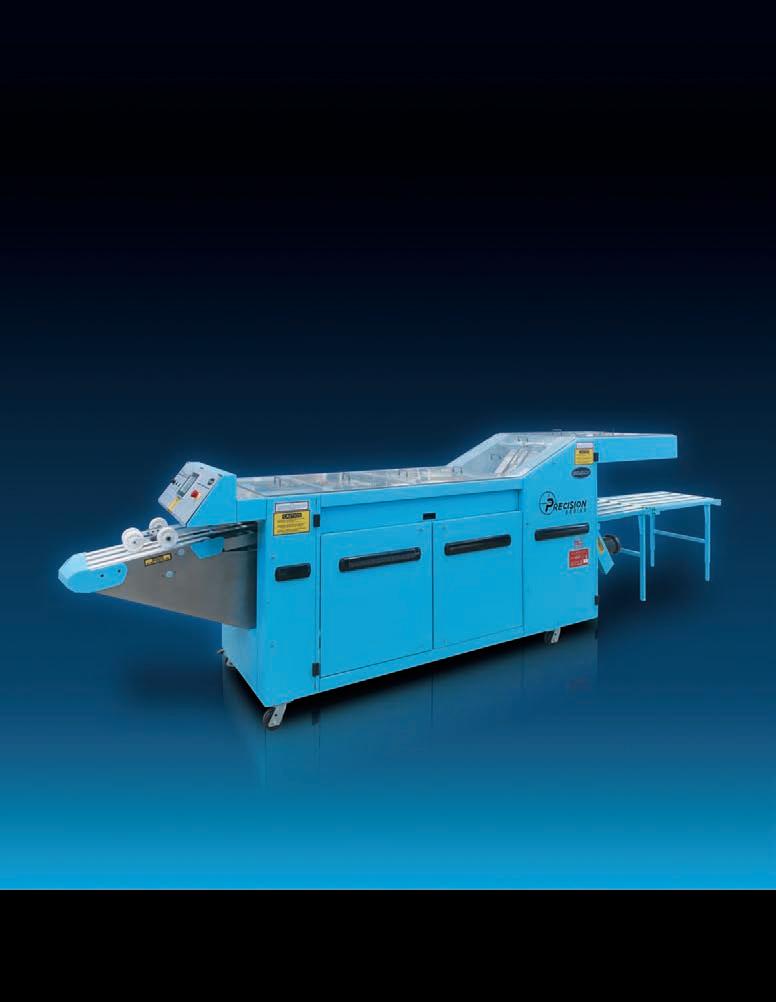
The best has just gotten better! The Precision Series line expands and enhances the capabilities of this proven platform See us at Clean 2013: Booth #3702 Proudly Manufactured in the U.S.A. | ISO 9001 Certified gabraun.com/smallpiecefolding SMALL PIECE FOLDING INTRODUCES PRECISION SERIES FOLDER NEW THE LEADER IN Proven, Solid, Durable 800.432.7286 x 217 SmallPiece ALN JR Ad_Layout 1 2/13/13 9:01 AM Page 1 ALN_Jr Page.indd 1 2/13/13 9:20 AM
com.
continued from Page 4
One of the main challenges in purchasing new textiles is taking extra care to know exactly what it is you are being sold.
We are in a time of exciting new textiles and innovative, high-performance, high-quality fabrics, yet we are also in an era of low-cost outsourcing from places around the globe offering seemingly value-priced purchasing options that sometimes don’t
perform to our standards and expectations.
Processing of “commercial level” quality textiles or an innovative new fabric is usually easy enough to accomplish. As always, make your purchasing considerations based on colors, sizes and
fabric types. When placing your first order with a vendor, make sure to ask for a printed copy of the manufacturer’s laundering and processing recommendations.
Get all the info that’s available and then the correct laundering and finishing of these textiles becomes a matter of putting the manufacturer’s recommendations together with you and your trusted vendor’s experience to arrive at the correct processing routines. When handled properly, the mid- to higher-quality imported or domestic textile will stay in usable condition longer and will offer a good return on investment
through its extended service life.
If you are buying large quantities of any textiles, or if you’re buying something new to your operation (or even trying to get a bargain), do two things to save yourself some potential grief. First, ask your distributor salesperson to let you speak to some customers who have purchased the same goods to get direct feedback on performance. Secondly, have an adequate quantity of sample products sent in advance to test-wash and finish to get a leg up on what to expect.
As far as how much linen inventory is enough, answers vary

for each operation’s actual needs. One thing is sure: the same budgetary constraints we suffer today, the ones that send people bargain shopping, also tend to lead to inadequate par levels. This lack of linen—I call it “LoL”—can often leave a trail of major inefficiencies cascading down the line. Both the planned and unplanned consequences of LoL are no laughing matter when they start costing you money. It starts the clock ticking on an investment that will surely wear out before it should. It’s just like wearing the same pair of shoes every day instead of alternating among a few pairs throughout the week. At the end of some shortened period of time, you will be reordering new replacement linens and those pesky invoices will start to play tag with accounts payable.
MAY
Feature: Clean 2013 Show Guide Complete listings of the exhibitors, educational sessions and events that make Clean the industry’s can’t-miss show. Plus, our famous show floor map!
Editorial Submission Deadline — March 15
JUNE
Feature: Running the Route Route operations is an important function of any successful rental or commercial laundry and requires constant attention; NOLA Know-How Here’s what to see and do while in New Orleans for the Clean Show.
E ditorial Submission Deadline — April 15
JULY
Feature: Textile Selection Not all textiles are created equal, so we seek out expert advice on how to go about choosing the best-quality, longest-lasting linens; Clean Show Report Part I The big news from the just-completed event!
Editorial Submission Deadline — May 15

AUGUST
Feature: Eye on Efficiency Finding ways to conserve valuable resources is a never-ending quest for launderers; Clean Show Report Part II An expanded look at the announcements, introductions and ideas that made Clean ’13 a success.
E ditorial Submission Deadline — June 15
SEPTEMBER
Feature: Distributors Directory Our audience relies year-round on this annual directory issue listing distributors of laundry equipment, textiles, chemicals and other supplies. You’ll want to hang onto this issue for future reference!
E ditorial Submission Deadline — July 15
LoL also puts stress on everyone involved in your laundry or the laundry that provides your linen service. This can lead to processing shortcuts that can affect quality in laundering and finishing because nobody can take the time to do it right. Today’s soil is also today’s or tomorrow’s clean linens, so just get out of the way! We see this “hurry and scurry” approach played out over and over in many laundry operations.
LoL flies in the face of “green” initiatives. It’s carbon-intensive to burn all of that diesel fuel the linen service uses to drive back and forth seven days a week with the linen you absolutely have to have now. By adding par, you solve this, and may even put yourself in a better negotiating position when the next service contract is written. Your provider now only has to come rolling out to see your loading dock four times a week, which is a win-win situation for all except the oil companies.
Finally, it’s the unplanned consequences always lurking around that can and will affect you in notso-pleasant ways. You have probably experienced some of these seat-clenching moments already.
Do you agree that laundry equipment never breaks, the delivery trucks always start in winter, it never snows, and everyone else’s workers always show up in force when needed just like yours do? If you don’t, then you’re a realist, and having that one or two extra par on hand in case of emergency is your buffer when reality hits. This option sure beats watching your employees stand around waiting for miracle linen to appear. Besides, the guests usually don’t stay humorous for long without clean sheets.
Having more par available keeps the goods looking better and lasting longer. More par means less stress and more time to get things done right. More par is more green. More par gives you breathing room when the best plans go awry. And we can all agree that having one less thing to worry about is always a good
16 APRIL 2013 | AmeRIcAn LAundRy news www.AmericanLaundryNews.com
thing. ALN experts continued from Page 6 IN EVERY ISSUE: • Tools of the Trade • Wire Survey Results • Career Track • Trade Ticker • Panel of Experts • Upcoming Events • Source Directory • Classifieds Want to send a press release or submit a story? Contact Bruce Beggs, editorial director, today! Phone: 312-361-1683 E-mail: bbeggs@americantrademagazines.com ...and much more! DON’T MISS OUT HERE’S WHAT’S COMING UP IN AMERICAN LAUNDRY NEWS...
Visit us at the Clean Show in New Orleans June 20-22 Booth 4171 0413aln_EditCal_jrpage.indd 1 3/25/13 3:42 PM
chemicals supply Philip L. Bodner Metro-Chem Kearny, N.J.
Grawe joins Gurtler Industries’ Corporate Accounts team
SOUTH HOLLAND, Ill. — Tom Grawe has joined Gurtler Industries as the company’s newest regional vice president of corporate accounts.
Grawe, who resides just outside the Denver area, brings more than 20 years of industry experience to the commercial laundry chemicals manufacturer.
Penn Emblem promotes Hathaway to creative manager
PHILADELPHIA — Penn Emblem Co. recently promoted Liz Hathaway to creative manager of its Marketing Department.
Track Career

them how Talley can help.”
Centerstone Linen Services names new chief financial officer
NEW YORK — The board of directors for Centerstone Linen




Services recently named Peter A. Grandits Jr. executive vice president and chief financial officer.

Centerstone Linen Services operates Atlas Healthcare Linen Services and Alliance Laundry and Textile Services.















“We are extremely fortunate to

bring an executive with Pete’s depth of financial experience and talent to our team,” says John Giardino, Centerstone Linen’s chairman and CEO. “Pete’s strong financial background and leadership experience is an important asset to us as we continue to grow.”
Since 1996, Grandits had served




as vice president and chief financial officer of AP Wagner, a North American distributor of component parts and accessories. Prior to that, he was president and chief operating officer of IPAC.








Grandits, who is a CPA, has a bachelor’s degree in business administration from the University of Notre Dame. ALN

Hathaway
She is responsible for maintaining the integrity of Penn Emblem’s brand and ensuring that all visual aspects and strategic objectives of Penn’s Marketing Department are communicated effectively.
She formerly served as director of communications and graphic design for a national non-profit organization.

Talley Machinery names Ross national sales manager


GREENSBORO, N.C. — Talley Machinery Corp., builder and rebuilder of laundry machinery, has appointed Danny Ross its national sales manager.
Ross brings more than 40 years of experience, having started as a mechanic and later becoming an engineeering executive in laundries. He then joined Tingue, Brown & Co., Talley’s parent firm, whose customers he assisted for more than 30 years as a sales representative covering Texas, Oklahoma, Arkansas and Missouri.
“In these difficult economic times, rebuilding and upgrading ironers is an excellent way for laundries to save money and increase customer satisfaction,” says Ross. “My sales force and I will show

www.AmericanLaundryNews.com AmericAn LAundry news | AP ri L 2013 17
“We’re confident that Danny will bring to us his long and successful laundry experience, and will employ it in effectively serving Talley customers and prospects.”
Grandits
Ross
ALN_Jr Page.indd 1 2/27/13 3:03 PM
Grawe
Alliance Laundry Systems recognized for market leadership
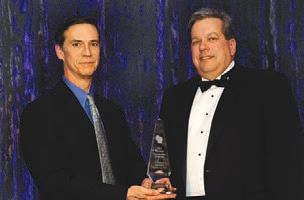
MILWAUKEE — Alliance Laundry Systems, manufacturers of commercial laundry equipment under the Huebsch, IPSO, Speed Queen and UniMac brands, recently received a special award for “Market Leadership” as part of the Wisconsin Manufacturer of the Year program recognizing outstanding achievements in manufacturing in 2012.
Alliance was one of eight companies honored out of 58 nominated in the statewide awards program.
In addition to the “Market Leadership” award, the Wisconsin Manufacturer of the Year program handed out four grand awards to companies categorized by the number of employees – small, medium, large and mega. Alliance, nominated for the first time in 2012, competed in but did not win the Mega category.
Nominees were judged in such areas as financial growth or consistency, technological advances, product development, environmental solutions and sustainability, operational excellence/continuous improvement, commitment to employees, and effective research and development.
The awards program is co-sponsored by Baker Tilly, one of America’s largest accounting and advisory firms; Michael Best & Friedrich LLP, a leading Midwest-based law firm; and Wisconsin Manufacturers & Commerce, Wisconsin’s largest business association.
Yamamoto Manufacturing opens U.S. subsidiary company
KANSAS CITY, Mo. — Yamamoto Manufacturing Co. Ltd., which has been manufacturing precision laundry machinery since 1947, has opened a U.S. subsidiary company, Yamamoto Japan Inc., the company reports.
Yamamoto manufactures equipment that reduces operating time and saves labor, and includes washer-extractors and folders/stackers, it adds.


The company will be exhibiting at the Clean Show this June in New Orleans.
PARKER BOILER CO.

SIMPLE, RELIABLE, EFFICIENT
NO BLOWER OR ELECTRICAL COST FOR FAN
Reduces electrical costs on parasitic energy losses of fan, saves $, plus this eliminates more things that can go wrong such as air prover switch, blower motor starter or overloads, upgraded flame safeguard system for air change requirements and interlocking
NO POST PURGE OR PRE-PURGE
Most sealed combustion boilers with fan require four air changes after burner shuts off and before it can turn back on(typically 60 seconds total).
Parker Boiler is on from call for heat in less than 10 seconds
QUIET
You won’t even know it is on.
NON PROPRIETARY CONTROLS
Buy our controls from any supply house or wholesaler on the planet.
REPAIRABLE
Technically, it can be the last boiler you ever have to buy, as every single component is replaceable at a fraction of the cost of a new boiler.
FLUE CLEANING
No Annual requirements to clean boiler flue passages.
HEAVY DUTY INDUSTRIAL GRADE
Call us today and ask us how you can save money by using our boilers. 323-727-9800

www.parkerboiler.com
In Memoriam: Ted E. Kruger, textile services executive recruiter
FALLBROOK, Calif. — Theodore E. “Ted” Kruger, a longtime executive recruiter for the textile services industry, died March 18 at his home after a two-year battle with cancer. He was 77.

Kruger had announced just a few days earlier that he was closing his Ted E. Kruger Recruiting business and leaving the industry due to his health.
He was preceded in death by his wife, Markana, in 2007.
Surviving him are four sons, Chris Kruger, Matt Kruger, David Hanks and Ted Holcolbme; two daughters, Judith Reynolds and Didi Hagman; 13 grandchildren; and one great-grandchild.
Kruger
Memorial donations may be made to the St. Jude’s Children’s Research Hospital – Danny Thomas Foundation.
Maytag Commercial Laundry honors standout distributor performances
ST. JOSEPH, Mich. — Maytag® Commercial Laundry recently recognized 2012 standout distributor performances at its 55th Annual Meeting in Amelia Island, Fla. The following companies excelled, Maytag says, in the on-premises, coin
ALN_Jr_half.indd 1 3/18/13 11:46 AM
5930 Bandini Boulevard ● Los Angeles CA 90040 Phone (323) 727-9800 ● Fax (323)
722-2848
Digest_page.indd 1 3/6/13 6:26 PM ALN_Jr_half.indd 1 3/22/13 4:55 PM 18 APRIL 2013 | AmeRIcAn LAundRy news www.AmericanLaundryNews.com
Bruce Rounds (left), Alliance Laundry Systems chief financial officer, and Jay McDonald, vice president of business development, accept the Wisconsin Manufacturer of the Year award for Market Leadership on behalf of their company.
laundry, and multi-housing markets:

• Fred Maytag Award — Receiving Maytag® Commercial Laundry’s most prestigious award was Intertrade Chile S.A., Santiago, Chile. The award is presented to the customer that best emulates the founder’s marketing philosophy and supports Maytag® Commercial Laundry brand with professionalism and integrity.
• On-Premises Laundry (OPL) Excellence Award — Pierce Commercial Laundry, Mandeville, La., was recognized for effective and efficient service to OPL market customers.
• Maytag® Red Carpet Service® Excellence Award — BDS Laundry Systems, St. Paul, Minn., was recognized as the distributor that best exemplifies excellent service and dependability.

• Top Quota Award — Tri-State Technical Services/TLC Equipment Co., Waycross, Ga., was honored for exceeding its annual sales target by the highest percentage this year.
• Maytag® Marketing Excellence Award — Equipment Marketers, Cherry Hill, N.J., was honored for its development and implementation of marketing and sales programs and overall support of Maytag® Commercial Laundry offerings.
• Maytag® Energy Advantage™ Excellence Award — Hercules, Hicksville, N.Y., was honored for exceptional promotion and marketing of energy and water efficiency.
• Shaping the Future Award — Mac-Gray Corp., Waltham, Mass., was recognized for its history of innovation and longtime leadership in the industry.

• Multi-Housing Excellence Award — Coinamatic Canada, Mississauga, Ont., was honored for its outstanding service to the multi-housing market.
• Outstanding Achievement Award — Richard Jay Laundry Equipment, Adelaide, Australia, was recognized for its “unmatched sales performance and use of marketing and social media.”
In Memoriam: Maurice ‘Jerry’ Moore, West Mich. Shared Hospital Laundry

CONKLIN, Mich. — American Laundry News has learned of the recent death of Maurice “Jerry” Moore, 81, the first executive director at West Michigan Shared Hospital Laundry (WMSHL), Grand Rapids, Mich. He died Feb. 21 after a brief illness.
Duane Houvener, the current WMSHL director, wrote in a recent International Association for Healthcare Textile Management e-newsletter that Moore was hired before plans for the laundry were finalized and then oversaw the final plans and equipment requisition, plus set up and trained a new staff of laundry workers. Moore retired from WMSHL in 1996 after 23 years on the job.
Surviving Moore are his wife, Patricia; children, Paul, Karen, Dave and Linda; a brother, James; and 12 grandchildren.
Memorial contributions may be made to the St. Francis Xavier Catholic Church, Perpetual Care, in Conklin.
Scripps Health extends laundry/linen contract with Emerald Textiles
SAN DIEGO — Scripps Health has signed a multi-year contract extension to retain Emerald Textiles as the health system’s exclusive linen and laundry services provider through 2017, Emerald reports.
“We are very proud of our relationship with Scripps Health, and the opportunity to help them achieve higher patient satisfaction and operational efficiencies,” says Tom Gildred, founder and CEO of Emerald Textiles. ALN
Calendar

April
8-12 Association for Linen Management American Laundry & Linen College Eastern Kentucky University, Richmond, Ky. Info: 800-669-0863
14-19 Textile Rental Services Association Production Management Institute Doubletree Dallas near the Galleria, Info: 703-519-0029, ext. 108
15-17 International Association for Healthcare Textile Management 2013 Spring Education Conference Sands Casino Resort Bethelem Bethlehem, Pa. Info: iahtm.com/events
25 Association for Linen Management Manager Series Webinar: Reusable Healthcare Textiles— A Responsible Choice Info: 800-669-0863
May
1 Wisconsin Association of Textile Services Annual Brewers Ballgame Outing Miller Park, Milwaukee Info: 414-529-4702
18-21 National Restaurant Association
NRA Show 2013: The International Foodservice Marketplace McCormick Place, Chicago Info: restaurant.org/show
Info: 703-519-0029, ext. 108
22 Textile Rental Services Association Safety Summit Hilton Indianapolis Info: 703-519-0029, ext. 108
23 Association for Linen Management Manager Series Webinar: Maintenance and Utilization Practices for Patient Safety Devices Info: 800-669-0863
23 Textile Rental Services Association Executive Roundtable — National Companies Hilton Indianapolis Info: 703-519-0029, ext. 108

30 Association for Linen Management Technician Series Webinar: The Clean Facility Info: 800-669-0863
June
20-22 Clean Show
World Educational Congress for Laundering and Drycleaning Morial Convention Center, New Orleans Info: cleanshow.com ALN
www.AmericanLaundryNews.com
1/3 page ad for Laundry News 31 Portland Road West Conshohocken PA 19428 USA 800-222-3611 610-941-4900 • Fax: 610-941-9191 info@paratherm.com www.paratherm.com Did you know that 90% of heat transfer fluid breakdowns are caused by equipment issues? Make your system more profitable, more sustainable. Conduct a Paratherm Fluid Analysis to check on the hot oil in your system.It will help to eliminate unplanned shutdowns and loss of production. ALN_3rd Page.indd 1 3/7/13 12:11 PM
Moore
WASHEX PARTS
Hard-to-find Washex parts, on-site rebuilding, tech support. LAUNDRY PARTS CENTER 800-352-4492 Fax: 305-827-3991

PARTS, PARTS, PARTS
Huge stock of parts for most laundry equipment & boilers. Also traps, valves and lubricants. Overnight delivery. Our 53rd year. Steiner-Atlantic, 800-333-8883 Fax: 305-751-8390 www.steineratlantic.com
Hotelier Linen Services in Miami is currently looking for an experienced chief engineer in a three tunnel facility. If you are interested please email your resume to hr@hotelierlinen.com. Competitive compensation package.

Hotelier Linen Services in Miami is currently looking for experienced maintenance mechanics. Send your resume to hr@hotelierlinen.com . Competitive compensation package.
Inside Sales Representative Ellis Corporation is looking for an individual to join our Customer Support driven team to support our growing business and new product lines. Duties include; support our outside sales personnel, manage incoming quote requests and outgoing proposals, manage bid requests and process, contact customers for sales follow up, develop/ assist with layouts, assist with various tradeshows and marketing initiatives including brochures and presentations, and maintain website. Qualifications; industry/laundry equipment knowledge, proficient in Excel/ PowerPoint, Auto CAD a plus. Please fax resumes in confidence to (630) 7735902 or email cmundt@elliscorp.com.
MOVE SOUTH AND GET OUT OF THE COLD!!!!!
Large UniMac Commercial laundry equipment distributor is looking for a strong parts professional to join our team in Marietta, GA (Atlanta). Experience in commercial laundry parts - primarily UniMac - is required, although we service all major brands of equipment. We would love to talk with you about your experience and goals for the future. We offer a great benefit package and a salary dependent upon your experience. Excellent computer and customer service skills are a must as well as an understanding of what is required to get customers and keep them for life. Don’t miss this opportunity to join this first class company who focuses on the future. We love our customers and our employees and look forward to hearing from you soon. Send resume to Cindy Richie at cindy@selaundry.com

20 APRIL 2013 | AmeRIcAn LAundRy news www.AmericanLaundryNews.com www.cornerstonemachinery.com Quality used and reconditioned equipment Rigging and relocation services Satisfaction guaranteed Complete inventory on our website Please call or email John or Eric john@cornerstonemachinery.com eric@cornerstonemachinery.com 877-773-1850
classified Advertising www.directmachinery.com For pricing, please call Ron Hirsch (516) 938-4300 Office • (516) 315-7426 50 Commerce Place • Hicksville, NY 11801 Fax (516) 932-8095 QTY DESCRIPTION Excellent Preowned equiPment WILL SELL QUICKLY 1 Milnor 30022V6J 60lb Washer with Steam Injection 4 Milnor 120lb Steam Dryers 2006 1 Chicago Skyline S-10 Two Lane 1 Shaper Steam 12” Ironer by 120 1 Milnor 110lb Soft Mount 2000 1 Air Chicago XL Blanket Folder/Small Piece Folder 1 Chicago Comet Ironer 1 Champ Ironer - Gas 1 Wascomat Soft Mount 30lb Washer 1 Wascomat Soft Mount 50lb Washer 2 Milnor 42026V6J 140lb Washer 2006 with Steam 1 Cissell 150lb Gas Fired Dryer Pictures are on Website DIRECT MACHINERY SALES CORP. The Griffin Group, Inc. “Recruitment Specialist” All positions available in the Rental Uniform/Textile Industry Call Deana Griffin 888-235-2365 www.thegriffingroup.cc deana@thegriffingroup.cc ® PARts foR sALe PosItIons AvAILAbLe equIPment foR sALe equIPment foR sALe AMKO AMERICA, INC. Remanufactured Finishing Equipment Delta Ironers, Omega Folders & Towel Folders (1 year parts warranty) Like new at half the cost. PARTS, IRONER SUPPLIES & NEW EQUIPMENT ALSO AVAILABLE Contact: (561) 863-9696 jurgenb@bellsouth.net Call Craig Lloyd toll free at (877) CWL-LOYD between 9 a.m. – 9 p.m. EST. Please visit www.laundrycareers.com to review current industrial/institutional laundry management openings. ADVANCE YOUR CAREER PosItIons AvAILAbLe www.ineedjpequipment.com 1-800-925-3236 J.P. EQUIPMENT INC. We will buy/sell/trade EQUIPMENT FOR SALE: (1) 2005 Chicago Mini (1) 2005 6 MOD 150lb Milnor Tunnel w/Press (1) Braun 200lb OP rebuilt (1) Braun 400lb OP rebuilt (1) 1994 Braun 2 way Tilt Pass-Through Gas Dryer w/Built-in Lint Trap (1) 2003 Kannegiesser 12 Mod Tunnel Model (1) 2005 Kannegiesser Feeder (1) 1994 8-Mod Milnor Tunnel System w/2-Stage Press and 3 220lb Dryers (1) 2004 240 lb. Washex - Ready to Ship (1) Chicago Imperial 232 Steam Ironer (1) 2005 Chicago FasTrack 2-Station (2) 2x32 D’Hooge Thermal Ironers (1) 1989 Milnor 8 Mod Tunnel w/Mentor Controller (1) 1987 Milnor 7 MOD Tunnel Modules Available for Rebuild at $15,000 (1) 1987 Milnor 8 Pocket Load Conveyor (1) 2004 Milnor 2 Cake Shuttle Recently RefuRbished: (2) 1999 95 lb. Gas Dryer - Rebuilt Ready to Ship (2) Milnor 110 OP Soft Mount (1) 400lb Challenge Dryer We want your used equipment, please call or e-mail. “Why buy new when you can trust our used” Stanco Industries, Inc. extile trades since 1970 stanco2626@aol.com 260-420-1232 Fax Visit Our Website: www.stancoind.com -------------- Equipment For Sale -------------2-SUPER SYLON 8-Roll. All Options 2004 Braun 4-Station Spreader 2002 Jensen Variant Spreader 2003 Chicago Edge Spreader 2004 Chicago 32” Thermal Ironer 1-Roll 1995 Chicago 36” Steam Ironer 1-roll 2000 Braun Omega 2 Lane Folder/Stkr 1994 BB&D 5-Lane with 1/2 Fold option 2000 Challenge 600# Gas 2-Door 1999 Chicago Air Folder (4 available) 1996 MILNOR 10 Module CBW 2000 UniMac 85# w/e 1992 Washex 250# Open Pocket ------- BOILERS • WATER HEATERS • CARTS Stanco Industries, Inc. 800-932-3769 Serving The Industrial Trades Since 1970 equIPment wAnted WE BUY & SELL ALL TYPES OF INDUSTRIAL EQUIPMENT NATIONWIDE • LAUNDRY EQUIPMENT • HIGH PRESSURE STEAM BOILERS • WATER COOLED AND AIR COOLED CHILLERS • STAND BY GENERATORS ALLSTATE MACHINERY CO. LAKELAND, FLORIDA allstatemachinery@yahoo.com PHONE: 407-674-8102 CELL: 863-224-8488 Place your ad online: www.AmericanLaundrynews.com MISSED OUR DEADLINE? PART-TIME/FT SALES REPRESENTATIVE Excellent commissions, Importer of Institutional Linen goods desires salesperson with textile sales experience to textile rental, commercial, healthcare and hospitality laundries. Call Sam 800-693-5426 or e-mail: skahen@royalblueintl.com
dIstRIbutoR offeRIngs
Wash - McClure Industries, Inc. 9051 SE 55th Ave., Portland, OR 97206 800-752-2821 www.mcclureindustries.com, info@mcclureindustries.com





















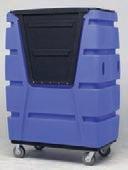


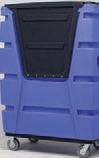



www.AmericanLaundryNews.com AMERICAN LAUNDRY NEWS | APRIL 2013 21 Source Directory A convenient guide to sources of products and services APPAREL FINISHING CARTS, TRUCKS & BASKETS Energenics Corp., Kartwasher 1470 Don St., Naples, FL 34104 800-944-1711 www.energenics.com CHEMICALS/INJECTOR SYSTEMS Gurtler Industries, Inc. 15475 S. LaSalle St., South Holland, IL 60473 800-638-7300, Fax: 708-331-1210 www.gurtler.com Pellerin Milnor Corp. P.O. Box 400, Kenner, LA 70063 504-467-9591, Fax: 504-468-3094 www.milnor.com DRYERS – 100 POUNDS OR MORE Pack 25% More On Same Size Cart Call 800.829.4535 or visit MODLaundry.com for a FREE QUOTE. Premium Quality Casters Included! 72S Meese Orbitron Dunne Co. Stronger design for big payloads, yet lighter tare weight for easy handling. The Best of Both Worlds SPRING LIFT PLATFORM TRUCK • Spring lift platform, brings the material up to the worker for efficient and safe operation. • ModelsM2914, M2820 and M2920 are designed to handle smaller linens such as washcloths, towels and pillow cases. l-800-275-2436 RepsAvailable8 AM-8 PM (EST) maxi-movers.com Fax: 631-661-8209 •Email:sales@maxi-movers.com Th C t G Chm #9463 Spring Lift 3" ALN Class. 3/5/13 1:53 P Source Directory listings in American Laundry News are sold on an annual basis at the following rates: All Major Credit Cards Accepted 2013 Listings Regular Boldface All Caps All Caps, Boldface Four Line Listing per Year $790 $990 $990 $1,050 Display and additional line rates available upon request CART-WASHING SYSTEMS Sani Trux - McClure Industries, Inc. 9051 SE 55th Ave., Portland, OR 97206 800-752-2821 www.mcclureindustries.com, info@mcclureindustries.com M.I.T. POLY-CART 211 CENTRAL PARK WEST, NEW YORK, NY 10024 800-234-7659, FAX: 212-721-9022 WWW.MITPOLYCART.COM CARTS, TRUCKS & BASKETS CARTS, TRUCKS & BASKETS Pellerin Milnor Corp. P.O. Box 400, Kenner, LA 70063 504-467-9591, Fax: 504-468-3094 www.milnor.com DRYERS – 100 POUNDS OR LESS Rotational Molding, Repair, Recycling...Your Complete Plastic Solution 11744 Blue Bell Rd. Elberfeld IN 47613 800-304-4600 www.fibertechinc.net Diversified Plastics, Inc. 1309 Highway 917 West, Latta, SC 29565 800-768-7636, www.dpirotocarts.com E-mail: sales@dpirotocarts.com, Fax: 843-752-7798
Sani



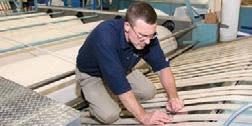












22 APRIL 2013 | AmeRIcAn LAundRy news www.AmericanLaundryNews.com Source Directory listings in American Laundry News are sold on an annual basis at the following rates: All Major Credit Cards Accepted 2013 Listings Regular Boldface All Caps All Caps, Boldface Four Line Listing per Year $790 $990 $990 $1,050 Display and additional line rates available upon request source directory A convenient guide to sources of products and services FLATwORK IROneRs The latest news, straight to your inbox, 2X a week Setting the Standard in Lint Filters for 25 Years • Hotel • OPL • Coin Op • Dry Cleaners • Industrial • Commercial • Cruise Industry Dry or Wet Style Filters to Work with “ALL” Dryer Sizes or Multiple Situations, Fiberglass or Stainless and Custom for Unique Situations! All manufacturing done on premise 800-826-1245 www.cleancyclesystems.com • ccsystems@tqind.com C & W EQUIPMENT (800) 443-3573 FLATWORK IRONER SPECIALISTS REMANUFACTURED IRONERS: Super Sylon Sylon Hypro’s Super Pro Jensen SS700 SS800 Ultima Lavatec UPGRADE KITS: Chain Drive Conversion Vacuum Systems Herringbone Conversion Canopies Inverters Side Covers Roll Springs Jensen Drives SUPPLIES: Aprons Pads Covers Belts Waxes Cleaners PARTS/REPAIRS: All Brands New/Refurbished/Hard to Find PARTs 800.829.3864 www.Tingue.com KnowhowInAction TALLEY M ACH INERY YourTinguerepisafullytrainedmasteroffinishingequipment operation,maintenanceandinstallation.Callfor: •Pads,covers,belts,waxes,tapesandmore •Carts,trucks,basketsandbags •Parts,rebuildsandrepairs Tingue_Knowhow_3x3_ads:Layout 1 2/12/10 12:05 PM Page 1 FLATwORK suPPORT www.olekbelts.com 1-800-869-2683 Free www.olekbelts.com We’re your flatwork finishing and conveying O.E.M. Belt Match H.Q. Get the real thing for a Lot less $$$. O.E.M. Needlefelt Ironer Pads too! Better Belts, Better Prices, Better Service Visit our Website or Call 1-800-869-2683 For free, no obligation, price quotations and for your Free copy of our Product Catalog with over 40 samples. Ironer pads, covers, aprons, guide tapes, carts, slings, cleaners, waxes & more… LInT cOLLecTORs & FILTeRs AmericanLaundryNews.com More than 5,250 unique visitors monthly! H Our In-Line Lint Filter mounts inside, saves space! H Fiberglass Wet Filters - 6,000 to 40,000 cfm H Fiberglass or Stainless Steel Dry Filters ENERGENICS CORPORATION Talk with our Design and Engineering Staff about your needs. Hundreds Sold Annually. 800-944-1711 www.energenics.com Get the info you need online... AmericanLaundryNews.com 0113aln_aln.com_class.indd 1 PARTs COMMITTED TO EXCELLENCE
Pellerin Milnor Corp. P.O. Box 400, Kenner, LA 70063 504-467-9591, Fax: 504-468-3094 www.milnor.com
Felins
TyinG mAcHines
Pellerin Milnor Corp. P.O. Box 400, Kenner, LA 70063 504-467-9591, Fax: 504-468-3094 www.milnor.com
Pellerin Milnor Corp.
P.O. Box 400, Kenner, LA 70063 504-467-9591, Fax: 504-468-3094 www.milnor.com
Pellerin Milnor Corp.

P.O. Box 400, Kenner, LA 70063 504-467-9591, Fax: 504-468-3094 www.milnor.com


www.AmericanLaundryNews.com AmericAn LAundry news | AP ri L 2013 23
– 100 POunds Or Less
– cOnTinuOus BATcH
wAsHer-eXTrAcTOr
wAsHers
– 100 POunds Or mOre
UsA, inc. Milwaukee, Wi Tying, Banding & Automated shrink Wrap systems 800-843-5667 sales@felins.com For more information visit us at www.felins.com wAsHer-eXTrAcTOr
Presses – eXTrAcTiOn source directory A convenient guide to sources of products and services PLAnT desiGn & insTALLATiOn Source Directory listings in American Laundry News are sold on an annual basis at the following rates: All Major Credit Cards Accepted 2013 Listings Regular Boldface All Caps All Caps, Boldface Four Line Listing per Year $790 $990 $990 $1,050 Display and additional line rates available upon request contact us to book your ad today! dfeinstein@americantrademagazines.com 312-361-1682 rAGs wAnTed FOr cAsH Or TrAde American Dawn www.americandawn.com 5 Chicago Dryer Co. www.chidry.com 17 Clean Show 2013 www.cleanshow.com 9 Consolidated Laundry Machinery www.clmco.com 14 Cornerstone Equipment & Rigging www.cornerstonemachinery.com 20 Direct Machinery Sales Corp. www.directmachinery.com 20 G.A. Braun www.gabraun.com 15 The Griffin Group, Inc. www.thegriffingroup.cc 20 IPSO www.ipso.com 11 J.P. Equipment www.ineedjpequipment.com 20
USA
13
20 Lavatec Laundry Technology
24 LG
3 NATCO
19
Corporation
19 Parker Boiler
18 Stanco Industries
20 TRSA
12 UniMac
7 Yamamoto
18 company web site Page company web site Page INDEX OF ADVERTISERS www. .com
Kannegiesser
www.kannegiesser.com
LaundryCareers.com www.laundrycareers.com
www.lavatec-laundry.com
www.lgcommerciallaundry.com
www.nationalcombustion.com
Paratherm
www.paratherm.com/laundry
www.parkerboiler.com
www.stancoind.com
www.trsa.org
www.unimac.com
www.yamamotolaundry.com




























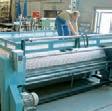






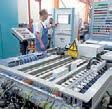































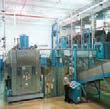

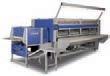














Complete stock of "OEM" parts available for immediate shipment Call on factory technicians for technical support (also on-site) Buy only genuine OEM replacement parts to protect your investment Original Equipment. Manufacturer Support. Lavatec Laundry Technology Inc. (LLT) can offer you the comlete line of "OEM" parts for your Lavatec products from a single source. Furthermore, no one else can offer you original spare parts "Made in the Factory". Parts are dispatched from our Inventory in Beacon Falls, CT on the same day orders are received. Our local service technicians can support you via phone and are available for on-site service at any time. Phone (203) 632-8777 Fax (203) 632 8775 www.lavatec-laundry.com A complete range of equipment for your textile processing facility Facility Design – Systems – Machines – Components – Parts – Services World Educational Congress for Laundering and Drycleaning * Please Note: it is not mandatory to display this text. If elected to appear, it should appear Visit LLT at Booth #3221
