AmeriPride Services acquires Plus Linen and Uniform Services
MINNEAPOLIS — AmeriPride Services, which supplies linen and uniform rental services in North America, has acquired PLUS Linen and Uniform Services, headquartered in Canton, N.C. The Canton production facility and its service centers in Charlotte and Greenville will now operate as a wholly owned and fully functional AmeriPride branch.
“Plus is a great fit for our company,” says AmeriPride President/CEO Bill Evans. “This acquisition expands our geographic territory in the area and supports our efforts to grow profitably. Our work over the past few years has established a solid foundation for growth, and that includes strategic acquisitions in our key markets.”
AmeriPride does not plan to make any major changes to PLUS in the foreseeable future and is keeping the branch open at full capacity under the “PLUS” name. Most employees and management have agreed to stay on board, including Kevin Lowery, who becomes the branch’s general manager.
PLUS is a fourth-generation family business that was founded in the 1920s by M.C. Sprinkle and owned and operated by the family for more than 90 years. The family considered several potential buyers before selecting AmeriPride.
“The similarities between our two companies and the personal connections we made with their management team sealed the deal for us,” Lowery says. ALN
Faultless Healthcare Linen strengthens production capacity through new facility
By Carlo Calma
ST. LOUIS — Companies face various challenges in a given year. But for Faultless Healthcare Linen, a Kansas City, Mo.-based healthcare textile laundry company, the challenge of taking on more business was considered a “good problem.”
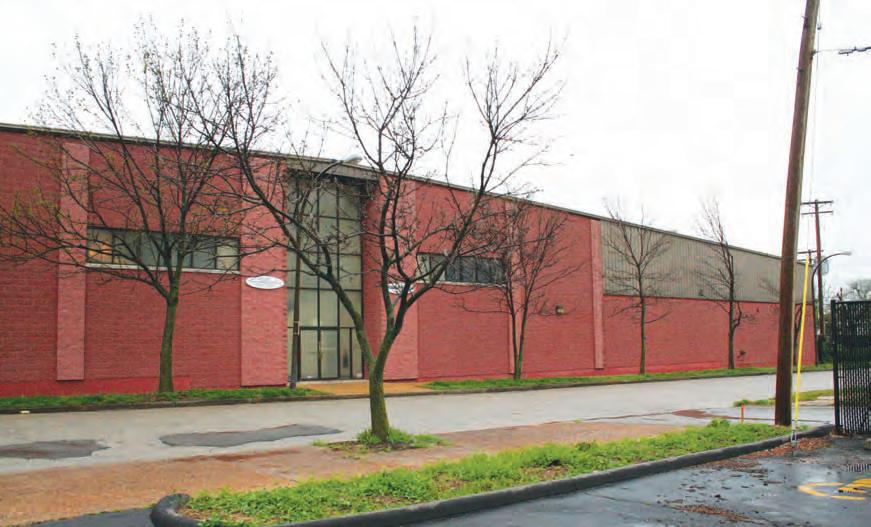
So much so that the company’s “good problem” led to the opening of a new $12 million, 103,000-square-foot facility in St. Louis.
“We were awarded a significant amount of business from the Barnes-Jewish Christian (BJC) Healthcare System in St. Louis, and we needed to create more capacity to accommodate that business and to be able to continue to grow,” explains Faultless CEO Susan Witcher.
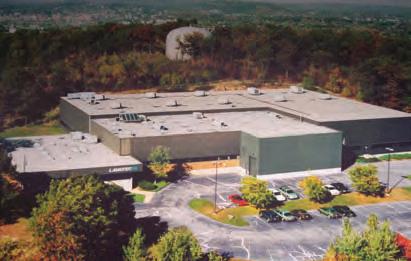
Located at 1615 N. 25th Street, Faultless Linen’s newest facility opened its doors last summer, and has enabled the company to process 17 million pounds of healthcare textiles annually to date,
serving 470 customer accounts, the company says.
The company reached out to Gerard O’Neill of American Laundry Systems to design the plant, after having worked with O’Neill on a previous facility.

“Having worked with Gerard

on our last plant in 2005, we found him to be an excellent resource,” says Witcher. “His involvement facilitates an efficient process through every phase of the project, from plant design, RFPs and vendor selection, infrastructure, installation, through start-up.”
“The two primary focal points in the design were energy efficiency and production efficiency,” she adds.
Though the new facility has boosted the company’s production
reversing the disposables trend
fessionals view reusable textiles.
By NaNCy JENkiNs
MISSION, Kan. — Since the 1960s, when disposable products first appeared in hospitals, the textile services industry has fought a largely losing battle against disposables for market share.
But the current focus on sustainability, combined with education, is starting to make a difference in how healthcare pro-
The American Reusable Textile Association (ARTA) recently conducted its second webinar for Practice Greenhealth—a nonprofit association dedicated to helping hospitals operate in more sustainable ways—on the benefits of reusable surgical textiles. The information from that webinar and other ARTA resources is presented here.
Making Case for Reusables
According to a survey of its 114 member hospitals, Practice Greenhealth finds that U.S. hos-


pital patients generate about 33.8 pounds of waste each day. As of 2008, there were 951,045 staffed hospital beds in the States, according to the American Hospital Association. Therefore, it can conservatively be calculated that U.S. hospitals produce nearly 6 million tons of garbage each year.
In addition, 78% of hospitals designate medical waste as infectious; 53% of medical waste is comprised of single-use disposable items1; and the biggest source of medical refuse — the operating room (OR) — churns out roughly 20-30% of a hospital’s waste.
The Association of periOperative Registered Nurses (AORN) agrees in an article featured in its journal that states, “using reusable products provides a means to decrease regulated medical waste generated in the OR by an average of 65%, as well as reduce the cost of waste disposal.”2
Cost-Effective, Safe and Sustainable

Those who have worked in healthcare for more than 30 years may remember the reusable gowns
Healthcare in 20 Years
Eric Frederick offers his predictions of healthcare in the year 2033.
FEB r uary 2013
late News
www.americanlaundrynews.com Volume 39, Number 2
The Newspaper of record for laundry & linen management
iNsidE [4] [8] Panel of Experts Methods to stem the flow of sharps returning with the soiled linen. [12] See FAULTLESS on Page 6 See REVERSING on Page 18
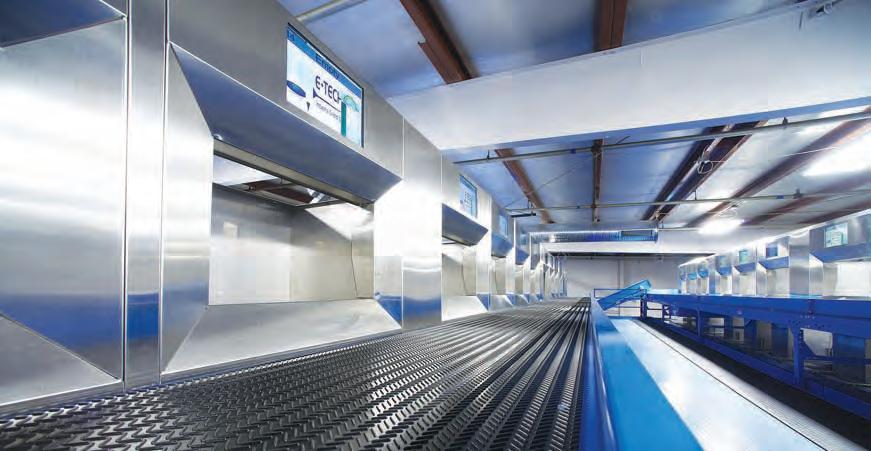
The E-Tech soil-sort area at the new Faultless Healthcare Linen plant. (Photos supplied by Faultless Healthcare Linen/American Laundry Systems)
How education is increasing use of reusable surgical textiles
Survey: Laundry managers
CHICAGO — For January’s AmericanLaundryNews.com respondents had the opportunity to look back at 2012 plus examine their priorities for 2013.
More than half of respondents say business was good (41.7%) or great (16.7%) last year, while another 25% say 2012 business was average. The remainder—16.7%—call it below average.
Regardless of how their individual operation fared, 75% say 2012 turned out as they expected. Approximately 17% didn’t expect last year’s business results, and 8.3% weren’t sure what to expect in 2012.
Virtually every operation polled experienced some degree of success in meeting 2012 goals, according to the survey results. More than half of operators polled (58.3%) said they met “some” of their goals last year, and 33.3% said they had met “all of our goals.” Just 8.3% reported they did not accomplish any of their goals. No one who took the survey said they didn’t set any goals last year.
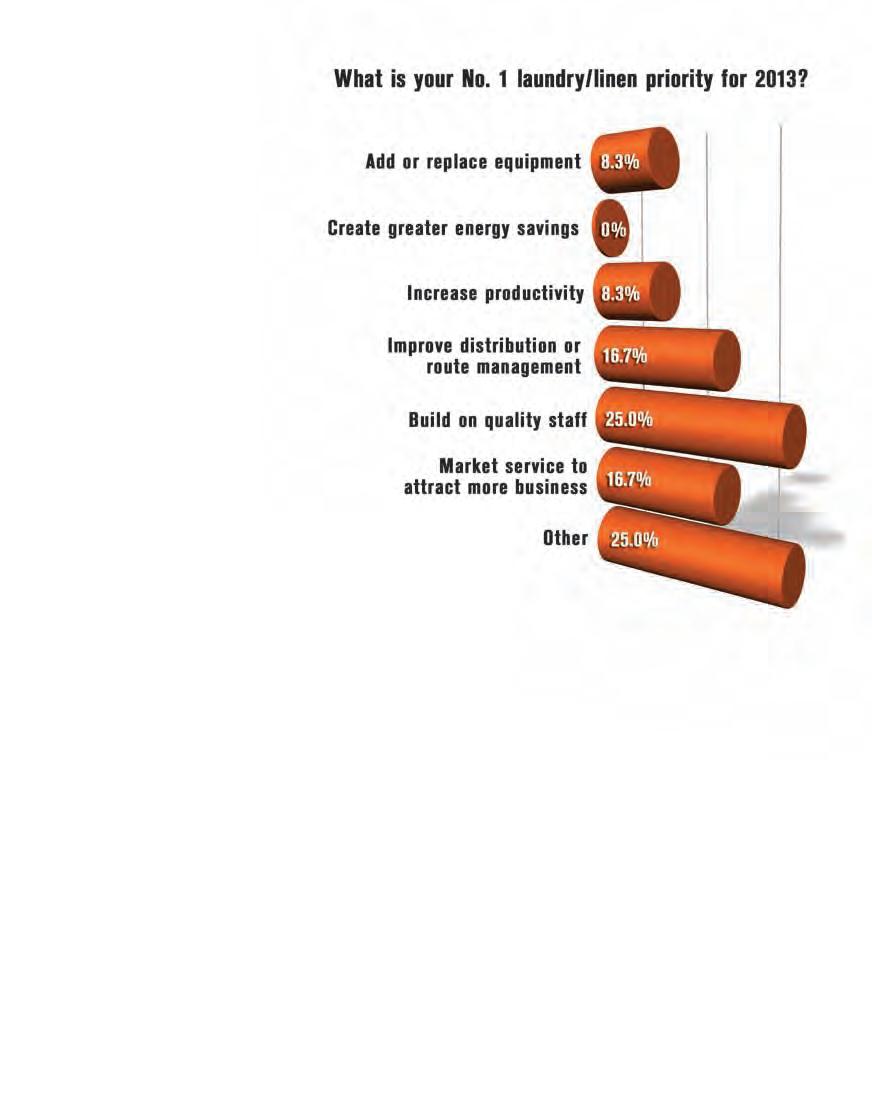
Building on quality staff and “other”—most often described as creating greater production capacity—is the top laundry priority for equal shares of 25% of respondents, while equal shares of 16.7% are intent on improving distribution or route management, or marketing their service to attract more business.
The remaining shares of 8.3% see adding or replacing equipment, or increasing productivity, as their No. 1 laundry/linen priority for 2013.
Respondents are confident they will accomplish their chief task. Twentyfive percent say they will, “without a doubt.” Roughly 58% say there is a “good chance,” and the remaining 16.7% put their chances at “50-50.”
Respondents had the opportunity to share the “best” and “worst” things that happened to their operations in 2012.
Some of the “best”:
• “Finding successful candidates for chief engineer and controller.”
• “Bought some new equipment.”
• “Cotton (prices) stabilized.”
• “Opened a new plant.”
IAHTM elects officers, board members for 2013
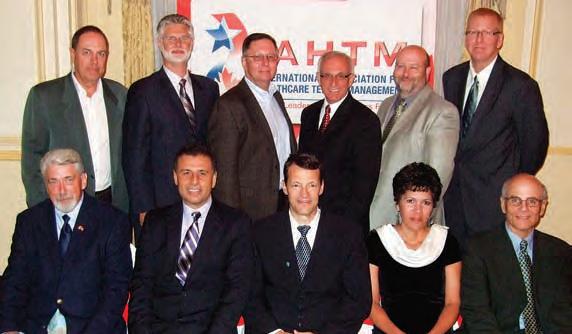
SHAWNEE MISSION, Kan. — The International Association for Healthcare Textile Management (IAHTM) has announced its officers and board of directors for 2013. Officers include:

• President Ed McCauley, United Hospital Services, Indianapolis, Ind.
• Vice President Deborah Lark, Portland Hospital Service Corp., Portland, Ore.
• Education Officer Rocco Romeo, Ottawa Regional Hospital Linen Service Inc., Ottawa, Ontario
• Treasurer Paul Seigel, Kingston Regional Hospital Laundry Inc., Kingston, Ontario
• Past President John Sealey, London Hospital Linen Services, London, Ontario
• Past President Chas P. Olin, Virginia Hospital Laundry Inc., Richmond, Va.
The IAHTM Board of Directors includes three members from the United States and three from Canada. U.S. directors are Myles Noel, COMTEX, Columbus, Ohio; Mark Smoyer, Shared Hospital Services, Portsmouth, Va.; and Duane Houvener, Michigan Shared Hospital Services, Grand Rapid, Mich.
Canadian directors are Janice Desautels, WRHA, Winnipeg, Manitoba; Colin Lyon, Mohawk Shared Services Inc., Hamilton, Ontario; and Stephen Marois, Alberta Health Services, Red Deer, Alberta. Nancy Jenkins is executive director, based in Shawnee Mission, Kan.
IAHTM is composed of CEOs who run laundry cooperatives. The group is a buying cooperative and hosts two education meetings a year: a Spring Education Conference that provides training for staff and an Annual Membership Conference that provides education for members, as well as networking. Banff Springs Resort in Alberta, Canada, will host IAHTM’s next Annual Meeting in August.
Publisher
Charles Thompson
Phone: 312-361-1680
E-Mail: cthompson@ americantrademagazines.com
editorial director
Bruce Beggs
Phone: 312-361-1683
E-Mail: bbeggs@ americantrademagazines.com
digital media director
Nathan Frerichs
Phone: 312-361-1681
E-Mail: nfrerichs@ americantrademagazines.com
Production manager Roger Napiwocki
contributing editor
Jean Teller
editorial Assistant Carlo Calma
Advertising sales
national sales director
Donald Feinstein
Phone: 312-361-1682
E-Mail: dfeinstein@ americantrademagazines.com
Office information
Main Phone: 312-361-1700 Fax: 312-361-1685
subscriptions 630-739-0600 www.americanlaundrynews.com
American Laundry News (ISSN 1091-9201) is published monthly. Subscription prices, payment in advance: U.S. & possessions, 1 year $39.00; 2 years $73.00. Foreign, 1 year $89.00; 2 years $166.00. Single copies: U.S. & possessions $7.00; Foreign $14.00.

Published by American Trade Magazines LLC, 566 West Lake Street, Suite 420, Chicago, IL 60661. Periodicals postage paid at Chicago, IL, and at additional mailing offices.

POSTMASTER, Send changes of address and form 3579 to American Laundry News Subscription Dept., 440 Quadrangle Drive, Suite E, Bolingbrook, IL 60440. Volume 39, number 2. Editorial, executive and advertising offices are at 566 West Lake Street, Suite 420, Chicago, IL 60661. Charles Thompson, President and Publisher. American Laundry News is distributed selectively to qualified laundry and linen management and distributors in the United States. No material appearing in American Laundry News may be reprinted without written permission. The publisher reserves the right to reject any advertising for any reason.
© Copyright AMERICAN TRADE MAGAZINES LLC, 2013. Printed in U.S.A.
memberships
2 FebrUA rY 2013 | AmericAn LAUndrY news www.AmericanLaundryNews.com
Association for Linen Management
inside: [4] Healthcare in the Year 2033? Longtime columnist Eric Frederick peers into his crystal ball and predicts what healthcare will look like in 20 years [8] Panel of Experts: Watch Out for Sharps Measures you can take to stem the flow of sharps— hypodermic needles, cutlery, etc.—returning to your facility [10] Product Showcase: Small-Capacity Washer-Extractors [17] OPL 101: Infection Control & Equipment Proper laundry equipment selection and processing protocols can minimize the risk of textiles posing as a source of infection to patients and healthcare workers January 2013 • Vol. 39 | No. 2
split
on top priority for 2013
ALN
The 2013 IAHTM Officers and Board of Directors: (front row, from left) Past President Chas Olin, Education Officer Rocco Romeo, President Ed McCauley, Vice President Deborah Lark, Treasurer Paul Seigel; (back row, from left) Canadian Director Colin Lyon, Past President John Sealey, U.S. Director Mark Smoyer, U.S. Director Myles Noel, Canadian Director Stephen Marois and U.S. Director Duane Houvener. (Photo: IAHTM)
Celebrating the First
PulseFlow® Tunnels Sold
EaCh Saving UnprECEdEntEd aMoUntS of WatEr, EnErgy, Labor and tiME.

Milnor is proud to announce the sale of over one hundred PBWTM (PulseFlow Batch Washers) tunnels worldwide. You might call it our Centunnel Celebration Since 2009, Milnor has revolutionized batch washing with True Top transfer and RecircONE® pump arrangements. And now, our PulseFlow Technology has changed the laundry industry again.


In the last year alone, PulseFlow® tunnels have saved our customers over 325,000,000 gallons (1.5 billion liters) of fresh water with actual improvement in their wash quality. It’s hard to imagine numbers this big. Imagine a fresh water lake. Saved. Every year. It is groundbreaking.
We want to thank all of the PBWTM pioneers...they took a chance on a radical approach to tunnel washing and are enjoying unprecedented savings. We are proud of the first 100, but are excited about the next 100 PBWs.
Now, imagine what your laundry could save with a Milnor PBWTM Contact an authorized Milnor distributor or call 504-712-7656 to find out more.
www.milnor.com/pulseflow_technology / pellerinmilnor To see how a PBWTM works, scan this code.
Here’s what’s up, Doc
With our healthcare system being tasked with caring for a country full of weezing, sniffling, achy patients, I think it’s the perfect time to take a closer look at the healthcare segment of the laundry industry.
From The Director’s Chair
BRucE BEggs
as of this writing, I have been fortunate enough to avoid falling victim to the flu epidemic that has swept the nation. But I’m sure it’s only a matter of time before I join the majority.
This month, Carlo Calma, our new editorial assistant here at American Laundry News, takes a look at Faultless Healthcare Linen and its newest plant in St. Louis. According to his cover story, the company recently invested $12 million in building the facility to accommodate new business received from a local healthcare system.
In our other main cover story, Nancy Jenkins examines how healthcare professionals are chang-
ing their view of reusable surgical textiles and the like thanks to education and a renewed focus on sustainability. Are reusables making headway against disposables?
Right next door on this page, 40-year laundry veteran Eric Frederick dusts off his crystal ball and predicts what healthcare laundry will look like in 20 years. Anyone for a network of government-run laundries?
On page 8, our Panel of Experts offers methods for stemming the flow of sharps—such as hypodermic needles and surgical instruments—that are sometimes found in your soiled linen.
Yep, we’ve got our fingers on the pulse of the industry. ALN

In Memoriam: William K. ‘Bill’ Steiner, 82, Steiner-Atlantic and Dryclean USA
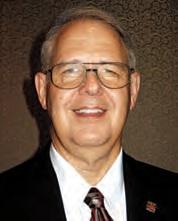
AVENTURA, Fla. — William Kalman “Bill” Steiner, founder of Steiner-Atlantic Corp. and Dryclean USA, died Dec. 27 after a three-year struggle with pancreatic cancer. He was 82.

The Chicago-born Steiner worked hard his entire life, beginning as a newsboy at age 9. He held part-time jobs throughout high school and worked his way through Baltimore Business College to earn his accounting degree.
While working as an accountant, a client asked Steiner to help him book rock ’n’ roll shows around Baltimore. Show business soon enthralled him, and he booked prominent 1950s stars
such as Screamin’ Jay Hawkins and the Kingston Trio at concerts around the country.
But he tired of the constant travel and moved in 1959 to Miami, where he met his future wife, Sheila. They married in 1961.
He founded SteinerAtlantic Corp., a distributor of commercial laundry and dry cleaning equipment, boilers, parts and service, in 1959. Son Michael Steiner took over the reins in 1987.

After building and selling several of his own dry cleaning plants, Bill Steiner co-founded Dryclean USA, a dry cleaning business franchisor, in 1977. It also continues through this day under
Michael’s leadership.
Bill and Sheila Steiner have been members of Aventura’s Beth Torah Congregation for many years. They provided the educational center there in memory of son Jim, who died in 1989.
They were also generous in their community. In honor of their support, the Jackson Memorial Hospital Foundation renamed a part of the hospital the Bill and Sheila Steiner Family North Lobby.
Surviving Steiner are his wife, Sheila; four sons, Robert, Richard, Michael and David; a brother, Tom; and four grandchildren.
Donations in Steiner’s memory may be made to the Beth Torah Congregation, Jackson Memorial Hospital, or the Greater Miami Jewish Federation. ALN
Healthcare in the year 2033?
ihave been employed in the healthcare laundry market for more than 40 years, starting as a washman in a healthcare laundry in Salt Lake City, Utah, in June 1972. I have often marveled at the changes in the laundry industry over the past four decades. The industry has been unpredictable at times, but I have always found my work enjoyable and interesting.
In this month’s column, I project what the laundry industry will be like in 20 years. Now, I know my crystal ball is not perfect, and I claim no special ability to predict the future, but a little common sense can go a long way in predicting what might happen.
My expertise is in the area of healthcare textiles, so I will deal only with this segment of the business. There are four main areas that will affect our industry: national healthcare, environmental concerns, energy, and textiles.
National Healthcare Effects
In the year 2033, the U.S. healthcare laundry market will look very much like the Canadian laundry market does today. The majority of U.S. healthcare will be controlled by the government through its single provider network. Because government is the major source of all revenue, it will be actively involved in helping to control costs on all levels.
Administrators have for years looked at linen service in a healthcare facility as an unavoidable cost. They have continually looked at ways to reduce the costs associated with this service by outsourcing to lower-cost providers, using contract management companies, limiting the number of items in the linen inventory, and re-introducing cost-effective reusable products.
just LikE canada, tHE u.s. govERnmEnt wiLL EstaBLisH a nEtwoRk oF HEaLtHcaRE autHoRity LaundRiEs tHat wiLL pRovidE pREdictaBLE-quaLity LinEn sERvicE to aLL HEaLtHcaRE FaciLitiEs.
Sometime between now and 2033, the politicians will focus on commercial laundries that want to make a profit off of sick people, and the inefficient in-house laundries, and make the decision government always makes: they can do it better. Just like Canada, the U.S. government will establish a network of healthcare authority laundries that will provide predictable-quality linen service to all healthcare facilities.
This move will probably happen at or near the point when the brain trust in Washington similarly takes over the food service programs at hospitals, moving the majority of food preparation to regional, off-site central kitchens.
The commercial laundry industry will, of course, fight this development, but in the end it will lose.
This development of government-operated central laundries will also eliminate all contract management business in the healthcare laundry market. A number of provider companies will find themselves in a position to sell their facility to the government or face owning a facility that has no customers.
Environmental Concerns
•
•
•
•
•
•
•
•
•
•
•
•
The need to lessen our collective impact on the environment will continue to be heralded over the next 20 years. It will reach the point that all laundries will need to treat their wastewater and reuse it. (We currently reuse a little more than 50% of our water used in processing linen.) Over the next 20 years, substantial researchand-development dollars will be spent in all industries to make it possible for them to clean and reuse water. Once the technology is available, all laundries will be required to use it.
4 FEBRua Ry 2013 | amERican LaundRy nEws www.AmericanLaundryNews.com Top Stories Appearing on AmericanLaundryNews.com for the 30 Days Ending Jan. 15 (WE) = Web exclusive news
IAHTM Announces Officers and Board Members for 2013
McCauley Named ARTA President; New Board Announced
Admits New Equipment to Rightsize OPL
Shriners Hospitals
Steiner,
In Memoriam: William K. “Bill”
Steiner-Atlantic...
7th Mission Linen Supply Plant Receives HLAC Accreditation
Hospital, Hotel Laundry/Linen Operations Feel Brunt of Superstorm...
Columnists/Features •
Gudenburr: Proving the Need for Capital Improvement in the Laundry
Career Track: Companies Announce Personnel Moves
Frederick: Deliver Value to Your Laundry’s Owners, Customers and Employees our sister websites From AmericanDrycleaner.com:
The Structuring of Dry Cleaning Pricing
Plant Design Awards—Grand Prize: Rainbow Cleaners From AmericanCoinOp.com:
IRS Raises Standard Mileage Rates for
e)
2013 (W
StatShot: November Sales Largely Positive... (We)
Columnist At lArge Eric L. Frederick, RLLD
See YEAR 2033 on Page 19
Steiner

Faultless
capacity, the road getting there was not easily traveled.
“When we got all of this new business from BJC, we actually had to take on that business before we got the new plant opened up,” Witcher says.
The company had to employ double shifts at its 45,000-squarefoot facility in the Soulard area of St. Louis to accommodate the business acquired from BJC. Once Faultless opened its new facility roughly four miles to the north, it was able to shut down a separate 18,000-square-foot plant in Soulard, and split the BJC business 50-50 between the remaining Soulard plant and the new laundry.
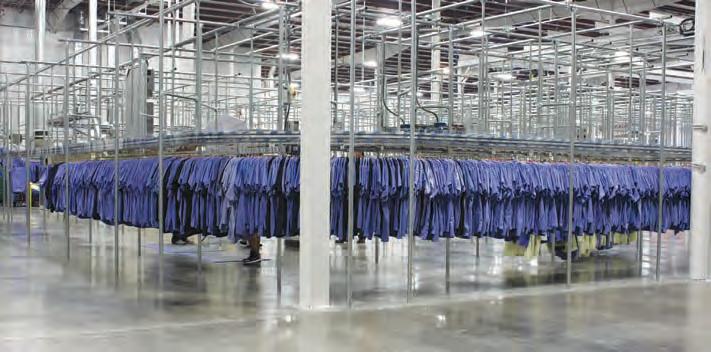
The new plant employs the use of various industry-familiar systems, and bears the same layout as Faultless’ existing facilities, according to Witcher. “In terms of the general design of the workflow, it’s very similar to our other plants. A lot of the systems that we’ve used in our other big plants in St. Louis, we designed into this one.”
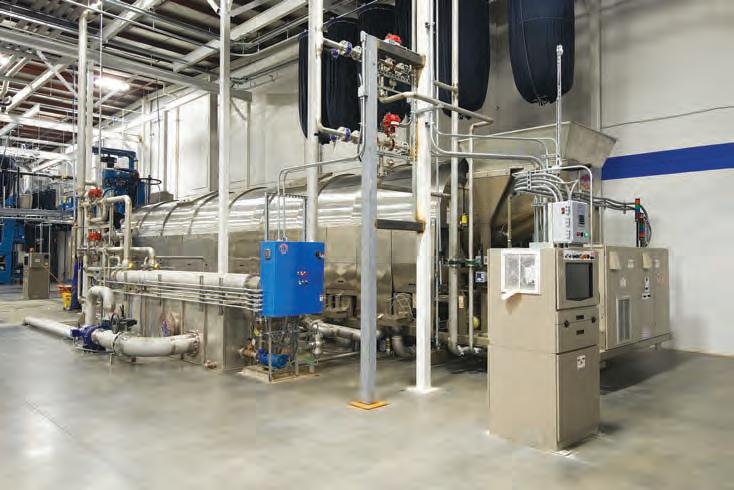
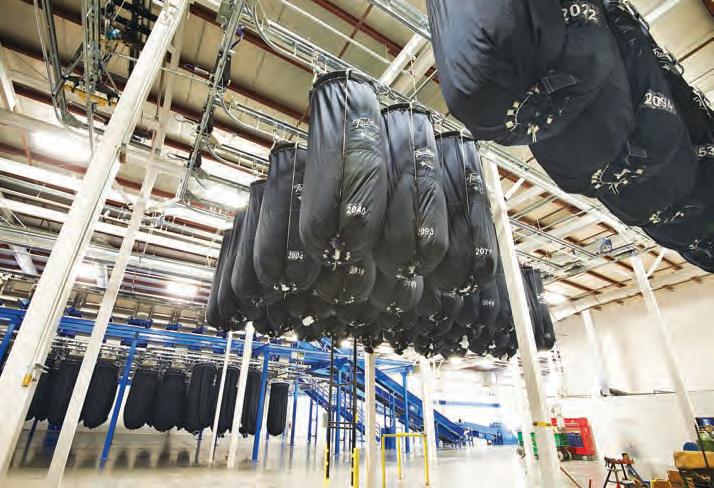
For example, the facility utilizes an E-Tech monorail system for sort soiling; Milnor PulseFlow® tunnel (eight 250-pound modules); Chicago Dryer Co. finishing system that includes ironers, feeders and folders; Softrol garment sorting system; and Kemco process
water system.
Considering the new facility’s technology and capacity, it’s brought a sense of ease for the staff—there are 110 full-time employees—regarding the overall production, Witcher says.
“From a quality-of-life perspective, everybody’s in a much better place because we’re running both plants seven days a week (through) 10-hour days, so everybody’s back on a normal schedule and (has) more room to move.”
The larger facility has an annual capacity of 43 million pounds but only 40% is currently being utilized.
To fill its unused capacity, the company’s sales force is continually scoping out prospective clients, Witcher says, and even hosted an open house in early November to ensure that the company acquires new business to be able to take full advantage of its facility.
In addition to energy and production efficiency, one other priority for the company was to ensure the new plant met standards established by the Healthcare Laundry Accreditation Council (HLAC), which examined the facility in early January.
Because Faultless Linen’s other facilities are already HLACcertified, the company has a “very clear understanding of the processes that are required, and the documentation that’s required,” Witcher says.
Much like the Soulard plant, a wall divides the new facility in two, where one side strictly processes
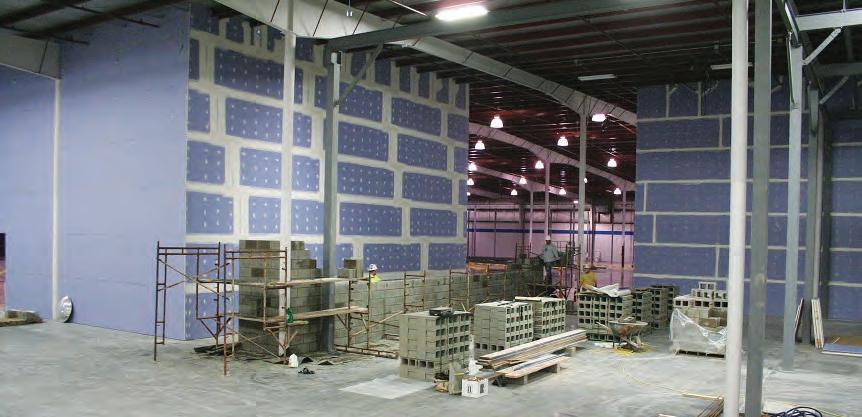
soiled linen, while the other handles clean linen to be shipped out. Soiled linen is sorted into slings by type and washed hygienically with the proper pH. Once properly cleaned, linen is stacked onto clean delivery carts that have been sanitized through an automatic cart washer.
Meeting standards like these, in addition to training employees on proper procedures, are just some of the ways the company is ensuring it meets HLAC’s criteria, according to Witcher.
Achieving the HLAC accreditation is “entirely voluntary,” she notes, but represents an important “stamp of approval.”
“I think it speaks to our customers, and our potential customers, that we are committed to doing things the right way. … From an infection control standpoint, it is becoming increasingly important,” says Witcher, adding that the Association for periOperative Registered Nurses (AORN) recommends the practice of laundering surgical attire in an accredited facility.
With the new facility up and running, the company still has many goals in mind, according to Witcher.
In addition to awaiting HLAC certification, the company is also pursuing the Hygienically Clean
certification from the Textile Rental Services Association (TRSA).
With room for the business to grow, Witcher says she feels “excellent” about the facility going into the new year.
“While we’re not at peak productivity and energy efficiency at this point, over the next several months we would expect nothing but continued improvement in the performance of the operation,” she says. ALN
Carlo Calma is editorial assistant for American Laundry News. He can be reached by e-mail at ccalma@ americantrademagazines.com.
6 FEBRuaRy 2013 | amERican LaundRy nEws www.AmericanLaundryNews.com
continued from Page 1
Cutline...
tunnel washer in use has eight 250-pound modules.
Faultless’ sales force is continually scoping out prospective clients to utilize more of the new plant’s 43-million-pound annual capacity. The
Milnor PulseFlow
Under construction.
garments ... and lots of them.
Full sling bags staged in the overhead rail system. Sorting








 The Pulse Flow Technology logo is a registered trademark of Pellerin Milnor Corporation.
PanEL oF ExPERts
Sharps pose constant threat to soil sorters

Although my laundry processes hospitality linens, we observe universal precautions when detecting and handling sharps. Sharps, in our case, consist of cutlery and broken glass sent down the laundry chute in error by our enduser, the room attendants.
that lists the date and location of the incident as well as the type of sharp.
place to minimize the safety hazard should these mistakes continue to occur.
in an efficient, productive and timely manner.
Finding foreign objects in linens is not an uncommon occurrence. Trash, glass, dishes and cutlery are sometimes mistakenly and carelessly mixed in with the soiled linens by the end-users when gathering the linen for reprocessing. Healthcare linen poses the additional threat of bacterial and viral contamination from needles and scalpels.
All incidents are documented, and the appropriate people are notified. All soil sorters wear proper protective equipment, including masks and punctureresistant gloves. Broken glass is picked up with tongs or brush and dustpan and placed in a medically approved sharps container. This container is disposed of when three-quarters full.
The laundry maintains a log according to OSHA guidelines
We have weekly meetings with the room attendants to provide details of the prior week’s foreign objects found in the linen. We seek to educate them on the danger that sharp objects pose to their co-workers.

We also seek feedback from the housekeeping team on ways to reduce the instances of foreign objects, particularly glasses, dishes and cutlery, which pose a safety hazard.
In the end, we stress regular communications to achieve buyin from our end-users to reduce the problem with sharps. At the same time, the processes are in
Turn-Key Industrial Engineering Services Charlottesville, Va.

y

ALN_Jr_half 10/4/12 2:30 PM Page 1
ou owe a duty to your employees to ensure a safe work environment and to minimize or eliminate exposure to hazards on the job. At the same time, you have a duty to your customers to ensure their textiles are processed
Most people think of healthcare linen as the primary sharps concern because of the serious health issues that can arise from laundry workers being stuck by needles or cut by other sharp medical devices, but those of you who operate non-healthcare laundries should also be concerned with how the intrusion of these items can present a danger and affect the smooth flow of production through your plant.
Do all that you can to eliminate the intrusion of sharps into soiled linen before that linen reaches your loading dock. Your sales

american laundry news / 4.75x6.75 For laundry done on time and on budget, there’s no better choice than IPSO. Forty years of European ingenuity, rugged industrial construction, and our intuitive Cygnus controls all add up to help you achieve your ultimate goal — maximum throughput at a minimized cost. Learn more about how IPSO helps you get the job done at IPSO.com/industrial INDUSTRIAL BY DESIGN Work with your IPSO finance expert to learn about customized financial solutions for your business. IPSO USA 1.800.USA.IPSO IPSO.com/industrial INDUSTRIAL BY DESIGN. Optimal Efficiency. Maximized Throughput. 3758_IPSO OPL_jrhalfPgHoriz amerlaundnews v12a.indd 1 1/9/13 2:30 PM ALN_Jr_half.indd 1 1/10/13 11:10 AM 8 FEBRuaRy 2013 | amERican LaundRy nEws www.AmericanLaundryNews.com
See EXPERTS on Page 10
Hotel/motel/ Resort Laundry Charles Loelius
The Pierre New York New York, N.Y.
What measures can a professional laundry manager implement to stem the flow of sharp objects in soiled linen— such as hypodermic needles, surgical instruments, cutlery, etc.—before it reaches the laundry service?
consulting services
David Bernstein
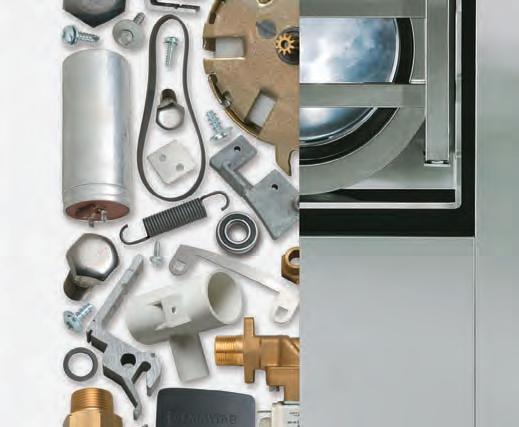
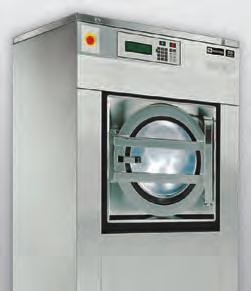
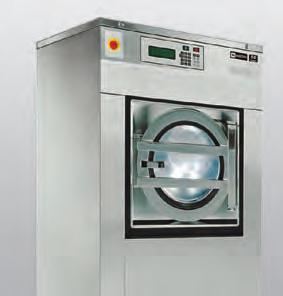
With over 50 years strong on the job, we know there are no small parts when it comes to delivering big dependability. In fact, we use all we’ve learned to build durable, longer-lasting machines. Machines you can trust with the tough chore of keeping your operation up and running even as they handle the largest of loads. And no matter who’s operating the equipment, our user-friendly controls always keep it easy, shift after shift. Visit mclaundry.com for digital brochures, or for more information, visit our website at maytagcommerciallaundry.com or call 800-662-3587.

maytagcommerciallaundry.com for warranty details.




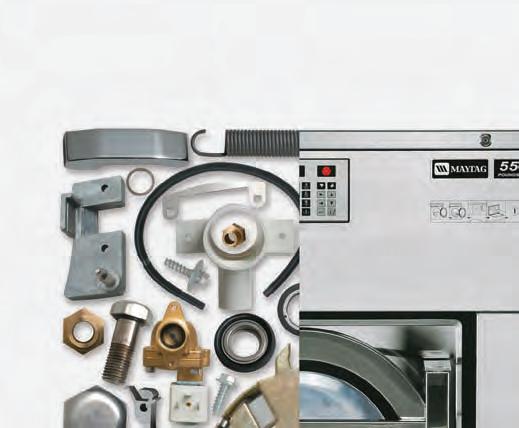

We don’t overlook a single belt, bearing or bolt when it comes to reliably easier-to-do laundry.
® /™ ©2013 Maytag. All rights
FINANCING as low as 0%† † Limited time offer. Low fixed financing rates. Terms to 96 months. Subject to credit approval and individual’s credit worthiness. Contact your distributor for details.
*Visit
reserved. *
and service teams need to partner with customers to provide education for their management and employees so that they can put the proper controls in place.
In the healthcare realm, work with your customers’ infection control and/or environmental departments to ensure that they are using safer medical devices with the latest engineering controls (e.g. sharps containers, needleless systems, self-sheathing needles, etc.). Some customers may initially resist adopting some of these devices based on cost, but having a frank conversation with them about the cost of each exposure may help them to come around.
Those of you processing industrial and non-healthcare linen may need to approach the topic from an economic perspective. Explain how a sharp knife can injure a production worker, how a fork can puncture the diaphragm of a press extractor and shut down your production, how a screwdriver can damage a washerextractor or dryer, etc.
Of course, any of you who process food and beverage linen have also seen silverware and cooking tools end up in these facilities, and I would suggest that you explain how much money is being wasted on items that end up in your soil room rather than in their dishwashers.
Cultivate an attitude of zero tolerance. It has become common practice in healthcare laundries to, as a part of a written exposure plan, log the appearance of sharps and other foreign objects in soiled laundry and provide a monthly report to your customers. I would argue that you should take this practice further.
Work with your team and your customers’ risk management and infection control departments to develop a list of priority items that, if found among your linen, trigger an immediate call to the customer and an investigation
into how the item got into your soil room.
Some laundries charge customers for each foreign item found among their soil, with higher amounts charged for more dangerous items. This type of negative reinforcement can turn a customer off of your service, so I recommend taking a more positive approach. Reward employees who find, report and properly handle sharps, and consider an annual award to those customers who eliminate or reduce the number of sharps and other foreign items sent to your laundry.
implemented in the facility.
There are circumstances (emergency “Code Blue” resuscitations, for example) that, due to their chaotic nature, increase the likelihood of sharps being lost in linens. Provide education/training to your laundry personnel in the proper shaking-out and separation of soiled linens. And be sure to include techniques on how to pick up sharps and dispose of them properly.
commercial Laundry
Richard Warren


Laundries don’t put the sharps into the linen stream, and we can’t keep them out.
Equipment manufacturing
needles in bulk linen. You would think that most instruments would be coming primarily from ambulances, emergency rooms and surgical units, but that’s not the case. They simply come from everywhere in a facility.
Professional laundry managers can do two things to help stem the flow of objects found in dirtied linens: an employee training program and, where applicable, conveniently placed containers for depositing razor-sharp objects.
By educating healthcare staff, the flow of sharps will significantly decrease. Most on the patient care units have been eliminated or at least reduced by using tubing and needles with safety devices. Re-educating the infection control nurse at each property on a quarterly basis seems to work best.
To help stem the flow of these items, and to keep the communication lines open with clinical staff, the laundry manager should meet regularly (at least quarterly) with nurse managers, surgery, emergency services, ambulance, etc., to help determine the root causes. This cooperative effort helps establish rapport with clinical staff while addressing legitimate concerns.
Most healthcare organizations have a PI (Performance Improvement) team and/or safety committee that looks at the various OSHA violations (both recordables and non-recordables). The laundry manager should volunteer to participate on this type of team so that these concerns can be voiced to the appropriate people and so that he/she can remain abreast of the efforts being made to address them.

Champion the use of safety devices and engineering controls designed to decrease the risk of employee exposure. Assist with the research and promotion of these efforts by utilizing resources (other laundry managers, industry standards, guidelines, etc.) to determine “best practice” policies and procedures that could be
I find that infection control staffs at hospitals are embarrassed about the issue, so we need to be sensitive in our approach. I find them quite willing to work with a laundry that maintains a professional attitude toward what they perceive as their own problem. We certainly can’t be heavy-handed when we discuss this issue.
We contact the infection control people, our point of contact in the linen department, and the linen committee to talk about how to keep the sharps out. They need to know where the offending item came from, so we help by taking a picture of the item; sometimes it’s identifiable. If the discovery is made in the sorting department, we make note of the specific carts we are working with at the time. We e-mail all this information to personnel at the hospital so they have something to work with. Calling them to complain just keeps the adversarial relationship alive.
Not all hospitals recognize the urgency of the situation, but those that do have shown a dramatic decrease in incidents. We apply the same procedure to all manner of rogue hospital items, some of obvious value. Any customer would appreciate that attention.
In healthcare settings, a number of pointed objects—hypodermic needles, for example—are used on a regular basis. These needles, if left in soiled linens, are dangerous to professionals processing the laundry. By incorporating collection receptacles in or near every patient’s room, it makes disposing of these items properly more convenient and more likely. Coupled with a program to train staff of the importance of sharps disposal, laundry processing is much safer for all parties involved.
In the food and beverage industry, training again plays an integral role in reducing the amount of cutlery found within soiled linens. The awareness gleaned from training helps to protect those processing the linens and ensures the vast majority of utensils are available for patrons.
Equipment/ supply distribution
Ireached out to a few of my customers who are professional healthcare laundry managers and have decades of experience. They all shared that this problem never goes away. There are procedures in place to control exposure to sharps, but it is extremely difficult to eliminate them.
Metal detectors are too expensive and will not detect small
Most healthcare laundry facilities operating under pool linen or COG programs monitor each facility’s goods upon receipt for control of linen shortages, damage, etc., so anything more intensive than that wouldn’t be cost-effective.

Numerous types of sicknesses can be contracted due to encounters with needles, surgical instruments, or cutlery. Proactive communication between the laundry and healthcare facility is key to avoiding them.
Every time a laundry discovers sharps in the soiled linen, the occurrence should be documented and reported immediately to the healthcare facility. Prepare and present an incident report to the appropriate department. By physically showing the sharps that came back in the soiled linen, it might be possible to identify the specific department from where they came and prevent future occurrences.
Schedule ongoing educational sessions with individual departments as needed. In an effort to ensure that facilities properly dispose of sharps, laundries should provide them with collection containers and proper signage at all collection points. ALN
10 FEBRua Ry 2013 | amERIcaN LauNdRy NEws www.AmericanLaundryNews.com
Experts continued from Page 8
Steve Hietpas
Maytag® Commercial Laundry St. Joseph, Mich.
uniforms/ workwear manufacturing
Scott Delin
Superior Uniform Group Seminole, Fla.
Linen King Conway, Ark.
Healthcare Laundry
Judy Murphy, RN, BSN, CLLM, RLLD
North Mississippi Medical Center (NMMC) Tupelo, Miss.
Bill Bell
Steiner-Atlantic Corp. Miami, Fla.
Electrolux smart washers will forever change the way you do laundry.
Imagine a washer smart enough to weigh the load size and add precisely the correct amount of water. Imagine a laundry chemical controller smart enough to adjust dosing for accurate water ratio each time.

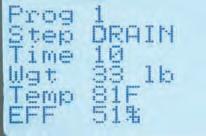



Electrolux Professional washers do all that


Underloading washers is a common problem in many laundries, wasting water, chemicals, and energy. That’s why Electrolux developed AWSTM, a UNIQUE feature that automatically matches water consumption to load size. Combine that with SmartDosingTM which adjusts laundry chemicals to water ratio, and you will see immediate savings and superior wash results – every time, automatically.
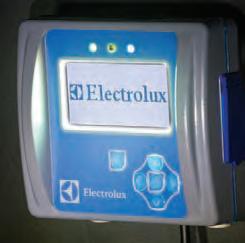
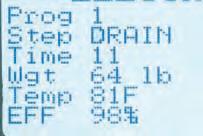
Electrolux’s SmartDosingTM controller automatically dispenses the correct amount of chemicals for the weight load.



world. Special financing available. Call to learn more.

To learn more visit www.laundrylux.com
– the
selling on-premise laundry brand
the
Laundrylux® (800)381-7222 info@laundrylux.com Electrolux washers adjust water and chemicals to correctly match the weight of the load. Laundry Chemicals Dispenser Control FuLL Loa Load 60-65 LBS PLeaSe doSe detergent Load 30-33 LBS PLeaSe doSe detergent
Experience the Electrolux difference
#1
in
Product showcase
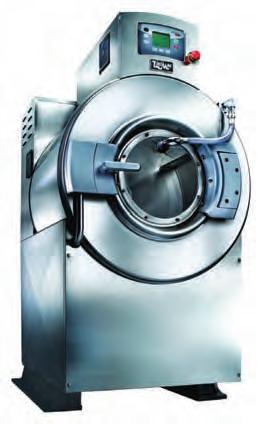
UniMac
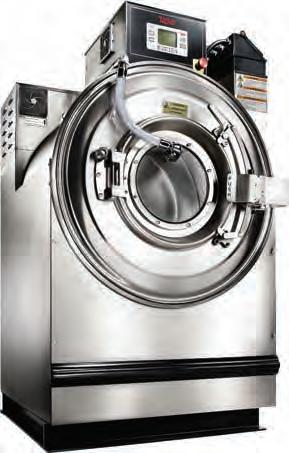
From UniMac comes the UW65, a 65-pound hard-mount washerextractor that includes innovative features to help increase throughput. It is designed to handle double the spinning force of commercial washer-extractors, as well as the largest and most outof-balance loads, resulting in less downtime, the company says.
The new larger capacity allows laundry operators to increase their load size, which helps improve employee and work efficiencies, UniMac says.
The UW65’s new drive shaft assembly with cylindrical front and spherical rear bearings is designed to handle heavier loads and have a longer life, and the larger shaft diameter is built to be 200% stronger than cabinet hard-mount shafts, according to the company.
A taller frame with a 28-inch cart clearance and elevated drain height offers improved ergonomics for end-users, UniMac says. The new dimensions also offers ease of use for employees and eliminates the need for an elevated base.
The machine features a 400 G-force extraction speed for maximum water removal. And with a proprietary designed inverter drive, the machine is able to offer smooth, reliable power for optimal wash and extraction performance.
Additional features include: A spray rinse that UniMac says fills 200% faster than other machines, allowing users to do more in less time; a standardized door that opens from the right and is paired with a roll pin/cam lock system
to ensure smooth opening and closing while eliminating the door unlock control button; and ease of installation due to the 34.24inch width of the machine, which allows it to easily fit through a 36-inch commercial doorway.
The UniLinc™ control also available on the UW65 features maintenance reminders and monitoring of error codes and idle time. The programmable delayedstart feature allows laundry to be given a 30-minute head start before employees arrive, saving labor costs.
unimac.com 800-587-5458
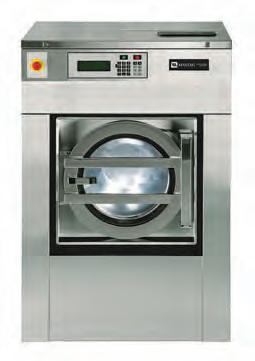
Maytag coMMercial laUndry
Maytag® Commercial SoftMount, High-Speed WasherExtractors provide the right size and useful features for any on-premise launderer, according to the company. Available in 25-, 35-, 55-, 80- and 100-pound models, each size offers a large cleaning capacity and installation flexibility.
options for chemical suppliers.
Maytag washer-extractors have several features to help with easy operation. There are 15 pre-programmed cycles, plus the capability to create additional unique cycles. Multilingual readouts make the controls easy for everyone to operate. The External Chemical Injection System features easy-access connections on the outside of the machine to eliminate the need to open up the washer on routine service visits and cut down service time.
The heavy-duty latch, strut suspension, and tough cabinet and frame add to the machine’s durability, the company says. maytagcommerciallaundry.com 800-662-3587
continental girbaU
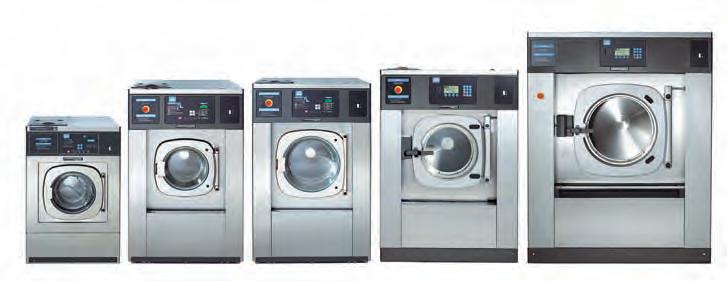
Continental Girbau’s E-Series™ Washer-Extractors offer a softmount design, available in 20- to 90-pound capacities. They deliver energy efficiency, simple installation and programmability, according to the company.
The programmable Intelligent (Inteli) Control delivers 20 preprogrammed cycles and up to 79 owner-programmable cycles. It is suited for laundries requiring high-level control over cleaning specific types of fabric.
iPSo
IPSO now provides on-premise laundries with the new IH040, a 40-pound washer-extractor.
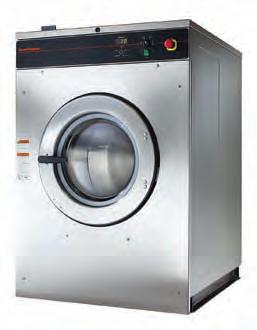
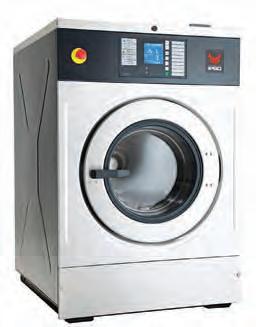
The machine is engineered, tested and built for heavy-duty performance and to provide high reliability. The IH040 is industrial by design, and is built to extend linen life as well as reduce water usage and utility costs. It features contemporary aesthetics and offers intelligent technology, durability and efficiency, the company says.
The IH040 was designed for easy installation and maintenance, with a strong frame and proprietary inverter technology that provides users a more efficient cycle, IPSO says. Other characteristics include a soap dispenser with four compartments, a dispenser lid with four compartment symbols, and a door lock mechanism with a reed switch for extra safety.
laptop. Cygnus also provides a full spectrum of service features, from scheduling maintenance at designated times to recording valuable information such as the number of completed cycles and service warnings.
ipso.com 800-872-4776
Built with an all 304-grade stainless steel top, front and sides, the line is able to withstand any level of use and is gentle enough for operating in centuries-old buildings. The soft-mount suspension system reduces the need for machine bolt-down, so many wooden-floor installations are possible. With an inverter drive system, users will notice a decrease in the wear and tear of washer components, such as the shaft, bearing, seals and belts, Maytag says.
High-speed extraction of up to 350 G-force cuts drying time and energy usage. Programmable water levels provide flexible cycle
All E-Series models offer a reduction in water, gas and electricity usage, Continental Girbau says, allowing laundries to embrace energy-efficient ‘green’ benefits, lower utilities and labor, and improve productivity. Featuring a soft-mount design, the E-Series also provides a highspeed alternative to hard-mount machines – consuming less water and offering high-speed extract speeds up to 387 G-force. This can cut the time to dry a load by as much as 50%, the company says.
E-Series washers can be installed without bolts and special reinforced concrete foundations.
continentalgirbau.com 800-256-1073
The washer-extractor’s design offers SmartWAVe technology to help with minimum consumption and maximum performance. The technology uses sensors to measure a fabric’s absorption capacity and dispense the ideal amount of water in the cylinder.
The IH040 features IPSO’s Cygnus control systems available in two tiers: Ultra (Premium) and Select (Commercial). Cygnus Assist software allows a laundry owner to modify every parameter, including the wash cycle, from the convenience of a computer or
SPeed QUeen
Speed Queen offers on-premise laundries the SC60, a 60-pound washer-extractor equipped with Quantum™ controls to help increase efficiency and throughput. The machine is ideal for OPLs because it can wash extralarge loads and large items, such as king-size comforters, rugs and quilts, the company says.
Equipped with technology to help reduce operating expenses, the SC60 uses 33% less electrical energy and 11% less water, according to the company.
The washer-extractor has extraction options up to 200 G-force, which leads to shorter dry times and lower dryer energy costs, Speed Queen says. To further increase efficiency, the machine offers a cylinder design that provides low water consumption by minimizing “nonwash” water with smaller sumps. Additionally, it comes equipped with patented Water Guardian technology, which detects drainand fill-valve leaks.
The SC60 has an intuitive chemical dispenser that enables staff to add up to four laundry chemicals at the beginning of the cycle, and it easily integrates with automatic supply injection systems. It also features alternate rotating wash action that produces excel-
12 FEBRua Ry 2013 | amERican LaundRy nEws www.AmericanLaundryNews.com
cOmPiLEd By JEan TELLER, cOnTRiBuTinG EdiTOR
[IPso]
[Maytag commercial Laundry]
[UniMac]
[continental Girbau]
➢
[speed Queen]
Clean. Safe. Protected.
What she can’t see — like healthcare acquired infections — can hurt her. Partner with Ecolab and ensure the cleanliness of your linens and facility:

• Protect your environment with a wide array of EPA-Registered sanitizing and disinfecting products to help make your facility clean and safe.
• Provide disinfection against HAIs with AdvaCare™ Disinfectant; an EPA-Registered laundry disinfectant that kills: Protect your patients when they’re most vulnerable. Partner with Ecolab.
Staphylococcus and Listeria monocytogenes. (EPA Reg. No. 1677-193) aureus, MRSA, E. Coli, Pseudomonas aeruginosa, Acinetobacter
baumannii
For more information about AdvaCare™ Disinfectant, or other Ecolab disinfection solutions, visit Ecolab.com or call 800 553 8683.
©2013 Ecolab USA Inc. All rights
reserved.
lent wash quality without damaging delicate fabrics, according to the company.
When equipped with the Quantum Gold control, laundry managers can program the washer-extractor and receive information on laundry operations, including audit data.
Management can customize up to 30 water levels and cycles.
speedqueen.com 800-590-8872
HuebscH
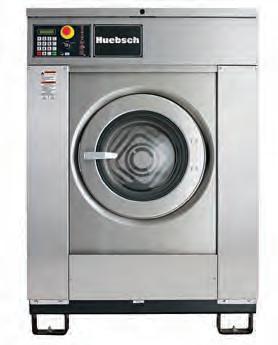
Huebsch offers the HX75, a 75-pound soft-mount washerextractor that the company says helps reduce utility expenses.
Installation costs are kept low because the washer-extractor has a heavy-duty suspension system and does not require special
foundations, the company says. This feature also offers flexibility in machine placement.
Programmable wash speeds help ensure the best in linen care, while high-speed extracts of 475 G-force maximize water extraction. Higher extraction speeds remove more water in the wash cycle, leading to significantly shorter dry times and lower dryer energy costs, Huebsch says.
There is a four-compartment soap dispenser positioned in front for easy access. The compartment permits the use of both powder and liquid detergents. The inlet valves also fill the soap compartments for complete flushing.
An additional water valve offers faster filling time, while a 3-inch drain provides fast draining to improve cycle times. The large stainless steel door makes loading and unloading the washerextractor easier for employees. Each door has the improved door lock and ergonomic door handle for increased safety and smooth opening/closing, Huebsch says.
The machine comes with a programmable microprocessor control with 39 pre-programmed cycles and room for 99 total programs. Temperature-controlled fills and a thermal cool-down support the washer’s performance.
huebsch.com 800-553-5120

Dexter
Dexter’s V-Series washers are designed to be energy-efficient and to help on-premise laundry owners and managers choose sizes, extraction speed, and cycle programming options that match their needs, the company says.
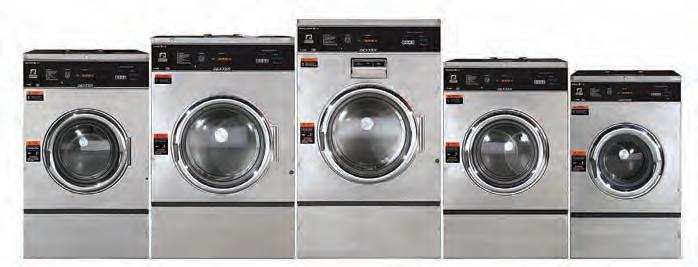
Dexter 200G-force Express washers are available in 20-, 30-, 50-, 60- and 90-pound capacities, and the non-Express 100G-force washers are available in 20-, 30-, 40-, 60- and 80-pound capacities.
The entire line includes userfriendly features such as extralarge loading doors. High-speed extraction reduces energy costs by reducing drying time, and the use of variable-frequency technology delivers up to a 60% reduction in electrical power consumption, according to the company.
To minimize water usage, Dexter washers feature a “sumpfree” outer tub design, and large doors to ensure that customers
still see adequate water in the machine.
dexterlaundry.com 800-524-2954
Wascomat
Wascomat offers a full range of energy- and water-saving washers, including the 65- and 80-pound EXSM-model 300 and 220 G-force washers designed to be maintenance-free, handle large loads, and offer high-speed spins for fast drying, lower energy costs and increased productivity, says distributor Laundrylux.
The company’s 20- to 77-pound W-model 100 G-force washer offers programmability, includes single-phase electrical for low installation costs, and Compass Control to create programs for specific needs. It also displays two languages at one time.
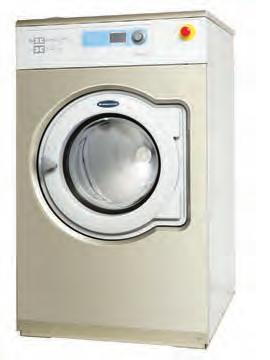
Wascomat’s EX soft-mount washers – in 45-, 60- and 75-
pound capacities – offer up to 350 G-force extractions for fast drying. And for guest laundries, the 22-pound-plus Crossover by Wascomat is a small-chassis washer engineered for commercial use. It stays in balance and will not over-suds, Laundrylux says, and it is built to last 15,000-plus cycles. laundrylux.com 800-645-2205
eDro
The EDRO DynaWash®openpocket, soft-mount CSL60 washer-extractor features high-speed extraction speeds of more than 300 G-force through an efficient inverter with a single motor drive setup, the
14 FEBRuaRy 2013 | amERican LaundRy nEws www.AmericanLaundryNews.com
Wehavenowstrategicallypartneredwith HBDConstruction, whoiscommittedtodeliveringqualityandintegrityonevery constructionproject,fromconceptiontocompletionand FVConsulting,Inc. theefficiencyspecialistforyourlean processimprovements.Wearenowtheoneandonlylaundry servicecompanyinNorthAmericatoofferfullservicesfrom buildingconstructionthroughtoplantoperationsandsupport. BuildingSmarterLaundriesforSmarterOperators. www.eomech.com Or call 978.373.1883 Allofthepieces areinplace. Thebestjustgotevenbetter. GerardO’Neill President/CEO DavidMertens Senior VPOperations
ALN_Tab_half 10/8/12 2:31 PM Page 1 [Huebsch]
[Dexter] ➢
FredericVeau StrategicPartner
[Wascomat]


15,000 POUNDS OF LAUNDRY. 400 CUSTOMERS. 1 WISE INVESTMENT. Serious about laundr y. In a commercial laundry, you don’t just purchase equipment. You invest in it. UniMac is the leader in reliable, energy-efficient commercial laundry equipment. The industry-leading controls and superior performance of our machines allow for increased throughput while reducing labor costs and utility expenses. Optimal productivity and the lowest cost of ownership in the market –now that’s a wise investment. Fo r more information, visit UniMac.com or call us at 1-800-587-545 8. © 2013, Alliance Laundry Systems, LLC. specificallyCustomizedfinancingdesigned foron-premiseslaundry.
company says. The CSL60 also features state-of-the-art DynaTrol Human Machine Interface (HMi) Touch Screen Control V2.0 with isolated electronic enclosure, DynaMount shock-and-spring suspension mounting, a stainless steel basket and wash tub, and a stainless steel cabinet.
The machines can be installed in laundries where the structure is able to support the static weight of a fully loaded machine.
Typical installations include the on-premise laundries of hospitality and healthcare establishments, prisons and correctional facilities, dry cleaning, wet cleaning, and pony machines in industrial and uniform rental laundries.
edrodynawash.com 800-628-6434
size. Combine that with Smart Dosing, the ability to adjust laundry chemicals to water ratio, and a laundry owner will see savings and superior wash results, the company says.
Models include:
• H-model soft-mounts with 18-pound and higher capacities, with up to 350 G-force for ultra-fast drying, and easy installation over basements and on upper levels;
• X-model 220-350G models in 65- and 80-pound capacities feature high-speed performance, and heavyduty construction; and
• S-model 200G washers in 20- to 77-pound capacities that easily install on regular concrete pads or steel bases with bolts.
laundrylux.com 800-381-7222
out-of-balance conditions.
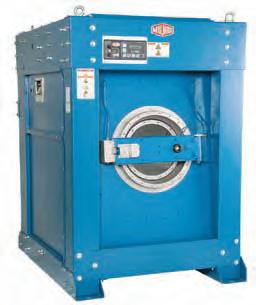
The system also helps produce consistent, repeatable high-speed extracts of 300 G-force. Six speeds allow a variety of fabrics to be processed. The 36026 X8J uses an inverter drive that provides all speeds from just one single-speed motor. The cylinder’s larger perforated area offers higher wash quality, better rinsing and better extraction, the company says. Cylinder ribs are high and provide excellent lifting.
Preprogrammed wash formulas are easy to select through userfriendly controls. The E-P Plus® control also allows for formula modification.
milnor.com 504-712-7656
process, including pre-washing, washing, rinsing, bleaching and extracting, is automatic. Operators can optionally switch between automatic and manual by selecting easy-to read icons such as wash cycle, rinse time, and water level control.
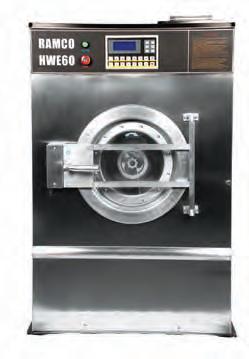
All RAMCO machines are single-motor with variable speed drives. The front seal on the HWE60 and SWE60 washerextractors is a water seal, and the back is an oil seal to provide extra protection. In addition, the cylinder, stainless steel drum and panels are corrosion-resistant, according to the company.
ramcolaundry.com 800-878-5578
and controls water inlets, drain, wash speeds, temperature and water levels to achieve optimum wash result at the lowest possible cost, B&C says.
The HP series of professional hard-mount washer-extractors is available in 60-pound capacity. This model features hard-mount construction, 300-G extraction, inverter drive, and an advanced EL6 microprocessor control.
The SP series, available in 40-, 60- and 100-pound capacities, is a breakthrough for suspended, freestanding washer-extractors, B&C says, with many advanced technological features.
The 350-G extraction brings moisture retention to levels that save significant amounts of energy and time, B&C says. Installation cost is minimal, because there is no need for concrete foundations, waiting for curing, grouting or hole drilling.
SP models use the highly flexible and powerful EL6 microprocessor, and are equipped with SKF CARB toroidal bearings, according to B&C. The SP’s inverter drive controls all aspects of wash operation, resulting in lower maintenance costs and long life, the company adds.
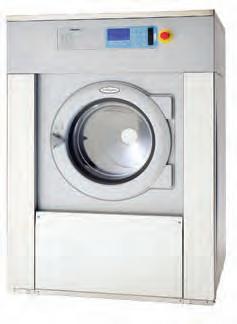
ElEctrolux
Electrolux Professional smart washers, distributed by Laundrylux, weigh a load size and add the needed amount of water, plus feature a laundry chemical controller that adjusts dosing for accurate water ratio each time.
Under-loading washers is a common problem in many laundries, wasting water, chemicals and energy. Electrolux developed AWS (Automatic Water Savings) to match water to load
Milnor
Pellerin Milnor Corp.’s 36026 X8J suspended washer-extractor helps boost washroom production, save overtime costs, and conserve floor space because fewer machines are needed, the company says. The 36026 X8J, like all X-Series models, increases productivity through larger cylinders, and offers a twopoint inverted suspension system to help control vibrations and
rAMco
RAMCO hard-mount and softmount washer-extractors begin at 60 pounds in capacity and include easy-to-follow controls, low noise and movement, 240 G-force (over 300 G-force for SWE models)— which the company says reduces drying time and saves energy— easy installation and operation, and a large door for easy loading and unloading.
The fully auto microprocessor on the HWE60 and SWE60 models are readable and easy to use, RAMCO says. The washing
[RAMCO]
B&c tEchnologiEs
B&C Technologies offers an array of washer-extractors with capacities between 30 and 100 pounds.
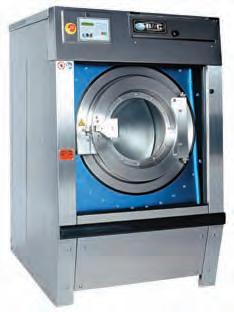
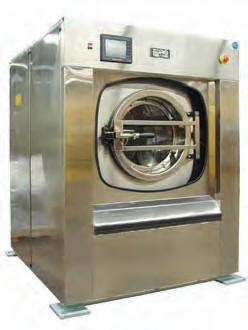
The HE series of hard-mount machines is available in 30-, 40-, 60- and 80-pound capacities. All models feature single-motor inverter drive with 200-G-force extraction and simple microprocessor control. All parts in contact with the wash solution are made of 304-grade stainless steel. The controller provides four chemical signals for external liquid supplies,
bandctech.com 850-249-2222
16 FEBRuaRy 2013 | amERican LaundRy nEws www.AmericanLaundryNews.com
[EDRO]
[Electrolux]
[Milnor]
[B&C Technologies]
Equipment choice can lessen infection risk, utility costs
 By AdAm coLAizzi
LAKEWOOD, Colo. — Every year, hospitals and other healthcare facilities produce more than 5 billion pounds of soiled linens. Laundry managers are consistently updating protocols and procedures to ensure linens are thoroughly cleaned and free of bacteria and other viruses. Various types of bacteria can survive up to 90 days on linens, according to published reports.
According to the U.S. Centers for Disease Control & Prevention (CDC), there are multiple methods to hygienically clean textiles. But each requires an equipment mix designed to incorporate the various processes.
In addition, with a large volume of laundry being processed each year, it’s also important for healthcare organizations to ensure they are being as efficient as possible to keep operation costs low.
With proper laundry equipment and processing protocols, the risk of textiles posing as a source of infection to patients and employees can be greatly minimized, as well as reduce utility costs.
In Hot Water
Experts say that in order to kill bacteria and other viruses on linen, laundry should be washed with detergent and bleach for
25 minutes in water that is heated to 160 F. Studies have shown that bacteria, viruses and even bed bugs cannot survive this water temperature or chemical mix.
If your facility has chosen to use this method, it must be able to test water to make sure it’s reaching the 160-degree requirement, in case the operation is ever audited.
Advanced controls are able to show the exact water temperature inside the washing machine. They also allow users to program fill, wash and rinse water temperatures. Also, the controls – either networked or wireless – can send data to a computer, which allows managers to print reports to ensure protocols are being properly followed in the wash. This option also enables supervisors to provide documentation that its washing procedures meet federal requirements.
If a facility is concerned about water usage, some advanced controls allow users to select from as many as 30 different water levels. Programs such as these will help contribute to a reduction in water costs because employees can select the appropriate water level based on load capacity.
High Extraction Speed
It’s equally critical to make sure machines have high G-force extraction speeds.
This extraction helps maximize water removal from linens in the spin cycle. The
higher the G-force, the more water removed from linens. Newer machines offer top speeds of 400 G-force, the highest in the industry. When maximum water is removed in the wash, dry times are greatly reduced.

The Drying Process
Since textiles are already put through a rigorous washing process, it’s important to use tumble dryer programs that will help linens last longer and avoid expensive replacement costs. The dryer should work as a system with the washer-extractor, using the same control platform to ensure ease of use and optimal efficiency.
When selecting a dryer, look for a balance between drying temperature, airflow pattern and usable cylinder space for maximum energy efficiency.
Some equipment on the market offers over-dry prevention technology, which automatically turns a dryer off once the linens inside have reached the optimal dryness level. Over-drying wastes gas and can damage linens and garments, causing replacement costs to rise each year.
More on Advanced Controls
Advanced controls help laundry managers identify expenses within their operations and pinpoint specific areas where they can increase efficiency and reduce costs associ-
ated with labor, linen replacement, utilities and maintenance. With nearly 50% of costs associated with labor, up to 25% for linen replacement and roughly 13% on utilities, it benefits managers to be able to easily identify inefficiencies or potential problems and correct them fast.
Features such as delayed start allow employees to load washers before the end of their shift and have the first load completed by the beginning of the next day.

The real-time clock feature lets managers see what time each cycle was started and stopped, and the idle-time feature monitors the length of time between the starting and stopping of cycles.
Reduce Risk, Lower Utilities
Healthcare facilities can benefit from taking a hard look at their on-premise laundry operation and working with suppliers and manufacturers to pinpoint areas where they can increase efficiency and reduce costs, and, most importantly, achieve the best results for their patients. ALN
Adam Colaizzi is a sales manager for Clean Designs Inc., a distributor of UniMac commercial laundry equipment in the Rocky Mountain region. He has more than six years of industry experience. He can be reached at 800-4444580, adam@cleandesigns.com.

Lavatec Inc.

300 Great Hill Road Naugatuck CT 06770 - USA
Toll Free: 1 800 255 2515 Tel: 203 723 1122 Fax: 203 729 4977
Email: info@lavatec.com www.lavatec.com

Service: Lavatec, Passat, Washex, Challenge Cook MADE IN USA Lavatec Feeders & Folders Remanufactured Equipment Dealer Inquiries Welcome Master Eclipse Two machines in one Towel Folder Master Fold Spare Parts Ironers U.S. DISTRIBUT0R OF LP571 LX445 Master Eclipse Master Fold
3/9/12 3:34 PM Page 1 www.AmericanLaundryNews.com AmericAn LAundry news | F e B r uAry 2013 17
ALN_Tab_half
OPL 101
and drapes used before disposables were introduced. But today’s reusable healthcare linens, gowns and drapes are superior to those used in the 1960s. Consider the facts:
Reusable surgical textiles meet or exceed AMMI standards. Indeed, reusable gowns and drapes meet or exceed AMMI3 barrier protection standards required in the healthcare environment for Level 1 to Level 4 gowns. And reusable gowns and drapes often offer a more comfortable alternative to single-use disposable gowns and drapes.
LCAs prove reusables have a smaller carbon footprint. In addition, several life-cycle analyses (LCA) have confirmed that reusable surgical gowns and drapes are environmental preferable over single-use disposable products.
The 2009 life-cycle assessment study conducted by the University of Minnesota Technical Assistance Program (MnTAP) examined three areas: cost, environmental impact and infection prevention.
In summary, the research conducted at the University of Minnesota Medical Center4 (2,000 beds and 20,000 surgical procedures a year) found that reusable medical textiles (chemo, isolation and surgical gowns) provided cost savings of $360,000 per year, reduced waste by 254,000 pounds per year, produced CO2 emissions three times less than disposables, and produced carcinogenic emissions 16 times less than disposables (i.e. arsenic, chromium, lead) while offering the same infection prevention attributes.

Case studies build credibility among healthcare profession-

als. A study in the Journal of the American Medical Association reports that about 80% of surgical drapes and gowns now used in hospitals are disposable. It estimates that by using reusable linen products and recycling other items as able, hospitals can reduce surgical waste by 73% in weight and 93% in volume.5
A study in The American Surgeon compared costs incurred by two similar hospitals — one used disposable gowns and the other reusable gowns. Annual expenditures were $66,000 and $25,000 respectively.6
Conversion or Increasing Use

For a supplier or an operator of an on-premise or commercial laundry or laundry cooperative, sharing the facts can warm healthcare clients to the pitch to convert to, or increase the use of, reusable surgical textiles. But they may need hands-on help in getting a surgical textile program started.
They could be looking for assistance with product selection, budgeting, storage layout and inventory levels. Touring a laundry that processes reusable surgical textiles might be beneficial. Their ability to gather information and build support may be the key.
What are some ways to increase use of surgical textiles in the OR?
Reusable Surgical Towels — Offering reusable surgical towels for the OR can be an easy, logical “foot in the door.” Some suppliers now tout a disposable surgical towel that can be reused. Yes, these products can survive a wash or two, but they cannot be compared to a woven, reusable surgical towel for effectiveness, sustainability and durability.
Reusable Surgical Gowns and Drapes — Today’s surgical textiles provide comfort, flexibility,
breathability, safety, fluid barrier performance, strength and durability, and low rates of particle release (linting). Upfront costs for switching to or increasing use of reusable gowns and drapes can seem expensive, but case studies show a well-managed program is actually more cost-effective than using disposables.
For example, the University of Maryland Medical Center moved to reusable textiles in the OR more than 15 years ago, and utilizes a vendor to provide clean, sterilized textiles. In 2010, the Medical Center avoided creating 138,748 pounds of waste as a result of using reusable textiles in the OR, which correlates to estimated cost savings of nearly $39,000 in disposal costs and an estimated $39,000 in returned instruments.7
Custom Surgical Packs and Hybrid Packs — For clients using disposable surgical packs and throwing lots of items in the trash, custom packs (sterile or non sterile) or hybrid packs (including key disposable items with reusables) could be an alternative.
While hybrid surgical packs and increasing recycling of items is helpful, even reprocessed disposables must eventually be thrown away. According to Dr. Rafael Andrade, a general thoracic surgeon at the University of Minnesota Medical Center, Fairview, the larger goal is to resume the old practice of relying on permanently reusable equipment.
“We’re just trying to undo a lot of the damage we’ve done,” he says. To that end, Andrade and a nurse, Lynn Thelen, started an OR Green Team at Fairview. With input from colleagues, they reviewed 38 types of OR packs, identified which supplies were never used (such as plastic basins, catheters, syringes and dressings),
and asked their medical product vendor to remove them. One kit for implanting an intravenous port in chemotherapy patients contained 44 items, but the Green Team downsized it to 27 items and switched disposable gowns and linens for reusable ones. This effort eliminated a pound of trash and $50 in supply costs per procedure. In the first year, the various kit reformulations eliminated almost 8,000 pounds of waste and saved $104,658.8
Quality Assurance — One of the biggest objections to reusable surgical textiles is the belief that they are not as hygienic as disposable items. Stains sometimes don’t come out of textiles, but that doesn’t mean they aren’t clean or their performance is lessened. Education is critical in this area.
According to Barb Fordyce, surgical textiles manager, Healthcare Systems Cooperative Laundry (HSCL) in St. Paul, Minn., once clients are aware of quality control measures followed by a laundry, they are more amenable to using surgical gowns, drapes and packs.
Change is Hard
Healthcare professionals generally have been well trained to use disposable items. For the most part, single-use items are all they have ever known in the OR and many other areas of the hospital.
“Any change is hard for people,” says Ed McCauley, CEO of United Hospital Services in Indianapolis. “But once clients have made the switch to reusable textiles, they are typically happy with the change.”
“Inertia can be a problem,” says Fordyce. “I had a nurse convinced that reusables were the best choice, but she backed out because she didn’t want to do the work the conversion would require. You really need an internal champion on the
client side to push for reusables.” While any change in hospital protocol is a challenge, those suppliers and operators willing to provide training, textile management support and hands-on service can succeed in selling reusable surgical textiles to healthcare organizations. And perhaps the industry can begin to reverse the disposables trend. ALN
Nancy Jenkins is executive director of the American Reusable Textile Association (ARTA), whose mission is to create greater awareness and appreciation for reusable textiles. She can be reached at 863-6605350, njenkins@arta1.com.
Footnotes
1) Tieszen ME, Gruenberg JC, A quantitative, qualitative and critical assessment of surgical waste. JAMA 1992;267:2765-8.
2) Association for Perio-Operating Room Nurses Journal, “Reducing Medical Waste,” June 2010 Vol. 91, No. 6, page 711.
3) Association for the Advancement of Medical Instrumentation. 2005, P. 957-958. Selection and use of protective apparel and surgical drapes in healthcare facilities. Arlington, Va.
4) University of Minnesota Technical Assistance Program (MnTAP), Catherine Zimmer and A.J. van den Berghe, 2009.
5) Tieszen ME, Gruenberg JC, A quantitative, qualitative and critical assessment of surgical waste. JAMA 1992;267:2765-8.
6) Cost Containment in the Operating Room, TAS, Oct. 1992.
7) Reusable Textiles in the OR, The University of Maryland Medical Center, Baltimore, MD, Case Study, Guidance Documents, Greening the OR, Practice Greenhealth, 2011.
8) Dr. Rafael Andrade, surgeon, University of Minnesota Medical Center, Fairview, speaking at CleanMed 2010, organized by Practice Greenhealth, quoted in New York Times, June 5, 2010, issue, reporter Ingfei Chen.
18 FEBRUARY 2013 | AMERICAN LAUNDRY NEWS www.AmericanLaundryNews.com
Continued from Page 1 Reversing DON’T MISS OUT HERE’S WHAT’S COMING UP IN AMERICAN LAUNDRY NEWS... Want to send a press release or submit a story? Contact Bruce Beggs, editorial director, today! Phone: 312-361-1683 E-mail: bbeggs@americantrademagazines. com MARCH Feature: Buyer’s Guide Arguably the most complete, widely circulated guide of manufacturers and unique suppliers serving the laundry and linen industry today. Editorial Submission Deadline — January 15 APRIL Feature: Do You Know Where Your Textiles Are? Those who manage laundry/linen services or textile rental firms find that counting and tracking the goods streaming in and out of their plants improves productivity and inventory control. Showcase: Flatwork Separators/Spreader-Feeders Editorial Submission Deadline — February 15 MAY Feature: Clean 2013 Show Guide Complete listings of the exhibitors, educational sessions and events that make Clean the industry’s can’t-miss show. Plus, our famous show floor map! Editorial Submission Deadline — March 15 JUNE Feature: Running the Route Route operations is an important function of any successful rental or commercial laundry and requires constant attention. Editorial Submission Deadline — April 15
Similar improvements will be found in boilers, dryers and ironers, reducing our use of energy but forcing the industry to quickly utilize the newest technologies.
Government planners will mandate the use of reusable linen surgical packs and other items. Government-run laundries will make and sterilize surgical packs for use in the operating rooms. They will provide reusable underpads and isolation gowns. Every effort will be made to lessen the amount of trash that needs to go into a landfill. New fabrics will be developed that are easier to wash but present additional challenges in the finishing area. Some of these products may eliminate the need for ironers altogether (more on that later).
Washroom chemicals will need to be developed based on their ability to clean and their effect on the environment. All products will have to be biologically safe and have a minimal effect on the environment. This will require our universities to train a new breed of enviro-chemist. These chemists will understand how various chemical properties will affect the environment. Over the years, they will greatly expand our knowledge in this area, as we learn from our mistakes and get better at predicting the unintended consequences of our actions.
Energy

Environmental consequences will be the driving force behind our energy policies. The internal combustion engine will continue to be Public Enemy No. 1.
To effectively reduce pollution from automobiles and trucks, the government will continue to allow oil prices to increase. The steady increase in fuel processing, which will create higher gasoline and diesel prices, will cause consumers and companies to reduce their use of these products. This reduction will be heralded as a major achievement for the environment.
Some companies will switch their vehicles over to natural gas, and this will help for a while. But the current excess supply of natural gas will quickly disappear and the government will move to limit fracking as an environmentally hazardous way to get this energy source.
This energy policy will affect the number and location of government-run central healthcare laundries. These plants will be designed to provide services to healthcare facilities in a welldefined geographic area. Gone will be the days of operating a depot in a far-off city! Distance and weather-related problems will determine the location of healthcare laundries. Gone will be the days of several laundries competing to serve the same geographic
area. Each area will be carefully planned, and healthcare providers will find themselves assigned to the government-run laundry in their area. The government will do away with the VA laundry system.
Nursing homes and other non-acute care healthcare facilities will also be directed by the government into one of these government-controlled laundries. The power of the U.S. government will be based on the control it can exert as a single payer.
Textiles

It does not take a lot of imagi-
nation to see the development of a new line of products that will enhance the healing process and decrease bed sores. The current reimbursement system will penalize facilities for skin care problems that develop during a patient’s stay in a facility.
Recently, I have seen several linen items just coming to the market that have clinical proof of their success in this area. The washing and finishing requirements for these products are dramatically different from our traditional linen. Early prototypes do not require the use of an ironer to finish the sheets, and




they dry much faster than traditional linens.
The driving force in this area will be the improved health of patients due to their use of this type of linen. I predict that healthcare facilities will demand that laundries provide these items despite being more expensive for the laundry to purchase and driving up the cost per use over traditional linen items. The added cost of treating in-hospital skin problems will make these higher linen costs seem like a small investment.
My favorite Star Trek movie calls the future the “undiscovered
territory.” We are free to dream and make it whatever we want. It’s my belief that the forces I cite in this article will impact the laundry industry as described unless we do something to change the current course of human events. I happily leave those efforts to others.
Eric Frederick is director of laundry services for Carilion Laundry Service, Roanoke, Va., and a past president and manager of the year of the Association for Linen Management. You can reach him by e-mail at efrederick@ carilion.com.
www.AmericanLaundryNews.com AmericAn LAundry news | F e B r uAry 2013 19
ALN continued from Page 4 year 2033 The American Reusable Textile Association ✦ Founded in 1982 OUR MISSION STATEMENT: To create greater appreciation and acceptance for reusable textiles 863-660-5350 • www.arta1.com The association is composed of all companies associated with reusable textiles: Launderers • Management/Consulting Firms • Fiber Producers • Mills • Fabricators Laundry Equipment Manufacturers • Distributors • Detergent and Chemical Manufacturers JOIN TODAY! You’re Invited! Join Us at Clean 2013 in New Orleans! Friday, June 21 ARTA/HLAC Breakfast Meeting 7:30 a.m. Location TBD Education Session “How to Control Linen Losses and Abuse” Convention Center 9 a.m. - 10 a.m. Room TBD June 20-22 • ARTA Booth at Clean 2013 Booth #1655 Convention Center Questions? Call Nancy Jenkins @ 863-660-5350 ARTA, PO Box 1142, Mission, KS 66222 0213aln_ARTA.indd 1 1/21/13 1:13 PM





20 FEBRua Ry 2013 | amERican LaundRy nEws www.AmericanLaundryNews.com www.cornerstonemachinery.com Quality used and reconditioned equipment Rigging and relocation services Satisfaction guaranteed Complete inventory on our website Please call or email John or Eric john@cornerstonemachinery.com | eric@cornerstonemachinery.com 877-773-1850 distRiButoR oFFERings PARTS, PARTS, PARTS Huge stock of parts for most laundry equipment & boilers. Also traps, valves and lubricants. Overnight delivery. Our 53rd year. Steiner-Atlantic, 800-333-8883 Fax: 305-751-8390 www.steineratlantic.com WASHEX PARTS Hard-to-find Washex parts, on-site rebuilding, tech support. LAUNDRY PARTS CENTER 800-352-4492 Fax: 305-827-3991 classified advertising www.directmachinery.com For pricing, please call Ron Hirsch (516) 938-4300 Office • (516) 315-7426 50 Commerce Place • Hicksville, NY 11801 Fax (516) 932-8095 QTY DESCRIPTION Excellent Preowned equiPment WILL SELL QUICKLY 4 Milnor 120lb Steam Dryers 2006 1 Chicago Skyline S-10 Two Lane 1 Shaper Steam 12” Ironer by 120 1 Milnor 110lb. Soft Mount 2000 1 Air Chicago XL Blanket Folder/Small Piece Folder 1ea. Chicago Comet & Champ Ironer - Gas 1ea. Wascomat Soft Mount 30lb & 50lb Washers 1 Colmac CFS 150 Steam Tunnel 1 Washex 46/110 700lb Side Loader 2004 1 Cissell 55lb IPH Solid Mount Washer 2006 2 Milnor 42026V6J 140lb Washer 2005 Pictures are on Website DIRECT MACHINERY SALES CORP. The Griffin Group, Inc. “Recruitment Specialist” All positions available in the Rental Uniform/Textile Industry Call Deana Griffin 888-235-2365 www.thegriffingroup.cc deana@thegriffingroup.cc ® EquipmEnt FoR saLE paRts FoR saLE positions avaiLaBLE EquipmEnt FoR saLE Outside
Representative
sales
SALES Laundry Machine Parts, Textiles and Ironer Supply sales. Various locations and openings. Must have previous sales experience and recognized as a top performer. Spanish a plus. Salary plus commission, bonus and benefits package. Please send resumes to: cprunk@cicus.com. AMKO AMERICA, INC. Remanufactured Finishing Equipment Delta Ironers, Omega Folders & Towel Folders (1 year parts warranty) Like new at half the cost. PARTS, IRONER SUPPLIES & NEW EQUIPMENT ALSO AVAILABLE Contact: (561) 863-9696 jurgenb@bellsouth.net Call Craig Lloyd toll free at (877) CWL-LOYD between 9 a.m. – 9 p.m. EST. Please visit www.laundrycareers.com to review current industrial/institutional laundry management openings. ADVANCE YOUR CAREER View photos of entire inventory at www.washburnmachinery.com 1-800-245-8425 or e-mail: sales@washburnmachinery.com (1) 2004 CHICAGO TRISTAR 24PCS STEAM IRONER WITH OPL (1) 2010 CHICAGO GO13FX120 GAS IRONER FRONT RETURN (1) 2002 CHICAGO PIK QUIK SHEET SEPERATOR (1) 2007 CHICAGO KING EDGE SPREADER FEEDER (1) 2002 CHICAGO AIR CHICAGO SMALL PIECE FOLDER (1) 1999 CHICAGO AIR CHICAGO SMALL PIECE FOLDER (1) 1993 CHICAGO AIR CHICAGO SMALL PIECE FOLDER (1) 2000 CHICAGO 66” COMET ELECTRIC IRONER (1) 2011 UNIMAC UD13Fx79 GAS IRONER (2) 1993 UNIMAC UW85PV WASHER 480 VOLT (1) 1997 UNIMAC UW100PV WASHER 480 VOLT (2) 1997 UNIMAC UW85PV WASHERS (2) 2007 MILNOR MWR18E4 40# WASHERS (1) 1996 MILNOR 36026Q6J 95# WASHER (1) 2008 CISSELL CTO75EQT ELECTRIC DRYER (1) 2007 ADC ADG120ESD 120# GAS DRYER 480 VOLT (1) 2006 B&C HP-60 HARD MOUNT WASHER (1) 2000 UNIPRESS DLZ DOUBLE LAUNDRY LEGGER (1) 2000 UNIPRESS DTZ DOUBLE LAUNDRY TOPPER (1) 2002 UNIPRESS CRD ROTARY DOUBLE BUCK positions avaiLaBLE www.ineedjpequipment.com 1-800-925-3236 J.P. EQUIPMENT INC. We will buy/sell/trade EQUIPMENT FOR SALE: (1) 1994 Six-MOD Milnor Tunnel 110 lb w/150 lb Centrifugal Extractor plus Dryers - Complete System GREAT TO DO MATS! (1) 1994 Braun 2 way tilt Pass-Through Gas Dryer w/Built-in Lint Trap (1) 2003 Kannegiesser 12 Mod Tunnel Model: PT50-12BT (1) 2005 Kannegiesser Feeder (1) 120 lb ADC Steam Dryer, great shape. (1) 2003 Jensen Extreme Feeder w/Blanket Folder System (1) Stacker/Conveyor - All New Belts (1) 1994 8-Mod Milnor System – READY TO PROCESS (1) 2004 240 lb. Washex - Ready to Ship (2) Hypro II 6-Roll - Both Inverter Driven (1) 2005 Washex 48” 2-Roll (1) 2000 Chicago Imperial 232 Steam Ironer (1) 2000 Chicago Air (1) Chicago Pik-Quik or 2001 Recently Refurbished: (2) 1999 95 lb. Gas Dryer - Rebuilt Ready to Ship (2) Milnor 110 OP Soft Mount New Seals & Bearings - Painted, tested We want your used equipment, please call or e-mail. “Why buy new when you can trust our used” Stanco Industries, Inc. Serving The Textile Trades Since 1970 stanco2626@aol.com 260-420-1232 Fax Visit Our Website: www.stancoind.com -------------------------------- WANTED -------------------------Stanco needs the following items: Kannegiesser 10-14 Mod CBW System Milnor 12-14 Mod CBW System 4-Lane folder-cross-folders 5-6 Lane Napkin Feeders 5-Lane Napkin Stackers Open-Pocket Washer-Extractors 100hp to 300hp Boilers Direct Contact Water Heaters Chicago Deep Chest Ironers Kannegiesser Deep Chest Ironers ------------- MANY OTHER ITEMS AVAILABLE Stanco Industries, Inc. 800-932-3769 Serving The Industrial Trades Since 1970 Missed our deadline? Place your ad online: www.americanLaundrynews.com
Sales
Interested in a fast growing company with great innovation, drive and teamwork? We manufacture and sell products where your
outreach initiative will be welcomed. We are interested in hiring Outside Sales Reps nationwide, focusing on parts and supplies within the laundry industry. If you have a proven sales track record or are a recent college graduate, please send your resume to mari@cicus.com. No phone calls please.
Sani Wash - McClure Industries, Inc. 9051 SE 55th Ave., Portland, OR 97206 800-752-2821 www.mcclureindustries.com, info@mcclureindustries.com




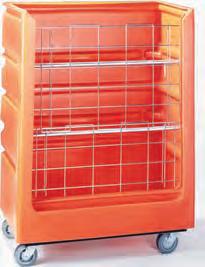












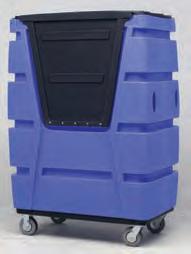





www.AmericanLaundryNews.com AmericAn LAundry news | F e B r u A ry 2013 F e B r u A ry 2013 21 source directory A convenient guide to sources of products and services APPAreL FinisHinG cArTs, TrucKs & BAsKeTs Energenics Corp., Kartwasher 1470 Don St., Naples, FL 34104 800-944-1711 www.energenics.com cHemicALs/inJecTOr sysTems Gurtler Industries, Inc. 15475 S. LaSalle St., South Holland, IL 60473 800-638-7300, Fax: 708-331-1210 www.gurtler.com Pellerin Milnor Corp. P.O. Box 400, Kenner, LA 70063 504-467-9591, Fax: 504-468-3094 www.milnor.com dryers – 100 POunds Or mOre Pack 25% More On Same Size Cart Call 800.829.4535 or visit MODLaundry.com for a FREE QUOTE. Premium Quality Casters Included! 72S Meese Orbitron Dunne Co. Stronger design for big payloads, yet lighter tare weight for easy handling. The Best of Both Worlds TURNABOUT TRUCK Simply reposition the chrome plated shelves to convert from a clean linen delivery to a soiled linen bulk transport truck Easy to load - less stooping and bending l-800-275-2436 RepsAvailable8 AM-8 PM (EST) maxi-movers.com Fax: 631-661-8209 •Email:sales@maxi-movers.com The Cart Guys Chm #9437 Turnabout 3" ALN Class. 1/8/13 12:34 PM Source Directory listings in American Laundry News are sold on an annual basis at the following rates: All Major Credit Cards Accepted 2013 Listings Regular Boldface All Caps All Caps, Boldface Four Line Listing per Year $790 $990 $990 $1,050 Display and additional line rates available upon request cArT-wAsHinG sysTems Sani Trux - McClure Industries, Inc. 9051 SE 55th Ave., Portland, OR 97206 800-752-2821 www.mcclureindustries.com, info@mcclureindustries.com M.I.T. POLY-CART 211 CENTRAL PARK WEST, NEW YORK, NY 10024 800-234-7659, FAX: 212-721-9022 WWW.MITPOLYCART.COM cArTs, TrucKs & BAsKeTs cArTs, TrucKs & BAsKeTs Pellerin Milnor Corp. P.O. Box 400, Kenner, LA 70063 504-467-9591, Fax: 504-468-3094 www.milnor.com dryers – 100 POunds Or Less Rotational Molding Repair, Recycling Your Complete Plastic Solution 11744 Blue Bell Rd. Elberfeld IN 47613 800-304-4600 www.fibertechinc.net Save GREEN, Buy BLACK F-LT67 Laundry Trucks Made from 100% RECYCLED plastic $213.00 Diversified Plastics, Inc. 1309 Highway 917 West, Latta, SC 29565 800-768-7636, www.dpirotocarts.com E-mail: sales@dpirotocarts.com, Fax: 843-752-7798

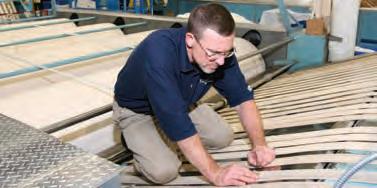











22 FEBRua Ry 2013 | amERican LaundRy nEws www.AmericanLaundryNews.com Source Directory listings in American Laundry News are sold on an annual basis at the following rates: All Major Credit Cards Accepted 2013 Listings Regular Boldface All Caps All Caps, Boldface Four Line Listing per Year $790 $990 $990 $1,050 Display and additional line rates available upon request source directory A convenient guide to sources of products and services FLaTwORK iROnERs The latest news, straight to your inbox, 2X a week Setting the Standard in Lint Filters for 25 Years • Hotel • OPL • Coin Op • Dry Cleaners • Industrial • Commercial • Cruise Industry Dry or Wet Style Filters to Work with “ALL” Dryer Sizes or Multiple Situations, Fiberglass or Stainless and Custom for Unique Situations! All manufacturing done on premise 800-826-1245 www.cleancyclesystems.com • ccsystems@tqind.com C & W EQUIPMENT (800) 443-3573 FLATWORK IRONER SPECIALISTS REMANUFACTURED IRONERS: Super Sylon Sylon Hypro’s Super Pro Jensen SS700 SS800 Ultima Lavatec UPGRADE KITS: Chain Drive Conversion Vacuum Systems Herringbone Conversion Canopies Inverters Side Covers Roll Springs Jensen Drives SUPPLIES: Aprons Pads Covers Belts Waxes Cleaners PARTS/REPAIRS: All Brands New/Refurbished/Hard to Find paRTs 800.829.3864 www.Tingue.com KnowhowInAction TALLEY M ACH INERY YourTinguerepisafullytrainedmasteroffinishingequipment operation,maintenanceandinstallation.Callfor: •Pads,covers,belts,waxes,tapesandmore •Carts,trucks,basketsandbags •Parts,rebuildsandrepairs Tingue_Knowhow_3x3_ads:Layout 1 2/12/10 12:05 PM Page 1 FLaTwORK suppORT www.olekbelts.com 1-800-869-2683 Free www.olekbelts.com We’re your flatwork finishing and conveying O.E.M. Belt Match H.Q. Get the real thing for a Lot less $$$. O.E.M. Needlefelt Ironer Pads too! Better Belts, Better Prices, Better Service Visit our Website or Call 1-800-869-2683 For free, no obligation, price quotations and for your Free copy of our Product Catalog with over 40 samples. Ironer pads, covers, aprons, guide tapes, carts, slings, cleaners, waxes & more… LinT cOLLEcTORs & FiLTERs AmericanLaundryNews.com More than 5,250 unique visitors monthly! H Our In-Line Lint Filter mounts inside, saves space! H Fiberglass Wet Filters - 6,000 to 40,000 cfm H Fiberglass or Stainless Steel Dry Filters ENERGENICS CORPORATION Talk with our Design and Engineering Staff about your needs. Hundreds Sold Annually. 800-944-1711 www.energenics.com Get the info you need online... AmericanLaundryNews.com 0113aln_aln.com_class.indd 1 paRTs COMMITTED TO EXCELLENCE
Corp. P.O. Box 400, Kenner, LA 70063 504-467-9591, Fax: 504-468-3094 www.milnor.com

Pellerin
LaundryCareers.com


Pellerin Milnor Corp.
P.O. Box 400, Kenner, LA 70063 504-467-9591, Fax: 504-468-3094 www.milnor.com
Pellerin Milnor Corp.
P.O. Box 400, Kenner, LA 70063 504-467-9591, Fax: 504-468-3094 www.milnor.com
Pellerin
www.AmericanLaundryNews.com AmericAn LAundry news | F e B r u A ry 2013 23
wAsHer-eXTrAcTOr – 100 POunds Or Less wAsHers – cOnTinuOus BATcH TyinG
UsA, inc. Milwaukee, Wi Tying, Banding & Automated shrink Wrap systems 800-843-5667
For more information visit us at
wAsHer-eXTrAcTOr – 100 POunds Or mOre
mAcHines Felins
sales@felins.com
www.felins.com
Milnor Corp.
P.O. Box 400, Kenner, LA 70063 504-467-9591, Fax: 504-468-3094 www.milnor.com
Presses – eXTrAcTiOn source directory A convenient guide to sources of products and services PLAnT desiGn & insTALLATiOn Source Directory listings in American Laundry News are sold on an annual basis at the following rates: All Major Credit Cards Accepted 2013 Listings Regular Boldface All Caps All Caps, Boldface Four Line Listing per Year $790 $990 $990 $1,050 Display and additional line rates available upon request contact us to book your ad today! dfeinstein@americantrademagazines.com 312-361-1682 rAGs wAnTed FOr cAsH Or TrAde American Laundry Systems www.eomech.com 14 ARTA
19 Cornerstone Equipment & Rigging www.cornerstonemachinery.com 20 Direct Machinery Sales Corp. www.directmachinery.com 20 Ecolab
13 The Griffin Group, Inc. www.thegriffingroup.cc 20 G.S. Manufacturing
16 Gurtler
7 IES
10 IPSO
8 J.P. Equipment
20
16
Milnor
www.arta1.com
www.ecolab.com
www.gsm-cart.com
www.gurtler.com
www.iesclean.com
www.ipso.com
www.ineedjpequipment.com
Kemco Systems www.kemcosystems.com
www.laundrycareers.com 20 Laundrylux info@laundrylux.com 11 Lavatec Inc. www.lavatec.com 17 Lavatec Laundry Technology www.lavatec-laundry.com 24 LG www.lgcommerciallaundry.com 5 Maytag www.maytagcommerciallaundry.com 9
McClure Industries www.mcclureindustries.com 8 NATCO www.nationalcombustion.com 18
Pellerin Milnor www.milnor.com 3
company web site Page company
Page INDEX OF ADVERTISERS
.com
Stanco Industries www.stancoind.com 20 UniMac www.unimac.com 15 Washburn Machinery Inc. www.washburnmachinery.com 20
web site
www.


















The technical quality and reliability are expressed through enhanced processing performance and extended service life. Unmatched economic efficiency State-of-the-art ergonomics Innovative Technology. Excellent New Design. TT Series Ecodry: The new era of laundry machines. Machines – Systems – Components www.lavatec-laundry.com LavatecLaundryTechnologyInc.,49LancasterDrive,BeaconFalls,CT06403,Phone(203)632-8777ext.201, Fax (203) 632-8775, Mobile (203) 808-0983, m.thrasher@lavatec-laundry.us Unmatched economic efficiency State-of-the-art ergonomics Space-saving flexibility
