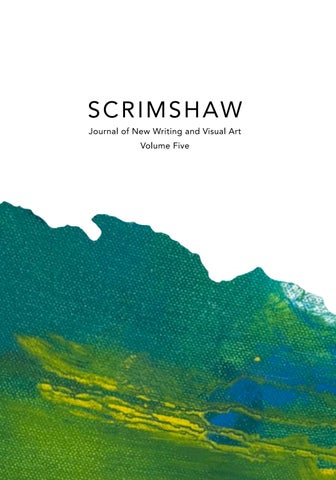
SCRIMSHAW
Journal of New Writing and Visual Art
Volume Five
© Copyright, Atlantic Technological University, 2026
ISSN 3088-6937 to Scrimshaw: Journal of New Writing and Visual Art.

Editors-in-Chief
Emily James
Melissa Breen
Editors
Dean McMorrow
Natalia Grobelska
Tara-Fay Ní Riain
PR and Social Media
Gemmaclaire Haverty
Graphic Design
Karolína Staňková
Rozálie Kohoutková
Introduction
Welcome to Scrimshaw Volume Five,
Since the first volume of Scrimshaw five years ago, the journal has brought artists and writers together and given them a platform to showcase their work. However, it is more than a journal: it is a community—supported by ATU and the Students’ Union—where contributors and readers from around the world connect.
As this year’s Editors-in-Chief we thought a great deal about our contribution to the growth of this community. We have encouraged a broader variety of work by promoting new categories for film and music, by including pieces as Gaeilge for the first time, and bringing the journal to a wider audience. The results are not just in the volume you have before you, but in the new connections we made with people in ATU and beyond, as well as with organisations like the Irish Writers’ Centre.
By design, the only unifying concept is that nothing should take more than five minutes to read, watch, listen to, or otherwise engage with. You are as likely to find work inspired by these uncertain times as you are to find beauty in the everyday. Gothic eeriness sits alongside comedy; one piece might break your heart a little, while another might mend it.
So, we hope that whenever you have a few minutes, you’ll come back here and find something to inspire you, to make you think, to make you feel. Most of all though, we hope you enjoy reading it half as much as we’ve enjoyed making it.
Go raibh míle maith agat,
Emily and Melissa Editors-in-Chief
Scrimshaw Journal of New Writing and Visual Art


BY THE RIVER AT 1 AM
Fanni Dominika Varga
The night stumbles with me, drunk on Guinness and ghosts, and I am someone else for a while, all laughter and perfume, lipstick half-wiped by pint glasses, pretending I belong to the noise.
Now the crowd is gone. Only the fog remains, curling like smoke around the river. My last cigarette died. Somewhere between laughter and silence, and I miss it more than I should.
The water’s black, same as the sky, can’t tell where one ache ends and the other begins. My perfume still clings to me, too sweet, too foreign, like a lie I told earlier to sound interesting.
quiet here, quiet enough to hear how empty youth can sound.
Everyone says these are the golden years, but they don’t mention how heavy it feels you’re carrying it alone.
SLEEPING/LEAPING
Celeste Augé
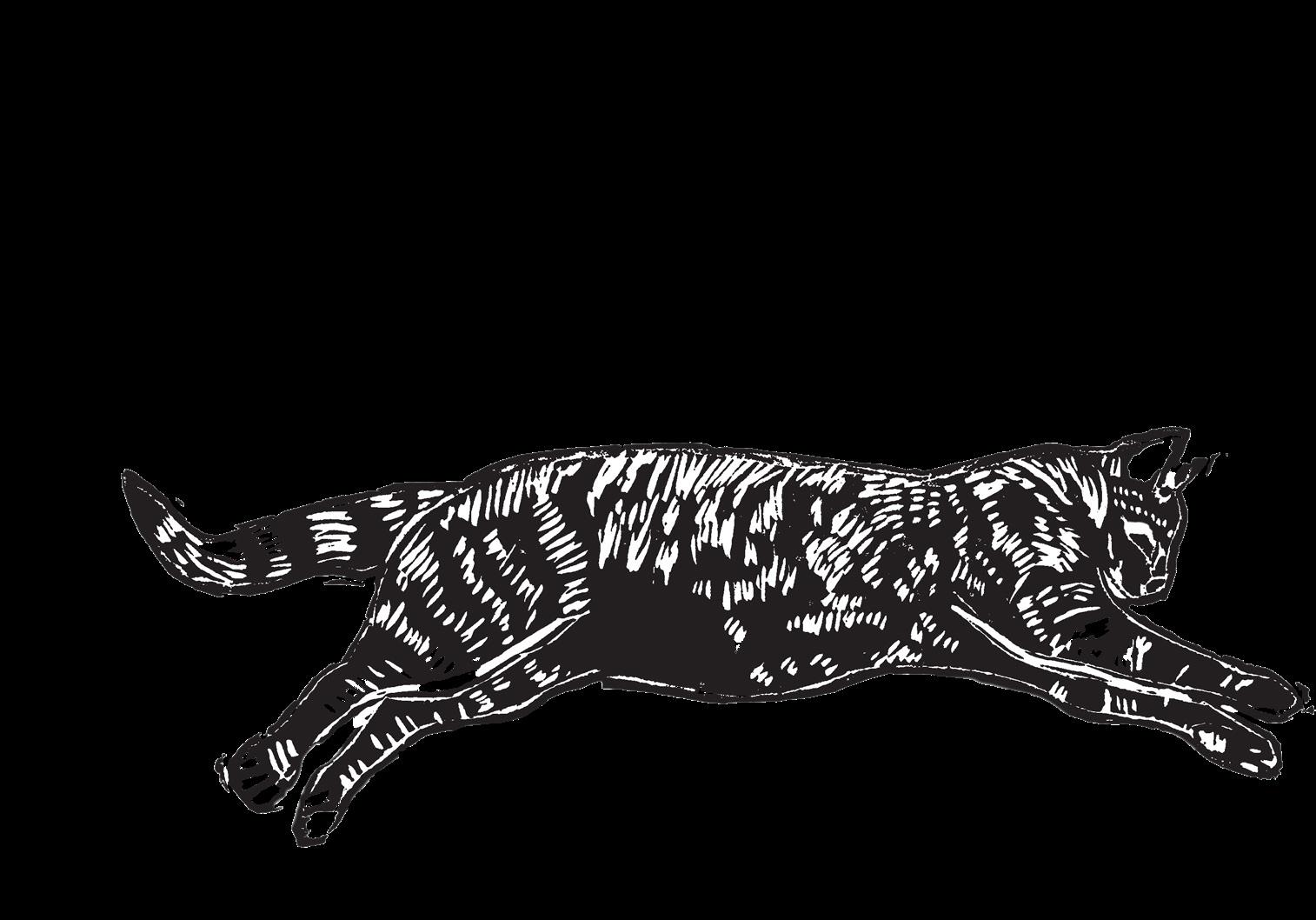
the art of ambiguity is best expressed by the unselfconscious (and the lazy) but what do I know?
THE LOST BUTTON
Amanda Nolan
Settled in her armchair by the fire, Sheila set about sewing the button onto Jim’s old cardigan. She lifted the needle closer to her eyes, stabbing the thread at it. It was more trial and error than precision, and she experienced a fizz of satisfaction when she eventually succeeded.
Outside the wind had picked up forcing the rain against the window in a slap, slap pattern. The radio crackled and momentarily the lights flickered.
She pinched the needle between her lips, carefully positioning the vagrant button in place. As she drew the needle towards its target, her fingers slipped and the button hit the floor with a plink. She watched it roll across the tiles, then with one final pirouette, it came to a stop underneath the other armchair. Jim’s chair.
‘Damn,’ she swore, and balled up the cardigan, needle and all, flinging them at her feet.
‘It’s not like you are going to wear it anyway,’ she said out loud. The button winked at her from beneath the chair. Her eyes shifted to the seat, the imprint of Jim’s bony arse still visible in the wrinkle of the cushion. His glasses and novel were still on the side table. She heard the bang, bang of the little side gate catching in the wind and muttered, ‘that’s all I need!’ knowing she would have to venture out to secure it.
It was at that moment Jingles entered. He stopped in front of her, stretching lazily, arching his back. He looked at her, an air of privilege about him. He had turned up at Christmas, wet and half starved. Jim had welcomed him like a long lost relative. He devoted hours to that cat; feeding, grooming and playing with Jingles like he had nothing better to do. Now this plump and glossy coated intruder was a permanent resident.
They both looked at the empty armchair. Jingles, perhaps in a moment of defiance or opportunity, took a tentative step towards it and with one quick glance over his shoulder, sprung into the chair and settled himself neatly into the dip in the cushion.
‘Make yourself comfortable, why don’t you?’ she scolded, but his only response was to set about licking his paws, stopping to look at her every now and then.
Gripping the arms of her chair, Sheila heaved herself up, standing for a moment getting her balance. The room was small and she had begun to rely on the furniture to aid her as she moved around it. She picked up the cardigan again and gave it a shake, the carefully threaded needle coming loose and tinkling quietly to the floor.
She pulled the cardigan about her and inserted her arms into the sleeves letting them dangle past her fingertips. The smell of the wool, and the comforting musk of Jim, enveloped her and she stifled a sob. She shuffled unsteadily towards the fire, one hand resting on the mantelpiece, the other reaching for the poker. She used the long arm of the cardigan like a glove and tended the embers before turning her attention to the cat.
‘Don’t you be getting big ideas,’ she told him. He eyed her carefully, adjourning his bath, a little less smug now that Sheila was out of her chair and standing so close with a poker in her hand. She rested the poker against the wall, leaning on the mantel, her shoulders sagging with the weight of loss. Her gaze trailed over photos of nieces and nephews, in communion dresses or graduation gowns, before resting on a small, framed photograph of Jim, his playful grin creasing his well-lined face.
‘You miss him too, don’t you?’ she whispered to Jingles, but he just closed his eyes and pretended to be asleep.
At the door she stuffed her feet into a pair of old clogs. Jim’s walking stick was leaning redundant against the wall, and she grabbed it now needing to put it to use. It wasn’t far to the gate taking her under a minute to reach it and secure the latch in place. The wind tossed the
smell of smoke in the air. Shapes in the darkness identified themselves: the crumbling byre wall, the leafless trees bending to the will of the weather, and the bench snuggled against the gable waiting for a better day.
She lifted her face to the sky, the rain needling her skin, the wind whipping her hair. She opened her mouth and howled and roared until the wind carried her rage away, laying her grief like a carpet across the stone walls and fields, and out over the lake.
Back inside she hung the now wet cardigan on the back of a kitchen chair. Cards and envelopes littered the table. It didn’t seem right to put them on display like she did at Christmas or on his birthday. She felt the gap of him as she looked at those cards, envelopes addressed to her, the Mr gone from the Mrs. The spaces he left behind were everywhere – in his slippers by his unused side of the bed, in his favourite mug, unfinished crosswords, and his phone permanently silent. She pushed her wet hair back from her face.
‘It’s wild out there,’ she said to the cat. Jingles opened one eye, regarding the state of her. He didn’t move, secure now in his elevated position.
Sheila and the cat regarded each other for a moment. Talking to the cat wasn’t unlike talking to Jim, he often didn’t answer either. She considered this new companion and moving closer reached out tentatively, giving one light stroke to his fur.
‘Think I will head to bed now,’ she said, and Jingles purring contentedly didn’t stir as she carefully picked up Jim’s book and glasses and said goodnight.
MOODY BLUE
60 x 110cm Acrylic and iron ore on chipboard
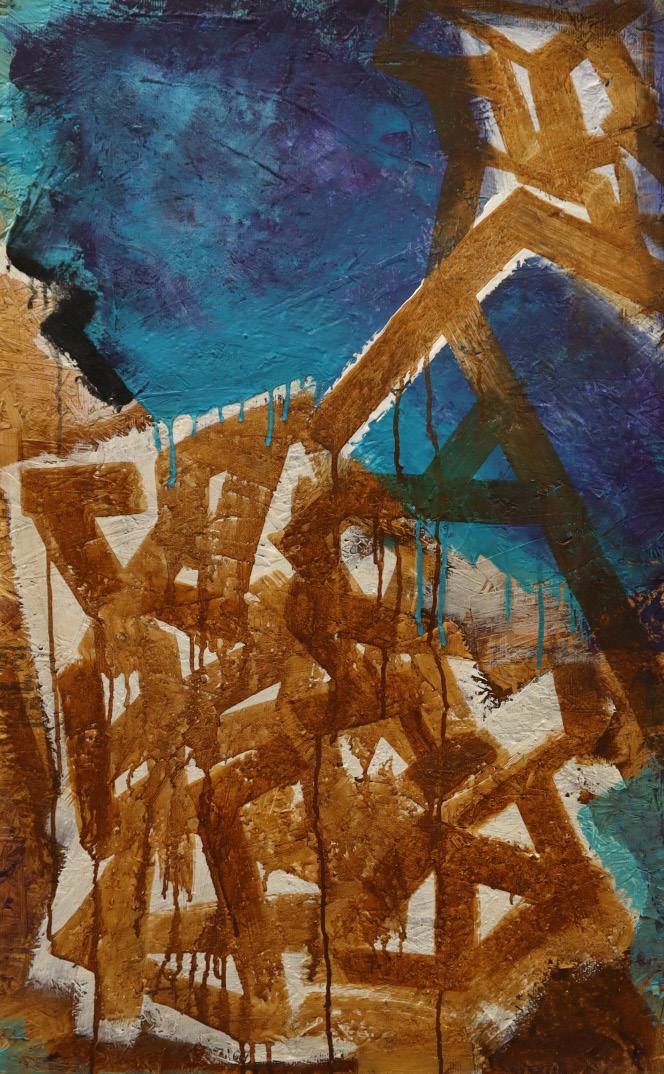
Hannah Forde
WOODEN HEART
60 x 110cm Acrylic and iron ore on chipboard
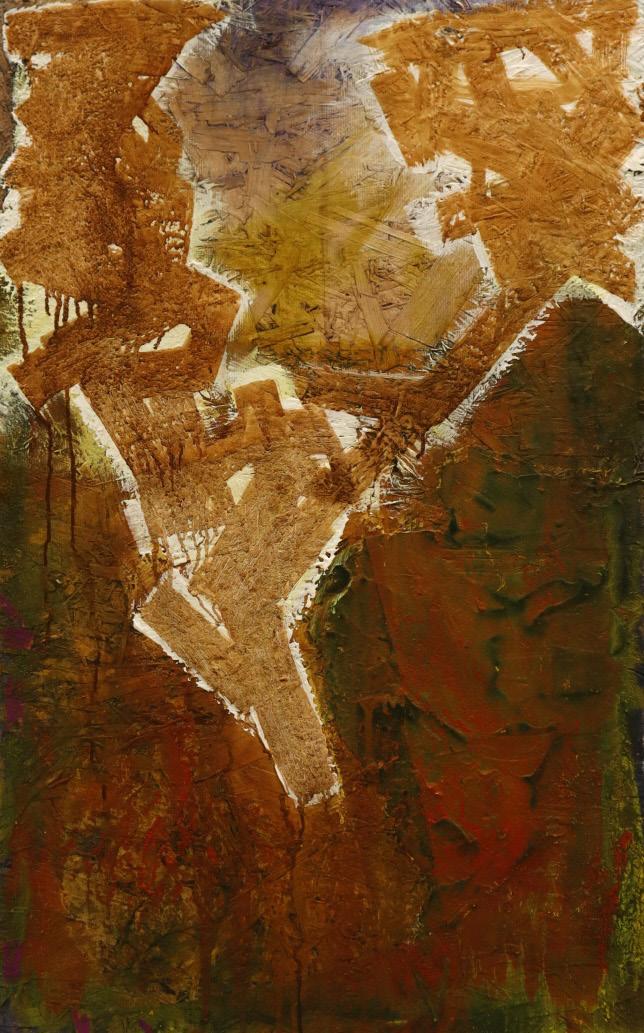
Hannah Forde
TATA
Ivana Hanjs
I bought a house, Tata—a small place with lavender pots lining the front. When the sun warms them, the air fills with that familiar Mediterranean breath you loved. The old shed, once worn and stubborn, now glows under a coat of magnolia. I keep picturing roses climbing up its side, reaching for the light, the way you always taught things to grow.
The kitchen is alive with green. It’s my refuge, cluttered with herbs and the soft hum of home. I’ve learned to make your pastries, every fold and pinch committed to muscle memory, yet when I stand at the counter, I freeze. I see your hands instead of mine, steady and sure, shaping dough that seemed to rise simply because you were near.
Benny still trots after me everywhere with his fluffy tail wagging behind him, loyal as ever. Bow has wandered beyond us, as loved in leaving as in living. There’s a new dog now-soft, fluffy ears, curious eyes - and somehow the house feels fuller again, as if life keeps insisting on joy.
I still watch horror films late at night. They were our quiet rebellion - the jump scares, the shared laughter, the ritual of raiding the fridge when the credits rolled. The films haven’t changed, but the space beside me has, and the thrill now carries a tender sting.
So much has happened, Tata. I have a daughter—bright, warm, fierce in all the best ways. I see flickers of you when she laughs without restraint, when she reaches out for the world with both hands. You would have adored her. I wish you’d had the chance.
My life is full—a home, a family, a chorus of small blessingsut I would lay them all at your feet for one more slow walk, one more conversation drifting into dusk.
Since you left, memories come like tidewater: first a gentle pull, then a rush that knocks me still. They heat the room, then cool just as quickly, leaving me in the sharp truth that I move through seasons you do not. I get spring mornings, pastries I can bake but don’t, new horror films, music that finds me. You get only what we have already lived together.
So, I gather those moments like berries, sweet and fleeting, and hold them close because they are all that remain. Lavender will spill wildly across the garden, just as it once did in our vineyard before the strawberries conquered every corner, a reminder that beauty thrives even in the untidiest places.
This house is my shelter for now, solid and warm, but my heart keeps tilting toward you. Oh, Tata… how I miss the scent of dough rising under your touch—yeast, warmth, patience—the quiet magic of a world that felt whole simply because you were in it.
Tata is a Croatian word for ‘dad’.
DRIFTING THOUGHTS
Stuart Farrell
A piano track written for the memorial compilation on Árni Grétar Jóhannesson founder of the Móatún 7 record label in Iceland.

https://bit.ly/4ajXoHN
SOUNDS FOR THOUGHTS
Stuart Farrell
Ambient piece written for those late Sundays or early morning commutes.

https://bit.ly/4rjgAv8
BOTANY
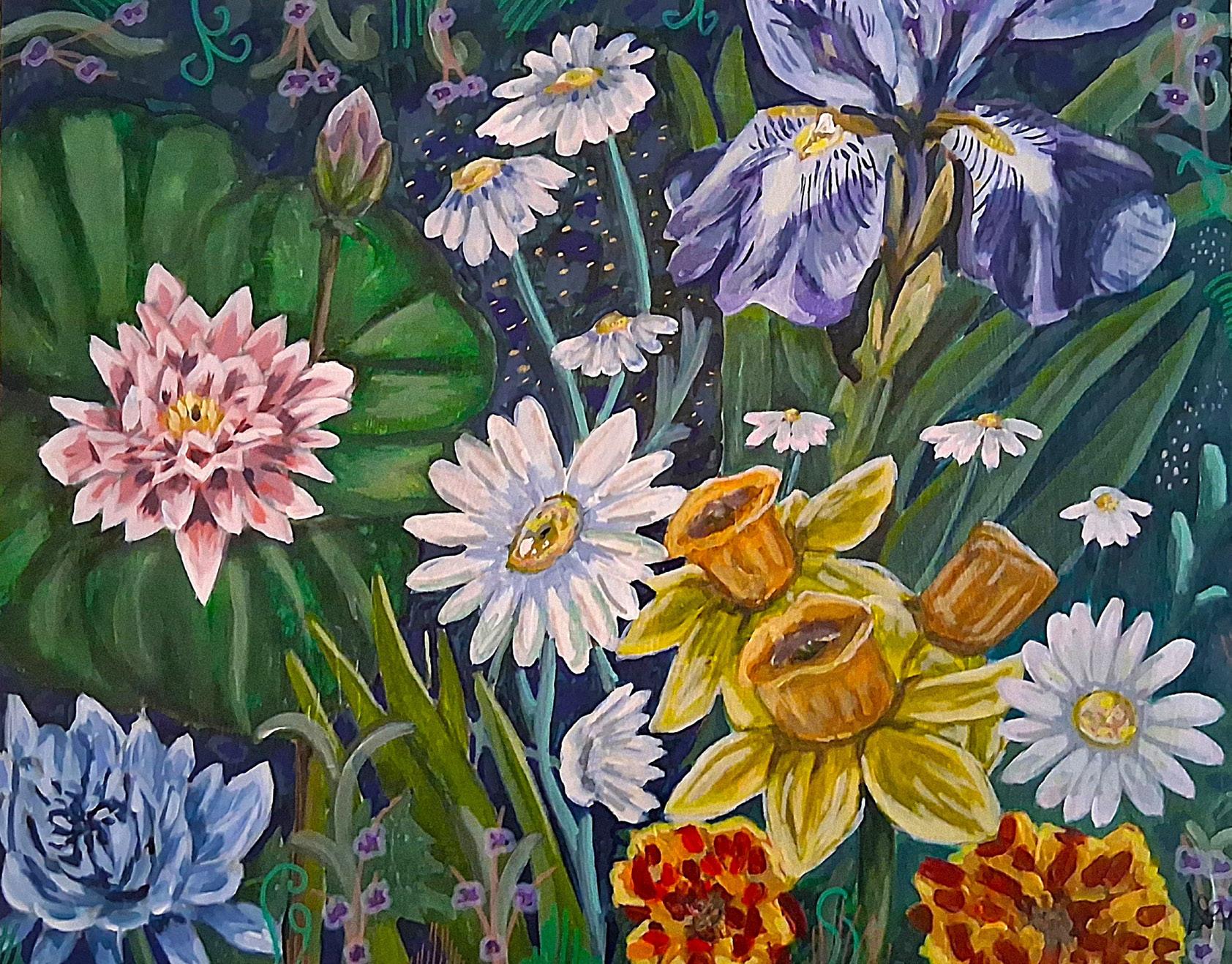
Aoife Toner
40 x 50cm Acrylic on canvas
BY THE CANAL ON NUN’S ISLAND
Barbara Dunne
Two swans among last year’s reed dregs.
One curled, eyes closed on a round rush nest, her long neck curving down onto her chest.
Resting, while her heat keeps her eggs
safe. A little distance away her mate stays quiet, immobile as white marble. Almost.
Watchful in the water, dedicated to his post.
At this tranquil scene, I stand and gaze.
He turns his head and casts an eye over me and the wind dances between them, carefree.


Baile do bheacaín beag ag fás ar do dhroim agus óstán na bhfeithidí.
Cuitear do shaol bun os coinn.
Do lámha ag síneadh amach
chun a liú a bhriseadh.
Bacaigh iad faoin meáchain
do coirp láidir. Méara géara tite scaipe, timpeall mo chosa.
An bhfuil tú suimhneach anois agus tú briste agus ag meath?

WORKING AMONG THE TREES
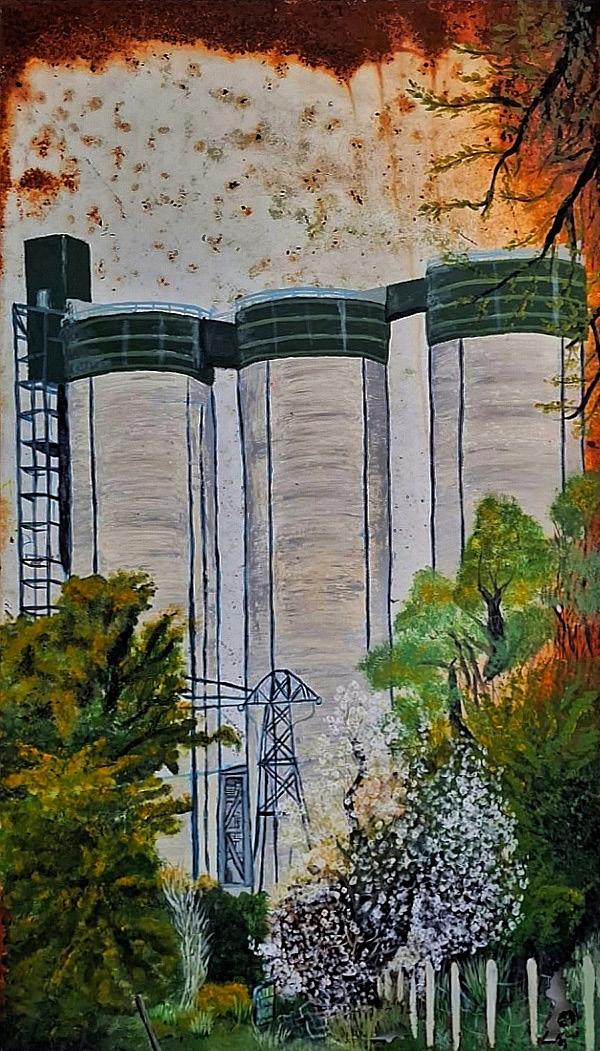
Marie Murphy
Acrylic on metal sheet
NEURAL LATENCY
Tara-Fay Ní Riain
The city-lime zest, spritzes, Its bitter-living chemicals afresh, Stood before tech’d male optics, Is thorn danced canary flesh.
In the zoo of disco, killing time
We are cruciform devoid, As children choke on wind chimes, We are skull-mercury-alloyed
Life, diodic, unthinking, And me, a hot-fevered roach, The sweet neon-ether, unblinking. We are forever-pests smoking chrome.
I return to the glass house dashed, My LCD lips splintered and crook, In voltage nap you crash. From hope and home, unplugged.
THE PLAIN
Tara-Fay Ní Riain
I sat happy as a freshly misted bulb atop the grass in the dawn light. Still clutching the femur bone, I watched the twirling wisps rising off the different piles of plane debris scattered around the plateau.
I turned to the collie beside me.
‘Unrelated to the crash, but I have always preferred travel by sea. Not by sail, but by rowing. I like to feel myself pushing and dragging my way to where I am going, not skimming across it’.
I answered for the collie.
‘Well, it is no wonder then, unrelated to the crash, that you do not prefer travel by sky, because it is even more ungroundedly skimmyish than sailing. It is a completely shot mode of travel. Even the gliding parts feel undesirable and tasteless!’
‘I completely agree collie! It is such an overly engineered glide, unnatural and surely a stolen design’, I replied.
The femur beneath my palm held me upright. Its fat ended knub fit perfectly inside my balled-up hand. I felt what it feels like to begin a relationship with a new heirloom. In time, I will engrave along its sides, though I will have to practice on wood first.
‘That is a fine herding cane you have there’, the collie said.
I tried to take my mind back to boarding and pinpoint what giant this stretch of bone had belonged to.
I stole a glance at the collie and felt a little on the fence about the gnaw marks it had left on my new possession. It added character and I appreciated that it had come to me stripped of flesh, but it was a tad slimy and more weathered than it ought to be.
As a new and as yet unestablished shepherd, I had no qualms with looking spick. In fact, it was preferred. I hoped the visible freshness of my cane indicated to other shepherds in the area that I am not banished from another land, but here new; wholly holy new.
The pilot had announced we were going to crash while we were flying over the ocean. It would take four hours for us to smash into either the sea or land, she could not tell for certain.
For three hours and fifty-eight minutes we jaunted above the hot waves, and for the last two minutes we began zipping over land. Mountains tickled the undercarriage and the handsome gent I had married was ripped out the side and plastered like streaky mush against the rockface.
This felt semi-retributive; he had asked me onboard to deliver him some raw eggs, and they had cracked pressed against my chest by a woman with child pushing past me screeching.
The terror was coming in pulses. People panicked without restraint owing to there no longer being any rules. They galloped around the aisles and over the seats and carts. Some faces were purple, others blue, red, green, and grey.
A priest onboard was being bossed by these passengers. To and fro he went, administering last rights and comfort. I decided to have him marry me to the angry egg gent as he was still semi-lucid and peach in complexion. Nobody deserves to die alone, so I hear.
We were all so bored waiting to die! Some of us played with the intercoms, others harvested the bouncy vests beneath the seats to make floatation devices.
I was enjoying my window seat deep in thought alongside my husband when I heard the familiar ding of the first-class bell and I ignored it. Then came a muffled bark and three sharp dings in a row. My husband looked to my purple uniform and neck scarf and gave me a disappointed dig into my side.
The ding was coming from the caged collie in first class. I thought to myself, along with not deserving to die alone, everyone should also get the chance to experience first class.
I rapped my hand on the crate of the collie’s boudoir and the gate swung open. The interior was masterful and velveteen. They were a very well-established dog; there were sashes and ribbons to that effect. They were also adorable with shiny brown button-like eyes and a speckled pink nose.
I sifted my hands through their fur. After a while, my husband came to seek me out, just as everyone began shouting, ‘Dear God!’
This was when the mountain ripped him out. I watched his hands detach and remain gripping the bars. There was now a vortex in the side of the plane, and it was awful to watch it suck up all the debris and rubbish and litter it all over this beautiful destination.
The collie raised a paw and drew a small curtain over us, blocking the view.
He nuzzled into my armpit, and I tickled him in return which was very unprofessional on my part. In my defence I thought I was dying. The collie growled in return and again nuzzled me. They then bit me.
My fingers felt for broken skin and found cool metal directly behind my shoulder. It was a seat belt.
I pulled the belt over my lap and then reached down toward the complimentary basket and pulled out two satin eye masks and ear plugs. I put them on the collie first and then myself. I leant my head back and prepared for landing.
The tumbling was violent and the screams of humans crumpling and wrapping against metal was putrid and could be heard through the foam stuffed in my drums. An orange flashing could be seen through the edges of the eye mask.
I woke in a heap to licking at my face. I tried to rise but struggled. I lay back down and watched as the collie returned with a leg and whittled it in front of me. Once finished he gave it to me, and I used it to rise.
The land was heavenly and untouched, apart from the gnarled corpses which would decay soon enough and give way to beautiful flowers. The sky began growing warm.
There really was no choice left for me bar becoming a shepherd.
‘A red sky in the morning is a shepherd’s warning’ the collie said to me, and they smiled at me with fascia laden teeth.
CONTEMPLATING BAD THINGS
84 x 59cm Ink on paper
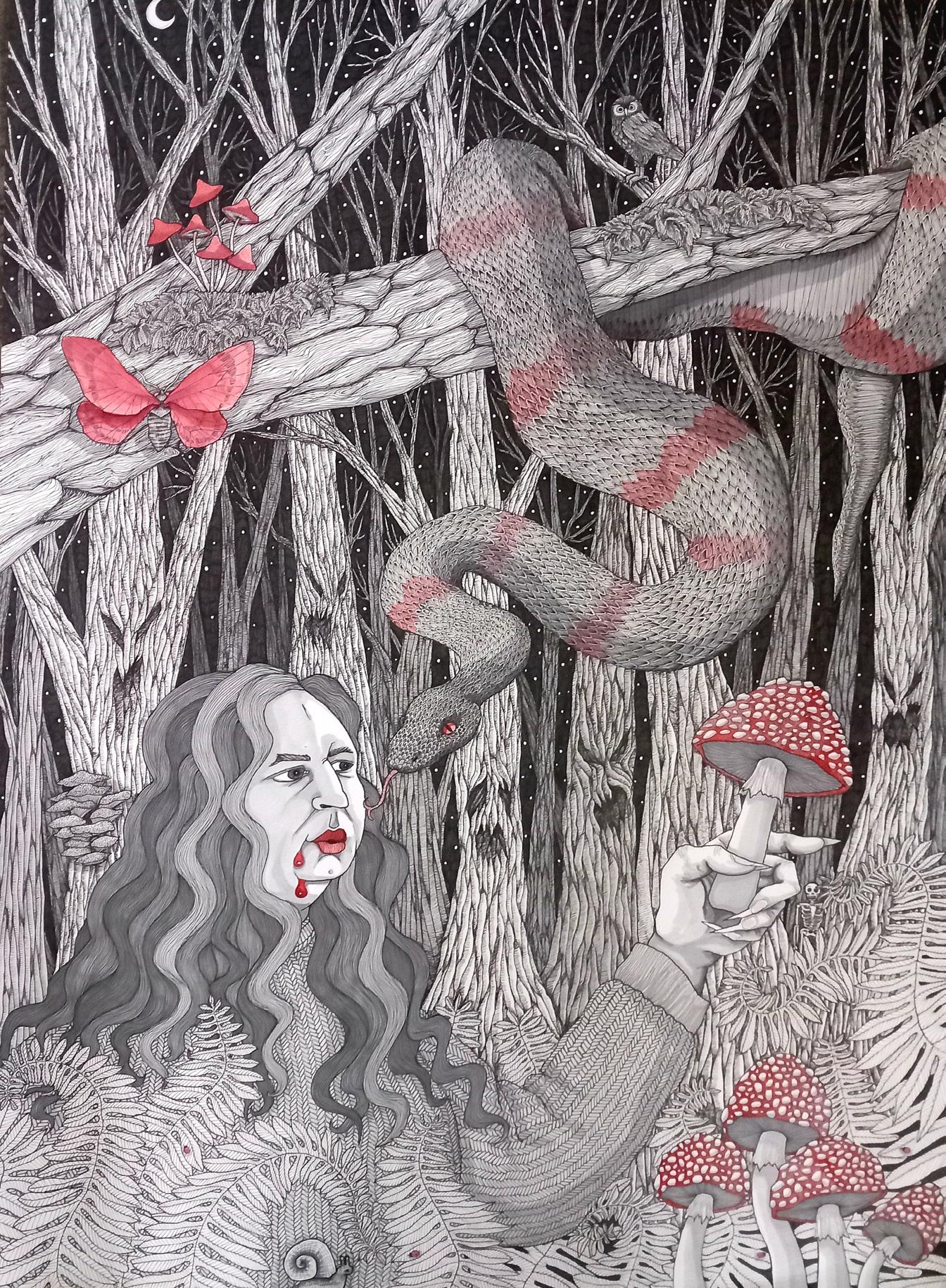
Theresa Smith
Inspired by the true crime story of murder by mushrooms, this artwork imagines the moment when a horrible idea takes shape in the mind of the disturbed.
FEVER GARDEN
64 x 60cm Ink on paper
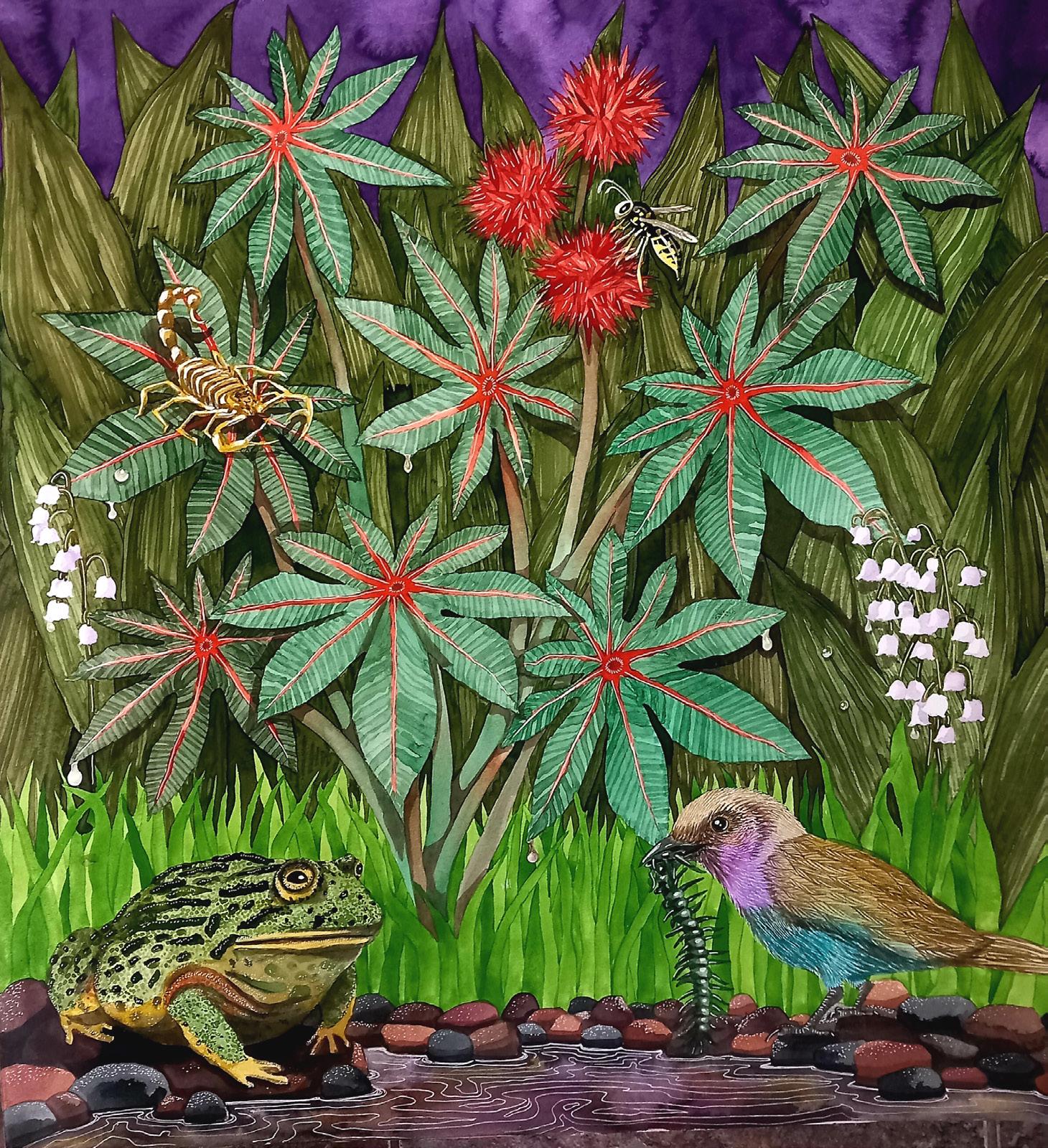
Theresa Smith
In this surreal botanical scene, danger and beauty coexist in uneasy harmony. Castor plants bloom against a feverish purple sky, surrounded by toxic lilies, predatory insects, and watchful creatures at the water’s edge. The bullfrog and bird appear suspended in a moment of quiet tension, a communion within a poisoned ecosystem.
WRITER’S BLOCK
Gemmaclaire Haverty
There once was a glorious river flowing with fables and fairies and flourishing forget-me-nots.

Blades of grass twirled to the rhythm of a wind moving in a gentle current.
Evergreens waved to the birds, listening as their languid melodies lapped through the air.
But then one day, the river dried up.
Sometime later an unfortunate child discovered a pale white stone, sat on the riverbed. It was dry as bone.

DEATH SPREADS
Gemmaclaire Haverty
Did you know that when the leaves of a flower begin to rot, you’re supposed to cut them off? That rot will spread. You’ll kill that flower quicker.
My brain is a tulip.
My anxieties are the stems that have wilted, and I cannot seem to find my shears.


cannabis for a few weeks before submitting your urine sample. The offer is a formality. Dream about giving your notice at fucking Subway. Read the rejection email. Go back to bed.
Repeat this four or five times. Tell yourself this will be the last one you try. Accept your fate as a sandwich artist. Do the first interview. Do the second interview. Do the tests. Brace yourself for the rejection. Receive an offer instead. This is what you’ve been waiting for, your ticket to the middle class. You’re no longer the loser in your friend group. You’ll make a salary. Meet everyone on your first day. Feel overwhelmed, in a good way. Spend weeks reading documents off a screen. This is what it feels like to ‘make it’.
Get trained up. Start the work. Your boss doesn’t like you. She gives vague instructions and has specific expectations. Work hard and

HOW TO MAKE YOURSELF PRETTY
Shauna McDonnell
First, you will make plans. You will go to the bar with your friends. Maybe you’ll go to a party. You will go on a date with someone you met in the club. You’ll go to the cinema. Maybe you’ll go on a girls’ night with your friends. Once you’ve confirmed what you are doing, the process will begin. You’ll text your friends. You will ask them what you should wear. You will FaceTime them so you can help them pick their outfits. You will pretend that you are focusing on their clothes. You will stare at their waistline, and at how their hair has so little frizz. You will remember that top that she looked so pretty in, and you will suggest she wear it. You will secretly hope she will not, so that you have a chance, a chance to be the pretty one for once.
You will replace your razor head and get in the shower. You will shave your armpits and your legs. You will even use a new scrub and body butter, one that should prevent you from getting ‘strawberry legs’, so that maybe you can wear a skirt. You will wash yourself with bar soap, and then with a liquid wash; for scent. You will make sure to double cleanse your hair and never skip conditioner. When you get out of the shower, you will make sure to pat your skin dry, never rub. You will use a body butter on your freshly shaven legs. As you apply it, you will see the usual red dots on your skin. You will sigh at the ineffectiveness of your routine, but next month you will use the same products and do the same steps.
You will layer your deodorant, body spray, and perfume. You will coat your hair in heat protectant before you blow-dry it, and then before you straighten it, and then before you curl it. You will do pin curls, and then brush them out, all while staring in the mirror. You will sigh.
Once you are finished doing your hair, you will rummage through your drawers. You will pick out a matching underwear set, only to change it later because your bra will be too visible under your top. You will acknowledge that everyone knows you wear bras but change it anyway. You will search your wardrobe and change six times before you decide to wear the first outfit you tried on. You will message your friends, to make sure your outfit is not too little or too
much before you start your makeup. You will remember that your makeup will only look good if your skin looks good. You will stop to examine your skin in the mirror, and sigh at the large pores, the red patches, and the blemishes. You will remember that comment that boy made about your skin three years ago. You will layer concealer over your spots.
Once you are done with your makeup, you will sit in front of the mirror that is on your windowsill. You will look for any mistakes and find only ones that you cannot change. You will stand up and look in the full-length mirror. Your hair will be neat, your makeup will be smooth, and your outfit carefully chosen. You will think for a minute that you look pretty. Your eyeliner will look so symmetrical, your eyelashes so full. Your eyes, something naturally yours, will stand out. Your corset-style top will make you look small and big in the right places.
You will smile at your appearance for a minute, and your teeth won’t look yellow. You will be ready to go out with your friends, who will send you photos of them all dolled up before you meet. You will look at these photos for longer than you should. Her teeth will look so white as she smiles. Her waist will look small, and her cheekbones sculpted. Her nails will be perfectly manicured, and her skin evenly tanned. You will sit down again and contemplate not going out. But you will, because you spent all those hours making yourself pretty. You decide you will not put in that much effort again, because even if you do make yourself pretty, you will not ever be pretty enough.
Someone will always have whiter teeth. Someone will always have a smaller waist. Someone will always have longer legs. Someone will always have bigger boobs. She will always have a flatter stomach. Someone will always have brighter eyes. Someone will always have fuller eyelashes. Someone will always have smoother skin.
The next weekend, you will make plans, and the process will begin again. You will make yourself pretty and tear yourself apart.
SCINTILLA
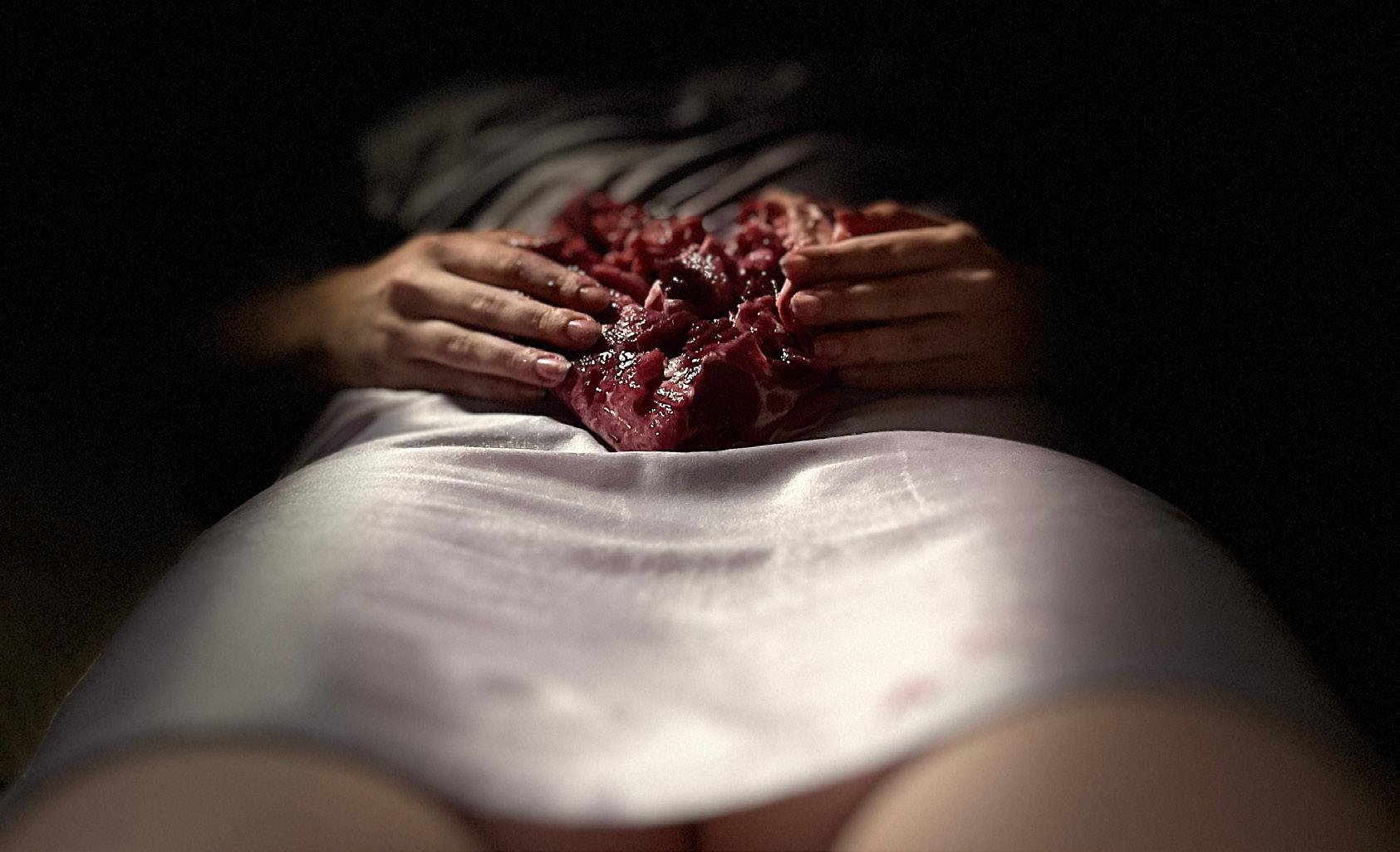
Molly Brady
Photography


‘Threshold’ is part of a photographic series that explores bodily autonomy and the body as both image and vessel. The work considers the body as a threshold—a site of tension between interior and exterior, control and vulnerability. Through staged, concept-driven imagery, the series reflects on how the body is inhabited, observed, and claimed.
THRESHOLD
Rebecca Devins
Model: Thea Downey
Photography
AN FHUNINNEOG
November H. Tuppen
Táim ag féachaint ar na daoine ag siúl ó bun go barr an sráid.
Na gluaisteáin, go tapaí –téann siad ó áit go háit; a lán scéal gan insint –ach fan mé anseo, ag féachaint na saolta amach an fhuinneog.


escaped my teenage years but then I am standing at a chopping board my and I realise that the things we don’t talk about
A BAG FULL OF SADNESS
Christine Evans
I’m walking with a bag full of sadness along the road for miles.
The weight, it is unbearable as I trudge forward for another while.
The bag of sadness is heavy, but it has a little hole, so small bits of sadness can escape along the road.
I did not want to walk today.
In my bed, I’d rather stay, but the bag it needs to empty and there is no other way.
The sadness cannot be touched. It must leave by itself, escaping through the tiny hole, so, I trudge forward ten more steps.
The bag it still feels heavy, and it will do for a while.
But the sadness can’t last forever, and one day I will smile.
So, today I will trudge forward because that’s how it has to be, carrying this heavy bag, until its contents slowly leave.
WHEN I SAY I MISS YOU
Anne Walsh Donnelly
After Rosemerry Whatola Trommer
Of course,
I don’t miss hair clogging the shower’s plughole, wet towels on the bathroom floor, fake-tanned stained sheets on your bed.
When I say I miss you,
I mean I miss the lightness of your being, the way the sun follows you into every room, your Daisy perfume.
I miss sitting with you in cafés, chatting over French toast and crispy bacon, your fingers running through your chestnut-brown hair, your: ‘look what he did with the curlers’, when you diss the hairdresser.
I miss the pancakes you cook, Nutella you smear on top, uncleaned pan on the countertop, your: ‘Chill, mam, I’ll clean it later’.
I miss: ‘we’ll figure it out’, when I rant about college fees and accommodation. But most of all, I miss your hugs and kisses before you finally say goodnight.
HANNAH’S HANDS
Anne Walsh Donnelly
As a baby, she had symphonic hands, slender fingers played an imaginary melody on her bottle while she drank.
Hands that covered her eyes when we played peek-a-boo, smeared melting chocolate all over her face on Easter Sunday.
Hands eager to hold mine when we crossed the street, hands that wouldn’t let go when she started pre-school.
Hands that waved goodbye when she left for university, my engagement ring on her middle finger.
She will always have a piece of me in her hands.
BERMAIN MERPATI
Photography
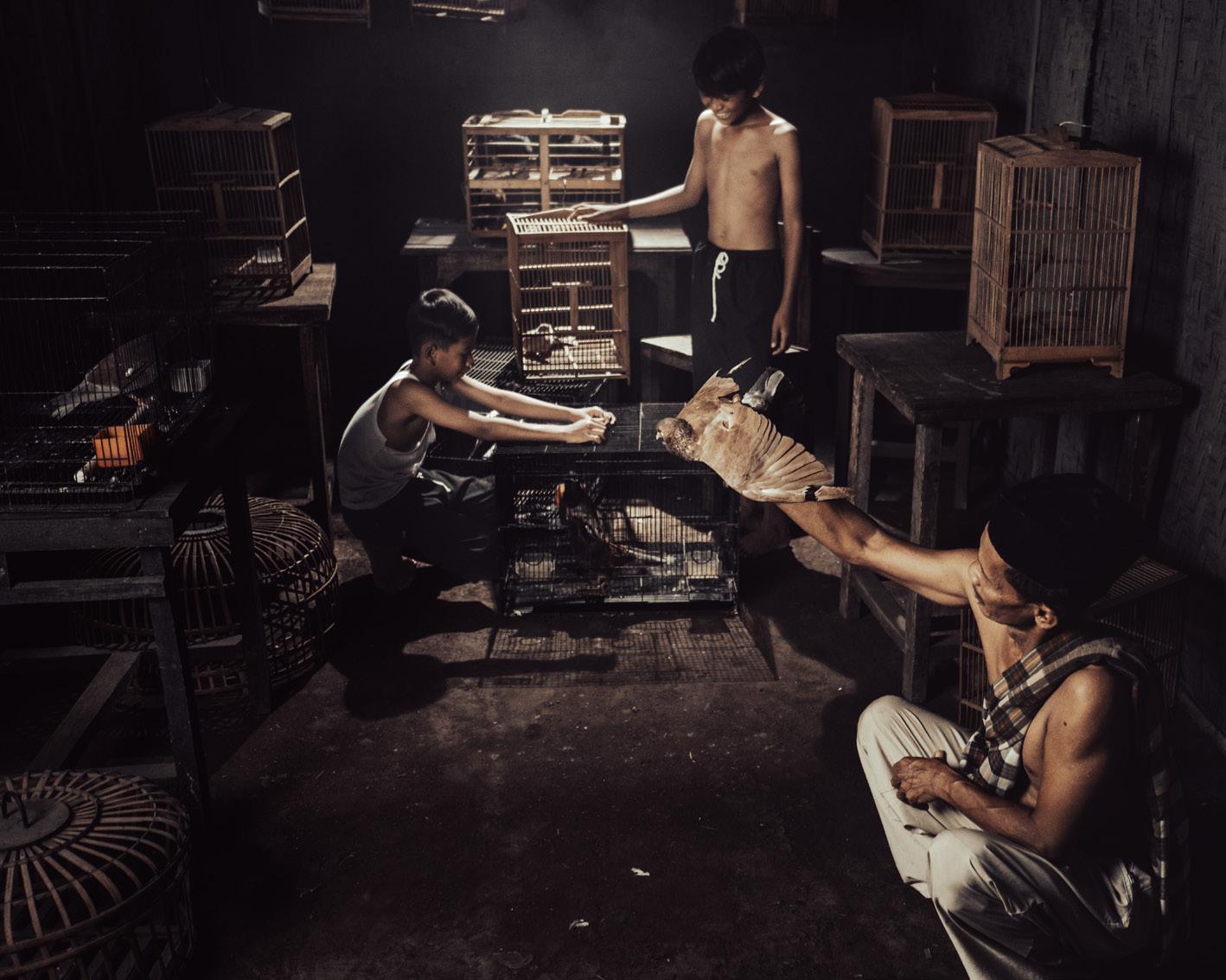
The title ‘Bermain Merpati’ means playing with pigeons. This photo reflects a common habit found in many Indonesian communities, where pigeons are kept and cared for as part of daily routines. For many people, raising pigeons is not merely a hobby, but a long-standing practice passed down through generations.
Jeremy Chandra
IN SALUTEM OMNIUM
Ciarán Adams
June’s evening tide was lapping well above mean high watermark on the grassy shore of Oyster Island. Agnes Duffy unpegged bed linen from a cottage washing line. There had been good drying in a strangely balmy south-easterly. Nearby, her two young children, Robert and Louisa, both born on Oyster, turned to the tall majesty of a barque approaching steadily, sails half-set, from behind the southern light tower. Although familiar with the passage of vessels plying the busy channel which lead to and from the Sligo Quays, their eyes followed the Nathaniel Hooper as she moved along westward between them and Rosses Point. Below deck, a cargo of 450 tons burthen including seventy-eight locals in steerage bound for New York.
Agnes imagined the ship would already be within sight of her husband Fredrick out on ‘The Rock’. She was always unnerved at the frequent passage of emigrant ships since hearing about the Carrick of Whitehaven. She had seen that ship pass en route from Sligo to Québec and she prayed for the 187 aboard who perished off Cap-des-Rosiers. Several years after they had left Sligo, Agnes and Fredrick’s second son would be born on Eagle Island. They named him Nathaniel after that ship of hope which set sail in Black ‘47.
Agnes didn’t trust the new accommodation panniers suspended high up the exterior of Blackrock Lighthouse. Fredrick rowed out there for six-week stints before a welcome fortnight tending Oyster’s two lights. Sligo Bay was kinder to family life than Inishtrahull, Inishtearaght or the Fastnet, yet his absence on Blackrock was agonising in a different way for Agnes. Close, yet beyond reach. On clement days she signalled to him from the north light’s tower using the semaphore system her father had taught her on Hook Head. She also knew Fredrick, weather permitting, could see herself and the children through a telescope if they sat on the flat capstone of their whitewashed garden wall.
Agnes and Fredrick reared five children: Louisa, Robert, and Nathaniel, with the two youngest, Catherine and young Fredrick, born in Crosshaven and Loop Head. Like other families connected to ‘The Lights’, the Duffy’s service was intergenerational. All three of Agnes’ sons became Lighthouse Keepers. Fredrick junior too was to be later stationed on Oyster Island by which time the channel had shifted, leading to the two lights’ obsolescence and removal. Fredrick was Assistant Keeper in the new lighthouse which still stands.
Having moved with her parents to lighthouses in Clare, Cork, and Waterford, Louisa later returned to Sligo and married William, a Carpenter from Charles Street. She had already seen far more of Ireland than her new husband. Her father died in Wexford the year before her wedding; her mother, ten years previously at Dunmore East. Louisa rests in Sligo Cemetery. Her nomadic days done. Her maiden name and history at sea. The 1901 census shows the Duffy name tending lighthouses all around the Irish coast. Beacons of a bygone age.
In Salutem Omnium has been the motto of the services responsible for maintaining Irish lighthouses since the 1800s. It means ‘for the safety of all’.
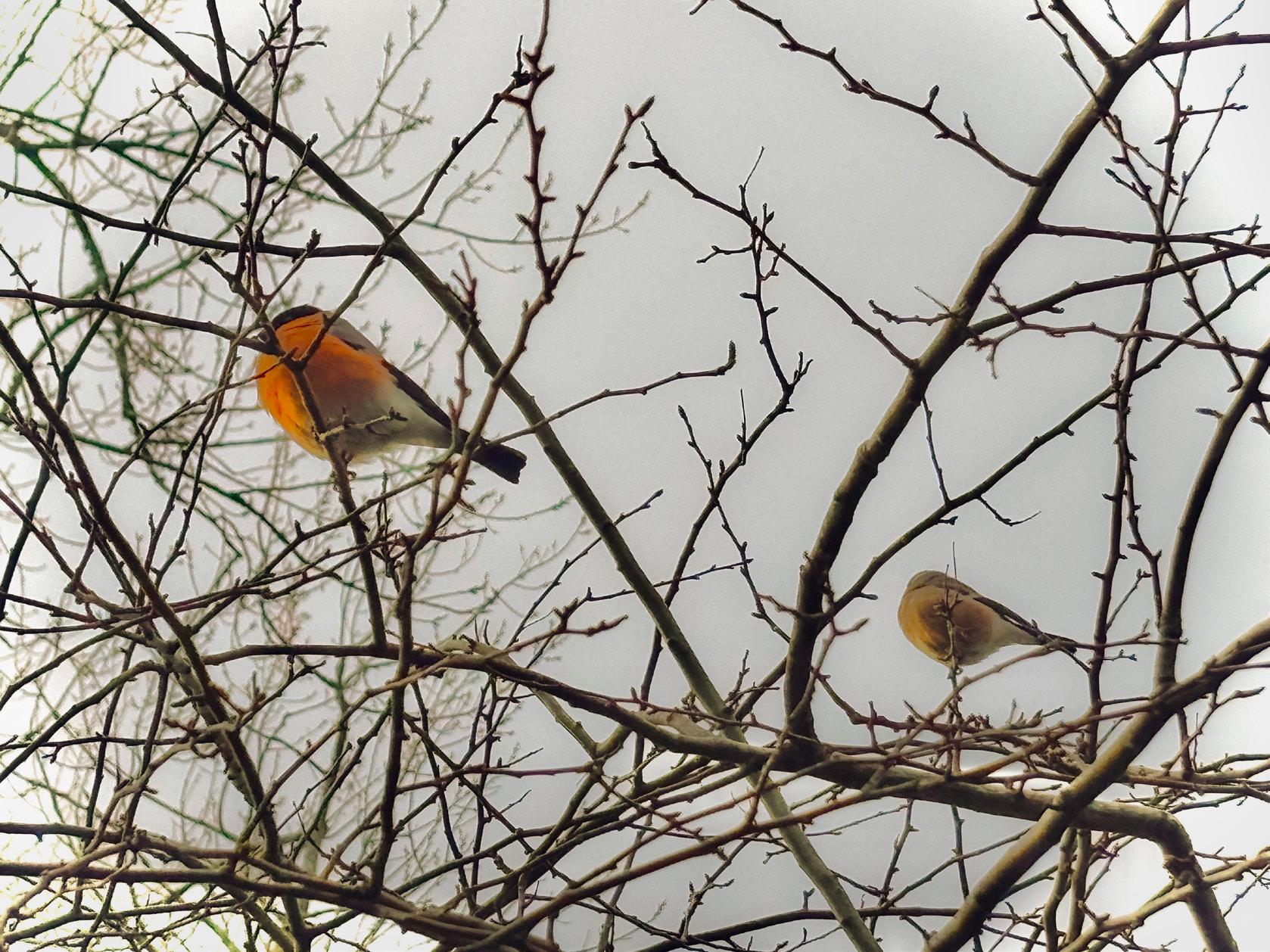
‘Na Teachtairí’ depicts two bullfinches perched in quiet proximity, framed by bare branches. Drawing from personal belief and Irish folklore, the image considers birds as messengers, presences that arrive not only to interrupt, but to remind. The photograph holds space for return, continuity, and the possibility of connection beyond absence, where meaning lingers without needing to be named, inviting the viewer to witness rather than interpret.
NA TEACHTAIRÍ
Regina Barrera Vilchis
Photography
HOMAGE
Tracey Faulkner
Traffic stopped at the head of the town.
Sorrowful Saturday. Sombre whispers work their way down the crooked cortege. It’s coming.
The low and slow hum of the hearse.
The neighbours straighten up, face out, coats wrapped tightly. Hooded heads, lowered, look down at the newly surfaced street.
Leaves of russet scrape and crash. Then, silence. Stillness.
They’ve stopped on the brow of the hill, lights flashing. They’ll only stay a minute.
Sure, he lived on that road for all his childhood.
A brief pause on the way to his final resting place.
A bowed head shakes in heartsore disbelief.
Gone too soon, he had years ahead of him.
Those poor kids.
A reassuring arm around the tweed-covered shoulder. He had his own troubles, bless him. He’s at peace now. The whiskey won over the wit.
Another one.
And he won’t be the last.
GREED WON’T BE SATISFIED
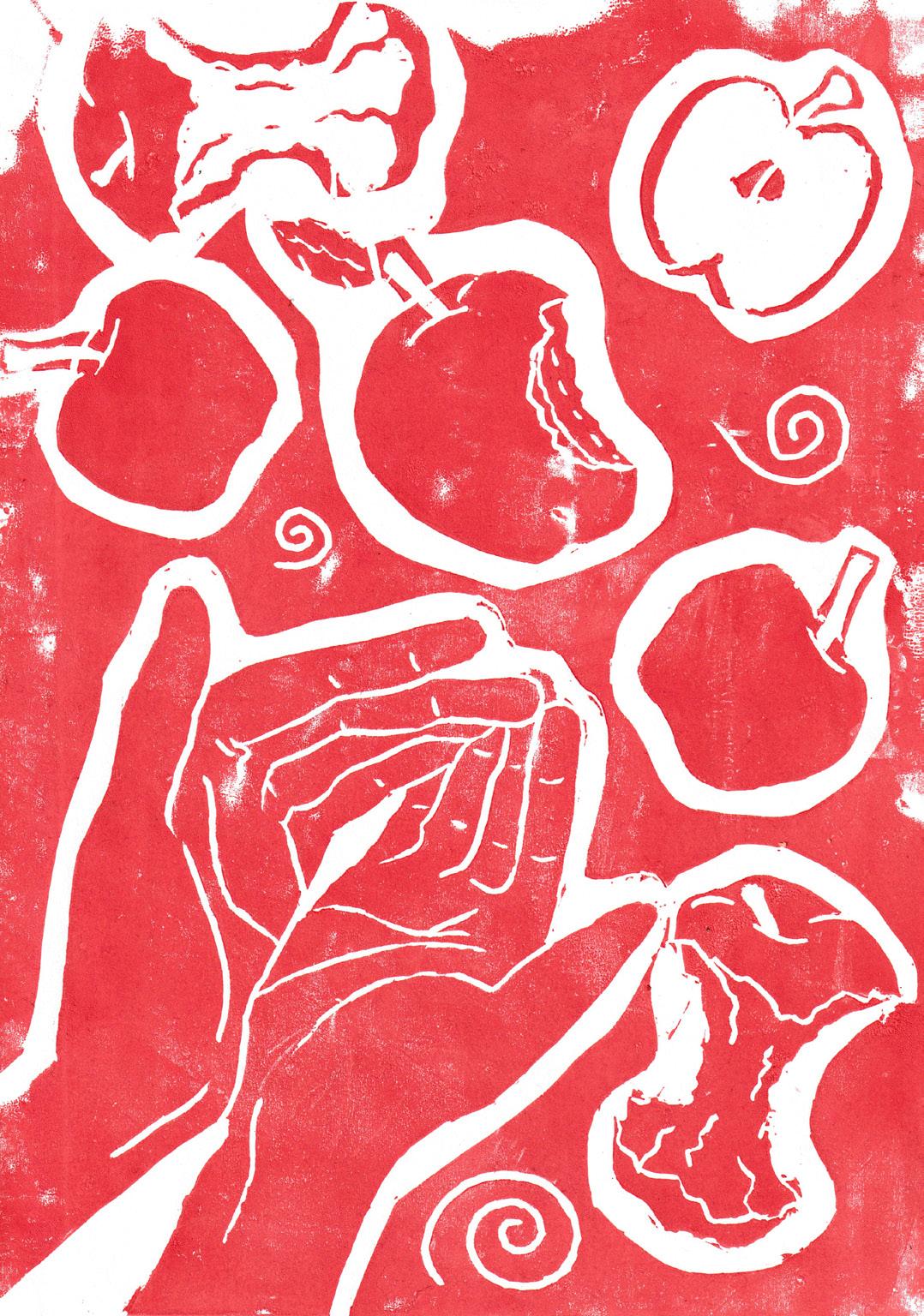
Dearbhla Meehan
Lino print with red ink. Inspired by Aurora Aksnes.

Lifeless words never said.

Inside this walnut

GOODBYE MY LOVES
Zara Burke Ott
Dear Ferrero,
8 October 2025
When I moved home from England two years ago, I was blissfully unaware of how important you would become to me. You’re like a bouncy ball on springs—always on high alert; always demanding attention.
In many ways, you remind me of Breeze. You both have the same personality. No other horse or pony can have attention from your human. Maybe that’s why I was so patient with you. You really tested me. You’re hard work. Riding you around a course of jumps is harder than running a marathon. (I’ve run a marathon). But you always tried your best for me in the ring.
From your very first unofficial showjumping competition, I was proud of you. I was proud of you every single time I took you out. You gave me the confidence to jump big tracks again. You took me around the course in Dublin. You brought me all the way back onto the international stage. For a while, I had thought those dreams were dead.
My favourite memory of our time together is when we won the working hunter class at Cavan. We started the weekend with me having to cut your foot out of a bucket. I almost left you at home for being so accident prone. Wins that you don’t expect mean the most. I was just happy to be there.
That morning I’d come out of the arena breathless and beaming from ear to ear. I was joking when I said, ‘I could win this yet’. I didn’t actually believe it could happen. I thought I’d misremembered our number when we were the last ones to be called forward in the prize giving. Tears streamed down my face as the judges came over to shake my hand and put a sash around your neck. I was just trying not to let you stand on any of their toes.
Photographers love you. You mesmerise everyone who sees you. You look so angelic. Little do they know how much of a devil you are at home.
The shed is quiet this evening. There’s no one banging on your stable door.
Good luck on your next adventures. Be a good chicken for Róisín.
I’ll miss you, Zara x
2 November 2025
Dear Cherry,
Life is going to be so different without you. My world has revolved around you for almost nine years now. Yes, there have been other horses. Yes, there have been other ponies. But none have been you. It’s been you and me for longer than anyone else. You’ve been so much more than a pet. You’ve been my teammate. You are my soulmate. You are my home.
Wherever I’ve gone, I’ve taken you with me. (Except for the three months I spent at Ringwood Stud, but we don’t talk about that). You went with me when I left home for the first time at just 17 years old. I didn’t know what I was doing, but I had you. You were my rock. We went all the way to England together. It was the first time we’d left the country and we did it together.
When Breeze was sold, I cried myself to sleep for a week. When Gary left, I stopped the car in the middle of the road frozen. They’d only been around for six years each. You were here for twelve. You were born here. I don’t know what I’m going to do without you. I’ll try to be strong. I knew I’d have to let you go eventually. It’s part of growing up. Until now, we’ve been growing up together. In the next chapter, we’ll have to grow apart. My heart is breaking... again. You’ve broken it before… more than once. But I could never stay mad at you. In the end, we only remember the good parts.
You did so much for me. We had so many firsts together. With you, I won my first Junior event, I jumped my first 1* double clear, I did my first Intermediate event, I jumped my first 2* double clear, I did my first 3* event, and just this summer, I won my first Supreme Championship. I truly believe I will never find another like you. I will be forever grateful for this relationship. You are my horse of a lifetime my heart horse.
I’ve got scars on my heart and a scar on my shoulder (from that time when you bit the strap off my top and took a chunk of me with it!), so no matter how hard I try, I can never forget you. Cherry, you are so, so special. I’ll never stop loving you. Thank you for everything.
Be a good piggy for Toby.
Love, Zara xxx
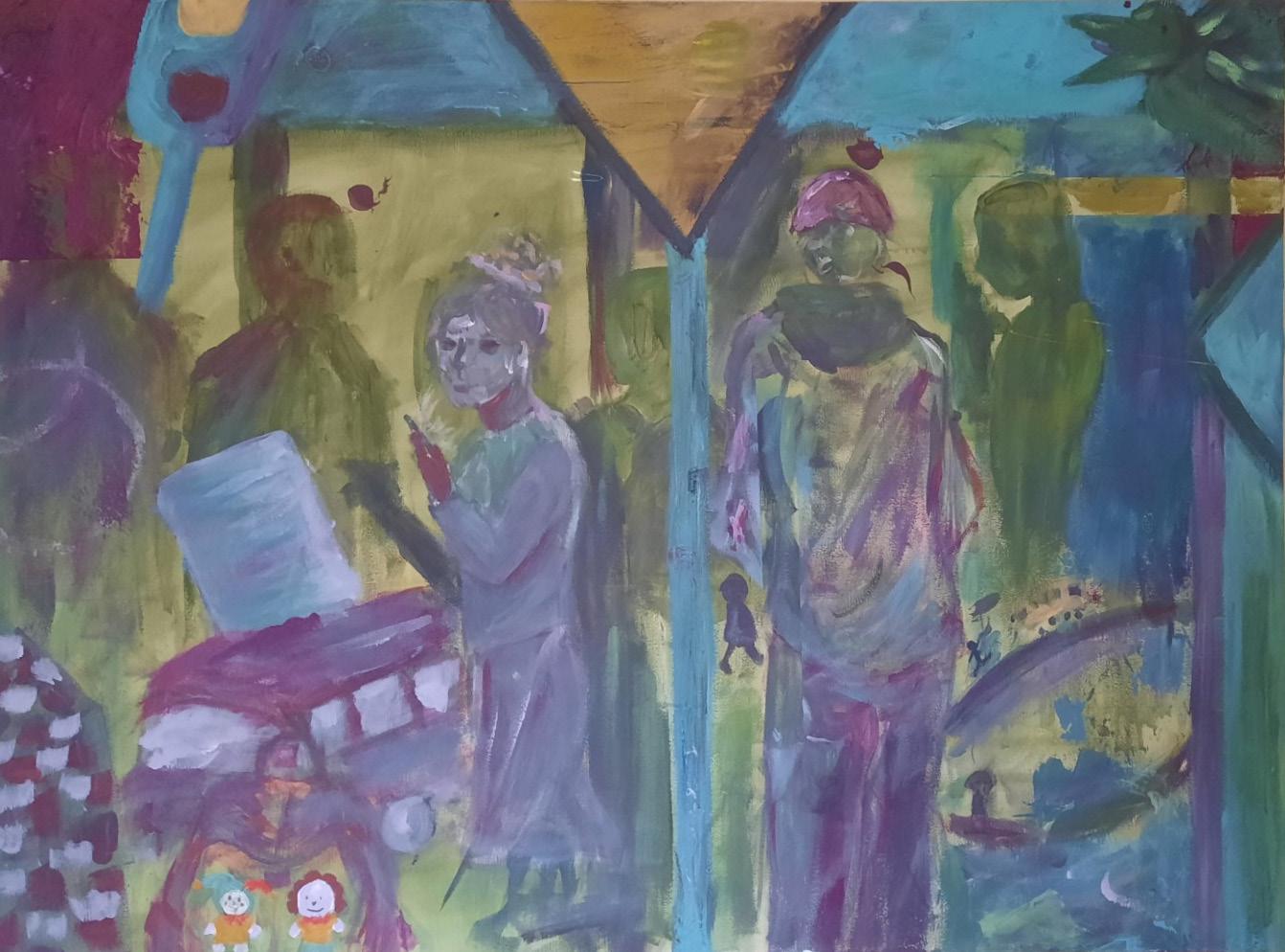
Break Harte
BUS STOP ART
Acrylic paint on canvas
THE GREEN MAN
Susan Stewart
The green man at the Rathmines crossroad has been upside down for two weeks now; ever since the old traffic lights were replaced with new, more modern ones. Some fool from the council must have done it and either hadn’t noticed or not cared enough to fix it. Edward scowls at it every morning on his walk to buy the newspaper.
‘Shower of eejits’, he says to Marie, the lollipop lady, ‘have they not fixed it yet?’
‘Them lot? Sure, they wouldn’t know an honest day’s work if it hit them in the face,’ Marie replies. ‘When that paving was loose there it took them six months to fix it. It’s a wonder none of them school kids broke an ankle on it’.
Edward walks on towards Rathgar. He hates the new SuperValu. You’ve to go around the world before you find the newspapers. He picks up The Independent and a microwavable meal for his dinner. He pauses at the rows of sweets. He is a divil for the sweets, but he’s after spending an absolute fortune on a new set of crowns, so he gives the packets of toffees a longing look and walks past.
Marie has left her post when he crosses the road on his way home. There is a woman with a toddler in a buggy waiting for the upside-down green man to appear.
‘Mamma, look, geen man ‘side-down’, the little boy squeals and points.
‘Isn’t that funny, Fiachra? The man is standing on his head!’ The mother beams and walks briskly across.
Once home, Edward drops his shopping bag on the table and goes straight to the kitchen drawer. He takes out a writing pad and a pen, and a book of stamps.
To Whom It May Concern,
I am a resident of Rathgar, and I am writing to inform you of the misplacement of the green man at the junction of Grosvenor Road and Rathmines Road. The green man has been placed upside-down. I must insist that someone is sent out immediately to fix it.
Regards,
Edward Maguire, Former Headmaster of St John’s College, Rathgar.
Edward folds the letter and slides it into its awaiting envelope. On the envelope, he writes the address of the Dublin City Council office on Charlemont Row. Then he walks to the post box on the corner.
Nothing happens.
‘Wait til it’s election time, you’ll have all the politicians doing the rounds, looking for votes’, Marie says a few days later. ‘That’s the only time anything gets done. Last year, I says to yer man with the beard, the Fianna Fáil fella, I says you want my vote, you better get that fixed before one of them school kids breaks their neck. I tell you, it was fixed two days later’.
But Edward cannot wait. He feels like the green man is taunting him. All the other green and red men are upright. What makes this green man think he can walk on his head? Edward goes straight home and writes another letter. A week later, he writes another letter and two weeks later, he writes a fourth letter.
He shares his frustration with Marie every morning. She quietly calls the council workers ‘feckers and gobshites’; she’s already been reported for cursing in front of the school children while on the job. Edward finds Marie very crass, but he likes that she is as annoyed about the upside-down green man as he is.
‘Do you remember the newsagents that used to be on the corner?’ Edward asks her. ‘Where the Chinese take away is now?’
‘I don’t, Eddie. That must have been before my time’.
‘Ah, it was, probably twenty odd years ago’, he admits sadly. Everything has changed.
Edward sees a group of teenage boys crossing the road, laughing at the green man. There was a time when he knew all the teenage boys. But he realises he’d retired when these young lads were probably only in nappies. That new headmaster must be some sort of hippy, he thinks, looking at their long hair and unkempt uniforms. No wonder the community is going to the dogs if the youth are not given consequences. He notices one of them throwing a can of energy drink over a hedge, and he shouts after him to pick it up. But they laugh and run off.
‘Littering is a crime, you know?’
Edward gets an idea. Instead of continuing on to SuperValu, he walks in the opposite direction towards Rathmines Garda Station. Not to report the littering, but the crime of the upside-down green man.
An hour later, a very nice young garda from Cork walks Edward home. He seems very concerned that Edward lives alone, but Edward assures him his daughter will be calling in later. He promises he will phone the council, but as it’s not a crime, there isn’t much they can do. Edward wants to tell him that they don’t answer the phone, but he hopes maybe An Garda Síochána has a special phone number for situations such as this one.
Edward’s daughter, Eleanor, does call later, as she does every Monday and Thursday.
‘But Dad, what harm is it doing? People still know when to cross the road, that’s the main thing surely’.
‘The point is, the whole area has been going downhill. Litter, graffiti, you name it. There are no community values anymore. And when you walk down the road, sure you wouldn’t know where you were, there’s as many languages being spoken…’
‘Dad! You can’t be saying things like that’, she reprimands. He crosses his arms and turns away.
‘There’s a new family renting Duffy’s house next door’, he says, still sulking. ‘Jim’s son put him in a home. They’re Indians, I think’.
‘Yes, I know them actually. Their eldest is in school with Peter. They’re both doctors as far as I know’.
Before she leaves, Eleanor promises to email the council. She drops her number into the lady next door and asks her to call her if her father displays any more worrying behaviour.
The following week, crowds of young people gather at the pedestrian crossing. They take turns to cross the road on their hands and film it for TikTok. Edward starts walking farther up the road to cross at the church.
It ends up in the paper. A light-hearted piece about how the community came together to enjoy life’s little peculiarities. A grainy photo of Marie smiling next to some kids who are walking on their hands across the road. Edward throws the paper in his bucket of kindling.
He writes daily letters to the council, then to the Taoiseach. Even to the President, who he admits has little authority over green men. Finally, someone accidentally drives into it while under the influence. Edward agrees with the new neighbours that drink driving is a terrible offence, and the young man in question, if he wakes up from the coma, should never be allowed behind the wheel of a car again. But secretly Edward is delighted when they finally instal a new—upright— green man.
EZBET BEIT HANOUN
200 x 55cm
Multiple colours on canvas
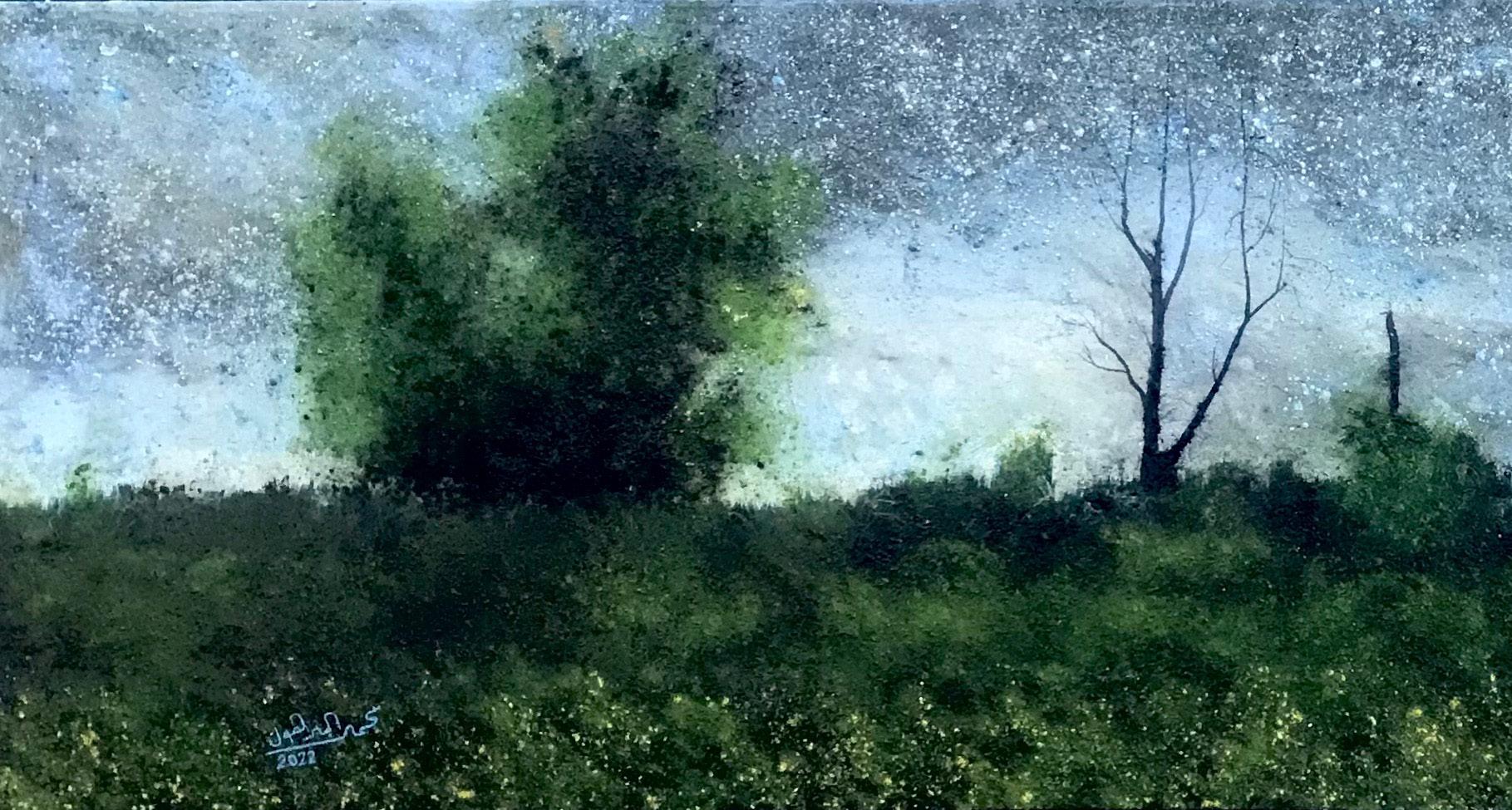
This artwork depicts the natural landscape in the countryside of northeastern Gaza, the forest, trees and fruit trees on a winter’s afternoon. The painting uses cold and blurry colours, and combines various materials. It was part of my artistic project group, but because of the war on Gaza in 2023, the occupation destroyed the studio and housing.
Mohammed Almadhoun
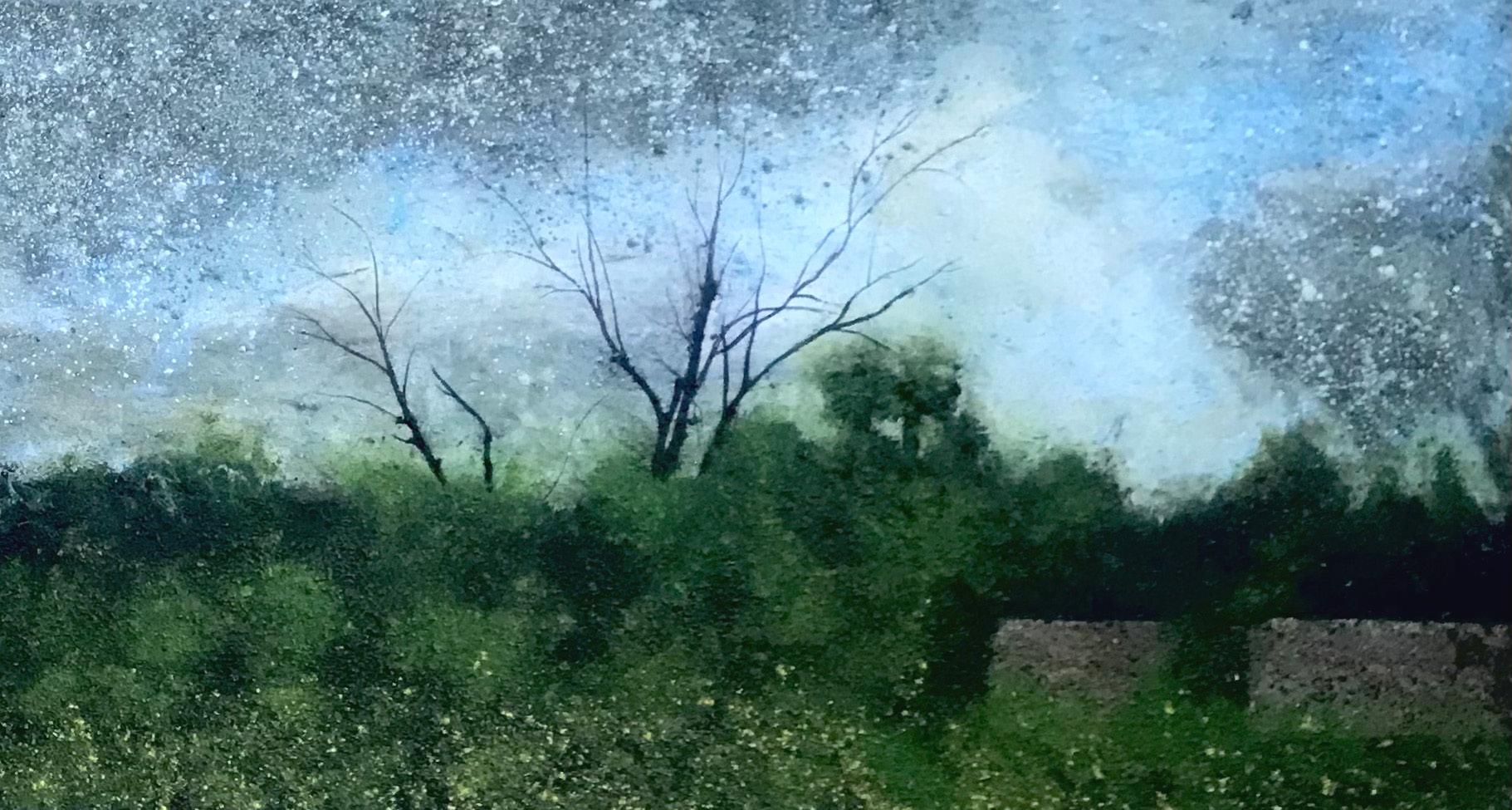
WATER SWAMPS (2022)
204 x 90cm
Acrylic colours on canvas
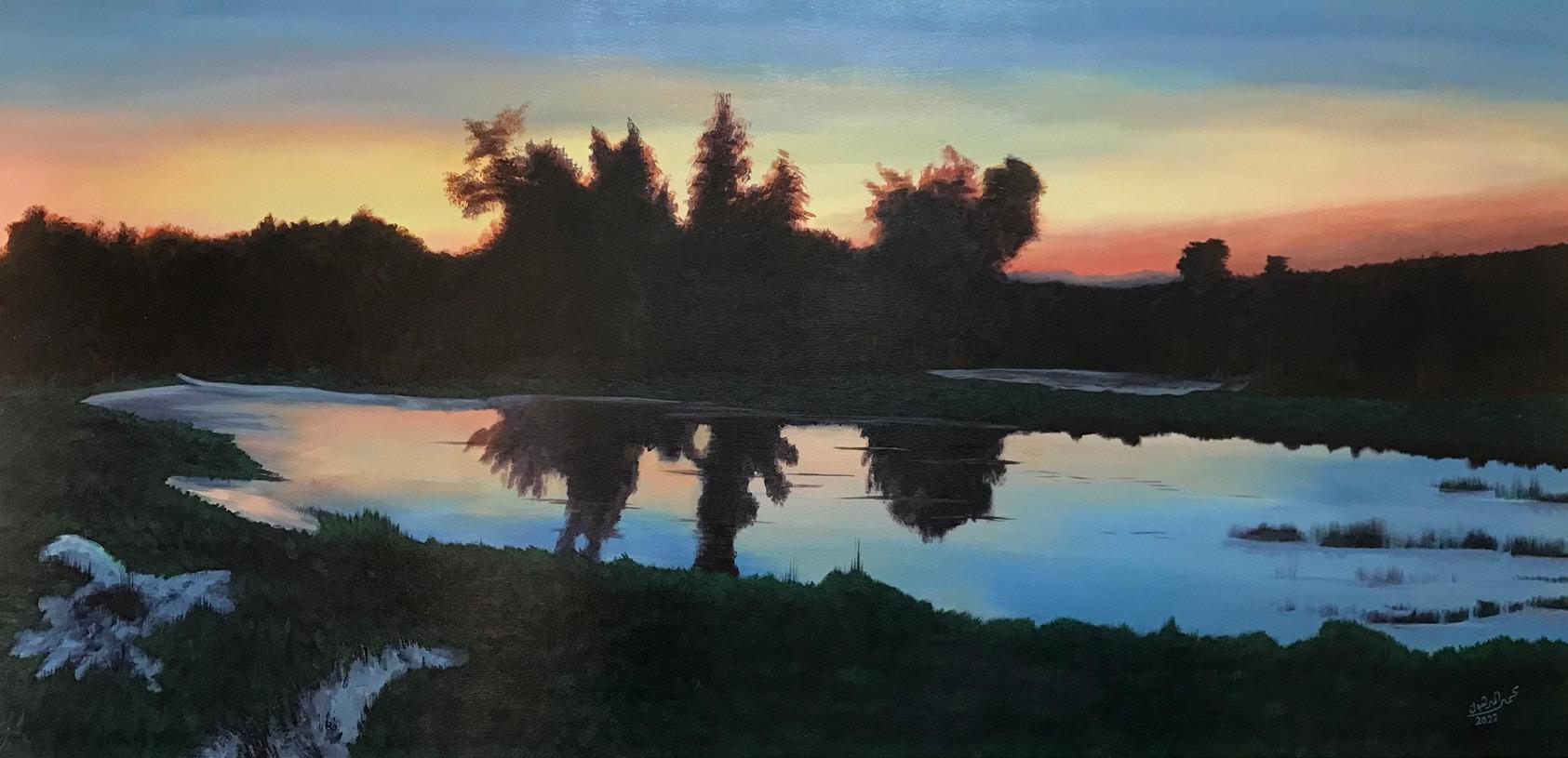
This painting depicts the landscape of Gaza in the winter season, at the moment of sunset. The reflections of colours in the sky on the water swamps, surrounded by dark trees and the ground, gives a picturesque aesthetic character to those moments of contemplation, inspiration, and relaxation in the depths of nature. Psychological comfort and safety away from noise. There is a contrast between the cold and warm colours in the sky, the feeling of warmth from the water and grass on the ground.
Mohammed Almadhoun
GAZA
Mick Geelan
For three days she held
The cold dead baby in her arms.
Even though the sun blazed down on The dusty streets of Gaza.
They said leave her. She is mad, Mad with grief and the Screaming rockets overhead.
Deafened, from the sound of the explosion.
For three days, until Her first-born’s face was black
And her breasts were swelled
From want of suckling.
She ran down the street with Her baby held high when the drones came. A merciful rocket, Sent them both to oblivion.

A LETTER TO MY SISTERS
Vanessa O’Malley
So long childhood and the endless summer that it was,
Defined by sea we three
Grew between the rocks to the left of Cross,
Searching for fish in the pools of glinting mirror.
Here our forefathers learned their trade and became simple inspiration
For the poets and scholars who flocked each summer
To camp on the green.
Will we someday soon run kicking sea foam into the wind,
Or hold whelks to our ears and listen
For the sounds of a mermaid singing,


ÁRAINN MHÓR
Mason O’Hagan
The high tide wraps the shallow port in weeds. Gripping its tattered slimy strings, Choking alive the innocent soft reeds Of all the calm they bring.
Hear the lapping waves reaching,
Up and up, further and further, in waiting.
As the boats shift along, hardly breathing, Mindlessly rocking to the sea’s swaying, The view of the island quickly fades. The dollish houses disappear at once, Swallowed up by a dark fog.
As the clear sky dims, dusk settles, The warped seaweed wraps my wrists.
Do I fear being taken? Do I care?
The vast ocean takes all the breath left in my lungs.

LUÍ NA GRÉINE
60 x 75cm
Acrylic and oil on canvas Ballyhiernan Bay, Fanad, Co. Donegal.
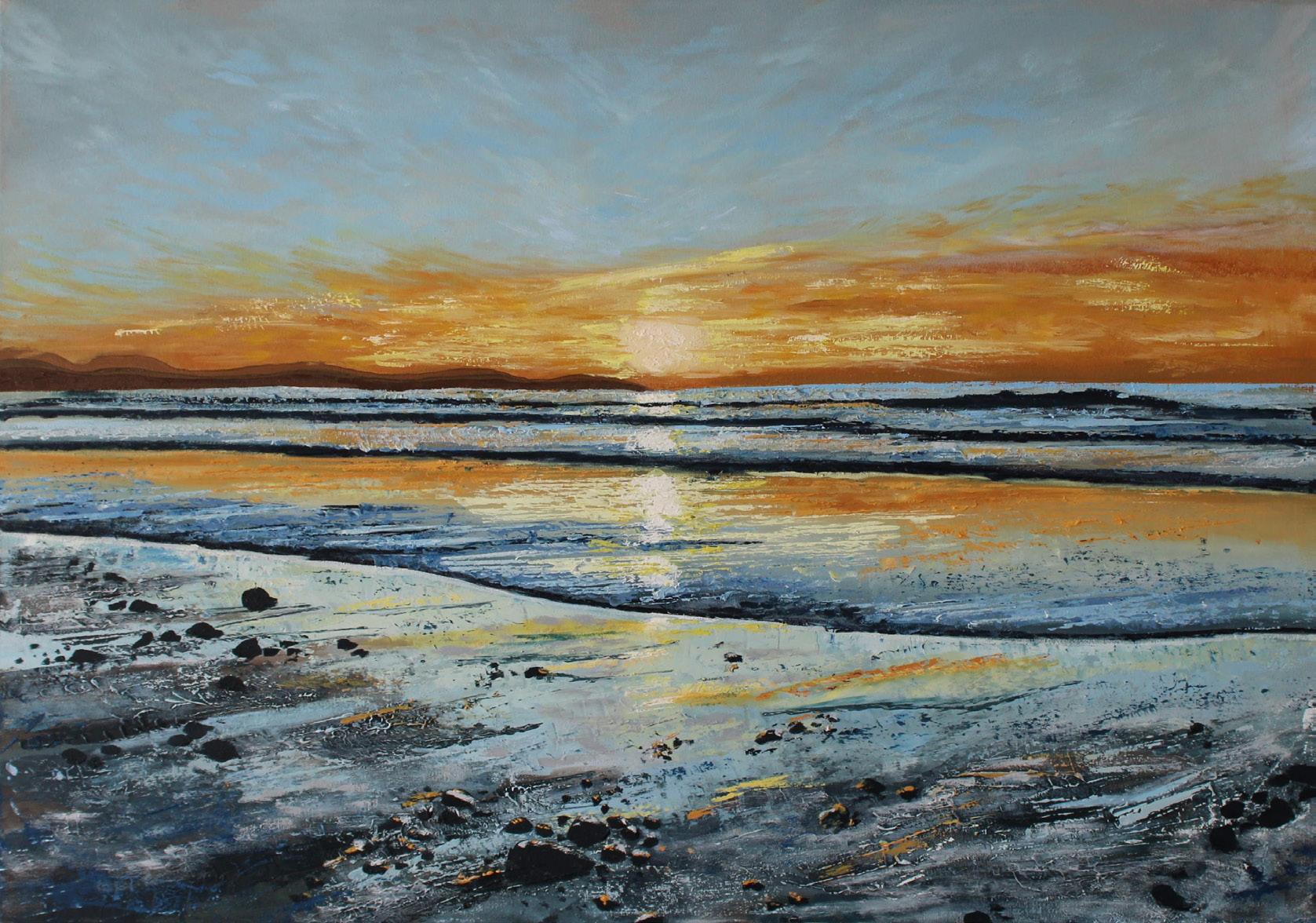
Aoife Sweeney
FOUND
Paul Hamilton
Stores in Cork
Lost.
I look ahead, glance backwards.
Check my pockets, look higher.
On tippy toes.
A tear runs down my face.
‘Oh
Dad, there you are.’
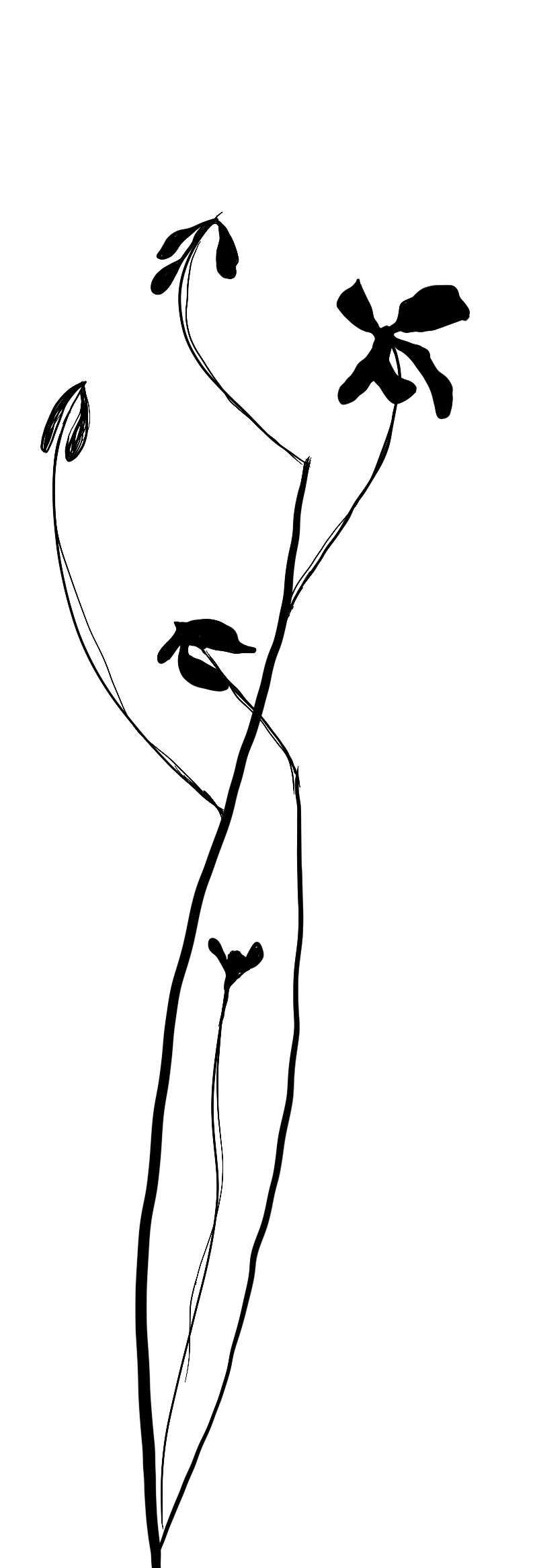
Roches
LOST GOLD
Paul Hamilton
Autumn came in at half past ten.
The surf was high on the incoming tide.
There was a pressure drop, a two way stop and the surfers sailed out to sea.
The rain pelted through the rainbow, Steel wool. They unfurled through the hailstones. splitting it into balls of wool.
CLAPSHOLAS NA MAIDINE (THE MORNING TWILIGHT)
A series of experiments with a 35mm negative scanner.
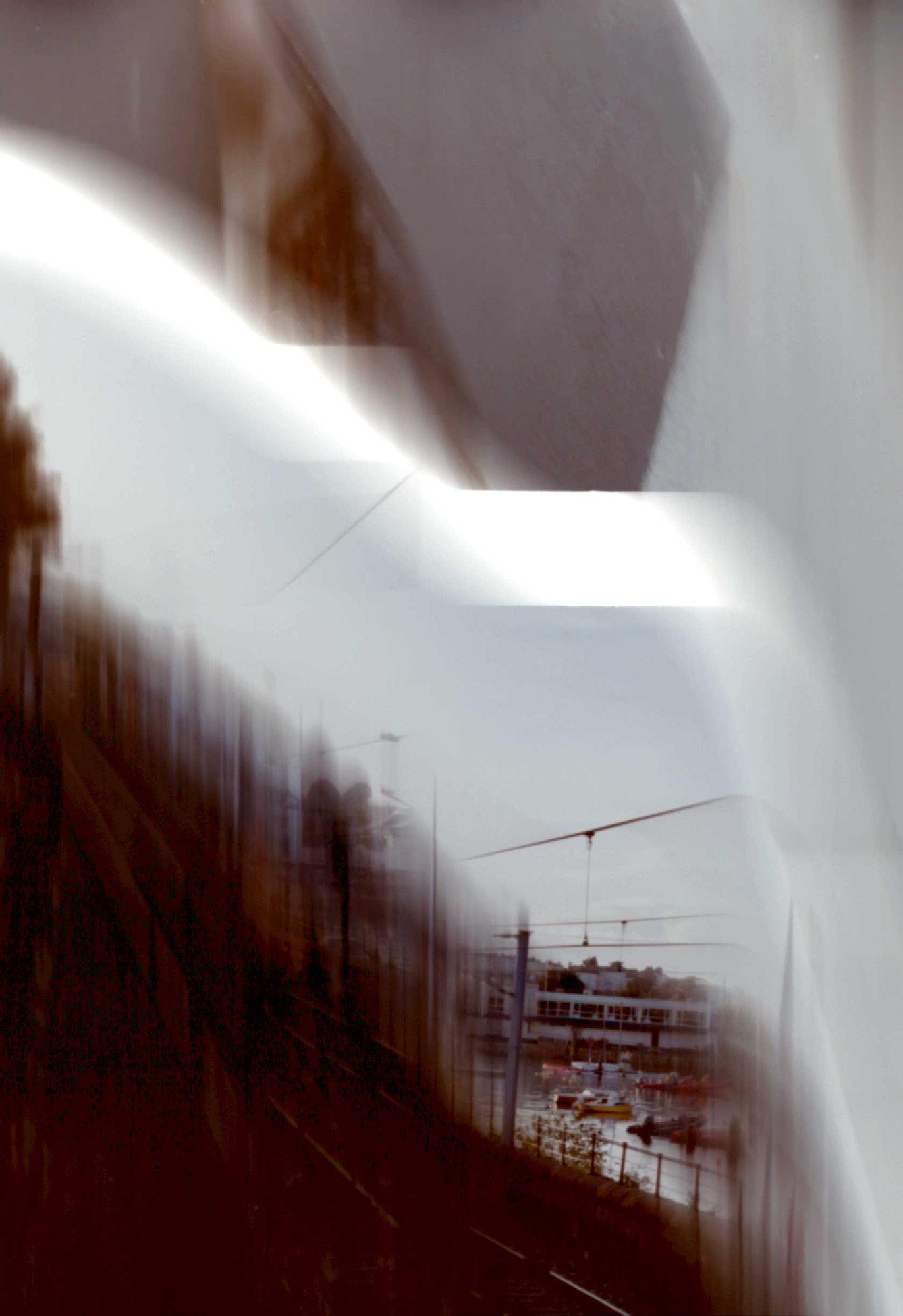
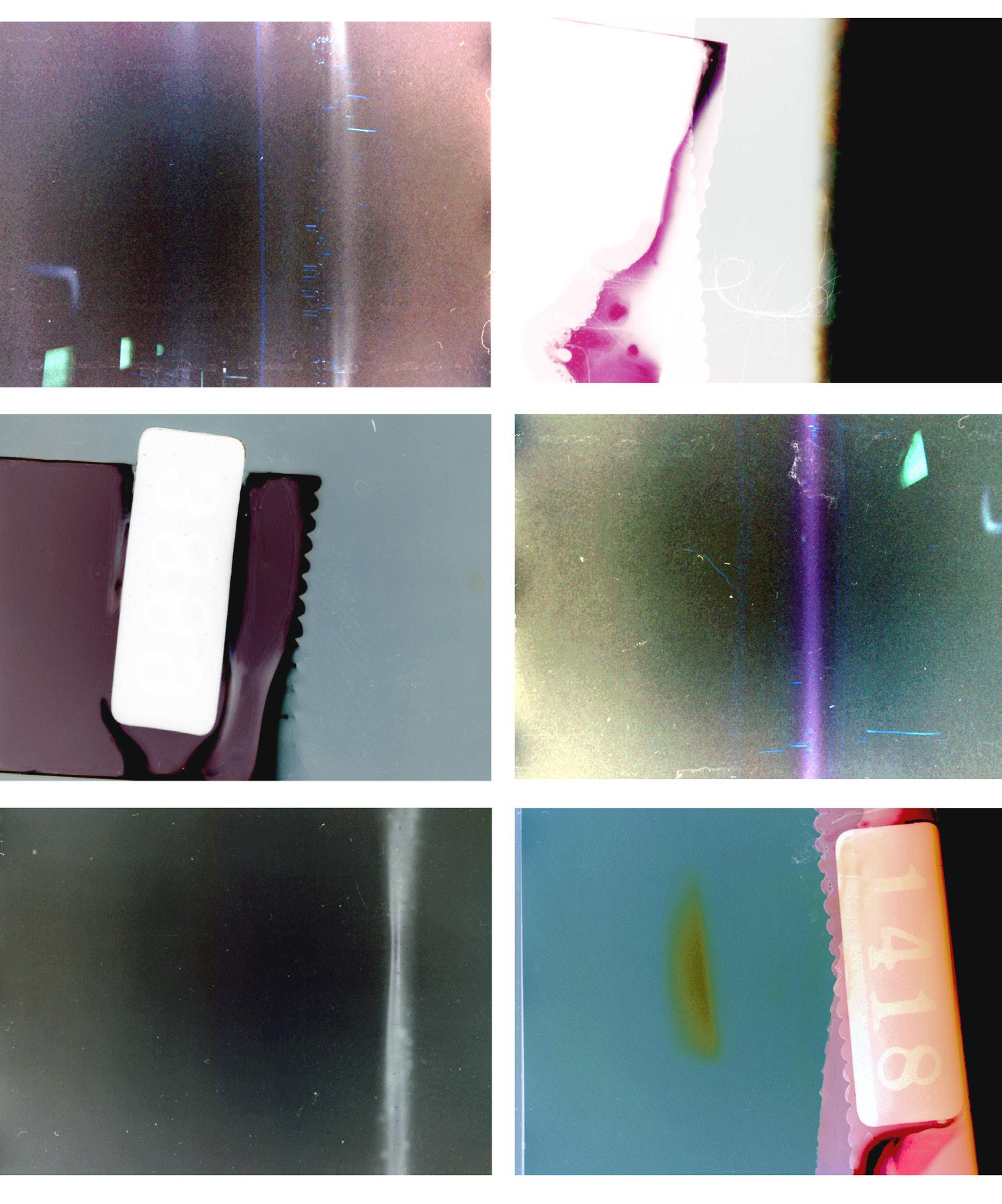
Melissa Breen
LETTERS TO OPHELIA
Ethan Ward
Jake sat at his desk and scribbled another letter searching for a way to get through to her. His apologies went unheard and his calls were ignored. When she left, his life became meaningless; he only survived in her. The wind picked up and blew through his window and knocked down his Pantera poster that was hiding a big hole in his wall. He had meant to fix it long before he met Ophelia.
Dear Ophelia,
I’ve been writing to you since the day you went away. I believe this letter may find your fingertips and be lucky enough to have your eyes gaze upon it, as I was lucky back when you would gaze upon me.
I love you and I miss you and want you to come home. You are my sunshine, and I am going pale in the darkness you left me in.
Please believe in my apology.
Love, Jake
Jake smiled to himself; he knew this was the one. ‘She loves all this romantic stuff’, he said to himself while he folded the paper and placed it in an envelope. He delivered it that night and when Jake got home, he slept soundly knowing for a fact he would get a call tomorrow from Ophelia begging him to take her back.
The next morning there were no texts and no calls. He decided to write again.
My Dearest Ophelia,
If it’s ‘work for it’ you want, then it’s ‘work for it’ you will get. If I must, I will crawl the world over just to grovel at your feet.
I know I have made mistakes and I am working on myself to be better for you. If you would only tell me what you need me to do, I will do my best to meet your every desire.
I am humble and I admit my wrongdoings. Please see that any part you don’t want me to have of myself, tell me what it is, and it will be gone. Make me understand.
I wish you would just come back. I don’t know why it has come to this.
If you can find it in your heart to see me again, please call me.
Much love,
Jake
‘This will do’, he thought, ‘I know her better than she knows herself’. He passed some time looking at pictures of them on his phone. He looked at his favourite where her hair was soaking wet from swimming in the pond and he was cooking burgers in the background.
He returned to Ophelia’s house that night. He could hear the ducks. He remembered how Ophelia would throw them bread and they would dunk their heads in the water to eat it.
Ophelia’s father swung the large wooden door open.
‘Listen Jake if you come to my house again, I swear to God I will call the police’, he spat through his bushy, untamed beard.
‘I haven’t done anything wrong’.
‘I am warning you, Jake. Leave my daughter alone!’
Jake began to sweat and raise his voice.
‘You’ll regret that’, he snarled and stormed back down the path, leaving the house behind him.
Jake was up all night seething. He wrote several letters, his thoughts frantic. ‘It’s her father, he is in her head, and she let him control her’ became ‘if her love can be removed so easily, did she ever love me? Did she even bother to leak me a tear?’ Then, ‘she let him stop her love for me and both of them are guilty of ruining my life!’
Dear stupid bitch,
I know what you are up to with your dumb father and it’s disgusting. Why would you ruin my life? Lure me in just to abandon me? No claims I am abusive or that I am violent will cloud my vision of the game you are playing. Everyone loses their cool every now and then. How dare you try to label me such awful things when this was your plan all along? I am coming for you both, and we will have closure.
Jake
He stared at the note and read it several times. He was satisfied with the wording, and he knew it was the truth. He knew what needed to be done. He let two days pass; he didn’t want to risk the success of his simple and justified plan by being impatient.
When he arrived at her house it was dark and quiet. He picked up the rock that hid the spare key. He crept in the house and towards her father’s room. The door was wide-open. ‘He makes it too easy’, Jake whispered to himself. He gripped the rock firmly and felt the grooves against his fingers. Snores from her father filled the room. He stood over the sleeping man and felt nothing but hate.
Jake turned from the body, gripping the now bloody stone tightly. He locked eyes with Ophelia and immediately she screamed and ran, managing to keep her distance long enough to get out through the back door.
‘Where are you going, my flower?’ Jake taunted.
Ophelia ran until she had nowhere else to run. The ducks flew away at the sight of Jake. He still gripped the blood stained rock.
The next morning the police found the body of Ophelia’s father in his bed, her body floating in the pond, and a letter at the pond’s edge.
I wish it didn’t have to come to this. I could not allow my father to continue to control me and could live in fear no longer. I know what is right and I am finally doing what is best for me. My father was an evil man who forced me to leave the love of my life. I did it because I feared the punishment and violence he would inflict on me. But I knew I was hurting Jake and I cannot live with the guilt of causing suffering to such a great man. I hope he will find it in his heart to forgive me.
Ophelia

EVOLVE
Olivia Vipond
Far gone the old ways
The unscrupulous, the lonely heart I left its barren pulsing
On the pure stretch of Gola
Between shipwreck and sand dune and changed
Barefoot in the marshes Racing uphill in torrents Of sleet
With a trick step I’ll catch The swelling tide And live on the tether, With your name written in the sand Below

SOMATIC (2025)
30 x 22cm
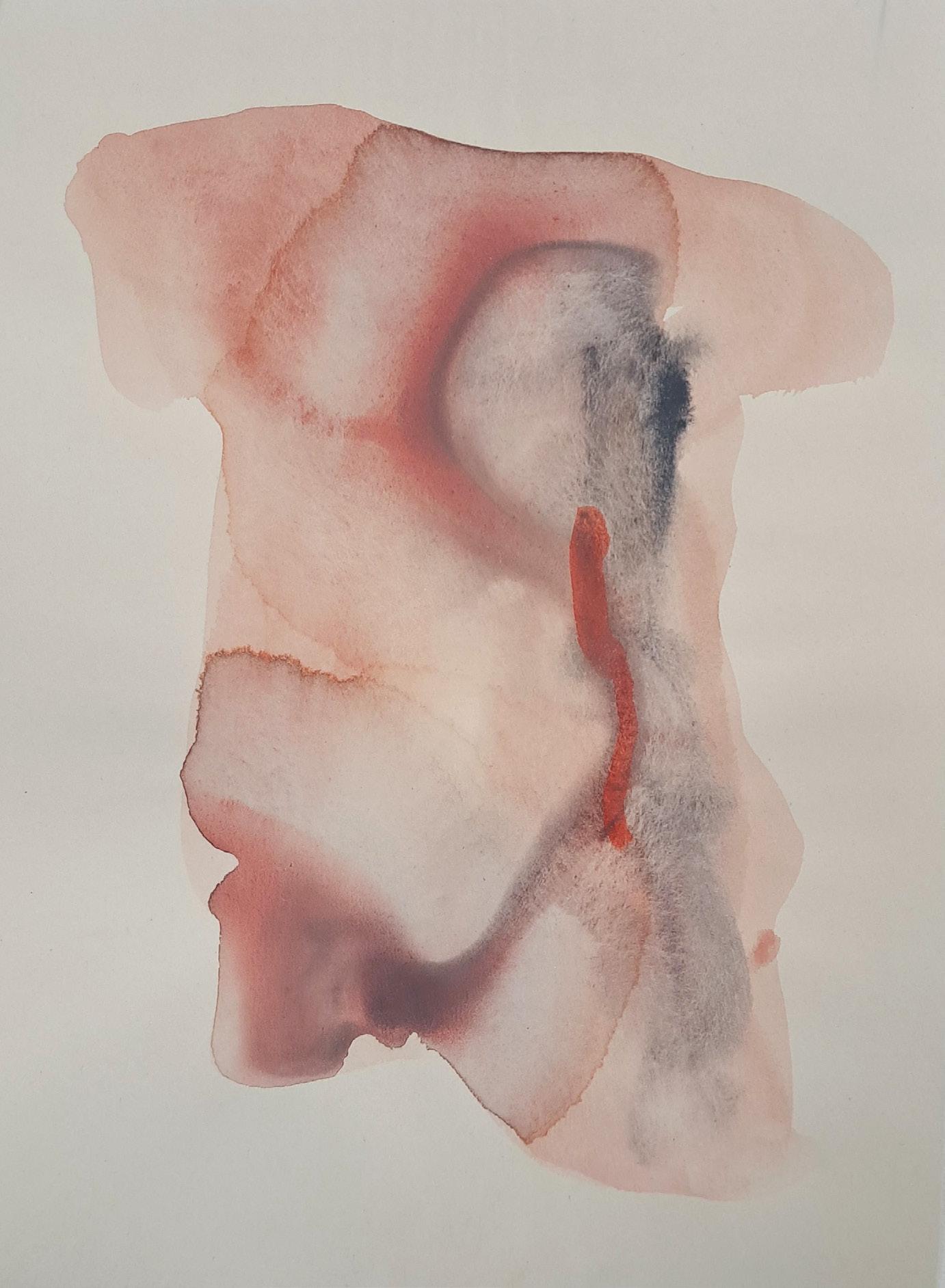
Gouache on paper
‘Somatic’ is a piece from a wider body of work, created through an exploration of the experience of existing within a body. The resulting form does not aim to replicate the human figure but instead materialises the sensations of embodiment. I worked with water-based media, chosen for its ability to move, bleed, and react, much like the body itself.
Cassandra O’Neill
HABITS
Jonathan Gibbons
In these late hours of the night, I think of you.
Thoughts spilling from a loosened scab, I think of you.
Knowing only a fraction of who you are in my absence And knowing all the things you once wished of me, I think of you.
It is not out of love, It is not out of ache, It is not even out of remorse, in which I think of you.
You fester upon the nightly hours of my body’s rhythm, Reduced to nothing more than a compulsion Arriving only when it is due.
DON’T EAT THAT
Jonathan Gibbons
INT. OFFICE
LUNCHROOM - DAY
A bellow of laughter comes out of the lunchroom. Gathered around a TABLE is CARL and his co-workers SAMANTHA, WANDA, and GEORGE.
CARL
I’m telling you it was one of the weirdest experiences of my life.
SAMANTHA
And the bit with the hot dog?
CARL
That’s frankfurter to you, Samantha They laugh together.
WANDA
And when the guy with the little hat popped up! They look around, unamused.
GEORGE
Well, I better be getting back to it.
SAMANTHA
Yeah, me too. Report due by three.
CARL
I’ll catch up with you later, and don’t forgetFrankfurter!
George and Samantha crack up once again as they head out the door and back to the office.
Carl unwraps the TINFOIL from around his SANDWICH. Wanda sniffs the air.
WANDA
Is that a salami, lettuce, mustard and cream cheese sandwich from Donny’s Delights?
Carl cups his hands around the sandwich, looking towards Wanda.
CARL Yeah-
WANDA
Have you eaten it before?
CARL
No, usually I get something else but –
Carl shrugs and begins to close the gap between his mouth and the sandwich.
WANDA
Don’t eat that!
The sandwich gets dangerously close to Carl’s mouth.
Wanda jumps up, reaches across the table, and smacks the sandwich away from Carl’s hands and onto the floor.
CARL
What the hell, Wanda?
WANDA
Don’t eat it, Carl! You won’t be funny anymore if you do!
CARL
What are you on about?
WANDA
Last year, March 13th, I woke up late and rushed to work. Usually, I make myself a ham and cheese sandwich with sourdough bread. But I woke up late! Do you understand?
CARL
What does this have to-
WANDA
So, I rushed to the office, but I had time to spare! I said, hey you know, everyone’s talking about Donny’s Delights. So I went to Donny’s and ordered that!
Wanda aggressively points at the sandwich sitting innocently on the floor.
WANDA
It was delicious, but I paid more than the 5.99. I stopped being funny.
CARL
That’s ridiculous.
WANDA
I’m not funny anymore, Carl! I’ve noticed the awkward silences, the eye rolls.
CARL
That’s not true.
WANDA
There’s no point in being polite. I know I’m not funny. I don’t even find myself funny anymore!
CARL
And you think it’s because of a sandwich?
WANDA
There’s no other explanation! You don’t just stop making people laugh, Carl. Whatever it is in that sandwich, it does something.
CARL
Well, I’m not going to eat it now.
WANDA
Come on, I’ll buy you lunch.
The two co-workers pack up their things, and leave.
The sandwich sits on the floor.
Footsteps are heard.
Comically LARGE SQUEAKING SHOES and MULTI-COLOURED LOOSE TROUSERS close in on the sandwich.
A gloved hand picks it up.
CLOWN Mmm.


bit.ly – https://bit.ly/409PmLx
PLANNING PERMISSION
Shane Leavy
‘Horse’s out on the road’.
‘Hah?’
‘There’s a horse, out on the road’, he says. He dumps his schoolbag in the corner and goes up to change out of the uniform, so I know I’m not going to get more out of him for a few minutes. I drag myself out of the chair with a huff, grab me coat and head out.
It’s getting bluish with dark; it’ll freeze tonight. I wander into the yard and listen for a long moment: one blackbird hammering out a tune in the alder, a whirr of wings, a quad bike whining up in McHugh’s farm. It’s a grand night, the stars prickle away in the east down the valley. Holy smokes is it going to be cold though.
Then, there, a clopping, up the hill.
‘Up we go’, I say and I stick the hands into me pockets. I can see my breath steaming up ahead of me and I’m fairly panting heading up. Moon’s out, rising over the trees, and it reflects white off the flat rectangle of concrete where we poured Jacinta’s foundations and floor before that biddy Mary Kinnehan objected and the planning permission stuck. It’s all smeared now with dirty old algae. The old knot in the stomach squeezes when I see that, and I try not to think of our Jacinta queuing up in Knock Airport with her passport. And the concrete, going green.
More gentle clopping. There it is, a young mare, half-wild with excitement, nosing about in the ruins of the old lime kiln for grass. I slow down and calm my breathing as I grow closer.
‘You’re a beauty, aren’t you?’
I’m nice and quiet, moving in. She glimmers with sweat in the moonlight, all flawless muscle and bright, thinking eyes. But she’s a big bugger too; me oul’ fellah broke a leg getting kicked by a horse back in the day and I wouldn’t want to get stranded out here in the frost all night.
I pat my pocket; left the phone at home.
‘Bugger’.
The mare’s clocked me now, and she’s chewing away, staring at me.
‘Come on, love. Come on, beautiful’.
I’ve me hands out, open. The mare turns and I realise she’s got the full kit on: saddle, stirrups, reins. That makes me think maybe she’s not one of the McHugh ponies—sure, they’re only pets really—but one of Mary Kinnehan’s proper gymkhana horses. Well, then, if I bring this lovely horse back to Mary she might warm to the old planning permission a bit.
‘Come on, love’, I say again, moving in, but the mare turns and canters away back down the hill, drawing my eyes after her on the silver road where the afternoon’s rain freezes.
‘Come back, you bugger’, I say, but something catches in my throat and for a second the hairs dance on the back of me neck. The darkness looming away on either side bristles with ghosts, it seems, I can feel my guts tighten and squirm. My forehead is frozen; I realise it’s damp with sweat.
Something dark lies across the glittering road down below. I trot down to it and the pulse bellows in my ears. Something dark, huddled. A body. A woman, smashed on the road. Mary Kinnehan, with a cut on her forehead that makes me yelp, and a damp darkness around her ear.
‘Mary! Oh my God!’
I squat beside her, trembling. One of her eyes is half-open, white. She’s breathing, though. I can see a slow ballooning of her chest. Well thank God I found her, she’s a dead woman if she stays another few hours in this cold.
No phone. I leap up and start staggering up the hill with a hand clenched at my hammering heart. I totter to a stop. The quad bike on McHugh’s farm has gone quiet, and the blackbird.
Very still now.
I look back at Mary, think about the planning permission. I wonder, and I have a bit of a think.

GLIMPSE
Andrew Sleater
Clickety clack. Click track!
There is no black, Drippity drip, drip bright! There is no white,
A glimpse of her today, I got, Tickety tock, tick time! She is my feminine, A glimpse of him today, I got, Tickety tock, tick time! He is my masculine.
GRAPHITE COUNTESS
2048 x 2732 pixels
Digital art
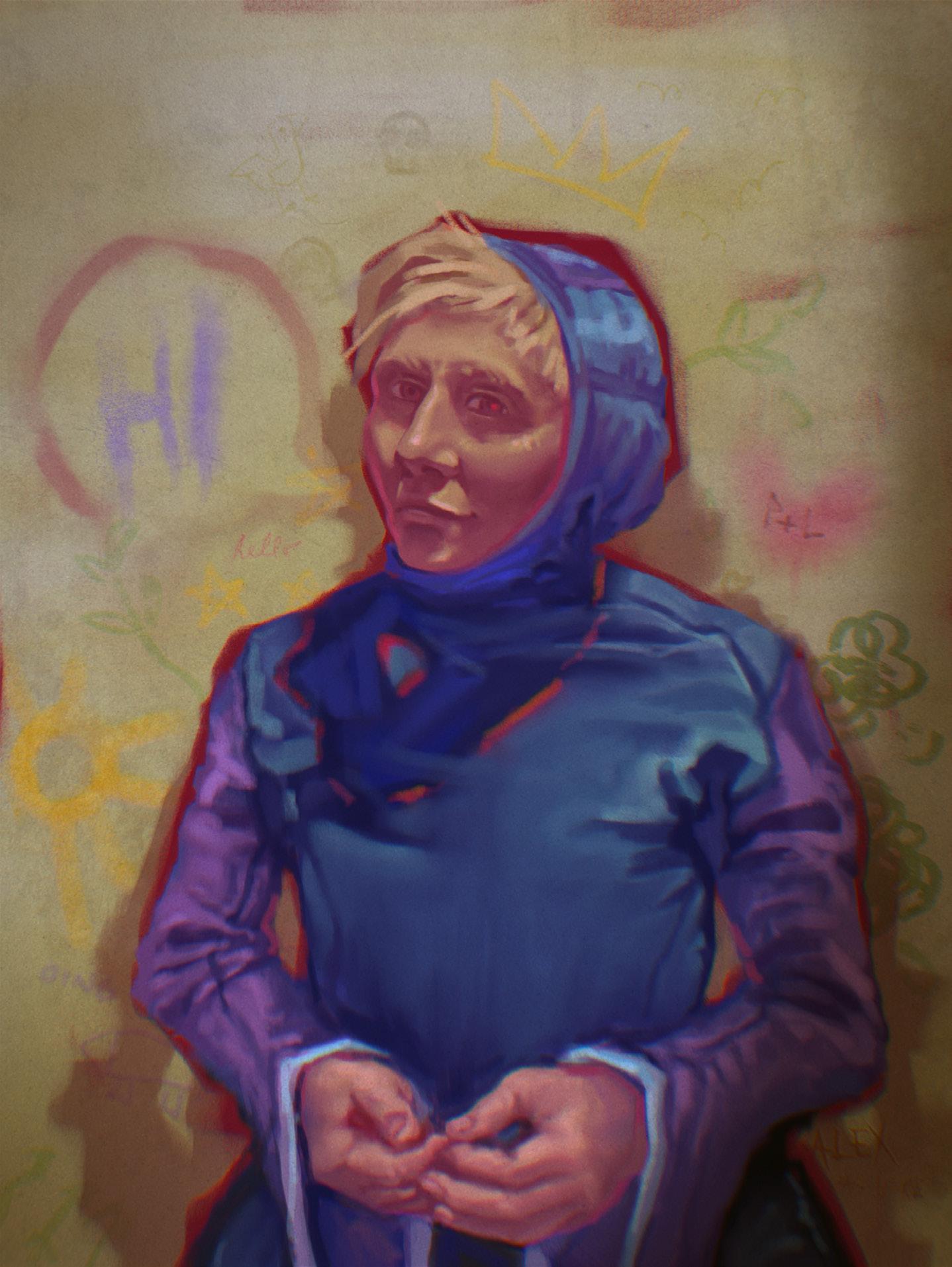
Alex Lahoda

LETTING GO
Noel O’Driscoll
The words Came firmly over the phone ‘He’s gone now’
Listening, as I sat in one space I imagined you in yours
Knowing even If I was alongside you
There remained a place I could not reach you Only you could go there
Before they sent you to sleep I listened as I heard How you found your courage And I wondered Would I too like you Find mine and Let go.
EARTH AND SKY
Mixed media wall hanging
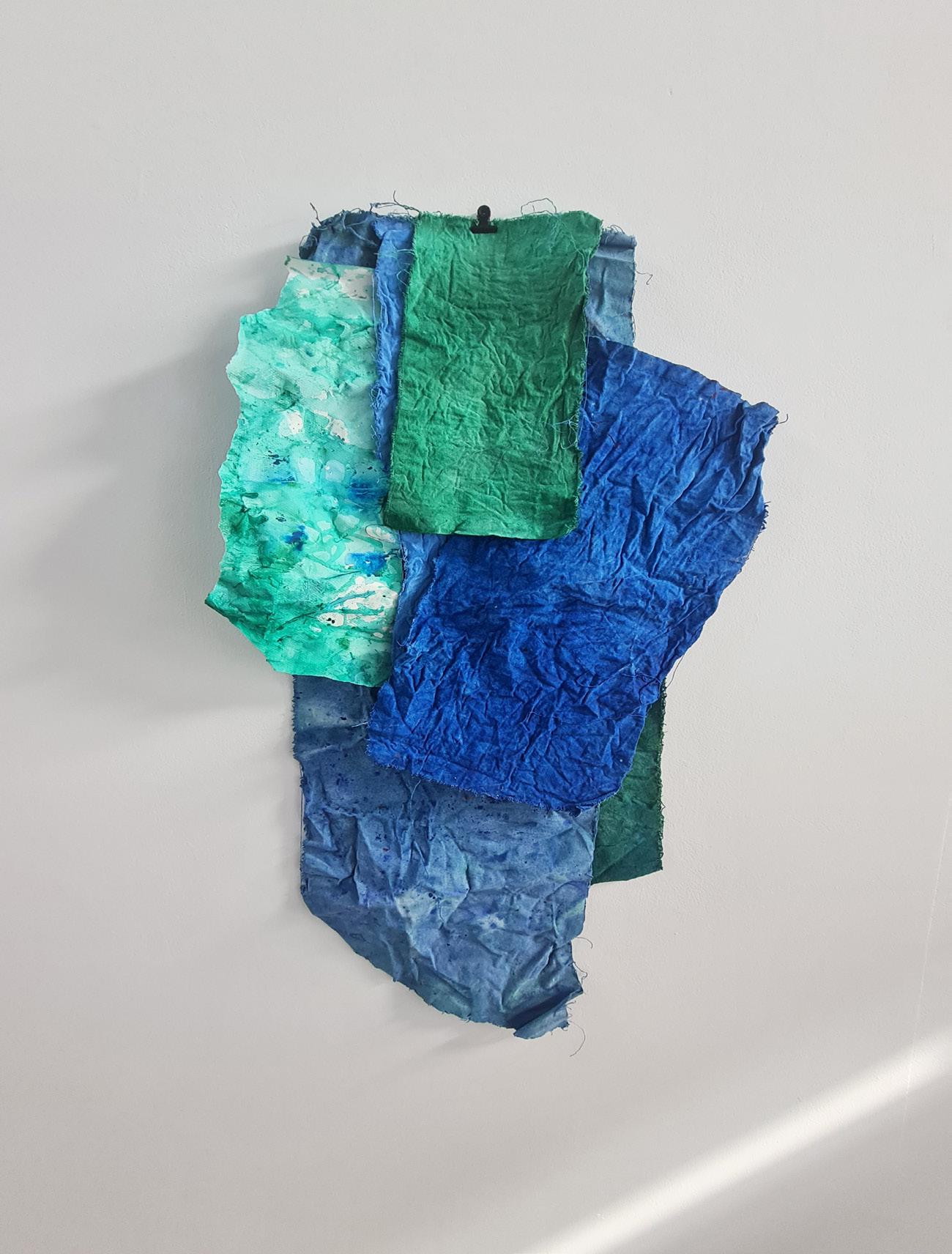
This is part of a series where I use abstraction to reflect how I navigate the world. Being surrounded by the blues and greens of nature helps calm feelings of anxiety and stress from the violence and unrest we are all faced with every day.
Niamh Commins Taylor
THE VEILED CITY
Photography
Niamh Commins Taylor
LAMB OF SILENCE
Joshua Lombard
The bell rang like a bone snapping.
The quiet, throatless one that rings only when the bishop comes down early or a boy dies. I counted three strikes that morning—one for each rib still bruised. A mercy. Outside, the courtyard stones hissed beneath the dew. My shoes buckled and shined, too small since last Lent. I floated over the gravel like the Virgin in the painting that watches us undress.
I held my hymnal, cradled in my arms like a child. Brother Matthias said I was too pale, ‘like death boy’, he spat, tugging my collar straight, ‘or porcelain’. I liked that better. Porcelain. The other boys were wood, soot, grit. But I was polished. Kilned. Fired by God.
The chapel swallowed me with a cough of incense and damp wood. I stepped into the vestry and the door shut behind me with the finality of a tomb. My cassock hung waiting, wet from last night’s wash. It clung to me like grief. I did not speak, not until the music, not until the moment.
In the sacristy, I folded my hands over my lap like they taught me: fingers interlocked, thorns in the crown. The crucifix above me was tilted slightly to the left. I thought, if He were real, He would have fixed that by now. The walls hummed, or maybe I was humming. It was difficult to tell. Sometimes the stones joined in.
Last week I sang the Miserere and Father Anselm wept openly. Afterwards, he pressed a coin into my palm and called me a blessing. I scrubbed my hand for an hour that night until my knuckles split and bled, spilling rich red into the sink. I watched the choirboys file in—black robes, pale faces, scraped knees beneath holy cloth. I didn’t look at them; I wasn’t supposed to. I was separate. Chosen. A wafer lifted high. A lamb. Unblemished. They stared—they always did—waiting for my voice to save them, as if it could. As if that was its purpose.
One of the younger boys—Thomas—once approached. His lip was split from choir practice. He held out a piece of paper. ‘I drew you’, he whispered. It was a stick figure with a halo. I took it and folded it into the hymnal. I did not thank him. That night I ripped up the drawing and burned it. The ashes curled into psalms.
The organ wheezed to life, an old beast with lungs that never healed. The choirmaster’s fingers shook on the keys. My cue came like rain through stained glass. I stood and opened my mouth. The sound came not from the throat, but from somewhere behind the spine. A place beyond language, beyond boy. A note of polished glass, splitting. A tone so sharp it bent the world.
I floated above the pews and left my body behind. I watched them pray and I watched them weep. I watched the plaster Virgin twitch behind her veil of dust. I kept singing because I had to, because that’s what angels do.
Even when they’re in hell.
Afterward, I was led to the parlour. A rare thing. The bishop sat and he did not stand when I entered. He never did. ‘Come here, my son,’ he said. He looked at me like he was judging marble. He reached out and tilted my chin. ‘Do you know what you are?’ I shook my head. ‘You are God’s silence made flesh. A voice that pierces doubt’. I said nothing, for I was not allowed to speak off-stage. He released me. ‘Tomorrow, you’ll sing for the donors. Be divine’.
That night, I did not sleep. I lay in bed, eyes wide, and hands folded as if for burial. The moon carved the room into bones, and the chapel began calling to me. I rose and crept barefoot through the cloister hall. Past the statue of Saint Cecilia with her broken nose, past the locked pantry with its moulded bread. My feet bled a little and I welcomed it. Blood was proof I hadn’t turned to stone.
Inside the chapel, the air was thick with leftover incense. Shadows writhed in the rafters. I approached the altar and laid my hymnal down and opened it to blank pages. The music had left them. Or perhaps it had never been there at all.
I climbed onto the altar and laid down. In my dream—if it was dream—the Virgin bent low. Her mouth opened. Her voice was mine. She told me I was not porcelain, not angel, not lamb. She said, ‘you are the silence before betrayal’. Then her head split like an egg and from it poured locusts.
I woke to the choirmaster shaking me, his eyes wide and afraid. I’d been gone all night. I’d bled onto the cloth. The bishop said nothing, he simply touched my forehead and sent me to wash. ‘I think the boy is fasting too strictly,’ someone whispered. ‘No,’ another said, ‘he’s fasting perfectly’.
The donor’s concert was held in the gold chapel—the one they only opened when royalty visited. I was dressed in new linen, stiff with starch. I was given honey for my throat and a ribbon for my wrist. They watched me like a creature in a glass cage. Their smiles were wide and awful. I stood at the front, beneath the crucifix shaped like a wishbone. I sang. I sang the air into glass. I sang until my nose bled and my vision throbbed. They called it holy.
I sang louder. I sang until the plaster Virgin crumbled, until the choirmaster fainted, until the bishop rose in terror. I sang, because I had to.
Because silence, once broken, can only scream.
GREEN, YELLOW, BLUE, AND PURPLE
Kate Reynolds
Sometimes my mam boils chicken instead of baking it so not even the residual oven grease can season it. There’s this white scum that floats to the surface when she does this and it plants itself there like pondweed. I reckon it’s chicken fat because the scalding temperature does nothing to dissolve it, only breaks it into little pieces. In fact, the heat seems to breathe life into the stuff. The white fleshy bubbles are a raging colony of cellulite, threatening to burst.
Sometimes I want to boil. Not alive, but in some sort of trance-like state that allows me to be relatively aware of the realtime results. Maybe once I’ve died my ghost will haunt a maniac’s kitchen. I’d watch a person’s adipose boil out of their pores and repose atop the human stew. I’d move onto an afterlife then, with my ultimate curiosity resolved.
My mirror used to be behind me in that corner. I’m glancing over there now, expecting a scene from that morning to be playing in a loop. I had never felt as vulnerable as I did in that moment, and it wasn’t until he commented on his own that I noticed these purple spots on my neck too. I remembered those descriptions of the Gruffalo and all the gross specificities all over his otherwise very humanoid body.
Seeing my spots was not when I cried. It was when I stopped feeling vulnerable for a moment and made room for the way out of leftfield feeling of shame. Like a prude, like a nun—like a nun’s mother—like a person who must somewhere in their deepest core hold some effect of this ‘catholic guilt’ I’ve been hearing about. But I didn’t cover my spots to go grocery shopping, they went better with my outfit than a scarf.
I prefer to dissect the little blood clots out of my chicken fillets before frying them. They ruin my appetite, but it’s impossible to carve them all out. I’ve tasted them before, maybe I can learn to enjoy them if I think about something else while chewing.
I can only scream when I’m deep in the woods with my fingers in my ears so I don’t worry about how loud I’m being. I feel the wax shift, my jaw lock and my voice strain, vibrating like a rope swinging in circles—faster and faster above your head—whirring with potential of impact. There’s no one to crack the whip down on, so you stop—abrupt—and smack yourself in the face. No one to blame but yourself, you started it. I started it. It felt nice to be a cowboy until I realised I was swinging a lasso with no desire to catch anyone.
I used to like my bruises when I was younger. I remember having one on my thigh from falling off my bike and it was as large as the full span of my hand. I wore shorts to bed for a few weeks so I could look at it more. Every night it changed shape, melding its four colours into infinite variations.
When I cook at the stove I need to watch it like a hawk. I’m awful for leaving a pan on the highest heat and walking away. Tonight, I’m cooking this chicken fillet. I watch the outer layer turn white, then get unevenly tanned before I cut it into cubes with a pair of scissors—now it looks like Turkish delights, pink, jiggly centres coated in powdered sugar. But it’s raw, too pink, half alive; too warm to sleep comfortably beside. Imperfect, blisters and bumps on their skin. So why do I still crave protein? Mam says to be patient, even if my feet are cold on the kitchen tile and I’m scared of the sputtering oil—what if it burns me? Or what if I leave and they get burned because of me? The thick black smoke makes my eyes watery. So, I’ll eat it pink and premature, in case I’m not hungry later. When I wake up sore and retching, I’ll plan to be better.
POUR
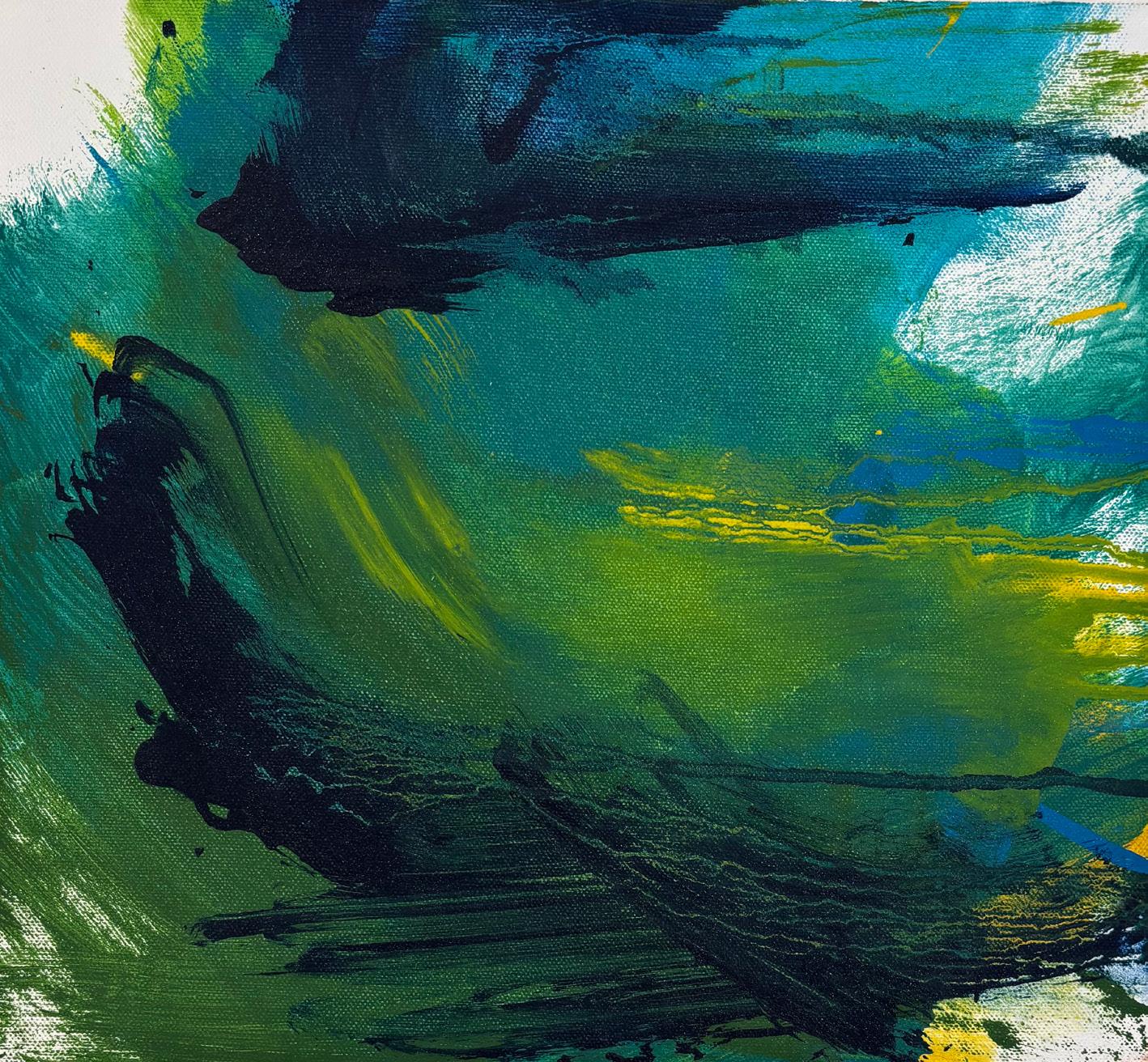
‘POUR’ explores the effect of rain on the landscape and how it shifts mood and atmosphere. Flowing marks and layered blues and greens reflect rainfall across the rural Irish environment. The work draws on memories and sensations from childhood and my current life, capturing the quiet presence of weather within everyday life.
Kerrie Lee Gallinagh
Oil on canvas
WINTER SHORE AT TWILIGHT
Maura Gilligan
Darkness hovers over Knocknarea, waiting to move across the bay until the last tinge of rose drops below the horizon. Footsteps scrape the gravel path. A lone surfer hurries towards the tide, eyes focused on the space ahead of her, heavy board grasped to her side.
Now visible, now hidden, a sliver of moon sits above the Sandhills. Thin charcoal cloud laces blue twilight. White surf surges. Barely visible, an ochre stripe marks churning sand between swells. The surfer paddles out, is lifted, dropped out of sight into the silver. Above, a single gull hovers. I will him to guard her.
To the west, horizon’s navy edge deepens and widens. In a play of light to the north Raughley detaches from Knocklane’s shadow, reveals them in a rare and transient separation. The windows of Ardtarmon Castle are yellow dots of light on Sligo Bay. Offshore Horse Island sits in a blue-purple cloud. Blackrock Lighthouse blinks. The new Wheaten Rock light shimmers its long last note close to cliffs on the isle of Ardboline.
On the shorefront seaspray bounces off boulders onto the Cannon and the promenade.
A man lovingly tucks a scarf around his wife’s head and shoulders. The chipper light is a beacon in mauve gloom. A young woman eats an ice cream cone, smiles, crosses the road to the waves.
Four gulls rise and fly south. Linking with a lone gull above them they arrow towards Tireragh. Out in the waves, a spattering of black dots is bobbing, rising, disappearing. Not surfers’ heads but sea ducks fishing the incoming tide. Twilight deepens into stripes of cobalt, grey and white, no lines remain between sea and sky.
MISSING MUSE
Celia
Keenaghan
My muse took a turn at a spaghetti junction
And I didn’t know which track she took Or if she knows where she is headed.
She may be trying to find her way out of that drawer
In my contentedly cluttered kitchen
Finding solace in an orange lid that awaits a match.
Is she at tideline, perilously close to weaver fish, Hoping someone is brave enough to come find her And clever enough to wear shoes?
It could be that she stopped at a soft hedgerow And now finds herself in a mire of brambles.
Perhaps some little fingers will release her.
My desktop might hold the co-ordinates to her location
In a file named Muse_2022 or #MissingMuse
Or written on dusty post long-since forgotten.
She could just be smothering under blankets of silence
Choking on the constriction of cowardice
Floored by the scent of shame.

TO THE SPIRIT OF A DEPARTED ACTIVIST ON THE ELECTION OF OUR TENTH PRESIDENT
Celia Keenaghan
You would enjoy this rich respite from the extremes
This shift of spirit
This offering of another way of being
This reassurance that alongside decay and decomposition, Storm and sabotage
The soul of the nation is holding as clear and steady
As the flock of barnacle geese
Who, called by the dusk, Creep across the field at Lissadell
Gathering nourishment
Progress virtually unseen
But yielding huge shape shifts.
We ready ourselves
To witness the inevitable flight to safe harbour
Through this moon-lit evening.
The raucousness of their rising
A bold announcement to aggressors
Of where power truly dwells and swells
And lurks and looms.
THE THRILL OF IT ALL
Marie Lavin
This extract is the first in a series of monologues. On stage, five characters sit on stools in a row, in darkness. The first character, the main protagonist, Mags Ryan (72), stands and a spotlight shines on her as she begins to speak to her best friend, Betty.
Diminished responsibility? Is that the best the pair of you could come up with? Jesus, I’d be better off defending myself! That’s what I told him Betty, that young fella of the Flynn’s, my so-called solicitor— following in his father’s footsteps and charging you for breathing the minute you step into his office. And then having the audacity to tell me he’s been having discussions with my daughter about my predicament. Whatever happened to client confidentiality I asked him? That soon stopped him in his tracks. ‘Only looking out for me’, he mumbled into his chest and his face on fire.
Diminished responsibility! I mean, maybe if I was sorry for what I did, I might consider it, but I doubt it. Sure, who in their right mind would want people thinking you’d lost the run of yourself? And before you say it, I know, it might be a bit late for me in that regard, but still, there’s no chance they’re catching me out that way. With poor Seán the way he is with his nerves and him being so forgetful, sure some days he thinks I’m his mother—imagine, that ould witch! They’d have him packed off to a nursing home in a flash. And then if they got me to admit diminished responsibility, I’d be sent the same way, unable to look after myself. No, they’ll not do that to me and Seán.
Miss High and Mighty is all business now that she’s got the sniff of money but she’ll get her comeuppance too, just you wait and see. Our own flesh and blood, too busy with her career above in Dublin to bother about us. We have quite the little nest egg built up now Betty, and it’ll all be going to the Alzheimer’s Society. They’re the ones who have helped us out, not her. They send someone out a couple of times a week so that I can have a break, go shopping, or meet up with you for a coffee. They have been an absolute godsend and I’ve decided that they’ll get whatever is left when we’re both gone. Anyway, the case, I think I’m going to
defend myself. I know the Flynn lad might be trying to help by saying I was acting out of character but I’d rather not take my chances. So I’m going to go in to the courtroom myself and plead guilty. I know, Betty, I know, it’s a bit of a shock, but just hear me out.
They’re going to assume that the reason I was shoplifting was because of the cost of living crisis–or the cost of greed crisis as I prefer to call it. Well, that wasn’t the real reason. Of course, you’d be a bit more mindful with all the price hikes, but myself and Seán aren’t on the breadline. We have enough to pay for the bits and bobs I was taking, I just didn’t want to pay for them. Simple as that. The thrill of throwing the nice ham, the expensive cheese, and the luxury biscuits into a bag hanging on my trolley was just too easy. Of course, I got carried away with it because the more times I did it, well, sure I didn’t know when to stop. It got so bad that sometimes, what I was taking was worth more than what I was paying for.
And I was extra delighted the days I’d meet Mulligan doing the rounds in his shop. I never liked him—a slippery fish Seán used to call him. ‘How are you, Mrs Ryan?’ he’d slobber, sweeping the strands of greasy hair over his bald patch and smiling like a halfwit. At least he wasn’t there the day I got caught. It was the security guard that followed me out to the car and asked to check my bags. I got a bit annoyed at first and then I thought, what’s the point? He wouldn’t have stopped me if he wasn’t sure. The Guards came and took a statement and brought me home. They were nice to me, made me tea and looked after me, told me to get a solicitor to help me. I thought I’d just get a telling off, but no, Mulligan wants a prosecution, the fecker. I have to go up to Maguires now to get my few bits and they watch me like a hawk. Bad news travels fast round here.
So if I plead guilty and tell the judge I just did it for a bit of excitement in my life, and I’m very sorry for causing all this bother, well, the most I think he’ll do is give me a suspended sentence, or maybe a fine. But I can’t see me ending up in prison and them all fit to bursting with the crowds of murderers and real criminals they have in there. And even if it came to the worst, and the judge was a mean ould yoke, what’s the most he could give me—a few months? And then I’d be home again, right as rain after me holidays.
That’s it decided so. I’ll get up early tomorrow and go into town when the girl from the Alzheimer’s crowd gets here. And I’ll go into Flynn and tell him no offence, but I’m going to defend myself, and I’ll make an appointment to sort out my will. Now, I’m going making tea, Betty—do you want the own brand digestives or the ‘fresh off the shelf this morning’ triple chocolate cookies?
THE FRONT
Johanna Callaghan
It sat on the bookshelves at the top of the stairs, too big for the children’s section, glossy and adult.
World War One.
I would pull it from the shelf and read to him, belly down on the carpet, my finger following captions I didn’t fully understand. He leaned in for the diagrams.
He concentrated on strategy, why the uniforms changed and helmets altered shape. Why a bayonet was better for close combat, why horses were used to haul artillery. He fitted the answers together neatly, each snapping into place, clean and satisfying.
I read the pages on maladies again and again. Trench foot and shell shock, lice and fever, it made me shiver. I liked the section called ‘Letters from the Front’, where men wrote about cold and hunger and missing home. There was a fold-out page that showed the trenches in crosssection, the earth sliced so you could see the layers beneath, everything labelled and neat. Below, small figures crawled underground.
The miners.
I imagined them digging quietly, listening, holding their breath, knowing the earth could cave in at any moment.
There was no page about how they retrieved the dead.
There were lists of battles; the Somme, Ypres, Verdun, Amiens and the numbers of men killed there rounded neatly to the nearest thousand. I imagined the bodies piling up between the trenches at the front, one on top of another, forming a human wall.
When we played, he was always in charge. He made the plans, sent me over the top again and again, stood above calling advances, deciding outcomes. I was a good soldier, but something was always wrong with me.
I had the shakes, I couldn’t feel my feet. Sometimes I couldn’t sleep because the rats crawled over me at night, their claws catching in my clothes. He mostly ignored this, he had more pressing matters.
One afternoon I tiger-crawled under the bed. Surrounded by loose socks and dust I held myself flat to the floor.
‘I can hear you’, he said from above.
‘You can’t’, I whispered.
‘I can hear the scraping’, he said. ‘I’m setting a charge’.
There was a loud bang. The bedframe groaned. He dropped the blankets down the sides of the bed and the space shrank. Dirt caving in, earth filling my mouth. I screamed, kicked at the springs beneath the mattress, thrashed again and again, sharp and animal.
A door opened.
‘What’s going on up there?’ our mother shouted from the hall.
Silence fell instantly.
‘Nothing’, we said in unison.
There was a pause. The door closed, footsteps moved away.
His voice came to me through the darkness.
‘You can’t scream when you’re dying anymore’.
I lay there, heart still racing.
‘I won’t go quietly’.
A DETOUR EN ROUTE
we broke in a small town, much like the other small towns we broke on the road south. immaculate and forever preserved ruins of war, silence revered, everything closed for fear of opening old wounds anew. a sandstone cathedral slouching off the main square crumbled as we dared poke its façade. our fearful footsteps echoed round the golden relics, eagle—chalice—saint— where, on a weak-kneed table, we came upon a row of pale candles weeping to each other, flickered by our sudden caught breath. and we wondered who had lit them, for this town was empty, its only presence— death. Adam Browne

WAITING
Photography
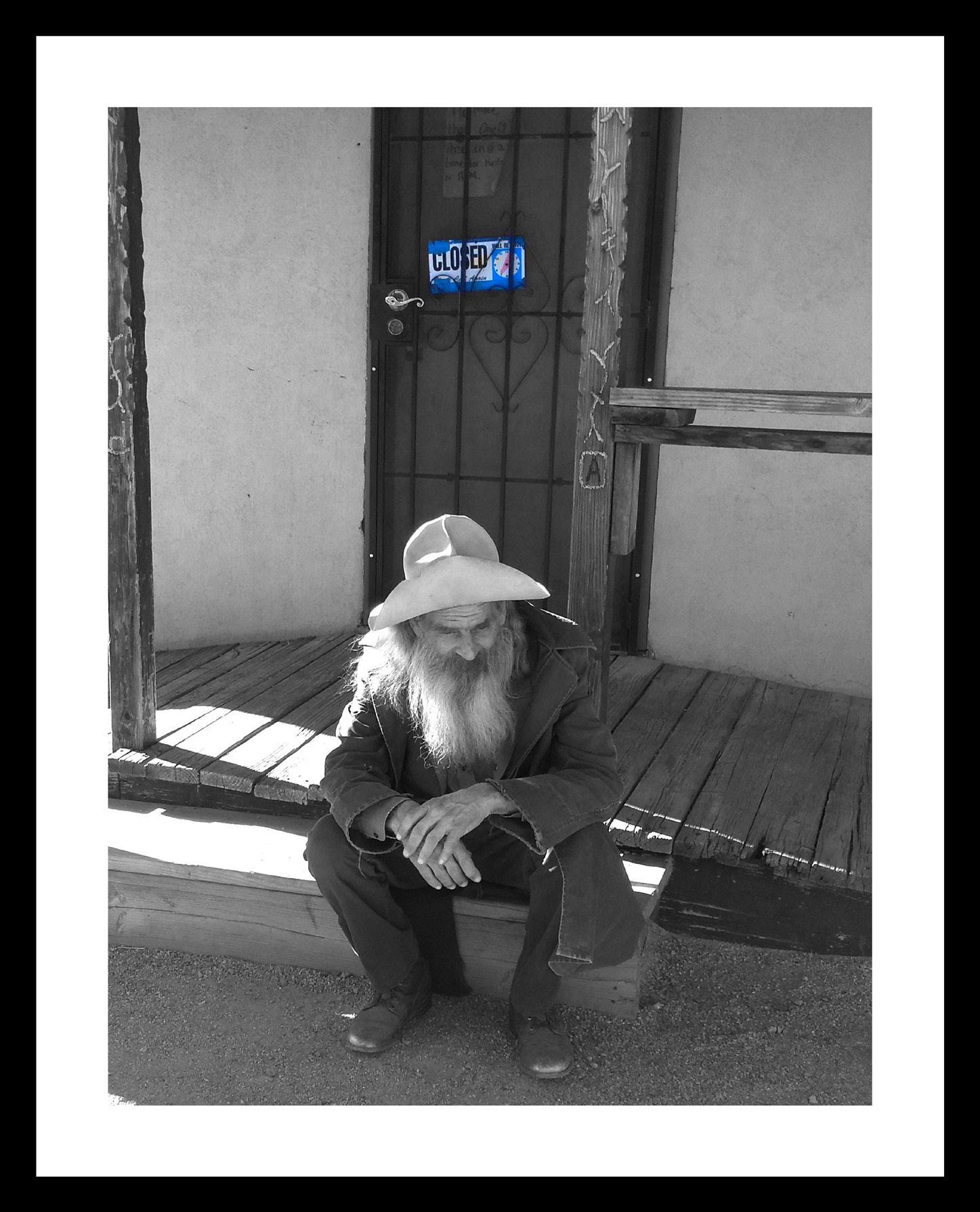
Captured in Tombstone, Arizona. The spirit of the Old American West, encountered by chance during a trip through the Southwest. The subject was old, bearded, and the embodiment of a living connection to history and the very essence of the Wild West. His presence conveys the gravity of time and persistence of memory, and this photograph seeks to explore the moment where nostalgia meets reality.
I wondered about his thoughts, what stories he could tell? His lost gaze lasted a while, and when his thoughts returned to the present, he tipped his cowboy hat at each passer-by.
Cecilia Daniels

IT FELT LIKE THIS
William Reape
This piece was written as an anniversary gift for my girlfriend. I wanted to try and capture the intensity of the emotions I felt on the train home after meeting her for the first time; something vibrant and full of life. I chose to use piano interwoven with a variety of synths because synths have that electric, colourful sound adding depth to the basic piano.

bit.ly – https://bit.ly/4qBP2ju

WHAT CAN WE FORESEE?
We could find ourselves dancing by the shore, Or holding on while ravaged by the wind, We may buy fragrances from every store, Or wonder why that scruffy old dog grinned.
Will we see countless nations torn to shreds, A million voices crying in deep pain, Or will they sleep soundly in their warm beds, As their fears evaporate down the drain.
Maybe we will soldier through our troubles, Or we will drown them in glasses of wine, Our solemn vows could burst like bubbles, And we would ignore, pretend it is all fine.
But for now, we say: ‘What will be will be’, For what, in life, can we truly foresee?
RESONANCE
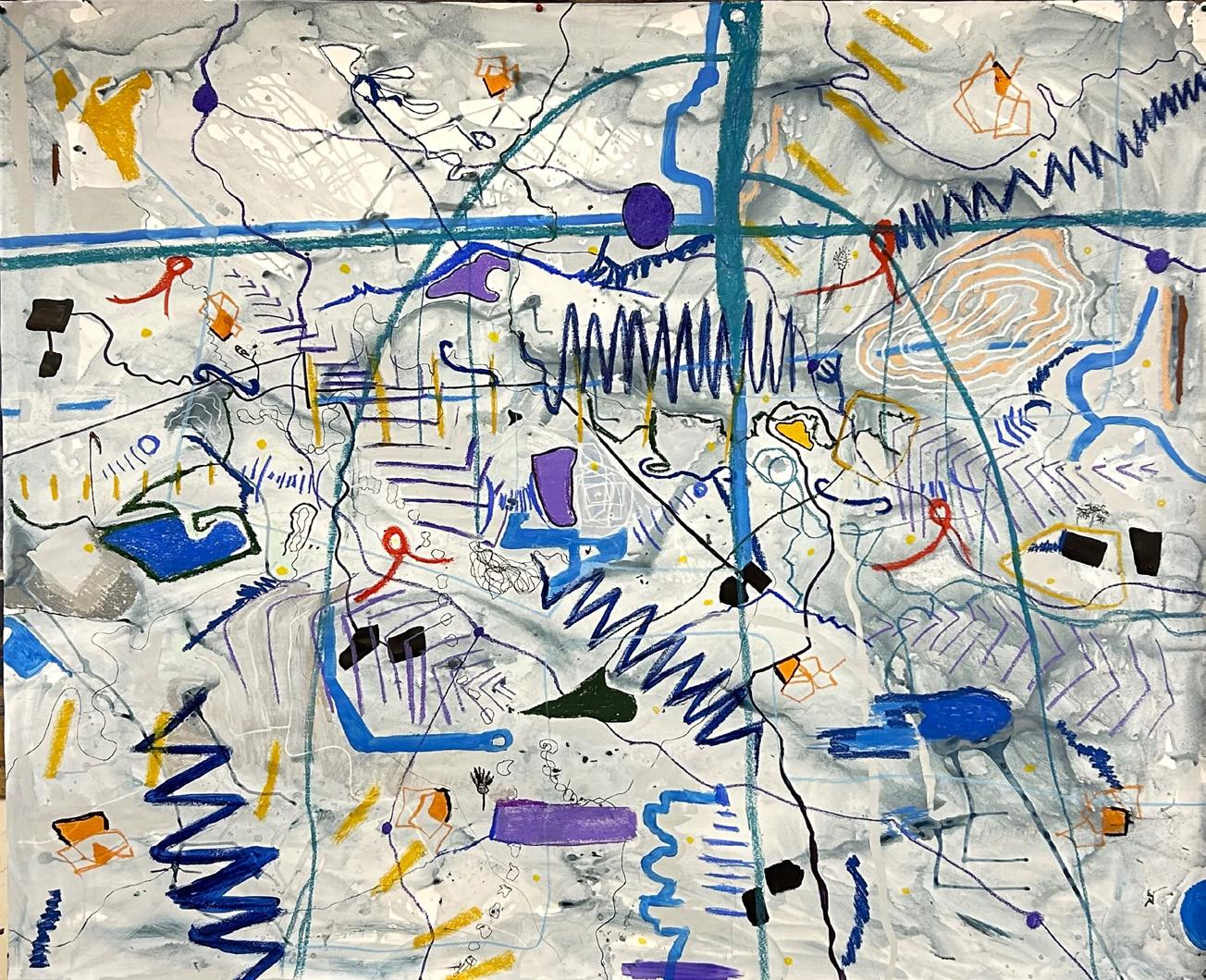
Angela Duffy
174 x 150cm Mixed media on Fabriano paper
Adam Browne
Adam is in his second year of the Online BA in Writing & Literature at ATU Sligo. He exists in Wicklow, furlongs from water. When he’s not droning behind a pixelated screen, he might be found—alone—squinting out at that sea in a threatening manner. Do not approach.
Alex Lahoda
Alex is a second-year Writing & Literature student at ATU Sligo. He was born and raised in Czechia but has always aspired to study abroad. Writing and art then being the only paths forward that have ever made sense.
Amanda Nolan
Amanda is a first-year Writing & Literature student at ATU Sligo. She lives in Mayo with her husband and has four children. Amanda draws inspiration for her writing from different aspects of everyday life, small moments as experienced, observed or imagined. She enjoys writing, reading, gardening, and creative hobbies.
Andrew Sleater
Andrew is a fourth-year student studying Performing Arts (Acting) at ATU. Andrew draws his inspiration from the nature surrounding him, and ‘Haiku Three’ is his first published poem on this subject. ‘Glimpse’ is inspired by the human condition and our being in the world.
Angela Duffy
Angela is a multidisciplinary visual artist from Mayo. Recently completing her MA at ATU Sligo, she explores perception, materiality, technology and the deconstruction of time and place within evolving social and cultural systems. She works in arts facilitation, and her artwork is regularly selected for exhibitions and publications. Instagram @angeladuffyartist
Anne Walsh Donnelly
When Anne is not editing the ATU Magazine, she writes prose, poems, and plays and is widely published. Her novel He used to be me (New Island, 2024) is going global, with foreign rights sold for translation in multiple languages. She is based on the ATU Mayo campus. Instagram: @annewalshdonnellypoetry
Aoife Sweeney
Aoife is a third-year Fine Art student at ATU Sligo. Aoife is from County Donegal and is inspired by nature, landscapes and the coast. Oil paint is her preferred medium as she enjoys the slow process.
Aoife Toner
Aoife is a third-year Fine Art Student in ATU Sligo. Her current studio practice highlights the exploitation and abuse of women and children by Generative AI. Outside of her studio practice, she takes inspiration from her garden to create acrylic flower paintings.
Barbara Dunne
Barbara is a writer, poet and visual artist originally from the Carlow/Laois border. She moved to Galway in the late nineties to study art in GMIT (now ATU). She has been most recently published in Crannóg, Púca, The Storms, HOWL, and Drawn to the Light Press.
Break Harte
Break is a third-year Fine Arts student. Currently working with a range of different mediums to explore identity, memory, and discomfort. Their incredibly long commute to college inspired their ‘Bus Stop’ piece.
Cassandra O’Neill
Cassandra is a visual artist based in County Sligo. She completed her BA in Fine Art at the ATU in 2025 and is currently undertaking an MA in Creative Practice. She was longlisted for the RDS Visual Arts Award in 2025. Instagram @cassieoneillart
Cecilia Daniels
Cecilia earned her Honours Degree in Contemporary Art 3D (2024) and an MA in Creative Practice (2025). Alongside her three-dimensional work, she also explores photography and print. Her creative process is driven by a desire to engage viewers, evoking emotional responses that range from the sensitive to the humorous.
Celeste Augé
Celeste is the author of the poetry collections I Imagine Myself, Skip Diving, and The Essential Guide to Flight as well as the book of short fiction Fireproof and Other Stories. She works for the Research Department at ATU and lives in Connemara.
Celia Keenaghan
Celia works in ATU Access and Widening Participation service. She was a long-time member of the Drumcliffe Writers Group. She enjoys being in nature, connecting in community, playing music, dancing, and writing, inspired by a commitment to a more just and fair society.
Christine Evans
Christine, originally from Kildare and now based in Donegal, is a mature first-year student of Communications with English at ATU Letterkenny. Her work explores grief, memory, and emotional resilience through reflective, lyric language. This marks her first published poem.
Ciarán Adams
Ciarán is a Clinical Nurse Specialist. He has been writing and publishing since the 1990s. His work places a strong emphasis on a sense of place, identity, and belonging. He was recently included in the anthology, A Door Opening Sligo and the Legacies of Partition and Scrimshaw Volume Four
Dean McMorrow
Dean is an aspiring fiction writer from Pollboy, Leitrim. He has acted on stage in local Leitrim/Sligo productions since childhood and is passionate about creative writing and performing arts. He is a third-year student of the BA in Writing & Literature at ATU Sligo and a current Scrimshaw editor.
Dearbhla Meehan
Dearbhla is a third-year Fine Art Student from Donegal. Her works feature a wide variety of mediums and are inspired by the human form, emotions, nature and music. She enjoys experimenting with textures, compositions and use of colours through her art. Instagram @ dearbhlam_art
Emily James
Emily blew into Ireland during a storm in 2019 and she’s been enjoying safe harbour in West Cork ever since. She is now in the final semester of a BA in Writing & Literature with ATU and editing this volume of Scrimshaw. Sometimes she is proud of her life choices.
Emma Halloran
Emma is a mature student in her first year of Writing & Literature Online in ATU Sligo. Originally from England, she feels more at home in County Galway where she has lived for twenty-four years. She doesn’t know what kind of writer she is yet but is enjoying finding out.
Ethan Ward
Ethan is a first-year Writing & Literature student, fiction writer and horror enjoyer from Cork. He has a beautiful fiancé and a wonderful (dog) daughter. His inspiration for story telling comes from Stephen King.
Fanni Dominika Varga
Fanni is a Hungarian-born writer and student of History and Geography at ATU Mayo. Aspiring to be an archaeologist, her literary passion was sparked by Hermann Hesse’s Demian. She is currently developing a fantasy series and multiple poetry collections, blending her academic interests with creative storytelling.
Gemmaclaire Haverty
Gemmaclaire is a Galway born writer and all-around creative person. She’ll admit, it took her a long time to find her place in the world, but in the ATU Writing & Literature Course community, she feels she’s found it. She hopes to write fiction novels. Someday.
Hannah Forde
Hannah’s work is grounded in repeated returns to Streedagh Beach. Through painting and sculpture, she works with erosion, layering and surface change. Using materials that resist each other, the work carries the memory of the shoreline, translating it into abstract forms shaped by time and pressure.
Ivana Hanjs
Ivana is a Communications Officer at Atlantic Technological University and a journalist by trade. Originally from Croatia, Ireland has been home for over a decade, drawn here by travel writing. She spends her spare time with her daughter, partner and two dogs, exploring Sligo and beyond.
Jeremy Chandra
Jeremy is an Indonesian photographer and film student based in Galway. His works explore everyday life and cultural traditions through street photography and documentary practices. He is particularly passionate about human-centred activities, observing how ordinary moments can make meaningful images.
Johanna Callaghan
Johanna is a writer of poetry and prose living in Sligo. Her writing explores themes of roots, ruin and resurrection reflecting on memory and gender and how these forces shape our experience. She has previously been published in Scrimshaw Volume Four and ROPES Literary Journal Issue 33.
Jonathan Gibbons
Jonathan is a second-year student of Writing & Literature in ATU Sligo. An aspiring writer, he cannot write a simple bio. With an inability to balance the self-deprecation needed to keep his ego at bay whilst desiring to take his work seriously, he is left clueless and afraid. Help.
Joshua Lombard
Joshua is a 20-year-old writer and second-year Writing & Literature student based in County Tipperary. He writes about silence, faith, queerness, and emotional intensity, and tends to draft late at night when the house is quiet and no one interrupts—usually with a cup of tea going cold beside him.
Karolína Staňková
Karolína is a final-year Creative Design student. Originally from the Czech Republic, she moved to Sligo to study. She finds inspiration in new countries, cultures, and experiences. She is the co-designer for this volume of Scrimshaw and hopes to continue building her career in the graphic design field after graduating.
Kate Reynolds
Kate is a second-year Writing & Literature Student. She writes creative non-fiction pieces to try and better understand her annoying emotions. This is her first publication in Scrimshaw or any literary magazine, and she is going to obnoxiously brag about it forever.
Kathleen Gallagher
Kathleen is a native of South Sligo, the inspiration for much of her writing. Family history and special occasions are chronicled in rhyming verse, a favoured form. Kathleen is a retired Primary School SNA and currently writes as part of a small group based in ATU Sligo’s Yeats’ Library.
Kerrie Lee Gallinagh
Kerrie is a Donegal-based painter whose work is rooted in early sensory experiences of landscape, light, and weather. Through intuitive, material-led processes, her paintings explore memory, atmosphere, and the emotional resonance of place. Her work is featured on the cover of this volume.
Marie Lavin
Marie is a former student of the BA in Writing & Literature at ATU, Sligo. Her travels, life experiences, and interest in people and their cultures inspire her writing, which includes poetry, non-fiction, and short stories. She is currently working on her first novel.
Marie Murphy
Marie is a third-year Fine Art student at ATU Sligo. She lives in County Fermanagh on the border with County Cavan near Derrylin. She works with range of different mediums, painting, drawing and photography, using photography as a tool to look further into her work. Instagram: Marie_murphy.art
Mason O’Hagan
Mason is a recent graduate from the Writing & Literature course at ATU Sligo. He was an assistant editor of the previous Scrimshaw Volume Four and his preferred writing genres are romance, drama, and fantasy. In his writing he seeks to explore interpersonal relationships and the human condition.
Maura Gilligan
Maura’s prose and poems are rooted in the seas, shoreline and hinterland of the Coolera Peninsula. Her work has been published and broadcast, and performed in collaborations with Sligo musicians, academics and filmmakers. Maura currently writes with a small group based in the Yeats Library at ATU Sligo.
Melissa Breen
Melissa is a wearer of many hats from photographer to music journalist to editor to screenwriter. She is in her final year of a BA in Writing & Literature at ATU and hopes to uncover even more ways to be paid to yap.
Mick Geelan
Mick is a 76-year-old from Grange. He belongs to the ‘Sense of Place’ writers group based in the ATU library. In the past he has had work accepted by The Leitrim Guardian, and some other publications. He is thrilled to be accepted by Scrimshaw.
Mohammed Almadhoun
Mohammad is a visual artist from Gaza who holds a Master’s in Creative Practices from ATU, a BA in Art Education from Al-Aqsa University and a diploma in Illustration and Children’s Literature from the Tamer Educational Institute. He has held local and international exhibitions and has received the International City of Arts Scholarship.
Molly Brady
Molly is a third year BA Fine Art student at ATU Sligo, originally from Clones, County Monaghan. Her practice is rooted in landscape, constantly drawing inspiration from the many coastal areas across the West of Ireland. She works in response to natural forms, memory and emotional experiences.
Natalia Grobelska
Natalia is a third-year student at ATU Sligo studying Writing & Literature. She is an aspiring novelist and screenwriter. Born in Poland and growing up in Ireland she has always had a love for green countrysides, forests and beaches. She loves reading anything magic, fantasy and scifi related.
Niamh Commins Taylor
Niamh is a Midlands-based mixed-media artist working across painting, drawing, photography and collage. Her practice explores human connections through ongoing experimentation with colour, materials and varied techniques.
Noel O’Driscoll
Noel works part-time as a student counsellor at Galway/Mayo ATU. Outside of ATU Noel engages with people’s healing and recovery through poetry, psychotherapy and retreats. He co-hosts a podcast called The Hinge which is a weekly offering on the contemplative life. This is his first published work.
November H. Tuppen
November was part of the editorial team for The Cormorant (Issue 7) and currently works as a freelance copyeditor. They’ve had several poems published in Scrimshaw Journal and Green Carnations (2020) but are presently spending their spare time researching Dr James Barry and working on a fantasy novel.
Olivia Vipond
Olivia is a Dublin-based writer living with her growing family. A recent graduate of ATU’s Writing & Literature programme, her work explores the space between the ordinary and the unknown, offering a quiet reflection of the natural world.
Paul Hamilton
Paul is a lecturer in Environmental Science at ATU Sligo. He has been published in The Irish Independent, Scrimshaw, and the Lasmuigh Journal. Paul was shortlisted for the Allingham festival poetry awards. He’s a member of the Inkwell Writers in Sligo. His writing is inspired by the natural world.
Rebecca Christina Devins
Rebecca is a Sligo multi-disciplinary artist. She has completed an undergraduate degree in Fine Art and a Master’s in Creative Practice in ATU Sligo. Her focuses are on lineage, trauma, motherhood, psychoanalysis, and rebirth. Rebecca is part of the collective Mná Rógaire and is working on a collection called Threshold
Regina Barrera Vilchis
Regina is a Mexican writer based in Ireland whose practice extends into photopoetry. Her work emerges from liminal spaces between memory, longing, and spiritual presence, where nature, mythology, and the sacred feminine converge.
Roan Murphy
Roan graduated from ATU’s Animation and Game Design course. He enjoys creating funny and silly animations! He loves learning about the world of animation and storytelling.
Robert McAllister
Robbie is a third-year Writing & Literature student. He grew up in Gleneaskey, County Sligo and currently lives in Sligo town.
Rozálie Kohoutková
Rozie is a designer from the Czech Republic in her final year of Creative Design at ATU Sligo. She works in different areas of design, with a strong interest in interior. She enjoys travelling and discovering new places. She is the co-designer for this volume of Scrimshaw.
Shane Leavy
Shane is a library assistant in the Yeats Library, ATU Sligo. He is a writer and creative writing workshop facilitator, with work published in Popshot, Trasna, Labyrinthine, Icarus, Infinite Worlds Magazine and Jacked. He won the 2024 Southern Shakespeare Company Sonnet Contest and the 2025 Poets Meet Painters Award.
Shauna McDonnell
Shauna is a young writer from Manorhamilton studying Writing & Literature in ATU Sligo. She is making her second appearance in Scrimshaw this year with her piece ‘How to Make Yourself Pretty’.
Stephen Glennon
Former newspaper editor and author of the book, To Win Just Once, Stephen works as a Communications Officer on ATU’s Higher Education 4.0 Project. He graduated with an MA in Writing from the University of Galway in 2019. His work has appeared in Crannóg and Ropes Literary Journal, among others.
Stuart Farrell
Stuart is a BSc Network Cybersecurity student at ATU, an electronic music producer, and part-time radio host. He has released music on labels including NeoTantra, Neo Oujia, and Móatún 7, and has contributed to yoga and meditation compilations under the alias HypoTaxis.
Susan Stewart
Susan is a writer from Dublin. She is a recent graduate of the Writing & Literature BA at ATU Sligo. Her interests include short stories and creative nonfiction. She is a former editor of the Scrimshaw Journal. Susan is currently undertaking an MPhil in Children’s Literature at Trinity College.
Tara-Fay Ní Riain
Tara-Fay is a writer from the West of Ireland who is currently based in Brisbane, Australia. Her previous work includes explorations of the digital age, poetry, and fiction. She is currently completing the final year of her Honours Degree in Writing & Literature at ATU Sligo.
Theresa Smith
Theresa (Terri) is a visual artist and mature student of forensic science at ATU Galway. Her work investigates folklore, toxicity, and decay, using narrative illustration informed by science to explore nature stripped of sentimentality.
Tony Keenan
Tony lives near Mullaghmore, finding inspiration for writing poetry while enjoying his other hobby – walking. He completed a Writing & Literature BA degree at ATU in 2023 and co-edited Scrimshaw Volume Two. Tony loves to travel with his wife Brid, especially to London and Chicago to visit their four grandchildren.
Tracey Faulkner
Tracey is a mature Writing & Literature student from Donegal Town: she believes the perfect course found her at the perfect time. When she is not writing or working as a Special Needs Assistant, she can be found on the stage acting, directing, or teaching youth drama.
Vanessa O’Malley
Vanessa is a graduate of the Writing & Literature Programme at ATU Sligo. Growing up in a rural community on the West Coast of Ireland, her writing is inspired by the surrounding mountains and coastline of the Wild Atlantic Way. Her poetry has previously appeared in Scrimshaw Volume Four.
William Reape
William is a musician and writer from Ballina, County Mayo. His writing and music are influenced by the people and experiences in his life, particularly his father. His released albums include P14N0M4N, ReWorked, and LoveYou<3.
Zara Burke Ott
Zara grew up in the heart of Duhallow hunting country. She’s been surrounded by horses her whole life and has worked at world recognised yards, alongside competing her own horses. She is a Writing & Literature student who enjoys writing about her passions and her rural upbringing.
Acknowledgements
Our most sincere thanks to:
Dr Orla Flynn (the President of ATU) for her continued support for this journal.
Dr Keith Hopper for sharpening our red pens and giving us very welcome advice all the way through.
Dr Tim Hannigan, Tommy Weir, Alice Lyons and all the lecturers on the Writing & Literature course who have prepared us for this moment with diligence and care.
Aidan Haughey of the ATU Communications department for his unwavering belief in the journal and in us.
The ATU Sligo Students’ Union for their varied support.
Johanna Archbold and the ATU library, thank you for your support, your enthusiasm, and for putting up with all of our questions.
Damien Donnelly and Tara McEvoy from the Irish Writer’s Centre, thank you for all your support and for taking a chance on us.
GPS printers, without whom your hands would be empty. Thank you for treating the journal with such care and attention.
Karolína Staňková and Rozálie Kohoutková who have made us look this good their creativity and ability to translate vagueness into beauty have only been equalled by their patience.
Dean McMorrow, Natalia Grobelska, and Tara-Fay Ní Riain (AKA the Editorial Team) for their dedication and talent.
Gemmaclaire Haverty for her ceaseless efforts to bring the work to a wider audience.
The proofreaders Brooke Lieghio, Hugh Kisby, Jonathan Gibbons, Marykate O’Flanagan, Shauna McDonnell, and Solveiga Zareckaite who dotted the i’s, crossed the t’s, and made sure apostrophes never strayed.
Our friends and colleagues in ATU on the Writing & Literature course and beyond.
All the people who had the courage to send us their work. Whether it was published or not, we were honoured by your trust.
And most of all, everyone who has picked up this journal and found something in it to enjoy, because without you, what is the point of us?
Cover art
‘POUR’ Kerrie Lee Gallinagh (Detail). See page 108.
Frontisplate and endplate
‘Ezbet Beit Hanoun’ Mohammed Almadhoun (Detail). See page 66.