The funding crisis threatening Nova Scotia book publishing by Heather Fegan
Publisher’s Corner
9 Galleon Books
Where original voices set sail by Meg D. Edwards News Features
12 A legacy written in footsteps
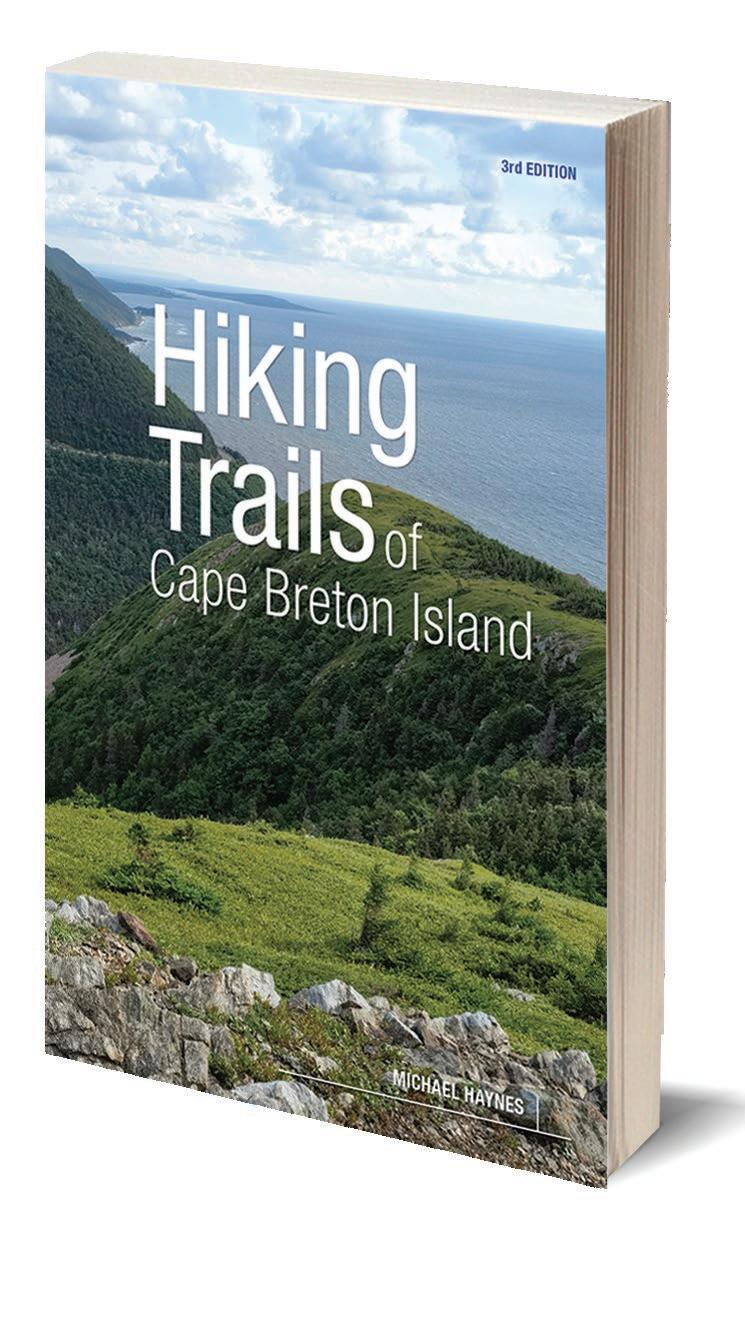
Michael Haynes leaves big hiking boots to fill—and countless trails to explore—in his final guide for hikers by Marjorie Simmins
15 Recommended reads
What award-nominated Atlantic authors are reading next Authors in Conversation
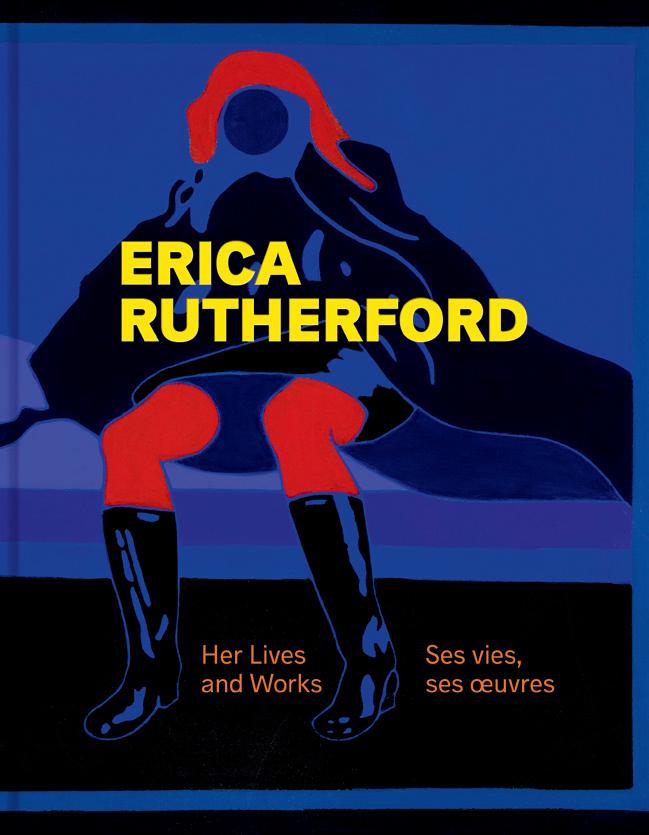
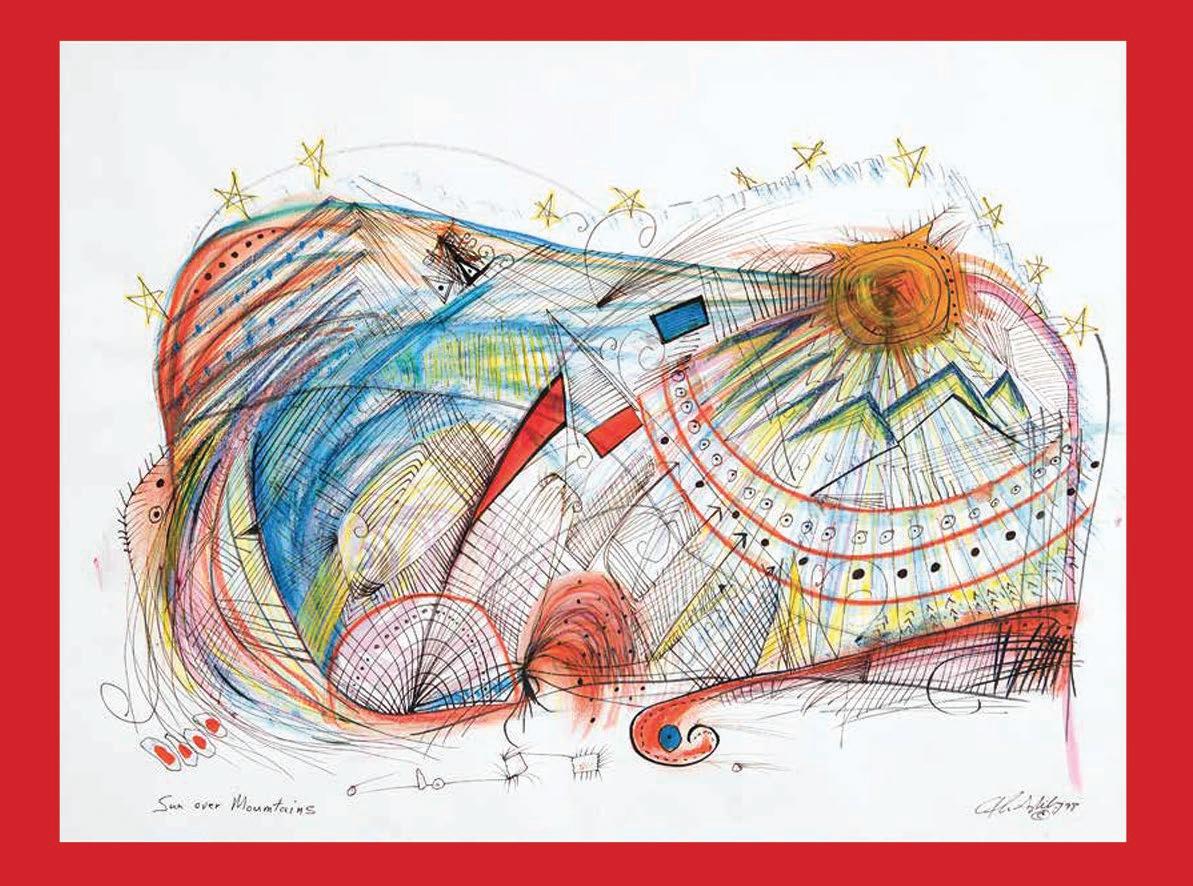
ABOUT THE COVER
It's a banger!
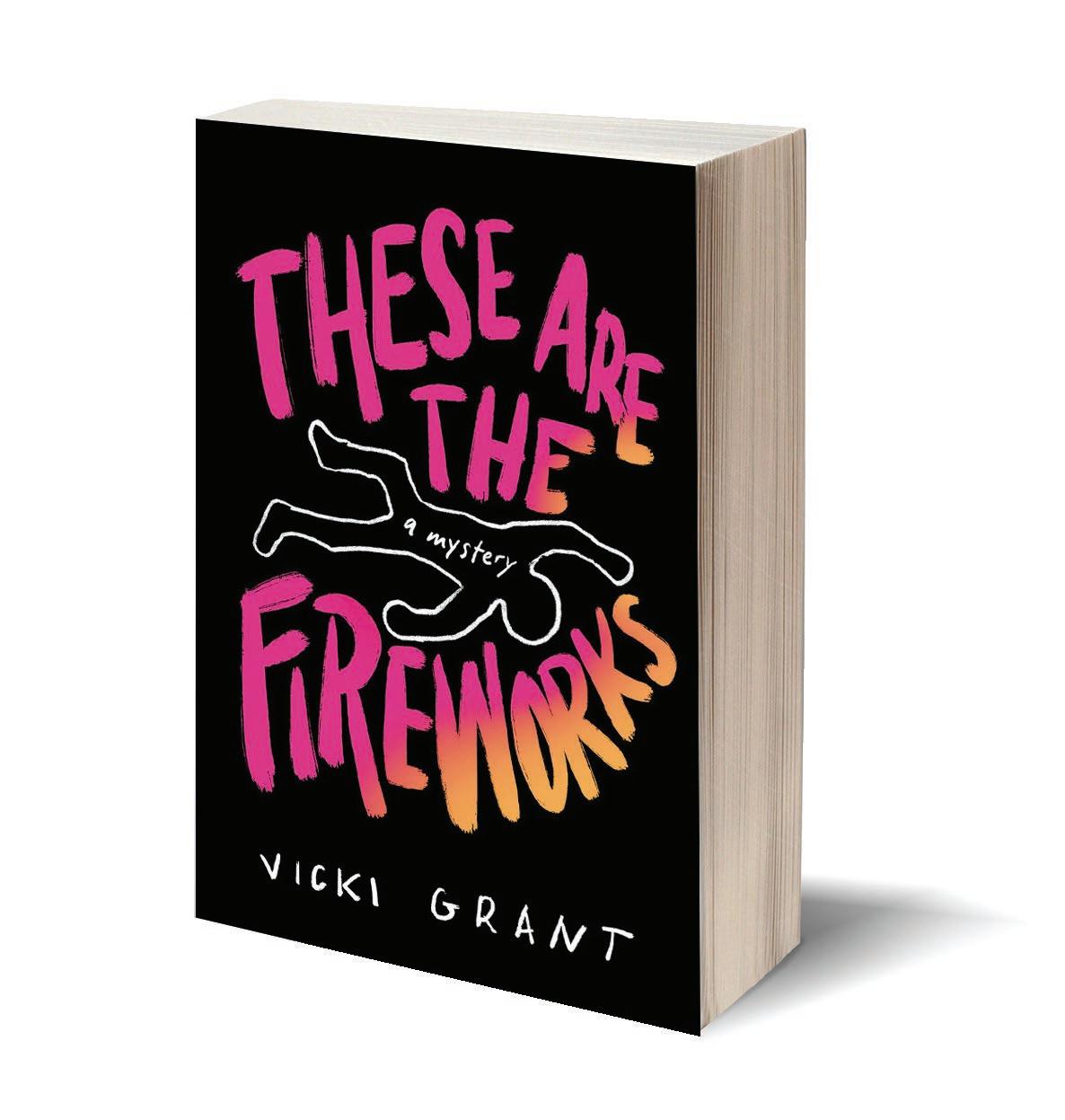
Q&A with Vicki Grant by Carol Bruneau
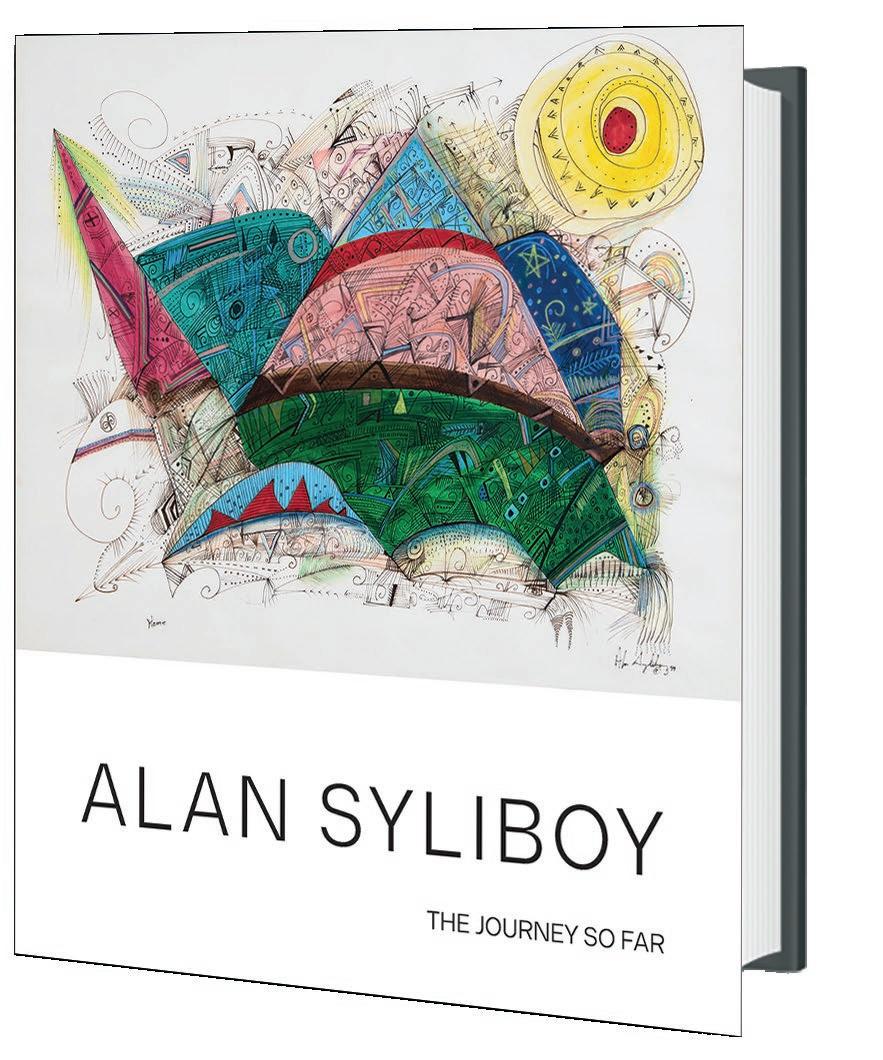
Shadows and Reflections 19 The Art of Getting Lost and Found Book Features
21 All around the circle
Explore Newfoundland through the pages of these books by Gabby Peyton
23 Spring poetry roundup
Salt air, shellfish, and summer reading for sea-foodies
Still Here
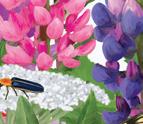
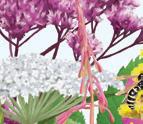
Blood Typed 30 The Nature-Friendly East Coast Garden
The Unnameable
Night Birds
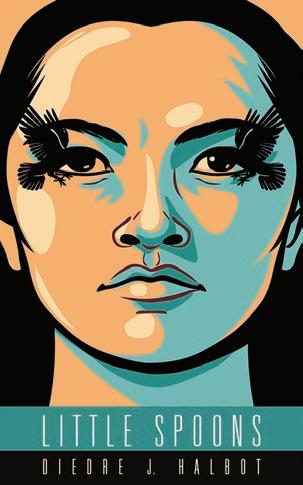
Little Spoons
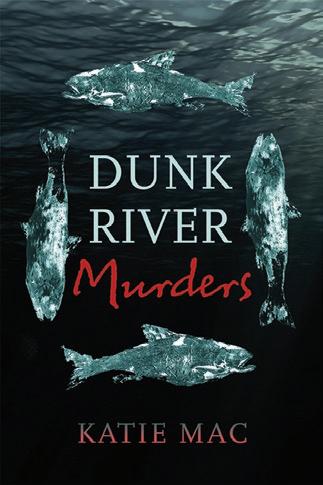
Dunk River Murders
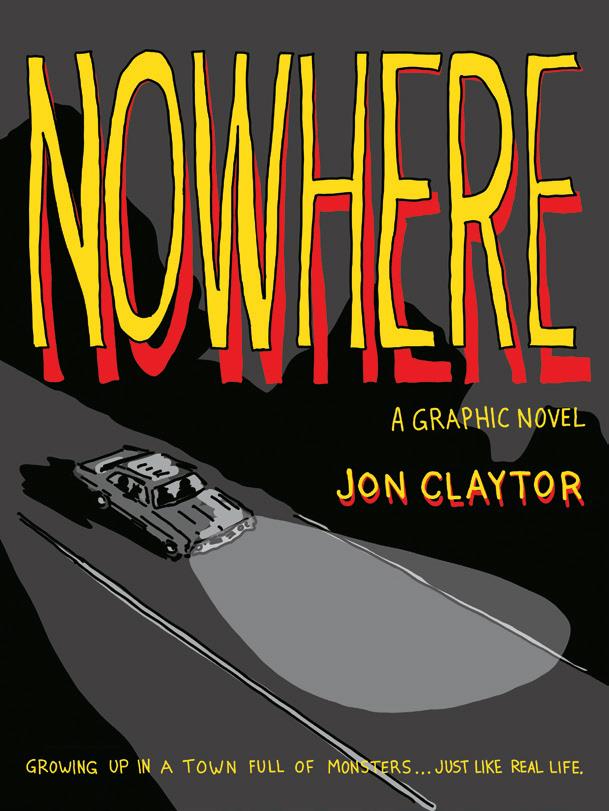
Nowhere
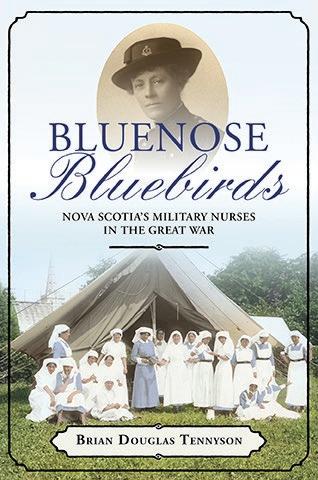
Bluenose Bluebirds
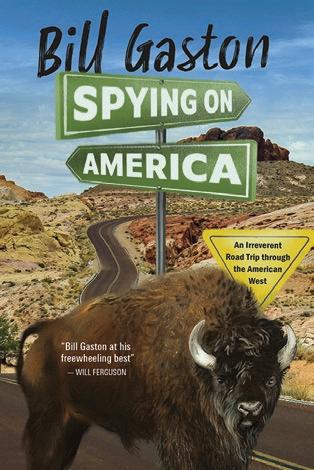
Spying on America
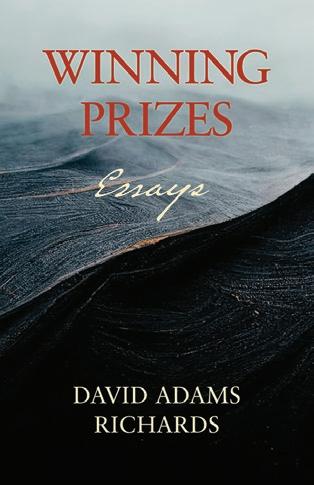
Winning Prizes
A curated selection of this spring’s blooming poetry collections by Fawn Parker 37 Ancestral memories in Indigenous art by Susan Bernard 39 Honouring culture and reclaiming Indigenous stories by Susan Bernard Food Feature 28 From page to plate
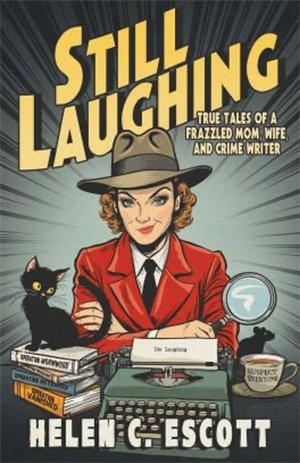
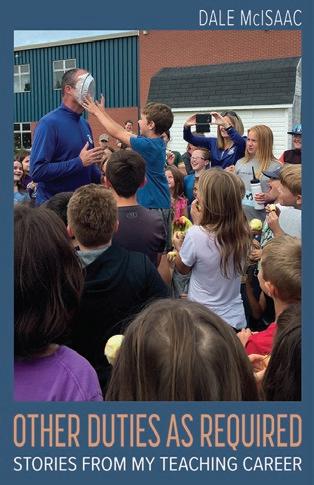
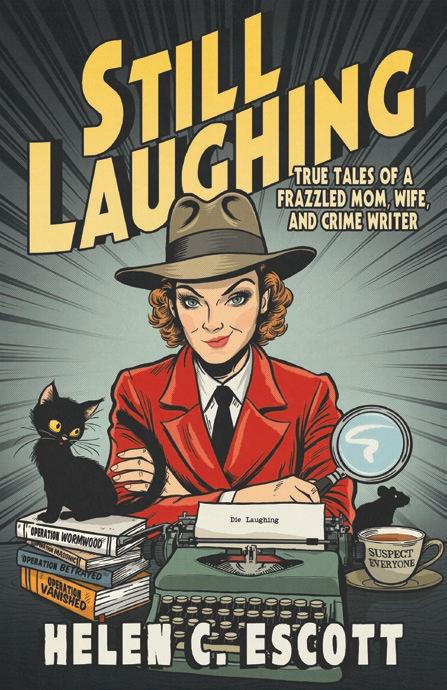
Still Laughing 35 Other Duties as Required
Editor’s picks
Readers
Reviews
Editor’s picks
Protesters gather in front of Province House, officially known as the Nova Scotia House of Assembly, during an arts and culture rally, one of many demonstrations held across Nova Scotia in response to proposed provincial funding cuts to the cultural sector, including the defunding of Nova Scotia books. Captured by Atlantic Canadian documentary and editorial photojournalist Darren Calabrese, the image reflects the growing call from artists, cultural workers, and residents to protect and sustain the province’s literary and cultural communities. Calabrese is also the best-selling author of Leaving Good Things Behind (McClelland & Stewart).
MUST-READ Fall Books!
ab
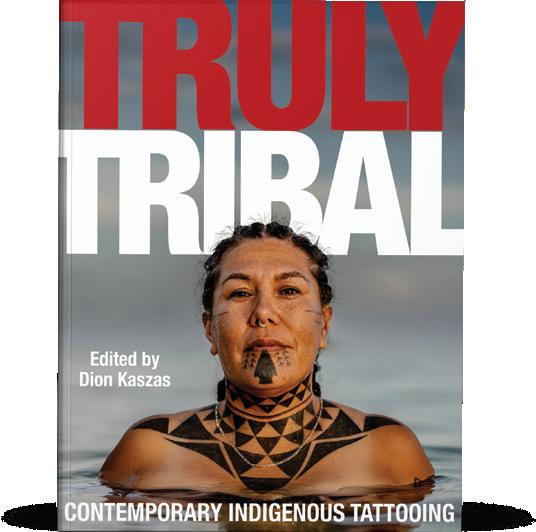
Truly Tribal
Dion Kaszas (ed.)
Eighteen Indigenous ancestral skin markers from Nations and cultures around the world come together to discuss their reclamation of tattoos.
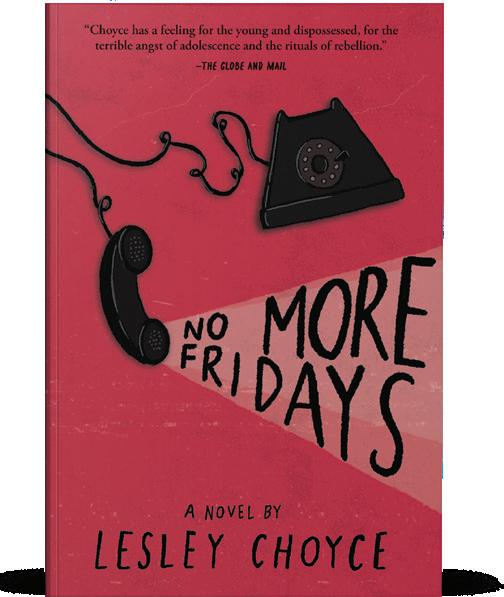
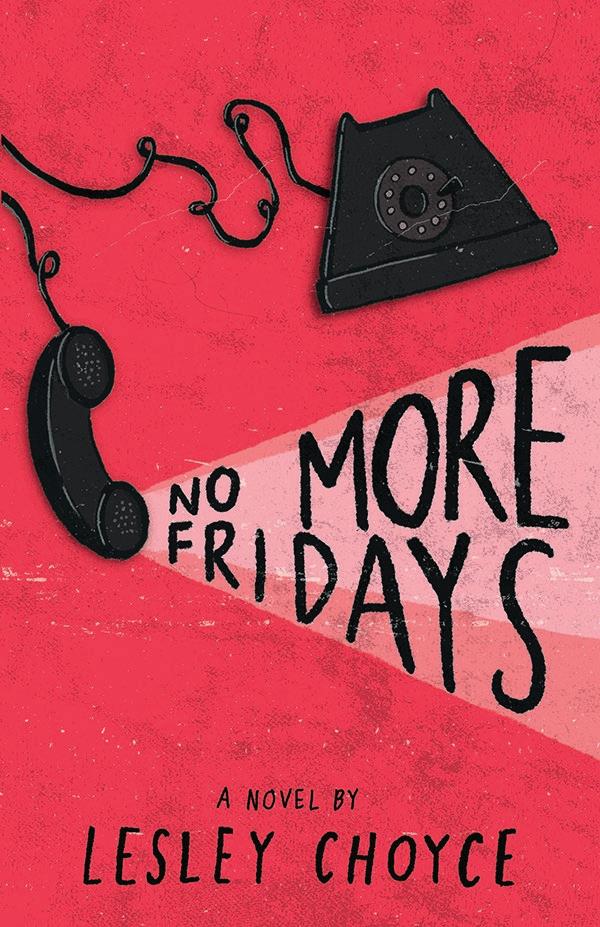
No More Fridays
Lesley Choyce
A witty, humorous and slightly magical novel about navigating the end of high school after losing a parent to ALS.
The Bylaw State
Alexndra Flynn & Joe Hermer
Cities weaponize bylaws to manage, regulate, and police the mobility and conditions of unhoused people living in encampments amid a massive housing crisis.
Check out our full list at fernwoodpublishing.ca
Graphic Designer Administrative Assistant
Atlantic Publishers Marketing Association
Heather Fegan
Heather Fegan
Gwen North
Laura Spencer Publisher Executive Director Editor
Atlantic Books Today is published by the Atlantic Publishers Marketing Association (www.atlanticpublishers.ca), which gratefully acknowledges the financial assistance of the Government of Canada, the Canada Council for the Arts, the Government of New Brunswick, the Government of Newfoundland and Labrador, the Government of Nova Scotia and the Government of PEI. Opinions expressed in articles in Atlantic Books Today do not necessarily reflect the views and opinions of the Board of the Atlantic Publishers Marketing Association.
Printed in Canada. This is issue number 103 Spring/Summer 26. Atlantic Books Today is published twice a year. All issues are numbered in sequence. Total Atlantic-wide circulation: 40,000. ISSN 1192-3652
One-year subscriptions to Atlantic Books Today are available for $15 ($17.25 including HST). A two-year subscription is available for $25 ($28.75 including HST). A special offer on a 2-year subscription and a canvas ABT tote bag is available for $35 ($40.25 including HST). Visit atlanticbooks.ca/subscribe for more details. Contact admin@atlanticpublishers.ca for subscription inquires, or if you wish to pay by cheque. If you would no longer like to receive copies of the magazine sent to your address, please let us know.
Publications Mail Agreement No. 40038836
Return undeliverable Canadian addresses to:
Atlantic Publishers Marketing Association
Atlantic Books Today
Suite 710, 1888 Brunswick Street, Halifax, NS B3J 3J8
Each spring, book award season arrives alongside the warmer weather. The New Brunswick Book Awards, the PEI Book Awards (a biennial event scheduled for this year), the Nova Scotia Book Awards, and the Atlantic Book Awards all take place in late May and early June. The Newfoundland and Labrador Book Awards follow not much later in September. Across Atlantic Canada, books published in the previous year, from fiction and nonfiction to poetry and children’s literature, are shortlisted, celebrated, and recognized. First-time authors, established writers, and publishers all find themselves in the spotlight.
Behind every shortlist is a lengthy list of submissions and a jury faced with the difficult task of narrowing them down to the books that best exemplify each award’s criteria. In a region so rich in literary talent, it’s no easy feat. Yet the work gets done, nominees are celebrated, and our TBR piles grow ever taller.
Speaking of which, we’ve asked this year’s prestigious Thomas Raddall Award nominees what they’re most looking forward to reading this summer. Turn to page 15 for their recommendations. Congratulations to all this year’s book award nominees.
For all the talk of new books and emerging voices in this issue, the elephant on the page remains Nova Scotia’s recent funding cuts. The provincial government’s “austerity budget” eliminates the Publishers Assistance Fund, making Nova Scotia the only province in Canada that does not invest in its own publishing sector. The consequences will be significant for publishers, authors, and readers alike. Read more about this alarming development in our cover story beginning on page six.
Elsewhere in this issue, we pay tribute to hiking guru Michael Haynes, who passed away suddenly earlier this year. A true trailblazer, he leaves behind big hiking boots to fill—and countless trails to explore—in what would become his final guidebook.
You’ll also find a selection of blooming poetry collections, discover Indigenous art and storytelling in various forms, and take a literary journey through Newfoundland and Labrador with books that guide readers around the province.
And finally, take it from the page to your plate with a recipe for Shellfish and Summer Vegetable Hodge Podge from the new cookbook Oysters, Mussels and Scallops—a fresh twist on a Maritime classic and the perfect taste of summer. Happy reading!
—Heather Fegan
The Atlantic Publishers Marketing Association (APMA) received notice that the government of Nova Scotia “made the difficult decision to reduce discretionary grants” in the Department of Communities, Culture, Tourism and Heritage. This impacted the organization, creating the challenge of navigating a 20 per cent cut in operational assistance from the province. Disappointing—yes. Surprising? Not entirely. Non-profit arts organizations are accustomed to fluctuating funding and financial precarity. The sector relies on a mixed funding model made up of public grants from different levels of government, private donations, sponsorships, and earned revenue. Budgets are managed scrupulously and sudden cutbacks can force organizations into crisis management and budget reductions.
Mercifully, the APMA is a regional association representing publishers across all four Atlantic provinces, receiving vital funding support from both provincial and federal arts councils. With some creative fiscal management and some tough choices, things would be manageable, albeit tricky.
Then it got so much worse. The Department of Communities, Culture, Tourism and Heritage also sent letters to Nova Scotia publishers, informing them of the elimination of the publisher’s assistance fund, a $700,000 fund that helps local publishers publish new books by local authors. The Government of Nova Scotia Budget 2026-27,
The WAR on books
The funding crisis threatening Nova Scotia book publishing
by Heather Fegan
called “Defending Nova Scotia”, would be defunding Nova Scotia Books.
Altlhough the Atlantic Publishers Marketing Association is an industry support organization representing book publishers located in Atlantic Canada, the majority of members are in Nova Scotia. The APMA believes a vigorous Atlantic-owned-and-controlled book publishing industry is essential to the economic, cultural, educational, and social life of Atlantic Canada. The APMA works towards growing and maintaining a strong Canadian-owned book publishing industry in Atlantic Canada. Cultural sovereignty depends on it.
“It’s drastic and devastating,” says Terrilee Bulger, manager at Nimbus Publishing. “Books are an important pillar of our culture. This budget decision by Premier Tim Houston’s government will mean that fewer Nova Scotian creators will get their books published. Not only that, Nova Scotian publishers will be forced to lay off staff, and spend less on local freelancers.”
Among the other publishing companies affected are Breton Books, MacIntyre Purcell Publishing, Formac Publishing, Pottersfield Press, Conundrum Press, and Fernwood Publishing.
This fund has helped independent local presses bring books to market, supporting the publication of Nova Scotian authors, the employment of local staff and freelancers, and the circulation of books to schools, Photo:
Darren Calabrese
libraries, bookstores, and readers throughout the province and across Canada.
Collectively, Nova Scotia’s independent publishers release more than 100 new books each year and play an essential role in documenting the province’s stories, histories, and perspectives. Books are the embodiment of Nova Scotia’s culture. “New books are vital for local booksellers and their business,” says Bulger. “They bring people to public libraries too.”
Independent publishers discover, develop, and promote local authors. Without the $700,000 in funding provided to publishers annually—a modest, but essential support—fewer Nova Scotian stories will be written, published, and shared.
The elimination of the Publishers Assistance Fund is a shocking about-face from the Government’s previously held position that the province is “renowned for our storytellers,” affirmed with the launch of the Nova Scotia Loyal book industry pilot program, a short-term retail promotion that has now ended. Those storytellers are being left behind.
The creative industries fund, a provincial grant designed to help creative businesses and non-profits export their cultural products, was also reduced. Now a smaller pot will need to stretch much further across the industry as affected organizations turn to it.
These programs are not comparable to the targeted investment previously provided through the Publisher Assistance Program. The Nova Scotia Loyal Book Voucher pilot represented a one-time $46,000 contribution in government support to subsidize consumer purchases at independent bookstores. This was a short-term retail promotion in 2025-2026 fiscal year that has now ended and provided no direct operational support to publishers.
An outpouring of support has rolled in from across the country. A coalition from Canada’s book publishing industry—including national and regional associations representing 396 publishing companies, over 5,000 writers, and more than 200 booksellers across the country— expressed deep concern regarding the Government of Nova Scotia’s decision to eliminate funding for independent
book publishers. A statement released by the Association of Canadian Publishers (ACP) and the Literary Press Group (LPG), and backed by the coalition, condemned the decision.
“We recognize that governments must make difficult fiscal decisions,” reads the statement. “However, the elimination of the Publishers Assistance Fund represents a small budgetary savings with disproportionately large consequences for the province’s cultural life, creative workforce, and publishing ecosystem.”
Rallies have taken place in communities across Nova Scotia as thousands of artists, cultural workers, and residents gathered to call for the reversal of these cuts. “These demonstrations reflect a clear message from your constituents: Nova Scotians value their cultural sector and want to see it supported, not diminished,” the statement continued.
The Nova Scotia’s Publisher Assistance Program paralleled similar funding available to locally owned publishers in all nine other provinces. Nova Scotia’s program was already less generous than in most other provinces.
Nova Scotia is now the only province in the country that does not invest in its own publishing sector, at a time when other jurisdictions are strengthening their commitment to the industry. (British Columbia recently made its book publishing tax credit officially permanent. Provincial arts and culture funding in New Brunswick increased with the release of the 2026-27 operating budget). This move risks isolating Nova Scotia’s publishers and weakening the province’s economy.
The effects of this decision will not be limited to publishers alone. Book publishing is part of a broader supply chain that includes local printers, distributors, booksellers, and a wide network of freelance editors, designers, and illustrators. Cuts to the sector will ripple across Nova Scotia’s cultural economy—an economy that contributes over $2 billion to Nova Scotia’s annual GDP
Opposite page: Protestors at Province House.
Terrilee Bulger, Nimbus Publishing.
Photo: Nicola Davison
and employs over 18,000 people, more than the province’s agriculture, forestry, and fishing sectors combined.
Pottersfield Press was founded in Nova Scotia in 1978 by Lesley Choyce. “Provincial publishing support has allowed us to publish a wide range of Nova Scotia authors that includes Maxine Tynes, George Elliott Clarke, Joan Baxter, Rita Joe, Harry Bruce, and at least 100 others, many of whom were first-time authors,” says Choyce, a prolific author himself with over 100 books under his name. “The loss of the Publishers Assistance Fund will be devastating to the continued growth of culture in the province and silence many new creative voices that need to be heard.”
Book publishers in Nova Scotia are small businesses. They employ people, pay taxes, export intellectual property, and contribute to tourism, education, and cultural visibility. They are part of a broader arts and culture sector that attracts people to live in Nova Scotia, raise families here and invest here.
“Without this provincial support, we’ll have to cut new titles from 15 to 7,” says Formac Publishing CEO Jim Lorimer. “Books won’t get written, they won’t get published ,and they won’t be there for readers to enjoy.”
The livelihoods of authors, editors, freelancers, graphic designers, and other creative workers across the sector who depend on sustained provincial investment are at risk. The 2026/2027 budget also brings a reduction over $14 million to Communities, Culture, Tourism and Heritage grants across 72 programs. To put that in perspective: that $14 million represents just .08% of the province’s nearly $19 billion budget.
This will not meaningfully move the needle on the province’s fiscal challenges. But it will have outsized, lasting consequences that will devastate sectors that generate revenue, create jobs and contribute to the identity and
global presence of Nova Scotia, the likes of which we are seeing be played out in real time with Rachel Reid, the world-wide bestselling author of the popular Heated Rivalry series, which was adapted into a hit television show. She is a lifelong resident of Nova Scotia, and once upon a time worked at Nimbus Publishing. Reid spoke out in support of arts and culture in Nova Scotia. “I can say without a doubt that I am only an author today because of the strong arts scene here in Halifax,” she posted on her Instagram account. “The arts are why I live in Nova Scotia. We have an incredible community that has produced so much art and talent that has been celebrated worldwide,” she continued in her post. “Having access to live music, gallery shows, underground theatre, independent film screenings, poetry readings, book launches, workshops…and more are what made me believe I could create something too. The arts are not frivolous. They are crucial. The proposed cuts would be devastating and would drive even more talent out of the province. Please don’t do this.”
Once programs like the Publishers Assistance program are dismantled, they are incredibly difficult—and costly— to rebuild. All for savings that amount to a fraction of a percent of the provincial budget.
While the $700,000 program was eliminated, the provincial government increased business subsidy programs at Invest Nova Scotia and the Nova Scotia Jobs Fund from $78.1 million to $96 million—an increase of almost $18 million, or 23 per cent.
“It’s hard not to feel targeted as a local book publisher when the government eliminates all of our funding, while spending close to an extra $18 million on subsidies to businesses,” says Lorimer. “How is it that fair?
The government has the money to support book publishers; it just chooses to spend millions and millions and millions more elsewhere. The province can invest in industries that generate revenue—and support working people and small businesses. Choose to build a province that is competitive—and creative and compassionate.
There has been no consultation with the APMA or Nova Scotia book publishers. The province could work with the sector to come up with solutions. The Association continues to call on the province to reinstate publisher assistance and ensure sustainable investment in the companies that bring Nova Scotia’s stories to readers at home and around the world. At the time of printing this issue of ABT, requests to meet with the minister have gone unanswered. ■
HEATHER FEGAN is the editor of Atlantic Books Today and the executive director of the Atlantic Publishers Marketing Association. She is a freelance writer and the author of the Nova Scotia-published book Gutsy (Nimbus Publishing).
Lesley Choyce, Pottersfield Press
Galleon Books Where original voices set sail
by Meg D. Edwards
Books is a small publishing house based in Moncton, New Brunswick, that is growing less small every day.
Editor and publisher Lee Thompson created Galleon Books with one goal in mind, “…to provide a publishing venue for authors and works that may fall between the cracks, especially with regional (Atlantic Canadian) publishers.”
“I don’t have government funding,” says Thompson. “So, I can say I am going to take a risk on this book and then publish it.” Thompson’s thriving business model is often “print on demand”, printing only the number of books that have been pre-ordered.
Galleon
Lee Thompson, editor and publisher, Galleon Books
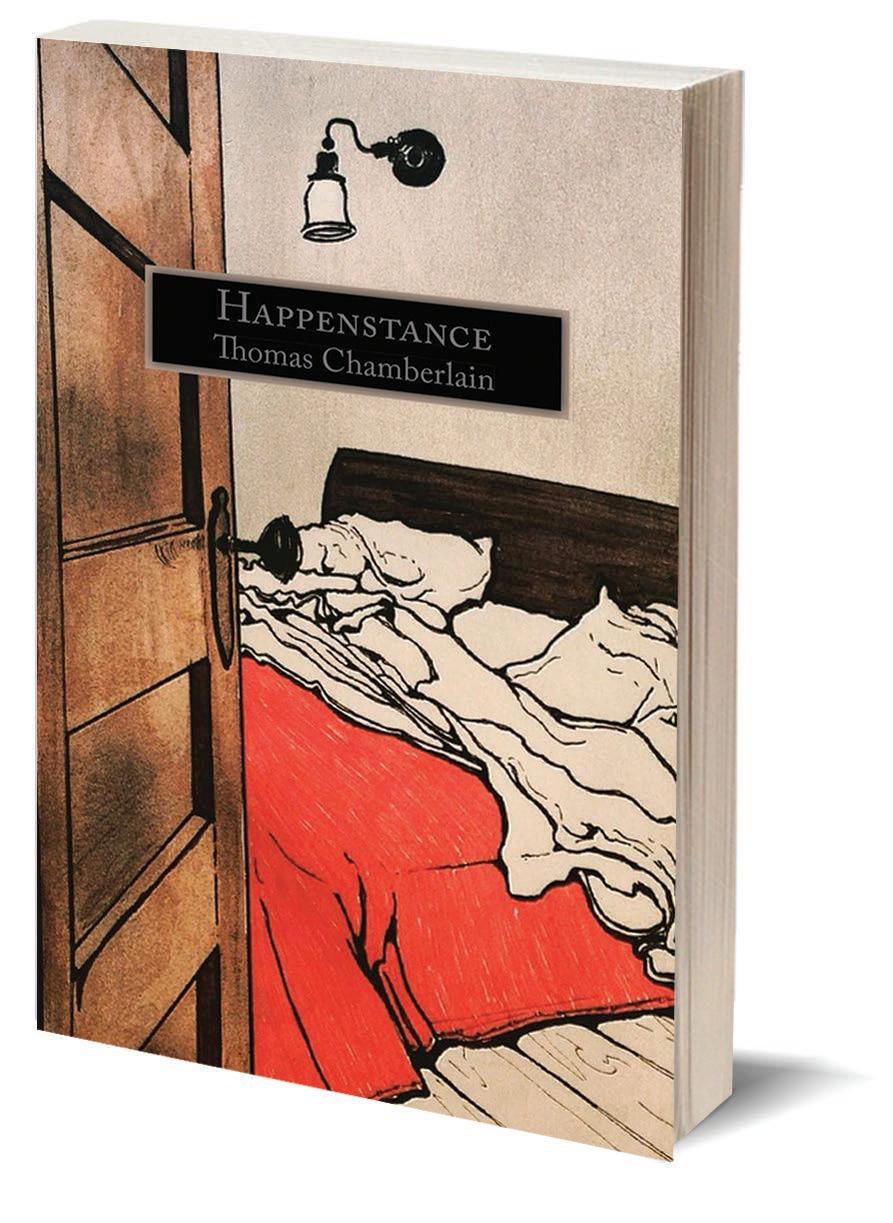
Happenstance
Thomas Chamberlain Galleon Books
But if you’re picturing Galleon Books as the kind of publishing house often depicted in movies—a bustling office with Gen Z interns punching away at their laptops, their matcha lattes precariously balanced on piles of scripts—you’d be wrong. There is just one man behind the business: the writer, editor, and book designer, Lee D. Thompson.
As an author himself, Thompson has three published books, and has written extensively in literary journals, but today he divides time between his editing and book design business and his work as a publisher. Asked if he has the time to keep up with own writing, Thompson laughs out loud but admits that he has a novel in the works.
Thompson says that the publishing side of his business is making about 50 per cent of his income, with his editing business covering the other half. He has one volunteer reader and does all the work himself, including searching out local artists and photographers for the covers.
It was his work as an editor that inspired him to become a publisher. Thompson has worked with many authors, helping them get their books ready for publishing, and then watched as the books were set to sea in the “vast Sargossa of impossible-to-catch schooners and vanity-press pirates”, eventually left to float in the drift like “flotsam”.
Thompson is drawn to books that have original or unexpected styles or content.
Thompson would often feel disappointed for the author, and for future readers, if the book did not find a publisher. And this was certainly the case with Thomas Chamberlain’s young adult novel Happenstance, currently shortlisted for the New Brunswick Book Awards in the Youth and Young Adult category.
“I helped prepare it,” says Thompson. “A couple of years later when it still wasn’t published, I said, ‘I can’t get this book out of my head. It deserves to be published. Let’s do it’.”
Thompson is drawn to books that have original or unexpected styles or content. There is a wide range of genres and topics covered at his publishing house, but Chamberlain’s novel for young adults is more challenging in topic than in style.
I was drawn to Chamberlain’s novel on Galleon Books’ website because of its title and beautiful cover, a painting by New Brunswick artist Pamela Marie Pierce (an artist that Thompson has used for three book covers).
But when I read the description of the book’s story, I was concerned and hesitant. I was doubtful that an older male author could write with knowledge and sensitivity about a young student’s private plan for escape from the perpetrator of her sexual assaults.
However, once I read a review of Happenstance and discovered that the author is a retired career schoolteacher, I was intrigued. I have ordered the book so that I can read it for myself.
If I had a negative reaction at my first contact with the topic, then what would be the reaction of a large publishing house? Wouldn’t they be hesitant to publish a young adult novel on this difficult subject?
And that’s what makes Galleon Books unique and necessary. Chamberlain’s book might have languished in the drifting sea of unpublished works if it had not been for Thompson’s skills and enthusiasm.
Interested readers can subscribe to Galleon Books and for a small fee receive the next five books to be published. Everyone wins in this proposition, as the reader will undoubtedly find interesting gems to read, the authors get readers, and the publishing house can continue to find and reveal new works.
With more than twenty books in line to be published this coming year, readers can look forward to a selection of literature from Galleon Books that will be adventurous, unique, and fearless. ■
MEG D. EDWARDS is a writer living in Baie Verte, NB. She writes plays and poetry, and her personal essays can be read on her blog, Notes from a Sinking Isthmus.
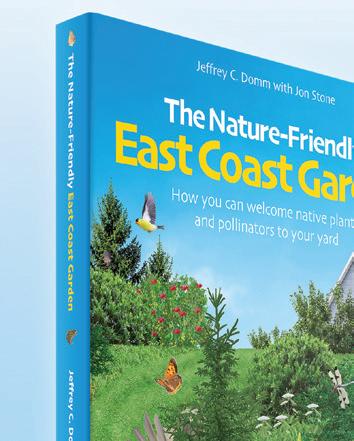
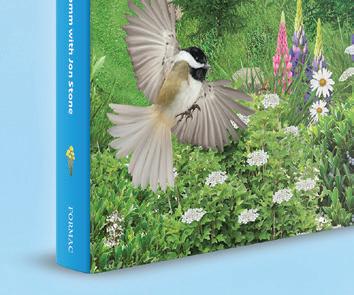
The NatureFriendly East Coast Garden How you can welcome native plants and pollinators to your yard Paperback $29.95
Michael Haynes leaves big hiking boots to fill—and countless trails to explore—in his final guide for hikers
by Marjorie Simmins
By virtue of commitment, passion, and excellence, some authors own their area of expertise. The late Michael Haynes, the bestselling author of Canadawide hiking guides and a lifelong advocate for active transportation and trail development, was one such author. If you hike, bike, run, or somehow transverse the many trails in Atlantic Canada and across Canada, chances are you’ve had one of Haynes’ books with you.
Haynes, 70, died unexpectedly in March 2026. His newest and final book, Hiking Trails of Cape Breton Island, 3rd Edition, modern, beautifully illustrated and informative, with a small photo of Haynes on the book’s spine, comes out with his lifelong publisher, Goose Lane Editions this summer.
Family, friends, and colleagues were hit hard by Haynes’ death.
“Over the years, I was in regular contact with him, and I will miss him tremendously,” says Susanne Alexander, publisher of Goose Lane Editions. “There is much affection for Michael here. We feel such loss at his passing. We also feel pride in the legacy he has left. In some ways, he made us more ambitious as a publisher. He always wanted to do more, to raise the standard of every book. He always wanted to improve the experience for the reader.”
Haynes’ newest book covering Cape Breton Island is part of a three-volume set of trail guides for Nova Scotia. These include Halifax, Cape Breton, and Mainland Nova Scotia, once included in a single volume.
Haynes has written trail books for the provinces of Nova Scotia, Prince Edward Island, Ontario, Quebec, and two large tomes covering the Trans Canada Trail from Newfoundland to Southern Ontario, and British Columbia to Northern Ontario.
It all started in 1994.
“Hostelling Nova Scotia brought us together,” says Alexander. “They had compiled a guide for Nova Scotia that they had published themselves for several decades. We thought we could work with them to improve it. Meanwhile, Michael had also approached them. And that's how the story began.”
The result was the seventh edition of Hiking Trails Nova Scotia, now celebrating
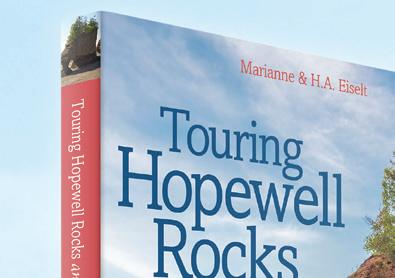
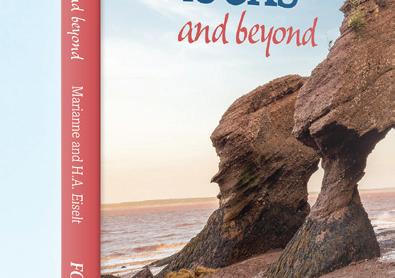
Hiking Trails of Cape Breton Island 3rd Edition
Michael Haynes
Goose Lane Editions
Recommended reads
What award-nominated Atlantic authors are reading next
Five Atlantic Canadian authors are nominated for the highly coveted Thomas Raddall Atlantic Fiction Award, a book prize valued at $30,000.
The Raddall Award was established in 1991 with an endowment by Thomas Head Raddall himself, and it continues with ongoing support from the Raddall family. The award, for a novel or a book of short fiction written or co-written by an Atlantic Canadian author in the previous year, honours the work of fiction writers in the Atlantic region and, as its original benefactor envisioned, provides “the gift of time and peace of mind” so essential to the creation of new work.
We asked the 2026 nominees for their most anticipated Atlantic book to read this summer. Here are their recommendations!
Renée Belliveau, author of A Sense of Things Beyond (Vagrant Press)
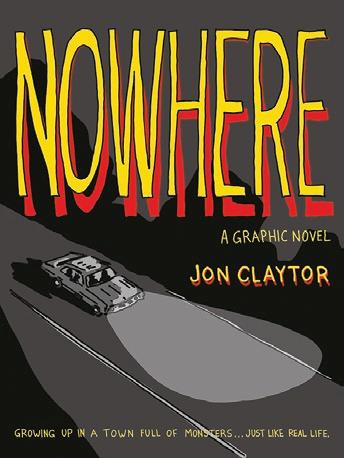
“One of my most anticipated books of the summer (of the year, in fact) is Nowhere by Jon Claytor, a graphic novel that brings my former town to eerie fictional life. I’m also very much looking forward to reading Oublier sans dormir by Christian Roy. I expect both will transport me back home to New Brunswick.”
Jaime Burnet, author of milktooth (Vagrant Press)
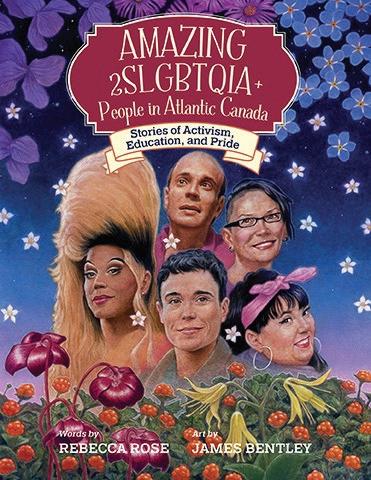
“Amazing 2SLGBTQIA+ People in Atlantic Canada! I’m seeking out 2SLGBTQIA+ joy, resistance, and reverence wherever I can find it, and can’t wait to experience it in the form of this very special book by my dear friend Rebecca Rose.”
Robert de la Chevotière, author of We Were Not Kings (Little A)
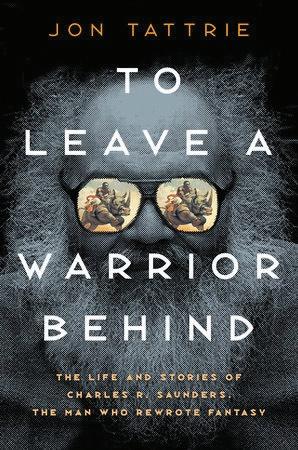
“Jon Tattrie’s To Leave a Warrior Behind. Charles R. Saunders was a trailblazer in the fantasy world of fiction, and as such, is a name that needs to be celebrated. I am beyond pleased to know that Jon Tattrie not only keeps Saunders’s memory alive, but in a not so traditional way, is also giving him his flowers.”
Danny Jacobs, author of The Ignis Psalter (Porcupine’s Quill)
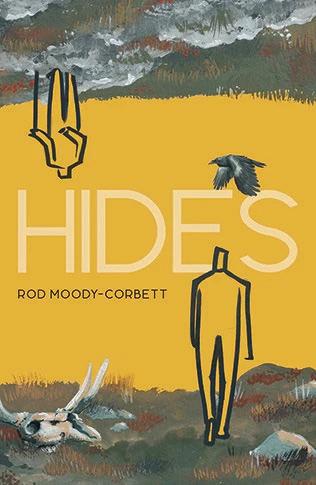
“Hides, Moody-Corbett’s debut novel, recounts a family hunting trip at a surreal wilderness compound in northwestern Newfoundland, and takes on toxic masculinity, mass shootings, environmental degradation, and the existential plight of the sessional instructor. But it’s style that makes Hides singular. Moody-Corbett might be one of Canada’s best recent engineers of the sentence; his prose is veeringly lyrical, with head-spinners on every page. There’s a story collection on the horizon, so saith his website. I can’t wait.”
Danica Roache, author of Five Seasons of Charlie Francis (Vagrant Press)
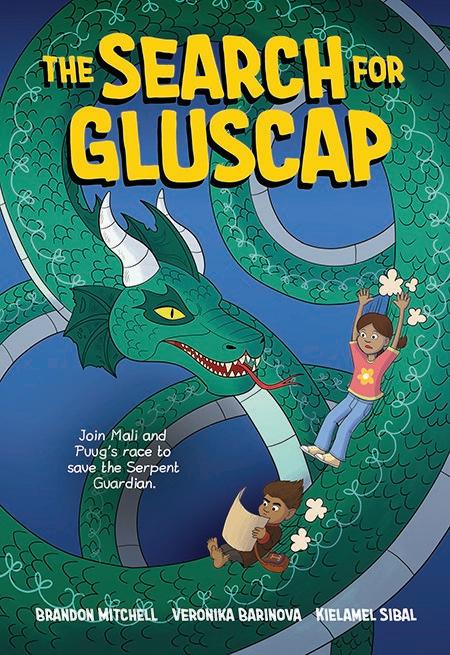
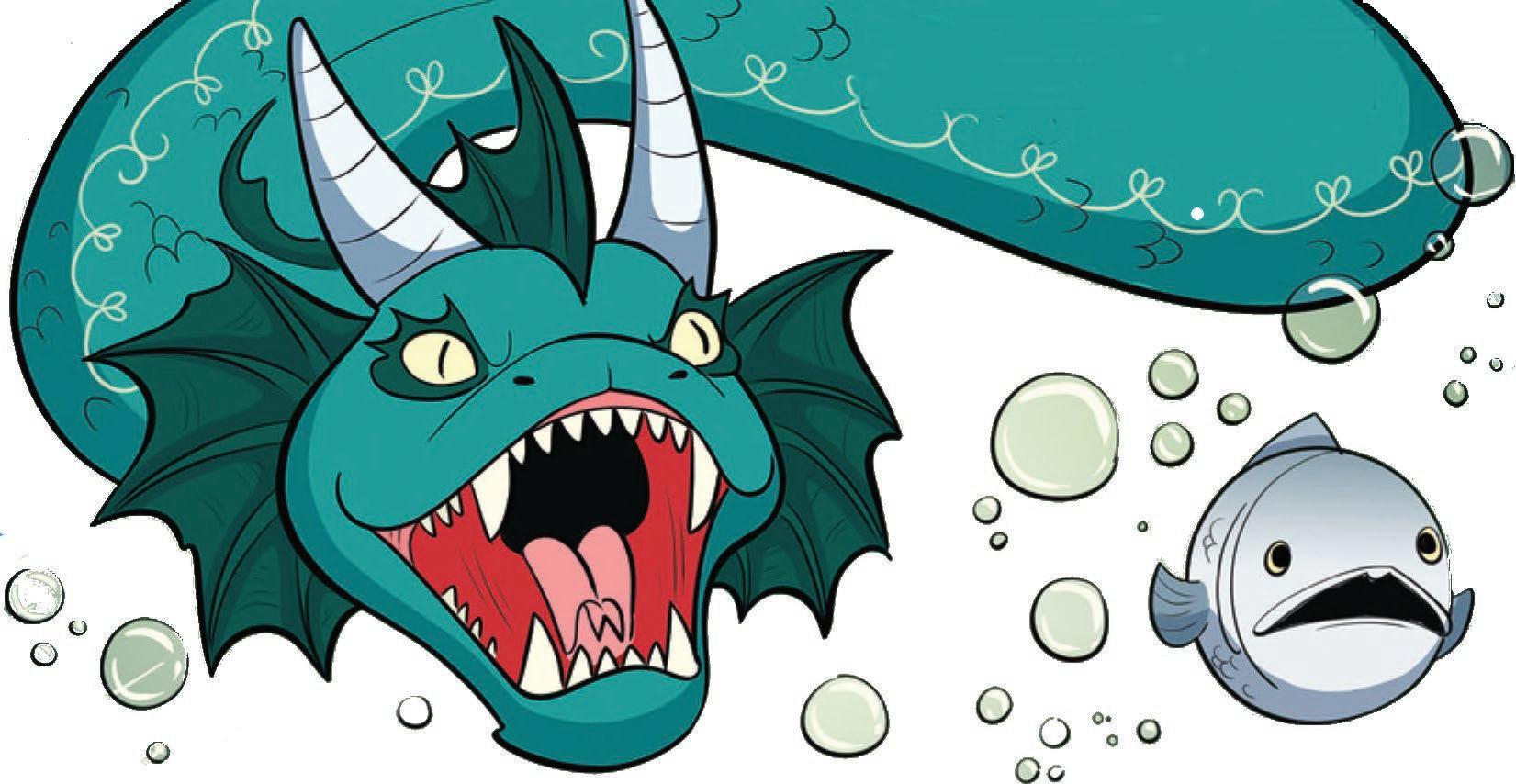
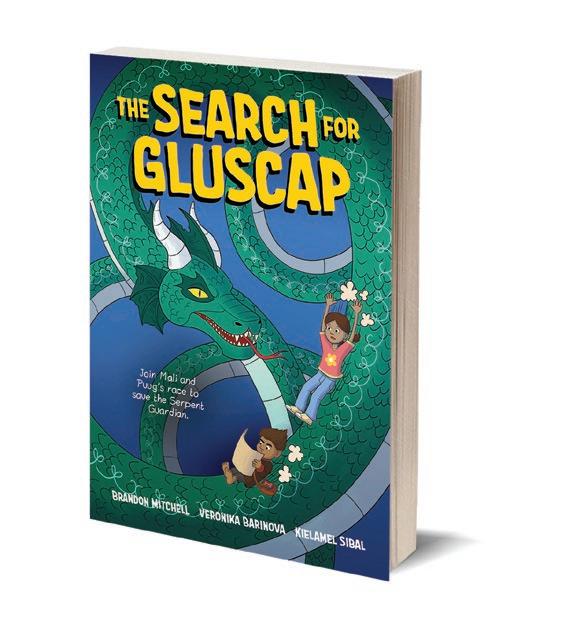
“I’m really excited about The Search for Gluscap by Brandon Mitchell. My kids love graphic novels and I love stories rooted in a Mi'kmaw understanding of the world!”
It’s a banger!
Q & A with Vicki Grant
Award-winning, Halifax-based Young Adult author Vicki Grant has just released her first novel for adults (Vagrant Press), to rave reviews. Brimming with trademark zingers, the murder mystery pairs hilarity with serious subject matter to create a raucous read. Chatting with Carol Bruneau, Grant reflects on the rewards of writing for a new audience.
by Carol Bruneau
Vicki Grant
Photo: Studio Umlah
CB: You’ve been so successful writing YA, what prompted the switch?
VG: I’m probably more in touch with my inner twelveyear-old than most grown-ups but I’ve written over twenty novels aimed at kids. The time had come to write for my own demographic. I was also interested in the freedom adult fiction affords. There are so many no-go zones in kid-lit nowadays. Not all of them are bad. Many were long overdue. Some, though, are overkill. I still enjoy writing for children—I’m working on a new middle-grade mystery right now, in fact—but it’s wonderfully liberating not to have to worry about sensitivities and restrictions (outside those faced by my characters, of course!). With These Are the Fireworks I was finally able to write the book my adult self wanted to read.
CB: I love your writing—your subversive humour, zaps, and zingers show a well-honed gift for packing a lot into few words. How has your experience as an ad copywriter influenced your storytelling and your approach to audience?
VG: When you write an ad, you begin with the understanding that nobody wants to read it. It’s your job to grab consumers by the eyeballs and keep them entertained long enough to communicate your point.
So how do you do that? You start strong. You make them laugh and/or cry. Then you wrap things up with a bang. Oh, and you write short sentences. We were always told that the average consumer reads at a grade six level. I took the same approach when I left advertising to write for the toughest audience of all: middle-schoolers. Sentences are a little longer in my adult fiction and the subject matter more complex, but I haven’t strayed too far stylistically. The reason? As a reader, I like a mixture of humour and tragedy. I like straight-forward storytelling. I tend to flip pages bogged down with too much blah-blahblah. I figure if I don’t bore myself, there’s a chance I won’t bore my readers.
CB: Alongside the humour is a fierce approach to a heartbreaking theme: the deaths of innocents. How did you find juggling both?
VG: I hope I juggled it the way people do in real life. Or at least funny people do. I have many friends and relatives who’ve suffered unthinkable tragedies but have somehow managed to maintain a sense of humour. Laughing at heartbreak doesn’t make it any less real, just more bearable. Funny people experience as much pain, fear, and sorrow as
everyone else. They just make better dinner guests. It’s why I love a good Maritime funeral. Everyone crying hard and laughing hard and hugging hard. Really, can you imagine a better way to spend an afternoon? That’s kind of the feel I was going for in the book.
CB: YA’s common coming-of-age theme surfaces here in fresh ways. Petra, the 69-year-old widow at the heart of the story’s fireworks, rewinds to lost youth, or tries to. Nina, one of her three 30-something daughters, battles arrested development. How does Fireworks push YA’s thematic boundaries?
VG: Unless I’m an anomaly, I think we’re all stuck somewhere in our youth. Sometimes that’s good—joy and optimism aren’t bad things to cling to—but often we’re struggling well into old age with issues rooted in our childhood. Without giving too much away, Petra missed much of her youth and Nina, like a lot of her generation, had hers artificially extended. They’re both dealing with the repercussions now but, hopefully, with a bit more insight than they would have had if they’d been characters in one of my YA books.
CB: Is there more artistic space—I’m thinking of adult repartee, broader life experience (necessitating everything from nursing bras like “fencing gear” and shapewear to adult diapers), wanna-be-hot and all-but-eternally youthful seniors—in writing for adults?
VG: Absolutely. That was my favourite part of writing Fireworks. Petra and Nina are dealing with some very painful issues but they still live in the real world. They still have lots of cause to banter, fume, plot, and wallow. Especially for Nina, humour—dark or otherwise—is what keeps her going, defines her relationships, even helps her abide her own impossible self.
CB: Has switching genres changed the appeal for you of certain story ideas and/or subject matter over others?
VG: Even in my kids’ books I dealt with dark subjects but now everything feels wide open. It’s very exciting! I’m working on a manuscript now that begins with a death by MAID. I’m hoping I can make that sad and funny too. ■
CAROL BRUNEAU is the Halifax/Kjipuktuk-based author of six novels and four short story collections. Her seventh novel, The Little Way, will be published this fall by Nimbus/ Vagrant Press.
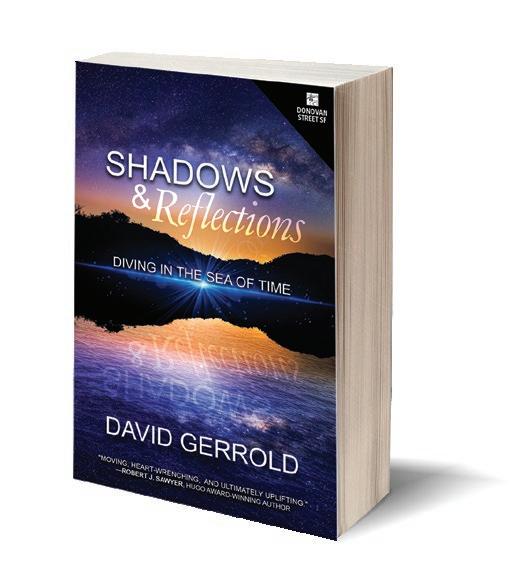
The Martian child
An excerpt from Shadows & Reflections:
Diving in the Sea of Time by David
Gerrold Donovan Street Press
Toward the end of the meeting, the caseworker remarked, “Oh—and one more thing. Dennis thinks he’s a Martian.”
“I beg your pardon?” I wasn’t certain I had heard her correctly. I had papers scattered all over the meeting room table—thick piles of stapled incident reports, manila-foldered psychiatric evaluations, Xeroxed clinical diagnoses, scribbled caseworker histories, typed abuse reports, bound trial transcripts, and my own crabbed notes as well: Hyperactivity. Fetal Alcohol Syndrome. Emotional Abuse. Physical Abuse. Conners Rating Scale. Apgars. I had no idea there was so much to know about children. For a moment, I was actually looking for the folder labeled Martian.
“He thinks he’s a Martian,” Ms. Bright repeated. She was a small woman, very proper and polite. “He told his group home parents that he’s not like the other children— he’s from Mars—so he shouldn’t be expected to act like an Earthling all the time.”
“Well, that’s okay,” I said, a little too quickly. “Some of my best friends are Martians. He’ll fit right in. As long as he doesn’t eat the tribbles or tease the feral Chtorran.”
By the narrow expressions on their faces, I could tell that the caseworkers weren’t amused. For a moment, my heart sank. Maybe I’d said the wrong thing. Maybe I was being too facile with my answers.
—The hardest thing about adoption is that you have to ask someone to trust you with a child.
That means that you have to be willing to let them scrutinize your entire life, everything: your financial standing, your medical history, your home and belongings, your upbringing, your personality, your motivations, your arrest record, your IQ, and even your sex life. It means that every self-esteem issue you have ever had will come bubbling right to the surface like last night’s beans in this morning’s bath tub.
Whatever you’re most insecure about, that’s what the whole adoption process will feel like it’s focused on. For me, it was that terrible familiar feeling of being second best—of not being good enough to play with the big kids, or get the job, or win the award, or whatever was at stake. Even though the point of this interview was simply to see if Dennis and I would be a good match, I felt as if I was being judged again. What if I wasn’t good enough this time?
I tried again. I began slowly. “Y’know, you all keep telling me all the bad news—you don’t even know if this kid is
capable of forming a deep attachment—it feels as if you’re trying to talk me out of this match.” I stopped myself before I said too much. I was suddenly angry and I didn’t know why. These people were only doing their job.
And then it hit me. That was it—these people were only doing their job.
At that moment, I realized that there wasn’t anyone in the room who had the kind of commitment to Dennis that I did, and I hadn’t even met him yet. To them, he was only another case to handle. To me, he was... the possibility of a family. It wasn’t fair to unload my frustration on these tired, overworked, underpaid women. They cared. It just wasn’t the same kind of caring. I swallowed my anger.
“Listen,” I said, sitting forward, placing my hands calmly and deliberately on the table. “After everything this poor little guy has been through, if he wants to think he’s a Martian— I’m not going to argue with him. Actually, I think it’s charming. It’s evidence of his resilience. It’s probably the most rational explanation he can come up with for his irrational situation. He probably feels alienated, abandoned, different, alone. At least, this gives him a reason for it. It lets him put a story around his situation so he can cope with it. Maybe it’s the wrong explanation, but it’s the only one he’s got. We’d be stupid to try to take it away from him.”
And after I’d said that, I couldn’t help but add another thought as well. “I know a lot of people who hide out in fantasy because reality is too hard to cope with. Fantasy is my business. The only difference is that I write it down and make the rest of the world pay for the privilege of sharing the delusion. Fantasy isn’t about escape; it’s a survival mechanism. It’s a way to deal with things that are so much bigger than you are. So I think fantasy is special, something to be cherished and protected because it’s a very fragile thing and without it, we’re so defenseless, we’re paralyzed.
“I know what this boy is feeling because I’ve been there. Not the same circumstances, thank God—but I know this much, if he’s surrounded by adults who can’t understand what he really needs, he’ll never have that chance to connect that everyone keeps talking about.” For the first time I looked directly into their eyes as if they had to live up to my standards. “Excuse me for being presumptuous—but he’s got to be with someone who’ll tell him that it’s all right for him to be a Martian. Let him be a Martian for as long as he needs.” ■
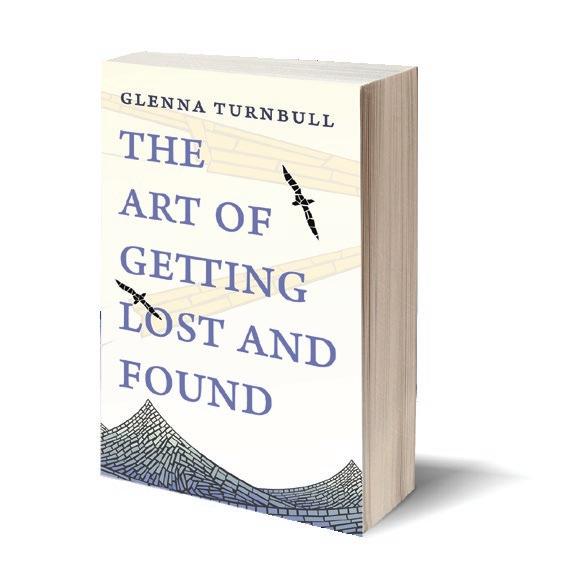
Debut novel navigates issues of motherhood, loss, mental health and domestic abuse
An excerpt from The Art of Getting Lost and Found by Glenna Turnbull
Apinched look of concern is trying to form in the wasteland between Dr. Amanda Jennings’s pencilenhanced, Botoxed eyebrows as she glares at me, but it just can’t seem to get a foothold. “You’re going where?”
I was expecting this. “Newfoundland. Today. Well, right after I pick up my parents.”
“Maggie, your parents are dead.”
“Their ashes, I mean. Right after I pick up their ashes.” I look up at Dr. Jennings and smile, trying to reassure her that I know what I’m doing, but in all honesty, I’m really not sure that I do. I realize my fingers have started migrating to the scar on my cheek and I plunge my hand back into my lap.
“I have to say, Maggie, I don’t advise you to follow through with this. I don’t think you’re ready. It’s too soon. This, to me, is yet another sign that you’re not thinking rationally yet. Maybe we need to make a few more adjustments to your medications.”
I watch her fingers arc so the acrylic nails won’t scratch the surface of her iPad as she flips through the notes she takes during our weekly sessions.
“You’re taking all your meds?”
I glance down at the copies of Psychiatry Today on her shiny glass coffee table. “Of course.”
The magazines are fanned out with such exact precision it looks like she used a protractor to get the angles perfect. I reach for my water bottle and as I pick it up, I gently nudge July out of line.
I’d purposely waited until we were down to the last five minutes of our session before casually mentioning that I wouldn’t be coming in for my regular appointment next week because I’d be in Newfoundland. I didn’t want to spend the whole hour arguing over it and was afraid Dr. Jennings might successfully talk me out of going. But instead, the exact opposite starts to happen. The more she points out my inability to cope, the more that old “Fuck you, I can too do it” fight begins to surface from deep inside of me, the same feeling that propelled me into following my dreams of art school despite my father’s
insistence it would lead nowhere. The more Dr. Jennings rambles on about the dangers of triggering another episode, the more convinced I am that this week-long escape is exactly what I need.
Two weeks ago, just before I pushed the “Book It” button on the travel website, I confess, I did kind of doubt whether I was strong enough to do this or not. But over the past few days I’ve started feeling a little more like my normal self again.
“Why isn’t anyone else in your family going with you to do this?” she asks, glancing at her no-longer-symmetrical stack of magazines.
I shrug. “I’m the only one who wanted to go. Besides, I mean, it’s a free trip! My mother wrote it right into her will; the money is to come out of the estate to pay for one of us to go spread their ashes. How can I get hurt dumping a container full of dust?”
“It’s more than just dumping dust, Maggie.” She sighs. “Where are you flying to? St. John’s?”
“That’s the plan.” I put my water bottle back down and nudge July even further atop June.
I’ve never been to Newfoundland before, unless you count the time Mom flew home for her own mother’s funeral forty-five years ago and had to take me with her because she was still nursing. It’s not like I can even pretend to remember what it’s like. So, when I volunteered to be the one to fulfill Mom’s final request, my siblings agreed.
“Is there no one else you can take along?” This time when Dr. Jennings tries to frown, I notice a slight twitch near her right brow line, a small spot not sufficiently frozen in her attempt to remain wrinkle-free.
I had thought about asking my best friend Romany to come with me, but I decided not to mention the trip to her either until just a few days ago, when I coaxed her into dogsitting my border collie Finnigan for me. Ever since my first stay in the McNair psychiatric unit, anytime I do anything spontaneous, my friends and family worry that I’m heading towards another episode. But I’m going to be fine. I’m sure of it. I really am. Really. ■
All around the circle
Explore Newfoundland through the pages of these books
by Gabby Peyton
“I’s the B’y” is one of the most prolific folk songs to come out of Newfoundland and Labrador. Everyone, young and old, knows the lyrics, but no one really knows who wrote the ballad. Some attribute it to Pearce’s Harbour resident Joseph Deering in the 1880s, but it was popularized in 1927 in the songbook of Gerald S. Doyle, and the rest is lyrical history.
The song takes us on a little trip; documenting stops in different Newfoundland communities. The iconic line “Fogo, Twillingate, Moreton’s Harbour, all around the circle!” is repeated multiple times in the song, giving insight to the life of a fisherman and his daily goings on. And like the song, these newly released books also take us on a journey— whether it’s backpacking with a dog, hitchhiking with senior citizens, or following along with a famous singer. So here we go, all around the circle, through their pages.
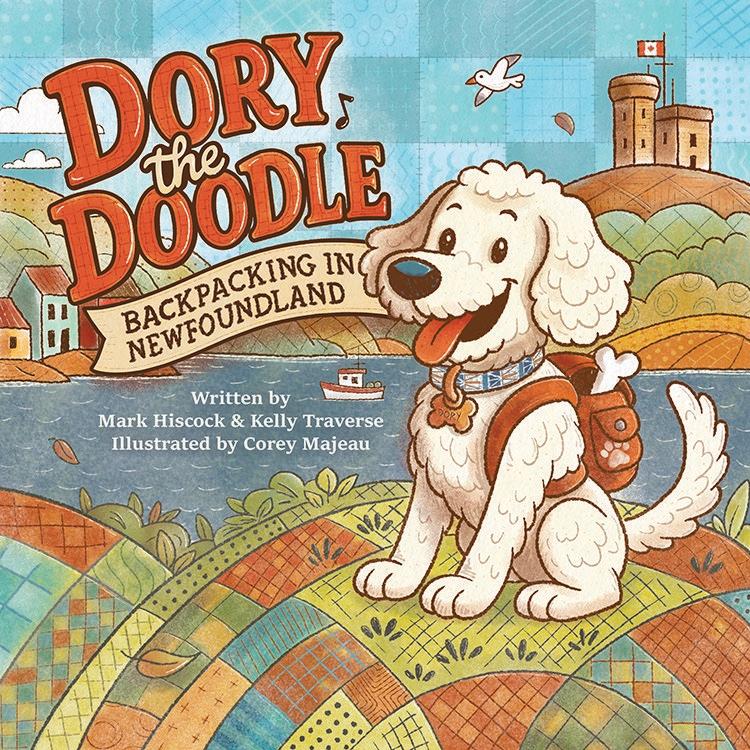
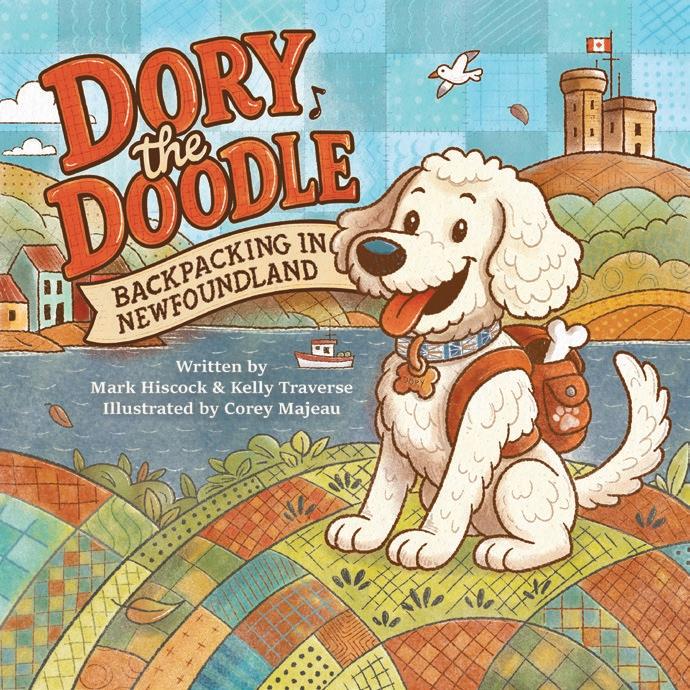
Most visitors to the island will start their Newfoundland adventures in St. John’s, with their families. Dory the Doodle: Backpacking in Newfoundland by Mark Hiscock and Kelly Traverse (Flanker Press) takes readers all over the capital, exploring via backpack. This colourful children’s book, illustrated by Corey Majeau, follows the dog, Dory, as he straps on his backpack and experiences Signal Hill, Fort Amherst, Quidi Vidi Lake, and even the food and fun at the annual St. John’s Regatta.
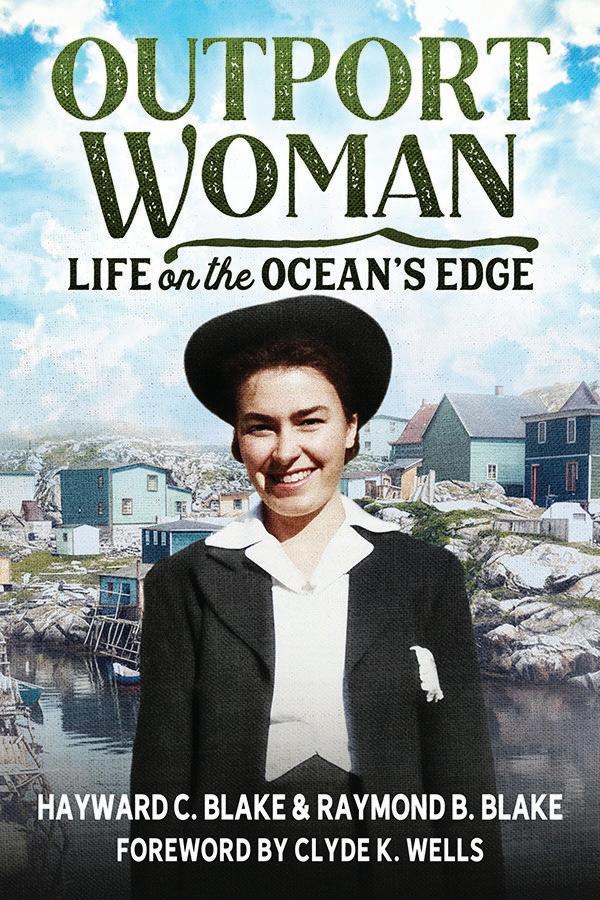
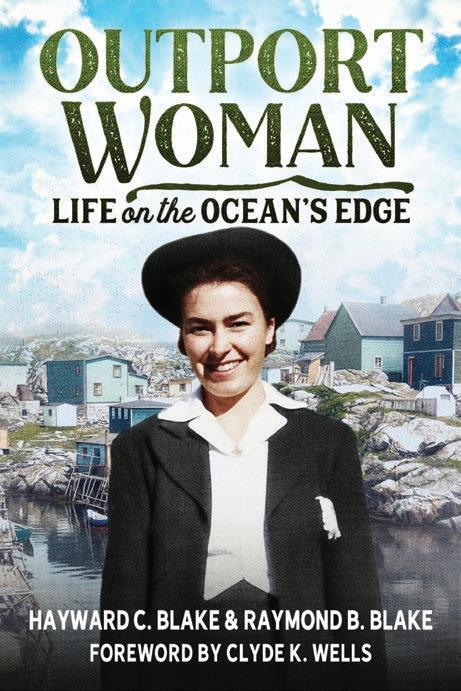
Newfoundland’s south coast is rugged and sparsely populated, but possibly the more impressive coast. The coastlines are dramatic, dotted with tiny outport communities with rich culture and tradition. Hayward C. Black and Raymond B. Blake’s new biography takes readers to the isolated south coast of Newfoundland. In Outport Woman: Life on the Ocean’s Edge (Flanker Press), the authors document the life of Minnie Beatrice Blake and her more than 80 years living in a rural community. It stands as a tribute to the generations of women who lived in outport communities like Saddle Island, Pushthrough and Hermitage.
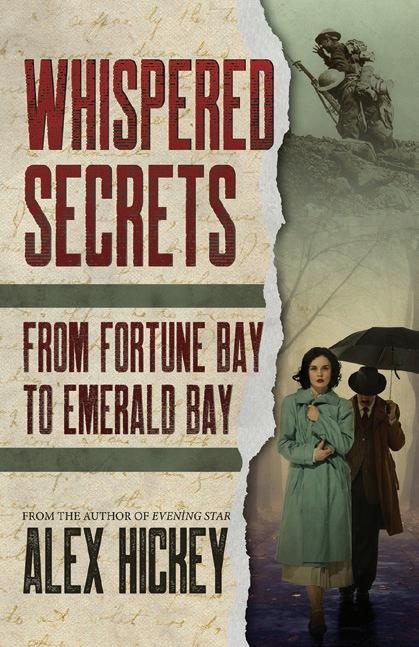
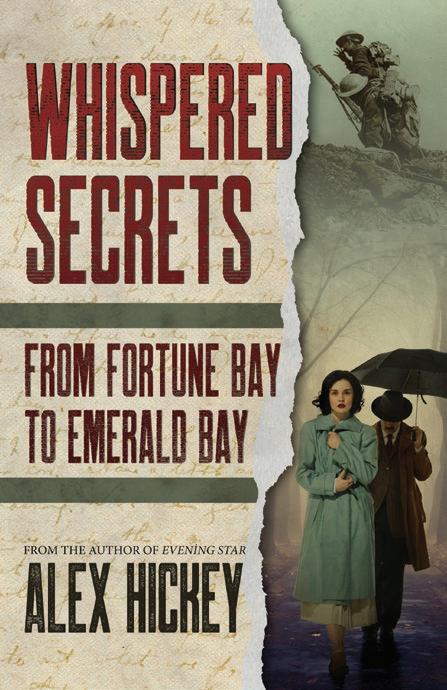
Prolific historical author Alex Hickey is back with a new fiction book based on the people and places of Fortune Bay, also on the south coast of Newfoundland. In the pages of Whispered Secrets: From Fortune Bay to Emerald Bay (Flanker Press), the story (and mysteries) span generations and locations from Newfoundland to the United States, and back again.
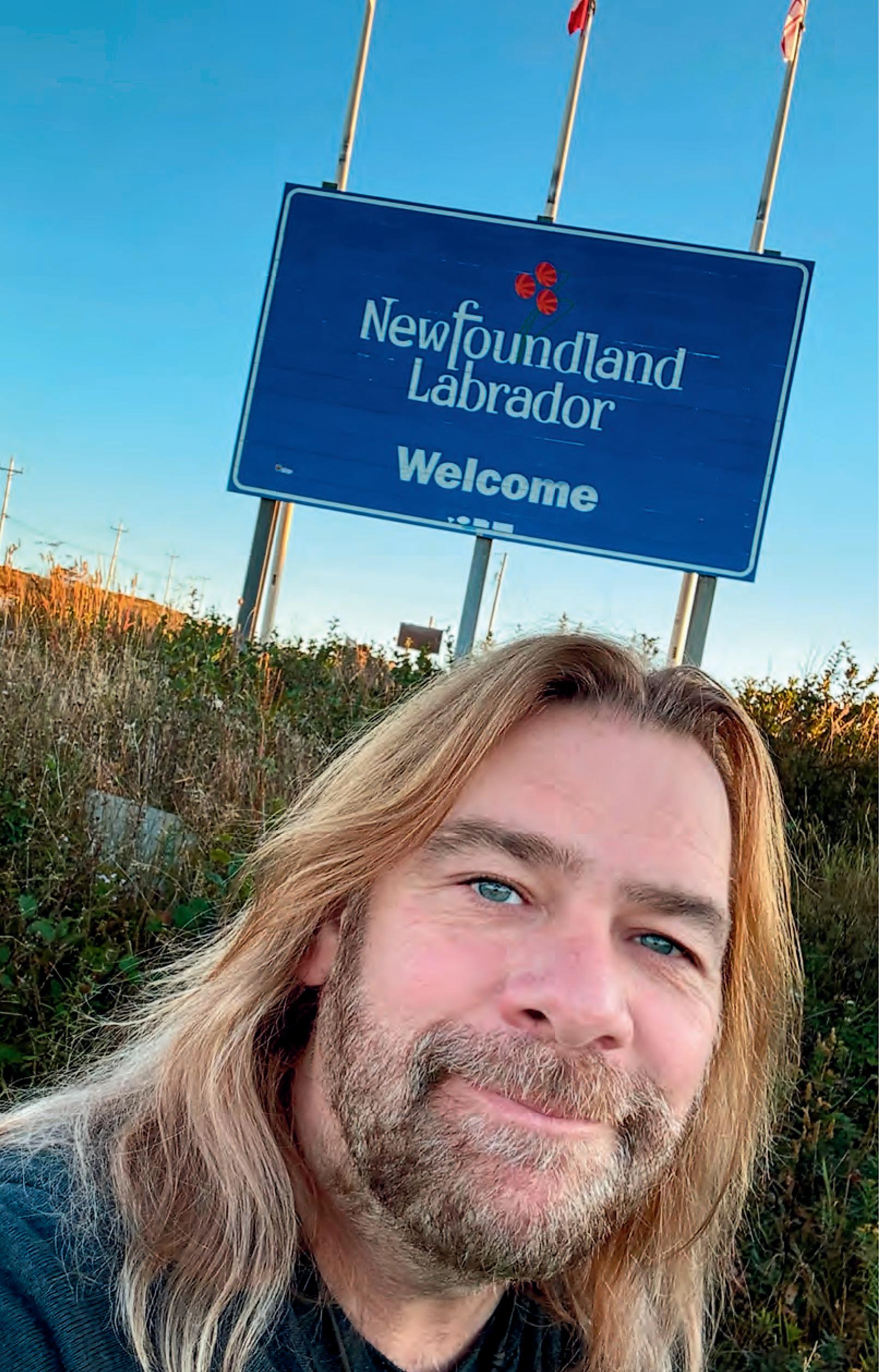
Opposite page: Allan Doyle at Channel-Port aux Basques
From The Smiling Land: All Around the Circle in Newfoundland and Labrador, courtesy of Doubleday Canada.
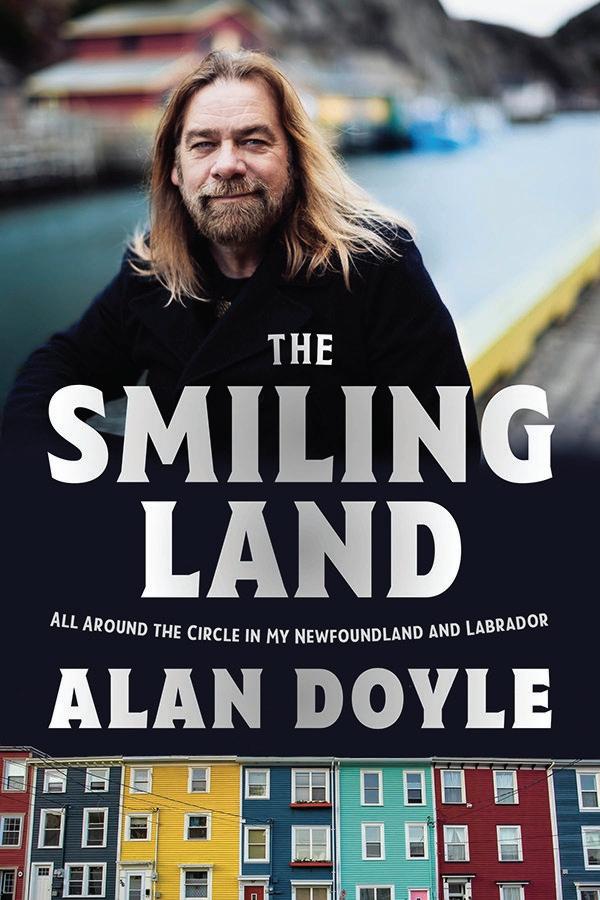
Famed Newfoundland singer Alan Doyle also takes us all around the circle in his newest title, The Smiling Land: All Around the Circle in My Newfoundland and Labrador (Doubleday Canada). In this part memoir, part guidebook, Doyle transports the reader to different communities around the province, cleverly starting with Farewell on Fogo Island and finishing with moments in his own downtown St. John’s neighbourhood. The book is replete with insider tips, fond recollections, and descriptions of his home province.
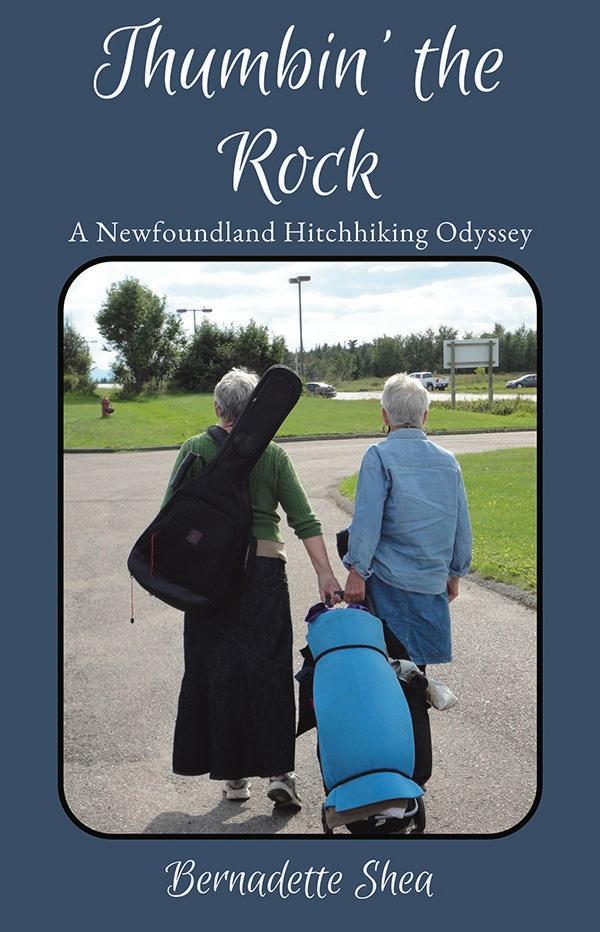
Ready to be inspired to take the road less travelled? In Thumbin’ the Rock: A Newfoundland Hitchhiking Odyssey by Bernadette Shea (Somewhat Grumpy Press) two unlikely hitchhikers make their way across the province. In 2012, Shea and her sister Dolly (ages 60 and 72 respectively) thumbed rides from St. John’s back home to North Sydney (with a little side quest up the Northern Peninsula to St. Anthony). A lifelong letter-writer, Shea recounts the trailblazing adventure with humour and love as two senior citizens explore the province with a guitar and an old grocery buggy.
People come from all over the world to experience the magnificent landscapes and unique wildlife of Newfoundland and Labrador, and with good reason.
Recommended Reading
Lost in Newfoundland, Volume 2
Breakwater Books Ltd.
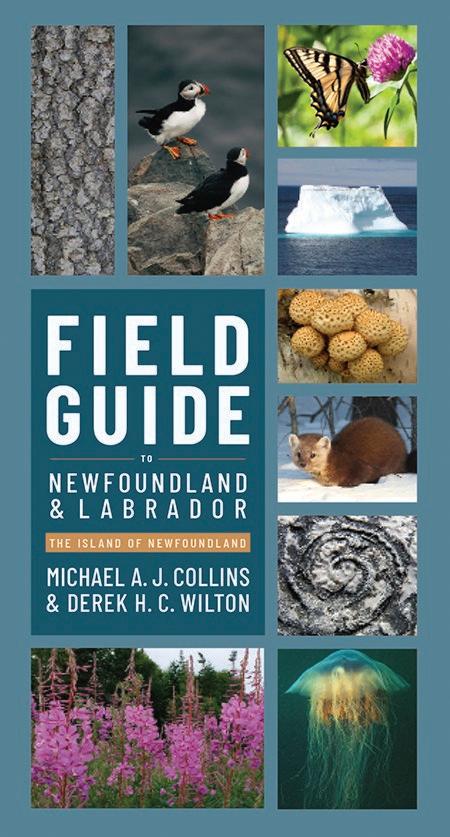
From the island’s surprisingly diverse plant life like the provincial flower, the insect-eating pitcher plant, to the birds of Witless Bay Ecological Reserve, and the iconic Iceberg Alley, eco-tourism is at its best here. The new tome, Field Guide to Newfoundland and Labrador: The island of Newfoundland (Breakwater Books Ltd.) features 900 images that guide visitors and locals alike to the province’s natural beauty. Biologist Michael Collins and Professor Derek Wilton detail marine life, fungi, lichens, plants, and even minerals and fossils in their perfectly- sized guidebook.
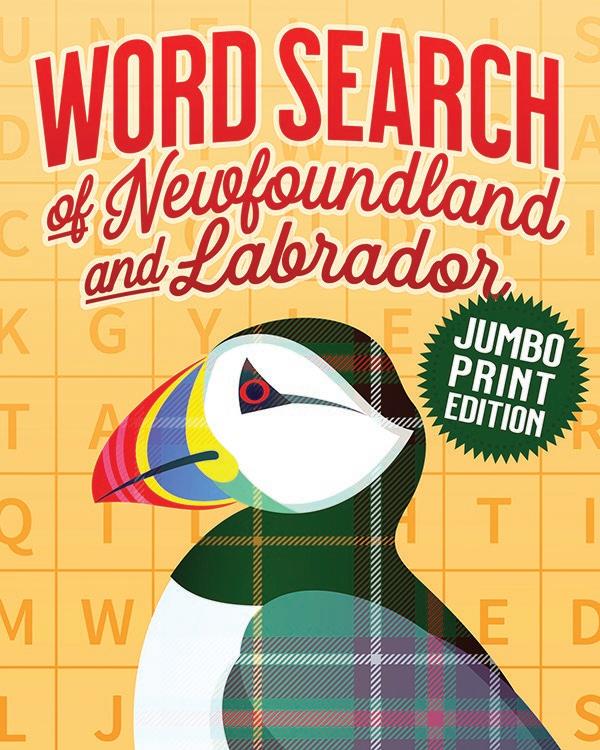
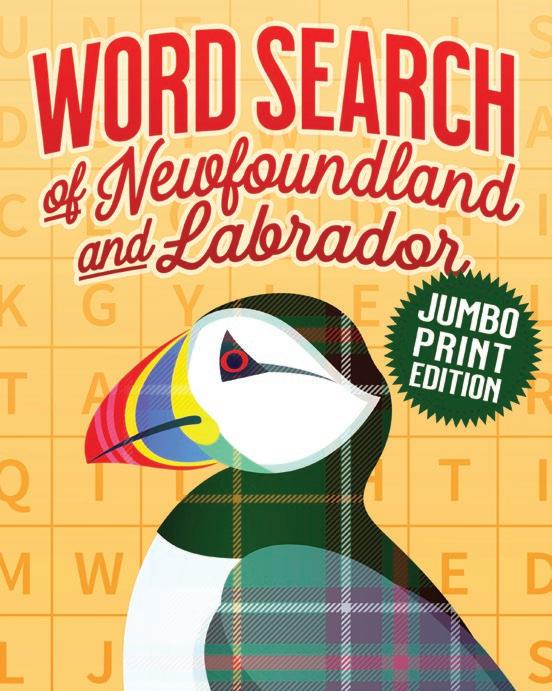
For those looking to dig a little deeper into the pop culture and history of the province, Word Search of Newfoundland and Labrador Jumbo Print Edition by Nick Cranford (Flanker Press) is a great place to start. Cranford’s word search series always has a way of showcasing local traditions and customs and in this recent book there are 140 puzzles with local celebrities, unique place names, and common sayings, so learning about The Rock is a fun, entertaining activity. ■
GABBY PEYTON is a food and travel writer based in St. John’s, Newfoundland and Labrador, obsessed with cheese, historical fiction, and planning her next trip—to eat.
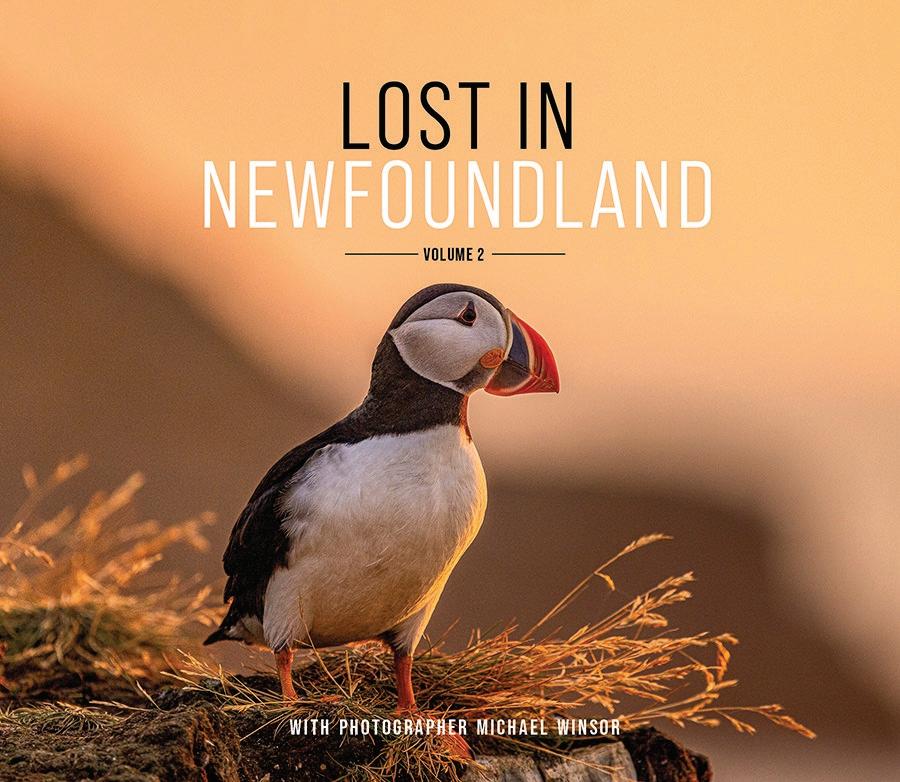
The follow up to the bestselling Lost in Newfoundland, this collection of stunning and dramatic photographs captures the breathtaking beauty of the island featuring even more of the visual wonders of Newfoundland—from wildlife to seascapes and everything in between. In a photographic journey through some of the island’s most striking locations, Michael Winsor captures Newfoundland’s unique and overwhelming beauty.
Battle Harbour
From The Smiling Land: All Around the Circle in Newfoundland and Labrador, courtesy of Doubleday Canada.
Spring poetry roundup
A curated selection of this spring’s blooming poetry collections
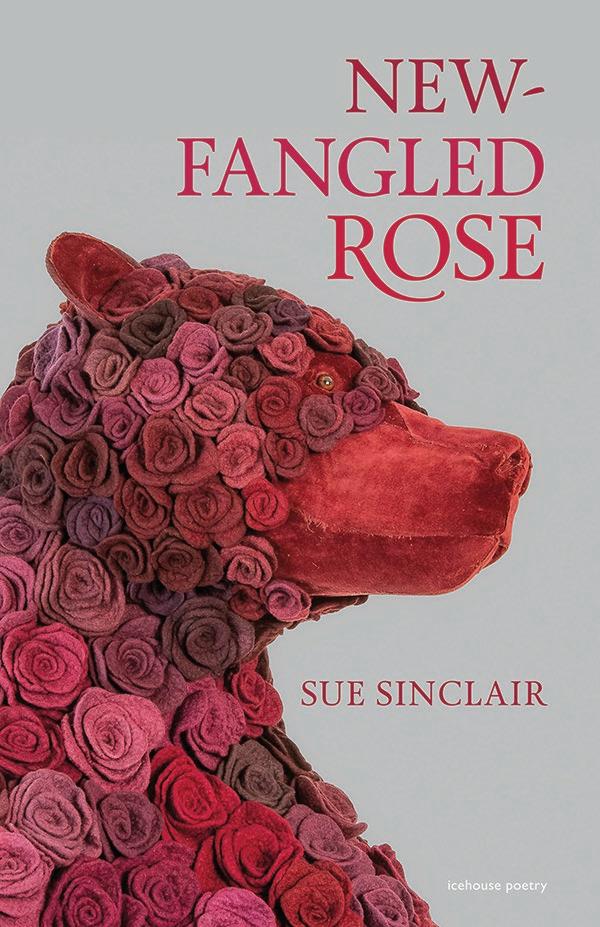
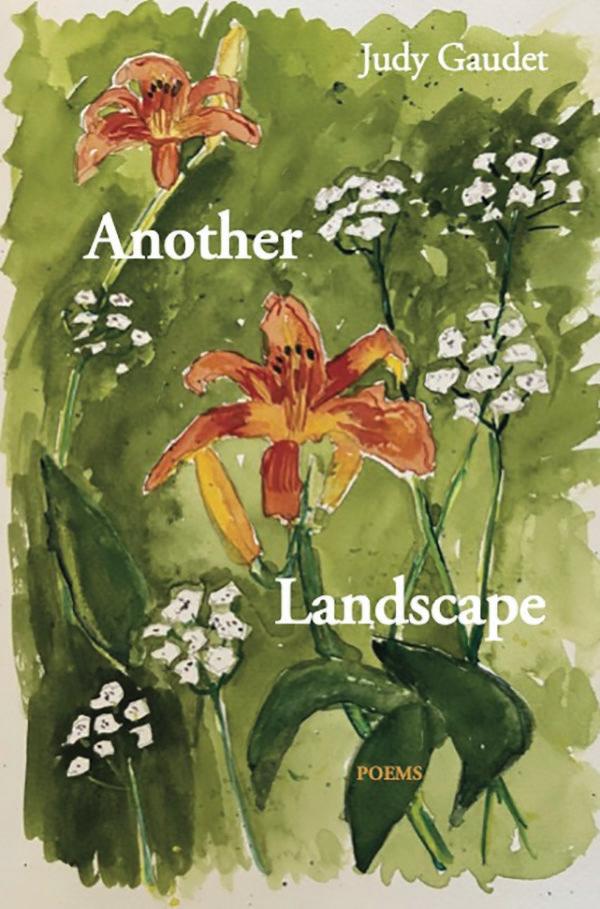
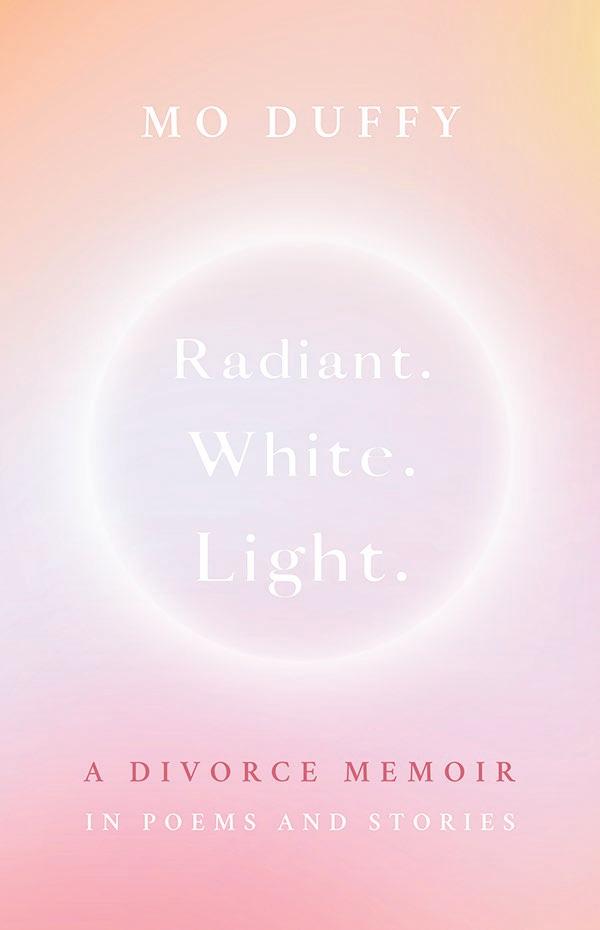
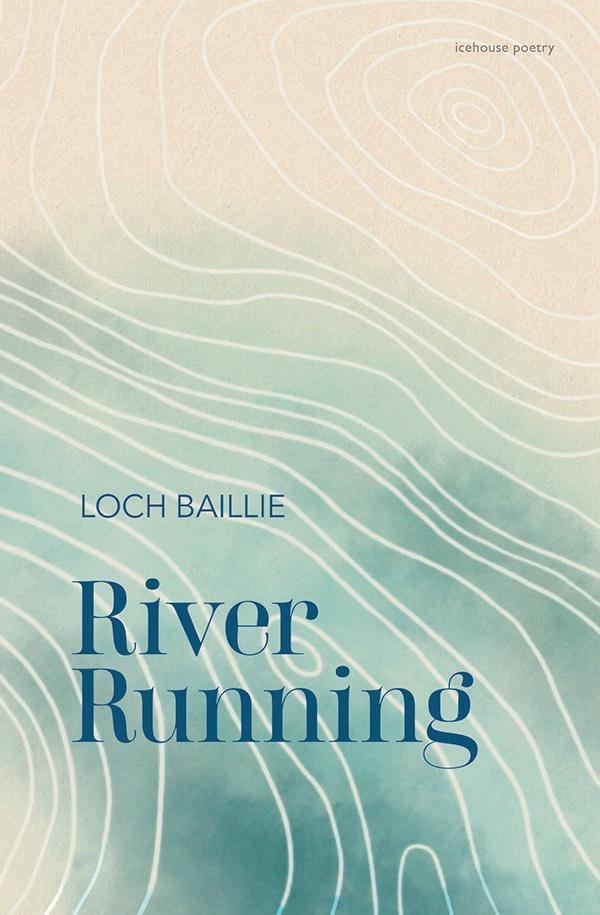
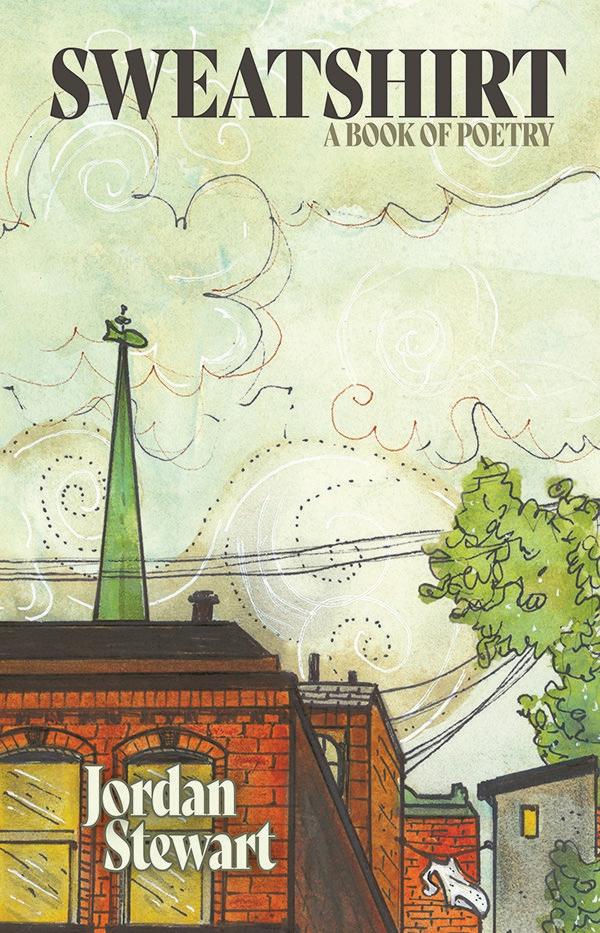
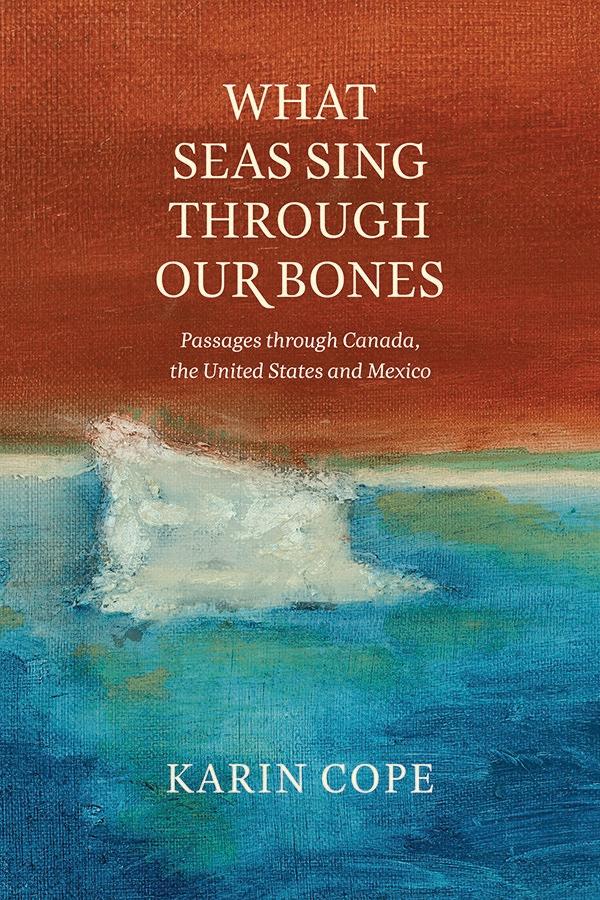
Books included: New-Fangled Rose by Sue Sinclair (icehouse poetry); River Running by Loch Baillie (icehouse poetry); Another Landscape by Judy Gaudet (Island Studies Press); Sweatshirt by Jordan Stewart (Galleon Books); What Seas Sing Through Our Bones by Karin Cope (Pottersfield Press); R adiant. White. Light. by Mo Duffy (Pownal Street Press)
by Fawn Parker
Photo: Abigail Miller on Unsplash
Spring 2026 was a busy season for Atlantic poetry publishers, with a highly anticipated release from award winner Sue Sinclair and a wave-making debut by Loch Baillie. Themes of intimacy, transformation, and the quiet complexity of the everyday show up in these six new titles in various ways; at times overlapping and in conversation with one another.
The poems in Sue Sinclair’s New-Fangled Rose unfurl and snake and bloom on the page. There is a sense of nostalgia in these explorations of nature and beauty. Our changing climate is never forgotten. In “Sea Change”, Sinclair writes: “The ocean didn’t seem to notice the mess/ but we did and fixed what we could.” Then there is the closer, softer “The View From Nowhere” which opens: “A mother now, I’ve become the horizon,/ the demarcation of a ghostly limit.” A follow-up to Sinclair’s “new and selected” Almost Beauty (icehouse poetry), New-Fangled Rose has a gentle confidence that is—as with the roses in “Hospital Bed”— “unclenched and roaming.”
In Sweatshirt, Jordan Stewart explores poignant, simmering feelings under the surface of the mundane. The opening poem reassures: “The top of the fridge will never be clean.” Walmart, blue Gatorade, and voicemails from the veterinarian appear in these stripped-down meditations on daily life. That is, until a mysterious 3x3’ cube appears in the middle of the street one day and just as quickly vanishes. Part Two, “Other Worlds Than These,” takes a turn for the surreal, distorting the familiar and domestic. In “Bandits Came in the Night”, “The women’s faces turn to smashed church pews,/ and the men’s hands wring together like worried staircases.”
Loch Baillie’s debut full-length collection River Running is restrained and skilful, intimate and solitary. Mosquitoes buzz around the pages, which seem steeped in citronella and lake water. Baillie has a knack for lines as rhythmically beautiful as their imagery, such as in “Transverse Orientation”: “There were nights when I stayed by the water/ when moths congregated in my room, sipping/ the low glow of the light fixture while I sinned.” Tension and desire hang heavy in the air.
Another Landscape is Judy Gaudet’s third poetry collection and an attentive, grateful look at daily life and connection to nature. There is tension between the animals, the sky and stars and the roaring highways and “moving lights of planes.”
“But,” she writes in “After the Wind, After the Woodcutter”, “the trees show the limits of the law.” There is a playfulness in Gaudet’s presence in the poems: in “Market on a Wednesday” she writes, “If this/ could do with a bit more rhyme/ or metaphor to be a better poem,/ the crêpes could not”; in “Sandstone Cliffs” she admires the molecules making up the river, notes that her own molecules “have held together only 71 years.”
Karin Cope has released What Seas Sing Through Our Bones, a “journey poem” about queer love and travel by sea in a time of “expanding war and immiseration coupled with a hardening of borders, increasing surveillance, and social and environmental devastation.” The poem is formally diverse with close attention to language. Though in part in conversation with Steinbeck and Ricketts’ Sea of Cortez, this long poem blends history and reference with its speaker’s own experiences,
which form “a different kind of story”: “beings of other genders, beloveds, sailing together.”
Mo Duffy’s Radiant. White. Light. is at once vast, cosmic and close, deep inside of a speaker whose marital grief follows her through hotel lobbies, coffee shops and journal entries. It floats in a haze around her, comes up in conversation and stings. After years of feeling seen, desired, safe, the speaker wonders, “I could never have been enough for you, or was I for a while?” Duffy writes of more than the loss of a relationship but the restructuring of an identity, a new relationship to self. Even under the heavy weight of loss there is a strong and resilient hope in these poems—a radiant white light. ■
FAWN PARKER is a novelist and poet based in Fredericton, NB.
The New Brunswick and Atlantic Book Awards will announce their winners this spring. Finalists include:
J.M. Abraham Atlantic Poetry Award
familial hungers , Christine Wu
Future Howl , Sue Goyette
Yes is the Only Word the Earth
Understands, Leigh Faulkner
antibody , Rebecca Salazar
Nightjar, Natalie Rice
Fiddlehead Poetry Book Prize
Existing Music , Nick Thran
antibody , Rebecca Salazar
metadata from a changing climate , Ian LeTourneau
From page to plate
Salt air, shellfish, and summer reading for sea-foodies
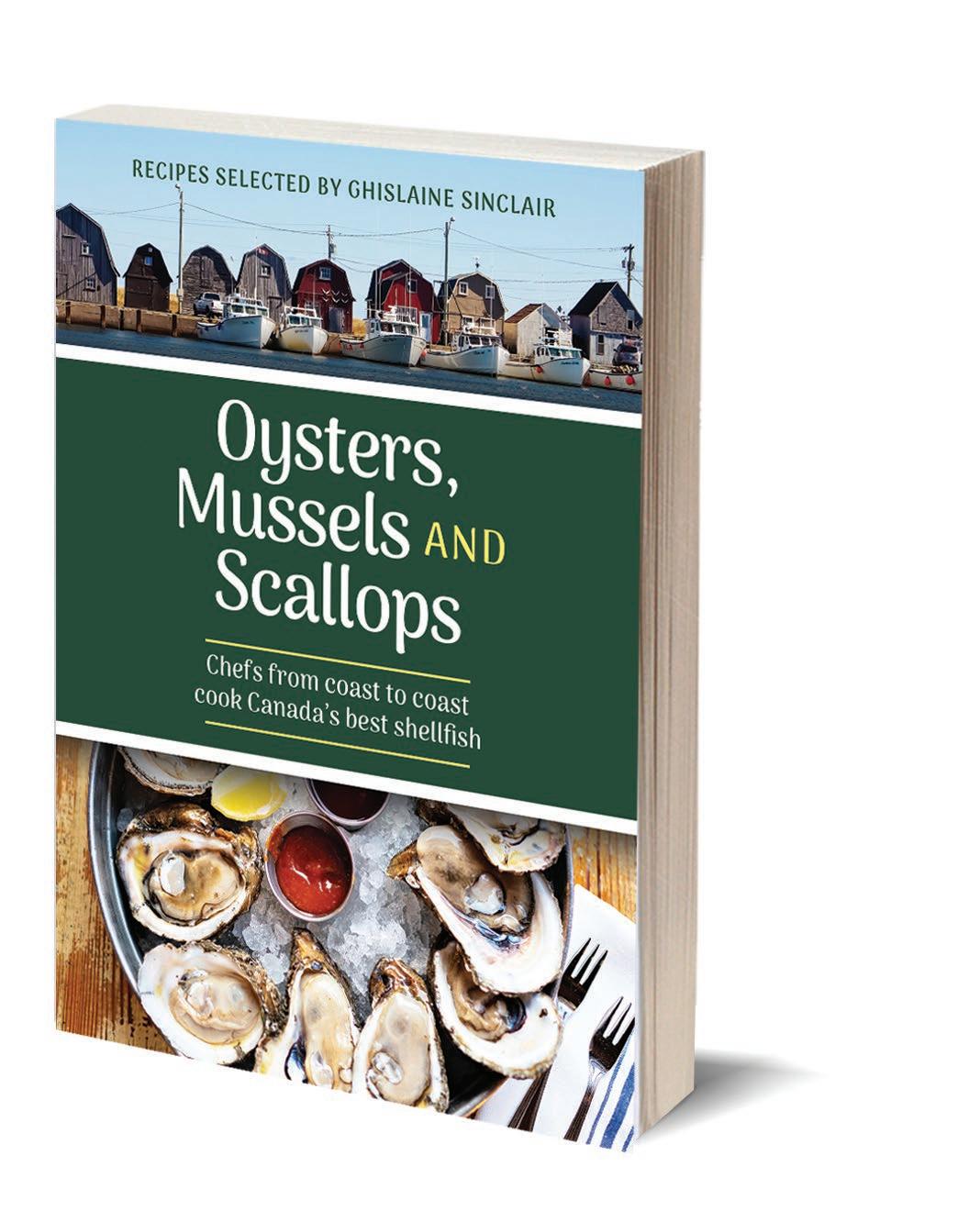
The cookbook Oysters, Mussels and Scallops features over fifty recipes from Canada’s top chefs that include these iconic shellfish varieties, selected from Formac cookbooks.
This collection shows not only the versatility of these ingredients but showcases the creativity and innovation of Canadian chefs and cookbook authors.
From fresh oysters, which have seen an explosion in popularity in Canadian restaurants, to steamed mussels and perfectly seared scallops, there is a recipe for anyone who wants a taste of the coast at home.
Try this twist on the classic Maritime hodge podge with the elevated addition of shellfish in this recipe for Shellfish and Summer Vegetable Hodge Podge from chef Craig Flinn.
Oysters, Mussels and Scallops
Chefs from coast to coast cook Canada's best shellfish
Edited by Ghislaine Sinclair
Formac Publishing
OYSTERS, MUSSELS AND SCALLOPS
SHELLFISH AND SUMMER VEGETABLE HODGE PODGE
Hodge podge is a classic Maritime dish that uses the very first garden vegetables of the year. On its own it’s a treat every year. The addition of the very best shellfish makes it unique and sophisticated. Chef Craig Flinn sometimes adds slices of beet that have been fried separately so that he can incorporate beets and keep the cream nice and white.
1 lb (450 g) baby new potatoes (cleaned but unpeeled)
8 oz (225 g) baby carrots
1 cup (250 mL) shelled fresh peas
4 tbsp (60 mL) salted butter
1 clove garlic, minced
1 shallot, minced
½ tsp (3 mL) sea salt
½ tsp (3 mL) freshly ground black pepper
2 tbsp (30 mL) vermouth or white wine
½ cup (125 mL) chicken broth
1 cup (250 mL) 35% cream
¼ cup (60 mL) creamy fresh goat’s cheese
½ cup (125 mL) chunked fresh-cooked snow crab meat
½ cup (125 mL) chunked fresh-cooked lobster meat
½ cup (125 mL) steamed and shucked fresh mussels
12 oysters, freshly shucked with liquor reserved
¼ cup (60 mL) freshly chopped chives
3 tbsp (45 mL) extra-virgin olive oil
12 large sea scallops
1 cup (250 mL) small arugula leaves
6 ripe cherry tomatoes, sliced
In a pot of salted water, cook baby new potatoes until soft. Cut potatoes in half. Blanch whole carrots in the same water and set aside. Blanch peas in the water as well, and shock in iced water stop the cooking.
In a large saucepan, heat butter and sauté garlic and shallot for 1 minute until shallot is translucent. Return potatoes, carrots and peas to the saucepan and season with salt and pepper. Deglaze pan with vermouth (or white wine) and add chicken broth and cream. Bring to a boil and add goat’s cheese, stirring well to make sauce smooth. Reduce sauce by one third.
Add crab, lobster, mussels, oysters, oyster liquor and chopped chives.
In a separate sauté pan, heat olive oil and sear scallops on flat side. Do not move scallops for at least 90 seconds, allowing them to caramelize well. When golden brown, flip them and cook for 90 seconds on second side.
Serve hodge podge topped with scallops and garnish with arugula and cherry tomato slices.
Serves 6 as a main course
Photo and recipe courtesy of Formac Publishing.
THESE BOOKS WERE REVIEWED FROM ADVANCED GALLEYS PROVIDED BY THE PUBLISHERS.
Reviews
Preserving Black New Brunswick history
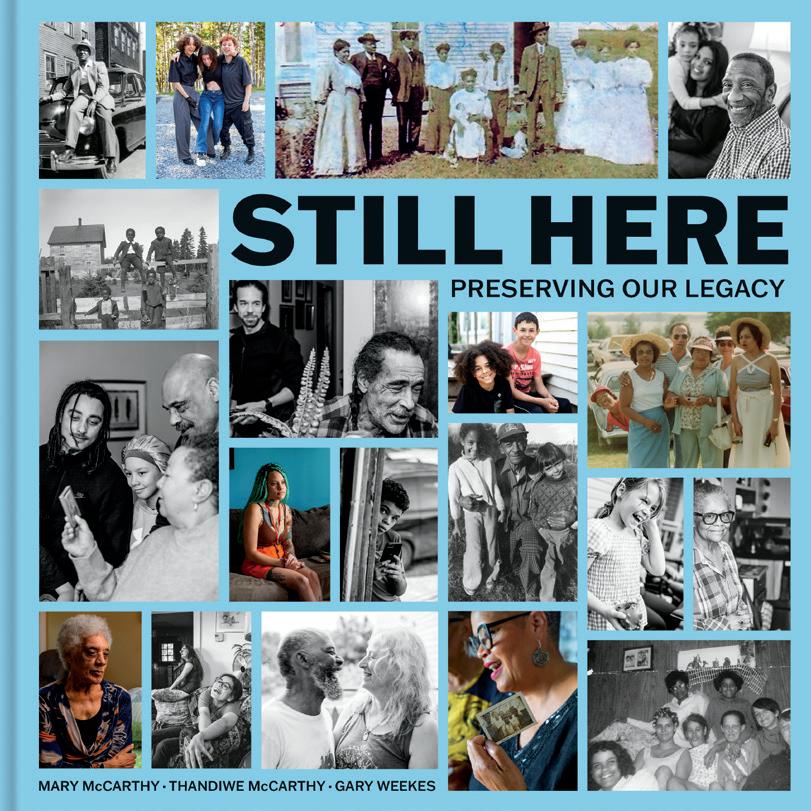
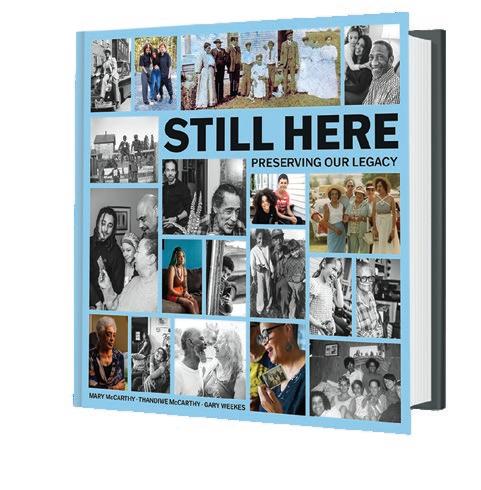
Back in 2007, I produced a documentary called Still Here: A Journey to Triumph. In it, I challenged a group of Black teens to retrace the path of their ancestors before their arrival to Nova Scotia. The idea was sparked by the concern that the ancestors’ legacies were being lost. The term still here stood as a symbol of hope and resilience after a harrowing journey from West Africa to enslavement in the south, and for the expelled Jamaican Maroons as a symbol of strength and unity after betrayal. This book took me back to the importance of telling our stories.
What Mary and Thandiwe McCarthy have done in Still Here: Preserving our Legacy is pick up the torch of their ancestors’ journey to New Brunswick and they have provided the origin story for subsequent generations to carry forward. This book is an important and necessary voyage through the history of New Brunswick’s Black communities. It weaves together lost and missing pieces of the past through deeply researched text, poignant poetry, and striking photographs. It shuffles us into the present, where we meet fifteen families (the most important part of the book) who symbolize the spirit of community and togetherness. This title is not only fitting, but it’s essential. It tells us that the roots of the Black communities of New Brunswick are “still here” and must be honoured, talked about, and cherished. Further, that the families within its boundaries find ways to stay connected, learn from each other, and inspire a new generation of knowledge keepers.
Thandiwe says of this book: “While Still Here raises awareness of Black history, this is not the goal of the book. The goal is to inspire a stronger connection to sharing an’ preserving our history within and between families. The stories of our great-aunts and great-uncles have real power to heal and strengthen us against our anxieties, and their families are the best people to research and share these stories. Our greatest historians are often related by blood.”
The first part of the book takes readers back through the early history of the people who would later populate New Brunswick’s Black community. One often forgets this rich history did not begin on North American soil, nor at
enslavement or after declarations of freedom. However, much of that gets lost when conversations turn to Black people and Black joy. The book is a reminder that we are not our trauma, and that we are “still here” in spite of it. The reality of Black joy is resounding in this book; a living, breathing example of that statement.
The timeline is an important slice of this book’s appeal. It serves as a necessary account of the past, told through first-voice descendant, Mary McCarthy. Her knowledge and research provide a road map for helping others understand where and how that journey began. Mary paints a contextual picture of the emergence of New Brunswick’s Black community.
In the second part of the book, those fifteen families take center stage. Carved into their stories is Thandiwe’s brilliant poetry that sings on the page. Through his gift of wordsmanship, Thandiwe captures the distinct lives of these families and their communities. Every word is wisely chosen to make each poem feel familiar yet distinctive. The poetry tells the story of community and shows the joy and pride evident in every household.
The photographs quickly become part of this lively and colourful tapestry, capturing the families forever in time. Through Gary’s brilliant work on these photographs, the families’ eyes tell stories and their smiles speak peace. The valuable symbols of the past that they share—oral stories, history, pictures, and documents—all captured by Gary’s camera, show the essence of who they are as one collective people. At their core, these families represent their ancestors’ wildest dreams. The photographs help seal those memories in time, pulling the subjects off the page and into our hearts.
When it comes to Black New Brunswick history, there is still much more to learn about and write about. But who better to begin crafting and weaving those tales than the three creators of this book, whose history and legacy run deep in and through the Black New Brunswick community. ■
WANDA TAYLOR is an award-winning writer, filmmaker, journalist, and college professor.
Michelle Robinson, photo by Saffron Morriz
First title of new mystery series hits the page, bringing a quirky literary community to life—and death
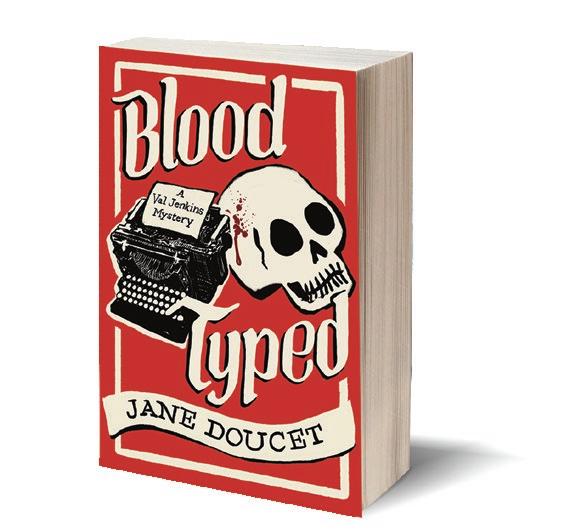
Blood Typed is a fictional yet fascinating, compelling and macabre look behind the scenes of literary awards and the possibly catty, as well as collaborative, nominees. Title character Val Jenkins is a journalist eager to switch from writing a book column to covering the crime beat. She never expected to risk her job for the sake of a dream story. And all due to the untimely death of a beloved local author.
Through humourous plot twists, quirky characters, and a setting familiar to many, the reader is led through a shortlist of authors who may seem familiar, but do not completely resemble any Atlantic author. Doucet imagines darkness behind the strife for validation and dares to write about it.
True to the author’s nature of previous books (The Pregnant Pause, Fishnets & Fantasies, Lost & Found in Lunenburg) there is a hint of romance, a touch of humour, and characters that readers will relate to, love, and hate. Unusual for Doucet is the haunting intention of murder and mayhem. Vengeance and gore blends well with tax evasion and natural death, all combined in an addictive plot.
It’s a wonderfully Canadian, and more specifically Nova Scotian, spellbinding, heartfelt tale driven by spunky characters, a fast-paced plot, and the signature Doucetmanner of familiarity matched with ridiculous.
Set up precisely, with meticulous thought, Doucet places each character in the plot with intention. From Val’s cat, aptly named Sherlock Holmes, to Sally McPhee, Big Bernie Brown “The Bookie”, Alexander Fitzgerald, and everyone in between, every character is well thought out and placed in locations that are recognizable such as the Lord Nelson Hotel, a local post office, and a rehabilitation centre.
Doucet has a masterful way of pulling together ridiculous complications to make them easily connect to the reader. From prologue to conclusion, through each titled chapter, enjoyable history lessons and struggle, the strife for the NOVA prize is adventurous and courageous.
With microscopic precision, and an obvious admiration of all things sleuth à la Nancy Drew and Agatha Christie, Doucet brings colour to a literary get-together. Dressed in
shimmering formal wear, the writers and guests are told not to leave and tensions simmer. Everyone is a suspect until two detectives, along with amateur sleuths, clear their names.
And let’s not forget the compelling ode to the typewriter and the weight of the classic tool.
From the very first line of the prologue, “For years afterward, the young man who made the discovery would have nightmares about what he had seen,” followed shortly by “Sally MacPhee could feel the cancer in her bones long before the doctors confirmed it,” it’s clear this book was set up for an in-depth look at humanity. From Wolfville to Halifax to Pointe-de-l’Église, authors of Nova Scotia come together to prove that truth can be stranger than fiction and only some live to tell—and write—about it.
Doucet, a Canadian journalist, freelance writer, and author, personally understands the power of the written word and combines her passions, knowledge and experience into the first of the Val Jenkin’s sleuth series. She does justice to the brilliance and complexity of a woman in the modern world of detecting, writing, and networking with respect and admiration.
Every person we meet has a story or two to tell beyond the façade and automatic reply. Blood Typed digs into the layers of creatives in small towns, forcing introverted characters to reveal their weakness and darkness and clarifies how these admissions can tighten an already small community.
Doucet honours Nova Scotia’s literary world and the people who elevate it to be a creative mecca that lovers of writing have all grown accustomed to. The great news is, Vagrant has already signed onto a second book in the series, Death at the Petting Zoo, scheduled for publication in spring 2028, with the fictional Halifax Regional Police homicide detectives Wade Bourque and Sarah Slade back on the case. ■
SARAH BUTLAND is an author, freelance writer, and writing coach living on the North Shore of Nova Scotia.
Vagrant Press
An impactful, informative, and positive approach to back yard gardening the natural way
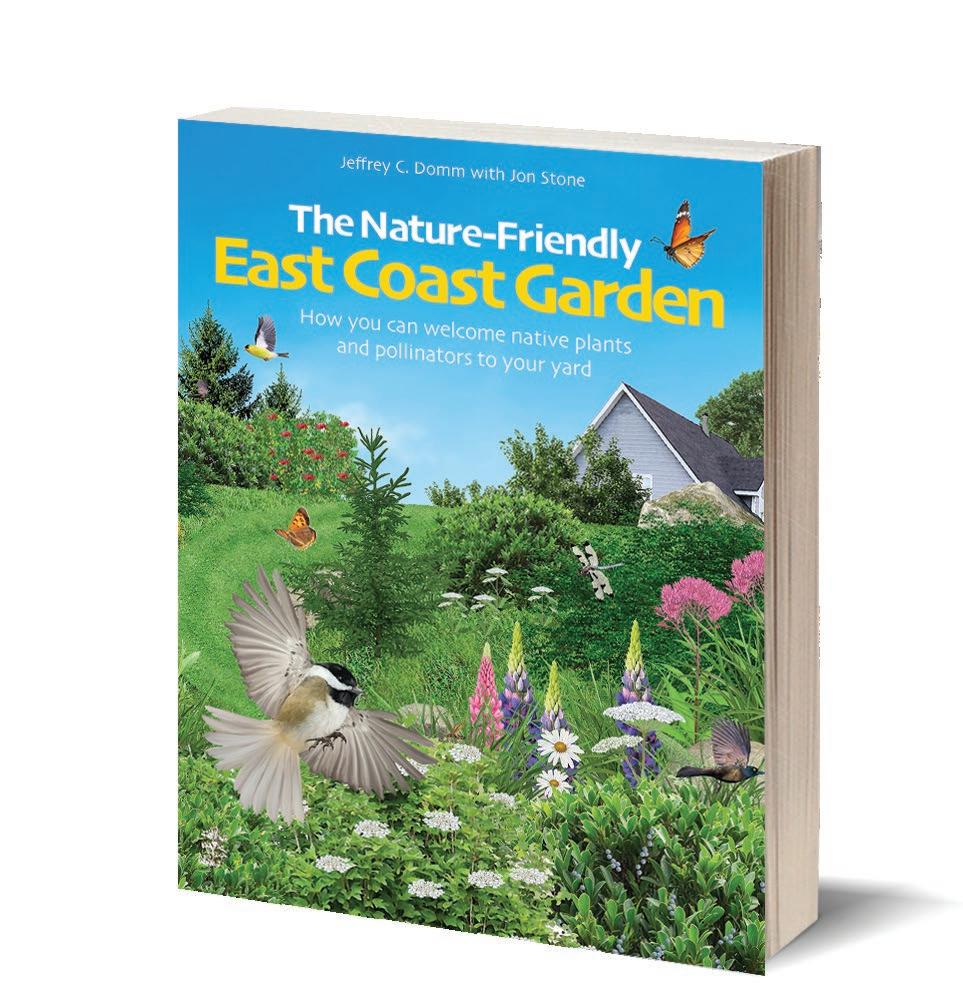
On a cold spring day, I sat down (via Zoom) with Jeffrey Domm and Jon Stone, the creators of The Nature-Friendly East Coast Garden: How you can welcome native plants and pollinators in your yard, each of us in our own cheery rooms, full of the spirit of spring.
Talking about nature can be joyful and fascinating, especially if the naturalists eschew dark warnings and dire statistics, and our conversation was the very essence of the cheerful spirit that Domm and Stone wanted for their book; informative, fun, encouraging, and uplifting.
Domm and Stone are longtime friends and comrades in the field of naturalism. Over the years they have worked with each other on various projects but The Nature-Friendly East Coast Garden is their first book.
In this detailed gardening book, they have created an uplifting naturalists guide for the back garden. Through clear prose and beautiful illustrations, the reader is introduced to the wildlife in their garden and taught how to protect and nurture all the living creatures with practical and effective DIY projects.
“We felt that there’s all kinds of information out there about the horrible things happening to the environment,” says Stone. “So, we wanted to provide people with positive reinforcement of some simple things they could do to protect and nurture the ecosystem in their own back garden.”
“We wanted our book to be positive and visually impactful,” says Stone, with a nod to his colleague and friend, Domm, a brilliant illustrator who has created scores of respected illustrated bird and animal guidebooks. Domm, graciously accepting the compliment, says “… after all those field guide books I’ve done, I realized that it’d be a good time to do a book attending to all the birds that are in your backyard, and that expanded to ‘everything’ that comes into your backyard.”
Stone says the sheer volume of ideas that they came across in their research was impressive.
“It was a long, long road,” says Domm. “This took longer than any book I’ve ever done.” In the end they picked fifty projects for the garden that were practical, effective and easy to create.
The reader can learn how to protect fresh water or saltwater shores, make seed balls, or even create a tree nursery. From clay pot bird baths to toad burrows, the reader will be introduced to many fun and effective projects
that will make their yard more friendly to the wildlife that lives there or is passing through.
According to Domm and Stone, “a typical lawn that depends on fertilizers and constant care is essentially a green desert.” The vast expanse of a single species of grass does not support diversity in plants, animals, or insects. Domm and Stone suggest leaving patches of lawn wild and full of wildflowers.
Here are some added tips for your yard: mow your grass high (eight to ten centimetres) to ensure that your grass is resilient to drought and disease; leave your grass clipping spread on your lawn, it will act as a mulch and fertilizer; don’t weed, let the plants grow and diversify and the lawn will be more pest resilient; water deeply, not frequently and the roots will grow deep and resist drought better; and finally, try seeding White Clover Seeds.
White Clover is a non-native species that spreads easily, so typically a naturalist would not be singing its praises; however, the humble White Clover, “earns it keep” because it is a natural fertilizer, releasing nitrogen into the soil. Also, it stays green during drought and supports wildlife with nectar rich blooms.
Domm and Stone have written this informative book with a shared vision. In their view, if every small plot of land or balcony has a small source of water or pollen, a rock to hide under, or a stick shelter, the wild creatures have a better chance of survival.
A string of houses with friendly yards creates a meandering path of hospitable stops, little havens along the way for animals or insects. Domm and Stone envision neighbours sharing seeds, plants and tips, creating habitats for animals and insects passing through, and doing their own small part in supporting the ecosystem. ■
MEG D. EDWARDS is a writer living in Baie Verte, NB. She writes plays and poetry, and her personal essays can be read on her blog, Notes from a Sinking Isthmus
Formac Publishing
A coming-of-age historical novel that explores masculinity, sexuality, secrets, and shame
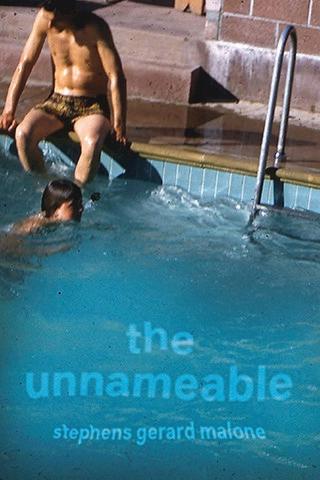
Bookended by Canada’s Centennial celebrations and the FLQ crisis, The Unnameable follows Audie Malloy’s painful thoughts as he goes through adolescence on a military base near Ottawa. It’s a compelling story about what happens when small-mindedness meets difference, couched in a style that balances humour and pathos, with just enough foreshadowing to keep readers wondering.
Growing up gay in a world that denies any sexuality other than hetero, caught between a casually abusive father and devout mother, it’s not surprising that Audie rarely has words for his own desires: his developing identity is literally unnameable.
Audie necessarily and obsessively avoids situations where he could be victimized, like refusing juice in the morning so he won’t need to use the school bathroom. He spends summer days in the basement, even after the reluctant hockey jock Gib Weston moves in next door. Gib painstakingly befriends Audie, who describes the new neighbour as “disgustingly muscular and beautifully tanned” and himself as “a confused bag of potatoes in baggy white shorts”. From his bedroom window Audie sees into Gib’s room because Gib never pulls
A seductive
the curtains: “Never occurred to Audie that maybe Gib did it on purpose.”
In the first of The Unnameable’s three parts, the relationship between the boys develops into the second part’s brief, cathartic foray into the romance genre. Part three returns to unflinching realism, as social pressures external to the boys’ relationship—tightened security due to the FLQ crisis, bullies from school, Audie’s sister’s spite—violently challenge the love between Audie and Gib.
The Unnameable explores many ways that prejudice alienates people who could be allies, from the racialized bully Dwayne to Audie’s aunt Joy whose husband kicked her out because they couldn’t have children. However, the book’s focus remains the homophobia that warps every moment of Audie’s coming of age. ■
KATHY MAC is an award-winning poet, adjudicator and workshop leader.
blend of white-collar crime thriller, ecological cautionary tale, and star-crossed
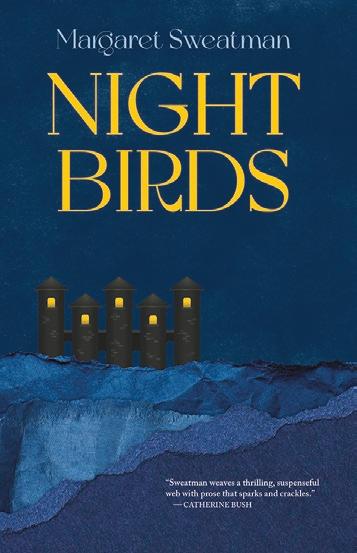
Farrar, an ambitious metallurgical engineer, owns a foundry that produces lattice towers for a Manitoba electrical transmission company. His career and family life flourish until he runs afoul of his sinister benefactor Peter (Petru) Zugravi, surely one of the most memorable villains in recent fiction. A Godfather figure—corrupt, incalculably wealthy and likely psychopathic—Zugravi pressures Farrar to invest in his open-pit goldmine in the Transylvanian mountains. When the mine’s tailing basin collapses after heavy rains, cyanide-tainted slurry rolls down the mountainside, killing people and animals in its path and contaminating waterways. Fearing Zugravi’s irrational wrath, Farrar sends his wife Clio and fifteen-year-old daughter Sydney to hide out at Five Towers, an estate on a remote island outside Winnipeg.
Clio, a fashion designer, is haunted by the mysterious death of her mother, Ella, a wealthy businesswoman whose body was discovered in the shaft of her goldmine in Finland. Precocious Sydney is navigating the transition from girl to woman. Serenaded by the titular night birds,
love story
they share the quiet island with an international assortment of characters including the enigmatic Mark, an all-purpose fixer in the Romanian mining company, and Jay, a recovering addict and former pop star whose life has also been touched by the long reach of Zugravi.
Sweatman’s lush, vivid, musical prose immerses the reader in the physical and sensual world of her characters. The prologue in which the mine disaster unfolds is a tour-de-force of harrowing detail, perfectly paced and devastating. Mining here is a metaphor for secrets; things hidden which, unearthed, alter the landscape and change lives. Minerals hide in the earth, as memories are buried in the subconscious, and crime is conducted “underground”, out of sight. ■
CLARISSA HURLEY is the founding co-editor of Camel, an illustrated journal of narrative.
Vagrant Press
Goose Lane Editions
A thrilling novel that unearths family secrets amidst the landscape and history of French Newfoundland
Canada’s missing and murdered Indigenous women are victimized at least twice, once by their assailant and again by those who turn a blind eye to their tragedy. In Little Spoons, the first novel by author Diedre J. Halbot, an Indigenous woman named Mary Hulan refuses to look away and brings justice to those who lost their lives at a killer’s hands.
Robinsons is an isolated Newfoundland community caught up in a five-decades-long web of lethargy and denial from which it seemingly cannot break free. People, especially women, are murdered or go missing, but neither the police nor the media bother to follow up. The community gossips but remains apathetic. Mary’s maternal grandmother began piecing together clues about a likely perpetrator but paid for her suspicions with her reputation and her life. Now Mary, home for the funeral and seeing the place with fresh eyes, feels her instincts kick in.
Mary, like Robinsons itself, has a history of intergenerational trauma and poverty, and distanced herself from her family. Her grandmother raised children alone, her
mother was a victim of the residential school system, and Joel, the father of Mary’s son Thomas, was abusive. Mary is a good mother who frets because she has taken her son from the city to a place where amenities are few, luxuries nonexistent and people’s lives are in danger.
Mary’s grandmother, a knowledge keeper and healer, kept a tiny spoon in her kitchen—a protective talisman from her French ancestors. Community members were suspicious of her, and nasty. Mary, a self-appointed detective, sets out to discover the community’s secrets and to clear her grandmother’s name. She does both with panache and finality and frees Robinsons from its curse of listlessness and complicity. Little Spoons is a fine tribute to strong Indigenous women and the difference they can make. ■
LAURIE GLENN NORRIS is currently working on her fourth book. She shares her River Hebert, NS, home with husband, Barry, kitty cat, Dinah and many books.
Mystery and romance abound in Prince Edward Island-based murder mystery
KatieMac, author of Ken’s Corner, describes her second novel, Dunk River Murders, as “Same place, new dirtbags.” In other words, another novel exploring the seedy underside of a postcard-perfect Prince Edward Island town; a striking juxtaposition to the idealistic view some of us may have of PEI’s rolling hills and red sand dunes. Prepare to be disillusioned. Readers should also be aware that, although Dunk River Murders is marketed as a murder mystery, it comes with a significant side of romance. Maggie has been disappointed in love one too many times and now prefers fish over humans. The author herself is an avid fisher and her knowledge shines through in the novel; you can practically smell the DEET. Discovering a dead body in the river launches Maggie into an amateur murder investigation she’s determined to get to the bottom of so she can get back to what she loves most—fishing.
As Dunk River Murders meanders from romance to mystery, Maggie meanders from the desire to keep her love interest around to missing the independence she has grown to value. Maggie’s preferred method of fishing— catch-and-release—is possibly also her preferred method of dating. The mystery thread in the novel is slow to start and inconsistent, but the author is adept at keeping the reader
engaged with other parts of the story so you don’t feel like you’re missing it.
The murder investigation escalates in the last quarter of the novel, mystery and romance threads colliding, muddying the waters for a surprising and somewhat abrupt ending, leaving things open for the possibility of another novel involving some of the same characters. The sequence of events leading to the finale feel more like a caper than a proper murder investigation, the characters more concerned with staying loyal to their own than bringing in outside authority. With a quick road trip to Montreal while harbouring a known fugitive, making deals—and discussing love—with the PEI mob boss, a slapstick tussle in the mud with a murderer and a private investigator who is capable of “canoodling” while on a mission to dispose of a dead body, Dunk River Murders is an enjoyable way to spend time at the beach, or perhaps on a river somewhere waiting for the fish to bite. ■
NAOMI MacKINNON lives in Nova Scotia where she blogs about books at Consumed by Ink
Breakwater
Acorn Press
Literary graphic novel a meditation on adolescence and the absurdity of small-town life
Trying to find your place in a new town while also trying to find your place in the world is a tall order for anybody, but for Joel—the young protagonist of Jon Claytor’s graphic novel Nowhere—these more relatable horrors exist side by side with the real ones, like roving zombie hordes, packs of red-eyed wolves and alien abductors. Joel and his family find themselves unable to leave the town of Beausejour, a spooky hamlet dwarfed by an unexplained cubelike structure. Is Beausejour, and everyone in it— including vampires, clowns, a gillman,and a growing ghost population—merely the subject of experimentation by the disillusioned, dronelike aliens? Or is this merely the lens through which horror and sci-fi movie junkie Joel sees the world as he grows further, ahem, alienated—first from his family after they’re visited by a vampire, and later his best friend, Charlie, after she undergoes a strange metamorphosis? Claytor’s narrative bounces across various perspectives, sometimes spending longer stretches with the clockpunching aliens, the creepy clowns or even Joel’s family’s strangely sentient Chevy Impala, which cruises around
at night like a cross between Travis Bickle and Stephen King’s Christine. Nowhere’s narrative unfolds as a collection of shorter strips and onepagers that coalesce around the larger theme, and Claytor’s minimalist art style (rendered in grey tones with an occasional, impactful use of red) sells the reader on the idea that we are seeing into a youthful artist’s sketchbook/ journal. Is Nowhere an attempt by the artist to process the trauma of his own youth? We may never know, but the fact that even the book’s monster characters make regular visits to therapy seem to indicate that Claytor may still be trying to escape his own personal Beausejour. And honestly, who among us isn’t? ■
DAVE HOWLETT manages the Halifax location of Strange Adventures Comix and Curiosities and is the writer/ artist behind such comics as The Makers, Scenester, and Slam-a-Rama.
Compelling mix of Nova Scotian, military, social, and women’s history
Onehundred and ten years ago, Canada was in the middle year of a global conflagration. Canadian men answered the call in droves, rising to 626,636 in the army (including conscripts), about 22,000 in the British flying services (we had no air force then) and 12,600 in the fledging Royal Canadian Navy.
As many as 3,141 Canadian women served as military nurses. Uniquely within the British Empire, Canadian nurses were commissioned officers with the same pay as their male colleagues. It was a model that did not sit well with British military authorities, but Canada did not waver. Because of the colour of their uniforms, Canadian soldiers nicknamed the nurses “Bluebirds.”
Historian Brian Douglas Tennyson’s new book, Bluenose Bluebirds: Nova Scotia’s Military Nurses in the Great War, discusses 311 nursing sisters associated with the province. It is the result of painstaking and thorough research, requiring many, many hours of pouring over hundreds of documents. His effort was clearly worthwhile.
Broken down into four chapters and a lengthy database, Tennyson walks the reader through recruitment and going overseas to the Western Front, the little-known and surprising commitment to the eastern Mediterranean
campaigns, the Home Front (in particular the devastating Halifax Explosion) and the final victory.
Along the way, we are introduced to several remarkable women.
Among them: nursing sisters who refused to leave their patients and seek shelter during German air raids, those who served in appalling conditions of weather with substandard accommodation and rations, others who provided “comforts” (socks, mittens, cigarettes, chocolate, etc.) to soldiers out of their own pockets or encouraged their hometowns to contribute.
A database, which covers more than half the book, consists of a series of short biographical sketches of each of the province’s nursing sisters, many of which leave us wanting more. In summary, Tennyson has written a fascinating and compelling mix of Nova Scotian, military, social and especially women’s history. ■
Retired colonel JOHN BOILEAU served in the Royal Canadian Armoured Corps (RCAC) for 37 years and in retirement, he served for another 10 years as honorary colonel of the Halifax Rifles (RCAC).
Goose Lane Editions
Nimbus Publishing
The anti-American road trip that makes a breezy summer read
Bill Gaston learned about his great-great-great grandparents while researching a memoir about his dad. George and Maria Gaston set up the western-most terminus of the Underground Railroad and had a hand in starting the U.S. Civil War. Later, Gaston discovered the “incredible” coincidence that his favourite novel, Gilead by Marilynne Robinson, was inspired by his ancestors. That sparked a long-desired road trip from Victoria, B.C., to Tabor, Iowa. And so, Spying on America was conceived and nurtured with the help of his two adult sons Connor and Vaughn who joined him on a family pilgrimage.
Along the way they do the most important things spies do. Learn “what a nation eats, and what it watches on the screen.” The meandering COVID-era voyage has a main theme of “comparing Canadians and Americans,” says Gaston, a self-declared anti-American. Gaston was born in the U.S., but his parents moved to Canada when he was young to prevent him and his brother from being drafted during the Vietnam War.
Along the way, they go through some of the reddest U.S. states, which provides rich fodder. Though Gaston does
not take the confrontational route in person, he does bash the U.S. in his book. When writing about visits to Mt. Rushmore and Custer, S.D., he skewers Christopher Columbus and Gen. George Custer respectively and points out the folly of their revered places in U.S. history.
It’s not heavy with negativity, though, and makes a breezy summer read. It’s also thought-provoking on several topics. Gaston waxes philosophical on father-son relationships, racism, and religion—from ancient Buddhism to the new abomination called Trumpism.
Predictably, considering who his ancestors were, the spy concludes the U.S. went in the wrong direction by re-electing the narcissistic Trump. Gaston longs for a return to common sense guided by heart, not greed; that’s his “American dream.” ■
RYAN VAN HORNE is a Halifax journalist and playwright. One of his ancestors fought for the U.S. during the War of 1812 and later moved to Canada.
A provocative collection of thought-provoking essays
InWinning Prizes, David Adams Richards consistently calls upon the better angels of our nature, particularly in a wonderful talk he gave to a McGill graduating class. He writes, “no person can ever become great without sacrificing in some way themselves for others.” I want my children to grow up understanding this phrase. Richards is a great talent, and has been widely celebrated in Canada, winning numerous prestigious literary awards including the Giller Prize and Governor General’s Awards. His words here show lingering bitterness to his critics, and a desire to set the record straight. But on a deeper level, he makes the case for resisting groupthink. He doesn’t use that term but talks of following trends as a great risk to thought, speech and individual freedom.
That is an important criticism, well-articulated here. Winning Prizes is a provocative collection that should be carefully considered across the political spectrum.
I feel he falters, however, in defending Senator Lynn Beyak (who he refers to as Behak), who defended residential schools, understating her actual comments and drawing false equivalency to what he feels was the brutal mistreatment of three children who claimed a miracle in 1917 Portugal. Most will likely struggle to follow that analogy.
The residential school system was a systematic and abusive attempt to erase Indigenous languages and cultures.
Part of Richards’ claim is that Beyak should be free to speak her mind. She did, and the public was rightly offended by her refusal to acknowledge that reality.
Fans of Richards will also appreciate the memoir-like aspect of some of these essays, particularly his persistent memories of hitchhiking about with scraps of poems in his pockets, ready to share with other writers or anyone with literary inclinations. What a hopeful image of youthful ambition and creative desire, with an inspired sense of wonder. ■
CHRIS BENJAMIN is the author of six books—half of them true. His latest is the short-story collection, The Art of Forgiveness (Galleon Books). His previous collection, Boy With a Problem (Pottersfield Press), was shortlisted for the Alistair MacLeod Prize for Short Fiction. He is currently an energy wonk for Ecology Action Centre as well as a husband, dad, and best pal to Mookie the Burping Dog.
Goose Lane Editions
Pottersfield Press
A collection of comedic essays celebrates life with laughter
As any good comic will tell you, the best comedy is serious business, both in its range and its punch. Bestselling author Helen C. Escott knows this well, and delivers with yet another diverse and honest book of comedic essays, Still Laughing, published by Flanker Press. Escott, from St John’s, Newfoundland, spent ten years in radio and television. She then joined the RCMP in 1995, working as a senior communications strategist. During these years she met and married an RCMP officer and began a family. It wasn’t until she retired—and then, in 2012, started a blog titled I Am Funny Like That, finding herself with 220,000 visitors to the site—that everything she’d learned previously about writing for a living started to pay off in spades. Escott self-published the blog stories, then published a second version with a local publisher. Her book-writing career began with curtain calls for more. Escott obliged, producing her Operation series, a sixbook collection of bestselling crime thrillers with Flanker Press. Coming full circle for Escott, the series has now been optioned for television.
Escott writes in her Preamble to the new book of comedic essays, “My hope is that you’ll spot familiar moments in these pages, laugh out loud at least once, and maybe discover that you’re not only funny like that, but you’re still laughing.”
Subjects vary from gym tales and waterbeds to granny pants, childbirth, marriage, suicide, prostitution, menopause, friends and family. If Escott isn’t going for the laugh, she’s appealing to your heart and intellect. Her specialty is sharing common human moments in prose that moves like a sports car.
But mostly, she wants to celebrate life with laughter. ■
MARJORIE SIMMINS is a journalist, author and teacher who specializes in personal narratives and biographies.
A short story collection of a teacher’s life in snapshots
Personally, I find memoirs can often be put into two subcategories: some are akin to snapshots of a person’s life, while others are a more fleshed out self-biography. Neither is better than the other, but rather it’s the type of story being told.
The decision to tell his life as a teacher in snapshots was the perfect choice for Dale McIsaac’s Other Duties as Required: Stories from My Teaching Career.
And what a teaching career it was: 30 years, spread across 10 schools, two provinces and list of ever-changing duties. Whew. If that isn’t impressive enough, it’s how McIsaac chooses to showcase this, with each school getting its own section of carefully selected stories, that is particularly interesting. It’s in these selections that we get the reason for the book’s title: teachers do more than what their name suggests.
Teachers are superheroes. They not only have to teach, sometimes in areas they didn’t specialize in, but they also take on unpaid jobs: role models, confidants, mediators, staff representatives for student clubs, coaches and even students themselves as they learn from their colleagues.
These are the stories that McIsaac shares, shining a light on an important, yet often thankless part of the profession.
The stories themselves are short, but they are memorable and familiar. Whether as a student and/or a teacher, you know or knew people like the students he talks about, or you may have lived through actual or similar events he described. This shows how universal, yet unique, education is.
Writing wise, I often felt like I was sitting down in a classroom, as someone stands at the front explaining concepts in an accessible way. This doesn’t take away from the stories though; it makes them better.
Other Duties as Required: Stories from My Teaching Career is well-worth a read, even if your days in the classroom are now a memory. ■
KATIE INGRAM is a freelance writer, journalism instructor, and author of The Undesirables: A History of Rockhead Prison (Pottersfield Press). She lives in Halifax, NS.
Flanker Press
Acorn Press
E DITOR’S PICKS
Atlantic Canadian books that are generating buzz
Declan
Anne Emery
ECW Press
Crime Writers of Canada Awardwinning author Anne Emery is back with a new mystery as Father Brennan Burke’s father, Declan, revisits Ireland after 40 years—while dangerous men wait in the shadows to settle old IRA scores.
To Leave a Warrior Behind
Jon Tattrie
Penguin Random House
Charles R. Saunders, the “Father of Sword and Soul,” redefined fantasy with Black heroes rooted in African myth. Blending biography with a tribute to Saunders, Jon Tattrie uncovers the hidden legacy of the groundbreaking writer.
A Temporary Grace
Maggie Burton
Breakwater Books
A brutally honest series of interconnected stories that navigate the complexities of dating in the post-#MeToo era and through the oppressive forces that trap us in outdated patterns.
The Girl in the Cellar
Natalie Carter-Giles Flanker Press
The third Sunny and Roscoe thriller, set against the backdrop of
Newfoundland’s Bonavista Peninsula, follows investigators a they pursue a killer after two young women are discovered sealed inside abandoned root cellar—a case that soon becomes unsettlingly personal.
Sopworth’s Foibles
Zev Bagel
Merlin Star Press
In the second A Bright & Breasy Mystery series, Allan Sopworth vanishes, drawing Lizzy Bright and William Breasy into a mystery involving cryptic Aesop-inspired notes, a decadesold drowning, and a modern drug-smuggling investigation with unexpected connections.
Family Secrets
A Daughter’s Search for Her Parents’ Hidden War
Alice Switocz Goldbloom Potterfield Press
This powerful memoir tracks the author’s search through archives and historical records to uncover her parents’ hidden traumatic wartime past in Nazioccupied Poland.
Say What!
Common Prince Edward Island Sayings, Expressions, and Idioms
D. Scott MacDonald Acorn Press
This collection of Island sayings preserves stories and expressions from days gone by, reminding us of a lifestyle that we used to live, broadening the reader’s glimpse into Atlantic Canada’s past.
Damian Lidgard Nimbus Publishing
Sable
Untamed
The Wild Beauty of Sable Island Horses
A stunning, contemplative photography book celebrating the wild Sable Island horse, offering fascinating scientific information on the ecology of the Sable Island horse while showcasing nearly 100 gorgeous photographs of the horses and their unique environment
Colleen Wolstenholme Hyperobjectivity
Ray Cronin and Laura J. Ritchie Goose Lane
Editions
A retrospective of a career spanning more than thirty years, showcasing Wolstenholme’s painting, sculpture, and installations as she investigates how we navigate and are shaped by entities such as the weather, capitalism, or even the deep sea.
Ancestral memories in Indigenous art
From inherited teachings to contemporary expression, two books examine the living legacy of Indigenous creativity
by Susan Bernard
Images from The Journey so Far by Alan Sylliboy, courtesy of Nimbus Publishing
Art is healing medicine and links us to the ancestral world. Indigenous artists act as a bridge to the Spirit World and the physical realm with nationspecific cultural teachings. Award-winning Mi'kmaw artist Alan Sylliboy (Queens Golden Jubilee Medal 2002, Portia White Prize 2024 and short-listed for Sobey Art Award 2023) shares this ancestral bridge with mixed media in his upcoming book The Journey so Far (Nimbus Publishing) Dion Kaszas of the Nlaka'pamux nation and author of anthology Truly Tribal: Contemporary Indigenous Tattooing (Fernwood Publishing) highlights the connection between the ancestors through skin marking. Both talented artists bring images and messages from the spiritual plane into our physical world through painting, and inking skin.
Sylliboy’s work is grounded in Mi'kmaw spirituality and ancient art, like petroglyphs and hieroglyphs. The Journey so Far highlights his artistic practice and connection to spirit by bringing to life his interpretations of Mi’kmaw legends, such as the Jipijka'm (horned serpent), the trickster Wolverine, and Little Thunder. He brings these beings from our cultural stories into our physical realm. The curatorial book explores Sylliboy’s life-long learning
The Journey so Far
journey from his teachers, and inspirations that have guided his work. Sylliboy’s art revisits traditional storytelling by deconstructing colonial influence, much like Dion Kaszas’s ancestral tattooing reclaims traditional practices.
Kaszas’ Truly Tribal is an important anthology which shares connections of traditional tattooing from Indigenous Peoples all over the world, and reclaims the narrative of traditional tattoos, often misrepresented in western academia. Kaszas describes his artistic practice as placing “ancestral marks” which is a spiritual art practiced by many Indigenous People across the world. The anthology highlights the cultural significance of ancestral marks. In this sacred time, traditional practitioners facilitate a connection with the ancestors to the individuals receiving the marks, and by doing so, are revitalizing traditional skin marking.
Both Kaszas and Sylliboy’s work are medicine for our communities and the world. Ancestral memories embedded within their work will reverberate through generations. ■
SUSAN BERNARD is a Mi'kmaw writer and storyteller from Membertou, Unama’ki.
Alan Sylliboy
Nimbus Publishing with Dalhousie Art Gallery
Truly Tribal
Edited by Dion Kaszas Fernwood Publishing.
Sun Over Mountains 1998 mixed media on paper 48.2 x 62.0 cm
Honouring culture and reclaiming Indigenous stories
Two new titles invite young readers to discover Indigenous histories, traditions, and storytelling through vibrant art and literature.
Indigenous art and literature are an impactful way for youth to learn about their culture in a variety of forms. A graphic novel can serve as a powerful tool in visually disseminating culture and teachings, much like a translation can inform a wider audience of stories that need to be shared.
Mi'kmaw culture and legends are at the heart of Brandon Mitchell’s new graphic novel The Search for Gluscap. Illustrations by Veronika Barinova highlight Mi'kmaw culture and history and through visual storytelling embedded with hieroglyphs. Mitchell and Barinova include supernatural beings from legends like the pugulatamu'j, giant beavers, horned serpent, and Gluscap: an important leader in Wabanaki storytelling. The main characters Mali and Puug are on a quest to find Gluscap, and bring balance back to the waters. The children’s book offers a powerful message and makes one consider their own environmental choices by reflecting on Netukulimk, a Mi'kmaw concept that is centered around reciprocity with Mother Earth. The teachings in the book offer an accessible introduction to all readers, not just Mi'kmaw children.
Reclaiming Indigenous narratives in historical fiction honours those who have attempted to be erased in colonial narratives. My Indian (Breakwater Books) by Mi'sel Joe and Sheila O’Neill reimagines the journey William Epps Cormack took in 1822. In this reimagination, the story takes place from the perspective of a Mi'kmaw man, Sylvester Joe, who Cormack refers to as “My Indian”. The choice to include Sylvester’s name explores one way Mi'kmaq are reclaiming the Indigenous narrative, which has historically been told from a colonial perspective. The new French translation, Mon Indien from Bouton d’or Acadie, gives the Mi'kmaw story a wider reach.
Access to Indigenous art and literature are an importance aspect in learning for all ages. Indigenous art and literature will give resources for educators and continue to expose youth to their culture in the form of media. We will always need more stories that reflect Indigenous worldviews by highlighting our cultural knowledge, traditional values and reclaiming our narratives. ■
SUSAN BERNARD is a Mi'kmaw writer and storyteller from Membertou, Unama'ki.
by Susan Bernard
Young readers’ reviews
Ellis on Guard
Written by Sal Sawler, illustrated by Nandita Ratan
Second Story Press
In their latest picture book, author Sal Sawler brings us an endearing protagonist who wrestles with worries and anxieties. They worry about so many different things, including the weather and noisy neighbours and their puppy, Peanut, getting dognapped. Being worried about so many things means that Ellis spends a lot of time trying to be prepared for bad things that might happen. But it also helps them become good at planning and at noticing things. Ellis’s worries about Peanut force them to be creative and courageous, and as they confront their fears, they ultimately come to see that sometimes they are wrong in their assumptions about scary situations. Sometimes things can be noisy and yet still nice. Sometimes our worries can lead us to be brave and helpful and kind. And sometimes we can set our worries aside and trust that the consequences, whatever they may be, will be worth it.
This is a touching and sweet tale about a child whose love for their puppy, Peanut, gives them the impetus they need to confront their myriad of worries and fears. In the process, Ellis learns many important life lessons that will resonate with readers of all ages. Sawler has a charming, easy narrative voice and they portray Ellis’s worries with sensitivity and compassion while demonstrating that it is possible to overcome our fears. Nandita Ratan’s illustrations are warm and expressive. They capture a sense of playfulness and energy as well as more earnest introspection. Ellis is a highly sympathetic character who worries a lot, yes, but who is also very attentive and attuned to the world around them, skillful at problemsolving and planning, and willing to face their fears when needed. With gentle humour and emotional acuity, Ellis will speak to the hearts of many readers.
Ahoy, Mate, Ahoy! Miss Molly Molloy
Written by Lisa Carmody Doiron, illustrated by Patrick Guindon Pownal Street Press
by Lisa Doucet
“Ahoy, mate, ahoy! Miss Molly Molloy, what are we doing today?” Molly promptly replies to Dad’s query: she wants to catch fish and spend the day with him aboard his boat the Big Wave! Thus, Dad and his feisty first mate spend the day together, catching fish (and other things!) and dreaming of the oceanic adventures they will have together on Dad’s old fishing boat. Dad even weaves her a special knot as a sign of hope and a reminder of the family bonds that unite them. But when a terrible storm descends upon them and Molly falls overboard, she loses the knot and she is so shaken that she refuses to go out to sea ever again. Dad spends many years traversing the waves but one day he knows that it is time to pass the Big Wave on to his beloved daughter. And then Molly Molloy herself knows what to do.
In lively, bouncing verse PEI author Lisa Carmody Doiron tells a rollicking tale in which she captures the joyfulness and delights of a day on the water, the fickleness of the sea and the tender love between a dad and his little girl. The rhyming story leaps merrily off the tongue, a playful and buoyant celebration that also highlights the bonds that link families together through generations as Dad ultimately passes on Nan’s Celtic knot to Molly. The book also recognizes the power of fear and the fact that it is never too late to find the strength to face your fear. Patrick Guindon’s brightly hued and effervescent illustrations are filled with energy and emotion, providing visual accompaniment to enhance the action and introspection of the text. But most significantly, this book is a touching and heartwarming ode to the unshakeable bond between a girl and her dad.
Drew’s Secret Talent
Written by D.D. Sheppard, illustrated by Pheilm Martin Breakwater Books Ltd.
As the day of the school talent show draws near, Drew wistfully watches the other children practice singing and juggling and doing magic coin tricks. He wishes that he too could participate but he just doesn’t have any talents. Or so he thinks. Then Grandma surprises him one day by taking him to a show at the library. Usually when Drew gets home from school, he creates lavish costumes and performs for his goldfish and toys (and Grandma!), but on this day he gets to enjoy Saturn Stardust as she tells stories and teaches everyone fun new dance moves. When Drew tells Saturn how much he wishes he could be like her, she tells him the secret behind her talent and gives him a special gift. Soon Drew knows exactly what he will do for the talent show.
Resonant themes of the power of believing in yourself and recognizing that there are many ways of being talented make this an emotionally rich and inspiring story. Drew is an earnest and relatable character who is impressed by the many talents he sees in his classmates but fails to recognize his own gifts just because they are different. His loving and wise grandmother, with the help of the kind and perceptive Saturn Stardust, find just the right way to help Drew to see the ways in which his imagination and creativity are also talents. D.D. Sheppard has crafted a gentle and reassuring tale of self-acceptance and being true to oneself, inviting young readers to think about the things that make each one of us unique. Pheilm Martin’s cheerful and energetic illustrations combine whimsy and warmth as they depict Drew’s full range of emotions. They are subtly expressive, loose and playful, using a flat aesthetic and pops of bold, bright colour to wondrous effect.
A Salmon Story: Protecting the Future
Written by Willie Poll, illustrated by Chantelle Trainor-Matties Owlkids Books
A young salmon relates the story of a salmon’s life cycle, beginning with its hatching in fresh water where it remains until it
instinctively knows to begin its journey to the sea. Its body changes and grows as it makes its way downstream, all part of a migratory process that has been ongoing for thousands of years. But while all salmon contain innate knowledge within themselves of this cycle, they are now coming up against obstacles that are strange and unknown to them: open-net pen fish farms. These farms are harmful in numerous ways as they spread disease, pollute the waters and make it harder for the salmon to complete their migration, thus reducing the salmon population. As a keystone species, salmon have an important role in the ecosystem. They serve as a main food source for orcas and grizzlies as well as provide nutrients for the soil, meaning that this threat to their existence has a much wider impact on the world around them.
Métis writer Willie Poll has crafted an impassioned plea that calls attention to the plight of these creatures. Written in verse, her story follows the life cycle of the salmon and how it has been affected by these fish farms. Each page also includes a paragraph of explanatory text that provides further information, making the book both a story and a resource. The bold, stylized illustrations feature thick, dark outlines and a clean, elegant design. Richly colour-saturated, they are dynamic and expressive, capturing the tone of the story as well as the urgency of its ecological message. Together, author and illustrator have created a beautiful, timely and thoughtprovoking book that invites readers of all ages to consider the interconnectedness of us all.
She Was the Story Girl: How L. M. Montgomery Learned to Never Give Up!
Written by Joann Hamilton-Barry, illustrated by Leah Boudreau Nimbus Publishing
While the beloved Canadian classic Anne of Green Gables continues to charm readers from around the world, the story of Anne’s creator has also captured the hearts of many. This latest biography for young readers looks at Maud’s childhood and formative years. Raised by her maternal grandparents in Cavendish, PEI, she was an avid reader and student who loved making up stories as well as spending time outside. She was a keen observer who felt things deeply and vividly remembered the sweetness of small successes as well as the bitter sting of hurtful slights and rejections. This informed her writing in later years and she often drew from her own personal experiences for her stories and characters. From a very young age, Maud knew she wanted more than anything to be a writer, and she worked hard and overcame many obstacles to achieve her dream.
Focusing on different aspects of her life and personality, ranging from “Growing Up” and “Listening” to “Humiliating”, “Convincing” and “Persevering”, HamiltonBarry gives an insightful overview of the events and experiences that shaped Maud and which often also served as fodder for her writing. She gives readers a tantalising glimpse of Maud’s tenacity and strength of spirit as she encountered loneliness and a lack of understanding and support from her grandparents, but who found comfort and solace in her own imagination and accepted the challenges that she faced with determination. Intriguing sidebars with entertaining anecdotes and interesting snippets of information add to our understanding of Maud. Leah Boudreau’s cheerful and lively illustrations are vibrant and folksy, bursting with whimsy and bright colours as they capture the people and places of Maud’s own life story. This welcome addition to the collection of books about LMM provides a delightful glimpse into her life before she became a renowned author and helps readers to see and appreciate the creative, strong and resilient person that she was.
Peggy and the Ghost
Written and illustrated by Briana Corr Scott Nimbus Publishing
Proud to be named after the beautiful cove where she lives with her parents, Peggy loves her seaside. She shares her fisherman father’s love for the sea and marvels at the magnificent paintings of Peggy’s Cove that her Mama creates, paintings that portray the majesty and mysteries of the wind and waves. Mama also spends much of her time helping the villagers who come to her for advice. Peggy knows how much her mother loves to paint and wishes that she wasn’t always so busy helping other people with their problems. But when Peggy meets a ghost girl from the past, she turns to Mama with questions of her own. As Peggy and her best friend, Georgie, get to know their ghostly visitor, they become determined to help her remember who she is and the story that led her here.
This early chapter book for emerging readers evokes a strong sense of time and place with sensory and descriptive phrasing that bring the setting vividly to life. Corr Scott deftly depicts the details of Peggy’s daily life, the loving relationship between Peggy and her parents and the warmth of the close-knit community in this very special place. Not unlike Mama’s paintings, Corr Scott’s illustrations also capture the wonders of this tiny fishing village: the brooding, angry sea and sky during a storm, delicate lupins nestled amid the grasses, the red-capped lighthouse standing tall upon the rocks during tempestuous gales and rosy sunsets. Lush and luminous, they employ a delicate interplay of light and shadows that perfectly suit the ghostly atmosphere of the story. Peggy and Georgie learn the importance of listening, and their genuine desire to help the ghost girl unravel her secrets gives them the courage and tenacity they need to find the answers that they seek in this exquisitely nostalgic and evocative tale.
Shy Cat and the Stuff-the-Bus Challenge
Written by Dian Day, illustrated by Amanda White Second Story Press
Best friends Mila and Kit have many things in common. They both love riding their bikes, making comics and petting the local cats. But Mila notices certain things about Kit: how much he talks about food and how anxious he is for their after-school snack whenever he comes over. Then one day he has a complete meltdown at school when he finds a dented can and expired food items in their class donations for the Stuff-the-Bus Challenge. Mila’s mother explains that Kit and his mom don’t always have enough food or know where their next meal will come from. Mila struggles to understand how this can be, and why Kit won’t talk about it with her and what she can do to help. Ultimately, she comes to the realization that “For me, the fun that Kit and I have together is always more important than bananas. But sometimes, for Kit, the bananas are more important.”
This debut graphic novel explores the topic of food insecurity in a sensitive, forthright and realistic way. Mila initially thinks that Kit is rude, but her mother helps her to see the harsh reality of Kit’s life. Kit’s mother loves him and she has a job, but sometimes they still don’t have enough money for all the things they need, which is why Kit goes to the breakfast program at school. But why did he donate to the Stuff-the-Bus Challenge if he doesn’t have enough to eat himself? And “why doesn’t somebody do something so everybody in the world has enough to eat?” Mila asks these and many other important questions, questions that have no easy answers. Mila is an earnest and relatable character, whose efforts to comprehend the difference between “unlucky” and “unfair” are touching and thoughtprovoking. Amanda White’s fine-lined and gently hued illustrations are detailed and expressive. A beautiful and nuanced exploration of an important topic, this book will speak directly to the hearts of its middle grade audience while also offering much food for thought.
Children of the SS Atlantic: The Lives Lost to One of the Worst Maritime Disasters
Written by Danielle Metcalfe-Chenail Nimbus Publishing
In this new addition to Nimbus’s popular Compass series of non-fiction for young readers, acclaimed author Danielle Metcalfe-Chenail provides an insightful and heartrending account of one of the worst disasters that the North Atlantic has ever seen. In March of 1873, the SS Atlantic left Liverpool, England, bound for New York City on what should have been a fairly routine voyage. But the ship runs into a storm and the captain, fearing a shortage of coal, decides to stop in Halifax. A series of errors and miscalculations result in the steamship slamming into the shores of Lower Prospect in the early morning hours of April 1st. Residents of the small fishing community rallied, sent for help and worked tirelessly to rescue the survivors. Despite the heroic efforts of these men and women as well as the surviving crew members, more than half of the people aboard the ship lost their lives, including all of the women and all but one child.
Metcalfe-Chenail gives young readers a vivid and detailed description of this tragic event. She begins with a compelling look at the conditions aboard the ship, introducing several of the young people from different life circumstances. She clearly describes the events leading up to the sinking, the turmoil and chaos on board as the passengers and crew struggled to cling to life and the determination of the fishermen and residents of Lower Prospect to bring the survivors safely to shore. MetcalfeChenail expertly outlines the details of the disaster, the rescue efforts and the aftermath as everyone tried to understand exactly how this happened, giving readers an informative account of this oftentimes overlooked historical event while also providing a sensitive and multifaceted glimpse into the minds and hearts of various people involved.
Cammie’s Family Secret
Written by Laura Best Nimbus Publishing
Although Cammie loves attending the Halifax School for the Blind and misses the wonderful friends she has made there, she is surprisingly happy to be home for the summer, even if it means putting up with Aunt Millie’s grouchiness and her never-ending stories about her new job at Clara’s Diner. But Cammie will also be spending part of the summer with Ed and Miranda, and during the weeks that she is in Tanner with Aunt Millie she’ll get to spend time with her very best friend, Evelyn. Evelyn is the only one who knows how desperate she is to find out who her mother was, and that she has written a letter to Mrs. Young, the woman who used to run the Ideal Maternity Home in the hope of getting some answers. As Cammie waits for a reply that never comes her further sleuthing raises more questions and puzzles... and leads Evelyn to a shocking discovery of his own. With both Cammie and Evelyn seeking answers, the two plan a visit to Mrs. Young, a visit that ultimately leads to revelations that surprise absolutely everyone.
In this latest installment in Cammies’ story, readers will see how much Cammie has grown and come into her own while remaining a feisty, forthright young woman whose loyalty and loving heart make her an endearing protagonist as well as a dear friend. Whether she is working tirelessly to find a home for a stray dog named Scout or bravely supporting Evelyn in his search for clarity and truth, Cammie is fiercely determined to protect and stand by those she loves even while remaining focused on her own personal quest. As she and Evelyn continue to learn more about their respective pasts, they are given profound insights into the nature and realities of family. Author Laura Best once more captures this time and place in a story that will resonate with contemporary young readers.
No More Fridays
Written by Lesley Choyce Fernwood Publishing
As Elliott’s last year of high school draws to a close, he is just trying to manage his present reality of grief and loss. Having just lost his mother to ALS, Elliott and his brother, Nate, and their dad are each, in their own uniquely typical ways, struggling to be in this new version of their world. Elliott, who has always been a loner and a bit of a social outcast, spends most of his time at an abandoned cabin in the woods with his one friend, Riley. Riley is brilliant and reserved. She tries to be supportive but isn’t always successful, and her theories often frustrate Elliott as much as they intrigue him. But then Elliott and Riley, Nate and their dad and one of Elliott’s cruel classmates find themselves sheltering in the cabin during a terrifying hurricane. While life continues after the hurricane much as it always has, it may also turn out to be a turning point for them all.
A quiet, introspective tale, Lesley Choyce’s 105th (!) book explores one teen’s journey of acceptance and finding meaning in the face of loss. He raises thoughtful questions about identity and relationships and offers an opportunity to reflect on these things without offering easy answers. Riley’s theories about life and the philosophical musings that she and Elliott engage in invite readers to be open to different possibilities: the possibility that people are more than what they seem, and that opposing ideas can sometimes both be true, and that hope and healing can find you in unexpected ways. Elliott’s clumsy attempts to be a good big brother, to respect and understand his unusual friendship with Riley and to hold on to the memory of his mother’s face and voice are all touchingly relatable while his unique path toward healing is utterly his own.
LISA DOUCET is the manager of Woozles Children’s Bookstore in Halifax. She shares her passion for children’s and young adult books as Atlantic Books young readers editor and book reviewer.
EDITOR’S PICKS
Puffin Circus 1 2 3
Lori Doody
Running the Goat Press
This delightful counting board book uses playful text and bright, whimsical illustrations to teach children to count to ten as they watch talented puffins assemble to perform circus acts. A group of puffins is known as “a circus” after all!
Acorn Press
Little Days
A Song by The Bombadils, illustrated by Veronica Chih
Ming Frank
A tender song-turned-picture-book by East Coast Music Award and Canadian Folk Music Award-winners
The Bombadils (Luke Fraser and Sarah Frank) with lyrics of childhood magic and wonder set to rich watercolour illustrations by Frank’s sister.
How to Read a Very Serious Book
By Mireille Messier, illustrated by Kelly Collier Owlkids
A delightful and light-hearted picture book, illustrated in comic-book style panels that plays on the idea that reading a book is a very serious business, encouraging kids to read what they like.
A Friend is a Friend is a Friend
By Sara O’Leary, illustrated by Qin Leng House of Anansi Press
A sweet and heartfelt inclusive book
about a child exploring how to make a friend and be a friend while at summer camp for the first time, where kids share their thoughts on friendship.
The Tangled Turtle Rescue
Alma Fullerton Acorn Press
Young nature lovers work together to
save a leatherback sea turtle tangled in fishing gear in this adventurous book that includes fascinating facts about leatherbacks and a call to protect our oceans.
H pour Homard à bord!
Réjean Roy Bouton d’or Acadie
This colourful alphabet journey in French captures the daily life of a fisherman through playful rhymes and illustrations inspired by the high seas, an invitation to navigate the maritime marine world.
How to Wrestle a Kraken
Andy Tolson
Nimbus Publishing
The third book in The Quests of Tiny Wilde middlegrade fantasy series, following a young giant who sets out on a quest to protect the Mythics of Wonderville from an evil wellness guru.
Amazing 2SLGBTQIA+
People in Atlantic Canada
Rebecca Rose
Nimbus Publishing
The newest installment in the popular illustrated series about Amazing Atlantic Canadians, featuring profiles of over 50 incredible 2SLGBTQIA+ people from across the region, an inspiring celebration of this vibrant and vital community.
Flowers for Gaia
J.D. Grant
OC Publishing
A young adult, eco-dystopian debut novel blending magic, science fiction and environmental themes, the book follows a teenager named Calix and his friends as they fight against corporate greed and climate change to protect Mother Earth.
I’ll Be with
You
in a Moment
Colin Sweets Arsenault
Pottersfield Press
Set near the lake and throughout dreary suburbs, this is a bittersweet and darkly funny comingof-age story about the strange power of friendship, belief, connection and the people who see us before we see ourselves.
Congratulations to the nominees of the APMA Best Atlantic-Published Book Award, 2026
(sponsored by Friesens)
Congratulations to ALL the 2026 Atlantic Book Awards nominees!
Erica Rutherford: Her Lives and Works | Ses vies, ses œuvres by Pan Wendt Goose Lane Editions
Just Around the Corner by Yvonne Rumboldt-Jones Breakwater Books Ltd.