How Are Anxiety, OCD, and Depression Connected?
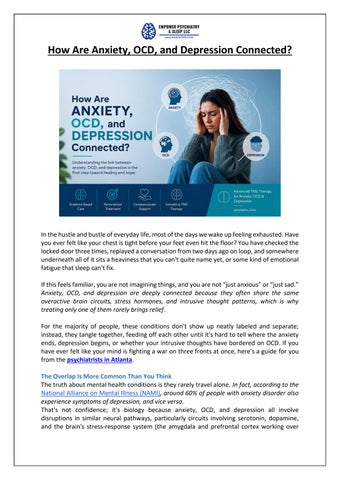
In the hustle and bustle of everyday life, most of the days we wake up feeling exhausted. Have you ever felt like your chest is tight before your feet even hit the floor? You have checked the locked door three times, replayed a conversation from two days ago on loop, and somewhere underneath all of it sits a heaviness that you can't quite name yet, or some kind of emotional fatigue that sleep can't fix. If this feels familiar, you are not imagining things, and you are not “just anxious” or “just sad.” Anxiety, OCD, and depression are deeply connected because they often share the same overactive brain circuits, stress hormones, and intrusive thought patterns, which is why treating only one of them rarely brings relief. For the majority of people, these conditions don't show up neatly labeled and separate; instead, they tangle together, feeding off each other until it's hard to tell where the anxiety ends, depression begins, or whether your intrusive thoughts have bordered on OCD. If you have ever felt like your mind is fighting a war on three fronts at once, here's a guide for you from the psychiatrists in Atlanta. The Overlap Is More Common Than You Think The truth about mental health conditions is they rarely travel alone. In fact, according to the National Alliance on Mental Illness (NAMI), around 60% of people with anxiety disorder also experience symptoms of depression, and vice versa. That's not confidence; it's biology because anxiety, OCD, and depression all involve disruptions in similar neural pathways, particularly circuits involving serotonin, dopamine, and the brain's stress-response system (the amygdala and prefrontal cortex working over
time). When one system misfires, it puts strain on the others. For instance, chronic anxiety exhausts the brain's coping resources, which can tip into depression. The compulsive loops of OCD also create constant low-grade panic, which drains moods and motivation, and then you have to go for OCD treatment in Atlanta. It's a domino effect, not three separate storms. How Depression, OCD, and Anxiety Differ from Each Other? These three mental health conditions can overlap in some symptoms, but they differ in their core symptoms and how they affect thoughts, emotions, and daily life. •
What is Depression? Depression is a mental health condition that causes persistent sadness, low motivation, and loss of interest in daily activities.
•
What is OCD (Obsessive-Compulsive Disorder) This is a mental health condition where a person experiences uncontrollable, distressing thoughts and feels compelled to repeat specific actions to ease their anxiety.
•
What is Anxiety? Anxiety is marked by excessive worry, fear, or nervousness, often accompanied by physical symptoms like restlessness or a racing heart.
To further clear things up, here's a table on how anxiety, OCD, and depression overlap. Condition
Core Feature
Common Overlap
Anxiety
Persistent worry, physical Fuels depressive fatigue tension
OCD
Intrusive thoughts compulsions
Depression
Low mood, hopelessness, Often follows low energy anxiety/ OCD
+ Anxiety-driven at its root chronic
Why Should You Go for a Complete Evaluation? Whenever you are going for depression or anxiety treatment in Atlanta, and you feel that your symptoms are tangled together, a single diagnosis may not capture what's really happening. Instead, go for a thorough evaluation from a trusted psychiatrist to uncover whether anxiety, OCD, depression, or all three are driving your symptoms, and build a plan around your actual brain, not just a checklist. You Deserve Clarity, Not Just Diagnosis Looking for professionals to offer OCD, anxiety, or depression treatment in Atlanta? Atlanta TMS and Adult Psychiatry Clinic, led by board-certified psychiatrist Dr. Ravi Singareddy, offers
comprehensive evaluations and advanced treatments, including Brains Way Deep TMS across Suwanee, Johns Creek, Alpharetta, and the greater North Atlanta area. Call us now to schedule your confidential consultation because relief starts with understanding what's really going on! Medical Disclaimer: This content is provided for general informational and promotional purposes only and is not intended to constitute medical advice, diagnosis, or treatment. Always consult a qualified healthcare professional regarding your individual health needs and treatment options. Blog Source: https://atlantatmsclinicus.wordpress.com/2026/09/02/how-are-anxiety-ocdand-depression-connected/