Atlanta Parent





























































Every time you play the Lottery, you’re helping our kids get one step closer to their dreams. For over 30 years, the Georgia Lottery has contributed more than $30 billion to education. On top of that, over 2.25 million HOPE scholars have gone to college, and more than 2.2 million four-year-olds have attended a Lottery-funded Pre-K Program. That’s a lot of students, so we’ll just say “Thank You, Georgia!” for all of them.



Publisher’s Note / 8 Good Stuff / 11
Healthy Family
Prioritize family time in 2026 with these easy-to-keep resolutions! Page 12
Neighborhood Spotlight
The top spots for families to play and explore in Lawrenceville and Snellville. Page 32
Modern Kid Friendships
Today’s kids often connect through a network of relationships instead of a single best friend.
The Power of the Arts
Arts programs fuel kids’ passion and creativity. Learn about the benefits of the arts; plus, top-notch programs for talented kids and teens.
Dinnertime Wars
Nutritious eating shouldn’t be a battle. Encourage your kids to make healthier choices.
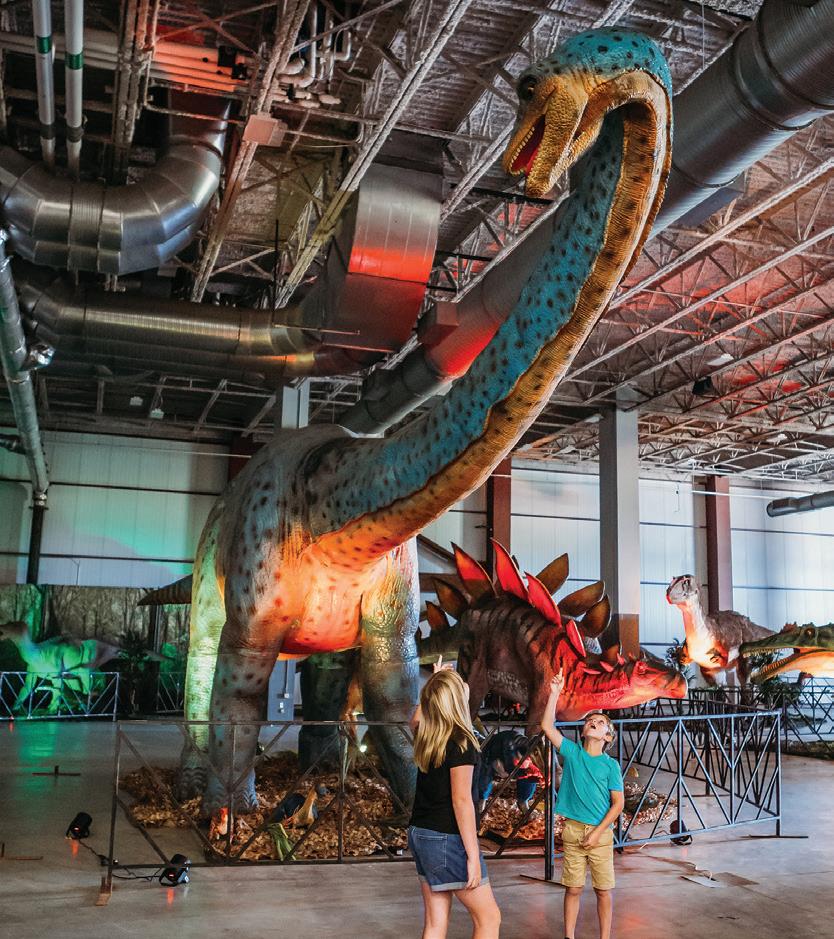
Family Fun Guide: Top January events, dino-mite adventures, fun spots to bounce and jump, last-chance winter fun and more! Page 107
We Know Schools: Atlanta’s Best Guide to Education / Page 39
Atlanta Parent’s Camp Expo is January 31! Like us on Facebook facebook.com/


YEARS OF ATLANTA PARENT


PUBLISHER Liz White lwhite@atlantaparent.com
ASSOCIATE Laura Powell PUBLISHER lpowell@atlantaparent.com
ACCOUNT Carolyn Haushalter EXECUTIVE chaushalter@atlantaparent.com
ACCOUNT Genie Lockeretz EXECUTIVE glockeretz@atlantaparent.com
ACCOUNT Kaylee Gahagan EXECUTIVE kgahagan@atlantaparent.com
ACCOUNT Sonya Jefferson EXECUTIVE sjefferson@atlantaparent.com
STAFF WRITER Emily Webb and DIGITAL ewebb@atlantaparent.com CONTENT CREATOR
CONTENT Mary Williams PROJECT mwilliams@atlantaparent.com MANAGER
EDITORIAL Sheri Taylor-Emery ART DIRECTOR creative@atlantaparent.com
PRODUCTION Robin Mintz
ADMINISTRATIVE Amanda Allen ASSISTANT
MARKETING Felicia Barman MOM


Atlanta Parent magazine is published monthly by Atlanta Parent, Inc., 2346 Perimeter Park Drive, Atlanta, GA 30341. Telephone 770-454-7599, Fax 770-454-7699. Atlanta Parent magazine is available free of charge throughout the metro area and as a digital issue at atlantaparent.com. Atlanta Parent magazine welcomes letters, articles, artwork and photographs from its readers and the community. Atlanta Parent magazine is not responsible for the return of unsolicited materials. All rights reserved. Any reproduction in whole or in part, is prohibited without written permission. © Atlanta Parent, Inc. 2026 Sign Up For Our e-Newsletter at AtlantaParent.com Like Us on FACEBOOK
Families love Atlanta Parent

Want to reach local parents who are looking for your product, service, attraction or event?

Atlanta Parent has great packages of print and digital advertising, perfect for every budget and marketing need.
Contact us today to get started. 770-454-7599
lpowell@atlantaparent.com
Publisher’s Note
My love of the arts began when I was a young kid. My dad worked as a stage hand for the Atlanta Symphony; seeing him at work and being able to go behind the scenes at Symphony Hall are some of my favorite memories. I also loved seeing shows at the Center for Puppetry Arts and Alliance Theatre. In school, I sang in the choir, and we even got to perform at Underground Atlanta. I took tap, jazz and ballet growing up and remember recitals at the Atlanta Civic Center next to SciTrek (for those of us old enough to recall visiting both).
It has been a few years since I sang or danced, but I still love a good concert, and I take pleasure in watching my own kids enjoy the arts. Both are avid musicians, with Elliot playing the guitar and Corinne Eleanor on the upright bass. They love performing in front of an audience, whether at open mic nights, the Decatur Porchfest or with the Rialto Youth Jazz Orchestra. It’s been amazing to watch them grow and gain confidence with the encouragement of teachers and mentors who love what they do. Playing with a group of kids who all love music has been an amazing experience for both of them.
Thanks to all the great arts resources here in Atlanta, my kids are taking their talents and passion much further than I ever did. Encourage a love of art, music or drama in your kids — try a class or lessons, or just visit and appreciate our museums and theaters. Learn more about opportunities in the arts, and the positive impact they can have, in our story, “A Heart for the Arts.”
It’s hard to believe that 2026 is here. Although I don’t usually make a list of resolutions, I do love the feeling of getting a fresh start in the new year. My goals are to reset my priorities and make the most of our family time together. We are all going in different directions and the kids are getting more and more independent. I want them to be confident in exploring who they are, but also to know that they’ll always have a safe haven with our family.
January is a good time to make a fresh start for the school year. Are you considering a new school? Our Best Guide to Education has plenty of information to help you set a path for academic success. Discover the benefits of recess and play-based learning, and learn about the new standards for cursive writing.
January is also the perfect month to plan a few winter outings! Our Family Fun Guide is packed with fun events and happenings. Check out one of the light displays you missed before the holidays, go ice skating, explore a new exhibit or see a kid-friendly show.
No matter what your plans for 2026 are, all of us at Atlanta Parent wish you a happy New Year. It’s off to a great start!
Associate Publisher
Email lwhite@atlantaparent.com
Website www.atlantaparent.com
2346 Perimeter Park Drive Atlanta, Georgia 30341
Another Win for Atlanta Parent
Our tradition of distinction continues with 31 Awards, including Silver in General Excellence!
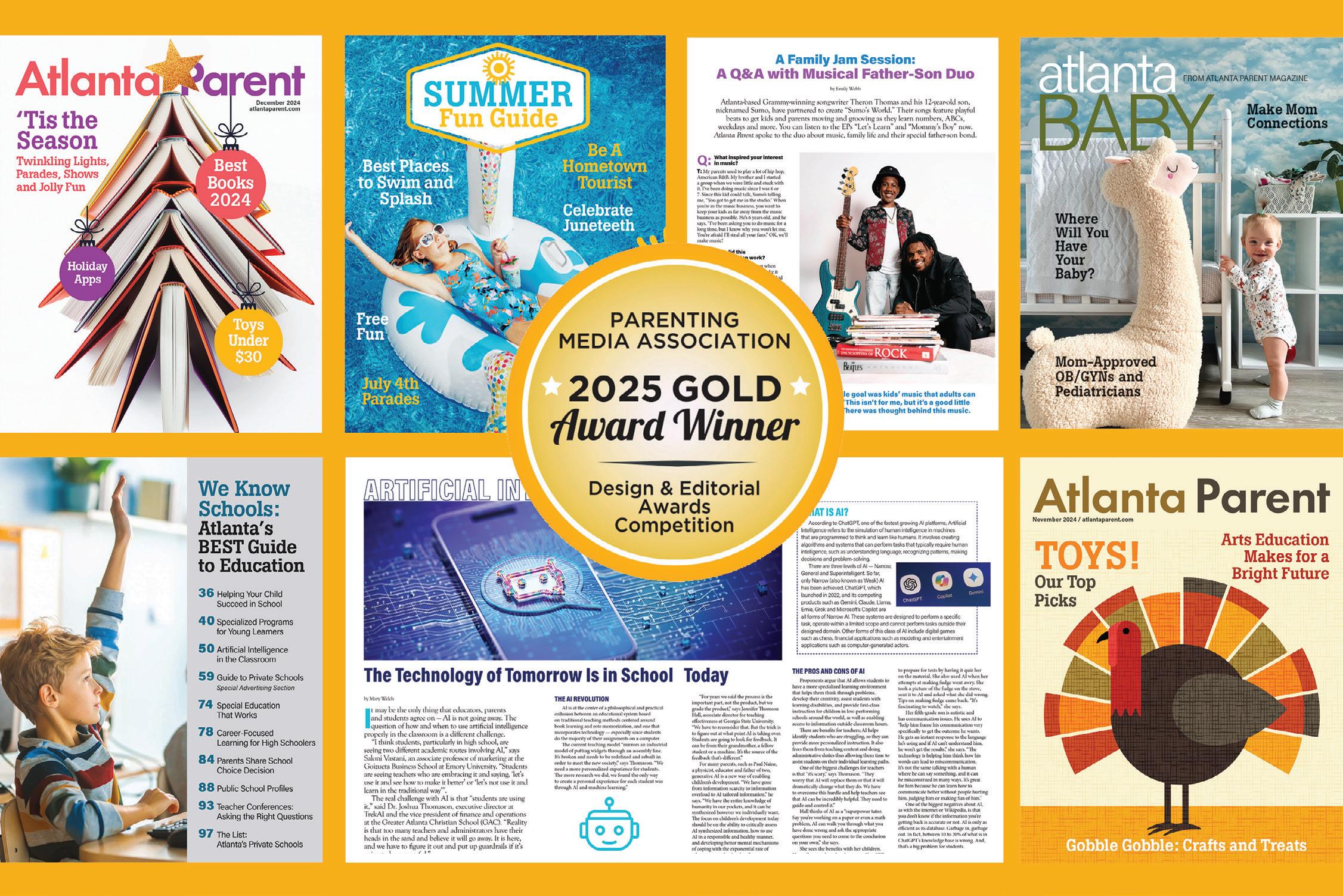
Celebrating our 43rd year in publication, our winning streak continues! Atlanta Parent brought home a record-breaking 31 awards from the annual conference this year!
“We are proud to still be a trusted resource for families through our monthly publication, as well as our digital presence, including social media outlets, email newsletters and robust website,” says owner and publisher Liz White.
The awards are judged by the University of Missouri School of Journalism. The judges look for the best editorial and design in local and regional parenting publications, special issues, websites and social media.
Award Highlights:
n Gold for Front Cover Design
n Gold for Special Series on Mental Health
n Gold for Education Guide
n Gold for Story Edit and Design
n Gold for Calendar of Events
n Silver for General Excellence
n Silver for Front Cover Design
n Bronze in Overall Design
n Bronze in Overall Writing

StUff G oo d
by Emily Webb
THINGS WE LIKE
Sculptural Plants
Bring a lot of beauty to your space with a hand-crafted display with Uncommon Goods’ Sculpt Your Own Succulent Art. This sensory art kit lets you craft different sculpted and beautiful succulents in a pretty wooden frame for a display you can add to your space. At uncommongoods.com for $28.
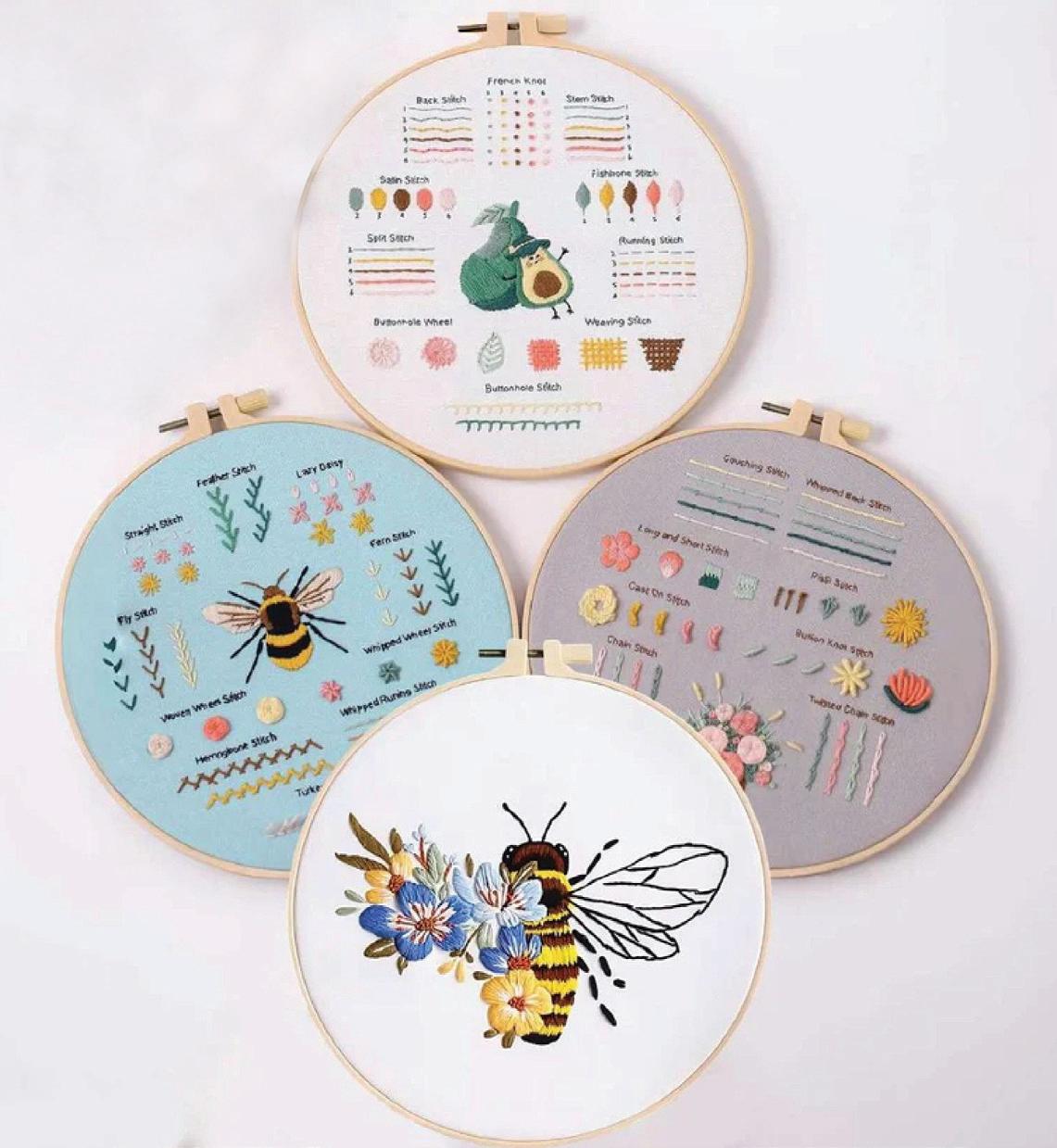
Stitch It Up
Learn to embroider with CraftHoop. These kits come with everything you need to embroider, so you can learn more than 30 different stitches, and step-by-step videos make it easy for complete beginners. Create bees, mushrooms, butterflies, flowers and more. At crafthoop.com for $24.95-$60.
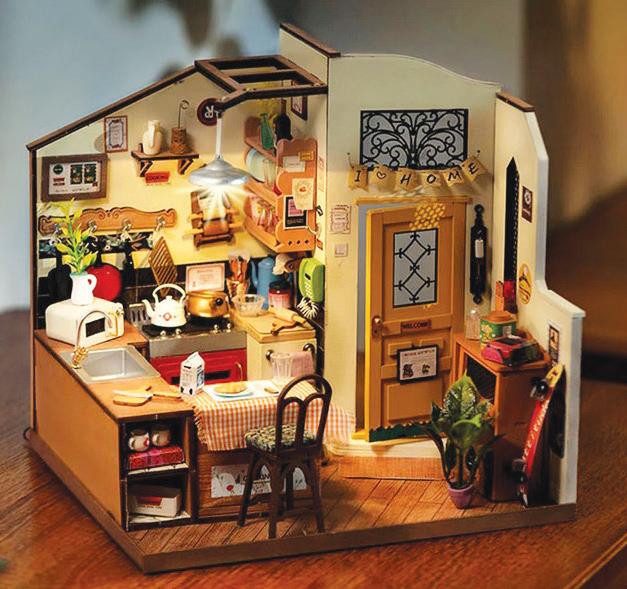
Building Beauty
Build adorable miniature rooms to test your building skills and decorate your space with Rolife. These kits feature all the furniture and accessories needed to create and decorate this puzzle model, whether you’re crafting a mini kitchen, garden house, restaurant and more. At rolifeus.com from $39.99-$49.99.
START A HOBBY

For Cute Cuddles
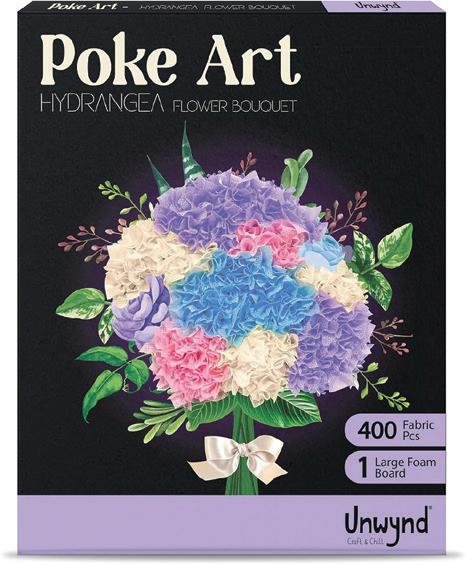
Flower Girl
Try a mess-free way to get creative with Unwynd’s Poke Art Flower Bouquets. Add petals to the flowers by using fabric squares poked into the foam bouquet. Decorate gorgeous carnations, cherry blossoms, hydrangeas, lavender or marigolds with vibrant colors. At amazon.com for $19.99.
Create a gorgeous blanket you can get cozy with using Coopay’s 3D Blanket Crochet Kit for Beginners. With easy-to-follow steps, learn how to crochet even as a beginner. The kit even includes extra yarn, so if you make a mistake, no worries! This beautiful floral blanket comes in multiple colors, so you can choose the perfect pattern to fit your space. At amazon.com for $35.99-$43.99.

Family Resolutions, Upgraded: Six Habits Backed by Research
by Shannon Dean
As the new year begins, the promise of new possibilities and healthier habits emerge. In addition to personal goals, many parents set family resolutions. After all, most of us consider the health and happiness of our family as important as our own. And because families function as units, it makes sense to set a few resolutions for everyone under your roof.
Experts say that if resolutions are simple, carefully chosen and realistic, there is a better chance of success. Below are easy, enjoyable family resolutions that offer big, scientifically-proven familial rewards with little effort.
1
Maximize Family Time by Reclaiming Downtime

3
Prioritize Family Game Night
2
A survey showed that the average family spends around 37 minutes of quality time together on weekdays. Fortunately, it’s possible to increase these minutes by hacking our downtime.
Consider this: Many people spend an average of three hours per day on social media, television or the internet. Therefore, time available for meaningful family bonding is lost in front of screens. Be deliberate with evenings, weekends and other moments of downtime. Play a game, have a conversation, do an art project or play catch in the catch backyard. Even if it’s between scheduled activities, don’t let these minutes slip away.
Eat Healthy Meals Together as Often as Possible
Eating meals as a family saves money, boosts health and provides behavioral benefits for children.
A study published in the Journal of Adolescent Health found that adolescents who dined with their families less than three times per week were more likely to participate in risky behaviors like drugs, alcohol and smoking. And experts at Stanford Children’s Health found that younger children who regularly eat with their parents are more confident and connected.
Even busy families can find time to break bread together. Grab-and-go grocery store options, crockpot meals or makeahead casseroles mean that gathering as a family is feasible, even on hectic nights.
Although it can be challenging to pry kids away from electronics, a family game night is an easy way to foster a faceto-face connection. This simple, inexpensive ritual yields huge benefits, like improved academic performance, enhanced motor skills and increased sportsmanship.
Researchers from Carnegie Mellon found that playing academic games improves classroom performance. And the University of Florida found that kids who use strategy with their parents have better memory and problem-solving skills outside of family life.
To ensure enthusiastic participation, turn off electronics and choose games that are suitable for everyone. If you have a multiage family, pair up younger kids with older siblings and alternate easy games with harder ones. Take turns choosing games and regularly add new options to the rotation.

Regularly Read to (or With) Your Kids
Countless studies confirm the benefits of reading to children. Experts say that children who have regular exposure to books enjoy lasting academic and social benefits. Specifically, when a parent reads even one book per day to a young child, it exposes them to 290,000 additional words by kindergarten.
Even better, reading to your child at bedtime makes him much more likely to take the initiative to read on his own. Adolescents who are regular readers have higher levels of empathy and exhibit fewer risky behaviors.
Regardless of age, many kids need a parent’s ongoing encouragement. Studies have shown a large decline in reading at around fourth grade. Not so coincidentally, this is when many parents assume that reading is a school-day activity.
If your child will no longer read with you, discuss the books you’re both reading. Or listen to audiobooks together on the way to school. Making literacy an ongoing priority will encourage lifelong intellectual curiosity.
Spend More Time Outside
A recent study from The Nature of Americans revealed that the majority of adults list their fondest childhood memories as experiences that happened outdoors. Playing outside with friends and visiting the seashore were among the most popular responses.
Yet, today’s children spend more time indoors than any generation before them. According to the National Recreation and Park Association, American children spend four to seven
minutes per day on outdoor play, while many spend up to seven hours in front of electronic screens.
It’s less challenging to get children outside if you make it a family activity. Go for a family walk after dinner. Play flag football in the backyard or head for the neighborhood park. You’ll be rewarded with significant benefits such as stronger immunity, enhanced cognitive and social development and increased attention span.
Prioritize Civility
A survey of more than 1,000 participants conducted by KRC Research found that 93% of respondents believed that civility is in a sharp, detrimental decline. The current climate of incivility is impossible to ignore. We see it in news coverage, on social media and during our everyday activities.
Bullying, lying, cheating and showing a lack of empathy are all common forms of incivility. Children learn acceptable behavior by watching their parents. They are always observing how we talk, how we behave and how we treat one another.
It is possible to create a culture of respect in our own homes. We can demonstrate how to disagree with positivity, stress the importance of kindness and empathy, and insist that all family members treat others with dignity and respect. Kids who witness their parents prioritizing civility are better protected from societal stress, which can harm their health and their sense of well-being. 4 5

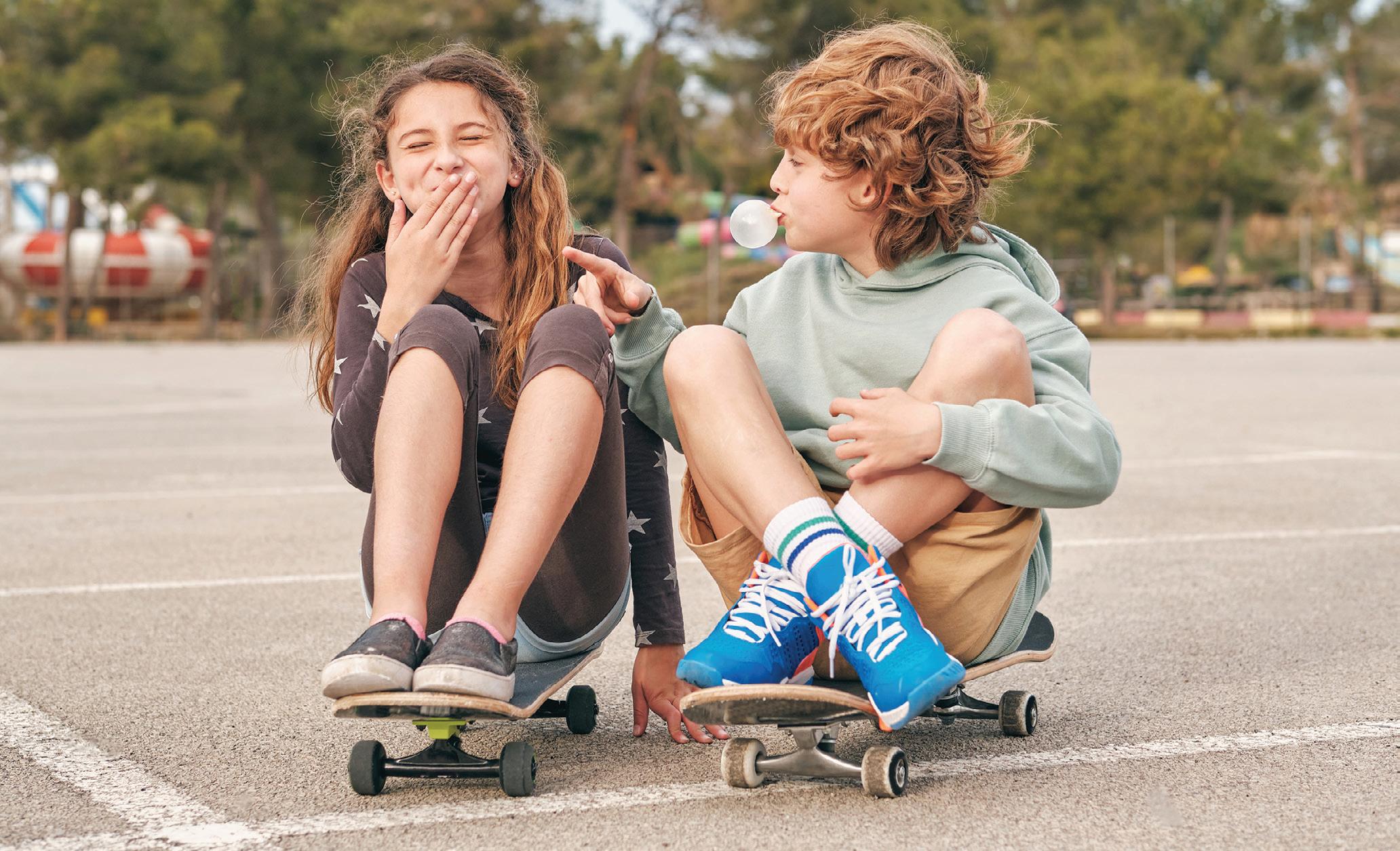
BEYOND BFFS: How Kids Are Redefining Friendship
by Shannon Dean
The idea of “best friends” has long been romanticized and often appears in children’s books and films. Think Harry and Ron. Or Woody and Buzz. A childhood best friend is someone who sticks with you through playground spats and high school crushes. They’re beneficial because they’re the person you can confide in, laugh with and cry to through the ups and downs of childhood and adolescence.
Science supports this ideal, too. A study from the “American Journal of Psychiatry” found that close friendships can improve stress responses and boost self-esteem. But as social norms shift, some experts say it’s time to broaden how we think about these close connections.
Why the Idea of Best Friends is Changing
In today’s hyper-connected world, it’s tempting to believe that more “friends” equals deeper relationships. Kids can text, video chat and game with friends or total strangers before they’ve even mastered long division. They scroll past selfies, birthday shoutouts and “BFF” tributes on social media long before they fully understand what “best” friendship really means.
But does this constant connectivity add up to real closeness?
The answer: maybe. Since today’s kids are often finding connection in more flexible ways, meaningful relationships don’t always fit the old “BFF” mold anymore. Plus, some experts say it’s time to let go of the idea that every child needs one “best friend” to be happy or socially successful. Instead, the focus is shifting toward helping kids build a diverse network of meaningful relationships.
As clinical psychologist Dr. Michelle Gorenstein-Holtzman explains: “What friendship looks like can vary depending on the child, but having people in your corner still matters.”
For some children, this might mean a handful of different friends who each meet different needs: a classmate to sit with at lunch, a neighbor to ride bikes with, a teammate to celebrate wins with, or even an online friend who shares a love for a particular game or hobby.
Do Best Friendships Still Matter?
Yes, but not in the way many parents might assume. According to psychologist Eileen Kennedy-Moore, author of “Growing Friendships,” not having one or two close best friends doesn’t mean a child is lonely or socially behind. “It’s important to remember that having a best friend is not the same as being generally well-liked by peers,” she explains.
In fact, childhood friendships are often more fluid than we realize. A study published in “Psychological Science” found that only 1% of seventh-grade best friendships lasted through twelfth grade. Even in early elementary years, shifting interests, changing classrooms and developmental growth can reshape a child’s social circle quickly.
When Best Friend Culture Backfires
While close friendships can be deeply meaningful, too much emotional intensity, especially to the exclusion of others, can be harmful. Psychologists call this behavior “co-rumination,” and studies show it can contribute to anxiety and depression. Plus, when a tightly bonded friendship ends, the emotional fallout can feel overwhelming for kids.
That’s one reason some schools have controversially discouraged the concept of “best friends.” Psychologist Barbara Greenberg doesn’t support banning the term altogether, but she sees the value in encouraging broader, more inclusive social groups. “A focus on having best friends indicates there’s an unspoken ranking system,” she says. “And where there is a ranking system, there are problems. My hope is that if we encourage our kids to broaden their social circles, they’ll be more inclusive and less judgmental.”
Why Parents Are Worrying About Friendships
In a world where screens often compete with real-world interaction, many parents worry that their kids are socially disconnected. A University of Michigan C.S. Mott Children’s Hospital poll found that 90% of parents believed their children would benefit from more friends, and half said their child faced at least one barrier to making friends, like shyness or social awkwardness.
Tips For Helping Kids Build Healthy Friendships
n Don’t Apply Pressure: Know that different friendships can meet different emotional and social needs, and accept when your child doesn’t have one best friend.
n Teach Emotional Intelligence: Model empathy, active listening and conflict resolution. All are cornerstones of lasting relationships.
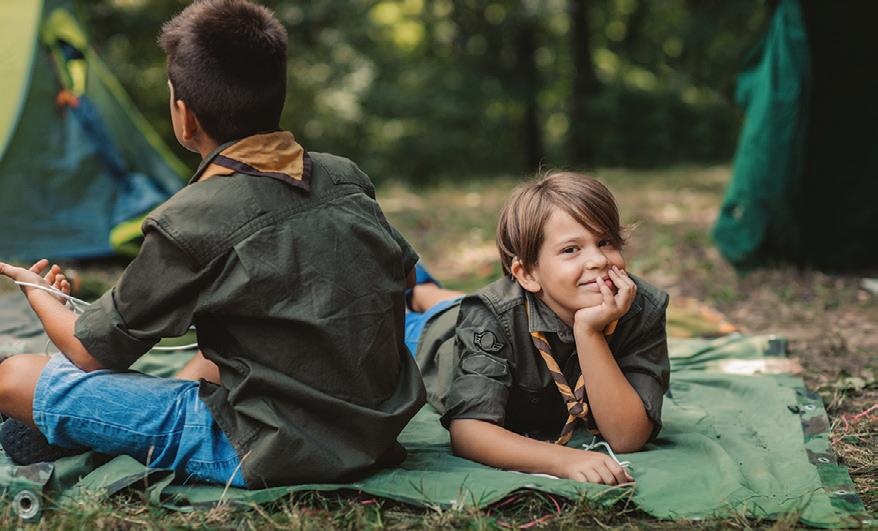
n Facilitate Group Connections: Encourage your child to participate in group activities like Scouts, clubs or sports where they can meet other kids in a low-stress, collaborative environment.
n Help Them With Social Skills: Some children benefit from roleplaying. Demonstrate how to join a group, how to ask to play, and how to hold a conversation. Testing their skills out on you will help build their confidence.
n Broaden Social Circles: Encourage friendships with kids from diverse backgrounds to promote open-mindedness and flexibility.
n Monitor Social Media with Guidance, Not Fear: Teach kids how to stay safe online while nurturing both digital and real-world connections.

This might mean a handful of different friends who each meet different needs: a classmate to sit with at lunch, a neighbor to ride bikes with, a teammate to celebrate wins with, or even an online friend who shares a love for a particular game or hobby.
n Normalize Friendship Changes: Kids may feel like friendship shifts are failures. To soften the blow, remind them that it’s normal to drift apart and that new friends are right around the corner.
EXPLORE. CONNECT. ACHIEVE. HAVE FUN.
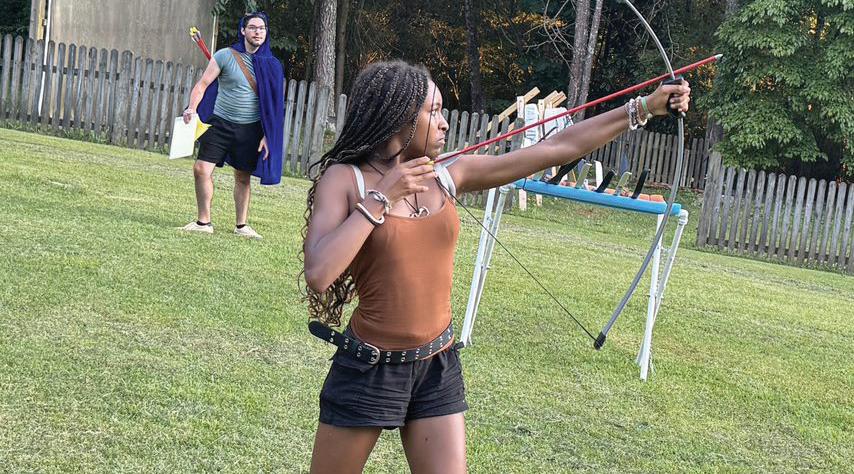
High Meadows Camp is what camp should be!
For more than 50 years, High Meadows Camp has provided campers an authentic, exciting outdoor program on 42 acres of woods, farmland, and unique facilities. Camp is open to 5-year-olds through rising ninth grade students. Registration is now open!
Session 1: June 1 - June 18 (no camp on June 19)
Session 2: June 22 - July 10 (no camp on July 3)
Session 3: July 13 - July 31
Founded in 1973 | Roswell, Ga. | (770) 993-7375 | www.highmeadowscamp.org
EATON ACADEMY
•
•
•
•
•
•
•
BEYOND BFFS
Not surprisingly, 75% of parents reported trying to help their child build friendships through playdates, extracurricular activities or structured social events. But even wellmeaning parents can unintentionally limit their child’s social growth. According to Sarah Clark, co-director of the Mott poll, two-thirds of parents said they prefer their children’s friends to come from families similar to their own.
Clark urges caution here. “Limiting a child’s friends to only those from similar backgrounds may hamper their ability and comfort in navigating diverse networks in the future,” she explains.
Are Online Friendships Real Friendships?
It’s easy to assume online relationships are shallow or fleeting, but experts say they can be surprisingly meaningful. “I don’t think we need to demonize online friendships,” says educator Linda State. “Some kids find friends online who share their interests. They’re part of an online tribe.”
Still, digital relationships come with their own challenges. Clark recommends that parents who allow social media remain
Clark recommends that parents who allow social media remain involved and proactive.
involved and proactive. “Parents who choose to allow social media should help their child learn to use it responsibly,” she says.
That means setting boundaries, discussing red flags and helping kids maintain a healthy balance between their online and offline relationships.
Why it’s OK if Your Child Doesn’t Have a Best Friend
Experts agree that having a variety of friends, instead of one ultra-close best friend, is not just acceptable, it can be healthy. Childhood friendships are expected to shift and evolve. Losing friends, gaining new ones or not having a “BFF” at all isn’t failure. It’s normal.
What’s more important is that kids learn the skills needed to form solid connections: empathy, kindness, communication and conflict resolution.
Instead of encouraging kids to seek out one “perfect” friendship, we can help them build a circle of supportive, diverse and lasting relationships. Those kinds of varied relationships might be the real marker of a connected, resilient childhood.
Remove. Reorganize. Refresh. Keep Your Kids' Stuff from Taking Over
by Rebecca Hastings
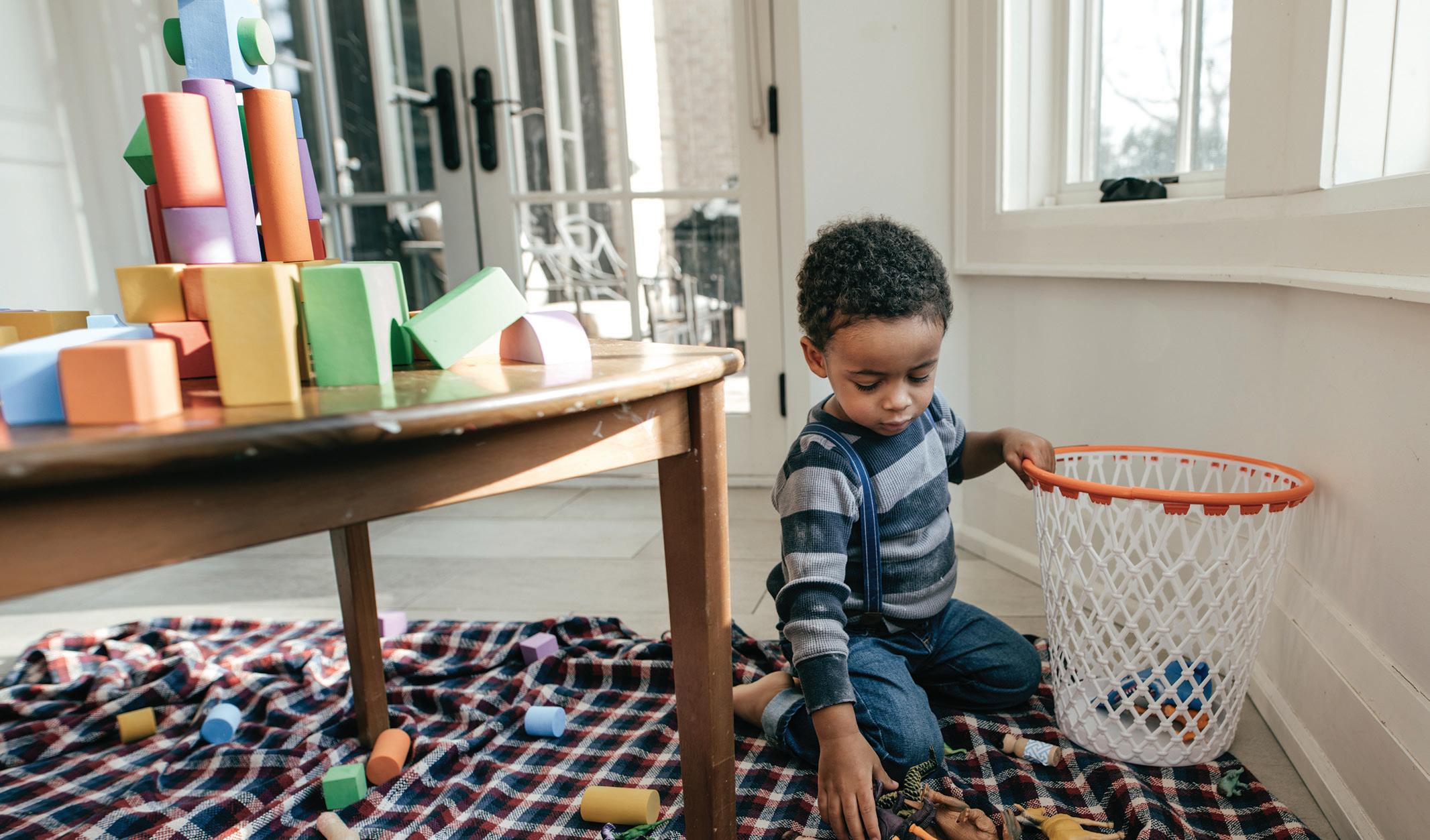
How is it that such tiny humans can have so much stuff? From clothes in a host of sizes to toys that fill buckets, bins and closets, it can feel like your kids’ stuff is taking over your house.
The reality is that your kids are constantly changing. Whether it’s a growth spurt that requires a new size of clothing or a change in interest that deems last season’s hot toy uninteresting, the changes kids go through carry over into their belongings. With clothes in multiple sizes, school items, toys and other things that kids need, it is no surprise that rooms can get pretty messy, even if your child is great at putting things away.
The good news is that it is possible to get a handle on the clutter, so it doesn’t take over. The trick is to think about the three Rs.
What are the Three Rs?
With three kids, I felt like my modest ranch-style home was being overrun with stuff. That’s why the three R’s — remove, reorganize, refresh — come in handy. They create a simple way to remember how to keep things under control, no matter the size of your house or how many kids you have.
Start with REMOVE
Most of the time parents focus on keeping things tidy. This makes sense on a daily or weekly basis. Put the books on the bookshelf, get the toys in the bin, and hopefully get the laundry put away. These are great goals. But how do you handle all the things that keep coming into the space? To keep things in check, you must be willing to remove items.
Removing items has a few different steps. Each one is important and has a place in keeping kids’ belongings under control.
n Remove items they have outgrown. This could be clothing that no longer fits, toys that are too young for them and they no longer have an interest in, and random other items like décor that no longer matches their stage. Some examples include:
n Clothing that is too small. If you are saving things for a younger sibling, take the time to sort the clothing, keeping only what is worth keeping. Then, label and store and it for easy access later.
n Toys that are too young for them. This one can be tricky, but you can often look at your child’s toys and understand what this means. If a toy is developmentally young for them AND they no longer have interest in it, it is a good sign to get rid of the item. If you are not sure, gather the items in a box and put it somewhere they can’t see it. If they don’t ask for any of the items for a month, it’s a good sign you can get rid of them without any guilt.
Other items you may need to get rid of include bedding that is too small for their bed and old nursery or bedroom décor that is no longer age-appropriate. Books are one exception to this as children will often go back to books that seem too young because they are favorites. You can get rid of books but do so thoughtfully.
Remove anything that is broken, stained or in need of repair (that you won’t actually repair). Be honest. It may feel hard at the moment, but you don’t need useless items taking up space in your home.
Next, it’s time to REORGANIZE
Going through everything may feel exhausting, but once you’ve done that, you can begin to reorganize what’s left. Many people make the mistake of starting with organization, only to discover they are spinning their wheels organizing things they don’t even need. Remember, the goal is to keep your kids’ belongings from overtaking your home (and your sanity!).
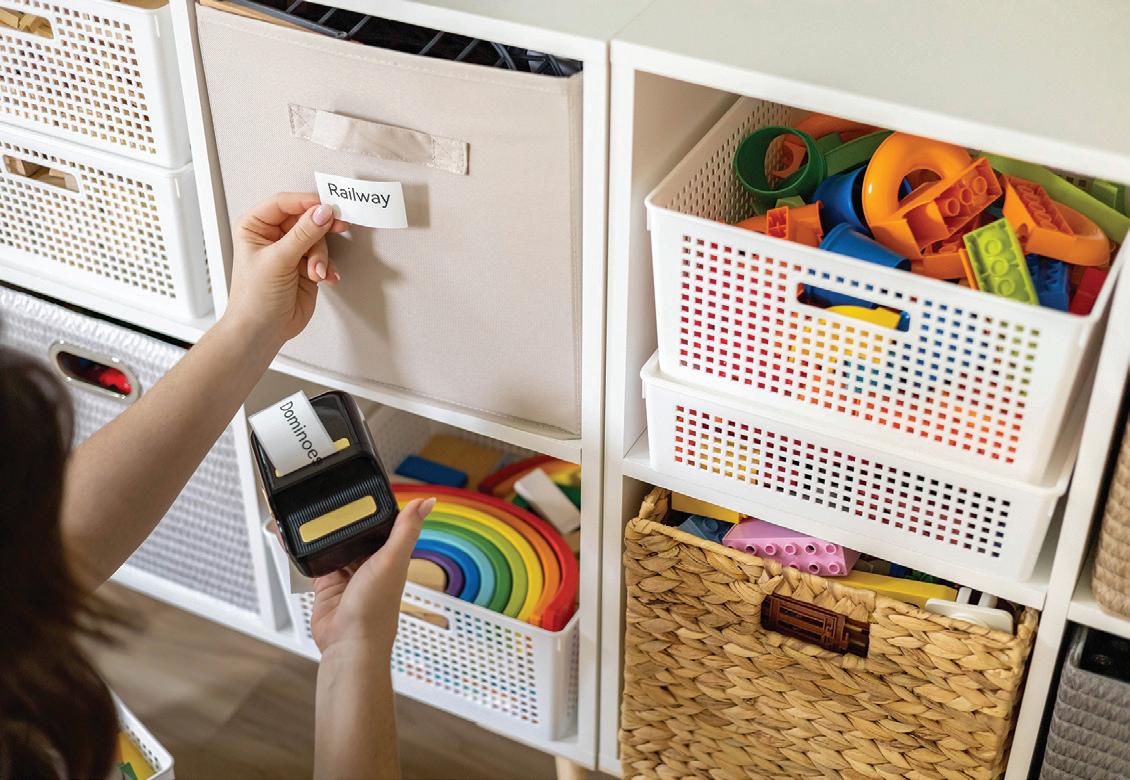
It is tempting to go online and find the best organizing solutions, but start with what you have. You can always fill in the gaps later. Consider using storage solutions around the house such as bins, baskets or shelves to keep things tidy. Then, make a list of what you still need. Always organize before you buy new storage solutions.
Finally, give everything a REFRESH
Now that you have all of the belongings in order, everything could use a bit of a refresh. Consider doing this in kids’ rooms, playrooms and family rooms. Follow these steps to make the process easy and distraction free:
n Dust and Wipe: Start by dusting all surfaces, including shelves, furniture and electronic devices. Wipe down surfaces with a damp cloth or foam sponge like a Magic Eraser to remove accumulated dirt or grime.
n Vacuum or Sweep: Next, clean the floors thoroughly. Vacuum carpets and rugs, and sweep or mop hard floors. Be sure to get corners, around heat sources and under furniture. Deepcleaning carpets or area rugs with a service or a carpet cleaner is also helpful.
n Wash Bedding: Launder all bedding, including sheets, pillowcases and blankets. This can contribute to a fresh and clean atmosphere in your room. Replace worn pillows or sheets. If pillows are yellowed, wash them as directed or replace them.
n Clean Windows: Clean all windows inside and out. This will allow more natural light to enter and brighten up the space. Don’t just clean the glass. Be sure to clean the sills, tracks, trim and screens so things are fresh and clean. Also, wipe down blinds or shades to remove any dust or dirt and make sure they are in working order. Remove curtains and wash as directed.
n Check and Rotate Mattress: If possible, rotate or flip your mattress. This helps to maintain its shape and comfort over time and improves longevity. Be sure to follow directions for your specific mattress as some types do not get flipped. Also, check to see if the mattress needs replacement. A quality mattress is important for sleep and overall wellness, even for kids.
n Evaluate and Rearrange: Now that you’re done, take a moment to evaluate the layout of the room. Is everything working well? Do you notice any gaps or things that are not functional? Consider rearranging furniture or creating zones for a new look and improved functionality.

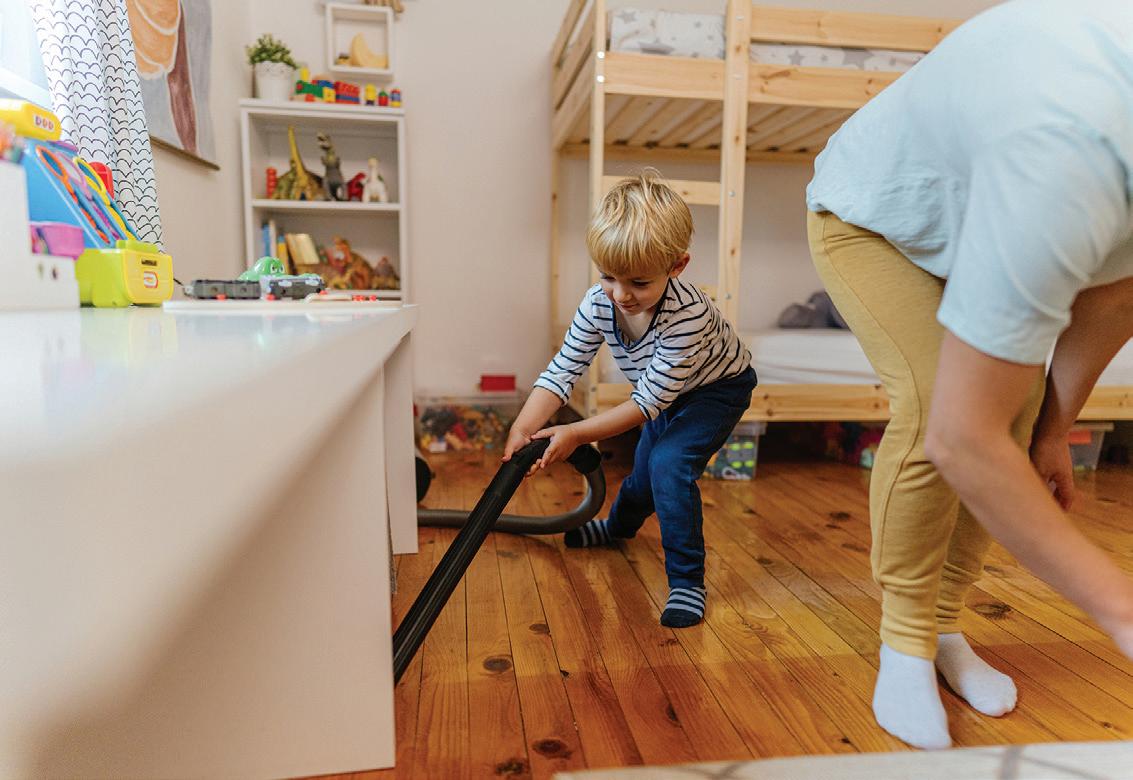
Once you’re done, relax!
It would be great if you only had to go through this process once, but this is an ongoing process as long as you have kids living at home. Different ages and stages require different things. As you do this more often, it will get easier. And as kids get older, they can be a helpful part of the process. Try to remove, reorganize and refresh routinely so your home feels more peaceful for everyone.
A HEART FOR THE ARTS




Fueling Passion and Creativity: The Impact of Arts Programs
by Emily Webb
Atlanta is a center of activity for the beauty and excitement of the arts. The performing arts offer cognitive and physical benefits as children develop musical, motor, auditory and social skills.
“Dance involves the body fully, not just in physicality but also with memory,” says Sharon Story, Dean of Atlanta Ballet Centre for Dance Education. “It’s all encompassing. There are so many aspects between mind and body that all work together. Everybody’s body and mind are completely different, so dancers can succeed at their own pace.”
Because metro Atlanta is a hub for the arts, there are so many opportunities for children to learn and connect with others. “Music brings a community together. From an early music class to participating in a choir at a religious facility to a school band ensemble, you have a built-in group of people with a common interest,” says Sarah Grant, the Vice President of Education and Community Engagement at Atlanta Symphony Orchestra. “If our young people are looking for a place of belonging, music has that intrinsically.”
Students also learn to collaborate with their peers. “Students have the discipline to work together, and they have to make sure that camaraderie carries on and off stage,” Story says.
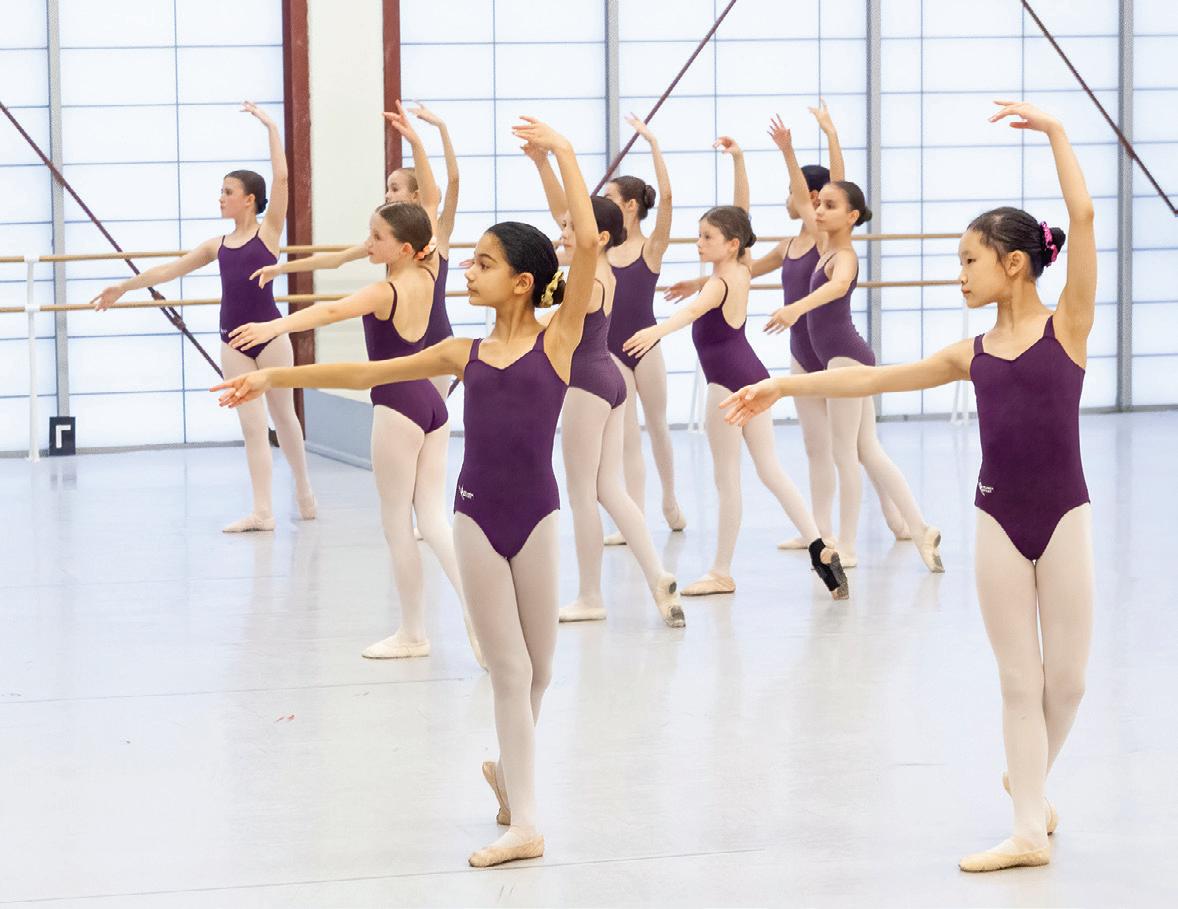
Children learn personal responsibility through performing arts. No matter their passion, they must develop discipline and time management to balance the expectations.
“Theater and rehearsal spaces are places where young people can rehearse reality,” says Samantha Provenzano, Alliance Theatre’s Teen Programs Manager. “They’re practicing living in community by being a part of an ensemble and paying attention to the room and to other people’s feelings and emotions. Theater also puts you in a pressure cooker of time, so you have to be your most creative and best self quickly.”
This feeling of community extends to the parents and families.
“It can be a barrier when parents don’t understand what that arts world is like. Jump in and try it. You’ll meet other parents who are figuring this out,” Grant says. “When they come together to support what their kids love, there is a learning community for parents as well.”
Students benefit from the practice of resilience. They learn what it means to fail and keep trying, and when they accomplish hard tasks, they know they have the ability to overcome difficulties in the future.
“You learn more from a negative experience,” says Dr. Gordon Vernick, Professor of Music and Coordinator of Jazz Studies at Georgia State University and founder of the Rialto Youth Jazz Orchestra. “You hear, ‘Practice makes perfect,’ but I’ve always hated that saying. If everything is perfect, it’s boring, and if everything is positive, you start to believe you’re infallible.”
The arts can connect students to different people, places and histories from around the world. “Music is the cultural fabric of our society. The arts reinforce that cultural fabric more than any other thing we could offer our children,” Vernick says.
Arts learning leads to a lifelong appreciation of the arts, whether it’s viewing an exhibit or going to a live performance.
“We need audiences,” Vernick says. “We need people who understand why music is important.”
In the metro area, there are many opportunities to start learning. Especially when your child is young and trying different activities, the first class may not be the best fit.
“Stay curious with your child,” Provenzano says. “If your student tries a class and it’s not right, keep trying. Enjoy the process together.”
Photo by Kim Kenney
Rising Stars: PROGRAMS FOR TALENTED KIDS AND TEENS
If your child shows a passion for music, dance or theater that goes beyond a casual interest, you’re in a wonderful position to help that spark grow. Atlanta is home to several top-notch programs designed to nurture young artists and help transform early enthusiasm into real skill and confidence. If you have a rising star at home, now is the perfect time to encourage their abilities, support their creative journey, and watch their love for the arts and talent flourish.
For students interested in music, the Atlanta Symphony Orchestra offers rising 8th-12th graders the chance to audition for the Atlanta Symphony Youth Orchestra, while their Talent Development Program identifies and trains highly dedicated student musicians.
Students may also be interested in the Rialto Youth Jazz Orchestra, which consists of one big band and multiple jazz combos. Students receive instruction in jazz performance, jazz history and jazz improvisation with groups ranging from the intermediate to advanced level.
Atlanta Ballet Centre for Dance Education trains passionate dancers starting at age 9 in their Academy. With up to five hours of required daily classes, students practice classical and contemporary ballet, pointe, adagio, modern and jazz. Atlanta Ballet 2 is the Centre’s highest level of training and is the pathway to becoming an Atlanta Ballet Company member.
Teens with a love of theater can join the Alliance Theatre Teen Ensemble, an audition-based program for rising juniors and seniors. The Palefsky Collision Project is held in the summer, providing a whirlwind experience showcasing all the student’s theater education.
If your child is interested in diving in, be aware of the expectations of these programs.
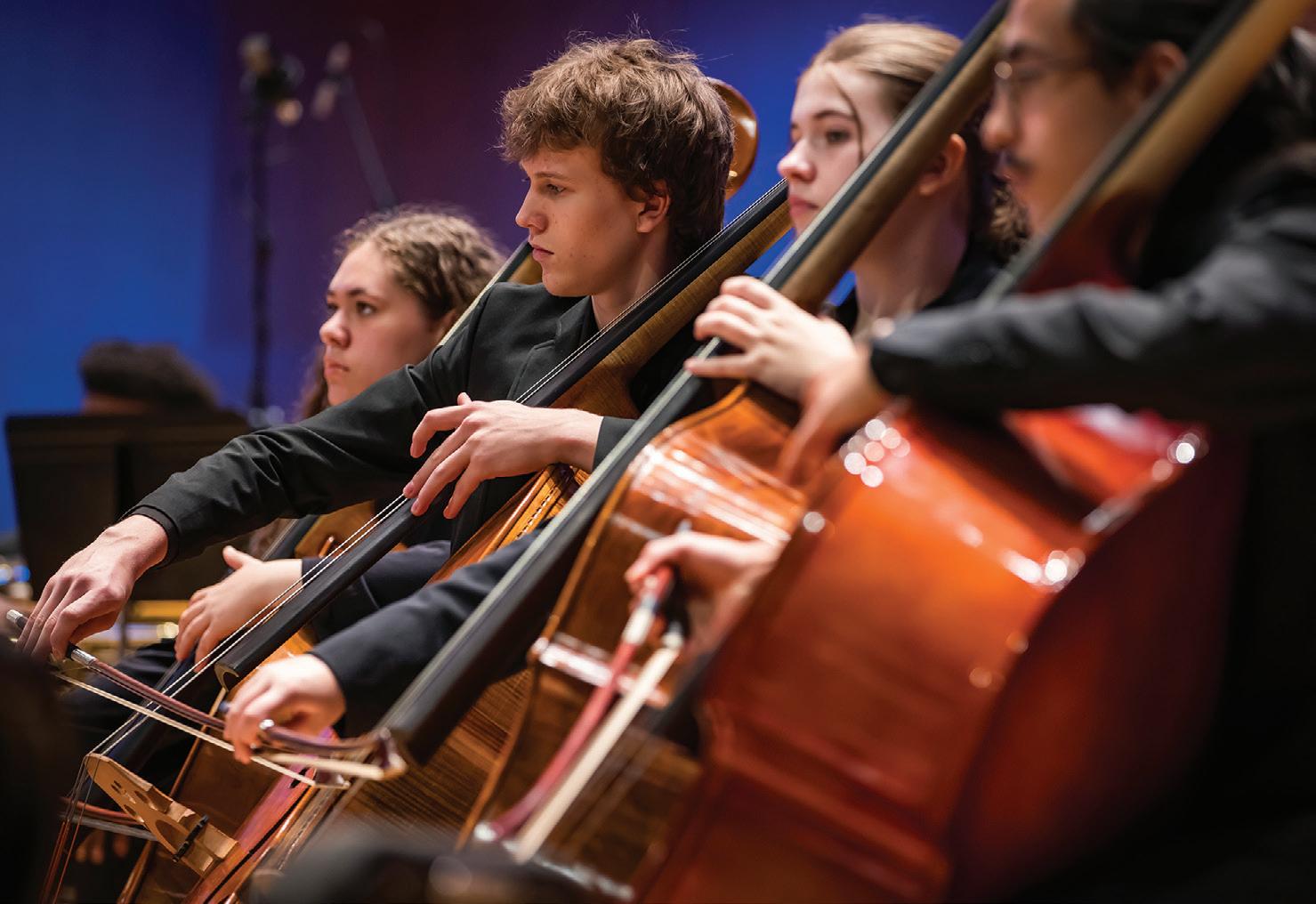
“Being a professional musician is a family affair. There is time spent making sure they get to practice, rehearsals and summer camps. There are also financial resources. If you’re heading to Julliard for an audition, your cello needs an airplane seat as well.”
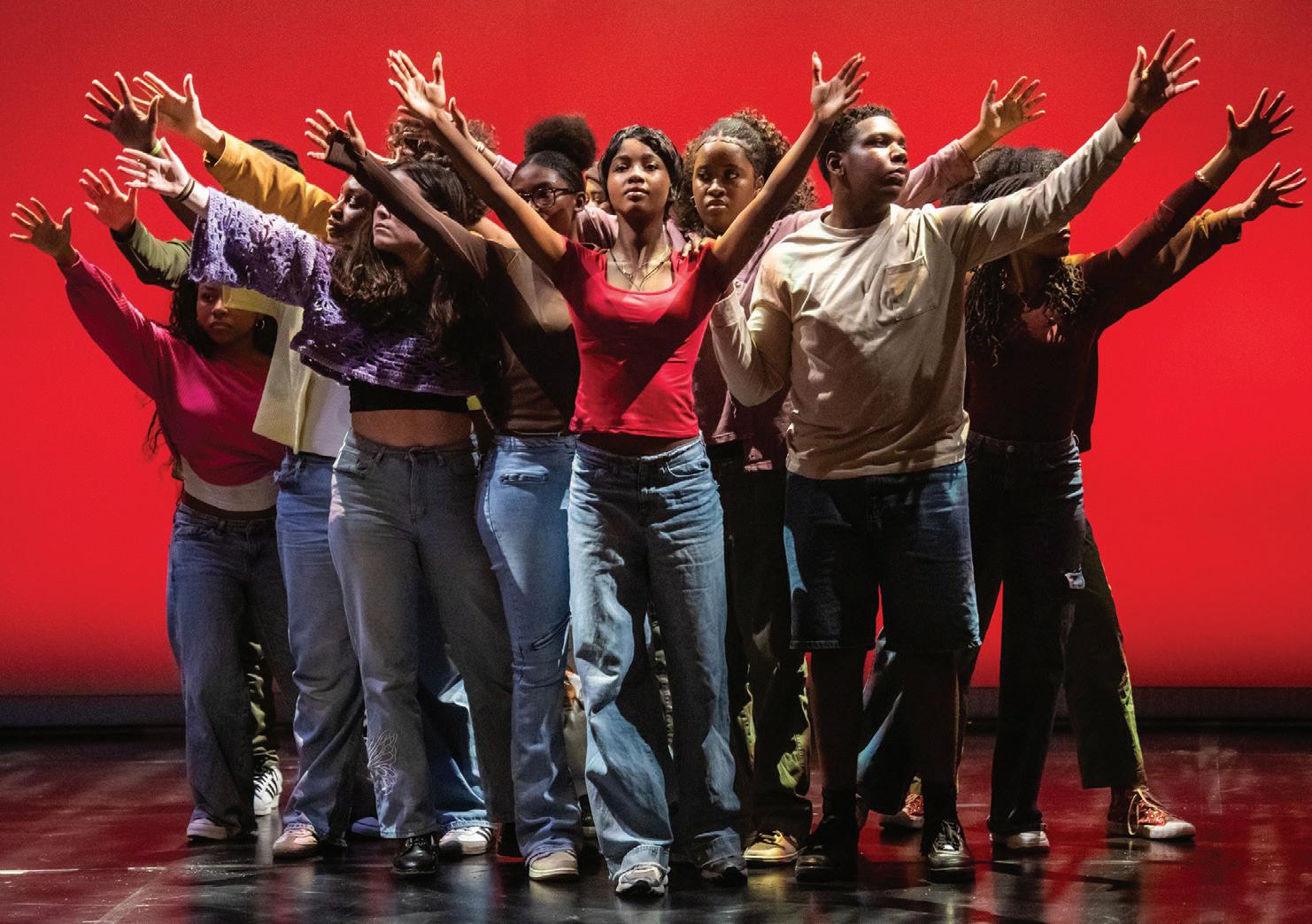
Palefsky Collision Project at Alliance Theatre, 2025
Atlanta Symphony Youth Orchestra
Photo by Casey Ford
– Sarah Grant, the Vice President of Education and Community Engagement at Atlanta Symphony Orchestra
Rising Stars: PROGRAMS FOR TALENTED KIDS AND TEENS
Self-Motivation
Passionate students who want to work on their skills must have a level of excitement and dedication for their art, as well as the discipline and time management skills to keep up with their academic studies.
“We’re training students who have talent, passion and a love of practicing to help them become professional musicians,” Grant says.
Learning teaches the lifelong value of dedication. Students must be able to motivate themselves. “My goal is to teach students how to get better on their own,” Vernick says. “You see LeBron James playing on the court, but you don’t see the 10,000 hours he spent practicing. I teach my students how to teach themselves.”
Arts programs require a time commitment to build on their skills.
“A lot of folks who have not had access to arts or theater don’t understand the level of work in a production. It takes a full company to create the show,” Provenzano says. “Acting is one piece of the puzzle. There is work that goes into building your craft. It’s about the actors having full control over their body and voice, memorizing the entire play, learning blocking and bringing their acting technique to the stage.”
Commitment
Beyond the student’s personal motivation, families will dedicate time and money to these passions.
This level of commitment involves the entire family. “Being a professional musician is a family affair,” Grant says. “There is time spent making sure they get to practice, rehearsals and summer camps. There are also financial resources. If you’re heading to Julliard for an audition, your cello needs an airplane seat as well.”
Communication is an important component between the student, the family and the program of interest.
“We make parents very aware this is a commitment, and we talk to the family,” Story says. For example, Academy Levels 1 and 2 students meet five days a week and must participate in the Spring Concert. “The commitment for these programs, from parents and family, helps to have these young dancers understand what it takes to become a professional or collegiate dancer.”
Engaging in theater requires dedication. “Rehearsals are five days a week. When there’s a professional commitment, actors are getting tutored at the theater or they’re homeschooled,” Provenzano says.
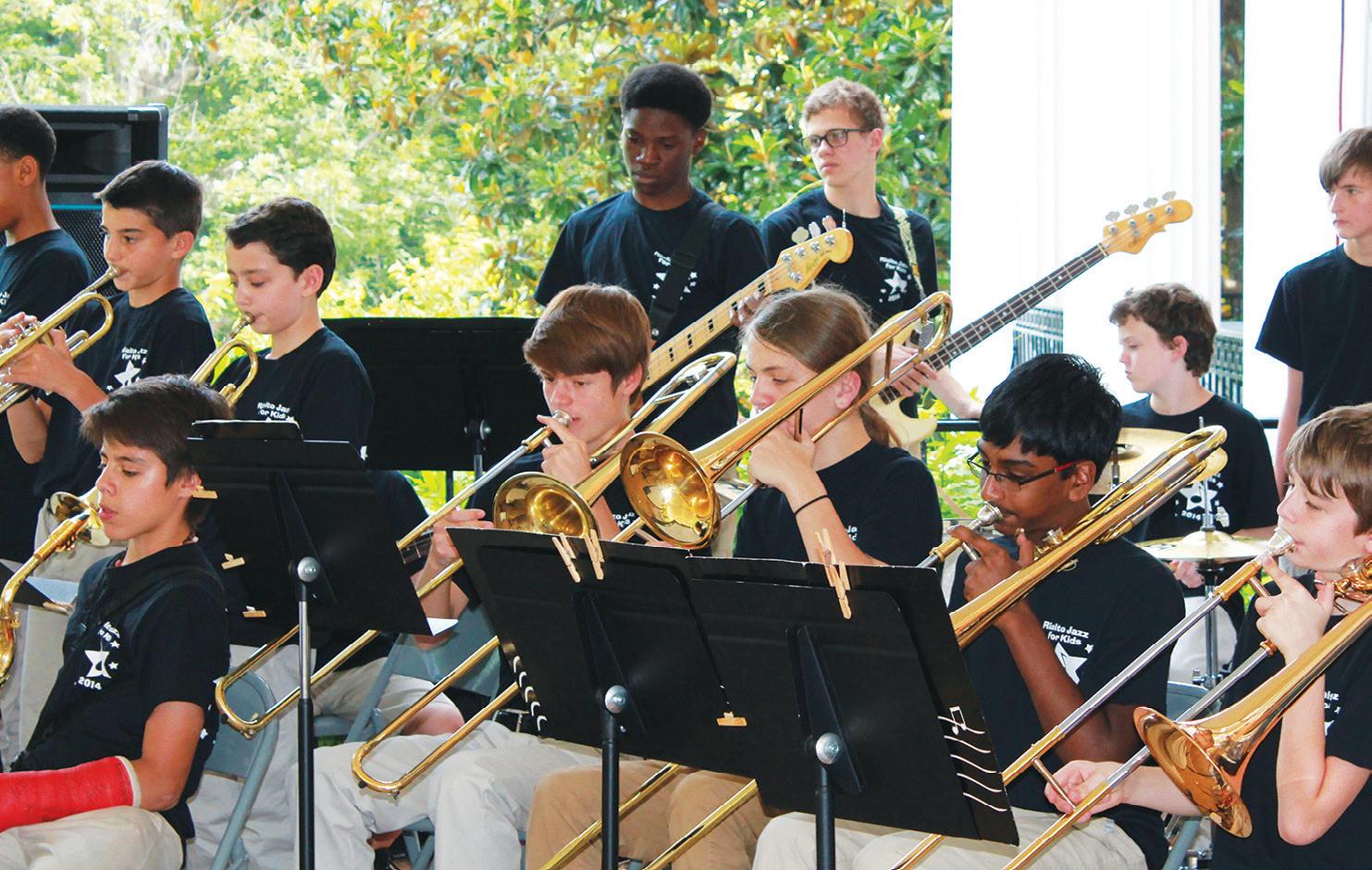
“Jazz offers students another option for self-expression. Improvisation is an important concept in jazz. That improvisational part can be frightening, but it alleviates the fear of making mistakes.”
-Dr. Gordon Vernick, Professor of Music and Coordinator of Jazz Studies at Georgia State University and founder of the Rialto Youth Jazz Orchestra
“Rehearsals start after school or there are weekend classes, so it’s a 24/7 passion. There is some travel required if you’re trying to be at a certain level. Even if you’re new to it, you’re taking the kiddo to take weekend classes to dip their toe in.”
Collaboration
These programs also offer students the chance to connect with people they can look up to.
Students have access to ASO musicians and professionals as mentors. “It’s an easier path if you see someone you relate to doing the things you want to do. If you know and interact with that person, even better,” Grant says. “We have a huge network of alumni to help students, which opens the doors to networking and mentorship. Having access to other musicians can be a gamechanger.”
Dancers have the opportunity to be mentored by members of Atlanta Ballet, and they also serve as mentors for the younger students. “It’s their inspiration. They’re looking at dancers who have gone through the journey they aspire to,” Story says. “We have a variety of folks from the area and around the world, so they can relate to dancers who look, feel and act like them.”
Risk Taking
While auditions may be a fearinducing prospect for students, they contribute to growth.
“We’re giving students the tools to successfully negotiate music,” Vernick says. “Auditions are as much about what the student can do as what the student can’t do. Auditions really teach humility, and they help you to focus your skills.”
Auditions are an opportunity for students to find the right place for them. “Auditions can help them learn where they are in their journey and what they need to work on,” Story says. “It also exposes you to the styles of the different schools. Yes, you’re auditioning for them, but you’re also auditioning them. It can relieve the nerves to know auditions go both ways.”
Once students reach a certain level, auditioning will be part of their norm. “For a lot of professional actors, most of the job is auditioning,” Provenzano says. “Especially for young people, auditions are a way to practice risk taking. There is no guarantee you’re going to get the thing. You have to prep for it. It’s a good way to practice hope.”
Rialto Youth Jazz Orchestra
Fine Arts Spotlight
Spotlight on the Arts
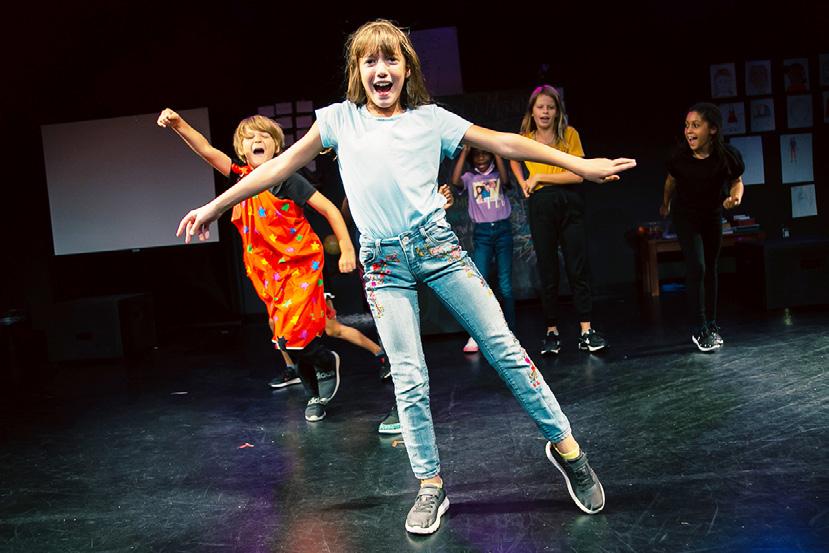
ALLIANCE THEATRE
404-733-4600 | alliancetheatre.org/content/classes
The Tony Award-winning Alliance Theatre offers classes for all ages, from 12 months old (yes, 12 months) through adults. The curriculum features lessons led by some of the industry’s best teaching artists from learning to act (on stage or on camera), sharpening your communication skills, and just learning about theater. 1280 Peachtree Street NE, Atlanta 30309.
Fine Arts Spotlight
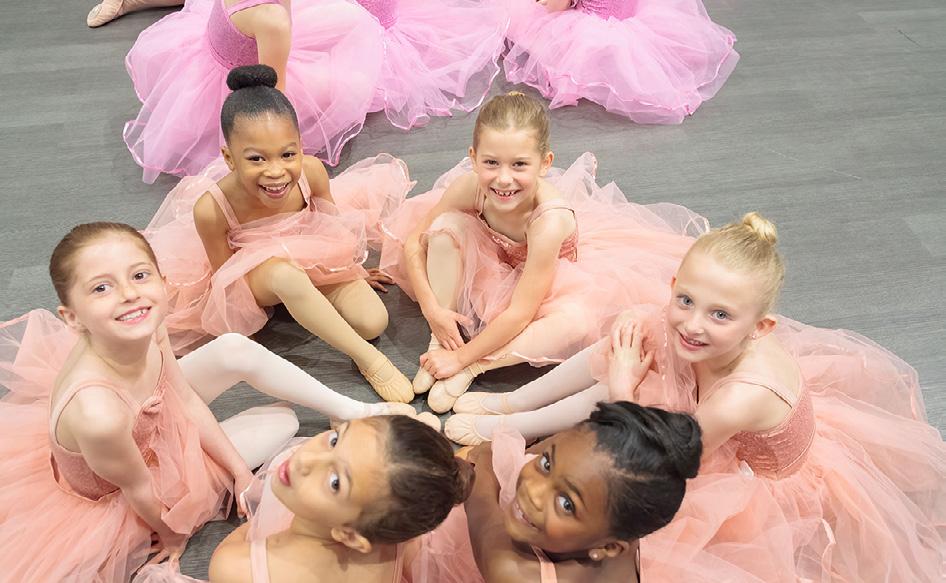
ATLANTA BALLET CENTRE FOR DANCE EDUCATION
404-873-5811 | centre.atlantaballet.com
Fine Arts Spotlight
Every child, no matter their age or experience, can discover the joy of dance at Atlanta Ballet Centre for Dance Education. Whether your child loves to skip and twirl, enjoys ballet technique at the barre, or is ready to take the leap into a professional career, the instructors will be with them every step of the way. Enrollment in creative movement, ballet, tap, jazz, modern and contemporary classes is open at West Midtown, Buckhead and Virginia-Highland.
FOREFRONT ARTS
770-864-3316 | ForefrontArts.com | Multiple Locations
Calling all kids and teens who love the spotlight! Shine onstage this spring at Forefront Arts with locations in Buckhead, Chamblee, East Cobb, North Fulton, and Woodstock! New 6-week Mini Musicals: K Pop Demon Hunters, Shrek, Mean Girls, Matilda, and Zootopia! Star in full-scale MainStage Productions: “The Lorax”, “Junie B Jones the Musical” and “Alice By Heart”. Train in Acting, Dance, and Voice in the Triple Threat technique program or Private Lessons. Summer Camp signups open in January too!
atlantaparent.com
THE MUSIC CLASS
770-645-5578 | 10 Locations in Metro Atlanta themusicclass.com/atlanta
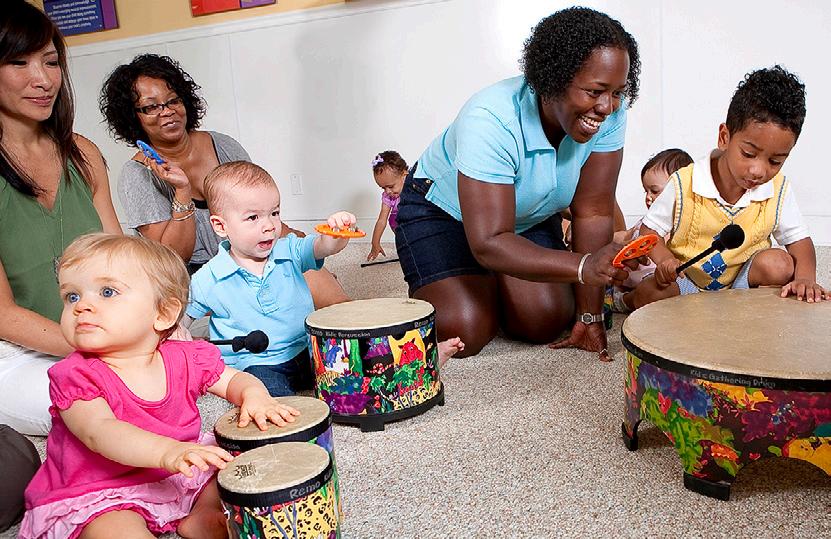
Fun-filled, developmental, interactive music classes. Featuring award-winning music and led by inspiring music teachers, you and your child will be swept into playful singing, dancing, and instrument play in a joyful and nurturing environment. For infants, toddlers and preschoolers. Call for class times or visit the website.
Photo credit: Kim Kenney
Where Creativity and Community Meet
by Emily Webb
Metro Atlanta is a wonderful place for the arts, and local cities offer special ways for the community to connect with the arts. Local arts centers can help your family affordably engage in the arts.
Whether or not your child shows an early passion for the arts, creative exploration can play a meaningful role in his development. Arts programming introduces young students to a wide range of creative experiences — from shaping clay on a pottery wheel to experimenting with watercolors to exploring gallery exhibits. Community arts centers make these opportunities accessible through affordable classes, workshops, camps and events designed to spark curiosity and imagination.
As an extracurricular activity, the arts encourage critical thinking, self-expression and personal growth. Children are free
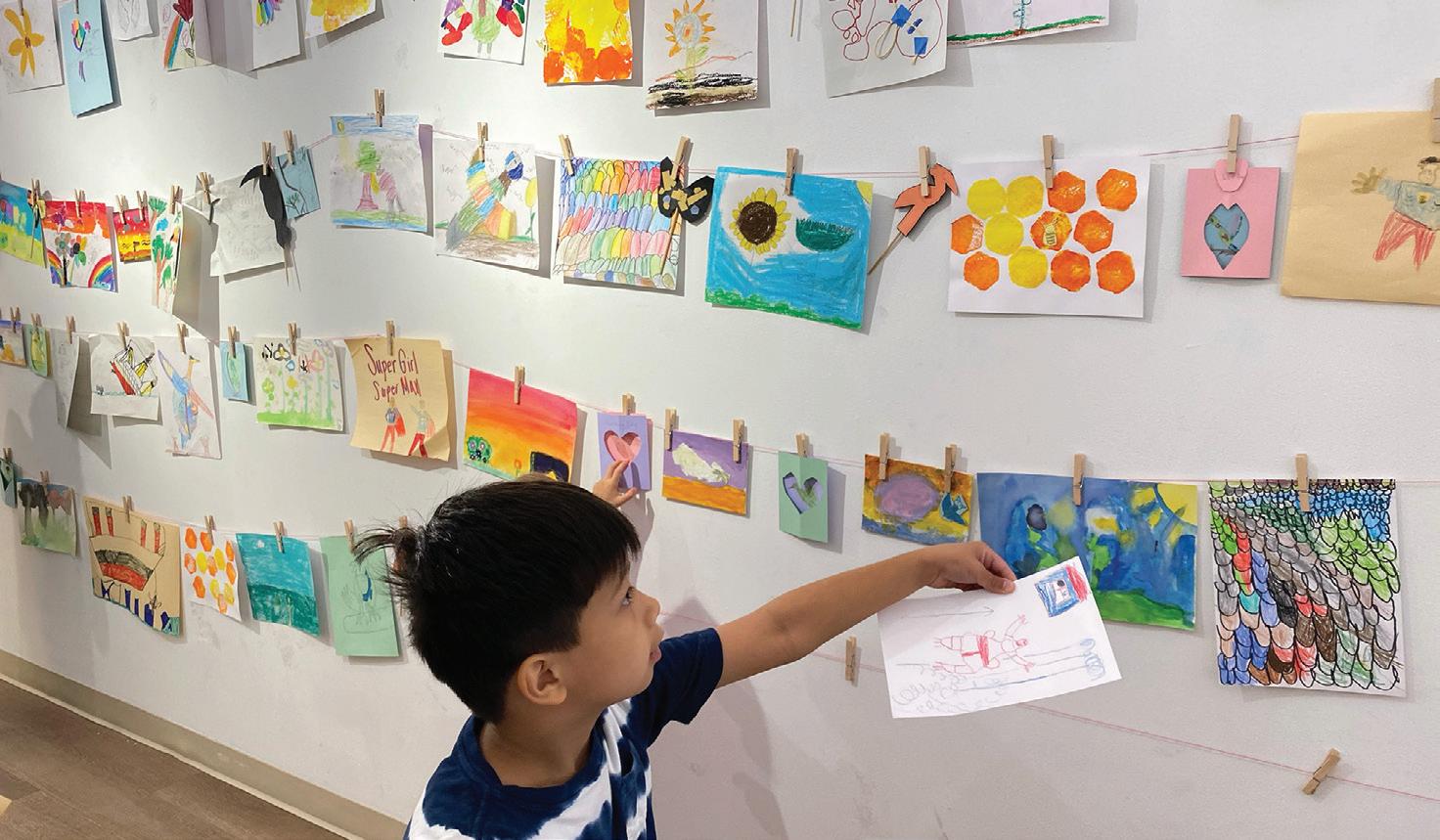
to experiment with different mediums, discovering what excites them, what challenges them and how they best express their ideas. Along the way, they’re exposed to artists and art forms they may not encounter in a traditional classroom, expanding both their creativity and their appreciation for the arts. Arts centers also invite families to learn and create together. With adult classes available, parents can reconnect with their own creativity and share that journey with their children. These shared experiences help families connect with one another and with the broader community, fostering a sense of belonging and
Engage with the arts as a family at a local center near you.
n Chastain Arts Center
This educational facility offers classes, workshops and exhibits in a variety of creative mediums, including an annual summer camp. ocaatlanta.com/chastain-arts-center
n Callanwolde Fine Arts Center
Callanwolde offers arts education programs in performing, visual and literary arts, and throughout the year, visit for concerts and special events. callanwolde.org
n Hudgens Center for Art & Learning
Adults and kids will love trying their hands at art projects with classes and workshops. The center also has tons of exhibited artworks and sculptures, along with an interactive Kid’s Zone. thehudgens.org
n Spruill Center for the Arts
This community art center provides more than 800 visual arts classes to all ages and skill levels with instruction in ceramics, drawing, jewelry and more. spruillarts.org
n The Nixon Centre for the Arts
Part of the Coweta County School System, this venue hosts performances and programs throughout the year, along with workshops for aspiring thespians. thenixoncentre.net
n Mable House Arts Center
This center offers a wide range of engaging and educational classes for children and teens in performing arts, music and visual arts, along with workshops, camps, adult classes and homeschool programs. mablehouse.org/arts-center
n The Art Place
A Cobb County PARKS Facility, The Art Place holds exhibits, community events, theater productions, artist markets and classes for adults and children. artplacemarietta.org
n Southwest Arts Center
The mission of Southwest Arts Center is to produce and present quality arts education, cultural activities and events to the citizens of South Fulton with programming in dance, music and theater, as well as classes and camps. cityofsouthfultonga.gov
well-being through common interests.
Beyond classes, arts centers serve as cultural hubs, showcasing work by local artists and creating site-specific installations that reflect the character and heritage of the city. Festivals, exhibitions and other cultural events celebrate the local creative community while inspiring innovation and entrepreneurship.
For children, visiting these spaces offers more than visual inspiration — it provides insight into other people’s ideas and emotions, nurturing empathy, curiosity and a deeper understanding of the world around them.
n Emma Darnell Aviation Museum and Conference Center
Part of Fulton County Arts & Culture, this venue connects the community to the arts with exhibits, public art installations, summer camps and instruction for children, teens and adults. fultonarts.org
n ArtsXchange
This cultural facility engages the community through a combination of the arts and social justice with workshops, exhibits, concerts, classes, films, performances and community gardens. artsxchange.org
n Cultural Arts Council
Douglasville/Douglas County
Connect with the arts at this facility with classes, workshops, camps, live performances, exhibits and special events. artsdouglas.org
n Abernathy Arts Center
Join in a vibrant and inspiring creative community with a morning, afternoon, after-school, evening or Saturday arts class at this center. artsandysprings.org
n Woodstock Arts
Classes and workshops explore both performing and visual arts with a focus on acting, singing, dancing, improvisation, drawing or portfolio development. woodstockarts.org
Abernathy Arts Center
Fine Arts Spotlight
Spotlight on the Arts
COMMUNITY MUSIC CENTERS OF ATLANTA
404-614-0466 | CMCAtlanta.com
Decatur, Dunwoody, Little Five Points, Inman Park
Fine Arts Spotlight
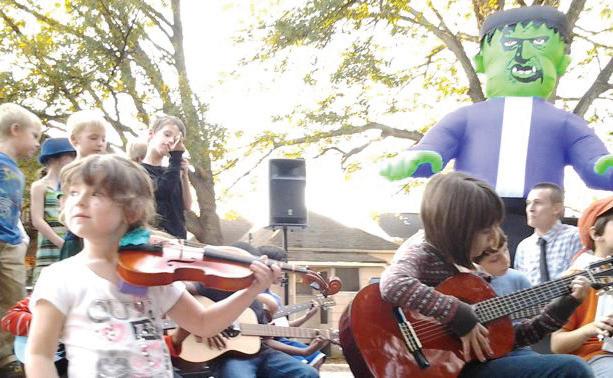
Voted “2024 and 2025 Best of Georgia” Music Schools & Instruction. CMC Atlanta’s professional faculty offers performance and projectbased immersive music education programs and in classical, jazz, rock, folk and roots music, from beginner to pre-professional, ages 4 and older. The comprehensive program catalogue includes private lessons, after-school programs, day camps, workshops, a gap program and an accredited high school conservatory. Register today!
THE COMIC WORKSHOP
404-946-8834 | thecomicworkshop.org | Avondale Estates
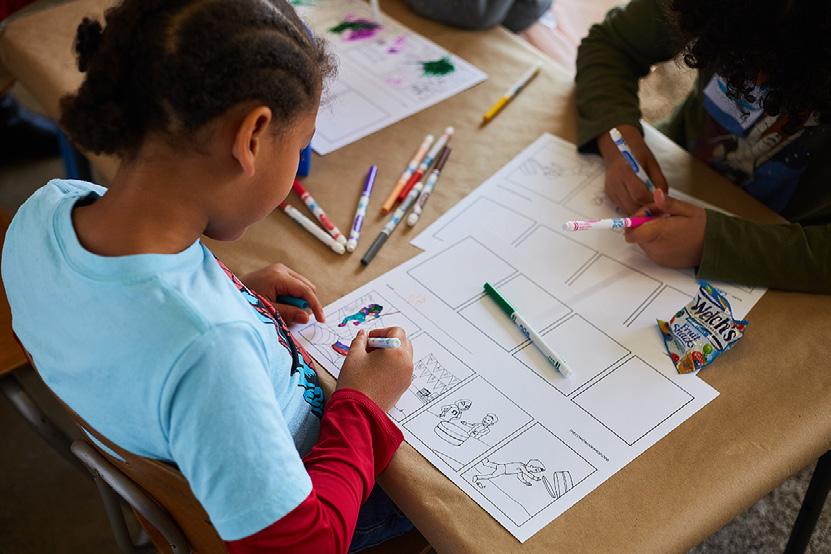
Ignite your child’s imagination at The Comic Workshop, where professional comic book artists turn kids into confident storytellers. With industry-standard supplies and age-tailored lessons, students build reading, writing, and drawing skills while exploring real creative careers and discovering the power of their own stories. Register for classes, camps and private lessons online.
Fine Arts Spotlight
MISTER JOHN’S MUSIC
misterjohnsmusic.com/atlanta
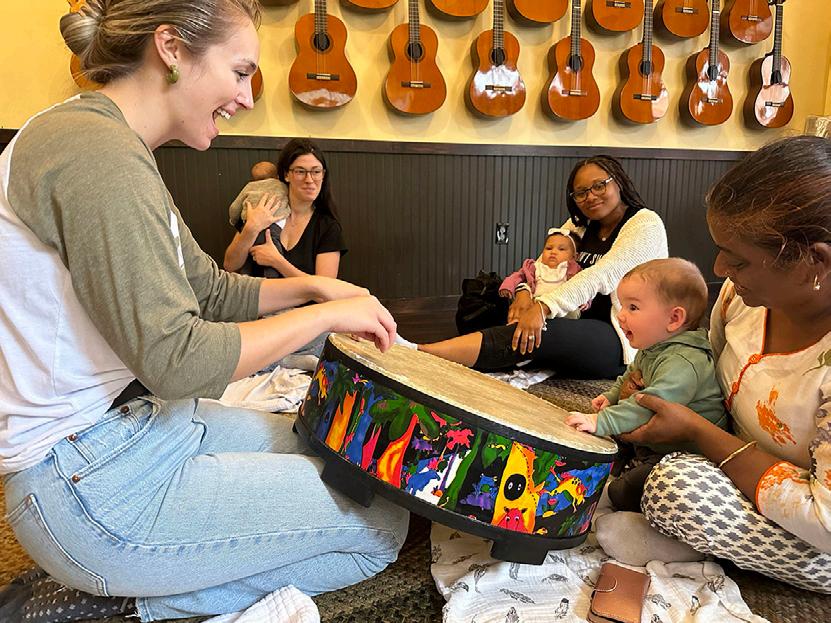
Mister John’s Music, a boutique music school in Avondale Estates, serves local families through their award-winning and highlypraised music education programs for babies, kids and adults. Early childhood classes boost brain functioning, motor skills and language development while focusing on positive social-emotional dynamics and shared experience. Group classes in guitar, ukulele, piano and voice for kids and adults foster community and prioritize fun through supportive music education. At MJM, there’s something for everyone!
atlantaparent.com
CITY DANCE AND MUSIC
404-877-0005 | citydanceandmusic.com
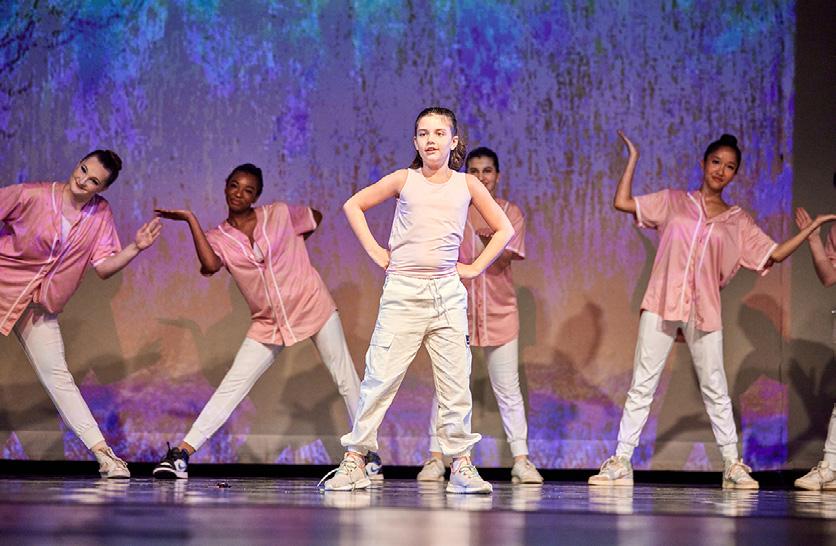
A trusted arts staple for over 25 years, City Dance & Music offers dance and music education for children, teens, and adults. Training options include multiple levels of ballet, contemporary, hip-hop, jazz, tap, pointe, piano and violin with year-round classes, lessons, and camps. Guided by professional educators who are active local performing artists, students gain performance opportunities, including competitive options, through its nonprofit partner CityDance, Inc.
The Creative Edge: How Arts Make Kids Smarter
by Shannon Dean
In a highly competitive world that places a huge premium on easily measured achievements, creative arts are sometimes considered an extra for which there is not enough time or money. However, research indicates that the arts are every bit as beneficial to brain development and learning as traditional academics. Here’s a look at some of benefits of exposing your child to the arts.
Teachers have always intuitively known that the arts increase academic performance, behavior and attendance. Recent brain research confirms their theory, with evidence that the arts boost memory, intellectual curiosity and self-esteem.
In its published study, “Champions of Change: The Impact of the Arts on Learning,” the Arts Education Partnership says, “When well taught, the arts provide young people with authentic learning experiences that engage their minds, hearts and bodies and nurtures the development of cognitive, social and personal competencies.”
Skills That Power Future Success
There’s often an assumption that a significant investment in the arts is a financial loss. Sure, it’s nice to have an artistic child, but having a successful, employable child has to be the real goal.
Fortunately, it is possible to have all three, because exposure to the arts develops skills that will be highly valued in the future. The evolving workplace rewards creative thinkers who can generate innovative and original ideas in a variety of media.
Former U.S. Department of Education
Secretary Richard Riley has said, “If young Americans are to succeed, they will need an education that develops imaginative and toughminded thinking. The arts powerfully nurture this ability over other areas of learning.” Better still, in a global world that is becoming more diverse, exposure to the arts helps children appreciate different points of view.
Yet, while the arts open a world of possibilities to a child, they also give him a greater sense of himself. While enjoying

artistic experiences, children are stripped of pretenses and self-consciousness. As a result, they develop an awareness of, and appreciation for, their unique individuality.
“One thing I’ve learned over the years is that every great artist — whether in music, writing or any creative field — isn’t trying to conform to a genre,” says Atlanta-based pianist Joe Alterman. “They’re just trying to express who they are: a blend of everything they’ve felt and absorbed, stirred together in their own blender.”
Simple, Low-Cost Ways to Add More Art
Exposing a child to the arts need not be time-consuming, difficult or expensive. Most communities offer enhancement programs at little or no cost. It is also very easy to reinforce concepts at home.
n Music: Listening to, singing and playing music has an undeniable effect on reasoning, language, math and social behavior. Exposure to music can actually form new, permanent connections in a child’s brain.
Parents can easily play or make music at home, but don’t be afraid to take your child to the symphony. Many offer childfriendly matinees and instrument “petting zoos” that expose a child to different instruments and sounds. It’s fun to watch a child’s reaction when he instinctively gravitates toward an instrument.
n Creative Drama: This category can include dramatic role-play, story enactment or viewing live theater. Exposure enhances a child’s imagination, builds their self-confidence and improves memory and
reading skills. Drama students also learn to comfortably express their emotions in a group setting, a skill that becomes important as they approach adulthood.
At home, encourage pretend play. Consider a family talent show to allow even shy children to shine in the safety of their own home. Check out local theater offerings, even at local high schools, that are specifically for kids.
n The Visual Arts: Exposure to painting, drawing, sculpture, photography and architecture helps develop a child’s fine motor and critical thinking skills. “Exposing kids to different mediums is good, too,” says Roswell mom Sheri Gushta. “You never know what they will like or what they may have a talent for if they don’t try it out.”
It’s easy to encourage visual arts at home because kids love to draw, sculpt and build. Allow kids to use an old phone to take photographs and then choose one for framing. Look for family nights at your local museum and ask your child to describe what he likes about his favorite pieces.
n Literary Arts: Exposure to or creating written works, poetry and narratives encourages self-exploration and intellectual curiosity. Despite geographic or socioeconomic barriers, literature can teach kids to appreciate the opinions and differences of others while also recognizing and honoring their own abilities and backgrounds.
Literary reading is in a steep decline, with the most dramatic drop-off happening in the youngest age groups. Consider reading the classics as a family. “Swiss Family Robinson,” “Through the Looking Glass,” “Treasure Island” and “Little Women” are popular choices.
Fine Arts Spotlight
Spotlight on the Arts
SMALL STEPS MUSIC
770-703-4577 | smallstepsmusicllc.com
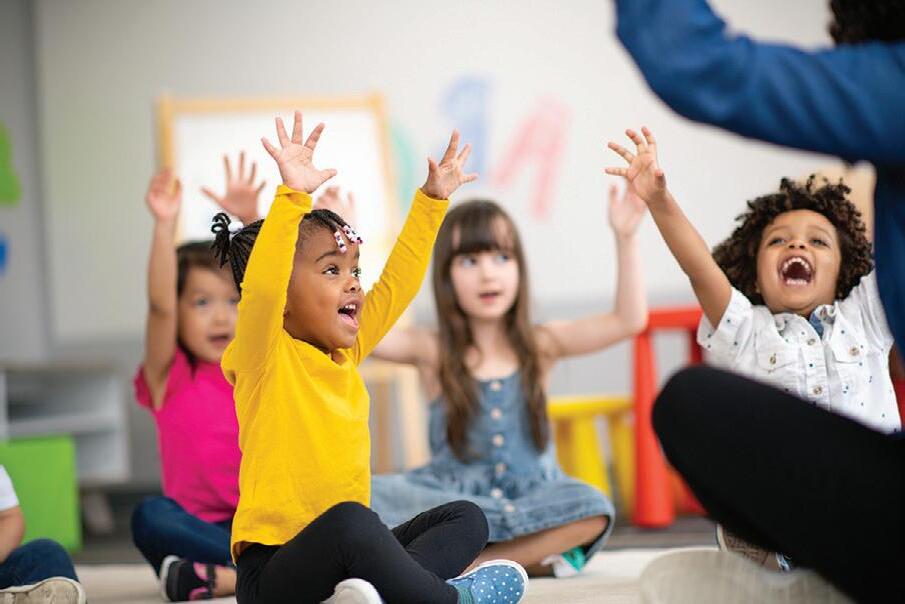
Give your child the gift of music! Small Steps Music supports and encourages a love of music and the development of new skills through music therapy sessions, private lessons, group classes, workshops, camps, homeschool programs, and birthday parties. Small Steps Music programs use innovative teaching strategies and creative music activities within a therapeutic environment. Programs available for ages 6-weeks to adult. Schedule in-home, in-clinic, or virtually. Welcoming and supporting students with special needs!
Fine Arts Spotlight
TERMINUS BALLET SCHOOL
terminusmbt.com
Fine Arts Spotlight
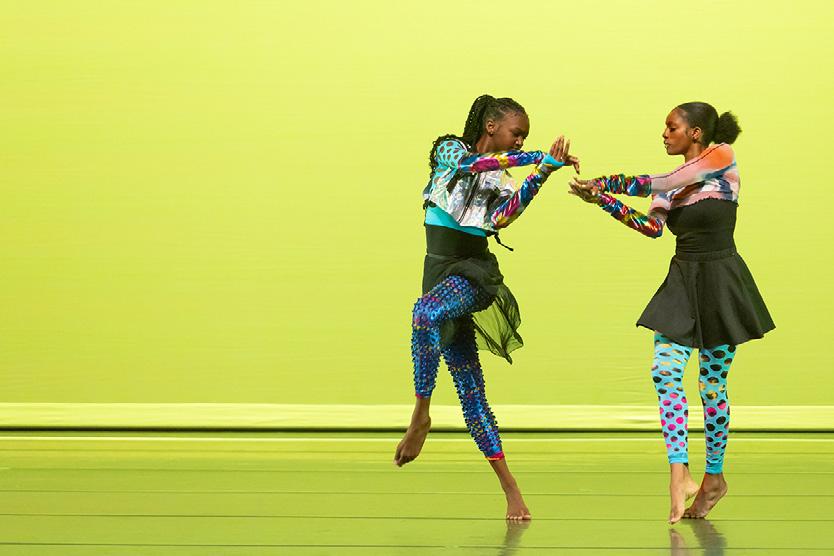
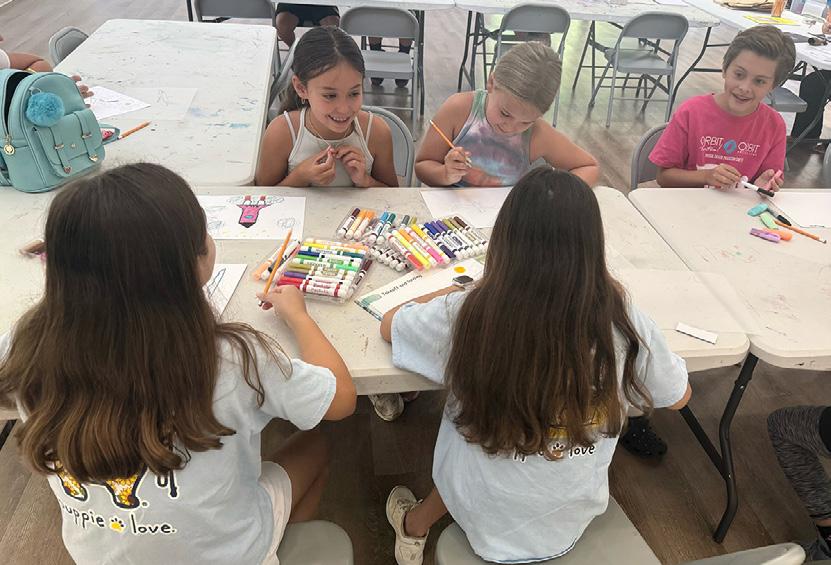
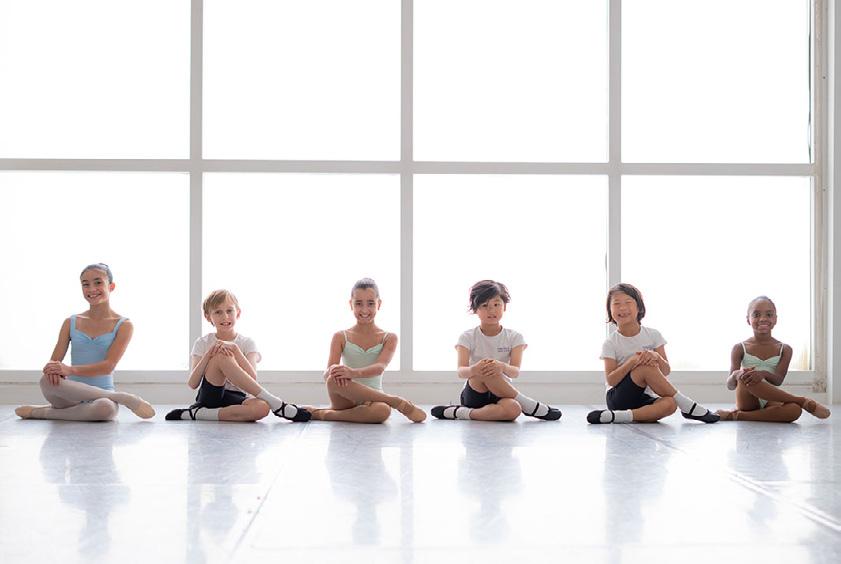
At Terminus Ballet School, students learn the art of dance while making friends and developing their confidence. The curriculum includes ballet, pointe or boys’ technique, and contemporary dance with opportunities to perform throughout the year. Student creativity is encouraged whilst strengthening their technical foundation. Led by a team of professional dancers, the faculty brings an elite understanding to the classroom and creates a safe and nurturing environment. For boys and girls ages 3+. For questions please contact c.welker@terminusmbt.com.
MOVING IN THE SPIRIT
404-624-5295 | movinginthespirit.org
Moving in the Spirit is an award-winning creative youth development program where young people ages 3-18 study the art of dance, make friends, and develop life and leadership skills. Our nurturing curriculum fosters unity, empathy, and compassion while supporting each dancer’s technical and artistic growth. Sliding scale tuition is available. Join the movement at movinginthespirit.org!
ABERNATHY ARTS CENTER
404-343-6692 | artsandysprings.org | Sandy Springs
atlantaparent.com
Abernathy Arts Center offers after school classes for kids and teens for six-week sessions throughout the year. Young artists can explore creative drawing and painting, mixed media and cartoon drawing classes on Tuesdays, Wednesdays and Thursdays during the school year. Courses are led by skilled teaching artists who will guide your child through hands-on learning in a friendly and welcoming environment. To register and learn more about classes and camps, please visit artsandysprings.org/abernathy-artss.
ME AL WARS
Nutritious eating shouldn’t be a battle. Here’s how everyone wins!

by Mary Welch
PARENT
QUIZ: Your child refuses to eat the food on their plate, do you: 1. Guilt trip (For example, say: there are starving children around the world.)
them have
Although many parents use a variety of tactics, nutritional experts say the best way to get kids to eat healthy meals is to let them select what they want to eat — and when.
“The parents’ job is to provide their kids with a variety of healthy foods to eat,” says Katherine Shary, registered dietitian with Children’s Healthcare of Atlanta. “It is up to that child to decide if they want to eat the offered food. A lot of times parents are well intentioned and overthink food, forcing kids to eat a certain type and a certain amount. Let the child decide and they will develop healthy eating habits.”
She adds, “It’s giving power to kids and helps decrease power struggles. It takes the pressure off parents. Children have hunger cues and will eat when they need to.”
Yes, but doesn’t that cause an imbalance of nutrition that can be detrimental to a child’s growth, both physically and mentally? Should a child really be responsible for their nutrition? While the answer to the latter is a clear yes, there are strategies parents can use to nudge kids into making smart decisions
so that they get what they need to develop strong bodies and minds.
Kate Keirsey, a registered dietitian and owner of Wellfed Family Nutrition Services, sees the battle from two angles: picky eaters and worried parents. “Forcing the kids to try it will just reinforce that they won’t eat it but there are ways to introduce foods in different ways.”
It’s up to the parents to set the stage for the child to want to eat healthy foods — most of the time. In the battle of nutrition, rather than open war, try sabotage and guerrilla tactics.
n Sneak Attack
“The number one issue you see in childhood nutrition is that they need to eat more fruits and vegetables,” says Carolyn O’Neil, a registered dietitian nutritionist and host of Watch What You Eat with Carolyn O’Neil. “And, it doesn’t take a lot to get the job done — a couple of servings a day. Unfortunately, we’re not even doing that. But there are ways to help kids get the nutrition
they need to grow and also not have issues, such as constipation and tummy issues from not getting enough fiber.”
One tactic is to take foods kids naturally like, such as pizza and burgers, and make them healthier, says Chef Christian Evans, culinary director at Divan Restaurant & Bar, a Persian restaurant in Midtown. He suggests mini pizza bites but using zucchini squares instead of dough and putting favorite pizza toppings, such as cheese, sauce and meats on it. “It’s a fun healthy version,” he says.
Speaking of pizza, try adding creative and healthy toppings such as chopped sweet peppers and sautéed wheels of zucchini. While many put pineapples on pizzas, O’Neil says she’s been known to slip thin slices of strawberries underneath the pepperoni. “It adds a bit of sweetness to the saltiness of the pepperoni, and it’s delicious.” Like Evans, she’s a fan of alternative pizzas. “Take an English muffin, add sauce, shredded mozzarella cheese and try to add a vegetable.”
There are some who advocate sneaking vegetables into recipes, such as adding sweet potatoes into a chocolate milkshake or cauliflower into mashed potatoes. “The jury is out on all that, and you should be honest about it. But putting carrots into meatballs is great,” says O’Neil. “I also love adding chopped mushrooms into the hamburger mix. It’s another vegetable but also makes the burger more moist and super flavorful.”
Even desserts may be more nutritious if you, say, serve cake with strawberries or blueberries on the side or make fruit cups and add some syrup from frozen fruits. Want to serve favorite fruits but they are out of season or, frankly, too expensive? Frozen fruit is just as nutritious.
n Supplies at the Ready
“Kids, as they experience body growth, seem to be always hungry and they’re going to go to the kitchen to put something in their mouths,” says Kristen Elliott, nutrition specialist at the Atlanta Community Food Bank. “They become teen hunger machines! So, let them have some chips but paired with fruit or protein bars that they can easily grab. Milk is a great source of protein and calcium, so suggest they have a bowl of cereal where they will get vitamins and protein.”
Fruit sitting on the counter may be more appealing to dust than children, so slice up the apples, oranges and peaches (especially grapes, which can be a choking hazard). Make it more fun by adding dips, such as yogurt, hummus, cottage cheese, nut butter or cheese spread. Put some Goldfish crackers on a plate along with string cheese, chances are both will be eaten.
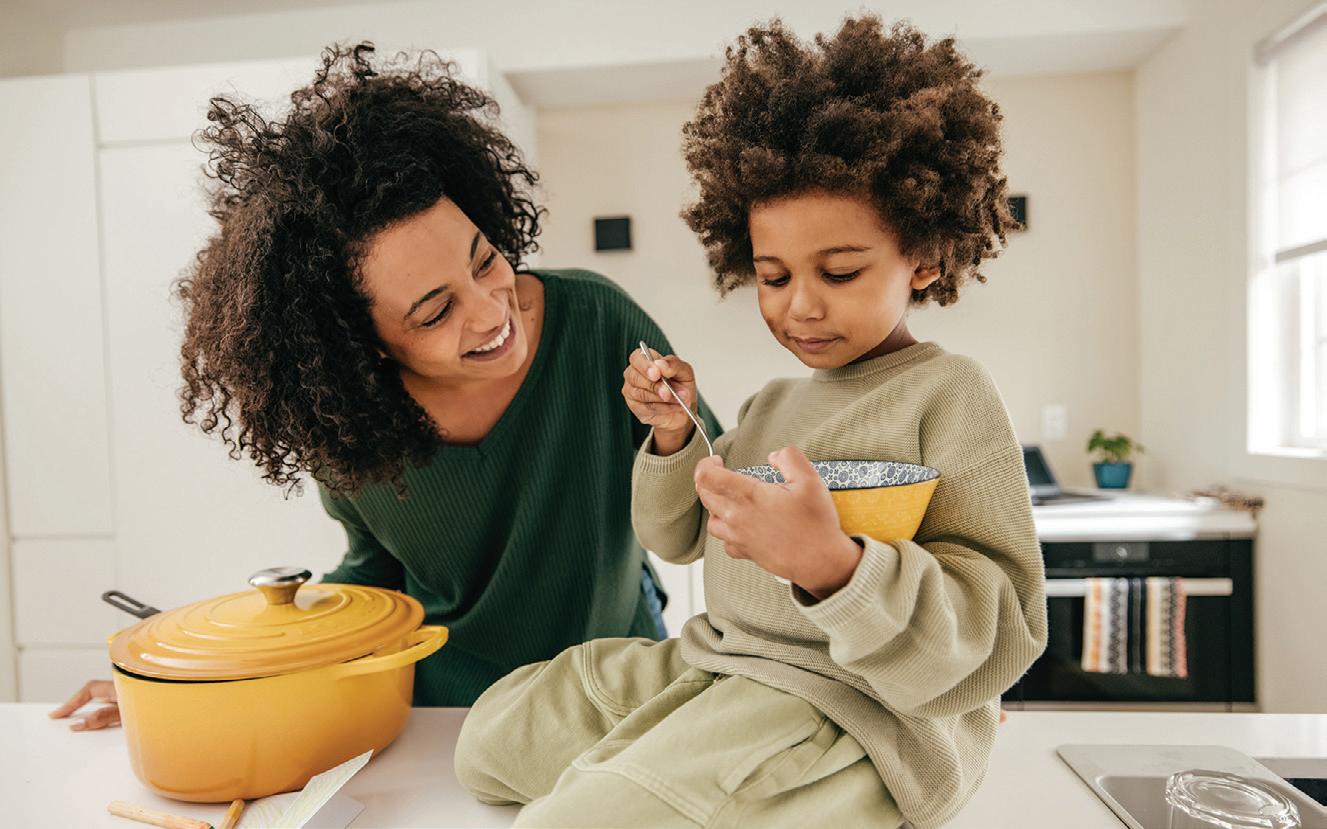
Nutritional experts say the best way to get kids to eat healthy meals is to let them select what they want to eat — and when.
Many parents think there are only two dinner options — a traditional home-cooked meal and take-out, but there are plenty of variations in between. Use a fresh protein, and then, get some help from the freezer section with vegetables and other sides. “Remember every meal doesn’t have to be perfect,” says Shary. “Canned green beans are nutritious. If you’re doing takeout, order grilled chicken instead of fried. Try a meatless meal every week; beans are cheap and filling.”
n Battle Plans
When you’re part of the process, you tend to be more invested — and it’s the same with food. Take the kids grocery shopping but turn it more into an adventure than a chore. Go down the aisles and let them help
select the watermelon or decide to have a salad with dinner rather than broccoli. “If they don’t eat meat, teach them about protein and have them find suitable substitutes, such as edamame,” says Keirsey.
The supermarket or farmer’s market are also sources to find new fruits and vegetables. “So many people are used to eating broccoli and asparagus and usually children aren’t big fans, but parents should know there are so many other vegetables,” says Chef Evans. “At the grocery store, you and your child can have fun looking at strange foods and deciding to try them. Teenagers, especially, become more curious about food as they become more exposed to different foods because of their friends or traveling. It doesn’t take a lot of time or effort to cook them.”
Cont’d on next page

Take the kids grocery shopping but turn it more into an adventure than a chore.
ME AL WARS
Among his recommendations are bok choy, which is similar to a cabbage, or kohlrabi, a cabbage that is native to Europe, especially Germany, and has a mildly sweet taste, similar to a broccoli stem. Dragon fruit has a sweet taste and is similar to a pear or kiwi while jicama is a brown-skinned root vegetable that is often eaten raw in salads or with chili and lime.
n Lead By Example
Yes, it comes back to the parents. While it is up to the parents to provide healthy nutritious meals, it’s also the parents’ job to eat healthy nutritious meals themselves. Let your kids see you reach for a peach instead of chips. Try new foods with a smile.
Remember it’s a nutritional marathon, not a race. Studies show that a person may need up to 15 tries before they change their mind about a food. If a child — or teen — doesn’t like something, don’t give up. Keep introducing it and they may try it and eventually like it. Also, remember a child’s taste buds change as they get older. “If a child doesn’t like cooked carrots, try roasting them with honey or serving them raw with ranch dressing or shredded with raisins,” suggests Keirsey. “Chances are they will like one of the preparations and eventually eat them all.”
Of course, when a child discovers something he or she loves, binging tends to be the result. “When you give ice cream to a child for the first time or they discover a new flavor, they want it all the time. They want it for breakfast, lunch and dinner,” says Chef Evans. “Well, me too! The older they get, they will understand there is a time and place for everything.”
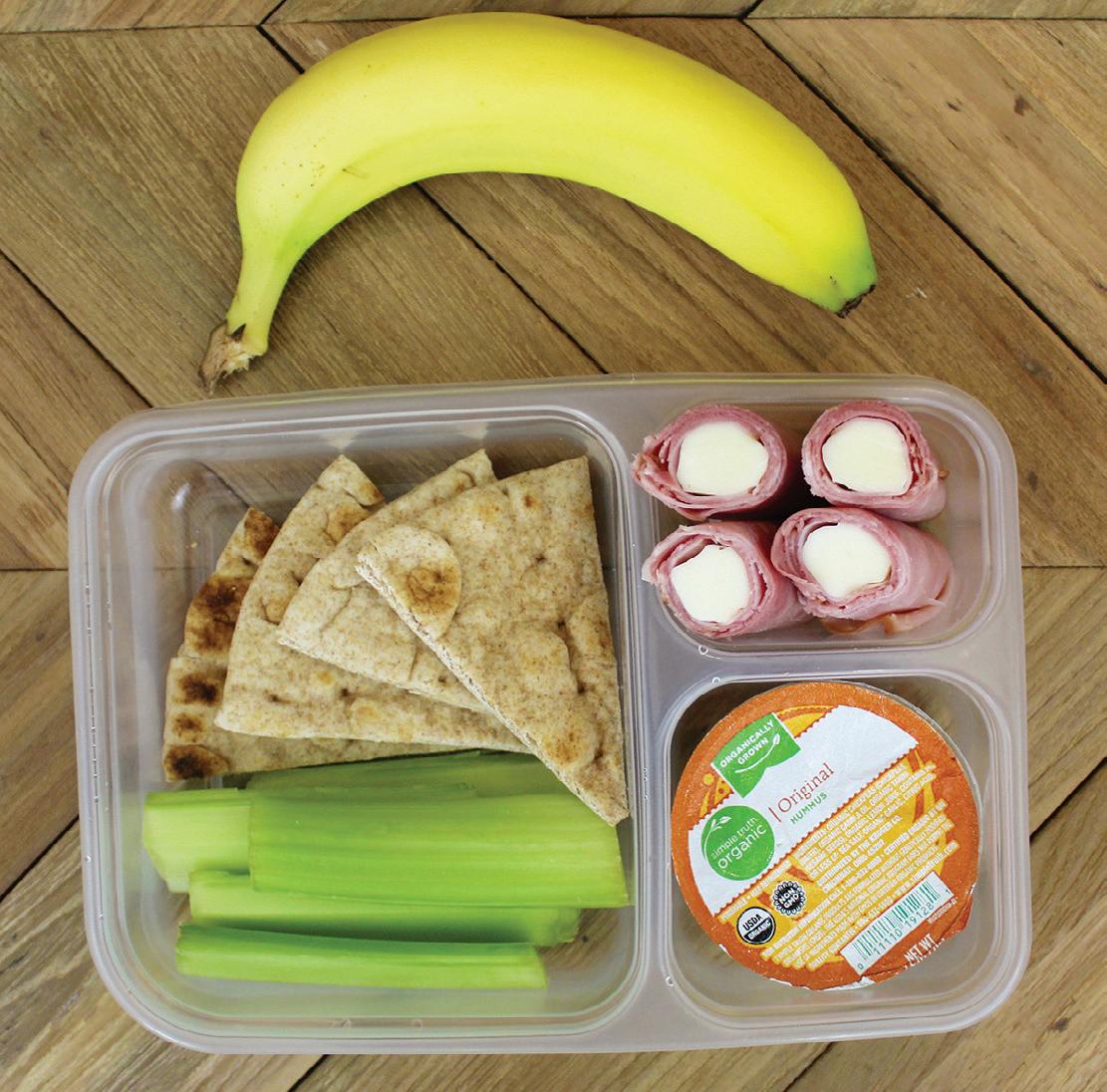
Tired of the same old meals every week?
If you are, so are your kids. Get help to spice up dinner time. Go to websites, such as acfb.org and strong4life.com, where they post nutritious recipes as well as information on kids eating habits and nutritional guidelines.
A ham and cheese roll up is an example of a healthy school lunch.
Photo


Gwinnett Pediatrics & Adolescent Medicine’s team of professionals share the vision of providing high quality, state-of-the-art, primary pediatric care from birth through adolescence in a family-focused environment. All of our physicians are board certified in pediatrics.
WE ARE COMMITTED TO MAKING EVERY VISIT COMFORTABLE AND CONVENIENT.
All of our locations feature separate well and sick waiting rooms, kid-friendly video entertainment and short wait times.
We use the latest electronic health record (EHR) system, giving parents full access to their child’s medical records through our secure patient portal.
With online self-scheduling available directly on our website, you can book rechecks, follow ups, same day or next-day appointments anytime.
IN THE NEIGHBORHOOD
The High-Five List: Lawrenceville/Snellville
A look at the top family-friendly spots in this part of metro Atlanta.
by Tali Benjamin
by Josh
1
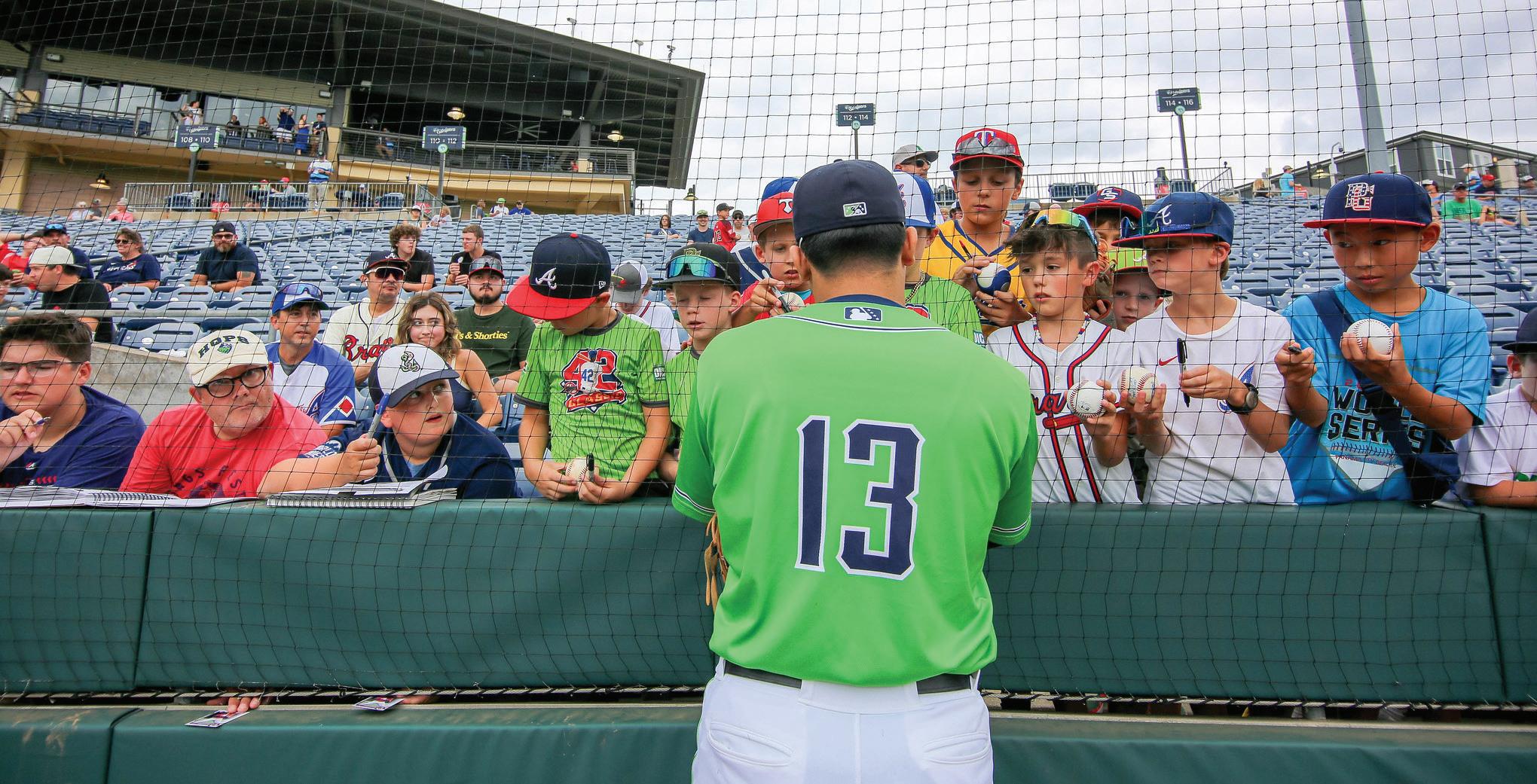
Enjoy a Gwinnett Stripers game at Coolray Field, which features a 360-degree concourse for unique views of the field. Home to the minor league baseball team, the stadium also hosts concerts and events. You can watch from various types of seating, including chairbacks, picnic tables or the large outfield berm for a more relaxed experience. During a game, enjoy the Kids Zone or host a birthday party.
2
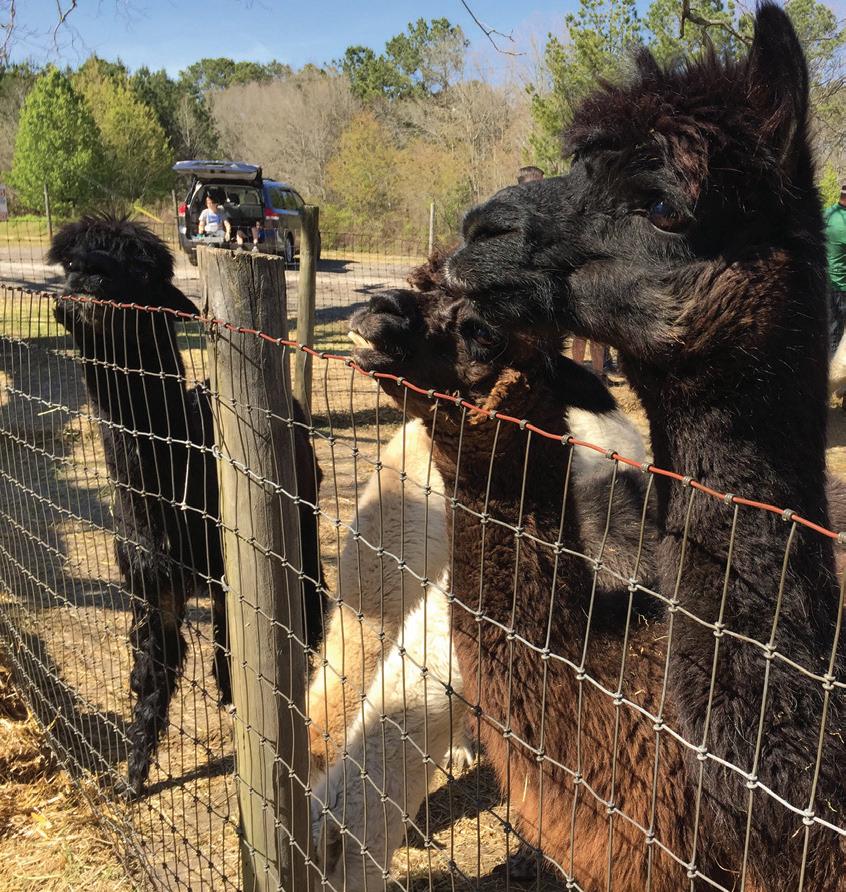
Animal lovers will have a blast at Creekwater Alpaca Farm in Snellville. Get up close and personal with the alpacas when you feed them treats or take a selfie. The animal habitat is also home to ponies, Nigerian dwarf goats, kune kune pigs and miniature donkeys.
Photo
Connor
Gwinnett Stripers
Creekwater Alpaca Farm
Lawrenceville is the second oldest city in Georgia and serves as Gwinnett County’s seat. It is known for being a growing, family-friendly suburb that offers a mix of history, arts, diverse food and suburban convenience.
Snellville was established in the 1870s and incorporated in 1923. The suburban city is known for its quality public schools, strong sense of community, affordability and many parks and recreation centers.
Both cities were originally inhabited by Muscogee (Creek) people who lived along the waterways in the area.
3
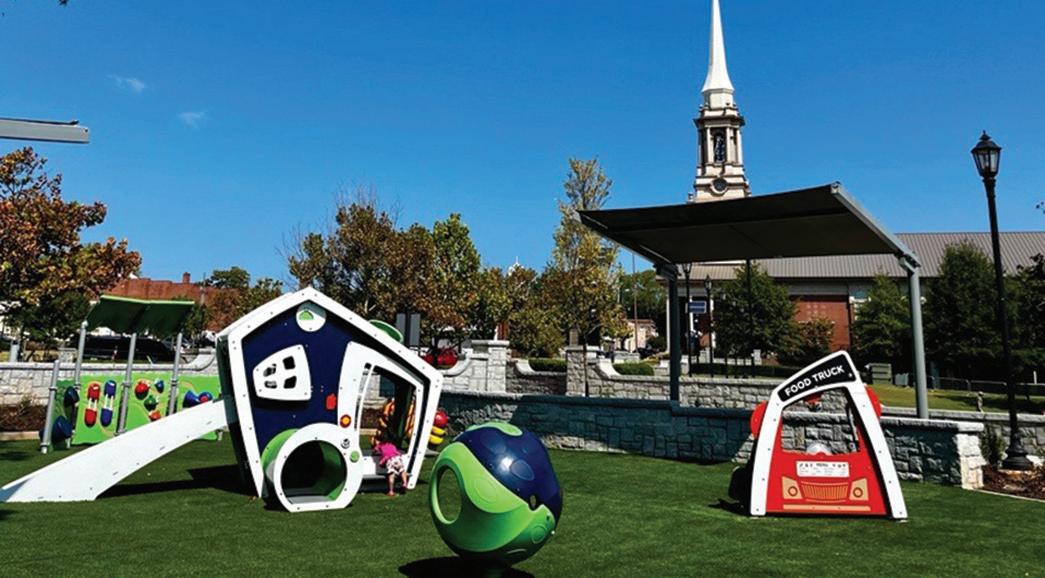
Shop, play, eat and enjoy community events in Downtown Lawrenceville. The historic square is home to Aurora Theatre and Lawrenceville Lawn — a central park that features an amphitheater, playground, green space and restrooms. The city sponsors a concert series, Free Comic Book Day, Harvest Festival and more. Also, enjoy free parking with 1,200 spaces available.
Feast on food and fun at Medieval Times in Lawrenceville. The twohour experience features a four-course meal and entertainment, including authentic sword fights and jousting. If you’ve been before, now is the time to return because there’s a new show to enjoy!
5 Cont’d on next page
4
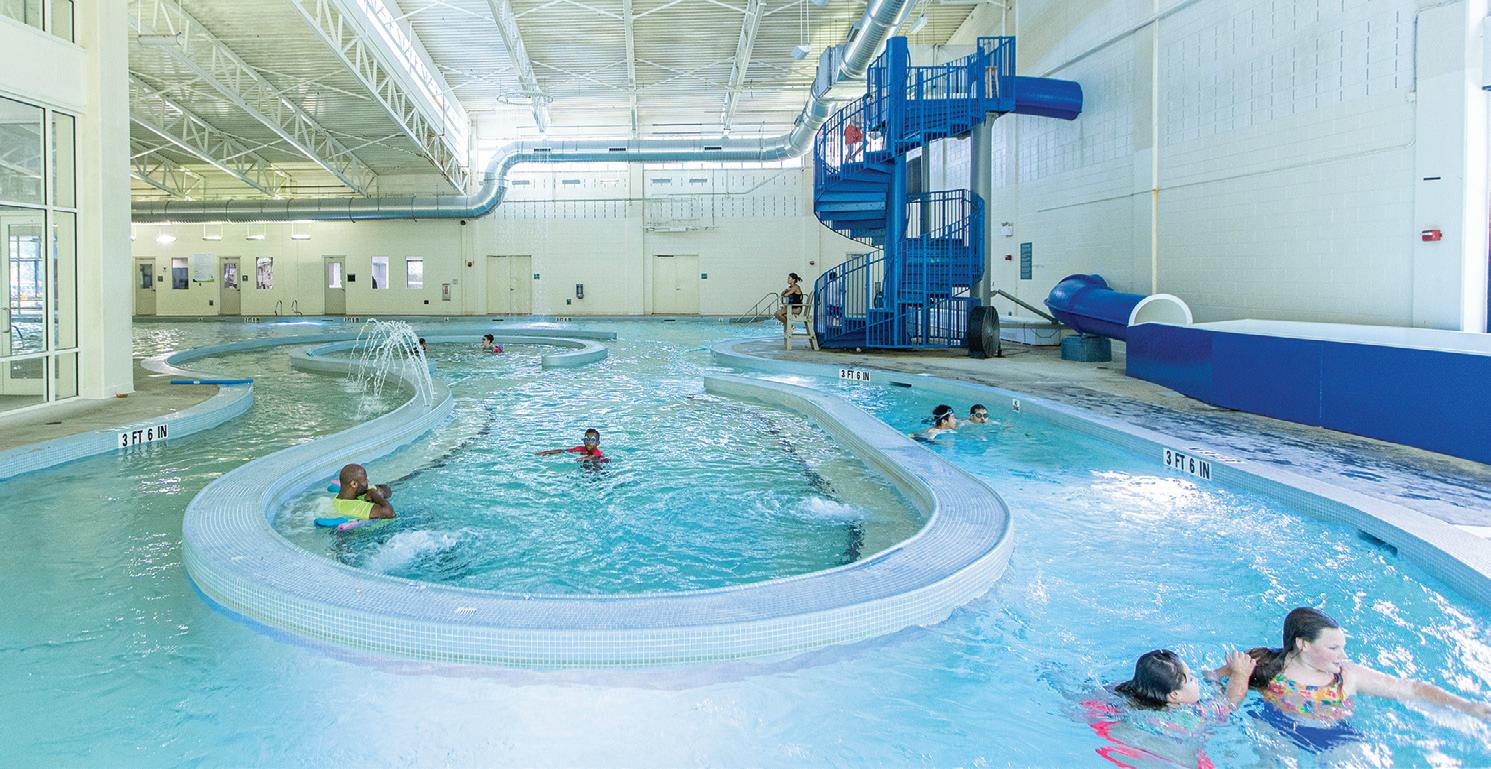
Rain or shine, splash around at Bethesda Park Aquatic Center in Lawrenceville. Available for year-round fun, the indoor facility features a leisure pool with zero-depth entry, giant waterslide, lazy river, play structures and sprayers, and hydrotherapy benches. For those learning to swim, classes are offered as well.

Lawrenceville Lawn
Bethesda Park Aquatic Center
Medieval Times

IN THE NEIGHBORHOOD
More Fun Spots
n The Diner at Webb Gin. This Snellville spot has an extensive kids’ menu with breakfast and lunch/dinner options with affordable prices.
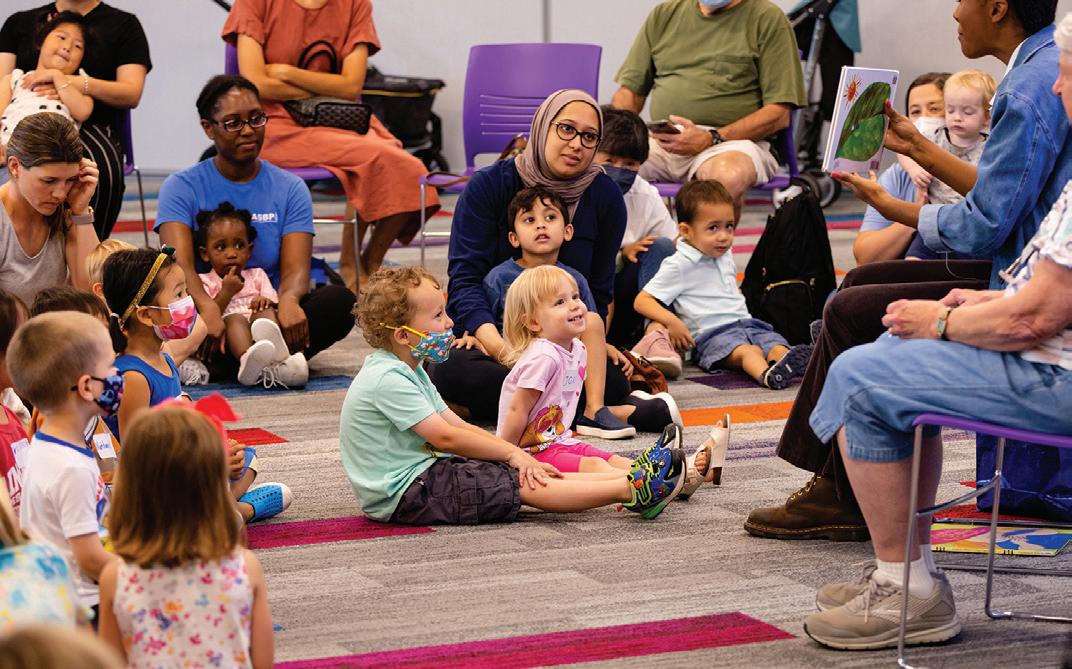
n A public library branch. Several locations are walkable from parks and feature evening story times and other familyfriendly events.
n Sugarloaf Mills. Located in Lawrenceville, this mall has it all — kid-friendly shops like Carter’s and the LEGO Store, Medieval Times, Altitude Trampoline Park, a movie theater, Dave & Buster’s and more.
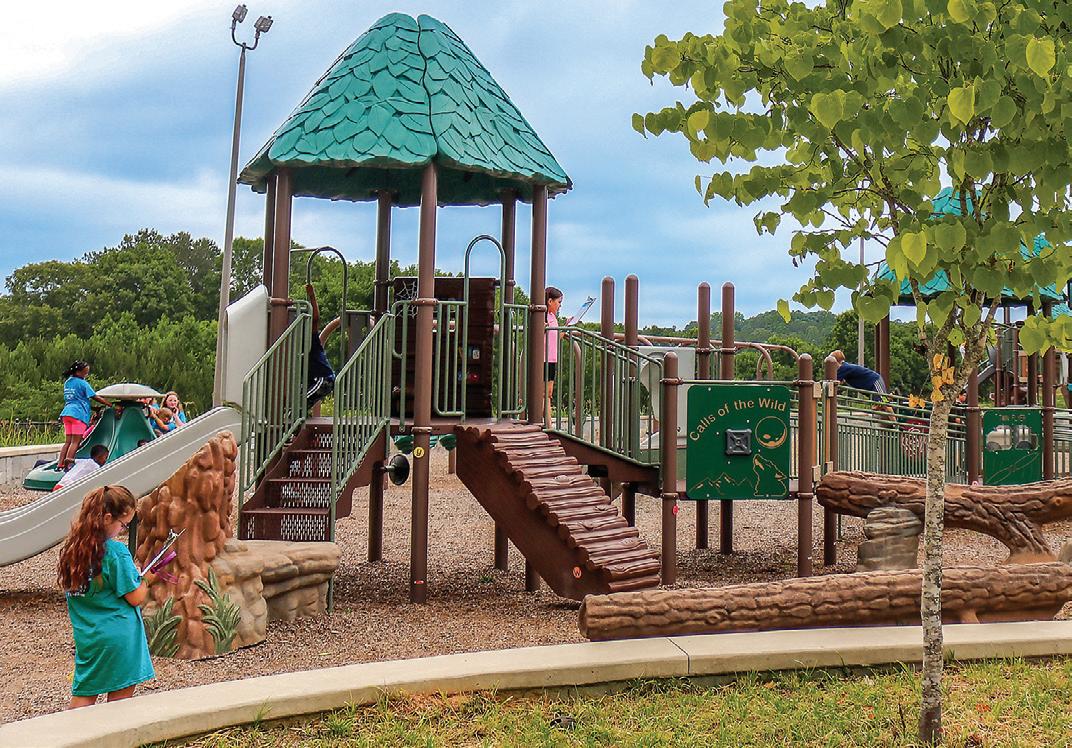
n Enjoy the great outdoors! Spend the day at 178-acre Lenora Park in Snellville. Highlights include a fishing lake, playground and outdoor pool (seasonal). Sporty kids will enjoy the football/ multi-purpose field with lighted walking track, six baseball/ softball fields and 18-hole disc golf course. Or, opt for Tribble Mill Park in Lawrenceville. There is so much to do in the 700 acres. Non-motorized boaters can fish on the lake and kids can run wild in Ozora Meadows. There is also a playground and soft surface trails for equestrian and mountain biking exploration.
Gwinnett County Public Library
Tribble Mill Park

PILE IT ON! Tips for Surviving in The Sandwich Generation

by Tali Benjamin
Sandwiches. I like to eat them, but I am not sure I like being compared to one. That said, it is quite an apt metaphor for the position I often find myself in — directly between the needs of my child and the needs of my aging parents and in-laws.
Some days, I am simply a condiment — the mayo or mustard that loosely holds together a wellconstructed sandwich, adding some flavor and structure to the sandwich. Other days, I feel more like the peanut butter and jelly haphazardly slathered on two pieces of squishy bread — jumbled and sticky. And, on the bad days, I am the hot, squishy cheese of a grilled sandwich that is starting to lose its shape under the pressure of intense needs from both sides at precisely the same time.
The shift between sandwich types for me is situational since there are physical, mental and emotional components to each scenario. For instance, being aware of text scams and remembering to pass this information along to my parents so they don’t click on a link and unwittingly give access to an online account is a small thing, but it is a constant part of my mental load. This is a spicy mustard moment.
Then, there are larger needs. A parent (or two) is in the hospital. You still have work responsibilities, your child still has school and activities, everyone needs meals. You want to visit the hospital, bring food to the parent who is home, be available to speak with the doctors to understand what is happening, and plan for what comes next. Emotions creep in — worry, sadness, hope. Physical symptoms manifest — stress, exhaustion, anxiety. This, my friends, is a five-cheese grilled cheese moment.
I know I am not alone. That is, after all, why they call us “The Sandwich Generation.” With all the demands on your time, how can you manage it all and leave a little space between the lettuce and tomatoes for yourself? Here are five things that have worked for me.
1 2 3
Create a schedule.
Prioritize the most important needs first and see what things have to wait until the following week. Remember that it’s OK for not everything to happen right away.
Divide and conquer.
Can your spouse carry some of the load with your kids? Do you have siblings that live in town who can help with your parents? Are there support services you can take advantage of?
Set boundaries.
Protect one thing per week that is crucial for your mental health. Maybe that’s having family dinner on Friday nights because it’s tradition or driving your child to swim practice because that’s when you learn the most about her life. Understand your employer’s policy for family medical leave and ask for time off, flexible hours or remote work accordingly.
4
Take time for yourself.
Getting burned out can happen faster than you might think, so build in some self-care, even a quick break can help. Download a meditation app to help relax. Call a close friend or join a support group to get some thoughts and feelings off your chest.
5 Communicate.
Be open and honest, in an age-appropriate way, with your kids about what is happening so they know why you are home less often and why your fuse might be shorter than usual. Talk to your parents about their medical wishes, finances and plans for long-term care. These conversations can be tough, but they are crucial. Ask for help from a spouse, sibling or friend when you need it.


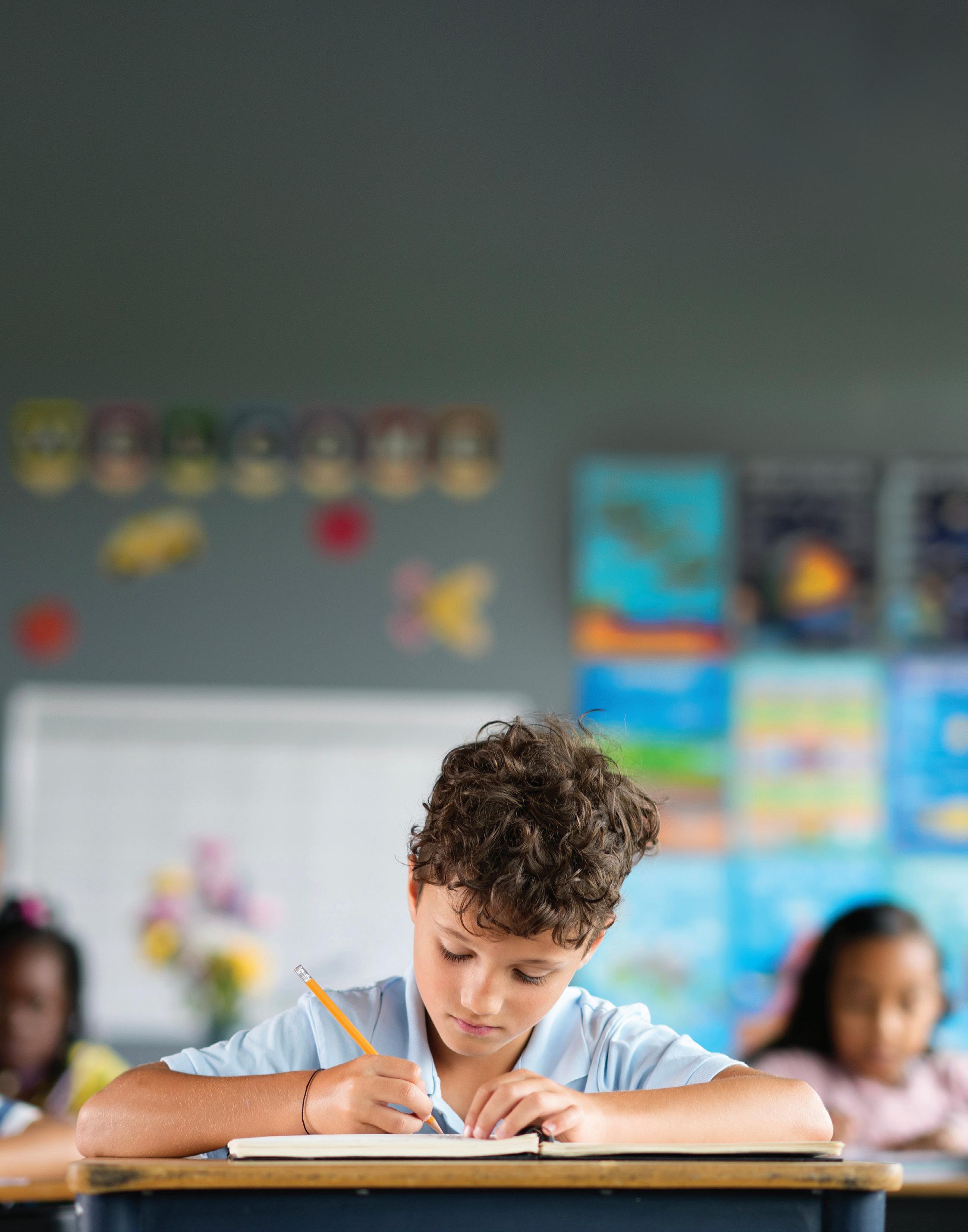
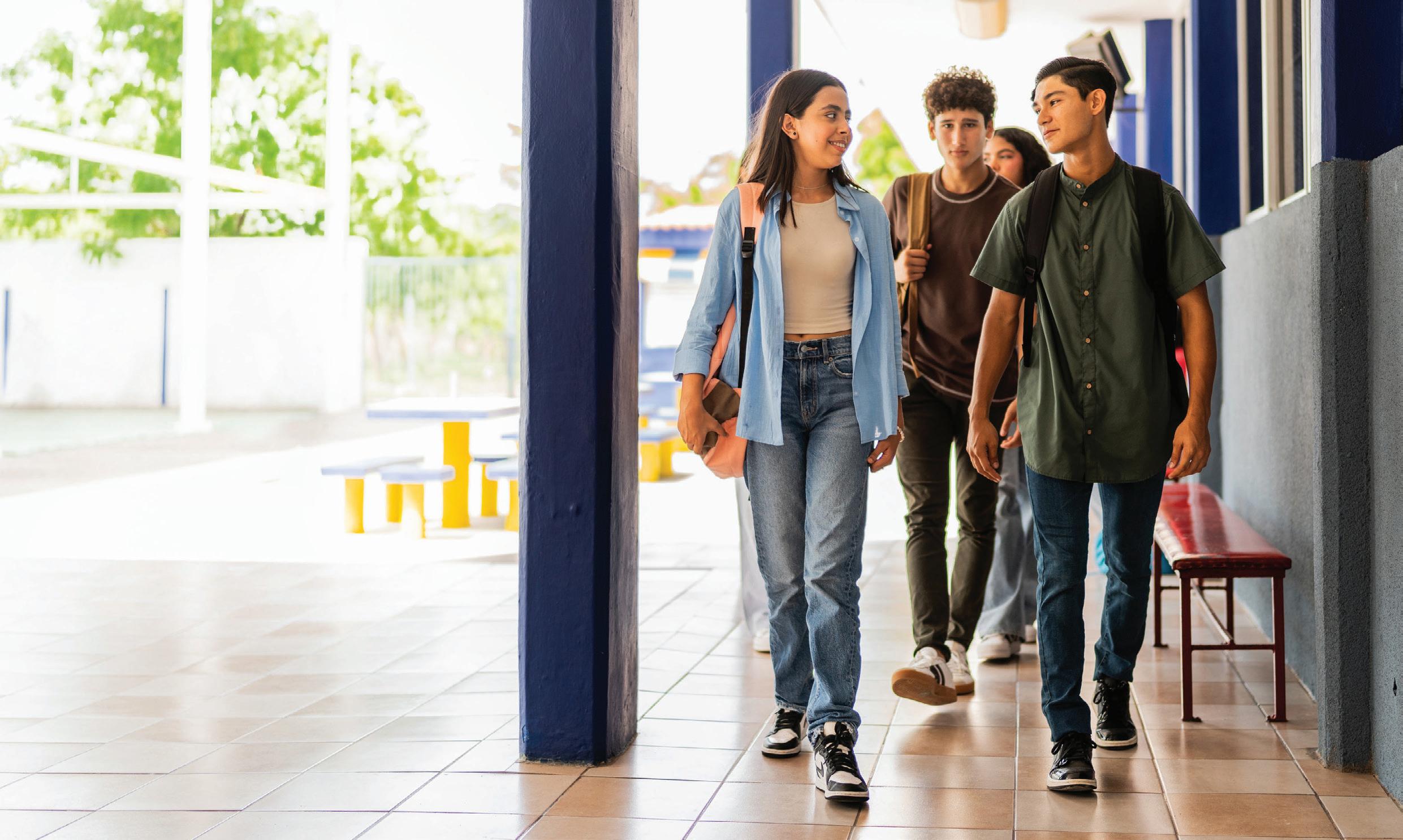
WHY SCHOOL IS HARDER FOR KIDS TODAY: Challenges Their Parents Never Faced
by Tali Benjamin
Life at school for today’s students is, in many ways, just like it’s always been – learning, friends, recess, lunch, homework. With technology, a more competitive landscape and safety concerns, there are challenges that are new to this generation. Parents should be aware of these factors to help their students be successful and happy.
n Taking tests on a computer.
Technology is everywhere in today’s classrooms. Most school systems and private schools in metro Atlanta start providing student devices as early as Kindergarten. Students are used to making PowerPoint presentations and typing assignments and essays instead of handwriting them. Test taking is also now techcentered with kids answering a question on the screen before moving to the next one. This adds a new level of pressure to get the answer right the first time.
n Remembering which platform to use.
Schools use various apps and online systems to manage assignments, store student records, share resources, communicate and more. It can be a real challenge for students to remember where to find a homework assignment or which folder a study guide might be in.

n Having instant access to grades.
Real-time grading gives parents and students immediate access to grades. While these apps can be helpful in keeping track of student performance, it can also be overwhelming. Students can compare their scores with peers before they have time to process their own performance. It also changes parentstudent interactions around grades since by the time a student arrives home, the parent is already aware of a test grade — good or bad.
n Participating in active shooter/lockdown drills.
Heightened security measures are now routine at schools. Even Kindergarten students practice being quiet in a dark room or closet in case of an active shooter incident. Other schools have metal detectors or require students to wear ID lanyards to help keep the campus safe.
n Being constantly connected.
Just like the lines between work and home have become blurred for parents, for today’s students, things like group texts and learning portals have brought school into the home in a more intrusive way than traditional homework ever did. Notification dings and assignment reminders pop up on school laptops or tablets. Peers share information or ask questions via chat apps at all hours of the day and night. Bullying can also come home in the form of cyberbullying. The inability to “turn school off” is a new reality for today’s students.
n Experiencing academic pressure early.
In the ’80s, students might have been in the redbird or bluebird reading group. In the ’90s, students were in the A, B or C group. Now, students are on-level, advanced or accelerated. They are aware of the labels and what they mean, not only for themselves, but compared to their peers. This leads to higher expectations from a younger age. Frequent standardized testing and more rigorous curriculum options at earlier grades, as well as competitive college admissions start to influence academic decisions even in middle school. Add to that, more structured options after school with a focus to specialize in a specific sport, club or activity. Today’s students have packed schedules and pressure to perform well at it all.
n Navigating social media.
School can be tough, especially for kids who may not have a lot of friends. Conflicts, comparison and social dynamics no longer stop when the school day ends. Now, kids know who is hanging out after school and on the weekends. They can continue an argument via text or app messaging. The idea of “public” adolescence is also a challenge for today’s kids. Every action can be recorded, shared or posted, so it is much harder for students to make a mistake without the whole world knowing.
n Changing of social norms.
Conversations around gender identity, sexual orientation and diversity are much more open than they were decades ago. Students today have to navigate more complex social expectations around sensitivity and inclusivity.

Frequent standardized testing and more rigorous curriculum options at earlier grades, as well as competitive college admissions start to influence academic decisions even in middle school.
n Analyzing information overload.
Kids have access to unlimited information, which is helpful but also overwhelming. Learning to judge what’s accurate or safe online is now essential. Thanks to their constant access to media, students today are also growing up with exposure to world events much earlier and more intensely than previous generations. This contributes to both opportunity of understanding the world around them and other people, as well as anxiety about war, pandemics and other crises.
Every generation faces challenges the previous ones didn’t, but understanding what today’s students are experiencing at school is crucial in empowering kids, making better educational decisions and bridging the communication gap.

GRADES

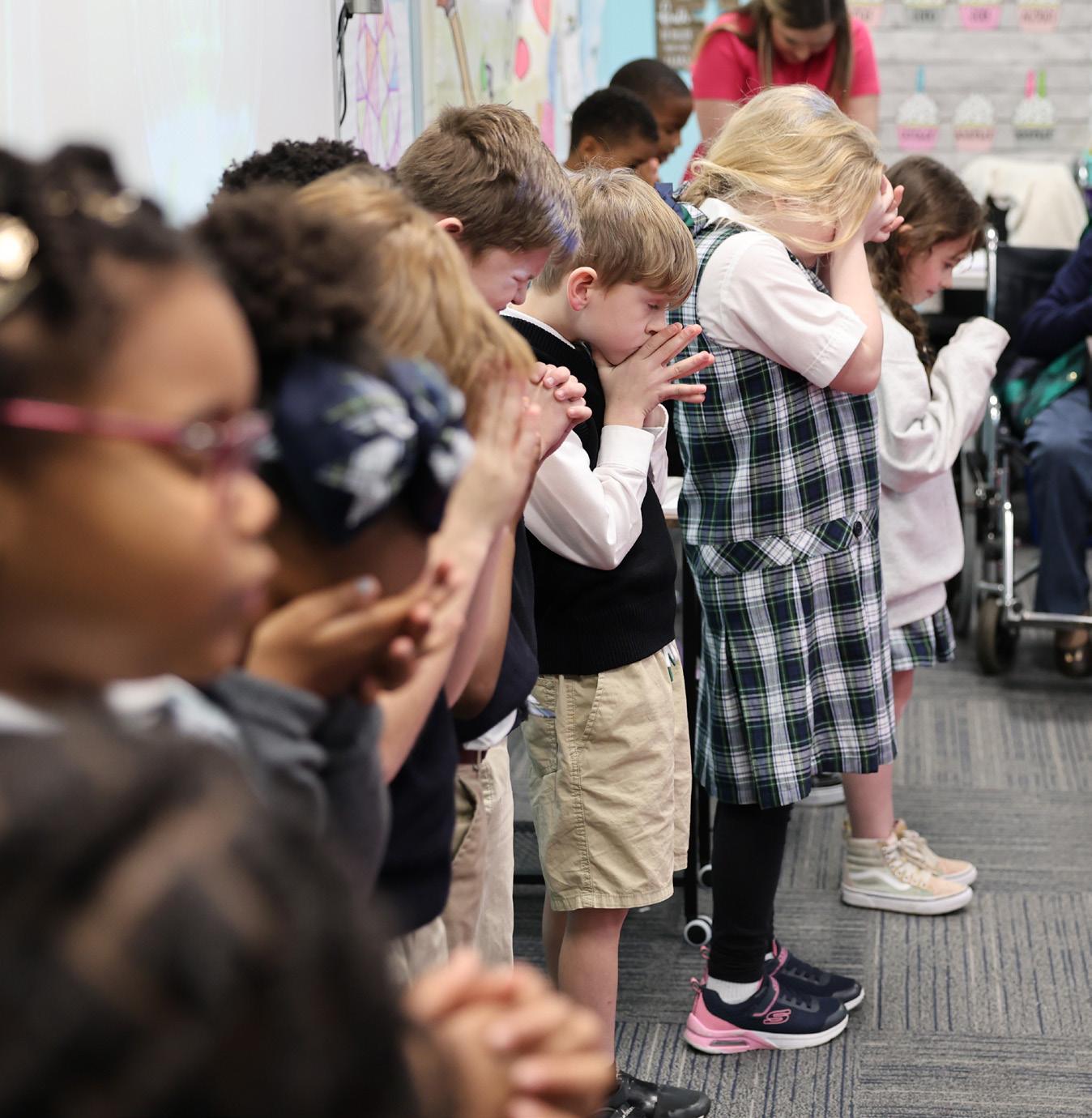

A Glossary of EDUCATIONAL TERMS
by Emily Webb
Choosing the right school for your child is a a big decision — and the terminology doesn’t always make it easier. Public, private, charter, magnet, Montessori … what does it all mean? This glossary is designed to give you a quick overview of the different types of educational choices available in metro Atlanta.
Charter schools:
Charter schools are public schools that operate with freedom from many of the local and state regulations that apply to traditional public schools. Functioning as a public school, they are tuition-free and do not have admissions criteria beyond residency. Charter schools are autonomous and allowed to make their own decisions, operating under the terms of a charter, or contract. There are 96 charter schools in Georgia, and during the 2023-24 school year, 64,579 students were enrolled in Georgia public charter schools, according to the Georgia Charter Schools Association.
Charter system:

Faith-based schools:
Not to be confused with a charter school, a charter system is offered some flexibility from certain state rules and regulations, but school boards must still approve the school’s practices. Charter systems in metro Atlanta: Atlanta Public Schools, Carrollton City Schools, Cartersville City Schools, Decatur City Schools, Fulton County Schools, Gainesville City Schools and Marietta City Schools, according to the Charter System Foundation.
Dual language immersion:
In Georgia’s dual language programs, students spend at least half of their school day in the target language and the other half in English in order to help students achieve higher proficiency in the second language. Programs across Georgia include immersion in Chinese, French, German, Spanish, Korean and Japanese.
A faith-based or religious school is a school that identifies with a specific religious group, such as Catholic, Jewish, Protestant or Episcopal. These schools are always private institutions, although not all private schools are religious. You will usually see a school’s religious affiliation listed within its description, and these schools have curricula that include teachings of faith. According to the National Center for Education Statistics, in fall 2021, around 4.7 million students were enrolled in private schools, and of those, 1.7 million students were enrolled in Catholic schools, and 2 million students were enrolled in other religious schools.
Homeschool:
Homeschool programs allow children to be educated at home. Georgia’s home study law requires homeschool parents/guardians to provide a basic academic educational program which includes mathematics, English/language arts, science, social studies and reading. Parents/guardians decide which curriculum is best for their child, and you must submit a Declaration of Intent by Sept. 1 or
within 30 days after a homeschool program begins. The teaching parent or guardian must possess a high school diploma or a state-approved high school equivalency diploma, but you may employ a tutor. Some families group together to form homeschool pods or learning pods.
Hybrid learning:
Hybrid learning or education programs combine virtual learning and in-person classes. Students come into school at least one day a week with a schedule that includes days of remote learning.
International Baccalaureate (IB):
This educational program offers a continuum of international education for students aged 3-19. Students are empowered to take ownership in their own learning and develop future-ready skills. The four stages of IB learning: Primary Years Programme for ages 3-11; Middle Years Programme for ages 11-16; Diploma Programme for ages 16-19; and Career-related Programme for ages 16-19. It is offered in 97 schools across the state, both public and private.
Magnet schools/programs:
With magnet education, learning is centered around one main theme. Magnet schools are free public schools operated by school districts allowing kids to focus on a specific learning track. For example, Fulton County Schools offers magnet coursework in 3DE, Accelerated Career Diploma, IB, STEM, STEAM and Visual and Performing Arts.
Montessori:
Developed and named for Dr. Maria Montessori, Montessori education is a childfocused approach that is student-led and self-paced but guided, assessed and enriched by teachers. Students are taught in a multiage classroom, and individual students follow their own curiosity at their own pace.
Private schools:
Private or independent schools are, by nature, schools of choice. Families can choose their child’s learning environment based on matching their family’s worldview, religious values or education philosophy. Private schools set their own admissions standards. There are approximately 830 private schools in Georgia, according to NCES.
Continued on next page
Considering a School Change?
If you’re thinking about changing schools or educational pathways, here are some questions to ask:
n What are the admissions requirements and deadlines?
n Is testing required for admissions?
n Are there financial aid opportunities?
n Do you know other families at the school? If not, can you connect with a parent?
n Would the class size and activities work for your child?
n What after-school activities or clubs are offered?
n Are you able to tour the school? What are the vibes of the teachers and classrooms?
n What do school expectations look like?
n How is discipline handled?
n How does the school communicate with parents?
n Do the stated learning goals match your ideals?

n What are the qualifications of the teachers and administrators?
n Is transportation accessible for your family?
n Is the school safe and secure?
n Are there opportunities for parental involvement?
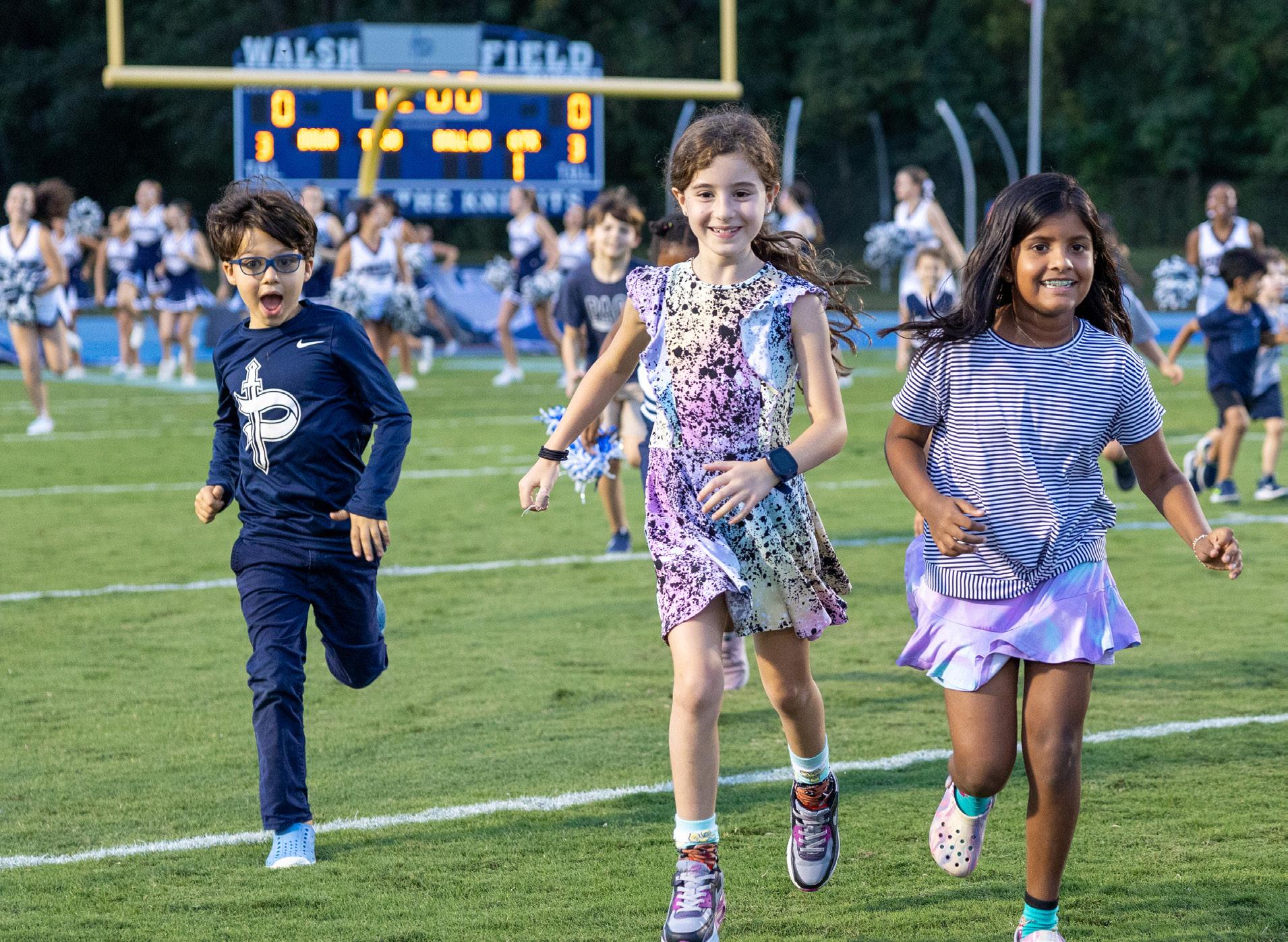
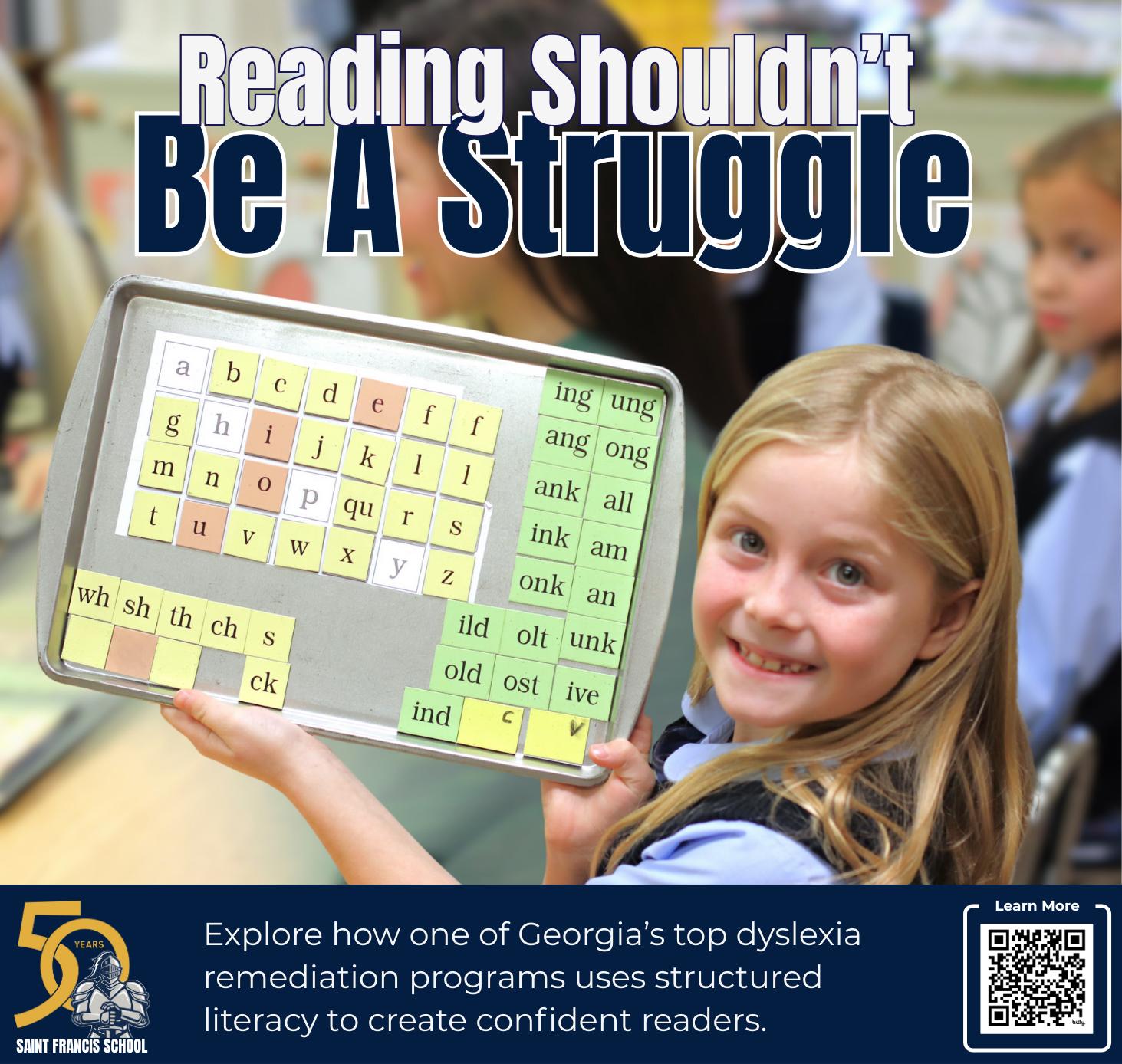
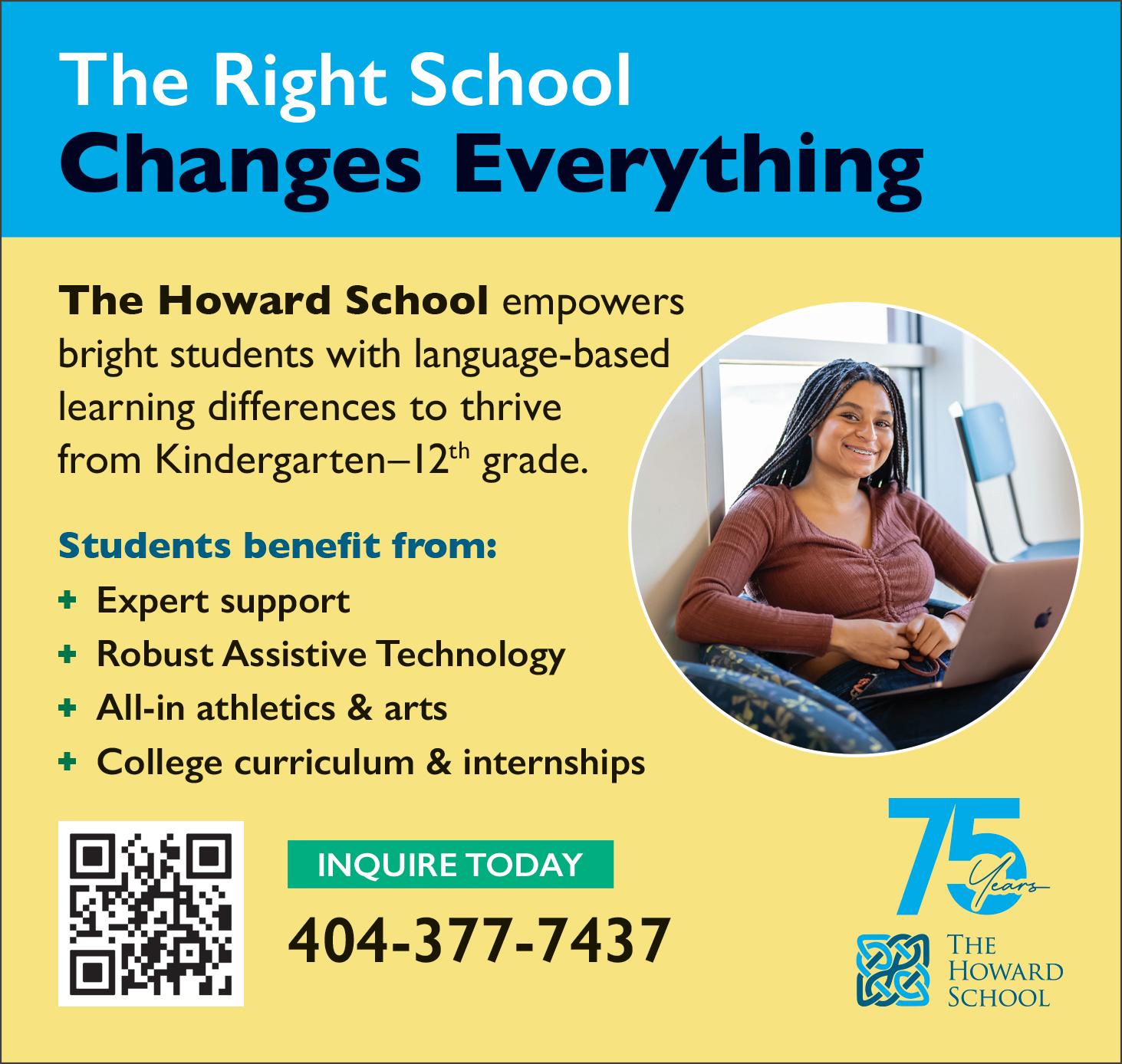
EDUCATIONAL TERMS

Public schools:
Public schools are generally primary or secondary schools that educate all students without charge. They are funded in whole or in part by taxation. There are 181 school districts across the state of Georgia educating approximately 1.7 million students every day.
Reggio Emilia:
The Reggio Emilia Approach refers to the early childhood education project originating in Italy. It is based on a poem written by Loris Malaguzzi depicting children as having multiple ways of thinking and doing that needs to be nurtured rather than corrected. The approach values children as active protagonists in their growing processes, and learning occurs within a process of individual and group construction.
Virtual schools:
Virtual or online schools are educational programs that are intended to be attended remotely. Schools or academies may be public or private. For example, the Georgia Virtual School is an internet-based public school powered by the Georgia Department of Education that serves public, private and homeschooled students throughout the state.
Waldorf schools:
Waldorf schools offer a developmentally appropriate, experiential and academically rigorous approach to education by integrating the arts in all academic disciplines. Waldorf education aims to inspire life-long learning in all students and to enable them to fully develop their unique capacities. Founded in the early 20th century, Waldorf education is based on the insights, teachings and principles of education outlined by philosopher and activist Rudolf Steiner. There are two Waldorf schools in Atlanta: Academe of the Oaks and The Waldorf School of Atlanta. For more information, visit amshq.org, charter-system.org, gacharters.org, gadoe.org, ibo.org, nces.ed.gov, reggioalliance.org, scsc.georgia.gov and waldorfeducation.org.
Celebrating 55 Years of Joyful Learning
Building independence in every child through supportive relationships, joyful learning, and meaningful work in a Montessori environment. Join us as we celebrate our 55th year in education, a brand new lower school building, and the launch of the first authentic Montessori high school in the southeast!
Open House: Saturday, January 24th 2026
Now enrolling ages 18 months old to 9th grade for the 2026-2027 school year.
2998 Lavista Road, Decatur GA 30033 • 404-321-9304 • www.arbormontessori.org
Arbor Montessori School admits, embraces, and does not discriminate against people from all diverse backgrounds and groups including, but not limited to, differences in cultures, race, ethnicity, gender identity, sexual identity, socioeconomic status, religion, abilities, neurodiversity, and family structure to all the rights, privileges, programs, and activities of the school. It does not discriminate in the administration of its educational policies, admissions policies, scholarship and loan programs, and athletic and other school-administered programs.
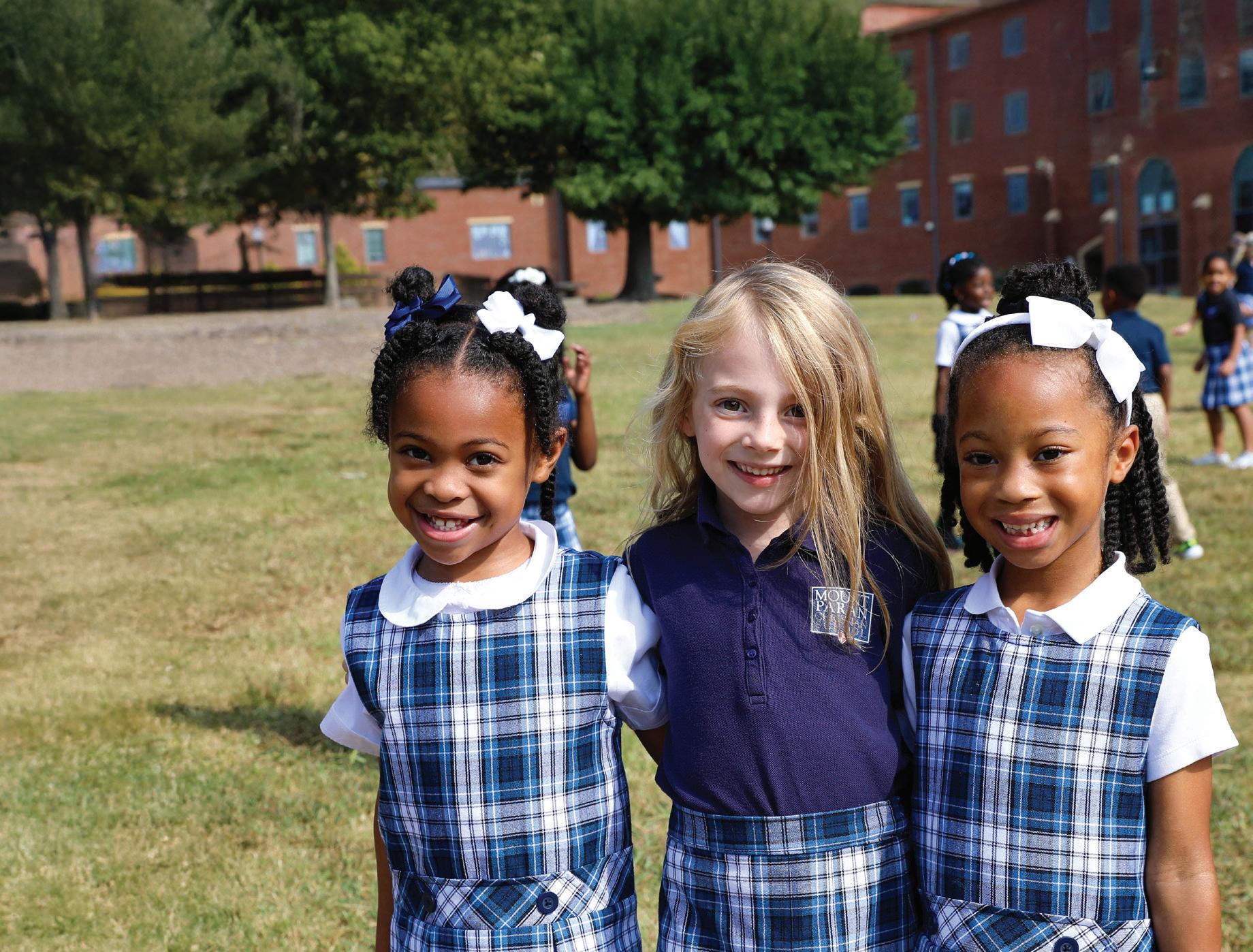
Turning the Page
How Atlanta Families and Experts Are Embracing Literacy
by Tessa Scharff
When parents think about children’s literacy, picture books and chapter books often come to mind. But, it’s helpful to remember that children learn to read — learn through reading — many different ways. Nonfiction books build curiosity and knowledge, graphic novels support comprehension and confidence, and activity books and early readers help children practice essential skills.
Atlanta Parent spoke to some local experts about why literacy matters and what families can do at home to nurture a love of reading.
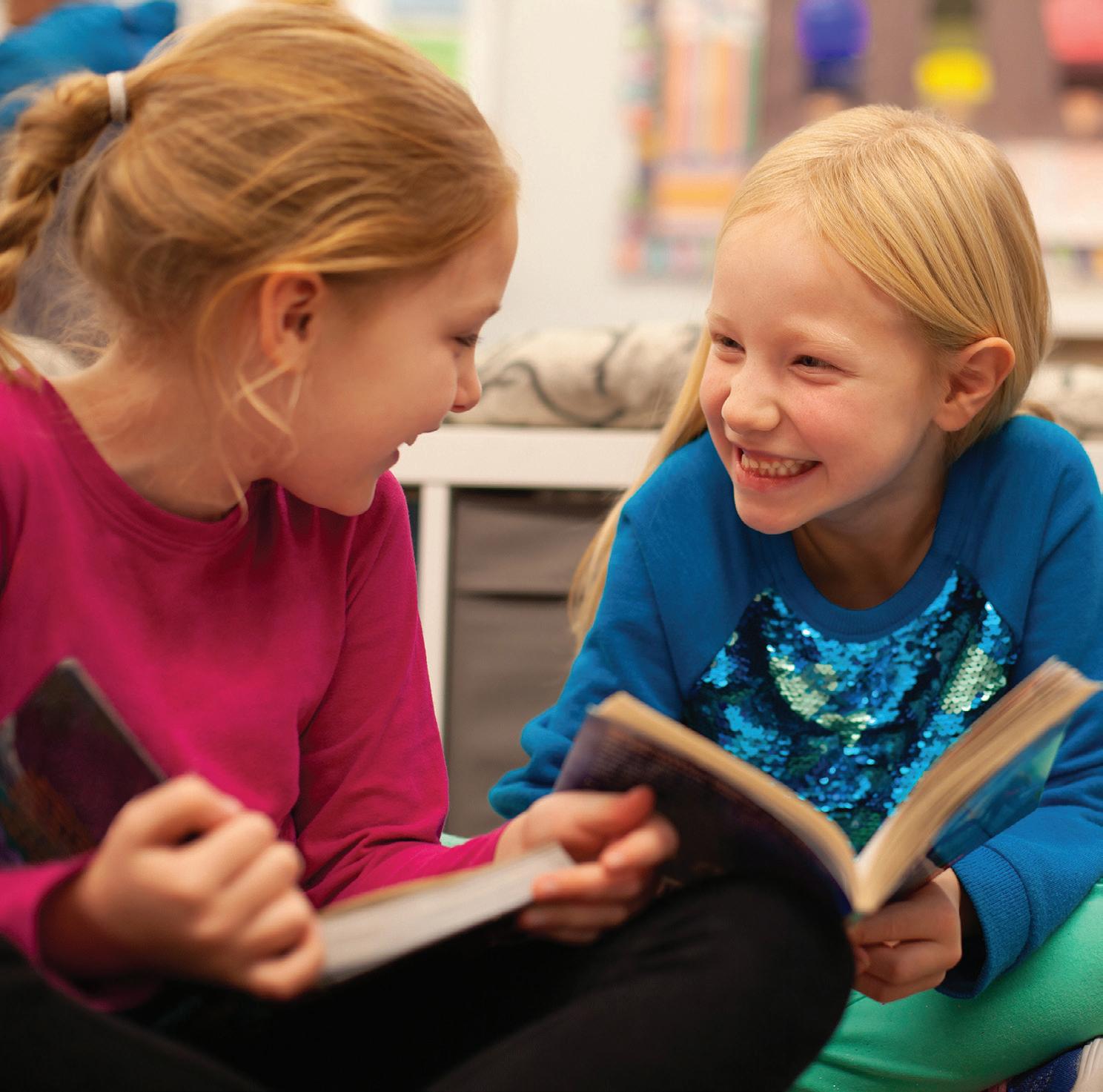
Eric Litwin, Children’s Book Author Eric is the original author of “Pete the Cat: I Love My White Shoes,” the first of the series, and so many other books. While he now lives in Virginia, he’s from Decatur where he began his writing career.

What He Wants Atlanta Parent Readers to Remember: “Books can be more fun than any electronic device could hope to be!”
Q: What inspired you to want to become an author?
A: I was an elementary school teacher who became very concerned that learning to read must now compete with electronic devices. I felt early literacy needed to adapt in order to compete and be successful. So, I left the classroom and became a storyteller/musician to add human interactivity into early language and reading experiences. I gave hundreds of assemblies at schools throughout the Atlanta metro area every year. The artist James Dean, also in the Atlanta area, had a wonderful folk art character named Pete the Cat. We decided to work together, and we created the book “Pete the Cat: I Love My White Shoes.”
Q: How did you incorporate music into some of your books and how does that add an interactive feature?
A: I add music and musicality to all my books. It helps with engagement, fluency, expression and joy. Some of the musical parts are repetitive so the children and parents sing them together. It helps make reading more fun and filled with human interaction. You do not need to be a musician to add music to language and books. Anyone can do it.
Q: How can parents support literacy?
A: Parents can turn their homes into language and print playgrounds filled with books, songs, posters, signs, poetry, jokes and conversation. Parents can turn off or minimally use electronic devices in the home as they immerse their children in joyful and engaging language and print when they are together. Parents can build routines around books, such as reading together every night before bedtime.
Patty Reeber, Youth Services Manager at Gwinnett County Libraries
What She Wants Atlanta Parent Readers to Remember: “For 60% of people, learning to read is hard, and nobody likes to do hard things. But if your child has positive feelings about books and pleasant memories of being read to, they will want to push through what is hard to learn how to read.”
Q: What advice do you have for both parents and children on literacy goals for the new year?
A: I would suggest introducing a family reading time. That can be a time when everyone is reading their own book, or a book you read together as a family. Taking time out of the day when everyone puts their phones down and picks up a book for 20 minutes can have a huge impact on your child’s literacy skills. You are showing them in a very clear way that you think reading is important. Plus, it can be a great family bonding activity.
Q: What impact do you think nontraditional children’s books has on literacy?
A: Graphic novels are HUGE! Kids love them. I know some parents think reading a graphic novel or comic book “doesn’t count,” but it actually engages more of the brain, because children are using their visual literacy as well. Being able to read the written words and then understand what
is going on in the story by combining what you are reading with what you are looking at can help strengthen comprehension skills. If you’re reading a cookbook, you are also using math skills and demonstrating your ability to follow a series of instructions. One of the reasons we track minutes in our Summer Reading Challenge instead of number of books is that we do not care WHAT you are reading — it’s the reading that is important. We really want to stress reading for pleasure.
Q: Why do you think reading different kinds of books is important?
A: Reading non-fiction books is a fantastic way to introduce more vocabulary to a child. Children who are exposed to a wealth of words have larger vocabularies when they start school and are ahead of their peers in learning to read. An auditory learner may lean toward audiobooks. I love the touch and feel of books for little children. Having a texture they can feel and associate with the words adds to the reading experience.
Anne-Marie Debacker, Intown Atlanta mom of two, ages 9 and 13
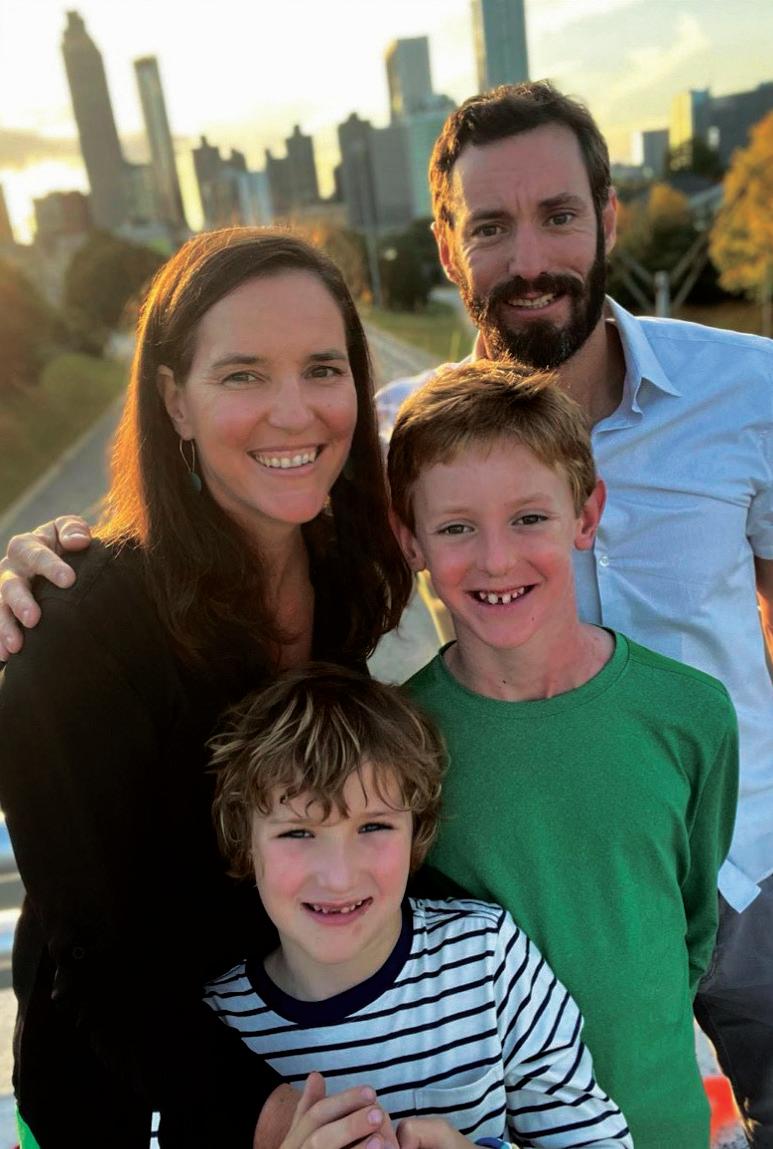
What She Wants Atlanta Parent
Readers to Remember: “Literacy is still the foundation for how we communicate, solve problems and create change. Literacy matters because it underpins all learning.”
Q: How do you, as a parent, support literacy?
A: Parents support literacy by modeling the habits we hope to see in our children. When I talk about the books I’m reading or choose to read during my free time, I’m showing my kids that reading is something I value.
Of course, the most timeless strategy is reading to your children every night for as long as you can. Strong readers naturally ask questions as they read, so modeling that curiosity is powerful. Simple prompts like “Where do you think they are?” or “Who do you think is talking?” help build comprehension.
Q: How can children’s books help young readers explore new perspectives, cultures or life experiences?
A: Youth literature does an incredible job of sharing stories that are vastly different from our own. Through reading
for fun, my kids and I have learned about big, important topics like coping with anxiety at school, being a first-generation student, understanding the story behind marriage equality and more. We can never fully be in someone else’s shoes, but we can read their stories and learn from them.
Q: How do you think reading through hands-on learning can help with literacy?
A: When my kids were first learning to read, I used hands-on opportunities all the time. If we were baking bread, I’d point to the recipe and ask, “Which kind of flour should we get out?” At restaurants, I’d point to simple words on the menu like “hot dog” and say, “Can you tell me what this says? I’m having trouble seeing it.”
Q: What advice do you have for both other parents and children on literacy goals for the new year?
A: Commit to modeling a love of literacy for your children. Visit your local library regularly, talk about the books you’re reading and share stories within your community. When children see the adults in their lives valuing books, they’re far more likely to develop their own reading habits.
Turning the Page
Kimberly Sharp, School Librarian at Ivy Creek Elementary in Buford
What She Wants Atlanta Parent Readers to Remember: “There is no app to replace your lap! The time you share reading as a family will leave your children with a positive memory of you and of reading.”
Q: What advice do you have for both parents and children on literacy goals for the new year?
A: Focus on creating meaningful reading experiences with your children. Schedule time to read together — bedtime is great — and don’t skip any pages (they’ll know!). Have siblings read to one another. Read your own books silently together in the same room or read a book aloud to the family. Warm blankets, yummy snacks and hot chocolate make it extra special. Read a book and do a related activity together. Listen to an audiobook in the car when you are traveling together. Remember, it doesn’t have to be perfect! Teach them that reading can be fun and you’ll be creating lifelong readers!
Q: What inspired you to become a librarian?
A: I have loved to read for as long as I can remember. My mom often took me to the public library with instructions that I could only check out as many books as I could carry! I remained an avid reader throughout school and drew close to my grandmother over our shared love of books. As a classroom teacher, I was inspired by librarians who made reading exciting for my students. This career has enabled me to share my love for reading, help kids find books they enjoy, and enhance my school community’s experience by having the library at the center.
Q: Why do you think reading different kinds of books is important to literacy?
A: As a librarian, ALL types of books come to mind when thinking about what will appeal to children! Our non-fiction collection is just as popular as our novels and picture books. As children grow and develop, their interests change along with their ability to read and comprehend what they are reading. I am a strong advocate for giving children autonomy to choose the books they want to read. Once they fall in love with reading, the possibilities for learning are endless!
Little Free Libraries:
Voices from the Community
If you don’t already know, Little Free Libraries are a fun and free way to promote literacy. Found in neighborhoods across Atlanta, these “take a book, leave a book” spots make reading accessible to everyone. Here’s why people love them.
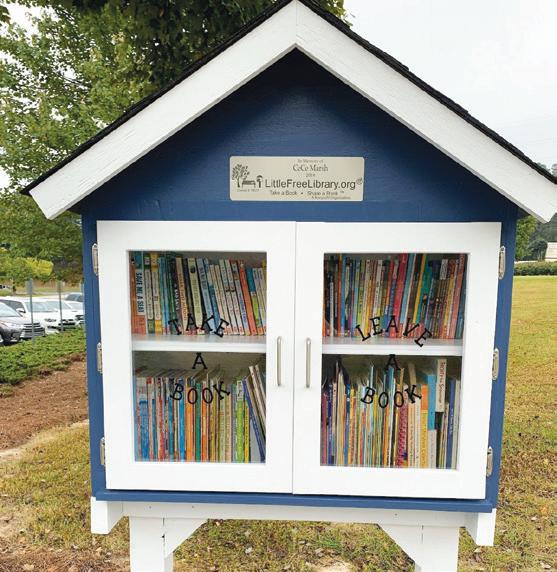
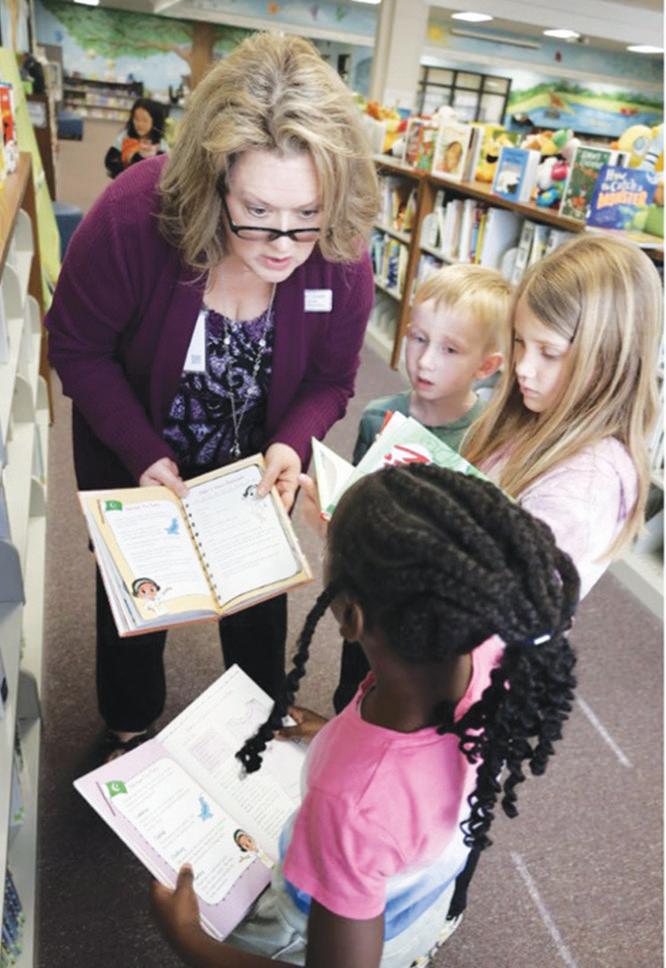
Books that inspire children to create something on their own have an added appeal, not to mention significant educational value. They engage students in an entirely different way from a novel or a story. Creativity is such an important part of a child’s growth and development. Giving children books with projects and activities they can successfully complete adds another layer of fun to their learning experience. I personally love cooking with the young children in my family!
“In a traditional library, you search for what you already want, or you browse curated displays. With a Little Free Library, you never know what you’ll find. Often, you stumble upon something you didn’t even know you were looking for.”
— Anne-Marie Debacker, parent of two, Morningside/Virginia-Highland
“I think they’re amazing because everybody can borrow books, even without a library card!”
— Nellie Dolph, 3rd grader, Ivy Creek Elementary
“Little Free Libraries are one of the most accessible literacy tools we have. They remove barriers by putting books directly into neighborhoods where kids can reach them without formality or pressure. To me, they signal shared responsibility, a community saying, ‘Books belong to all of us.’”
— Kimberely Houston, children’s cookbook author, Fayetteville
“I LOVE free libraries! There is one at school and my youngest absolutely loves picking out a new book from it and then donating books we don’t read as much anymore. She looks forward to visiting the Little Free Library, and she gets excited about what new-to-her book she can pick out. I don’t believe in selling our used books as I think books are something that should be accessible for all, so I think it is such a wonderful way to share books and the love of reading with other families.”
— Briana Stenard, avid reader and mom of two, Buford
“[Little Free Libraries are] like little magical book birdhouses that pop up in neighborhoods. Take a book, leave a book. No stress. No overdue notices.”
— Michael Rawls, school librarian, Morningside Elementary

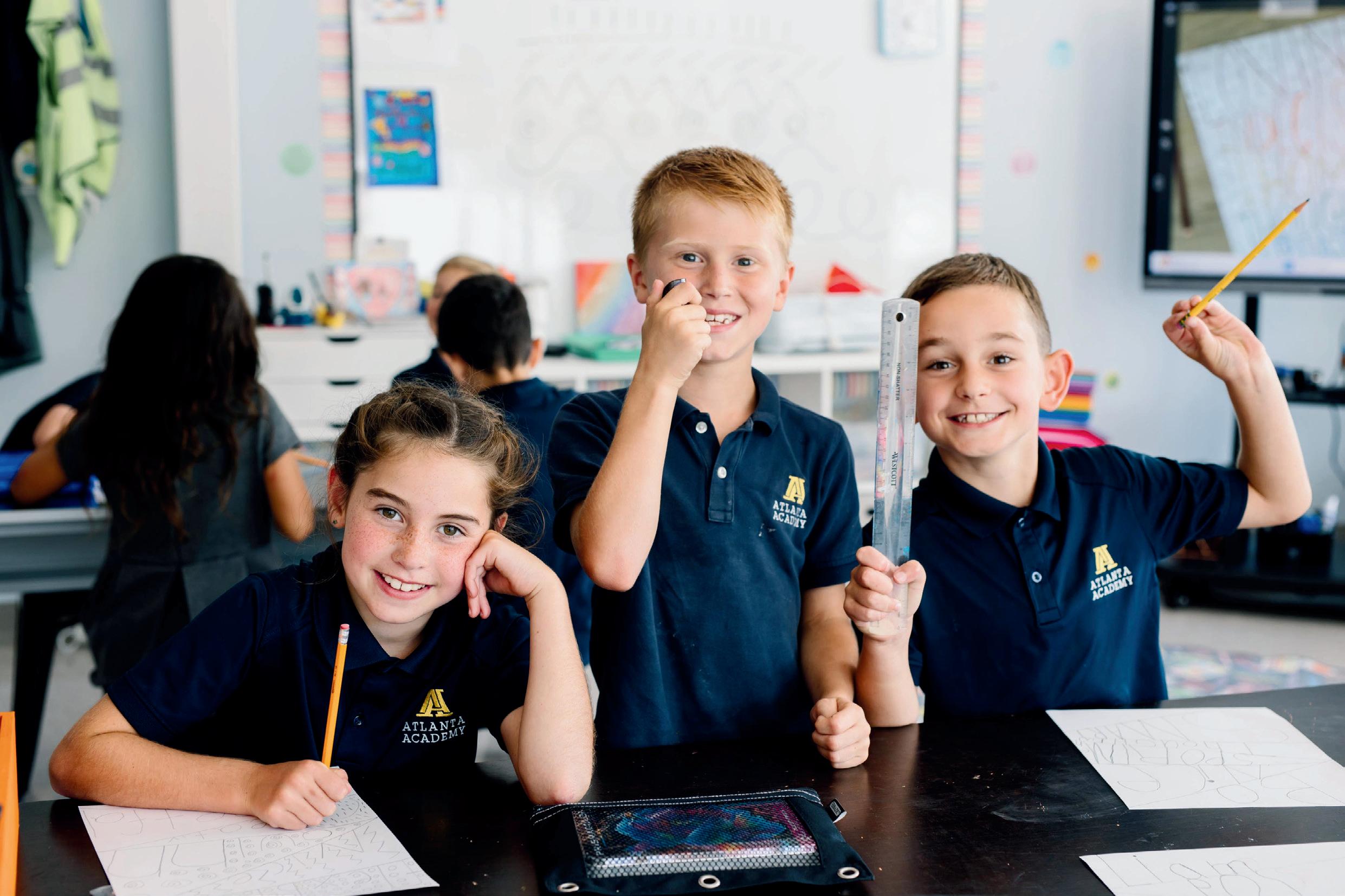
IT’S ALL FUN with Play-Based Learning for Preschoolers
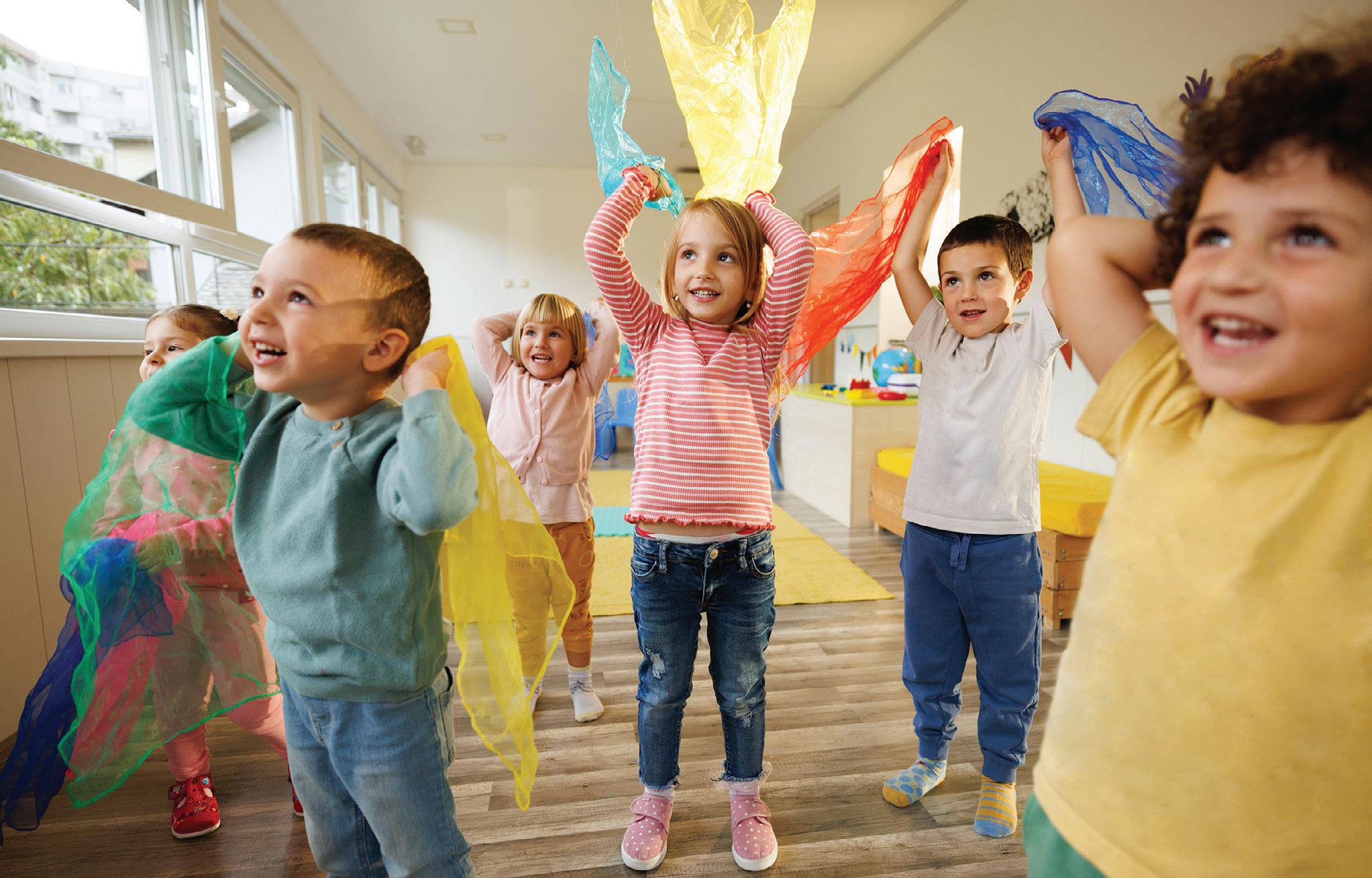
by Tali Benjamin
Play is more than just fun for preschoolers. It’s one of the most important and natural ways they learn. Through play, young children explore the world, build social skills, gain confidence and develop fine and gross motor skills.
When children play, they are actively learning without even realizing it. Building with blocks helps develop problem-solving and early math skills. Pretend play, like playing house or store, supports language development and social skills. Simple games teach children how to take turns, follow rules and work with others. Climbing a playground structure deepens gross motor skills.
Whether at preschool or at home, little ones are constantly on the move and learning as they go. In a classroom, teachers support play-based learning by carefully planning the environment and observing children as they play. Teachers ask questions, introduce new ideas and offer gentle guidance to extend learning. For example, a teacher might ask, “How many blocks did you use?” or “What do you think will happen next?”
Play-based learning is successful because it allows children to learn at their own pace. It encourages creativity, curiosity and independence. Most importantly, children stay engaged because they enjoy what they are doing. They may not realize that they are building the foundation of their academic journey, but you can feel good knowing that all the fun they are having will pay off in the years to come.
Everyday Play That Builds Skills
Many simple play activities support learning:
n Drawing and coloring improve fine motor skills
n Singing songs and dancing build language and memory
n Outdoor play strengthens physical development and coordination
n Puzzles and games encourage thinking and patience
No matter the activity, remember to keep playtime relaxed. After all, there’s no “right” way to play.
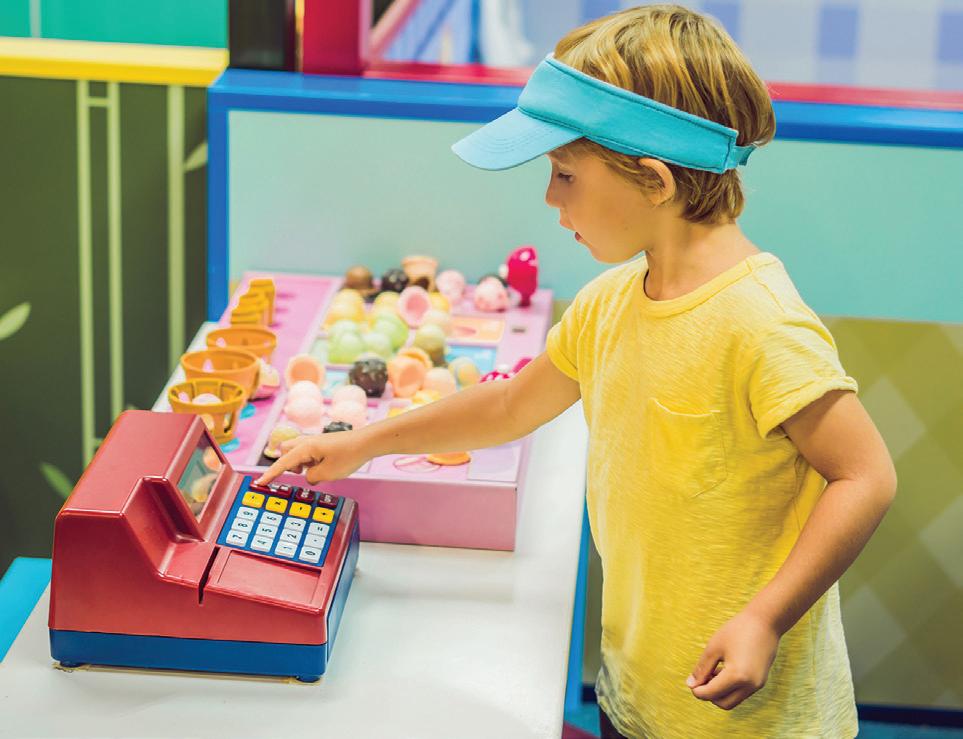
Grow Your Preschooler’s Math Brain Everyday Moments that Count
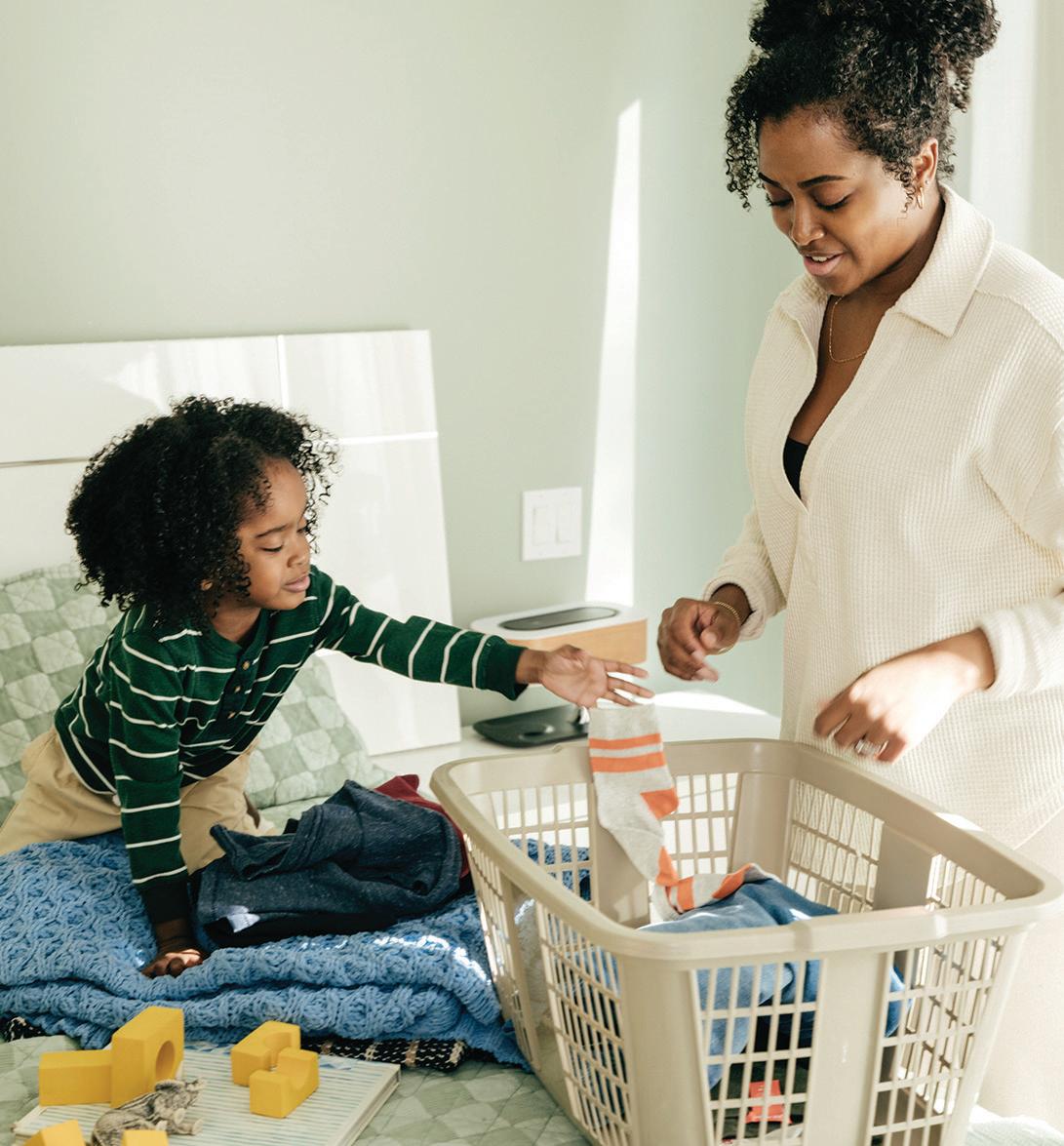
by Janeen Lewis
We all cheer when our children sing the alphabet song for the first time or recite bedtime stories from memory. Parents understand how vital reading is to future school and life achievement.
But did you know preschool math also has a big impact on young brains? Research shows that early math ability is just as strong a predictor of future academic success as literacy.
Fortunately, preschool math is everywhere young children live and play. Whether it’s counting crackers during snack, sorting socks during chore time, or identifying foam numbers in the bath, here are some ways to engage little learners in the world of math.
Fun with Food Shapes
Shape sandwiches, fruits, crackers, cookies and cakes with cookie cutters. Talk about the natural shapes that vegetables take. Pizzas, pancakes and cookies are circles. Many crackers are squares, rectangles or triangles. Teach your child patterns by putting several different shaped crackers together in a row. What different shapes can your child make by combining foods?
Laundry Lessons
Sort the laundry by colors, family members or type of clothing (pants, skirts or shirts). Have your preschooler match the socks. If you have socks left over, introduce the concept of even and odd. Matches make even numbers; leftover socks make odd numbers.
Cont’d on next page
SCIENCE AKADÉMEIA
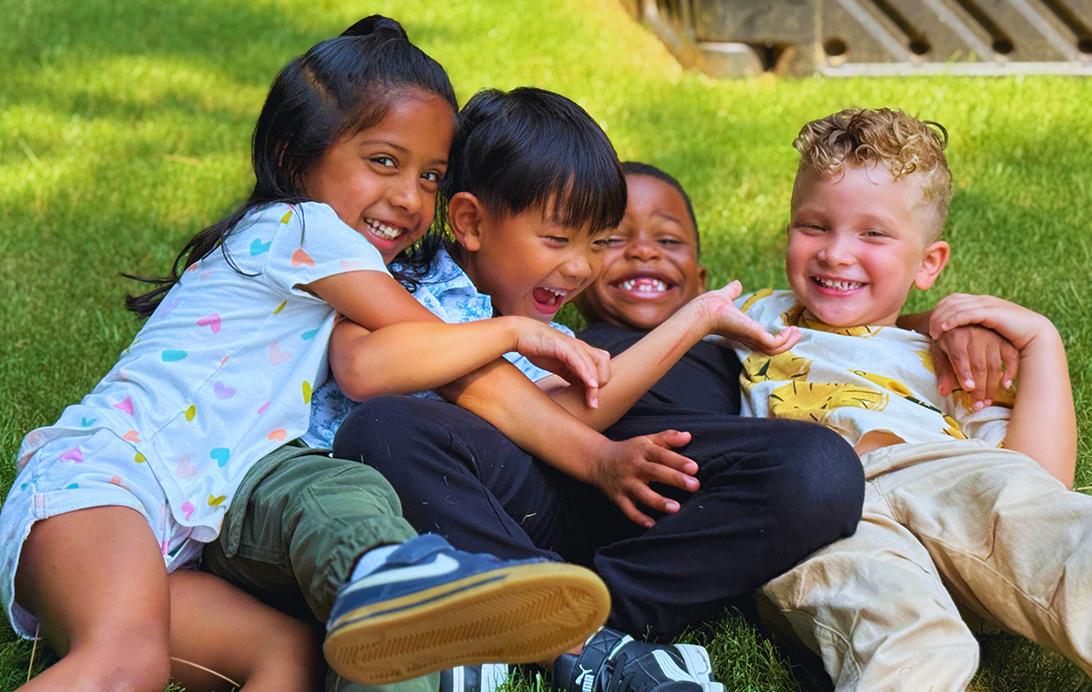
What sets us apart?
Hands-on learning: Science, Technology, Engineering, and Math
Real-world problem solving from the very start
Nurturing environment fueling curiosity and critical thinking
Daily discovery, exploration and innovation
Passionate educators who love STEM as much as your kids will!
Don’t just prepare your child for kindergarten—prepare them for tomorrow’s world. Contact us for more info.
PROGRAM HOURS: 8:30 am - 2:30 pm (extended care available) 770-282-6891 satapos.com 9550 Nesbit Ferry Rd., Alpharetta 30022
Grow Your Preschooler’s Math Brain
On a Roll
Card and dice games teach children how to subitize. Subitizing is the ability to look at small sets of numbers and quickly know how many numbers are in the set. An example of subitizing is automatically knowing the number when rolling dice without counting dots. This is an important skill that preschoolers will need later when they add and subtract. Card games to try: Crazy Eights, Old Maid and Go Fish. Dice games: Beat That!, Roll and Cover, and One and Done.
Not Just Fun and Games
Playing Chutes and Ladders for what seems like the millionth time is not fun for adults. But it is fun for preschoolers, and in playing it, they develop some important math skills — number recognition and counting forward and backward. The number line is a powerful visual model for adding and subtracting, and Chutes and Ladders is an engaging way to use that model. Other preschool-age board games that support early math skills are Hi Ho! Cherry-O and Feed the Wozzle.
Math Through Movement
Preschoolers love to be active, and physical exercise is a way for little ones to practice counting and learn directional vocabulary. Have your preschooler count the number of jumping jacks, jump rope hops or toe touches he does. Play hopscotch and count the numbers as she jumps. Learning directional words like on, over, before, between, right, left, front and back is important, too. As they exercise, have children move according to those words.
Math Melodies
Goofy songs and sayings help kids remember, and preschoolers are totally into silly. Sing math songs in the car, while you swing and when you are doing chores. Five Little Monkeys Jumping on the Bed, The Ants Go Marching On and One, Two, Buckle my Shoe are good examples of catchy rhyming songs that get preschoolers’ attention. Numberock has fun math videos and songs for preschoolers and older children.
Block Power
Stacking blocks or building with LEGOs is a powerful way to build early math skills with preschoolers. Counting, measurement, pattern recognition and critical thinking skills that promote STEM are a few of the benefits of building with blocks.
Market Math
The grocery store is stocked full of math. When you are in the produce department, help your preschooler count and weigh fruit or vegetables without going over a certain number of pounds. Explore price tags and sale tags, count the number of items you need or that are in the cart, and identify foods by shape. Granted, some of the math may be too complex for a preschooler, but if they shop with you regularly, they will pick up skills as they grow.
Bubble Bath Math
Preschoolers often end each day in the bathtub, another place for learning. Foam numerals stick to the tub walls when they are wet. Call out a number and have your child quickly identify the correct foam numeral and slap it to the tub wall. Have your preschooler practice ordering and counting the foam numerals. Add toys to the bath oneby-one and count on each toy added. Take toys out of the bath and ask your child how many toys are left. Sort toys by color, shape or size, or have your child subitize sets of toys in the water.



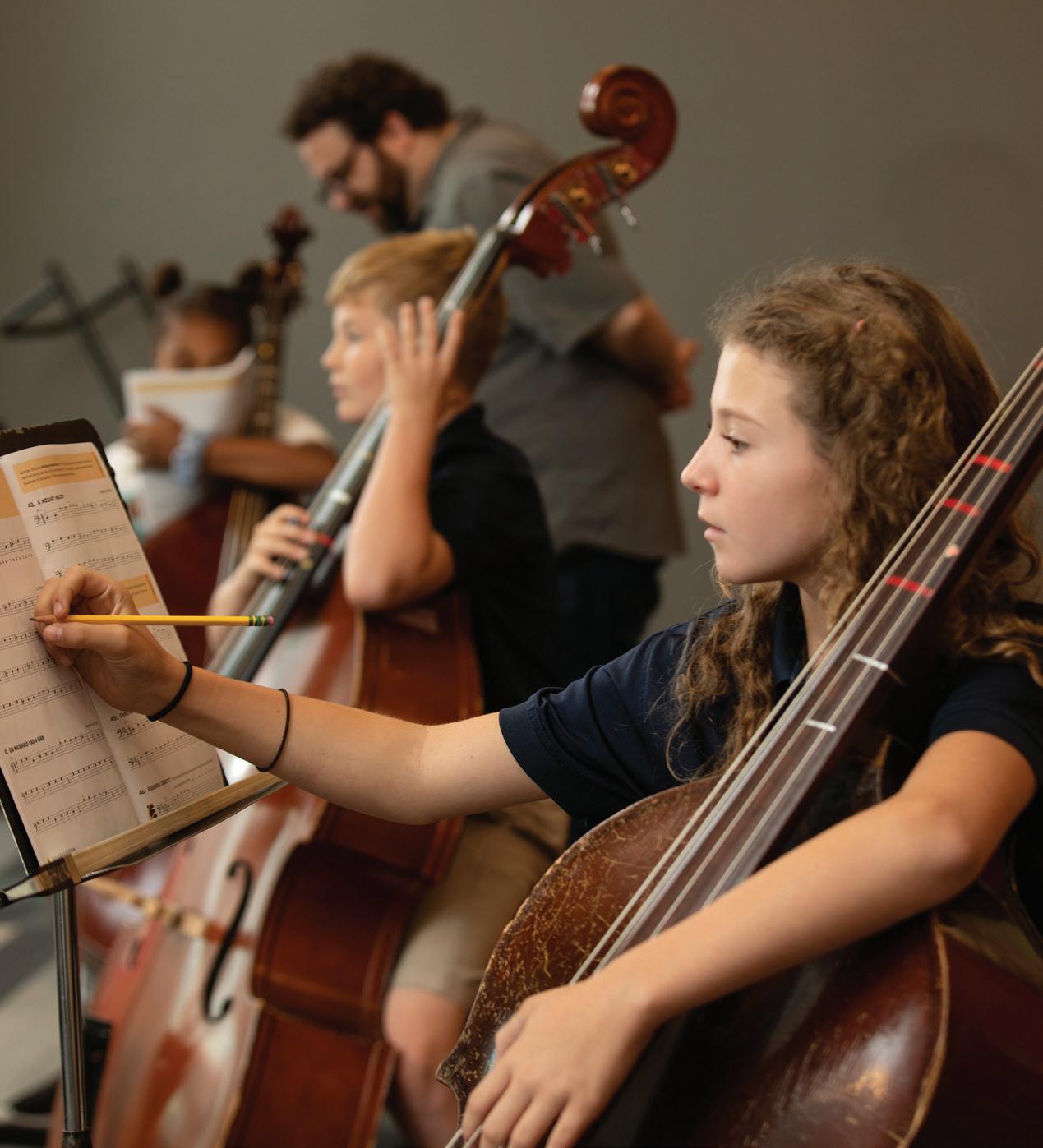


When a Child Loves to Learn, the Future
In-house
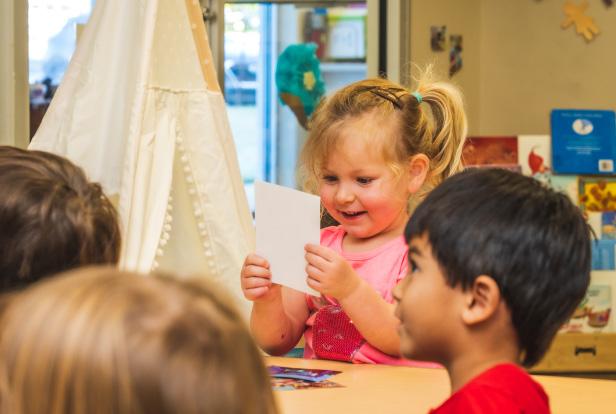
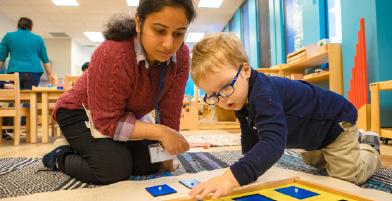
Give Your Child Quality Care and Education
•
•
• Beautiful outdoor learning spaces and purposeful play areas
WHY RECESS MATTERS
And Why 15 Minutes Isn’t Enough
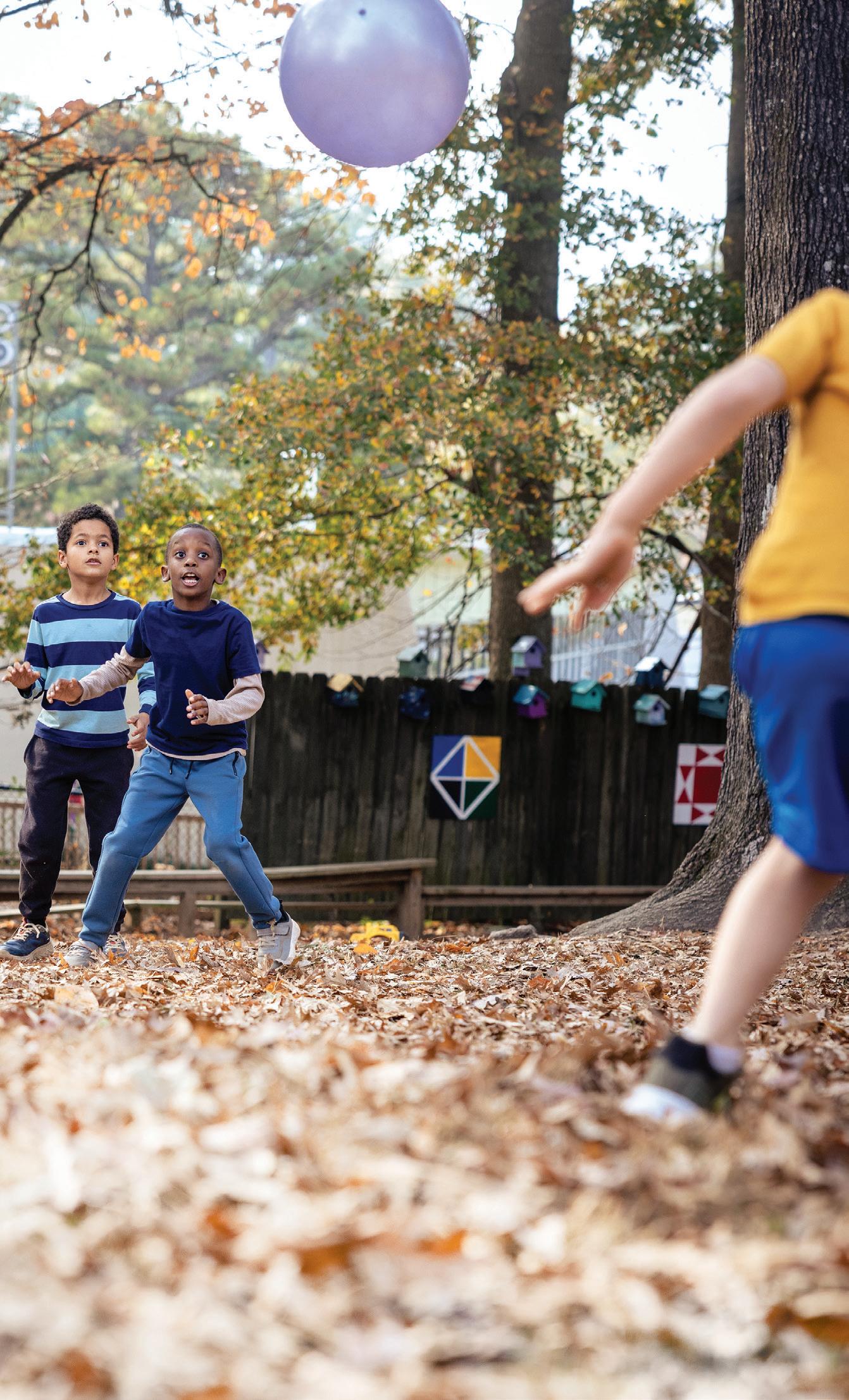
by Jennifer V. Hutcheson
When test scores drop, students need more time in the classroom to boost their scores. Right? That was the thinking of a local school district that cut elementary recess time to 15 minutes this fall. However, child psychologist Dr. Molly Kramer explains that “regular breaks for physical activity can actually improve focus and cognitive performance when children return to the classroom.” The benefits of recess don’t end with improved focus and academic success, though. Increased recess time also has significant physical and social-emotional benefits.
Academic Benefits
While some schools are cutting recess in hopes of boosting test scores, the research reveals the irony. Among the numerous academic benefits of recess cited by the Centers for Disease Control and Prevention (CDC) are improved grades, test scores, memory, attention and concentration.
Dr. Debbie Rhea, a professor of kinesiology and founder of the LiiNK Project, a 10-year study on the long-term benefits of increased recess, has also seen noteworthy — and nuanced — academic benefits.
“In Kindergarten through 2nd grade, we actually see slightly lower math and reading scores in our schools with 60 minutes of recess vs. our control schools that have 30 minutes of recess. What we found in 3rd grade is that the 60-minute recess kids are now tied with the 30-minute recess kids on their first standardized test results. But then, in 4th grade, they directly switched positions. The kids with 60 minutes of recess were gaining in academics, going up 10% in math and 6% in reading in one school year. The kids with only 30 minutes of recess dropped below the average they had in 3rd grade. The kids with short recesses are facing burnout by 3rd grade. We see this trend continue for the rest of elementary school,” says Rhea.
Rhea cautions against the short-term thinking of teaching to the outcome of standardized testing.
“Unstructured play during recess allows children to practice managing their emotions, impulses, and social interactions in a natural setting. This skill is foundational — not just for academic success, but for lifelong mental health and resilience. A dysregulated child simply cannot learn.”
Physical Benefits
The physical benefits of recess are obvious — and significant. More time to run and play improves sleep quality, strengthens the body and enhances motor skills.
For her son, Kristin Cheatwood intentionally selected Hess Academy, a Decatur school that offers three recess times per day. She reflects, “At his previous school, where he had 20 minutes of recess per day, he’d come home exhausted, collapse on the sofa, and still struggle to fall asleep at night. Now, he comes home energized and eager to play, and when bedtime comes, he falls asleep quickly and stays asleep all night. It’s been such a clear, positive transformation.”
There has been a significant increase in the number of repeat injuries being seen in school-age children. The common denominator: kids are spending more time playing sports, but less time in free play. The LiiNK project has found that a lack of free play time leads to limb imbalance, which can easily result in injuries. Rhea concludes, “Play is how you truly develop both sides of the body to build a strong body that isn’t prone to injury.”
-Dr. Molly Kramer, Kramer & Montiel Psychology in Atlanta
Photo by Kristin Cheatwood Photography
Social-Emotional Benefits
Cheatwood also noticed strides in her son’s social-emotional development after an increase in recess time. “His ability to remember and share what he’s learned has skyrocketed. He comes home eager to tell me about both his academic lessons and the social or emotional skills he’s practicing. Before Hess, if I asked what he learned, he’d usually shrug and say, ‘I don’t remember.’ Now, he can’t wait to tell me everything.”
Principal Lisa Kelly of Intown Community School observes that “young children need time outside to learn how to resolve natural social conflicts with one another. They need to learn how to play together and compromise without adult interference, so they can build those skills they’ll need later. I would argue that our older students need that as well, as they learn to navigate a different set of social circumstances.”
Why Is Recess Having a Moment in Atlanta
In 2022, Georgia seemingly made a nod to the importance of recess, passing a state law requiring daily recess in all public elementary schools. What was missing from the law? In addition to a variety of loopholes (exceptions for field trips, bad weather and physical education days), there were no minimum recess times required.
When the school year started in August, many Atlanta-area parents had the painful realization of why a minimum was needed: DeKalb County cut elementary school recess to 15 minutes. While some schools in the county were already allotted only 15 minutes, many had previously been given 20 to 30 minutes. No official announcement was made about the cut. The alarm spread quickly.
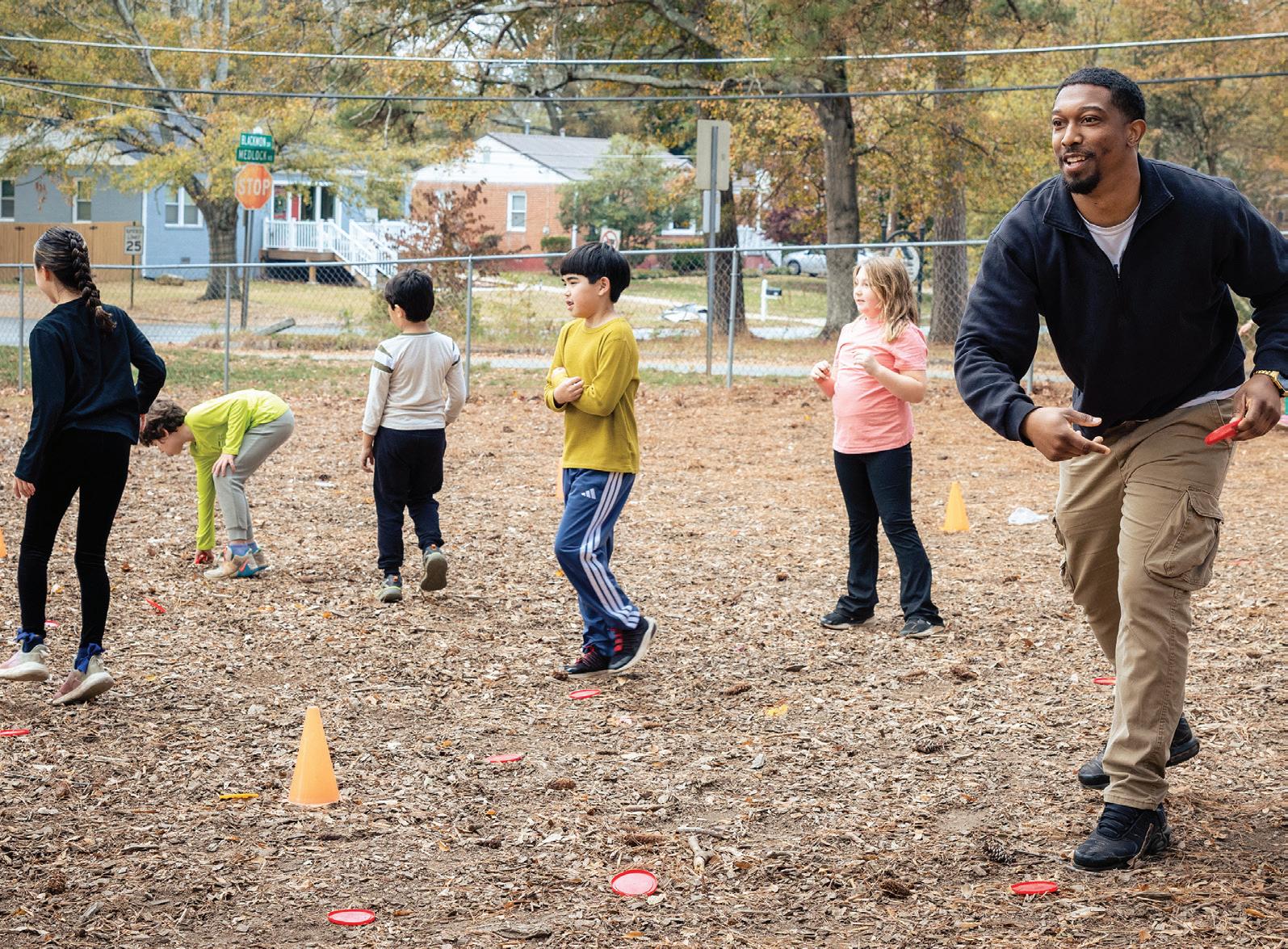
A group of parents rallied, founding “30 for Recess” and petitioning for elementary schools to have at least 30 minutes of recess per day. The group was successful in DeKalb; all elementary schools in the county will require 30 minutes of recess starting this month.
However, there are still no state minimums, and the amount of recess can be decided on a county-by-county basis. There is no easy answer to what is the “right” amount of recess, but there is no doubt that recess has a myriad of benefits. Perhaps, if we zoom out to consider the overall health of children, giving them the space and time to play and grow, we might discover that they developed a love of learning along the way.
BENEFITS BY THE NUMBERS
of recess activities involve midline-crossing physical activities, which have been shown to increase cognitive function
higher standardized test scores by 4th grade
Physical Benefits:
12x
more likely to have healthy body fat percentage
6%
decrease in overweight and obese body fat in one year
70%
of students achieve age-appropriate motor skills
WHAT YOU CAN DO
n Educate yourself on the benefits of recess and discuss with your child’s teachers and administrators.
n Walk or bike to school to get movement in before the day starts.
n Provide free, unstructured play after school and on weekends, especially at parks and in nature.
n Check out the 1,000 hours outside project.
n Talk to your school about starting a “Let Grow Play Club” that fosters more unstructured, creative play before or after school.
Social/Emotional Benefits:
70%
less chronic stress and anxiety
17%
report an increase in positive emotions during play
*Source: LiiNK Project research center at Texas Christian University
Photo by Kristin Cheatwood Photography
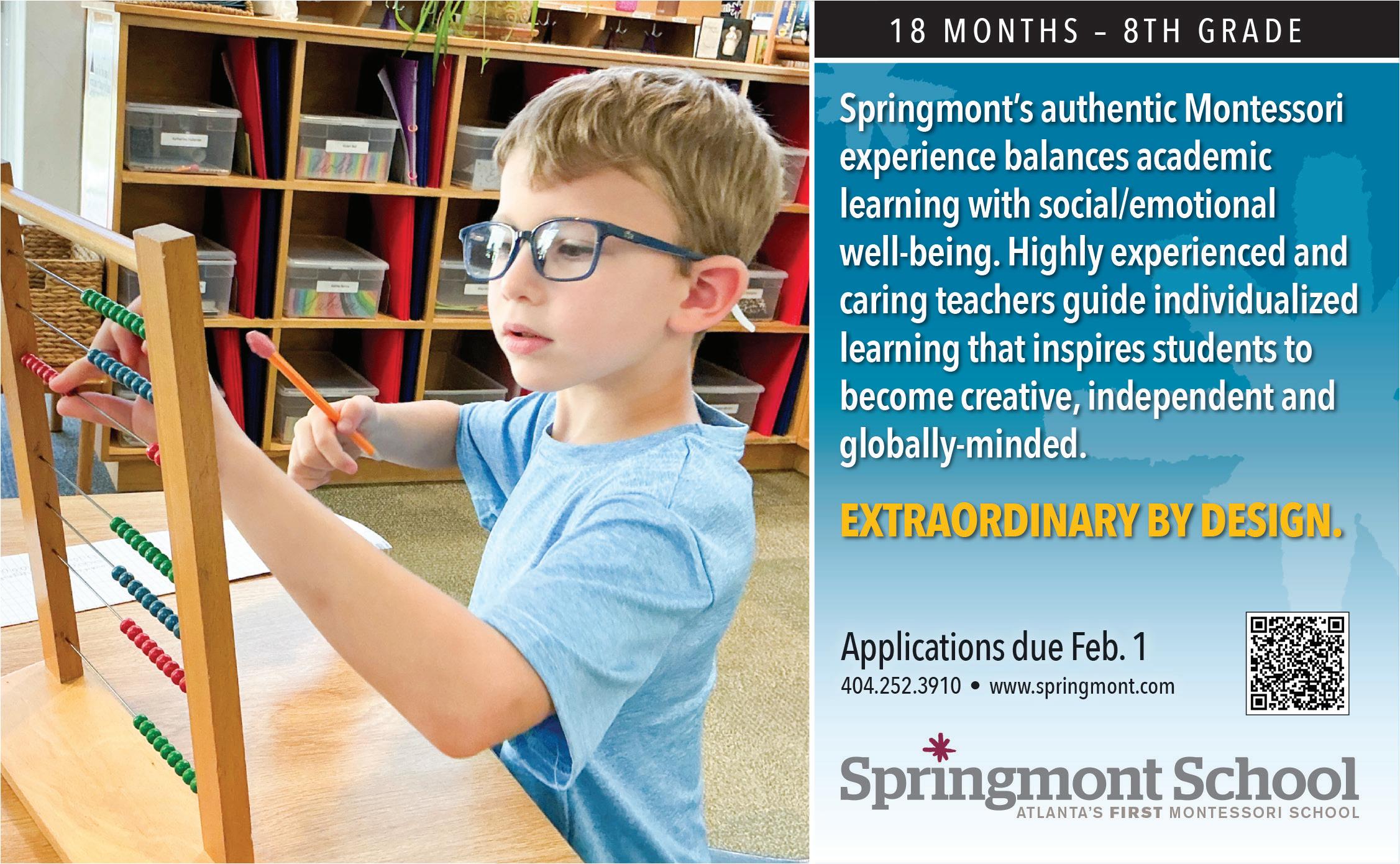

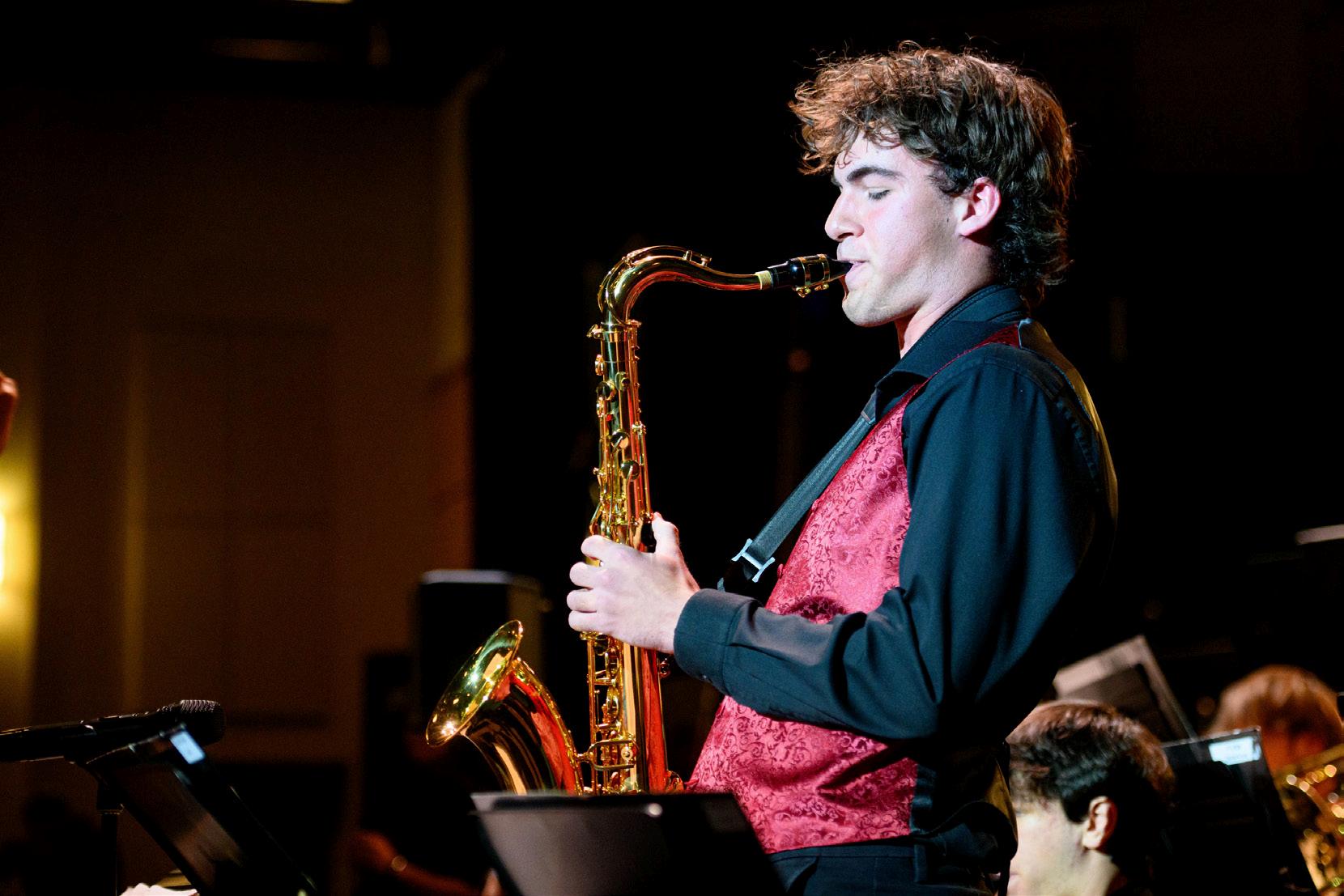

ADMISSIONS OPENHOUSE JAN.10&FEB.7
10AM-12PM
Homework Help and Other Forms of Mutual Suffering
by Rebecca Hastings
There comes a time in every parent’s life when they’re asked to help with their child’s homework. And while we want to be supportive, encouraging and maybe even educational, what we actually become is a human thesaurus, oncall therapist and Google detective all rolled into one.
It all starts innocently enough.
Your child plops their backpack down, pulls out a crumpled worksheet, and casually says, “Can you help me with this?”
Of course you can. You’re a grown-up. You’ve
Stage 1: Confidence
“We’ve got this.”
You pull up a chair, read the directions and nod like you’re on Jeopardy. You’re calm. You’re collected. You even offer to sharpen a pencil. Things are going well.
Stage 2: Confusion
“What do you mean you don’t need a pencil. What even is this?”
Your child explains the problem using phrases like “regrouping strategy” or “text evidence.” You pretend to understand. Under the table, you are Googling. Quietly. Desperately.
Stage 3: Tension
“It’s fine. We’re fine.”
The child feels your struggle and begins to spiral. You suggest a break. He refuses. You both stare at the page like it’s ancient Sanskrit. Eventually, someone sighs so dramatically it shakes the table.
Stage 4: Snack Bribery
“Finish
this and you can have fruit snacks!”
You reach deep into your parenting toolbox and pull out the oldest trick in the book: food-based negotiation. It works. For about seven minutes. They’re starting to outsmart you.
Stage 5: Acceptance
“We’re emailing the teacher.”
And that’s OK. Because helping doesn’t mean having all the answers; it means sitting beside your child while they struggle, even when it’s uncomfortable. It means saying, “I’m not sure, but let’s figure it out together.” It means letting them see you try, even when you feel like you’re failing.
survived long division. You’ve read “Charlotte’s Web.” You’ve written full emails using only your thumbs. You are qualified.
Until You’re Not.
Because somewhere between when you went to school and now, everything changed. Suddenly, a single math problem requires a full-page answer. Reading comprehension involves essays and annotations. And your child is sobbing because they don’t understand what the teacher meant by infer how the character feels.
You want to help. You do help, kind of. It’s just a more emotional journey than any of you expected.

Let’s Be Honest
We want to be the parent who makes homework fun, who prints out flashcards and uses glitter pens and celebrates each worksheet with high-fives.
But most nights, we’re just trying to get through it without anyone crying. Including us.
The good news? You don’t have to be perfect. You just have to show up, snack in hand, pencil behind your ear, and heart in the right place.
Someday, your kids will remember that you sat at the kitchen table with them. That you tried. That you made them laugh when they were frustrated. That you were in it with them. And that, more than any worksheet, is what really sticks.
Guide to Private Schools

The right private school in metro Atlanta offers more than lessons — it’s a place to belong. These schools combine rigorous academics, creative opportunities and strong values to empower students to think critically, lead confidently and succeed in higher education and beyond.

Arbor Montessori School
For
55 years, Arbor Montessori School has been the leader in authentic Montessori education in the Southeast. Founded in 1970 and serving children from 18 months through adolescence, Arbor offers one of the region’s most comprehensive AMI-accredited programs.
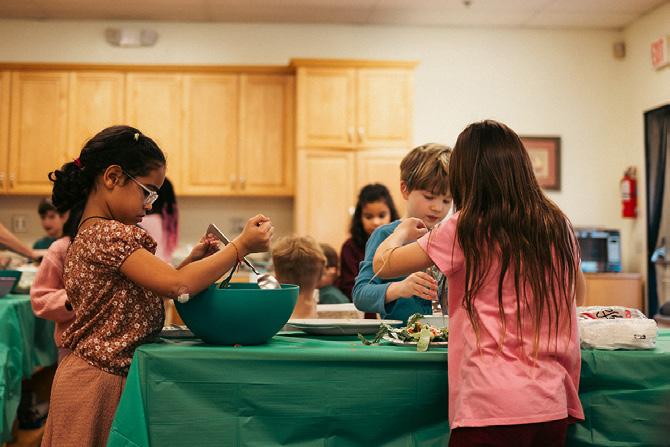
Teachers offer a balance of joyful learning, rigorous academics, and meaningful real-world work. The Adolescent Program (7th and 8th grades), first established in 1997, provides students opportunities to run businesses, engage in community service, and lead integrated humanities and science projects.
Building on this success, Arbor will launch their high school program in Fall 2026, extending their continuum of learning to 12th grade, preparing students for college and life with masterybased evaluation, internships, dual enrollment opportunities, and student-run enterprises. Arbor Montessori School thrives because of their commitment to fostering independence, critical thinking, and integrity in every child. Students are prepared to contribute meaningfully to the world with confidence and purpose. Go here, then go anywhere. Learn more at arbormontessori.org.
Atlanta International School
Atlanta International School (AIS) offers a rigorous and comprehensive International Baccalaureate (IB) curriculum enriched by a world-class language acquisition program, STEAM, award-winning arts, and championship-level athletics—all within an inclusive, globally minded learning community.
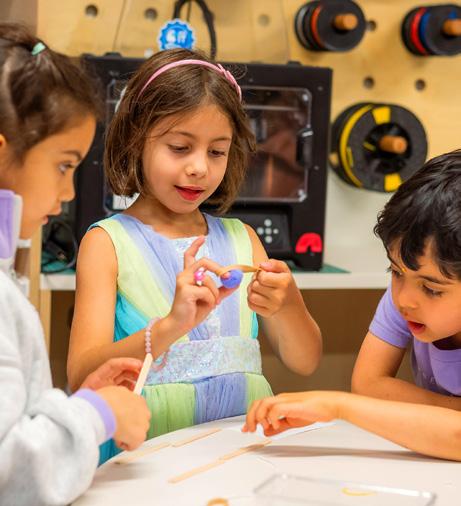
Located on its beautiful Buckhead campus, AIS welcomes 1,350 students from 3K through Grade 12, attracting families from across Atlanta, the U.S., and around the world. The full-immersion preschool engages children in German, French, Chinese, or Spanish, while the Primary Years Program (5K-Grade 5) delivers inquiry-based, bilingual learning that builds critical thinking and cultural fluency.
The Middle Years Program empowers students through choice and agency, preparing them for high school, where AIS offers STEAM and bilingual diploma endorsements, alongside an extensive range of extracurricular clubs and activities. Students graduate from either the IB Diploma or Career-related Program–both globally recognized and sought-after at colleges and universities worldwide. Ranked as the city of Atlanta’s top private college preparatory school, AIS cultivates academic excellence and future readiness.
Discover more or inquire today at aischool.org/admissions.
Best Guide to
Atlanta Academy
Atlanta Academy, located in Roswell, proudly serves 415 private preschool through 8th grade students from across North Fulton. A two-time National Blue Ribbon School (2017 and 2024), Atlanta Academy is recognized nationally for its academic excellence and exceptional student achievement. Small classes of no more than 16 students ensure that every child is known, valued, and supported as teachers nurture individual strengths and unique talents.
From the earliest years, students build a strong foundation in academics, character, and curiosity, fostering confidence, resilience, and a lifelong love of learning. Middle School students grow as leaders and role models, developing responsibility, empathy, and teamwork while contributing to a vibrant, connected community. A forward-thinking curriculum promotes creativity, independence, and essential skills, preparing graduates to thrive in top private, charter, and public high schools.
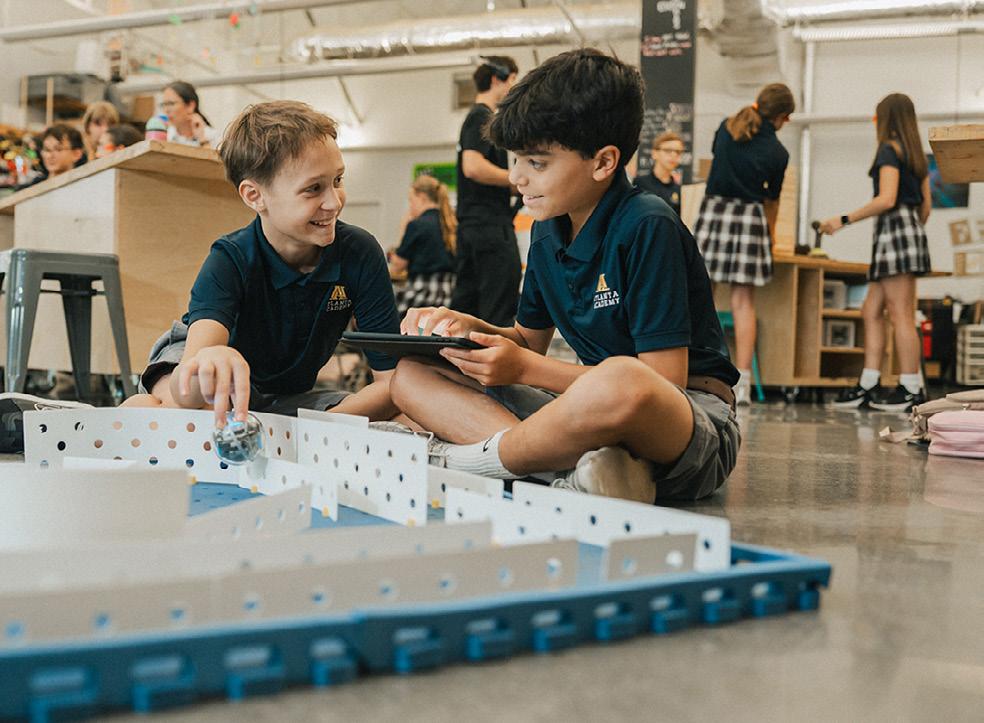
Rooted in a non-denominational, student-centered environment, Atlanta Academy empowers confident, capable problem-solvers ready for lifelong success. Learn more today at atlantaacademy.com.
Atlanta Montessori International School
Atlanta Montessori International School offers a dynamic, childcentered education for children from infancy through elementary years.
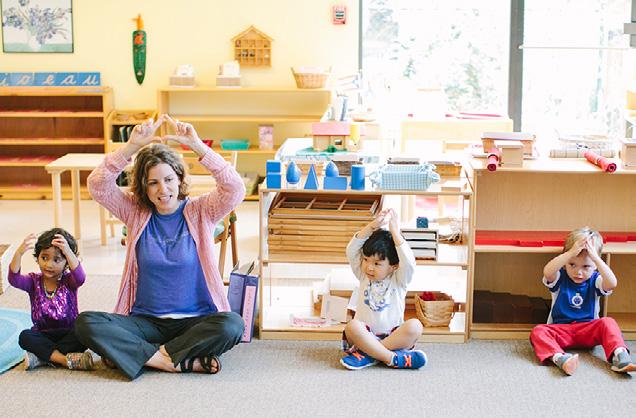
Guided by the Montessori philosophy, the school fosters independence, creativity, and a lifelong love of learning. The carefully prepared environment encourages hands-on exploration, critical thinking, and collaboration, helping children develop academically, socially and emotionally. Highly trained Montessori educators provide individualized attention, nurturing each child’s unique potential and fostering a sense of curiosity and confidence. The school also emphasizes cultural awareness and global citizenship, preparing students to thrive in a diverse and interconnected world. With a strong focus on community, Atlanta Montessori International School creates a warm and inclusive atmosphere where families are partners in the educational journey. Offering a proven approach to learning, Atlanta Montessori International School empowers students to become compassionate, capable individuals ready to make meaningful contributions to their communities and beyond.
For more information, visit amischool.com.
Atlanta Private Schools
Atlanta Speech School
The Wardlaw School is a program of the Atlanta Speech School serving elementary aged children with dyslexia. Wardlaw children aren’t defined by dyslexia, though — Wardlaw children define themselves.
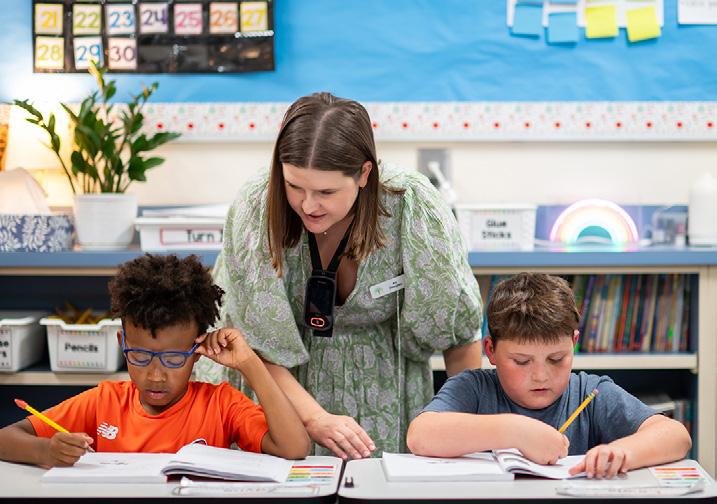
Wardlaw’s highly trained staff see each child, teach to their strengths, and support challenges with proven, evidence-based practices. Specialized in structured literacy approaches like Orton–Gillingham and Wilson, Wardlaw teachers individualize instruction while also fostering empathy, critical thinking, and executive functioning within a comprehensive academic curriculum. This foundation builds deep reading—the kind of reading that allows children not only to comprehend words, but to connect, reflect, and question.
From the moment a child arrives, Wardlaw prepares them for the next step and their lifetime, equipping them to move forward with confidence and to make the most difference in the lives of others.
Learn more at wardlawschool.org.
Capstone Academy
CBen Franklin Academy
The Ben Franklin Academy motto “Esse Quam Videri” loosely means “To be something rather than to seem to be something.” They take that goal seriously when it comes to educating students!
A t Ben Franklin Academy, education begins with a mastery learning approach. Offering a complete college prep curriculum along with 47 AP and Honors Level courses, students demonstrate proficiency in subject matter before moving on, so that the learning is built to last.
It deepens with an individualized approach to instruction. With a 4:1 student teacher ratio, Ben Franklin Academy nurtures the talents of each student to develop strengths and unlock hidden interests. Students embrace the joy that learning brings and become lifelong learners as a result.
Many of their students are busy athletes, artists or budding entrepreneurs so they’ve created flexible academic day options to accommodate “work-practice-perform” schedules, as well as longer school day options beginning at 8 a.m. or 10 a.m.
T hey offer rolling admissions, making it easy for students to enroll when the time is right. Experience the Ben Franklin Academy difference by scheduling a tour at 404-633-7404. benfranklinacademy.org
e Cottage School
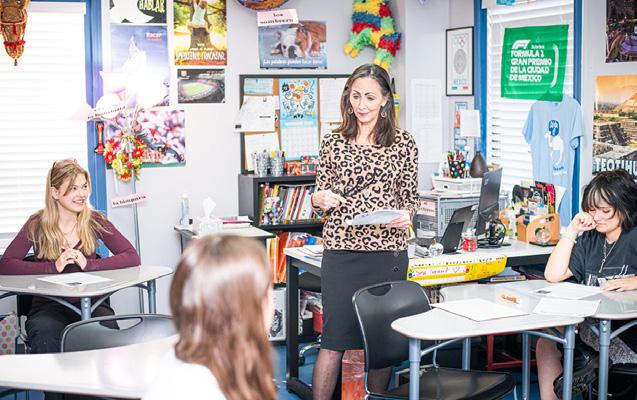
apstone Academy is a private school serving grades 5–12 with an innovative, successful model changing young lives since 2007. At Capstone Academy, teachers encourage students to become lifelong learners by instilling academic curiosity, respect for others, and accountability to core values. College-prep academics are at the honors level and above in high school and advanced levels in the middle grades. Using superior content and proven methods, students cultivate subject mastery, critical thinking skills, and ownership of knowledge.
Capstone is a school whose structure works best for students who desire the camaraderie of a classroom setting but require a flexible schedule to pursue outside interests and family time. Courses exceed standards while meeting three days a week, eliminating wasted time and stress of a traditional school schedule. The core belief at Capstone Academy is that balanced students who understand their own power can explore education and pursue passions with authenticity.
To schedule a tour, visit capstoneacademy.com or call 404-458-5160.
From the moment students walk through the door, The Cottage School (TCS) creates a place where learners who think differently are understood, supported, and celebrated. As an accredited K–12 school with two campus locations in Roswell, TCS offers small class sizes, a personalized learning approach, and a structured environment that empowers students to succeed.
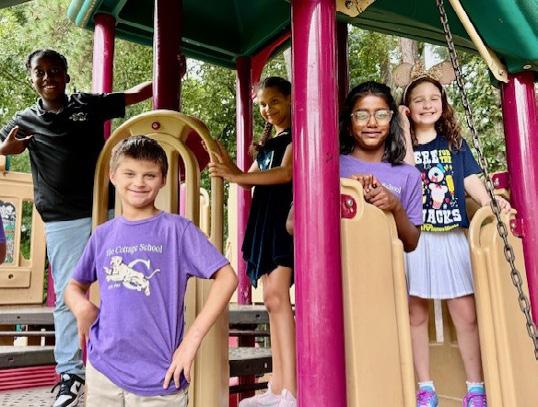
Students thrive in core subjects while also engaging in handson opportunities such as STEAM, culinary arts, music, video production, robotics, auto-mechanics, and athletics. The recently launched Cottage School Career Center equips high schoolers with structured instruction focused on real-world life and career readiness. Students gain practical experience and build essential abilities in communication, independent living, time management, and workplace etiquette and prepares the students to navigate life and work beyond the classroom.
From kindergarten through graduation, TCS’s mission is to prepare students socially, emotionally, and academically to become confident, independent adults. Through an incentive-based learning model and a strong focus on executive functioning skills, students continue to strengthen the abilities that prepare them for college, careers, and life. Learn more at cottageschool.org.
e Davis Academy
The years from Kindergarten Prep — Grade 8 are special, consequential, and deserving of intentional focus. These are the years when children are most open to exploring: as students, athletes, artists, friends, and leaders. It’s when students begin to set great expectations, and when they discover their inner self is as important as their academic development. It’s when children recognize their critical role within their family, their community, and the greater world.
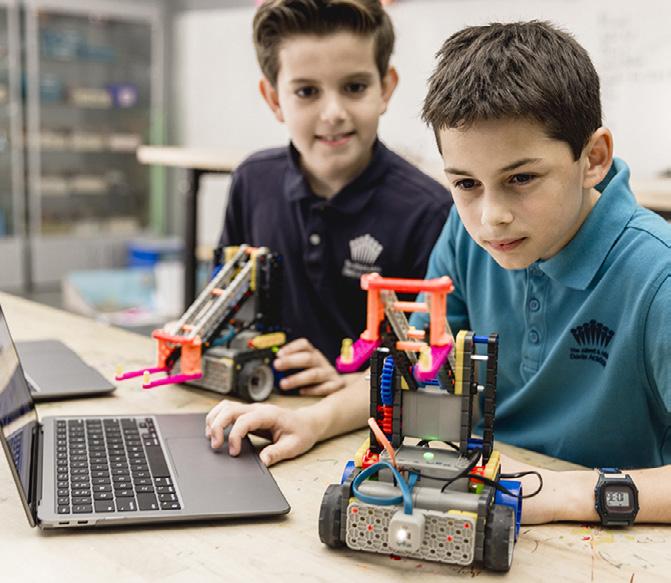
These are the formative years – and at The Davis Academy, they mean everything. As both a highly academic independent school and a Reform Jewish Day School, Davis is intentional about giving children an exceptional start to their school experience, providing students with individualized learning, well-rounded opportunities, and a loving community rooted in inclusive values. Together, let’s raise a generation of unstoppable learners and leaders. Welcome to The Davis Academy: davisacademy.org
e Friends School of Atlanta
Best Guide to
Endeavor Montessori School at Dunwoody Atlanta’s
newest and most innovative school offers a modernized and holistic education that combines Montessori principles with an age-appropriate, technology-focused curriculum.
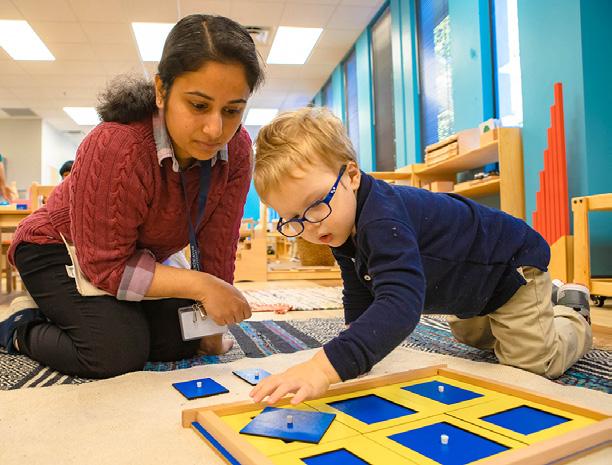
Endeavor Montessori at Dunwoody serves children from 6 weeks to 12 years and approaches learning with a focus on developing the whole child through critical thinking, cultural awareness, and entrepreneurship. The school also eases children into STEAM (Science, Technology, Engineering, The Arts, and Math) so that they understand the technology that surrounds them every day.
The curriculum at Endeavor Montessori at Dunwoody is distilled from the experiences and knowledge of more than 200 esteemed Montessori teachers from across the country to provide students in the Atlanta area with a world-class education that prepares them for their future as they discover their interests and cultivate their talents.
For more information, visit endeavormontessori.com or call 770-637-1242.
Galloway
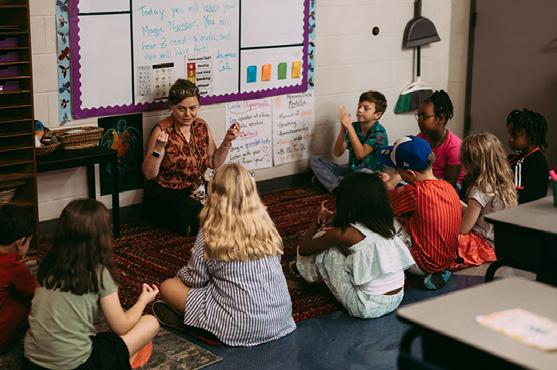
The Friends School of Atlanta (FSA) is a vibrant PreK3 through grade 8 independent school rooted in Quaker values. Since its founding in 1991, FSA has been committed to nurturing academic success, fostering a diverse and inclusive community, and instilling a deep sense of social responsibility in its students. As the only Quaker school in Georgia, FSA provides a unique educational environment where peace, integrity, equality and community are central to the student experience.
At the heart of FSA’s mission is the Quaker belief in the “Inner Light,” the idea that people have a divine light within themselves. This belief guides the school’s approach to education, fostering both academic and personal growth. With small class sizes and a dedicated faculty, FSA provides a nurturing atmosphere where students grow into compassionate, thoughtful individuals who contribute positively to the world. Students are encouraged to engage in inquiry-based learning, service projects, and collaborative activities that emphasize empathy, critical thinking, and a commitment to justice. FSA prepares its graduates to lead lives of purpose and integrity, grounded in the principles of Quakerism. Schedule a tour and learn more at friendsschoolatlanta.org.
Founded in 1969 on eight beautiful acres in Atlanta’s Chastain Park, Galloway has long been a trailblazer in progressive education. From the beginning, the school has been guided by a visionary philosophy: place students’ natural curiosity at the center of learning, and inspire a lifelong love of discovery. Today, Galloway continues this tradition with exceptional faculty who cultivate both academic excellence and personal growth, preparing students not just for school, but for life.
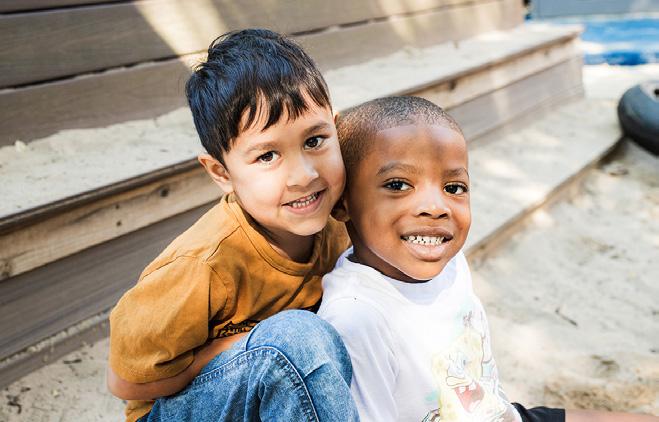
Galloway offers a distinctive model of independent school education, one designed to meet the challenges of a rapidly changing world while nurturing character, creativity, and confidence. Every student is seen and valued, every lesson is engaging and joyful, and high expectations are paired with thoughtful support. The school believes children learn best when they are drawn to explore, rather than forced, and when learning is active and hands-on.
The results are evident: Galloway students thrive academically, form authentic friendships, and approach the world with kindness, courage, and curiosity. They leave school not only prepared, but inspired, ready to make their mark. Learn what school can be for your family at gallowayschool.org.
Atlanta Private Schools
GRACEPOINT School
GRACEPOINT , a private, Christian school, proudly celebrates thirteen years of equipping dyslexic students in grades 1-8 with the skills needed to become independent, confident learners. Since opening its doors in 2012 with four students, GRACEPOINT has restored hope to more than 390 dyslexic learners by identifying its students’ strengths while remediating their academic weaknesses. GRACEPOINT understands that dyslexia is not a disability but a learning difference viewing dyslexia as a gift to embrace and celebrate. The teaching style meets academic and spiritual needs while bringing out their students’ God-glorifying brilliance.
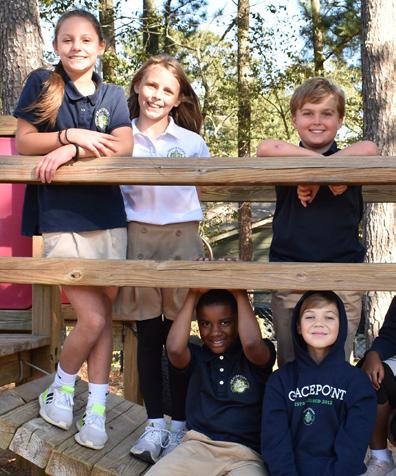
As an accredited program through the Academy of Orton Gillingham Practitioners and Educators, GRACEPOINT provides an explicit, systematic, and multisensory approach to learning woven into all subject areas. Their mission is to equip students with the skills needed to develop into independent and confident learners. Once remediated, students transition to traditional public and private schools.
The school’s growth over the years is a testament to its success in meeting the needs of children diagnosed with dyslexia.
Located at 1407 Cobb Parkway North, Marietta 30062. Learn more at gracepointschool.org or call 678-756-8897 to schedule a personalized tour.
High Meadows School
For more than 50 years, High Meadows School has been a place where learning is an adventure and each day is filed with joy, wonder, and discovery. Every day, students age three through eighth grade expand their horizons through exciting experiences, meaningful relationships, and critical thinking.
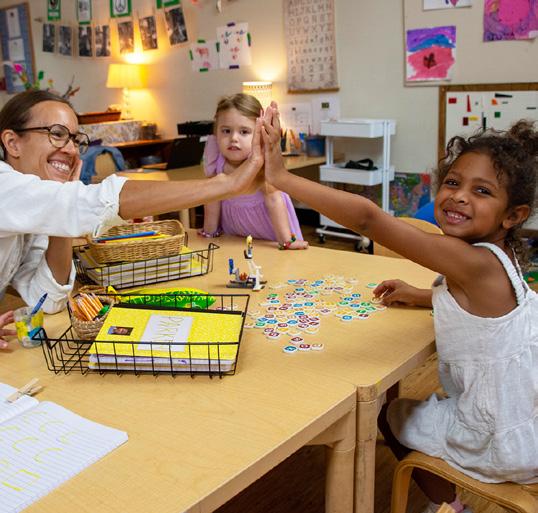
Located on 42 acres of woods, farmland, and rolling meadows in beautiful Roswell, Ga., the stunning campus provides the perfect setting for outdoor, hands-on learning and connection to nature.
Talented faculty inspire learners to inquire, explore their interests, and self-advocate. Students are active partners in their education, and graduates leave equipped with a robust academic foundation, unwavering confidence, and an unmatched enthusiasm for the path ahead.
A nationally recognized and award-winning leader in progressive education, High Meadows School is an authorized International Baccalaureate (IB) World School offering its renowned Primary Years Programme for students in Pre-K through fifth grade and is accredited by the Southern Association of Independent Schools.
Discover how High Meadows students learn, grow, and thrive by visiting highmeadows.org or calling 770-993-2940. 1055 Willeo Rd., Roswell 30075.
Heritage Preparatory School
For more than 25 years, Heritage Preparatory School has partnered with Christian parents to provide a Christcentered, classical education that inspires a lifelong love of learning. With faith as the foundation, students are guided to think critically, live purposefully, and develop a Gospel-centered worldview that equips them to impact the world for Christ.
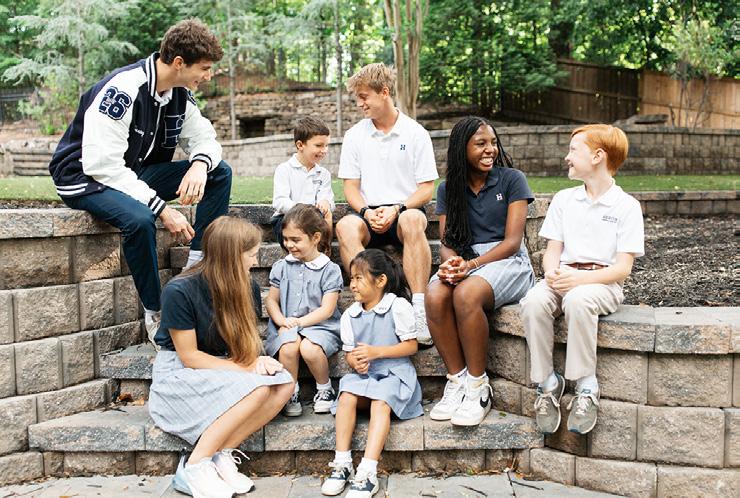
At Heritage, education is about more than academics. It is about shaping hearts and minds. The dedicated faculty invest deeply in students, nurturing character, encouraging curiosity, and cultivating wisdom. From PreK through 12th grade, every lesson, discussion, and relationship is rooted in truth and designed to form students who are thoughtful, faithful, and prepared for the future.
Heritage is more than a school. It is a community where faith and learning flourish side by side.
Discover more at heritageprep.org.
Holy Innocents’ Episcopal School
AtHoly Innocents’ Episcopal School, students find a community that knows them, supports them and inspires them to grow into their most confident, capable selves. Founded in 1959, HIES serves 1,400 students in Grades PK3–12 on a beautiful 43-acre campus just north of Chastain Park. Learning extends far beyond the classroom—through competitive Athletics and Fine Arts, vibrant Experiential Learning, meaningful faith and Service Learning programs, and countless moments where passions are sparked and potential is realized.
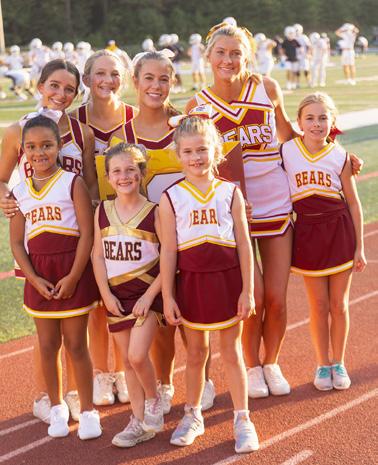
As the largest Episcopal parish day school in the country, HIES is grounded in a deep sense of belonging and faith. Students are known as individuals and encouraged to explore every interest. A rigorous, supportive academic program prepares them for success in college and beyond, while signature opportunities such as Global Learning and the PEAK Leadership Institute cultivate creativity, integrity and curiosity.
At every age, students are encouraged to think boldly, lead with heart and embrace the opportunities before them. Holy Innocents’ Episcopal School is where students pursue their passions and grow within a community that feels like home.
Discover HIES for yourself—schedule a visit today at hies.org.
Holy Spirit Preparatory School
Best Guide to
The Howard School
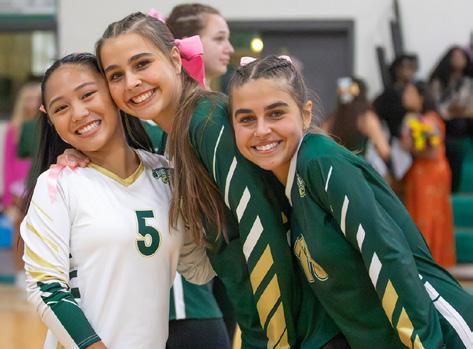
At Holy Spirit Preparatory School, they nurture the minds, hearts, and souls of students from preschool to 12th grade through a comprehensive education rooted in Catholic tradition and classical learning. Their approach blends timeless values with transformative education, fostering a love for truth, beauty, and goodness. From daily music classes for young learners to advanced studies, strong arts programs, and competitive athletics, Holy Spirit Prep shapes well-rounded individuals ready for lives of purpose and service.
Guided by dedicated faculty committed to excellence, students achieve remarkable success, including a 100% college acceptance rate. Students are prepared to enter the world firm in faith, joyful in hope, and active in charity.
Embracing their motto, “Ministrare non ministrari” – to serve and not be served – Holy Spirit Prep emphasizes spiritual growth through campus ministry, weekly Mass, retreats, and theology courses. With active parent engagement and extensive after-school programs, they foster a nurturing environment where students thrive academically and spiritually.
Experience the Holy Spirit Prep community—register for an upcoming Information Session, each followed by tours, at holyspiritprep.org/admissions.
Landmark Christian School
Ranked as one of the best schools in Georgia, Landmark Christian School in Fairburn serves students from PK3 through 12th grade, investing in their spiritual, academic, and personal growth through engaging academics, Christ-centered values, and countless opportunities for discovery.
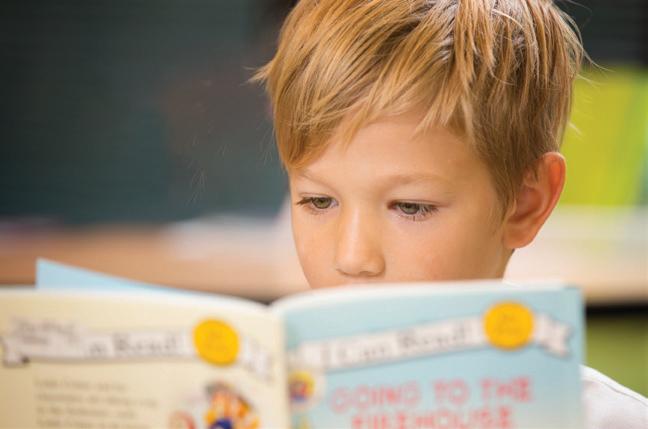
Landmark’s mission is to inspire and equip every student to impact the world for Jesus Christ. With intentionally small class sizes and a teacher-student ratio of 1:7, Landmark’s world-class faculty provide a dynamic, nurturing environment where students are known, challenged, and encouraged to excel. The school’s rigorous curriculum offers AP, honors, and dual enrollment courses, as well as distinctive academies in Aviation, Music, Film, Visual Arts, Engineering/STEM, Fashion, and Leadership. S tudents experience hands-on learning that promotes creativity, critical thinking, and collaboration, while championshiplevel athletics and robust fine arts programs complete the experience. Impressively, 100% of Landmark graduates receive college acceptances—most with scholarships and college credits. Visit landmarkchristianschool.org to learn more or schedule a tour.
Discover
The Howard School in Atlanta, where a different approach makes all the difference for students with languagebased learning differences. At The Howard School, they celebrate each child, transforming the learning experience and developing lifelong strengths.
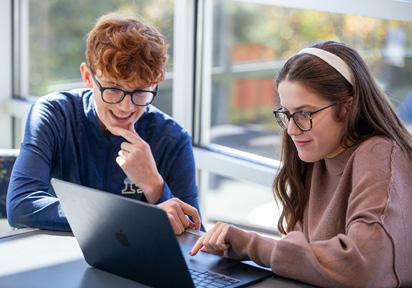
The dedicated team of educators, speech-language pathologists, and literacy and math specialists provide a tailored educational experience that honors each student’s profile—building on strengths while addressing specific challenges so students can reach their full academic potential.
For more than 75 years, The Howard School has blended traditional academics with research-based, scientifically proven methodologies. Small class sizes and individualized instruction create a nurturing environment where students can grow academically, socially, and emotionally.
Students also enjoy a wide range of extracurricular opportunities, including clubs, no-cut athletic teams, and no-cut theater and arts programs, helping them discover new interests, build confidence, and find their voice.
Families who choose The Howard School are choosing a transformative education that equips students to understand how they learn and to advocate for their success in and out of the classroom. Experience the difference. howardschool.org
e Lovett School
Founded in 1926, The Lovett School is Atlanta’s independent, coeducational day school of choice for families who value a multifaceted approach to the education of the whole child – where intellectual rigor, social-emotional learning, and character development are purposefully cultivated and inextricably linked.
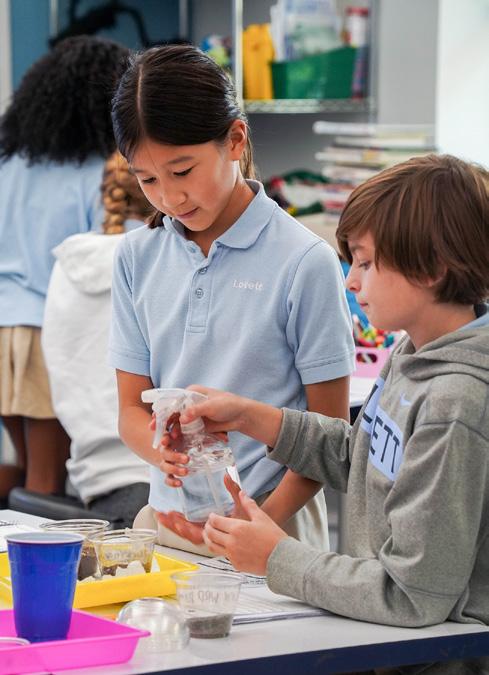
Students find joy and purpose by immersing themselves in intellectually rigorous, hands-on learning environments. Classrooms anchor the development of strong character and spark the discovery of individual passions and collective purpose. Students are offered experiences that deepen their cognitive, emotional, and social skills while inspiring an enthusiasm for learning.
Lovett’s academic offerings are complemented by dynamic arts programming, competitive athletics teams, and purposeful civic engagement opportunities. With a student body of 1,640 students, Lovett is a community of belonging that develops students of honor, faith, and wisdom with the character and intellect to thrive in learning and in life. Start your journey today at lovett.org.
Atlanta Private Schools
McGinnis Woods School
MMill Springs Academy
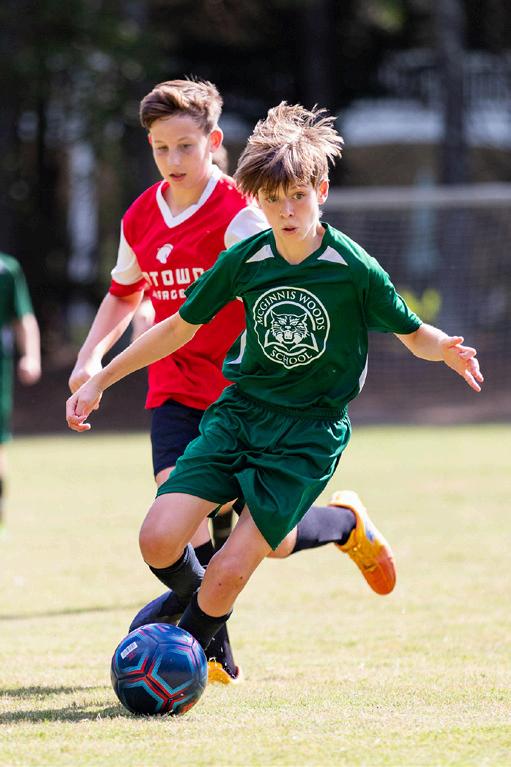
cGinnis Woods School located in Forsyth County offers a rich Preschool through Middle School education. McGinnis Woods is Cognia, GAC, and NAEYC accredited and a member of the Georgia Independent School Association. Instruction at McGinnis Woods is hands-on with a focus on STEM learning. The school is a 1:1 iPad environment that features small class-sizes with teacher assistants and superior academics that inspire a lifelong love of learning. Classes are engaging and provide for differentiation and personalized attention. Guest speakers, field trips, character education, leadership opportunities and community service round out the curriculum. Competitive Sports, Robotics, Science Olympiad and Drama teams train year-round. After school and Discovery Clubs are also available.
You’re invited to McGinnis Woods’s OPEN HOUSE on Saturday, January 24th from 1-3 p.m. Or, visit mcginniswoods.org to set up a tour today!
Montessori Academy at Sharon Springs and Montessori at Vickery
Campuses at Sharon Springs and Vickery provide students with a Montessori education that opens minds and sharpens intellectual skills, while nurturing confidence and independence.
These schools offer age-appropriate Montessori programs for children from 13 months to 12 years. Working in a supportive environment with experienced educators, students receive the tools and resources to gain a world-class education. Montessori is effective in helping children develop a lifelong love of learning. Recognized by Montessori educators worldwide and accredited by the American Montessori Society, these schools meet the highest standards of excellence. For more information, go to montessoriacademysharonsprings.com or montessorivickery.com
Mill Springs Academy is a K–12 private school that empowers students with ADHD, learning differences, and those on the autism spectrum to discover their strengths and truly thrive. Through a hands-on, project-based learning approach, MSA blends academics with meaningful real-world application. Students build essential skills such as critical thinking, executive functioning, and social-emotional intelligence. The school’s small, supportive environment allows learners to progress at their own pace while fostering independence, curiosity, and a genuine love of learning.
MSA’s mission is simple yet powerful: to prepare every student to be Real World Ready. This means equipping them not only with strong academic foundations, but also with the confidence, resilience, and problem-solving abilities they need to succeed in whichever path they choose — whether that’s college, a career, or another pursuit aligned with their strengths and passions. With individualized attention and a community built on understanding, Mill Springs Academy empowers students to reach their full potential. Learn more at millsprings.org/visit.
Montessori Scholars Academy
Montessori
Scholars Academy, located at 13100 Morris Road, is founded on the belief that every child is naturally curious and capable. The school is rooted in the authentic Montessori philosophy, which fosters independence, confidence, and a lifelong love for learning. Students engage with hands-on materials, purposeful activities, and thoughtfully prepared environments that support academic, social, and emotional growth.
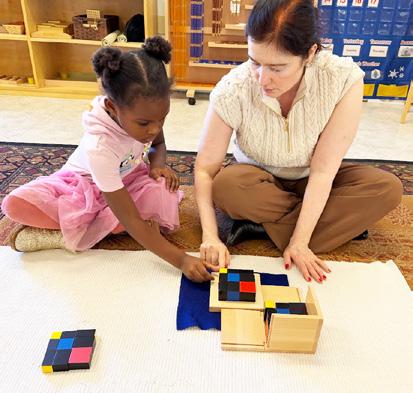
The Montessori-based curriculum is carefully designed to meet each child at their own pace while encouraging exploration in language, mathematics, science, cultural studies, and practical life skills. Small class sizes allow for individualized attention, ensuring that every child feels supported and inspired.
A cornerstone of the program is the dedication of the lead teacher, who has been with Montessori Scholars Academy longer than any other staff member. With years of experience and deep knowledge of the Montessori method, she builds strong relationships with children and families while guiding students with patience, warmth, and expertise.
Montessori Scholars Academy partners with families to create a joyful, respectful, and enriching learning journey where children thrive — academically and beyond.
Visit montessori-scholars.com for more information.
Montessori School at Emory
Best Guide to
Mount Paran Christian School
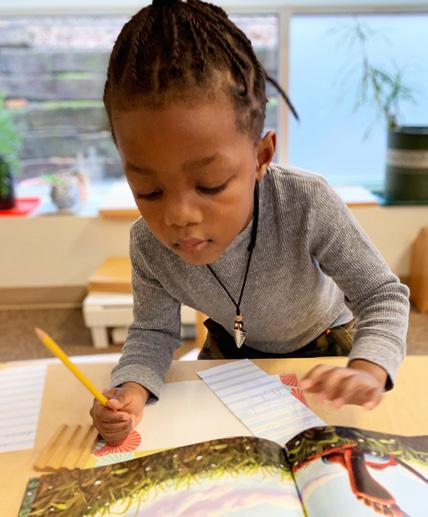
Montessori School at Emory was founded m ore than 30 years ago becoming accredited as a Montessori School in 1993. With over 200 students, from 15 months through 14 years, the Montessori School at Emory supports the whole child and prepares them for life through accredited, authentic quality Montessori programs. Children are given one-on-one instruction from their teacher which creates an individualized program that engages their interests and skill levels.
Montessori School at Emory offers several options. Full day, half day, 10 month or year round formats are available. Afternoon enrichment programs are also offered from 3 p.m. to 6 p.m., in which children enjoy experiences in the creative arts and sciences such as music, art and foreign language. Also, early morning drop-off is available at 7 a.m. For more information about the Montessori School at Emory, call 404-634-5777 or visit montessorischoolatemory.com.
Mount Pisgah Christian School
Mount Pisgah Christian School’s mission is to provide an outstanding college preparatory education grounded in Christian faith and values. The school is defined by a sense of belonging for families and students, with educational, spiritual and interpersonal growth central to its vision.

Located in the heart of North Atlanta, Mount Pisgah is an independent, non-denominational, coeducational day school serving students from age six weeks through 12th grade. The school offers a caring learning environment that challenges, nurtures and strengthens students intellectually, spiritually and physically. Students are given curated opportunities to participate in extracurricular activities to develop the whole person as a contributor to a thriving school community.
The school is known for an exceptional faculty; proven performance in personalized instruction; comprehensive AP, Honors and STEAM curriculum; 54 athletic teams, fine arts programs and an exceptional college placement program. Please visit mountpisgahschool.org/admissions to start your journey.
For 50 years, Mount Paran Christian School has provided an elevated educational experience, combining rigorous academics, awardwinning arts, and championship athletics — all with Christ at the center. Fully-accredited, MPCS is located in the shadow of Kennesaw Mountain on a 68-acre college-like campus
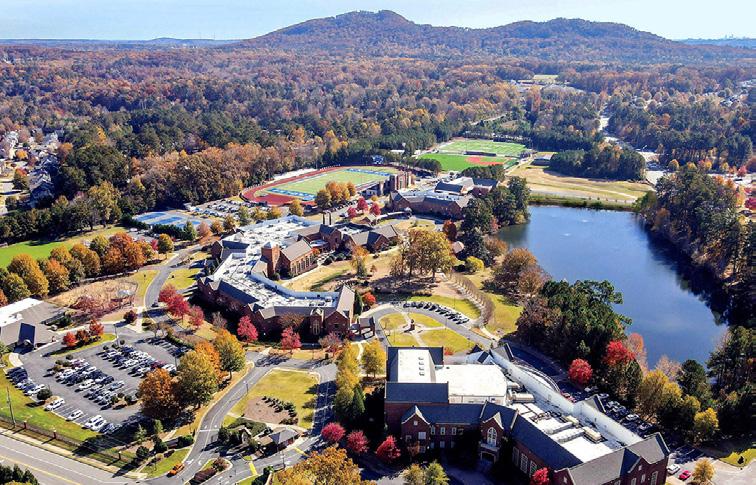
Within small class sizes (12:1 student-teacher ratio), MPCS offers 61 AP/honors courses, instructional support, robotics, Spanish and STEAM starting in PK3, and a 1:1 device program. It’s crucial to guarantee a moral and faith foundation through everything your child learns on the school journey. Through curricular Bible classes, weekly chapel, service, and discipleship groups, faith becomes fused into who they are. Highly qualified career educators know and love each student to raise up servant-leaders who can move mountains – in the classroom, on the ball field, on the stage, and ultimately in the community.
Begin your child’s journey at mtparanschool.com/explore.
Mount Vernon School
The journey for all students to become college-ready, globally competitive, and engaged citizen leaders begins in Preschool and continues through Grade 12. Along the journey, Mount Vernon School builds foundational literacies, skills, attributes, and meaningful relationships
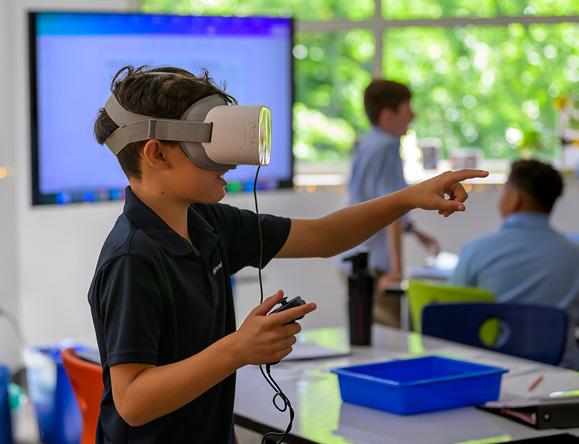
Based on a strong foundation of core educational methods, they combine inquiry-based learning with design thinking, enabling students to strengthen problem-solving skills. This blended approach encourages non-linear thinking, global connections, brainstorming, prototyping, and iterative solutions while ensuring lasting context for learning.
Over the course of four years, the college counseling team cultivates strong relationships with every Upper School family, in order to find the optimal college fit for each student. Alumni have attended colleges all over the country as well as abroad, in addition to all 14 universities in the Southeastern Conference. “We don’t have to wait and see what the future holds. We can design a better world together, today.” Visit mountvernonschool.org/admissions to learn more.
Atlanta Private Schools
Mt. Bethel Christian Academy
Mt. Bethel Christian Academy is the school of choice for Cobb families and beyond desiring a JK-12th Christcentered education. Through a relationship-centered approach to teaching, MBCA students are equipped to learn, lead, and serve. At MBCA, students are known and loved, and individual strengths are celebrated.

Mt. Bethel’s curriculum challenges students with a STEM program, honors/AP classes, robotics, world languages, international mission trips, plus digital/fine arts opportunities. The Academy is home to the Film Academy, providing students with hands-on learning and exploration tools to teach them how to articulately tell stories through a Biblical worldview. The Academy offers 40+ sports teams for grades 5 -12.
Campus expansion plans are underway, bringing world-class academic and athletic facilities to northeast Cobb. The Post Oak Tritt Road Campus is growing to house Middle School and, in 2028, Lower School. Bus service is available.
Visit the Lower and Middle Campus (JK-8) at 4385 Lower Roswell Road and the Upper Campus (9-12) at 2509 Post Oak Tritt Rd.
To learn more, email admissions@mtbethelchristian.org or visit mtbethelchristian.org.
Pace Academy
In 1958, an interfaith group of community leaders envisioned a learning environment open to fresh ideas and debate. Pace Academy today is exactly what its founders had in mind.
With 1,150 students in Pre-First through 12th grade, Pace strives to create prepared, confident citizens of the world. Studentteacher relationships are at the heart of the Pace experience, so the school maintains a student-teacher ratio of 9:1 and an average class size of 12.
Pace develops children’s passions and strengths through academics, athletics and the arts, while providing global perspectives in the classroom and an integrated experience after the bell rings.

Through the Isdell Center for Global Leadership (ICGL), Pace students come to view the world through a global lens. The ICGL builds on an innovative academic curriculum and explores an annual, school-wide theme. Curricular and co-curricular activities, scholars in residence, fellowships, internships and international study tours support education around these themes.
Through the ICGL, Pace students, guided by an outstanding faculty, develop a deep understanding of the world and the people around them. Pace graduates realize that true success means making a difference.
For more information, visit paceacademy.org.
North Cobb Christian School
Step onto North Cobb Christian School’s 55-acre campus and you’ll instantly feel it: NCCS feels like home. The secret to this nurturing culture is small class sizes, loving faculty, and an uncompromising commitment to biblical truth. Since its founding in 1983, NCCS remains true to providing an authentically Christian, academically excellent education in a unique family-centered environment. Today, over 1,250 students in K3-12th grade thrive with an 11:1 student-to-teacher ratio.
Opportunities include 55+ championship athletic teams, 17 awardwinning arts ensembles, 5 Academies (magnet programs), and a robust array of clubs and enrichment programs. Proactive college counseling results in top scholarships and a 100% college acceptance rate. Plus, weekly chapel, discipleship groups, fall retreat, and Spring Term mission trips build unshakable foundations of faith.
An independent school consulting firm recently reported, “Of all the schools we have worked with globally, NCCS’s Christian mission is one of the strongest we have seen.”
PREVIEW DAY: January 24, 2026, 9:30-11:30 a.m. RSVP: bit.ly/preview_nccs. PERSONAL TOURS: 770-975-0252, ncchristian.org/admissions
Paideia School
Founded in 1971, the Paideia School offers progressive education for students ages three to twelfth grade, with a strong focus on recognizing and supporting each individual learner. Paideia creates opportunities and environments where students can uncover their unique gifts, explore their interests, and learn to use their strengths in meaningful and authentic ways. The school emphasizes curiosity, reflection, creativity, and collaboration, helping students develop the confidence and skills they need to thrive both in and beyond the classroom.

Paideia is the leading progressive school in the Southeast, offering a rigorous range of AP and post-AP curricula that encourage depth of understanding and intellectual risk-taking. In 2025, Paideia students were state champions in girls Ultimate Frisbee, reflecting a vibrant athletics program. The class of 2025 saw 108 graduates accepted into 189 colleges and universities. Paideia’s Framework of Values guides how the community teaches, learns, and grows together.
Visit paideiaschool.org to learn more.
Pinecrest Academy
Best Guide to
Sage School
Pinecrest Academy is a PreK3-12 Catholic school providing an atmosphere of academic excellence and critical thinking. Rooted in Catholic tradition and inspired by the beauty, goodness, and truth of the Christian worldview, their whole-person approach helps children discover and develop their God-given gifts. Students, faculty, and staff strive to live by the school’s core values of charity, humility, excellence, and mission. Pinecrest has been named “Best Private School” in Forsyth County for 12 consecutive years.
The average class size at Pinecrest Academy is 15 students, each known by first name and loved by their teachers. STEMScopes encourages learning and discovery through hands-on labs. Athletics, Fine Arts, and co-curriculars are an important part of a student’s experience. Students participate in service projects, supporting the school’s mission to form Christian leaders who will transform society. Pinecrest serves Cumming, Johns Creek, Alpharetta, Milton, Suwanee and other North Atlanta areas. Visit pinecrestacademy.org or call 770-888-4477.
Saint Francis School
AtLearning how to learn is one of the greatest gifts a child can receive. At Sage School, students are presented with tools and strategies to unlock the code of English language. Language instruction and Orton-Gillingham remediation form the core of the education of a Sage School student. The instruction is multi-sensory, direct and explicit.
Orton-Gillingham remediation, the best education a student with dyslexia can receive, is a multi-sensory approach to teaching children to read and write. While the approach at Sage School is structured, sequential, and cumulative, it is also individualized to meet the needs of the learner. Rather than rote learning, instructors address the language cognitively, teaching students how language works.
A Sage School classroom provides individualized instruction to meet the students’ needs in the areas of encoding, spelling, handwriting, written expression, vocabulary and reading comprehension. Learn more about Sage and schedule a tour today at sageschool.net.
The Schenck School
Saint Francis, students are challenged, supported, and inspired to reach their highest potential in a community where they are seen, heard, and valued. As a non-religious, independent college preparatory school, Saint Francis serves grades K–8 on our Roswell campus and grades 6–12 on its Milton campus, offering a seamless middleto-high school experience for families.
For students who need the right balance of challenge, structure, and support, Saint Francis provides an environment where confidence grows, and progress is achievable.
Small classes and personalized instruction support multiple academic pathways, including Honors, Traditional, Support, and Academic Enhancement, with advanced opportunities in STEAM, robotics, and AP coursework, preparing students for college and beyond.
Saint Francis also offers one of Georgia’s most comprehensive structured literacy programs, fully integrated into the core curriculum, so students receive targeted support without being pulled from their regular classes.
Learn more at saintfrancisschools.com.
The Schenck School’s mission is to build a solid educational foundation for students with dyslexia and to develop their rich potential.
Founded by David Schenck in 1959, The Schenck School is widely regarded as one of the top elementary schools in the U.S. for dyslexic students.
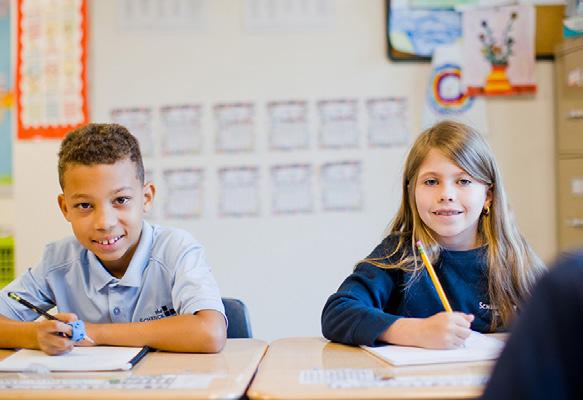
The Schenck School focuses on an accelerated remediation of dyslexia using The Schenck School’s reading model, a highly diagnostic and prescriptive application of the Orton-Gillingham Approach with small group instruction across all subjects. Critical to student’s success is a specialized, intensive yet nurturing learning environment for students to take risks, read and succeed. While at the School, students learn to advocate for themselves and to celebrate their dyslexia.
ReadSource is a non-profit launched by The Schenck School to share the expertise of the School with others in the community who work with struggling readers. Its mission is to empower educators, and transform student lives through evidence-based reading instruction.
For more information about the school, visit schenck.org.
For more information about reading instruction and teacher training, visit readsource.com.
Atlanta Private Schools
Springmont School
As the oldest Montessori school in the Southeast, Springmont offers students 18 months through Middle school an authentic Montessori education. Individualized, hands-on learning is balanced with social/ emotional well-being, inspiring the diverse and inclusive community of learners to become creative, independent, and globally minded.
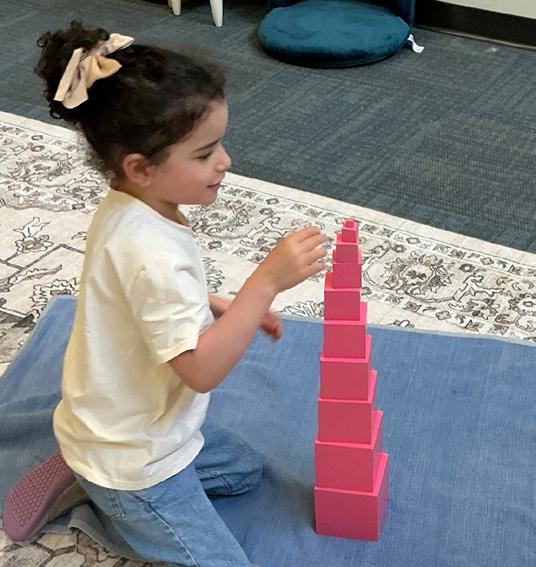
Multi-aged classes and specially designed materials are complemented by highly experienced and caring teachers who guide students’ curiosity towards meaningful, collaborative discoveries. Large, light-filled classrooms and a beautiful campus with natural areas, class gardens, and farm animals afford rich outdoor experiences.
Springmont’s Middle School prepares students for success in Atlanta’s premier high schools and life beyond academics. Opportunities to hone time-management skills, experience active leadership roles, and work both independently and in diverse groups allow students to become engaged learners. Springmont School –Extraordinary by Design. Inquire today at springmont.com.
Trinity School
ESwift School
Swift
School offers a transformative, educational experience for kindergarten through eighth-grade students diagnosed with language learning differences, ADHD, or executive functioning challenges. With a 6:1 student-to-teacher ratio, Swift creates a personalized and immersive learning environment where every child can thrive. Highly trained teachers and specialists utilize the OrtonGillingham Approach and other evidence-based reading models, which are multisensory, structured, and foundational for all subject areas. Swift’s dedicated team includes speech-language pathologists, a multisensory math coach, an occupational therapist, and a language arts curriculum coordinator.
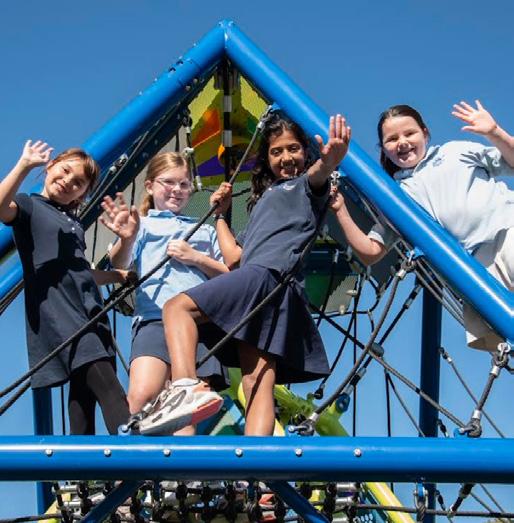
The Swift Effect is a life-changing transformation that begins when students learn to trust, belong, and discover who they are as learners. Students whose self-esteem has suffered find confidence. Those who struggled to read unlock literacy. The positive atmosphere is evident immediately; students are smiling, engaged, and actively learning. They develop meaningful friendships, experience true community, and emerge with an unwavering belief in themselves and their abilities. Visit theswiftschool.org to learn more.
e Walker School
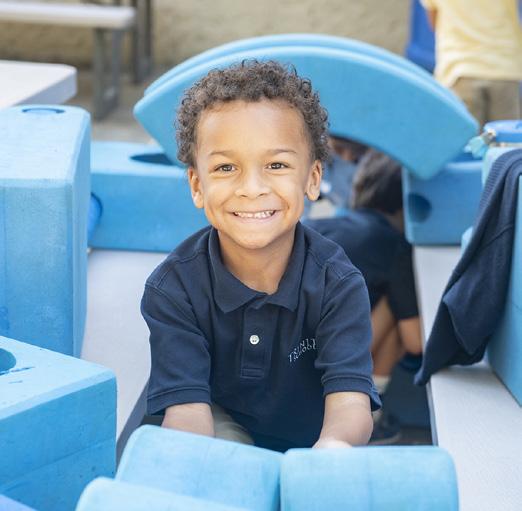
stablished in 1951, Trinity School is Atlanta’s sole elementary-only independent school. Serving children age three through sixth grade, they emphasize hands-on learning and produce results that far exceed national private school standards. The school feels like home because students are free to explore in a safe, nurturing, and exhilarating environment where they are known and loved.
Students enjoy small class sizes, low student-to-teacher ratios, elementary teaching experts, dynamic programming, and flexible indoor and outdoor learning spaces on a beautiful 43-acre campus. Encouraged to use their imagination, discover new concepts, and innovate, your child will cultivate a lifelong love of learning, confidence in their abilities, and adaptive strategies for navigating an ever-changing world. From developing critical thinking and problem-solving skills to fostering creativity and resilience, students are prepared to succeed in middle school and beyond.
Ask anyone who knows Trinity, and this is what you will hear: Start at Trinity. Thrive for life. Learn more at trinityatl.org.
Walker graduates are confident leaders who excel in a diverse and everchanging world. At The Walker School, students thrive in an environment where learning is truly studentcentered and curiosity is encouraged every step of the way. Teachers inspire active, dynamic engagement in the classroom, empowering students to take ownership of their education and discover their unique passions.
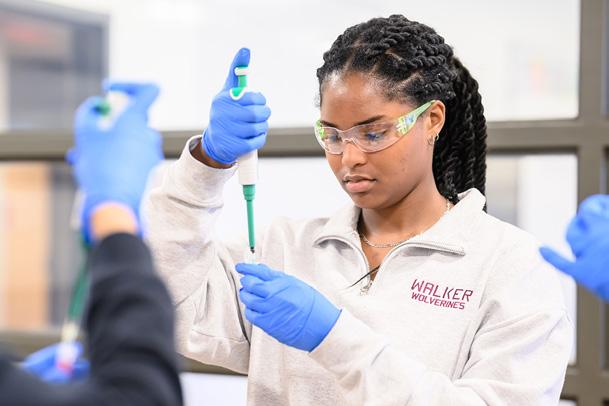
Walker’s approach goes beyond academics—it’s about building meaningful relationships and cultivating a deep sense of community and belonging. Every student is known, valued, and supported in a caring environment that celebrates diversity, inclusion, and kindness. This strong foundation allows students to develop not only intellect and creativity but also empathy, integrity, and a lifelong love of learning.
That powerful combination is what sets Walker apart. Reflecting the world around them, Walker students are wellprepared for a future yet to be imagined. Located just two miles from Marietta Square, Walker offers more than 20 metro-area bus routes. Schedule a tour today at thewalkerschool.org and experience the Walker difference!
Best Guide to Atlanta Private Schools
Wesleyan School
e Wood Acres School
Wesleyan School believes faith and intellect are great partners with each other. At Wesleyan, it’s not a matter of choosing faith or intellect, but rather using both to create the best possible education for your child. The leadership and faculty work to provide students with an atmosphere that is challenging, reinforces the value of hard work, and emphasizes character and integrity above accomplishment. Wesleyan School has made a commitment, in the midst of a rapidly changing culture, to never waiver on the core principle of dedication to Jesus Christ. This is at the heart of everyday life at Wesleyan as students learn and faculty strive to model the school J.O.Y. motto – Jesus, others, and then yourself.
Enrolling grades K-12, Wesleyan School prepares students for each stage of life and provides them the opportunity to see all the possibilities that lie before them. Located just outside of I-285 in Peachtree Corners, Wesleyan offers bus routes throughout the metro Atlanta area. Application deadlines along with information about admissions events and campus tours can be found online at wesleyanschool.org.
Woodward Academy
At Woodward Academy, students are nurtured to become global citizens—ready to thrive with intellect, empathy, and purpose.
From Pre-K through senior year, they engage in an environment that inspires curiosity, innovation, and leadership. Whether exploring advanced STEM labs, programming in robotics, engaging in literary discussions, or performing in the arts, Woodward empowers students to discover their passions and potential.
Offering 25 AP courses, a nationally respected Transition Learning Support program, 19 sports, and more than 75 annual arts performances, Woodward provides unmatched opportunities for growth in and beyond the classroom.
Equally vital is the school’s values-driven culture, where students gain confidence through challenge and learn to lead with compassion. Graduates don’t just leave for college—they launch prepared to make an impact, earning more than $30 million in scholarships, completing 5,000 hours of service, and enrolling at more than 100 top colleges nationwide.
Schedule your visit today at woodward.edu and see how your child can learn, lead, and thrive at Woodward Academy.
The Wood Acres School, located in the heart of East Cobb, is the exceptional independent private school for Preschool (2s-4s), Elementary School (Jr. K – 4th) and Middle School (5th-8th). Wood Acres is well known in the community for its accelerated curriculum, integration of STEM and STEAM activities, and teaching Spanish as a second language.
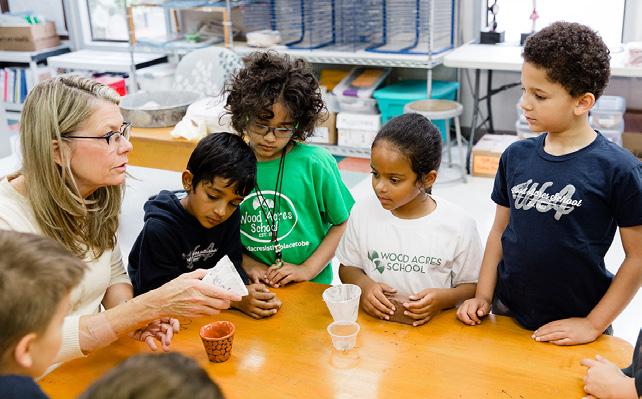
The Wood Acres School believes in high expectations for all students while recognizing that like the school’s ginkgo leaf logo, each child is unique. Situated on nine spacious acres, students enjoy daily recess and outside exploration along with academic rigor. Small class sizes of 13-15 students enable the dedicated and experienced faculty to challenge their students and provide an outstanding education.
In today’s uncertain world, Wood Acres continues to be relevant by staying true to the ideals that have brought success for many while evolving to meet the changing needs of today’s students. Visit woodacresschool.org to schedule a personal tour.
Come see why #woodacresistheplacetobe!




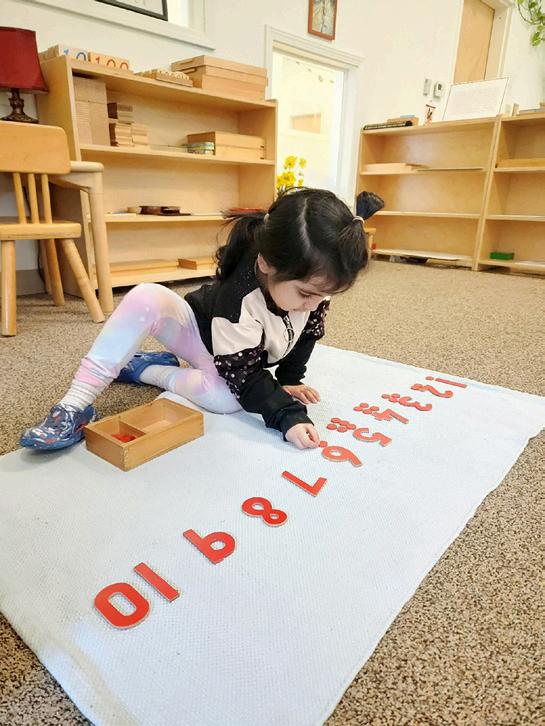
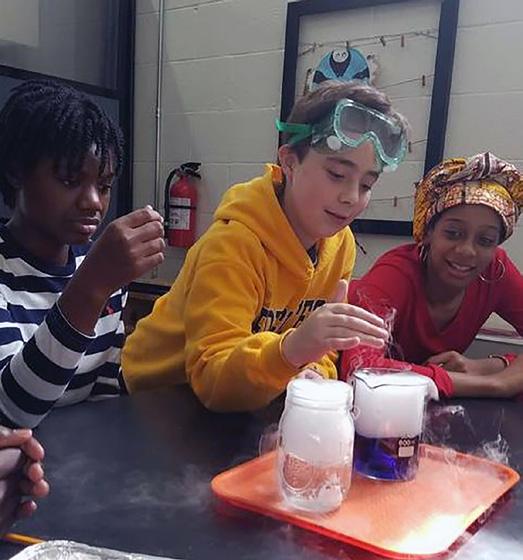
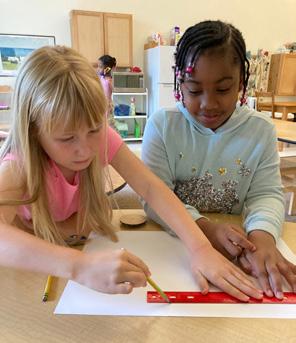

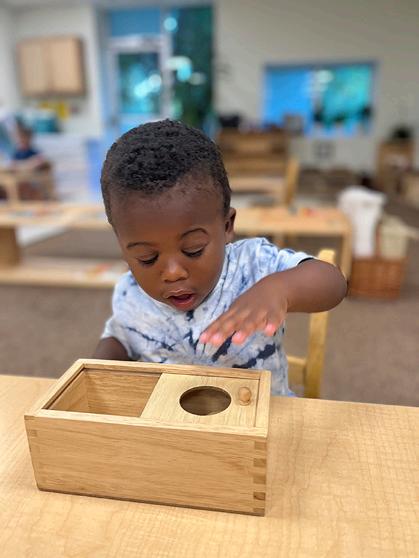
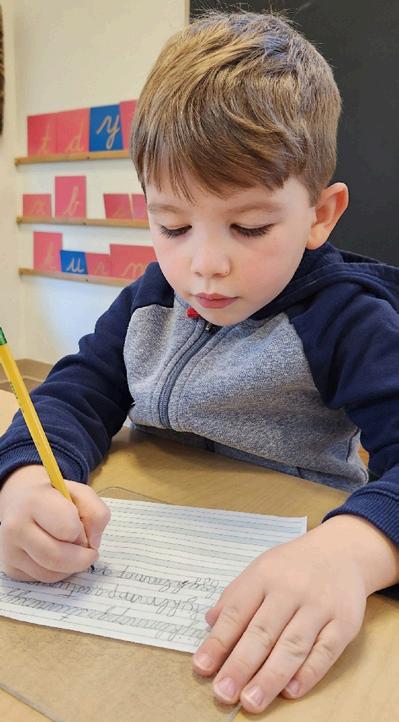

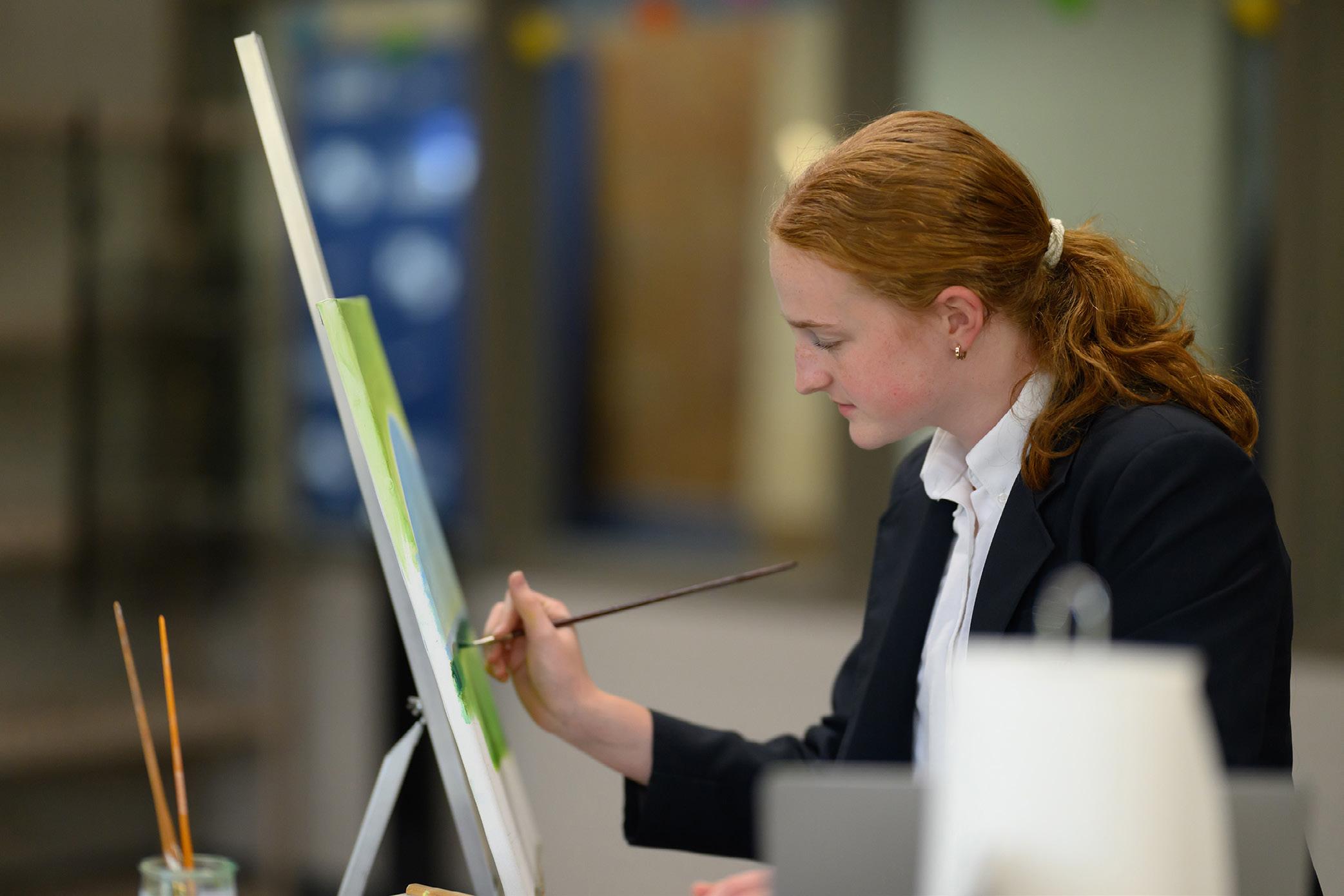
Looping Letters Are Back in Style Georgia Schools Reintroduce
Cursive

by Emily Webb
In today’s tech-driven world, it’s entirely possible to go days — sometimes even weeks — without picking up a pen or pencil. With keyboards and touchscreens doing most of the work for us, handwriting quietly slipped into the background and cutting cursive education seemed like a no-brainer. Many schools across the country quit teaching cursive around 2010.
Now, in multiple states, including Georgia, cursive has made a comeback. In the 2025-26 school year, standards changed to include cursive education, introducing the traditional handwriting style in third grade.
How Cursive Education Works
This school year, under Georgia’s English Language Arts (ELA) standards, students develop handwriting and fine motor skills beginning in kindergarten. Cursive handwriting is introduced later with goals for holding writing tools appropriately, forming cursive letters and words legibly and more. Practice continues in the fourth and fifth grades, with the eventual ability to read cursive writing as well. Previous standards didn’t include specific handwriting instruction.
“Our ELA teachers intentionally incorporate cursive instruction into their daily lessons. Students use dedicated handwriting tablets to practice proper letter formation, fluency and consistency,” says
Katie W. Neal, the principal at Buford Senior Academy. “As a school, we are committed to finding the right balance between meaningful technology integration and preserving the importance of handwriting. This is an essential life skill that supports fine motor development, reading and written communication.”
Fine motor skills are the small, precise movements made with hands, fingers, feet and toes; these skills are required for multiple everyday tasks. Learning to hold a writing utensil and practicing cursive can teach and refine fine motor skills.
A majority of pre-K-3 teachers said more children were struggling with fine motor tasks compared to five years ago, according to Education Week’s State of Teaching Survey.
“When we came back into the building after the pandemic, students were unable to write their first and last names, because the instruction had been taught on the computer,” says Dr. Kim C. Williams, DeKalb County School District’s Interim P-5 Assistant Superintendent. “If print’s important, cursive is important.”
When considering private schools, parents may want to inquire if cursive is included in the curriculum. Carlisle Montessori starts teaching cursive handwriting at age 4.
“More than 150 years ago, Maria Montessori knew the hand feeds the brain,” says Gina Ward, director, founder and teacher at Carlisle Montessori. “Cursive has a deeper connection to brain and recall. By the time our students are 6 or 7, they have beautiful cursive writing.”
To learn cursive, Carlisle Montessori students begin by tracing sandpaper letters. They learn one letter at a time, building the muscle memory of how letters are formed. Eventually, they trace the letters on sheets and write words on chalkboards. “We really want them to explore the form. They master the easier letters first for the flow and repetition,” Ward says. “They begin to build those skills, and the number of letters they can master on their own grow and connect with each other. If students have a strong foundation in cursive, they can transition to print on their own.”
Carlisle students also read cursive books and sight words, so students are immersed in the handwriting.
“Writing in cursive connects the whole experience to the child. The hand is keeping up with the mind, with the thought flow and process,” Ward says. “Students are putting words on paper and having the time to create this sensorial experience. You’re thinking what you’re feeling and writing and connecting fully to that experience.”
The Importance of Cursive Education
Cursive education is entangled with literacy. Research shows writing information down helps your memory. It gives you a visible reminder. For example, written notes have a greater chance of being remembered than typed ones.
“We are embracing evidence-based practices rooted in the science of reading and employing multimodal strategies to teach literacy concepts,” Neal says. “This includes explicit instruction in phonics and decoding, rich opportunities for oral language and writing and the thoughtful integration of technology balanced with hands-on, teacher-led instruction.”


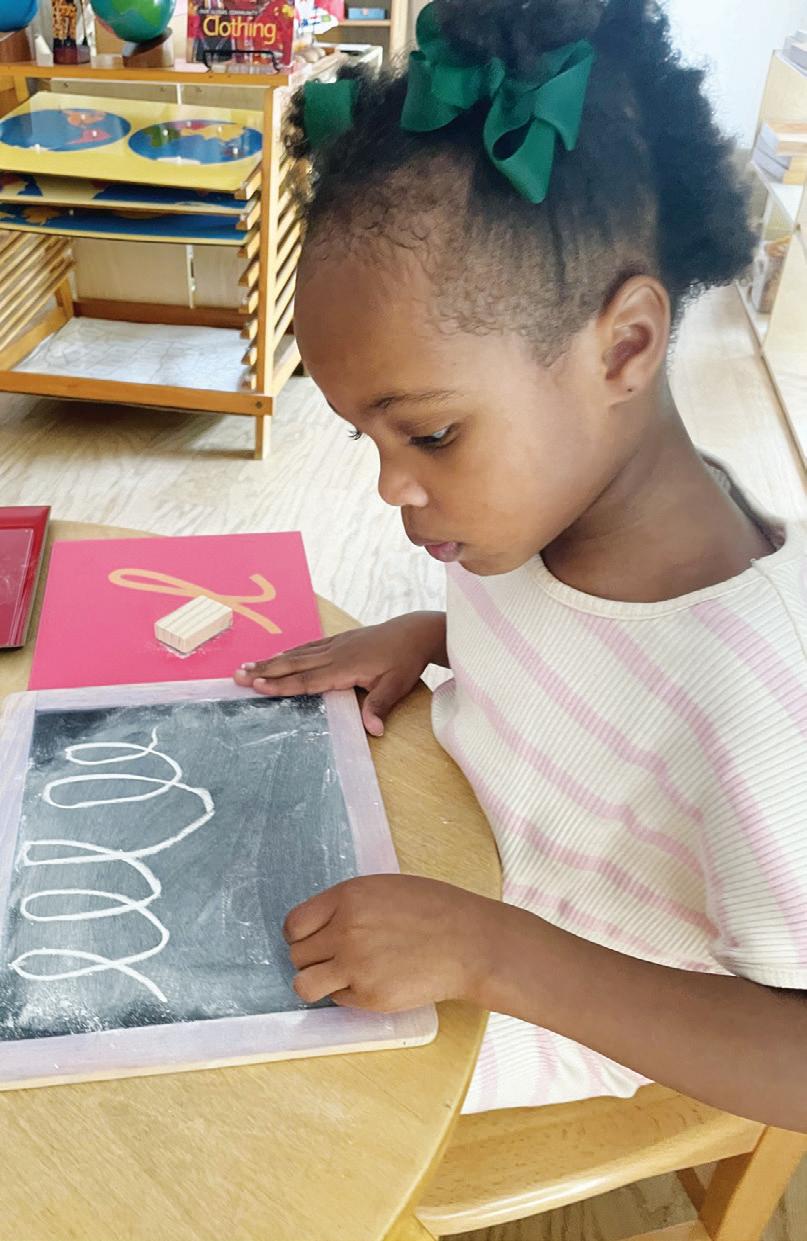
How to Help Your Child
If it’s been a while since your handwriting instruction or you were never taught cursive, you may be nervous to help your children with their homework. You don’t have to have beautiful handwriting to help your student.
Remind your child of the importance of cursive. “Let students know that this is a unique and special skill, which piques their curiosity,” Seals says. “It takes work and effort.”
Seals is the author of “Print & Cursive Handwriting Workbook for Kids & Adults.” Along with her book, there are other resources available to parents so they can learn alongside their child.
Seals suggests breaking the practice down into manageable pieces. “Cursive is not naturally easy. Pack your patience,” she adds. “Celebrate small wins, because a win is a win.”
Give your child as many opportunities as possible to practice. “Offer some type of real writing opportunity to increase confidence and fluency,” Seals says. “Instead of typing your grocery list on your phone, ask them to write it down in cursive on a notepad.”

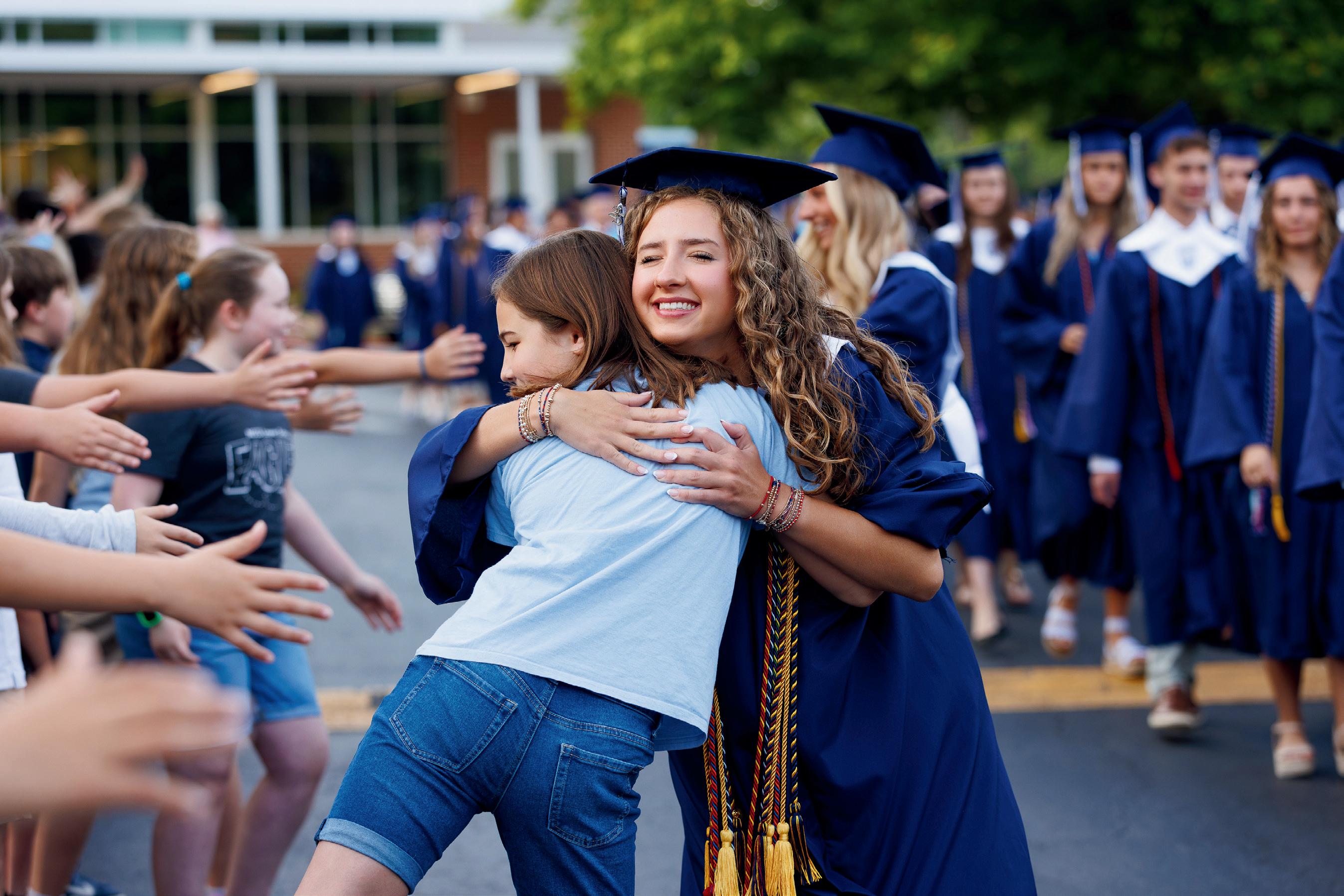

Carlisle Montessori
Serving Students with Dyslexia
Looping Letters Are Back in Style
Sign Your
To encourage schools to start thinking about cursive curriculum, the Georgia Department of Education introduced the John Hancock Award in the 2024-25 school year. If 90% of students could write their name in cursive, the school received the John Hancock Banner and Proficiency Ribbon. In schools where 90% of students could write both their name and the preamble to the U.S. Constitution, they were awarded the John Hancock Banner and Ribbon of Distinction.
At the time, Williams was the principal at Robert Shaw Traditional Theme School, and she remembers the enthusiasm surrounding the announcement. The school received the John Hancock Banner and Ribbon of Distinction, and 24 other schools in DeKalb County received one of the two awards. “The district was extremely proud. We’re excited when our kids learn, and we’re excited when they learn new things,” Williams says.
Handwriting practice also improves reading, spelling and literacy skills. Because cursive writing is more intricate than printing or typing, it can activate different parts of the brain. Reading and writing engages the brain differently, which helps strengthen student’s development.
“Handwriting supports brain and cognitive development, enhances fine motor skills and strengthens hand and eye coordination,” says Tara Seals, the entrepreneur, speaker, philanthropist, author and educator known as The Bossy Educator. “If students are not introduced to it, parents don’t know it and teachers are not teaching it, students struggle with fine motor skills and handling a writing utensil. One out of three students have illegible handwriting. Bad handwriting or spelling can be reversed with practice, but where are you picking up this skill or getting to practice?”
Students should learn to read cursive. “Historical documents are written in cursive, and students are unable to read those documents,” Williams says. “With this historical information, we’re depending on someone else to tell us what it means. Now, students can take ownership of it. Cursive is not being taught in a silo.”
Cursive provides students with the opportunity to feel more connected to their learning.
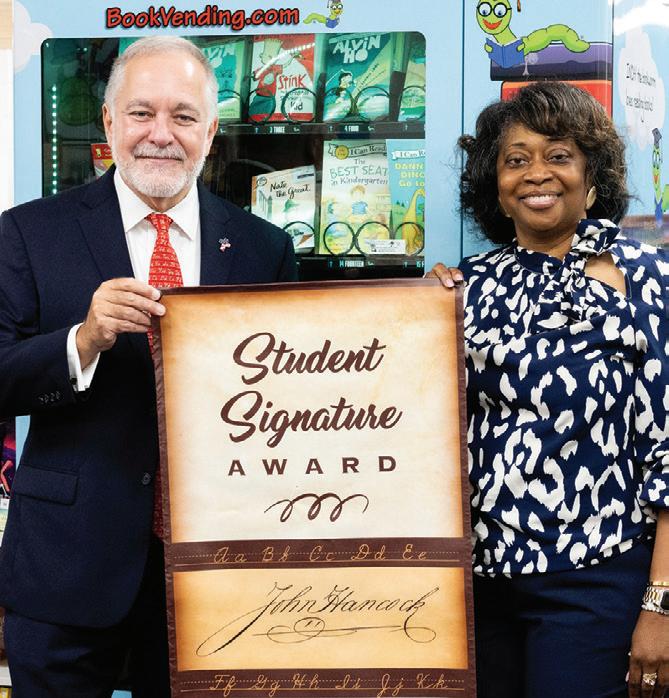
In Buford City Schools, Buford Senior Academy was awarded the John Hancock Banner and Ribbon of Distinction.
“Any time our students, staff and school are recognized, it is a great day for Buford Senior Academy. Our staff works tirelessly to ensure that students are learning and growing each day, and this recognition serves as a small but meaningful reminder of their dedication,” Neal says.
“Students enjoy the ability to express themselves. Handwriting is self-expression, creativity. Their light bulb goes off, and their creativity comes alive in a piece of paper,” Seals says. “Everybody is going to be creative and express their handwriting differently. I teach the strokes of the letter, but if you want to add a curve to your ‘K,’ do your thing.”
Educators, students and parents are excited about the return of cursive.
“Students truly enjoy learning to write in cursive. While it can be challenging for some, it is much like any other new skill; with the right practice, modeling and preparation, all students can grow and be successful,” Neal says. “Cursive allows them to persevere, build confidence and celebrate their progress along the way.”
“They are excited to write and create,” Ward says. “It’s a natural phenomenon as well. If you provide a child with pencils or crayons or markers, their first impressions are circles, swirls and curls. It feels like art to them.”
Learning cursive connects students to other parts of their education.
“It’s a part of the curriculum, a part of learning to read and comprehend,” Williams says. “This is for the advancement of students. We want to do what’s right by children in DeKalb County and in the state of Georgia.”
State School Superintendent Richard Woods and Dr. Kim C. Williams
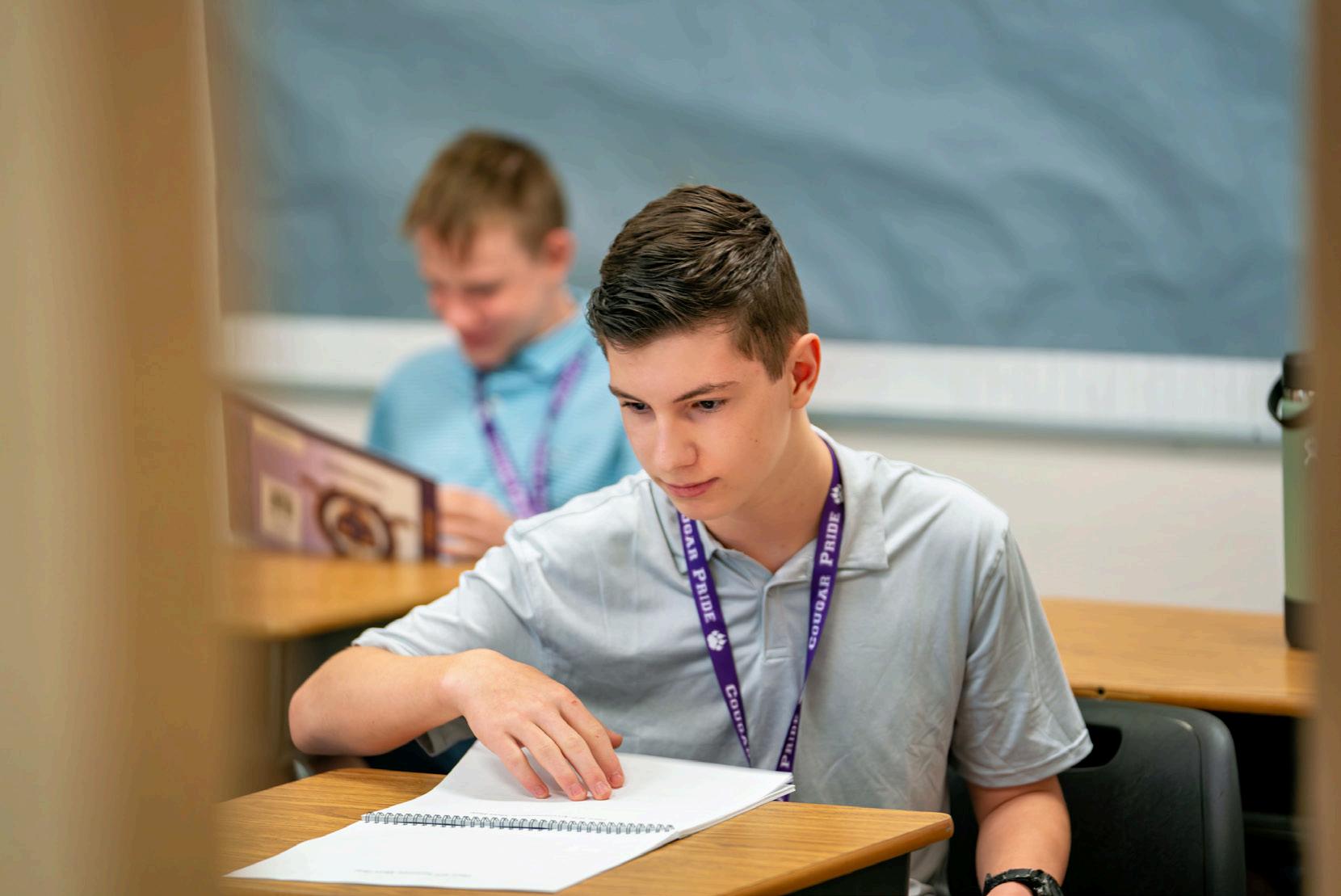

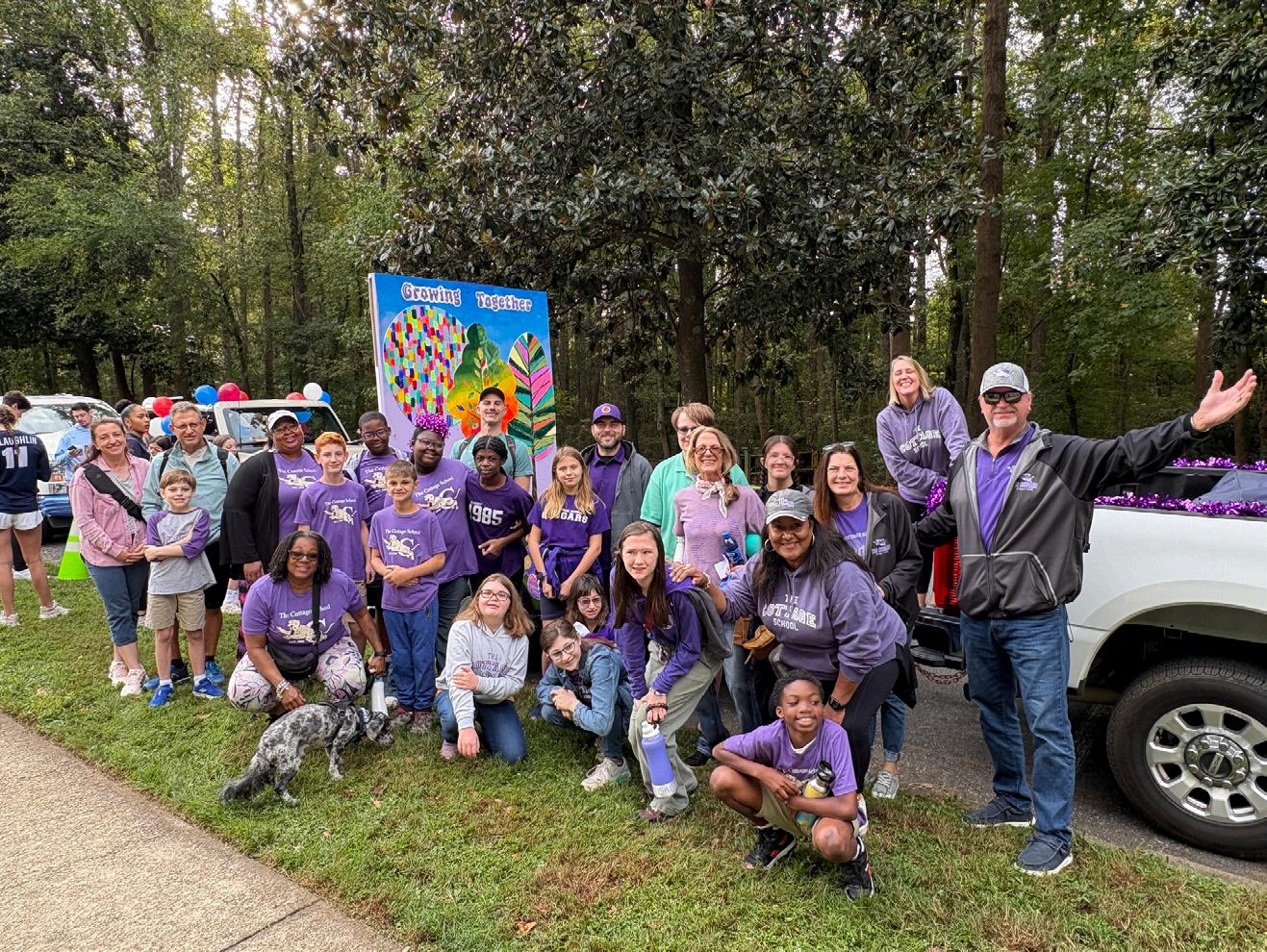
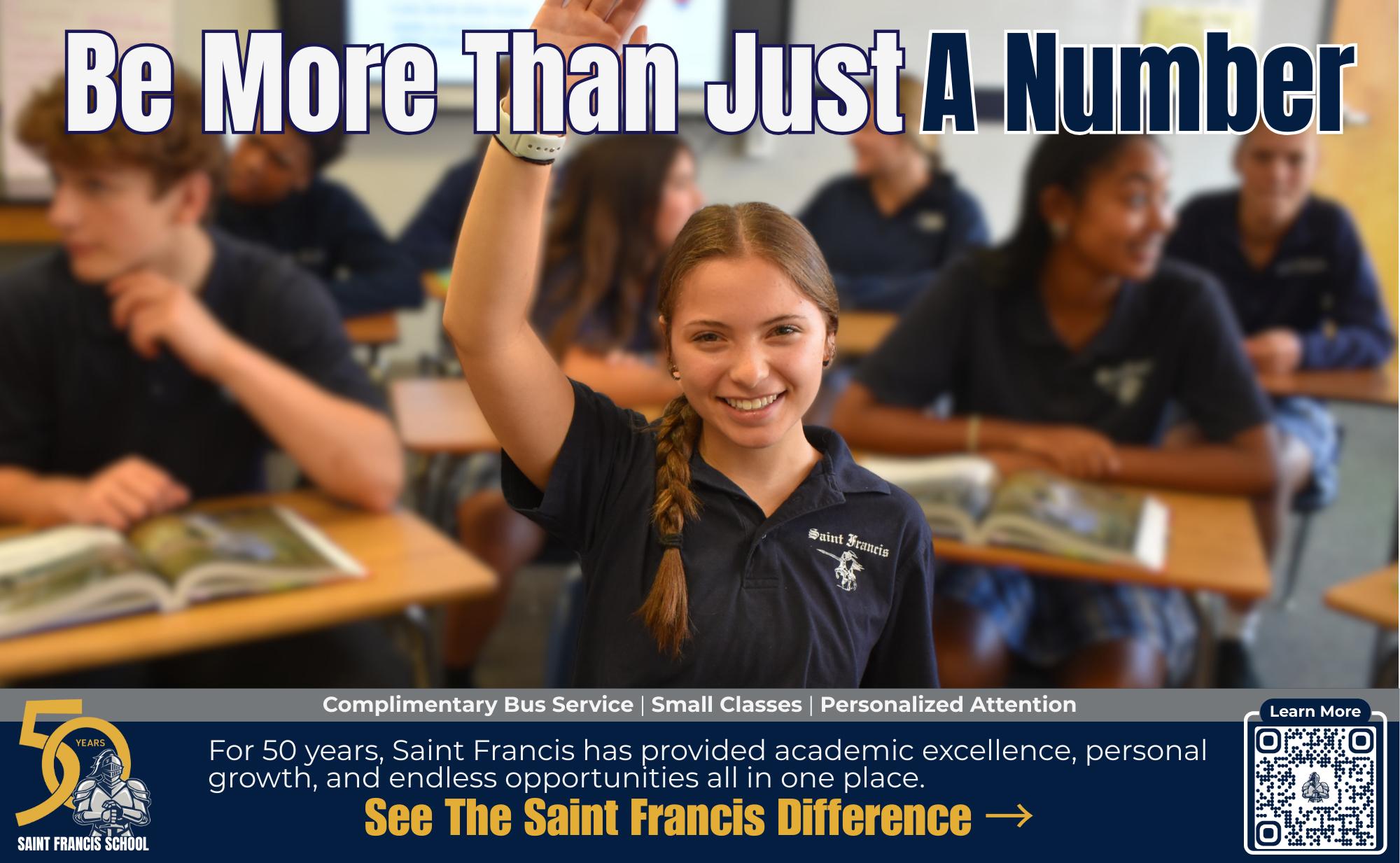
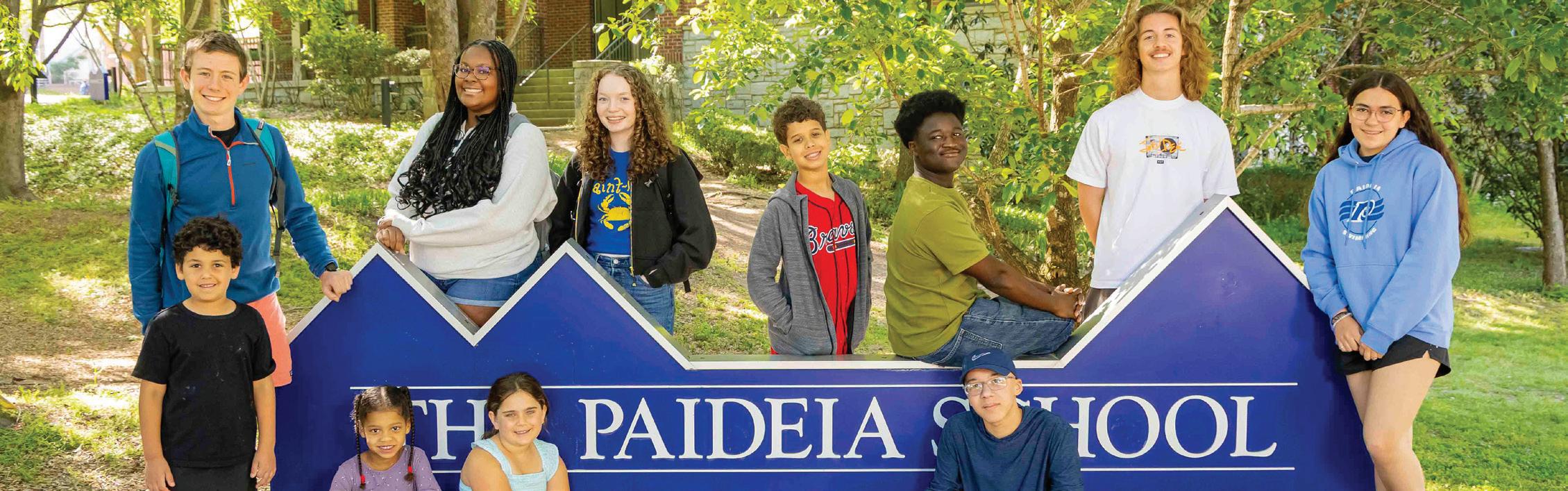
Ages 3–12th grade | Druid Hills, Atlanta | paideiaschool.org
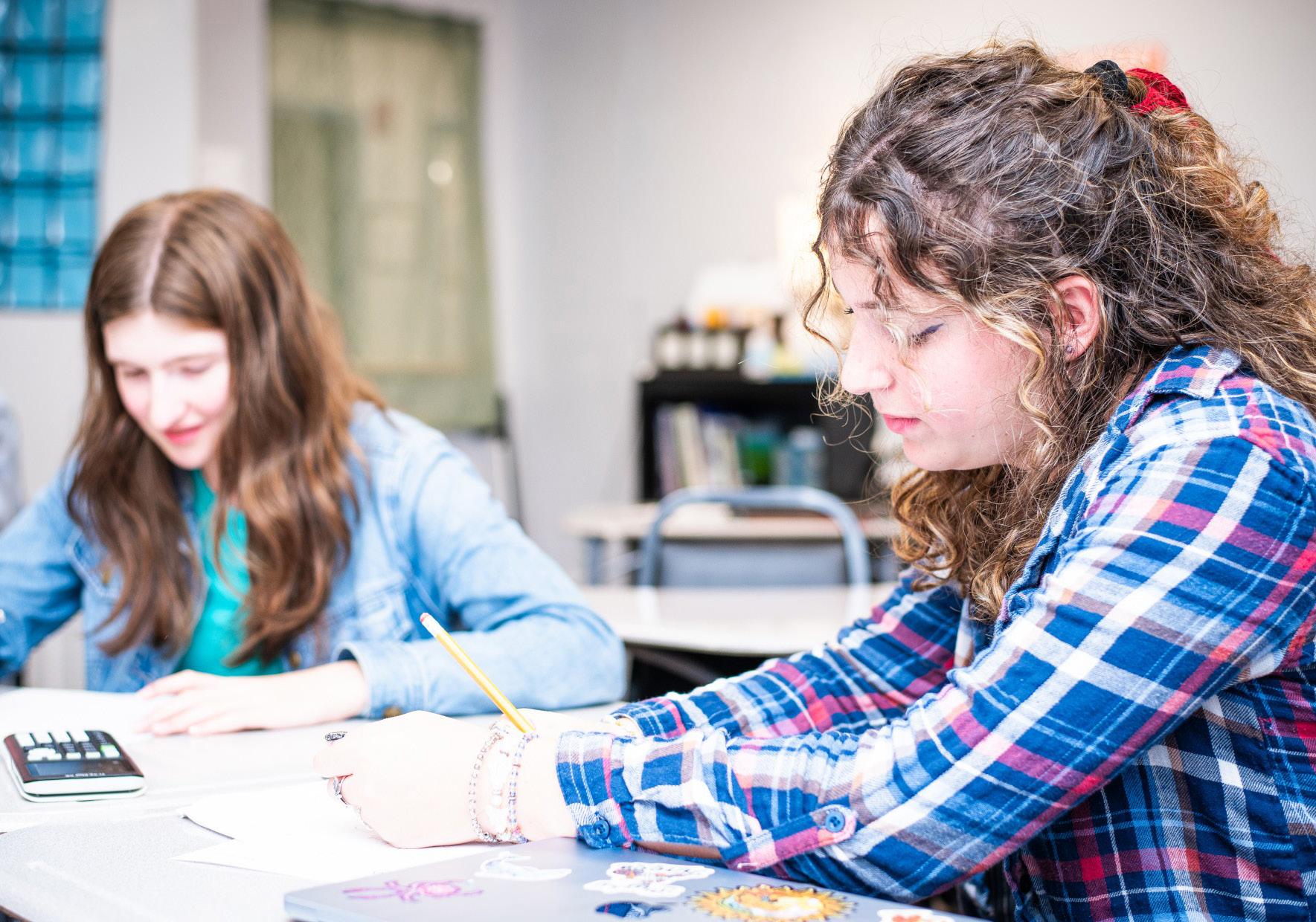
SPOTTING THE SPARK: Is Your Child Gifted?
by Beth Burnett Balga
Discovering giftedness often begins with small clues in everyday life: the questions that stop you in your tracks, the ideas that seem far beyond your child’s years, the creativity that bends the rules. While only about 6% of U.S. students are identified as gifted, experts believe many more go unnoticed.
Here’s how to recognize that you might be raising a gifted child. Because when a child’s mind runs on a different wavelength, the road ahead is about opening doors to possibility and potential.
Early Signs: What to Look For
Giftedness can reveal itself in many ways, even before formal schooling. Some infants show advanced development, like sitting or walking early, or communicating through gestures and mimicking speech patterns. Terri King recalls her daughter using Baby Sign Language to express needs long before she could talk. As children grow, giftedness may become more apparent. Whitney Delaney, whose fifth grader is in the Discovery program at Austin Elementary School, said by age 6, her daughter’s teachers readily identified her as gifted. Your child might:
n Pick up concepts quickly, often with minimal instruction
n Use advanced vocabulary or read early (Delaney’s child was writing her own name in chalk at age two.)
n Show intense curiosity, asking unusual questions (At 3 years old, King’s child asked her parents and her teachers, “Besides bread and pie, what else has a crust?”)
n Play with complex toys or read for hours
n Exhibit heightened empathy or sensitivity
n Prefer the company of older children or adults
Giftedness is not one-size-fits-all. Some children are academically advanced, others are creative thinkers, and many are both. Some may also be “twice exceptional,” exhibiting gifted capabilities and facing challenges like ADHD, anxiety or dyslexia.

How Georgia Identifies Gifted Students
Georgia uses a multiple-criteria model, typically requiring students to meet percentile thresholds in three of four areas:
n Mental Ability: Advanced reasoning and problem-solving (CogAT, NNAT)
n Achievement: Outstanding academic performance (MAP Growth)
n Creativity: Originality and inventiveness (Torrance Test, portfolios)
n Motivation: Exceptional drive and persistence (teacher ratings)
Parents or teachers can initiate referrals. Check gadoe.org/learning/ gifted-education for deadlines and forms. Following a review of your application, a school district administrator will notify you if your child qualifies for testing. Experts recommend framing testing as an opportunity rather than an evaluation and being sure your child is well-rested and nourished on test day. Expect to learn the results weeks later.
Giftedness Comes in Many Forms
Giftedness isn’t just about a high IQ. “It shows up in different ways,” says Ashley Scott, Head of School at
What Does “Gifted” Mean?
In Georgia, a gifted student is one who demonstrates a high degree of intellectual or creative ability, exceptional motivation, or excels in specific academic fields and needs special instruction to reach their potential. Formal identification typically requires testing, as early as kindergarten.
Midtown International School (MIS), an independent school for giftedidentified children ages 5 through 18.
“Across the nation, certain gifted populations have been overlooked because they don’t fit the stereotype or because testing parameters fail to identify diverse learners,” explains Scott. “That’s why MIS strives to expand equity in gifted education. We’ve created a space where gifted students of all backgrounds experience the joy of discovering new concepts, tackling complex problems and stepping outside their comfort zones.”
Unlocking Potential –School Choices for Gifted Students
From acceleration to specialized programs, today’s schools offer a variety of ways to support gifted learners. Understanding these choices can help you make the best decision for your child.
Private School Options
While private schools don’t usually offer separate gifted tracks like public schools do, many gifted students thrive at private schools that are centered around rigorous academics or specialized curriculum. For example, The Paideia School in Midtown emphasizes critical thinking and project-based learning. Pace Academy and The Lovett School, among others, have strong college preparatory programs, including AP courses and enrichment opportunities. For students seeking more personal attention, Capstone Academy focuses on academic rigor, flexibility and individualized learning.
Public School Gifted Programs
While all school districts follow Georgia’s eligibility criteria, program design varies. Georgia’s school choice program gives families multiple options for K–12 education beyond their assigned public school. Major districts offer the following gifted and talented programs:

n Atlanta Public Schools: The GATE program offers pull-out classes, cluster grouping and advanced content, with a focus on leadership and social-emotional learning.
n Fulton County: The TAG program emphasizes the importance of gifted students learning alongside other intellectual peers, fostering a community of learners who can challenge and support each other.
Cont’d on next page
GO FURTHER, FASTER
with Online or Hybrid College Options
University System of Georgia (USG) eCampus administers online core courses, high-demand degrees, and post-secondary credentials through 21 public colleges and universities.
Explore New Topics with FreeCampus
FreeCampus courses are tuition-free, non-credit courses delivered in an open online course format. They are developed to boost skills for college-level courses and allow students of any age to explore interesting subjects without having to pay for them!
Dual Enroll Online with eCore Courses
eCore courses help students fulfill their core IMPACTS requirements in an online format. This is an excellent option for high school students who want to start college now without traveling to a physical campus.
School Choices for Gifted Students

n Gwinnett County: FOCUS, PROBE and QUEST programs provide structured gifted services at every level.
n DeKalb County: Discovery (elementary) and Impact (secondary) programs offer resource classes and advanced content.
n Cobb County: Pull-out classes, cluster grouping and magnet programs like Wheeler High’s STEM Academy provide options for students.
Magnet Schools
Magnet programs can be a transformative option for gifted students, offering academic stimulation, a sense of belonging and the chance to develop unique talents. Magnets focus on experiential learning. Students might design robots, stage performances, conduct scientific research or tackle real-world problems. Many metro Atlanta programs emphasize equity and access, using lottery-based admissions or other inclusive practices.
Acceleration and Advanced Programs
If your child requires still more and is ready to move even faster than a gifted program allows, you may consider options like grade skipping, subject acceleration and advanced programs.
For high school students, Advanced Placement (AP) and International Baccalaureate (IB) courses offer students the opportunity to pursue accelerated learning and earn college credit.
Georgia provides for acceleration under special circumstances, though policies vary by district. After a comprehensive review, including academic readiness and socialemotional factors, a child may join older peers for certain subjects or skip a grade. These options are available for students beginning in elementary school.
For high school students, Advanced Placement (AP) and International Baccalaureate (IB) courses offer students the opportunity to pursue accelerated learning and earn college credit. All major metro Atlanta districts, offer a wide range of AP courses. While Atlanta Public Schools (APS), Fulton County and DeKalb County have IB World Schools, the program is only available at select schools within these districts.
Georgia’s Dual Enrollment program lets high schoolers earn up to 30 hours of college credit at participating institutions, with tuition and books covered by the state. In-person and online options are available.
Navigating the Journey
The path to supporting a gifted child isn’t always smooth. There may be speed bumps, roadblocks and detours along the way.
Exercise equal parts persistence and patience with yourself, your child and the system as you seek the right school, programs and resources. The effort is worth it to satisfy your child’s passion for learning.
n Understand Your Child’s Profile: Are they highly academic, creative or both? Would they benefit from acceleration or enrichment along with their peers? Do they adapt well to activities involving lots of other diverse thinkers or do they function better in a quiet, more intimate environment?
n Research School Models: Public, charter, magnet, independent and online schools all offer different approaches. Interview heads of schools to determine which environment would align with your child’s needs.
n Ask Questions: How are gifted students identified and served? What acceleration and enrichment options exist? How are social-emotional needs supported?
n Observe the Environment: Are students engaged and challenged? Is there a culture of curiosity and respect?
n Consider Fit Over Prestige: The best school is where your child feels challenged, supported and understood. A location close to home will reduce stress and enable friendships to develop.
n Use Resources: Georgia DOE, National Association for Gifted Children and local parent Facebook groups can help in your evaluation.
After researching options, King and her husband found Brilliant and Kind Montessori was a good match for their daughter’s inquisitive mind. “Giftedness is not about perfection; it’s about a mind that connects and questions differently,” says founder Dr. Petrina Barnett. Brilliant and Kind emphasizes learning through all five senses, not just through listening, watching or reading. The curriculum is child-led and much of the learning comes from sharing and inspiring each other instead of competing.
No single school model works for every gifted learner. By exploring the available options and paying attention to your child’s learning style, you can help them find a place where they feel challenged, supported and understood from kindergarten through college.
AP vs. Dual Enrollment vs. IB: Which Path Fits Your Student?
Gifted high schoolers have three main ways to earn college credit and challenge themselves academically. Here’s how they compare:
n Advanced Placement (AP)
AP classes are taught at the high school and recognized nationwide for their rigor. Colleges across the country — public, private and out-of-state — value AP coursework. Students who score well on AP exams can earn college credit, giving them a head start before graduation.
n International Baccalaureate (IB)
IB offers a globally recognized curriculum that emphasizes critical thinking and interdisciplinary learning. Students complete extended essays, community service and globally focused coursework. Selective colleges often view IB as a gold standard for academic rigor, and strong exam scores can translate into college credit.
n Dual Enrollment (DE)
Dual enrollment places students in real college courses, either on campus or online, taught by professors. It’s an opportunity to experience college-level expectations firsthand. In Georgia, credits earned through DE transfer seamlessly to public colleges and universities, and unlike AP, credit is based on course grades rather than a single exam.
Key Considerations
n College Plans: Out-of-state or international? AP and IB credits may transfer more easily than DE.
n Georgia Tuition Costs: All three options can reduce tuition; DE credits transfer seamlessly to Georgia public colleges.
n Learning Style: AP suits strong test-takers; DE fits self-directed students comfortable with older peers; IB is ideal for those who thrive in a structured, globally focused program.
n Logistics: DE may require travel or online classes; AP and IB are offered at the high school. AP is more widely available than IB in public schools.
Equipping Dyslexic Students to Thrive
Sage
- Father of Current Highschooler
PUBLIC SCHOOLS A Snapshot of School Districts in Metro Atlanta
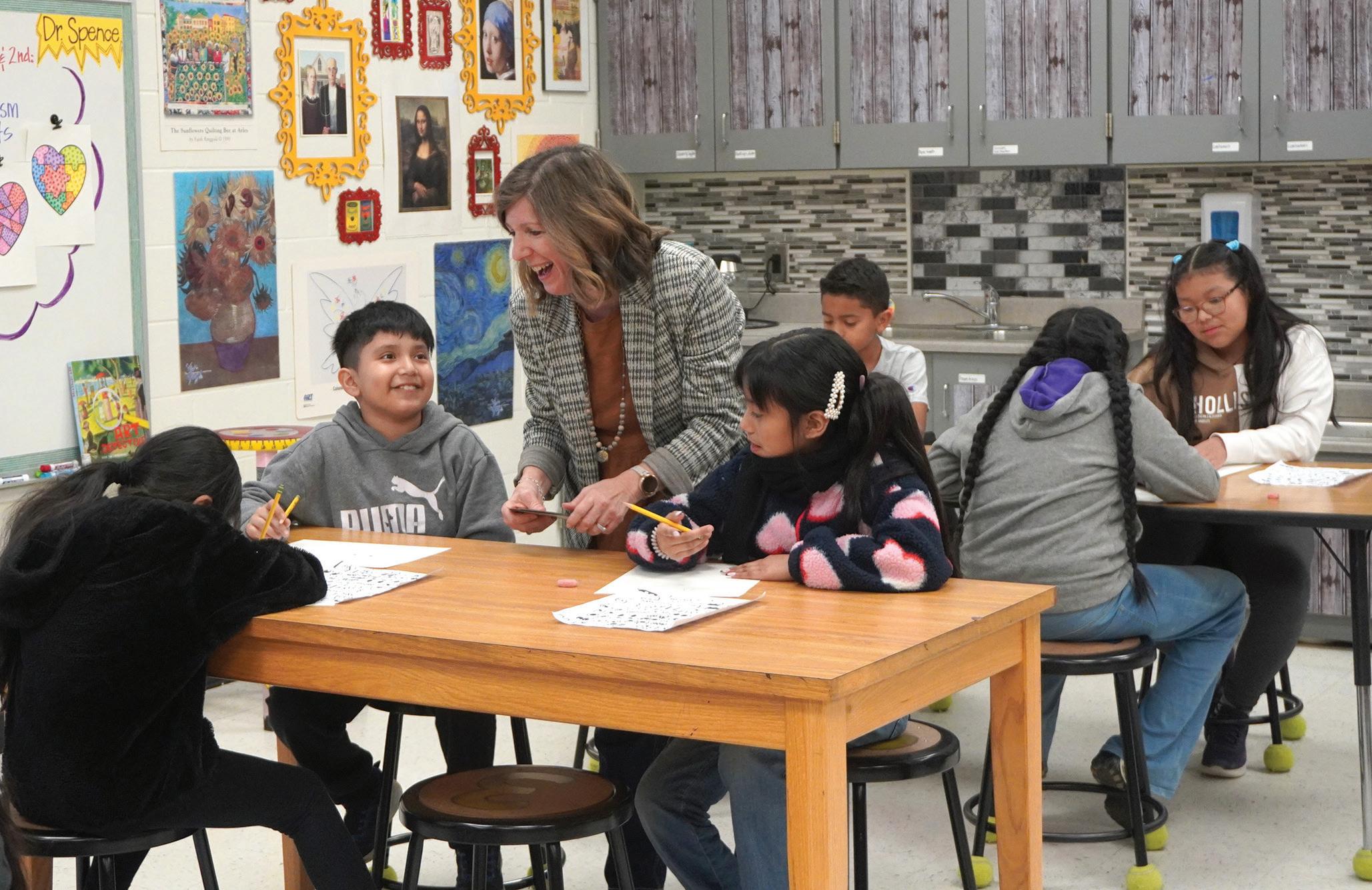
Atlanta Public Schools
404-802-3500
www.atlantapublicschools.us
Atlanta Public Schools is the seventh largest school system in Georgia with 50,325 students across 87 learning sites.
n Number of Schools: 59 traditional schools; 5 partner schools; 19 charter schools; 2 citywide single-gender academies; 2 alternative schools and programs
n Pupil to teacher ratio: 13 to 1
n Per pupil expenditure: $18,745
Bartow County School System
770-606-5800
www.bartow.k12.ga.us
There are approximately 13,863 students attending Bartow County’s 20 schools (K-12), with 1,247 certified employees, 73% holding advanced degrees.
n Number of Schools: 12 elementary; 4 middle; 3 high schools; 1 college and career academy
n Pupil to teacher ratio: 23 to 1 (average)
n Per pupil expenditure: $15,800
Buford City Schools
770-945-5035
www.bufordcityschools.org
There are 6,011 students enrolled in Buford City Schools. 82% percent of the 467 teachers have advanced degrees.
n Number of Schools: 3 elementary; 1 middle; 1 high school
n Pupil to teacher ratio: 14.8 to 1
n Per pupil expenditure: $14,302.97
Cherokee County School District
770-479-1871
www.cherokeek12.net
CCSD has 40,500 students attending 40 schools and centers. There are 2,900 teachers in CCSD, of which 75% have advanced degrees.
n Number of Schools: 23 elementary; 7 middle; 7 high schools (1 is a virtual school); 2 alternative centers; 4 preschool centers
n Pupil to teacher ratio: 14 to 1
n Per pupil expenditure: $14,729
City Schools of Decatur
404-371-3601
www.csdecatur.net
City Schools of Decatur has 5,300 Pre-K-12 students attending 10 schools. Of the district’s 543 certified staff, more than 81% hold advanced degrees.
n Number of Schools: 10 total; 1 early childhood learning center; 5 kindergarten-second; 2 third-fifth; 1 middle; 1 high school
n Pupil to teacher ratio: Meets or is lower than state mandated standards
n Per pupil expenditure: $24,677
Clayton County Public Schools
770-473-2700
www.clayton.k12.ga.us
Clayton County has the sixth largest school system in Georgia with more than 50,000 students. Of the district’s 3,395 teachers, 72% have advanced degrees.
n Number of Schools: 38 primary/elementary; 15 middle; 12 high schools; 3 virtual learning programs; 4 district-approved charter schools; 1 psychological education center; 1 multi-purpose education center; included are: 16 magnet programs
n Pupil to teacher ratio: 20.1 to 1
n Per pupil expenditure: $16,802.37
Cherokee County School District
Cobb County School District
770-426-3300
www.cobbk12.org
The Cobb County School District is the second largest school district in the state of Georgia serving approximately 105,738 students. There are approximately 8,658 certified employees; 77% have earned advanced degrees.
n Number of Schools: 66 elementary; 26 middle; 17 high schools; 1 special education center; 1 adult education center; 1 charter school; 1 South Cobb Early Learning Center; 7 high school magnet programs
n Pupil to teacher ratio: Varies by school. Meets or is lower than state mandated numbers
n Per pupil expenditure: $13,135.67 (3-year average)
Coweta County School System
770-254-2800
www.cowetaschools.net
Coweta County has 23,040 students and about 3,240 staff.
n Number of Schools: 19 elementary; 8 middle schools; an 8th grade Charter College and Career Academy; 3 high schools; the Central Educational Center Career Academy; Winston Dowdell Academy
n Pupil to teacher ratio: 14 to 1
n Per pupil expenditure: $15,720
DeKalb County School District
678-676-1200
www.dekalbschoolsga.org
DeKalb County School District is the third largest school system in Georgia with more than 91,000 students, 138 schools and centers and 14,000 employees.
n Number of Schools: 77 elementary; 19 middle; 23 high; 11 program schools; 8 charter schools
n Pupil to teacher ratio: 15 to 1
n Per pupil expenditure: $13,831
Douglas County School System
770-651-2000
www.dcssga.org
There are approximately 25,664 students enrolled in Douglas County School System’s schools. DCSS employs 2,982 full-time employees.
n Number of Schools: 19 elementary; 8 middle; 5 high schools; 2 specialized high school programs; special education preschool program
n Pupil to teacher ratio: 15.48 to 1
n Per pupil expenditure: $15,324
Fayette County Public Schools
770-460-3535
www.fcboe.org
Fayette County Public Schools has 19,527 students. 72% of the 1,595 teachers have advanced degrees.
n Number of Schools: 14 elementary; 5 middle; 5 high schools; Fayette LIFE Academy (specialty school)
n Pupil to teacher ratios: Elementary: 22 to 1; Secondary: 24 to 1
n Per pupil expenditure: $13,940 (FY24)

Forsyth County Schools
770-887-2461
www.forsyth.k12.ga.us
More than 55,000 students attend Forsyth County’s 42 schools. There are more than 4,300 certified employees in the system.
n Number of Schools: 23 elementary; 11 middle; 7 high schools; one 9-12 college and career academy
n Pupil to teacher ratio: 20 to 1
n Per pupil expenditure: $11,118
Fulton County Schools
470-254-3600
www.fultonschools.org
Fulton County has 86,031 students and 6,900 certified staff members at 102 schools.
n Number of Schools: 56 elementary (many with Pre-K programs); 19 middle; 19 high schools; 7 charter schools; 1 full-time virtual school
n Pupil to teacher ratios: Kindergarten: 22 to 1 with paraprofessional; Grades 1-3: 23 to 1; Grades 4-5: 30 to 1; Middle: 30 to 1; High: 32 to 1
n Per pupil expenditure: $16,500
Gainesville City School System
770-536-5275
www.gcssk12.net
More than 8,500 students attend Gainesville City’s 10 schools. 640 teachers are employed by the system, and 60% of them have advanced degrees.
n Number of Schools: 6 elementary; 2 middle schools; 2 high schools
n Pupil to teacher ratios: Pre-K: 20 to 1; Grades K-5: 15 to 1; Grades 6-8: 16 to 1; Grades 9-12: 18 to 1
n Per pupil expenditure: $13,000
Gwinnett County Public Schools
678-301-6000
www.gcpsk12.org
With more than 182,000 students attending 142 educational facilities, Gwinnett County is the largest school system in Georgia and the 11th largest in the nation.
n Number of Schools: 81 elementary; 29 middle; 24 high schools; 7 special entities; 1 charter school
n Pupil to teacher ratio: Varies by classroom, per Strategic Waivers School System contract
n Per pupil expenditure: $13,825
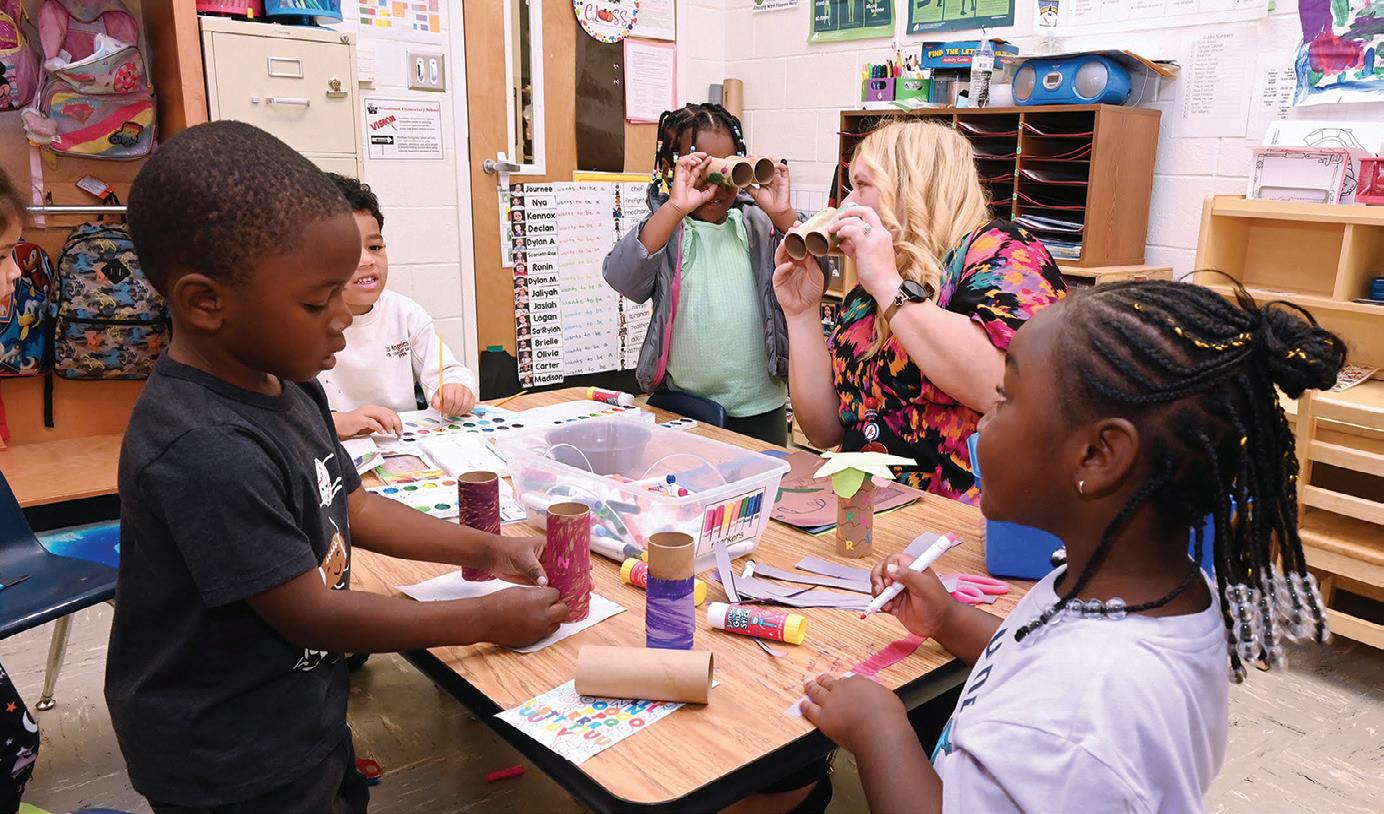
Cont’d on next page
City Schools of Decatur
Henry County Schools
PUBLIC SCHOOLS A Snapshot of School Districts in Metro Atlanta
Hall County Schools
770-534-1080
www.hallco.org
There are 26,513 students enrolled in Hall County’s 36 schools. There are 2,061 teachers and 3,704 total employees.
n Number of Schools: 18 elementary; 8 middle; 7 high schools; 1 early college campus with 2 campuses; 1 college and career academy; 1 alternative learning center
n Pupil to teacher ratio: 13 to 1
n Per pupil expenditure: $12,647.53 (FY24)
Henry County Schools
770-957-6601
www.henry.k12.ga.us
There are approximately 42,000 students served by more than 6,000 employees.
n Number of Schools: 53 schools among 10 clusters, with 11 Pre-K programs
n Pupil to teacher ratios: Kindergarten: 22 to 1; Grade 1: 23 to 1; Grades 2-3: 25 to 1; Grades 4-5: 26 to 1; Grades 6-12: 27 to 1
n Per pupil expenditure: $13,867
Marietta City Schools
770-422-3500
www.marietta-city.org
Some 8,534 students attend Marietta City’s 12 schools. There are 1,411 employees with 71% of certified staff holding a Master’s degree or higher.
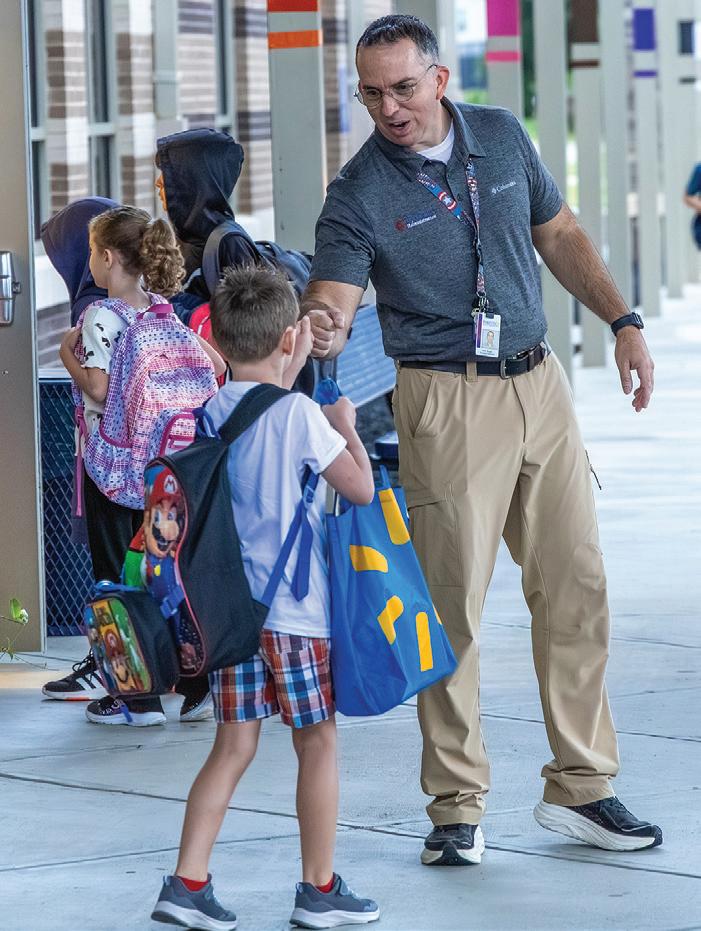
n Number of Schools: 1 preschool; 8 elementary (one is grades 3-5 Science, Technology, Engineering, Arts and Math [STEAM] magnet school); 1 sixth grade academy; 1 middle; 1 high school
n Pupil to teacher ratio: 12 to 1
n Per pupil expenditure: $18,338
Paulding County School District
770-443-8000
www.paulding.k12.ga.us
The Paulding County School District has 34 schools, 31,646 students and approximately 2,500 teachers. 72% of the teachers hold advanced degrees.
n Number of Schools: 19 elementary; 10 middle; 5 high schools; 1 alternative learning center
n Pupil to teacher ratios: Kindergarten: 22 to 1; Grades 1-3: 23 to 1; Grades 4-5: 29 to 1; Grades 6-8: 29 to 1; Grades 9-12: 22.8 to 1
n Per pupil expenditure: $13,785
Rockdale County Public Schools
770-483-4713
www.rockdaleschools.org
There are 14,683 students attending Rockdale County Public Schools. Approximately 71% of the 1,351 certified personnel hold advanced degrees.
n Number of Schools: 11 elementary; 4 middle; 3 high schools; 1 college and career academy; 1 alpha school; 1 open campus; 2 magnet programs; 11 school choice programs; elementary, middle and high school virtual programs
n Pupil to teacher ratios: Kindergarten-Grade 5: 20.7 to 1; Grades 6-8: 23.1 to 1; Grades 9-12: 19.3 to 1
n Per pupil expenditure: $15,798.81
Forsyth County Schools
Tours and Open Houses Can Help You Make an Educated Decision
If you’re looking for a new school — public or private — connecting with the school’s students and professionals is a wonderful way to see if the school is the right fit for your family. Many metro Atlanta schools offer in-person and virtual tours, live video conferences, phone meetings and open houses.
Before
n Do your research. Narrow down the options until you have a short list of schools that seem to be the best by looking at websites, FAQs, pre-recorded videos and social media pages.
n Create a list of questions you plan to ask each school. What questions do you or your child have that you can’t find answers to on the website? Responses can help you narrow down or rank the schools.
n Talk to other parents about the school. Most parents are happy to share their thoughts.
During
n At a tour, whether it’s virtual or in-person, expect to tour the school, learn more about the community, talk to school professionals and ask questions. Be sure to observe the students and teachers. Do they look happy? Engaged?
n At an open house, expect to hear words of welcome from administrators and a plug from the PTA. Schools usually include a brief school history, an educational philosophy, a mission statement and a list of extracurricular activities or clubs. This overview period is a good time for parents to ask about the bus schedule, school lunches, physical education requirements, dress code and more.
After
n Schedule a time to observe a class in session. This will give you a good idea of the teaching style and classroom setting.
n Connect with a peer. Many schools offer programs that allow you and your child to learn more from a student’s perspective.
n Look at the big picture. You may be hoping to stay with the system through high school, so research graduation and college placement rates.
– Atlanta Parent Staff

Mount Pisgah Christian School is a leading preschool through 12th grade independent school where students are known for who they are and loved for who God created them to be



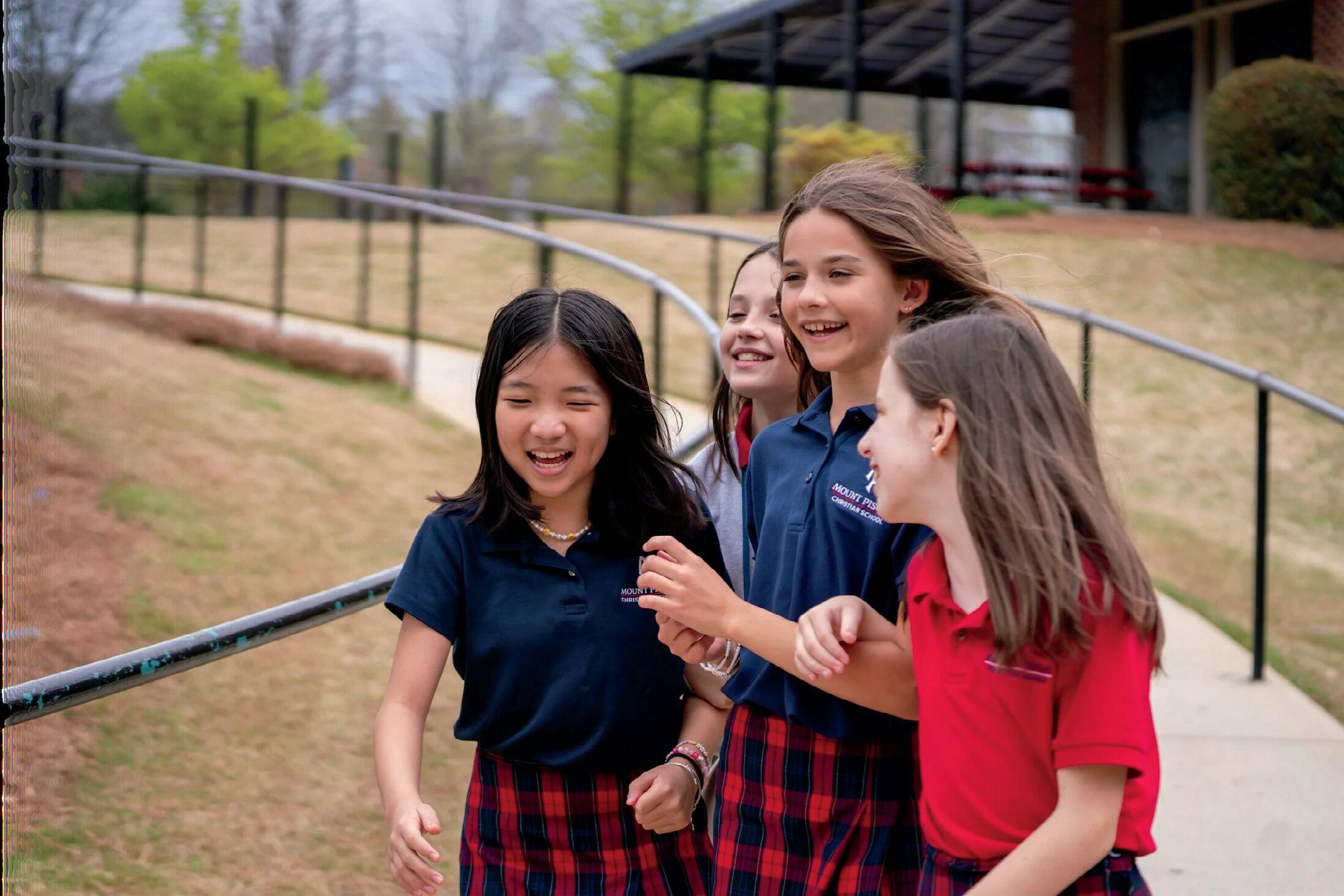
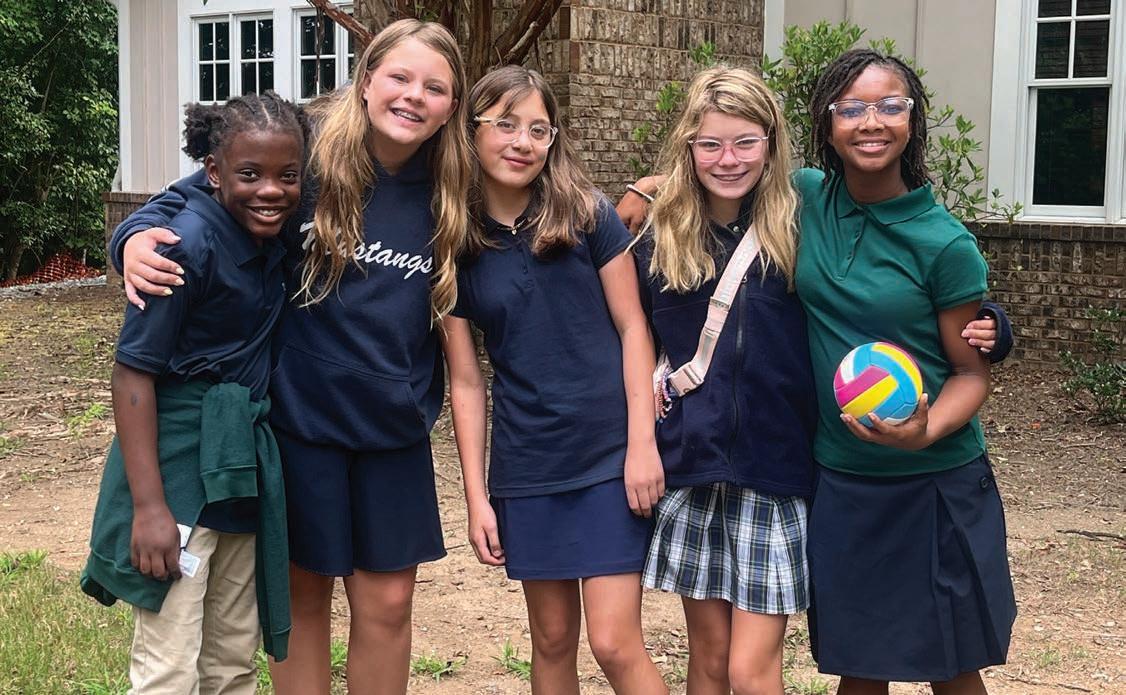
Where Learning Differences are Understood & Strengths Are Discovered.
Schedule a visit to see how MSA integrates academics with practical skills to build critical thinking, executive functioning, and social-emotional intelligence.

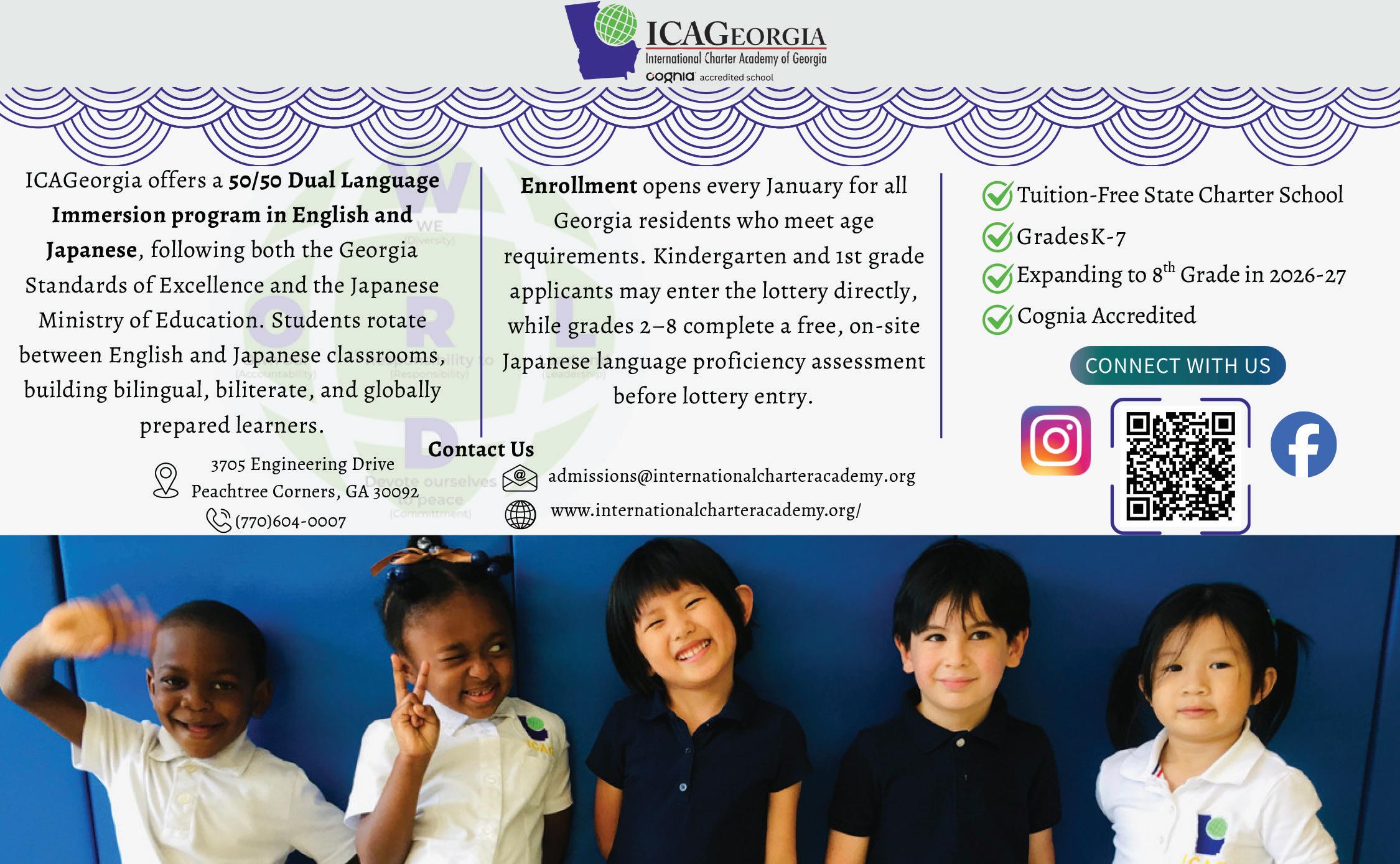
Diverse, International Community Promoting Academic Excellence
Druid Hills Campus
1215 Ponce De Leon Ave NE Atlanta, GA 30306
404-531-2067
Our respectful and peaceful Montessori environments are thoughtfully designed to develop the whole child from infancy through upper elementary.
• AMI-accredited, child-centered Montessori curriculum individually tailored and focused on fostering independence
• Traditional Montessori materials used to develop sensorial, language, math and practical life skills
• Global awareness cultivated by our enriching Cultural Studies program
• A strong sense of community and excellent communication with parents
• Low student-to-teacher ratios and passionate, AMI-certified teachers
Cliff Valley Campus
1970 Cliff Valley Way NE Atlanta, GA 30329
404-602-0553
Serving students ages 6 weeks through 12 years
Accredited by the Association Montessori Internationale (AMI), AdvancED (SACS CASI) and Bright from the Start.
For more information, visit www.amischool.com
Globally Aware, Socially Responsible, Academically Driven
Delivering individualized academic and emotional development from toddler age through upper elementary:
• Engaging, holistic and authentic Montessori approach
• Individualized academic programs, addressing specific needs and goals of each child
• Incredibly engaged and diverse parental community
• All lead guides are MACTE (Montessori Accreditation Council for Teacher Education) certified
• Accredited by the American Montessori Society, AdvancED and Georgia Accrediting Commission (GAC)
Montessori Academy at Sharon Springs
2830 Old Atlanta Road
Cumming, GA 30041
770-258-6877
montessoriacademysharonsprings.com
Serving ages 13 months through 12 years
Please see our other location:
Montessori at Vickery 6285 Post Road Cumming, GA 30040
770-268-2642
montessorivickery.com
Serving ages 13 months through 9 years
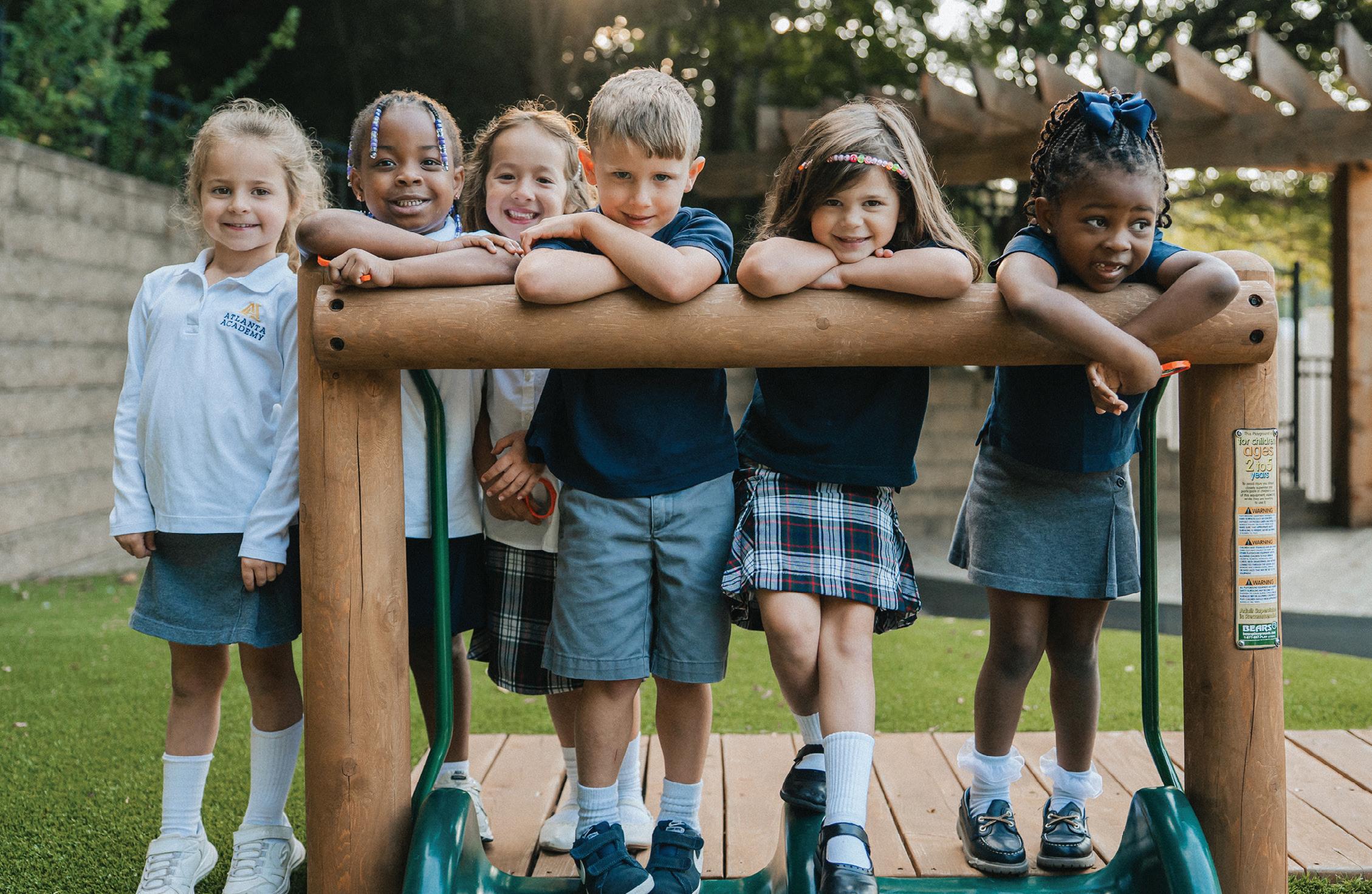
THE LIST: Atlanta’s Private Schools
Start your search for the right private school for your child with our listings. Schools are divided into four categories: non-sectarian, religiousaffiliated, Montessori and learning differences. Tuition prices are approximate.
Non-Sectarian
Schools listed below offer classes at least through the third grade. They include the largest in the metro area as well as Atlanta Parent Magazine advertisers.
Atlanta Academy. 2000 Holcomb Woods Pkwy., Roswell (Fulton). 678-461-6102. Preschool-8th. 415 students. $14,500-$30,700/yr. atlantaacademy.com
Atlanta International School. 2890 N. Fulton Dr., Atlanta (Fulton). 404-841-3840. K3-12th. 1,350 students. $30,604-$34,938/yr. aischool.org
Ben Franklin Academy. 1585 Clifton Rd. NE and 752 Houston Mill Rd. NE, Atlanta (DeKalb). 404-633-7404. 9th-12th. 120 students. $29,475$37,250/yr. benfranklinacademy.org
Capstone Academy. 1934 Cliff Valley Way, Atlanta (DeKalb). 404-458-5160. 5th-12th. 140 students. $15,574/yr. capstoneacademy.com
The Children’s School. 345 Tenth St. NE, Atlanta (Fulton). 404-873-6985. 3yrs.-8th. 282 students. $17,265-$28,100/yr. tcsatl.org
Cliff Valley School. 2426 Clairmont Rd., Atlanta (DeKalb). 678-302-1302. 3yrs.-8th. 438 students. $8,220-$21,560/yr. cliffvalley.org
Fulton Science Academy. 3035 Fanfare Way, Alpharetta (Fulton). 678-366-2555. PreK12th. 997 students. $19,750-$25,500/yr. fultonscienceacademy.org
The Galloway School. 215 Chastain Park Ave. NW, and 3254 Northside Pkwy. NW, Atlanta (Fulton). 404-252-8389. PreK3-12th. 750 students. $22,500-$35,700/yr. gallowayschool.org
The Heritage School. 2093 Hwy. 29 N, Newnan (Coweta). 770-253-9898. PreK3-12th. 450 students. $8,900-$25,300/yr. heritageschool.com
High Meadows School. 1055 Willeo Rd., Roswell (Fulton). 770-993-2940. PreK-8th. 350 students. $8,350-$25,490/yr. highmeadows.org
Lakeview Academy. 796 Lakeview Dr., Gainesville (Hall). 770-532-4383. PreK312th. 506 students. $8,862-$22,479/yr. lakeviewacademy.com
The Lovett School. 4075 Paces Ferry Rd. NW, Atlanta (Fulton). 404-262-3032. K-12th. 1,640 students. $33,350-$39,340/yr. lovett.org
McGinnis Woods School. 5380 Faircroft Dr., Alpharetta (Forsyth). 770-664-7764. Infant-8th. 500 students. $11,900-16,875/yr. mcginniswoods.org
Cont’d on next page
Atlanta Academy
THE LIST: Atlanta’s Private Schools
Pace Academy. 966 W. Paces Ferry Rd. NW, Atlanta (Fulton). 404-262-1345. Pre1-12th. 1,150 students. $35,580-$40,970/yr. paceacademy.org
The Paideia School. 1509 Ponce de Leon Ave. NE, Atlanta (DeKalb). 404-377-3491. PreK12th. 1,019 students. $29,382-$33,495/yr. paideiaschool.org
Rivers Academy. 38 North Main St., Alpharetta (Fulton). 770-475-0081. 5th-12th. 247 students. $14,412/yr. riversacademy.com
The SAE School. 6688 Mableton Pkwy., Mableton (Cobb). 678-239-3200. PreK-8th. 370 students. $12,600-$13,500/yr. saeschool.org
Saint Francis Schools. 13440 Cogburn Rd., and 9375 Willeo Rd., Alpharetta and Roswell (Fulton). 770-641-8257. K-12th. 700 students. $18,000-$29,800/yr. saintfrancisschools.com
The Stonehaven School. 1480 Joyner Ave. and 1650 Old Concord Rd., Marietta (Cobb). 770-874-8885. K-12th. 337 students. $3,400$15,200/yr. stonehavenschool.org
Trinity School. 4301 Northside Pkwy. NW, Atlanta (Fulton) 404-231-8100. 3yrs.-6th. 602 students. $22,850-$35,000/yr. trinityatl.org
The Waldorf School of Atlanta. 827 Kirk Rd., Decatur (DeKalb). 404-377-1315. 2yrs.-8th. 180 students. $9,650-$21,580/yr. waldorfatlanta.org
The Walker School. 700 Cobb Pkwy. N, Marietta (Cobb). 770-427-2689. PreK3-12th. 985 students. $19,600-$31,820/yr. thewalkerschool.org
The Wood Acres School. 1772 Johnson Ferry Rd., Marietta (Cobb). 404-859-1660. PreK2-8th. 370 students. $9,000-$15,850/yr. woodacresschool.org
Woodward Academy. 1662 Rugby Ave., College Park and 6565 Boles Rd., Johns Creek (Fulton). 404-765-4001. PreK-12th. 2,567 students. $24,200-$36,350/yr. woodward.edu
Religious-Affiliated
Schools listed below offer classes at least through the third grade. These listings include the largest religious-affiliated schools in the metro area plus Atlanta Parent Magazine advertisers.
Alpharetta Christian Academy. 44 Academy St., Alpharetta (Fulton). 770-475-5762. PK-5th. 325 students. $3,000-$12,850/yr. alpharettachristianacademy.com
Atlanta Jewish Academy. 5200 Northland Dr., Atlanta (Fulton). 404-843-9900. 3mos.12th. 440 students. $18,550-$28,945/yr. atljewishacademy.org
Blessed Trinity Catholic High School. 11320 Woodstock Rd., Roswell (Fulton). 678-277-9083. 9th-12th. 870 students. $18,250-$20,650/yr. btcatholic.org
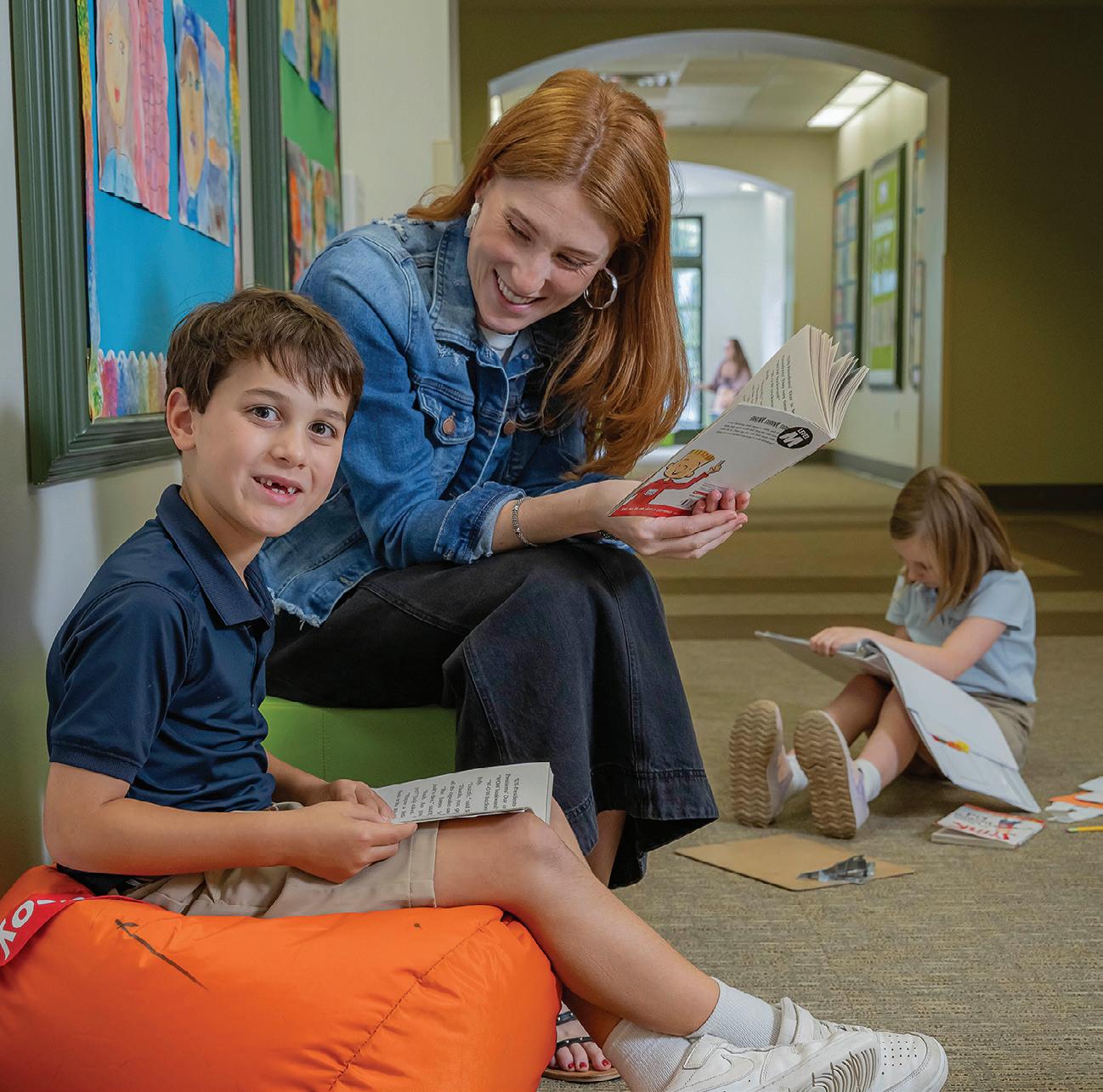
Cherokee Christian Schools. 3075 Trickum Rd., Woodstock (Cherokee) 678-494-5464. PreK-12th. 250 students. $5,150-$17,925/yr. cherokeechristian.org
Christ the King School. 46 Peachtree Way, Atlanta (Fulton). 404-233-0383. K-8th. 570 students. $12,830-$17,275/yr. christking.org
Community Christian School. 2001 Jodeco Rd., Stockbridge (Henry). 678-432-0191. 6wks.-12th. 680 students. $9,949-$21,532/yr. communitychristianschool.net
Cornerstone Christian Academy. 5295 Triangle Pkwy. NW, Peachtree Corners (Gwinnett). 770-441-9222. K-8th. 460 students. $17,450$20,500/yr. cornerstonecougars.org
Covenant Christian Academy. 6905 Post Rd., Cumming (Forsyth). 770-674-2990. K4-12th. 265 students. $9,160-$11,880/yr. covenantrams.org
Creekside Christian Academy. 2455 Mt. Carmel, Hampton and 175 Foster Dr., McDonough (Henry). 770-961-9300. K3-12th. 675 students. $9,865-$12,470/yr. creeksideacademy.org
Davis Academy. 8105 Roberts Dr., Atlanta (Fulton). 770-671-0085. PreK-8th. 514 students. $18,960-$33,770/yr. davisacademy.org
Eagle’s Landing Christian Academy. 2400 Hwy. 42 North, McDonough (Henry). 770-957-2927. K3-12th. 915 students. $15,000-$17,000/yr. elcaonline.org
Eastside Christian School. 2450 Lower Roswell Rd., Marietta (Cobb). 770-971-2332. K-12th. 294 students. $8,600-$16,315/yr. eastsidechristianschool.com
The Epstein School. 335 Colewood Way NW, Sandy Springs (Fulton). 404-250-5600. 3mos.-8th. 531 students. $19,950-$32,200/yr. epsteinatlanta.org
Fellowship Christian School. 10965 Woodstock Rd., Roswell (Fulton). 770-993-1650. PreK412th. 1,059 students. $5,518-$24,370/yr. fellowshipchristianschool.org
The Friends School of Atlanta. 862 Columbia Dr., Decatur (DeKalb). 404-373-8746. PK3-8th. 135 students. $14,850-$28,250/yr. friendsschoolatlanta.org
George Walton Academy. 1 Bulldog Dr., Monroe (Walton). 678-635-3800. K3-12th. 761 students. $6,000-$16,750/yr. gwa.com
Greater Atlanta Christian School. 1575 Indian Trail Rd., Norcross (Gwinnett). 770-243-2000. PreK-12th. 1,806 students. $5,755-$31,795/yr. greateratlantachristian.org
Harvester Christian Academy. 4241 Central Church Rd., Douglasville (Douglas). 770-942-1583. K4-12th. 360 students. $5,740-$12,165/yr. harvesteracademy.org
Hebron Christian Academy. 775 Dacula Rd., Dacula (Gwinnett). 770-963-9250. K4-12th. 1,384 students. $11,600-$17,600/yr. hebronlions.org
Trinity School
Heritage Preparatory School. 1700 Piedmont Ave., Atlanta (Fulton). 404-815-7711. PreK12th. 315 students. $11,500-$26,500/yr. heritageprep.org
Holy Innocents’ Episcopal School. 805 Mt. Vernon Hwy. NW, Atlanta (Fulton). 404-255-4026. PreK3-12th. 1,400 students. $21,250-$37,560/yr. hies.org
Holy Redeemer Catholic School. 3380 Old Alabama Rd., Johns Creek (Fulton). 770-410-4056. K-8th. 420 students. $11,525-$13,425/yr. hrcatholicschool.org
Holy Spirit Preparatory School. 4465 and 4449 Northside Dr., and 4820 Long Island Dr., Atlanta (Fulton). 678-761-7992. 6mos.12th. 385 students. $6,860-$27,270/yr. holyspiritprep.org
Horizon Christian Academy. 1270 Sawnee Dr., Cumming (Forsyth). 678-947-0711. K-12th. 308 students. $14,300-$15,800/yr. hcaga.org
Immaculate Heart of Mary Catholic School. 2855 Briarcliff Rd. NE, Atlanta (DeKalb). 404-636-4488. PreK-8th. 500 students. $10,500-$13,425/yr. ihmschool.org
Intown Community School. 2059 Lavista Rd., Atlanta (DeKalb). 404-633-8081. K-8th. 221 students. $9,500-$13,975/yr. intownschool.org
atlantaparent.com

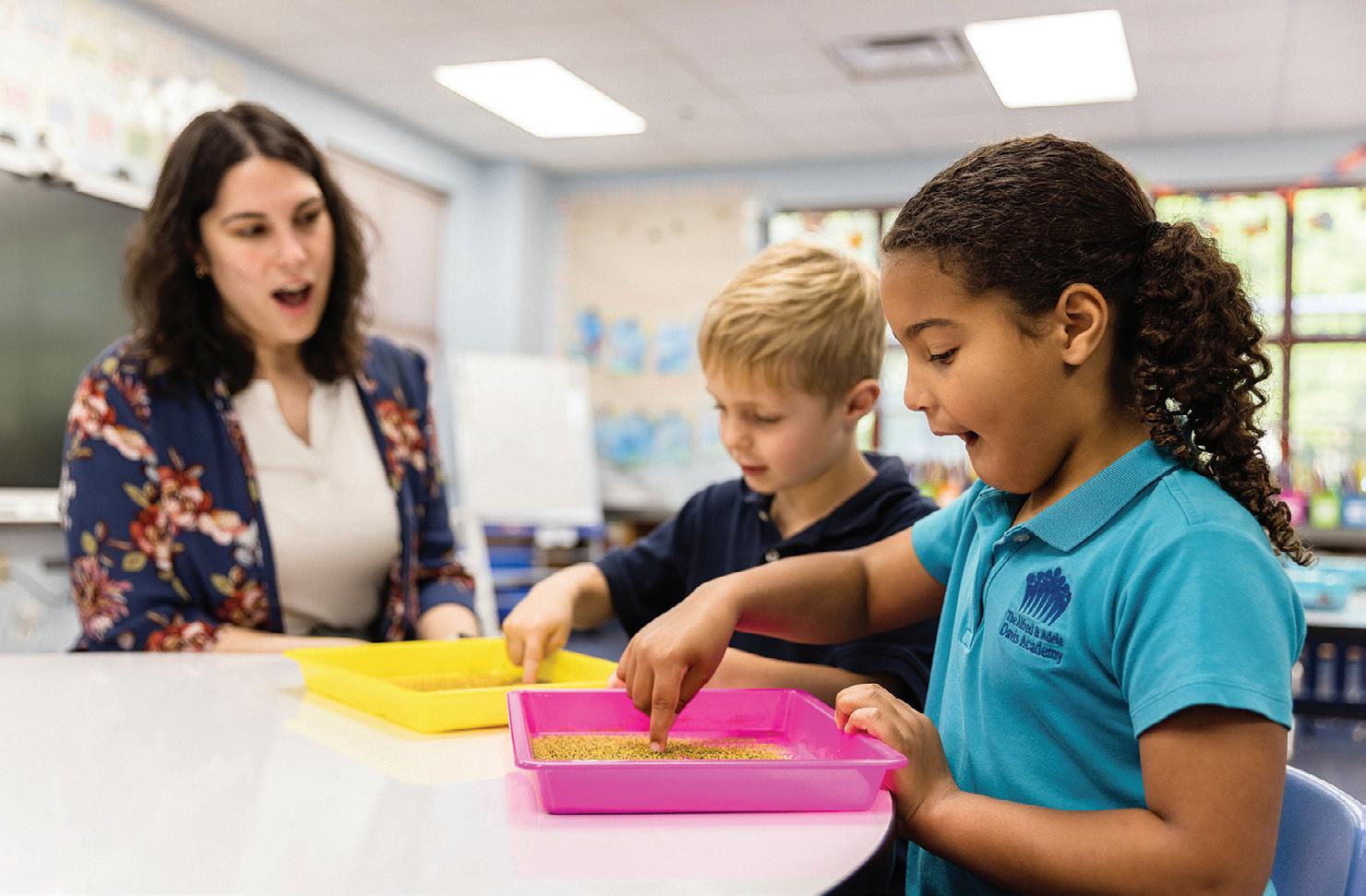
Killian Hill Christian School. 151 Arcado Rd., Lilburn (Gwinnett). 770-921-3224. K4-12th. 425 students. $7,500-$15,400/yr. khcs.org
King’s Ridge Christian School. 2765 Bethany Bend, Alpharetta (Fulton). 770-754-5738. PreK-12th. 885 students. $6,500-$27,027/yr. kingsridgecs.org
Landmark Christian School. 50 SE Broad St. and 109 Milo Fisher St., Fairburn (Fulton). 770-306-0647. PreK3-12th. 890 students. $9,900$23,000/yr. landmarkchristianschool.org
Loganville Christian Academy. 2575 Hwy. 81, Loganville (Walton). 770-554-9888. PreK3-12th. 527 students. $9,115-$15,450/yr. lcalions.com
Cont’d on next page
n Boarding Schools
n Charter Schools
n Homeschooling
n Montessori Schools
n Open House Directory
n Preschools
n Private and Public Schools
n Special Needs Schools
Davis Academy
THE LIST: Atlanta’s Private Schools
Marist School. 3790 Ashford Dunwoody Rd. NE, Atlanta (DeKalb). 770-457-7201. 7th-12th. 1,120 students. $25,450/yr. marist.com
Midway Covenant Christian School. 4635 Dallas Hwy., Powder Springs (Cobb). 770-590-1866. PreK48th. 300 students. $3,084-$8,976/yr. midwayschool.org
Mt. Bethel Christian Academy. 4385 Lower Roswell Rd. and 2509 Post Oak Tritt Rd., Marietta (Cobb). 770971-0245. PreK-12th. 705 students. $14,600-$21,950/yr. mtbethelchristian.org
Mount Paran Christian School. 1275 Stanley Rd. NW, Kennesaw (Cobb). 470-250-0088. PreK3-12th. 1,320 students. $8,360-$24,950/yr. mtparanschool.com
Mount Pisgah Christian School. 9820 Nesbit Ferry Rd., Johns Creek (Fulton). 678-336-3400. Infant-12th. 1,050 students. $19,000-$27,800/yr. mountpisgahschool.org
Mount Vernon School. 471 and 510 Mt. Vernon Hwy. NE, Atlanta (Fulton). 404-252-3448. PreK-12th. 1,232 students. $17,000-$34,400/yr. mountvernonschool.org
North Cobb Christian School. 4500 Eagle Dr., Kennesaw (Cobb). 770-975-0252. PreK3-12th. 1,255 students. $8,875-$21,820/yr. ncchristian.org
Notre Dame Academy. 4635 River Green Pkwy., Duluth (Gwinnett). 678-387-9385. PreK-12th. 327 students. $11,500-$20,990/yr. ndacademy.org
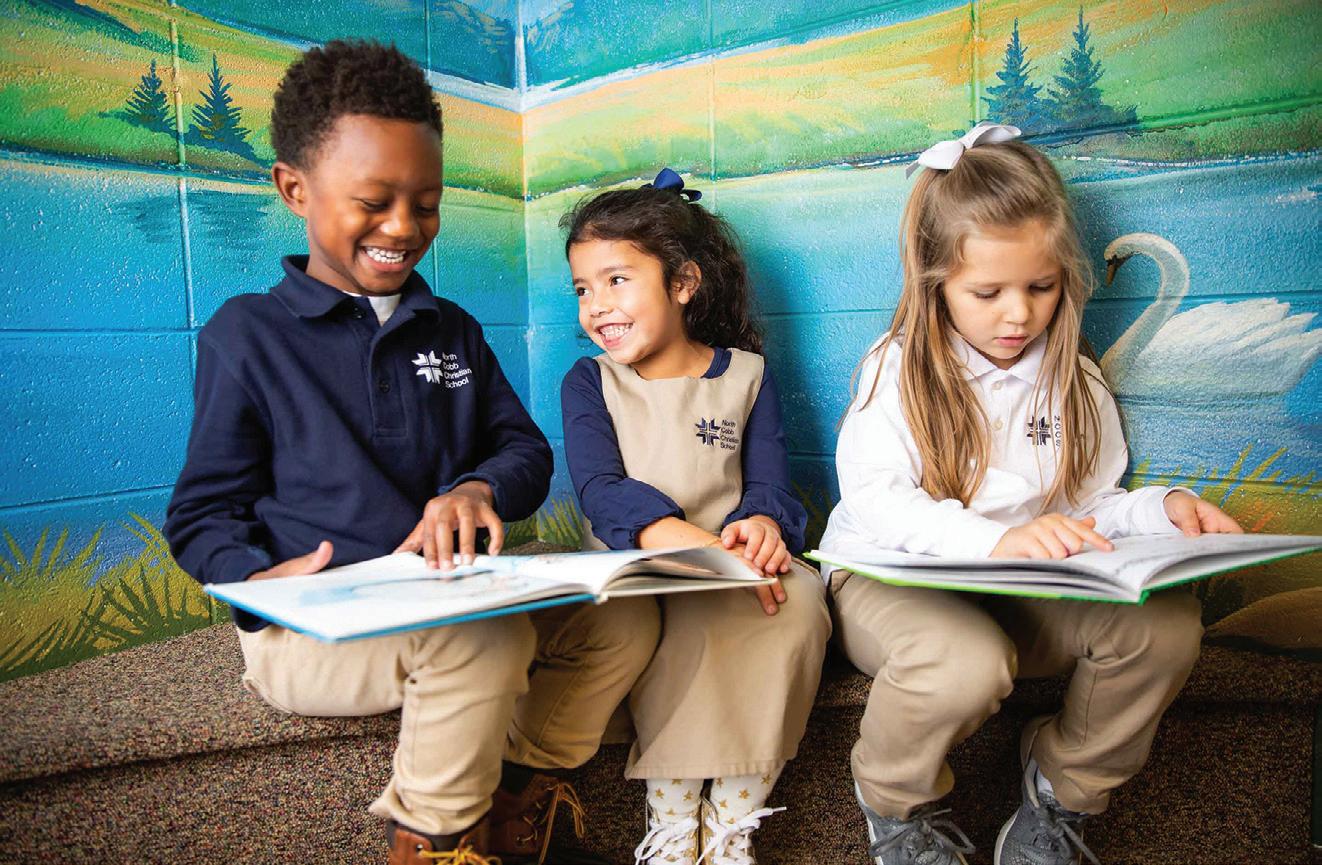
Our Lady of the Assumption Catholic School. 1320 Hearst Dr., Atlanta (DeKalb). 404-364-1902. PreK4-8th. 583 students. $12,335-$13,935/yr. olaschool.org
Peachtree Academy. 1801 Ellington Rd., Conyers (Rockdale); and 14101 Hwy. 278, Covington (Newton). 770-860-8900. PreK-12th. 352 students. $6,400-$12,500/yr. peachtreeacademy.com
Perimeter School. 9500 Medlock Bridge Rd., Johns Creek (Fulton). 678-405-2300. K-8th. 457 students. $8,300-$19,200/yr. perimeterschool.org
Pinecrest Academy. 955 Peachtree Pkwy., Cumming (Forsyth). 770-888-4477. PreK312th. 546 students. $11,715-$23,570/yr. pinecrestacademy.org
Top Reasons Parents Choose Private Schools
Ask parents why they want their child to attend a private
school, and you’ll hear these responses:
n Individualized Attention: With smaller teacher-to-student ratios than most public schools, many private school parents believe their children get a better education at an independent school.
n Religious Principles: Many parents want an education that offers religious teachings and tenets along with the ABCs. They seek an emphasis on spiritual values, morals and faith development throughout the whole curriculum.
n Personalized Learning: Every child has his or her own academic timetable, as well as talents. Parents may find that a private school can better address the child’s needs — whether he or she is a late-bloomer, gifted in math, a budding artist or proficient in foreign languages.
n Innovative Teaching: Some parents may have strong feelings about teaching methods or the curriculum and textbooks used by a public school system. Private schools often offer more options and flexibility. One parent may request a more innovative approach for their child, while another might demand more traditional teaching techniques.
n Nontraditional Groupings: Many private schools offer alternatives to the usual grade groupings. These frequently cater more to individual abilities in different areas, or they may allow students more fluid movement between grades, regardless of age.

n More Responsive to Parents: Private schools answer to the parents funding them. As a result, parents feel more confident that the issues and concerns that are important to them will be addressed.
n Special Needs: A child with a learning disability or a behavioral problem may not do well in a traditional public school classroom. Private schools, especially those designed for a specific learning disability or special need, employ teachers and other professionals with the necessary credentials to teach and care for children with special needs.
– Elizabeth Baggett
North Cobb Christian School
Providence Christian Academy. 4575 Lawrenceville Hwy., Lilburn (Gwinnett). 770-279-7200. PreK-12th. 600 students. $10,950$21,568/yr. providencechristianacademy.org
Queen of Angels Catholic School. 11340 Woodstock Rd., Roswell (Fulton). 770-5181804. K-8th. 490 students. $11,064-$13,064/yr. qaschool.org
St. Benedict’s Episcopal School. 2160 Cooper Lake Rd., Smyrna (Cobb). 678-279-4300. PreK18th. 650 students. $10,913-$19,745/yr. stbs.org
St. Catherine of Siena Catholic School. 1618 Ben King Rd., Kennesaw (Cobb). 770-419-8601. K-8th. 334 students. $10,200$11,950/yr. scsiena.org
St. John the Evangelist Catholic School. 240 Arnold St., Hapeville (Fulton). 404-767-4312. PreK-8th. 280 students. $10,439-$12,430/yr. sjecs.org
St. John Neumann Catholic School. 791 Tom Smith Rd., Lilburn (Gwinnett). 770-381-0557. PreK-8th. 351 students. $10,401-$13,036/yr. sjnrcs.org
St. Joseph Catholic School. 81 Lacy St. NW, Marietta (Cobb). 770-428-3328. PreK4-8th. 400 students. $10,307-$13,365/yr. stjosephschool.org
Saint Jude the Apostle Catholic School. 7171 Glenridge Dr. NE, Atlanta (Fulton). 770-394-2880. PreK-8th. 487 students. $12,255-$14,875/yr. saintjude.net
St. Martin’s Episcopal School. 3110-A AshfordDunwoody Rd., Atlanta (DeKalb). 404-237-4260. PreK-8th. 600 students. $20,140-$35,900/yr. stmartinschool.org
St. Mary’s Academy. 861 GA. 279, Fayetteville (Fayette). 770-461-2202. PreK-12th. 340 students. $10,975-$18,115/yr. smaschool.org
St. Paul Lutheran School. 700 Ardenlee Pkwy., Peachtree City (Fayette). 770-486-3545. 18mos.8th. 240 students. $8,350-$8,660/yr. stpaulptc.org
St. Pius X Catholic High School. 2674 Johnson Rd. NE, Atlanta (DeKalb). 404-636-3023. 9th12th. 1,039 students. $19,000-$21,000/yr. spx.org
Saint Thomas More Catholic School. 630 W. Ponce de Leon Ave., Decatur (DeKalb). 404-373-8456. PreK4-8th. 461 students. $10,750-$14,900/yr. stmga.org
Strong Rock Christian School. 4200 Strong Rock Pkwy., Locust Grove (Henry). 678-833-1200. PreK3-12th. 900 students. $13,110-$18,094/yr. strongrockchristianschool.com
Sugar Hill Christian Academy. 4600 Nelson Brogdon Blvd., Sugar Hill (Gwinnett). 678-745-4121. Preschool-12th. 510 students. $2,553-$11,964/yr. sugarhillchristian.org
Torah Day School of Atlanta. 1985 Lavista Rd. NE, Atlanta (DeKalb). 404-982-0800. K-8th. 350 students. $16,303-$18,675/yr. torahday.org
Discover the McGinnis Woods Difference
Inspiring students with the passion to excel
• Private non-parochial education for infants through 8th grade
• Nurturing environment featuring outstanding teachers, small class sizes with assistants, 1-to 1-iPad environment, hands-on academics, STEM, frequent eld trips and after-school programs.
• After-school Athletics, Robotics, Science Olympiad and Drama.
OPEN HOUSE
Saturday, January 24 1-3 pm
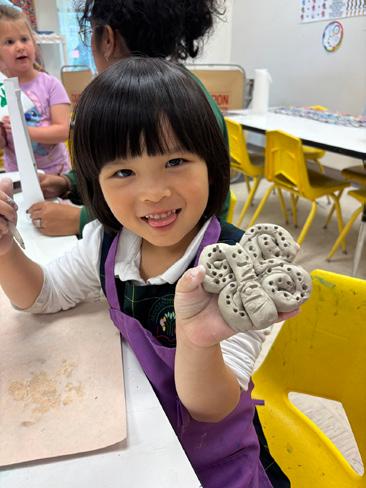
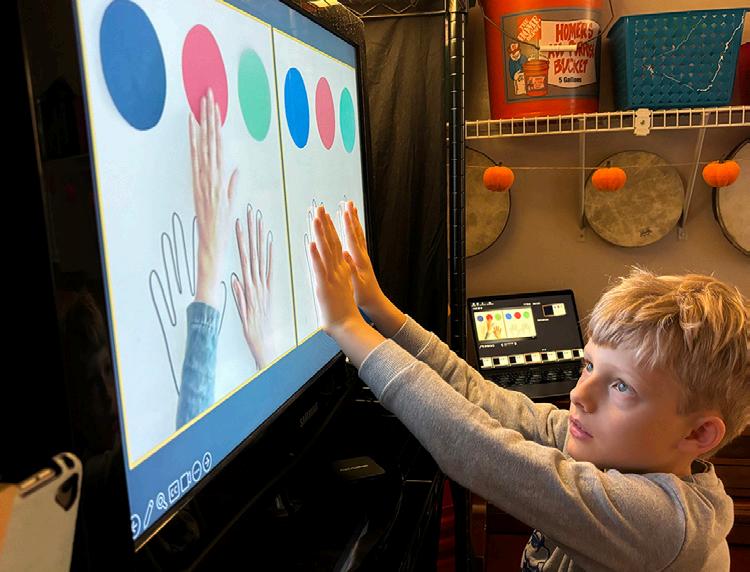
Children with Learning Differences to Succeed
Pre-K–8th • Small Groups
Individualized programs • Hands-on learning activities • Speech, occupational and music therapy for all
THE LIST: Atlanta’s Private Schools
Trinity Christian School. 8817 Highway 54 West, Sharpsburg (Coweta). 770-251-6770. PreK3-12th. 1,589 students. $3,440-$14,315/yr. tcslions.org
The Weber School. 6751 Roswell Rd. NE, Atlanta (Fulton). 404-917-2500. 9th-12th. 307 students. $36,900/yr. weberschool.org
Wesleyan School. 5405 Spalding Dr., Peachtree Corners (Gwinnett). 770-448-7640. K-12th. 1,210 students. $24,930-$32,315/yr. wesleyanschool.org
Westminster. 1424 W. Paces Ferry Rd. NW, Atlanta (Fulton). 404-609-6202. Pre1st-12th. 1,880 students. $35,550-$40,685/yr. westminster.net
Whitefield Academy. 1 Whitefield Dr., Smyrna (Cobb). 678-305-3000. PreK-12th. 950 students. $15,400-$32,500/yr. whitefieldacademy.com
Montessori
Montessori schools use the teaching technique developed by Dr. Maria Montessori. Schools listed below have elementary classes through at least the third grade.
Arbor Montessori School. 2998 Lavista Rd., (DeKalb). 404-321-9304. 18mos.-9th. 255 students. $14,700-$23,750/yr. arbormontessori.org
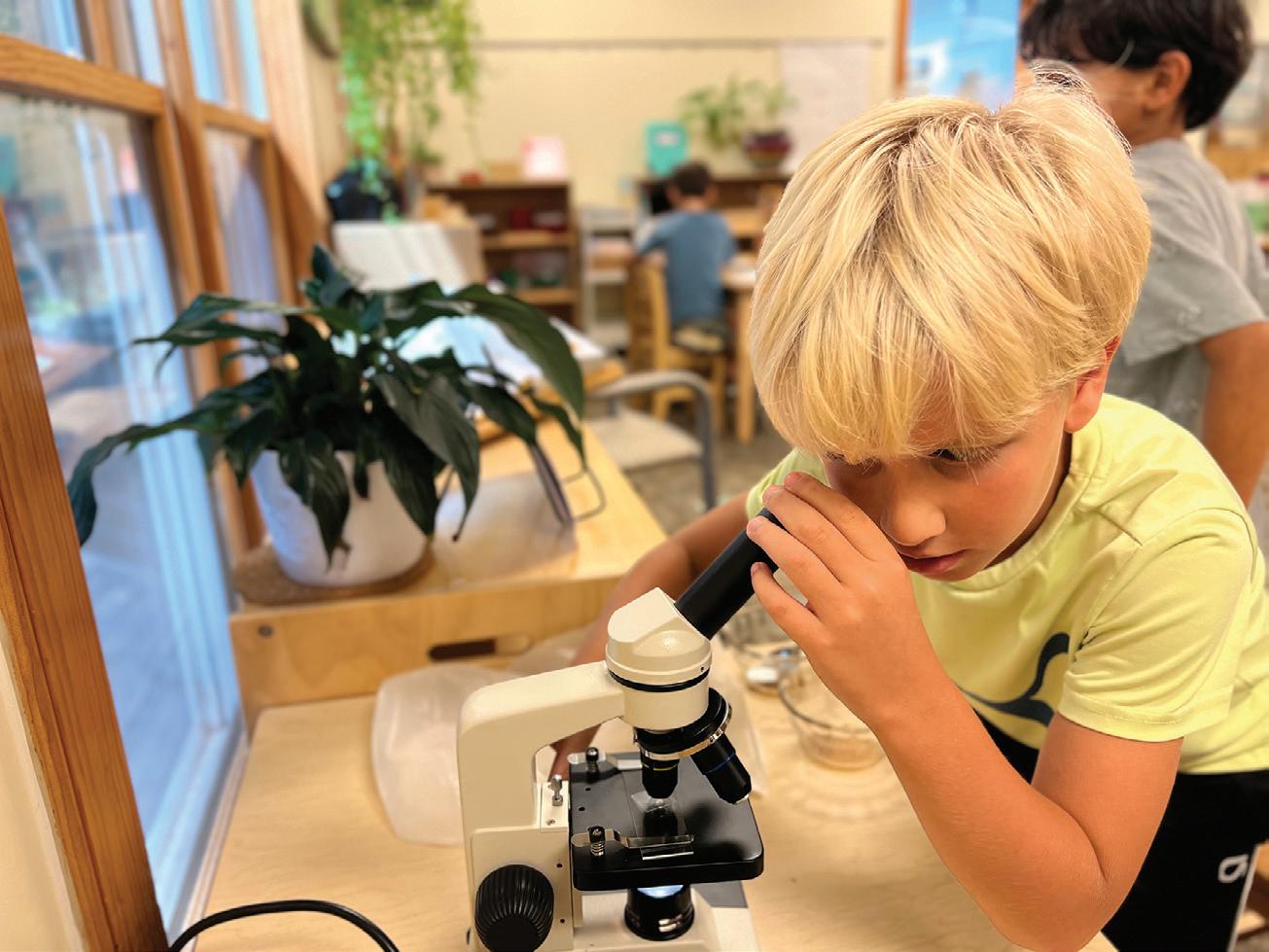
Atlanta Montessori International School. 1970 Cliff Valley Way NE, and 1215 S. Ponce de Leon Ave. NE, Atlanta (DeKalb). 404-3256777. 6wks.-12yrs. 155 students. $18,660-$28,080/yr. amischool.com
Endeavor Montessori. 48 Perimeter Center East, Atlanta (DeKalb). 770637-4644. 6wks.-12yrs. 223 students. $19,080-$25,920/yr. endeavormontessori.com
Montessori Academy at Sharon Springs. 2830 Old Atlanta Rd., Cumming (Forsyth). 770205-6277. 13mos.-12yrs. 261 students. $13,600-$21,300/yr. montessoriacademygeorgia.com
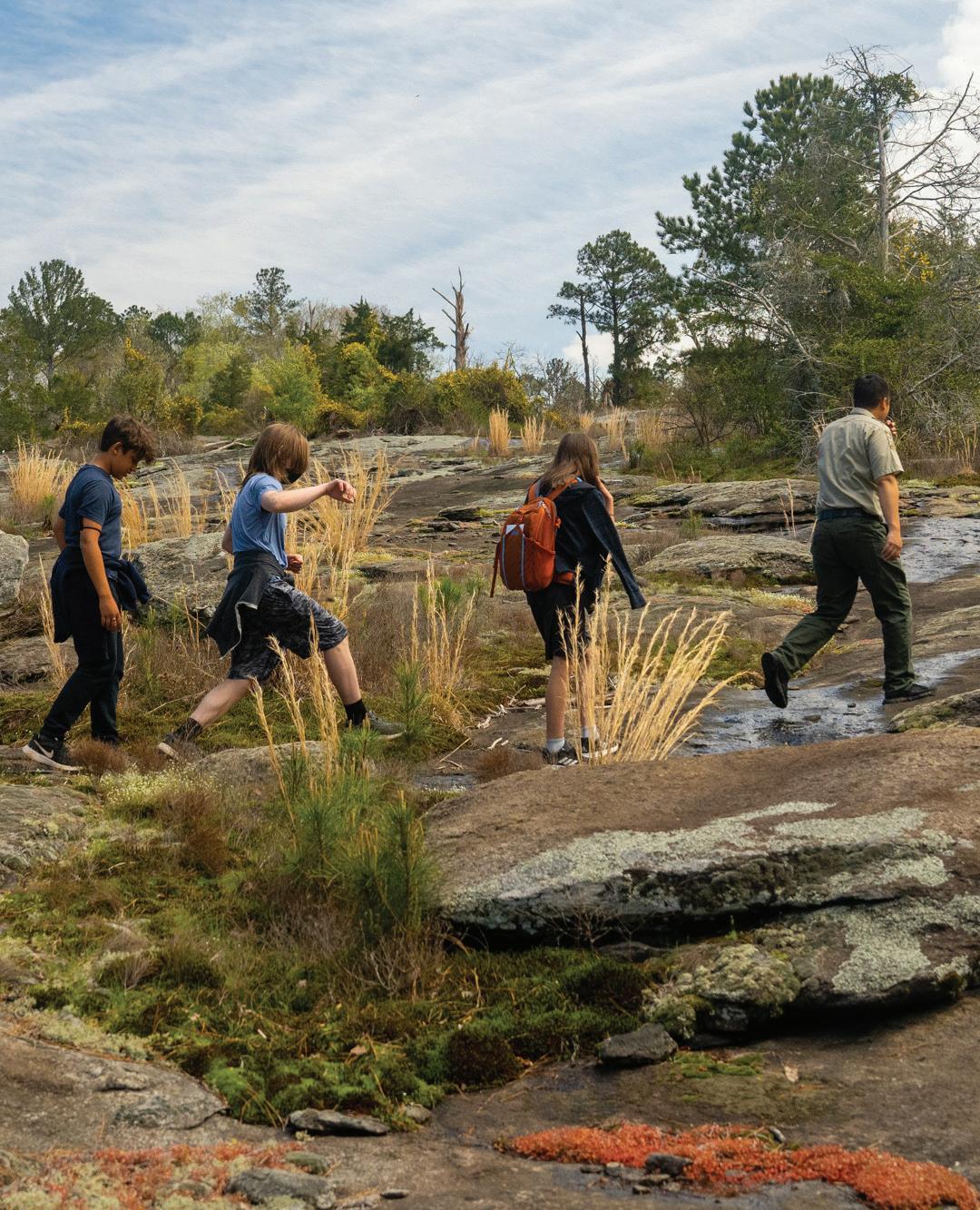

Arbor Montessori School
Montessori Academy at Vickery. 6285 Post Rd., Cumming (Forsyth). 770-777-9131. 13mos.9yrs. 181 students. $12,700-$22,260/yr. montessorivickery.com
Montessori School at Emory. 3021 North Decatur Rd., Decatur (DeKalb). 404-634-5777. 15 mos.-14 yrs. 200 students. $16,752-24,000/yr. montessorischoolatemory.com
Montessori In Town. 1192 Arkwright Pl., Atlanta (DeKalb). 404-784-1038. 14mos.6th. 145 students. $13,600-$20,200/yr. montessoriintown.com
Springmont School. 5750 Long Island Dr. NW, Atlanta (Fulton). 404-252-3910. 18mos.-8th. 250 students. $13,820-$29,910/yr. springmont.com
Village Montessori. 1610 Woodstock Rd., Roswell (Fulton). 770-552-0834. 18mos.-6th. 140 students. $11,050-$18,250/yr. vmschool.com
Special Needs
Brookwood Christian School for Dyslexia. 4728 Wood St., Acworth (Cobb). 678-4015855. 1st-12th. 80 students. $21,500/yr. brookwoodchristian.com
The Cottage School. 700 Grimes Bridge Rd., Roswell (Fulton). 770-641-8688. K-12th. 305 students. $28,100-$33,000/yr. cottageschool.org
Cumberland Academy of Georgia. 650-A Mt. Vernon Hwy. NE, Atlanta (Fulton). 404835-9000. 3th-12th plus college. 100 students. $31,500/yr. cumberlandacademy.org
GRACEPOINT. 1407 Cobb Pkwy. N., Marietta (Cobb). 678-709-6634. 1st-8th. 130 students. $29,950-$30,500/yr. gracepointschool.org
The Howard School. 1192 Foster St., Atlanta (Fulton). 404-377-7436. K-12th. 300 students. $41,170-$45,670/yr. howardschool.org
Mill Springs Academy. 13660 New Providence Rd., Alpharetta (Fulton). 770-360-1336. K-12th. 160 students. $35,751-$36,136/yr. millsprings.org
Porter Academy. 200 Cox Rd., Roswell (Fulton). 770-594-1313. 4-14yrs. 55 students. $21,800/yr. porteracademy.org
Sage School. 2435 Tech Century Pkwy. NE, Lawrenceville (Gwinnett). 678-318-3588. K-6th. 88 students. $29,633-$30,282/yr. sageschool.net
The Schenck School. 282 Mt. Paran Rd. NW, Atlanta (Fulton). 404-252-2591. K-6th. 250 students. $46,200/yr. schenck.org
Swift School. 300 Grimes Bridge Rd., Roswell (Fulton). 678-205-4988. K-8th. 150 students. $38,759-$41,314/yr. theswiftschool.org
The Wardlaw School of the Atlanta Speech School. 3160 Northside Pkwy. NW, Atlanta (Fulton). 404-233-5332. K-6th. 195 students. $42,730-$44,439/yr. wardlawschool.org
APS is caring
Caring for parents and students.
Do you know a child who resides within the city of Atlanta in need of special education services?
Atlanta Public Schools Child Find services can open a window of hope for a brighter future for infants, children and young adults identified with a disability or developmental delay.
For more information, call the Dept. of Special Education.
Ages 3-5: 404-802-1690
Ages 6-21: 404-802-2636
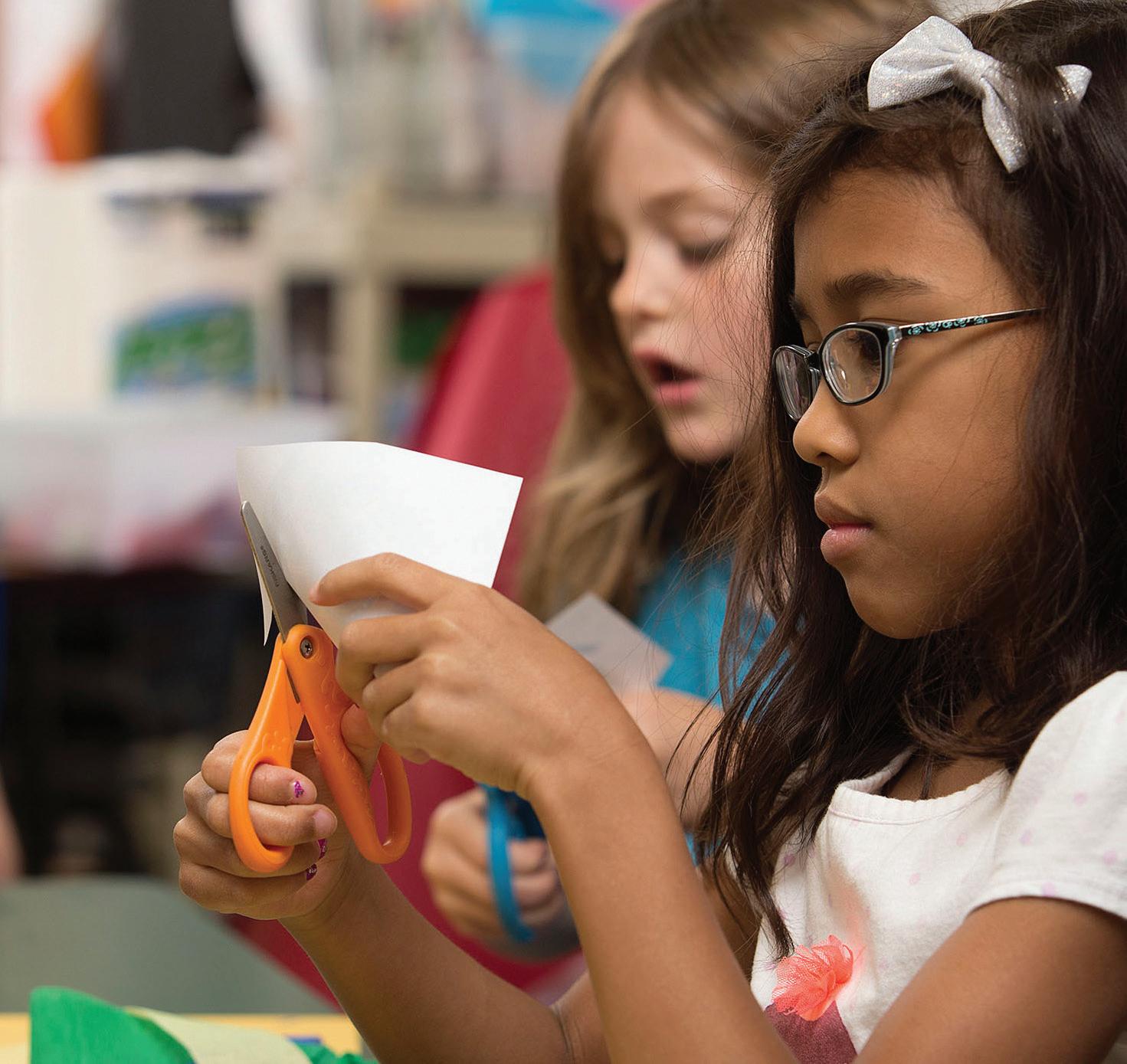
atlantapublicschools.us

Fulton County Schools offer diagnostic evaluations for children, three and older, with a suspected disability.
Using research-based strategies, the Fulton County Schools’ Services for Exceptional Children department provides services for students with disabilities who are homeschooled, attend a private school or reside within the Fulton County School District. Services include, but are not limited to:
• Speech Therapy Sessions
• Autism Workshops for Families
Inquire today about monthly workshops for families and private schools to help students reach their full academic potential.

JAN 24–JUN 27 ON THE GOIZUETA STAGE FOR YOUTH AND FAMILIES
Journey down the rabbit hole for a delightful musical adventure.
Written and Directed by MARK VALDEZ
I nspired by the stories of Beatrix Potter
Presented by special arrangement with Frederick Warne & Co Limited


FEB 21–JUN 30
ON THE GOIZUETA STAGE FOR YOUTH AND FAMILIES
With tail-shaking tunes, empowering messages of individuality, this musical is sure to rock audiences of all ages.
Book and Lyrics by MO WILLEMS
Music by DEBORAH WICKS LA PUMA

Based on the book Naked Mole Rat Gets Dressed by MO WILLEMS
Directed by SAMANTHA PROVENZANO

MAY 16–JUL 5 ON THE GOIZUETA STAGE FOR YOUTH AND FAMILIES
Join Anton on his very first night in the big kids’ room, where he discovers that even brave little ants can feel a bit anxious when faced with new adventures.
By MADHURI SHEKAR
Music by CHRISTIAN MAGBY
Lyrics by CHRISTIAN ALBRIGHT
Inspired by the book THE GREAT ANT SLEEPOVER by Madhuri Shekar and illustrated by Nicole Kang Ahn


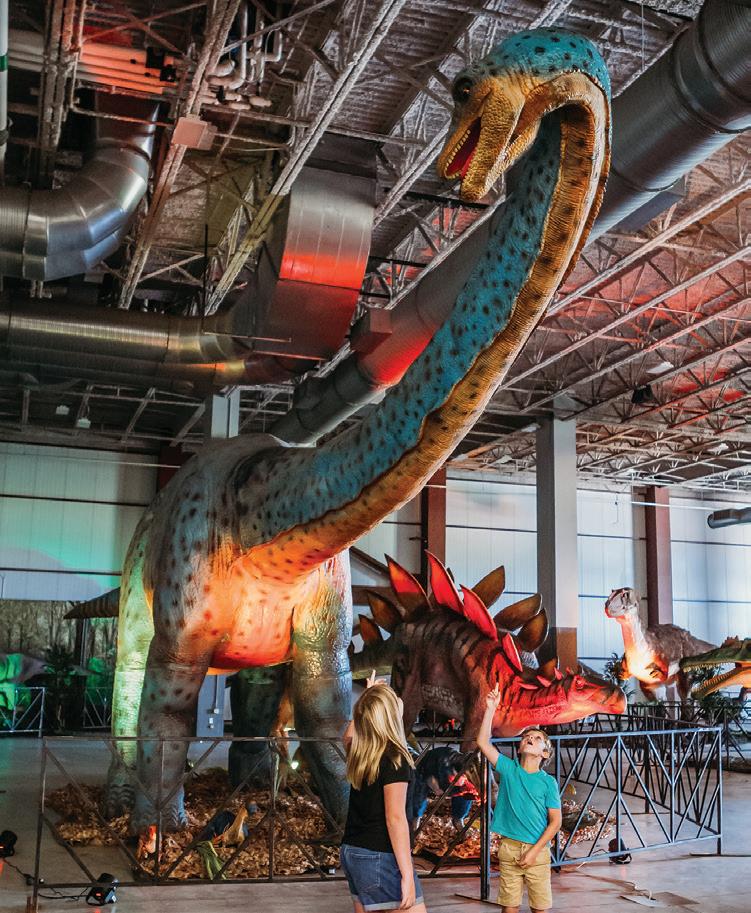
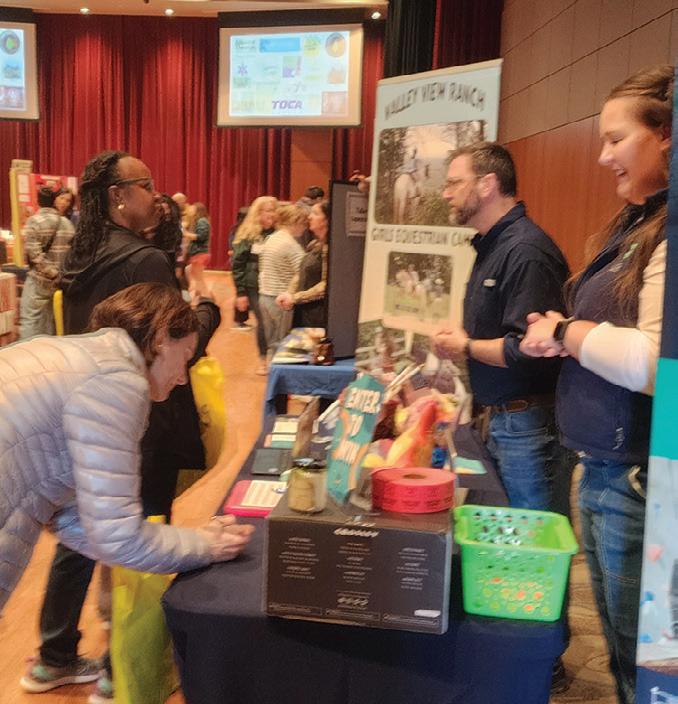
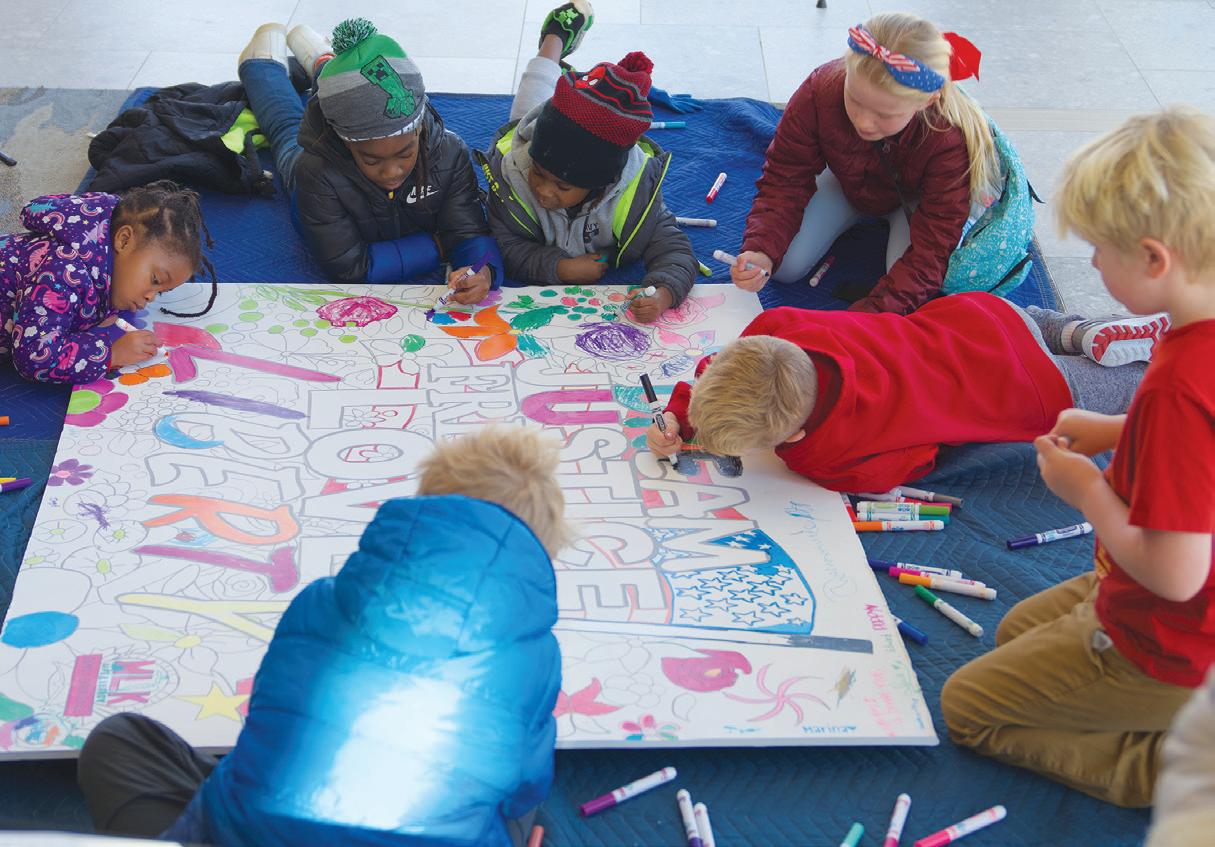
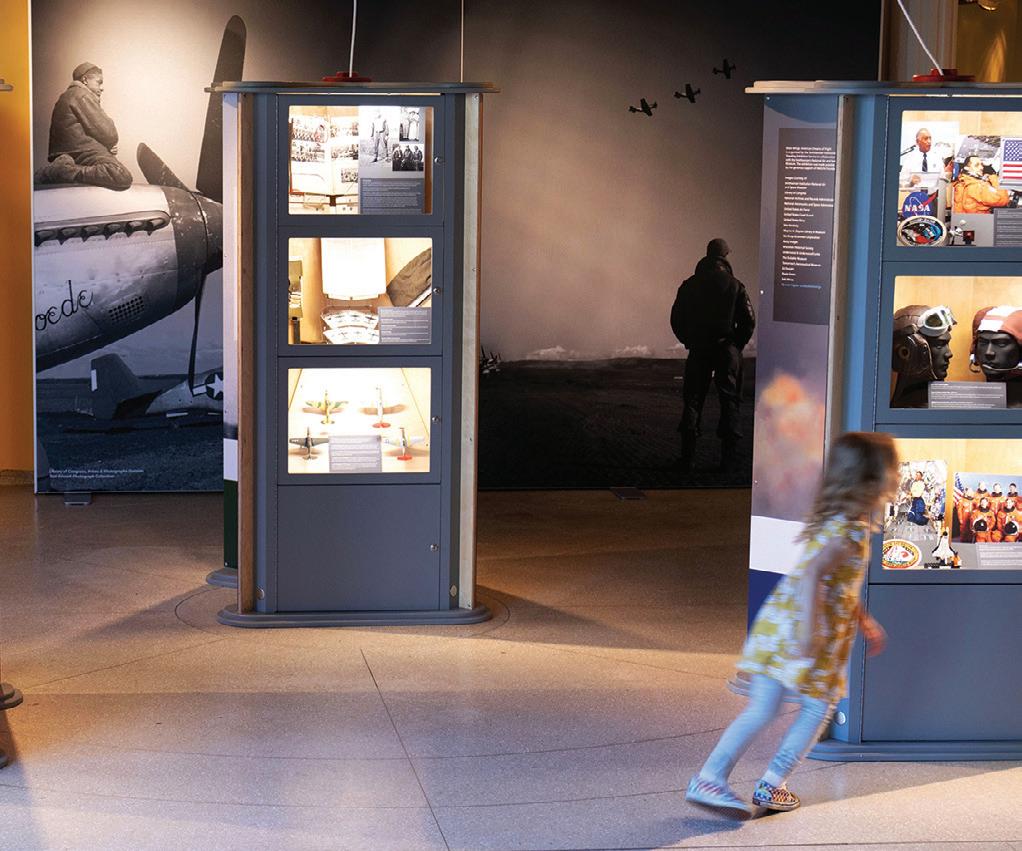
Braves Fest
Camp Expo
Jurassic Quest
Martin Luther King, Jr.: Life & Legacy
AIM HIGH: Soaring with the Tuskegee Airmen
JANUARY TOP EVENTS
Events may be cancelled or changed after our deadline. Please check before visiting to confirm. Full calendar online at atlantaparent.com
5 You Just Can’t Miss
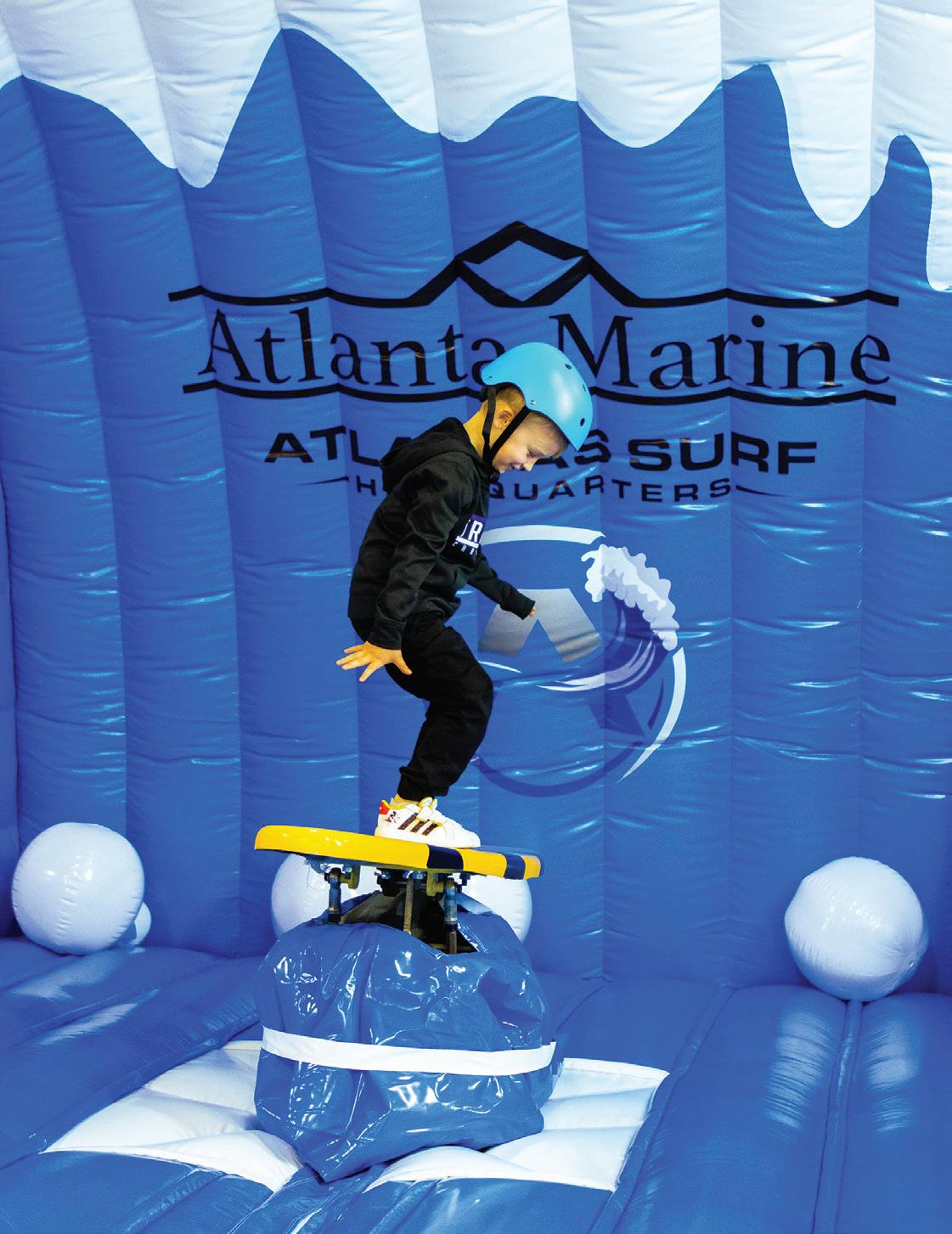
Fairy House Breakfast
Chattahoochee Nature Center
Jan. 25, 10:30 a.m.-noon
Eat some of the foods fairies and gnomes have for breakfast before exploring the Enchanted Woodland Trail. For ages 4 and older. Reservation required. 9135 Willeo Rd., Roswell. 770-992-2055. $30. chattnaturecenter.org
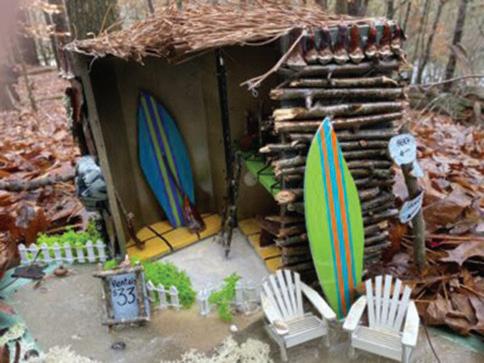
Atlanta Boat Show
Georgia World Congress Center
Jan. 8-9, 11 a.m.-8 p.m.; Jan. 10, 10 a.m.-8 p.m. and Jan. 11, 10 a.m.-5 p.m.
Shop boats and marine products, experience the VR Surfing Simulator, play in the Kids’ Zone and more. 285 Andrew Young International Blvd. NW, Atlanta. 314-287-6102. $15-$17; ages 12 and younger, free. atlantaboatshow.com
Chick-fil-A Peach Bowl FanFest
Georgia World Congress Center
Jan. 9, 2:30-6:30 p.m.
This enormous indoor fan experience features tons of interactive attractions, kicking games, obstacle courses, live entertainment and more, including Pep Rallies with cheerleaders, bands and mascots from participating schools. 285 Andrew Young International Blvd. NW, Atlanta. 404-586-8500. Free admission. chick-fil-apeachbowl.com

HISSSSS: A WILD TIME Repticon
Gwinnett County Fairground
Jan. 3, 9 a.m.-4 p.m. and Jan. 4, 10 a.m.-4 p.m.
Explore tons of different exhibits and vendors to learn more about reptiles from around the world. 2405 Sugarloaf Pkwy., Lawrenceville. 863-268-4273. $12-$20; ages 5-12, $7; ages 4 and younger, free. repticon.com
Southeast Reptile Expo
Gas South Convention Center
Jan. 31-Feb. 1, 10 a.m.-5 p.m.
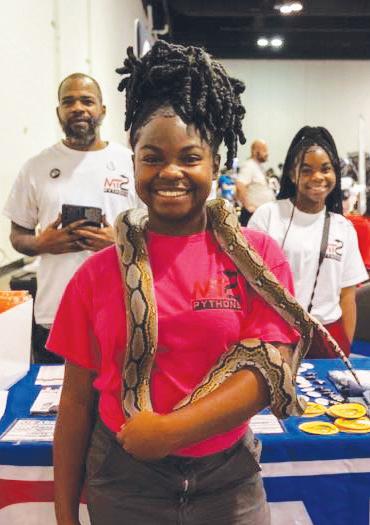
Go on a wild adventure filled with incredible reptiles, amphibians, exotic plants and more. 6400 Sugarloaf Pkwy., Duluth. $24.57; ages 3-11, $13.26; ages 2 and younger, free. southeastreptileexpo.com
Atlanta Boat Show
Chick-fil-A Peach Bowl FanFest
Fairy House Breakfast
Southeast Reptile Expo
A Dino-mite Adventure
Young paleontologists will love exploring dinosaurs at these events.
Dinosaur!
Alliance Theatre
Jan. 17-Feb. 22. See website for showtimes. Find out how the simplest, everyday tasks can turn into an epic dino-tastic adventure with this production for ages 5 and younger. 1280 Peachtree St. NE, Atlanta. 404-733-4600. $12.50; ages 6-17, $5; ages 5 and younger, free. alliancetheatre.org
Jurassic Quest
Cobb Galleria Centre
Jan. 23-25. See website for schedule. This immersive walk-through experience features roaring and moving dinosaurs, adorable baby dinos, fossils, LEGO play zones, bounce houses and more. 2 Galleria Pkwy., Atlanta. $28.08-$91.24. jurassicquest.com
DinoVerse
Exhibition Hub Atlanta Art Center
Through Feb. 22
Step back in time to explore tons of dinosaurs with a VR experience, real fossils, a hands-on Discovery Zone and more. For ages 6 and older. 5660 Buford Hwy. NE, Doraville. $19.90+; ages 6-12, $14.90+. feverup.com/atlanta
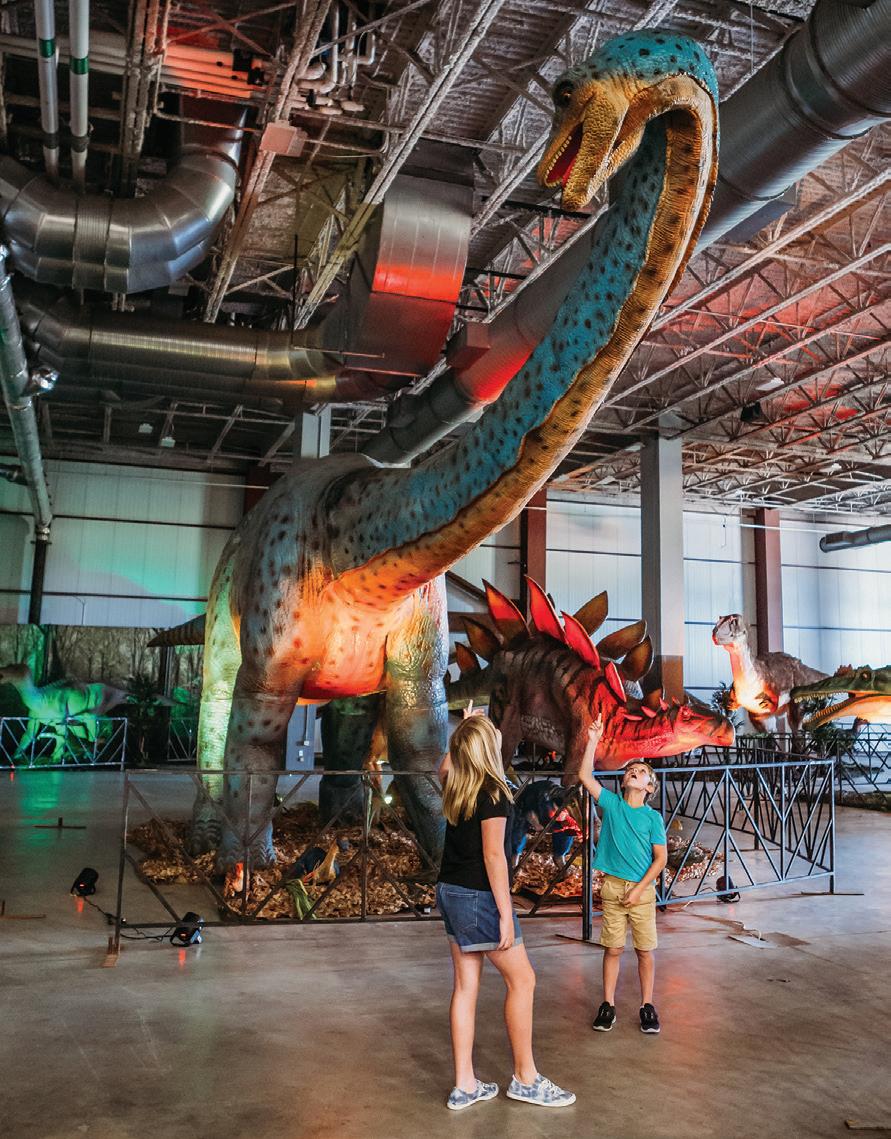
MUSEUMS
Tellus Science Museum
Walk through history as you stare into the mouth of a Tyrannosaurus rex, view a saber-tooth cat and more at the museum’s Fossil Gallery. Young paleontologists will love exploring the Fossil Dig to find shark teeth, shells and fossils. 100 Tellus Dr., Cartersville. 770-606-5700. $20; ages 3-17, $16; ages 2 and younger, free. tellusmuseum.org
Fernbank Museum
Stand beneath some of the world’s largest dinosaurs with fossils of the Argentinosaurus, Giganotosaurus, Anhanguera and Pterodaustro. In A Walk Through Time in Georgia gallery, see the specific dinosaurs who once lived in areas of Georgia. 767 Clifton Rd., Atlanta. 404-929-6300. $25.95-$27.95; ages 3-12, $23.95$25.95; ages 2 and younger, free. fernbankmuseum.org
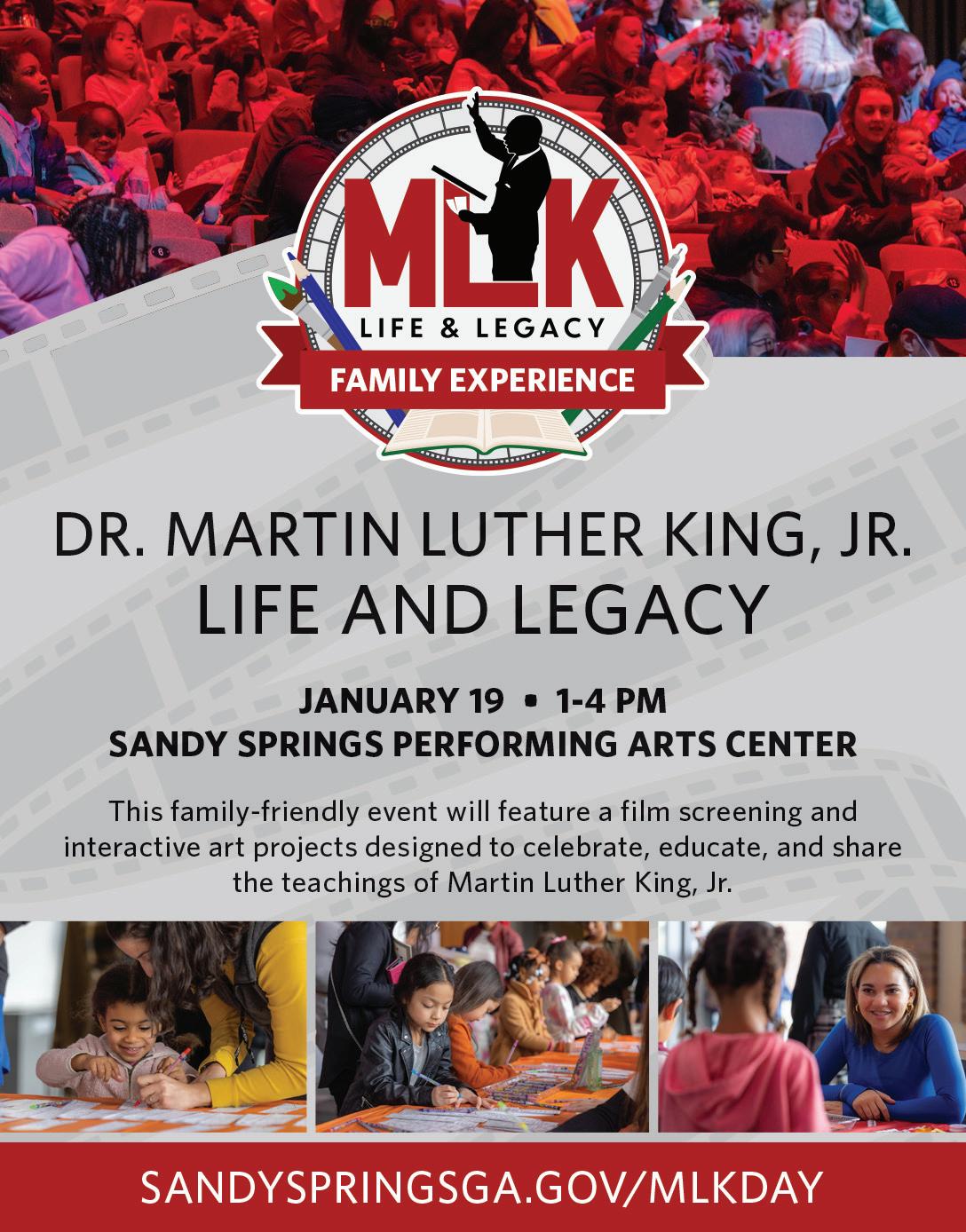
Jurassic Quest
MORE TOP EVENTS
UPS Second Sunday
High Museum of Art
Jan. 11, noon-5 p.m.
Enjoy art-making activities, performances and exhibits as a family. 1280 Peachtree St. NE, Atlanta. 404-733-4400. Free admission. high.org
Teen Takeover
Fernbank Museum
Jan. 16, 6-9 p.m.
For ages 13-17, teens will love exploring exhibits, viewing a film in the Giant Screen Theater, completing hands-on activities and more. 767 Clifton Rd., Atlanta. 404-929-6300. $10-$12. fernbankmuseum.org
Trains, Trains, Trains!
Southern Museum
Jan. 24-25, 9:30 a.m.-5 p.m.
See an impressive array of model train layouts, enjoy train-themed activities, view historic trains and more. 2829 Cherokee St. NW, Kennesaw. 770-427-2117. $10; ages 3-17, $5; ages 2 and younger, free; Board the Caboose Experience, $5. southernmuseum.org

Braves Fest
Truist Park / Jan. 31, 10 a.m.-4 p.m.
This full-day celebration of baseball and the Atlanta Braves includes interactive attractions, live entertainment, food, shopping and baseball players to lead off the journey of the 2026 regular season. See the players and coaches in the Braves Fest Player Walk & Rally, sing for the Braves judges with Braves Country Karaoke, play Bingo to win prizes, create original content with trophies in the Content Creation Corner and more. Kids will love celebrating BLOOPER’s birthday in the Children’s Healthcare of Atlanta Park with a rock wall, batting cages and playing ball on Hope & Will’s Sandlot. Reservation required. 755 Battery Ave., Atlanta. 404-577-9100. Free admission. braves.com/bravesfest


Under Lock and Key Gaming ulkgaming.com
Want a unique party experience? Under Lock and Key Gaming Lounge brings the party to you. Specializing in children of all ages and all abilities — any occasion or organization. Complete curbside setup and cleanup.
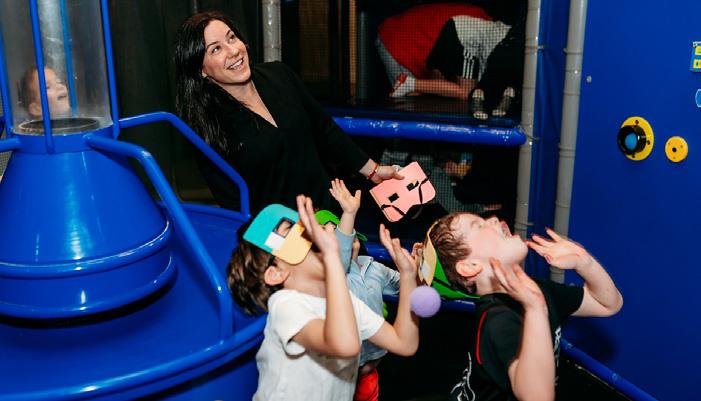
Leave the planning to us! From start to finish, Ready Set Fun ensures a seamless, stress-free party experience. You just bring the smiles! 404-596-5566.

Braves Fest
It’s Time to Plan for Summer Camp!
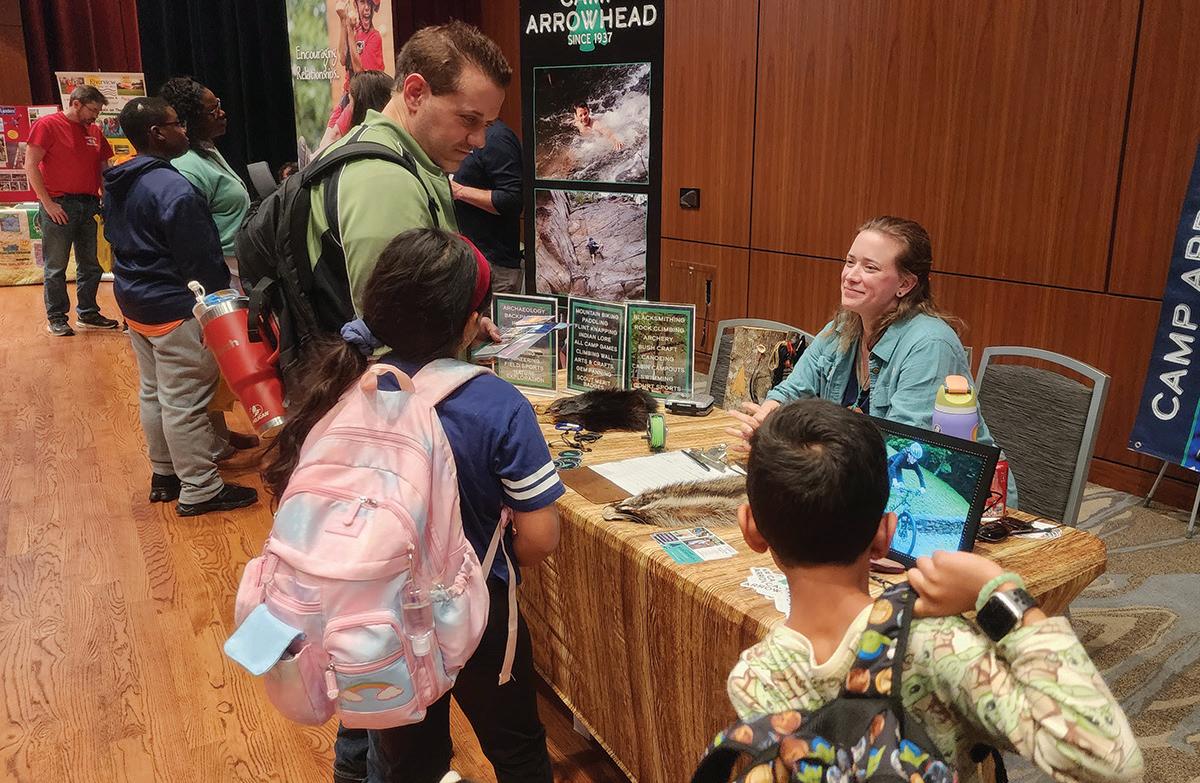
What are you doing with your kids this summer? Get them off screens and make it the best summer yet at one of the many camps around metro Atlanta and beyond.
At Atlanta Parent’s 26th annual Camp Expo, you’ll meet camp directors and staff who create environments where kids build friendships, gain independence and discover new interests. From outdoor adventure and creative arts to sports, STEM and leadership programs, camps provide hands-on learning and unforgettable memories.
This one-day event makes it easy to compare day and overnight camp options. You’ll also have the opportunity to ask questions about safety and supervision, and find the right fit for your child’s age, personality and interests.
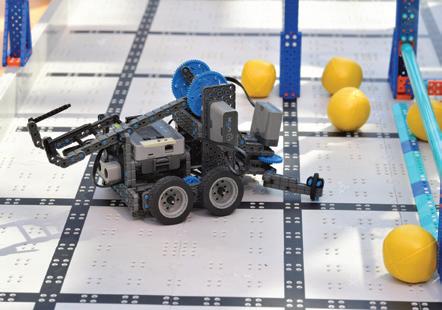
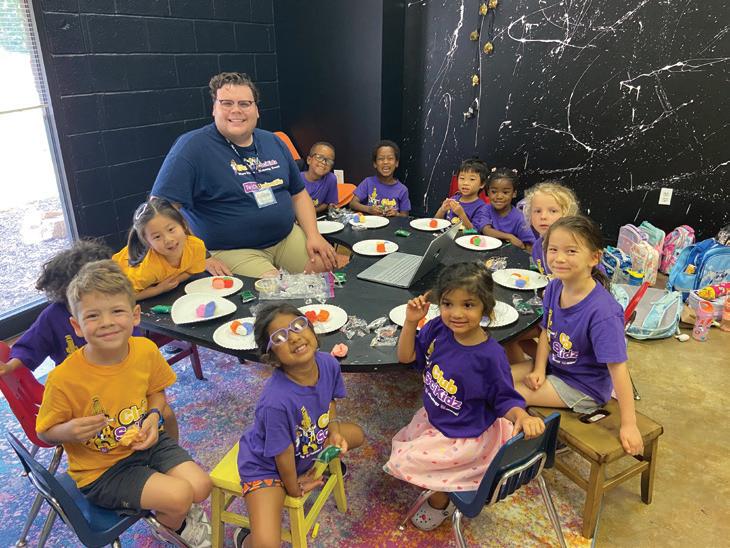
SEE A SHOW
Visit a local theatre to watch a special performance.
Mutts Gone Nuts: Unleashed!
Sandy Springs Performing Arts Center
Jan. 4, 2 p.m.
Watch four-legged performers dance, prance, flip and skip in this comedy spectacular. 1 Galambos Way, Sandy Springs. 770-206-2022. $30-$53.50. sandyspringspac.com
The Sleeping Beauty
Sandy Springs Performing Arts Center
Jan. 8, 7 p.m.
This timeless fairy tale comes to life with international ballet stars, hand-painted sets and exclusive costumes. 1 Galambos Way, Sandy Springs. 770-206-2022. $58.50-$128. sandyspringspac.com
The Magic Gateway
7 Stages Theatre
Jan. 10, 11 a.m. and 1 p.m.
This magic show is packed with mind-bending tricks, laughter and audience participation as you help a young space magician on a quest. 1105 Euclid Ave., Atlanta. $33+; ages 12 and younger, $26+. feverup.com/atlanta
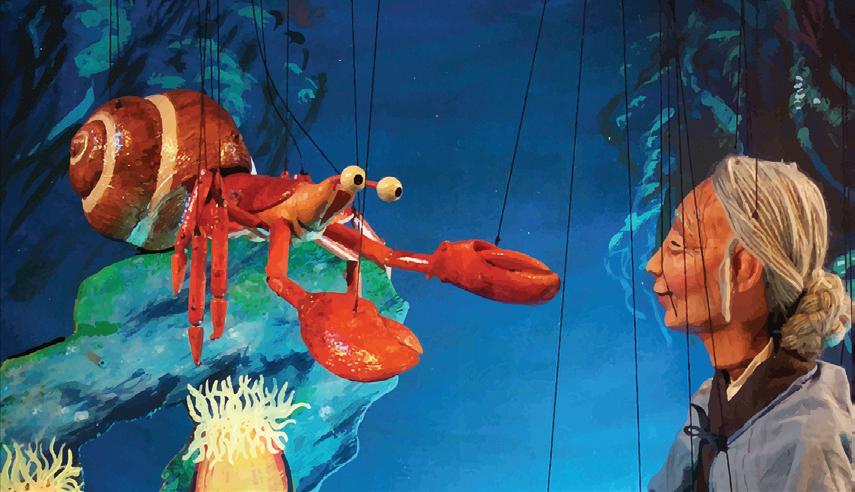
The Dragon King Center for Puppetry Arts
Jan. 14-25. See website for showtimes. Follow a fearless grandmother on her quest navigating a realm of dazzling sea creatures and mystical wonder as she searches for answers. 1404 Spring St. NW at 18th, Atlanta. 404-873-3391. $25; ages 12 and younger, $19 puppet.org
Teen Spotlight: High School Musical
Woodstock Arts Theatre
Jan. 15-16, 7:30 p.m.; Jan. 17, 2:30 and 7:30 p.m. and Jan. 18, 2:30 p.m.
Jock Troy and brainiac Gabriella audition for their high school’s musical, disrupting the status quo. 8534 Main St., Woodstock. 678-494-4251. $17-$20. woodstockarts.org
The Play That Goes Wrong
Aurora Theatre
Jan. 22-Feb. 15. See website for showtimes. Watch a hilariously inept theatre troupe attempt to stage a play in this comedy. 128 E. Pike St., Lawrenceville. 678-226-6222. $46.72+; ages 11 and younger, $36.12+. auroratheatre.com
Into the Burrow: A Peter Rabbit Tale
Goizueta Stage for Youth & Families
Jan. 24-June 27. See website for showtimes. Journey down the rabbit hole for a delightful musical adventure inspired by the stories of Beatrix Potter. 1280 Peachtree St. NE, Atlanta. 404-733-4600. $20; ages 18 and younger, $10. alliancetheatre.org
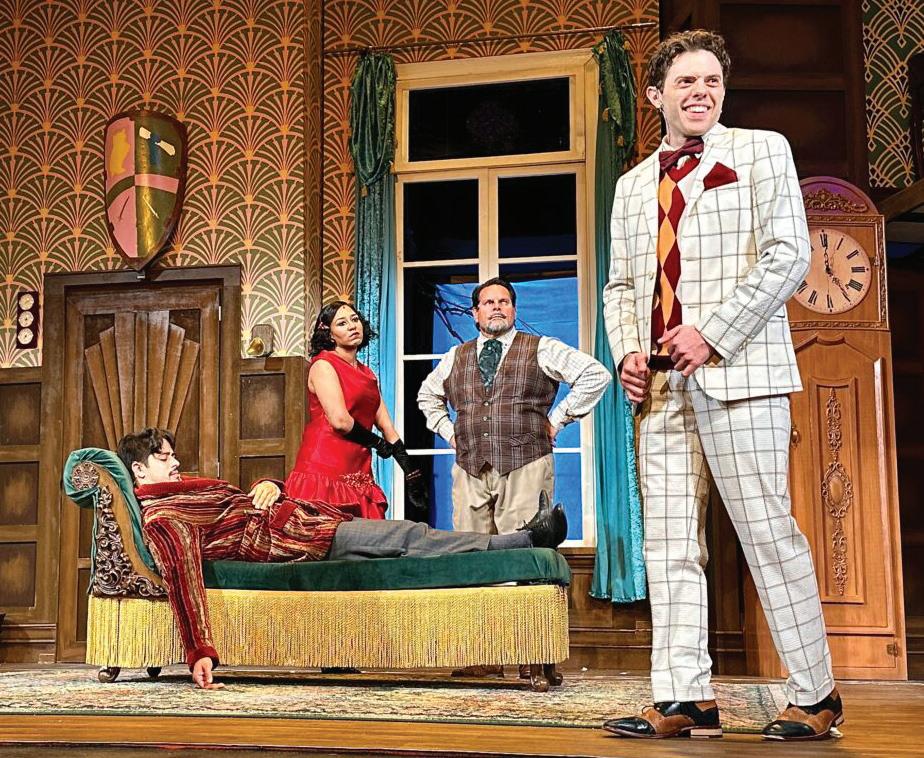
Cirque du Soleil: LUZIA
Big Top at Atlantic Station
Through Jan. 25. See website for showtimes.
This performance takes you to an imaginary world filled with acrobatics and special effects. 1380 Atlantic Dr. NW, Atlanta. 877-924-7783. $60+. cirquedusoleil.com
Shen Yun
Cobb Energy Centre
Jan. 27-Feb. 1. See website for showtimes.
Explore the grandeur of China’s ancient culture with this immersive show. 2800 Cobb Galleria Pkwy., Atlanta. 770-916-2852. $105+. cobbenergycentre.com
Music for the Very Young: Carnival of the Animals
Woodruff Arts Center
Jan. 31, 10:30 a.m. and noon and Feb. 1, 1:30 and 3 p.m.
Classical music meets storytelling as the Atlanta Symphony Orchestra brings this humorous musical to life with lions, elephants and more. 1280 Peachtree St. NE, Atlanta. 404-733-4800. $15; ages 7 and younger, free. aso.org

The Play That Goes Wrong
The Dragon King
Cirque du Soleil: LUZIA
INSPIRING YOUNG HEARTS: MLK DAY EVENTS
Martin Luther King Jr. Day will be observed on Jan. 19. You can celebrate this inspirational figure at these local events.
King Holiday
The King Center
Jan. 12-19. See website for schedule. Honor King’s legacy with interactive experiences, a virtual book reading, community awards, a service project and more. Reservation required. See website for locations and pricing. 404-526-8900. thekingcenter.org
MLK Freedom Run 5K/10K/13.1
South Peachtree Creek Trail
Jan. 17, 7:30-10:30 a.m.
Celebrate community, social change and fitness with this run. S. Peachtree Creek Trail, Decatur. $30+. thebestraces.com
Martin Luther King, Jr. Days of Service 2026
Multiple locations
Jan. 17-19. See website for schedule. Volunteer with Trees Atlanta at areas around metro Atlanta for a hands-on service project. Registration required. See website for locations. 404-522-4097. Free admission. treesatlanta.org
Martin Luther King, Jr.
Celebration and Day of Service
Acworth Community Center
Jan. 19, 8:30-11 a.m.
Enjoy a welcome breakfast, walk the Unity Walk, honor Dr. King’s legacy, and participate in a service project. 4361 Cherokee St., Acworth. 770-974-8813. Free admission. acworthtourism.org
MLKDay5K Drum Run
First Baptist Church of Doraville
Jan. 19, 9 a.m.
Celebrate the spirit of sisterhood and brotherhood with fellowship and fitness. 5935 New Peachtree Rd., Doraville. $35-$45. mlkday5k.com
Martin Luther King, Jr. Day Parade
Stonecrest / Jan. 19, 10 a.m.
The NAACP DeKalb County branch presents this annual parade. The parade starts at New Black Wall Street and ends at the Mall of Stonecrest. Mall Pkwy., Stonecrest. 404-241-8006. Free admission. naacpdekalb.org
Martin Luther King Jr. Day 2026
Atlanta History Center
Jan. 19, 10 a.m.-4 p.m.
Trace the arc of Atlanta’s role in the Civil Rights Movement with exhibits, area experts and interactive experiences. Registration required. 130 W. Paces Ferry Rd. NW, Atlanta. 404-814-4000. Free admission. atlantahistorycenter.com
atlantaparent.com
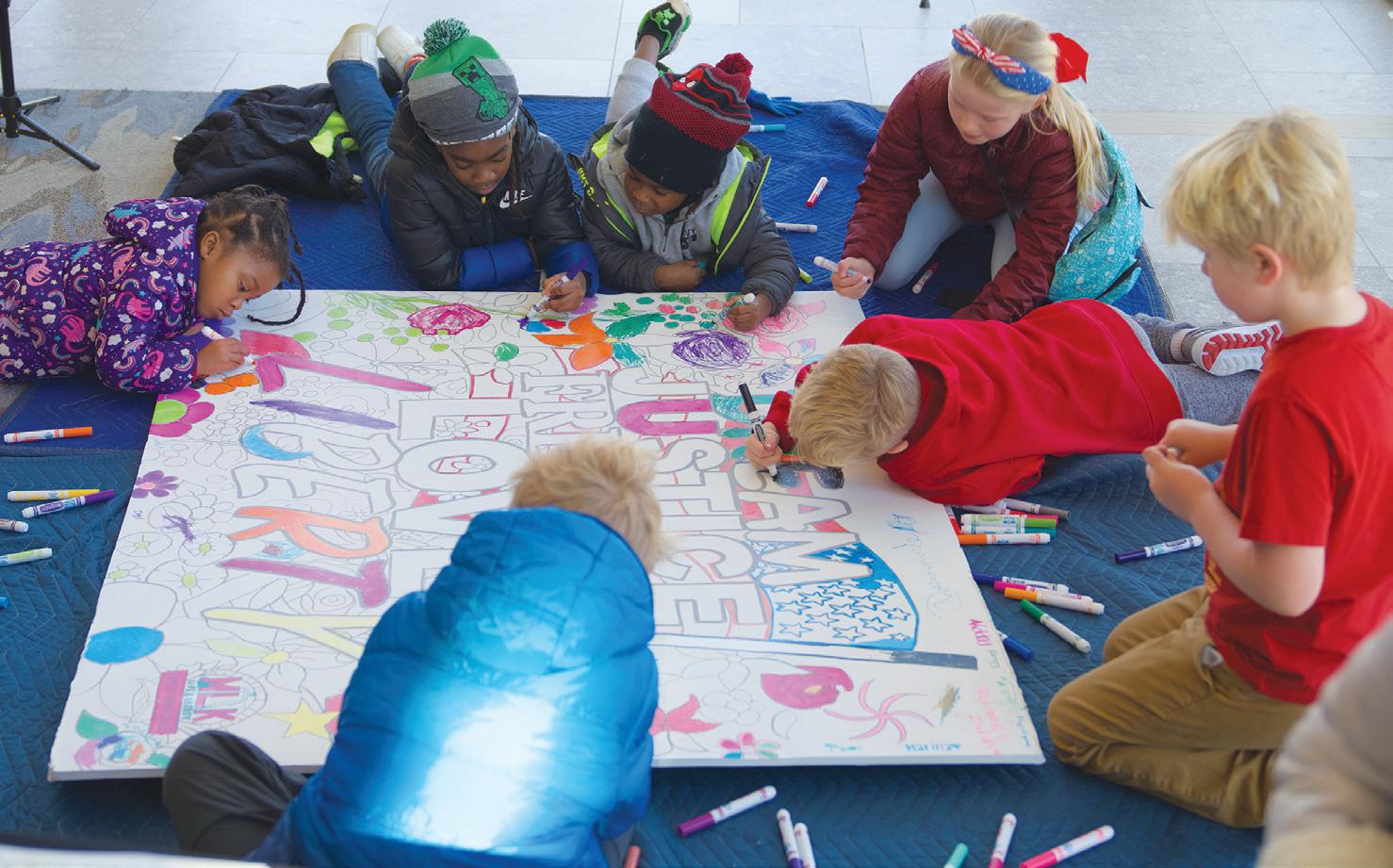
Annual Martin Luther King Day Parade
Gwinnett Justice & Administration Center
Jan. 19, 11 a.m.
Watch the themed “Rise Up, Stand Up for the Dream” parade, and after, enjoy a community celebration. 75 Langley Dr., Lawrenceville. 706-389-4065. Free admission. unitedebonysociety.org
Palefsky Collision Project: Martin Luther King Jr. Day
Goizueta Stage for Youth & Families
Jan. 19, 3 p.m.
Young artists from the Palefsky Collision Project reimagine their summer performance of “Blaze” through the lens of King’s legacy. Registration required. 1280 Peachtree St. NE, Atlanta. 404-733-4600. Free admission. alliancetheatre.org
Martin Luther King, Jr.: Life & Legacy
Sandy Springs Performing Arts Center
Jan. 19, 1 p.m.
Learn about the teachings of MLK with an educational film screening and activity stations. 1 Galambos Way, Sandy Springs. 770-730-5600. Free admission. citysprings.com
MLK Day Game
State Farm Arena
Jan. 19, 1 p.m.
Be a part of this annual tradition celebrating the legacy, influence and life of Dr. King, and watch the Atlanta Hawks take on the Milwaukee Bucks. 1 State Farm Dr. NW, Atlanta. $57+. nba.com/hawks
Visit the Dr. Martin Luther King Jr. National Historic Site
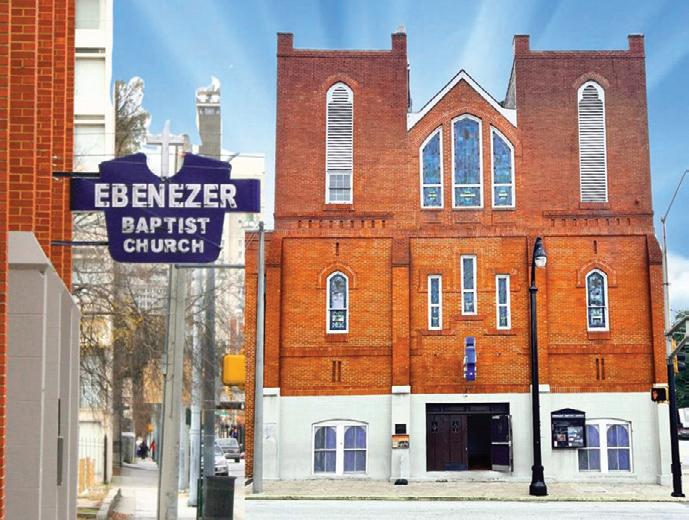
See the life and legacy of this hometown hero at this national park. The Visitor Center is currently being renovated, so start at Fire Station No. 6, which explores the story of the desegregation of the Atlanta Fire Department and features a restored 1927 American LaFrance fire engine. Visit the “I Have a Dream” World Peace Rose Garden, and see the historic Ebenezer Baptist Church, where King was baptized and served as a co-pastor. King’s boyhood home is located one block from the Visitor Center, where interpretive park rangers are glad to answer questions and tell stories of King’s childhood. Free, ranger-led Birth Home Tours are available on a first-come, first-served basis. This educational and inspiring experience tells the story of a dreamer who became an instrument for social change. nps.gov/malu
Martin Luther King, Jr.: Life & Legacy
TOP PLACES TO JUMP, BOUNCE AND GET
Whether your kids love jumping on trampolines, flying into a foam pit, navigating obstacle courses or climbing a rock wall, there’s something for every kid to love at these Atlanta venues. Many have extra perks, including membership discounts, parent lounges, arcades and snack bars. Find the perfect spot to burn off extra energy — they’ll come home exhausted and happy!
Best Themed Play Place: Catch Air
This play place gets top reviews from parents for its multiple ways to play. Each location has a unique theme, from outer space in Dacula to under the sea in Johns Creek. Activities include a three-story play castle and a variety of climbing areas. Kids can balance, swing and hop on an array of play structures, play laser tag, and dance on a glowing dance floor. There are also glowing slides, a spinning saucer, a digital zone with interactive games, ball pits and plenty more to keep kids busy.
n Good to know: There’s a separate play area just for toddlers; most locations have food and drinks available for purchase.
n Locations: 6 metro Atlanta locations catchair.com
For High-Adventure Kids: Altitude Trampoline Park
It’s not just trampolines — this park has more than 30,000 square feet of fun. Start with the wall-to-wall trampolines, then move on to the trapeze swing and duel with friends on the Battle Beam. Be a hero in your own video game with the Valo Jump interactive game platform. There’s also a 20-foot rock wall, dodgeball area and a kids’ court for smaller jumpers. Check out the daily deals on their website.
n Good to know: Special events include Junior Jumpers Jam for kids younger than 6 and Saturday Glo Nights.
n Locations: Marietta, Austell, Lawrenceville altitudetrampolinepark.com
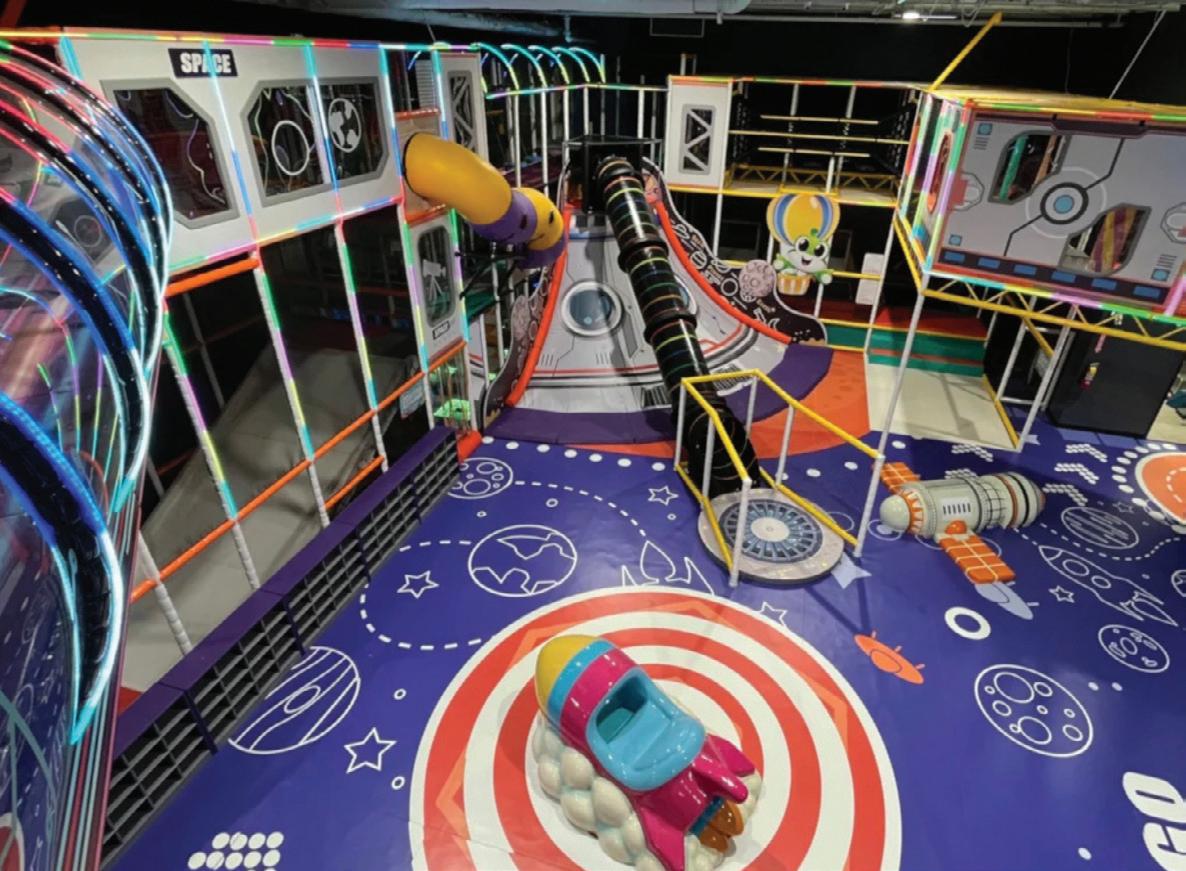
For Kids Who Love a Challenge: Adventure Air Sports
Competitive kids can push their limits at this park. Problem solve the best way to the top of the climbing wall; there are multiple ways to get there! On the fast-paced AeroTower, jumpers time their bounces to hit a moving target and earn points. Fly solo or race a friend on the zipline, and practice flips, rolls and tumbles on the springy trampoline tumbling lanes. Bounce and shoot basketballs on the slam ball court, or think quickly to hit light-up targets in the multiball area. The ninja course is a test of ability, with ropes, climbing walls and balance beams.
n Good to know: Check the website for deals like Thrifty Thursdays and the Family Pass.
n Locations: Kennesaw and Alpharetta adventureairsports.com
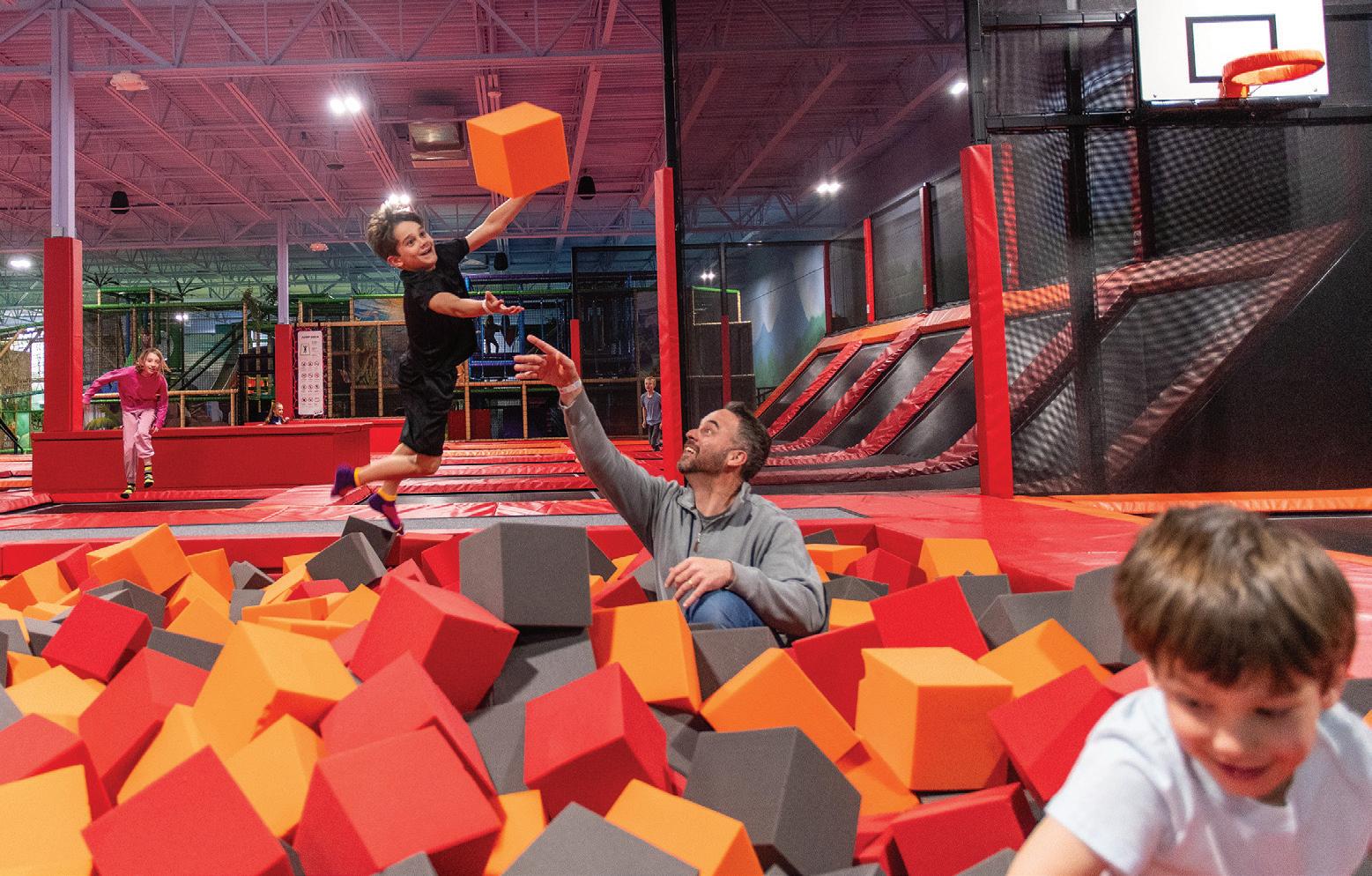
New Kid on the Block: Lava Island Indoor Play Oasis
Opening soon, this multi-activity play center will be a popular spot for families with younger kids. The colorful, tropicalthemed setting is anchored by a giant “volcano” — use the handholds to climb up, then make a quick trip down on the slide. There are obstacle courses, junglegym style climbing areas, a trampoline area, foam pit and a trike track for pedaling. The in-house café is a great spot to take a break and have a snack.
n Good to know: The pricing structure is simple; purchase a one-hour or all-day pass. There are lots of cubbies to hold bags and shoes while kids play.
n Locations: Now open in Alpharetta, this new multi-activity play center is a great spot for families.
Lawrenceville (opening Spring 2026) lavaisland.com
Lava Island Indoor Play Oasis
Catch Air
MOVING!
Top for Bouncers: TKT Playtime Inflata Park
Explore and play on inflatables of every type at this huge, 20,000-square-foot park. Kids can perfect their high jumps on the Moon Bounce, run to the top of the ninja wall and enjoy the slide down and see who can reach the top of the Xtreme slide first. Keep your balance and don’t fall down as the arms rotate on the Meltdown and race through the Biff Bash maze. There’s also a play area just for kids under 41". A concessions area has snacks, soda and frozen treats.
n Good to know: Jumpers are required to purchase TKT socks ($3). Some attractions, including Nerf wars and laser tag, are extra.
n Location: Decatur tktplaytimeinflata.com
Top Pick for Kids of All Ages: Vertigo Fun Park
This popular park opened last year and has been getting great reviews from parents and kids ever since. The main attraction is a giant air park with an inflatable obstacle course that kids (and adults) can climb, crawl, jump and swing though. There’s also a bounce area with slides, a giant “bubble” mattress, a climbing wall and more. Tired of bouncing? Play a game of GellyBall, a low-impact version of paintball with gel beads, or visit the game room and arcade. MondayThursday from 10 a.m.-1 p.m. are VertiTOTS hours just for ages 5 and younger and their parents. On Fridays and Saturday nights, jump with music, laser lights and black lights during VertiGLOW.
n Good to know: Kids ages 4 and younger require an adult chaperone when jumping. The park requires visitors to purchase Vertigo socks, which can be used on future visits.
n Location: Alpharetta vertigofunpark.com
Top for Unlimited Ways to Play: Sky Zone
Every Sky Zone location has a little something different, but each one is absolutely packed with fun for kids (and adults) of all ages. Defy gravity on the trampolines in the freestyle jump area. Add a sports element with dodgeball and basketball areas. Ride the zipline or trapeze and drop into a soft foam pit, conquer the ninja warrior course, or try to keep your balance in a Battle Beam sky joust. Harness up for Skyclimb, a vertical obstacle course with rope bridges, cargo nets and swinging platforms. In the iWall area, move your body to interact with games on screen. Most locations offer special programs like Glow Nights, Little Leapers for younger kids, sensory hours and members-only events.
n Good to know: Save on admission by checking online for seasonal pricing offers, memberships and more deals.
n Locations: 5 metro Atlanta locations skyzone.com
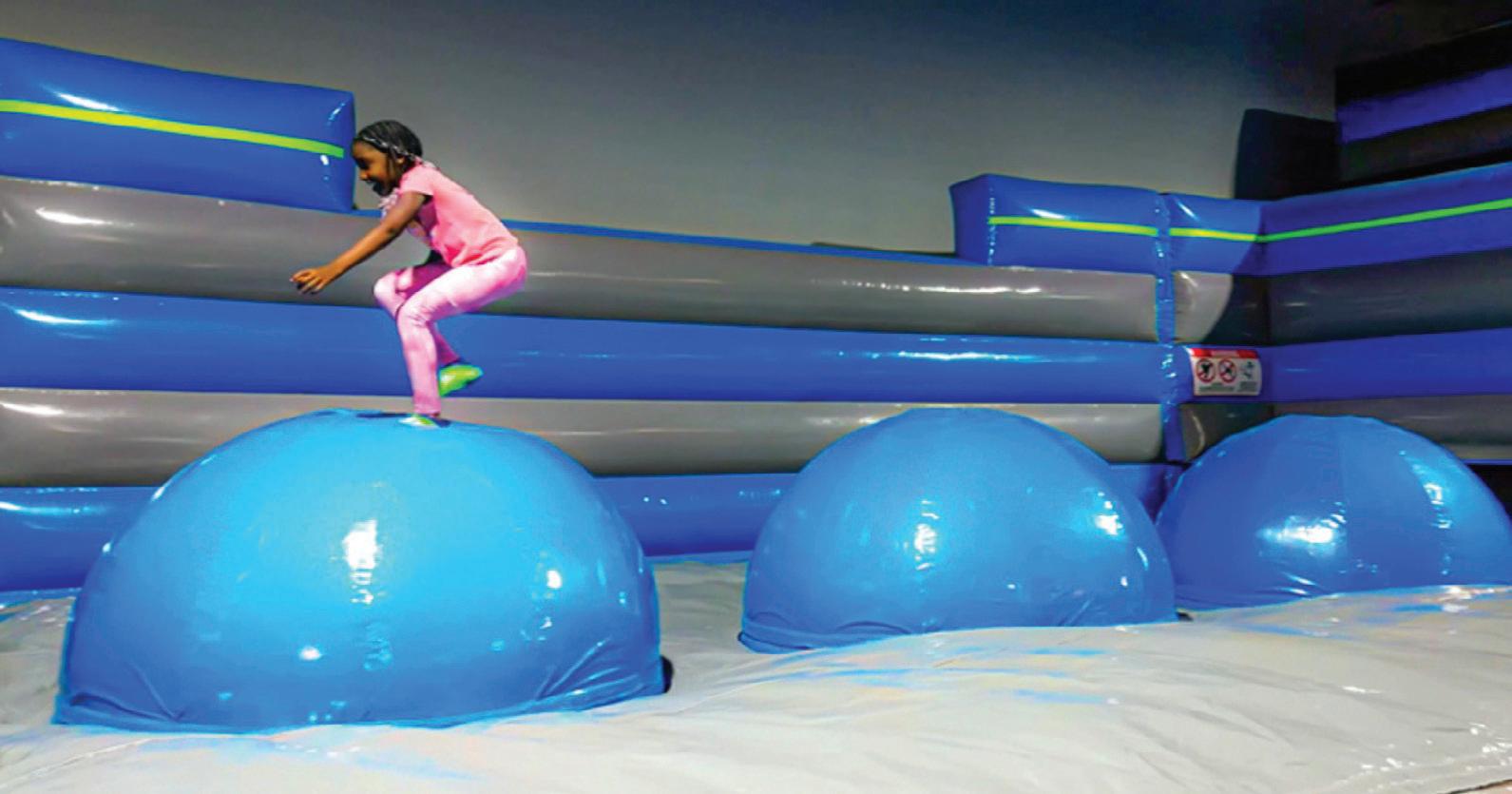
Most Like an Amusement Park: Pokiddo
This enormous high-tech playground has multiple zones for playing. Start in the wall-towall trampoline zone for jumping, move on to the foam pit zone or slide on the spiral crazy slide or free-fall glow slide. Adventure-seeking kids will love the Rubik’s Cube Climb, Velcro wall and high-performance trampoline. Put on a helmet and harness and try the Sky Stepper and Boulder climbing wall. There’s also a ropes course, mini go karts and a play area for toddlers. When the kids are ready for a break, the food court area has pizza, chicken tenders and fries, along with Asian-inspired snacks like fried pork dumplings.
n Good to know: Ticket prices are tiered depending on the number of attractions you want to visit.
n Location: Duluth pokiddousa.com
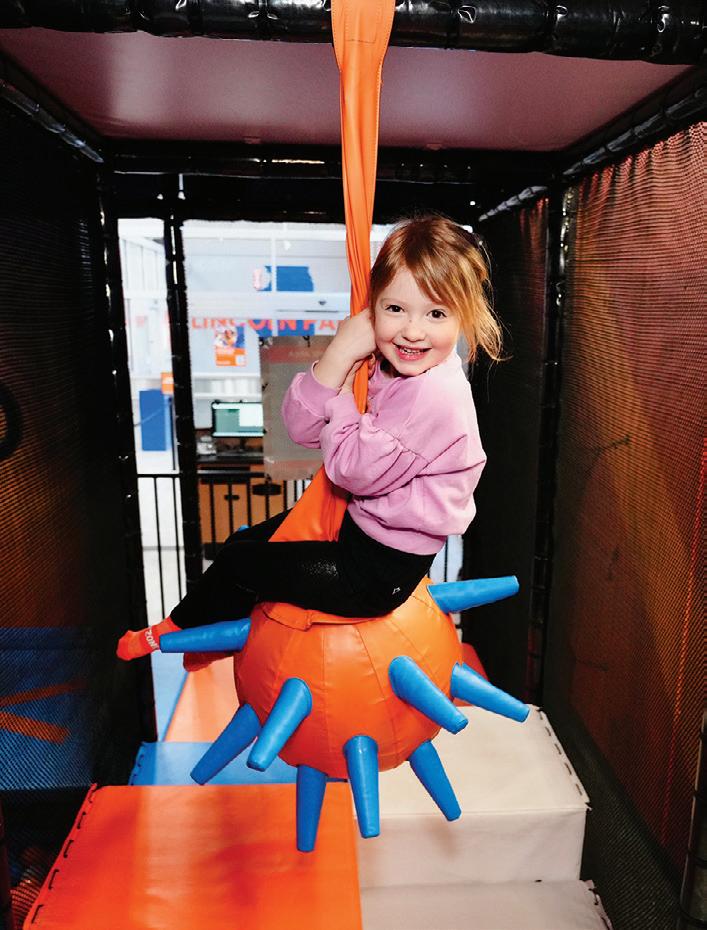
Top Spot for Younger Kids: HippoHopp
This Brookhaven spot is designed just for kids ages 10 and younger, so parents don’t need to worry about bigger kids getting too rough. It’s also eco-friendly and uses non-toxic, biodegradable products for cleaning. Along with multiple bounce houses and inflatables, there are air hockey tables (set at kid height!), a jungle gym, rock wall and climbing structures. The toddler room has smaller sized bounce houses, along with ride-on toys and soft climbing blocks. Take a break from play at the organic Hippo Café, with a wide variety of choices for parents and kids, from hummus and veggies to pizza. There are lots of places for parents to relax as they watch their kids play.
n Good to know: Parents get free entry with child admission, and there’s no time limit on play.
n Location: Brookhaven hippohopp.com
More Places to Jump and Play
n Boomerang Play and Party. Atlanta; boomerangplaynparty.com
n Get Air. Multiple locations; getairsports.com
n Jumping World. Kennesaw; jwentertainment.com
n Launch Trampoline Park. Cumming; launchfamilyentertainment.com
n Urban Air Adventure Park. Multiple locations; urbanair.com
Places for Little Kids to Play
n DinoDash. Peachtree Corners; dinodashkids.com
n Billy Beez. Buford; billybeezus.com
n Woody’s Jump n Play. McDonough. woodysjumpnplay.com
TKT Playtime Inflata Park Sky Zone
LAST CHANCE FOR SPARKLING LIGHTS AND ICY TWIRLS
Enjoy the final days of winter at these events.
BRIGHT LIGHTS
These beautiful light displays end this month.
Magical Nights of Lights
Lanier Islands. Through Jan. 4. See website for schedule. 7000 Lanier Islands Pkwy., Buford. 770-945-8787. $25+. lanierislands.com
Garden Lights, Holiday Nights
Atlanta Botanical Garden. Through Jan. 11, 5-11 p.m. 1345 Piedmont Ave., Atlanta. 404-876-5859. $29.95-$64.95; ages 3-12, $26.95-$61.95; ages 2 and younger, free. atlantabg.org
IllumiNights at the Zoo
Zoo Atlanta. Through Jan. 18. See website for schedule. 800 Cherokee Ave. SE, Atlanta. 404-624-9453. $20.99-$24.99; ages 3-11, $17.99-$19.99; ages 2 and younger, free. zooatlanta.org
BEYOND ATLANTA
WonderLights Disco Nights
State Botanical Garden of Georgia. Jan. 2-3 and 9-10, 5:30-9 p.m. 2450 S. Milledge Ave., Athens. 706-614-1752. $15; ages 3 and younger, free. wonderlights.uga.edu
Christmas Lights Extravaganaza
Downtown Macon. Through Jan. 4, 6-11 p.m. 555 Poplar St., Macon. 478-743-1074. Free admission. visitmacon.org
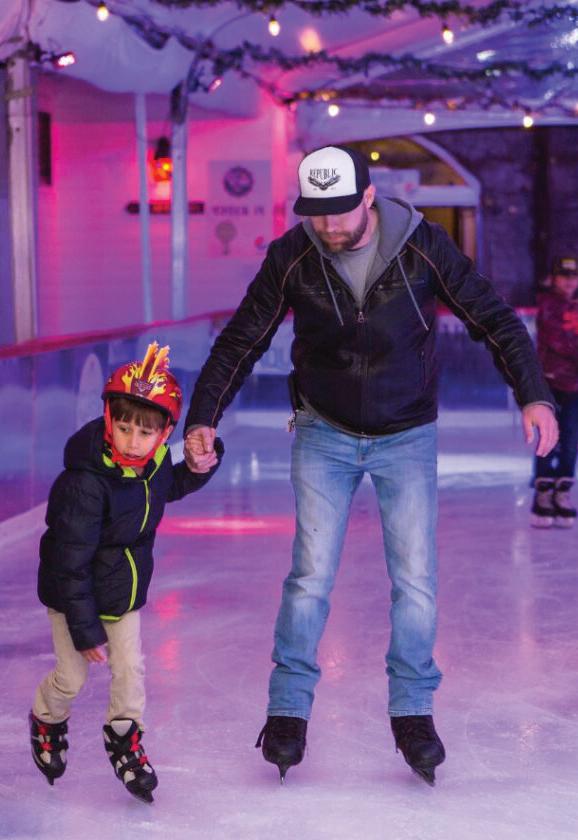

LICENSE TO CHILL SNOW ISLAND
This snowy paradise is unique to the metro area with snow tubing, amusement rides, a Snowball Alley and more. Slide down Blizzard Mountain, an enormous, 575-foot-long, eight-story snow slide. Glide around Frosty’s Ice Rink for ice skating, ride the Ferris Wheel and other amusement rides, warm up with a hot cocoa and more. 7650 Lanier Islands Pkwy., Buford. 470-323-3440. $59.99; ages 4-7, $44.99; ages 3 and younger, free. margaritavilleresorts.com/ margaritaville-at-lanier-islands
ON THE ICE
These seasonal ice skating rinks offer you a chance to spin and glide on the ice.
n Carrollton on Ice. East Carrollton Park. Through Jan. 11. See website for schedule. 410 N. Lake Dr., Carrollton. 770-832-1161. $10. carrolltonga.com
n Skate Sandy Springs. City Springs. Through Jan. 19. See website for schedule. 1 Galambos Way, Sandy Springs. 770-7305600. $18; ages 2-9, $15. citysprings.com/skate
n Skate the Station. Atlantic Station. Through Jan. 19. See website for schedule. 1380 Atlantic Dr., Atlanta. 404-410-4010. $18. atlanticstation.com
n Avalon on Ice. Avalon. Through Jan. 19. See website for schedule. 400 Avalon Blvd., Alpharetta. 770-765-1000. $18; ages 12 and younger, $14. experienceavalon.com
n High Street Skate. High Street Atlanta. Through Jan. 19. See website for schedule. 101 High St., Atlanta. 470-688-5828. $18. highstreetatlanta.com
n Rink On The River. The Mill on Etowah. Through Jan. 20. See website for schedule. 225 Reformation Pkwy., Canton. 404-710-3808. $15; ages 9 and younger, $12. etowahmill.com
n Sweetland On Ice. Sweetland Amphitheatre. Through Feb. 7. See website for schedule. 110 Smith St., LaGrange. 706-298-5434. $9-$15. sweetlandamp.com
n Skate the Sky. Ponce City Roof. Through Feb. 15. See website for schedule. 675 Ponce De Leon Ave. NE, Atlanta. 770-999-1530. $30; ages 12 and younger, $22. poncecityroof.com
n The Rink at Park Tavern. Park Tavern. Through Feb. 16. See website for schedule. 500 10th St. NE, Atlanta. 404-249-0001. $15-$20. parktavern.com
n The Ice Rink. Sugar Hill. Through Feb. 22. See website for schedule. 5039 W. Broad St., Sugar Hill. 770-554-7506. $16; ages 8 and younger, $14. haidrink.com
The Rink at Park Tavern
CURIOUS MINDS WELCOME
These exhibits make learning fun.
OPENING THIS MONTH
Celebrating Artists of Color, in honor of Black History Month
Douglasville Cultural Arts Center
Jan. 8-Feb. 20
Explore a collection of artwork by African American artists. Lead by Atlanta artist Charly Palmer and featuring up-and-coming artists, this exhibit is centered on inspiration, self-expression and the celebration of one’s highest self through the artistic process. 8652 Campbellton St., Douglasville. 770-949-2787. Free admission. artsdouglas.org
AIM HIGH: Soaring with the Tuskegee Airmen
Children’s Museum of Atlanta
Jan. 17-May 10
Travel through the history of aviation from the Tuskegee Airmen to 21st century STEM concepts. Featuring tools and tasks related to flying, the interactive experiences mix artifacts and handson play. “Black Wings American Dreams of Flight” chronicles the story of African Americans who attained amazing achievements in aviation history despite facing tremendous racial barriers. 275 Centennial Olympic Park Dr. NW, Atlanta. 404-659-5437. $17.95+. childrensmuseumatlanta.org
NOW OPEN
The Great Outdoors
Enchanted Trees by Poetic Kinetics
Atlanta Botanical Garden / Through Jan. 11 Walk through the garden to view gorgeous and colorful tree sculptures. 1345 Piedmont Ave., Atlanta. 404-876-5859. $27.95-$34.95; ages 3-12, $24.95$31.95; ages 2 and younger, free. atlantabg.org
Enchanted Woodland Trail
Chattahoochee Nature Center / Through Feb. 28
Walk through the forested trail to search for tiny houses made from natural objects. 9135 Willeo Rd., Roswell. 770-992-2055. $20; ages 13-18, $16; ages 3-12, $14; ages 2 and younger, free. chattnaturecenter.org
WildWoods: AGLOW
Fernbank Museum / Through Feb. 28
Explore the beauty of nature with a glowing wonderland of lights, natural flora and fauna and multisensory effects. 767 Clifton Rd., Atlanta. 404-929-6300. $29.95. fernbankmuseum.org
Sunken Treasures, Ancient Seas
Fernbank Museum / Through Jan. 11
Dive into a treasure trove of underwater exploration with ancient artifacts, buried treasures and historical evidence. 767 Clifton Rd., Atlanta. 404-929-6300. $25.95-$27.95; ages 3-12, $23.95-$25.95; ages 2 and younger, free. fernbankmuseum.org
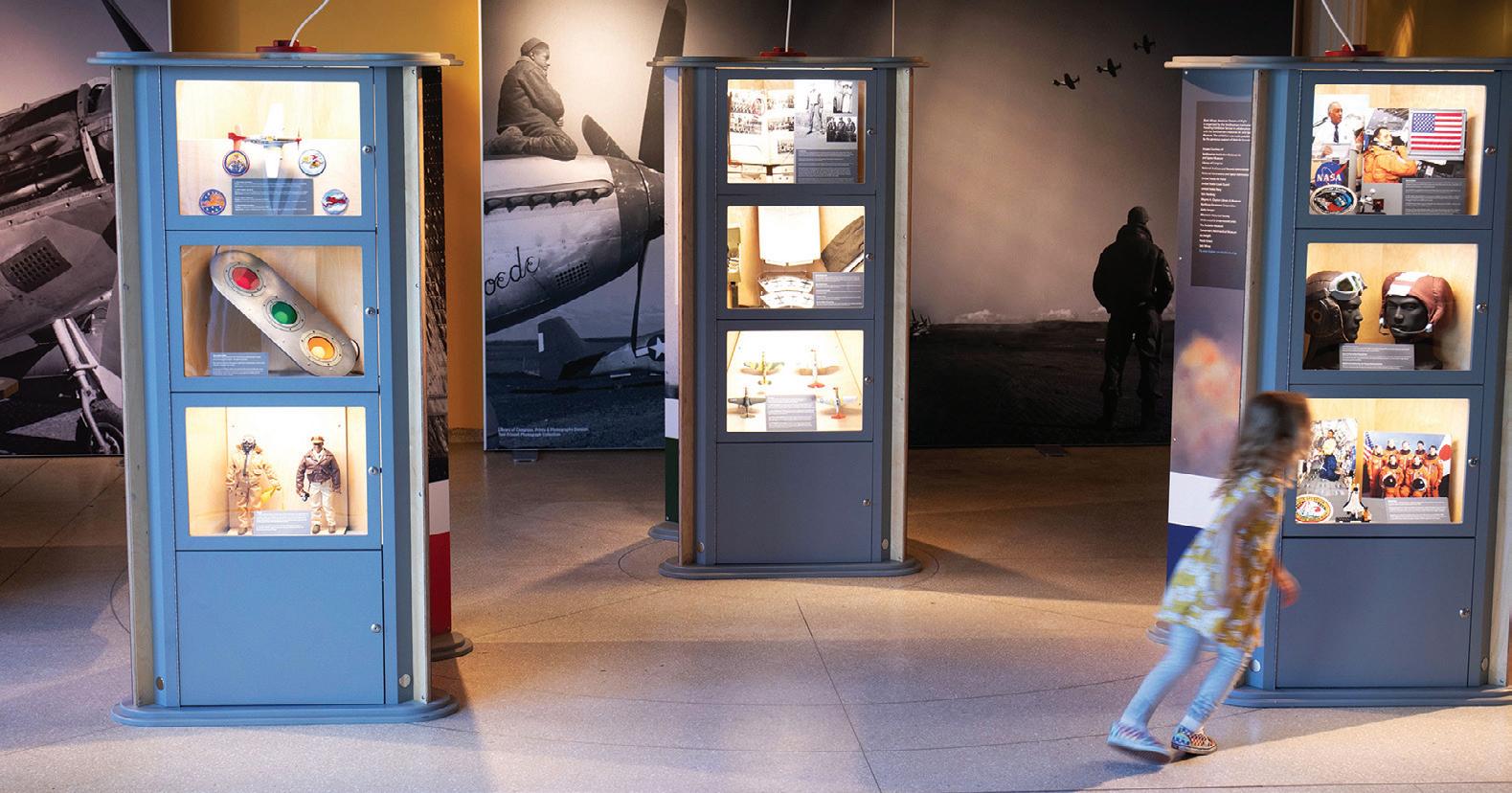
Bubble Planet
Exhibition Hub Atlanta Art Center
Through Jan. 31
Step into a planet beyond your imagination with VR technology, themed rooms and fantastical landscapes. 5660 Buford Hwy. NE, Doraville. $23.90+; ages 3-12, $18.90+; ages 2 and younger, free. feverup.com/atlanta
SPACE: A Journey to the Moon and Beyond
Illuminarium / Through Jan. 25
Enjoy an out-of-this-world adventure as you fly through a technicolor nebula, kick up dust on the moon and more. 550 Somerset Terr. NE, Atlanta. 404-341-1000. $35. illuminarium.com
Journey to Space
Tellus Science Museum / Through April 19
Imagine what it’s like to live and work in space with this interactive exhibit. 100 Tellus Dr., Cartersville. 770-606-5700. $20; ages 3-17, $16; ages 2 and younger, free. tellusmuseum.org
Measurement Rules
Tellus Science Museum / Through May 3
Explore standard and non-standard measuring tools by experimenting with measuring tapes, balancing scales, 3D imaging and more. 100 Tellus Dr., Cartersville. 770-606-5700. $20; ages 3-17, $16; ages 2 and younger, free. tellusmuseum.org
AIM HIGH: Soaring with the Tuskegee Airmen
for the fridge
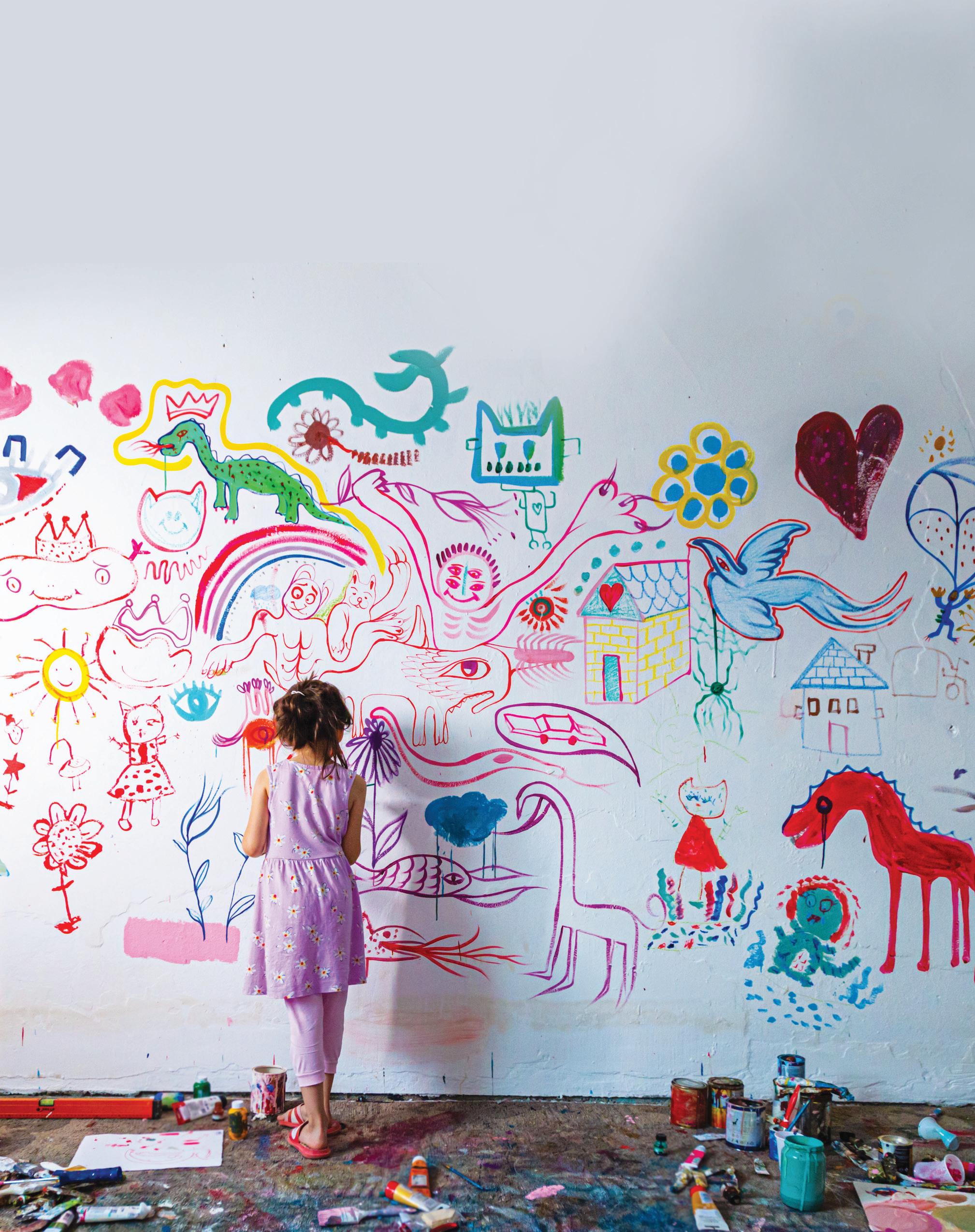
Every child is an artist. The problem is to remain an artist when we grow up. – PABLO PICASSO
Classical music meets storytelling, as members of the Atlanta Symphony Orchestra bring your favorite fables and fairy tales to life. Parents of 3 to 8-year-olds will enjoy these interactive 45-minute concerts with their little ones, who can engage with the actors and musicians as the story unfolds. Arrive early for musical activities like an instrument exploration station, a photobooth, and arts & crafts!

Carnival of the Animals
JAN 18 | SUN | 1:30 + 3pm
JAN 25 | SUN | 1:30 + 3pm
JAN 31 | SAT | 10:30am + 12pm
FEB 1 | SUN | 1:30 + 3pm
Roar like a lion and hop like a kangaroo in Carnival of the Animals. Saint-Saëns’ humorous
The Tin Man’s Oz
APR 11 | SAT | 10 + 11:15am
APR 12 | SUN | 12:30 + 2pm
APR 18 | SAT | 12:30 + 2pm
APR 19 | SUN | 2 + 3:30pm
There’s no place like a Music for the Very Young concert as we invite littles to the Emerald City
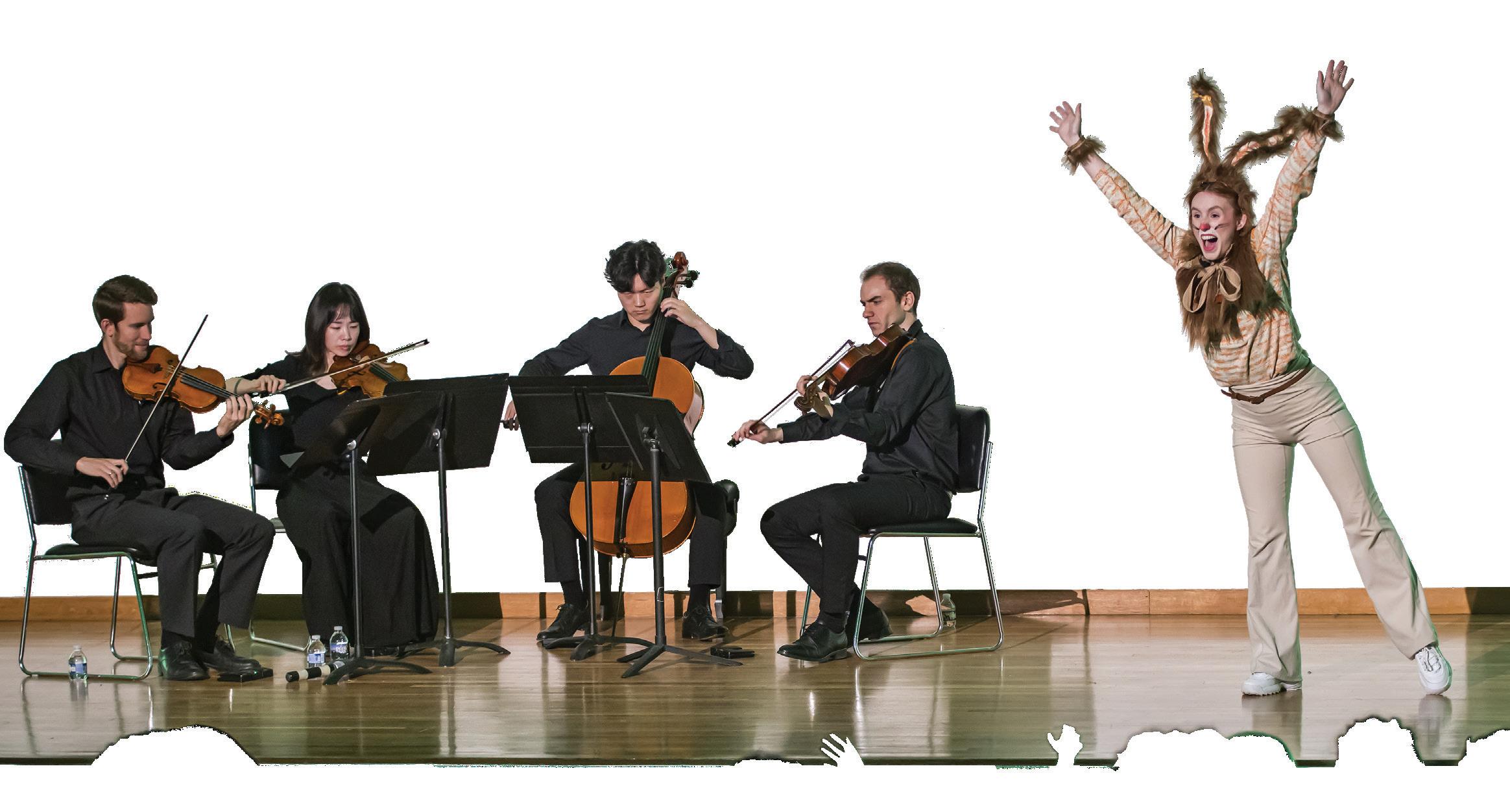
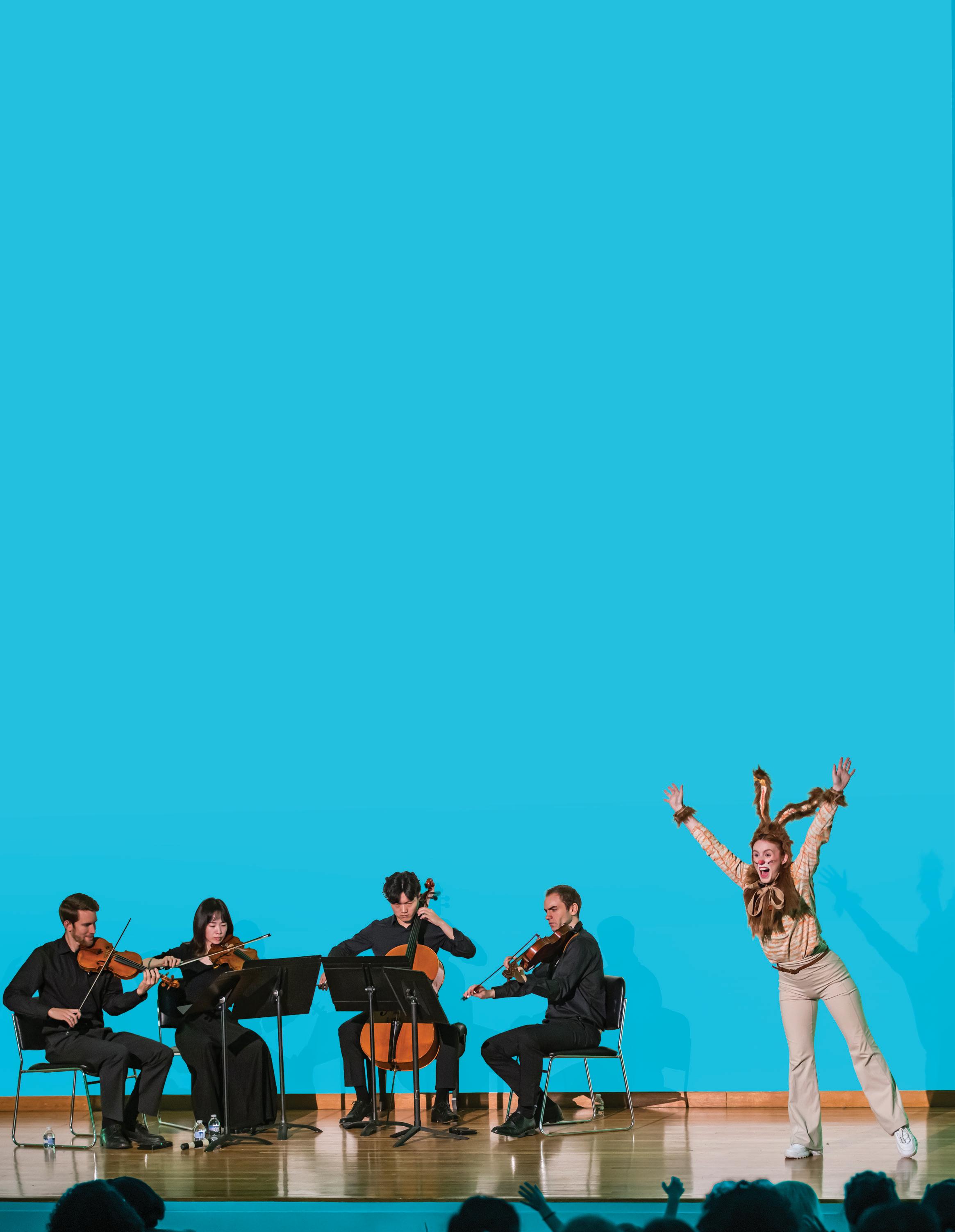
Presented with generous support from The Lettie Pate Evans Foundation and the Molly Blank Fund of the Arthur M. Blank Family Foundation.