We are extremely proud of our school; the achievements of our pupils, the expertise and dedication of our staff, our outstanding facilities and our reputation as a centre of excellence
Our ultra-modern school buildings allow our pupils to flourish in facilities for learning that truly do enable us to trail blaze innovative learning – from the bright and attractive classrooms, to the fully equipped outside play areas, the facilities allow our pupils to fully explore their talents and to shine in those areas that they most enjoy.
A building, however, is only as good as the people working within; we believe we have some of the best students and teachers in the world.
Staff and pupils benefit from the investment we place on their development. We want to ensure that all of our pupils get the best opportunities possible and want to support them in exploring and selecting the variety of options available to them at KS4
Evaluation Focus Areas
01 02 03 04
Safeguarding
Schools are responsible for Keeping Pupils safe in Education and should be fully compliant and up-to-date in all areas of Safeguarding. Outlined in the guide are the expectations for schools in tems of evaluating the quality of safeguarding at each school
Inclusion
When choosing the subjects you will study throughout KS4, make sure to take advice from parents, carers, teachers and other trusted adults. You need to consider how options choices now will influence your options and pathways in the future
Curriculum & Teaching
Whilst it is really important to think about next steps and pathways beyond school, having a good range and balance between subjects often leads to the greatest success at KS4 - so don’t forget to also consider subjects that you love, are passionate about or have a talent for.
Achievement
Once you have followed the previous 3 steps, you will need to complete the Options Form before the deadline - this will give you the best chance of securing a place on your first choice courses. Details of the form, how to complete it and what this year’s deadline is will be shared in your options assembly
Evaluation Focus Areas
05 06 07 04
Behaviour & Attendance
Before you begin the process of selecting your option choices, you need to read all of the information in this booklet so that you know exactly what’s on offer. Lots of pupils have preconceived ideas of what a subject might be about or what a qualification might include, but in reality this is often very different from the actual course.
Personal Development & Wellbeing
When choosing the subjects you will study throughout KS4, make sure to take advice from parents, carers, teachers and other trusted adults. You need to consider how options choices now will influence your options and pathways in the future
Early Years
Whilst it is really important to think about next steps and pathways beyond school, having a good range and balance between subjects often leads to the greatest success at KS4 - so don’t forget to also consider subjects that you love, are passionate about or have a talent for.
Leadership & Governance
Once you have followed the previous 3 steps, you will need to complete the Options Form before the deadline - this will give you the best chance of securing a place on your first choice courses. Details of the form, how to complete it and what this year’s deadline is will be shared in your options assembly
Important Information Safeguarding
Key Stage 4 (KS4) refers to the final two years of compulsory secondary education, covering Years 10 and 11 (students aged 14 to 16). This stage focuses on preparing students for qualifications like GCSEs & Btecs.
1.
Choices
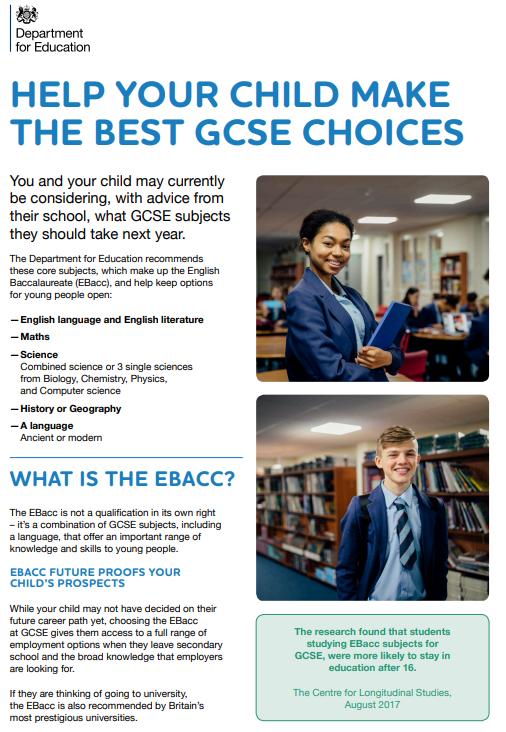
Every pupil will study for a qualification in English (Language & Literature), Maths and Science as well as either History or Geography if appropriate. Pupils will also have compulsory lessons (no exam) in PE, PSHE/RE and Citizenship in line with national guidance Pupils will then choose 3 other subjects to study.
Careers, advice and Guidance
Careers guidance also plays an important part in preparing pupils for life beyond Witton Park Academy This will include one-to-one appointments, guest speakers and our on-line careers programme, called Unifrog. Various options are possible beyond Witton Park Academy such as Sixth-Form Colleges for academic and 2.
vocational qualifications, National Traineeships, Modern Apprenticeships and other employment or further education opportunities.
3.
Final Subject Allocation
Every effort will be made to ensure that your child is allocated a course in line with their preference However, this cannot be guaranteed It is inevitable that some pupils may need to change their selection due to over subscription or low uptake of a subject. If numbers are too low, a course is unlikely to run
Curriculum Subjects: CORE
01
STEM Pathway
STEM Education means educating students in four specific disciplines, areas which underpin the foundational stages in many sectors.
Science
Technology
Engineering
Maths
STEM subjects have grown in popularity and we have excellent facilities to deliver STEM subjects at Witton Park Academy.
02
Creative Arts Pathway
The creative arts fuel innovation and imagination, developing lifelong skills that help enable a student’s perception, understanding, productivity and wellbeing. Music, drama, art, design and dance bring together students of all backgrounds to find ways to express themselves, and gain greater understanding of who they are and where they belong in the world. The media and the creative industry in the North continues to grow as do career opportunties in this sector.
Ebacc Accreditation Pathway
Ebacc Accreditation
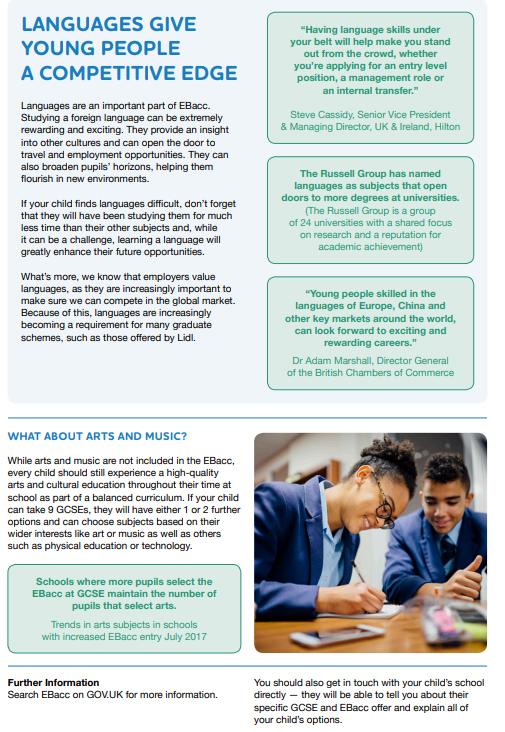
Languages are an important p art of EBacc Studying a foreign language can be extremely rewarding and exciting They provide an insight into other cultures and can open the door to travel and employment opportunities They can also broaden pupils’ horizons, helping them flourish in new environments
The Russell Group has named languages as subjects that open doors to more degrees at universities.
Sports & Health & Social Care Pathway
Practical based subjects
A range of practical and hands on subjects for pupils who enjoy learning that will help prepare them for places of work
Career Steps
The Health and Social care sector offers great apprenticeship pathways to support pupils to make positive career steps
Core Curriculum
English Language GCSE Outline of Course
Throughout years 10 and 11 students will work towards preparing for their GCSE AQA English Language exam. All pupils sit the same exam-it is not tiered. There is no coursework or controlled assessment component for this qualification
The AQA specification will enable students of all abilities to develop the skills they need to read, understand and analyse a wide range of different texts covering the 19th, 20th and 21st century time periods as well as to write clearly, coherently and accurately using a range of vocabulary and sentence structures
The specification offers a skills-based approach to the study of English Language in an untiered context. Questions are designed to take students on an assessment journey through lower tariff tasks to more extended responses
01
What will I study?
Paper 1: Explorations in Creative Reading and Writing
Section A: Reading one literature fiction text
Section B: Writing descriptive or narrative writing
Paper 2: Writers' Viewpoints and Perspectives
Section A: Reading one non-fiction text and one literary non-fiction text
Section B: Writing writing to present a viewpoint
02
How will I be assessed?
There are 2 exam papers - each exam paper is worth 50% of the overall final GCSE grade.
Each paper is worth 80 marks in total
Each exam paper is 1hr 45 mins long Exams are taken in the summer series at the end of y11.
Non-examination Assessment: Spoken Language What's assessed? presenting responding to questions and feedback use of Standard English
Core Curriculum
Outline of Course
The specification takes a skills-based approach to the study of English literature that is consistent across the genres. The course offers excellent preparation for AS and A-level English Literature, as well as giving students a grounding in a wide variety of literature that will stay with them for life.
AQA have developed assessment strategies that support students’ achievement in an untiered, closed book context through the use of extract-based questions in the assessment of the 19th-century novel and the Shakespeare plays.
01
What will I study?
Paper 1: Shakespeare and the 19thcentury novel
What's assessed?
Shakespeare plays
The 19th-century novel
Paper 2: Modern texts and poetry
Modern prose or drama texts
The poetry anthology
Unseen poetry
English Literature GCSE
02
How will I be assessed?
How will this qualification be assessed?
Paper 1
written exam: 1 hour 45 minutes
64 marks
40% of GCSE
2 questions - Macbeth and A Christmas Caol
Paper 2
How it's assessed
written exam: 2 hour 15 minutes
96 marks
60% of GCSE
An Inspector Calls, Power and Conflict poems and unseen poems.
Core Curriculum
Maths GCSE Outline of Course
Throughout years 10 and 11, students will work towards preparing for their GCSE AQA Maths exam. There is no coursework or controlled assessment component for this qualification The paper is tiered -foundation and higher
Maths is for everyone. It is diverse, engaging and essential in equipping students with the right skills to reach their future destination, whatever that may be. The content has been organised into broad topic areas:
Number references start with N
Algebra references start with A Ratio, proportion and rates of change references start with R
Geometry and measures references start with G Probability references start with P Statistics references start with S.
What will I study?
Paper 1: Non Calculator Paper
A mix of question styles, from short, single-mark questions to multi-step problems. The mathematical demand increases as a student progresses through the paper
Paper 2 and 3: Calculator Paper
Content from any part of the specification topics can be assessed on this paper. A mix of question styles, from short, single-mark questions to multi-step problems. The mathematical demand increases as a student progresses through the paper 01
How will I be assessed? 02
There are 3 exam papers -
Paper 1
written exam: 1 hour 30 minutes
80 marks non-calculator
33⅓% of the GCSE Mathematics assessment
Paper 2
written exam: 1 hour 30 minutes
80 marks calculator allowed
33⅓% of the GCSE Mathematics assessment
Paper 3
written exam: 1 hour 30 minutes
80 marks calculator allowed
33⅓% of the GCSE Mathematics assessment
Core Curriculum
Outline of Course
Science is a set of ideas about the material world. AQA have included all the parts of what good science is at GCSE level: whether it be investigating, observing, experimenting or testing out ideas and thinking about them The way scientific ideas flow through the specification will support you in building a deep understanding of science We know this will involve talking about, reading and writing about science plus the actual doing, as well as representing science in its many forms both mathematically and visually through models.
What will I study?
02
How will I be assessed?
There are 6 exam papers in totalEach subject: Biology, Chemistry, Physics has 2 papers.
Each paper is worth 70 marks in total and is worth 16 7% of your overall GCSE grade
Each exam
Written exam: 1 hour 15 minutes
Foundation and Higher Tier 70 marks 16.7% of GCSE
All assessments take place at the end of year 11 in the final summer exam series
Core Curriculum
Biology GCSE
Why Biology?
Choosing Biology GCSE offers a solid foundation in understanding the natural world, from the smallest cells to the largest ecosystems, and can open doors to a variety of careers. It fosters critical thinking, problem-solving, and analytical skills that are valuable across many fields If you enjoy learning about living things and how they interact with their environment, Biology GCSE could be a good fit.
01
What will I study?
1. Cell biology
2 Organisation
3 Infection and response
4. Bioenergetics
5. Homeostasis and response
Science is a set of ideas about the material world. The way scientific ideas flow through the specification will support you in building a deep understanding of science, you will talk about, read and write about science, take part in experiments and represent science in its many forms both mathematically and visually through models
02
6. Inheritance, variation and evolution
7. Ecology
8 Key ideas
The structure and functioning of cells and how they divide by mitosis and meiosis from sections Cell biology and Meiosis .
That variation occurs when gametes fuse at fertilisation from section Sexual and asexual reproduction .
The two essential reactions for life on Earth: photosynthesis and respiration from sections
Photosynthetic reaction and Aerobic and anaerobic respiration
Metabolism is the sum of all the reactions happening in a cell or organism, in which molecules are made or broken down from section Metabolism .
How will I be assessed?
Paper 1
Cell biology; Organisation; Infection and response; and Bioenergetics.
Written exam: 1 hour 45 minutes
Foundation and Higher Tier
100 marks
50% of GCSE
Paper 2
Homeostasis and response; Inheritance, variation and evolution; and Ecology.
Written exam: 1 hour 45 minutes
Foundation and Higher Tier
100 marks
50% of GCSE
Biology GCSE Why Chemistry?
Core Curriculum Chemistry GCSE
Choosing Chemistry GCSE can be a great option because it builds a strong foundation for further studies and various career paths, develops valuable analytical skills, and provides a deeper understanding of the world around us.
Science is a set of ideas about the material world. The way scientific ideas flow through the specification will support you in building a deep understanding of science -you will talk about, read and write about science, take part in experiments and represent science in its many forms both mathematically and visually through models
What will I study? 01
1. Atomic structure and the periodic table
2. Bonding, structure, and the properties of matter
3 Quantitative chemistry
4 Chemical changes
5. Energy changes
6. The rate and extent of chemical change
7. Organic chemistry
8. Chemical analysis
9 Chemistry of the atmosphere
10. Using resources
11. Key ideas
Scientific understanding is changing our lives and is vital to the world’s future prosperity, all students should be taught essential aspects of the knowledge, methods, processes and uses of science. You will appreciate how the complex and diverse phenomena of the natural world can be described in terms of a small number of key ideas relating to the sciences which are both inter-linked, and are of universal application.
Paper 1
How will I be assessed? 02
Atomic structure and the periodic table; Bonding, structure, and the properties of matter; Quantitative chemistry, Chemical changes; and Energy changes.
Written exam: 1 hour 45 minutes
Foundation and Higher Tier
100 marks
50% of GCSE
Paper 2
The rate and extent of chemical change; Organic chemistry; Chemical analysis, Chemistry of the atmosphere; and Using resources
Written exam: 1 hour 45 minutes
Foundation and Higher Tier
100 marks
50% of GCSE
Physics GCSE
What will I study? 01
Core Curriculum
Why Physics?
Choosing Physics for your GCSE can be a good decision if you enjoy understanding how the world works and are interested in careers that require science or problem-solving skills. Physics helps you develop logical thinking, critical analysis, and mathematical skills It also provides a strong foundation for various careers, including engineering, medicine, and research
Science is a set of ideas about the material world. The way scientific ideas flow through the specification will support you in building a deep understanding of science -you will talk about, read and write about science, take part in experiments and represent science in its many forms both mathematically and visually through models
1 Energy
2 Electricity
3. Particle model of matter
4. Atomic structure
5. Forces
6. Waves
7 Magnetism and electromagnetism
8. Space physics (physics only)
Students will be required to demonstrate the following mathematics skills in GCSE Physics assessments.
Questions will target maths skills at a level of demand appropriate to each subject. In Foundation Tier papers questions assessing maths requirements will not be lower than that expected at Key Stage 3
In Higher Tier papers questions assessing maths requirements will not be lower than that of questions and tasks in assessments for the Foundation Tier in a GCSE Qualification in Mathematics
02
How will I be assessed?
Paper 1
Energy; Electricity; Particle model of matter; and Atomic structure.
Written exam: 1 hour 45 minutes
Foundation and Higher Tier
100 marks
50% of GCSE
Paper 2
Forces; Waves; Magnetism and electromagnetism; and Space physics
Written exam: 1 hour 45 minutes
Foundation and Higher Tier
100 marks
50% of GCSE
Options Choices
Choose your subjects
Ebacc Accreditation
History GCSE
Why History?
History is the science of studying the past and trying to reconstruct it As today’s societies are shaped by those of the past, understanding history can give us a better sense of who we are collectively.
Making history meaningful–History B (SHP) encourages learners to become curious, to develop their own opinions based on a respect for evidence, and to build a deeper understanding of the present by engaging with and questioning the past. The specification is based on content which helps learners to address fundamental issues in human history It brings together people, events and issues that learners will find fascinating and that will stimulate a desire to explore the similarities and differences between people’s lives in the past and their own lives now
01
What will I study?
Students will study 5 units of study.
Each unit is worth 20% of the final mark.
The units are:
The Making of America 1789-1900
Living under Nazi Rule 1933-1945
Migrants to Britain 1250-present
The Elizabethans 1580-1603
History Around US (site visit)
All five elements address knowledge of significant historical issues that will help learners in further study of history and in making sense of their world.
Historical enquiry underpins the approach that is needed to make sense of the content in each of the studies.
02
How will I be
assessed?
British History - 1 hour 45 minutes (40%)
World History - 1 hour 45 minutes (40%)
History Around Us - 1 hour (20%)
All assessments are exams based There is a significant amount of reading and writing associated with this qualification.
Most suitable for those with an interest in the past, people and how society has evolved.
Ebacc Accreditation
Outline of Course
Geography is the study of all human and physical phenomena on the planet The discipline is divided into two fields:
Human geography the study of the relationships between people and their environments
Physical geography the study of continents, hydrography, relief, climate, vegetation, etc
Students will travel the world from their classroom, exploring case studies in the United Kingdom (UK), higher income countries (HICs), newly emerging economies (NEEs) and lower income countries (LICs) Topics of study include: climate change, poverty, deprivation, global shifts in economic power and the challenge of sustainable resource use. Students are also encouraged to understand their role in society, by considering different viewpoints, values and attitudes
01
What will I study?
Unit 1
You will complete the Physical Geography section of the syllabus. This involves three topics:
The Challenge of Natural Hazards
The Living World
Physical Landscape in the UK
Unit 2
You will complete the Human Geography section of the syllabus Topics to be covered are:
Urban Issues and Challenges
The Changing Economic World
The Challenge of Resource Management
You will also complete 2 pieces of fieldwork
Unit 3
Issue Evaluation
Fieldwork
Geographical Skills
How will I be assessed
There are 3 written exams at the end of the course
Paper 1 Living with the physical environment
Written exam: 1 hour 30 minutes
88 marks (including 3 marks for spelling, punctuation, grammar and specialist terminology (SPaG) ) 35% of GCSE
Paper 2 Challenges in the human environment
Written exam: 1 hour 30 minutes
88 marks (including 3 marks for SPaG ) 35% of GCSE
Paper 3 Geographical applications
Written exam: 1 hour 30 minutes
76 marks (including 6 marks for SPaG )
30% of GCSE
Pre-release resources booklet made available 12 weeks before Paper 3 exam
Btec Qualification
Travel & Tourism Btec Why Travel & Tourism?
The travel and tourism sector is the UK’s third-largest employer and is one of the fastest-growing sectors employing nearly 3 million people
This qualification is for learners interested in taking a hands-on course alongside their GCSEs that will offer them a practical introduction to life and work in the dynamic travel and tourism industry, allowing them to make an informed decision about their future learning and career. This course will give learners the opportunity to develop sector-specific applied knowledge and technical skills in a practical learning environment
01
What will I study?
Component 1: Travel and Tourism Organisations and Destinations
Learners will investigate travel and tourism organisations in the UK, their ownership, aims, key products and services, and how they work together.
Component 2: Customer Needs in Travel and Tourism
Learners will investigate how organisations use market research to identify travel and tourism trends and identify customer needs and preferences
Component 3: Influences on Global Travel and Tourism
Learners will explore the different factors that may influence global travel and tourism, and how travel and tourism organisations and destinations respond to these factors
Learners will investigate travel and tourism organisations in the UK, their ownership, aims, key products and services, and how they work together. They will explore the role of different consumer technologies within the travel and tourism industry Learners will understand the different types of tourism and different types of visitor and will investigate the features of and routes to popular tourist destinations.
02
How will I be assessed?
Students will study three components:
One component will be assessed through an external exam worth 40%.
Two components will be completed as internal assessments worth 60%. #
The internal assessments will take the form of reports, slides presentations, travel plans etc and will be supported by research undertaken as part of the course.
The internal assessments can be completed electronically
Why Religious Education?
Studying RE at GCSE can be beneficial because it enhances critical thinking, communication, and empathy skills, which are valuable in various fields, including careers in the caring professions, politics, journalism, and education. It also fosters a deeper understanding of diverse perspectives and cultures, promoting tolerance and respect in a multicultural society.
01
What will I study?
RE GCSE
The RE GCSE course aims to: develop learners’ knowledge and understanding of religions and non-religious beliefs, such as atheism and humanism develop learners’ knowledge and understanding of religious beliefs, teachings, practices, and sources of wisdom and authority, including through their reading of key religious texts, other texts, and scriptures of the religions they are studying develop learners’ ability to construct well-argued, well-informed, balanced and structured written arguments, demonstrating their depth and breadth of understanding of the subject provide opportunities for learners to engage with questions of belief, value, meaning, purpose, truth, and their influence on human life challenge learners to reflect on and develop their own values, beliefs and attitudes in the light of what they have learnt and contributes to their preparation for adult life in a pluralistic society and global community.
02
How will I be assessed?
Component 1: Religion, Philosophy & Ethics
2hr written exam
50% of qualification
Component 2: Study of Christianity
1hr written exam
25% of qualification
Component 3: Study of Islam
1hr written exam
25% of qualification
Ebacc Accreditation
Spanish GCSE Why Spanish?
Choosing Spanish for GCSE offers numerous benefits, including enhanced linguistic skills, a broadened understanding of global cultures, and valuable transferable skills that can be applied in various fields. Spanish is also a highly sought-after language in the job market, giving students a competitive edge
The vocabulary in this qualification enables students to communicate across a range of engaging and relatable thematic contexts, which are relevant to their current and future needs
01
How will I be assessed?
Paper 1: Speaking Spanish:
There are six broad thematic contexts: • My personal world • Lifestyle and wellbeing • My neighbourhood • Media and technology • Studying and my future • Travel and tourism
Students will use the specified vocabulary and grammar to listen to, read, speak and write about the following subjects:
02
Internally conducted and externally assessed: Foundation tier: 7-9 minutes plus 15 minutes’ preparation time; 50 marks Higher tier: 10-12 minutes plus 15 minutes’ preparation time; 50 marks 25% of the qualification
Paper 2: Listening and Understanding
What will I study?
Topics covered:
Family Friends
Relationships
Equality
family friends relationships equality physical well-being mental well-being food and drink sports places in town hopping transport the natural world environmental issues social media and gaming future opportunities (e.g. work, travel) school music TV and film accommodation tourist attractions
Written examination: Foundation tier: 45 minutes, including 5 minutes’ reading time, 50 marks Higher tier: 60 minutes, including 5 minutes’ reading time, 50 marks 25% of the qualification
Paper 3: Reading
Written examination: Foundation tier: 45 minutes, 50 marks Higher tier: 60 minutes, 50 marks 25% of the qualification
Paper 4: Writing
Written examination: Foundation tier: 1 hour 15 minutes; 50 marks. Higher tier: 1 hour 20 minutes; 50 marks. 25% of the qualification
Physical wellbeing
Mental wellbeing
Food & Drink
Sports
Places in town
Shopping
Transport
The natural world
Environmental issues
Future Opportunities
School
Social media and gaming
Music
TV and Film
Tourist Attractions
Accomadation
Extra Language Choices
Outline of Course
A Community Language GCSE is a General Certificate of Secondary Education (GCSE) qualification in a language that is commonly spoken within a particular community, often a language other than English that a student may have learned at home or within their community. It's essentially an extra language GCSE for students who are already fluent or proficient in a language beyond their main school language.
One of Britain’s strengths is its rich, multicultural nature and ensuring young people have the opportunity to study a wide range of languages is integral to that
Learning a foreign language opens up a whole world of opportunity and ensures our young people will be able to compete on a global scale.
If pupils are proficient in a language and would like the opportunity to take a qualification in this languages, it is important that this is identified on the options form.
IMPORTANT NOTICE: Pupils will be expected to complete community languages in their own time and whilst support and resources will be provided - this will not be a timetables lesson. Pupils will need to demonstrate proficiency in reading, writing, speaking and listening in order to be entered for these qualifications.
01
What qualification will I receive?
This is a full GCSE qualification that would count towards the Ebacc accreditation
Community Languages
02
What Languages are available?
Arabic
Modern Greek
Gujarati
Bengali
Japanese
Modern Hebrew
Biblical
Hebrew
Panjabi
Polish
Portuguese
Turkish
Urdu
Engineering Btec
STEM Qualification
Why Engineering?
The OCR Level 1/2 Award in Engineering is designed to provide students with a strong understanding of engineering principles and practical skills. This course prepares students for further study, apprenticeships, or entry-level careers in the engineering sector. It focuses on both the theoretical and practical aspects of engineering, including materials, design, and manufacturing
01
What will I study?
Students will understand and apply the fundamental principles and concepts of Engineering Design, including the design process, types of drawings, influences on design, and the use of Computer Aided Design (CAD)
Students will also:
• develop learning and practical skills that can be applied to real-life contexts and work situations
• think creatively, innovatively, analytically, logically and critically
• develop independence and confidence in using skills that would be relevant to the engineering design and development sector and more widely
• analyse problems in design terms through practical experience of solving such problems, including designing, and modelling designs to meet a design brief
• understand the different stages of the iterative design process, recognising the cyclical nature of this approach
• evaluate designs through product disassembly and the process of using product analysis
02
How will I be assessed?
Key to units for this qualification:
M = Mandatory Students must achieve this unit
E = External assessment We set and mark the exam
N = NEA You assess this and we moderate it
Principles of engineering design
48hrs
Exam (M)
Communicating designs
36 hrs
Non Exam Assessment (M)
Design evaluation and modelling
36hrs
Non Exam Assessment (M)
Outline of Course
STEM Qualification Economics GCSE
Studying GCSE Economics is beneficial because it builds a foundational understanding of economic principles, enhances critical thinking skills, and prepares students for further education and a variety of careers. It helps students understand the complex interplay of markets, policies, and global economic issues
Ever wondered why your favourite trainers cost what they do? Or why some people are rich and others aren't? Or how businesses decide what to sell? If you're curious about how the world works, and want to understand the forces that shape our lives, then GCSE Economics is for you!
Discover how markets and businesses operate, understand the UK and global economy, and tackle pressing issues like poverty and inequality You'll develop essential skills in problem-solving, critical thinking, and data analysis, while enjoying enrichment opportunities like guest speakers, visits and debates. Economics provides valuable real-world knowledge, opening doors to diverse career paths and empowering you to become an informed and engaged citizen
What will I study?
An Introduction to Economics
The role of markets and money
Economic objectives and the role of government
International trade and the global economy
02
How will I be assessed?
Paper 1:
Introduction to Economics (J205/01)
80 Marks
1 hour 30 minute written paper
50% of total GCSE
Paper 2:
National and International Economics (J205/02)*
80 Marks
1 hour 30 minute written paper
50% of total GCSE
Computer Science
STEM Qualification
GCSE Why Computer Science?
Studying Computer Science at GCSE provides a strong foundation for understanding technology and developing valuable skills applicable to various careers. It enhances critical thinking, problemsolving abilities, and provides a deeper understanding of the technology that drives our world, even if you don't pursue a tech-related career Additionally, it can be a stepping stone to further studies in Computer Science at A-level and university.
What will I study? 01
Students will understand and apply the fundamental principles and concepts of Computer Science, including abstraction, decomposition, logic, algorithms, and data representation.
Students will also:
• analyse problems in computational terms through practical experience of solving such problems, including designing, writing and debugging programs
• think creatively, innovatively, analytically, logically and critically
• understand the components that make up digital systems, and how they communicate with one another and with other systems
• understand the impacts of digital technology to the individual and to wider society
• apply mathematical skills relevant to Computer Science.
Two final exams
How will I be assessed? 02
Paper 1: Written paper: 1 hour and 30 minutes 50% of total GCSE
80 marks
This is a non-calculator paper.
All questions are mandatory. This paper consists of multiple choice questions, short response questions and extended response questions
Paper 2: Written paper: 1 hour and 30 minutes 50% of total GCSE
80 marks
This is a non-calculator paper. This paper has two sections: Section A and Section B.
Students must answer both sections. All questions are mandatory. In Section B, questions assessing students’ ability to write or refine algorithms must be answered using either the OCR Exam Reference Language or the high-level programming language they are familiar with
Outline of Course
STEM Qualification Psychology GCSE
Studying Psychology helps students develop skills that are transferable to a number of jobs and professions, including law, business, medicine, journalism, marketing, advertising, personnel work, management and many more Many students continue to study Psychology or related subjects, such as criminology, with the intention of becoming either a Psychologist in any of the specialist areas, such as occupational child, clinical, criminal or educational psychology, or to work in related fields such as social services, probation or youth work, the police or teaching
01
What will I study?
The content of the course provides a sound understanding of methods and approaches in Psychology at an introductory level. The course also: illustrates these methods and approaches through various topic areas representing the core areas (crime; development; psychological problems; sleep and dreaming;memory and social influences) develops investigation and report writing skills develops analytical and critical thinking skills encourages an appreciation of how science works A variety of learning styles to enable students to access and remember the necessary content for their examinations through: ICT and interactive activities
Individual enquiry paired investigations and team work
Paper 1:
02
How will I be assessed?
Introduction to Economics (J205/01)
80 Marks
1 hour 30 minute written paper
50% of total GCSE
Paper 2:
National and International Economics (J205/02)*
80 Marks
1 hour 30 minute written paper
50% of total GCSE
Criminal Psychology
Development
Psychological Problems Research Methods
Social Influence Memory
Sleep and Dreaming Research Methods
Creative Arts
Why Photography?
Studying Photography GCSE offers a unique blend of creativity, technical skills, and the chance to express yourself visually, making it a valuable choice for students It encourages exploration of different photographic styles, from studio photography to darkroom techniques and digital manipulation, fostering imaginative thinking and problem-solving.
Photography is defined here as the practice of creating durable static or moving images by recording light with light-sensitive materials such as photographic film or digitally by means of an image sensor. It includes still photography and other lens-based media.
What will I study?
Students undertaking Photography must explore practical and relevant critical and contextual sources such as the work of historical and contemporary photographers and the different purposes, intentions and functions of photography as appropriate to their own work. Photography and other light and lens-based media are frequently used to document, record and to provide a visual source of information for other areas of study. Within a traditional department it requires access to particular and specialised equipment such as cameras, enlargers and dryers and can involve the use of chemicals and darkroom processes. Alternatively, or additionally, it may require specialist computer hardware, printers and software or what is now more commonly known as the ‘digital darkroom’ Students must demonstrate the ability to work creatively with processes and techniques appropriate to the chosen area study such as: photograms; pinhole cameras; film (chemical) processes; digital processes; time-lapse photography; stop-frame animation; installation; film; video; animation; photomontage; digital manipulation of images Outcomes can be screen or print-based, comprise still or moving images
How will I be assessed?
Creative Arts
Outline of Course
Studying Art at GCSE fosters creativity, develops visual literacy, and cultivates valuable skills applicable across various fields, including critical thinking, problemsolving, and communication It also offers the chance to explore personal interests and deepen cultural understanding.
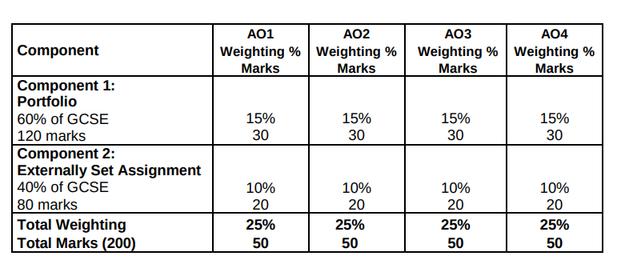
Component 1, the Portfolio (60% of qualification, internally assessed, externally moderated) and Component 2, the Externally Set Assignment (40% of qualification, internally assessed, externally moderated) This specification provides the flexibility and capacity to build and extend the breadth and depth of students’ creative practice and offers the choice of a broad-based general course, plus six distinct title options with no prohibited entry combinations
Art GCSE
Art, Craft and Design offers flexibility in content and approach and students undertaking this option must explore and create work associated with at least two of the titles listed below:
• Fine Art
• Graphic Communication
• Textile Design
• Three-dimensional Design
• Photography
• Critical and Contextual Studies.
01
What will I study?
The emphasis is on an increased breadth of approach commensurate in demand with the depth of learning required in the more specialised titles Art, Craft and Design can be distinguished from other titles in as much as students are able to explore personal interests and demonstrate their abilities across a particularly broad course of study
How will I be assessed? 02
Graphics GCSE
Creative Arts
Why Graphics?
Studying Graphics GCSE is a great way to develop creative skills, explore design principles, and potentially open doors to various careers. It's a course that fosters creativity, helps you learn to communicate visually, and can provide a strong foundation for further study in related fields like graphic design, animation, or advertising.
This title is defined as the process of creating primarily visual material to convey information, ideas and emotions through the use of graphic elements such as colour, icons, images, typography and photographs
Students undertaking the graphic communication title are required to demonstrate the knowledge, skills and understanding set out in the introduction to Section 2 through areas of study relevant to their chosen title Areas of study include:
• Advertising
• Communication graphics
• Design for print
• Illustration
• Interactive design (including web, app and game)
• Multi-media
• Package design
• Signage
• Typography
How will I be assessed?
Creative Arts
Outline of Course
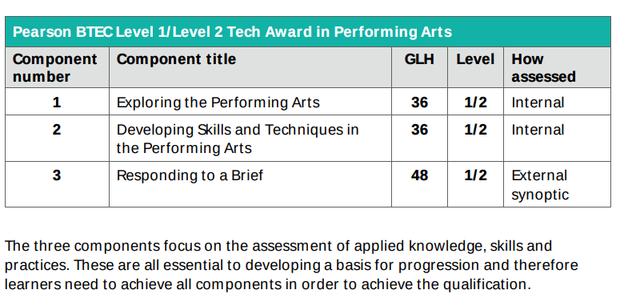
A BTEC in Performing Arts offers a practical, hands-on alternative to traditional academic GCSEs, providing students with valuable skills and knowledge about the performing arts industry.
This course can boost confidence, creativity, and teamwork, while also exploring the potential of a career in the arts. It's a good option for students interested in the creative arts or those who want a more practical, less exam-focused approach to education. The Performing Arts Btec is also a great balance to a heavily academic set of options choices.
01
What will I study?
Performing Arts Btec
(Music or Drama)
Students will specialise in Drama or Music
Learners will investigate how professional performance or production work is created B Demonstrate understanding of the skills, techniques and approaches used by professionals to create performance/production work.
Learners will examine live and/or recorded performances in at least three different styles in order to develop their understanding of professional performing arts work in one or more of acting.
Learners will also examine the roles, responsibilities and skills used to create work, developing their knowledge and understanding of how they contribute to performance
How will I be assessed? 02
Creative I-Media
STEM Qualification
Outline of Course
Studying Creative iMedia offers a pathway to develop practical digital media skills, enhance employability, and foster creativity It provides essential knowledge and tools to create various media products, including digital games, web designs, and graphics, while also developing transferable skills like research, planning, and evaluation This qualification can lead to careers in the IT and media sector, such as graphic design, web development, or game design
What will I study?
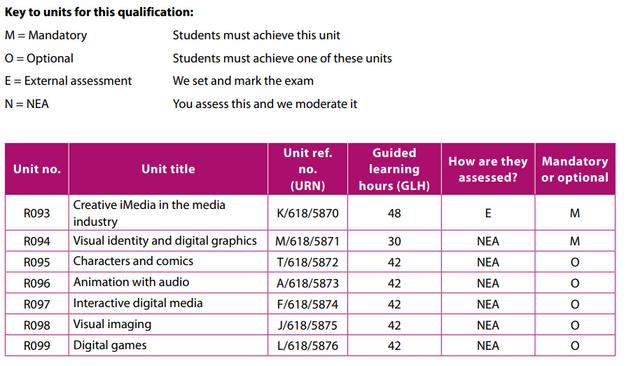
Our Cambridge National in Creative iMedia will encourage students to: understand and apply the fundamental principles and concepts of digital media including factors that influence product design, use of media codes and conventions, pre-production planning techniques, legal issues and creation/publishing/distribution considerations develop learning and practical skills that can be applied to real-life contexts and work situations think creatively, innovatively, analytically, logically and critically develop independence and confidence in using skills that would be relevant to the media industry and more widely design, plan, create and review digital media products which are fit for purpose meeting
How will I be assessed?
Outline of Course?
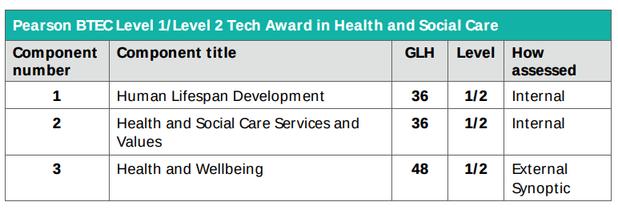
The Pearson BTEC Level 1/Level 2 Tech Award in Health and Social Care (603/7047/6) is for learners who want to acquire sector-specific applied knowledge through vocational contexts by studying human lifespan development, health and social care services and values, and health and wellbeing as part of their Key Stage 4 learning. The qualification recognises the value of learning skills, knowledge and vocational attributes to complement GCSEs. The qualification will broaden learners’ experience and understanding of the varied progression options available to them.
01
What will I study?
Health and Social Care Btec
the life stages and key characteristics in the physical, intellectual, emotional and social (PIES) development classifications and the different factors that can affect an individual’s growth and development different life events and how individuals can adapt or be supported through changes caused by life events health and social care conditions, how they can be managed by the individual and the different health and social care services that are available the barriers and obstacles an individual may encounter and how these can be overcome the skills, attributes and values required to give care and how these benefit the individual how factors can affect an individual’s current health and wellbeing how physiological indicators and an individual’s lifestyle choices determine physical health the use of the person-centred approach recommendations and actions to improving health and wellbeing and the barriers or obstacles individuals may face when following recommendations and the support available to overcome.
02
How will I be assessed?
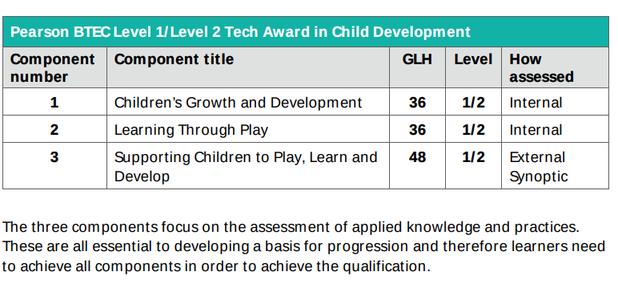
Child Development Why Child Development?
Did you know?
The early years sector focuses on the learning, development and care of children in the UK. There were approximately 1.7 million Ofsted registered childcare places for children offered by many different types of early years settings in England in 2019, ranging from childminders and nannies to nurseries, crèches and preschools. Knowledge of child development is important in a variety of occupations outside of childcare and teaching, for example, in healthcare roles such as paediatricians, psychologists, occupational therapists, and speech and language therapists
What
will I study?
The Tech Award gives learners the opportunity to develop applied knowledge and understanding of child development and growth up to the age of five, how children learn through play and how meeting the needs of individual children will support their development, play and learning. In a practical learning environment, learners will have the opportunity to develop applied knowledge in the following areas: the characteristics of children’s development from birth up to five years factors that affect growth and development the importance of play how play promotes children’s learning and development reasons why children may need support child-friendly environments to support play, learning and development in children from birth to five years old supporting all children to learn and develop physically, intellectually, emotionally and socially.
Outline of Course?
A BTEC in Hospitality and Catering is a great option for students interested in a career in the hospitality industry or further education. It develops practical skills, provides industry knowledge, and enhances employability. Studying this qualification can lead to various job roles, including restaurant management, event planning, and more
Hospitality and Cateering
01
What will I study?
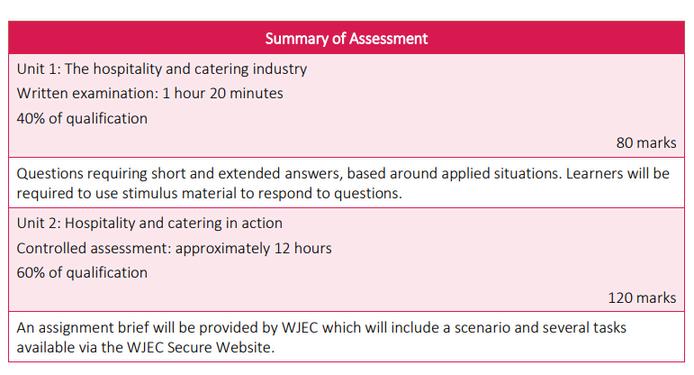
Unit 1 enables learners to gain and develop comprehensive knowledge and understanding of the hospitality and catering industry including provision, health and safety, and food safety
Unit 2 enables learners to develop and apply knowledge and understanding of the importance of nutrition and how to plan nutritious menus. They will learn the skills needed to prepare, cook and present dishes. They will also learn how to review their work effectively (page 21)
02
How will I be assessed?
Sports Studies
Cambridge National
Why Sports Studies?
A BTEC in Sports Studies can be a great choice for those interested in a career in the sports and fitness industry. It provides a practical and theoretical foundation, combining hands-on training with indepth knowledge of sports science, coaching, and the business of sports.
This qualification can lead to various career paths and higher education opportunities.
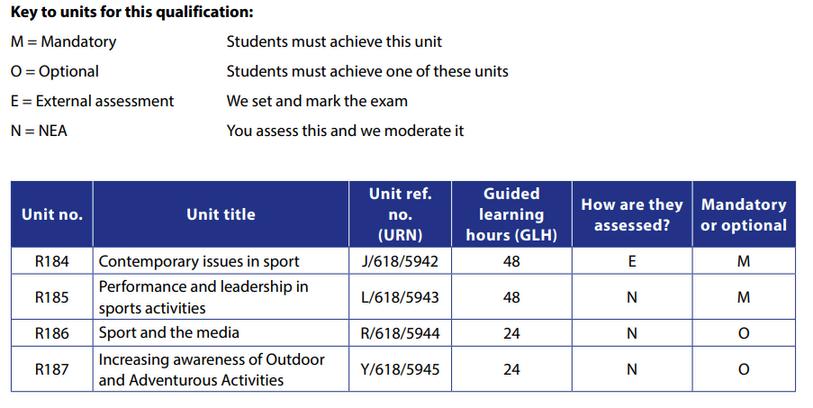
Students will learn about, understand and apply the fundamental principles and concepts of Sport Studies. They will also:
• Develop learning and practical skills that can be applied to real-life contexts and work situations
• Think creatively, innovatively, analytically, logically and critically
• Develop independence and confidence in using skills that are relevant to the Exercise, Physical Activity, Sport and Health sector and more widely
• Understand topical and contemporary issues in sport, including: why people do and do not participate in sport, the promotion of ethics and values, the roles of National Governing Bodies and high profile events have in sport, as well as how technology is used within sport
• Develop skills as a performer in two different sporting activities
How will I be assessed?
Outline of Course
Studying GCSE Physical Education (PE) offers a comprehensive understanding of the human body and movement, the impact of sport on society, and the benefits of an active lifestyle. It combines practical performance with theoretical knowledge, encouraging students to develop both physically and mentally.
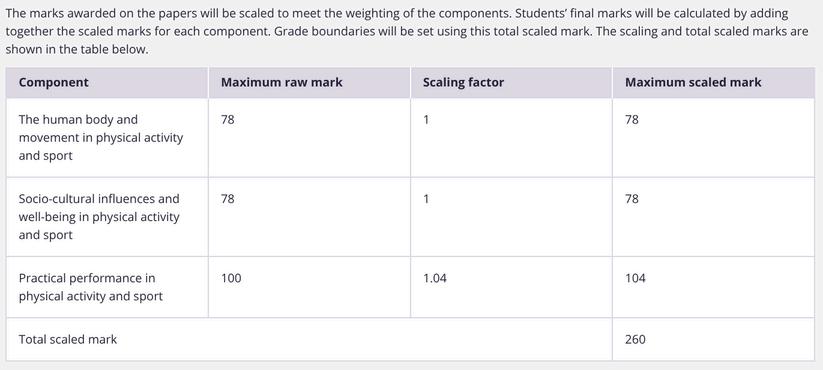
This course is a combination of theory, practical and NEA coursework.
PE GCSE
What will I study?
The human body and movement in physical activity and sport:
Applied anatomy and physiology
Students should develop knowledge and understanding of the key body systems and how they impact on health, fitness and performance in physical activity and:
The structure and functions of the musculoskeletal system
The structure and functions of the cardio-respiratory system
Anaerobic and aerobic exercise
The short and long term effects of exercise
Movement analysis:
Students should develop knowledge and understanding of the basic principles of movement and their effect on performance in physical activity and sport.
Lever systems, examples of their use in activity and the mechanical advantage they provide in movement
Physical Training.
Using Data.
How will I be assessed? 02
Your Future: Where will your option
choices take you?
Going to college offers numerous benefits, including increased earning potential, enhanced career opportunities, and broader life experiences It can also lead to personal growth, improved skills, and expanded social circles
Succeeding Together
Next Steps
Attend the Year 9 Options Evening event at school.
Discuss options with family, friends, teachers.
Complete your options form and return by the closing date.