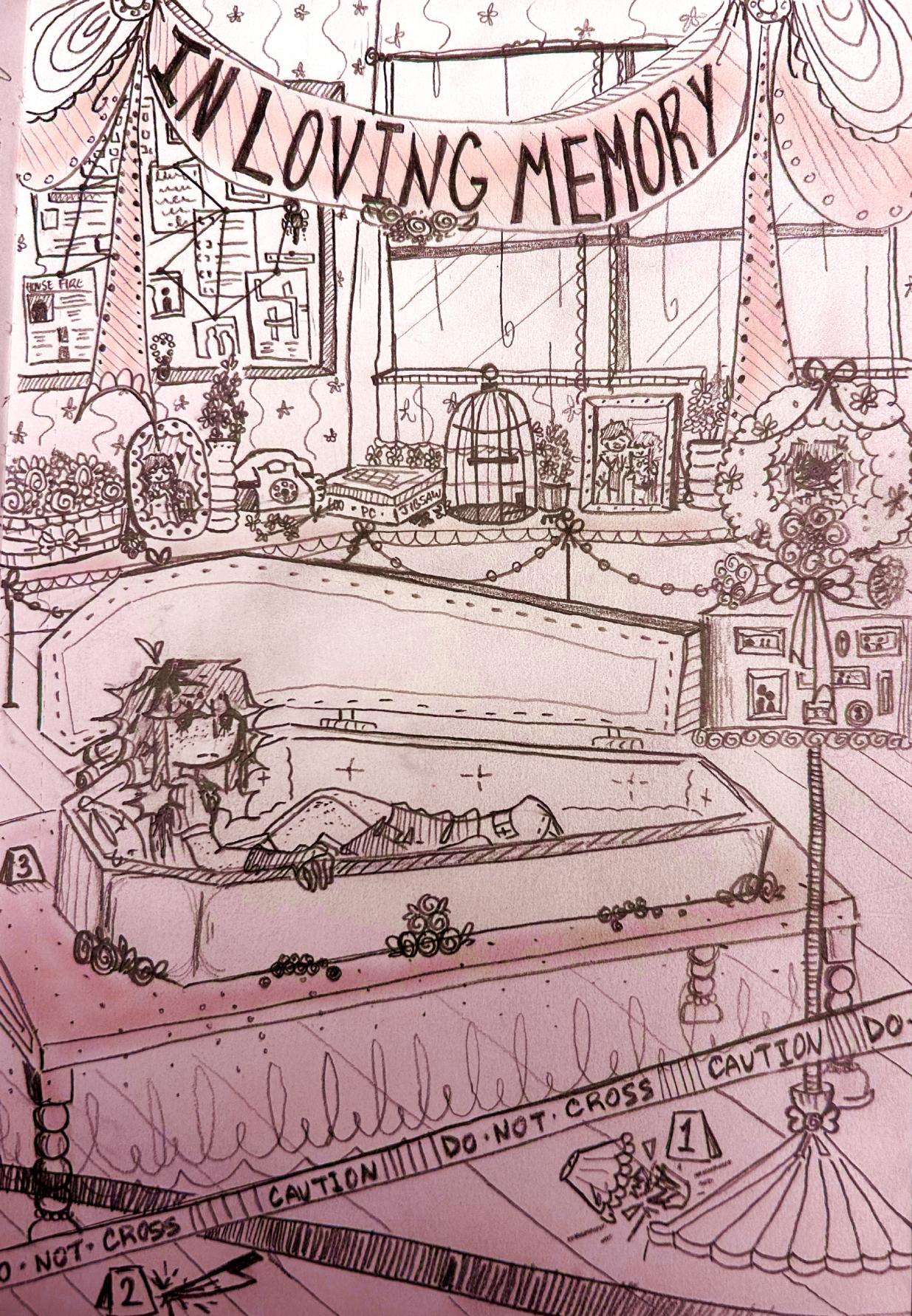
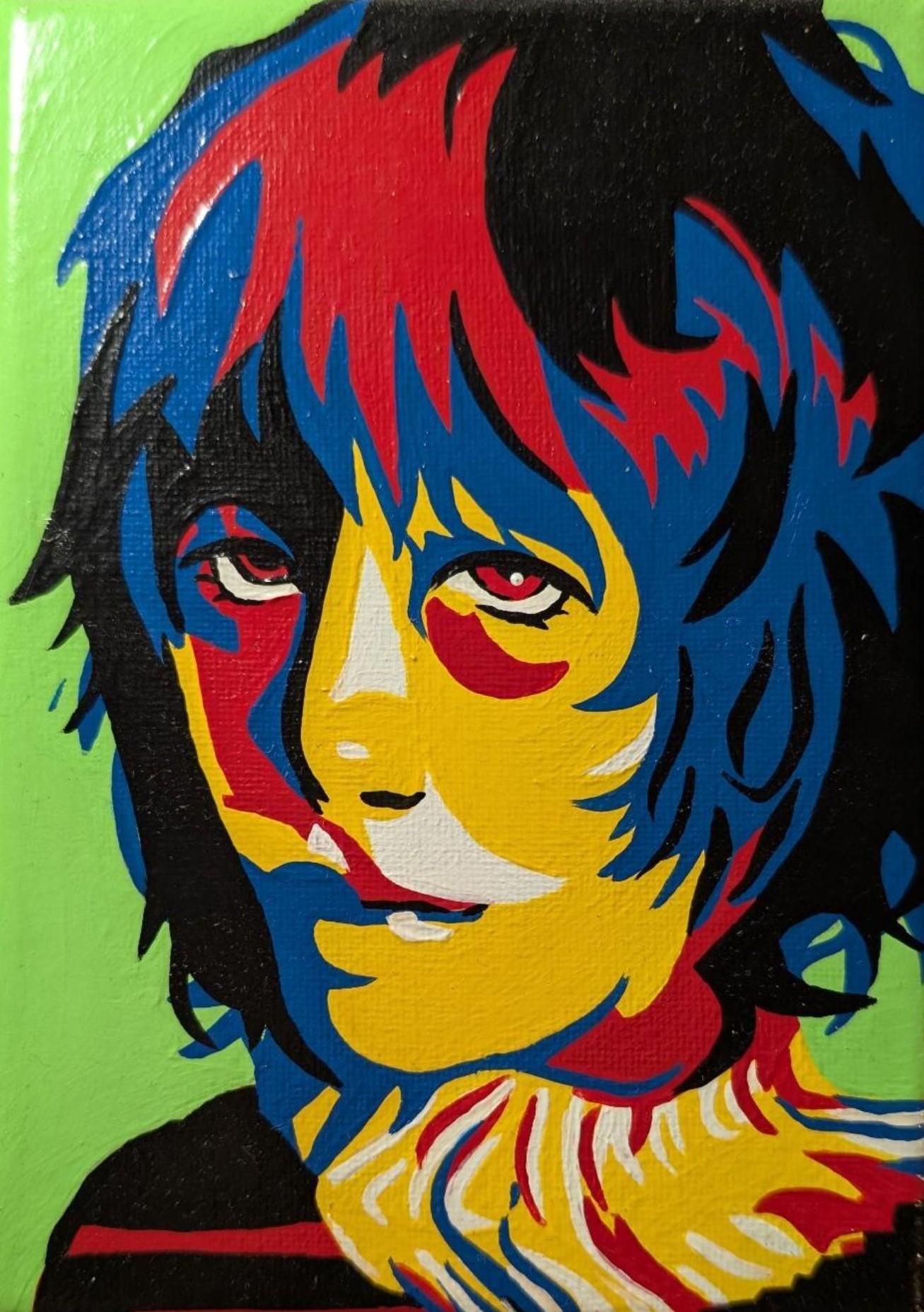
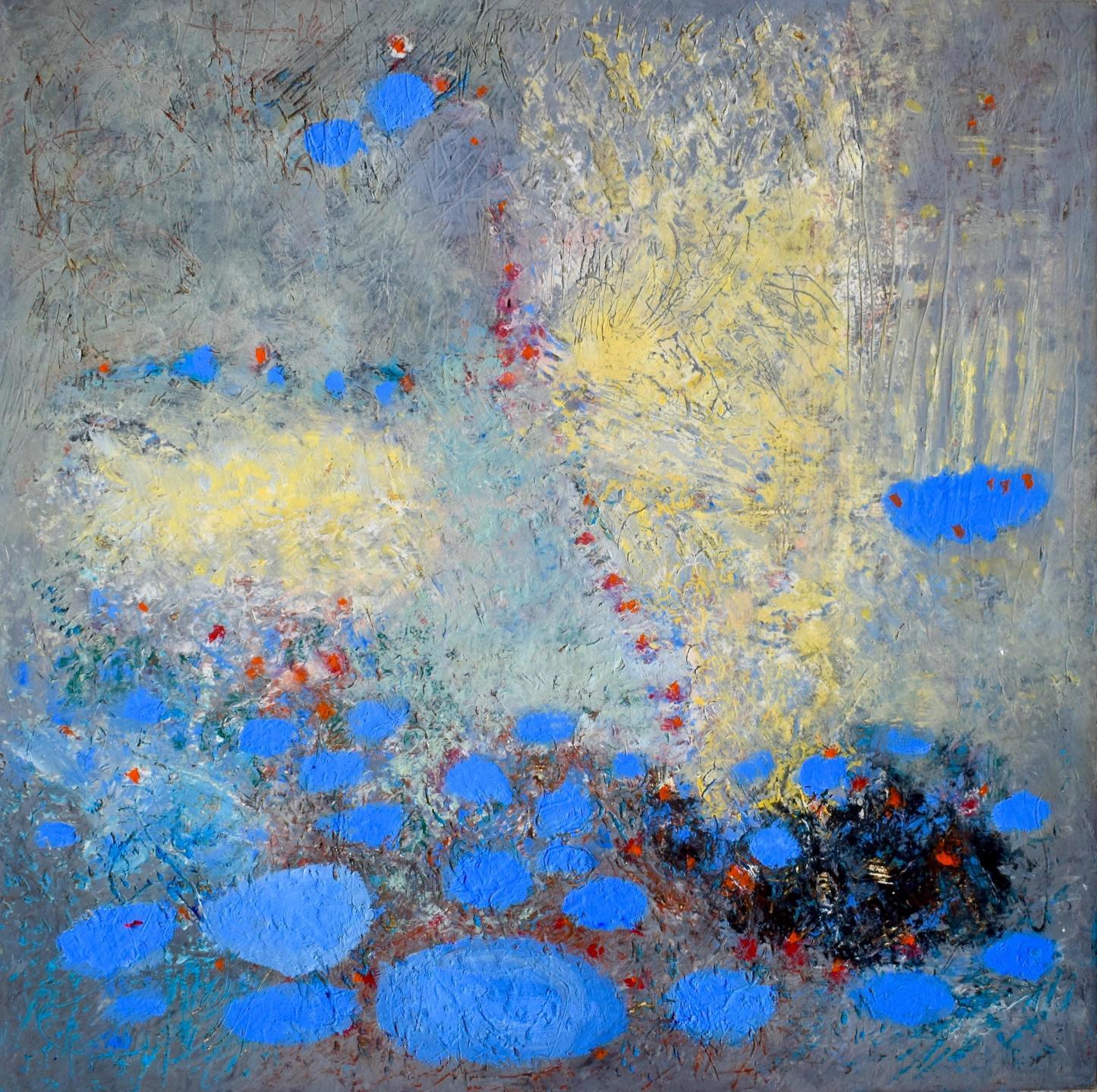
The light turns green and the world inhales— engines hum, tires whisper forward, the city loosens its grip on stillness.
Meanwhile, I am the driver and my hands stay tight on the wheel. I used to stall at every intersection of my life, afraid of taking up space on the road. Back then, my rearview mirror was louder than the radio— old criticisms flashing like sirens, insecurities tailgating too close, their headlights flooding my car until I forgot where I was going.
Now the highway opens in front of me like something merciful because I built this drive myself. I learned the routes. I paid for the repairs. I mapped exits out of old neighborhoods where every street sign pointed back to doubt.
This life— steady speed, music up, a body that feels safe in its own skin— is not an accident. It is maintenance. It is discipline. It is healing stitched carefully into the future of self-discovery.
While the light is still green, I remember–Green means go. Green means the road is yours. Green means no one is blocking you.
But unresolved things sit in the passenger seat, seatbelt half-clicked, murmuring what if.
What if someone merges too fast into my lane?
What if their chaos hydroplanes across the peace I fought to keep? What if I mistake another warning sign for momentum?
I am afraid of collisions that do not look like crashes at first— just subtle drifting, a wheel tugged slightly off-center, a voice suggesting I slow down for reasons that are not mine.
The light is still green— reflected in the windshield, Casting the inside of the car with permission.
Behind me, horns begin to gather. Impatience presses against my bumper. Potential stretches ahead— an endless view of asphalt silvered with possibility.
I know I can drive. I know this vehicle now— its limits, its power, how it takes sharp turns without flipping.
But trauma is a cautious instructor. It keeps a phantom foot hovering over the brake.
So I sit for half a second longer than necessary— heart beating in time with the ticking signal.
Then I breathe.
Because green does not promise there will be no traffic. It does not guarantee the road will stay smooth. It only means you are allowed to move.
And maybe healing is not waiting until the fear disappears— maybe it is pressing the gas anyway, trusting that if someone swerves, if weather shifts, if shadows lengthen across the lanes, I will not forget how to steer.
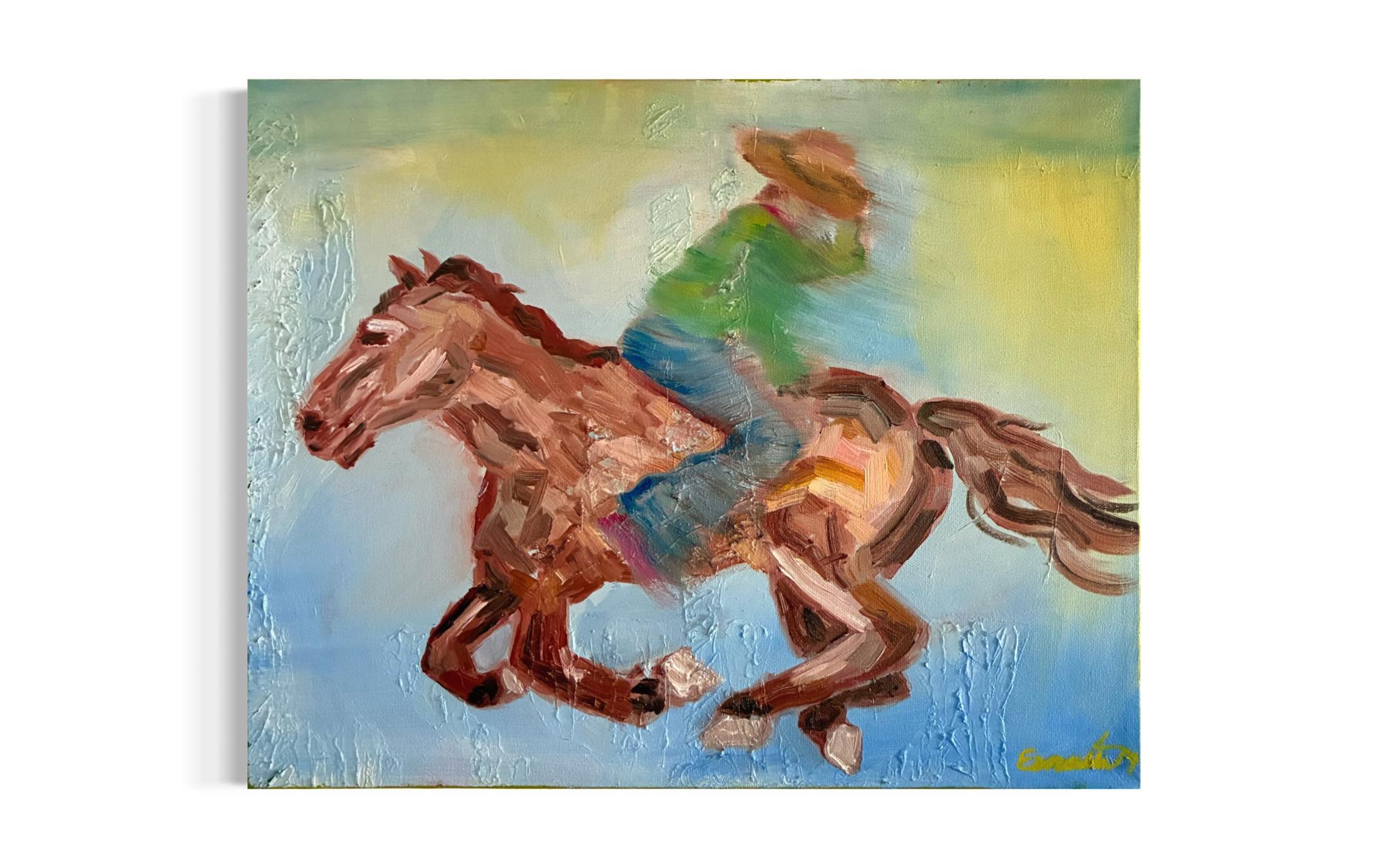
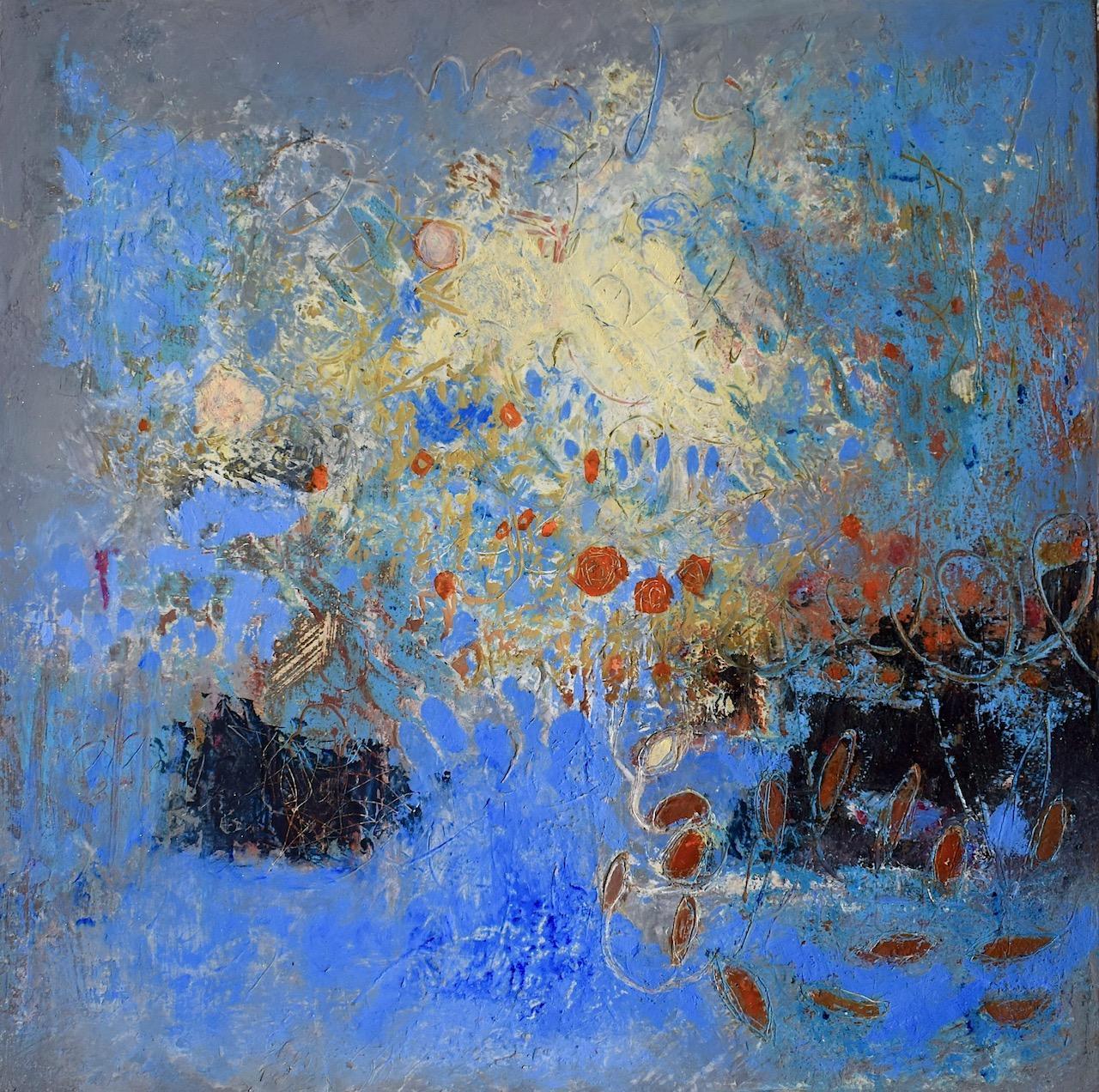
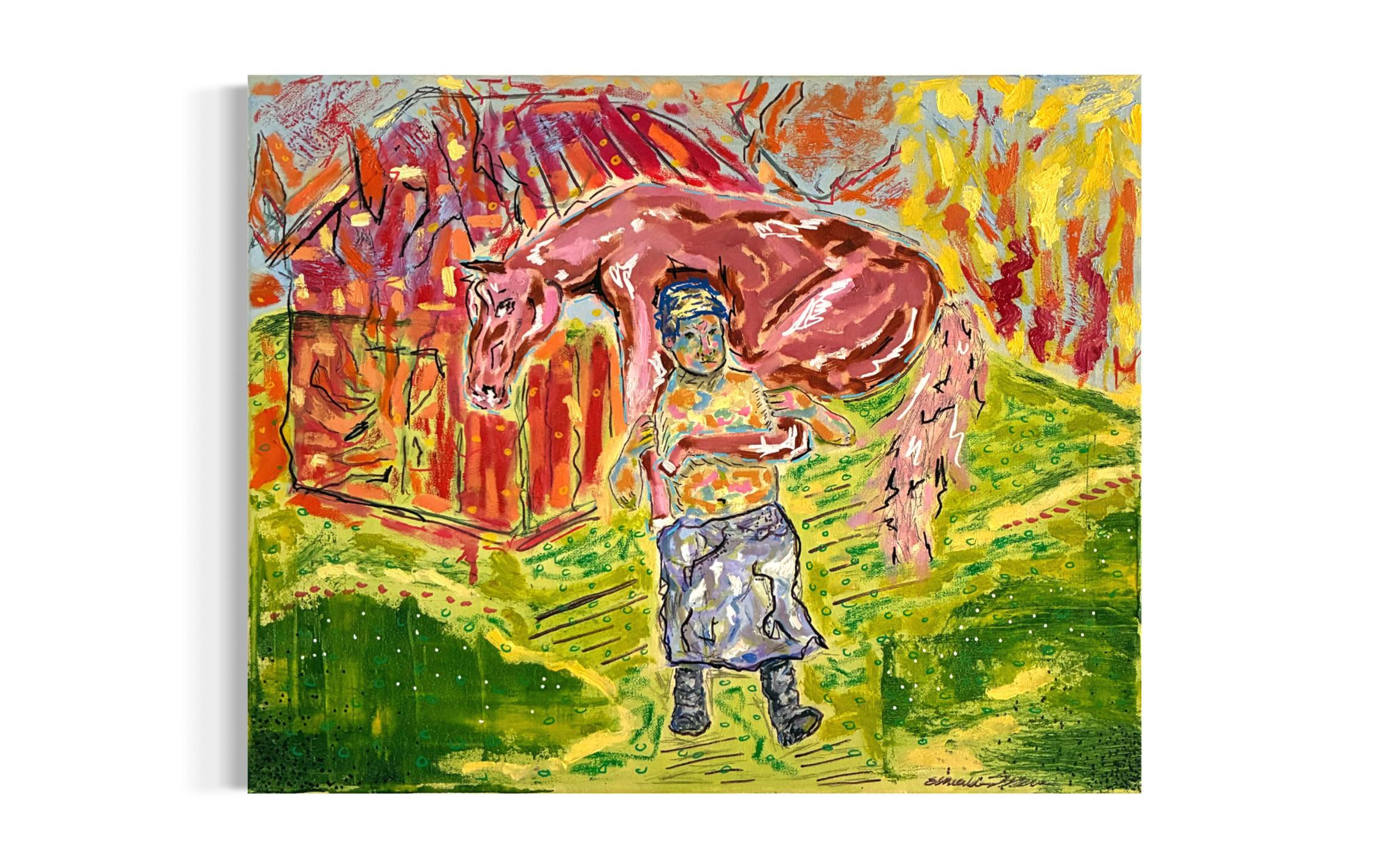
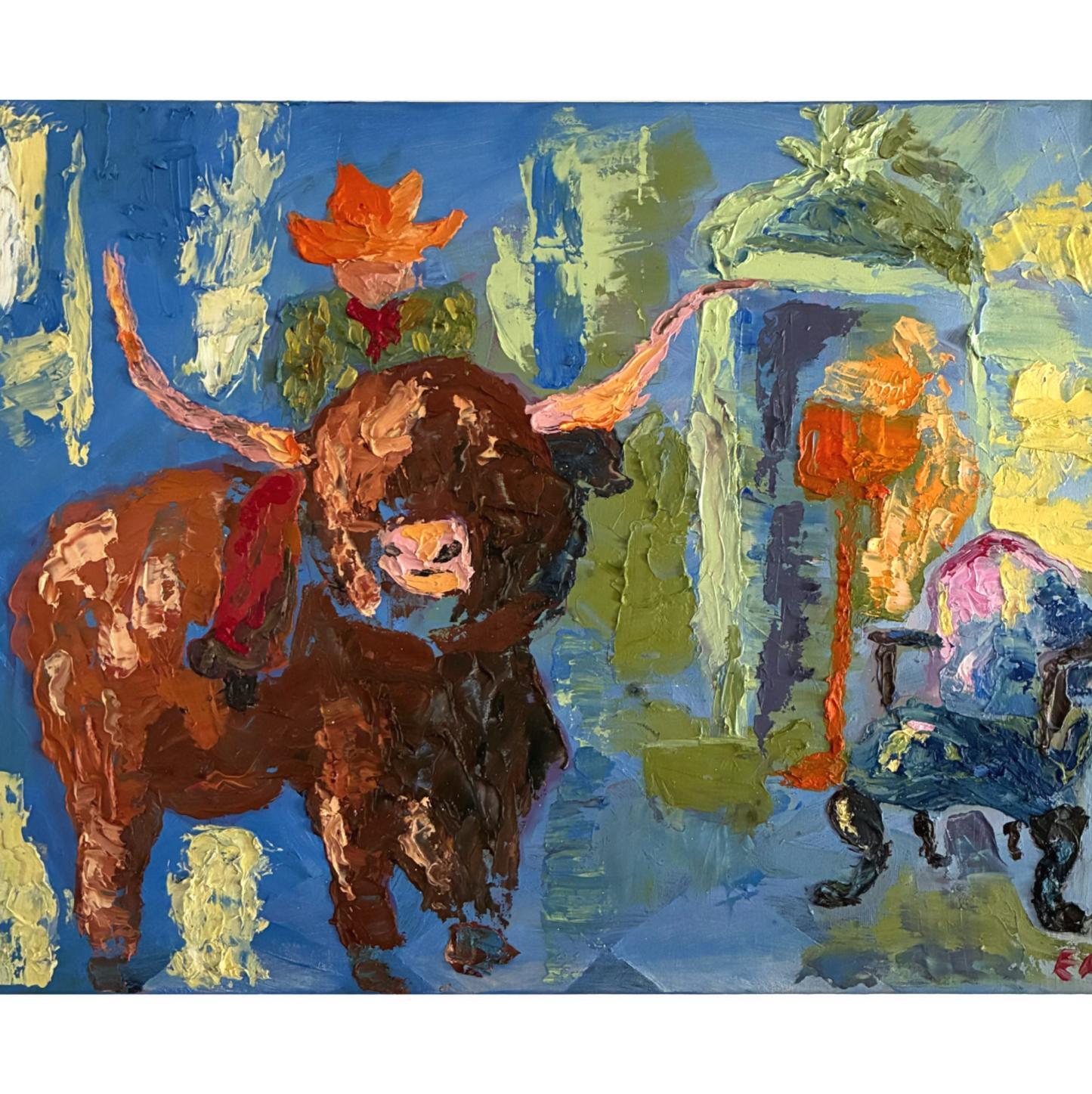
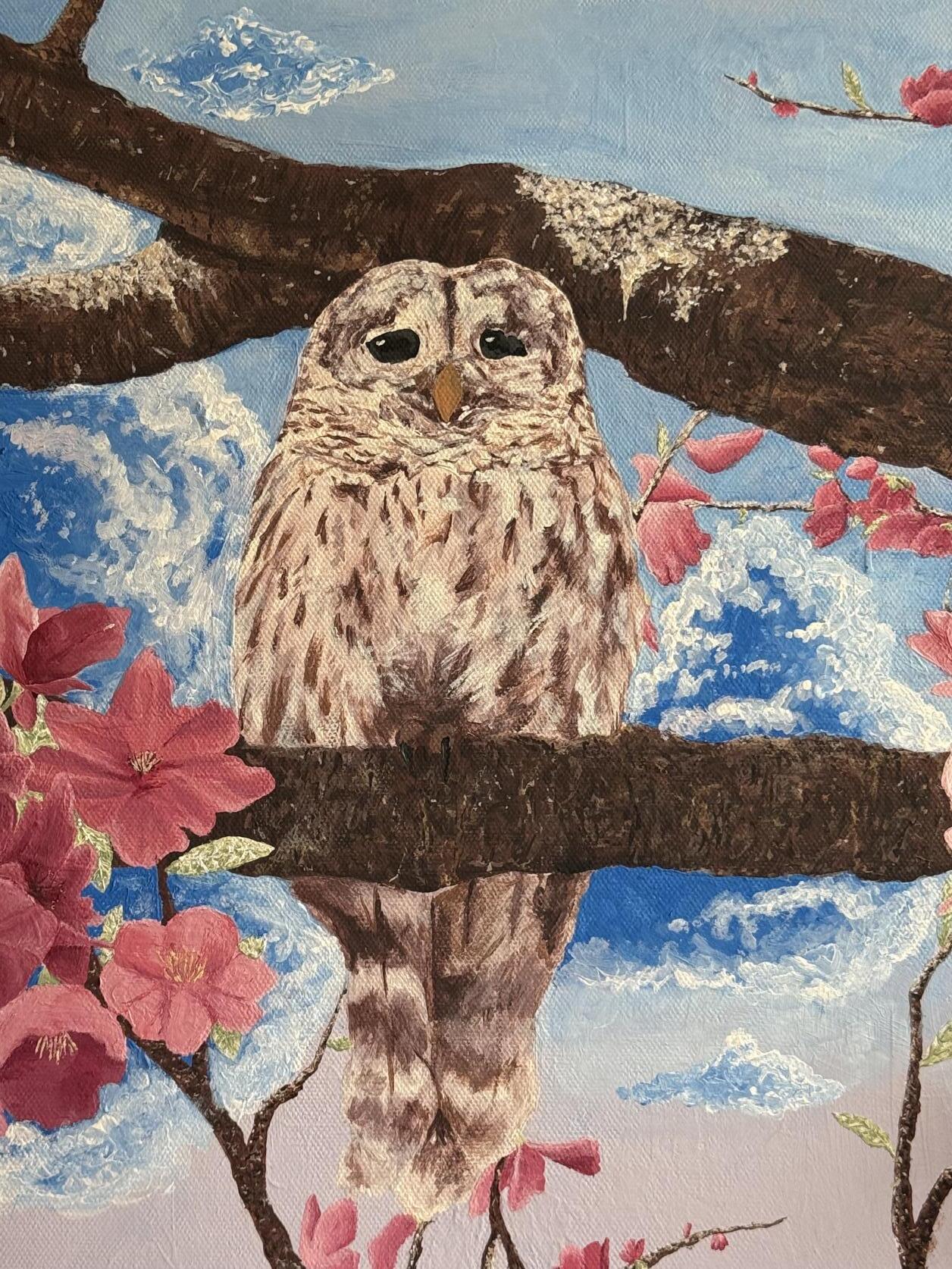
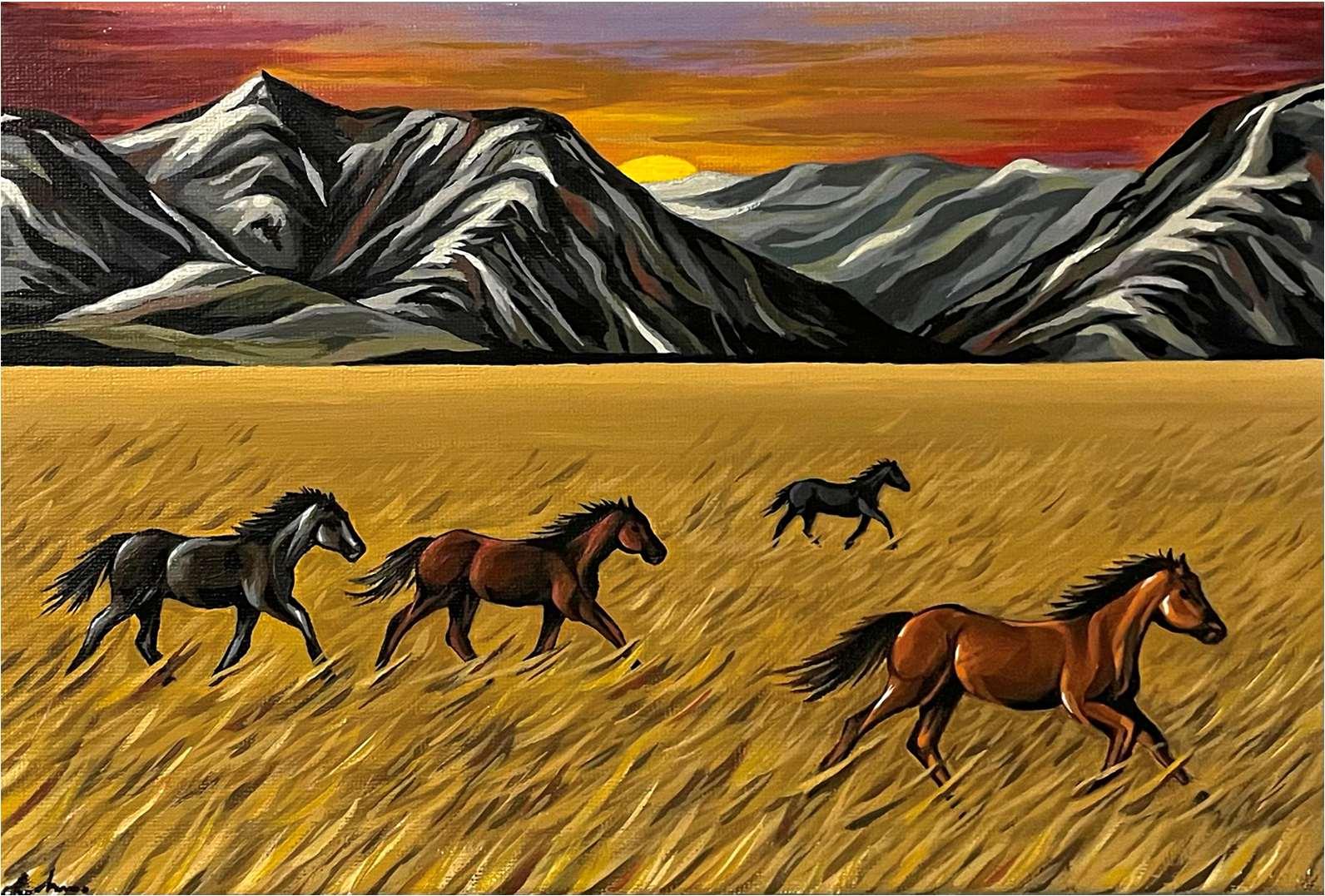
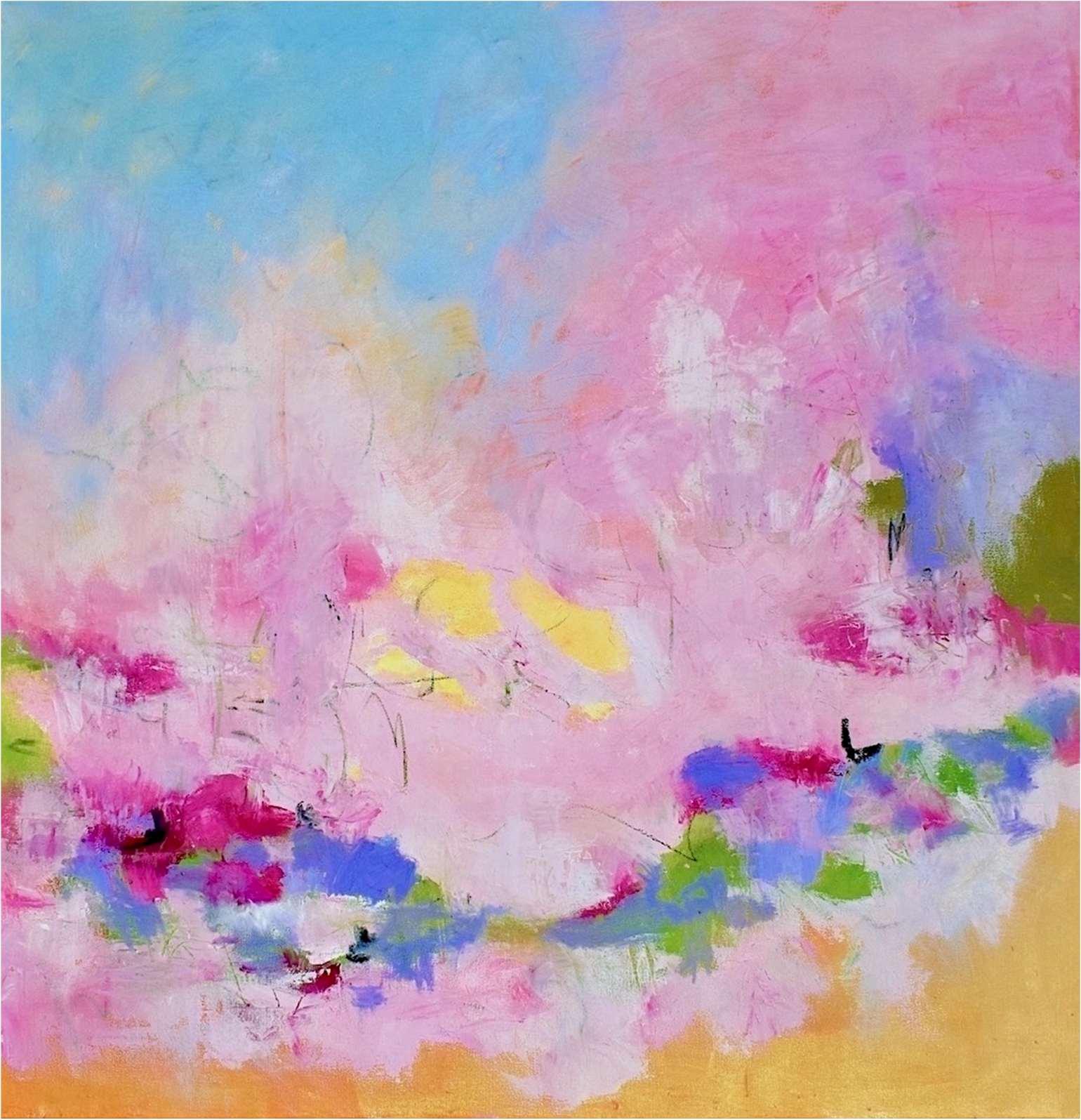
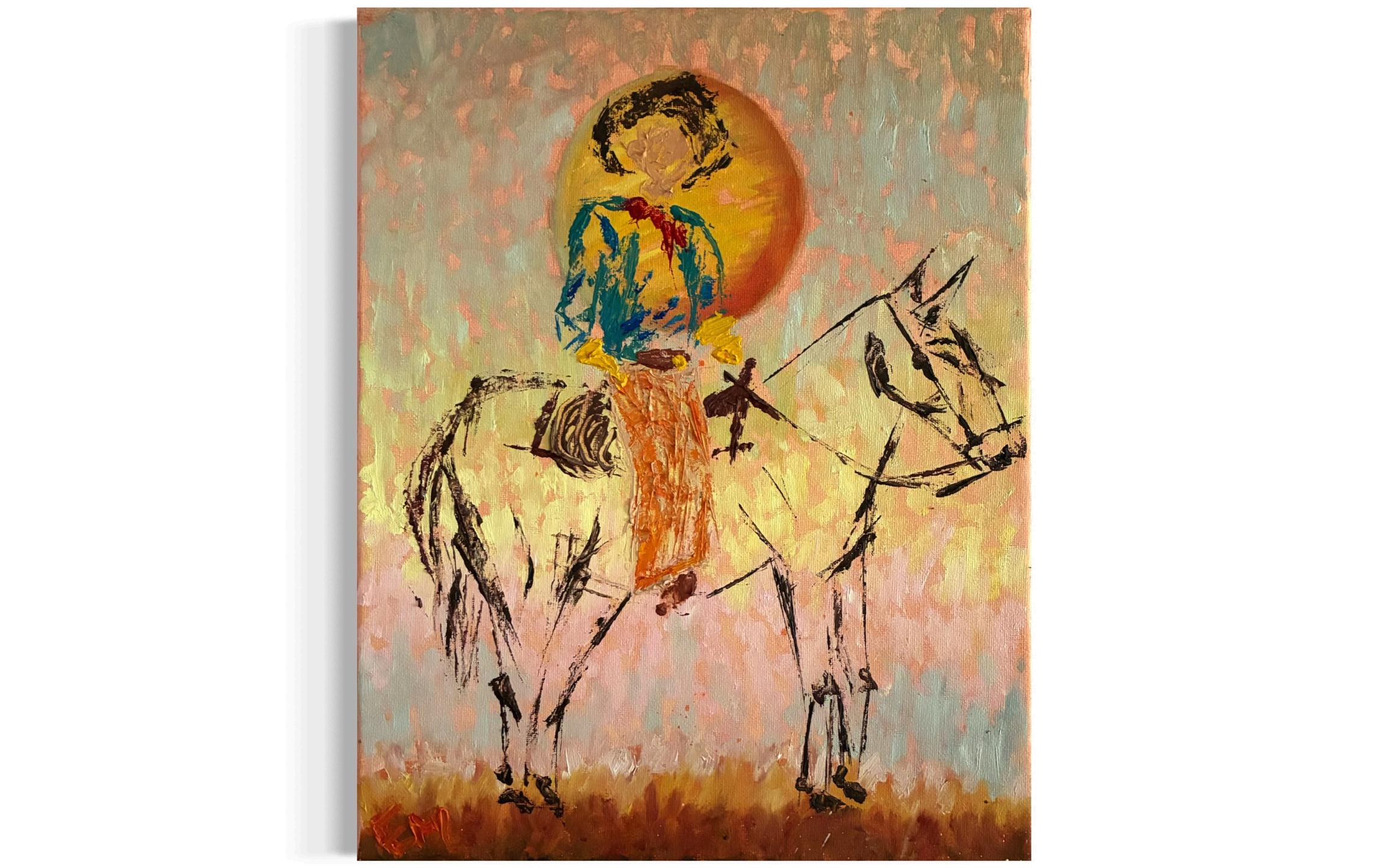
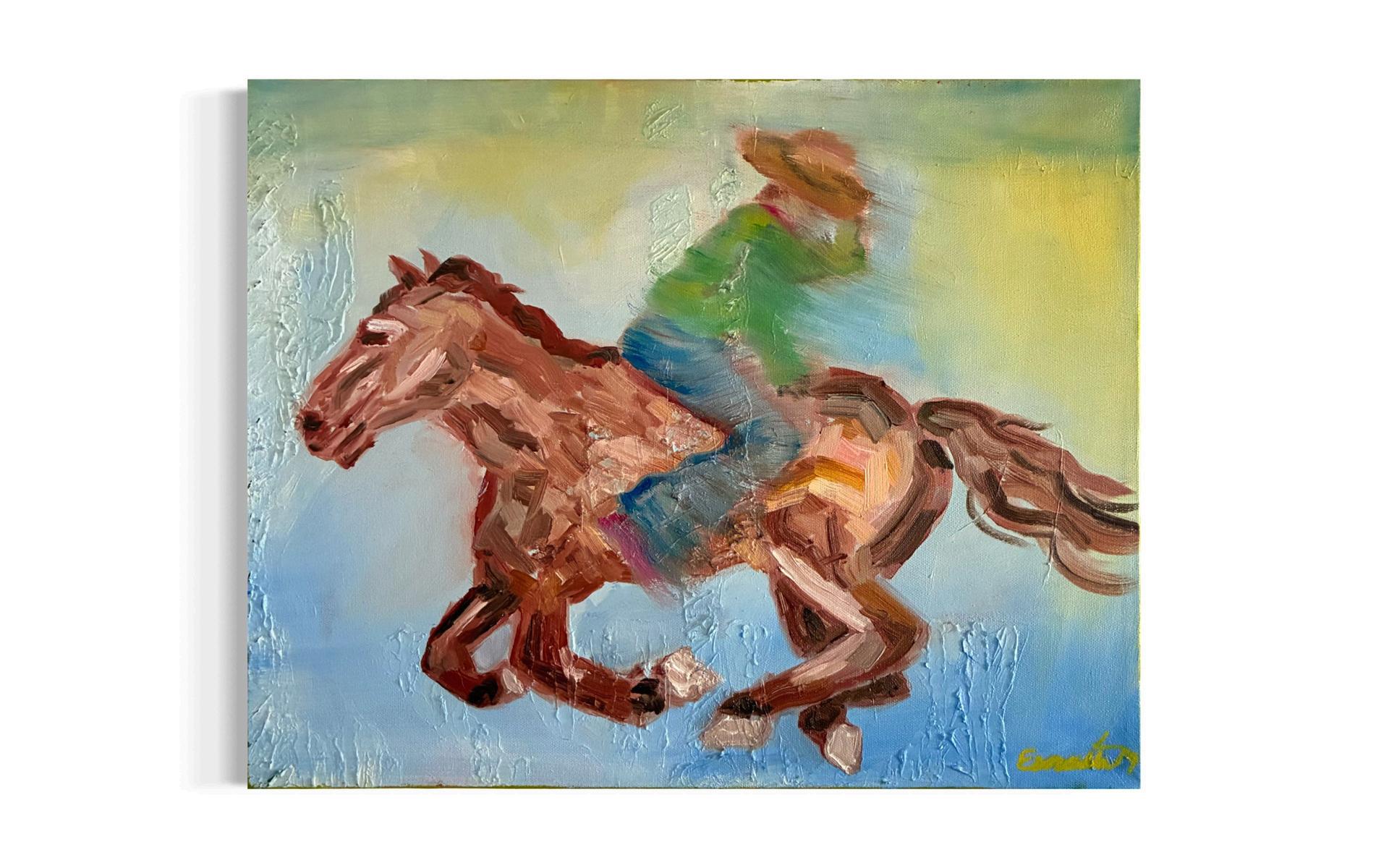
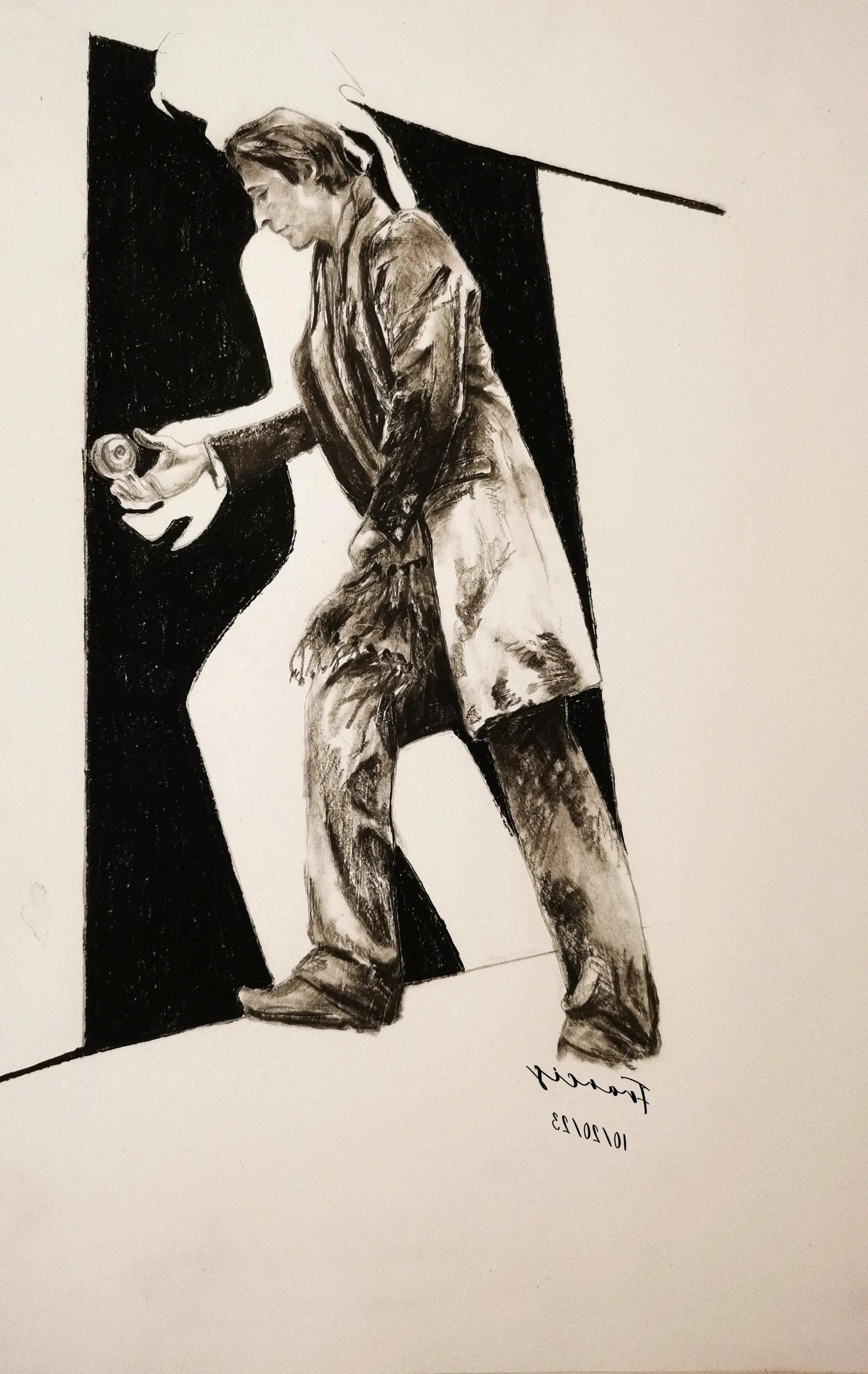
Passing Through
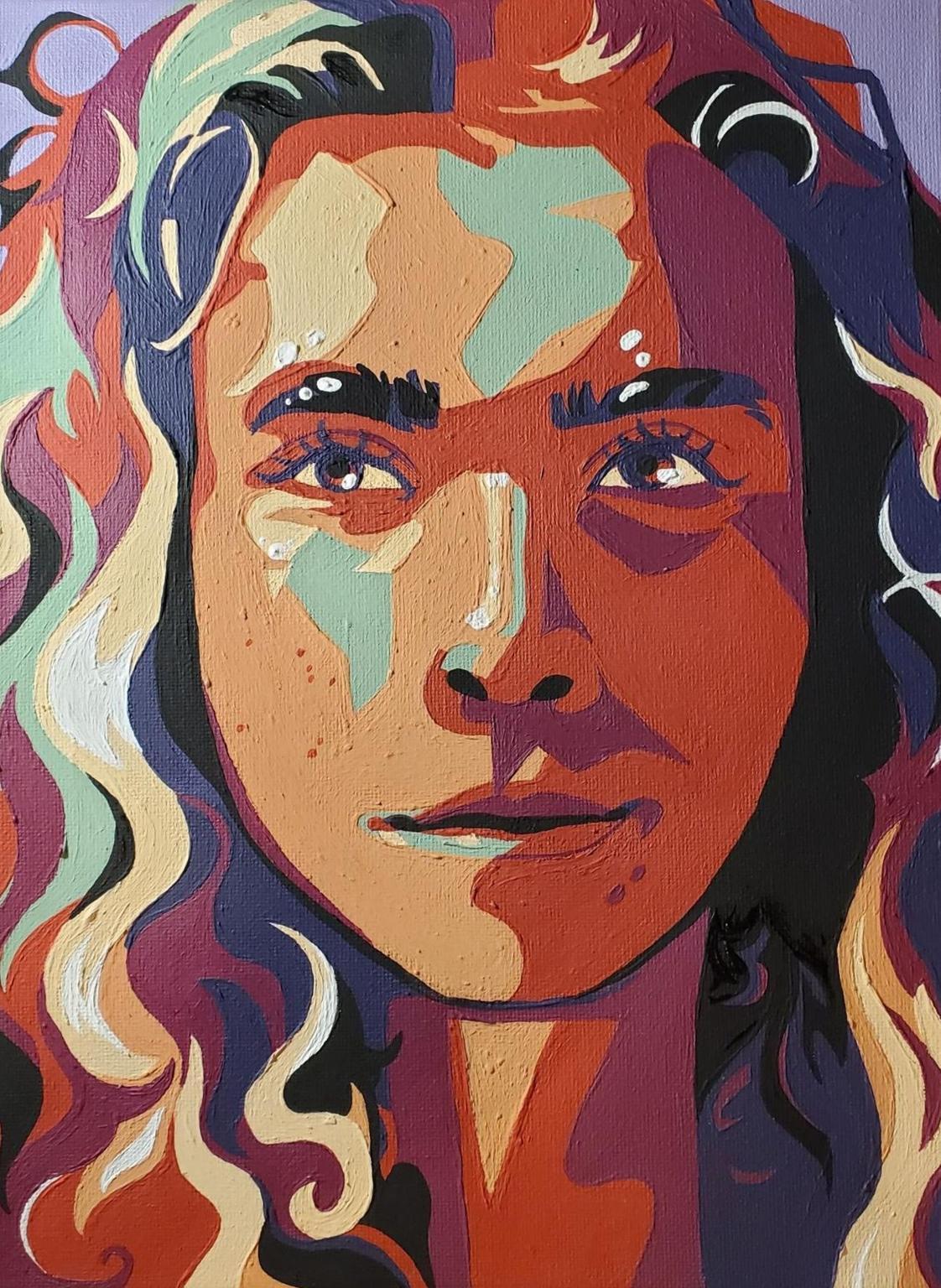
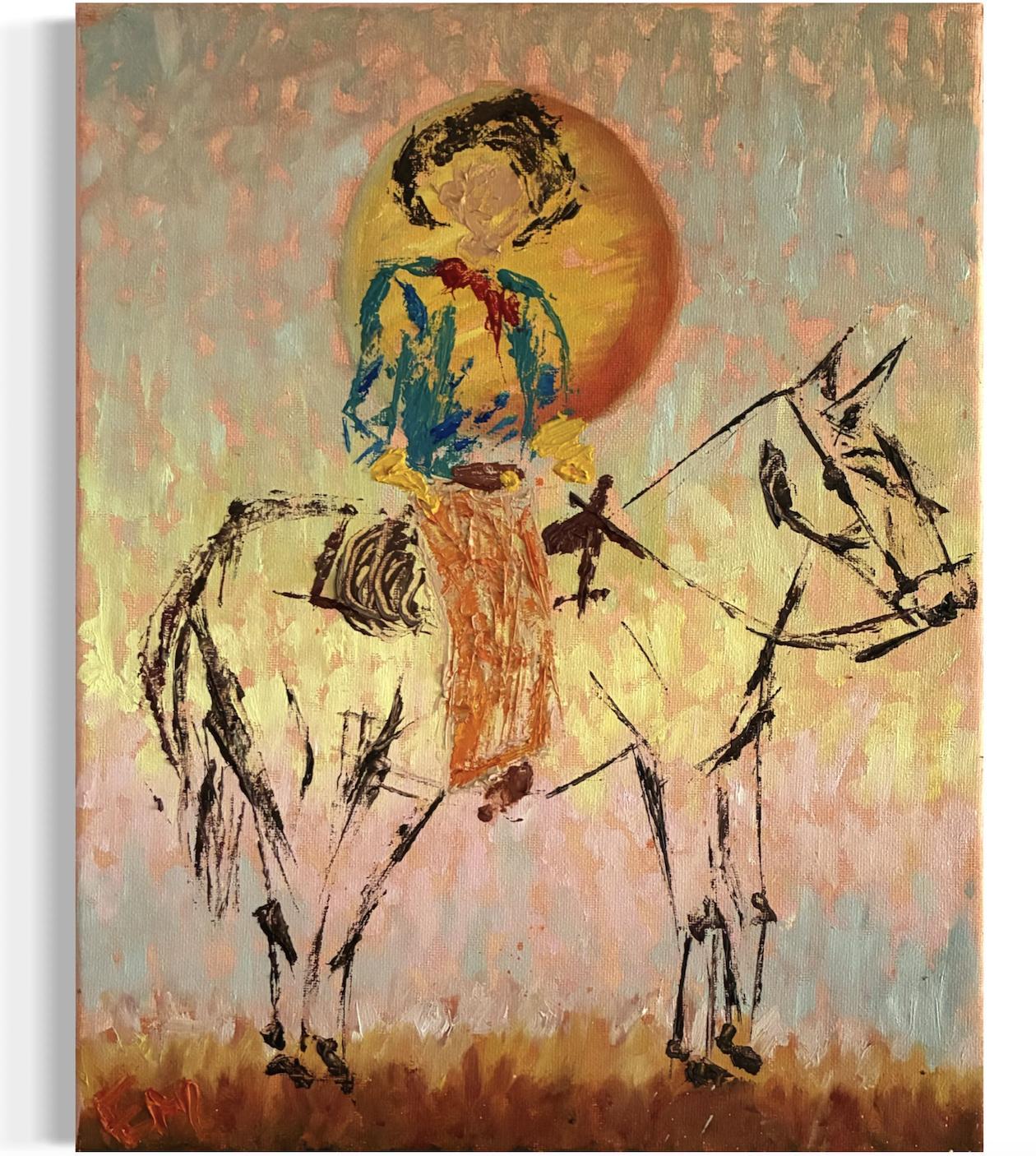
Esmeralda Macias | oiloncanvas
The Carolinas
Sarina Northway | poetry
Carolina’s name cradles soft twin As
Tucked around a round, full O
And a light, airy LEE:
Kah-roh-LEE-nah
Here in South Carolina
Everybody pronounces it
As you would expect:
Care-oh-LIE-nah
It’s sharper, foreign
Spoken as a pseudonym
Or a pet name or a slur
Unfamiliarly hers
Her old name lies dormant
In the barrios of Venezuela
As an aftertaste on her tongue
And a ringing echo in her ears
Her new name is a self-serving gift
Like uncut flowers
Or a new vacuum
Or a pair of shoes to flee in
And what a thoughtful gift it is
As she runs from oil-stained tyrants
And masked men branded with acronyms
Within our borders and her own
Her lungs starved for breath
Her legs sore and shaking
Her back aching and hunched
Her feet blistered and raw
It is not lost on her that the name Carolina
Remains the same on paper
Regardless of who stamps the passport
And who signs the death warrant
32 Degrees Fahrenheit
Raven Montaño | poetry
In dim rooms, two friends call about how freezing the tips of their fingers are.
About how freezing the ICE is, how they fear they won't survive the winter.
The winter is getting longer. Colder. Harsher.
The ICE doesn't care if you're rich, or poor. Where you're from.
Its freezing all the same.
A kind hearted man of in betweens walks from class to class with words to describe how freezing it is, but has no outlet. Where do the words go below 32 degrees Fahrenheit?
Where do the words go when our fingertips go blue and our teeth chatter from the icy wind?
Was that a gunshot, or the snapping of an icicle from an awning?
The ICE doesn't care how Good you are, how patient you are, or for the words you hide in your head.
It doesn't even care where you come from.
As long as the temperature stays below 32 degrees, the books will burn at 451 in the fireplaces of our siblings because they have no other way to stay warm.
I don't care where you came from. I care that you want to stay warm.
And I care that you, yes you, know the difference between a gunshot and the pulpit from which hatred spews command.
Only by caring, can we hope to survive eternal winter.
Truth Will Free You
Siv Limary | digital photography
I Love You, Peruvian Ceviche
Micaela Caceres | creative nonfiction
When I was in first grade, the teacher passed out an appropriate-level worksheet designed to assess our current writing level. I still remember sitting with my classmates as they discussed the only question on the page: What is your favorite food? With all the passion and innocence of a six-year-old, I grasped my pencil and scribbled on the dotted lines: “My favorite food is ceviche.” While my classmates enthusiastically proclaimed their favorite dishes, I continued to masterfully draw an image of my mom’s ceviche in crayon. I outlined a sky-blue bowl displaying the gray, silver-like cubed fish held by the bright lettuce leaves. I switched between various crayon colors since I couldn’t forget the cylindrical slices of Royal Purple and Unmellow Yellow sweet potatoes, topped with sliced onions and salty corn nuts–drawn as polka dots in my kid picture. Once the others noticed what I had drawn, they thought I had done it completely wrong, believing I was thinking of Mexican Ceviche or a shrimp cocktail. Even if I didn’t know how to spell it or understand how to tell my mostly Mexican classmates that it was different, I knew Peruvian Ceviche was my favorite food and that I only liked it when mom made it. ***
My parents often hosted these classic Hispanic parties with their closest friends, ensuring an environment perfect for celebration. My mother would spend the day before these large gatherings making the house spotless by vacuuming every inch of the house, mopping the scratched-up wood floors, and dusting away the dirt and grime of a lived-in home, all while the TV played her favorite songs. It’d be best to stay out of her way when Eminem, Coldplay, and Imagine Dragons traveled through the hall to mine and my siblings’ rooms, since our mother needed to clean exactly her way and she was the only one who could do it right. She’d go on cleaning until midnight or longer to prep the house for drinking and chisme the next day.
While my mom maintained orderly perfection at home, my dad would go to Costco for fresh tilapia and beers, and to Mi Tienda Latina for various Peruvian ingredients needed for a heavenly meal. Sure, plenty of stores have ingredients specific to Spanish dishes, but Mi Tienda Latina on 24th Street and McDowell is one of the few places I’ve seen in Arizona that carries authentic Peruvian food, spices, and drinks. My dad would pick up Peruvian corn, rocoto peppers, and aji chilis; rocoto and aji being necessities for every Peruvian dish. Additionally, for a complete meal, we always had to get Inca Kola, a golden, bubble-gum-like soda. Whenever I would go with my parents, I’d shyly point at the golden cans of Inca Kola, asking if we could buy a pack. My dad would purchase two or three two-liter bottles of Inca Kola, some for the party and one to keep at home for a rainy day.
When I was eleven years old, my family and I traveled to Peru for two months in the summer. It was my first time traveling to Peru, and I hated it. I felt I was far away from home, I wasn’t particularly close with my parents, and it was more isolating being so estranged from the culture and language of the country. A few memories from Peru stick out to me like taking a picture with my aunt at the elaborate and exhausting steps of Machu Picchu; and meeting most of my mom’s family for the first and only time– I didn’t even know she had a brother, my uncle; my dad taking me to a cemetery, letting me into the life he had before children for a moment; and the plane ride back to the States with my hungover older brother vomiting beside me. Most of the memories I have from that time are shrouded by the depressive and angsty emotions of a gifted and overachieving student–a child–who didn’t appreciate not having a choice in how and where to spend her vacation time.
Despite this experience and my disconnect with the culture, Peruvian cuisine has been the one thing that has always been distinctly Peruvian about me, thanks to my mom’s cooking. Most of the recipes my mom followed, I had never learned the name of, but my mom would frequently brew beef stews that made for a hardy meal, or lentils, since they were most affordable and easy to make in bulk. There were also some of my least favorites due to the textures, or the need for white rice as a side; I don’t like white rice. The only thing that made these dishes palatable to me was the mixture of diced tomatoes and sliced onions marinated in lime juice atop every stew and plate of lentils. I didn’t even like onions, but my mom always rinsed them after chopping them to remove the lingering spice and drenched them in limón. She always put the most effort into cooking when I was younger, whether or not I liked what she made.
However, I loved the taste of my mom’s locro de zapallo, a Peruvian squash stew that’s warm and chunky. The orange squash boiled with evaporated milk would lightly melt away the face of the queso fresco cubes, and create a home for peas, carrots, and potatoes. It’s truly a comfort food fusing sweet and savory flavors, perfect for any family with even the pickiest of children. Sometimes, for parties, my mom would make Papa a la Huancaina, sliced and boiled potatoes slopped with Huancaina sauce. Hauancaina sauce is cheese fondue, blending queso fresco, aji amarillo, oil, evaporated milk, and, most surprisingly, saltine crackers. Sometimes my mom would use half Gamesa Maria's cookies and saltines, with a pinch more salt if we didn’t have enough crackers. When slathered on potatoes and garnished with boiled eggs and black olives, the dish comes together to create a classic Peruvian cheesy potato meal. Nonetheless, my mom would mostly take the time to make her famous ceviche for parties.
At home, my parents' friends would arrive around two o'clock. I’d come out of my room, swerve around the couches, and head toward the dining table to say hello before I could see what my mom was cooking. I’d hug and kiss the cheeks of everyone there, close enough to smell the beers from the men’s breath, having already begun drinking. While I was out of my bedroom, I’d check
on my mom by the kitchen counter beside the table as she prepared the cubed tilapia in a large casserole dish steeped in citrus juice. I would ask her how the ceviche was coming along, and she would hold a spoon of raw fish and lime juice up to my lips to taste. I take a sizeable munch, savoring the juice and chewing the fish only in a few bites.
Light and refreshing, lacking the ocean flavor expected from most seafood dishes. Instead, by drowning the fish in limón, you taste the acidity and tang all over your mouth, especially because of the almost creamy-like consistency of the juice. It almost feels like you need to pucker your lips, but then the light spice from the aji and rocoto kick in, typically making me sweat or tear up a little. The tender soaked tilapia still holds its form enough to chew but not so much to melt, rather being slightly elastic and smooth. The taste is exquisite, usually needing just a pinch more of salt or limón to make it balanced. I let my mom know what I think and waddle to my room, hiding away until it’s time to collect my homemade dish.
It’s not long before my mom calls me back over to get myself a prepared plate of ceviche. I grab one of her flowery low bowls on the counter, such as one for soup, and hold out the plate to my mom as she scoops my ceviche. She asks what I want with it.
I tell her, “Everything. Put it all on there.”
Then, my mom would intentionally place the lechuga, cuddling the fish, take slices of colorful and varied sweet potatoes to the side, and point at where the raw sliced onions and corn nuts were on the table. I take my plate from her and turn around to the dining table, where my parents’ friends are gathered. I reach my arm over the chisme of the group, hoping to sneak some corn nuts and onions onto my ceviche before fleeing to my room to eat in peace.
I sprinkle my toppings and go back, plopping onto my bed, frantically assembling my nest, and steadying myself to prepare the perfect bite. I take a lettuce leaf, put a little fish, tons of juice, onions, sweet potato, and corn nuts, and carry it to my mouth like a pizza slice. The sweet potato is mushy and warm, dribbling out of my mouth due to the amount of food I shoveled in. The fish and limon bring me back to the tart, spicy, and zesty flavor I love. The lettuce and corn nuts add a layer of texture through the crunch that could be heard in the silent room where I sit. All of the different textures and flavors come together, creating serenity made by the working hands of my mother. Or maybe it was the mix of MSG in the seasonings.
As it would get dark, the light and roaring of laughter and music from the backyard would peak through the curtains of my large bedroom window. I split the curtains looking outside in the farthest part of the yard, where the gazebo my parents built stands. Their labor of brick and wood creates columns, wood beams supporting the roof paneling, and cement patio flooring to assemble
a multipurpose setting, perfect for their garden and their festivities. On one side of the gazebo, a long dinner table set up for everyone to sit together for their meals, and another table perpendicular to the other with various alcoholic beverages. Drunk guests laughed, danced, and conversed while Spanish tunes erupted over the neighborhood. Further in the corner of the lawn, between the shed and arbor, a circle of men are smoking their cigarettes. I can hear my dad jovial and spirited as he smokes, with a beer in the other hand. At the table, my mom is seated with her amigas. I don’t know what they could be talking about, but she’s beaming.
I may not always be close with my family or my Peruvian heritage, but my mom has always tried to make sure the food stays with us. I know that when I grow older, I’ll make ceviche myself, and I’ll probably be just like my mom, wanting everything to be just right. From the food to the home, she slaves over the entire day to keep everything presentable for these perfect moments. This dish, and many others, is her connection to her family in Peru and a bridge between the family she’s made here. I wonder if it’s how she says, “I love you.” I wonder if I’ll ever have the desire to experience Peru once again, now that I can appreciate the culture for what it is. I’m grateful for my mom and everything she does. Especially, the ceviche.
Peruvian Ceviche Recipe
● 1 kg of fresh tilapia fish filets, mahi-mahi, or halibut (fresh - never frozen)
● ½ cup of lime juice (fresh) & ½ cup of lemon juice (you’ll need more for blending)
● 1 medium-size Rocoto - no seeds (Peruvian chili similar to Manzano pepper)
● 1 or ½ celery stalk
● Ginger (the size of your thumb)
● 4-5 garlic cloves
● 1 big red onion
● salt & Ajinomoto (MSG)
1. Cut the fish into small cubes and place them in a tray.
● ½ cilantro bunch
● sweet potato (preferably purple or white)
● corn nuts (or toasted Peruvian corn)
● lettuce
● aji limo paste (Peruvian spicy chili) *optional
2. Blend the rocoto, garlic, ½ chopped celery stick, ginger (peeled & chopped), ¼ of chopped onion, Umami seasoning (salt & Ajinomoto), and about ½ cup of the cubed fish. Add enough lime & lemon juice to blend or mix with a little bit of water. Blend until the mixture has a smooth cream-like consistency.
3. Add the blended mixture to the tray with the rest of the cubed fish. Mix well, then add the cup of lemon & lime juice. When all combined, the fish should be completely covered in the liquid. Add more lime juice and salt to taste if needed.
4. Let it marinate for about 30 minutes in the refrigerator. Add the chopped cilantro, and mix well.
5. Serve on a soup plate, garnish with lettuce, a slice of sweet potato, thin slices of red onion, corn nuts, and aji limo paste.
Fruits of Labor
Siv Limary | digital photography
Her Sour Misfortunes
Elizabeth Elsey | fiction
At the grocery store, I stand in the produce section, in front of the apples, to see how long I can stare at them before getting sick. I do this as a test sometimes. I make it two minutes before acid tortures my stomach. I grimace at the thought of a sickly sweet, sticky apple, the smell that is somehow both sugar and dirt, and the color, green or red, that reminds me of vomit and blood. I turn away and move on.
My sister calls. She invites me and my husband to Thanksgiving at her house. She sounds hopeful and elated. She doesn’t know why I sound distressed. She’ll never know, and that’s okay.
At Thanksgiving, my sister bakes apple pie by Aunt Gretel’s recipe. I stand in the kitchen while she works. Another test. I focus on her marble countertop, the magnets on the fridge, the silicone caulk around the kitchen sink. I’m not acknowledging the apples, and that’s not the point of the test, so I look at one in her bowl. It glares at me like the Eden snake. I close my eyes tight, but the memories have already started playing.
Two years ago, we’re all dressed in black. Aunt Gretel is unwrapping her baked apple pie at the table. Everyone gathers and cuts a piece before it’s gone. Then it’s gone. We bury mom in the ground. I’m a pallbearer. My husband drops a rose onto the casket. My sister is too busy with her kids. The smell of the apple pie hugs my nostrils for weeks, nauseating me. I don’t know why the pie, of all things. Aunt Gretel mails me the recipe a month later and says it may bring me comfort. I burn it in the fireplace. My husband complains about the smell of burning paper.
After my sister’s Thanksgiving, I give up on my tests.
in their eyes
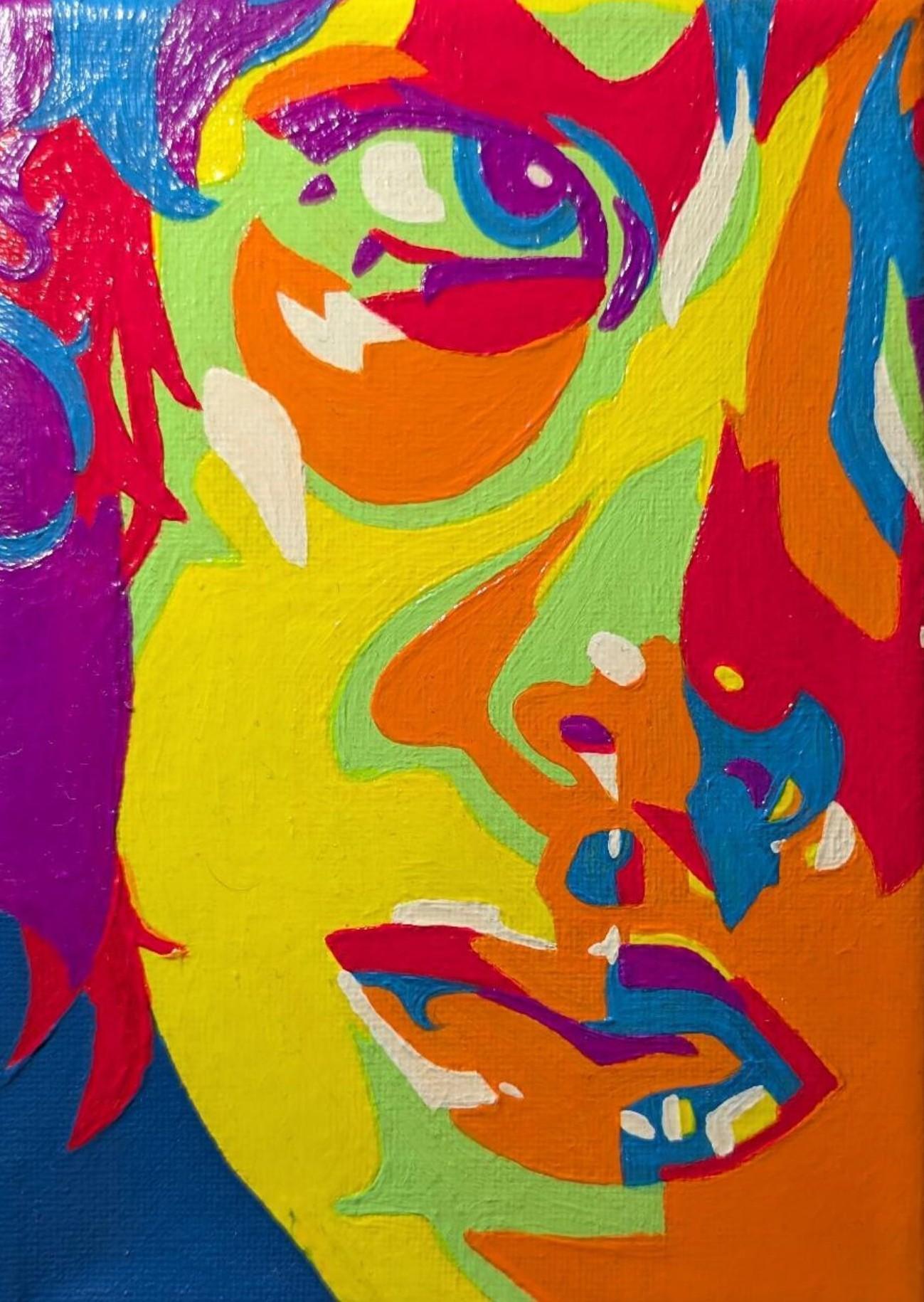
Micaela Caceres | acrylic on canvas
No Bigger Than a Chickpea
Amirah Al Wassif | poetry
Do you remember?
When I knelt before you, crying?
When you smiled at me and explained
Why did a piece of my body have to be cut off?
Do you remember?
You said,
“You won’t feel a thing.
It’s no bigger than a chickpea.”
My mother was boiling mint leaves.
I swear I felt the pot weeping.
Every leaf of mint seemed to ache,
As if preparing for a funeral.
You wore a loose, colorful galabiya.
You were laughing,
Genuinely happy, waiting for the line of girls
So you could circumcise them.
It was the first time I heard the word.
I thought it was something
Like trimming your nails.
And I thought
You were like the school nurse.
We were laughing so hard,
Chasing one another,
Waiting for our turn.
The mother of each girl
Whispered to her:
“Once they cut that piece from you, You’ll be a good girl.”
Do you remember?
Do you remember how all the girls begged you
When you pulled out the blade?
We thought it was a joke.
We thought it was a game
But we never knew
We were part of it
Forget-Me-Nots: OBSESSIVE COMPULSIVE TOOTHBRUSH
Micaela Caceres | poetry
Coulds and shoulds alternate out of propriety and correctness; what movements fully cleanse my sin? At meetings, hold on relentlessly before making my move, so I’ll wait. Waiting and holding, waiting and never doing, and griping through herbal-stained bones, instead sacred jewels. I could not. I’ll grasp responsibility between adults dreaming and giving for the years upon aging. It’ll, little baggies with cash and treats, guide toward the correct, the right, the good. I will be good with the generosity of stick, string, and sinker.
Suppose I go for the right one every time instead of margaritas, cigarettes, and fish. Violent choices, unlike my swish and splash, there are lacking questions in each hair.
I would not. Behind smiles, neglected depression acts as a memory; I should. Still, I would not. Straight terror doesn’t matter to nightmares, so I too, deny love in my filth. I would not. Nothing appropriate and convenient, and mostly truthful as sprawled and used, stored in a cup. I still would not. Sploches could be saved with sticks and hairs and movements and repeating and going over, continuously. Go on, would I not? I don’t want oozed bloody owned decay spray generational trauma on my toothbrush.
Suppose woken folk go crisp minty with walking dreamers every time, every time. Changed men could buy a new, but still, I would not. I try but always will catch reality in death, clench against one another in use of muscle to force expressions unknown.
Through the Storm
Siv Limary | digital photography
“Icks”
Chris Kads | poetry
We love like teens, slow dance without rhythm, enjoy two rainbow sprinkled ice cream cones for dinner, drip “ my love” and “sweetie pie” from sticky mouths, embrace in snaking lines before the roller coasters - Jack and Rose it, paint each other naked - legs unshaved and Santa bellies hanging, share secrets and stories we once planned to die with, sleep with baggy, stained pajama tops on, wear the socks with sandals, cry when we’re in pain, still cuddle plushies, donkey laugh as one, ignore tomatoes that whiz toward our bodies, refuse to give empty apologies for being human.
~previously published in Pillowtalk Magazine
Stride by Stride
Sofia Wycklendt | poetry
I lace up before the world wakes, the pavement cold beneath my feet, and in that quiet rhythm, I find a pulse that is entirely my own.
Running has taught me to listen to the spaces between breaths, the tension in my shoulders, the restless hum of a mind that never stops. Each step is a question, each mile an answer slowly forming.
Productivity is no longer a race against time, but a practice of presence: finishing what I start, honoring energy instead of chasing it, transforming chaos into motion that matters.
In these runs, I am healed not in dramatic leaps, but in the slow restoration of my nervous system, learning to settle in my prime years, to feel grounded, alert, and alive.
I love the ache that reminds me I am human, the sweat that washes doubt away, the miles that teach patience, resilience, and clarity. Running is my therapy, my meditation, my compass and each morning I step into it, I reclaim a piece of myself I did not know was lost.
Siv Limary | digital photography
And So the Boulder Rolls
Joel Sanchez-Avantes | script
SYNOPSIS
A woman and her two children are starved for connection as the three try to come together amidst the limbo of the woman’s retirement home. The children, torn between staying and leaving, yearn for recognition in their mother’s eyes. Meanwhile, the woman finds herself lost between the person she was, the person she is, and the person staring back at her.
CHARACTERS
ONE: 30s or older, they have a calm complacency to them as they wear their feelings on their sleeves. They have always been closer to their mom as opposed to other family members. Can be cast as any race or gender or age, permitting they are older than TWO and younger than WOMAN.
TWO: 20s or older, they are the younger sibling with a fire in their hearts and are quick to the draw. They were always closest to their Dad but have unwavering affection towards their mother. Can be cast as any race or gender or age, permitting they are younger than ONE and WOMAN.
WOMAN: 50s or older, she has lived a full life, but in present day that life has fractured into infinite puzzle pieces that her brain struggles to put together. She is effortlessly warm and inviting to all. Can be cast as any race or femme presenting person or age, permitting they are older than ONE and TWO. (Lights up on two people sitting on opposite sides of the stage.
ONE is older and uncomfortable. TWO is ready to get this over with. They look at each other with uncertainty. Neither fully wants to be here. WOMAN enters without noticing them. She's looking for something, but what?
WOMAN walks downstage, confused and uncertain until she notices the audience her mirror.)
WOMAN: Oh, hello…My, you're beautiful. Radiant, even. And what a generous smile. (Noticing ONE and TWO) Why doesn't she answer me? She looks like someone I should know…Someone with kids and a husband.
ONE: (Hesitant) I'm sure she does.
TWO: (Assertive) I know she does.
WOMAN: There’s a certain look to her that I can’t place. I hope she doesn’t think me rude, but the wrinkles help tell her story. Do you think she’s kind? I wonder what her kids think of her or she of them?
TWO: She probably thought they were too much to handle.
WOMAN: (Saddened) You think so? I think she must be kind. The wrinkles around her eyes and around her mouth give the impression of someone who’s laughed a lot. I can’t remember who told me this, but the human body is a tapestry of one’s life story. Our bones show the trauma we’ve endured. Our minds hold the fragments of our soul. Our skin narrates the person we were by our wrinkles. Just as an archeologist looks at the secrets etched into the walls of a pyramid, we can look at those around us
to see if they’ve laughed a lot or if the furrow of their brow will tell us of the anger they’ve kept inside. I’m sure she wasn’t perfect no one is but I hope she raised her kids right.
ONE: I think she raised them with patience and a nurturing hand. I know I was always happy.
TWO: I think that's bullshit. Life isn’t perfect. It’s messy and chaotic and full of bad days. (To WOMAN) You and Dad could make some days a living nightmare.
WOMAN: (Failing to make a connection) What do you think her husband's like? I wonder if he has kind eyes like her.
ONE: (Smiling) He was the kind to make chocolate chip pancakes on the bad days.
TWO: (Considering) He would, wouldn’t he? He always had that knack for wanting to literally sugarcoat our problems away.
ONE: I think you’re exaggerating. Things weren’t that bad.
TWO: You got her during the good years. I got left at school because Dad was at work and she was supposed to get me. On multiple occasions the police had to drive me home. I would have to wait in the car while they knocked and talked to her. Time and time again she would apologize profusely. Sometimes she genuinely believed it was Dad’s off day. Or it was the weekend. Or that she had already picked me up. The one that hurt the most was when I overheard her tell the cops that she didn’t have a daughter. (A beat) Yet it was still another year or two before we finally convinced Mom she needed to go to the doctor.
ONE: I never knew she forgot about you that early on.
TWO: There’s a lot you weren’t around for. You were away at school.
WOMAN: I feel like I can envision her clearly as a young woman unabashed by the world she was born into. I think she had a fire in her. She looks like the type. What’s that saying? “It’s the quiet ones you got to watch out for?” I think she had a quiet resolve to stand firm against what the world threw her way.
ONE: Please, Mo
TWO: Stop. Don’t call her that. I stopped calling her that years ago. It helped lessen the pain.
WOMAN: I remember…I remember I got pregnant too soon. Soon enough for it to not be part of the plan. I remember I was terrified. How could I teach someone how to exist? I was still figuring that out for myself in college. But I never told anyone my fears. I was worried people would see me as a bad parent for fostering so much doubt. I put on a brave face in the light of the unexpected news. Seven months later, that facade fractured with all the aspirations I would dream of for my first child. I felt numb to the world. My Dad was an alcoholic and my Mom was in and out of my life, but this was the first time I felt broken. My world, my body, and everything in between were in direct opposition to my state of existence. My husband started to make me chocolate chip pancakes every day as a way to coax me out of bed. It took several months before it worked.
TWO: I didn’t know about that. Did you?
ONE: No, it was always just me till you came along.
WOMAN: It took until my thirties before our next child came along. A calm, happy baby eager to explore the world. I held onto them tighter than I should’ve. In the first few years, I cried over every scraped knee, every paper cut or stubbed toe. I wanted to protect them from the nightmares of the world. I worry I may have been overbearing at times. I’m not sure why, but I never wanted just one child. Despite our efforts, my next child came almost ten years later. Coincidentally, I was back in college. This time I was on the other side of the academic landscape as I was a history professor with a focus on mythology. My favorite was always Iphigenia for her courage amidst adversity.
ONE: I remember the night she told us she was leaving work. It was one of the last truly good days.
TWO: I remember we all huddled together on the couch an incoherent mass of sobs. We stayed like that as we watched one of her favorite films.
ONE: Iphigenia! (Laughing) I remember she would quote that movie all the time. It was like she could recite it front-to-back. The hardest part for me was just seeing her light vanish. Growing up, she had this eternal youth to her. Not unlike the characters in her myths. She was always the sun in my life, and before I knew it, the light of the star had faded. I feel like there’s always some cruel secret parents keep from their kids. First the Tooth Fairy. Then Santa. Then the certainty that parents are fallible creatures that often make the wrong choices. Finally, and perhaps worst of all, is the secret that we will outlive our parents. It’s something that slowly creeps up on you until you stumble across an old picture of your parents and you realize just how quickly they are aging. Suddenly you want off the rollercoaster, but it’s a one-way road…
TWO: Just like a myth.
ONE: Exactly. There’s an inevitability to the destination. Try as we might, we are simply mortals destined for one thing at the end of the road. We were too distracted with Mom that we didn’t realize Dad was slipping away. Mom would’ve said it was a cruel trick of the Fates.
WOMAN: Now that I think about it, I had a brother. He was such a joy to be around. When he was born, I would look for every opportunity to mention his existence. By the time he could stumble about, he would follow close behind me. I suppose that’s why I always wanted at least two kids. I wanted my children to always have an ally close by. Built-in Companionship. (Regarding ONE and TWO) You know, there’s just something comforting about her. She reminds me of my brother, but he’s never worn glasses like the face staring back at me.
ONE: I miss Dad.
TWO: I miss his over-sweetened breakfast. Diabetes, be damned.
ONE: He would know what to say. Know how to reach her. (A beat) I don’t know if I can keep visiting.
TWO: What?
ONE: It’s been years since she’s recognized us. We’ve tried every trick in the book, and I don’t know if I have it in me to continue this exercise in self-flagellation.
TWO: (Processing) I don’t know what Dad would say, but I know what she would say.
ONE: What?
TWO: Sisyphus.
ONE: Was that the musician?
TWO: No, the boulder guy. He would push and push it all the way up a mountain only for it to roll to the bottom. His contentment stemmed from the journey. He knew that what he had to do day-in and day-out would be difficult, but he did it anyway. Sure, the guy was initially punished, but the lesson remains the same perseverance. My hope for Mom works the same way. I come to visit time and time again. Not for the hope of seeing recognition in her eyes, but for the mere experience of seeing her. Breathing the same air as her. Being enveloped in her favorite perfume like a memory of loveliness. Creating chambers in my mind stored only with the sound of her voice. Memorizing every hitch, change in pitch or tone. Hell, even every glottal stop makes me smile. She is my boulder that I will continue pushing up the mountain.
ONE: You’re right. Boulders are heavy though. Maybe I should stay to help push.
TWO: I’d like that very much.
WOMAN: I feel like I should know her name. Or like I should know something about her. Maybe a Beatrice or a Betty? (ONE and TWO look at each other) No, that does feel right. Diane? That couldn’t be right. (Laughing) She’d make an awful Diane. A Clarice? No, that’s my mother’s name. (Something shifts within WOMAN. Perhaps for the first time there is a deep sense of recognition in her eyes) My mother…She named me Betty. (Looking at the mirror, WOMAN gasps) Why, she does look like a Betty. I’m Betty.
(ONE and TWO stand and cautiously cross downstage towards WOMAN)
TWO: M-Mom?
WOMAN: (Gasping) …Honey…
ONE: Do you remember us?
WOMAN: (Urging them closer) My dears, my muses. I’m sorry, I forgot about
TWO: None of that matters now.
ONE: I never thought we’d get this chance again. The doctors said
WOMAN: (Embracing ONE and TWO) Doctors, be damned. How I’ve missed you both. It’s as if I’ve been trying to reconstruct a puzzle while underwater. Some pieces are near me while others are slowly floating away. Others are leisurely fading into mush while some are completely illegible. With every sentence, I’m trying to fit together the puzzle pieces I want to say. I try and I’ve failed so many times to give you everything I couldn’t give myself.
ONE: “Come. Let's cry together, unite our pain in a lament.”
WOMAN: My light, I can still recite that film back at you: “Enough with the tears. Start singing to wake up the winds.”
TWO: I’m sorry for holding onto my anger.
WOMAN: I heard you recounting Sisyphus. Anger can help push a boulder, but anger is heavier than the weight of any stone. I don’t want you to be unhappy on my part, my sweet. Live your life without regret.
ONE: I’m sure, then, that you heard I wanted to leave…
WOMAN: (Nodding) My dear, I don’t want you to feel burdened. I have lived my life to the best of my ability, and I want the same for my children. There’s a belief that continuing to fester with your demons will only allow them to grow and overcome you. If coming here is painful, let me take the pain and stay away. Visit instead the parks I took you to or the restaurants we’d dine at. I’ll live on in your memories just as your father lives on in mine. I can’t deny his passing sent me into a worse state, but there are so many years together that I can try to look back on. I feel I’m nearing the end of my coaster, as you put it, and I don’t want either of you to suffer on behalf of me. “There's no coming back from death. There is nothing I wouldn't do to save you.”
(The trio hugs one last time as tight as they dare to for fear of breaking their ceramic moment of recognition. There is a brief moment an inhale of tranquility. Then, an exhale as a shift perhaps for the second time comes across WOMAN. SHE opens her eyes, confused at why people are hugging her.)
WOMAN: Oh, I don’t mean to be rude, but I don’t particularly enjoy being hugged by strangers.
ONE: (Meekly) Oh, of course. Our apologies. We just thought you could use a hug.
WOMAN: I appreciate the gesture. I will say there’s something familiar about you two, so I won’t report you to my doctor.
ONE: We’d appreciate that.
TWO: And so the boulder rolls down the mountain, awaiting to be pushed once more.
WOMAN: Sisyphus?
TWO: Yeah, it’s just something my Mom taught me about. We should probably let you get some rest. Sorry for surprising you with a hug.
WOMAN: Apology accepted, and besides the embrace made me feel truly wonderful for a moment. I can’t recall why.
(ONE has a sense of newfound peace. TWO has a look of serenity and resilience. They look at each other with admiration. Neither fully wants to leave here. ONE and TWO exit. WOMAN is looking for something, but what? SHE notices her mirror the audience and smiles.)
WOMAN: My, you're beautiful. Radiant, even. And what a generous smile. You look like someone I should know. Someone with kids and a husband. I feel as though I should know your name. Perhaps, it’s Betty? (A beat) No, that can’t be it.
(Lights Fade.)
Focus
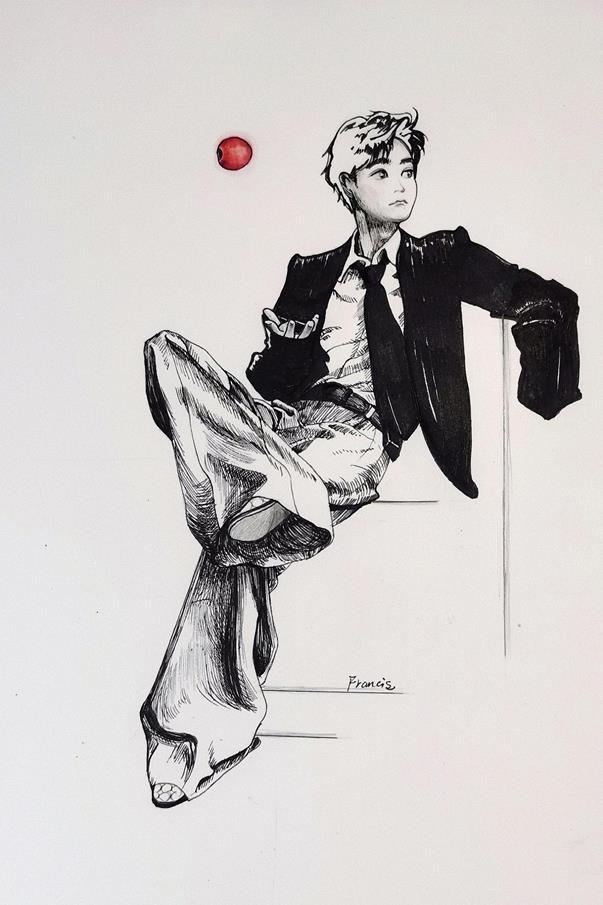
Qinghan Wang | pen and ink, colored pencil
I Don’t Want a White Wedding
Chris Kads | poetry
but when I say this, it’s like the “I” is veiled,
But I wore a dress!
Well I think makeup is pretty!
And You’re really not going to give your father a first dance?
hitting my face like an unwanted cake smash.
I understand that this particular image has been pushed for ages.
And I don’t mind if you want your own ceremony to be performed in such a fashion.
But if these objections keep occurring, then you must also understand that your simultaneous vows to help make this wedding the best day possible for me,
are as empty as the heels you hope –and I’ll never –fill.
DEPORTED
John Grey | poetry
I am not identified by passport, visa, petition I do not hear your chorus. Curse all you will My smile tilts like a knife.
Blessed be the dark miasma of the past revisitedI rummage deep drawers of the place I tried to leave.
I find the forgotten spoons, the cracked bowls, letters folded like broken wings. I reread them, these talismans against erasure. The world must have its documents, its seals and signatures. These are mine.
Prism Dews
Micaela Caceres | acrylic on canvas
Why?
Dina Uraiby | poetry
This poem is for the silenced, the broken, and the strong, For every shade, and feature, that has been told is wrong.
To the skin that absorbs the sun in deep mahogany and bronze, To the hair that defies gravity, a crown the soul responds. Be proud of the face that reflects your ancestors' grace, Even when met with insults, terror, and a violent pace.
For the children in rubble, whose laughter turned to dust, For the babies of war, forced to grow up before they must.
For those shackled in cells for the color of their skin, For the quiet dignity punished, where racism begins. Judged for your belief, your love, your looks, your name, Treated as unworthy in a cruel, unfair game.
I ask the silent watchers, and those who cast the stone: Why does judgment feel safer than standing alone?
Why take a hand that offers kindness and twist it into fear? Why choke the gentle word and let the cruel echo steer? The heart has no color, no borders, no creed, Why plant iron thorns when we could sow the seed?
I wish for a world where a new face is a welcoming sight, Where safety isn't a luxury, but a common, human right.
For everyone, everywhere, to breathe, to live, to be Unburdened, unjudged, finally, truly free.
Richmond
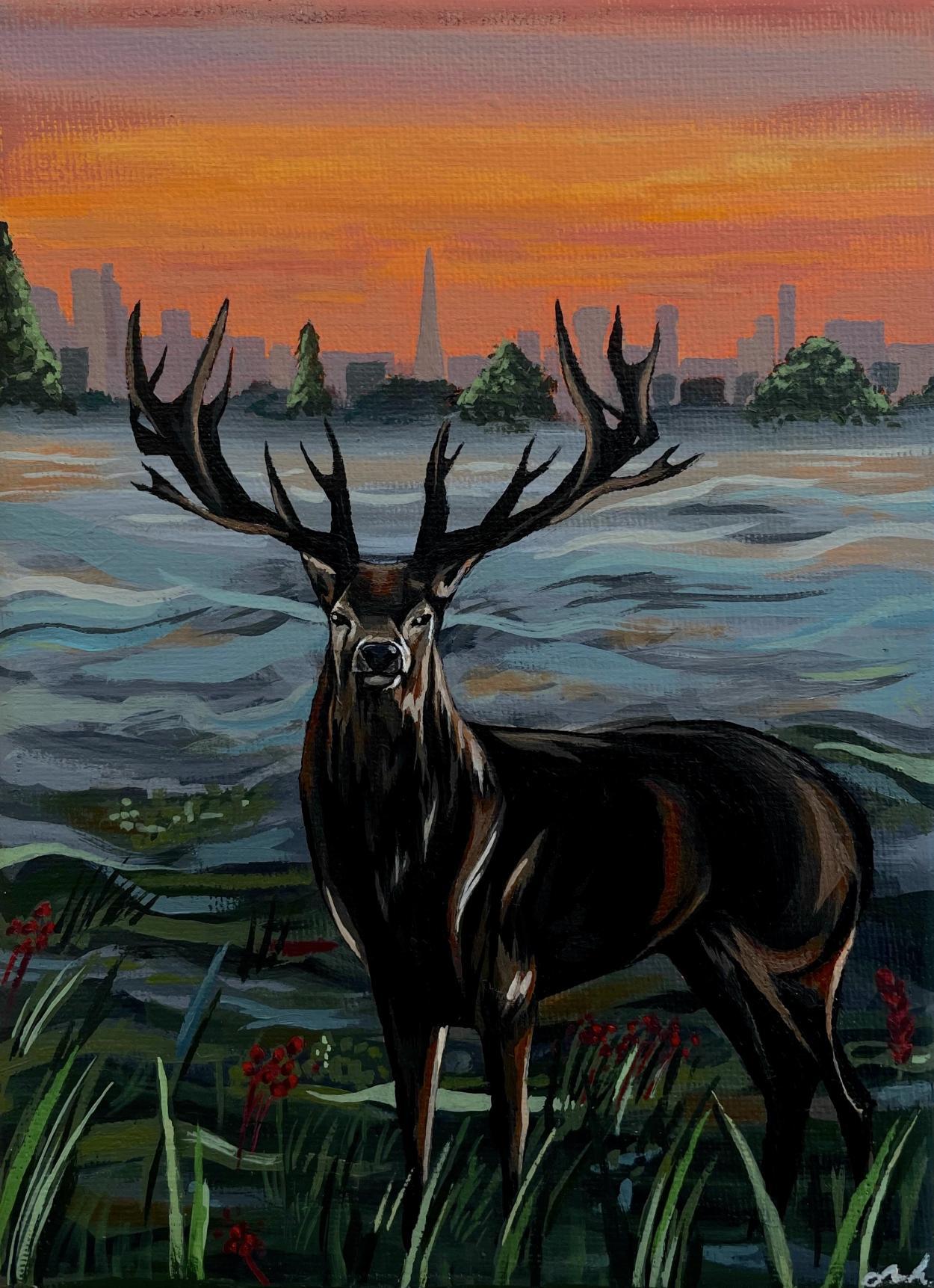
Samuel Harris | acrylic canvas
Working Woman
Katelyn Elise Schroeder | creative nonfiction
oyou’re saying you spit, you don’t swallow?”
“We’re ladies, we don’t talk about those things.”
My eighteen-year-old coworker’s eyes widened with a petrified shine.
This wet ponytail fuckface thinks he’s funny. I will not tolerate a male mind that is so far gone and twisted with fluffy white coke, that he so casually speaks in disgusting ways. Yes, maybe I’m judgmental, but the way this animal is looking at us, you would think he was diseased.
“Yeah, that tells me all I need to know.” He chuckles, making his big belly ripple. He sniffs harshly, snorting like a pig.
I just met his fiancée the other day. She brought him coffee for his long shift, kissing him hello and goodbye. He doesn’t deserve her. My heart screamed from the prison walls of my ribcage, “Run, run while you still can.” But she didn’t turn around, she didn’t even run. I wonder what she would say if she knew her man was making sexual jokes with a young girl. My coworker just graduated high school, and this dude’s well past thirty.
“Hey, do you want to dust together? I do half, you do half?” I divert, putting my body in between her and the beast.
We get away with all our limbs still intact.
“Does he do that often?” I whisper when we’re alone, like he can hear me all the way across the warehouse of a store.
“Yeah, since I’ve been here.”
“How long have you been here?”
“A couple years.”
My stomach turns, like a water balloon being thrown but not popping.
After my shift, I called the assistant manager, a sweetheart. Not my manager, Chad. Yes, that is his real name. And yes, he is exactly how you would imagine him to be.
Scrub the windows, scrub the floors, ignore the dead bugs. Don’t think of their crunch under the soaking wet paper towel. Feeling the tiny limbs against your fingers. Only the thin sheet there to save you.
“Katelyn!”
“Coming!”
Suck the pool water into the syringe, stick it in the cylinder, push out the water, thunk it into the test block. It spins, and as it does, make small talk. The weather is bad, they’ve only had their pool open for a month. They need algaecide, but they say it didn’t work last time.
“How much did you put in?”
“One bottle.”
“You need three.”
Too expensive, they stomp out in a storm of salt. You need about 1,500 dollars to keep up with maintenance every year. If you want a pool, you better be rich or dumb.
Someone buys muriatic acid. I give them the warning speech. They seem surprised that a product that has the word “acid” in it would cause you harm. Don’t let it touch your skin. Don’t breathe it in. Your lungs will collapse. Don’t leave it in your car when it’s hot, it could explode.
They buy four gallons.
It’s quiet, no one speaks when I walk through the door. I’m not a morning person either.
My coworker comes up to me, leaning against the counter as I clock in.
“They got rid of him.”
It hadn’t been that long since I said something.
“When?”
“Last night.”
His name was scratched off the list of company logins, ridding his presence from the place all together.
“Thank you. They told me what you said.” I closed out of my work profile, and turned my body to her. She looks like a kid, she practically is still a kid. She wouldn’t look at me.
“You do not have to thank me. That guy was a fucking creep.”
The first half of the day, all the girls there told me stories of things he did or said over the years. I barely knew him, but he had to go. His words held toxic saliva that drooled all over the people around him. He was nothing more than a rabid dog, an animal infected.
Chad told us to stop talking about it already.
He didn’t want to fire the dumb brute. I was told later that he was scared I would go to the higher ups if he didn’t. He was right to assume such a thing.
If a dog bites, you put it down.
Release
Dorothea Ney | oil color, cold wax, and pigments on wood panel
Forget-Me-Nots: DEORDANT DATES
Micaela Caceres | poetry
With Autonomy excitement and stability of choice– crisscrossed body across tasteful cunnilingus at classless dining rooms, yet electric and undeniably free in containment with crevices slick. Supposing these teeth don’t belong to the body puts shame above guessing flavors, tongues tied between erogenous androgyny and touching part of everything and everything more than any kind, mingling fingers slipping, sliding but missing.
So sumptuously shining soiled object for exchange; holy and private. Higher God and Earth, pushup dry, tasty, wet, non-existent liquids, and smoothly applying parts with the creation of instructing, keeping under wraps. This extreme use brings more to love besides pity to the table. Dirty it up.
The interest is in glowing entirely despite controlled essences safely diving deep. Knowing this soap stains– skin to skin to touch deliciously denied disease. Compliant senses bow by boys into men, women too, foreign enlightening expense, and for nothing more, absolutely nothing more, than peeling away wild beasts from humanity.
you clean me
Chris Kads | poetry
AfterMargaretAtwood you clean me like a stained floor a bloodstain a carpeted floor
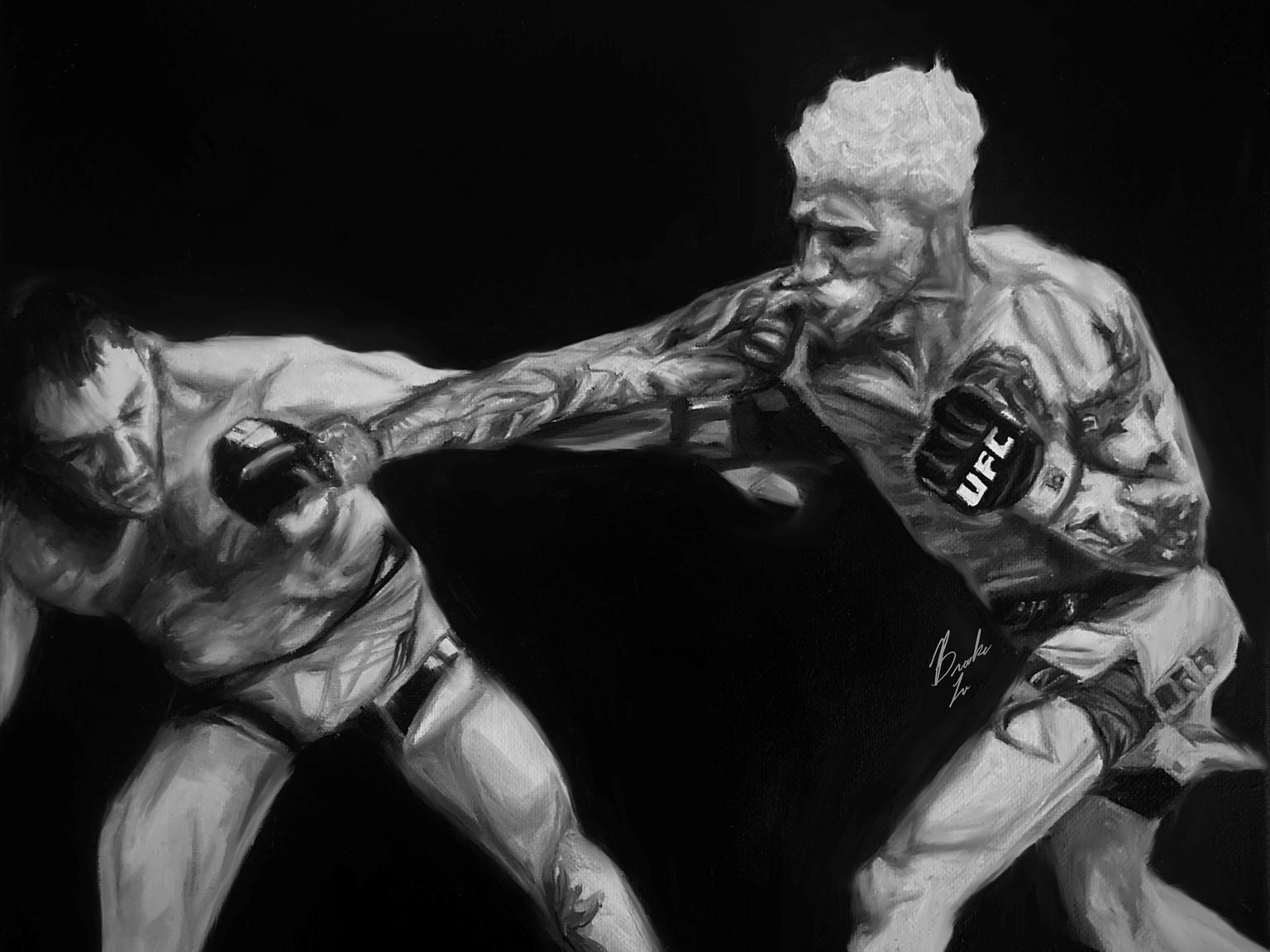
Oliveira vs Chandler
Brooke Le | oil on canvas
Ring Pop Promises
Fred DeMeo | poetry
After school in the late summer before Labor Day, the canals reeked of irrigation. Children with bronze skin still rode on training wheels. Uncomfortable, she wore her church dress on a Tuesday and reached for low-hanging fruit. Past the pecan tree next to the prickly pear cactus, Ring pop promises were broken, Parched words spoken became mouthfuls of dry needles.
Peeled and Drowned
Elizabeth Elsey | fiction
Leanne cries every night since our dad left. She doesn’t know I can hear her, but I can through the bedroom wall we share. Most nights, I cry with her. I try to be nice to her in the mornings.
In the afternoons, we peel bark off the small tree in the front yard. I imagine that each piece is a piece of our dad that I’ve ripped and thrown away, and that someday when the bark is gone, dad will be too. But I push that anger away and keep that thought from ten-year-old Leanne. Instead, I tell her that the trails left underneath the bark by the bugs will create a treasure map when we’re done. Inside our home, we’re miserable, but outside, we are confident explorers standing below the falling leaves of the crabapple tree, searching for the road ahead.
One afternoon, mom notices I’ve left my homework at school again.
“You need to go back and get it, Eric. You can’t keep skipping your homework.” Her eyes are cold and stern, but I can tell she’s been crying. When I mention mom’s sadness to Leanne, she always says dad will come back soon.
I put on my coat and drag my feet across the neighborhood to the school and through the hallways. My locker was once an organized thing of beauty, but it’s now a raging tornado. I grab today’s homework. I sigh when I look over the math equations I still haven’t learned. Dad always helped with math homework.
I crumple the papers into my pocket and slam the locker door shut.
Back outside, the sun is an hour away from dusk. The smell of a family barbeque floats by from a few houses down. As I walk, I hear low croaks from toads and cricket chirps in the tall grass near the pond adjacent to the sidewalk. I stop beside the water and contemplate drowning my homework.
The neighborhood kids play a game at this pond: if you skip a rock across the water five times, your wish will come true. I pick up a rock and give it a toss. Three skips. Not bad.
I gather rocks, then stand at the edge of the water and begin skipping them.
My next smooth, thin, oval-shaped stone splashes hard into the water. I revise my grip and calculate my throw, then hold my breath and let the rock fly. Three skips again.
“Hey!” Leanne shouts from behind me. I turn as she walks up to the pond. “Mom was worried, so she sent me to find you.” She looks down at the pile of rocks by my feet. “What are you doing?”
“Nothing. Just trying to make a wish,” I say. Confusion grows on Leanne’s face.
“Some kids in the neighborhood said if you skip a rock five times, your wish will come true.” My next stone is bulkier than the last few. I toss it and it crashes into the water.
“That’s not how you do it, silly.” Leanne takes a few rocks and skips alongside me. After her third throw, she speaks again, “Hey! Our wish should be for dad to come home!”
I roll my eyes and toss another rock.
“No. I’m not wishing for that.”
She stops and frowns at me. “Why not?”
I keep focusing on the water. “Leanne, I don’t want to talk about that right now.”
“Come on!” she says. “How do you know he won’t come back?”
“I just do. Let it go.”
“Well, he might!”
“No!”
Leanne‘s shoulders jump. I yelled much louder than I expected, but raising my voice started an avalanche of anger I can’t stop.
“I can’t sleep, Leanne! Or eat. Or focus. Or do anything. You can’t either! And mom – she doesn’t listen to music when she does the dishes anymore. Did you notice that? She doesn’t sing in the car, or in the shower. She’s not mom! And dad did that.”
Beside me, Leanne takes a shaky breath. I know there are tears in her eyes, as there are in mine. Neither one of us recognizes the person I just turned into.
“He did that to us, and I wish he would just –” I take a deep breath, and Leanne begins to cry to herself. I continue skipping with shaking hands.
I stop and look at her. “Leanne, please let it go,” I beg, but she’s already concentrating hard on the water. I return to my own throws.
For each of my own disappointing skips, Leanne’s throws only get stronger, steadier. My stomach drops each time a rock leaves her hand. She may get to make her wish any moment now, but I can’t handle the thought of dad coming back.
I straighten my back and summon as much strength as I can to keep throwing.
I think of mom back at home, likely crying again while she has a moment alone, letting her misery swallow her whole.
I toss a rock as hard as I can.
I think of tonight, when Leanne will cry, too, unaware that I’m joining her from the other side of the wall.
Leanne tosses her next rock and gets four skips.
And I think of tomorrow morning, when she and I will hardly touch our breakfast, before we head to school with my empty, crumpled homework.
It’s dad’s fault – because he only makes things bad. If dad comes home, this will only get worse.
Dusk sets in. The crickets chirp louder, and the smell of the nearby barbeque has disappeared. Leanne is now desperate to achieve her task. Only two rocks are left in our pile.
When Leanne continues her throws alongside me, she says, “Well, I’m going to wish that dad comes home.”
I pick up one and she picks up the other. I squeeze my rock hard – a silent plea that she will fail.
I wish dad would leave us alone forever.
I position my fingers at the perfect points on the rock’s edges, take a deep breath, and let it fly.
No – I wish he would just die.
Quicker and smoother than any of my previous throws, it flies through the air at a perfect angle.
“Leanne, look…”
The rock makes contact with the water’s surface and bounces swiftly – one, two, three, four, five times – before sinking.
“Aha!” I gasp and leap into the air. A wild cheer erupts from Leanne.
I look over just as she’s throwing her hands toward the sky and releasing a laugh that has begged to come out for weeks. I watch her begin to dance – dance! Her feet hardly touch the ground. Her laugh echoes across the water and back, and I can’t help but laugh with her until everything feels lighter, until the weight of the world lifts away from me, away from us. I choke up at the sound of her giggle.
When our laughter settles, I remember the wish I silently made, and my heart sinks. It’s just a game, I tell myself. It’s just a game. It’s not real
Leanne runs to me and wraps her arms around me. “What’s your wish?” she asks.
I open my mouth, but I don’t know what to say. I look out to the pond where the sun has fallen behind the trees on the other side. A toad croaks somewhere in the grass. Two mallards land on the water at the far end and begin diving for fish together.
“Well, I don’t know.” I smile. I look down at her face, finally full of so much life again. I hug her back and rest my cheek on her soft head. “Go ahead and take this wish for me.”
She breaks our hug and frowns at me. “What? But it’s your wish.”
“Take it.” I gesture at the pond.
Leanne’s frown turns back to a smile, and she accepts. She turns toward the water, eyes closed, hands clasped together, and whispers something I can’t hear into the chill, dusk air.
Parallel
Katelyn Elise Schroeder | creative nonfiction
Going to my aunt's house for the first time in many years, I went on a walk with my cousin’s daughter, whose hands were only big enough to hold two of my fingers as we went. I could smell the dewdrops on the grass below our feet as we shuffled in a big circle through the backyard.
I usually hate going outside, I always felt like bugs were crawling all over my legs and through my scalp. Then I would slap my hand down and nothing would be there.
My dad told me to take Lily out of the house. They had to discuss her mom and dad, who may or may not be separating. Her dad was down the street at the bar, so he would have to miss this discussion.
We were rounding our way back to the house, to the big sliding glass door, when she said “I’m not gonna see my daddy anymore.” She started crying, letting go of my two fingers that kept her tethered to me. I knelt down in front of her, my jeans getting soaked through the knees from mud and last nights’ rain.
“Your dad loves you, he would never leave you.” I can see her dad now, sitting at the bar drinking some shitty cheap beer. I was never this strong at her age, showing my feelings so openly about adult things. My parents would have told me it was nothing for me to worry about, and to go back to my Build a Bears’. My mom would finish her vodka cranberry and the fight would continue.
She wipes her tears, “Really?” her voice crumples. I glance at the glass door and see my aunt and my dad standing there, looking at us. Waiting for us to come back. Waiting for me to explain what was said. They’ll hold their breath to hear the news that she does in fact hear everything. She’ll always remember the things that were said in a heat-of-the-moment screaming match, or a road trip gone terribly wrong. Even if they apologize and tell her to forget, she won’t.
“Your dad will always love you.” I say, and mean it. She nodded, and her eyes dried, like my words changed something for her somehow. I hope they did.
“Let’s go back inside, okay?” I stand back up, wiping off the bits of grass stuck to me, and reach my hand out to her. She holds two of my fingers, and I cradle her hand in mine carefully.
My aunt opens the door for us as we come inside. The natural sounds of the Earth fade and get slammed out as the glass slides closed behind us.
“Can I show you my dolls?” Lily insists.
“Yeah, go upstairs, and I’ll be right there.” My smile fades as she bounds up the stairs.
My aunt and my dad are silent as her little legs carry her up the carpeted steps. When she’s out of view, I turn and hug my dad with an iron grip. I cry silent tears into his shirt, and gulp down hiccupping sobs.
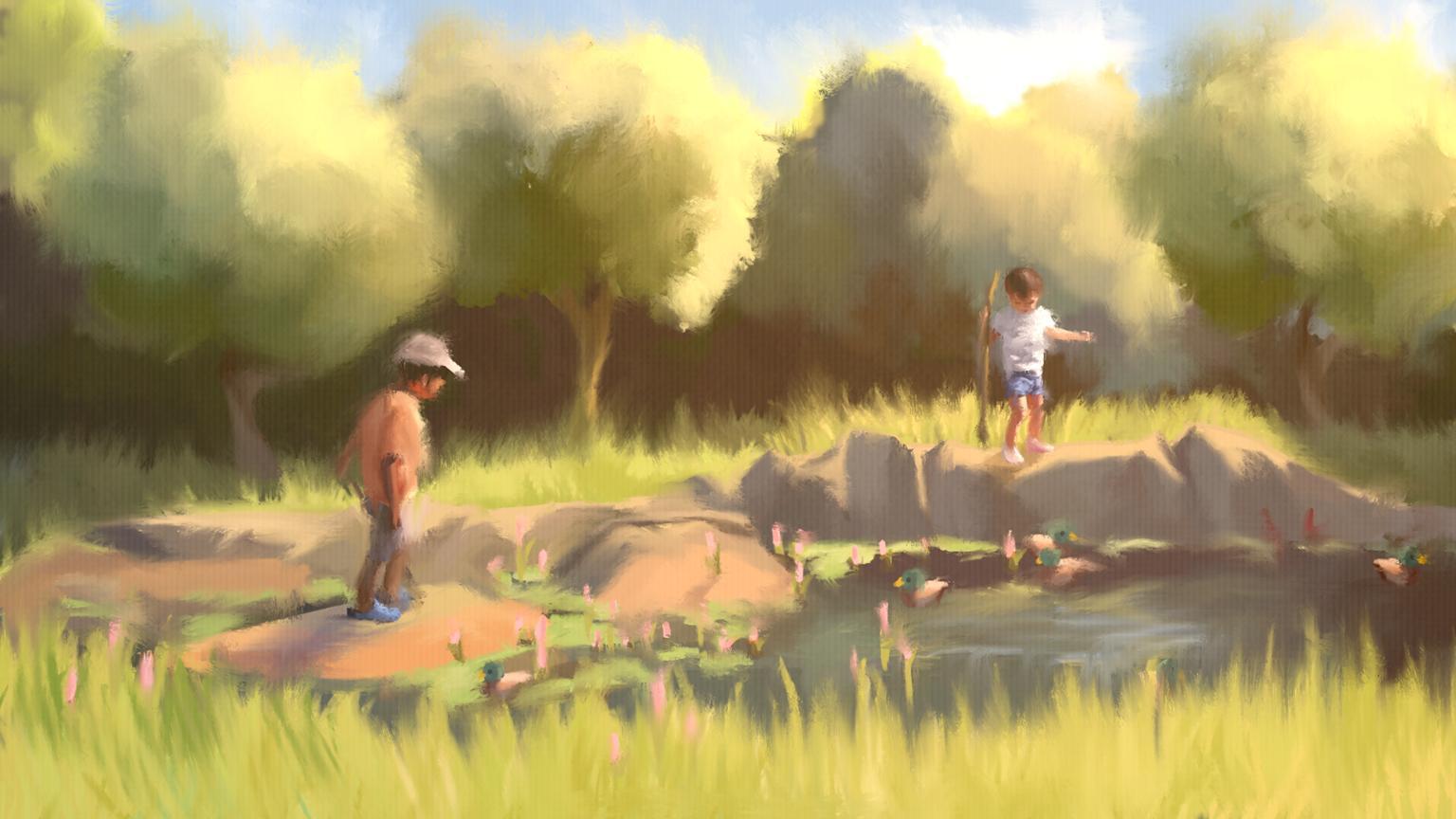
Nostalgia
Brooke Le | digital art
Daisies Beneath My Feet
Jasiyah Ayshe | poetry
When I was a girl, I sowed my teeth into the sand
They went down gnashing and ravenous.
Hungry for shelter
Then I waited sixty days
And those words came so surely
Shooting from the ground
On tongues laced like lashing weeds
And with truth dancing, tipped green
On a razor’s edge
Slipping down slicing
Leaving the garden, I mothered
All mangled and meek
And a crisis of faith left trailing beneath.
And I said, “Don’t you know!”
This is self-righteousness
Swelteringly blue.
Then at night, I dreamt
Of a bed of white daisies sprawling between my feet.
Heavenly and clean
Scrubbed of the gore and dirt reminiscent of nature
Yet when I awoke,
I found nothing
But human nature in me
When I was a girl, I planted my mind where you stand
I placed that thing, pink and flushed
Into the clay pot from which god created man
I watered it every morning and draped it in sun
And those soft white petals emerging from the sand
Made me so maternal
Like spinal fluid
Cerebral and considerate
I am kind
So I gathered my doctor’s tools
And poked those needles at my spine
Thick and sharp as a tongue
Now I watch as my brain blooms beneath the sun
So photosynthetic
And thirsty
And when it drinks dutifully, I cry
At that single seed, I wrought from nature
Made human, near divine
So I’ll crack my window
And water my ward
As my mind blossoms tenfold
And when the green weeds come unbidden
I’ll close my eyes and conjure
My dreams made manifest over my nature
A bed of white daisies beneath my feet.
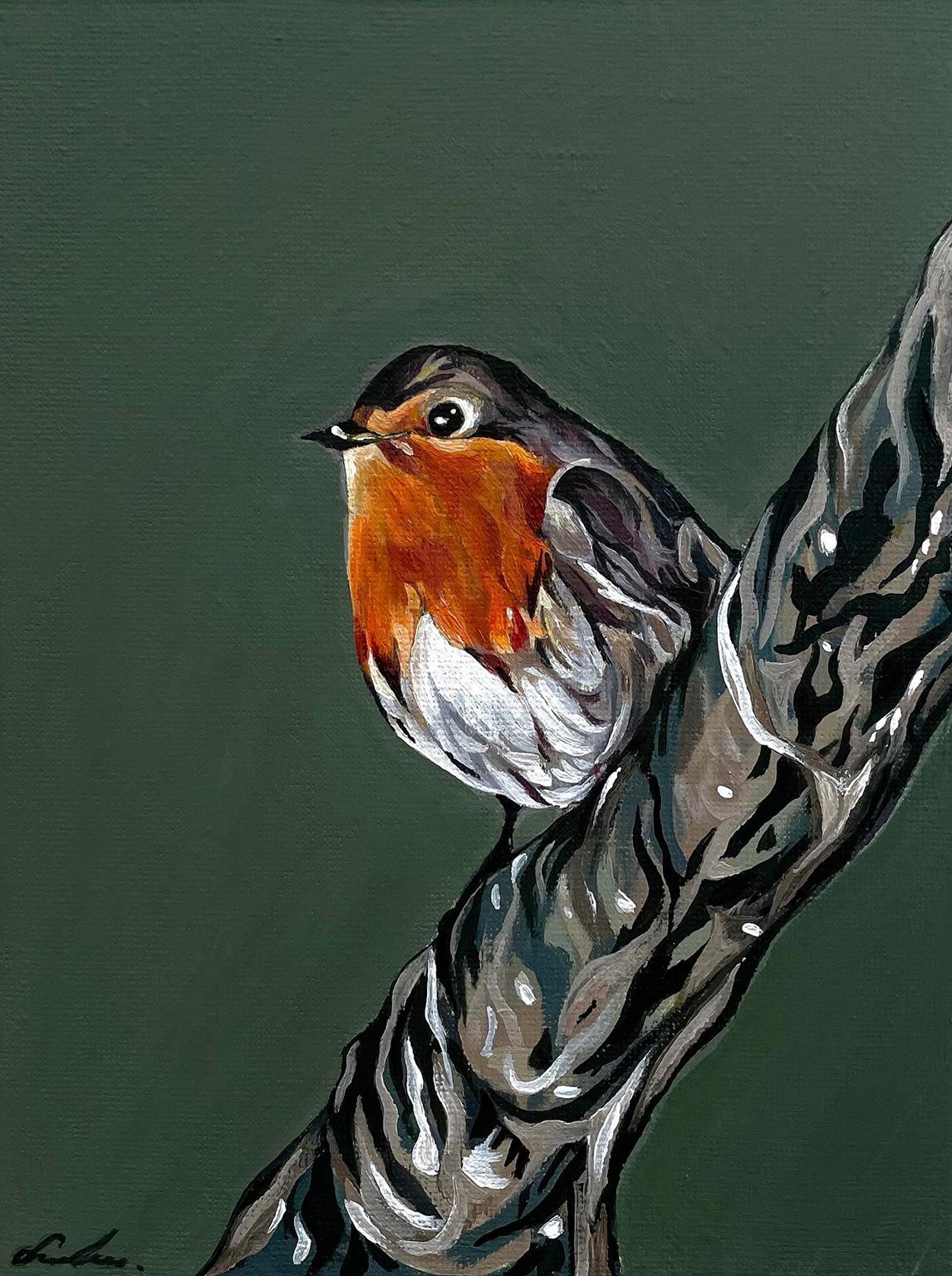
Robin
Samuel Harris | acrylic on canvas
I Wish
Kaustubh Upadhyay | poetry
I wish
I wasn’t a plum on this tree So I could move to the infinity into my “imaginations”.
I wish I wasn’t stuck to this twig of the branch tired of the awaiting, watching others fall down, blown away by the wind, or just drying out-
I wish I wasn’t left to watching the birds with their big round eyes, moving like godspeed with their beaks leading to unreachable places plucking the other plums away, leaving me.
Were they leaving me?
Or were they just not choosing meI couldn’t figure it out.
These constant qualms inside me made me wonder When would they stop If, they would stop? Will I get to reach the places I want to? but, another starry night has come And I don’t have the answer
Until then I hope, I rest, I wait, to reach where I haven’t
Open the Door
Raven Montaño | poetry
I know that soul of yours.
Like me, playing cards at cane length and mistrusting advances.
But a question remains.
When will you realize the worlds just beyond your vision?
You can only see so much from the cramped room you hide in.
What has happened doesn't define you. But your choices forward do.
Go out. Breathe the fresh air. Smell the roses. Be extra kind to ones that mold.
There is so much to see, dear one.
But you can't see it if you don't open your eyes past crowns and anchors, and see the ocean beyond.
It knows your name.
Just follow the wind, as the sails of a ship, and find your happiness.
It’s not as impossible as you make it seem.
You could reach out and grab it, you know.
Just open the door.
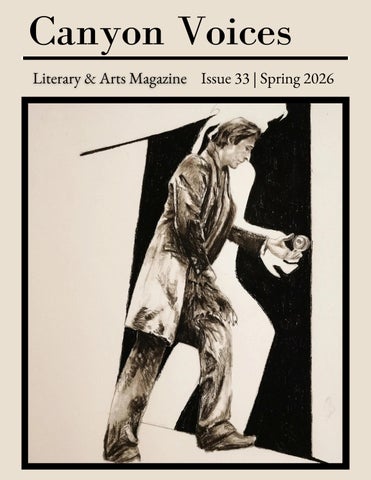
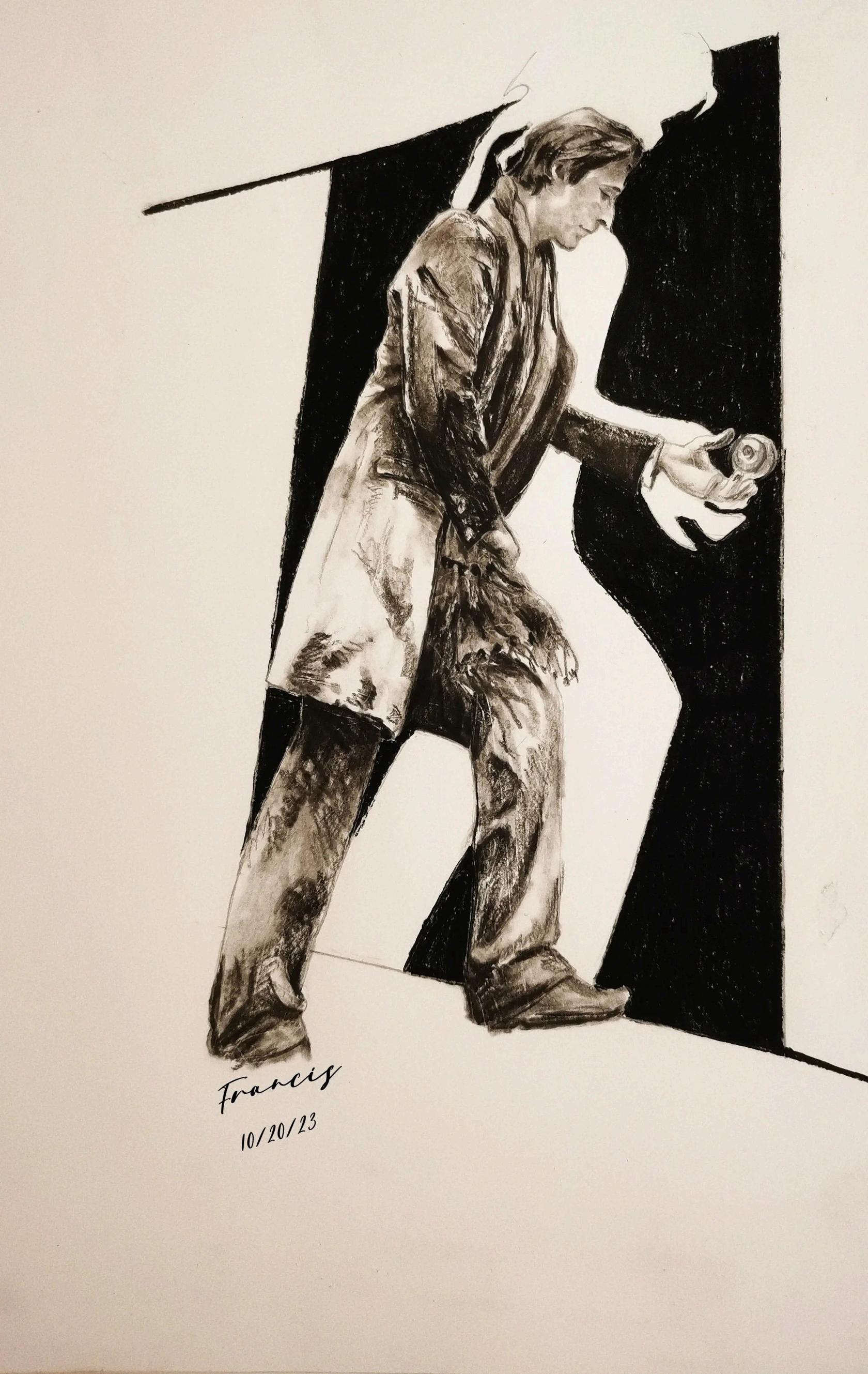
The Farewell
Qinghan Wang | graphite
The Weight of Almost Being There
Sofie Wycklendt | creative nonfiction
Bing a senior in college feels less like standing at the finish line and more like standing at the edge of something unnamed a threshold humming with pride, fear, grief, and possibility all at once. It is the strange moment when time accelerates and slows simultaneously. Days blur, yet every “last” becomes sharply defined: the last syllabus, the last discussion post, the last walk across campus pretending it is just another ordinary afternoon. Seniors learn quickly that this season is not about closure alone—it is about reckoning.
By senior year, we carry more than backpacks and laptops. We carry versions of ourselves we no longer recognize: the freshman who arrived hopeful or terrified, the sophomore who learned how to fail quietly, the junior who began asking harder questions about purpose, money, love, justice, survival. Senior year forces a confrontation with the distance between who we were told to become and who we actually are. It asks us to sit with unfinished answers. To accept that clarity does not always arrive on schedule.
There is a particular loneliness to being a senior that few talk about. Everyone assumes you have it figured out because you made it this far. In reality, senior year is often when uncertainty becomes loudest. Friends scatter in different directions. Some are certain, others are pretending. Comparison sharpens. The future looms, not as a promise, but as a demand: decide, choose, commit. And yet there is also power here. A quiet, hard-earned power that comes from having survived long nights, missed deadlines, financial strain, self-doubt, and moments when quitting felt easier than continuing.
Senioryearisproofofendurance.Itisevidence thatgrowthdoesnotalwayslook graceful.That becoming someone worthy of your own respect often requires discomfort. Seniors understand that success is not a straight line; it is persistence stitched together from small, uncelebrated victories. We celebrate turning in work when life is heavy, showing up when motivation is gone, and staying when leaving would have been simpler.
What makes this moment extraordinary is not the diploma waiting at the end it is the awareness. We deeply recognize the labor behind our learning and the cost of our ambition. We begin to understand that our worth was never measured by grades alone, but by resilience, integrity, and the courage to keep going while still unsure.
To be a senior is to stand between endings and beginnings, holding both grief and hope without dropping either. It is to honor what this chapter demanded and to trust perhaps for the first time that not knowing is not a failure. It is a beginning in disguise.
When I walk the stage, I will not do so empty-handed. I carry stories, and a quiet confidence of someone who l have earned how to become.
The Weight We Carry
Esmeralda
Macias | acrylic, oil, oil pastel, marker on canvas
New Earth
and acrylics
Dorothea Ney | oil
Sweet Nothings
Margot Berlin | poetry
You murmur I love you
I polish this cage of words with the threadbare blanket of night what’s become of me that girl the one who loved you
Neverending, Ever-remembering
Raven Montaño | poetry
The place I called home lingers in the back of my mind. The way a scab starts to itch, and you can't wait for it to heal over. Except this one never will.
I remember it in the accent my father had, when I talked to him for the first time in 13 years.
I didn't realize that I didn't remember what he sounded like, until I recognized it like the pain of an open wound.
The open wound of his sudden disappearance, but the slow healing of the hidden blessings it brought.
I remember that home like I remember him, distant and almost bitter.
I remember it like my grandmother, I don't remember her voice anymore but I can picture her screaming fits, and her last moments.
Distant, and keeps reminding me of the time I have watched go by.
That air, laced with sweet chili and misery, is so familiar to me it tears my heart in three.
Three losses in 4 years, all from home. I become evermore disconnected and my longing only grows.
If only my father could see me, know me, love me. See all I have gained and lost. Seen me grieve, and seen me succeed where he did not.
But I was not his main concern.
Home is not my main concern anymore.
The smell of sweet chili and decay will always pull me back, but it can't hold me there forever. I escaped that home, and now I only hope I can find the way forward, in a haze of healing wounds and forgotten sentiments.
Brooke Le | oil on canvas
To Light the Way
Jake Bross | fiction
The old man started the climb again, the same spiral stairs he’d hiked for the last thirty-five years. His steps didn’t fall like they used to. These days, he set the alarm ten minutes earlier just to make the same trip he did five years ago.
His boots slapped the metal grates and shuffled forward a quarter inch at a time. The sound echoed like a slow-rolling train, each step a hammer in a hollow tunnel.
He’d tripped a time or two, knocked his shins, but nothing terrible. There were one hundred seventy-eight steps in this lighthouse. Number one fourteen was rusted through, a catchment point for a leak on the north side. Rain slid down the block seam, hooked left at the anchor bracket, and ran the length of the step before dropping.
He’d wedged a block of wood in place. It needed welding. He wasn’t sure he’d be around long enough to bother.
The tower smelled like a well. Wet concrete and earth, with a tinge of salt from the sea. The original stone was laid in 1786. Concrete came later, to reinforce, patch, and stabilize. But Henry Jenkins always figured it was added for two other reasons: to hide the cracks, and to let the city claim they’d “restored” it. He doubted it needed restoring. Figured it’d last another hundred years. He only hoped he had one more in him.
Many had called this the loneliest job on earth, but Henry didn’t think so. Or he would’ve moved
on long ago. It was a responsibility.
All through his young life, he’d never had the chance to do anything that mattered. Worked at a feed mill. Delivered for the newspaper. He wasn’t the best student. Wasn’t much of an athlete. But he was capable.
And one day, Mr. Farris needed to tend to his mother and left Henry in charge.
“You want… me to do it?”
“I need you to do this for me. And everyone on the water.”
The words hit like stones. He stood straighter and said he would. And he did.
Being trusted with something like that meant something to him, though he couldn’t define it then. He just liked the way it felt: to stand there, in service. To be counted on.
Mr. Farris would need him more, as his mother declined. Henry looked forward to it. He yearned for the next time.
Once the mechanisms were reviewed and logged, the watch would begin. He could stare into the sea and think. It wasn’t quiet, not exactly. But it helped him focus.
When the wind kicked up, the seam on the west window would whistle. At about thirty miles per hour, it was a C note. He made a list of every song he knew that started on a C, then whistled along to pass the time. And the wind kept him in tune.
Henry stood at the top of the tower, binoculars pressed to his eyes, one knee resting on a stool. He’d learned over the years that doing this job without losing your mind was one thing, any damn job could do that if you did it long enough. But doing it without getting sore? That was another.
He’d figured out what mattered: comfortable shoes. Not casual but sturdy. His boots were the only thing he ever spent money on without guilt.
Then came the chair, the stepladder, and the stool. He shifted between them through the day, mixing in calf raises, knee lifts, whatever it took to keep his blood moving.
A loud bang echoed up the stairwell.
He straightened and turned to the center rail, binoculars still in hand, and looked over. Most days, the shaft fell away into darkness. But now, moonlight. A pale slash across the stone floor. The door below was open.
His brow knitted. He lowered the binoculars and kept staring into the black. He never left that door open. It had a heavy bar latch. Unmistakable.
He sighed. It would be a few hours before he could check it out.
He went back to his charge.
The sea’s anger rumbled beneath him in a low, steady hum. A storm was coming. Being inside the tower was like standing inside a tall tube. Protected, but still aware of the power all around.
he heard a clang on the staircase outside.
Stepping out there always felt different. The wind didn’t stop. Especially not at a hundred and forty feet. It might shift, might rise or fall. But it never quit.
He figured the only time it ever truly stopped was when the eye of Hurricane Phillip passed overhead, twenty years ago.
He would’ve dismissed the sound. Friday night, probably just teenagers. If he hadn’t seen the door below still swinging on its hinges.
He cracked open the outer door, bracing against the wind. Every time he stepped onto this landing, he bent his knees slightly. The wind had a mind of its own up here. It would shove you one way, then suddenly let go, only to hit back from the other direction.
After all these years, he wasn’t about to get thrown over the railing.
He had two good flashlights and an oldfashioned lantern. He took the long one; a twofoot steel torch that threw a beam like a spotlight. It was usually all he needed to run kids off.
He didn’t bother latching the door behind him. The lanyard he’d installed a few years back kept it from banging too hard.
He shone the light down toward the base of the staircase. Nothing but the metal spine coiled around the tower like a snake.
Then something moved.
He’d nearly forgotten about the open door, until
A branch. And just beyond it, he thought he saw
the heel of a shoe disappear into the bushes. He swept the flashlight back and forth in an oval, like a prison guard searching for an escapee. Then he turned and headed back inside.
When his shift was over, he locked the door to the lamp room and headed down. Hand on the rail, steady and sure. He didn’t put his full weight on the broken step, just in case. He stayed close to the wall, where the steps were wider. The big flashlight swung at his side.
At the bottom, he paused and scanned the room with the beam. He saw a muddy footprint just inside the door. He stepped closer and matched his boot to it. His was much larger. This one had little tread. Shoelace marks dragged on either side. Probably not a criminal.
He crossed the yard to the sheet metal shed, a hundred yards off, looking for batteries. Just as he opened the door, something rustled inside. A steel shelf shifted, tilting slightly. He paused.
“It’s all right. You can come out. I ain’t gonna hurt ya.”
Silence.
He stepped forward, slow. A raccoon couldn’t have tipped that shelf. Either there was a bear in his shed or a scared kid.
“C’mon out. You’re not in trouble. Yet.”
A boy, maybe ten, stepped slowly into the beam, an arm raised against the light.
Henry lowered the beam slightly.
“Whatcha doing in here? Ain’t nothing in here worth stealing.”
The boy didn’t answer.
“Look, kid. It’s late. Either talk to me or get on your way.”
The boy shifted, one step forward, one back.
Henry’s tone softened.
“Hold on. You all right?”
He moved the flashlight to the side so the brightest part wouldn’t blind him.
That’s when he saw it. The boy’s right eye was swollen and bruised. A cut ran from his eyebrow down toward his cheek. He stood frozen, staring at the floor.
“Better come up to the house,” Henry said. “We’ll take a look at that eye of yours.”
He didn’t ask what happened. Or who did it. Didn’t matter right now. The boy needed help. And Henry could help.
The man didn’t try to coax the boy to talk. He figured the boy would do that if and when he was ready. The fact he walked up to the house with him was enough for now.
The lamp post at the end of the walkway cast their shadows across the lawn and bushes. Henry refreshed the white paint every few years. It was his own miniature lighthouse.
The front door squeaked open. Henry didn’t fawn over the child. It would’ve made him uncomfortable, so he went about his business like any other night, free to be joined if the boy wished.
He set his things on the small table and went to the sink. The boy looked around the kitchen. It didn’t seem like anyone lived there, except for a cereal bowl and spoon in the sink.
Henry wet a towel under warm water and turned toward the boy but didn’t look at him directly.
“Step over here so I can look at that cut.”
The boy approached, and Henry could finally see his face. Young, still a boy, but the future man was there, behind the eyes. Eyes that had seen and felt things a boy shouldn’t.
The cut was dirty, lined with dried blood clotted along the brow. The boy winced to show it hurt, but he stood fast and showed him nothing else.
Strong kid.
The boy was waiting for the questions. What happened? Who did this? But they didn’t come.
Henry cleaned the wound. He wanted to see what might’ve caused it. Glass, maybe a beer bottle, if he had to guess.
“Sit still,” he said, and the boy did.
Henry brought over two beige bandages and placed them like butterfly stitches. Like they used on boxers or hockey players.
He tossed the wrappers in the trash and turned to him.
“Now… you want me to walk you home?”
The boy hesitated, then dropped his eyes to the floor. He nodded.
“You got it,” Henry said. He placed a hand on the boy’s shoulder and gave a single, gentle squeeze.
The boy took a deep breath, his first in a while.
“I’m Henry,” he said.
“Jake,” the boy replied.
They didn’t walk far, just as Henry figured. But he didn’t recall seeing Jake in town, or church, or anywhere else.
About a half mile in, Jake pointed down a long gravel driveway. It curved around a wild hedge and revealed a simple, weatherworn four-room house. A basic square. Three steps led to an aluminum screen door with the screen torn, hanging like it had given up.
Henry rapped the door three times. The bark of a large dog erupted.
A moment later, a woman jerked the door open, stepping between the dog and whatever trouble might’ve come.
She looked middle-aged tonight, though maybe not always. Her hair was flattened on one side like she’d been sleeping in a chair. Henry gave a flat, friendly smile.
She clutched her robe like he’d asked to see what was under it.
“I’m sorry to disturb you, ma’am. Just wanted to make sure he got home all right.”
She didn’t ask where Jake had been, or what had happened. That told him a lot.
“Why ‘ont you go inside, Jake.”
The boy moved quickly.
Henry’s voice dropped lower, steadier.
“Now, ma’am, I took more than one bad spill from a bike in my day and never went home looking like that. So either your boy’s tangled up with older kids being cruel, or he’s not safe here.”
The woman didn’t reply. She just stood there.
Then headlights curved into the drive.
She froze. Eyes wide.
Henry came from an age where this sort of thing happened and no one talked about it. He also knew some problems didn’t get solved cleanly the first time. Or even the tenth.
A wiry man walked up quickly, carrying a fortyounce beer in a paper bag.
“What do you want?”
“I was just apologizing to your wife. Wanted to make sure Jake got home all right.”
The man gave a grunt, part suspicion, part indifference. He stepped past Henry and into the house. His wife stared at the ground as he passed.
Henry gave her a small salute and turned back down the drive.
He’d seen this before. It lived in the space between the police and the church. And often, it was untouchable. It usually ended one of three ways: the family split up, the man acted out more violence in retaliation, or the kid ran away. None of them were ideal.
Free the child from the chains of abuse, and you deprived him of a home.
Free the wife from the man, and she lost everything. Too many things to go wrong. And the linchpin was always the same: A stubborn man incapable of growth. A man-child threatened by everything and everyone.
Henry didn’t pray every night. But he did tonight. For the boy. And that God might give him guidance, if he was the one meant to make a difference. It helped him sleep better.
Jake got up early. He couldn’t go to school looking like this without causing problems for himself, or his parents, and staying in the house wasn’t an option. So, he headed toward the lighthouse.
He felt like a stray dog who’d been fed once, showing up again. He lingered nearby, throwing rocks toward the sea, even though they wouldn’t reach it. He sat on a boulder, but his thin frame couldn’t find comfort. He pulled one leg up beneath him and let the other sway.
It was quiet here, but not silent. It was free of barking, and yelling, and pain. Being in that house always felt like he’d done something wrong just by drawing breath. Like being dropped in the middle of a frozen lake with thin ice in every direction. Every step, just waiting for the plunge. Never able to enjoy the view.
Henry pulled into his driveway slowly in his old pickup. He saw the boy out on the rocks but didn’t wave. If Jake had come back, it meant something. Maybe even a sign.
He went about his business as Jake stepped up. Neither said anything as Henry lowered the
tailgate. Jake helped him unload ten bags of topsoil without a word.
Henry paused, eyeing the cut over Jake’s brow.
“It’ll probably itch while it heals. Keep your hands off it unless you’re cleaning it.” Jake nodded, though Henry wasn’t sure he was listening. The boy was focused on the bags.
“Where do you want these?” Jake asked. He sounded closer to a man than a boy.
“Over by that wall. It keeps washing away in the rain.” Henry banged the tailgate shut.
He was about to ask why Jake wasn’t in school, then thought better of it. He could use the help and if the boy was here, he was out of harm’s way.
After the work on the wall was done, Henry invited Jake inside for lemonade.
They stepped into the hallway, and Jake paused at a framed photo on the wall. Henry returned from the kitchen with two glasses and handed one over.
“That’s me and my older sister, Annette,” he said.
Jake didn’t respond, just stared at the picture with a look that suggested something was stirring inside. Maybe a memory he didn’t have but wished he did. Like the kind of smile that could heal something.
“That was taken probably thirty years ago,” Henry said. “Just outside Atlanta. We visited the Coke factory. Neat place.”
Annette had been eight years older. She’d passed away last year from cancer three months from diagnosis to the end. Hospice took her, then the cancer did. A week later, she was gone.
He thought of her now, with Jake standing in the hallway. Because once, long ago, she’d been in a situation not unlike his.
It was the summer Henry turned thirteen. He was just beginning to understand the sharper edges of the world. Annette had gotten married young, seemed happy, radiant even. She left home with a suitcase and a smile and left behind a silence he didn’t quite understand.
For the first six months, they barely saw her; family gatherings, holidays. Then one afternoon, he came home from school and found her sitting on their front porch step. Her lip was split, her eyes darker than he’d ever seen them.
She was still his sister, still grown. But something in her had gone quiet. The wonder of her youth had been flattened, replaced with something harder. A layer of self-protection. Where there had once been warmth and chatter, now there was guardedness. Positivity dulled with doubt.
He learned something then, that the world could rearrange a person, sometimes all at once.
Looking at Jake now, he felt the ache of it again. The boy hadn’t lost everything yet. Not all the way. There was still a trace of wonder in him, a glint not yet swallowed by pain.
Henry hoped to God it wasn’t too late.
He left it there. No need to go further.
A month passed, and the cut over Jake’s eye had faded to a soft pink scar. A quiet reminder of
cruelty, known only to the four people who understood how it got there.
Henry was getting used to seeing him around. The boy had become a helpful set of hands; moving dirt, hauling brush, keeping pace with the old man’s routines. But something gnawed at Henry in the quiet moments. The problem hadn’t been solved. It had just gone quiet. And in his experience, when boys like Jake spent too much time in safe places, men like his father noticed. Men like that saw stability as a threat. Because what they wanted more than anything else was control.
Henry needed to bend someone’s ear.
He called Deputy Morris, a longtime friend. A man who understood people, and discretion. They met at the diner, two chipped mugs steaming between them. The place was otherwise empty.
“What’s on your mind, Henry? I know you didn’t come here for the coffee,” Morris said, dragging the sugar shaker closer with a heavy hand, trying to make it drinkable.
“I need some advice.”
“From me? You must be desperate.”
“I’m serious.” Henry looked around the room, lowered his voice. “I don’t want any undue attention brought to it.”
Morris set his cup down, sensing the shift. “All right. Sure thing. What’s going on?”
“There’s a kid that’s been hanging around the lighthouse. He’s maybe ten or eleven. Good kid. Smart. Quiet. But…” He looked out the window
toward their trucks in the lot. “He’s got trouble at home.”
“His dad?”
“Yeah. And he’s coming out to my place to get away.”
Morris nodded slowly. “You need me to step in?”
“No. I don’t think he’s ready for that. And I don’t want to make things worse.”
Henry exhaled. It was out there now. Spoken into the world.
“I don’t blame the kid,” he said. “Not that I’m anything special, but I’d never lay a hand on him.”
Morris leaned back, his brow furrowed. “What do you want to do, then?”
“I don’t want to blow up his life. I know how that goes. You make it official. School calls, child services gets involved. Next thing you know the family’s split up, the dad gets worse, and the kid runs off anyway.”
“It’s delicate,” Morris said. “But if we go about it the right way, maybe we can steer it into calm waters.”
Henry nodded. That was the hope.
They came up with a few small steps. The first: a quiet conference with the school principal, to make sure they were aware, to keep an eye out for signs. Then, making sure Jake knew who to trust, and how to get to safety if things turned.
Henry also thought about going to the parents,
asking for permission to “hire” Jake part-time, just a few hours a week to help around the property. Rake leaves, carry firewood. A small job for an old man. He figured they wouldn’t care either way. As long as it meant they didn’t have to deal with him.
Deputy Morris gave a small wince at the coffee.
“I heard the chicken plant is going to be laying people off the first of the year.”
“That’s all the boy’s father needs is the unemployment line.”
Henry took another sip.
Then a thought struck him.
“Maybe I should teach the boy’s father to run the lighthouse.”
Deputy Morris laughed. Then he realized he was serious.
“You’d do that?”
“I don’t know. Maybe.” He wiped at a spot of creamer on the table. “Maybe I could help him through his problems. He’s the one that needs fixing, not the boy. But the boy suffers for it. And the wife.”
However unlikely, it went to the source of the problem. And gave the family a chance to move forward. If it didn’t work, at least he tried.
Henry pulled into the driveway slowly and parked. He shuffled up the screen door and knocked.
“Jake’s not going out there.”
“I know. I’m not here for him.”
“Then what the hell do you want?”
“I came to talk to you.”
“About what?”
“I need help. And the boy’s too young. I thought maybe you could help me.”
“Why would I do that?”
“I won’t be around forever. I’ve got doctor’s appointments, and things around the place need repair. I could pay you. I’ll teach you what I know.”
“I got a job.”
Henry shrugged.
“Even part time. After hours. Every little bit helps, you know?”
“Why me?”
“You’re healthy, strong. Younger than I am. Thought we could help each other out.”
“My job’s enough for now. I ain’t looking for work.”
“Okay. I thought I’d ask.” Henry shoved his hands in his coat and walked away.
The man answered the door and shook his head.
Jake’s father stood there a moment, watching him. Part of him was insulted, like he was just sitting around with nothing to do, waiting for an old man to tell him what to do.
But then he thought about the extra money.
His face softened a bit. Henry gave him a small wave through the windshield.
And he gave a quick nod back. It was more than he’d given before.
Two days later, the rusty car pulled into the driveway. Jake’s father parked and got out slowly, looking around the place like he was seeing it for the first time. Henry was rebuilding a stone wall that had started to lean. Whoever built it hadn’t allowed for drainage. The bottom row had sunk, and the rest followed.
Henry stood, brushed dirt from his gloves, and pulled them off. He offered a hand.
“Name’s Henry.”
The man nodded and shook it once. “Mike.”
They both looked at the stones lying about.
“I’m stacking this wall here. It’s a lot of weight for these old bones.”
Mike nodded.
Henry added, “There’s an extra pair of gloves in the toolbox in the truck.”
Mike waved it off. He hesitated a moment, then picked up one of the blocks. They were rough on the side facing the dirt, smooth where they faced the beach. After three stones were set, he changed his mind and retrieved the gloves.
“Jake’s the one that put all the dirt there. Not free labor. The boy eats his weight in hot dogs. Cheap labor, but not free.”
Mike said nothing and kept setting stones.
“Speaking of food, I got some frozen hamburgers I can throw on the grill in a bit, if you’re hungry. Say the word.”
Mike squinted at him. “What’s your deal?”
Henry sat back on his haunches.
“What’s that?”
“I mean, what’s your game here? You come across like some kinda old saint.”
“I’m no saint. Just a man counting the days down in his life.”
He looked at him squarely. “It changes your perspective. And running this lighthouse most of my life, I know a thing or two about perspective.”
“You could ask anyone for help. Why me?”
Henry stood and smacked dirt off his pants.
“I talked with the plant supervisor. Asked if you were reliable. He said you’re the only one that’s never late.”
“You went to my boss?”
“I heard a rumor two weeks ago the chicken plant was cutting back.”
Mike’s face began to sour, but Henry continued.
“You need to understand something. This lighthouse is important. People’s lives are at stake. It’s something I take seriously. Always have. And I thought someone who shows up to a chicken plant every day on time, without fail,
might understand that. Not to mention, you’ve got a good kid.”
“I’m on probation. One wrong move and I’m back in jail. That’s why I show up on time.” Henry looked at him with stern eyes.
“You show up to work every day, but you need to show up for your family every day too.”
Mike laughed softly to himself, shook his head, then pulled off the gloves and threw them in the dirt.
“I shoulda known. Checked up on me. Brought me out here to work for you while you preach to me?”
“I’m not preaching. I’m telling you because I’ve been there. I made mistakes. Listen to an old man, will ya? This place can give you something other jobs can’t. A real purpose. It did that for me once, and every day since.”
“Youthinkyouknowme,oldman?WhereIcame from? What I done? You don’t know shit about me.”
“Maybe not. But I know if you lay a hand on that kid again, you won’t be picking out your own clothes for a long time.”
Mike boiled over. He was at his car door and quickly closed the gap between them. Henry didn’t move. He lifted his chin.
Mike pointed a finger in his face.
“I don’t do well when people threaten me, old man.”
“The threat was already there, Mike. I don’t know how many people tried to help you in your life, but I am. You might not like the sound of it, but it’s true.”
Mike clenched his fists, and all Henry could think was that he hoped Jake and his mother wouldn’t bear the brunt of this anger.
Mike turned and walked away just as a surprise rain shower began to roll in. The wind kicked up on cue, and distant thunder rumbled.
Before he got in his car, Henry hollered, “Nothing I’ve said was a lie. I’m trying to help you and your family when no one else will.”
Mike’s tires growled in the gravel as he drove away. But the honesty of the old man’s words gnawed at him that evening. He stopped at the gas station to pick up a beer. It was going to be a long night.
Mike sat in the dark living room, in a chair with threadbare arms. The flowers in the fabric were yellowed, squashed by the weight of despair that had settled into them. He spun the cap off the beer bottle and took a long drink. He felt the cold first, tasted the hops, then the alcohol burned a little behind his heart. He leaned his head back in the chair.
The rain was steady now, humming under the streetlight.
There were many forms of prison. A cell. A chicken farm. Tending to a goddamn lighthouse.
But he’d met an Asian man in jail who taught him a few things. Taught him how to survive the worst kind of prison; his own head. He missed him. The man had been killed in his cell over a pair of shoes. The old man reminded him of those lessons.
The man in jail used to say: When you’re angry, ask yourself why. Then ask why again. And again. Keep asking until there’s no more why to ask. Then be honest brutally honest and you’ll
find your answer.
It had been too long since he’d done that.
He was angry.
Why?
Because he didn’t like being told what to do.
Why?
Because he felt trapped.
Why?
Because he wasn’t in control.
The old man pissed him off, coming across high and mighty, like he had Mike all figured out. But if he didn’t go back… what then? He’d be starting over either way. The hardest part would be facing the old man again.
But something had settled inside him. Was it guilt?
Maybe.
But the old man was right about one thing: no one else gave a damn about him.
No one else would help.
No one else cared if he showed up every damn day.
And yet … Henry did.
Jake stepped into the hallway and saw his father sitting in the dark. He stood in the doorway, silhouetted by the light from the entry. Like a ghost come to call.
“Dad?” he asked. He took a step. “You okay?”
Mike looked toward his son. He was just a shadow, but his mind filled in the spaces. His hair. His eyes. And the scar he’d put over his eye. His chest heaved with a single sob, and the tears came hot down his face.
“No. I’m not,” he said. He stood up and walked toward him. “But I will be.”
Then he turned and stepped out into the pouring rain.
Jake stood in the doorway, watching as his father drove away.
Mike left the headlights on as he came to a stop in the gravel. The rain had become a storm. Sheets of water weighed down every step, but he walked on. He knelt in the mud before the wall and began picking up stones. One after another.
Lightning cracked above, announcing the worst of the storm. The wind shoved him in angry gusts. No one could see his tears. No one could hear him crying.
The water began carving into the soil where the wall should be, and he meant to stop it. The stones cut his hands, but he didn’t care. The headlights now reached the top of the wall.
High above, from the lamp room of the lighthouse, Henry looked down into the rain. He saw the headlights. Then he turned his gaze to the man’s back, shifting in a metered rhythm as he worked, soaking wet, bent before the wall. The dwindling pile of scattered stones was taking shape.
Henry pulled the binoculars down from his eyes and nodded.
And he smiled.
Offering
Esmeralda Macias | oil on canvas
Forget- Me-Nots: PILLS, PRESCRIPTIONS, AND SUPPLEMENTS
Micaela Caceres | poetry
Meals and fluids, with a side of glitter, please. Swirl, wave, and greet me all the way. Eradicate pain, judging such for what you strive for with life. Tell me I’m so different. He is good to me no matter how I grieve his journey. Now, I can dance and crawl on the walls for his wishes but he’s a bat. My potential has exceeded expectations sky-high– I no longer know what to do. They silence me, swaying to it, staring into the bathroom mirror, and smearing clown smiles on my tear-stained cheeks. I laugh. I laugh. I laugh and cry. Keep supplementing with drugs until I’m sane again, said a little girl to me. She danced and wept as my friend intrusively. Do what I will, she’s hopeful.
Normalcy calls me a joke; how’d it go? I’m no artist, only half a show pinned by a facade fine. A disillusioned imposter with foolish elegance and yellow hair. Have I become feared? I shouldn’t be; I’m medicated and feel fine.
Dreamer
Emma Sperry | pencil on sketch paper
Mooring
Qinghan Wang | watercolors
Ghost
Katelyn Elise Schroeder | poetry
Am I a curse Not cursed
But a curse
All on my own
Watching people Deflect Reject everything That I am
I can’t Help that I’m Angry Wouldn’t you be too
burning haibun from a dream i recall after saying grace at the breakfast table
Sienna Wong | poetry
I.
the door is black and my carpet is shag and oh dear my back aches against this wall. you slide closer and i slide my tongue into the swollen slit of my esophagus. cough to break the haze but don’t dare count my fingers. you smile, gracious with all your teeth tucked behind your heavenly lips. you speak and i cannot hear the words but i say yes because you’re always right anyways. like the time i spilled nail polish across your lap when you asked me for a manicure. you’d never had your nails painted before, and i ruined it like i always ruin things. i wanted to call my father, but i’m past that age and baba can no longer fix all my problems. now, preservation tastes like acetone & the capless tide pen from under my hotel sink. sometimes i wonder how i could have loved someone who said i am a mess. but i guess this is just how i was raised, because i nodded like my halmoni said to do when i found a man who might love me. and she was wrong because you still are not mine, but maybe it’s because you’re not a good korean boy like she envisioned either. for now, we can just sit with our arms brushing. i would never allow myself anything more. not with your eyelids growing heavy and your face leaning and your lips parting; i am pushed almost to the point of waking and the last thing i remember is touching your open mouth and asking if you were going to say a prayer
II.
the door is black and my carpet is shag and oh dear my back aches against this wall. you slide closer and i slide my tongue into the swollen slit of my esophagus. cough to break the haze but don’t dare count my fingers. you smile, gracious with all your teeth tucked behind your heavenly lips. you speak and i cannot hear the words but i say yes because you’re always right anyways. like the time i spilled nail polish across your lap when you asked me for a manicure. you’d never had your nails painted before, and i ruined it like i always ruin things. i wanted to call my father, but i’m past that age and baba can no longer fix all my problems. now, preservation tastes like acetone & the capless tide pen from under my hotel sink. sometimes i wonder how i could have loved someone who said i am a mess. but i guess this is just how i was raised, because i nodded like my halmoni said to do when i found a man who might love me. and she was wrong because you still are not mine, but maybe it’s because you’re not a good korean boy like she envisioned either. for now, we can just sit with our arms brushing. i would never allow myself anything more. not with your eyelids growing heavy and your face leaning and your lips parting; i am pushed almost to the point of waking and the last thing i remember is touching your open mouth and asking if you were going to say a prayer
III.
the door is black and the carpet is shag and oh dear my back aches against this wall. you slide closer and i slide my tongue into the swollen slit of my esophagus. cough to break the haze but don’t dare count my fingers. you smile, gracious with all your teeth tucked behind your heavenly lips. you speak and i cannot hear the words but i say yes because you’re always right anyways. like the time i spilled nail polish across your lap when you asked me for a manicure. you’d never had your nails painted before, and i ruined it like i always ruin things. i wanted to call my father, but i’m past that age and baba can no longer fix all my problems. now, preservation tastes like acetone & the capless tide pen from under my hotel sink. sometimes i wonder how i could have loved someone who said i am a mess. but i guess this is just how i was raised, because i nodded like my halmoni said to do when i found a man who might love me. and she was wrong because you still are not mine, but maybe it’s because you’re not a good korean boy like she envisioned either. for now, we can just sit with our arms brushing. i would never allow myself anything more. not with your eyelids growing heavy and your face leaning and your lips parting; i am pushed almost to the point of waking and the last thing i remember is touching your open mouth and asking if you were going to say a prayer
IIII.
say oh dear supi i slat ut don’t dare count m but i sayone who said i am a mess . but likee me. and you are not ght just say a prayer
Springs First Float
Ashlynn Southard | acrylic paint on canvas
As is Nature’s Will
K. Skye | poetry Summer
The fire began, beating down upon me. I had no words of wisdom to comfort thee. Red, burning, walking in the sun; I search for the moment, was graduation fun?
A blistering sore upon my heart, I’m exhausted, Too many people, I’m drowning, I’m haunted. The flowers always die no matter the make; From this illness will I ever wake?
My heart beating out of my chest, It’s you!
The hallucination fades, I don’t know what’s true.
The calming oasis in the middle of the desert Was simply a mirage, I move on, panting, hurt.
A month gone by, still the same sun beats; The vultures quit circling, no longer fresh meat. Still in the desert, a new start, an oasis appears Do I still have a chance out of here?
Fall
You forgot when fall started, how high school did end. You forgot that you lost who you thought was your closest friend; He was nothing but a liar, yet he felt the most real.
The way he used his words, nothing but an empty meal.
This time you wanted to be the evergreen, ever growing Beautiful and strong, persistent and glowing. You forgot that his memory clings to you like rot You forgot how it eats away at you, your stomach in a knot
You forgot how hard the fall was, you fell harder this time (did you even make a sound?) You forgot what it felt like to carry the joy of your prime (if not a single soul was around?)
How could you forget to feel alive, fresh; you shed (you may be alive, not dead.)
The memories of that joy, upon which he fed. (a ravenous creature, once beloved.)
You remember the sun and its glorious facade, it gave you a dream, it burned
You remember how like a gardener, he pruned you, no lesson learned
You remember the sudden chill, his icy stare, your sinking fear
You remember that he’s not around anymore, in this darkness, you’re safe here.
Winter
I made a promise, to distance myself
And yet I still feel your presence
Like an ever threatening chill
Just like that you always went in for the kill
In the right condition, you conditioned me
You wanted me to bloom faster than the others I was rare, special, naive, I didn't know.
Robbing me of the time I needed, I was smothered
And bloom I did, I was beautiful, wasn't I? (A rose forced to bloom in the cold)
For just a moment, I felt special, I felt loved (Leaving the others behind, a half truth you told)
The birds sang to me, the roses bloomed for me (Me, I was meant, you said, for you)
I didn't see how, for yourself, all of me you wanted (I believed you, like you knew all that's true)
Then the nights came, not to save me
But to drive me into despair, I wanted to disappear
The chill came all too quick, all too sickening
And my ripest season came to an end, you killed me.
No, I know I'm still me, I'm still beautiful, But I'm not her, she who was but a fairy Spritely, happy, naive again and again
I know I will never have a joy so bountiful
The flowers will bloom again, but I will not Picked, grown, plucked, and yet allowed my fatal flourish
And now forever wishing I could go back, Back to escape your threads, the knot.
I made a promise, to distance myself
And still like a threatening chill
You keep coming back
Because the season must pass as is nature's will.
Spring
I’m looking forward, a golden glow as the sun sets
Remember when I compared thee to this serenity, ‘one forgets It’s maker,’ but how could I forget my greatest lesson
Remember Aristotle, those glances, one was simple poison
A poison I’ve all but sweat out, to drink it again would surely kill me
So keep away, I’ll run and run and trip and run andStop, slow down, look at the trees, remember to breathe
That's what they tell me, even when I can't feel, you see
I am ‘sorry with all of me’ you told me to forget that
Yet you perpetuated this sickness, you didn’t want the flower to bloom with that fact
That I truly didn’t need your praise to water my gardens
That I didn’t need your love to grow like the other maidens
I’m looking forward, I’ve made up my mind,
Remember when I couldn’t do that without your kind, No, it could not be ‘kin-ly’ as we’d define it to be, I’ve decided you can no longer blind me
That I will be alright I will be alight
What Remains
Esmeralda Macias | oil on canvas
Persistence
Chris Kads | poetry
Against tumbleweeds, buffelgrass, and mistletoe, the sun bleeds, golden.
The Quiet Art of Finding My Way
Sofie Wycklendt | creative nonfiction
Iwake up each day among strangers who are also trying to become themselves. We pass each other on sidewalks, in rooms, carrying lives that rarely announce their weight. No one marks the moment when we feel lost. No one pauses the world when we hesitate. We just keep going, learning how to stand inside our own uncertainty.
I am not unique in my confusion. There are a million others like me, trying to decide who to be with what we have been given. We borrow courage where we can find it. We make mistakes and call them lessons so we can keep moving. We hope our choices add up to something we can recognize later in life.
The world is vast and each of us carries quiet questions: Am I enough? Am I becoming the person I meant to be? These questions echo everywhere — in crowded areas, in dim bedrooms, and in the space between messages that go unanswered. None of us ask them alone. I am one small voice in a human chorus, not meant to be heard above the rest, only meant to hold my note. Some days I lose it. Some days I sing too softly. But the song continues, shaped by all of us trying, failing, and trying again.
Finding my way does not look heroic. It looks like choosing to stay. It looks like learning when to speak and when to listen. It looks like loving imperfectly and showing up anyway. Progress comes quietly, almost timidly, and seems to only reveal itself in hindsight. I am one person among millions, and that is not a weakness. It is a kind of belonging. We are all finding our way at once — overlapping paths and experiencing shared detours. These are brief moments of recognition, when we realize we are not as alone as we thought. The world is made of these crossings, these near-misses, these lives unfolding side by side. Therefore I have learned that becoming myself is not a destination. I am moving forward, step by step, alongside everyone else who is becoming themselves too.
Pensive in the Diner
K. Skye | watercolor and ink on multimedia paper
Damned
Giselle Torres | penand marker on sketchpaper
Song from Orpheus
Jasiyah Ayshe | poetry
I heard you singing Singing, in my sleep.
When the earth came to our doorstep And swallowed me.
I sank beneath, into that horrible place, Where nothing lingers, And no sound escapes.
I am in the black between the stars. Swimming in a thousand heartbreaks.
Dreaming of you
It is all I can do, just remember you
Remember how my feet were cold
Upon the lush green meadows of your mind.
Blooming blue forget-me-nots, sharp-thorned by wry And lilies of the valley, with heads nodded low
Your music set to streaming light, You gave me wings, and so I fly
But here in Hades, I hear no sound
Only your memory
A whispering cloud
Is all I carry, buried
Beneath my ribs, Ready to be set to flight Against the quiet,
Only your whispering rings loudly in my mind
So that even in these dark chasms
I hear your song
I remember that first time
When your love carried you here on that stalwart steed
And here you were, all but a whisper
A flicker in the night
You arrived at the edge of darkness
A diplomat from the morning sky
And when I heard your song,
The doldrums that drown me disappeared
The icy claws of stagnation thawed
And I felt it, the pinprick of a needle
The thrill of a fight.
The braiding of my hair
My wings taking flight!
So I thought, this is what it is to be alive
Maybe I can try it too
Just this one last time
I will follow you up that horrid path
So take my hand, ferryman!
Take my hand!
Let me lead you back.
In the end,
Hope was what you tied around my neck
But the leash led nowhere, so I wept
Lept and fell again.
Don’t you see?
Death has left its hook in me,
Don’t you see? Even set to flight
I am not who I used to be
The music comes and goes
And you only see with sun-stung eyes
It's why you turn around every time.
So here I’ll sit in the depths of death
Here I’ll sit until you give up your song
So I will sit forevermore
Until I try to fly
once more
Until I hear your voice
No more
But for now, I still hear you singing
My Colors
Katelyn Elise Schroeder | poetry
Close your ears and eyes
Let me paint the lies
Give me ignorant bliss
Just one more time
Believe every word I say
If that means you’ll stay I’ll add more colors
So you ignore the hidden meaning
Wishful thinking
That will drive me crazy
I’ll take it to my grave
Of regret and shame
Not face the present day
Giving you what you want
Pay the ultimate cost
I’ve added too much to stop
Billie and Tasha
Samuel Harris | acrylic canvas
Jax and Jill
Micaela Caceres | acrylic on canvas
The Four daughters, an artist statement
Leah Fleischer | poetry
SEE, ease, easel, lease,
Rent, spent, when we get There
Yet? inlet, eyelet, sew a tale
Wild, wild, we set life’s sail
Distant moans, beyond the pale
Of see tent, tenent, Ent,
Magic where tragic went
Welcome to my humble abode, oboe
Unplayed, obelesque a record ding, lights on,
One appears alight alright elightings
Attemptings easel of sound dun so
Hear the lights grow in a window words know
We can only express so much milkyway
In the dark
Before stars starts to bleed
Children of milkyway, mothers of milk
Cows sows’s scars, tarmacs, cars
How far away till the easel Sees, we
Get the lease, on life, we rent our time here
The earth moves under our feet,
Sky come falling down
And we still stop, and ask if its ok?
Can we take a
A single breath, can we wait here,
Glows glowering glib with our failures
Lighting up inside the darkness
Ale assess our ark of dinosaurs
Still, in the isthmus of growth
Oath, inkling, perhaps, unsee
The sea of blows, life gives
Return the present
Because we want to fly
Return date
Renew,
But time won’t allow it
Rent, spent, dent, event
Dream II. - Wish and Bone
Margot Berlin | poetry
Dawn kindles at his feet
Love and Hate counterweight
Hope breaks the tie
He is reminded of all the pain he has forgotten
a door blows shut he’s alone with her and the shriek of a train whistle alone with her and the nightingale’s psalm
the door is blown open as if by a ghost they know they are not alone
God is watching but it is not God it’s the memory of their fathers and it is not memory
it is wish and bone
Owl in Cherry Blossoms
Ashlynn Southard | acrylic paint on canvas
The Bray of Water in the Pipes
Margot Berlin | poetry
trust no one with your sacred ache your dazzling confusion
at the view from The Crag of Forgiveness on which you stand gazing down
upon dams and disguises the fat worms of the cemetery idols of yesteryear hallways slanting into doors
the times you were a baby bird handled by a human rejected by its mother all beak and cries and creeping cold pooling in hollow bones
the times you slumbered by the fire heat draped your dreams sweet the night gentle the moon your cradle
today you hold it with both hands the bright and the bleak
Frozen Rot
Giselle Torres| ink and marker on sketch paper
Please Hold
Isabella Colindres | fiction
Transcript of a 911 call
OPERATOR: Hello, 911, what is your emergency?
CALLER: I - oh my God. Oh my God. I hit someone.
OPERATOR: You hit someone?
CALLER: I was driving - I didn’t see. I swear, they just came out of nowhere.
OPERATOR: Stay calm. Is the person conscious?
CALLER: I’m trying to see. I can’t tell. It all happened so fast.
OPERATOR: Are you inside your vehicle?
CALLER: No, I’m trying to check, I’m trying to see if they’re okay…. Oh my God.
OPERATOR: What?
CALLER: It’s not a person.
The road to my house is dark and winding, taking me to the outskirts of town and away from the overwhelming buzz of the city. While many people are dependent on streetlights to guide their way, my eyes, accustomed to traveling this road often, have long since adjusted to only using the limited scope of headlights. Only deer and the occasional bear cross, and I’ve developed a sense for when they’re about to appear. In all my
years of traveling this deserted road, I’ve only hit something once - a doe when I was 16, reckless, and returning home long past my parents’ curfew. The explosion of blood and guts had shaken me far more than the impact itself or my parents’ punishment. I’d learned to be careful on this road.
Perhaps habit had made me too comfortable again. That night, as my brain ordered my hands to perform the wheel motions that always got me home, it forgot to account for the unexpected. One second, I was - badly - singing along to the radio. The next, a blur of white, and my car jolted with impact.
My body slammed back hard against my seat, knocking the air out of my lungs. The world shook for a moment, an explosion of color and sound, before settling. In the aftermath of the impact, the only sounds were the buzzing in my ears, the static of the radio, and the hum of the car, trembling like a spooked horse. My brain had barely stopped rattling around in my skull before I sat bolt upright. I had hit something.
With shaking hands, I opened my door, stumbling to the front of the car. My eyes frantically scanned the ground, and I froze when they fell upon not a deer, not a bear, not even a dog, but a human-shaped figure lying prone several feet away, illuminated by my headlights.
My hands moved on their own, grabbing my phone and dialing three numbers. My numb mouth barely managed to form the syllables to relay my dilemma to the operator on the other end. “Oh my God… I hit someone… they just
came out of nowhere…”
The operator’s calm, even tone droned in my ears as I slowly approached the figure. I wanted to see if they were conscious, if I could help, if I could somehow fix this. I kneeled, and the glow of the headlights revealed an extra pair of limbs, bent at an uneven angle. The operator’s voice began to fade into static, and my whole world narrowed onto the figure as I beheld a pair of large, broken bird’s wings sprouting from the back.
“It’s not a person.”
The operator paused on the other end. “It’s not a person?”
“No. Oh God. No. No.” I knew what this was, but it couldn’t be happening. Not now, not here, not to me. This happened to other people. It happened in other states, in other areas where there were more sightings, but not here, not on my road, not to me while I’m driving home for work.
“I think…. I think it’s an angel.”
The operator paused again. “There’s no need to call the emergency line for that.”
“I - what?”
“I can connect you to the line for roadside services,” they offered.
But this is an emergency. I don’t know what to do, I wanted to say. But I couldn’t. There was a click as the operator left me alone with the angel and the roadside services phone line.
A pre-recorded message played in my ear.
“Thank you for calling Continental Roadside Services. Please listen carefully to the following options.
“Press 1 if you would like to speak to an operator. Press 2-”
I pressed one.
“We’re sorry. All operators are currently busy. You may remain on hold or select another option from the menu.”
To my horror, the thing on the ground moved slightly. Its skin shifted, warped, like something was trying to open. A wheezing, clicking noise came from its throat and traveled down the empty, silent road.
“Press 1 if you would like to speak to an operator-”
I pressed one again, harder. The angel shuddered and then several eyes opened across its body, like wounds. As they rolled, disoriented, I covered my mouth and looked away.
“We’re sorry. All operators are currently busy-”
The clicking was getting louder, higher-pitched, like it was calling to someone. Something.
“Press 1 if you”
I pressed one repeatedly.
“We’re sorry-”
A weak whistle-like shriek erupted from the thing, causing me to drop my phone. I got to my knees to search for it.
“Press 1 if you would like to speak to an operator. Press 2 if you require a tow truck. Press 3 if you have encountered a non-human biological obstruction. Press 4 for a flat tire or tire-related assistance. Press 5 for a dead battery or jump start. Press 6”
Kneeling and taking the phone in my hands, I forced myself to press 3.
“Your incident has been logged. We will connect you as soon as an operator is available. Please stay on the phone and remain inside your vehicle until help arrives. Do not attempt to move or interact with the obstruction.”
The instruction was absurd, an attempt to fix damage that had already been done. I stayed on the ground, knowing it was too late to get back inside my car. The creature’s sound had wormed into my ears, making them ring painfully. Scooting back to lean against my bumper, I hugged my knees to my chest.
Calm beats played on my phone, the only sound besides the creature’s labored breathing and the hum of the car engine.
“Thank you for holding. Your call is important to us. Please stay on the phone and remain inside your vehicle until help arrives. Do not attempt to move or interact with the obstruction.”
A rattling, whistling sound came with each breath the creature took. I hugged myself tighter, wrapping my arms over my head to protect myself from hearing the calls I couldn’t understand or answer. When I continued to hear only the deceptively soothing music from my phone and the occasional repetition of the message, I lifted my head.
The creature’s paper skin stretched with the effort to breathe, creaking ribs pushing against its chest before drawing back with a shudder. Bloodied feathers were easily swept away by the breeze, leaving behind spindly branches of bones. Its eyes were half closed and fluttering slightly, still trying to find something to focus on. It didn’t see me. Meanwhile, my headlights made sure that I didn’t miss a single twitch of its wings, a jerk of its limbs, a heave of its chest.
“Thank you for holding. Your call is important to us…”
Weak chirps fired from its throat in rapid succession, stopping only when the music came back on. I nudged my phone closer to it. I told myself it was listening to the music. It probably wasn’t.
Some of its eyes had started to droop. The wind prodded its prone body, but it was far too heavy to fly now.
“Please stay on the phone and remain inside your vehicle until help arrives.”
A gentle cooing sound made me face the reality: help was not going to come. I was all that was here.
“Do not attempt to move or interact with the obstruction.”
Cautiously, I reached out a trembling hand. My fingers brushed the soft down covering its skin, hovered, afraid to break it further with a touch. Another low sound reminded me time was running out, so with jerky movements, I began to pet its head. Warmth poured from its skin to mine. My strokes began to linger, to feel its pulse fluttering underneath my palm, to feel the rise
and fall of each breath. One dull eye briefly looked up, landed on me for a brief second, and then closed again. No judgment, no recognition.
“It’s okay,” I said, because I had nothing else to say. The beats under my hand slowed. “It’s okay.”
“Thank you for holding…”
A rattling exhale. The beats stopped.
“Your call is important to us…”
I curled my fingers around the creature’s feathers, refusing to let go even as the body began to cool. I stared at the empty road, at the sky above, full of stars the city can’t see. So many times traveling this road, and I haven’t really seen them either.
A click.
“Thank you for holding. How can I assist you today?”
Thus Spoke the Orange Tree
Amirah Al Wassif | poetry
Yesterday I met an orange tree and asked it, "Tell me, how we fold Time?"
To be born now, a thousand years old To know how to understand man, beast, bird, insect, flower, and machine. How to walk naked on my tiptoes in a wintry open space, without fearing the cold To sing at the top of my lungs because (am still breathing) Without fearing the sirens or the police.
Yesterday I met a pregnant orange tree and whispered in her acrobatic ear, "How do you become an orange tree, then give birth to a moon? How do the jokes melt in your mouth like water with honey? Did you fall for an angel? Or did you read a poem of light? Do you wear crystal balls like cosmic spectacles?"
Yesterday I shed my skin, bone, and flesh like a temporary coat I no longer needed. Yesterday I broke free of it. Broke free of me. And raced at full speed to catch a star that accidentally fell from a baby's eye. I called out to myself with a thousand foreign tongues, and I prayed. And I sighed. And melted, once more, into the drink of Love.
Together: New Earth
Dorothea Ney | acrylic and oil colors on canvas
Girl Meets Guinea Pigs
Micaela Caceres | creativenonfiction
When I was young, my older siblings and I would go with our parents to the local PetSmart and ogle at all the creatures and critters. We already had dogs, and the idea of an additional pet, like a rodent or reptile, triggered this juvenile and instinctive desire for attachment, but disgusted my mother and baffled my father. In particular, I was fascinated by the guinea pigs. Still scared to go off by myself, I’d drag my mom across the entrance past the first three aisles, shelves filled with various glass gallon tanks, reptile sand, and decorative objects for the fish, lizards, and snakes. In the fourth aisle, all the small pets— hamsters, gerbils, mice, and, of course, guinea pigs were stored in built-in corner shelves, enclosures far too small for those animals. The guinea pigs were on the bottom, so sometimes, I’d sit on the tile floors, finger-pointing and pressing against the glass. I’d look back at my mom, usually standing behind me, and beg with sparkly puppy eyes to take these little piggies home. In an instant, my dad would say, “Yeah, we can get them.” Then, with a cackle, he would hit us with the punchline: “We’ll pop 'em in the frying pan!”
My parents are immigrants from Southern Peru, and in Peru, cuy (koo-ee), guinea pig, is a delicacy. Cuy is a traditional Peruvian dish served whole, usually grilled, deep-fried, or roasted. Yup, just like those entire pigs on a skewer, roasted over a fire, served with an apple in the mouth. Except, replace the pig with this large rodent of the Andes. I’ve heard through family and the internet that cuy tastes somewhere between chicken and rabbit meat, mild, sometimes oily, tender, and usually crispy. While I couldn’t imagine eating these pets, in
Peru, guinea pigs are culturally significant both alive and as a delicacy.
However, in my child’s mind, sitting in front of these adorable big hamsters, I pictured these guinea pigs cracked into a pan like an egg and immediately whining in the heat like some abstract and demonic nightmare. I wanted nothing but to cry at my father’s “joke,” but my parents would never allow me to fall apart at home, let alone in public. ***
At twenty years old, a young adult with a driver’s license and newfound freedom to take dad’s Toyota Highlander wherever I wanted, I started taking myself to my therapy sessions and paying for it all $165 per session with the same therapist I’ve seen since I was seventeen years old in high school, navigating anxiety and a load of other mental issues. I even joined an art therapy group for a few sessions, and in one of those first sessions, I met Bean and Hazel, the “therapy” guinea pigs, the newest addition to the clinic for anxious clients. Immediately, I formally invited these guinea pigs to my one-onone session with my therapist and fell in love. With one silky guinea pig in my lap, munching on hay as I stroked her little pea brain, my mind fell silent.
I researched and prepared for my own guinea pigs on the same day and for a week afterward.
I bought some square film frames to make my own DIY 2X4 C&C cage two-feet by four-feet cubes and coroplast enclosure lined with a
bottom layer towel and fleece to comfort their little feet so they won’t develop bumblefoot. I looked into guinea pig behaviors and how they express happiness and contentment through popcorning, the action of jumping up in the air as if they were corn kernels popping! I found out they will tell you when they want food or attention by wheeking, making a loud, highpitched squeal repeatedly. They also rumble strut as a show of dominance between other guinea pigs, shaking their booties side to side while chattering their teeth to make a low rumble noise.
And in this rush of information, what I thought was a short-term fixation was, in fact, a developing admiration and respect for another species. I didn’t want to find guinea pigs at a pet store where the supply and demand of such pets kept them in poor conditions and maintain the spread of misinformation about pet care in stores. So, still telling myself that I was “just looking,” I found a guinea pig rescue and reached out.
After some back-and-forth emails with the AZ Guinea Pig Rescue, they informed me of an event in Surprise, Arizona, where they would have some of the cavies for adoption in front of a local PetSmart. With the enclosure set up, lined with an absorbent cloud for their feet, hides for their prey responses, hay for their never-ending tummies, a carrier with veggies and hay for the car ride, and infinite YouTube knowledge about how to care for these social beans, I took my older sister and my boyfriend on an hour drive to possibly… get some guinea pigs.
“Now you know, if the dogs eat your guinea pigs, you can’t cry,” he said, looking at me through his brows.
Not knowing how to respond to this sudden twist in my gut, I simply replied, “Okay. That’s why I lock my door,” and I rushed out the door.
My excitement turned to mushy anxiousness the whole drive, wondering if I was really up to caring for these creatures I’ve instinctively wanted since I was a child, but I was more than prepared.
Before we left, my dad stopped me in the hallway between my room and my sister’s room.
I parked the car, and in the distance, at the entrance of this warehouse-like PetSmart, a small booth with a lady and a pen of hustling furry guinea pigs. Immediately, my sister is drawn to this black and brown Abyssinian guinea pig with fur rosettes along her whole body. I investigate and double-check my amateur research, asking her everything I understood about loving them. This woman is impressed by my preparation, having affirmed that I have Oxbow brand pellet food and Timothy Hay, not Alfalfa; guinea pigs need a fellow piggy they have bonded with; they need roughly half a cup of various fresh vegetables daily, but not ones with too much calcium or sugar.
On and on, the lady and I discussed guinea pig care, especially as high-maintenance pets, as families came by with their kiddos, observing these domestic animals, bringing connection, relief, and companionship in an instant. A fiveminute talk, a signature, twenty-five dollars in cash, and a fingerpoint I got two (roughly) three-year-olds, female guinea pigs.
At home, my older sister, my boyfriend, and I huddled in my room, petting these skittish, cheeked-up, and lazy piggies. I named them Buttercream and Velvet, after this little bakery called “Velvet Buttercream,” specializing in cakes, located on 7th Avenue and Camelback.
Buttercream is a brown and white short-haired guinea pig, whom I first nicknamed “Miss Stinky” from how many times she drenched her white underbelly in urine from marking her dominance in the piggy hierarchy. Despite her being “Miss Stinky,” most of the time, she simply smells like earthy, grassy hay. Even so, her stink has never kept me from cuddling and petting her repeatedly, keeping her at ease.
Velvet is striped black and brown, with a white crest or flat top on her head. And whereas Buttercream is a lazy potato that desires scratches under her chin, Velvet is a dominant, energetic, and food-motivated potato who would like it if you did not touch her at all. I call her “my
emo-girl” from how quickly she can go from bullying Buttercream around so she can eat all of the pellets herself to popcorning and wheeking because I grazed the hay bag, or said “veggie time,” or I finished cleaning their home, or I came back from being gone all day.
In the time I’ve had them, I’ve seen this new joy in myself that was shunned for so long: a source of comfort and affection without judgments or expectations. We mutually enrich our lives, so much so that by loving them, I feel as if I’m loving a part of myself that has only wanted to be seen and known. And here are guinea pigs showing and telling me exactly what they need, even when it’s simply my presence. The bond between my guinea pigs and me dances with the little girl I used to be in a mess of hay, poop pellets, and tears. She wants nothing more than to hold her guinea pig as they melt into one another, and she remembers the present moment in bliss. They are part of my reality that I love not with shame or doubt, but with compassion and confidence.
One Day
Jonathan Garcia | poetry
‘One day,’ is what they say. ‘Don’t go looking for it,’ is another, Uttered under the drunken wisdom Of one who’s already found their rib. I have twenty-four of them And none were the one.
Where Fairies Hide
Micaela Caceres | mixed media on canvas
Polarity
Micaela Caceres | poetry
I’d paint with my blood to find myself if I could. Dig deep in my veins, discovering the potential; who I am, and what I am not.
I’d float in these waves, stare up at the ceiling where the celestial court awaits me; Am I deprecating or Am I in accord?
A dance, a sway, and a twirl later and I’m still the same: smeared, splattered art with the activity of life yet lined with a bleeding end.
Gila’sLight
MicaelaCaceres|acryliconcanvasunderblacklight
it’s not for You.
Emma Sperry | pencil on sketch paper
Truth
Annelise Markussen | poetry
He peeled my shadow off the wall. “Dare you, shove it down your throat.”
Crowded metro. Your hand on my skin. No marks left from him. Turn my head from your lips. What will they think? Two birds sing in the haloed sky.
The Canary
Naomi Miller | fiction
House shivered with excitement, causing the rain gutter over the garage to come loose. It had been over a year since the family had filled her rooms. Josephine was crossing the lawn and looked up as a few of last season’s leaves fell from the gutter onto the pavement.
“I know,” she said to House, “I’m excited to see you too.”
House wasn’t anything special; she was a very average single-story house on a very average street. Built in 1953 with a traditional tan stucco exterior, and one big window divided into twenty perfect squares. No trees in 1953, just a perfectly manicured Bermuda grass lawn. She doesn’t even remember much until 1985 when the Russos moved in. Diane Russo, tall and thin, with shiny black hair perfectly styled into a pixie cut. She only had four children then: Josephine was the oldest, then Charlee, Samantha, and Stevie. Ray and Diane would have two more children after they moved in. Taylor and Jessie. Six girls, a family of eight in three bedrooms. That’s when the expansions started. Initially, it was the addition of one bedroom, followed by another. However, eventually, a family room, a formal dining room, and a large closet in the primary bedroom attached themselves to House, like an ill-fitting prosthetic. The expansions were done as cheaply as possible, and typically without any formal city inspections. Ray didn’t want anyone telling him what to do with his own money in his own home.
Ray Russo may have been the reason House woke up in 1985. He wasn’t a large man, only an
inch taller than his wife, Diane, so he hated it when she wore high-heeled shoes, which made her taller than him. He never forbade her from wearing the heels; instead, he would tell her that her calves looked chunky in heels or would make comments implying that only prostitutes wore heels. Eventually, Diane stopped wearing them. The first memory House can recall is the feeling of little feet, the girls running through her empty rooms before the furniture arrived, then the sounds of their laughter, followed by Ray's deep voice yelling, “Shut the hell up!” In that moment, House felt. Feelings were something new. But she was awake now.
Every family has its own special recipe. A flavor so unique that even after years have passed, you can return home and find that the sweet parts are still sweet, the spicy parts are still spicy, and the rancid parts still make your stomach churn. Distance and time don’t seem to mellow these flavors; in fact, time only seems to make them stronger. Well preserved in a Mason jar, sitting on a dusty shelf until someone picks up the jar, unlocks the seal, and …POP! The Russo family’s recipe was heavily seasoned with God, rules, and a healthy dose of fear. A special recipe mixed by Father, and obediently served up by Mom.
This recipe is what kept the Russo sisters, now adults, away. It had been almost two years since Josephine had last set foot in her childhood home, and if not for Charlee’s funeral, she may never have returned. “Hi, Mom”, she said, startling Mom out of whatever secret thoughts she kept hidden behind her perfect makeup. She had clearly been cooking all day. Casserole dishes, covered in tinfoil, lined the counters in
preparation to feed the family and friends who would fill their home after tonight’s service. Mom’s face immediately brightened as Josephine’s voice brought her back to the present. She attempted to wrap Josephine in a hug. Josephine awkwardly held her bags close, hoping Mom wouldn’t notice the defensive move, but House really wanted this weekend to go well and wiggled the floorboard under Josephine’s feet, forcing her to lean into Mom’s embrace. Mom wouldn’t mention that her oldest daughter had lost weight or changed her beautiful black hair by adding red stripes throughout, because that would mean admitting her daughter hadn't visited or called to share life updates, and Mom preferred not to dwell on reality. Josephine didn’t feel like making small talk with Mom and said, “It’s been a long trip, I’m going to take a nap and then shower before the service.”
“Fresh sheets and towels are waiting for you in your old room”, said Mom, but her words were quiet and mumbled as she gazed down, noticing the floorboard. “Thank you for trying”, she said to House.
Josephine let the full weight of her body flop onto the bed in a way that she hadn’t done since she was a teenager, and she immediately recognized the metal clang of the number ten cans used for food storage, which were neatly stacked beneath, supporting the mattress. She was certain that those cans had not been used in thirty years, but you never know when you might have an emergency, and if you did, Diane Russo was prepared with all the dehydrated apple slices, potato flakes, and cooking oil you could ever need. You might call her a hoarder, but she was an organized hoarder, with plastic bins and a label maker. Every square inch of the Russo home, from the pantry to the odd nooks and
crannies, was stuffed with “just-in-case” bins and cans, like the little Dutch boy who puts his finger in a leaking dike to save his village. Only Diane missed a leak…and that’s where Charlee drowned.
Charlee had been fourteen years old the first time she tried. She and Josephine had been sharing a room at the time. Their room had been one of the three original rooms in the home, with a big, beautiful window with a view of the backyard, but now, when you opened the curtains to look out the window, all you could see was the drywall from the fourth bedroom that had been hastily added. It made Josephine think of a show she watched one Saturday morning about the Winchester Mystery Mansion, a home with bizarre architecture, including doors that opened into walls. Josephine hated that the room was so dark; it made it hard to wake up in the morning, so House always turned on their bedside lamps before the alarm went off, making it easier for them to get out of bed on time for bible study before school. The one time they had overslept and been late, they had been whipped with the belt by Father so severely that House never wanted to risk that happening again. Josephine had thought it was time for bible study, that morning in 1991, when House panicked and turned on the bedside table lamps, but she looked at the clock, and it said 1:00 am; she was confused. She stumbled into the attached Jack and Jill bathroom to pee, and that’s when she saw Charlee in the bathtub, nose just barely above the surface of the pink-tinted water. She ran to get her parents. Father kept trying to take the phone away from Mom, yelling, “She made her choice! How could she do this to us? How could she do this to us?” But Mom was able to dial the last digit of the 911 call before Father pulled it out of her hands again. Luckily,
shallow cuts and the paramedics' quick response saved Charlee that time.
This time, Josephine had known Charlee was dead, even before her mother had called. A letter had arrived in the mailbox, in Charlee’s perfect handwriting. The letter didn’t explain; no explanation was needed. Of all the girls in the Russo family, Charlee had always been different. She was petite, only 5’1 with long curly blond hair and light green eyes like Father. Mom called her Little Canary. Josephine and the other girls were all on the taller side, with straight black hair and deep brown eyes like Mom. When Josephine was younger, she had always thought that her sister’s more petite frame and lighter features must have been a sign of weakness because she seemed to suffer the most after Father’s verbal and physical punishments. She would disappear inside herself for days after the violence, believing everything he said, and doing her best to become small and unnoticed. House had always done her best to protect the Russo girls, but especially Charlee. Josephine remembered one morning Father started yelling because Charlee had left the lawnmower out, and the day before, it had rained overnight. He was yelling about rust, and the cost of a new lawnmower, and how she would pay with her ass as he stormed down the hall to her bedroom. However, as he turned the knob to open the door, the door wouldn’t open. House wasn’t well insulated, so it was easy for her to use the moisture from the monsoon season to swell the wood, causing the door to stick. Father cussed and pried at the door with a crowbar, we could hear House groan from the trauma. Father, red faced and sweaty, walked away threatening to come back later and remove all the doors, “Doors are a privilege!” he shouted. Large chunks of wood are still missing from around the door frame today. Josephine was remembering this and many other times like it as
she read Charlee’s final words, asking to be cremated and then to have her ashes taken to the lake where they had spent many summers. The lake was always Charlee’s favorite place because Father was mostly in a good mood, and the sisters were always the closest there.
As Josephine turned off the shower, she could hear her father’s raised voice, along with her mom pleading, “Ray, please, don’t do this!” Josephine quickly dressed, her wet hair dripping down the back of her shirt as she followed the loud voices to the kitchen. Samantha, Stevie, Taylor, and Jessie had all arrived and were standing speechless behind Mom. Josephine could see the anger in Jessie’s dark eyes. At only 22, nearly 12 years younger than Josephine, Jessie had always been the strongest of the Russo women. Father had tried to beat that strength out of her, but the beatings only made her more determined to fight back. “This is wrong!” Shouted Jessie. All of the women began shouting and crying at once. Behind Father, resting on a bier in front of the dining room table, was an open casket holding Charlee’s body, her golden hair and perfect curls resting against the cream satin interior. House began to tremble, unable to bear the sight of her fair Charlee’s lifeless body.
Charlee never wanted to be a burden, even in death. A letter outlining her last wishes had been sent to all of the Russo women. In Mom’s letter, she had even included a check to pay for the cremation. However, Father had instructed Leigh’s Mortuary to deliver the body to their home instead. Ray Russo wanted a private family viewing before the service; he didn’t want any “looky-loos” gawking at the family’s shame. He had then given instructions to have the body removed while the family was at the service and taken to the burial site for a private burial before
the funeral dinner back at the Russo home. “Come!” Said Father. “Say goodbye to your idiot sister, we are leaving for the service in fifteen minutes!” The girls walked toward the family dining room, tears mixed with mascara streaking their cheeks as they stood silently in front of the casket. Josephine reached up and gently placed her hand on the trembling wall beside the casket, and then, one by one, the sisters joined hands. Jessie, the last, reached for Charlee’s cold hand in the casket, the deep cuts on her wrist evidence that Charlee’s pain had ended. “Girls”, said Mom gently, “your father is waiting in the van; let’s not make him angry today by being late.”
House watched them drive away. She had to make this right.
The spark was simple enough for House to start. The faulty wiring in the dining room addition had never been inspected adequately after completion. And Mom’s just-in-case-ofemergency bins full of paper and clothes, along with the food-storage cans of cooking oil hidden throughout the house, made the perfect accelerant. By the time the Russo’s van returned, coming quickly after a neighbor’s call, the firefighters were already there putting out the last of the flames, thick black smoke billowing out into the street. The trees the Russos had planted the year they moved in were naked and
charred. Mom was the first out of the van; she stood, staring, with a calm expression on her face. As Josephine and the girls joined her, she suddenly started laughing. Josephine put her hand on Mom’s shoulder, “Mom?” Mom kept laughing and said, “Well, I guess Charlee got her wish!”
Three weeks later, Mom met Josephine and the girls at the lake. They had done their best to save some ashes from the dining room, and it only seemed fitting that a little bit of House would be resting with Charlee at the lake. Mom had left Father and was staying with Aunt Tina until the divorce was final. Even she could no longer ignore Ray’s poisonous nature. That evening, as the women sat on the dock watching the graywhite ashes sink into the lake, Josephine realized that the characteristics that once made her think Charlee was weak weren’t weakness; they were signs. Charlee. Little Canary. Her sensitivity to the abuse was the appropriate response. While Mom looked away, made excuses, and created a false reality, and the other girls found unhealthy escapes, the Canary had been trying to warn them.
“We hear you now, Charlee,” said Josephine.
“We hear you, Little Canary,” said Mom.
Clowning Down
Micaela Caceres | acrylic on canvas
Smile
Avery Beetle | poetry
The wind whispers flakes down in a spiral
And gather like flies on the tip of my nose
Where I’m sprawled out like a Fallen snow angel
Waiting to be found
I’m floating in a marshmallow mattress
When a lemon sugar voice drips and reaches my ears
But the words melt before they can stick so I
Smile
With a big grin full of teeth and warm
Blood
I roll coin-flavored sludge on my tongue as I’m
Dragged by my feet like a corpse
And she may as well tie me up to a post
Where I won’t be left to my
Own devices
What the Palm Reader Told Me
Amirah Al Wassif | poetry
A palm reader tells me I’ll end up working as a clown.
She says it with a wide smile shaped like a swordfish.
“You’ll live until sixty,” she says.
“And on the day you retire, you’ll take off your shoes in the street and run in the opposite direction of the traffic light.
That’s when you’ll start speaking Chinese
The language you always dreamed of learning one day.
You’ll say xiè xiè thank you so very much
To everyone you meet.
It won’t bother you that the street vendor replies,
‘You’re welcome, Grandma.’
You know he has no manners.
And even though you used to get upset every time he said it,
This time you’ll run run fast all the way to the end of the road,
Like a child, like a nightingale eager to sing,
Happy with her voice and showing off a little.
The city’s chaos won’t annoy you then.
Nor the pollution,
Nor the skyscrapers,
Nor the smell of antidepressants.
You won’t think about how many times your father kissed you on his deathbed, When he closed your eyes with a smile
And you thought he was playing.
You’ll just keep running and running
Until you bump into the throne of the Divine.
And you’ll reach out your hand,
Take a violet rose from it,
Plant it in the hollow of your chest,
And begin again.
WildHorses
SamuelHarris|acryliconcanvas
Emily as a Swift River
Darren C. Demaree | poetry
It’s a thunderous incident, every time I join her current. It takes a while to get back
to the brave place where I ask & I always ask, can I risk my drowning inside of you
one more time? I dream of her flood. I dream of the fields that surround her
feeding a hungry empire. I dream of the idea of Emily, of a love bigger than oneself
ending all empires. It’s a risk to say every time I get wet I want the world to be better,
that I want more nations & less nation-states but it makes sense to me.
There is so much needless death. There is so much needed love. Follow me.
Release 2
Dorothea Ney | oil color, cold wax, and pigments on wood panel
Wither to Bloom
Dina Uraiby | poetry
We plant ourselves in tidy rows of comfort, brick fences raised to guard the fragile sprout –hands pressed to the soil that remembers childhood, the taste of safety, spring rain on the tongue. We call those walls masks, call them armor, call them maps that keep the path from shifting. But seasons pry at mortar, and storms come true, and one day the shutters rattle down.
Naked, we stand in wind that doesn't know our names, roots exposed, old scars like rings of winter. There’s a terror in the clearing – no scaffold, no costume stitched from certainty and fear. Loss becomes a kind of honesty: harsh, bright; it strips the gloss and shows the grain beneath. We wither, yes – petals folding, color dimming –not death, but our patient grip slipping
In that thinning, small lights begin to stir: an honest ache that tastes of morning, of rain. We learn how to listen to our own slow pulses, how to let the branches bear the open sky. Truth slips in through cracks we swore to seal, not an accusation but a guiding hand. The parts we buried like seeds in autumn dirt, wake, tender, reaching for a gentler sun.
Bloom is never tidy – its edges never forgiving, uneven as the footprints that led us here. We build not walls but bridges stitched with mercy, doors that open when the heart is brave enough. The world is messy; truth is messy too –a messy world gives poets every reason. To cry, to shout, to breath, to dive into a sea of not only grief but wonder and why.
We wither to bloom not bloom to wither, fall apart like the leaves in autumn, but breathe. Watch how green returns, how tongues of new leaves raise questions into weather, and the answers grow. Not an end but a thousand small beginnings, each one a proof that from unmaking comes form, and from honest ruin, a garden remembers itself.
The Woman on the Other End of the Line
Emma Sperry | pencil on sketch paper
Tooth Decay
Micaela Caceres | fiction
So this is it. My heart is in your hands, my love. Share my flesh, skin to bone, and tear me apart with your canine teeth. You must want more of me. Floss the chatter of my love and affection to retrieve my remains, where you’ll find all that’s left.
In the dentist’s lobby, I bounce my leg, darting my eyes from the stale walls to the back office. It’s claustrophobic, but not as awful as I thought it’d be. I’m fixated on this aroma; something is appealing and comforting about this toothy, natural smell of the dentist, almost like candy. It makes me miss her even more.
For an hour now, I’ve wondered what the doctors are doing to my wife. For all I know, they are doing more than draining the abscess. After all, my wife had been talking about going to the dentist's for weeks now, too neglectful to make the appointment ‘til I said she should. Maybe she was too shy to call.
Finally, she’s out, gauze in her mouth, while she mumbles to the receptionist about the final bill. When I walk up to her, she jolts a bit. “You spooked me!”
I tell her I’m sorry, kiss her on the cheek, and we chuckle for a moment before she goes back to discussing when to come back for her next checkup. My love looks up at me with a small smile, her glistening and pursed lips encasing her damaged enamel, and I don’t even notice she’s asked me something.
“Huh?”
“When would you be free to take me again? For my check-up? They told me it should be within a week or two to see how I’m healing,” she tells me, presumably a second time, maybe a third. I take over from here and schedule her next appointment with the receptionist. She holds my hand tightly the entire time. She seems a little off, but this is important for her she shouldn’t be so scared. When I look over at her again, I kiss her, a small peck on the cheek where she’s gotten the procedure done. The receptionist looks at her, “Alright, you are all set! You two have a great day,” the receptionist says with false chirpiness in her voice.
She calls back, “Thank you; you too!”
She’s pretty upbeat for having gone through this kind of procedure. I would’ve thought she’d be more uncomfortable with someone else’s fingers in her mouth, though maybe she’s relieved it’s all done. I just can’t even imagine allowing anyone to touch my teeth, let alone some doctor I barely know it’s not
something you just allow anyone to do. I should help her make sure she doesn’t make this worse than it already is.
When we get home, my teeth are vibrating. While she lies on our rustic sofa, holding a compress to the side of her mouth, I sit beside her and hold her, hoping cuddles might cheer her up. Her body is tense against me, yet I begin to feel her soften as her hand falls to the ground, dropping her warm compress, and she’s gone limp.
I can’t let go of this thought brushing her teeth. I need to brush her teeth, watch her circus-chimp smile for me, as I brush in tight circles. It’s like I could feel the worms between her teeth, slipping through each tooth and making a home in her gums, where they do not belong. Even my jaw tingles a little as the bristles graze over, and I can feel the minty freshness seep through, obliterating the worms. I can take these pieces away from her fix her.
She awakens in a startle and daze.
Before she can even process falling asleep on the couch and waking up, I ask her, “Hey, babe! You wanna come brush your teeth with me? It’s probably good for you to clean out all that gunk, right?”
Rubbing her eyes and unsure, she says, “Well, the doctor said just to rinse with salt water, for… I don’t know a few days maybe?” She couldn’t even be bothered.
“Well, if you want it to get even more infected, that’s on you.” I probably could have been a little less snarky about it, but I was honest.
Although she should have listened to me about cleaning up, she merely nods her head, rolls her eyes, and stomps away like a child. I want to brush her teeth for her, but I’m not sure if she’d actually let me. Maybe a bath might be more palatable; better to ease her into cleaning her teeth. I’m only worried she won’t take care of herself, so I will have to care for her, or at least keep an eye on her.
In our bedroom, she’s already tucked in, almost rotting, and facing away from me. I climb into bed with her and can’t help but imagine her in rather… vulnerable positions. God, I miss when we had these romantic nights together, but now she’s no longer aching for me like she once did. I don’t know why she’s pulling away from my touch as she shifts further to the edge. It nearly looks like she’d rather fall off than love me.
Still, I marvel at her form; dark hair that flows over her back, almost longingly reaching for me, and while I look up to the top of her head, I only wish I could see her smile. I tuck her hair behind her ear and start kissing it, going down to her neck and chest until she cups her hands around my face, and turns toward me– show yourself, love. She kisses me back on my lips, but then forces me back.
“Ow!” She exclaims, quickly moving her hand to her cheek.
I guess I might have been a little rough when I kissed her (biting on the lip too much for her?) especially after her dentist visit. But then I lick my lips and my teeth, and I can taste it: Did she smoke? I’m not one to judge we both smoke cigs every once in a while, even ritualistically sharing one but why would she do this? It’s like she doesn’t even know how to properly manage herself. She doesn’t care at all.
I kiss her goodnight on the forehead, and we both fall asleep, our backs against each other, ignoring the unspoken irritation between us a lovers' quarrel.
Before first light, I turn to look over at my dear, to find something wrong. Every morning the sun shines on her flushed face, but now? Her expression is stunned and cruel, as if she’s melting and fading from me. She wants to leave me; I can tell from the dry noise coming from her throat as her mouth opens a little wider. She’s groaning louder now. She always wakes up in these kinds of self-hating slumps. But then, her mouth oozes some blood from where she had gotten the abscess drained. I wipe it away with my thumb and shush her.
I was right. I will fix this; she just needs me to help her. I scoop up her body into my arms and take her over to the bathroom floor. She can’t stand, convulsing. Repeatedly. I try to sit her up in front of the mirror and sink to brush her teeth, but her body is shuddering too much to keep her up still while holding the brush.
I think the bath could calm her body down, keep her still. I begin running the water while she continues to tremble in my arms on the tile. I take my fingers and swipe them against her teeth. They squeak like rubber as I go over her smooth teeth, and her saliva slips down my palm, coating it. I can’t resist it. Even as the water begins overflowing the tub, I continue with my fingers in her mouth, both of us soaked in flooding water, gently simulating brushing movements until she stops moving.
I take my hand out of her mouth my love and I move her hair aside behind her ear. What’s happening? She can’t leave me like this? NO! She’s not gone. I need to see her smile one more time, her teeth bare and raw on display, taking my fingers around the corners of her mouth and stretching wide across her cheeks. There she is. And again, when I look in the mirror from below and see us, she’s more than I could have ever imagined.
My love is cramped in the tub, the water still overflowing, as I step into the chilling water. I’m adjacent to her, legs spread open so I can see my sweet between my knees. This woman’s body is seeping into the water, polluting it with her rot and substance. I don’t know if I can handle this, but, oh, how I do love her. I slouch with her, holding onto her, her head on my shoulder, and her skin thawing into my back.
Her body is too relaxed, and before I realize it, I’m gripping her shoulders turbulently and furiously rocking her in our bath, the water splashing as her waste slips and sinks to the bottom. She can’t do this to me! I must take her and take her and take, until she is mine. Until we are nothing but tooth decay on the bottom of this tub.
You should have let me brush your teeth. Don’t you hate me? Hate me for all of this? I should have simply carved my heart out of my chest and shown you how I beat for you. Wouldn’t you have liked that? I suppose my hands and toothbrush will do, as I scrape the toothbrush round my chest, tight circles, around to reach deep into myself. And present to you my beating heart as I forcefully place it in your hand with stained and bloodied cuticles. Is this my blood or yours, love? Your tooth infection didn’t have to be like this if you simply let me in.
baby blue
Sienna Wong | poetry
the sea is wet and heavy, and my hands are full of sand. i let my navel fill with this liquid umbilical cord, blue-lipped, a baby birthed in a state of asphyxiation.
i’ve been tying nooses since i was in my mother’s stomach. not quite alive, but somehow still finding new ways to die.
i move sand across my chest / my arms / my thighs. i want it in my pores, until rock cements in the gaps and gives of my body.
i am desperate for exfoliation, but instead i’m ten-years old again, scrubbing the expiration from my skin. flesh weeping red, torn for a sticker-promise of renewal.
the ocean is so like its name, all breathy vowels and quietude. i’ve only known a silence like this once before, but it predates my memory. here, there is nothing for me to stumble on, only miles of sand and sea. but i have fish bones / eyes / lungs / and breathing is lost on me.
i wonder why baptisms are skin to water, like god could be digested through the epidermis. if this cold expanse cannot flush away my sins, how could i expect one bath to make me clean?
i think the only holy water broke between my mother’s legs before i was delivered to the world, tied in the strings of my lifeline.
she’s on the shoreline now, begging me, baby // come home, the water is freezing // you’re shaking // baby // what are we going to do (with you)
i’m trying to tell her i don’t want to die, i just can’t seem to be born again.
oh baby, my baby, i’ve never seen you so blue.
Dialogue
DorotheaNey|acrylics
Venus Dance 2
Dorothea Ney | acrylics on canvas
Sister Nautilus
Jonathan Garcia | poetry
Energized pellets of solidified metallic mass Pepper and splinter the ship’s wooden ribs.
Sparks of water become geysers become Ocean made rivers of calcifying brine.
Boots shaking; mind baking. Duck and shuck. Duck and
Drop that bucket if you want to live, lad!
You are no immensity, and futility beckons!
The unfettering of repressed chemicals Trumpets the crescendo to a sad play.
Boots shaking; mind baking. Duck and shuck. Duck and shuck.
A Cautionary Tale
Annelise Markuseen | poetry
A siren, I, wouldn’t be led by your song. You had me swimming circles you called oceans. Washed ashore, red palms plastered to driftwood they would tear apart. But they peeled open my makeshift scales, gave me back my voice, revealed you are the monster.
Child of Frankenstein
Jonathan Garcia | poetry
A creator looks upon his creation and he finds himself displeased. One might even say that he is both revolted and dumbfounded by what he sees.
How could it have gone so wrong? The sinews are warped, the muscles are distorted, and the brain so soft and exposed is blackened and bruised. How could it have gone so wrong?
Up and down; inhale and exhale.
The creature begins to breath and begins to speak. You fear me and fear for me because you can’t understand me. But I understand that I am as you have made me.
On Deck
Enrique C. Varela | fiction
Many people waited in line to gain entry to heaven. Teachers, lawyers, cops, doctors, actors, sports stars, pimps, drug dealers, rapists, priests, murderers, literary editors, writers, and the like. They were considered equal in position in line and in the eyes of God. That is, until the muertos were denied or obtained entry into paradise, of course.
Even if the person lived their life righteously and had been waiting, praying for paradise, no one went straight to heaven or hell before being judged by The Analyst. The line to speak to The Analyst moved sluggishly. Slower than the lines at the DMV on Monday mornings. Souls simmered impenitently in line, formulating ideas and ways to plead their case to The Analyst, whoever it was, about the marked circumstances of the event they assumed would shoot them straight to hell or dart through the golden gates. Should I get on my knees and pray to Him ten Padre nuestros? Bribe him with sticks of sweet gum? A frajo? These were some of the thoughts and strategies tossed around amongst the departed.
It was a busy death day afternoon on that day. An outside observer experiencing an out-of-body experience would have concluded there was a mass death event going on, on account of the long and meandering line to get judged. But the truth was, it was no busier than any other day. The energy of the recently deceased elevated the vibe of the procession like that of defendants waiting for the doors of the courtroom to open. Es que no one escaped the long arm of The Reaper. Most people, except those religious
types or crazy mofos, feared death and their life crimes. Even if hiding under the covers or stashed between columns of coats in the closet, or on the toilet, or in the middle of orgasming, or after pounding a bitter potion from the local curandera to impede death, no one escaped death. The Reaper was and will be undefeated for eternity.
Soon after a line drive hit his head, reformed cholo Daniel appeared at the end of the line in a poof of ground chalk as white as the clouds he now stood on. The lump on his head was gone. So was the blood on his uniform, though his eyebrow tattoo remained. The 119 souls passing that minute, from natural causes, misfortune, or pendejadas across the world, stretched the line further behind him.
All the major religions were well represented: Baha'i, Buddhism, Christianity, Confucianism, Hinduism, Islam, Jainism, Judaism, Shinto, Sikhism, Taoism, and Zoroastrianism. Even the wacky religions conjured up by potheads were represented; can’t forget about The Holy House of Kush or Hesitant Atheists. The people in front of Daniel quickly dwindled down as the lines split, and the souls went to their respective lines and religion's concept of heaven. Daniel was soon two-stepping in the Catholic line, ever closer to The Analyst.
The line to his back stretched farther and farther back every minute, every step. It came to the point where he lost sight of the rattle at the rear of the snaking line. A bell tolled. It was the soul in the front's turn to be judged. She stepped forward and disappeared behind a glaring veil of
divine light.
Daniel immediately forgot his defense. It's not like he was a hard-core criminal; he only dabbled in petty crimes and sold dub sacks of bud in his youth, but he thought it would be better to go in well-armed with a strong defense than not to have one. What if the sacks of yerba I slung flagged me? he thought. His bullet train of thought was derailed by the tolling of the bell. Ready or not, it was his turn to face the music.
He stepped into the glare. When it faded, he saw a mahogany desk. A polished metal lip-ribbon microphone sat as the centerpiece. A cushy, leather swivel chair waited to be utilized. Posters of Fernando Valenzuela, Jackie Robinson, and Sandy Koufax adorned the walls of the apparent broadcast booth inside the vale of light. As Daniel’s eyes adjusted, he saw what he thought was The Analyst wearing a Dodgers-blue threepiece suit. The Analyst had his back to Daniel and was looking down at the green field of play. He turned around.
"Hi, friend, and a very pleasant good evening to you," greeted Vin Scully eloquently.
"You're The Analyst?" blurted Daniel.
"Yes. Who'd you expect? Liberace? Pull up a chair," Vin announced.
Daniel took a seat on the swivel chair. It had always been a dream of his to sit in Vin's chair. Ever since he was on the streets acting a fool, and daydreamed of breaking the 'hood chains that kept him locked up in urban purgatory. He had finally accomplished it. Sat in Vin's chair. Sure, he couldn't show off to anybody or post it to his Facebook or TikTok because he was well on his way to becoming a pile of bones, but he did it. His father would have been proud, as he thought
Daniel would end up behind bars or six feet under. Well, he still ended up dead, but not at the hands of some misplaced gang banger. Daniel adjusted the height on the swivel chair and sank a little. Whoa, you're taller than I realized, he quickly thought while looking up in awe at the old philosopher.
“Well, thank you, kid,” Vinnie responded. “I always thought I was short.”
Daniel stayed mute for a moment, pondering if Vin had read his mind.
"That was some line drive to the head. Everyone on the field was terrified," said Vin.
"Shit happens. Oops. I mean, stuff happens," responded Daniel. "That foo' didn't mean to ding me. Did he?" Daniel gave Vin squinty, suspicious eyes.
"No, no. Pure accident."
"Oh, okay. Because I slept with his sister Chata, and the bastard had it out for me."
Vin chuckled. "Well, let's get this over with. I'm meeting my wife, Sandra, over by the lake for lunch." An arm materialized from the wall and handed Vin a little yellow paper. The arm disappeared back into the wall.
"Your stats."
"I hope I'm batting .300," Daniel quipped nervously.
"Very interesting. You're a mentor and a baseball manager to at-risk youth in the ghettos of LA?"
"That's correct," Daniel illustriously responded to Vin. "I wanted to give back to the community I ravaged. You know, sir, I needed them more
than they needed me."
“Um-huh. And I see another time you had all the kids on your youth baseball team wear the number thirteen on their jerseys to prove to a kid that his superstitions were malarky and calm his fears about gang members?"
"Yup. Live life without fear, you know? If the vatos locos blasted, they would have to blast the whole team."
"This other time, you were consoling a kid with his heart in his throat, and you let him stay at your place because he had lost his family in a tragic car accident on the 5 freeway?"
"Pues, he felt guilty he wasn't there. He was the starting shortstop for us that fucked-up day," Daniel answered back. "And I couldn't let him tumble around in the streets like a leaf. All alone with his messed-up devices. That's what I've dedicated my life to. Helping the inner-city youth avoid trouble and gangs."
"Yes. I remember those poor souls passing through here a while back," reflected Vin. He stoically stared at Daniel. Vin went to shake Daniel's hand. "Thanks for being a fan and for the positive work you've done in the minds and hearts of the community. I call it a balk. Take
home.” A flash of light, like a passing vehicle, struck Daniel’s face.
Daniel opened his eyes. He heard children yelling and caught a whiff of grilled hot dogs. The white sun shone brightly above, and it made him squint. He wished he still wore dark sunglasses.
"Daniel! Daniel!" Daniel's minor league team of ex-cholos crowded the batter's circle. Daniel was lying in the dirt, coming to. The team helped him sit up, still spinning from the shot to the dome. The umpire brought Daniel a cold beer. He placed the can on his forehead, then took a sip.
"I thought you were a goner," his burly teammate Bicho told him. "You weren't moving, foo'."
Daniel rubbed the red chipote on his head, stared at the blood stain on the shoulder of his pinstriped uniform, and chuckled. “Till we see each other again, Vin."
Daniel's teammates stared at him and then at each other, bewildered.
"Hey, ese, are you okay? I think you have a concussion,” relayed Bicho. But Daniel didn't have a concussion. He had something more pertinent. He had earned another chance at life. And he didn't have to convert to Hinduism to achieve it.
Together on the shore, we ache for something
Leah Fleischer | poetry
Together on the shore, we ache for something
What? Is the question, like contests of Will
One ever know the shape of two other
Questions why? Why? Is one we ask at the gate
Two questions, one answer is existence
Do I exist to you, with you, for you? Hope
The candle burns deep in how? I am to you
And you to me, what is the meaning of two?
Souls, is it one soul plus one, half a sandwich?
Like two breads and the connection-mayo makes a pair
So juicy of halves conditioned. A puzzle
What is one and two? We ask the question
In the grove beyond the sea, where the distance
Defies our questions, but not the shape of why?
Together on the shore, we ache for something
What? Is the question, like contest of will
One ever know the shape of two other
Questions why? Why? Is one we ask in debate together on the shore we ache for something
What? Is the question, a lighthouse to show
Us The Way of longings, of aches, of boards, of creaking
Of last memories before our long-ago deaths
We die many times in a lifetime, the question is How? We keep on going
Siv Limary | digital photography
Belladonna
Jasiyah Ayshe | poetry
I was born hungry.
Wanting and poor.
I craved juice-stained fingers
And a tongue, lofty with flavors
Syntax, stinking up my breath
Scented smoke, and stars to be kept
In deep pockets buttoned with blood diamonds
With sharp eyes outstretched
To black and blue
As empty as a city sky.
Then I spotted her Belladonna, blooming
At my darkest hour.
Bella’s neck dripped purple buds
Speckled with pick-me berries, black and plump
The choice belongs to me. All of it.
The color that goes against my human nature,
All of it.
But what is more natural than love?
Belladonna!
I want her so bad.
My lips bleed and crack.
I pluck a berry,
The why, I already suffered
My calling, my life, Is pooling black ink, at my fingertips
It pools in my legs, so weary
And my eyes, blackberries
As velveteen rabbits dance across my vision.
With violet noses and violent voices
Poor, poor Belladonna!
No one else knows her love.
The way she lingers, heart quickening
Face flushing,
Are we all blushing?
These choices were never in my blood.
So you know, I had to pick one.
Now here I go, pitching into the dark.
When my pen hits the page
Its ink bleeds purple
These words come out crumpled
And jumbled
Clumped thick in my throat.
Fingers clamped closed
Black pearls clatter across the floor
And I am here prostrate
At the door
I am nothing anymore
But a clown smoking a cigarette
Belladonna, I loved her hopelessly,
Like a sewer rat loves a storm
Like a migrant moth loves a star
My love was all gluttony
Indulgent for a score.
But I was born so hungry
Wanting, and poor
But Belladonna gave me berries
And I chose more.
I knew her nature, wholly
Yet at twenty I find,
My fingers, stained with gore.
El Miedo Vacía
Giselle Torres | mixed media on sketch paper
The School of Humanities, Arts & Cultural Studies NATIONAL POETRY MONTH CONTEST WINNERS
First Place: Faculty Non-Compete
by Joel Nishimura
About the Author
Joel Nishimura is the Assistant Director for Mathematical, Computational Sciences, and Statistics and associate professor in the School of Mathematical and Natural Sciences.
The poem “Non-Compete” was taken from page 2 of Toni Morrison’s Nobel Prize acceptance speech. Here it is below.
First Place: Student
She Knows
by Savannah So
About the Author
Savannah So is a forensics psychology freshman in the School of Interdisciplinary Forensics.
The poem “She Knows” was taken from page 1 of Toni Morrison’s Nobel Prize acceptance speech. Here it is below.
The Intimate Nature of Womanhood Speaking Out Against Violent Traditions with Amirah Al Wassif
By Emily Canepa
What The Palm Reader Told Me is a beautiful and thought-inspiring poem, I can’t help but wonder if you’ve had any experience as a palm reader yourself? Have you visited a palm reader for inspiration?
I actually have a vivid memory that served as the spark for this piece. While working as a journalist, I encountered a palm reader on the shores of Ras El Bar, a breathtakingly magical coastal city in Egypt Ras El Bar has always been a sanctuary of inspiration for me; its spirit feels alive, almost as if the sea breeze whispers secrets, you ’ ve only ever told yourself. I saw this woman a Romani seer with deep kohl-lined eyes, wearing a flowing robe and large red earrings. My journalistic curiosity took over, and I interviewed her to understand the mystery behind her craft. That encounter inspired the very first line of the poem, and from there, the piece began to shape itself, as if the poem had its own destiny.
Would you say you see yourself in What The Palm Reader Told Me? It appears there’s a sense of uncertainty and a release of control in your work, did you intend to influence your audience to examine their ideas on control and uncertainty?
For me, writing is an act of "embodying" or "possessing" a character, much like an actor on stage I belong to the school of experimentation; I love to step into the shoes of someone entirely different from myself, though occasionally our paths cross This is the ultimate joy of writing it’s a magic carpet that allows the author to taste different worlds. Regarding control, I do believe it is essential for readers to re-examine the illusion of certainty In my view, nothing is fixed or absolute Embracing that "uncertainty" allows us to see the world through a much more profound and varied lens.
Have you submitted your work to any other magazine and publishing house other than Canyon Voices Magazine? Where can we expect to see your work next?
Yes, I have been fortunate to share my work with a global audience. I am an award-winning poet and author of several collections, including For Those Who Don’t Know Chocolate (2019), the children’s book The Cocoa Boy and Other Stories (2020), How to Bury a Curious Girl (2022), and most recently, The Rules of Blind Obedience (2024). My work has appeared in various publications such as South Florida Poetry, Birmingham Arts Journal, Hawaii Review, and Event Magazine, among others. My upcoming collection, When I Met God for the First Time, is scheduled for publication by a U.S. publisher early next year.
Have you worked on any short stories, novels, or other works of poetry recently? What is your favorite piece about?
I am constantly writing short stories and am currently immersed in working on my first novel. Among all my works, the poem "How to Bury a Curious Girl" holds a very special place in my heart It addresses a painful reality in certain traditional societies where the curiosity of young girls is stifled or "buried" from a young age to mold them into "good, obedient women " It’s about that systematic extinguishing of the light in a girl's eyes before she even gets a chance to see what she is capable of.
What are you hoping to express most in your poetry and what advice do you have for your readers?
I strive to express the full spectrum of the human experience things I have lived and things I have only imagined. I am particularly drawn to giving a voice to those the world hasn't heard yet the marginalized or those hidden by fear or ignorance. I usually find it funny to give advice because I don't like being "instructive," but if I must, I would only hope that my readers find a sense of unity or "oneness" with my words. To me, that connection is the true glory of literature.
Have you had any research experience regarding the ritual in No Bigger Than a Chickpea? Could you tell us what you’ve learned about FGM?
The primary sources for this poem are the women themselves many within my own extended circles and community. Female Genital Mutilation (FGM) is a practice that historically persisted in rural areas and Upper Egypt. Even if a girl was destined to become a doctor or a scholar, she was often subjected to this ritual before puberty (typically between ages 5 and 12). Through my work as a journalist and human rights advocate, I’ve asked families why they continue this. Their answer is almost always a singular, haunting phrase: "To make her a righteous woman," based on the false belief that it controls her desires. While my generation and younger ones are seeing a decline in this due to state-led awareness campaigns, it remains a shadow in some rural hearts. I believe poetry has a duty to document and challenge this; if a poet is honest, their voice can be the catalyst that ends such cycles of pain.
Some people might view writing as a release of trauma and grief, would you view writing in the same way? What emotions or favors does writing do for your psyche as an author?
Certainly, writing has a healing power for the soul and body; it allows one to continue living with a fresh perspective. It is a form of therapy even psychologists suggest journaling as a tool for mental health. However, for me, it goes beyond "venting." It offers me the thrill of discovery. Being able to inhabit different roles and explore new dimensions is what keeps my psyche inspired and resilient.
What lessons or emotions do you wish your readers would experience when reading about the young girls being ashamed by their own mothers in this poem?
I hope for empathy and a shared sense of recognition. The "tragic-comic" element here is that many mothers who were themselves victims of this trauma later forced it upon their daughters, convinced it was the only "right" path to virtue. I want the reader to feel the weight of that misguided conviction and the cycle it creates.
Do you view your poem, No Bigger Than a Chickpea as a form of social or political protest? What can you tell us about this?
Absolutely. The poem is a protest against any form of coercion, violence, or injustice. it is a rebellion against the inheritance of harmful beliefs and the "blind obedience" to cultures that serve to diminish human dignity
Your poem seems to be making a statement on the oppression of women and women’s rights? Could you tell us how the world around you has influenced your thoughts and opinions on this matter?
Quite simply, I am a woman navigating this world I see how different cultures perceive and treat me on both a professional and personal level. I have observed how trauma and oppression have physically and emotionally altered the features of women across the globe All these observations the weight of shared female history and the ongoing struggle for autonomy are what fuel my thoughts and dictate the ink on my page.
On Reality, Truth, and Speaking Out: A Dialogue with Katelyn Elise Schroeder
By Hannah Hovanec
Is there any one specific metaphor that you’re using with the pool store? Why did you choose to set the piece there?
Working in a place where there’s pool’s, there’s always going to be chemicals. These chemicals are actually really dangerous, and I wanted the idea of toxicity to be potent even in the work itself. I wanted the reader to feel as if every aspect of this workplace was dangerous.
A theme circling around this piece is ignorance, both from consumers about the poison in the product they’re buying and from women about how their partners act in different situations. What is the conflation of consumerism and relationships in this piece trying to convey? + Why are consumerism, relationships, and ignorance all linked together? Is this a critique of capitalism, of heterosexual relationships, of how sex is talked about (or not talked about) in American culture or a critique of all three, or none?
This piece is about ignorance, but also the choice to keep silent. The old saying “ignorance is bliss” can be very true for some people. I think some people don’t want to admit that they are with a bad person, just the same as people don’t want to admit they are buying toxic things. Both sides of this ignorance can be extremely harmful. It’s really easy for people to ignore how dangerous something is to them when they want it. It’s harder to face reality. In my piece “Working Woman”, I wanted to emphasize the freedom of facing that toxicity head on.
What does the first person narration add to the piece that produces a different emotional effect than an objective narrator would?
I wanted the first person narration to feel like a fluid conversation; I wanted it to feel natural. This piece is meant to feel uncomfortable, because when dealing with the things that I did at my job I was uncomfortable. It was meant to read as though the audience is there with me in those moments.
I love the ending metaphor of creepy men as diseased dogs. It reminded me of other media that conflates certain characters as dogs, including the 2024 Nicole Kidman movie, Babygirl, which features an employee-CEO BDSM affair that blurs the lines between what is appropriate between two people. The film also explores the complicated nuances between femininity, age, sex, and feminism. You are also dealing with those themes, with the title of the piece being a double entendre for both an employed woman that deserves to be treated with respect, and the slang term for a sex worker. However, the dog metaphor is deployed in a much different way than Babygirl. Why did you choose to use a dog metaphor? Was there ever any other ending to the piece?
I wanted to use the dog metaphor because of slang that men and women use to talk about a guy’s actions. Some people say “he got that dog in him” or “you’re a dog” to hype up a guy’s gross behavior with women. But then you have the “he’s such a dog”, which is usually used by female presenting people. This is said with a negative connotation, a saying that means he’s so gross or even a villain in a girl’s story.
Are there any films, novels, or other form of media that you are drawing upon in this piece? What does “working woman” add to the cultural conversation about women’s treatment by men in the workplace? How does this story differ from more dominant portrayals of dynamics between men and women, if you think it differs at all?
I wanted people to be aware and confident that they can do the same thing I did. Usually in a situation where a man is making a woman uncomfortable in the workplace, no one wants to say anything. It’s an awkward situation, and women usually just laugh it off. I did this for years, laughing uncomfortably because I don’t want to make a “big deal” out of something inappropriate. This story is different because it actually shows something being done about this gross behavior. I see often in books or shows, workplace uncomfortabilities go unnoticed or completely ignored. In this story the man in question does not get away with what he did. I wanted to show my audience that karma does exist, and sometimes people do get what they deserve.
This piece was submitted as creative nonfiction. Can you tell me more about your decision to write in that genre as opposed to a completely fictional story?
This really happened to me, I was working in a place where a man was very inappropriate with all the female presenting workers. I was new, and was only working there as a summer gig, so it didn’t feel as though I had much to lose compared to my coworkers. As soon as I said something to my boss, he was fired. Submitting this piece as creative nonfiction also lets the reader know that this does in fact happen all the time. This isn’t just something in made up stories, it’s real life, and it affects so many people.
What kind of topics do you hope to explore in future writing? What do you think we should be writing and reading about more?
Another topic I do want to explore more is how queer people are treated in the work place, or just in society in general. I wish that people wrote more about everyday occurrences that can be awkward or hurtful to queer people.
Do you have any writing rituals or habits that you practice? Do you listen to music when writing, or perhaps you sit at the same desk every time?
I practice a casual form of meditation before I write. I always want to clear my mind, and put myself into the story. If I can immerse myself in the story that I want to tell, it will be easier for me to write.
Do you have a favorite book, poem, story, or piece of art you think everyone should experience at least once?
I really love Perks of Being a Wallflower. The book explores really heavy topics, but I would recommend it to anyone who can handle reading it.
What excites you about writing? Why is it important to keep reading and writing in these times of extreme technological prevalence, generative AI, and shortened attention spans?
Writing will always be a part of my life, even if AI takes over. If you have ever read a poem or short story from AI, it’s so clearly devoid of emotion and humanity. When I write, I bare my soul to the audience. Many great writers use the art of storytelling as an outlet, and it’s beautiful to see that vulnerability. That’s why reading can be so healing, you feel close to another human being.
Writing as a Way of Healing A Conversation with Elizabeth Elsey
By Anantdeep Kaur
What is your inspiration to write, and how do you choose your storylines?
My family is a huge inspiration for my writing and my storylines I love telling stories of these small moments in my family's history and getting the chance to share them with others I often choose storylines based on emotional upheaval or choiceI think those stories make for the most interesting messages.
Your fiction pieces, ‘Her Sour Misfortunes’ and ‘Peeled and Drowned’, are so organically curated. I wonder whether any personal life experiences sparked the creation of these stories?
They most certainly did! 'Her Sour Misfortunes' was influenced by my own loss of a parent. I wanted to capture grief as not just something that affects the big things, but also the miniscule things, too, and what daily life looks like after that. 'Peeled and Drowned' was inspired by my relationship with my brother, the nuances of childhood bonding, and the experience of divorce in younger children. Writing pieces like these has been incredibly healing, as most art can be.
You have an outstanding ability to put into words the most visceral human emotions. Would you like to explain if all your works are based on epiphanies or if you write in other genres as well?
Thank you so much! I'm so glad to hear that these pieces resonate that way I do think most of my pieces are based on this - epiphanies, transformation, growth or lack thereof. I like to explore moments in our lives when change happens in small movements It's easy to say a big event took place, now my world is forever different - but what about the differences that take place in tiny increments? And how does the human experience allow us to feel about that? Emotion is a huge driving force in my work, even in other genres I may tap into.
Where can we find more of your work?
I have work published in Polaris Volume 75, as well as in the upcoming Spring 2026 edition of Short Vine.
How do you feel about being accepted for publishing in Canyon Voices Literary Magazine?
It's incredible! These two pieces mean the world to me, and I'm honored that they found a home in such a wonderful journal. Canyon Voices holds such unique talent. It's awesome to be part of it.
How did you fall in love with writing? What is your favorite piece of all time?
I fell in love with writing multiple times. Like any relationship, it has its ups and downs. I first fell in love with it in seventh grade, obviously a turbulent time for any child, because it offered a flawless way to say what I was feeling when I didn't know how to speak it. Truth be told, that's the case even now. Writing is an act of healing, its a friend that will sit with you through anything and comfort you, and it offers a healthy way to explore everything about the world. My favorite piece so far is called "The Carter Hauntings", which follows multiple generations of a family navigating how their poor coping mechanisms haunt them. It's a piece about generational trauma and where we go when we feel stuck, and I love what it offers to readers and myself in terms of transformation and healing.
Could you tell us your writing routine and if you ever experience writer’s block?
I write every day I think it's important to bring yourself to the page every single day, even if it's only ten words or so. In my routine, I start with writing something that sounds fun - whatever will get the gears turning After that, I'll get focused on my bigger priority project, if that wasn't already the fun thing I've noticed that writer's block hardly exists anymore once I got used to the routine of writing every day. The mind gets acquainted with thinking like a writer at all times
What are you working on next, and what advice would you give to aspiring authors?
Over the next year or so, I'll be working on telling more of my family's stories, specifically focusing on their lives in the 1960s and 1970s, hippie culture, and family values at the time, etc. I hope to make a collection of short stories from this. Advice I would give aspiring authors is to write what is special to you. There are stories only you can tell, themes only you can explore in your way, and it's important that you do. Write every day, make it a priority, and find what you love about it.
Delving Back into the Dark Side:
Catching Up with Giselle Torres
By William Hightower
I would like to start by congratulating you on being included in another issue of Canyon Voices. We always love to have returning writers and artists. What have you been up to since you were last published?
2025 has been an interesting year for me. I travelled to New York, then on to Denver/Boulder, Colorado. I wanted to experience some nature outside of the desert landscape I’m forever attached to and I’m happy I did. In the spring of 2025, I started school at Rio Salado to obtain my teaching certification, still working at it! In the summer, I worked as a counselor for the Phoenix Theatre’s Summer Camp Program. I also performed in a show with B3 Productions, where I played a goth mean-girl version of Don John in Shakespeare’s “Much Ado About Nothing.” I had so much fun using my own clothing (plaid skirts and fishnets) and makeup for this character.
In October, I was cast as a literal spawn of Satan (but cute!) in Ronin Theatre Company’s “The Haunted Castle: The Rot Beneath ” Then, in March of 2026, I was part of Midnight Oil’s 24-hour theater project, where I was cast as a seemingly perfect chef/mistress(?) who ultimately poisons someone. I think I have been typecast, but it’s a lot of fun getting back into theater! I’ve been going out with friends a lot more and I’ve been going to the movies and concerts more often. With work, going back to school, and coming back into theater, I’ve been putting my artistic pursuits on the wayside, but I hope to find the momentum again. Driving, especially at night, is getting easier, which has boosted my self-esteem. I just wish it wasn’t so expensive!
Due to the nature of this platform, we don’t really get to see the impact as much as I would like. With that said, what was it like being published and featured so heavily in the magazine the first time around?
I was shocked, honestly! My art doesn’t get much attention outside of social media, so it felt more fulfilling to hear genuine praise from people than seeing likes and comments on a screen. Admittedly, I sometimes fall into the pitfall of basing my artistic worth entirely on my social media following. Even in theater, I went into that 24-hour theater project thinking I would do so poorly, only to be met with genuine praise from everyone who saw my part of the show. Quite an adjustment from my usual thought patterns!
You spoke a lot about your inspirations last time, but do you have any new inspirations or things that motivate you?
Some new music that I have been listening to! Lately I’ve gotten into some rarer nu-metal acts such as LeFT and going back to my sludge metal staples such as Rippikoulu. “El Miedo Vacia” was the result of
listening to Woodpecker No. 1 by Merzbow. It’s quite painful to listen to. I used newspaper clippings from Calo News that mentioned fear emptying many Latino businesses during the increase in ICE raids. Instead of listening to music and crying in an Uber, I can do that with my own car now! What motivates me now is going out in the rain, I would always find new things whenever I get lost and decide to drive through residential areas. I work with kids so it’s never a dull day at work when I have to deal with a 5year-old telling me about the eldritch horrors that happen in Roblox.
Looking back on your answers to your interview in 2024. Is there anything that has changed or that you want to clarify?
I’m still the same! I’ve had more life experiences in which I am grateful to experience and grow from, even though it did detract from my ability to make more art.
About how long does it take you to make a piece? Do you just sit down and do it, or does it come in stages?
I start the thing, I forget about the thing for several weeks or months, then I finish the thing! I’m currently trying to get evaluated for ADHD as I have tried to start creative projects that isn’t visual arts and would never finish them. I hope I get the help I need but at least recognizing it is the first step! I feel more productive when I am doing art outside of my house where I am consistently tempted by my glorious bed.
You have a very unique style. What kinds of reactions do you get to your art, and what kinds of reactions do you want to get?
Some people are amazed while those who are not alternative would get a weird vibe from my art. I’m not looking to get a reaction from people as I make art based on whatever my headspace is at the moment. My recent reactions are people saying they miss my work and that they hope to see more of me in the future, it will come I can assure that!
You have an incredible list of interests including acting, art, music, and teaching. How do you keep up with it all?
That’s my secret … I don’t …
What does the future hold for you? Do you have any irons in the fire?
I can make paragraphs about the state of this country, but I have no energy to do that. Like many people in 2026, I’m genuinely worried about my finances and I’m considering, should I have the resources, sell some art prints. This goes against my original intention of making art as a hobby but the thoughts of wanting to have some monetization is due to financial need. I just hope I don’t become so preoccupied with business that it negatively impacts my art. I just turned 28 and I’m feeling an underlying pressure to have everything figured out by 30, but I hope with age comes with a relaxed mindset about goals and achievements.
What is your magnum opus, or do you think it is still waiting to come to light?
“La Llorona” from my previous submission is a piece I will be proud of. When it comes to art, I will never have a magnum opus, I’m always longing to make something even if future pieces can never compare to previous ones I am proud of.
Do you have any new advice for the next generation?
If there is anything I learned from the increase in generative AI is that scribbles from 5-year-olds have far more artistic integrity than generating an image that is wasting a lot of water. Don’t sell yourself short!
Empathy: A Core Value of a Poet A Dialogue with John Grey
By Anantdeep Kaur
Tell us about yourself and your journey as a short story writer, poet, playwright, and musician.
I was born, raised and schooled in Australia, married an American and ending up settling in the US. That’s the shorthand version of my life. The writing has run parallel to that from my early days scribbling nonsense on blank pieces of paper, to acquiring my first guitar and writing songs, to somehow expanding that into poetry and short stories and plays and even a couple of unpublished novels. I’ve had some short stories published, almost all in the horror/science fiction genres. I’ve had a few plays produced, locally in Rhode Island and off-off Broadway and Los Angeles. And, in my younger days, I did my sharing of performing and playing my original songs. But, these days, I concentrate on the poetry.
What inspires you to write, and do you view poetry as a form of activism?
My biggest inspiration for writing is actually guilt. That is, I feel guilty if I don’t write. In terms of activism, I don’t think poetry, at least in the short term, is quite as effective as marching and waving a protest sign.
Could you let us know if your poem “Deported” is a conscious effort to highlight the crisis immigrants face in present times, or if it was written in another time?
And this leads to my poem “Deported”. It’s definitely inspired by recent events in this country. But my expectation is that a poem like this is most likely to find an audience that already agrees with its sentiments.
Do you think it is high time for poets and authors to write on humanitarian issues that need immediate attention?
I believe, as poets, our first job is to be true to ourselves. And be open to what is around us. A definite requirement for any writer, especially poets, is to have empathy toward your fellow human beings. If this pushes a certain agenda, loudly or subtly, then so be it.
Where can we find more of your work?
A search of my name on the internet will provide any number of examples of my work. I’ve had over 20,000 poems published and a great number of those are on the web somewhere.
Your work is already published on multiple platforms. How do you feel about getting your work published in Canyon Voices Literary Magazine?
It has always been a pleasure to be published in Canyon Voices. I appreciate and enjoy the variety of voices and visions in the written and visual arts that find a home in the issues. I also respect a magazine, online or hard copy, that can maintain a publishing schedule over a long period of time. And, on the internet, 16 years is a couple of lifetimes. I admire the discipline and commitment that makes something like this happen.
Could you tell us your writing routine and how you collect ideas?
My writing routine is just that – a routine. Monday through Friday, I divide up the day with writing in the AM and revisions and submissions in the afternoon. Because of family commitments, I’m more flexible on the weekends. As far as ideas are concerned, I think in terms of triggers – and that can be anything. A line in another poem. A line in one of my own poems. Something in a book. Or a magazine. Something in the newspaper. Or out the window. Or maybe even a video on YouTube.
How do you manage to fit poetry writing into modern, busy schedules?
I do my best to limit distractions so that, especially during the week, I am able to stick to my schedule. I worked for many years in the finance division of a Fortune 500 company which did make it difficult to balance work and writing. But I am retired now and have much more time to myself. And I try my best not to waste that time.
What
is the impact of your cultural background on your writing?
In terms of cultural background, I am at this point a kind of Australian/New Englander whose ancestry can be traced back to England and Scotland. If I tried to read my own poetry objectively, if that’s even possible, I’m not sure I could discern any of that pedigree in the work. So, if it is there, I leave it to others to uncover it.
What are you working on next, and what advice would you give to aspiring authors?
My next project will be more poetry. As will be, no doubt, the project after that. My advice to aspiring writers is that if you love it, then keep at it. Don’t get disheartened with rejections. They happen to all of us. And ignore so-called “writer’s block.” I always find that, even if I don’t have an idea in my head, I can type up a couple of random sentences and they’re just as like to suggest something more than not.
Finding the Meaning: Diving into
the Mind of
Sofie Wycklendt
By William Hightower
Can you tell us a little about yourself?
I am a senior at Barrett, The Honors College, studying Social and Behavioral Sciences. I am deeply drawn to how people think and feel, especially the ways those inner experiences are expressed or sometimes left unsaid. Writing, for me, is a way of tracing those inner landscapes. I tend to write from lived experience, but with the hope that what feels personal can still resonate outwards in the lives of others.
Do you have any specific sources for inspiration?
A lot of my inspiration comes from ordinary moments that carry emotional weight or conversations that linger long after they are finished. I also write based on difficult seasons or quiet realizations about life events. I am especially interested in the gap between what people experience internally and what they show externally. I have found that writing for me only comes from the sides that I often never tell anyone about, until long after I have processed it myself. Certainly, my personality outside of being a writer is far less serious and much more upbeat. This source of insight within myself gives me something real to work with and inspires me in my work.
One of your pieces was selected to open the magazine. How does that make you feel?
If my work is the first thing readers encounter, I want it to meet them honestly. I think any strong opening piece should create a sense of connection right away. It should be something that invites readers in rather than keeping them at a distance. I hope that my opening piece sets a tone that feels thoughtful and approachable.
Your use of imagery is amazing. How can you summon up such metaphors?
When I sit with an emotion long enough, it starts to take on shape and texture, and that is usually where imagery comes from. It is less about trying to sound poetic and more about trying to be precise with an emotion or a certain experience. I think writing is so much more special when you can visualize and truly picture what the author is expressing. Most certainly, it is the confidence of the people around me who have helped me show who I really am.
Have you always been interested in writing?
Yes, I have been writing ever since I was a young girl. I quickly began to see writing not just as a place to process, but as a way to communicate. Some things are better left unexplained, and in most of my writing, I never explain who or what it is about. The strongest type of work has anonymity to it. When someone can take my experience and recognize something of their own within it, it becomes a quiet reminder that, despite
our different paths, we are all moving through very similar life experiences. I just really love writing, even if it does not connect with absolutely anyone, and I think that is a really cool position to be in.
You mention social and behavioral studies in your bio. Do you feel this impacts your work?
Definitely, studying human behavior has given me a stronger understanding of why people think and act the way they do. It has helped me find closure about a lot of things I should have never experienced at such a young age. Writing has also shown me that complex emotions can never be neatly explained; they are not meant to be. That balance shapes my writing. I try to ground it in understanding while still leaving space for that vulnerability to shine through.
What is it about human thought and emotion that you find so captivating?
I think it is their depth and contradiction. People can carry so many conflicting emotions at once, and still move forward. That complexity feels so honest to me. It is also where I think connection happens, when we recognize those contradictions in each other. I am especially drawn to the moments when people are not entirely sure of themselves. For example, our thoughts and emotions may not always align, but something meaningful always takes shape. Those in-between spaces feel the most resonant to me, because they reflect how life is actually experienced rather than how it is often simplified.
Has being accepted into the magazine helped stir up any new stories for you?
I would certainly not have expected to be accepted into the magazine, especially considering how many talented and inspiring students there are at Barrett. So quietly, yes, it has. It has given me a sense that these stories, especially the more difficult or personal ones, are worth telling. Being honest about them has also allowed me to let go of a lot of unnecessary hurt. That kind of encouragement does not create new ideas directly, but it makes me more willing to pursue solutions when they come.
What
is next for you?
I hope to continue deepening my understanding of the field of Psychology through pursuing a Master’s of Science in Psychology. I am currently applying to master's programs at Ivy League universities. My ultimate dream is to further develop both my academic and clinical understanding of the field and pursue a Doctorate of Psychiatry. Alongside this path, I would also love to continue writing and, over time, grow into becoming an author. For me, both interests feel connected through a shared curiosity about people, stories, and the human experience. I am excited to keep exploring where they lead. I certainly have room for a lot of growth along the way.
Do you have any advice for others?
Practice your craft in private, without an audience, even if it is not writing. I encourage this because it helps you discover whether the passion is something you truly love or something you only enjoy when it is seen. I would also say to trust that even quiet, personal stories have value. There is an enduring power in being fully yourself. When you approach any passion with that mindset, it becomes less about proving something and more about creating joy and connection that genuinely enrich your life.
Art as an Intimate Exchange: Micaela Caceres Discusses Writing As A Way To Share Your Inner World
By Hannah Hovanec
To me, this piece felt very in line with its literary genre, and I was reminded of a lot of contemporary literary fiction novels that I read especially One’s Company by Ashley Sutton, but also Perfume and Pain by Anna Dorn two novels in which characters are overtaken by their obsession with a specific genre of media (be it 1970s ‘jiggle television’ sitcoms or pulpy lesbian dime novels, respectively). How does your own intake of art, in whatever form, influence your own creation of art and especially your written works? In other words, what might you be pushing against and/or calling towards in your own art?
I want to clarify that the piece Tooth Decay was written for a class I had taken, ENG 324 Horror: Film and Short Stories, during the summer. So at the time of writing, I had been surrounded by horror media. However, for the time I’ve spent writing, I’ve always been more inspired by my real experience than I have by fiction. So when it came time to write a horror fiction piece, I knew I had to centralize around a subject matter I was familiar with through experience: abusive and toxic relationships. The difficulty came in the creativity aspect. Imagination, as an adult, is an overwhelming and abstract undertaking. There are so many directions that I could have taken a piece like this one, that I chose to keep it simple, focused, and closed– an obsessive and passionate partner with a distorted and twisted sense of love.
Generally, I think I play it safe with my writing and art. Personally, I keep a lot in–very repressed– so my art is an attempt and small steps at vulnerability and peace within myself.
I would posit that Tooth Decay is very much a conversation (or perhaps, an argument) between the reader and the speaker of the piece with the speaker’s wife as a sort of mute inactive third party that makes up the subject of the conversation-argument. Would you agree? How would you want readers to think about and react to your piece?
I really love this idea. And while this was not intended, I would agree. Ultimately, I think it’s up to a reader to have their own opinion and reaction to the piece, especially concerning horror as a genre. From what I’ve learned, some people like myself are attracted to and explore the macabre, while others would rather avoid the taboo and what scares them most. The most ignorant and arrogant will shut down any reaction or thought they may have about it. As a writer, it’s not my job to dictate how others react or think– I can only write in an attempt to evoke certain feelings or discussion. For Tooth Decay, I’d hope that readers would evaluate their relations and ideas of help and codependency. Not everything you may say or do may be helpful, even if that’s what you intended. People hurt people, whether it’s incidental or purposeful.
On that note, how did you decide how much agency, power, and speech to lend to the wife?
In a perhaps disturbing and depressing idea, I put myself in the position of the wife. As I previously mentioned, much of this piece was inspired by experience. I’ve learned through experience and my psychology background that victims of abuse are at the whim and end of their abusers. With that in mind, I knew I wanted to play with the idea of an unreliable narrator. This narrator expresses such passion and love for their wife, but then speaks and behaves in disdain of her. The partner is hypocritical and narcissistic to a point, never truly caring for their wife but rather about the expected look of her teeth. To emphasize this power imbalance, I had to mimic the psychological power imbalance between the wife and narrator through real behaviors and actions, and then exaggerate it further. Push it into the main body horror trope of this piece, being a loss of bodily control and fetishism. The wife then has no control over her body, which puts into question why that is, as the reader continues to read the narrator’s spiral.
Our themes for this edition of Canyon Voices are Awake, Asleep, and A Dream. As we were deciding which pieces would go in which section, Tooth Decay was selected for A Dream, not only for its surrealist sensibilities trapped in a mundane situation (i.e. having dental work done) but also, as a colleague of mine pointed out, “it’s a literal nightmare a lot of people have: their teeth falling out”. Why did you select dentistry and teeth as the impetus and vehicle through which to explore the speaker’s… unusual form of love, devotion, and care?
Hygiene is a major theme in Tooth Decay. Dentistry lends itself well to translating these ideas of willpower, control, and vulnerability. An open mouth in the dentist's office, while mundane, is vulnerable. You are exposing a part of yourself to a stranger who may or may not be good at their job. As a patient, you place trust in your doctors just as you might in your partner, but then what happens if we twist this standard and you can’t trust your doctor or partner? Well, now you are forced to either trust someone you are exposed to already or advocate for yourself. And if you have ever had a shitty doctor or partner, you know advocating for yourself to someone who thinks they know more about you than you do about yourself is frustrating and degrading. There’s also a social expectation that people have these pearly, perfect, white teeth, no matter individual circumstances, which also lends itself well to the cleansing and purifying, imposing on others what is right or wrong.
In my opinion, the best horror stories are the ones that hit too close to home or are reminiscent of present-day reality.
Personally, there’s something in Tooth Decay reminiscent of the popular Reddit post trope, “Am I the Asshole?”, in which a person writes down their version of a family or domestic squabble in an attempt to gain sympathy from other online Reddit users that they are innocent in the situation and should not be to blame for any hurt feelings. What makes Tooth Decay a literary text for the 2020s? This piece floats in liminality; how does it interact with (or how has it been impacted by) our current world in 2026? Is that something you think about when writing? Or does this text exist solely outside of our real world?
In my opinion, the story is grounded in reality, which makes it all the more horrifying. This story reflects the real relationships and thoughts of so many people. Where it becomes vague is in its violence and fetish-y obsession. Even then, this piece makes me think of the idea that “art should comfort the disturbed and disturb the comfortable.” As someone who has been on the other end of a “Reddit Asshole,” if you will, writing Tooth Decay brought me more peace and closure to this trauma than any creative nonfiction piece has for me. And I’m sure that may sound odd to some people, but it’s empowering. I needed to write Tooth Decay to cope with my real world.
Do you have any writing rituals or habits that you practice? Do you listen to music when writing, or perhaps you sit at the same desk every time?
When I write, no matter the subject or context, I usually try to isolate myself and modify my environment to match the subject matter of the piece, or how I’m feeling. Where I write doesn’t matter as much– as long as I have my earbuds and a good playlist. If I’m at a desk in the comfort of my home, I will write a few sentences at a time and then stop, and read what I’ve written out loud. It’s very important to me that my written words sound like how I speak stylistically. (However, I will say, I would not recommend editing sentence by sentence if you are in a rush or are in an “overly critical” headspace. You will make no progress using this method.) Additionally, I think hearing myself read what I’ve written helps significantly with pacing, flow, and getting intended effects just right– I’m a perfectionist in that way. In everything I make, I am (overly) intentional and precise.
What excites you about writing? Why is it important to keep reading and writing in these times of extreme technological prevalence, generative AI, and shortened attention spans?
For me, writing is a confidence boost. It’s the one thing I can say with confidence that I’m good at. No amount of failure or error would keep me from writing. My writing and art pieces are unashamed expressions of myself that I’ve never intended for the public eye. I’ve always been a creative, undeniably for myself. I could be so depressed, but when I can create, there is such excitement, curiosity, and innocence in exploring myself. It’s truly a therapy –and I’ve done group art therapy. I feel refreshed and
alive because of my own capability. In a time when I feel so defeated and low, I can still be strong and resilient in my work, even when I don’t think so in the moment.
Do you have a favorite book, poem, story, or piece of art you think everyone should experience at least once?
I’m sure I should say some sort of popular and classic piece of work, or something I personally have an interest in, but I think everyone should experience a creation from a loved one. What someone makes can tell you so much more about their thoughts, feelings, beliefs, and the time and reality they live in. When someone shares something they made with you, that took some crazy guts and courage that they don’t even realize.
My favorite written and art pieces will always be the birthday and Christmas cards from my friends.
What kind of topics do you hope to explore in future writing? What do you think we should be writing and reading about more?
Currently, I’m working on an essay to cope with the death of my childhood friend, Katya. A letter to her seemed appropriate, but I’m not sure if my heart can take it yet. I also keep a notebook with a few other ideas, mostly stories about my family and “adulthood” experiences I’ve had recently been wanting to reflect on. I also hope to continue writing impulse poetry. I rarely go into writing poetry knowing what I want to write about, but rather with just feelings and observations I have loosely in mind. I think we should be writing more directly, honestly, and bluntly. I am a big fan of explicitly describing the state of the United States of America in a way that doesn’t censor or clearly adhere to a specific objective and agenda. But that might be too optimistic. We should really be reading more dystopian fiction and sci-fi, maybe even more existential, psychological, and philosophical horror. What I really want is for people to be more intentional in their reading and writing. Analyze and critically think about what we read and write.
Do you have any advice for other authors or creatives?
Your creativity is not a distraction or waste. It is a craft that requires dedication and freedom. You don’t need to put yourself in this box of what you think you should be or what you want your piece to be, because it just is what it is. And the existence of imagination and creativity, no matter the method, is worth more than anyone will ever credit. Also, always take note of the art around you. Anything can and has been an inspiration for someone, but you’ll never notice if you don’t observe and take notice.
Contributor Bios
We thank those who made Issue 33 possible with their work!
y g y
Jasiyah Ayshe is a final-year Psychology student at ASU and has lived in Arizona for most of her life. She has Bangladeshi roots,whichhaveinfluencedhertasteinmusic,art,andherlove for henna. Jasiyah spends her days reading comic books, historical fantasy novels, and attempting to learn how to cook. She also finds time to read long psychology papers and learn about history in between tirelessly editing her poetry, all while finding time to lovingly annoy her cousin and best friends. Professionally,JasiyahhopestocompleteherPsychologydegree and one day work with children as a Clinical counselor. Meanwhile,though,youwillfindJasiyahwithhennaonhernails and a pen in her hands, writing whimsy into her hopelessly mundanelife.
Avery Beetle is a writer, artist, and student pursuing a BA in Creative Writing. She escaped the unforgiving cold of northern Illinois and currently lives in Phoenix with her wife and their ever growing family of adopted animals. Her art is inspired by experienceswithpsychosis,queerness,andcults
Margot Berlin is the well-loved host of the long-running Poetry Open Mic at Jarrod’s Coffee, Tea & Gallery in Mesa, Arizona. She’sknownformentoringnewpoetsonthesceneand providingasafespaceforpoetsofallskillsandabilitiestoshare theirworkinacompassionate,supportiveenvironment.She’san editor and contributing poet to The Twelve Caesars of Rome Art and Poetry Collection, a featured poet in the Autumn 2025 edition of Hydration, a prize winner in the A.S.P.S. 2025 annual contest, the author of the chapbook, Hai3 and the novel, Detective Harold Finn and the Disappearance of Mr. Whiskers. Margot’schapbook,TheTreeRemembersWhattheAxeForgets, is to be published by PopTab Press. She is currently working on multiple chapbooks and the follow-up to her novel, titled, Detective Harold Finn and the Rise of Sunny Bunny. Follow her onInstagram@margotberlin333.
POETRY
POETRY
POETRY, FICTION, CREATIVE NONFICTION, ART
JakeBross isauthorofDigTwoGraves,whichwillbeavailable in spring of 2026 through New English Press. An American Westernthatdealswithfaith,found-familyandbelonginginthe post-warfrontier.
His short stories will be found in Half & One, Spare Parts Literary,andnowCanyonVoicesinthespring.
Jake Bross writes fiction of all kinds, including literary western, fantasy, and historical. He has thirty-three years in the fire protection industry; focused on fire alarms and fire sprinkler systems.HelivesinIndianawithhisfamilyandenjoysspending timewithhistwograndchildren.
MicaelaCaceres, affectionatelyknownasMickey,isaprevious editor of Canyon Voices. She has recently graduated with her bachelor’s in forensic psychology and English from ASU. Currently, Mickey has been enjoying her free time, spending time with friends and playing video games while she continues her job search. She has always enjoyed writing and art as a means of authentic expression. If you are interested in contacting her or keeping up with Mickey, you can find her on Instagram@ewooga.
Isabella Colindres is an English major at Arizona State University and fiction writer. Her writing often explores strange or unsettling situations and the morally complicated choices people make within them. When she isn't writing, she's usually reading. -
LinkedIn
https://www.linkedin.com/in/isabella-c-176707312
Darren C. Demaree is the author of twenty-four poetry collections, most recently “Now Flourish Northern Cardinal”, (Small Harbor Publishing, November 2025). He is the recipient of a Greater Columbus Arts Council Grant, an Ohio Arts Council IndividualExcellenceAward,theLouiseBoganAwardfromTrio House Press, and the Nancy Dew Taylor Award from Emrys Journal. He is currently working in the Columbus Metropolitan Librarysystem.
Website:www.darrencdemaree.com
Pittsburgh-based poet Fred DeMeo, originally from Phoenix, hasbeenwritingsincethe1990s.Hehasrecentlybeenpublished in several venues, including Appalachian Review. His work draws on personal experience, urban landscapes, pop culture, andusuallybicycles.
ElizabethElsey isanundergraduateseniorinCreativeWriting tOaklandUniversity.Herwritingisfueledbyaloveofnature,a assion for spending time with animals, and a constant xploration of new and expressive art forms. Her work has reviouslybeenpublishedinPolarisLiteraryMagazine
Leah Fleischer is a casual poet with a sense of humor about her poetry. Her poetry is her side hobby along with other commitments like her least favorite one. dishes. and work. Her poetry is playful, severe. angst ridden and about existentialism, gender, disability, and relationships. She is a Honors Disability Studies major who has taken the long way through undergrad but graduates in 2027. www.linkedin.com/in/leahf-644184133. Instagram:@leahandherallosaurscrochets
K. Skye is an English major with a passion for the fine arts. Skye loves to create things, from poetry and songs to paintings, photography, and sketches. She thrives off the things that make life colorful. She has been creating for many years, with many more years to come, for the love of creating something meaningful to herself. Skye is often inspired by her experiences and nature, leading to a variety of works that, while created in different mediums, all have a running imagery of nature. Skye has been very fortunate to be able to share her work with very few, so she is so glad to share it with a wider audience. If you want to see more of Skye’s work, you can follow her photography account @kara.skye.photography and her main account @skyefinearts on Instagram.
Jonathan Garcia is a full-time student majoring in Secondary English Education at Arizona State University. He is currently a student intern at Hamilton High School, working towards becoming an educator. Beyond education, he loves to read, watch movies, and spend time with his friends and family. He is a member of the ASU Young Democrats and BridgeASU. This is his first published work.
POETRY
POETRY, ART
POETRY
JohnGrey (he/him) is Australian born, US resident short storywriter, poet, playwright, musician. Has been published in numerous magazines including Weird Tales, Amazing Adventures, Christian Science Monitor, Greensboro Poetry Review, Poem, Agni, Poet Lore and Journal Of The American Medical Association. His latest books are Between Two Fires and Covert available through Amazon. Has had plays produced in Los Angeles and off-off Broadway in New York. Winner of Rhysling Award for short genre poetry in 1999.
Samuel Harris (he/him), professionally known as HarrisPortraits, is a 22-year-old independent artist based in Birmingham, England, and a first-class psychology graduate from the University of Lincoln. Although his academic background is in psychology, art has been a lifelong passion. Sam began sharing pencil portraits online in 2017 and has since expanded his practice to include acrylic painting and detailed sketch work, continually refining his style. His recent work explores the intersection of pop culture and human emotion, using distinctive stylistic choices to capture intimate moments and lived experiences in the modern world. Whether painting delicately poised cats, horses running through open fields, or memories of quiet romance, Sam’s work is driven by storytelling and emotional expression. Recently making his work available as prints has been especially meaningful, as he hopes to grow his practice internationally and connect with wider audiences. As a queer artist, Sam aims to contribute to and represent the LGBTQ+ community within contemporary art.
Chris Kads is an Arizonan writer whose pieces can be found featured in Shadow+Sax, Blood+Honey Literary Magazine, SHINE International Poetry Series, Orange Rose Literary Magazine, Silly Goose Press, the anthology If You Ever: Poems Inspired by Kim Addonizio, and more. She holds a BA in literature and a certificate in writing from Arizona State University, and her poem "Missing the Tide" was runner-up in the63rdGlendonandKathrynUndergraduatePoetrySwarthout Awards. When she is not writing, Chris loves reading realistic andhistoricalfictionandspendingtimewithherfriends,family, boyfriend,andtwodogs.
Brooke Le Brooke Le is an oil paint and digital artist whose works explores her interests and their emotional presence. Her featured works “Mesmerized” and “Nostalgia” are from her AP 2D Art and Design Portfolio, inspired by her deep love of nature andoutdoors.Sheaimsforbothpiecestocapturethefeelingsof a memory using blurred brush strokes and backgrounds. “Oliveira vs Chandler” reflects her passion for combat sports, shaped by her experience as a high school wrestler, her current training in Muay Thai and Sanda, and being an officer for the Sanda and MMA Club. Brooke currently studies Computer Information Systems and hopes to bring her software and computerscienceskillsintotheanimationindustry. Instagram/commissions:@knotbrooke
Siv Limary is an artist and lifelong learner from Albuquerque, New Mexico. He is passionate about philosophy and nature and enjoys making and sharing art. His fulfilment comes from bringing inspiration and joy to others through his art. Insta: @sivfoto.Email:sivlimary@gmail.com.
Esmeralda Macias is a Chicago-based emerging artist whose practice centers on figurative and narrative painting. Working primarily in oil, acrylic, and mixed media, her paintings stem from fleeting emotions and internal snapshots–moments that continuouslysurfaceandrepeat.Throughthephysicalprocessof painting,Esmeraldacaptures,dismantles,andreassemblesthese moments, allowing gesture, texture, and layered surfaces to guide the work. Her figures and animals function as emotional stand-ins rather than literal subjects, reflecting a personal and intuitive visual language rooted in memory, movement, and vulnerability. Macias approaches painting as both reflection and reconstruction.
Bestsocialmedia:Instagram–@esmeraldamacias3114
Annelise Markussen graduated from ASU in 2025 with a BA in English and a minor in Film & Media Studies. She writes poetry as a form of self-expression, though she primarily writes magical realism inspired by visual art. Her novella, The Arrow, received the Barrett Creative Spirit Award. She currently lives in Paris and will begin an MBA in Contemporary Art: Sales, Display,andCollectingthisfall.
Naomi Miller is a debut author who has been writing for herselfandfriendsformanyyears.Sheenjoyswritingcharacterdriven stories that allow her to temporarily view the world through someone else’s eyes. She is currently a student at Arizona State University, working toward a BA in English with a minor in Anthropology. Originally from Arizona, and currently living in Colorado, she has also been lucky enough to live in California,Chile,Russia,andSlovakia,whereshehascollecteda longlistofbelovedcharacters.
Raven Montaño is a writer, student, and musician at ASU West Valley. Their major is Criminology and Criminal Justice, with a minor in Philosophy. They are also a part of Barrett, The Honors College. They spend a lot of time writing poetry and playing DnD with their friends, and volunteering with groups like Changemaker. They continue to create even in the worst of times, but especially in the best of them. They love learning about the lore behind things. Their Instagram is _.ifbirdordevil._ if you are interested in their work (yes, it is a reference to The Raven!).
Dorothea Ney’s abstract paintings present themselves as a playful symphony of colors and movements, depicting the everchanging energetics of spirit and matter in an energetic universe. The artist paints her imaginary landscapes in soft pastel colors that evoke a light, harmonious impression of peace and beauty. Her paintings exhibit flow and movement of light through shifting color fields. This visual dynamic transcends the viewer from an ordinary into a dreamlike reality. Thanks to her travels and different living conditions she has learned to blend the different experiences into her own abstract style.
Sarina Rexann Northway is an author most known for her editorial work at Activision Blizzard, where she writes content for games like World of Warcraft, Diablo, and Overwatch. Holding an M.A. in English from Arizona State University and a B.A. in English and psychology from the University of South Carolina, she is a writer both at hand and at heart. Find more of her work on her Instagram@rexannwrites.
Katelyn Schroeder is a senior at Beloit College, studying CreativeWritingandLiteraryStudies.Sheisalsoawritingtutor at her university’s Writing Center. She writes everything from nonfictiontofiction,poetrytocomics.Herwritingcontainsdark and melancholy themes, and references worldly issues she is passionate about. As of now, she is editing her fantasy book she recentlyfinishedwriting,anddrawinginherfreetime.Sheposts herdrawingsandcomicsonherinstagramaccount,anduploads longer writing pieces to her website. When she graduates she is looking to create storylines for video games, and to keep writing anythingandeverything.
Ig:@kitcat.chats
Ashlynn Southard is an emerging artist based in Arizona whose work explores the intersection of emotion, identity, and environment. She takes inspiration from both personal experiences and the natural world, Ashlynn creates pieces that invite viewers to pause and reflect on the subtle connections between people and their surroundings. Working across a range of mediums, her art blends thoughtful composition with expressive detail, resulting in work that feels both intimate and universally relatable. Ashlynn’s creative process is rooted in curiosity and experimentation, often allowing each piece to evolve organically rather than following a rigid plan. Through her work, she aims to capture moments that are often overlooked, transforming them into meaningful visual narratives. As a developing artist, she continues to refine her voice while embracing new techniques and perspectives that challengeandexpandherartisticpractice.
EmmaSperry is a 17-year-old artist and writer from Surprise, Arizona.Shespendsherfreetimewritingandillustratingstories alongside many of her friends, and adores being able to create narrativesandbringthemtolife.Manyofherworksdepictqueer identityandexpression,self-awareness,grief,andmentalhealth. Her art seeks to emphasize these themes to the best extent in bothanaestheticallypleasingandcreativelyabstractapproach.
ART
Giselle Torres is an Arizona Resident with a BA in Theatre from Arizona State University and is currently at Rio Salado College to obtain her teaching certification. Giselle has performed in a variety of shows in the Phoenix area, such as B3 Theatre's"MuchAdoAboutNothing",RoninTheatreCompany's "TheHauntedCastle:TheRotBeneath",andStrayCatTheatre's "Ghosts of Bogota". In regards her visual art, Giselle's artwork spawned after receiving her minor in Studio Art, failed Inktober challenges, and the desire to archive her pieces. Her artwork is inspired by personal experiences, various music, horror, and the goth subculture. Eventually, she started submitting her previous publicationstoASU'sCanyonVoicesLiteraryMagazineandfora zine in collaboration with Mesa Encore Theatre's "Always Plenty of Light at the Starlight All Night Diner". Giselle hopes one day to have her art featured in playbills and marketing materials for local theatre productions. While Giselle is not acting, drawing, studying, or working in her occupation as a Kindergarten Instructional Assistant, Giselle likes to discover new third spaces,playwithhermakeup,andlistentoextremesubgenresof Metal. You can find the rest of her work on Instagram @gisellespider art
Facebook:GiselleSpiderArt
Kaustubh Upadhyay is a junior-year Computer Science studentatArizonaStateUniversity.Hisinterestsincludemovies, music, and writing. He is a passionate movie enthusiast and a Real Madrid fan. Alongside his academic pursuits in Computer Science,heaspirestogrowasanartist.
Dina Uraiby is a 15‑year‑old girl attending Herberger Young Scholars Academy, a school for gifted students located on ASU’s Westcampus.Nowin10thgrade,shehasalwayslovedwriting ever since she was a child she found comfort and excitement in putting words on the page. Whether crafting a narrative, composing a poem, or jotting down a diary entry, writing has been her constant companion. It helps her explore ideas, understand emotions, and connect with others. At school she enjoys challenging classes, thoughtful discussions, and opportunities to grow as a writer and learner. Outside the classroom she reads widely, experiments with different styles, and seeks feedback to improve her voice. Writing isn’t just something she does it’s her passion and how she makes sense of the world. She looks forward to developing her craft and sharingstoriesthatmatter.
Enrique C. Varela is a writer from Oxnard, Ca. He has been published in Chiricú Journal, The Acentos Review, Somos en escrito, Latine Lit, Filtro Magazine and others. He is working on gettinghismemoirtraditionallypublished.
Qinghan Wang. She is Francis. This year, she has just embarked on her journey at ASU and has become a graduate student majoring in psychology. In her daily life, she enjoys painting,reading,watchingmovies,andsoon.Paintinghasbeen a companion since her childhood. She uses it to express various ideas in her mind. A story, an emotion, a dream, all can be the inspiration for her works. During the process of expressing and exploring herself through art, she also enjoys the resonance generated among others. You can learn more about her works throughLOFTER:francis877.
Sienna Wong is a poet from the Bay Area, California. She is obsessed with thrifting, hot tea, and books you can hold in your hands.
POETRY,
CREATIVE NONFICTION
Sofie Wycklendt is a senior at Barrett, The Honors College, where she majors in Social and Behavioral Sciences. She is captivated by the ways human thought and emotion are understood and expressed. Her work reflects the heart of a true storyteller, drawing readers into her lived experiences while allowing them to see echoes of their own lives within her words. She is deeply grateful for the kind words and support of those who believe in her potential as an author, and she hopes her stories continue to touch the lives of others navigating difficult times.Sofiebelievesthisholdsaquiet,enduringpower—athread thatweavesindividualstoriesintoasharedliteraryconnection.
Staff Bios
The Team behind Issue 33
POETRY EDITOR
SCRIPT EDITOR EVENTS
MiaBrandl is a third-year ASU student majoring in English. This issue of Canyon Voices will mark her first time as an editor of a literary magazine. She’s always had an interest in the creative process and is excited for the opportunity to help give artists a chance to put their work out into the world. Whenever there's a hint of free time, Mia jumps at the opportunity to start a new book or film. She loves stories that capture the human condition and embrace the full spectrum of life. The movie theater is almost like her second home…cinema should be seen in cinemas! She cannot wait to start working on the 33rd issue of ASU’s Canyon Voices.
POETRY GRADUATE EDITOR
ALCOVE EDITOR
FICTION GRADUATE EDITOR
COPY EDITOR
FICTION CO-LEAD
COPY EDITING CO-LEAD
Emily Canepa is a graduate student in the English Literature master’s program with a passion for writing, reading, and baking. Her creative pursuits span poetry, fiction, and nonfiction, and she has honed her craft through three years in the Eugene O’Neill Writing Workshop and the Iowa Young Writers Workshop. Beyond her literary interests, Emily enjoys swimming and exploring new culinary creations. She aspires to contribute to research through grant and proposal writing in hospitalsoruniversities,combiningheranalyticalskillswithher love of language. Ultimately, she hopes to inspire future generations as an English professor, sharing her enthusiasm for literatureandstorytelling.
Sebastian Cano Villa is a graduate student pursuing his Master’s in English Literature. Sebastian prides himself on the hard work he has dedicated to his field. Teaching 6th grade ELA hasbeenhispassionforthepastyear.Alwayslookingforwaysto improve he is on a constant state of learning. Sebastian has a passion for books and reading with the hopes of one day publishing his own novel. Sebastian has his undergraduate in Secondary Education. This is Sebastian’s second time working withCanyonVoicesatArizonaStateUniversity.Withhispassion forteachingandlearningSebastianhasdedicatedhistimetothe education profession by working with scholars from Kindergartenallthewayupto8thgrade.
Aidan Collins is an English major at ASU West Campus, and thiswillbehisthirdsemestereditingforCanyonVoicesLiterary and Art Magazine, serving as co-editor in chief. On top of being an English Major, Aidan is also pursuing his certificate in Secondary Education in hopes of teaching high school English. WorkingonCanyonVoices,however,hasgivenAidananinterest in getting involved in the literary community through doing editorial work beyond graduation. Besides editing for Canyon Voices, Aidan enjoys reading and writing fiction, with his favorite novel being Frank Herbert’s Dune. Aidan is currently working on a fantasy novel that he hopes to have completed by theendoftheyear.
POETRY GRADUATE EDITOR
DESIGNER
IanCrawford is an ASU Alumni who completed a Bachelor’s in French and is back to work on his Master’s in English. Ian enjoys reading fiction and nonfiction, poetry, and plays by Moliere. Besides his academic interests Ian enjoys spending time in nature hiking or just sitting, narrative-based video games, and music, priding himself on enjoying almost every genre. Ian hopes to one day be working as a high school teacher either in French or English and make a positive impact on the lives and education of his students.
POETRY EDITOR
SCRIPT EDITOR
DESIGNER
POETRY GRADUATE EDITOR
DESIGNER
Justin Dahin is a fourth-year student at ASU and member of Barrett, the Honors College. He is pursuing a degree in Interdisciplinary Arts and Sciences with an emphasis in Communication. This issue of Canyon Voices is his first time being an editor in a literary magazine. Outside of studies, Justin works as a writing tutor, and spends his free time dabbling in many hobbies, including acrylic painting, coloring, creative writing and scrapbooking. Justin is also an avid player of video games and table-top games like Dungeons and Dragons. He prides himself on his creativity, friendliness, dedication, and positivity.
Alejandra Espinoza is an ASU alumna currently pursuing a master’s degree in English. She works as a science teacher at a redit recovery high school and is working toward becoming an nstructor at a community college. Her favorite books include ampires of El Norte by Isabel Cañas and Mexican Gothic by ilvia Moreno-Garcia. Alejandra’s favorite artists are fashion hotographer Richard Avedon and landscape photographer nsel Adams. She is thrilled to be part of the team and to help ring new voices to publication.
FICTION GRADUATE EDITOR
COPY
EDITOR
POETRY GRADUATE EDITOR
DESIGNER
ALCOVE LEAD
Alena Harris is pursuing her Master's in English at Arizona State University, and hopes to continue earning degrees until they tell her to stop, or she runs out of money. She has also received her Bachelor’s in Political Science from Arizona State University.Herinterestsspanawiderangeofsubjects,including architecture, video games, politics, K-pop, and binge-watching D&DcampaignsorChineseDramas.Everyonceinawhile,she’ll sit down and add a chapter to the many novels she has been writing since high school. Her favorite genres to read and write arefantasy,sciencefiction,anddarkacademia.Shehopestoone dayhaveajobthatletshertraveltheworldandlearneverything that time and money can allow her to. She also wishes to continue her education, hopefully abroad, to earn a second Master’sinCreativeWritingorevenaPhD.
William Hightower is a father, a veteran of the United States Army, and is currently finishing up his Master’s program in English from ASU. This is not his first time participating in Canyon Voices, but he is eager, as always, to be a part of the process. He one day wants to be a professor, hopefully at ASU, and use the skills he has learned working in Canyon Voices to continuehisownliterarymagazine.Heisexcitedtohaveanother opportunity to work with all the talented writers and artists and cannotwaittoexperiencethefinalproductwitheveryone.
Hannah Hovanec is a graduate Masters of English student at ASU West, with a specific academic interest in film and media studies, especially as it relates to gender, sex, and sexuality. When not in class or working as a Graduate Writing Tutor hrough ASU’s Academic Support Network, they are usually bakingsourdough,watchingclassicHollywoodfilms,orthrifting unky new home decor pieces. Their favorite films are Sinners 2025), The Graduate (1967), and Sound of Music (1965). Two books they constantly bring up and suggest people read are Another Country by James Baldwin, and One’s Company by AshleyHutson.
SENIOR FICTION EDITOR
CREATIVE NONFICTION LEAD
COPY EDITOR
Joe Jessup is a graduate student pursuing his Master’s in English, with a background primarily in Creative Writing. He received his Bachelor’s from Macalester College in Saint Paul, Minnesota. Joe’s academic interests, both literary and creative, bleedintohispersonallife,ashespendsmostofhistimewriting or reading speculative fiction and running, playing, or preparing DungeonsandDragons.Hetriestobreakfreefromhisworldsof fantasybygoingonhikesorseeinglivemusicwhenhecan.After his Master’s in English, Joe hopes to continue his graduate education by pursuing a Master’s in Fine Arts in Creative Writing, so that he might teach English at an undergraduate levelandcontinuetosharehisloveofstorytellingwithothers.
nantdeep Kauer is a graduate student of MA English with a assion for research work and reading novels. As a lawyer by rofession and a human rights enthusiast, she wants to learn ow compelling editorial content and storytelling can help build kinder, more just society. Her favourite book is Khaled osseini'snovel“TheKiteRunner.”Sheiseagertolearnediting kills and contribute to Canyon Voices Magazine. Anantdeep antstomakeacareeringrantwriting.
Emily Krohn is a sophomore at Arizona State University studying Mass Communications. She is a returning editor of the Canyon Voices magazine and has now claimed the West campus as her home. Emily has been writing stories since the first grade andisknownforherextensivevocabularyandvividimagination. She’s excited to once again be involved through Canyon Voices and uplift her peers and their work. Her favorite genres are fantasy and science fiction, but she is also adept at writing and reciting poetry. All-time favorite stories of hers include The Stormlight Archive, The Lunar Chronicles, and most things Star Wars,afranchiseshegrewuplovingalongsideherdad.
FICTION GRADUATE EDITOR
COPY EDITOR
Narsa is a junior in high school with a deep passion e writing and a growing interest in the publishing sasecond-timeeditorforCanyonVoices,sheiseager e learning about the editing and publishing process, ainexperiencethatwillsupportherlong-termgoalof theliteraryfield.Mostofhertimeisspentfocusedon academicwork,butoutsidetheclassroom,sheenjoys atercolorpainting,sketching,andgoingouttoeatwith ardeen especially loves getting lost in fantasy novels
s enjoys a lighthearted romantic comedy. She looks developingherskillsasbothawriterandeditor.
CO-PUBLISHER
MANAGING EDITOR
POETRY LEAD
SCRIPT LEAD
COPY EDITING CO-LEAD
Orlando is a fourth-year ASU student majoring in English. This issue of Canyon Voices will be her third time as an editor for a literary magazine. This issue of Canyon Voices, Jasmine is the teaching assistant on top of an editor. She is passionateaboutwritingandhasalwaysfeltapulltotheediting process. You can find Jasmine nine times out of ten with her head stuck in a book. Reading is her biggest pastime in life, and because of that, she started a book club on the West Valley CampuscalledOneMorePage.
h Reyes is a third-year history major and returning ne editor at ASU. She is especially interested in African an history from the Antebellum era through the Cold Mayah spends most of her time immersed in studying , but also enjoys reading. Her favorite books are Home y Kamila Shamsie and If an Egyptian Cannot Speak h by Noor Naga. She also enjoys listening to music from a angeofartistsaroundtheworld.Mayahhopestoworkin eum in the future to curate historical experiences that ht the ‘untold’ history of marginalized groups at the otslevel.
POETRY GRADUATE EDITOR
DESIGNER
POETRY EDITOR
CREATIVE NONFICTION EDITOR
DESIGNER
SCRIPT EDITOR
DESIGNER
Nevaeh Shank isasenioratArizonaStateUniversitypursuing adoublebachelor’sdegreeinPositivePsychologyandEnglish,as wellasanacceleratedmaster’sdegreeinEnglish.Thisisherfirst time serving as an editor for Canyon Voices, where she contributes her passion for storytelling and literary craft. She typically spends her days reading, researching, and working on her novel with hopes of publishing one day. Nevaeh is highly creative and enjoys expanding her skills beyond the page, exploring areas such as design, videography, various art forms, and hands-on building projects. She is drawn to anything that tells a story or transforms an idea into something tangible, always seeking new ways to share her imagination with the world.
Talia Sorenson is a senior History major at Arizona State University, graduating this semester. She actually started as a Forensic Science major until she tried chemistry, and realized shewasnotanumbersperson.Herfavoriteseriesatthemoment is Dungeon Crawler Carl and she is highly anticipating the 8th book in the May. Her favorite piece of art is the Water Lilies series by Claude Monet. Last summer, she went on a trip to FranceandwenttoGiverny,whereMonet’shousemadeherfeel like she was stepping into one of his paintings. If she’s not reading, she’s hunting for treasures in antique malls or picking upanewcraftinghobby(thismonthit’sscrapbooking)
Elena Zhang isafourth-yearASUstudentpursuinganEnglish major and two ongoing certificates in Writing and Communication Training and Assessment. She currently holds the position of Director of Business Administration in the Residence Hall Association [RHA] and is the club president for the First Draft Creative Writing Club for the 2025-2026 academicyear.ThisissueofCanyonVoicesisherfirsttimeasan editor in a literary magazine, as an editor for fiction and scripts. Usually, she spends her days working on class assignments and club activities, but whenever she has downtime, she spends it reading all sorts of mangas. Elena is organized with her classes, often listing her upcoming assignments into bullet points with theirduedatesintheAppleNotesapp.Shepridesherselfonher honesty, time management, and dedication to her classes and othercommitments.
FICTION EDITOR
CREATIVE NONFICTION EDITOR
COPY EDITOR
Dillon Zrike is a Senior pursuing his second bachelor's degree at ASU in Interdisciplinary Studies. He received his first BA from ASU in Political Science in 2017. Dillon is a U.S. Navy veteran, exgymnast/men's gymnastics coach, aspiring author, and competitive armwrestler. While writing a book on gymnastics strength training, he discovered a passion for creative writing and has been enthralled ever since. He is currently working on a grimdark fantasy novel. His favorite book is The Skystone by Jack Whyte, which continues to shape his approach to storytelling. This is his first experience as an editor for a magazine, and he looks forward to contributing in any way he can.
SUBMISSION guidelines
To submit your work, email it to CanyonVoicesLitMag@gmail.com. Attach all the work you wish to submit to the email. We are affiliated with Arizona State University, and we uphold academic standards. If your work is accepted, we reserve the right to make minor superficial changes (ie: grammar, punctuation, spelling, etc.). All changes will be available for you to review before being published. You will be contacted should your work require more extensive edits. We accept simultaneous submissions.
All documents submitted should be double-spaced with a 12-point font, in either Times New Roman, Arial, or professional equivalent font. Poetry may be single-spaced. All written documents must be submitted in (.docx) format. The artwork may be in JPEG/JPG format or included in a (.docx) with the medium and title written. All work submitted must have a title. If a title is not provided, Canyon Voices reserves the right to put a placeholder title. If a submission exceeds the maximum permitted for the genre, the pieces will not be considered for Canyon Voices Literary & Art Magazine.
p g Magazine submission cap is 40 poems.
exceed 20 pages.
exceed 20 pages.
exceed 20 pages.
EXPLICIT MATERIALS
As a university magazine, submissions containing sexually explicit material and explicit languagewillbereviewedanddeterminedeligibleforpublishingdependingonthecontextof thematerial. Materialdeemedinappropriateorgratuitouswillberejected.
READING PERIOD
Our editors read and review submissions in August through mid-October for the fall issue. The reading period re-opens in January through mid-March for the spring issue. Your submission must be submitted before the general deadline provided to be accepted for the designated publication issue. If you would like a more thorough review of your work, please submititbeforetheprioritydeadline.
COMMUNICATION
All communication will be via email, either through CanyonVoicesLitMag@gmail.com or CanyonVoicesStaff@gmail.com . We ask that you stay on top of potential emails from us for any questions or clarification. Your publication process may be halted if there is no response or information given. We also ask that you view our Instagram at @CanyonVoicesLitMag for moreupdatesonsubmissiondeadlines,extensions,author/artistfeatures,andevents.
ACCEPTANCE
Ifyourworkisaccepted,youwillbeaskedtosubmitmoreinformationtobepublishedinour magazine. This will include a short bio between 100 and 150 words in the third person. If you do not submit a bio within the word limits or in the third person point of view,wereservetherighttoedityourbiolengthandeditallpersonalpronouns to gender neutral “they/them” pronouns. Additionally, we ask that you send a bio/photo when asked, regardless of any previous submission of a bio and/or photo prior to theacceptanceemail.
By submitting your work, you are accepting the conditions and stipulations outlined in our submission guidelines. We reserve the right to share any published work at our events and on social media. Canyon Voices Literary Magazine is not responsible for any conflict regarding the editing of missing titles, author and artist bio lengths, and pronouns if the requirements are not met.