Develop translational research to address complex health challenges
Engage community partners, students, and other collaborators
Design and implement research that addresses community needs
The ANTT Initiative
Enhance research to improve population health
Increase collaboration within the college, university, and our community
Promote and support student success through experiential learning
Affinity Networks
Serve as resource cores to improve college function and promote excellence in research, faculty, staff and student performance
Improve and expand the college’s impact within our communities
Expand the resources within the college and to actively disseminate knowledge
Our Teams and Networks
Translational Teams
Autism
Child Language and Literacy
Cancer Prevention and Control
Infectious Disease Prevention
Maternal Child Health
Metabolic Health
Patient Work*
Safety Net Advancement Center
Substance Use*
Translational Research in Psychedelics
*team or network closed in 2025
Affinity Networks
Biomedical Informatics
Dissemination and Implementation
Health Policy and Equity
Interprofessional Education, Research, and Collaborative Practice
Multimodal Imaging
Speech Language Pathology
Social Emotional Learning and Skills*
Working collectively Translational Teams
Transdisciplinary
Cross-sector teams of individuals with different expertise, from multiple disciplines, are highly collaborative and innovative. They can address complex problems more effectively.
develop new concepts, approaches make knowledge usable & applicable improve health outcomes
Translational
The goal is to moves knowledge from discovery to implementation more quickly and produce more meaningful, applicable results that directly benefit human health.
accelerate research into practice incorporate community needs drive policy change
Involving community partners, industry, governmental agencies, etc.
as active members creates applied, real-world solutions that fit community needs.
Affinity Networks Building capacity and excellence
Enhancing research, teaching, and learning
Networks develop within our college by leveraging the expertise of our faculty, staff, and students. While network members are primarily from within the College of Health Solutions, networks do include other university and community members. Building capacity and excellence is at the heart of what our networks do.
Advancing research methodologies
Developing new technologies
Building capacity and resource cores
Improving college function
Developing best practices in teaching and learning
Membership
Membership 2024 vs. 2025
TranslationalTeams AffinityNetworks
Affinity Networks: 7 networks have closed in the last year due to achieving network goals (Experiential Learning, Training), merging (Simulation, Interprofessional Education), integrating into infrastructure (RCM, Global Engagement, Social Emotional Learning & Skills). or inactivity (Athletics).
Translational Teams: 3 teams (Craniofacial, Movement Disorders, Substance Use) closed due to leads retiring, inactivity, or a drop in funding.
718
Translational Team members
Translational Teams
Membership Affinity Networks
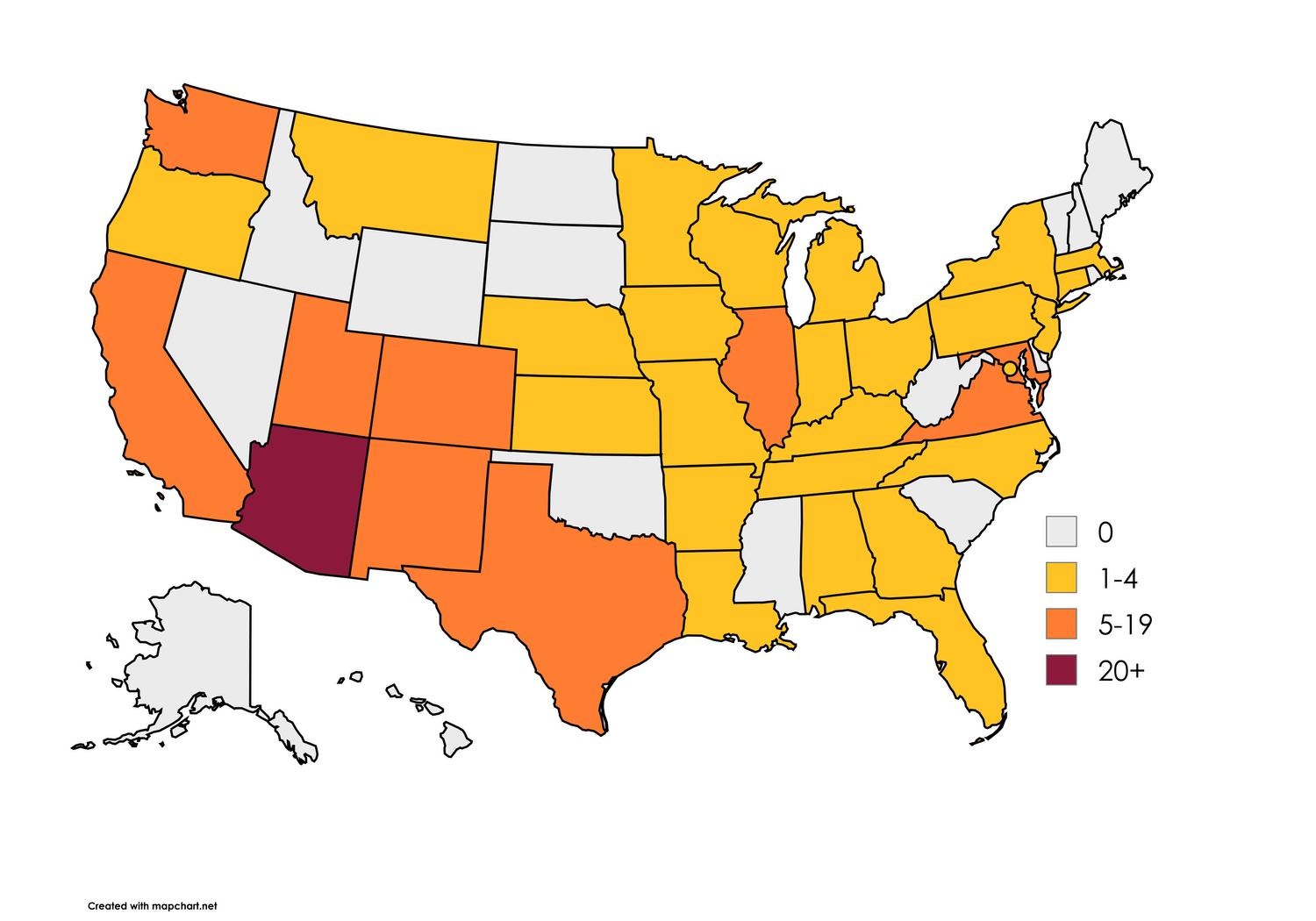
Community partners
Our partners are not just sites of research, but instrumental in identifying and designing research that creates positive impacts in our communities.
Community partners Teams and Networks
Community partners Local, state, national reach
International
Puerto Rico
Canada
Ghana
The Netherlands
Nigeria
Qatar
The United Kingdom
Bringing together people and ideas creates new, more comprehensive approaches that meet the actual needs of our communities. This empowers innovation and community resilience.
Impacts
Making an impact in our communities
Collaborative programs and projects
Supporting maternal and child health
Doula Training: evaluate core competencies for doulas to improve maternal health outcomes
Baby Babble Bootcamp: early intervention program to aid in language development
Family Check Up for Health: program for families with children aged 2 to 17 years, on preventing childhood obesity.
Parent University: web-based resource, training for parents
Supporting children in learning, literacy, health
Improving health care access and reducing the work of patients
Arizona Early Childhood Collaborative
Extension for Community Healthcare Outcomes
(ECHO): virtual learning program to link professionals to specialists to provide training and support. 38 sessions, 390 participants, 1668 learning hours.
Native Health Helping Hands Program: 13 interns
helping community members in Phoenix and Mesa access the health services they need
Patient Work Narrative Project: digital stories and podcasts of community residents
Quality Improvement Collaborative: integrates behavioral and mental health into existing primary physical health care needs to improve health.
Community Saved My Life: Substance Use & Harm Reduction: collaboration with ASU Health & Arts Collaborative
Autism and neurodivergent students
Employment Assistance and Social Engagement (EASE) Program: peer mentoring to assist with transition to college life and career readiness–awarded new NSF grant. 14 students mentored in 2025
Making an impact in our communities
Webinars, Training Programs
Behavioral Health & Primary Care Integration:
Statewide training collaborative for primary care and behavioral health professionals (150 medical, social service and health systems)
Primary Care Workforce Development
Health Equity course: for the College of Health
Solutions faculty
MS-CEDI Training Program for Community Health
Practitioners working directly with researchers
Extension for Community Health Outcomes (ECHO): virtual learning
Arizona Early Childhood Professional Development
Collaborative: case-based training linking educational and health professionals on child learning (390 participants across 11 Arizona counties)
TEAM-IPC: addressing the knowledge gap in interprofessional teamwork (232 participants across 5 U.S. states and 4 countries)
Workforce training
Tools
Dyslexia Screener: for use by teachers in classrooms
AI-enabled decision support
Care Pathway Design
Making an impact in our communities
Collaborative listening sessions
Firefighters: Understanding risks, exposures, and health concerns of local firefighters
Cancer Prevention Design Studios: community-engaged sessions resulting in a grant to test at-home prostate screening and Cancer Myths & Facts webinar.
Civil Dialogue–Nutrition & Food Access
Digital information
Maternal Child Health newsletter: reaches 150 community partners
Behavioral Health Workforce Education and Training website: digital platform
MS-CEDI Digital Resource Compendium for community-embedded researchers and clinicians
Educational outreach
Conferences, information sessions, and webinar series
Health Talks
Civil Dialogues
Mountain States Partnership for Community-Engaged Dissemination & Implementation (MS-CEDI) Annual Research Fellowship Program
Bi-monthly D&I Seminar Series
Student impacts
Advancing education and applied research
Community engagement
Native Health Internships
Helping Hands: 18 students engaged
Learning advancement
Experiential learning: 120 students received credit for applied work (20% increase)
3 courses developed to train students in research, coordination, and professional skills
Experiential Learning Course (credit)
Teaming with Team Science (noncredit): skills and competencies
Research and project coordination for graduate students (non-credit)
Student training
Virtual Reality (VR) Training: 51 students
trained in health-related professional skills
Qualitative Interview Skills Training
RedCap training: graduate students trained in using confidentially-secure data platform
Doctoral student training
ECHO-based student training: 47 students
Graduate Certificate Program in Dissemination & Implementation Science
350 Students
engaged in Translational Teams and Affinity Networks (credit, paid, and volunteer)
Maternal Child Health Spotlight
The Maternal and Child Health Training and Research Team (MCHTRT) focuses on improving health outcomes for mothers, children and families. 2025 has seen significant growth and collaboration across engagement, programs, and training. We work to strengthen our future workforce, and brings fresh ideas to our initiatives.
Telehealth: To understand health and wellness priorities for youth in order to build a health and social service safety net for adolescents in Arizona.
Snuggle Bug: improving sleep patterns and gut microbiome to develop new interventions to prevent childhood obesity
Doula Training: evaluate core competencies for doulas to improve maternal health outcomes
Baby Babble Bootcamp: early intervention program to aid in language development
Family Check Up for Health: program for families with children aged 2 to 17 years, on preventing childhood obesity.
Parent University: web-based resource, training for parents
$4,708,143 active awards
Safety Net Advancement Center (SNAC) Spotlight
The SNAC Translational Team manages a diverse and high-impact portfolio of 13 active projects spanning workforce development, quality improvement, patientcentered outcomes research, behavioral health and translational research in safetynet settings. These projects, supported by federal agencies as well as institutional support from ASU’s College of Health Solutions, advanced a robust pipeline of fundable, patientcentered research projects aligned with safety-net priorities to improve healthcare access for all communities in Arizona.
165 community and healthcare partners
Innovative tools to improve healthcare access:
AI-enabled decision support
Care pathway design
Evaluation tools
Behavioral Health Workforce Education and Training (BHWET) Program for Professionals expands experiential training opportunities, such as field placements/internships & improves the distribution and supply of the behavioral health workforce
$33M over 13 active projects in 2025
The work of research: funding, deliverables, and outreach
Deliverables
Funding research
Knowledge creation and innovation to improve the future
Research matters because it provides new insights, discoveries, and solutions to complex health problems. Our teams and networks continually seek out new research opportunities to advance knowledge and then transform research findings into real-world solutions.
2025 was a year of change and flux. Multiple translational teams retired, leaving 8 of 12 teams active. Several networks met goals or were integrated into college infrastructure leaving 8 active networks. The funding landscape has changed–with major reductions in funding awards and multiple funding pull-backs. However, proposals increased significantly this year. Teams and networks received 18 new research awards, totaling $7,078,056.
Focus areas included
Autism and Alzheimer’s disease
Cancer risk in firefighters
Stress resilience and cardiac health
Nutrition and infant development
Exercise and cognition
Digital health and behavior change
Workforce development
Coordination and connection in health care access
Biologic aging and hip fractures
Hypertension management
Antibiotic prescribing and acute respiratory infection in children
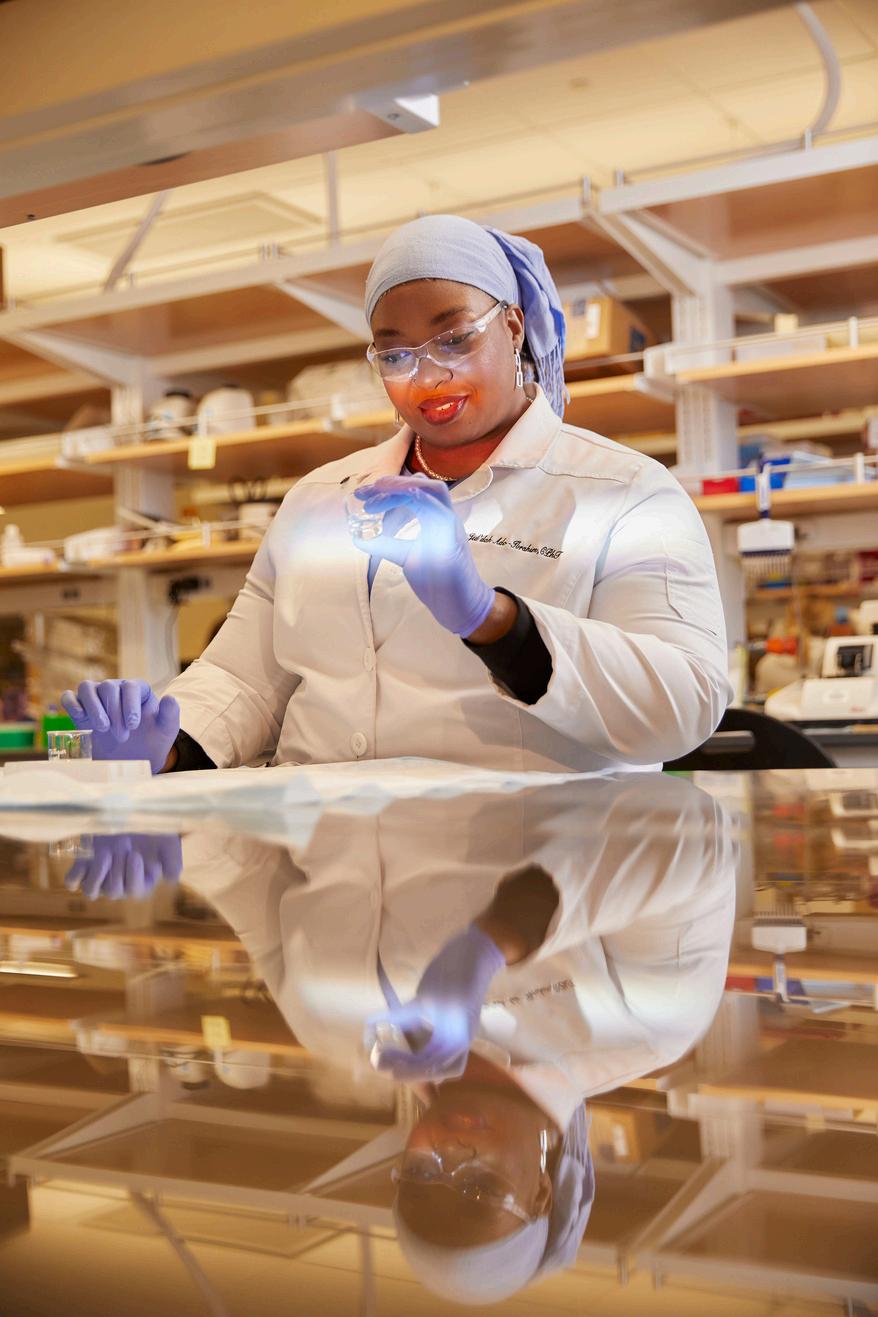
A scientist and research training center
Deliverables Awards: Teams and Networks
Deliverables Grant awards 2024 vs. 2025
Affinity Networks and Translational Teams
Publications 2024 vs. 2025
Scientific publications make knowledge and discoveries available to scientists, professionals, industry leaders and the public. This not only shares information, but also sparks new research findings that can expand our knowledge and lead to additional discoveries. This is crucial to improving health outcomes for all.
Translational Teams Deliverables
Dissemination events 2024 vs. 2025
Dissemination event types
ECHOs
Project ECHO are virtual learning sessions that connect healthcare experts and specialists in local and rural communities to: educate in best practices, improve health outcomes, increase access to high-quality care
Conferences
Presentations
Workshops
Newsletters
Panel discussions
Sharing information also means finding different venues and formats so that health professionals, government agencies, and community organizations can not only access new information but also learn how to utilize it in their planning and training. Virtual and in-person events offer access to information to those in far-flung areas.
D&I MS-CEDI Training
Institute: 70 trainees and 24 mentors from 30+ institutions
Next steps and new directions
Next steps
Translational Teams and Affinity Networks
Ensuring our teams and networks continue their work