Change the future with
Mary Lou Fulton College for Teaching
and Learning Innovation
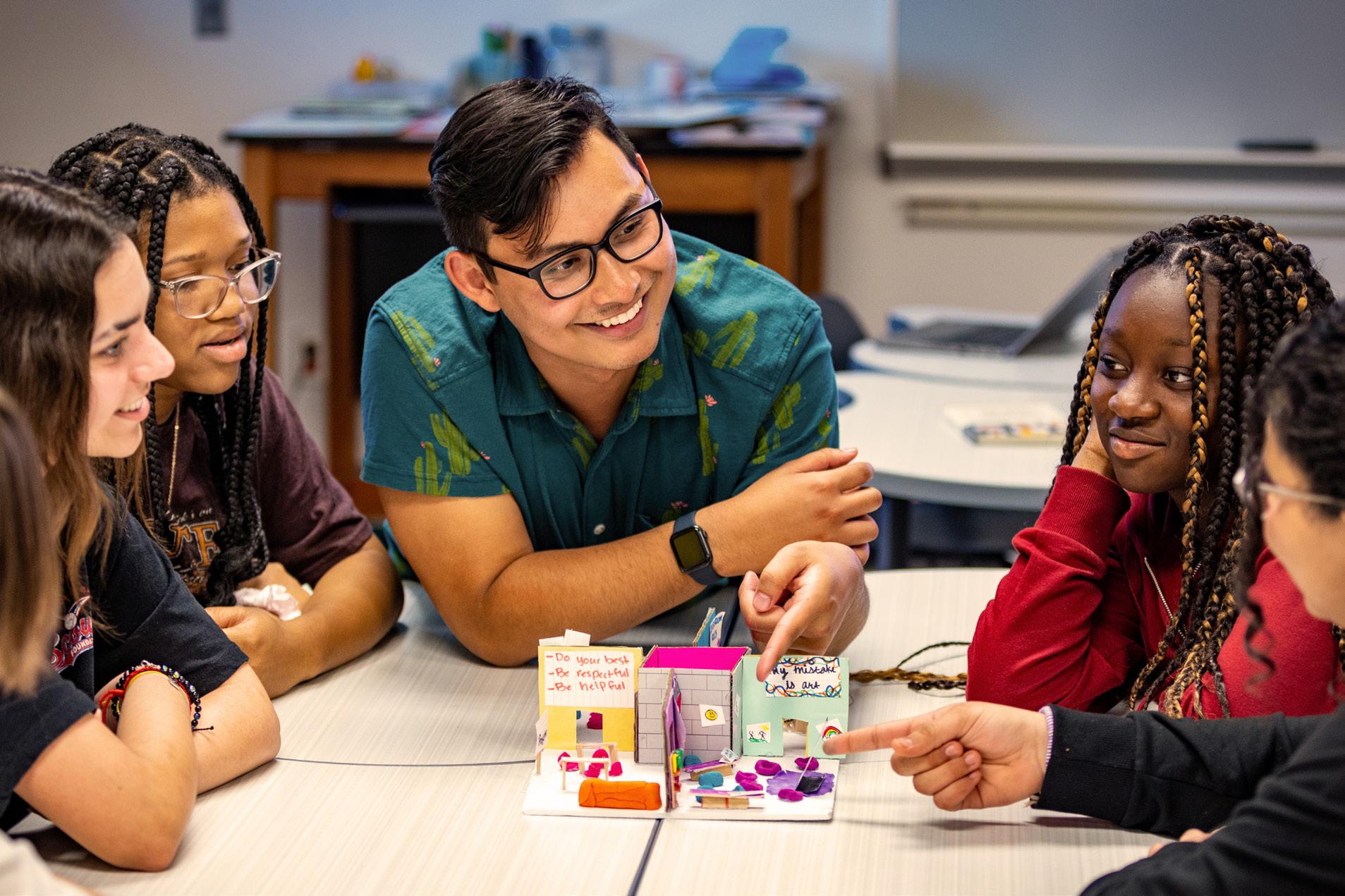
At Mary Lou Fulton College, we strive to make every student’s path accessible, personalized and transformative.
Preparing educators to shape the next generation
By changing lives, teachers are changing futures.
Tomorrow’s doctors, engineers, astronauts, economists, artists and leaders are being taught right now by today’s teachers. Educators play a vital role in equipping a new generation of engaged global citizens. This is why, at the Mary Lou Fulton College for Teaching and Learning Innovation at Arizona State University, we call education “the world’s most important profession.”
The Mary Lou Fulton College is one of a handful of university-based colleges of education that excels at both research and educator workforce design — meaning we’re not only launching well-prepared teachers into this essential profession, but we’re actively working to improve the field for both educators and students.
This is critical because the field is facing manifold challenges: teacher shortages, student achievement gaps and declining enrollment in public schools, to name a few.
“Education is complex,” says Carole Basile, dean and professor at the Mary Lou Fulton College for Teaching and Learning Innovation. “Everyone thinks there’s a silver bullet, there’s one thing that’s going to change all of education. And there isn’t. What we’re doing is to pull and push on different levers of education because that’s the only way you can get to change. We are embracing the complexity of education.”
The college is committed to tackling challenges in the field of education to realize its potential as an immensely powerful tool to address society’s broader challenges. Through Changing Futures®, we’ll catalyze transformation in the education system by improving access and quality for both learners and educators, ultimately improving the communities we all serve.
Supporting the educators of tomorrow
An effective education workforce begins by welcoming a wide range of talent and creating multiple pathways into the profession.
In alignment with ASU’s charter, a core tenet of the Mary Lou Fulton College is inclusion. Nearly half of our students have high financial needs, and a quarter are first-generation students. Scholarships ensure financial barriers don’t stand in the way of their pursuit of education.
“We’ve worked to ensure that anyone who wants to be an educator has the opportunity,” says Nicole Thompson, vice dean of educator preparation. “We’ve expanded on-ramps for high school students, community college students and working adults to earn their degrees with us and become teachers. Scholarships help more people complete that journey and, in turn, support learners and communities.”
While the college leads teacher-preparation for schools in Arizona and beyond, Dean Basile notes, “Teaching and learning aren’t confined to formal schools or the first quarter or third of our lives. Our work extends to community education, professional education and the continuous learning that forms the foundation for human flourishing.”
Supporting future educators means supporting ASU graduates who go on to serve in schools, youth organizations and beyond—ensuring learning continues in every part of life.


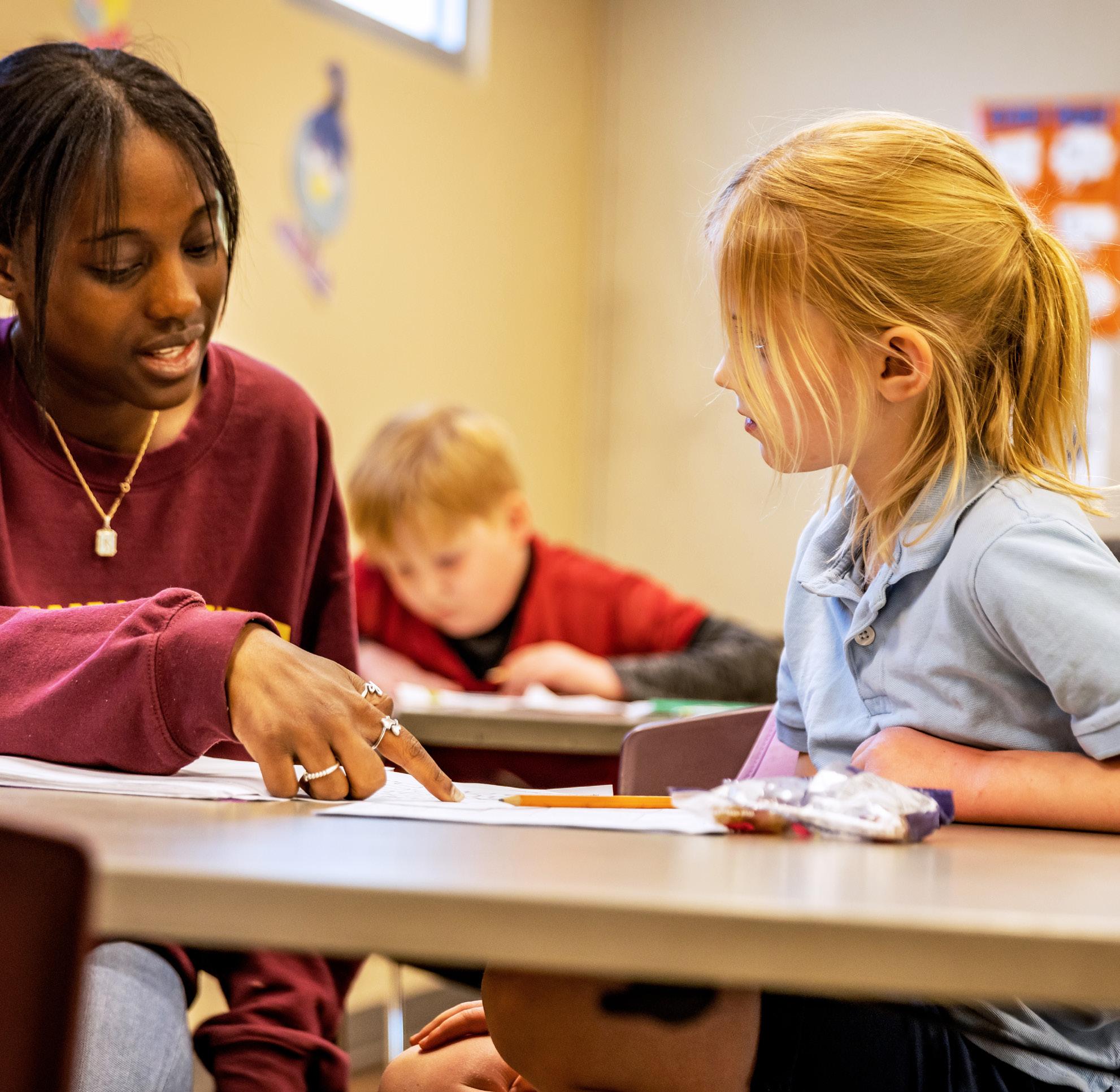
Arizona State University began as an institution for training teachers, making Mary Lou Fulton College the first college established as part of ASU.

Transforming education systems
The field of education has the immense power to change the future — but change first needs to happen within.

The Mary Lou Fulton College for Teaching and Learning Innovation brings together people and ideas to shape national efforts to improve educator and learner experiences as well as educational policy and organizational design. As Dean Basile puts it, the college’s mission is to “take action and create solutions.”
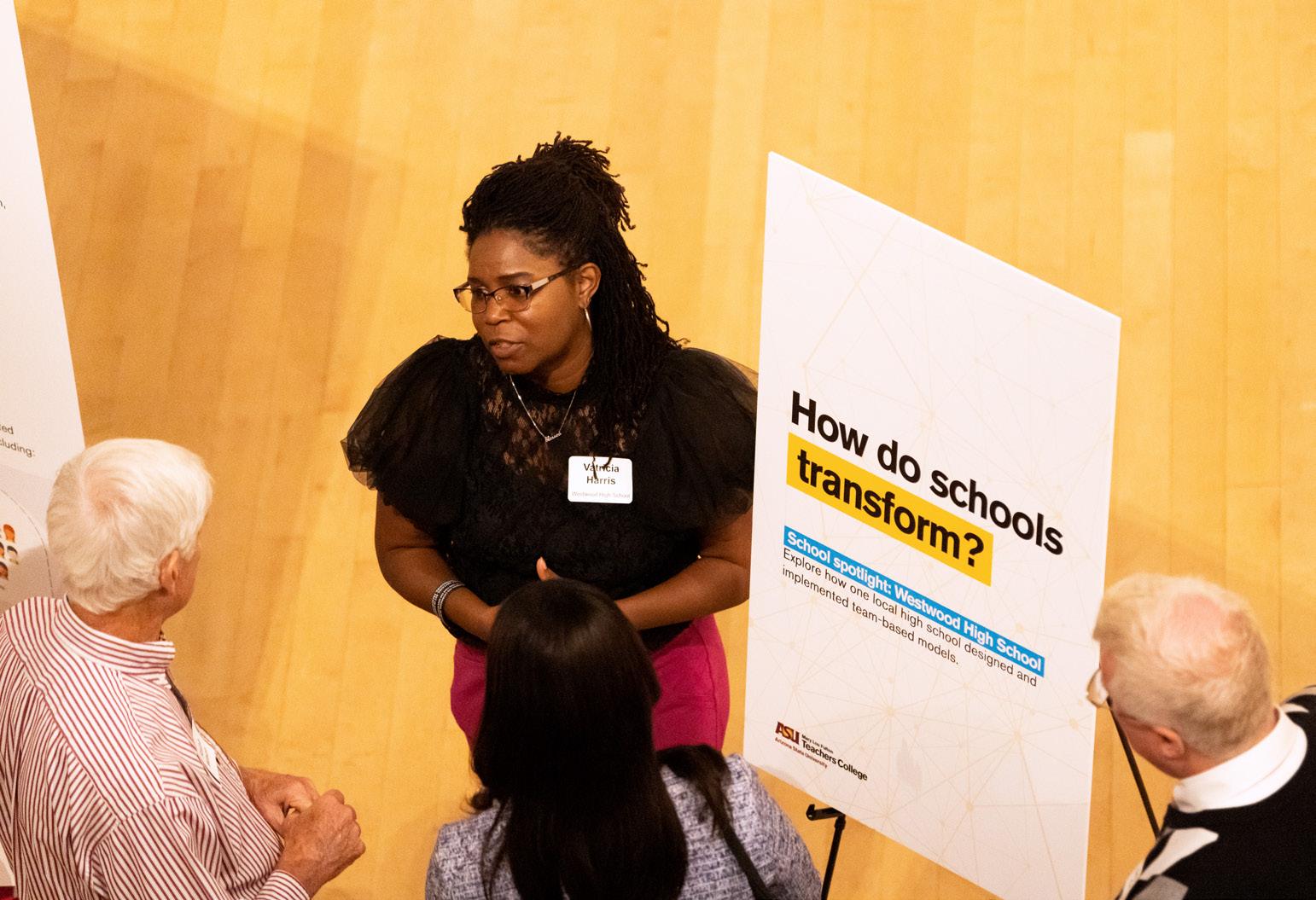
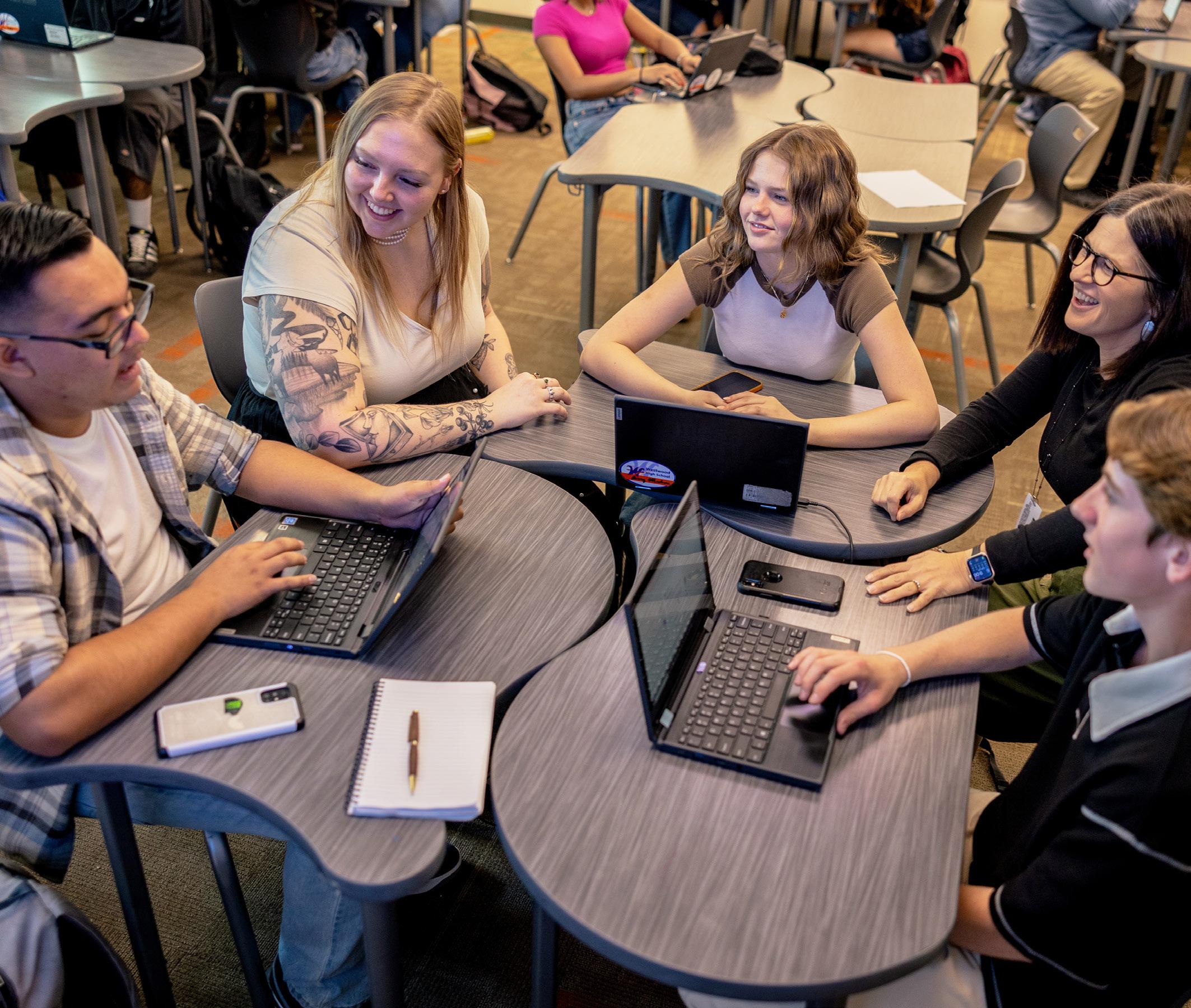
The Next Education Workforce initiative works with schools to move from the traditional one-teacher, one-classroom model to a model that features teams of educators with diverse expertise who can provide personalized, deeper learning for all students. This innovative approach is rapidly gaining traction across the U.S. and has already impacted thousands of K-12 students. On average, in schools that have implemented this new model, teacher retention has increased as much as 13%. In a large, urban school district, third graders taught in team-teaching models achieved 1.4 more months of reading growth than students in traditional classrooms.
The Center for Whole-Child Education recognizes that learning is more than an academic exercise. We have identified 13 core components, including relational, emotional and environmental factors, that impact a student’s healthy development and ability to learn. “Having a sense of belonging, for both teachers and students, is needed in order for us to create the educational environments for both educators and learners to cultivate a shared purpose in the classroom,” says Tami Hill-Washington, executive director of the Center for Whole-Child Education. By providing tools and resources to support the cognitive, physical, social and emotional development of every student, the center aims to reskill educators and redesign learning environments.
The Center on Reinventing Public Education is a forward-thinking nonpartisan research organization that generates critical insights that shape the future of learning. We look through several lenses at what it will take for public education to meet the needs of every student and utilize those findings to inform policy and practice. Our goal is to move from a system that has historically been marked by rigidity, systemic inequality and outdated delivery models to one that responds to an ever-evolving landscape and serves every student.


A research hub for global issues
The biggest, most pressing questions in education cannot be solved in a vacuum. The Learning Futures Collaboratives at the Mary Lou Fulton College for Teaching and Learning Innovation are revolutionizing educational research by uniting diverse experts across ASU and beyond to address critical challenges. For example:
• Project OASIS (Optimizing Access for Students in Schools) is transforming special education by developing community-driven research to improve outcomes for students with disabilities.
• The Artificial Intelligence in Education collaborative is navigating the rapidly evolving landscape of generative AI, developing ethical guidelines, new tools and educational programs to harness AI’s potential while addressing its risks.
• The LEARN (Learning and Educating Across Refugee/ (Im)migrant Networks) initiative is creating resources and academic programs to support refugee education, aiming to make ASU a hub for refugee studies.
By breaking down disciplinary silos and fostering collaboration, these forward-thinking initiatives at the Mary Lou Fulton College are not just responding to change but actively designing the future of learning to benefit all students in an increasingly complex world.
Support transformative education for lasting change

At the Mary Lou Fulton College, we’re fulfilling the ASU Charter’s commitment to assume fundamental responsibility for the economic, social, cultural and overall health of the communities we serve by creating the conditions for successful teaching and learning. This not only improves the experience and quality of today’s educators and learners but also shapes the trajectory for new generations of leaders, who will all begin in the education system.
Join us as we support the students and teachers who will change the future.
Change futures by supporting
Transform global education
The U.S. education system is failing to deliver quality learning outcomes for many students, while also struggling to retain and attract teachers. Through Changing Futures, the Next Education Workforce initiative, which has already been successfully implemented in over 50 school systems in 15 states, will expand its resource library, networks and reach to improve education experiences and outcomes for learners, teachers and their communities.
The Center on Reinventing Public Education (CRPE) is dedicated to reimagining public education to meet the needs of every student in a rapidly changing world. Through its research on students, systems, innovations, and the politics of change, CRPE will lead the transformation of education policy and practice, including pioneering efforts to address emerging challenges like artificial intelligence in education.
The U.S. education system’s one-sizefits-all approach has failed to meet the needs of diverse learners, particularly
those from underserved communities, leading to a crisis in student engagement and teacher retention. Within the College for Teaching and Learning Innovation, the Center for Whole-Child Education is pioneering a transformative “whole-learner” approach, translating scientific insights into practical solutions to redesign learning environments and empower educators, with the potential to benefit millions of students globally.
Traditional special education systems have failed to create pathways for success for students with disabilities, resulting in poor academic and life outcomes. Project OASIS (Optimizing Access for Students in Schools), a Learning Futures Collaborative, is addressing special education needs through multidisciplinary research and community-driven initiatives to foster inclusive learning environments and improve lifelong outcomes for all students.
Mary Lou Fulton College for Teaching and Learning Innovation
Reshape our relationship with the planet
Traditional education systems struggle to address interconnected community challenges and prepare students for a rapidly changing world. The Global Futures Education Alliance initiative proposes innovative, communityembedded learning experiences that combine real-world problemsolving with sustainability principles — fostering a new generation of change-makers equipped to tackle complex global issues.
Empower community resilience
Global forced displacement has left millions of refugee children without access to quality education, hindering their future prospects and integration into host communities.
LEARN (Learning and Educating Across Refugee/(Im)migrant Networks), a Learning Futures Collaborative initiative, aims to become a comprehensive hub for refugee research and resources that aligns with universal human rights and strengthens communities worldwide.
Change futures by supporting
Inspire tomorrow’s game changers
The U.S. faces a critical shortage of qualified teachers, with declining enrollment in educator-preparation programs and retention challenges. We’re addressing this crisis through holistic Scholarship and Student Success opportunities that make education degrees more accessible and affordable while ensuring students receive the necessary support to complete their degrees and enter the teaching profession.
Advance technology for good
The rapid advance in virtual reality and augmented intelligence presents both opportunities and challenges for education. The college is thinking about how to incorporate virtual reality into team-based instruction. The Learning Futures Collaborative’s AI in Education initiative is pioneering research, policy development and educational programs to harness AI’s potential for enhancing learning while addressing ethical concerns. Through the AI Possibilities Lab, the college seeks to create tools than can help educators and education system leaders develop effective new approaches to both everyday educational challenges and deeper systemic ones.
Mary Lou Fulton College for Teaching and Learning Innovation
About us
The Mary Lou Fulton College for Teaching and Learning Innovation creates knowledge, mobilizes people and takes action to improve education.
Our faculty create knowledge by drawing from a wide range of academic disciplines to gain insight into important questions about the process of learning, the practice of teaching and the effects of education policy.
We mobilize people through bachelor’s, master’s and doctoral degree programs, through non-degree professional development programs and through socially embedded, multilateral community engagement.
We take action by bringing people and ideas together to increase the capabilities of individual educators and improve the performance of education systems.
We are committed to educational experiences that are accessible, personalized and transformative.
ASU Charter
ASU is a comprehensive public research university, measured not by whom it excludes, but by whom it includes and how they succeed; advancing research and discovery of public value; and assuming fundamental responsibility for the economic, social, cultural and overall health of the communities it serves.