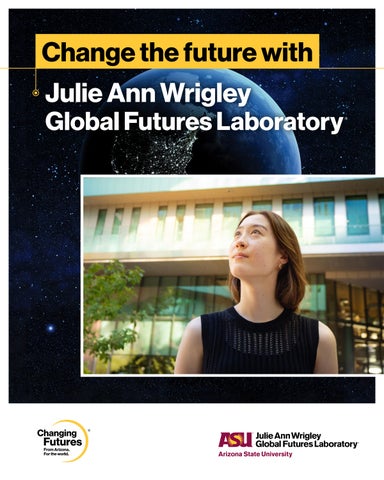

Change the future with Julie Ann Wrigley Global Futures Laboratory
Shaping tomorrow, today
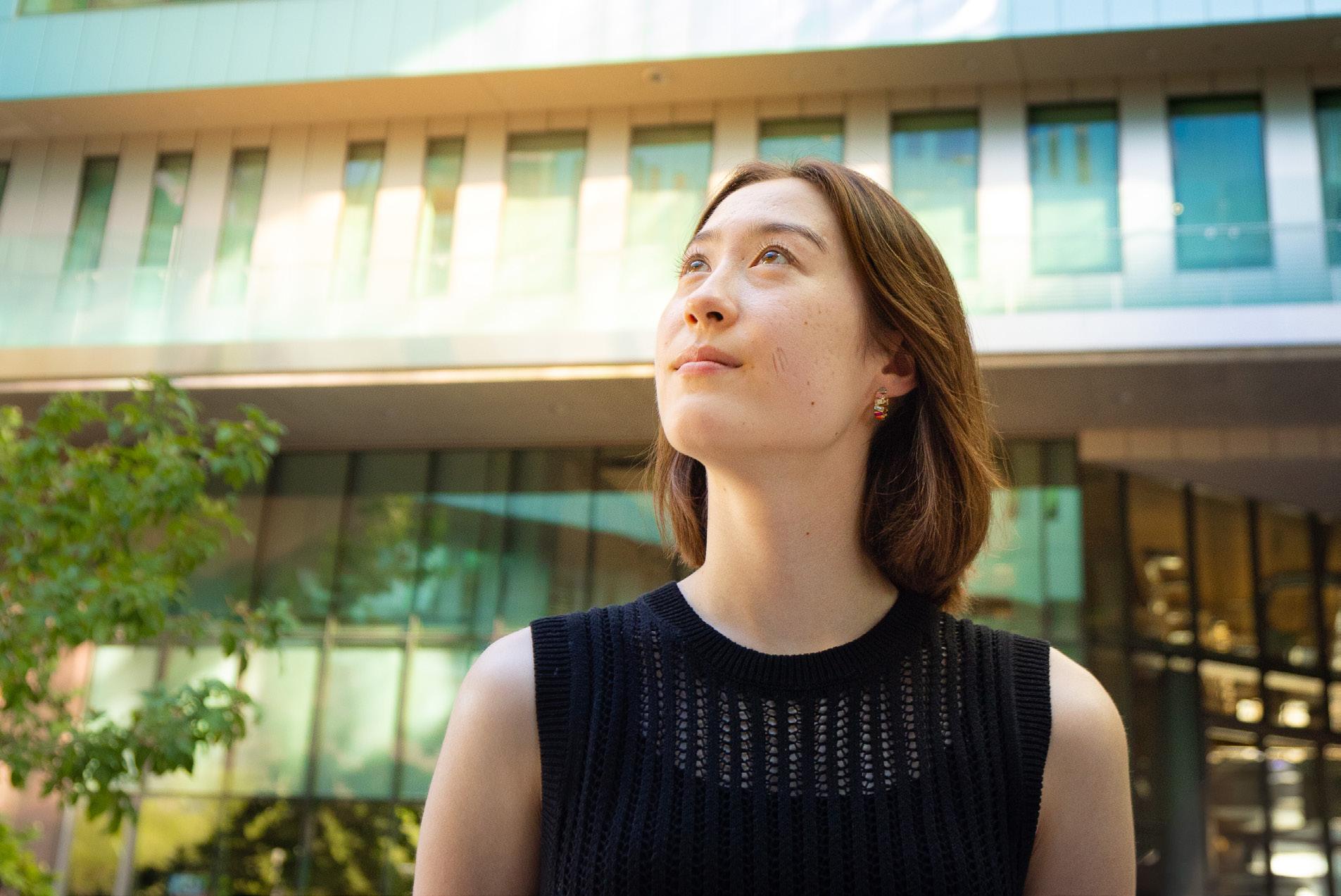
A student engages in the Exploring Global Futures course at Arizona State University, where immersive Dreamscape Learn experiences — developed with SPLIT Studio — support the Global Futures Laboratory’s mission to prepare changemakers to address the planet’s most urgent challenges.

Cover: Katie Spreitzer, ’24 BS in sustainability, who is pursuing a dual master’s in sustainability solutions and public policy, is determined to share with others how important sustainability is for the future of society and showcase innovative solutions to climate crises.

The Julie Ann Wrigley Global Futures Laboratory at Arizona State University confronts our world’s most pressing challenges, engaging more than 900 scientists and scholars alongside the 1,200 students enrolled in the Rob Walton College of Global Futures. Together, we are working to keep the deeply interconnected planetary systems we rely on— and are a part of—in balance by developing bold solutions for a healthy future on a thriving planet.
“We look at everything from a global systems perspective, scaling all to aspects from learning to discovery to solutions,” explains Peter Schlosser, vice president and vice provost of Global Futures and director of the Global Futures Laboratory. “Atypical of academia, we are working at pace because we know the systems around us are changing fast. Our actions must meet the urgency of the moment.”
From ensuring equitable access to clean air, safe water, plentiful food, healthy oceans and robust natural landscapes, to developing and deploying innovative approaches to our future energy systems and preparing the next generation of changemakers, the Global Futures Laboratory is addressing planetary imbalance from all angles.
The Global Futures Laboratory is dedicated to urgent work at critical speed. Changing Futures® will accelerate the interconnected solutions necessary to shape the future for our planet and for all who inhabit it.
Advancing the future of energy
Energy fuels everything — from how we live and work to how we grow, learn and connect. But the systems we’ve relied on are no longer built for the future we face.
The Global Futures Laboratory plays a critical role in expanding and deepening our understanding of energy systems around the globe, and supporting communities as they navigate the societal, economic and environmental complexities of energy issues worldwide.
Leveraging ASU’s expertise, we are revolutionizing how energy powers our lives and our planet’s future. In partnership with the Thunderbird School of Global Management, the Global Futures Laboratory is launching the Global Institute for the Future of Energy. This one-of-a-kind joint initiative will ensure broad access to energy education and lead the widespread, pragmatic dialogue about global energy transition.
“Where we want to go with energy goes well beyond light and solar—it’s going to require a complex mix of technologies,” says Gary Dirks, senior director of the Global Futures Laboratory and LightWorks®, a portfolio of light-inspired research. “The way we think about global futures is that there are no boundaries. We need to be in a position to address all of the challenges that lie ahead of us.”
This is more than a transition. It’s a chance to power a future that works — for everyone.

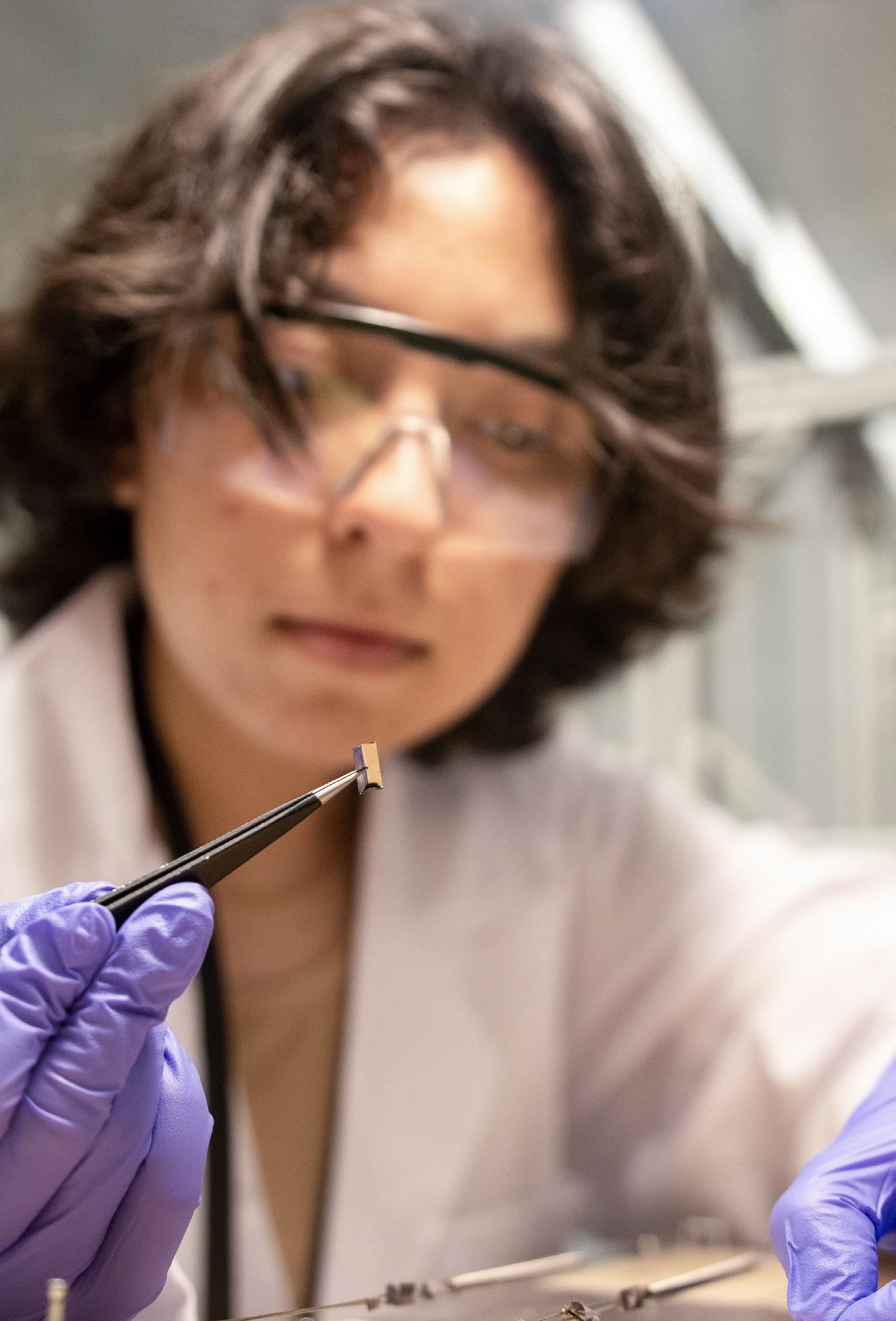
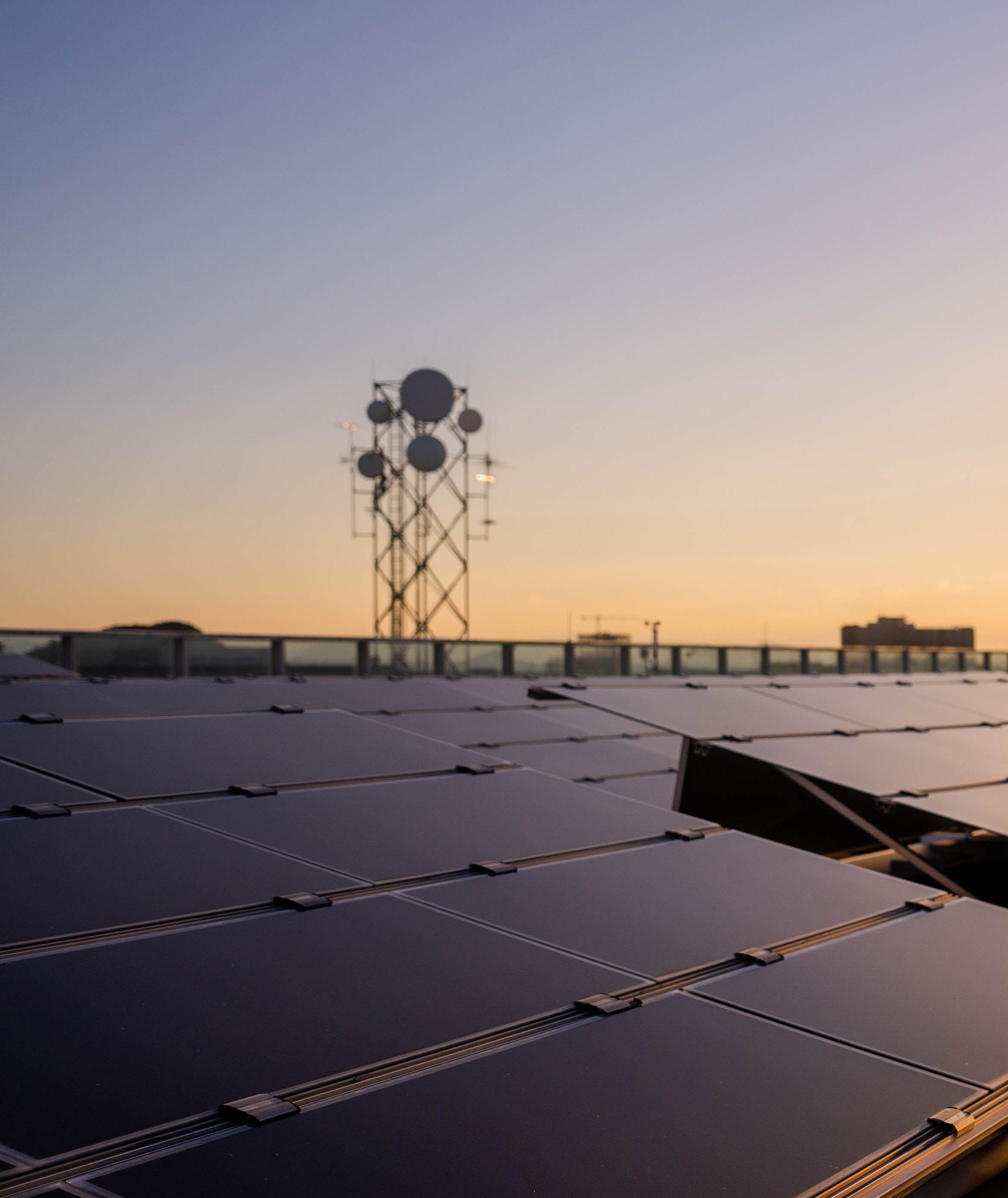
Natalie Figueroa, ’24 BS in physics, served as a fellow and research assistant in Research Professor Ivan Ermanoski’s lab working on a thermochemical reactor for hydrogen production. ASU is creating a model for a how a university leads in energy education and solutions.
thriving ocean futures Designing
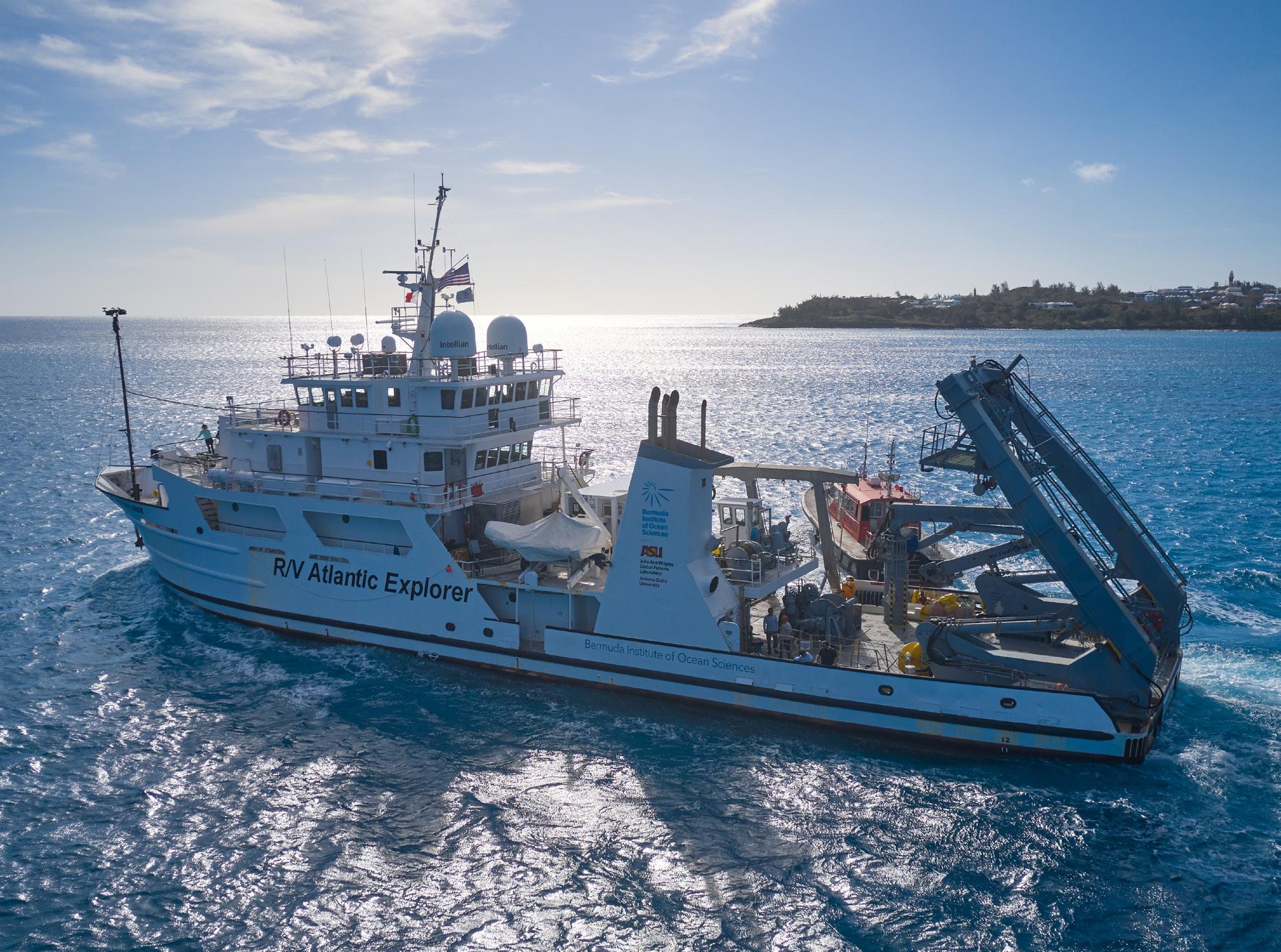
Atlantic Explorer is owned and operated by ASU BIOS as a general purpose oceanographic research vessel designed for both short and extended cruises. The 170-foot-long Atlantic Explorer can carry a crew of 12 and a scientific party of 22 researchers, students and technicians for up to 28 days or 5,500 nautical miles.
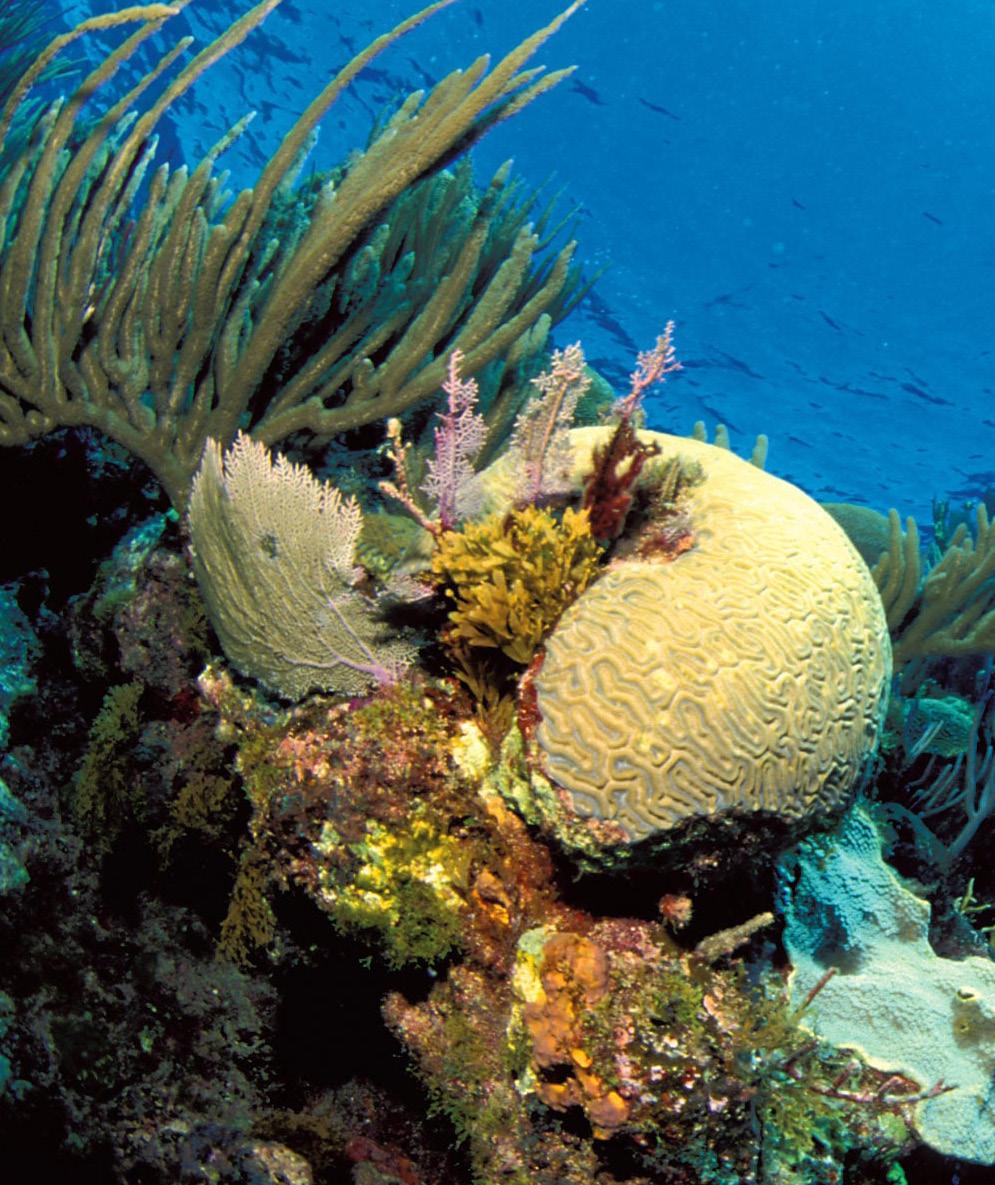
Our oceans are a vital component of Earth’s life-supporting systems — essential to the well-being of communities across the globe and to the future of our planet.
The ocean’s health is our health.
The Global Futures Laboratory and its School of Ocean Futures are leading crossdisciplinary research efforts and training leaders focused on protecting our ocean’s health and the communities that depend on its vital resources.
From Hawai‘i to Bermuda, our research stations are staffed with experienced researchers who create unique methodologies, develop innovative ocean health indicators, deliver essential insights and provide critical analysis of and track our planet’s largest biome. ASU’s Bermuda Institute of Ocean Sciences is home to some of the longest-running sets of ocean observations available anywhere in the world. Our researchers leverage a wide variety of vessels and facilities operating in its unique position at the edge of the Sargasso Sea in the North Atlantic to explore the ocean and address critical local and global environmental issues.
“The ocean shapes Earth’s climate, sustains diverse ecosystems and supports billions of people, yet its complexity demands rigorous scientific inquiry,” says Craig Carlson, director of ASU Bermuda Institute of Ocean Sciences and research professor at the School of Ocean Futures. “Interdisciplinary science has long been the spirit and centerpiece of the research programs at ASU BIOS. Much like the adaptive environment of being at sea on a research vessel, our teams embrace real-time adaptive strategies to tackle critical challenges in marine science – an approach that leads to discoveries and solutions. Through partnerships and innovative technologies, we strive to expand knowledge, train future leaders and develop solutions that safeguard the ocean for generations to come.”
“The work that we do is unique in that it is a true integration of science, community and government,” says Greg Asner, director of the Center for Global Discovery and Conservation Science. “On the topic of coastlines and coral reefs, that sounds like a niche area, but I can tell you that there are just shy of a billion people dependent on them, so there’s a massive need to address this.”
The Global Futures Laboratory is at the forefront of advancing marine innovations and strengthening coastal communities. Through transdisciplinary research, immersive learning and deep collaboration with communities, our work is helping sustain the critical functions of the ocean that serve our planet so future generations thrive.
Transforming food systems
We are developing accessible, sustainable food systems for all of our planet’s inhabitants.
We recognize that food systems are not isolated structures — they are deeply embedded in the complex web of planetary health. We work to develop food systems that are accessible, resilient and sustainable for all life on Earth.
The Swette Center for Sustainable Food Systems exemplifies this. By viewing food not merely as a commodity, but as a force shaping social equity, economic vitality and ecological integrity, the center is helping to transform how food is produced, distributed, consumed and even wasted.
“We can’t just sit in the academy and come up with these solutions and send them out into the world. That’s yesterday’s model,” says Kathleen Merrigan, Swette Center executive director and former deputy secretary and chief operating officer of the U.S. Department of Agriculture. “We meaningfully engage with communities, and we are co-creating solutions with our community partners to achieve impact at scale.”
The Swette Center’s model brings together research, dialogue and policy to drive future productivity and resilience and educates individuals to understand food systems so they may help transform them. As more people become passionate about sustainable food solutions, the Swette Center is leading the charge to create food systems that can nourish our world for the long term while ensuring our agricultural systems remain robust.

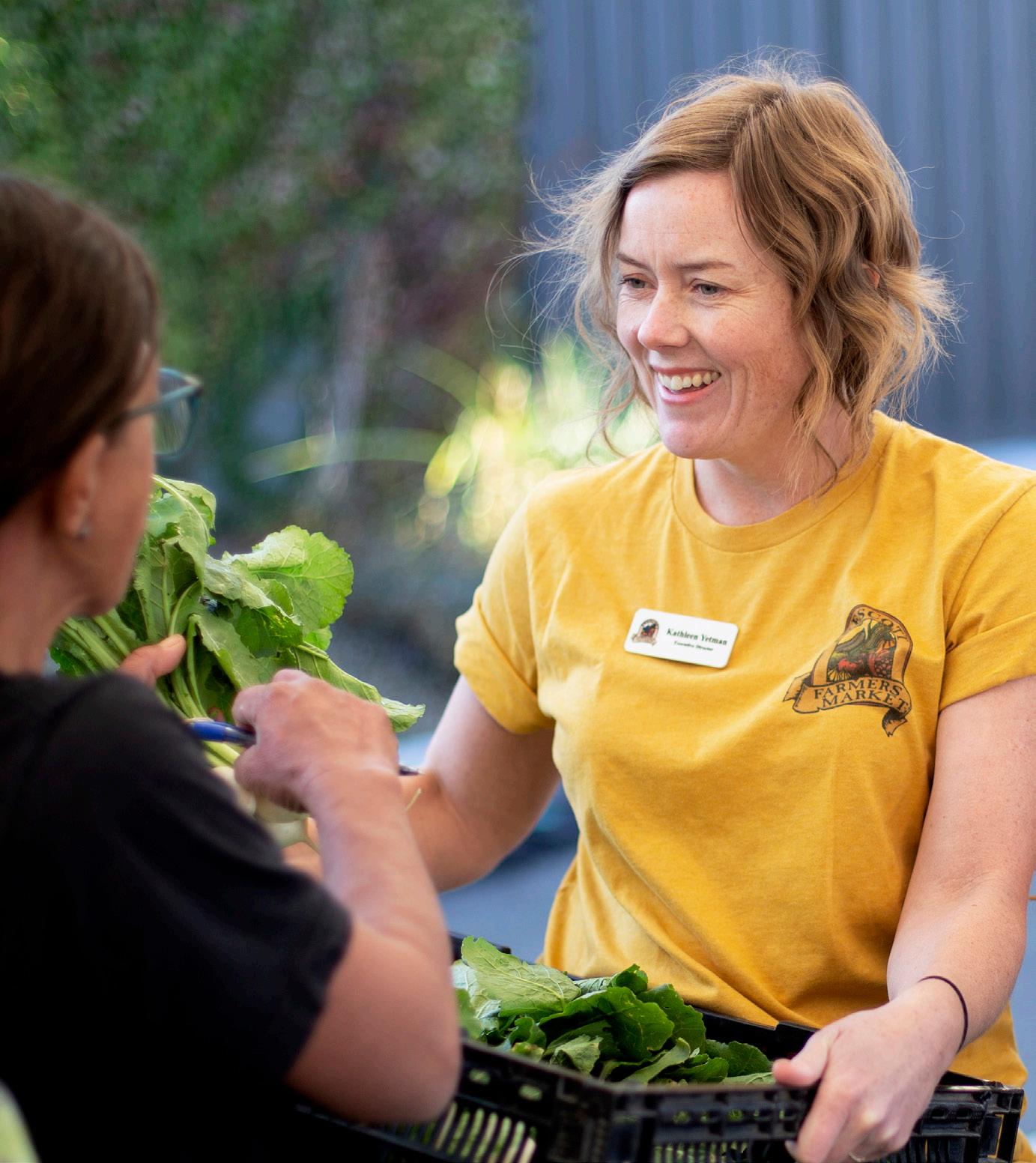

The Swette Center for Sustainable Food Systems unites researchers, students and policy makers to build more resilient and secure food systems. Program graduate Kathleen Yetman is now the executive director of the Prescott Farmers Market.
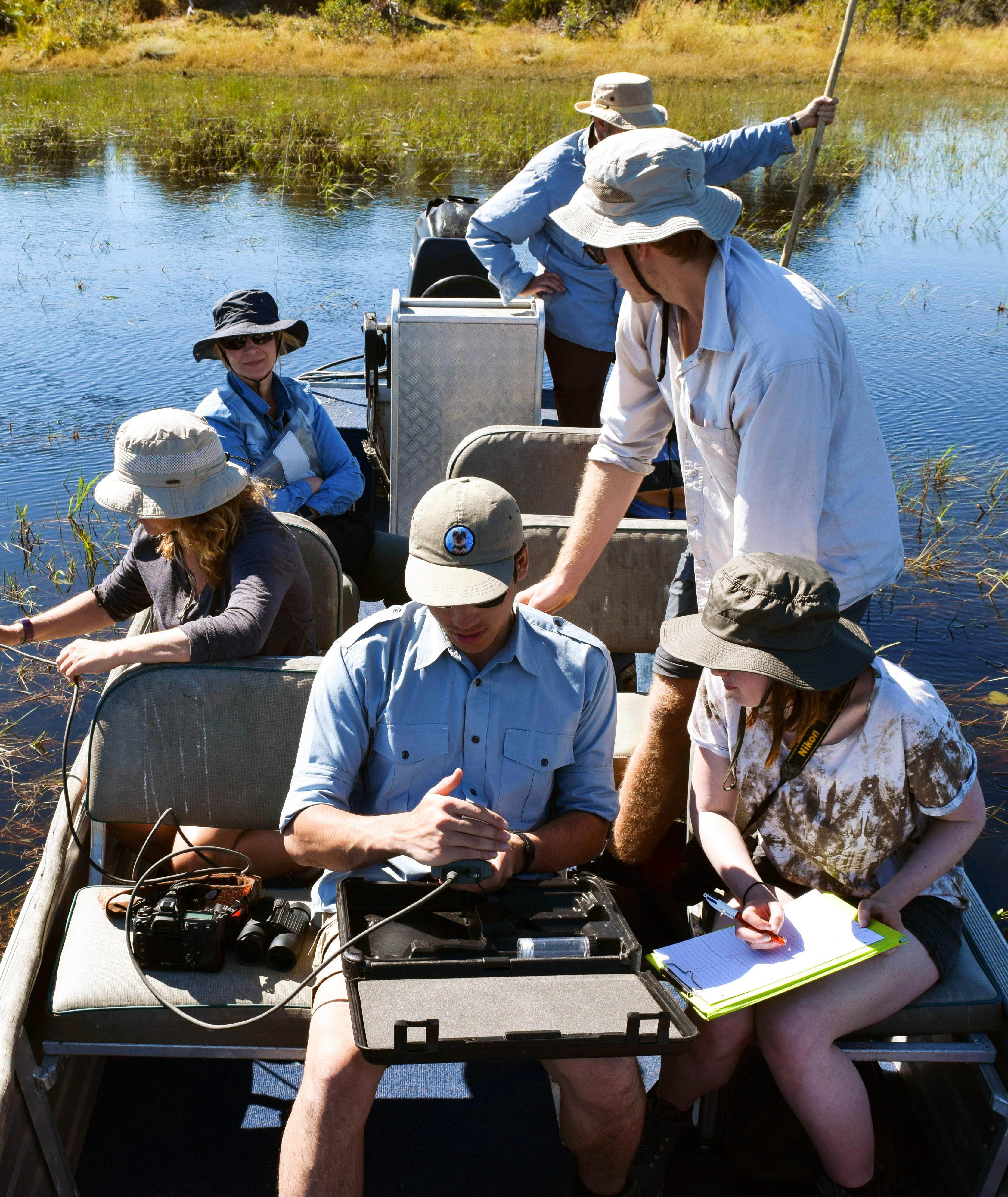
Global Futures scientists and scholars collect a diverse array of data from an African savanna in Botswana. A global education program offered through a consortium of ASU, UNSW Sydney Australia and King's College London with students and faculty from the University of Botswana focuses on water resource management in the Okavango Delta. Photo by Dave White/ASU.
Securing the future of water
Water is a dealbreaker. It’s the line between growth and decline, between thriving communities and empty pipelines. Water is at the core of our civilization, our economies, our ecosystems — and it is under growing stress.
We need a fundamental shift in how we understand, manage and plan for water.
Global Futures Laboratory’s Water Institute exists to drive that transformation. As part of the Global Futures Laboratory, it brings together scientists, engineers, policymakers, Indigenous leaders and industry innovators to shape a future where water security is not a privilege, but a foundation for prosperity and sustainability.
The Water Institute is grounded in systems thinking and built on robust data, modeling and partnerships. The institute works hand-in-hand with the Arizona Water Innovation Initiative — a statewide effort focused on accelerating water reuse, desalination and conservation technologies. These efforts are making an impact by equipping farmers, tribal communities and city leaders with the tools and data they need to make informed water decisions.
Through education, research and hands-on partnerships, the Water Institute is also preparing the next generation of leaders who will drive long-term water solutions across the Southwest and beyond.
“Being unique allows us to take a multidimensional strategy towards the future of the planet and the future of water as it relates to humans,” explains Upmanu Lall, director of the Water Institute. “If you think about how that translates to society, a very large part is going through floods, through droughts, through sea level rise — so we have to figure solutions to this.”
We are not stewards apart from nature are nature, inseparable from its fate and systems that sustain
stewards standing nature — humans inseparable and bound to the sustain all life.
—Peter Schlosser Vice Provost and Vice President of Global Futures Director of the Julie Ann Wrigley Global Futures Laboratory
Empowering tomorrow’s changemakers
We are not educating for the world as it is — we are educating for the world that is emerging.
At the heart of the Global Futures Laboratory is the learning space: the Rob Walton College of Global Futures — where students learn not just to navigate complexity, but to shape it. The college prepares them to tackle global challenges and pursue careers with meaningful impact.
“We have programs that allow for immersive learning, real-world projects and transformative experiences,” says Miki Kittilson, dean of the Walton College of Global Futures. “Students are getting the skills, and at the same time, they are doing things that help them to gain a sense that they can make a difference.”
One example is Global Futures Impact Scholars, a program for first-year undergraduates to design futures-focused solutions. Participants are matched with leading scientists and initiatives in the Global Futures Laboratory, receive mentorship, and get a stipend to fund a project, research or other experience aligned with their focus.
“Our students are change-agents,” explains Kittilson. “They have a lot of great ideas, and we encourage and support them.”
The college addresses planetary health through five schools: the School of Sustainability, the School for the Future of Innovation in Society, the School of Complex Adaptive Systems, the School of Ocean Futures and its newest addition, the Rob Walton School of Conservation Futures.
The Walton School of Conservation Futures envisions a future where humanity is rewoven into the cycles of nature. Leveraging partnerships, it builds a global conservation network and workforce. By incorporating multi-faceted perspectives, the school equips students to protect and regenerate diversity of life on Earth in a rapidly changing world.
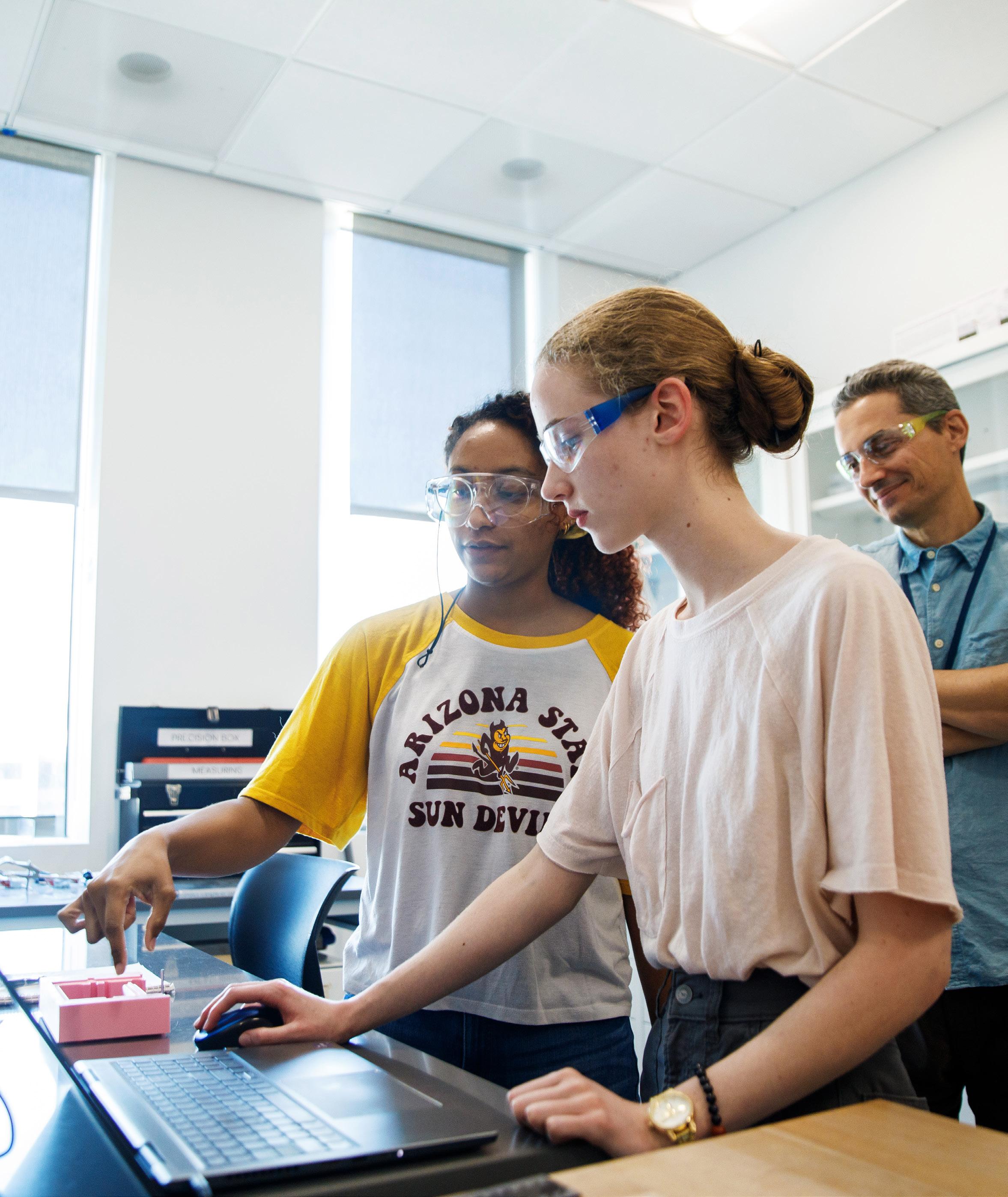
Research professor Ivan Ermanoski watches undergraduate students Natalia Ali, left, and Matalin Hansen research energy solutions in the LightWorks lab at the Walton Center for Planetary Health.
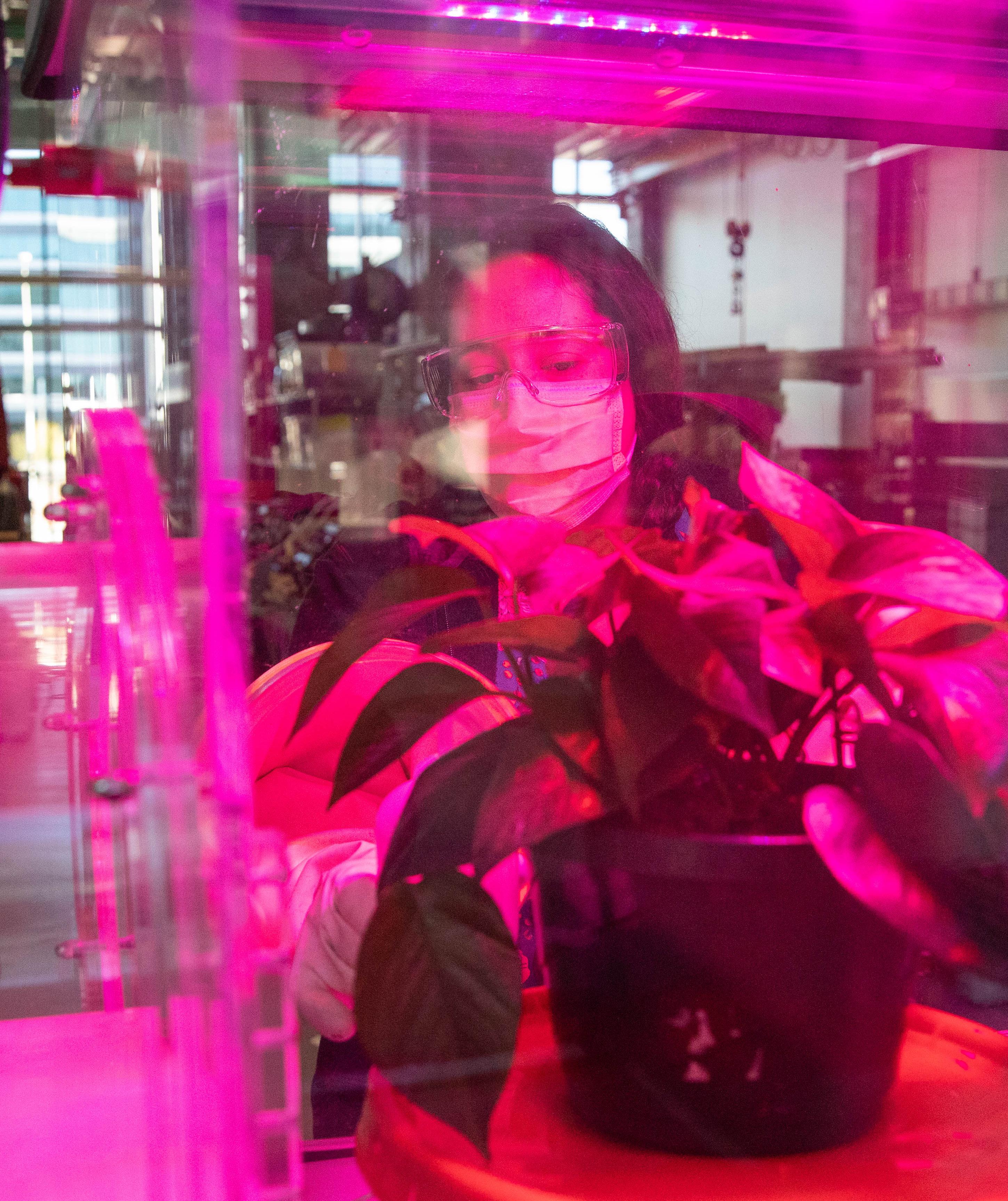
Center for Negative Carbon Emissions
Lab Manager Samantha Taylor demonstrates the different types of sorbents that collect carbon dioxide.
Building a carbon-neutral future
We are leading the development and deployment of new technologies to remove carbon from our atmosphere.
Carbon dioxide levels in our atmosphere are already past safe levels — trapping heat, worsening air quality and influencing climate change. Without removal, Earth’s systems will experience more strain, evidenced by hotter temperatures and stressed ecosystems. Moving carbon out of the air and back into the Earth is becoming essential. The Center for Negative Carbon Emissions at the Global Futures Laboratory operates real-world testbeds at ASU that help engineers refine processes under real weather conditions like wind or humidity. Systems built here can be scaled up — from units to clusters to farms.
In addition to building new technologies, the center tests policies, measures social impact and works closely with communities to ensure solutions are fair, affordable and accessible.
And the work we’re doing doesn’t stay in the lab.
Through our leadership in the Southwest Regional Direct Air Capture Hub, we’re planning one of the largest carbon removal projects in the country — designed to take one million tons of CO₂ out of the atmosphere every year.
The technologies we’re advancing have the power to transform hard-todecarbonize industries — like cement, steel and aviation — helping them achieve climate targets while opening new markets in carbon storage, creating good jobs and clearing the path to a cleaner, more competitive economy.
Developing resilient futures
We are partnering with communities to create datainformed future scenarios through human-focused decision making.
Decision making, from local to global scales, has real implications for the people who have to navigate the outcomes of those choices. To address this, ASU’s Decision Theater, a unit of the Global Futures Laboratory, emphasizes human-centered design and utilizes high-performance computing, realtime data, predictive modeling and vivid visual displays to explore complex challenges, all at the rapid pace required by real-world challenges.
Decision Theater is headquartered on ASU’s Tempe campus, with mobile versions that travel to communities from Los Angeles to Berlin. It offers a comprehensive suite of tools that enable informed decision-making. Together with participants—ranging from CEOs and policymakers to local community members and students—the Decision Theater team co-develops data-informed scenarios imagining possible futures, considering the ripple effects that different decisions could cause.
In collaboration with the U.S. Army, Decision Theater helped design a tool to assist disaster response efforts in large cities, merging data on flooding, roads, weather and security to help relief organizations plan where to set up camps or how to best deliver aid. Decision Theater also worked with Conservation International on a system to visualize potential ways to restore degraded land. Users can see how interventions like planting trees can affect carbon, wildlife, water or economic systems.
Decision Theater is helping leaders find the best paths forward, whether they are planning responses in anticipation of future emergencies, designing sustainable cities, guiding energy decisions or shaping public health strategies. By making systems transparent and choices visual, Decision Theater enables decision-makers to figure out the best moves toward a smarter, more prepared future.
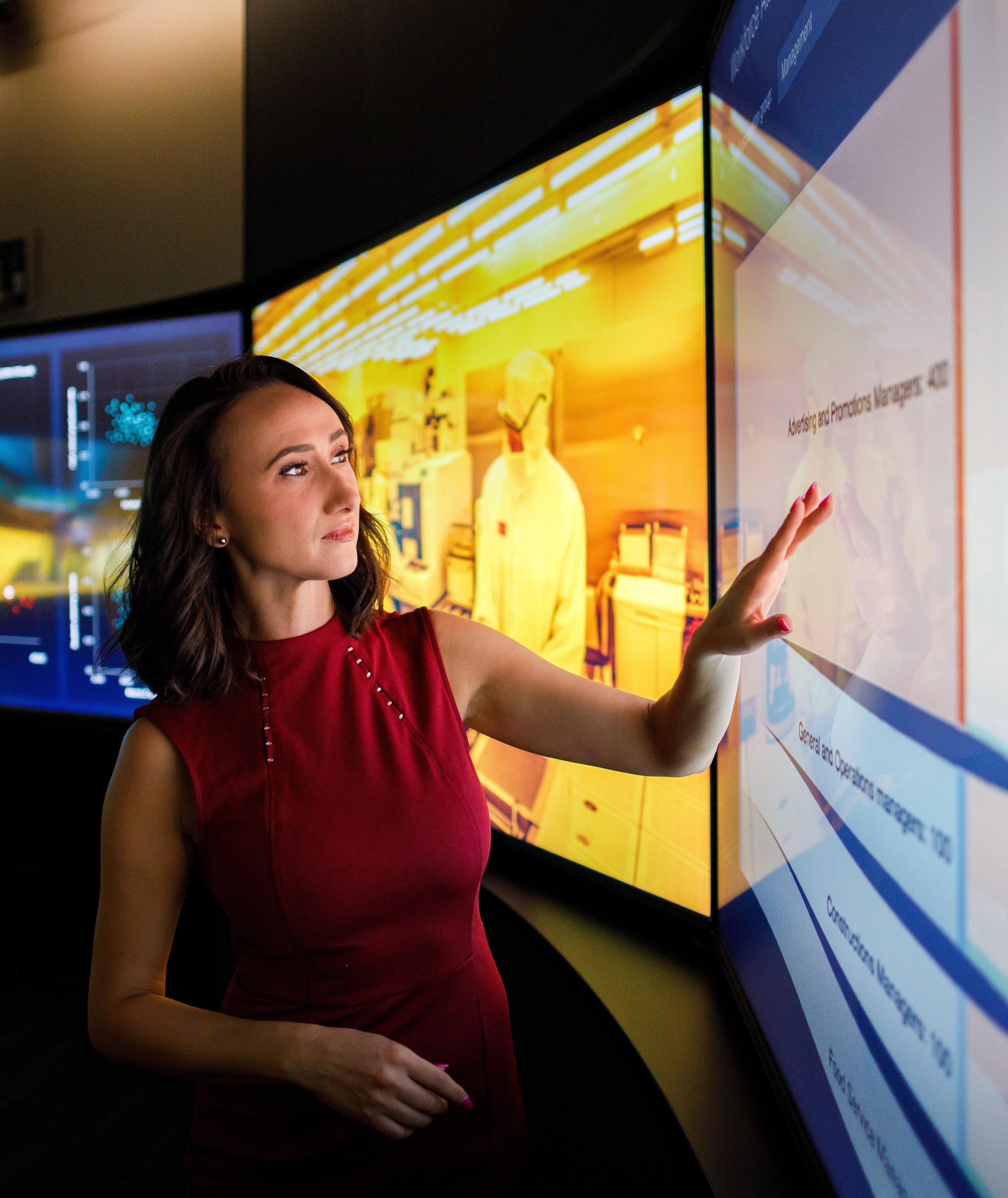
ASU’s Decision Theater allows students and faculty like ASU PhD student Chelsea Dickson to combine data with real-time decision making to visualize potential futures.
Reshape our relationship with the planet
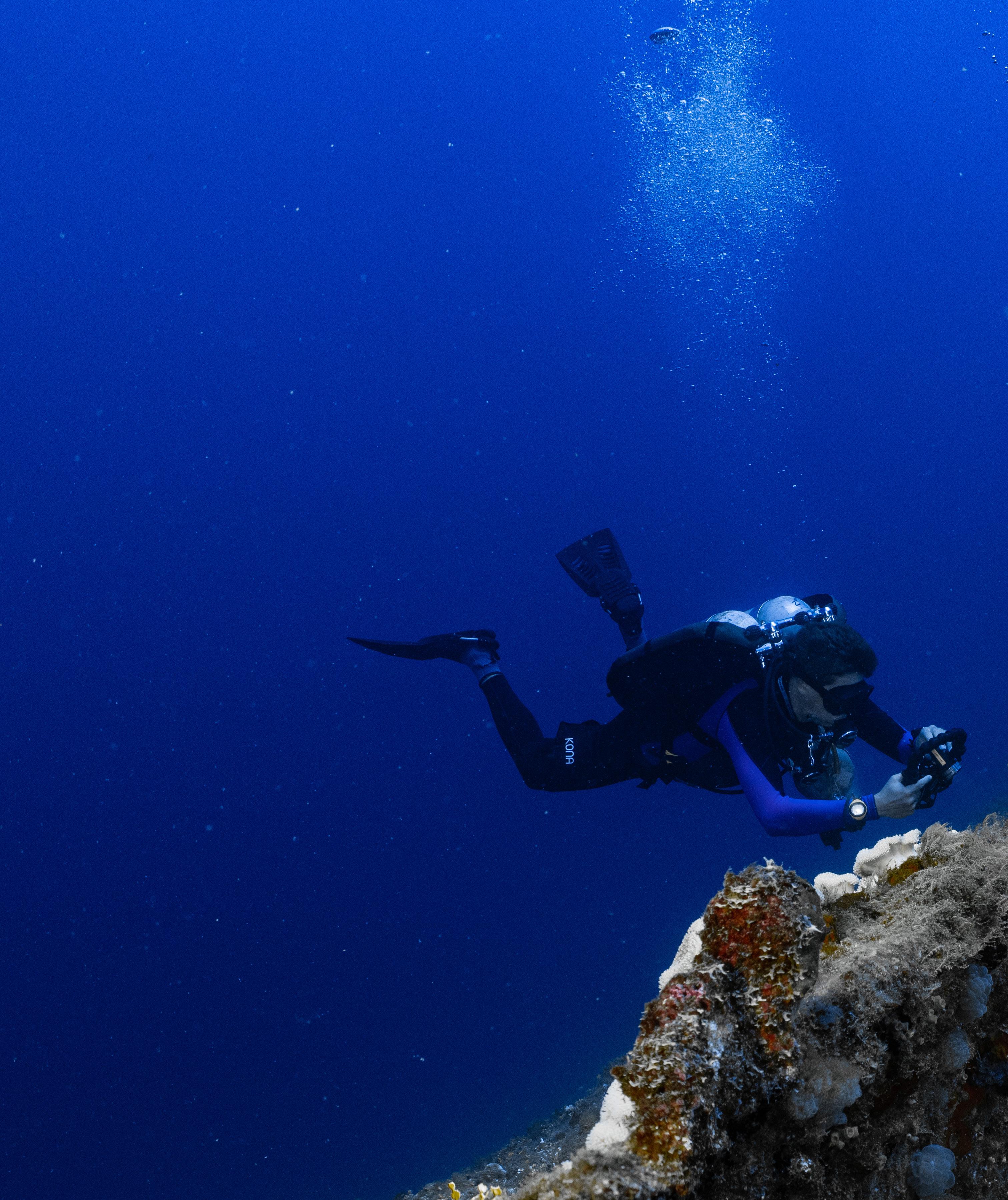
Greg Asner, director of the ASU Center for Global Discovery and Conservation Science, and a dive team member survey coral growing on sunken warships. This research seeks to understand the biodiversity of different oceanic environments as part of ASU’s collaboration with Mongabay.
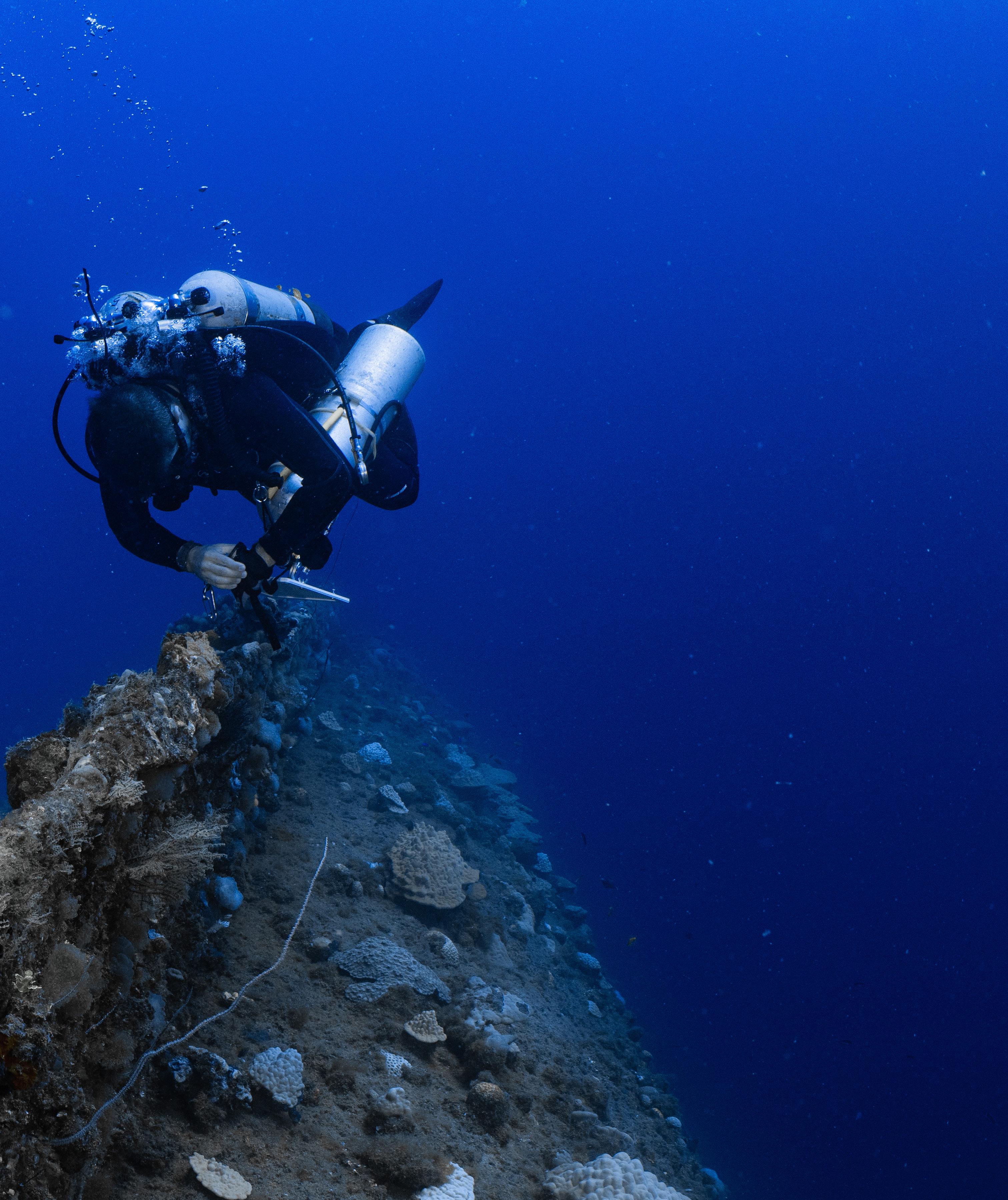
From pioneering new carbon removal technologies to designing decision-support tools for global leaders, from climate-ready workforce development to immersive VR experiences that help students understand their role in planetary change — we are turning insight into impact.
This is a pivotal moment — one that calls on us to unite knowledge and resources to shape futures where people and planet can thrive together. Join us.
Change futures by supporting
Reshape our relationship with the planet
The Water Institute is a global leader in water research and action, dedicated to forecasting and addressing pressing water challenges. By uniting experts across disciplines, the institute develops sustainable solutions that respond to both immediate concerns and future needs. Its work spans sectors and geographies, ensuring that innovations are scalable and impactful.
Through collaborations with industries, policymakers and communities, the institute advances technologies for water measurement, modeling and prediction. These efforts strengthen global water security by creating solutions for regions struggling with scarcity and quality issues. In Arizona, where groundwater depletion and Colorado River losses are critical, Global Futures researchers are using satellite technology to track water resources and inform management strategies.
At the state level, the Arizona Water Innovation Initiative leverages ASU’s strengths in science, technology, law and management to design practical solutions. With a focus on improving efficiency, advancing water
security and building community consensus, AWII is shaping thoughtful approaches to Arizona’s complex water challenges. Through initiatives like this, the Global Future's Laboratory is working to ensure sustainable water use and protect resources for future generations.
The Global Futures Laboratory is taking an innovative approach to ocean-focused discovery, learning and engagement, envisioning futures in which humankind moves back into equilibrium with Earth’s life-supporting systems. Through Changing Futures, the Bermuda Institute of Ocean Sciences will be better positioned to attract top scholars and advance the oceanographic and atmospheric research that drives innovation in marine science. The Center for Global Discovery and Conservation Science in Hawai‘i will be equipped with flexible resources to protect and preserve our interconnected coastal ecosystems. Changing Futures will amplify the impact of the Allen Coral Atlas, a groundbreaking tool to analyze coral reefs on a global scale.
the Julie Ann Wrigley Global Futures Laboratory
School of Molecular Sciences
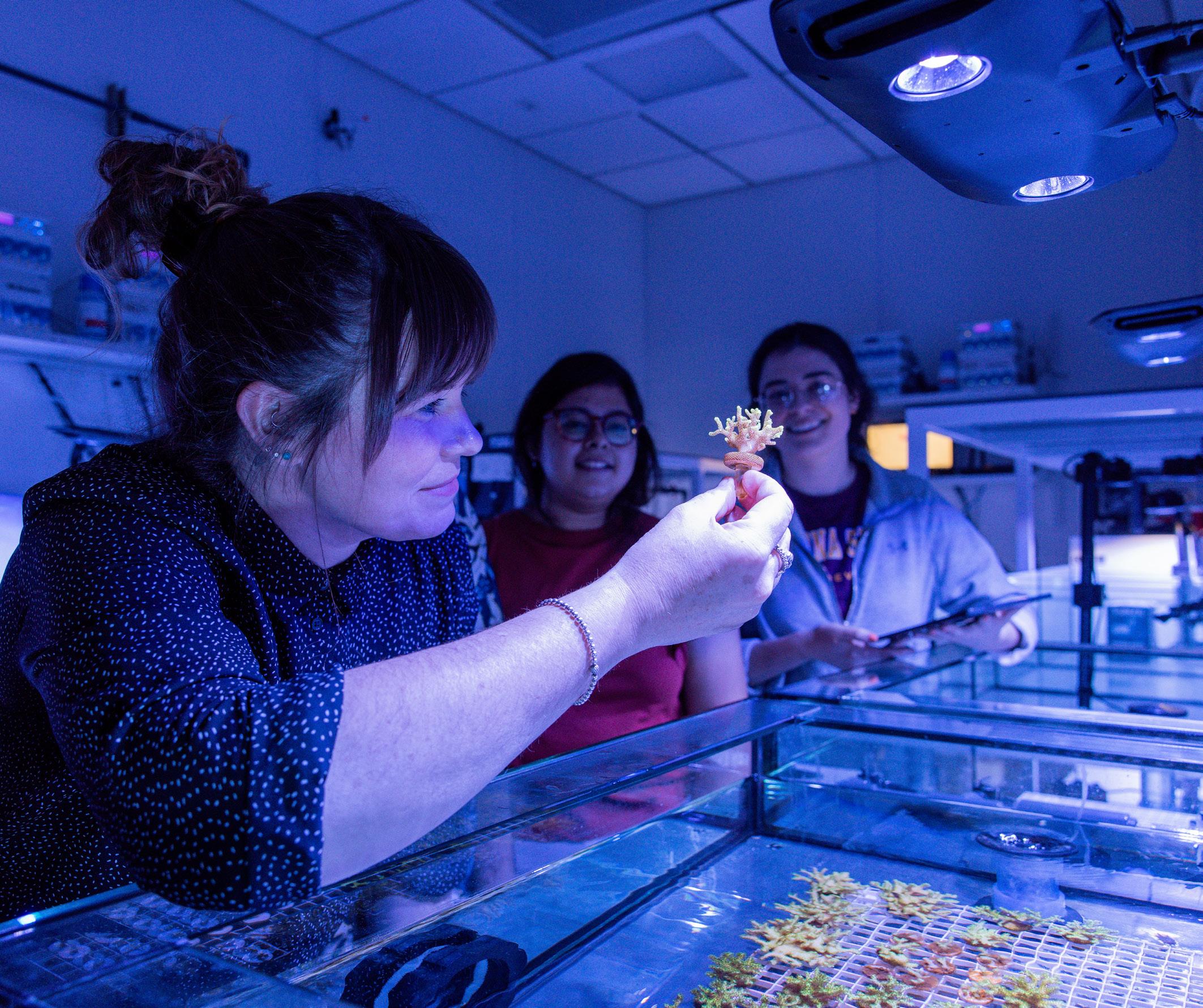
Assistant Professor Liza Roger holds up coral to show visitors in her lab at the Global Futures Laboratory, home to the School of Ocean Futures.
Change futures
Transform global education by supporting
The Rob Walton College of Global Futures focuses on harnessing the power of new technologies, promoting sustainability and encouraging innovative thinking. Through its five schools—the School of Sustainability, the School for the Future of Innovation in Society, the School of Complex Adaptive Systems, the School of Ocean Futures and the Rob Walton School of Conservation Futures—the college seeks to provide scholarship support for every student in need and to expand access to varied immersive experiences for every undergraduate student.
The Global Institute for the Future of Energy will advance energy literacy and promote dialogue around the global energy transition among students, learners, industry leaders, community members and more.
The ASU SolarSPELL Initiative empowers offline communities globally by providing localized libraries and building the 21st century skills people need to make informed decisions, increase self-reliance and improve quality of life. More than 600 devices have been deployed in 14 regions around the world, as well as in Arizona.
Empower community resilience
ASU’s Decision Theater combines advanced data analytics, modeling and simulation capabilities to help researchers, policymakers, business and community leaders find solutions to complex issues. Through Changing Futures, we will improve our Decision Theater capabilities to support region-specific solutions; to better assess and manage newly emerging risks; to improve health outcomes through interconnected interventions; to support Indigenous nations through increased collaboration and to engage more students in Decision Theater efforts.
The Swette Center for Sustainable Food Systems develops innovative solutions for resilient, equitable and sustainable food systems. They address challenges like water and energy usage, carbon footprints, nutrition and the well-being of farmers and industry professionals through a holistic approach.
the Julie Ann Wrigley Global Futures Laboratory
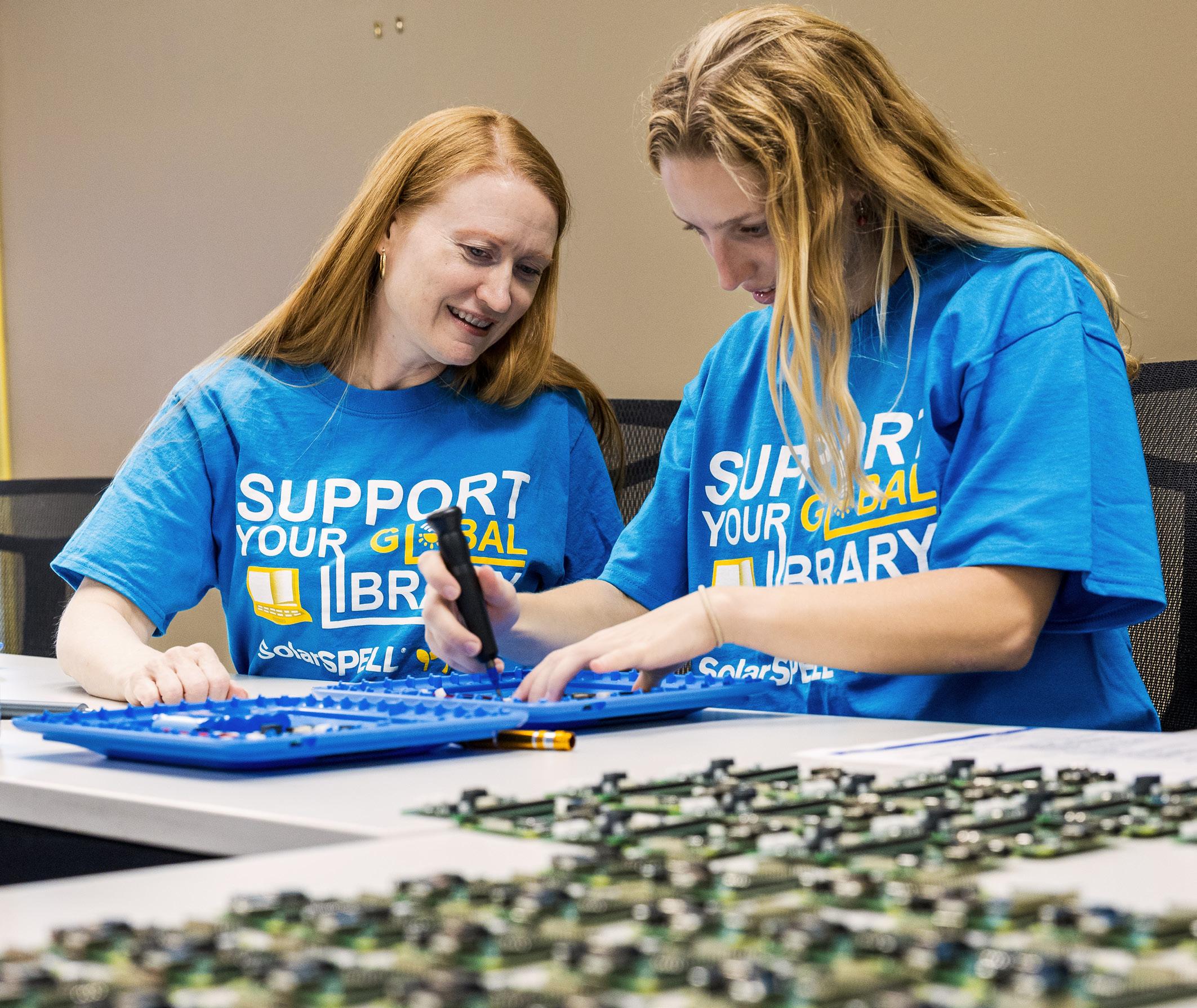
SolarSPELL co-founder Assistant Professor Laura Hosman chats with intern Maddy Pennell, a third-year sustainability and geography student, as she attaches components in a unit going to secondary students in northeast Syria. The devices can be used in areas with or without internet connections, or even consistent electricity, and are preloaded with books and other learning materials.
Change futures by supporting
Advance
technology for good
The Global Futures Laboratory focuses on renewable energy adoption, energy efficiency and carbon reduction strategies, driving the transition to a sustainable and low-carbon energy future. Advancements in carbon mapping will significantly benefit global efforts to reduce greenhouse gas emissions.
Inspire
tomorrow’s game changers
The Jane Goodall Center for Hope will be a global hub dedicated to community-driven development, impactful research and accessible education, fostering positive change at the pace needed to address critical challenges. Flagship programs of the partnership between ASU and the Jane Goodall Institute will include the Jane Goodall Global Fellows, the Jane Goodall Digital Archive and the Tanzania Expedition for Conservation and Learning. Programs like the Global Futures Impact Scholars serve as a strong recruiting tool to attract young changemakers. These types of initiatives empower students with mentorship and funding so they can lead solutions for people and nature on a healthy, thriving planet.
the Julie Ann Wrigley Global Futures Laboratory
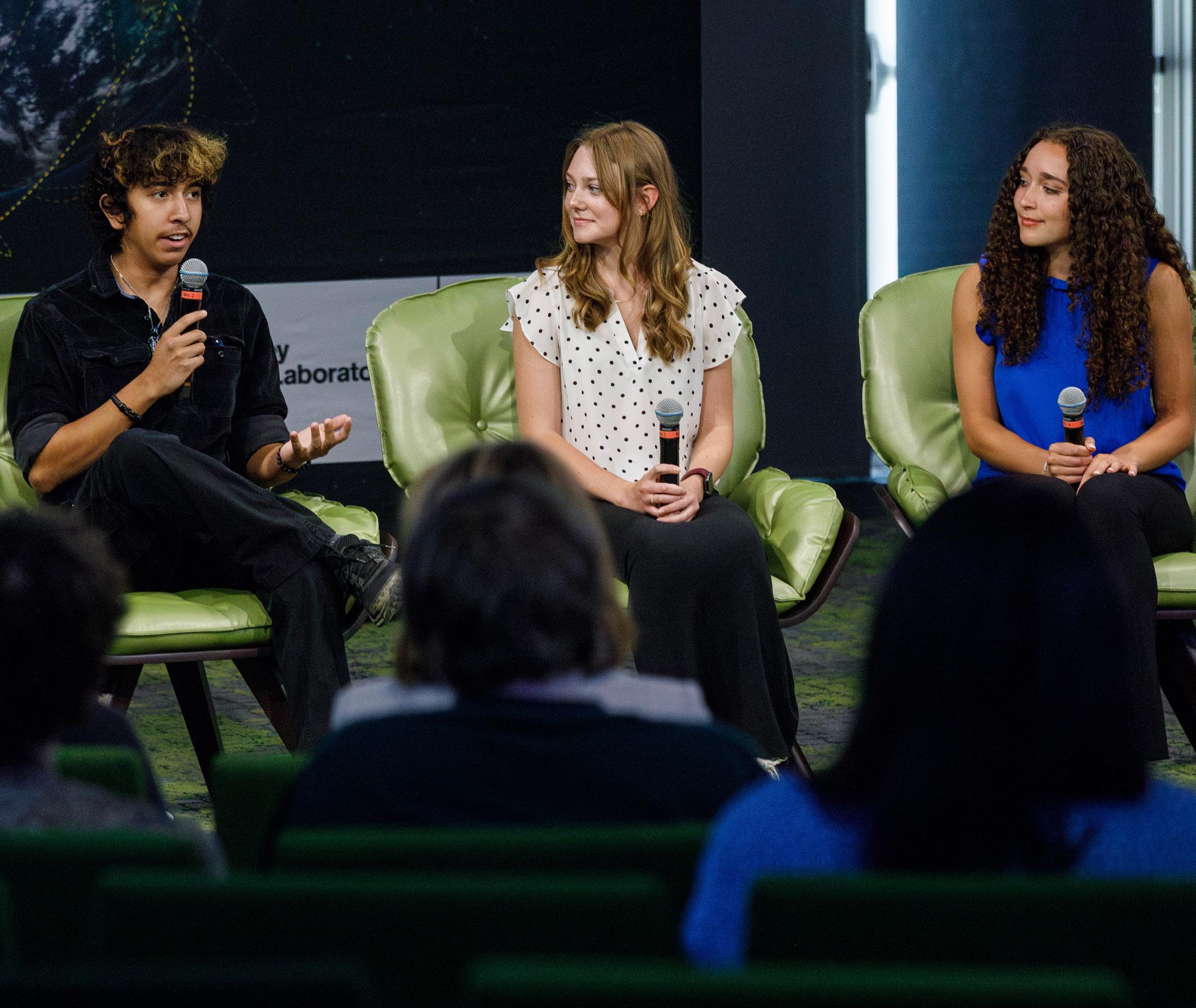
Global Futures Laboratory Impact Scholars
Miguel Arteaga, CeCe Billingsley and Paige Hebert share perspectives on youth leadership and their role in shaping the future during a panel at ASU’s 2025 Earth Day celebration. The Impact Scholars program supports first-year students in the Walton College of Global Futures.
About us
The Julie Ann Wrigley Global Futures Laboratory at Arizona State University represents the urgent belief that we can and must make a meaningful contribution to ensuring a habitable planet and a future in which well-being is attainable. The Global Futures Laboratory is the world’s first comprehensive laboratory dedicated to the empowerment of our planet and its systems. It is built upon the deep and diverse expertise of ASU scientists and scholars and an ability to leverage insights and knowledge from an extensive global network of partners in order to address the complex social, economic and scientific challenges spawned by the current and future threats from environmental degradation. From this foundation, the Global Futures Laboratory is able to anticipate and respond to existing and emerging challenges and use innovation to purposefully shape and inform our future so that all of Earth’s inhabitants may thrive. For more information visit globalfutures.asu.edu.
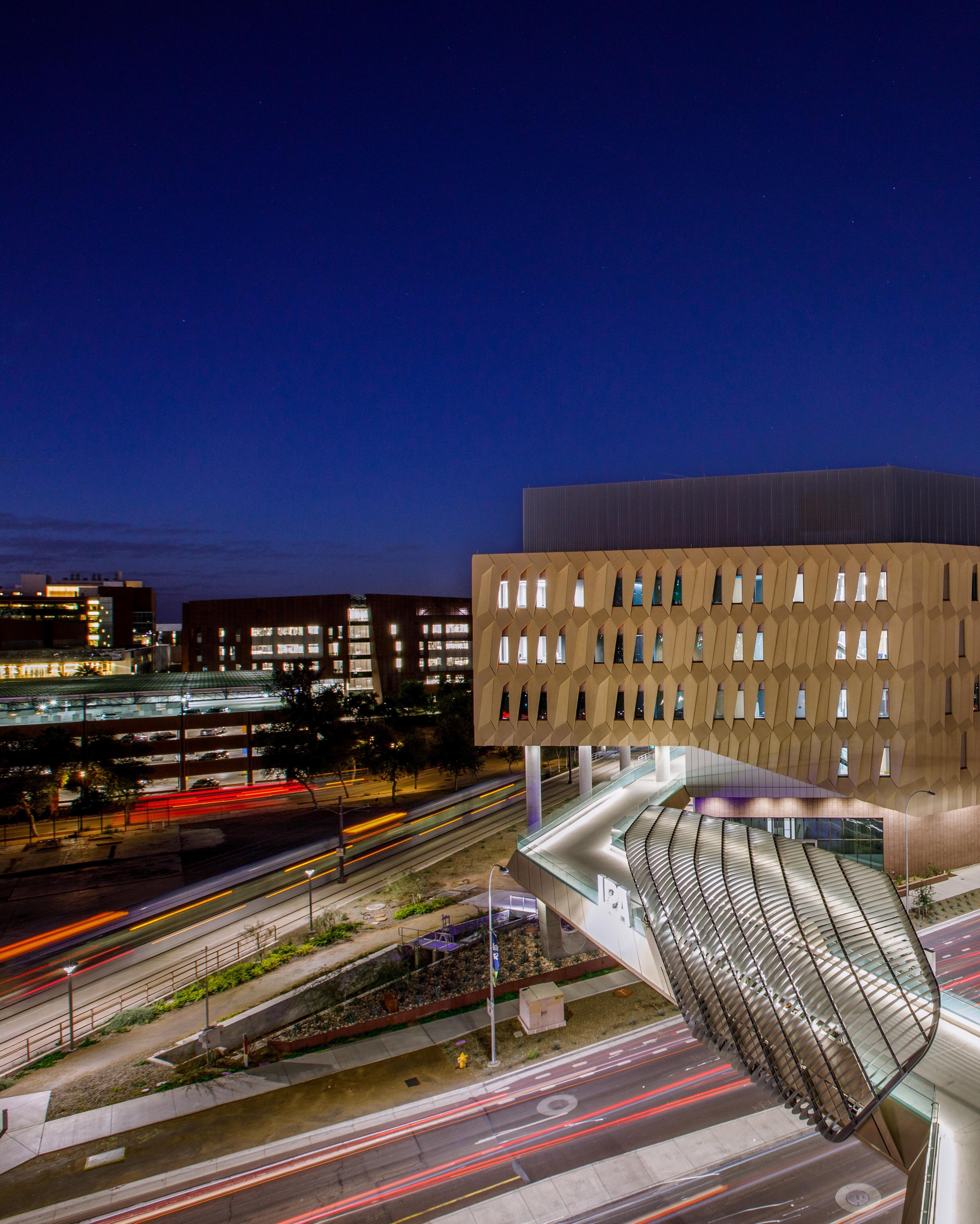
ASU is a comprehensive public research university, measured not by whom it excludes, but by whom it includes and how they succeed; advancing research and discovery of public value; and assuming fundamental responsibility for the economic, social, cultural and overall health of the communities it serves.
ASU Charter