Meg Frantz CREATIVE DIRECTOR Tess McNally CHIEF COPY EDITOR
Zech Tuuk GRAPHICS EDITOR
Khloe Roberson REPORTER
Carter Kincaid REPORTER
Elena Ospina REPORTER
Grace Phillips REPORTER
Ghostly Grounds Boone’s Legends and Lore
STORY
AND PHOTOS BY ZECH
TUUK
There are ghosts in these mountains. The Appalachian Mountains are home to many strange stories and tall tales. From the occasional Sasquatch sighting, to the predatory Wampus Cat, encounters with the cryptid are plentiful. In these woods, superstition takes root, tracing all the way back to when the Cherokee and the Catawba inhabited them. Deity myths describing supernatural beings from the woods were passed through their cultures through oral history, often including origins for recognizable landmarks such as Clingman’s Dome, or Kuwohi – the traditional name. As colonization started, so did the tall tales and the folklore. Witches, ghosts, lost hikers, and black panthers still resonate to this day. The mountains have their secrets, and every town has its bogeyman. Boone is no different.
In a city obsessed with progress, things of the past tend to get overlooked. Boone is no stranger to stories, from an alleged Satanic cult atop a mountain to the legendary trailblazer the town was named after. Appalachian State University has
been the subject of numerous ghost stories over the years.
I.G. Greer Hall was rumored to be haunted as far back as 1974, according to a This Week in History published by the Appalachian. The ghost, named Dave by the students, tragically died in a car wreck attempting to make it to his girlfriend’s recital. Few students know this story today, for a more famous campus ghost story has stolen the limelight – the ghost of East Hall.
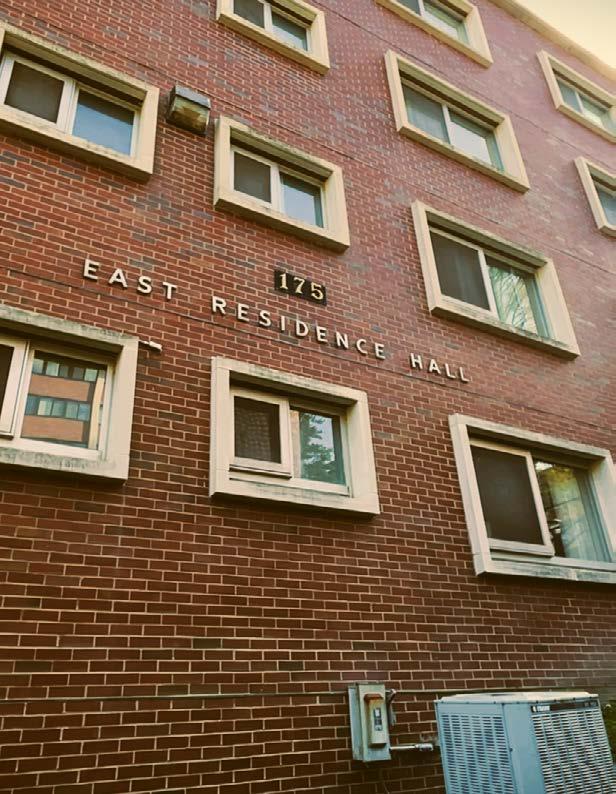
East was a residence hall built in the 1950s. The legend started in 1977, after a student Lacy Everitte died by suicide in his dorm. After his death, strange phenomena began to be reported, including shadows watching students while they slept, and doors slamming shut in the middle of the night.
A 1989 student, Michael Renegar, claimed to have chased the ghost up the stairs one night. That incident impacted Renegar, who went on to form a paranormal activity team and became an author. Renegar recognized Everitte from his newspaper obituary photo 20 years later,
according to Renegar’s website. Renegar died in 2020. East Hall was renovated in 2022 to house administrative offices.
Some ghost stories have more fact than fiction. This is the case with the obscure tale of Captain William Riddle, according to a 1978 Watauga Democrat article.
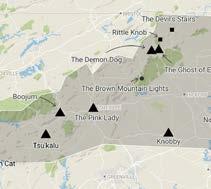
This story takes place in April 1781, birthing the only American Revolutionary conflict of Watauga County. Captain Riddle and his gang of British loyalists kidnapped Colonel Benjamin Cleveland via an ambush at Old Fields, now Todd, NC. Cleveland, a man who possessed a “Torry-hanging” temperament, was then taken to Riddle’s hideout, the Wolf’s Den, on top of a ridge known today as “Riddle Knob.” The knob has since then been renamed Rittle Knob and sits on private property.
A few of Cleveland’s men covertly followed Riddle and alerted Cleveland’s brother Robert – also a Captain – of their whereabouts. A gunfight at Wolf’s Den broke out soon after, with only Riddle escaping. Riddle was captured by Cleveland in the days that followed. He was promptly escorted to Wilkes County, where he was hanged at Tory Tree. As the legend goes, Captain Riddle and his horse still roam Riddle Knob in the moonlight, eager for revenge.
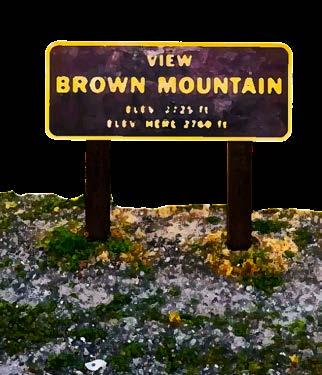
Strange apparitions during the nights are not uncommon for the Appalachian Mountains. Perhaps the most famous example of this is the Brown Mountain Lights. Although not technically central to Boone, the Lights aren’t far, located in Burke
County, about an hour away. The lights are easily recognizable to inhabitants of the High Country, for they have stumped scientists for years. At random times during the year, one or more orbs of bright light spontaneously appear.
Sometimes they move, sometimes they hover. They disappear without a trace.
CONTINUED ON PAGE 6
“The Cherokees believed that the lights were the spirits of Indian maidens who went on searching through the centuries for their husbands and sweethearts who had died in battle.”
–
Nancy
CONTINUED FROM PAGE 5
Over the years, people have speculated what the ghostly lights could be. Some say ball lightning; others say reflections of cities and cars. A popular theory is rising swamp gas. The more superstitious believe they’re spirits but can’t agree if they’re the spirit of a woman murdered by her husband in 1850, or the spirit of a slave searching for his master. The latter theory comes from the song “Brown Mountain Light,” penned by Scotty Wiseman in the 1940s. He was inspired by an old Civil War legend alluding to the lights.
Author Nancy Roberts writes in her 1967 book “Ghosts of the Carolinas” of one more explanation, one that’s stuck around since the year 1200.
“According to Indian legend, a great battle was fought that year between the Cherokee and the Catawba Indians near Brown Mountain. The Cherokees believed that the lights were the spirits of Indian maidens who went on searching through the centuries for their husbands and sweethearts who had died in battle.”
People are afraid of the things they don’t understand. The unknown often gets labeled as the unearthly. Whatever the explanation for these stories is, the message is clear. Story or no story, something’s out there.
Click on this square to be taken to a map of the legends of Western Carolina
Click this to watch a slideshow showcasing the locations mentioned in this piece.
Right: The exterior of Appalachian State’s East Resident Hall today
Roberts, “Ghosts of the Carolinas”
Boone Before “Boone”
Exploring Boone’s roots
in the Junaluska community
KHLOE ROBERSON
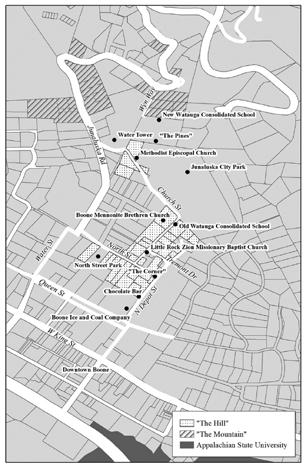
In 2010, the larger Episcopal Church put forth a national effort to reconcile with the African American community for their involvement in the slave trade. St. Luke’s Episcopal Church in Boone, NC participated in these reparations and reached out to the local Junaluska community at Boone Mennonite Brethren Church. Together, along with other members of the community, they formed the Junaluska Heritage Association.
Susan Keefe, an anthropology professor at Appalachian State University and longtime resident of Blowing Rock, was contacted due to her similar work in the Junaluska community in the past, and has been the Junaluska Heritage Association’s secretary ever since.
“One of the things that came out of that effort at the very beginning was this
feeling in the community that they were invisible, that they were ignored by the Boone community, and they wanted to have a greater voice,” Keefe said. “And also there was a concern about their own history. Wanting to know more about their forebearers and about the history of the black community in Boone.”
While working on interviewing members of the Junaluska community and their relatives while hearing their stories, it occurred to Keefe that this would be a good form for the basis of a book. Keefe took her more recent interviews and combined them with about 15 older conversations from the ‘70s that were part of the Appalachian State Belk Library Archives to come up with 30 plus interviews that would make up “Junaluska: Oral Histories of a Black Appalachian Community.”
“What came to me overall was this picture of how the community developed during the 20th century,” Keefe said when speaking about the process of working on the book. “I mean I almost saw it in my mind as a movie, you know, a movie that could depict the changes for the black community over time.”
Working on the book has expanded Keefe’s idea of who lives in Appalachia, who lives in Boone, and what part they played in the development of the town.
“I think before the publication of the book it would be hard to have found anybody in Boone who really knew much about the Junaluska community.”
Keefe said. “ I think in that regard it’s been successful in promoting the awareness of the community.”
In 2020 “Junaluska: Oral Histories of a Black Appalachian Community” was published. It caught the eye of Cameron Gokee, an anthropology professor at Appalachian State that specializes in archaeology. His regular field school had been canceled for the summer due to Covid and he was looking for an alternative project. In 2021 he ran a small archaeology project as a field school built into the semester and related to the Junaluska community’s history.
CONTINUED ON PAGE 10
“THE HILL AND THE MOUNTAIN”
COURTESY OF THE JUNALUSKA HERTIAGE ASSOCIATION
CONTINUED FROM PAGE 9
“It just seemed like an opportunity to do local history but also kind of speak to local black history in a way that I think a lot of people weren’t aware of, and just try to help kind of share that part of this community,” Gokee said.
He also thought it was appropriate to acknowledge the connection between this project and other political movements of the time period, like the killing of George Floyd and Black Lives Matter.
Reaching out to the Junaluska community, Gokee and his team asked what they hoped to learn about through the digs.
“They were curious about, kind of, the earliest post-emancipation homesteads associated with the community,” said Gokee.
They were also interested in a freed slave named Troy Councill, who was enslaved by the Councill family, a founding family of Boone. After the Civil War, he gained his freedom and continued to live in the area and started a farm.
Gokee and his team went digging with the intent to find any traces of things that would date from around the 1870’s when the farmstead would have been
there. They didn’t find enough evidence to be completely conclusive, but they did find enough artifacts that coincide with what oral histories said of the farmstead that Gokee could say: “Sure, this could be part of that site.”
“It’s the road, not the destination kind of thing,” Gokee said. “So just by doing the archaeology, kind of showing everyone, hey, there’s this community here and they have a history, and that history is important enough that archaeologists are out here trying to find artifacts from it.”
After their first field season they had found rusted nails, pieces of pottery, some marbles, and pieces of coal. They put their artifacts together and had the JHA come to take a look. Gokee remembers Roberta Jackson, Junaluska native and member of the JHA, looking at one of the artifacts with familiarity and recalling something similar from her own past.
“There was the artifacts themselves, but they became little, kind of, triggers for people in the community to share
that was popular during segregation. During spring break of 2026, Gokee and team did more field work in the Junaluska neighborhood, and said he would continue doing more work with the community as long as they were interested.
Looking forward to the future of the
Junaluska community in Boone, Keefe is interested and concerned to see what will happen to the JHA and who will take over.
“It does require a little bit of work, a little bit of shepherding projects along, so I hope the younger generation will step up,” she said. “We’ll see what happens.”
Click above for a timeline the founding and evolution of the Junaluska Community.
Boone’s Outdoor Pulse Adapting to Boone’s Weather
STORY AND PHOTOS BY CARTER KINCAID
On a winter day in Boone, resident Andrew Stankevich hiked through heavy snow and navigated treacherous, icy trails. Months later, higher temperatures welcomed hikers in T-shirts.
Unpredictable weather does not stop outdoor activity. From quick temperature changes to high winds and other extreme weather conditions, residents and visitors have learned to adapt.
Stankevich, a local outdoor enthusiast, described Boone’s climate as “ erratic,” and conditions can change quickly depending on the elevation. Boone’s elevation is 3,333 feet.
“The elevation is huge in determining the weather,” Stankevich said.
Stankevich also recalled a moment from Hurricane Helene, where he and several members from the community sat at Appalachian State University’s Central Dining Hall and watched the extreme weather from the windows.
“We all gathered and watched the trees get whipped back and forth,” Stankevich said.
Despite these extreme conditions, Boone’s outdoor culture continued to thrive. Suzanne Trotter, a nursing professor at UNC Charlotte who frequently travels to the area, describes Boone’s outdoor culture as “alive and vibrant,” with many activities including hiking, running, kayaking and group events.
“I will specifically go to Boone for these events,” Trotter said.
Boone’s cooler summers attract several outdoor enthusiasts looking for relief from heat and humidity in other parts of the state. However, those same conditions can be challenging.
“If you know Boone, you know and love the wind, but you have to be prepared with layers,” Trotter said.
Local businesses are affected by Boone’s changing weather patterns. Kevin Hagan, general manager of Footsloggers in Boone, described the changes as “weather volatility,” where sudden changes in temperature or rain can affect customer behavior.
“Snow folk were eager to have an actual winter, and spring and summer folk
Students unwind on Sanford Mall at Appalachian State University while having a conversation about their days.
headed out early with comparatively summer-like temps,” Hagan said.
As a result, preparation has become essential for anyone spending time outdoors in Boone. From layering clothing to buying proper footwear, adapting to the climate is key.
“Layer, layer, layer, and wear good footwear and socks,” Hagan said.
Boone’s weather is famously unpredictable. You may encounter icy trails and strong winds to mild and warm summer nights. This unpredictability is what defines the one-of-a-kind experience for residents and visitors.
A slideshow of outdoor life at Appalachian State University.
On a warm, sunny Monday evening, students at Appalachian State University take advantage of the nice weather by playing a game of spikeball.
Boone Stoner Culture 4/20 Celebration and a THC Ban
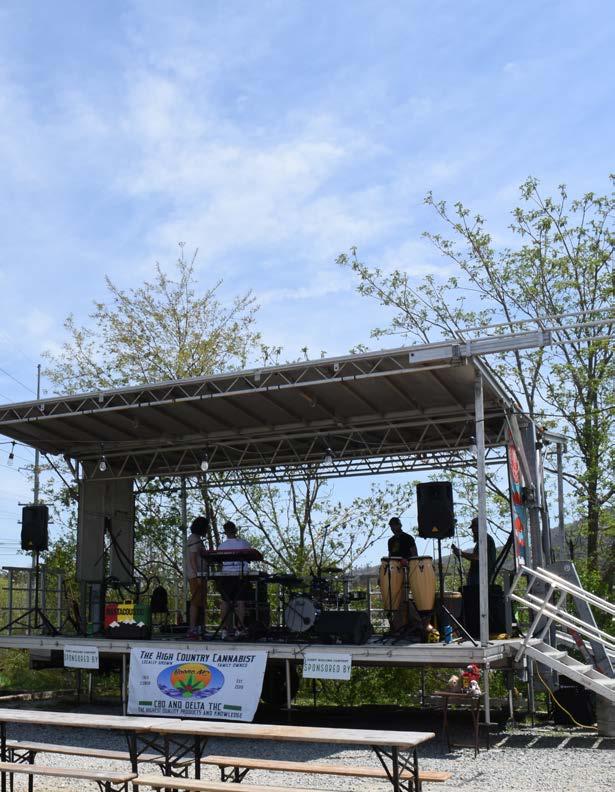
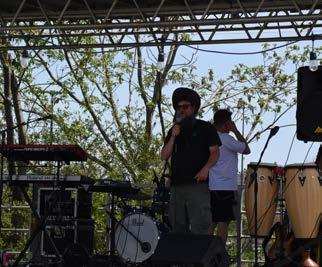
Appalachian Mountain Brewery marked the annual April 20 cannabis holiday, commonly known as “4/20,” by hosting a Saturday event.
People gathered outside at picnic tables, where the aroma of cannabis hung in the air. Pre-roll smoke moved through the crowd as attendees socialized over both alcoholic options and cannabis-infused beverages. One featured drink, a berry lemon fizz, contained 5 milligrams each of THC and CBD.
Near the front of the venue, local dispensary The High Country Cannabist, operated by William Minor, had a presence at the event. Minor has been part of the cannabis industry since 2019, when North Car olina’s Farm Bill legalized hemp. The dispensary set up a station with rolling papers and filters, allowing guests to make their own joints, and also offered packaged flower for sale.
STORIES AND PHOTOS BY GRACE PHILLIPS
Boone Blown displays items for sale at the 4/20 Event at Appalachian Brewing
Businesses Brace For THC Ban While
Distro and High Country Cannabist are anticipating having to close their doors next year.
“It’ll lose a lot of jobs, but the way the bill is worded and placed, it puts a ban on all hemp,” said Josh Lynd, manager of Flora Distro and graduate of Appalachian State. Lynd said the ban would eliminate about 95-99% of their inventory. “In one year, in effect, theoretically, we will have to shut down.”
Since 2018, businesses have operated legally for seven years under the Farm Bill which legalized hemp. Since then, the industry has grown rapidly. According to a February 2022 article in Homegrown, North Carolina went from having no licensed hemp growers to nearly 1,500 with more than 1,200 registered processors in less than five years. For business owners and workers, the new restrictions feel like a sudden reverse of nearly a decade of legal progress.
William Minor, owner of High Country Cannabist, has been in business since 2019. His store, located just outside downtown
Boone, helped create a more informed and transparent hemp market. “When I saw the bill went through in 2018, I started to really get the wheels turning on whether this would be a viable business,” said Minor. Minor said he monitored the situation for a while before deciding to start a hemp store and farm in winter of 2018. During this time, there were not many local options for hemp stores in Boone.
“It was more about serving a small town. That way, we had quality products that people could rely on,” said Minor.
National and campus-level research shows marijuana use among college students has reached historic highs, while alcohol consumption is steadily declining.
Cannabis Use Up Among College Students
According to the National Institute on Drug Abuse, 44% of college students reported using marijuana in 2020, up from 38% in 2015 the highest level recorded in over threeand-a-half decades. At the same time, alcohol use has dropped across multiple measures. A 2025 Campus Safety Magazine survey of more than 832,000 students found the number of students who do not drink at all has doubled since 2016, rising from 34% to 68%.
As of 2026, many U.S. states have legalized marijuana whether medically or recreationally. Cannabis use among college-aged adults is at historic highs and alcohol consumption is falling. It signals a change in how college students socialize, and define campus life.
Izzy Cowell, a sophomore at Appalachian State, majoring in political science, prefers cannabis to alcohol. For her, the physical effects make a clear difference. “For me, it allows me to feel much more in-control,” Cowell said. “I typically use it for stomach issues, if I am feeling nauseous or struggling to eat.”
Cannabis has been used medically for symptom management. Research and data from the Mayo Clinic has shown that it can be used to address symptoms such as nausea, appetite loss, and chronic pain.
Arilene Herrera, a junior majoring in finance and banking, was a cannabis consumer for several years. Her relationship with substance use was shaped by years of responsibility and personal challenges. She
turned to cannabis as a way to cope and regain a sense of control in her life.
“I preferred weed over alcohol because I felt like I had more control over myself.” Herrera said.
“It was more of a relaxing, spiritual experience rather than something that needs to be intense or social.” She said.
As cannabis becomes more normalized, Herrera feels the stigma surrounding it has diminished.
“With legalization in many states and more open conversations about mental health and stress, cannabis seems less stigmatized and more accepted among college students.” Herrera said.
This perception shift is supported by both national and campus data. Addiction Center reports that legal marijuana sales surpassed 17.5 billion in 2020, an increase of 46% from the previous year, reflecting a growing societal acceptance and availability of cannabis.
Game Day Traditions
STORY AND
SBY ALEXIS FOWLER
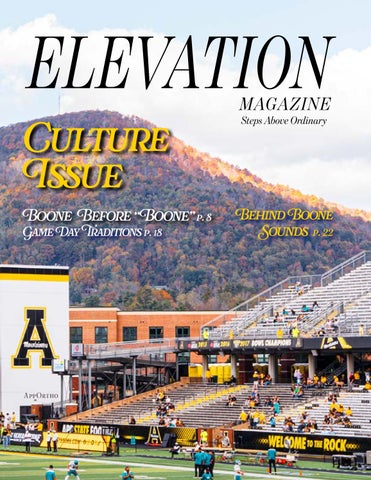
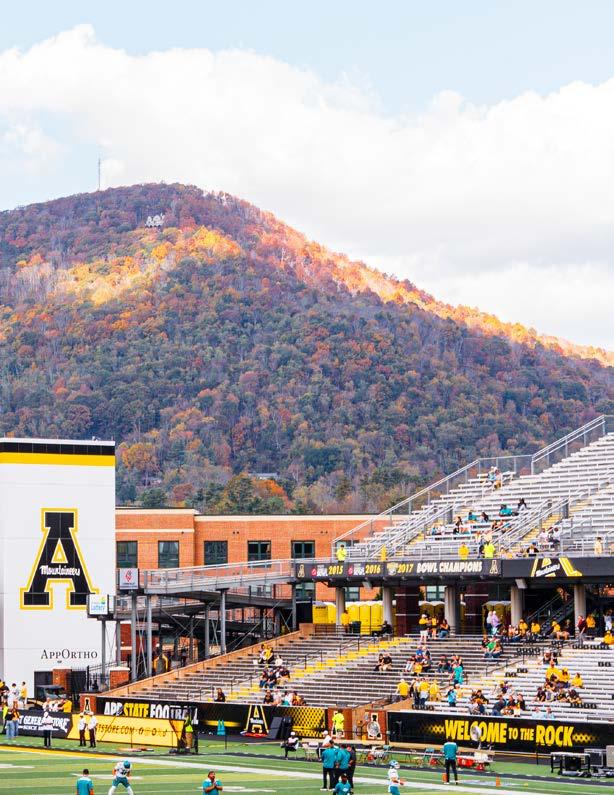
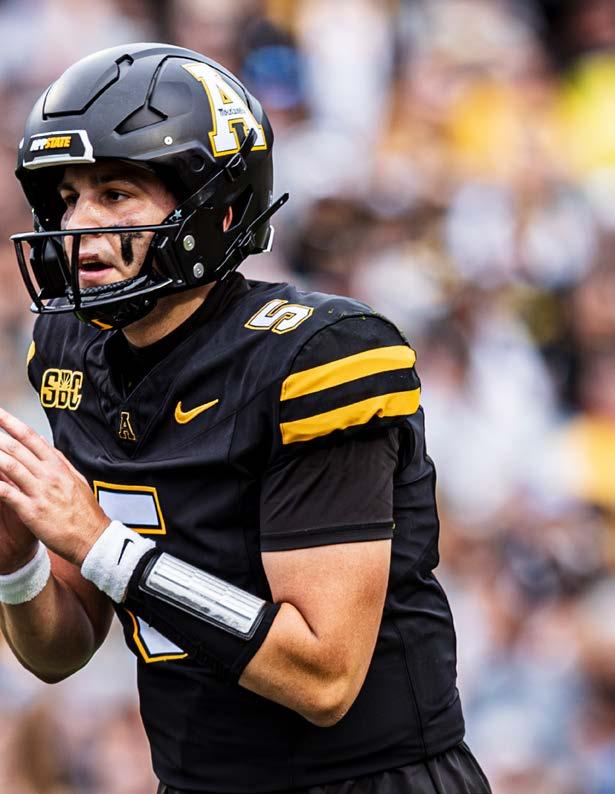
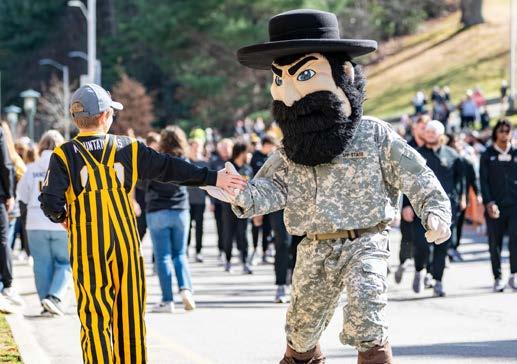
porting events occur almost every single weekend in the town of Boone. Sporting events run year round both on campus and off. These events have become integrated with the cul ture of the area and hold their own form of unique experience. Appalachian State is known for its atmosphere on game days. During these sporting events, outfits are determined by the game theme and the weather. Some of these themed games include black out and white out games. One of the traditions many students participate in is wearing the black and gold overalls to games. When looking around the crowd , it can be a sea of black and yellow.
A big part of how people dress for games depends on the weather. Toward the end of the fall semester, some of the outdoor football games include snow and icy weather. During the 2024 fall season when Appalachian State played against James Madison University, Boone experienced snow during one of their football games resulting in snowball fights between the fans.
The sports culture here is about more than just football. Last season, the 2025 Appalachian State field hockey team was nationally ranked. The team had an incredible season, winning most of their games.
CONTINUED ON PAGE 20
PHOTOS
Sports: The Appalachian Way
CONTINUED FROM PAGE 18
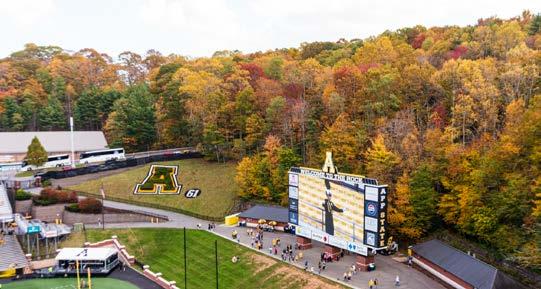
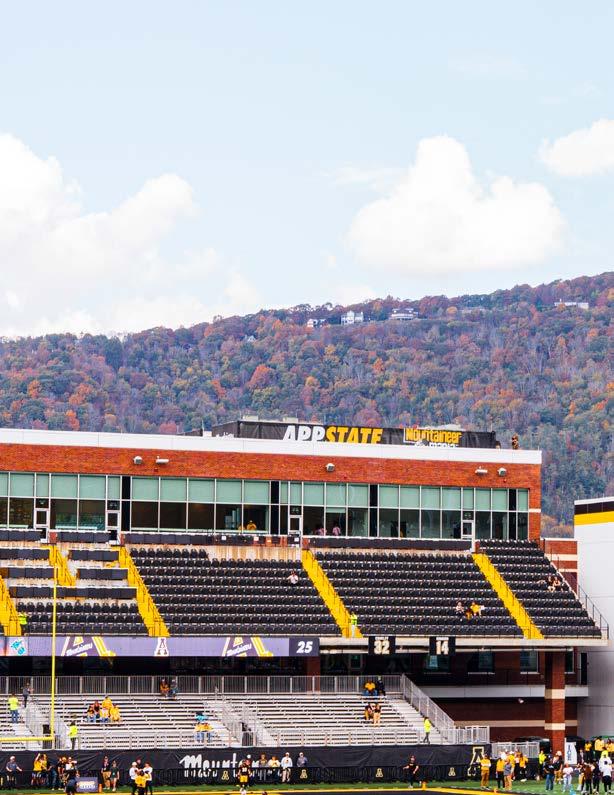
In the fall, fans slide down the hill located at the East side of the stadium. Sliding down the hill has become a Mountaineer tradition that’s a right of passage for many students.
For field hockey games, fans are encouraged to bring their dogs. One of the newer teams in the
area is the Appalachian State Ice Hockey team. The team isn’t an official university team, but it is quickly becoming one of the most popular. The players have to travel away from campus to play in games and practice, which shows their dedication.
Boone has other athletic teams besides just the programs associated with Appalachian State. Appa-
lachian FC is a soccer club in the area. Despite wearing black and gold, they aren’t associated with the university. Their team mascot is a sasquatch, who wanders around during the game while waving their team flag. The team won the Southeastern Conference in 2022.
Boone has so many teams that are special in their own way, and each offer a unique experience.
Game days at App State feature a sea of black and gold. Click on photos on the next page for multimedia features..
Behind Boone Sounds
BY TESS MCNALLY PHOTOS BY ALEXIS FOWLER
There is no doubt that everyone thinks of a particular tune when they think of the High Country. That may be “play me some mountain music” or “Wagon Wheel”, or maybe even “Beer never broke my heart.”
Seeing a local guitarist out on the sidewalk is not an uncommon sight on King Street. Country music star Luke Combs played his first live concert at Elevation 3333. Rainbow Kitten Surprise brought their band together in a small shack on the 105.
App State student Ethan Young knows Boone music all too well. His dad was a pastor, raising him on gospel mu sic while singing in the choir throughout his childhood. His dad gifted him a guitar for Christmas one year, and that sealed the deal for his upcoming music career.
While in Boone, he found his days redundant, going to class, going to work and coming home to
“I always felt like there should be something more,” Young said.
He started picking back up his guitar in his free time. He found singing and playing was muscle memory. He started playing for his roomates, when they admitted that he should do something with this passion. Young began dreaming of the band. His band members of “What the Funk” all live on the same floor as him in his apartment complex.
CONTINUED ON PAGE 24
“The fourth floor is where it all began.”
— Ethan Young
CONTIUED FROM PAGE 22
“The fourth floor is where it all began.” Young said. They slowly started getting to know each other better, getting together at the bar or for some Sunday football.
Eventually the dream began. Ethan would sing and all other members played their original instruments.
“I am not sure how in h--l the name started, but its sick.” Young laughed while he spoke.
Young and his band members really wanted to think about how the band could be different. They had numerous conversations about what made Boone music truly special.
“There is such a culture around here about live music and we all love it,”
Young said. He spoke to a couple other bands in the area such as Brown Oak Assembly and asked them what it took to create something special.
“We all kind of agreed that we need to do as much live music as possible.” Young said.
While Young’s band is a rock cover band, they create their own experience for fans.
Every musical talent in the High Country has the qualities that make them unique.
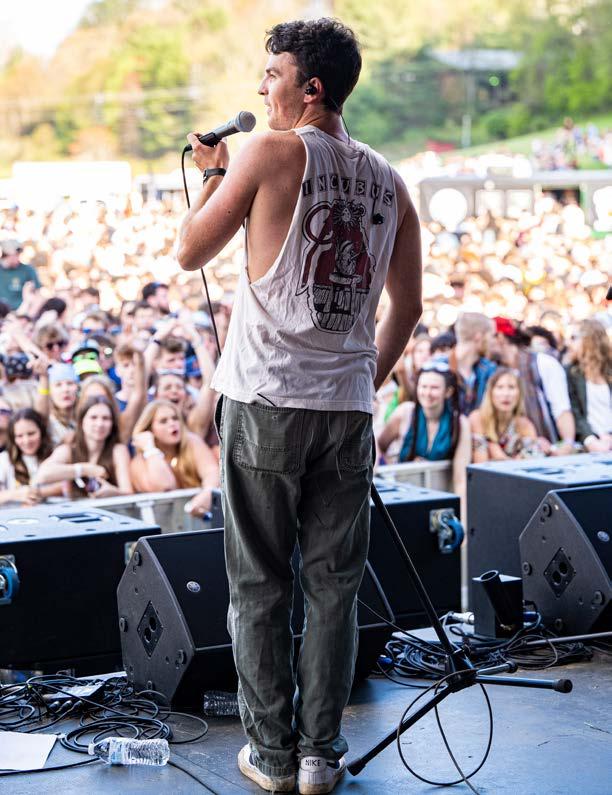
“Thaw Out” is the one of a kind musical festival local to the Boone area. Thousands of students gather around in the High Country fairgrounds to experience multiple musical artists, all highlighting differ-
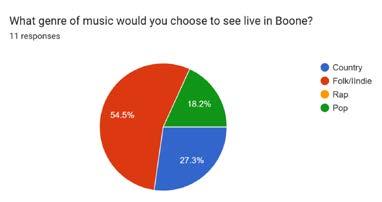
This upcoming year, Boone is headlining North Carolina rapper “DaBaby” who is set to perform the main act, followed by local and traveling
While it is no doubt that Boone has a plethora of musical options to offer, each one is unique making the High Country such a destination to explore the sounds.
“I tell everyone, Boone is where you come to listen to some good a-music” Young said.
It’s Not Just Clothes, It’s Self Expression
BY ELENA OSPINA
Growing up, you don’t have much say with what you choose to wear. As a child, your parents pick out your outfit and in high school you have to abide by certain dress codes, but in col lege, students have the freedom to wear whatever they want.
At Appalachian State University in Boone, NC, people dress how they want without fear of judgement. They are unapologetically themselves as they express their cultures, opinions and individ uality through their fashion. Whether it’s a bright pink wolf cut with piercings, or just basic slacks and cowboy boots, every student and person has a story to tell.
Kaylee Leprade, a sociology major at App State, told a story of a friend visiting another campus and described it as a “culture shock” because people were held captive by the fear of being different. Leprade encourages people to show their personality more.
“Everyone is dressing like everyone else and that is so boring,” Leprade said. “We are all different and unique and we have to express that please. We have to.”
Sarah Jackson, a worker at Lillilu, a bou tique in Boone, says that freedom in expres sion varies on the person.
“I believe it is a personality thing and level of confidence. From what I have seen being a dietitian and working at a boutique, self confidence plays a huge role and your level of creativity naturally bleeds through,” Jackson said.
Leprade finds inspiration for
CONTINUED ON PAGE 28
PHOTO COURTESY OF KAYLEE LEPRADE
“I’m not as likley to go rot in my bed when I’m wearing a cute outfit.”
— Kenefick
her style from Pinterest, TikTok, and her friends and although she changes it from grunge to more colorful bohemian, she mainly expresses herself through her makeup that she wears every day.
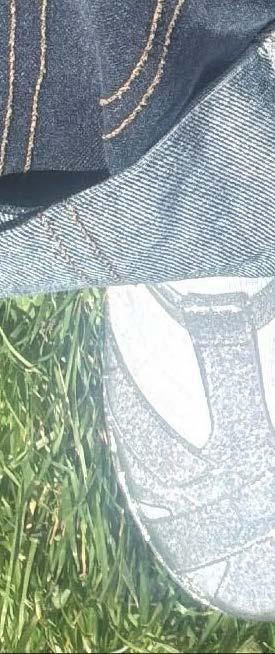
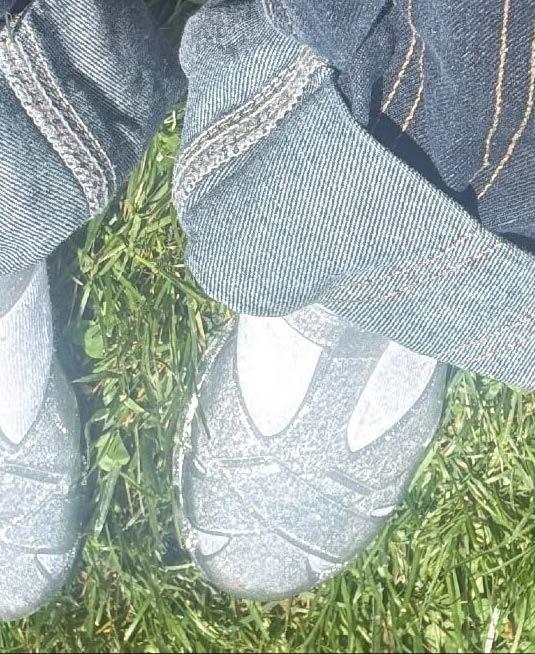
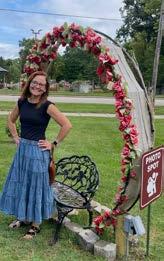
She wore small shorts with a flowy top that could have been a skirt and jelly sandals paired with white socks. Her boho necklace complimented her golden-yellow afro, the jewels on her face and her thick gold bangles.
She said she received many compliments on her sandals and that people felt nostalgic seeing them.
“That’s what it’s all about,” Leprade said. “The compliments are so nice, but like connecting on a level of like, ‘oh I love the thing you’re wearing or how you styled it; how’d you get the idea to do that,’ like I love the helping people in that way.”
Leprade works at Anna Bananas and shops there as well as Goodwill, eBay and Walmart. She said she leaned more toward a darker palette, but since it’s spring she
wants to branch out and wear more colors. She experimented with wearing a skirt as a top and since then has not looked back.
“Once you do it everyone else will follow you, cuz they’re just waiting for that one person; if I have to be that person I gladly will be.” Leprade said.
Deirdra Kenefick, 20, an assistant stylist on The Collective, a student-run fashion magazine at App State, shops mainly on Depop and eBay, but is trying to stay away from thrift stores because of fast fashion trends and the lack of true vintage options.
“It’s cooler to like, to be able to have, like, two pairs of jeans and have those follow the trends, instead of like, having to keep consuming more and more,” Kenefick said.
Kenefick draws inspiration from her friends, music and films from her childhood, specifically “Courage the Cowardly Dog”. She enjoys playing with aesthetics and mixing different elements as she styles her models as well as herself.
She likes to contrast notions of femininity by pairing a delicate item with harsh metals.
“Just kinda like taking both and seeing
CONTINUED FROM PAGE 26
PHOTO BY ELENA OSPINA
PHOTO BY ELENA OSPINA
PHOTO COURTESY OF SARAH JACKSON
the beauty in soft femininity and also like unapologetically being loud as a woman,” Kenefick said.
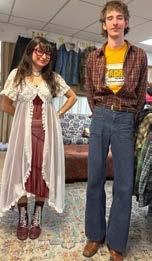
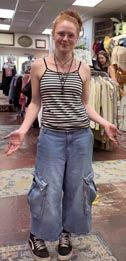
Kenefick wore baggy jeans with plaid boxers and a plain tee. Her bottoms were overtaken by her brown UGGS and her large jacket.
If Kenefick feels a more “masculine energy”, she’ll lean more toward baggy clothes and if she feels more feminine, she’ll wear a dress. However, she feels the most confident in one of the two pairs of jeans she owns.
“Lately, at least what I’ve been like really into is, like, almost, like, not like feeling like I have to put on an entire outfit with bracelets and necklaces and belts and this and that, like sometimes I feel just more confident in, like, saggy boxers and some jeans and sh**y UGGS and a sh**y shirt. And, like, that just makes me feel the most confident,” Kenefick said.
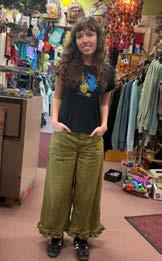
Sarah Jackson, who wears a mix of boho and hippie style, says that she never struggled with confidence and always has “pushed the envelope”, even as an adult.
“I feel like I have been able to really find
my style as an adult”, said Jackson, “which really encompasses and includes my many trials.”
Even when Kenefick is in a bad mood she will still put in an effort to dress well, which then makes her feel more confident.
“Nowadays, like when I’m feeling maybe not confident or I’m feeling sad, like I’ll kinda force myself to literally put on jeans, which sounds like so little but even putting on something that’s like semi-presentable or something that you kinda like, I feel like helps get your day started and then that then will affect your mood,” Kenefick said.
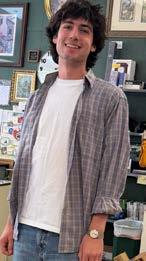
Although baggy, hippie, street style is the aesthetic of Boone, there are those who prefer the more basic route, like Sam Braden and Vito Tomanelli.
The people of Boone all have a story to tell in their fashion. No matter if their inspiration comes from social media, friends or fathers, it’s clear their freedom in expression comes from one thing, confidence.
“Like if you’re wearing an outfit and you’re confident, it’s cute, like you’re cute girl, sh*t, wear that thang,” Kenefick said.
“Wear whatever you want, you already bought it, so might as well.”
— Leprade
PHOTO BY ELENA OSPINA
PHOTO COURTESY OF DEIRDRA KENEFICK
PHOTO BY ELENA OSPINA
‘Confidence I don’t feel any Storm E Skye and the Boone Drag Scene
BY MEG FRANTZ | PHOTOS COURTESY OF STORM E SKYE
When Storm E Skye started doing drag at 16, it was a chance to experiment with their feminine side. Now, over four years later, the art form has the same purpose for them, but instead of alone in their room, they are performing for crowds.
Skye wasn’t their original drag persona, however. They started under the name Rihanna Luxe, but they said it never felt like it truly fit.
“I would say one of the cons is you don’t have as many people around you usually like, behind the scenes and the planning and everything,” Skye said.
“I feel like Rihanna was more like the expectation people had of me and what they told me I should be doing with my drag, and who they wanted me to be, and Storm E is like, ‘this is my drag,’” they said. “I’m taking control of it and I get to choose how I want it to look and how I want to go about it.”
Skye’s first performance in Boone was Boone Pride 2023, and soon after that experience, they performed with the Boone Barbies off-and-on. After a while, though, they began to perform in solo shows, where they had to coordinate with venues, prepare music and dance, get ready and do all other preparations by themselves.
Their second solo show, the first with extensive preparation and not thrown together in a last-minute fashion like their first solo show, was at Lily’s Snack Bar on April 16. Touting a masquerade theme, Skye worked with their current partner to cast the show, prepare the music for the DJ, draft the setlist and create the order of performers. The preparation for this show began three months ago, and finally culminated in a Friday night celebration.
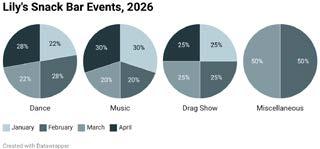
“Over the past several years, we’ve been fortunate to develop strong relationships with several different individuals and groups that have become pillars of our event planning structure,” owner of Lily’s Trevor Moody wrote in an email. “It’s really important to me that we try our best to have a drag show and Latin night at least once a month, and then to balance between DJs and bands for remaining nights.”
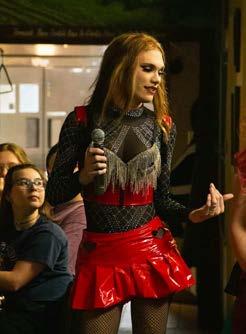
Storm E Skye performing at Lily’s Snack Bar on April 18.
Click above for an audio interview between Storm E Skye and Meg Frantz.
where else’
Moody said Lily’s functions under the “enlightened hospitality” model, where staff always comes first. He added that he wants to support his staff as best he can, so everyone is on the same page for the mission.
“The larger political and economic atmosphere is just totally outside of our control — but at the level of the individual lives of staff and guests, and as part of the community, I really try to channel a belief that we can be part of making someone’s life better,” Moody wrote.
Skye said that to prepare for a performance, they start by waking up at 6 a.m. and picking up around their house. They get ready for the show approximately 5 hours
before; getting into the body padding takes 30 minutes alone. They also have a specific pre-show playlist tailored to their drag persona — featuring artists like Zara Larson, Kesha and Destiny’s Child — that they listen to while getting the look together.
Their look is inspired by Y2k fashion, particularly heavy on blacks, reds, fishnets and punk-style clothing. Though they like to balance out glam and grunge, they find themselves always coming back to the same genre.
Since Skye mainly uses drag as a way of exploring gender identity, they recognize that the art form itself — and themselves and their identity — are under repeated scrutiny.
“But in the end, when it’s something like that, it’s just a way of expressing yourself and it is that person’s life and not yours,” Skye said. “And I don’t think laws should be used to define somebody in that stance.”
Moody reiterated the sentiment, but said Lily’s strives to create a safe space for people to figure themselves out.
“It’s a really fulfilling and healing experience to feel like a small part of someone being able to embrace and embody themselves in a way that maybe up to now they haven’t been able to,” Moody wrote.
“It’s a really fulfilling and healing experience to feel like a small part of someone being able to embrace and embody themselves in a way that maybe up to now they haven’t been able to.”
— Trevor Moody
Storm E Skye performing at F.A.R.M. Cafe on March 24.