
ISSUE 173: Apr-June 2026
Photo credit: Seaspan


ISSUE 173: Apr-June 2026
Headquartered in Surrey, BC, ASTTBC acknowledges the traditional Lands of the Semiahmoo, Katzie, Kwikwetlem, Kwantlen, Qayqayt and Tsawwassen Peoples.
We thank our hosts for their graciousness in welcoming us to carry out our work on their Land.
In so doing, we recognize their inherent Indigenous rights and title, the implementation without qualification of the UN Declaration on the Rights of Indigenous Peoples (UNDRIP), and our support for the 94 calls to action by the Truth and Reconciliation Commission.

Disclaimer: ASTTBC makes no endorsement or guarantee as to the quality or suitability of any activity, professional, product, or service advertised with ASTTBC.
Chair & CEO message
Why applied science technology professionals matter more than ever
Connect in Penticton: ASTTBC registrant meeting
ASTTBC releases new practice advisory on artificial intelligence and technology tools
Updated fire protection standard of practice takes effect July 1
Connecting with government: ASTTBC hosts MLA luncheon
Limited licence: A new pathway for ASTTBC registrants
Lower risk, stronger practice, lower fees
Ensuring evidence-informed legislation: ASTTBC presents on Bill M215
Anja Lanz: Building a more inclusive future in STEM
TAC releases new discipline standard: Mechatronics Engineering Technologist (MCTY 2026)
You don’t need it all figured out: Building your career as a new technologist or technician
ASTTBC launches language support and translation help webpage
Updated ROWP practice guidelines now in effect
Tips for completing an AScT/CTech competency summary
Tips for completing a successful RFPT application
Volunteer opportunities
Research invitation: Menopause and the workplace
In the community
ISSUE 173 Apr-June 2026
ASTTBCONNECT is published by the Applied Science Technologists & Technicians of BC.
EDITOR: Cara Christopherson 604-585-2788 ext. 501
cchristopherson@asttbc.org
The opinions expressed in ASTTBCONNECT are not necessarily those of ASTTBC or its directors. All rights reserved. This publication may be reproduced provided credit is given as to the source of such material.
The Applied Science Technologists & Technicians of BC (ASTTBC) regulates approximately 6,000 applied science and engineering technology professionals in British Columbia under the Professional Governance Act (PGA) and the International Credentials Recognition Act (ICRA).
For more information, please visit asttbc.org
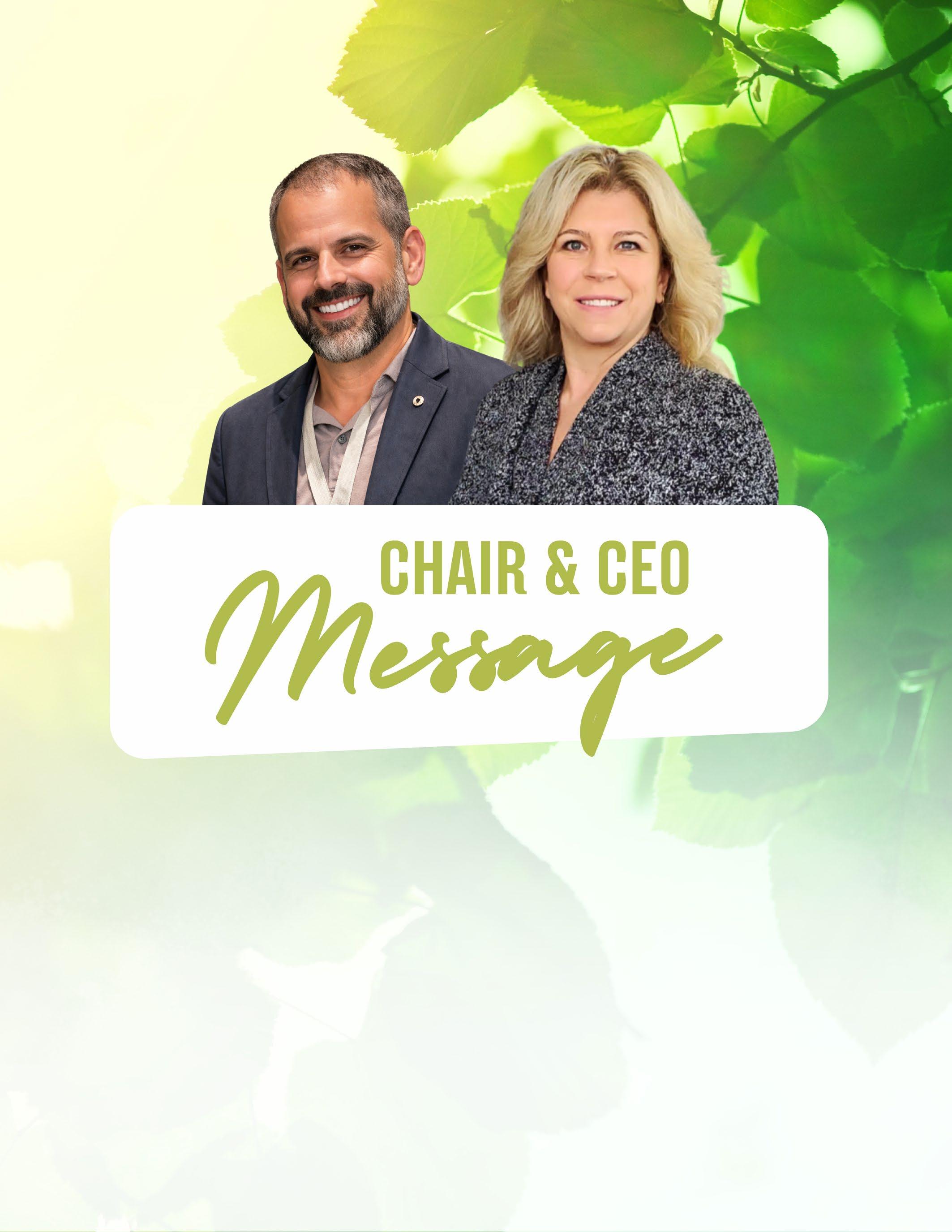
During the Applied Science Technologists and Technicians (ASTTBC) Board of Directors meeting on May 28, 2026, we proudly welcomed our newly elected Board Directors and introduced Kerry Barth, AScT, as our Chair. Kerry begins his two-year term with a long-standing commitment to ASTTBC, having first become a registrant in 1996, joined the Board in 2023, and served as Vice Chair over the past year.
As we move further into 2026, work at ASTTBC continues to progress steadily across several important initiatives. A key focus remains preparing for the anticipated implementation of reserved practice, and we look forward to sharing updates as more information becomes available.
We have also been advancing a number of practice initiatives. The Registered Fire Protection Technician Standard of Practice (SOP) update has been a significant focus, and we appreciate the input received through our March webinars. An update is available on page 10 of this publication. In addition, ASTTBC recently published a practice advisory titled Use of Artificial Intelligence and Other Technology Tools in Professional Practice. To support registrants in understanding and applying this guidance, we will be hosting a webinar on June 9 and encourage registrants to register through their ASTTBC account.
In April, ASTTBC joined fellow Professional Governance Act regulators in presenting to the Select Standing Committee on Private Bills and Private Members’ Bills regarding Bill M215, emphasizing the importance of evidence-informed legislation aligned with regulatory mandates. In May, the Board of Directors also hosted a luncheon for Members of the Legislative Assembly (MLAs) to highlight ASTTBC’s role in protecting the public and supporting safe professional practice across British Columbia. Read more on page 12 of this issue of Connect.
We look forward to connecting again in person at our upcoming registrant meeting in Penticton on June 24. The meeting will provide an opportunity to share updates, answer questions, and hear directly from registrants. Space is limited, and we encourage you to register by June 10.
Staying connected with registrants remains an important part of our work. Whether through volunteering, participating in committees, or sharing feedback, your involvement helps strengthen the profession and informs effective, responsive regulation. We encourage registrants to explore ASTTBC’s volunteer opportunities and consider getting involved.

Kerry Barth, AScT ASTTBC Chair
Theresa McCurry, BSc, PMP ASTTBC CEO

By Theresa McCurry, Chief Executive Officer, ASTTBC
Every day applied science technology professionals across British Columbia contribute to the systems and infrastructure that keep our communities functioning safely and effectively. From transportation and water systems to construction, environmental management, manufacturing, and emerging technologies, the work of technologists, technicians and technical specialists touches nearly every aspect of modern life.
Much of this work happens behind the scenes. Often, the public does not see the countless decisions, calculations, inspections, assessments, and technical expertise that support safe buildings, reliable infrastructure, sustainable development, and resilient communities. Yet the impact is significant. As our province continues to grow and evolve, the role of applied science technology professionals is becoming increasingly important. British Columbia is facing complex challenges such as housing demands, climate adaptation, infrastructure renewal, skilled labour shortages, and rapid technological change. Addressing these challenges requires qualified professionals who can combine technical knowledge with practical problemsolving and accountability.
This is where ASTTBC registrants play a critical role.
ASTTBC provides independent oversight of high-risk activities that strengthens and protects the public trust and ensures risks and failures are managed through consistent, rulebased decisions. At its core, it is about trust; trust that professionals have demonstrated competence, adhere to ethical standards, and remain accountable throughout their careers.
That responsibility should never be taken lightly.
At ASTTBC, we are proud to regulate professionals whose work directly impacts public safety and community wellbeing. We also recognize that regulation is not only about compliance. It is about fostering professionalism, continuous learning, integrity, and confidence in the work being performed across our industries. Through a righttouch approach to regulation, one that is proportionate, practical, focused on the public interest, we help support a strong, accountable workforce that contributes to British Columbia’s economic growth and resilience.
The professions of ASTTBC registrants are also changing rapidly. New technologies, digital tools, automation, and artificial intelligence are transforming how work is completed and how industries operate. At the same time, expectations around sustainability, risk management, and public accountability continue to grow.
These changes create both opportunity and responsibility.
Applied science technology professionals are uniquely positioned to bridge innovation and implementation, to take emerging ideas and turn them into practical, real-world solutions. The adaptability, expertise, and problem-solving mindset of ASTTBC registrants will remain essential as industries and technologies continue to evolve.
ASTTBC is hosting an upcoming registrant meeting in Penticton and invites all registrants to attend this free, in-person event.
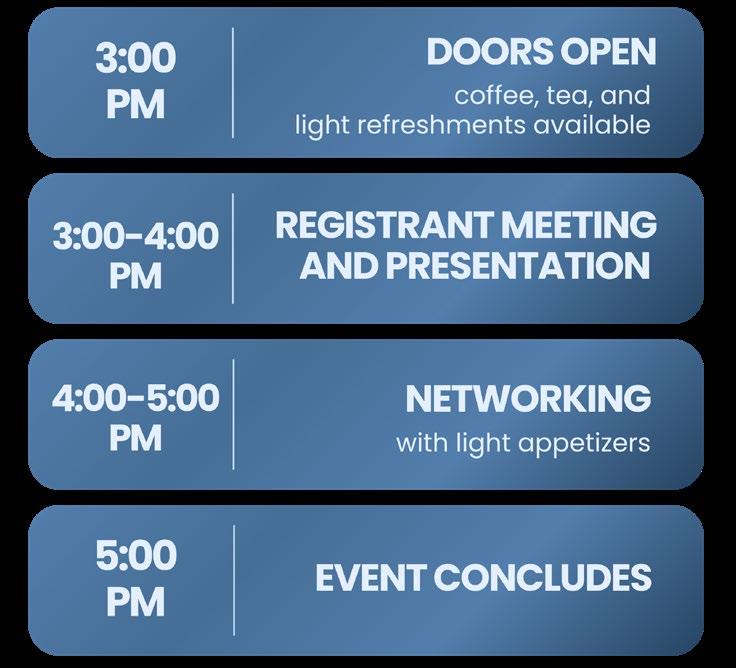
Hosted by ASTTBC CEO Theresa McCurry, the session will include a brief presentation, followed by an opportunity to connect directly with Theresa, ask questions, and network with fellow registrants.
The event will take place on June 24, 2026, from 3:00 to 5:00 pm (PDT) at the Penticton Lakeside Resort & Conference Centre (Zinfandel Room), located at 21 Lakeshore Drive West.
Space is limited, register by June 10 to secure your spot.

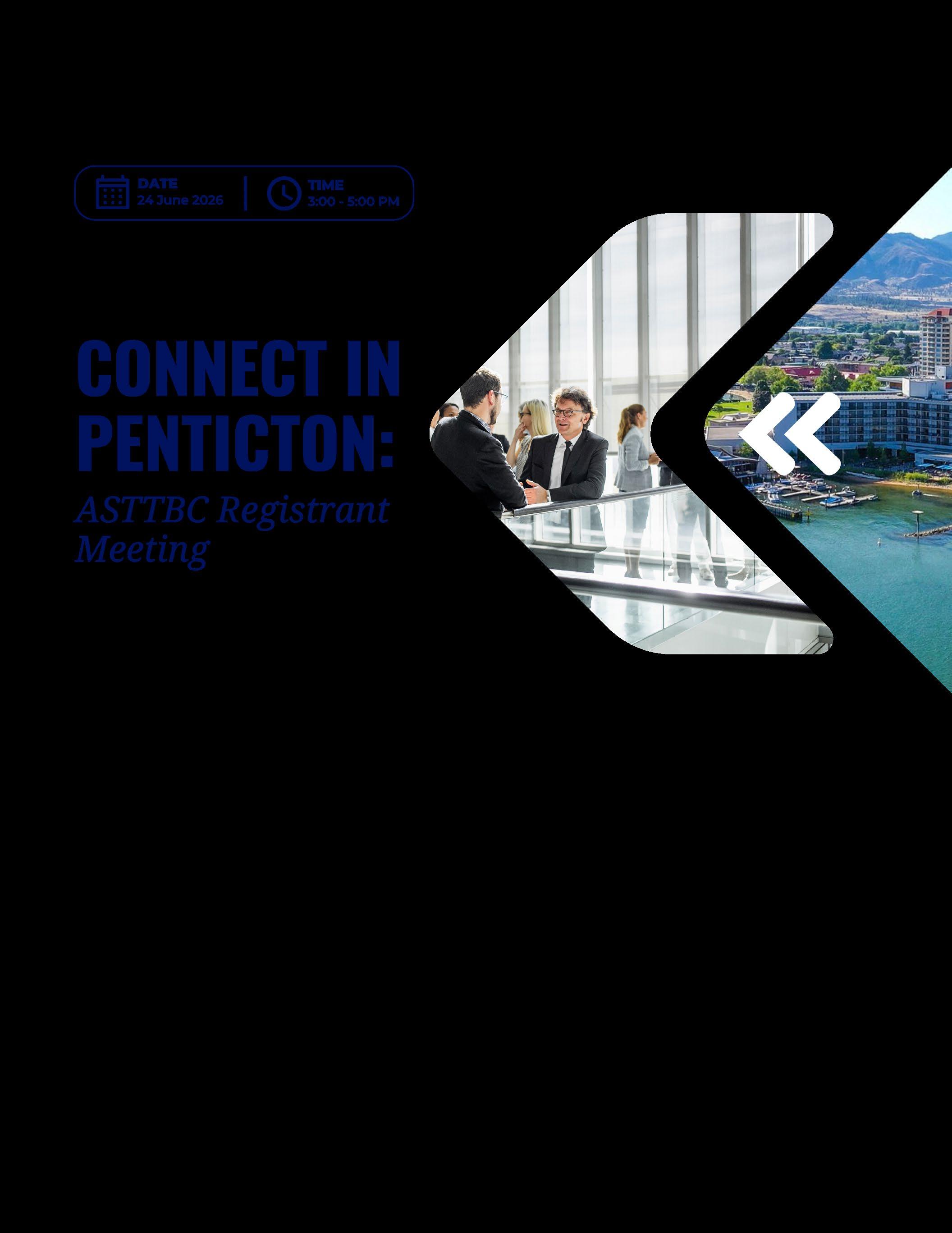











As artificial intelligence (AI) and other advanced technology tools become increasingly integrated into professional practice, ASTTBC has released a new Practice Advisory titled Use of Artificial Intelligence and Other Technology Tools in Professional Practice.
To support registrants in understanding and applying this guidance, ASTTBC will be hosting a webinar on June 9 from 12:00 p.m. to 1:00 p.m.
Registrants are encouraged to attend and can register through their ASTTBC account.
AI and other technology tools are increasingly being used to generate, analyze, and process information in ways that can support and influence professional work and decisionmaking. While these tools can improve


efficiency and assist technical practice, they also introduce important considerations related to accuracy, reliability, transparency, and the appropriate application of professional judgment.
The advisory clarifies expectations for the use of AI and other technology tools in professional practice and reinforces that registrants remain responsible and accountable for all work they perform, supervise, review, and/or authenticate. It also outlines key considerations related to competence, ethical practice, confidentiality, documentation, and public safety.
As technology continues to evolve, ASTTBC recognizes the importance of providing practical guidance that helps registrants adapt responsibly while maintaining public trust and confidence in the profession.
Registrants must review the advisory and consider how the guidance applies within their own area of practice.

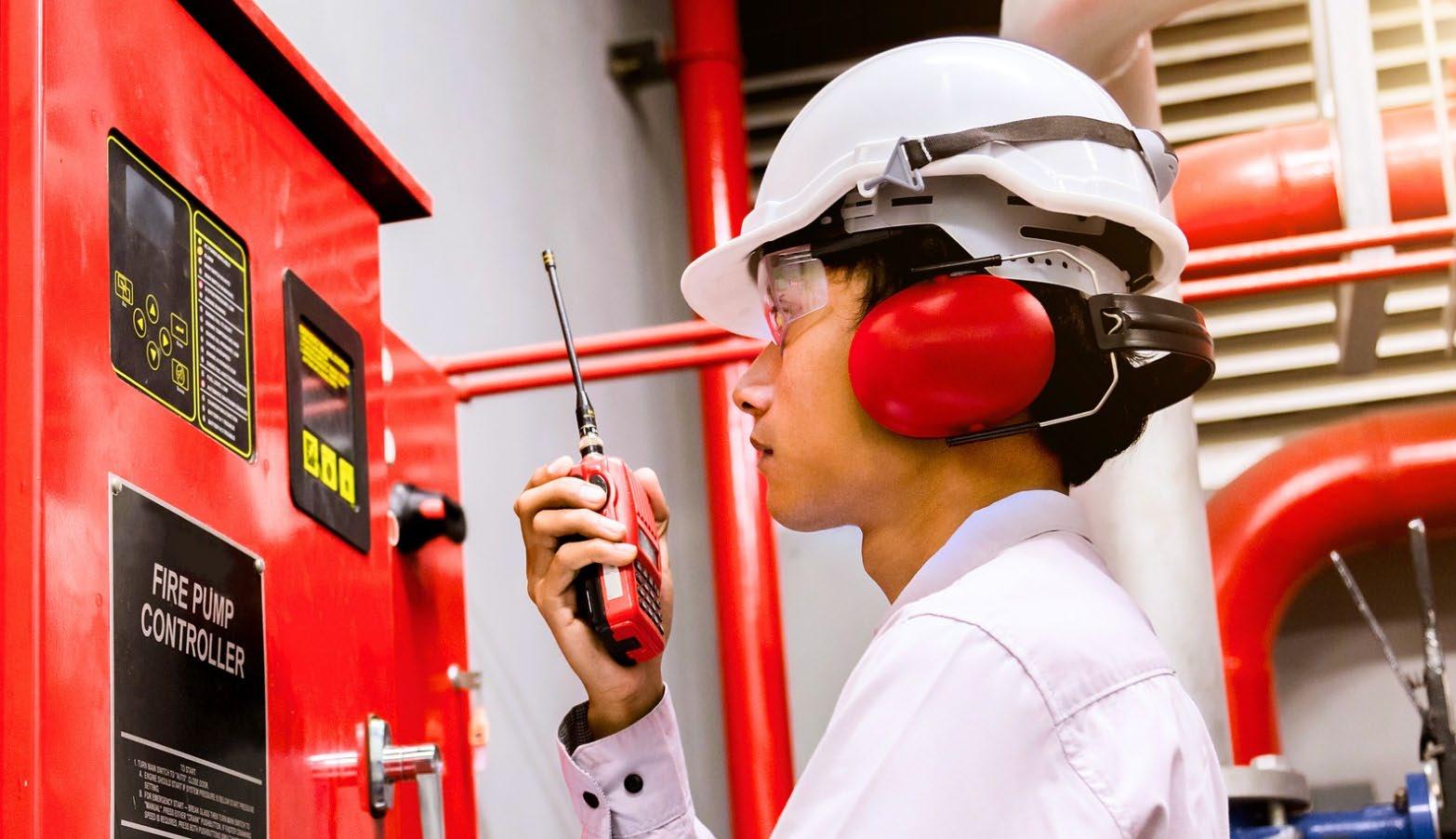
ASTTBC has published an updated Fire Protection Standard of Practice (Version 4.1), with the revised requirements coming into effect on July 1, 2026.
The updated standard applies to registrants performing fire protection inspections and related work. While implementation was originally expected earlier this year, ASTTBC deferred the effective date in March to allow additional time for feedback from registrants, industry stakeholders, and members of the public. The extended consultation period provided an opportunity to clarify several practical concerns and strengthen guidance within the standard.
Version 4.1 includes a number of updates and clarifications intended to improve consistency across the industry and support clearer inspection and reporting practices. Key changes include:
• clarification of what constitutes a Condition 2, 3, or 4 inspection result, including guidance for situations where all suites or units cannot be accessed
• clarification regarding information permitted on the back of a fire tag
• guidance on escalating a fire tag from a Condition 3 to a Condition 4
• updates to fire tag design requirements
• prohibition of pre-stamping fire tags
• minimum reporting requirements for fire protection inspection reports
• additional guidance outlining RFPT responsibilities and how they differ from employer duties
• stamping requirements for shared and supervised inspections
One of the most significant updates is the revised graphic layout and guidance for fire tag designs. To support a smooth transition,
fire tags compliant with the previous Standard of Practice (Version 3.0) may continue to be used until December 31, 2026. Beginning January 1, 2027, all fire tags must comply with the updated standard.
The revised Standard of Practice also includes new appendices that provide additional guidance related to professional requirements established through ASTTBC Bylaws, standards, and policies.
ASTTBC encourages all Registered Fire Protection Technicians (RFPTs) to review the updated standard and ensure their practice aligns with the new requirements ahead of the July implementation date.
For more information, please refer to:
• Summary of the key changes in the new fire protection standard of practice (V4.1)
• Professional Practice Bulletin PPB-2026FP-01: Implementation of Fire Protection SOP V4.1 – Updated Fire Tag Requirements and Transition Period
• Fire Protection Standard of Practice Version 4.1
If you have any questions regarding the updated Standard of Practice, please contact practiceinfo@asttbc.org
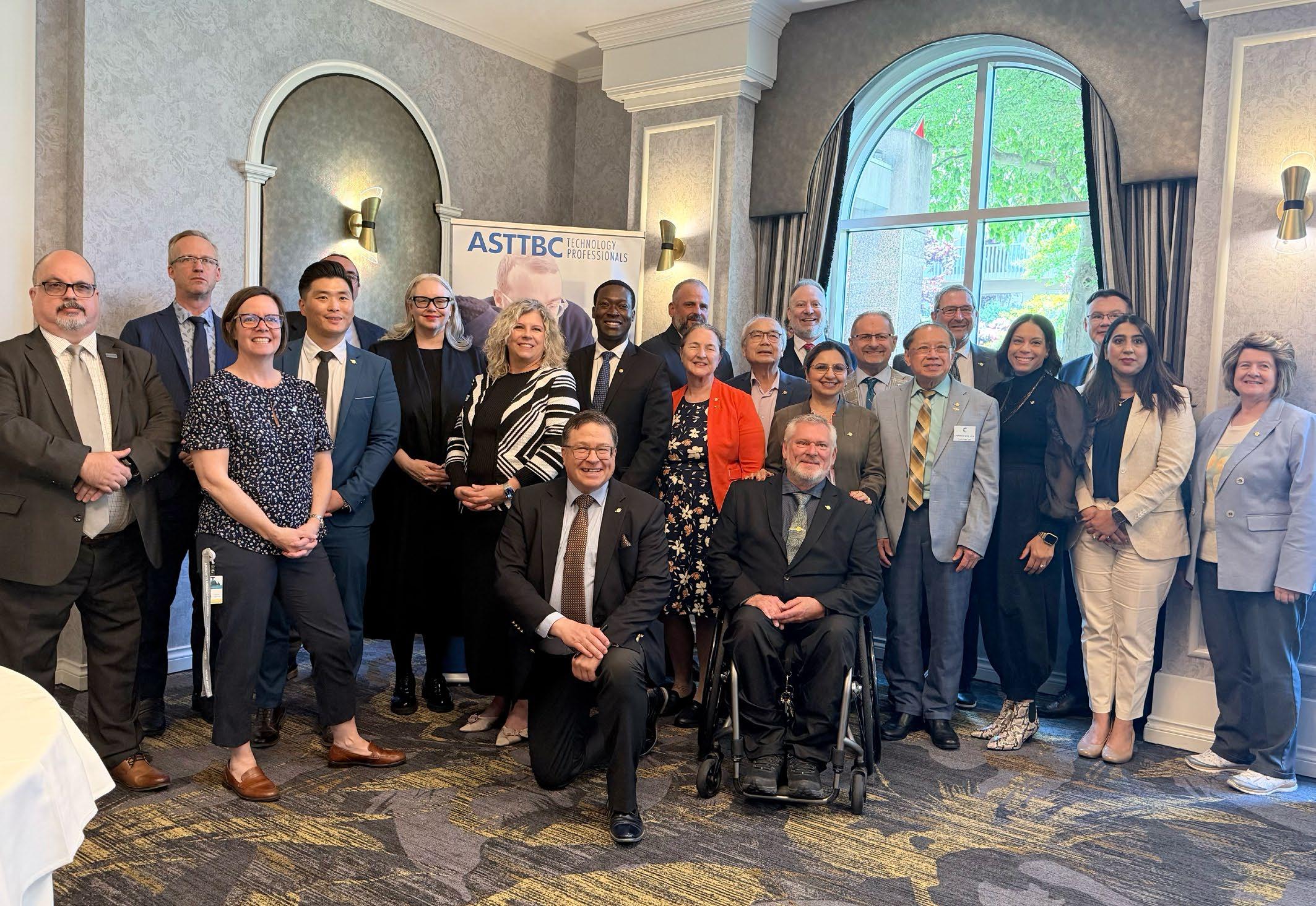
On May 21, the ASTTBC Board of Directors hosted a luncheon for Members of the Legislative Assembly (MLAs) of all parties to highlight ASTTBC’s role in supporting public safety across British Columbia.
During the presentation, attendees learned about the important work ASTTBC registrants do to protect the public and support communities throughout the province, and why this matters to constituents across B.C.
The event was well attended, with approximately 40 attendees. We appreciate everyone who took the time to join us and learn more about ASTTBC.

Thank you to all who attended and contributed to a successful event.
Chair, Kerry Barth, AScT
Vice chair, David Sparanese, AScT, PTech, CPWI 3
Immediate past chair,
Brian F. Davies, CTech, RSIS
Jessica Baxter, AScT
Prakash Joshi, AScT, PTech, P.L.Eng.
Erin Karaim, AScT
Randy Meszaros, AScT, PMP, C.E.T. (AB)
Laure Nielsen, AScT, PMP
Lay directors:
Oluwatobi (Tobi) Abisoye, LLB, LL.M., Barrister & Solicitor
Natasha Dookie, BA, CPHR, JD
Mary O’Callaghan, MBA, FCMC
ASTTBC is committed to protecting British Columbians and the environment by regulating applied science and engineering technologists, technicians, and technical specialists.
Through our code of ethics and practice standards, our registrants are qualified, competent, and accountable. ASTTBC monitors compliance with these standards and investigates breaches when necessary.

Registrants are required to notify ASTTBC of any change of name, address, email, place of employment, or other contact information previously provided, within two weeks of any change.
Please update your information to ensure it is current.
As ASTTBC prepares for the anticipated implementation of reserved practice, a new registration pathway, limited licence, will be introduced alongside it. The limited licence will be an option for current technologist and technician practitioners to become licenced registrants.
ASTTBC’s limited licence will be a separate registration category designed for individuals working within a defined scope of practice who can demonstrate the required competencies. This approach aligns with other regulators under the Professional Governance Act and supports flexible, risk-based regulation.
ASTTBC’s limited licence will launch around the same time as ASTTBC’s anticipated reserved practice implementation, once the provincial government announces the date.
Available to non-registrants and existing registrants, who may be looking at expanding their practice in a very specific area.
Not automatically eligible but may apply if they meet the requirements and choose this pathway.
No action required, this is a separate category and does not replace existing registrations.
The upcoming PTech designation is expected to replace AScT, while the limited licence remains a distinct option.

More details will be shared as implementation approaches. In the meantime, registrants are encouraged to stay informed and consider how this new pathway may fit into their professional practice.
ASTTBC’s partnership with Willis Towers Watson (WTW) delivers direct value to registrants through reduced insurance costs tied to improved program performance and lower overall risk.
Over the past year, ASTTBC and WTW have worked together to strengthen risk management supports through webinars, resources, and practical tools designed to help registrants apply strong risk management principles in practice. These focused efforts have contributed to reduced claims activity and improved performance of the insurance program, resulting in lower premiums across the board.

“This outcome reflects a profession that is actively engaged in managing risk and strengthening practice standards,” says Brad Greening, CIP, Director and National Strategic Leader – Commercial Programs at Willis Canada, WTW.
For ASTTBC, the results highlight the value of proactive risk management, continuous learning, and strong professional practice. ASTTBC and WTW remain committed to continuing this work and supporting a stable, sustainable insurance program for registrants into the future.
Learn more about WTW.
On April 1, ASTTBC joined the other Professional Governance Act (PGA) regulators to present to the Select Standing Committee on Private Bills and Private Members’ Bills.
The presentation was part of discussions to address concerns related to Bill M215, the Professional Reliance Act, including
the importance of ensuring any legislative changes are evidence-informed and aligned with regulatory mandates. Christine Boyle, Minister of Housing and Municipal Affairs, issued a statement on April 9 requesting to stop the consideration of Bill M216. The full statement can be read here
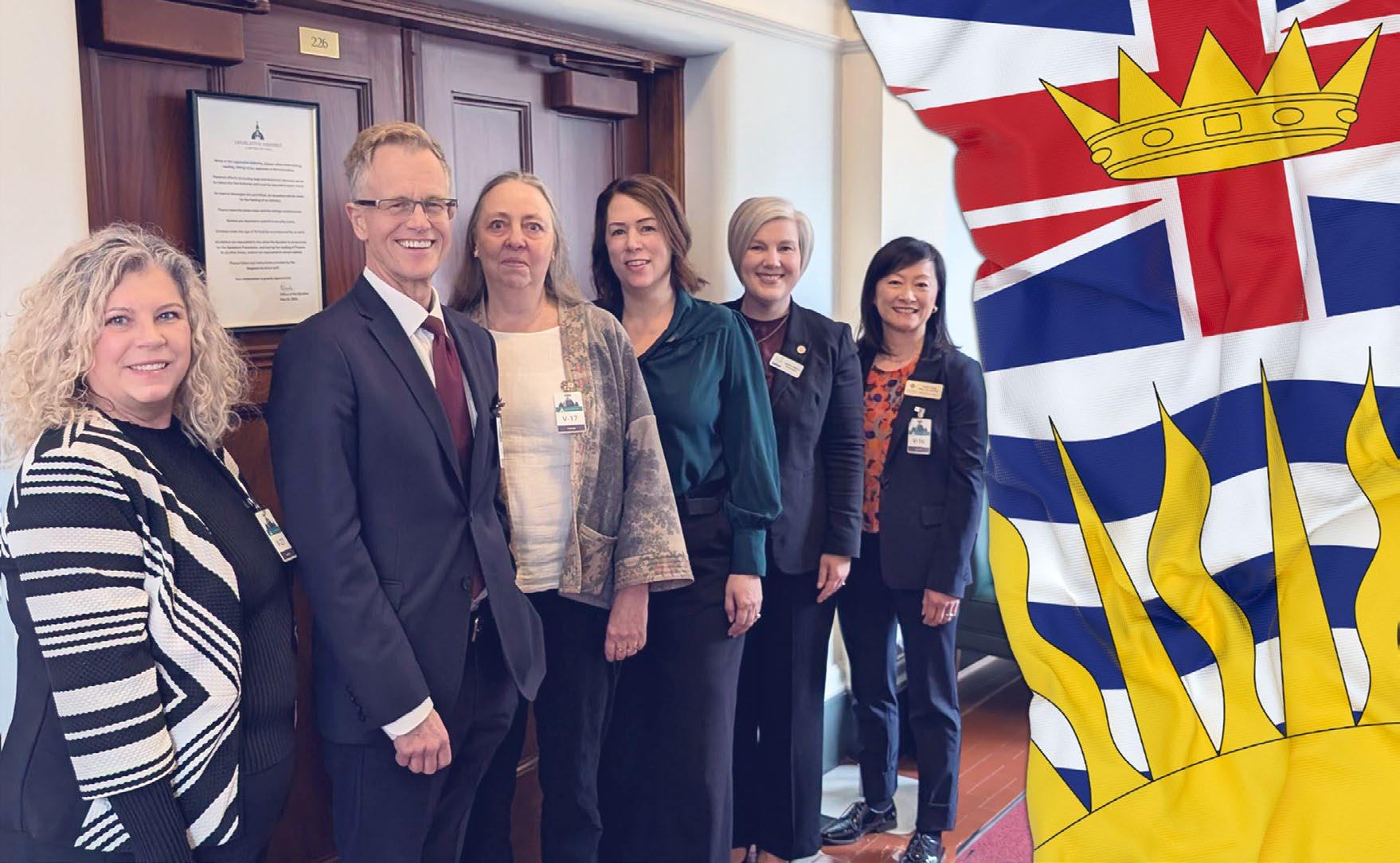
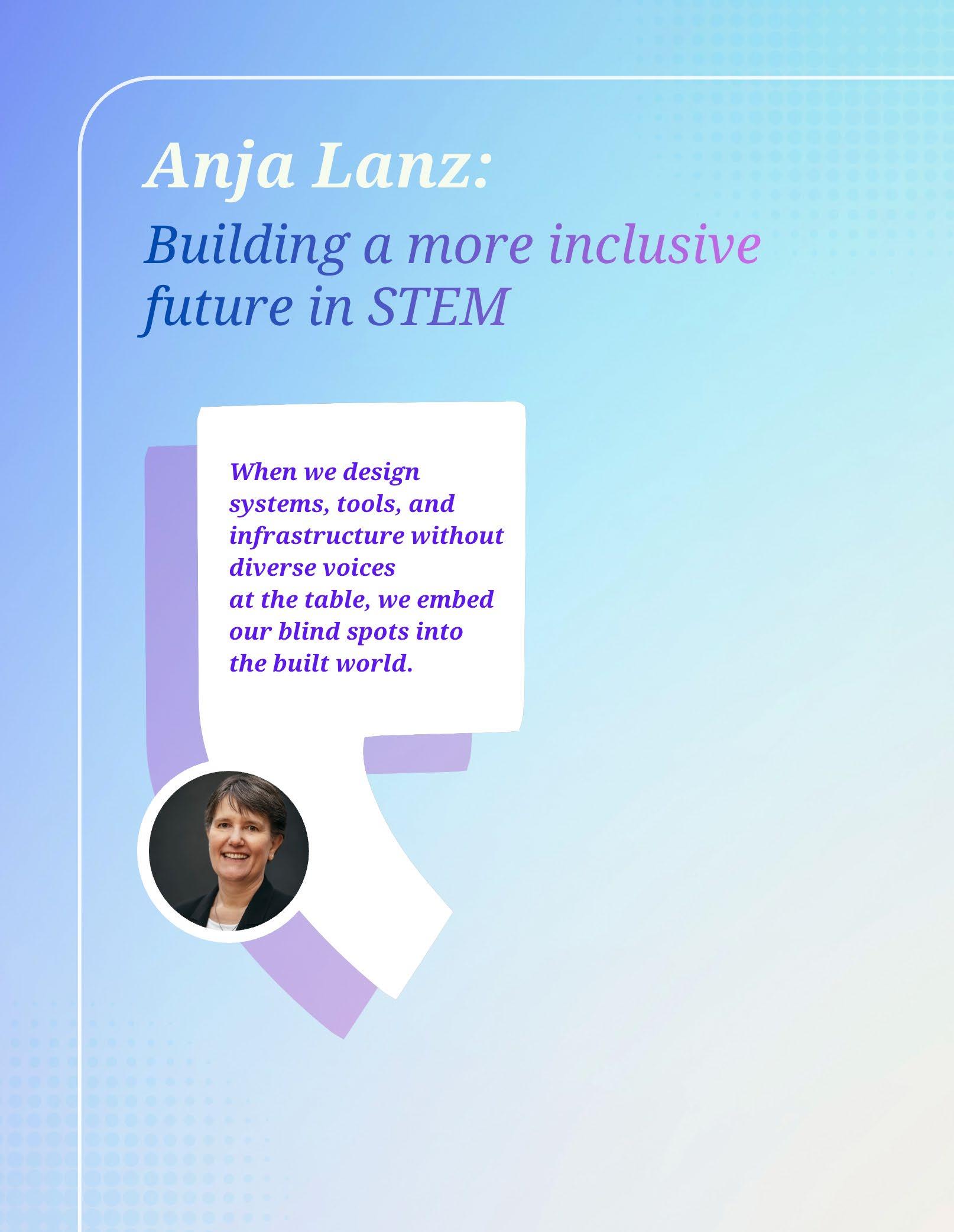
For Anja Lanz, P.Eng., FEC, advocacy for women in science, technology, engineering, and mathematics (STEM) did not begin in a classroom or boardroom. It began through lived experience.
Early in her engineering career, Anja often found herself as one of the only women in the room, navigating environments where belonging sometimes felt tied to assimilation rather than authenticity. Rather than discouraging her, those experiences sparked important questions: Why do so many women leave STEM careers mid-way through? Why are diverse voices still underrepresented in leadership? And what opportunities, perspectives, and innovation are lost when inclusion is treated as optional rather than essential?
Those questions shaped the path Anja continues to follow today.
A Professional Engineer and passionate advocate for equity, diversity, and inclusion, Anja has dedicated much of her work to helping create more accessible, supportive, and representative spaces within STEM and science, engineering, technology, and trades (SETT) professions. Through mentorship, speaking engagements, advisory work, and initiatives such as ASTTBC’s Women in Engineering and Technology project, she has become a strong voice for meaningful systems change and inclusive leadership.
For Anja, equity and inclusion are not separate from technical excellence, they are fundamental to it.
“When we exclude perspectives, we build incomplete solutions,” she explains. “When we design systems, tools, and infrastructure without diverse voices at the table, we embed our blind spots into the built world.”
That philosophy guides her work across engineering, healthcare, governance, and community sectors, where she focuses on bridging technical expertise with lived experience and human-centred design. Her approach emphasizes not only innovation, but responsibility, ensuring that the systems and services professionals create are equitable, accessible, and responsive to the communities they serve.
Anja is also deeply passionate about mentorship and representation, particularly for women and underrepresented groups entering technical professions. She believes visibility
matters, not only in recruitment, but at every level of leadership and decision-making.
“The talent is already there,” she says. “What we owe women in this field is the opportunity, the support, and the culture to thrive.”
Throughout her journey, some of the most meaningful moments have come not from technical achievements, but from connection and impact; hearing from young women who saw themselves reflected in her story and felt encouraged to pursue careers in STEM because of it.
For Anja, that is the work that matters most: helping ensure the next generation enters a profession where they feel they belong exactly as they are.
Her message to emerging professionals is both simple and powerful: take up space, seek out community, and do not wait until you feel perfectly ready before stepping forward.
“You belong here,” she says. “Not conditionally, not despite who you are, but fully, exactly as you are.”
As industries continue to evolve, Anja believes the future of STEM and SETT depends on more than technical advancement alone. It depends on creating professions where diverse perspectives are valued, ethical leadership is prioritized, and people are empowered to contribute fully.
And through both her engineering work and advocacy, she continues helping build that future every day.

Technology Accreditation Canada (TAC) has released a new discipline standard for Mechatronics Engineering Technologist (MCTY 2026), reflecting the increasing integration of mechanical, electrical, and digital systems in today’s industrial and automation environments.
Developed with a strong applied focus, the standard recognizes the interdisciplinary nature of modern mechatronics programs. It includes core areas such as applied mathematics, mechanical and electrical systems, control engineering, and industrial automation, along with emerging fields like robotics, smart manufacturing, and intelligent systems. It also incorporates essential learning outcomes in quality assurance, cybersecurity, project management, and professional practice.
For post-secondary institutions, MCTY 2026 provides a clear, current benchmark to support curriculum development, continuous improvement, and accreditation readiness. For students, it helps ensure graduates are equipped with knowledge aligned to real-world, technology-driven workplaces.
For ASTTBC and its registrants, nationally consistent discipline standards support a shared understanding of education and competency expectations across jurisdictions. This contributes to regulatory clarity and helps ensure that incoming practitioners are prepared to meet the demands of professional practice.
The release of MCTY 2026 reinforces TAC’s commitment to supporting high-quality, industry-relevant engineering technology and applied science education across Canada.
For more information on TAC accreditation and discipline standards, visit technologyaccreditation.ca or contact admin@technologyaccreditation.ca.

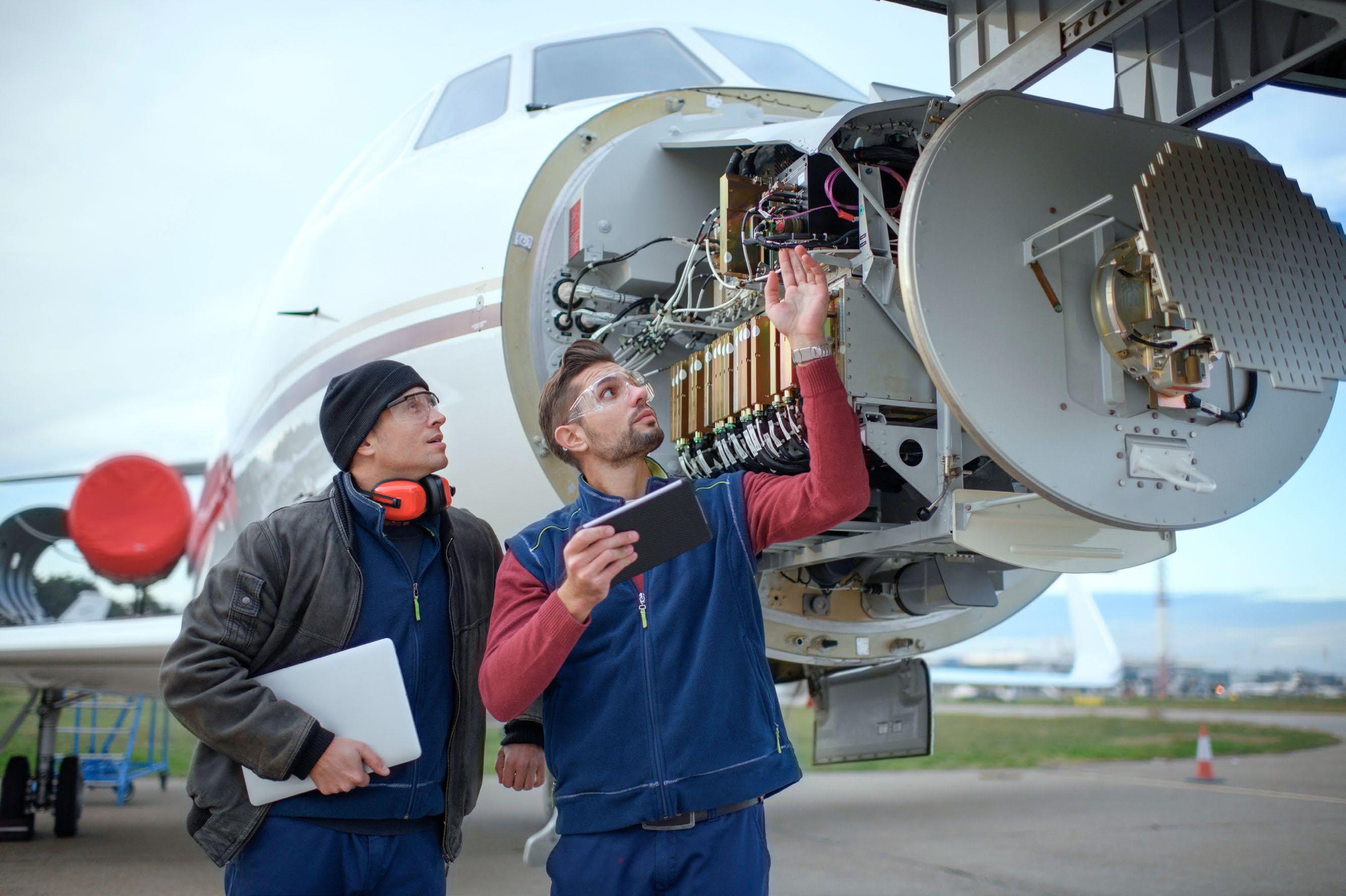

Article by Shona Lawson, ASTTBC Registrar

Starting your career as a technologist or technician can feel exciting, uncertain, and sometimes overwhelming all at once. You may have recently graduated, changed careers, secured your first position, or still be searching for the right opportunity. Regardless of where you are starting from, you are at the beginning of your professional journey and likely thinking about what comes next.

At some point, if you haven’t already, you will probably be asked: “Where do you see yourself in five years?” This question may come up during a job interview, a performance review, or even in casual conversations with your family or friends about your future. For many new
professionals, it can feel intimidating and that is completely normal. Even seasoned professionals can struggle with this question.
The important thing to remember is that your answer is not permanent and it does not need to be perfect. Careers rarely follow a straight line and you are still trying to figure out the direction of your own line. Over time, your goals, interests, and life priorities may change as you gain experience, develop professionally, and navigate personal responsibilities and opportunities. Your career changing direction means you are growing, not failing.
For many young and new professionals, career planning can feel especially challenging and far off when balancing other responsibilities such as rent, transportation, family commitments, or financial pressures. Remember professional growth does not happen all at once. It happens over the course of your career. Often it’s the small steps over time that tend to be dismissed that have the most meaningful significant impacts on your career development.
One of the best places to start looking forward is by identifying career goals. Keep in mind you don’t need to plan your whole career out at once. It might be helpful and less intimidating to have shorter time frames such as two, three or even five-year plans. Having a clear idea of where you would like your career to go provides direction and helps you make informed decisions along the way. Consider creating Specific, Measurable, Achievable, Relevant, and Timely goals known as SMART goals. These goals can help you refine your
career objectives and create a realistic plan for professional growth.
Your goals can also be connected to your Continuing Professional Development (CPD). There is a variety of CPD that you can do, formal and informal such as, on the job training to learn a new skill, attending a workshop or being mentored.
Taking initiative and asking your employer about development opportunities demonstrates professionalism and a willingness to grow. Even if an employer has a limited budget for courses or training, there are often valuable opportunities available through mentoring, job shadowing, stretch assignments, or internal training.
It is also helpful to speak with professionals working in different sectors, organizations, and roles. Do not limit your conversations to peers or immediate co-workers. Reach out to professionals in industry, government, consulting, utilities, small businesses, or large organizations. Learning about their career paths, challenges, and successes can provide insight into opportunities you may not have previously considered. These conversations can also help expand your professional network and expose you to different perspectives on career development and advancement. ASTTBC’s Young Professionals Group (YPG) provides another avenue for building these connections through networking events, professional development opportunities, and engagement with peers and industry professionals across BC. You may even connect with someone who becomes a trusted professional contact or a mentor.
Another important habit to develop early in your career is regularly updating your resume. Keeping track of newly acquired skills, CPD activities, accomplishments, certifications, projects, and work experience is valuable because
1) it’s an up-to-date record of your professional growth and accomplishments, 2) it can support discussions during job performance reviews or probationary evaluations,
3) you will already have current materials ready if and when new opportunities arise (e.g., promotion, new role, or career change) and
4) it aids with your CPD recording, which is an annual requirement for regulated professionals with ASTTBC.
Finally, take time regularly to reassess your career goals and objectives. As your experience grows, your interests and priorities may evolve as well. Reviewing your goals allows you to reflect on how far you have come, identify new opportunities for growth, and ensure your professional development activities continue to align with your career direction.
Careers are built over time and are flexible, if you need them to be. Small achievements, new experiences, and continuous learning all contribute to your long-term professional growth. Remember you do not need to have everything figured out, you simply need to remain open to learning and new opportunities will present themselves along the way.
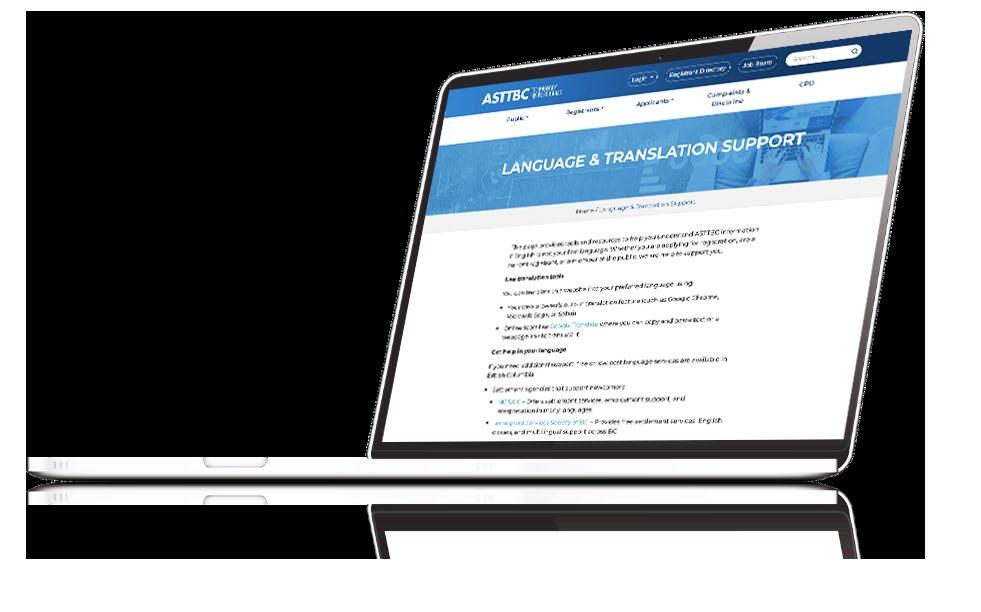
For many people, navigating important information can be challenging, especially when it’s in a language that isn’t their first. ASTTBC applicants, registrants, and members of the public may know what they need, but not always how to find or fully understand it.
That’s why ASTTBC launched a new webpage dedicated to language support and translation help. Designed with accessibility in mind, the page brings together tools and resources to help people better understand ASTTBC information. It’s a step toward making information clearer, more inclusive, and easier to access for everyone.
It means fewer barriers and a more welcoming path forward. Explore the new page and discover the support available.
VISIT WEBPAGE

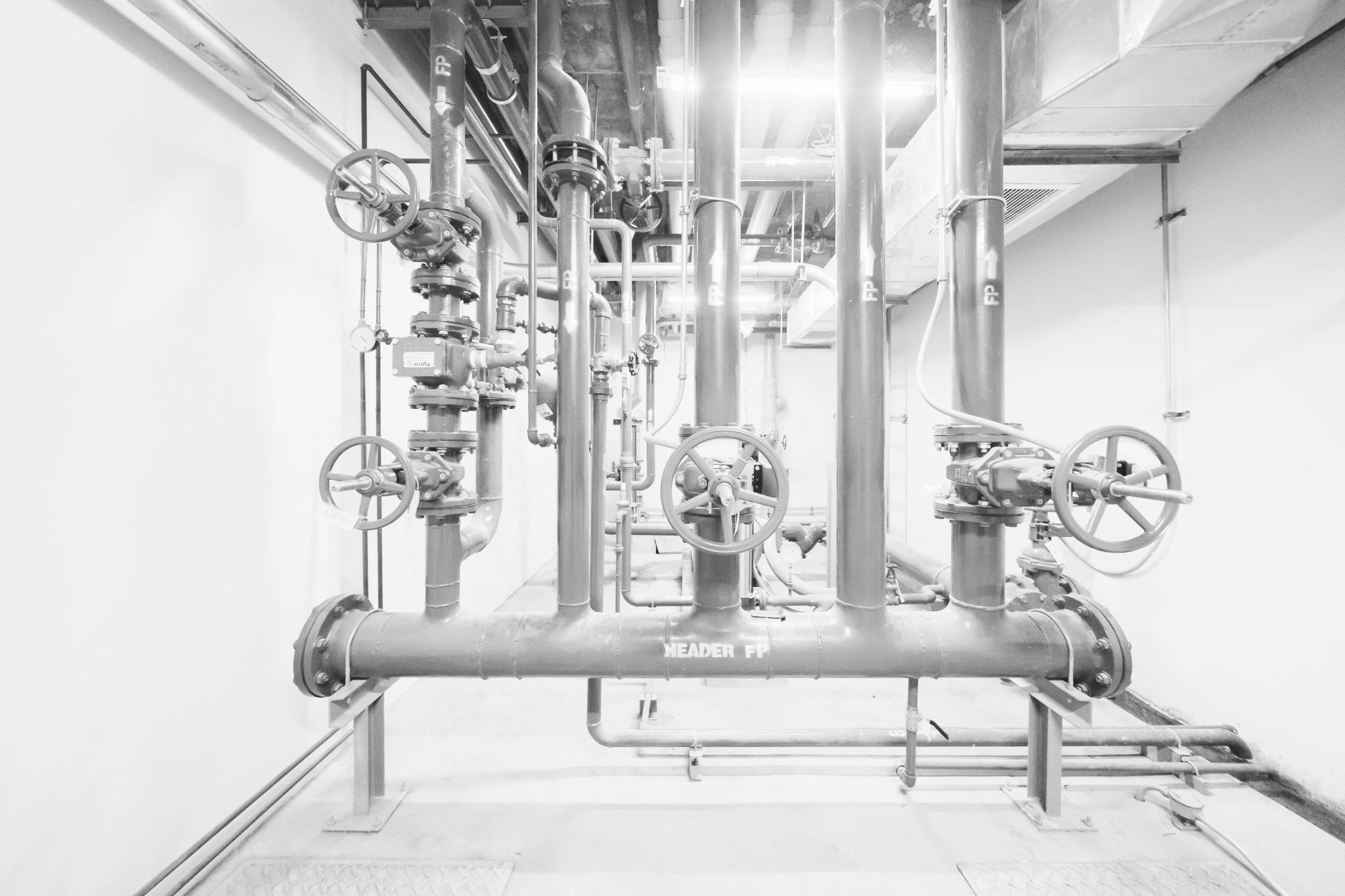
ASTTBC has updated the Registered Onsite Wastewater Practitioner (ROWP) Practice Guideline, with changes effective May 1, 2026. The updates reflect feedback received directly from ROWPs and are intended to improve clarity and support consistent professional practice.
Key revisions provide further direction in several areas of the guideline, including:
Adherence to the Sewerage System Standard Practice Manual (SMP): Clarifies that the SMP takes precedence over the ROWP Practice Guideline.
Oversight of Non-Authorized Persons: Clarifies that continuous supervision of a non-authorized person is not mandatory.
Letter of Certification (LoC): Provides clearer guidance regarding the preparation and use of LoCs.
The updated guideline is available on the ASTTBC website. Please direct any questions to practiceinfo@asttbc.org.
Based on recent application trends, one of the most common reasons applications are unsuccessful is failure to properly follow the instructions within the Competency Summary. The following tips may assist applicants in preparing a stronger application:

Applicants must achieve a minimum score of 60% across the competency assessment. Selecting too few indicators may make it mathematically impossible to achieve a passing result.


File reviewers are looking for evidence of actual work performed. Refer to real projects, tasks, technical challenges, calculations, designs, reports, inspections, or decisions you personally worked on.
Restating the performance indicator does not demonstrate competency. Instead, explain how you applied the competency in practice.
Clearly identify when the work occurred so reviewers can assess your experience progression and recency of practice.
Reviewers need to understand your individual role and level of responsibility within the project. Avoid describing only what “the team” or “the company” did.
Where applicable, identify when you relied on another professional for technical guidance, review, approval, or sign-off. This helps reviewers understand your scope of responsibility and professional judgment exercised.
Brief or vague responses often do not provide enough information for a reviewer to determine whether the competency has been demonstrated.
Ensure your examples clearly connect back to the selected performance indicators and that all required information has been provided.

Taking the time to provide detailed, project-based examples that clearly explain your own technical contributions will significantly strengthen your application.
Based on recent application trends, many RFPT applications are delayed or unsuccessful due to incomplete documentation, missing information, or non-compliance with applicable standards. The following tips may assist applicants in preparing a stronger application: Ensure your work log is complete and meets the minimum requirements
Applicants must demonstrate the required variety and quantity of inspections and testing experience for the endorsement being applied for, including the minimum number and types of systems, units, or equipment tested and inspected.
Include your supervisor’s information within the work log
The supervising individual should be clearly identified so ASTTBC can verify oversight and validation of the work performed.

Ensure your reports and tags comply with applicable codes, standards, and ASTTBC
If your work is being supervised by an RFPT registrant, the inspections and testing must be completed in accordance with the ASTTBC Standard of Practice, including proper tagging, documentation, and reporting requirements.
The stamp must be able to clearly read:
• the registrant’s full name;
• FP registration number; and
• all endorsements listed on the stamp.
Ensure all pages of the inspection or testing report are included with your submission. Missing pages may prevent proper review of the work completed.
Full dates should be included on:
• inspection and testing reports;
• tags; and
• work logs.
Where work was performed over multiple days, the report should clearly indicate the dates during which the work was completed.
Ensure deficiencies, test results, device information, and comments are complete, accurate, and internally consistent. Reports should clearly demonstrate the scope of work completed and compliance with applicable standards.
Tags should properly identify whether a system passed, failed, or requires attention in accordance with the applicable standard and ASTTBC Standard of Practice.
ASTTBC reviews actual inspection and testing documentation to assess whether applicants can safely and competently perform work independently in compliance with applicable codes and standards.

Providing complete, organized, and compliant documentation will help avoid unnecessary delays in the application review process.


ASTTBC has several statutory committees that are looking for new volunteers:
Lay Committee Member – Audit and Practice Review Committee
Lay Committee Member – Credentials Committee
Committee Member – Credentials Committee
Committee Member – Investigation Committee


The StrongerBC Future Skills Grant is open to British Columbians aged 19 years or older regardless of financial need and covers up to $3,500 per person for eligible short-term skills training at public postsecondary institutions.

ASTTBC registrants are invited to participate in a research study led by Athabasca University exploring how menopause and perimenopause impact women’s experiences in the workplace.
Despite menopause being a natural and nearly universal life transition, its effects on work performance, career progression, and overall wellbeing remain under-researched— particularly in technical and male-dominated fields. This study aims to help address that gap by gathering insights that can inform future workplace practices, policies, and supports.
Researchers are seeking participants who:
• Identify as women
• Are currently working in leadership roles and/or in male-dominated industries (such as engineering, applied science, or technology)
Participation involves a confidential, one-on-one interview (30–60 minutes), and participants will receive a $40 gift card for their time.
By sharing your experience, you can help contribute to a better understanding of how workplaces can support women through all stages of their careers.
The study will be ongoing until October 2026. To learn more or express interest in participating, please visit the study webpage.

Participated in a student engagement session at Okanagan College with approximately 50 students from the Civil, Mechanical, Water, and Electronic Engineering Technology programs, along with faculty representatives.
Connected with first-year Civil Engineering Technology students at the College of New Caledonia (CNC).
Hosted a Young Professionals Group webinar focused on early career development.
Delivered an ASTTBC update webinar for registrants.
Presented to eight Civil Engineering Technology students at the College of New Caledonia (CNC).
Presented to 30 Architectural Engineering Technology students at Thompson Rivers University.
Presented to 25 Civil Engineering students at Brighton College.
Hosted a Continuing Professional Development (CPD) webinar for registrants.
Participated in an MLA luncheon to connect with government representatives.
Held the ASTTBC Annual General Meeting.
Presented to 60 first-year Electrical Engineering Technology students at BCIT.
Participated in Program Advisory Committee meetings at Okanagan College with a total of 40 faculty and industry representatives.
Met with eight teaching faculty members from BCIT’s Electrical Engineering Technology program.
Host a registrant meeting in Penticton, provide an opportunity for in-person engagement and discussion.
Host the ASTTBC Artificial Intelligence Awareness webinar.
Participated in a Program Advisory Committee meeting for the Sustainable Construction Technology program with 8–10 teaching faculty and industry representatives.
ASTTBC webinar: use of artificial intelligence and other technology tools in Professional Practice
June 9, 2026
Time: 12pm-1pm
Where: Online
CONNECT IN PENTICTON: ASTTBC REGISTRANT MEETING
24-Jun-2026 - 24-Jun-2026
Penticton Lakeside Resort & Conference Centre (Zinfandel Room), Penticton, BC
BC FIRECON 2026
24-Sep-2026 - 25-Sep-2026
Coast Langley City Hotel & Convention Centre, Langley, BC
Our partners offer exclusive rates on their products and services. Follow the links below to learn more:
» Willis Towers Watson
» TD Insurance Meloche Monnex
» Manulife
» Notarius
To access insurance and other ASTTBC group benefits including discounts to the PNE/Playland, Mark’s Work Wearhouse and more, please log into your ASTTBC account. Once logged on, click the ‘Resources’ tab for more information.

Tanvir Singh
Daniel Almasi
Patrick Byrne
James Ellis
Kelly Koper
Samuel Laughlin
Chad MacNeil
Seok Min Oh
Ryan Seibel
Derek Shong
Scott Neuendorff
Lee Wilson
Sean Bales
Jackson Becker
Taylor Bullock
Ye Chen
Amarjot Dhaliwal
Slawomir Grunwald
Jaspreet Singh
Imraan Jhatam
Hasan Jhatam
Alejandro Moncada Salazar
Marcus Peterson
Pedro Sales Muniz
Arika Shimada
Abhay Singh
Kaden Strout
Shea Toews
Maxim Woodward
Emma Bibault
James Croft
Scott Millward
Gavin Timleck
Joshua Wassing
Carly-Anne Wise
Philip Meister
James Sinclair
Bruno Tortolano
Gordon Yelland