Most homeowners do not think much about their door locks until something goes wrong. A lock is one of those essential parts of a home that quietly performs its job day after day without attracting attention. However, like any mechanical device, door locks experience wear and tear over time. Ignoring the warning signs of a failing lock can leave your property vulnerable to break-ins, lockouts, and costly repairs.
Whether you own a single-family home, a condominium, a co-op apartment, or a multi-unit rental property, recognizing the early signs of lock failure can help you avoid inconvenience and improve your overall security. The good news is that locks rarely fail without first providing
warning signs. Knowing what to look for can help you take action before a minor problem becomes a major emergency.
One of the most common signs that a lock is nearing failure is difficulty inserting or removing the key. If you find yourself wiggling the key, applying extra pressure, or repeatedly trying to insert it correctly, something is not functioning properly inside the lock mechanism. Over time, dirt, debris, corrosion, and internal wear can cause the lock cylinder to become less responsive. While some people assume the key is the problem, the lock itself is often the real culprit. If this issue persists, it should not be ignored because a lock that struggles to accept a key today may refuse it entirely tomorrow.
Another warning sign is a lock that feels stiff when turning the key. A properly functioning lock should operate smoothly with minimal effort. If turning the key suddenly requires extra force, or if the lock feels rough and resistant, the internal components may be wearing out. Springs, pins, and other moving parts inside the cylinder can deteriorate over time. This is especially common in exterior doors exposed to years of weather changes, moisture, and temperature fluctuations. A stiff lock may eventually seize completely, potentially leaving you locked out of your home or unable to secure it.
Homeowners should also pay attention to locks that become loose or wobbly. If the lock cylinder shifts when you insert the key, or if the door handle feels unstable, there may be loose mounting hardware or internal damage. While a loose lock might seem like a minor annoyance, it can create additional stress on the locking mechanism and accelerate wear. In some cases, a loose lock can also make it easier for intruders to manipulate or bypass the hardware.
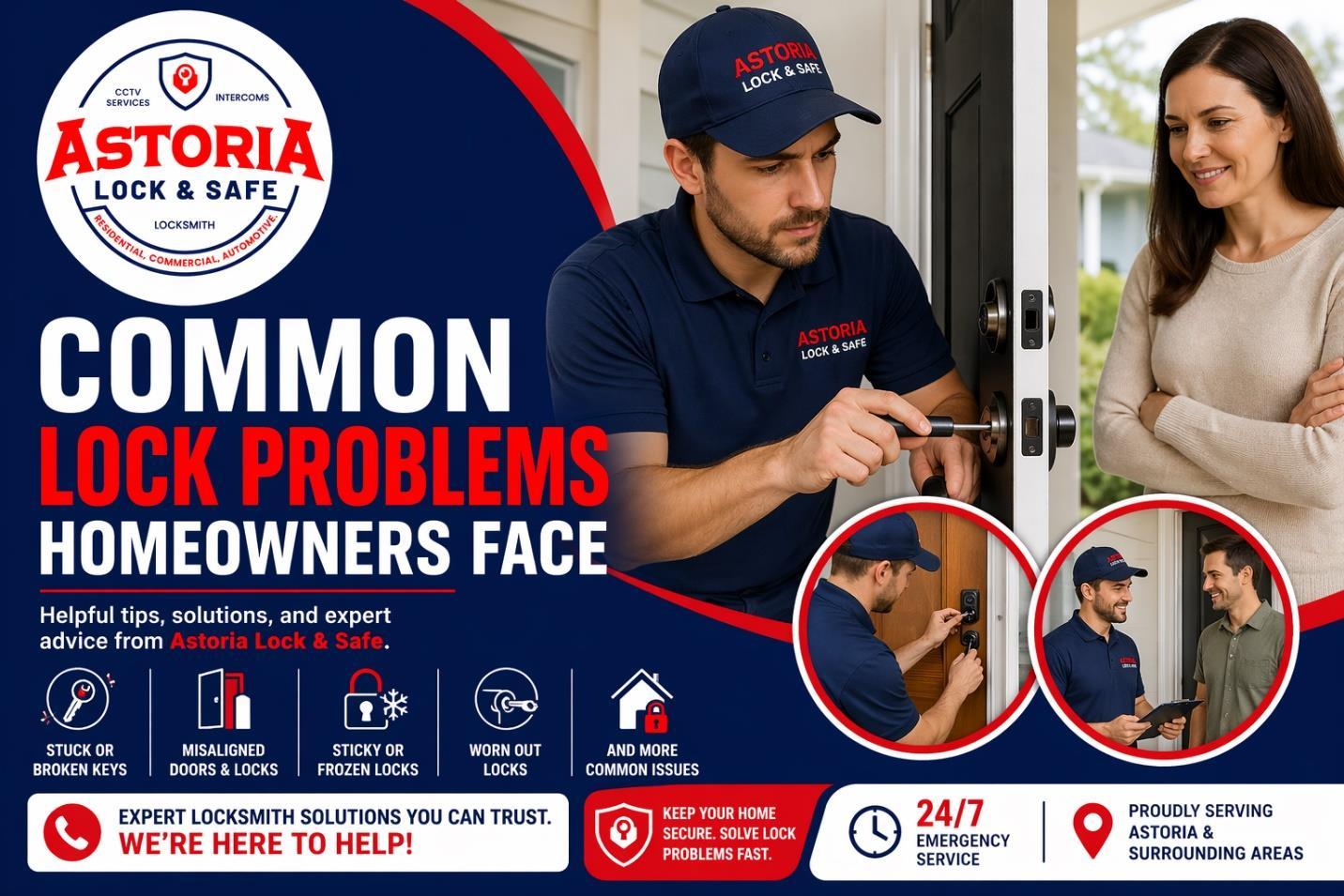
Frequent key jamming is another indication that your lock may be approaching failure. When a key becomes stuck in the lock, many people assume it is a one-time occurrence. Unfortunately, repeated jamming often signals internal damage. The pins inside the cylinder may no longer align correctly, or debris may have accumulated inside the mechanism. Continuing to force a stuck key can cause it to break off inside the lock, turning a manageable repair into a more complicated situation.
Landlords and apartment owners should be especially cautious if tenants report inconsistent lock performance. A tenant may mention that the key works sometimes but not others, or that they need to jiggle the key to unlock the door. These complaints should never be
dismissed. In many cases, intermittent problems are early indicators of lock failure. Addressing them promptly can prevent tenant lockouts and maintain the security of the property.
Visible rust or corrosion is another red flag. Exterior locks are constantly exposed to rain, humidity, snow, and fluctuating temperatures. Over time, moisture can cause metal components to corrode. Rust not only weakens the lock mechanically but can also interfere with the movement of internal parts. Corroded locks are significantly more likely to malfunction unexpectedly. If you notice rust developing on your door hardware, it may be time to consider replacement before the damage progresses further.
A lock that no longer aligns properly with the strike plate can also signal trouble. Doors naturally shift over time due to settling foundations, seasonal expansion and contraction, or general wear. When the latch or deadbolt no longer enters the strike plate smoothly, homeowners often compensate by pulling, pushing, or lifting the door while locking it. While this may work temporarily, the additional strain can damage both the lock and the door frame. Persistent alignment issues should be corrected before they contribute to lock failure.
Keys that show unusual wear can also provide clues about the condition of your lock. If your key develops scratches, bends, or worn edges faster than normal, the lock may be creating excessive friction. This often indicates internal deterioration. Since keys are made of softer metal than many lock components, they frequently show signs of trouble before the lock completely breaks down.
Another warning sign is a lock that occasionally refuses to unlock even when the correct key is used. This intermittent behavior is often caused
by worn internal parts that are no longer operating consistently. Some homeowners make the mistake of assuming the problem has resolved itself when the lock begins working again. In reality, these temporary failures usually become more frequent over time until the lock ultimately stops functioning altogether.
Unusual noises should never be ignored. Grinding, clicking, scraping, or popping sounds coming from a lock indicate that something inside is not operating correctly. Healthy locks generally function quietly. When unusual sounds develop, they often signal worn components, debris buildup, or internal damage. Investigating the issue early may prevent a complete lock replacement later.
Older locks deserve special attention. Even if a lock appears to function properly, age alone can be a reason to consider replacement. Many locks installed decades ago lack modern security features and have endured years of daily use. Mechanical components naturally wear down over time. Homeowners who recently purchased an older property should evaluate the condition of all exterior door locks and consider upgrading them as part of a broader security plan.
For landlords, replacing aging locks can also reduce liability concerns. A malfunctioning lock not only inconveniences tenants but may create security risks if residents cannot reliably secure their units. Proactively maintaining lock hardware demonstrates responsible property management and helps protect both tenants and property owners.
Unfortunately, many lock failures occur at the worst possible times. People often discover a failed lock late at night, during severe weather, or when rushing to work. This is one reason many residents keep the number of an Astoria Locksmith available before an emergency occurs.
Having access to professional assistance can save valuable time when lock problems arise unexpectedly.
If you are searching for a reliable Locksmith in Astoria, it is important to address lock issues before they escalate into complete failures. Routine inspections and timely repairs can often extend the life of a lock and prevent inconvenient lockouts.
Of course, not every problem can be predicted. When a lock suddenly stops working outside normal business hours, a 24 hour locksmith in Astoria service can provide assistance when immediate help is needed.
In situations where security has been compromised, such as a broken lock after a burglary attempt or a lock that fails completely, an Emergency Locksmith in Astoria like Astoria Lock and Safe can help restore access and security as quickly as possible.
Your door lock serves as one of the first lines of defense protecting your family, tenants, and property. Paying attention to early warning signs such as stiffness, jamming, corrosion, loose hardware, alignment issues, and unusual noises can help you address problems before they become serious. By taking a proactive approach to lock maintenance and replacement, homeowners and landlords can avoid costly emergencies while ensuring their properties remain secure year-round.