Office specific extensions tailored to your day-to-day business needs. Map parcels, address points, roads, pavement issues, voters, and so much more!
USER FRIENDLY INTEGRATION
Easily create, edit, and export items at anytime from anywhere. The site is mobile-friendly and backed by our unparalleled customer support team.
Real-time access to the local, state, and federal data sources you need to make informed decisions. Bringing everyone and everything together.
ROADS LEAD TO STRONGER COMMUNITY.
A community’s roads connect us to jobs, healthcare, daily essentials, friends and family — and home. Ergon is proud to provide the materials and support needed to help build and maintain safe roadways across America, connecting us all to what matters most.
Cover Notes: New Approaches
In Washington County, local leaders recognized that traditional approaches to road maintenance would need to evolve to keep pace with population growth. Through innovation, collaboration, and a willingness to respond directly to citizen concerns, the county developed a new pavement preservation method, known as “Road Forge,” that has dramatically improved public satisfaction while extending the life of local roads. The process is drawing attention from counties across Arkansas as a model for costeffective infrastructure management.
Photos by Tad Sours
DREAM BIGGER .
Stronger, safer and more efficient counties start with smarter investments. Crews & Associates brings decades of experience to funding facilities and public services that make your ideas a reality. Ready to dream bigger? Let’s move your county forward – together.
June 23-26
Assessors Fairfield Bay
June 24-26
Judges
Wyndham, North Little Rock
Aug. 11
Randy Kemp Golf Tournament Hot Springs Village
Aug. 12-14
AAC Annual Conference Hot Springs
Sept. 2-4
Judges
Benton Event Center, Benton
Sept. 9-11
County Clerks
Benton Event Center, Benton
Sept. 21-23
Coroners
Benton Event Center, Benton
Sept. 23-25
Treasurers
Mount Magazine State Park
Calendar activities also are posted on our website: www.arcounties.org
Contact AAC
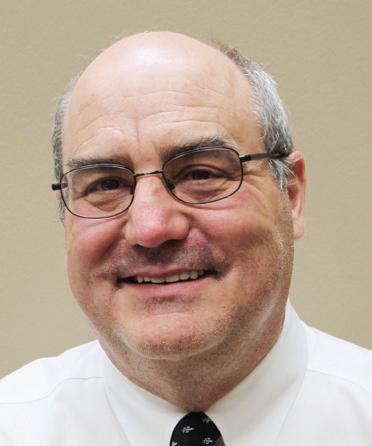
Chris Villines, Executive Director cvillines@arcounties.org
Anne Baker, Sr. Executive Assistant abaker@arcounties.org
Loretta Green, Receptionist lgreen@arcounties.org
Eddie A. Jones, Consultant e.jonesconsulting@gmail.com
Mark Whitmore, Chief Legal Counsel mwhitmore@arcounties.org
Colin Jorgensen, AAC Litigation Counsel cjorgensen@arcounties.org
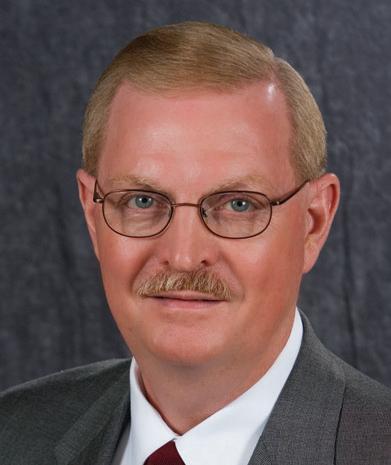
Josh Curtis, Governmental Affairs Director jcurtis@arcounties.org
Jennifer Shook, Medical Claims Adjuster jshook@arcounties.org
Jacob Trumble, Claims Analyst jtrumble@arcounties.org
Greg Hunt, Claims Analyst ghunt@aacrms.com
Karen Bell, Program Assistant kbell@aacrms.com
AAC Mission Statement
The Association of Arkansas Counties supports and promotes the idea that all elected officials must have the opportunity to act together in order to solve mutual problems as a unified group. To further this goal, the Association of Arkansas Counties is committed to providing a single source of cooperative support and information for all counties and county and district officials. The overall purpose of the Association of Arkansas Counties is to work for the improvement of county government in the state of Arkansas. The Association accomplishes this purpose by providing legislative representation, on-site assistance, general research, training, various publications and conferences to assist county officials in carrying out the duties and responsibilities of their office.
Ellen Wood, Admin. Asst./Receptionist ewood@aacrms.com
Gary McClain, RMS Loss Control Specialist gmcclain@arcounties.org
County Lines [(ISSN 2576-1137 (print) and ISSN 2576-1145 (online)] is the official publication of the AAC. It is published quarterly. For advertising inquiries, subscriptions or other information, please contact Christy L. Smith at 501.372.7550.
Executive Director/Publisher
Chris Villines Communications Director/ Managing Editor
Christy L. Smith Communications Coordinator/Editor Sarah Perry
AAC Executive Board:
Debbie Wise – President Brandon Ellison – Vice President Jimmy Hart – Secretary-Treasurer
Tommy Young Deanna Sivley
Debra Buckner Dana Baker
Kevin Cleghorn Terry McNatt
Rebecca Talbert Doug Curtis
Gerone Hobbs Marty Boyd
John Montgomery Heather Stevens
Brenda DeShields Selena Blair
Bobby Burns
National Association of Counties (NACo) Board Affiliations
Debbie Wise: NACo board member. She is the Randolph County Circuit Clerk and president of the AAC Board of Directors.
Brandon Ellison: NACo board member. He is the Polk County Judge and vice-president of the AAC Board of Directors.
Ted Harden: Finance & Intergovernmental Affairs Steering Committee. He is a member of the Jefferson County Quorum Court.
Barry Hyde: Justice and Public Safety Steering Committee. Vice Chair of Transportation Steering Committee. He is the Pulaski County Judge.
Rusty McMillon: Justice and Public Safety Steering Committee. He is the Greene County Judge
Kevin Smith: IT Standing Committee. He is the Sebastian County Director of Information Technology Services.
Gerone Hobbs: Membership Committee. He is the Pulaski County Coroner.
Paul Elliott:Vice Chair of Justice and Public Safety Steering Committee, vice chair of law enforcement subcommittee. He is a member of the Pulaski County Quorum Court.
Ellen Foote: Community, Economic & Workforce Development Steering Committee. She is the Crittenden County Tax Collector.
Tawanna Brown: Telecommunications & Technology Steering Committee. She is the Chief Computer Operator for Crittenden County.
Lisa Ecke: Justice and Public Safety Steering Committee. She is a member of the Washington County Quorum Court.
County government perspectives
As a youngster I remember the well-timed fall arrivals of Sears and Montgomery Wards catalogues in our mailbox (if they would fit). By the age of, let’s say 7, I had longed for a model train set year after year despite the “12 and older” tag. I was way too mature to be held back by some toy manufacturer’s expectation that I might drink wheel oil or smoke fluid. Like Ralphie in “A Christmas Story” I rushed down on Christmas Day to find one gift held back to the end, and to my surprise it was indeed the train I had put hopes and dreams in. Thankfully it wasn’t a red-rider BB gun or I’d be wearing an eye patch.
It was a Chattanooga engine with coal car, several freight and tanker cars and a working crane, and a caboose at the end. For some reason I specifically wanted that train that ran on a dual track that was more “real” than the tri-rail types gaining popularity. It was indeed heaven on earth and was being assembled that afternoon as soon as lunch was finished.
I quickly learned why the tri-track models were gaining popularity.
No matter how well I connected my tracks if I got it up to a reasonable speed the darned thing would derail. At some point I wondered if trains in general were doomed to failure and swore I’d never get on one.
Then I found it.
There’s a section of track in there that can take a derailed train car and steer the wheels back toward the track essentially re-seating the wheels properly. I’ve looked for something similar on real train tracks ever since and never found one.
Thinking back on that section of track, I have learned that there is a lesson. We all need those corrective forces to keep us on track. At the AAC, most of the time is spent giving legal and practical guidance to help you stay on track and within best practices of county government. And of all questions asked, the one we rarely get but the one most important is “Why do counties exist?”
It is only through the lens of this question that we as counties can accurately determine what we are really here for. And just like every other level of government what are the things we have to provide (needs) and what are those things that are optional (wants).
As ARPA money is being spent down, and grant funding decreases we may be entering a new cyclical era where we must make these tough calls.
The answer to this question lies in Arkansas Code Annotated §14-14-802. This code simply breaks down the “shall” and “may” of county government as below:
§14-14-802 – Providing of services generally.
(a) A county government, acting through the county quorum court, shall provide (emphasis mine), through ordinance, for the following necessary services for its citizens:
(1) The administration of justice through the several courts of record of the county;
(2) Law enforcement protection services and the custody of persons accused or convicted of crimes;
(3) Real and personal property tax administration, including assessments, collection, and custody of tax proceeds;
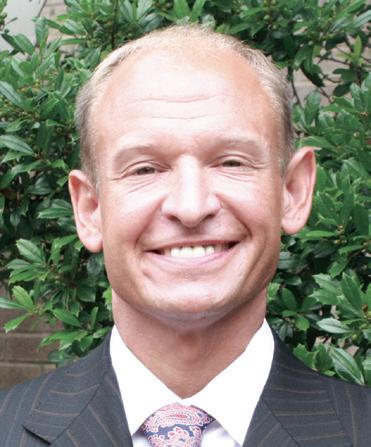
Chris Villines AAC Executive Director
(4) Court and public records management, as provided by law, including registration, recording and custody of public records; and
(5) All other services prescribed by state law for performance by each of the elected county officers or departments of county government.
The balance of this section pertains to the “may” provisions of county government, and is in my opinion more descriptively helpful regarding the boundary between the two than the requirements that precede it. It reads as follows:
(b) (1) A county government, acting through the quorum court, may provide (emphasis mine), through ordinance for the establishment of any service or performance of any function not expressly prohibited by the Arkansas Constitution or by law.
(2) These legislative services and functions include, but are not limited to, the following services and facilities:
(A) Agricultural services, including:
(i) Extension services, including agricultural, home eco-
nomic, and community development;
(ii) Fairs and livestock shows and sales services;
(iii) Livestock inspection and protection services;
(iv) Market and marketing services;
(v) Rodent, predator, and vertebrate control services; and
(vi) Weed and insect control services;
(B) Community and rural development services, including:
(i) Economic development services;
(ii) Housing services;
(iii) Open spaces;
(iv) Planning, zoning, and subdivision control services;
(v) Urban and rural development, rehabilitation, and redevelopment services; and
(vi) Watercourse, drainage, irrigation, and flood control services;
(C) Community services, including:
(i) Animal control services;
(ii) Cemetery, burial, and memorial services;
(iii) Consumer education and protection services;
AAC PRESIDENT’S PERSPECTIVE
Opportunities to learn abound for newly elected county officials
As we enter the midpoint of this year, my feelings are bittersweet. I know in just a few short months we will be bidding farewell to some old friends who have chosen to retire. But we will also greet a wealth of new friends, who promise to infuse our associations with fresh energy and ideas.
During the spring continuing education meetings, we noticed many new faces. County officials-elect were showing up to get a jump start on the jobs they will take on come January. I welcome you all and encourage you to continue to take advantage of the training opportunities available in the next few months.
In August, the Association of Arkansas Counties will host its 58th annual summer conference. It’s a time to learn and to fellowship with your peers. The conference is always well attended; more than 800 people attended last year, and we are well on our way to hitting that same mark this year.
The theme is “Red, White and You” in honor of our nation’s 250th birthday. One of my favorite speakers, Rear Admiral (Ret.) Peter Cressy of the Washington Leadership Institute, is set to return this summer. He is an expert on all things related to George Washington, and his program will surely delight the audience.
Another fabulous speaker is Jason Curry, who has for more than 25 years devoted his life to making a meaningful difference. Jason founded his leadership company, Finish Empty®, in 2005. Through speaking, training, and coaching, he develops athletes, strengthens teams, inspires individuals, guides businesses, and supports organizations committed to excellence and impact.
In June 2025, he released his debut book, Finish Empty® and was named Life Coach of the Year by AY Magazine. I look forward to hearing his inspiring words.
Attorney General Tim Griffin will be in attendance, as
will state legislators. So, it will be a great opportunity to meet some of our state level officials and to learn about some of the issues that may come up in the next legislative session.
September and October will bring even more opportunities to attend association meetings and to honor those who will be retiring at the end of the year. Then in December, the AAC will host its New Elect training, which will offer a deep dive into the ins and outs of serving your county. You certainly don’t want to miss those informative meetings.
Again, I welcome those who are preparing to take office in January. And for now, I will save my goodbyes to those who will be leaving our ranks.
Randolph County Circuit Clerk/AAC Board President
Did an aspect of county government “make news” recently in your county? Did any of your county officials or staff get an award, appointment or pat on the back? Please let us know about it for the next edition of County Lines magazine. You can write up a couple of paragraphs about it, or if something ran in your local paper, call and ask them to forward the story to us. We encourage you or your newspaper to attach a good quality photo, too: e-mail csmith@arcounties.org.
Debbie Wise
DEBBIE WISE AAC Board President; Randolph County Circuit Clerk
The AG tackled the ramifications of the recent discontinuation of the production and availability of the penny in circulation. The AG determined that neither state nor federal law prohibits county officials from requiring exact change. The AG expressed that when a county adopts an exact change policy, efforts to inform the public such as signage or notice in official channels is advisable. The AG further noted that neither federal nor state law prohibit retailers rounding up the cash portion of transaction. Arkansas law does not prescribe a particular method of providing change during a cash transaction.
AG OPINION NO. 2025-122
The AG explained that a county tax collector does not have the authority or discretion in assessing a penalty. Under ACA § 26-36-201 the penalty for failure to make timely payment of real and personal property taxes is mandatory. ACA § 26-35-501 requires the tax collector to extend a penalty of 10 percent against all delinquent taxpayers who have not paid their taxes within the time prescribed by Oct. 15.
AG OPINION NO. 2025-117
The AG was called upon to determine timely delivery of mail to the U.S. Postal Service under Arkansas and federal law. The AG explained that in the payment of property taxes under ACA § 26-35-501(c) a “postmark” is defined as a marking applied by the Postal Service. Similarly, under federal law a postage meter date stamp applied by an office postage meter does not demonstrate timely delivery to the post office and acceptance of the item. A postage meter date stamp only proves that an item of the mail was run through an office postage meter on a certain date. It does not prove that an item of mail is in the possession of the Postal Service or the date of possession. The opinion cautioned that the Postal Service these days is now transported to a separate processing facility for postmarking. A taxpayer or customer should seek to have the postal facility to apply their postmark to the item of mail. The AG concluded that the county tax collector cannot accept payment as timely if there is not a timely postmark of the Postal Service. The tax collector does not have the discretion in whether to assess the penalty for late payment.
AG OPINION NO. 2025-129
The AG tackled the question of whether emails are subject to the Arkansas Freedom of Information Act (FOIA) or required to be retained by county officials or justices of the peace. The Arkansas law for record retention for county
Mark Whitmore Chief Legal Counsel
government is set forth under Title 13 of the Arkansas Code. Whether emails exchanged between county officials or justices of the peace should be determined by a case-by-case determination. This hinges on whether the emails are kept and a record of performance or lack of performance of the official functions of the county official or justice of the peace. However, there is no duty to keep or retain emails between county officials or justices of the peace unless the emails are required to be retained under the record retention laws. ACA § 13-4-302(3) requires the county treasurer’s monthly financial report to be retained for one year and to retain certain other documents, including the quorum court minutes and records of proceedings and codification of ordinances permanently. The AG noted that unless the emails fit within one of the categories above, then they are not required to be kept under ACA § 13-4-302 through ACA § 13-4-308.
AG OPINION NO. 2025-114
The AG tackled a series of common questions that arise in civil process, writs of execution, and filing and recording judgments. This opinion is comprehensive and addresses many issues our sheriffs face in civil process in Arkansas. The AG explained that district courts are courts of record and as such may issue writs of execution effective statewide. The AG explained the process of registering judgments of other states under the Uniform Enforcement of Foreign Judgments Act. The AG noted that a writ of execution may be issued by any court of record in Arkansas and directed to the sheriff of any county in Arkansas. The AG determined there is no requirement to register the underlying judgment in the sheriff’s home county first prior, and there is no requirement for a writ of execution to be issued by the sheriff’s home county. Even if the judgment debtor does not register the judgment in the sheriff’s home county, the sheriff may execute upon real or personal property of the judgment debtor upon issuance of the writ by any state district court or state circuit court (without registration of the judgment). A sheriff may not, however, execute on property outside their county or jurisdiction. Nether may a sheriff serve or execute civil process from a foreign court of another state unless directed by an Arkansas court. Additionally, the AG explained the circuit court fees for registering judgments. Finally, the AG explained the Uniform Child-Custody Jurisdiction Enforcement Act (UCCJEA) codified under ACA § 9-19-301 et seq.
AAC SEEMS TO ME...
Showing up: it’s part of your job
Astrange part of adulthood that no one talks about, is we’re all homesick for a place and time that no longer exists, and that we can never revisit in actuality. There is nothing wrong with reminiscing of childhood; teenage years; or early married life and enjoy those times in our mind. But we will never actually be there again. We must show up for today. We must have goals and accomplish those goals.
I’ve always wanted to be a millionaire just like my dad. He always wanted to be a millionaire, too. Well, that’s not actually my goal, but I won’t deny its fruition if it swings past my bank accounts.
My goal has always been to be the best that I could be at whatever my task was at the time. Many times, I fall short of reaching that goal, but I keep on trying. We must. As public servants we must avoid being average. To use some 1980s slang, as long as we work in public service we must show up and show out. In other words we physically and mentally show up and then deliver an exceptionally impressive performance that leaves a lasting impression (show out). It signifies doing your absolute best, being fully present, and standing out in an extraordinary way. That is the calling of a county elected official.
It was always my goal to be financially able to retire at age 55. When that time came, I had accomplished that, but I didn’t feel that I was finished with my work. However, I was in Little Rock as the executive director of the Association of Arkansas Counties. My wife was back home in Randolph County and was the chief clerk of the Randolph County District Court. She was also helping raise two grandchildren and taking care of our aging parents. I was home only on the weekends. She needed help at home.
After quite the internal battle with myself, I made the decision to do the right thing and retire effective July 1, 2010. My wife was elated; I was frantic at not being in a position of public service to show up and help my fellow man.
Why do I bring this up? Because over the last two or three years I have worked with and counseled several counties experiencing what should be the “unheard of” — elected county officials not showing up for work. I’m not talking about not keeping an 8 to 5 work day every day or taking an extra-long lunch hour or taking more vacation days than the employees get. I’m talking about rarely showing up and working.
I fully understand that the county elected officials are not governed by the personnel policy of the county. State law prohibits the personnel policy from applying to the elected officials [§ 14-14-805(2)]. However, that law does not pro-
vide ethical or moral cover for an elected official to not show up and do the work they were elected to do and being paid to do.
More than once, when being contacted by a quorum court or county attorney, I have heard that the official told the court that they [meaning the county] couldn’t do anything about it. That he or she [the elected official] was only required to show up at least once every 90 days. I have a single word to say about that statement. Baloney!
Eddie A. Jones County Consultant
If I was still an elected county official, I would steer clear of using that reasoning. That thought comes from a provision in § 14-14-1308 concerning “vacancy in office.” Provision number 9 in § 14-14-1308 says, “A county elective, county quorum court district, or township office is vacant if the incumbent ceases to discharge the duties of his or her office for a period of three (3) months except if prevented by sickness; excused by quorum court resolution; or the incumbent is suspended from office by a judicial proceeding under § 21-12-301.” That’s a long way from providing permission to just show up once every 90 days or saying an elected official should only show up sporadically. What that law purports is that an official who doesn’t show up should be removed from office.
And now back to my situation. Yes, I retired at the age of 55 [almost 56] because I could and needed to in order to be home and provide the help my wife and family needed.
We helped with three aging parents who have since gone on to their heavenly reward in 2018, 2020 and 2025. We finished raising our oldest grandson and he’s been in the U.S. Marine Corps for almost six years now and has been a part of the Marine Corps Band stationed at Quantico. As a sergeant in the Marines, Kyle was transferred to the Marine Corps Base in Paris Island, South Carolina, for drill instructor training. He is now a drill instructor currently based in South Carolina. I affectionately refer to him as ‘Sergeant Carter.’ More than likely, in three years, he will transition back to the U.S. Marine Corps Band. We have helped our two kids and four grandchildren in whatever ways they needed us. And we even get to babysit a great grandson part of the time.
I say all of that to say this, although I retired and did what I should’ve done in helping with family, I also never lost the calling to public service. Thankfully, after six months of retirement, AAC Executive Director Chris Villines and the
AAC Board of Directors asked me to rejoin AAC as a consultant and work from my home office as much as possible and travel when needed. I’ve been doing that since January 2011.
And yes, even at the age of 72, I still show up at the office in the northwest corner of the second floor of my home to work for AAC and the counties of Arkansas. I do that almost every week day and many Saturdays and travel to various meetings and seminars as needed. My grown kids and grandkids laugh because they think I’m crazy. I laugh because they don’t seem to know it’s hereditary. If I have a job, I’m going to do the job to the best of my ability. No one should do less.
As an elected official do you “show up and show out” or are you a part-time official of the people; a no show; an absentee official; an empty chair politician; or as the military would say, AWOL — absent without leave. You were not elected to be conspicuous by your absence or to neglect your duties. In fact, just the opposite — you held up your right hand and swore or affirmed to show up and faithfully execute the duties of your office in accordance with the law.
By now, you know how I feel. Seems to me an elected county official should show up to work and work. Don’t be the subject of well-worn lines like these:
• “Our county official is like a magician — now you see them, now you don’t. Mostly you don’t.”
• “I’ve seen more of the Tooth Fairy than I have of my county officials.”
• “Our official is very consistent: consistently absent.”
• “They are the only person who can be ‘out of office’ while technically being ‘in office.’”
At my age, I’ve come to accept that I will never be old enough to know better. I just say what I believe … as tactfully as I can.
Thomas Marshall, vice-president under President Woodrow Wilson and President of the Senate by virtue of his office, was known for his wit and keen sense of humor. He is quoted as saying, “Once there were two brothers: one ran away to sea, the other was elected vice-president — and nothing was ever heard from either of them again.” Speaker of the House in 2020, Kevin McCarthy, said, “Any politician who doesn’t show up for work should take a pay cut — plain and simple.”
As the Apostle Paul said in the book of Ephesians, “I urge you to live a life worthy of the calling you have received.” We must show up for today.
TRUST IS OUR FOUNDATION
Attorneys, CPAs, and financial advisors across Arkansas turn to us for our expertise in charitable giving. With expert knowledge and customized solutions, we help you guide your clients toward meaningful, tax-smart philanthropy.
Arkansas Community Foundation: engaging people, connecting resources and inspiring solutions to build Arkansas communities.
The truth about property taxes and the conservative case for stability
Arkansas arguably currently has its most conservative elected leadership in history, both in the executive branch made up of state constitutional officers, and the legislative branch, made up of the Arkansas State Senate and House of Representatives. So, it comes as no surprise that reducing the tax burden on Arkansans has been a top priority of both branches — and a successful one. When Governor Sanders took office in 2023, the top individual income tax rate was 4.9 percent. That rate has since been methodically and responsibly lowered to the current top individual income tax rate of 3.7 percent after a recent special session focusing solely on lowering the income tax rate for Arkansans.
However, in speaking with Arkansas legislators and new legislators-elect, they are not hearing the praise and gratitude that frankly they deserve from their constituents. Reducing income taxes allows Arkansans to take more money home in their paychecks consistently, giving the government less of their hard-earned income up front. However, the reductions in individual income taxes have been implemented in a steady and responsible pace, so most Arkansans probably aren’t noticing huge differences in the amount of net income hitting their bank accounts. The current administration and General Assembly should be given the credit that is due for allowing its constituents to keep more of their earned wages.
Instead, new legislators-elect and returning legislators are hearing complaints. Specifically, complaints about Arkansas property taxes. Unlike the income tax, which is withheld bit by bit from every paycheck, making it less noticeable to the average Arkansan, property tax statements arrive once a year — and in a larger amount than the biweekly state income taxes that are withheld — inevitably resulting in sticker shock, and then, frustration or even anger. A popular question among right-wing politicians and political outlets is: “Do you ever really own your home or vehicle if you have to pay rent to the government every year?” However, this logic is short-sighted and flawed. The truth is: Arkansas property taxes are important and necessary. They benefit property owners the most, as opposed to those who do not pay property taxes directly.
Property taxes are one of the oldest forms of taxation in American history and have long been used to fund the local services that make private property valuable and usable — including roads, schools, police, fire protection, courts, and infrastructure. Because those services directly support property values, public safety, and community stability, property taxes function as a way for landowners to collectively invest in and maintain the systems that protect and enhance their
own property rights. Without a stable local tax base, many of the public institutions, benefits, safety and infrastructure that make homeownership desirable and economically valuable would deteriorate.
This is a direct correlation.
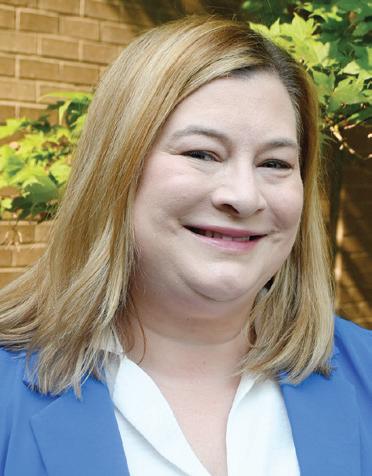
LINDSEY FRENCH General Counsel
Those areas with the highest property values pay the highest property taxes — and in return receive the highest public benefits — the best roads, the best public schools, high quality public safety, the best parks, libraries, the list goes on and on. But that’s not all. In turn, those high-quality public benefits then increase taxpayers’ property values further. Which of course results in higher property taxes, and the cycle continues. Ultimately, it is the property owners who are benefitting greatly from the services provided by their property tax dollars, more often than not, which are taken completely for granted.
Furthermore, Arkansas already provides property tax relief constitutionally after being approved by voters statewide in November 2000. Benefits to property owners include: caps on property tax increases of no more than 5 percent per year for a homestead, and no more than 10 percent per year for other real property; freezes on homestead property values for those 65 and older or disabled for as long as they own the property; and a homestead tax credit of at least $300 for all those who own their home. Incremental increases by the legislature led to the homestead tax credit being $425 when Governor Sanders took office in 2023. Since then, her administration has supported aggressive increases in the credit, and in the 2026 fiscal session, the General Assembly, led by Rep. Bart Shulz and Sen. Steve Crowell, increased that homestead tax credit to $675, resulting in many Arkansas homeowners not owing any property taxes on their home at all, and all homeowners saving nearly $700 on their property tax bill.
Additionally, certain property tax exemptions exist in Arkansas law. In 1953, the legislature passed a homestead and personal property tax exemption for all qualifying disabled veterans, later expanding the exemption to surviving spouses and children. In 1980, Arkansas voters approved constitutional amendment 59, which exempted from property taxes “public property used exclusively for public purposes; churches used as such; cemeteries used exclusively as such; school buildings and apparatus; libraries and grounds used exclusively for school purposes; and buildings and grounds and materials used exclusively for public charity.” This amendment reflected
the ideas that the government should not tax itself and that we should incentivize true public charity. Codified as Article 16, § 5, these exemptions are exclusive and cannot be expanded other than by constitutional amendment. Additionally, the General Assembly can only amend the methodology for assessing certain property taxes by a three-fourths vote of both chambers. This section recognizes that property tax exemptions should be rare — and so should special tax treatment for various types of property.
Other than for agricultural, pasture, and timber land, which are assessed significantly lower than their actual value to provide relief and support for Arkansas farmers, few property owners get special tax treatment. In recent legislative sessions, some special interest business groups have tried to obtain special tax valuation but have been largely unsuccessful in those efforts. While most conservatives support targeted exemptions for homesteads, seniors, veterans, and agricultural land because they are viewed as protecting homeowners and encouraging longterm land stewardship, virtually all conservative and free-market policy groups generally prefer lower overall property tax rates rather than expanding exemptions or special tax treatment for certain groups or property types. The widely accepted conservative view is that broad tax bases with lower rates are simpler, fairer, and more economically efficient because exemptions can shift tax burdens unevenly and create political favoritism. Organizations like The Heritage Foundation and Tax Foundation often argue that reducing rates across the board provides more transparent
AAC LEGAL CORNER
and sustainable tax relief than adding carveouts.
Governor Sanders has made it clear since her campaign prior to her 2022 election that her priority is to steadily and responsibly lower the state income tax up to the point of its elimination to attract business and people to work and live in Arkansas, not to tinker with property taxes. The administration’s decision to focus on lowering the income tax rather than property taxes is further bolstered by the fact that conservative policy groups consistently rank Arkansas as having one of the lowest property tax burdens in the country, consistently ranking between 39 and 42 among other states, meaning only 3 to 11 other states have lower property taxes than Arkansas.
Other than for agricultural, pasture, and timber land, which are assessed significantly lower than their actual value to provide relief and support for Arkansas farmers, few property owners get special tax treatment.
Eighty percent of property taxes in Arkansas go directly to support local public schools, with the other 20 percent being split among counties, cities, and other essential service providers. There are two very different landscapes in Arkansas: those with well-funded excellent public school systems and local governments adequately funded to provide roads, infrastructure, public safety and other services that its citizens have come to expect; and those areas in economic distress, where their schools and local governments are already woefully under-funded. However, haphazardly slashing property taxes would negatively affect all Arkansans the same and undermine the very goal we should all share: making Arkansas a place where people want to put down roots, build a life, raise a family, and thrive for generations to come.
75 Counties - One Voice
AAC GOVERNMENTAL AFFAIRS
2026 fiscal session update
The 87th General Assembly passed House Joint Resolution 1004 in 2007 with only three votes to spare in the Senate. This resolution sent the question of whether we should have a Fiscal Session every other year to the people of Arkansas. While HJR1004 may have narrowly passed in the Senate, the voters overwhelmingly passed the constitutional amendment by 372,235 votes. I was in college at the time, but the people who were involved in government were completely shocked by the results of this election.
The voters spoke and said they want the legislature to meet every year. Amendment 86 amended Article 5 of the Arkansas Constitution, which created the legislature. Specifically in Section 5 it added, “the General Assembly shall meet in fiscal session on the second Monday in February of each even-numbered year to consider only appropriation bills.” However, it allowed a way for the legislature to address non-budgetary items by including this language in Section 5, “A bill other than an appropriation bill may be considered in a fiscal session if two-thirds of the members of each house of the general assembly approved consideration of the bill.”
The legislature just wrapped up the ninth fiscal session ever. The AAC normally advocates for some sort of appropriation adjustment, but this session we did not. Obviously, we were disappointed there was no movement on funding a new prison. This is an issue the sheriffs and judges have lobbied in support of for well over a decade. We will continue to work with the Governor and the Legislature to hopefully find a solution.
All appropriation bills are funded through the Revenue Stabilization Act (RSA) by outlining state spending for the next Fiscal Year. The final budget came out to about $6.7 billion. The RSA includes an increase of state spending at about 3 percent. A couple of the major increases include an additional $122 million for the Education Freedom Accounts. Funding allocated for Arkansas State Police will increase by $16 million. Department of Corrections will see an increase of $41 million more in comparison to the previous year.
Most funding stayed flat; however, they did prioritize certain funds using Category A and Category B. Category A line items will be funded first, and if there are still funds available, normally towards the last quarter of the fiscal year (April-June) Category B items will be funded. With a projected surplus Category B should be funded. Act 120 has a $34,800,000 ap-
propriation for counties holding state prisoners in county jails. The entire appropriation is funded in Category A. Act 166 appropriates $21,428,616 for general turnback to counties. The RSA put $19,928,613 in Category A and the other $1,500,003 is funded in Category B.
Josh Curtis Governmental Affairs Director
The legislature also set aside some one-time big-ticket items in the RSA. They put $100 million into the Medicaid sustainability set-aside in the restricted reserve fund, an additional $70 million for educational freedom account set-aside, $300 million from surplus funds to the Economic Development Quick Action Closing Fund. One hundred and fifty million will go to the Department of Commerce for economic incentives applicable to an advanced manufacturing facility located in West Memphis. The other $150 million will go toward public highway and road improvements for this project. Rumors are this money will be used to recruit an automobile manufacturer.
For the second time in the history of fiscal sessions, the legislature passed a non-budgetary bill. To do this, the legislature needed to adopt a resolution by two-thirds to hear the bill. There were 11 non-appropriation resolutions filed in the Senate, and 11 filed by the House. Of those, only one was passed by both chambers and allowed to be introduced. It was HR 1006 by Rep. Bart Schulz to allow the legislature to vote to increase the Homestead Property Tax Credit. The House and Senate passed the bill, which increased the tax credit by $75 to $675. The bill was signed by the Governor and became Act 174 of 2026. It goes into effect for assessment years beginning on or after Jan. 1, 2026. I know the collectors and assessors like telling taxpayers their taxes will be cut again next year.
Other non-appropriation resolutions filed but not passed included several bills regulating data centers. One resolution was to amend a law passed last session creating industrial development authorities. A few counties in northwest Arkansas were looking to create one of these developments, but the community didn’t like the eminent domain capabilities. I am sure at the next regular session they will clean this up.
www.arcounties.org
Saving for retirement made easier
The 457(b) deferred comp plan
When you join your employer’s 457(b) deferred compensation (comp) plan, you get a wealth of online resources to help you set your goals, research investment options and decide how much to save for retirement. But you also get attentive service from Nationwide® Retirement Specialists. We’ll take time to understand your situation so we can provide personalized guidance as you:
Identify your retirement goals
Enroll in your employer’s retirement plan
Determine your contribution level
Develop a personalized long-term investment strategy
Keep track of your plan over time
What matters is where you want to go and how you’re going to get there. Let us help.
Arkansas’ forensic mental health systems
The importance of mental health and mental health awareness has undoubtedly increased in salience in recent years. The connection between mental health — as one part of a cornucopia of criminogenic factors — and crime is often discussed. But the contact point where mental health systems and the legal system collide is often underdiscussed and under-resourced.
Forensic mental health is the intersection of mental health care and the legal system. While awareness of the importance of mental health has never been more prominent across society, finding resources for individuals in the forensic mental health system feels like a Penrose staircase — an optionless loop.
In a 2002 court case, Terry v. Hill, Arkansas’ forensic mental health system was described as “the criminal justice system and the mental health system coming head-on at each other, then colliding, leaving the patient trapped in the middle.” From the legal perspective, the person trapped in the middle is a defendant. From the medical perspective, the person trapped in the middle is a patient. The defendant is the patient, and the patient is the defendant. For justice to be served, the patient must be examined and cleared before the defendant can be tried and the case dispensed.
While many stakeholders in Arkansas look at the Department of Human Services (DHS) and the Arkansas State Hospital (ASH) as simultaneously the main problem and the main solution, the forensic mental health system is bigger than DHS and ASH.
Forensic Assessments and Act 472 of 2017
Two kinds of forensic mental health assessments occur in Arkansas: fitness-to-proceed (see A.C.A. § 5-2-327) and criminal responsibility (see A.C.A. § 5-2-328). A fitness-toproceed assessment (also known as an evaluation or examination) is concerned about the present mental state of a defendant and is a procedural issue. Essentially, fitness-to-proceed examinations are meant to ascertain whether the defendant understands the court process and whether the defendant is capable of assisting in their own defense. Whereas fitnessto-proceed examinations inquire into a defendant’s competency to stand trial, criminal responsibility examinations are a point-in-time determination. Was the defendant, at the time the alleged crime occurred, capable of appreciating the criminality of their conduct or able to conform their conduct to the requirements of the law?
Until the passage of Act 472 of 2017, the statute regarding these assessments was A.C.A. § 5-2-305. This statute provided the procedure for raising the issues of fitness-to-proceed and criminal responsibility. While language existed in A.C.A. § 5-2-305 that fitness-to-proceed and criminal responsibil-
Taylor Handford Legal Counsel
ity were distinct processes, in many cases both issues would be raised simultaneously. While some defendants could need a fitness-to-proceed and criminal responsibility examination, most do not. The practical impact of the language in A.C.A. § 5-2-305 was that unnecessary examinations were occurring, creating inefficiencies that had deleterious effects on other defendants awaiting these same mental health resources.
Act 472 repealed A.C.A. § 5-2-305 and created A.C.A. § 5-2-327 Examination of defendant — Fitness to proceed and A.C.A. § 5-2-328 Examination of defendant — Affirmative defense of lack of criminal responsibility. Repealing A.C.A. § 5-2-305 removed the ambiguity regarding the two examinations being distinct. Creating A.C.A. § 5-2-327 and A.C.A. § 5-2-328 bifurcated the examinations in the law.
Supply and Demand of Mental Health Assessments
Most, if not all, “systems” can be examined through a lens of supply and demand. The forensic mental health supply side is, essentially, fixed. The supply side for the forensic mental health system is limited by the resources that are made available to it and what is allowable under the applicable laws, rules, and regulations.
The forensic mental health demand side is not fixed. Every defendant has due process rights and if there is a question of a defendant’s competency or criminal culpability, the prosecuting attorney, defense counsel, and judge have a duty to ensure that those rights are not infringed. Prosecutors and defense attorneys may motion for either forensic mental health assessment. The judge may then grant or deny this motion. The judge may also, sua sponte, order a mental health evaluation.
In 2023, DHS received 2,957 orders for mental evaluations. For comparison, in 2023, the state of Kentucky received 1,350 orders for mental evaluations and the state of Virginia received 3,960 evaluations. Arkansas’ population was around 3.1 million; Kentucky’s around 4.6 million; and Virginia’s around 9 million. Kentucky’s population is 1.5 million higher than Arkansas’ and has less than half the number of mental health evaluations. Virginia’s population is three times Arkansas,’ yet our evaluation numbers are closer to a state the size of Virginia than a state the size of Kentucky. The data shows that Arkansas is an outlier in the number of mental health evaluations received and the knock-on effects can, and do, create tragic consequences for other detainees awaiting the same limited resources.
During the Terry case in 2002, it was shown that ASH has 186 beds that cost $400 per day to operate. Sixty-four beds were allocated for forensic evaluations and treatment. Thirtytwo beds were allocated for adolescents. The remaining 90 beds were allocated for adult acute care such as voluntary commitments or civil commitments.
The Terry case largely centered on “The Waiting List” and wait times for pre-trial detainees to receive evaluation and treatment at ASH. The Waiting List was developed to handle the shortage of forensic beds and the increase in referrals to ASH. When the number of referrals to ASH increased, the facility’s ability to admit patients in a timely manner decreased. Dr. Larry Miller, at the time the medical director of ASH, likened figuring out how to admit patients to ASH to “moving the seats on the Titanic.” For many pre-trial detainees, the wait for ASH evaluation and treatment was over a year, with the average wait being eight months for evaluations and over six months for treatment. Judge Reasoner acknowledged that Article 19, Section 19 of the Arkansas Constitution provides that the General Assembly has a “duty … to provide by law for the support of institutions … for the treatment of the insane.” Judge Reasoner then determined that the “lack of inpatient mental health treatment, combined with the prolonged wait in confinement, transgresses the Constitution” under the 5th and 14th Amendments. The judge also opined that if the court were to apply the standard of deliberate indifference, the court would find the executive and legislative branches to be “deliberately indifferent to the needs of pretrial detainees ordered to receive mental health evaluations or treatment.” Judge Reasoner also referenced Finney v. Mabry, which originated from a series of cases that declared the Arkansas correctional system unconstitutional, in stating that “limited resources cannot be considered an excuse for not maintaining the institution to at least minimum constitutional standards.”
Since 2002, the metrics at the State Hospital have changed. There are still around 186 beds but instead of allocating beds to different needs, all beds are now envisioned as being used for forensic purposes. The cost per-bed per-day has grown from $400 of state general revenue to $890 of state general revenue.
Act 733 of 2025
The work that would result in Act 733 began in spring 2024. The Arkansas Sheriffs’ Association and the Department of Human Services routinely held meetings to understand, analyze, and discuss what legislative measures could be taken to address pressing issues in the forensic mental health system. The main points of the legislation aimed to reduce the wait time for admission to ASH, give judges the ability to deny frivolous motions, and ensure that the mentally ill
AAC TAYLOR TALKS
receive medication as quickly as possible.
As the Terry case and other cases have illustrated, “The Waiting List” was a “solution” to an ongoing and worsening problem — not enough supply to meet the demand caused by the number of mental health assessments being ordered. In the last few years, consistently 76 percent of the fitness to proceed evaluations that are conducted come back as fit. This means that only 24 percent of the competency evaluations come back as unfit and that the defendant needs to be a patient and restored to competency before the case can continue.
In order to reduce the wait time for ASH resources and placement caused by the volume of assessments, Act 733 amended A.C.A. § 5-2-327 and A.C.A. § 5-2-328 to require prosecuting attorneys and defense counsel to ask for assessments through a written motion, stating that the request is made in good faith, not for the purpose of delay, and to provide facts and observations to support the request. Then, language was added that a judge “may dismiss a motion for examination under this section if the court determines that the motion” is either frivolous or does not include stated facts or observations to support the request for examination. If a defense attorney submits a written motion for an assessment and does not produce any facts or observations to support this request, the judge now has statutory guidance and ability to dismiss frivolous motions. Judges have long been the gatekeeper of forensic mental health assessments but without statutory authority to weed out frivolous motions. Act 733 rectified this.
Additionally, Act 733 made changes to the uniform court order used by courts, attorneys, the Administrative Office of the Courts, and DHS. These changes are aimed at increasing the flow of information between stakeholders and reducing delays by including that the uniform order shall include an authorization to release and receive protected health information.
Act 733 also amended A.C.A. § 5-2-310 to allow for courts to order forced medication for defendants that need to maintain their competency to stand trial and provides that law enforcement officers and corrections officers shall not be criminally or civilly liable for the use of reasonable force in these situations. The language regarding forced medication codifies United States Supreme Court case law regarding forced medication from Riggins v. Nevada and Sell v. U.S. Lastly, Act 733 aims to bring services and medication to defendants as quickly as possible in hopes that as soon as defendants are off illicit drugs and on prescribed medications, the quicker they will be restored to competency and able to continue their cases. This is evidenced in two ways in Act 733: (1) the creation of A.C.A. § 5-2-318 Restoration
IHave you been compromised online?
t seems like every week another company announces a cyber breach exposing usernames, passwords, email addresses, or other personal information.
Banks, retailers, hospitals, schools, cloud providers, and even government agencies have all experienced incidents involving stolen data.
Unfortunately, cyber criminals continue using this stolen information long after the original breach occurs.
In many cases, compromised credentials are sold online and used in attacks against businesses, government agencies, and individuals years later.
County governments remain attractive targets because they maintain sensitive records, financial systems, court data, personnel information, and public safety systems.
Something as simple as a compromised password can become the starting point for ransomware, Business Email Compromise (BEC), payroll fraud, or unauthorized access to county systems.
Fortunately, there are free tools available that can help users determine whether their information has been exposed online.
This is the one that I use regularly, to check for exposed information as well as any recent security breaches.
Have I Been Pwned
One of the most respected services available today is: Have I Been Pwned (https://haveibeenpwned.com/).
This free website allows users to enter an email address and check whether it has appeared in publicly known data breaches.
The site tracks hundreds of breaches and billions of compromised accounts.
Users can also register for free email notifications.
If your email address appears in a future breach, the service will automatically notify you so you can quickly change passwords and secure your accounts before attackers can use the information.
The service was created by cybersecurity researcher Troy Hunt and is widely trusted throughout the cybersecurity industry.
If your email address appears in a breach, the site will usually identify:
• Which company or service was breached
• When the breach occurred
• What types of data were exposed
• Whether passwords or personal information were involved
Finding your email address listed does not necessarily mean your accounts are currently compromised, but it is a strong sign that passwords should be changed immediately.
Collection #1 and Why It Matters
One of the most significant breach collections tracked by Have I Been Pwned is known as “Collection #1.”
Rather than being a breach from a single company, Collection #1 was a massive database containing credentials gathered from thousands of previous breaches.
It included more than 773 million unique email addresses and millions of passwords.
What made this especially important was how cyber criminals used the data.
The collection became a ready-made toolkit for automated attacks known as credential stuffing, where attackers test stolen usernames and passwords against email accounts, banking sites, VPN portals, cloud services, and government systems.
This incident reinforced an important lesson: if you reuse passwords between multiple accounts, a breach involving one website can potentially expose access to many others.
Separate Work and Personal Passwords
One of the most important cybersecurity habits users can develop is using different passwords between work and home accounts.
County passwords should never be reused on:
• Shopping websites
• Social media
• Streaming services
• Personal email
• Online forums
Likewise, personal passwords should never match government passwords.
If a personal account becomes compromised and shares the same password as a work account, attackers will often immediately attempt to use those credentials against government systems and email accounts.
Many ransomware incidents begin with nothing more than a reused password.
Multi-Factor Authentication Matters
Even strong passwords can eventually become compromised. This is why Multi-Factor Authentication (MFA) is so important.
MFA requires something beyond just a password, such as:
AAC LITIGATION LESSONS
ARORP data, report show tremendous strides in opioid abatement
In 2022, the counties and cities of Arkansas, through the Association of Arkansas Counties and the Arkansas Municipal League, joined forces to create the Arkansas Opioid Recovery Partnership (ARORP) — a historic collaboration that brought city and county governments together in a unified front against the opioid crisis. Through the Arkansas Opioids MOU, national settlement agreements, and a qualified settlement fund established in an Arkansas court, ARORP is directing opioid settlement funds toward evidence-based strategies that help save and restore lives and help Arkansas communities heal and thrive.
One of many projects funded by ARORP is a rigorous and ongoing program evaluation by the independent Wyoming Survey & Analysis Center (WYSAC) of the University of Wyoming. WYSAC’s evaluators constantly study and evaluate the data reported to ARORP as a component of every abatement project funded by ARORP. WYSAC recently completed its 2025 Annual Report for ARORP. The report is 112 pages. It contains a wealth of information worthy of celebration and useful information to guide ARORP as it continues to make opioid abatement funding decisions in future years. WYSAC’s 2025 report concludes that in 2025, “ARORPfunded prevention, treatment, and recovery initiatives made a meaningful impact on individuals, families, and communities throughout Arkansas.” This is wonderful news, and we want to share some of the details here.
Regarding prevention, the 2025 report notes that ARORP’s Prevention Recovery Education Program (PREP) has proven “highly effective,” with 412 student participants in the pilot project, and only 19 violations among those participants. ARORP is expanding the PREP program to several more school districts in 2026, and the data from the pilot project indicates that these new projects will also be “highly effective.” In 2025, ARORP also distributed over 6,000 naloxone kits in Arkansas communities and trained over 8,000 individuals on naloxone administration. In 2025, ARORP reached over a billion total media impressions, including over 5,000 downloads of ARORP’s ReviveAR mobile app.
Regarding treatment, WYSAC found that 1,892 Arkansans received treatment services from ARORP-funded providers, with 735 Arkansans treated specifically for opioid misuse. Treatment completions (446) far exceeded early treatment discontinuation (230). Over 6,000 individual and over 2,000 group mental health sessions were delivered by ARORPfunded providers in 2025.
Regarding recovery, over 3,000 Arkansans received peer
support through over 6,000 one-on-one sessions involving ARORP-funded peers, primarily the peers assigned to the 11 overdose response teams (ORTs) funded by ARORP. Over 3,000 Arkansans also attended recovery meetings at over 1,500 group sessions held at ARORP-funded venues. And over 1,500 Arkansans stayed in long-term, ARORP-funded recovery beds. Those 1,500+ Arkansans originated from 68 of the 75 Arkansas counties.
The 2025 WYSAC report compares national and state-level outcome measures (such as opioid misuse rates and overdose rates), which show where ARORP’s efforts are having a meaningful impact and where ARORP can improve moving forward. The report contains a specific and detailed section assessing gaps in services, with maps showing the counties and communities most in need of resources such as detox facilities, treatment facilities, and recovery beds. The report contains detailed evaluations of select ARORP projects (“qualitative research”), highlighting both the successes and challenges with implementation of individual projects. The report ends with recommendations regarding transparency, data entry and processing, and outcome measures.
WYSAC’s research, analysis, and recommendations will be helpful as ARORP moves forward, constantly fine-tuning ARORP’s abatement mission. This is the reason ARORP engaged WYSAC — to make ARORP better so ARORP can do the maximum good for our communities, families, and addicts.
The 2025 ARORP report by WYSAC does not proclaim that ARORP’s work is done, nor does it assert that ARORP is perfect. Indeed, the primary benefit of the report for ARORP is the constructive criticism and identification of unmet needs in our communities. ARORP will adjust and improve based on the insights in the report.
While WYSAC carefully avoids sweeping proclamations in favor of granular data-driven detail, from Little Rock to D.C. and from print media to social media, I have witnessed scores of knowledgeable folks proclaim that ARORP stands alone as the best opioid abatement program in America. I may have even said it myself at a few podiums. And I believe it. ARORP is the best opioid abatement program in the country. And ARORP continues to get better at its fundamental mission: to save and restore lives in our communities.
Colin Jorgensen Litigation Counsel
AAC RISK MANAGEMENT SERVICES
You’ve been served. Now what?
As a county official or employee, the day may come when you are served with official court documents indicating you have been sued. Being served can be startling, so it is best to prepare for potential litigation before it happens. The good news is, as a county official or employee, you have help. The attorneys of the Association of Arkansas Counties Risk Management Fund are available by phone or email to guide you through this unfamiliar process.
Prepare Ahead of Time
Before you are ever served with a lawsuit, it is important to have policies in place that will help you defend yourself should you ever be sued. For example, one of the most important variables in defending any lawsuit is the quality and quantity of evidence available to support your case. The RMS attorneys who represent you in these lawsuits are experienced and extremely successful in getting most lawsuits dismissed before anyone ever goes to court, but our ability to defend you hinges on the evidence you collect and provide to us. Without evidence, it is exceedingly difficult to win your case, even if you did nothing wrong. Every county department and office should have policies in place governing the creation and preservation of records, reports, photographs, video footage, and other evidence. If you would like guidance on adopting or updating your policies, please contact us, and we will be happy to help.
Similarly, it is critical that employees know what to do when they are served. A lawsuit is officially served when a “SUMMONS” is delivered to a person or entity named in the attached “COMPLAINT.” This is often done via certified mail from the U.S. Marshals. When you are served, a clock begins ticking, and we have a limited amount of time to file an Answer on your behalf. By far, the easiest way to lose a lawsuit is to fail to file a timely Answer. Unfortunately, sometimes county employees who are unfamiliar with the litigation process do not realize the significance of the legal paperwork they have received and fail to notify their supervisors or our attorneys they have been served. When this happens, it can lead to denial of RMF coverage and the entry of a default judgment. As a part of standard training for all employees, it is helpful to discuss what a summons looks like, how it may arrive, and what steps an employee should take if he or she is served.
Accepting Service
Whether a summons is delivered in person or by mail, it is important for employees to understand they can and should
refuse service in certain situations. If the person named in the suit no longer works for the county, refuse service. If you cannot identify the person to whom service is directed, (for instance, if “Officer Smith” is named but you have more than one officer with the last name Smith), refuse service. Otherwise, employees should accept service, and then immediately take the following next steps.
Act Fast
Once you have accepted service on behalf of a current county employee, you must notify that person immediately and give them a copy of the summons and complaint. You should also notify the RMS legal team as quickly as possible so we can determine if the claim is covered and, if so, file an Answer before the deadline. The best way to notify us is by emailing a copy of the summons and complaint to JaNan Thomas at jthomas@arcounties.org.
Next, it is important that you also notify all relevant managers or suspervisors who are responsible for gathering and preserving evidence. Discarding or destroying evidence (or allowing it to be destroyed) in a pending or anticipated lawsuit is illegal and will harm your case. Failing to preserve evidence can subject you, your employees, and your lawyers to sanctions by the court. One step that is often overlooked is pulling relevant video footage before it is erased or overwritten.
Be Responsive
In the early stages of a lawsuit, soon after being served, you will likely receive several letters from the RMS attorney handling your case. These letters require your response and should not be ignored. Throughout your case, it is important that you keep your RMS attorney updated about any changes in your employment status, address, or contact information. Failure to cooperate in your defense or stay in contact with our office may result in your RMS attorney withdrawing legal representation. If you are asked by your attorney to sign documents, please review them carefully and return them as soon as possible.
What Not to Do
Avoid speaking to the Plaintiff about the lawsuit. All communication about your case should go through your attorney.
Do not take any action against the Plaintiff that could be interpreted as retaliation for filing the lawsuit. Do not post on social media about the case or speak to the press. Finally, it is important that you are completely forthcoming with your attorney. Do not lie, omit, or hide anything. Do not conceal or destroy evidence. Do not delete emails, shred documents, or erase videos. In most cases, retaliating against the Plaintiff or attempting to cover up evidence will be far worse than
FORENSICS
in county jails and (2) amending A.C.A. § 5-2-331. A.C.A. § 5-2-318 provides that jail-based restoration services shall be permitted through telehealth. A.C.A. § 5-2-331 provides that in the case DHS cannot accept a defendant that has been ordered to the custody of DHS, the department shall reimburse each county the cost of psychotropic drugs necessary to restore the defendant’s fitness to proceed. However, counties must opt-in to this reimbursement.
Conclusion
In May 2024, there were 360 individuals either waiting for a fitness-to-proceed assessment or a criminal responsibility assessment. As of April 2026, there are 156 individuals awaiting assessments. DHS has also created the Secured
ONLINE
• A mobile authentication app
• A text message code
• A hardware security key
Even if attackers obtain a password, MFA can often stop them from accessing the account.
Remain Skeptical
Phishing remains one of the most successful attack methods against government organizations. Cyber criminals commonly impersonate vendors, county officials, banks, Microsoft 365, and payroll departments to steal passwords or financial information.
Users should always be cautious of unexpected emails, password reset requests, invoices, or urgent financial requests. When in doubt, verify requests independently using a trusted phone number or official website.
simply defending the lawsuit on the merits.
Reach Out to Us
You will periodically receive letters updating you on the status of your case. You are encouraged to call or email us if you have any questions or need assistance responding to discovery. If you are unsure about any step in this process, call us.
Continued From Page 21 <<<
Restoration program, which is intended to operate as a stepdown restoration program for patients that do not require the level of acute care that ASH provides. In May 2024 there were 137 detainees in county jails that were not competent to stand trial and were awaiting ASH. As of April 2026, there are 23 detainees not competent to stand trial and awaiting ASH.
Act 733 has had a positive impact on the forensic mental health system. However, until either the supply side is increased or the demand side pressure decreases (or both), there will continue to be scarcity and some degree of rearranging chairs to ensure that the forensic mental health system keeps operating.
Continued From Page 22 <<<
Cybersecurity Is Everyone’s Responsibility
Cybersecurity is no longer just an IT department issue. Every employee and elected official plays a role in protecting county systems and citizen information. Simple actions such as:
• Using unique passwords
• Enabling MFA
• Monitoring breach notifications
• Avoiding password reuse
Reporting suspicious activity quickly can significantly reduce the risk of a cybersecurity incident.
A few minutes spent checking whether your information has appeared in a breach could help prevent a much larger incident affecting not only your personal accounts, but potentially your entire organization.
Turning preservation into progress: How Washington County built support for a new approach to road maintenance
Story and Photos by Tad Sours Washington County Communications Director
Across Arkansas, counties face a familiar challenge: maintaining hundreds of miles of rural roads with limited resources while meeting growing public expectations for safety, performance, and appearance. In recent years, that challenge has been especially pronounced in Northwest Arkansas, where rapid population growth has placed new demands on county infrastructure.
In Washington County, local leaders recognized that traditional approaches to road maintenance would need to evolve to keep pace with that growth. Through innovation, collaboration, and a willingness to respond directly to citizen concerns, the county developed a new pavement preservation method that has dramatically improved public satisfaction while extending the life of local roads.
Today, Washington County’s “Road Forge” process is drawing attention from counties across Arkansas as a model for cost-effective infrastructure management.
Growth Brings New Infrastructure Pressures
Northwest Arkansas is one of the fastest-growing regions in the state, fueled in large part by the presence of the University of Arkansas and a strong regional economy. On average, roughly 38 new residents move into the area each day, and long-range projections estimate the region’s population could approach one million residents by 2050.
That growth brings opportunity — but also significant pressure on local road systems. County-maintained roads that once served primarily rural traffic now carry heavier daily use, with some routes seeing approximately 2,000 vehicles per day.
To address these challenges while protecting taxpayer resources, the Washington County Road Department launched an ambitious pavement preservation program in 2024. The initiative focused on chip sealing, a widely used method that applies liquid asphalt and aggregate to existing pavement to extend roadway life.
Chip sealing is among the most cost-effective maintenance tools available to counties. It can extend pavement life by five to seven years at a fraction of the cost of full asphalt overlay, allowing counties to treat significantly more miles of roadway within existing budgets.
Washington County moved forward aggressively, chip-sealing approximately 200 miles of county-maintained roads — an unprecedented effort for a county program.
But as the work progressed, officials quickly realized the program had an unintended side effect: public frustration.
Community Concerns Emerge
While chip seal is technically effective, it can generate dust and loose aggregate during the initial days long curing period. Residents began reporting concerns about dust clouds generated by passing vehicles, particularly on dry days.
County officials received approximately 20 complaint calls per week during peak construction activity. Some residents expressed concerns about air quality, including one family who reported that dust levels were high enough that their child with asthma could not comfortably play outdoors.
Motorists also voiced frustration with loose aggregate, sometimes referred to as “rock throw,” which can damage
windshields, headlights, or vehicle paint. Others noted that chip-sealed roads appeared rougher and less visually appealing than traditional asphalt.
Rather than dismiss these concerns, county leadership saw an opportunity to improve the process.
“We knew chip seal was the right financial decision,” said Washington County Judge Patrick Deakins. “But we also knew we had to address the concerns people were raising. Our goal was to find a way to keep preserving roads while improving the experience for the people who live and travel on them every day.”
Developing the “Road Forge” Process
To refine its approach, the county partnered with Ergon Asphalt & Emulsions to develop a multi-step pavement treatment designed to address dust, secure loose aggregate, and improve roadway appearance.
The new process became known locally as “Road Forge.”
Washington County first tested the approach on a 40-mile pilot project. The program began with a standard chip seal application. Immediately afterward, road crews deployed jet blowers to remove loose aggregate from the roadway the same day the chips were placed.
This step proved critical. Rapid removal of excess aggregate significantly reduced dust and minimized the potential for rock throw.
Next, crews made an additional pass with a rotary broom to ensure the roadway surface was clean and properly prepared.
The final step took place the following day. A specialty fog seal — Ergon’s EF-1H, also known as eFog HP — was applied in two coats approximately 30 minutes apart. Each application was placed at roughly one-tenth of a gallon per square yard.
The fog seal serves several important functions. It locks down remaining aggregate, reduces dust, and creates a dark, uniform surface that improves visibility of road striping. The ability to stripe, both a center line and fog lines, and the ability to add reflectors to these county roads adds a level of public safety that has been unheard of until now.
The treatment also cures quickly, allowing roads to reopen to traffic in as little as one hour.
Results the Community Could See
The results were immediate and measurable.
Once the fog seal process was implemented, complaint calls from residents dropped to zero.
In fact, road crews reported a noticeable shift in public response. Instead of expressing frustration, some drivers began giving crews a thumbs-up as they passed work zones. Calls to the county no longer focused on complaints but instead asked
ROADS
when additional roads would receive the same treatment.
The safety improvements were also significant. The darker pavement created by the fog seal improves contrast with painted striping, helping drivers more clearly identify centerlines and roadway edges, particularly in low-light conditions.
From an infrastructure standpoint, the program also strengthened the county’s long-term maintenance strategy. While chip sealing alone can extend pavement life by five to seven years, the additional fog seal layer is expected to add another two to four years of durability.
Together, the treatments could keep some roadways in good condition for up to a decade before major rehabilitation is needed.
Maximizing Value for Taxpayers
One of the most important aspects of the program is that it was implemented within the county’s existing road budget.
Chip sealing was already selected because it allowed the county to preserve many more roadway miles at a lower cost than traditional asphalt overlay. The addition of the fog seal required modest additional investment but significantly improved performance and public satisfaction.
By extending pavement life and preventing more expensive repairs, the safety seal approach improves long-term return on investment for taxpayer dollars.
In a rapidly growing county, that kind of fiscal efficiency is critical.
Continued From Page 29 <<<
“The safety seal process is a win-win,” Judge Deakins said. “We’re using taxpayer dollars more efficiently while delivering safer, better-looking roads for our communities.”
A Model for Other Counties
Washington County has now adopted the Road Forge process as its standard approach for chip-sealed roads. Approximately 80 additional miles of roadway are expected to receive the treatment over the next year.
The program’s success has also attracted attention from counties across Arkansas looking for ways to stretch road budgets while improving community satisfaction.
County officials believe the approach could serve as a blueprint for other local governments facing similar challenges.
“We’re proud of the work our road department has done,” Deakins said. “Washington County is on the leading edge of a lot of the change happening in Arkansas. If this process can help other counties improve their roads and better serve their citizens, that’s something we’re excited to share.”
As growth continues across Northwest Arkansas, Washington County’s innovative approach to pavement preservation demonstrates that effective infrastructure management is not just about maintaining roads — it’s about building public trust, protecting taxpayer investment, and preparing communities for the future.
Left: A jet blower removes loose aggregate from the roadway the same day as a standard chip seal application. This critical step reduces dust and rock throw. Right: Washington County Judge Patrick Deakins calls the safety seal process a “win-win” because taxpayer dollars are being used more efficiently to deliver safer, better-looking roads.
WWhile addressing attendees during the ceremony, North Little Rock Artist Barry Thomas shared his appreciation for his artwork being selected for the America 250 celebration.
Arkansas 250 artwork revealed
ith the entire United States celebrating the 250th anniversary of the signing of the Declaration of Independence this entire year, the Arkansas 250 Commission has been coordinating celebrations for Arkansans to enjoy.
Last fall, the commission issued a call for a commissioned art piece to commemorate the celebration. After receiving more than 30 entries, the commission selected North Little Rock artist Barry Thomas’ submission as the winner. Thomas is the husband of AAC’s Risk Management Services General Counsel JaNan Thomas.
On April 30, the artwork was revealed during a ceremony at the Old State House Museum.
The piece, which is named “The Natural State in the American Tapestry,” is a 4-foot by 4-foot montage of the state of
Arkansas. The piece, which is painted on a wooded board, highlights more than 40 cultural, economic, recreational, and political influences on the state’s history.
“It was inspired by the shape of the state and by the people and culture of Arkansas,” Thomas said. “The square shape of it naturally draws you to the center of the state … and every four corners is inspired by the people, the industry and the culture of those areas.”
After graduating from the University of Arkansas, Thomas continued his education at the ArtCenter College of Design.
Along with being a part of the Arkansas 250 celebration this year, Thomas’ piece will be a permanent piece in the Arkansas Department of Park, Heritage and Tourism’s collection.
It will be on display in the “Before Us, Beyond Us,” exhibit at the Old State House museum until the end of the year.
The exhibit features artifacts from all four department museums across the state, the Arkansas State Archives and the Arkansas Natural Heritage Commission.
75 Counties - One Voice
Story and Photo by Sarah Perry AAC Communications Coordinator
Counting ballots
Clerks, election staff say recount confirms integrity of Arkansas elections
During the Republican Secretary of State race of the 2026 Primary Runoff, Sen. Kim Hammer received 51 percent of the votes, and his opponent Bryan Norris received 49 percent. With a di fference of less than 1,000 votes separating the candidates, Norris requested a recount in six counties: Baxter, Grant, Miller, Saline, Washington and White.
While county clerks and elections sta ff in these counties said they were nervous going into the recount, none of them had concerns that the recount totals would not match previously reported totals.
In Grant County, Election Coordinator Angel Stewart and Assistant Coordinator Pualani Berry said they were nervous about people watching them physically perform the count, but they were confident in the election results. In their county about 15 people watched the recount.
In Saline County, there was a full house with 30 to 40 people observing, said Saline County Doug Curtis.
“All of the election workers did a fantastic job. I just can’t say enough about our election workers. They are the ones who make it happen,” Curtis said.
Baxter County Clerk Canda Reese also shared similar kind words about her sta ff saying that, like Curtis, she did not have any concerns about the recount.
“We have a really fantastic team that are really diligent. I knew that we had good records, so I really wasn’t worried,” she said.
Chris Madison, director of the State Board of Election Commissioners, also echoed his appreciation.
“I am super proud of all the work that the counties did from the clerks, the coordinators, the commission and poll workers they brought in. They did a really good job of handling this,” he said.
According to Madison, Arkansas does not have a procedure for a “statewide recount” instead a candidate must file in each of the counties where they want votes to be recounted. The counties then individually decide how and when the recount will occur. The State Board of Election Commissioners only
Story and Photo by Sarah Perry AAC Communications Coordinator
From left, Election Commissioner Chairman Robert Allen, Election Commissioner Tom Winberry, Election Commissioner Tina Neiderbrach, Deputy Clerk Dani Smith and Deputy Clerk Paige Durham sort and count ballots during the recount in White County.
provides support during the recounts, Madison explained.
For the Secretary of State race recount, all the six counties decided to hand count each of the ballots.
“The (county election) commission has authority to decide to count the ballots by any manner prescribed by law, which includes doing a hand recount,” Madison explained adding that depending on the number of ballots that must be counted, hand counting can be faster. It takes about five to seven seconds to run each ballot through a tabulator, he said.
Chairman of the White County Election Commission Robert Allen said his county commission decided that since the votes had originally been counted using the tabulator, a hand count was the best method to truly find if there were any discrepancies.
The Secretary of State race recount was the second recount he has been involved in during his 12 years of service on the county’s election commission.
None of the counties involved in the recount reported any major issues. The only stumbling blocks they faced involved human error.
When“Each of them had their little challenges where they would get a Norris ballot in a Hammer pile or vice versa (while sorting ballots,)” Madison said. “It has a human sorting/human counting issue every time.”
ing the previous election coordinator. She has now served as election coordinator since 2025.
“I was there when we looked people up on the books and we had the paper ballots,” she said, adding she feels confident in the current system.
Curtis said two people who were in favor of the state changing to hand-counted, hand-marked paper ballots attended the recount in his Saline County.
“After the recount ... one of them made a statement that ‘Hey, we’re off these paper ballots now, we see these machines work correctly and accurately,’” Curtis said.
While these recounts were featured in news stories across the state for weeks, for county clerks and their sta ff this was not a new experience.
Reese said she conducts an audit after every election in Baxter County. She started doing audits about four years ago after a small group of people in her county claimed that elections were rigged.
asked how this recount reflects on elections in Arkansas, everyone involved said the result of the recounts shows that the system works.
Washington County Director of Elections Jennifer Price explained that during her county’s count, they sorted ballots into stacks of 10 each. They had times when one stack would mistakenly have 11 or 9 ballots, but once they corrected the issue the counts would match.
When asked how this recount reflects on elections in Arkansas, everyone involved said the result of the recounts shows that the system works.
“I think it confirms what we have always talked about in our offices across the state — that the election system can be trusted, that if you do all of your testing on the front end … that your election results will 100 percent reflect that accuracy,” Price said.
Miller County Election Coordinator Mary Bohn agreed.
“I think it affirms the equipment that we use in Arkansas … if every county follows the proper protocol, there’s not much room for error,” she said. “I hope it gives more confidence to people that things are being done correctly.”
Bohn has worked in elections for close to 40 years. After starting as a poll worker, she moved up the ranks to supervising a poll and then helping more behind the scenes and assist-
“We want to demonstrate to the community that they can trust the system,” she said while explaining that during the first audit a handful of people came to watch but since then no one has attended.
In Washington County, Price said she tries to inform the public about how elections work through classes. Since 2018, before each election cycle, she teaches a class about elections to a variety of students at the Osher Lifelong Learning Institute. She has received a lot of good feedback from the people who attend, she said.
During the 2026 Preferential Primary, the voter turnout statewide was 24 percent with more than 430,000 people casting their ballots. Voter turnout for the Primary Runoff dropped to 5 percent, with only 92,299 people casting their ballots.
According to Reese, despite the low statewide turnout, this runoff was the highest turnout for a runoff in her county’s history based on the records she was able to compile. She attributes the high turnout to the highly contested sheri ff ’s race that was taking place. The county had an 18 percent turnout and more than 400 undervotes in the Secretary of State’s race, she said, adding that many of the people came to vote in the sheri ff ’s race were not familiar with the candidates in the Secretary of State’s race.
Statewide, Madison County had the highest turnout at 25 percent. Along with the Secretary of State race, the county also had races for the county judge and sheri ff ’s seats.
Law enforcement, survivors honor fallen heroes at annual memorial
National Police Week this year was May 10 through 16. To kick off the week, the 45th Annual State Peace Officers’ Memorial Day Service was held May 11 at the Law Enforcement Memorial on the State Capitol Lawn.
At the annual event, law enforcement officers who were killed in the line of duty are honored before their names are added to the memorial listing. Because no new names are going to be added to the memorial this year, the ceremony honored all who are listed, and information was shared about the history of the Arkansas Law Enforcement Officers Memorial.
The ceremony was led by President of the Arkansas Fraternal Order of Police Kevin “Bart” Simpson, who is also chief deputy at the Sharp County Sheriff’s Office. He sang the National Anthem as the Arkansas Sheriff’s Association Honor Guard presented the colors.
While addressing the crowd, Attorney General Tim Griffin who was the guest speaker, expressed his appreciation to all law enforcement.
“If we’re not careful, the names that are on a monument just become names that we walk by and we think more about the concrete and the steel and the surroundings. We can lose, if we’re not careful, the fact that these were real humans who got up every day, took care of their families and went to work … They served so we can live the lives we want to live,” he said noting that it is important to be intentional about honoring everyone listed on the memorial.
During the ceremony, Chaplain Tamara Gore, of Saline County, gave the invocation and Chaplain Ken Martin, of the Little Rock Police Department, closed the ceremony with the benediction. Kristen Weatherford, a survivor, also read a poem to the group. Weatherford’s husband, Lt. Patrick Weatherford, of the Newport Police Department, was killed in the line of duty in 2017. The Arkansas State Police Rifle Team performed a 21-gun salute as Bill Spainhour, Richard Niven, Joe Trusty and Jason Jolley played “Taps.”
Story by Sarah Perry AAC Communications Coordinator
President of the Arkansas Fraternal Order of Police Kevin “Bart” Simpson, who is also chief deputy at the Sharp County Sheriff’s Office, sings the National Anthem as the Arkansas Sheriff’s Association Honor Guard presents the colors.
PERSPECTIVES
(iv) Exhibition and show services;
(v) Libraries, museums, civic center auditoriums, and historical, cultural, or natural site services;
(vi) Park and recreation services; and
(vii) Public camping services;
(D) Emergency services, including:
(i) Ambulance services;
(ii) Civil defense services;
(iii) Fire prevention and protection services; and
(iv) Juvenile attention services;
(E) Human services, including:
(i) Air and water pollution control services;
(ii) Child care, youth, and senior citizen services;
(iii) Public health and hospital services;
(iv) Public nursing and extended care services; and
(v) Social and rehabilitative services;
(F) Solid waste services, including:
(i) Recycling services; and
(ii) Solid waste collection and disposal services;
(G) Transportation services, including:
(i) Roads, bridges, airports, and aviation services;
(ii) Ferries, wharves, docks, and other marine services;
(iii) Parking services; and
(iv) Public transportation services;
(H) Water, sewer, and other utility services, including:
(i) Sanitary and storm sewers and sewage treatment services; and
(ii) Water supply and distribution services;
(I) Job training services and facilities; and
(J) Other services related to county affairs.
Though this particular law is relatively clear, over the years statutory requirements have added some items as mandates to county government. For instance, solid waste laws, which include recycling grants have come with strings of governance attached. However, this list remains largely accurate — and is a good blueprint you can use to discern allocations of resources in your county through a mandatory lens.
Continued From Page 9 <<<
The delineation between shalls and mays in county government is important. So often we are inaccurately presumed to be required to provide certain things, and occasionally we sacrifice that which we must do at the foot of that which we would like to do. As we move forward with a new class of elected officials, both locally and at a state legislative level, it is critical to understand our mandate — those services that without county government would simply not be provided.
Furthermore, it is compelling to see just how many of the optional services we now provide through the counties of Arkansas. Compare the second list of non-compulsory items against your county to see just how many things you have taken on through the years that you didn’t have to.
It is admirable that our counties have injected help in the form of money and governance to improve the society around them when the times were good. Likewise, it is very understandable and prudent that we must shrink back from the same in bad times.
On the horizon we could see budget cuts from Washington D.C. and our state that trickle down to you on a local level. Therefore, it is vitally important that we keep focused on our mission — to provide our mandated services … for we are legally bound to such. And if your county is unfortunate enough to have to make cuts, it is important to know where you can.
Next spring will bring us the 96th General Assembly. This is a time when many tough decisions will be made on a state level, some of which could have a profound effect on you and your county. It is fundamentally important that you build relationships with your incoming state legislators, and it is crucial that they know the mission of county government and incumbent on you and us to help educate those around you of our general mandates.
In county government we will all go through highs and lows, times of expansion and growth … or of contraction and layoffs. But in all cases the most important thing we can have is a healthy understanding of our mission, and a perspective of the basic necessities we are required to provide.
www.arcounties.org
AAC MEET YOUR BOARD MEMBERS
Doug Curtis
County: Saline
Board Position: Member
Elected Office: County Clerk
AAC Board Service: 2020-Present
County Service: 36 years
Where were you born and raised? I was born in Pulaski County during a snowstorm, then Mom and Dad took me back to Saline County (where I’m supposed to be) to raise.
They did the best they could with what they had to work with.
Personal/Family information: I have been married to my wife, Jeannette, for 45 years. During that time God sent us five of the best children ever — Joshua, John David, Jonica, and Joanna. We lost one child, Johnathon Daniel. Then He sent us nine best of the best grandchildren — Trapper, Hudson, Cannon, Tucker, Charles, Charly Girl, Harper, Tenley Joe, and Stella Grace.
Employment background: I started working at 14 sweeping an elementary school after school. I fried chicken at KFC then went to work at Kroger as a journeyman Meat Cutter for 10 years. In 1987, I opened a glass business but sold it after I was elected county clerk in 2012. I will be retiring the last day of 2026. My Dad, Billy Bob Curtis, ran unsuccessfully for county clerk in 1976. He was also a Benton alderman for over 30 years. That piqued my political interest, and in 1990 I was elected J.P. I served until 2012 when I was elected county clerk. I guess I have followed my dad’s footsteps. Then Joshua decided he would run for my
open seat on the quorum court. He sits in the same chair as I did. Now, he thinks he’s my boss. I’m very proud of him as with my other children.
What is your No. 1 priority as part of the AAC Board of Directors? When I first got involved with the AAC and went to lobby at the Capitol, I really noticed the vacant land beside the AAC. With the growth of the AAC, looking towards the future, I knew that land would be a valuable resource for us. The great people that served on the board had already been working toward the same Idea. I am so thankful to serve with likeminded board members that have the future of all counties in Arkansas in mind.
What roles have you served in the County Clerks Association? I was fortunate to be associated with the County Clerks Association when I was first elected. I found out how much I didn’t know but now I knew who to contact for help and was very welcomed. I was blessed to serve on the County Clerks Association as the secretary/treasurer and president.
WHEN DISASTER STRIKES
THE AAC RISK MANAGEMENT TEAM IS THERE FOR YOU!
Just ask Garland County Judge Darryl Mahoney. When his county’s property was damaged by hail and fire, he relied on the Risk Management experts at the AAC to help.
“AAC RMF has never hesitated to engage in any claim we have turned over. They are always professional and looking out for Garland County’s best interest. We have had major claims on Easter and Christmas Eve, and the staff has always immediately responded to my registration of a claim, up to and including on Christmas Eve. They have also been amazing to allow us to have latitude to work through issues, prior to registering a claim, to reduce the extent of damage.
From offering suggestions about how to move forward with claims to approving work we started prior to having a good claim, AAC RMF has been the best team of insurance providers that I have ever worked with.”
For information:
Brandy McAllister RMF & Insurance Director
• General Liability
• Auto Protection
• Property Protection
• Justice Bridge
• Ordinance Codification
• CDL Drug Testing
• Guardian Inmate tracking system
AAC PHOTO RECAP TREASURERS
The Arkansas County Treasurers Association met May 2729 at DeGray Lake State Park.
: Phillips County Treasurer Santreesa Mayfield throws a bag during the association’s first baggo tournament, which was held indoors due to inclement weather. Far Right: White County Treasurer Janet Hibbitts shares some words of wisdom during a segment in which retiring treasurers were asked to speak.
Above Left: Little River County Deputy Treasurer Brenda Snead, Hempstead County Treasurer Judy Lee and Little River County Treasurer Dayna Guthrie show off their stars and stripes. Above Right: Arkansas County Treasurer Ruby Dillion addresses the room.
Above Left: Newton County Deputy Treasurer Rebeka Cook and Newton County Treasurer Vickie Bartholomew, who is retiring at the end of this year, pose for a photo. Above Right: Baxter County Chief Deputy Treasurer Cyndi Mueller and Baxter County Treasurer Jenay Mize smile at the camera prior to taking the microphone to delivering The Rebate Advantage (ATAP) Online Update.
Right
SAFETY MEETING
AAC Risk Management Services Safety Meeting took place May 19 at the AAC Office.
Above: AAC Risk Management Services Director Brandy McAllister welcomes everyone to the meeting.
Below: Greg Greetham, Baxter County Office of Emergency Management deputy, listens as the group reviews topics that were discussed during the morning session.
Left: Patrick Thomas with ARDOT gives a presentation about situational awareness to the group.
Below: Dallas County Judge Chris Stanfield and Dallas County Director of Emergency Management Brooklyn McClellan chat.
From
County Road Foreman Randy
and Clay County Road Superintendent Richard Phillips listen intently during a presentation.
Left:
left, Clay
Hinkle
AAC PHOTO RECAP COLLECTORS
The Arkansas Collectors’ Association gathered April 23 and 24 at DeGray Lake State Park.
Right: During the association’s first baggo tournament, Garland County Deputy Collector and Collector-elect Nikki Radley, right, throws a bag onto the board. Standing by is her competition, Cross County Chief Deputy Collector Michele George. Far Right: Drew County Collector Tonya Loveless shares a hug with Dallas County Collector Crystal Stroud while recognizing Stroud for winning the baggo tournament.
Above Left: From left, Pike County Chief Deputy Collector Kim Evans, Lawrence County Collector Stephanie Harris, Poinsett County Chief Deputy Collector and Collector-elect Pam Harper, Cleburne County Chief Deputy and Collector-elect Sandra Wildmon and Cleburne County Collector Connie Caldwell pose for a group picture. Above Right: White County Collector Beth Dorton discusses a situation she is facing in her county.
Above Left: Baxter County Collector Teresa Smith, left, listens as Pulaski County Director of Operations Angie Martin kicks off a panel discussion about final settlements. Above Right: Nevada County Deputy Collector Lisa Martin asks a question.
CORONERS
The Arkansas Coroners’ Association hosted the Arkansas Medicolegal Death Investigation Training across two weekends in Pulaski and Saline counties.
Above left: At the end of the first training day, attendees participated in a tabletop exercise focused on a mass fatality incident.
Above right: Lee County Coroner Robert Kennedy, left, attends the training with Lee County Deputy Coroner Kevin Caffey.
Left: Garrett Cullison, left, of Craighead County and Saline County Deputy Coroner Nick Kincade take notes during the training.
Above: Garland County Coroner-Elect Justin Nicklas, left, and Miller County Coroner-Elect Brad Thomas chat during a break.
Above left: Randolph County Deputy Coroner Walter Wells looks through the training manual. Above right: Poinsett County Deputy Coroner Vance Evans sits beside Stone County Deputy Coroner Jeff Edwards.
AAC PHOTO RECAP
AAQC
The Arkansas Association of Quorum Courts held its 75-member Board meeting April 18 in Little Rock/Pulaski County.
Far Left: Theordore Brown is a justice of the peace representing District 1 in Chicot County. Left: Baxter County JP Dennis Frank and Greene County JP Ronnie Roberts have a discussion during a break.
Right: Michelle Blasengame is a new 75-member delegate representing Arkansas County. Far Right: Cleburne County JP Jacque Martin asks a question about Issue 3, a ballot initiative pertaining to economic development districts.
Left: Conway County JP Johnathan Trafford is the newest member of the AAQC’s 12-member executive board. Right: Van Buren County JP Nickie Brown listens to a presentation while Columbia County JP Annette Pate takes notes.
Above left: The 12-member executive board is comprised of (front row) Clark County JP Jenna Scott, Washington County JP Lisa Ecke, Ashley County JP Ronnie Wheeler, Polk County JP Tawana Gilbert, (back row) Lawrence County JP Lloyd Clark, St. Francis County JP David Coleman, Sebastian County JP Danny Aldridge, Jackson County JP Tommy Young, Pike County JP John Plyler, and Conway County JP Johnathan Trafford. Not pictured are Pulaski County JP Paul Elliott and White County JP Bobby Burns.
Far Left: State Sen. Jonathan Dismang, with Gabe Holmstrom in the background, talks about ballot Issue 3. Left: Union County JP, Dr. Steven Ward, and Lafayette County JP Lenora Jackson, talk prior to the start of the meeting.
Far Left: Attorney Jason Owens entertains questions from the justices of the peace. Left: Jill Barham, an attorney with the Arkansas Ethics Commission, delivers a presentation on candidate filings and ethics.
AAC PHOTO RECAP COUNTY CLERKS
The Arkansas County Clerks Association held its spring continuing education meeting April 7-9 in at the Winthrop Rockefeller Institute atop Petit Jean Mountain.
Right: Lawrence County Clerk Brandi Parker makes a comment during a roundtable discussion. Far
Right: Greene County Clerk Phyllis Rhynes and Faulkner County Clerk Margaret Darter, who also serves as president of the association, sit on the panel during a roundtable discussion about payroll processes, equalization board reponsibilities, election materials, and more.
Far Left: Benton County Clerk Betsy Harrell asks a question during an election security presentation.
Left: Pictured are Sevier County Clerk Renea Bailey and Polk County Clerk Lisa Standridge.
Left: Pope County Clerk Pam Ennis and Pope County Chief Deputy Clerk Karri Warren laugh during a “Beyond Civility” exercise. Right: Columbia County Clerk Tammy Wiltz and Columbia County Deputy Clerk Renee Deen work with another group on civil disagreements.
CIRCUIT CLERKS
The Arkansas Circuit Clerks’ Spring continuing education conference was held March 18-20 in Pulaski County.
www.arcounties.org
Above left: Cleburne County Circuit Clerk Heather Smith takes notes during the meeting. Above right: Chicot County Circuit Clerk Josephine Taylor-Griffin listens intently to a Freedom of Information Act deep dive.
Above left: Lee County Circuit Clerk Millie Hill and Cross County Circuit Clerk Rhonda Sullivan pay attention to a presentation.
Above right: Carroll County Circuit Clerk Sarah Huffman is all smiles during the meeting.
ASSESSORS
The Arkansas Assessors Association held its Spring meeting March 10-13 at Mount Magazine State Park.
Below: Madison County Assessor Christal Odgen and Yell County Assessor Sherry Hicks look over the agenda before the meeting begins.
Below: Pictured are St. Francis County Assessor Ginadell Adams, Greene County Assessor Ashley Reynolds and Hempstead County Assessor Renee Gilbert.
Asessment Coordination Division Attorney Rachel Kluender delivers a presentation on exemptions.
Left: Randolph County Assessor Krissy Massey listens to a speaker during the meeting.
Left: Arkansas
Above: Johnson County Assessor Rusty Hardgrave and Miller County Assessor Joyce Dennington pose for a photo.
AAC WORKERS’ COMPENSATION TRUST
When you participate in the AAC Workers’ Compensation Trust, you can relax in the hands of professional staff members who are going to take care of your needs. The AAC team has decades of experience in handling county government claims –they’re simply the best at what they do!
Did we mention that participants in our plan are accustomed to getting money back? Since we started paying dividends in 1997, the AAC Workers’ Compensation Trust has declared more than $33 MILLION dollars in dividends, payable to members of the fund. In fact, we mailed $550,000 in savings back to member counties in July 2025. The service is available for any size county government and other county government-related entities. We’ve got you covered.
DID YOU KNOW?
We offer a Volunteer Firefighters Supplemental Income Protection Plan that provides additional protection for loss of income above the $20 per week Temporary Total Disability (TTD) offers! COVERAGE INCLUDES
• Weekly temporary total disability benefits up to the maximum allowed
• Weekly benefits for 52 weeks or the period the firefighter is eligible to receive TTD benefits
• $10,000 death benefit to eligible dependent
The rural volunteer fire department must be covered by a county participating in AAC Workers’ Comp Trust. Cost is $20 per firefighter; with a minimum annual premium of $240 regardless of number of firefighters.