Inside this issue:
September 2026 | No. 455
Anaesthesia News
Liverpool and the making of modern anaesthesia 48 hours in Liverpool City Region Applying to stage 1 training: What I wish I knew Anaesthesia beyond borders: from AMREF Flying Doctors to AIC Kijabe Hospital
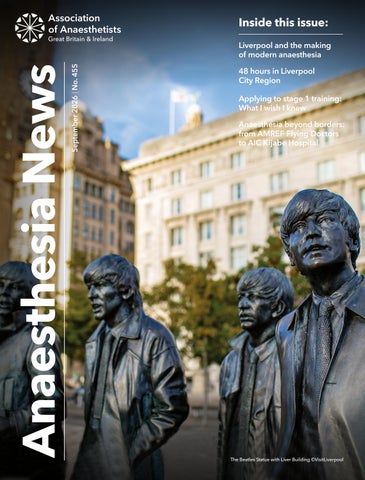
The Beatles Statue with Liver Building ©VisitLiverpool
+ Harmonise your POA
MyPreOp+ enables proactive streamlining of perioperative pathways, transforming capacity & capability Book a demo
www.ultramed.co
3
ISSN 0959-2962
It has been five years since Annual Congress last visited Liverpool and we are excited to return. And what a city. Liverpool has been pivotal in so much of our cultural history. As a port, it once boasted seven miles of docks and was one of Europe’s main departure points for several million emigrants to New York and the other east coast USA ports. The fact that the names of the city’s football clubs trip off people’s tongues all around the globe is quite astonishing. And, inevitably, music. All those bands, but especially that one, mean that the city’s impact on culture still echoes, influences and delights, sixty years on. The waterfront has changed since last time we were here, and bears testament to all those foundations: shipping, football, music. And also, in anaesthesia. The Liverpool technique, which is mentioned on page 6, still forms the basis of what we provide nearly a century on: a subtly curated balance of sleep, relaxation and pain relief, so our patients can be at less risk of harm. So, for those of you coming to Liverpool, learn, enjoy and explore. For those of you who aren’t, you can catch up on Learn@ later and maybe we can tempt you to visit another time with VisitLiverpool's 48-hour itinerary on pages 8-11! Dr Tim Meek President, Association of Anaesthetists
Editor: Francesca Cockshull Address for all correspondence, advertising or submissions: Editorial Assistant: Erin Taylor Email: anaenews.editor@anaesthetists.org Design: Chris Steer, Digital Designer Telephone: 020 7631 8803 Email: chris@anaesthetists.org Copyright 2026 Association of Anaesthetists (Great Britain & Ireland) The Association cannot be responsible for the statements or views of the contributors. No part of this magazine may be reproduced without prior permission. Advertisements are accepted in good faith. Readers are reminded that Anaesthesia News cannot be held responsible in any way for the quality or correctness of products or services offered in advertisements.
Join us today and become part of a vibrant and supportive community of over 10,000 anaesthetists Since 1932 the Association of Anaesthetists (Great Britain & Ireland) has proudly represented the thousands of individuals who work in the life-changing, life-saving specialty of anaesthesia. We independently support and advocate for our members in the UK, Ireland and internationally. Informing and inspiring them to achieve their full potential at every stage of their career. Join our vibrant and supportive community today. You can enjoy exclusive member benefits and services, and wellbeing support. Find out more: https://anaesthetists.org/ Home/Membership/Benefits-of-membership
Can you spot the hidden musical reference? We're giving a £50 John Lewis voucher to one lucky winner who spots the hidden reference in Dr Tim Meek's welcome note*. Think you've found it? Email anaenews.editor@anaesthetists.org with your answer by 1 October 2026. All correct entries will be published in the November issue and entered into a random prize draw to win the voucher.
Anaesthesia News
Two hundred words on Liverpool without including the B-word. Can it be done…?
Association of Anaesthetists (Great Britain & Ireland) 21 Portland Place, London W1B 1PY Telephone: 020 7631 1650 Website: www.anaesthetists.org
Welcome
Anaesthesia News
Follow us @associationofanaesthetists Association of Anaesthetists Association of Anaesthetists @assocanaes.bsky.social
*The winner will be contacted by email. No cash alternative is available.
anaesthetists.org
Contents ©VisitLiverpool
Anaesthesia News
Contents
4
14
8 Features
My Association
6
Liverpool and the making of modern anaesthesia
14
8
48 hours in Liverpool City Region
SAFE Paediatrics Course, Great Britain and Ireland: Course development and rollout
12
Trustee Tony Thomas shares his mum’s lamb scouse recipe
18
Anaesthesia beyond borders: from AMREF Flying Doctors to AIC Kijabe Hospital
22
Past Presidents Lunch
25
Thomas Boulton Anaesthesia History Essay Prize 2027
5
48
36
58
Work & Wellbeing
Letters & Opinions
My Learning
26
Compassion in action
40
52
30
Why we created OCEAN: Building sustainable quality improvement partnerships in global anaesthesia
Applying to Stage 1 anaesthetics training: What I wish I knew
56
Driving sustainable healthcare through frontline engagement
58
Pages of the Past: Medical London
62
Videos
63
Podcasts
44
34
A Deeper Plane: How did I misread those signs? misread those signs? 36 Blackberry cranachan
47
48
Lessons from the past, guidance for the future: Physician Assistants in Anaesthesia and the case for the RCoA scope of practice Artificial intelligence and sustainable anaesthesia: A green dilemma Breakdown of the plastic wings used to secure a central venous catheter to a patient Book Review: Tales from the South Pacific
Anaesthesia News Multi-award winning magazine
Anaesthesia News
Features
6
Liverpool and the making of modern anaesthesia Did you know that Liverpool chemist David Waldie first suggested chloroform could be used as an anaesthetic? Or that Liverpool surgeon Robert Kelly introduced endotracheal insufflation to Britain? As the Association heads to Liverpool for Annual Congress 2026, we look back at milestones in the history of modern anaesthesia connected with the city, featuring objects from the Museum of Anaesthesia’s collection.
December 1846
March 1847
The first announcement of William Morton’s public demonstration of ether anaesthesia at Massachusetts General Hospital appears in the weekly supplement of the Liverpool Mercury.
Liverpool Medical Institution records its first discussion of ether anaesthesia.
Ether bottle from 1948, over 100 years after it was first used for anaesthesia
January 1847 Dentist Felix Janiewicz administers the first anaesthetic in Liverpool at the South Dispensary, 1 Upper Parliament Street on 10 January. Eight days later, Alfred Higginson gives the first public demonstration of ether anaesthesia in Liverpool at the Eye and Ear Infirmary, Mount Pleasant.
October 1847 Liverpool chemist David Waldie suggests to James Young Simpson that chloroform could be used for anaesthesia.
Replica of Morton's inhaler used for the first public demonstration of ether anaesthesia
Museum of Anaesthesia 21 Portland Place | London | W1B 1PY
Free entry
7
November 1847
Meanwhile, on the 24 November, four days after Simpson's article in The Lancet, David Waldie, Alfred Higginson and Dr Imlach administer chloroform in the city for the first time. Four patients at the Eye and Ear Infirmary receive the drug, either as thirty drops on a silk handkerchief or on a chloroform-soaked sponge.
Sponge and handkerchief, modern replicas
On the 28 November, David Waldie reads ‘Chloroform: the new agent for producing insensibility to pain by inhalation’ at a meeting of the Liverpool Literary and Philosophical Society.
Features
Kelly's intratracheal apparatus
1946
1912 Robert Kelly, surgeon at the Liverpool Royal Infirmary, visits the USA and sees ether being insufflated into the trachea. On his return, he introduces endotracheal insufflation to Britain.
Thomas Cecil Gray and John Halton show that curare can act as a muscle relaxant and introduce the Liverpool Anaesthetic Technique, which pioneered the use of different types of drugs to create a balanced general anaesthetic.
Minnitt gas and air apparatus hospital head, 1933
October 1932 Liverpool Maternity Hospital asks Minnitt to develop a practical method of obstetric analgesia. He invents the Minnitt Gas and Air apparatus, which is used in hospital for the first time at Liverpool Maternity Hospital on the 16 October.
Quiver and darts tourist replica, 2008
Open Monday to Friday, 10:00-16:00 Closed bank holidays Back to contents
Anaesthesia News
After announcing chloroform’s anaesthetic properties in The Lancet on 20 November, James Young Simpson visited Liverpool just over a week later to share his findings.
Anaesthesia News
Features
8
48 hours in Liverpool City Region A 48-hour stay in the Liverpool City Region is less about ticking off sights and more about absorbing a place that feels constantly in motion: maritime history beside modern architecture, football passion beside cutting-edge culture, and music that echoes through streets. Across two days, this itinerary takes you from skyline views to underground clubs, from world-class museums to coastal air. If you want to learn more about food and drink, music, culture, the coast, and places to stay in Liverpool, you can find it all at visitliverpool.com.
©VisitLiverpool
Day 1
Morning: Skyline views, river journeys & culture Start high above the city at the Royal Liver Building 360 Tour. This is one of Liverpool’s most recognisable landmarks, inside, you’ll learn the story of the Royal Liver Birds, Bella and Bertie, and explore one of the city’s most iconic buildings from the inside out. On a clear day, the views stretch across the River Mersey and beyond. Film fans may also recognise the building from The Batman (2022).
Ferry ’cross the Mersey ©VisitLiverpool
Board the Mersey Ferry River Explorer Cruise at Liverpool Pier Head. The famous “Ferry ’cross the Mersey” isn’t just a nostalgic song - it’s still one of the best ways to understand the city. As you glide across the river, you’ll hear stories of Liverpool’s maritime past, its docklands, and the communities that grew around the water. The skyline view alone makes it worth it. Back on land, continue your cultural immersion at one of Liverpool’s major museums. The Museum of Liverpool offers a brilliant overview of the city’s social and industrial history, from sport and music to shipping and everyday life.
Find out what else Liverpool and the surrounding area has to offer
If football is more your interest, step into one of Liverpool’s football stadiums. A stadium tour at either Anfield Stadium, home of Liverpool FC, or Hill Dickinson Stadium, Everton FC’s new ground, brings you behind the scenes of two of the most historic clubs in world football. Walking through the tunnel, standing in the dressing rooms and hearing stories of legendary matches makes it clear why football here is more than a game.
Lunch: Royal Albert Dock
9
Features Features
Head to the Royal Albert Dock, one of the most atmospheric places to eat in the city. With red-brick warehouses overlooking the water, it’s a perfect mix of history and modern dining.
©VisitLiverpool
Afternoon: Music history, architecture & shopping After lunch, dive into Liverpool’s global music legacy at The Beatles Story, the world’s largest permanent exhibition dedicated to the band. Through immersive sets and memorabilia, you’ll move through different eras of The Beatles’ career, from their early days in Liverpool through to global fame. From music to architecture, your next stop is Liverpool Cathedral. As the largest cathedral in the UK, it dominates the skyline. Inside, the scale is just as impressive, with vast stone arches and stained glass creating a calm contrast to the busy city. If you’re feeling energetic, climb the tower for sweeping views across Liverpool and beyond. To finish the afternoon, head into Liverpool ONE, the city’s open-air shopping and entertainment district. It combines high-street shopping, independent brands, restaurants and leisure activities in one walkable area. Whether you’re browsing shops, grabbing a coffee or trying interactive games at Gravity MAX, it’s a good place to reset before the evening.
Evening: Food streets & live music For dinner, head towards either Castle Street or Bold Street, two of Liverpool’s popular food districts. Castle Street offers elegant dining and cocktail bars, while Bold Street is known for its independent energy and global flavours.
©VisitLiverpool
As night falls, there’s only one place to end your first day: The Cavern Club. Known as the birthplace of the Merseybeat sound, this legendary venue hosted The Beatles 292 times in their early career. Today, it remains a working live music venue with performances every night.
Back to contents
Anaesthesia News
©VisitLiverpool
You can keep things casual or explore a variety of independent kitchens. Try Middle Eastern-inspired plates at Maray, Neapolitan pizza at Rudy’s, Spanish-style small plates at Lunyalita, or artisan baked goods from Rough Hand Made.
10
Morning: Southport seaside
Anaesthesia News
On your second day, head north to Southport, a classic British seaside town. Stroll along the promenade, exploring arcades or simply enjoying the coastal air. Southport also hosts a strong calendar of events, from the Southport Food & Drink Festival to the Air Show and the British Musical Fireworks Championships, making it a lively destination beyond summer beach days.
Lunch: Markets & street food While in Southport, visit the Southport Food & Drink Market, where independent traders serve everything from global street food to local specialities in a relaxed indoor setting. Liverpool city centre also has a strong street food scene. Try Baltic Market in the creative Baltic Triangle, Duke Street Market for a curated mix of independent kitchens, or Blackstock Market, which combines food, drink and live comedy under one roof.
©travellinglight - iStock Editorial / Getty Images Plus
Did you know…?
In 1946, Liverpool doctor Professor Thomas Cecil Gray developed the “Liverpool anaesthetic technique,” introducing the idea of balanced anaesthesia—using a combination of drugs instead of just one—a breakthrough that transformed modern anaesthesia worldwide and is still the foundation of practice today.
©Getty Images
Features
Day two
11
Features
Cross the River Mersey to the Wirral, where the landscape shifts from urban skyline to open coastline and green parkland. Walk along beaches, explore coastal trails, or visit Birkenhead Park, which famously inspired New York’s Central Park.
Anaesthesia News
©Philip Silverman - iStock / Getty Images Plus
Afternoon: Wirral, wildlife & heritage
©Benedek - iStock / Getty Images
Culture lovers can explore the Lady Lever Art Gallery, Williamson Art Gallery, or the Port Sunlight Museum, each offering a different perspective on art, design and industrial heritage. For something more adventurous, head to Knowsley Safari, just outside the city. Drive through open habitats where lions, rhinos, camels and baboons roam. To round off the afternoon, you can also explore heritage sites like Norton Priory in Halton, the most excavated monastic site in Europe or The World of Glass in St Helens, which tells the story of the region’s industrial innovation.
Evening: Food, theatre & nightlife No visit is complete without trying scouse, Liverpool’s signature dish. This hearty stew, rooted in maritime history, is a staple on many menus across the city. For evening entertainment, Liverpool offers a strong theatre scene. The Liverpool Empire Theatre hosts major touring productions, the Royal Court Theatre showcases local writing and comedy, and the Everyman and Playhouse theatres bring a mix of contemporary and classic performances. ©Getty Images
Liverpool Convention Bureau
If music is more your pace, the city offers everything from arena-scale shows at the M&S Bank Arena to orchestral performances at Liverpool Philharmonic Hall, home of the Royal Liverpool Philharmonic Orchestra.
Back to contents
Anaesthesia News
Features
12
Trustee Tony Thomas shares his mum’s lamb scouse recipe I’m really excited about Congress coming to Liverpool in September, not only for the excellent scientific content, networking opportunities, and social programme, but also because I have many fond memories of the city, having grown up nearby and with family still living there. Liverpool has changed significantly over the years, particularly along the waterfront, but it still feels very familiar to me – full of fond childhood memories. I’m looking forward to spending some time soaking up the atmosphere at Pier Head, which is very close to the convention centre. A trip on the ‘Ferry Cross the Mersey’ is firmly on my agenda, although sadly I won’t have time to fully indulge my nostalgia with a day trip to New Brighton. Of course, another thing I have vivid memories of is Scouse, the dish the city is famous for. Here, I share my mum’s recipe. She uses parsnips for sweetness instead of swede, as would be more traditional, and with her blessing I have swapped the traditional lamb mince for neck fillet. Pickling your own red cabbage to serve with it is a bit of a faff, but the result is well worth the effort and I would recommend putting in the extra graft. Use your own favourite recipe for the red cabbage or choose one online.
Serves: 4 people Ingredients • • • • • • • • • • • • •
800g lamb neck fillet 1 large diced onion 3 chopped carrots 3 chopped parsnips 2 sticks of sliced celery 3 cloves of minced garlic 1 tbsp tomato puree 300ml lamb stock 300ml stout 2 sprigs of thyme 2 bay leaves 600g Maris Piper potatoes, diced into bite-sized pieces Chopped parsley to serve
Method 1.
2.
3. 4. 5.
6.
Cut the lamb into chunky pieces, brown in batches with some oil in a casserole pot, then remove In the same pot cook the onion, carrots, parsnips and celery until soft adding a little more oil if necessary Add the minced garlic and tomato puree and cook for another minute Add the stout and stock, plus thyme sprigs and bay leaves Return the lamb to the pot, cover tightly with a lid and cook in the oven at 150°C for 2 hours Check the seasoning and adjust if necessary, then add the diced potatoes and return to the oven covered for a further hour
Back to contents
Anaesthesia News
Serve with homemade pickled red cabbage, a sprinkle of parsley, and don’t forget to remove the bay leaves and thyme sprigs!
Features
13
Anaesthesia News
My Association
14
SAFE Paediatrics Course, Great Britain and Ireland: Course development and rollout Safer Anaesthesia from Education (SAFE) is an ambitious education project developed in 2011 by the Association of Anaesthetists and the World Federation of Societies of Anaesthesiologists (WFSA). The SAFE Paediatrics course was originally designed to be delivered in low and middle-income countries to provide training in the essentials of paediatric anaesthesia. Further courses have evolved under SAFE including SAFE Obstetrics, SAFE Operating Room, SAFE Train the Trainers and SAFE Cleft. These courses have been delivered in over 50 countries, providing CPD to over 10,000 anaesthesia providers. In 2019, in response to national changes in paediatric anaesthetic commissioning and to fulfil a local need for paediatric anaesthesia CPD, the original SAFE Paediatric course was significantly modified to suit anaesthetists in Great Britain and Ireland. This course is designed to provide two days (10 CPD points) of refresher training for anaesthetists. It is aimed specifically at consultants, SAS doctors and senior residents who do not routinely manage children, but may encounter children on call, in emergency theatres and trauma, as well as last minute list changes.
Course content The essential management of elective paediatric surgical patients and commonly occurring situations within paediatric emergency and critical care are covered. The course comprises a few brief lectures, predominantly small group workshops in a relaxed environment and the occasional low fidelity simulation. The focus is on encouraging valuable group discussion, questions and sharing of experience and practice between faculty and delegates. This makes it really interesting for faculty, as well as delegates as no workshop is ever the same. Day one reviews the key principles of paediatric anaesthesia; including pre-operative assessment and fasting, calculations, fluids, pre-medication, airway and extubation. Day one also revisits paediatric resuscitation, drawing out
the fundamentals of APLS with a focused anaesthetic perspective, and recognition and management of the sick child. Day two addresses both elective and emergency paediatric cases including ENT surgery, inhaled foreign body, asthma, seizures, cardiac abnormalities, sick laparotomy, trauma, transfer and head injuries to list just a few. The course does not involve assessment. Delegates are sent optional pre-course reading and on the morning of the course, delegates are sent the course handbook. This encourages delegates to arrive fresh and relaxed, enable them to make notes/annotate their handbook if so desired and have a valuable resource to reference afterwards. Adult learners value the supportive environment without a looming test.
Each course requires a minimum of eight faculty. We encourage a mixture of local DGH and tertiary centre paediatric anaesthetists. Given most of the delegates work in a DGH setting, this ensures the faculty are in touch with the case mix and resources available in DGH’s whilst facilitating the specialist input and support from local tertiary centres. Involving colleagues from Intensive Care/Paediatric Intensive Care/Transfer services has also been very valuable.
Rollout
SAFE Paediatrics GB&I aims: •
To run multiple SAFE Paediatrics courses annually across GB&I, using local facilities and faculty, maximising accessibility for all
•
To deliver paediatric anaesthesia CPD to anaesthetists; increasing knowledge, confidence and competence
•
•
•
To improve networking and communication between tertiary paediatric anaesthetists and those providing care to children across the region To develop a nationwide SAFE Paediatric faculty network to support the course, both in GB&I and in low-resource settings To utilise delegate and faculty feedback to develop the course
Following two successful pilot courses in 2019, prepandemic; the SAFE Paediatrics GB&I course has been rolled out nationally. We have approached potential course directors from across GB&I, aiming to create accessibility for anaesthetists all over the region. Course directors are given a “How to Run SAFE Paediatrics” handbook and invited to observe the course. Assistance in course logistics, resources and marketing is provided. Delegate and faculty feedback are mandatory, and each course director compiles a course report. These, in addition to appraisal through steering groups and quality assurance processes, guide content development and longer-term strategy.
Growth & feedback
Since 2022, 20 courses have run in 12 different centres across GB&I. Over 500 anaesthetists have completed the course, 45% have been consultants. It is now the flagship course for the Association of Anaesthetists and is endorsed by the Association of Paediatric Anaesthetists (APA). The course has also increasingly attracted delegates from outside of the UK, adding both an interesting and valuable dimension to sharing practice and learning. The course has received marvellous feedback, with 79% of delegates rating the overall course as “Excellent” and 19% “Good”. Comments in feedback are frequently themed around the course content being highly relevant to occasional paediatric anaesthetists; material is well taught in a relaxed learning environment, and delegates value sharing their experiences.
We were interested to find out what were the main motivating factors for booking onto the course. We evaluated 2 course cohorts. The top 3 reasons included:
• Valuable paediatric anaesthesia CPD opportunity • More relevant than APLS • Uncomfortable managing a critically unwell child Back to contents
Anaesthesia News
SAFE Paediatrics
Faculty
My Association
15
Anaesthesia News
My Association
16
We have now established a network of venues, invaluable course directors and teams of faculty across the country which enables the course to run seamlessly. Additionally, this provides an excellent opportunity for new course directors to observe and learn how the course is run. The hard work, passion and commitment of all the faculty has driven this course to be a success. They all bring a wealth of experience to the sessions which when taught alongside the course materials, creates a unique teaching opportunity for all.
Future Going forward, we plan to run at least six courses per year across the UK. Most centres run the course every 18-24 months, unless demand is higher in a particular region. We continue to look for new centres to run the course and welcome anaesthetists to contact us at SafePaediatrics@ anaesthetists.org if they would like to set up the course in their region. If you would like to attend the course as a delegate, please visit https://anaesthetists.org/Home/ Education-events/Find-an-event/SAFEPaediatrics-Course or scan the QR code below.
Map depicting the locations where the SAFE Paediatrics course has run since 2022.
WHAT OUR ATTENDEES SAY Some courses make you nervous – this one builds confidence. The faculty are approachable – I could ask the questions that actually matter. Genuinely enjoyable, and I learned a lot.
High demand. Limited capacity. Designed to be hands-on.
Dr Samantha Lyons Consultant Anaesthetist, Gloucestershire Hospitals NHS Foundation Trust SAFE Paediatrics GB&I National Course Leads Dr Rachel Freedman Consultant Anaesthetist, Imperial College Healthcare TRAINING NHS Trust, London OF TRAINERS SAFE Paediatrics GB&I National Course Leads
™™ ™
MARIE MARIE MARIE Capnograph Capnograph when when every every breath breath counts counts Capnograph when every breath counts
ComeCome see us see us at the atAAGBI the AAGBI Annual Annual Congress Congress Come seeLiverpool us 2026 2026 Liverpool at theStand AAGBI Stand G2-G3 G2-G3 Annual Congress 2026 Liverpool Stand G2-G3
Respiratory Respiratory complications complications are amongst are amongst the most the most preventable preventable yet dangerous yet dangerous threats threats to patient to patient safety. safety. Hypoventilation, Hypoventilation, C02 retention C02 retention & undetected & amongst undetected apnoea Respiratory complications are theapnoea most events events often often go unnoticed. go unnoticed. The MARIE The MARIE capnograph capnograph preventable yet dangerous threats to patient safety.is a is a handheld handheld or patient or C0 patient wearable/clip-on, that that delivers delivers Hypoventilation, 2wearable/clip-on, retention & undetected apnoea real-time real-time capnography capnography & advanced & advanced respiratory respiratory patient patient events often go unnoticed. The MARIE capnograph is a monitoring. monitoring. handheld or patient wearable/clip-on, that delivers real-time capnography & advanced respiratory patient monitoring.
◊
++ +
MARIE ◊ MARIE supports supports spontaneous spontaneous & intubated & intubated breathing breathing patients patients withwith a choice a choice of nasal of nasal or or airway airway adapter adapter sets. sets. ◊ MARIE supports spontaneous & intubated breathing patients with a choice of nasal or ◊ Monitors ◊ Monitors continuous continuous EtCOEtCO 2 & Respiratory 2 & Respiratory RateRate airway adapter sets. (RR) (RR) has waveform has waveform displays displays & provides & provides measurement measurement trends. trends. ◊ Monitors continuous EtCO2 & Respiratory Rate (RR) has waveform displays & provides ◊ Supports ◊ Supports detection detection of ROSC of ROSC during during (CPR)(CPR) measurement trends. Cardiopulmonary Cardiopulmonary resuscitation. resuscitation. ◊ Supports detection of ROSC during (CPR) ◊ Monitors ◊ Monitors supply supply of supplementary of supplementary Oxygen Oxygen withwith Cardiopulmonary resuscitation. FlowFlow RateRate up toup12L/min. to 12L/min. ◊ Monitors supply of supplementary Oxygen with ◊ 16 ◊ hours 16 hours Battery Battery - Continuous - Continuous Use Use Flow Rate up to 12L/min. withwith Wireless Wireless charging. charging. ◊ 16 hours Battery - Continuous Use ◊ Pre-hospital/hospital ◊ Pre-hospital/hospital use for useFirst for First Responders, Responders, with Wireless charging. Ambulance Ambulance teams, teams, A&E,A&E, Intensive Intensive Care,Care, RESUS, RESUS, Anaesthetists, Anaesthetists, Doctors Doctors & Outreach & Outreach teams. teams. Technology Technology made made in Sweden in Sweden ◊ Pre-hospital/hospital use for First Responders, Supported Supported in thein United the United Kingdom Kingdom * * Ambulance teams, A&E, Intensive Care, RESUS, Anaesthetists, & Outreach teams. Technology made inLIMITED Sweden MEDACX MEDACX LIMITED • ALEXANDER • ALEXANDER HOUSE HOUSE • 60-62 • 60-62 STATION STATION ROADROAD • HAYLING • HAYLING ISLAND ISLAND •Doctors HAMPSHIRE • HAMPSHIRE • PO11 • PO11 0EL 0EL Supported in the United Kingdom *
MEDACX LIMITED • ALEXANDER HOUSE • 60-62 STATION ROAD • HAYLING ISLAND • HAMPSHIRE • PO11 0EL
02392 02392 469737 469737 info@medacx.co.uk info@medacx.co.uk 02392 469737 www.medacx.co.uk www.medacx.co.uk info@medacx.co.uk
Anaesthesia beyond borders: from AMREF Flying Doctors to AIC Kijabe Hospital
Anaesthesia News
My Association
18
This article reflects on a placement with AMREF Flying Doctors in Nairobi and AIC Kijabe Hospital in Kenya, exploring aeromedical retrieval, low-resource anaesthesia and the systems needed to make safe anaesthesia available globally.
My first few days with AMREF Flying Doctors in Nairobi were a blend of inspiration, tragedy and preparation. The induction began with Jeremiah from HR, whose warmth and efficiency made the transition seamless. I stayed near the airport in safe, comfortable accommodation with a gym, where Hezron, Kenya’s cruiserweight boxing star, gave us our first lesson. Over two days, I heard from every department within AMREF, including operations, medical, logistics and HR. I was struck by the professionalism, kindness and safety culture that persisted despite limited resources. A poignant reminder of the inherent risks of this work came in August, when an AMREF jet crashed after departing Wilson Airport, claiming the lives of a doctor, a nurse, two pilots and two civilians. AMREF’s transparent and compassionate response, with candles and fresh roses placed daily in memory of those who died, reflected the organisation’s values.
Air ambulance anaesthesia Working alongside flight nurses, I explored the realities of aeromedical retrieval through trips that included a ‘grab and go’ for a patient with severe DKA in the Maasai Mara, landing beside three herds of elephants; transferring trauma patients from extremely remote locations such as Aura, a small town in the tri-border area between Uganda, the Democratic Republic of the Congo and South Sudan; and working with United Nations teams to evacuate patients from Mogadishu, Somalia. Pre-flight preparation is extraordinary. Beyond the usual transfer checklist, teams must consider terrain, weather, hospital access and border requirements. A ‘two-hour flight’ can quickly become an overnight mission. The stories shared by the AMREF team were humbling: evacuations after buffalo attacks, snake bites, gunshot wounds and mountain mass-casualty incidents. While I felt nervous, the flight nurses’ excitement and the pilots’ calmness were contagious. During the month I completed an ACLS course with AMREF and designed a short project to reorganise and standardise the emergency ‘Thomas’ medication bag. Using colour coding — red for cardiac drugs, yellow for electrolytes and blue for
analgesics, this aimed to speed up drug identification and restocking. It was a small change that could make a big difference during time-critical events. Clinical work was punctuated by lighter moments, including Nairobi Sevens rugby and discovering ‘Dawa’, the local hot drink, literally ‘medicine’, made from ginger, lemon and honey.
Kijabe’s contribution extends beyond physician training. It also delivers short courses in obstetric and paediatric emergencies, including MOST and MEPA, and provides subspecialty paediatric anaesthesia training. Since the first nurse anaesthetist programme launched there in 2006, more than 300 graduates have gone on to work in hospitals across East Africa [3].
My Association
19
My role involved supervising novice trainees, who were highly motivated and involved early on in a range of complex cases, In October, I moved to AIC Kijabe Hospital, a rural mission from paediatric neurosurgery and high-risk obstetrics to major hospital with 353 beds, 15 theatres and just two consultant maxillofacial surgery. Many of the head and neck cases were anaesthetists. It sits 7,200 ft above sea level in Kenya’s Great particularly challenging, as patients often presented late with Rift Valley. Its location beside the Nairobi–Nakuru highway and extensive disease. The residents were keen to learn and apply new skills, particularly in regional close to Lake Naivasha makes it a anaesthesia, which is central to safe first point of call for mass trauma and practice in this setting. With limited hippo attacks [1]. Despite its small monitoring and recovery facilities, size, Kijabe has become a regional Pre-flight preparation is regional techniques provide reliable leader in anaesthesia education, extraordinary. Beyond the pain control and help avoid the building both local and continental risks associated with opioids and capacity. usual transfer checklist, general anaesthesia in low-resource A structured anaesthetic training teams must consider terrain, environments. programme, developed by two weather, hospital access and Working in a low-resource setting long-term missionary anaesthetists exposes how fragile anaesthetic under the Pan-African Academy border requirements. safety becomes when essential of Christian Surgeons, now trains drugs, monitoring or equipment are residents from across Africa. The first limited. Even routine cases can feel trainees graduated during my final week after successfully completing their exams. The programme precarious. The hospital undertakes major operations, from aims to strengthen safe anaesthesia in regions where physician abdominal aortic aneurysm repairs and 12-hour ENT cases anaesthetists are scarce. To put this in perspective, Burundi has for glomus tumours to obstetric cases complicated by severe around six physician anaesthetists for a population of 15 million pulmonary hypertension and thoracotomies for TB empyema. [2]. One trainee from Burundi is completing the programme in The surgeons are highly skilled, but there is no point-of-care English, his fourth language, learned specifically so he could testing and the only available blood product is packed red train in Kijabe. When he returns home, he will help to develop cells. Equipment failures are common: blood pressure cuffs and capnography often stop working mid-case, and reusable anaesthetic training where it is needed most.
Back to contents
Anaesthesia News
Transition to Kijabe Hospital
Anaesthesia News
My Association
20
supraglottic airway devices are part of normal practice. In obstetrics, epidurals are rarely performed, not because of lack of expertise, but because the cost is unaffordable for many local patients and safe continuous monitoring is not available. Each challenge demands careful planning, creativity and reliance on clinical judgement over technology. These resource limitations can have devastating consequences in emergencies. A five-year paediatric case series from Kijabe Hospital reported five suspected cases of malignant hyperthermia, an incidence nearly ten times higher than global estimates [4,5]. Despite recognition and intervention, outcomes were poor, with most children dying because of delayed access, unavailable or expired dantrolene, limited monitoring, including absence of capnography, and lack of confirmatory testing. In contrast, malignant hyperthermia survival in high-resource settings exceeds 95%, largely because of early detection and immediate drug availability. Together, these experiences showed that anaesthetic safety is not defined by knowledge or training alone, but by the tools and systems available. The ingenuity and calm determination of teams working in these environments is impressive, but their work also highlights how much remains to be done to make safe anaesthesia universal. The contrast with the NHS, where protocols and equipment are readily available, was striking, but so too was the shared sense of purpose. What makes AIC Kijabe Hospital distinctive is its workforce mix, with roughly one-third long-term missionaries, and much of its funding from US-based charities. In many ways, it is a role model for what is possible in low-resource anaesthesia, but the reality remains stark. Evidence from sub-Saharan Africa shows that maternal mortality after caesarean section can be up to 50 times higher than in higher-income countries [6]. The equipment gap is vast too: in Burundi, only 16% of hospitals had capnography, and the majority of anaesthesia machines were reported as non-functional or only partly functional [2]. Organisations such as Lifebox Foundation are trying to change that by distributing pulse oximeters, training staff and raising funds so that anaesthesia becomes safer globally. Outside the hospital, life was both exciting and peaceful, with hikes through the forest, daily encounters with baboons on the five-minute walk to work, close encounters with hippos on Lake Naivasha, and new friends and role models. I hope I can continue to work with this fantastic team at Kijabe Hospital, and I am already looking forward to the next visit.
Reflections Working in an environment where every piece of equipment and every vial matters has changed how I think about safe anaesthesia. The privilege of safe, wellresourced anaesthesia in the UK feels sharper now, as does my motivation to remain involved in global anaesthesia. Returning home, I say goodbye to core training and begin ST4 with renewed gratitude and focus.
Acknowledgement:
This experience was made possible by support from the Edinburgh Anaesthesia Festival, the Scottish Society of Anaesthetists, the Association of Anaesthetists and Samaritan’s Purse. Dr Rebecca Cowden ST4 Anaesthetics
References 1. 2. 3. 4. 5. 6.
World Health Organization. Global status report on road safety 2015. Geneva: WHO; 2015. Sund GC, Lipnick MS, Law TJ et al. Anaesthesia facility evaluation: a WhatsApp survey. South Afr J Anaesth Analg. 2020; 26(6). Hodges SC, Mijumbi C, Okello M, McCormick BA, Walker IA, Wilson IH. Anaesthesia services in developing countries: defining the problems. Anaesthesia. 2007;62(1):4–11. Belda B, Lomnyaki M, Grayson B, et al. Incident of Malignant Hyperthermia on Pediatric Patients at Kijabe Hospital: A 5 Year Case Series Review. Larach MG, Localio AR, Allen GC, et al. A clinical grading scale to predict malignant hyperthermia susceptibility. Anesthesiology. 1994 Apr;80(4):771-9. Biccard BM, Madiba TE, Kluyts H-L, et al. African Surgical Outcomes Study (ASOS). Lancet. 2018;391:1589-98.
Patient Patient Patient Ventilators Ventilators Ventilators
®® ®
INTENSIVE INTENSIVE INTENSIVE CARE/TRANSPORT/TRANSFER CARE/TRANSPORT/TRANSFER CARE/TRANSPORT/TRANSFER Technology Technology Technology made madeinmade inGermany Germany in Germany Supported Supported Supported ininthe theUnited inUnited the United Kingdom Kingdom Kingdom
Innovators Innovators Innovators ininVentilation Ventilation in Ventilation since since1974 1974 since 1974
STEPHANIE STEPHANIE STEPHANIE
Innovative Innovative Innovative respiratory respiratory respiratory ventilator ventilator ventilator technology technology technology forforNeonates/Infants, Neonates/Infants, for Neonates/Infants, Paediatrics Paediatrics Paediatrics &&Adults Adults & Adults
Come Comesee Come seeusussee us atatthe theat AAGBI AAGBI the AAGBI Annual Annual Annual Congress Congress Congress 2026 2026Liverpool 2026 Liverpool Liverpool Stand StandG2-G3 Stand G2-G3 G2-G3
EVE EVE EVE
STEPHANIE STEPHANIE STEPHANIE is isa culmination a culmination is a culmination ofofclinical clinical ofand clinical and and Innovative Innovative Innovative transport/transfer/bedside transport/transfer/bedside transport/transfer/bedside ventilator ventilator ventilator technology technology technology advancements, advancements, advancements, creating creating creating a new a newand aand new and technology technology technology forforNeonates/Infants Neonates/Infants for Neonates/Infants totoAdults Adults to Adults outstanding outstanding outstanding respiratory respiratory respiratory ventilation ventilation ventilation support support support system systemfor system forneonates, neonates, for neonates, infants, infants,infants, children children children & &adults. adults. & adults. Plug Plugininmodules, Plug modules, in modules, supports supports supports internal internal internal ororexternal external or external humidiciation, humidiciation, humidiciation, SpOC SpOCoxygen oxygen SpOC concentration oxygen concentration concentration control, control, control, HFO HFO& &Hiflow HFO Hiflow &2-60 Hiflow 2-60lpm..... lpm..... 2-60 lpm..... Fritz FritzStephan Stephan Fritz Stephan has hasover over has 5050 over Years Years 50experience Years experience experience expertise expertise expertise and andtechnical technical and technical innovation innovation innovation Stephan Stephan Stephan ventilator ventilator ventilator technology technology technology supports supports supports patients patients patients without without without compromise compromise compromise
‘when ‘when ‘when every every every breath breath breath counts’ counts’ counts’
EVE EVEis isaEVE truly a truly isportable aportable truly portable ‘hand-held’ ‘hand-held’ ‘hand-held’ transport/ transport/ transport/ transfer transfer transfer && & bedside bedside bedside ventilator. ventilator. ventilator. From Frompre-hospital pre-hospital From pre-hospital totoaccident accident to accident & &emergency emergency & emergency throughout throughout throughout hospital hospital hospital totopatient patient to bedside. patient bedside. bedside. With With8 8hrs With hrsbattery battery 8 hrs life, battery life, life, inbuilt inbuiltturbine, inbuilt turbine, turbine, vtvt2ml 2mlpre-term vtpre-term 2ml pre-term toto2000ml 2000ml to 2000ml adults, adults,Invasive/NIV, adults, Invasive/NIV, Invasive/NIV, Pressure Pressure Pressure & &Volume Volume & Volume ventilator ventilator ventilator modes, modes,modes, HiFlow HiFlow2-60 HiFlow 2-60lpm..... lpm..... 2-60 lpm..... MEDACX MEDACX MEDACX LIMITED LIMITED LIMITED • ALEXANDER • ALEXANDER • ALEXANDER HOUSE HOUSE •HOUSE 60-62 • 60-62 STATION • STATION 60-62 STATION ROAD ROAD • ROAD HAYLING • HAYLING • HAYLING ISLAND ISLAND •ISLAND HAMPSHIRE • HAMPSHIRE • HAMPSHIRE • PO11 • PO11 0EL • 0EL PO11 0EL
02392 02392 02392 469737 469737 469737 info@medacx.co.uk info@medacx.co.uk info@medacx.co.uk www.medacx.co.uk www.medacx.co.uk www.medacx.co.uk
Anaesthesia News
My Association
22
Past Presidents Lunch The Association was delighted to welcome past, present and future Presidents to 21 Portland Place on Friday 10 July for the annual Past Presidents Lunch. This longstanding tradition provides an opportunity for former leaders of the Association to reconnect, share memories and hear about the latest developments from current officers and staff. Guests enjoyed a delicious three-course lunch, followed by speeches from President Tim Meek and Past President Peter Wallace. The afternoon also included a tour of the building, with visits to the presidential portraits displayed throughout 21 Portland Place and the Museum of Anaesthesia's temporary exhibition, Between Feeling and Unfeeling: Art and Anaesthesia. These invitation-only gatherings celebrate the Association's rich history while looking ahead to the future of the specialty. It was a pleasure to hear the experiences of those who have led the Association over the years. Their reflections were a reminder that many of the challenges facing the profession today have been encountered before, and that the Association's continued success is built on the strong foundations established by previous Presidents and Officers. Our thanks go to Treasurer-Elect Philip Barclay for capturing the occasion so beautifully and for generously sharing his photographs for this edition of Anaesthesia News.
Anaesthesia News
My Association
23
Back to contents
Anaesthesia News
My Association
24
Thomas Boulton Anaesthesia History Essay Prize 2027 The Association and History of Anaesthesia Society, invites Association members who are medical students, Foundation Year doctors or resident doctors to enter the Thomas Boulton Anaesthesia History Essay Prize 2027.
Essays should be original, between 4,000–6,000 words, and about the history of anaesthesia, intensive care or pain management. The winner will receive a £500 prize and an engraved medal and may be invited to present their work at the History of Anaesthesia Society Annual Meeting. The winning essay may also be published on the Association website or in Anaesthesia News. The submission deadline is 23:59 on Wednesday 2 December 2026.
Scan here to find out more
Back to contents
Anaesthesia News
My Association
25
Anaesthesia News
Work & Wellbeing
26
Compassion in action I can still remember the first traumatic death I experienced as a junior doctor. And I’m sure you can too. As doctors we go into medicine to help people, and we quickly find we have to armour ourselves to cope with the tragedies that unfold around us.
When we are using self-protection strategies to cope with suffering, over time three things happen: Patients and colleagues find it harder to reach you, emotionally. They sense you are guarded, hence complaints about staff seeming “uncompassionate”. This might look like adopting a “doctor persona”, avoiding noticing suffering, or focusing on professional prowess rather than inter-personal skills.
You can’t just magic more compassion from nowhere. And most medical staff are fatigued, frustrated, and doing the best they can already in a very uncompassionate system. But what if we told you that there are specific highperformance skills that are easy to learn, that will help you to enjoy your work in a more sustainable way? What if compassion for yourself isn’t about being kind to yourself, but about learning how to better support yourself through difficulty? What if learning some self-compassion will make you naturally more compassionate to others?
The first obstacle to learning self-compassion is that we think it’s self-indulgent. Or will take valuable You find it harder to reach out for support. Isolation in time or energy that we don’t have. Or perhaps suffering is a common symptom of burnout. Medics we don’t feel worthy of can be very competitive, so compassion, secretly believing admitting you’re struggling we’re not good enough. And isn’t easy. Isolation in suffering is social messaging we can a common symptom of receive about the idea of And, most worrying of all, self-compassion is quite clear: you start to lose touch with burnout. Medics can be very Naval gazing, snowflakes, lazy, yourself. When we talk to competitive, so admitting self-indulgent…. The list goes medics and listen to their on. concerns, thinking about and you’re struggling isn’t easy. talking about emotions often But the research shows that triggers strong reactions. people who are trained in the specific skills of “I can’t afford to go there – if I start, I might not self-compassion are better at resolving conflicts, pick myself back up again!” is a common response. are less likely to burnout, and are bolder because Some say, “I have no idea what I feel!” they are less afraid to fail. Self-compassion has also been shown to be beneficial for reducing anxiety, And this is totally understandable. depression and the impact of PTSD [2]. None of this is intentional. These are useful skills, and they are not about letting yourself off the hook. They are skills of resilience, Medicine is very tough. We need to be professional self-care, and honest self-motivation. and keep going, no matter what we feel inside. So, when you hear people mention ‘Compassionate Leadership’ you’ll be forgiven for rolling your eyes and thinking “I’m already doing everything I can, in a completely broken system, and now you want to tell me I need to be more compassionate?” We get it. And this is why we created Compassion in Action. In this article, we want to give you a flavour of what this work is all about. Compassionate Leadership starts with leading yourself.
But what about doing your best with self-compassion but working in an uncompassionate system? Why are doctors being told to be more compassionate when the rota is awful and the communications within the system are frankly abusive at time? Another great question! Our experience has shown us that compassion needs to be embedded within the whole system for cultures to change. Research has demonstrated the economic argument, as well as the improvements in productivity and reduced staff turnover, when organisations adopt compassionate processes and strategies [3]. But how can you influence the NHS?
Back to contents
Anaesthesia News
But the armour can become a problem. When we look at the leading subject of complaints to the NHS, communication is consistently the highest, followed by patient care, and in third place “Values and Behaviours” of staff [1]. This is dismaying, when so many go into the NHS determined to be caring and compassionate.
Work & Wellbeing
27
Anaesthesia News
Work & Wellbeing
28
It’s huge! It’s complex. And it’s a political football, which has meant challenges in the past 20 years, not to mention Covid. This is where we take a very practical approach. Small changes can make a big difference. You can be that small change. When you start by influencing the culture in the people immediately around you - in your team and between teams - by role modelling compassion and changing the way you address difficulty, the culture changes from the inside. You don’t need to wait for your boss to change, or the CEO to change. Tiny steps have a positive ripple effect.
‘Be Compassionate’ is one of the core principles in the recently published NHS Leadership and Management Framework [5] and we welcome it as a really positive step to see it set out as a non-negotiable. But really, we should not need to be told or mandated to be compassionate. Compassion is obvious and why so many or us do what we do – fundamentally because we care and want to reduce suffering. Compassion benefits everyone. Doctors, residents, NHS staff, patients and their families.
Would you love to be part of changing culture and inspiring a better way to lead? Would you love to protect yourself from burnout and enjoy your career sustainably?
An example of this might be the way you conduct feedback conversations, or navigate conflict with the skills of compassion, or taking time to debrief with a colleague after a difficult case. Increasing opportunities for connection and positive feedback, or introducing Schwartz rounds or supervision are other examples. In additional to your personal interactions at work, there are also simple ways you can begin to influence the culture of the whole organisation. This might seem daunting, but we can show you simple changes that will have an immediate impact on the way you, and your patients, experience your workplace. A compassionate organisation weaves compassion into its systems - such as communications, induction processes, routines, and basic needs such as food and rest spaces for doctors. There are signs that the government is starting to recognise how important this is, after years of neglecting doctors [4] but there is still so much work to do.
We will be running an introductory workshop at the Association’s Annual Congress on September 17 2026. If you can’t make it there in-person we are also running a taster Compassion in action webinar on October 29 2026 which you can book here
Compassion makes economic sense: Examples for Anaesthetics In a 1964 Harvard study of Anaesthesiology compassionate connection with the anaesthetist before surgery reduced the requirement of opiate pain medication after surgery (Ref: https://www. nejm.org/doi/abs/10.1056/ NEJM196404162701606)
A more recent study in 2025 (Ref: https://pubmed.ncbi.nlm. nih.gov/39058620/) identified the impact of compassionate care in the pre-anaesthesia interview reduced the patients perception of post-operative pain and better patient experience.
Dr Nicola Harker and Jane Cryer Directors, Compassionate: Leadership Coaching and Consulting
References 1.
2. 3.
4.
5.
NHS Digital. Data on Written Complaints in the NHS, 2021-22, 2022. https://digital.nhs.uk/data-and-information/publications/ statistical/data-on-written-complaints-in-the-nhs/2021-22 (accessed 22/7/2026). Self-Compassion. Self-Compassion Research on MSC. https://selfcompassion.org/publications-on-msc/ (accessed 22/7/2026). Trzeciak S, Mazzarelli A. Compassionomics: The Revolutionary Scientific Evidence that Caring Makes a Difference. Pensacola: Studer Group, 2019. NHS England. 10 Point Plan to improve resident doctors’ working lives, 2025. https://www.england.nhs.uk/long-read/10-point-planto-improve-resident-doctors-working-lives/ (accessed 22/7/2026). NHS Leadership Academy. Be compassionate. https:// lmframework.leadershipacademy.nhs.uk/code/becompassionate/ (accessed 22/7/2026).
Reconstitutes in approximately 5 minutes.1
Can be stored at room temperature.*
Fibryga® contains consistent fibrinogen levels of 20mg/mL per 1g dose of 50 mL1
Please refer to the Summary of Product Characteristics before prescribing. Scan the QR code for prescribing information and adverse event reporting instructions.
For more information on available promotional resources to support the use of Fibryga or to discuss sharing your experiences of the use of fibrinogen concentrates with other clinicians please email criticalcare.uk@octapharma.com *Not to be stored above 25°C.1 1. Fibryga Summary of Product Characteristics. UK-FIB-2600039 | August 2026
Annual Congress 2026 16-18 September 2026, Liverpool
The future of anaesthesia is changing. Are you part of it?
Book now
Join 600+ anaesthetists for three days of learning, connection and real-world insight. Who’s it for: Open to all clinicians from FY doctors, residents, SAS/IMGs, consultants and retired. • Earn 30+ hours of CPD that actually improves your practice • Hear from leaders shaping the future of anaesthesia • Get hands-on with new techniques and technology on our exhibition floor • Build connections that move your career forward • Take part in practical sessions you can use immediately through simulation and workshops
Keynote speakers
Dr Vivian Ip Topic: Beyond net zero: building climate resilient anaesthesia
Prof Dame Lesley Regan Topic: Closing the gender health gap – why optimising women’s health benefits everyone in society
Dr Richard Duggins Topic: The burnout cliff in anaesthesia: and how we step back from it
anaesthetists.org
Anaesthesia News
Work & Wellbeing
30
Why we created OCEAN:
Building sustainable quality improvement partnerships in global anaesthesia
The scrub team sewing surgical swabs from cotton outside of theatres in BPKIHS hospital in Dharan.
Defining what constitutes ‘quality care’ is challenging given the enormous variation in healthcare resource allocation worldwide. Despite this, The World Health Organization (WHO) defines high-quality care as care that is peoplecentred, equitable, safe, timely, effective, integrated, and delivered efficiently [1]. Achieving this standard remains a major challenge for healthcare systems globally. An estimated five billion people worldwide lack access to safe surgery, while between 5.7 and 8.4 million deaths occur annually in low- and middle-income countries because of poor-quality care [1].
OCEAN co-directors and founders Drs Abhash Shrestha, Dr Alex Oldman and Dr Amy Hutton visiting an intensive care unit, BPKIHS, Dharan.
Across each site, however, it became increasingly apparent that there was an important and evolving role for structured clinical quality improvement. At a large tertiary teaching hospital in the south, we were shown a newly established endoscopy theatre, observed thoracic surgery, and discussed perioperative care with anaesthetists who had trained in advanced airway techniques in India. At another hospital, where we visited a small four-bed neuro-intensive care unit, we discovered that postoperative care was guided not by locally developed protocols, but by a printed document originally produced by the Wessex Neuro-Intensive Care Unit in Southampton, UK.
In 2024, I travelled with two specialty registrars, Dr Amy Hutton and Dr Abhash Shrestha, to hospitals across Despite high level clinical expertise, and pockets of Nepal to better understand how healthcare systems impressive facilities embedded within older infrastructure. function in low- and middle-income countries. The NHS There was no formally established system for confirming, is highly dependent for example, correct on a diverse and patient identity and internationally trained procedure prior to workforce from these surgery. More broadly, As a group we created OCEAN: The countries, and this there was limited formed an important integration of widely Overseas Critical Care Emergency Medicine motivation for us used safety frameworks and Anaesthesia Network. A charitable to explore ways of such as difficult organisation focussed on acute care systems giving back to the airway equipment strengthening and quality improvement systems that have so trolleys, or structured substantially supported postoperative recovery rather than short term health mission work UK healthcare. protocols.
and resource delivery.
During our three-week trip, we visited five hospital sites spanning from Pokhara in central Nepal to Dharan in the south, close to the Indian border. We spent time in operating theatres, intensive care units, and emergency departments, and held in-depth discussions with hospital leadership about the delivery of acute care in Nepal. As a multidisciplinary group, we witnessed exceptional clinical skills whilst gaining a deeper appreciation of Nepalese healthcare delivery and culture.
This contrast highlighted a central implementation challenge in global health: that in some countries, effective medical expertise and equipment already exist, but their sustainable adaptation and integration of these into routine practice remains inconsistent. Reflecting on our time travelling across Nepalese hospitals, the three of us recognised both the opportunity to support our Nepalese colleagues and the importance of learning from their ability to deliver care within a differently resourced healthcare system.
Back to contents
Anaesthesia News
Historically, the global health agenda focused heavily on ‘healthcare access’, under the flawed assumption that availability equated to high-quality, evidence-based care [2]. However, expanding access alone is insufficient if the care delivered is unsafe. In many low- and middle-income countries, preventable perioperative harm is driven less by a deficit in clinical knowledge, and more through systemic failures in infrastructure, communication, and governance. This disconnect between access and safety is now a defining challenge in global perioperative care which is beginning to be addressed via systems level interventions such as the WHO Establishing Clinical Quality Improvement Programs (EquIP] toolkit [1].
Work & Wellbeing
31
Anaesthesia News
Work & Wellbeing
32
Pokhara, one of the sites of the new Clinical Partnership programme, and one of the most beautiful views in the world.
As healthcare professionals trained within a single system, it is easy to become blind to how transformative structured approaches to quality management can be when they are consistently applied and rigorously adhered to. The evidence from high-income healthcare systems is compelling: structured perioperative safety interventions can be highly effective and very low-cost. The introduction of surgical safety checklists and intensive care central line insertion bundles has been associated with reductions in postoperative mortality of up to 50% and reductions in complication rates of approximately one third [3,4, 5]. Importantly, these interventions do not rely on new technology or additional clinical expertise, but rather on reliably structuring processes that healthcare teams are already undertaking to enable provider behavioural change. We were keen to create a partnership organisation grounded in one of the strengths of the NHS: a culture of transparent patient safety and quality improvement. As a group we created OCEAN: The Overseas Critical Care Emergency Medicine and Anaesthesia Network. A charitable organisation focussed on acute care systems strengthening and quality improvement rather than short term health mission work and resource delivery. OCEAN is now in its second year. In that time, we have collaborated with two teaching hospitals in Nepal, appointed a board of trustees and advisors and now have a network of 20 clinicians supporting our work. Our newly launched ‘Clinical Partnership Programme’ has been established as a longterm, collaborative global health model in which UK-trained anaesthetists, intensivists, and emergency physicians work clinically alongside local teams, whilst supporting contextappropriate quality improvement initiatives. Importantly, we are not promoting a one-way transfer of expertise, but a bilateral partnership in which UK clinicians are equally expected to learn from colleagues working in resource-limited environments.
principles are consistently realised in every operating theatre, emergency department, and intensive care unit. OCEAN has been developed in response to this challenge: to support the translation of these principles into sustainable, locally owned improvements in acute care systems, and we are excited for the future of our work. OCEAN is now recruiting Global Health Quality Improvement Fellows through its Clinical Partnership Programme in Nepal, with placements available in hospitals in both Pokhara and Dharan. To learn more about the fellowship and ongoing work, visit www.oceanglobalhealth.com. Dr Alex H. Oldman ST6 Resident Training Anaesthetist Co-Director of the Overseas Critical Care Emergency Medicine and Anaesthesia Network Dr Dan Paul References 1.
2. 3.
4.
5.
In defining high-quality care as safe, effective, equitable, and integrated, the central challenge for global perioperative care is not only expanding access, but ensuring that these
World Health Organization. Clinical quality improvement. Geneva: World Health Organization. Available from: https://www.who.int/teams/integratedhealth-services/clinical-services-and-systems/clinical-quality-improvement (accessed 27/05/2026) Kumah A. Healthcare access vs. quality healthcare: rethinking healthcare risks. Public Health Rev. 2025; 46: 1607903. doi:10.3389/phrs.2025.1607903 Haynes AB, Weiser TG, Berry WR, Lipsitz SR, Breizat AH, Dellinger EP, et al. A surgical safety checklist to reduce morbidity and mortality in a global population. N Engl J Med. 2009; 360(5): 491-9. Pronovost P, Needham D, Berenholtz S, Sinopoli D, Chu H, Cosgrove S, et al. An intervention to decrease catheter-related bloodstream infections in the ICU. N Engl J Med. 2006; 355(26): 2725-32. Bion J, Richardson A, Hibbert P, The Matching Michigan Collaboration and Writing Committee, et al. ‘Matching Michigan’: a 2-year stepped interventional programme to minimise central venous catheter-blood stream infections in intensive care units in England. BMJ Qual Saf. 2013; 22: 110-23.
A unique and truly multidisciplinary meeting of: Anaesthesia, Critical Care & Pain Dermatology • General Practice Plastic Surgery • Radiology • Rheumatology Trauma & Orthopaedics • Other Specialties
• Specialty specific sessions • Multidisciplinary and Satellite sessions • Hands-on workshops • Contribution from allied professions • Lifestyle medicine and wellbeing • Innovation and AI in medicine • Keynote lectures by invited speakers
Anaesthesia News
Work & Wellbeing
34
Express yourself on 'A Deeper Plane' by submitting to: anaenews.editor@anaesthetists.org
Anaesthesia News
Work & Wellbeing
35
A Deeper Plane
How did I misread those signs? Michael Duncan and Gregory Connolly present an image they have generated using AI, titled How did I misread those signs? The scene takes place under the Sword of Damocles, representing the constant presence of risk. The centrepiece is the depiction of the well-known ‘Boiling Frog’ analogy, in which the unfortunate frog has realised that his fate is sealed, while the staff present are 're-arranging the deckchairs on the Titanic' in the vain hope of averting imminent and inevitable disaster. Dr Michael Duncan Guy's and St Thomas's NHS Trust, London Gregory Connolly Founder, Radii Software, Ireland
Back to contents
Anaesthesia News
Work & Wellbeing
36
Blackberry cranachan
I grew up in rural Oxfordshire and this time every year my parents would send us out along the hedgerows collecting blackberries. I'm delighted that my daughters are taking an interest in the same. We used to make a crumble with our foragings, but recently I've used them in this variation on a Highlands classic. George Huntington Anaesthetics CT3, Medway Maritime Hospital, Gillingham, Kent
Anaesthesia News
Work & Wellbeing
37
© iStock / Getty Images Plus. Credit: Szakaly
Ingredients • • • • • • • •
•
100g butter (leave out of the fridge to soften) 150g plain flour 100g caster sugar 125g mascarpone (or crowdie or ricotta cheese) 150ml double cream 2-4 tbsp honey 200g blackberries (raspberries are traditional) Two shot glasses of toasted porridge oats soaked in equal measure of single malt whiskey (I prefer a Speyside) - overnight is best 150ml water
Method 1. 2. 3.
4.
5.
Wash your blackberries and soak the oats in the whiskey if you haven't already. Preheat the oven to 180°C. Boil water and add half the sugar and the berries to a pan with it then bring to boil and reduce to make a compote (you can add a touch of spice such as vanilla, nutmeg or cinnamon here if you fancy) then leave to cool in the fridge once the sauce has thickened. While your compote is reducing by at least half, mix the remaining sugar with the sifted flour and softened butter with your fingers to make a shortbread. Place this on a greased baking tray, roll out to about 1-2cm thickness and bake for 20-30 minutes until golden brown then leave to cool for at least 10 minutes, crumble the shortbread once cooled. Meanwhile, whisk the cream and mascarpone together until smooth. Drizzle honey into the mix. Add the berry compote and the shortbread and mix together once or twice until swirled together, sprinkle the oats on top and serve.
Back to contents
Congratulation EAF 2026 poste Winner of the Best Poster: Research, Audit, QI and Case report
UGUSTEva2024 4 Manson, University of Edinburgh, evamanson@icloud.com
Authors: E. Manson, University of Edinburgh; D. Griffith, Royal Infirmary of Edinburgh, NHS Lothian &,$16 (',1%85*+
Repurposing JAK Inhibitors for ICU-Acquired Weakness: aesthesia, pain A Systematic Review of Muscle Outcomes are conference Introduction: ICU-acquired weakness (ICU-AW) affects approximately 40% of ICU patients and is associated with prolonged
H\QRWH 6SHDNHUV mechanical ventilation, increased mortality, and poor long-term physical recovery. ICU survival has progressively increased, so
prevalence of ICU-AW is rising. Despite this, there are currently no pharmacological therapies targeting the inflammatory pathways z Sheikh &EJOCVSHI driving this condition[1]. Experimental translational studies identify over-activation of the JAK/STAT3 pathway as a key mediator el Kearns of Glasgow inflammation-induced muscle wasting[2]. JAK inhibitors reduce this signalling and are already approved for several conditions rheumatoid arthritis, myelofibrosis). They have also demonstrated safety in critically ill COVID-19 patients[3]. Despite this Hvidovre,(e.g. Denmark strong biological plausibility, no trials have evaluated the efficacy of JAK inhibitors in ICU-AW. Therefore, we conducted the first d Basel, Switzerland systematic review evaluating whether JAK inhibition improves muscle outcomes across human clinical trials. ingo, Southampton Methods: MEDLINE, EMBASE, CINAHL, CENTRAL, and ClinicalTrials.gov were systematically searched from inception to February 2026. n Stanworth, Oxford Controlled interventional studies involving adults receiving any JAK inhibitor and reporting objective measures of muscle mass, strength, or physical performance were included. Screening and data extraction were performed independently by two reviewers. Risk of bias was assessed using Cochrane RoB-2. Due to substantial clinical and methodological heterogeneity, findings were synthesised narratively.
FOEBODF BWBJMBCMF
incorporating ICU-AW assessments. However, ICU-AW is not a primary endpoint in any ongoing study and no trial is spec
Results: Seven controlled studies met inclusion criteria, comprising two completed RCTs and five ongoing trials. In idiopathic BO BDDFTT UBMLT BOE designed to evaluate JAK inhibition in this condition.
inflammatory myopathy, 24-week baricitinib therapy improved manual muscle test (MMT-8) scores by 13.6 points, exceeding
thresholds for TMJEFT GPS B ZFB S clinically meaningful improvement. In a perioperative placebo-controlled trial, short-course tofacitinib increased
diaphragm and serratus anterior myofibre contractile force by 14.7 to 15.7% within 48hrs. Both studies were low risk of bias. Five ongoing trials were identified, including the PANTHER adaptive platform trial in acute respiratory distress syndrome, where selected ICU sites are incorporating ICU-AW assessments. However, ICU-AW is not a primary endpoint in any ongoing study and no trial is specifically designed to evaluate JAK inhibition in this condition.
Table Systematic Review Characteristics Table 1.1. Systematic Review Characteristics Table Table Trial Completed RCTs Chinoy et al. 2024
Population
Intervention
Muscle / Physical Outcomes Measured
Key Findings
Idiopathic inflammatory myopathy
Baricitinib (24 weeks)
Bilateral Manual Muscle Test (MMT-8)
Shrager et al. 2024
Perioperative surgical oesophagectomy
Tofacitinib 48hrs before surgery
Diaphragm & serratus anterior myofibre contractile force
Mean difference +13.6 points (exceeded MCID*) Mean contractile force increased by 14.7–15.7%
Inclusion Body Myositis (IBM)
Ruxolitinib (12 months)
6-minute walk distance (6MWT), dynamometry strength, thigh muscle MRI Manual Muscle Test (MMT-8)
Ongoing
Manual Muscle Test (MMT-8)
Ongoing
Ongoing RCTs BIGTIM (NCT06536166)
&$)(67 25* IVIG-SPARE (CTIS2024Idiopathic inflammatory 513681-19-00) myopathies ,1)2#($)(67 25* TOF-SPAR-DM Active Dermatomyositis (CTRI/2024/12/078675)
PANTHER Critically ill adults with ARDS $1% 1PJOUT BQQMJFE GPS (ISRCTN81435672) REVERSE-LC (NCT06631287)
Adults with Long COVID and objective cognitive impairment
Upadacitinib (16–20 weeks) Tofacitinib (24 weeks) vs. Conventional DMARDs Baricitinib (4mg enteral for 10 days) vs. Simvastatin vs. Usual Care Baricitinib (4mg oral for 24 weeks)
Short Physical Performance Battery (SPPB), incidence of ICU-AW (MMT/handgrip) at certain sites 6-minute walk test (6MWT) distance, peak VO2 via Cardiopulmonary Exercise Testing (CPET)
Ongoing
Ongoing Ongoing
*MCID: Minimally Clinically Important Difference.
*MCID: Minimally Clinically Important Difference.
Conclusions: Human evidence remains limited but demonstrates early meaningful improvements in muscle strength following JAK inhibition. Combined with strong mechanistic plausibility and promising safety data in critical illness, these findings support JAK Conclusions inhibitors as promising repurposable candidates for ICU-AW prevention. The next step is an ICU feasibility study to confirm safety Human evidence remains limited but demonstrates early meaningful improvements in musclesuch strength following JAK inhib and efficacy using inflammatory biomarkers alongside objective muscle and clinical recovery outcomes as ventilator-free days and physical function. Combined with strong mechanistic plausibility and promising safety data in critical illness, these findings support JAK inhib
promising repurposable candidates for ICU-AW prevention. The next step is an ICU feasibility study to confirm safety and References using inflammatory alongside objective muscle clinical such asIllness: ventilator-free 1. Shepherd SJ, Newmanbiomarkers R, Brett SJ, Griffith DM. Pharmacological Therapy for theand Prevention and recovery Treatment ofoutcomes Weakness After Critical A Systematic days an Review. Crit Care Med. 2016;44:1198–1205. function. 2.
3.
Zanders L, Kny M, Hahn A, Schmidt S, Wundersitz S, Todiras M, et al. Sepsis induces interleukin 6, gp130/JAK2/STAT3, and muscle wasting. J Cachexia Sarcopenia Muscle. 2022 Feb;13(1):713–27. doi:10.1002/jcsm.12867 PubMed PMID: 34821076; PubMed Central PMCID: PMC8818599. Amstutz A, Schandelmaier S, Ewald H, Speich B, Schwenke JM, Schönenberger CM, et al. Effects of Janus kinase inhibitors in adults admitted to hospital due to COVID-19: a systematic review and individual participant data meta-analysis of randomised clinical trials. Lancet Respir Med. 2025;13:530–544.
ve te Sa da e th
ns to the er winners Winner of the Alastair Spence Memorial Award
38TH EDINBURGH
Authors & Affiliations: A Alexander1*, D Li2, J Thompson3, V Wong4, K Sharma5, H Y Chan6, A Krishnan7, S Tso2 1 University of Buckingham Medical School, Buckingham, UK and South Warwickshire University NHS Foundation Trust, Warwick, UK 2 Department of Dermatology, South Warwickshire University NHS Foundation Trust, Warwick, UK 3 Department of Anaesthesia, Milton Keynes University Hospital NHS Foundation Trust, Milton Keynes, UK 4 Department of Dermatology, University Hospitals Coventry and Warwickshire NHS Trust, Coventry, UK 5 Department of Plastic Surgery, Sandwell and West Birmingham NHS Trust, Birmingham, UK 6 Department of Dermatology, University Hospitals of Northamptonshire NHS Group, Northampton, UK 7 Department of Anaesthesia, University Hospitals Birmingham, Birmingham, UK and Warwick Medical School, University of Warwick, Coventry, UK *Corresponding author: Antony Alexander, University of Buckingham Medical School, Buckingham, UK and South Warwickshire NHS Foundation Trust, Warwick, UK. Email: antonypremraj12@gmail.com
Characterising the Occupational Health Risk of Ultraviolet Emission from Halogen Surgical Lighting: A Multicentre Proof-of-Concept Cross-Sectional Survey Introduction: Ultraviolet radiation is a recognised occupational hazard associated with cutaneous carcinogenesis1 and ophthalmological morbidity2. Surgical lights that use halogen technology may emit ultraviolet (UV) radiation despite integrated UVattenuating filters designed to reduce this emission. These filters are also susceptible to solarisation3; a deterioration in UV-blocking capacity resulting from prolonged exposure to UV radiation itself. Operating theatre staff, including anaesthetists spend prolonged periods daily working in close proximity to surgical lights, throughout their careers, making cumulative occupational exposure a potential concern. Despite the 2018 European Union Ecodesign Directive ban on general-purpose halogen lamps, exemptions persist for specialist medical equipment. This regulatory carve-out means that legacy halogen surgical lighting systems remain in clinical use. Methods: We conducted a multicentre cross-sectional proof-of-concept survey of operating theatre lighting systems across four NHS trusts and one independent hospital in the United Kingdom. Surgical lights in active clinical use were identified and classified according to light source technology (halogen, LED, or hybrid halogen-LED systems) and manufacturer. Ultraviolet (UV) emission was assessed semi-quantitatively using commercially available UV-sensitive indicator cards. Cards were positioned approximately 2.5 inches from the centre of the illuminated surface of each light head under dimmed ambient lighting conditions. Exposure duration was standardised to 10 seconds. Colour change was interpreted according to manufacturer-provided thresholds and categorised as undetectable, low intensity (0–50 μW/cm²), low-medium intensity (50–100 μW/cm²), or higher intensity (>100 μW/cm²). Results: Detectable UV emission was identified in nine operational theatre lights across four hospital trusts and within one private hospital. 81 lighting systems were assessed in total. All positive systems incorporated halogen technology, comprising 5 exclusively halogen systems and 4 hybrid halogen-LED systems. No detectable UV emission was identified from LED-only systems. Of the nine positive lights, eight demonstrated low-intensity UV emission (0–50 μW/cm²), and one demonstrated low-medium intensity emission (50–100 μW/cm²). Conclusions: This proof-of-concept study demonstrates detectable UV emission across multiple institutions and manufacturers, suggesting that the phenomenon is not confined to a single site or device type. Further work is required to quantify occupational exposure at typical staff working distances, durations and clinical relevance. Although measured intensities were generally low, the findings demonstrate that UV emission may persist despite the presence of integrated filtering systems. Healthcare organisations should consider UV emission assessment of ageing halogen surgical lights and replacement with LED alternatives where feasible.
References 1.
2.
3.
Sayre, R.M., Dowdy, J.C. and Poh-Fitzpatrick, M. (2004), Dermatological Risk of Indoor Ultraviolet Exposure from Contemporary Lighting Sources. Photochemistry and Photobiology, 80: 47-51. Available at: https://doi. org/10.1111/j.1751-1097.2004.tb00048.x (Accessed: 11 June 2026) Ju, X., Rokohl, A.C., Li, X., Guo, Y., Yao, K., Fan, W. and Heindl, L.M. (2024) ‘A UVrelated risk analysis in ophthalmic malignancies: Increased UV exposure may cause ocular malignancies’, Advances in Ophthalmology Practice and Research, 4(2), pp. 98–105. Available at: https://doi.org/10.1016/j. aopr.2024.04.001 (Accessed: 10 June 2026). Vaughn, D. and Poczulp, G.A. (2004) 'Filter solarization, understanding, and mitigating degradation', in Nonimaging Optics and Efficient Illumination Systems. Proceedings of SPIE, Vol. 5529. Bellingham, WA: SPIE. Available at: https://doi.org/10.1117/12.555016 (Accessed: 10 June 2026).
ANAESTHESIA 18-20 August 2027
@ Royal College of Physicians, Edinburgh
Scotland’s largest annual Anaesthesia, Critical Care and Pain Management meeting Held during Edinburgh’s world renowned festivals – The Edinburgh Fringe, Edinburgh International Festival, The Royal Military Tattoo. • • • •
>30 talks >20 speakers Practical workshops Scottish Shindig
Submission Date Sunday 31 May 2027
18 CPD points applied for
ANAESTHESIA, CRITICAL CARE OR PAIN MANAGEMENT Poster & Oral presentations Open to anaesthetists, trainees, students & research scholars Abstracts, research papers or case studies welcome
EDINBURGH ANAESTHESIA
Winning abstract will be published in the UK’s award-winning Anaesthesia News
info@eafest.org
Anaesthesia News
Letters & Opinions
40
Lessons from the past, guidance for the future: Physician Assistants in Anaesthesia and the case for the RCoA scope of practice A small workforce in a large debate The debate around Physician Assistants in Anaesthesia (PAAs) has generated considerable heat. This article argues that the RCoA Scope of Practice 2025, far from being an obstacle to progress, is a carefully considered document balancing patient safety with access to care. The importance of which can be traced back to a decades old legal case.
Physician Assistants in Anaesthesia (legally known as Anaesthesia Associates); renamed following the Leng Review, have been part of the UK anaesthetic workforce for over twenty years. Approximately 200 PAAs are in post, a modest number compared to the approximate 12000 strong consultant/SAS workforce. Yet despite their small numbers, PAAs have become the focal point of one of the most contentious workforce debates in British anaesthesia. The question of what they should be permitted to do, and under what supervision, touches on issues of patient safety, informed consent, professional accountability, regulatory clarity, and the relationship between workforce pressures and clinical standards. This article argues that the RCoA Physician Assistant in Anaesthesia Scope of Practice 2025 [1], endorsed by the Association of Anaesthetists, the Leng Review, and the Secretary of State for Health, is not an obstacle to the development of the PAA role. It is a necessary, considered, and proportionate patient safety framework. The requirement for which extends back much further than the RCoA extraordinary general meeting of 2023.
A lesson from Edinburgh, 1998 On 9 October 1998, Darren Denholm, a healthy ten-year-old boy, died at the Peffermill Dental Anaesthetic Clinic in Edinburgh while under general anaesthesia. The Fatal Accident Inquiry into his death, led by Sheriff Nigel Morrison QC and concluded in February 2000, produced a forensically detailed examination of a failure of anaesthetic governance [2]. The Sheriff’s findings identified a catalogue of shortcomings: an anaesthetist who lacked the specialist qualifications his role demanded; a legal framework that permitted an unqualified and unsupervised practitioner to anaesthetise a child; employers who failed to ensure adequately trained staff and procedures for the safe provision of anaesthesia. The Denholm determination is not widely cited in current debates about PAAs. It should be. Every failure identified by Sheriff Morrison (practitioner competence, supervision, inadequate patient information, workforce pressures overriding clinical standards, and the failure of employers to enforce safe standards of care) maps directly onto the questions the anaesthetic profession is now wrestling with in designing the clinical framework for PAAs.
Anaesthesia News
Letters & Opinions
41
The importance of the RCoA Physician Assistant in Anaesthesia Scope of Practice 2025 PAAs are dedicated and motivated professionals who make a genuine contribution to anaesthetic care. But they do not undergo the same breadth and depth of training as Anaesthetists, they are not equivalent to any grade of doctor. PAAs must be supported by a governance framework that is clear, enforceable, evidence-based, and patient centered. The RCoA Physician Assistant in Anaesthesia Scope of Practice 2025 provides exactly that. Supervision levels for PAAs are explicit. Induction of anaesthesia remains under direct supervision and there is no circumstance in which a PAA should maintain anaesthesia or recover a patient without a consultant being available within two minutes. Roles that require less immediate supervision are permitted, e.g. pre-operative assessment. Competency-based progression is provided via Phases of Practice. One consultant supervising two PAAs, the 2:1 supervision model, is clearly defined. Supervision must occur in adjacent theatres and only for ASA 1 and 2 patients. Should the supervisor be unable to attend within 2 minutes, clear escalation procedures are required.
Unambiguous definitions of supervision, ongoing competency assurance and actionable standards of care are precisely the kind of interventions that Sheriff Morrison called for in Denholm. PAAs are dedicated professionals. But dedication alone cannot substitute for a robust governance framework.”
Is the RCoA Physician Assistant in Anaesthesia Scope of Practice 2025 too restrictive? The Scope of Practice has been criticised by some PAAs, some supervisors, and the GMC as being too restrictive. Concerns raised are about its impact on patients’ access to care and PAA employment prospects [3]. These concerns are made in good faith but invert the correct approach to appointing a PAA. If a business case employing a PAA depends on the PAA being able to work outside of the RCOA PAA SOP, that business case is built on a patient's safety deficit. The Denholm determination is a direct warning against exactly this logic: it found that commercial pressures had led to an inadequately supervised practitioner being placed in a safety-critical role, with fatal consequences. The Scope of Practice is right to resist the same pressure appearing in a different form.
Back to contents
Anaesthesia News
Letters & Opinions
42
Experienced PAAs who feel their competence is undervalued by the phased model have a legitimate concern. The threeyearly review cycle provides the mechanism for the Scope of Practice to evolve as evidence accumulates. The right response to this concern is to build the evidence base, consistent with Leng Recommendation 13, calling for a national safety audit [4]. Not to loosen the framework ahead of that evidence.
Conclusion: The right framework, properly implemented The delivery of anaesthesia by non-physicians under supervision does occur in other healthcare systems [5]. It is reasonable to continue to explore the role of PAAs within the NHS to ensure patients have timely access to anaesthesia. But this must be balanced by considering the shorter training that PAAs receive, and the limited evidence base on patient outcomes and safety. The Denholm case is a powerful reminder of what can happen when the boundaries of who can do what are insufficiently defined and enforced. We should also consider that those arguing against a SOP are not, in most cases, the people who will bear the consequences if something goes wrong. The patient under anaesthesia bears the clinical risk. The PAA bears professional and potentially criminal risk. The supervising consultant bears the ultimate responsibility for the patient's care. The employer bears the financial and reputational risk of litigation.
The RCoA Physician Assistant in Anaesthesia Scope of Practice 2025 protects all of these parties. A PAA and supervisor working to a robust, clearly defined scope of practice with explicit supervision requirements are in a far stronger legal position following an adverse event than one working under a looser framework where the boundaries of their role and their supervisor's responsibilities are unclear. Employers supporting a SOP can demonstrate that they are utilising expertly derived guidance when employing these roles. Most importantly, patients can have confidence that the PAA delivering their care is working safely and in line with expert guidance. In the case of Darren Denholm, a child died because the rules did not require enough. The RCoA Physician Assistant in Anaesthesia Scope of Practice 2025 does.
Dr Simon Heaney Consultant Anaesthetist, Vice Chair RCOA Scottish Board Dr Emma Wain Treasurer, Association of Anaesthetists, Associate Specialist Anaesthetist
References 1. RCoA. Physician Assistant in Anaesthesia Scope of Practice 2025. https://www.rcoa.ac.uk/training-careers/ working-anaesthesia/physician-assistants-anaesthesia-legally-known-anaesthesia-5 (accessed 15/6/2026). 2. Scot Courts, Determination by Sheriff Morrison QC into the Circumstances of the Death of Darren Denholm https://www.scotcourts.gov.uk/media/xntppx1s/fai-darren-denholm.pdf (accessed 15/6/2026). 3. RCoA, Responses from stakeholders to the Physician Assistant in Anaesthesia Scope of Practice 2025 https:// www.rcoa.ac.uk/training-careers/working-anaesthesia/physician-assistants-anaesthesia-legally-knownanaesthesia-5 (accessed 15/6/2026). 4. Gov UK, Independent review of the physician associate and anaesthesia associate roles: final report. https:// www.gov.uk/government/publications/independent-review-of-the-physician-associate-and-anaesthesiaassociate-roles-final-report (accessed 15/6/2026). 5. The role of non-physician providers of anaesthesia: a systematic review, Nicholas Henschke et al: British Journal of Anaesthesia, 135 (4): 886—897 (2025)
Irish Annual Symposium Association of Anaesthetists (Great Britain & Ireland)
Thursday 15 October 2026, 08:15-17:00 The College of Anaesthesiologists of Ireland, Dublin
A full day of CPD in Dublin. Stay up to date on the latest in anaesthesia. Don’t miss Fatigue Risk Management - from self-care to safer systems by Dr Nancy Redfern, and Regional Anaesthesia by Dr Brian O’Donnell
Scan here to book now and find out more
Anaesthesia News
Letters & Opinions
44
Artificial intelligence and sustainable anaesthesia: A green dilemma Dear Editor Recent guidance, opinion and position statements from a number of professional organisations and voices champion both a more environmentally friendly anaesthesia as well as the use of artificial intelligence (AI) models in healthcare. You cannot have both. It is difficult to find a corner of life that AI has not touched. Having attended several conferences this year, we could not help but notice the proliferation of AI-generated images within speakers’ presentation slides. Within healthcare we see scribing software authoring notes and letters to relieve admin burden, analytic algorithms offering earlier diagnosis of suspicious lesions and even proposed videolaryngoscopy tools providing advice during intubation. AI software is even built into the NHS Ten Year Plan; the stated aim of ‘analogue to digital’ encourages the deployment of AI software to manage everything from operative demand on services to remote patient monitoring. A chatbot in every doctor’s back pocket is touted as a desirable outcome. Yet we find this disquieting. We are writing this article during the hottest June day on record in the UK. There is a not often considered relationship between these recordbreaking temperatures and the increasing reliance on artificial intelligence software. Widespread AI use is inherently unsustainable. Its generating images or advice requires enormous input of electricity. Controlling the heat from this power demand requires cooling from fresh clean water, a scarce resource. Manufacturing the hardware components requires extraction of intensively mined rare earth minerals, not to mention the electronic heavy metal waste left behind. If we're striving toward a greener anaesthesia in the UK by examining our plastic waste, nitrous manifolds and logistics carbon footprint, we cannot at the same time continue to use AI in the ways that we do.
AI can be conceived of as a human-like intelligence exhibited by machines through pattern recognition or other forms of big data analysis and association, be it verbal, visual or otherwise. There are many different models enabling a wide variety of tasks. It is a tool and, when implemented like any other, accelerates medical research, alleviates clinician workload and improves patient access. The last decade has seen an exponential growth of machine and deep learning software, heralded as a fourth industrial revolution. There does appear to be a public demand for this technology, though patient groups worry that it may substitute the human touch instead of supplementing care. Sustainable environmental goals are also mentioned in the NHS Ten Year Plan, without addressing the contradiction. It reaffirms the NHS’s commitment to a Net Zero health service and reducing climate impact outlined in the 2022 Health and Care Act. These aims are typically thought of in terms of decarbonising and atmospheric pollution. The risk posed by widespread AI usage is not assessed. AI software certainly has the potential to transform the planet, but perhaps not in the way we’d like. Environmental sustainability is an anaesthetic curriculum outcome. The Royal College of Anaesthetists and the Association of Anaesthetists have produced guides to green anaesthesia, position statements on net zero and even an intercollegiate green theatre checklist. None of these excellent resources touch upon AI, its use or its impact. This is puzzling where the marginal gains from small interventions such as limiting desflurane use and switching of LED lights in theatre may be offset by any policy encouraging aggregated use of chatbot prompts. Paradoxically, several AI-assisted tools and systems have been produced to allow operating theatres to run with less environmental impact from heating and ventilation systems or enable individual practitioners to calculate their carbon footprint. So far, concerns surrounding AI seem to be based in its potential to err or spread misinformation. Many journals have published articles focussing on poor advice dispensed by AI, deskilling of clinicians who use it frequently and its amplification of inherent biases so we shall not expound further on them here. It is also beyond the scope of this article to examine the financial interests at play or whether
45
Please see instructions for authors on the Association's website www.anaesthetists.org
in the twenty-first century. Water, food and resource scarcity and their associated political challenges will cast a shadow over medicine both internationally and at home. With that in mind, we must be realistic about AI’s shortcomings if we discuss it in the same (probably polluted) breath as a greener and more sustainable health service.
there are truly any credible existential threats to humanity from the singularity; these topics deserve in-depth investigation elsewhere. AI places a heavy demand on water and power infrastructure and this has grown in line with its use and expansion. Conversely, the narrower the use of the software, the more sustainable it tends to be. Although the EU encourages that AI systems are produced in an environmentally sustainable manner – this is not defined and finding a solution to this does seem to be viewed as somebody else’s problem by the burgeoning technology sector. Many data centres are being built in the Global South, in impoverished neighbourhoods often affected by drought and power scarcity. The huge use of electricity generates greenhouse gases and a large carbon footprint from power grids running on fossil fuels. It is estimated that Irish data centres, where the hardware powering AI is housed, will soon be accounting for one third of the country’s energy use. This is in addition to globally consuming a water footprint projected in 2030 to reach greater amounts than that required by one tenth of the planet. All of this, despite a quarter of humanity currently lacking access to clean drinking water. Data centres are set to be further expanded in the UK, outmatched by underinvestment which has led to an average age of 70 years for our water infrastructure. It is no longer controversial to suggest that sustainability impacts population health and climate change lays a considerable burden on health. Abstract statistics on power and water usage have a real human cost. Within an increasingly connected world, our headlines are dominated by environmental disasters, record heatwaves and civil wars (precipitated by drought or Western demand for minerals) producing health and refugee crises. Climate change is set to profoundly alter the way we think about and provide healthcare
Artificial intelligence is out there and we do not advocate squeezing it back into Pandora’s Box. To ban AI across healthcare disadvantages patients who may have benefited from its innovations. What we’d like to see is better consideration into how and why it is deployed in context of its appalling environmental impact. AI-generated images in conference lecture slides should be ostracised akin to littering or effluent discharges into public waterways. To the self-identified futurists who preach that AI is synonymous with progress – we would like to guarantee a future for humanity at all, let alone one where AI bolsters our flourishing. Acknowledgements: no chatbots were used or harmed during the writing of this article. George R Huntington Anaesthetics CT3, Medway Maritime Hospital, Gillingham, Kent Badia Ahmed Pathology Doctor, London (Independent scholar)
A response to Artificial intelligence and sustainable anaesthesia: A green dilemma
Artificial intelligence and sustainable anaesthesia: A balancing act We thank Drs Huntington and Ahmed for their reflections on the potential environmental harms of artificial intelligence (AI) [1]. Their argument is well considered and raises an important point: that sustainability-related guidance should not overlook the contribution of AI to the environmental impacts of anaesthetic practice. They also recognise that ‘squeezing [AI] back into Pandora’s Box’ is not possible, and so the dilemma that we are really faced with is not whether we use AI or not, but how should it best be used to benefit patients and wider society without causing disproportionate environmental harm. The principal concerns about the environmental impacts of
Back to contents
Anaesthesia News
Letters & Opinions
Send your letters to: The Editor, Anaesthesia News at anaenews.editor@anaesthetists.org
Anaesthesia News
Letters & Opinions
46
AI relate to electricity use, water consumption (for cooling), and the procurement of scarce resources used to manufacture equipment with sufficient computing power [2]. These are all troubling because AI places increasing pressure on resources that were already under strain even prior to its development. This should serve as a reminder to avoid the wasteful and untargeted use of AI, but this is not the same as discouraging the use of AI altogether. Huntington and Ahmed allude to some of the potential benefits of AI, and we agree that it has much to offer. However, it remains a relatively immature technology in anaesthesia and perioperative medicine. To avoid wasteful practices, the value of AI in clinical practice should be defined primarily by patients and clinicians. The Association of Anaesthetists recently supported the AI in Anaesthesia Demand Signalling Exercise (www. demandsignal.uk) [3], which brought together stakeholders from clinical, public voice, academic, industry, and policy/regulatory backgrounds to identify and explore key areas of focus for AI. We believe that this is an important piece of work because it will serve to focus research and development in AI and anaesthesia towards tackling important clinical problems and delivering realworld impact. Its findings will be disseminated in due course. It should be noted that while AI is undoubtedly resourceintensive, different applications of AI vary widely in this respect. Though many equate AI to chatbots such as ChatGPT, these large language models are just one subsection of the field. Many algorithms used in anaesthesia are smaller ‘edge’ models which run locally within existing hardware. These include algorithms for risk prediction, ultrasound imaging and waveform analysis. Such narrowly-scoped tasks do not rely on cloud computation in data centres and are far less carbon intensive than many might assume [4]. Artificial intelligence does not exist in isolation, so a key question which should inform its responsible use is whether it is more resource intensive than the alternative. For example, if an AIaugmented diagnostic tool could achieve a diagnosis faster and with fewer hospital visits than the standard pathway, it is possible that it may be the ‘greener’ option. This is particularly likely if faster diagnosis leads to swifter intervention, reduced length of stay, and fewer long-term health problems. One example of this is the development of AI-enabled ultrasound diagnosis for carpal tunnel syndrome; authors JSB and JH are part of a team at UCLH currently developing such a tool which runs on the local computational/ultrasound platform and enables a point-of-care diagnosis. This could eliminate up to two further hospital visits per patient. Finally, it is important to place in context the energy impact of AI compared to the existing medical practice. For example,
performing magnetic resonance imaging (MRI) has been calculated to be over 28,000 times more carbon intensive than the AI analysis of its findings [5]. Of course, as AI scales (and MRI technology evolves), these metrics should be continually reassessed. With this discussion in mind, we encourage colleagues to engage thoughtfully with questions around AI’s utility, benefits and risks, just as Huntington and Ahmed have done. We particularly welcome the integration of environmental assessments when developing AI-related healthcare interventions, so that its ‘triple bottom line’ value proposition (i.e. social, economic and environmental) can be considered prior to its implementation [6]. Cliff Shelton Department of Anaesthesia, Wythenshawe Hospital, Manchester, UK Lancaster Medical School, Lancaster University, Lancaster, UK Joseph D Harris and James S Bowness Department of Anaesthesia, University College London Hospital, London, UK Acknowledgements JSB, JH and CS were co-investigators on the AI in Anaesthesia Demand Signalling Exercise (for more information see www.demandsignal.uk). CS is the co-chairperson of the Association of Anaesthetists’ Safety, Standards and Environmental Sustainability Committee. JSB is employed by GE HealthCare and consults for AutonomUS Medical Technologies, both medical device companies which produce AI tools. JSB is a co-opted member of the Association of Anaesthetists Research and Innovation Committee as well as the Safety, Standards and Environmental Sustainability Committee. References 1. 2.
3. 4.
5. 6.
Huntington GR, Ahmed B. Artificial intelligence and sustainable anaesthesia: a green dilemma. Anaesthesia News 2026 Ueda D, Walston SL, Fujita S, et al. Climate change and artificial intelligence in healthcare: Review and recommendations towards a sustainable future. Diagnostic and Interventional Imaging 2024; 105: 453-59 Harris J, Bowness J, Lin K. Artificial Intelligence in anaesthesia: shaping the innovation pathway. Anaesthesia News 2025; 450: 14-16 Mashmool A, Delzanno G, Saadatfar H, et al. Edge Computing in Healthcare Using Machine Learning: A Systematic Literature Review. Wiley Interdisciplinary Reviews: Data Mining and Knowledge Discovery 2026; 16: e70069 Truhn D, Müller-Franzes G, Kather JN. The ecological footprint of medical AI. European Radiology 2024; 34: 1176-78 Fang L, Hixson R, Shelton C. Sustainability in anaesthesia and critical care: beyond carbon. BJA Education 2022; 22: 456-65
47
Please see instructions for authors on the Association's website www.anaesthetists.org
Breakdown of the plastic wings used to secure a central venous catheter to a patient Dear Editor A patient on the Intensive Care Unit had a 15cm Arrowg+ard Blue 8.5Fr, 5-lumen Central Venous Catheter (CVC) (Teleflex Medical Europe Ltd) inserted in their right internal jugular vein. The insertion of the CVC was well documented: there were no defects in the equipment noted, no complications occurred during the procedure, and the device was securely fastened with the 3-0 braided silk suture and 3M™ Tegaderm™ CHG Dressing provided in the CVC pack. The line had been working effectively for around 24 hours. At this time, the patient was rolled by nursing staff, and the CVC was noted to have fallen out of the patient’s neck. The line had not been under any tension, and the patient was sedated and unable to have pulled at it. The CVC dressings and all sutures remained in place, but the rubber wings used to secure the CVC to the patient’s skin had both snapped, causing the line to fall out. The CVC had been in use at the time, with the patient needing noradrenaline, propofol and alfentanil. These medications therefore had to be paused while the patient had a new CVC sited. This equipment failure exposed the patient to the unnecessary risks of a second procedure and break in medications being administered, with the risks associated with not receiving these important medications. This incident was reported through the hospital’s internal incident reporting system. It has also been reported to Teleflex and a Yellow Card report has been submitted. Elinor Jones ACCS Emergency Medicine Trainee CT2 Emily Wass ACCS Anaesthetics CT4
Editor’s note: We contacted Teleflex Medical Europe Ltd inviting them to respond to the concerns raised in this letter. At the time of publication, we had not received a response. We would welcome a response for publication in a future issue; correspondence may be sent to anaenews.editor@anaesthetists.org.
Back to contents
Anaesthesia News
Letters & Opinions
Send your letters to: The Editor, Anaesthesia News at anaenews.editor@anaesthetists.org
Anaesthesia News
Letters & Opinions
48
Book Review
Tales from the South Pacific Editor’s note: You may remember Paul Fenton reflecting on his time in the New Hebrides in the September 2025 issue of Anaesthesia News. Here, Paul re-visits the adventures and upheavals of island life, sharing stories from his new book Tales from Vanuatu: My medical misadventures in the South Seas.
In the late 1970s, as an aspiring specialist in tropical diseases, I got a job in the New Hebrides, now Vanuatu, an archipelago in the SW Pacific between New Caledonia and Fiji, administered since 1906 by Britain and France as the world’s only condominium. Even for those unregulated days back then, life in the New Hebrides was unusual. So much so, that I recorded all the oddities in many school exercise books. Those books have followed me around for the last 46 years, unread and unloved, to all the different places we have lived in the world but now, finally, I have put their forgotten stories into a book and self-published it on Amazon.
The condominium There were three different health services: the British, the French and the Condominium Health Service for public health. After independence when the Condominium of the New Hebrides became independent Vanuatu, the French departed and, as the resident tropical public health expert, I was appointed Director of the Condominium Health Service. It felt good to be a director at the tender age of 32, with my own office and a secretary to type out my directives. Then a cyclone blew the bungalow down so this orphaned branch of the health service was conveniently no more. But I kept the impressive rubber stamp for official documents. It is surely a collector’s item today.
So, I needed another speciality, apart from medical island tours and sitting in outpatients, and before the country’s only anaesthetist departed, he gave me a crash course in anaesthesia. By this means I abandoned the tropical medicine career and became an anaesthetist instead; a career in tropical medicine was a dead end. A couple of years later I returned to England, King’s College Hospital, to find out how to do it.
A postmortem I also had other island duties. A chief on one island, Epi, had died in mysterious circumstances. ‘Leaf medicine’ — witchcraft — was suspected. As the District Medical Officer, I was ordered by the new minister of health to examine the 3-day-old exhumed body, wearing three suits, brought to the local mission hospital. It was January 1980, the hottest on record according to ‘Voice of Vanuatu’, the local paper. What could I possibly discover about ‘leaf medicine’ equipped with a knife, fork and a blunt bone saw, with the entire population of that end of the island crowding round every window blocking the light and air, a flickering 60-watt bulb powered by an erratic generator and the New Zealand mission sister spraying Eau de Cologne in my face? The suits would not come off, so one prick of the knife into the bloated corpse released several cubic metres of foul gas and that counted for an abdominal examination.
The French hospital on Malekula. Learning the twin arts of anaesthesia and the entente cordiale. Also a shortage of clothes. Photo: Paul Fenton
In 2006, 25 years later my wife and I went back to Vanuatu and stayed in some tourist bungalows that turned out to be the enterprise of the same deceased chief’s son. He had been a teenager back then but remembered it all and the moment
I commiserated with the deceased’s son sitting next to me at the bungalows in 2006 and apologised for removing his father’s skull, but I was just following orders. There were no hard feelings, but no discount was offered on the accommodation, for old-time’s sake or medical services rendered.
Rebellion Perhaps the most memorable event in the New Hebrides, before it became Vanuatu, was the Santo Rebellion in 1979, an insurrection on the biggest island, Espiritu Santo, against the incoming independence government of Father Walter Lini, the new communist-sympathising leader.
the islands, including Epi. The rebellion was spreading. We reckoned it would be a coup for Stevens if he could also board and capture our vessel, the future flagship of about-to-beindependent Vanuatu. After opening a few beers, all the time listening out for the sounds of oars, feet on the hull or the grinding of cutlasses in piratical teeth, Nassak decided there was a risk of being boarded and ordered the crew to up-anchor and moor further out. This would be tricky because just out of the bay the reef drops off into the abyss. However, before anyone could carry out his order, the mystery boat started up her engines, upped anchor and motored out of the bay. Nassak posted a watch, but nothing more happened that night and we were recalled to Vila the next day. My war was over. A politically acceptable resolution was eventually found when a large force of Papua New Guinean troops flew in, shot up the rebels and captured Jimmy Stevens who was then put on trial. For a few weeks the previously unknown New Hebrides were world news. Tabloid cartoonists had a field day with their depictions of a ‘coconut war’.
Former bulldozer driver Jimmy Stevens, leading his army of semi-naked tribesmen, declared UDI for Santo, calling it the Republic of Vemerana. Jimmy was a colourful character of mixed Scottish-Melanesian-Polynesian descent but considered himself a true ‘man-Santo’ and had four wives to consolidate his genetic credentials. The French wanted to undermine Lini and secretly supported him. He was also supported with dollars from free-booting libertarian campaigner Michael Oliver and his Phoenix Foundation from Las Vegas who wanted to create an unregulated, tax-free paradise in the South Pacific for wealthy Americans, building golf courses, hotels and luxury villas. After months of fruitless negotiations between Jimmy, Britain, France and Lini’s nascent government, 200 Royal Marines flew from Plymouth in 3 VC10s and 7 Hercules transports, together with 200 French paras from New Caledonia to quell the rebellion. I played my part in the war effort. Oh Yes! The same day Jimmy declared Santo UDI, I was anchored in Lamen Bay, Epi, doing my usual monthly district tour. I returned after dark, taking a dugout to the boat just in time for dinner, or so I thought. Instead, I found the captain, Nassak, and his crew all crowded round the radio listening to the latest news from the capital, Vila. Other islands would follow Jimmy against the new government. I wrote in my notes at the time ‘The lights are going out all over the New Hebrides’. And speaking of no lights, at that very moment, a much larger vessel – completely blacked out – cruised silently right past us and dropped anchor in the bay, not 50 yards away. Nassak with his binoculars and a torch, said it was the ‘NaGriamel Federation’, Jimmy Steven’s support vessel which was supplying arms to various rebel villages around
“May I suggest, monsieur, that you fire a few warning shots with the bows and arrows first?”
Jimmy and his cohorts were put on trial, of course. Two people had been killed and Walter Lini’s government wanted retribution. The late Freddie Cooke, Vanuatu’s first high court judge, presided over the fate of the Vemerana rebels. Freddie was a kindly, sociable chap. His courtroom was relaxed and most of the rebels were merely fined and as they had no money, not even clothes, I doubt if any fine was ever paid.
Back to contents
Anaesthesia News
of removing the top of his father’s skull. The hubbub had briefly quieted, then was broken by an authoritative voice: “Hemia nao: ples blong tingting!” (‘there now, that’s the brain’) followed by general murmurs of approval. I took that to be a sign that suspicions had been laid to rest, no leaf medicine had been found, we could call it an autopsy and go home. Luckily the organ was still there! It has remained a mystery to me, to this day, where the brain goes when you die and the skull is found empty. How does it get out?
Letters & Opinions
49
50 Letters & Opinions
“What’s going on?” asked Kattan. “They need the shirt,” came the whispered reply. “What shirt?” “The shirt the prisoner is wearing is needed for the next man.”
Anaesthesia News
Jimmy Stevens was the last up and was jailed, of course. I last saw him swinging a slasher on the grass around Vila jail on Rue Collardeau, just down from our house, behind a single chain link fence with posts about 18 inches high. Thus came to pass a fitting, island-style end to the Santo Rebellion. Back in London, the FCO was so embarrassed by the whole end-of-colonialism saga, they ignored our Royal Marines’ fine achievements in soldiering and international diplomacy and wanted to sweep the whole affair under the carpet as quickly as possible, in compliance with the politically correct cowardice of elites in government – both civil servants and politicians. Thus, for the present generation of lumpenintelligentsia working in today’s reconstituted FCDO, there is no record of the heroic Santo operation. It never happened; but how lucky they all are that both ‘colonial’ and ‘commonwealth’ begin with a ‘C’. Dr Paul M Fenton Retired
Awaiting judgement: Jimmy Stevens with his lawyer and an interpreter. Photo: No attribution known
William Kattan was the prosecutor and at Freddie’s house one night over dinner he told us an amusing story about one courtroom session. His lordship had noticed that the first prisoner in the dock had a bare torso, visible above the wooden rail. He gave rather pompous instructions, in his soft Irish accent, that in future any prisoner appearing before him should be properly dressed as befits a court of justice, with a shirt on. Suitably chastened, the man was led away. From where Kattan was sitting he could see the defendant was not just without a shirt – he was wearing nothing at all! The man was stark naked and must have thought it odd that one could be in court with a bare arse but being shirtless was a more serious matter. So, the word was passed back to the other prisoners waiting their turn and the dress code was observed until one prisoner was kept in the court room waiting to be jailed (the others had all been fined and then released) at which point there seemed to be some delay. Time passed, the room was stifling and his lordship was getting impatient, but no prisoners appeared and no police could be found to explain what was happening. There was some embarrassed whispering and shuffling around while the last prisoner was being edged nearer the exit by the police.
All these stories and many more are in my new book Tales from Vanuatu available on Amazon.
When you need to When you need to bring your A Game! bring your A Game!
The i-gel® Plus-A is the latest device in the i-gel® Plus range, designed usedevice in the Anaesthesia setting. Thespecially i-gel® Plus-A is thefor latest in the i-gel® Plus range, specially designed for use in the Anaesthesia setting. • Larger gastric channel • Larger gastric ramp channel • Intubation • • Intubation ramp Longer cuff tip • Longer cuff tip For further information, please scan the QR code or visit: Forwww.intersurgical.co.uk/info/igel-anaesthesia further information, please scan the QR code or visit: www.intersurgical.co.uk/info/igel-anaesthesia
lnteract with us lnteract with us
www.intersurgical.co.uk www.intersurgical.co.uk
Anaesthesia News
My Learning
52
Applying to Stage 1 anaesthetics training: What I wish I knew Applying to anesthetics training can feel daunting and stressful. Having recently gone through the process, for me, most of the stress came from not knowing how to approach each stage. There are several practical insights that would have made the application smoother had I known them earlier. Here, I give an overview of the application process alongside pragmatic advice for medical students and foundation doctors considering applying to Stage 1 anaesthetics training.
The application timeline
The MSRA
Early in foundation training is a great time to begin to consider a career in anaesthetics, this gives you plenty of time to increase your exposure to the specialty. Through taster weeks, conversations with trainees and time in theatre you can begin to confirm your interest in the specialty and gain some cases and experience to draw on during the interview process. Getting involved in teaching, audit, or quality improvement projects early is also beneficial. These do not need to be complex; what matters is being able to reflect on your role and demonstrate insight into your experience.
The Multi-Specialty Recruitment Assessment (MSRA) has become the single most important component of the application. It determines whether you are invited to interview and contributes 15% to your overall ranking. The exam has two components accounting for 50% each of your total score, the clinical section and situational judgment test.
The application process commences on oriel, the national recruitment website for specialty training, with adverts appearing towards the end of October.
A simplified timeline is as follows: FY1 to Early FY2: Explore the specialty (taster weeks, themed QI, teaching) October to January: MSRA preparation January to February: MSRA Exam February to March: Interview (via Qpercom platform) March to April: Offers released
Clinical section This consists of 97 single best answer questions to be completed in 75 minutes, before allocation of extra time for those eligible. The questions cover a wide breadth of medical topics, and the volume can feel overwhelming. I found that the most effective preparation strategy was consistent use of question banks. My approach was: • Start early with a comprehensive question bank such as Passmedicine • Focus on understanding explanations rather than simply answering questions • Move on to a second question bank (e.g. MCQbank) for consolidation • Complete timed past papers in the final few weeks (Samson/Official Papers) I found the Samson papers and official practice questions most representative of the real exam.
Anaesthesia News
My Learning
53
Situational Judgment Test The SJT is often underestimated and is difficult to score highly without preparation. Questions are based on GMC good medical practice. I would recommend sticking to official papers and questions when preparing for this section. I found the most effective preparation was: - Official practice papers - NHS Workforce Training and Education resources - The Oxford Assess and Progress SJT book (to understand question style)
The interview The interview is often your first formal professional interview since medical school and accounts for much of your final ranking. I would recommend beginning preparation soon after sitting the MSRA. The interview is conducted online via Qpercom which is a similar platform to MS Teams and Zoom. It consists of two equally weighted stations: a general interview and a clinical station.
General interview station This assesses communication, professionalism, teamwork, and commitment to specialty. It is an opportunity to showcase your portfolio, personality, and why you are interested in anaesthetics.
Clinical This station assesses clinical judgment, reflective practice, and the ability to work under pressure. Scenarios are typically pitched at a foundation level and tend to evolve as the station progresses. A structured A-E approach, clear thinking, and appropriate escalation are key factors in scoring well.
Preparation tips The most useful aspect of preparation is practice. Start practicing with peers who are also applying. As your confidence improves, practice with registrars or consultants. Referring to the scoring matrixes is essential. These effectively act as a mark scheme and clearly outline what the interviews are looking for. They are available on the Anesthetics National Recruitment Office website. Resources such as Medibuddy can also help structure preparation and give realistic interview scenarios.
Preparing a small number of answers using a structured format such as STAR (Situation, Task, Action, Reflection) or CAMP (Clinical, Academic, Management, Personal) is extremely helpful.
Back to contents
Anaesthesia News
My Learning
54
Offers, ranking and Core vs ACCS After the interview is complete, applicants rank jobs across the UK on Oriel. This is incredibly important as it will decide where you will spend the next few years of your life. A key decision is between Core Anaesthetics and ACCS training. The main difference is that core is a four-year program including additional rotations in acute and emergency medicine. The decision depends on personal preference and whether broader acute exposure is appealing before progressing onto ST4 Stage 2 training. Once offers are released, applicants can accept the option to upgrade, which means holding a post whilst remaining eligible for higher ranked preferences.
Final thoughts The anaesthetics application process can feel intense, but it is very achievable with steady preparation. Once you understand the structure and expectations, the process becomes far more manageable. For those considering applying, speak to current trainees, start early, and focus on consistent preparation. It is ultimately a rewarding process and an excellent specialty to be part of. Dr Harry Donkin Everton Foundation Doctor, London
55 Work & Wellbeing
15th Frimley Anaesthesia 15thMatrix Frimley Anaesthesia CPD UpdatesCPD Matrix Updates
5 / 6 November 2026 5th / 6th November 2025 th
th
Thursday 5th November
Friday 6th Novemeber
Dr Jude Partridge
Dr Gihan Peri operative management of the Ganesh Consultant older person Anaesthetist undergoing surgery Frimley NHS Trust
Difficult Paediatric airways in the DGH
Dr Roopa Chatterjee
Management of the Dr Dave Hunt Consultant in patient with Anaesthesia and substance misuse Intensive care
Update in trauma anesthesia
Consultant geriatrician Guy’s and St Thomas’ NHS Foundation Trust
Pain Medicine & Anaesthetic Consultant North Middlesex University Hospital NHS Trust
Dr Mark Barley
Consultant Anaesthetist Nottingham University Hospitals NHS Trust
Dr Aye Naing
Consultant
Frimley NHS Trust
TIVA, RSI and switching models
Dr Kate Mccombe
Consent in anesthesia
Diabetes and surgery
Dr Jenny Abthorpe
The Medical Examiner's Perspective: Learning from real cases
Diabetes and Endocrinology Frimley NHS Trust
Dr Alex Wickham
Consultant Anaesthetist at Imperial College Healthcare NHS Trust
Miss Alex Tillet
Consultant obstetrician and gynaecologist. Frimley NHS Trust
Anaesthesia News
Course Rebecca Thorne DrPhillips Sioned Phillips Course Directors directors DrDr Rebecca Thorne and Drand Sioned
£50 2 day course
Consultant Anaesthetist Frimley NHS Trust
Consultant in Anaesthesia and Intensive care Frimley NHS Trust
Peri-operative management of patients with hypertension
Dr Honey Thomas
Planning emergency deliveries in obstetric care
Professor Mark AI in healthcare Sudan
Consultant Cardiologist Northumbria Healthcare NHS foundation trust
10 CPD points (applied for)
Peri operative management of people with cardiac implantable electronic devices
Professor of Safety Science at the University of York
BOOK NOW
2 day | 10 To book your place, £50 scan|the QRcourse code or goCPD to: points (applied for)
https://bookcpd.com/events/ To book your place, go to frimley-anaesthesia-cpd-updates#/checkout
Back to contents hNps://bookcpd.com/events/frimley-
Anaesthesia News
My Learning
56
Driving sustainable healthcare through frontline engagement Frontline engagement is increasingly recognised as a critical enabler of meaningful progress in the sustainable healthcare agenda. While organisational strategies, governance frameworks and disclosure mechanisms provide essential structure, it is the ideas, behaviours and innovations generated at the frontline that ultimately translate ambition into measurable impact. Healthcare systems are complex, resource-intensive environments where clinical teams interact directly with materials, processes and patients. This proximity places frontline staff in a unique position to identify inefficiencies, reduce waste and influence day-to-day decisionmaking. Embedding sustainability into routine clinical and operational practice ensures that environmental considerations are integrated alongside patient safety and quality, rather than treated as a separate objective. This approach is increasingly reflected across the sector. For example, the Bupa sustainability scorecard demonstrates how environmental performance can be embedded into operational metrics, helping to link frontline activity with organisational sustainability outcomes. By aligning performance frameworks with sustainability objectives, organisations can empower teams to take ownership while reinforcing that these goals are fundamental to delivering high-quality, future-ready healthcare. At Circle Health Group, frontline engagement has been instrumental in driving both cultural and operational change. A key enabler has been the development of a thriving Green Forum, which brings together site-level sustainability leads and clinical teams from across the organisation. This forum provides a structured platform for sharing best practice, testing ideas and collaborating on solutions that can be scaled. It also ensures that locally generated innovations are visible and can be adopted more widely, accelerating progress across the network. A compelling example of this in practice is the collaboration between frontline teams and supply chain partners through the Mölnlycke tray review initiative. An idea generated by green site leads through the Green Forum identified opportunities to remove unnecessary items from procedure theatre packs. By partnering with Mölnlycke to review and redesign pack composition, three single-use items were eliminated without impacting clinical outcomes. This resulted in significant financial savings and a reduction of 17 tonnes of CO2e emissions, demonstrating the triple bottom line impact environmental and commercial value of frontline-led innovation.
The 3 main items to be removed from the packs were the crepe wrap, plastic tray and diathermy holster.
Crepe Wrap 96,814pc removed equalling 2,129.9kg
Plastic Tray 47,998pc removed equalling 1,444.7kg
Diathermy Holster 32,350pc removed equalling 867kg
Resulting in eleminating 2,129.9kg of paper waste and 2,311.7kg of plastic waste saving per year!
Anaesthesia News
My Learning
57
This case highlights several critical success factors. First, it illustrates the value of frontline insight; those working in theatres were best placed to identify items that were routinely unused. Staff feel valued, listened to and recognise they can make meaningful impact on the sustainable agenda. Second, it reinforces the importance of engaging forward-thinking supply chain partners who can support product redesign and quantify impact. Finally, it demonstrates how relatively small operational changes, when implemented at scale, can deliver significant system-wide benefits. Partnership with the supply chain is particularly important in the context of healthcare decarbonisation, where a substantial proportion of emissions sits outside direct organisational control. Working collaboratively with suppliers enables organisations to reduce embedded carbon, minimise waste and drive innovation across the value chain. Initiatives such as the tray review show how these partnerships can unlock both sustainability and financial value, strengthening the case for wider adoption.
Ultimately, frontline engagement provides the essential bridge between strategy and delivery. By empowering staff, embedding sustainability into operational frameworks and fostering collaboration across organisational and supplier boundaries, healthcare providers can accelerate progress towards net zero while maintaining a relentless focus on patient care. Organisations that invest in these approaches will be best positioned to deliver scalable, lasting impact in the transition to sustainable healthcare. Lucy Brown RNC Head of Sustainability, Circle Health Group
Back to contents
Anaesthesia News
My Learning
58
Pages of the past
Medical London: The role of Bedford Square & a “Georgian Masterpiece” Editor's note: Researcher and author Graham Tite shares the first instalment of a two-part series exploring the fascinating medical history of the Association's former home in Bedford Square.
Number Nine, Bedford Square. Museum of Anaesthesia archives
Originally elegant residential addresses, Bedford Square and its nearby streets have now become the offices of publishers and similar professions with strong connections to the University of London whose main buildings stand nearby. In this article, however, we look at an earlier time when it was an important medical focus: Victorian doctors lived here in family homes and used them to base their practices. One such house in the square would later become the HQ of the Association of Anaesthetists (1987-2002) and links can also be found in these streets to early anaesthesia and its rival, mesmerism.
I had always been interested in the square due to its strategic position near to Soho, the British Museum and the busy crossroads where Oxford Street meets Tottenham Court Road. On arriving to work in London in 1966 I frequented the Architectural Association as situated from 1917 within the beautiful terrace that forms Bedford Square’s west side, and I have since done transactions of different types on each of the other three sides. My dealings peaked, however, when Number Nine on the east side changed hands. The property was under restoration in 1986 as led by the architectural firm of Shankland Cox and it would soon become the Association’s London HQ. Visits and research quickly followed, and I went on to publish the results in a piece illustrated in the grainy black-and-white of the time on pages 40 to 43 of the January 1987 issue of Period Homes for which I received a modest but welcome fee. The headline was “Georgian Masterpiece” (see Note 1).
Bedford Square was first laid out more than 250 years ago as one of London’s most prestigious residential addresses directly under the control of the Russell family, Dukes of Bedford. The Russells were landowners of their hereditary London estate which extended in a broad strip from Covent Garden in the south to the Euston Road which formed its northern boundary. Now described as the ‘knowledge quarter’ (a.k.a. Bloomsbury) it was intended to provide upperclass housing in select streets and squares surrounded by commerce, stabling for coaches and horses as confined to the back streets where some evidence of the early days can still be found in these rear areas when the district is explored on foot. Meanwhile, the broader streets and squares carry names associated with family members and their estates elsewhere: Woburn, Tavistock, Chenies, Gower etc. Modern changes under immense urban development pressures have led to re-builds on numerous sites and the side streets which once contained two-storey mews properties have largely disappeared from the immediate surroundings of Bedford Square. At its rear, however, Nine Bedford Square has a bow-shaped wall with tall windows: when looking east these overlook the rear of the British Museum’s buildings but, before the museum was enlarged in the early 1800s, the gardens of the ex-Montagu House provided the view. At the front of Number Nine it looks across Bloomsbury Street (the continuation of Gower Street) to the gardens in the centre of the “square” which is actually bigger E/W than it is N/S. Much of the above is now protected by Grade I listing etc. but had survived WWII bombing only narrowly as two rockets destroyed parts of Tottenham Court Road’s west side at less than 200 yards from the square’s north-west corner. The roads of the square had remained closed off with gates until the end of the 19th century when an Act of Parliament removed this special right to privacy. Up to that time, deliveries by tradesmen were made on foot as the horse-drawn light traffic of London’s commerce was excluded. Today, black cabs and red buses run south down Gower Street in front of Number Nine and, despite the traffic, Bedford’s Square’s remarkable survival has resulted in its description as Georgian London’s ‘only’ or ‘best’ surviving square due to the perfect frontages to all the properties.
Portrait of Gertrude, Duchess of Bedford, née Leveson-Gower (1715-1794) by John Smart
Lady Caroline Spencer (née Russell), Duchess of Marlborough by Richard Purcell (H. Fowler, Charles or Philip Corbutt), after Sir Joshua Reynolds mezzotint, 1760s (circa 1759-1762) NPG D38247 © National Portrait Gallery, London. Creative Commons.
Notes 1. In 1990 the square was the subject of Bedford Square: an architectural study by Andrew Byrne. 2. In Bath the row of houses known as The Paragon as designed by Thomas Attwood and under construction about 1770 might be cited as possible models for Bedford Square. As someone who had seen the contemporary buildings of Paris when he was the Ambassador, the Duke had some architectural knowledge and in Dublin (which he also knew as Lord Lieutenant 1757-61) the Wide Streets Commission was also launched in 1758.
Back to contents
59
My Learning
John Russell (1710-1771) was the 4th Duke of Bedford (we have now happily reached the 15th Duke) and is credited with the idea of constructing the square, which is said to be inspired by the buildings of the spa in Bath (he suffered from gout; see Note 2). An agreement to begin work on “one uniform row of houses to front on the intended new square” within five years of Michelmas 1775 was signed after the Duke’s death (when his heir, his grandson, Francis, was a minor aged six). The square may thus be said to be the result of the patronage of two women: the Duke’s widow, Gertrude (171894) and their daughter, Lady Caroline Russell (1743-1811) who married George Spencer, 4th Duke of Marlborough.
Anaesthesia News
The Association proved to be a good client and I was able to supply framed maps of the site, receiving invaluable help from Dr C. A. Fuge FFARCS who shared much of his research into the origins of anaesthesia. Then I came as a guest to the opening ceremony at a reception held in the gardens of the square on a lovely summer evening. Now, after 40 years, the property can be viewed again in the pages of a letting agent’s brochure in which the floor plans (essentially not altered since late in the 18th century) are seen: the basement, ground floor and three upper floors may be studied as well as pictures of the principal interiors. In the current piece(s) for Anaesthesia News I now re-describe 9 Bedford Square and its setting before moving on to explore the considerable links between Victorian medicine as then conducted here, mesmerism and the introduction of ether for patients under surgery.
Anaesthesia News
My Learning
60
Signatures by Robert Palmer, agent, on behalf of the two duchesses may be found on many of the documents as stored in the Bedford Estate Office (site of much of my research) in Montague Street. Construction was in the hands of Robert Grews a carpenter and William Scott a brickmaker, but the design of the uniform houses in brick is often attributed to Thomas Leverton (1743-1824) an architect, surveyor and Justice of the Peace who also came to live in the completed square. As a work typical of the final quarter of the 18th century, Bedford Square is the epitome of the NeoClassical style as seen in London residential developments and the overall character is enhanced by the well-preserved uniformity of its street facades. Internally, the houses vary and most have been ‘modernised’ in many ways, sometimes detrimentally. In this respect, Number Nine is a brilliant exception: it was finished inside to the highest standard and these original decorations have survived well so that they can be counted among the best of Georgian London’s domestic interiors. They are works by Robert Phillips, a ‘plaisterer’ of the nearby parish of St Marylebone and they depict such wellknown subjects as the Four Seasons or Cupid.
Winter Symposium
From the time of their completion as the 1700s came to an end and throughout the 1800s it comes as no surprise that these houses in Bedford Square and its locality should be the homes of the wealthy and famous: too numerous to list fully (but easily found online). Of the greatest relevance to medicine is the LCC Blue Plaque which reads: THOMAS WAKLEY 1795-1862 REFORMER and founder of ‘The Lancet’ lived here At Number Nine, however, we may note James H. Langston a merchant who paid rates from 1785, a clue to the completion date of the houses. His widow lived on here until being replaced by another merchant, Peter Cozalet, whose family remained in the house until the 1840s. From this point a strong medical connection began. To be continued... Graham Tite Independent researcher and author in Midhurst, West Sussex UK
28th Anaesthesia, Critical Care and Pain Forum Da Balaia, The Algarve 28 September - 1 October 2026
LONDON & ONLINE 19–20 November 2026 rcoa.ac.uk/ winter-symposium
www.doctorsupdates.com education in a perfect location® DB_2026_ANews_advert.indd 1
01/04/2026 15:42
Winter Scientific Meeting 2027 ICC Olympia, London Thursday 14 - Friday 15 January 2027
WSM 2027 new venue • 70+ expert speakers • 2 outstanding keynote talks • Sessions on core anaesthesia topics • Latest clinical guidelines • Wellbeing zone and members lounge • Lively debates on key issues • Return of our popular block demo competition • Speaker interviews – get your questions answered
Book today
Attend in person or online
62
My Learning
What we’re watching...
Anaesthesia News
VIDEOS
Each issue, we’ve been spotlighting a film from the 12-part ‘Technique of Anaesthesia Series’ of training films made in collaboration with Westminster Hospital in the 1940s. The films give a fascinating glimpse into how anaesthetic practice was taught at the dawn of the specialty. This issue’s featured film focuses on carbon dioxide absorption.
No.4 The Carbon Dioxide Absorption Technique
Here, we present a selection of our best videos from our online learning platform Learn@.
Guidelines for peri-operative management of diabetes mellitus Prof Nicholas Levy
Core Trauma Blocks that Every Anaesthetist Should Master Prof Amit Pawa
Common Obstetric Challenges: practical updates for the anaesthetist Dr Helen Iliff
Allergy myths Dr Louise Savic
63
Coffee and a Gas podcast Episode 30: Consent for anaesthesia: guidelines from the Association of Anaesthetists In this episode, Joe Pick is joined by Andrew McLeod, lead author of the updated 2026 guidelines on consent in anaesthesia.
LISTEN NOW
Stages series: Stage 2 You’ve found your feet as an anaesthetic resident. Now it’s time to tackle specialist rotations, increased responsibility and the Final FRCA. Dr Toni Robinson is joined by Dr Emma O’Neill to discuss practical advice on navigating Stage 2 training, avoiding common pitfalls and building a sustainable career in anaesthesia.
LISTEN NOW
Stages series: Stage 3 You’ve worked out how to navigate portfolio and training. Now it’s time to take the next step, becoming a senior resident and working out what kind of consultant you are going to be. Joe Pick is joined by Mo Amer to discuss practical advice on how to thrive in stage 3 and how to start planning for your future.
Listen on Podbean: https://coffeeandagas.podbean.com
LISTEN NOW
What we’re listening to… Cardiac Output In Cardiac Output, Dr Mike Charlesworth and Dr Calum Downes discuss cardiothoracic anaesthesia and intensive care medicine, bringing you insights from a national transplant and ECMO centre and sharing the knowledge that never makes it into textbooks. In the first episode, VV-ECMO for Residents: Physiology, Evidence and Troubleshooting, Mike and Calum explore the fundamentals of veno-venous ECMO, including what it does and who it's for. They unpack the physiology that consultants love to quiz residents on and walk through who actually qualifies for VV-ECMO, discussing the EOLIA and CESAR thresholds and the Murray Score. To finish, they give an overview of the UK's nationally commissioned ECMO centres and how to make a referral that gets your patient assessed fast.
LISTEN NOW
What are you enjoying right now? Have you listened to a podcast or watched a video recently that stopped you in your tracks? Did it help you rethink your current practice or apply a new approach to your hobbies, wellbeing or life? If so, we want to hear about it! Please email anaenews.editor@anaesthetists.org with your name, affiliation, link to the podcast/video and 1-2 sentences about why you think others should take a listen or watch.
Back to contents
Anaesthesia News
My Learning
PODCASTS
#gasfest27
Great Britain & Ireland
Birmingham, UK Explore the festival
Something new is coming GasFest reinvents how anaesthetists learn and connect. Fuelled by fresh thinking, real interaction, and a community that feels alive.
Why GasFest? • Learning that’s fun (no, really) • No fluff. Sessions that matter • Real conversations • Built for every career stage
Join us in Birmingham and be part of something different!