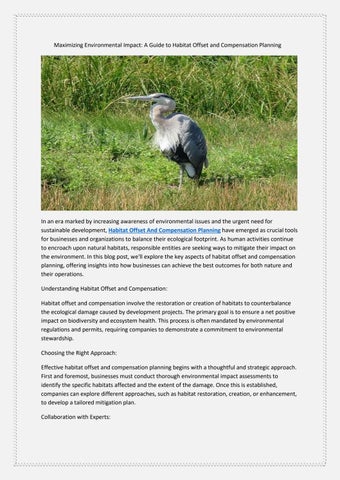
Maximizing Environmental Impact: A Guide to Habitat Offset and Compensation Planning
In an era marked by increasing awareness of environmental issues and the urgent need for sustainable development, Habitat Offset And Compensation Planning have emerged as crucial tools for businesses and organizations to balance their ecological footprint. As human activities continue to encroach upon natural habitats, responsible entities are seeking ways to mitigate their impact on the environment. In this blog post, we'll explore the key aspects of habitat offset and compensation planning, offering insights into how businesses can achieve the best outcomes for both nature and their operations. Understanding Habitat Offset and Compensation: Habitat offset and compensation involve the restoration or creation of habitats to counterbalance the ecological damage caused by development projects. The primary goal is to ensure a net positive impact on biodiversity and ecosystem health. This process is often mandated by environmental regulations and permits, requiring companies to demonstrate a commitment to environmental stewardship. Choosing the Right Approach: Effective habitat offset and compensation planning begins with a thoughtful and strategic approach. First and foremost, businesses must conduct thorough environmental impact assessments to identify the specific habitats affected and the extent of the damage. Once this is established, companies can explore different approaches, such as habitat restoration, creation, or enhancement, to develop a tailored mitigation plan. Collaboration with Experts:
Engaging with environmental experts and conservation organizations is paramount in ensuring the success of habitat offset and compensation initiatives. These professionals can provide valuable insights into local ecosystems, biodiversity hotspots, and best practices for habitat restoration. Collaborative efforts can enhance the overall effectiveness of offset projects and contribute to the long-term health of the environment. Long-Term Monitoring and Management: The commitment to habitat offset and compensation extends beyond the initial implementation phase. Long-term monitoring and management are essential to assess the success of the offset projects and address any unforeseen challenges. Regular evaluations help determine whether the offset goals are being met and allow for adaptive management strategies to be implemented if necessary. Incorporating Sustainable Practices: Beyond meeting regulatory requirements, businesses can go a step further by integrating sustainable practices into their habitat offset and compensation planning. This may include utilizing native plant species, implementing water conservation measures, and adopting eco-friendly construction techniques. By aligning offset projects with broader sustainability goals, companies can enhance their environmental credentials and contribute to broader conservation efforts. Transparent Communication: Clear and transparent communication is crucial throughout the habitat offset and compensation process. Stakeholders, including local communities, regulatory bodies, and environmental organizations, should be informed and involved. Building trust through open communication ensures that the offset initiatives are well-received and supported, fostering a positive relationship between the business and the surrounding community. Benefits Beyond Compliance: While habitat offset and compensation planning are often viewed as regulatory requirements, businesses can unlock additional benefits by approaching these initiatives with a proactive mindset. Beyond meeting legal obligations, effective habitat offset and compensation can enhance a company's reputation, attract environmentally conscious investors, and contribute to overall corporate social responsibility. Habitat offset and compensation planning represent a proactive and responsible approach to environmental conservation in the face of industrial and urban development. By understanding the intricacies of offset strategies, collaborating with experts, and embracing sustainable practices, businesses can ensure a positive impact on biodiversity and ecosystems. The long-term benefits extend beyond regulatory compliance, encompassing enhanced corporate reputation and a genuine contribution to a healthier, more sustainable planet. As we navigate the challenges of the 21st century, Habitat Offset And Compensation Planning stand as essential tools for businesses committed to balancing progress with environmental stewardship.