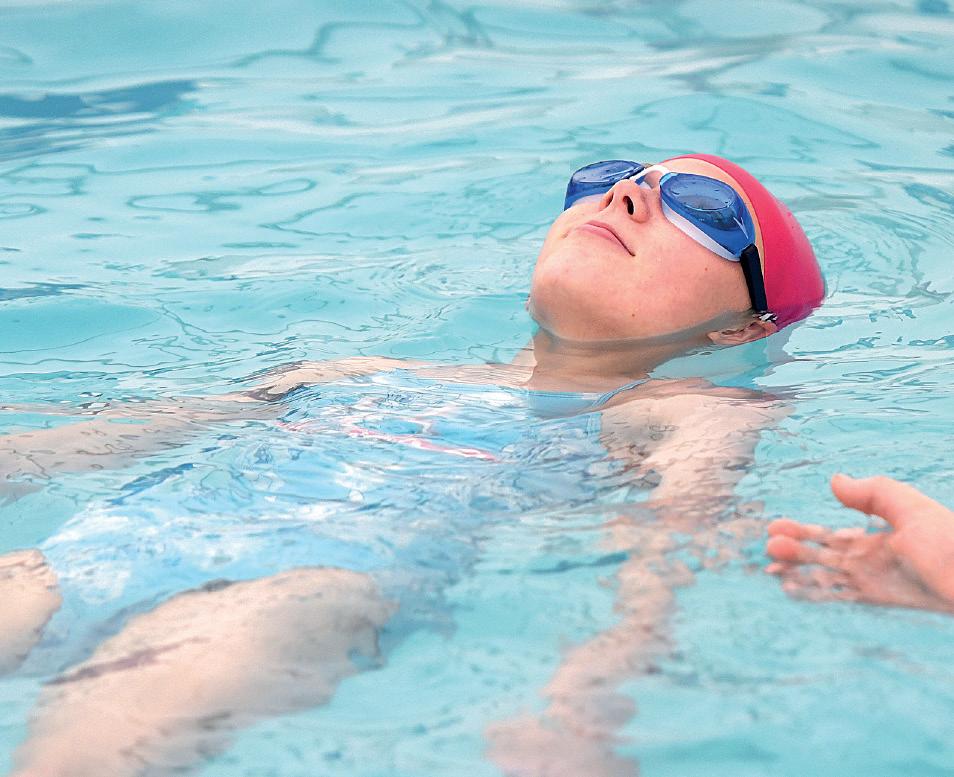
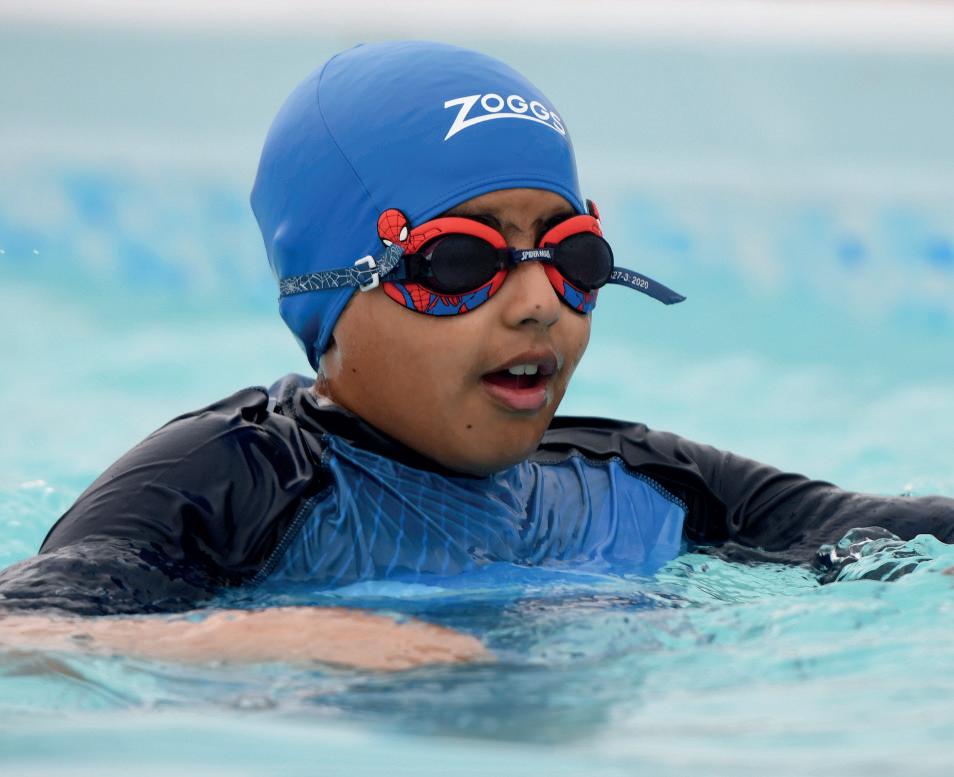
Being able to swim alone is not enough to prevent children from drowning. To truly protect children from the risks associated with water, learning to swim must be complemented by comprehensive water safety education.
Over the past five years, child drowning rates have risen, with the number of child drownings doubling in just the last four years. Now more than ever, it is essential that every child, regardless of background, has the opportunity to learn to swim, gain vital water safety knowledge, understand how to stay safe in, on, and around water, and how to respond if they or others find themselves in difficulty.
The Swim:ED programme showcases how schools and partners nationwide are helping more children access vital water safety education, with the percentage of children able to explain water safety rising from 13% to 78%.
Jo Talbot
Commercial Director, Royal Life Saving Society UK (RLSS)
The UK is experiencing a swim skills crisis, with children swimming less frequently and proficiently every year.
In 2024, thousands of pupils left primary school without vital knowledge to protect themselves in and around water.
According to Sport England’s 2023/24 Active Lives Children and Young People Survey, the number of Year 7 pupils unable to swim 25 metres unaided has risen from 28% to 30% in 12 months.
Despite pockets of progress, the skills gap is expanding within most age groups. Compared to their 2017/18 classmates, 6% fewer 11 to 16-year-olds now reach the national curriculum target of swimming competently and confidently over 25 metres.
Access is a critical concern, with instructor shortages, a shrinking pool stock, and spiralling operating costs limiting opportunities to learn core swimming and water safety skills. Just 26% of pupils across Years 1 to 11 swim at least once per week, and participation declines steadily with age. While 54% of Year 1 and 2 children swim regularly, the figure drops to 29% through Years 3 to 6. By Year 11, engagement plummets to 11.8%.
It’s unsurprising that child drowning deaths in England have doubled in the last four years. Since 2019, 23 children have drowned at home and 51 children have lost their lives in inland open water, such as rivers, lakes, and canals. Males are most at risk, particularly those from ethnic minority groups and socially disadvantaged backgrounds.
School swimming lessons play a pivotal role in drowning prevention – but provision is inconsistent and under-resourced.
Local pool closures, prohibitive transport costs, and complex logistical challenges mean that 35% of primary schools offered fewer than 10 swim sessions per pupil during the 2022/23 academic year – the equivalent of weekly lessons for just half a term.
Without immediate action, an estimated 1.2 million pupils will enter secondary school in 2026 lacking fundamental swimming and water safety capabilities. At Swim:ED, we believe children deserve better – and are working to give every pupil a safe, inclusive place to swim.
30% of Year 7 pupils are unable to swim 25 metres unaided.
Statistically, one child drowns at home every month.
Child drowning deaths in England have doubled in the last four years.
Sources: 2023/24 Active Lives Children and Young People Survey and Royal Life Saving Society UK Child Drowning Update September 2024: England
Swimming proficiency is linked to ethnicity and socioeconomic background. White British children are more likely to swim than most other ethnic groups, along with 82% of children with high family affluence. Among the least wealthy families, the figure falls to 39%.
Navigating the national curriculum
Swimming has been a mandatory part of the national curriculum since 1994.
By the time pupils leave primary school, they’re expected to swim 25 metres unaided and demonstrate proficiency in a range of strokes. 11-year-olds should have also learned about water safety and know how to perform safe self-rescue across a variety of water-based scenarios.
School swimming targets
What’s
required by the national curriculum?
Schools must provide swimming instruction either in Key Stage 1 or 2. To meet basic requirements, pupils should be taught to:
1. Swim competently, confidently, and proficiently over a distance of at least 25 metres.
2. Use a range of strokes effectively (for example, front crawl, backstroke, and breaststroke).
3. Perform safe self-rescue in different waterbased situations.
Widespread pool closures and instructor shortages are making structured swim education harder to source. Headteachers consistently struggle to cover transport costs, meet staffing requirements, and access increasingly restricted local facilities.
Leisure DB’s State of the UK Swimming Industry Report 2025 highlights an overall 0.4% decline in public and private sector pools since 2024. Despite an annual uplift in pool openings, closures outnumbered new facilities for the twelfth consecutive year – with 29 pools ceasing trade in the past 12 months.
Most pools buckled under rising energy bills, ageing infrastructure issues, and persistent recruitment and retention problems. In 2024, centres posted 4,721 ads for lifeguards and 2,734 for swim teachers, making them the industry’s second and fourth most sought-after roles.
However, maintaining a well-staffed facility has become prohibitively expensive. In April 2025, increases to National Insurance Contributions, minimum wage payments, and other staff costs added roughly £2,500 per full-time employee – ramping up monthly overheads by an estimated £110-£145 million across the sector.
Quality swim education – and its proven social, mental, and physical benefits –provides life skills we can’t afford to lose. As pools face pressure to deliver more with less, children need innovative solutions to keep them safe and confident in the water. Source: Leisure
The UK’s shrinking pool network
The ongoing shortage of swimming teachers in the UK has become a critical issue, impacting operators, swim schools, and local communities.
Such is the scale of the challenge, that some operators have been forced to abandon waiting lists altogether. The lack of available swimming teachers means they simply can’t meet demand.
Lou Crossland
Chief Commercial Officer CoverMe recruitment app
The closure of over 500 swimming pools since 2010 – 42% of them since 2020 alone – highlights a national emergency.
These aren’t just facilities lost; they are lifelines for communities and essential infrastructure for children’s health, development, and safety.
Stuart Martin
Swimming Industry Consultant
Bringing the pool to the playground
In 2023, Swim:ED delivered a turning point in school swimming and water safety provision.
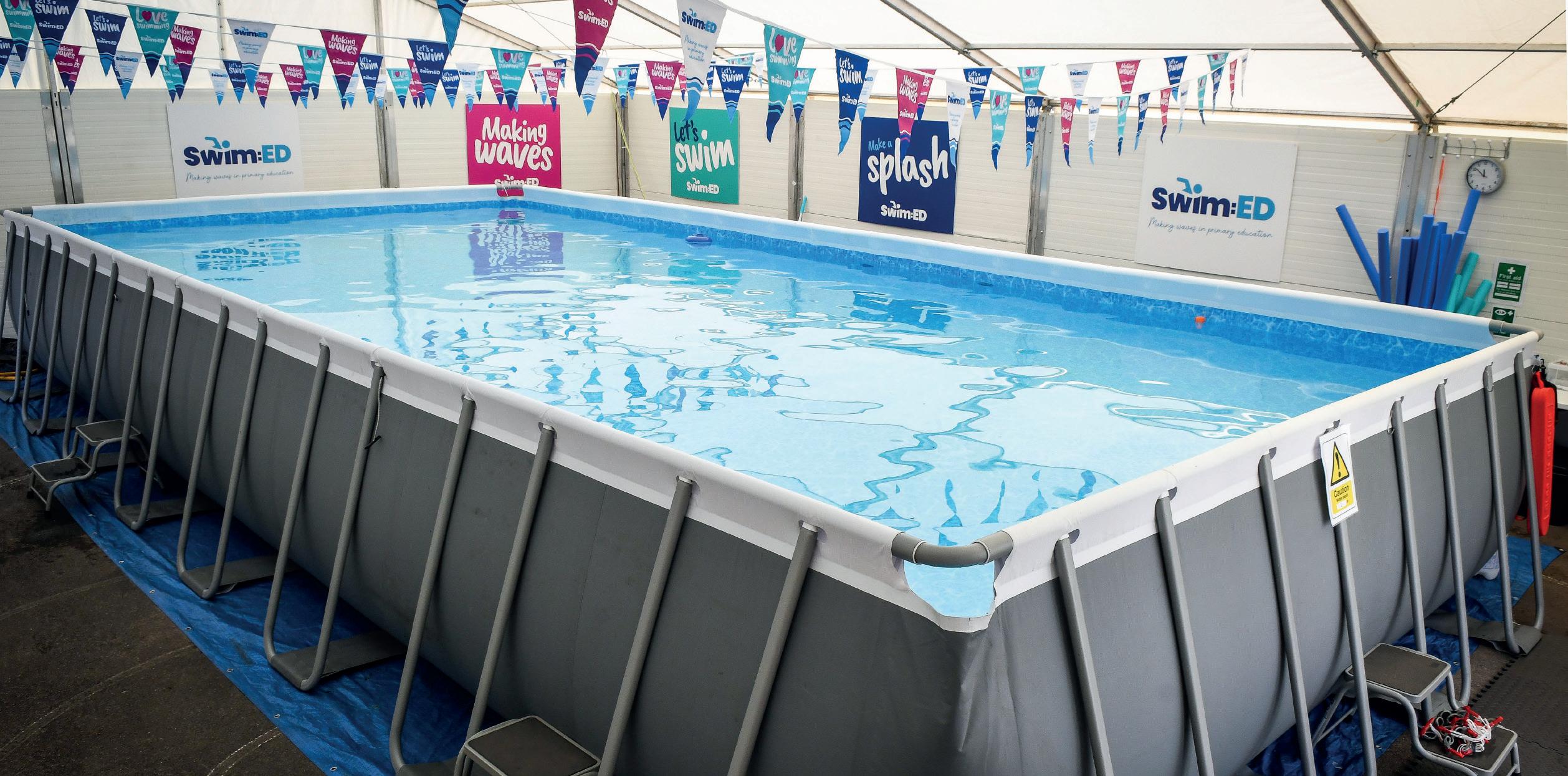
Offering a pioneering alternative to traditional off-site lessons, our pop-up pools bring best-in-class swim amenities, qualified lifeguards, and industry-leading instruction directly to school sites.
As part of a comprehensive swimming and water safety programme, a purpose-built pool is installed and managed within school grounds. Facilities are securely fixed to the school playground and housed in a lockable, industrial-style unit – a few time-saving steps from the classroom.
• Over 5-7 intensive weeks, children get fifteen 45-minute sessions of specialised, small-group teaching with no more than 12 classmates.
• Teachers tell us this focused approach reduces disruption and rapidly consolidates learning, so new skills quickly become second nature.
• Compared to traditional set-ups – typically involving weekly 25-minute lessons across ten weeks – schools report greater impact in significantly shorter timescales.
Pop-up pools reinvent how primary schools provide swimming and water safety education, promising a safe, hassle-free swim space that removes the soaring transport costs, lost learning hours, and resource-heavy admin of off-site instruction.
The Swim:ED programme makes every minute in the water matter, swapping wasted travel time and low attendance for life-changing teaching moments.
Why our schools
come to us
‘We are constantly losing money for poorly delivered swimming lessons at a local leisure centre.’
‘Only one year group can attend swimming lessons for 30-minutes per week in the pool, but this requires two hours out of class due to travel.’
‘Due to sensory processing differences, public swimming baths would be too overwhelming for the majority of our pupils.’
‘Traditional swimming provision creates challenges due to time out of class, travel, and costs. We want to reach more children and provide more intensive lessons, increasing the impact on swimming progress and water safety.’
The power of pop-ups
Revolutionising school swim and water safety education
Swim:ED’s turnkey solution starts with a secure, heated pool, delivered straight to the school playground. From there, we provide everything you need to succeed – including fully qualified instructors, user-friendly tech tools, and a customised swim curriculum designed around safety, progress, and an inclusive approach.
Less disruption, more learning
A pool in your playground eliminates wasted travel time so pupils stay focused on lessons and learning.
Education for everyone
Essential swim and water safety skills, accessible to every pupil – whatever their background or financial circumstances.
Data-led reporting
Our data-driven platform monitors pupil milestones and progress, fully aligned with the national curriculum.
Firm focus on safety
25m
Safe, secure swimming shaped by rigorous protocols and experienced supervision.
Fully qualified instructors
Children work with certified swim teachers in a positive, supportive, and engaging learning environment.
Value for money
A comprehensive swim and water safety programme, frequently more cost-efficient than standard off-site sessions.
Tailoring teaching programmes
Our bespoke swim curriculums are built around your school’s unique requirements, objectives, and pupil capabilities.
Stress-free sessions
Results-led swim instruction without the hassle of travel, transport, and unpredictable off-site facilities.
One-stop online portal
Our seamless digital toolkit provides health and safety info, ready-made parent comms, and more.
Flexible timetables
Choose from a 5- or 7-week programme, plus top-up lessons and extra-curricular club options.
Waves of progress Measuring the Swim:ED effect
91.1%
of the children who took part in Swim:ED improved in at least one key programme outcome – up from 83.2% in 2024. Development was tracked across four core areas:
Swimming 25 metres unaided
Performing a range of strokes effectively
Understanding water safety theory
Performing safe self-rescue
Dependable delivery
We’ve brought popup pools to 118 school playgrounds since our 2023 launch. Aligned with our vision, our 13 trusted delivery partners expand our reach, providing swimming opportunities to more children across the UK.
Focused learning
Swim:ED’s programmes are designed for optimum impact and success. Over three intensive weeks, children get fifteen 45-minute sessions of specialised, small group teaching with no more than 12 classmates.
Quicker results
Our targeted approach minimises disruption and accelerates learning, embedding new skills with speed and staying power. In contrast to traditional lessons – with 25-minute sessions spread over ten weeks – Swim:ED delivers fast, effective outcomes in a fraction of the time.
The Swim:ED story in numbers
15,382 children taught in the 2024/25 academic year
16,673 hours of programme delivery
157% increase in pupils achieving 25 metre proficiency
118 schools taking part
13 delivery partners across the UK
15 lessons per programme
45 minutes per lesson
26 Swim:ED pools operational in 2024/25
3 weeks of intensive, long-lasting learning
12 children maximum per group
43 swim teachers employed nationwide
52
Swim:ED lifeguards working across the UK
The growth of Swim:ED
Primary schools who have had a Swim:ED pop-up pool since 2023.
It’s fantastic to see the impact of the work that Swim:ED are delivering to improve primary school-age swimming proficiency and water safety education.
Over recent years, our members and partners that work in and operate leisure facilities with pools have told us about the challenges that they face to remain operational. So it’s great to see such clear, positive outcomes, that are supported by workforce and participant-led data.
Job creation and career development are key, as the sector grows to support the health and wellbeing of our communities, and in this case, to directly save lives.
Tara Dillon CEO, Chartered Institute for Management in Sport and Physical Activity (CIMSPA)
The Swim:ED curriculum caters for children in Key Stages 1 and 2, boosting swim confidence throughout primary school.
We follow national curriculum guidelines and measure success according to the government’s key criteria for water skills and safety.
In line with the government’s and Swim England’s assessment standards, this report tracks the progress of Swim:ED’s Year 6 leavers.
The following pages show our achievements in the 2024/25 academic year.
2,249 Year 6 pupils took part in the Swim:ED programme in 2024/25.
15,382 children participated across all year groups.
Year on year, we welcomed 7,793 more pupils to the programme – a jump of 103%.
Since 2023, we’ve helped 22,971 children learn to swim and stay safe in the water.
Goal 1.
Swimming 25 metres unaided + 157%
✔ Before Swim:ED, 23% of Year 6 children could swim 25 metres unaided.
✔ After the programme, the figure rose to 59% –a 157% increase.
Number of children able to swim 25m unaided
Goal 2.
Mastering multiple strokes
✔ Thanks to Swim:ED, 69% of children could perform a range of strokes.
✔ Pupils showed a 119% improvement following the programme.
Number of children who mastered multiple strokes Percentage
Goal 3.
Performing safe self-rescue + 337%
✔ After Swim:ED, 70% of pupils demonstrated safe self-rescue skills – up from 16%.
✔ That’s a 337% improvement rate.
Number of children able to demonstrate self-rescue skills
Goal 4.
Staying safe in and around water
✔ Following Swim:ED, 78% of pupils could explain water safety fundamentals.
✔ Numbers rose from 13% prior to the programme – an uplift of 503%.
Number of children able to explain water safety
Percentage of children
Summary
The chart below highlights the significant improvement across all categories after the programme.
Pre and post-programme percentages for each key category
Before Swim:ED After Swim:ED
Percentage of children (%)
Regional Results
With support from our local delivery partners, we’ve extended Swim:ED’s reach nationwide – bringing the programme’s proven benefits to schools across the UK.
Percentage of children able to swim 25 metres unaided
Case Study
Chilwell Croft Academy Birmingham
Swim:ED created a noticeable shift in school dynamics. Children showed kindness, encouraged one another, and became more confident, both personally and in their swimming. Parents were impressed that the school had a pool on site, and younger pupils were excited for their turn in the future. Pupils became more independent – remembering their kit, changing quickly, and returning to class ready to learn.
Eve Chappell Assistant Headteacher
When Chilwell Croft Academy’s local council pool closed, transport costs to other venues placed regular swim lessons out of reach. An initial search for a pop-up pool partner proved unsuccessful – suppliers either lacked experienced staff or couldn’t provide full facilities such as proper changing rooms.
Chilwell Croft selected Swim:ED based on our comprehensive service, featuring experienced instructors, fit-for-purpose changing facilities, and stringent security measures. Crucially, our standard 24/7 CCTV installation service bolstered leaders’ peace of mind about pool safety outside school hours.
Assistant Headteacher Eve Chappell knew pupils were in capable hands from the outset: ‘Communication between Swim:ED and the school was excellent at every step, and safety was embedded throughout their processes. Instructors were highly knowledgeable, quick to raise any queries, and understood our behaviour and safeguarding policies.’
With 55 Year 6 pupils participating, Chilwell Croft had clear objectives for their swim programme: helping more children to swim 25 metres compared to previous years, ensuring they understand water-related risks, and keeping pupils safe in the water –both at home and in lakes, ponds, and rivers.
The school also used Swim:ED to boost academic performance. By organising swim classes by academic ability, teachers worked with small, focused learning groups while other pupils swam – maximising lesson times in a targeted, individualised environment.
The programme delivered exceptional results in and out of the pool, transforming swimming and water safety proficiency, confidence levels, and social skills:
• Within a half-term, the number of pupils who could swim 25 metres leapt from 0 to 49%.
• Children solidified water safety knowledge, with 73% reaching the national curriculum requirement.
• Pupils supported and encouraged each other, often attempting things they had previously thought were too difficult.
• They also motivated their peers and worked as a team, driving further progress.
Water safety rose to 73%
From a standing start, almost threequarters understand water safety.
25m shot to 49%
Children able to swim 25 metres unaided rocketed from zero pupils to almost half.
Swim:ED’s success fuelled enthusiasm throughout the Chilwell Croft community. More families expect to continue lessons outside of school, and younger children are eager to start their own swimming journey – inspired by Year 6 pupils’ progress.
Case Study
Charville Academy Hayes
I am thrilled to have found the Swim:ED programme. We have had an exceptional halfterm of swimming and water safety lessons for our pupils. The entire experience has been outstanding, and we couldn’t be more pleased with the quality of instruction and service provided. A special mention goes to Coach Rachel, whose flexibility, professionalism, and dedication have made a noticeable impact on our pupils. Her encouragement fostered confidence and skill-building, and the growth we witnessed is a testament to her commitment.
Rachel Rodipe
Class Teacher and Swimming Lead
Without a pool within walking distance, Charville Academy relied on coaches to ferry pupils to a local facility. When transport costs outstripped pupil numbers and few children achieved curriculum targets within their two-week lesson block, the school looked to Swim:ED to deliver positive returns and proven results.
Having previously worked with another pop-up pool provider, the Charville team were impressed with Swim:ED’s ‘impeccable’ communication, smooth onboarding experience, and commitment to the programme’s success.
150 pupils took part in Swim:ED, spanning Years 4 to 6 and The Hub, Charville Academy’s Specialist Resource Provision. Within seven weeks, children had achieved inspiring outcomes, smashing national curriculum requirements and honing soft skills, such as resilience, empathy, and teamwork.
The proportion of pupils able to swim 25 metres soared from 6% to 51%, and water safety knowledge increased from 11% to 67%. SEND students enjoyed lessons with their 1:1 adults, who reported heightened confidence and enhanced motor skills.
Other pupil highlights included:
• Greater assurance in their ability to stay safe in water.
• Excitement about going swimming.
• A stronger understanding of routine.
• Increased responsibility for themselves in different situations.
• More opportunities to practise and demonstrate school values.
Class Teacher and Swimming Lead Rachel Rodipe said Charville Academy felt the difference from day one: ‘The pool generated a buzz across the school. Swimming created a unique environment where children saw each other at their most vulnerable and encouraged one another to succeed.’
‘Pupils cheered one another on and supported those who needed extra help. Children who don’t usually work or play together formed new friendships. Some pupils who struggle academically thrived in the pool, giving them a reason to look forward to school.’
Water safety rose by
509%
Water safety awareness climbed from 11% to 67%.
25m up 750%
Children able to swim 25 metres unaided leapt from 6% to 51%.
Meanwhile, teachers won back hours on their working day. While past partners required staff to plan, organise, and schedule swim sessions, Swim:ED offered simple, efficient, flexible support that dramatically reduced staff workloads and targeted children most in need – driving greater efficiency, individual performance, and improvement across the board.
Case Study
Percy Shurmer Primary Academy
Birmingham
We have absolutely loved having the swimming pool at our school. It has been a fantastic opportunity for our pupils to develop their confidence in the water, improve their swimming skills, and enjoy a unique experience right on our doorstep. The smiles, laughter, and progress we’ve seen over the past weeks have been incredible, and it’s been a joy to provide this life-saving skill to so many of our children.
Sharon Burke
Headteacher
Percy Shurmer Academy needed a safer, more reliable solution for swim lessons. Their closest option was an old council pool, often closed for repairs. When it was open, 30 children learned from just two instructors, and some pupils had to stand on tiptoe because the water level was too high.
When another school recommended the benefits of a pop-up pool, Swim:ED outshone competitors with a best-value programme, focused on children’s safety and progress. The leadership team were impressed with the simple onboarding process, featuring clear expectations, helpful information, and regular updates from start to finish.
The Swim:ED programme welcomed 170 children from Percy Shurmer’s SEND provision and Years 4, 5, and 6. Because many children were non-swimmers or didn’t swim regularly outside school, the Academy’s primary goal was to strengthen pupils’ confidence in and around water.
After a half-term of daily small-group lessons, children’s swim abilities, water safety awareness, and overall engagement sky-rocketed. Pupils able to swim 25 metres unaided shot from 3% to 34% – accelerating by 1,033%. The proportion of children demonstrating safe self-rescue knowledge surged 152% from 27% to 68%.
‘Swim:ED had a positive impact across the school – and better attendance was an unexpected bonus. PE Lead Rob Gray explains: ‘The children developed a real passion for swimming, and we noticed improved attendance for classes involved in Swim:ED.’
‘Children were more enthusiastic, and there was a real sense of excitement about swimming throughout the community. At the beginning of the programme, many were uncertain about taking part. But after six weeks of Swim:ED, they loved it and now can’t wait for it to return in 2025.’
The programme also fostered courage and resilience. One lower Key Stage 2 pupil initially refused to bring his PE kit due to worries about swimming. However, once Swim:ED teachers had shown him the pool and answered his questions, he decided to give it a try. Following his first lesson, he made significant progress and now looks forward to swimming – and can’t wait for next year’s Swim:ED sessions.
152% boost in water safety
Water safety knowledge advanced from 27% to 68%.
25m grew by 1,033%
Children able to swim 25 metres unaided jumped from 3% to 34%.
For teachers, Swim:ED freed up valuable planning and learning time. With facilities just steps from the classroom, additional staff were no longer needed to walk children to the pool to meet ratio requirements. Swim:ED instructors took full control, and pupils never had to miss their time in the water.
Looking ahead, the team at Percy Shurmer Academy anticipate an increase in the number of children who can swim 25 metres, as well as a lasting love of swimming among pupils.
Case Study
Chapmanslade C of E Primary School
Westbury
The whole experience of hosting Swim:ED has been a lot easier than it may seem! The team have been brilliantly supportive with site visits and guidance. Once the pool arrived, it felt as though it had always been there – pupils walked to lessons and were back in class within the hour. Teaching and learning were of high quality and rigorously assessed. Parents and pupils were overwhelmingly positive, and attendance even rose during the pool’s stay. For schools without local pool access, I cannot recommend this enough.
Rob Cottrell
At Chapmanslade Primary School, prohibitive transport expenses, limited resources, and a lack of nearby facilities were significant barriers to providing quality swim and water safety education.
Without a pool within easy reach, pupils spent more time travelling than in the water. Typically, one class of around 30 pupils lost an entire morning for a half-hour swim session. Lessons took place weekly for six weeks, meaning pupils received approximately three hours of instruction over four years.
Headteacher
Chapmanslade’s leadership team approached Swim:ED to deliver an inclusive solution that gave every child the chance to access swimming – something they’d never been able to offer before. They aimed to eliminate time wasted on coaches, provide personalised attention for each swimmer, and make every lesson more effective and enjoyable.
Although initially wary about disruption to school life, Chapmanslade staff were impressed by Swim:ED’s straightforward onboarding process, seamless build, and ongoing support. With the pool securely on site and swimmers back at their desks within the hour, leaders noted ‘a real buzz across the school community’ – and immediate uplifts in attendance, commitment, and motivation.
Confidence and capability quickly developed across the 99-strong cohort, with a 100% increase in 25 metre proficiency and an incredible 4,050% jump in water safety awareness.
Other positive outcomes included:
• Higher overall attendance, with teachers reporting happier, more engaged pupils.
• Dramatic improvements in attendance among children experiencing Emotionally Based School Avoidance (EBSA). In some cases, levels rose to almost 100% during the Swim:ED period.
• Extensive parental support, with the vast majority of families contributing financially.
For staff, Chapmanslade’s pop-up pool removed the time-consuming admin of traditional swim lessons. Teachers no longer had to complete risk assessments for journeys, wait for coach transport, or gather first aid kits and inhalers each week. Instead, Swim:ED clawed back quality classroom hours, fostered a more focused learning environment – and created clear wins in terms of time and cost.
Water safety knowledge accelerated by
4,050%
Water safety awareness increased from 2% to 83%.
25m rose by 100%
Pupils able to swim 25 metres unaided grew from 22% to 44%.
NEXT STEPS NEW CHALLENGES
Pushing the Swim:ED programme forward
Swimming should be an essential part of every child’s life. At Swim:ED, we provide the safe, supportive, inclusive spaces to make it happen.
Sustainable, state-of-the-art pop-up pools are just the beginning. We’re working with national partners, policymakers, and educators to transform swim and water safety education from the playground up, creating progressive, accessible learning environments for pupils across the UK.
Our Spring 2025 feature in Physical Education Matters, the Association for Physical Education (afPE) journal, underscored the adverse effects of pool closures on school swim instruction and child safety – and how the Swim:ED programme is meeting the challenge head on.
In March 2025, we proudly presented at the Royal Society for the Prevention of Accidents’ (RoSPA) National Water Safety Conference, reinforcing Swim:ED’s role in addressing the primary school swimming crisis. The conference brought together water safety experts, educators, and government stakeholders to drive meaningful change and create a safer future through collaboration and forward thinking.
To celebrate our parent company Aspire’s 20th anniversary, we hit the road to visit 20 pools in 20 days. The team toured Swim:ED schools around the UK, seeing firsthand how we’re breaking barriers, solving accessibility and cost issues, and sparking inspiring swim stories – from pupils overcoming water fears to schools meeting national curriculum standards for the very first time.
In July 2025, we participated in the Royal Life Saving Society’s Drowning Prevention Week and the worldwide National Drowning Prevention Day, encouraging our online community to ‘Find Your Float’ and learn vital lifesaving skills.
We’re committed to making swimming a positive and pivotal part of childhood.
Through anonymised data spanning gender, ethnicity, and socioeconomic circumstances, we’re already widening access to underserved communities –and using water-based activity and education as a platform for social change.
In November 2025, Swim:ED will present at the World Conference for Drowning Prevention in Egypt, detailing our nationwide impact and its potential to change children’s lives for the better. Looking ahead, we aim to extend Swim:ED’s impact to more schools, while powering greater inclusion, innovation, and excellence in swim and water safety education.
Our core development areas include:
Creating targeted Continuing Professional Development (CPD) for swim instructors and lifeguards, ensuring they maintain superior teaching and safety standards in a portable pool environment.
Making pool design more inclusive, with step-free access for pupils with additional needs.
Streamlining pool plant operations to maximise ease of use and efficiency.
Elevating sustainability and reducing our carbon footprint.
Continuing our work with the University of Chichester – supported by funding from the Royal Life Saving Society (RLSS) – to explore what impacts swimming lessons have for children.
Extending pupils’ swim journeys beyond the pop-up pool, we’re teaming up with instructors, leisure centres, and other key stakeholders to drive progress and develop lifelong swimmers.
Our 12-month goals
Work with compliance experts to meet all pop-up pool health & safety guidance
Strengthen ties with the wider swim community
Improve sustainability and inclusion
Enhance security, efficiency, and innovation
Collaborate with research institutes
Launch spacespecific training for teachers and lifeguards
It’s hugely positive that pupils are accessing swimming and water safety lessons, and initiatives such as Swim:ED are helping schools make this possible by safely bringing swimming and water safety education onto school sites.
We encourage all headteachers to ensure the provision they are buying in meets the technical guidance outlined in the briefing note on the use of temporary ‘pop-up’ swimming pools regarding the safe operation and maintenance of temporary pools on their site.
Programmes like Swim:ED work best when complemented by access to traditional swimming environments, ensuring all pupils can achieve the full national curriculum outcomes for swimming and water safety.
Kate Thornton-Bousfield
Chief Executive Officer, afPE (Association for Physical Education)