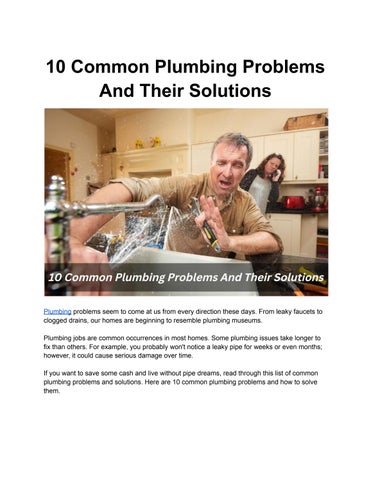
10 Common Plumbing Problems And Their Solutions
Plumbing problems seem to come at us from every direction these days. From leaky faucets to clogged drains, our homes are beginning to resemble plumbing museums. Plumbing jobs are common occurrences in most homes. Some plumbing issues take longer to fix than others. For example, you probably won't notice a leaky pipe for weeks or even months; however, it could cause serious damage over time. If you want to save some cash and live without pipe dreams, read through this list of common plumbing problems and solutions. Here are 10 common plumbing problems and how to solve them.
1. Water leaks from the faucet or toilet Leaks occur when the water line escapes out of faucets or toilets. You might think that fixing something like this would be easy, but there are many different types of leaks depending on what type of fixture it occurs in. A dripping faucet, for instance, is relatively simple to repair. The easiest way to prevent a leaky faucet is to install a new rubber washer around the outside of the faucet.
2. Slow-running water The second problem we're discussing involves the slow flow of water. If you notice that your shower or sink takes a long time to fill up, this could mean one of two things. First, there could be a clog somewhere in the system. Second, the valve itself could be stuck open, preventing water from flowing. If you suspect a clog, you'll need to turn off your main supply shutoff valves. Turn off the main valve and check the pressure inside the pipes before calling a professional plumbing service. If the pressure drops significantly, turn off the supply line to the house and call a professional immediately.
3. Burst pipe A burst pipe can happen anywhere, but it's most likely to occur in your basement. Most often, it happens due to frozen pipes. Frozen pipes aren't dangerous unless the ice breaks free and causes a flood. Fortunately, this isn't very common. Instead, the problem usually develops gradually. As the temperature drops, the pipes freeze and expand. Eventually, they crack, leading to a burst pipe. Before calling a professional, try thawing out the pipes yourself. To do this, simply run hot water into the cold pipes until the problem is fixed.
4. Clogged or blocked drain To unclog a drain, pour boiling water down the drain until the clog disappears. Then, run cold water through the sink and dishwasher. Repeat the process several times. It's important not to just pour water down the drain; instead, aim the stream so that it hits the sides of the pipe and then flows back into the sink. If your drains are blocked, you'll first need to locate the leak. This is typically done with a camera attached to a flexible tube called a "snake." Call a plumber to remove roots and other obstructions.
5. High-pressure hot water heater Water heaters have thermostats that automatically adjust the amount of hot water produced. If these don't work properly, the heater may produce too much water. There are several reasons why high water pressure might develop. For example, a faulty heating element damaged wires or a defective pump motor. To fix a high-pressure issue, call a plumber who will be able to inspect the unit and determine if it needs replacing.
6. Slow-flushing or running toilets It can sometimes take a lot longer than usual to flush. While this doesn't seem like an emergency, it can cause serious health issues. A sluggish flusher means that waste products are building up in the tank -- which causes odours and bacteria to increase. The solution is simple. Just add more water to ensure that all of the waste has been flushed away.
7. Standing gallons of water in basement or storm drains Standing water is usually caused by a broken pipe or a ruptured irrigation system. The good news is that standing water is easy to fix. First, find the source of the leak. This means inspecting underneath sinks, behind cabinets and by toilets.
Make sure any electrical connections are working correctly. Next, plug up any holes where water is leaking. Finally, repair any pipes that have developed cracks.
8. Sewer system backup Sewer backup occurs when sewage backs up into a home's storm sewer line. To prevent this from happening, keep your gutters clear of leaves and debris, cut down on tree branches near the property, and check for leaks. If you're noticing smells, contact a plumber.
9. Slow to run cold water when showering or running the tub Showers and tubs only begin to warm up after running them for a while. If you've got a slow-running shower or bathtub, it could mean that something is wrong with the plumbing system. Try checking faucets and knobs to see if they're loose or worn. If you notice rust or corrosion, change the washer or ballcock to avoid further damage.
10. Leaking bathtubs Leaky baths aren't just inconvenient: They can also lead to expensive water damage. Look at the bottom of your tub (and in the corners) to spot signs of leakage. If there's any discolouration, pitting or bubbling around the rim, the problem lies beneath. Fix this before it leads to costly repairs. These are just some of the household plumbing problems that most homeowners face. But because many of us are not trained plumbers, we often end up doing even the simplest fixes ourselves, risking worse results. It’s important to hire a professional plumber as soon as possible if you suspect the problem could cause bigger trouble. For those facing major plumbing emergencies, it is highly recommended to hire a professional local plumber to do the job right the first time. If you want to know more, you can search for a “plumber near me” online to help you get started. You can save big or small water bills by maintaining your plumbing system.