“As soon as healing takes place, go out and heal somebody else.”
—Maya Angelou
Our Well-Being issue always arrives with excellent timing. There are many things that can weigh us down: finances, work, politics, unsettledness, world happenings, and the challenges that occur in our everyday lives. Too often our focus gets stuck on these external things and responsibilities. No matter what’s going on, it’s important to remember to take time to care for ourselves. Similar to the safety directions you receive on airline flights, we must first tend to ourselves before we can effectively take care of others. Inside this issue, you’ll find a number of ideas to take care of yourself and support your well-being!
We also feature Madison musician Mel Ford, reminding us that the healing power of music is substantial. We encourage you to experience one of Mel’s gigs and explore other live musical acts at local venues throughout Greater Madison.
Wishing you peace and good health.
cover photograph
Banzo Pita Sandwich taken by Eric Tadsen
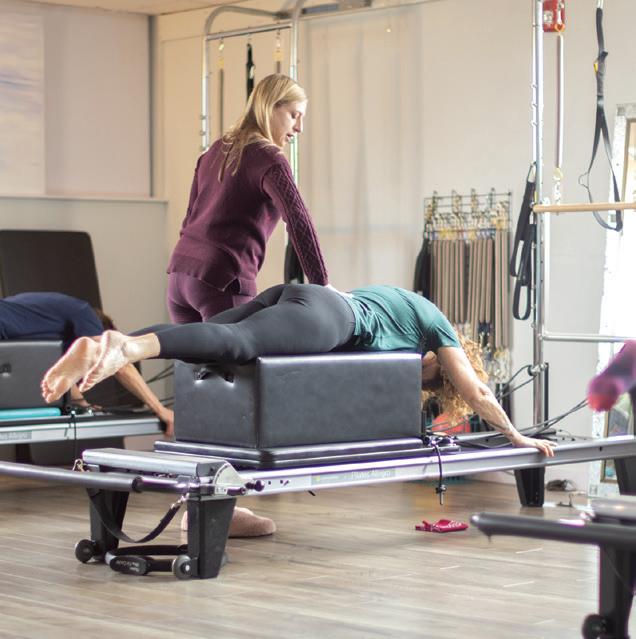
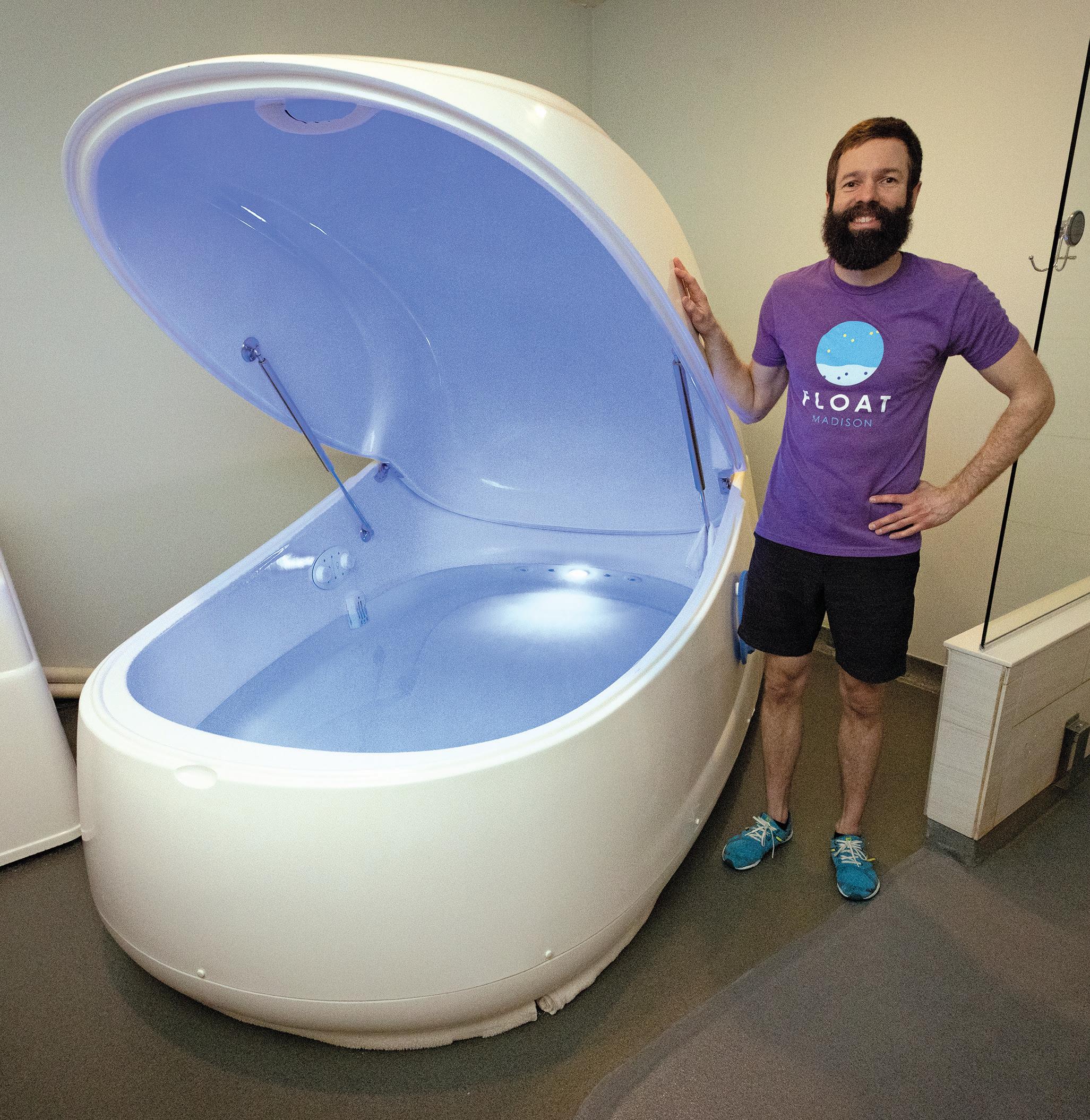
photographs on page 3 (top left to right) taken by Eric Tadsen at Float Madison taken by Eric Tadsen at Jules Pilates
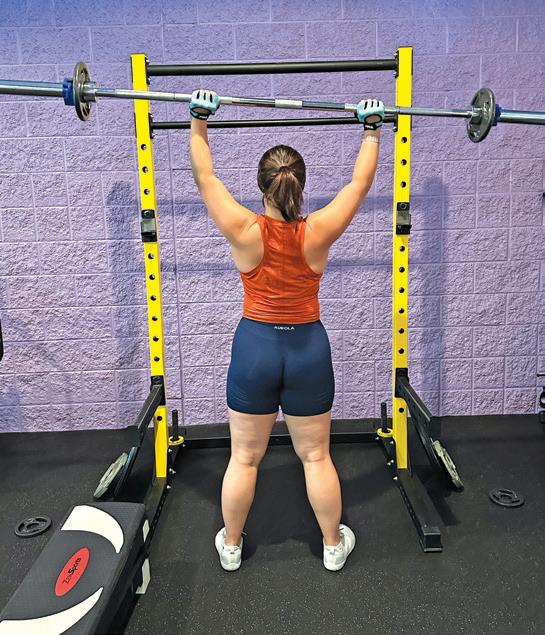
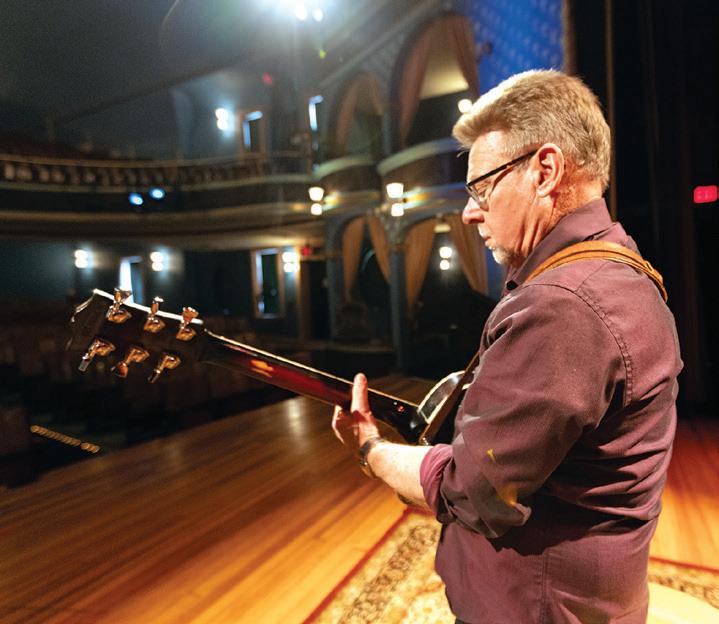
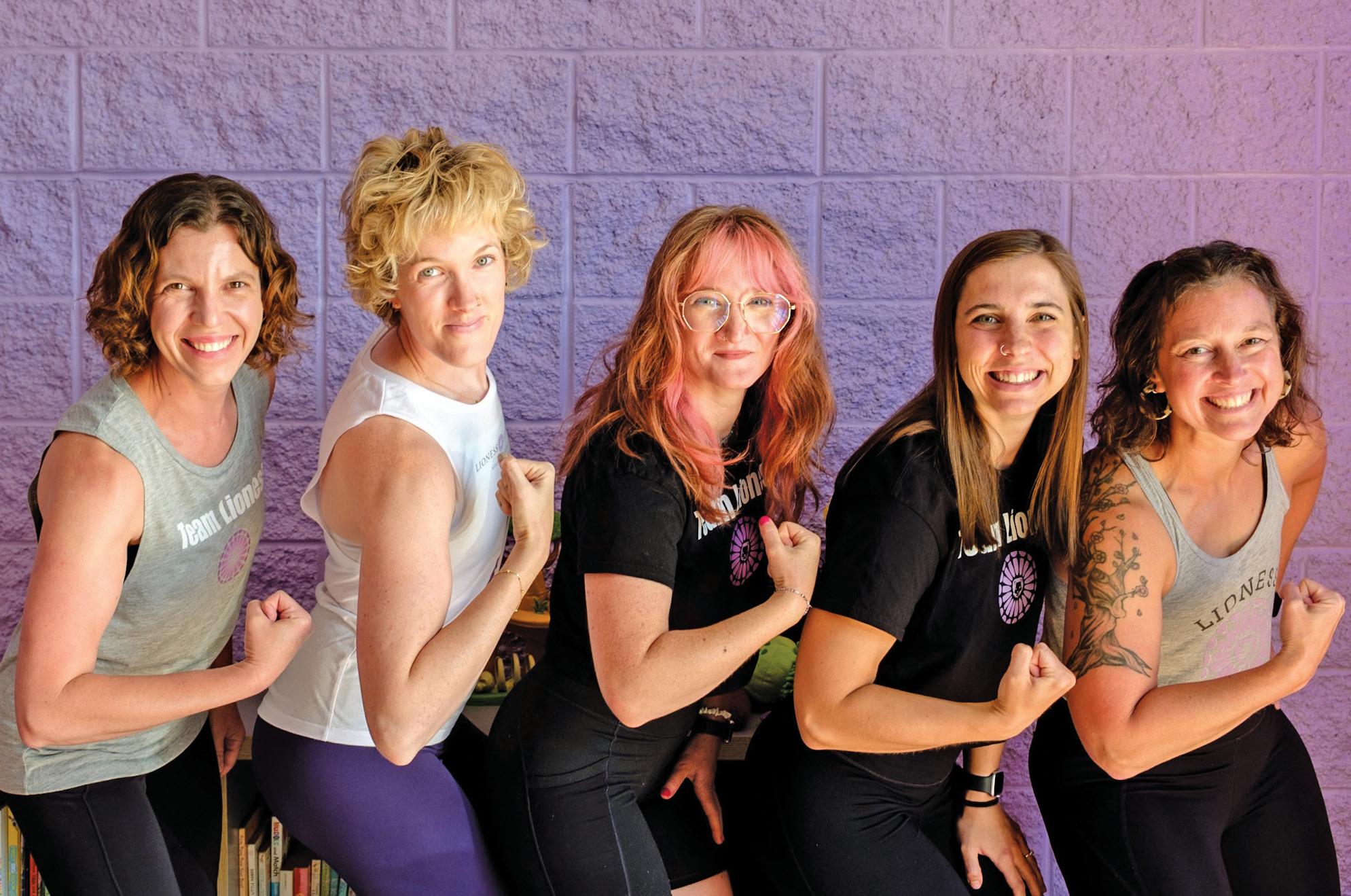
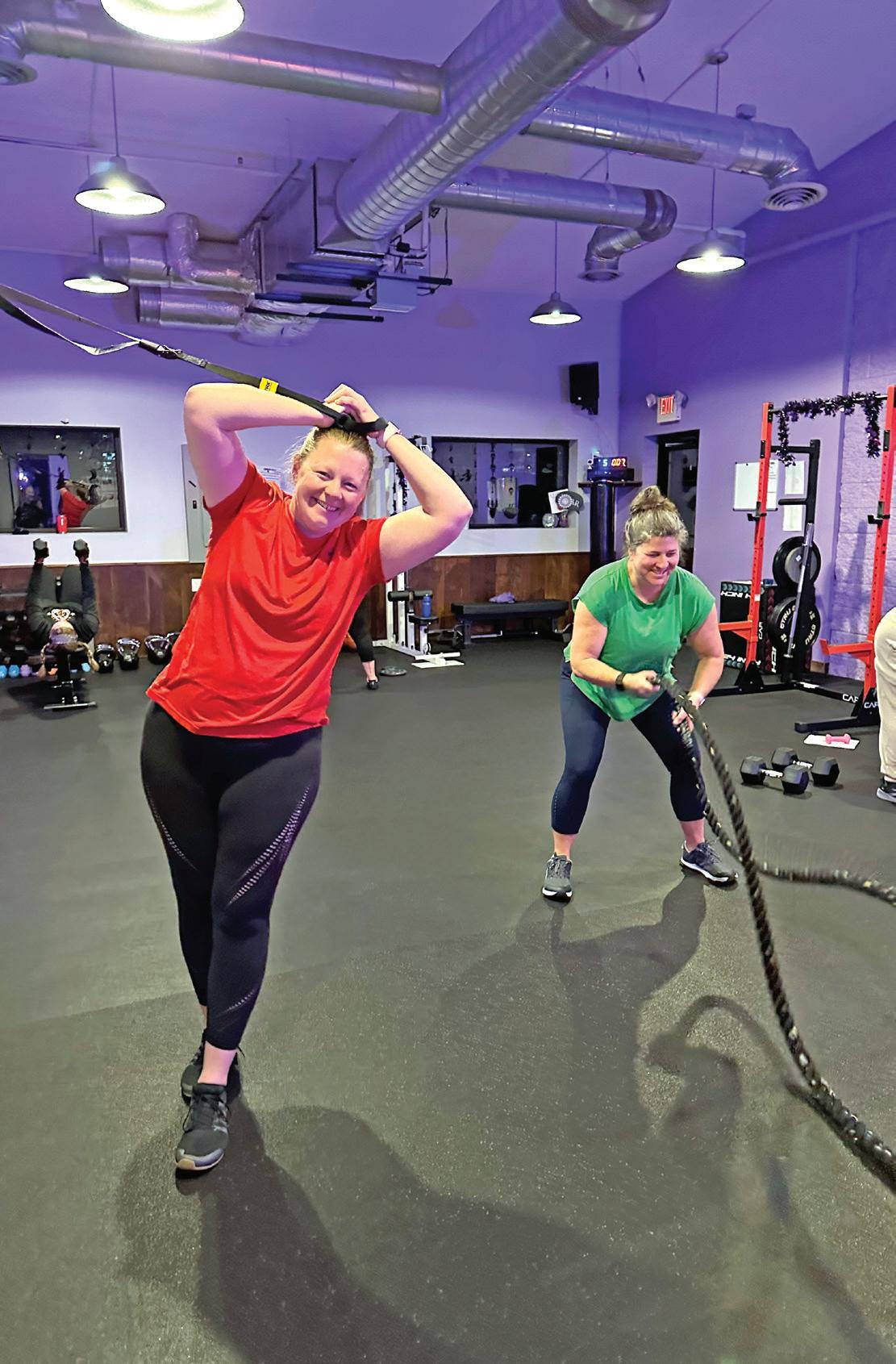
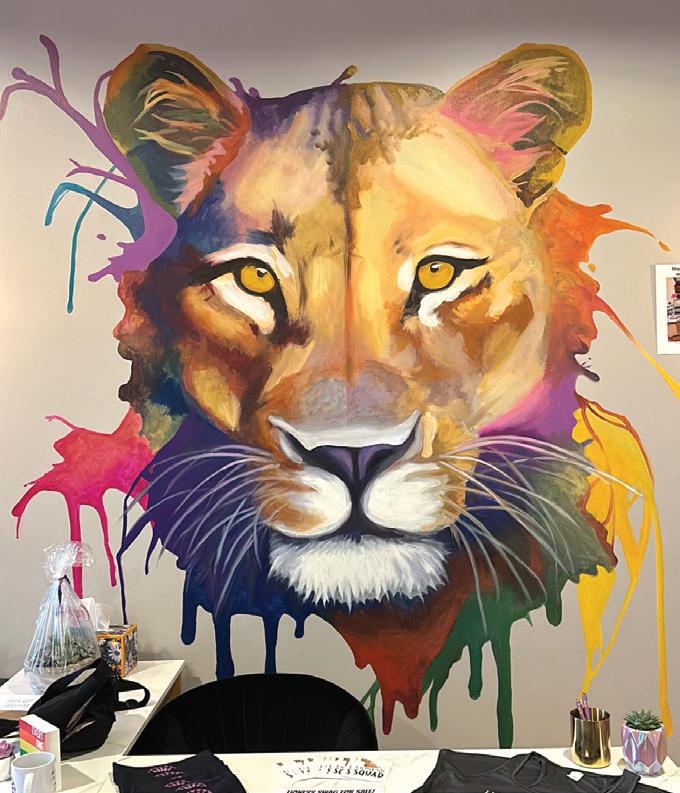
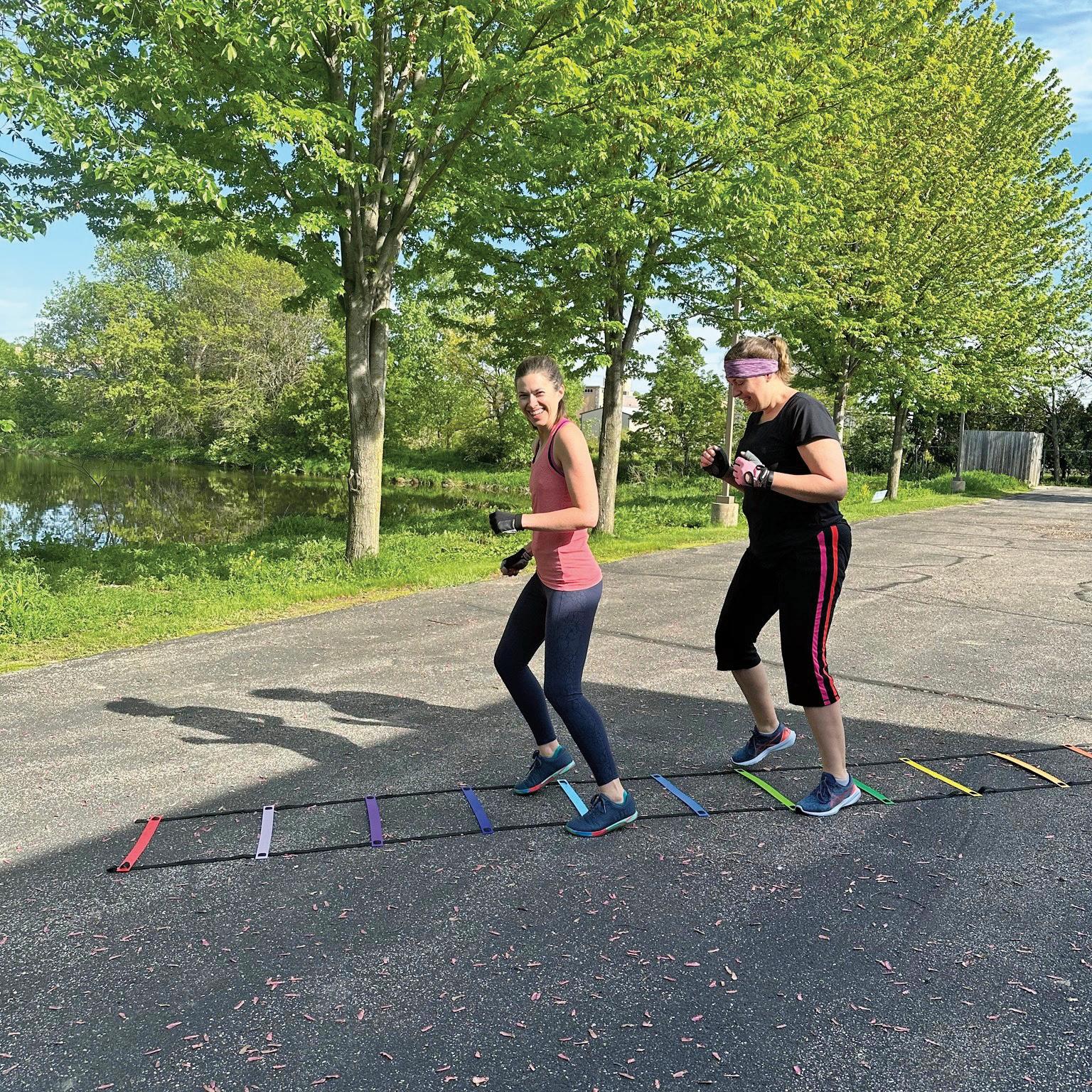
(bottom left to right): provided by Lioness Fitness Mel Ford taken by Eric Tadsen
BANZO
by Kyle Jacobson
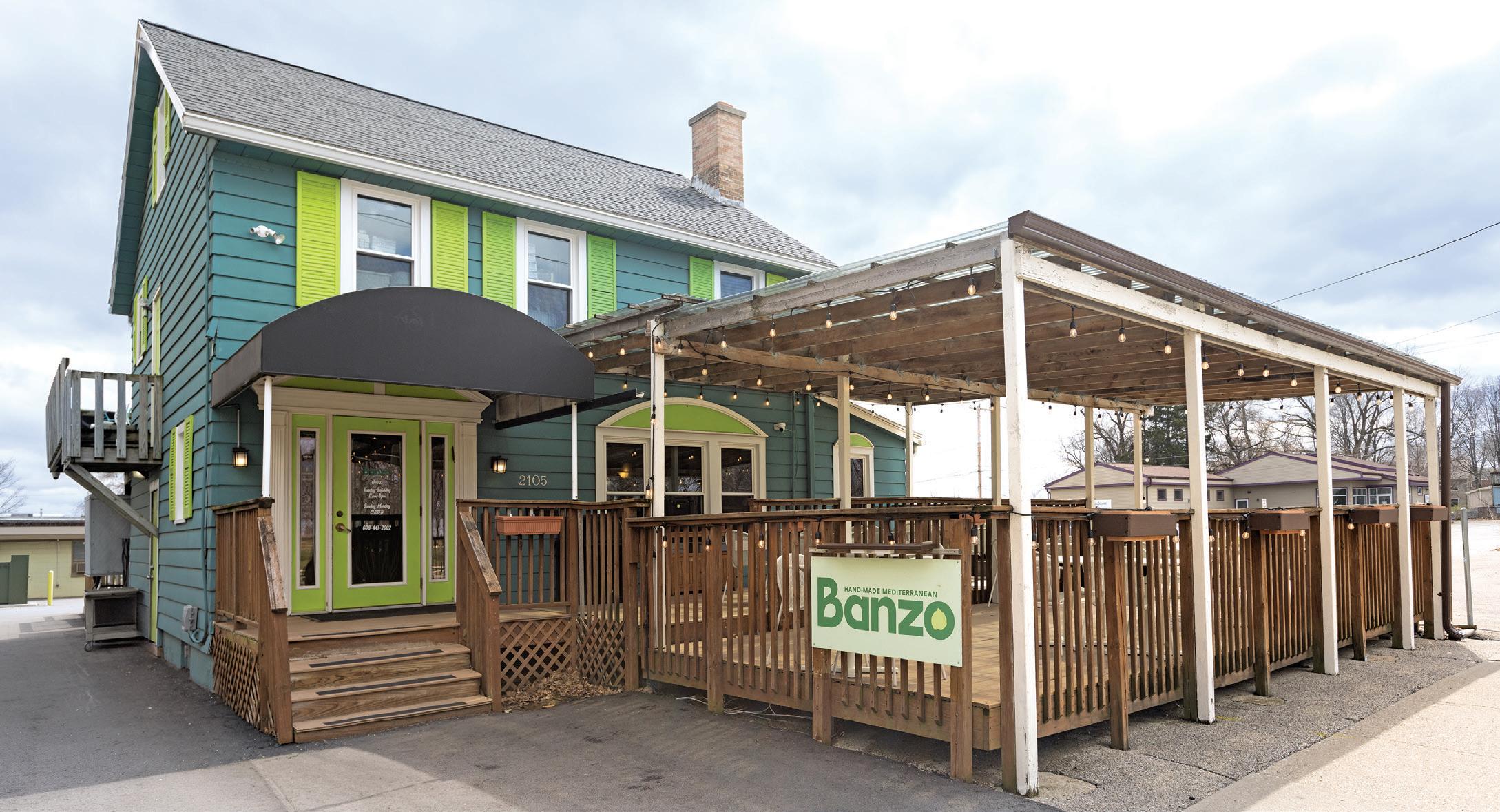
Across Sherman Avenue, Burrows Park glows green under a clear blue sky, and the warm scent of spices from the Mediterranean dishes in front of you creates a pleasant dilemma: savor the moment or take a first bite. Once a hidden gem, Banzo has become a tucked-away favorite in Madison, with diners of all sorts coming for the hallmark hummus and falafel.
But owners Aaron Collins and Netalee Lev Sheinman never envisioned this being the location Banzo would call home. This was just a base of operations for preparing food for their food truck.
Hummus & Pita
Moroccan Carrots
The HUMMUS itself is absolutely something to write home about.
And the food truck idea was a calculated gamble they devised while living in New York, where Netalee was born.
Aaron, a Madison native, says, “Netalee grew up in the Middle East and introduced me to this kind of food. It blew my mind when I first tried it, and there weren’t a ton of spots in Madison, at least in the sense of a street-foodstyle place serving falafel and shawarma and that sort of thing. We lived in New York for a few years after college. She was managing a hummus restaurant in Manhattan, and her dad had a family friend who was running a falafel shop who agreed to train me in exchange for free labor over the summer.
“Between the two of us, we kind of had the idea in mind that Madison would be a good spot. That’s how that idea was born. Found a food cart out there, hitched it up to a U-Haul full of all our stuff, drove it 1,000 miles here right to this very building. This is where we started.”
Banzo officially opened its windows in 2011, when Mediterranean food wasn’t familiar to everyone in Madison. Aaron almost winces remembering having to describe hummus as a bean dip to crowds at festivals. “They were like, ‘Oh, I like bean dip.’ Well here you go. Hummus sounded a little too exotic. …
We gave out a lot of samples those first couple years.”
The hummus itself is absolutely something to write home about. This is the same recipe Netalee learned from a family friend in New York. She’s so particular about it that Aaron was kicked off hummus duty within the first week Banzo opened because he couldn’t get it right. And I’m glad she did. The texture looks so smooth that I thought it was yogurt at first glance. It has an almost buttery mouthfeel, so I just started dipping everything on my plate in it. Altogether, very refreshing.
That flavor quickly became something people craved, helping support Banzo
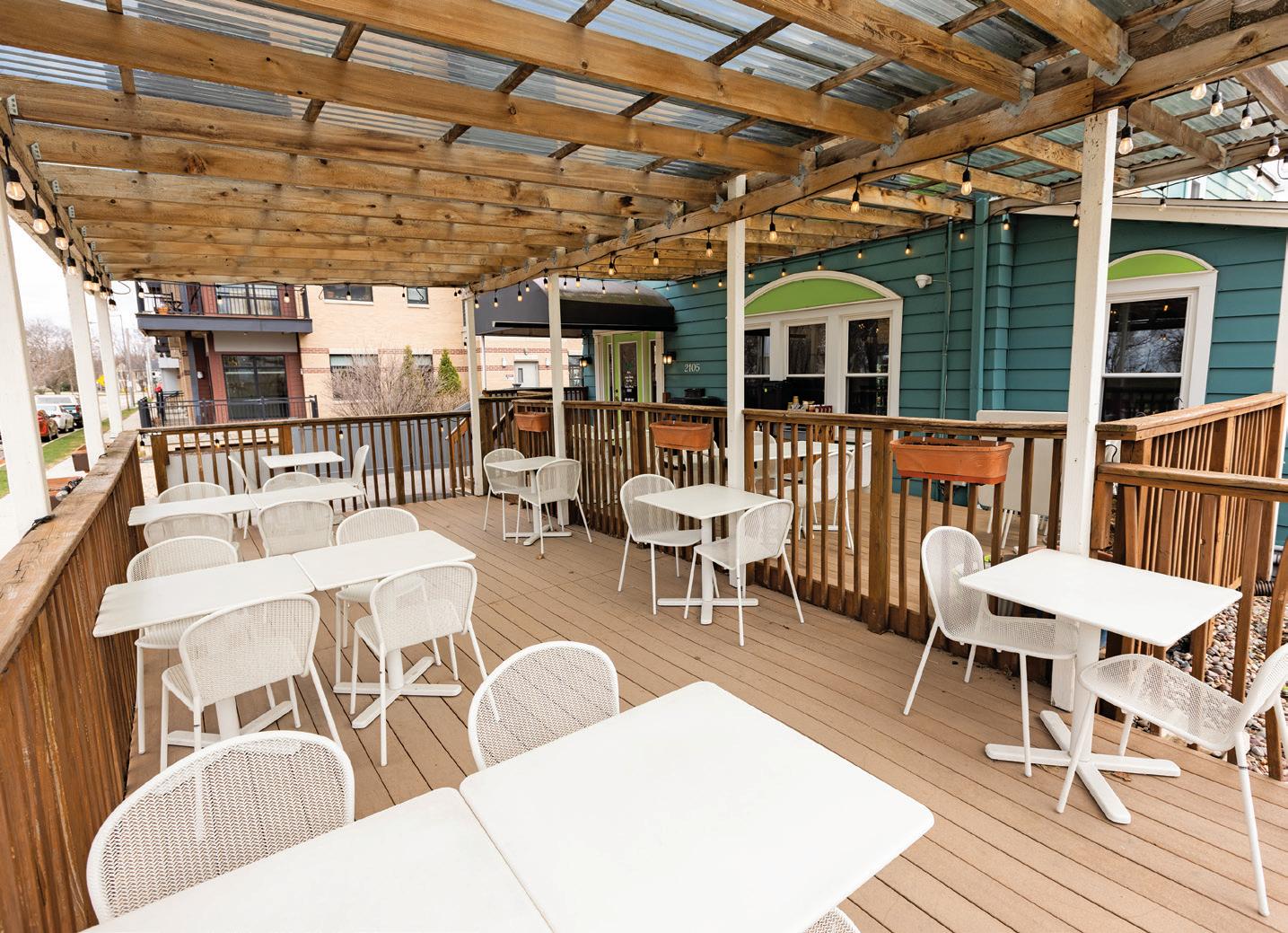
through its first winter. “We were like, ‘Oh shit, the food cart isn’t going to really cut it through January and February,’” says Aaron. “We needed to do something else, so we started offering delivery. We were doing that out of this building. People caught wind of where we were delivering from, and they’d come knock on the door and be like, ‘Hey, can I just do takeout?’ Sure, why not. Eventually, people take their takeout and ask, ‘Can we eat on your patio out front?’ Sure. So we threw some tables and chairs out there.”
It wasn’t a year before Banzo was offering limited dine-in, which still puts a smile on my face when I think about what it used to look like. There was virtually nothing out there—even less than today. At one point, the utilities were even shut off because it was assumed no businesses were operating on that block.
But if that falafel, the same recipe Aaron was trained on in New York, had anything to say about it, they were definitely
open. A fantastic crunch revealing the telltale green middle. Packed with flavor, warming the senses on each bite. Then you dip it in the hummus and melt into your seat.
Banzo had made itself known, but operations were still confined to the small commercial kitchen in what was essentially a house. At that time, there was even a carpenter renting the upstairs who exchanged services with Aaron and Netalee from time to time. So with a miniexpansion incorporating the entire building into restaurant space, there came a question: would Banzo become fine dining or stick to its street-food roots?
They, of course, stuck with the identity that had brought them to this point, but some of their menu items provide a glimpse of why Mediterranean food can be featured in fine dining. The Turkish coffee lamb is a hug disguised as a meal: tender meat that dissolves in your mouth with a depth of flavor blossoming into a savory bouquet. In short, treat yourself.
Now if you’re a local, you might be thinking you know Banzo though you haven’t ever visited. That’s because they’ve expanded beyond the restaurant to provide wholesale of their hummus and falafel at local grocery stores, including Woodman’s and Whole Foods. When the building behind
Packed with FLAVOR, warming the senses on each bite.
their restaurant became available, they jumped on it, and today, “That’s where everything is made from scratch,” says Aaron. “We’re doing the big batches there, like 40-pound tubs of hummus. They’re supplying the restaurant, the catering, and the wholesale.”
Having everything made so close has also fostered a tight-knit team. Aaron and Netalee think the world of their staff, and have made a lot of effort to get staff to see Banzo not just as a place to work, but something they can make a career out of through 401(k)s and other
Harvest Rice Bowl
Banzo Pita Sandwich
will look like in 10 years, but each step of the way, they’ll be there welcoming new neighbors with plates of those mealdisguised hugs. Kyle Jacobson is
writer who didn’t start drinking coffee regularly until his mid 30s. Photographs by Eric Tadsen.
by Barbara
Photograph
Wilson
Kyle Jacobson
by Kyle Jacobson
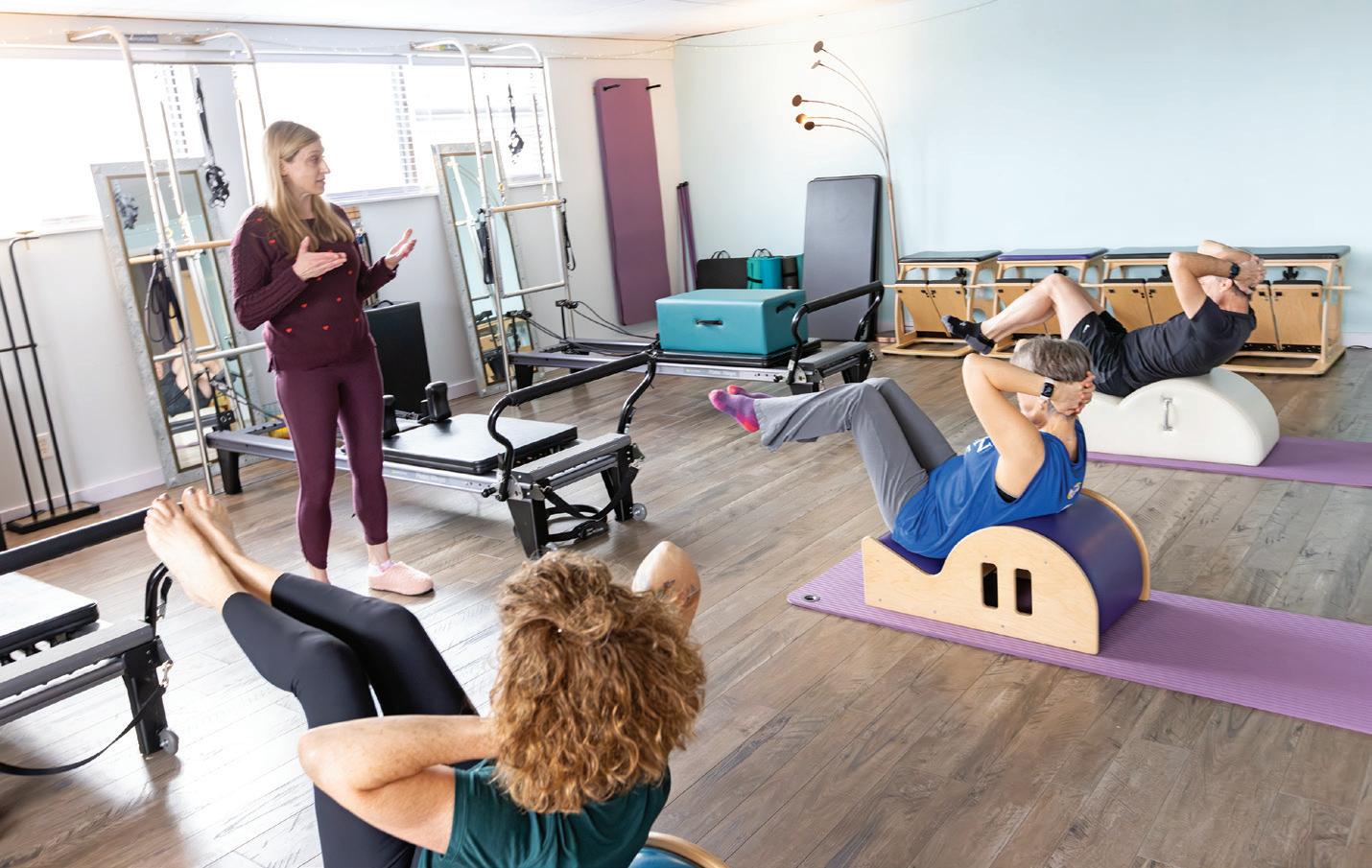
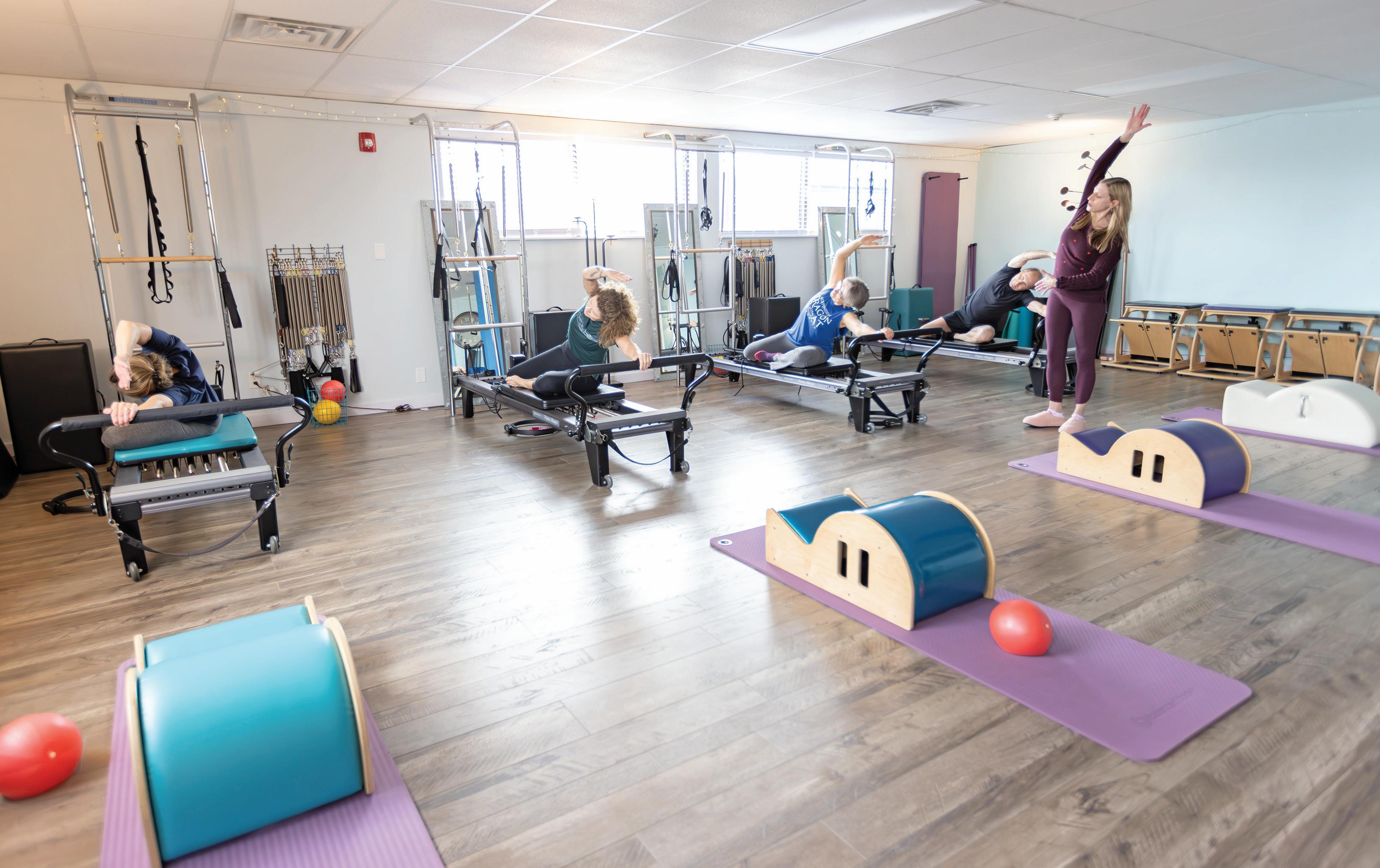
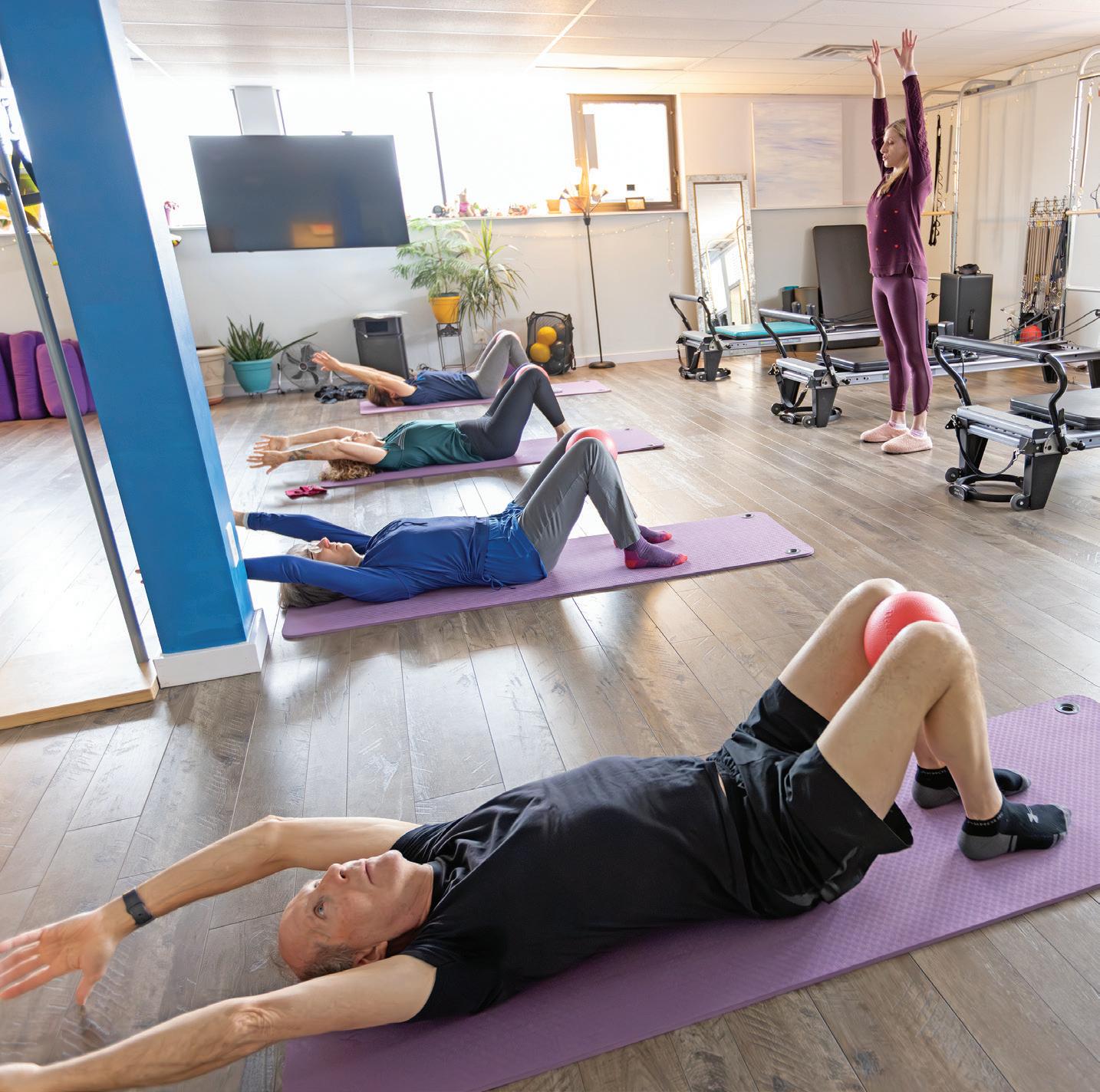
Jules Pilates
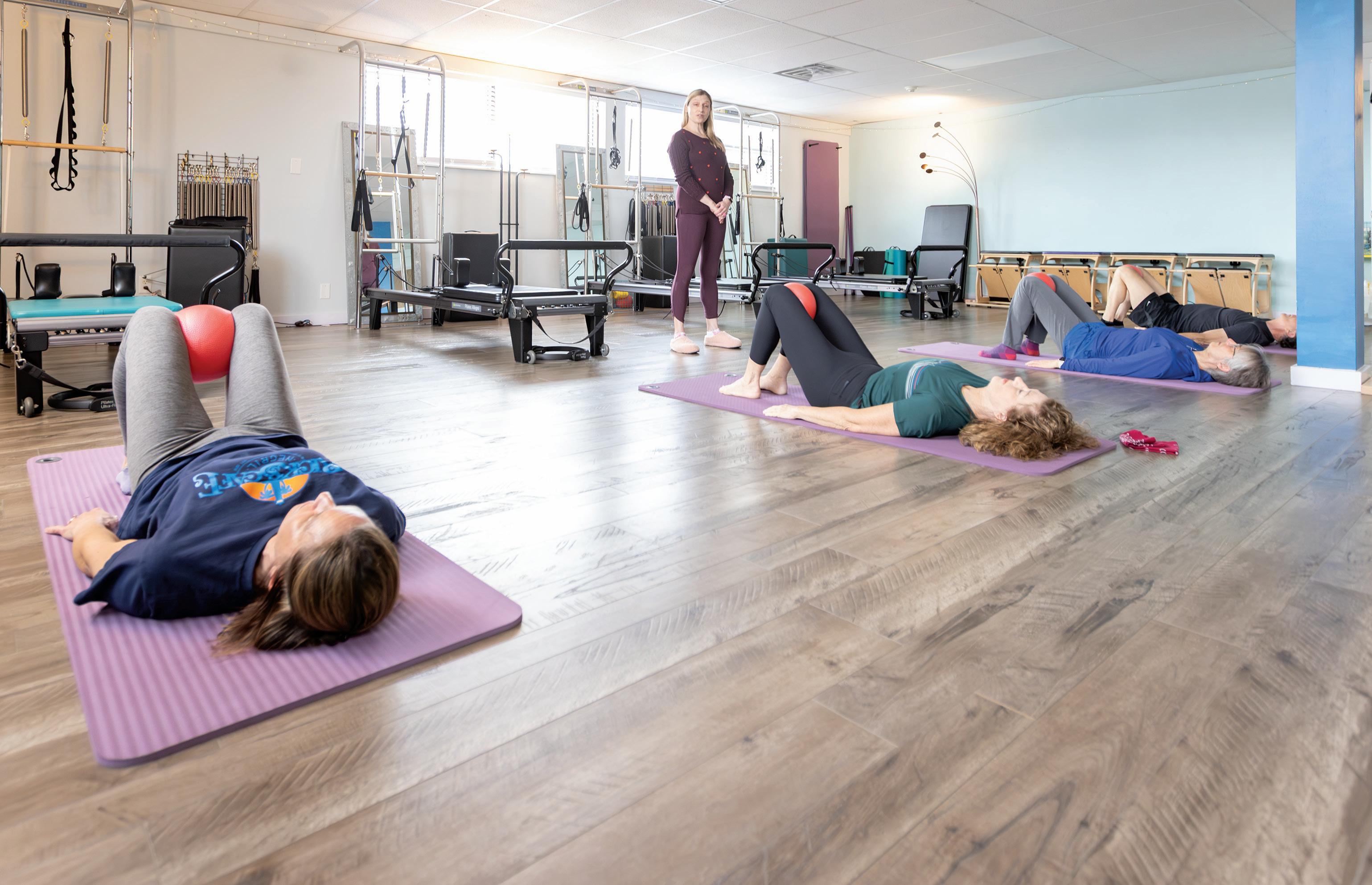
In the late 1920s, above Manhattan’s 8th Avenue, a middleaged man looks out from a large window at people going about their everyday lives: mothers running errands with their kids, construction workers on their lunch breaks—the steady rhythm of a city in motion. Joe Pilates wasn’t just people-watching. Like an artist studying the human form, he was paying close attention to the biomechanics of movement.
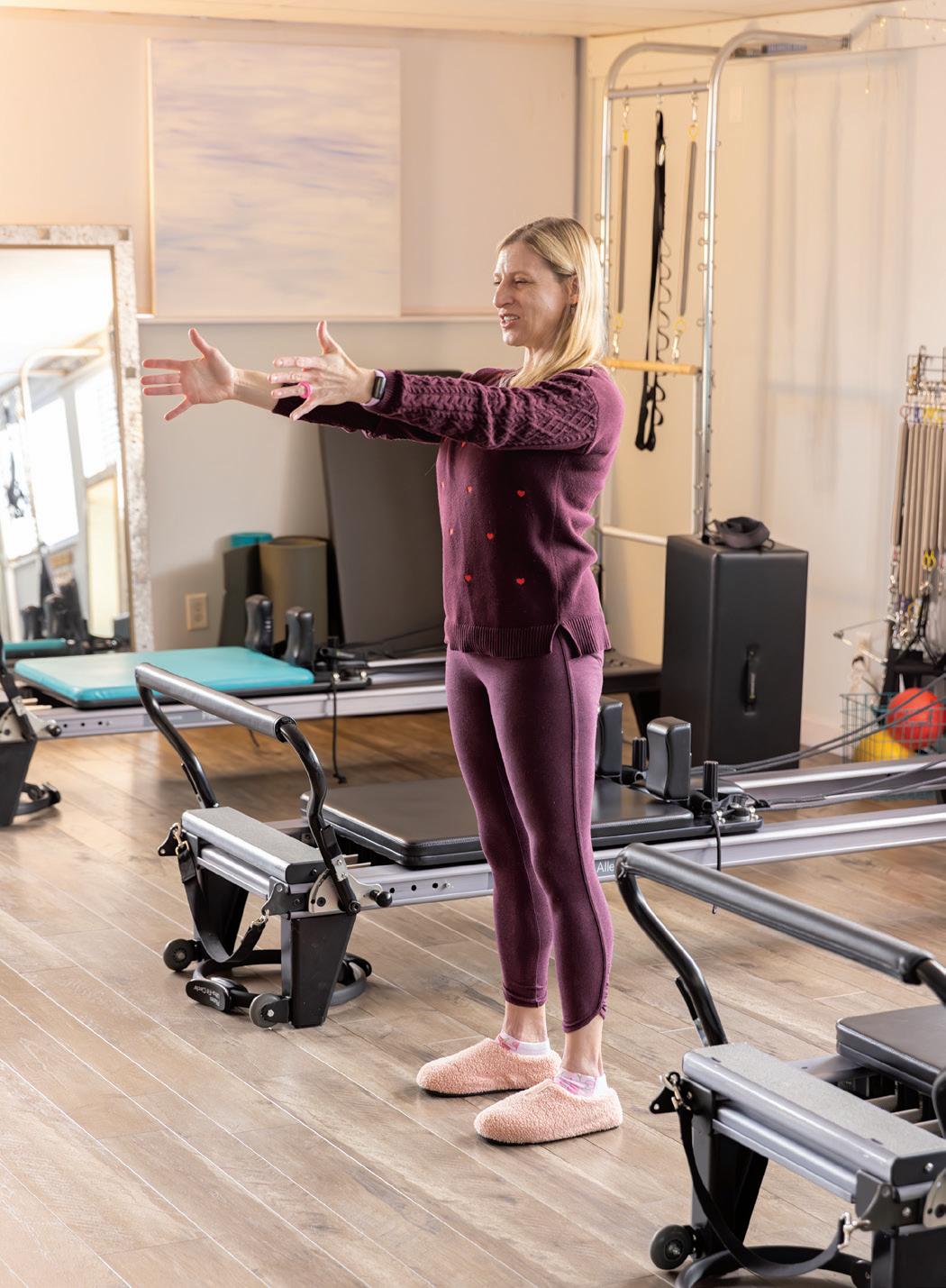
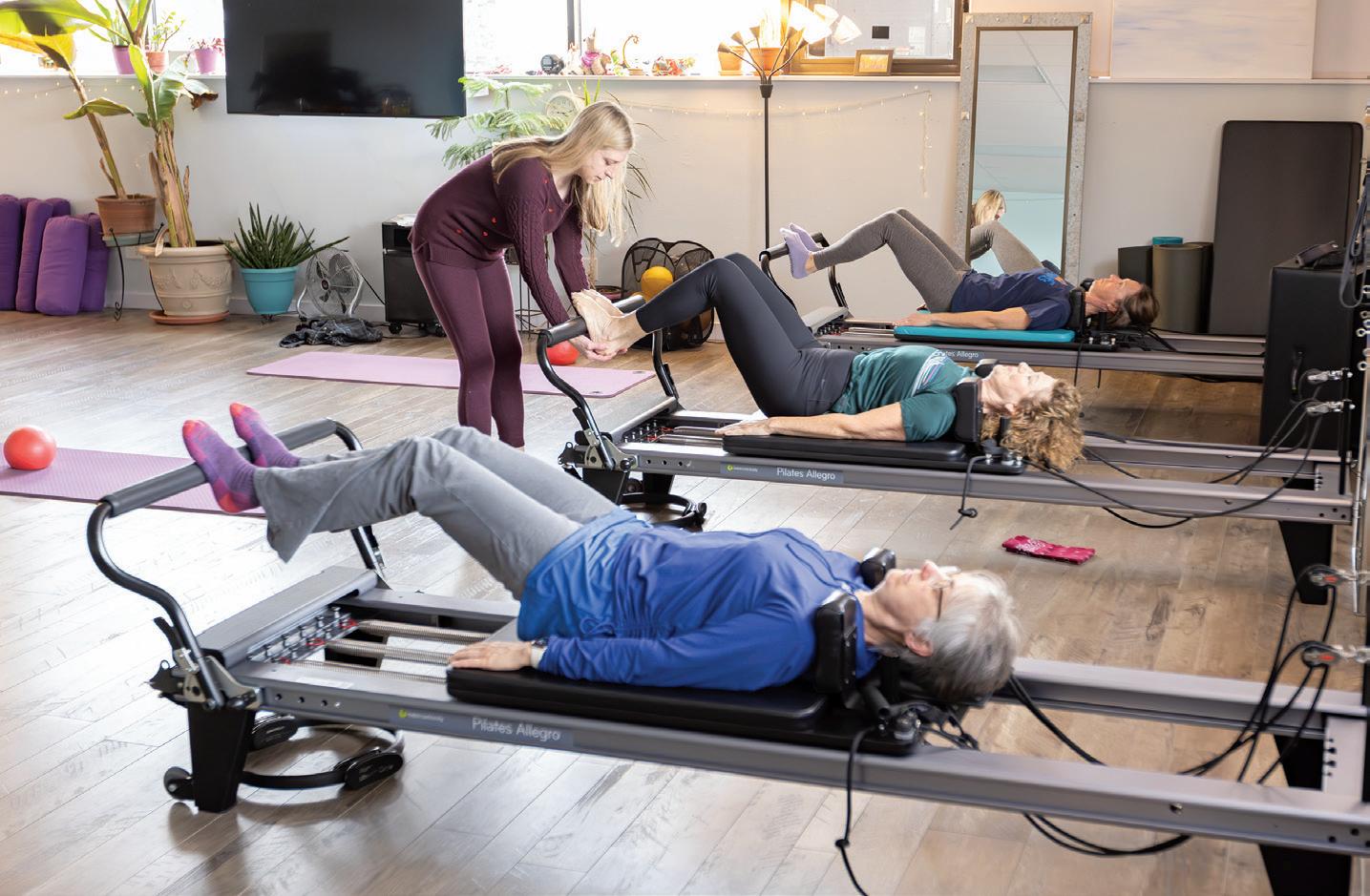
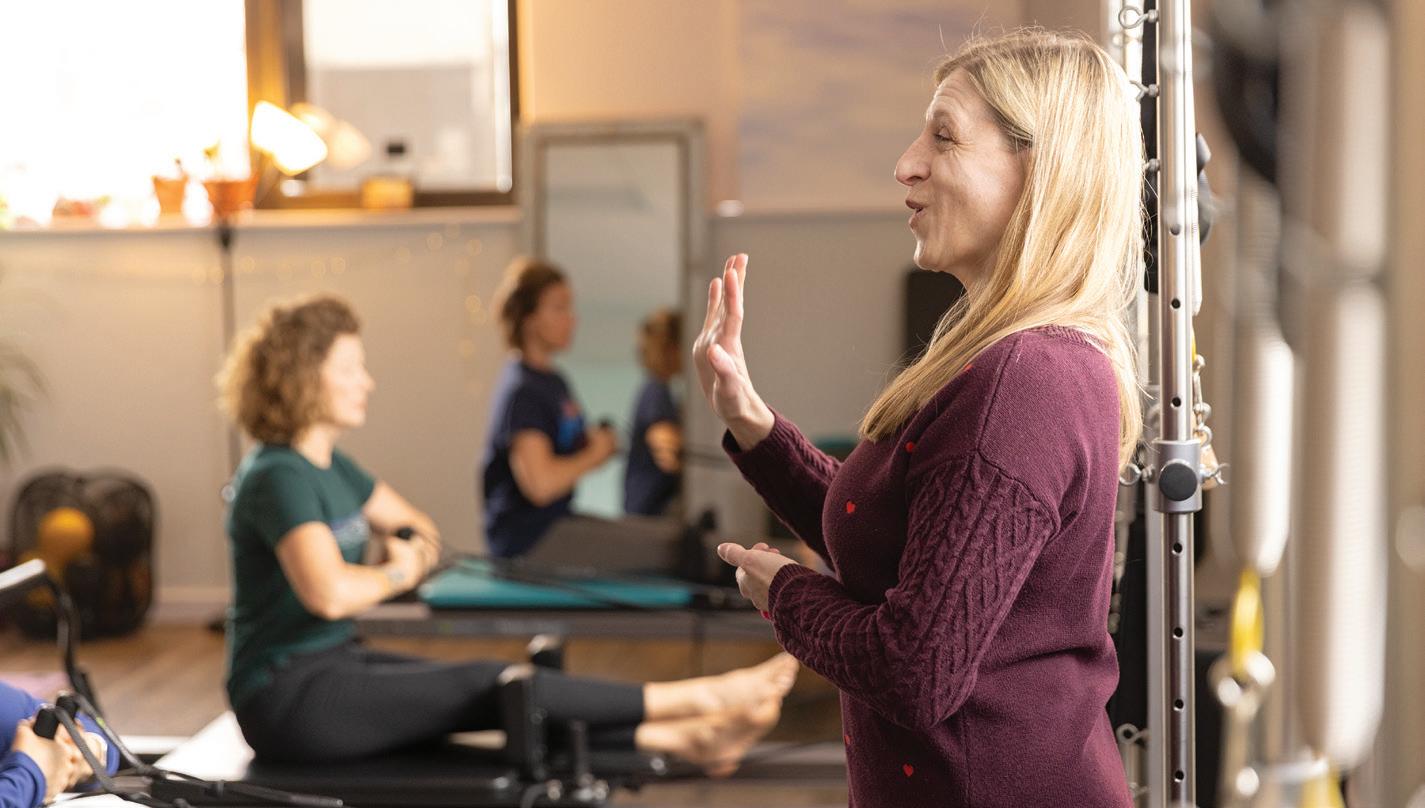
“He could see what somebody was doing and feel it in his own body and then translate that to strengthening and movement and coordination,” says Jules Wolf Stenzel, owner of Jules Pilates. Jules studied Pilates under Lolita San Miguel, one of only two people Joe personally trained to teach his method as he intended, making Jules a second-generation Pilates teacher. Her presence in Madison is already something special, but the value of her studio goes far beyond her credentials.
Her teaching philosophy began taking shape in the mid-2000s at Gilda’s Club, where she was a yoga teacher. “I was their first yoga teacher,” says Jules. “It changed my mind about the kinds of relationships you can have with your clients. You think: I’m the owner. I’m very clinical. I’m a teacher. That they’re just people who come in and want information. But I realized I couldn’t be that kind of person because when we’re talking about holistic
Pilates isn’t separate from the rest of a person’s life; it builds everyday movements into intentional ones.
health, how you feel about something, who you are is part of what you bring to the table in terms of exercising.”
Jules begins most sessions by simply asking how each person’s day is going. Understanding where someone is mentally and physically allows her to meet them where they’re at. Pilates isn’t separate from the rest of a person’s life; it builds everyday movements into intentional ones. That awareness fosters a culture rooted in belonging. Clients span all ages and abilities, and through a scholarship program, financial barriers are reduced. It’s a safe and welcoming space for people of all body types.
Her teaching philosophy is also linked to her management style, which traces back to her early career as a professional chef. At the University of Illinois UrbanaChampaign, Jules earned her history and philosophy of science degree, “so that prepares you to either be a chef or a rock star,” she says. “I trained in Chicago and then worked in my hometown, Urbana, for a year at a vegetarian jazz nightclub.”
She then moved to the San Francisco Bay Area to continue her career in kitchens, but soon realized she wouldn’t stay for long. The toxic culture she encountered left her feeling unhappy, so she looked back to her degree for direction. “Since I had science for my degree, I thought I would do something that used that, so I became an environmental educator with kids at this beautiful farm and wilderness preserve in the Santa Cruz foothills. That’s truly where I learned to teach, and I worked with kids from the age of two through high school. Maybe that’s where I developed my teaching communication skills.”
During that time, Jules recalls one of her managers who mastered the art of teamwork, pairing people based on complementary skills and helping them grow. She would later start several businesses of her own before opening Jules Pilates, and developed a “vision
to have the opportunity to create a good team and to have this beautiful environment that promotes the mental health of the employees.” To get there, she prioritizes hiring good communicators first and foremost.
That lens of communication and its value show up everywhere in Jules’ life. As much as she admires Joe, she admits, “Joe was not a tender communicator. He had a tender heart, but he had a very harsh sort of Germanic way of speaking.
He’d be like, ‘Sit. Move your arms. Move your legs. Pump faster. Harder. Move here.’ And he’d push on people’s bodies to put them into position.”
Lolita, in contrast, is a gifted communicator. “Lolita was the prima ballerina at the Met Opera,” says Jules. “Just a wonderful, beautiful, charismatic woman. When I met her, I fell in love with her grace, her clarity, and the stories she told about the days when Joe was inventing his equipment and
working with people. I was sitting at a lunch table with her and her husband. We were talking and her husband kind of poked her and said, ‘You should invite her into the program.’” Typically, Lolita’s Pilates master mentorship program was something you had to apply to and get accepted, but it was clear Jules would be a great fit.
That invitation marked the turning point—when Jules made the shift from just yoga to Pilates, or as she calls it, “the world of functional fitness. It teaches you how to access your movements and your muscles in a way you can squat and crawl and climb and jump. It’s really foundational movement.” Over the years, she’s opened studios; worked with a variety of equipment, including CoreAlign; and continued studying to help clients get the most out of their bodies. Today, she’s a teacher-trainer for Balanced Body.
Because Jules learned directly from Joe’s protégé, she carries forward not only the moves, but an intimate understanding of
the whys behind them. That depth shapes every class she teaches. “We don’t leave it at one level,” says Jules. “We work with your goals. It’s the why behind the movement so they can apply it to their real-life Pilates. And the community—a sense of belonging—we’re very close.”
There’s also this broader idea of what a world that does Pilates might look like. Joe lived during some of modern
history’s greatest hardships, including both World Wars, and even wrote to President JFK to get Pilates in schools. He believed that when people feel happy, they get along in this beautiful way. That a world doing Pilates would lead to world peace.
Jules sees her studio as an extension of that belief. At Jules Pilates, she says, “We’re not just little robots doing our
Photograph by Barbara Wilson
Kyle Jacobson
FLOAT MADISON
by Kyle Jacobson
“Life moves pretty fast. If you don’t stop and look around once in a while, you could miss it.”
—Ferris Bueller, Ferris Bueller’s Day Off
Greg Griffin was only 13 years old when he moved from the Chicago suburbs to Fort Atkinson, Wisconsin, in the early 2000s. He liked to skateboard, got in trouble in school for talking too much, and didn’t really feel the need to take a breath. “Growing up, I just always had to be doing something all the time, and after some health issues in my early 20s, I wanted to find a way to slow down.”
In 2011, Greg saw a YouTube clip about floating as a way to get into deeper meditative states and connect with yourself. Essentially, you lay in 10 and a half inches of water with 1,000 pounds of salt dissolved into it and experience a sense of weightlessness—like floating on a cloud. He thought it sounded amazing and quickly hopped online and found that the closest commercial float facility was in Chicago. Without hesitation, he booked an appointment to float and spend the weekend in the city—it was love at first float.
“For most of the float, it was just enjoying the weightlessness, enjoying the meditative benefits, thinking things through, focusing on breath, trying to let things go. All of a sudden, it was done. I thought to myself, ‘What happened to that last 10, 20, 30 minutes? Did I fall asleep?’ I didn’t think I did, but I wasn’t sure.
“So I get out, and as I’m showering, I just felt so calm, I started smiling. I felt as if I had just gone through a total reset. I walked down the hallway, and I was with my now-partner, she comes walking down the hallway as well. I look at her and I start laughing. I’m like, ‘I don’t know what happened in there. I was thinking a lot and then it was done. I feel the most calm I’ve ever felt.’ I used to
talk really fast growing up, and the whole rest of the day, I’m realizing my talking is so clear. I felt so ‘in the moment’ for once. I would love to do this weekly or on a more regular basis. How is this not in Madison of all places?”
The next three years of Greg’s life were filled with ambition and doubt—he wanted to open a wellness practice with
a focus on nutrition but believed he was too young and needed to obtain a degree in nutritional sciences and business. Those uncertainties came to a head in 2014, when he injured his knee and took the opportunity to hit pause on school and work to figure out what he wanted to do. With a sheet physically mapping out the paths he could take in life, he traveled and floated across the country. At a float facility in Denver, Colorado, he shared his plans with the facility’s owners, and they plainly stated, “If Madison needs a float center, just do it now.”
So in 2016, at 25 years old, Greg took the plunge. The banks, however, didn’t reward his enthusiasm. “None of them gave me loans,” says Greg. “My first loan I got through the Wisconsin Women’s Business Initiative Corporation (WWBIC), and they were awesome. Luckily, I had savings as well and opened with two float tanks. I worked a lot those first years.”
Though it was demanding, work to Greg wasn’t unbalanced. He was living his dream, happy to put in the effort to ensure Float Madison’s success. That honeymoon lasted for four years before he started feeling like 75 hours a week was too much. “It started feeling more like a job,” says Greg. “But with COVID, we had to shut down for a few weeks. During this time, I thought a lot about why I started Float Madison and about the thousands of people in our community who count on us for being here for them. When we reopened, I cut
my hours back a little bit [to 55 hours a week], and felt balanced again.”
Today, Float Madison has four float tanks: two pods and two rooms. The experience is comfortable in both, with differences mostly coming down to personal preference. Even guests with claustrophobia often choose the pods, though the rooms offer higher ceilings and more space to stretch out. The lids to the pods easily open if needed, and guests have full control over the lights and music. “What it’s really doing is it’s reducing all this external stimuli,” says Greg. “It’s like meditation on rocket fuel.”
Other benefits include pain relief and mental health. “That’s where most of the studies have been for the last 15 or 20 years now, mainly anxiety, and pain, but also a little bit of PTSD and anorexia nervosa as well. But it’s like you come in for those other things—we have some people who come in just for pain relief—they’re in there. They’re relaxed. Hopefully it’s going to help them with their pain, but they’re also going to get into those relaxed states. They’re going to meditate even if they didn’t know that was a benefit.”
Guests also need not worry about cleanliness. All the hard surfaces are cleaned after each session and there’s a filter in the float tanks that removes particles down to the cellular level.
UV light is used to further disinfect the saltwater. Greg has also been a certified pool and spa operator since 2014, an unnecessary but welcome certification.
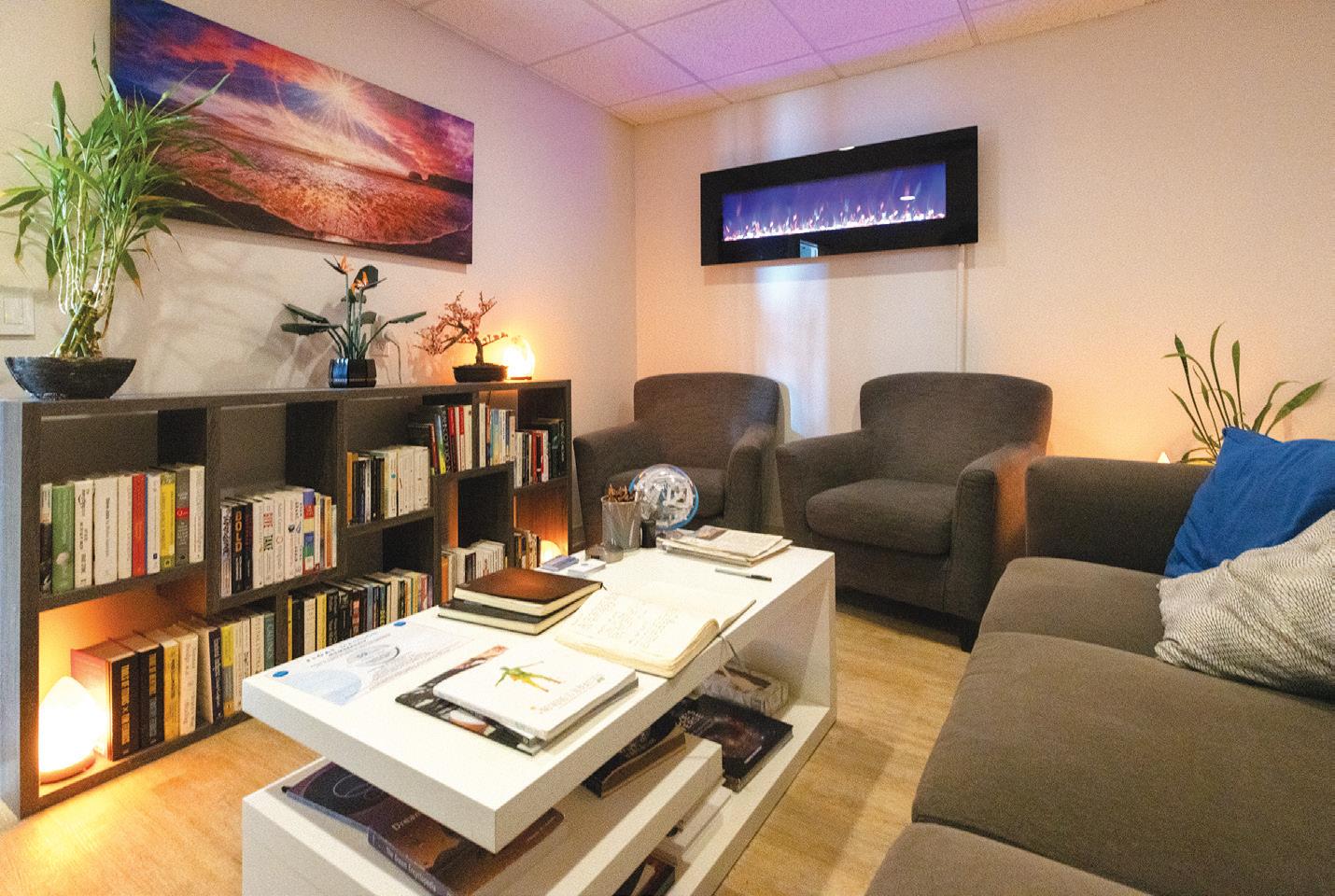
After a float experience, Float Madison also has a room guests can use to further unwind in—a dimly lit space for further reflection or a little escapism. There’s a small library, some coffee table books, and tea. It’s another moment guests can take before going back into the world with renewed vision and vigor. The room also has journals for guests to openly share their experiences.
“Many guests journal a bit after their floats,” says Greg. “Just their thoughts and how helpful it is for them. People thank us and give us hugs. It’s so worth it. One thing I love reminding myself, especially when I get into my floats, is why I’m here. Why I’m still doing this. I could be doing something else, like working for a good company and having a regular nine to five, but it’s so worth it just to see the positive impact it has on our Madison community. It’s just as lifechanging to others as it has been for me.”
For more information on the tanks, cleaning protocols, and to book an appointment, visit floatmadison.com.
Kyle Jacobson is a writer who meditates on things with back support.
Photographs
by
Eric Tadsen
Photograph by Barbara Wilson
Kyle Jacobson
by Kyle Jacobson
Walking into a gym for the first time, surrounded by unfamiliar equipment and people moving through routines you don’t yet understand, can make you feel like you’re already behind. For some, that’s part of the appeal. Get lean, look better, push harder—they’re in.
Lioness Fitness
But not everyone is looking for that experience. Around Greater Madison, smaller spaces have carved out their own niches: yoga studios, climbing gyms, and places that take a different approach to strength. For women thinking less about quick results and more about taking care of themselves long term, there’s Lioness Fitness.
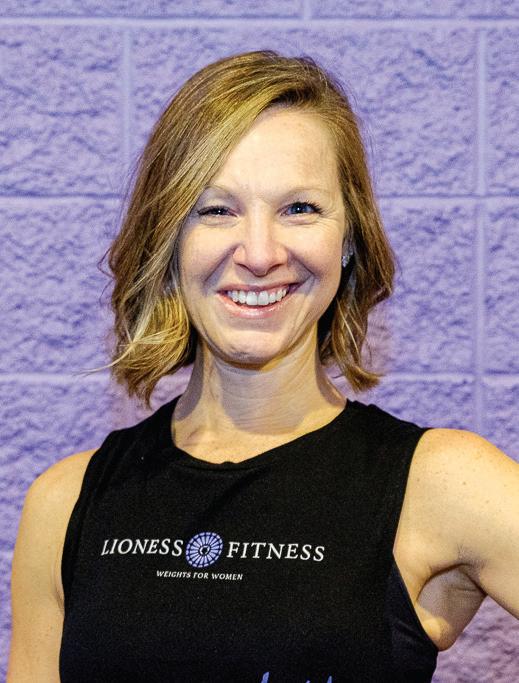
Founded by Kim Krueger in 2016, Lioness Fitness “started as a way to offer a safe approach to strength training for women who are postpartum,” says owner Kelley Sinclair. “Kim really couldn’t find that kind of programming. She had the experience and the know-how, so she just designed her own.”
What grew from that spark was much more than a series of exercises aimed at postpartum mothers. It became a physical space where women could do strength training with other women. Kelley recalls what gyms looked like when she was a teenager.
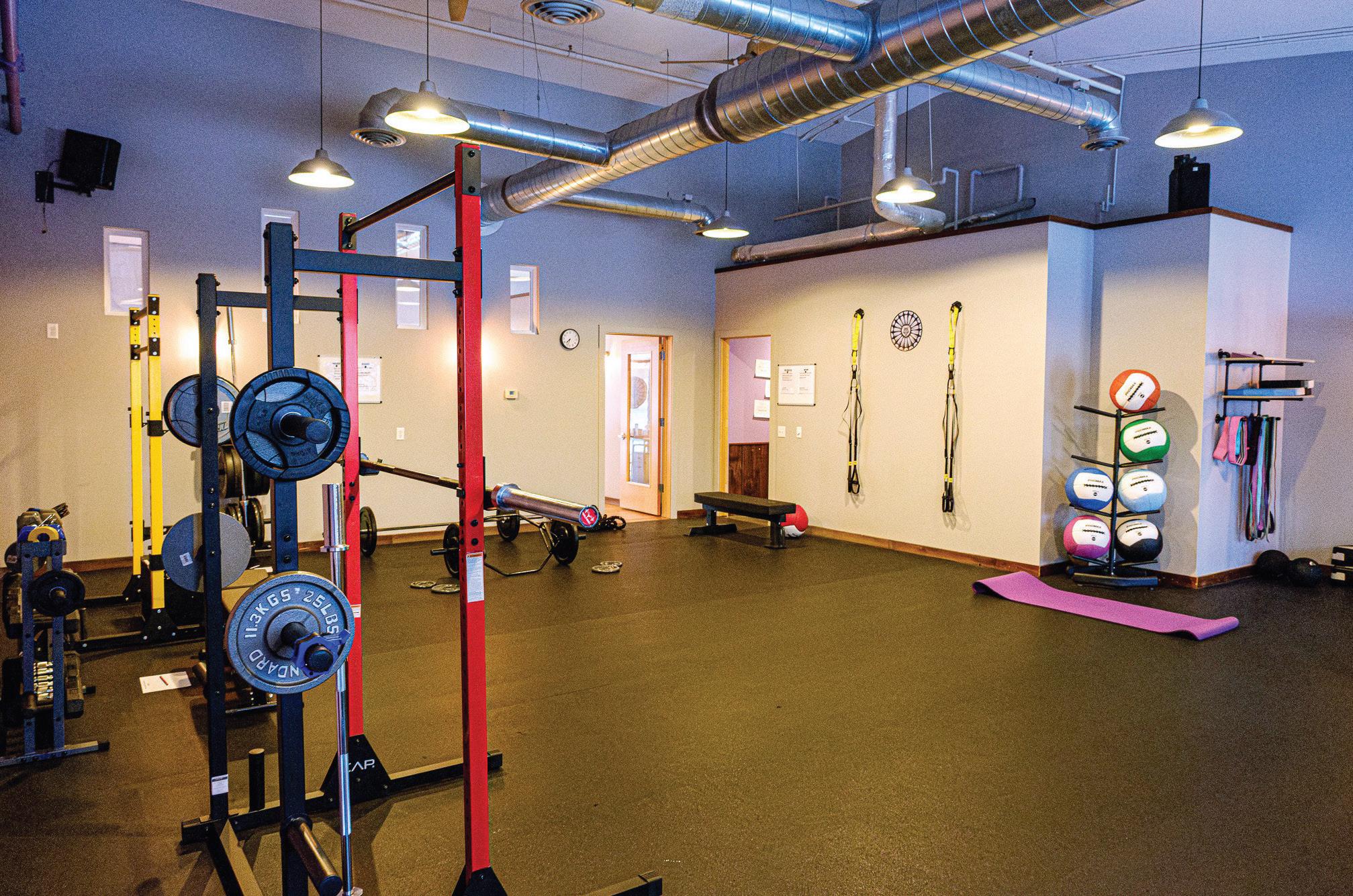
“I know that sports programs in high schools do a better job putting girls in the weight room now, but that was never part of the conversation when I was in high school. And that’s the same for a lot of the women here. It’s really intimidating to go to a big-box place and not know how to use equipment like this. The women-only space in a lot of big-box places is yoga balls and eight-pound weights and TRX bands. And those are all great for lots of things, but it doesn’t challenge women how they need to be challenged. This is a space where they can come learn how to do those skills—build some confidence in them.”
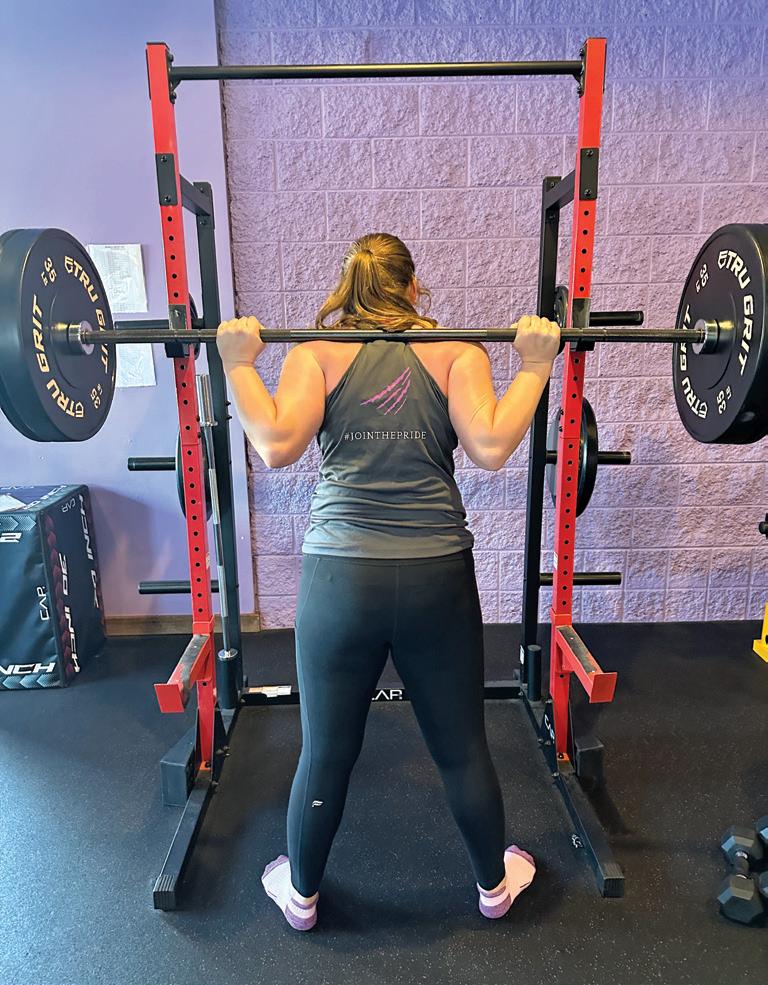
This all supports why Kelley likes to encourage people to join her classes, though she offers personal training as well. In her classes, the focus shifts between a muscle group, a move, or a skill. It’s always a full-body workout, but when the focus is on pullups, there’s an added emphasis on grip strength, lat work, and biceps. If a member is
“Essentially, our approach here is we’re taking care of our 80-year-old selves.”
working on shoulder or back issues, they incorporate that into the workout.
“We’re looking at how we’re progressively taking these moves a little bit heavier with a little more resistance over time in order to keep building bone density and muscle strength,” says Kelley. “Essentially, our approach here is we’re taking care of our 80-year-old selves.”
Today's vision of Lioness still reflects Kim’s approach, including continuing to offer less-intense versions of the programming to fit women who are pregnant or postpartum, but it also has a lot of Kelley, whose motherhood and small-business-owner journeys run parallel to each other. Some know Kelley better as Ms. Sinclair, music teacher for Middleton-Cross Plains, where she taught for 10 years. When her firstborn turned one, she decided to take a transitional year to figure out what her future would look like. After she and her husband went to a wedding in Colorado, they fell in love with the mountains and decided this would be a great place to spend that year.
Upon returning to Wisconsin, teaching just wasn’t going to work for her the way she needed it to, so she reached out to Kim and asked how she received her certification as a personal trainer. “She said, ‘Here’s what I did, and also, we’re opening up our own space, so get certified and come work for me.’” That’s
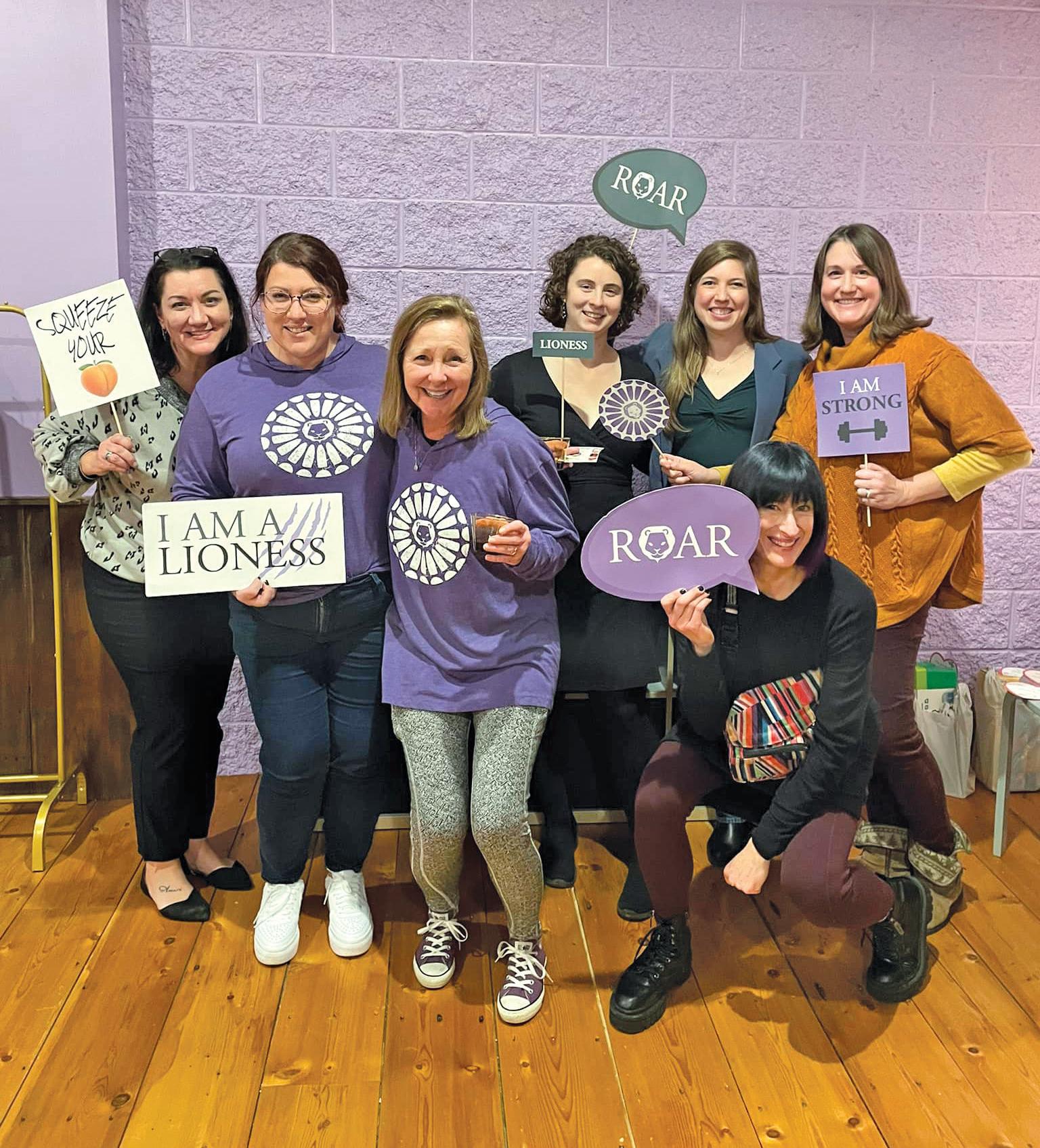
They check in, share stories, and build confidence together.
exactly what Kelley did, so when the pandemic hit, she felt confident taking over most of the operations. Afterward, Kim went back to working at EPIC full-time, and Kelley bought the business.
Over that time, she had a second child and experienced how different postpartum recovery can look from one pregnancy to the next. “We always suggest that there’s a longer off ramp than just your doctor clearing you after six weeks and the first thing you do is just go for a run. We try to collect a team of people who can help support rather than just relying on one person or the internet or whoever else has an idea about it.
“We also have some short series classes called New Mom Strength, and those are taken back another level just to make sure those moms have a good foundational base before coming to our regular classes. I also go hang out with the Meriter Baby Hour group a couple times a year and talk to them about postpartum fitness, and the mantra anywhere in those spaces is go slow to go fast. There’s usually a rush to get back after having kiddos. That whole nine months in nine months out business is for the birds. We just really focus on how to get them back to that really good baseline so that their core can be working really nicely for them in all of the other aspects and that their pelvic floor feels like it’s ready to handle an extra load when we’re putting them in big moves.”
Though victories in the gym are great, Kelley really enjoys when members share their non-scale victories. Things like “I moved the dog food myself today” and “I was able to go on a hike with my kids, and I didn’t get tired. I felt good after” exemplify those real-life applications she hopes her members achieve.
It’s hard to describe the trajectory of Lioness Fitness as growth; it’s been more an evolution. Moving between spaces and adapting through the pandemic, it has taken shape in response to the needs of its members. There have been times when childcare overlapped with the gym floor, when an errant Hot Wheel was just something to keep an eye out for. But that’s the vibe. Members get to know each other. They check in, share stories, and build confidence together. Lioness has become that sought-after third space—a place for new moms to strengthen their new bodies, for retirees to stay active, and for women of all backgrounds to feel comfortable showing up as they are.
Kyle Jacobson is a writer who hopes everything works out and stretches.
Photographs provided by Lioness Fitness
Photograph by Barbara Wilson
Kyle Jacobson
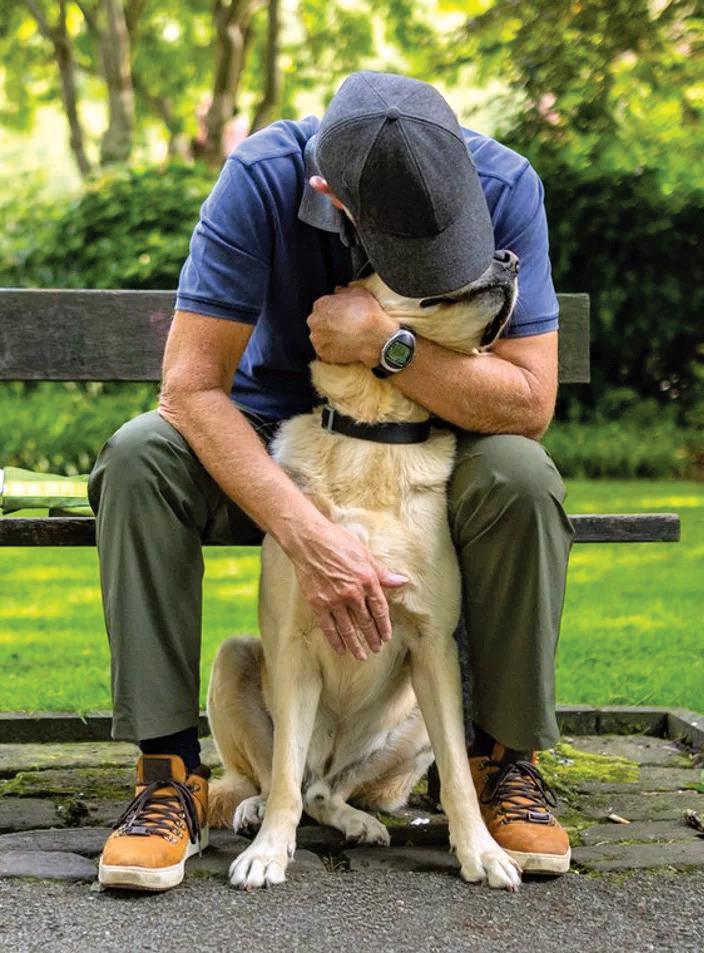
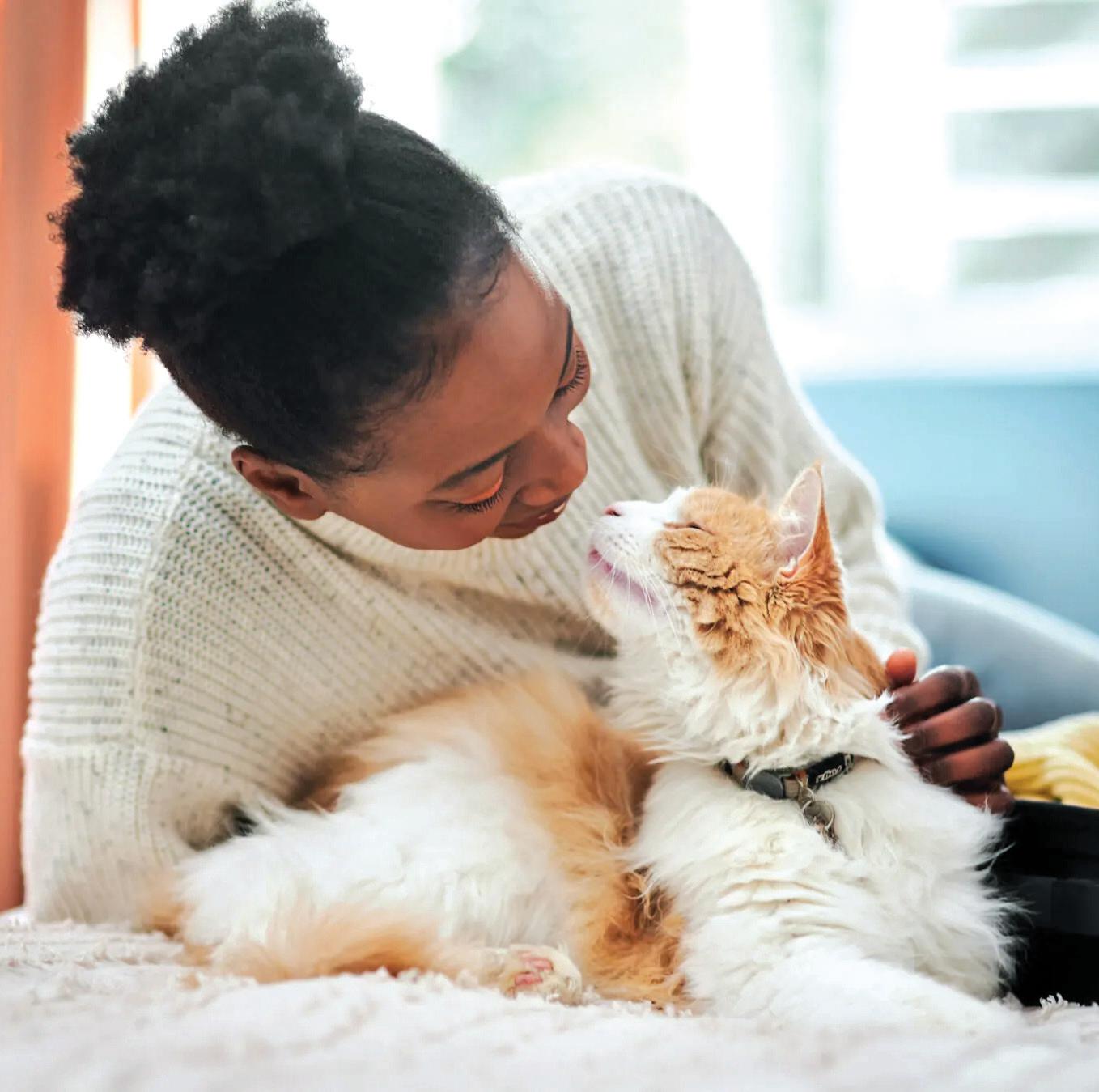
Caring for People Who Care for Pets
by Anne McClanahan, DVM, ACVB Resident
It may come as a surprise to many that veterinary medicine is almost as much about humans as it is about animals. Our patients can’t talk to us, they don’t pay for services, and they don’t understand what’s happening to them or what we can do to help them. We leave it to pet parents to make those decisions and take on the responsibility of caring for our patients. After almost three years as a veterinary behavior resident and almost eight years as a general practice veterinarian, I’m often surprised at how hard pet owners can be on themselves. I’d like to share a veterinarian’s perspective on pet ownership and caring for people who care for pets.
Just like every other area of life, social media can be a place of community or a place of anxiety, shame, and unrealistic expectations. This is true of the pet world just as much as anything else. I see videos of some dogs doing extraordinary tricks, others on a different hike every day, and still more looking like the most popular kid at doggy daycare. While enrichment is important for dogs, it doesn’t have to look like an adventure every time.
As a resident, mom of two young kids, full-time veterinarian, and human, I only have so much time and energy in the day. My dog also has severe osteoarthritis and is reactive to other dogs. So how do I give her mental and physical enrichment? For her meals, I put them in puzzle toys. We also do short training sessions with both new and old tricks and focus on short, sniff-heavy walks, which tire her out for the rest of the day because of the physical and mental work.
Another good enrichment technique is putting treats in a cardboard box, shutting it, and letting your dog rip it open—though make sure to supervise to avoid ingestion. You can do the same with a towel. Frozen kongs and lick mats are another great option.
You can also make your backyard into a sniffing paradise. Toss treats around the yard or hide different scents. The bakery section at the grocery store has all different extracts—vanilla, banana, coconut, etc.—and you can put a few drops on an old paper towel roll and hide it in the yard or around your house. You
can even buy different animal scents to hide in the yard. None of it is complicated, and it doesn’t take very much time. There are many ways to give your pet what they need within your capabilities.
Pet owners also feel a lot of guilt about boundaries versus spoiling. When you look online, everything is black and white. “Never let your dog on the couch,” “always eat before your dog or they’ll think they’re the boss of you,” or “never play tug with your dog.” It’s simply not this cut and dry. You can’t give your pet too much love or attention. You aren’t teaching them to be the alpha and you aren’t ruining your pet. What I do say is if you aren’t consistent with the boundaries you set in your home, your pet will be confused and appear to misbehave. If you don’t want your dog on your couch, that’s fine, but that should always be the rule that everyone in the house follows. If you’re okay with your cat sharing your pillow with you at night, I love that for you. We can’t communicate with our pets as we would with humans in our lives, so we have to be clear and kind in our direction and guidance. It’s less about the
details and more about consistency and predictability that lead to a happy, welladjusted pet.
One last thing I want pet owners to know: we, as veterinarians, are here to help. It may seem silly to have to say that, but sometimes people use their veterinarian as a last resort.
Between Google, Facebook groups, influencers, and even advice from friends of friends who once worked at a vet clinic when they were a teenager, you can
get information everywhere. But your veterinary professional is the one who knows you and your pet best. We’re on your team. We have the background, experience, and resources to help. And if we can’t, we’ll know who can.
If you’re struggling with your pet, whether medically; behaviorally; or some other way, including financially, make your veterinarian one of your first calls. Be up front and let us know so we can work within your means to try to make things better. I never want an owner to feel guilty about asking for help.
I don’t think I knew how big a factor supporting people was before I became a vet, but it’s become one of my favorite parts of veterinary medicine. Being a voice of support or reassurance or a shoulder to cry on during hard times is part of my job. As a veterinarian, I don’t expect you to be a perfect pet owner. I’m not here to judge; I’m here to help you and your pet experience the best life and the best relationship possible.
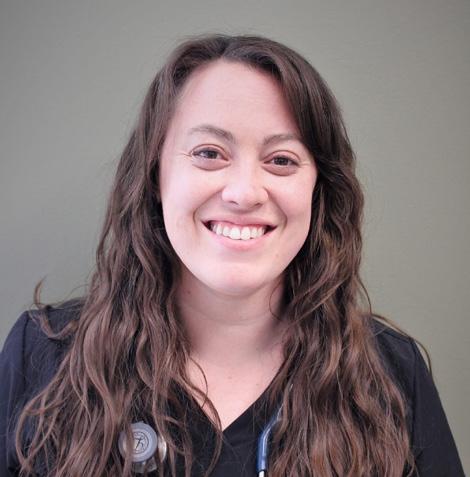
Anne McClanahan, DVM, ACVB Resident is an associate veterinarian at Four Lakes Veterinary Clinic. fourlakesvet.com
Anne McClanahan, DVM, ACVB Resident
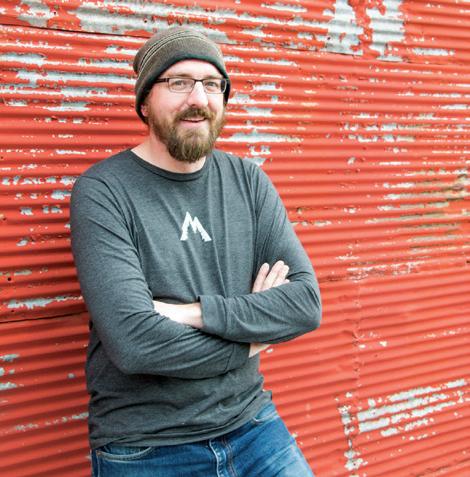
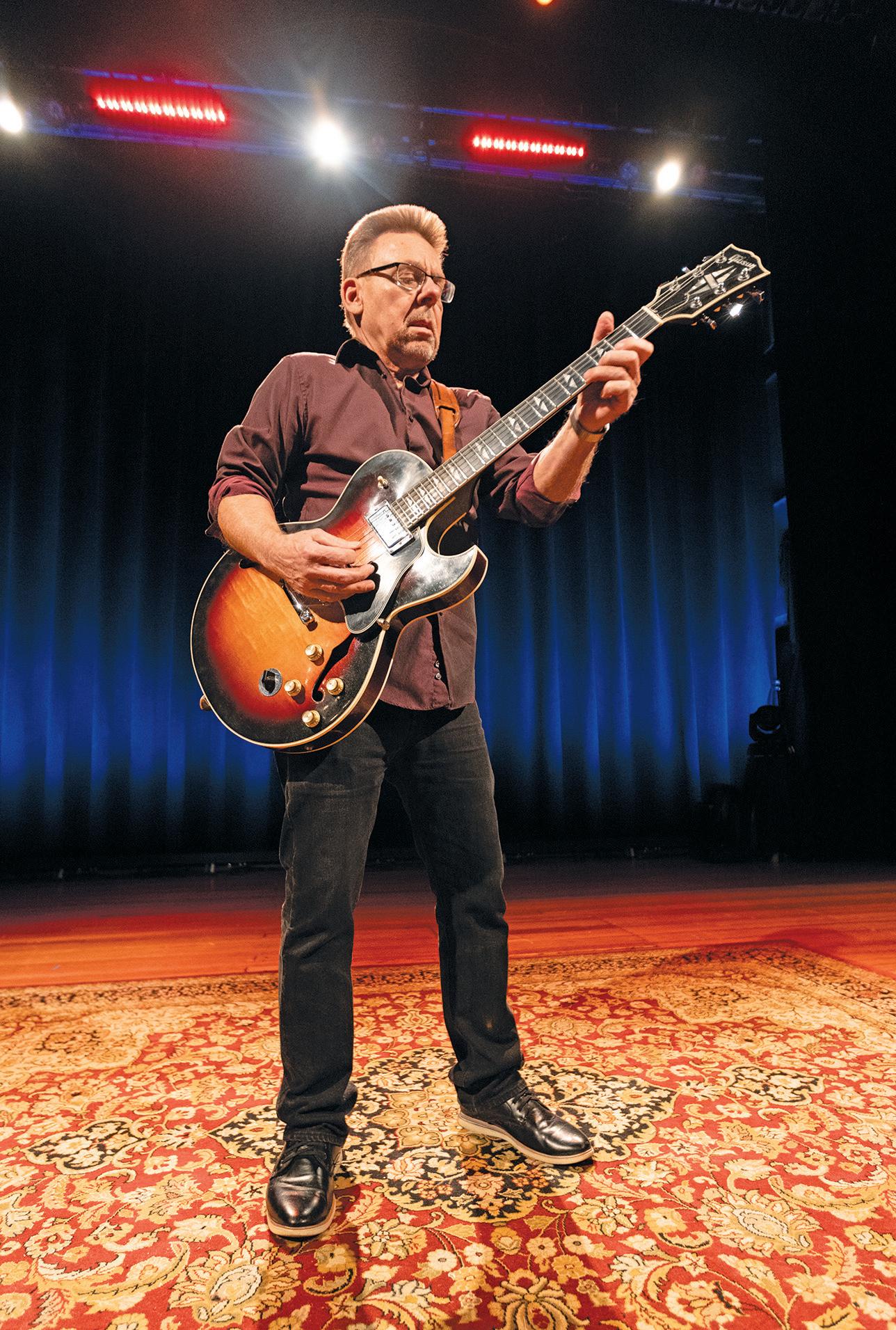
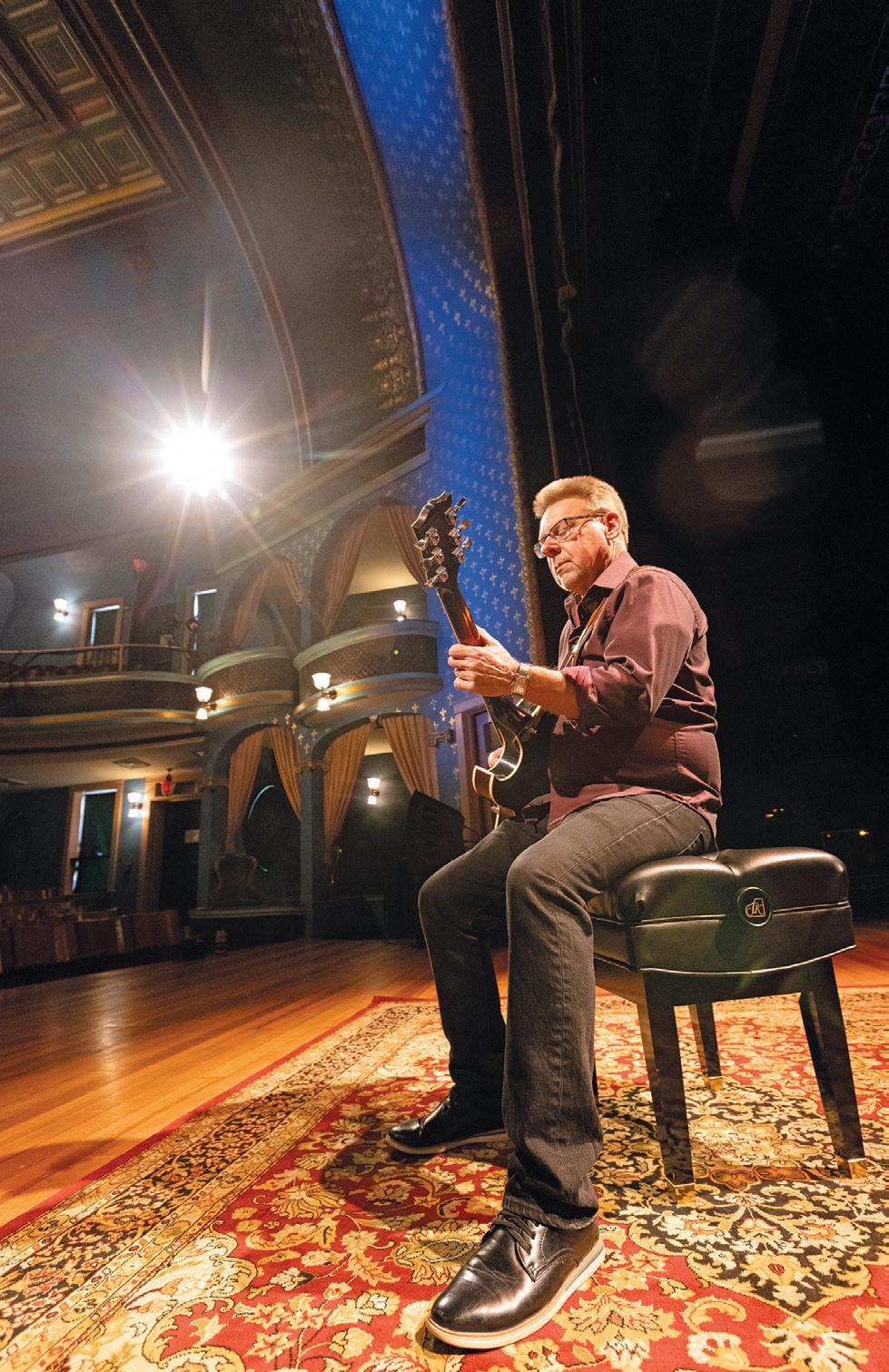
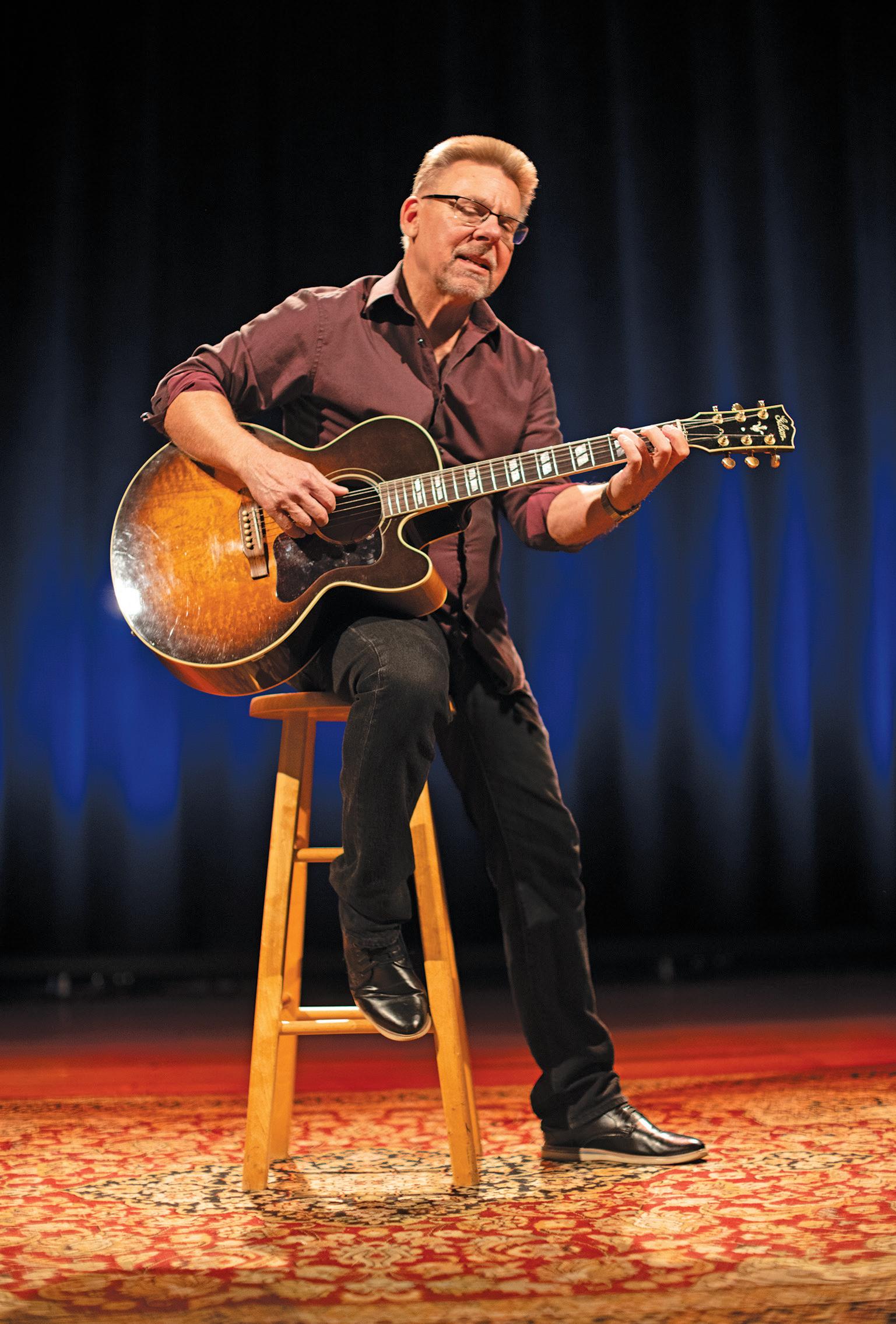
BLUESMAN MEL FORD
BY KYLE JACOBSON
“We used to open for these guys. Where the Churchkey is, that used to be a club, and for some reason they booked a lot of blues. My friend Madison Slim, he had a band called the Night Crawlers. I would work with him. We’d get all these opening act spots, so we would get in there and we would open for Otis Rush, Eddie Taylor, Freddie King. I remember Albert King was in there one time, and I’m walking in with my guitar, and I look. Here comes this huge cat with a huge orange and yellow burl pipe in his mouth. I’m like, ‘Albert, good to see you.’ [Mel drops his voice a few octaves] And he goes, ‘Good to see you too, man.’”
Mel still tells it like he’s surprised it happened. Like he’s the luckiest guy in the room. You’d never know it talking to him, but Mel is a Wisconsin Hall of Fame musician and one of Madison’s most enduring blues artists.
Mel’s story starts in Neenah in Wisconsin’s Fox Valley region. When he was growing up, in the late ’50s and ’60s, you either
“MY MA SAID THAT BEFORE I COULD WALK, I WAS WHISTLING.”
worked the foundries or paper mill—unless you were one of the handful of millionaires. That contrast didn’t mean much to a young Mel, whose father worked in a factory making printer’s ink.
“There was tremendous disparity of income, but because I grew up there, it didn’t really dawn on me that not every place in the world was like that. So there were guys driving around in Bentleys, and when they were done with their sports cars, there was this guy, Morris Fenskey, he had a radiator shop. He would get those cars cheap when the rich guys got rid of them. I would stop in when I was a kid, I was working as a janitor, and I knew he had old MGs, so I went over. ‘Morris, I hear you got a TC and a TF under all those tires.
“He goes, ‘Yeah.’
“I said, ‘Are you selling any?’
“‘What do you do for a living?’
“‘I’m a janitor.’
“‘I don’t think you can afford these.’”
What was within reach for Mel and his family, however, was music. His father was a barbershopper, his mother a hobby pianist, and as for Mel, “My ma said that before I could walk, I was whistling.” Having a piano in the house led to Mel taking piano lessons at an early age. His piano teacher then gifted him his first stringed instrument: a ukulele. One day, a friend of his teacher visited during a lesson and played guitar. To him, it sounded like a symphony orchestra. At 10 years old, Mel asked his mom for his first guitar. She said yes.
“I started playing folk music and hootenanny, bluegrass stuff. John Duffey and The Country Gentlemen. I think that was the first record I ever bought. When the Beatles came out, we started buying rock and roll records. Then when I was a teenager, I went and saw Howlin’ Wolf, and I was absolutely stunned. I was like, I’m not buying records from British teenagers anymore; I’m gonna start listening to the real dudes.”
Unsold on the idea of making music for a living, Mel looked at his uncle, then a commercial artist in Milwaukee, and saw a model
"THIS MUSIC ISN’T SOMETHING THAT YOU CAN GENERATE WITH A COMPUTER."
for how art could provide a steady life. It took only one year of majoring in art at UW–Oshkosh to realize it wasn’t for him. He just really wanted to play the blues. In 1973, Mel made the move to Madison, and it wasn’t long before he “started making a lot of racket.”
After getting comfortable opening for major performers, Mel got his chance to step inside the wider world of blues when Calvin “Fuzz” Jones and Willie “Big Eyes” Smith, alumni of Muddy Waters’ band, were touring with the newly formed The Legendary Blues Band. Billy Flynn, a Green Bay-born bluesman who joined the band in the late ’80s, was among the guitarists on those tours. When Billy couldn’t make a show while touring in the South, Mel got the call, and with it, a seat on the big stage.
Mel says, “It was really an eye-opener because you can listen to that music, you can go see it all you want, but when you’re on stage with them, it’s a whole different animal. This music isn’t something that you can generate with a computer. The backbeat is dragged—it’ll speed up or slow down as just part of the format. It’s deep.”
Though he could lose himself in the music at night, by morning, he was back to work. Whether pounding a loading dock
or driving a semi to deliver car batteries, Mel preferred work that was physical and straightforward. The music was never for the money, and the work was never for the spotlight.
“Sometimes I would get kind of tuckered out,” says Mel. “I’d come home, lay down for an hour, then jump up and go play my gig. I was most tired when I was a stay-at-home dad because I had a weekly Wednesday; a weekly Thursday; and then Friday, Saturday, and Sunday, Andy Linderman, Westside Andy, he’d have me booked somewhere. … My hat is off to any and all caregivers, stay-at-home parents, and anybody taking care of their relatives. I was never so tired in my whole life.”
For 72 years, connection has always driven Mel—at home, at work, and onstage. He looks back on how his hand played out, on being a white guy in a predominantly Black space, thinking about politics and racism and his dad serving in an integrated unit in the Army, and charmingly says, “I guess I’m lucky. I’m really lucky.”
Kyle Jacobson is a writer who believes “Time” heals all wounds, as does most of Pink Floyd’s catalog.
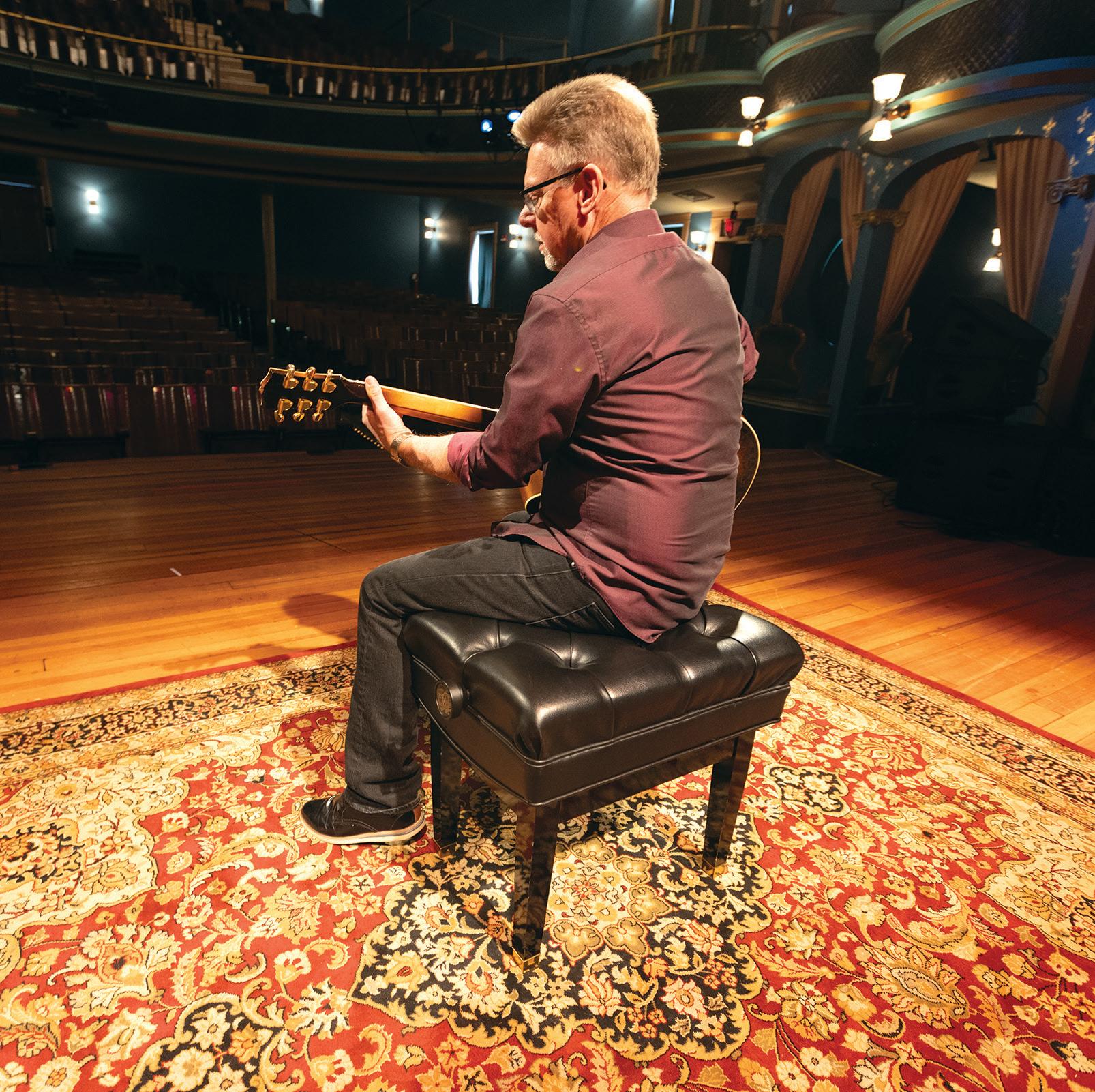
Photographs by Eric Tadsen . Thank you to Stoughton Opera House for being a fantastic location for our photo shoot!
Photograph by
Barbara Wilson
Kyle Jacobson
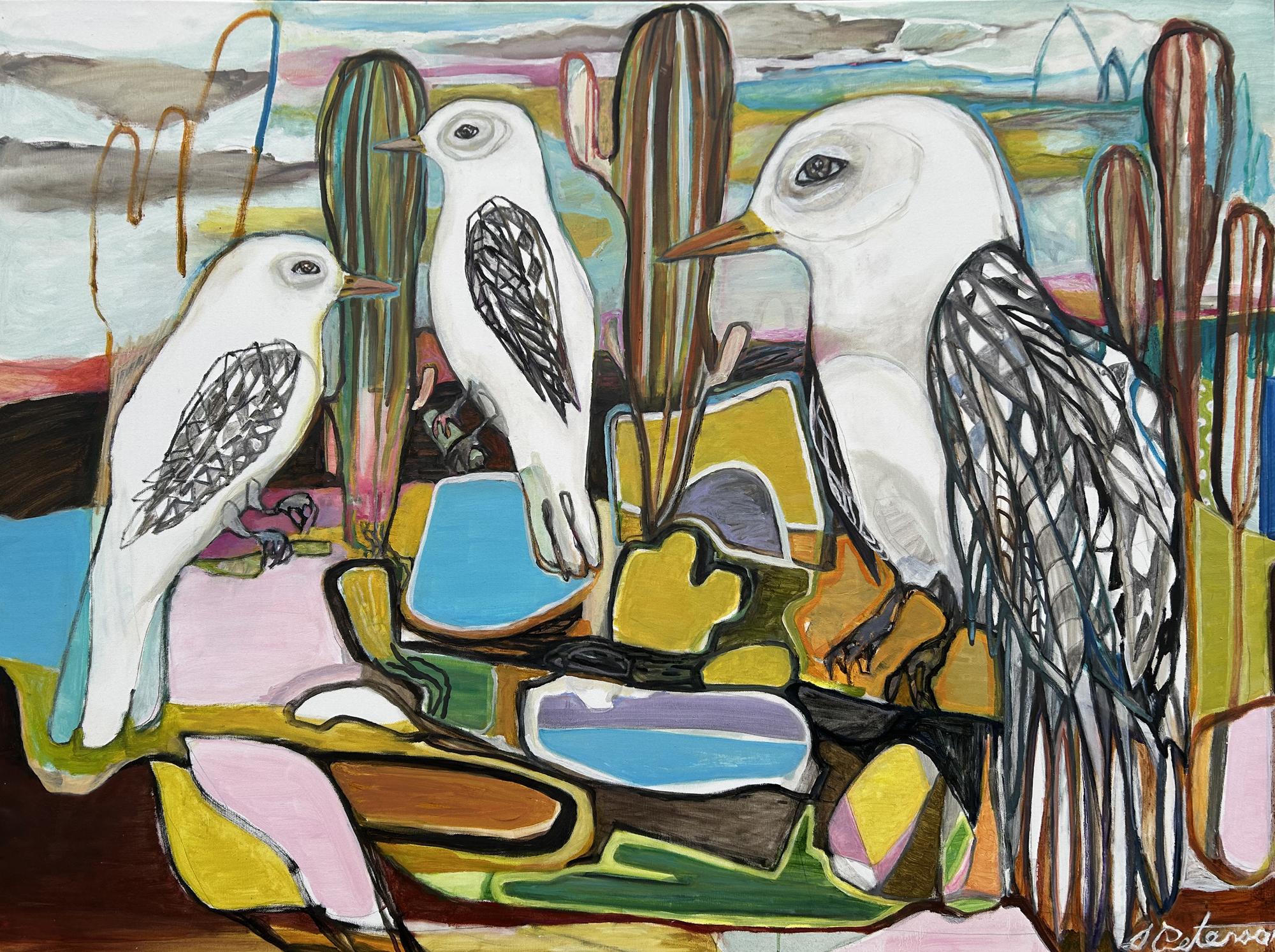
Image: Sandra Peterson
Abel Contemporary Gallery
INDEX advertiser
association
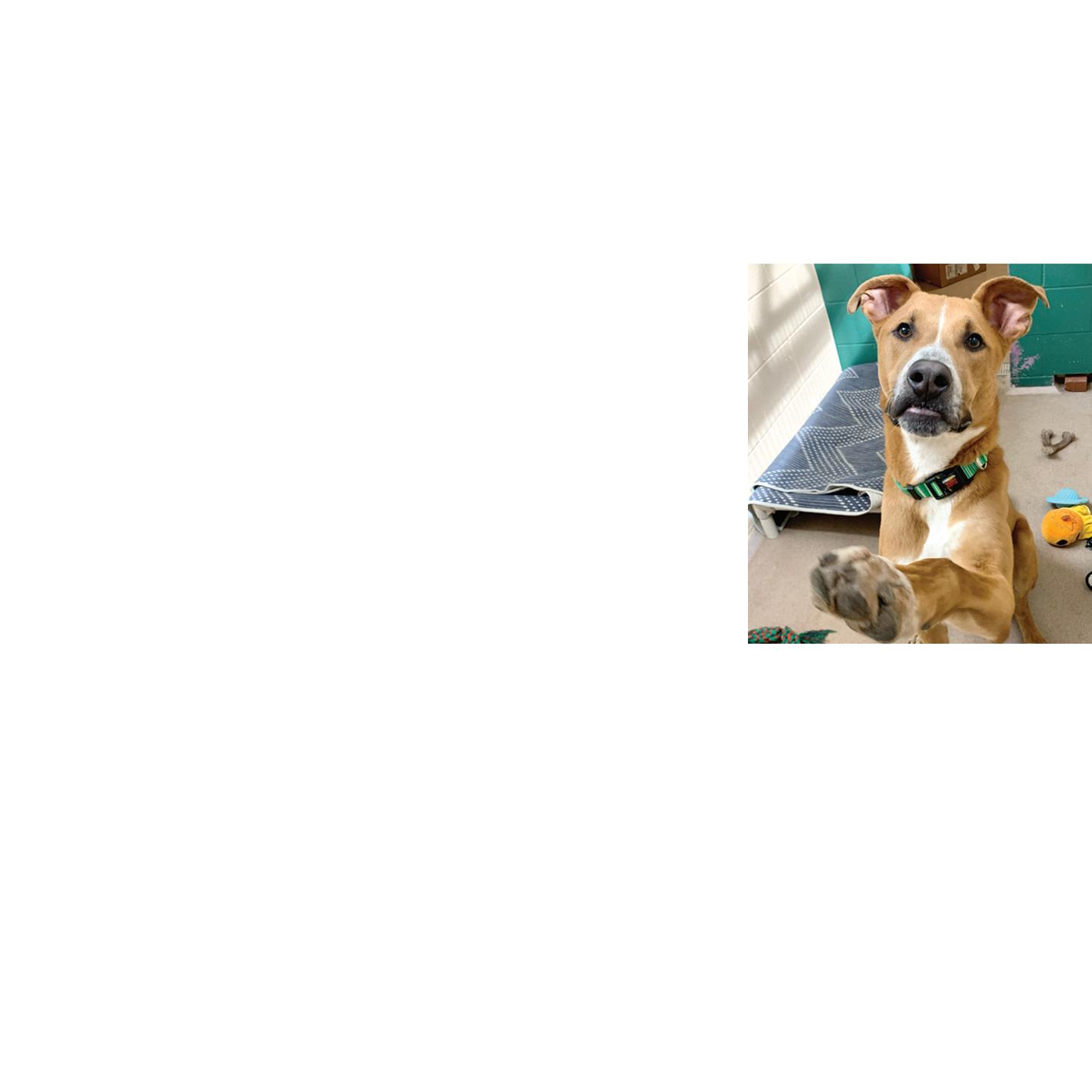
Dane County Humane Society 14
dining, food & beverage
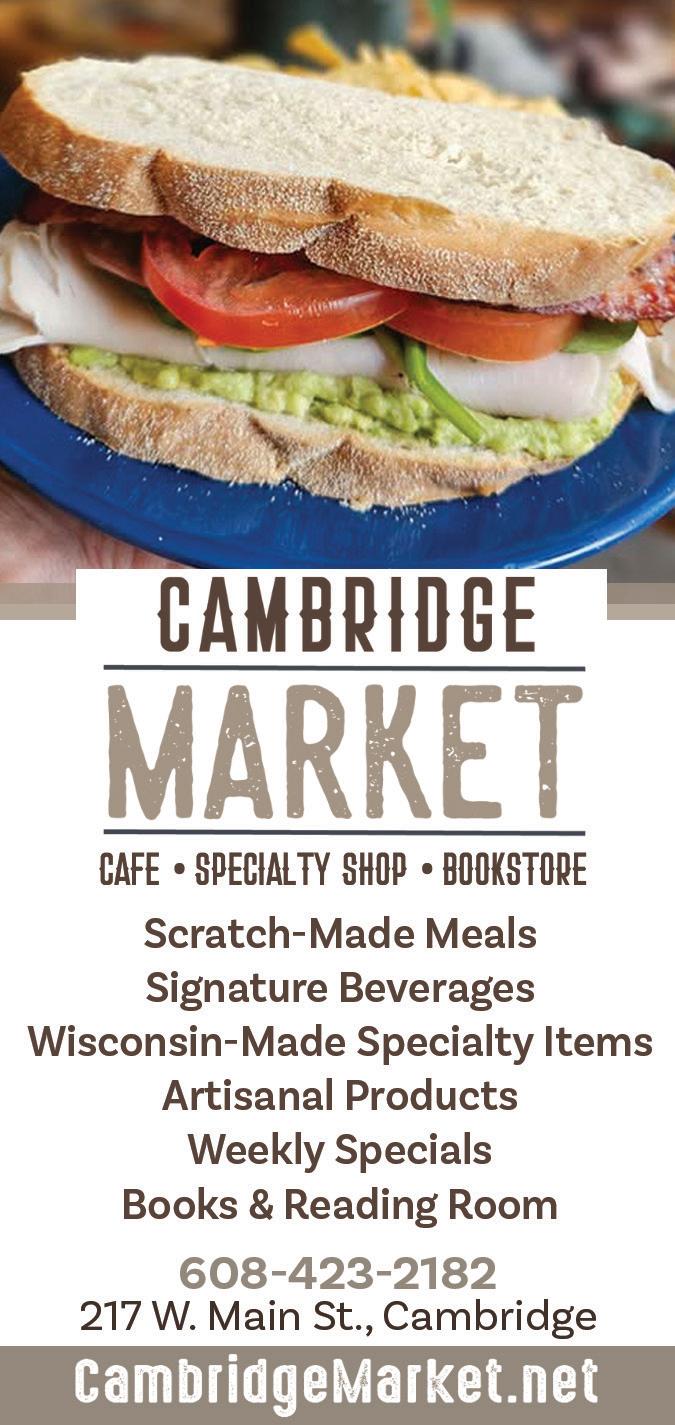
Cambridge Market Cafe 15
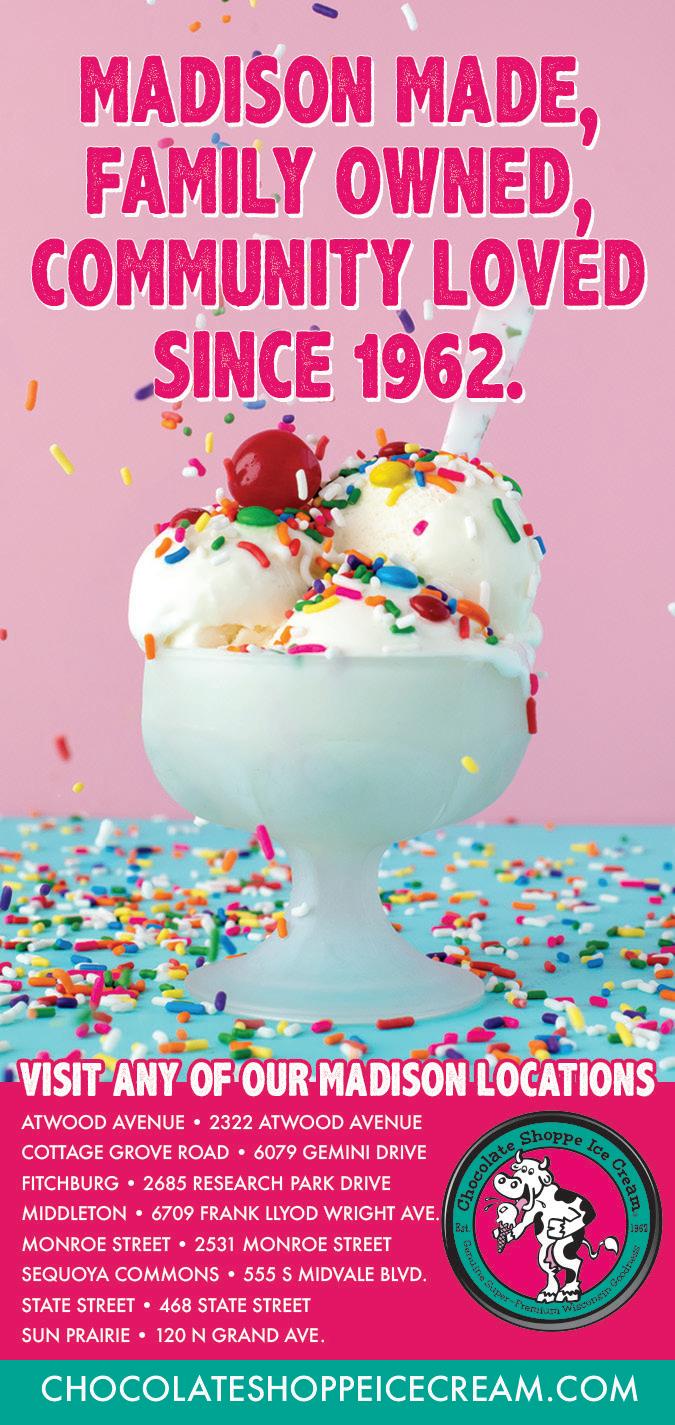
Chocolate Shoppe Ice Cream 13
The Deliciouser 13
Fraboni’s Italian Specialties & Delicatessen 15
Lombardino’s 5
The Old Feed Mill Restaurant 18
Paoli Schoolhouse
American Bistro 5
Sugar River Pizza Company 14
Teddywedgers 19
Tempest 5
Tornado Club Steak House 5
entertainment
&
media
Crashbox Therapy 23
Fitchburg Agora Art Fair 32
Our Lives Magazine 15
Spring Green Arts & Crafts Fair 28
services
Edgerton Hospital and Health Services 9
Four Lakes Veterinary Clinic 25
Monroe Street Framing 15
Riverplace Dental 14
Stoughton Health 31
shopping
Abel Contemporary Gallery 29
Anthology 9
Cambridge Market Bookstore 29
Deconstruction Inc 14
Fitchburg Center
Farmers Market 32
Goodman’s Jewelers 2
Please support our sponsors!
contest
Win a Bergamot Massage Signature 60-Minute Massage ($95 value)
question:
“Which local business owner was previously a chef at a vegetarian jazz nightclub in Urbana, IL?”
Enter by submitting your answer to the above question along with your name, mailing address, phone number, and email online at madisonlocallysourced.com, by email (mls@madisonlocallysourced.com), or by mail:
Madison Locally Sourced c/o ASJ Publishing LLC PO Box 559 McFarland, WI 53558
All entries with the correct answer will be entered into a drawing. Contest deadline is June 1, 2026.
good luck!
winners
Thank you to everyone who entered our previous contest. The answer to the question
“Who were the founders of Clasen's European Bakery?” is Ralph and Ernst Clasen. A Bergamot Massage & Bodywork gift card was sent to our winner, Holly Dabel of Waukesha, WI.
congratulations!
Stoughton Health and the OrthoTeam Clinic accept over 160 insurance plans, including Blue Cross Blue Shield, i
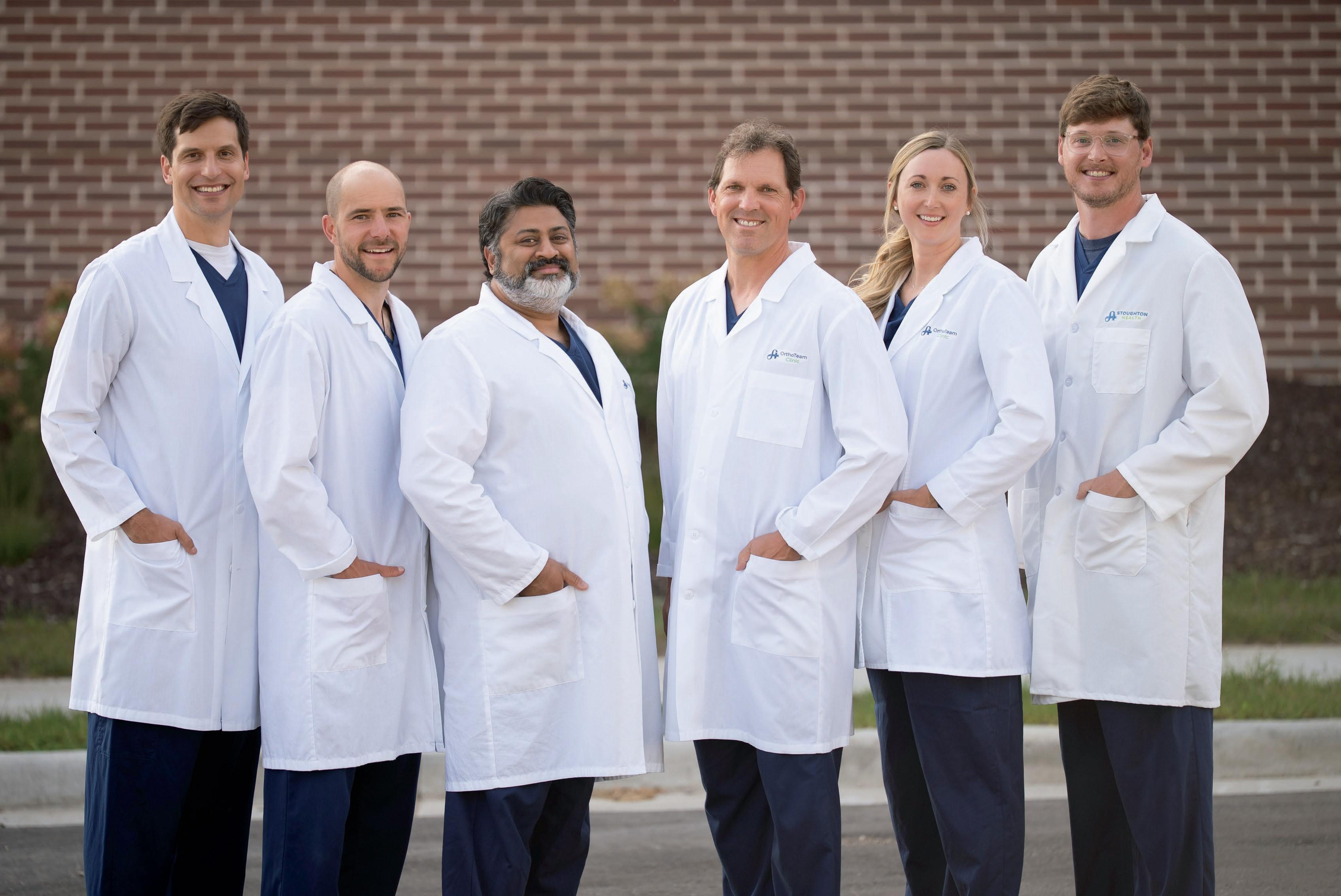
Stoughton Health’s OrthoTeam provides advanced care for ankles, hips, knees, shoulders, and sports injuries.
Stoughton Health’s OrthoTeam provides advanced care for ankles, knees, shoulders and sports injuries.
Outpatient Center 900 Ridge Street, Stoughton (608) 877-3419
OrthoTeam Clinic Locations 2 Science Court, Madison (608) 231-3410