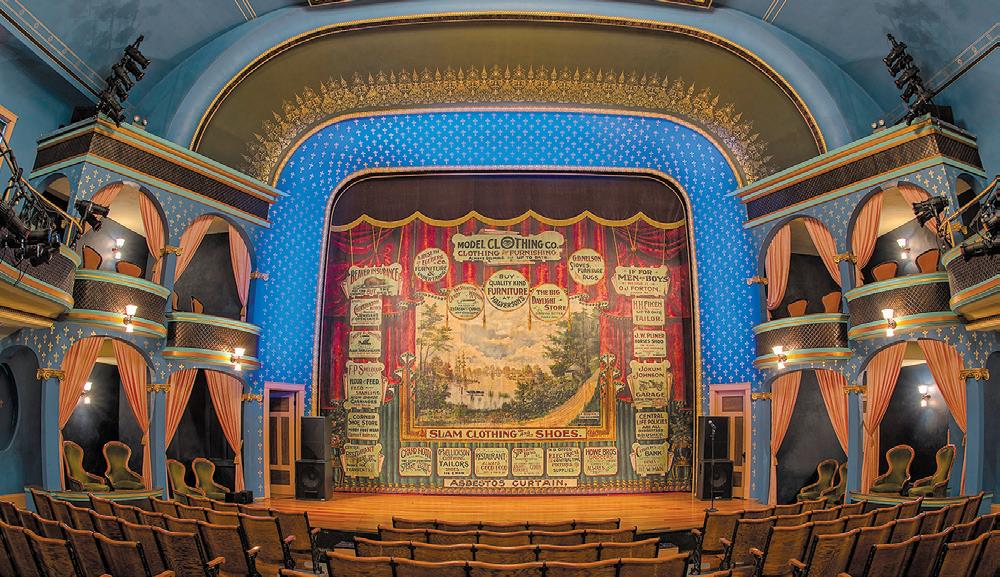
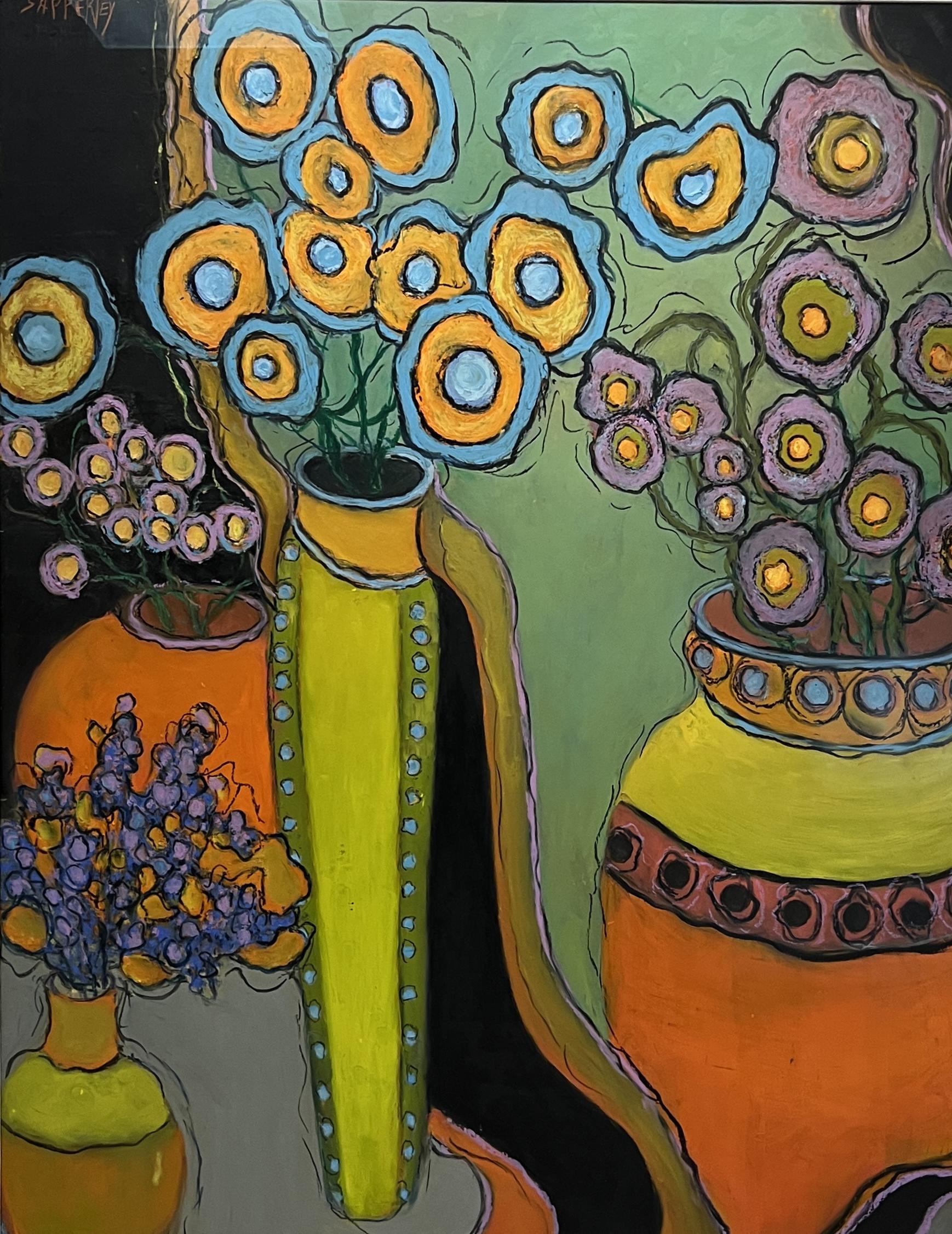
e meticulously restored Stoughton Opera House is one of Wisconsin’s premier music theaters featuring legendary performers and cutting-edge contemporary musicians in the intimate atmosphere of an era gone by.
Come early to the Ghost Light Lounge!
Delightful entertainers perform before the main show. Enjoy a selection of alcoholic and non-alcoholic beverages in the lounge throughout the show.
Tickets on Sale to Members August 3 at 9AM
Select Tickets on Sale NOW!
Join today and get first choice on shows you don’t want to miss! Tickets on sale to general public August 17.
Sign up NOW for our email list! It’s the best way to learn about all our shows. Online sign up at stoughtonoperahouse.com
Our Exciting 2026–27 Season Sneak Peek
• Valerie June
• An Evening with Bettye LaVette
• Altan
• AJ Lee & Blue Summit
• S. Carey
• Tab Benoit: Soul of the Swamp Tour
with Ghalia Volt
• Josh Ritter: A Book of Gold rown Open with special guest Kathleen Edwards
• Je rey Foucault
• Davina and the Vagabonds
• Michael Perry & e Long Beds
• Karla Bono
• e Arcadian Wild
• Béla Fleck: My Bluegrass Heart
• Wood Brothers
• SistaStrings
• Festival Choir & City Band
• Susan Werner
• Harp Twins Rockin’ Holiday Concert!
• An Evening with Kathy Mattea
• Steely Dane
• Mavis Staples
• Ana Popovic Dance to the Rhythm Tour
• Judy Collins—Sweet Judy Blue Eyes: Farewell
• Väsen with special guest Shauncey Ali Quartet ... and Much, Much More!
publisher & editorial director
Amy S. Johnson
lead designer
Barbara Wilson
copy editor & lead writer
Kyle Jacobson
sales & marketing director
Amy S. Johnson
designers
Jennifer Denman, Linda Walker
administration
Lisa Abler, Olivia Leichsenring
contributing writer
Lisa Bernard, Efrat Koppel, Shelly Torkelson
photographer Eric Tadsen
additional photographs
Dane County Humane Society, Jeff Galligan, Jeff Goke, Sarah Madl, Joshua Mayer, Promega Corporation, Jean Roberts-Guequierre, Caitlin Williamson
Watch for the next issue SEP-OCT 2026
PUBLISHER from the
subscriptions
Madison Locally Sourced is available free at over 150 locations. To purchase an annual subscription (six issues), send $24 and mailing information to:
Madison Locally Sourced c/o ASJ Publishing LLC, PO Box 559 McFarland, WI 53558 comments
We welcome your questions and comments:
Madison Locally Sourced c/o ASJ Publishing LLC, PO Box 559
McFarland, WI 53558 mls@madisonlocallysourced.com advertise
To inquire about advertising space, please call (608) 729-4888 or email mls@madisonlocallysourced.com
A friend likes to poke fun at me, saying I’m obsessed with open windows. Post-winter, I watch for daytime temps to reach the mid-50s and overnight temps to stay above the mid-40s to start cracking windows for fresh air. It continues through the summer, when my attention shifts from temps to dew points, opening windows when they remain below 60. The Open Air issue fits my obsession well, except instead of just trying to bring the outdoors inside, we have great ideas to help you get outside.
Open Air dining highlights food carts. Not only do they allow us to more easily eat outdoors, the variety, quality, and availability in Greater Madison is exceptional. We introduce two great ones: Las Islas Filipinas and El Wiscorican.
Shelly Torkelson of Natural Resources Foundation of Wisconsin contributes a great article about the Southern Kettles. While over a million people visit this glacial landscape each year to hike, bike, paddle, and more, they likely don’t realize the Southern Kettles’ contributions to global biodiversity. Shelly shares how and why.
There are many outdoor art fairs during the summer, and one of our favorites is the Agora Art Fair. You’ll go for the art and stay to enjoy the food, music, and other entertainment, including activities for the kiddos.
cover photograph
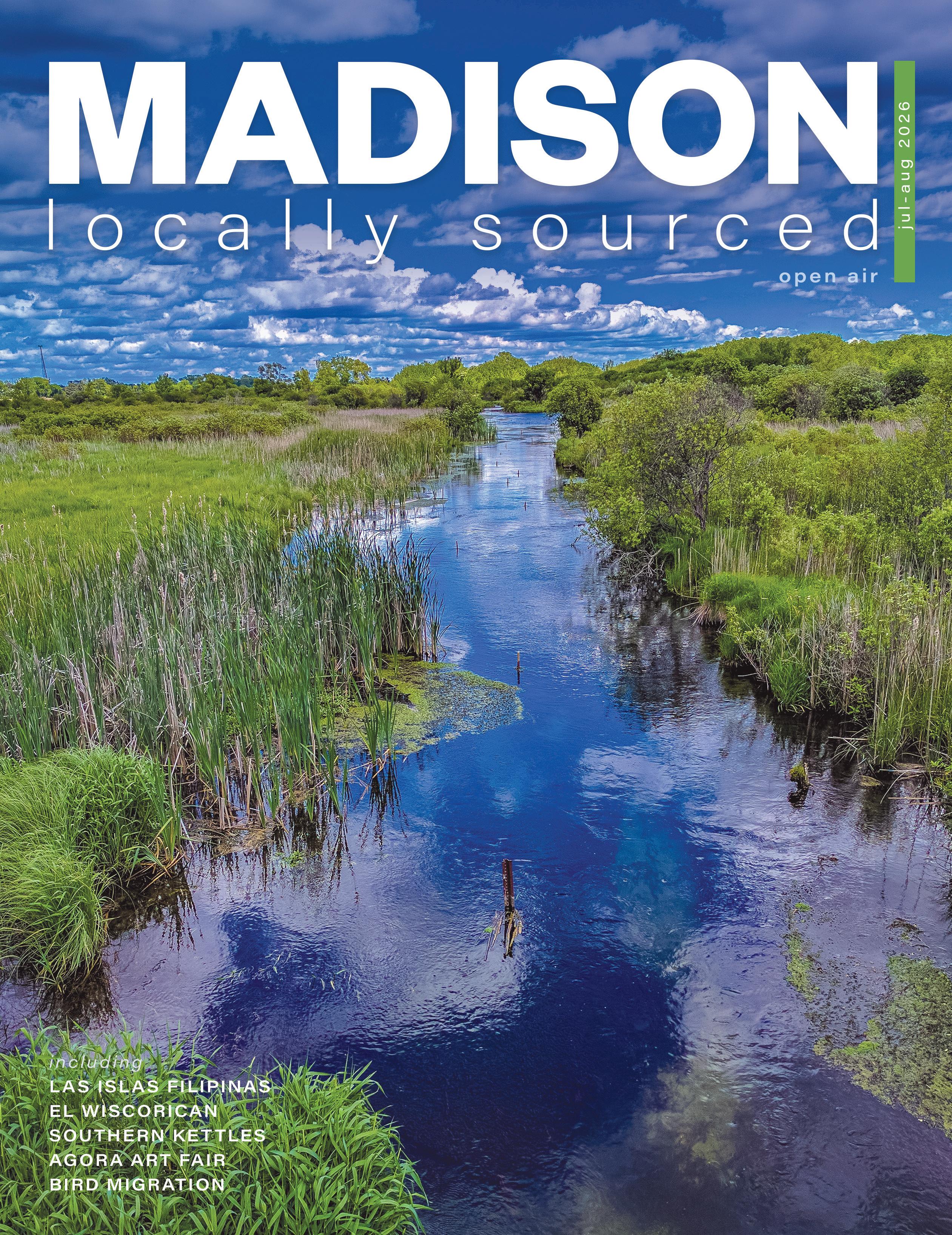
Bluff Creek State Natural Area in Walworth County taken by Joshua Mayer
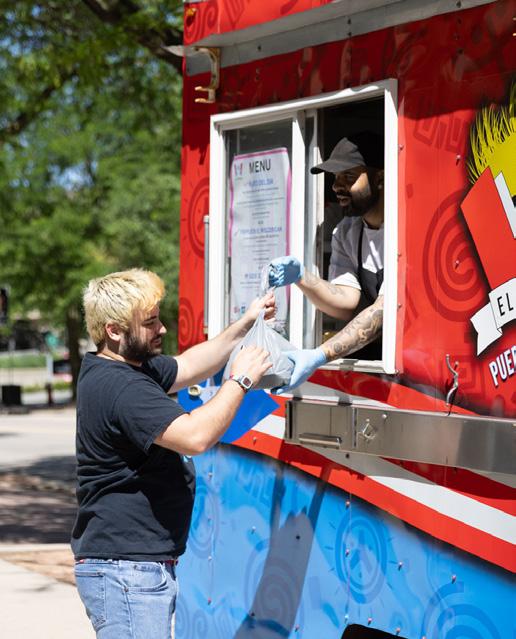
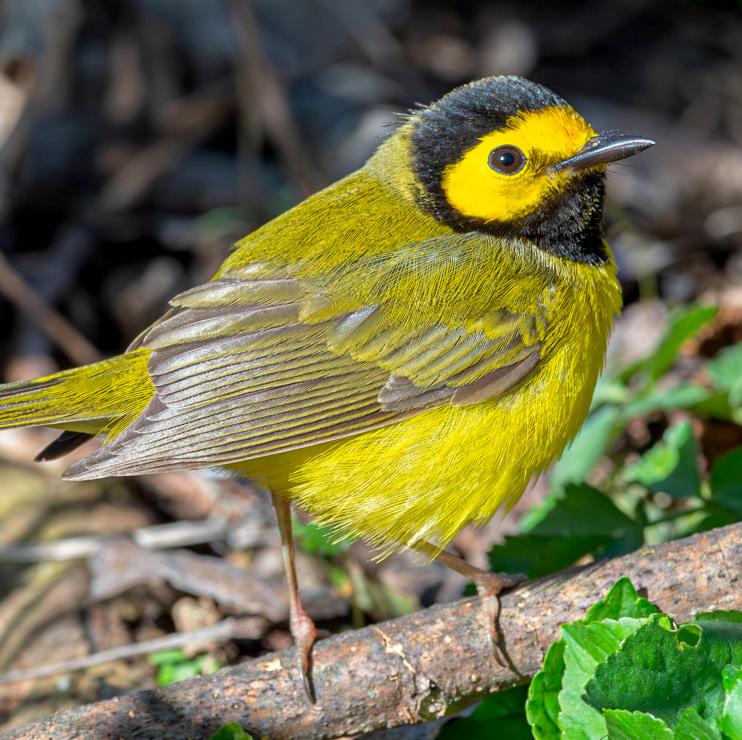
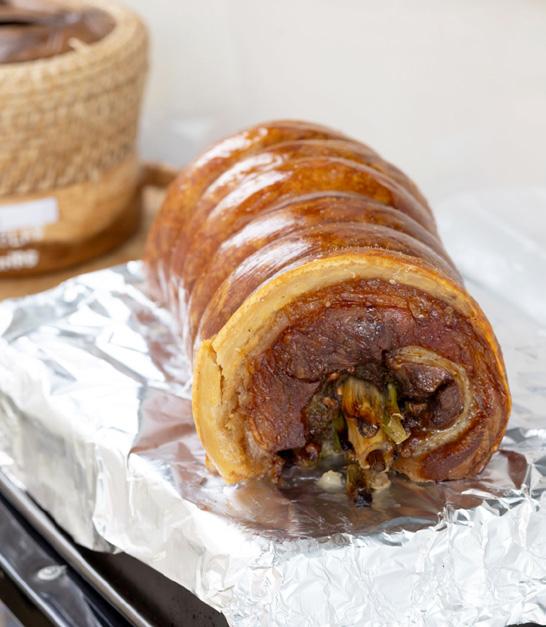
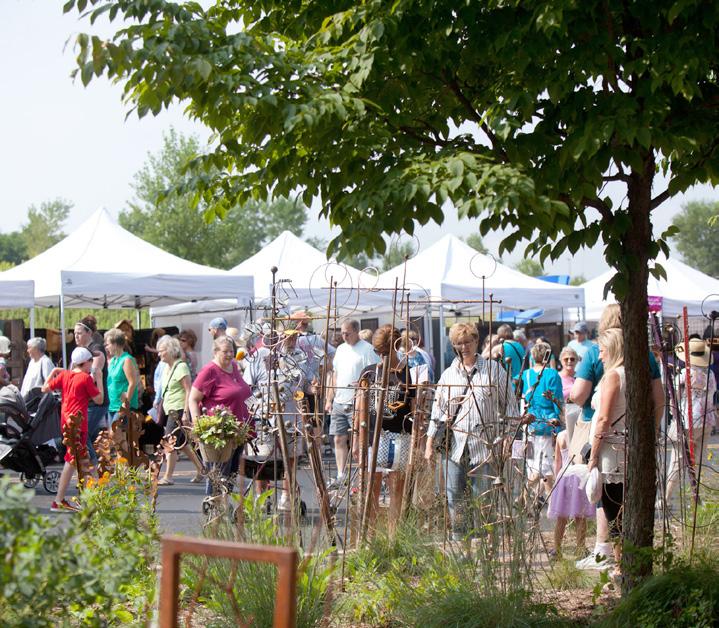
photographs on page 3 (top left to right) taken by Eric Tadsen at El Wiscorican taken by Jeff Galligan of hooded warbler (bottom left to right): taken by Eric Tadsen at Las Islas Filipinas provided by Agora Art Fair
Earlier this spring, you saw encouragements to turn off lights to help make spring migration safer for birds. Dane County Humane Society’s Wildlife Center provides more detailed information so we can be better prepared for the fall migration.
Finally, we feature the extraordinary artist Jean RobertsGuequierre, whose work you should seek out to see in person, and author Jeff Goke, who took the initiative to self-publish his first novel, Orderbound .
I hope you'll explore our suggestions to enjoy the outdoors this summer. I’ll continue doing it as well, both inside and out.
Las Islas Filipinas
by Kyle Jacobson
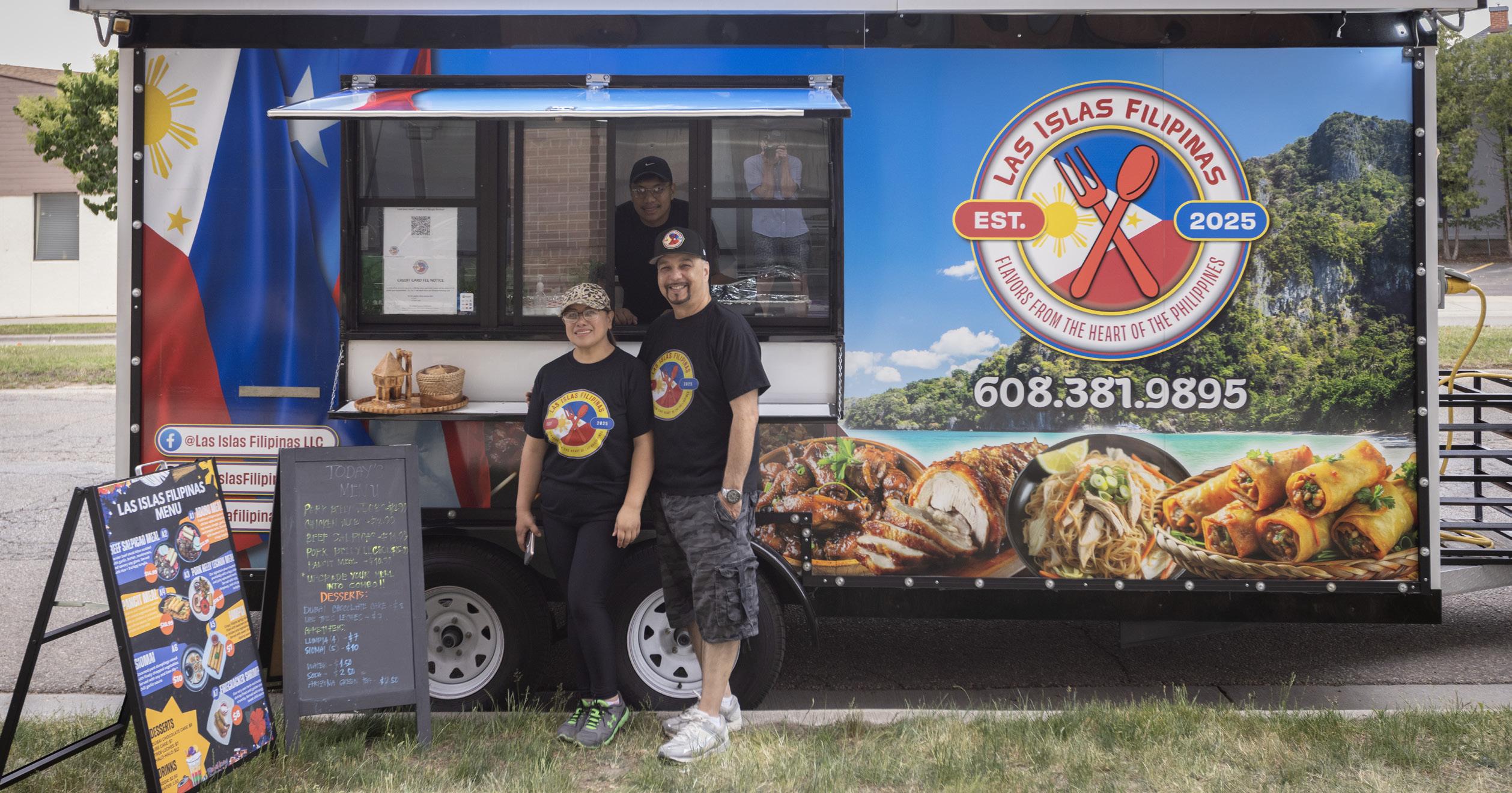
This past March, Northside Planning Council hosted Taste the Future, a showcase of chefs working out of FEED Kitchens and the flavors they bring to Madison. Among the more seasoned food trucks was a newcomer to the local scene: Las Islas Filipinas. At the window, owners Michelle and Eliud Perez offered something many attendees were encountering for the first time: traditional Filipino dishes.
Without yet having had their grand opening, the event was “perfect timing,” says Eliud. “People came over who were like, ‘I never tried Filipino food.’
“I said, ‘Oh, you’re gonna love this.’”
Though the offerings share similarities with other foods from Southeast Asia, there’s still an education component. The flavors in Filipino cooking often lean more savory and have a subtle sweetness, with heat used more sparingly, and soy and lime complement that profile in a noticeable way, allowing the flavors to linger on the palate. At the window, Eliud talks customers through the traditional offerings Michelle has prepared.
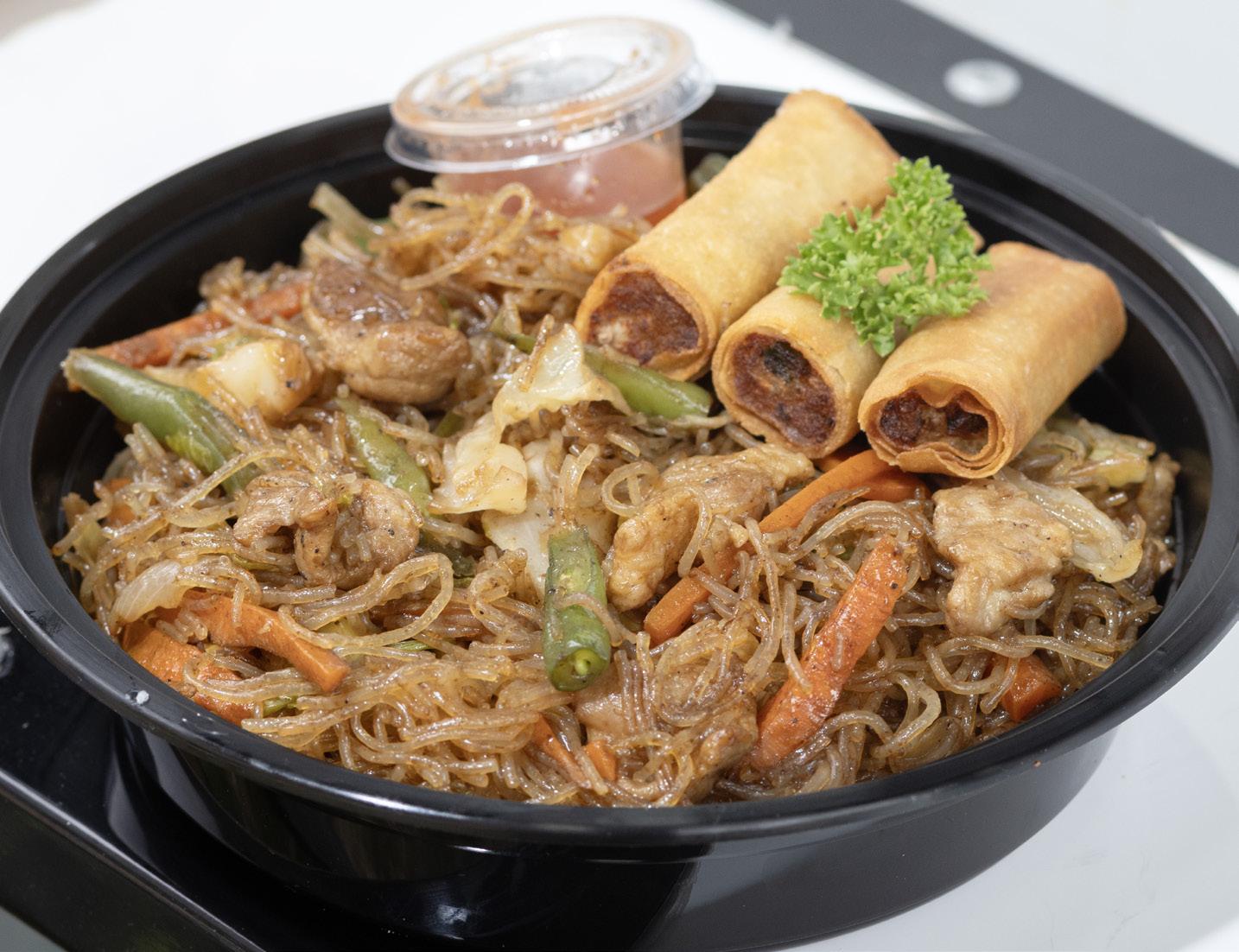
Pancit Meal
Michelle, the mind behind the menu and the cooking, recalls helping her mother’s catering business in the Philippines. “She’s really my inspiration,” says Michelle. “My mom said food is love. She’s not stingy with her ingredients. She wants to make sure people are happy. I like that. I like seeing people happy. That’s my love language.”
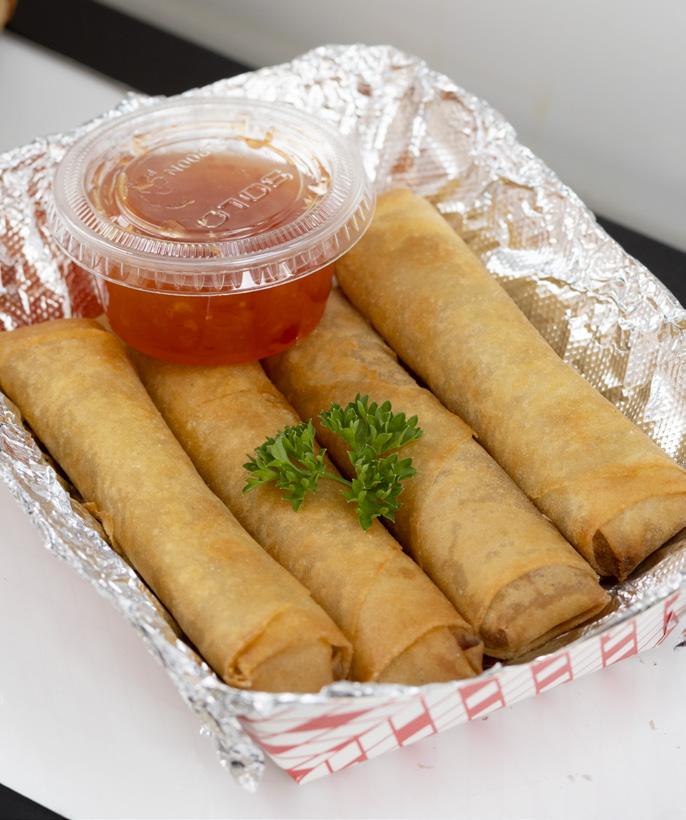
That philosophy shows up in Michelle’s lumpia, drawn from her family’s tradition. Seasoned ground pork wrapped in a flaky shell, it’s a crisp, handheld roll rooted in the recipes she grew up with.
In contrast, Eliud’s relationship with food focuses more on eating than cooking. Growing up in New York, he knew when his Puerto Rican grandmother was preparing food, there would be plenty of delicious leftovers. “She was one of those old-fashioned grandmas. Her style was cooking for an army even though it was just immediate family. The food for us was always made from love and was very flavorful.”
Michelle and Eliud both found their way to Washington State, where they met and began building a life together. Then in 2022, Eliud’s job at Bruker AXS, where he still works, needed him to relocate. Looking at the list of possible cities, nothing immediately stood out to the couple until it was suggested they check out Madison. After visiting, the decision was easy. “Me and Michelle came here, and the first thing I noticed was there’s a
lot of places here to eat,” says Eliud. “We did an upgrade relocating here.”
Once in Madison, Michelle opened a daycare, drawing on her background as a caretaker for the elderly. Before long, parents were joking that their children no longer wanted quick meals at home; they wanted “Auntie Michelle’s” cooking. Even the youngest kids were asking for her adobo by name.
That adobo is one of the stars at Las Islas Filipinas. Michelle cooks it the way her mother taught her: simple ingredients with no shortcuts or heavy sweeteners. Available with tender slow-cooked chicken or pork, it reflects a style of
cooking centered around sharing food and ensuring no one goes hungry.
Making the switch from childcare to full-time food truck wasn’t something Michelle initially planned, but friends kept insisting the food deserved a larger audience. As more people chimed in, Michelle and Eliud began seriously exploring what it would take to start a business. Eliud says, “When we told our friends that we’ve been doing some research and we’re thinking about starting a business, you could hear their excitement.”
It wasn’t just Michelle’s Filipino food that had people excited. As Eliud points out,
Pork Lumpia
Siomai
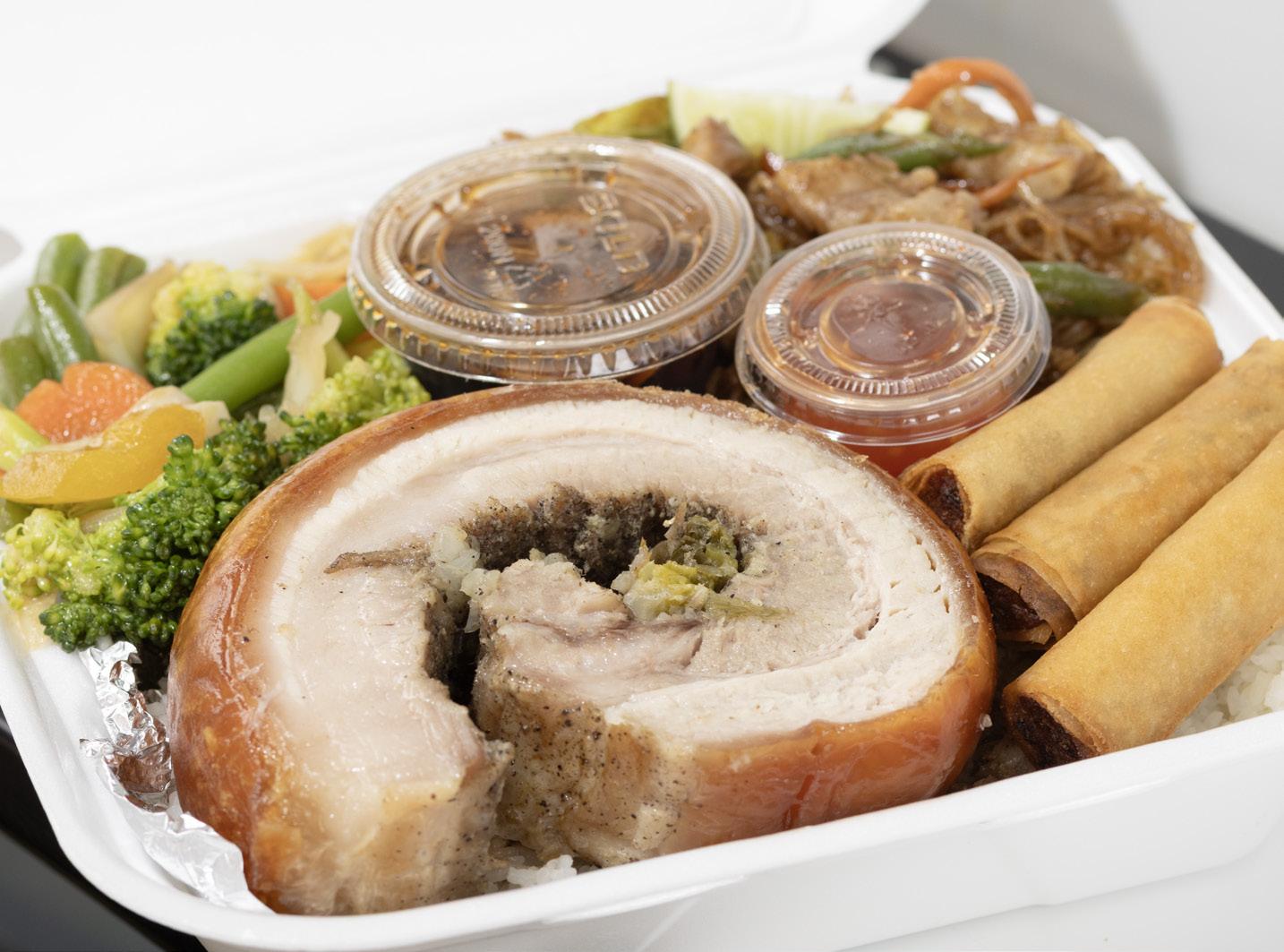
Pork Belly Lechon Meal
Advanced Shoulder Care
“We’re not really purists when it comes to food.” Alongside traditional dishes, Michelle prepares a variety of baked goods, like tiramisu and chocolate cake, as well as Puerto Rican food inspired by Eliud’s side of the family. Many of those recipes were developed through her YouTube channel, Michelle Perez Cooks. She started the channel during the pandemic, and though uploads have slowed while she focuses on Las Islas Filipinas, she’s posted more than 200 videos and built a following of over 12,000 subscribers.
Whether online or in person, community is just extended family as far as Las Islas Filipinas is concerned. Even the specials, named after Michelle and Eliud’s mothers, celebrate that closeness. It’s also why their son, Jakob, is part of the team. Every dish is an invitation, saying welcome to the table.
Kyle Jacobson is a writer living on island time eight days a weekend.
by Eric Tadsen.
Photograph by
Barbara Wilson
Photographs
Pork Belly Adobo Combo
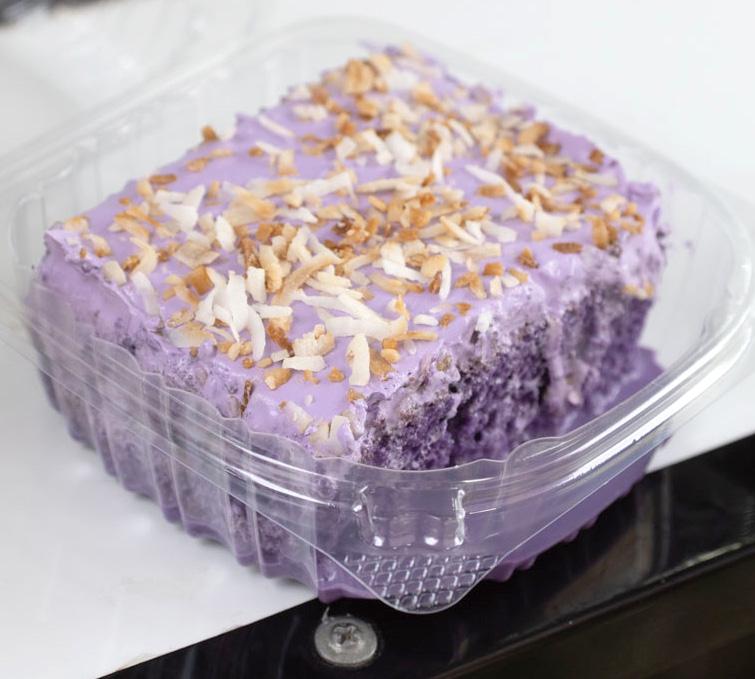
Ube Tres Leches
EL WISCORICAN
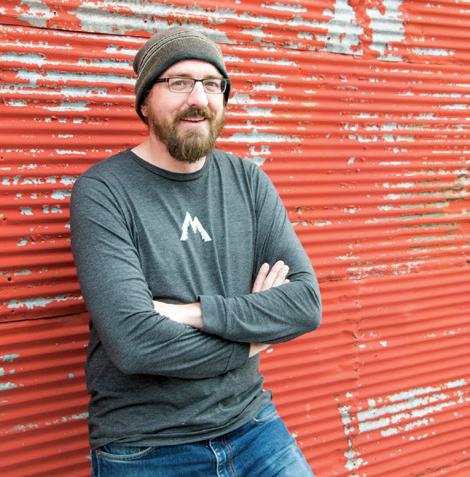
by Kyle Jacobson
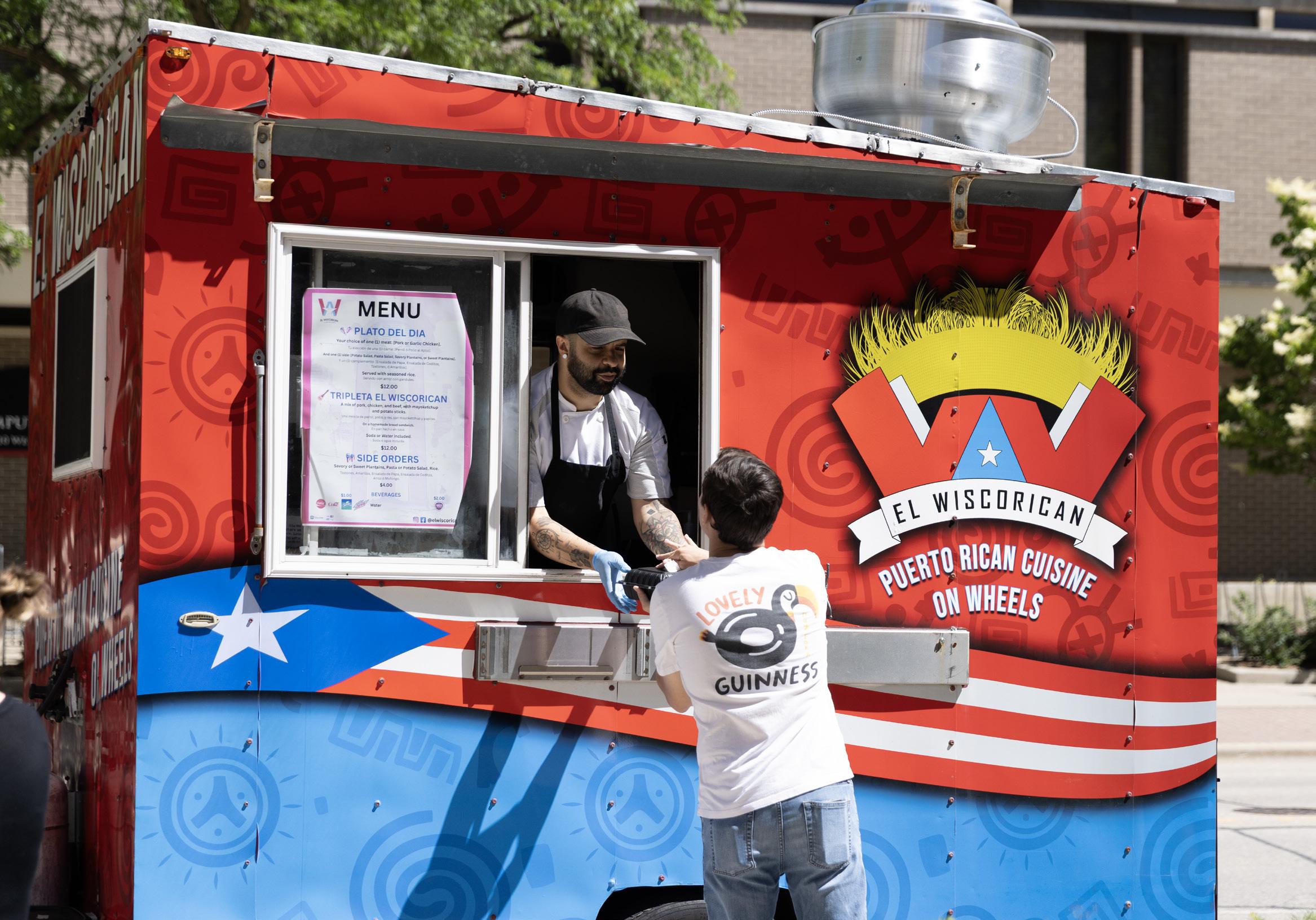
Luis grew up in Puerto Rico, where he went to culinary school for a year. After moving to Madison, he was working as a personal trainer when he saw a food cart for sale on Craigslist. “I thought this sounds fun—let’s go,” says Luis. “I put in my two weeks notice and bought the food cart.” In 2017, at the age of 27, Luis opened El Wiscorican, which he runs with his cousin Omar.
“As soon as I quit my job, two days later, my wife was pregnant.”
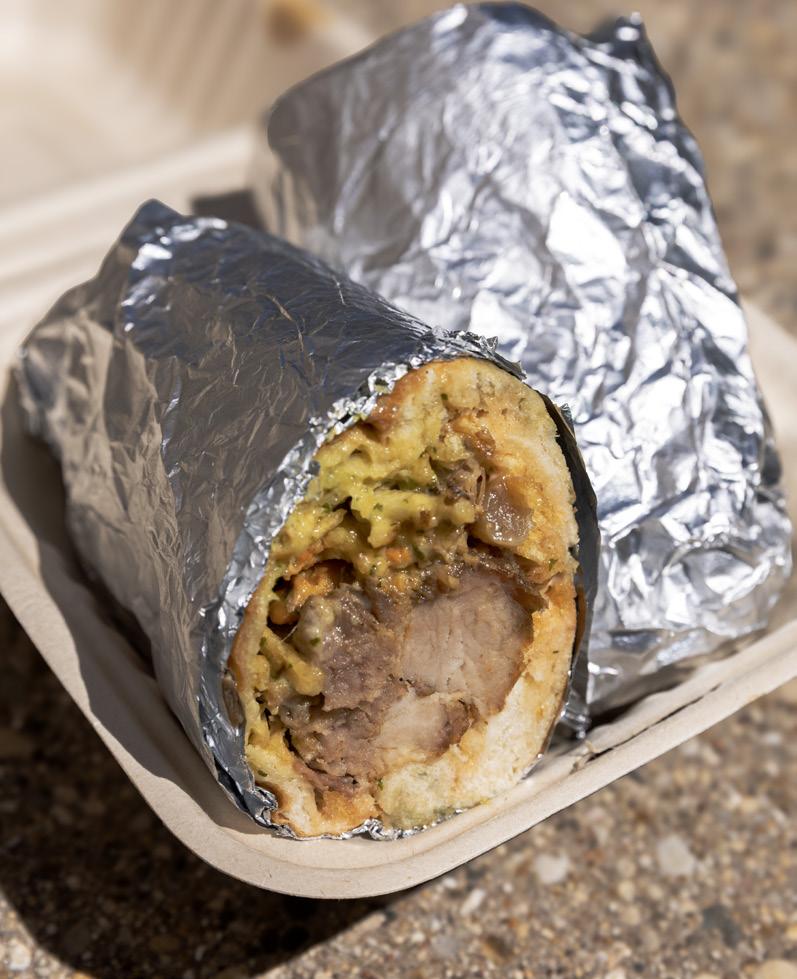
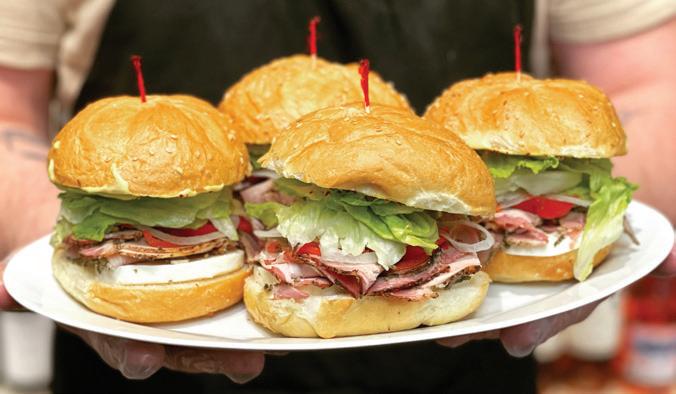
A new food cart and a baby on the way made the early days feel like a gamble. But if Luis could nail down one menu item, it might keep people returning to his window. The star of his menu was to be the tripleta, and in order to make it, he would first have to master baking his pan sobao, also known as pan de manteca—a Puerto Rican bread that uses pork lard to create a soft dough, essential for loaded sandwiches. “It’s terrible for you,” says Luis. “But it’s delicious.”
Garlic Chicken with arroz con gandules and tostones (crispy plantains)
Everything Luis cooks is an effort to make it taste the way he remembers it from Puerto Rico. If it doesn’t match that memory, he keeps working until it does. So when he made his first batch of pan sobao, he immediately thought of growing up where the streets were filled with the smells of fresh bread. It was unavoidable; each neighborhood has its own bakery. And in comparison to those breads held dear in his memory, his fell short. Way short. But he kept working at it, adjusting, trying again, readjusting, trying again. Three years later, the bread was finally what it needed to be.
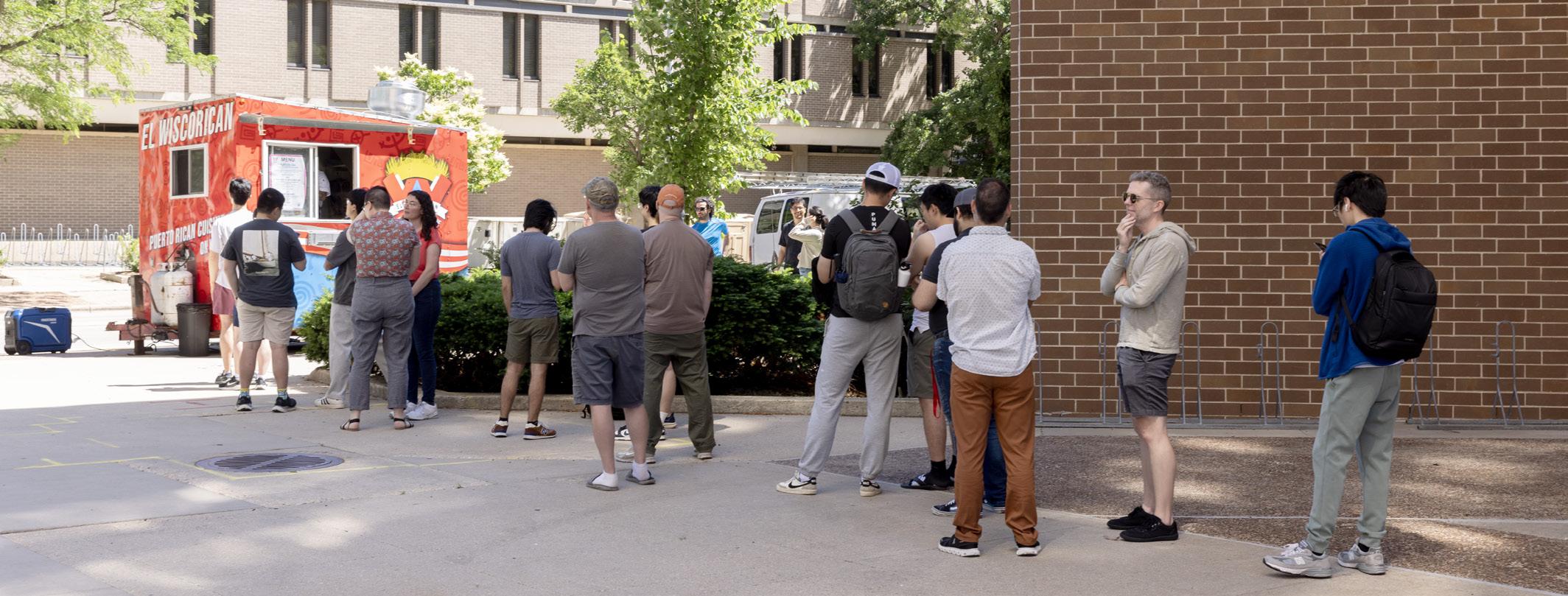
Those early years weren’t defined by bread alone. Puerto Rican food simply wasn’t widely familiar to most customers, who often expected tacos or burritos, neither of which El Wiscorican makes. At events, Luis sometimes sold as few as five plates. Even after selling out the first time with 35 plates, he was left wondering how anyone manages to do this every day.
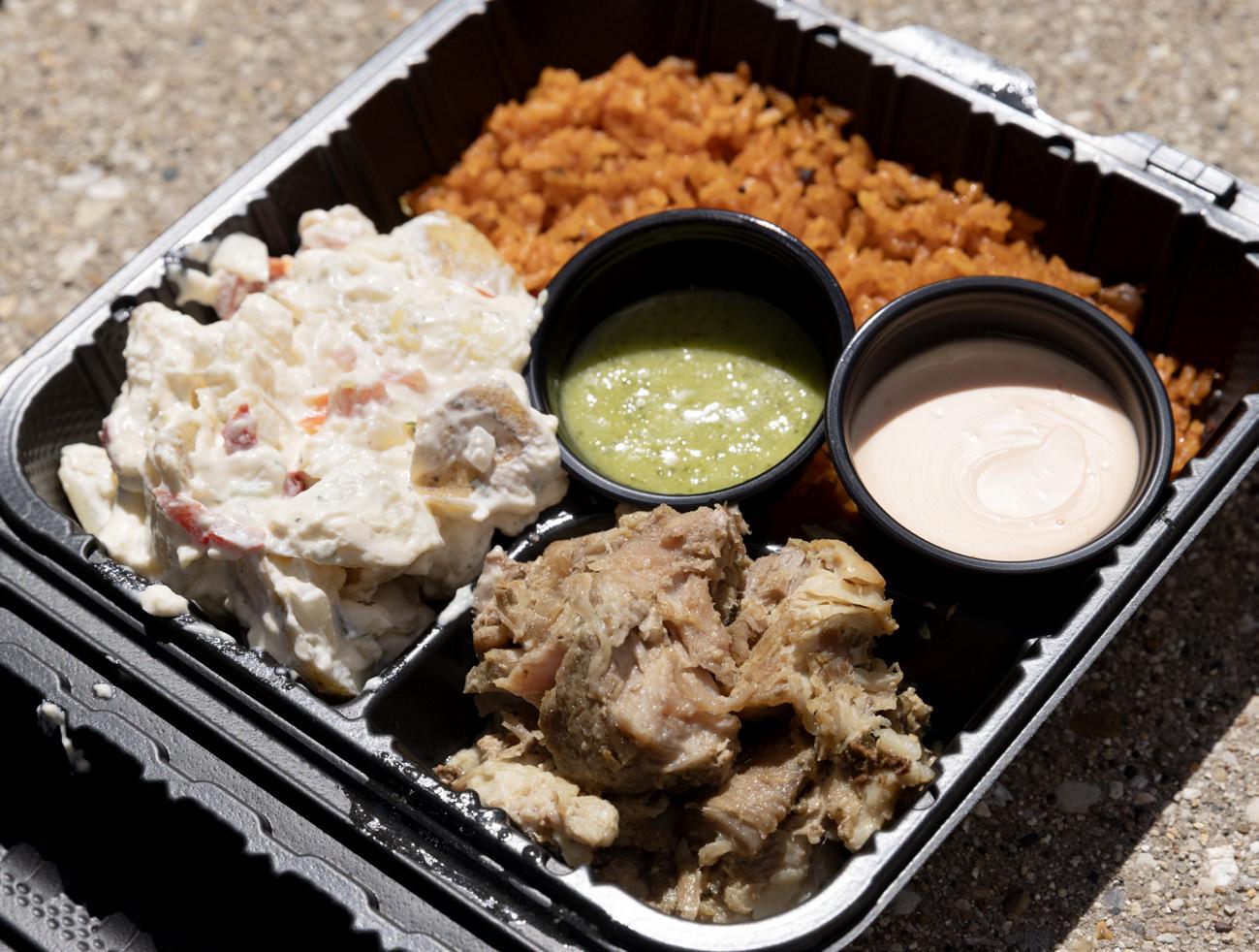
Over that time, Luis evolved both as a chef and as a business owner. That growth shows in the tripleta. “It’s very popular in Puerto Rico,” says Luis. “We put our pork in it. We put our garlic chicken in it. And we make our ground beef for it. So you get all the three meats. We add cheese on the griddle, get that nice and toasted. We add potato sticks. We do two sauces.
One’s mayo-ketchup based, and the other one is kinda like a chimichurri sauce.”
The satisfaction of having El Wiscorican’s signature sandwich where it needed to be was soured when COVID shut down the food cart. During that time, Luis took on a lot of work in FEED Kitchens to help feed the homeless and gained experience cooking in large batches. “We learned how to do to-go meals,” says Luis. “Once we were done with COVID and we went back to doing lunches, we were doing triple the business we were doing before we closed down.”
Having to deliver in realtime was something Luis was very familiar with thanks to his past life as a guitarist for Puerto Rican metal band Fall II Rise. It’s what brought him to Madison in the first place. Luis says, “We were on the radio. We played on big stages. We did a tour over here just to try it and met a guy named TJ Sagen. He was the manager at the moment for Disturbed and Sevendust. Then we moved to Madison because he was based in Chicago.
“The biggest stage we ever played was in Puerto Rico. We played in a coliseum there, and we opened for Evanescence. I remember so little of it. I literally blacked out. I saw videos after
Pork
with arroz con gandules and potato salad
Tripleta Sandwich
and was like, ‘Oh man, that was good.’ It just takes over. I wasn’t nervous; it was just a state of mind I can’t explain. It was fantastic. And that physical feeling, I felt it the first day I opened El Wiscorican.”
Success today, for Luis, isn’t selling out seats; it’s selling out 120 to 150 plates in an hour. He’s comfortable at the size El Wiscorican has reached. As his work becomes more efficient, growth gives way to sustainability and creativity. Ideally, his menu would shift entirely into daily specials. To get there, he says, “There’s only half a million people in Madison. I only need 100 a day. I can do that, I think.”
Kyle Jacobson is a writer who struggles to define a sandwich.
Photographs by Eric Tadsen.
El Wiscorican elwiscorican@gmail.com facebook.com/elwiscorican
CONNECTING & INFORMING SINCE 2007
Photograph by Barbara Wilson
Kyle Jacobson
Polo en salsa criolla with arroz con gandules and amarillos (sweet plantains)
The Southern Kettles
A Globally Important Landscape Right in Your Own Backyard
by Shelly Torkelson
When most people think of southern Wisconsin, they think of cheese, beer, and farmland. But a quick drive east from Madison can take you to a unique place that’s just as deserving of being a Wisconsin icon.
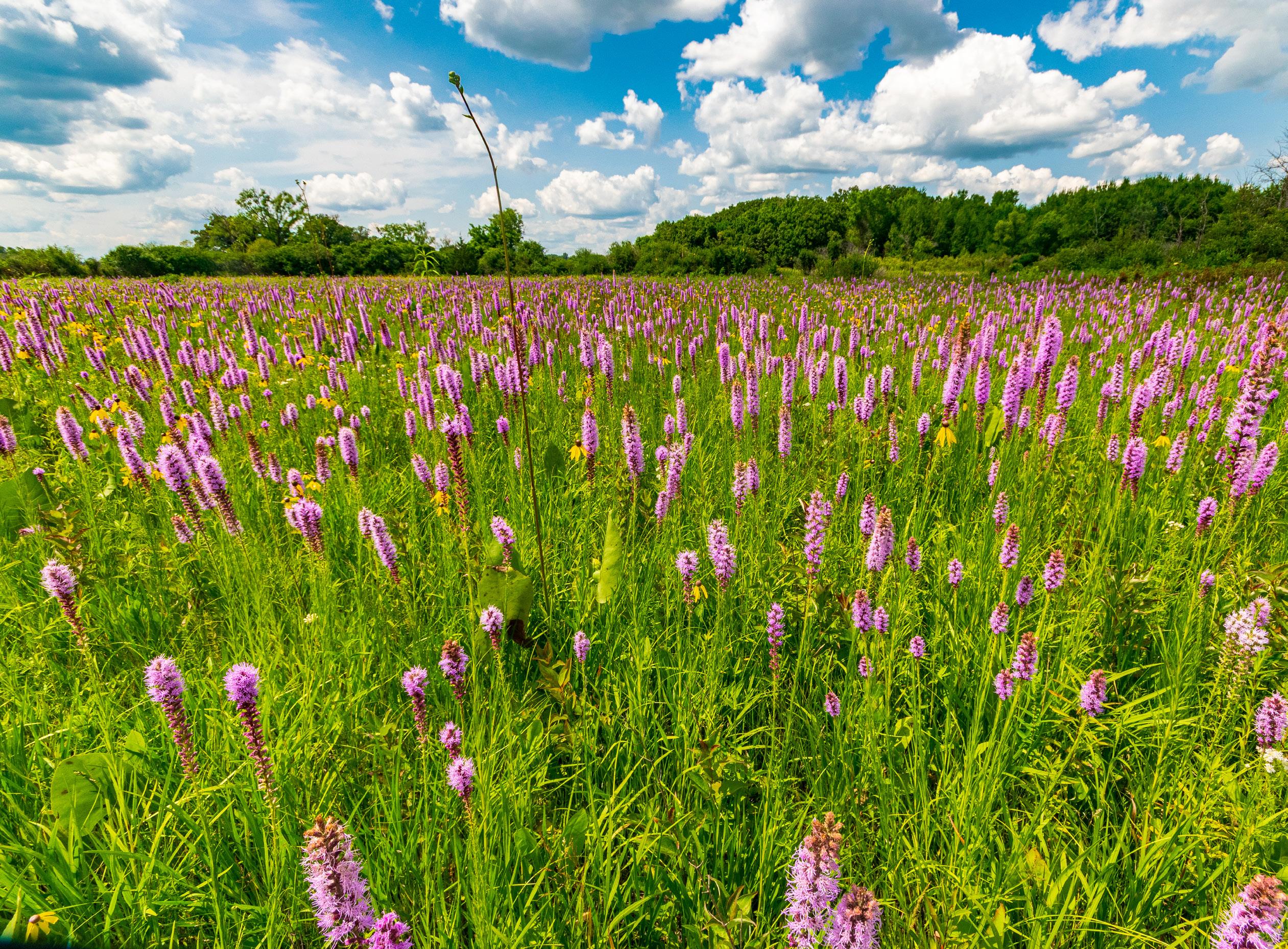
The Southern Kettles area, located roughly halfway between Madison and Milwaukee, was sculpted by ancient glaciers into a dramatic landscape of hills, kettles (glacial depressions), and wetlands. Today, it contains an extraordinary mosaic of habitats that supports many rare and threatened species.
The most notable habitats of the Southern Kettles are wet prairies, sedge meadows, bogs, fens, oak savannas, and woodlands. These habitats are not only rare in Wisconsin, but also in the Midwest, and the combination of these habitats found in the Southern Kettles is rare worldwide.
Chief among these communities are the prairies and oak savannas of the Southern Kettles, where excellent examples of these ecosystems can be found scattered throughout the
Photograph by Joshua Mayer
Photograph by Joshua Mayer
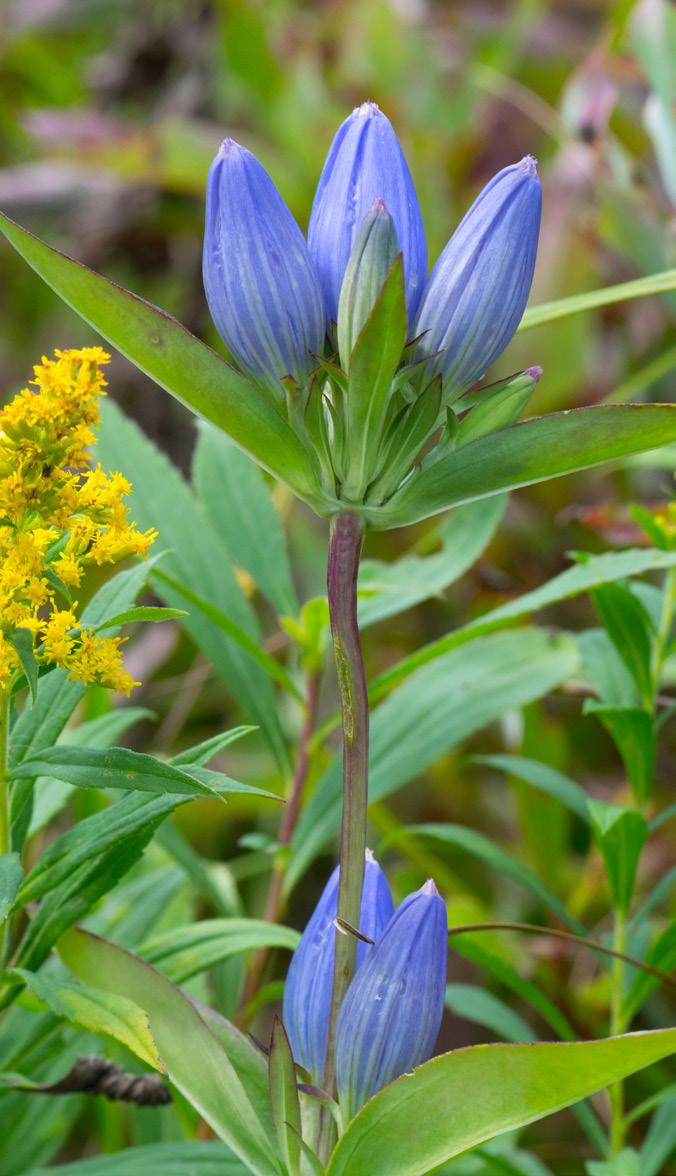
Bottle Gentian at Scuppernong Prairie
Bluff Creek State Natural Area in Walworth County
undulating hills. According to the DNR, prairie and oak savanna natural communities are the most endangered natural communities in Wisconsin and across the Midwest. They’re also among the most decimated in the world. Their rarity can be attributed in large part to plowing and tilling for agriculture during European settlement and to forest succession due to lack of fire on the landscape. Today, there’s continued pressure from developing nearby population centers.
“The Southern Kettle Moraine Conservation Opportunity Area is a landscape-sized island of biodiversity situated between our state’s capital and our largest city,” says Pete Duerkop, a biologist with the Wisconsin DNR.
Publicly owned lands, like state natural areas, are crucial refuges for rare species in the Southern Kettles, but 65 percent of the area is privately owned. This combination of private and public land is ripe for collaborative stewardship, conservation, and care.
The Southern Kettles is a hidden gem to the public, but among conservationists, it’s quite well-known. The Wisconsin DNR’s Wildlife Action Plan highlighted the Southern Kettles as a “Conservation Opportunity Area of Global Significance.” The Wisconsin Wetland
Photograph by Sarah Madl
Photograph by Jeff Galligan
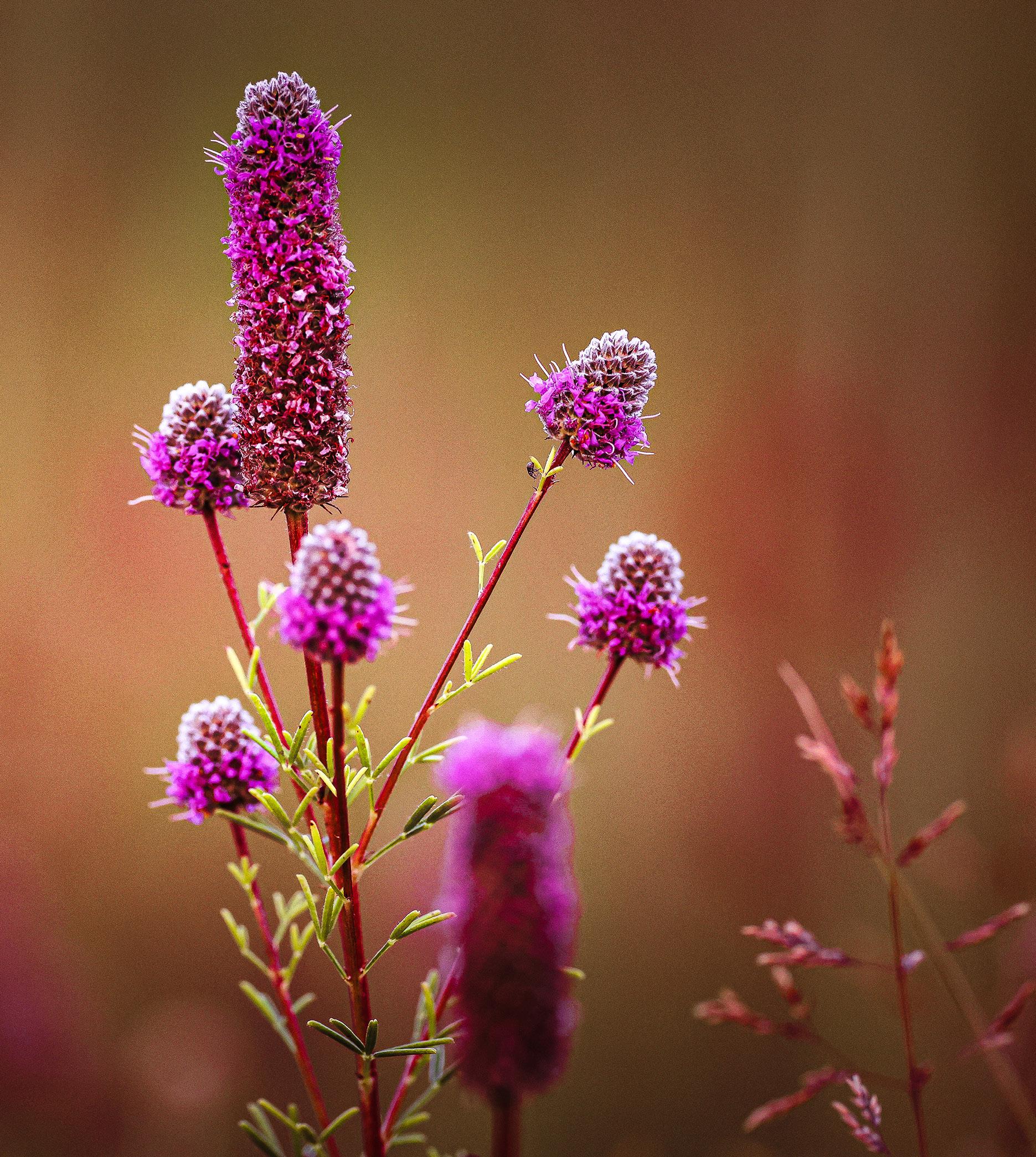
Blazing Star in Walworth County
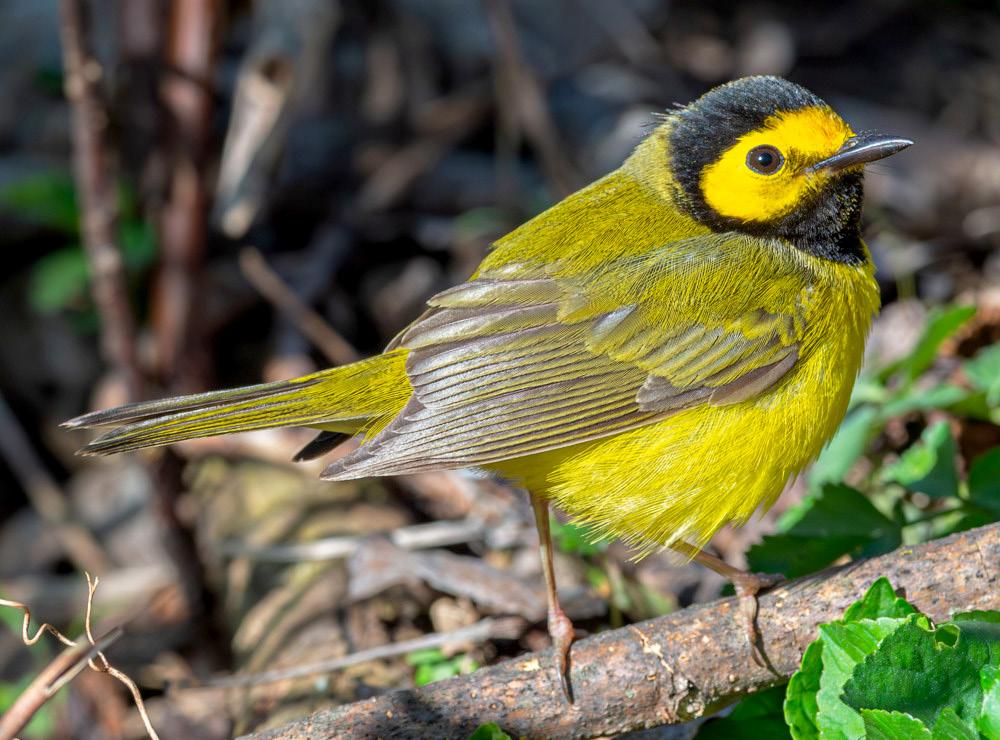
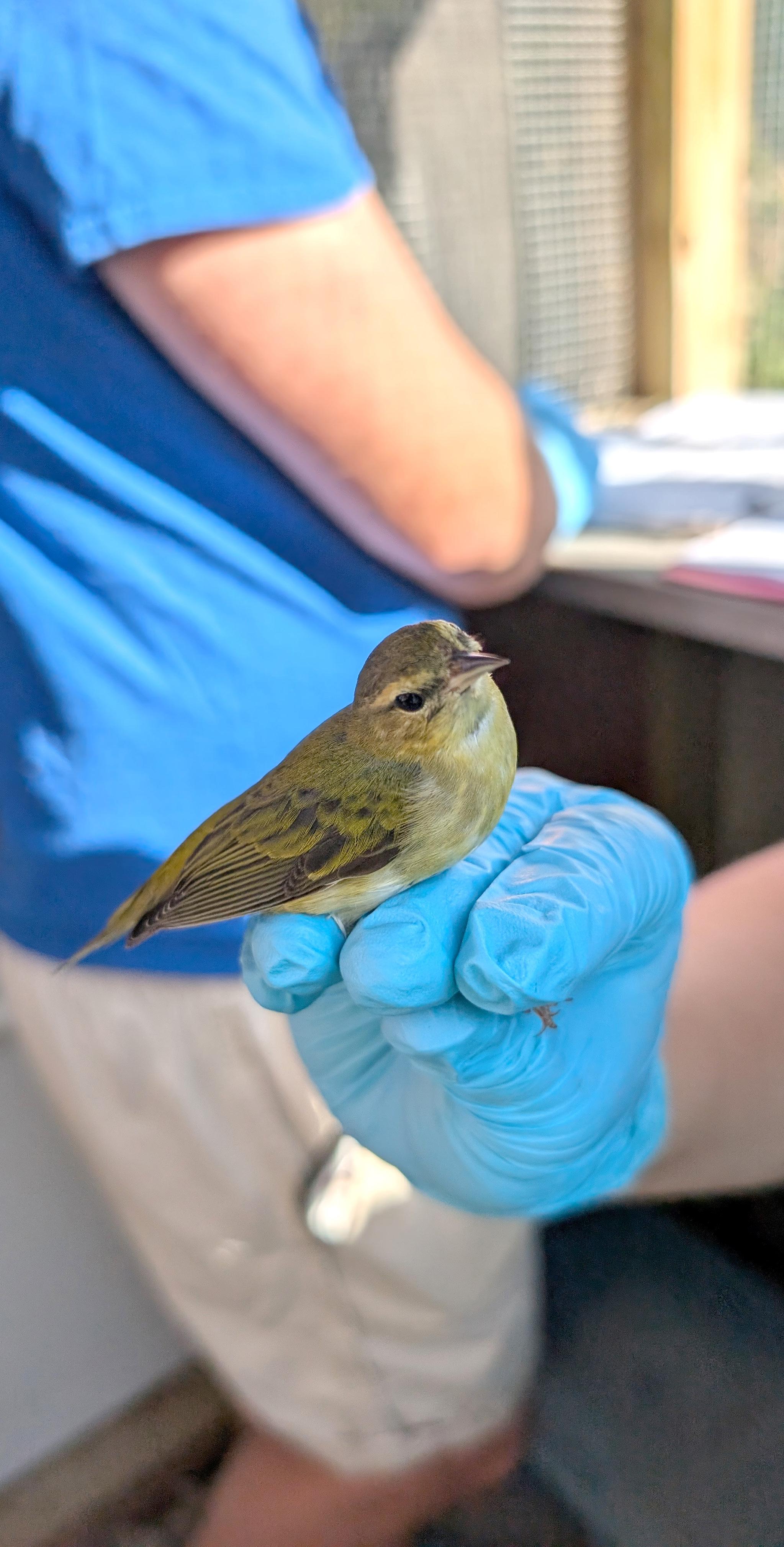
Hooded Warbler
Association has identified three Wetland Gems in the area. The Nature Conservancy and the Center for Resilient Conservation Science have ranked it highly on their Resilient Land Mapping Tool. National Audubon has designated several Important Bird Areas in and around the area.
Because of its universally recognized importance, great conservation work has been happening in the Southern Kettles and across southeastern Wisconsin for decades. Land trusts, local friends-of groups, the DNR, and others have been actively working to protect key local sites. Recently, a group of conservation organizations have come together to expand this work and care for the entire Southern Kettles landscape.
Undeveloped state-owned lands provide key wildlife habitat at the core of the Southern Kettles. “The Kettle Moraine State Forest and Lulu Lake State Natural Area are the backbone of this area,” says Pete. “They provide critical habitat for rare species and natural communities that have largely disappeared from the landscape otherwise.”
The glacial hills, kettle lakes, and verdant prairies of the Southern Kettles are full of wildlife. Wisconsin hosts its share of endangered and threatened species, and many are
found here, including one of Wisconsin’s largest concentrations of hooded warbler, which is listed as threatened.
The area has always been important to its human inhabitants as well. The hill that European settlers named Bald Bluff, located within the Kettle Moraine Oak Opening State Natural Area, is an environmentally and culturally important feature of the region. At 1,050 feet above sea level, Bald Bluff is one of the highest points in this part of Wisconsin. It’s been used by the Potawatomi and other Indigenous peoples as a landmark and gathering place.
Nowadays, 1.5 million people enjoy hiking, birding, biking, paddling, camping, hunting, and more in the Southern Kettles every year. Few of them likely realize that their favorite fishing spot is in a globally important region. When you visit the Southern Kettles, take a moment to realize that you’re enjoying one of Wisconsin’s most precious contributions to global biodiversity.
Shelly Torkelson is communications director at the Natural Resources Foundation of Wisconsin.
Natural Resources Foundation of Wisconsin
211 S. Paterson Street, Suite 100 Madison, WI 53703 (608) 409-3122 wisconservation.org
Shelly Torkelson
Photograph by Joshua Mayer
Photograph by Caitlin Williamson
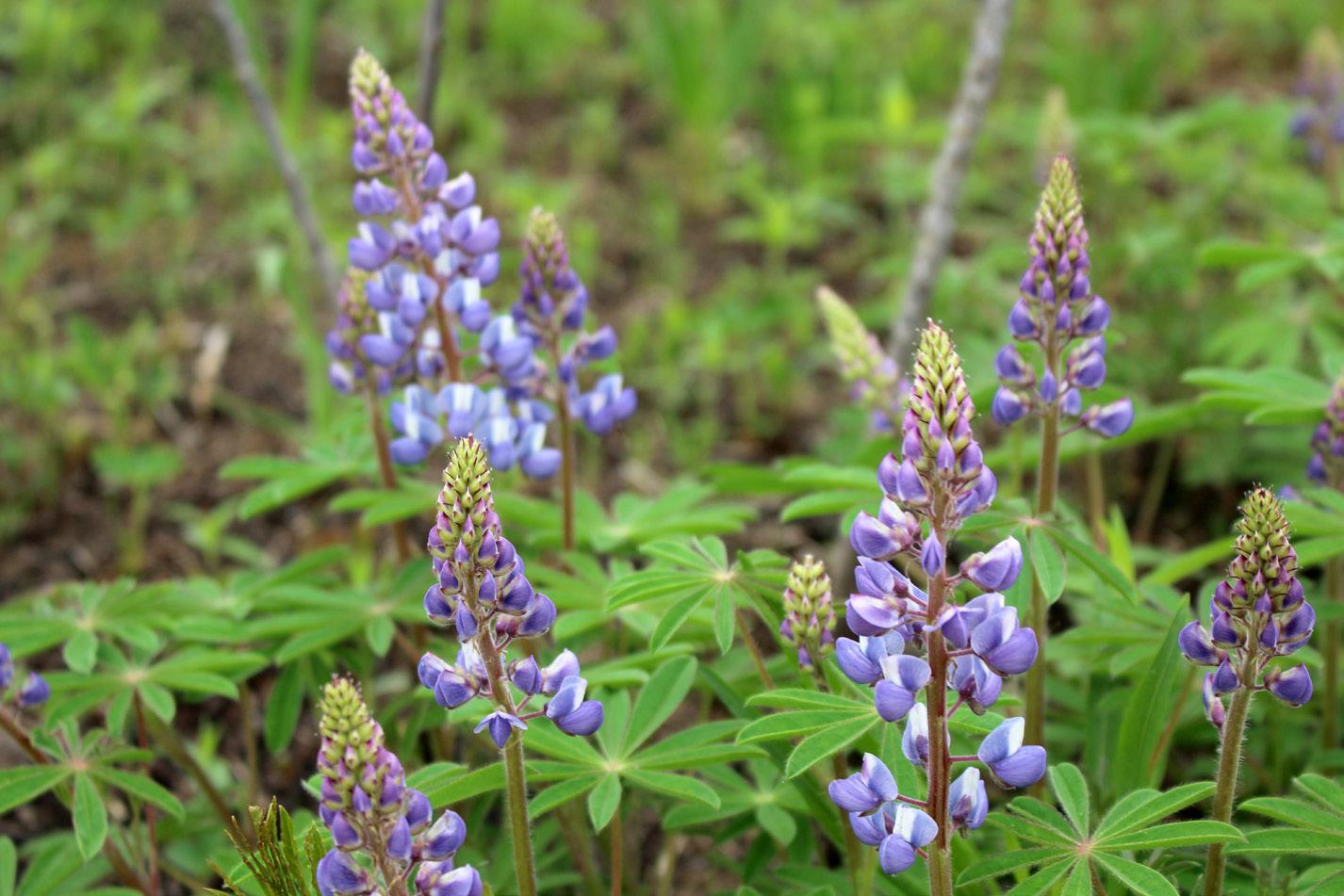
Wild lupine at Scuppernong Springs Nature Trail
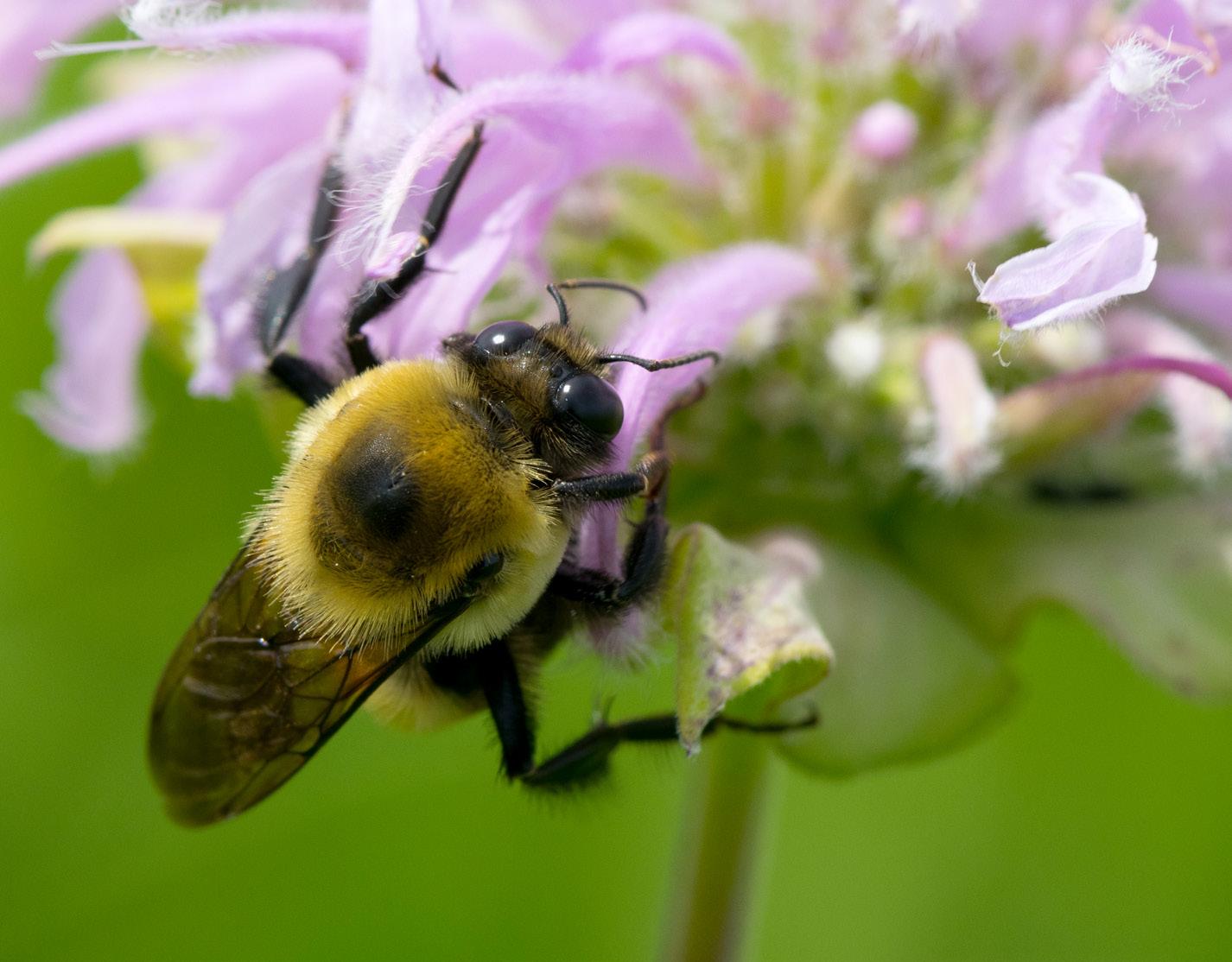
Bee on Bee Balm Wild Bergamot (Monarda fistulosa)
by Kyle Jacobson
AgoraArt Fair
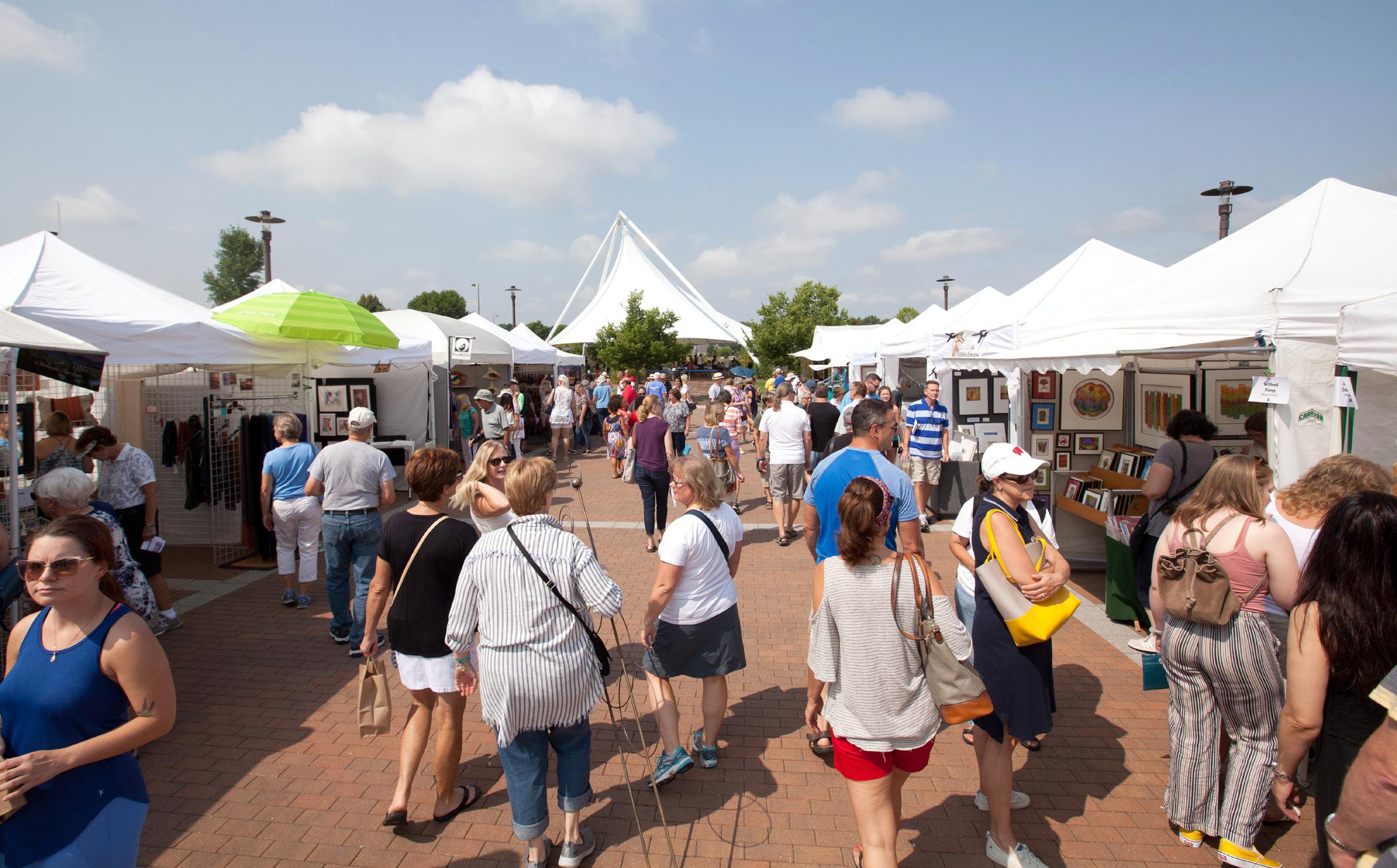
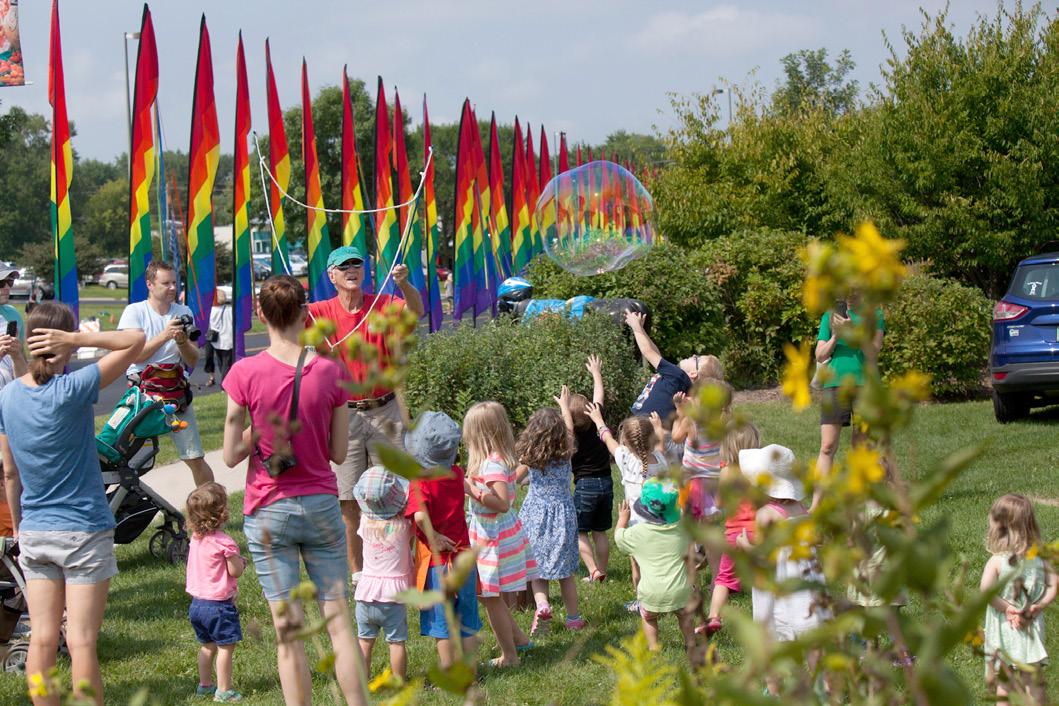
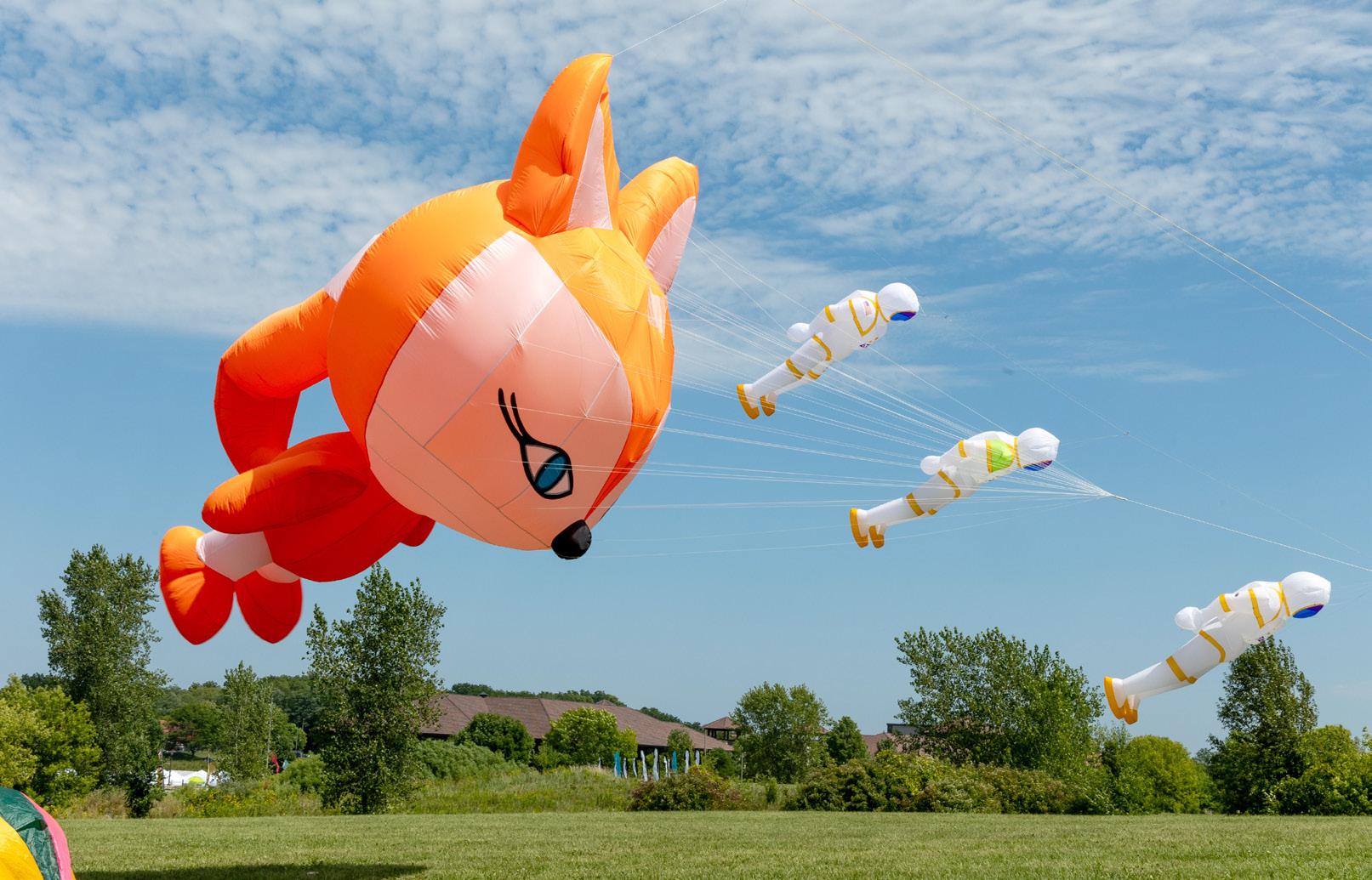
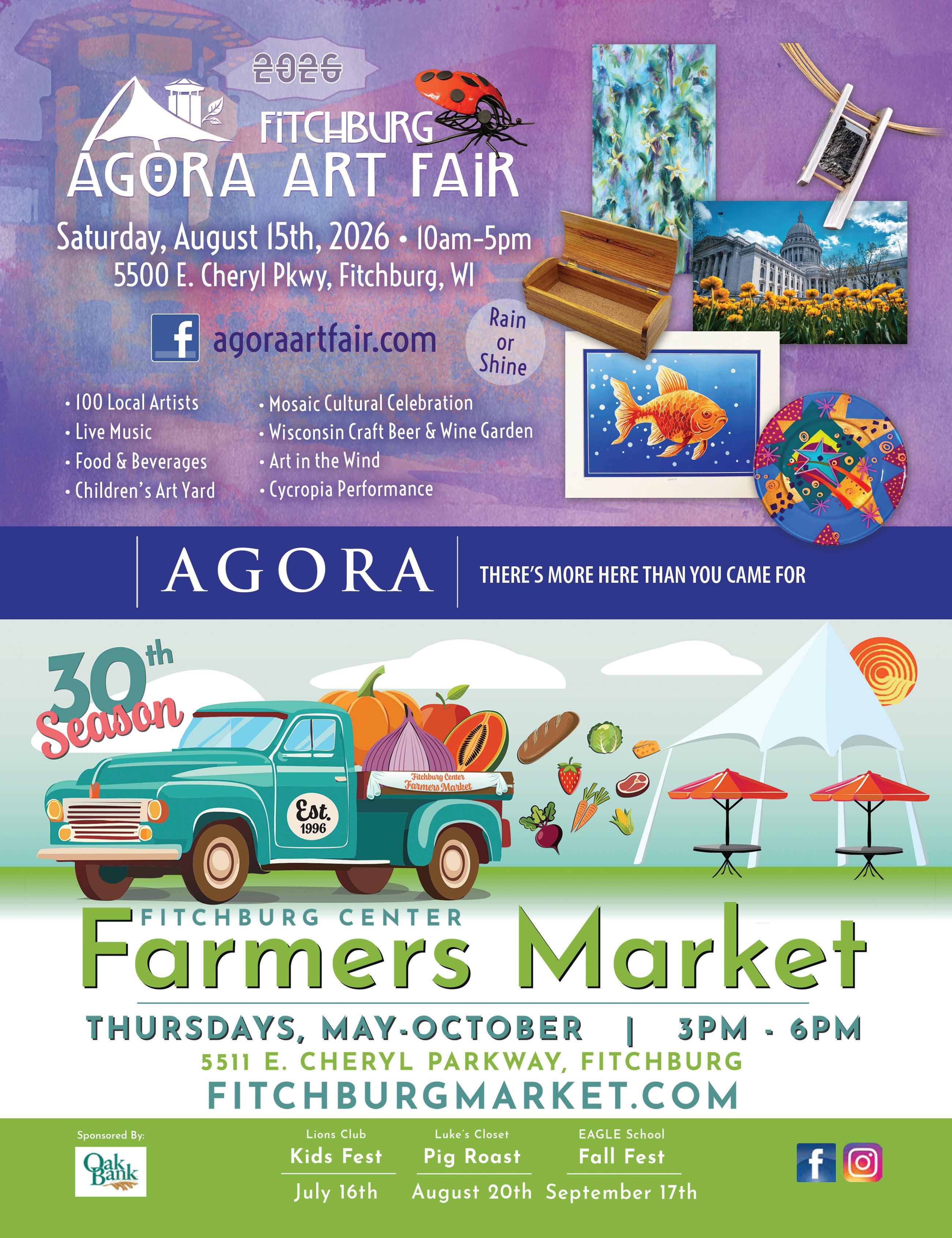
Each year in Fitchburg, the third Saturday in August opens with an aerial dance of elaborate kites billowing in the sky, signaling the Agora Art Fair’s return. Follow the strings to the Agora Complex, where music, conversation, and laughter surround visitors as they move between local food vendors, performances, and hands-on activities for kids.
Even before the gates open, a crowd forms for first dibs on pieces from their favorite Wisconsin artists. Some are returning to artisans and vendors they’ve followed for years; others are discovering them for the first time. Thanks to this devoted
base, the Art Fair has grown into something that brings people together from across Fitchburg and beyond.
“It’s a true community gathering,” says Steven Leverentz, event coordinator for the Agora Art Fair. “There’s amazing art in the street, in the piazza, and tucked into little nooks around the grounds. But it’s more than that. We have Cycropia doing their aerial performance under the pavilion. We added music with the Madison Flute Club, so as people are walking in, they see the kites, they see the banners, they hear a little music, and it just creates the setting for folks as they’re coming in. It just reinforces the whole day.”
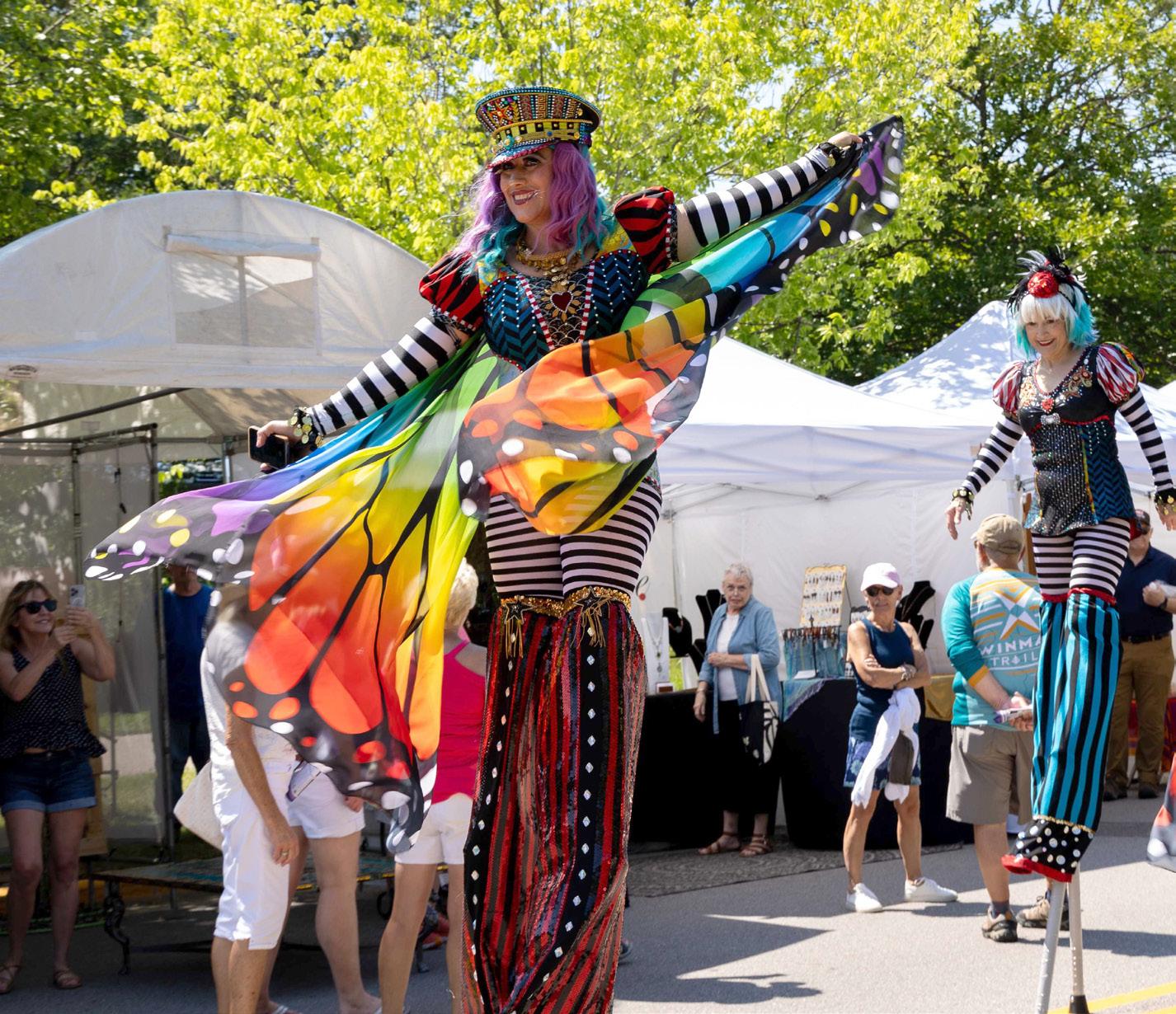
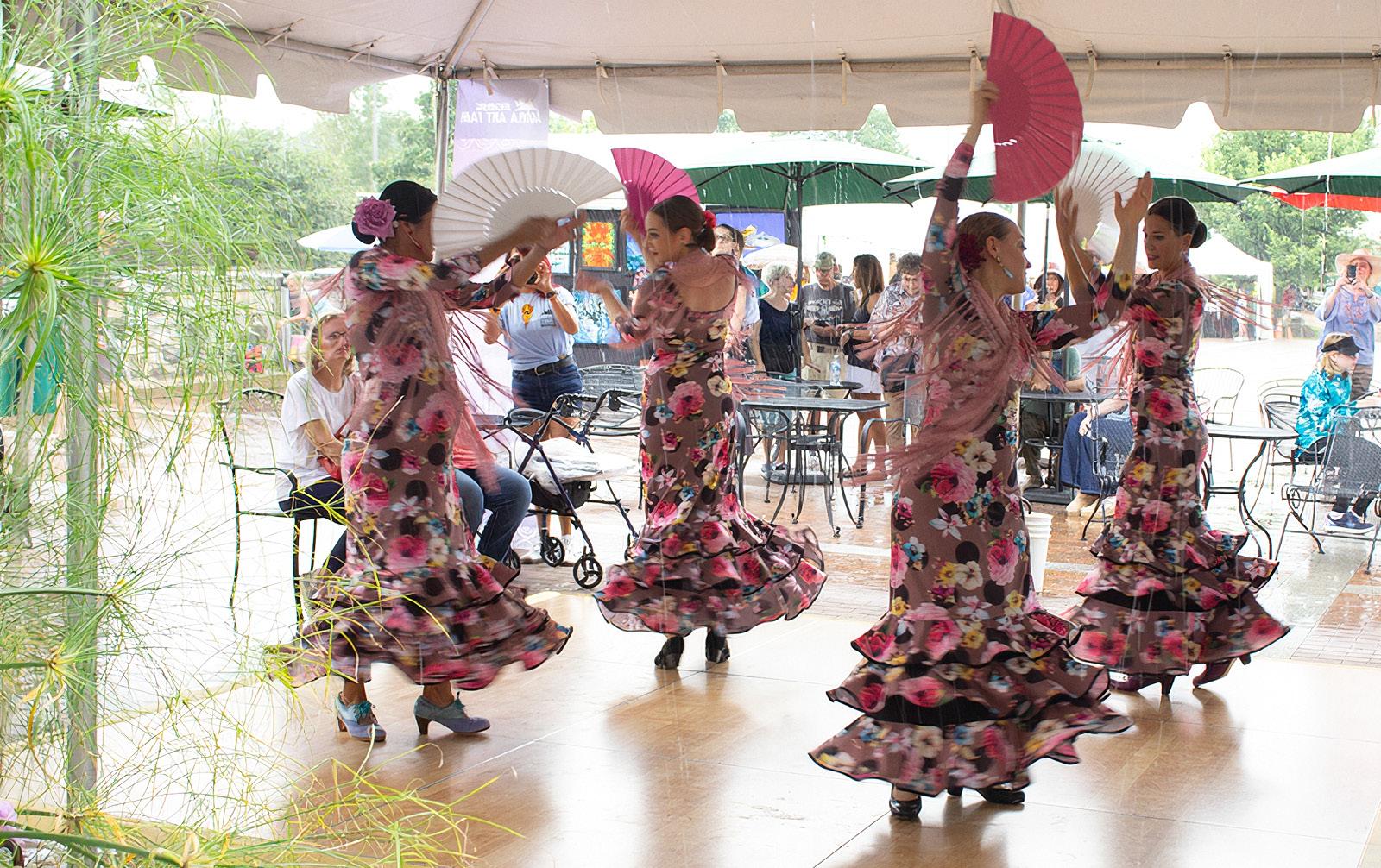
The deeper you venture into the Art Fair, the more it becomes something of a festival, complete with stilt-walkers moving about the crowd. Artist tents and their visual works anchor the event, while music and performance create a shifting soundscape that includes Madison Flute Club, the Red Hot Horn Dawgs, and Reverend Raven & the CSAB (with special guest West Side Andy). And Mosaic—A Celebration of Latin Culture brings its own rhythm with Bembé Percussion, Tony Castaneda Latin Jazz Band, and flamenco and Spanish dance by Tania Tandias.
Even without the entertainment, the food alone can tempt a detour. Fried cheese curds, roasted coffee, sugary donuts, yeasty naan, and grilled meats wet the palates of patrons, artists, and
performers alike. After landing on a flavor or two, head over to the craft brew and wine garden, featuring Fitchburg’s own Hop Haus Brewing, to find the perfect pairing.
All this is happening under the same umbrella because of the works of more than 100 juried Wisconsin Artists selected each year. This year, the plan is to lean more into the Art Fair’s roots, with Steven noting a renewed emphasis on the fair’s sense of place. “These are local artists, local performers, local foods, local charities. Everything is very much focused on Wisconsin.
“We started in 2008. That was a humble beginning. It started with a quick conversation with a graphic artist here at Promega. We had just completed the Agora building project. I had been involved with the Fitchburg Center Farmers Market, another local endeavor.
It was just kind of a passing conversation that when the building was done we had all these great outdoor areas, and the building was so beautiful as far as the architecture and the setting with the native prairie around it and everything. I just happened to say to him this would be such a great place for an art fair. He goes, ‘Yeah, I might know somebody.’ And he introduced me to Niki Russo, who became the artistic director.”
Niki has been as instrumental as Steven over the years, and it all started with that first Art Fair, which only had 50 artists and a fairly basic setup. Still, people showed up by the thousands. Steven estimates that first fair at between 3,000 and 5,000 visitors. Each year brought incremental improvements and additions, enhancing those immersive qualities that make the event so beloved.
The Art Fair’s growth has also been supported by Promega Corporation’s commitment to creativity and community. "From day one, the Art Fair has been supported by Promega
Corporation,” says Steven. “As a Fitchburg-based company, Promega continues to play a vital role—providing both financial support and dedicated staff time that help sustain and grow the fair each year."
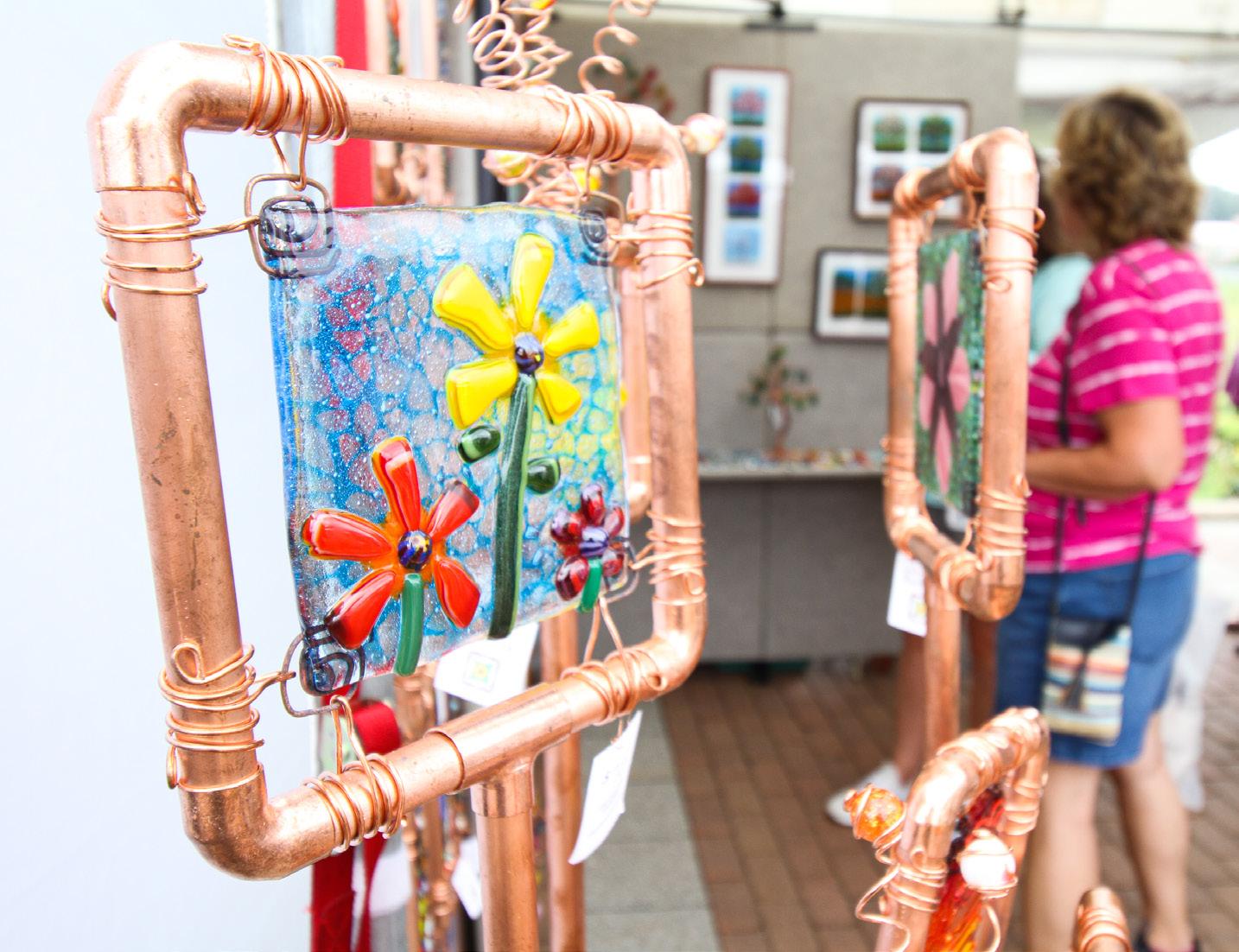
Moving between tents, visitors are quickly reminded just how many phenomenal artists call Wisconsin home. From wooden furniture to scrollwork, large outdoor sculpture to handcrafted jewelry, and ceramics to canvas, nearly every medium is represented by artists who’ve built a life around creative
pursuits. Pieces that capture the natural world sit alongside interpretations of the State Capitol, while other pieces celebrate the range of ideas and cultures that define the state. Even the most esoteric work resonates when it comes from a neighbor you’ve yet to meet.
“That’s one of the great things about the art fair,” says Steven. “Not only do you get to see great art, you get to meet the artist behind it and find out what makes them tick. Why do they do what they do? What inspires them? It’s really enriching when you talk to the artist and connect with the piece.”
Those conversations make it clear that art is for anyone and everyone—further pronounced by MMOCA’s art cart, where
children have the opportunity to create their own work or contribute to a larger mural. Sure, an original piece will run at a higher price point, but mugs, prints, and smaller representations of larger works are often very affordable and can add a nice touch of color or inspiration to any home. And while accessibility is part of the experience, the fair still offers plenty for serious collectors.
As the Art Fair has grown in popularity, there’s been pressure to expand in size and scope. “I think we’ve been pretty deliberate about measuring that appropriately,” says Steven. “We want the variety. We want the diversity. We want to be inclusive. But there’s a value in having a one-day event. It’s one and done. If you see something you want, you probably better buy it.”
Thanks to Steven and Niki, the draw of the Agora Art Fair is stronger than ever. With between 12,000 and 15,000 visitors in recent years, it’s become one of Fitchburg’s signature events. Fitchburg itself has built a reputation for celebrating its diverse neighborhoods, innovative business community, and idyllic green spaces. The Art Fair puts all of that front and center for one day a year, giving visitors a chance to experience Fitchburg across one beautiful campus.
Kyle Jacobson is a writer who appreciates the simple things because that's all he can handle.
Photographs provided by Promega Corporation
Kyle Jacobson
BIRD Migration
BY LISA BERNARD
Every fall, millions of birds pass through Wisconsin skies on an extraordinary journey south. Warblers, hummingbirds, thrushes, woodpeckers, birds of prey, and more travel hundreds, sometimes thousands, of miles in search of warmer weather and more abundant food sources. Migration begins during the summer months and can continue into early winter depending on the species. Wisconsin sits within one of North America’s major migration corridors, making the state an important resting and feeding stop for countless species.
But the journey to warmer climates is exhausting and filled with hazards for migrating birds. Each year, more than one billion birds die in the United States after colliding with buildings and windows. During peak migration periods, wildlife rehabilitators across Wisconsin see the consequences firsthand as injured birds arrive with concussions, fractures, eye injuries, and further trauma.
At Dane County Humane Society’s (DCHS’) Wildlife Center, 2025 became the busiest year for window/object collision patients since 2018, with 218 birds admitted. During the primary
Tennessee Warbler #25-3751 suffered ocular injury, respiratory trauma, bruising (September 23 to October 5). They were banded and released after rehabilitation. The Tennessee warbler is the most admitted warbler species with 34 between 2014 and 2025.
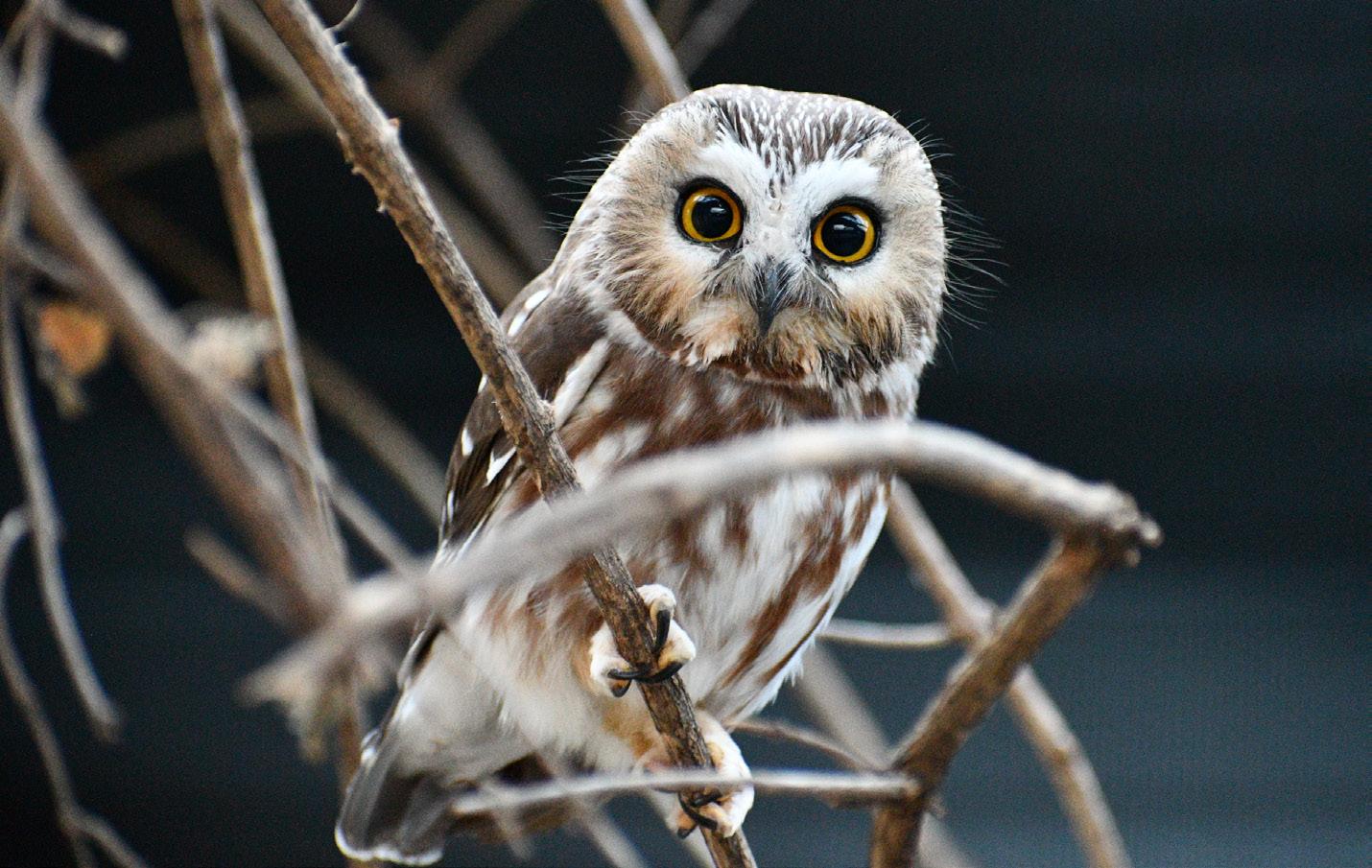
Northern saw-whet owl perched inside an outdoor enclosure at Dane County Humane Society’s Wildlife Center on November 5, 2025
migration seasons of March through May and September through November, 138 birds were admitted specifically for collision-related injuries.
Why Birds Strike Windows
Glass poses a unique danger to birds because it often appears invisible. Reflective windows can mirror nearby trees, vegetation, or open sky, making birds believe they’re flying toward safe habitats. At full speed, many birds never realize the barrier exists. If they aren’t killed immediately from the impact, these birds are grounded, rarely able to fly away, which makes them easy targets for predation.
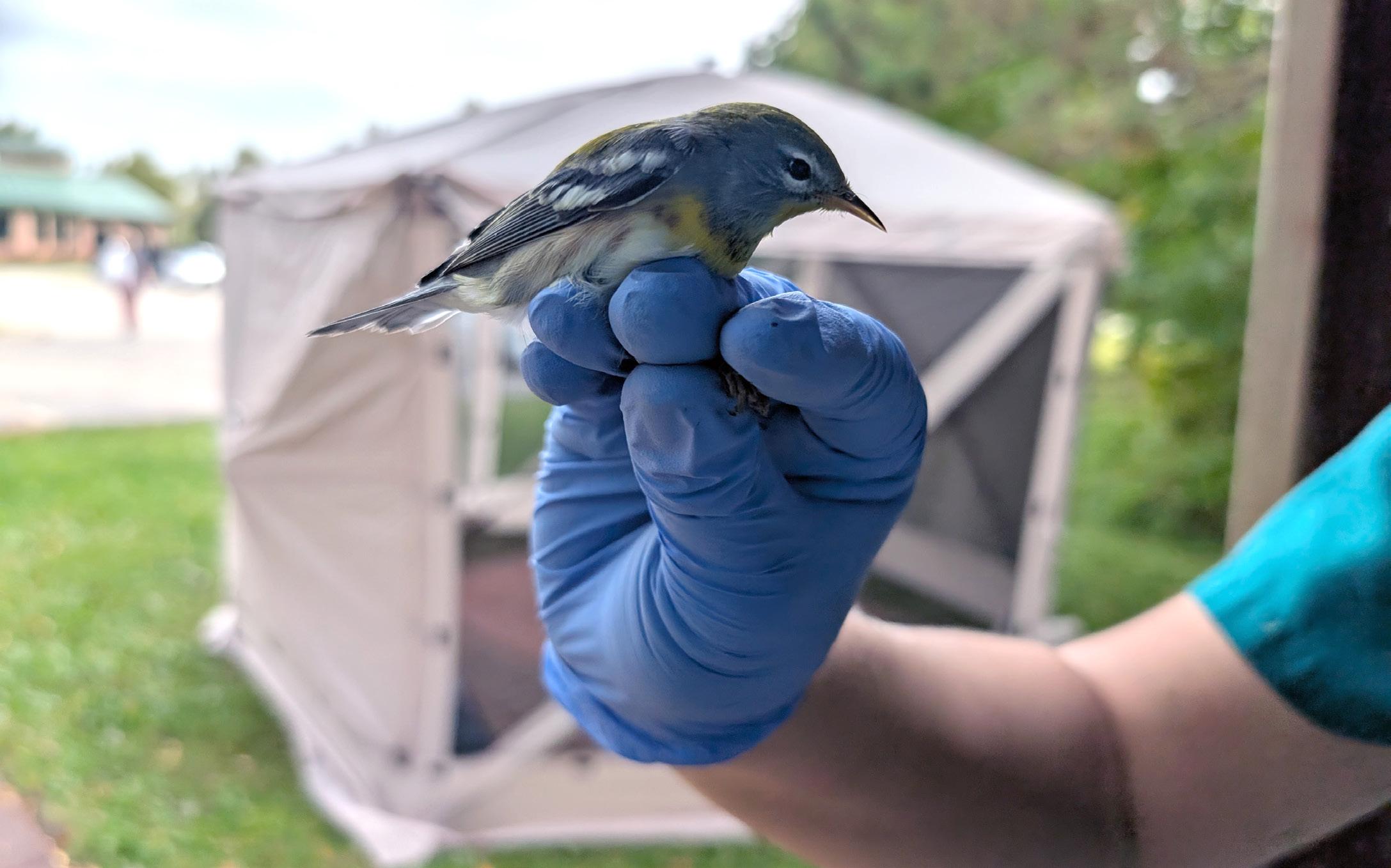
Birds that survive impact frequently suffer serious injuries, including head trauma, eye injuries, fractured shoulders, and damage to the central nervous system. These birds need help. Capturing and taking them to a licensed wildlife rehabilitator can save a life. Among those admitted were 14 unique warbler species between August 1 and October 15, 2025, the height of fall migration.
While some warblers breed in Wisconsin during the summer months, many stop briefly to rest and feed before continuing their journeys to Central and South America. Each of these unique warbler patients received emergency veterinary triage, supportive care, safe shelter, and pain management while rehabilitators tailored treatment plans to each species’ unique dietary, habitat, and conditioning needs, all of which can vary depending on the time of year.
Another patient admitted to the Wildlife Center, an adult northern saw-whet owl, was believed to have struck a stationary object, likely a wall or window, during migration. The owl was found leaning against a door out of the wind on October 20, 2025, and when it tried to walk away, it would tip over. When the owl arrived at the Wildlife Center, it was uncoordinated
and had trouble balancing. It also suffered a fracture of the shoulder and an eye injury. After a month of rehabilitation, the owl was successfully released at Donald County Park in Mount Horeb to continue its migration journey. Cases like this are increasingly common during migration season.
Among the species most frequently admitted for window strikes between 2014 and 2026 were the mourning dove, American robin, cedar waxwing, northern cardinal, and house finch. During migration months specifically, the top admissions included mourning doves, cedar waxwings, yellow-bellied sapsuckers, American robins, and ruby-throated hummingbirds.
creating your estate plans at giveshelter.org/legacy
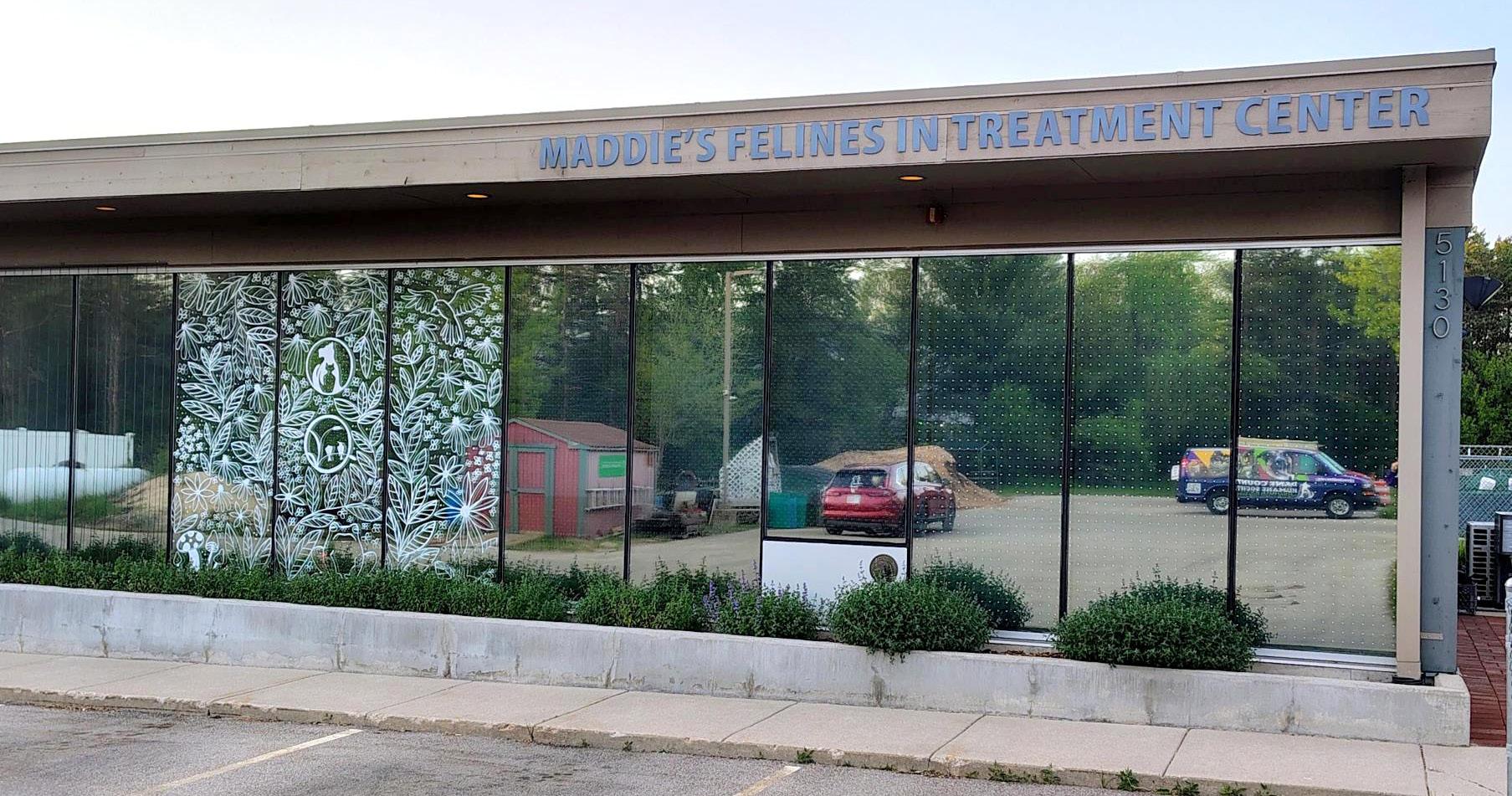
Dane County Humane Society installed bird-safe window treatments across its own facilities on their campus, like the Maddie’s Felines in Treatment Center, which has dots as well as a beautiful design that includes both the DCHS and Wildlife Center’s logos.
some cases, the injuries are too severe, and the animal must overwinter at the Wildlife Center until it’s safe for them to be released in spring.
Light Pollution Adds to the Problem
Windows are only part of the challenge for birds. Most songbirds migrate at night, navigating using natural light cues from the moon and stars and Earth’s magnetic fields. Artificial lighting from cities and buildings can confuse birds and draw them into urban environments where the risk of collisions increases dramatically.
Outdoor lighting that is unshielded and shines upward or left on overnight contributes heavily to light pollution during migration periods. To help migrating birds and bats, DCHS’ Wildlife Center encourages community members to:
• Turn off unnecessary outdoor lights.
• Use motion-assisted lighting whenever possible.
• Angle lights toward the ground.
• Choose dimmer bulbs or lighting with warmer undertones.
• Close blinds and curtains at night to prevent indoor light from spilling outside.
Municipalities can also help reduce risk by installing streetlights designed to direct light downward instead of upward into the sky.
Making Windows Safer
Simple changes to windows can dramatically reduce collisions. Bird-safe markings placed on the outside of glass help birds recognize windows as barriers rather than open air. DCHS’ Wildlife Center recommends markings that:
• Are at least one-quarter inch in size.
• Are spaced no more than two inches apart.
• Cover the full surface of the window.
These markings can include decals, paint, markers, string, or other materials that break up reflections. In 2025, DCHS installed bird-safe window treatments across its own facilities. Additionally, the Wildlife Center continues to expand its conservation efforts through collaboration with Southern Wisconsin Bird Alliance. In 2025, the organizations worked together on window-strike surveys, educational displays, and public workshops focused on reducing bird collisions.
Northern Parula #25-2718 suffered ocular injury, depression, lethargy (September 18 to September 21). They were banded and released after rehabilitation.
For wildlife rehabilitators, migration season is both rewarding and heartbreaking. Staff and volunteers spend weeks treating fractures, managing neurological injuries, and helping birds rebuild strength before returning them to the wild. But experts say prevention remains the most important tool.
“Professional rehabilitation after a window collision can help save an individual’s life, but many birds face severe and debilitating injuries that delay or end their migration journey because they were not discovered and brought into rehabilitation,” says Wildlife Operations Supervisor Paige Pederson. “By taking the time to identify highrisk areas at your home or business and addressing those with affordable window treatments or by turning off the lights, you can help protect birds.”
Small actions taken by homeowners, businesses, and municipalities can collectively save countless birds during
one of nature’s most demanding journeys. If community members find a wild animal they believe may be injured, sick, or orphaned, they're encouraged to contact DCHS’ Wildlife Center at (608) 287-3235 before intervening. More information is available at giveshelter.org/wildlife.
Lisa Bernard is development & communication supervisor at Dane County Humane Society.
Photographs provided by Dane County Humane Society.
Lisa Bernard
JEFF GOKE
The Pursuit of Creativity
by Kyle Jacobson
Consuming creativity is compelling to no end. Whether stories, music, artwork, or performances, we engage as an audience and carry those experiences into conversations with others through casual discussion, spirited debate, and online communities built around shared enthusiasm. We often find comfort in the role of observer and critic, ignoring how difficult it is to create something of our own and accept the vulnerability that comes with sharing a part of ourselves. Yet the act of making something offers rewards beyond sharing an opinion. In the age of self-publishing, home recording studios, and countless platforms to share our creative voices, the ability to move from consumer to creator has never been more accessible.
In the spirit of adding to the conversation at large, Jeff Goke is self-publishing his debut novel, Orderbound , this year. As a young adult, Jeff worked on a couple of political campaigns after studying politics at the University of Minnesota. He soon found himself disillusioned with the field, calling it a “really unsavory business.” So he shifted toward working in compliance for a variety of industries in Greater Madison, where at age 39, he now serves as the head of quality and compliance. It’s a life measured in systems running on structure and routine. A life where deviation is rare and expression is procedural. Some might find the structure of his professional life
reassuring; others, uneventful. But somewhere in the folds of his character, there were stories waiting to be told.
“I loved stories,” says Jeff. “Throughout my adult life, there’d be times when I’d sit down and try to plot something out. I think this is where the type A compliance-driven part of me came in. It had to be perfect before I could do anything. Perfect is the enemy of good and all that jazz, so it always just died.
“Finally, my husband was like, ‘Just sit down and write.’ So I did. I had a general idea and started writing and just kind of took off from there.”
That push didn’t just start the book, it changed what starting something creative meant. It reframed the act from a leap to a series of steps. “I wasn’t prepared for just how much of it organically grows as you’re doing it,” says
Jeff. “You start to feel like you know the characters. There’s a lot of discovery. You get to know yourself better in a sense.”
As ideas rarely arrive finished, testing, reshaping, and refining through internal headbutting against other ideas, assumptions, and instincts has to happen out in the open. When we allow those internal tensions to surface without forcing resolution, the result feels more natural, as though it were cultured and grown.
To further cultivate these ideas, many creatives join creative circles with those who share their passions. They then have to determine if they’re creating for an audience or for themselves. In Jeff’s experience, “Starting out doing it for yourself is the way to go because you’re trying something new. You want to explore this and grow your skills and get comfortable with it. That’s just easier to do when you’re creating something that’s a direct reflection of what you want it to be.”
If a creative decides to share their work with the world, a new set of challenges arise. No longer fixed to intention, the piece has to survive interpretation and disagreement. Jeff recalls his experiences with beta readers: early readers who go through the book before publication and offer their insights on what works and what doesn’t. “Really taking those criticisms and sitting with them and figuring out how you can execute or act
on those things, it’s important. And it can be really stinging at first. … All criticism is legitimate and valid. It’s somebody’s response, somebody’s viewpoint.”
This is where the process expands beyond craft alone and becomes an exercise in perspective. Not every interpretation aligns, but each one reveals something on how meaning is constructed. You won’t agree with every response, but you’ll start to recognize the shape of an idea—the experiences, assumptions, and histories that inform it. Every reaction to a piece of work is a meeting point between two ways of seeing the world.
Jeff actually grew up as a theater kid. He played piano, read a lot, was in musicals and plays. These were just the things that he enjoyed until he “decided to be responsible and get a quote-unquote real job.” After years of setting aside creative instinct in favor of structure and routine, his husband helped him awaken the dormant creative, a part many of us have developed an array of excuses to omit going forward.
Creativity then stops being a private practice and becomes something shared, changing slightly depending on who encounters it. And that shift is the point. Everyone doesn’t have to agree with what’s made, but it exists outside the person who made it, continuing to evolve in the minds of others.
Which brings us back to the value of creativity. The drive to consume is satiated more readily than ever through classic media alongside the endless pull of our customized feeds. Making something for ourselves is the break our consciousness
is begging for, a shift from passive intake to active expression. And when that work is shared, our voice gains weight. When Jeff engages in conversation about his ideas, the ambitious ideologue becomes the measured creator, testing his ideas against the perspectives of others rather than arguing what should be true.
As we find ourselves further drowned in the noise of reality, don’t think of creativity as an escape; think of it as a measured response.
Kyle Jacobson is a writer who doesn't like to pause books at the good part.
Photographs provided by Jeff Goke.
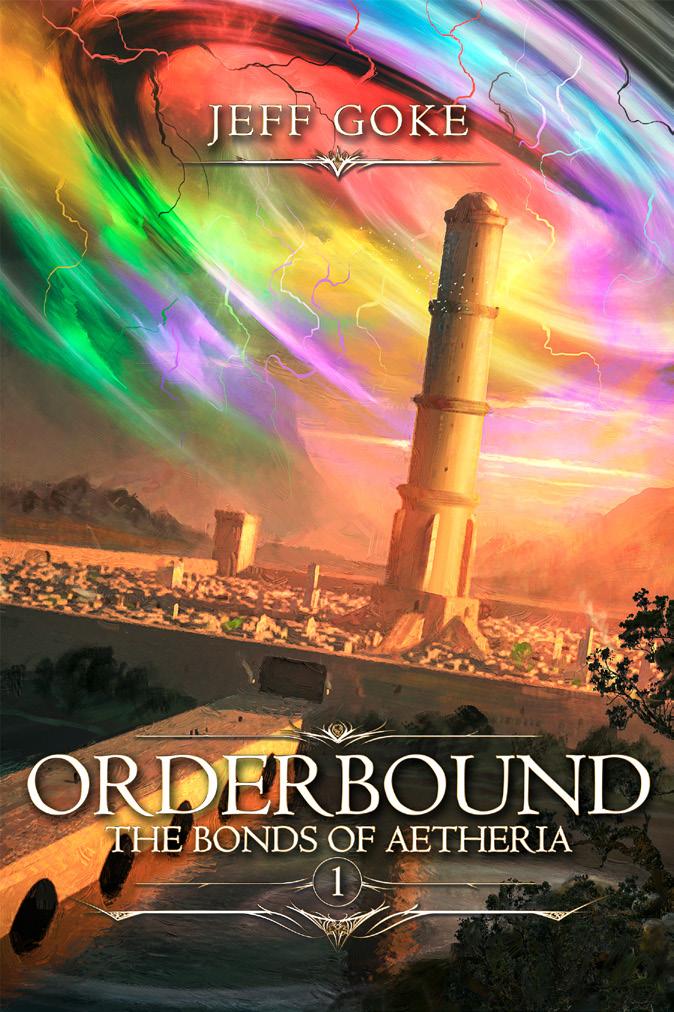
Orderbound is a high fantasy mystery set in Aetheria, where seven ruling Orders govern the natural forces of the world. When those Orders begin to lose control of the powers they command and their leaders start to vanish, a fragile alliance of representatives is formed to uncover the conspiracy behind the collapse before it’s too late.
bondsofaetheria.com
Photograph by Barbara Wilson
Kyle Jacobson
Jean Roberts-Guequierre
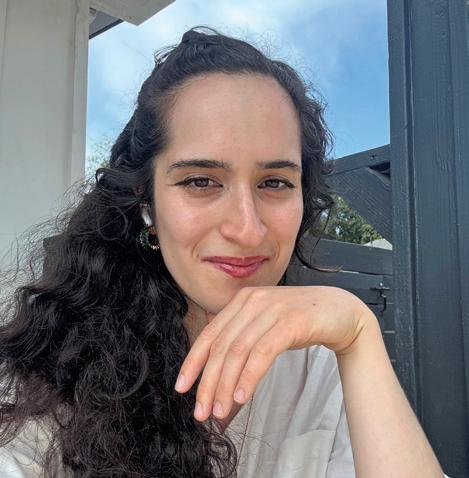
Jean Roberts-Guequierre is a painter and mark-maker whose work is deeply influenced by medieval art. Her connection to the tradition began at age five, when she discovered the Detroit Institute of Arts’ medieval collection. She spent hours there as a child and later interned there during university. At Kalamazoo College, she continued making artwork even after the art program was defunded midway through her studies. Without formal instruction, Jean taught herself woodcuts in abandoned printmaking rooms, where she first encountered the German Expressionists, particularly Käthe Kollwitz. For her senior thesis,
by Efrat Koppel
Jean taught herself oil painting from books. The results were, she says, "really rough paintings," but clarified painting as her focus.
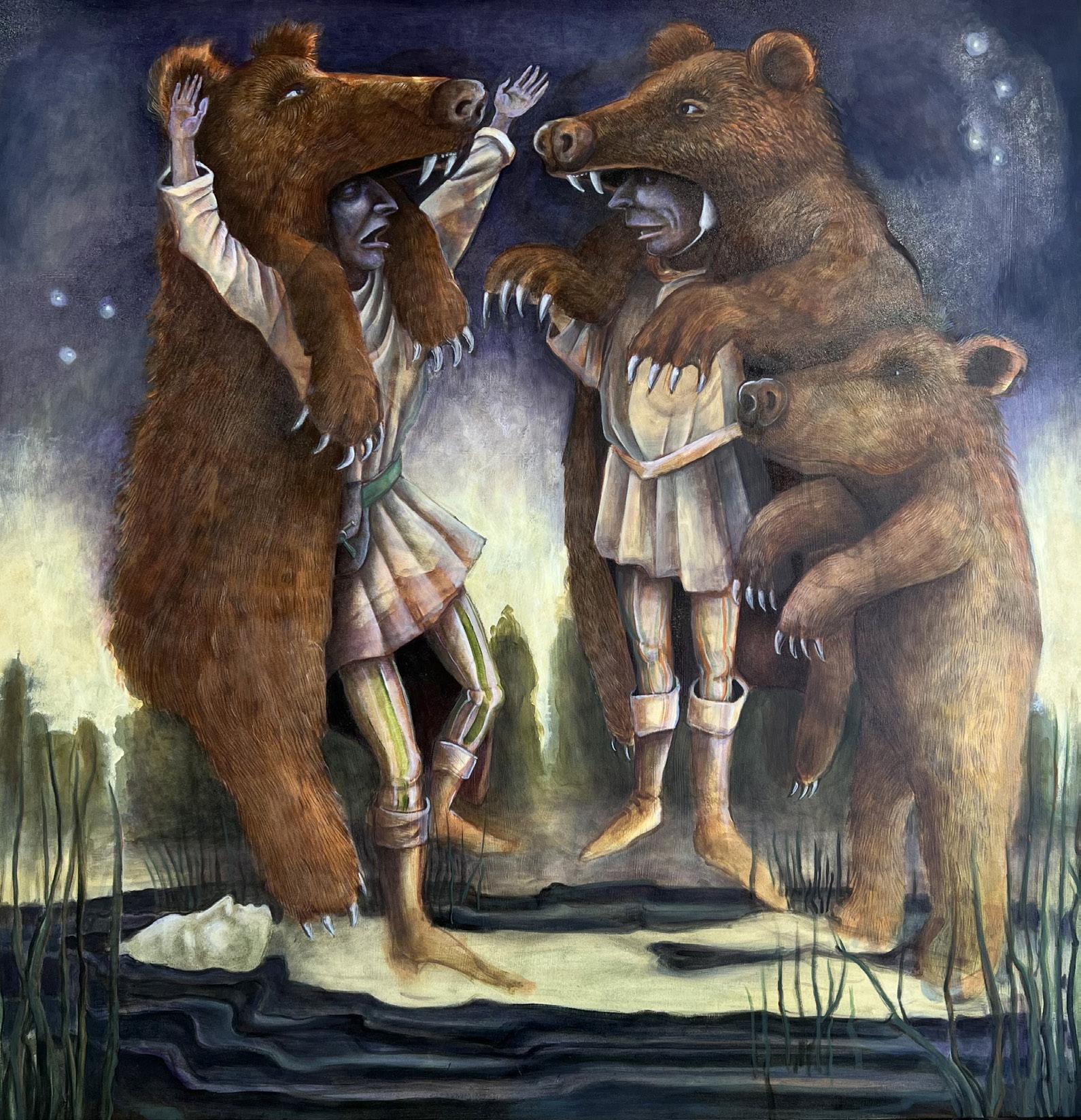
Without teachers, Jean sought guidance elsewhere. She found an artistic lineage with the Flemish Primitives and Northern Flemish Renaissance, particularly Bruegel the Elder and Hieronymus Bosch. Jean was drawn to their depictions of unidealized bodies and ordinary people in contemporary, regional settings. She adopted and adapted their technique of underpainting and glazing with transparent color over drawn underpaintings. She would go on to create studies of Bosch and Bruegel as a consistent practice and source of inspiration.
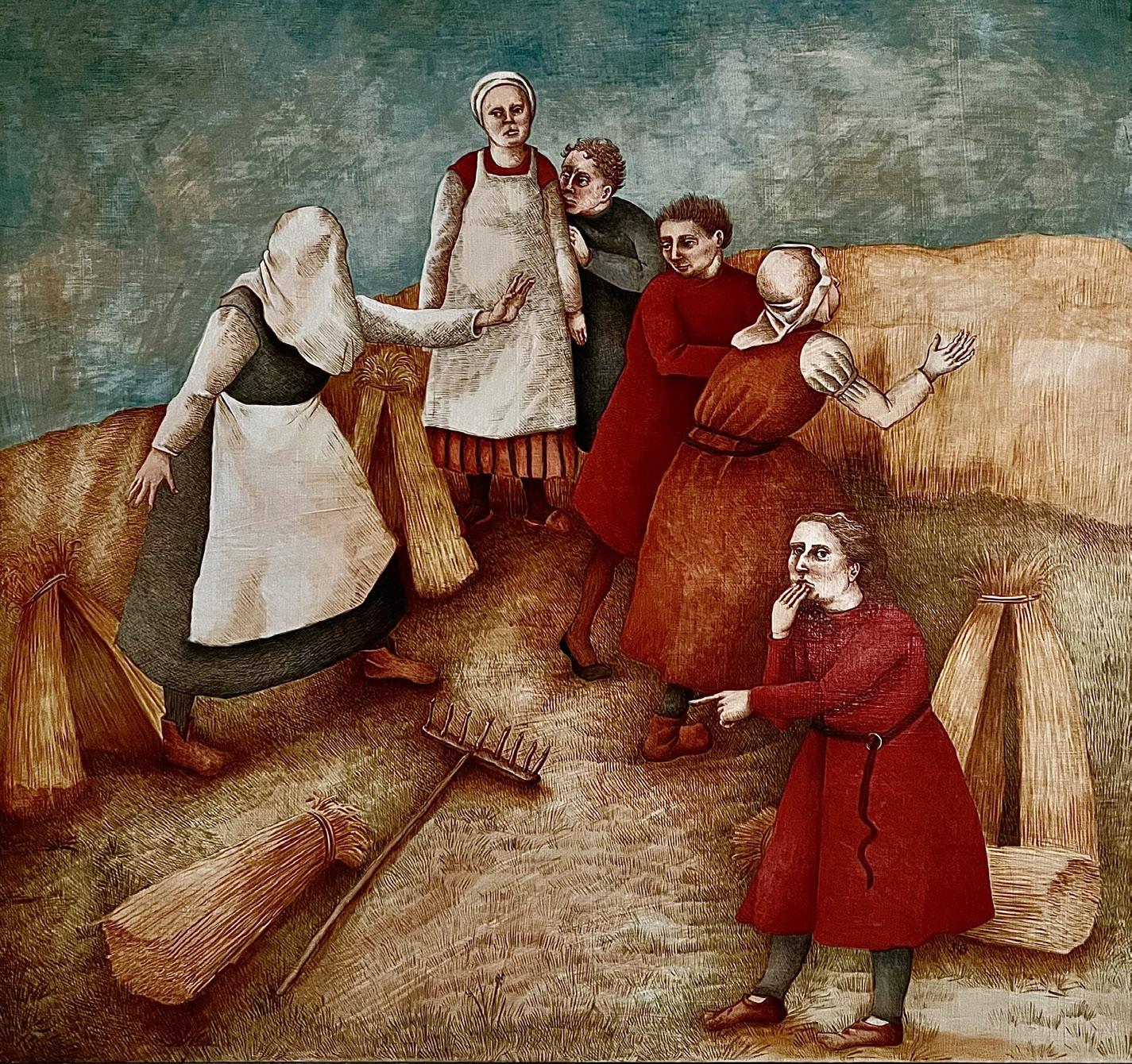
“I started bringing older images into the present day to tell contemporary stories because we are, at our core, the same people. We’re just not that different. Their paintings showed that.” Relating past and present, Jean paints 15th century garments alongside syringes and cigarettes. She also borrows from gestures of the period. “I love the stagedness of the gestures, the same hands over and over again for Mary, the angel, or the annunciation.”
Seeing Bears Dance, 2025 Oil on panel, 40x40 inches
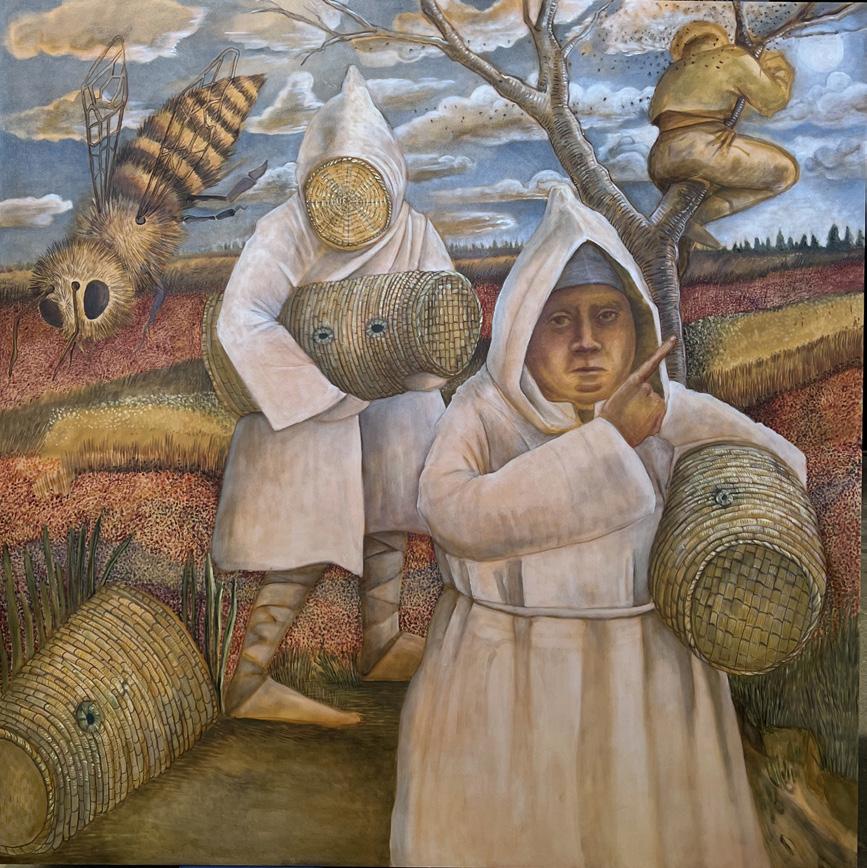
The Beekeepers , 2025 Oil on panel, 50x40 inches
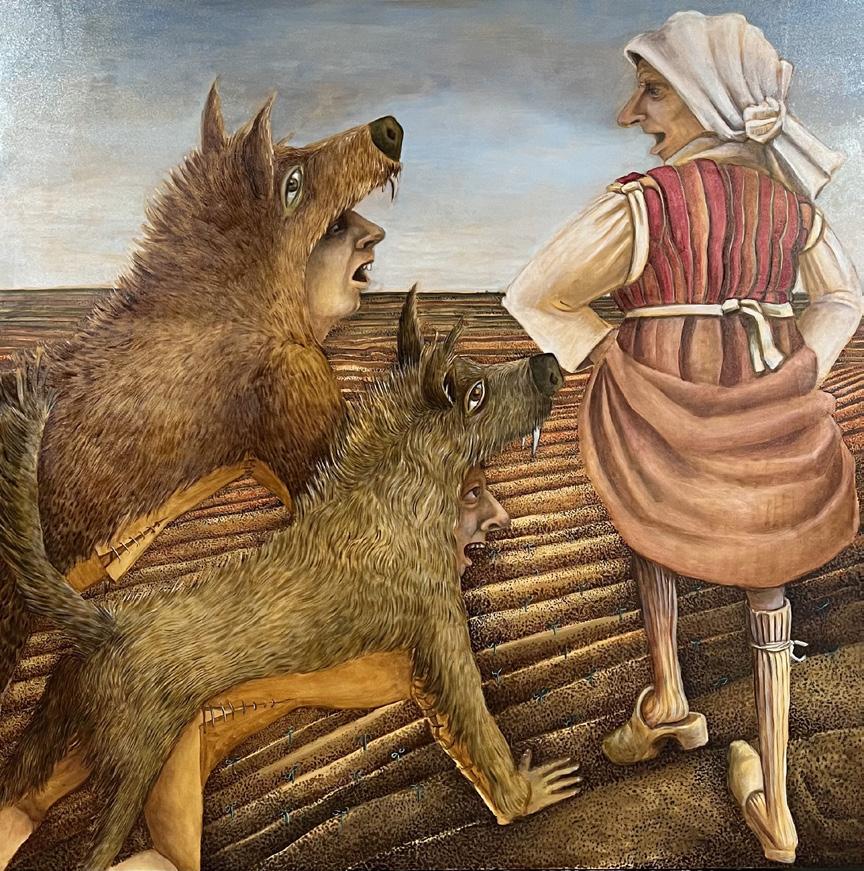
Fear Makes Old Women Run, 2026 Oil on panel, 40x40 inches
Through decades of creating, challenges to her creative process arose. Midway through her career, painting grew increasingly difficult until it stopped entirely. “When I was married, my exhusband made a real point of saying, ‘You shouldn't be making art that could embarrass me or my family,’” she says. “So I was trying to find my way through. I was in graduate school for special education. I wasn't painting. I was not thinking about it. I was in survival mode.”
In 2011, Jean’s friend Mike Flanagan, who ran the Museum Studies program at University of Wisconsin–Whitewater, reached out about visiting her studio and participating in the Current Tendencies III exhibition at the Haggerty Museum of Art at Marquette University. Jean tried to dissuade him; she hadn’t painted in years. Mike came anyway. As he and museum staff toured her studio, Jean described how she worked, starting with an idea, researching images, responding to them, and building paintings through layers of historical and contemporary reference. The conversation then shifted toward the exhibition; rather than displaying existing work, participating artists would create new pieces inspired by objects in the Haggerty's collection. Jean was invited to make new work.
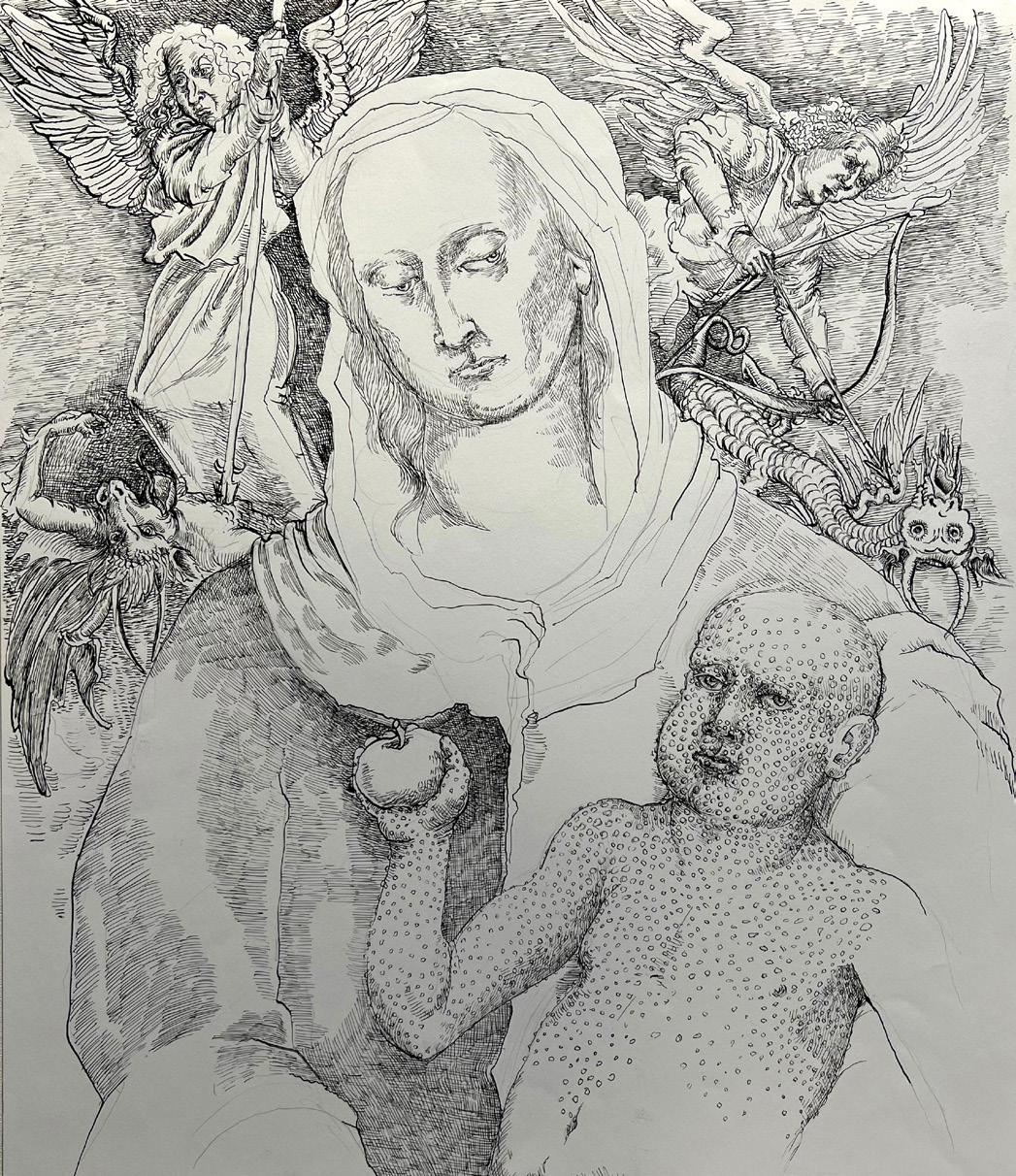
Inspired by a holy family painting in the Haggerty and troubled by the growing anti-vaccination movement, Jean proposed a series depicting Mary holding the infant Jesus while he suffered from diseases such as measles, mumps, diphtheria, and smallpox. Her thenhusband warned, “They'll never let you show that work because it’s anti-Catholic. That’s a Catholic university. Are you insane?” Instead, museum and university leadership embraced the concept, recognizing its implications across faith, public health, and social systems. The sketches were approved and developed into full-scale paintings, drawing audiences across nursing, public health, and art history.
Jean gets emotional reflecting on it. “I have this permission to explore. Somebody wants me to do this. And it was such a relief to be invited.”
The anti-vaccination series and Haggerty success became the harbingers of Jean’s reemergence. By 2015, she was divorced. A year later, Jean established a studio outside her home for the first time. Reflecting on the work she’s making now, “It's a completely different storyline. It couldn't have happened in the house I was in or with the person I was with. It wouldn't have happened."
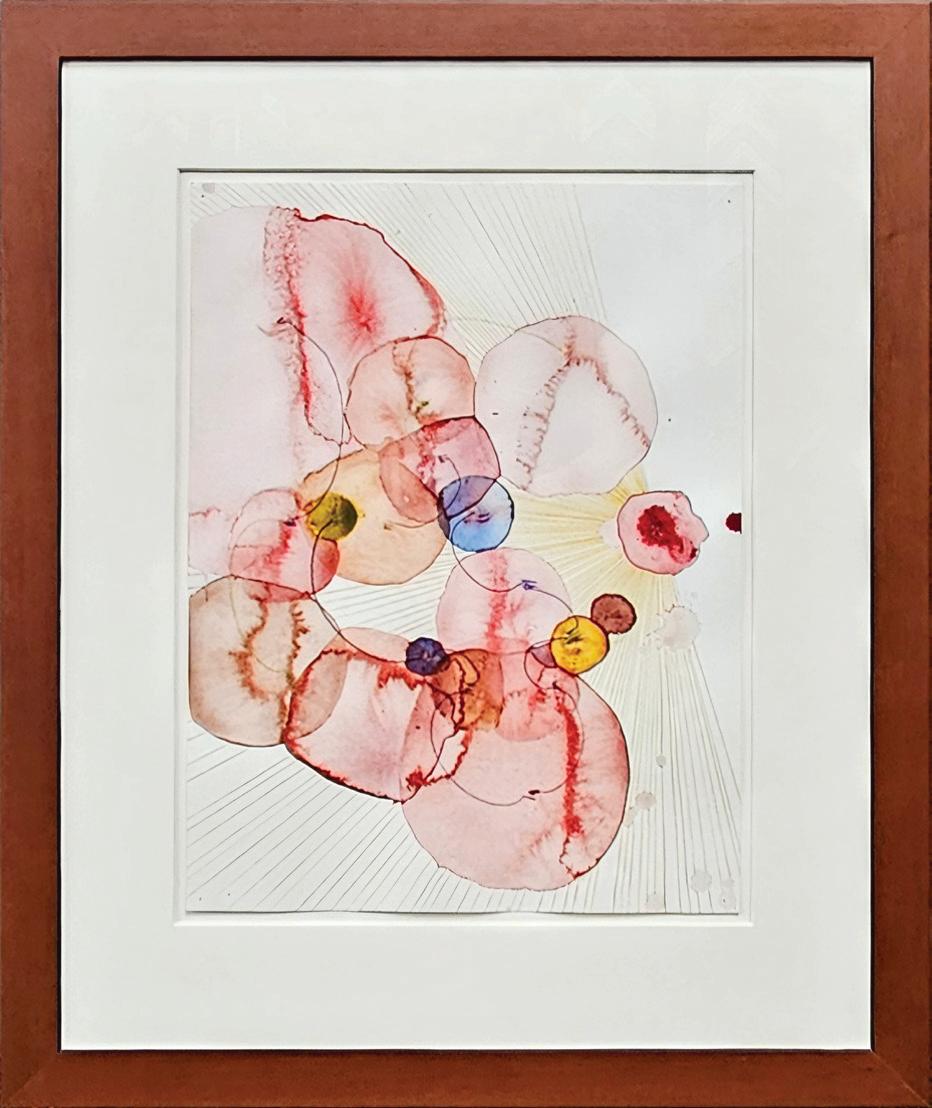
What followed were the paintings that define Jean's visual style today, layered and alchemical paintings that all at once hold the banal, uncanny, and ugly threaded with humor, critique, and immense light.
Abel Contemporary Gallery
Just minutes from Madison. Find us in Stoughton, WI and online.
Image: George Shipperley
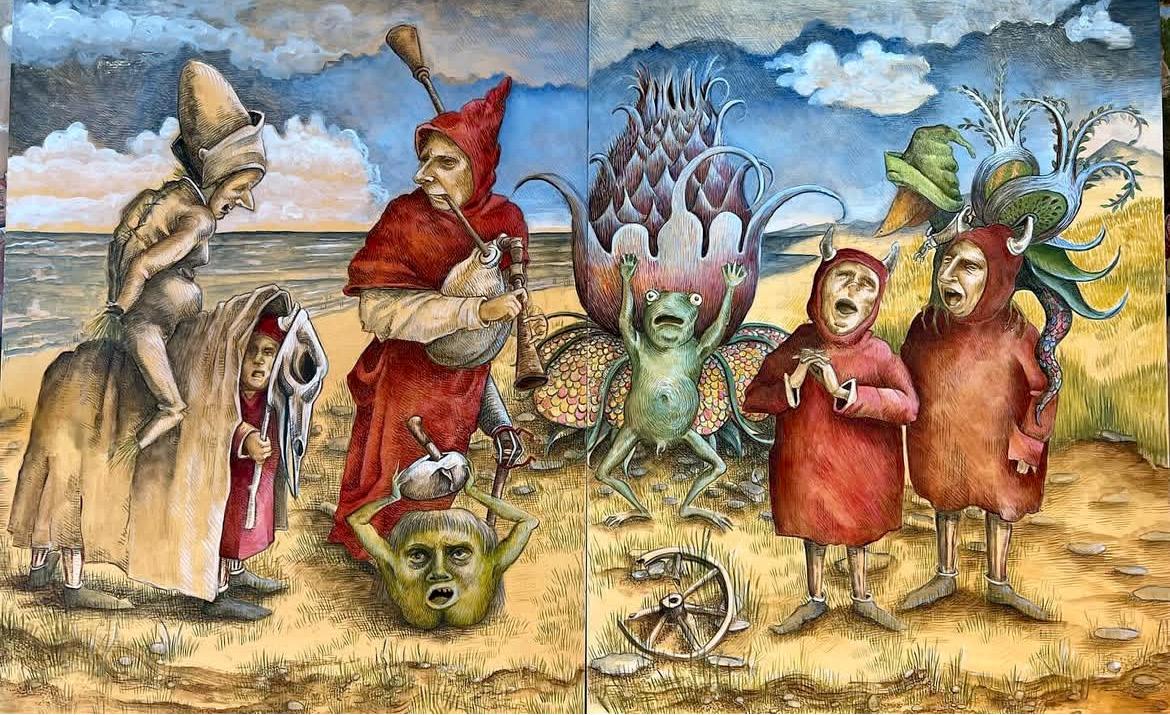
Lust Parade, 2024 Oil on panel, 40x16 inches
Her voice, metallic with rage and new freedom, returned to painting with the series Damned If You Do, a tetraptych featuring smoking, divorce, eating cake, and cosmetic surgery: subjects that, particularly for women, remain freighted with judgment. The horns that appear throughout the series reference divine light, stemming from a centuries-old Latin mistranslation of Moses radiating light after receiving divine wisdom.
The work expanded outward. In Powerful Women , Jean reimagined Christian saints through a feminist lens, extolling the female subjects’ insight, love, and creative inspiration. These paintings
introduced a recurring image to her work: the stylized, leafy cabbage-like plant, from which individuals emerge reborn. For Jean, the motif became connected to transformation. "I got this whole idea of that emerging, of that second life," she says. "Some people have stepped out of their plant. Some people are still well enough inside it."
Jean’s paintings bridge the intimately personal with the political and the global. Fear Makes Old Women Run draws from Bruegel’s Proverbs, asking who a woman would rather run into in the forest, a man or a bear. Following the attacks on Gaza in 2023, she began another Bruegel study, an unarmed war painting, and completed it two years later with the wars in Lebanon and Iran.
Amid rage, Jean holds connection to nature and the sublime. Today, she's immersed in a series called Telling the Bees. While beekeeping has featured in her work for a few years, she found documentation of an old tradition, “telling the bees,” in Eliot Stein’s book Custodians of Wonder: Ancient Customs, Profound Traditions, and the Last People Keeping Them Alive. Beekeepers would share news of their families and communities with their hives, draping them in mourning colors after deaths and bringing them pieces of birthday cake to celebrate new beginnings. Jean says, “They’re a connection between us and other worlds. They’re a part of who we are. We just have to remember it.”
Efrat Koppel is an arts writer and lifelong arts lover and practitioner. Efrat writes about local artists, creative process, and the role of place in shaping artistic identity.
Photographs provided by Jean Roberts-Guequierre.
Efrat Koppel
Children's Games: Hoodman Blind, 2008 Oil on panel, 21x21 inches
, 2012 Ink on paper, 17x14 inches
•
•
•
•
•
•
•
•
•
•
•
•
•
•
INDEX advertiser
association
Dane County Humane Society 21
Sharing Active Independent Lives (SAIL) 15
dining, food & beverage
Cambridge Market Cafe 19
Chocolate Shoppe Ice Cream 11
The Deliciouser 11
Fraboni’s Italian Specialties & Delicatessen 29
Lombardino’s 5
The Old Feed Mill Restaurant 18
Paoli Schoolhouse
American Bistro 5
Sugar River Pizza Company 13
Teddywedgers 15
Tempest 5
Tornado Club Steak House 5
entertainment & media
Fitchburg Agora Art Fair 31
Our Lives Magazine 11
Stoughton Opera House 2
services
Edgerton Hospital and Health Services 29
Edgerton Hospital
Auxiliary Golf Outing 19
Four Lakes Veterinary Clinic 23
Madison Gas and Electric 32
Monroe Street Framing 29
Stoughton Health 8
shopping
Abel Contemporary Gallery 27
Anthology 17
Dane County Humane Society Thrift Store 15
Deconstruction Inc 25
Fitchburg Center Farmers Market 31
Goodman’s Jewelers 19
Mounds Pet Food Warehouse 23
contest
Win
a $50
Gift Certificate from Old Sugar Distillery question:
“Restaurateurs Michelle and Eliud Perez met in which state?”
Enter by submitting your answer to the above question along with your name, mailing address, phone number, and email online at madisonlocallysourced.com, by email (mls@madisonlocallysourced.com), or by mail:
Madison Locally Sourced c/o ASJ Publishing LLC PO Box 559 McFarland, WI 53558
All entries with the correct answer will be entered into a drawing. Contest deadline is August 2, 2026.
good luck!
winners
Thank you to everyone who entered our previous contest. The answer to the question
“Which local business owner was previously a chef at a vegetarian jazz nightclub in Urbana, IL?” is Jules Wolf Stenzel. A Bergamot Massage & Bodywork gift card was sent to our winner, Gerianne Gray of Madison, WI.