Whether you are an established or emerging franchise, ADA's franchise management system can help you manage your franchisees, communicate effectively with them and monitor their performance to help them succeed.
Grow your franchise operations using digitization with ADA — specially developed for you to ensure a smooth and seamless business expansion with performance transparency. ADA stands for Asiawide Digital
The mention of bubble tea immediately reminds people of Taiwan. Two young Taiwanese, Rex and Bruce, created their own fragrant bubble tea R&B Tea R&B 巡茶 in 2004 and brought it to China. It flourished and has since operated more than 800 outlets in Suzhou, China and other places. R&B 巡茶 entered the Singapore market in 2017, and it caused a huge sensation with its first extralarge one-litre fruit cup, bursting with fresh fruits. Driven with the guiding principle of continuous innovation, R&B 巡茶 launched the well-known brown sugar series of drinks – for example, Brown Sugar Boba Milk with Cheese Brûlée” and “Frog Meets Milk” and so on. This series uses an exclusive brown sugar formula combined with delicious slow boiled pearls. The rich taste has established the popularity of R&B 巡茶 , with this series ranked among the best in many polls.
In view of the importance consumers placed in attaining a healthy lifestyle, R&B 巡茶 has adjusted their menu which features fruit teas including the latest addition ‘Lychee Tea’ to cater to different demands. R&B 巡茶 's product line also includes high-quality teas from all over the world. Starting with China, the birthplace of tea, R&B 巡茶 purchases the best quality tea in every season in various teagrowing areas around the world, dedicating to everyone the best quality tea. R&B 巡茶 has expanded into the United States, Macau, Philippines, Indonesia and other countries in Southeast Asia with more than 1,000 outlets.
Savoring tea is like savoring life. R&B 巡茶 abides by its goal of Sharing a Cup Happiness with all its customers.
Please get in touch with us if you are interested in our franchise opportunities: Ms Jayne Goh at jayne.goh@koufu.com.sg and Mr. Jet Li at jet.li@koufu.com.sg
Publisher 出版
Asiawide Trends Pte Ltd
亚洲新趋势私人有限公司
140 Paya Lebar Road
#09-20 AZ@PayaLebar
Singapore 409015
Co. Reg. No.: 198902080E
Tel 电话: (65) 6743 2282
Fax 传真: (65) 6743 1139
Email 电邮: albert@asiawidefranchise.com.sg
Website 网站: www.asiawidefranchise.com.sg
Facebook: @AsiawideFranchiseConsultants
Twitter: @Asia_Franchise
Linkedin: asiawide-franchise
Printer 印刷
Xpress Print Pte Ltd
Designer 设计
Xpress Print Pte Ltd
Media Reps 广告代理
Contact: albert@asiawidefranchise.com.sg
Editor-In-Chief 总编辑
Albert Kong 江进兴
We welcome views and comments from our readers. Correspondence should be addressed to Editor-In-Chief at the above address.
我们欢迎读者提供意见,来信寄上述地址, 注明杂志编辑收。
Asia Franchise & Business Opportunities (AFBO) reserves the right to edit letters for publication and also reserves the right to refuse advertising. With the publication of AFBO, Asiawide Trends is not offering legal, financial or any professional advice or endorsements. Readers are encouraged to seek advice from professionals in specialized fields before acting on any information published herein. The views and opinions expressed in AFBO are those of the author(s) and do not necessarily reflect the views and opinions of Asiawide Trends.
The life cycle of Fortune 500 companies is 40 years. Most European and American companies have a life cycle of 12.5 years, while the average life cycle of companies in many developing countries is less than 5 years. This not only reflects the lack of competitiveness of these companies, but also reflects the reality of lack of leadership in these companies.
Napoleon once said, "There are only bad generals and no bad soldiers." It is difficult to win a battle without a good commander. For an enterprise, leadership is of course also very important. Jack Welch said: "Leadership is more important than strategy." Without excellent leadership, there will be no excellent execution!
James Kouzes and Barry Posner repeatedly emphasized in their book “The Leadership Challenge (1987) " that "leadership", a human behavior that plays an important role in the development of history, and no matter the circumstance, the essence remains the same. Kouzes and Posner summarise their program about what leadership is, and what they believe are the Five Practices of Exemplary Leadership®:
1. Model the Way
2. Inspire a Shared Vision
3. Challenge the Process
4. Enabling Others to Act 5. Encourage the Heart
In franchising, leadership, too, is vital for the network to survive and thrive , especially during this trying period.
Asiawide Franchise Consultants (AFC) is thrilled, inspite of the challenging environment posed by the pandemic, to have added three more strategic partners to its
worldwide network of franchise consultant partners: 1) Croatia - Dr. Ljiljana Kukec ; 2) France -- Louis Malta-Bey ; 3) Pakistan -Muhammad Naeem Younas. It is hoped that with more quality partners, AFC will be able to provide its clients around the world even better service so that their customers can achieve their objectives in a more efficient manner.
Four Strategies to Managing IP Disclosure Risks in Collaborations
在合作过程中管理知识产权披露风 险的四种策略
Which Companies Are Winning in China?
哪些跨国公司在中国胜出或遭遇滑 铁卢?
Leveraging on Intellectual Property Effectively in Digital Transformation 知识产权对数字转型的重要性
Overseas Franchisor Tips – Getting Started in Australia 澳大利亚市场 - 海外特许人入门 秘诀
Franchising – The Use of Blockchain Technology 区块链技术在特许经营的使用
Trademarks: Even the Big can fall 商标:即使大公司也可能遇到问题
Tips To Assist Franchisors Responding To The Covid-19 Pandemic 冠状疫情:给特许商Franchisor 的-13条贴士
“So, why do you think some of your franchisees are underperforming?”
“为什么您认为您的某些加盟商业 绩表现不佳?”
News Station
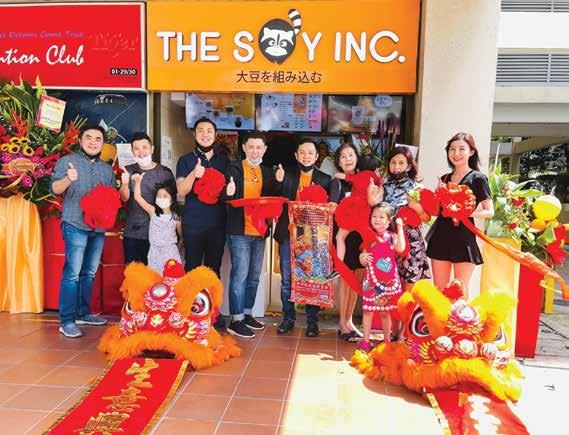
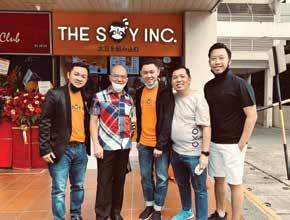
The Soy Inc's and Gloria Jean’s Coffees Opening 开设分店 The Soy Inc's和Gloria Jean’s Coffees
Intellectual Property and Franchising Webinar Training Workshops held in February 2021 in Hong Kong
2021年2月在香港举行的“知识产权 与特许经“线上研讨会及培训班
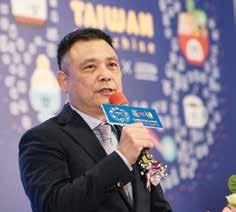
Taiwan's largest franchise exhibition (Spring quarter 2021)
台湾开春最大规模加盟展;500摊位 拼创业商机
Franchise Expo Paris Will Take Place From September 26 to 29, 2021 下一届巴黎特许经营博览会将于 2021年9月26日至29日举行
Brunei's DARe Organized A Franchise Webinar For Enterprises 文莱政府为中小型企业组织了一个特 许网络研讨会
TopFranchise (Russia) Organized The Virtual Global Franchise Conference on 10th February 2021 特许经营网上会议--主办方:俄罗 斯 Topfranchise
Russia's Commercial Real Estate Industry Faced a Difficult Situation 讨论当前俄罗斯房地产行业面临的 困境
MIFB Hybrid 2021
马来西亚国际食品和饮料展览会混 合格式
FLA Singapore 2021 AGM
新加坡特许经营与许可协会(FLA) 于2021
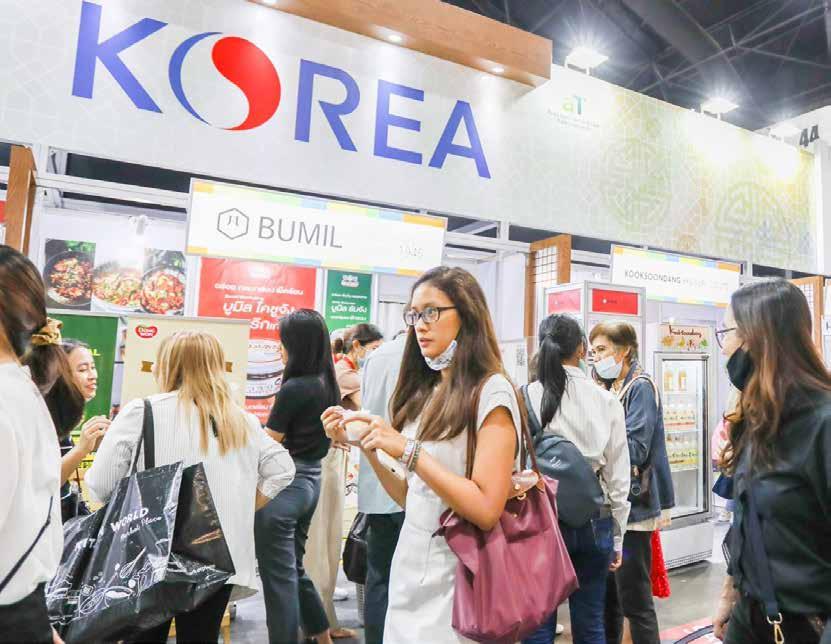
THAIFEX-Anuga Asia Brings You Greater Opportunities Through Hybrid+ THAIFEX-Anuga亚洲通过Hybrid+ 为您带来更多机会
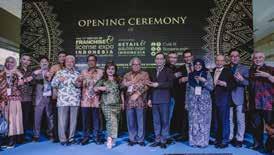
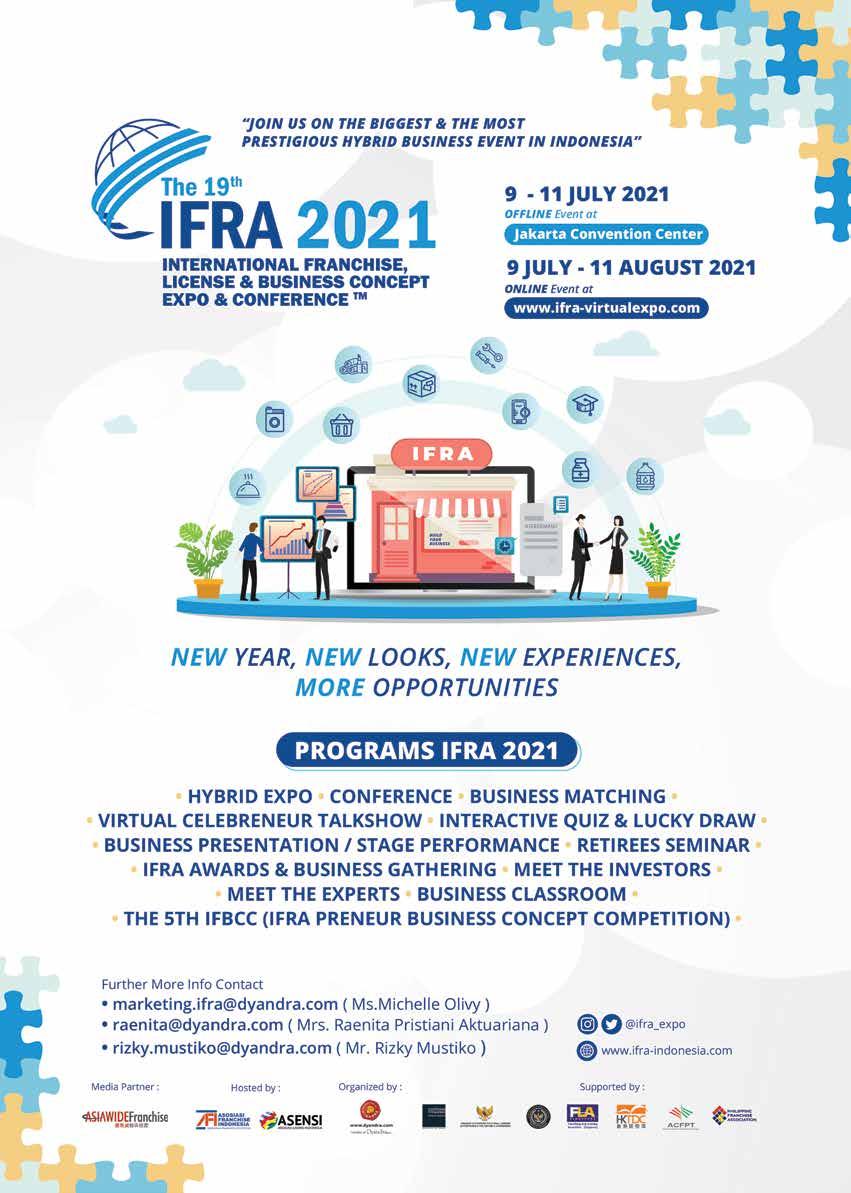
Indonesia's Leading international Franchise, License, Retail & BusinessI Opportunities Exhibition & Conference 10-12 Sep 2021
印尼领先的国际特许经营/许可经营/ 零售和商机展览和会议-2021年9月 10至12日
Japan International Franchise Show 日本国际特许经营展览
Note: the e-version of this magazine can be assessed via http://bit.ly/AFCAFBO or by scanning the QR code on this page.
You will be hard-pressed to find an adult in Singapore who does not recognise the brand Polar Puffs & Cakes, especially when it comes to pastries and Sugar Rolls. It is such a ubiquitous feature in many malls, that it may be strange not to see it in the estate.
Established back in 1926, Polar Café’s very first outlet was located on 51 High Street where the iconic Capitol Piazza and Capitol Theatre are located.
downtown for the best curry pastry puffs, and a selection of ice-cream and chilled refreshments.
It was a popular joint for politicians, lawyers and businessmen due to its strategic location near the trading harbour, Collyer Quay (within the current CBD).
Having witnessed and endured the turbulent period of World War II, Polar Café went on to open a second outlet in December 1986, and many more subsequently (they have 29 outlets - as at end of March 2021). Polar Café has since grown in tandem with the progress of Singapore, with its products becoming a staple to many, and rebranded as Polar Puffs & Cakes in 1995.
To cater to the increasing demand for its puffs and cakes, the company invested in a
sophisticated factory in 1998 which meets the high standards of HACCP.
In 2015, the highest circulated newspaper in Singapore named Polar Puffs & Cakes’ signature Curry Puff as Singapore’s #1 curry puff. With over 100 varieties of pastries, cakes and other confectioneries, the brand takes pride in selecting the best ingredients to produce quality handmade pastries that are baked fresh daily.
Due to its popularity, many parties have approached Polar Puffs & Cakes in collaboration. These include credit card companies, trade associations and clubs that wish to offer Polar Puffs & Cakes’ products to their members.
Their Polaris membership (with entitlements to discount and other benefits) is very popular, and the number of members increases by the day.
“The Polar Family wants to let as many people as possible around the world to enjoy our super delicious curry puffs, chicken pies, sausage rolls, swiss rolls, moon cakes, and many other sorts of confectionaries (with options of popular cartoon characters licensed from Disney and Sanrio, etc.). We aim to be top in every aspect—be it our products, customer service, or our carbon footprint, ” shared Mr. Francis Looi, CEO of Polar Puffs & Cakes
Interested parties who wish to collaborate, please reach Polar Puffs & Cakes at franchise@ polarpuffs.com.sg
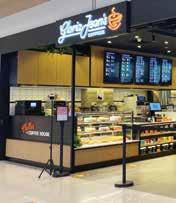
Gloria Jean’s Coffees (Singapore franchisee) newest outlet opened at West Coast Plaza on 15th January, 2021. Best wishes to Kevin Khoo
2021年1月15日,Gloria
Jean's Coffees(新加坡区 域加盟商)最新分店在西 海岸广场开业。
恭祝KEVIN总裁生意兴隆
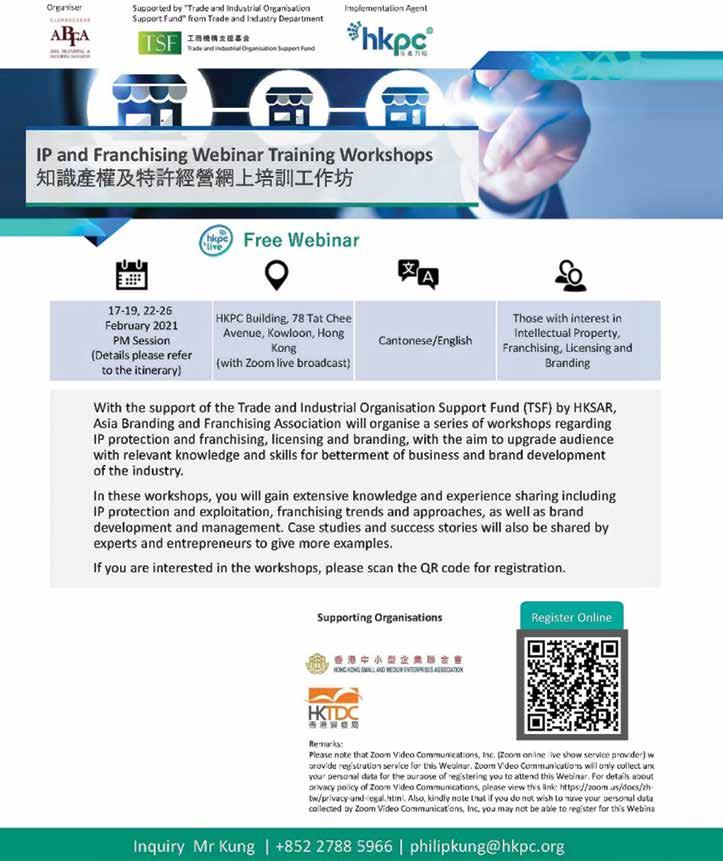
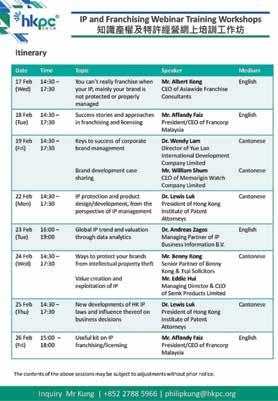
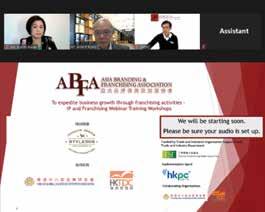
Intellectual Property and Franchising Webinar Training Workshops held in February 2021 in Hong Kong
2021年2月在香港举行的“知识产权与
特许经“线上研讨会及培训班
Taiwan's largest franchise exhibition (Spring
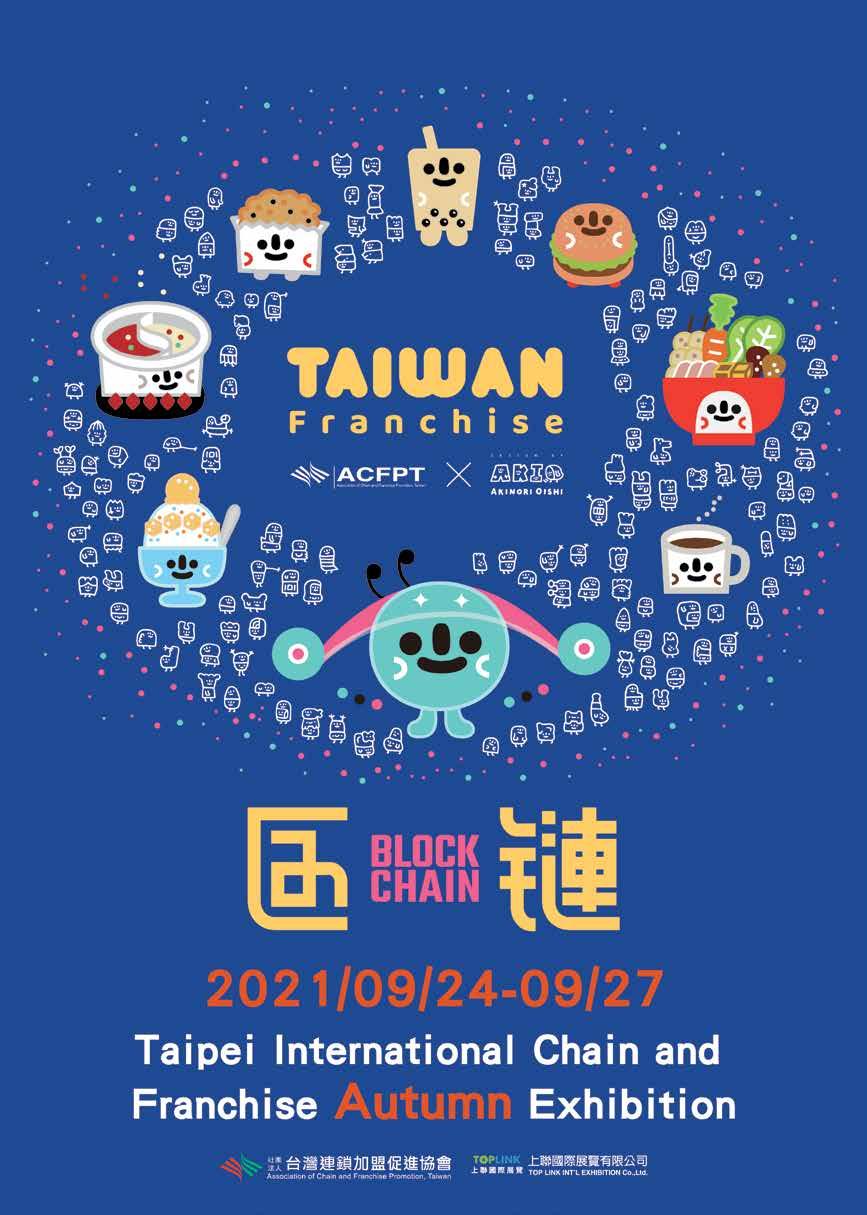
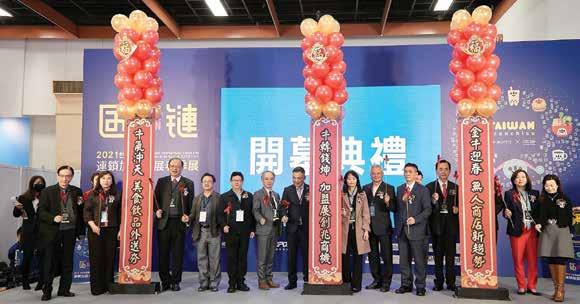
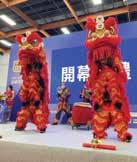
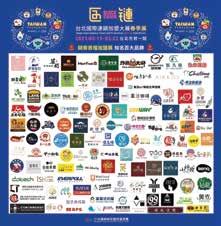
The "2021 Taipei International Franchise and Entrepreneurship ExhibitionSpring Exhibition" organized by the Association of Chain stores & Franchise Promotion Taiwan (ACFPT) was held from February 19th to 22nd at the Taipei World Trade Center (Hall One).
quarter 2021) 由
台湾开春最大 规模加盟展; 500摊位拼创 业商机
Guest-of-Honor was the deputy mayor of Taipei City, Ms. Huang Shan-shan. She said that 90% of Taiwan’s industrial structure comprises small and mediumsized enterprises, among which franchise operators are the core group. When
people are unable to go abroad due to the Covid-19 epidemic, new business models are fermenting in chain brands, such as the delivery-store type that focuses on small footage and robotic production.
There were three themed areas at the exhibition: " Famous Brands Zone", "Equipment Zone" and "International Zone". Equipped with new technology, software (AI unmanned store, face recognition, online APP experience, mobile payment, etc.), and coupled with the blessing of the delivery platform, companies in the franchise industry will be able to effectively reduce labor costs and greatly improve the "timeliness, regionality, and efficiency ratio".
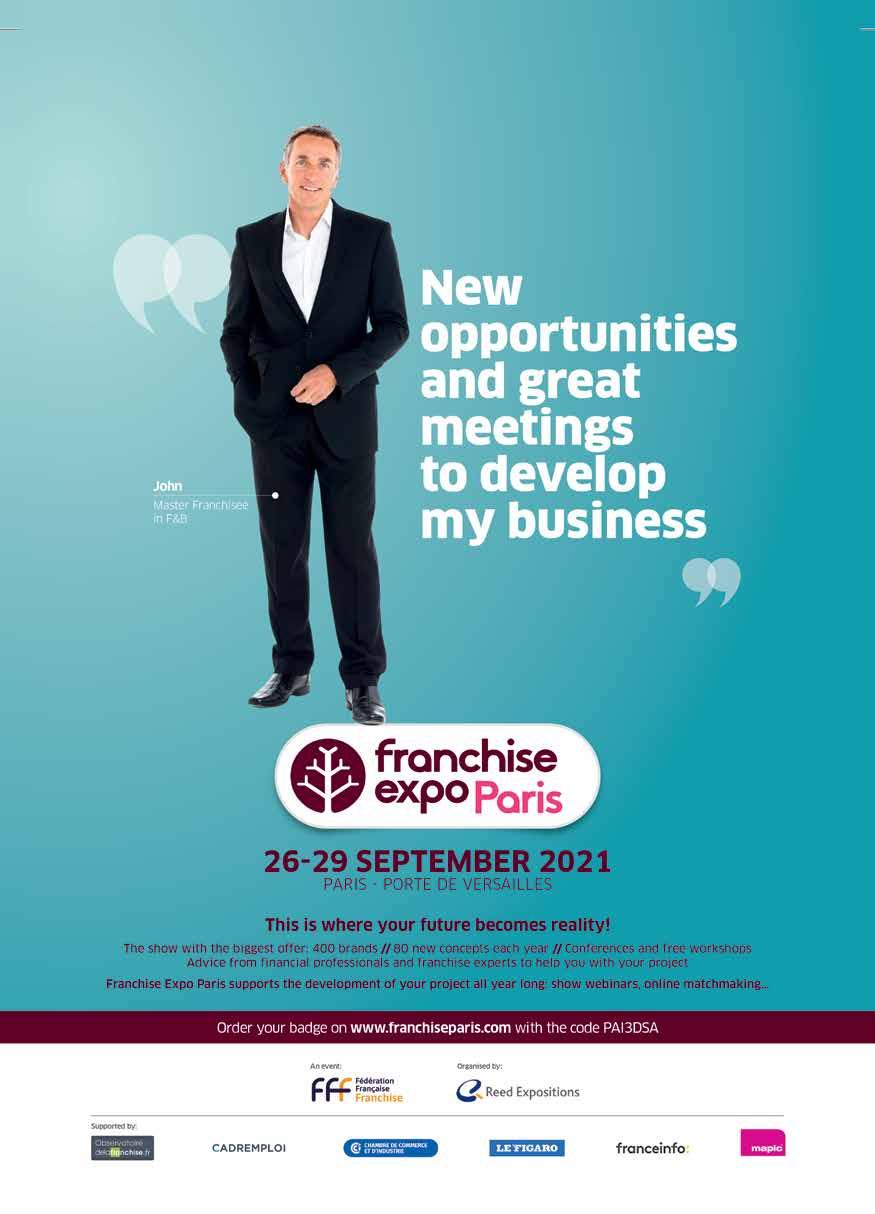
After 3 postponements, the biggest and most international franchise event will take place this year in September 2021. The show of the French Franchise Federation, organized by Reed Expositions France, will, as usual, gather all franchise key players: franchisors, banks, consultants, lawyers, accountants, future franchisees, investors, and the media.
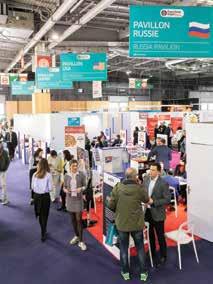
For 40 years, Franchise Expo Paris enables thousands of entrepreneurs to achieve their business goals. This is the ideal moment and place to meet the founders and the managers of more than 400 French and international brands. This unique choice of brands, with a strong reputation or new concepts, from nearly 90 sectors (hotels and restaurants, retail, services, real estate, fashion, fitness, etc.) offers entrepreneurs and/or retailers the opportunity to compare & immerse themselves into the universe of brands and to find the network which is most suited to their ambitions. Franchise Expo Paris brings together a rich program of 100 conferences, including information and help to participants in finding appropriate financial solutions.
The 4-days physical event is supplemented by a 5-month dedicated digital program FranchiseExpoOnline to help all the participants to prepare, organize face-to-face or digital meetings (before, during and after the show), interact, and learn.
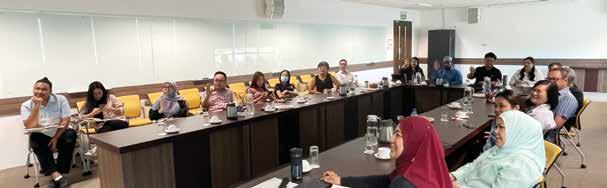
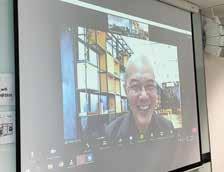
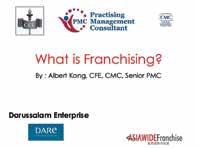
On 5th March 2021, Darussalam Enterprise (DARe), an SME government agency in Brunei Darussalam, organized a franchise webinar for SMEs in its Program Elevate. Asiawide Franchise Consultants’ CEO Albert Kong presented and answered many questions concerning franchising during the one-and-a-half-hour session. Program Elevate is a growth program where DARe will facilitate, nurture, drive and monitor promising MSMEs to achieve continuous growth in 5 years.
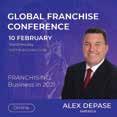
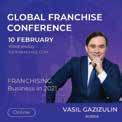
TopFranchise (Russia) Organized The Virtual Global Franchise Conference on 10th February 2021
The co-founder of Topfranchise, Vasil Gazizulin, moderated the webinar Global Franchise Conference on 10th February 2021. The three invited speakers were: Alex DePase, CEO of Global Franchise Exchange (USA); Felix de Wit, Chief Executive Officer at Schalkshof Management & Consultancy (The Netherlands); Albert Kong, CEO of Asiawide Franchise Consultants (Asia).
According to Vasil, more than 250 people from various regions registered to participate in the webinar.
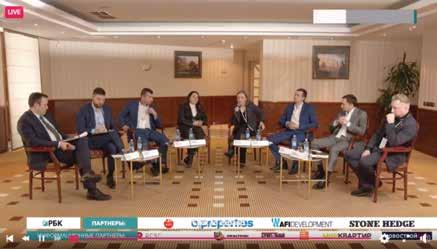
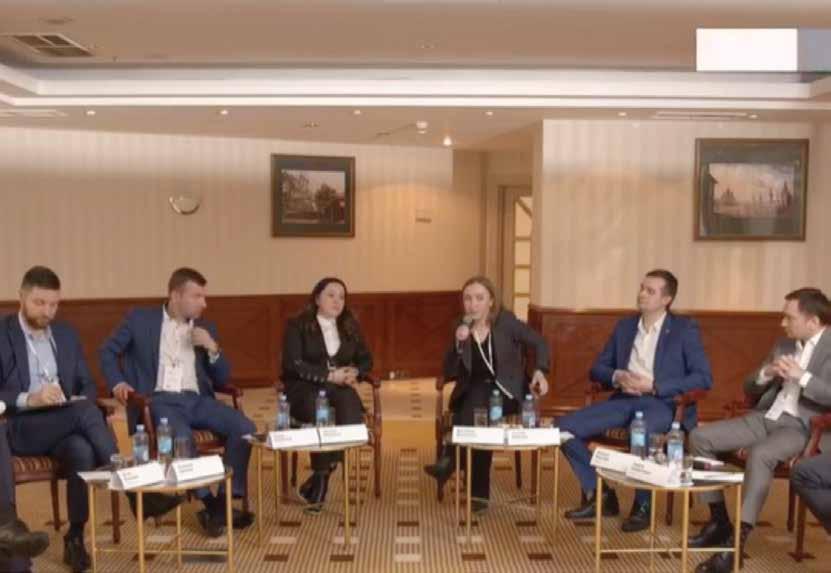
Russian media holding company RBC organized a conference on February 25th to discuss the current Russia's commercial real estate industry which faced a difficult situation: the office space market was in a state of constant turmoil due to many employees having to work remotely (work from home); hotels were closed amid a sharp drop in demand; shopping malls incurred major losses due to the suspension of operation, etc. Warehouses seemed to remain the most stable market segment during this pandemic. Analysts predict that 2021 might also bring about transformations and new approaches to organizing premises in the commercial real estate market.
Moderator (on site):
Ignat Bushukhin, editor-in-chief, RBC Realty
Invitees (on site):
Alexey Fursin, Head of the Entrepreneurship and Innovation Development Department of Moscow
Oksana Moiseeva, Head of the Commercial Real Estate Department, A101 Group of Companies
Kermen Mastiev, Director of Office Property Sale and Lease, MR Group
Sergey Baranov, Director of Commercial Real Estate, AFI Development
Alexey Efimov, Director of the Office Property Department, JLL
Vasil Gazizulin, CEO, Topfranchise
Online presence: Albert Kong (Asiawide Franchise Consultants); Felix De Wit (Schalkshof Management & Consultancy)
For more information, please contact: Angelina akhudadyan@rbc.ru https:// www.facebook.com/rbc.ru/
Four Strategies to Managing IP Disclosure Risks in Collaborations DEAL OR NO DEAL?
To survive in today’s competitive environment, companies must find ways to grow while protecting their distinctiveness in the market. Across many sectors, including medical, F&B, retail, wellness, beauty and education, many are collaborating to share resources and capture new markets. Licensing and franchising are amongst such collaborations, which often require companies to provide access to key intellectual property (IP) or intangible assets (IA), such as proprietary technology or processes. How can companies collaborate without losing control over their most valuable assets?
The payoffs of a successful partnership can be worth every effort. Companies with limited resources or scope can tap on the expertise of bigger players, while incumbents benefit from the innovation of new companies. For companies in growth mode, partnerships with market leaders can shorten their path to commercialisation and revenue, which will attract and keep investors.
WHY SHARING TOO MUCH TOO EARLY CAN BE A BIG MISTAKE
Almost every collaboration or partnership involves the transaction of IP and IA. Companies are usually aware of the importance of IP when they develop something new with the potential for commercialisation. They would typically seek protection before sharing information with potential collaborators. However, applying for an IP right is not the same as obtaining protection under the law. Until the IP right has been registered, which could take years, the actual scope of protection is uncertain. It is not uncommon for companies to approach larger companies for investment or collaboration, only to find the latter independently launching similar products or solutions not long after.
To reap the benefits and avoid the pitfalls of such transactions, a company needs to recognise and protect its assets, while clarifying the value exchange with the potential partner. Here are four ways to manage your disclosure risks in collaborations to close a deal that works for you:
1. Know what you bring to the table
Knowing what assets you have strengthens your position in a negotiation. These assets can range from registered IP such as patents, trade marks or design, to IA such as access to markets, key data or important know-how needed to successfully implement a transacted technology. Get down to the details on the type of rights, scope of coverage, and even geographical jurisdiction. Being able to articulate these clearly in a negotiation makes you a more attractive partner.
2. Know which assets are critical to the collaboration
Prior to sharing important information with potential collaborators, identify exactly which assets are critical to the collaboration. Make concerted efforts not to reveal these aspects, which may undermine the deal. These efforts could include ‘black boxing’ critical processes and stating explicitly during the sharing that certain key aspects are proprietary trade secrets that cannot be revealed.
Most companies that are genuinely interested in collaborating will understand and respect this position.
3. Know what assets you want to get out of the deal
When it comes down to negotiating the details of the deal, knowing what assets you want to get out of the deal can help you better plan your negotiation. For example, access to future data generated through the collaboration may be a critical asset for future development or growth, particularly with the increasing relevance of artificial intelligence (AI) and machine learning.
4. Use a good IP agent, NDAs, and an experienced lawyer
A good understanding of the law and filing processes can strengthen your company’s position in negotiations.
When protecting your technology, engage a patent agent who understands the technology well enough to draft a strong patent and can advise on the filing strategies for the various jurisdictions of interest, including where to file first. The same applies to trade marks and registered designs.
A well-crafted NDA is a critical step prior to sharing confidential information. This gives you the option to seek legal recourse in case of any breach by the party receiving the information. At later stages of the discussions, other clauses
ABOUT THE AUTHOR
Low Jin Wei, IP Strategist
to cover non-use, non-circumvention or even non-competition may be appropriate for inclusion into the collaboration agreement. Seek the advice of legal practitioners when drafting agreements to ensure enforceability, especially in foreign collaborations where the laws may differ.
In particular, carefully consider how to manage any exchange of trade secrets before any contracts are signed, even if they include non-disclosure clauses. If disclosure of sensitive information cannot be avoided, protect your company’s interest by meticulously documenting what is shared, to avoid potential disputes in future.
KAHA, an IoT solutions company headquartered in Singapore, employed these four strategies last year. KAHA recognised that the COVID-19 pandemic was an opportunity for its smart IoT wearables platform, Cove®. At the height of the pandemic in April 2020, KAHA announced its partnership with local medical solutions provider, EasyCare.
EasyCare provides affordable and accessible healthcare through its remote monitoring solution, iDOC Clinics. The collaboration was a win-win — KAHA was able to extend Cove® to the healthcare space through EasyCare’s extensive network, while EasyCare was able to enhance iDOC’s AI and data analytics capabilities with additional input from KAHA’s wearables.1
Recognising what you own and knowing what you are exchanging them for is thus critical.
Collaborations can enable companies to grow quickly and with limited resources. Secure your competitive advantage by being clear about the IA and IP you own, which will in turn empower you to leverage that for growth.
Jin Wei has over a decade of experience in advising companies on intellectual property matters at the Intellectual Property Office of Singapore (IPOS). She is currently an IP Strategist with IPOS International, supporting enterprises’ IP management journey through the signature Discover Intangible Assets programme.
A believer in intangible assets as a driver of business growth, she has delivered strategic IP management solutions to diverse industries including telecommunications, medical technology, information technology and retail.
To find out more about the Discover Intangible Assets programme or IPOS International, please contact her at jinwei.low@iposinternational.com
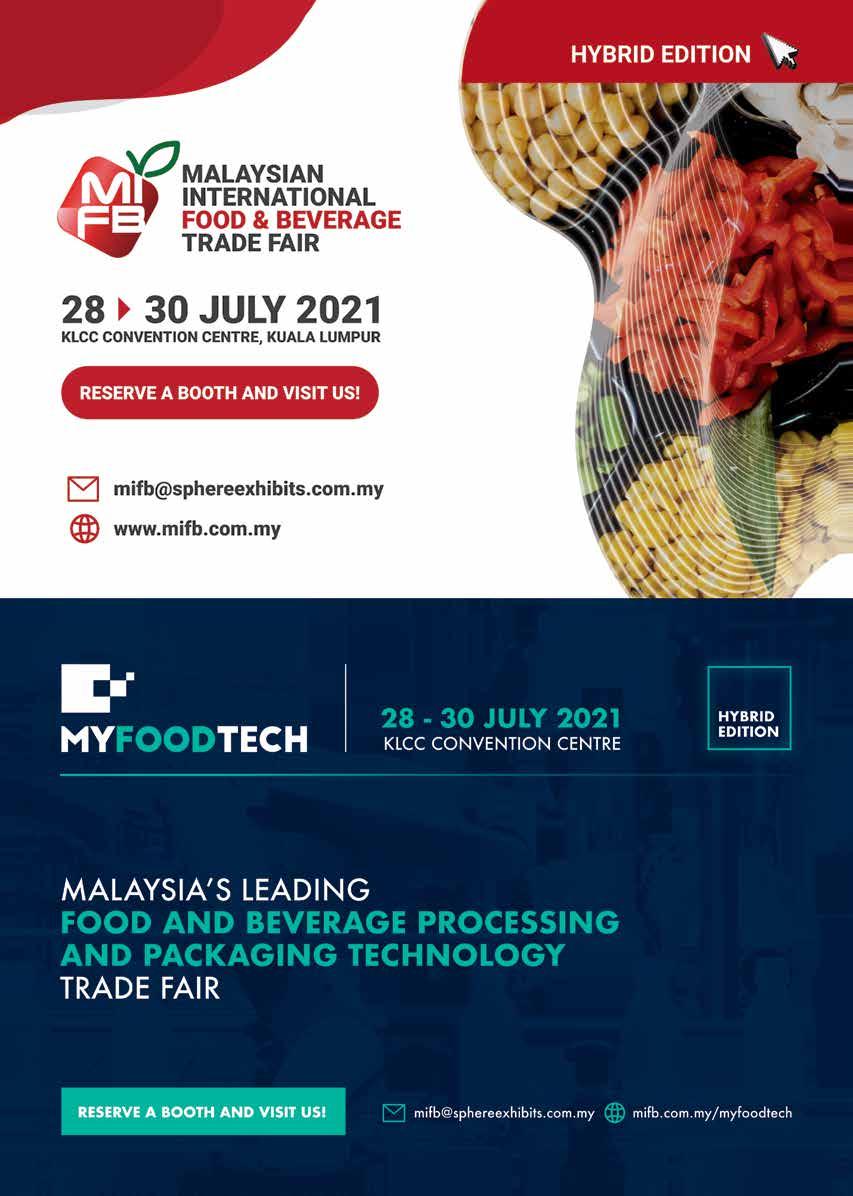
Malaysian International Food & Beverage Trade Fair, MIFB Hybrid 2021 is a digital version that awaits to revitalize your business through exclusive Business-to-Business platform with power-packed F&B services and solution providers. It gives an opportunity to all visitors and international food traders to attend this event through cyberspace from whichever country that they are in.
The previous MIFB 2019 was a huge success and has positioned the trade fair as the No 1 Food & Beverage Trade Fair in Malaysia with the special award recognition by Malaysian Book of Records for ‘Malaysia’s Largest Food & Beverage Trade Fair’.
It is the largest and leading Food and BeverageFocused Trade event in the country which offers a platform for businesses from the industry to showcase their products and services on an international platform. Exhibitors will be offered a highly focused event which caters to their needs and brings them the best ROI.
If you are looking to introduce and learn about the latest innovations and technologies from around the world, MIFB Hybrid Trade Fair 2021 is the place to be.
When Amazon CEO Jeff Bezos visited China in 2007, he expected that one day soon China would be a doubledigit percentage of Amazon’s sales. Yet, by 2019, Amazon, the most powerful and successful e-commerce company in the world, had quit China.
In Winning in China: 8 Stories of Success and Failure in the World’s Largest Economy, Wharton global fellow Lele Sang and Wharton vice dean of entrepreneurship and innovation Karl Ulrich explore the successes and failures of several well-known companies, including Amazon, Hyundai, LinkedIn, Sequoia Capital, and InMobi, as more and more businesses look to reap profits from China’s 1.4 billion consumers.
Sang and Ulrich recently sat down with Brett LoGiurato, senior editor of Wharton School Press, to discuss their new book and what it takes to succeed in the world’s second-largest economy.
An edited transcript of the conversation appears below.
Brett LoGiurato: Can you both first talk about your initial interest in China and how that grew into this collaboration?
Lele Sang: I was a journalist covering business and politics in China. One of my reporting topics was the development of multinational corporations in China.
Karl Ulrich: I had been interested in China for a long time. I made my first trip to China in 2006, but I’d never really done much professionally there. And Lele actually just stopped by my office and said, “I want to write a book about tech companies’ failures in China.” And I said, “Lele, that sounds pretty interesting, but it sounds kind of like a downer, and are there really no companies other than tech companies who’ve tried to enter China?” That’s what led us to this topic of looking at all kinds of companies and both successes and failures of foreign companies in China.
LoGiurato: You chose to focus the book on eight case studies, spanning a variety of well-known large companies. When you were doing the initial research for the book, what drew you to these companies?
Sang: In fact, we initially put together a list of over 200 companies, and then we figured out the majority of them based on our definition of success and failure.
Ulrich: We really didn’t want to write about companies that everyone already knew about. We didn’t want to write about Google and Facebook — and a lot of people know about Starbucks’ success in China — so we really wanted these to be new stories, the first time that someone had written extensively about these companies. And then we just looked for diversity across a variety of dimensions. We wanted companies that were outside the United States, that were from all over the world. We wanted companies that were in consumer, in tech, and in B2B businesses. And we wanted a combination of successes and failures.
LoGiurato: Of companies you profile, whose success most surprised you? And whose failure?
Ulrich: On the success side, I guess I was most surprised by Sequoia Capital, which actually is one of the most successful companies in our book. If you think about it, venture capital is a business that’s really about connections and about being tied into the ecosystem, and yet here’s this American company that ends up being the most successful, or one of the most successful, venture capital companies in China.
Sang: I think InMobi’s success mostly surprised me. InMobi is an Indian tech company, but the tech industry in China has been notoriously difficult for foreign players to break into. There are so many star players that have tried and failed, or who have struggled in China. So InMobi made it. It came to China around 10 years ago, but now it’s China’s largest independent mobile advertising network.
LoGiurato: Take us through your framework for identifying success and failure in China.
Ulrich: A lot of business books are just a lot of stories, and we really wanted to provide some structure and some framework to our analysis, so we developed a framework for understanding success and failure in China. First of all, we define success as meeting a significant fraction of demand in your category, with sustained competitive advantage. We felt it was really important to define success.
We then established three necessary conditions, and that is you have to have access to the market; there has to be demand for your product or service; and you have to come to the competition — to the arena — with some significant advantages relative to local competition. And then we considered five managerial factors. These are actual decisions that managers make in entering China, and they are commitment, government structure, leadership, strategy, and the product that you bring. And then, finally, we wanted to recognize that there was a really key role of luck or what the economists call “the exogenous factors” — things that are outside your control that can dictate your success or failure.
LoGiurato: Amazon is the first case you mention in the book. Amazon is obviously no slouch, and amid a pandemic, it has surged to become the second-most valuable company in the world. Why did you find that it failed in China?
Sang: We could use our framework to analyze this case. First of all, Amazon didn’t bring any competitive advantages to the Chinese market. And secondly, Amazon didn’t commit to the Chinese market, especially compared with its Chinese [competitors], JD and Alibaba. Thirdly, Amazon had a clumsy strategy. Its strategy was using a global template to manage business in China, which didn’t work out because of a different business environment in China. And Amazon’s structure didn’t give its China unit enough autonomy — it couldn’t even add a button to its website unless the headquarters said yes. Combining all the factors, Amazon didn’t make it in China.
Ulrich: But I think there’s something really interesting about the Amazon story, which is — was it, in fact, a good thing that they left China? If you look at what’s happened to Amazon since they left China, they have created a huge amount of shareholder value. You ask the question, if I had a few extra billion dollars and some managerial attention to invest in initiatives — if I’m Jeff Bezos — was it, in fact, the right thing to go after cloud services, AWS, other kinds of initiatives in my other markets, or to fight it out in China, where I knew I would have a bloody battle? And so while they failed, it may have actually been the
right managerial decision for them to have invested elsewhere.
LoGiurato: The Norwegian Cruise Line’s entry into China brings up a really interesting example of something you touch on throughout the book: how cultural differences can boost or sink different companies — pun intended. Can you talk about the role it plays with something like the cruise industry, specifically?
Ulrich: Norwegian Cruise Line is a superinteresting example because certainly the conventional wisdom would be that you need to tailor your product to the Chinese customer. Norwegian Cruise Line made tremendous efforts to make its ships very Chinese, so you can imagine a lot of red and gold and dragons, and all of that. But actually, the Chinese consumer wanted a Western cruising experience. And so ironically, their efforts to localize their product actually backfired for them.
Sang: Right, I think it’s really important for the company to understand when to localize your products and when to standardize your products.
LoGiurato: The last company I want to talk about is Zegna, the Italian luxury brand. It has been another huge success story in China, but now it obviously faces headwinds from COVID-19. How do you expect it to respond moving forward?
Ulrich: Zegna is a fascinating company. It has been around for more than a century, starting in the hills of Northern Italy. Its success can really be attributed to a very long-term perspective and to tenacious management, largely by the same family. And if you think about it, Zegna has survived world wars. It survived essentially the destruction of Italy, its home country, in the middle of the 20th century. And so I predict that Zegna will survive this virus. Its tenacity, its commitment, its long-term perspective will, in fact, be its assets as it faces adversity.
LoGiurato: More generally, how do you expect COVID-19 and its lingering effects to impact the way multinational companies look to enter and operate in China?
Sang: I think COVID-19 doesn’t change the fact that China is a very attractive market as its economy continues to normalize. In fact, many industries in China have already rebounded, including manufacturing, retail, hospitality — even luxury. China is the first major economy to recover from COVID-19 because the Chinese government adopted a very aggressive approach to contain the virus, and it worked. As a result, many multinational corporations rely on China more than ever to deliver a positive outcome. Some companies, like Walmart and Starbucks, even added investment during the pandemic. I think when it comes to a [situation] like COVID-19, companies should look at it from a long-term perspective.
Ulrich: It’s really interesting. There might actually be a silver lining for those who make direct investment in China. With the existing trade conflicts, particularly between the United States and China, import/export is what’s largely impeded. And operations that are headquartered in China may be buffered somewhat from the import/export restrictions. So, it might actually increase the importance of having operations directly in China.
LoGiurato: The book is jam-packed with insights and takeaways, but if you wanted readers to come away with one lesson, what do you hope it is?
Ulrich: For me, the biggest lesson is to make sure to make a very realistic assessment of what assets and capabilities you really bring to the challenge. A lot of Western companies believe their brands are very strong, but their brands may not be strong in China. And so really taking a hard-nosed perspective on what are your assets and capabilities, and are they sufficient to overcome the inevitable friction in starting a venture overseas? That’s probably the most important insight from the book.
Sang: I think foreign companies should develop their advantage, and not only develop their advantage, but also to maintain it during the course of competition. In that way, they are more likely to succeed in China.
在《赢在中国:8个成功与失败的故 事》(Winning in China: 8 Stories of Success and Failure in the World’s Largest Economy)一书中,沃顿全 球研究员桑乐乐(音译,Lele Sang) 和沃顿创业与创新副院长卡尔·尤里 奇(Karl Ulrich)探讨了亚马逊、现 代汽车、领英(LinkedIn)、红杉资 本、InMobi移动广告等多家知名企业 在中国的成与败。
Leveraging on Intellectual Property Effectively in Digital Transformation
Ella Cheong LLC is a leading specialist intellectual property (“IP”) law firm in Singapore and Asia.
Ella Cheong LLC 是新加坡和亚洲领先的专 业知识产权(IP)法律事务所。
Digital transformation has a huge impact on the global IP landscape. With the introduction of advanced digital technologies such as artificial intelligence (“AI”) and with many companies going digital, there is now a greater emphasis on intangible assets compared to the past. As business owners work to ensure that their intangible assets are adequately protected and leveraged upon effectively in this digital age, IP regimes must keep up with digital transformation.
IP refers to the creations of the mind such as inventions, original artistic works, industrial designs and business indicia, each often protected by distinct bodies of law (eg, patent law, copyright law, design
知识产权对数字转型 的重要性
law, trade mark law). IP encourages and foster innovation and creativity. According to data of the World Economic Forum, a country’s global competitiveness is correlatable to its level of IP protection - the higher the level of IP protection offered by a country, the more competitive it is likely to be on the global stage.
ASEAN member states are sparing no effort to strengthen IP protection with the view to transforming the region into one that is highly innovative and competitive. ASEAN recognises that IP has an important role in contributing to the achievement of national and regional socio-economic development goals of the ASEAN Economic Community and its protection will enable ASEAN member states to “move higher up in the technology ladder, in encouraging transfer of technology, and in stimulating innovation and creativity” .
As part of its efforts to strengthen IP protection in the region, the ASEAN Working Group on IP Cooperation (“AWGIPC”) has embarked on a 10-year IP Rights Action Plan (2016 to 2025) to drive the collective transformation of ASEAN into an innovative and competitive region. This Plan aims to
The significance of intangible assets has become more critical than ever in the digital age. Data, systems and processes have become highly valuable business assets.
To enhance the ability of intangible assets to drive economic and business value, businesses must deploy an active IP strategy not merely only to protect these intangible assets but also to
• drive brand value
• maximise return on investment
• mitigate risks arising from IP conflicts and infringements
Since the early days of the Internet, business have been plagued by the mushrooming of cyber-squatters. These industrious opportunists register domain names with the intent of profiteering on the reputation of trade marks. Domain names are registered on a first-come-first-serve basis and virtually anyone can register virtually any combination of alphanumeric characters at relatively low cost. In the last 20 years, the Uniform Domain Name Dispute Resolution Policy (“UDRP”) and similar programmes have served well to hold back the seemingly never-ending tide of bad faith domain name registrations. Response and mitigation strategies have also evolved to best practices over this period. Unfortunately, cyber-squatters only represent the tip of the iceberg as businesses sail into the frozen seas of digital transformation.
The deployment of a relevant IP strategy has to contend with newer challenges in the face of the pervasive drive towards digital transformation. In particular, although the Internet has enhanced business access to information, it has also exposed IP to greater vulnerability. The Internet unfortunately generates a false impression that protected works made readily accessible online is in the public domain and can be freely copied with equanimity and anonymity. Infringements of IP rights are on the rise, no longer perpetrated only by nefarious syndicates alone, but also by the “innocent” man on the street. With the growing economic trend of transformation of traditional brick-and-mortar to online businesses, further fanned by the bellows of the COVID19 new normal, there is a growing urgency for businesses to heighten their vigilance in relation to protection of their IP.
These dire concerns are aggravated by the advent of artificial intelligence (“AI”). Works can now be created without the need for human inspiration and travail. Without labour, how does one justify ownership of the fruits of such labour? Who should own the product of an artificial intelligence, especially in the context of IP embodied by the product? It is by no means settled law or even reasoning. Until then, software developers of AI remain uncertain that their effort and resources will achieve the reward they aspire to. What IP strategy may be called upon to manage this uncertainty?
An article such as the present will be remiss for not highlighting up-andcoming immersive technologies such as augmented reality (“AR”) and virtual reality (“VR”) which promise and excite much in terms of what the future may bring. IP stakeholders remain cautious about pre-
emptive prescription of technologies that are still currently chipping at the edges of popular science fiction, but interesting developments are already afoot. Some countries including Singapore have already expanded design protection to virtual designs (eg, graphical user interfaces) applied to nonphysical products. Effective IP strategies must be sufficiently agile and responsive to legal tweaks and changes such as these.
As digital transformation reshapes the IP landscape, adequate changes to IP protection frameworks have to be put in place to tackle new challenges and foster innovation. Business should also take the necessary steps to safeguard their highly valuable intangible assets and use them strategically.
This article is an adaptation of a webinar organised in collaboration with the Singapore Chinese Chamber of Commerce and Industry and presented by the author on 6 January 2021. The author acknowledges the kind assistance of Camille Lim of his Singapore office (research/coordination), and Nicole Huo and Karlie Leung of his associated Hong Kong office (translation) which made this article adaptation possible.
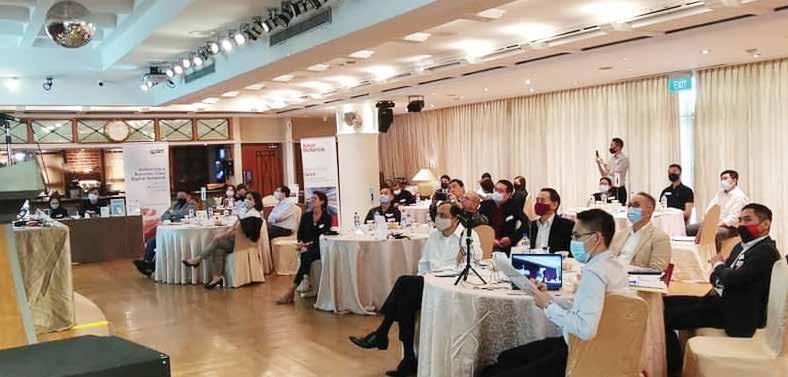
The Franchising & Licensing Association (FLA) ,Singapore conducted its AGM at the Singapore Recreation Club on March 26th, 2021.
42 representatives from various companies attended the meeting. All matters on the agenda were unanimously approved by voting members.
President Andrew Khoo gave out certificates of membeship after three invited speakers shared valuable information with the audience. The invited speakers include : Amdy Leck (Baker McKenzie), Heng Kwee Tong (SPTel) and Song Seng Wun(CIMB Private Banking).
Overseas Franchisor Tips – Getting Started in Australia
澳大利亚市场海外特许人入门秘诀
As an island continent which has largely managed to weather the storm of Covid-19, Australia presents an attractive and safe investment opportunity for overseas franchisors. Due to significant government investment into the domestic economy, and health policies which have successfully kept Covid-19 under control, an economic recovery is already under way and expected to continue.
In 2014, total annual sales revenue for the Australian franchise sector was estimated at A$144 billion, rising to A$146 billion by 2016. Currently, total annual sales revenue for the Australian franchise sector is approximately A$154 billion, despite a dip in 2020 due to the onset of the pandemic. The sector itself nevertheless has an estimated worth of A$184 billion and employs more than 598,000 in over 98,000 individual franchised outlets.
Intellectual property in Australia primarily consists of patents, trademarks, copyright, and designs. Any franchisor who is considering entering the Australian market within the next 5 years should act now to ensure their trademarks are not already in use by other Australian businesses. Franchisors are advised to register their trademarks and other intellectual property with IP Australia as soon as possible, and to keep them registered by both using and renewing them. Through prompt action now franchisors can avoid having to rebrand later in order to enter the Australian market. Franchisors
can conduct preliminary searches of registered trademarks on the IP Australia website to see if their trademark is already registered by someone else. Local IP specialists can conduct a more comprehensive trademark search to see if a trademark is already being used in Australia (without being registered), thereby more accurately determining the prospects of securing your trademark in Australia unopposed.
Overseas franchisors should liaise with their business consultants to create a solid development plan for the entry of their franchise system into the Australian market. Specialist advice may include a feasibility assessment
and territory assessments of franchise systems to determine the optimal spread of franchisees within a given area. Quality business advice can prevent issues which may otherwise necessitate downsizing an operation and sacrificing a significant amount of investment capital and market share. Comprehensive market research can also provide franchisors with accurate insights into consumer demand across the various Australian States, thereby facilitating the tailoring of franchise systems to each individual State and maximising earning potential.
In our experience, overseas franchisors who fail to properly assess the Australian market often select business models which are simply not viable. The appointment of a master franchisee, for example, is a model which we have typically seen fail in an Australian context. While this model may be more attractive in countries with large populations and economies of scale, Australia’s small population size can make similar cost savings unachievable. A master franchisee can further erode what may already be slim profit margins for the overseas franchisor, particularly when first penetrating the Australian market.
This model also results in the overseas franchisor having less direct oversight and control of its foreign operations, increasing the risk of the franchise system collapsing if the master franchisee proves to be incompetent. The point is illustrated by the collapse of Nando’s New Zealand due to its master franchisee going into receivership in the last few years. This collapse necessitated Nando’s Australia stepping in to prop up the 31 New Zealand stores. In other cases, we have seen franchise systems in Australia inevitably struggle when a master franchisee is left to its own devices after buying the rights from an overseas franchisor. Without sufficient support networks in place from the overseas franchisor, master franchisees are far more likely to fail and damage the franchisor’s brand in the process.
An alternative model, which some of our clients have used to great success globally, is to establish a wholly owned subsidiary company which directly engages area developers who, among other things, broker franchisee transactions on behalf of the franchisor. The flexibility around such arrangements has tended to be a more successful strategy for overseas franchisors, as they are able to invest into their subsidiary and back their brand by building a robust support network for franchisees.
Typically, overseas franchisors will establish wholly owned Australian
subsidiary companies to conduct their Australian operations. Establishing an Australian company can be done in approximately 48 hours and at a cost of around $1,000. However, at least one of the company directors must be an Australian resident, as stipulated by the legislation which governs companies in Australia—the Corporations Act 2001 (Cth). Directors have several important duties, and it is important that a trusted Australian resident is selected to fill this position. Overseas franchisors could alternatively operate directly in Australia as a registered foreign company. However, this would likely require the lodgement of financial reports with the Australian Securities and Investment Commission (‘ASIC’) – which would then become publicly available. 通常,海外特许经营者会建立全资澳大利 亚子公司来开展其在澳大利亚的业务。成 立澳大利亚公司大约需要48小时,费用约 为澳元$ 1,000。但是,根据管理澳大利 亚公司的法律(《 2001年公司法》(联 邦))规定,至少一名公司董事必须是澳 大利亚居民。董事负有几项重要职责,选 择一位值得信赖的澳大利亚居民来填补这 一职位非常重要。海外特许经营者也可以 作为注册外国公司直接在澳大利亚经营。
但是,这可能需要向澳大利亚证券和投资 委员会(ASIC)提交财务报告,该报告能 公开获得。
A trust, partnership or joint venture business structure may also be a viable choice for operating a franchise system. Reporting and tax obligations can vary between each type of entity and, because of
the adverse tax consequences associated with changing the business structure later, it is important to choose the right business structure from the outset. All franchisors must ensure their chosen entity registers with the Australian Taxation Office for a Tax File Number and Goods and Services Tax (‘GST’).
Overseas franchisors should be aware that foreign investment into Australia is governed by the Foreign Acquisitions and Takeovers Act 1975 (Cth) and associated regulations. The Foreign Investment Review Board (‘FIRB’) is responsible for examining foreign investment proposals and advising the government on the national interest implications. The type of investment, and whether it is above a certain monetary threshold, will determine if prior FIRB approval is required. As of 29 March 2020, all monetary thresholds have been temporarily reduced to $0 due to Covid-19. This means that overseas franchisors require FIRB approval to acquire any Australian business.
Foreigners seeking to invest in any residential land, vacant commercial land, or agricultural land will also need FIRB approval. Franchisors should also consider their own country’s procedural requirements when it comes to investing money overseas, and any domestic tax implications resulting from profits made abroad.
Alongside the Competition and Consumer Act 2010 (Cth), the Franchising Code of Conduct (‘the Code’) is the principal legislative instrument governing franchising in Australia. It is administered and enforced by the Australian Competition and Consumer Commission (‘ACCC’). It is relevant to anyone engaging in franchising in Australia and does not differentiate between foreign and domestic franchisors. In addition to being provided with a copy of the Code itself, prospective franchisees must be provided with a compliant franchise agreement
and disclosure document. All disclosure documents and franchise agreements must be written in English. The cost of creating the compliant documents required to get started as a franchisor in Australia is approximately A$20,000. It is critical that franchisors be mindful that if they fail to comply with the Code they may be subjected to significant fines and monetary penalties.
A franchise agreement specifies the terms of the franchise relationship between the franchisor and its franchisees. Among other things, the Code prohibits a franchise agreement from requiring a franchisee to sign a general release of the franchisor from liability towards the franchisee and from signing a waiver of any verbal or written representation made by the franchisor. The Code also prohibits the agreement from requiring parties to resolve any disputes under the agreement in any jurisdiction outside Australia or in any Australian State or Territory other than
the one in which the franchise business is located. Clauses which require the franchisee to pay the franchisor’s costs of settling a dispute under the agreement are also prohibited and if included are of no effect.
The Code also obliges franchisors to create, maintain and update (annually) a disclosure document for franchisees. The disclosure document is designed to inform franchisees about the franchisor and the franchise system. It must be in the form prescribed by Annexure 1 of the Code, and it mandates the disclosure of matters such as the franchise system’s: existing franchisees; former franchises; litigation history; intellectual property; marketing fund; and financial/earnings information, etc. Generally, franchisors must update their disclosure documents annually, within 4 months of the end of their financial year. However, franchisees can make a written request for a disclosure document once every 12 months, which the franchisor must then provide within 14 days of the request.
Ultimately, there is a wealth of opportunity for overseas franchisors looking to break into the Australian market. However, to make the most of these opportunities and maximise a franchise system’s chances of success, it is imperative to get the right advice.
John is a founding Principal of MST Lawyers with a practice focusing on all areas of corporate and commercial law. He has extensive experience in domestic and international distribution and licensing law. John has played a lead role in developing MST Lawyers’ legal alliances internationally.
FRANCHISING – THE USE OF BLOCKCHAIN TECHNOLOGY
HFirst, let us start with the fundamentals.
What is blockchain?
ow do blockchain and cryptocurrency help your business? What is its role in the franchise space?
A blockchain in a simple manner is a digital ledger of transactions records that are distributed across the network of computer systems on the blockchain-based on a peer-to-peer (P2P) topology. All transactions across this network will be on-chain, users on this network can confirm transactions without a need for a centralised authority. Decentralized Apps or DAPPs can be run to clear fund transfers, trader settlement, custodian, voting, autonomous, franchise, healthcare and many others.
What is cryptocurrency?
A cryptocurrency is a form of digital currency designed to work as a medium of exchange.
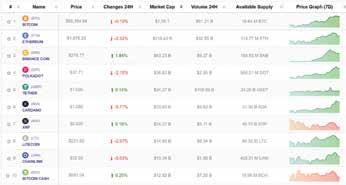
Many cryptocurrencies are decentralized networks based on blockchain technology and generally not issued by any central authority, allowing them theoretically immune to government interference or manipulation. The cryptocurrency market is led by Bitcoin, Ethereum, Binance Coin, Polkadot and Tether (ranked by market cap, 22/02/2021)
Traditional businesses are also adapting to cryptocurrencies. We see the adoption in the payment of goods, retail shops, rewards points, franchise management, and financial products.
Brand loyalty
You are more likely to have more than one loyalty cards in your wallet and many others in a form of apps on your phone. Making matters worse, less than half of the loyalty memberships are active. Those who do not run a business with loyalty may think that it is a good thing for the business since the points are not redeemed, on a contrary, it is a big problem for businesses. The unclaimed rewards represent a financial liability to the company’s bottom line and could hurt the brand in the long run. On top of this, tracking all data from multiple programs, dispersed across fragmented databases, becomes quite a challenge.
Blockchain-enabled tokens as rewards on-chain will let customers choose how and what to redeem. Companies can provide irrevocable blockchain tokens as reward points. And
since all these are on the chain, companies running the program can cut program cost as the program is running autonomously without any supervision.
Cryptocurrency payment
Mastercard will let merchants accept payments in cryptocurrency later this year. Before this, Mastercard supported limited cryptocurrency transactions through their partners like Wirex. It covers payment but not settlement; the coins are converted to fiat before reaching the merchant. This new initiative allows retail businesses to go beyond fiat and empower customers to use crypto.
Smart contracts
A smart contract is a self-enforcing agreement embedded in computer codes managed by a blockchain. The codes contain a set of rules by which the parties of that smart contract agree to interact with each other and automatically execute when predetermined terms and conditions are met.
Blockchain is the perfect environment for smart contracts, as all the data stored is immutable and secure. The level of trust between a business and its customers is enhanced. Companies trust customers to act in a similar style and won't try to claim fraudulent discounts or refunds. Smart contracts are likely to become a key tool in customer service experience in the future.
Tokenization and fundraising
On the fundraising topic, there are a few ways to get funds from the public. ICO is an acronym that means Initial Coin Offering, which is how funds are raised for a new cryptocurrency offering. It's similar to an IPO (Initial Public Offering) which raises funds when a new company ventures onto the stock market. While an IEO (Initial Exchange Offering) is a smart and quick way to launch a blockchain-based project and place your token on an exchange without taking the risks associated with a traditional ICO or STO. An IEO depends on having an exchange function as a counterparty. If you are planning to start a franchise and are willing to think out of the box this could be a viable way for you to raise funds in a smart manner.
Supply chain management
Using blockchain in the supply chain has the potential to improve supply chain transparency and traceability as well as reduce administrative costs.
In the case of a product recall, with the full product information on-chain, consumers will be informed first-hand of the recall, and know what they can do with their existing products. For the franchise owner, they can immediately know who the customers are affected and are able to trace back where the problem first started. And franchisees will be able to immediately assist with the product recall in their local environment.
Case Study: Golden State Foods & IBM Blockchain
Golden State Foods, in partnership with IBM, has developed a blockchain-based strategy to provide transparency in beef sourcing. Under their scheme:
• Protein plants, distribution centres and quick service restaurants are linked together via the scheme.
• RFID (Radio Frequency Identification) tags to track the movement of beef.
• IoT devices monitor the temperature of the products.
• Blockchain enables the management of business rules between the different parties, enabling transparency, safety and trust.
While the solution does not cover every single link in the product’s lifecycle at present, it does add transparency to key elements in the journey. Eventually, it is hoped that the scheme will be a blueprint covering all aspects of a product’s lifecycle. This will significantly increase the appeal of the solution.
Regulations
In Singapore, cryptocurrencies, in general, are not considered a legal tender, but the Singapore Tax Authority treats Bitcoin as a form of goods. Hence Goods and Services Tax (GST) applies
to Bitcoin. For businesses like cryptocurrency exchanges, they have to register with the Monetary Authority of Singapore (MAS) and comply with the Payment Service Act that took effect in January 2020. Businesses that choose to accept cryptocurrencies such as Bitcoins for their remuneration or revenue are subject to normal income tax rules.
Countries such as South Korea will begin taxing crypto benefits 20 percent, from both buying and selling from 2023, according to a recent report in Asia Today.
Evaluate the need for blockchain for your business In the near future, you may receive many tempting grants for blockchain adoption. Consultants will often sell with a generic concept and a long list of alleged benefits.
But looking at the business environment, the first database-related question you need to ask yourself is “Do you need to store state?” If your answer is no, then you do not need to implement blockchain. If your answer is yes, then the second question you need to ask is “Are there multiple participants?” If your answer is no again, then you do not need blockchain.
Assuming, you need multiple participants, then the third question would be “Can you use an always online trusted third party?” And this time round, if your answer is no, then there is no need to use blockchain. If your answer is no, then there is a need to look at what kind of blockchain suits your environment.
“Are all the participants known?” is the next question you need to ask yourself. If the participants are not known, then you should consider permissionless blockchain. Permissionless blockchains are blockchains that require no permission to join and interact with. They are also known as public blockchains. Most of the time, permissionless blockchain is ideal for running
and managing digital currencies. If the participants are known, naturally you need to ask if all the participants are trusted. If they are all trusted, then blockchain is not needed.
Again, if the participants are not trusted and there is no need to have the public to verify, you should choose private permissioned blockchain. A private blockchain allows only selected entry of verified participants; the operator has the rights to override, edit, or delete the necessary entries on the blockchain. A permissioned blockchain has properties of both private and public blockchains. If there is a need for the public to verify, then you should consider public permissioned blockchain.
A trusted consultant or company should walk through the process with your company and answer your doubts. The golden rule for companies is not to rush when you make any technology decision. This same theory works the same for the adoption of blockchain technology.
About the Author : Anndy Lian is an early blockchain adopter and experienced serial blockchain entrepreneur who is known for his work in the government sector. He is a bestselling book author “Blockchain Revolution 2030” and currently an Advisory Board Member of Hyundai DAC Technology. He plays a pivotal role as the Blockchain Advisor for Asian Productivity Organisation (APO), an intergovernmental organization committed to improving productivity in the Asia-Pacific region. With a growth investment mindset, Anndy strategically demonstrates this in the companies he chooses to be involved with. He believes that what he is doing through blockchain technology currently will revolutionise and redefine traditional businesses. He also believes that the blockchain industry has to be “re-decentralised”. “Innovate your business with blockchain. You will love the surprises that come with it.” - Anndy Lian
You can read more about Anndy’s work at www.anndy.com
In a David verses Goliath type battle, McDonald’s lost its rights to the registered trademark for Big Mac. After being registered since 1996, the registration for Big Mac was revoked in January 2019 by the European Union Trademark Office. What went so wrong? What does this mean for trademarks in Australia?
Supermac’s vs McDonald’s
Supermac’s is a chain of over 100 burger restaurants located in Ireland. Supermac’s took its name from the nickname of its founder, Pat Donough, from when he played high school Gaelic football. Pat Donough claims he suffered from ‘trademark bullying’ by McDonald’s as they blocked him from expanding into other areas of Europe on the basis that Supermac’s would create confusion in the marketplace with McDonald’s.
In 2017, Supermac’s applied for cancellation of the Big Mac trademark for non-use in the EU. In January 2019, the EU Intellectual Property Office (EUIPO) made the decision to revoke the Big Mac trademark in the EU on the basis that McDonald’s failed to prove genuine use in the EU in the five years before the application was made. Reasons why the evidence was insufficient included: it only related to usage in the United Kingdom, France and Germany; there were three affidavits provided which were given by employees of McDonald’s and not third parties; and references to Wikipedia and screen shots of the McDonald’s website and various items of promotional material
did not provide sufficient support to the affidavits.
McDonald’s is in the process of appealing the decision and made a statement that they are confident that the decision will be overturned.
Response by Burger King in Sweden
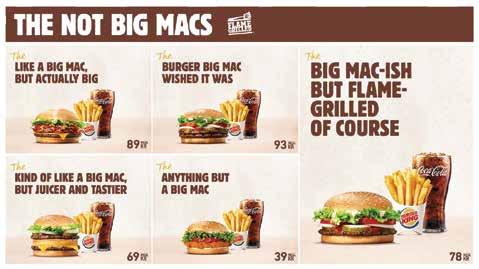
The decision has surprised many. The response of Burger King in Sweden has been sending the internet into meltdown. Within days of the decision, Swedish Burger King was advertising a new menu with products called: Like a Big Mac But Actually Big; The Burger Big Mac Wished It Was; Anything But a Big Mac; Kind of Like a Big Mac But Juicier and Tastier; Big Mac-ish But Flame-Grilled Of Course. This You Tube clip shows customers ordering from the new menu: https://www. youtube.com/watch?v=rSiIv-J0mpo.
Big Mac in Australia
So what of the iconic Big Mac in Australia?
There are eight Big Mac word marks registered as trademarks in different classes in Australia. A summary of the classes includes: 29 (meat including hamburger patties); 30 (hamburger, coffee, tea, bread, biscuits, cereals); 28 (games, toys, playthings); 32 (beer, non-alcoholic beverages), 21 (food utensils, containers, cups); 42 (restaurant services, take
away food stores); 25 (work clothes); 16 (printed matter, instructional and teaching material, printed publications); 41 (education services; children’s entertainment, charitable and fund raising activities); 30 (chicken sandwiches). One wonders whether the trademark Big Mac is or has actually been used in relation to all of those classes and whether they could also be vulnerable to cancellation for non-use in Australia.
Hungry Jack’s in Australia
A level of ‘healthy’ competition between rivals McDonald’s and Hungry Jack’s continues in Australia.
In November 2019, Hungry Jack’s Pty Ltd registered the word mark “Big Jack” as a trademark in classes 29 and 30. The Big Jack burger has recently started being sold in Australia. One YouTuber (Greg’s Kitchen) describes it as looking very similar, but with a sweeter sauce and flame grilled burger https://www.youtube.com/ watch?v=0R4fAES2VDw.
The rivalry gets bigger.
McDonald’s registered the mark “Mega Mac” in 2013. Whilst not currently available on the Australian McDonald’s menu, a Mega Mac a super-sized Big Mac that has been available at McDonald’s in the UK and the US from time to time.
In August 2020, Hungry Jack’s filed an application for the word mark “Mega Jack”. This mark has now been accepted by IP Australia and is in its opposition period. At the same time, Hungry Jack’s applied to have McDonald’s “Mega Mac” mark cancelled for non-use in Australia.
McDonald’s initiated proceedings in the Federal Court immediately claiming trademark infringement, misleading and deceptive conduct and bad faith and seeking cancellation of the Big Jack mark. Their claim is being defended by Hungry Jack’s.
In March 2019, Hungry Jack’s Pty Ltd applied to register in classes 29, 30 and 43. IP Australia did not accept the trademark for registration, perhaps, on the basis that it was too similar to the well-known McDonald’s Quarter Pounder. The QuarterDeluxe mark lapsed in December 2020.
So why did IP Australia accept the Big Jack and the Mega Jack but not the Quarter Deluxe?
The difference in the approach taken by IP Australia between the Quarter Deluxe and the Big Jack/Mega Jack, may lie in the fact it is clear from the names of the Big Mac/
Big Jack and Mega Mac/Mega Jack that the burger comes from either McDonald’s or Hungry Jack’s, whereas the Quarter Deluxe has no such identifying aspect to its name and which may make it difficult for consumers to remember whether the Quarter Deluxe is a product of McDonald’s or Hungry Jack’s.
Cancellation for non-use in Australia
In Australia, trademarks registered before 25 February 2019 that have been registered for five years, can be vulnerable to cancellation on the ground that they have not been used for the period of 3 years ending one month before the application was filed. If a trademark was registered after 25 February 2019, it only needs to be registered for three years before a non-use application can be brought.
In the case of Mega Mac, McDonald’s will have the onus of proving that they have used the Mega Mac mark in Australia within the three years before the application was lodged.
Takeaway for Trademark Owners
The takeaway point that all trademark owners should take from these stories is that there is always a competitor around the corner who might try to benefit from the reputation you have built in your trademarks. It is very important to ensure you continue to use your trademarks and keep evidence and data relating to the use of such trademarks. For example, records and copies of invoices of sales, photos of products sold, store openings, data relating to views and comments on websites and social media sites and so on may all be useful. In addition, where possible, evidence from third parties who have bought the product or service under that trademark are also likely to be helpful.
Anyone who has a query relating to their trademarks in Australia or those of a competitor should contact Louise Wolf via ip@mst.com.au.
那么,为什么澳大利亚知识产权局会 接受Big Jack 和Mega Jack 而不接受 呢? IP Australia(澳大利亚知识产权局)在 和Big Jack / Mega Jack之间采用的方法的差异可能在于, 事实是,从Big Mac / Big Jack和Mega Mac / Mega Jack的名称可以明显看 出,汉堡来自麦当劳(McDonald's) 或饥饿的杰克(Hungry Jack's), 而 在名称上没有这 种可识别的方面,这可能使消费者难 以记住 到底是麦 当劳(McDonald's)或饥饿的杰克 (Hungry Jack's)的产品。
任何对其澳大利亚商标或竞争对手商标 有疑问的人,请通过ip@mst.com.au与 Louise Wolf联系。
THAIFEX-Anuga Asia Brings
You Greater Opportunities
Through Hybrid +
THAIFEX - Anuga Asia 2021 will take on a new extended format –Hybrid+, where its programmes will start from May and extend all the way to late September when the physical event will take place. The dates of the physical event will be from 29 September to 03 October.
With Hybrid+, participants can kick start their THAIFEX - Anuga Asia journey from May 25 - 29 with THAIFEX Virtual Trade Show (VTS) - a 365-day initiative by the Department of International Trade Promotion. VTS welcomed 1,080 online registrants from 77 countries in their first edition in 2020, of which 752 buyers were successfully matched with their target exhibitors. Other digital initiatives, including online matchmaking and webinars, will continue to engage local and international participants from May through September when the physical event takes place with additional elements such as live streaming.
The Organisers opined, “The Hybrid+ model is our response to the industry’s call for continual business engagement until physical convening can be done in a much safer environment. We have been finetuning our programme offering by working closely with industry players to understand their needs better, so that we are equipped to support them in this new normal.”
THAIFEX-Anuga亚洲 通过 Hybrid + 为您带来更多机会
洲重要的餐饮贸易展览会继续通过多个平台为区域市场提供服务,并 于2021年5月至2021年9月提供服务.THAIFEX-Anuga Asia 2021将采 用一种新的扩展格式–- Hybrid+,其程序将从5月开始,一直扩展到9 月29日至10月3日.
使用Hybrid+,参与者可以从5月25日至29日开始参加THAIFEX-Anuga Asia 虚拟 贸易展(VTS),这是泰国国际贸易促进部为期365天的倡议,旨在让大家进展开 始他们的THAIFEX-Anuga亚洲之旅。 VTS在2020年举办的第一届展会上迎来了来 自77个国家/地区的1,080位在线注册者,其中752位买家成功地与其目标参展商配 对。其他数字计划,包括在线对接会和网络研讨会,将从5月至9月继续与本地和国 际参与者互动。
Website: www.thaifex-anuga.com Facebook: THAIFEX - Anuga Asia
Instagram: @thaifexanugaasia
LinkedIn: THAIFEX - Anuga Asia LINE: THAIFEX – Anuga Asia
Tips To Assist Franchisors Responding To The COVID-19 Pandemic
Franchisors have the potential to be affected on a number of levels a result of the Alert Level 4 lockdown imposed by the New Zealand government on 26 March 2020:
1. Performance of obligations (including payment obligations) of both the franchisor and franchisee under the Franchise Agreement;
2. Performance of obligations under lease documentation;
3. Franchisees looking to exit lease and franchise agreements; and
4. Payment/ retention of key employees.
Our tips to help franchisors survive this challenging time are:
1. Communication and planning are key. Form a crisis team/ advisory board to assist you to make decisions. We recommend including a franchisee representative so that they can assist with planning and making decisions which directly relate to franchisees.
2. Have regular meetings – plan regular meetings or regional meetings with your franchisees. This is important to keep the flow of information maintained and to hear valuable feedback from franchisees.
3. Know your franchise agreements –many franchise agreements contain a “Force Majeure” clause. See here for more information about these types of clauses. Make sure you read and understand exactly what the clause says and what the effect of it is. Make sure you are aware of which agreements are due for renewal. Do you need to consider extending the term of the agreement rather than a renewal at this point in time?
4. Consider delaying any franchise sales or purchases during the lockdown period.
5. Consider adjustments to franchisee fees and marketing fees where they are not based on a percentage of sales. If your franchisees pay a local marketing fee, consider waiving this requirement to assist with their cashflow during this time.
6. If your franchise is premises based and you or a related company is the tenant under the head lease, review your lease carefully to see if there any Force Majeure clauses or “no access in emergency” clauses and activate these clauses immediately if they allow you to suspend or pay less rent. Chat to your landlord first before you make any decisions about your lease – you might be pleasantly surprised with their response. Read here for more information about the “no access in emergency” clause. Discuss with your franchisee your strategy for dealing with the leasehold obligations in relation to their premises.
7. If your franchisee has entered into a lease directly with the landlord, talk with your franchisee about their various options and their strategy for dealing with their leasehold commitments. Your franchise agreement will probably require your franchisee to consult with you and obtain your agreement to any proposed variations to the lease.
8. Review any agreements you have with approved suppliers. Do these include Force Majeure clauses? Discuss with supply arrangements directly with suppliers.
9. Keep up to date with any developments from the government which have the potential to affect or assist franchisees – for instance, the recent wage subsidies and business loan initiatives.
10. Do not give your franchisee any advice on their obligations as an employer (other than general information). They should be directed to get their own legal advice.
11. Ensure that your franchisees provide you with up to date information about their solvency so you can work with them at an early stage if any issues develop. Assist them with adjusting their business plans and budgets to reflect the impacts of the lockdown.
12. If your franchise involves the supply of essential business services, ensure that that franchisee has the necessary supply networks in place to supply those services. 13. Review any marketing initiatives and promotions which are scheduled to take place during the lockdown period. Do these need to be changed, postponed or withdrawn
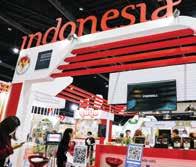
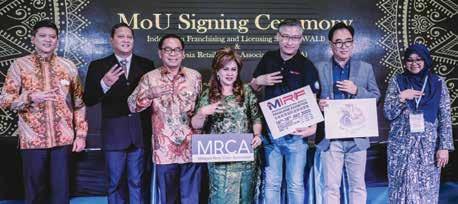
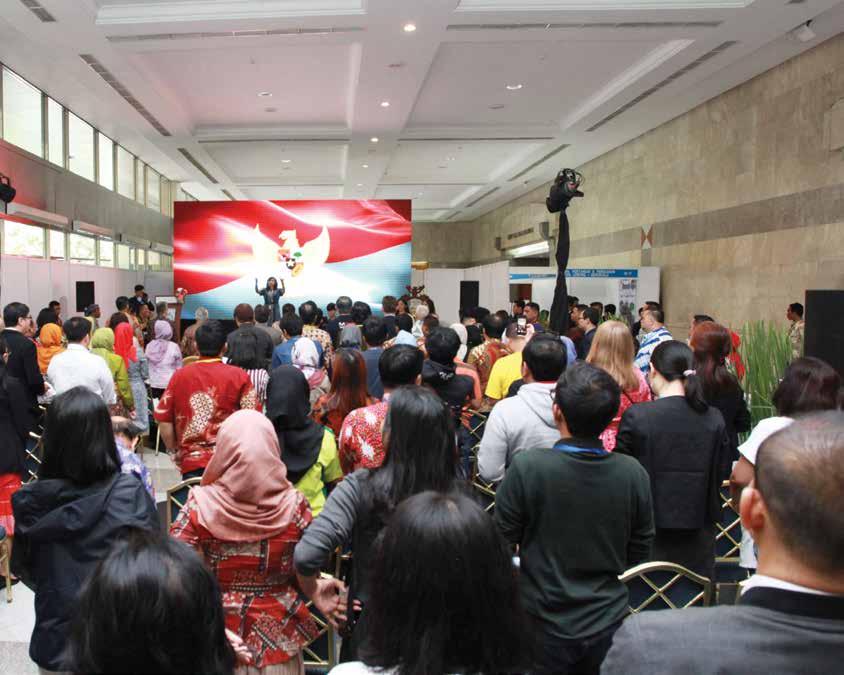
The 18th edition of FLEI 2021 will be the best gateway for international franchises, brands and licenses that are yet to be in Indonesia, and for Indonesia’s own franchises, brands and licenses that are looking to expand to the entire Indonesia market or ASIA region.
ORGANISER
Panorama Media - Indonesia
STRATEGIC PARTNERS
Indonesian Chambers of Commerce & Industry (KADIN)
The Indonesian Franchising & Licensing Society (WALI)
ENDORSED BY
Ministry of Trade; Ministry of Industry; Ministry of Co-operatives and Small/Medium Enterprises; Ministry of Tourism & Creative Economy; Jakarta City Government
RSEI–RETAIL & SOLUTION EXPO INDONESIA: 4 areas: Retail Tech-Equipment, Retail Store Furnishing, Retail Services, and Internet Retailing.
WHO SHOULD VISIT?
Master Franchisees, Franchisees, Master Licensees, Licensees, Franchise Consultants, Intellectual Property Rights Legal Consultants, Entrepreneurs, Investors, Business Owners & Operators, Governments, Retailers, Distributors, Associations, Property developers, Media and any individuals seeking business and investment opportunities from Indonesia and the ASIAN region.
1)Indonesia is the 4th most populous country in the world with >53% of the population living in the urban area, 57% are from middle class, with 7 million being added each year. 2)An investment-led economic expansion has kept Indonesia’s economy growing at a solid pace, reaching 5.3% in the first quarter of 2019.3) Franchising has been the most popular choice by Indonesian investors to build their own businesses.4) Consumer spending in Indonesia is projected 7.7% annually until 2030.
WHY JOIN FLEI 2021?
THE GATEWAY - Indonesia’s leading & biggest international franchise, license, retail & business opportunities exhibition & conference.
THE BEST PLATFORM - Meet face to face with more than 20,000 qualified buyers and investors from all over Indonesia & Southeast Asia.
THE MOST COMPREHENSIVE - There will be more than 700 brands who will expand into Indonesia.
TARGETED QUALITY BUYERS - Reach out to potential Master Franchisees and investors via Franchise & License Expo IndonesiaFLEI The VIP Club Members.
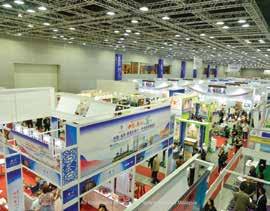
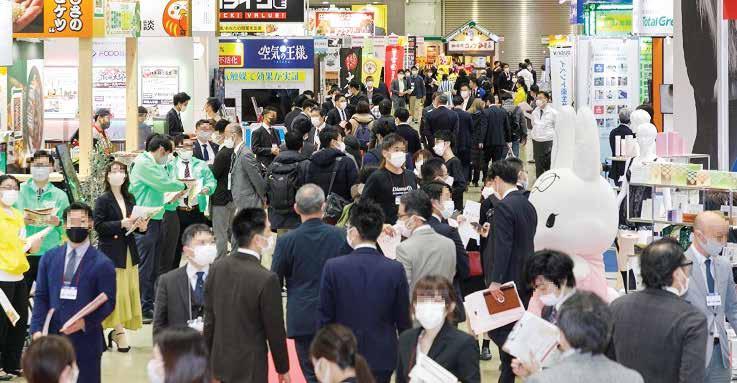
The JAPAN INTERNATIONAL FRANCHISE SHOW is one of the biggest franchise exhibitions and earned one of the most respected names in Japan.
A total number of 16,801 people visited the four-day show. In the exhibition, a variety of services such as the needs of aging society, home food, product deliveries and so on were featured. A large number of distributors, investors, and investing institutions interested in overseas brands gathered for the event.
Overseas Contact Office / Overseas Sales Agent Congrés Inc.
Onward Park Bldg. 3-10-5 Nihonbashi, Chuo-ku, Tokyo 103-8276, Japan +81 3 3510 3735
Overseas Contact Office: tradefairs@congre.co.jp
Overseas Sales Agent: fran_inbiz2021@congre.co.jp
“So, why do you think some of your franchisees are underperforming?”
The common denominator among these concerns is that they’re less operational and more philosophical. They’re a reflection of what franchisees think and feel about their business.
Franchisors know well how a franchisee’s mindset directly impacts their execution of the system. But when I look at the agenda of their conventions, I see all the usual sessions about marketing, new products and vendors, and all things operational. There might be some social activities to build goodwill and some pep rally antics on stage to get people “pumped up,” but rarely is there any meaningful discussion around the human factors that so clearly influence business performance.
There are reasons for this. Some franchisors don’t fully appreciate the extent to which these issues limit franchisees. Others are uncomfortable straying from business topics. Many simply don’t know themselves how to address these matters. They may be experts in frozen yogurt, senior in home care, and mosquito control. But human behaviour and group dynamics are different disciplines altogether. They’re also not within the scope of the franchise agreement.
Great franchise organizations go beyond franchisee hard skills and also support their soft skills, resulting in a system of owners who are as confident as they are competent. That helps them run better businesses and improves their level of satisfaction.
This is one of the standard questions I ask franchisors who bring me in to keynote their conventions.
Typically, I get the same standard answers:
“They’re complacent.”
“They don’t trust us and stick to the system.”
“They resist change.”
“They don’t give customers the experience they should.”
“They spend too much time running their business and not enough time growing their business.”
Getting Franchisees to Their “Point of Clarity”
We do our best work when we operate from our point of clarity . This state of mind isn’t defined by positivity or enthusiasm (which is what most brands promote at their events), but by clarity. This is our ability to look at our circumstances objectively without allowing emotions to cloud our judgement.
Sometimes what franchisees need most isn’t to be pumped up but calmed down. Business ownership is an emotionally charged experience. When expectations aren’t met, when sales drop, when customers complain, franchisees feel it. Those feelings cause franchisees to draw incorrect conclusions, lose trust, and panic. Often, they talk to each other, reinforcing their fears and mistrust of the corporate team.
Part of the problem is the human brain itself. When we perceive danger (physical or financial), it triggers our amygdala. That’s our brain’s fire alarm. It leads to a fight or flight response. And when it’s
active, it blocks the neural pathways to the prefrontal cortex, the part of the brain responsible for logic, reason, and problem solving. In other words, when we’re freaking out, we can’t access the part of brain that’s good for business.
To help franchisees return to their point of clarity, you need to help them disengage their amygdala and appeal to their sense of reason. Let’s look at a few ways to do this.
1. Support Franchisees with Empathy
True empathy isn’t cheering someone up. Empathy is acknowledging someone’s emotional state and being with them. That requires attention. It requires listening. Sometimes when someone’s upset, all they really want is to be heard. (Just ask your spouse!)
Franchisees complain to me that their franchisor doesn’t listen to them. I believe the real problem is that their franchisor doesn’t make them feel heard. There’s a difference. You don’t need to implement every idea franchisees suggest, nor should
you hold back on smart changes some resist. But you do need to give franchisees the time and forum to express themselves. Then engage them in conversation –not debate. Really listen. Explain their perspective back to them to confirm you got it right. Strong franchise networks are driven by partnership more than policy. So acknowledge your franchisees’ feelings and perspectives, and make sure they feel their input matters.
2. Support Franchisees with Data
A field consultant told me about a franchisee who complained of a drop in sales when corporate opened another location in his city. The consultant ran a report that verified the drop in sales, but also an increase in transactions. More people were coming in, but the franchisee’s ticket average had decreased, suggesting the real problem was poor customer service and salesmanship.
Objective information can trump feelings, guesses, and suspicion. Help franchisees reframe their concerns with facts.
There’s a difference between “My business is crashing!” and “My business is down 20%.” Give them context for their performance by providing information about what’s happening in the system and in the industry. But don’t just present that data. Use it to return them to their point of clarity. If things are better than they realize, make that case. If problems are real, give them the facts and reassure them with your plans or suggestions. Use data to encourage and inspire, not just to inform.
Objective information can trump feelings, guesses, and suspicion. Help franchisees reframe their concerns with facts.
3. Support Franchisees with Positive Reinforcement
Business owners don’t typically get the feedback and praise they’d otherwise get from an employer. But they need it. People have an innate desire for acknowledgement. For many franchisees, this is just as important as profit.
Your acknowledgement – formal or otherwise — means a lot. Be generous with your awards. Offer lots of praise. Instruct field support to find things franchisees are doing well and say something.
I explain to franchisees that great customer service elevates the emotional
state of customers. What they get is less important than how they feel. This is just as true in franchise support. Franchisees are paying you for operational guidance. But if you can also help them feel good running their business, they’ll run it better. Catch them doing things right and praise them often. Your outside acknowledge will help combat any inner self-doubt.
You haven’t just sold your franchisees a business. You’ve sold them a ticket to a psychological rollercoaster ride. Appreciate their emotional journey. Help them achieve clarity as aggressively as they seek sales. They need the right aptitude and the right attitude in order to succeed. Developing both will boost performance, increase their satisfaction, and grow your brand.
Scott Greenberg helps franchisors close the franchisee performance gap, and franchisees grow their business. He’s the author of the book The Wealthy Franchisee: Game-Changing Steps to Becoming a Thriving Franchise Superstar. More information at www.scottgreenberg.com
28 - 30 Speciality & Fine Food Asia 2021 Singapore speciality-asia.com 九月
Restaurant | Pub | Bar Asia 2021
29 - 3 Oct THAIFEX – Anuga Asia “The Hybrid Edition”: Bangkok, Thailand https://thaifex-anuga.com/en/
4TH QUARTER
October 十月
1 - 2
9 - 16
14 - 16
International Franchise Show London London, United Kingdom thefranchiseshow.co.uk
Franchise International Malaysia 2021 (FIM 2021) Kuala Lumpur, Malaysia mfa.org.my
Franchise International Malaysia 2021 (FIM 2021) (Physical) Kuala Lumpur, Malaysia mfa.org.my/newmfa
14 - 16 International Franchise Seoul (IFS) – Autumn 2021 Seoul, South Korea ifskorea.co.kr
20 - 23
Thailand Franchise & Business Opportunities (TFBO 2021) Bangkok, Thailand thailandfranchising.com
November 十一月
4 - 6
10 - 13
12 - 13
18 - 20
Vietnam International Retail & Franchise (VIRF) 2021 HCMC, Vietnam vietrf.com
SIAL InterFOOD 2021 Jakarta, Indonesia sialinterfood.com
Franchising & Licensing Asia 2021 MBS, Singapore FranchiseLicenseasia.com
Restaurant Asia 2021 Singapore restaurantasia.com.sg
18 - 20 International Coffee & Tea Asia Singapore intlcoffeetea-asia.com
26 - 28
29 – 1 Dec
CCFA China Franchise Expo, Guangzhou Guangzhou, China chinafranchiseexpo.com
Saudi International Halal Expo 2021 Riyadh, Saudi Arabia https://saudihalalexpo.com
NOTE: For the latest updates, please visit https://www.asiawidefranchise.com.sg/events/ 注意:有关最新更新,请访问https://www.asiawidefranchise.com.sg/events/
ASIAWIDE FRANCHISE CONSULTANTS PTE LTD (AFC) is one of the most experienced franchise consulting companies in Asia. We currently have more than 70 franchise and associated offices in more than 50 nations. In the last 32 years, we have provided professional consulting services to more than 1300 companies in Asia to expand locally and worldwide.
With our worldwide network, in-depth knowledge, insight (our consultants have managed franchise companies before joining us) and qualifications – e.g. CFE, CMC, CPC and PMC (Senior PMC), we are able to help clients from various industries to develop very strategic and effective franchise packages, conduct incisive franchise audits, help franchisors find suitable franchisees in various parts of the world, and to develop various market entry strategic plans into foreign territories. We also act on the franchisor’s behalf in executing certain affairs (e.g. training, audit, termination, etc.). Our sister company Asiawide Trends Pte Ltd is the publisher of the world’s only English-Chinese Asia Franchise & Business Opportunities magazine that is very popular in Asia since March 1994. We are the most active consulting company in Asia as we participate in over 30 franchise and related shows in Asia every year.
We help our clients to digitalise their franchise system through our Asiawide Digital Advantage (“ADA”). Our franchise management system will be deployed with customized performance dashboards so that our clients will be better able to ensure standards and manage the quality of their franchisees/outlets. In addition, franchisors could also gain better insights into their franchisees’ / outlets’ financial and operational performance.
We have been awarded many awards, e.g. for contributing to the growth of franchising by CCFA (China), ACFPT (Taiwan), ARFF (ASEAN), WALI (Indonesia), EFDA (Egypt), etc.