Plagiarism

Page 1


DEFINITION

Plagiarism occurs when one writer attempts to pass off another writer’s work as their own. But that’s not all plagiarism is. Plagiarism also occurs when a writer references another’s work in their own writing and doesn’t properly credit the author whose work they referenced.

STUDIO SHODWE

ETHICALISSUES

First, it’s unethical to take credit for someone else’s work. Plagiarism is essentially a form of theft.

Second, plagiarism violates academic honesty policies. Schools teach students how to follow the best practices when it comes to sharing information and crediting creators. Plagiarism breaks those rules.

Finally, plagiarism devalues academic certification. If employers believe a large number of students cheated to graduate, that hurts everyone.

REAL WORLD SITUATIONS

REAL WORLD SITUATIONS

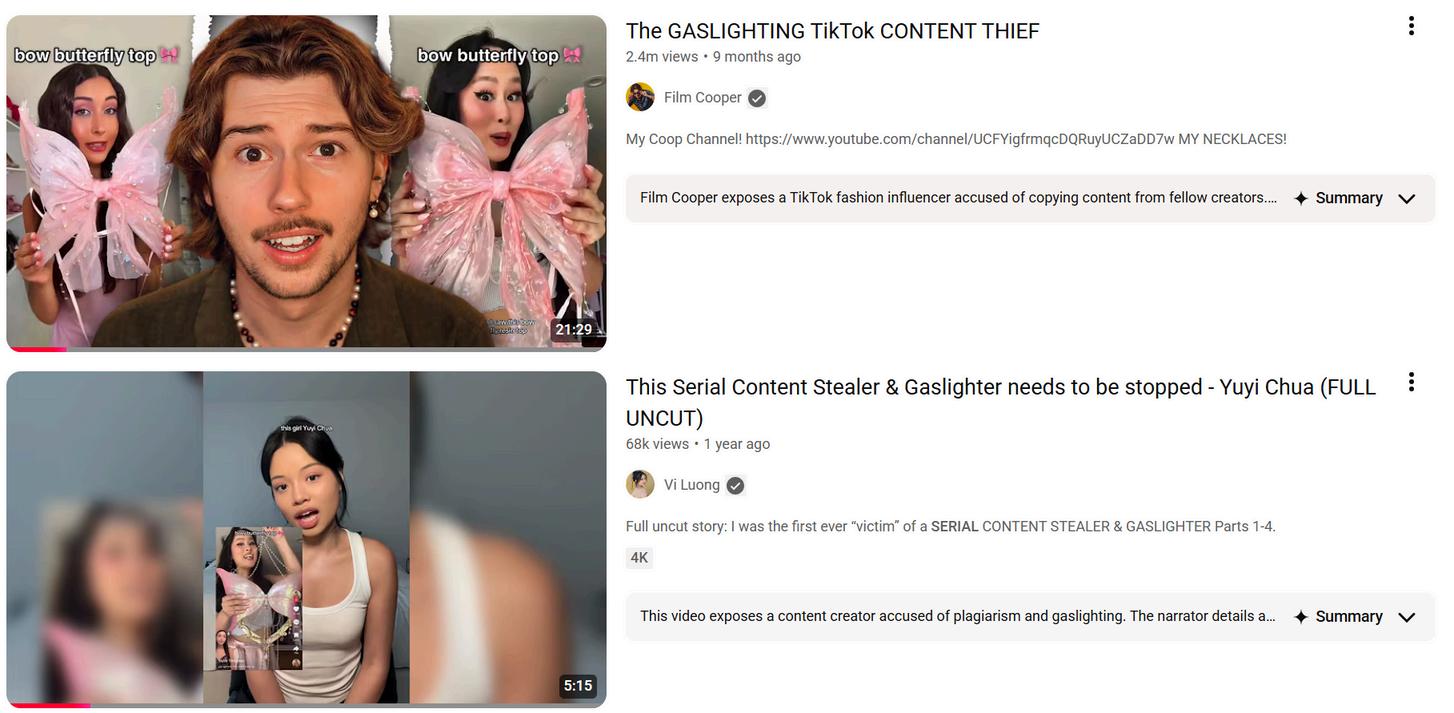
Yuyi Chua’s alleged content-copying has drawn attention and sparked a larger conversation about the ethics of content creation in the digital age.

Critics, including Vi Luong and Taylor Timinskas, claim that Chua has built a significant following by imitating their work on specific phrases and gestures. Th accusations suggest that Chua repeatedly mimicked their content without acknowledgment, creating a disturbing pattern of plagiarism that has left many viewers unsettled. Many netizens have also discussed the similarities between he videos and those of other creators.

Both Vi and Taylor Timinskas took to social media to share their frustrations, providing detailed evidence of the similarities between their original content and Chua’s videos. These side-by-side comparisons highlight the extent of the copying, making it difficult to dismiss the claims as mere coincidence. As more creators voice concerns about maintaining creative integrity, the issue has become a focal point of discussions in the content creation community.

FINDINGS & DISCUSSION

In the last 5-10 years, whether you realize it or not, there has been an uptick in plagiarism and content theft, especially in the online sphere of digital video. Plagiarism in the digital video sphere is commonly used in order to hop on a trend to gain fame or recognition in online social spaces without much effort.

Especially in the modern age of short-form content, this contributes to the boring vapidness of content online and habits such as “zombie scrolling,” the act of nonstop scrolling for hours on end.

FINDINGS & DISCUSSION

The oversaturation caused by plagiarism also creates a portrait of no authenticity and a lack of emotional connection to the audience. There is nothing personal or passionate about the content, the copied content is often a fabrication of a feeling rather than a simulation. It is common for perpetrators to indirectly insert how they expect their audience to react, which often leaves consumers feeling apathetic or disconnected from what and who they are watching.

TAKEAWAYS

Stealing work is a crime, and we must avoid doing it at all times. There are different strategies to do to avoid plagiarism:

1) ask permission before putting someone else’s content in your video.

2) if you use any content that doesn’t belong to you, give credit to the original content creator.

If you are a content creator and you don’t want other’s plagiarizing your video, you can do things like:

1) put a watermark on your video

2) you can also use copyright on your videos

RESOURSES

1.

2.

A post on Plagiarism in Social Media https://medium.com/@amber wardell/can-we-talk-nowabout-plagiarism-on-social-media-because-its-a-problem039431596224

Video on Yui Chua stealing content

https://www.youtube.com/watch?v=uKeODAz8fM&t=24s

Turn static files into dynamic content formats.

Create a flipbook