



















How a lifelong hobby became a viable business
LEADING WITH INTEGRITY
ANGELA CANAVAN ON THE POWER OF RESILIENCE























How a lifelong hobby became a viable business
ANGELA CANAVAN ON THE POWER OF RESILIENCE












Suppo r t loc a l to l i ft us a l l




All Ri s e All Ri s e


Ch am p i o n G r ee n . i e







Editor: Denise Maguire
Creative Director: Jane Matthews
Editorial Assistant: Daniel Traynor (Chambers Ireland)
Designer: Lenny Rooney
Photography: iStock Photo
Production Executive: Nicole Ennis
Sales Director: Diarmaid Lennon
Managing Director: Gerry Tynan
Chairman: Diarmaid Lennon


Published by:
Ashville Media Group, Unit 55 Park West Road, Park West Industrial Park, D12 X9F9
Tel: +353 1 432 2200
Email: info@ashville.com
Web: www.ashville.com
On behalf of: Chambers Ireland, 11 St. Stephen’s Green, Dublin 2, D02 FY84
Tel: +353 1 400 4300
Email: info@chambers.ie Web: www.chambers.ie
All articles © Ashville Media Group 2026. No part of this publication may be reproduced, stored in a retrieval system or transmitted in any form or by any means without written permission from the publisher. Opinion and comments expressed herein are not necessarily those of Ashville Media or Chambers Ireland. ISSN 20093934


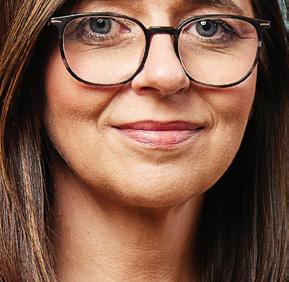






Aoifa Smyth Morgan and Kasey Campion talk about turning creativity into commercial


























































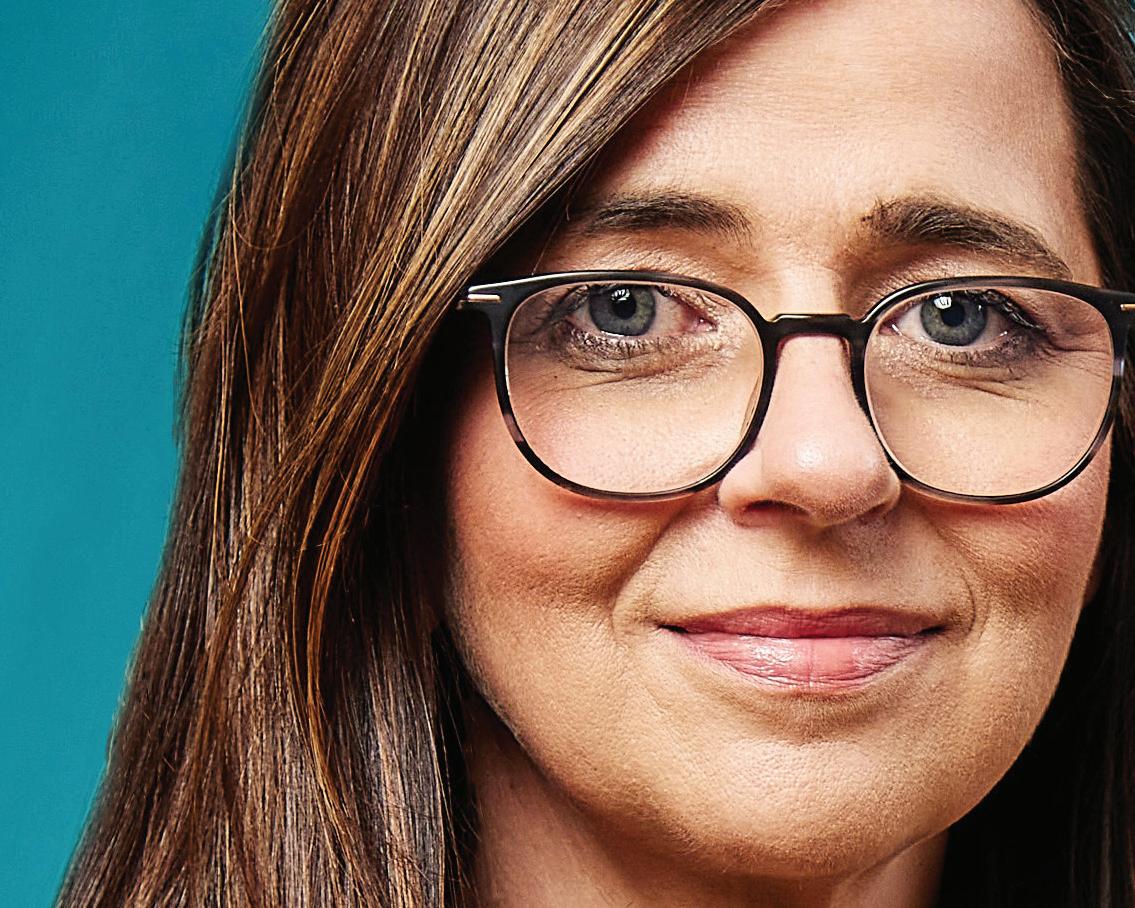
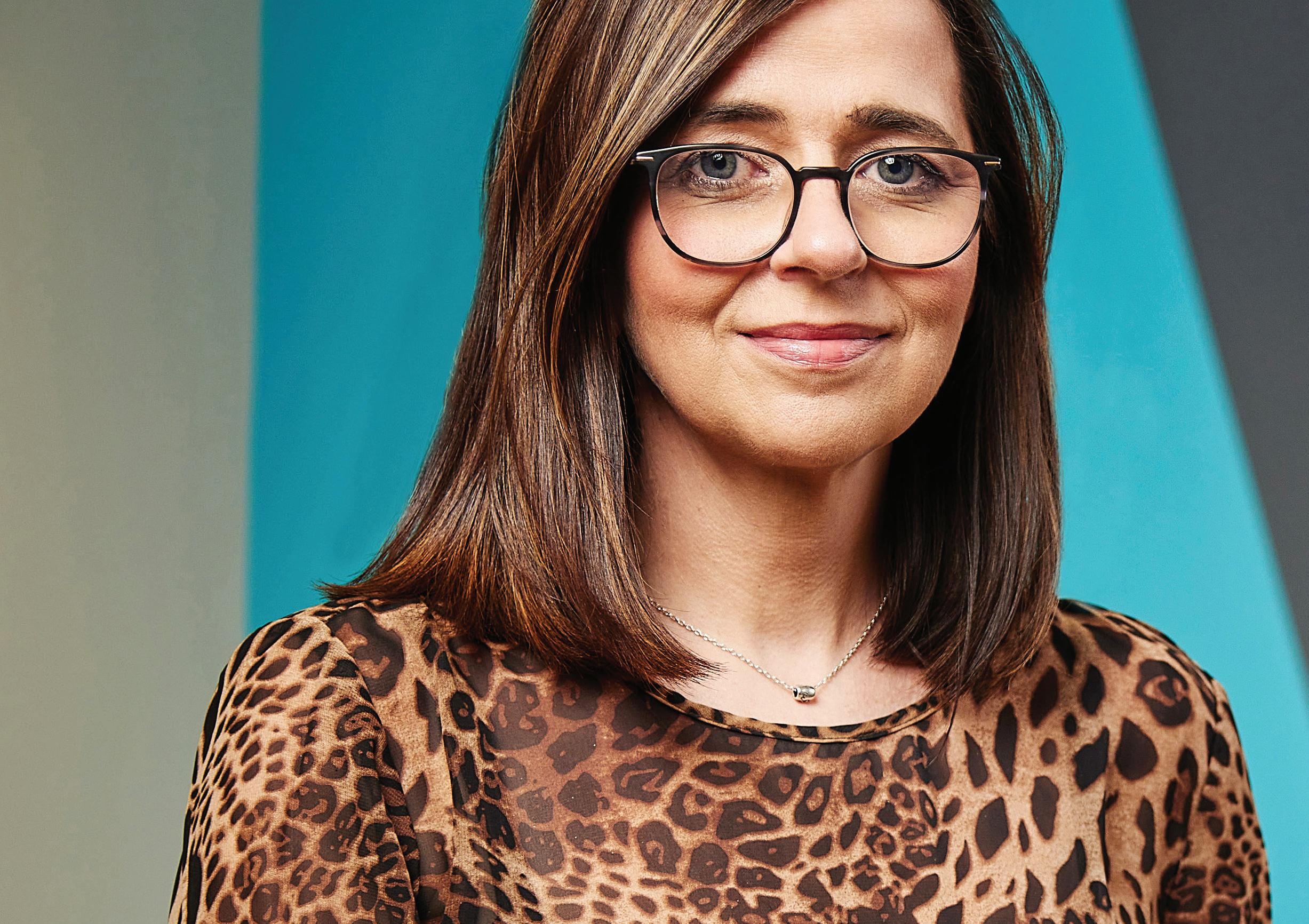
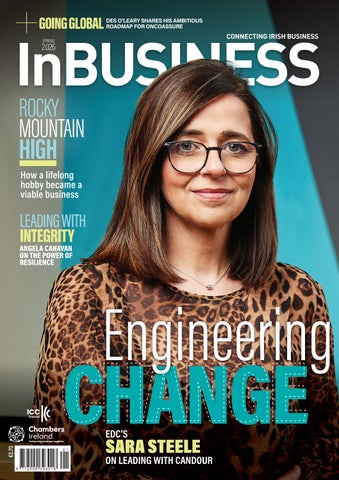
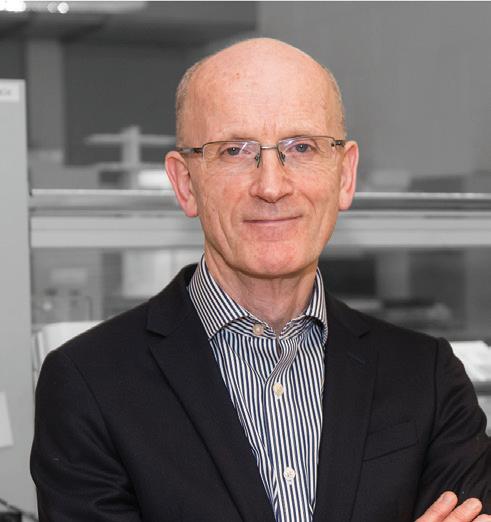
Sara Steele, Executive Director at EDC, on the importance of visibility for women in STEM, digital transformation and leading with candour




Des O’Leary shares the clinical and commercial roadmap for his medtech company, OncoAssure






























Learn to use Artificial Intelligence in your business and everyday life with AI micro-qualifications — short, targeted, subsidised courses delivering the skills you need.
BOOST SKILLS, BOOST BUSINESS skillstoadvance.ie


















COVER STORY


“Women
have significant strengths in
teamwork and communication. You’ll make a massive impact in ways you probably can’t even see while you’re considering engineering.”
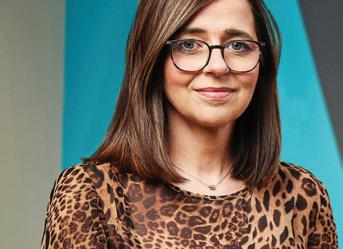
Sara Steele, Executive Director, EDC


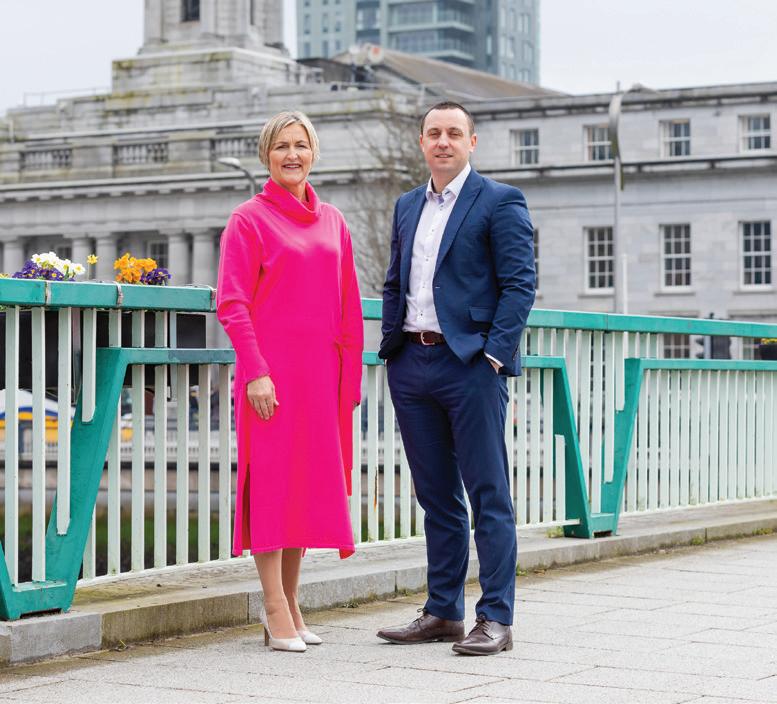
HCS, the Irish IT managed services and digital transformation company, is investing €13.2 million in the business by 2028 as it creates 125 new jobs, expands its footprint and enhances its service offering for customers. The new jobs, which will be created by 2028, are in cybersecurity, risk, compliance, digital services, enterprise sales and presales. Recruitment has already begun and the new roles will grow the company’s headcount to 175 employees across its Waterford, Cork and Dublin locations. HCS is making this investment to drive annual revenue to €30 million by the end of 2028. AI adoption is a key driver of this growth, with customers increasingly incorporating AI into their operations to automate processes, boost productivity and remain competitive. The investment also supports the opening of a new office in Blanchardstown Corporate Park.
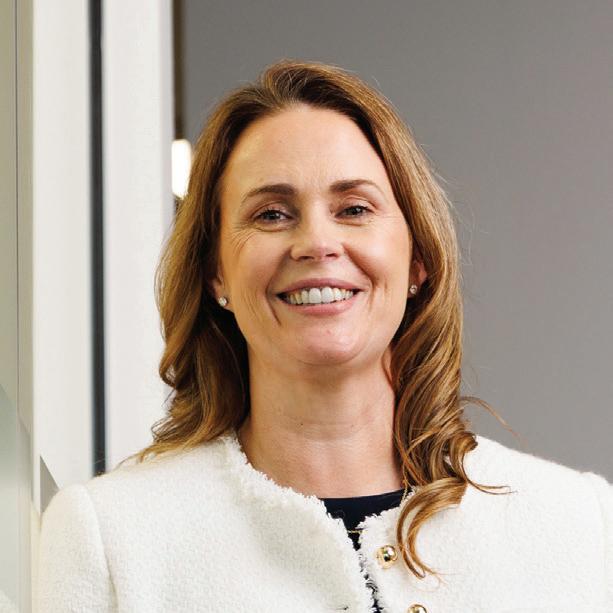
Research from Landmark Technologies shows that 38% of office workers couldn’t do their jobs without AI. Over half say their job will change due to AI, while 43% are concerned it will make their role redundant.
Career Decisions Ireland, one of the country’s longest-established leadership advisory and career transition consultancies, has been acquired by CDL Asset Holdings Ltd, led by Cork-born Jonathan Kelleher. Founded in Limerick in 1994 by former Managing Director Miriam Magner Flynn, Career Decisions Ireland has built a 30-year reputation as a provider of outplacement, executive coaching and leadership development services. “My own transition from the military into the corporate world was a defining experience. Like many people moving from one career to another, I knew I had transferable skills, but I underestimated how long it takes to understand how those skills land in a completely different environment. That experience directly shaped our decision to acquire Career Decisions. This company has been doing this work with excellence for 30 years. I want to build on that and take it further,” said Kelleher.

Dream Point, the purpose-built, multiroom immersive ‘world of dreams’ in Dublin’s Docklands, has launched a corporate offering, opening up the venue for private hire, brand takeovers and large scale corporate family days. Demand is already proving strong, with companies including KPMG, Arup, Avolon and Davy booking the space for events. According to the Dream Point team, family focused corporate days have quickly emerged as a common enquiry.
“We’ve noticed a big jump in requests for corporate family days,” said Dan Gleeson, Co-Founder of Dream Point. “Companies can bring their team and their families into a private, immersive environment. It’s a no brainer for businesses looking to do something genuinely different and to treat their teams with their families.”
A survey from the Compliance Institute has found that six in 10 compliance professionals believe that ‘greenhushing’ – when firms downplay efforts to protect the environment - is a growing issue within the financial services sector.
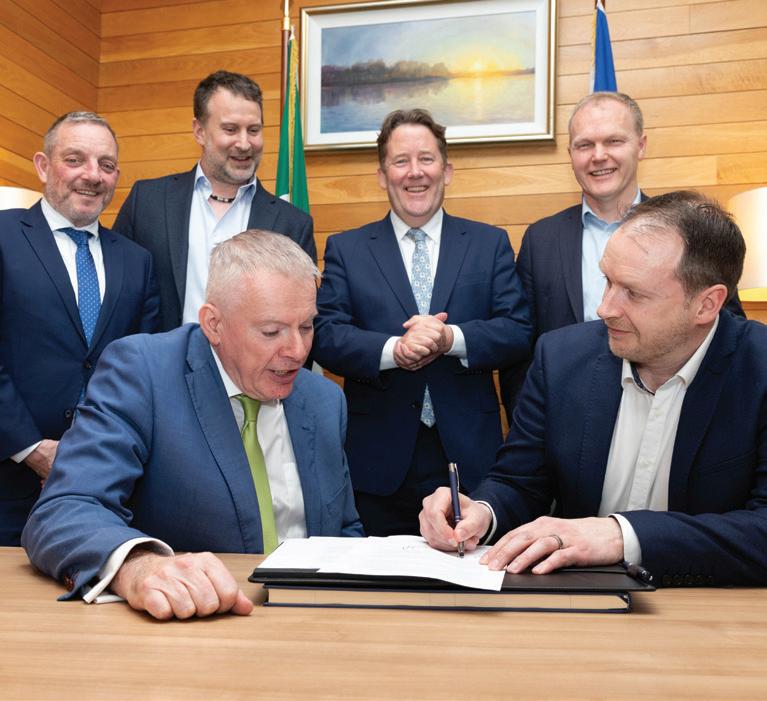
Minister Darragh O’Brien TD and Minister of State, Jerry Buttimer TD, with Niall MacCarthy, Managing Director, Cork Airport and John Carty, Chief Commercial Off icer, Greenvolt Next

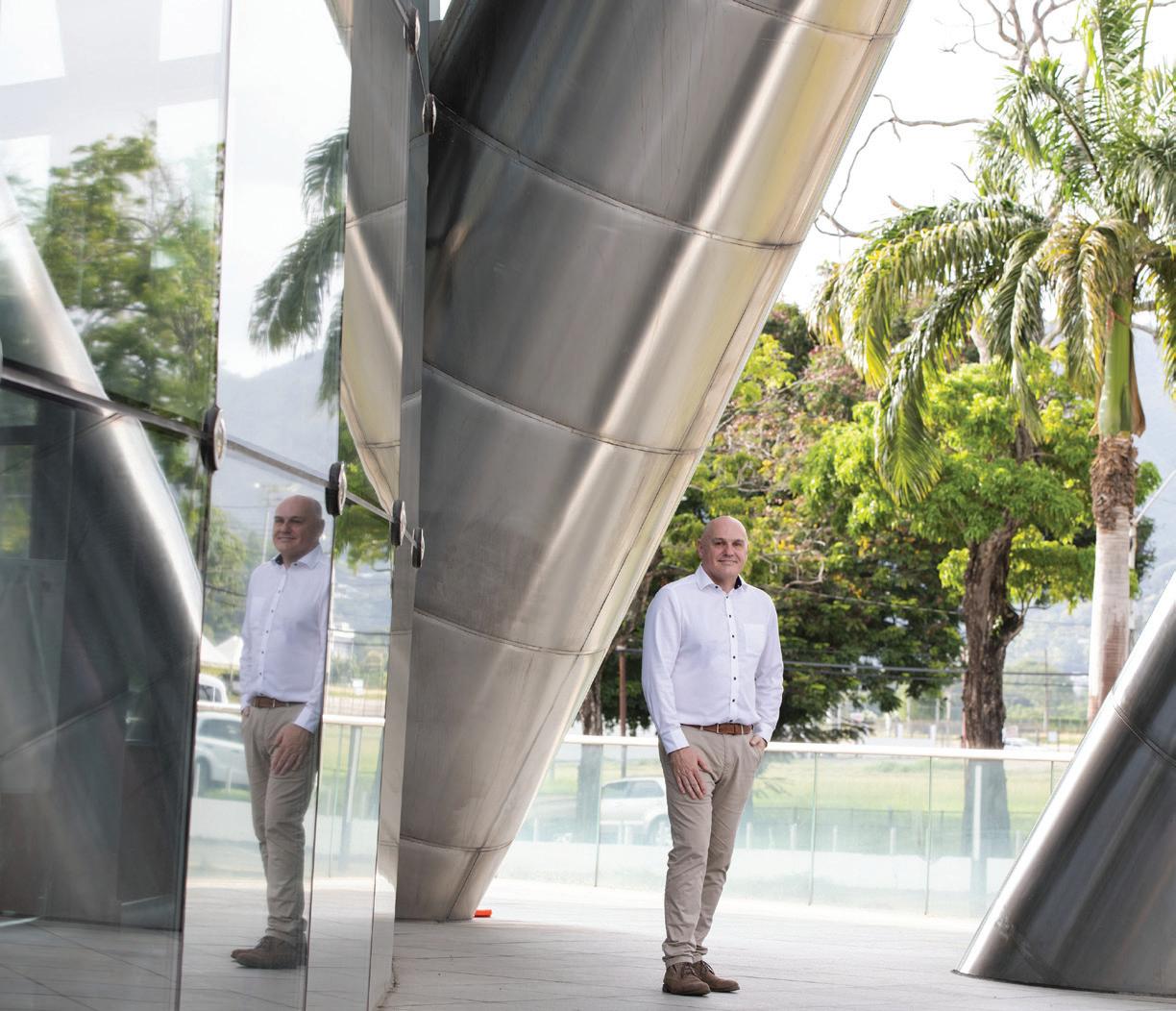
Pictured is Mark Donnellan, Head of Business Development – Caribbean at Ekco. The securityfirst managed service provider has announced it’s opening a new office in Trinidad and Tobago, representing an investment of €10 million over the next two years. The company’s expansion will lead to the creation of 18 jobs by the end of 2027 and will enable the company to more than double its revenues over the same period.
More than half of Irish businesses have been targeted by online fraudsters impersonating senior leaders in the past year, according to research from Censuswide. The frequency of these incidents has increased, indicating the digital threat has become a mainstream business risk.
Research from Saros Consulting shows that organisations have spent almost €720 million on failed AI projects to-date. Over half of IT decision-makers also admitted their organisation has implemented AI that made decisions they couldn’t explain to customers.
Cork Airport is set to deliver Ireland’s largest solar-powered carport, in conjunction with Greenvolt Next. A solar carport is a dual-purpose structure, where a canopy is constructed and fitted with a roof of photovoltaic (PV) panels. The solar carport will provide shelter for parked cars in the Holiday Blue car park, while also generating up to 20% of the airport’s electricity needs into the future. The 1.7MW carport will be rolled out in two phases – the first of which will start in early summer, with the second stage commencing in October. Once completed in late summer 2027, it’s envisaged that the 3,696 solar panels and five inverters will generate 1.5GWh of renewable energy each year for the airport. As well as delivering renewable energy and lowering CO₂ emissions at the airport by 355,056kg, the carport will reduce annual electricity costs and boost operational efficiency by enabling on-site energy generation.
Pinergy is planning to accelerate its commercial solar division, targeting the installation of over 40MWp of commercial solar projects across Ireland within the next three years. To spearhead this growth, Philip Connor has been appointed as Head of Commercial Development. He will lead the solar division’s commercial strategy and performance, with direct responsibility for driving revenue growth and strengthening Pinergy’s market footprint in Ireland’s rapidly evolving energy landscape. Over the past decade, Pinergy’s Commercial Solar PV division has installed more than 60MWp of solar and 1MWh of commercial battery technology for clients across Ireland. Recent high-profile commercial solar projects delivered by Pinergy include Monart Hotel & Spa, Keoghs Crisps and several motor retail partnerships across the country, most recently Fitzpatrick Motors in Kildare.
Your biggest cyber risk isn’t your systems, it’s your staff inbox, writes George Foley
When most SME owners hear the words “cyber training”, they picture the same thing – an annual presentation, a compliance exercise or a video staff click through so the company can say the box has been ticked. The problem is that attackers know that too.
Over the past few years, cyber-attacks have shifted away from purely technical exploits and towards something much simpler – people. Instead of trying to break through complicated systems, criminals increasingly focus on tricking employees through phishing emails, fake invoices or messages that look like they come from a colleague or supplier. For smaller businesses, this is where the real risk now sits.
Technology such as firewalls and email filters will stop a lot of automated attacks, but they cannot always recognise a convincing message that relies on urgency, familiarity or trust. A single distracted click on what looks like a routine email can bypass layers of technical protection. That is why workforce awareness is quietly becoming one of the most important security controls an SME has. The companies that handle this well do not treat training as a once-a-year exercise. Instead they build small, regular reminders into how the business operates. Short updates on new scams, simulated phishing tests and clear reporting processes make staff more

alert to unusual requests. Just as importantly, employees need to feel comfortable questioning something that doesn’t look right. A culture where someone can quickly check, “Did you really send this?” is often enough to stop an attack early. Cybersecurity does not have to mean complicated systems or large budgets. For many SMEs, the most effective improvement they can make is simply turning their workforce into an active line of defence.
George Foley is a Dublin-based cybersecurity specialist who works with Irish SMEs to translate complex cyber risk into practical business decisions www.eset.com/ie/
Many Irish exporters, including small businesses, are already paying the price for the farreaching and costly consequences of conflict in the Arab World, according to the Arab Irish Chamber of Commerce (AICC). Ahmad Younis, CEO of the AICC, cautioned the Irish Government and business community against underestimating the cost to the economy, noting that Irish businesses exporting to the Arab region need support from them now more than ever. “The ongoing rise in fuel prices alone indicates just how much costs have surged in recent weeks: the supply chains that once moved smoothly between Ireland and the Gulf are dealing with significant transport delays and attacks. The stakes are too high to ignore.” Irish merchandise exports to the Arab world were valued at more than €3 billion in 2025, while services exports reached €16.2 billion in 2024. Younis said this illustrates just how vital the region has become for Irish enterprise, particularly when overall trade from Ireland to the Gulf countries – Saudi Arabia, United Arab Emirates (UAE), Qatar, Kuwait, Oman and Bahrain – is now well over 60%. “Arab markets have long valued Irish products for their quality, reliability and innovation and Irish companies have built strong reputations across the Gulf,” he said. “But maritime traffic has slowed dramatically. The strain on the Strait of Hormuz, a vital shipping route for oil, gas and fertilisers, cannot and should not, be understated at this stage.”
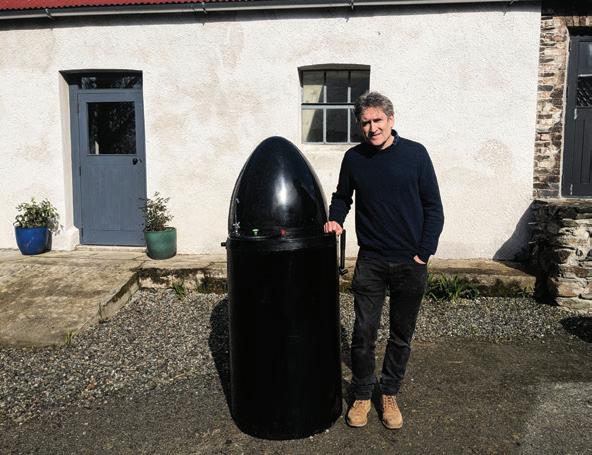
AmuGreen, a Cork-based green technology company, has developed a compact, small-scale anaerobic digester that turns everyday food waste into renewable energy. MyGug converts food waste into clean biogas for cooking and nutrient-rich liquid fertiliser, creating a self-sufficient solution that transforms how households manage food waste. The system is capable of processing up to 1.5kg of food waste per day, generating enough biogas for up to two hours of cooking. MyGug also creates a nutrient-rich liquid feed which can be used to support plant growth, reducing the need for chemical fertilisers and creating a fully circular home ecosystem. The system was developed by Irish entrepreneur Kieran Coffey, whose vision was to create a practical, scalable solution to one of the world’s most pressing environmental challenges.
Ireland is still hiring, but skills shortages are now starting to hold growth back, according to the latest Irish Labour Monthly Monitor commissioned by the Employment and Recruitment Federation and supported by ICON Accounting. More than half of recruiters reported an increase in permanent vacancies in the latest survey period, while 43% saw higher demand for contract roles and 41% reported increased temporary vacancies. More than half also expect vacancy levels to rise further over the next three months. But the talent pool is not keeping pace. Two thirds of recruiters expect no improvement in the availability of suitably skilled candidates, pointing to a widening gap between what employers need and what the market can currently provide. Siobhán Kinsella, President of the Employment and Recruitment Federation, said the figures show that the challenge for Ireland is no longer a lack of jobs, but a shortage of the right skills. “What this data shows very clearly is that Ireland does not have a jobs problem. It has a skills problem. Employers are still hiring. Recruiters are still filling roles. But finding people with the right experience and qualifications is getting harder and that is now starting to hold businesses back. If Ireland wants to maintain momentum, we need to get much more serious about training, reskilling and workforce readiness. We cannot keep talking about strong employment numbers if employers cannot find the people they need to fill the roles that are there.”
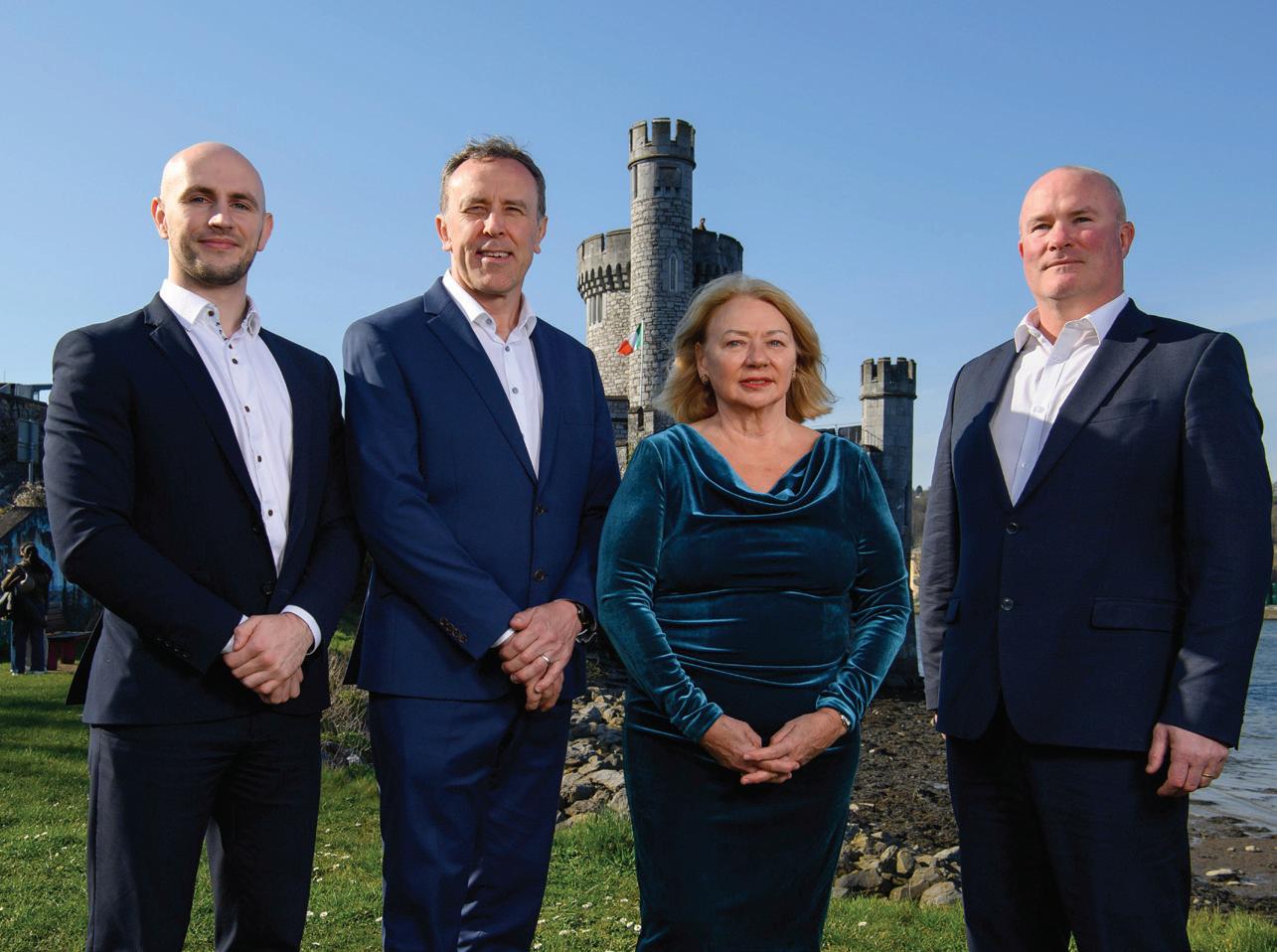
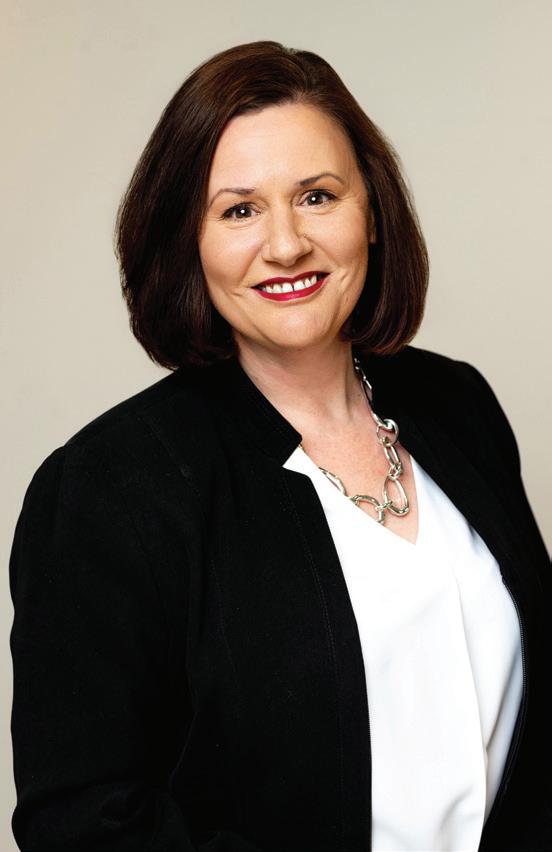
MyWealthManagement (MWM) Group has announced it has merged with Financial Innovations. This follows the group’s acquisition of Inspire Financial’s book of business in December 2025, marking the successful completion of four deals to date, with further planned acquisitions in the pipeline. The amalgamations are part of the MWM Group’s ongoing growth strategy since an investment of €10 million was allocated in June 2025, with the acquisition of Axiom Private Clients Limited. The group is on track to have €750 million in client assets under advice (AUA) by the end of Q2 2026, with a further deal pipeline targeting AUA of €1.5 billion by year end.
SHANE CURTIN, CEO and Founder of Vroom Digital, on creating campaigns that deliver measurable impact
WHEN WAS VROOM DIGITAL SET UP?
Vroom Digital started in March 2012 with a simple idea –to help businesses grow through digital channels in a way that drives meaningful results. I studied at Trinity College and began my career as a Sales Manager at e Buy & Sell Paper. From there, I helped set up the Irish o ce of a UK Performance Marketing Agency before founding Vroom Digital. I’ve always been fascinated by how SMEs can grow through digital channels and 14 years on, I remain focused on building an agency that delivers real outcomes, not just campaigns.
HOW IS BUSINESS?
ings are going really well. Today, the digital landscape is more complex than ever and businesses are investing where data can show the way, but many struggle to turn all that activity into clear, predictable growth. at’s where we step in – Vroom helps clients navigate everything together so their marketing isn’t just busy, it actually delivers the numbers that matter.
WHAT SERVICES DOES THE AGENCY PROVIDE?
We provide performance marketing solutions across paid media, SEO, content and digital PR, always with the bigger picture in mind. Rather than treating these as separate disciplines, we create a cohesive approach where each channel supports overall growth. We focus on understanding a client’s business, goals and audience, turning digital activity into measurable outcomes – sales and leads.
HOW MANY STAFF DO YOU EMPLOY?
We’re a close-knit team of 14 specialists and one thing that sets us apart is that clients work directly with our senior team every day and have great support with our client success team. ere are no layers between strategy and execution – the people shaping the approach are the ones on
calls and running campaigns. Hiring is always a challenge, especially nding people who combine technical skill with strategic thinking. We look for those who understand not just the channels, but the client’s business as a whole, because that’s what drives real growth and conversions.
WHAT ARE THE MAIN CHALLENGES IN RUNNING A DIGITAL AGENCY TODAY?
One of the biggest challenges is keeping pace with a constantly changing industry while delivering consistent results. New platforms, tools and trends emerge all the time and it’s important not to chase everything, but focus on what truly drives results. For us, it’s about balancing evolution with consistency – in 2026 we continue to invest in our team, adapt to the landscape and stay true to the approach that works for our clients. Building a strong team, protecting quality as we grow and remaining strategic rather than reactive are the real day-to-day challenges.
VROOM WON BEST SMALL AGENCY AT THE DMA AWARDS – WHAT DO YOU ATTRIBUTE THE WIN TO?
I think winning that award came down to our approach – combining strategic thinking, creative storytelling and performance-driven campaigns. We focus on more than just executing ideas – every campaign delivers measurable impact. A er winning silver in 2024, taking gold in 2025 felt especially meaningful. With six major awards last year, including the Grand Prix win at e Spiders, it’s a strong endorsement of our team’s delivery on both national and global stages.
HOW HAVE CLIENT REQUIREMENTS E VOLVED IN RECENT YEARS?
Clients aren’t just looking for activity anymore. ey want to know, ‘Is this actually driving leads, enquiries and sales? Is this helping my business grow?’ ere’s a real focus on
quality, results and accountability. As agencies, over the last five years we’ve had to shift from just running campaigns to being true strategic partners who understand the business behind the marketing.
ARE
I’m really proud of our work with EPIC The Irish Emigration Museum on “The Love Story Before Love Story.” The campaign won multiple awards, including the Spider Awards Grand Prix, and gained international recognition. What made it truly special wasn’t just the accolades – it was how we combined creativity, performance and PR to create something meaningful. By blending memorable storytelling with measurable impact, we delivered real engagement and strengthened the client’s mission. It’s a perfect example of what our agency strives for – campaigns that are creative, strategic and genuinely effective. That such recognition often goes to larger agencies shows that smaller independents can truly make an impact.
Over the next five years, we aim to grow our team further and continue evolving our approach – helping clients move
from fragmented marketing to a structured, predictable growth system. Our focus remains on making marketing work harder for the business, delivering real growth, not just dashboards. We’re a partner in success, not just a service provider.
Starting an agency is tough. You need to surround yourself with strong hires who share your vision as you grow. Equally important is staying positive through the inevitable ups and downs. That mindset – being comfortable in the uncomfortable – allows you to keep evolving your agency’s delivery for clients every few months. The pace of agency life is relentless. Even a few slow months in the early days can be challenging and maintaining momentum requires constantly nurturing your pipeline with the right type of prospects. Not all revenue is equal – clients who aren’t a good fit can take more than they give, potentially stalling growth for months or even years. Many agencies learn that lesson the hard way.
The agencies that thrive today aren’t just those that execute campaigns – they’re the ones that become trusted partners, helping clients grow in meaningful, measurable ways.
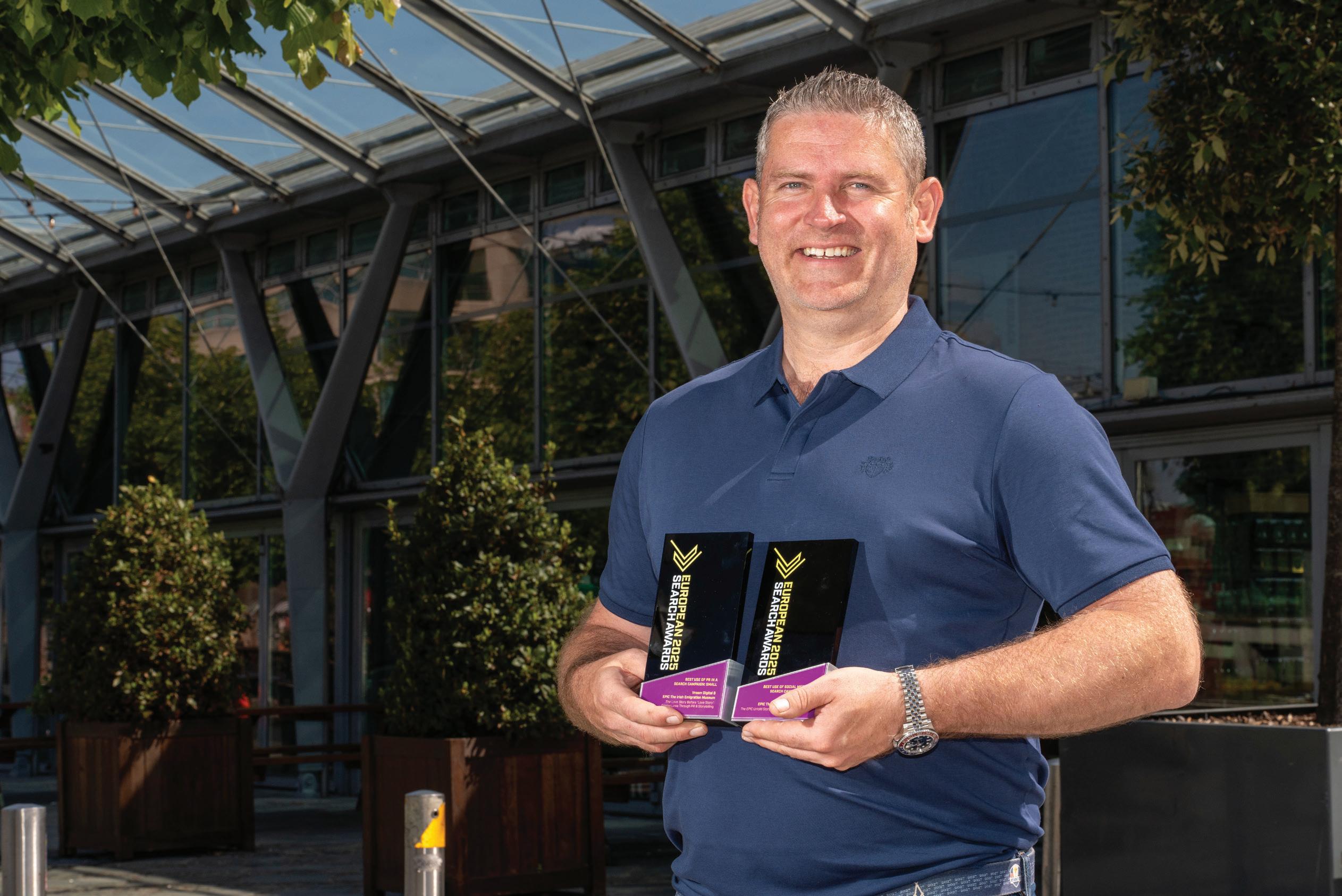
The agencies that thrive today aren’t just those that execute campaigns - they’re the ones that become trusted partners, helping clients grow in meaningful, measurable ways
The amount the Guinness Enterprise Centre expects to reinvest back into its campus by 2030


Mike Keane CEO, HIBRA DESIGN
Company Location: Cork
Product or Service:
Setanta Space Systems (Setanta Space), a new Irish space technology start-up, recently announced its o icial launch. The company is focused on developing novel modular onboard computing hardware and AI software designed to make spacecraft more autonomous, resilient and capable. Founded by a team of engineers with backgrounds in European Space Agency (ESA) missions, the start-up’s approach is to place intelligence directly onboard and is currently developing a family of modular and scalable computing platforms to achieve that aim.








Hibra Design is a specialist vehicle engineering company, developing bespoke vehicles or systems to customer’s specifications.
Number of Sta : Five
How have you funded the business to date?
We’ve focused on organic growth through customer sales. In 2024, we were also supported by an Enterprise Ireland PSSF grant. In 2026, we are opening our investment round.
What’s the best advice you’ve been given?
Be prepared to change direction. Don’t get stuck chasing an idea if it’s not working.
What’s the most important lesson you’ve learned starting out?
Not all advice is equally good or appropriate. The key is to look for insight, not opinion, and this typically comes from people who have built similar businesses.
Your biggest make-or-break moment?
We designed and developed the first electric tractor in Ireland. Our gearbox supplier let us down last minute so our team re-engineered a di erent gearbox in a short time to keep the project on schedule whilst a suitable alternative was being sourced. It was an incredible job.
Is there anything you would change in hindsight?
We initially focused on diesel-to-electric retrofit programmes; in hindsight, we should have focused on showcasing our full vehicle development capability. We now work as the external design engineering house for clients wishing to develop new products.
A new programme designed to support women researchers to explore the commercial potential of their research is now open for applications. The WeVenture programme, launched by InterTradeIreland in partnership with Invest Northern Ireland and Enterprise Ireland as part of the Shared Island Enterprise Scheme, aims to strengthen the pipeline of women progressing from academic research into innovationled business activity. The progamme is open to women researchers at all academic career stages and aims to equip participants with the skills and knowledge to progress their research ideas towards commercialisation.
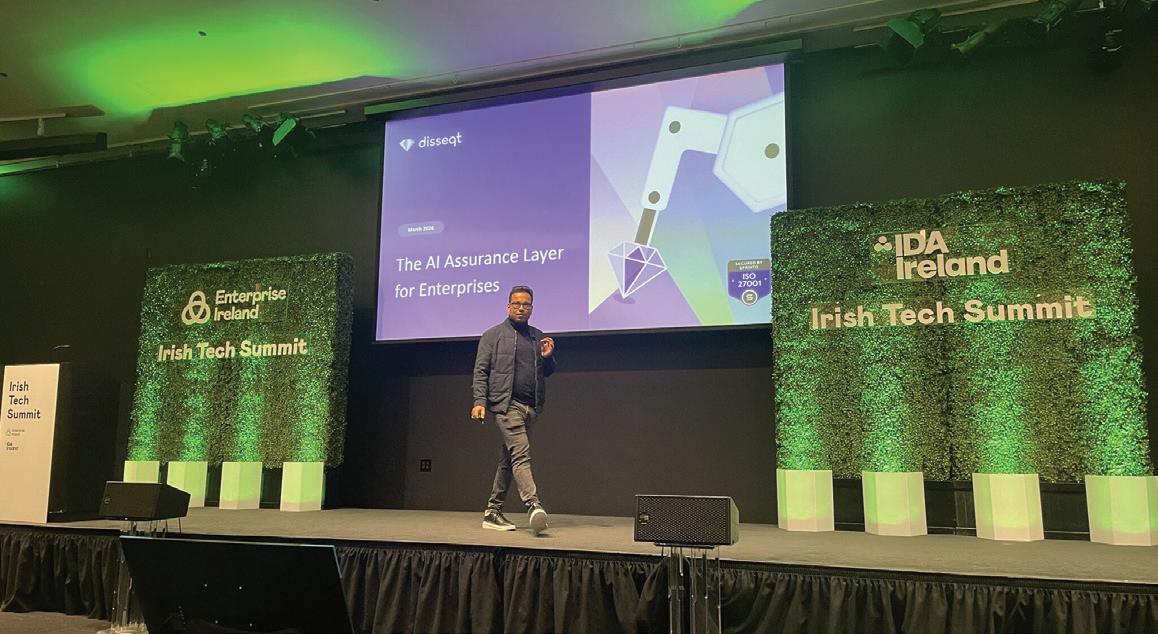

Disseqt AI, the NovaUCD-based start-up building AI assurance and governance infrastructure for enterprises, made its Silicon Valley debut on St Patrick’s Day as one of only eight Irish start-ups selected to pitch to top venture capitalists and angel investors at the Irish Tech Summit 2026. The event was hosted by Enterprise Ireland and IDA Ireland at the Computer History Museum in Mountain View, California. Disseqt AI is currently raising a $6 million growth round to scale its enterprise footprint across UK, Irish and US markets in 2026. Disseqt AI CEO and Co-Founder Apoorva Kumar took to the main stage to present the company’s vision as “The AI Assurance Layer for Lean Agentic Enterprises”, positioning Disseqt AI as the critical governance infrastructure layer enterprises need as AI agents move from pilots into production at scale.
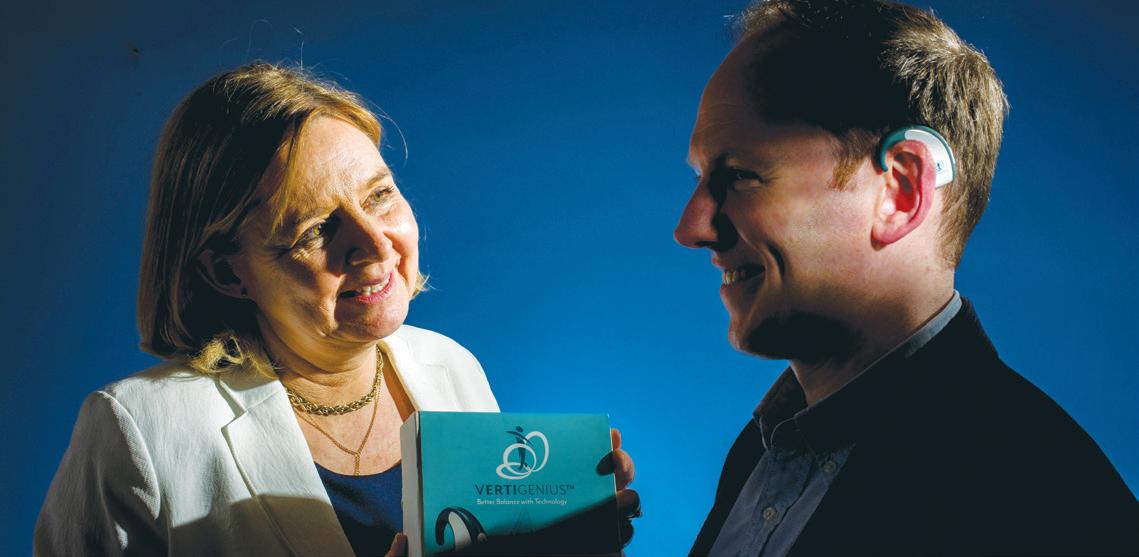
Medtech start-up Vertigenius has announced the successful close of a €2.55 million funding round to drive growth in the US. The investment was led by Atlantic Bridge and supported by Enterprise Ireland, MedTech Syndicate, IRRUS Investments, Xcendra Ventures, Ascentifi and others. Vertigenius is working to transform the delivery of care for vertigo patients by enabling remote monitoring for the first time. The wearable head sensor medical device allows clinicians to track patients’ at-home treatment remotely and adjust prescribed treatment accordingly. By accelerating clinician workflows and reducing the number of clinic visits required, Vertigenius eases critically long waiting lists to see vestibular therapists. With FDA registration complete, the start-up launched in the US market in October 2025 and already, 20 clinics across 11 states are now using the medical device. Over the next five years, the start-up anticipates expanding further in Europe and entering other markets including Asia Pacific.




Irish smart home robotics start-up HomeBot Ireland has secured a retail partnership with Euronics Ireland, bringing its range of smart home cleaning robots and robot lawn mowers to more than 60 stores across Ireland for the first time. The deal marks a major milestone for the West Cork-based company, founded by Clara Mulligan and husband Alan O’Neill, which has grown rapidly since launching its first product in 2024. The partnership will cover the full range of HomeBot Ireland products, while the move is supported by locally based customer care and aftersales service in West Cork, including diagnostics and repairs. Company Founder, Clara Mulligan, said: “The partnership with Euronics is a huge step in our brand’s growth in Ireland, which until now, has mostly been through direct online sales and events. Being available in Euronics stores will allow more people across Ireland to see our products in person and discover how smart home robots can make their everyday life easier, knowing that support, repairs and real help, from a real person, are available right here locally when they need it.”
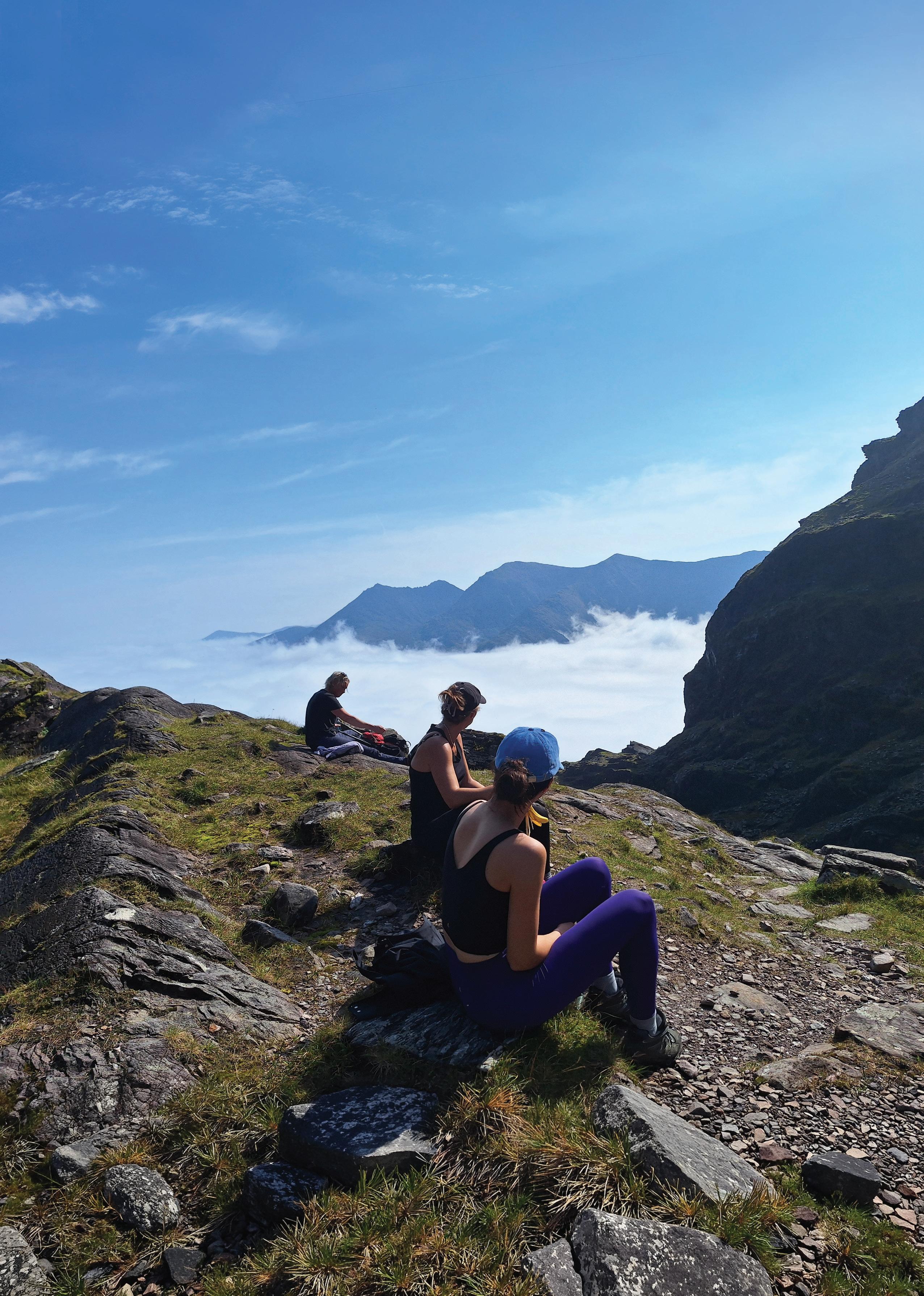






JOHN O’SULLIVAN has turned a lifelong hobby – climbing the mountain at the bottom of his garden – into a business
With the MacGillycuddy’s Reeks as his back garden, it’s no surprise that John O’Sullivan grew up to become a mountaineer. From an early age, the Kerry native learned every twist and turn on the 3,407ft high mountain, helping his father farm sheep and making the mountain his own playground. About 35 years ago, he joined Killarney Mountaineering Club, taking on the mountain with like-minded climbers every second Sunday. He has also been a member of Kerry Mountain Rescue for over 30 years. In 2014, he set up The Reeks Guiding Company, providing daily ascents of Carrauntoohil from April to October. “Setting up the business almost happened by accident. People knew I climbed mountains and so I’d get a call from a guesthouse say in Killarney, asking if I could bring three or four people up the mountain. At the time, I was doing photography and it was quiet enough during the week so it suited me. That’s how it started,” says John. The requests increased and eventually, John founded the business on a more formal footing. His interest in photography aligned perfectly with his new venture. “When I’m out with a group, I take about 30-40 images and at the end of the day, the climbers are presented with the story of their adventure on Carrauntoohil.”
To be a mountain guide you must, above all else, love the mountains. “You can’t be a mountain guide if you’re not a person of the mountains. Every day, I’m proud to show people around Carrauntoohil. I’ve met some lovely people over the years. They’re not interested in talking about work, they’re fascinated by the mountain, the landscape and the weather that day.” The majority of hikers guided by John up the mountain are Irish, but he also brings tourists from the US, the UK, Scotland and Northern Ireland. For some, climbing Carrauntoohil is on their bucket-list. “They make a weekend out of it. So they’ll do the climb but they’ll also stay with us.” John also provides accommodation – Beaufort Cottage and “An Tigin”, a restored stone cottage set at the base of the mountain range. “It’s very popular, particularly with US visitors. It dates back to about 1850 and allows people to get a taster of what life was like back then. There’s an old-fashioned pitcher and basin for washing yourself, along with an eco-toilet and outside barbeque area.” Hikes are weather-dependent; conditions can quickly change and with people depending on John to keep them safe, it’s important he makes the right call. Has he ever found himself in a dicey situation up the mountain? “No, I don’t think I have. Growing up on the mountain and having over 30 years’ experience means I’m well used to its vagaries and how quickly things can change. We’re not afraid to cancel or postpone a hike; safety is our biggest concern and we take it very seriously.” The best time of the year to climb is from the start of April to the end of October. Previous experience in climbing is encouraged, says John. “People don’t need to be super fit but they should have a decent level of fitness. If you’re bringing a group up the mountain and four hours later you’re still not at the summit, then you’ve got a group that aren’t very fit. In a situation like that, I would have a chat with the person that’s
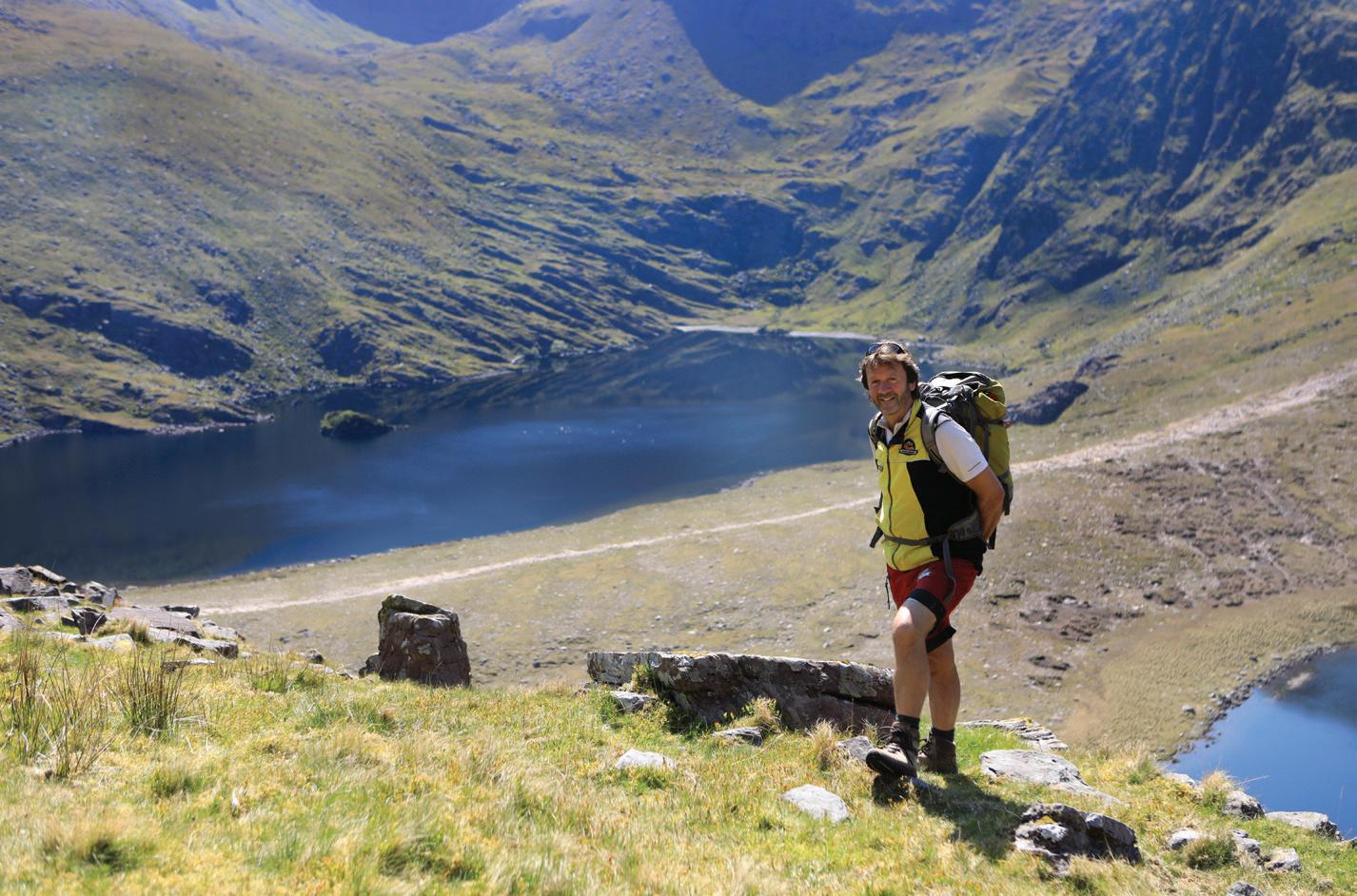
» Carrauntoohil in the MacGillycuddy’s Reeks range is the highest peak in Ireland at 1,308m or 3,406ft
» The summit is usually ascended through the Hag’s Glen and by climbing the Devil’s Ladder – a steep and often dangerous rocky gully filled with loose scree
» Hikers might be lucky enough to encounter red deer, mountain hares and various bird species like peregrine falcons and ravens
» With so many climbers, Carrauntoohil has become hazardous as a result of erosion
» Steps are being taken to mitigate the impact of foot traffic on these fragile mountain paths.
You can’t be a mountain guide if you’re not a person of the mountains. Every day, I’m proud to show people around Carrauntoohil“
struggling and suggest that maybe the mountain isn’t for them that day.” Often, coming down the mountain as opposed to going up is the most exhausting leg of the hike. “People are tired and they mightn’t be watching their steps. You’re not going to fall going up but coming down, if you put your foot in the wrong place, you can stumble quite easily. That’s when accidents can happen.”
John has climbed mountains all over the world. He recently conquered Island Peak, a popular mountain in the Himalayas near Kathmandu that reaches 6,200m. It took a week to climb up and then climb back down. “It’s probably one of the hardest ones I’ve done. We were on fixed ropes and harnessing gear and we had to abseil off the summit. I’ve also climbed Kilimanjaro which was a lovely experience, Mont Blanc which is the highest peak in western Europe, along with Chamonix and Everest base camp. I’m happy with what I’ve done but I wouldn’t mind taking on Machu Picchu.”
In Ireland, The Coomloughra Horseshoe is a favourite – a 12km circular ridge walk in the MacGillycuddy’s Reeks. It’s a strenuous day out, says John, but worth it. “There’s scrambling involved and you have to cross a ridge, so you wouldn’t want to be afraid of heights. It involves three peaks so if your level of fitness isn’t high, then it’s not for you.” Carrauntoohil is still John’s favourite mountain to climb. “I’m on it every day, whether I’m bringing a group on a hike, climbing with friends or on my own. It’s an amazing place to be.”
SARA STEELE ,
Executive Director
at EDC, speaks to JENNIFER MCSHANE about the importance of visibility for women in STEM and leading with candour
Sara Steele is not interested in polishing the story of how she found engineering into something neater than it is. Looking back on the start of her career, she is refreshingly direct about what first brought her into the field. “I’d love to say all the sound bites about having an inquisitive mind and wanting to know how things worked, but it was a lot more basic than that,” she says. “It was an aptitude for physics and tech graph and I channelled myself towards engineering from there.”
That honesty says much about the way Steele approaches her work. Now Executive Director at EDC (Engineering Design Consultants Ltd), she has spent almost three decades in engineering, moving across different sides of the industry and building a career shaped as much by adaptability and people skills as by technical expertise.
“I really don’t know anybody who has covered almost every aspect of the industry the way I have,” Steele explains, noting she's touched on almost every facet of the engineering industry throughout her career. What kept her engaged was not standing still. Each move brought a new corner of the sector to understand, a new role to master and a different perspective on how projects are delivered.
Her career began at Dornan Engineering, where she was one of the company’s very early employees. She spent around 12 years there before moving into main contracting as a services coordinator and commissioning specialist with firms including John Sisk & Son and BAM. She then moved client‑side with organisations such as GE Healthcare. Later, EDC offered another step, this time into design delivery and a broader leadership remit. “It was a step up from the perspective of the number of people I was managing and the responsibility I’d have,” she continues.









Digital tools don’t replace expertise. They’re going to amplify what we do and they’re going to make us faster, better, smarter.
Curiosity is so important and you don’t need everything figured out. Confidence comes with time, as you gain competence.
Living in that space where we’re too polite to say what we need – that doesn’t work. I couldn’t really survive in an environment with agendas or a toxic undercurrent.





Sara Steele, Executive Director, EDC
Women have significant strengths in teamwork and communication. You'll make a massive impact in ways you probably can't even see while you're considering engineering"
We’ve got some extremely talented people here who are doing things like QA checking, counting switches, counting thermostats, cross‑checking between items. If we can get AI to do things like that for us, it frees people up.
The industry Steele entered in the mid‑1990s was different in ways that now sound stark. Early roles were often site‑based and sites were not always set up for women. “There wouldn’t be facilities on site for females,” she recalls. “You’d have to drive to the local bar or restaurant if you needed to use the toilet!” She credits construction managers in her own company with treating and coaching her well, but says women on site were still often seen as a novelty.
“I don’t know how seriously women were taken at that time,” she says. “You just had to build your own credibility through actions and get the job done. There was no network of women then. You had to build your own resilience and build your own team around you.” She remembers a meeting over 10 years ago, where the architect, main contractor, structural engineer and MEP representative were all women.
“It took my breath away,” she says. “The other ladies were younger than me and they didn’t make a remark about it, because this wasn’t 'that moment' for them. For me, it really was.” Recognition also matters. Reflecting on winning the 2025 Women in Engineering Award, she points less to her own accolade and more to the energy of the room. “There were so many women there and so many people in the room supporting young people,” she says. “It's important to give that visibility."
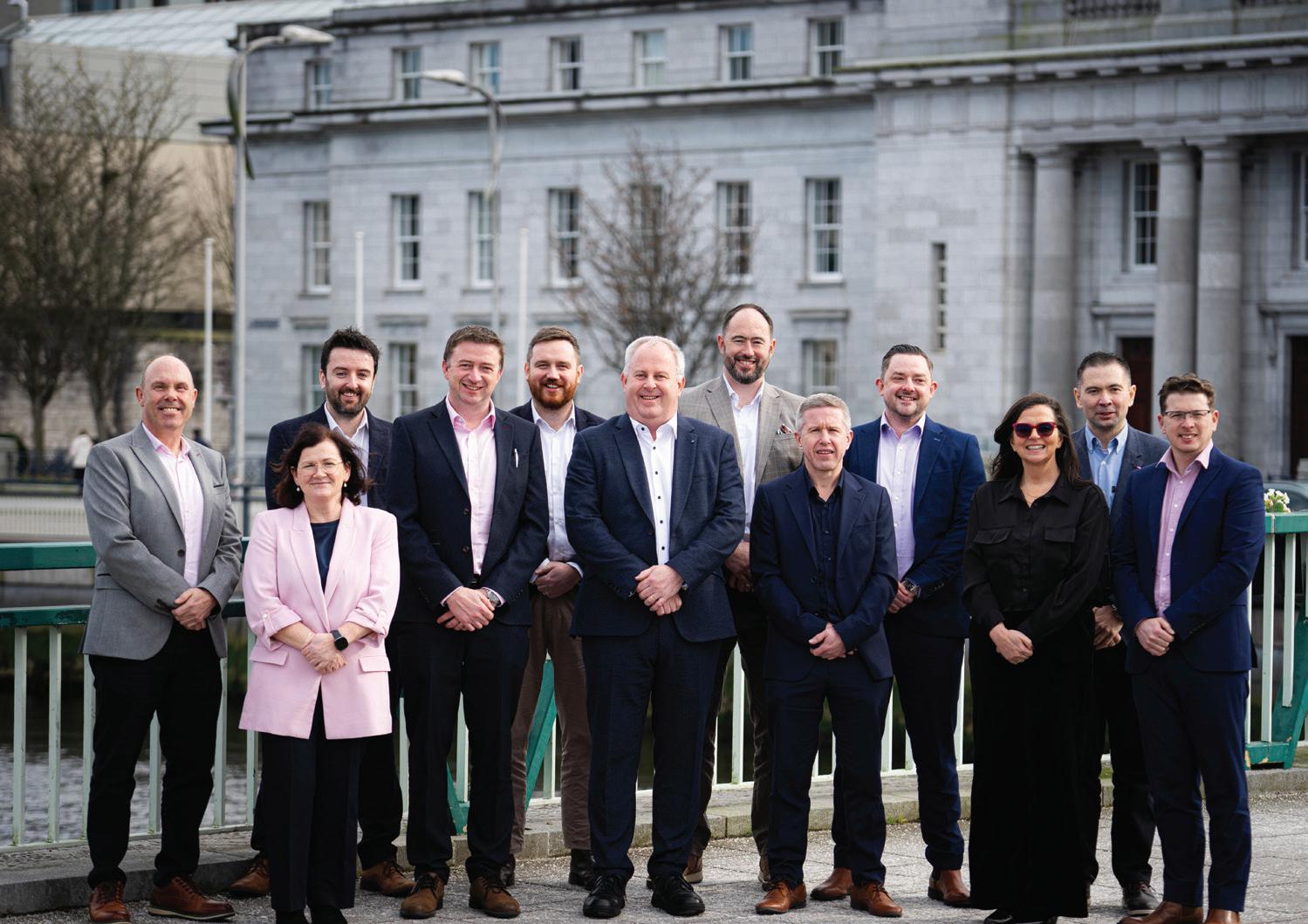
“How we do our job today will not be how we do it in five years’ time,” Steele continues. “It’s about moving that mindset from ‘this is how we’ve always done it’ to continuous improvement. Digital tools don’t replace expertise. They’re going to amplify what we do and they’re going to make us faster, better, smarter.” The hardest part, she says, is making sure that we bring everybody with us on the journey. “Helping people to let go of ways of working that might be comfortable and trust in the new way of working, that's what's key.”
For Steele, AI and automation make the most sense when they free skilled people from repetitive but essential tasks. “We’ve got some extremely talented people here who are doing things like QA checking, counting switches, counting thermostats, cross‑checking between items,” she says. “If we can get AI to do things like that for us, it frees people.”
Steele’s advice to young women considering engineering is simple – do not rule yourself out too early. “Don’t self‑select out of it before you’ve tried,” she says. “Curiosity is so important and you don’t need everything figured out. Confidence comes with time, as you gain competence.” She is quick to point out that much of this applies to young male engineers as well, but notes that women often experience imposter syndrome more sharply.
“Know that you have a lot to learn. Be open to it and get ready to really enjoy it,” she says. “Women have significant strengths in teamwork and communication. You’ll make a massive impact in ways you probably can’t even see while you’re considering engineering.”
That belief in the value of honest, human interaction also shapes her leadership style. Since joining EDC, Steele has introduced radical candour as an approach to communication.
“It was kind of nailing my own colours to the mast when I came in here,” she says. Feedback is critical and it cannot be effective if it's either sugar‑coated or personalised.
“Nobody can progress without it,” she explains. “Living in that space where we’re too polite to say what we need – that doesn’t work.” For Steele, it creates the kind of workplace she wants to be part of. “I couldn’t really survive in an environment with agendas or a toxic undercurrent,” she says.
For an industry still working to broaden access, modernise delivery and retain talent, that combination of visibility, honesty and adaptability may be exactly what's needed.
NEW TITLE: Chief Commercial O icer
EMPLOYER: Otonomee
PREVIOUS ROLE: Part-time Chief Marketing O icer
Irish outsourcing company
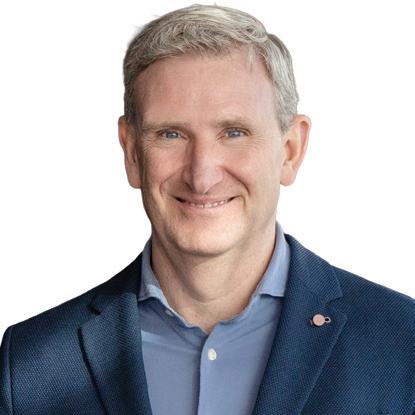
Otonomee has appointed Alan Gleeson as Chief Commercial O icer to support the company’s ambitious growth strategy, targeting €50 million by 2028. Gleeson brings over 25 years of experience in B2B growth and commercial strategy. Previous roles include Palo Alto Software and Keelvar, before founding boutique consultancy Work with Agility.
NEW TITLE: Chair
EMPLOYER: Shannon Region Conference & Sports Bureau
PREVIOUS ROLE: General Manager, The Strand Hotel, Limerick (ongoing)
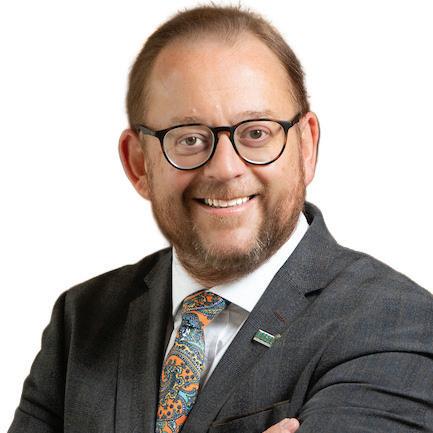
The Shannon Region Conference & Sports Bureau has announced the appointment of Stephen O’Connor, General Manager of The Strand Hotel, as the new Chair of its Board. Stephen has worked with the MHL Hotel Collection for over 11 years, including roles at The Harbour Hotel Galway and for the past seven years, as General Manager of The Strand Hotel in Limerick.
NEW TITLE: Managing Partner
EMPLOYER: J.W. O’Donovan LLP
PREVIOUS ROLE: Partner





NEW TITLE: Tourism O icer
EMPLOYER: Discover Boyne Valley
PREVIOUS ROLE: Food Business Development O icer, Boyne Valley
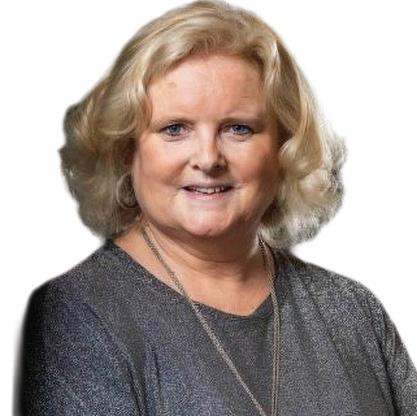
J.W. O’Donovan LLP has appointed Anne-Marie Linehan as Managing Partner. She takes over from Jerome O’Sullivan, who will continue to lead their commercial real estate team. Linehan will lead the firm’s planned expansion over the coming years. She joined J.W. O’Donovan in 1996 and became a partner in 2003 and advises clients across construction, banking and finance.
Emma Gill has been appointed Tourism O icer at Discover Boyne Valley. She has spent the past three years working at Meath County Council within the tourism section. A key focus of Emma’s new role will be supporting the Boyne Valley Tourism Strategy’s ambition to position the region as one of the leading experiential destinations in the world.
Data from the CSO gathered in the third quarter of 2025 shows that fewer than one in three workers under the age of 35 were aware that a mandatory workplace pension was going live within months. Auto-enrolment in My Future Fund went live at the start of 2026, signing up all workers aged 23-60 earning more than €20,000 and not otherwise signed up to a pension with their employer. About 750,000 workers were expected to find themselves drafted into the fund from the start of the year, but only one in four under 25 without a workplace pension was aware of the plan before it went live.













































































































































For some influencers and content creators, turning a digital following into a successful career has become a reality. InBUSINESS KASEY CAMPION and AOIFA about turning creativity





















has speaks to SMYTH MORGAN into commercial value over























hat does it take to make it big on social media? To gain a loyal following, develop alliances with brands and actually make a living?



For many aspiring in uencers, it’s a dream that will never become a reality but for the social media personalities whose posts resonate with their audience, it can become their livelihood.

























































And those livelihoods can be lucrative. Back in 2016, trends in advertising had noticeably shi ed online. User generated content had taken over, with content creators increasingly securing deals with brands that wanted to target their followers. Identifying this trend, Lynn Hunter set up e Collaborations Agency in 2016, a talent rm that represents over 80 online content creators. Today, she leads three agencies under the Hunter Media Group umbrella that, together, are a one-stop shop for a company’s social media and PR needs. Agency Director, Aoifa Smyth Morgan, explains how the rm acts as a linchpin between content creators and brands. “We represent lots of di erent creators and we manage their careers, mostly on digital media but some outside that medium too. Our role is to amplify their presence on whatever platform they excel in.” is year, the rm is celebrating 10 years in business and although similar agencies have popped up over the past decade, e Collaborations Agency was probably the rst to specialise in working with talent.

a one-stop shop for a company’s social media and Agency how linchpin

















































Our is business agencies up decade, Collaborations Agency was probably the rst our Lynn saw shi longer visible, wanted to be relevant. We were also seeing a much more media literate public beginning

“Ten years ago, our founder Lynn Hunter saw a shi in the market – brands were no longer satis ed with just being visible, they wanted to be relevant. We were also seeing a much more media literate public beginning















to emerge. Social media was evolving so everyone was forced to adapt along with it.” Although it may have become something of a buzzword, authenticity is key when it comes to driving user engagement and building a real connection with audiences. “When I started out in this agency, a lot of content had to be polished and perfect, almost like a TV ad. Today, that’s completely ipped. People and brands are looking for an authentic tone of voice. ere’s a sense that consumers want to see what’s behind the cloak in these creators’ real lives.”









Authenticity is one of the most important factors when it comes to shaping a brand’s success on social media. Once audiences get a whi of fakery, it’s game over. FM104 presenter, content creator and podcaster, Kasey Campion attributes her online success to honest engagement relatability. In 2023, she began to take her social media presence seriously. “I had about 6000 followers at the time and that was from just a few random videos that went viral, including one about getting sunburnt on my school sports day. I had a feeling when I posted that story that it would go viral and it did; it got about one and a half million views, which in 2021 was a lot.”



















Eventually I asked, what do I need to do to be on the radio?” Securing a late night slot paved the way for “Locked in with Kasey Campion” every weeknight from 7-10pm. ree years on and Kasey is busy presenting her show and working with brands on social media like Lidl, Rimmel, Penney’s, Bene t and Repak. “I think brands want to work with me because I have a very engaged, loyal following. ey also appreciate my honesty and authenticity. It’s good for them and it’s also good for me.”






















To forge a deeper connection with her audience, Kasey started going live on TikTok. “I think people just got invested in what I was posting. ey wanted to know what I was doing every day. I managed to build a pretty loyal following and it started to grow. People were interested in everything, from stories about ex-boyfriends to doing my driving test.” For some, becoming successful means losing a sense of relatability, but not so for Kasey. “People followed my journey to my current job as a presenter on FM104. I post about my day and about my show and people want to engage with me. I think the two jobs – social media and radio presenter – t well together.”
Kasey’s radio career began in the promo team at FM104. She saw it as a foot in the door. “While I was doing that, I always kept an eye on the presenters to see what they were doing. I developed relationships with them and began helping to write their scripts.


Kasey’s presenter role might come to an end every day, but her content creator persona does not. “Every day I’ll post at least three to ve times. Sometimes it’s more; at the Gossies, I posted 15 times which is a lot. But for me, it’s normal. It comes naturally to me.”




People and brands are looking for an authentic tone of voice. There’s a sense that consumers want to see what’s behind the cloak in these creators’ real lives”
e most successful creators understand their audience and who they’re talking to, says Aoifa. “ ey create connection with intention and they’re not constantly chasing trends. It’s my role to guide them in that process.” Long-term strategies are the focus, as opposed to smaller oneo wins. e idea is for the talent to work smarter, not harder. “Rather than posting an ad every day, which could work to alienate your audience, we’ll look at getting the same fee but with one ad a week.”
A key element of Aoifa’s role is helping her clients realise that their creativity can have real commercial value. “A lot of the time that’s where creators need assistance – understanding the commercial side of what they’re doing. ey could be great on creativity, but they need assistance when it comes to making those bigger decisions.” For a content creator looking to build their online presence, consistency is key. “Hard work and professionalism are so important, especially when you’re starting out. It might sound simple but when you’re working with a brand, you must treat it like a professional job. ey’ll want to work with a person that responds to requests in a timely manner and meets deadlines. It’s about balancing the creative side of an online social media presence with the practicalities of running a business.”
EMILY HARNETT, Head of Marketing at Codex, speaks to JENNIFER MCSHANE about why listening to employees is the starting point for meaningful change
“I set out to have a degree in psychology back in Canada, where I’m from,” says Emily Harnett of her path to her current role. Over time, she has “come to appreciate the synergies between marketing and psychology” – both relying on a “fundamental understanding of people and motivators for decision making,” as well as a shared interest in data and experimentation. at connection underpins her role today as Head of Marketing at Codex. Harnett’s route into marketing was gradual rather than planned, shaped by voluntary roles and an unexpected opportunity to do design work that showed her “how much I loved more of the creative side and pursuits of marketing and how it was actually a strength of mine.”











Emily moved to Ireland in 2017. Since joining Codex in 2019, she has gone from being “a marketing team of one” to building out a larger function and taking on “larger responsibilities within the organisation.”
In an Irish context, Harnett notes that support for neurodivergent people has historically been uneven – good provision in primary, secondary and post-secondary education, followed by “little to no support” once graduates move into the workforce. e growing corporate focus on inclusion is, in her view, a welcome correction.
ere is o en a perception that meaningful change requires major investment or structural overhaul. In reality, Harnett suggests, the rst step is much simpler. “ e rst thing is just to ask employees,” she says. “If you give them a voice and you listen to them, that’s a very valuable starting point.”
at idea of listening runs through much of Codex’s recent work. Early projects – including a philanthropic donation of furniture to create a quiet space at DCU – highlighted a gap in workplace products designed with sensory needs in mind. Rather than assuming solutions, the team turned to research, engaging directly with neurodivergent employees to better understand their experiences.

Alongside that growth has come a broader focus, moving beyond traditional marketing into workplace experience and inclusion.





“It’s something that is so relevant and topical at the minute,” she says, re ecting on how the conversation around inclusion has shi ed. What was once considered a niche topic is now moving into the centre of how organisations operate, although for many, knowing where to begin remains a challenge.











“ ere’s a lovely saying – ‘nothing about us without us’,” Harnett says, emphasising the importance of involving people in shaping the environments they work in.
at principle shaped a piece of market research Codex carried out at the end of 2024, surveying 220 neurodivergent employees in Ireland and the UK about their workplace experiences, perceived employer support and barriers in traditional o ce environments.


e ndings were compiled into a report, widely made available to other organisations and fed directly into product development, including the creation of a Balance Booth – a custom acoustic phone booth whose sensory












features were directly informed by what neurodivergent employees highlighted in the research.
The findings informed both product development and a wider reassessment of workplace design. It became clear that many environments still reflect outdated assumptions about how people collaborate and concentrate. “You go from having the quiet and the solitude of your house to oftentimes a very busy, loud, brightly lit office,” she says. For some, that shift can be jarring.
The open plan office, long associated with collaboration, does not work equally for everyone. “I think some employees find it loud and disruptive,” she continues. “It’s not going to help you with collaboration. It’s going to do quite the opposite.”
Instead, she points to the need for more flexible, adaptable spaces. Quiet areas, focus zones and a greater awareness of sensory factors can make a significant difference, often without requiring large scale redesign.
This shift in thinking also connects to a broader change in how businesses understand performance. Increasingly, wellbeing is recognised as a key factor, rather than something separate.
Reflecting on a recent panel discussion on neurodiversity in the workplace, Harnett notes that people often wait to disclose a diagnosis until they are already struggling or even on a performance improvement plan. “The workplace should be inclusive, irrespective of whether or not you disclose,” she says. For employees, particularly those with less visible challenges, disclosure can still feel difficult. That places responsibility on organisations to create environments that support a range of needs from the outset.
Within Codex, that approach is reflected in policies designed to provide support, including a recently refreshed reasonable accommodations policy, as well as in day‑to‑day management.
For smaller businesses, inclusion can still feel complex or resource‑intensive. Harnett is clear that it does not need to be.
“There’s a lot of things that companies can do that cost absolutely nothing,” she says. Simple actions such as gathering feedback, encouraging open communication

and investing in awareness can have a meaningful impact. Training, particularly around language and understanding, can also help remove uncertainty and make conversations easier.
Looking ahead, the direction is clear. Hybrid working, evolving employee expectations and a greater focus on inclusion are reshaping the workplace and how it functions.
For Harnett, the key is adaptability. Organisations do not need to have all the answers immediately, but they do need to be willing to question long‑standing assumptions, from office layouts to how performance is measured, and respond to how people actually work.
Simple actions such as gathering feedback, encouraging open communication and investing in awareness can have a meaningful impact”
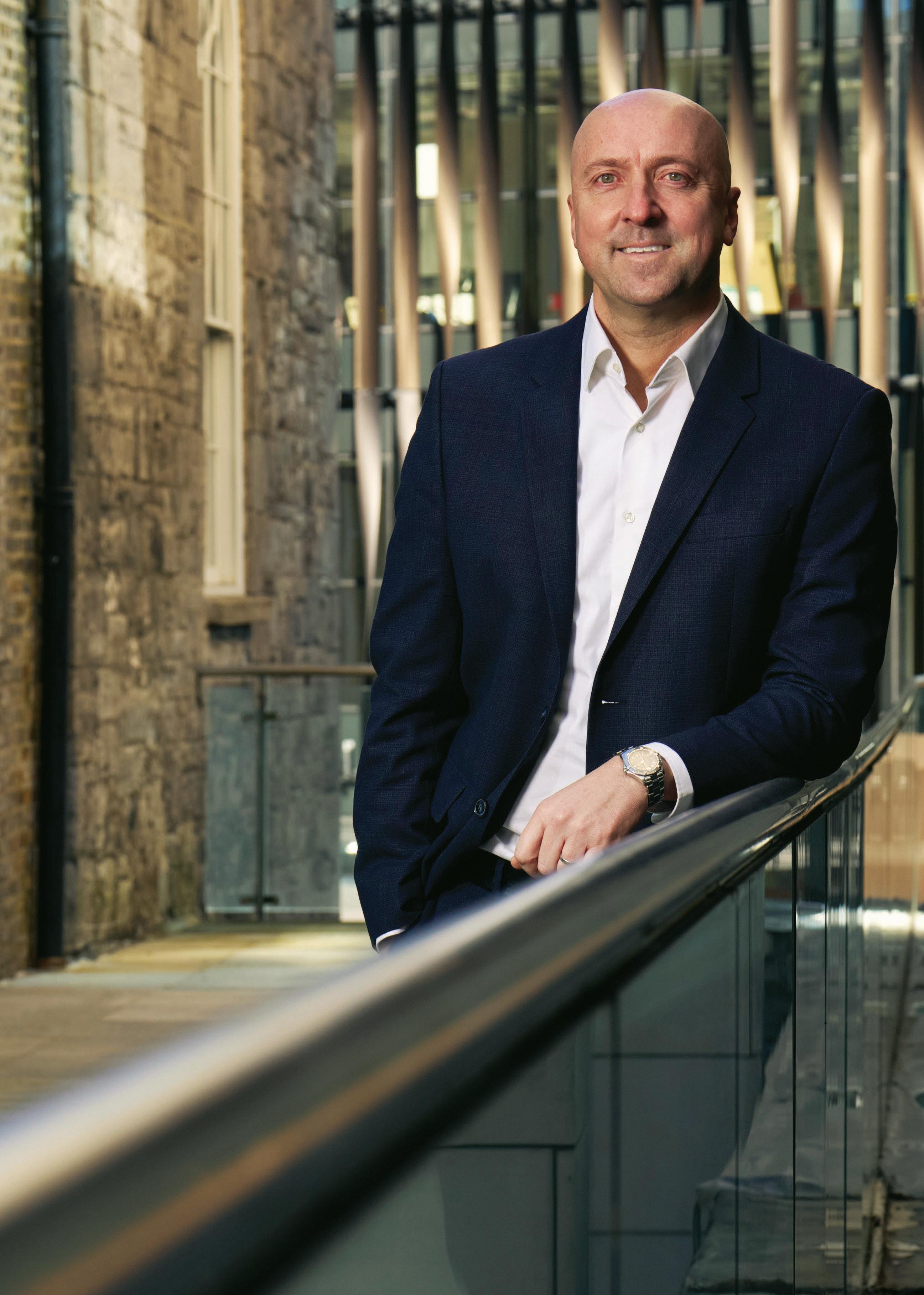
Cian Crowley, Partner and Head of SAP at EY Ireland, explains to Derek Nagle why the software should enable better decision making, not replace accountability
Can you explain what SAP is?
SAP (Systems, Applications & Products) is business software that companies use to run their businesses, mainly across finance, supply chain and operations. At its most basic level, it is an integrated Enterprise Resource Planning (ERP) system that enables companies to buy, produce and sell products and services in an optimal way and to also report on performance.
How long has SAP existed and has it developed significantly since its original inception?
SAP was founded in 1972 with a simple but powerful idea –companies should not run finance, inventory and operations in separate systems. The ERP R/3 solution became the worldwide standard for large companies. In more recent times SAP has expanded beyond ERP and provides a full business platform for reporting on people, spend and transformation management. SAP has evolved to an AI enabled suite that helps people work in simpler and faster ways with less effort.
Are there any available statistics that highlight SAP’s current usage?
Ninety-nine of the 100 largest companies in the world use SAP across a full range of industries. There are more than 400,000 SAP customers globally. Numbers shift yearly but about 80% of SAP customers are SMEs. About half of SAP customers have started their move from legacy SAP to the latest version, S/4HANA.
Does SAP have specific limitations or are there areas that need to be explored to maximise its functionality?
As with any ERP system, good quality data is essential for it to work properly. It’s extremely important for organisations to focus on their data and have adequate controls in place to protect it. SAP can be expensive to implement and run compared with less extensive solutions. I would say that if revenue is typically less than €100 million, then SAP may not be the right solution.
Can you describe your career path to date?
I studied engineering in TCD before joining a professional services firm where I was first trained on SAP. I moved to Australia where I worked with a consultancy and a small SAP start-up. Within a few years, I was running large implementation projects with global clients. After Australia, I spent five years in another firm in Dublin before moving to EY six years ago to start and run a new SAP practice.
You’re currently Tech Consulting Partner and Head of SAP at EY. What does your role entail?
We’ve grown from zero to a current team size of approximately 120 world class SAP professionals in EY Ireland. Managing our continued growth, including talent and recruitment, takes a good portion of my time. When it comes to delivering projects, I provide programme oversight and quality assurance services to our clients. It’s essential to have good governance in place to monitor and control projects and ensure safe transition to a new solution. EY is now the largest SAP practice in Ireland. I love the variety of work – each project is like a new job in many ways.
EY was a winner at the 2026 SAP Partner Awards –can you tell me about that success?
We were delighted that EY Ireland was selected as a winner at the 2026 SAP Partner Awards. The award recognises our success in delivering major enterprise transformation programmes, including large-scale implementations of S/4HANA. We currently have five SAP partners who have been largely responsible for driving our success and this award belongs to them and the team as much as anyone.
What advice would you give to businesses in relation to their use of SAP?
The value of analytics, automation and AI in SAP is directly dependent on data quality and governance. Poor data will limit the benefits, regardless of how advanced the technology is. Focus on business outcomes, not technology alone. Automation and AI can significantly improve productivity, but they work best when employees understand, trust and oversee the outcomes. SAP should enable better decision making, not replace accountability. For companies running legacy SAP ECC (ERP Central Component), I would advise them to start their upgrade journey sooner rather than later. ECC will be out of support for most in 2030 and there will be a rush for S/4HANA upgrades as this date approaches, driving up cost. Leaving it late will limit options and be more expensive.
What does the future hold for SAP?
The future of SAP is about becoming simpler, more cloud centric and more intelligent. SAP will continue to focus on S/4HANA as the digital core, with a strong push toward cloud adoption and standardisation. The aim is to make SAP easier to use, reduce manual effort and help people make better decisions faster. SAP’s future depends on helping customers modernise without disrupting their businesses and ensuring technology genuinely supports people rather than replacing them.
EY is now the largest SAP practice in Ireland. I love the variety of work – each project is like a new job in many ways”
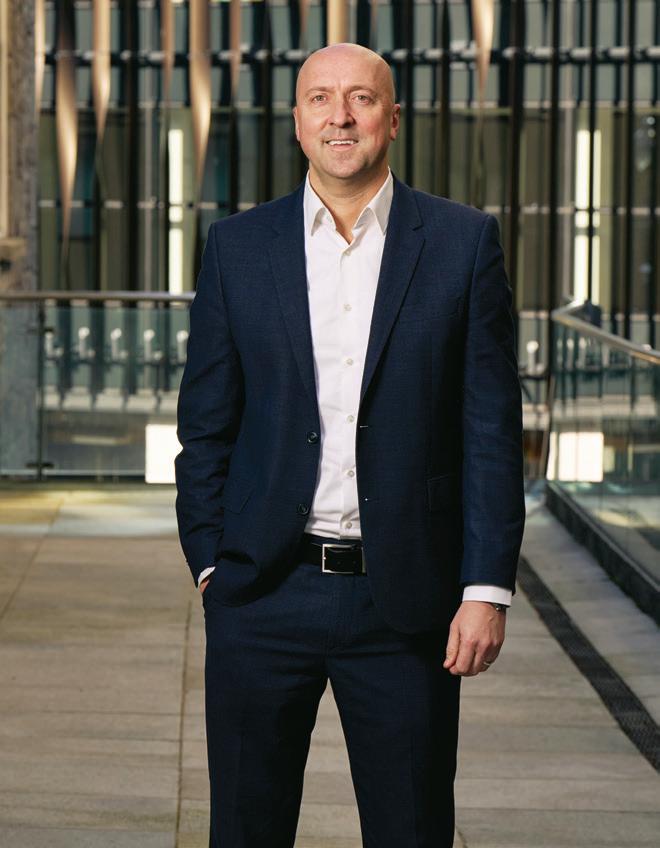
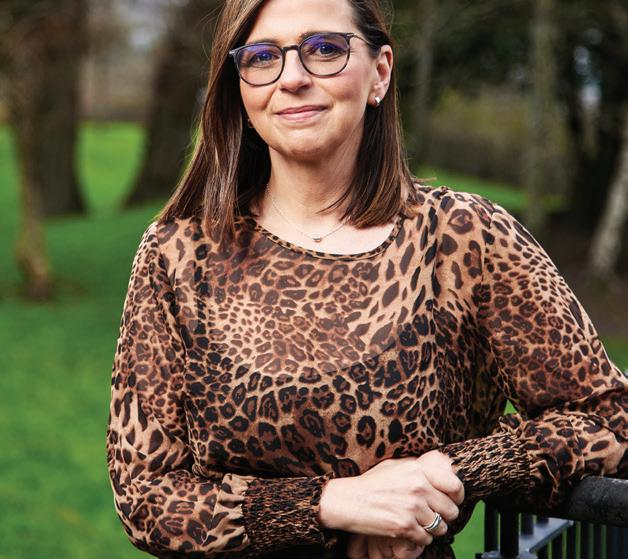
relationship building and the importance of resilience
YOU RECENTLY TOOK UP THE ROLE OF CHAIRPERSON AT THE PAKISTAN IRELAND BUSINESS COUNCIL (PIBC). WHAT LED TO THAT ROLE?
I’ve been involved in the PIBC for the last three years or so. The President of the organisation, Irfan Hameed, invited me onto the Council and that’s how I got to know people from Pakistan who are running businesses in Ireland. The aim of the organisation is to strengthen relationships between the two countries and to boost trade. In the past few years, trade between Ireland and Pakistan has gone from $200 million to nearly $500 million so progress is being made, but Pakistan is still a largely untapped market for Irish exporters.
ARE THERE PLANS AROUND HOW THAT TRADE COULD BE BOOSTED?
We have various initiatives in mind. One is to develop a relationship with the Chambers of Pakistan Council, which is our counterpart organisation in Pakistan. We’re also planning on taking a small delegation of Irish businesses to Pakistan to continue the conversation. I’m a big believer in mentorship – I think there are also opportunities to bring people across from Pakistan and provide them with an avenue for mentorship and support and then vice versa. Organising briefings or information sessions on how to enter the market on both sides would also provide practical, useful information. So far, the relationship between the two countries has grown organically so now, it’s time to be more strategic
and take it to the next level. For Irish exporters, our strengths lie in technology, fintech and professional services whereas for businesses in Pakistan, they can offer us the manufacturing capacity that Ireland lacks.
YOU’RE THE FOUNDER OF TWO COMPANIES. HOW IS BUSINESS GOING?
They’re both performing well. Canavan Byrne Management & Training Solutions is focused on HR employment law and health and safety, while CB Associates is quite specialised. It’s focused on the early years sector which is highly regulated from both a legal and funding perspective, so lots of challenges. Our role is to help with those challenges, whether it’s HR, staff investigations or contracts. We also provide training; we have an e-learning academy with about 30,000 active trainers on our books. They cover everything from fire safety, manual handling, right through to safeguarding, curriculum, managing behaviour and neurodiversity. We also support people who want to exit the sector and sell their business.
HOW DID YOU GET INTO THIS AREA?
After working in Dublin City and County Libraries for a few years, I took up a role at Barnardo’s. They were looking for someone to set up a National Children’s Resource Centre, which would incorporate research, training and information. After developing the centre from scratch, I decided to set up my own consultancy. I met my business partner, who was also ex-Barnardo’s, and we did HR governance work for the likes of Ballymun Regeneration and other projects. In 2021, I bought my partner out and since then, CB Associates has grown. Automation has changed how we operate; myself and my husband (who owns a software company) developed a software app that
looks after the management side of a childcare service. It’s like any business – you have to pivot and constantly monitor developments within your sector. Business is constantly changing, it’s a moveable feast.
WHAT ARE SOME OF THE BIGGEST ISSUES CHILDCARE PROVIDERS ARE EXPERIENCING?
Recruitment, 100%. There’s a lot of mobility in the sector, with staff moving constantly. Costs for employers are also huge. The most important aspect in childcare is providing quality early education to children, but there are factors pulling against one another. There are some good subsidised funding schemes that are great for parents, however some smaller services are suffering under that because they can’t increase their fees. It’s a difficult sector to be in.
WHAT DO YOU ATTRIBUTE YOUR SUCCESS TO?
First of all, much of my success has to be attributed to my team. I’d also put it down to resilience. I think that’s where my own strength lies. I’m in business for over 25 years and I’ve seen many recessions. It’s about turning what could be a problem into an opportunity, staying a step ahead and being the first out of the traps when it comes to providing solutions for the industry. A good example would be when Covid hit. In the December just before, we had automated all our training and moved our courses online. When the pandemic hit, the Government gave extra subsidisation for staff to be at home, but they had to engage in CPD. We were the only ones that could provide that level of training. Throughout that period, we really grew our business. We supported childcare providers in relation to their staff – there were a lot of HR issues when those services had to close. Before they reopened we spent weeks developing a toolkit around infection control and risk management, which I’d say almost every service in the country purchased. That was a real lesson for us around rising to the challenge and not allowing a crisis to topple us.
Some of our clients may present with issues and difficulties, but what they need is independent advice and support. We never judge or blame and that’s very much our ethos.”
WHAT’S THE MOST IMPORTANT LESSON YOU’VE LEARNED SO FAR?
To have integrity. In our business, we must remain neutral and non-judgemental. It’s important not to get pulled into the extreme arguments on either side. Some of our clients may present with issues and difficulties, but what they need is independent advice and support. We never judge or blame and that’s very much been our ethos from the beginning.
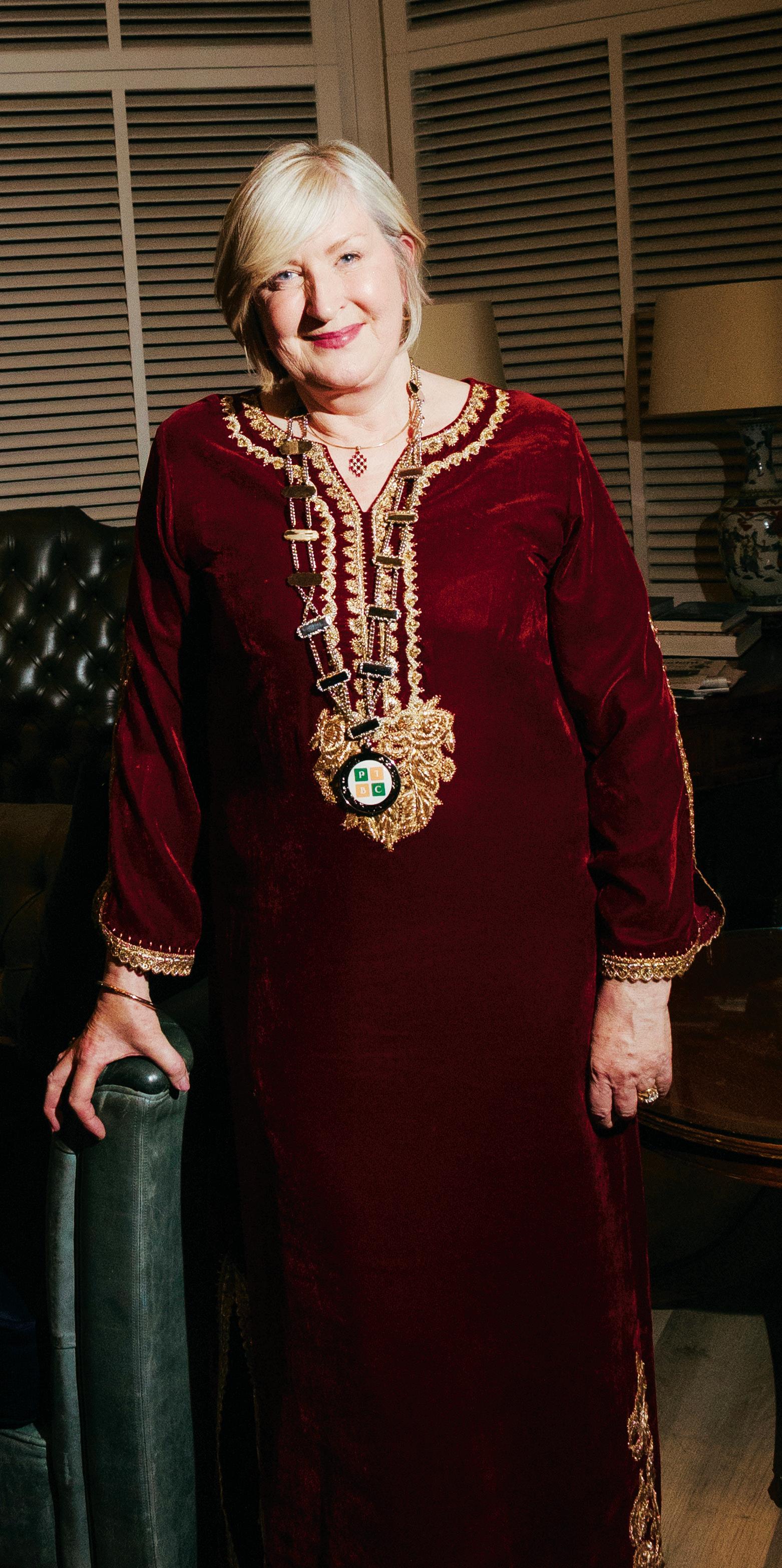
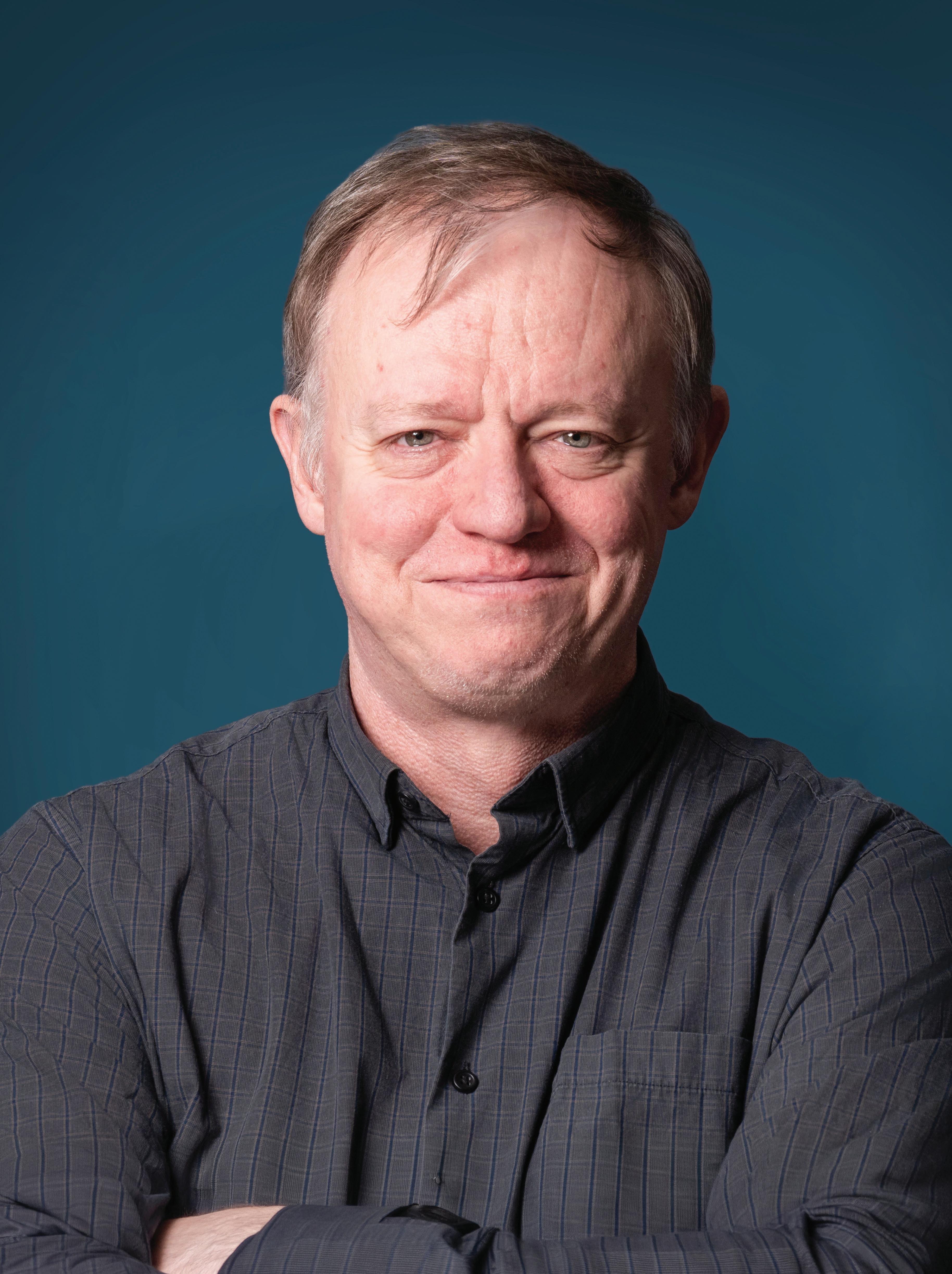
With enThriven, Duncan Austin is helping businesses drive performance while creating a happier workplace for staff
Can specific management strategies encourage a team to perform at their very best? As a recently appointed manager in a software development company, that’s the question Duncan Austin asked himself when faced with a new, complex task and a team of programmers eager to meet their objectives. His solution –breaking down the task and implementing a “swarming” strategy – is the basis for enThriven, Austin’s start-up platform that measures and improves collective intelligence and team impact. Here, he shares his journey so far, along with insights into best practice management and advice for aspiring entrepreneurs.
Deciding to switch things up and implement a new strategy could have proved disastrous for the new manager, but Austin’s gamble paid off. “The company always worked in one particular way, but I remember at the time thinking we’d never get the work done if we took that approach. Instead, I suggested the team took the most important feature and over two weeks, broke it down into really small individual tasks. It was based on this idea of swarming, or taking a coordinated approach to achieve an objective. It worked –straightaway, we were the highest performing team in the whole company.” The CEO approached Duncan to see if his strategy could be replicated.
It was all around this idea of swarming or taking a coordinated approach to achieve an objective. It worked –straightaway, we were the highest performing team in the whole company.”
“When another team tried it, they had the same results. So, it wasn’t a result of my electrifying leadership, it was down to this collective strategy of swarming over smaller tasks.” The team weren’t just getting the work done; they were also enjoying it. “The teams were buzzing with energy. My job then was to figure out if we could repackage the strategy so it could be replicated from team to team. I started studying psychology, looking into the neurology of highly effective people and this idea of collective intelligence.”
Collective intelligence is a phenomenon where a group acts as a single cognitive unit to solve problems, make decisions and carry out tasks. It’s a concept that relies on shared communication and through his strategy, that’s exactly what Austin had stumbled upon. “Everyone was communicating with everyone else. It wasn’t about having the most brilliant people on the team – it was about how the team itself worked together. Interestingly, the most senior team in the company turned out to be the lowest performing one. Their manager was great and the team really liked him – so much so that they would travel across the country to visit him and hang out – but all communication in the team went through him. Most of the team never spoke to each other and that's the opposite of collective intelligence.” To encourage collective intelligence, you need

The impact of mass layoffs was huge, he says. “I know people who were hospitalised because of the impact it had on them. They were just broken. After working out these methodologies and setting up enThriven, I could see how churning people out destroys performance, which in turn hurts the company. People are also being burnt out, they’re going home and they’re highly stressed with their families. That impacts how they raise their children. You can see the knock-on effects.” By changing up the way we work, says Austin, the workplace could become a place that people love. “It’s not a difficult thing to achieve. You can easily cultivate an environment that people look forward to being in. In terms of the human cost, not implementing this kind of thinking makes no sense.”
Ultimately, we want to change mindsets around how people approach their work and also how companies approach their people. It's about communicating to employers that if you value your staff, you'll reap the rewards and get more out of them.”
three things – accurate information, a highly interconnected system and the ability to self-adapt.
“That’s pretty much how all intelligence works. It's how our brains work, it's how hives of bees can make intelligent decisions on the best locations, it's how AI works. When the team swarmed over the task, they became highly interconnected because they had to communicate with each other. By letting people pick up their own tasks, they immediately self-adapted.” To replicate the process, Austin had to measure it. He developed a questionnaire that measured the impact each person had on the next. He also took a deep dive into the research around collective intelligence, which stood him in good stead when roles in the tech industry began to look uncertain.
“ALMOST
In the era of tech layoffs, Austin found himself unemployed. He took his idea and started to gauge how his peers felt about it. “It started to catch on. People were getting really excited about it and step by step, it grew. It was like it took hold of me and dragged me along with it.” If an employee gets to do something they love, their performance shoots up. That’s the basis of enThriven – giving teams the tools they need to surface the data that will help them drive performance. That data enables them to make their own decisions around how they work and ultimately, get to a point where they’re doing the work that’s ideally suited to them. “Then we take that to a more meta level and help the company identify the teams that are working well with each other and the ones that aren't. Instead of having a top-down structure, we encourage the whole organisation to adapt naturally, to structure itself. Almost like a gardener rather than an architect.”
With customers coming on board, the business has started to take off. Austin’s participation in Enterprise Ireland's New Frontiers programme has helped boost that progression. “Anyone who has a business idea, absolutely apply for New Frontiers. It's transformative. I got the opportunity to speak with and get advice from industry leaders and people that have exited companies for hundreds of millions of euro. There was so much practical information too on running a business, I was clueless before but now I'm in a really good position. Ireland has fantastic support for entrepreneurs. I’m from South Africa and there’s nowhere near the supports there that you have in Ireland.”
The enThriven platform works with businesses across all industries. “Because this is basic neurology and psychology, it pretty much works in any environment. And any work environment where you can get people working in teams rather than individually, they're going to do much better. My experience is working in Software as a Service (SaaS) companies and that’s what we’re focusing on at the moment, along with medical devices. I think that’s where collective intelligence can be especially powerful because you have teams working together to solve difficult problems and build something. This year, the plan is to work with a number of early-adopter companies as we build out more enterprise features such as decision-making and work prioritisation. We also want to record and publish digital training for companies to use. Ultimately, we want to change mindsets around how people approach their work and how companies approach their people. It's about communicating to employers that if you value your staff, you'll reap the rewards and get more out of them.”
Children’s
The day we sold Oncomark, we set up OncoAssure. The same team is there with a view to developing similar tests in other cancers outside of breast cancer”
From a small lab in UCD to a major partnership in New York, DES O’LEARY shares the ambitious clinical and commercial roadmap for his medtech company, OncoAssure
Some of the most innovative companies do what they do quietly. Tucked away in university labs and enterprise hubs, their specialised teams build products that transform their industries, without much media fanfare.
One such company is Dublin-based OncoAssure. Headquartered at UCD’s start-up hub NovaUCD, this medtech firm is pioneering precision oncology diagnostics with a very specific goal – determining exactly how aggressively a cancer will behave.
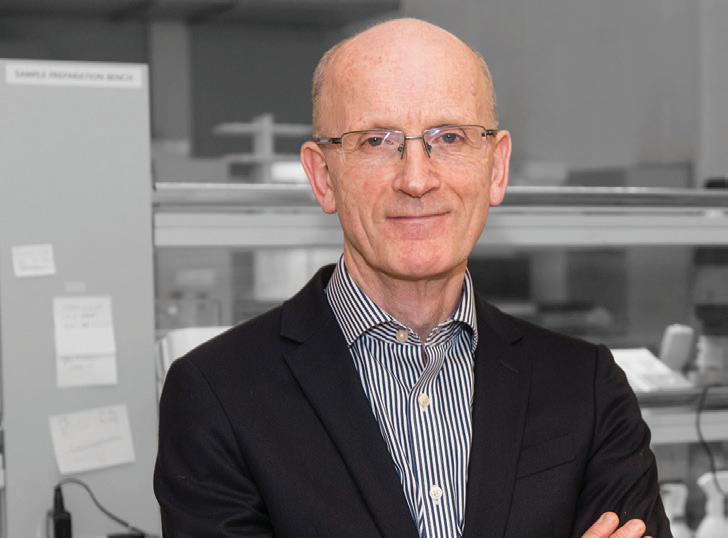


Co-founded in 2021 by CEO Des O’Leary and Professor William Gallagher, OncoAssure emerged immediately after the team sold their previous medtech spin-out, OncoMark, to US giant Cepheid. True to their entrepreneurial spirit, they didn’t stop there. “The day we sold Oncomark, we set up OncoAssure,” O’Leary recalls. “The same team is there with a view to developing similar tests in other cancers outside of breast cancer.”
THE OVERTREATMENT DILEMMA
The company’s first major breakthrough is a next-generation prognostic test for prostate cancer. Launched in the US market in April 2025, the test is designed for men diagnosed with localised prostate cancer. Unlike a standard diagnostic test that simply confirms the presence of the disease, OncoAssure’s technology looks at its future behaviour.
By identifying specific “Master Driver” genes and using existing clinical metrics like the CAPRA (Cancer of the Prostate Risk Assessment) score, the test provides important prognostic information at key clinical decision points, such as post-biopsy and post-surgery.
“So the sample we test is after the patient has been diagnosed with prostate cancer,” O’Leary explains. “It’s a prognostic test. What we’re looking at is whether the cancer is likely to develop or whether it’s slowly growing.”
Prostate cancer overtreatment is well documented. When a tumour is growing very slowly, it often requires monitoring through an approach called active surveillance rather than immediate, aggressive intervention.
“The big problem, particularly with cancers like prostate cancer, is that the option to treat can be taken when it’s not really necessary,” says O’Leary. “That’s because there aren’t accurate risk stratification tools available.”
While treatment is understandably viewed as the safe route, it can carry life-altering side effects, such as erectile dysfunction. OncoAssure’s test aims to spare men from unnecessary interventions by giving clinicians a clearer, data-backed picture of the disease’s trajectory.
A TIER-ONE TRANSATLANTIC PARTNERSHIP
To further validate its technology, OncoAssure recently announced a major research collaboration agreement with the Icahn School of Medicine at Mount Sinai in New York, which is globally recognised for biomedical research and patient care.
The new validation study will be led by Dr. Ash Tewari, a world-renowned urologist and prostate cancer specialist. His team will analyse prostate biopsy tissue from men with lowto intermediate-risk prostate cancer, assessing the test’s value beyond routinely used clinical and pathological information.
Securing a partnership with the New York institution is a major milestone for OncoAssure. “It’s a tier-one cancer centre and it’s very challenging to get engagements with such high-profile cancer centres,” O’Leary notes. “To do a collaborative study with such a prestigious organisation and with such a senior urologist speaks a lot for the product and its potential.”
With the product fully developed, the focus now is on robust clinical validation. “The product is fixed. We’re just generating more evidence of its effectiveness,” he adds.
Despite having a highly experienced product development team – which includes Chief Medical Officer Professor John Crown – operating a medtech start-up in Ireland comes with distinct hurdles. O’Leary is a veteran of the sector; the OncoMark sale was his third successful exit, having previously been part of the management team at Biotrin International when it was acquired in 2008.
O’Leary’s track record gives OncoAssure an advantage when approaching investors, helping them secure backing from two angel investment groups, private industry figures
The big problem, particularly with cancers like prostate cancer, is that the option to treat can be taken when it's not really necessary”
and Enterprise Ireland. However, according to O’Leary, the broader funding environment for Irish start-ups remains challenging.
“One of the disadvantages we have as an environment for start-ups is there’s a limited amount of funds out there,” he says. “There’s plenty of start-ups competing for them, so it’s tough. Whereas in the US, they just invest so much money into start-ups and that’s how they create so many big, successful start-ups. There’s going to have to be much more focus on start-ups now with the way trade is going because Europe is way behind.”
To bridge that gap and push their products over the finish line, OncoAssure is actively looking for new capital. “We’re fundraising at the moment,” O’Leary confirms. “We’re raising funds to complete the commercial rollout of the prostate test in the US and to complete the development of a new melanoma test.”
Looking ahead, OncoAssure’s primary focus remains the billion-dollar US market. While they plan to launch a kit-based version of the test in Europe over the medium term, the US is where the immediate commercial scaling will happen.
By the end of 2026, O’Leary’s goal is “to have generated significant sales revenues in the US that would essentially prove the model.”
But the company isn’t stopping at prostate cancer. The intellectual property they create – identifying novel and unique sets of genes for different cancers – is highly adaptable. A melanoma test is already in the pipeline with a target launch of early 2027. The team has also identified opportunities to develop tests for esophageal, squamous cell carcinoma and colorectal cancers.
Ultimately, the long-term goal is to build a robust portfolio of high-value cancer tests. However, given the immense scale of global medical markets, O’Leary remains pragmatic about the company’s final destination.
“Given the size of the market, we would still probably see an exit in a few years’ time... because it’s hard to penetrate these big medical markets from a small base, a company like us,” he admits. Until then, it’s likely that this quiet medtech powerhouse in Dublin will continue its work in bringing greater precision to cancer care worldwide.
Managing Director SUSAN BRADY on why organisations choose to partner with eir business
IS
AND WHAT DOES IT DO?
eir business is the B2B division of the eir Group, providing secure, managed connectivity and technology solutions to organisations across Ireland. eir business brings together deep expertise in telecoms and IT to support small and medium enterprises, large organisations and public sector bodies as they navigate digital change.
At its core, our job is to make technology work in a practical, reliable way. We bring together connectivity, mobile, cloud, cybersecurity, AI enabled workplace solutions and managed services, backed by the scale of the eir Group and delivered by local teams and partners. That combination allows us to support everything from critical infrastructure to the everyday systems organisations rely on, with real people, providing real solutions.



























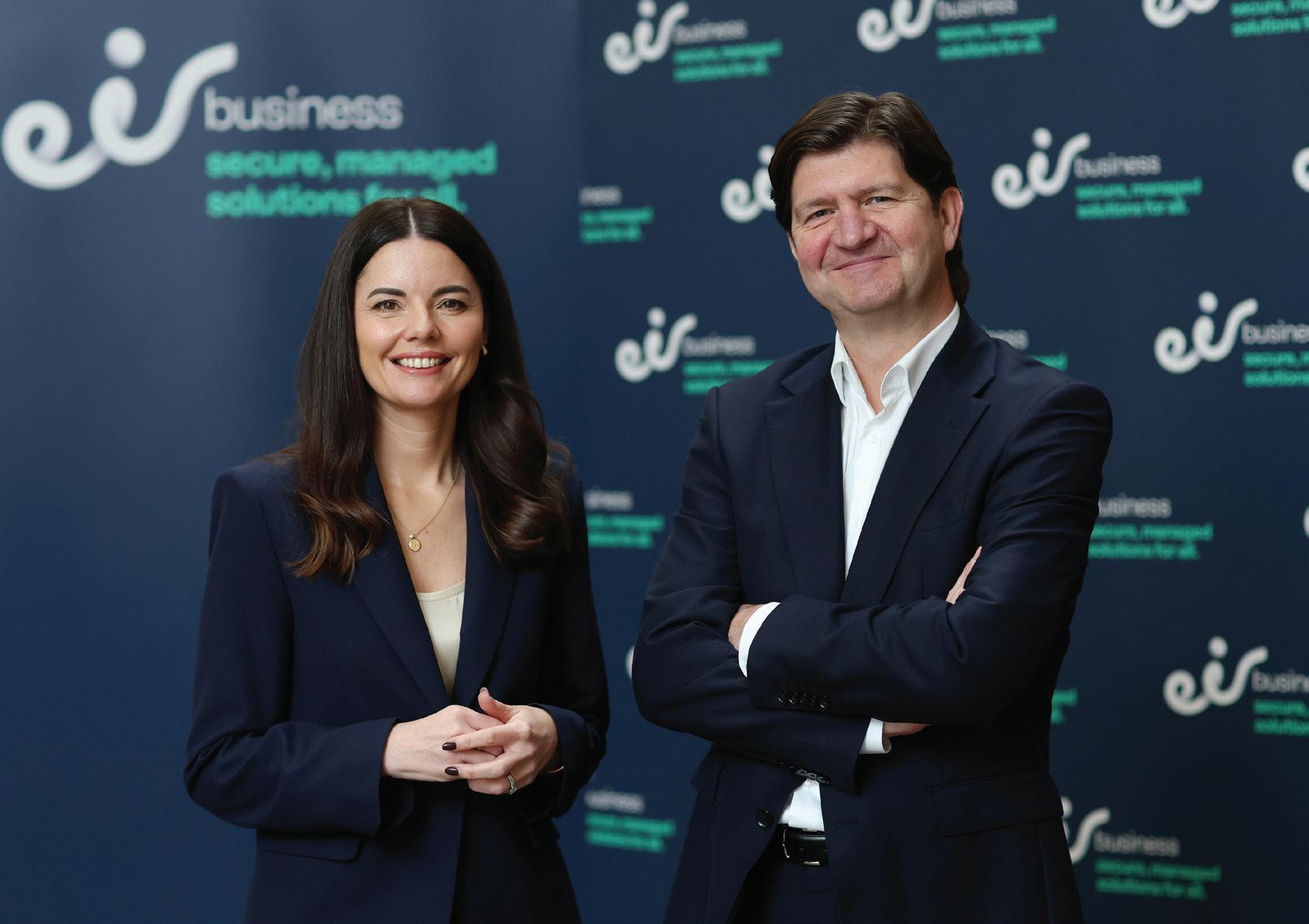
WHO ARE YOUR CUSTOMERS AND WHAT ARE THEY ASKING FOR RIGHT NOW?
We work with organisations across every sector of the Irish economy and the consistent theme we hear is a need for confidence, particularly around security, resilience and trust. Security sits at the centre of every conversation. Whether organisations are modernising connectivity, changing their infrastructure model or adopting AI, they need expert support to ensure solutions are secure by design and remain robust over time. Good AI starts with good data, which makes getting the foundations right more important than ever.
With technology becoming more complex and interconnected, business leaders need partners they can rely on. That responsibility extends to all of us, to provide transparent, well governed and secure solutions, delivered by local teams and trusted partners who understand the Irish market.
HOW DOES EIR BUSINESS SUPPORT BUSINESS CUSTOMERS?
We provide end to end solutions that combine connectivity with cloud, cybersecurity, managed IT, workplace services and mobile, all supported by 24/7 Irish based expertise. What customers are looking for is technology that
works, integrates properly and can be managed day to day without unnecessary complexity. By bringing these services together and standing behind them with a single support structure, we help organisations reduce risk, improve resilience and focus on running their business.
HOW CAN BROADBAND CONNECTION HELP BUSINESSES GROW?
High quality broadband is now essential infrastructure. It supports productivity, remote and hybrid working, cloud services, customer engagement and innovation. eir operates Ireland’s largest fibre network, now available to more than 1.5 million homes and businesses. Continued investment in fibre and 5G means organisations can access reliable, high capacity connectivity that will support them not just today, but as their needs grow and change over time.
HOW IMPORTANT IS CUSTOMER SERVICE IN A B2B ENVIRONMENT?
It’s absolutely critical. When technology doesn’t work, the impact on a business can be immediate and significant. That’s why we place a strong emphasis on proactive support, clear communication and fast resolution, backed by dedicated account teams and 24/7 assistance. Our aim is
IN A COMPETITIVE MARKET, HOW DOES EIR BUSINESS DIFFERENTIATE ITSELF?
Our differentiation comes from scale, integration and trust. We combine Ireland’s largest fixed and mobile networks with cloud, cybersecurity and managed services expertise, all delivered locally. No other provider can offer that breadth of capability under one roof.
Just as importantly, we’re focused on partnership. Digital transformation isn’t a one off project; it’s an ongoing journey. Customers want partners who understand their business, who are accountable and who will be there as their needs evolve. eir business is the only Microsoft Azure Expert MSP who is also an ExpressRoute provider, highlighting our combined, technical capability across connectivity and cloud.
WHAT ARE YOUR PRIORITIES FOR EIR BUSINESS OVER THE NEXT YEAR?
Our priorities are very focused. We will continue to invest in secure connectivity and next‑generation technology services, particularly across cybersecurity, cloud and AI. We’re also working to simplify how customers engage with us, making it easier to do business with eir business and ensuring we continue to earn trust through reliability and delivery. Ultimately, our role is to bring confidence to the market, helping organisations stay secure, compliant and prepared for what comes next, while supporting Ireland’s wider digital resilience.
We will continue to invest in secure connectivity and next‑generation technology services, particularly across cybersecurity, cloud and AI." to take stress and uncertainty out of technology management, so businesses can focus on their people, their customers and their growth.




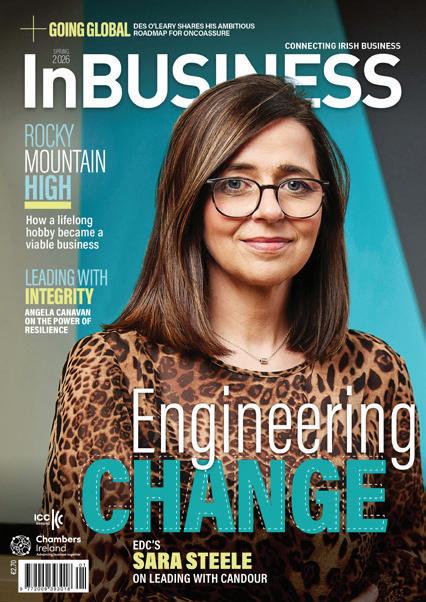




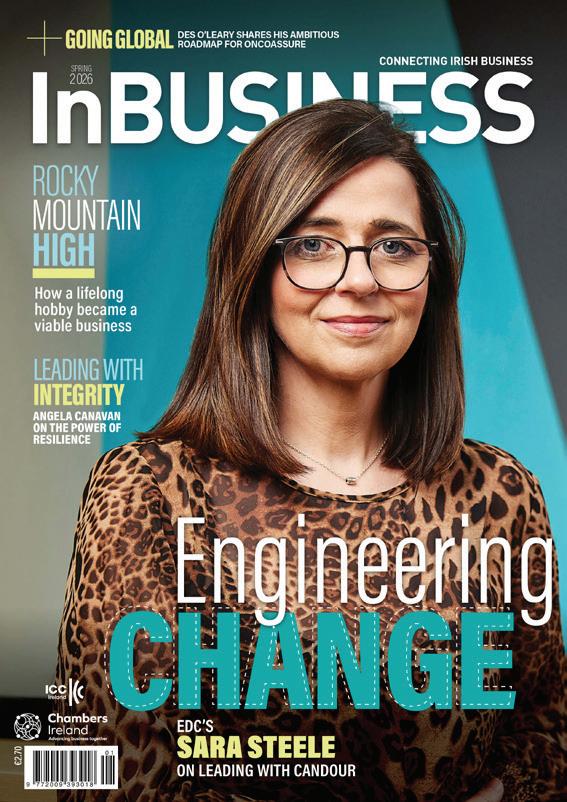








CHAMBER COMMENT
“Choosing the Limerick or Love Tipperary Gift Card has a real, measurable impact on our local economies. If just 10% of employees used the full allowance, €24 million would stay local each year and with zero commission for businesses, supporting local has never been easier.”
Michelle Aylward, CEO, County Tipperary Chamber
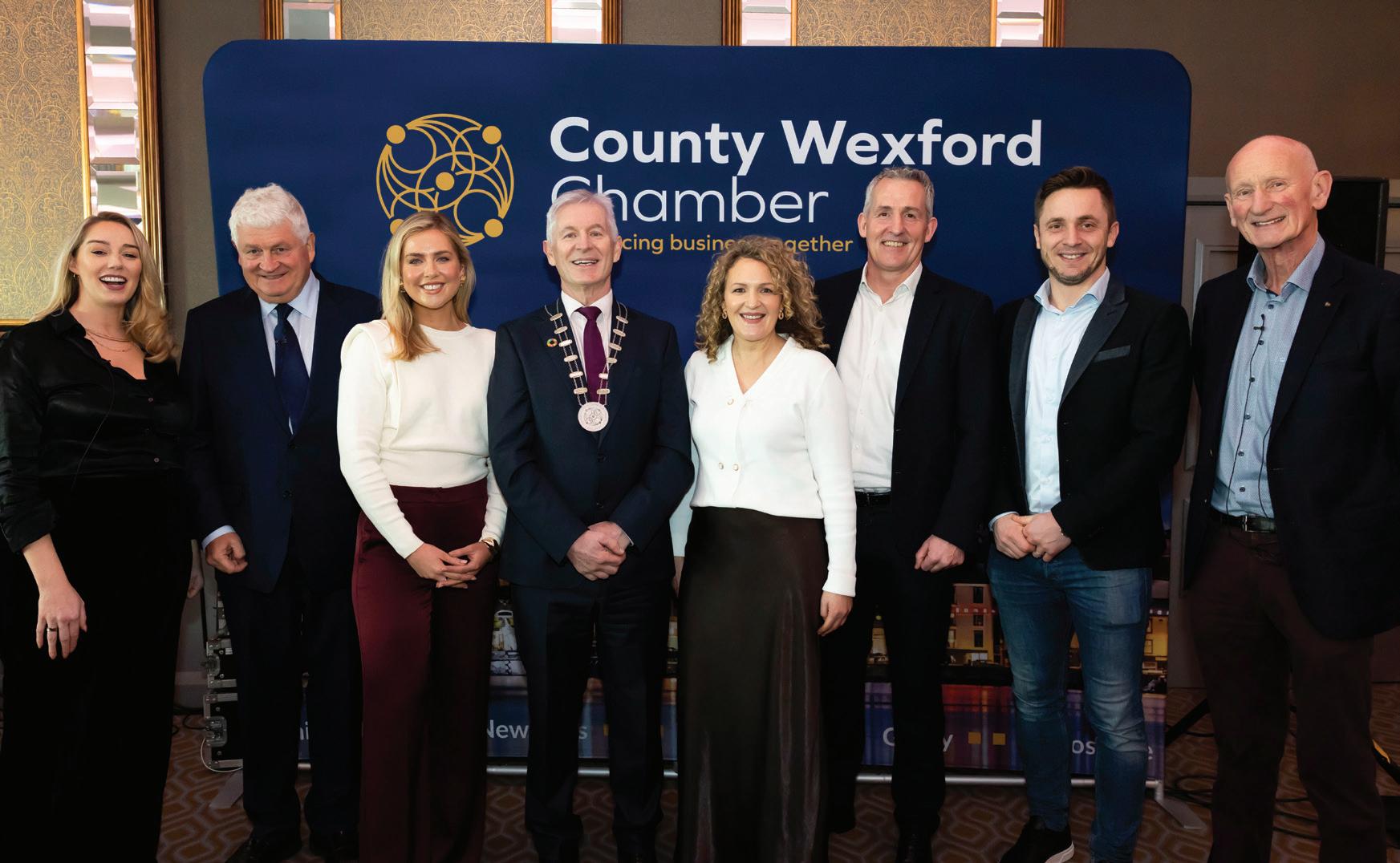
More than 300 business leaders gathered for the County Wexford Chamber President’s Lunch in February. With MC Teresanne O’Reilly in the chair, the gathering featured contributions from Denis O’Brien, hurling manager Brian Cody, former Premier League striker Kevin Doyle and entrepreneur Aimee Connolly, CEO of Sculpted by Aimee. Denis O’Brien highlighted Wexford’s opportunity in offshore renewable energy, while Brian Cody focused on the foundations of a winning culture. Kevin Doyle added that true high performance depends on discipline and the ability to bounce back from setbacks. Closing the session, Aimee Connolly highlighted the importance of deep understanding of the customer and making confident, sometimes uncomfortable, leadership decisions in a fast-moving market.
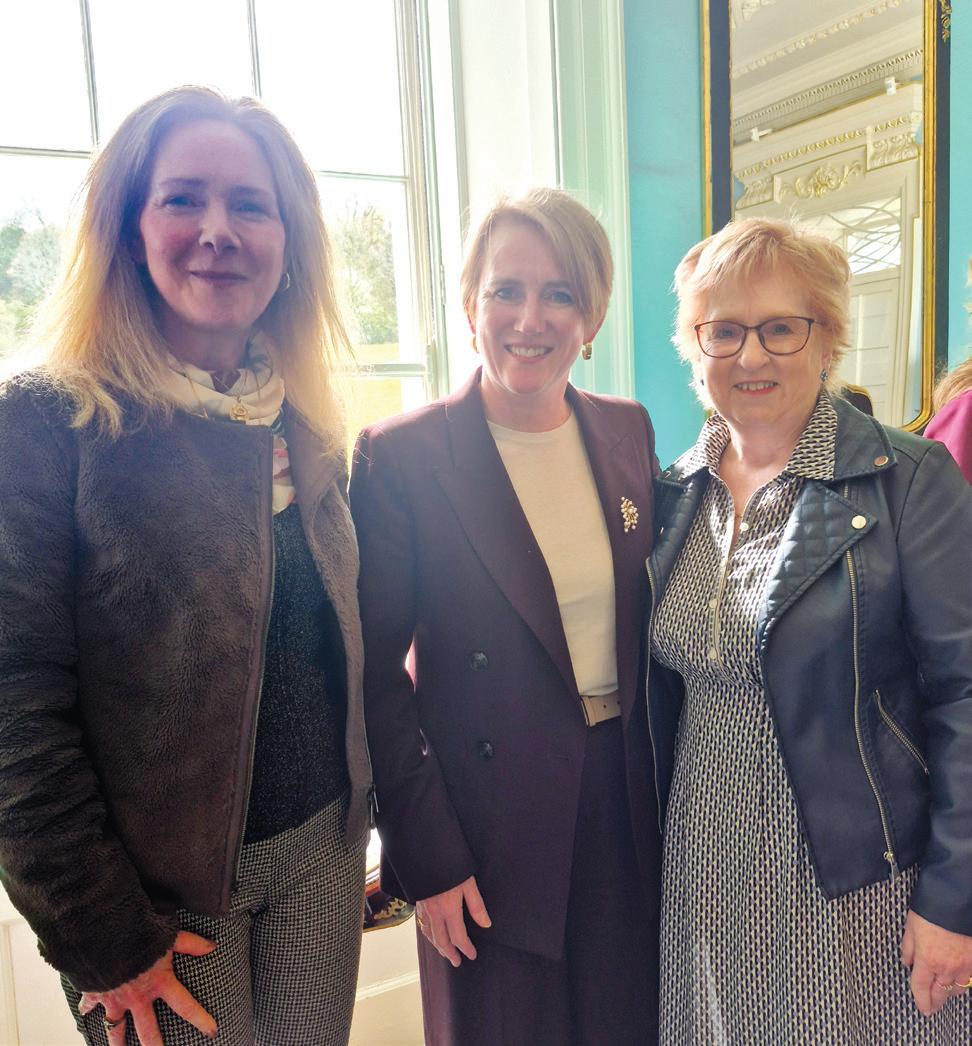
Kilkenny Chamber’s incoming President Claire McInerney Brown and Business Development Officer Róisín McQuillan attended an event organised by Propelor in the fabulous surroundings of Mount Congreve. There, they heard British Ambassador Kara Owen speak about her journey to her current role and what she sees as the important developments of the British-Irish relationship.
Limerick Chamber has announced the appointment of Donnacha Hurley as its new CEO. Donnacha brings extensive leadership experience and a strong track record of business development in the Mid-West. He most recently served as General Manager of the Absolute Hotel in Limerick, a role he held for the past 17 years. A long-standing contributor to Limerick Chamber, Mr Hurley previously served on its board, chaired the policy committee and held the role of President in 2021/2022. He is also active in a number of non-executive roles in the Mid-West, including as a board member of Discover Limerick DAC, the wholly owned subsidiary of Limerick City and County Council and Market Trustee with Limerick Market Trustees. Commenting on his appointment, Donnacha said, “It is a privilege to take on the role of CEO at Limerick Chamber at such an important time for the region. Our businesses are ambitious, innovative and ready to grow and the Chamber must match that energy with strong advocacy and practical support. I am looking forward to working closely with our members and team to drive investment, strengthen our competitiveness and ensure Limerick continues to thrive as a place to do business.”
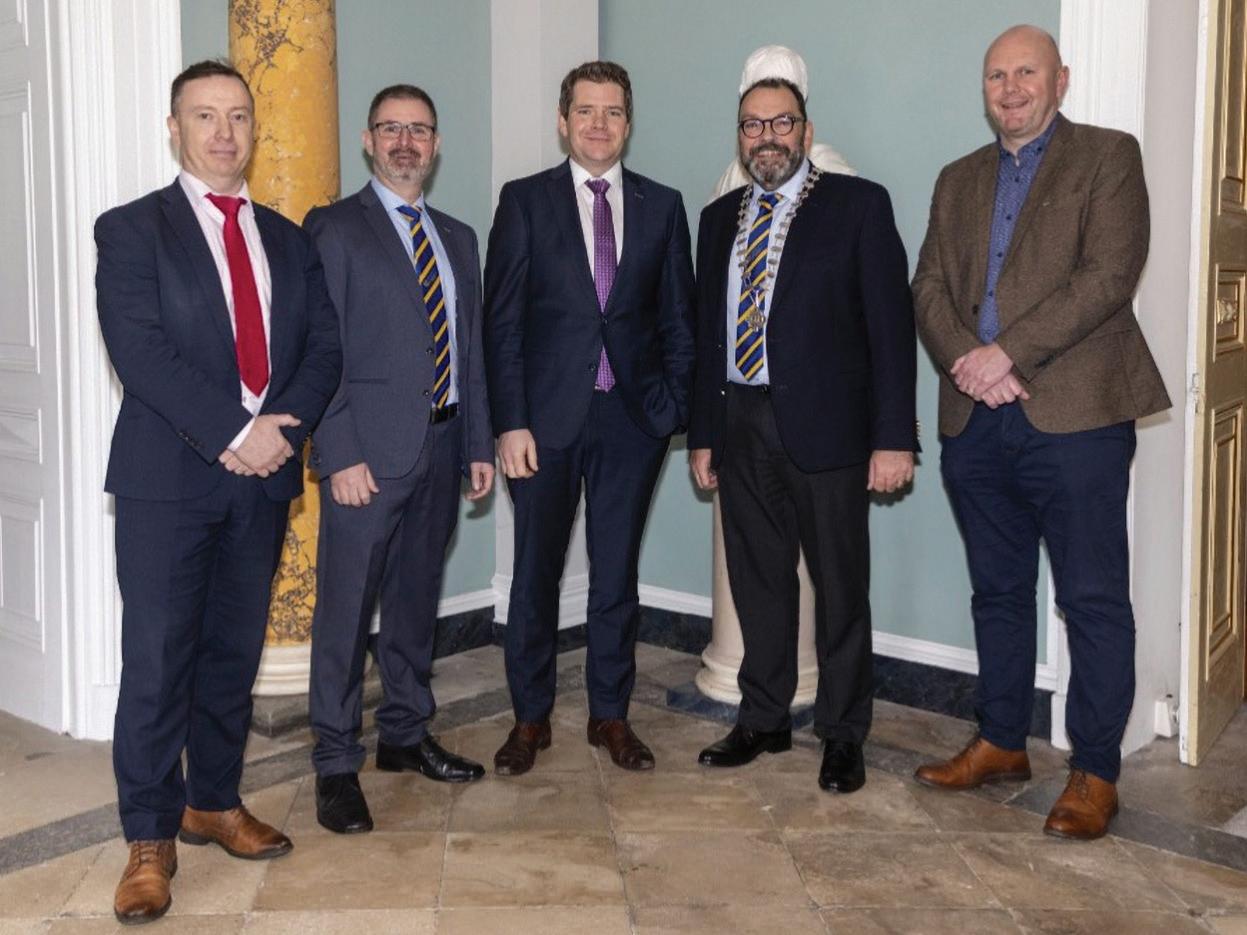
Cobh & Harbour Chamber hosted its first business event of 2026, in association with the Port of Cork, in Fota House, Arboretum and Gardens. The event brought together over 80 business, civic and community leaders and was attended by Minister for Enterprise, Tourism and Employment, Peter Burke TD. The Minister engaged directly with business leaders, highlighting the need for strategic investment to unlock the economic potential of towns like Cobh. Chamber President Colin Morehead outlined the Chamber’s priorities for 2026, focusing on three areas – delivery of the Cobh Public Realm Enhancement Plan, activation of the Cork Harbour Tourism Strategy and development of public water access and a future marina for the town. The event also featured the Chamber’s Member Spotlight, with Alan O’Callaghan, General Manager of Spike Island, showcasing the success of the visitor attraction and its role in raising Cobh’s profile as a tourism destination.
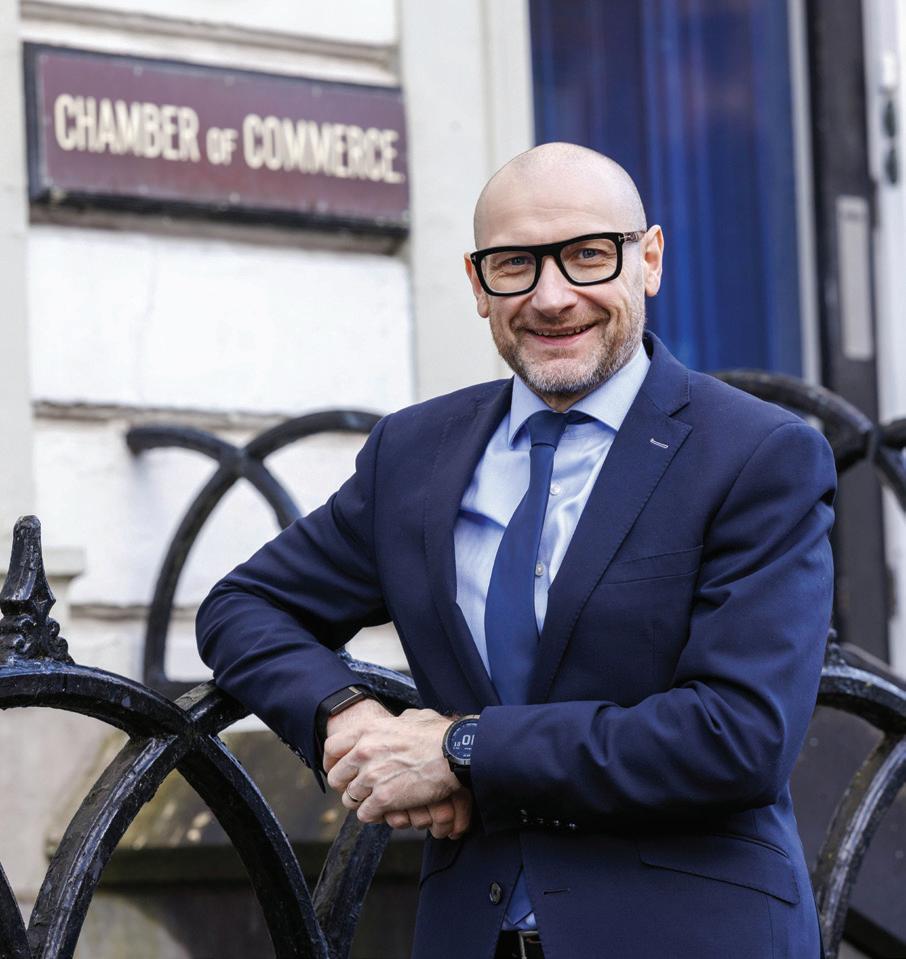
Drogheda and District Chamber opened up its second season of “Secret to Success” in association with Louth Local Enterprise Office. Panel members including Richard Young from Forte Healthcare, Lyndsey Kenny from Pet Bliss and Ronan Whitty from The Mill, gave a wonderful insight into their “secrets” to make it to the top and survive there. Nikki Campbell from the LEO spoke about the array of opportunities they have for those in the business sector. Hosted in Scholars Hotel and organised as part of Enterprise Week, the morning was a real celebration of what’s so vibrant about Drogheda and the region – people prepared to work hard and follow through on their goals. “These mornings are incredibly important and stand at the heart of what we do. I know business was done in the minutes after the gathering and we can’t wait for the next one,” said Chamber CEO, Hubert Murphy.
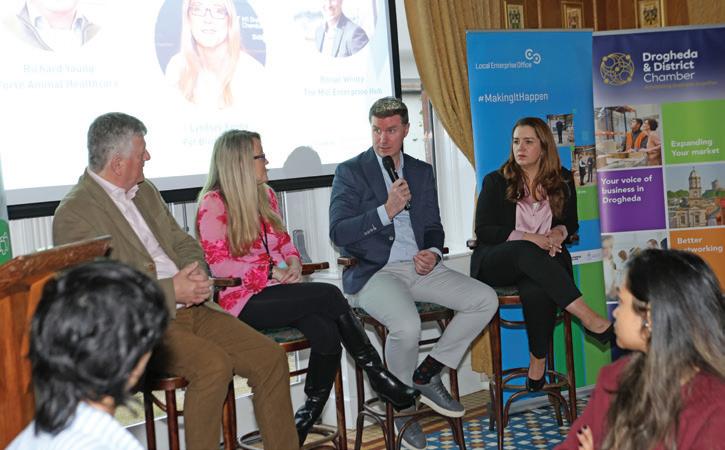
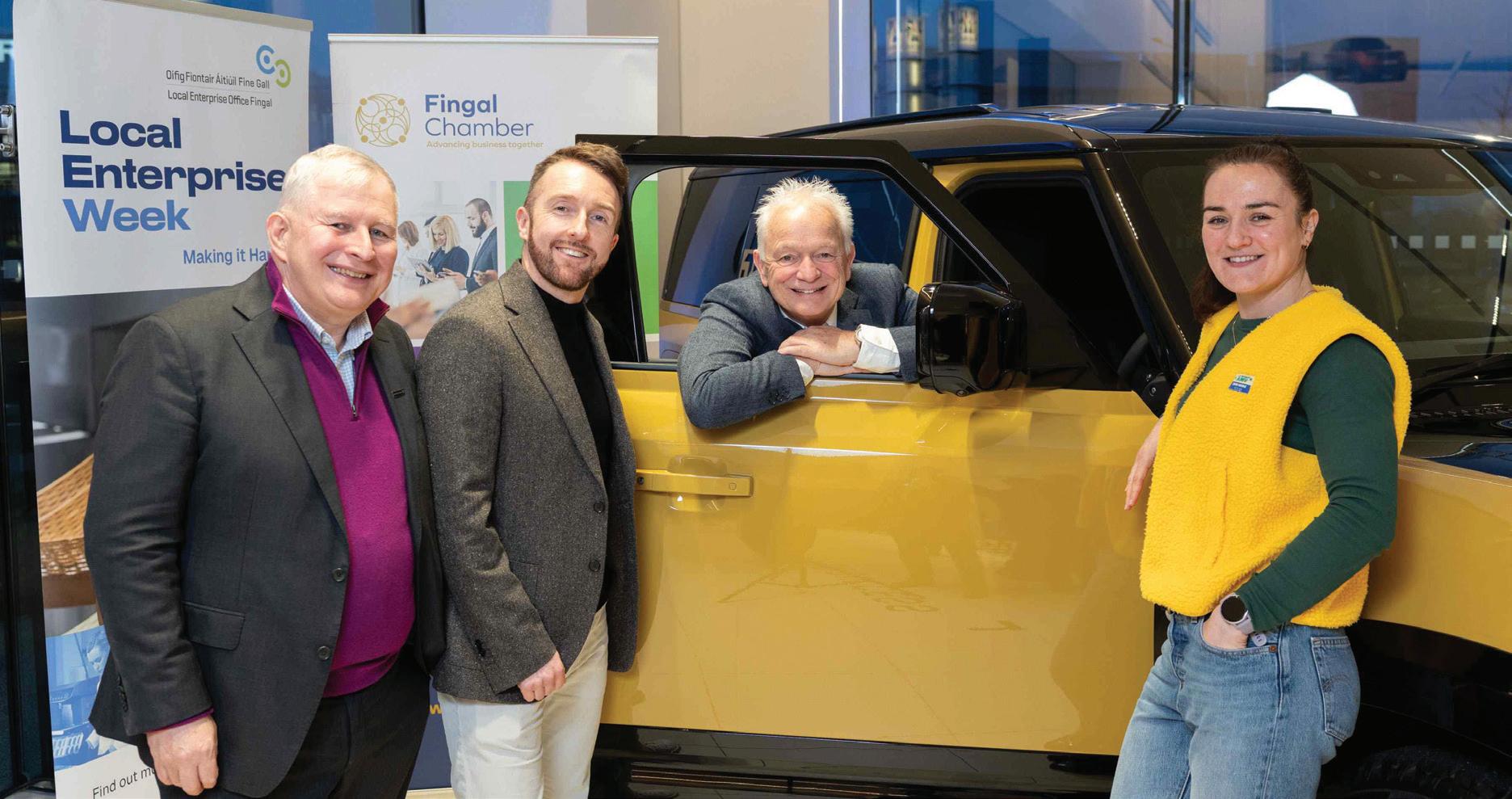
Fingal Chamber brought together more than 120 business leaders, entrepreneurs and policymakers for “The Drive for Success” during Local Enterprise Week 2026, hosted in partnership with the Joe Duffy Group at the Joe Duffy Land Rover showroom in Airside Retail Park, Swords. Olympic boxing champion Kellie Harrington headlined the event, sharing lessons from elite sport on resilience, mindset and the value of consistent improvement. She joined a panel of senior business leaders including Gavin Hydes, Chief Executive of the Joe Duffy Group; Niall Horgan, Co-Founder of Gym+Coffee; and Eddie Wilson, Chief Executive of Ryanair. The discussion was moderated by entrepreneur and podcast host Gary Fox. The evening also featured an exhibition from six emerging Fingal companies – Anyscor, Climate Matters, Cozmotec, Jack Murphy Clothing, Manna Air Delivery and Now Coco –offering attendees the chance to connect with innovative local enterprises.
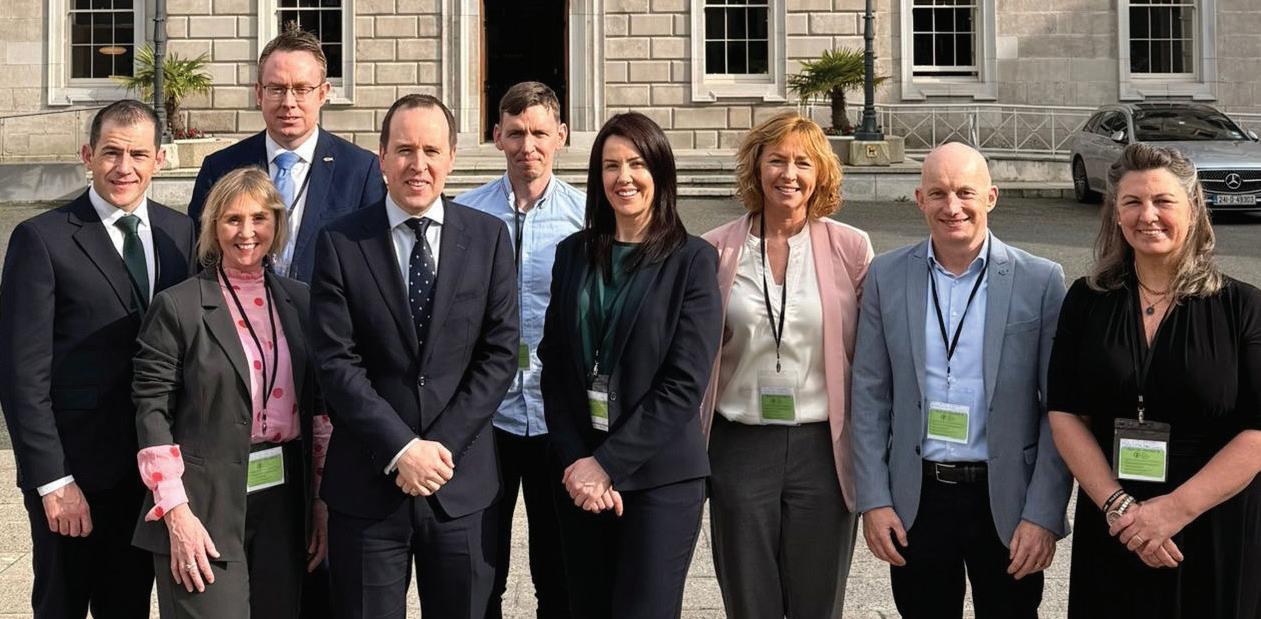
Dungarvan & West Waterford Chamber recently led a representative business delegation to Leinster House for a focused engagement with Minister of State John Cummins. The delegation reflected a broad cross-section of the local economy and highlighted key issues including housing and infrastructure constraints, workforce and skills challenges, rising costs and the strategic opportunity for Waterford in offshore wind energy. The group also engaged with Tánaiste Simon Harris, with both representatives demonstrating strong engagement. The visit forms part of the Chamber’s ongoing work to ensure the voice of regional business is clearly represented at a national level.
Kilkenny Chamber’s President Anne Barber hosted an International Women’s Day event with Senator Evanne Ní Chuilinn as the guest speaker. Over 40 people attended a lunch in the Pembroke Kilkenny Hotel and heard from the Senator about her interest in young girls continuing in sport and her support of the Irish language.
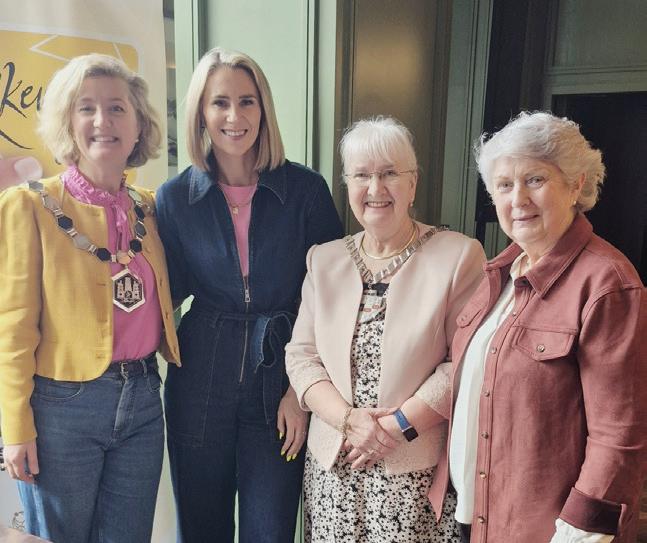
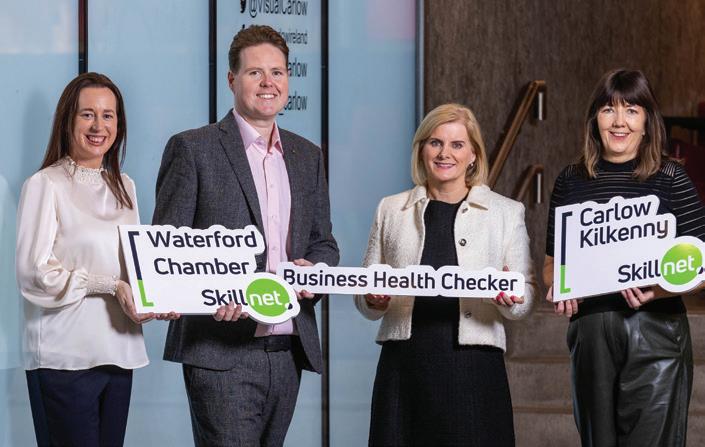
Waterford Chamber Skillnet and Carlow Kilkenny Skillnet have launched the Business Health Checker, a new collaborative programme designed to help businesses assess, understand and strengthen their overall performance through a structured, data-driven approach. The programme provides participating businesses with access to a bespoke digital portal that evaluates their organisation’s health across a range of key business indicators. Once an initial assessment is complete, businesses are supported by their local Skillnet Business Network team, who guide them through the results in a practical and confidential setting. Crucially, businesses can then work directly with Carlow Kilkenny Skillnet or Waterford Chamber Skillnet to address identified gaps through targeted, subsidised training and development programmes, ensuring learning interventions are closely aligned with real business needs.
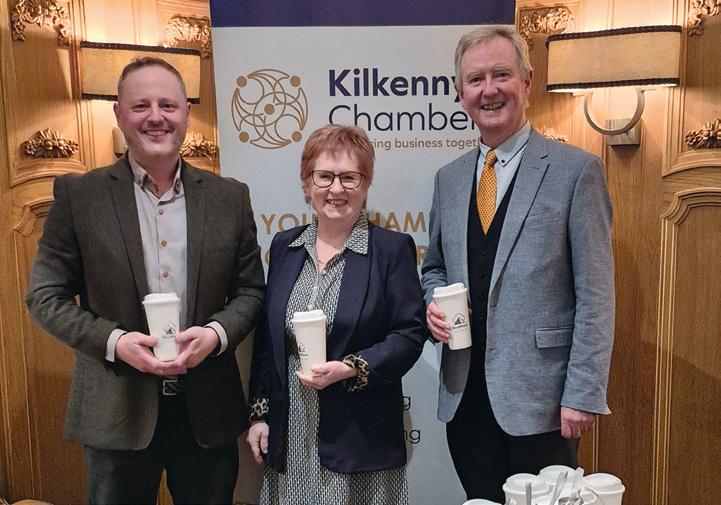
Kilkenny Chamber’s February Chamber Chat saw Stephen Dwyer from Cloudmount alert our members to the incoming EU AI Act, which will take full effect in August 2026. Stephen outlined what all companies who use AI need to know about the management of it in their own businesses so they can comply with the Act.
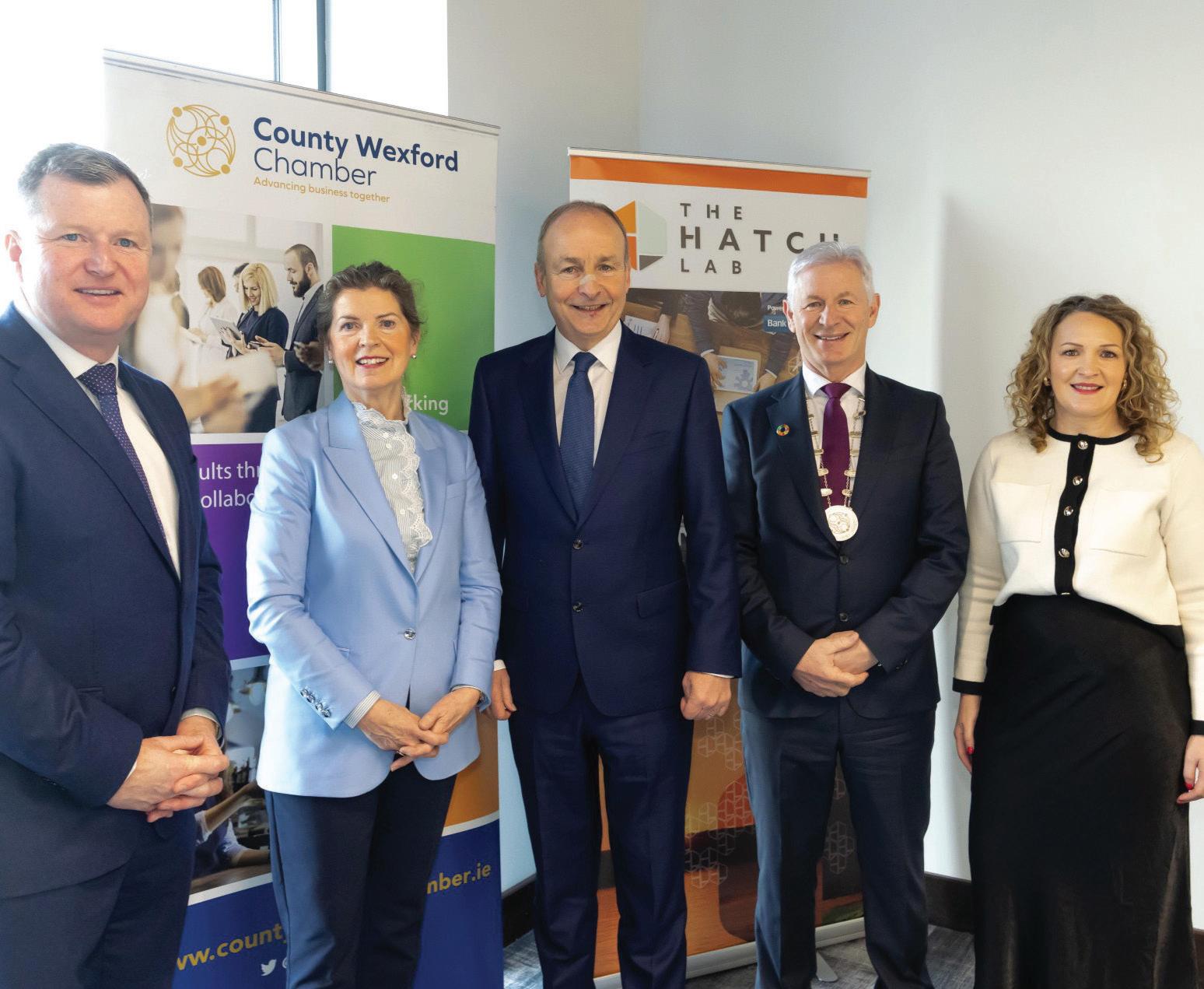
County Wexford Chamber was honoured to meet An Taoiseach, Micheál Martin, in Gorey in January, where he met with CEO Paula Roche and President Ed Murphy. The Chamber was delighted to have the opportunity to include Chamber members – Mary Walsh, Managing Director of IreWel Pallets, along with James Traynor, CEO of Saint Aidan’s Services and Hugh Kane, Chairman of Saint Aidan’s Services. A central focus of the meeting was the critical infrastructure required to support long‑term economic expansion. This included the completion of the N11 to Rosslare upgrade and the upgrading of the Dublin Rosslare rail line. The Taoiseach also heard the Chamber’s call for accelerating development of the SETU Wexford campus and prioritising the completion of the IDA Advanced Building in Enniscorthy.
Kilkenny Chamber’s CEO John Hurley met with Minister of State Robert Troy TD at the national launch of the Irish League of Credit Unions “For Communities Not Profit Community Impact” Report at the Medieval Mile Museum in Kilkenny. The report shows that €8 million was contributed by credit unions across the island of Ireland to community activity.
Dublin Chamber recently hosted its 2026 AGM Dinner, one of its flagship events of the year. Over 600 business leaders gathered at the Dublin Royal Convention Centre, which saw David Kelly appointed President of Dublin Chamber.
His Excellency, Mr Dennis King, Ambassador of Canada to Ireland visited Shannon in February to address an event organised by Shannon Chamber, hosted by Ei Electronics. The Ambassador emphasised that Canada and Ireland must build more deliberately on their strong foundations to unlock future growth opportunities. He described the Canada-Ireland relationship as being at a pivotal moment, calling for both countries to lean into their shared history and economic partnership amid growing global uncertainty, geopolitical instability and shifting trade dynamics. “Canada and Ireland have the history, the values and the economic alignment to deepen our cooperation significantly,” he said.
Limerick and Tipperary have joined forces to make it easier for organisations to reward employees while supporting local businesses. Employers can purchase both the Limerick Gift Card and the Love Tipperary Gift Card in a single order, allowing staff to receive a card linked to their home county and ensuring reward spending stays within the local economy. Both gift card programmes launched in November 2024 and have already generated over €500,000 in combined sales. Seán Golden at Limerick Chamber said: “It’s simple for organisations to order both cards together, giving staff the right option while keeping reward spend in our local economies.” Michelle Aylward, CEO of County Tipperary Chamber, said: “Choosing the Limerick or Love Tipperary Gift Card has a real, measurable impact on our local economies, with over €500,000 in sales already. If just 10% of employees used the full allowance, €24 million would stay local each year and with zero commission for businesses, supporting local has never been easier.”
The South East of Ireland stands to secure an economic uplift from offshore renewable energy development, according to a new report from the South East Energy Agency examining the opportunities arising from the South Coast Designated Maritime Area Plan (SC-DMAP). The report and launch event was funded by the four South East local authorities and a key theme was the strategic alignment between Waterford, Wexford, Carlow and Kilkenny, who are working collectively to ensure the region is fully prepared to capture the benefits associated with offshore wind. The report highlights the development of 4.9GW of offshore wind capacity off the South Coast could generate between €1.7 billion and €2.2 billion in additional Gross Value Added (GVA) for the wider South region.
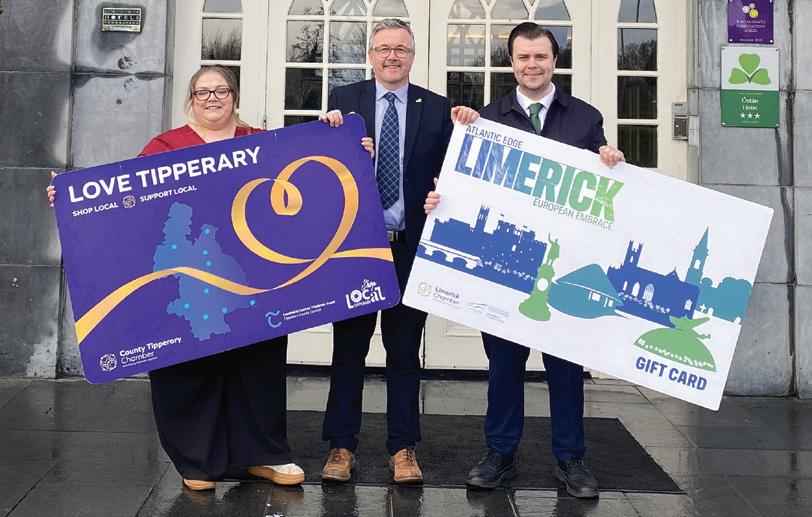
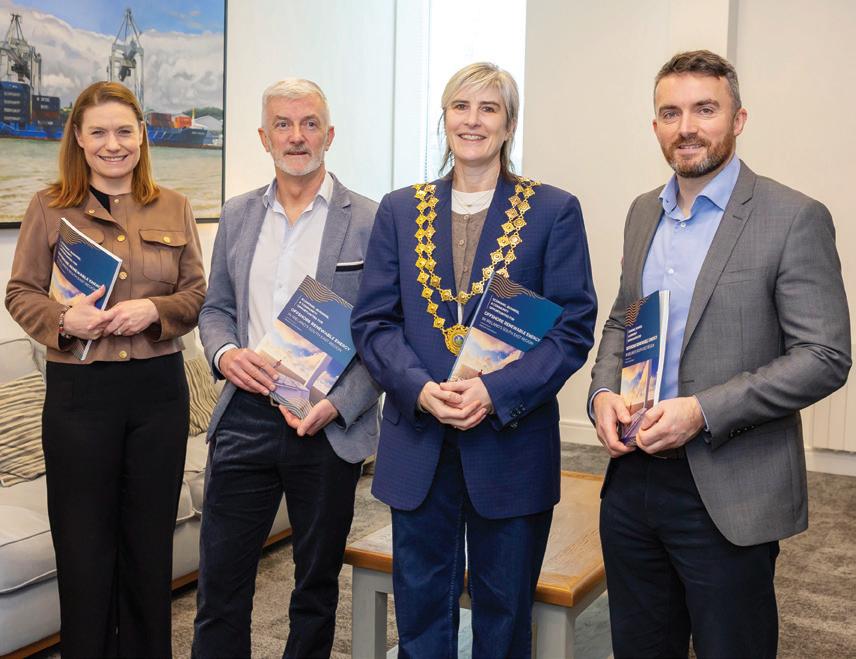

































→ 0818 47 88 33 Monday to Friday 9am - 5pm Our flexible loans help you realise the future you want for your business. Talk to us today.












Siofra McGuinness McGuinness Trucking





Through Strategic Partnerships and Purposeful Support, AIB is empowering women in business, sport and community
AIB has made it a priority to champion women across business and sport in recent years. AIB’s commitment to empowerment and inclusion has delivered tangible results for organisations devoted to female advancement, with AIB a supportive and trusted ally. The strategic and societal impact of AIB’s initiatives is clear, with benefits now being felt far beyond boardrooms and playing fields.
Central to AIB’s approach is the cultivation of meaningful partnerships with organisations that support women’s professional development. AIB’s longstanding relationship with Network Ireland, a leading organisation for women in business, has provided thousands of female entrepreneurs and professionals with platforms to learn, connect and thrive. Collaborating on events, mentorship schemes and awards, AIB has helped nurture a culture where women’s ambition is encouraged and celebrated. Karen Ronan, Network Ireland President 2026 and CEO of Galway Chamber says: "Empowering women is not just about opportunity, it’s about creating the right environments for women to lead, thrive and influence change. AIB’s commitment to supporting women across business, sport and community is a powerful example of how purposeful partnerships can shape stronger, more connected communities. Through AIB's official partnership with Network Ireland, we see every day how this support translates into confidence, leadership and long-term impact."
The bank also plays a key role in the Chartered Accountants Ireland Women in Business series, supporting initiatives that address barriers to career progression and foster diverse leadership within the
financial sector. This partnership reflects AIB’s belief that empowering women in professional services drives innovation and strengthens the Irish economy.
AIB's partnership with AwakenHub represents significant interventions in the Irish female founder ecosystem to date. AwakenHub exists to change the ratio, not just of women starting businesses, but of women securing the investment capital needed to build companies with opportunity to scale. On an island where female founders have historically been underrepresented at every stage of the funding pipeline, this partnership is a marker of intent: that the ambition gap is not a talent gap and that the infrastructure to close it is being built now. Through targeted programmes, investor access and strategic guidance, AIB and AwakenHub are equipping women founders to think and build global from day one, not as an aspiration, but as a baseline.
As Sinead Crowley, AwakenHub
Co-founder puts it: "The data has always been clear – women-led businesses are underinvested and overperforming. What AwakenHub is doing, and what AIB's partnership has helped accelerate, is dismantling the structural barriers that kept women founders from the funding table. We're not just helping women start businesses on the island of Ireland. We're building a generation of founders who are investment-ready, globally ambitious, and refusing to scale small."
AIB’s commitment to women extends to the sporting arena, where its sponsorship of the Ladies Gaelic Football Association (LGFA) and the Camogie Association has brought unprecedented visibility and resources to female athletes. Through these partnerships, AIB has helped elevate women’s sport in Ireland, ensuring that players receive the recognition and respect they deserve.
This commitment was especially evident at the AIB Club Player of the Year Awards 2026, where female players were honoured alongside their male counterparts. The awards ceremony marked a significant step towards gender parity in sport and AIB’s role in supporting such recognition underscores its dedication to equality, both on and off
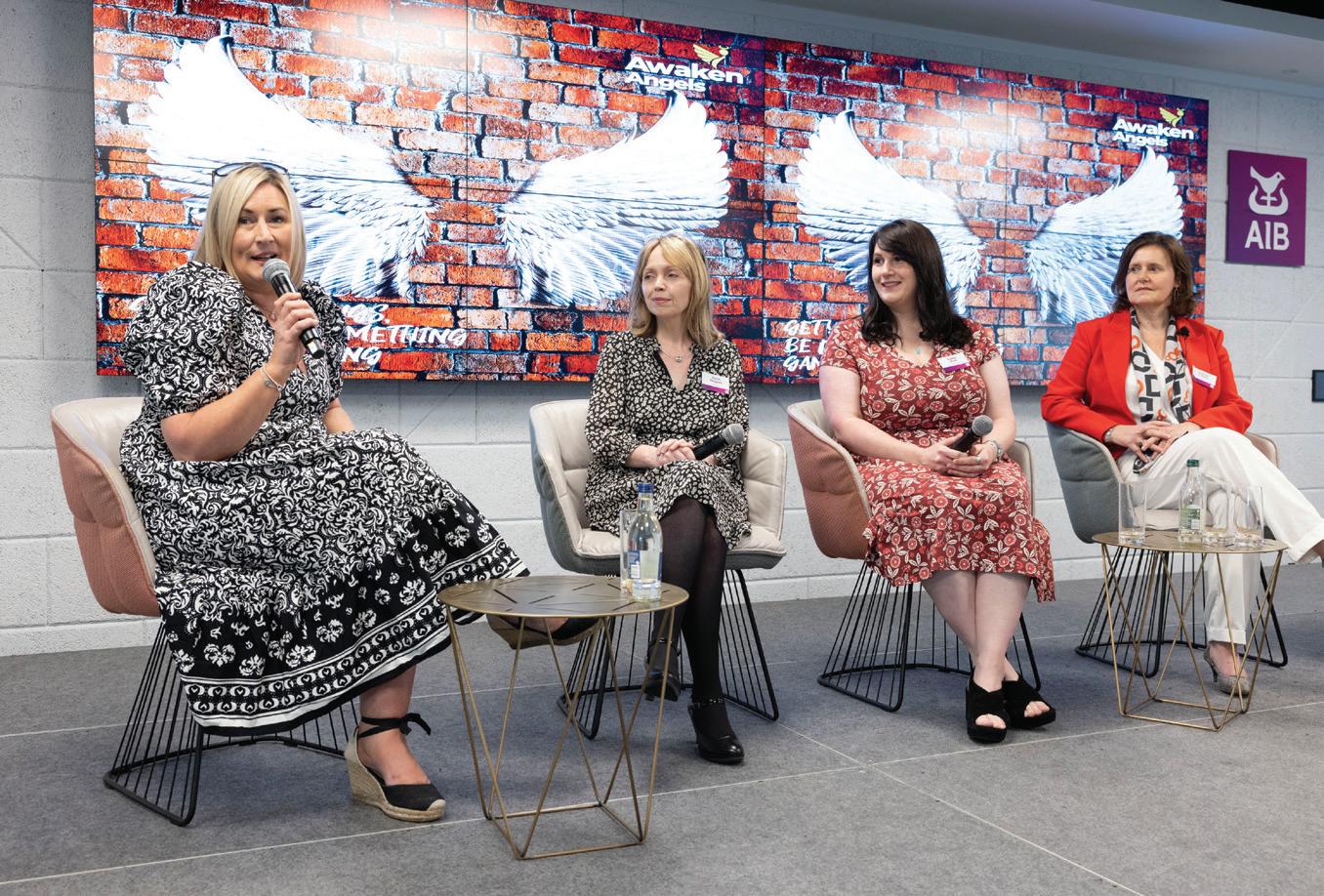
the pitch. AIB’s inclusive approach in the boardroom and on the pitch means that its impact is felt in local communities, schools and voluntary groups, fostering environments where women can lead, inspire and make a difference.
AIB’s sustained support for women in business and sport is more than a corporate strategy, it is supportive in enabling change. By building strong partnerships, investing in female talent and championing inclusion, AIB is helping to create a more equitable, innovative and vibrant Ireland.
As the landscape continues to evolve, AIB’s leadership in empowering women seeks to make a meaningful difference. Through our commitment to strategic action, AIB is helping to shape a future where every woman has the opportunity to succeed.
Ireland is changing, with women playing an increasingly central role in shaping its future. AIB’s commitment to help nurture talent, break down barriers and support achievement is helping to accelerate this progress."
AIB’s story is one of purposeful support and partnership. Its work with Network Ireland, Chartered Accountants Ireland, AwakenHub and others shows how collaboration fuels opportunity and ambition. By sponsoring the LGFA and Camogie Association, AIB is not only elevating women’s sport but also sending a clear message about the importance of visibility and recognition for female athletes.
Ireland is changing, with women playing an increasingly central role in shaping its future. AIB’s commitment to help nurture talent, break down barriers and support achievement is helping to accelerate this progress. The bank’s initiatives are not just about individual success – they are about helping build communities where women can thrive, inspire and lead.
As the drive for equality continues, the responsibility to support women is shared across society. AIB’s example highlights how purposeful investment and partnership can make real change. Supporting women is not just the right thing to do – it is essential for Ireland’s continued growth and vibrancy. Through its actions, AIB has become a catalyst for inclusion, innovation and progress, helping create an environment where women are empowered to reach their potential.
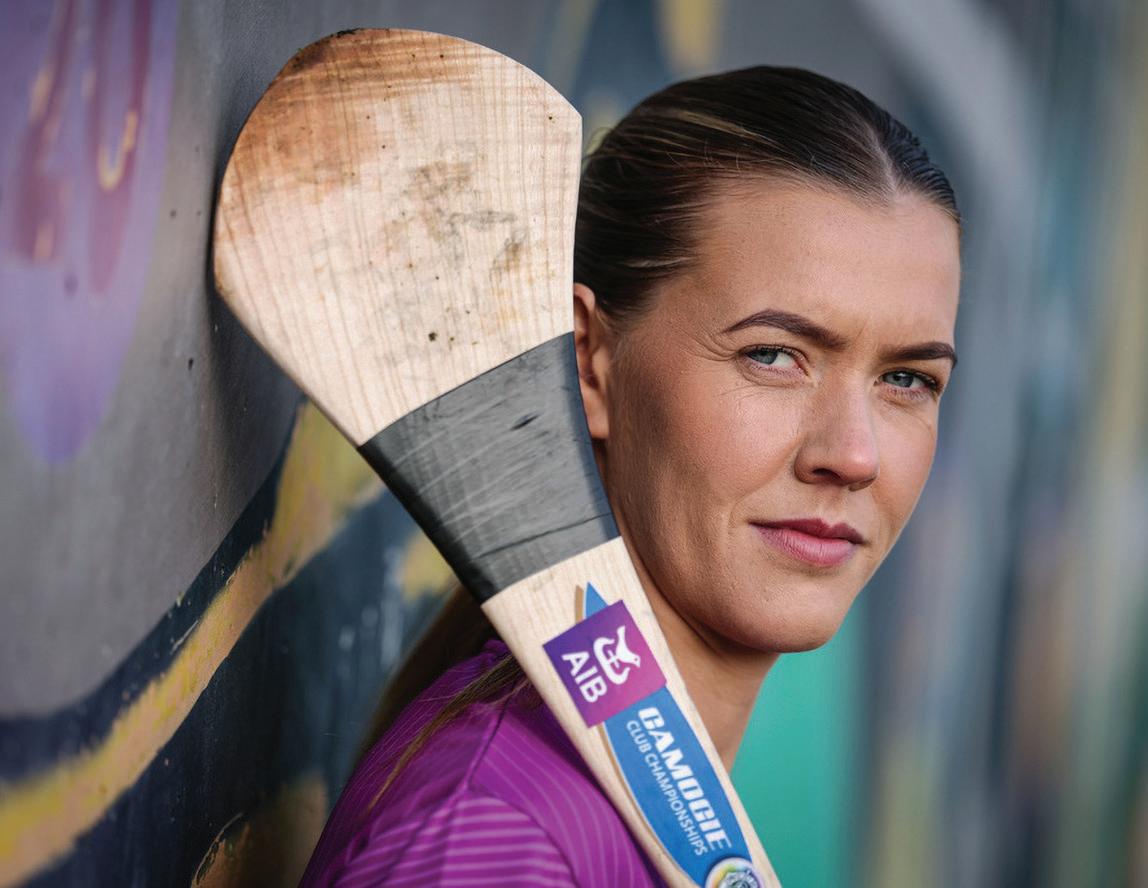
Wellbeing in the workplace is no longer an add-on. GILLIAN BANE explains how the SME WellBusiness Charter can help SME leaders embed wellbeing where it matters
In the finance and insurance sector alone, Deloitte estimates the average annual cost of poor mental health at £5,379 per employee. Yet CIPD found that only 51% of leaders currently have health and wellbeing on their agenda."

Health and wellbeing issues are now a key driver of absenteeism and employee turnover in Irish workplaces. Research from CIPD Ireland last year identified workload pressure, burnout, work related stress and lack of management support as the main contributing factors.
The commercial impact is clear. Poor mental health increases absence, presenteeism and turnover, all of which undermine productivity and performance. In the finance and insurance sector alone, Deloitte estimates the average annual cost of poor mental health at £5,379 per employee. Yet CIPD found that only 51% of leaders currently have health and wellbeing on their agenda. That figure should prompt an important question: as a leader, what does having wellbeing “on the agenda” actually look like?
Beyond perks: why wellbeing is not an add on
In many organisations, wellbeing is still treated as a set of initiatives sitting alongside the core business. These often include EAPs, resilience training or one off initiatives, largely owned by HR and focused on improving individual behaviour.
However, evidence increasingly suggests this approach is insufficient on its own. A major study of over 46,000 UK employees found that individual level interventions such as mindfulness or wellbeing apps did not lead to sustained improvements in wellbeing. Instead, organisational factors – particularly how work is designed and managed – had a far stronger influence.
Wellbeing is therefore shaped less by initiatives and more by leadership behaviour, culture and day to day work design. When viewed this way, it becomes a leadership and business issue rather than a peripheral people concern.
Where leaders should focus their effort
One challenge for leaders is knowing what to focus on. Without a clear structure and strategy, wellbeing activity can become fragmented and fail to address root causes. Two key starting points include: visible leadership commitment and genuinely listening to employees. When leaders clearly signal that wellbeing matters, and when employees are asked what support they need, organisations are far more likely to build initiatives that are relevant, credible and effective.
The SME WellBusiness Charter identifies four key areas that leaders should engage employees on: support for individual pillars of health; how work is designed, including workload, job clarity and balance; the quality of team dynamics, such as relationship with managers and communication; and how wellbeing is embedded into everyday leadership and organisational practices.
These areas are closely interconnected. The way work is designed, and the quality of workplace relationships directly influence how efficiently business processes function. When these areas
are all aligned, wellbeing initiatives support both people and performance. When they are misaligned, pressure builds, people become unwell and the business feels the impact.
agenda
Even when leaders believe wellbeing is a priority and commit to a strategy, there is often a gap between intent and behaviour. CIPD UK found that while 70% of leaders said employee wellbeing was on their agenda, only 42% were seen to encourage a focus on wellbeing through their actual behaviour. This gap matters because wellbeing is not felt through policies or messages – it is through everyday experience. Addressing this gap requires a leadership approach grounded in Health Oriented Leadership.
Health Oriented Leadership is an evidence based approach that views health as a core leadership competency rather than a peripheral concern. It focuses on the leader’s responsibility to look after both their own health and that of their employees. It is underpinned by three key dimensions: valuing health as important, being aware of health risks and pressures, and consistently taking action through everyday behaviour. You can’t pour from an empty cup — so when leaders role model healthy behaviours and actively support their teams, research shows this has a positive influence on employee health, wellbeing, job satisfaction, engagement and performance.
Workplace wellbeing is a leadership issue that shapes performance and long term sustainability. It requires a clear strategy, backed up by everyday leadership behaviour – including how leaders look after their own health and how they support others."
From commitment to capability
Encouragingly, leaders are clear about what they need. Feedback from SME WellBusiness Charter participants shows a strong demand for capability and structure, with 61% seeking support to implement a wellbeing strategy, 46% focused on developing leadership capability and 57% on strengthening manager capability.
The SME WellBusiness Charter is designed to support organisations in meeting these needs. It provides a clear strategic framework with practical resources for leaders, managers and those responsible for workplace wellbeing. This includes guidance, toolkits and soon, training focused on health oriented leadership to help organisations build capability and turn intent into consistent practice.
Workplace wellbeing is a leadership issue that shapes performance and long term sustainability. It requires a clear strategy, backed up by everyday leadership behaviour – including how leaders look after their own health and how they support others. The SME WellBusiness Charter helps SME leaders move from intention to action and embed wellbeing where it matters – in leadership, work design and everyday decisions. To learn more or sign up to the Charter, visit the Chambers Ireland website.
Gillian Bane is Healthy Workplace Co-ordinator at Chambers Ireland

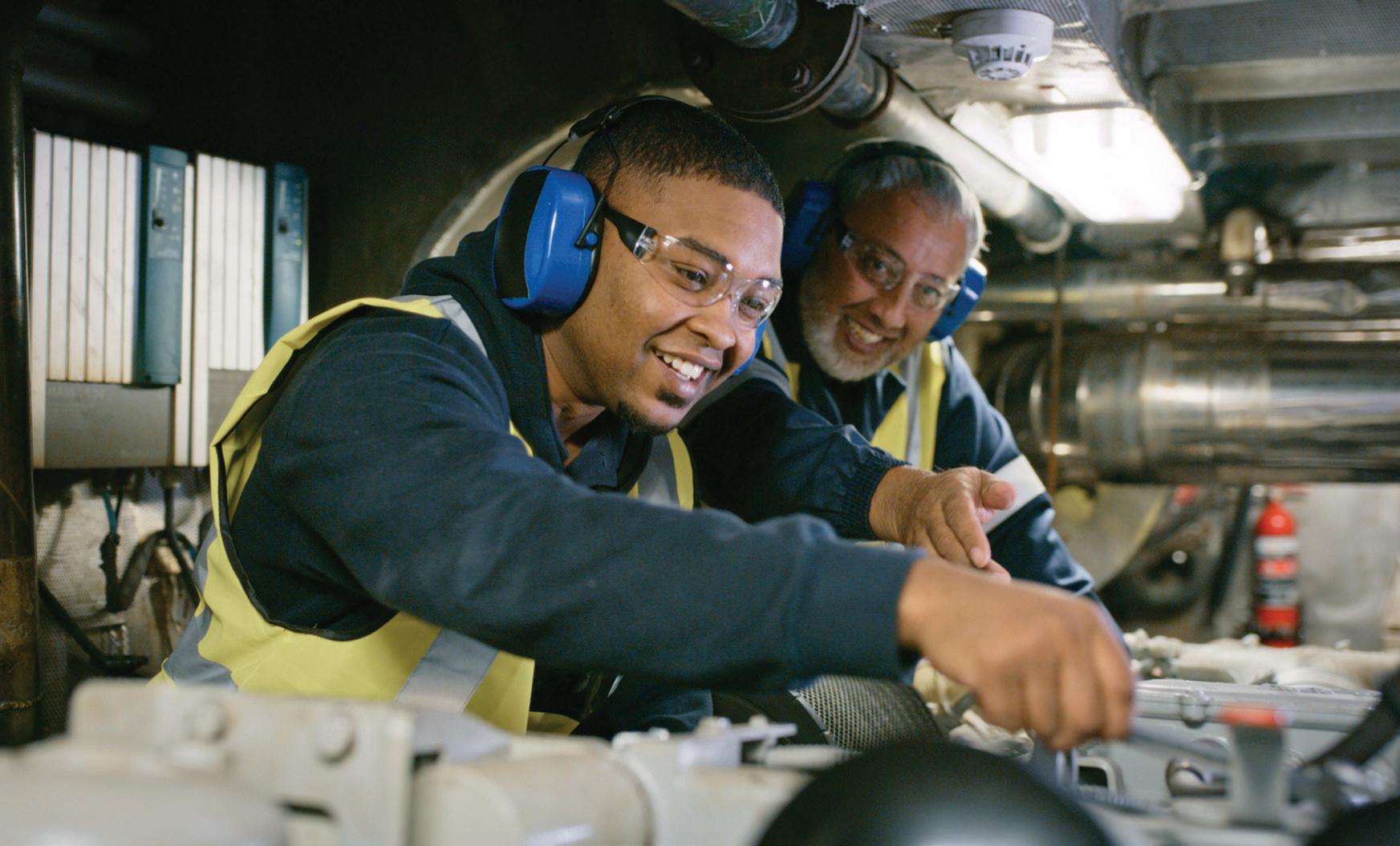
In Ireland, education is a cornerstone of our economic growth and a driver in attracting global investment. We punch far beyond our weight on an international stage, with 62% of Irish people aged 23-34 completing third-level education –making our workforce one of the most educated in the world.
Ireland’s reputation as a hub for talent has given us a competitive edge against other open, knowledge-based economies, but the skills ecosystem is now starting to change. We are heading towards a tipping point where overqualification and pressing skills gaps are creating two divergent labour market issues that need to be addressed in tandem through enhanced education and training policy.
Approximately three in 10 third level graduates are working in occupations where their qualifications go unused. Mismatches in skills and qualifications reduce productivity, limit innovation and threaten workforce stability. This is occurring at the same time as skills gaps continue to be a blocker to organisational growth and development. In 2024, there were over 32,000 employment permits issued in Ireland, a 24% increase on the previous year and the highest ever number of permits issued by the State. This indicates that skills demands are forcing employers to look internationally to meet their talent requirements.
This conflicting workforce dynamic is creating
organisational imbalance. In healthcare, there are highly educated administrative staff, for example, people with master’s degrees in healthcare management or public policy working in basic clerical roles, while the system faces serious shortages of clinical staff. Similarly, from a business context, there are arts and business graduates working in entry-level support or moderation roles in the tech sector, while there is a parallel shortage of experienced software engineers, cybersecurity experts and data scientists.
This means that we need to strengthen our national skills framework to be more adaptable to emerging workforce trends and more responsive to business needs. Apprenticeships offer this level of flexibility that the traditional higher education system lacks.
Consortia-led apprenticeships specifically allow industry leaders to partner with education providers to offer targeted training. This means that programmes are only developed where there is an identifiable business need and course content is built on addressing this need.
Consortia apprenticeships integrate labour market intelligence and employer feedback to adapt and leverage course curriculum to match real-time skills needs. For learners, this means they are guaranteed an education that has long-term career prospects and job satisfaction. For businesses, this means a sufficient pipeline of qualified, homegrown talent. A win-win situation if we can strike the balance correctly.
Consortia-led apprenticeships specifically allow industry leaders to partner with education providers to offer targeted training.”
Ronan,
How long have you held the role of CEO at Galway Chamber?
I took up the CEO role in May 2025 and it has been a fantastic opportunity to work with one of the most dynamic business communities in the country. Prior to this, I spent many years leading the Shannon Region Conference and Sports Bureau in Limerick as General Manager, where I worked closely with industry, Government and international partners to attract business and sports tourism to the region. That role gave me a deep understanding of regional economic development, international trade and the importance of collaboration between business and the public sector.
What do you enjoy in particular about your role?
The opportunity to work directly with such an ambitious and innovative business community. Galway has an incredible mix of indigenous SMEs, scaling companies and global multinationals. The Chamber sits at the centre of that ecosystem and I really enjoy bringing businesses together, understanding the challenges they face and advocating on their behalf. I’m also very fortunate to have a really dedicated team who go above and beyond on a daily basis for our members. I love the diversity of the role; today you could be actively lobbying Government on policy and tomorrow organising a business lunch, networking event or international trade round table.
How is business in Galway?
Overall, Galway continues to show strong economic momentum. The region has world-class strengths in sectors such as medtech, technology, manufacturing, tourism and the creative industries. However, while many businesses are performing well, they are also operating in a very complex environment. Cost pressures, housing availability and
infrastructure constraints are impacting the ability of companies to attract and retain talent, which ultimately affects growth.
What are the main challenges facing businesses?
The challenges we hear most often from our members include housing supply, infrastructure capacity and the cost of doing business. Businesses need a region that can support a growing workforce and that means investment in housing, transport and digital infrastructure. At the same time, many SMEs are navigating rising operating costs and increasing regulatory complexity. Ensuring Galway remains competitive as a place to start, grow and scale a business is critical.
If the Government were to implement one change to benefit the region, what would it be?
Accelerating investment in regional infrastructure. Galway is a key economic driver for the West of Ireland, but infrastructure has not kept pace with growth. Projects that improve connectivity whether transport, housing or energy infrastructure, would significantly strengthen the region’s competitiveness and make it easier for businesses to expand and attract talent. Whilst funding has been ring-fenced for key infrastructure projects including Bus Connects and the Galway Ring Road, planning delays are still hindering progress.
How does the Chamber respond to the needs of its members?
Listening to our members is at the heart of everything we do. Through regular engagement, sector forums and events, we ensure we understand the challenges businesses are facing. We then advocate on those issues with Government and key stakeholders, while also providing practical
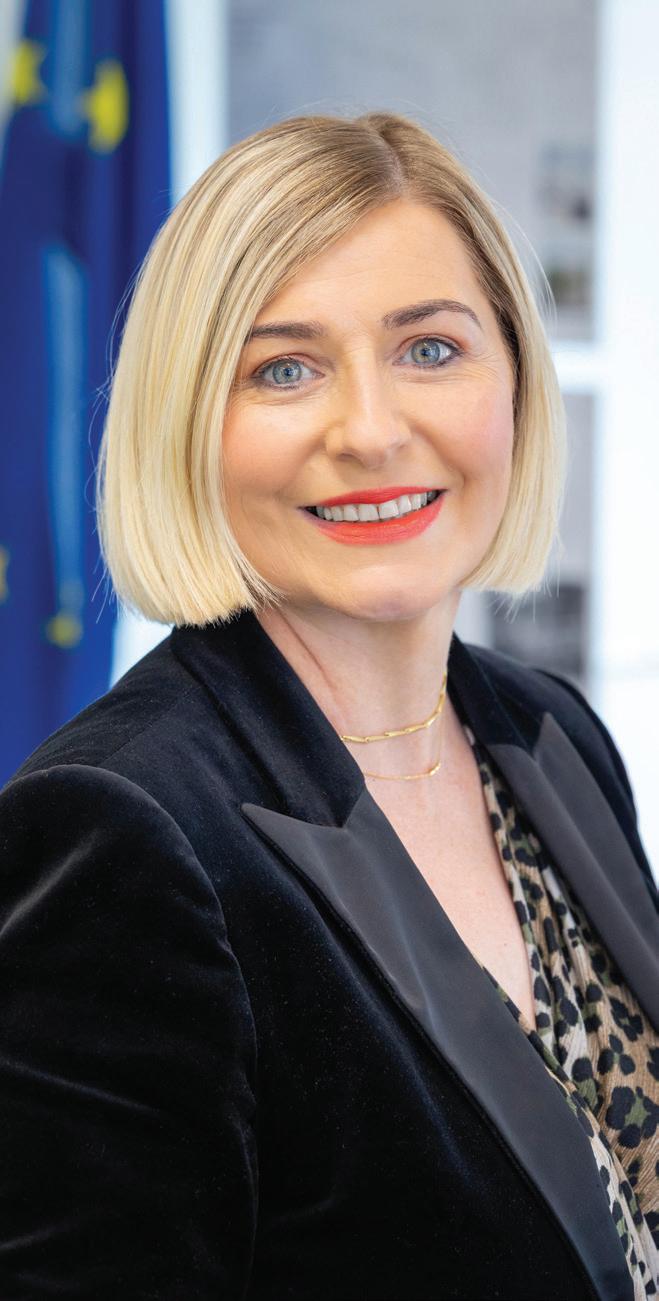
supports such as networking opportunities, training programmes and international trade initiatives. Our goal is to ensure that membership of Galway Chamber delivers real value and helps businesses grow.
What are your ambitions this year?
To strengthen Galway Chamber’s role as a powerful voice for business and ensure we deliver tangible value for our members. We will also roll out our new five year strategic plan. Ireland hosting the EU Presidency offers a great platform for Ireland and I hope to capitalise on that for Galway. That includes deepening engagement with our membership, strengthening our policy advocacy on key regional issues and expanding opportunities for businesses to collaborate and access new markets. Galway has enormous potential and I want the Chamber to play a central role in supporting the businesses that will drive the region’s growth over the coming years.
ESB makes record investment in critical energy infrastructure
ESB published its annual results for 2025 in March, with robust financial performance providing the basis for a record €2.7 billion investment in critical energy infrastructure.
While the Group’s profit after tax of €636 million was €70 million lower than 2024 – reflecting the unprecedented impact of Storm Éowyn in January 2025 – strong progress was made on delivering a sustainable and resilient energy system for business and residential customers across the country.
Delivering cleaner electricity
2025 saw ESB make major strides forward towards its target of reaching net-zero emissions by 2040.
The company’s portfolio of renewables and renewable-enabling technologies has grown to over 2GW; as a reference point, Ireland’s peak electricity demand is around 6GW.
Key projects included ESB’s first wholly owned solar farm in Bullstown, Co. Meath, which reached commercial operation during 2025, as did the Neart na Gaoithe offshore wind farm (a joint venture with EDF), located off the coast of Scotland. Further ESB offshore wind projects in Ireland and Great Britain are in construction or earlier stage development. In late 2025 ESB, together with partner Ørsted, secured the rights to develop 900MW of offshore wind capacity off the coast of Waterford with the Tonn Nua project.
In an historic milestone, the use of coal at the company’s Moneypoint station ceased in June 2025, which contributed to a further 8% fall in ESB’s greenhouse gas emissions from the generation of electricity in 2025 – emissions have now fallen by over two-thirds since the reference year of 2005.
In 2025, ESB Networks connected over 650MW of renewable generation to the grid and processed more than 47,000 microgeneration installations for
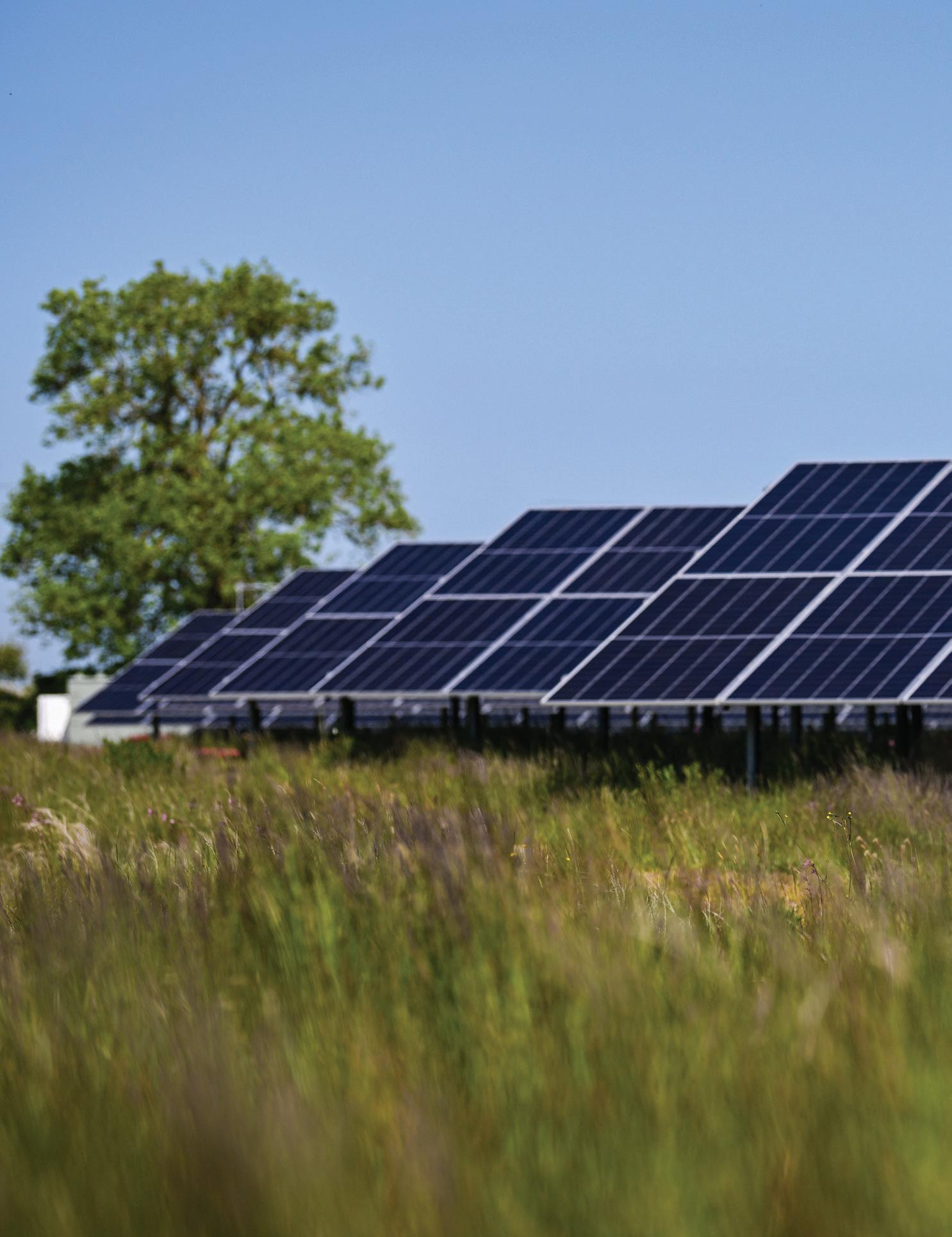
Thanks in part to the progress ESB is making towards net zero, Ireland’s energy system is not only cleaner but also becoming less reliant on costly imported fossil fuels –increasingly important in an unpredictable geopolitical environment."
homes and businesses across the country, adding a further 230MW of solar capacity. This led to a new milestone being reached in March of this year, as the renewable energy enabled by the Irish electricity network passed 8GW for the first time. Thanks in part to the progress ESB is making towards net zero, Ireland’s energy system is not only cleaner but also becoming less reliant on costly imported fossil fuels – increasingly important in an unpredictable geopolitical environment.
Delivering resilient infrastructure
ESB’s work to expand and future-proof electricity network infrastructure also accelerated in 2025.
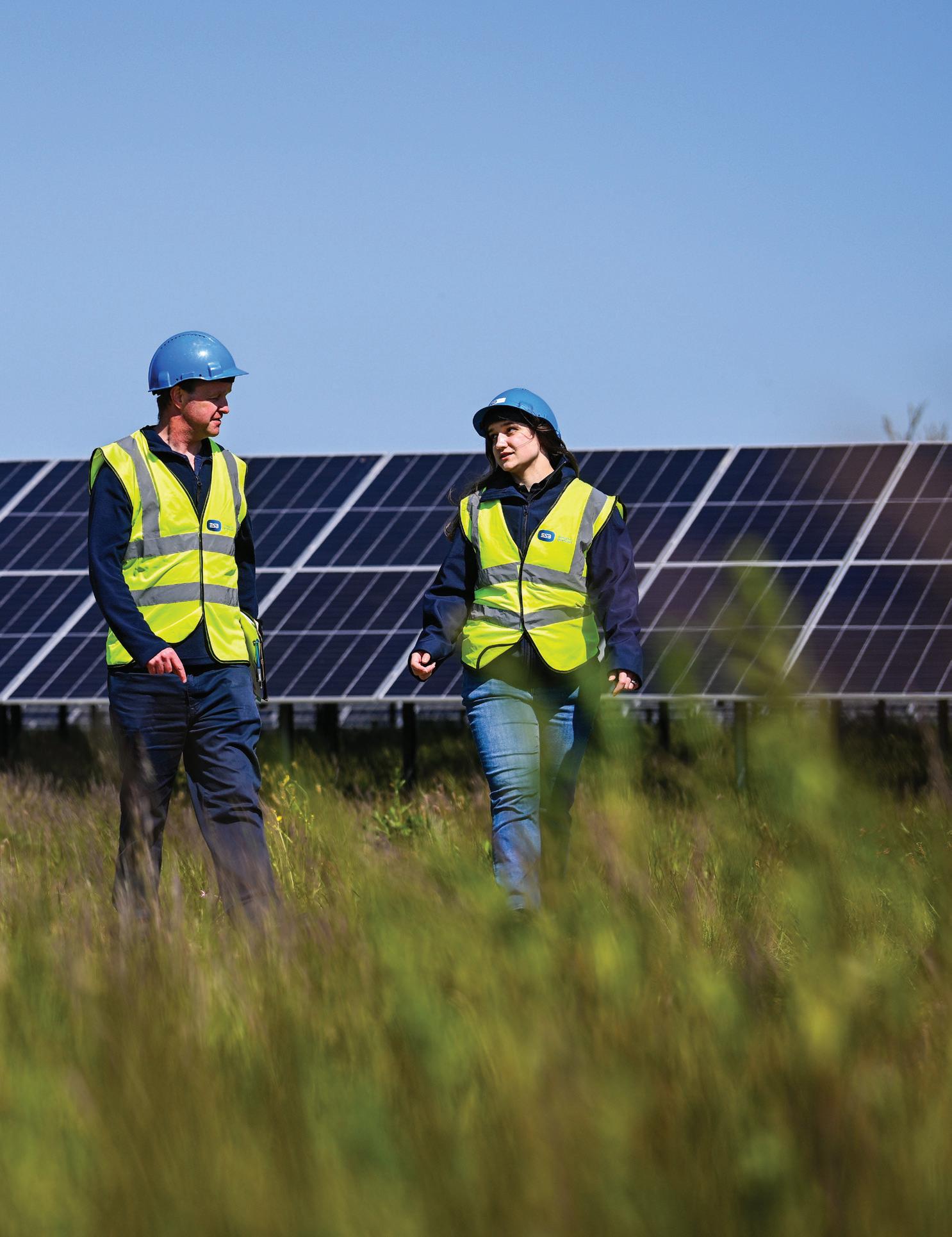
An aggregate of €1.7 billion was invested by ESB Networks in the Republic of Ireland and the ESB-owned NIE Networks business in Northern Ireland during the year. ESB Networks also secured regulatory approval in 2025 for a record €13 billion investment programme over the Price Review 6 period 2026-2030. This will enable greater network capacity to support growing electricity demand in the years ahead, allow the connection of greater volumes of renewables and strengthen the resilience of the network in the face of increasingly frequent extreme weather events.
A total of 51,000 new connections were delivered by ESB’s two network’s businesses over the year, supporting economic development and housing
ESB’s energy supply business - Electric Ireland - provided residential customers with home EV chargers, solar PV systems and battery storage solutions, while ESB Smart Energy Services supplied industrial heat pump and solar installations for business clients."
across the island of Ireland. ESB Networks also passed the milestone of two million smart meters installed, giving customers greater insight into and control over their own energy use.
In 2025, ESB continued its work to empower customers and communities to live more sustainably and benefit from greater energy efficiency. ESB’s energy supply business – Electric Ireland – provided residential customers with home EV chargers, solar PV systems and battery storage solutions, while ESB Smart Energy Services supplied industrial heat pump and solar installations for business clients.
ESB ecars supported Ireland’s transition to e-mobility as it concluded a multi-year €23 million joint investment programme with the Government’s Climate Action Fund, which saw over 55 new EV charging hubs installed and hundreds of charging points upgraded or replaced. Customers have faced significant rises in the cost of living in recent years and international events have led to volatility in wholesale energy prices, which remain at higher levels than before the 2022/23 energy crisis. Mindful of the burden that continued elevated energy prices place on households and businesses, ESB’s electricity supply business Electric Ireland has remained committed to offering the best value possible to customers. ESB also actively works with stakeholders in policy and industry to understand the drivers of electricity prices in Ireland and identify ways to address cost pressures and support customers.
In total, ESB contributed €3.4 billion to the Irish economy in 2025 in the form of payroll, taxes, dividends and purchases from domestic suppliers. For every €1 in profit after tax earned last year, it invested €4 in critical infrastructure to enable the sustainable energy transition.
This programme of capital investment is only set to grow in the years ahead, forecast at around €20 billion over the next five years with up to €16 billion of this directed to electricity networks on the island of Ireland. The Group’s continued strong financial performance provides a solid foundation from which to deliver a clean, secure and affordable energy system for Ireland.
ESB’s 2025 Annual Report is available to download in full at www.esb.ie
Waterford based Cantec used five local Town & City Gift Card initiatives to reward its largely field-based team with digital cards, locking their reward spend into specified Irish towns and cities
Afamily-owned managed print services provider is among the first in Ireland to reward its remote Irish workforce with digital local gift cards for their nearest town/city, locking the firm’s reward spend into the country.
Waterford based Cantec is using five local Town & City Gift Cards – the Think Waterford First Gift Card, the Love Drogheda Gift Card, the Limerick Gift Card, the Kilkenny Gift Card and the Lakes Gift Card – to reward its field based technicians who are based across Ireland.
Delivered by global gift card specialist Miconex, the Town & City Gift Cards initiative is active in 16 Irish towns and cities. The cards are branded to specific places and can be redeemed with registered businesses in that town, city or region, including shops, restaurants, pubs, salons, hotels and services.
For us as an Irish business, choosing local rewards is about practicing what we preach, leading by example and supporting Irish businesses that in return support us."
Miconex announced €17.4 million in local gift card sales in 2025, an increase of 65% on 2024, which it estimates will drive 335,000 specific visits to Irish high streets and shopping districts in 2026, based on estimates of three trips into town per gift card.
Cantec invested €25,000 in digital local gift cards in Christmas 2025 tax free using the Revenue’s Small Benefit Exemption scheme. The company says that choosing local gift cards based on where each employee lives ensures their reward spend stays in Ireland.
Éadaoin Carrick, Executive Chairperson of Cantec Group and President of Waterford Chamber said: “One of the disadvantages of the Small Benefit Exemption is that it facilitates employers gifting global gift cards that can be spent outside of Ireland. We made the decision to try and keep the spend in the local economy and in Ireland by choosing Town & City Gift Cards for each employee based on where they live, primarily
for Waterford where we are based but also for Limerick, Kilkenny, Drogheda and Ballinrobe.
“Everyone buys online occasionally, but many high streets are dying because people are not buying things from local shops, they are buying from Amazon instead. The Christmas reward we offer for staff is a bonus outside of their regular salary and I’d like to ensure that the bonus we give to staff stays local and on our island, benefitting people in Ireland. Choosing Town & City Gift Cards ensures our reward spend stays local.”
A number of chambers and business organisations have upgraded their paper ‘shop local’ programmes to high tech physical and digital gift cards alongside Miconex. A dedicated corporate order site allows organisations to purchase physical or digital Town & City Gift Cards for one or more of the 16 Town & City Gift Card programs in Ireland in one order, with digital cards delivered employees on a chosen date/time.
Éadaoin is positive about the efficiencies that digital can offer for organisations. “The Miconex corporate site is such an easy system to use –simply select the local gift cards you need and the values. I specifically opted for the digital gift cards because they’re handy for employees to have their card in their digital wallet, ready to tap to pay with local businesses. People will always have their phone with them, so it’s a reward that is more likely to be used.
“For us as an Irish business, choosing local rewards is about practicing what we preach, leading by example and supporting Irish businesses that in return support us. We have to support each other. By choosing local gift cards, you can keep money in your hyper local community, in your region or in Ireland overall. Local people benefit when you support local economies.”
Colin Munro is the CEO of Miconex and said: “We introduced our digital gifting technology in Ireland in 2024 to enable organisations to easily reward their staff with local gift cards. The appetite for supporting local in Ireland is incredibly strong, as evidenced by the growth of our local gift card programmes across Ireland in 2025. As the Town & City Gift Cards network grows, what we’re beginning to see is medium to large organisations like Cantec, with staff spread out across Ireland, using our technology to reward staff with their
local gift card, fuss-free. A Town & City Gift Card is the ultimate ‘shop local’ gift card – no other gift card can compete on the choice, ease and support for local.”
John Hurley, Kilkenny Chamber CEO, adds: “Kilkenny is home to several employers whose employees live throughout the South East and the Kilkenny Gift Card, as part of the Town & City Gift Card programme, works really well for them. The ability to provide gift cards for the location where their employees live makes the choice easier for them.”
Trevor Connelly, CEO at Drogheda BID, said: “We’re absolutely delighted to see Cantec, a company based in Waterford, choosing the Love Drogheda Gift Card to reward their team members who live in Drogheda. It’s a fantastic example of how businesses can support their staff, while also investing directly back into the local economy.
Cantec's commitment to supporting local is to be applauded.”
With over 240 participating venues across Drogheda, team members have incredible choice and importantly, every euro spent goes in full to the local businesses who accept the card. It’s a win for employers, a win for staff and a win for all our Drogheda business community!”
Seán Golden, Chief Economist and Director of Policy at Limerick Chamber, said: “Cantec’s commitment to supporting local using Town & City Gift Cards, including the Limerick Gift Card, is to be applauded. They’ve demonstrated how easy it is for organisations to buy local Gift Cards in one order to suit the needs of their team, offer their team unbeatable local choice and provide tangible support for local businesses too.”
For more information, contact Mark Cunningham, Business Development Manager at Miconex Ireland on 087-9544663, mark@mi-cnx.com, www.mi-cnx.com
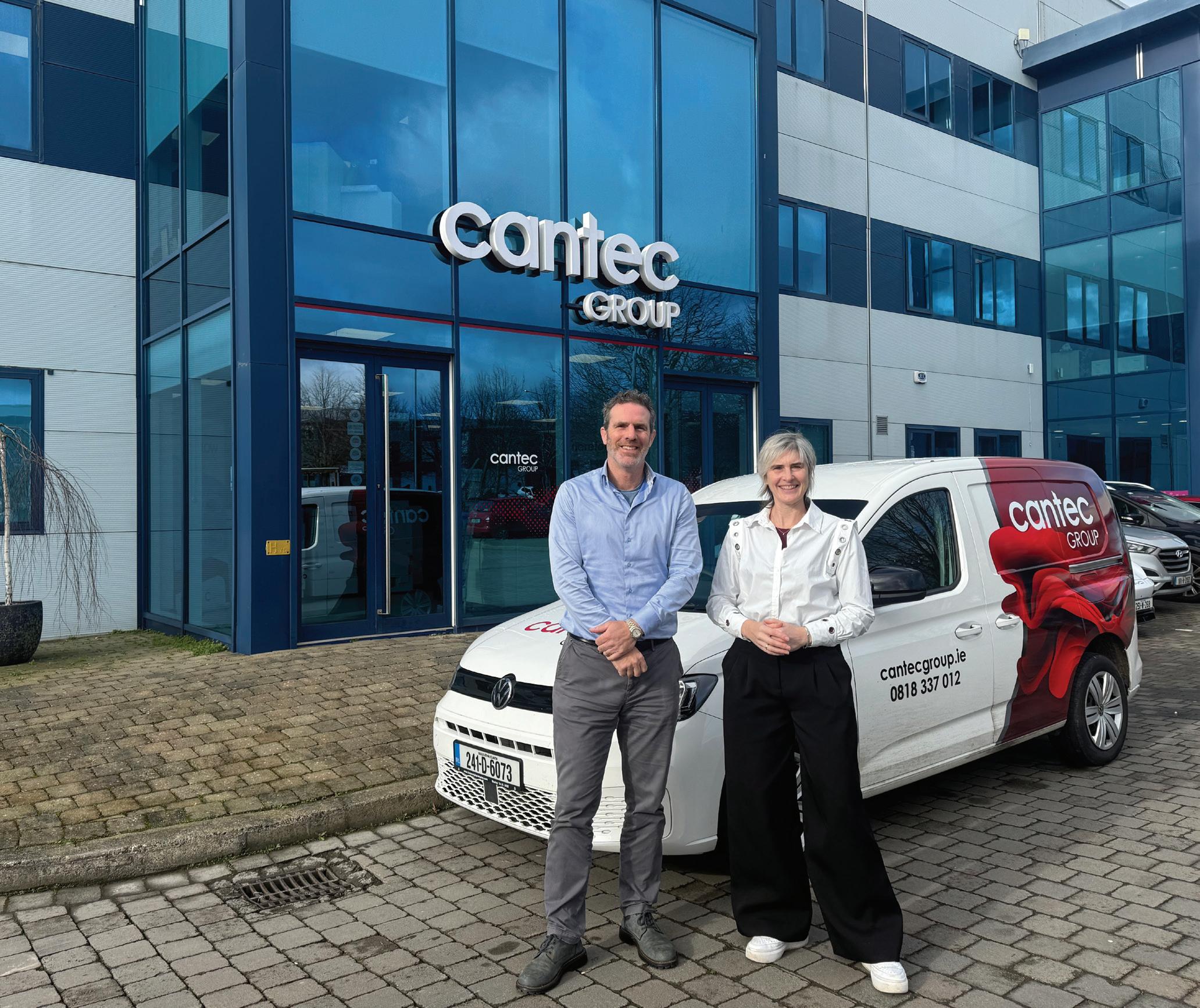
Single market integration is key to undoing the cost of ongoing fragmentation,
writes Shane Hughes
Europe is entering a moment where its economic model is being tested more severely than at any point in the past decade. External shocks are sharper, internal weaknesses more visible and the margin for complacency has significantly reduced.
Businesses in the single market are struggling with domestic regulatory and cost pressures while absorbing global price volatility and supply insecurity on the other. The conflict in Iran has compounded these pressures and underscores a critical point – the more the EU delays strengthen its competitiveness, the more exposed its companies and consumers become to geopolitical disruptions over which we have little control.
This exposure has sharpened the focus on the EU’s competitiveness gap and consensus has hardened around the need to move beyond the incremental gains of the past 18 months and accelerate the reforms envisioned in the Draghi and Letta reports.
A pattern of reactive policymaking, shaped by the 2008 and 2011 crises, continues to hold back progress. After the 2008 global financial collapse and the Eurozone crisis that followed in 2011, member states had to reconsider how they manage large-scale economic shocks. The Lisbon Treaty reinforced this recalibration by assigning EU level industrial policy decisions to the Parliament and the Council under the co decision framework. The result is a reactive framework that is operating in third gear.
Given this context, one might assume that there would be broad political support for the EU to double-down on multilateralism and secure deals with like-minded partners. None more so than in Ireland, where growth and employment are closely tied to the performance of its internationally traded sectors.
Yet, policymakers at domestic and EU level seem intent on undermining such efforts. A recent example is the EU-Mercosur agreement which
continues to face political opposition grounded on little evidence. Such opposition rejects the very trade that drives our prosperity.
The EU has to control the controllables to maximise its own growth potential. Single market integration will be key to undoing the cost of ongoing fragmentation. The data clearly supports this point – International Monetary Fund research published in December 2024 estimated remaining single market barriers to be equivalent to tariffs of around 44% on goods and 110% on services. Reducing these barriers by 25% could increase the gross value added in the EU by around €350 billion in the long term, as estimated by the German ifo Institute.
Also, the European Central Bank estimated last January that trade frictions within the single market are more onerous than the highest tariffs threatened by Donald Trump last year and that trading in services across EU borders is almost twice as costly as trading within national borders.
A presidency defined by practical reform
These developments provide context as Ireland prepares for its presidency of the Council of the EU later this year. Progress during the presidency will undoubtedly hinge on the upcoming Single Market Roadmap. While not straightforward, securing the Multiannual Financial Framework will be essential and investment will have to be directed toward skills, digitalisation, the green transition and a more effective Single Market.
A clear route to addressing core competitiveness issues – reducing overly complex EU rules and removing barriers to the recognition of professional qualifications – will have to be defined with milestones set to gauge progress along the way. Systematically removing disproportionate regulatory barriers one by one and based on evidence will require close engagement with businesses. This is technocratic work that may not attract headlines, but it is the way to untap significant growth potential and enhance our economic security.
Completing the single market will additionally

require political buy-in from member states and measures that appear effective at national level may still constrain the EU’s collective strength. This is a hard pill to swallow in many member states and has often proved indigestible in the past, but not everywhere. For example, the Benelux countries have pioneered European economic integration by pursuing joint measures to enhance cross-border cooperation on digitalisation, energy and labour mobility. Meanwhile, the Baltic States are increasing their cross-border cooperation on energy, financial services and transport infrastructure. Such enhanced initiatives to tackle obstacles should be harnessed as a basis for broader efforts to enable businesses to trade easily cross-border throughout the single market.
It is important to remember that the single market is not a goal in itself, nor is it a framework to pursue a diverse range of political goals or strategies. It is instead a mechanism designed specifically to enable freedom of movement, for people, products, capital, services and knowledge. With sustained political commitment at the highest level, it can become Europe’s superpower, drive growth and strengthen the EU’s global economic, value-driven influence.
We urge Government to keep this in mind if it is to drive an ambitious single market integration agenda over the course of the presidency.
Shane Hughes is Policy and International Affairs Manager at Chambers Ireland
It is important to remember that the single market is not a goal in itself, nor is it a framework to pursue a diverse range of political goals or strategies."
Clio’s Sarah Murphy explains how leading firms are rethinking AI, client experience and operations to stay competitive in a rapidly evolving legal landscape
The legal profession is entering a new phase, defined not by whether firms adopt technology, but by how effectively they use it. As artificial intelligence becomes embedded in everyday workflows and client expectations continue to rise, law firms are being pushed to rethink longstanding practices. Success now depends on more than expertise alone - it requires a seamless blend of systems, people and client experience. Firms that embrace this shift are unlocking new capacity and building lasting client relationships. Sarah Murphy, General Manager, International at Clio, discusses the challenges, opportunities and priorities shaping the modern law firm.
WHAT ARE THE BIGGEST CHALLENGES LAW FIRMS ARE FACING, AND HOW ARE SUCCESSFUL FIRMS RESPONDING?
Law firms today are managing a convergence of pressures, and the ones that thrive have figured out something their peers often miss: technology, talent, and client experience work best when they reinforce each other. Firms that struggle tend to treat each challenge as an isolated problem. Client expectations have shifted considerably, too. They now benchmark their legal experience against every service they use, and that’s a much higher bar. Firms that meet this standard build the loyalty that drives referrals. Those who don’t find themselves competing solely on fees.
The profession has also passed the point of debating whether to adopt AI. The focus now is on integrating it responsibly. Document review, legal research, and billing are all being reshaped, and firms are learning that purpose-built legal AI delivers far more value than general-purpose tools. The firms responding most effectively are
CLIENTS EXPECT THEIR LEGAL DATA TO BE PROTECTED WITH THE SAME RIGOUR APPLIED TO THEIR FINANCIAL AND MEDICAL RECORDS. FIRMS THAT CAN CLEARLY ARTICULATE THEIR SECURITY STANDARDS STRENGTHEN THE TRUST THAT UNDERPINS EVERY CLIENT RELATIONSHIP.

being deliberate. They’re consolidating fragmented systems into integrated platforms and questioning long-held assumptions, including traditional billing models, to stay aligned with both client expectations and commercial sustainability.
WHAT DOES A “MODERN LAW FIRM” LOOK LIKE TODAY, AND WHAT FOUNDATIONS NEED TO BE IN PLACE TO SUPPORT SUSTAINABLE GROWTH?
For firms that grow sustainably, digital transformation is less a project with a finish line and more a permanent operating principle. What distinguishes the most successful firms is that they’ve brought technology, culture, and client experience together as a single, coherent strategy. That starts with integrated infrastructure. A modern firm runs on a connected platform where billing, case management, and AI-driven insights work together without friction. Disconnected tools create gaps and cost

firms time, money, and client confidence. A client-centred mindset builds on that infrastructure. Digital portals keep clients informed between calls and turn a smooth experience into a reason to return. Leadership ties it all together.
HOW CAN FIRMS USE TECHNOLOGY TO IMPROVE CLIENT COMMUNICATION WHILE MAINTAINING A PERSONAL APPROACH?
For many clients, uncertainty is the greatest source of anxiety throughout a legal matter. Clarity about what’s happening, what it will cost, and what comes next matters more than the frequency of communication. When technology handles the predictable, administrative aspects of a case, lawyers can focus on the moments that require judgement, empathy, and expertise. That’s what clients remember long after a case closes. Long-term trust develops through repeated experiences
of being well-served, and no marketing budget can shortcut that.
WHAT ARE THE COMMON BARRIERS TO ADOPTING NEW SYSTEMS, AND WHAT ADVICE WOULD YOU GIVE TO FIRMS LOOKING TO TAKE THE NEXT STEP?
When firms hesitate about cloud-based practice management, the concern is almost always about disruption. The most persistent barrier is cultural. When a team has used the same systems for years, it’s hard to shift familiar habits. Without leadership that clearly communicates the purpose behind a change, even the most capable platform will struggle to gain traction. We advise identifying one high-friction area. Client intake and billing are common starting points. Solving one problem well builds internal confidence, generates visible wins early, and gives the whole team a concrete sense of what better actually looks like.
HOW CAN LAW FIRMS EMBRACE INNOVATION WHILE ENSURING CLIENT DATA REMAINS PROTECTED?
Firms that avoid modernising in the name of caution can end up more exposed than those that have deliberately moved to cloud infrastructure. Legacy systems and disconnected tools carry risks that often go unexamined precisely because they’re familiar.
Leading cloud platforms, like Clio, provide enterprise-grade encryption, continuous monitoring, and regular security audits at a scale most individual firms would find difficult to replicate internally. Rigorous vendor due diligence is essential to building that framework well.
Governance and culture are equally important. Security works best as a firmwide responsibility, supported by clear access controls, staff training, and defined incident response plans. Clients expect their legal data to be protected with the same rigour applied to their financial and medical records. Firms that can clearly articulate their security standards strengthen the trust that underpins every client relationship.
WHAT TRENDS WILL HAVE THE BIGGEST IMPACT ON THE LEGAL PROFESSION OVER THE NEXT FEW YEARS, AND HOW IS CLIO POSITIONING ITSELF TO SUPPORT FIRMS THROUGH THAT CHANGE?
A year ago, most firms were asking whether they should be using AI. Today, the question has moved to how to embed it into everyday workflows responsibly. Over the next few years, AI and automation will handle a growing share of routine administrative work and support everything from legal research to billing. The real impact is an expansion of capacity. Lawyers gain more time for the high-value work that requires expertise, judgement, and human insight.
At Clio, our Intelligent Legal Work Platform brings context-aware AI and trusted legal research together by embedding intelligence directly into the workflows firms rely on every day. AI will do what good technology has always done: give people more capacity to do the work that actually matters.

There’s no doubt that the development of renewable energy, including both offshore and onshore wind, is central to Ireland’s energy policy. According to the Sustainable Energy Authority of Ireland, wind energy is currently the largest contributing resource of renewable energy in the country, with Ireland one of the leading countries in its use of wind energy. Globally, it also plays a key role; research from Wind Energy Ireland shows that wind is delivering 20% of Europe’s electricity.
With that strong foundation in place, now’s the time to focus on scaling renewables, strengthening grid infrastructure and reducing exposure to volatile fossil fuel markets. That sentiment is echoed in our Wind Energy report, where William Fry’s Jason Milne discusses why wind energy is set to define Ireland’s energy future and Noel Cunniffe at Wind Energy Ireland talks about the critical need for investment in our electricity grid.
1992
Year Ireland’s first commercial wind farm was commissioned at Bellacorrick, Co Mayo
JUST UNDER 400
The number of wind farms on the island of Ireland
JUST OVER 300
The number of wind farms in the Republic of Ireland
5,585MW
Installed Wind Energy Capacity on the island of Ireland
192MW
Installed capacity of Ireland’s largest wind farm in Co. Galway 32%
The share of Ireland’s electricity in 2024 that was generated by wind energy
William
Ireland stands at a genuine inflection point in its energy history. Wind now meets over 40% of Ireland’s electricity demand. As the State pursues 80% renewable electricity by 2030, wind – onshore and offshore – will carry more of that load than any other technology. But a secure, decarbonised grid also needs dispatchable generation, storage, and interconnection. Delivering wind at scale requires investment, regulatory clarity, and legal frameworks that work.
Ireland’s onshore wind sector is showing real momentum. Roughly half a billion euro of projects reached financial close in 2025, with more than 400 MW in construction - the highest level since 2019. About 3 GW has already secured consent, positioning the sector to bring more projects forward. But the fleet is also ageing, with a significant portion of capacity built before 2010. Repowering those assets will be one of the defining planning challenges of this decade, and the revised Wind Energy Development Guidelines will be central to how An Coimisiún Pleanála assesses new and replacement projects. Grid connection constraints and curtailment remain practical obstacles, and the interaction between planning timelines and grid offer windows continues to create commercial risk. Transactional and regulatory advice is not a luxury in this environment; it is a prerequisite for getting projects across the line.
Ireland’s offshore wind potential is among the strongest in Europe, and the Government’s DMAP framework is designed to unlock it. The first Designated Maritime Area Plan, for the South Coast, is in place, and the National DMAP is being prepared. The consenting regime under the Maritime Area Planning Act 2021 is still bedding in, with precedent thin and procedural risk real. The Phase 1 projects are still progressing through permitting, while ESB–Ørsted’s Tonn Nua project is further behind in the regulatory queue. Regulatory certainty, timely grid access, and port capacity are critical to keeping timelines intact. While the largest impacts land beyond 2030, maintaining momentum now is essential to lock in supply-chain commitments and investor confidence.
Wind projects attract institutional capital, but investors want certainty. Environmental Impact Assessment, Appropriate Assessment under the Habitats Directive,
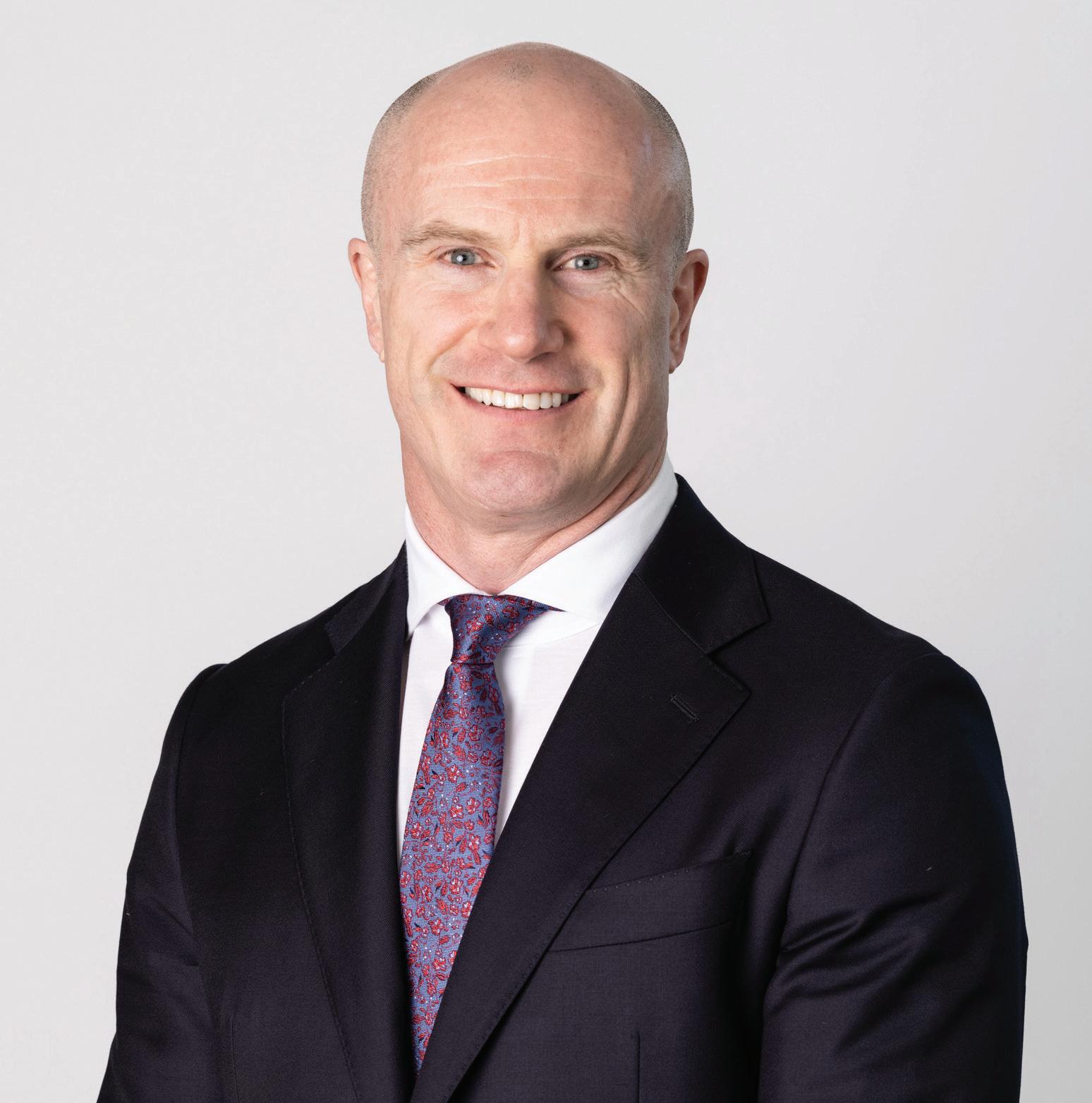
WIND ENERGY WILL DEFINE IRELAND’S ENERGY FUTURE
and grid agreements each carry legal exposure that due diligence must capture. For transactions involving renewable platforms, regulatory, environmental, commercial, and transactional workstreams must run in parallel.
Wind energy will define Ireland’s energy future. The targets are ambitious, but honesty is needed: Ireland will miss its 2030 decarbonisation goals on the current trajectory, with emissions reductions tracking to the mid-to-high 20 per cent range rather than the 51 per cent target. The potential for EU fines should sharpen focus on near-term delivery. But delivery depends on legal and regulatory foundations being built correctly, and on regulators being adequately resourced. Consent delays, grid bottlenecks, and procedural uncertainty carry a cost that falls on projects and investors. Resourcing An Coimisiún Pleanála, the EPA, and MARA properly is not an administrative footnote; it is a condition of meeting the State’s own targets.
Jason Milne is a Partner and Head of Environment and Planning at William Fry jason.milne@williamfry.com
Noel Cunniffe, CEO at Wind Energy Ireland, chats about the organisation’s ambitions to transform Ireland into an energy independent electrostate and why now’s the time to invest in renewable energy
HOW DID YOU GET INTO THE WIND ENERGY INDUSTRY?
I trained as a civil engineer and then a power system engineer. After that I went into Eirgrid, whose job it is to manage the day-to-day operation of our transmission system. I worked there for several years across different areas, including planning of the transmission system and the grid and how to integrate more renewable energy into our transmission or electricity system. After I left Eirgrid, I I joined Wind Energy Ireland, originally heading up the policy department and working with Government stakeholders to try to enable more renewable energy policy. For the past five years, I’ve held the role of Chief Executive.
WHAT’S THE REMIT OF WIND ENERGY IRELAND?
We’re the representative body for the wind energy sector in Ireland. We have over 200 member companies that range from the companies developing and operating wind energy, both onshore and offshore, along with the companies involved in the supply chain, from the hauliers and construction companies to the banks, the planners and grid consultants. Our role is to work with Government departments, elected officials and State agencies to deliver wind energy as quickly as possible and at the best possible value for the Irish consumer.
HOW HAS THAT RELATIONSHIP WITH GOVERNMENT EVOLVED OVER THE PAST FEW YEARS?
I think there’s a much broader acceptance of the importance of renewable energy for many reasons. Since the Russian invasion of Ukraine and even before Covid, I think there’s been a more wider realisation that renewable energy can deliver more stably priced power that isn’t subject to the dependencies of the international
OUR ROLE IS TO WORK WITH GOVERNMENT DEPARTMENTS, ELECTED OFFICIALS AND STATE AGENCIES TO DELIVER WIND ENERGY AS QUICKLY AS POSSIBLE AND AT THE BEST POSSIBLE VALUE FOR THE IRISH CONSUMER
fossil fuel market. There’s more awareness around the advantages that offers to Ireland. We’re seeing the ramifications that high prices of gas and oil in international markets is having for homes and businesses across Ireland. Whereas with domestically produced renewable energy, be it from wind or solar, we’re much more in control of that price and that helps to bring down the price of energy. That realisation has definitely changed the dynamic with State agencies. Ten years ago I think it was regarded as something we were doing for the planet whereas now, we’re also doing it for our pockets.
THERE’S ALSO THE ENERGY SECURITY ASPECT TOO
Absolutely. There’s been a real spotlight on energy security in the last few years. We know from colleagues working in countries like Ukraine that it can be quite easy to target large energy plants but quite difficult to target multiple turbines and solar panels that are spaced around a country. So in that sense, wind energy offers elements of energy security , as well as being financially beneficial for the country and obviously very good for the planet too.
IS ENOUGH INVESTMENT GOING INTO RENEWABLE ENERGY?
Investment is going in but not as fast as we need it. In January we launched a new strategy for the sector, called “Delivering Energy Independence, Powering Growth” that sets out our ambitions to transform Ireland into an energy independent electrostate. The concept of an electrostate is quite new but it means a country that’s leading the energy transition. A number of countries are grasping this currently – moving away from fossil fuels for power, heating and transport towards renewable energy. The quicker we can adapt this, the quicker we’ll have an economic advantage over other jurisdictions that are still reliant on fossil fuels.
HOW DO WE BECOME AN ELECTROSTATE?
Obviously we need investment in renewable energy, but we also need to be mindful about how we utilise that investment. Investment needs to go into our electricity grid so we can move the power
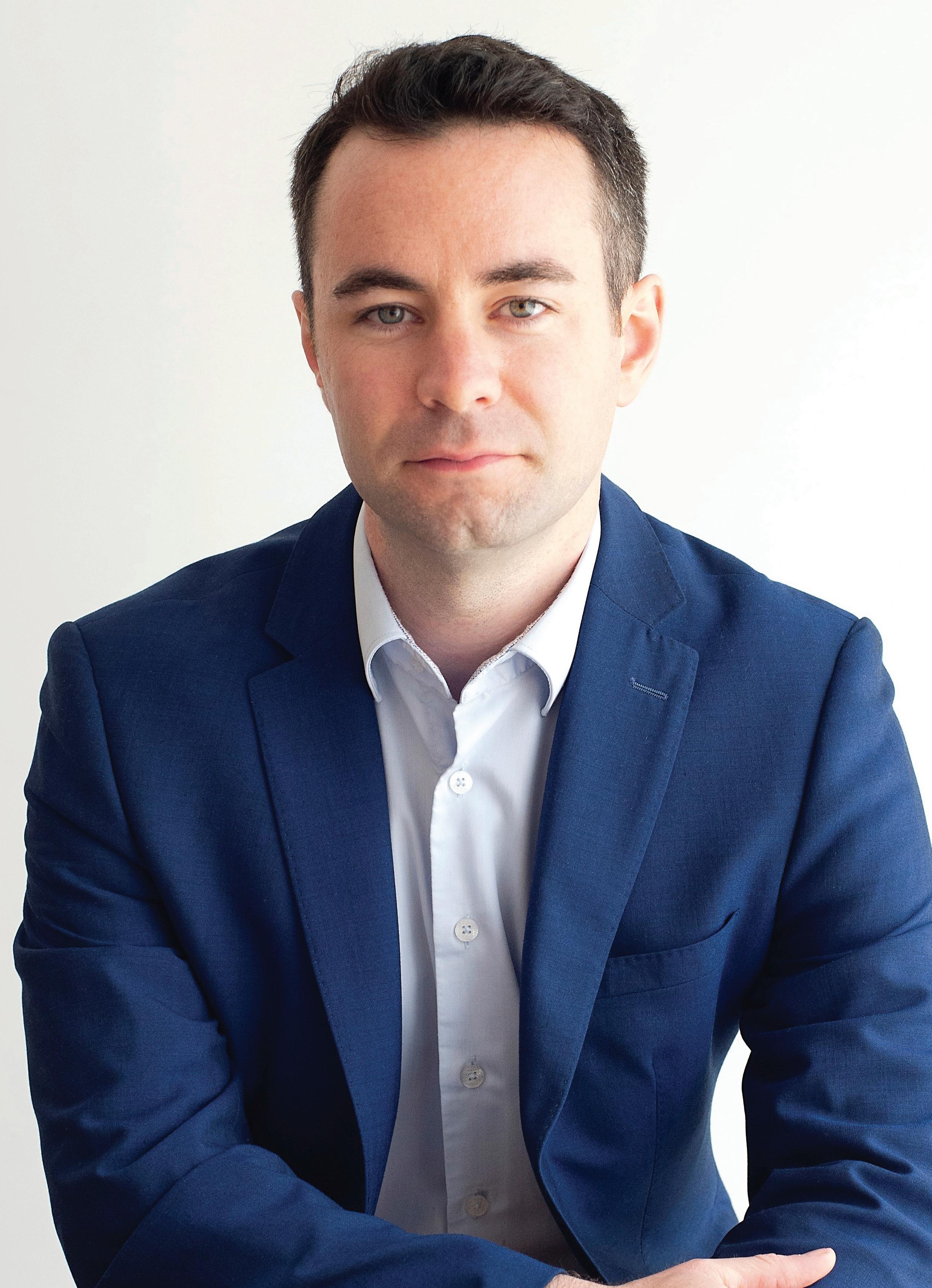
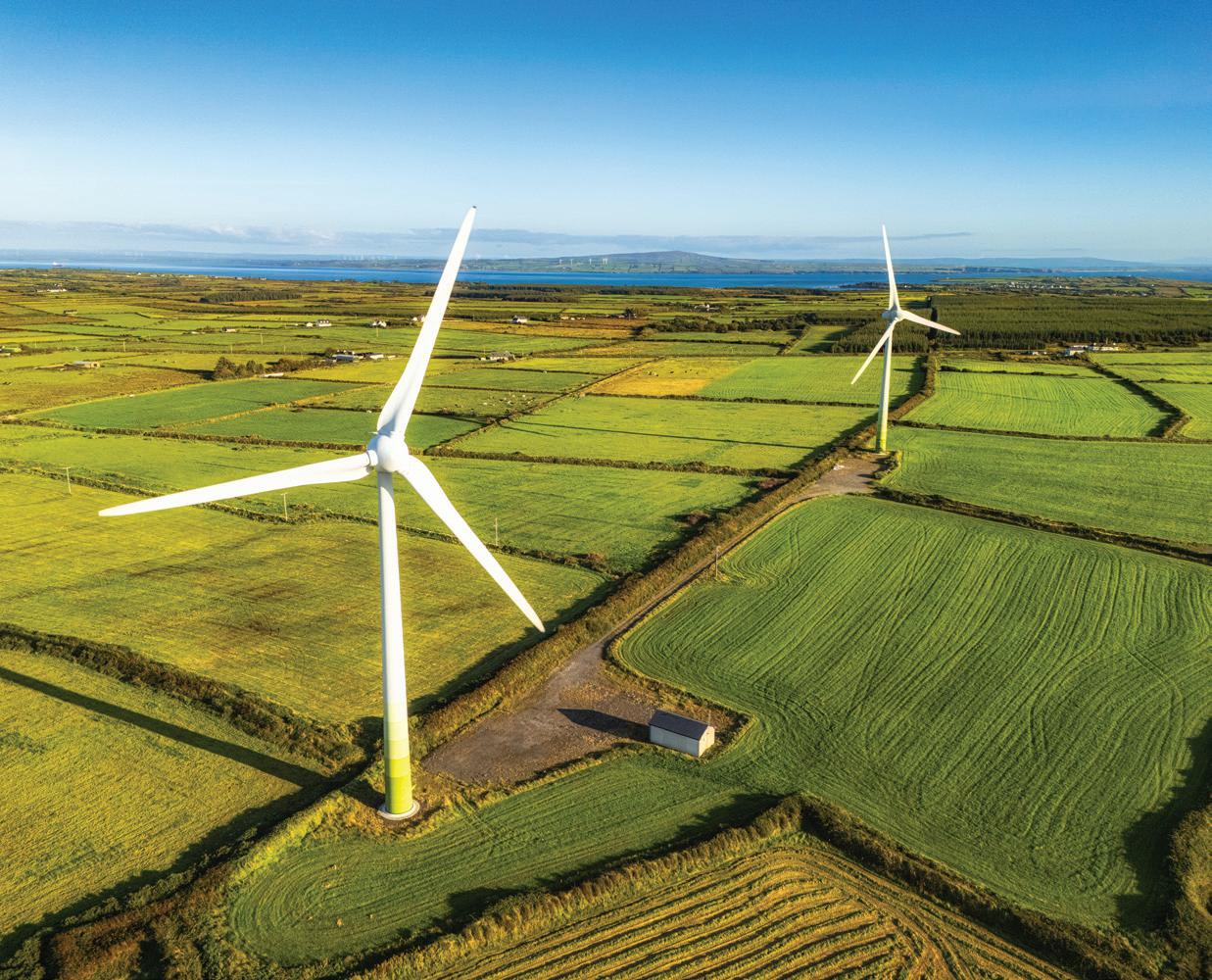
THE DECISIONS THAT ARE MADE NOW WILL DECIDE WHEN THAT END GOAL HAPPENS.
I FEEL THAT WE’RE AT THE START OF SOMETHING THAT’S GOING TO BE TRANSFORMATIVE FOR IRELAND IN THE FUTURE
around and get it to homes and businesses. One of the biggest challenges that we have in Ireland is that our electricity grid is extremely congested. A lot of our electricity grid was built in the 1960s to the 1980s and we haven’t invested anywhere near the amount that we should have over the last 40 years to keep pace. Over that time, we’ve added renewable energy but we’ve also significantly increased our population. Our economic output has grown hugely and we’re now at the stage where parts of our grid are creaking at the seams. Being able to move that power around is getting more difficult so for the next 10 years investment, particularly in the electricity grid, is going to drive how fast we can invest in renewable energy.
I have two causes for optimism. The first is I think the Government has recognised that requirement. The Accelerating Infrastructure Task Force report clearly calls out the electricity grid as a critical asset for the country that needs investment. In the Budget last year, the Government invested €3.5 billion in equity into the electricity grid. The second is that in the last few months, the energy regulator approved a new five-year budget for ESB Networks and Eirgrid to invest in the electricity grid. That budget is the largest that they’ve ever been granted. I think the challenge will lie in the nuts and bolts of construction and ensuring the support is there for this transition. About 15
years ago, Eirgrid had a very large investment programme for a grid and the majority of that never came to fruition. When it comes to building these projects, there can be a real lack of political leadership on driving them through. I think we’ve gone beyond the point where opposing energy infrastructure for the sake of a few first preference votes is okay. We can’t let that happen any longer.
COULD ISSUES IN THE PLANNING SYSTEM CAUSE DELAYS?
We’ve had a lot of experience in the last five years of planning delays for onshore wind energy and more recently, for offshore wind energy. However, in the last 18 months we’ve seen a noticeable improvement. Timelines for onshore wind energy projects getting through the planning system used to be in the region of up to four years, particularly when you take into account legal challenges at the end of that process. But now, we’re seeing decisions in about 12 months. We’ve got more projects in construction today than we’ve had in the last seven years. I think we are starting to turn a corner.
INVESTMENT IN INFRASTRUCTURE IN IRELAND IS NOTORIOUSLY SLOW. DO YOU GET FRUSTRATED BY THAT SLOW PACE OF ACTIVITY?
I’m an engineer, so I’ve lived that experience. It’s certainly an industry that requires a lot of patience. Companies that are developing projects will often be waiting 10 years from concept to the project being energised. That’s simply unacceptable, particularly when it comes to decarbonisation, but also in terms of keeping pace with our energy demand and electrification and digitalisation of our society. The electricity grid and electricity system more generally is going to become more and more important to our society. Unless we can speed up investment in renewable generation, renewable power and in electricity grid infrastructure, it will limit the ability of our economy to grow and expand.
YOU MENTIONED THAT THE SCALE OF THE INDUSTRY IS SO BIG COMPARED TO WHAT IT WAS FIVE YEARS AGO. DO YOU FEEL IT’S AN EXCITING SECTOR TO BE IN?
It really is. In terms of what the future looks like and being in control of our own energy bills. We don’t have a limitation on ourselves in terms of powering growth in housing, in population, in business. It means that we can develop new industries. We can export some of our knowledge that we’ve built up in renewable energy. I’m genuinely confident of Ireland reaching the end goal that we want to reach. The decisions that are made now will decide when that end goal happens. I feel that we’re at the start of something that’s going to be transformative for Ireland in the future.



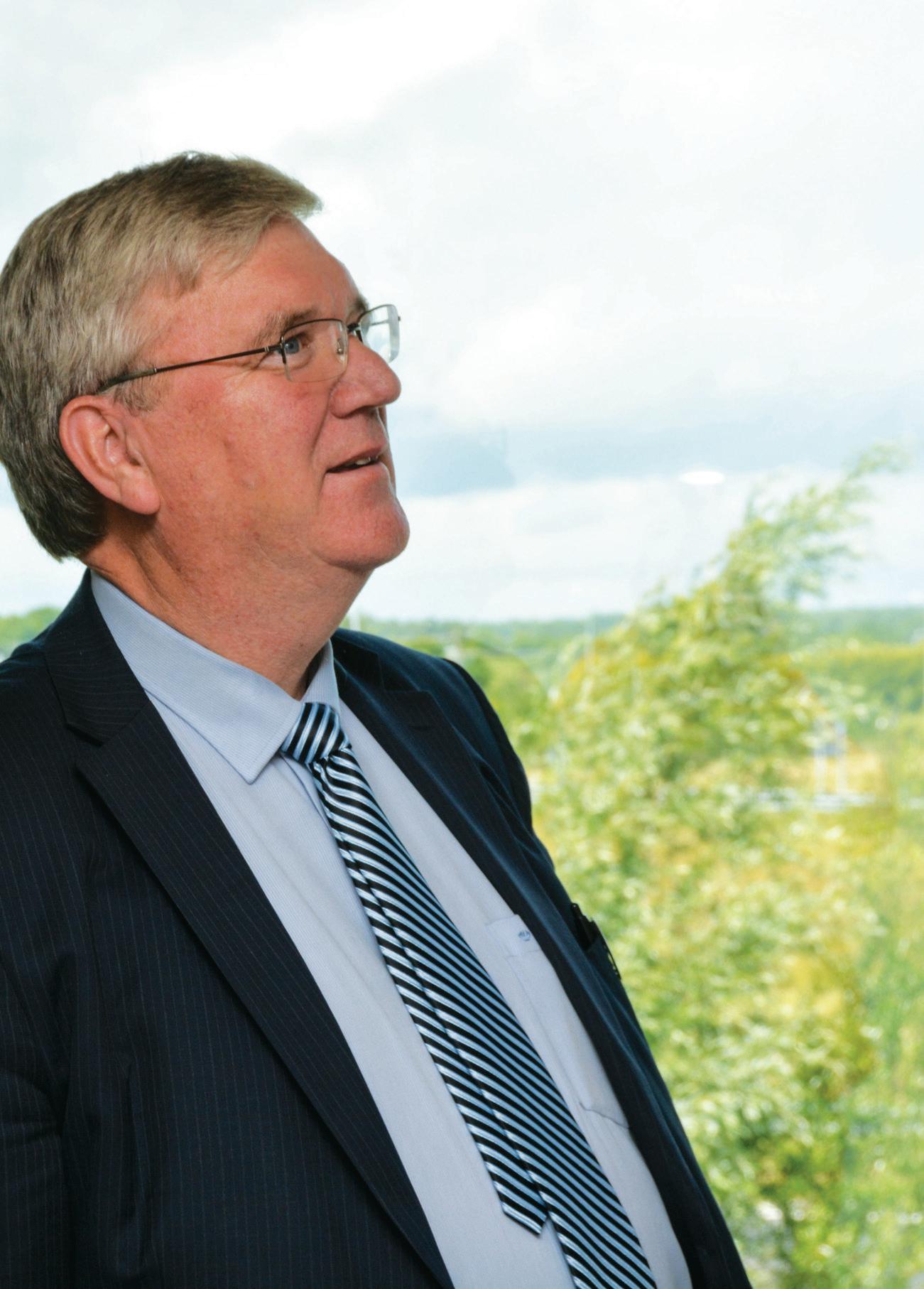

























InBUSINESS chats to Laurence Rogers from Excel Recruitment on the benefits of temporary staffing
Q: TEMPORARY STAFFING IS BECOMING INCREASINGLY POPULAR - WHAT’S DRIVING THIS TREND?
A: Today’s businesses need flexibility more than ever. Workloads fluctuate, teams expand, and unexpected absences happen. But rather than taking a one-size-fits-all approach, more companies are turning to consultative recruitment partners who take the time to understand their specific pressures, culture, and goals. This personalised approach ensures temporary staff aren’t just filling a gapthey’re actively supporting the business in a way that aligns with how it operates.
Q: HOW DO YOU APPROACH AD HOC HOLIDAY OR SICKNESS COVER IN A CONSULTATIVE WAY?
A: The key is preparation. We work closely with clients to understand their workflows, busy periods, service expectations, and the personalities that thrive in their teams. This means that when a same-day holiday request or unexpected sick leave happens, we already know the type of person who will suit their environment. It transforms emergency cover into a seamless, efficient solution - someone arrives who already feels like a natural fit, keeping operations running smoothly across reception, accounts, sales support, admin and more.
Q: WHAT ABOUT BUSINESSES FACING EXTENDED BUSY PERIODS OR GROWTH?
A: Many clients rely on 6- and 12-month contracts during peak activity or expansion phases. But the difference with a consultative approach is that we don’t simply provide a temp for a timeline - we work to understand what success looks like for that period. Are they building out a future permanent team? Are they trialling new processes? Are they bridging a skills gap? By understanding these drivers, we match professionals who bring the right mix of skills, experience, and mindset to support the organisation through change, without overcommitting to permanent headcount too early.
Q: WHICH DEPARTMENTS BENEFIT MOST FROM TAILORED TEMPORARY SUPPORT?
A: Almost any business function can benefit, especially when placements are tailored rather than generic. We frequently support:
» Accounts & Finance: From invoicing to payroll, especially during peak billing cycles.
WE FIND THAT A LOT OF THE BUSINESSES THAT WE DEAL WITH, ARE MOVING
OUR TEMPORARY STAFF OVER TO FULL TIME PERMANENT CONTRACTS
» Reception & Front of House: Ensuring consistent customer experience.
» Sales Support: Order processing, reporting, and CRM upkeep.
» Marketing & Communications: Campaign support, content co-ordination, and event admin.
» General Administration: Keeping teams organised during transition or high workload. Because we take the time to understand each business, we match not just skills but personality, pace, and working style - key factors in ensuring immediate impact.
Q: WHAT WIDER BENEFITS DOES A CONSULTATIVE TEMP STAFFING APPROACH OFFER?
A: Beyond flexibility, businesses gain a trusted partner who understands their rhythms, challenges, and goals. This reduces hiring risk, improves continuity, and offers access to high-quality talent exactly when it’s needed. It also relieves pressure on permanent teams, supporting morale and productivity.
Q: SO IS TEMPORARY STAFFING MORE THAN JUST PLUGGING GAPS?
A: Completely. When delivered consultatively, temporary staffing becomes a strategic toolenhancing resilience, supporting growth, and giving businesses the freedom to adapt without compromising performance. We find that a lot of the businesses that we deal with, are moving our temporary staff over to full time permanent contracts.
































Future proof your business thanks to a new learning initiative aimed at business leaders
Finding the competitive edge which enables you to future proof your business is the perennial white whale of leadership but now; thanks to a new initiative from SOLAS, in partnership with Enterprise Ireland, it may not be so elusive after all.
We know that Irish companies are facing a constantly changing business environment. Throw in global and national economic shifts, climate change, and advances in technology and companies need to be constantly evolving under strong leadership if they are to succeed.
As such, the Leadership and Management Development Programme offers business owners, managers and supervisors from companies of all sizes the chance to develop their leadership and management skills to become better equipped to deal with the constantly changing business landscape. The programme is designed to help business leaders and owners overcome potential future challenges while becoming equipped to seize new business opportunities.
Developed under SOLAS’s Skills to Advance Initiative, the programme is tasked with helping businesses become better able to navigate organisational change while also adapting where needed to ensure continued success in transforming sectors - laying a strong foundation to help leaders future proof their business.
The programme is centered around five key modules and has been designed to fit around the real world needs of running a business so will be delivered in a hybrid format - combining in-person with online learning.
Under the five key modules of financial planning; strategic business planning; change management; team management; and resilience and leadership style, leaders will also receive in-depth training in cash flow, costing, budgeting and funding.
There is also a focus on leading teams through hybrid working, with participants also learning how to reduce employee turnover, increase retention, and motivate teams to achieve organisational goals.
The programme is fully accredited, and, upon completion, participants will receive an internationally recognised certificate in Leadership and Management from the Institute of Leadership and Management (ILM).
The programme will be delivered locally by the 16 Education and Training Boards located around the country, with costs heavily subsidised thanks to SOLAS’ Skills to Advance upskilling initiative. Under the initiative, participating businesses can get a subsidy for up to 70% of the course feewith the remaining costs being calculated on an individual basis in partnership with your local ETB.
Companies can express interest in the Leadership and Management Development Programme by emailing skillstoadvance@solas.ie or contacting their local ETB offices today.
THE PROGRAMME IS DESIGNED TO HELP BUSINESS LEADERS AND OWNERS OVERCOME POTENTIAL FUTURE CHALLENGES WHILE BECOMING EQUIPPED TO SEIZE NEW BUSINESS OPPORTUNITIES
The DHL Global Connectedness Report is the most comprehensive view of globalisation, making it an essential resource for any business with cross-border trade ambitions
Based on more than nine million data points, The DHL Global Connectedness Report 2026 analyses international trade, capital, information, and people flows to provide reliable and in-depth insights on globalisation. Published regularly since 2011, its insights and data reviews makes it an essential resource for any business with cross-border trade ambitions. Even more so when the world finds itself in a period of profound geopolitical and economic uncertainty.
For leaders in both the public and private sectors, volatility has become a part of daily decision-making. In such an environment, assumptions can be misleading, and facts matter more than ever. Therefore the key finding of the most recent research is refreshing - globalisation remains at a historically high level, despite escalating geopolitical tensions, rising tariffs from the United States, and unprecedented uncertainty about future trade policies.
Despite a volatile 2025, which was shaped by tariff hikes, geopolitical friction, and ongoing uncertainty around global supply chains, international trade proved more resilient than many expected. The DHL Global Connectedness Report 2026 shows that the world’s level of globalization held steady at 25% last year, matching the record high first reached in 2022. In other words, crossborder flows of goods, capital, information, and people have not retreated. Businesses may be adapting, but they are not pulling back from global markets.
Trade performance in 2025 was particularly striking. Global goods trade grew faster than in any year since 2017 (excluding the pandemic rebound). Early in the year, U.S. importers accelerated shipments ahead of new tariff increases. At the same time, China redirected exports toward non-U.S. markets, sustaining overall global volumes. Meanwhile, surging investment in AI infrastructure drove significant increases in trade for semiconductors, data transmission equipment, and other AI-related products, which, according to WTO estimates, accounted for 42% of goods trade growth in the first three quarters of the year.
Looking ahead, higher tariffs are expected to modestly slow but not reverse trade expansion. Global goods trade is projected to grow at an average annual rate of 2.6% through 2029, in line with the past decade. Crucially,

LOOKING AHEAD, HIGHER TARIFFS ARE EXPECTED TO MODESTLY SLOW BUT NOT REVERSE TRADE EXPANSION
most global trade flows do not involve the U.S., and many countries are actively diversifying partnerships and negotiating new trade agreements. The result is a global trading system that is continuing to stretch across longer distances and connect markets worldwide.
All of which means that the outlook for cross-border business remains positive. Global trade is not retreating, it is reconfiguring. Companies that understand where flows are strengthening and which markets are deepening ties will be well positioned to capture new growth. And that’s where the insights from The DHL Global Connectedness Report are invaluable.
The report has the insights to help your business find new markets – DHL Express has the international logistics expertise to get you there.
For a more detailed understanding of the report, a summary of the 10 key takeaways or to review individual country profiles we invite you to scan the QR code and learn more.
Strong oversight and clear appeals pathways are essential to supporting entrepreneurship, says Credit Review
Ifyou’re a small business struggling to access credit, Credit Review is here to help. Set up in 2010, Credit Review has a simple mission - to assist viable, or potentially viable, SMEs and farms access the bank finance they need to grow and develop. And now, thanks to new legislation, this capability has been strengthened even further.
The Credit Review Act 2026 was passed to help small businesses have confidence in the lending system - empowering Credit
Review to act as a watchdog and provide appeals on specific credit decisions by banks - enabling SMEs and farm borrowers to challenge lending decisions they believe are wrong. This change reinforces consistency in the lending system while recognising the evolving nature of business finance.
If you are experiencing difficulties accessing credit for your business, contact Credit Review. It will review new applications for credit; or existing facilities that are being reduced, restructured/ refinanced or withdrawn, with a value of up to €3m. Banks covered are AIB, BOI and PTSB. The appeals process is flexible and responsive and Credit Reviews experts
will engage directly with you, providing comprehensive insights into the credit application/decline process.
The Credit Review Service is an independent statutory body whose core function is to provide impartial appeals for viable small businesses refused credit or loans by Irish banks. In addition, the Credit Review Act, 2026, saw the Minister for Finance extend the Credit Review’s scope to non-bank lenders, reflecting the growing role of alternative funding sources for SME and farm credit.
Visit creditreview.ie to request a call back, or call the helpline directly on 0818 211789
Credit where it’s due.
Having difficulty getting a new business loan or restructuring your existing debt with your bank? Established by the Minister for Finance, Credit Review is here to help.
Talk to the credit experts today on 0818 211 789 or visit creditreview.ie

Meath Co Co launches Digital & ICT Strategy 2030; 12th Lock to Hazelhatch Greenway opens in South Dublin; biodiversity panels installed at the Boyne Greenway; and €10.5m for Greenway projects in Meath.
New Clonakilty fire station o icially opened; €900K Town and Village Renewal Scheme funding for four Cork projects; Moyross Link Road and new dual carriageway o icially opened; and glassworks building on former Waterford Crystal site opens.
Hare’s Corner applicants from across Sligo collect thousands of free trees to plant new hedgerows, orchards and woodlands; Shannonside Recreational Campus takes major stride forward in design phase; contract signed for €2.1m upgrade of R332 Kilmaine to Tuam Road.
Work underway at new purpose-built youth and community hub for Greater Ardoyne; Belfast to receive over £850k of National Lottery funding to help connect people with nature; and Polish Ambassador visits Donegal ahead of Ireland’s EU Presidency.
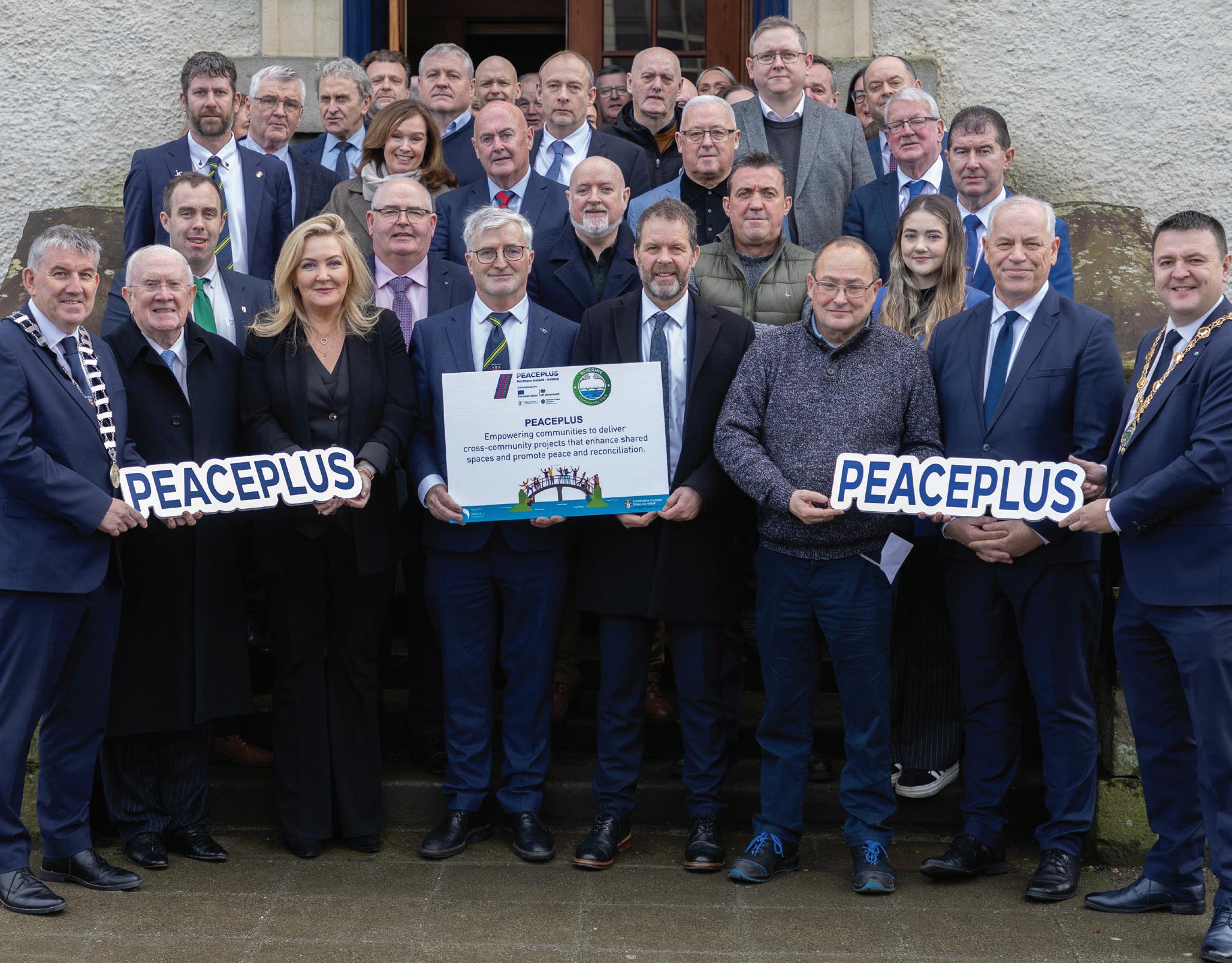





€16.7m PEACEPLUS – funding from a programme managed by the Special EU Programmes Body (SEUPB) is helping to create 30 acres of new cross‑border community park space and infrastructure across Strabane and Lifford. The Riverine Community Park project was officially launched in Lifford in January. Match‑funding for the project has been provided by the Department for Communities in Northern Ireland and the Department for Rural and Community Development and the Gaeltacht in Ireland. The project will encompass a pavilion building, outdoor wetland and park space, family fun space, cross‑border pathways and greenways, and a pedestrian footbridge that will symbolically connect the space across the River Foyle. The project represents a strong working cross‑border partnership between lead partner, Donegal County Council (DCC) and Derry City and Strabane District Council, who will share the responsibility of its construction, delivery and maintenance. Pictured front row, from left: Cathaoirleach Paul Canning, DCC; Pat the Cope Gallagher TD; Gina McIntyre, Chief Executive Officer, SEUPB; John G McLaughlin, Chief Executive, DCC; John Smith, Deputy Secretary for Communities, Place and Local Government; Ivan Barr, Chairperson, Riverine Community Forum; John Kelpie, Chief Executive, and Mayor Ruairí McHugh, both Derry City and Strabane District Council.



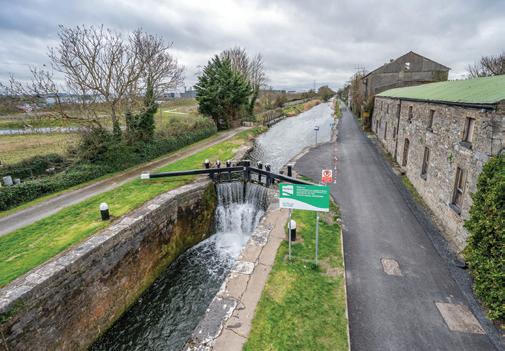
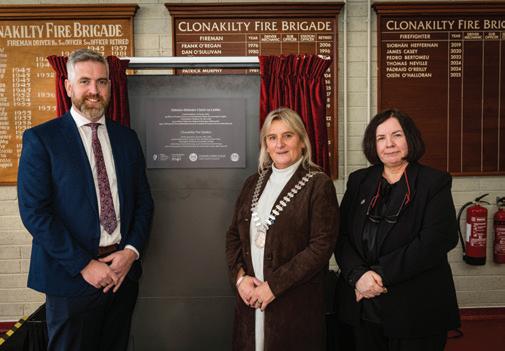
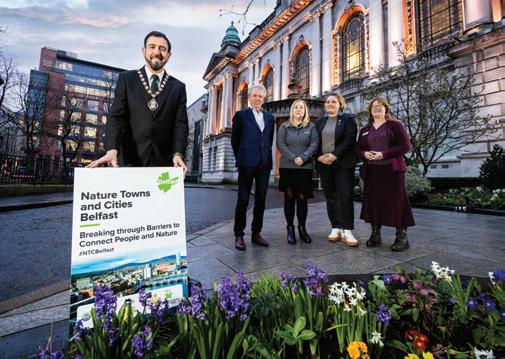









COUNTY MEATH ]
Meath County Council has launched its Digital & ICT Strategy 2030, a forward‑ looking roadmap setting out how digital transformation will support the delivery of modern, efficient and inclusive public services for citizens, businesses and visitors across Co Meath.
The strategy recognises that digital technology is now a core enabler of local government, shaping how services are designed, delivered and improved. Central to the strategy is a strong commitment to accessibility, inclusion and choice, ensuring that as digital services expand, alternative channels of access remain available and no one is left behind.
“This strategy sets out a clear and inclusive vision for how digital innovation can support our communities, strengthen our local economy and enhance engagement between the council and the people of Meath,” says Cathaoirleach of Meath County Council, Cllr Wayne Harding. “It supports better decision‑ making, improved transparency and more
€10.5M funding for Meath County Council for Active Travel and Greenway projects
Meath County Council is pleased with the allocation of €10.5m by the National Transport Authority to advance 35 Active Travel and Greenway projects in 2026. This investment is dedicated to the development of walking and cycling projects that offer safe, sustainable and healthy transport options to communities around the country, with €360m in total provided nationally.









responsive services, while recognising the diversity of our county and ensuring that digital progress benefits everyone.”
The strategy has been informed by extensive consultation with members of the public, staff and elected members, ensuring that digital priorities reflect local needs and lived experience. It also aligns with national objectives, including the ambition to have 90% of applicable public services available online by 2030,




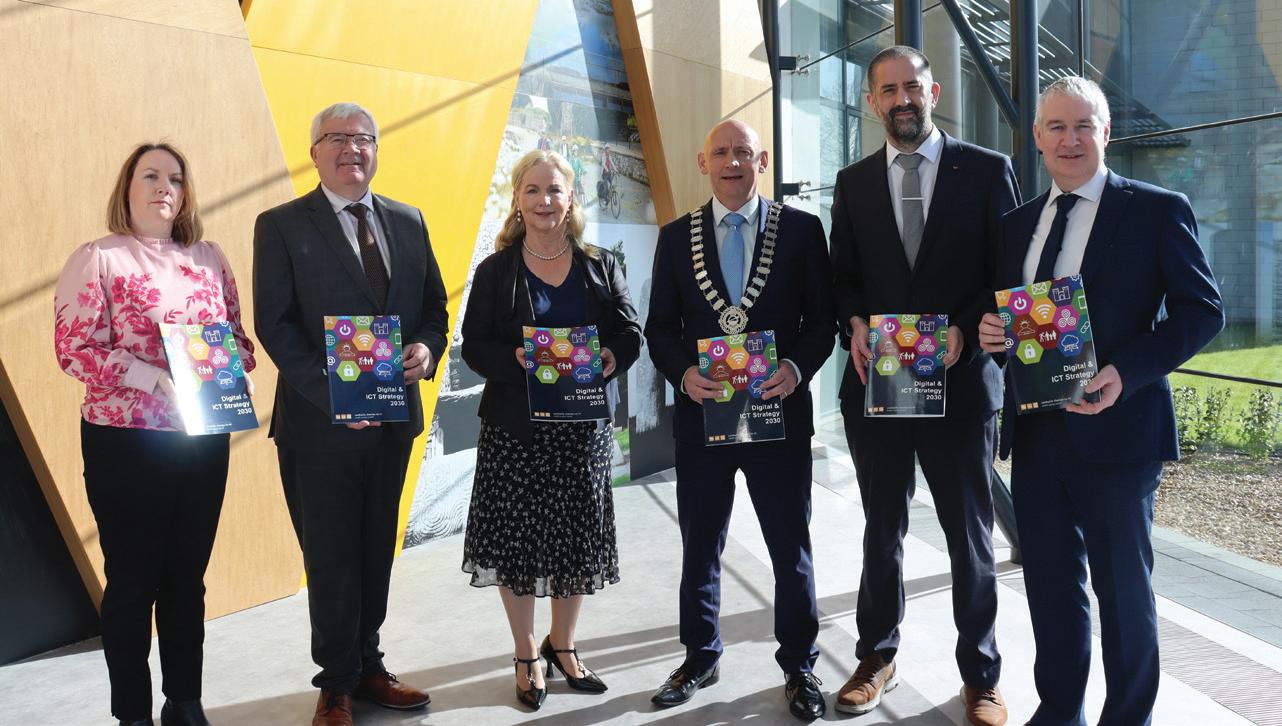
supported by strong governance, cyber security and data protection. Built around four core themes –Digital Services, Digital Workforce, Digital Systems and Digital Communities – the strategy focuses on improving the customer journey, simplifying processes, supporting digital skills and innovation, and enabling digital access and connectivity across urban and rural areas.
Meath County Council has been recognised by the Environmental Protection Agency (EPA) for its strong environmental enforcement performance, following the publication of the EPA Local Authority Environmental Enforcement Performance Report 2024. The EPA has identified Meath County Council as one of only three local authorities nationally to achieve this high standard. The recognition reflects the council’s consistently strong performance and its ongoing commitment to environmental protection across Co Meath. The EPA report assesses how local authorities deliver the National Enforcement Priorities under the EPA’s Local Authority Performance Framework.
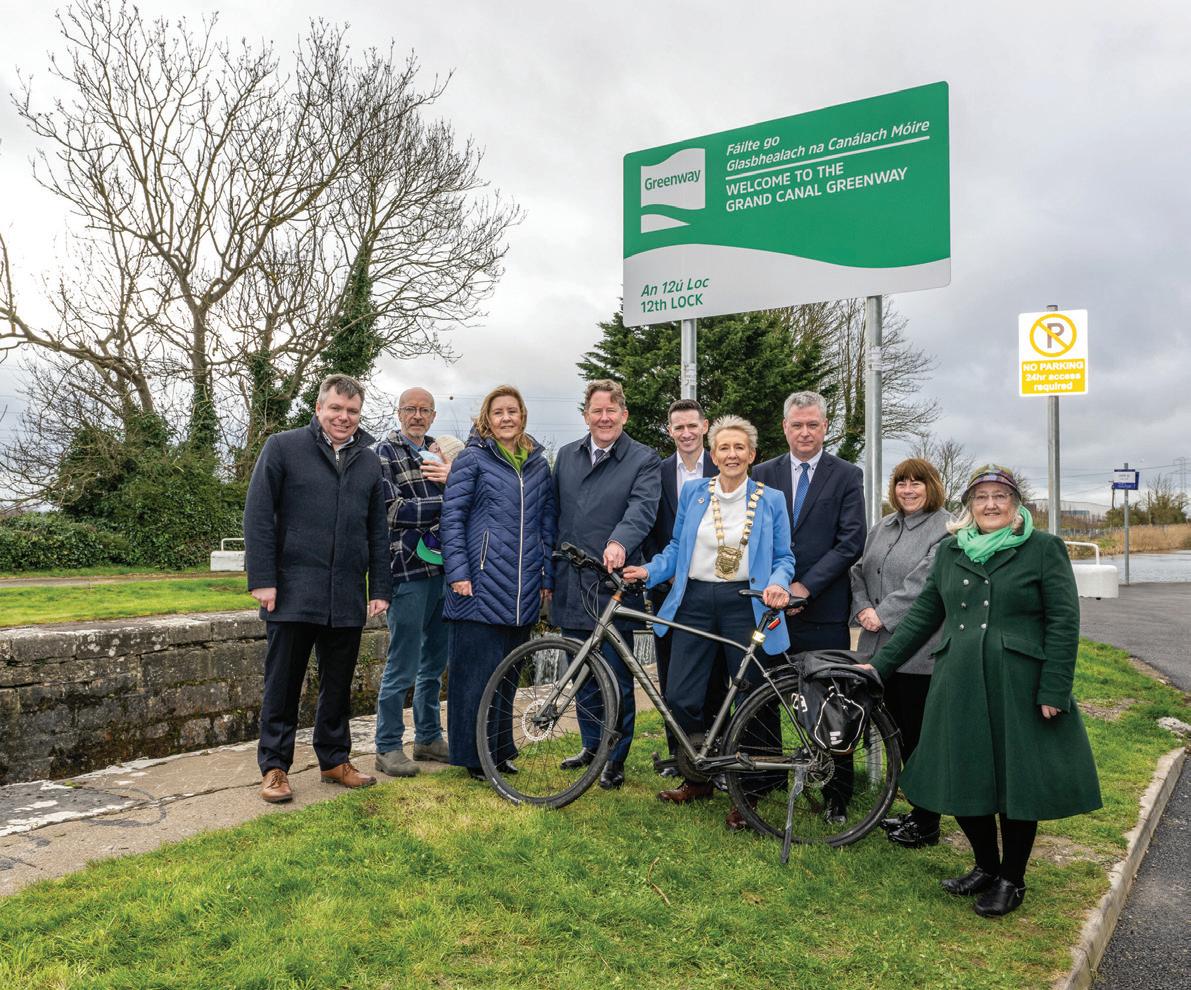
The Mayor of South Dublin was joined by Minister for Transport, Climate, Environment and Energy Darragh O’Brien TD, Transport Infrastructure Ireland and Waterways Ireland to officially open the new 12th Lock to Hazelhatch section of the Grand Canal Greenway, marking a major step forward in enhancing sustainable travel and recreational amenities along one of the county’s most significant historic corridors. The project forms part of a wider effort to develop a high‑quality, accessible walking and cycling route along the Grand Canal.
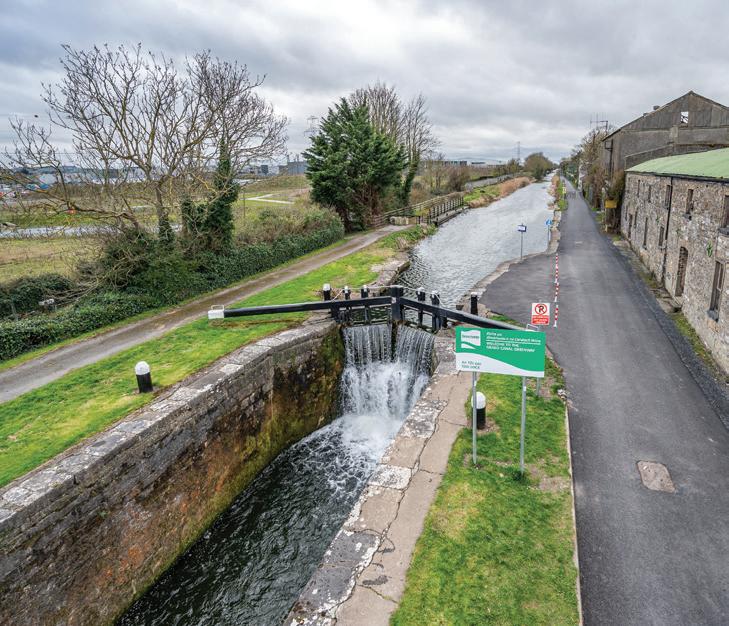
Speaking at the opening, the Mayor of South Dublin, Cllr Pamela Kearns highlighted the importance of the project for both current and future communities: “This greenway delivers a high‑quality, safe and accessible route along one of our most historic landscapes, improving connectivity between neighbourhoods and offering a valuable amenity for people of all ages. It forms part of South Dublin County Council’s wider plans for the area – supporting the developing community at Clonburris and the significant projects now underway at the 12th Lock.”
CEO of Transport Infrastructure Ireland, Lorcan O’Connor recognised the importance of the delivery of the Greenway as part of the overall greenway network from Dublin to the Shannon: “The delivery of this 5km section of Greenway from 12th Lock to Hazelhatch represents another important milestone in the delivery of the 130km Grand Canal Greenway from Dublin to the River Shannon.”
[ COUNTY LOUTH ]
Louth County Council and Drogheda Tidy Towns have unveiled four new biodiversity information panels on the Boyne Greenway in Drogheda, bringing to life a landmark 2025 ecological study by local environmentalist Tony Conaghy.
The four panels – one on the north side of the river and three on the south –are located along a 2.5km stretch of the Greenway between the Mary McAleese Bridge and the Bridge of Peace. Each features findings from Other Nations 2 –Biodiversity Along the Boyne Greenway, which captured the rich plant and animal life of the Boyne corridor.
This installation marks the latest step in sharing Tony’s eight months of fieldwork, which documented the tidal waters, woodlands, grasslands and marshlands of the Boyne and recorded over 150 species of birds, mammals, insects and plants.
The original publication explained that the goal of the study was “to encourage awareness and appreciation of the beauty and complexity of our natural surroundings.” The Drogheda Tidy Towns Biodiversity Subgroup developed these new panels so that everyone walking the route could easily access this information and experience the habitats as they appear in the landscape.
Each panel highlights a distinct habitat recorded in Other Nations 2, allowing walkers to encounter the Boyne’s biodiversity exactly where it thrives.
“These panels are a wonderful addition to the Boyne Greenway and a reminder of the extraordinary biodiversity that surrounds us every day,” says Cllr Michelle Hall, Mayor of Drogheda. “Tony Conaghy’s work has captured the magic and fragility of the Boyne and now walkers, runners and families can enjoy these insights right along the route. This is a brilliant example of local partnership delivering something meaningful for our community.”
Anew state-of-the-art fire station, serving more than 18,000 people, was officially opened in Clonakilty by the Mayor of the County of Cork, Cllr Mary Linehan Foley, Christopher O’Sullivan TD, Minister of State at the Department of Housing, Local Government and Heritage, and Chief Executive of Cork County Council, Moira Murrell. The facility on Park Road replaces the old station at Kent Street, which was home to Clonakilty Fire Brigade for over 80 years.
“This new fire station is a valuable addition to Clonakilty. It serves Clonakilty and a wide hinterland including nearby villages of Rosscarbery, Timoleague, Courtmacsherry, Ballinscarthy, Ring, Ardfield and Rathbarry. Clonakilty Fire Brigade also responds regularly to incidents in adjacent station ground areas of Skibbereen, Dunmanway and Bandon,” says Mayor of the County of Cork, Cllr Mary Linehan Foley. “The old facility at Kent Street, which underwent a redevelopment in 1975 and the
former station on the same site has served the area well for just over 80 years. The new station on Park Road is much larger and has more modern facilities which is of huge assistance to the work this brigade does.”
The contract for the new building was awarded to Cahalane Construction, following a competitive tender valued at €2.25m and was funded by the Department of Housing, Heritage and Local Government.




Town and Village Renewal Scheme funding for four Cork projects
Mayor of the County of Cork, Cllr Mary Linehan Foley has welcomed the allocation of €900,000 in funding for four transformative projects under the Town and Village Renewal Scheme in Passage West (€300,000), Rathcormac (€300,000), Youghal (€250,000) and Mitchelstown (€50,000). The investment aims to rejuvenate town centres, boost local economies, combat dereliction and enhance outdoor spaces across rural Cork.
Cork County Council has published The Commemorative Landscape of County Cork 2026–2040, which examines, year by year, a variety of events that can be commemorated over the next 15 years. Identifying close to 800 occurrences from the county’s history, the range of topics across the publication’s 300-plus pages covers Ireland’s Revolutionary Decade of 1912–1923; the 1,490th anniversary in 2040 of Saint Finbar, who is associated with Guagán Barra and Templemartin, as well as Cork City; and the 250th anniversary of the Clock Gate Tower in Youghal in 2027. From left: Deputy Mayor, Cllr Ian Doyle; Chief Executive of Cork County Council, Moira Murrell; Mayor of the County of Cork, Cllr Mary Linehan Foley; and Cork County Council Heritage Officer, Conor Nelligan. Photo by Brian Lougheed.
COUNTY LIMERICK ]
Minister for Transport, Darragh O’Brien marked the official opening of the newly constructed Moyross Link Road and the new dual carriageway connecting Cratloe Road Roundabout to Knockalisheen Road Roundabout. The €84m project, funded by the Department of Transport, is being led by Limerick City and County Council in partnership with Clare County Council.
The scheme is part of the wider Coonagh to Knockalisheen Distributor Road project and provides a vital new transport corridor that improves connectivity, enhances road safety and opens up substantial lands for housing, healthcare and socio‑economic development.
The new route, which partially opened to traffic in March, represents a key milestone in a scheme that will deliver 2.1km of urban dual carriageway along with upgraded infrastructure for pedestrians, cyclists and public transport users.
The Coonagh to Knockalisheen Distributor Road Scheme is a key part of the Limerick Regeneration Framework Implementation Plan. The opening of the road is already enabling the progression of a number of major developments, most notably a €40m healthcare
COUNTY WATERFORD ]

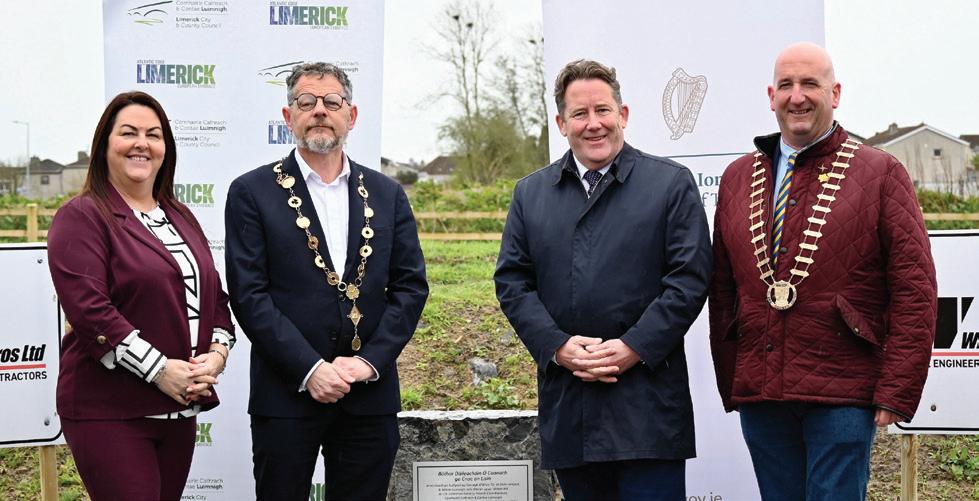
investment by UPMC on lands at Ballygrennan, directly served by the new route. Construction is well underway on a new private medical facility, forming part of a wider medical campus that will deliver hundreds of jobs and provide expanded healthcare capacity for the region.
The new infrastructure has also unlocked the potential for substantial residential development on Limerick’s northside, with hundreds of new homes being delivered alongside community and recreational amenities.
Historically, parts of Moyross were effectively a cul‑de‑sac in transport terms. The new link road provides a second strategic access point, integrating the area more fully into the Limerick‑ Shannon Metropolitan transport network. The project also complements planned future infrastructure, including a proposed new rail station for Moyross, further enhancing connectivity and supporting sustainable transport options.
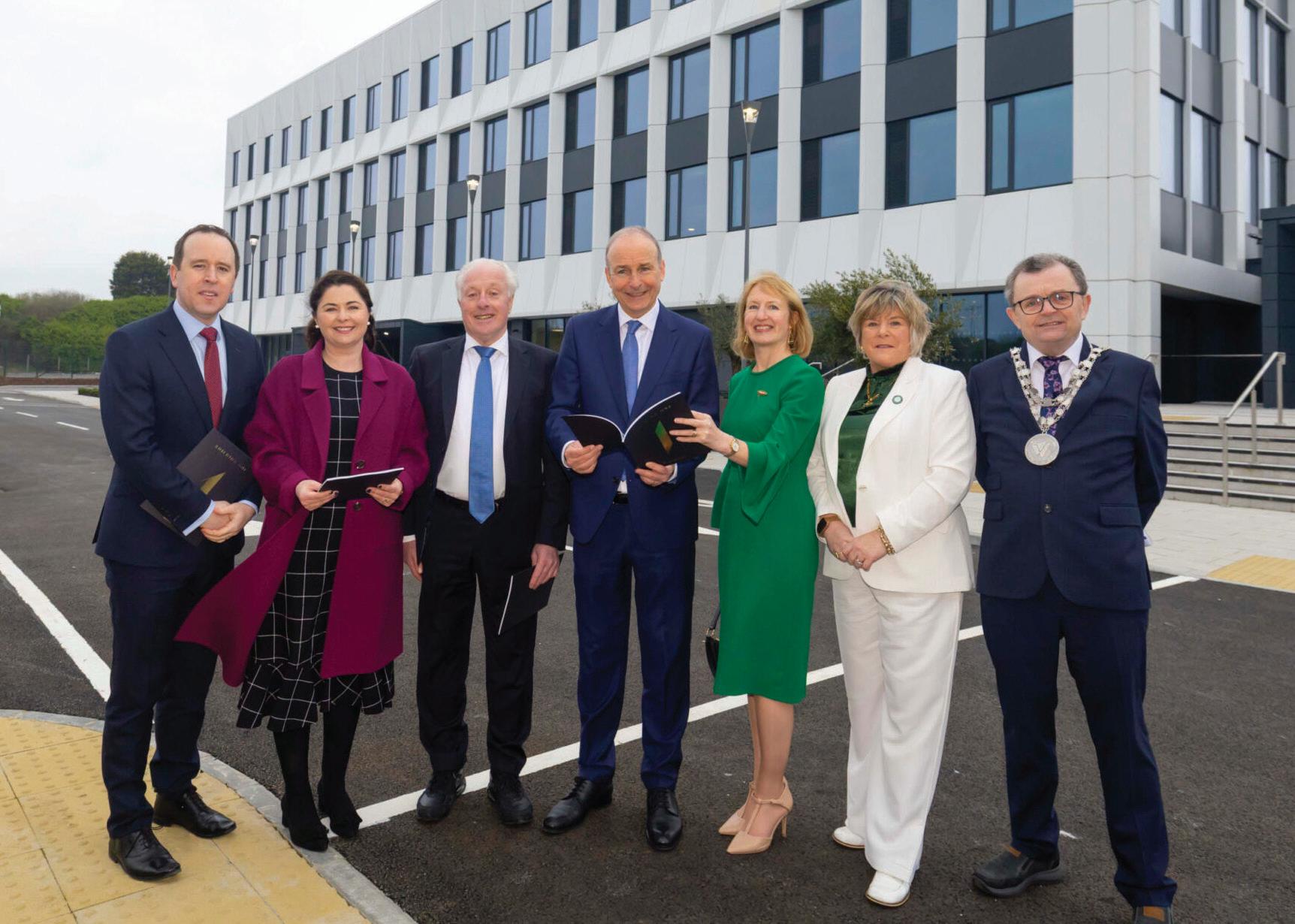
Taoiseach Micheál Martin recently opened the €43m enterprise block on the former Waterford Crystal manufacturing site outside Waterford City, which closed its doors nearly two decades ago. The 80,000-square-foot
Glassworks Building One is Ireland’s first co-located university enterprise quarter and is expected to eventually house 800 employees.
This is the first part of a 37-acre enterprise and innovation campus, located beside the South East Technological University’s academic and research facilities, which is expected to have capacity for up to 6,000 employees.
The Glassworks campus aims to take inspiration from successful international university enterprise quarters such as the University of Nottingham’s Innovation Park and the Cortex Innovation District in St Louis, Missouri.
COUNTY SLIGO ]
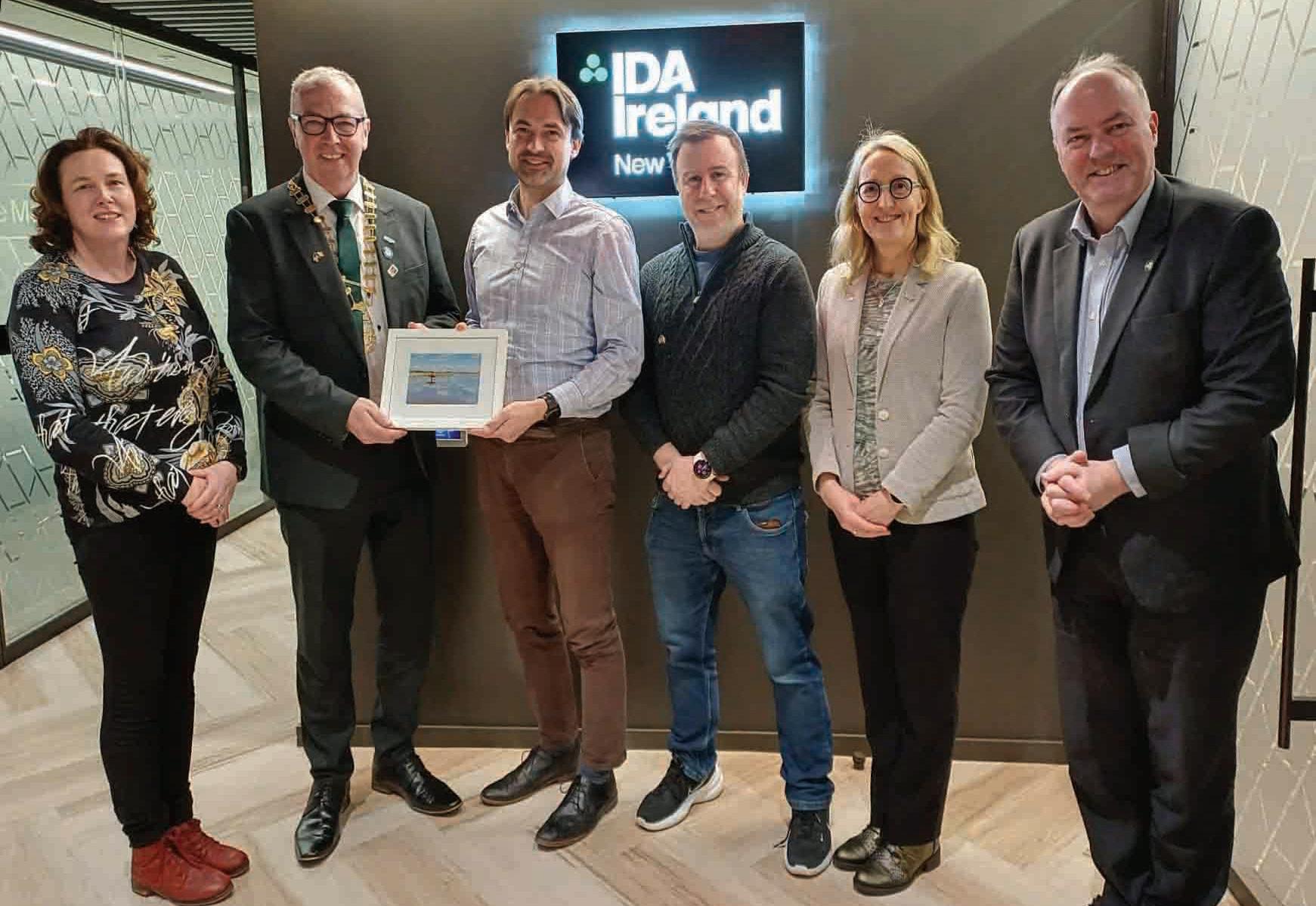
A delegation from Sligo County Council, led by Cathaoirleach Cllr Dónal Gilroy, undertook a series of St Patrick’s Day engagements in New York. Cllr Gilroy was accompanied by Leas-Cathaoirleach Cllr Fergal Nealon, Deputy Chief Executive Emer Concannon and Director of Services Marie Whelan. Alongside a formal meeting with the County Sligo Social and Benevolent Association of New York, the delegation participated in an extensive programme of engagements, including discussions with the IDA, Tourism Ireland and Enterprise Ireland. These meetings focused on promoting Sligo as a leading destination for investment, tourism and relocation, and on strengthening existing relationships with key economic and tourism partners.
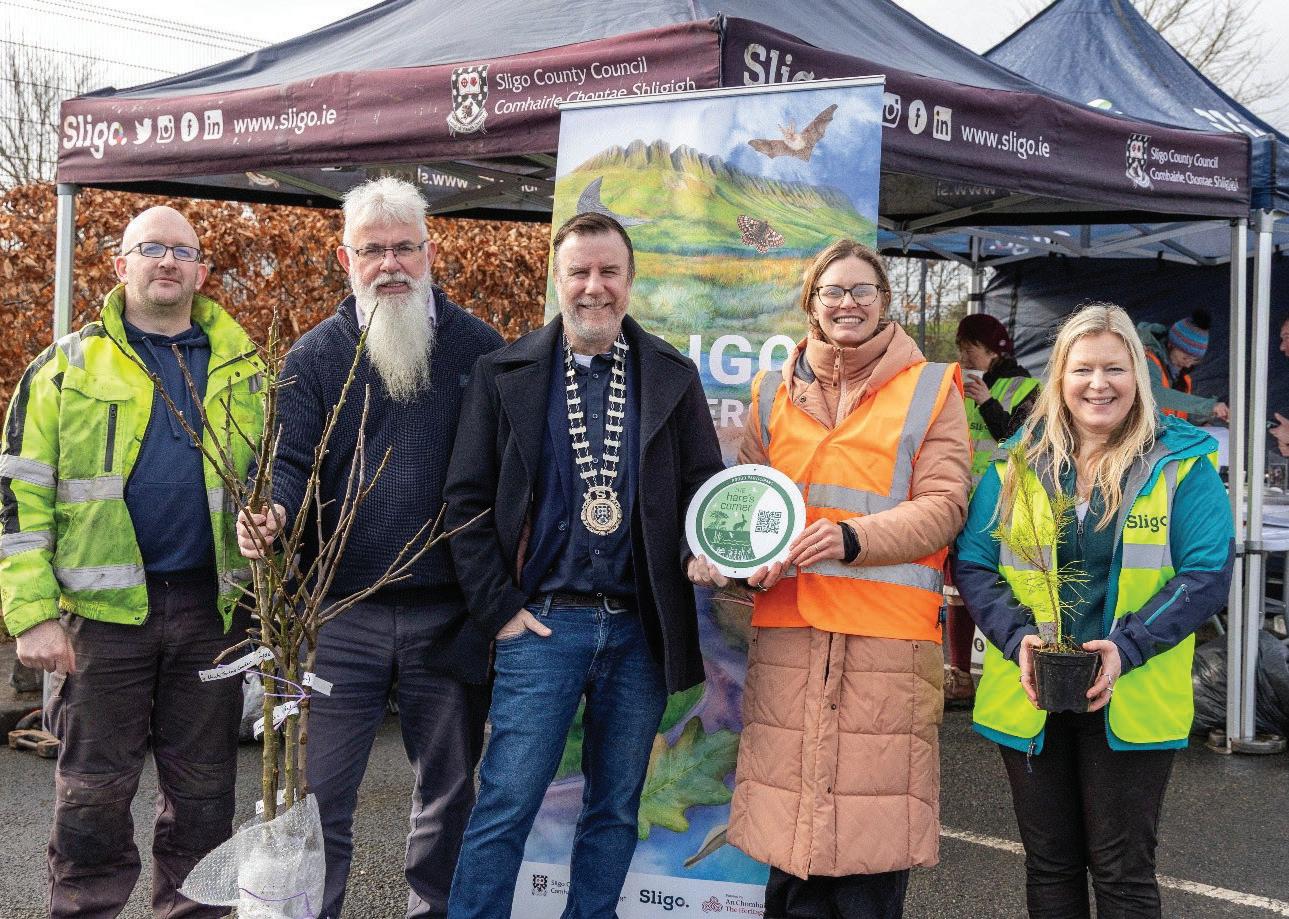
apple trees, supporting the revival of traditional Irish varieties. These trees were selected for their ecological value offering food, shelter and long‑term resilience as Sligo’s landscapes adapt to climate and environmental change.

Sligo County Council welcomed over 200 people to Mitchell Curley Park for the Hare’s Corner tree handout day. Applicants from every part of the county arrived to collect over 10,000 free native trees, which will create hedgerows, woodlands and heritage orchards – helping nature
and providing valuable new habitats for wildlife. Householders, farmers, community groups and schools involved in the woodland and hedgerow actions received 50 native trees, including hawthorn, oak, Scots pine, black poplar, spindle and hazel. Those approved for a heritage orchard collected five heritage
The Hare’s Corner initiative –developed by the nonprofit Burrenbeo Trust – has returned to Sligo for a second year in partnership with Sligo County Council. Last year the programme approved 239 new biodiversity actions throughout the county and created 12 new ponds for wildlife. In 2026, there have been applications for 232 actions, including 46 ‘plans for nature’ and the creation of 37 new wildlife ponds, providing essential wetland habitat for amphibians, insects and birds. Over the two years, the programme will support the creation of approximately 111 wildlife hedgerows, 109 heritage orchards and 107 native woodlands. The Hare’s Corner initiative has been enthusiastically embraced by landowners, community groups, farmers and schools, all determined to create space for nature in their local areas.
The Shannonside Recreational Campus (SRC) has entered a new phase of development following the announcement of €15.3m in PEACEPLUS funding for the Shannonside Peace Arena.
The funding is for a shared space that will serve communities across Leitrim and the wider Upper Shannonside region, along with funding from the Large-Scale Sport Infrastructure Fund and the Community Sports Facility Fund.
The SRC represents one of the most significant investments in sports, recreation and shared community infrastructure ever secured for this region. It builds on over
Contract signed for €2.1m upgrade of R332 Kilmaine to Tuam Road
Mayo County Council signed contracts with Harrington Concrete & Quarries of Kilkelly, Co Mayo, worth €2.1m for the R332 Kilmaine to Tuam (Foxhall) Phase 2 upgrade scheme following sanctioning from the Department of Transport for the scheme. Traffic on the route linking Mayo and Galway has doubled since the opening of the N17 Tuam Bypass with average daily traffic now peaking at 2,400, with 6% being
10 years of visioning, planning, advocacy, collaboration, community support and fundraising that allowed the project to get underway and secure access to grant funding.
From its earliest beginnings, the project has grown into a regional movement, supported by the Shannonside Regional Recreational Campus Committee (SRRC), hundreds of volunteers, sporting organisations, community groups and local businesses. Over the years, the SRRC committee and Leitrim County Council has delivered a comprehensive suite of preparatory work: design development,
planning applications, business planning, governance structures, stakeholder engagement and communications platforms.
The Shannonside Peace Arena is designed as an inclusive, accessible and cross-community space, aligning with the aims of the PEACEPLUS Programme – to build peace, strengthen relationships and create environments where people of all backgrounds can come together.
As the project moves into its next stage, the SRRC and Leitrim County Council will continue to share updates and engage with the public.
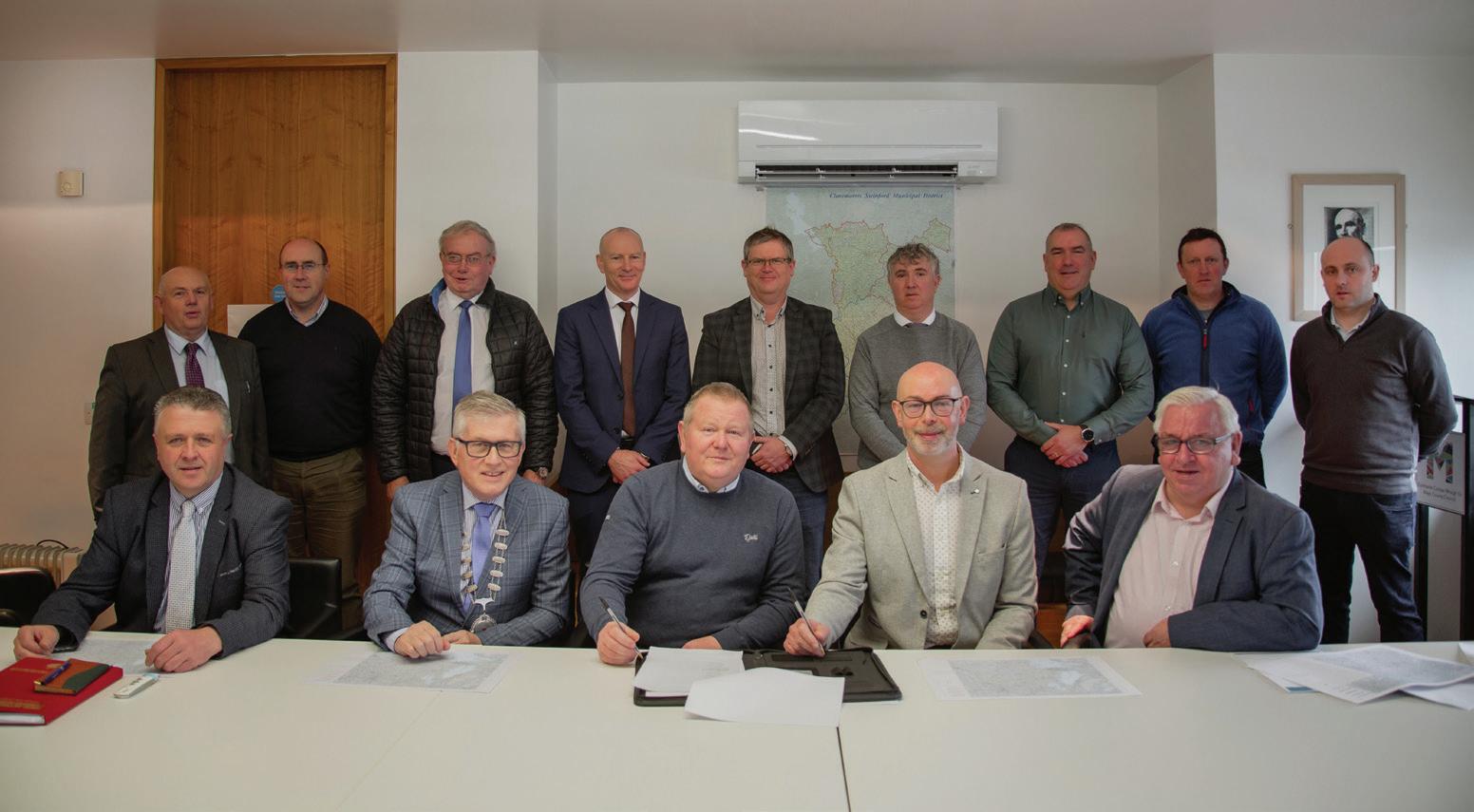
commercial goods vehicles.
The upgrade will serve to enhance strategic connectivity from South Mayo to the M17 Motorway at Tuam and onward to the M6 (Dublin) and
M18 (Limerick / Cork) routes.
“Upgrade of this road not only represents a major improvement in road safety, but also signifies a massive improvement in connectivity
Sport Ireland funding for Mayo Sports Partnership
to and from South Mayo which is of enormous benefit for local business, industry and employment,” says Chief Executive of Mayo County Council, Kevin Kelly.
In 2026, Mayo Sports Partnership will receive €432,654 in core funding. This funding supports the everyday work happening locally – creating safe, welcoming spaces to be active, building confidence and helping people feel connected through sport. It forms part of a wider €12.66m investment in Local Sports Partnerships nationwide, within a record €33.36m core funding package for Irish sport.
[ COUNTY ANTRIM ]
The Lord Mayor of Belfast, Cllr Tracy Kelly, has helped cut the first sod at a new youth and community hub which will transform services for young people in the Greater Ardoyne area of north Belfast.
Work is now underway on the £3.4m project to create a purpose-built shared youth centre on the site of the former Ardoyne shops on Crumlin Road. The scheme will be delivered by Belfast City Council, with funding from the Executive

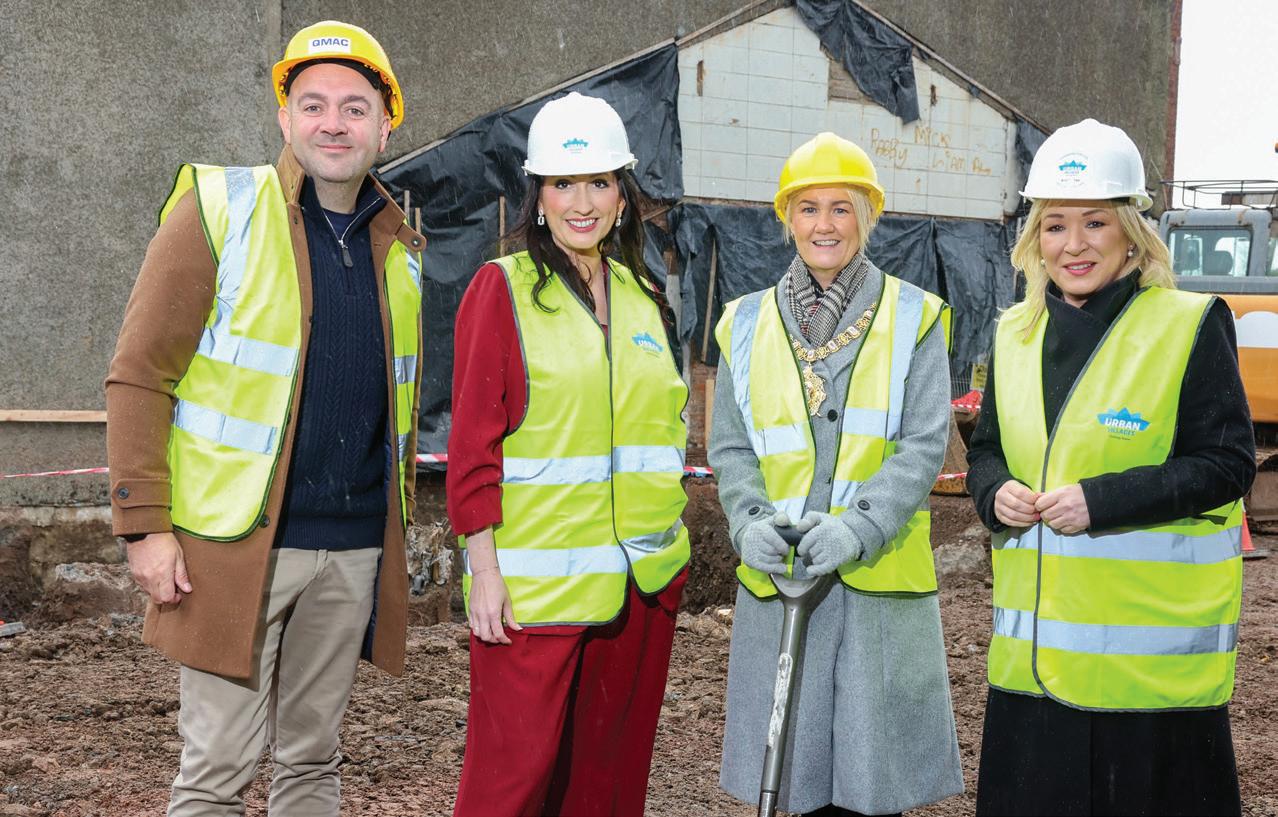
Office’s Urban Villages initiative, the Department for Communities, the Clothworkers’ Foundation, the Garfield Weston Foundation and the council.
Operated by Ardoyne Youth Enterprise, the facility will include a creative learning
centre with digital learning studios, office space and meeting rooms, as well as a space for young people from the Ardoyne, Marrowbone, Woodvale and Oldpark areas to meet and spend time together. Work is due to be completed by March 2027.
Belfast is set to benefit from £850,514 in funding from The National Lottery Heritage Fund for a major new project to help connect people with nature across the city. The project, ‘Breaking Through Barriers to Connect People and Nature’, has been developed by Belfast City Council in partnership with Ulster Wildlife and is one of 19 projects across the UK funded through the Nature Towns and Cities programme.
The funding was awarded through a highly competitive UK‑wide process, with 276 applications seeking more than £170m. Belfast was one of only 37 projects shortlisted and the only one of three in Northern Ireland to receive support.
Nature Towns and Cities is a UK‑wide initiative designed to ensure more people can enjoy the benefits of nature and green spaces close to home. Over the next 10 years, the programme aims to help five million more people access green and blue spaces and enable one million more children to play in nature on their doorstep.
In Belfast, the project will help develop a shared vision for nature recovery across the city and surrounding areas and will also explore practical ways to bring more nature into everyday spaces, from greening streets and alleyways and creating pocket parks to planting wildflowers and improving existing parks and open spaces.











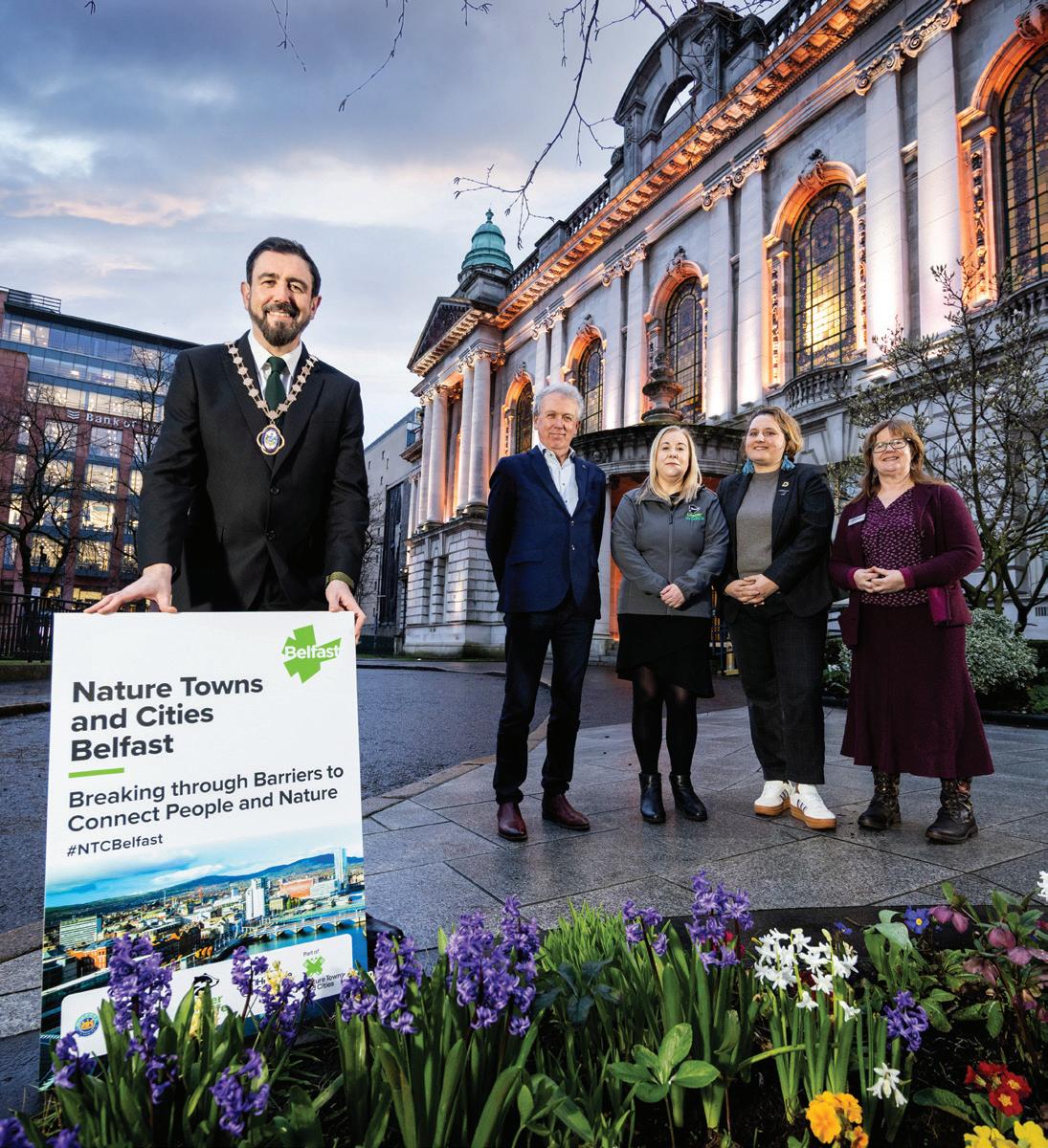


COUNTY DONEGAL ]
From 1 July to 31 December 2026, Ireland will assume the Presidency of the Council of the European Union (EU), a central leadership role at the heart of EU decision-making.
For six months, Ireland will guide negotiations, broker agreement between Member States and help deliver EU laws and policies that affect the daily lives of more than 450 million people.
As part of Ireland’s EU Presidency, each county in the Republic of Ireland will be paired with an EU Member State for the duration of the Presidency, creating opportunities to build lasting local links across Europe and strengthen community connections.
Donegal has been paired with Poland for the duration of the Presidency. In preparation for this pairing, representatives from Donegal County Council, Cathaoirleach Paul Canning; John G McLaughin, Chief Executive; Richard Gibson, Director of Finance, Corporate Services and Information Systems; and staff welcomed the Polish Delegation to Donegal: Artur Michalski, Minister Plenipotentiary, Chargé d’affaires a.i. of the Republic of Poland in
Ballyhoura Development CLG and Cuilcagh Lakelands UNESCO Global Geopark have secured €25,000 in funding under the 2025 Shared Island Civic Society Fund, announced by Helen McEntee, Minister for Foreign Affairs and Trade. The funding will support Connecting Tourism Communities: Cuilcagh Lakelands and Ballyhoura Country, a cross-border initiative aimed at strengthening collaboration between tourism communities, networks and organisations across the Ballyhoura region of North Cork and East Limerick, and the Cuilcagh Lakelands area of Cavan and Fermanagh.
Piotr Erenfeicht, Minister-Counsellor, Head of the Political and Economic Section; and Agnieszka Skolimowska, Counsellor, Head of the Public and Cultural Diplomacy Section.
The parties discussed the aims of the partnership, which are to strengthen cultural, business and community links between the partners. It is proposed to incorporate a wide range of public events and conversations that can achieve these objectives over the duration of the partnership. Both parties look forward to the creation of a successful lasting partnership that can benefit both regions.
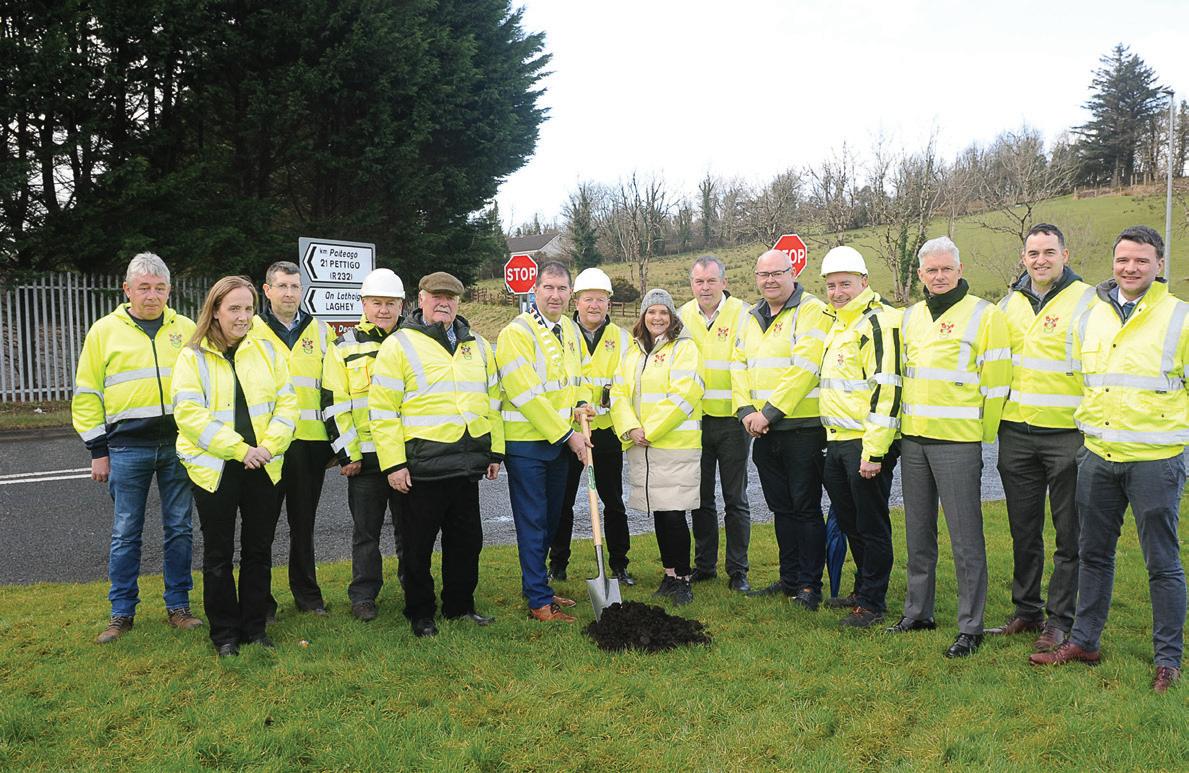
Cllr Michéal Naughton (centre), Cathaoirleach for the Municipal District of Donegal, joined by elected members of the Donegal Municipal District, officially turned the sod for the €2.4m N15 Laghey Roundabout Safety Project. This road safety improvement scheme, fully funded by Transport Infrastructure Ireland (TII), will replace the existing N15/R232 priority junction with a new single lane roundabout. The project aims to resolve long-standing safety concerns and incorporates new active travel facilities for vulnerable road users. Also pictured: Anthony McGrath, Karen Hartin, Thomas Fox and Mark Sweeney from Donegal County Council (DCC); Cllr Michael McMahon, Cllr Noel Jordan, Cllr Niamh Kennedy, Cllr Jimmy Brogan, Cllr Michael Boyle; Bryan Cannon, Director of Roads and Transportation, DCC; Damian McDermott, Senior Engineer, Donegal National Roads Office; Johnny McGill, Executive Engineer, Donegal National Roads Office; and Gerard Ward, Roughan & O’Donovan Consulting Engineers. Photo by Gerard McHugh Photography.









Exploring Ireland’s leading business voices in 2026, these books reveal insights on finance, leadership, sustainability and economic transformation
by Eoin McGee
In 2026, Eoin McGee stands out as one of Ireland’s most influential business writers, bringing financial literacy into the mainstream. His book How to Achieve Financial Freedom has resonated widely, ranking among Irish bestsellers and reflecting a growing appetite for practical money guidance. McGee’s approach is rooted in simplicity and realism. Rather than promoting quick wins or speculative strategies, he focuses on disciplined saving, long-term investing and behavioural change. This aligns with a broader cultural shift in Ireland, where individuals are increasingly taking control of their financial futures in response to housing pressures, rising living costs and economic uncertainty. What sets McGee apart is his ability to communicate complex financial ideas in plain language. His work bridges the gap between traditional financial advice and modern realities, making it particularly relevant to younger audiences. As Ireland continues to evolve economically, McGee’s voice remains central to the conversation about wealth, security and opportunity.

Journalist Adam Maguire examines Ireland’s post-crash generation through a business and economic lens. This 2026 title explores how those who came of age during austerity are reshaping entrepreneurship, housing and work culture. Blending reporting with analysis, Maguire highlights the structural challenges and opportunities defining modern Irish business life.
Though centred on Roy Keane, Hannigan’s book doubles as a study in branding, leadership and influence. It explores how Keane’s persona became a commercial and cultural force in Ireland. Hannigan uses sport as a lens to analyse identity, media and business value, making the book relevant beyond football. It demonstrates how personality-driven brands shape modern Irish business narratives.
HUNGRY
by Katriona O’Sullivan
Katriona O’Sullivan’s Hungry is a powerful memoir that traces her journey from deep poverty to becoming a respected academic in Ireland. Rather than focusing on food, the title reflects a hunger for stability, education and opportunity. With honesty and emotional clarity, O’Sullivan explores systemic inequality, addiction and the barriers faced by working-class communities. Her story highlights the transformative power of education and resilience. In 2026, Hungry continues to resonate widely, offering both a personal narrative and a broader social commentary on class, ambition and access in modern Ireland.

Walker’s work intersects politics, identity and economic development, offering insight into how historical narratives influence business and policy decisions. While not strictly a business manual, it provides essential context for understanding Ireland’s economic evolution. It’s particularly relevant for leaders seeking to navigate the intersection of culture, governance and enterprise in contemporary Ireland.
DeCare understands that a healthy workforce is a thriving workforce. With decades of expertise, DeCare stands as a trusted partner in promoting employee health and satisfaction.
Our commitment goes beyond coverage –it’s about empowering your team to see and smile confidently, fostering a culture of health and happiness.






Dental & Vision benefits contribute significantly to the overall wellbeing of your employees.
Showcase your commitment to employee health, attracting and retaining the best in the industry.
:
Ensure your employees maintain optimal oral health with our wide-ranging dental benefits, including preventive care, routine check-ups, and specialised treatments.
Productivity Boost:
Healthy employees are more engaged, focused, and contribute to a vibrant workplace.
Clear Vision Bene