Learn to use Artificial Intelligence in your business and everyday life with AI micro-qualifications — short, targeted, subsidised courses delivering the skills you need.
BOOST SKILLS, BOOST BUSINESS skillstoadvance.ie
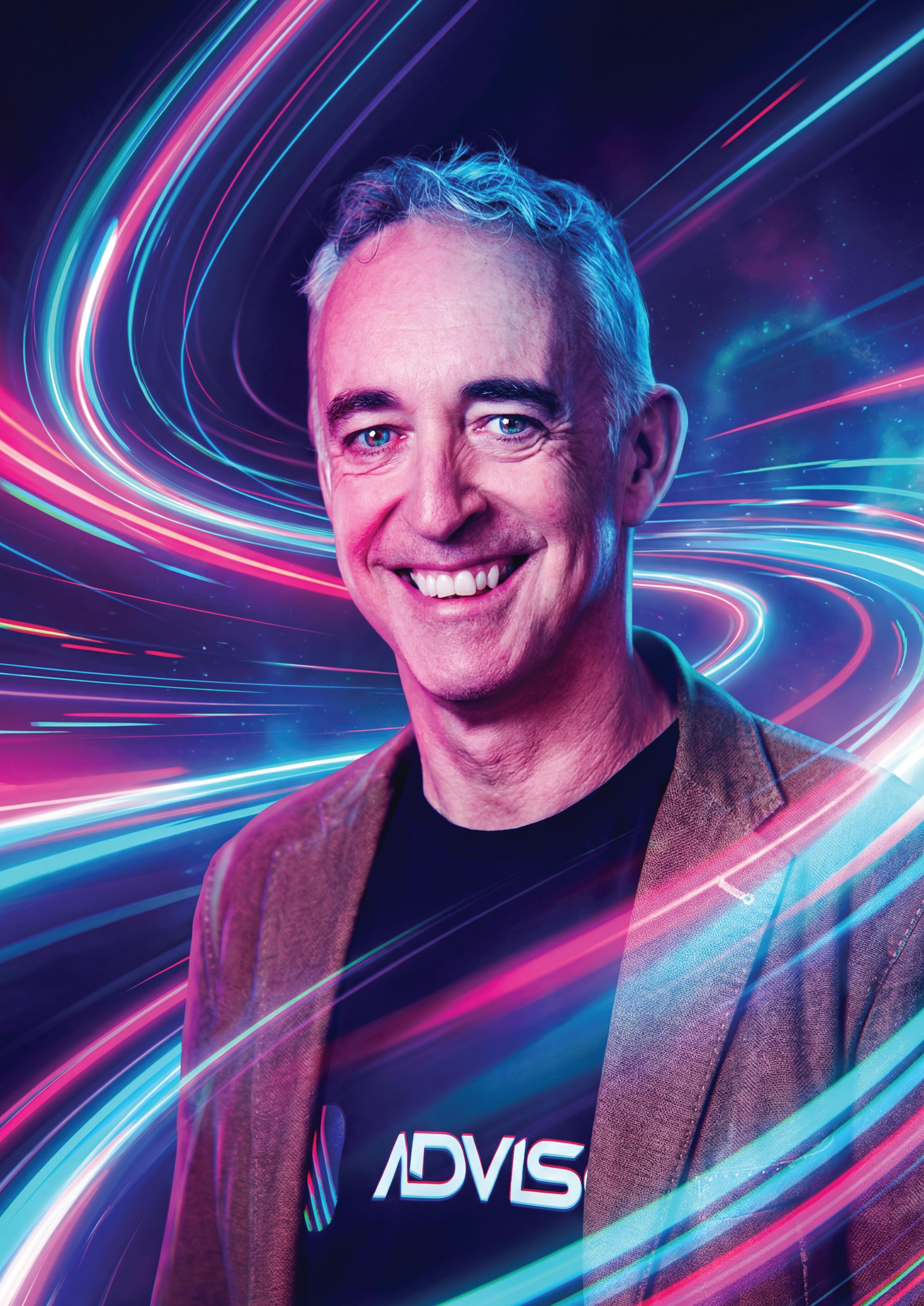
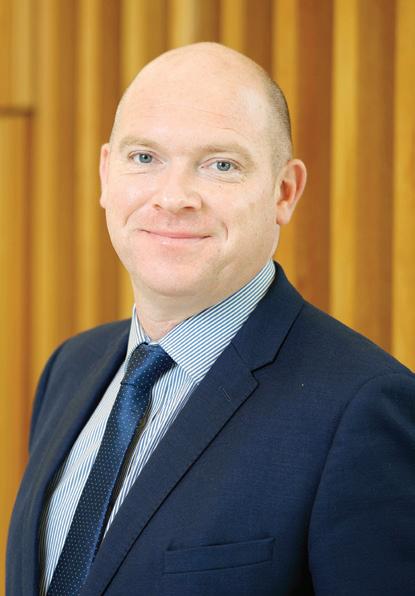
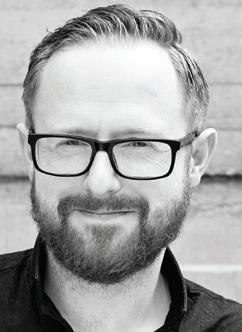
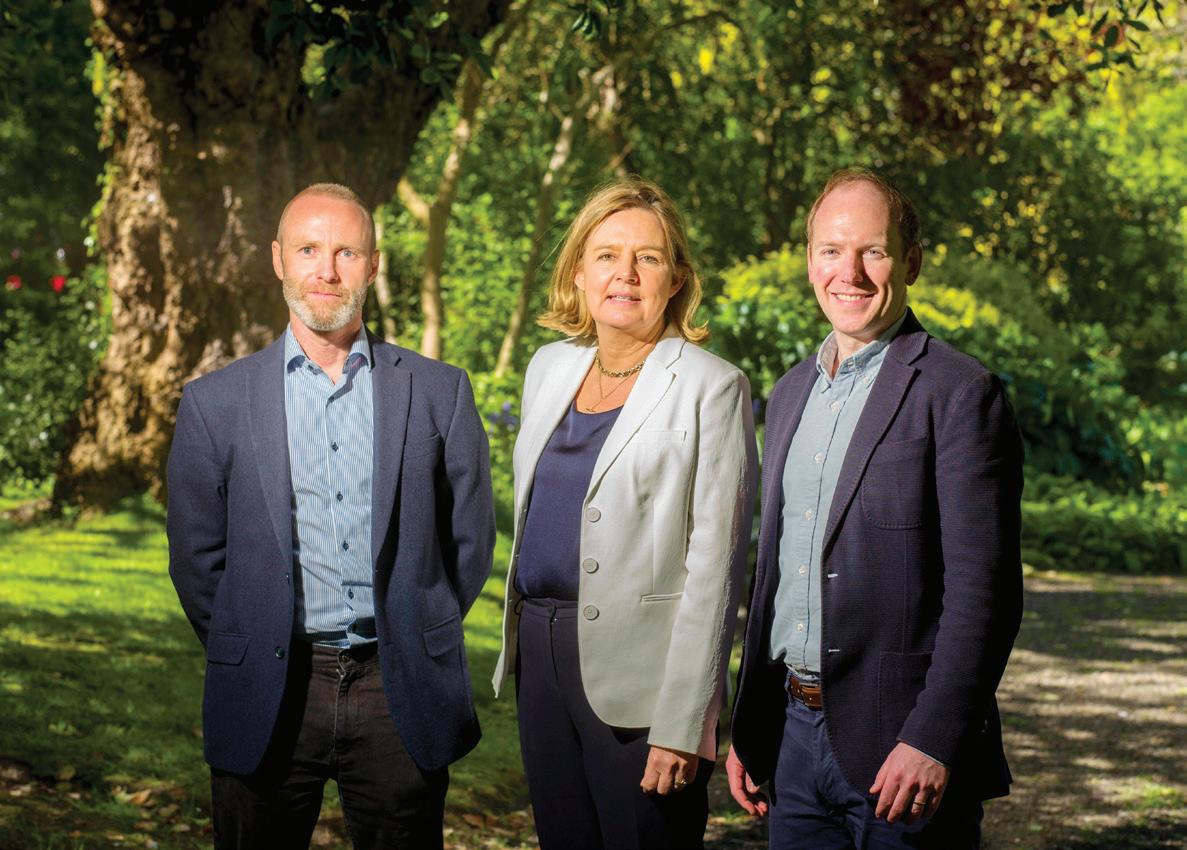
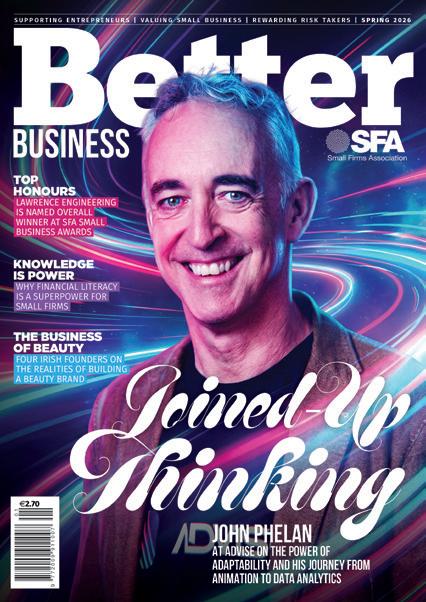
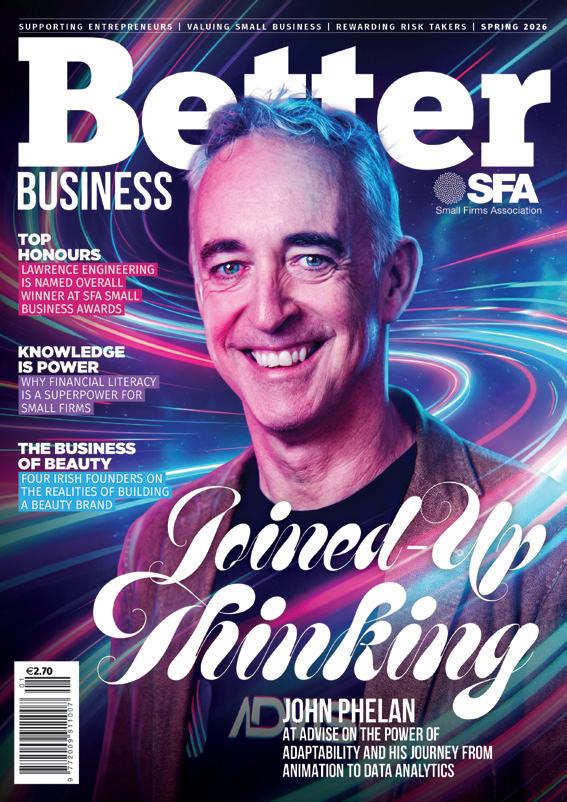
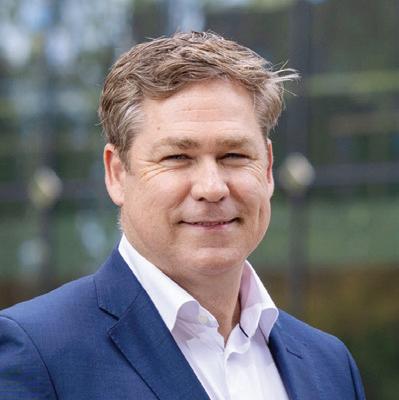
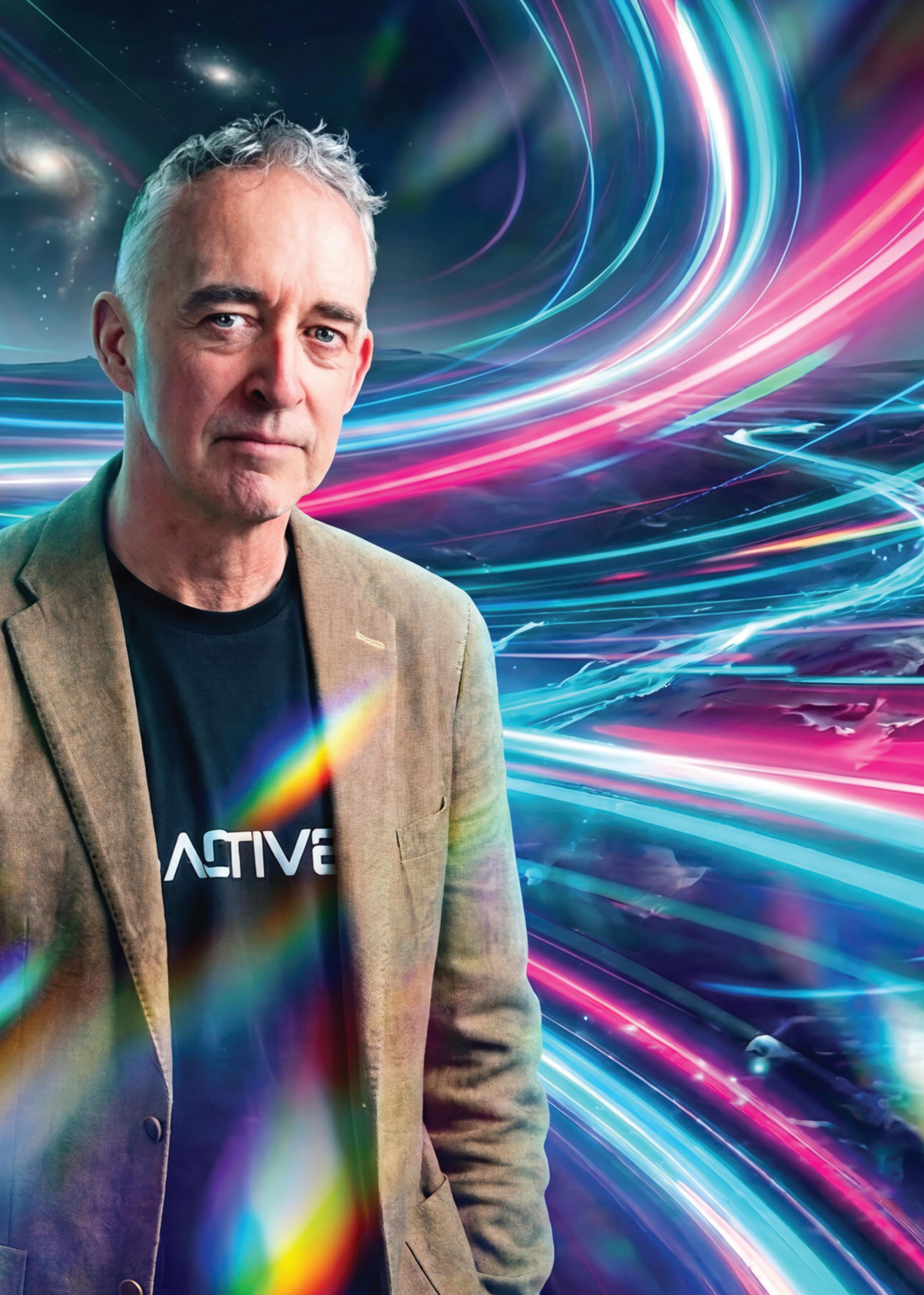
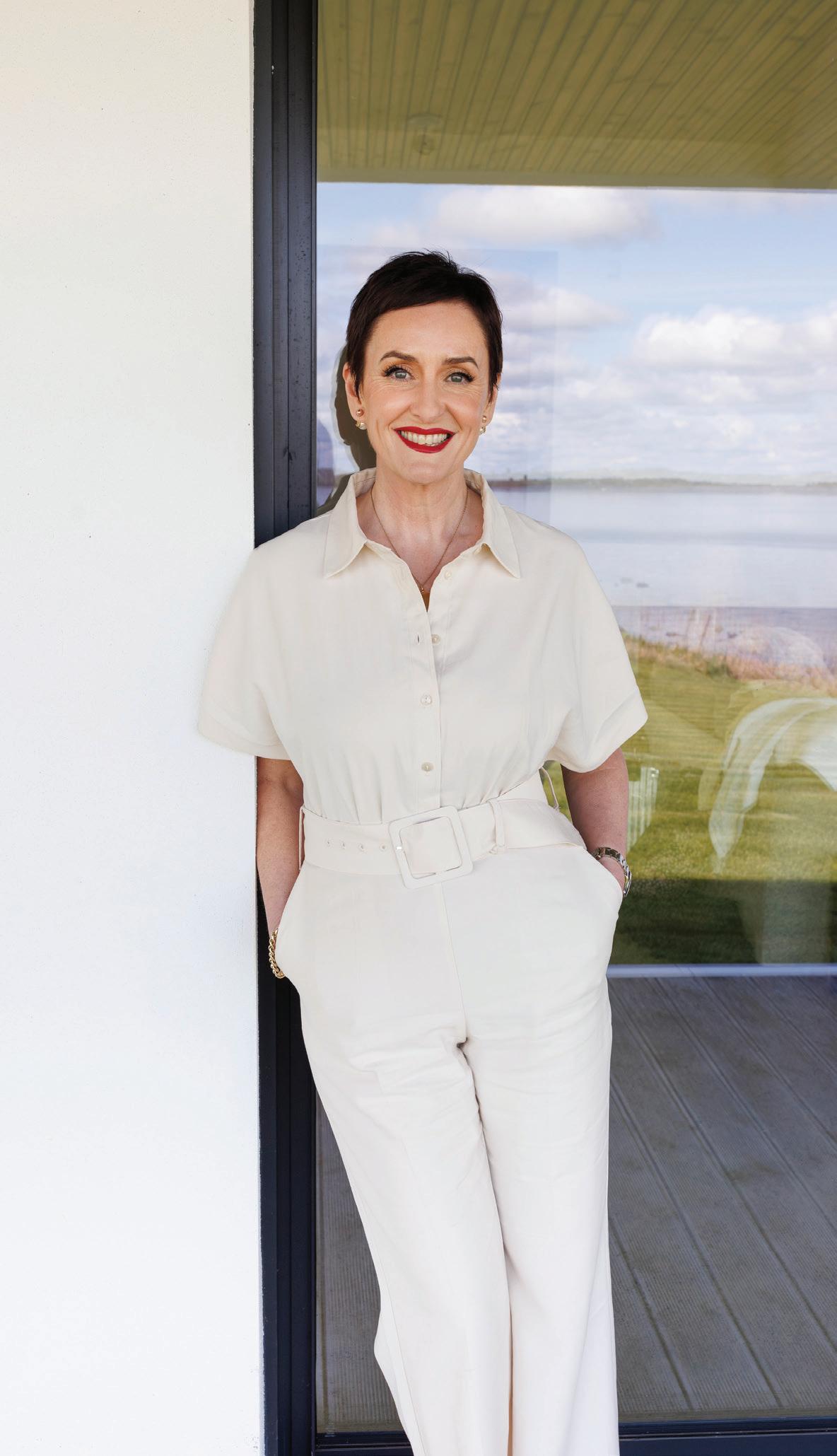
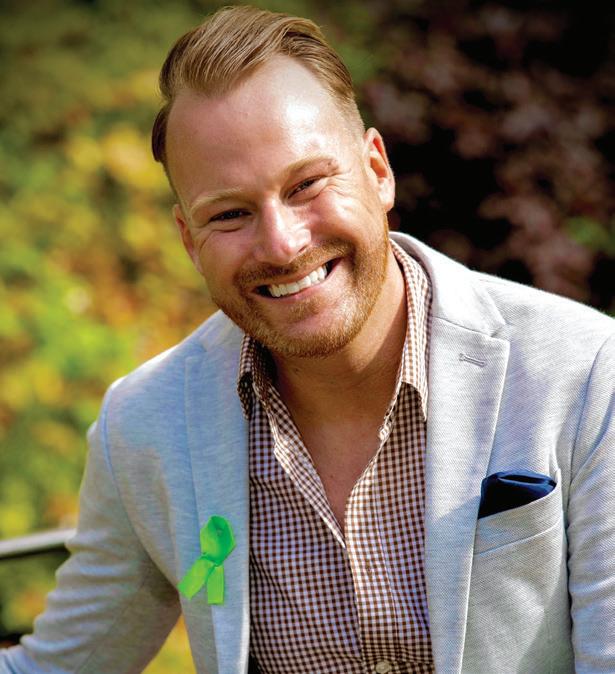
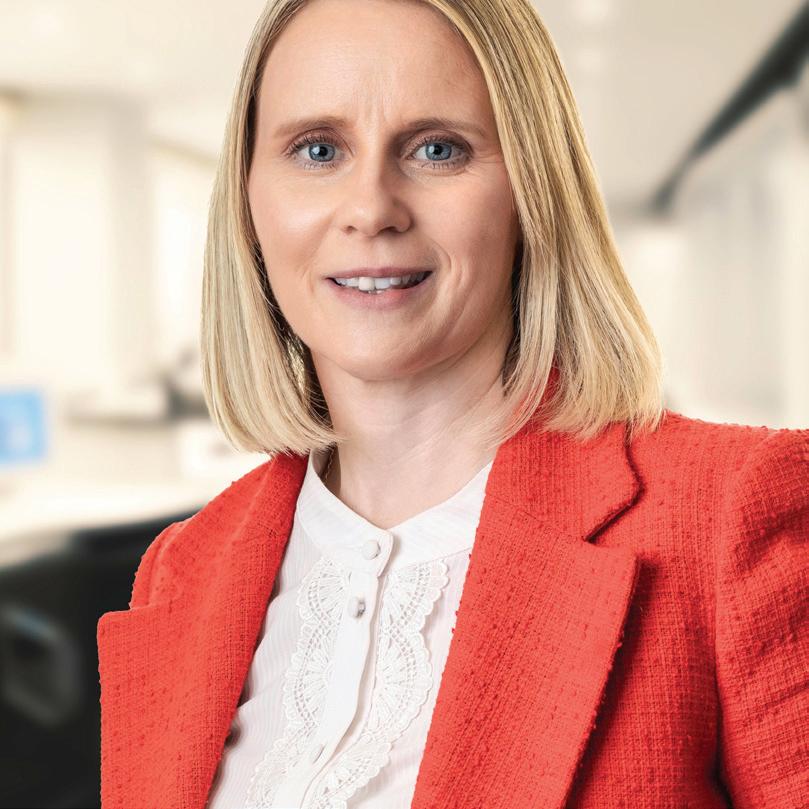
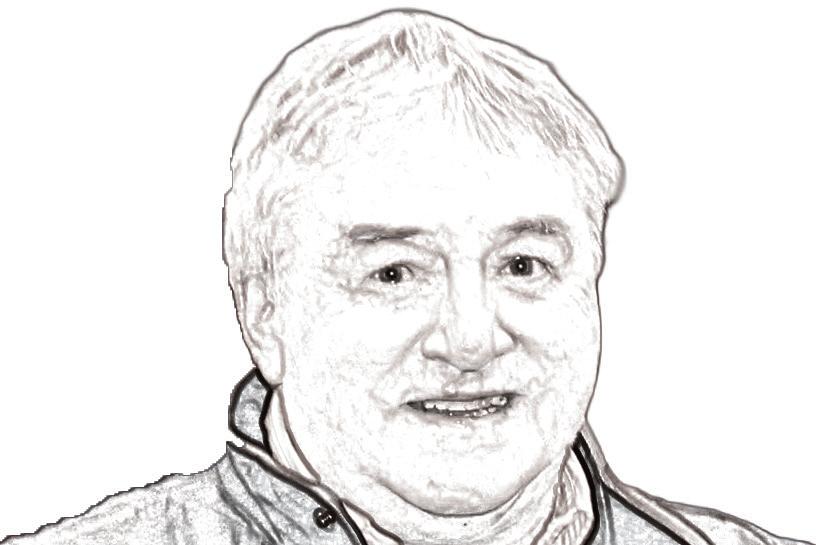
John Phelan, Co-Founder and Commercial Director, Advise
Editor: Denise Maguire
Creative Director: Jane Matthews
Designer: Alan McArthur
Production Executive: Nicole Ennis
Managing Director: Gerry Tynan
Chairman: Diarmaid Lennon
Email: info@ashville.com or write to: Better Business, Ashville Media, Unit 55, Park West Road, Park West Industrial Estate, Dublin 12, D12 X9F9. Tel: (01) 432 2200
Welcome to Better Business, a magazine dedicated to the small business community.
It has been an exceptionally busy start to the year for the Small Firms Association. In this spring issue of Better Business, you will see news and images from the various events that the SFA has hosted since January. These events include the launch of the SFA’s new three-year strategy, the annual Business Connect event, the SFA National Small Business Awards and the SFA’s recent engagements with MEPs in Brussels.
As you read this, the SFA is continuing its engagement with Government on tackling rising costs ahead of the forthcoming Budget. The ongoing fuel crisis arising from conflicts in the Middle East could not have come at a worse time for small business owners who are already struggling with increased employment, insurance and regulatory costs.
In this issue of Better Business there is a special feature which provides advice on financial literacy, the entrepreneurs section focuses on the beauty industry while the sector spotlight takes a look at the Irish med-tech industry. I hope these profiles, which highlight Ireland’s most dynamic small businesses, will both inform and inspire. Small businesses are the heart of every community in the country and are the backbone of the wider economy.
The SFA proudly represents Ireland’s small business owners. It is their interests that are the heart of the SFA’s new strategy. Small business owners are the pillars of communities across the country and the SFA’s role is to ensure that they survive and thrive to the benefit of the wider economy.
Better Business is the magazine of the small business community. We welcome your feedback, suggestions and ideas to info@sfa.ie
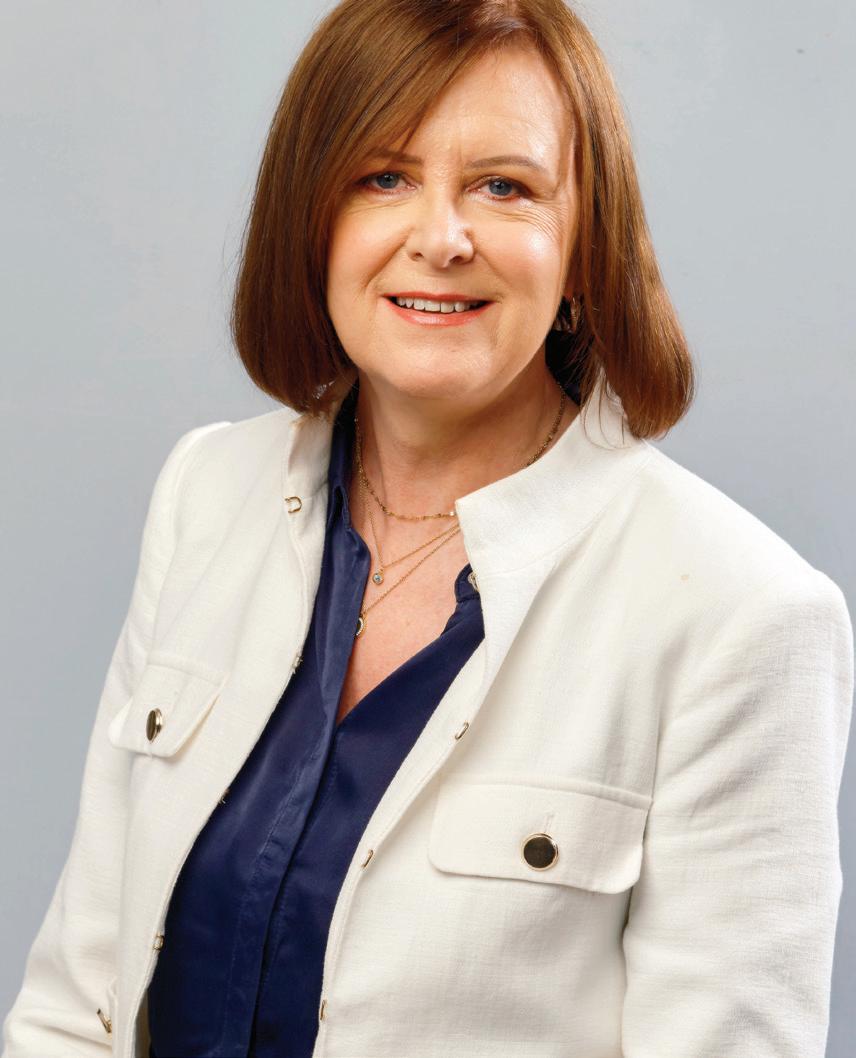
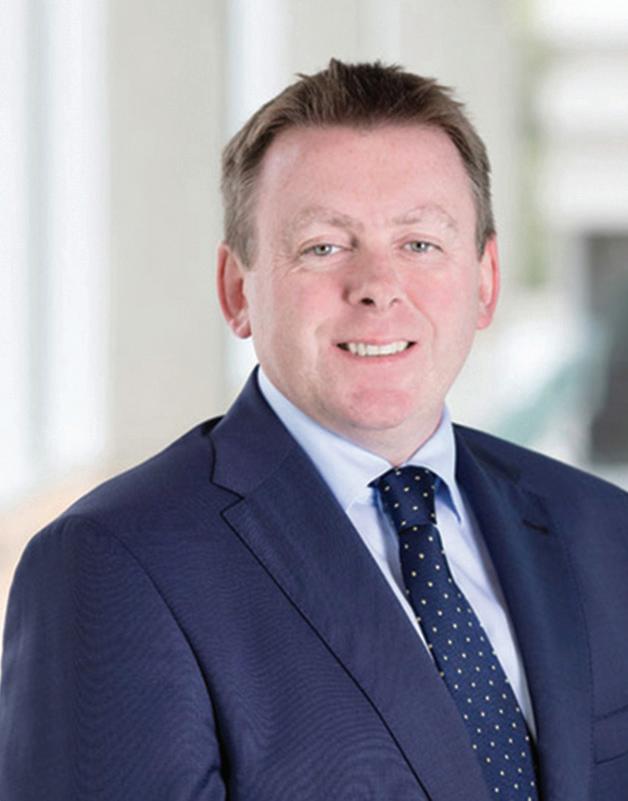
David Broderick Director, Small Firms Association
“THE SFA WILL CONTINUE TO SERVE THE NATION’S SMALL BUSINESS OWNERS SO THAT CAN SURVIVE AND THRIVE IN AN ECONOMY THAT REWARDS RISK TAKERS.”
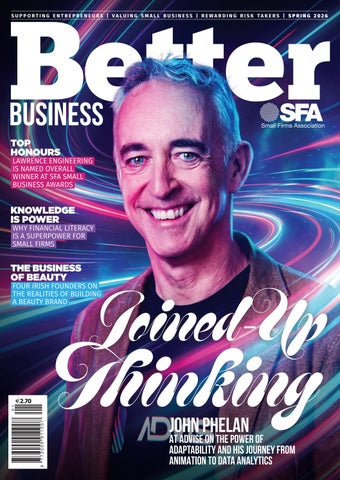
On the cover:
Big News for Small Business News, views and profiles from SFA members and small businesses in Ireland 18
Sector Spotlight Irish companies are making waves on the international medtech stage
SFA Awards
Lawrence Engineering takes top honours at the SFA National Small Business Awards
Financial Literacy
Susan Wylie on why financial literacy is a superpower for small businesses 22
Interview
Amy O’Sullivan on how collective support can drive meaningful change
Entrepreneurs
Four Irish founders on the realities of building a beauty brand
Gillian O’Gorman chats about the hidden risk killing your business
41
Arts and Culture
How TAIP supports employers to recruit and retain traveller apprentices
Cover Story
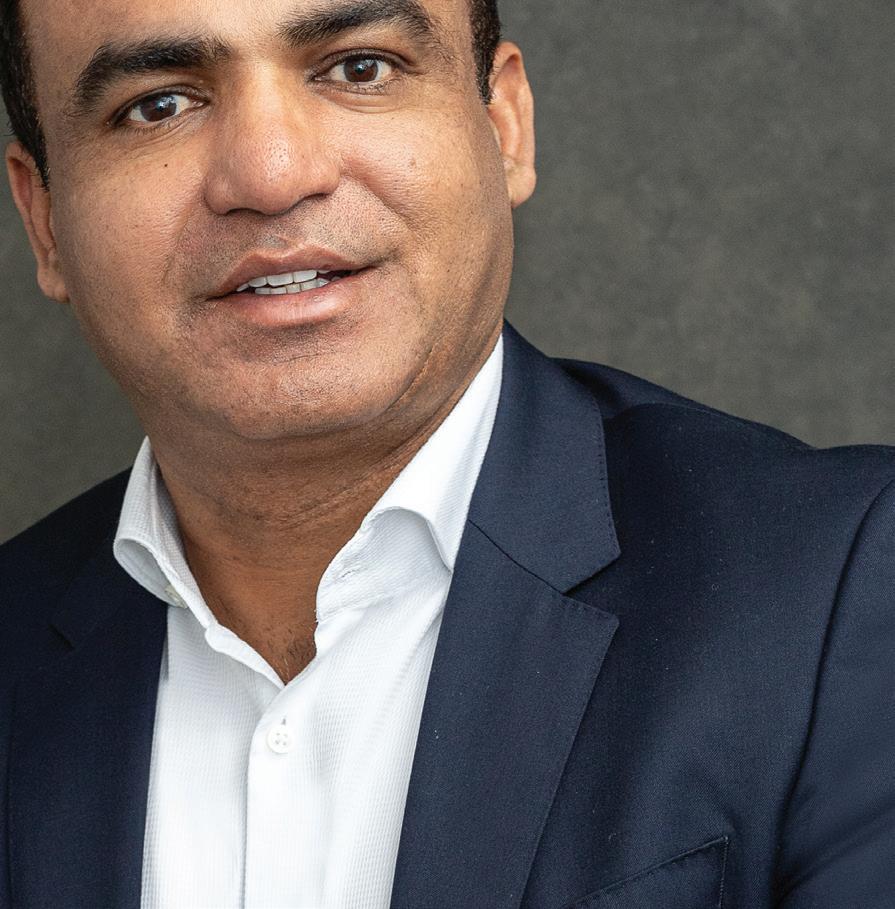
John Phelan’s pivot to data analytics from animation is a masterclass in how to stay ahead of the game 36
Policy
Small business owners need to be aware of new updates around the EU AI Act
44
Travel
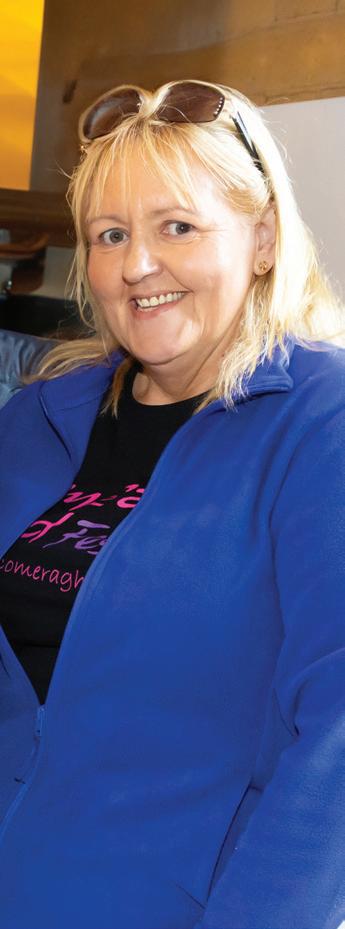
Comeraghs Wild Festival organiser Bernadette Drohan on this year’s line-up 24
From surging trade to cultural ties, Ireland’s business relationship with India is booming
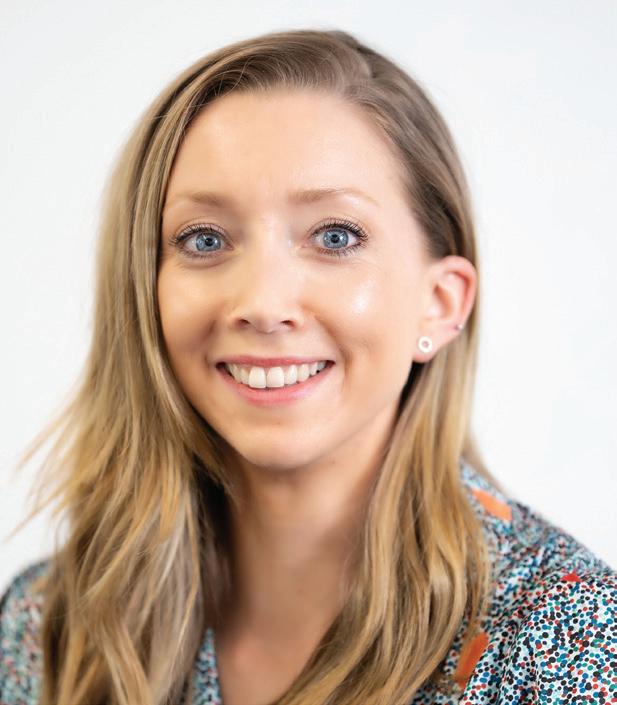
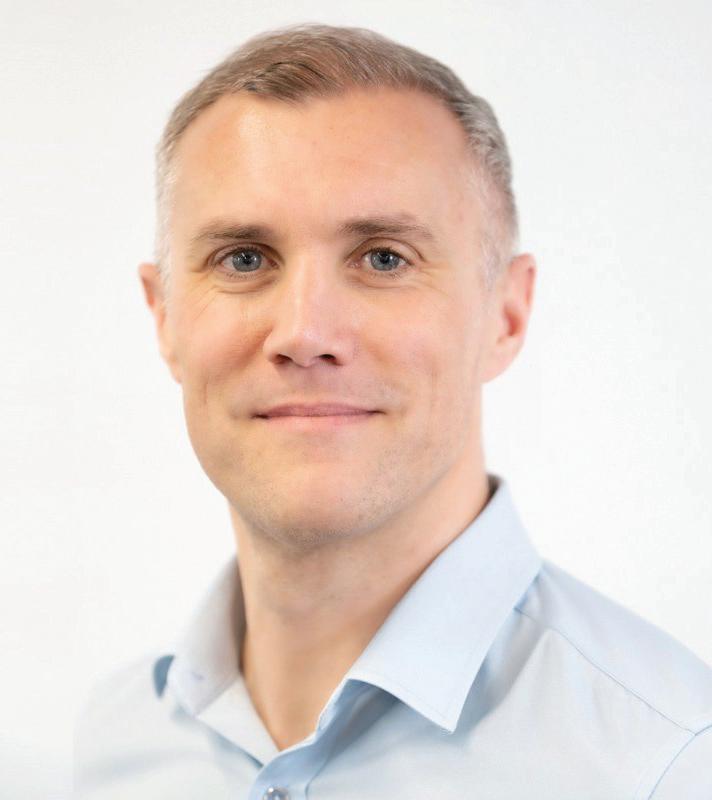
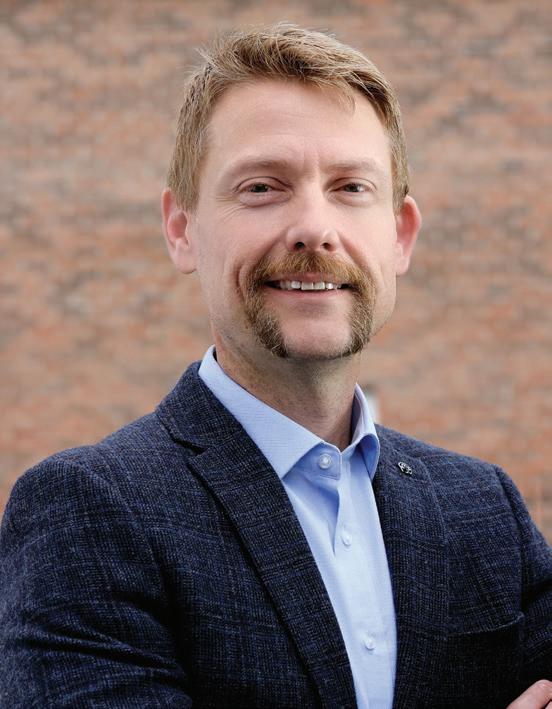
FROM TOP LEFT: Lawrence Engineering was named Overall Winner at the Small Firms Association National Small Business Awards, page 8 // Dr John Gleeson, Co-Founder of TymPulse Medical, on how he’s tapping into a powerful shift in the medtech space, page 18 // National President of Network Ireland, Amy O’Sullivan, talks about how collective support can drive meaningful change, page 22 // Remi Founder Claire Fullam on scaling the brand in the US, page 28
BIG NEWS FOR SMALL BUSINESS
WICKLOW CRAFTSMAN CROWNED GREAT IRISH SHED OFF WINNER
Robert Salmon from County Wicklow has won The Great Irish Shed Off, a nationwide competition run by Irish storage solutions supplier RackZone that challenged shed owners to showcase their most creative and characterful spaces. Robert took home a €1,500 RackZone voucher for his small timber shed which acts as a workshop where he and his children have built everything from dinosaur skulls to musical instruments. His entry charmed the judges with its honesty – a creative, lived-in space held together by repurposed kitchen carcasses, pegboard and ingenuity.
www.rackzone.ie
RackZone completes 100-tonne installation for ProTrans
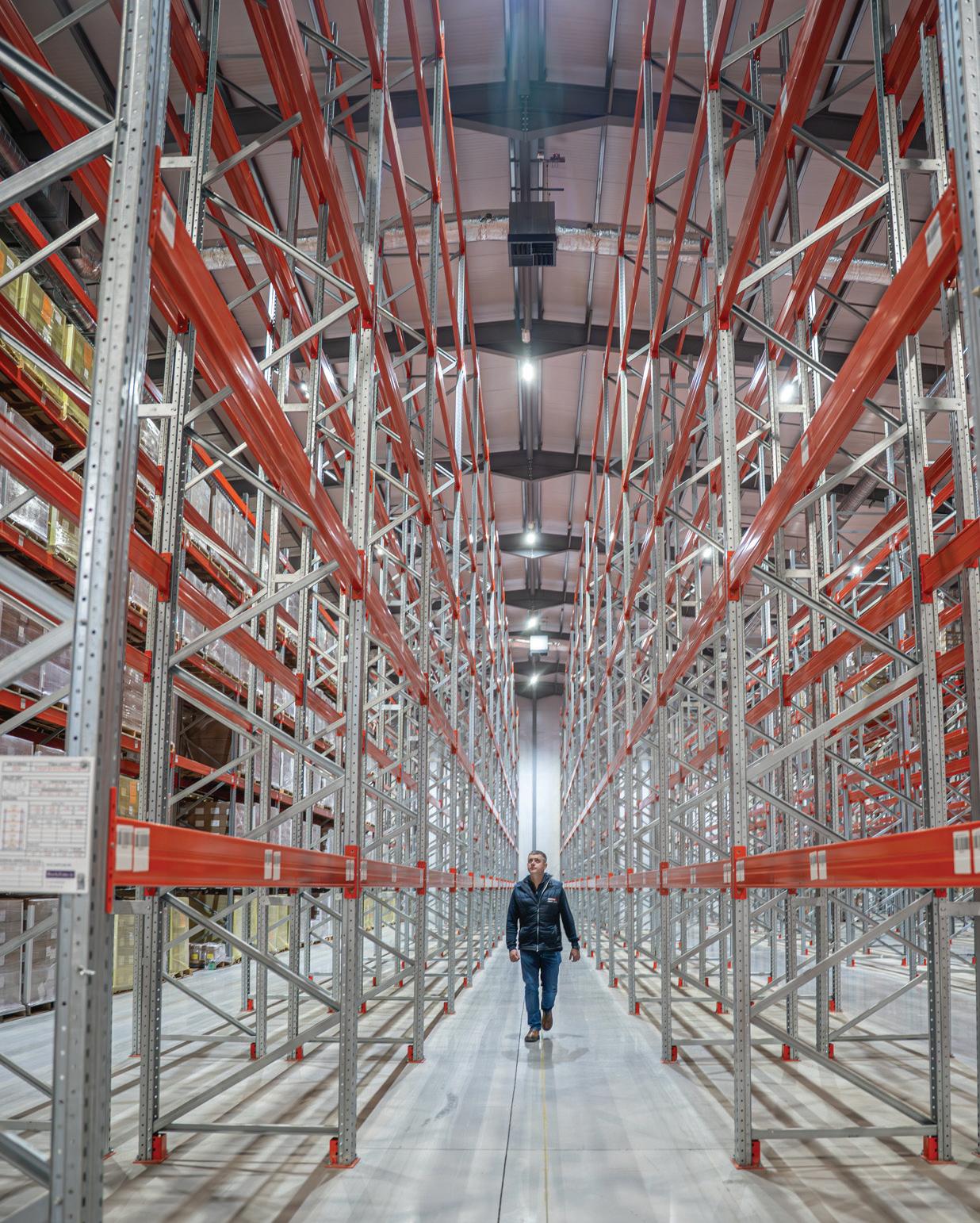
Irish storage solutions supplier RackZone has completed a major Very Narrow Aisle (VNA) pallet racking installation for logistics and distribution company ProTrans. The project saw RackZone supply and install over 100 tonnes of high-density racking to create 5,500 pallet locations within ProTrans’ existing warehouse footprint. ProTrans approached RackZone with a clear objective – increase pallet capacity to meet growing customer demand without the need to expand or relocate from its current premises. The challenge required a storage system that could work within a limited floor area and integrate with ProTrans’ existing VNA forklift fleet. Ciaran Duffy, Director at RackZone, said: “This project is a perfect example of how the right racking solution can unlock massive potential in a fastgrowing logistics environment. By leveraging a VNA system, we helped the client maximise their vertical space without compromising efficiency or future scalability.”
A video of the project is available at: https://youtu.be/3y_F43lYE1s
GEWARDZ HEALTH MARKS 1000TH MEMBER
Digital healthcare provider, Gewardz Health, recently acquired its 1000th member and is now supporting over 50 Irish businesses with its employee wellbeing programme. The company enjoys a client satisfaction rating of 96% on average. Launched in 2023, Gewardz Health focuses on offering affordable, app-based health solutions to SMEs and their employees. Services include unlimited 7-day-a-week online GP appointments and mental health counselling. The company prides itself on being family focused by extending its online digital services to staff and their households.
www.gewardzhealth.com
Auxilia Group joins SFA
Auxilia Group, the Irish professional services specialist based in Kildare, has joined the Small Firms Association (SFA). The group continues to see increased demand for its services across Ireland, particularly from SMEs. The organisation supports businesses through four key service areas – Consultancy, Interim Placement, HR Services and Recruitment. Expertise rooted in experience underpins the company’s approach. Auxilia works with businesses across a range of sectors and stages of growth. One long-standing client, MSL Healthcare Group, noted that Auxilia’s ability to adapt to evolving needs and provide expert support at every stage of growth has been “a cornerstone of our success.” Alongside its work with Irish businesses, the company has confirmed that Pieta will be its charity partner for the coming year.
www.auxiliagroup.ie
Focus on Sustainability
www.ssofficeinteriors.ie
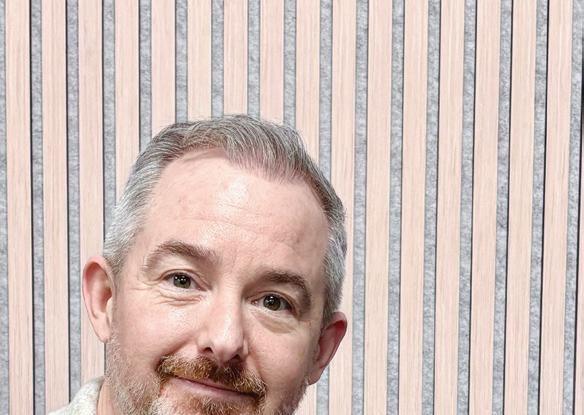
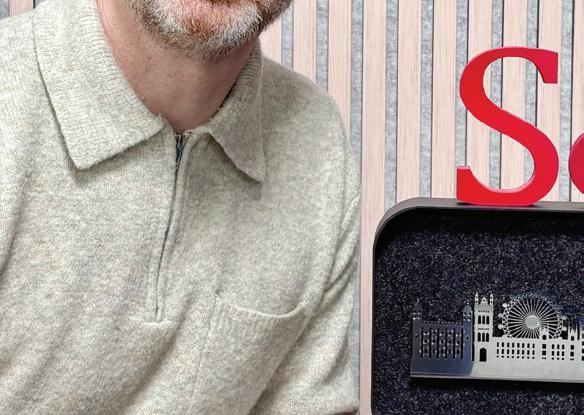
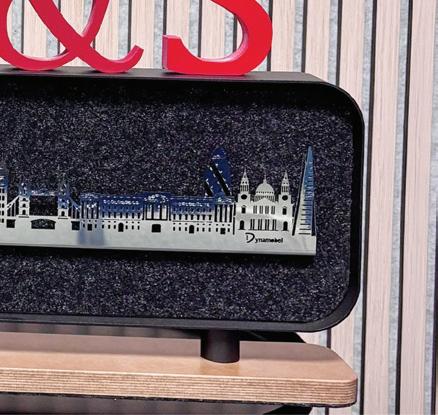
S & S has been appointed the exclusive Irish main dealer for Spanish manufacturer Dynamobel. This new partnership includes a newly designed office furniture showroom which will feature the Dolman range, set to launch at the Paris and Madrid Furniture Shows in spring 2026. Sustainability has long been a core focus for S & S, shaping both its business and clients’ journey toward creating more environmentally responsible office spaces. The office furniture industry continues to evolve rapidly, embracing reusable materials such as recycled plastics and hemp for seating, along with fabrics made from natural and recycled fibres. These innovations can be explored at the two S & S showroom locations in Swords and Grand Canal Quay, Dublin.
Alan Spain, S & S Director, receiving the Dynamobel Dealer Plaque
said said He She
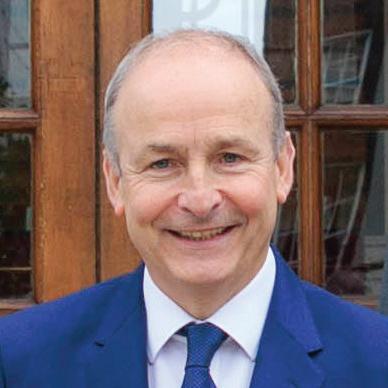
“Europe is still a very good place to live. The European view is you have to have fair but robust rules around migration.”
Taoiseach Micheál Martin responding to negative narratives about Europe during Oval Office meeting with US President Donald Trump
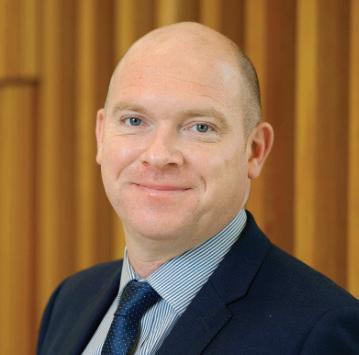
“For the traditional Irish family business, the ‘digital revolution’ often feels like a storm gathering on the horizon – impressive to look at but potentially devastating if you aren’t prepared.”
David Broderick, Director, Small Firms Association
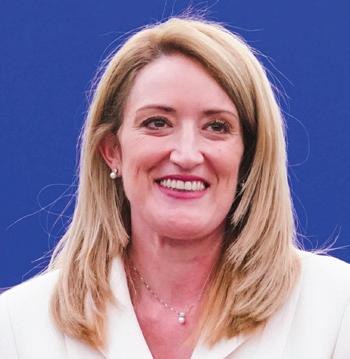
“Europe has always been built by people who bridged divides, broke barriers, overthrew dictatorships and overcame crises. With the European Order of Merit, we honour those who did not simply believe in Europe, but who helped build it.”
Roberta Metsola MEP, President of the European Parliament, announcing U2 and Mary Robinson as among the first laureates of the European Order of Merit
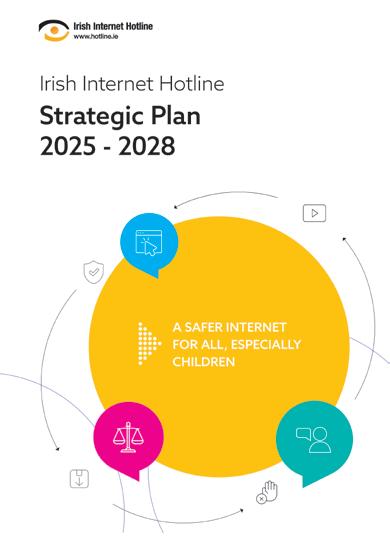
MAKING IRELAND’S INTERNET SAFER
Every day, people in Ireland encounter harmful and illegal content online, from scams and fraud to the most serious forms of abuse. Irish Internet Hotline (hotline.ie) exists to give the public somewhere safe to turn. Ireland’s national reporting service allows anyone to report suspected child sexual abuse material, intimate image abuse and other harmful online content (racism/xenophobia, scams) securely and anonymously. Last year alone, more than 53,000 reports were received, serving as a reminder of both the scale of the challenge and the importance of a trusted national service. Under its new strategy, Irish Internet Hotline is expanding its focus to tackle emerging threats including online scams, cyber-enabled abuse and digital harms affecting families and businesses alike. The organisation is also inviting companies of all sizes to join its growing membership network and play a role in building a safer, more trustworthy digital ecosystem.
www.hotline.ie
Vertigo treatment start-up Vertigenius has announced the successful close of a €2.55 million funding round to drive its growth in the US. The investment was led by Atlantic Bridge and supported by Enterprise Ireland, MedTech Syndicate, IRRUS Investments, Xcendra Ventures, Ascentifi and others. Vertigenius is transforming the delivery of care for vertigo patients by enabling remote monitoring for the first time. The wearable head sensor medical device allows clinicians to track patients’ at-home treatment remotely, monitor progress and adjust prescribed treatment accordingly. With FDA registration complete, Vertigenius launched in the US market in October 2025. Already, 20 clinics across 11 US states are now using the Vertigenius medical device and 3,000 patients have been treated. Over the next five years, Vertigenius anticipates expanding further in Europe and entering other markets, including Asia Pacific, to transform the treatment of vertigo globally.
www.vertigenius.com
VERTIGENIUS ENTERS US MARKET
NEWTONBIO CONSULTING CONTINUES TO GAIN MOMENTUM
NewtonBio Consulting is reporting strong momentum as its partners reach milestones in digital health innovation. The consultancy continues to advise on clinical operations, digital trial enablement and innovative strategies. One partner, Clinical Net, is focused on Clinical Research as a Care Option (CRAACO) and is building improved infrastructure to help any patient find any trial anywhere. Another is ONCOassist, a decision support tool used by over 100,000 oncology clinicians worldwide, which is rolling out enhanced education and recruitment features aimed at improving trial awareness at the point of care. Finally, Myna Voice Labs is progressing its work on voice-based biomarkers using AI for neurological conditions. Through these collaborations, the consultancy continues to contribute to Ireland’s growing profile as a hub for clinical research and digital health innovation.
www.newtonbioconsulting.com
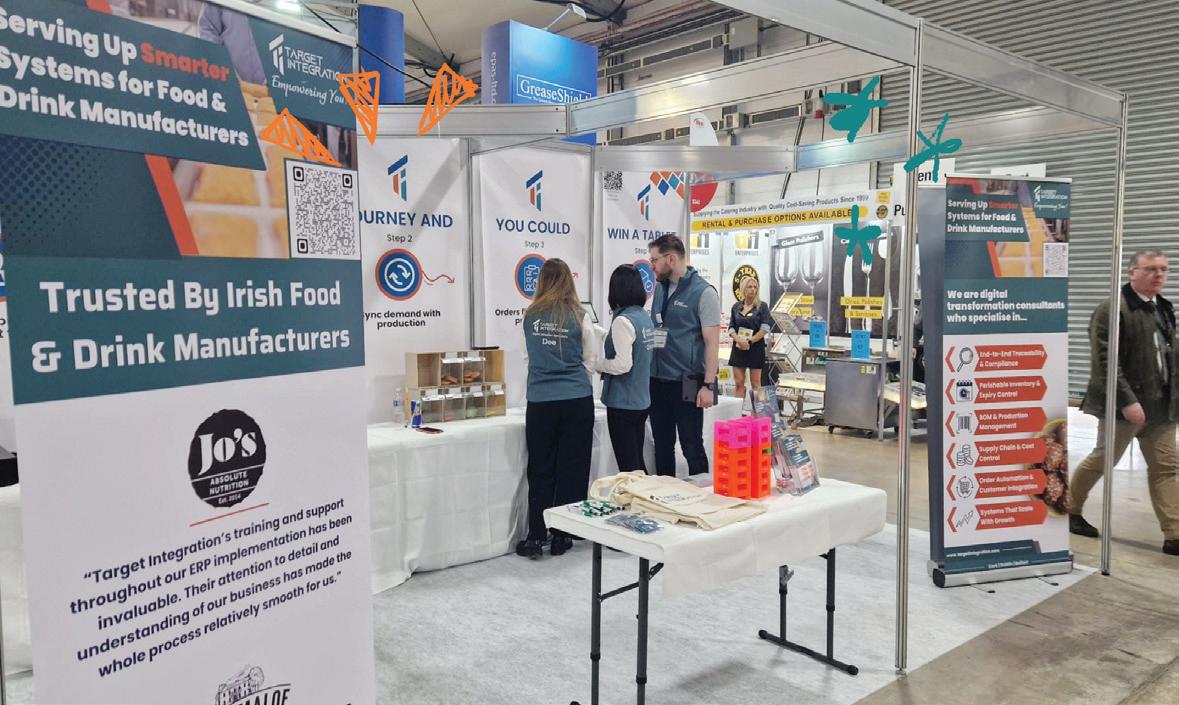
Digital transformation partner, Target Integration, recently participated in IFEX 2026. During the event, Target Integration highlighted how its tailored solutions have supported brands such as Jo’s Absolute Nutrition and Ballymaloe Relish in overcoming the operational challenges that are common in the food and drink sector, including supply chain visibility, production inefficiencies and inventory management. As an Irish company, Target Integration remains committed to supporting local businesses, particularly in the food and drink sector, with scalable, cloud-based solutions that improve operational efficiency.
www.targetintegration.com
OSDM WINS MAJOR INDUSTRIAL CLIENT
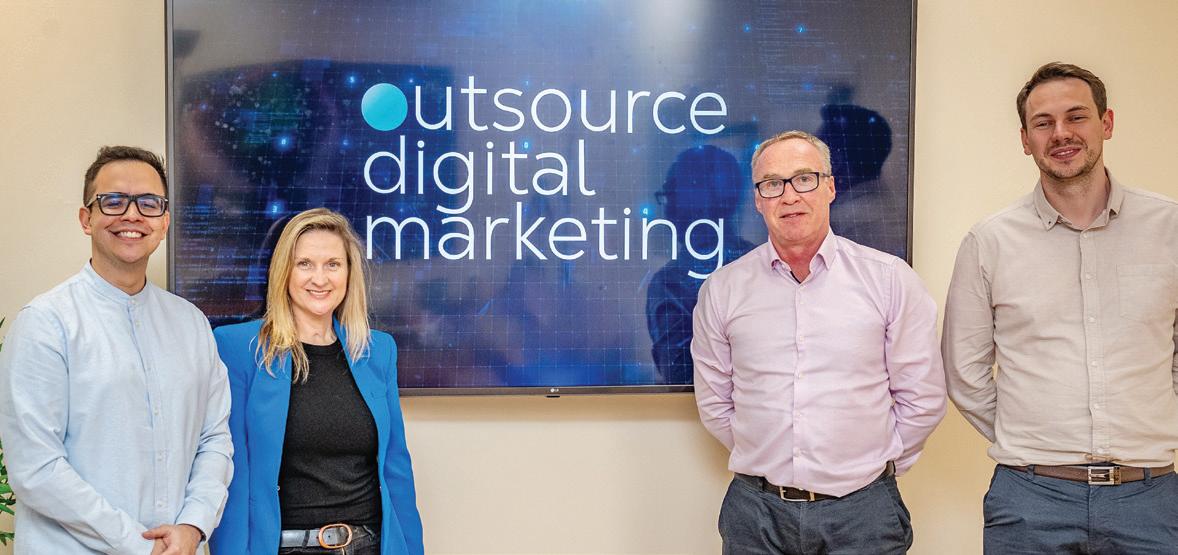
Kildare-based digital marketing agency OSDM has recently joined the Small Firms Association (SFA) and has also secured a significant new client, McLoughlin Industrial Flooring Ltd, one of Europe’s leading applicators of resin flooring and corrosion protection systems. Appointed to complete McLoughlin Industrial Flooring’s new website and roll out its refreshed brand identity, OSDM delivered both elements within an intensive eight-week timeframe. Following the successful delivery of the website and brand rollout, OSDM has been retained to manage the next phase of the company’s digital marketing strategy. Michael McLoughlin, Managing Director of McLoughlin Industrial Flooring Ltd, said: “OSDM acted like an extension of our team, guiding us through every stage of our website and brand rollout. We are very happy with the results they delivered under tight time pressure and they made the entire process straightforward and stress-free.”
www.osdm.ie
TARGET INTEGRATION AT IFEX 2026
LAWRENCE ENGINEERING TAKES TOP HONOURS
THE
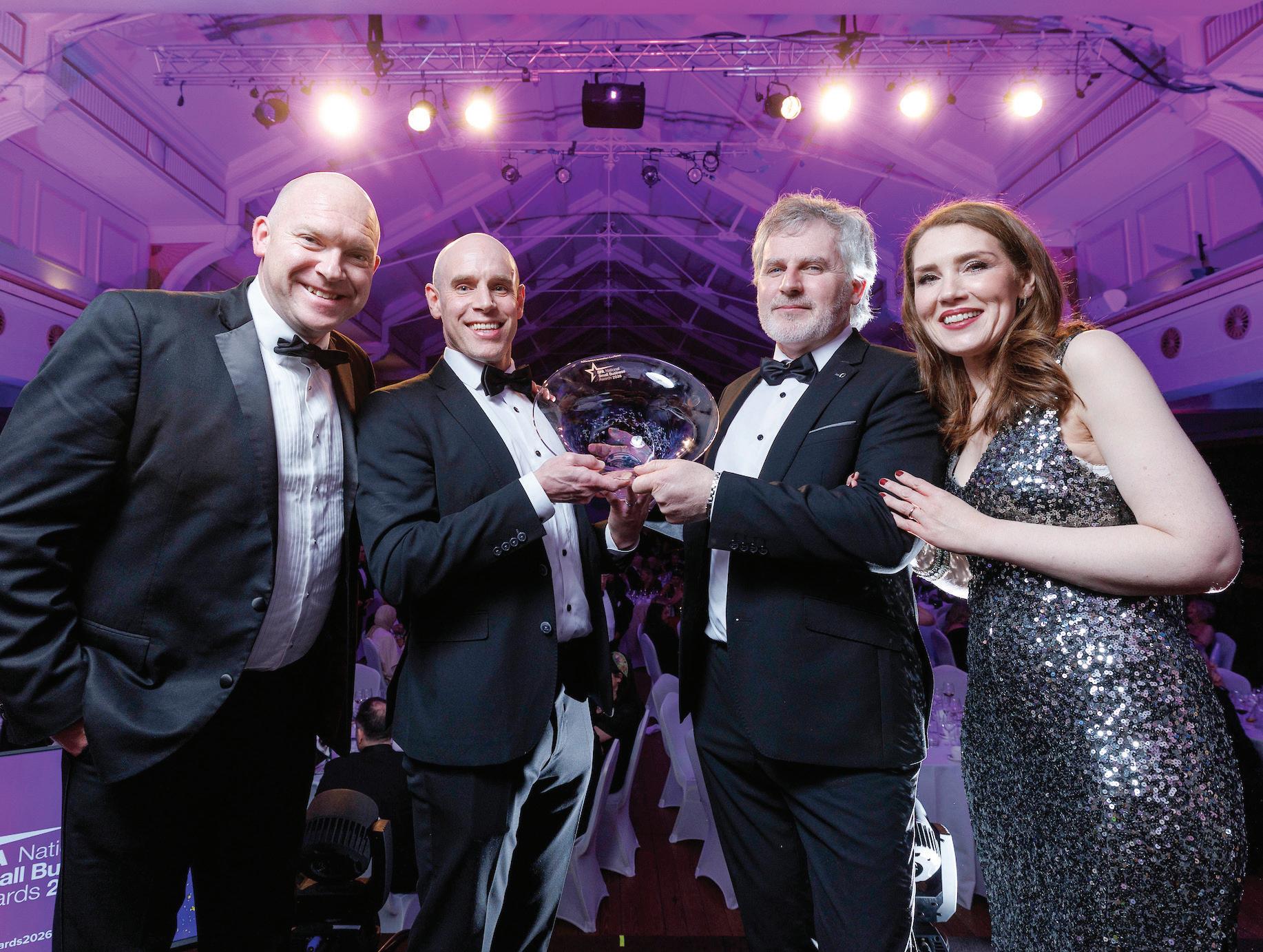
SLIGO FIRM WAS NAMED OVERALL WINNER AT THE SFA NATIONAL SMALL BUSINESS AWARDS 2026
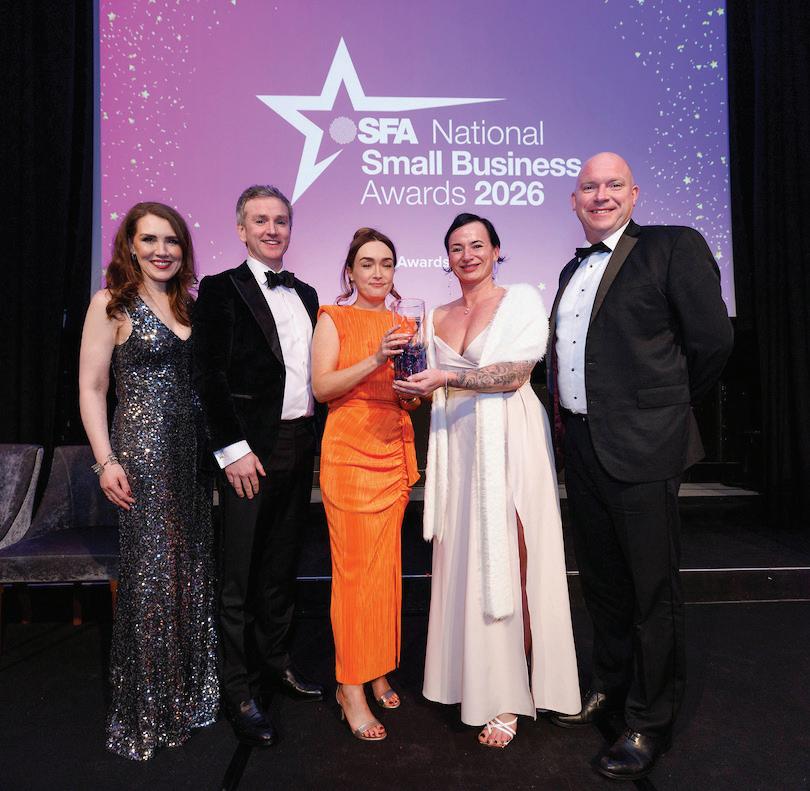
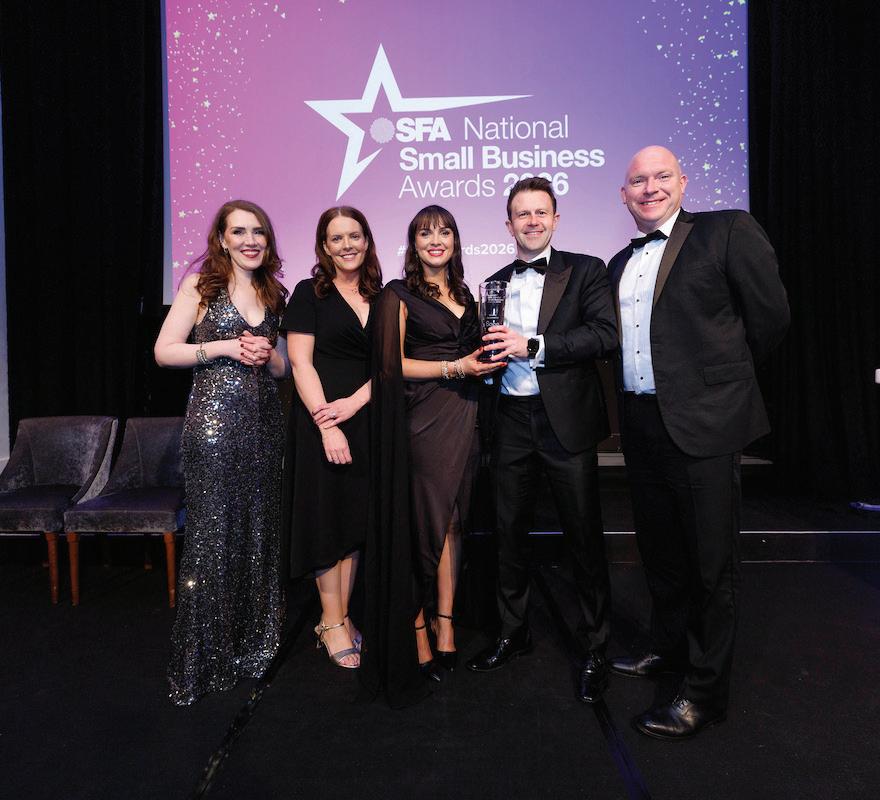
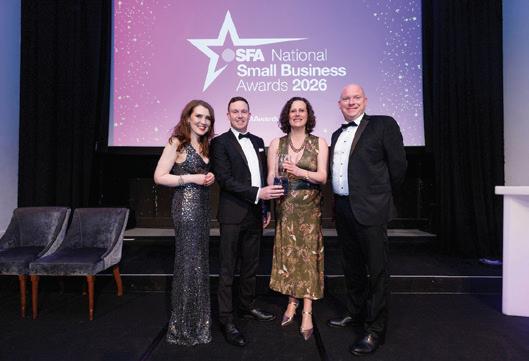
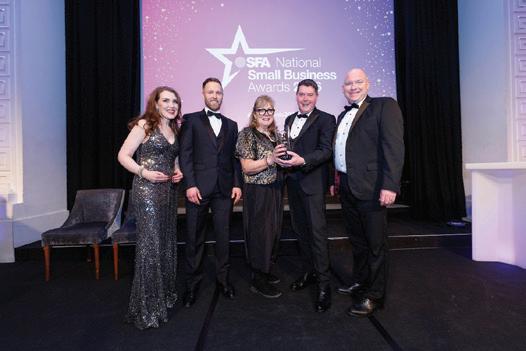
The winners of the Small Firms Association (SFA) National Small Business Awards 2026 have been announced. The awards celebrate the achievements of small businesses in Ireland and recognise the important and vital contributions of this sector to the Irish economy. Forty-eight finalists and five ‘Emerging New Businesses’ were selected from hundreds of applications received for the 2026 programme.
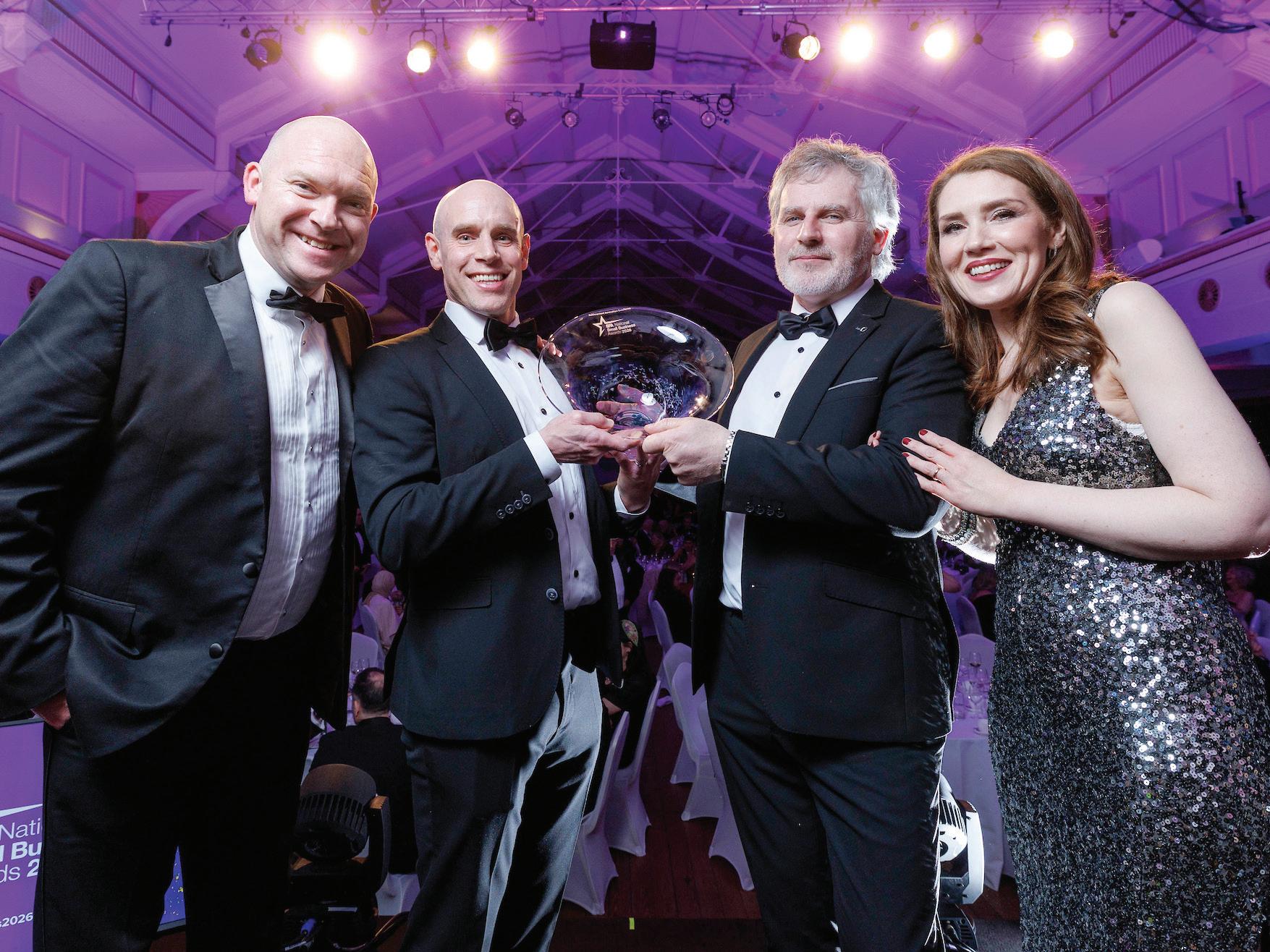
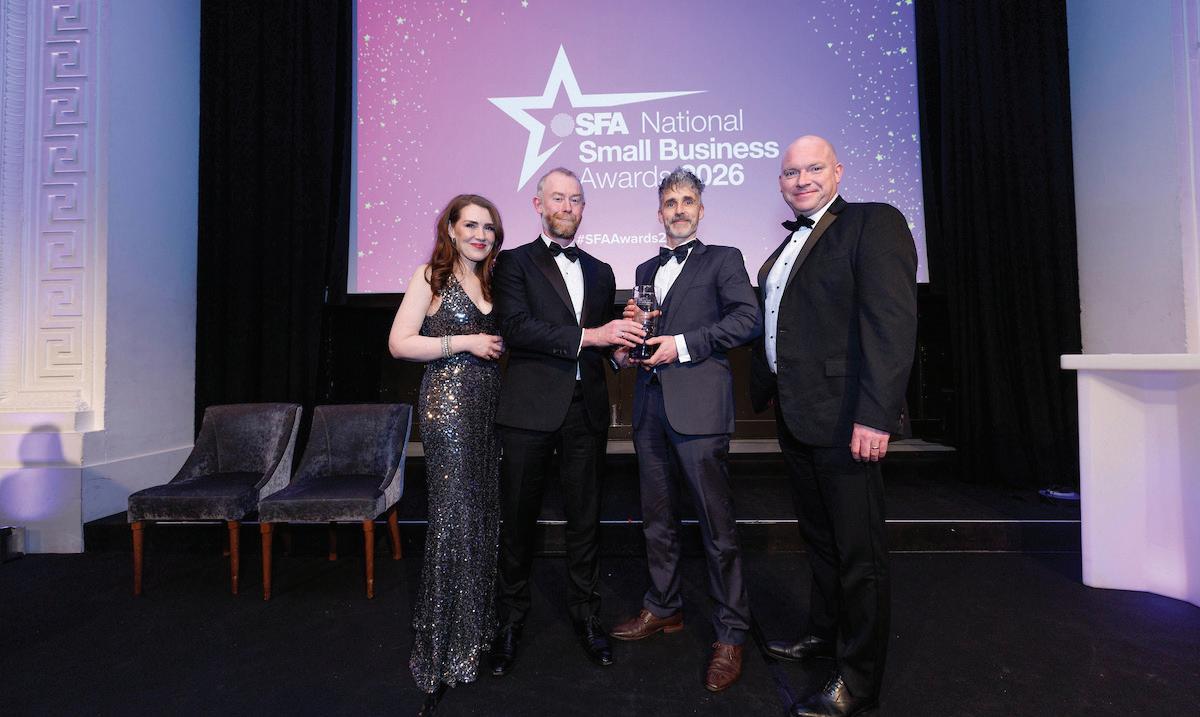
Lawrence Engineering was named the Overall National SFA Small Business Winner 2026. A family-owned precision engineering and contract manufacturing company, Lawrence Engineering was founded in 1984 by Michael Lawrence and led since 2019 by his son James. Renowned for innovation and advanced manufacturing capability, the company delivers high quality injection moulds, extrusion tooling, precision components and subassemblies.
Manufacturing excellence has been central to the company’s evolution, particularly as it has grown into a trusted international supplier to leading medical device manufacturers. Over the past five years, the company has transformed from a primarily domestic operation into a global partner, now serving customers across 12 international markets including the USA, Costa Rica, Turkey, Spain and India.
David Broderick, SFA Director, said:
“I am delighted that we are continuing to grow a programme that positions small businesses as the backbone of the Irish economy. Congratulations to all finalists, each of whom represent the very best in small business and all are winners. The entrepreneurial spirit of small business owners continues to drive social and economic activity in communities across the country. Without them, the lifeblood of our streets, towns and villages will vanish.”
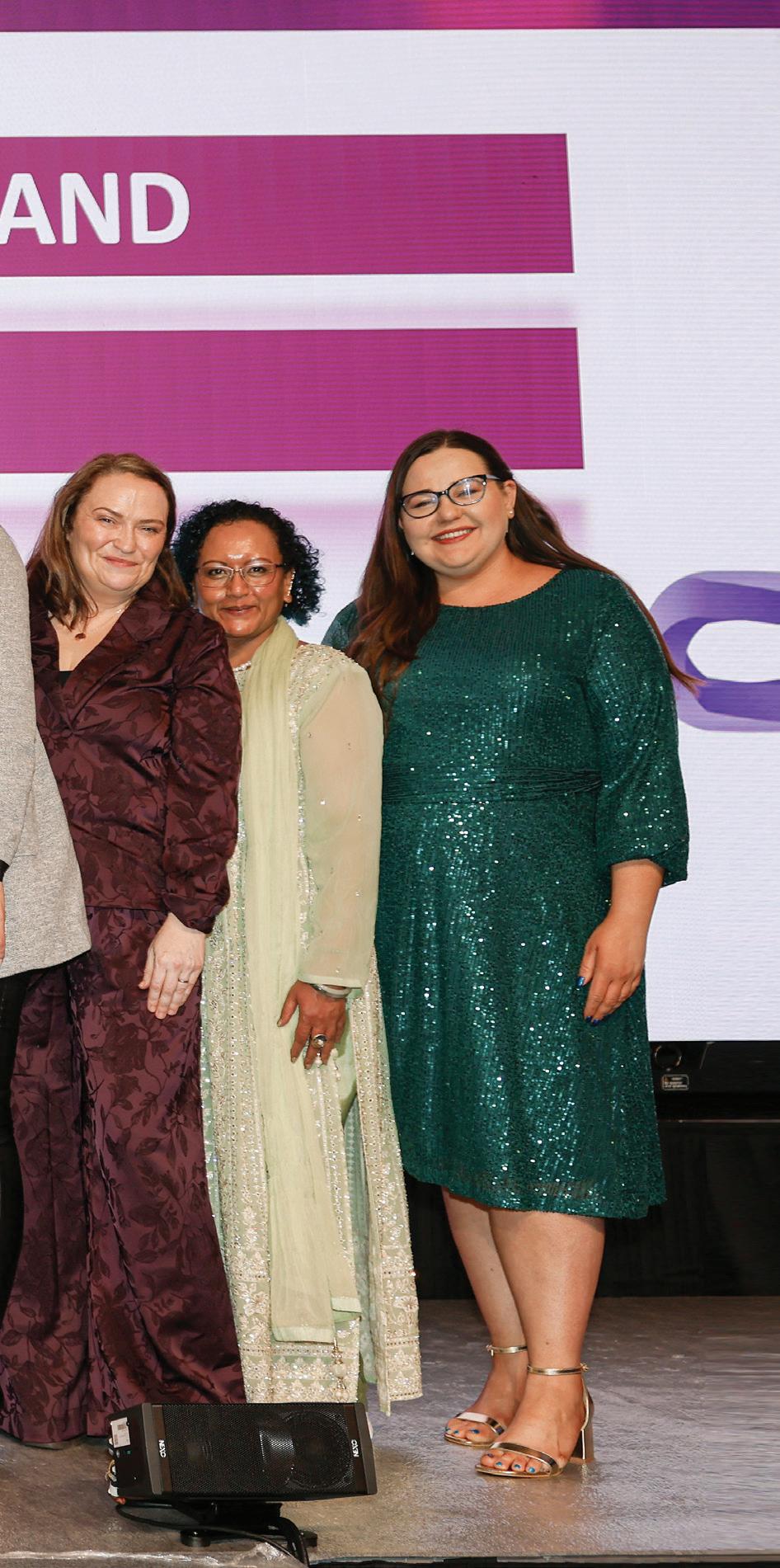
Pictured (l to r): David Broderick, Director, SFA; James Lawrence and Patrick Benson, Lawrence Engineering; Geraldine Magnier, Chair, SFA
EMERGING NEW BUSINESS
The Emerging New Business award, sponsored by Microfinance Ireland, is a category to encourage emerging entrepreneurs to promote and grow their business.
The winners are:
• Biovit Technologies, Dublin
• Career Navigator, Dublin
• ealu, Co Wicklow
• Four Acre Foods, Co Meath
• Irish Camper Goods, Galway
Entrants in this category are under two years in business and the winners were identified by the judging panel as companies that will grow into successful organisations.
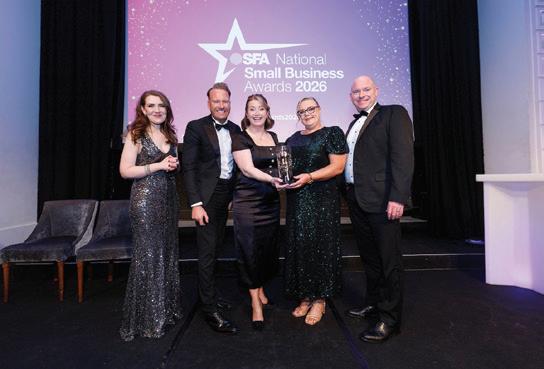
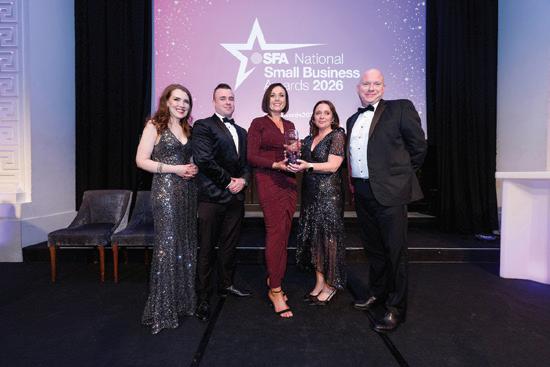
The awards prize package for ALL finalists included a strategic management masterclass, participation in the SFA Business Connect event in February and media exposure in a special supplement published with the Irish Independent. The total prize for finalists is valued at €50,000 each. The category winners were presented with a trophy and free membership of the Small Firms Association for one year. Skillnet Ireland are sponsors of the awards management training and media partner is Irish Independent.
CATEGORY WINNERS
> MANUFACTURING (Sponsored by PTSB) Hygeia, Oranmore, Co Galway
Highly Commended: K Factory Print & Embroidery, Dublin
> FOOD AND DRINK (sponsored by Bord Bia) Builín Blasta, An Spidéal, Co Galway
Highly Commended: Pizza da Piero, Dublin
> SERVICES (sponsored by Sage) Company Bureau, Dublin
> OUTSTANDING SMALL BUSINESS (sponsored by Elavon) Donna Reilly People & Wellness, Dublin
> FAMILY BUSINESS AWARD (sponsored by Interpath) Dromod Boxty, Drumod, Co Leitrim
Highly Commended: Boxty House, Temple Bar, Dublin 2
> INNOVATION AWARD (sponsored by National Standards Authority of Ireland (NSAI)) JPK Fencing, Claregalway, Co Galway
> EXPORTER OF THE YEAR (sponsored by Enterprise Ireland) Lawrence Engineering, Lavagh, Co Sligo
>SUSTAINABILITY (sponsored by Strategic Banking Corporation of Ireland (SBCI)) Dingle Sea Salt, Dun Chaoin, Co Kerry
> WORKPLACE WELLBEING (sponsored by DeCare) 3Q Recruitment, Dublin
MAKING CONNECTIONS
IN FEBRUARY, SMALL FIRMS GATHERED FOR IRELAND’S LARGEST BUSINESS NETWORKING EVENT
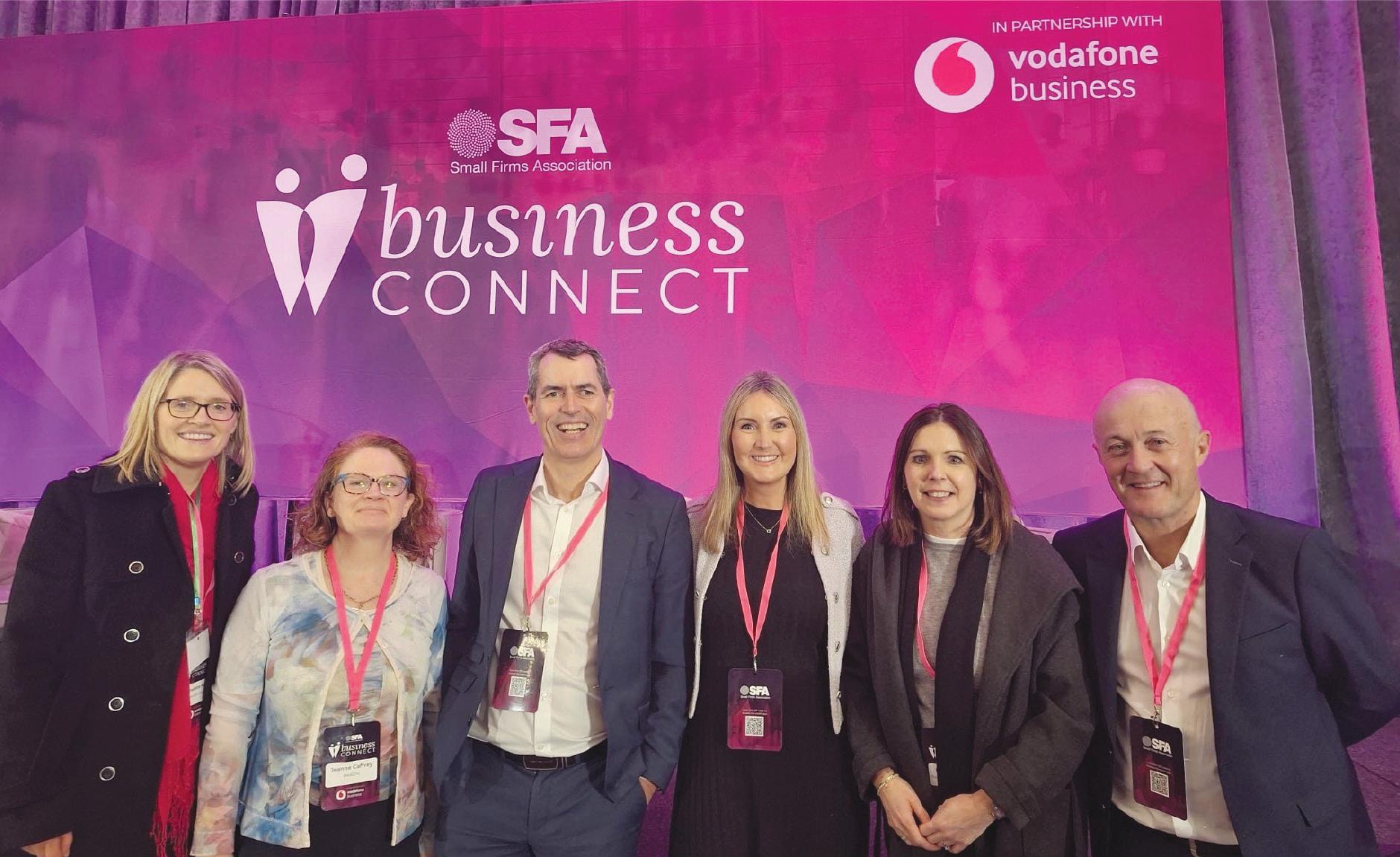
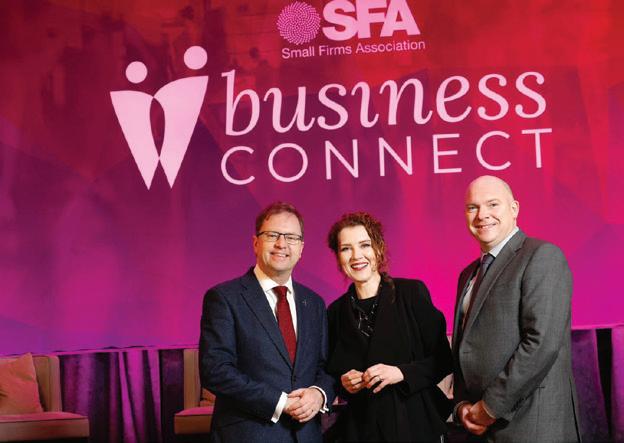
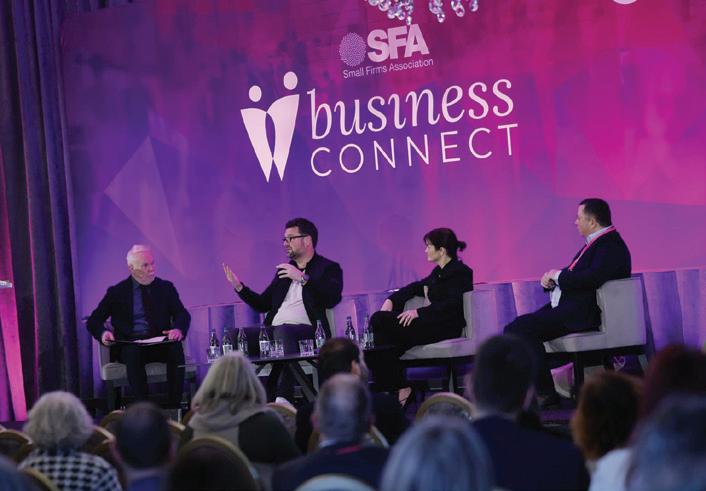
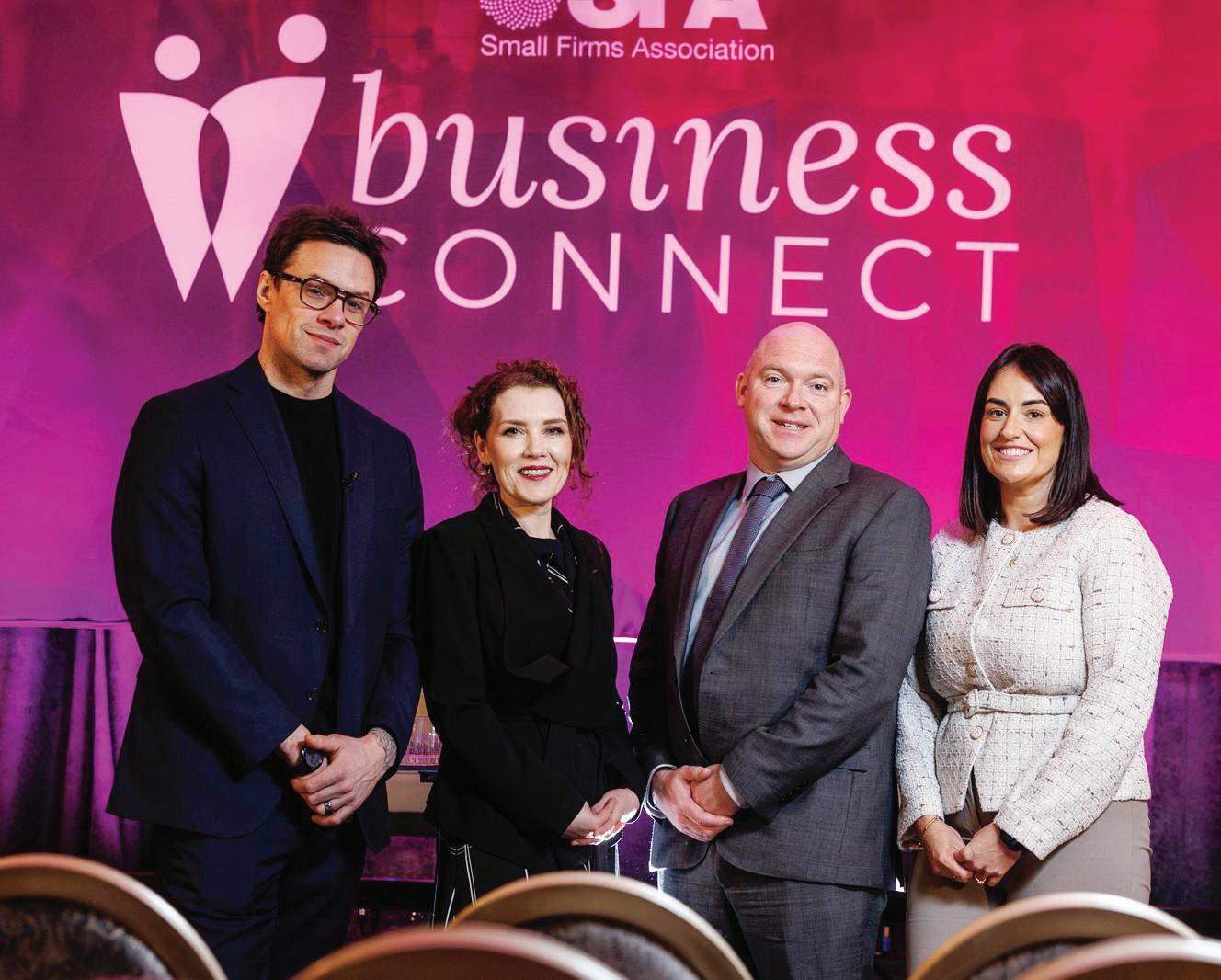
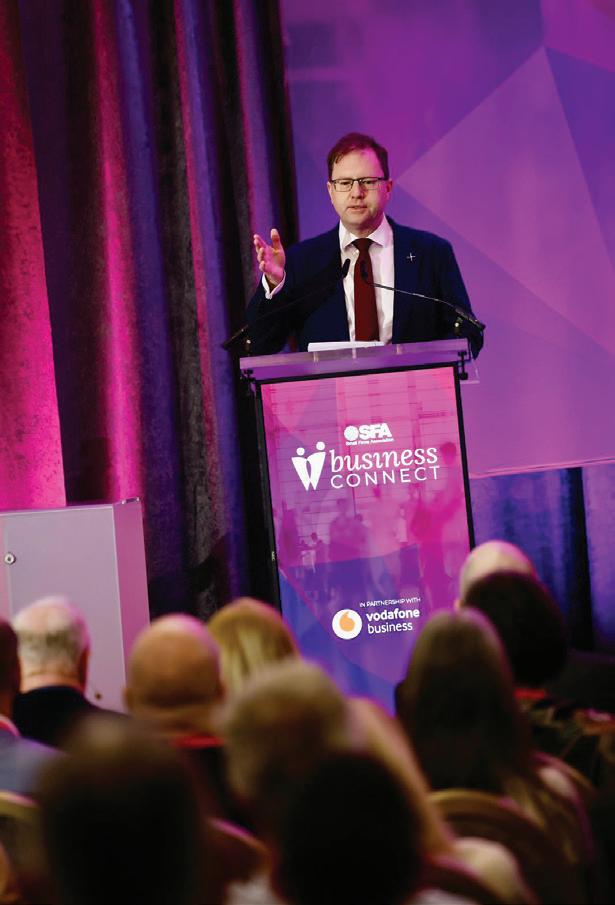
Despite adverse weather, Ireland’s top entrepreneurs were among the 450 people who gathered for the annual Small Firms Association’s Business Connect event, in partnership with Vodafone, at Killashee Hotel in Naas. It was the third consecutive year that the event has taken place in County Kildare. The event is a unique opportunity for the small business community to network, learn and get inspired. Business Connect was opened by local TD, James Lawless, Minister for Further and Higher Education, Research, Innovation and Science. Issues up for discussion on the day included managing risk and leveraging debt for growth, integrating digital solutions for efficiency, breaking into big procurement networks and wellbeing and mental health for business owners.
The featured address was delivered by musician and mental health advocate Niall Breslin (Bressie) which focused on the wellbeing of Ireland’s small business owners. Business Connect was hosted by journalists Richard Curran and also featured presentations and panel discussions from Ireland’s leading business experts.
In her address to delegates, Geraldine Magnier, SFA Chair and CEO of Idiro Analytics, said: “As stated in our recently published three-year strategy, I think an additional focus needs to be on our small business owners. Without the small business owner, without their dedication, risk taking and hard work, there are no small businesses. The ongoing success of the Business Connect event reflects the desire of small business owners to network, inform and learn from each other.”
In his opening address, Minister for Further and Higher Education, Research, Innovation and Science of Ireland, James Lawless, TD said: “It is encouraging to see so many entrepreneurs gathered in Kildare to engage, network and learn from each other. Our small business owners are the heart of our communities and are the backbone of our economy. The Government has prioritised the challenges facing the small business community which is guided by our enterprise-friendly Programme for Government. I look forward to continuing my engagements with the Small Firms Association as we work to make Ireland the best small country to do business in.”
Commenting on the event’s themes, SFA Director David Broderick said: “The issues related to access to large supply chains, wellbeing, managing risk and digital solutions are on the forefront of the minds of business owners. This conference aims to inform and advise small business leaders about overcoming these challenges from our expert presenters and panellists at a time of economic uncertainty.”
A STRATEGY FOR SURVIVAL AND PROSPERITY
THE SFA’S NEW THREE-YEAR STRATEGY SETS OUT KEY PRIORITIES FOR SMALL FIRMS, WHILE FOCUSING ON THE WELLBEING OF SMALL BUSINESS OWNERS
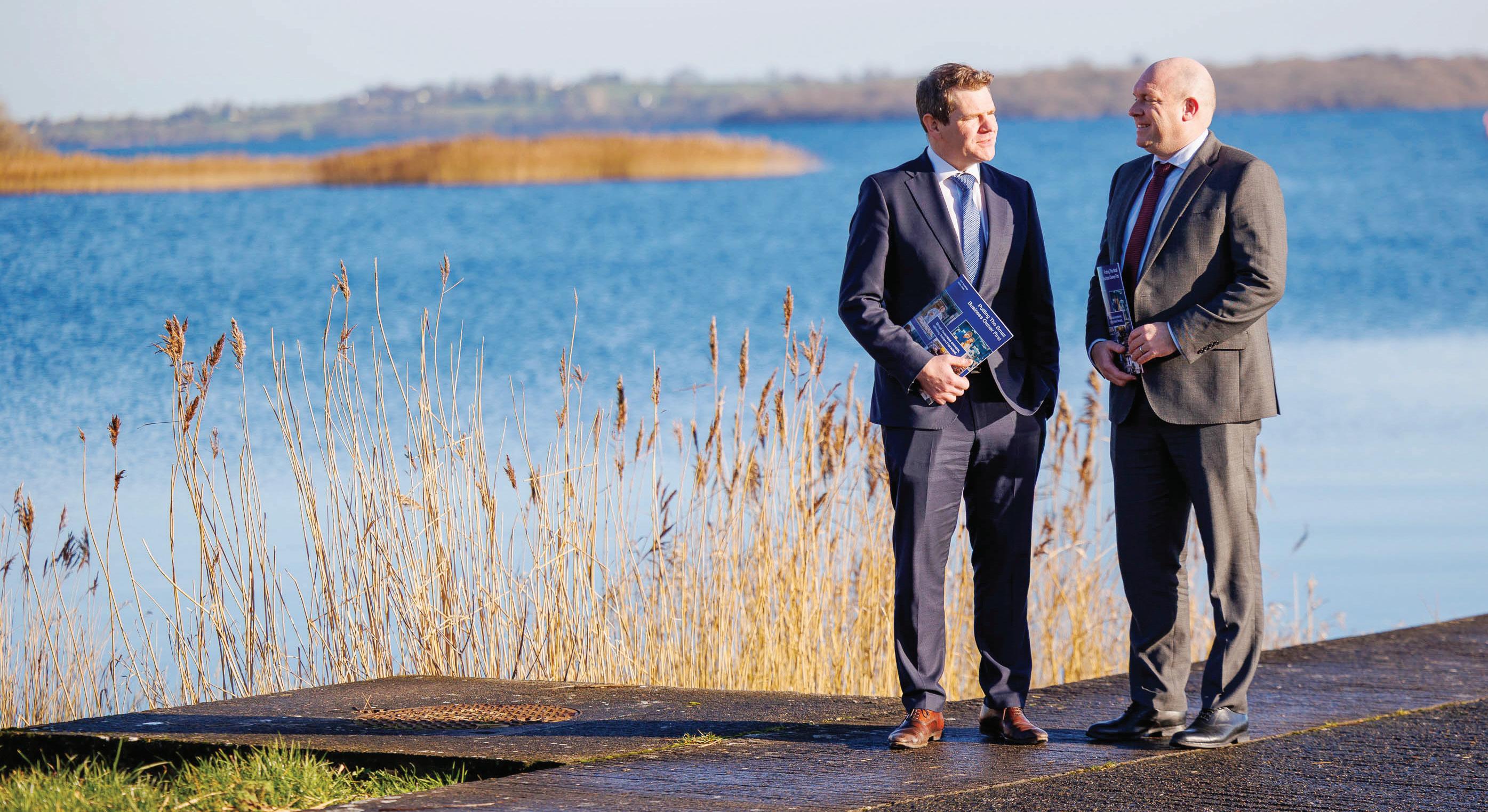
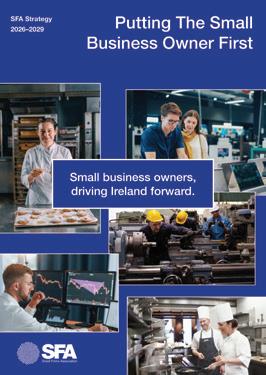
The Small Firms Association (SFA) has launched a three-year strategy document, entitled ‘Putting the Small Business Owner First’ which prioritises the needs of small business owners. The strategy was launched at the SFA’s annual masterclass weekend for SFA National Small Business Award finalists at the Hodson Bay Hotel in Athlone. Minister for Enterprise, Tourism & Employment, Peter Burke, TD launched the strategy and addressed the SFA award finalists by stating that small businesses are a critical part of the modern, innovative economy that Ireland has created.
The strategy states that if the business owner cannot thrive, the business cannot grow which is why the strategy places owners – from startups and stay-ups to lifestyle businesses and high-growth firms – at its very heart. The SFA’s role is to advocate, enable and equip owners to overcome barriers, build capability and compete effectively.
The strategy’s vision is to place Ireland’s small business owners at the heart of Government policy and Ireland’s economic success story – ensuring they can survive, grow and thrive. The ultimate ambition of the strategy is to create an economy where indigenous small businesses can compete, improve productivity and build sustainable enterprises that benefit communities nationwide.
The SFA Strategy has been divided into six key
pillars which feature various action points and work streams within them.
Speaking at the launch of the strategy, Minister for Enterprise, Tourism & Employment, Peter Burke, TD said: “Small businesses play a vital role across the economy. They are a critical part of the modern, innovative economy that Ireland has created. We can’t forget their impact and importance through the jobs they create, the families they support and their role in communities. I welcome the publication of the Small Firms Association’s new strategy and I look forward to engaging with it over the years ahead.”
Commenting on the strategy, SFA Director David Broderick said: “Today, small business owners need costs to reduce. Small business owners also need better access to finance, fewer regulations and support for recruitment and staff retention. Amid the AI revolution, small businesses also need help to embrace digitisation and digital transformation to compete.
“This strategy is a blueprint for prosperity for the next three years. The SFA looks forward to working with key policy makers to fulfil the commitments in the current Programme for Government that will benefit small business owners. Small business owners play an integral role in our communities and the wider economy. This strategy sets out the SFA’s plan to assist Ireland’s entrepreneurs to survive and thrive in the years to come.”
Minister for Enterprise, Tourism & Employment, Peter Burke TD with SFA Director, David Broderick
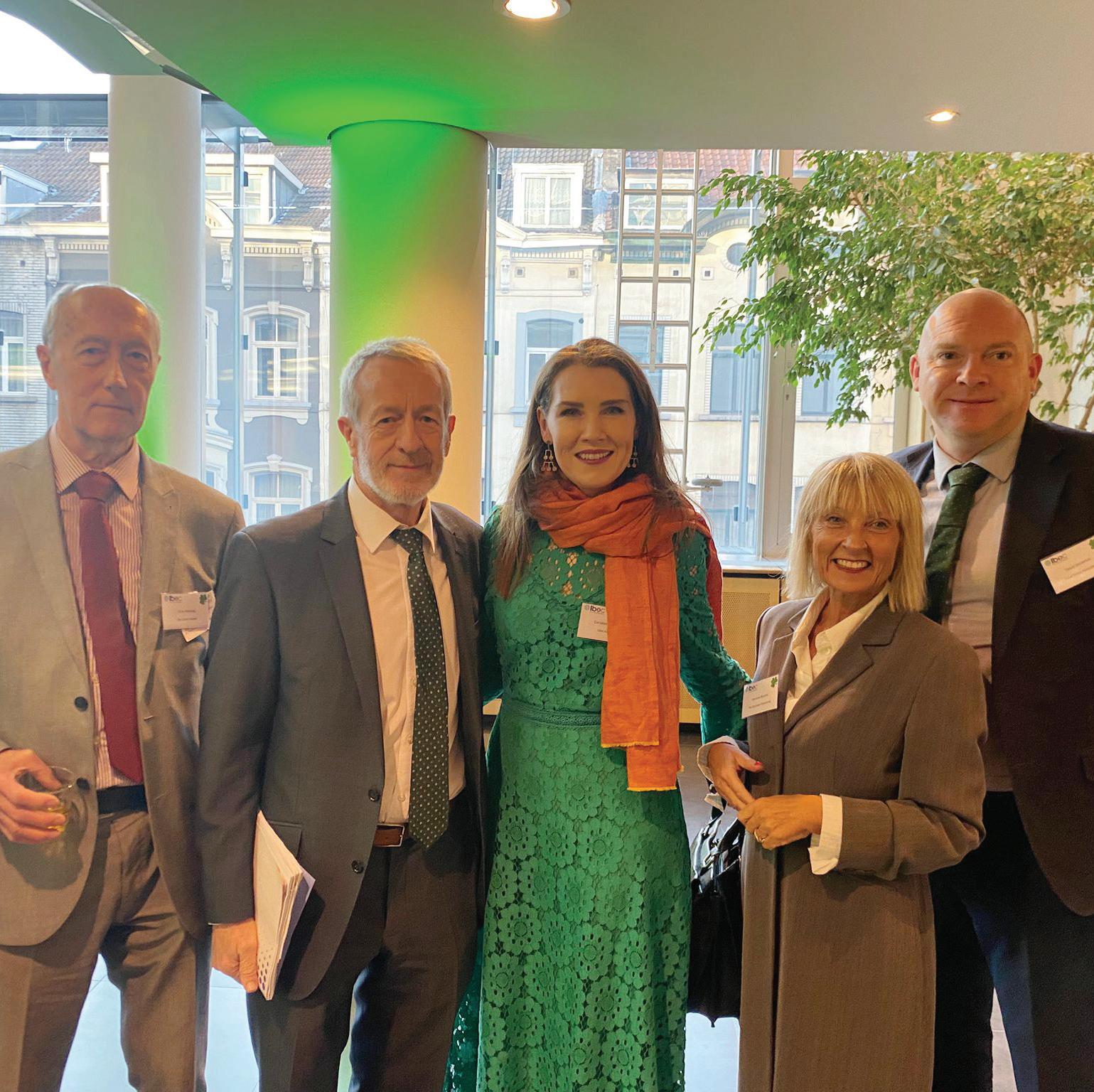
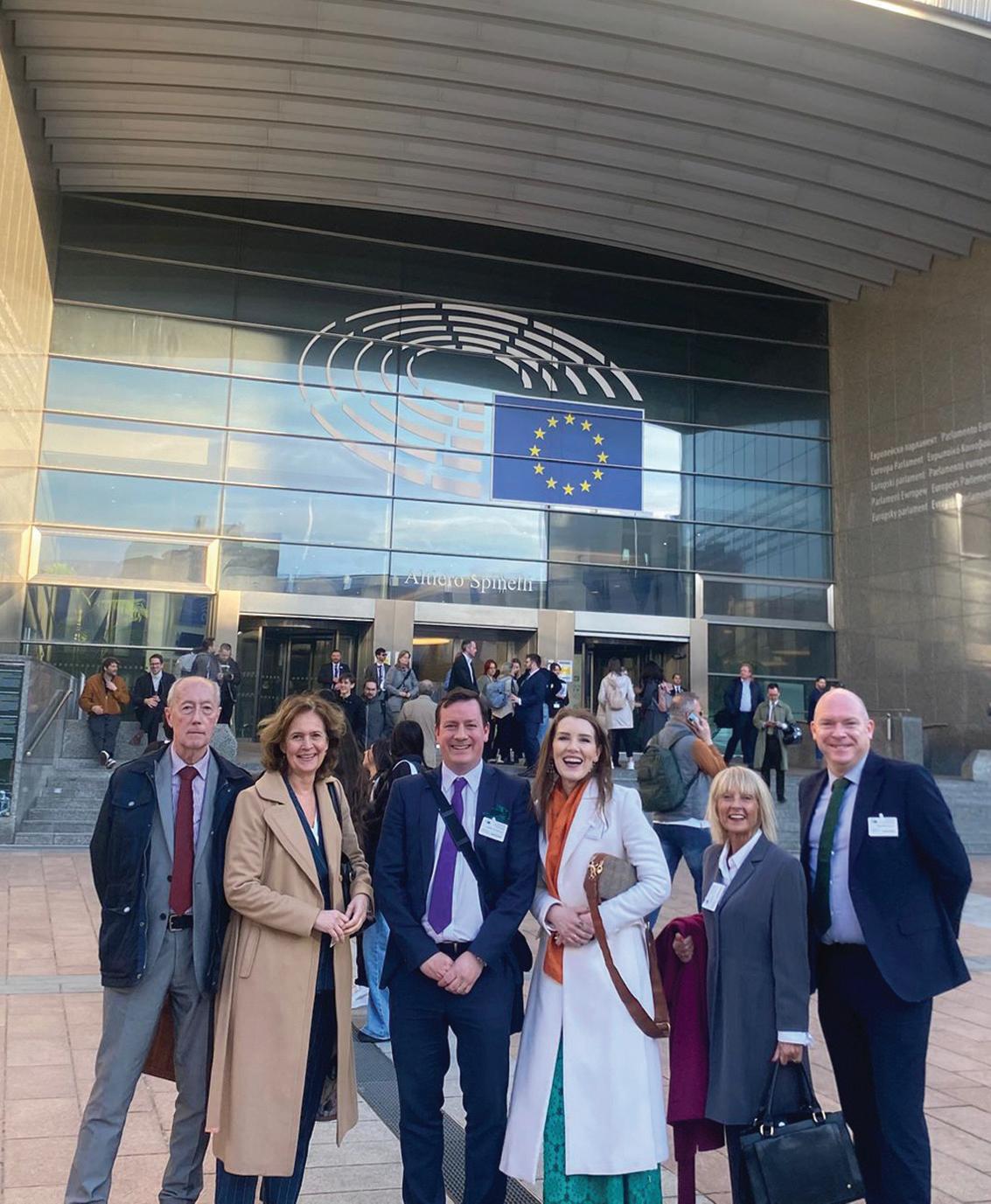
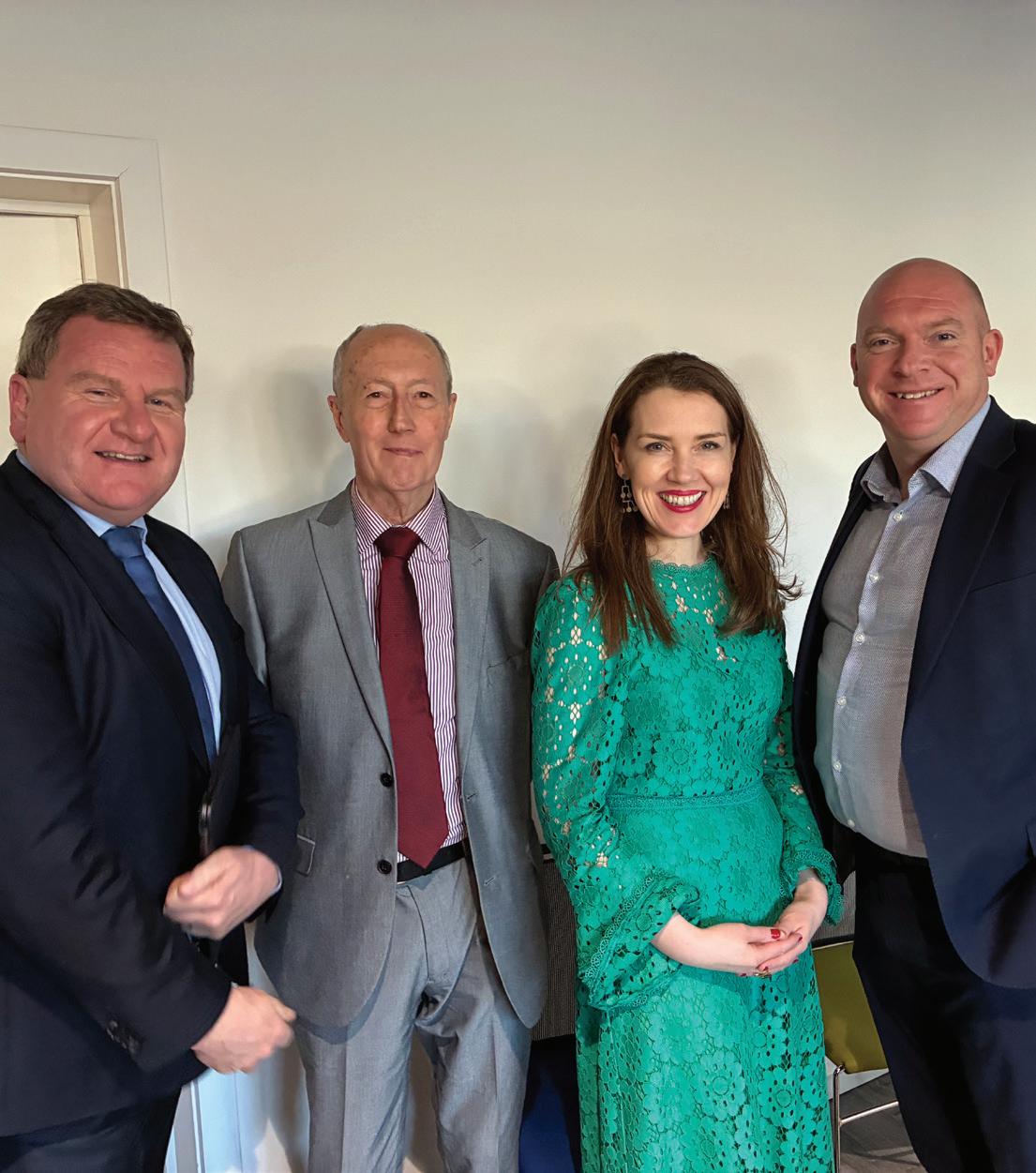
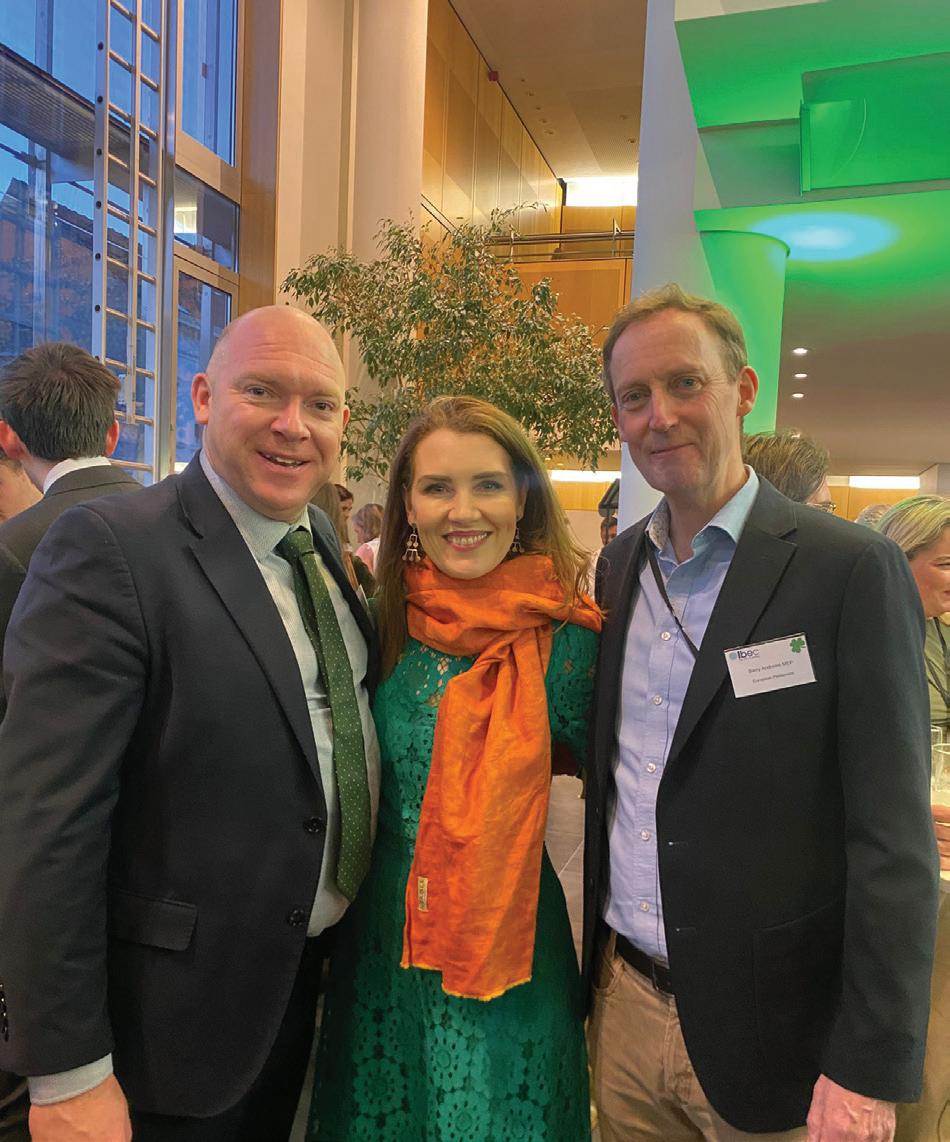
SFA delegation visits Brussels
SFA takes a trip to Brussels for Ibec’s St Patrick’s Day programme
On the 19th of March, a delegation from the Small Firms Association went to Brussels for a series of engagements with key political and administrative figures as part of Ibec’s St. Patrick’s Day programme. It was a unique opportunity to highlight the issues impacting the small business community ahead of Ireland’s presidency of the European Union.
KNOWLEDGE POWER
SUSAN WYLIE ON WHY FINANCIAL LITERACY IS A SUPERPOWER FOR SMALL AND MEDIUMSIZED BUSINESSES
Intoday’s fast moving business environment, nancial literacy is no longer a “nice to have” skill for the small and medium sized business owner (SME) – it’s an essential competency or superpower that can determine whether your business succeeds or struggles. Business owners need to be passionate and innovative about their business, they need to meet constant customer demands, however it’s the ability to understand, interpret and act upon nancial information that can transform a good idea into a great business. Currently, Ireland ranks second among EU countries for meeting the minimum OECD level of nancial literacy, with nearly 60% of adults meeting or exceeding that level. Even though Ireland is currently performing well in terms of nancial literacy, there is still more to be done. e Government’s plan to deliver Ireland’s rst National Financial Literary Strategy will also help to achieve this aim.
Whatisfinancialliteracy?
The OECD’s definition for financial literacy is “a combination of financial awareness, knowledge, skills, attitudes and behaviours necessary to make sound financial decisions and ultimately achieve individual financial wellbeing.” As business owners, a high level of financial literacy is essential and in this article we try to simplify some of the financial jargon that business owners come across when viewing their monthly management accounts and year-end financial statements. Management accounts and financial statements can be broken down into three parts – balance sheet, income statement and the cashflow statement.
Susan Wylie, Head of Accounts and Business Advisory Services, Azets Ireland
WHY FINANCIAL LITERACY MATTERS FOR SMES
Financial literacy goes beyond simply knowing how to read a balance sheet. It’s about understanding the story behind the gures — how cash ow trends reveal operational health, how margins re ect pricing and cost control, and how debt structures in uence growth potential.
For SMEs, where resources are o en tight and margins slim, even small nancial missteps can have outsized consequences. A well-informed owner can:
Make better strategic decisions by using financial data to guide investments, hire new sta and expand the business
Manage risk proactively by spotting early warning signs in cash flow or debt ratios
Negotiate e ectively with suppliers, lenders and investors through a clear understanding of financial terms and implications
Balance Sheet
What the organisation owns vs what it owes
It is a snapshot at the nancial year end date of the organisation’s nancial position
Assets
What the company owns and it owed ( xed assets, stock, debtors and cash)
Liabilities
What the company owes (trade creditors, taxes, bank overdra s and loans)
Key Areas of Financial Literacy for SMB Leaders
Cash Flow Management
Cash ow is the lifeblood of any business. Understanding the timing of in ows and out ows helps prevent liquidity crises and ensures operational stability.
Budgeting & Forecasting
A realistic budget paired with rolling forecasts allows SMEs to adapt quickly to market changes and seize opportunities without overextending.
Financial Ratios & KPIs
Metrics like gross margin, current ratio and return on investment provide quick insights into performance and e ciency.
Debt & Capital Structure
Knowing the di erence between good debt (growth-enabling) and bad debt (cash-draining) is essential for sustainable scaling.
Tax Planning & Compliance
Proactive tax strategies can free up capital for reinvestment while avoiding costly penalties.
Building Financial Literacy in Your Business
Invest in Training
Workshops, online courses and mentoring can upskill both owners and key team members.
Leverage Technology
Cloud-based accounting tools provide real-time insights and automate routine tasks.
Seek Expert Guidance
Partnering with accountants or nancial advisors can bridge knowledge gaps and provide strategic perspective.
Foster a Financial Culture
Encourage open discussions about nancial performance across teams to align everyone with business goals.
The Competitive Advantage
In a competitive market, financial literacy is a quiet but powerful di erentiator. It empowers SME owners to navigate uncertainty, allocate resources wisely and build resilience. Businesses that understand their numbers don’t just survive – they position themselves to grow, innovate and lead. The team in Azets Ireland are available to support the SME business owner to build on the financial literacy in their business.
Equity
What belongs to the shareholders (share capital and reserves)
Income Statement
(also known as the Profit & Loss Account)
Shows whether the company made a profit or a loss in the period
e Revenue for the period –(also known as sales or turnover) e costs or expenditure incurred in the period
Whether there was a pro t or a loss in the period
Revenues less costs = pro t or loss
If revenue is higher than costs, there will be a pro t in the period
If revenue is lower than costs, there will be a loss in the period
Cashflow Statement
Shows the cash receipts in the period – mainly sales receipts
e cash outgoings in the period – mainly suppliers, wages, rent and operation costs
If the receipts exceed the costs, there will be a cash surplus
If the costs exceed the receipts, there will be a cash de cit
An understanding of the above will assist the SME owner to understand and interpret their management accounts.
WISE GUYS
SIX INDUSTRY EXPERTS SHARE ONE PERSONAL NUGGET OF ADVICE FOR ASPIRING ENTREPRENEURS.
Breege O’Donoghue Former Board Member, Primark
Mentorship is a growth and con dence accelerator, the value of which cannot be underestimated. Build strong networks – not just within your own industry – and learn from others as you grow. But be generous and empathetic and be willing to reciprocate by showing support to others too.
Barry Reynolds Employment Law Partner, Littler
1 2 3
Women remained underrepresented in the top tier of nancial services in 2024. Many rms may have made commitments to gender balance, but the challenge is converting those commitments into sustained cultural change. Financial services businesses need to look closely at what’s holding women back from stepping into the top roles – and address those barriers head-on.
Gráinne Mullins Founder, Grá Chocolates
Perfection is the enemy of progress and rather than wait for everything to be ‘perfect’, I encourage women entrepreneurs to pursue their goals with vison and focus. Taking the next step, regardless of what stage you are at in your journey, could be the di erence between opportunity realised and opportunity missed.
Chocolatier
What is perfection, anyway? It’s the death of creativity, that’s what I think, while change on the other hand, is the cornerstone of new ideas. God knows I want new ideas and new experiences.
Michael Byrne CEO, Core Credit Union
Look for ways your business can give back locally. Sponsor a community event, o er discounts or free advice to those in need, volunteer time or support local charities. Small actions like these strengthen relationships, builds trust and shows that your business genuinely cares. Focus on the people around you, and your business will be known for more than just what it sells.
Justin van der Spuy Co-Founder and Co-CEO, Saros Consulting
AI demands a steady ow of investment. While some enterprises can a ord continuous expenditure on AI projects, they risk losing time and other bene ts if those projects prove to be of no use. Businesses must decide which AI projects to invest in and ensure proper safeguards are in place. Otherwise they’re risking wasted spend with no tangible return, or even worse, a negative one.
Aimee Connolly Founder and CEO, Sculpted by Aimee
Even the most successful businesspeople can su er from imposter syndrome, but this is o en predicated on feelings, not fact. Starting a business, dealing with challenges, setting high standards and showing genuine passion for what you are doing is proof of capability. So, recognise your capabilities and back yourself, and you’ll have one less negative thing to deal with.
Diane Keaton Actor 1946-2025
“Ireland’s medtech sector has become one of the country’s biggest success stories – and it’s not slowing down anytime soon.”
Ireland’s medtech sector has become one of the country’s biggest success stories – and it’s not slowing down anytime soon. What started as a strong manufacturing base has evolved into a global hub for innovation, with Ireland now home to many of the world’s leading medical technology companies.
Of course, it’s not all smooth sailing. Rising costs, talent shortages in specialised areas and increasing regulatory demands are putting pressure on companies. There’s also a growing need to keep up with digital transformation, as healthcare becomes more data-driven and technology-focused. Even with these challenges, the outlook is strong. An ageing global population and increasing demand for healthcare solutions mean medtech will only become more important. For Ireland, the opportunity lies in continuing to invest in innovation and skills – ensuring it stays not just competitive, but ahead of the curve.
At its core, medtech in Ireland is about designing and producing devices and solutions that improve patient care –from surgical equipment and implants to diagnostics and digital health tools. The sector employs around 50,000 people and exports billions each year, making it a major contributor to the Irish economy. But beyond the numbers, it’s the ecosystem that really stands out.
One of Ireland’s biggest advantages is its ability to attract multinational investment while also supporting homegrown companies. Global players have set up significant operations here, drawn by a skilled workforce, strong links to universities and a business-friendly environment.
At the same time, Irish start-ups are benefitting from increased Government support, skillset and investment and carving out space in the global arena. Places like Galway – home to SymPhysis –have become known as medtech clusters, where companies, researchers and hospitals work closely together. This collaboration helps ideas move quickly from concept to market – something that’s critical in a fastchanging industry.
“AT ITS CORE, MEDTECH IN IRELAND IS ABOUT DESIGNING AND PRODUCING DEVICES AND SOLUTIONS THAT IMPROVE PATIENT CARE –FROM SURGICAL EQUIPMENT AND IMPLANTS TO DIAGNOSTICS AND DIGITAL HEALTH TOOLS.”
SymPhysis
It was while taking part in the BioInnovate Programme that Dr Michelle Tierney and Tim Jones, founders of SymPhysis Medical, recognised an opportunity to make a real difference in the lives of late-stage cancer patients. BioInnovate is a full-time programme which brings together multidisciplinary teams with a view on collaboration to improve patient outcomes. That collaboration led to the development of the company’s releaze™ Drainage System.
As part of BioInnovate, Tierney and Jones spent time observing patient care within hospitals, speaking to clinicians and patients alike, and recognising a need within malignant fluid effusions, often described as “fluid in the chest”, among palliative care patients. The existing care for this condition, they explain, involved both in and outpatient treatment with specialised equipment that couldn’t be managed independently – putting additional strain on patients and their families. The company’s releaze™ Drainage System makes a real impact on patient care through its focus on selfmanagement – empowering patients to take control of their own care.
“The current devices work well,” says Tierney, “they’re satisfactory in that they help patients with fluid in their chest. Patients have a device placed in the hospital and then go home, which is the key thing for patients who have terminal diagnosis – they want to spend as much time at home as possible.
“The main issue we saw was what their experience was like once at home. It was over reliance on other people, whether it’s a carer or a family member.”
Going on to explain that existing devices require more than one pair of hands to be effective, Tierney says that while talking to patients, herself and Jones learned that care decisions were being made based on the amount of support a patient had at home. “It was actually impacting their ability to choose what treatment they wanted,” she says.
Through extensive consultation with patients, their families and clinicians on both the practicalities and limitations of the current device, the opportunity became clear.
“We saw how the devices already on the market positively impacted a patient’s ability to go home,” echoes Jones. “What was missing was the independence piece. We realised that if we could increase the potential length of independence for these patients, then we’ll have a transformative effect on their care at home. It could be something that patients and clinicians would be open to adopt.”
And warm to it they have. SymPhysis Medical was recently awarded a $1.25 million non-dilutive grant from the Rhode Island Life Science Hub (RILSH) to establish its first US headquarters and advance its pathway toward US regulatory clearance.
“WHAT WAS MISSING WAS THE INDEPENDENCE PIECE. WE REALISED THAT IF WE CAN INCREASE THE POTENTIAL LENGTH OF INDEPENDENCE FOR THESE PATIENTS, THEN WE’LL HAVE A TRANSFORMATIVE EFFECT ON THEIR CARE AT HOME.”
Both Tierney and Jones are clear that after a seven-year journey to get to this stage, they want to launch releaze™ Drainage System for malignant fluid effusions first. The US launch is first, followed by European markets such as the UK or Germany.
“We’re focused on delivering the first product because all the plans we have for next generation adjacencies aren’t important unless we prove that the device will work initially in patients,” says Jones.
He adds: “Going into the US first speeds up getting to the European market because it allows us to get clinical data. Once it’s cleared for use in the US, we then use that clinical data to submit for the MDR CE mark. That’s a key aspect but as we are developing, we’re looking at all of those adjacencies as a lower priority because we can’t really put a lot of resources on them. Ultimately, they will build value in the business and enable us to look at treating a wider group of patients.”
The plan is that in four or five years’ time, the company will be in a position to explore other products. “At that stage, we hope to be a company that’s continuing to talk to clinicians, seeing where the opportunities are and developing a major portfolio within the pleural disease space.”
Dr Michelle Tierney
Tim Jones
TymPulse Medical
In a healthcare landscape increasingly shaped by convenience, speed and patient comfort, TymPulse Medical is tapping into a powerful shift – the move away from invasive surgery and towards smarter, more efficient treatments.
Founded by Dr John Gleeson & Prof Fergal O’Brien, Tympulse is focused on transforming how eardrum injuries are treated – offering a solution that could one day make traditional surgery feel like a thing of the past.
“There’s been a huge market shift across the entire surgical devices space over the last decade towards minimally invasive solutions,” explains Gleeson. “Less complex surgical procedures have migrated into an outpatient or homecare setting. With slightly more complex procedures, like ear drum repair, the major barrier to a minimally invasive approach has been a lack of innovation in surgical tools. That’s the opportunity we identified and where our innovation fits.”
At the centre of TymPulse’s approach is its breakthrough product –TympanoColl – a minimally invasive eardrum repair system for the repair of burst eardrums. A first-of-its kind device, it can safely deliver a regenerative implant through the ear canal to repair the eardrum and restore hearing.
“Our first product iteration is ideally suited to small localised lesions that are commonly seen in young children who have their ear tubes removed (but still have a hole in the eardrum) and adults with ear infections that lead to chronic non-healing wounds. These groups make up 70% of our target market. The second version of the product will tackle the remaining
“THE BIGGEST CHALLENGE HAS BEEN BUILDING THE VALUE PROPOSITION TO BECOME TRULY INVESTABLE.”
30% of patients that have a total ‘blow out’ of the entire eardrum. These need more specialist care, but can be carried out using an evolution of our first product,” says Gleeson.
“Best practice currently uses patients’ own donor tissue harvested from connective tissue outside of the ear, or animal derived membranes from skin. Our regenerative bioimplant is biomimetic in nature and the Tissue Engineering Research Group led by Prof Fergal O’Brien in RCSI has spent a number of years optimising this to allow restoration of normal, healthy natural eardrum tissue.
“Navigating the small, confined space of the ear canal and middle ear outside of an operating room requires more advanced surgical devices that have traditionally been the preserve of interventional heart repair, such as advanced catheter systems. By utilising those advanced engineering concepts, on a less invasive procedure, we get the benefits of catheterbased innovations but with dramatic improvements in speed and outcomes. Innovation in manufacturing also makes these affordable so that ENT surgeons can bring them into their practice to save time and money, while crucially improving the experience and results for the patient. Bringing healthcare costs down is a priority for all stakeholders and the significant savings we can make in procedure time adds up to huge benefits for patients and caregivers.”
Of course, bringing a new medical technology to life comes with its own set of challenges – particularly in such a highly regulated space. And Tympulse Medical’s experience has been no different.
“The biggest challenge has been building the value proposition to become truly investable,” Gleeson says. “Having the idea and prototype is only one aspect. The route to market with regulated medical devices is a major risk factor, so there’s an enormous amount of time needed to build a community of clinical ‘champions’, experienced advisors with domain expertise to help navigate the early stages with hugely limited resources, all while having very limited resources. Tympulse has a lot of people to thank, not only funders such as Enterprise Ireland, who have been immensely supportive but also the Irish Medtech Association, as well as business supports such as Furthr and the broader Irish medtech community. We’re now reaping the benefit of at least three decades of life sciences and medical device investment in Ireland and this expertise is now filtering down across all aspects of the startup ecosystem.”
Looking ahead, Tympulse Medical’s ambition stretches far beyond a single treatment and echoes advances being seen across the country.
“We plan to be a platform medtech business offering a number of product versions for in-patient and out-patient settings, with advanced visualisation and diagnostics systems built into the technology.”
Prof Fergal O’Brien
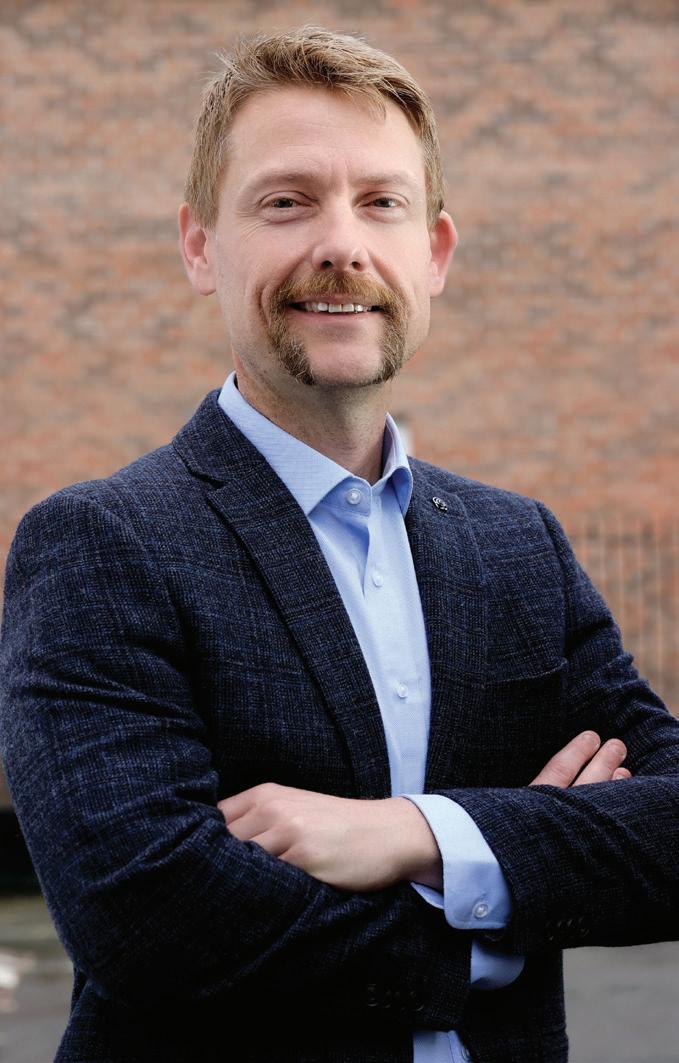
Dr John Gleeson
NATIONAL PRESIDENT OF NETWORK IRELAND AMY O’SULLIVAN SPEAKS TO JENNIFER MCSHANE ABOUT WHY BREAKING BARRIERS UNDERPINS HER LEADERSHIP AND HOW COLLECTIVE SUPPORT CAN DRIVE MEANINGFUL CHANGE
Kilkenny businesswoman and digital marketing consultant Amy O’Sullivan has taken on the role of National President of Network Ireland with a focused mission – to confront the structural and cultural obstacles that still limit women’s progress in business. Her presidential theme, Breaking Barriers, re ects her determination to challenge inequitable access to mentorship, funding and investor networks – issues that continue to hinder growth for many womenled enterprises. “Women in business o en struggle with access to mentorship, investor networks and equitable funding opportunities,” she says. “Breaking Barriers represents a commitment to challenge these limitations and open up new avenues for women across sectors.”
Her presidency follows the recent National Conference and Businesswoman of the Year Awards in Killarney, where members gathered to explore topics such as AI gender bias, funding gaps and the importance of connection. For O’Sullivan, the event reinforced Network Ireland’s core strength – a community of women committed to supporting and elevating one another.
Amy O’Sullivan, National President, Network Ireland
You’ve said that small businesses grow faster when they tap into the trust and expertise already around them. Can you expand on why leveraging your network is so powerful for SMEs?
Because no small business succeeds in isolation. Your network gives you access to experience, insights and opportunities that would otherwise take years to build. When you tap into trusted relationships, you shorten your learning curve, avoid costly mistakes and open doors that might never appear when going the road alone. It’s not about who you know – it’s about who knows what you’re trying to achieve.
As National President of Network Ireland, what do you see as the biggest benefits of being part of a professional network? Connection. Running a business can be lonely but in a professional network, you’re surrounded by people who understand the challenges and celebrate the wins. You gain practical advice, referrals, mentoring and lifelong friendships.
From your experience, what’s the best way for small business owners to start building those valuable connections if networking doesn’t come naturally to them?
Start small and be genuine. Networking isn’t about collecting business cards – it’s about building relationships. Ask questions and show genuine interest in others – think about how you can help them before you ask for anything. One authentic connection is worth more than 10 super cial ones. And remember – con dence grows with practice, so keep showing up.
MANY SMALL BUSINESS OWNERS JUGGLE SO MUCH – CLIENTS, OPERATIONS, FAMILY LIFE. WHAT ADVICE DO YOU GIVE THEM ABOUT FINDING BALANCE WHILE STILL GROWING THEIR NETWORK?
Be intentional with your time. Networking doesn’t have to mean endless events – it can be a co ee with a peer, a quick check-in or supporting someone online. Boundaries and balance are key, but connection fuels growth. When you invest time in relationships, you’re not stepping away from your business, you’re strengthening it.
Your own company, AOS Consulting, focuses on business strategy and leadership. How does that feed into your work with Network Ireland?
At AOS Consulting, my focus is on helping business owners and brands to elevate their digital presence. I see every day how purpose-led strategy transforms results and I bring that perspective to the organisation. It’s about empowering our members to think strategically, communicate e ectively and lead with intent.
The Network Ireland National Conference and Annual Awards are a major highlight every year. What makes them so special? ey showcase the very best of our network –the innovation, courage and collaboration that de ne Irish women in business. e recurring theme of the conference was connection. It wasn’t just about meeting at the conference, but about building meaningful relationships that continue long a er the event. We encouraged members to reach out, ask for help, grab a co ee and see where those conversations might lead. e awards are a chance to shine a spotlight on women from diverse industries and backgrounds and to celebrate their success, resilience and impact.
Celebrating success is such a big part of the awards. What do you think we can learn from this year’s winners? at success looks di erent for everyone, but it always starts with resilience and self-belief. Our winners prove that growth o en comes from taking bold steps, embracing change and asking for help when needed. ey remind us that celebrating success isn’t self-indulgent – it’s essential for building con dence and inspiring others to aim higher.
Finally, looking ahead, what’s your vision for Network Ireland in the next few years and how do you hope to see it evolve? I want to see us deepen our impact – to grow our reach, but also our relevance. And to do this, not just in Ireland, but globally. at means more opportunities for collaboration, learning and leadership at every stage of career and business. My vision is a Network where every member feels empowered, supported and seen – a place where women li each other higher, together.
JOHN PHELAN’S PIVOT TO DATA ANALYTICS FROM THE WORLD OF ANIMATION IS A MASTERCLASS IN HOW TO STAY AHEAD OF THE GAME
Joined -Up
John
Back in the 1980’s,
animated films like “All Dogs Go to Heaven” and “The Land Before Time” represented a turning point in a child’s life. The sudden realisation that a beloved family dog or even a parent could die was a harsh lesson to learn. At that time, John Phelan worked for Sullivan Bluth Animation Studios, responsible for the aforementioned innocence-ending films, along with several others. “I painted the backs of acetate cells for those two films and then later, I worked on ‘Space Jam’ for Warners. After a few years, I set up my own animation studio in London and up until about four years ago, I was also chair of Animation Ireland. Today, I’m on the steering committee for the Cultural & Creative Industries Skillnet. Although I pivoted to business, it’s an industry I’m stil proud to be involved in,” says John.
In 2025, John’s experience and achievements in animation were honoured at the Irish Animation Awards where he received the “Outstanding Contribution to Industry” award. It was a nice reminder of both his early career’s success and his ability to turn his hand to completely different industries. A restructuring of the animation industry in 2000 led John to leave the world of make-believe (by way of heading up a gaming studio in Chicago) and opting to do an MBA in Smurfit’s. “It was a big shock to the system! I had no primary degree and didn’t know what I was getting into. But it was brilliant in terms of teaching me about the financial side of business. It also gave me an insight into what had happened in the animation and gaming industry. With the advent of 3D animation and CGI, the industry had completely shifted;
“IT WAS A BIG SHOCK TO THE SYSTEM! I HAD NO PRIMARY DEGREE AND DIDN’T KNOW WHAT I WAS GETTING INTO. BUT IT WAS BRILLIANT IN TERMS OF TEACHING ME ABOUT THE FINANCIAL SIDE OF BUSINESS.”
Phelan, Commercial Director & Co-Founder, Advise
a lot of really talented artists lost their careers. For me, the MBA was about analysing and researching industries to figure out where they’ll be in the next five years. How can you position yourself so you’re at the front end of that, rather than the back end? That was my rationale for doing the MBA – it was giving me an opportunity to learn all the things I didn’t understand.”
John then transitioned into start-ups and funding for early-stage companies. That led him to the role of all-island Director at HBAN (Halo Business Angel Network). During his tenure, the organisation grew from virtually zero to investing €33 million into 88 deals. Today, alongside Co-Founder Kevin McCarthy, he heads up ‘Advise’ – an AI-powered data analytics company for the CPG (Consumer Packaged Goods) industry. Working with brands like Mastercard gave him the idea for the new business. “Back in 2016, I was doing a lot of services work for the likes of Mastercard. I remember identifying a problem in the FMCG sector, which was a lack of unified data. For example, take a brand like Britvic which sells Pepsi in Ireland. Pepsi is sent to supermarkets across the country and those supermarkets send their sales data back to Britvic. But nobody was putting all this data together. It was a task that would take Britvic weeks to complete each month. We discovered that this was a real issue for the Irish market.” It was an even bigger issue for the UK market – more retailers and more product to sell meant a lot more data to organise. “So we said, let’s develop a unified data platform which can automate all that data. We launched in the first week of March 2020, which wasn’t a great time for retail.” With the market in lockdown, John didn’t have a customer for two years. But then, he says, it took off.
Today, Advise’s clients include Carlsberg, Britvic, Tayto, Coca-Cola, Birds Eye and Dr Oetker. For the last 12 months, the focus has been on UK expansion and an amount of toe-dipping into the US. The UK market is competitive, but Advise’s USP is its endto-end piece. “Putting all those data sources together might sound simple, but actually a huge amount of technical data modelling is required. We’ve spent the last eight years building a model which is what
ingests all the data. But it also harmonises it and makes it readable, which allows the user to analyse it. A lot of other companies can only gather the data, they can’t do the ingestion piece.” AI capabilities allow the platform to go a step further. “We can look at the data and figure out what happened in the past and why. Traditional business tools are unable to go that extra mile with ‘why’. Not only can we explain why, but we can also tell the client what they need to do to fix it. When you have that capability, you’re able to accelerate people’s speed to insights.”
“AI HAS ITS PLACE BUT FUNDAMENTALLY, I THINK IT ALL COMES BACK TO PEOPLE. BUILDING TRUST, BUILDING RELATIONSHIPS AND PARTNERSHIPS, THAT’S WHAT CREATES A SUCCESSFUL BUSINESS.”
Success across several different industries comes down to identifying what you’re selling and then being able to sell it, says John. “The product in those different industries might be different, but the end user is always someone who sees value in what you’re selling. If you’re a small, early-stage company looking to convince people that what you have is of value, you have to be able to sell it. That’s the validation.” Business is about understanding people, says John. “AI has its place but fundamentally, I think it all comes back to people. Building trust, building relationships and partnerships, that’s what creates a successful business.”
With a firm foothold in Ireland and increasingly in the UK, and with a promising start in the US, John is optimistic about the role Advise is set to play in the data analytics market. “We’ve worked really hard with Advise and I think it’s set to play an important role in the Gen AI market. It’s validating and rewarding when you see all your hard work finally come to fruition.”
John Phelan, Commercial Director & Co-Founder, Advise
WE DON’T WANT TO SAVE CHILDREN’S LIVES
Children’s
Ready Glow for a UP
FROM SCALP HEALTH TO ARTISAN SKINCARE, FOUR IRISH FOUNDERS SPEAK TO JENNIFER MCSHANE ABOUT THE REALITIES OF BUILDING A BEAUTY BRAND AND WHAT IT TAKES TO STAND OUT IN A CROWDED MARKET
Theidea for Ealu didn’t begin with a business plan, but with a mutual
shared frustration. Susan Fox, a skin therapist and Co-Founder of Eden Beauty Group, and Carly Colgan Bates, a Dublin-born content creator based in Florida, had bonded over their love of skincare and self-care. It was during a trip to New York that they nally decided to act on it.
“Carly and I are both busy, o en stressed women, and our way of relaxing and practising self-care has always involved a hot bath or a spa-like experience,” Fox explains. “We found that while many body care products on the market o ered strong experiential elements smelling and feeling good, they weren’t actually bene tting the skin.”
“WHILE PEOPLE ARE INITIALLY DRAWN TO OUR AESTHETIC, THEY BECOME REPEAT CUSTOMERS BECAUSE OF THE QUALITY, EFFICACY AND OVERALL EXPERIENCE OF THE PRODUCTS.”
at gap became the foundation for Ealu. Drawing on Fox’s clinical expertise and Bates’ experience as a long-time beauty enthusiast, they set out to create body care that delivered both results and experience. “Between her experience and my expertise in skincare and ingredients, we identi ed a clear gap – experiential body care with formulations that genuinely treat the skin, positioned in the mid-price tier, neither budget nor luxury.”
“We have a clear focus on both e cacy and experience,” Fox says. “While people are initially drawn to our aesthetic, they become repeat customers because of the quality, e cacy and overall experience of the products.” e brand’s identity is closely tied to its Irish roots. All products are developed, manufactured and lled in Ireland, and its name re ects its philosophy. “ e name Ealu (pronounced ay-lu) is derived from the Irish word for ‘escape’ or ‘pause,’ which sits at the heart of our brand philosophy.”
rough initiatives such as “Ealu Mindful Moments” and “Mindful Movement,” the founders host yoga and meditation sessions, creating opportunities to connect directly with customers. at connection extends into the brand’s wider values, with support for Irish charities and fundraising e orts forming part of its journey so far.
Like many early-stage brands, building Ealu has come with challenges. “We only launched 18 months ago, so in truth, we face challenging moments almost every week,” Fox says. A key lesson has been staying committed to their vision. “For some formulations, we went through over 40 samples because we refused to compromise. Quality always wins out.”
Looking ahead, the ambition is to grow both reach and recognition. “Our immediate goal is to get our products in front of as many people as possible,” she says.
“OUR STUDENTS AND CLIENTS KNOW THEY’RE SEEN… WE’RE INVESTED IN THEIR GROWTH, THEIR CONFIDENCE AND THEIR FUTURE.”
“I
didn’t start Beauty Business in a Box because I wanted to start a business. I started it because something in me shi ed and I couldn’t ignore it.” For Sarah Naylor, the business began with a personal turning point rather than a commercial opportunity. Beauty Business in a Box is an accredited education and mentoring platform, designed to help women and girls achieve nancial independence by building their own income streams in the beauty industry. It combines practical, hands-on treatment training with business and mindset tools, allowing participants to start sustainable businesses.
It was a er the birth of her second child that something changed. “When I had my daughter something in me cracked open,” she says, describing how it brought her back to earlier experiences and a growing need to reshape her life. “I knew then that the life I was building had to look di erent… I needed work that allowed
me to be there for my children but I also needed my own nancial independence.” at clarity led her into the beauty industry, where she quickly noticed a pattern. Women were qualifying with strong technical skills, but many were still struggling to build sustainable businesses.
Beauty Business in a Box was created to address that gap. It focuses not just on skills but on con dence, structure and long-term earning potential. “It’s about giving women the full picture – the skill, the con dence, the business knowledge and the support to actually earn.”
“I’ve never tried to compete, I’ve tried to connect,” she says, explaining that in a crowded market, she has taken a deliberately di erent approach. e focus is less on positioning and more on relationships. Clients, she believes, stay because they feel understood. “Our students and clients know they’re seen… we’re invested in their growth, their con dence and their future.” at honesty extends to how she talks about building a business. “I don’t sell overnight success,” she says. Instead, she emphasises discipline, patience and consistency, something that has helped foster a strong sense of community among clients who support and refer to one another.
Growth, however, has not been without its challenges. At one point, she says she realised she had to change her approach. “Do I want this to survive or do I want it to scale,” she says, recognising that the two require di erent approaches. “You have to know your numbers… build systems and make decisions that support longevity, not just emotion.”
“My ambition is to turn Beauty Business in a Box into a movement, not just a business,” she adds. “ is is bigger than beauty – it’s about changing lives.”
SARAH NAYLOR
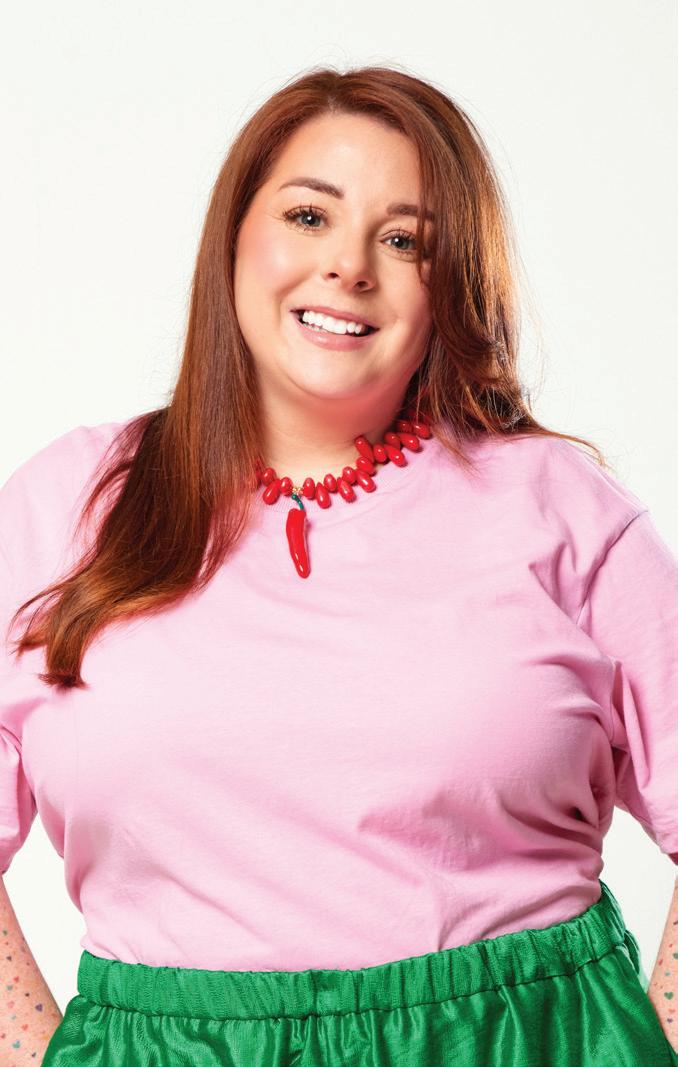
CLAIRE FULLAM
Claire Fullam’s move into scalp care began with personal experience.
Before Remi, she opened Trua, a trichology clinic in Fairview, Dublin, a er losing 90% of her own hair in ve weeks. “My whole life was turned upside down,” she says. What followed was a deeper understanding of hair loss, scalp concerns and the emotional impact they can have. Trua now has ve trichologists and Remi, which has been on the market for two and a half years, was created to ll what Fullam saw as a clear gap. “Most products available on the market are very reactive to hair thinning and hair loss. So before they really do anything, Mary’s hair is already on the oor.”
Instead, Remi takes inspiration from skincare. “Nobody really thinks that their scalp is skin and the e orts that need to go into it, whether that’s exfoliation, decent shampoo or scalp serums,” Fullam says. “ at’s where Remi began – let’s get people thinking about the scalp before there’s a problem.”
at education is central to the brand. “Hair care is like makeup, right? It’s going to make your hair behave, but it won’t change your hair, just as makeup doesn’t change your skin. is is because the minute hair comes out of your scalp, it’s dead,” she explains. “So scalp care is your before step – like skincare, it can actually change the biology and the behaviour of the hair itself.”
Building the business hasn’t been straightforward. One of the toughest moments came when an accountant failed to protect the company’s interests, leaving both Trua and Remi under serious pressure. “ e business nearly ended a couple of years ago,” she says. e lesson was hard, but lasting. Fullam is also cautious about chasing beauty trends. “All of the products we bring out are very intentional. I built this range because of a genuine interest and a gap in the market, but I didn’t know that was going to sell,” she says. “I didn’t know it was going to be attractive to retailers. It’s a real pat on the back to say, well done Claire, you’ve created a sellable brand.” Now, Remi is preparing for the US. “I have to scale this brand,” she says. “And the best way to scale is America.” Her advice to other founders? “Don’t just launch a brand because you think you want to be a brand founder,” she says. “You have to have a real purpose.”
“SCALP CARE IS YOUR BEFORE STEP –LIKE SKINCARE, IT CAN ACTUALLY CHANGE THE BIOLOGY AND THE BEHAVIOUR OF THE HAIR ITSELF.”
“I
started
to feel overwhelmed… there’s so many products making a lot of claims and I wasn’t sure if anything was working for my skin.” is moment of frustration became the starting point for Hawthorne Skincare. Before returning to the West of Ireland, Elaine Kennedy had been living and working in London, surrounded by the fast pace of both city life and the beauty industry. But it was back home, on her family farm in Mayo, that the idea began to take shape.
Growing up in a natural heritage area, Kennedy had always been close to raw ingredients and simple processes. What she hadn’t done, at rst, was connect that environment with skincare. “I started to make some products for myself and saw the immediate impact it had on my skin,” she says.
Kennedy found her skin improved, not through layering products, but by stripping routines back. “I started using simple products that I was making myself and my skin felt balanced.” at philosophy now underpins the entire brand. “Our skin is our largest organ. O en I think you need to give your skin the chance to do what it does best on its own.”
It’s a perspective that feels particularly relevant in a crowded market. While skincare continues to evolve, Kennedy believes clarity is what customers are increasingly looking for. “It can be so confusing for customers… being aware of that and questioning what you’re using and why you’re using it is important.”
“I built my own manufacturing unit, everything is made on site,” she says. Production remains smallbatch, with a focus on ingredient quality. “When you are the maker behind it, you can guarantee what’s going into the product.” Combined with direct communication, including regular updates and behindthe-scenes insights, that’s helped build a loyal following.
“WHEN YOU ARE THE MAKER BEHIND IT, YOU CAN GUARANTEE WHAT’S GOING INTO THE PRODUCT.”
Rather than trying to appeal to everyone, Kennedy focused early on a speci c audience. “ e biggest user of skincare consistently is in her 50s. So I concentrated on her to start with.” Like many founders, Kennedy’s biggest challenges came in the early stages, when she was managing every aspect of the business herself. Learning to step back, prioritise and crucially, say no, has been key. “Not every opportunity is the right one,” she says.
A move into natural perfumery is next, with a focus on emotional connection as much as fragrance. “It’s not just going to be a fragrance… it’s going to be connected to wellness and how you feel.”
ELAINE KENNEDY
FINANCIALLY SUPPORTING ENTREPRENEURSHIP
STRONG OVERSIGHT AND CLEAR APPEALS PATHWAYS ARE ESSENTIAL TO SUPPORTING ENTREPRENEURSHIP, SAYS CREDIT REVIEW
If you’re a small business struggling to access credit, Credit Review is here to help. Set up in 2010, Credit Review has a simple mission - to assist viable, or potentially viable, SMEs and farms access the bank finance they need to grow and develop. And now, thanks to new legislation, this capability has been strengthened even further.
The Credit Review Act 2026 was passed to help small businesses have confidence in the lending systemempowering Credit Review to act as a watchdog and provide appeals on specific credit decisions by banksenabling SMEs and farm borrowers to
challenge lending decisions they believe are wrong. This change reinforces consistency in the lending system while recognising the evolving nature of business finance.
If you are experiencing difficulties accessing credit for your business, contact Credit Review. It will review new applications for credit; or existing facilities that are being reduced, restructured/refinanced or withdrawn, with a value of up to €3m. Banks covered are AIB, BOI and PTSB. The appeals process is flexible and responsive and Credit Reviews experts will engage directly with you, providing
Credit where it’s due.
Having difficulty getting a new business loan or restructuring your existing debt with your bank? Established by the Minister for Finance, Credit Review is here to help.
Talk to the credit experts today on 0818 211 789 or visit creditreview.ie
comprehensive insights into the credit application/decline process.
The Credit Review Service is an independent statutory body whose core function is to provide impartial appeals for viable small businesses refused credit or loans by Irish banks. In addition, the Credit Review Act, 2026, saw the Minister for Finance extend the Credit Review’s scope to non-bank lenders, reflecting the growing role of alternative funding sources for SME and farm credit.
Visit creditreview.ie to request a call back, or call the helpline directly on 0818 211789
PREVENT, DON’T AVOID
DAVID CASEY ON THE HIDDEN COST OF IGNORING ORAL HEALTH AT WORK
When business leaders think about employee health, dental care is rarely top of the list. Yet poor oral health can have a real and o ten overlooked impact on productivity, performance, and costs, particularly for small businesses in Ireland. The reality is simple – dental issues don’t stay in the dentist’s chair. They show up in the workplace and in everyday life. The mouth is more than just a clinical focus; it is o ten described as the gateway to the body, but it is also a deeply social organ. It plays a central role in how we eat, speak, express ourselves and connect with others. It’s how we communicate ideas, share laughter and show kindness and compassion. It’s also how we smile, show a ection and experience closeness – through something as simple and human as a kiss. These everyday acts are fundamental to how we relate to others and how we feel about ourselves. When oral health is compromised, the impact extends far beyond physical symptoms. Toothaches, infections and gum disease can a ect how people speak, how they feel about their appearance and even their willingness to engage socially. Eating can become uncomfortable, conversations can feel strained and people may become more self-conscious about smiling or being close to others. Over time, this can influence quality of life, social health and mental wellbeing. These e ects don’t
disappear when someone comes to work. Employees dealing with dental issues may struggle to concentrate, communicate clearly or fully participate in meetings and interactions. Many will continue working through discomfort rather than taking time o , leading to presenteeism – where someone is present but not performing at their best. For small businesses, where teams are lean and every role matters, even a small dip in performance can have a wider impact.
There is also a financial dimension that builds quietly. When dental problems are le t untreated, they tend to worsen. A minor issue that could have been resolved with a routine visit may develop into a more complex and costly procedure. For employees without access to dental benefits or dental insurance, cost can be a barrier, leading to delays in care and more serious problems over time.
This is where preventive dental care becomes particularly important. Regular check-ups, cleanings and early intervention help identify issues before they escalate. From a business perspective, this means fewer emergencies, less disruption and a healthier, more consistent workforce. Preventive care also supports confidence employees are more likely to speak, engage, smile and interact comfortably when their oral health is in a good place.
Dental insurance plans that prioritise prevention can support this. By covering routine care, they make it easier for employees to attend regular appointments and maintain their oral health without financial concern. Over time, this encourages positive habits and reduces the likelihood of more serious issues developing. For small businesses, this approach is both practical and coste ective. It helps manage costs predictably while supporting employee wellbeing in a meaningful way. Importantly, it also signals a proactive approach – focusing on maintaining health rather than reacting to problems.
Ultimately, the cost of ignoring oral health is not always visible, but it is experienced – in performance, confidence, communication and overall quality of life. For small businesses in Ireland, supporting preventive dental care through dental insurance or benefits is a simple but powerful step. It’s not just about avoiding problems – it’s about enabling people to feel well, communicate clearly and engage fully, both in work and in life.
David Casey is DeCare’s Head of Health Promotion and a Doctorate Candidate of Trinity College Dublin. Find out more about our dental, vision and wellness programs at decare.ie
Dr David Casey, Wellness Health Promotion Manager, Decare
Burnout at the Top
GILLIAN O’GORMAN ON WHY BURNOUT AT THE TOP DOESN’T STAY AT THE TOP
The word that stopped me wasn’t “burnout.” It was the silence that followed it. Sitting in my GP’s office in 2011, I felt something I hadn’t expected – shame. I had built a career on being dependable, resilient, the one who could always handle more. Burnout didn’t fit that identity, so I ignored the warning signs until my body made it impossible to do so.
Burnout is often misunderstood as a personal weakness or a failure to cope. In reality, it is a predictable outcome of prolonged, unmanaged stress. It happens when demand consistently outweighs capacity and recovery is nowhere to be found. For business owners, this is an occupational hazard. The responsibility, the pressure, the constant decision-making – it all adds up. But what’s often overlooked is this: burnout at the top doesn’t stay at the top.
Prevention, then, is not a luxury, it’s a leadership responsibility It starts with boundaries. Real ones. If you are always available, your team will feel they need to be too. Prioritising recovery is just as important as driving performance. Breaks, time off and switching off are essential, not optional. Delegation also plays a critical role. Holding on to everything doesn’t prove capability; it creates pressure and limits growth in others.
Clarity matters. When everything feels urgent, people burn out faster. Strong leaders create focus by identifying what truly matters. Just as important is creating a culture where people can speak openly about stress without fear. A simple check-in – How are you coping? – can prevent a much bigger issue down the line.
The most effective leaders are not those who avoid pressure, but those who regulate it. They understand that their energy is not just personal, it is influential.
Looking back, my burnout was not the end of my effectiveness as a leader. It was the beginning of understanding what real leadership requires. Not just strategy and results, but awareness, regulation and sustainability. Because the truth is simple –people don’t just follow what you say. They absorb how you are. And in business, that can be the difference between a team that survives and one that thrives.
Stress is Contagious
In a recent workshop with CEOs in the community sector, we explored how leaders who don’t actively manage their internal state can unintentionally set the tone for an entire organisation. It’s not just what you say, it’s how you show up. A rushed tone, reactive communication or a constant sense of urgency sends powerful signals that ripple outward. Teams are highly attuned to their leaders. When a leader is overwhelmed, even subtly, it creates an undercurrent of pressure. People begin to second-guess themselves, work longer hours and operate in a state of low-level anxiety. Over time, this erodes trust, creativity and performance.
The key is catching it early. Burnout rarely appears overnight – it leaves clues. A shift in mood, increased irritability or withdrawal from others. Decision-making becomes harder, focus drops and fatigue lingers no matter how much rest is taken. You may notice a loss of motivation or a sense of detachment in yourself or your team. Often, people are still “on” but their effectiveness is quietly declining. These are not minor issues; they are early warning signs.
This is where many business owners get caught. They focus on outputs, targets, deadlines, growth, without recognising that the emotional climate they create directly impacts those results. A burned-out leader cannot build a sustainable business. At best, they maintain it through sheer force. At worst, they unknowingly drive their team toward the same edge.
If you’re ready to lead without burning out or want to ensure your team doesn’t, now is the time to take action. Gillian O’Gorman, The Burnout Coach, partners with organisations to embed sustainable leadership, prevent burnout and improve performance
To learn more or book a consultation, get in touch:
GillianO’Gorman, The Burnout Coac h
ADPU T E ONTHE EU ’S
e EU AI Act is a landmark regulatory framework that sets out a phased and tiered framework of risk-based safeguards and compliance obligations for providers and deployers of AI systems. is means the higher the inherent risk posed by a certain use of AI systems to the health, safety and fundamental human rights of people in the EU, the higher the level of safeguard and compliance obligation. Risk is the combination of the probability of an occurrence of a harm and the severity of that harm.
For Irish small business owners, it requires providers and deployers of AI
systems to ensure a su cient level of "AI literacy" for sta and contractors dealing with the operation and use of AI tools on their behalf. As of March 2026, several critical updates have been introduced to streamline the implementation process.
Last week, two lead European Parliament committees – Internal Market (IMCO) and Civil Liberties (LIBE) – voted overwhelmingly (101 to 9) to adopt their joint position on the AI Omnibus. is vote is a major milestone because it sets the Parliament’s o cial stance for the nal negotiations with the EU Council. On the 26th of March,
SMALL BUSINESS OWNERS NEED TO BE AWARE OF NEW UPDATES AROUND THE EU AI ACT
there will be a full Plenary Vote in the European Parliament to formally adopt this mandate. is will be followed by "Trilogue" negotiations between the Parliament, the Council and the Commission to nalise the text into law.
Since February 2025, certain AI applications have been strictly outlawed within the EU. It is now illegal to deploy systems that engage in social scoring or biometric categorisation based on sensitive characteristics. Furthermore, the use of AI for emotion recognition in the workplace or educational environments is prohibited. Irish
“THE HIGHER THE INHERENT RISK POSED BY A CERTAIN USE OF AI SYSTEMS TO THE HEALTH, SAFETY AND FUNDAMENTAL HUMAN RIGHTS OF PEOPLE IN THE EU, THE HIGHER THE LEVEL OF SAFEGUARD AND COMPLIANCE OBLIGATION.”
LEVELLING THE PLAYING FIELD
THE “28TH REGIME” PROPOSAL
SIGNALS A MAJOR SHIFT TOWARD A TRULY "ONE MARKET" FUTURE
BY 2028
In March, the European Commission’s newly unveiled "EU Inc." proposal introduces a revolutionary "28th regime." is is an optional, uni ed legal framework that allows a company to register once and operate seamlessly across the entire Single Market. For years, European small businesses looking to scale across borders have faced a daunting regulatory tax – 27 di erent sets of corporate laws, 27 tax systems and over 60 di erent legal forms.
WHY THIS MATTERS FOR SMALL FIRMS
48-HOUR SETUP
Entrepreneurs can register an "EU Inc." entity fully online in just two days for a flat fee of €100.
ZERO CAPITAL BARRIERS
By removing minimum share capital requirements, the EU is lowering the barrier to entry for innovative, lean startups.
THE DIGITAL WALLET
employers should audit their HR and monitoring tools to ensure continued compliance.
In response to the complexity of technical requirements, the European Commission has proposed a "Digital Omnibus" delay. e enforcement deadline for high-risk AI systems such as those utilised in recruitment, credit scoring or essential public services, is expected to be extended to December 2, 2027. is extension provides businesses with necessary additional time to ensure their so ware vendors and internal processes meet the new standards.
Interactions with authorities will be handled via the European Business Wallet, eliminating the paper-heavy bureaucracy that currently stalls cross-border expansion.
ATTRACTING INVESTMENT
A simplified, standardised legal structure makes your firm more "investor-ready" for venture capital, as it removes the due diligence headaches associated with unfamiliar national laws.
e goal is simple – to make scaling from Dublin to Denmark as easy as moving from Dublin to Cork. As this proposal moves through the European Parliament, it signals a major shi toward a truly "one market" future by 2028.
THE TRAVELLER APPRENTICESHIP
INCENTIVISATION PROGRAMME (TAIP)
SUPPORTS EMPLOYERS TO RECRUIT AND RETAIN TRAVELLER APPRENTICES
recruitment Inclusivity through
Launched in 2023, the Traveller Apprenticeship Incentivisation Programme (TAIP) supports Travellers to access apprenticeships through work-based learning and accredited quali cations. Funded by the Department of Further and Higher Education, Research, Innovation and Science and administered by the Irish Traveller Movement (ITM), the programme addresses long-standing barriers faced by Travellers in education, training and employment.
TAIP supports employers to recruit and retain apprentices from the Traveller community, helping to address skills shortages while building more diverse and inclusive workplaces. Employers who hire a Traveller apprentice through SOLAS-approved programmes can access a €2,000 grant per apprentice to o set training and equipment costs. In partnership with ITM and Business in the Community Ireland (BITCI), TAIP delivers Employer Recruitment and Retention Training to promote inclusive recruitment practices and supportive workplace environments.
e programme works closely with employment and apprenticeship providers to tailor training to the needs of each workplace. In collaboration with Business in the Community Ireland, TAIP has delivered training across Government departments, semi-state bodies, SMEs and the commercial sector. is supports employers to better understand Traveller culture and strengthen inclusive practices across their organisations.
“We are proud to partner with the Irish Traveller Movement to support the inclusion and empowerment of the Traveller community,” said Sinéad Kilkelly, Executive Director, People & Sustainability at ESB. “ rough collaboration with community advocates and representatives, we gained a deeper understanding of the challenges and opportunities in this space. We encourage employers to view TAIP not only as a programme, but as a catalyst for broader cultural change.”
Edel McSorley, Operations Director at Mr PRICE Branded Bargains, added: “TAIP opens doors to opportunity and drives meaningful change within workplaces. Employers have a responsibility to remove barriers and recognise the strengths Traveller talent brings. When people are given a fair chance, communities thrive and businesses bene t.” TAIP has partnered with SMEs, major retailers and semi-state employers nationwide and is keen to develop further employer partnerships.
Siobhán Guerrine, Corporate Social Responsibility Coordinator, Mr PRICE Branded Bargains, receiving Generation Apprenticeship's Employer of the Year Award 2026 from Minister Marian Harkin
Just the
job
BREDA DOOLEY ON THE COMMON MISTAKES CANDIDATES MAKE DURING INTERVIEWS AND HOW BEST TO AVOID THEM
In an increasingly competitive jobs market, it’s crucial that candidates put their best foot forward when applying for roles. At Matrix Recruitment, we are seeing candidates repeatedly making the same, avoidable mistakes in their applications – these errors range from minor blunders to more serious issues that can cost them opportunities. So, how can candidates improve their chances of securing the role they’re after?
ONLINE INTERVIEWS
Virtual interview etiquette is essential, yet candidates continue to undermine their performance through avoidable online interview mistakes. Poor camera positioning, weak internet connections that have not been tested beforehand and background noise or distractions in the interview environment are some of the most frequent issues that continually crop up. Disengaged body language is also very easy to detect on-screen; virtual interviews require the same level of preparation as face-to-face meetings. Your setup, body language and focus all influence the impression you leave.
LACK OF RESEARCH
Candidates who haven’t taken time to research the company can often struggle to explain why they are interested in the role or how they would contribute to the organisation. They stand out in the worst way; employers want to see that applicants understand the business and can explain how they would add value.
FAILURE TO ASK QUESTIONS
At the end of an interview, employers want candidates to ask questions, not only to demonstrate engagement and genuine interest, but also to show that they haven’t zoned out during the interview. Candidates should use the opportunity to learn more about the role, the team and the company culture. The fundamentals haven’t changed: preparation, clarity and professionalism remain the factors that set strong candidates apart.
RAMBLING RESPONSES
Answers that are too long lack structure and are a major red flag for hiring managers. Clear and concise answers that focus on relevant examples tend to leave a stronger impression on interview panels.
OVER-REHEARSED OR GENERIC ANSWERS
On the other hand, some candidates rely too much on memorised answers, making all their answers sound stilted and unnatural. Being prepared is key, but answers that sound rehearsed can come across scripted and inauthentic. Interviews should still feel like a conversation. Candidates should focus on sharing genuine examples that show how they approach challenges or delivered results. It's important to give real life examples and scenarios with clear facts – this will stick out in an interview and showcase your skills.
Breda Dooley is HR & Recruitment Manager at Matrix Recruitment Group
Between now and July 10th, Bernadette Drohan is in for a few sleepless nights.
The Comeraghs Wild Festival organiser is currently booking the last few acts for the acclaimed Waterford event, fine-tuning the smaller details and keeping her fingers crossed for dry weather. Rain, she says, is the one scenario you can’t plan for. “Our boss used to say that God came from the Comeraghs and that’s why we’ve always been so lucky with the weather. I’m well aware that our luck could change and that’s probably the biggest worry with an outdoor event like this. Every year I can’t wait for the festival, but there’s always that niggle in the back of my head.” Heatwaves can be as troublesome as dark clouds on the horizon. “We’ve had very hot weather and with that, you get midges. They were everywhere and they were relentless. Plenty of bug spray made sure everyone still enjoyed the event.”
Rain or shine, the festival will take place just like it has for the past 12 years, in the heart of the stunning glaciated mountain range in Co Waterford. Organised by Waterford City & County Council, the three day festival promises something for everyone. Adventure lovers can test their fitness with a 10km hike up the Cruachan Summit to experience one of the most spectacular viewpoints in Ireland. The more daring festival goer with a head for heights can take on the Coumshingaun Ridge Hike, a tough 6.13km looped horseshoe trail. Not for the faint-hearted. If inner peace is more your thing, the festival will also feature yoga sessions beneath the Greenway bridge, meditation and life coaching workshops, forest therapy, mindful foraging and a refreshing waterfall plunge.
White Horse Guitar Club
Then, there’s the music. This year’s event will see Cork favourites The Frank and Walters perform at an open-air concert in Cooney’s Yard, located beside Mahon Falls and Crough Wood Walk, right in the heart of the mountains. They’ll be joined by 5-piece twisted-trad band, Ruaile Buaile. “I had been trying to book The Frank and Walters for a few years but it always turned out they weren’t available. I tried my luck again this year and couldn’t believe it when they said they could do it. This year is a big one for them; they’re celebrating the 30th anniversary of their Grand Parade album so it’s going to be an amazing night.” Other acts performing across the weekend include The Backyard Band and the White Horse Guitar Club, while Duke Special is set to perform an intimate concert at Clonagam Church in Portlaw. Over the life of the festival, the church has become a much-loved space, hosting memorable performances from the likes of Moylan and Anam Choir.
THE BEST GIG
A host of memorable acts have performed at the Comeraghs Wild Festival over the years. One of Bernadette’s favourites is Gina, Dale Haze and the Champions. “They played two open-air concerts over two nights in Kilmacthomas as part of the festival in 2017. Originally from Cork, they were hugely popular in the 1970’s and 80’s. Dale Haze sadly passed away during Covid but to be able to see them perform over two nights was amazing. They played under the viaduct in the park and we had special lighting installed – it was magical.”
Selecting the right bands for the festival is an art. “It’s not every band that would suit. Our age profile is 30 plus so an act like Oasis wouldn’t be an option. The festival setting – amid the mountains – is very tranquil so I choose bands that fit the location.” Storytelling is a key component of the event, says Bernadette. “That’s why a band like The White Horse Guitar Club is such a great fit. I hadn’t heard of them before and accidentally came across them on YouTube. I went to one of their gigs in the Set Theatre in Killkenny and knew they’d be perfect. Their music is obviously great but they’re also storytellers – that’s the type of music that makes for a fantastic night in the mountains.” Experience in the music industry and a host of contacts built up over time means that each year, Bernadette’s choice of musical artists proves spot on. “I make sure I check out every artist that we’re considering for the festival. In fairness to my committee, if I said I wanted to put Donald Duck up the mountain, they would agree because they know I’ve put in the work. So much time and effort goes into the festival every year and we all share the same goal – to put on the best possible show.”
The Comeraghs Wild Festival was set up to encourage people to explore the beauty of the region. Boosting tourism was also a key aim. In recent years, tourism around the event has snowballed, with different types of accommodation springing up. The success of the festival has facilitated a whole new tourism industry around the mountains.
“When we started off, we would have audiences of around 20 people at the Mahon Falls – that was the original location for the event. Now, we have about 1000 people. In a way, we were victims of our own success. Mahon Falls was a beautiful location, with the waterfall as the backdrop. But it just got too big and logistically, it wasn’t safe. We had to move to a different location, but we’re still outdoors and it’s still a beautiful setting.”
Interest in the festival continues to grow each year. Bernadette wants to build on that and look at extending the event to a week. “It might be a week or it might go over two weekends. It could be tricky though as my committee is made up of volunteers, all with day jobs. While they’re absolutely brilliant and would never refuse to do anything, I’m conscious that this is my job that I’m being paid to do – they’re not. There’s a limit as to what you can ask of people. But if it was feasible, I would love to expand the festival. There’s so much scope there.”
As July fast approaches tickets are flying, says Bernadette. “When I see a ticket being sold, it gives me a great buzz. I’m very passionate about it because I live in the area. As a child I spent a lot of time in the mountains; never in my wildest dreams did I think I’d be running a festival here. I’m always on a bit of a downer when it’s all over but there’s always next year to look forward to.”
The Backyard Band
Bernadette Drohan
PEOPLE AND POLITICS
It’s not just about goods and services, though; it’s also about people. The relationship between Ireland and India is incredibly warm, driven by a growing and influential Indian community here.
Today, it’s estimated that there are around 100,000 people of Indian origin living, working and studying in Ireland.
Of course, this connection went right to the top of Irish politics when Leo Varadkar, whose father is Indian, became Taoiseach. It was a major milestone that resonated in both countries and helped put Ireland on the map in India.
The
value of trade between Ireland and India
100,000
The approximate number of people with Indian origin living in Ireland
“Inan increasingly uncertain and polarising world, strengthening trading relationships with new and emerging markets has never been more important for an open, outward looking country and economy like Ireland.”
ose were the words of Minister for Public Expenditure Jack Chambers when he embarked on a trade mission to India in February. With global markets shi ing and old western alliances strained, looking east isn’t just a backup plan for Irish businesses anymore – it makes sense.
India’s booming economy, powered by a highly skilled workforce and rapid tech growth, is a massive opportunity for Irish companies looking to expand. And the numbers show Ireland hasn’t missed the opportunity.
Trade between both countries has jumped by a massive 90% over the last decade and is now worth €16 billion. at equates to about 10% of all trade between the EU and India.
FROM SURGING TRADE TO CULTURAL TIES, IRELAND’S BUSINESS RELATIONSHIP WITH INDIA IS BOOMING. BETTER BUSINESS EXPLORES THE CONNECTION BETWEEN THE TWO COUNTRIES AND OFFERS A CHEAT SHEET FOR THOSE WHO CAN ESCAPE THE BOARDROOM TO THREE OF ITS MAJOR CITIES
THE India
Opportunity
South Mumbai
Main Bazar, Paharganj
IRISH COMPANIES MAKING THEIR MARK
State agencies are already laying the groundwork to make all of this happen. The IDA has a permanent setup in Mumbai, acting as a direct link for Indian companies looking to use Ireland as their European base. In Bangalore – known as India’s Silicon Valley – Minister Chambers caught up with some major IDA client companies like Stripe, Photon Interactive, Infosys and Biocon.
Meanwhile, Enterprise Ireland is busy helping Irish firms break into the Indian market. In the tech hub of Hyderabad, they’ve been hosting meetings to highlight successful Irish companies like Techfynder and MyComplianceO ce, while also linking up with the massive T-Hub Innovation Centre.
On the tourism side, Tourism Ireland recently set up a dedicated team in India to encourage the country’s growing middle class to visit Ireland, whether for a holiday or a business trip.
Irish businesses can also access supports from the Ireland China Science and Technology Association, set up in 2017 to promote collaboration between Ireland, EU and China, most notably in technology, trade, culture and education.
https://icsata.org/
10% The percentage of total trade between the EU and India represented by Ireland
GETTING THERE FASTER
As economic and cultural bonds tighten, the challenge of connectivity remains a primary focus. During his visit to Delhi, Minister Chambers led discussions with Indian airlines Air India and IndiGo, along with representatives from the Dublin Airport Authority (DAA).
The agenda was clear – developing a direct, non-stop flight between Ireland and India. Such a connection would slash existing travel times between the two countries and further unlock the lucrative potential of both markets without the need for layovers in the Middle East or mainland Europe.
If you get a spare day between meetings in any of these major Indian cities, here’s what you shouldn’t miss
DELHI
The capital is a brilliant mix of organised chaos and ancient history. Kick o your morning by checking out the massive red sandstone walls of the Red Fort, then get lost in the busy, spice-filled streets of Chandni Chowk. If you need a breather, the Lotus Temple or Humayun’s Tomb are incredibly peaceful. Finish your day in Connaught Place, a great spot blending colonial buildings with fantastic restaurants, where you can grab some of the best Mughlai food in the city.
BANGALORE
Once known as the Garden City and now a major tech hub, Bangalore does a great job balancing fast-paced business with laid-back green spaces. Spend your morning walking through Cubbon Park or checking out the huge botanical glasshouse at Lalbagh. Later on, have a look at the Tudor-style Bangalore Palace. When work is done, head over to Indiranagar. It’s a buzzing neighbourhood known for its great craft beer scene – the perfect place to network or just unwind with colleagues.
HYDERABAD
Here, centuries-old royal heritage sits right alongside futuristic tech parks. Visiting the Charminar, a stunning 16thCentury mosque surrounded by the busy Laad Bazaar, is a must. The ruins of Golconda Fort are also worth exploring, especially if you can catch the light and sound show in the evening. Finally, don’t leave without trying the local specialty – a huge, steaming plate of Hyderabadi Biryani. It’s legendary for a reason.
OFDOWNTIM E
AND ANOTHER THING…
THE BANK BRANCH IS DYING AND MANY BUSINESSES HAVEN’T NOTICED YET, WRITES IRFAN HAMEED
There was a time when opening a bank account meant making an appointment, sitting across from a bank manager, signing papers and waiting days, sometimes weeks, for approval. For many businesses, that still feels normal. But in reality, that world is already disappearing. The next generation of entrepreneurs will not build their businesses around traditional banking. They will build around platforms, apps, automation and digital financial ecosystems that do in minutes what used to take institutions weeks. And many businesses in Ireland are still underestimating how quickly this shift is happening.
The old lines between banking, accounting, finance, payments, lending and advisory services are collapsing. These are no longer separate professions; they are becoming one connected digital service layer. In practical terms, this means that the accountant of the future will not simply prepare year-end accounts, the finance adviser will not only interpret numbers and the bank will no longer own the customer relationship in the way it once did. Fintech is pulling all of these functions together.
At Intax, we see this change every day. Clients no longer operate within neat local structures. Irish contractors work for US companies from Dublin. Professionals based in Dubai invoice Irish firms. Payments move internationally, teams are remote and business decisions happen instantly. Yet many support systems still belong to an older economy.
That gap creates opportunity, but also risk. For SMEs, the message is simple – if your financial systems still rely entirely on traditional processes, you may already be behind. Businesses now need real-time reporting, integrated payments, digital onboarding, faster lending access and financial tools that move as quickly as their clients do.
The next major competitive advantage for smaller businesses will not simply be lower costs or better marketing. It will be financial agility. This is why fintech matters, not just to banks or startups, but to every business owner. Ireland is well positioned to benefit from this shift. We have a strong financial services base, a proven technology ecosystem and access to European markets. But we also need to think more globally about where future commercial relationships will come from. Because while Europe remains essential, global trade patterns are changing rapidly. New alliances are forming, supply chains are shifting and young markets are becoming impossible to ignore.
Pakistan is one of those markets. With a young population, growing digital capability and significant entrepreneurial energy, it offers opportunities that many Irish businesses still overlook. As President of Pakistan Ireland Business Council, I have seen first-hand how quickly trade between Ireland and Pakistan has expanded; and there is far more potential ahead. The businesses that thrive over the next decade will not simply be those with the best product. They will be those willing to rethink how money, services and markets now connect. And another thing – the future may not belong to the biggest institutions; it may belong to the fastest ones.
Irfan Hameed is the Founder and CEO of Intax, a one-stop shop for accounts, taxation, business set-up and corporate structuring and the President of Pakistan Ireland Business Council (PIBC), supporting the growth of member companies by creating an environment for sustainable Pakistani business development in Ireland
8AM Mornings are a busy time. I usually grab a quick breakfast and get on the road to the Fermoy o ce. 9AM I make myself a cup of tea, catch up with sta and go through my emails. My late parents, Charlie and Eily, started the business in 1952 and over the last 74 years, McCarthy Insurance Group has successfully grown and developed into one of Ireland’s largest insurance brokers. We have 16 o ces nationwide with over 200 sta , providing an extensive range of insurance solutions, as well as a full financial planning o ering. 12.30PM I often go for lunch with my eldest son CJ and sometimes James when he is in the Fermoy o ce. 2PM It’s time for my daily check-in with the other o ces where we’ll go through their schedules and objectives. 4PM I have dinner every evening with my wife Collette. Afterwards, I might head up to my local, Crean’s Bar, for a few drinks where I relax and chat to friends. Racing is another great way to relax. I got my interest in racing from a great friend, Michael ‘Trixie’ Barry, and I have owned racehorses for over 30 years. I’ve had some wonderful days as an owner, but nothing compares to having a horse like Kopek Des Bordes. The joy he brings to me and my four boys is special. As a family, Kopek Des Bordes has given us some magical days, most notably winning the Michael O’Sullivan Supreme Novices Hurdle in Cheltenham. Leading him into the parade ring with my four boys around me is something I will never forget. This season’s preparations haven’t been ideal, but we go to Cheltenham with a live chance in The Arkle. Whether you’re in the winner’s enclosure or enjoying a day out with family or friends, horse racing is a community that bridges people from all backgrounds, creating lasting memories and a sense of belonging. 10:30PM Time to get some sleep before another busy day.
www.mig.ie
CHARLIE MCCARTHY, CHAIRMAN AT MCCARTHY INSURANCE GROUP, HAS PASSED HIS LOVE OF HORSE RACING ONTO HIS SONS
“HORSE RACING IS A COMMUNITY THAT BRIDGES PEOPLE FROM ALL BACKGROUNDS, CREATING LASTING MEMORIES AND A SENSE OF BELONGING.”
Charlie McCarthy, Chairman, McCarthy Insurance Group
Suppo r t loc a l to l i ft us a l l
All Ri s e All Ri s e
Ch am p i o n G r ee n . i e
Unlock the Power of Dental & Vision Benefits for Your Team!
Why Choose DeCare?
DeCare understands that a healthy workforce is a thriving workforce. With decades of expertise, DeCare stands as a trusted partner in promoting employee health and satisfaction.
Our commitment goes beyond coverage –it’s about empowering your team to see and smile confidently, fostering a culture of health and happiness.
KEY ADVANTAGES:
Overall Health Impact:
Dental & Vision benefits contribute significantly to the overall wellbeing of your employees.
Attract Top Talent:
Showcase your commitment to employee health, attracting and retaining the best in the industry.
Comprehensive Dental Coverage
:
Ensure your employees maintain optimal oral health with our wide-ranging dental benefits, including preventive care, routine check-ups, and specialised treatments.
Productivity Boost:
Healthy employees are more engaged, focused, and contribute to a vibrant workplace.