PERSPECTIVES
CONTRIBUTORS
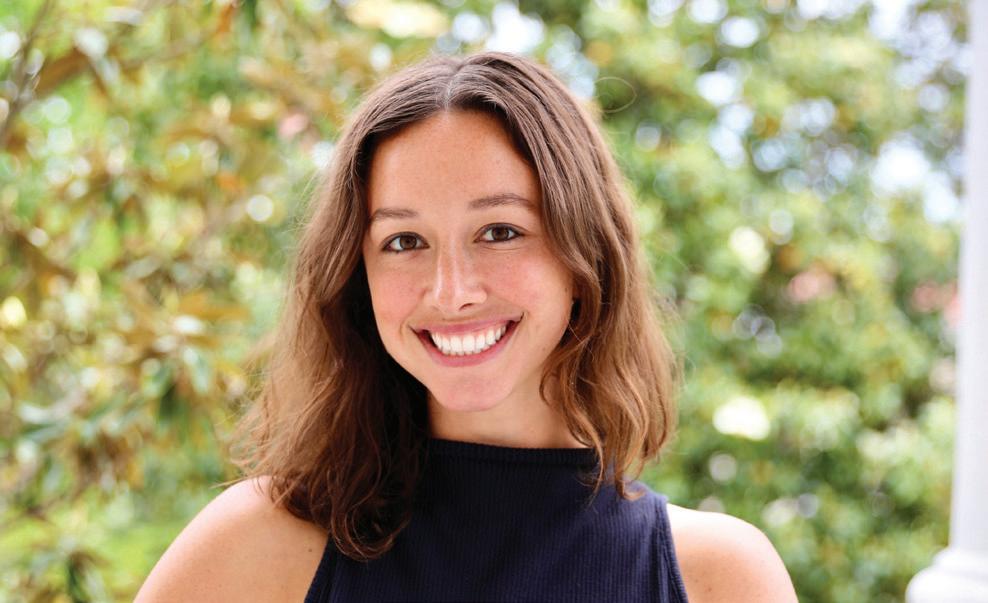
Rosemary Neilson is an Early School faculty member at Ashley Hall. She earned both her undergraduate and master’s degrees from the University of Mississippi and has been a lifelong Ole Miss fan. Outside the classroom, she enjoys spending time outdoors—walking, surfing, and watching sunsets— and is grateful to be part of a learning community where she can help children grow and thrive each day.
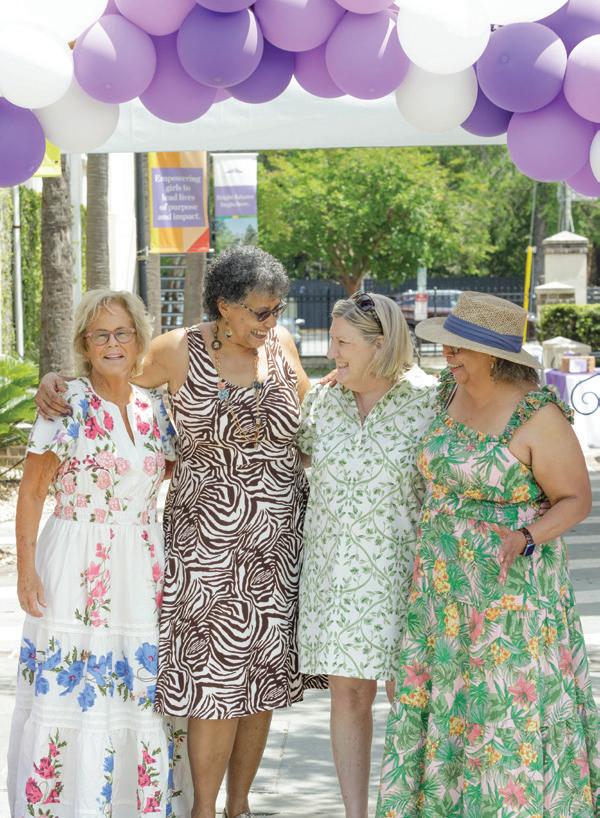
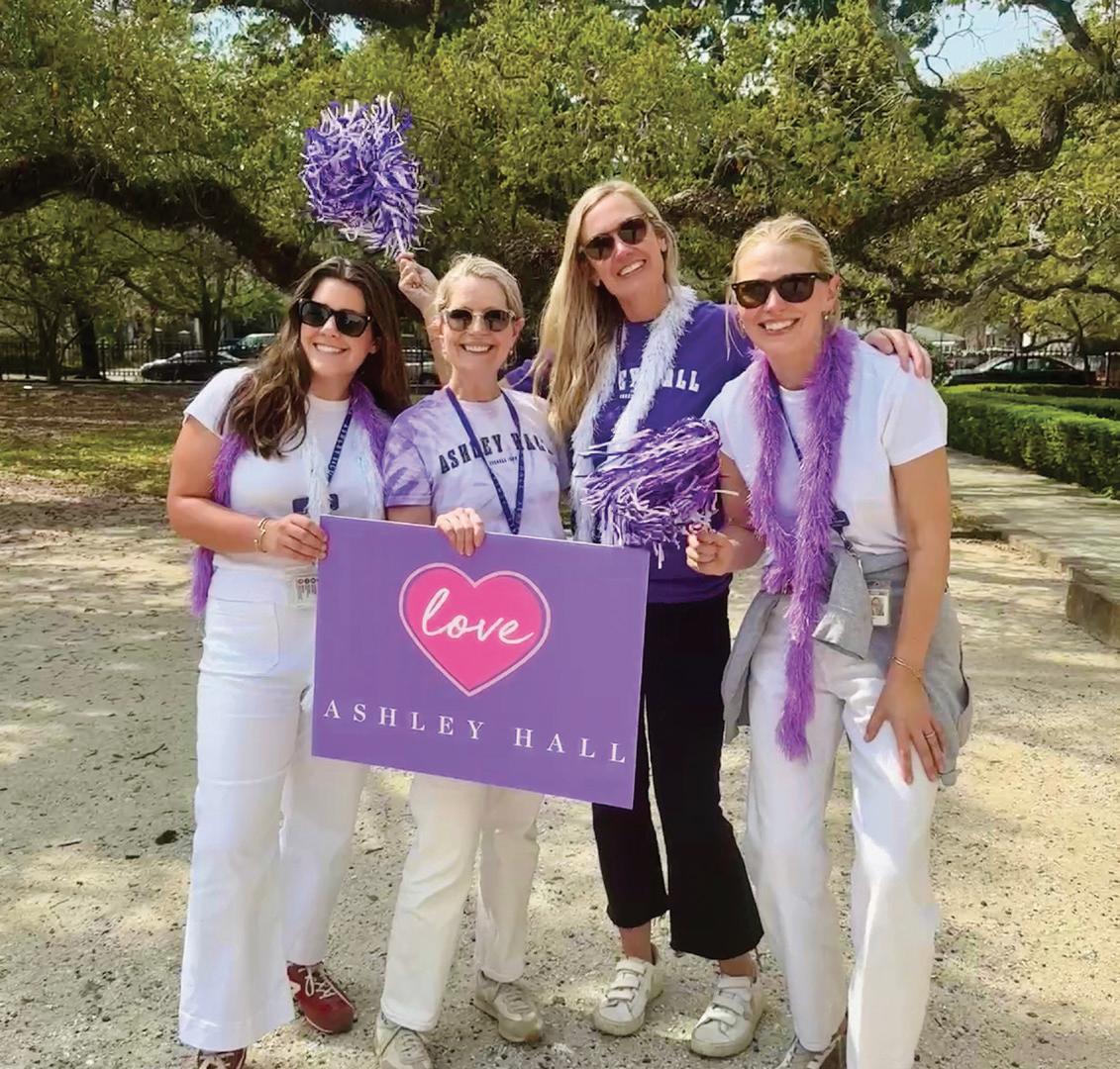
The Ashley Hall Marketing and Communications Team collaborated closely throughout the year to bring this issue of Perspectives to life, combining creativity, storytelling, and strategy at every step. Kassandra von Etzdorf (far right), Editor-inChief and Writer, shaped the voice and stories within these pages. Kate Daughtry (right), Creative Director, led the magazine’s design, crafting its visual identity from cover to cover. Ansley Kreisler (far left), Digital Marketing Specialist and campus photographer, captured the moments that define our community. Guiding the team is Paula Harrell (left), Director of Strategic Marketing and Communications, whose leadership keeps it all moving forward. We hope you enjoy!
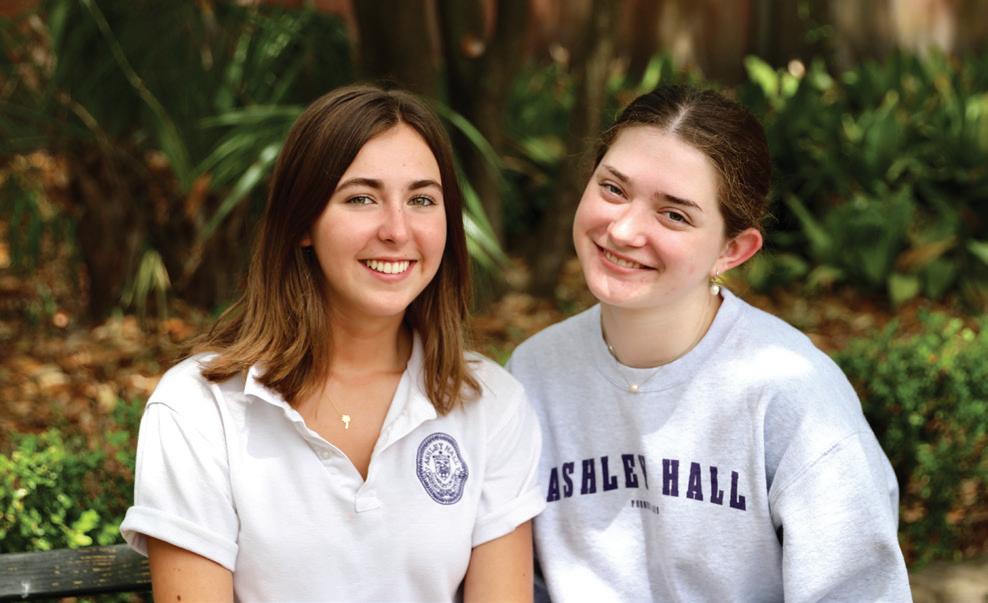
Tate (left) and Isla (right) created the sketches featured in “The Creatures of Ashley Hall” (page 8) through live observational studies. Spending time with each subject, they carefully captured every detail, ensuring each drawing reflected both accuracy and character. Both were students in Honors 2D Art, taught by Raùl Miyar.
ROSEMARY NEILSON
PERSPECTIVES EDITORIAL TEAM
TATE ERWIN ’ 27 AND ISLA DILLAHEY ’ 26
PHOTOS: Ansley Kreisler.
HEAD LINES
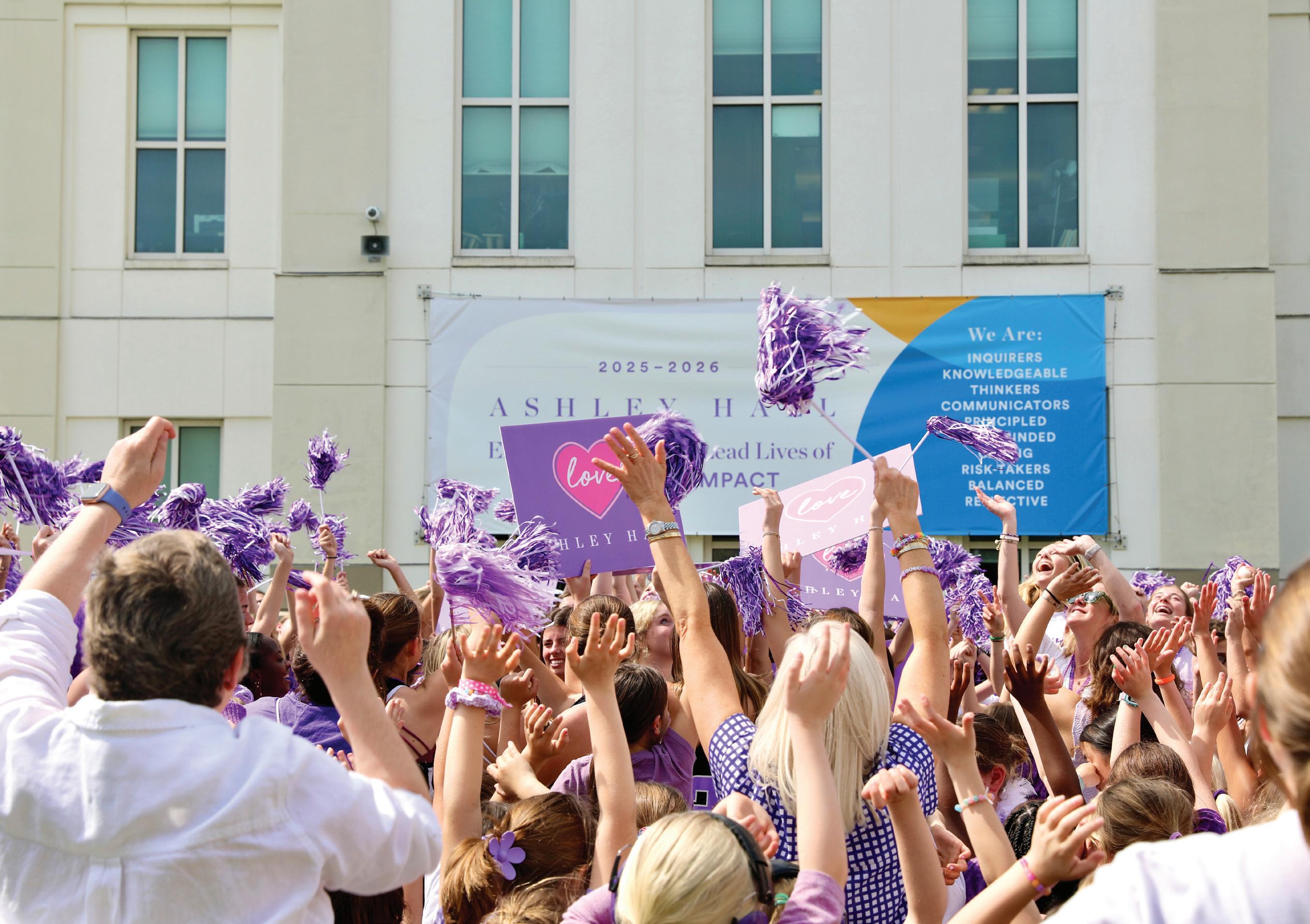
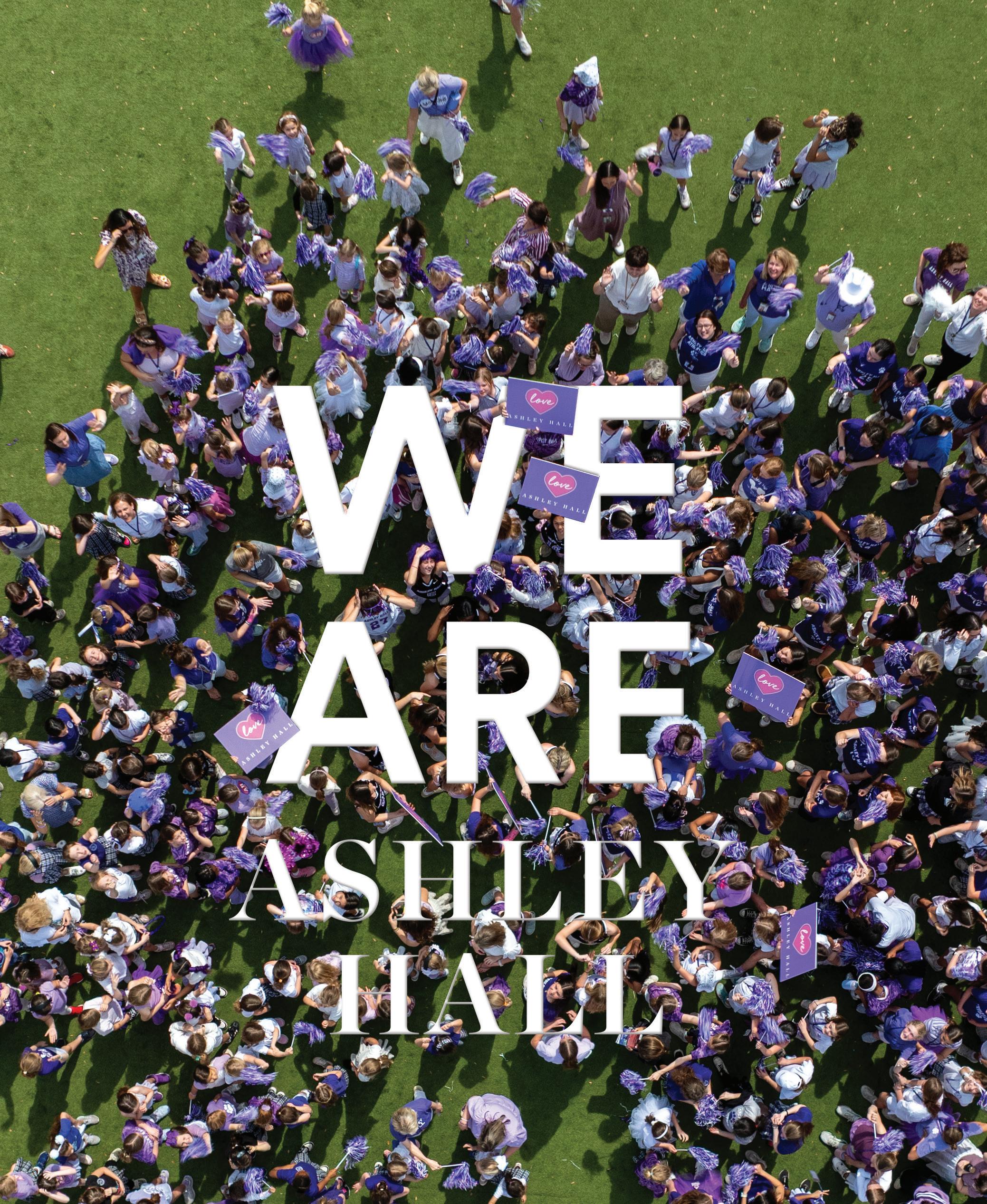
As we reflect on this remarkable year, I am filled with gratitude for all that we have accomplished together. At the heart of it all is a simple but powerful truth: We are Ashley Hall. It is a statement of identity, of pride, and, most importantly, of belonging. Across our campus, in every classroom, on every field, and through every shared experience, we continue to cultivate a community where each student is known, valued, and inspired to thrive.
This year, our students and faculty have embraced new opportunities with enthusiasm and purpose. We launched the first Ashley Hall podcast (page 7), creating a platform for voices across our community to be heard and celebrated. Our student-athletes continue to excel, led by our tennis team’s repeat state championship—an achievement that reflects both talent and dedication (page 10). That same spirit of commitment was evident across our athletics program, as our equestrian team captured the South Carolina Independent School Association (SCISA) Hunt Seat State Championship, its fourth state title and first since 2016. Our swim team earned a runner-up finish at the SCISA State Championship meet—an especially impressive showing, given that the oldest competitor was a sophomore. We are excited by the momentum continuing to build across Ashley Hall athletics.
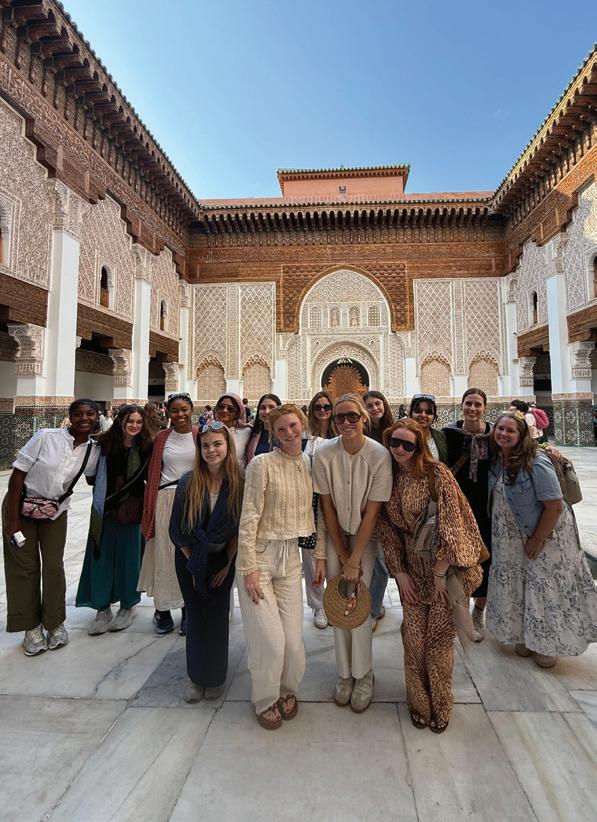
In the classroom, learning has been dynamic and deeply connected to the world around us. Projects like the Charleston Block Project (page 40) have invited students to explore the rich history of our city while discovering their place within it. Beyond campus, our global vision came to life as we sent our first group of Upper School students to Morocco over Spring Break (page 17)— an unforgettable experience that broadened perspectives and fostered meaningful connections.
With our Lower School third graders, we piloted Arts & LettersTM, an English Language Arts program, in anticipation of a full Lower School rollout next year. Already, the program is strengthening foundational skills and nurturing a lifelong love of reading. These moments—both big and small—reflect our ongoing commitment to thoughtful growth and academic excellence. You can read more about that in “Reading to Learn” on page 30.
Thank you for being an essential part of this extraordinary year. I invite you to join me in celebrating our School, our shared journey, and all that makes Ashley Hall so special.
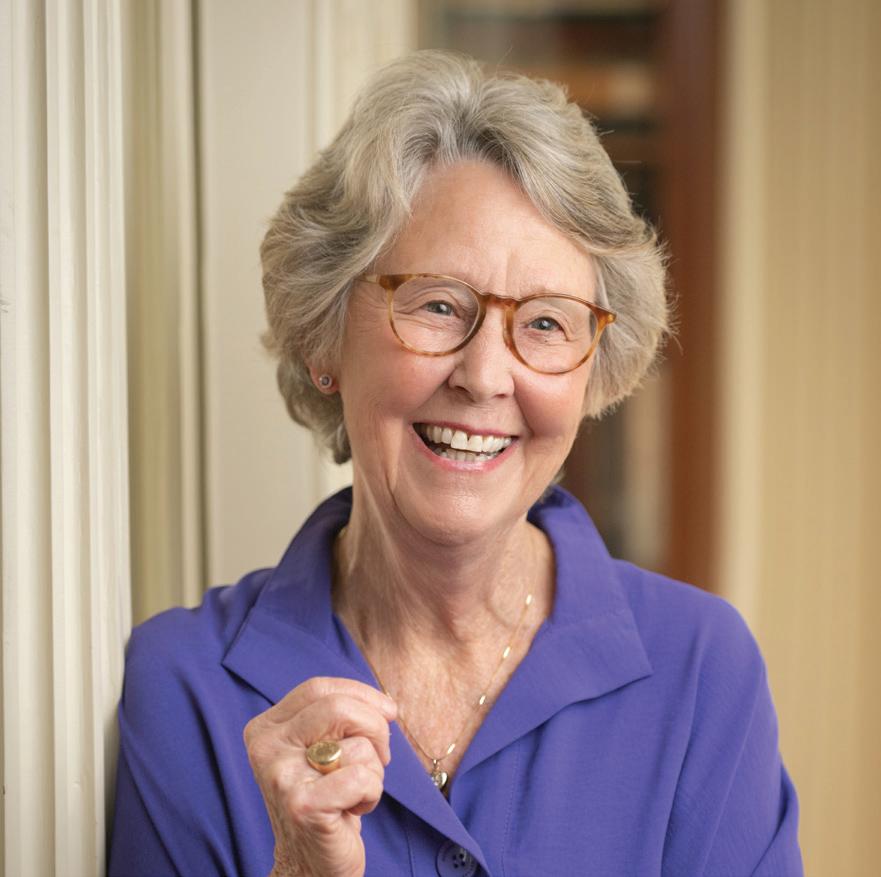
Anne T. Weston, PhD, ’73 Head of School
PHOTO: Alice Keeney Photography.
1.
2.
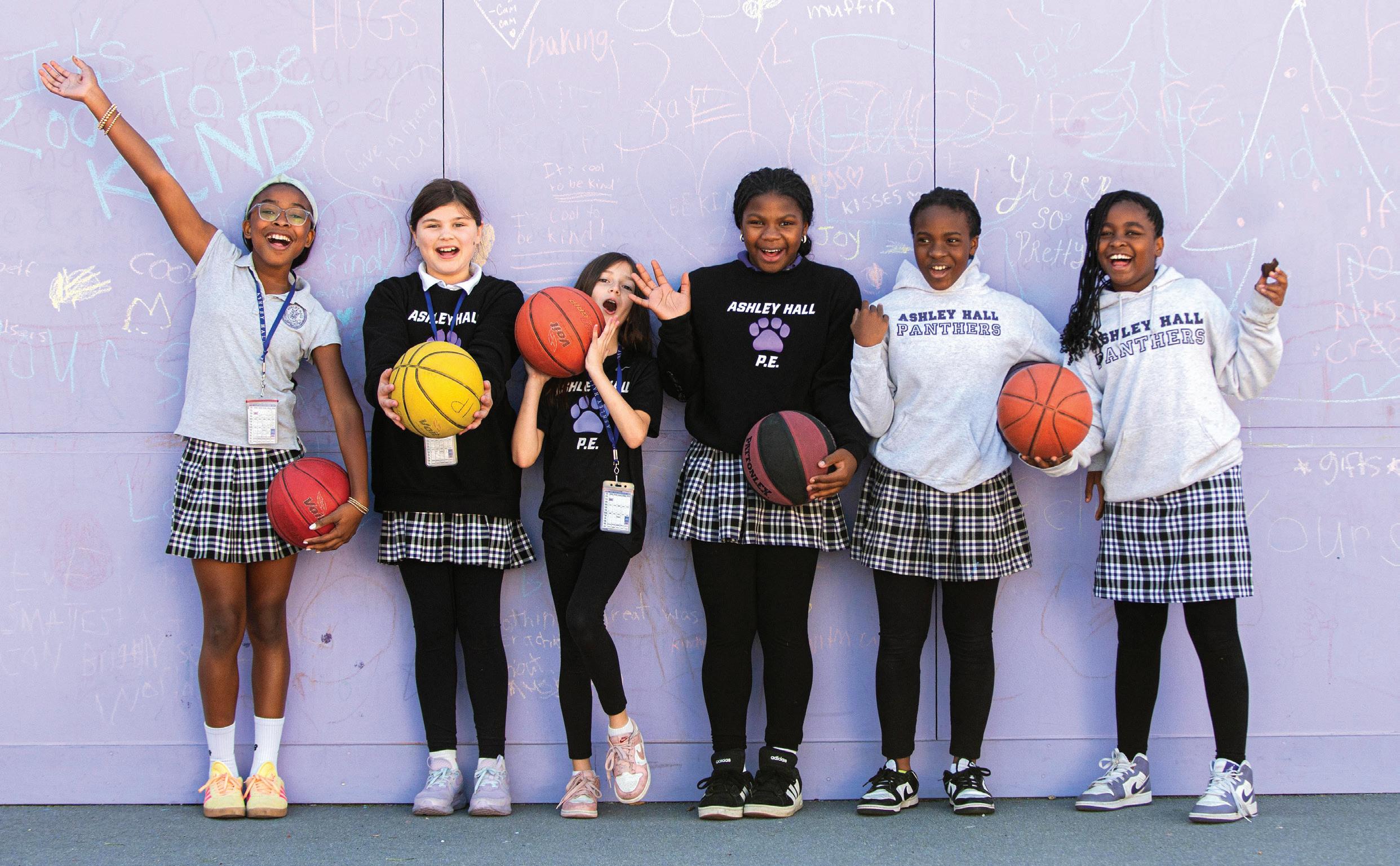
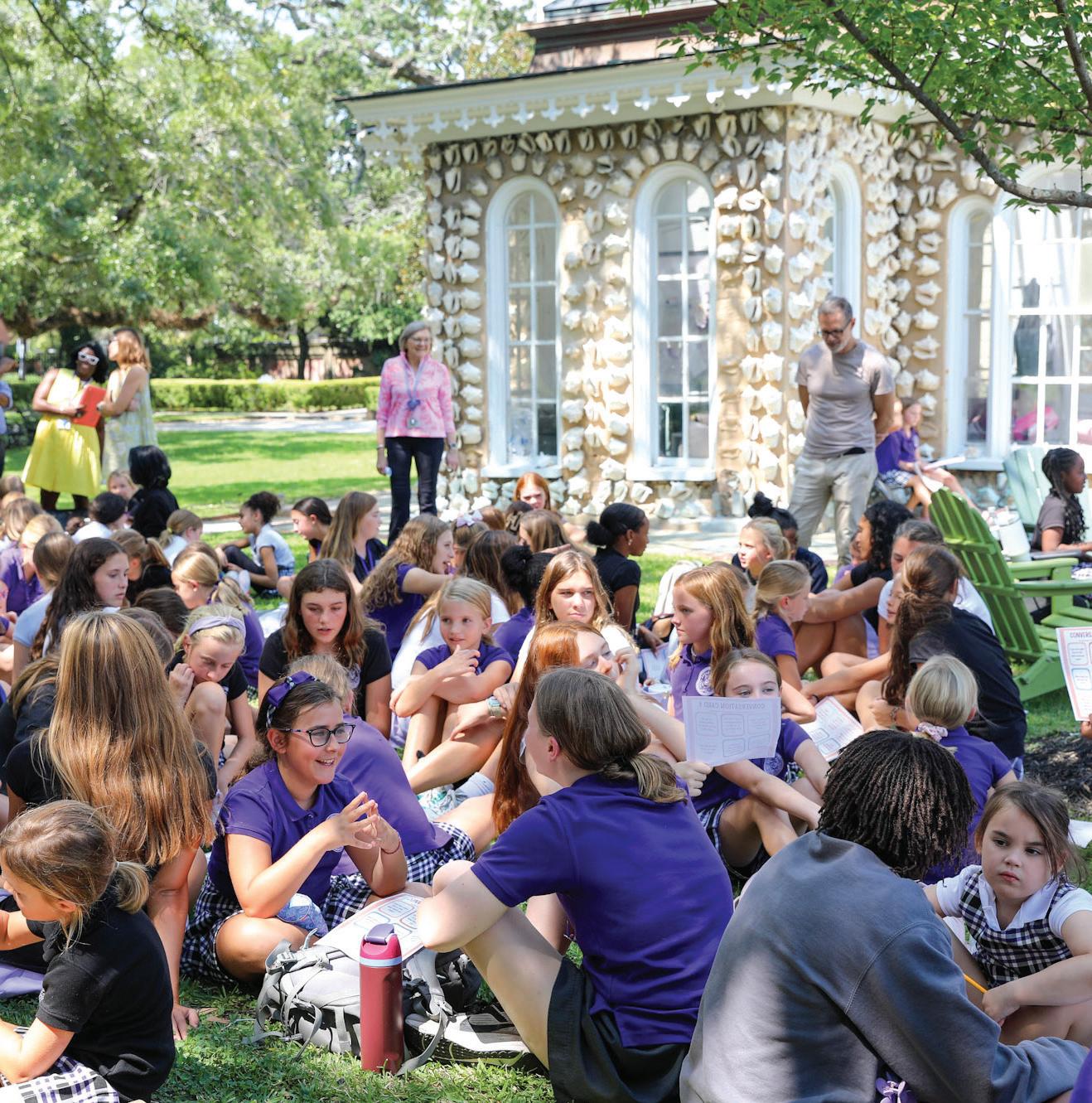
AROUND THE SHELL HOUSE
A collection of snapshots and short stories that give a glimpse into life at Ashley Hall.
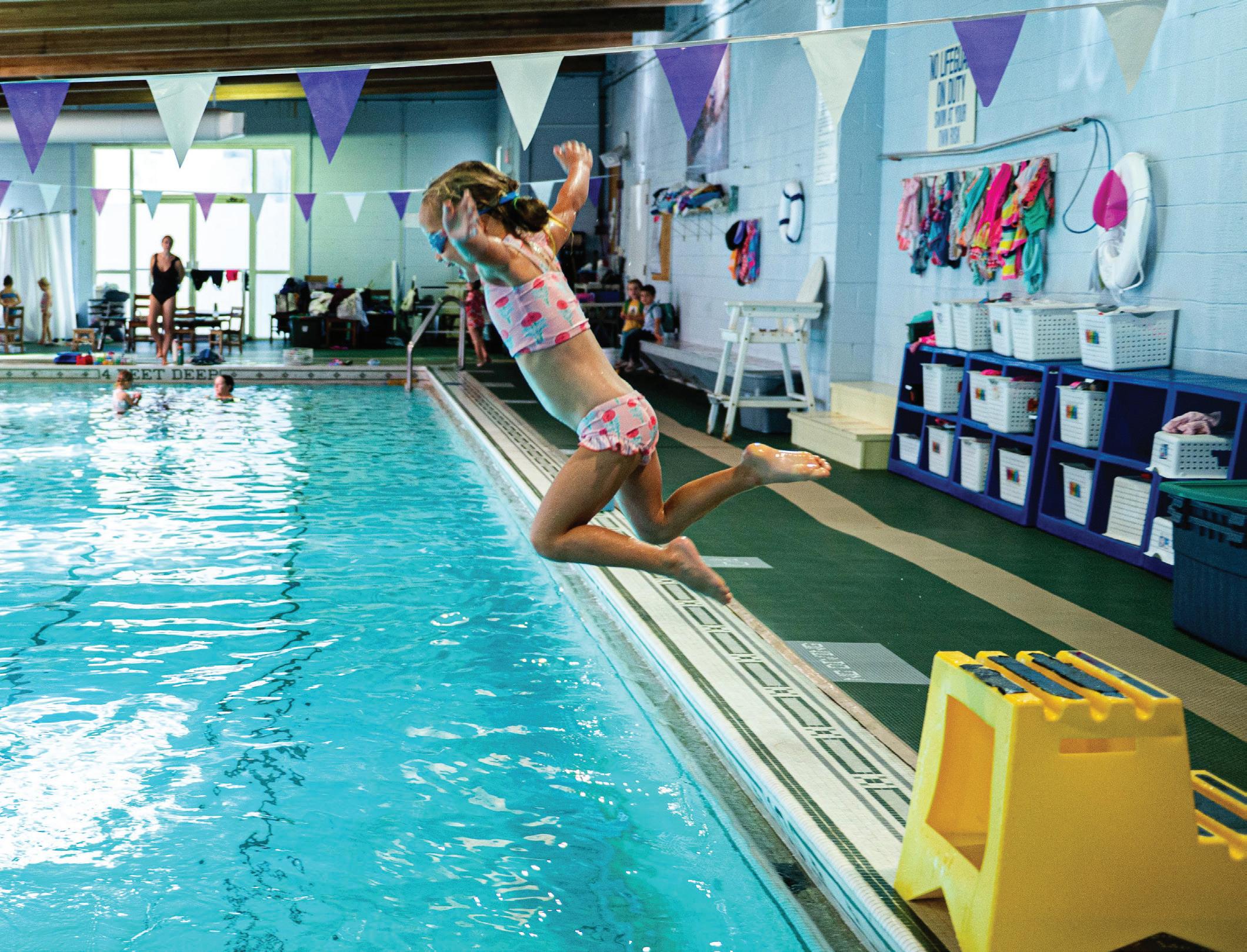
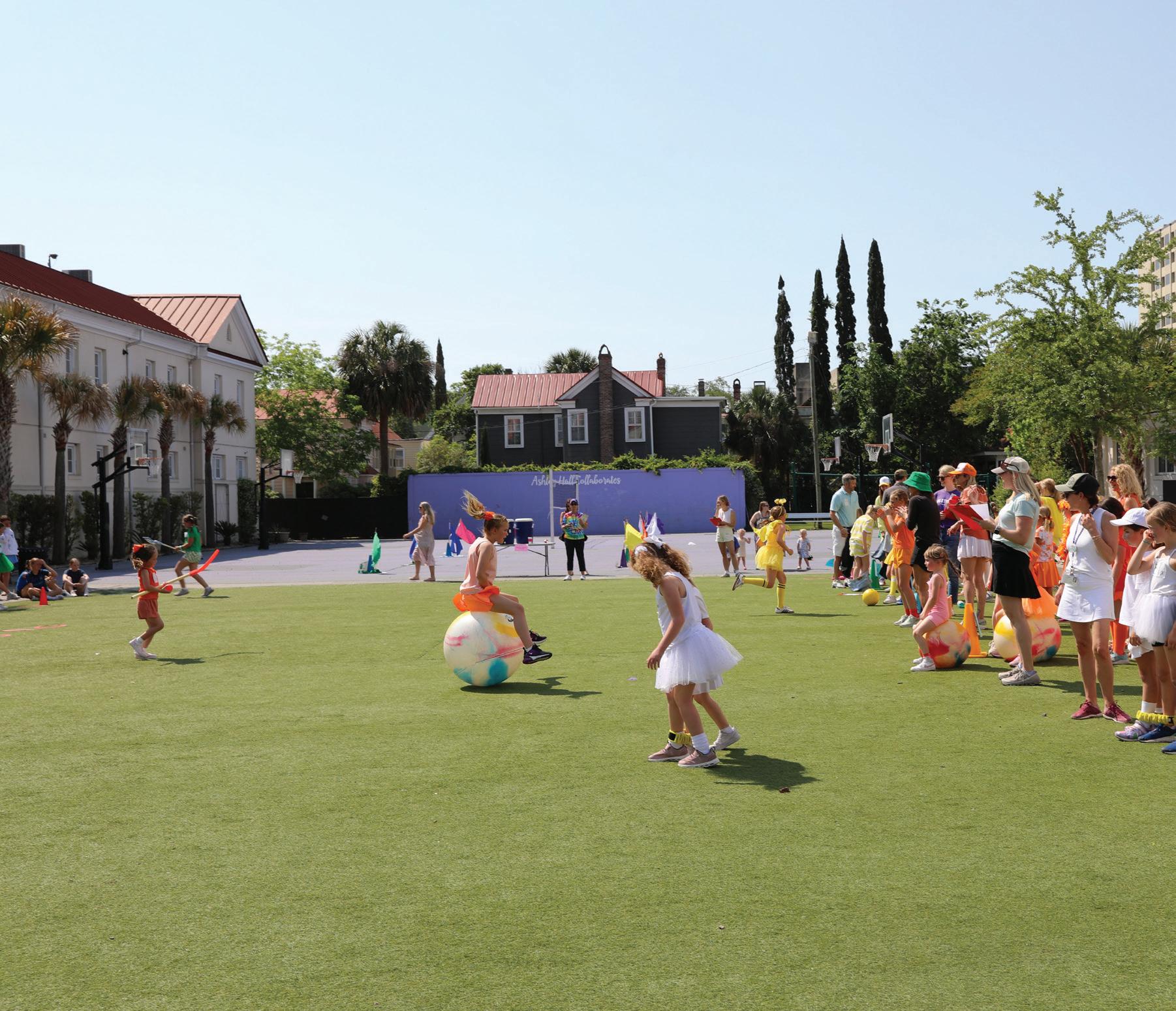
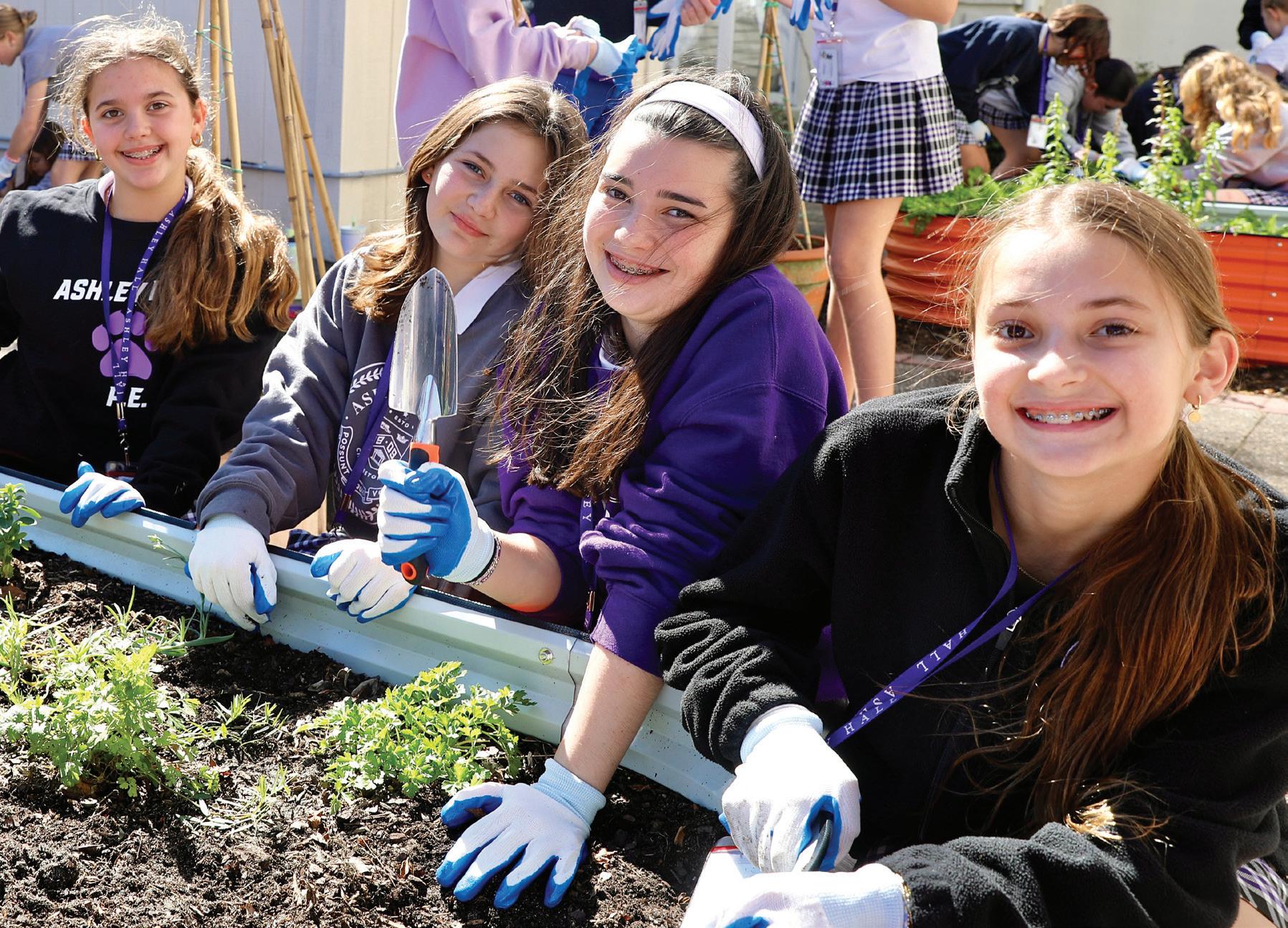
1. Carter Clement ’40 leaps into the pool during swim class. PHOTO: Libby Williams. 2. A festive view of Lower School Field Day. PHOTO: Kate Daughtry. 3. Middle School students gathered on the Sports Court. L to R: Karrie Scott ’33, Ellis Gumb ’33, Clara Urban ’33, Elly Middleton ’33, Kaleisa Walker ’33, Geneva Gathers ’33. PHOTO: Libby Williams. 4. A Big Sister Little Sister event on campus. PHOTO: Ansley Kreisler. 5. Students working in our campus gardens. L to R: Kylie Kates ’32, Bella Lobert ’32, Payton Singer ’32, Miller Zuckerman ’32. PHOTO: Ansley Kreisler.

I’m proud to introduce We Are Ashley Hall , a podcast that brings our community’s stories to life. Through conversations with students and educators, we explore the experiences, values, and programs that shape who we are—from academic innovation to belonging and wellbeing. Each episode offers an authentic glimpse into the voices and moments that define Ashley Hall, and I invite you to listen and learn more about this remarkable community.
– DR. ANNE T. WESTON ’73,
HEAD OF SCHOOL

SCAN QR CODE ABOVE TO LISTEN TO SEASON ONE OF THE WE ARE ASHLEY HALL PODCAST:
EPISODE 1: ASHLEY HALL AND THE INTERNATIONAL BACCALAUREATE
EPISODE 2 : ASHLEY HALL'S GLOBAL PERSPECTIVES
EPISODE 3: DIGITAL CITIZENSHIP AND WELLNESS
EPISODE 4: BELONGING BY DESIGN

C R E ATUR E S OF ASHLEY HALL
Across classrooms at Ashley Hall, learning has a heartbeat—and sometimes, a hop, a slither, or a splash. From reptiles and fish to insects and even a well-loved rabbit, our campus creatures spark curiosity and joy in equal measure. A nod to Ashley Hall’s history as a home for exotic animals, our classroom creatures bring natural science to life, inviting students to explore and uncover the delicate, fascinating balance of the ecosystems we all share. Here are just a few of the creatures who call Ashley Hall home.
Illustrations by: Isla Dillahey ’26 and Tate Erwin ’27
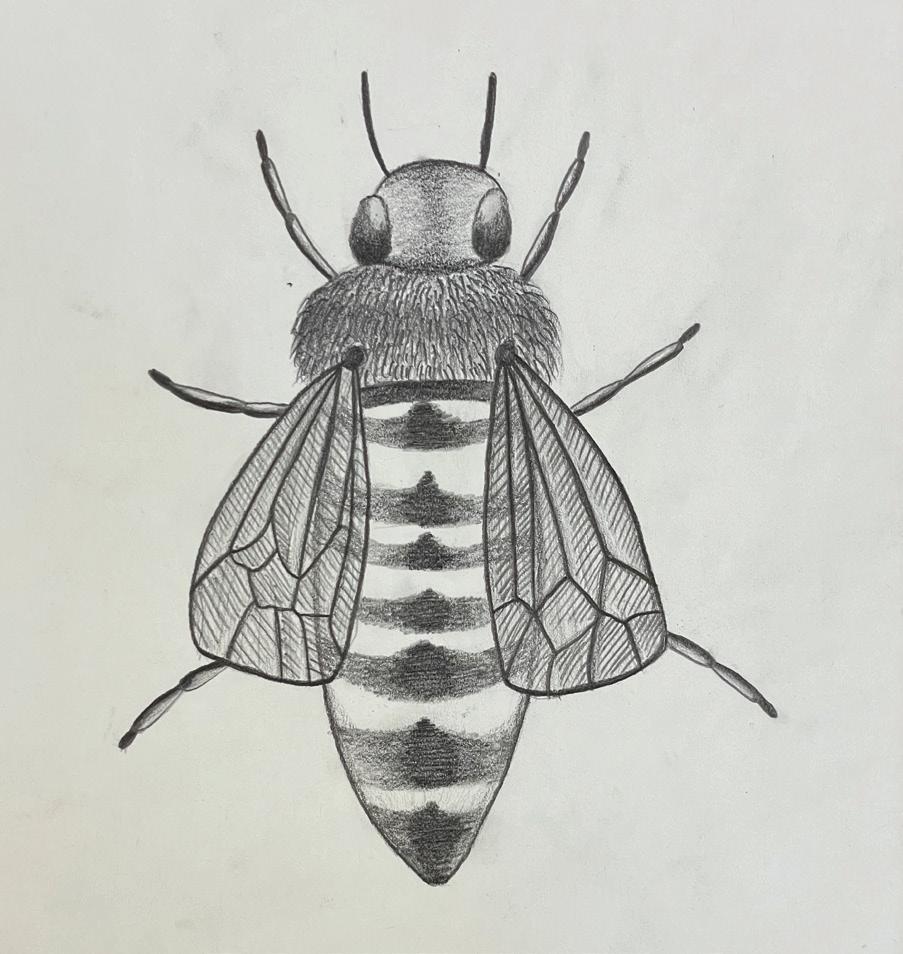
HONEY
BEE
AKA: The AH Honey Bees [Apis mellifera]
The Ashley Hall bees have been quietly buzzing at the center of campus life for the last 10 years. From observation hives to thoughtfully curated rooftop colonies, these honey bees connect students to the fascinating world of insects and pollination. Whether suited up for a hive visit or studying them in class, students discover firsthand how these tiny creatures play an outsized role in sustaining ecosystems— and, if all goes well, even produce a little honey along the way.
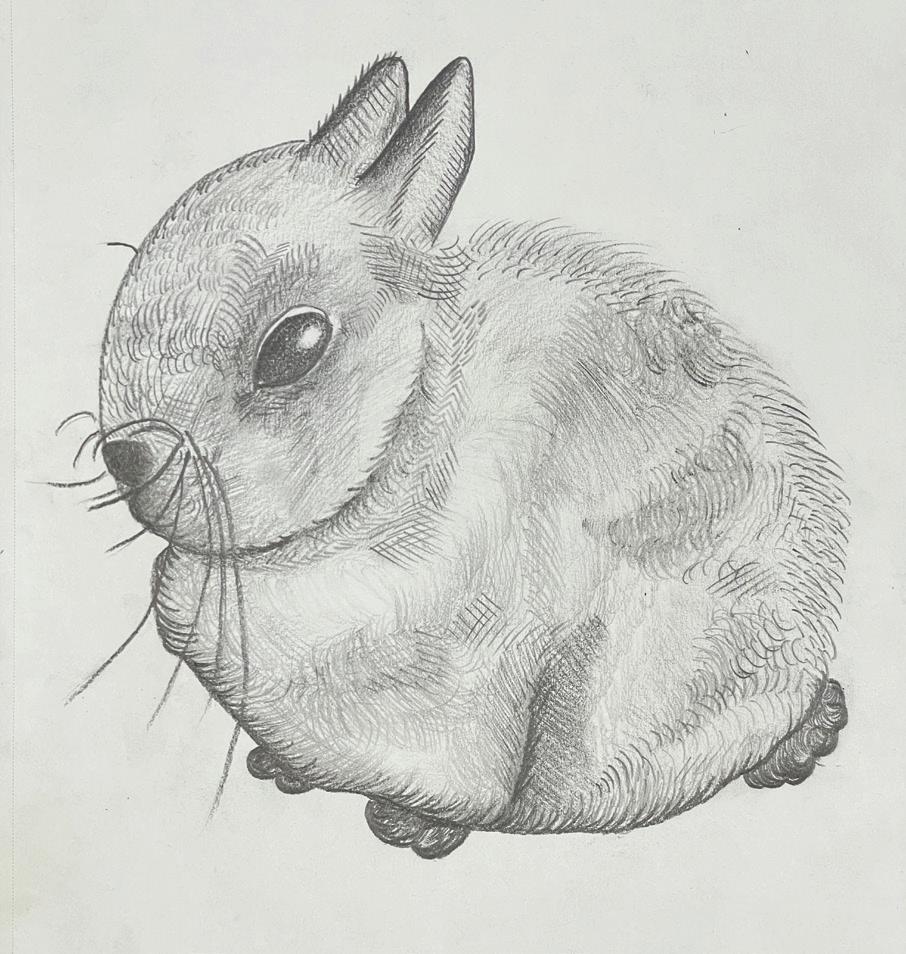
RABBIT
AKA: Captain Carrots [Oryctolagus cuniculus]
A former grand champion show bunny, Captain Carrots has been living his best life in the Lower School STEAM Lab for the past four years. He’s known for his sweet, snuggly nature, and his signature “oink” of excitement when picked up. Captain Carrots visits classrooms, listens patiently as students read, and offers quiet comfort on tough days, proving that sometimes the most meaningful learning moments come with a little extra fluff.
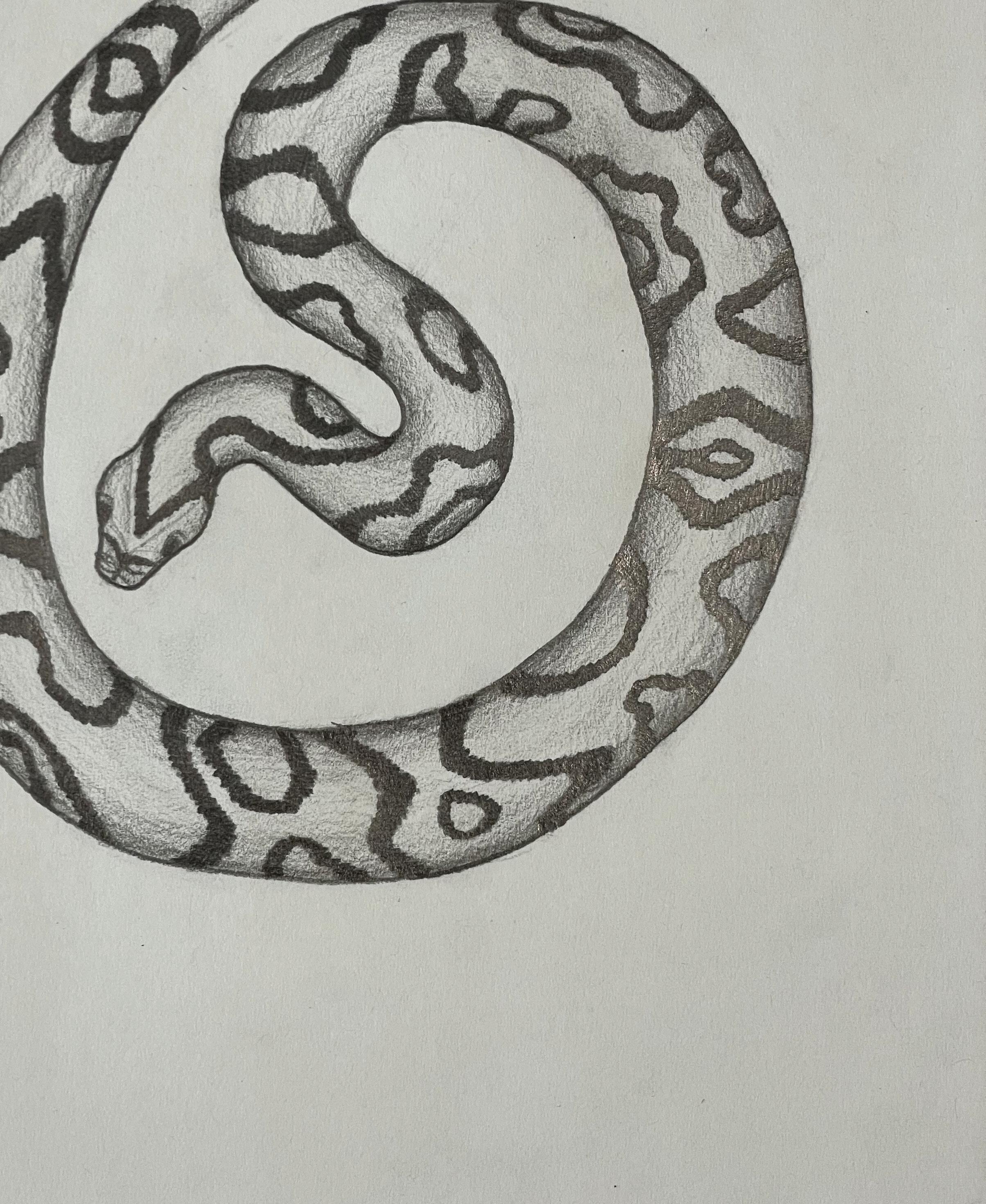
CORN SNAKE
AKA: Ms. Corny Pants [Pantherophis guttatus]
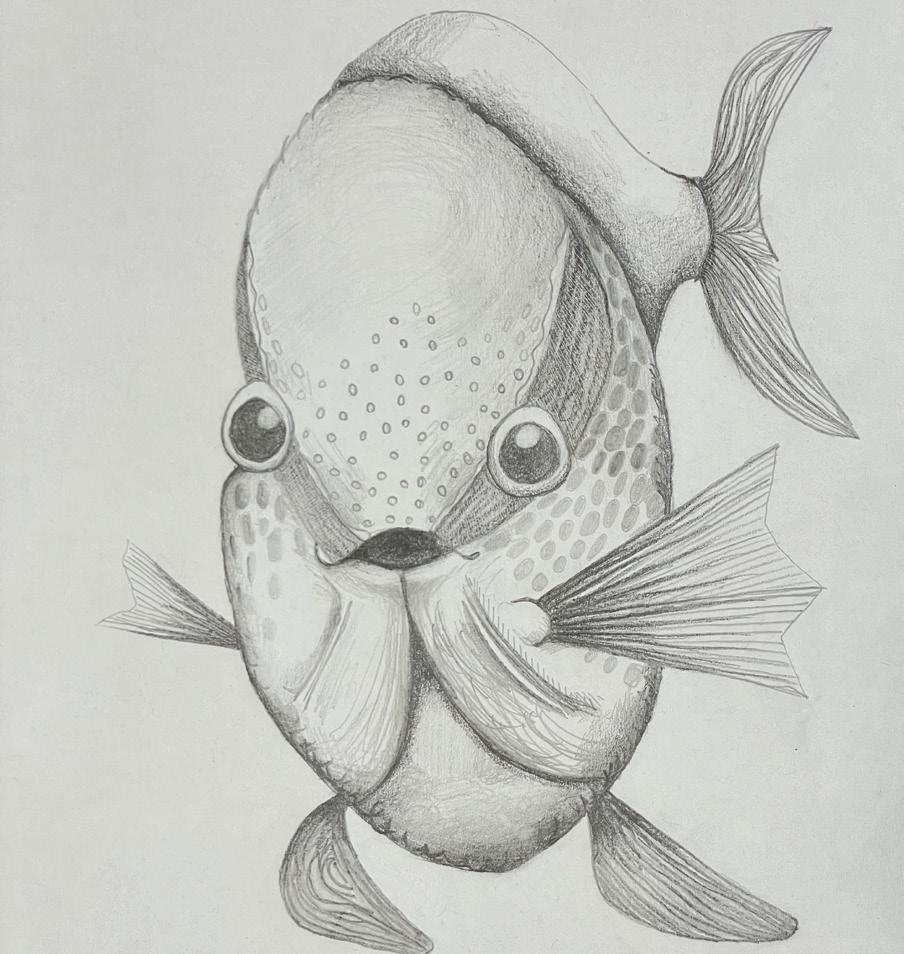
GLOFISH
TETRA
AKA: Fishy Fish [Gymnocorymbus ternetzi]
Since 2021, the GloFish have been glowing their way into students’ hearts in the Early School. Bright pink, orange, yellow, green, and blue, they swim through an aquaponic tank where plants above help filter the water—a living lesson in balance and care. Just as important, they offer a moment of calm: feeding the fish or naming their colors is often the perfect reset for a child who needs it most.
For nearly a decade, Ms. Corny Pants has been a beloved (and occasionally surprising) presence at Ashley Hall. A cross-divisional favorite, she helps students of all ages explore herpetology and understand the important role reptiles play in ecosystems. For years thought to be a “Mr.,” she made school headlines last year after laying 18 eggs—proving she still has a few tricks left to teach.
FROM THE ARCHIVES: THE ASHLEY
HALL ZOO
Long before today’s classroom creatures, the Ashley Hall campus was home to a true animal menagerie. When the Witte family lived on the property in the late 1800s, before Mary Vardrine McBee purchased it to found Ashley Hall in 1909, peacocks wandered the grounds alongside monkeys, burros, ponies, and dogs.
A bear named Frederick lived in the Bear Cave, the Shell House served as a bustling aviary, and an alligator named Wishy-Washy made his home in the fountain pool.
A full-time keeper ensured this lively “zoo” ran smoothly, a fitting beginning to the school’s long and colorful relationship with the animal world.
UNDEFEATED, UNDENIABLE, CHAMPIONS AGAIN!
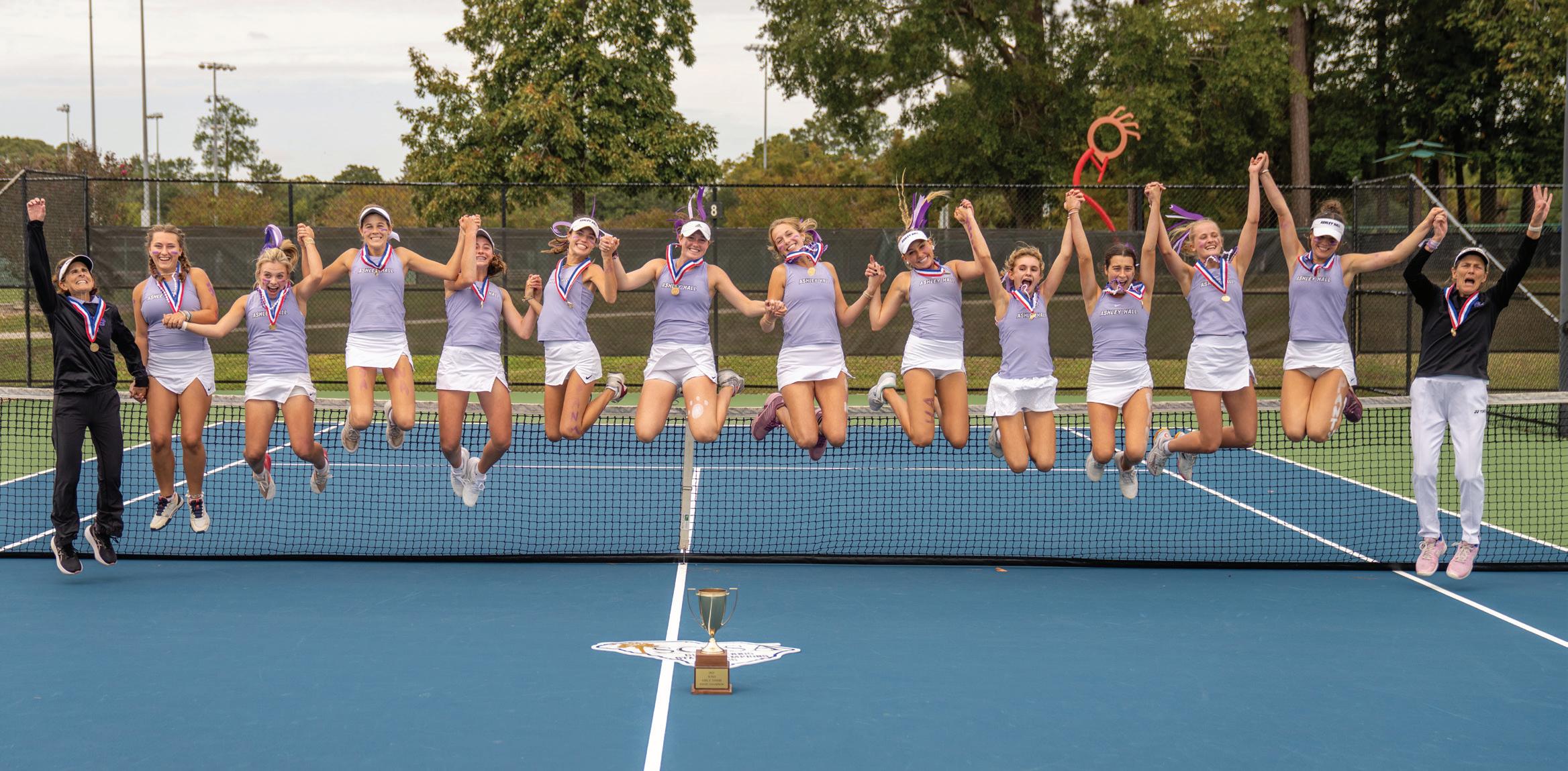
There was a sense early on that this season might be something special. By October, the Ashley Hall varsity tennis team had made it undeniable.
The Panthers completed a flawless 23–0 season with a decisive SCISA AAAA State Championship victory over Trinity Collegiate, securing their second consecutive state title and reinforcing their place at the top. It was an achievement defined by consistency, determination, and a standard of excellence that carried through every match.
Building on last year’s success, the team returned to the court with focus and confidence, demonstrating both depth of talent and strength of teamwork. That momentum began in the preseason with a tournament win in Florence— defeating Myrtle Beach, T.L. Hanna, and A.C. Flora—and continued through the Bishop England tournament and key victories over top regional opponents, including Lucy Beckham. “It was a dream season for a group of girls who work so hard,” said Head Coach Charlotte Hartsock. “They earned everything they got.”
Senior leadership set the tone throughout the season. Lily Sloan ’26 anchored the lineup at No. 1 and was named the 2025 SCISA Region II Girls Tennis Player of the Year, a reflection of both her individual excellence and her steady leadership. Alongside her, a strong and balanced lineup delivered match after match with composure and resilience. Co-captain, Grace Taylor '26, shared her proudest moments from the season: "I loved seeing the younger girls grow both as players and as a teammates. Many of us have been on the team for multiple seasons, and it has been a privilege bonding with them and working with the coaches to make something really special."
This back-to-back championship is a testament not only to the players’ skill, but also to their commitment to growth, discipline, and sportsmanship. Their success has become a point of pride across the Ashley Hall community, inspiring younger athletes and strengthening a culture of excellence.
Congratulations to the varsity tennis team on an incredible season and a wellearned repeat state title!
joining Ashley
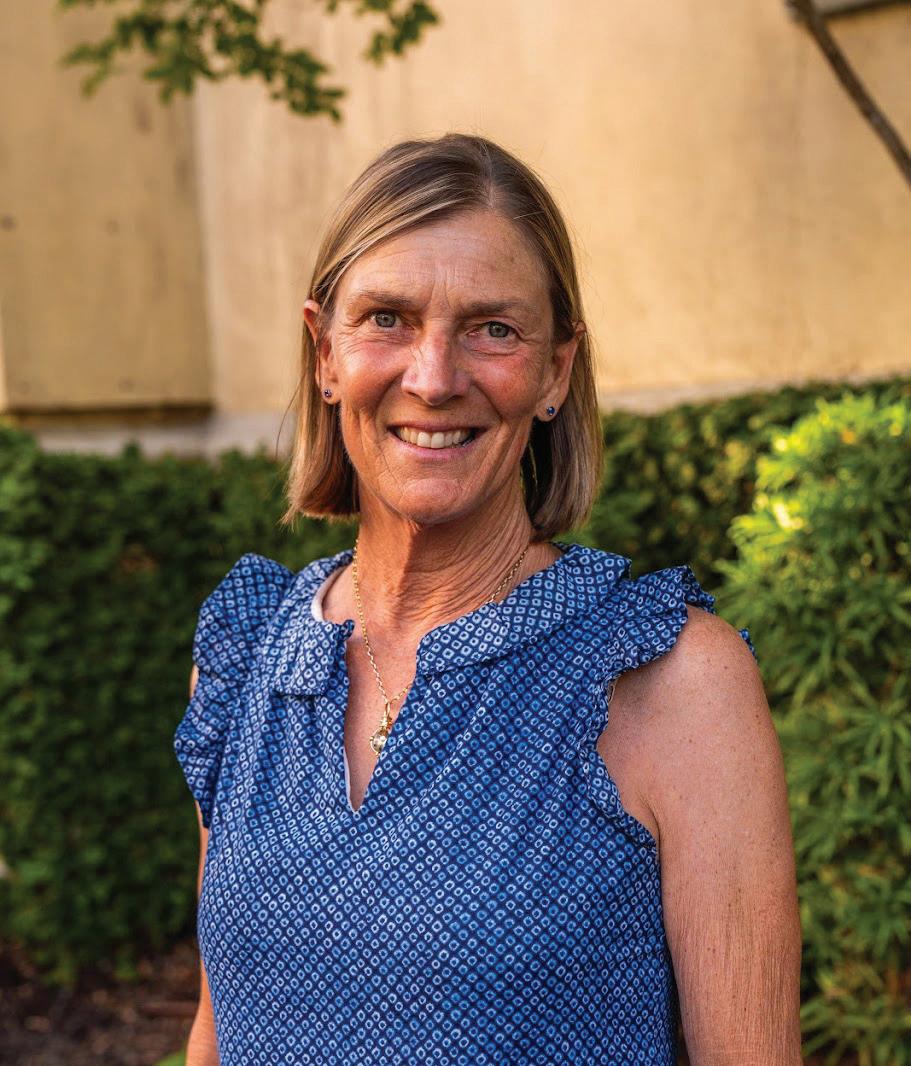
in
has shaped the tennis program with the perspective of someone who still lives the game every day. A highly accomplished player in her own right, Hartsock continues to compete at a high level, bringing a depth of experience and a current, competitive edge to her coaching.
That dual role—coach and competitor—has had a defining impact on the team. Practices are purposeful, expectations are high, and players are challenged not just to improve their technique, but to think strategically and compete with confidence. Hartsock understands the demands of the sport firsthand, and her approach emphasizes resilience, composure, and preparation.
Under her leadership, the program has grown in both strength and belief. The team’s backto-back state championships reflect not only talent, but a culture shaped by a coach who models exactly what she asks of her players.
Since
Hall
2021, Head Coach Charlotte Hartsock
The Varsity Tennis Team jumps for joy following their championship win. L to R: Assistant Coach Anna Yates, Bella Gray McCurry ’28, Leighton Staebell ’27, Emma Tedford ’26, Bridgette DeWolf ’29, Grace Taylor ’26, Lily Sloan ’26, Kate Strenck ’26, Charlotte Guffey ’28, Finleigh Anderson ’29, Elle Webster ’28, Lillie Jackson ’27, Emily Kaye ’27, and Head Coach Charlotte Hartsock. PHOTOS: Brian Principe.
GROWING THE GAME
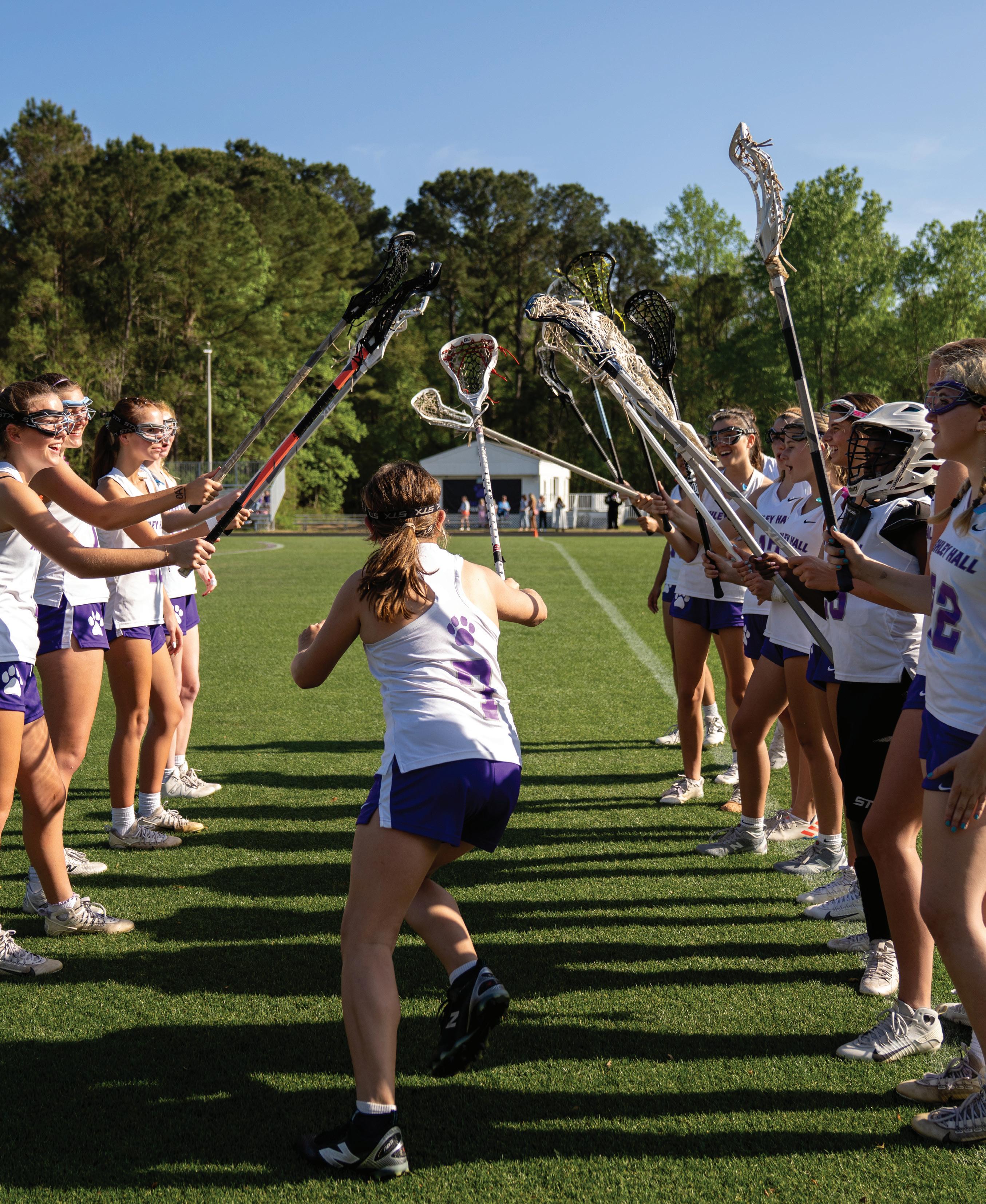
Lacrosse is finding its rhythm at Ashley Hall, and this season marks a turning point for a program on the rise. With three teams taking the field this year, including Middle School, junior varsity, and varsity, participation has grown in step with the sport’s increasing presence across Charleston, bringing new energy and excitement to campus.
That momentum is evident in the way the teams are playing. There is a new sense of cohesion and confidence—players moving with purpose, communicating with ease, and meeting each moment with determination. What was once developing is now taking shape, as skill and teamwork begin to align.
Varsity Head Coach Madison Foti has watched that evolution unfold. “This group has grown tremendously this season, both in their skill development and also in how they support one another and play as a team,” she says. “I’m incredibly proud of the way they’ve come together and the effort they bring every day.”
With a strong foundation now in place and interest continuing to build, lacrosse at Ashley Hall is poised for even greater growth. The trajectory is clear, and the program is quickly becoming a vibrant and lasting part of the School’s athletic landscape. Go Panthers!
ABOVE: Members of the Varsity Lacrosse Team. PHOTO: Brian Principe.
Rooted in Tradition, Rich in Learning: Shakespeare at Ashley Hall
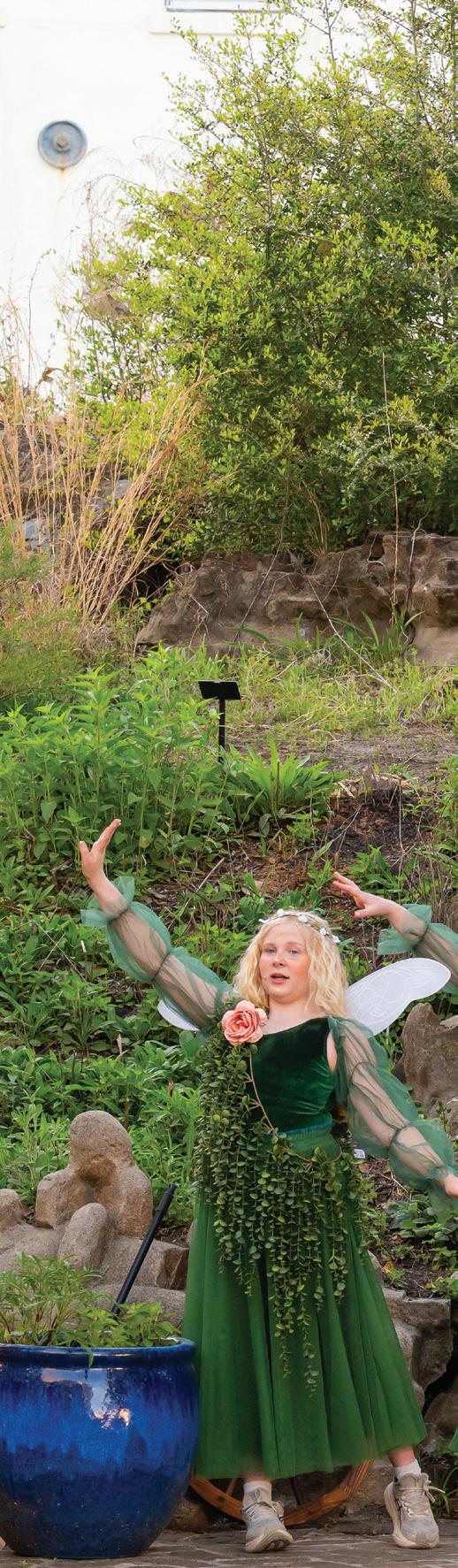
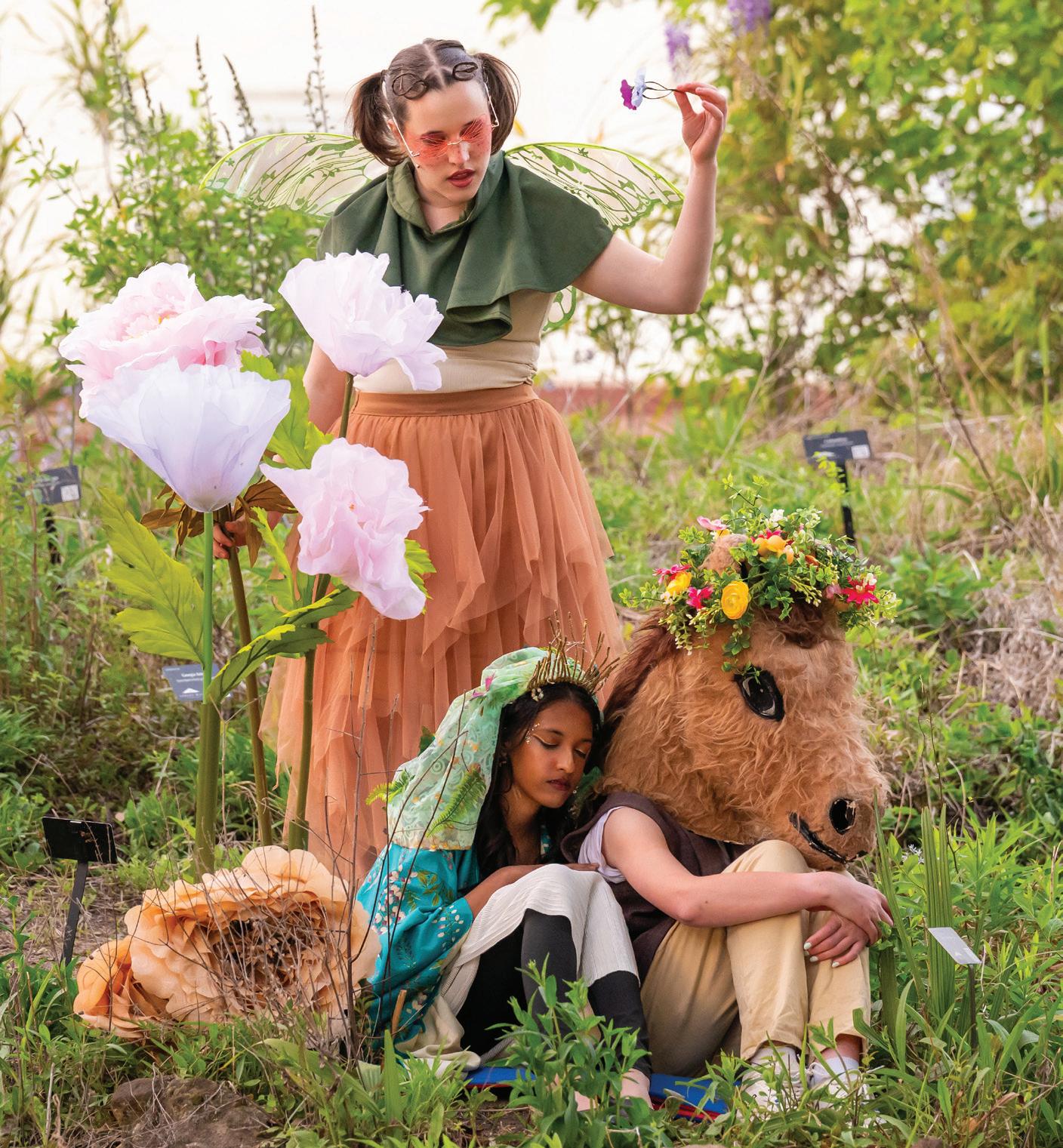
“The course of true love never did run smooth,” writes Shakespeare—a fitting reflection as Ashley Hall Performing Arts Department’s production of A Midsummer Night’s Dream unfolded amid gusting winds and unpredictable late-March temperatures. Yet this cherished student experience came to life in exquisite fashion across three outdoor performances at the Bear Cave.
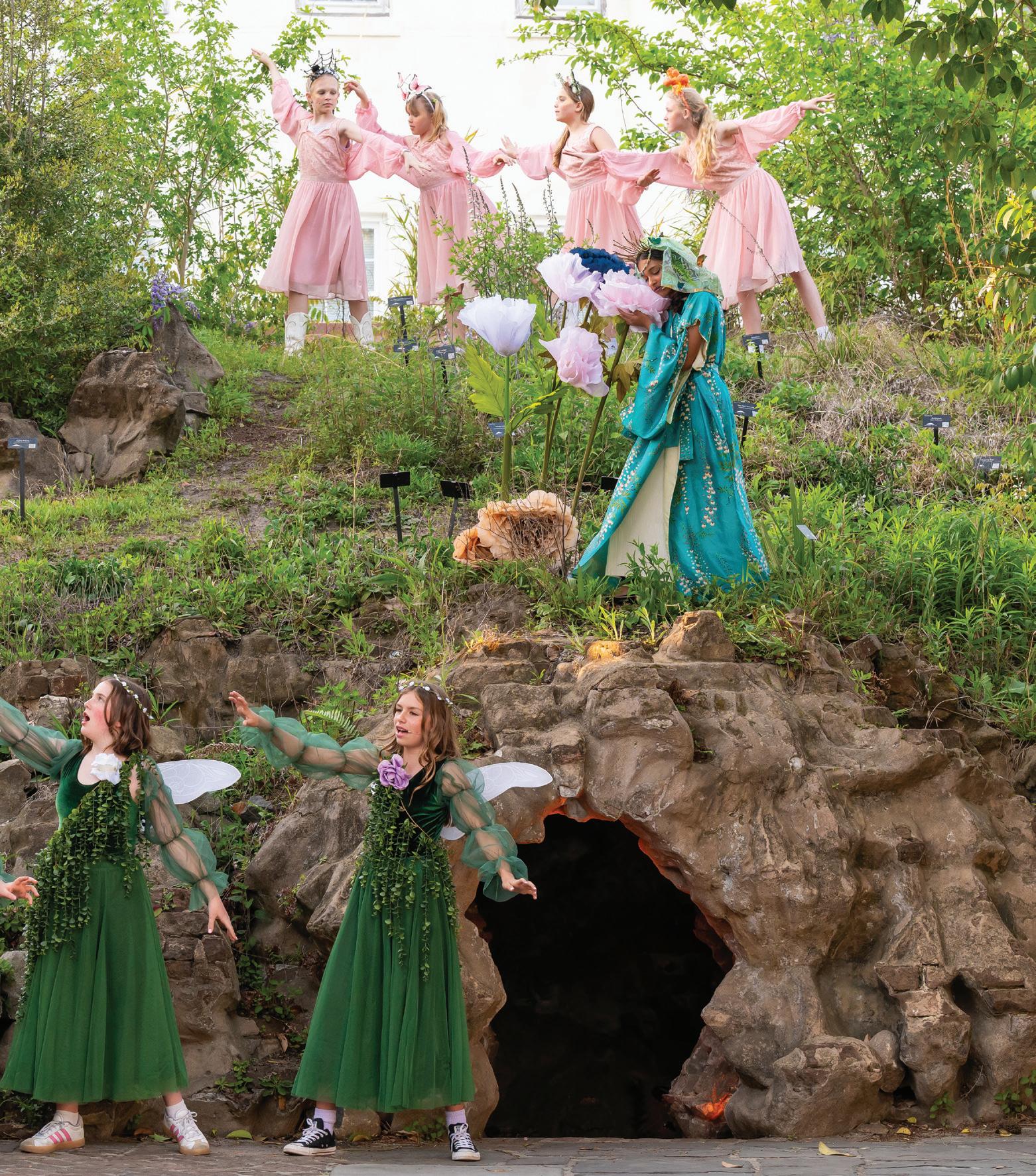
Traditions run deep at Ashley Hall, and few are more enduring than the performance of Shakespeare on the School’s historic Bear Cave stage. Presented every other spring, the first production there dates back to 1911, A Midsummer Night’s Dream, directed by founder Mary Vardrine McBee. More than a century later, her vision continues to shape the student experience.
McBee’s instincts were remarkably prescient. Research continues to affirm that studying Shakespeare strengthens critical thinking, communication, and creative problem-solving skills essential across disciplines, particularly in today’s technology-driven world.
For students, the experience proved both rigorous and rewarding. “This is my favorite play,” said Emma Antonucci ’30, who played Hermia. “It was the most challenging to perform because of the language. I had to really think about what I was saying and use expressiveness to understand and memorize my lines.”
The production also fostered meaningful connections across divisions. “This was my first year at Ashley Hall, and I made so many new friends,” said Annabelle Flagel ’32, a member of the Singing Fairy ensemble. “We supported each other and had fun.”
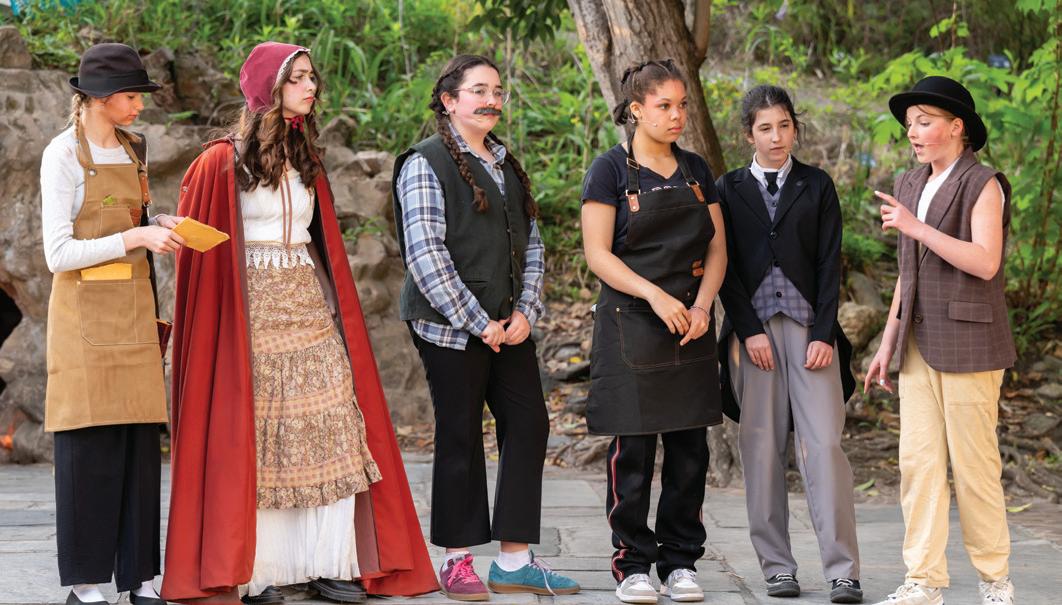
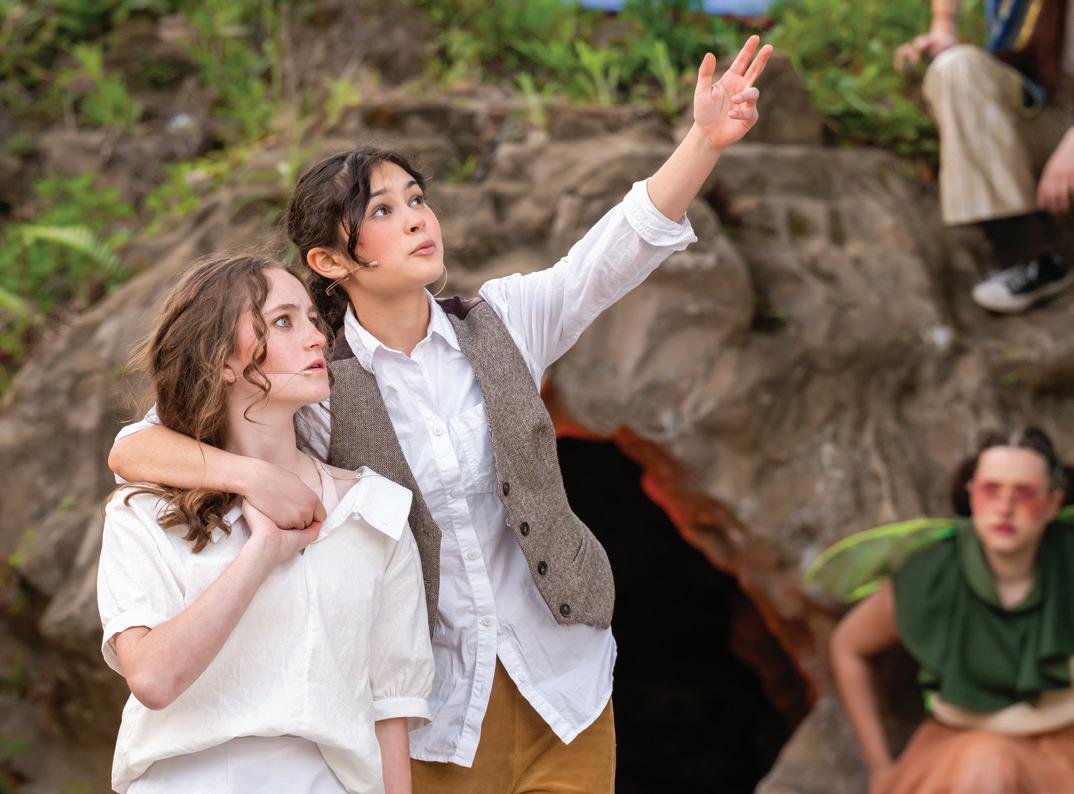
Ashley Hall, Shakespeare is more than a performance; it is a living tradition. On the Bear Cave stage, students do more than repeat lines from their script; they inhabit them, discovering their voices, their confidence, and their connection to one another along the way.
Language is such a core part of our humanity, so it makes sense that Miss McBee would embrace Shakespeare, which comes to its fullest expression in performance.
-
AIMEE PHELAN-DECONINCK,
Director of A Midsummer Night's Dream and Performing Arts Faculty
At
1. Helen Kourtidis ’26, Sriya Banik ’30, and Eliza Brown ’31 (as the Donkey). 2. BACK ROW: Wren Messervy ’32, Annie Donohoe ’33, Everly Moody ’32, Jenna Kuenzel ’33. MIDDLE ROW: Sriya Banik ’30. FRONT ROW: Emma Ellet ’32, Evie Pope ’32, Annabelle Flegal ’32. 3. L to R: Ella Donohoe ’31, Jane Matheson ’31, Caroline Smith ’32, Marlieigh Kimpson ’31, Becca Hardie ’32, Eliza Brown ’31. 4. Emma Antonucci ’30 (left), Grace Corona ’29 (center), and Helen Kourtidis ’26 (right). PHOTOS: Kelly Grace Photography.
A MILESTONE for Horizons at Ashley Hall
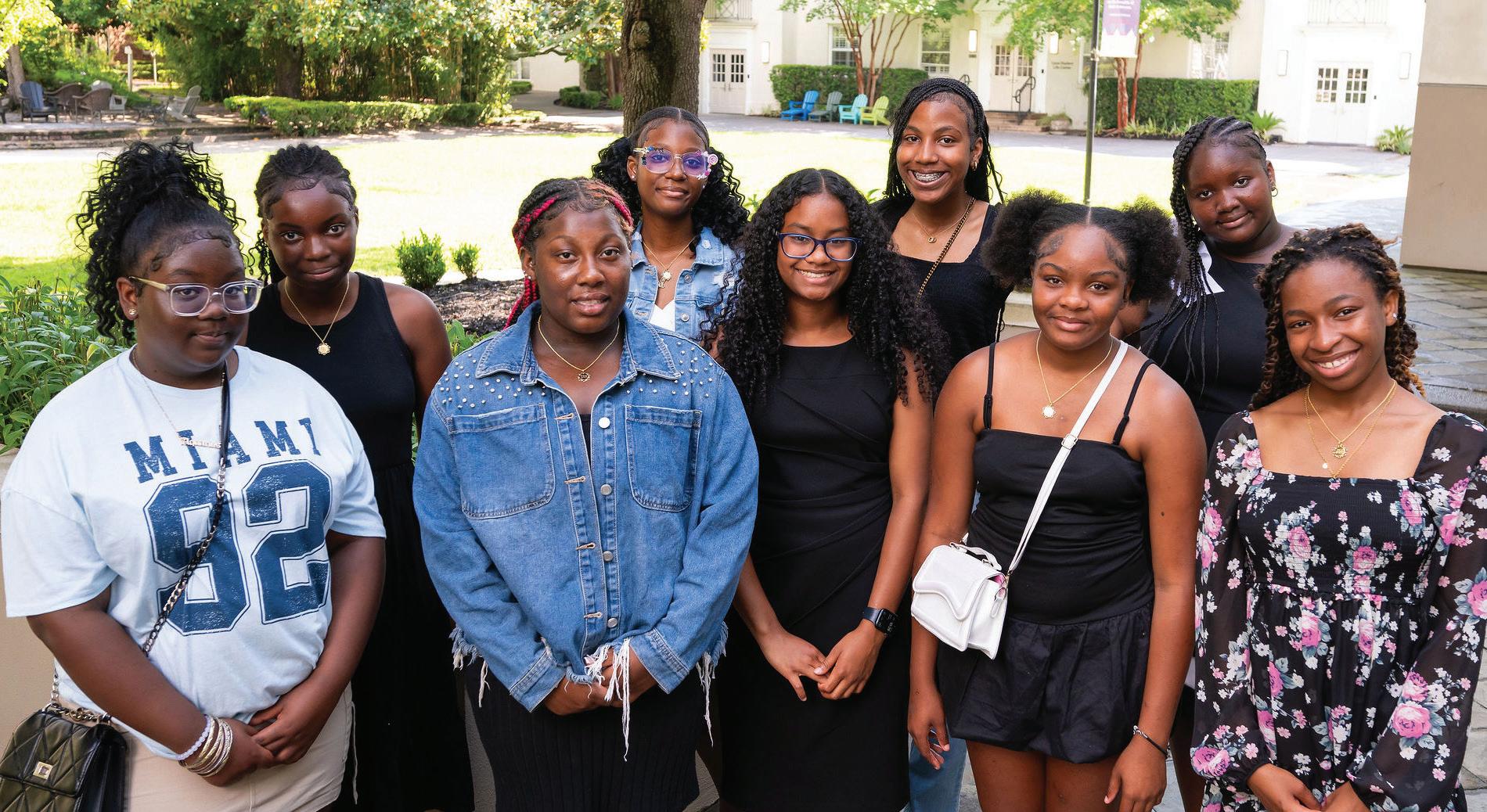
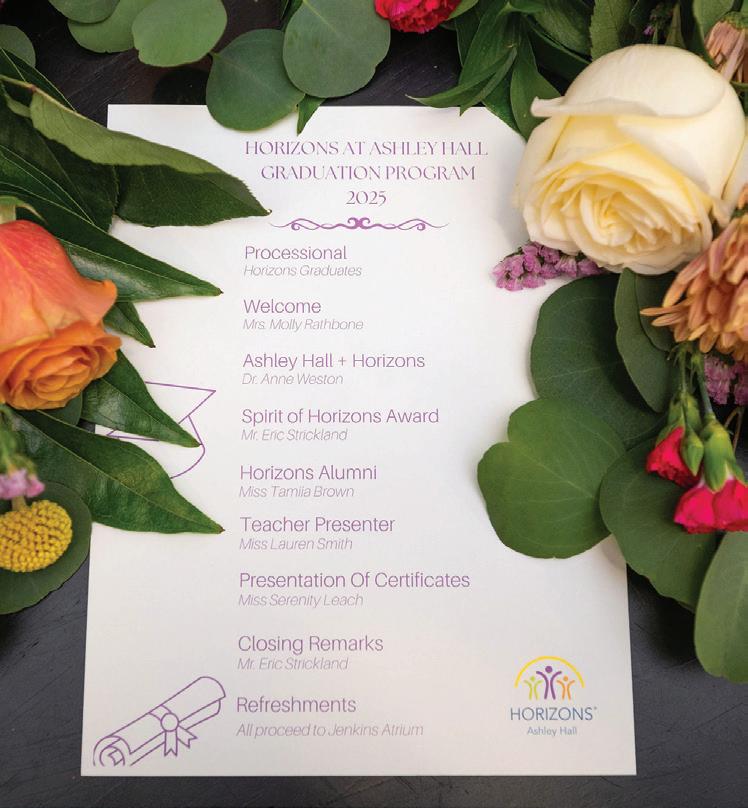
Ashley Hall is proud to play a part in a milestone that was years in the making– the first graduating class of the Horizons at Ashley Hall program. In the summer of 2025, the program celebrated the students who completed the first Horizons academic cycle eight consecutive summers of learning, growth, and community, beginning as rising second-grade students and ending as rising high school freshmen.
Horizons at Ashley Hall is built on a longterm commitment to students. Participants return each summer through eighth grade, building strong relationships with teachers, peers, and mentors, while strengthening their academic skills and confidence. Over time, these summers create a foundation of encouragement and opportunity that supports students throughout their educational journeys.
Last August, that vision came to life as the program matriculated its first cohort of graduates. Over the course of their summers with Horizons at Ashley Hall, these students learned, explored, and grew together. Their graduation represents not only an academic milestone, but also years of perseverance, friendship, and personal discovery.
Along the way, students gained confidence in ways both big and small. When asked what she once felt nervous about but now feels confident doing, Aniya, who attends Charleston Charter School for Math and Science, answered simply, “swimming.”
and speaking in front of people.”
That growth happens in a supportive community built over many summers together. Horizons teacher and Ashley Hall alumna Lauren Smith ’10 says watching those relationships develop is an incredibly meaningful part of the program. “One of the coolest things to watch is how these girls have each other’s backs,” Smith says. “They’ve really learned what it means to stand up for their friends, and that kind of bond—that real camaraderie—is something special.”
Dr. Anne T. Weston ’73, Ashley Hall’s Head of School, sees Horizons as a natural extension of the School’s mission. “Horizons at Ashley Hall reflects our commitment to educating girls who are confident, ethically responsible, and prepared to lead.
By extending exceptional educational opportunities—and access to our campus and resources—to girls beyond our classrooms, we affirm our responsibility as an independent school to welcome and engage the broader community.”
Horizons also creates meaningful connections within the Ashley Hall community. Each summer, Upper School students volunteer as Horizons Assistant Teachers, or HATs, working alongside faculty and building relationships with younger students.
“Being a HAT has been a really impactful experience for me,” shared Kamya Heyward ’27.
“Two weeks seems like a short time to spend with them, but it means a lot to the girls, and to me. It’s amazing to see them grow more confident each summer, and you realize you’re learning just as much from them as they are from you. I’m so excited to see them again this summer and pick up where we left off!”
As Horizons celebrates this first graduating class, a new group of rising first graders is beginning their own journey—ensuring that the impact of Horizons at Ashley Hall will continue for many summers to come.
What Is Horizons at Ashley Hall?
Horizons at Ashley Hall is a tuitionfree summer learning and enrichment program for girls from under-resourced communities in Charleston. Part of the national Horizons network, and one of only two all-girls programs, it is rooted in the belief that joyful, consistent learning, paired with strong relationships, can change a student’s educational trajectory.
Each summer, Horizons girls return to the Ashley Hall campus for six weeks of academic enrichment, creative exploration, swimming, and handson experiences designed to support the whole child. Students begin their journey as rising first graders and return year after year, forming lasting bonds with teachers, mentors, and peers.
For Jaelynn from Allegro Charter School of Music, the growth has been even broader— “making friends, making eye contact when speaking,

SCRO L LING TOGETHER
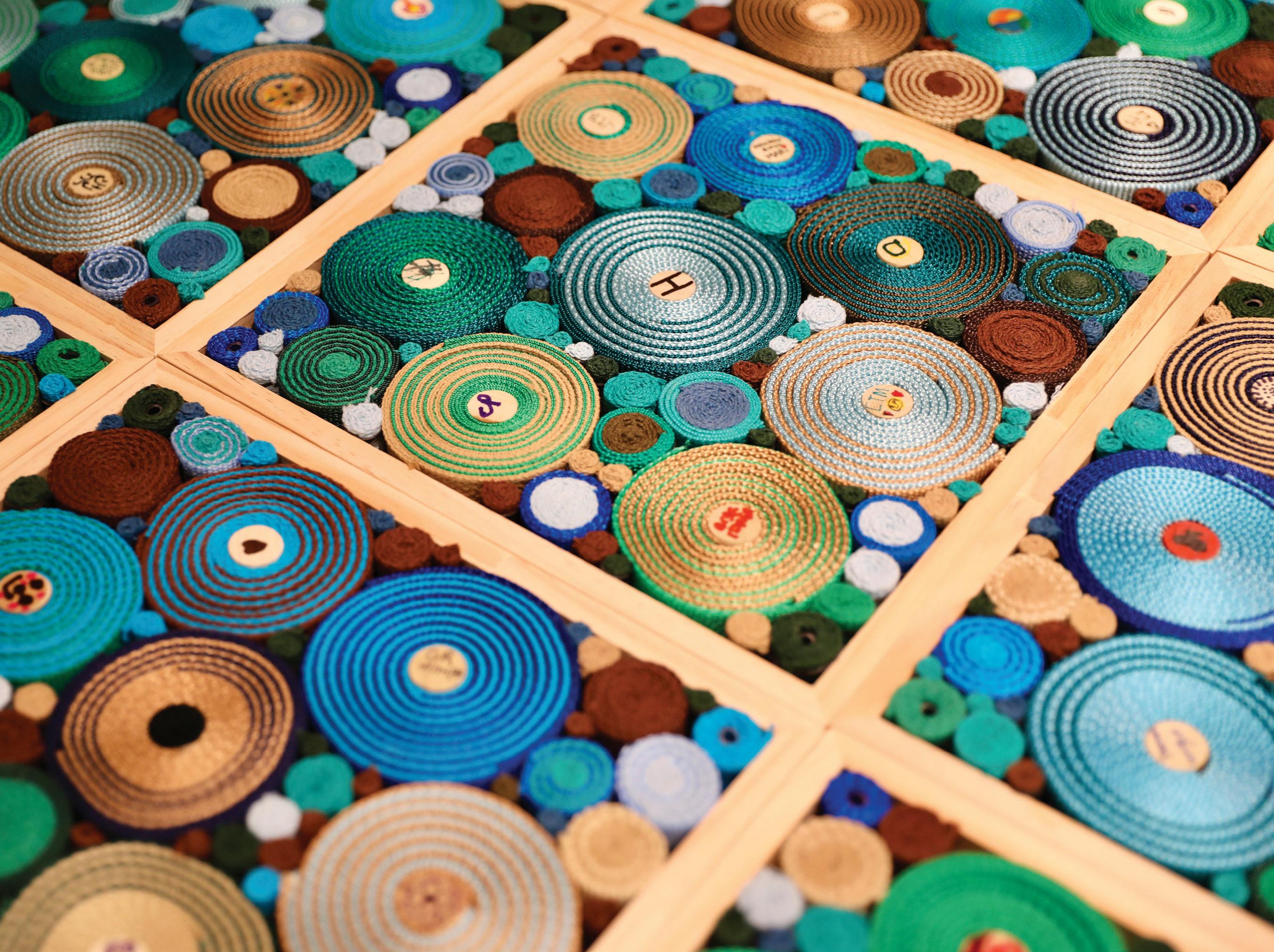
What began as two strips of fabric, carefully rolled by hand, became part of a much larger story. Earlier this year, Upper School art students traveled to the Gibbes Museum of Art to participate in the National Scrollathon, a nationwide initiative connecting communities through collective art in celebration of America’s 250th birthday.
Participants created a personal scroll using two pieces of fabric, tightly wound around a wooden dowel and secured with a pin. Each student customized their dowel with markings or initials, leaving a lasting imprint of their participation and incorporating pieces of themselves through the colors and materials available to them. The finished scroll was placed in a keepsake tin labeled with the artist’s name, title, and date. Students then created a second scroll to contribute to the collaborative masterwork, which became part of a larger installation representing voices from across the country.
Designated as America’s Cultural Project for the nation’s 250th anniversary, the National Scrollathon invited participants to contribute to a dynamic work that reflects the collective story of the United States. Each state created its own section of the piece, which will ultimately come together digitally for a final
exhibition in Washington, D.C. this summer.
The project links individual expression to a larger national narrative, as the work created in Charleston at the Gibbes becomes part of the collection representing South Carolina in the final exhibition.
Students worked alongside Scrollathon founders, professional artists and brothers, Steven and William Ladd, and community members, adding imagery, symbols, and stories to their scrolls. As the project evolved, they were challenged to think beyond their own perspective and consider how their contributions interacted with others, and how art can serve as a shared language.
“Experiences like the Scrollathon allow students to see themselves as part of something bigger,” said Daisy McClellan, Ashley Hall Upper School art teacher. “They start to discover that they are contributing to a collective story and shift their lens, moving from individual creators to community contributors.”
Participating in the National Scrollathon offered students a chance to engage with art as a living, evolving conversation. By contributing to a project that spans communities and generations, they experienced firsthand how creative expression can build bridges, spark dialogue, and reflect a shared human story.
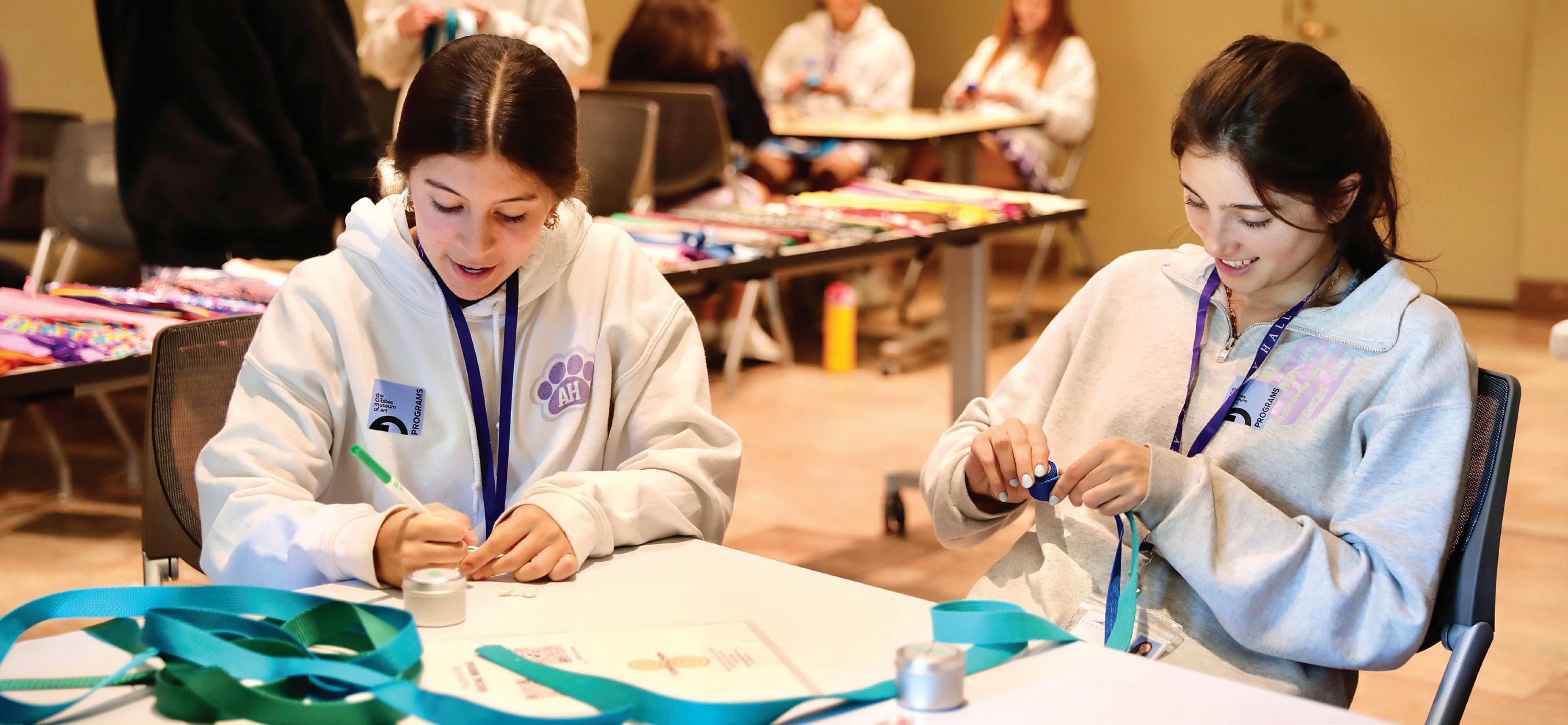
BELOW: Leland Elliott ’28 (left) and Kate Murphy ’27 (right) work side by side on their contributions to the Scrollathon project. PHOTO: Ansley Kreisler.
THE WORLD AS OUR
Classroom
CZECH REPUBLIC, GERMANY, AND BEYOND
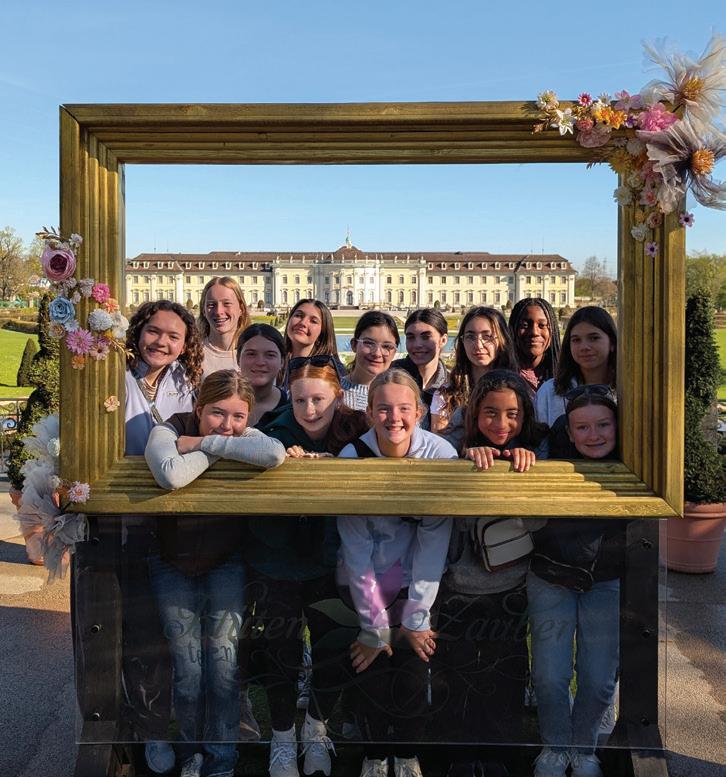
Over spring break, fourteen Ashley Hall students in grades seven and eight traveled to the Czech Republic and Germany on a cultural immersion program that reflected something new in both destination and design. Inspired by their own experiences and expertise, Betsy Sidebottom, Director of Information Services, who studied German and lived in the country, partnered with Petra Sorelova, Director of After School
and Summer Programs, who is originally from the Czech Republic. Together, they envisioned a travel experience that would connect students with the cultures they both knew so well. Working closely with Tyler Moseley, Community Partnerships and Global Education Coordinator, and a vetted third-party travel partner, the program began to take shape.
“From our initial idea to the final itinerary, we were able to build a program that reflected exactly the rich cultural experience we wanted for the students,” said Sidebottom. “It was important to us that the trip included hands-on learning, whether that meant creating a custom piece in a glassblowing workshop in Prague or participating in a workshop at the Ritter Sport Chocolate Factory.” From the outset, the goal was to stretch students beyond their comfort zones while keeping them supported. “Bringing
students into an unfamiliar environment, especially one with a language barrier, is where meaningful learning happens,” Sorelova explained. “Sharing Prague through a more personal lens allowed history and culture to come alive. The students leaned in. They were curious, engaged, and fully present, and it was really great to be able to connect with them on that level.”
Students moved through new spaces with curiosity and intention, navigating and learning through doing. As one traveler reflected, “I learned a lot about the culture when I was just walking through the city or sitting down to eat. For example when I went to lunch with my group and Mrs. Sidebottom, we all learned how to order in German and we were able to successfully sound slightly German, even if we messed up a bit.”
An important part of this program from the start was aligning with the “disconnect to engage” philosophy. Leaving their phones behind helped students become more attuned to their surroundings and to one another. They built relationships across grade levels, forming bonds that extended well beyond the trip. As one student shared, “I talked to a lot of people I had never really talked to much and now I'm good friends with them! It also helped me look at the things around me without being worried about
taking a ton of photos.” What initially felt like a challenge quickly gave way to something more meaningful. Conversations lasted longer, friendships deepened, and shared experiences became the center of each day.
Nightly reflection discussions where the group chatted together about their experiences offered time for them to process events as they unfolded. “Our talks were a chance to really hear from the students— what surprised them, what challenged them, and what they learned that day,” Sidebottom shared. Students also got to know their trip leaders in a new way, with an understanding of their personal histories and cultural ties.
This program reinforces the importance of cultural exploration and is an exciting example of how Ashley Hall travel programs can center community as a source of inspiration and learning. By empowering faculty and staff to design experiences around their passions and expertise, the School is creating opportunities for students to connect more deeply with the world and with one another. When students are fully immersed, present, curious, and open to connection, learning takes on a different kind of depth. It becomes something lasting, shaped by experience and carried forward long after the journey ends.
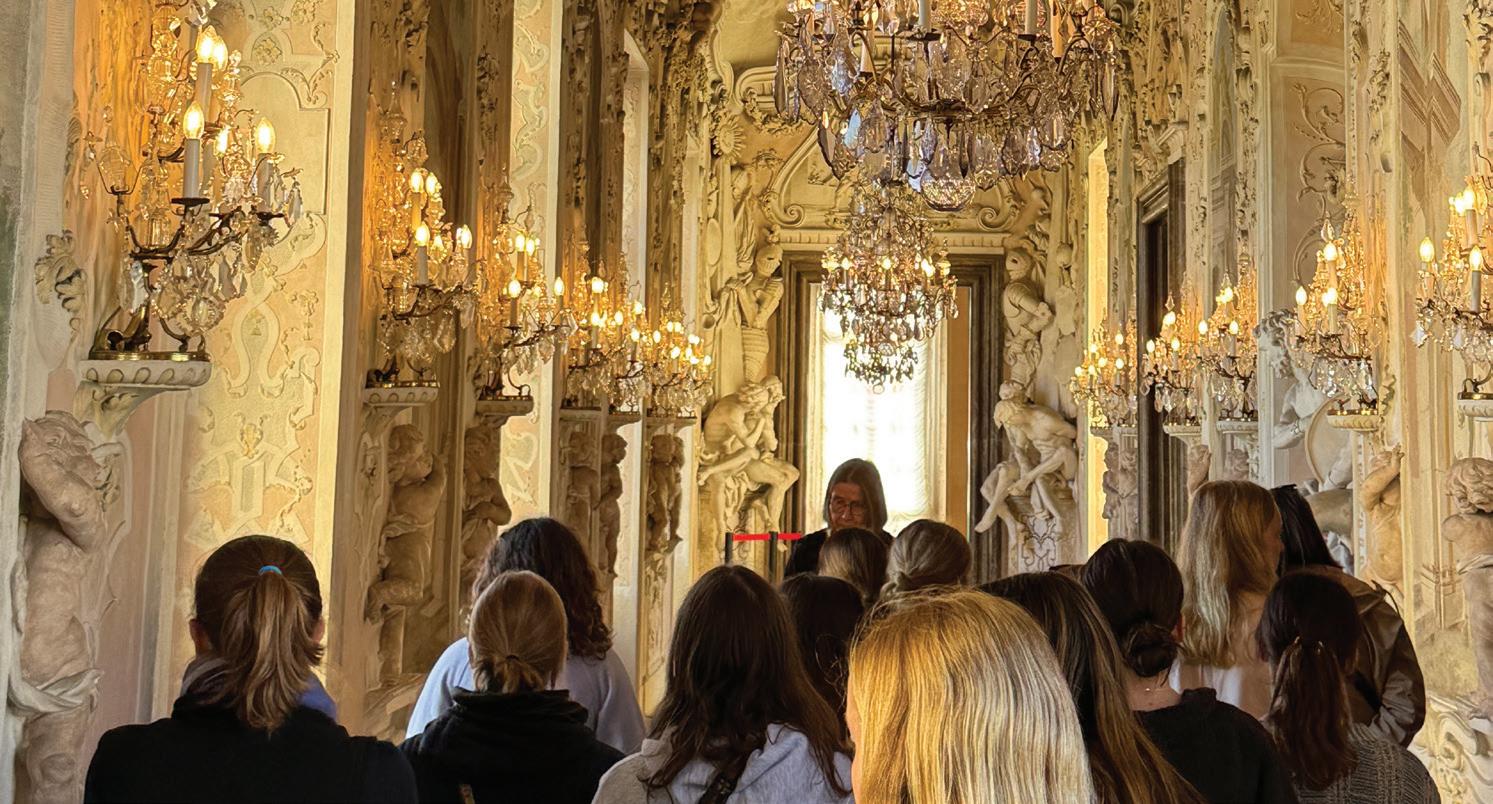
TOP LEFT: Students pose in front of Ludwigsburg Residential Palace, (Residenzschloss Ludwigsburg) in Ludwigsburg, Germany. ABOVE: The group enjoys a tour of the interiors at the same location. PHOTOS: Betsy Sidebottom.
One of the most defining aspects of Ashley Hall’s approach is that belonging is not confined to a single program or initiative. It is embedded across divisions, disciplines, and experiences. It shows up in how teachers facilitate discussions, how students collaborate on projects, and how the community responds to challenges. It is present in the small, everyday moments: how a teacher greets a student, how conflict is addressed, how differences are acknowledged and valued. This consistency is intentional. While the expression of belonging may look different at each stage of a student’s journey, the commitment remains constant, and that continuity matters.
As Ashley Hall continues its International Baccalaureate (IB) journey—building from the Primary Years Programme toward future Middle Years and Diploma Programme offerings—the emphasis on belonging becomes even more significant. The IB framework calls for students to develop not only academic skills, but also the human skills necessary to navigate a globalized world: empathy, open-mindedness, and a sense of responsibility to others. Belonging, in this context, is not just about the internal culture of the School. It is about preparing students to create belonging wherever they go.
Belonging is foundational to leadership. At Ashley Hall, we are preparing young women not just to succeed, but to lead with integrity and empathy. That work begins with helping them understand their own uniqueness and teaching them how to create space for others.
-
DR. ANNE T. WESTON, Head of School '73
WHY IT MATTERS NOW
In today’s world, students are growing up in an environment shaped by constant connection and, paradoxically, increasing isolation. They are navigating complex social dynamics, diverse perspectives, and evolving identities.
Schools cannot assume that belonging will happen naturally within this context. It must be taught, modeled, and reinforced. At Ashley Hall, this work is rooted in the understanding that belonging is essential to both individual and collective success. When students feel that they belong, they are more engaged, more resilient, and more willing to contribute. They are better prepared to collaborate across differences, to think critically, and to lead with compassion. And perhaps most importantly, they carry these skills beyond the classroom.
What we know is that belonging is an ongoing practice rather than a static outcome. It requires reflection, intentionality, and a shared commitment from the entire community. As one community, Ashley Hall embraces this work fully, recognizing that when students know they belong, they do more than succeed. They grow into thoughtful learners, confident leaders, and compassionate citizens, ready to shape the world around them.
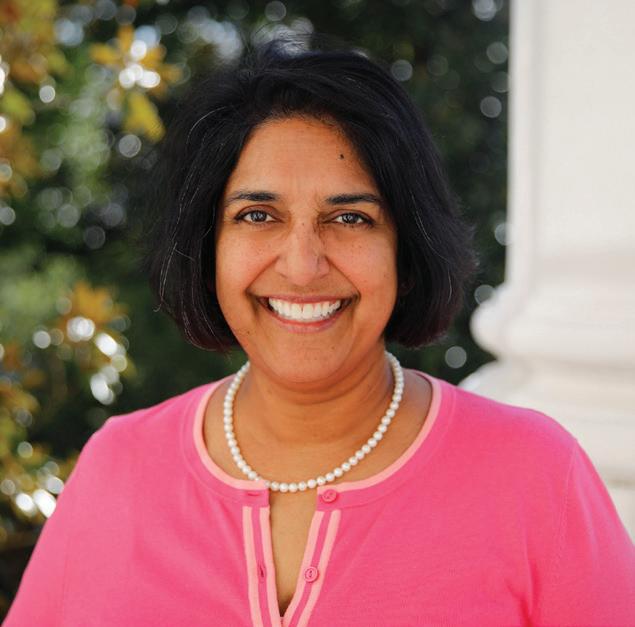
Cintra Horn on Belonging
ASSISTANT HEAD OF
SCHOOL FOR STUDENT AFFAIRS
For Cintra Horn, belonging work is both deeply personal and profoundly communal.
As educators, we have a responsibility to design environments where every student feels known and valued,” she explains. “Belonging doesn’t happen by accident—it’s something we build, moment by moment, through intentional choices.
In her role as Assistant Head of School for Student Affairs, Horn works across all divisions to ensure that belonging is not siloed, but woven throughout the student experience. She emphasizes that this work requires clarity in both language and practice.
“One of the most important distinctions we make is between inclusion and belonging,” she says. “Inclusion is about access—making sure students are present. Belonging is about experience—making sure they feel like they matter once they’re there.” Horn also underscores that belonging must evolve alongside students.
“What it looks like for a four-year-old is different from what it looks like for a seventeen-year-old,” she notes. “But the intention is the same. We are always asking, how do we create spaces where students feel safe to be themselves, to take risks, and to engage fully?”
Central to this work is student voice. Horn believes that students must be active participants in shaping their community. “We can’t do belonging to students—we have to do it with them,” she says. “When students take ownership of their community, that’s when belonging becomes real.” For Horn, the ultimate goal is not just a strong school culture, but a lasting impact. “We want our students to leave Ashley Hall knowing how to create belonging wherever they go,” she says. “That’s the kind of leadership the world needs.”
PHOTO: Ansley Kreisler.
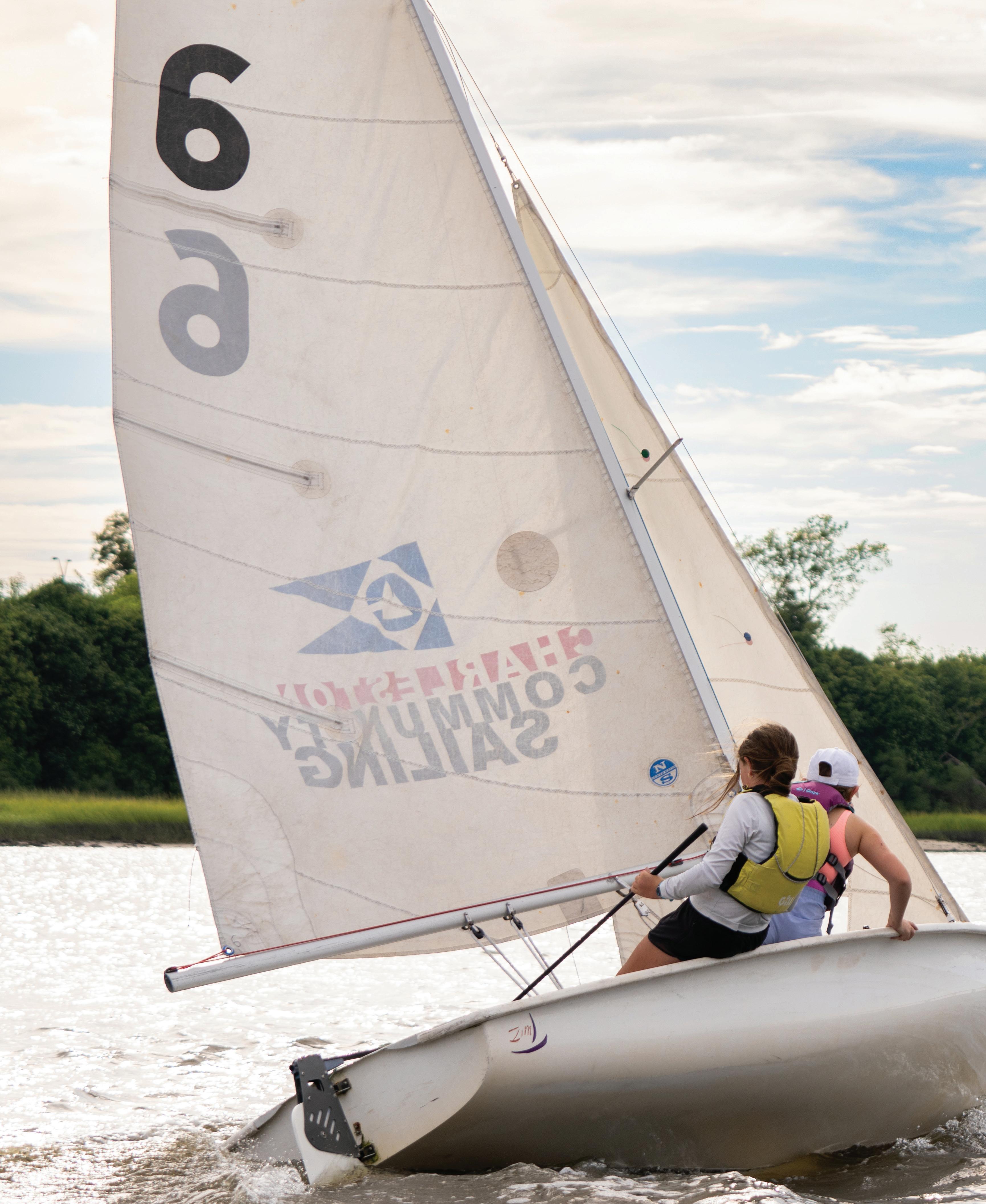
CONFIDENCE AT THE HELM
It starts with a small moment of bravery. A student steps into a sailboat, takes hold of the tiller, and pushes away from the dock. The shoreline begins to drift farther away, and suddenly she is steering, adjusting the sail, and discovering what it feels like to guide the boat on her own.
This year, more than 60 Ashley Hall students from kindergarten through seventh grade participated in the Junior Sailing Program, a partnership with
Charleston Community Sailing and Ashley Hall. The program offered young sailors the chance to learn the fundamentals of sailing while building confidence, independence, and teamwork along the way.
For many students, it was more than an introduction to a sport. It was an entry point into a community, a chance to take risks, and the beginning of a journey that can continue throughout their years at Ashley Hall.
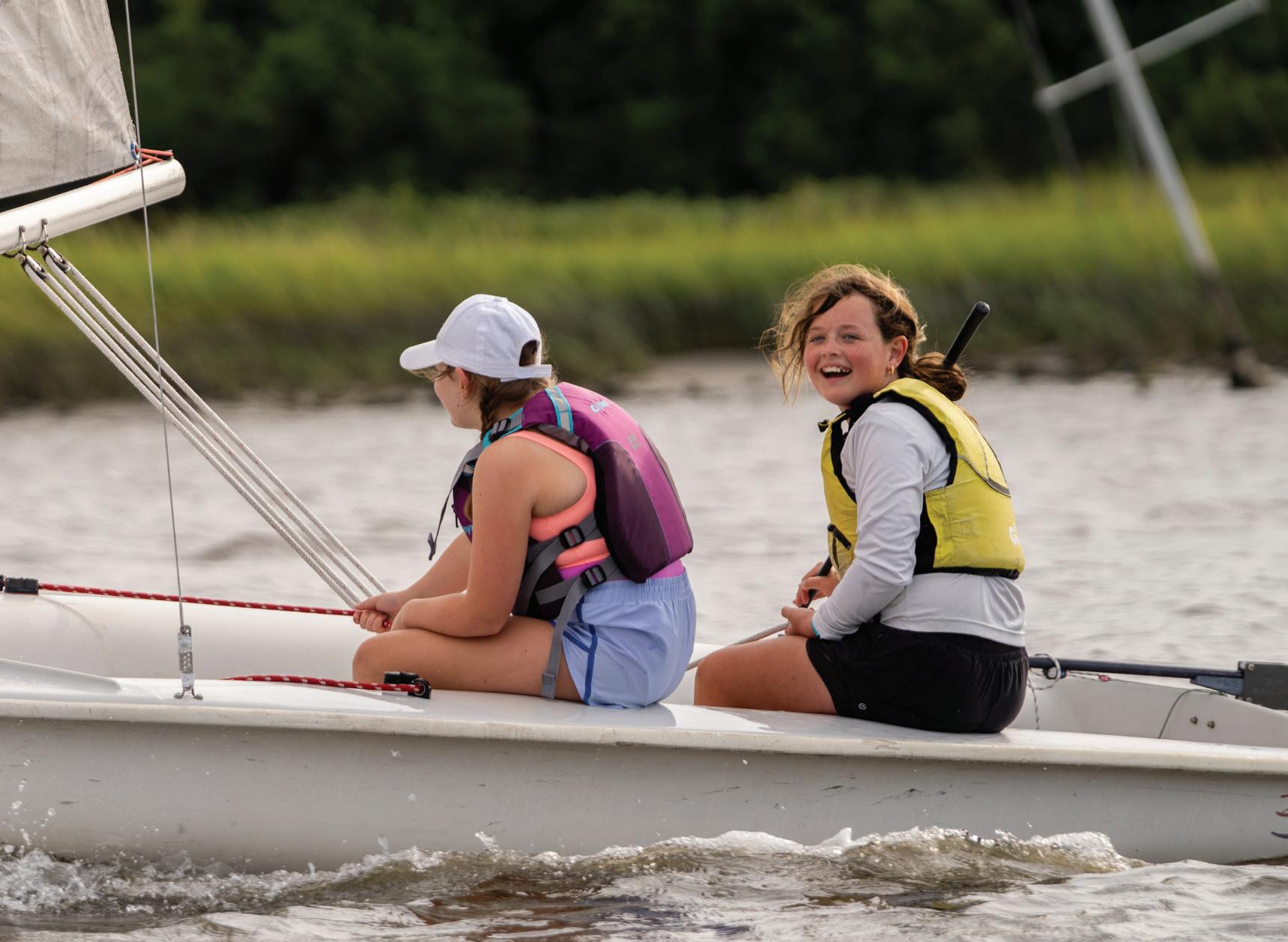
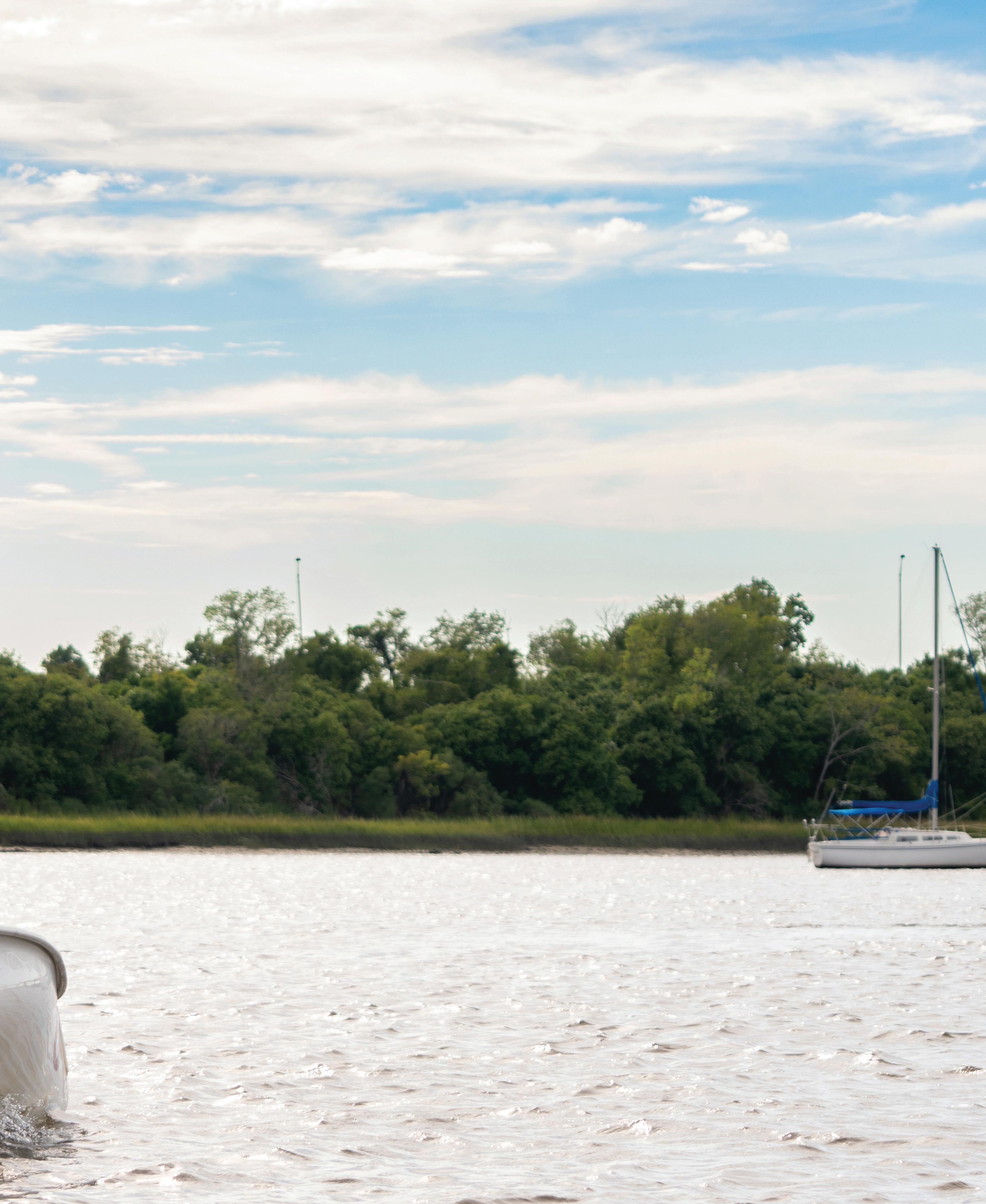
ABOVE and OPPOSITE: Rhetta Lowndes ’31 (right) and a fellow sailor, out on the water.
PHOTOS: Brian Principe.
Who takes the helm, matters. “It is no secret that sailing has historically been male-dominated,” says Charleston Community Sailing (CCS) Sailing Director Madeline Baldridge. “Teaching young girls from an early age that they can be strong, competent, and confident athletes in a lifelong sport is a huge step in leading sailing toward a healthy, wellrounded, and sustainable future.”
At the CCS Sailing Center this spring, that shift was already underway with the Ashley Hall Junior Sailing program. The program grew out of a shared commitment to create meaningful, hands-on experiences for students and to get more girls out on the water. For CCS CEO and Ashley Hall alumna Brooks Harken ’06, the goal was clear: to offer something that would challenge students and help them grow in lasting ways, “a unique, transformative experience that extends well beyond the classroom.”
That transformation became visible quickly. “At the beginning, many of the young sailors arrived unsure of themselves, hesitant to make decisions, or nervous about being on the water,” Harken explains. “But as the weeks went by, you could see their confidence grow in very real, visible ways. They started trusting their instincts, taking ownership of the boat, and problem solving without waiting for an adult to step in.”
On the water, there is no way to stay passive. Sailing demands attention and decision-making in real time. The wind shifts. The boat responds unpredictably. Each moment asks something of the sailor. “Sailing requires students to make constant evaluations and adjustments,” Harken says, “and they quickly learn that they’re capable of handling those responsibilities. That sense of ‘I can do this’ becomes part of how they carry themselves.”
That confidence does not develop in isolation. It is reinforced by the community surrounding it. This year, members of Ashley Hall’s Varsity Sailing Team stepped into leadership roles, working alongside younger sailors as mentors. They demonstrated techniques, offered encouragement, and helped translate experience into something
accessible. In the process, they created connections that extended beyond a single season.
The impact of that dynamic is amplified in an all-girls environment. Leadership is visible and shared. Younger students are not only learning how to sail, they are watching older students take command, make decisions, and lead with confidence. The path forward is not abstract. It is right in front of them.
As Athletic Director for Strategic Program Development Christian Alcantara explains, “Programs like this are about more than skill development. They’re about helping students take risks, trust themselves, and step into leadership early. That foundation carries forward, whether they continue sailing or apply those skills in other areas of their lives.”
Over time, that foundation becomes something deeper. Students begin to move differently, approaching challenges with greater confidence and independence. They learn to manage uncertainty, stay composed under pressure, and take responsibility for their decisions. “Sailing teaches great lessons in adaptability and resilience,” Baldridge explains, as students learn to work “in both group and independent settings across a wide range of environmental conditions.”
What begins as an introduction becomes something lasting. Programs like this are not only bringing students onto the water. They are reshaping the experience of sailing itself, expanding who sees themselves in the sport and who feels they belong there.
For many of these students, this is only the beginning. Some will continue sailing through Middle School and eventually join the varsity team. Others will carry forward the confidence they discovered on the water into entirely different pursuits. But the impact remains; once a student learns to take the helm, to trust her instincts, and to navigate uncertainty on her own, she carries that knowledge with her long after she steps off the boat.
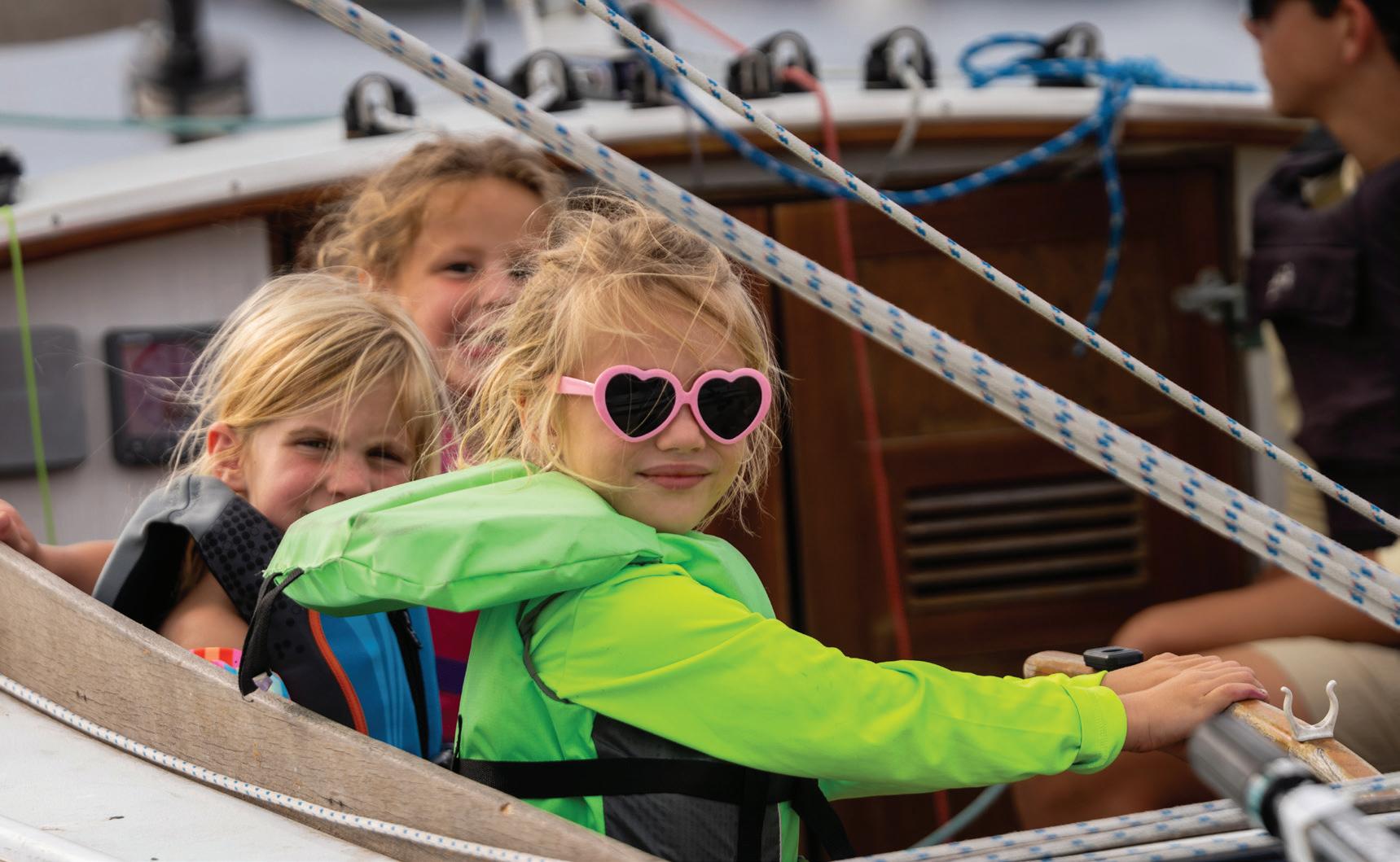
ABOVE: McKinley Gleason ’38 (right) takes the helm with Lillian Huttemeyer ’38 (left) and a friend. OPPOSITE: CLOCKWISE from LEFT: Allie Brazina ’34, Charlie Sullivan ’34, Aurelia Denney ’34, and Catherine Schmidt ’35 getting ready for their sailing session. PHOTOS: Brian Principe.
THE JOY OFTHE JOURNEY
By Rosemary Neilson
In the Early School, children’s voices shape the direction of learning. Guided by a Reggio Emilia–inspired approach, teachers listen closely to questions and theories, to the small observations that might otherwise go unnoticed, and use them as a starting point for exploration. From there, learning unfolds in response. A single line of inquiry can grow into weeks of discovery, while shared interests often carry through the entire year. This work is layered, flexible, and deeply collaborative. Through play, conversation, and reflection, children build understanding together while developing the relationships that support risk-taking, confidence, and a strong sense of belonging. At the close of each year, that journey comes into focus. Early School faculty member Rosemary Neilson reflects on Joyful Journey Day for her class—the culminating celebration of learning, and the thread of learning they followed along the way.
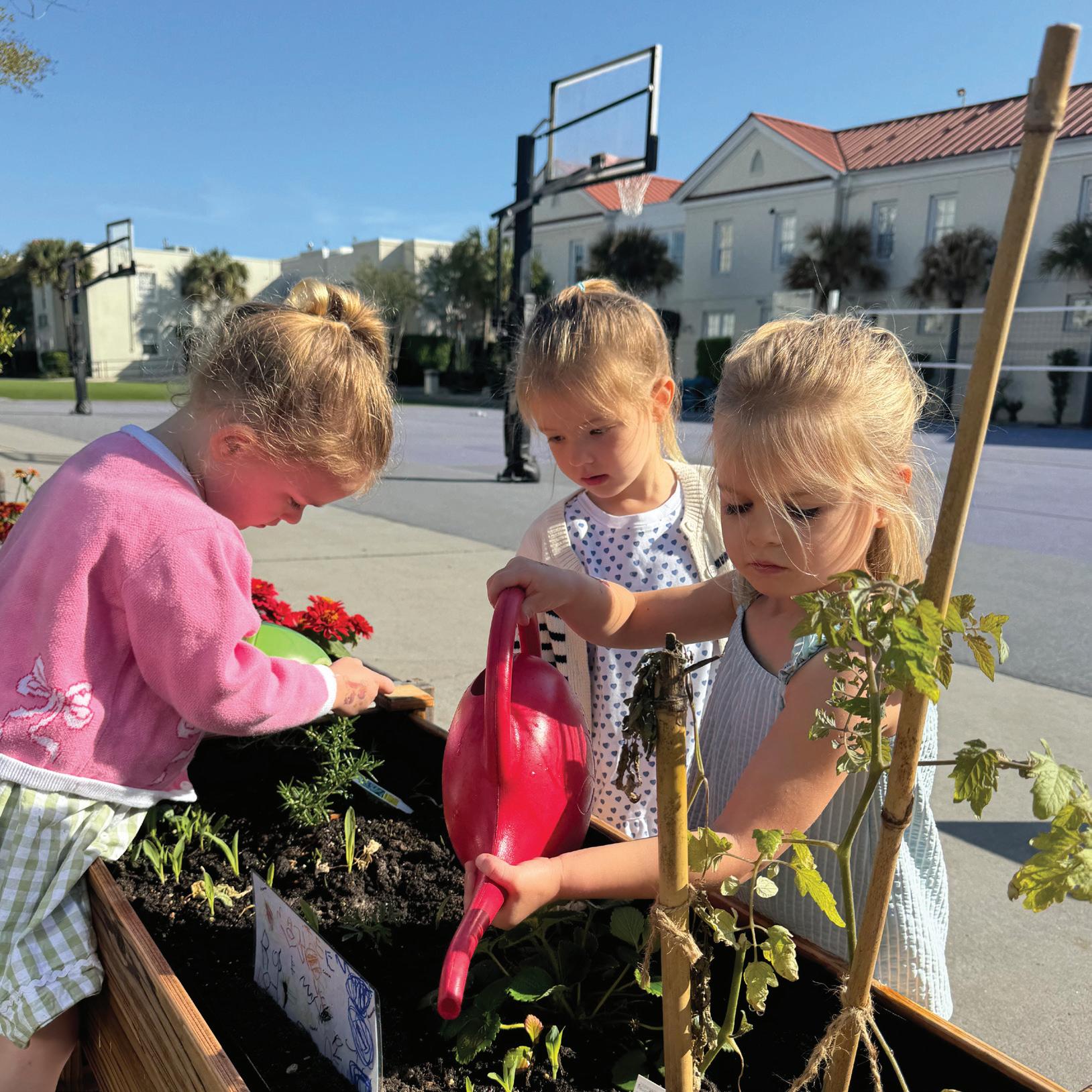
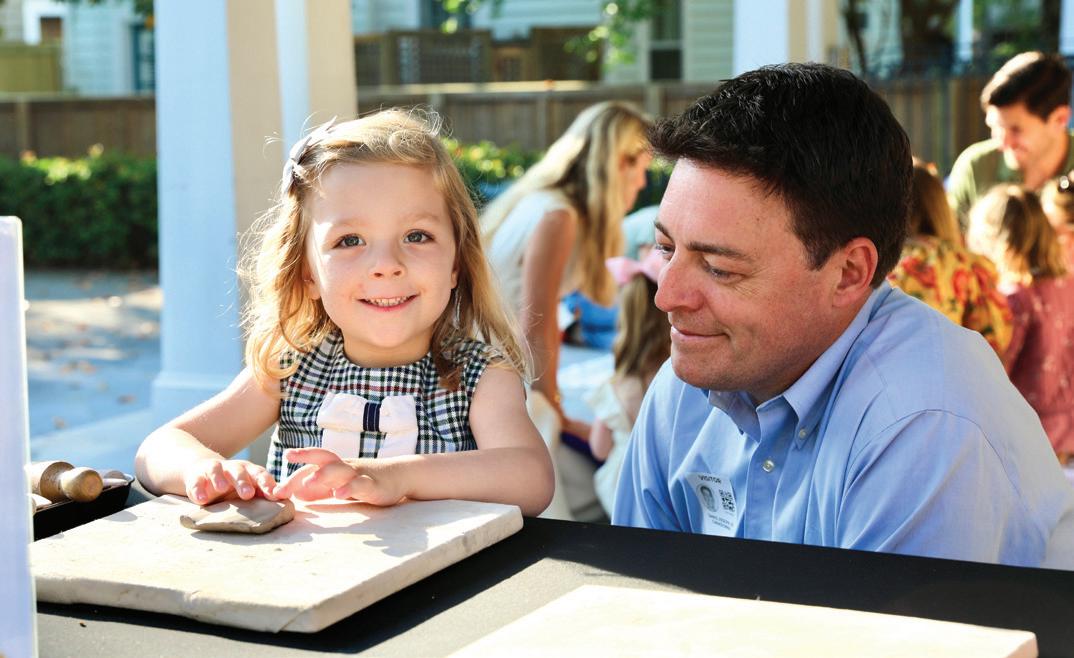
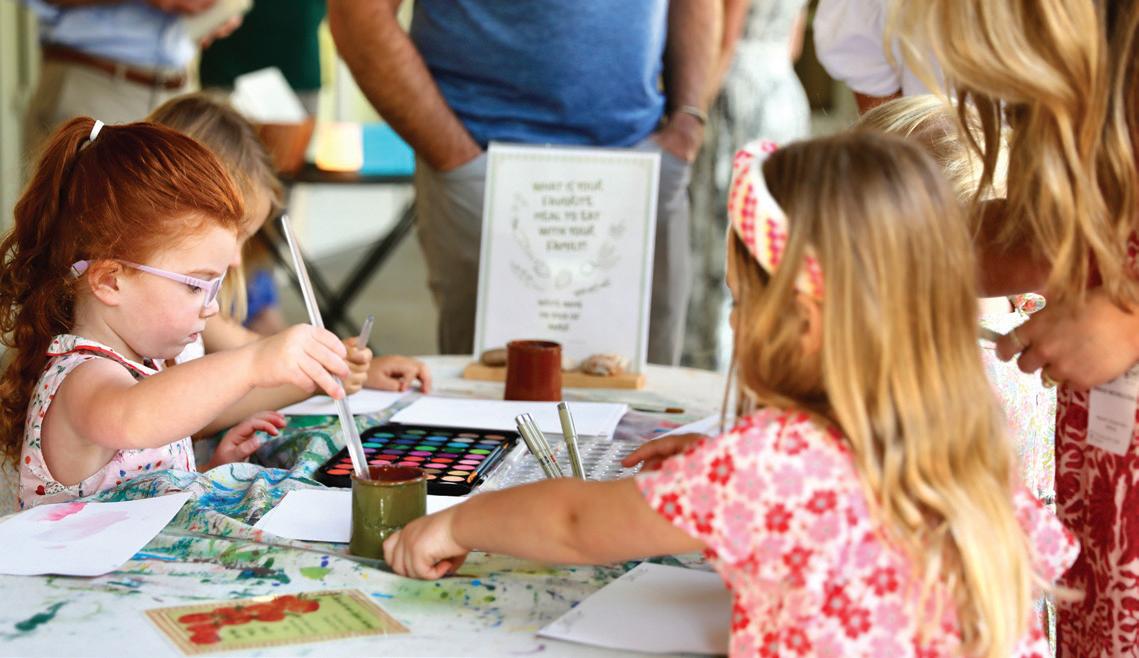
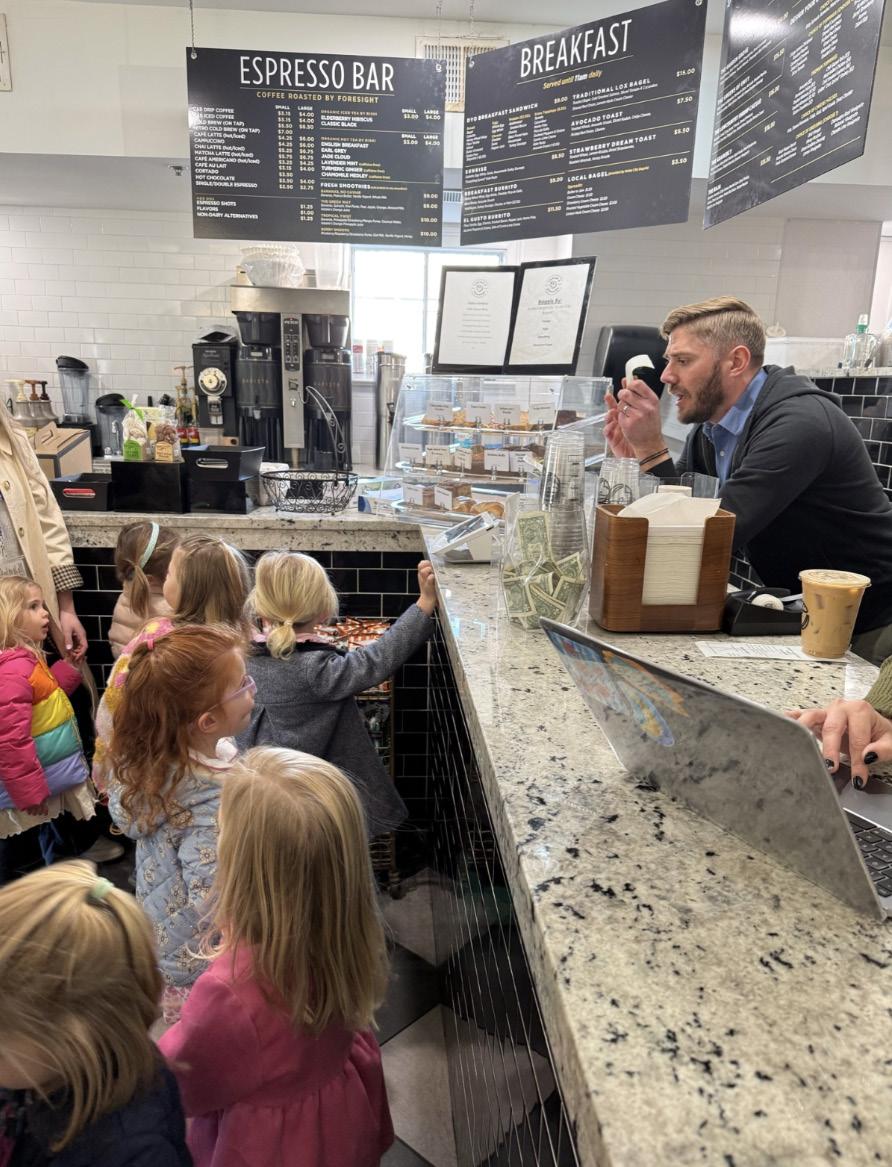
ABOVE: Louise Clagett ’40 (left), Mazie Wallace ’40 (center), and Giovanna Serena di Lapigio ’40 (right) tend to their garden. OPPOSITE, TOP LEFT: Bella Caradonna '40 and her father, Joe Caradonna. TOP RIGHT: Emma Phillips ’40 and classmates. PHOTOS: Ansley Kreisler. BOTTOM: The class visits Caviar and Bananas on a field trip. PHOTO: Rosemary Neilson.
LEARNING ON DISPLAY
Joyful Journey Day is one of the most meaningful moments of our year. It is both a celebration and a reflection—a time when the learning that has unfolded over months becomes visible in a shared, tangible way. When families step into the classroom, they are entering a space shaped by their children’s ideas, questions, and experiences, and they are invited to participate in and experience it as their children have all year.
Throughout the day, children guide their families, revisiting the work they have done and the discoveries they have made. There is a sense of pride in how they share—not just what they created, but how they got there. You can hear it in their voices as they explain, remember, and
make connections. What makes this day so special is the way it brings everyone together. Families see firsthand how learning has developed— academically, socially, and emotionally—and how deeply connected it is to their child’s sense of self. It strengthens the partnership between home and school, reminding us that this work is shared.
At the same time, Joyful Journey Day looks forward. When children experience that their ideas matter and that they are supported within a community, they carry that confidence with them. It becomes part of how they approach what comes next.
IN OUR CLASSROOM: FOLLOWING A THREAD
In our Primary classroom, learning often begins with a moment of wonder—a question, a comment, or an observation that catches the group’s attention. This year, we were excited by an ongoing exploration of food, cooking, and where our food comes from.
What started as imaginative play in our classroom kitchen and grocery store gradually expanded into something more complex. The children began asking thoughtful questions: Who prepares the food? Where does it come from before it reaches the store? How do different foods grow or get made? These questions guided our work, shaping experiences both inside and outside the classroom.
We visited local spaces like Caviar & Bananas, where children observed real kitchen tools, processes, and roles, making connections to their own play. Back in the classroom, those observations deepened as we cooked together, experimented with recipes, and created a class recipe book using contributions from families. This allowed children to engage with language in meaningful ways—reading, referencing, and sharing as part of their play. We explored the role of farms in our lives and brought these ideas to life with a field trip to Middleton Place. There, the children experienced the farm environment firsthand. They saw animals and plants up close and learned more about how food is grown and produced.
Throughout it all, the work remained collaborative. Children planned, discussed, tested ideas, and revisited them. What emerged was not just an understanding of food systems, but a growing confidence in their ability to ask questions, make connections, and learn together.
Reading to Learn
WHAT HAPPENS WHEN STUDENTS READ TO LEARN, NOT JUST LEARN TO READ?
This year in a Lower School classroom at Ashley Hall, the answer was taking shape. Students leaned in as they debated a question: What made space exploration possible—ideas, actions, or inventions? Around the room, books lay open, notes were kept handy, and conversations built as students referenced evidence to support their thinking. This is literacy in action—not quiet, isolated reading, but a dynamic exchange of ideas rooted in curiosity and understanding.
At the start of the 2025–26 academic year, the Arts & Letters™ program was piloted with the third grade class as the first step in implementing a new English Language Arts (ELA) curriculum. The shift is intentional: moving from practicing skills in isolation to building knowledge through meaningful, connected content. It’s a direct response to the question posed at the start—what happens when students read to learn? In classrooms, the answer is clear. Students engage more deeply, think more critically, and use what they know to drive discussion, writing, and inquiry.
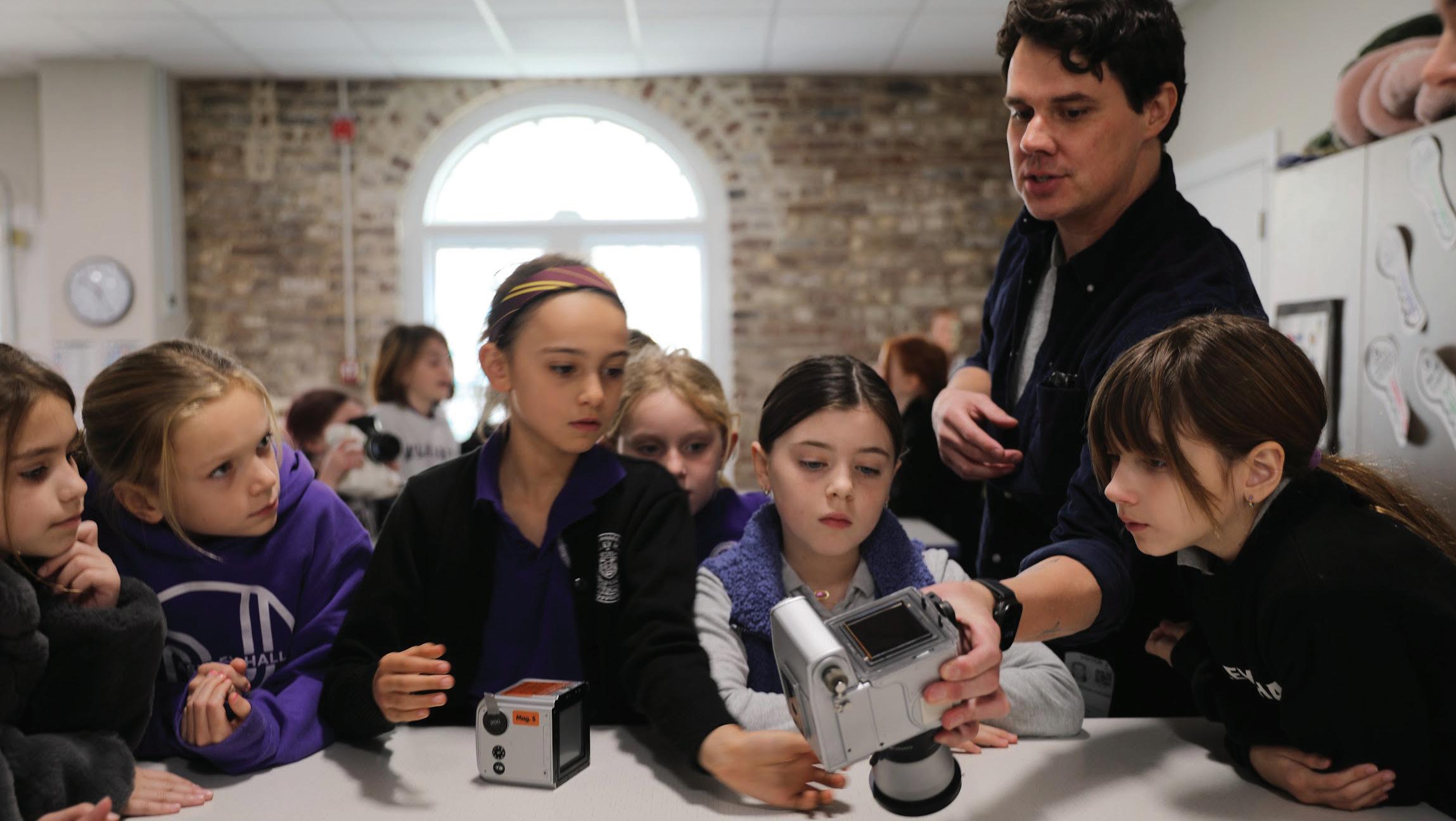
Designer, Entrepreneur, and Ashley Hall parent Cole Rise visited the third grade class during their IB unit on space exploration, which focused on innovators and innovation, to share his passion for camera building. He explained how he retrofits camera models to make them suitable for space travel (pictured above), connecting their learning to real-life applications.
Arts & Letters™ and the IB
What happens when this approach is paired with a broader educational framework?
At Ashley Hall, it aligns naturally. The introduction of Arts & Letters™ coincides with the School’s recent authorization as an International Baccalaureate (IB) World School for the Primary Years Programme (PYP). Both emphasize inquiry-based, student-centered learning. Like the PYP, Arts & Letters™ is driven by essential questions. It encourages students to explore perspectives, engage in discussion, and take ownership of their learning—focusing not just on what students know, but how they think and connect ideas.
“As we begin implementing Arts & Letters™ across all grades next year, we will intentionally integrate module topics with units of inquiry to further deepen students’ learning and experiences,” said Elizabeth Flowers, IB PYP Coordinator. “That connection allows students to go deeper—applying what they know across subjects and strengthening their understanding in a more meaningful, lasting way.”
Arts & Letters™ brings that philosophy into daily practice. Students are becoming stronger readers and writers while developing the habits of IB learners: curiosity, confidence, and a willingness to engage with complex ideas.
Learning in Action: The Third Grade Pilot
What does this look like in practice?
In the third grade this year, learning was both academic and experiential. In one module, students followed the question: How do people explore space? They studied Galileo, read about the Apollo missions, and explored Hidden Figures. They analyzed artwork, used the Star Lab, a portable planetarium on loan from the College of Charleston, to examine constellations, and took a field trip to the USS Yorktown for a closer look at the Apollo 8 capsule. These experiences shaped the literacy instruction itself. Students read and reread texts, gathered evidence, and participated in structured discussions to articulate and refine their thinking.
Writing grew directly from that work. Students developed opinion pieces supported by evidence, moving through a full writing process focused on clarity and structure. Vocabulary study reinforced their ability to decode and apply new language. Reading, writing, speaking, and thinking were no longer separate—they worked together.
ABOVE, L to R: Collins Hershon ’35, Caroline Oswald ’35, Katie B Ellyn ’35, Catherine Schmidt ’35, Charlotte Marko ’35, Cole Rise, and Emerson Doggett ’35. PHOTOS: Ansley Kriesler.
Deeper Engagement, Stronger Outcomes
So what changes in the end?
Students are more engaged because they understand what they’re reading. They are more confident because they have something to say. They ask more questions, make stronger connections, and use evidence to support their thinking.
“We’re developing more engaged, inquiry-driven students who are asking questions and seeking answers,” said Allison Bischoff, Lower School Literacy Specialist. “They confidently share their discoveries and thoughts backed by text and evidence, research, and discussion.”
That sense of ownership is significant. Students are not just completing assignments—they are constructing knowledge and taking pride in it. “One of the most meaningful moments came at the end of our unit on space,” said third-grade teacher, Chelsea Sosnowski. “After learning about astronaut Karen Nyberg and her quilting in space, each student designed a quilt square based on what stood out to them most. When we put them together, it became a visual representation of everything they had learned as a class.” What stood out even more was how the learning extended beyond the classroom. “Students were closely following the Artemis II launch, and some who had family trips planned to Florida over spring break were even trying to convince their families to attend. One student had a space-themed birthday party. It was clear they weren’t just learning about space—they were genuinely interested in it and making connections in their own lives,” she said.
A Foundation for the Future
As Arts & Letters™ expands across the Lower School from kindergarten through fourth grade in 2026–27, it reflects a broader vision for teaching and learning at Ashley Hall—one aligned with the IB framework and the School’s mission to develop capable, thoughtful, and engaged students. Students are building strong literacy skills while learning to engage with ideas, support their thinking, and make meaningful connections. When students read to learn, literacy becomes more than a set of skills—it becomes a way to understand the world. And over time, that creates stronger readers who are more confident, independent thinkers.
LITERACY LEADERSHIP
ALLISON BISCHOFF
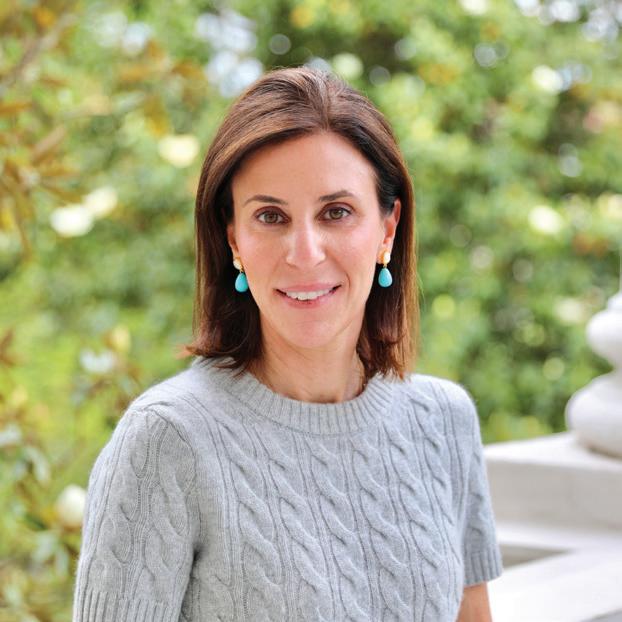
Since joining Ashley Hall in 2013, Lower School Literacy Specialist Allison Bischoff has played a key role in shaping the School’s approach to literacy. She led the audit, selection, and rollout of the Arts & Letters™ curriculum and is guiding its implementation across the Lower School. Bischoff works closely with both students and faculty—providing targeted literacy support, partnering with the third grade pilot team, and leading regular professional development sessions to ensure teachers feel confident and prepared as the program expands next year. As a member of the Lower School IB Leadership Team and Academic Advisory Council, she brings both expertise and clarity to this work, helping to build a strong, knowledge-driven foundation for all learners.
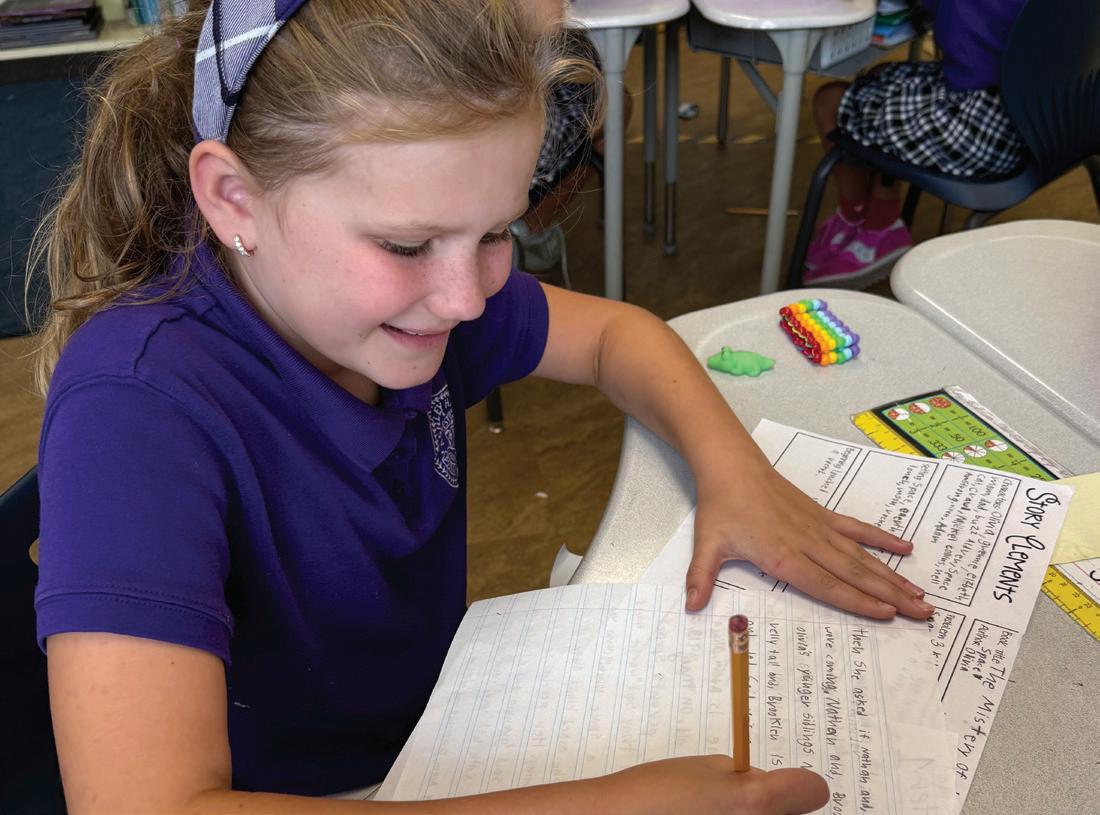
Olivia Shuler ’35 (left) works on a longer-form writing project during the space module, using what she’s learned to shape and support her ideas in writing.
MOVEMENT AS MEANING
On the second floor of the Ashley Hall Lower School, there is a space where learning takes on a different form. It moves. It stretches. It changes direction. In the dance studio, ideas unfold through motion, are shaped through collaboration, and are expressed in ways that extend beyond words. What begins as a concept in one class becomes something physical, something felt, practiced, and refined over time.
The studio functions as another classroom, where students engage ideas with their whole selves. They make connections across disciplines, deepen their understanding, and discover new ways to communicate. Like writing, discussion, or visual art, dance sharpens thinking while opening new pathways for expression.
Students learn foundational elements of dance, including ballet, as a starting point. Technique provides structure, but it is never the end goal. “The point is not to create prima ballerinas,” says dance teacher Alexandra Kosarko. “The point is to help students be as expressive as they want to be—to give them another tool in their communication toolbox, the vocabulary they need to express their ideas.” That philosophy shapes the program at every level.
In the early years, dance is grounded in exploration. All Lower School students take dance class as part of the P.E. program, entering a studio environment that feels open, joyful, and free of pressure. Movement begins instinctively. Students experiment,
take risks, and gradually discover both the possibilities and the boundaries of their bodies. As they grow, so does their awareness, and their need for structure. By Middle School, dance becomes an elective, and many students choose to continue. Clearer frameworks and expectations bring a sense of focus, creating space for creativity to deepen and confidence to take root.
Across divisions, the dance curriculum remains closely connected to what students are learning in their classrooms, giving academic concepts a physical dimension. In kindergarten, for example, students exploring patterns in early math lessons bring those ideas to life through movement. As they learn and practice the Maypole dance sequences, which each kindergarten class performs in the spring, repetition and spatial awareness become tangible. Concepts like pattern, direction, and sequence move beyond abstraction, taking root through experience and deepening understanding in a lasting way that they can feel in real life.
In Middle School, those connections become more layered. A sixthgrade inquiry into identity and perspective becomes choreography shaped by a central question: How are we different, and how are we the same? Students approach the work with curiosity and intention, translating thought into movement. For eighth graders studying Lord of the Flies this year, choreography became a way to further explore the tension between order and chaos. They considered narrative, emotion, and structure, asking what a turning point felt like and how it could be conveyed physically. Music was selected with care, deepening the emotional impact and reinforcing the story that was taking shape. Throughout these processes, students learn to collaborate, to offer and receive feedback, and to reflect with intention. The studio is a space where ideas are shaped in real time, tested, refined, and shared.
The program also broadens students’ understanding of dance itself. Students study dance as a cultural practice, exploring forms from around the world and considering the role movement plays in different societies. “In many cultures, dance isn’t about performance,” Kosarko notes. “It’s part of everyday life—celebrations, traditions, community.” Through this work, students come to understand that movement carries meaning. They engage with the histories and contexts behind what they learn, approaching each form with care, respect, and awareness.
Across all grade levels, one idea remains constant: the studio is a place for growth. Students are encouraged to take risks, revise their work, and embrace learning as a process. Dance teachers speak in terms of “strengths and stretches,” reinforcing the belief that development continues over time. Progress, not perfection, defines the work.
That mindset carries into performance. Whether in a Lower School showcase or a Middle School production, students step onto the stage with a sense of ownership, sharing work they have shaped and refined. “They’re so proud of themselves,” Kosarko says. “And they should be.”
Joy runs through the program, creating a space where students feel energized, supported, and confident in expressing themselves. Over time, that confidence becomes unmistakable—in the way they move, the risks they take, and the conviction behind the ideas they share. Along the way, they develop skills that reach far beyond the studio: resilience, collaboration, grit, problem-solving, and the courage to try, revise, and try again. The goal of the program is for these habits to stay with them, shaping how they approach challenges, pursue their goals, and navigate the world ahead, taking what they learned in the studio and applying it to their lives.
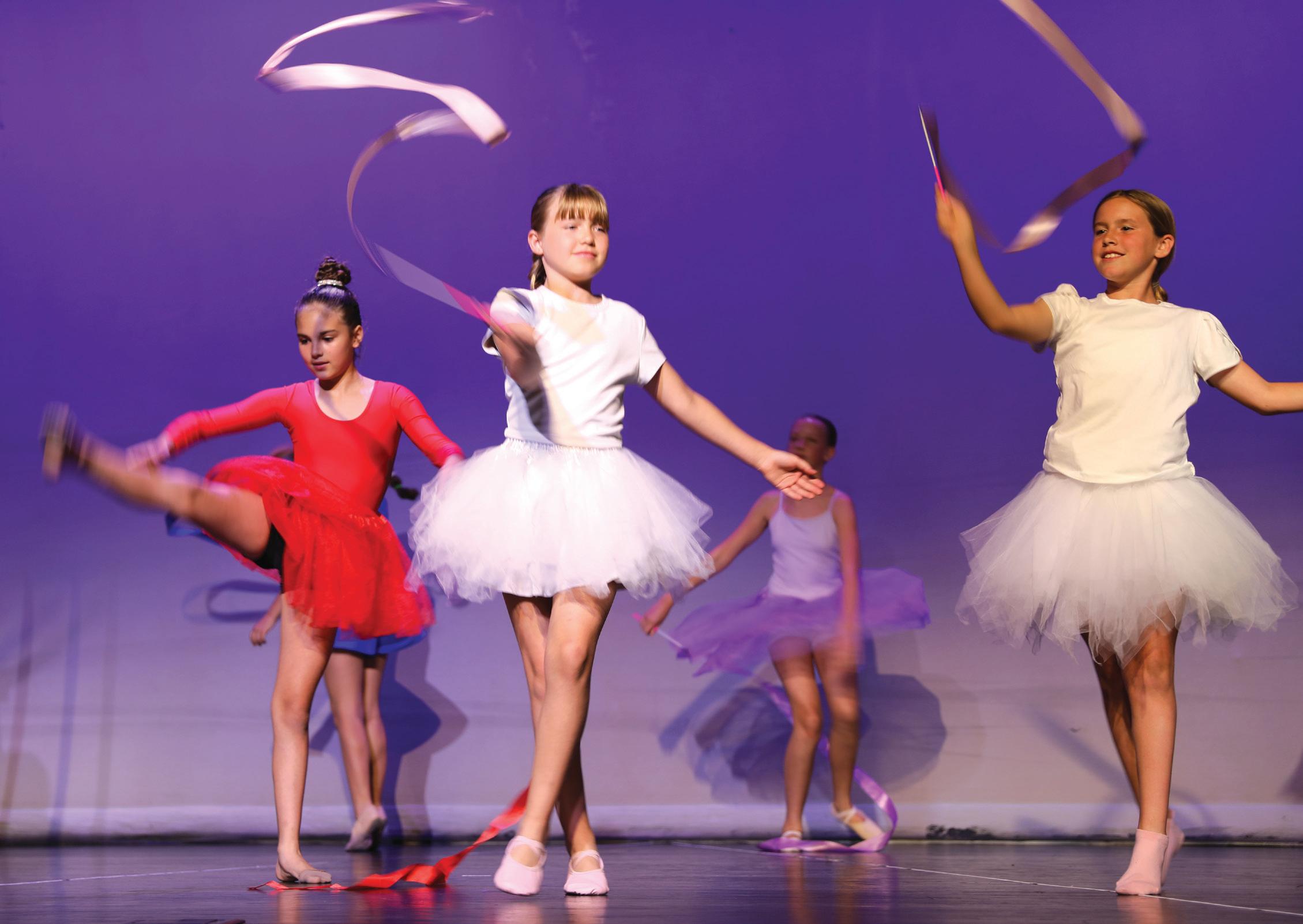
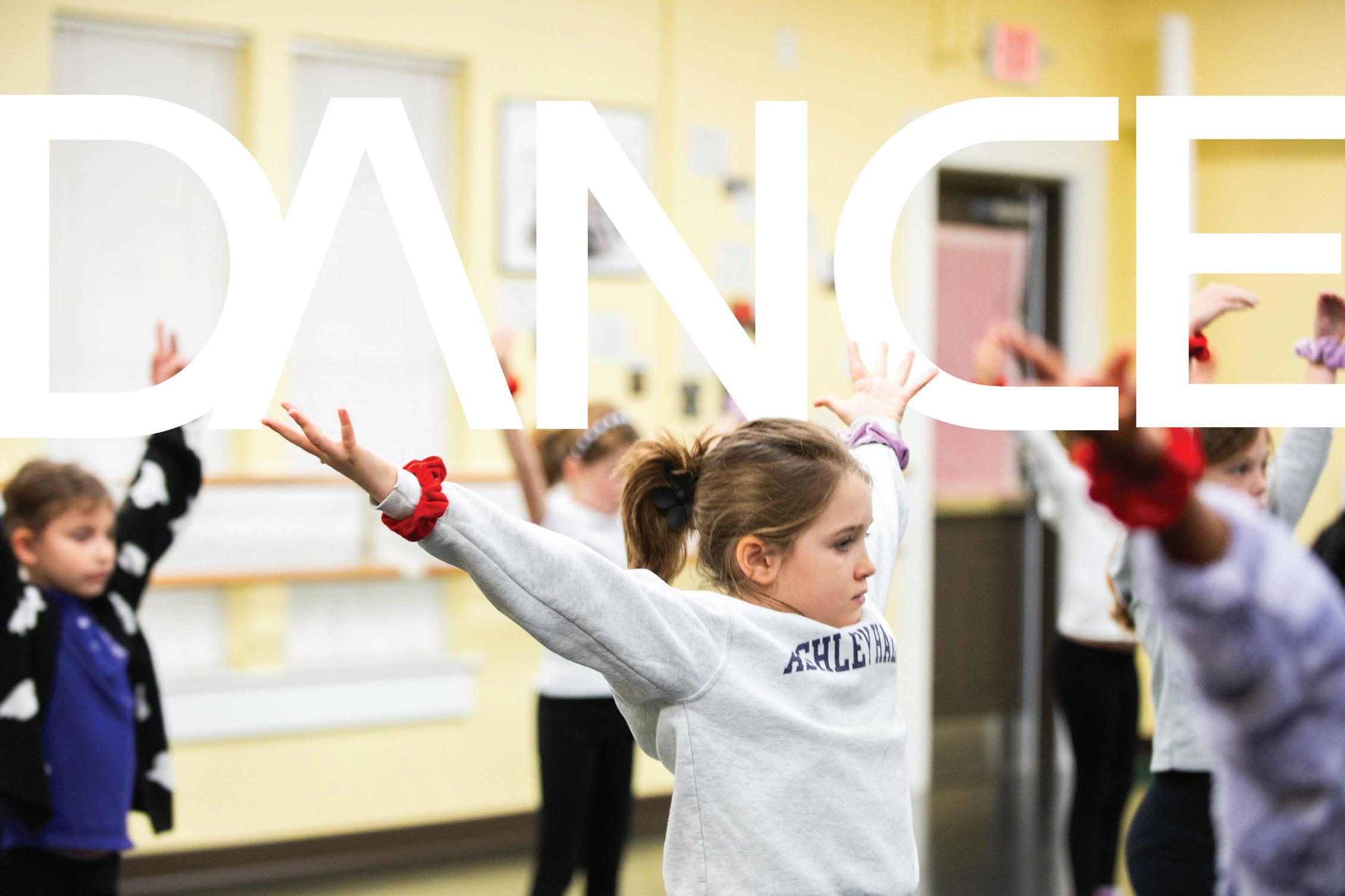
OPPOSITE, L to R: Angy Trezzi ’36, Bett Murphy ’36, and McCord Nickels ’36 in the Lower School dance studio. PHOTO: Libby Williams. ABOVE: Nici Pares ’33 (left), Annie Donohoe ’33 (center), Evie Jessup ’33 (center, back), and Ellie Eason ’33 (right) performing at the Middle School Showcase. PHOTO: Ansley Kreisler.
WHERE GROWTH
TAKES
Middle School is full of moments that matter—some small, some uncomfortable, all important.
It is also a time when students need support the most, even as they begin to seek independence.
It might look like a student realizing she didn’t cite a source correctly, or a disagreement with a friend that lingers longer than expected, or the familiar scramble of arriving unprepared, knowing better but not yet having the systems in place to follow through. These moments are part of the rhythm of middle school, where expectations are rising—and where students are learning, in real time, how to meet them.
At Ashley Hall, those expectations are clear. Students are asked to take responsibility for their work, their choices, and their role within the community. At the same time, they are deeply supported and truly known. “Middle School is a time of growth,” says Alison Parks, Director of the Middle School. “Students are figuring out who they are while also learning how to navigate increasingly complex academic and social situations.” The goal is not to lower the bar, but to walk alongside students as they learn how to reach it—with the guidance, structure, and encouragement they need along the way.
That support is both intentional and deeply embedded in the daily life of the School. Students learn where the line between misunderstanding and plagiarism lies, and how to use emerging tools like Artificial Intelligence responsibly. They are guided through the expectations they will encounter in Upper School, preparing them before the stakes are higher. “We know students are going to make mistakes,” says Desiree Bonetto, Dean of Students for grades seven and eight. “This is a time of learning. Our role
is to help them understand what happened, reflect on it, and move forward.”
That same philosophy extends beyond the classroom. Through restorative practices, students are encouraged to take ownership of their actions, consider their impact on others, and work toward resolution. Conversations are reflective and solution-based, focusing not just on what went wrong, but on what comes next. With the support of a full-time Middle School counselor, Alaina Long, students have consistent, trusted guidance as they navigate both the academic and emotional complexities of this stage.
“Middle School is a time of many new firsts,” Long explains. “Students are experiencing changes—physically, emotionally, and socially— as they begin to develop a stronger sense of identity. Relationships shift, new interests emerge, and that can feel both exciting and overwhelming.” In those moments, she says, the goal is not to remove the challenge, but to help students move through it. “We are there to support them when the mistakes happen. Learning how to grow from a setback— whether it’s a grade that didn’t go as planned, not being selected for something, or navigating a change in friendships—is how students begin to build resilience and confidence.”
This work is grounded in helping students develop both accountability and agency. “We encourage students to take responsibility for their actions,” Long says, “and to advocate not only for themselves, but for others—to speak up when something doesn’t feel right.”
Over time, students begin to see themselves as active participants in their community,
capable of making thoughtful decisions and contributing to solutions.
The Middle School program is also responsive by design. Faculty and staff pay close attention to the needs of each grade, adjusting programming in real time. When a need for deeper empathy surfaced, it led to a student-centered assembly. Wellness lessons shift based on what students are experiencing, ensuring that what is taught is both relevant and meaningful. “We are constantly asking what our students need right now,” Parks explains, “and how we can meet them there.” Students are not expected to manage this stage on their own; they are supported by adults who know them well and are paying attention.
As students move through Middle School, the balance of support and responsibility begins to shift. In grades five and six, there is more modeling and guided practice—opportunities to rehearse how to handle challenges before they arise. By seventh and eighth grade,
students are taking on greater ownership, participating more actively in conversations about accountability and contributing their voices to solutions within the community. They are practicing in what Parks describes as the “cold moments,” so that when the “hot moments” come, they are better prepared to respond with clarity and confidence.
Throughout this process, students are building what Long calls a “toolbox” of skills— academic and emotional—that they can draw from as situations arise. “We want students to understand their options,” she says, “so they can act independently and responsibly when they encounter challenges, whether that’s in the classroom or in their friend groups.” That sense of preparedness becomes a foundation for confidence, allowing students to approach new situations with greater clarity and selfassurance.
There is still, throughout it all, a great deal of joy. Middle School students are eager to learn, quick to share what they know, and are deeply invested in their friendships and experiences. That energy is not separate from the work— it is part of it. As students build the skills to manage themselves, communicate effectively, and think beyond their own perspective, they grow as learners and as individuals.
Middle School is challenging, wherever you are. What distinguishes Ashley Hall is the way those challenges are met: with reasonable and clear expectations, steady guidance, and a deep commitment to each student’s wellbeing. Here, students are not left to figure it out on their own. They are supported, encouraged, and known—every step of the way—emerging not only prepared for what comes next, but confident in their ability to navigate it.
“
The goal isn’t perfection— it’s progress, ownership, and the confidence to keep moving forward.
– ALISON PARKS, DIRECTOR OF THE MIDDLE SCHOOL
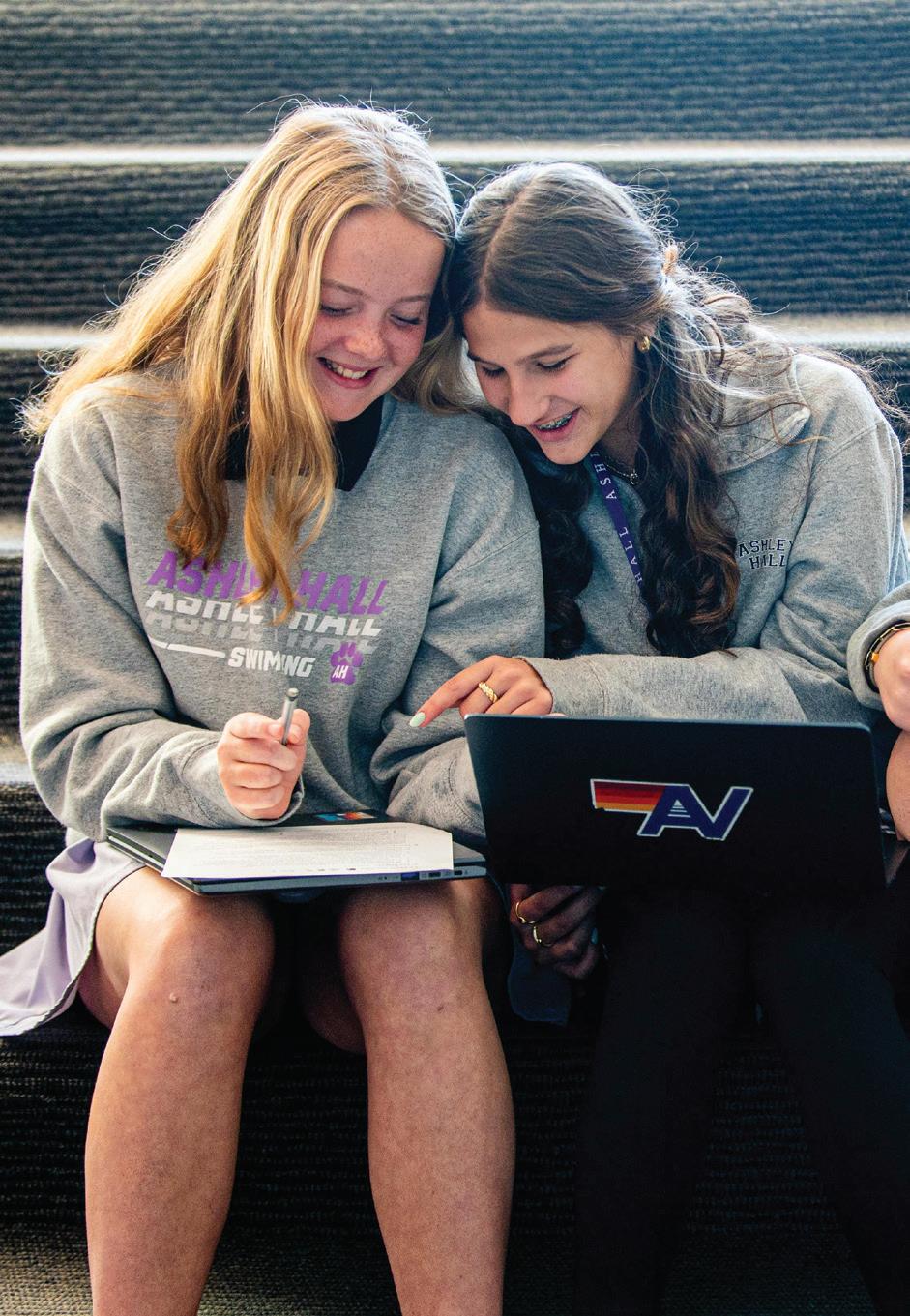
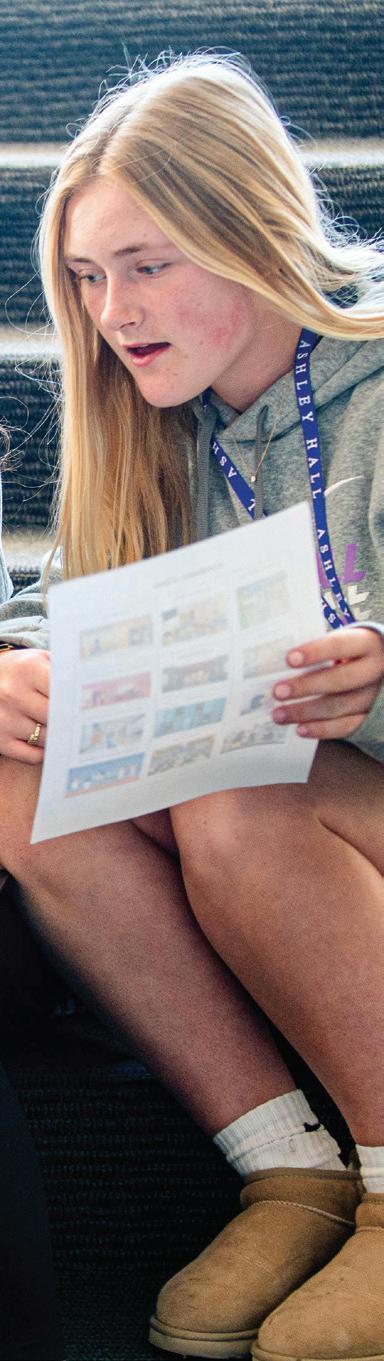
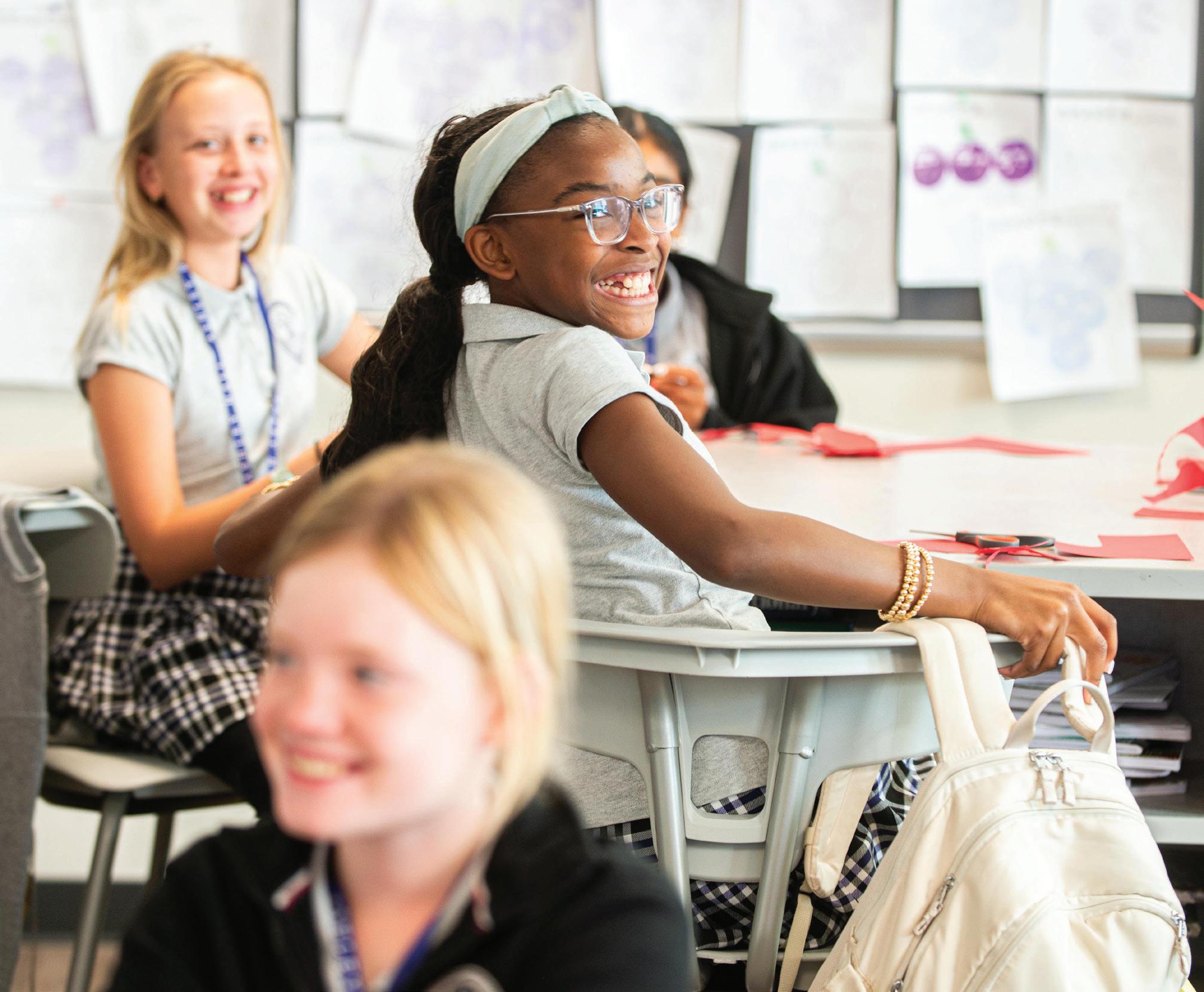
ABOVE LEFT: Ella Sidebottom ’30 (left), Claire Anderson ’30 (center), and Alden Mims ’30 (right). ABOVE RIGHT: Evie Jessup ’33 (back), Karrie Scott ’33 (center), and Catherine Watkins ’33. PHOTOS: Libby Williams.
MAKING
A FIFTH GRADE TRADITION
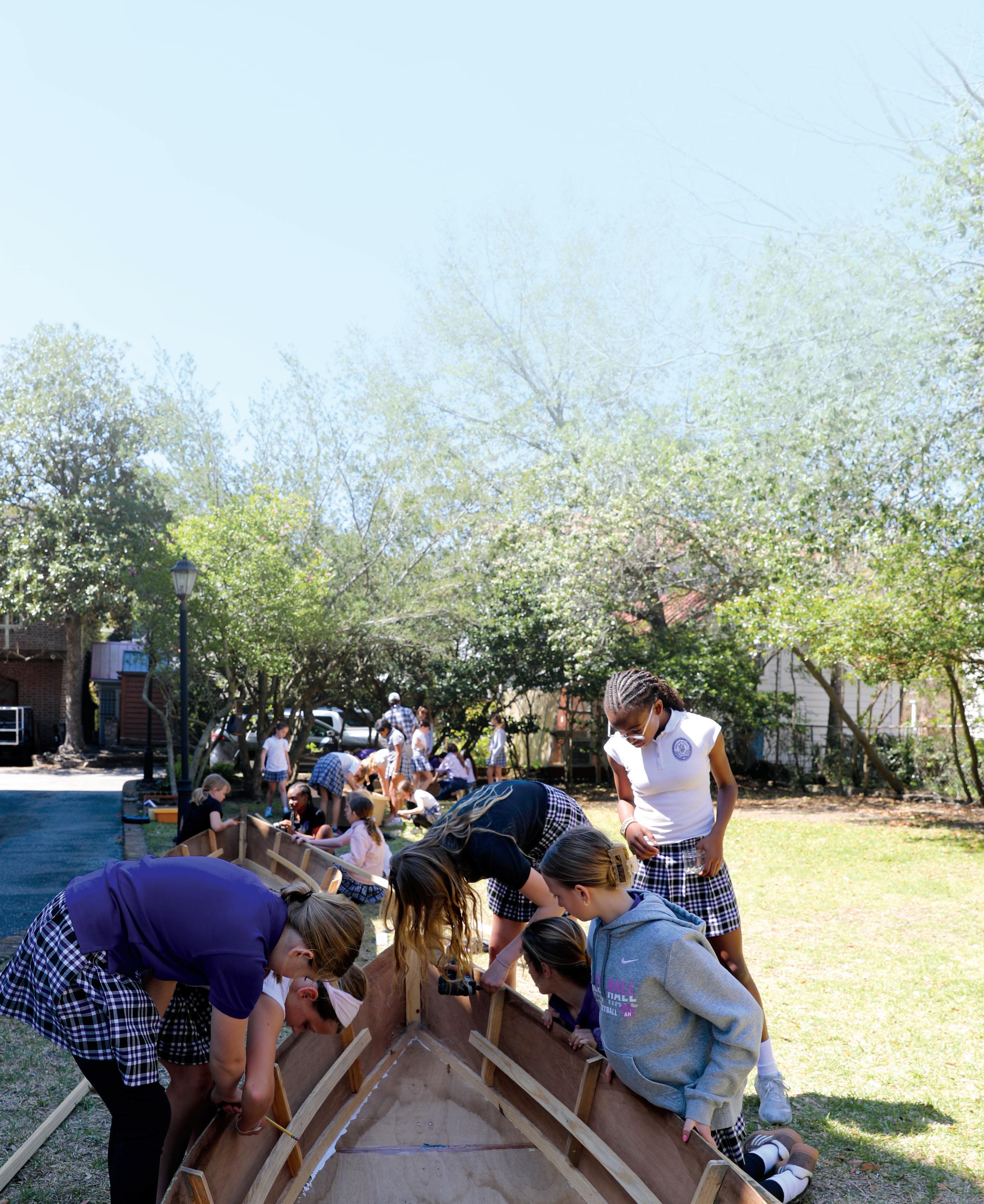
Boat Building has become a true rite of passage for Ashley Hall’s fifth graders, who partnered once again this year with the Lowcountry Maritime Society on a year-long journey to design and construct their own fleet of wooden boats.
Throughout this hands-on STEAM experience, students moved from blueprint to build, learning how to read scaled plans and translate them into something tangible as the lawn of the Elizabeth House transformed into a workshop filled with the sounds of sawing, sanding, and steady progress.
By late winter, the boats were nearing completion. Students focused on final details—smoothing edges, reinforcing frames, and preparing each vessel for paint. There was a growing sense of anticipation and a clear pride in what they had created with their own hands.
The project culminated on May 8 at Colonial Lake, where the girls launched their boats and put their work to the test. It was a moment that brought the entire experience full circle—equal parts engineering challenge, creative accomplishment, and celebration of perseverance.
ARTISTS IN RESIDENCE
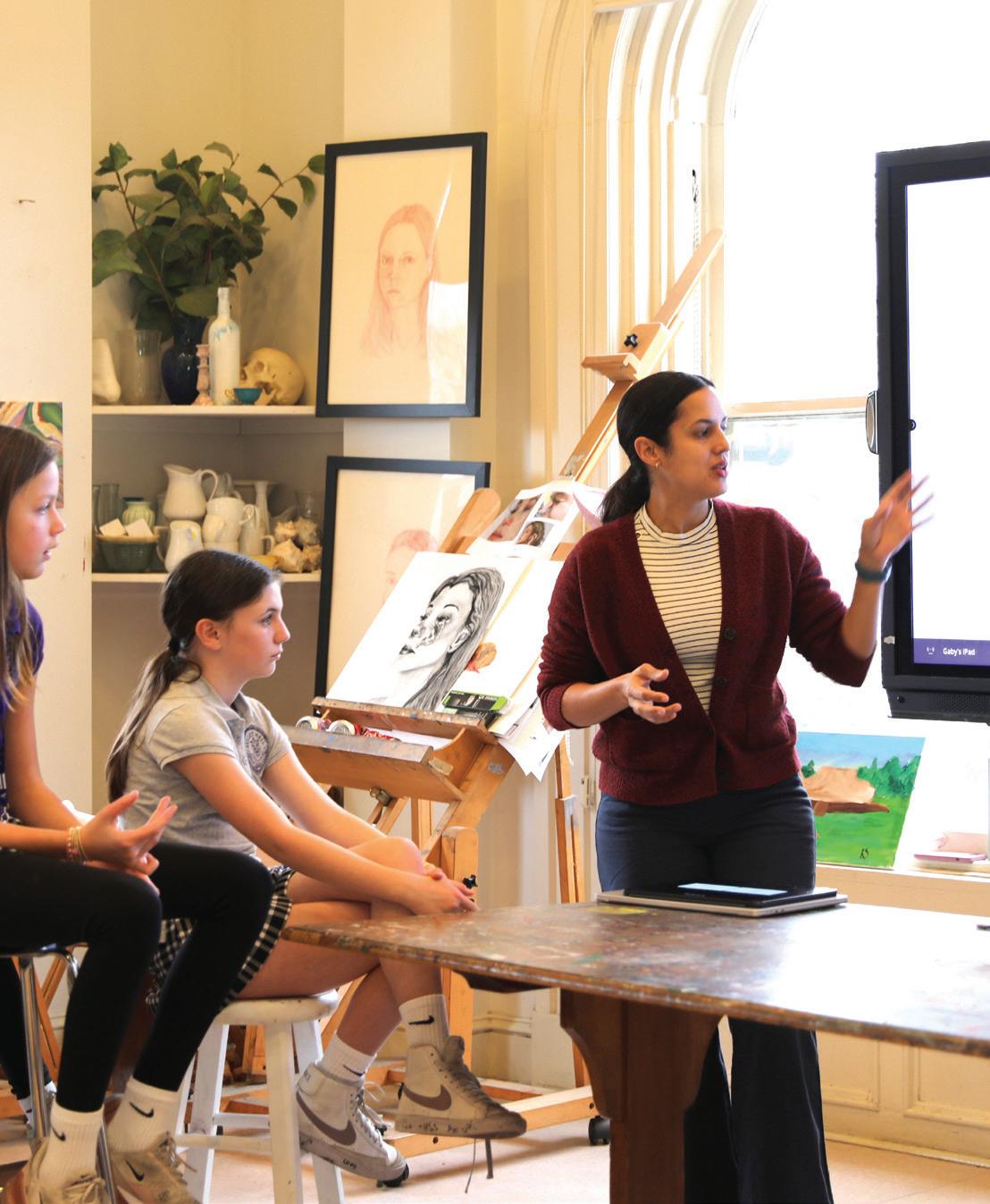
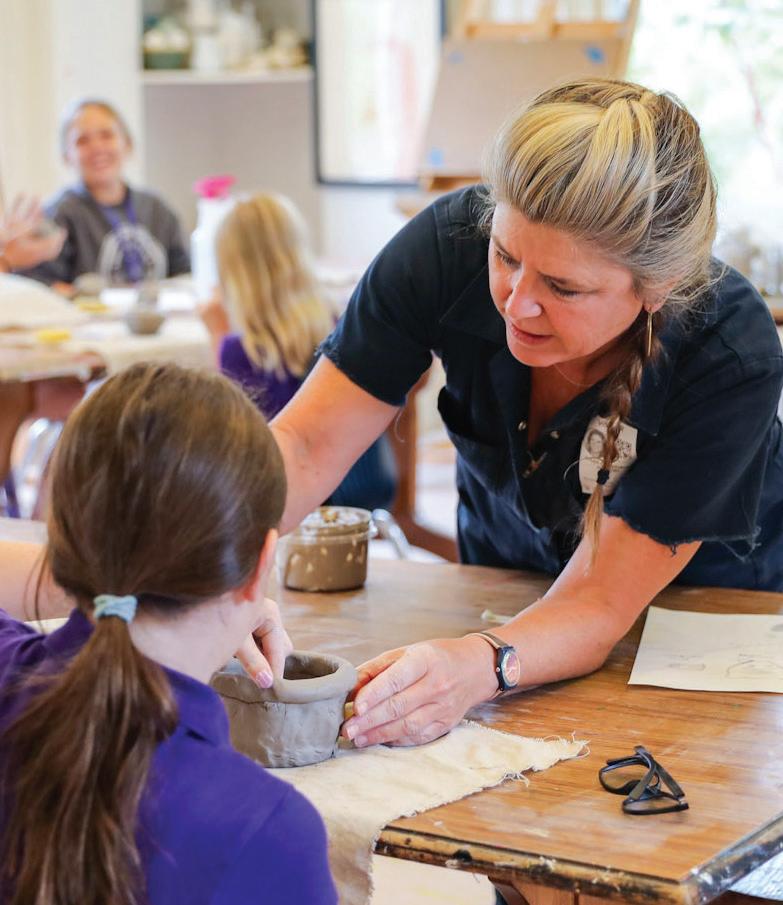
This year, Ashley Hall’s Visiting Artist Program brought the work of professional artists into our classrooms, providing students with the opportunity to learn from working, contemporary creatives. Ceramicist Susan Gregory and illustrator Gabby D’Alessandro shared their expertise, process, and perspective across multiple divisions. Their time on campus was an impactful partnership with the arts curriculum and expanded students’ understanding of what it means to pursue a creative career.
LEARNING TO THINK LIKE AN ARTIST
At the heart of both visits was an emphasis on creative thinking—both the act of making and learning how to approach the creative process with intention. Students were encouraged to slow down, observe, and reflect before beginning their work, a practice that proved especially impactful for younger learners. In the Lower School, this meant pausing, checking in, and considering ideas before jumping in. For older students, it translated into a deeper focus on research and concept development, reinforcing the importance of preparation as part of the artistic process. Across all grade levels, Gregory and D’Alessandro challenged students to think critically, take risks, and remain open to revision, helping them build habits that extend far beyond the art studio.
CONNECTING PASSION TO PRACTICE
Equally valuable was the opportunity for students to engage with artists who have built careers around their creative passions. Through classroom visits and conversations, both Gregory and D’Alessandro offered a window into the realities of working in the arts. D’Alessandro, in particular, connected with students at multiple stages: advising sixth graders on a book cover project while also speaking with seniors about navigating client relationships, interpreting creative briefs, and sustaining a professional practice. Her visit also extended to faculty, when she led a professional development session on digital illustration tools . With her guidance, teachers explored new ways to integrate digital media into their own classrooms. By sharing their experiences, both artists helped students see tangible pathways forward, reinforcing that creativity is a skill worth developing and is a viable and meaningful pursuit.
OPPOSITE: A fifth grade boat building class on the Elizabeth House lawn. ABOVE LEFT: Kate Harvard ’32 (left) and Ellie Bischoff ’32 (right) with visiting artist Gaby D’Alessandro. ABOVE RIGHT: Visiting artist Susan Gregory with students in the art studio. PHOTOS: Ansley Kreisler.
MAPPING MEANING:
The Charleston Block Project
What does it mean to know a place—not just where it is, but what it has been, and what it asks of us now? At Ashley Hall, the Charleston Block Project invites Upper School students to explore that question in a deeply immersive way, connecting academic study with lived experience in the city they call home.
Now in its third year, the Block Project is a yearlong interdisciplinary initiative for juniors and seniors in English and History. Inspired in part by innovative, place-based learning at fellow International Coalition of Girls Schools (ICGS) member NightingaleBamford School in New York City, the project has been thoughtfully adapted to reflect Charleston’s unique history and Ashley Hall’s academic approach. Designed as both an extended learning experience and a culminating final project, it continues to evolve each year. “We’ve treated this project as both a year-long endeavor and as a final project,” explains English teacher Leslie Rowland-Yeh. “We’ve adapted it as we’ve learned what works best for our students and what resources—and time—are available.”
But this is not simply a research assignment. It is a process of storytelling and meaningmaking. Students transform their findings into historical fiction, design museum-style “Cabinets of Curiosities” filled with artifacts, and create historic marker proposals modeled after those of the Preservation Society of Charleston. The result is a body of work that blends rigorous scholarship with creativity, inviting students to see history not as static facts, but as lived experience.
“It’s incredible to witness students, who don’t call themselves writers, craft 10–20 page stories, create physical representations of the block, and design historic markers,” says Upper School English teacher Leslie Rowland-Yeh says. “This all culminates in
the Block Project Gallery. We invite families, community members we’ve worked with, and everyone from school to share in the learning about the city. Students are able to speak at length with gallery visitors about what the city now means to them.”
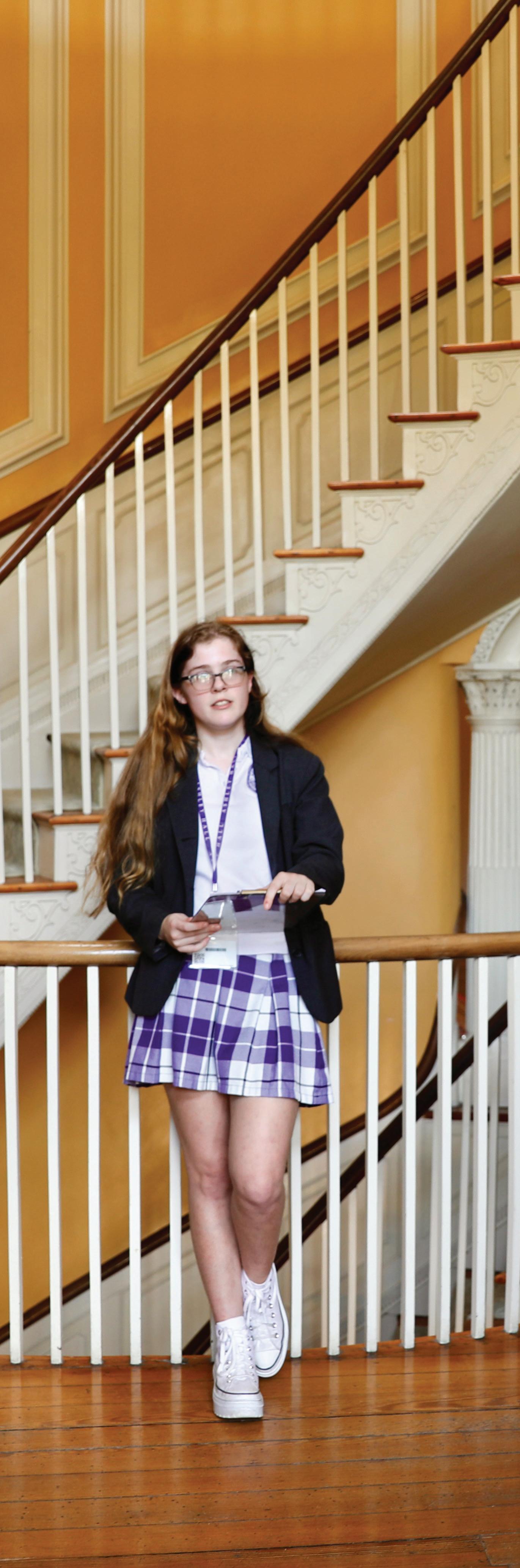
That sense of connection came to life in a new way this year. In partnership with the Preservation Society of Charleston, students extended their research beyond the classroom by offering guided tours of Ashley Hall’s historic campus during Women’s History Month. The tours sold out quickly, bringing members of the broader Charleston community onto campus to engage with the school’s history—its architecture, its evolution, and its role in the education of women.
For students, the experience was transformative as they shared their work, becoming interpreters and stewards of history and telling stories that challenged assumptions and broadened perspectives. As Head of School Dr. Anne T. Weston ’73 noted of the tour content, “I especially liked the way many of the presentations challenged myths about Ashley Hall being a place for wealthy women to go to finishing school.” Through their work, students illuminated a more complex and dynamic narrative—one rooted in academic rigor, resilience, and a commitment to educating young women as leaders.
“The impetus of this is to get students out into the community—into the libraries, into the archives—to get them excited about where they live and to share that knowledge,” says history teacher John Nagler. “It’s about discovering their own place in history.”
The Block Project also reflects a larger educational philosophy at Ashley Hall: that learning is most powerful when it is
active, interdisciplinary, and connected to the real world. By pairing English and history, the project encourages students to think critically, write creatively, and engage deeply with their surroundings. It reinforces that understanding the past is essential to navigating the present and shaping the future.
This innovative approach has not gone unnoticed. Nagler and Rowland-Yeh recently presented the Charleston Block Project at the Southern Association of Independent Schools (SAIS) conference, sharing Ashley Hall’s model with educators from across the region and highlighting the power of placebased learning.
Ultimately, the Charleston Block Project is about perspective—seeing the familiar with new eyes, recognizing the stories embedded in everyday spaces, and understanding one’s role within a larger community. In a city as historically rich as Charleston, that work feels especially meaningful. And for Ashley Hall students, it is a reminder that history is not just something to study; it is something to discover, to question, and to carry forward.
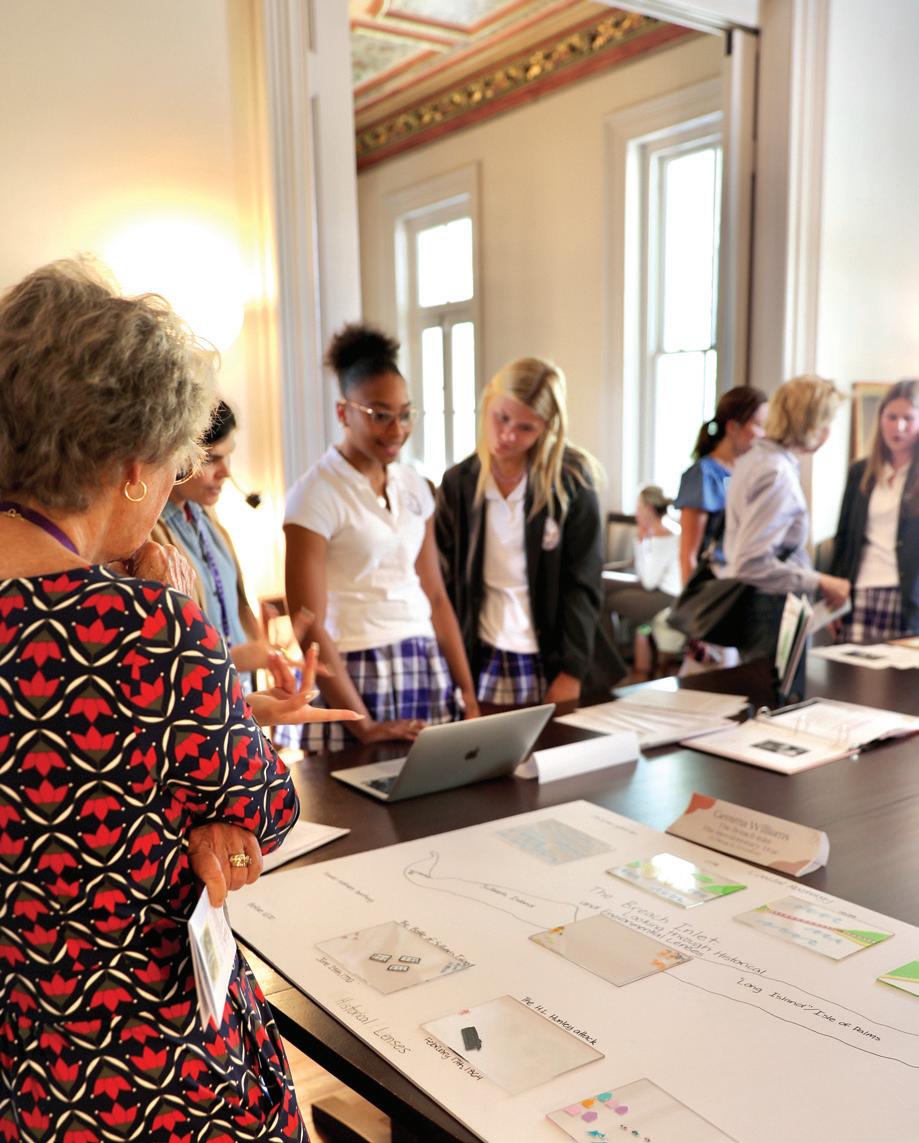
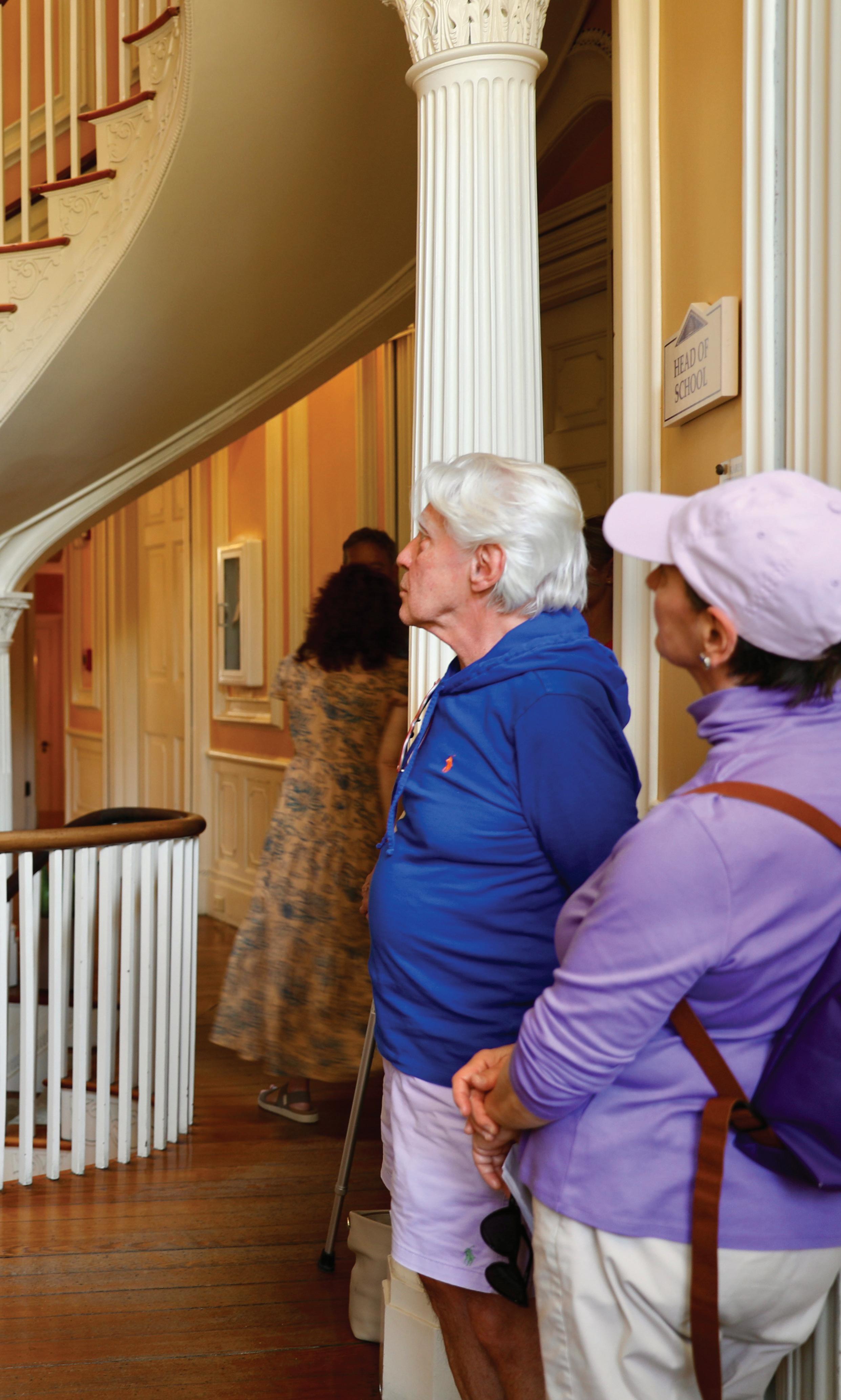
LEFT: Natalie Bennet ’27 speaks to the Preservation Society of Charleston tour attendees in McBee House. ABOVE: Senior students take visitors through their final Block Project presentations in Elizabeth House. PHOTOS: Ansley Kreisler.
A RECORD YEAR
Because of You!
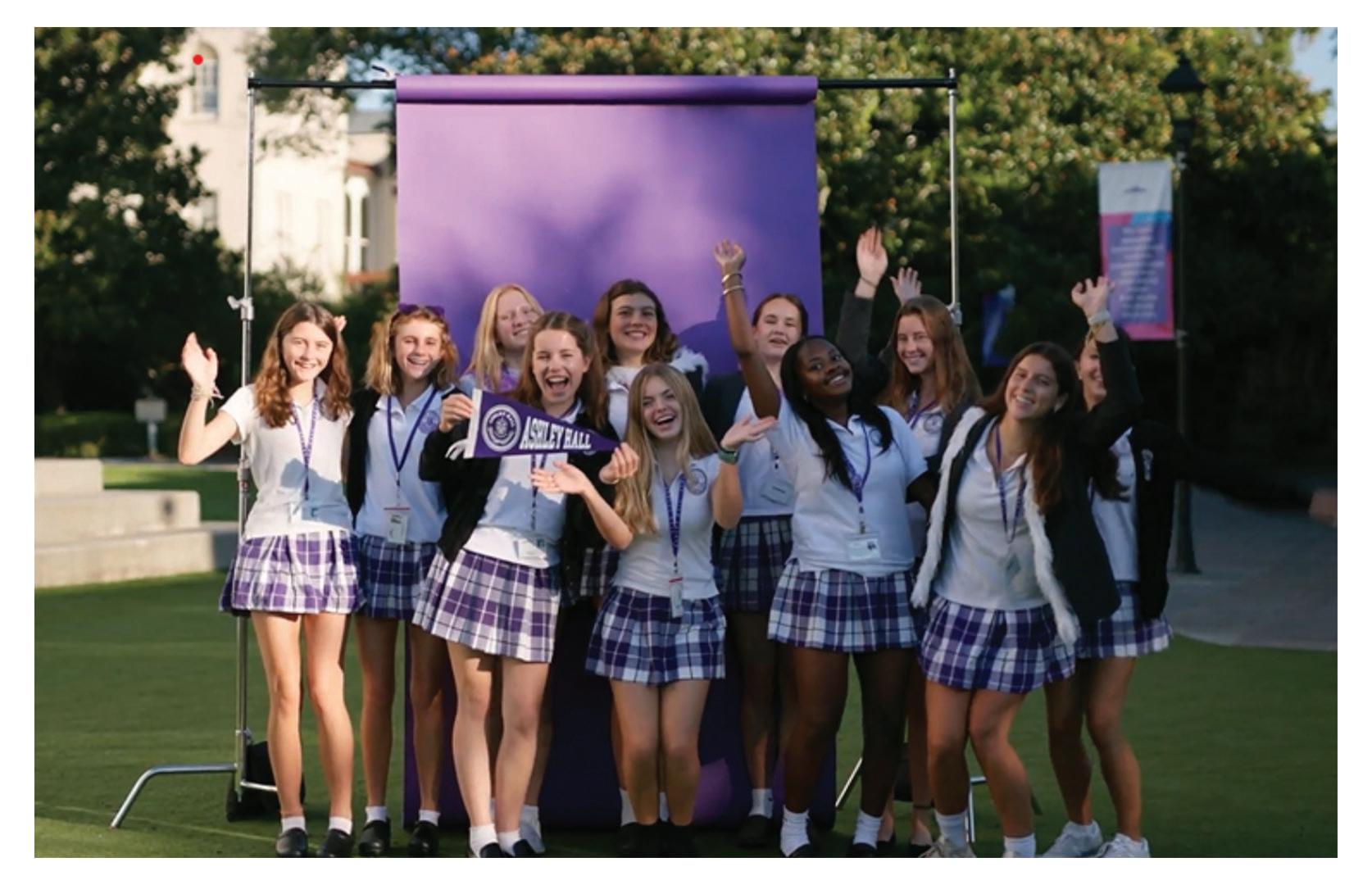
Together, our Ashley Hall community raised $1.4M surpassing our $1.3M goal and making 2025 –26 one of the most successful fundraising years in school history.
Thank you for creating a ripple of generosity that strengthens every corner of Ashley Hall. Make your mark. Finish strong. Support the School. Strengthen the Experience. GIVE TO THE LOYALTY FUND TODAY.

STEM DAY
Ashley Hall’s Middle and Upper School students dedicated a day in February to exploring big questions, bold ideas, and future pathways during this year’s STEM Day. The program offered a dynamic look at science, technology, engineering, and mathematics, both as fields of study and as avenues for impact, creativity, and purpose.
The day opened with a panel session featuring an accomplished and wide-ranging group of professionals, many of whom are also Ashley Hall parents. Students heard from leaders in pediatric neurology, aerospace engineering, artificial intelligence, environmental science, cybersecurity, design, and water quality. Guided by student moderators, the conversation moved beyond résumés and job titles, focusing instead on personal stories, unexpected turns, and the moments that shaped each speaker’s path.
Dr. Lela Lewis, Division Chief of Pediatric Neurology at the Medical University of South Carolina (MUSC), shared a vivid early memory that sparked her interest in medicine. As a child, she watched her mother, also a physician, bring home a sheep’s brain after teaching a hospital class—an experience that ignited a lifelong fascination with how the brain develops and changes over time. That curiosity carried her through medical school, service in the Air Force, and advanced training at Johns Hopkins, eventually leading to her leadership role at MUSC. Her story illustrated how meaningful careers often begin with simple moments of wonder.
Students also heard from Rebecca Gleason, Head of Global Industry Engagement for AI & Business Messaging at Meta, whose journey into technology did not follow a traditional path. A liberal arts major, she emphasized that success in STEM is not limited to a specific degree or early specialization. Instead, she highlighted the importance of communication—being able to communicate ideas in ways others can understand—as a critical skill across every field.
Dr. Lynn Sargent, a structural analysis engineer at Boeing, spoke about innovation in aerospace and the role of AI in shaping the future of engineering. Cole Rise, Director of Design for Microsoft AI and designer of the original Instagram icon, demonstrated how creativity and technology can work together to shape people's experience of the digital world.
Faculty from The Citadel—including Dr. Deepti Joshi, Dr. Shadi Sadeghpour, Dr. Farhath Zareen, and Dr. Nahid Vesali—offered insight into emerging work in artificial intelligence, cybersecurity, bioinformatics, and engineering leadership. They underscored the value of undergraduate research and mentorship, encouraging students to seek out opportunities to explore their interests early and often.
Environmental perspectives grounded the conversation in real-world impact. Allison Montgomery, a conservation planner at Westervelt Ecological Services, described how data and analysis are used to protect wetlands and natural resources. Olivia Flynn of Hazen and Sawyer, along with Guinn Wallover of Mount Pleasant Waterworks, shared how engineering decisions directly influence public health, sustainability, and community well-being.
BELOW: A selection of the guest panelists who spoke with students on STEM day, L to R: Dr. Deepti Joshi, Dr. Shadi Sadeghpour, Dr. Farhath
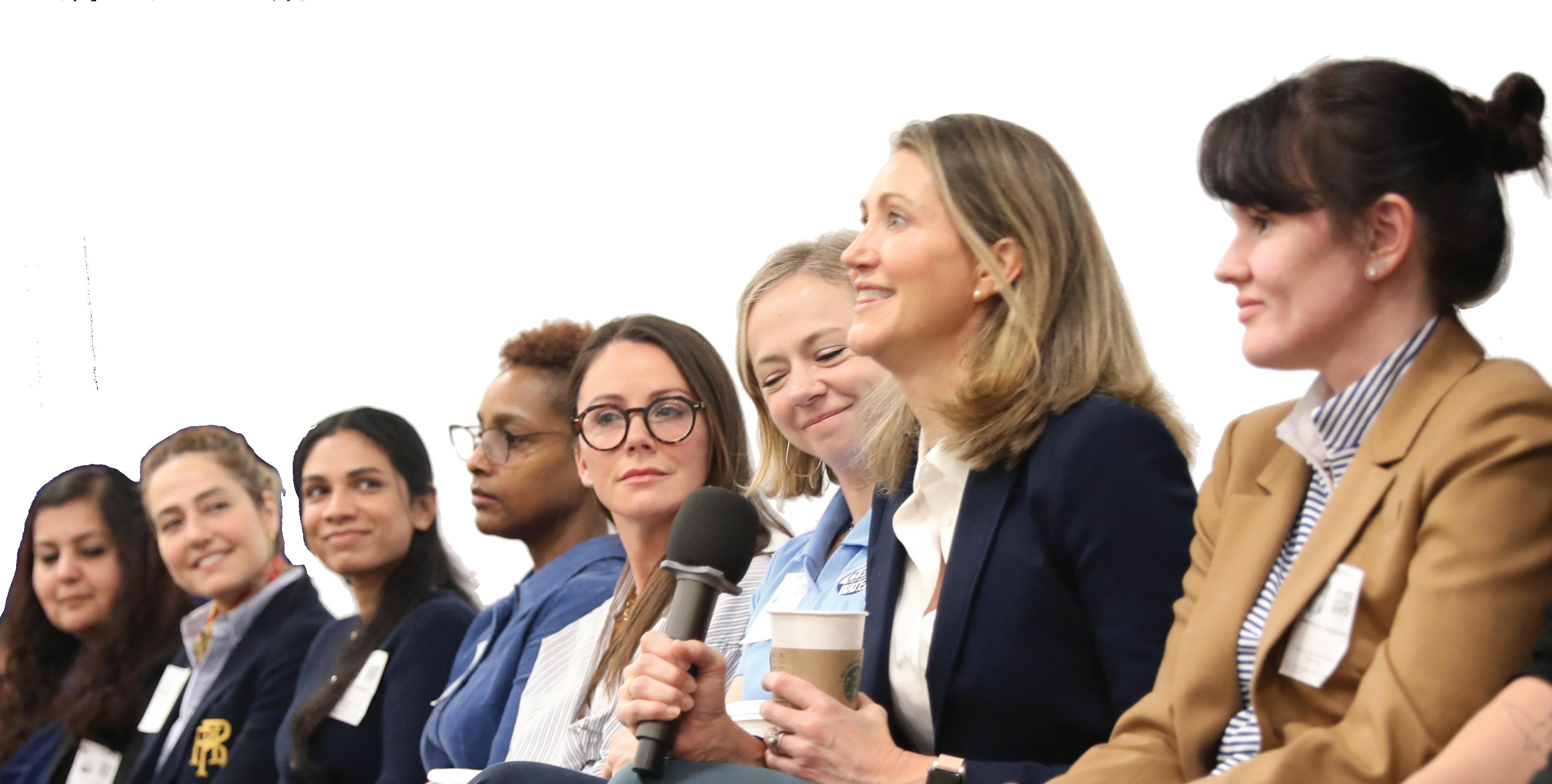
Zareen, Dr. Lela Lewis, Rebecca Gleason, Guinn Wallover, Olivia Flynn, and Dr. Lynn Sargent. PHOTO: Paula Harrell.
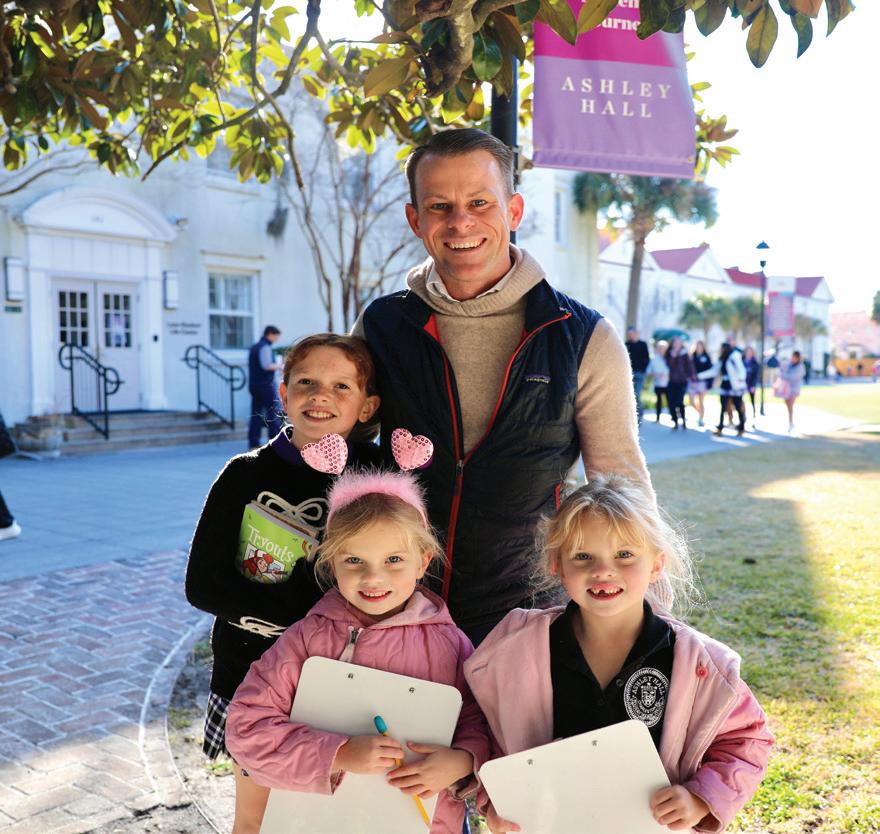
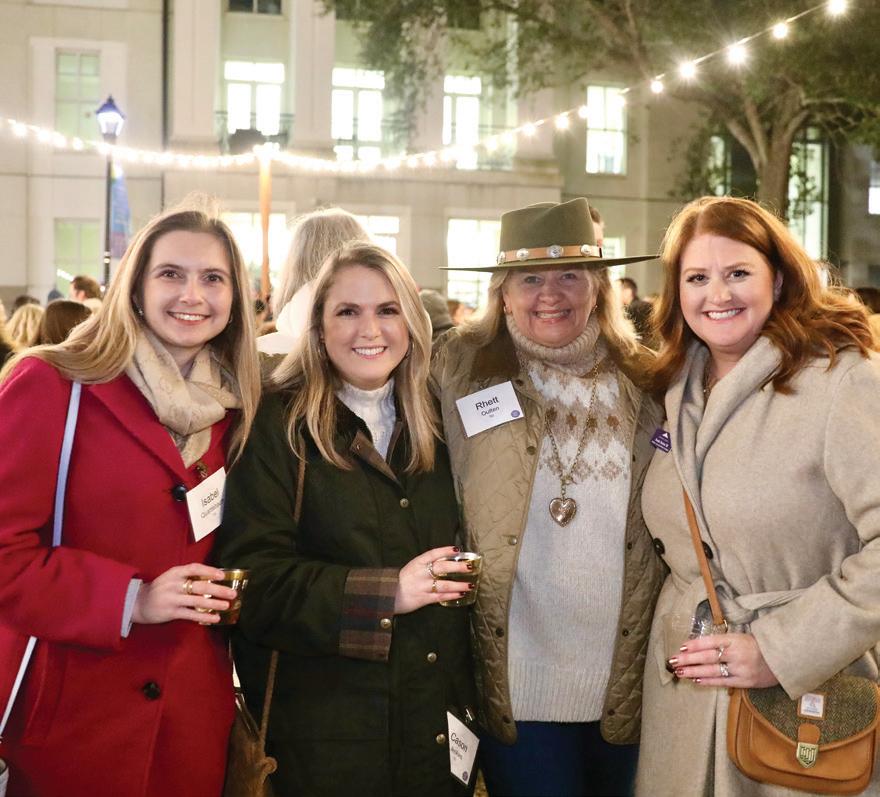
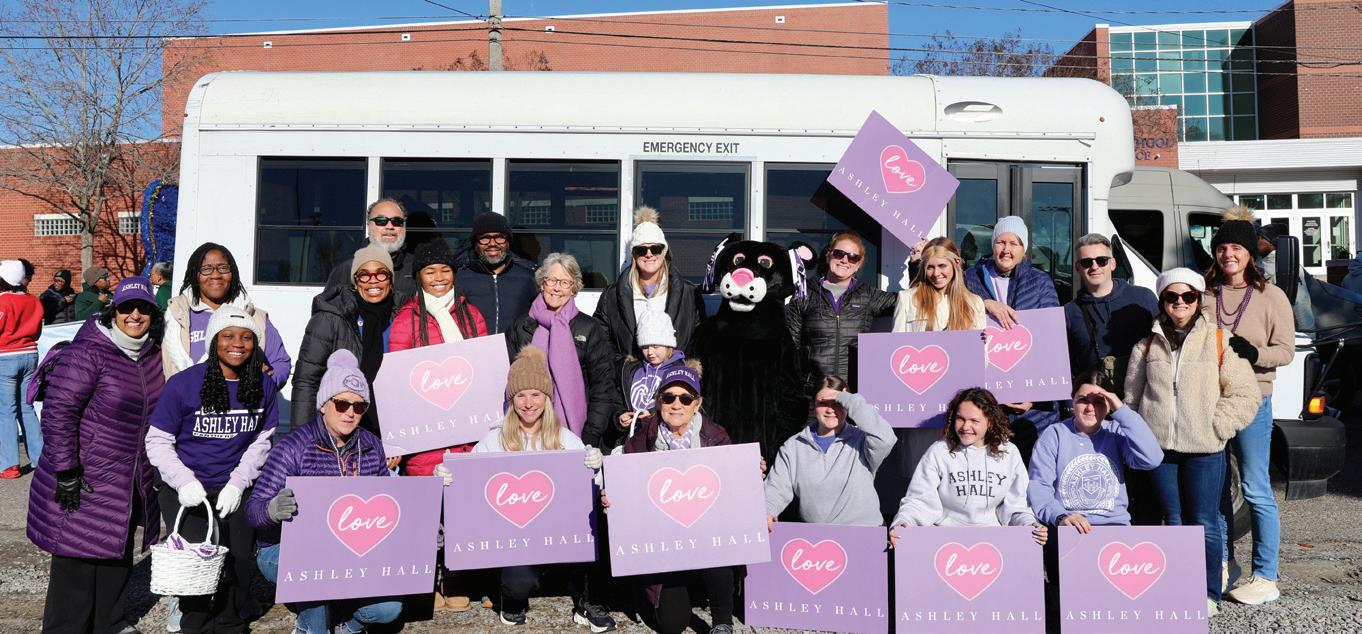
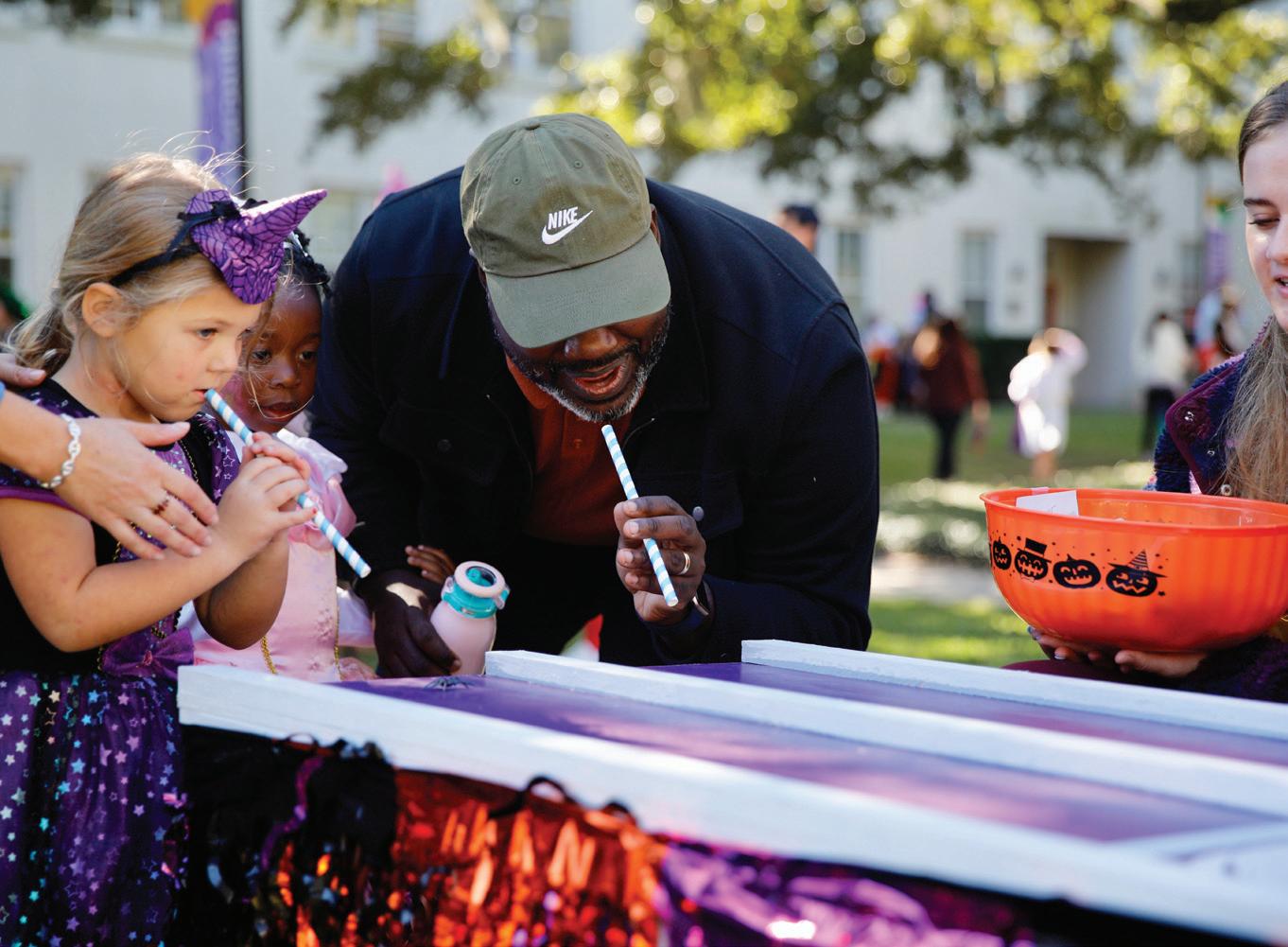
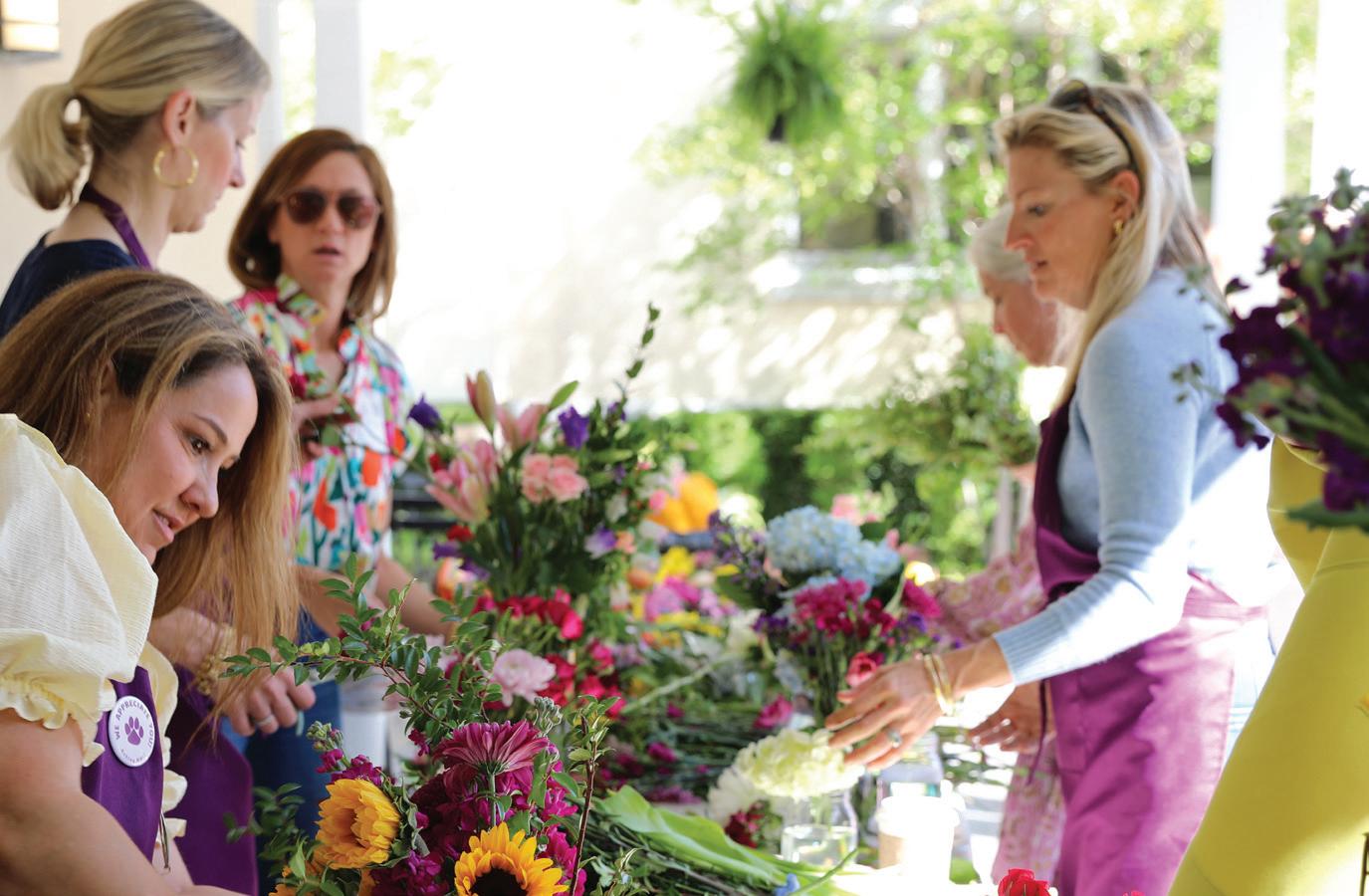
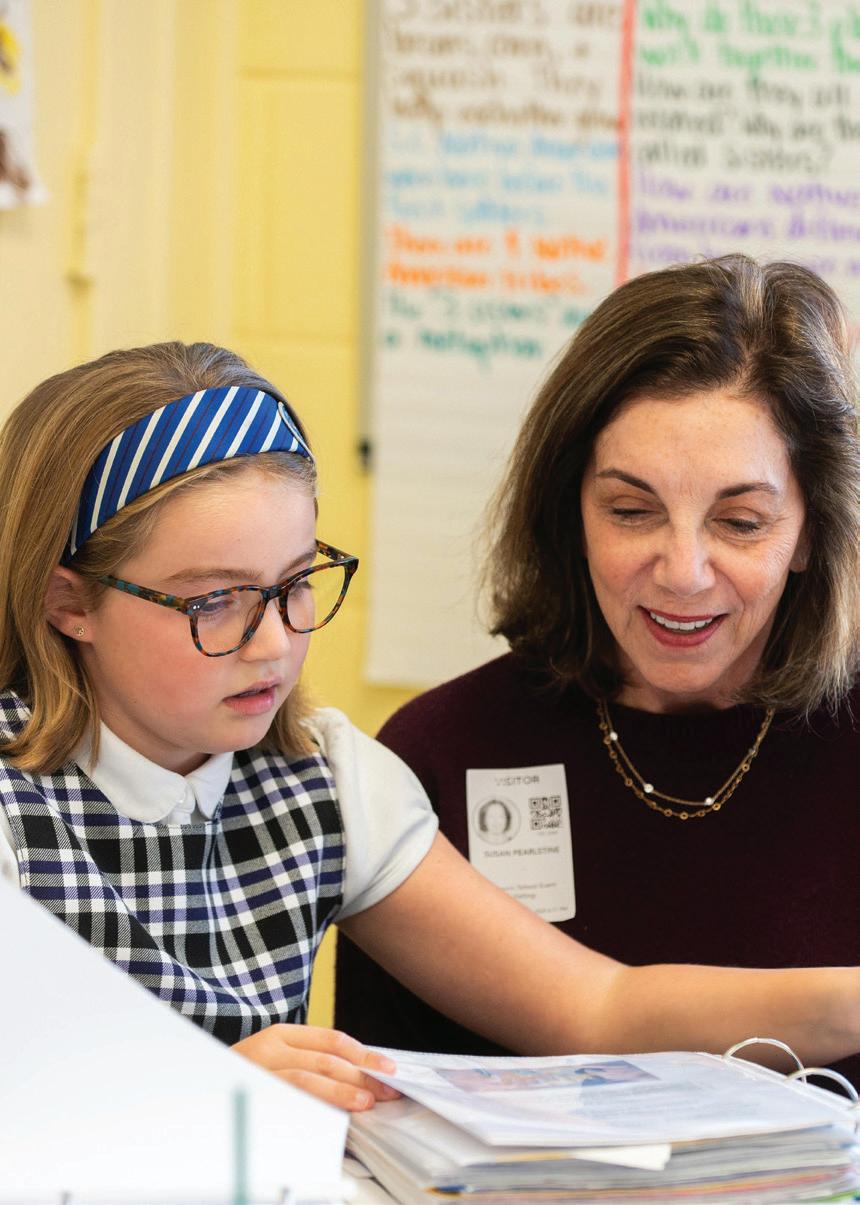
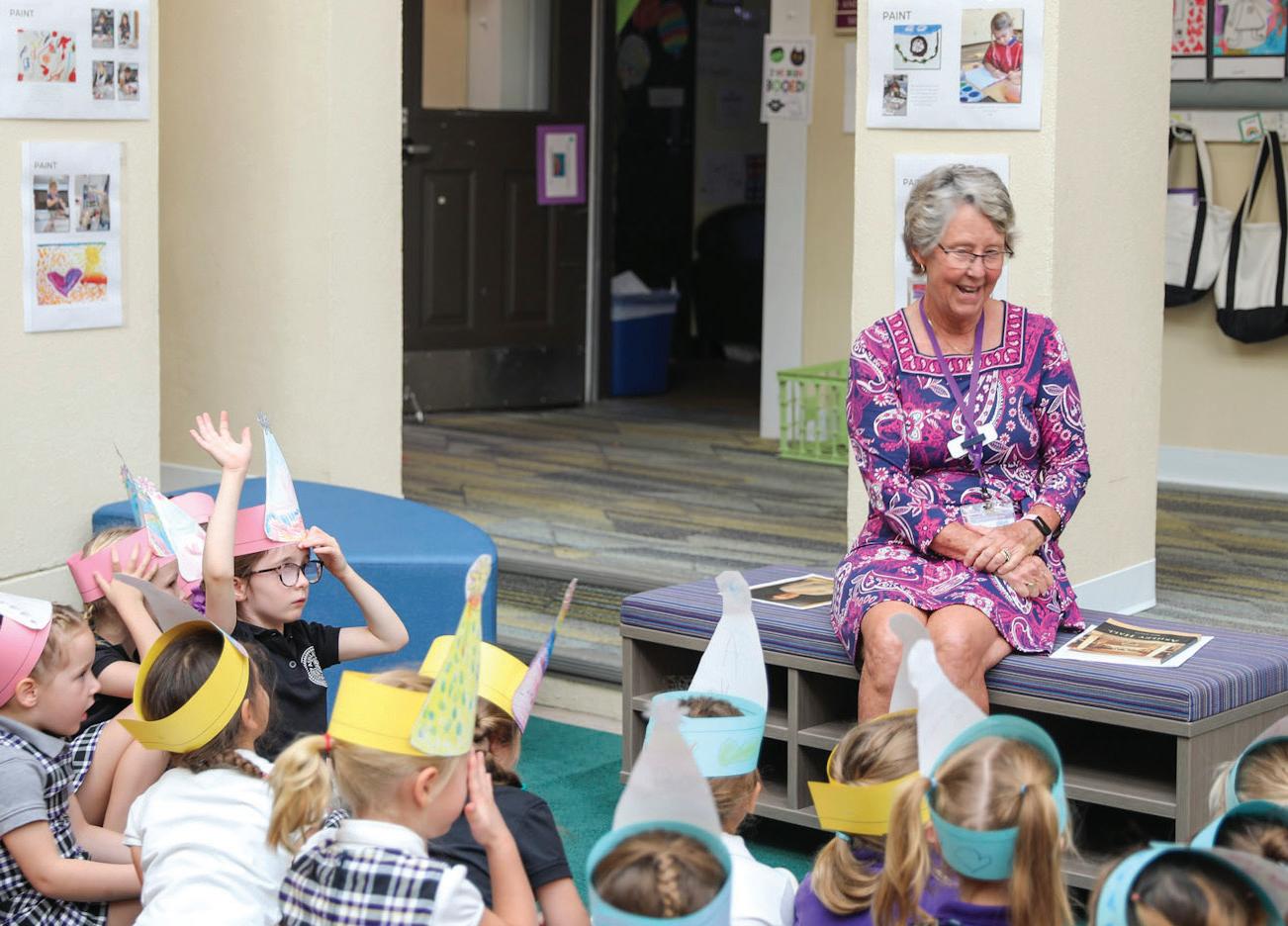
ABOVE: 1: Adeline Story ’34, Mimi Story ’37, and Claire Story ’37 with their father, David Story, on Fathers and Friends Morning. 2: A group from Ashley Hall gathered to march in the Martin Luther King Day Parade. 3: Holland Patterson ’39 (left), with Simi Stallings ’41 (center) and her father Eric Stallings at the Halloween Carnival. 4: Barbara Bower ’35 with her grandmother, Susan Pearlstine, on VIP Day. 5: A group of parent volunteers arranging flowers for Teacher and Staff Appreciation Week. 6: Isabel Quattelbaum ’15 (left), Cason Jenkins ’15 (center left), Rhett Ramsay Outten ’82 (center right), and Brooks Harken ’06 (right) at the Ashley Hall Oyster Roast. OPPOSITE: Dr. Weston celebrates Miss McBee’s birthday with a kindergarten class in the LoDome. PHOTOS: Ansley Kreisler.
OUR COMMUNITY
This page celebrates our extraordinary community! Thank you for the vibrant moments, lasting connections, and shared experiences that make Ashley Hall such a dynamic and inspiring place to learn and grow.
Whether volunteering time, attending events, supporting classrooms, or simply being present in the life of the School, our families help shape the spirit of Ashley Hall in countless ways. Your involvement—big and small—strengthens the bonds that make this community so special.
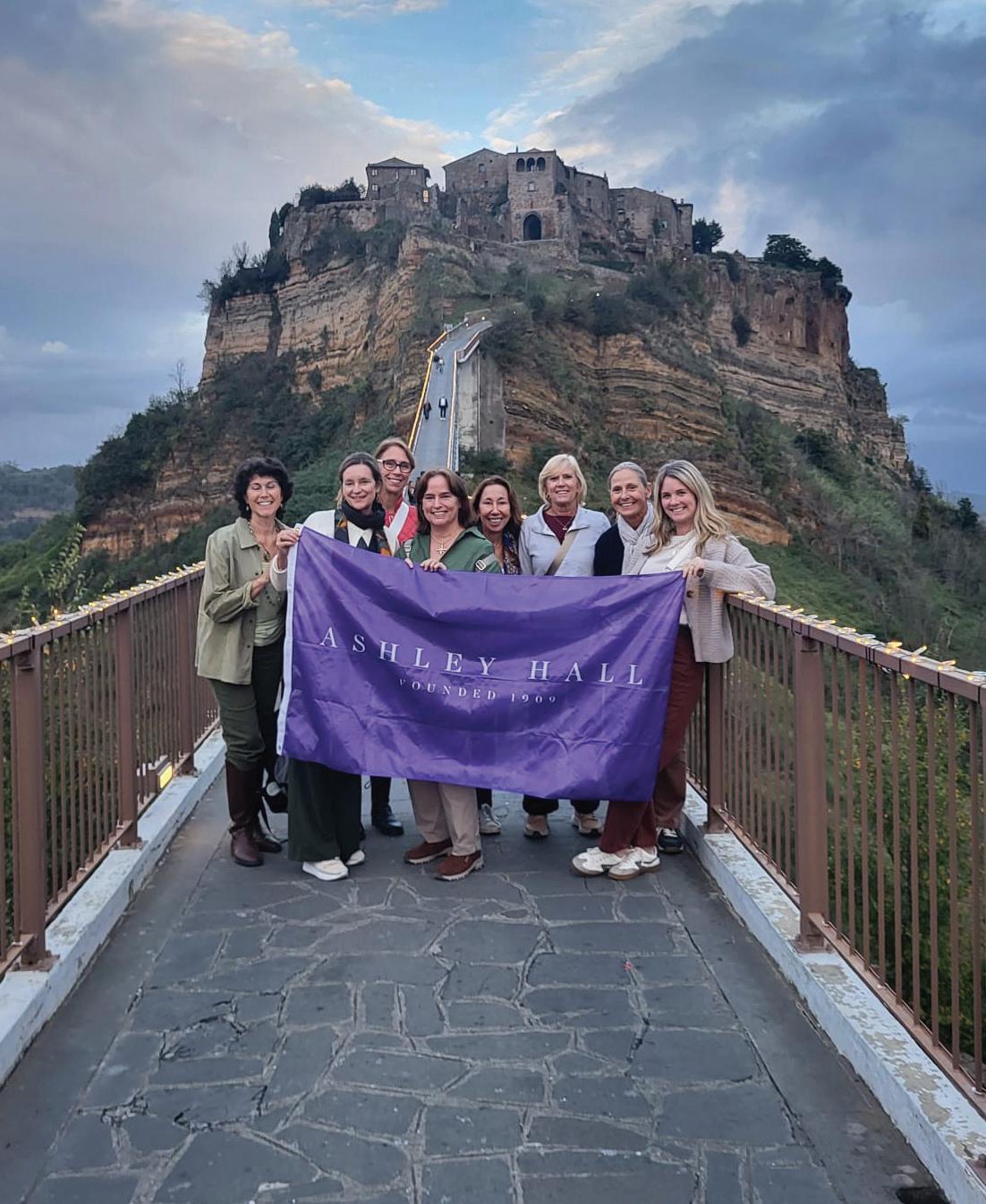
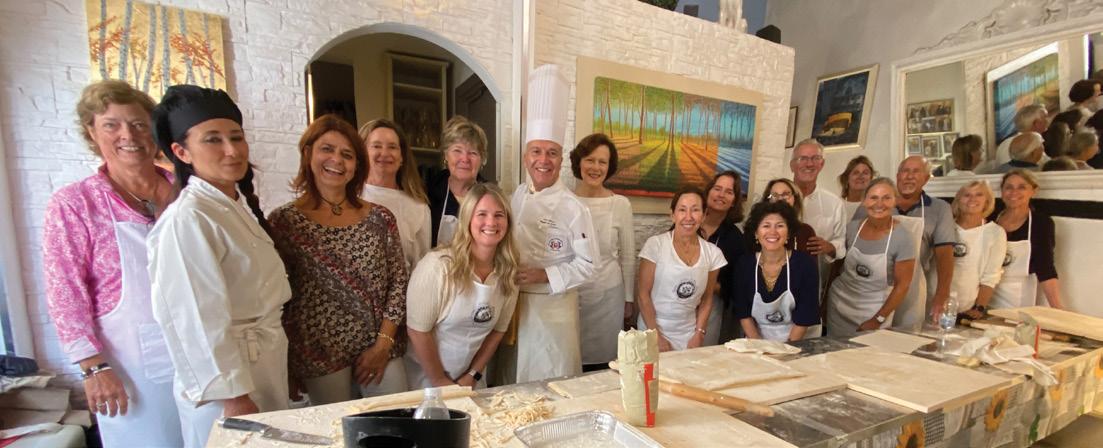
In October, a group of Ashley Hall alumnae traveled together to central Italy. Designed to mirror the School’s international travel offerings for current students, the alumnae trip provided participants with a firsthand look at the immersive, inquiry-based experiences that define the Humanities curriculum for today’s students. Offered through the office of Alumnae Engagement and Giving, the trip was a wonderful opportunity to travel with Ashley Hall friends, old and new.
That connection to current students was felt throughout the journey. As the group of alumnae traveled through Italy, they were gifted letters from Ashley Hall’s seventh and eighth-grade students, sharing what the girls loved most about their own cultural travel experiences and wishing the group well on their travels. Along the way, alumnae even recreated student photos, holding the Ashley Hall banner in the same locations. As Tyler Moseley, Community Partnerships and Global Education Coordinator, described it, the experience became “a layered and connected journey shared between our students and alumnae.”
From cooking classes and archaeological exploration to interdisciplinary, capstone-style learning in real-world settings, the journey reflected the same intellectual curiosity and hands-on discovery that the Ashley Hall travel program fosters. Alumnae traced the same paths students take, examining the intersection of history, culture, environment, and innovation, all while forming connections across generations.
The result was a living example of Ashley Hall’s approach to learning. By stepping into the student experience, alumnae gained a deeper understanding of how the School continues to challenge, inspire, and prepare young women to engage thoughtfully with the world.
ARRIVAL & FIRST IMPRESSIONS: ROME TO SPOLETO (DAYS 1–2)
After arriving in Rome and meeting their driver, the group journeyed to Spoleto, a hilltop town that would serve as their home base. Guided by a local expert, they explored winding streets, historic landmarks, and sweeping mountain views. The following day brought one of the trip’s highlights, a hands-on cooking class with Chef Enzo. Alumnae worked side by side to prepare a multi-course meal from scratch, then gathered to enjoy the finished dishes together. Between wandering the city, hiking across the Ponte delle Torri, and breaking bread, the group quickly settled into both the rhythm of Italian life and the spirit of experiential learning.
EXPLORING HISTORY & LANDSCAPE: ORVIETO AND CIVITA (DAY 3)
On day three, the group set out for Orvieto, where they explored the striking Duomo and the remarkable Pozzo di San Patrizio. Time to wander allowed alumnae to discover local shops and absorb the city's character. Later, a smaller group ventured to Civita di Bagnoregio— known as the “dying city”—crossing its dramatic pedestrian bridge to explore the nearly abandoned hilltop village. The experience was both physically demanding and deeply rewarding, offering a powerful perspective on the relationship between geography, history, and human settlement.
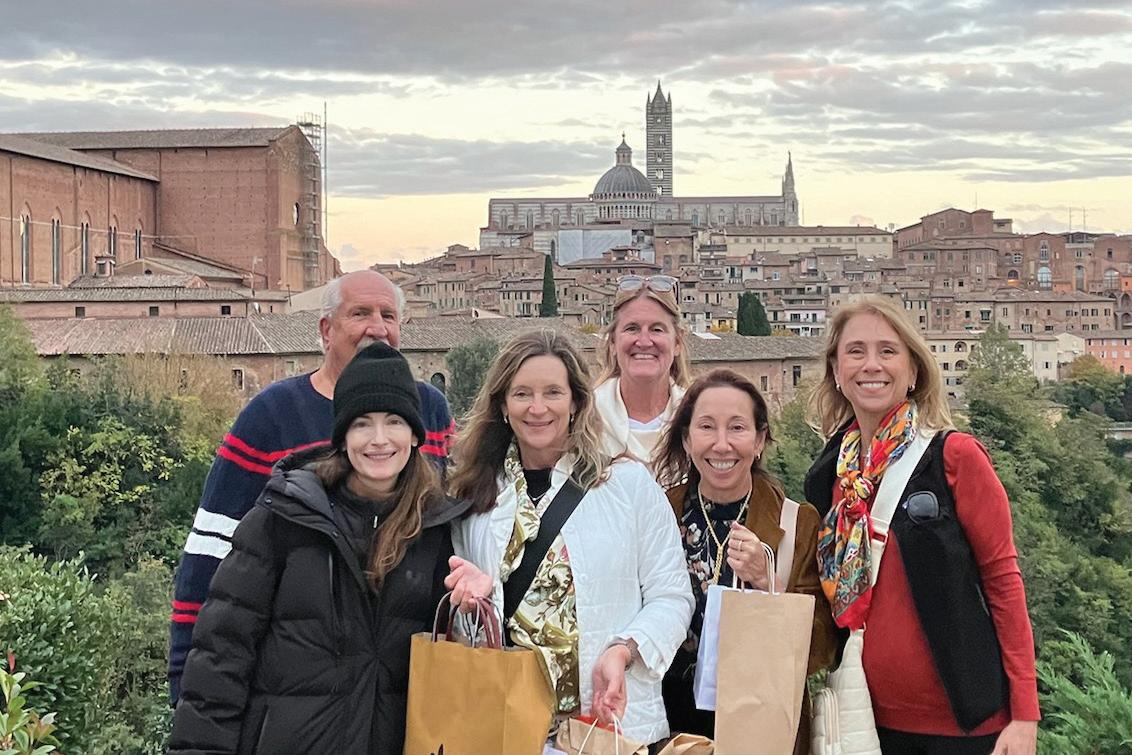
SIENA & SHARED MOMENTS (DAY 4)
In Siena, the group stepped into the heart of medieval Italy, visiting Piazza del Campo, the Duomo, and Palazzo Pubblico. Rich historical context brought the city to life, from its civic traditions to the grandeur of its unfinished cathedral. The afternoon offered time for independent exploration, with many drawn to visiting local artisans, and shopping for fine leather goods. That evening, a lively all-you-can-eat pizzeria became an unexpected highlight, filled with laughter, storytelling, and a memorable moment of spontaneity that reflected the group’s growing camaraderie.
HILL TOWNS & SACRED SPACES (DAY
5)
A day of exploration through Trevi, Spello, and Assisi revealed the diversity of Umbria’s landscape and cultural heritage. From quiet streets and panoramic views to bustling shops, each stop offered a new perspective. In Assisi, the group experienced a more reflective dimension of the journey, visiting sacred sites connected to St. Francis and walking through peaceful wooded areas. The combination of beauty, history, and spirituality made this day especially meaningful, capturing the interdisciplinary essence of the Amalthea experience.
TRUFFLES, TRADITION & CONNECTION (DAY
6)
One of the most unique experiences of the trip took place in the forests near Campello sul Clitunno, where the group participated in a truffle hunt guided by trained dogs. The outing blended nature, tradition, and discovery, culminating in a shared meal featuring the precious fungi that the dogs sniffed out and uncovered from the ground. Back in Spoleto, the evening unfolded informally, with time spent shopping, strolling, and gathering together to reflect on the journey so far. These quieter moments fostered connection and conversation, deepening the sense of community among the group.
ART, ARCHITECTURE & CELEBRATION (DAYS 7–8)
The final days brought a blend of cultural immersion and celebration. Visits to Villa Farnese and Montefalco included art, architecture, and a memorable wine tasting paired with snacks. A trip to Lake Trasimeno offered scenic views and a relaxed lunch, followed by a chocolate-making workshop in Perugia—another hands-on highlight. Back in Spoleto, the group experienced the Festival of Sweets and local Halloween traditions, ending the trip with a festive and distinctly Italian sense of joy and community.
DEPARTURE & LASTING CONNECTIONS (DAY 9)
As the group returned to Rome for departure, reflections centered not only on the places visited but on the relationships formed. Alumnae spanning multiple decades and states found common ground through shared experience, continuing to stay connected long after the trip’s end. Much like the Amalthea program itself, the journey left a lasting impression; one rooted in curiosity, connection, and the enduring value of learning through experience.
Inspired to join? The next Alumnae journey is already taking shape, scheduled for the 2027-28 academic year. Stay tuned for more details!
OPPOSITE, L to R: Kathy Simmons ’83, Tucker Cecil ’83, Cathie Jones ’83, Julia Wannamaker ’83, Ann Riopel ’83, Julie Miles Walters ’83, Ann Gadsden Shimer ’83, and Director of Alumnae Engagement and Giving, Kathryn Reddick. ABOVE LEFT: The group enjoyed a cooking class together in Spoleto. PHOTO: Andrea Muti.
ABOVE RIGHT, BACK ROW L to R: Bill McPherson and Jessie Moorefield Spencer ’72. FRONT ROW L to R: Alex Lombard ’89, Tucker Cecil ’83, Ann Riopel ’83, Cathie Jones ’83. PHOTO: Kathryn Reddick. 47
A SHARED FOUNDATION
When Anna Catherine Miller ’10 and Erin Stevens ’01 first met in a conference room in Greenville, South Carolina, it was a routine professional introduction. Miller, Tourism Administrator for the City of Greenville, was leading a long-range plan for the city’s Parks, Recreation and Tourism Department. Stevens, owner of the Charlestonbased landscape architecture firm Surculus, had joined the consulting team helping shape that vision. What began as a typical project meeting soon revealed a deeper connection neither had anticipated.
They came to the table from different professional paths and roles. But as the conversation unfolded, they realized they shared something in common: Ashley Hall. They hadn’t known each other as students; their paths never crossed during their time at the School. And yet, when they began working together, there was an immediate sense of familiarity. “All of a sudden, you’re here, and you realize, okay, I can trust this person,” Miller said. “I feel like I have a best friend sitting across the table because that community of Ashley Hall has built women to support each other.” For Stevens, the moment pointed to something broader. “To me, it was a great example of how we’re both part of a network of women with diverse paths,” she said, “who support and learn from each other.”
Both women credit Ashley Hall with teaching them to speak with confidence and to listen with intention. “You leave [the School] with the ability to stand up and say what you believe,” Miller said, “and you feel like you are worthy of having a seat at that table.” Stevens added, “understanding
the importance of listening… and responding to people with respect.” That balance—confidence paired with respect—shaped how they both approached their work and, in turn, impacted how quickly they trusted one another.
When Miller and Stevens returned to campus earlier this year to present their project to current Ashley Hall students, the moment felt like a continuation rather than a return. Their work in Greenville became an integral part of the eighth-grade curriculum in particular this year, giving students a tangible example of how ideas move from classroom to community. They spoke in assembly and then stepped into smaller classrooms, continuing the kind of dialogue that once shaped them.
The connection between Ashley Hall alumnae isn’t always easy to define, but it is easy to recognize. In this case, it transformed a professional introduction into something more—a partnership built on trust, grounded in shared values, and strengthened by a common foundation.
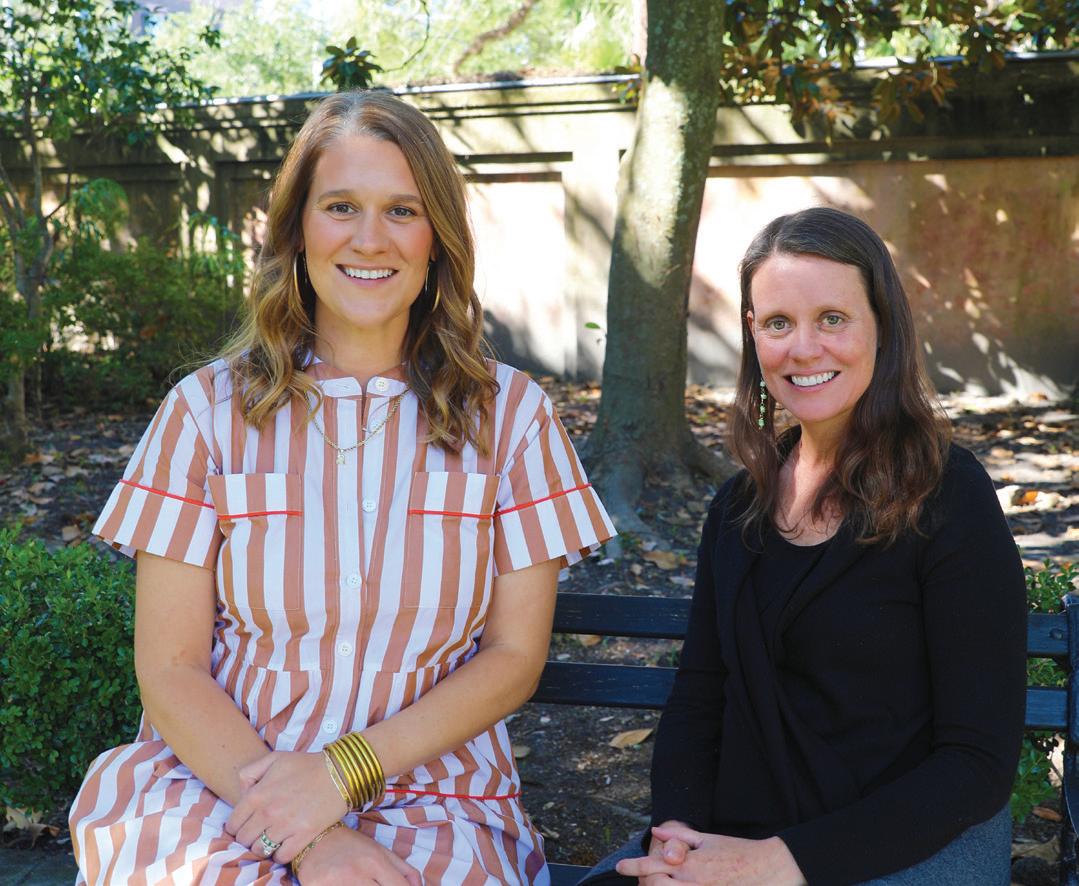
CLASSROOM CONNECTION
Miller and Stevens’ visit to campus came at just the right moment. As they shared their work with students— walking through how they listen to communities, gather input, and design spaces for people—eighth grade students began to see familiar questions take on new meaning. What makes a community work? What causes it to fall apart? And how might it be built differently?
In English class, those questions were already at the center of their study of Lord of the Flies. Through the lens of Sustainable Development Goal (SDG) 11, Sustainable Cities and Communities, the unit challenged students to look beyond the text and consider what it takes to create environments that are safe, functional, and inclusive. A project called Building Tomorrow challenged students to design their own sustainable communities.
Miller and Stevens’s presentation offered a real-world look into those ideas. Drawing on both the novel and what they had learned from the speakers, students worked in groups to design their own utopian cities for Building Tomorrow that would be the opposite of the chaos found in Lord of the Flies—imagining spaces where people, communities, and the environment could thrive. Through the project, they moved from analysis to application. They grappled with leadership, structure, and shared responsibility, considering not just what a community should look like, but how it functions—how decisions are made, how needs are identified, and how spaces serve the people who use them.
Eighth-grade teacher Claire Stanovich saw how the visit and look into real life application of what they were learning deepened connections for students: “The girls were able to see a direct line between what we were reading and how it plays out in the real world. Watching them take what they learned from the presenters—how they gathered data, made decisions, and designed for people—and apply it to their own ideas was incredibly powerful.” The result was a unique opportunity for students to see their learning in motion—where literature, design, and real-world problem solving intersected in ways that made the work both relevant and lasting.
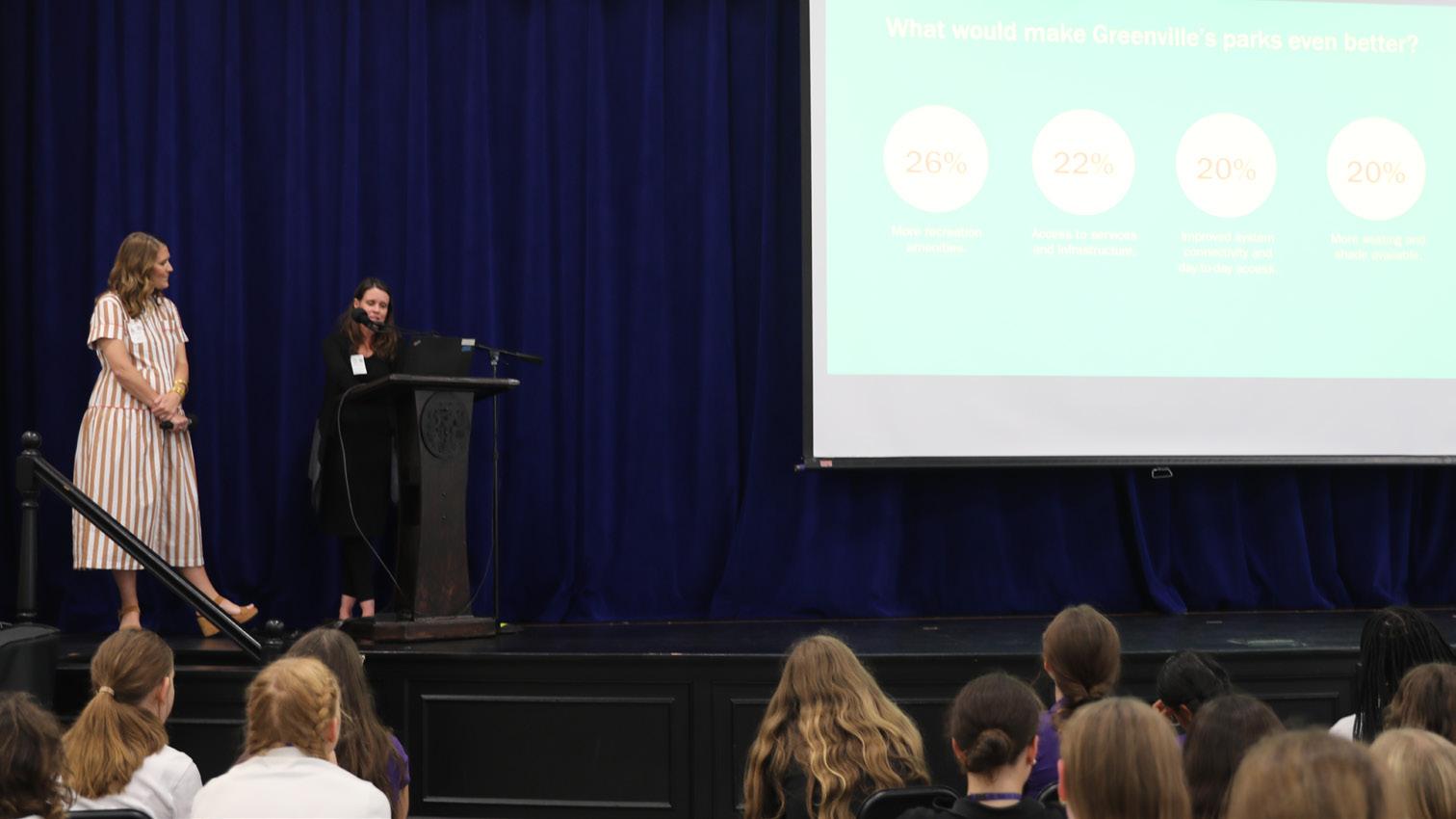
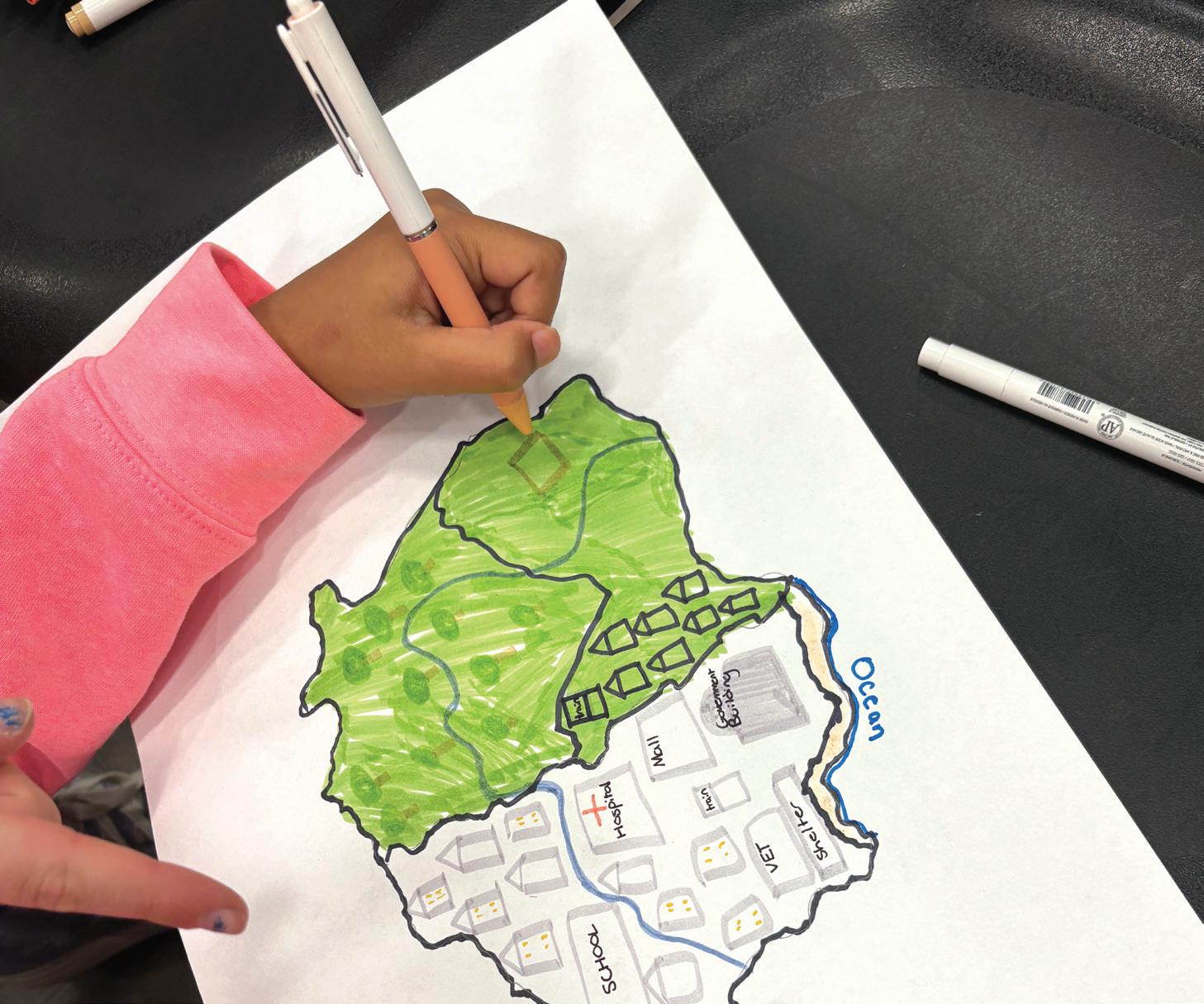
TOP LEFT: Anna Catherine Miller ’10 (left) and Erin Stevens ’01 (right) together on campus. TOP RIGHT: Miller and Stevens presenting to students in Davies Auditorium. PHOTOS: Ansley Kreisler. ABOVE: Current students working on the design of their sustainable communities, as part of the Build Tomorrow project. PHOTO: Claire Stanovich.
ALUMNAE WEEKEND
APRIL 17 & 18, 2026
Ashley Hall alumnae returned to campus for Alumnae Weekend on April 17 and 18, greeted by clear skies, warm sunshine, and flowers in full bloom. Against this vibrant backdrop, they gathered on the McBee House porch and across campus, slipping easily into conversation as friendships picked up right where they left off. Laughter carried through the air as classmates reconnected, shared stories, and reflected on their time at Ashley Hall. This year’s celebration honored classes ending in 1 and 6, marking milestones that brought generations of alumnae together in a shared sense of history and belonging. From first greetings to lingering goodbyes, the weekend was a reminder of the enduring bonds formed here— connections that continue to grow stronger with time, distance, and experience.
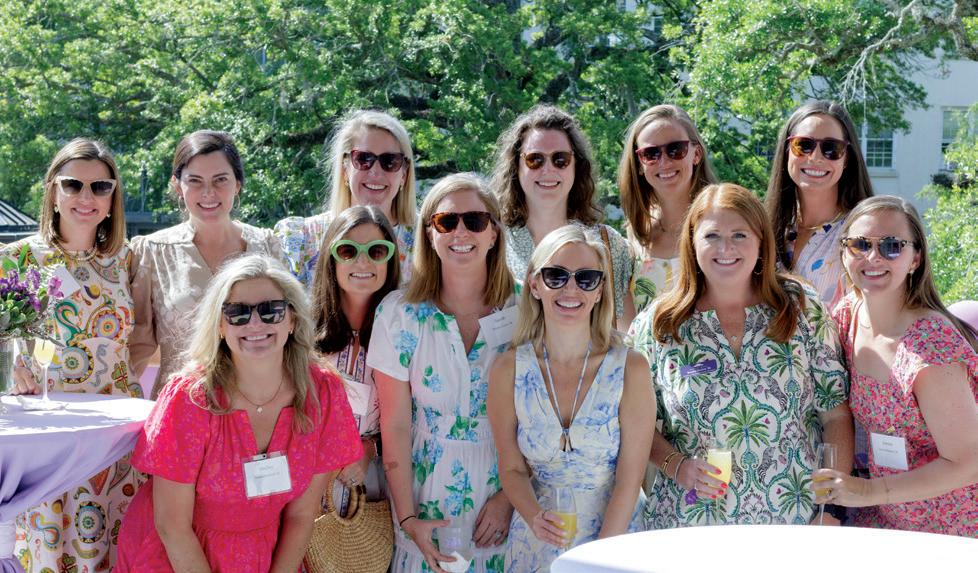
“
It was such a beautiful weekend at Ashley Hall: the sun was shining, flowers were blooming and campus was really showing off! It was wonderful to see so many classmates return for our 20th celebration. I loved every minute of it!
– ELLEN NEFF HASSELL
’06
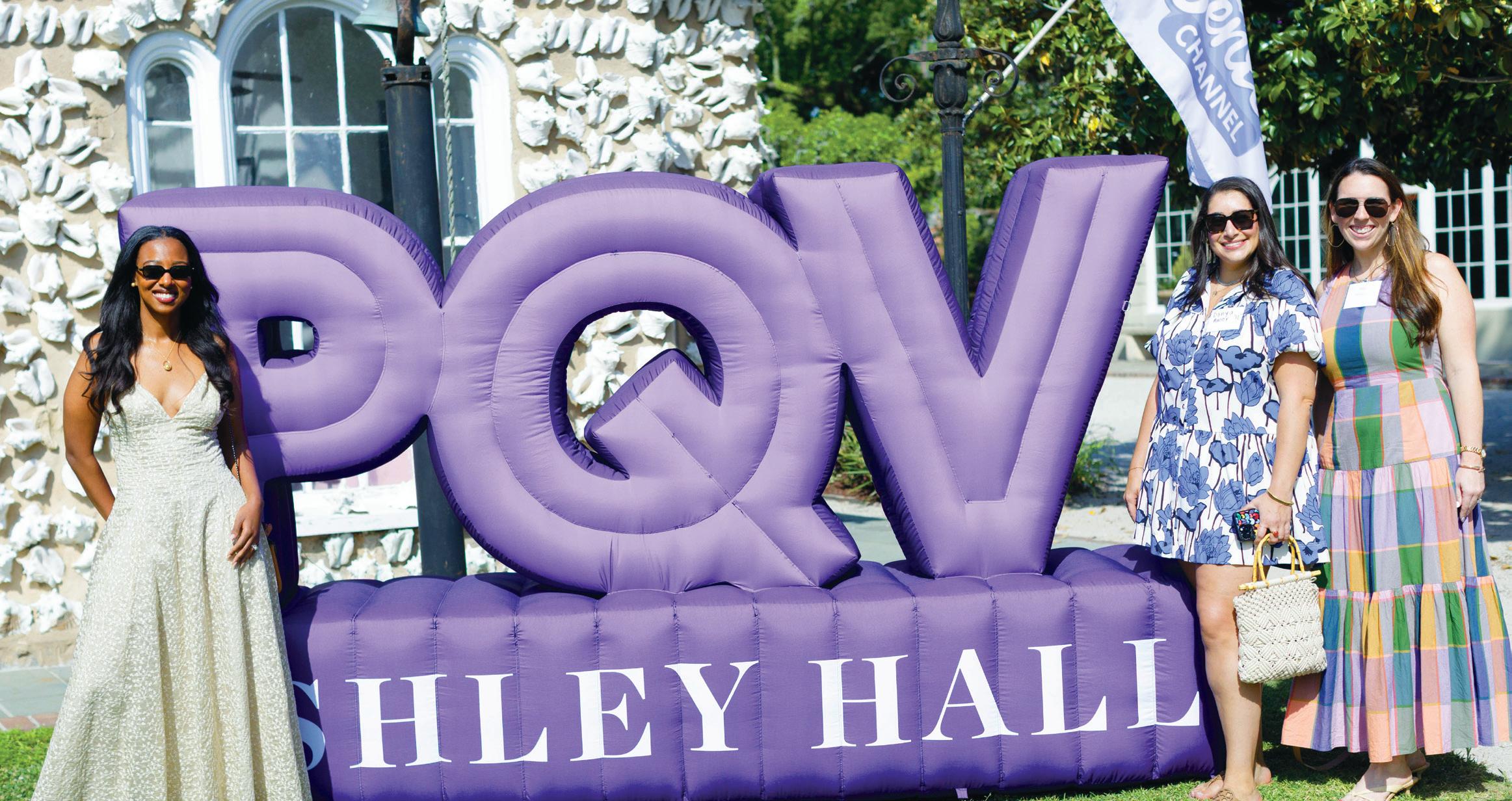
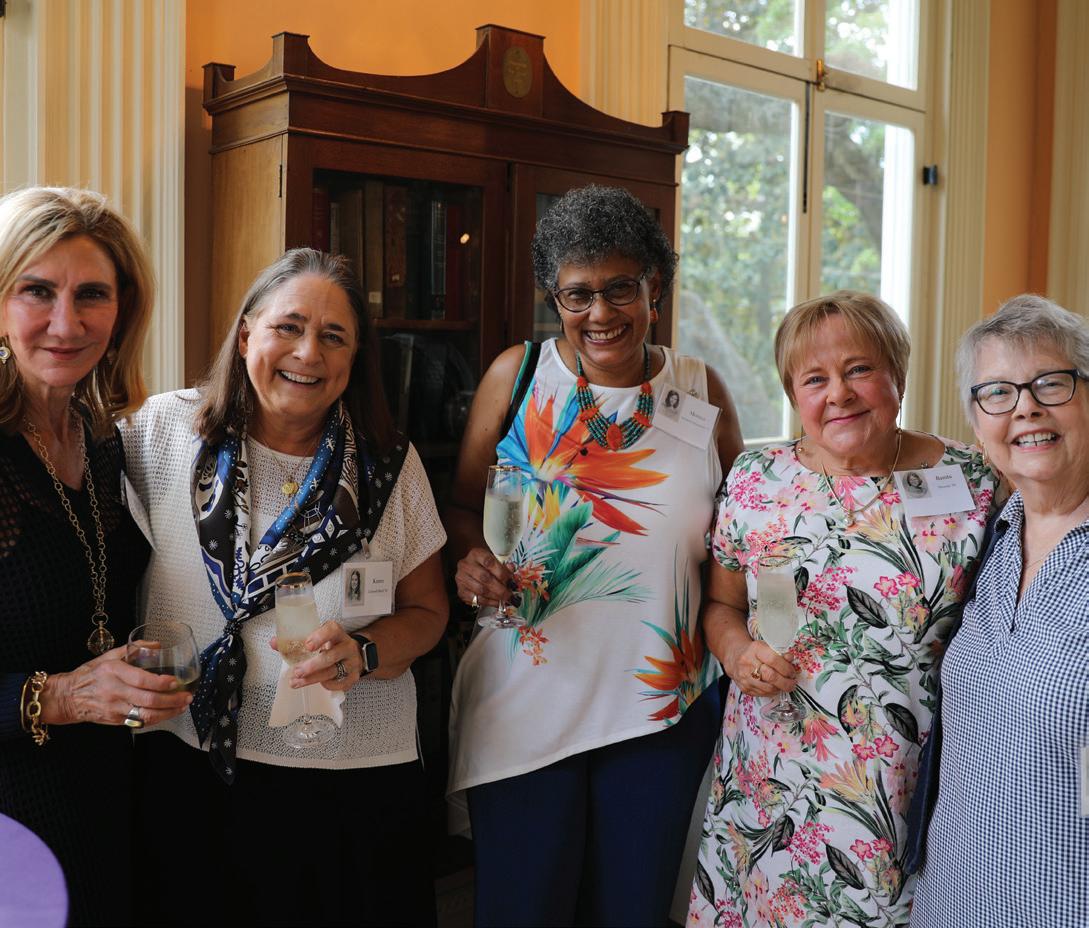
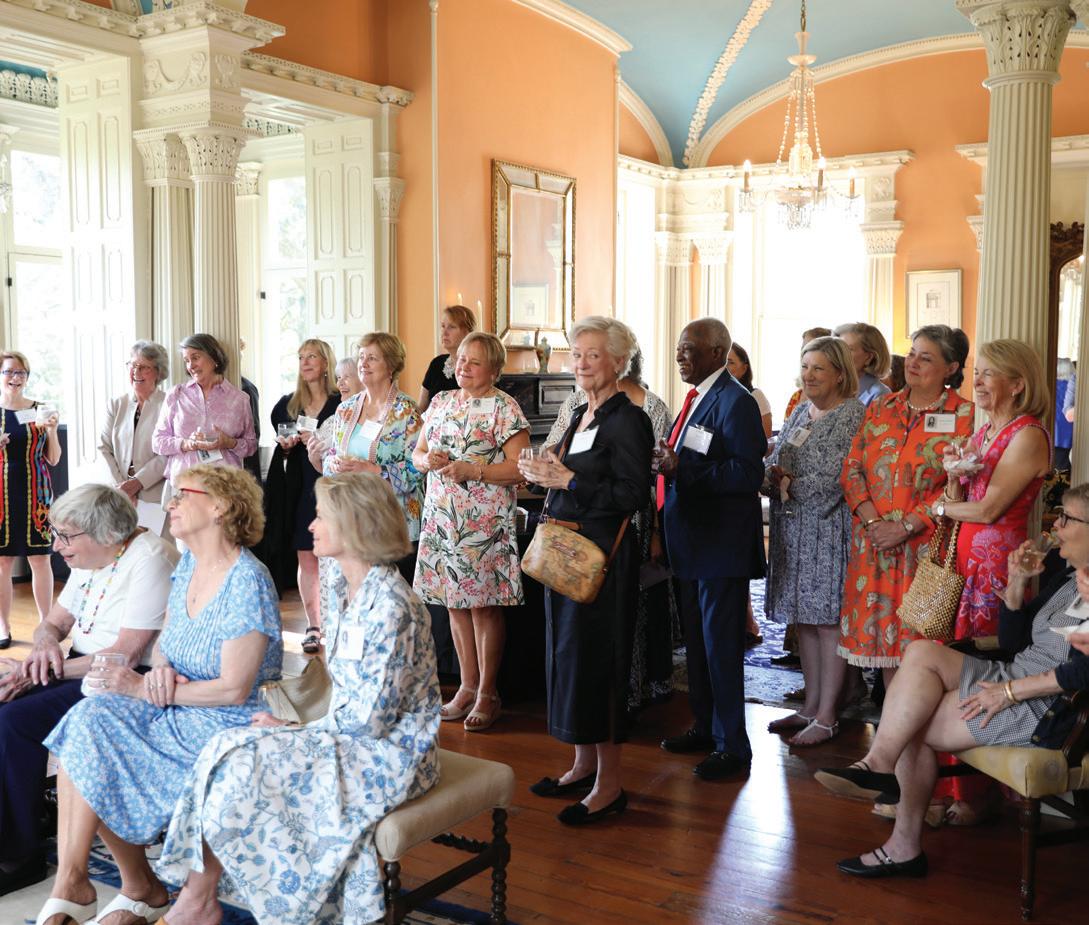
It’s a joy to connect generations of Ashley Hall students, to celebrate where we’ve been and to show how today’s students are building on that legacy in exciting ways.
– DR. ANNE T. WESTON ’73
JUBILEE SOCIETY: WELCOME CLASS OF 1976
The Jubilee Society Reception offered a meaningful moment of reflection and celebration, honoring the Class of 1976 as they marked 50 years since graduation. Held in an atmosphere of warmth and gratitude, the evening honored the shared history that binds this community together. Anne Frances Bleecker ’76 delivered a heartfelt speech, reflecting on the experiences and spirit of her class. Head of School Dr. Anne T. Weston ’73, a Jubilee Society member herself, followed with remarks that transported guests back to Charleston in 1976, weaving together a vivid sense of time and place, while highlighting the strength and momentum of Ashley Hall today and the ways its mission continues to resonate across generations. The evening also marked a significant moment in the School’s history, as Dr. Weston recognized Monica Simmons Hammonds ’76 and Kendra Hamilton ’76, the first African American students to graduate from Ashley Hall. This moment, recognized fifty years later, marks an important milestone in Ashley Hall’s history.
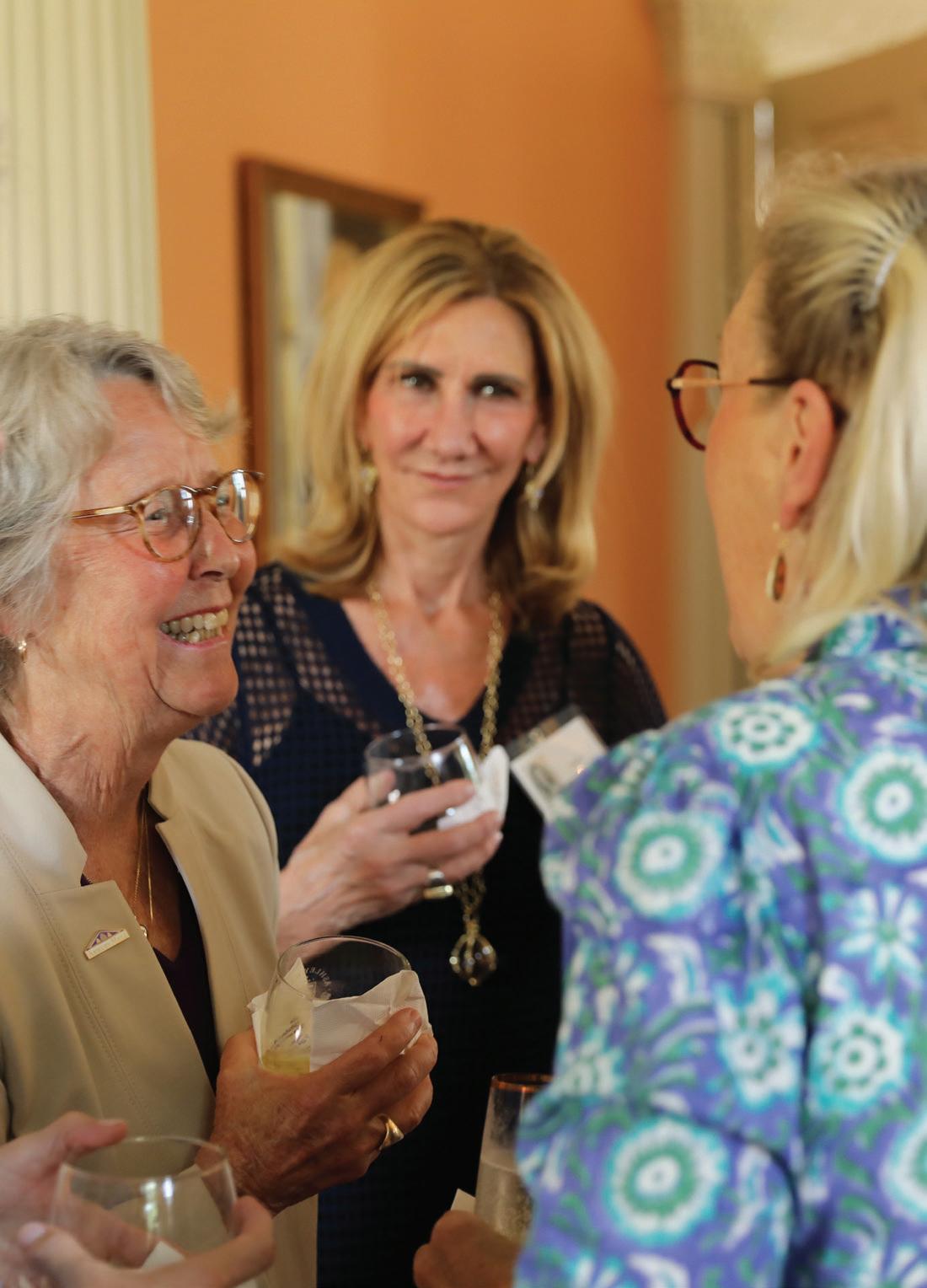
OPPOSITE, TOP: Members of the class of 2006. BOTTOM, L to R: Tiffany Dayemo Porter ’11, Donya Amer ’11, and Sally Sheppard ’11. PHOTOS: Picture Perfect Photography. ABOVE, TOP LEFT L to R: Saida Alexander Russell ’76, Karen Colwell Reid ’76, Monica Simmons Hammonds ’76, Bambi Downs ’76, and Becky Evatt Frederick ’76. MIDDLE LEFT: Alumnae gathered to celebrate the Jubilee class in McBee House. RIGHT: Anne T. Weston ’73 (left) with Camille Wish '76 (right) and Saida Alexander Russell '76 (center). PHOTOS: Ansley Kreisler.
Paths of Purpose
The Alumnae Association Award winners reflect the spirit of an Ashley Hall education—one grounded in curiosity, guided by integrity, and driven by purpose. They are women who have carried the mission with them, shaping lives and communities through their work and the way they move through the world. As we celebrate this year’s recipients, we honor not only what they have achieved, but how they have lived—thoughtfully, boldly, and with a lasting connection to the School. In doing so, they continue to strengthen the legacy of Ashley Hall for generations to come.
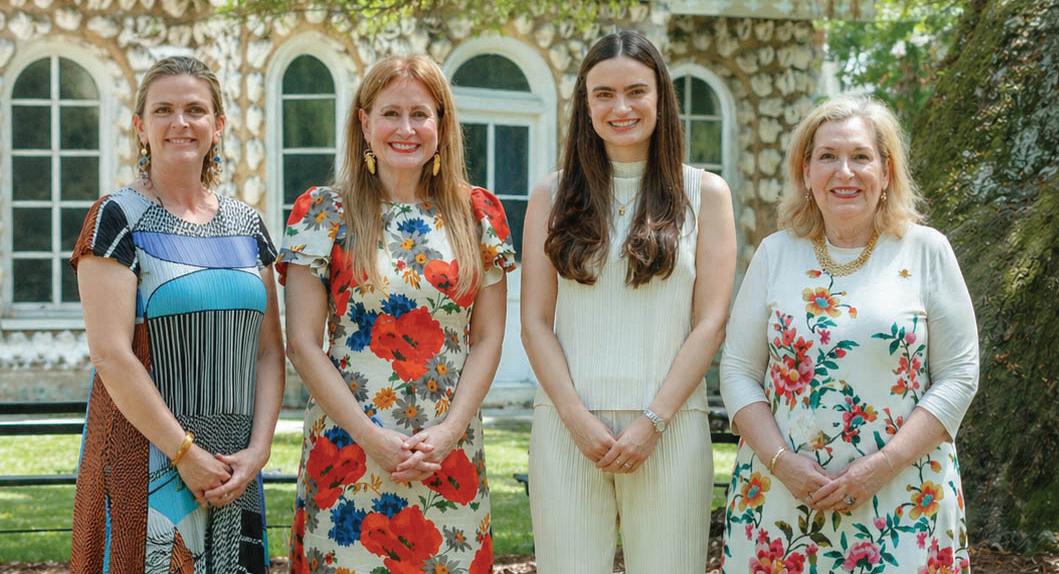
Martha Rivers Ingram ’53 Excellence in the Arts Award | Dessane Cassell ’10
Crandall Close Bowles ’65 Professional Achievement Award | Cashion Drolet ’97
Fern Karesh Hurst ’64 Community Service Award | Anne Frances Bleecker ’76
Tonisha Bell Alston ’99 Distinguished Young Alumna Award | Miller Bianucci ’11
Dewar Gordon Holmes ’26 Distinguished Alumna Award | Elizabeth DuPre Brown ’96
ABOVE, L to R: Elizabeth DuPre Brown ’96, Cashion Drolet ’97, Miller Bianucci ’11, Ann Frances Bleecker ’76. PHOTO: Picture Perfect Photography. NOT PICTURED: Dessane Cassell ’10.
HONORING Alumnae Award Winners
DESSANE CASSELL
Excellence in the Arts Award
Dessane is an internationally recognized editor, writer, producer, and curator whose work shapes contemporary film and visual culture. Her writing has appeared in leading publications, and her curatorial work spans major institutions including MoMA and the Brooklyn Academy of Music. Through her interdisciplinary practice, she elevates underrepresented voices and expands access to the arts on a global stage.
Cashion has built an accomplished career in government affairs and public policy, known for her leadership and ability to foster meaningful relationships. With more than 20 years of experience, she currently serves as Vice President of Government & Public Relations for Security Finance Corporation. Her work reflects a deep commitment to advocacy and to strengthening the communities she serves.
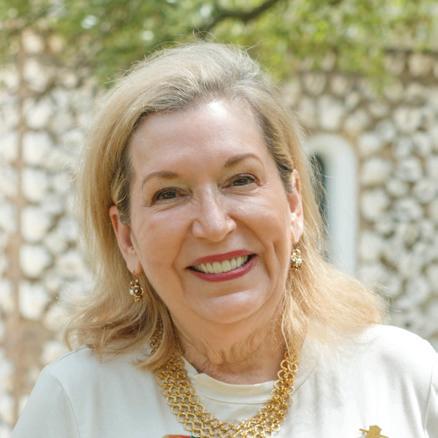
CASHION DROLET
Professional Achievement Award
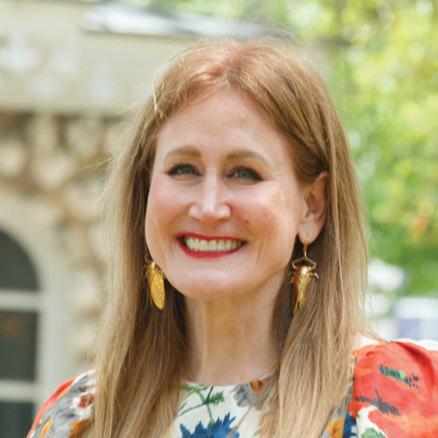
Anne Frances has dedicated her life to service, both professionally and within her community. As the leader of an all-female law firm for nearly three decades, she has remained deeply engaged in civic and philanthropic work, including service on Charleston City Council and numerous nonprofit boards, including Ashley Hall. Her generosity, leadership, and enduring commitment to Ashley Hall exemplify a life lived in service to others.
Miller has demonstrated a lifelong commitment to educational equity through her work with The Foundation for Tomorrow. A graduate of the University of Oxford, she now serves as Executive Director of the organization, transforming research into meaningful impact. Her leadership, compassion, and dedication to service reflect the very best of an Ashley Hall education.
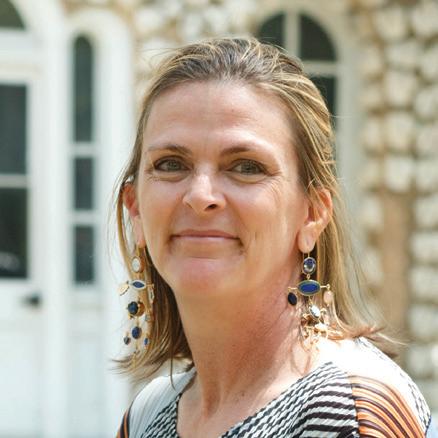
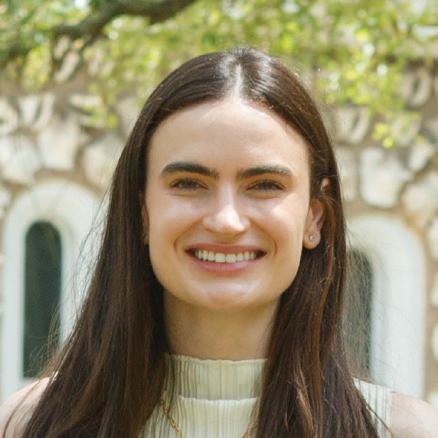
Elizabeth brings infectious enthusiasm to all things Ashley Hall. A past Alumnae Association board president, she is known for her willingness to say yes—always with positivity and purpose. In her professional work as a co-founder of Thesis Content, she partners closely with the School to create compelling, award-winning video storytelling that helps attract and inspire the next generation of Ashley Hall students.
’10:
ANNE FRANCES BLEECKER ’76: Community Service Award
’97:
MILLER BIANUCCI ’11: Distinguished Young Alumna Award
ELIZABETH DUPRE BROWN ’96: Distinguished Alumna Award
LEAVING A LEGACY
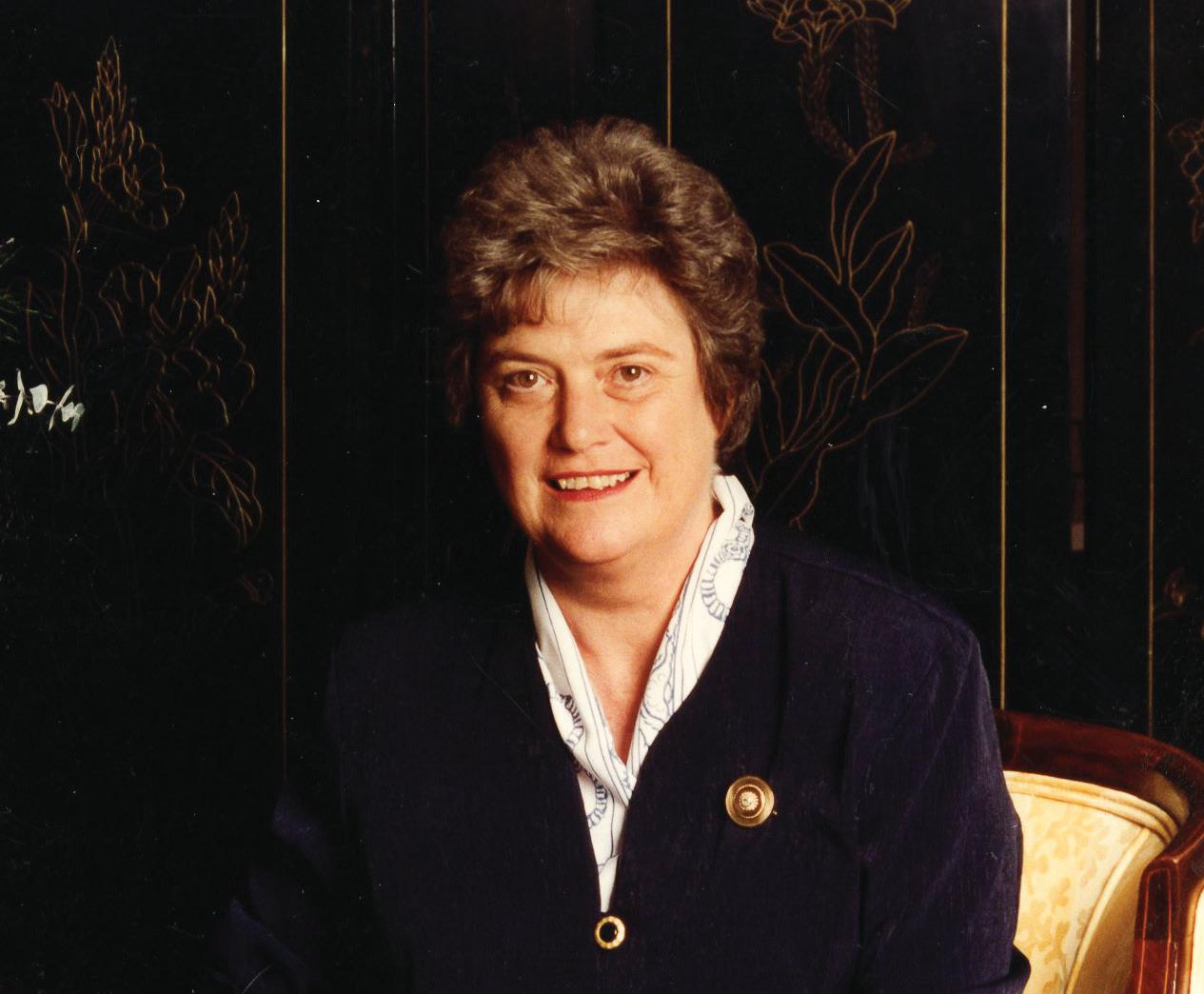
Margaret MacDonald
ASHLEY HALL HEAD OF SCHOOL FROM 1985–2004
With deep gratitude, we remember Margaret MacDonald, who passed away in the fall of 2025. Her visionary leadership had a great impact on Ashley Hall.
Serving as Head of School for nearly two decades, MacDonald guided Ashley Hall into the twenty-first century with purpose and care. At the time, her title was Headmistress, a designation less common today, yet one that carried great weight and distinction, which she embodied fully.
Her commitment to excellence transformed the School. She elevated academic standards while expanding financial aid and scholarship opportunities, making an Ashley Hall education accessible to more students.
A champion of faculty, she invested in professional development and established teaching excellence awards. Her forward-thinking leadership brought the School’s first master plan to life, expanded the campus, and strengthened key programs, including admissions, the arts, and athletics, especially what is now Ashley Hall’s signature aquatics program.
Her belief in the power of education to transform lives—and her commitment to diversity—remained central to her work.
Her legacy endures in the thriving institution that Ashley Hall is today. We honor her memory by carrying her vision forward each day.
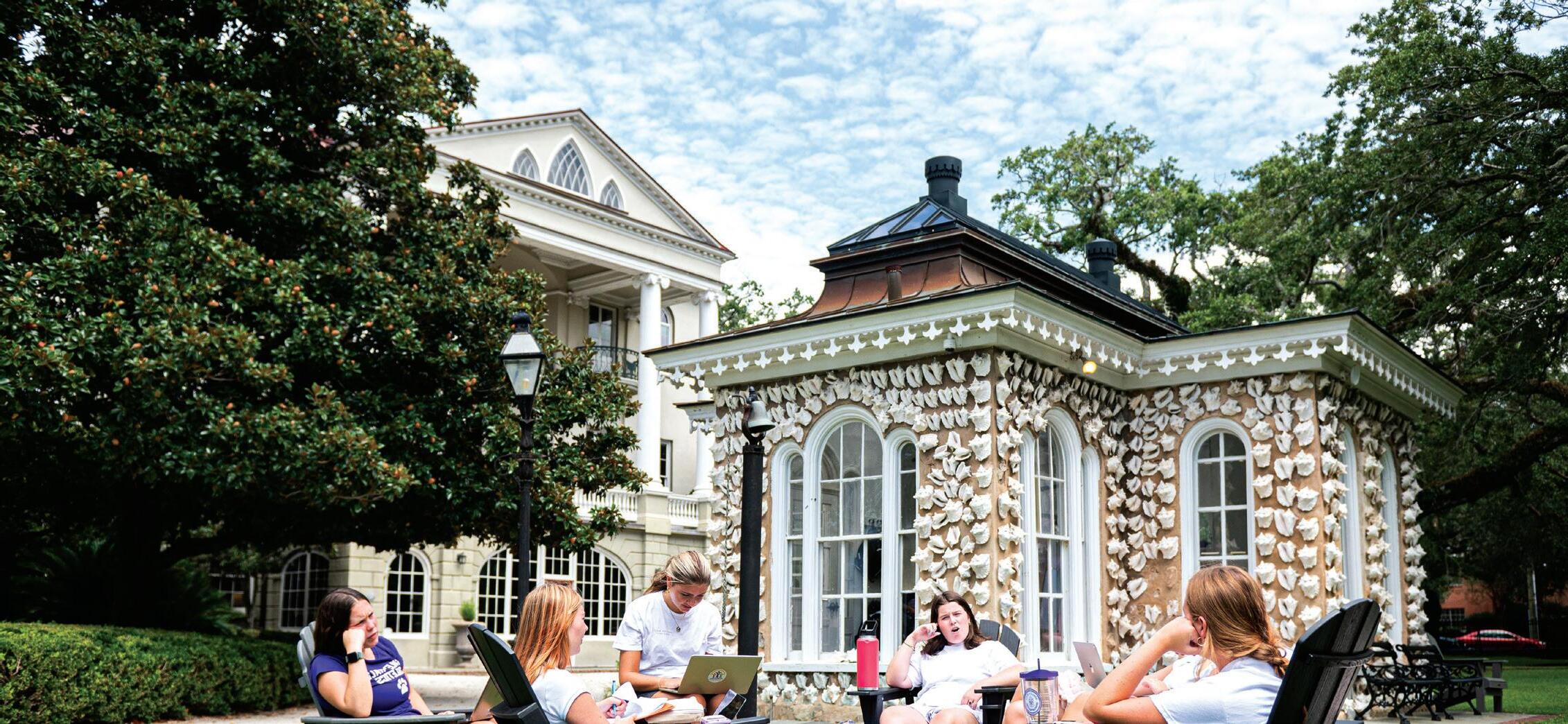
THE M c BEE SOCIETY
The Planned Giving Society at Ashley Hall
Ashley Hall’s founder, Mary Vardrine McBee, exemplified and championed the merits found in a life of valuedbased philanthropy. Today, she is the patroness of the McBee Society, an organization of foresighted and generous donors who have included Ashley Hall in their estate plans. Bequests and other planned gifts have a lasting impact on Ashley Hall and serve as a continuing source of support. The McBee Society has over one hundred members who have made commitments that will positively impact our community for future generations.
Anonymous *
Jennet ’70 and Jack Alterman
Dot Porcher Amis ’58
Mary W. Anderson ’68
Marietta Wade Aurand ’41 *
Nella G. Barkley
Katherine ’65 and William Bates
Esther Hoshall Beaumont ’53
Ruth Russell Belding ’43 *
Marguerite McLaughlin Bishop ’49 *
Anne Frances Bleecker ’76
Michele G. Booth
Ann ’70 and John Boyce
Margaret Richards Breeden '52 *
Gene E. Burges ’64 *
Julius E. Burges *
Jean Martschink Buyer ’51 *
Margaret P. Carr ’29 *
Robert S. Carr
Lynda M. Chase ’57*
Helen and Bob Clement *
Debbie Lipman Cochelin’70
Anne de la Morandiere ’64 and Thomas Cooper
Ann Bacot ’80 and Belk Daughtridge
Harriett B. Daughtridge ’70
Emmie Aichele Dawson ’70
Ann W. Dibble ’70
Susan Estey Edgerly ’43 *
Burnam Eubank ’82
Evelyn A. Florance *
Nancy Friday ’51 *
Nora Alston Flynn ’53 *
Alice ’61 and Mike * Gaines
Celinda H. Harkness ’59 *
Virginia Clyde Douglass Harper ’47 *
Jane * and T. Fleetwood Hassell
Edythe T. Haynes
For
Helen and Burrow Hill
Jane Evatt Hill ’47 *
Laurie Arnold Host ’73
Sally ’61 and Charles Hubbard
Fern Karesh Hurst ’64
Martha Rivers Ingram ’53
Amy E. Jenkins ’82
Joan Ferney Kaselitz '47 *
Elizabeth C. Keith *
Trish and Tommy Kirkland
Croft and Hugh Lane
Ann Brockinton Lee ’70
Daisy Leland *
Barbara Angel Levin ’50
Melissa and Jan Levitan
Elizabeth Rivers Lewine ’54 *
Margaret and Ian MacDonald
Merlee Ann Madren ’56
Amanda and Roy Maybank
Terry and Luke McBee
Marie Ferrara McGahan ’70
Pam and Pat McKinney
Nancy J. Muller ’71 and Warren Mersereau
Piper Parker Moffatt ’70
Eleanor Hope Moore ’56 *
Jill and Lorenzo Muti
Kathy and Pete Nistad
Frances K. Palmer ’26 *
Dr. Olivia Calhoun Palmer
Caroline Pardue *
Lee ’73 and Rhett Perry
Corinne Neely Pettit *
Karen ’79 and Mark Phillips
Linda Muckenfuss Plunkett ’69
Dale C. Poulnot ’73
Mabel Stowe Query ’39 *
Eva R. Ravenel ’73
Heidi ’74 and Arthur Ravenel
Margaret L. Read ’38 *
Caroline H. Ragsdale Reutter ’70 *
Jenny and Jerry Reves
Shannon Reynolds
Sally ’66 and Edmund Rhett
Artie Richards
Ms. Keith C. Richardson
Maureen Ann Riopel
John M. Rivers, Jr.
Mary Moore Roberson ’57*
Cliff P. Robertson *
Judy Webber Ross ’53
Bobbie Gail ’54 and Herb* Rothschild
Katherine B. Salmons ’71
Iona and Paul* Sanders
Beverly Ann ’54* and John Settle *
Lindsay Lyman Skelton ’00
Mary Mahony Smith ’37 *
Mindy J. Spar ’80
Laurel Gale Stewart ’50
Shana and Bobby Stockton
Martha and Will* Story
Rhoda Treherne-Thomas ’44 *
Virginia* and Thomas Thorne *
Thomas E. Thornhill *
Anne Thornhill Weston ’73
Alice and Mike White
Elizabeth R. Williams ’45 *
Elizabeth S. Williams ’34 *
Margaret A. Williams ’34 *
Porter Williams, Jr. *
Caroline M. Williamson ’70
Martha Mohl Wolf ’56
Beautsie ’63 and Fred* Zahrn
Barbara and J. Conrad Zimmerman, Jr.
Elephare Dwelle Zimmerman ’40 *
*deceased
CONGRATULATIONS
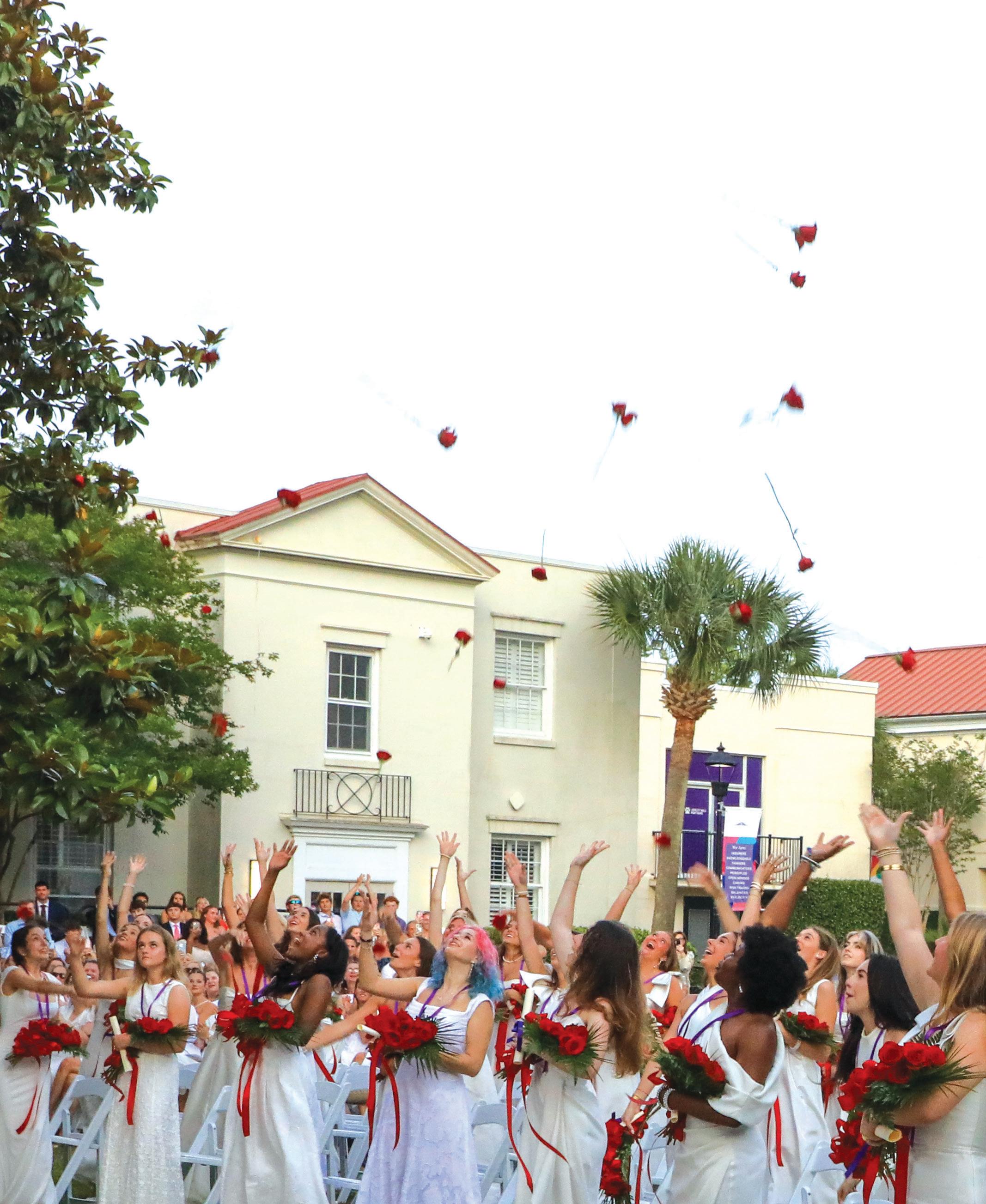
CONGRATULATIONS
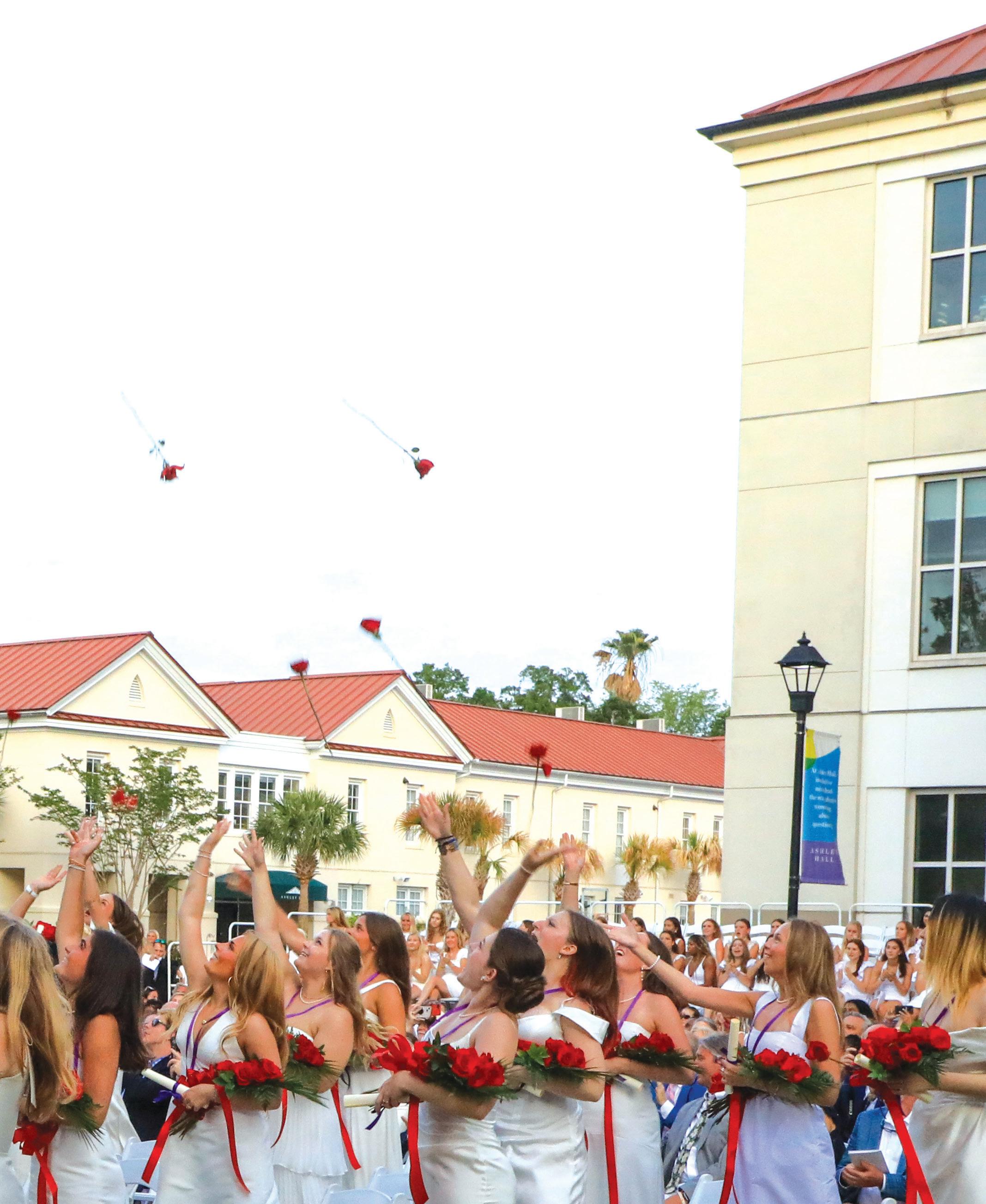
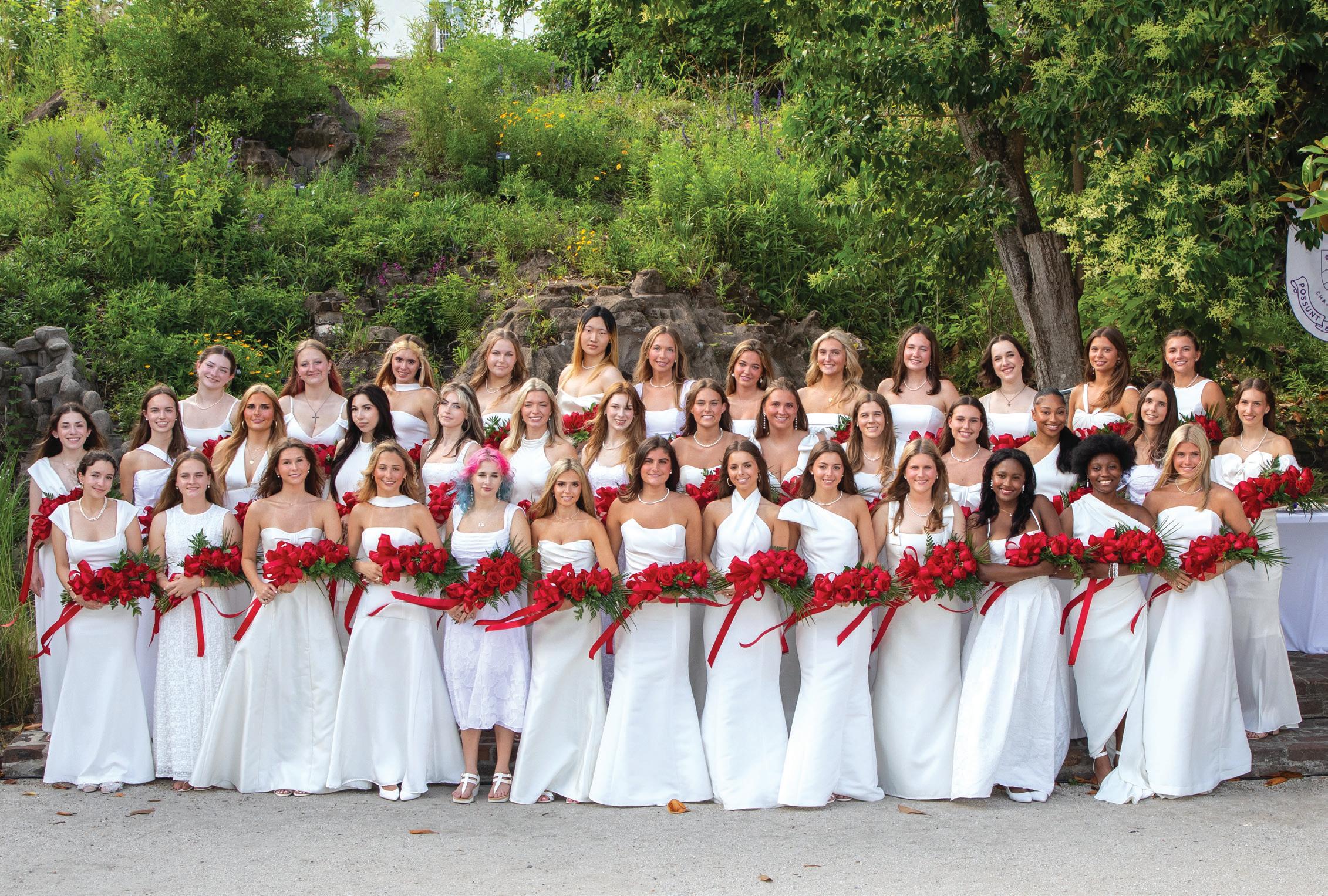
Writing WHAT COMES NEXT
Bathed in warm evening light and the scent of blooming magnolias, Ashley Hall’s 116th Commencement ceremony unfolded with the timeless traditions and heartfelt moments that define this milestone day. Families, friends, faculty, and alumnae gathered in a place rich with memory and meaning to honor the Class of 2026.
Dressed in white, the graduates processed to the familiar strains of Pomp and Circumstance, a visual and symbolic reminder of both unity and individuality. Each step forward carried years of shared experience— moments in classrooms, on stages, on fields, and across campus—that culminated in this singular day of recognition and reflection.
The presentation of the Class of 2026’s gift by Class President Clara Kirchner ’26 was a special moment. In a gesture that deeply honored Ashley Hall’s history, the class dedicated funds to restore the headstone of founder Mary Vardrine McBee. In accepting the gift, Board of Trustees President Rhett Ramsay Outten ’82 reflected on the thoughtfulness of the gesture, noting that Miss McBee has no local relatives to tend to her gravesite, making this act of care especially meaningful. It was a powerful tribute, connecting the graduates not only to one another, but to the very foundation of the School.
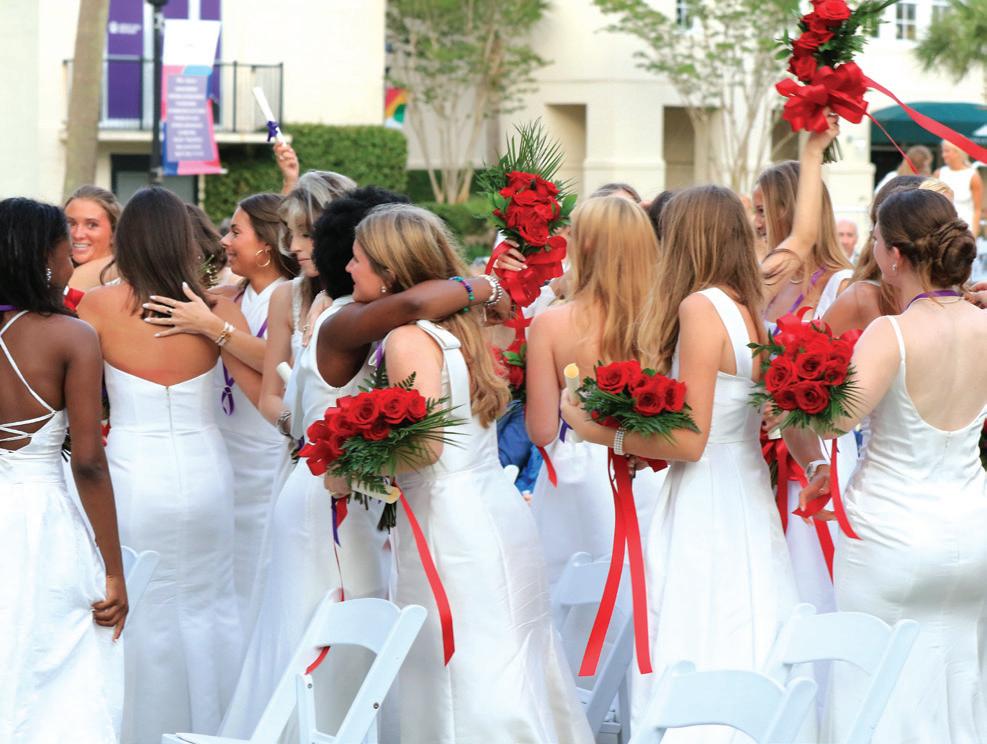
This year’s ceremony featured a unique distinction, with two Second Honor Graduates offering reflections. Ella McCall ’26 spoke about the strength of the community in her class and the deep care they all have for each other. Even though some moments in the year turned out differently than expected, they ended up just as they should. Grace Taylor ’26 reflected on the strength of Ashley Hall’s traditions, describing them as the foundation upon which values are built, and reminding her classmates that “only when we’re forced to say goodbye to something is its true worth revealed.”
First Honor Graduate Helen Kourtidis ’26 brought a literary lens to her remarks, weaving in Shakespeare as she reflected on a journey that was “exciting, wonderful, and messy.” Drawing on The Tempest, she invoked the idea of a “brave new world,” encouraging her classmates to move forward with curiosity and courage.
The Commencement Address was delivered by Upper School English teacher Leslie Rowland-Yeh, whose connection to the class spans multiple formative years. Reflecting on time spent together in the classroom, she spoke to the transformation she had witnessed—from “awkward, silly, unsure” middle schoolers into “humble, driven, brave,
self-aware young women.” Framing her remarks around the power of storytelling, she encouraged graduates to consider both the chapters they have written and those still to come. She challenged them to think intentionally about the life they will shape: “What story do you want your life to tell?” Reminding them that life is a “rough draft,” she emphasized that growth comes through revision, reflection, and resilience—and that, above all, they are enough and deeply valued, always supported by the community they leave behind.
As diplomas were conferred and roses tossed, the ceremony carried that spirit forward—honoring not only achievement, but also the enduring bonds that define an Ashley Hall education. In the end, Commencement was both a celebration and a beginning. The Class of 2026 leaves Ashley Hall prepared to write the next chapters of their lives with purpose, courage, and compassion. Their story here may have reached its final page, but what they carry forward— friendship, confidence, curiosity, and a deep sense of belonging—will continue to shape every chapter yet to be written. Congratulations to the class of 2026!
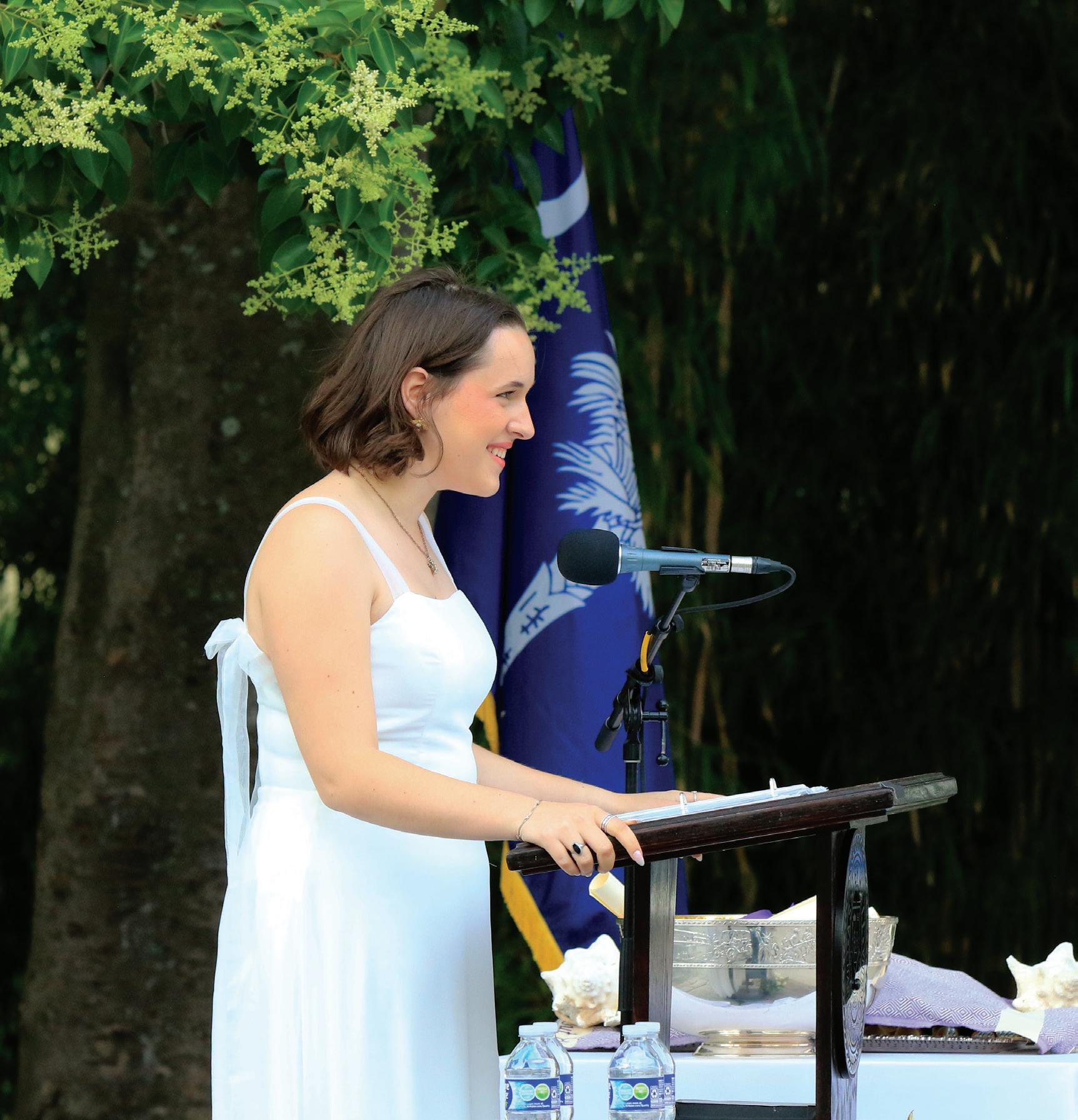
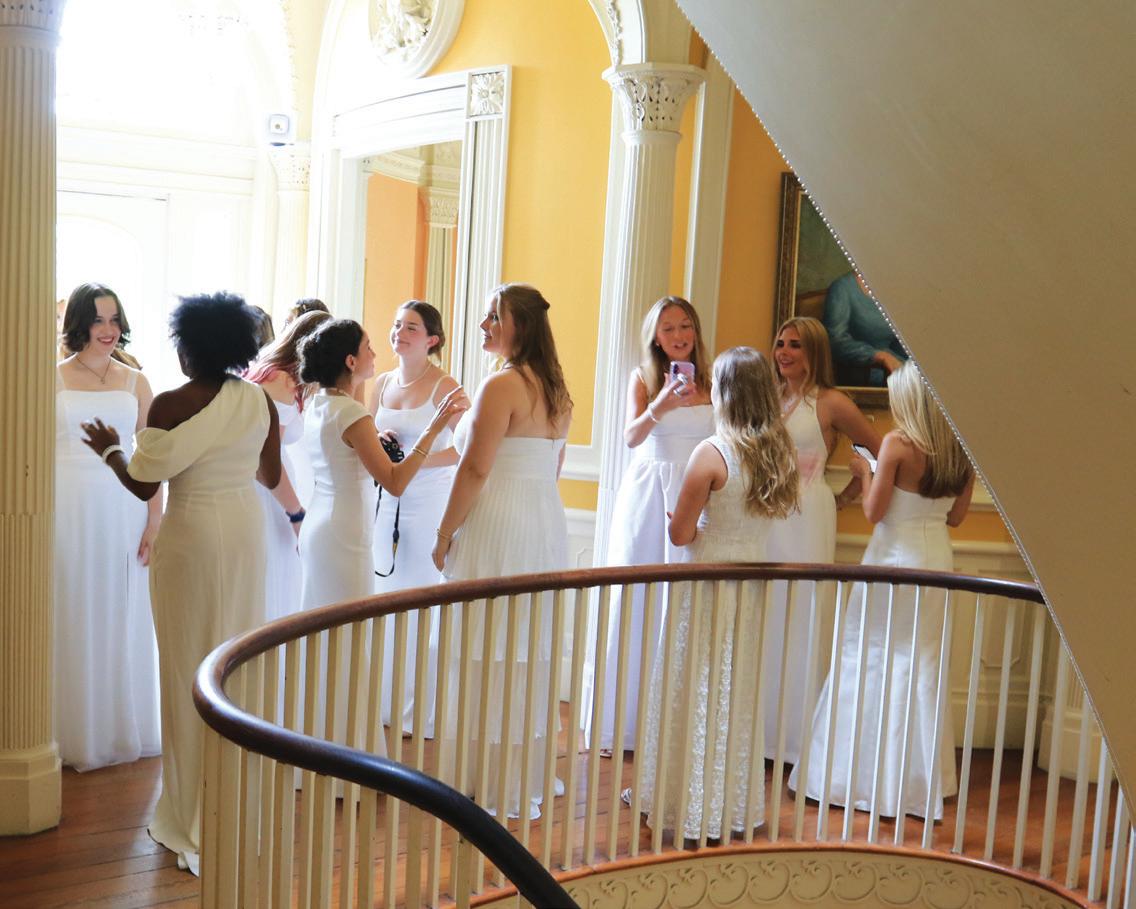
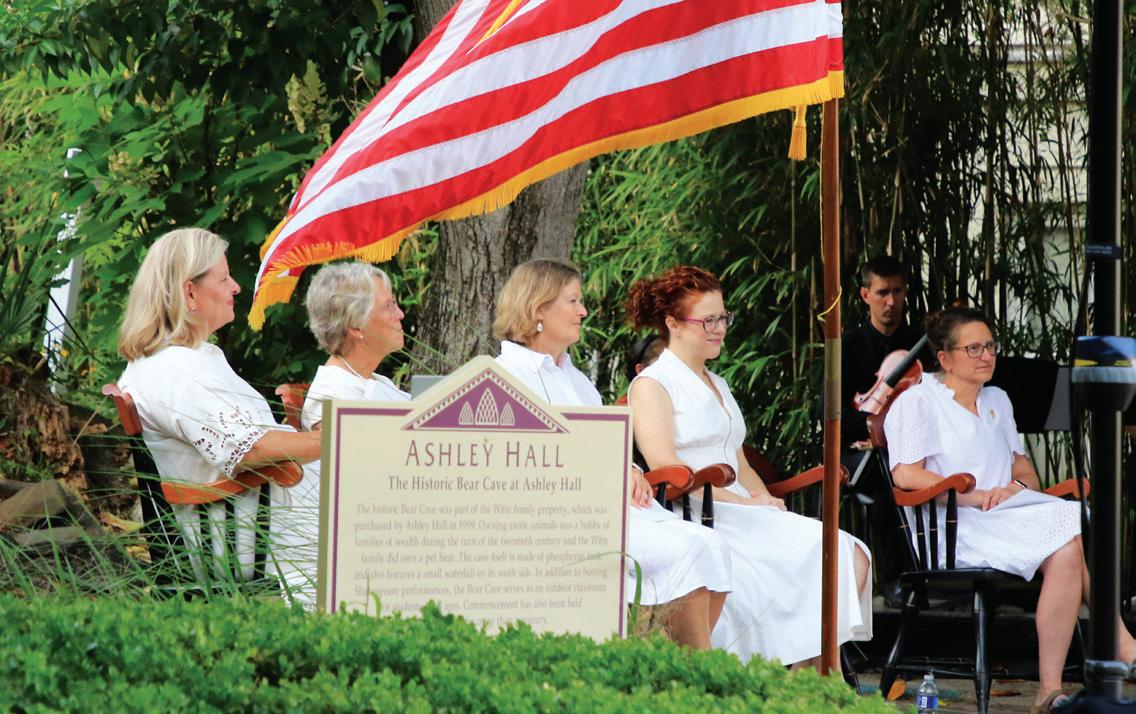
PREVIOUS PAGE: The Class of 2026 throws their roses. OPPOSITE TOP: The Class of 2026. BOTTOM: Members of the Class of 2026 celebrate following their Commencement ceremony. THIS PAGE | LEFT: First Honor Graduate Helen Kourtidis ’26 gives her remarks. TOP RIGHT: Members of the Class of 2026 prepare for the ceremony to begin in McBee House. BOTTOM RIGHT, L to R: Ashley Hall Board of Trustees President Rhett Ramsay Outten ’82, Head of School Dr. Anne T. Weston ’73, Director of the Upper School Elisabeth Lavin-Peter, Upper School English teacher and Commencement Speaker Leslie Rowland-Yeh, and Early School faculty member, Rachael Carter, who is the 2026 recipient of the Daisy Barron Leland Award for Teaching Excellence. PHOTOS: Tumbleston Photography.
ASHLEY HALL CLASS OF 2026
COLLEGE ACCEPTANCES
American University
Appalachian State University
Auburn University
Bard College
Belmont University
Berry College
Boston University
Charleston Southern University
Claflin University
Clark Atlanta University
Clark University
Clemson University
Colgate University
College of Charleston
Colorado State University
Converse University
Davidson College
Dickinson College
Durham University
Elon University
Flagler College
Furman University
Hampton University
High Point University
Hobart and William Smith Colleges
Howard University
Indiana University (Bloomington)
Kalamazoo College
Kenyon College
King University
Knox College
Lafayette College
Louisiana State University
Loyola Marymount University
Loyola University New Orleans
Lynn University
McGill University
Mercer University
Mississippi State University
Muhlenberg College
New York University
North Carolina A&T State University
North Carolina State University
Northeastern University
Oregon State University
Pace University (New York City)
Parsons School of Design
Penn State University
Queens University of Charlotte
Rhodes College
Rollins College
Savannah College of Art and Design
Seton Hall University
Skidmore College
Southern Methodist University
Spelman College
Suffolk University
Syracuse University
Tennessee State University
Texas Christian University
The Citadel
The New School
The Ohio State University
Tulane University
University of Alabama
University of Arizona
Bold Type = Schools graduates will attend Regular Type = Schools graduates were accepted
University of Bath
University of California (Davis)
University of California (Los Angeles)
University of California (San Diego)
University of California (Santa Barbara)
University of California (Santa Cruz)
University of Colorado (Boulder)
University of Dayton
University of Delaware
University of Denver
University of Exeter
University of Georgia
University of Illinois (Chicago)
University of Kentucky
University of Massachusetts (Amherst)
University of Minnesota
University of Mississippi
University of North Carolina (Asheville)
University of North Carolina (Wilmington)
University of Pittsburgh
University of Richmond
University of South Carolina
University of St Andrews
University of Tampa
University of Tennessee
University of Tulsa
University of Vermont
University of the South
Wesleyan University
Wofford College
Xavier University
PARTING SHOT
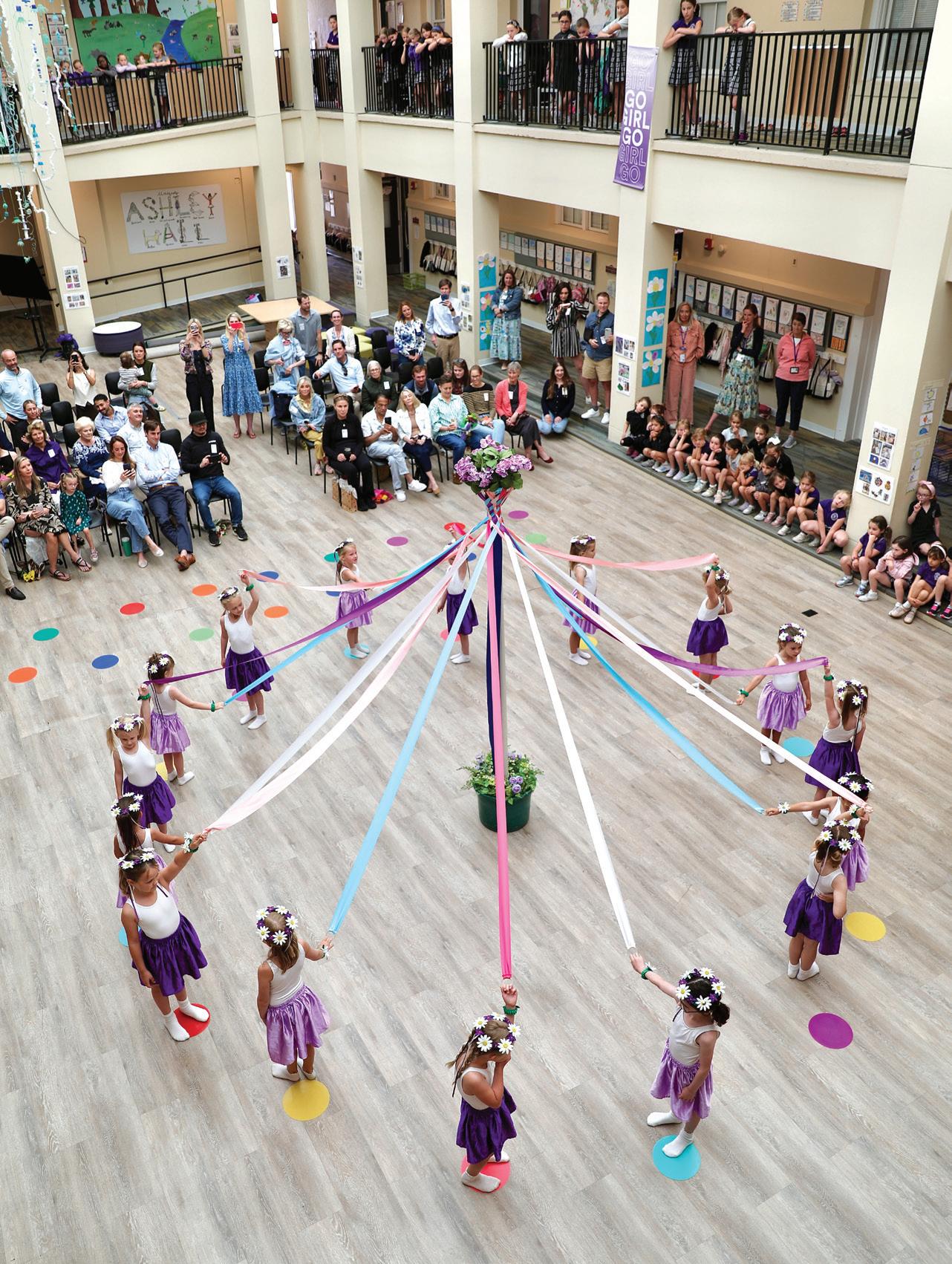
PHOTO BY ANSLEY KREISLER
Families, friends, and members of the Ashley Hall community gathered in the LoDome as kindergarten students brought the Maypole dance to life. A time-honored tradition, the moment also reflected the learning happening in their classrooms—where patterns take shape in math, reading, and beyond. Woven together through movement, music, and joy, the dance became a celebration not only of spring, but of a year filled with growth, discovery, and connection.