

ACADEMIA AND INDUSTRY
ACADEMIA AND INDUSTRY

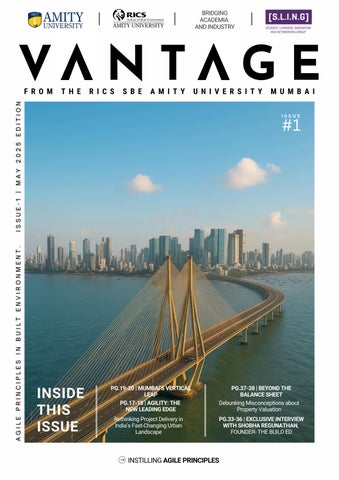
PG.19-20 | MUMBAI’S VERTICAL LEAP
PG.17-18 | AGILITY: THE NEW LEADING EDGE
Rethinking Project Delivery in India’s Fast-Changing Urban Landscape
PG.37-38 | BEYOND THE BALANCE SHEET Debunking Misconceptions about Property Valuation
PG.33-36 | EXCLUSIVE INTERVIEW WITH SHOBHA REGUNATHAN, FOUNDER- THE BUILD ED

Dear Readers,
WWelcome to the first-ever edition of RICS SBE Mumbai VANTAGE where the sharpest minds of academia collide with the real-world pulse of the built environment industry

The theme of this year’s VANTAGE is Agile Principles in a world accelerating toward change, adaptability isn’t optional; it’s essential isn’t it?
So, why VANTAGE? This magazine captures a panoramic, 360° viewpoint of the future of our industry From construction and real estate to technology and entrepreneurship, this magazine will give the readers a bird’s-eye perspective of what the built environment of tomorrow will look like
Whether it's exploring the business side of the industry, demystifying valuation myths, or diving into frontier technologies like AI chatbots, geodesic domes, BIM, drones, and digital twins every page propels you deeper into the evolving fabric of our sector.
Inside these pages, the Industry Talks section features stalwarts like Shobha Regunathan, who shares how organizational agility is no longer a luxury it's a mission. Meanwhile, our next-gen leaders bring fresh, unfiltered perspectives on how technology is an enabler redefining workflows, leadership, and impact on the built environment.
The Off the Grid section is what sets this edition apart where raw expression and youthful curiosity take center stage. From graffiti-stained walls echoing urban expression to tales of van-life adventurers navigating Mumbai’s chaos it’s a detour into creative pursuits and stories that remind us that professionals are people first.
This isn’t just a publication; it’s a time capsule One that carries blueprints and bold ideas, lectures, and lived experiences A huge shoutout to every contributor, mentor, and reader who brought this vision to life
So dive in Challenge assumptions Embrace the unknown Because the future of construction and real estate isn’t just being built it’s being imagined
Happy reading, The Editorial Committee, S.L.I.N.G, RICS School of Built Environment, Amity Unviversity, Mumbai.





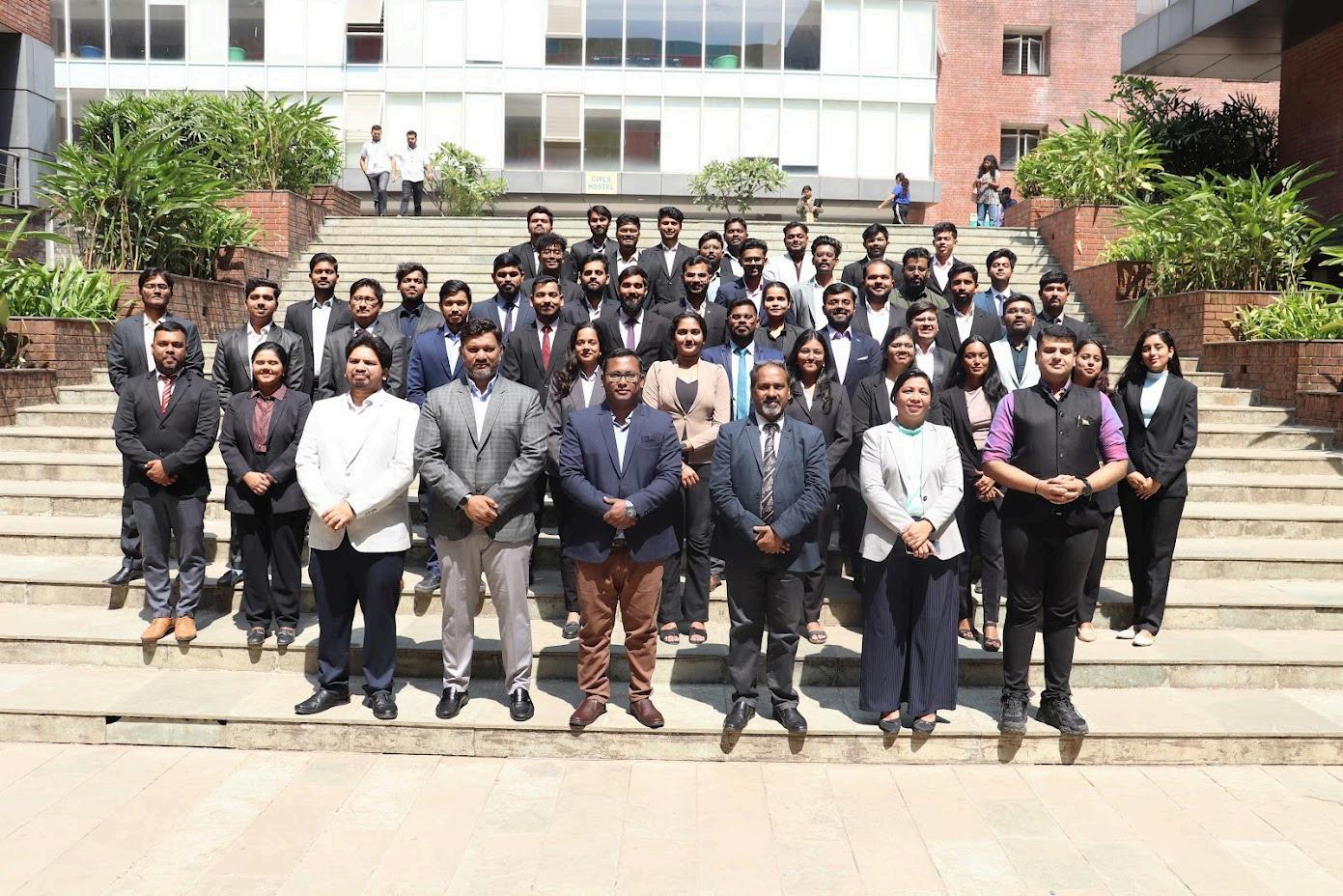
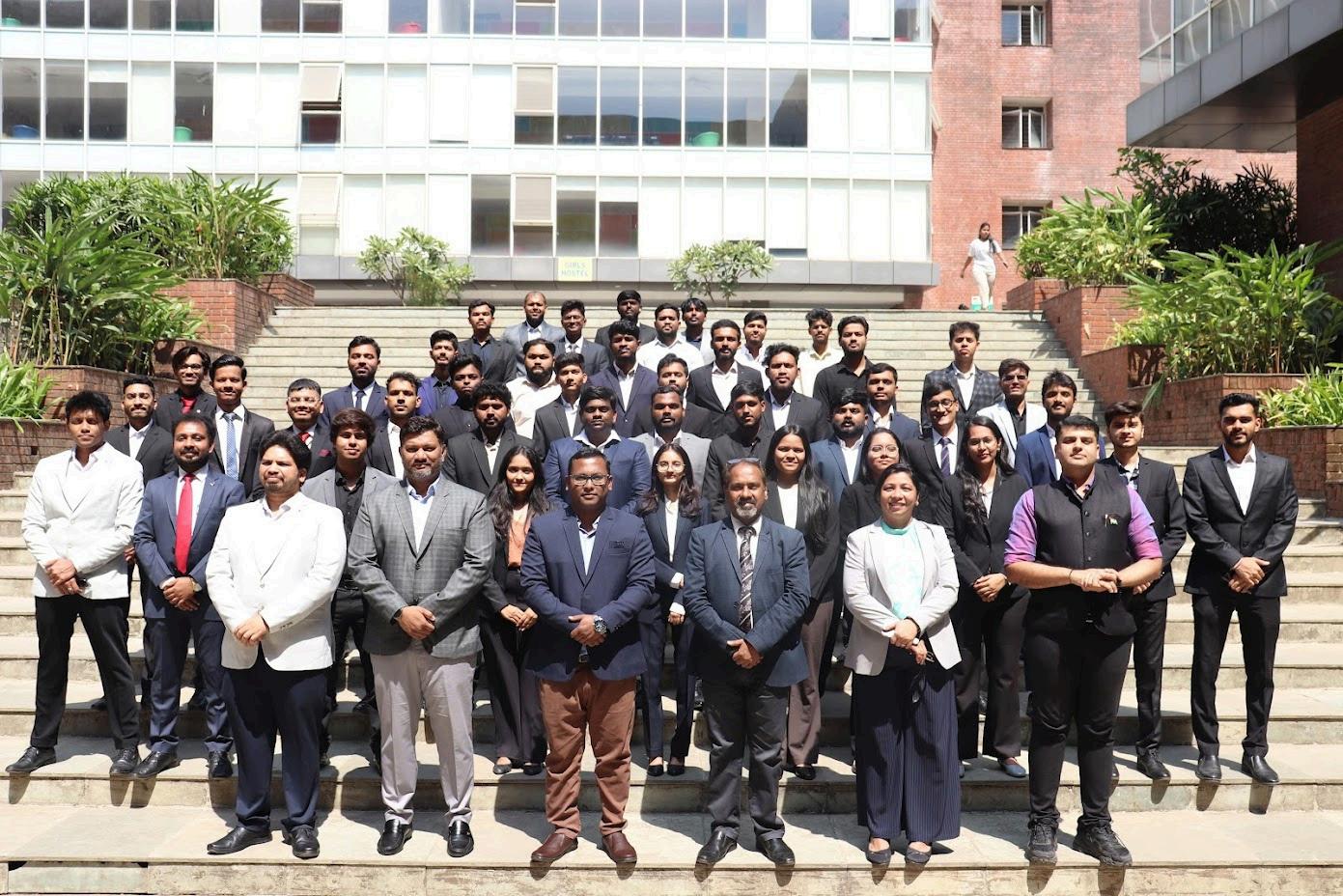
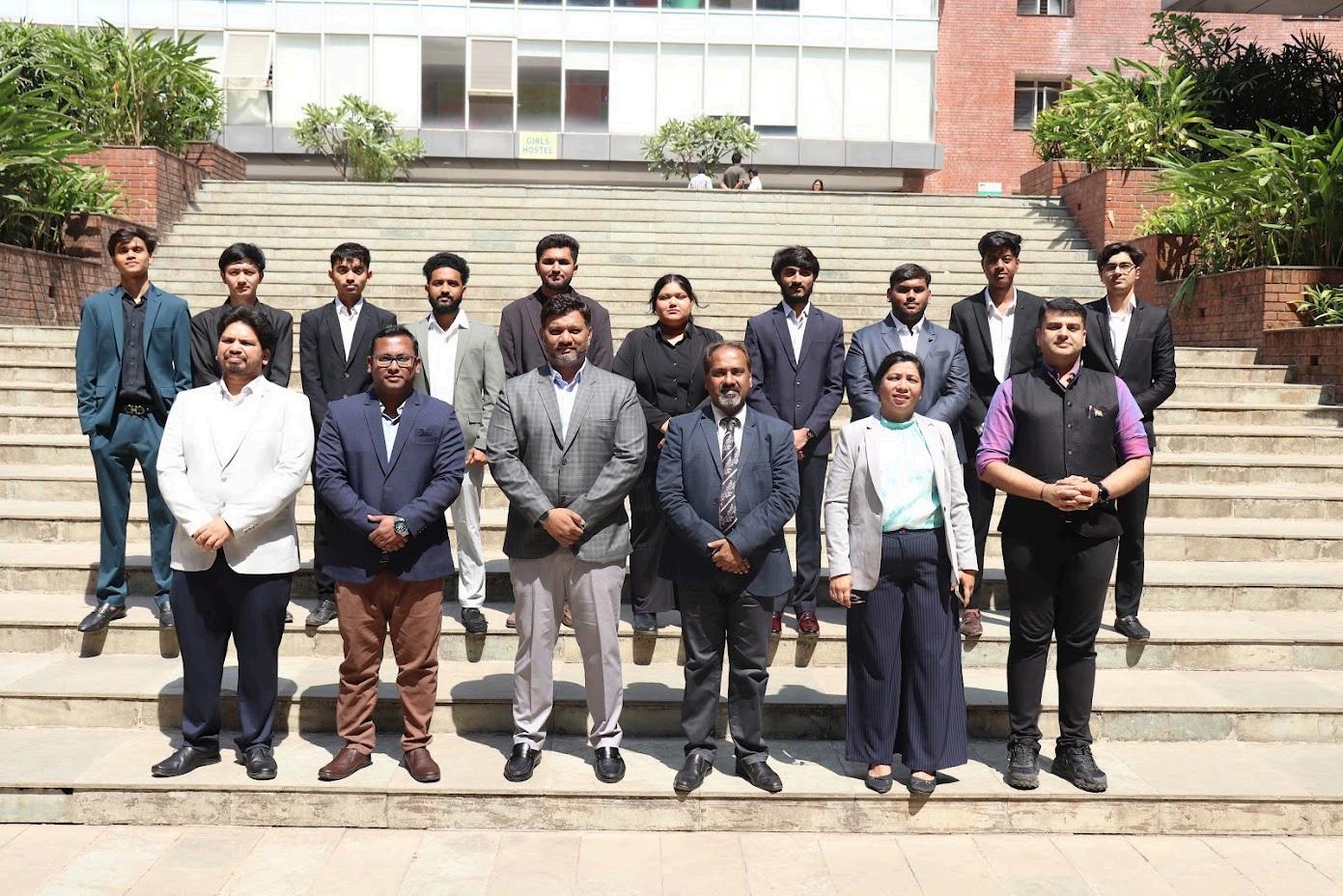
F O U N D E R
P R E S I D E N T

lieve that in today’s competitive world the ical knowledge alone is not sufficient without owledge and pragmatic approach which rn while studying at Amity University, Mumbai

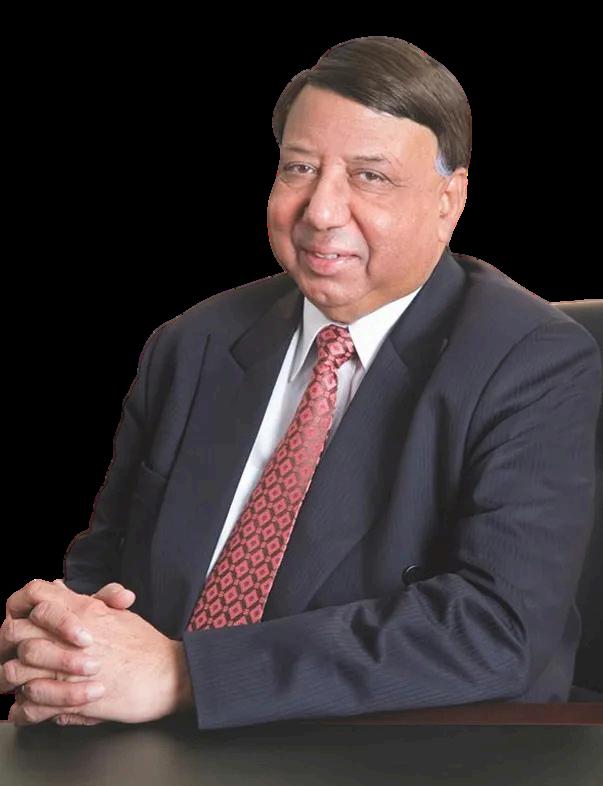
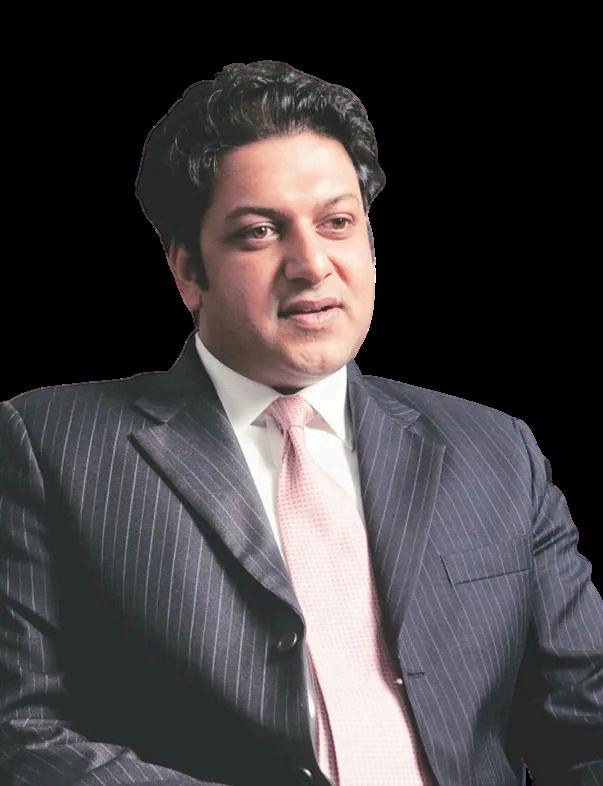
ty believes in nurturing talent through regular coctivities alogwith excellence in academics. The osystem strives to blend modernity with tradition s students with the mission to train future leaders p rate world.
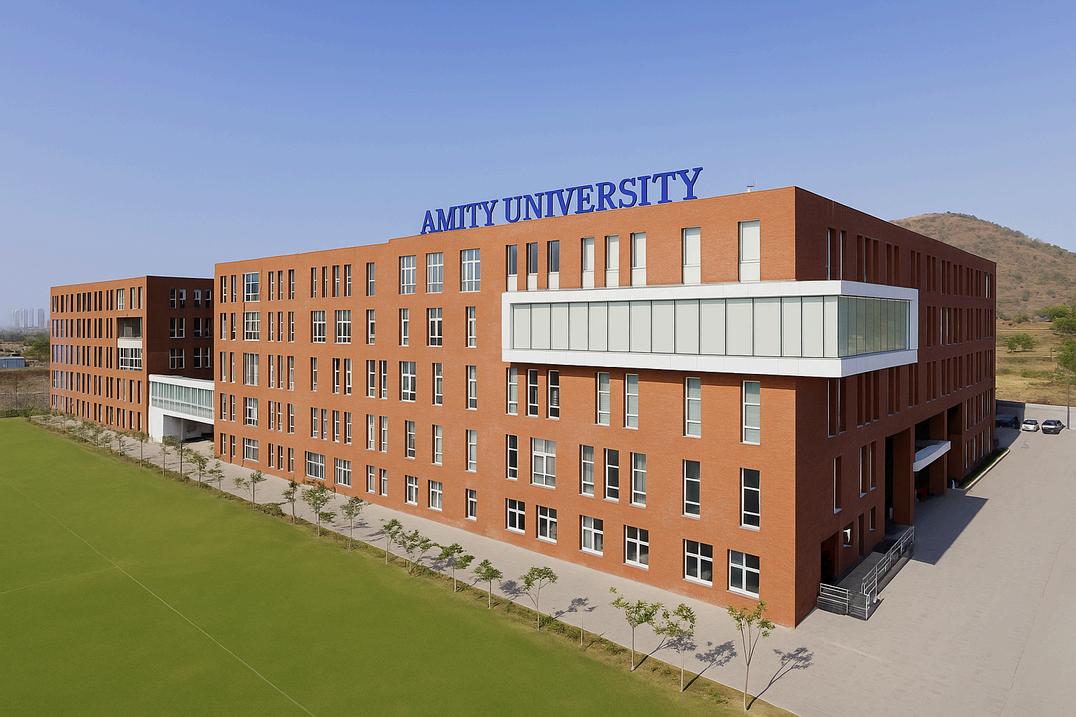
Vdelighted to note that the Amity University Mumbai, RICS School of Built Environment (RICS SBE)is embarking into a self-made magazine Vantage which envision a vibrant platform that bridges academia and industry by showcasing the dynamic culture of the School of Built Environment (RICS SBE) with student achievements and their piece of work
The built environment that encompasses buildings and infrastructure, is the fundamental component of the economic and social development I’M
The magazine celebrates technological innovation, highlights global and sustainable practices, and amplifies the voices of our students, faculty, alumni, and industry partners in this specialized area
I am confident that “ Vantage” aims to foster meaningful dialogue, inspire collaboration, and spotlight the forwardthinking spirit that defines RICS SBE
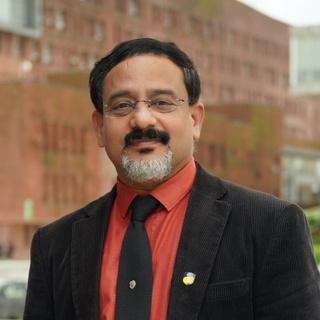
Prof. Dr. A.W. Santhosh Kumar. Ph D Post Doc Fellow (UC-Davis, NIH-USA),FAMPV, FNAAS,FNAVS,FRSB Vice Chancellor
Amity University, Mumbai, Maharashtra.

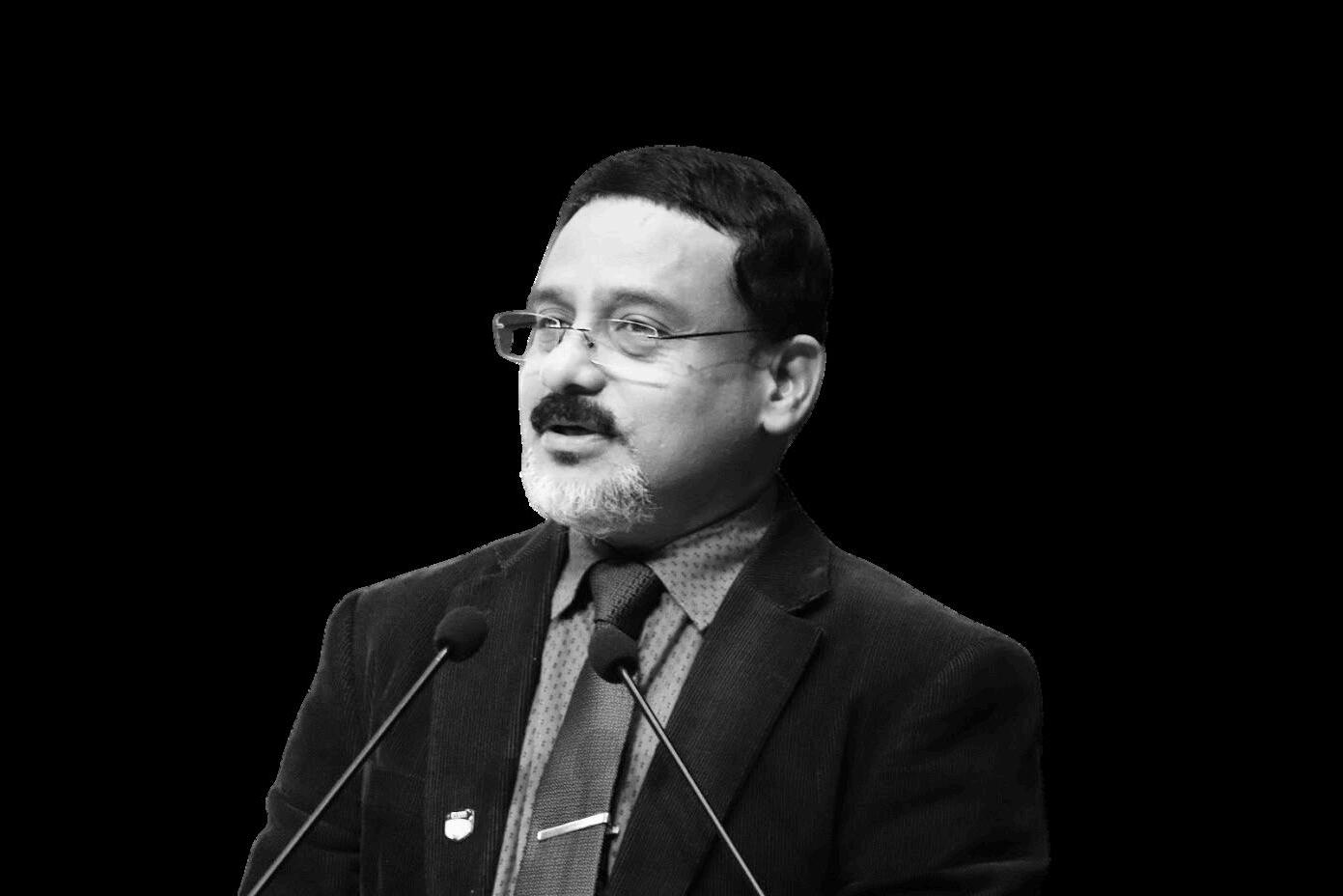
Prof. (Dr.) A.W. Santhosh Kumar, Ph.D., FNAAS, FAMPV, FIAAM, is a globally acclaimed academician and visionary leader, currently serving as the Vice Chancellor of Amity University Mumbai. With an illustrious career spanning over 39 years, he has held pivotal roles, including Vice Chancellor at three nationally renowned institutions and Dean of Academic Affairs and Accreditations in the USA .
An alumnus of the All India Institute of Medical Sciences (AIIMS), Dr. Kumar has enriched his academic journey with post-doctoral fellowships at prestigious institutions such as the University of California, Davis, the National Institutes of Health (NIH), USA, the J. Craig Venter Institute, and the National Cancer Center of Singapore . His research, primarily focusing on the human microbiome and its role in systemic diseases, has led to groundbreaking discoveries, including the identification of new bacterial strains and the development of an indigenous nano-adjuvant for viral vaccines.
Dr. Kumar's scholarly contributions are substantial, with 191 peer-reviewed research articles, six books, 18 book chapters, and 21 patents to his credit . His academic influence is further evidenced by an Hindex of 34 and over 4,700 citations. He has mentored 15 doctoral candidates and continues to guide five more, fostering a culture of research excellence.
Under his dynamic leadership, Amity University Mumbai has achieved significant milestones, including a 3.5-star rating from the Institution Innovation Council (IIC) and notable placements for its graduates . Dr. Kumar's unwavering commitment to academic excellence and innovation continues to inspire and shape the future of higher education.

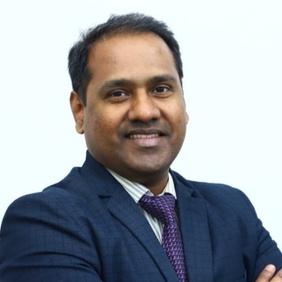
PROF. DR. SANJAY
GOVIND PATIL, MRICS
DIRECTOR & HEAD, RICS SBE, AMITY UNIVERSITY, MUMBAI
ITgives me immense pride and joy to present the inaugural edition of RICS SBE Vantage, a magazine that truly embodies the spirit of excellence, innovation, and collaboration that defines the RICS School of Built Environment This publication is a remarkable milestone, born out of the collective efforts, creativity, and dedication of our talented students, guided by the unwavering support of our faculty and the active engagement of our alumni and industry partners
RICS SBE Vantage is not just a magazine - it is a platform that showcases the vibrant culture of our school and the incredible contributions of our students From groundbreaking research and innovative projects to reflections on campus life and industry trends, this magazine captures the essence of our community's journey It stands as a testament to the hard work and ingenuity of our students, who have gone above and beyond to bring this vision to life
This edition provides a unique perspective on the ever-evolving construction and real estate industries, bridging the gap between academia and practice It celebrates the achievements of our students, highlights the technological advancements reshaping our field, and fosters thought leadership on sustainability, innovation, and leadership in the built environment
I extend my heartfelt congratulations to the editorial team and every student who contributed to making this magazine a reality Your efforts have created a powerful voice for our community one that will resonate far beyond the campus, inspiring readers within and outside the RICS SBE ecosystem
To our readers, I encourage you to explore the insights, stories, and reflections shared in this magazine It is a celebration of collaboration, a platform for dialogue, and a source of inspiration for all who are passionate about shaping the future of the built environment
Let this magazine be a beacon of what is possible when creativity, collaboration, and commitment come together I look forward to seeing RICS SBE Vantage grow and evolve as a reflection of our school’s mission to lead, inspire, and innovate
DR. SANJAY GOVIND PATIL DIRECTOR & HEAD, RICS SBE, AMITY UNIVERSITY, MUMBAI
Dr Sanjay Govind Patil, PhD, MRICS, stands at the forefront of shaping the future of the built environment in India With over 24 years of distinguished experience in academia and research, he currently serves as the Director and Head of Institution at the RICS School of Built Environment, Amity University
Dr Patil's leadership is marked by a steadfast commitment to sustainability and innovation He has been instrumental in integrating the RICS Whole Life Carbon Assessment Standard into the curriculum, ensuring that students are equipped with the knowledge to address global sustainability challenges His advocacy for energy-efficient designs, such as mandating solar panel balconies in buildings, reflects his forwardthinking approach to sustainable urban development
Beyond curriculum development, Dr Patil actively engages with industry stakeholders to bridge the gap between academia and real-world applications His collaborations have led to significant partnerships, such as the MoU between Amity University Mumbai and Thite Valuers & Engineers Pvt Ltd , fostering joint research initiatives and providing students with practical exposure LinkedIn Dr Patil's dedication to excellence is evident in the achievements of his students Under his guidance, the MBA class of 2024 specializing in Construction Project Management and Real Estate not only excelled academically but also secured prestigious positions globally, with the highest placement package reaching ₹28 lakhs
A prolific researcher, Dr Patil has published widely in areas such as construction project management, sustainability, coastal engineering, and AI-driven predictive modeling His work has appeared in prestigious journals including Applied Soft Computing, Ocean Engineering, and Engineering, Construction and Architectural Management He has also led award-winning sustainable construction research projects funded internationally and currently mentors several PhD scholars His contributions to engineering education and sustainability continue to inspire the next generation of built environment professionals
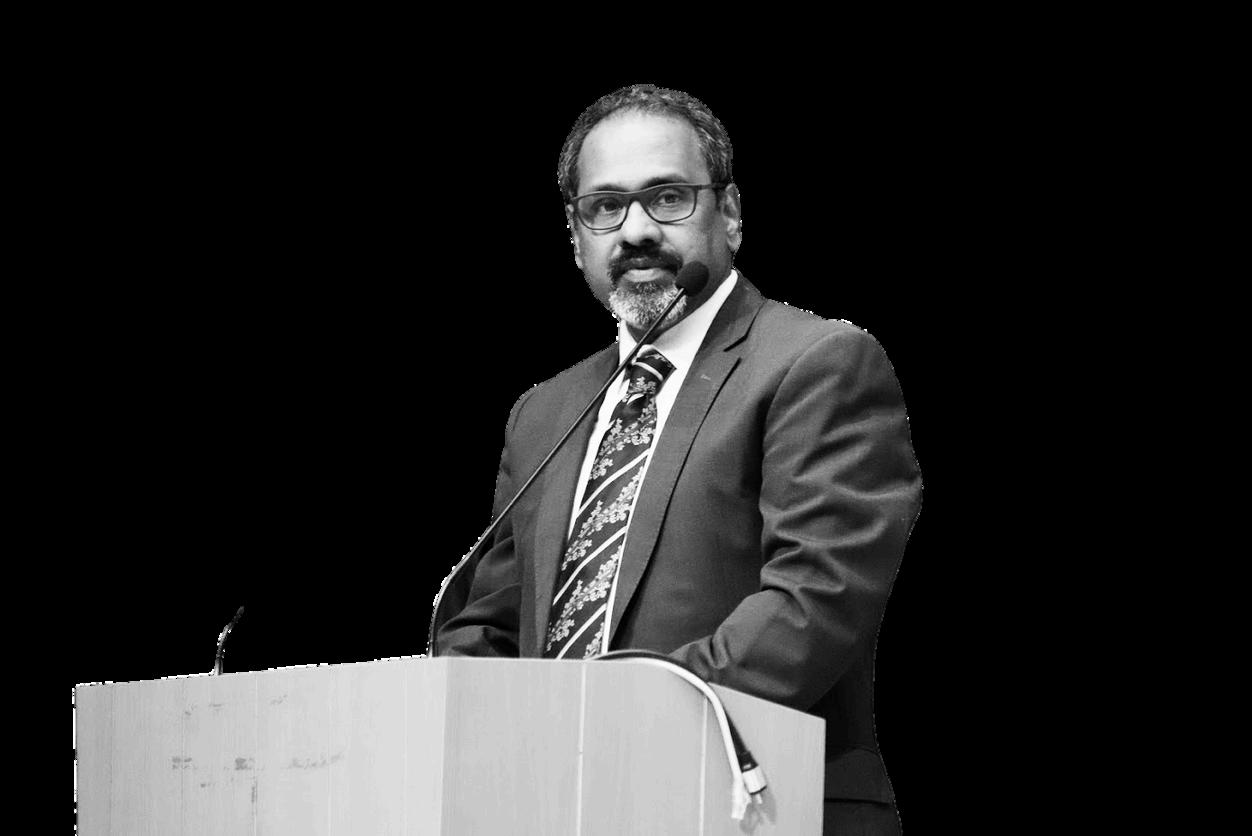
DR. SONALI S. JOGLEKAR SLING COORDINATOR & ASSISTANT PROFESSOR, RICS SBE, MUMBAI
Reflecting on my seven-year tenure as the SLING (Student Learning, Innovation, and Networking Group) Coordinator at RICS School of Built Environment (RICS SBE), I am filled with pride and gratitude for the remarkable journey we ' ve embarked upon SLING has been more than just an initiative; it has been a crucible where students transform, discovering their potential and evolving into wellrounded professionals.
One of the most rewarding aspects of SLING has been witnessing students apply classroom theories to real-world scenarios Through organizing leadership series, cultural festivities, competitions, and team events, students have seamlessly integrated academic knowledge with practical execution These activities have not only enriched their learning experience but also instilled in them a sense of accomplishment and confidence
SLING has been instrumental in nurturing vital competencies such as collaboration, teamwork, inclusivity, and diversity By working together towards common goals, students have learned the art of effective communication and mutual respect It's heartening to see them embrace diverse perspectives, leading to more innovative solutions and a harmonious community
A particularly joyous aspect of SLING is observing students uncover talents they were previously unaware of Whether it's a flair for event management, public speaking, or artistic expression, SLING has provided a platform for students to explore and hone these skills This journey of self-discovery has been fundamental in boosting their selfesteem and broadening their career horizons.
4
Challenges are an inevitable part of any endeavor, and through SLING, students have learned to navigate obstacles with resilience and creativity They've developed a problem-solving mindset, understanding that setbacks are opportunities for growth This resilience is a trait that will undoubtedly serve them well in their professional lives
Beyond skill development, SLING has been a catalyst for building enduring relationships The camaraderie fostered during events has led to a supportive alumni network, enriching both their personal and professional lives. These connections are a testament to the strong community spirit that SLING embodies
Reflecting on these years, I am deeply grateful for the opportunity to guide and witness our students' growth through the SLING initiative



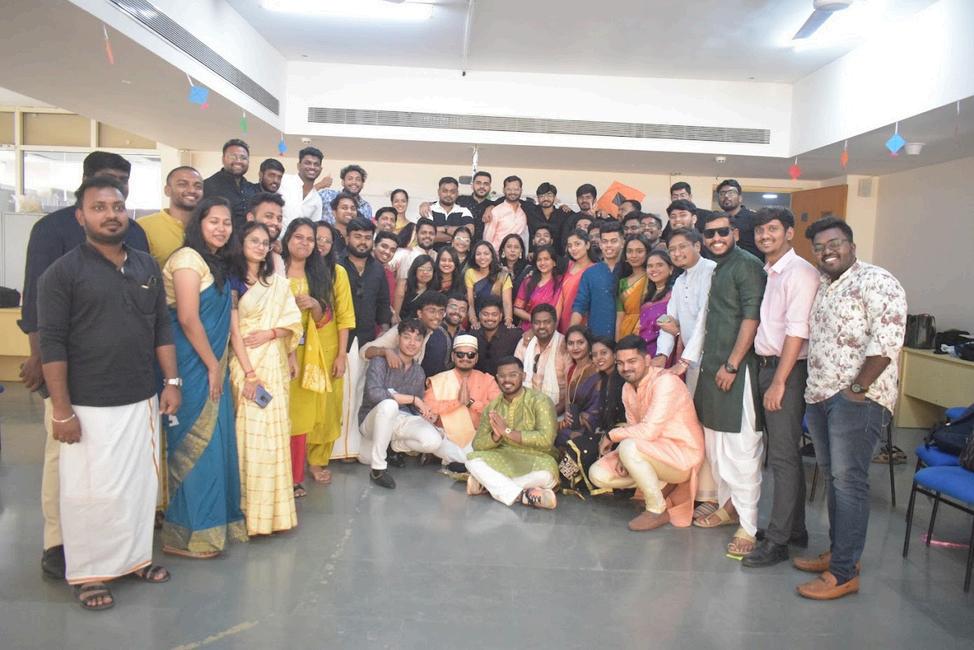
SLING has been a catalyst for building enduring relationships, creating a supportive alumni network that enriches both personal and professional lives.
This journey has been rich with learning, discovery, and transformation I am confident that the experiences and skills they've acquired will propel them toward success, enabling them to make meaningful contributions to the built environment and beyond
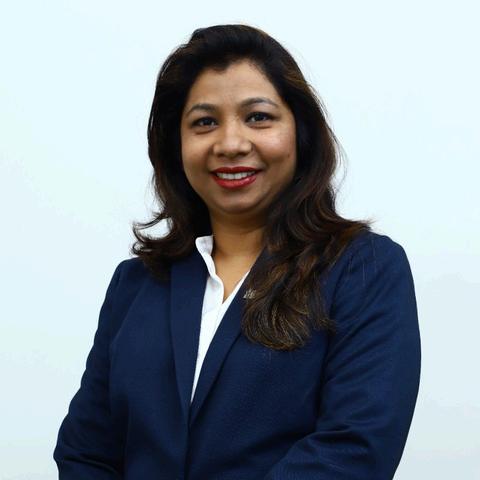
Certified Trainer in Soft Skills, Leadership, and Change Management & Emotional Intelligence Coach, Dr. Sonali S. Joglekar is Assistant Professor and holds the position of SLING Coordinator at RICS SBE, Mumbai.
Committed to nurturing future leaders, SLING remains dedicated to providing a platform that fosters holistic development, equipping students with the competencies necessary to excel in both their personal and professional lives
[S.L.I.N.G ]
STUDENT LEARNING,INNOVATION AND NETWORKING GROUP



MBA REUI 2023-2025 PRESIDENT, SLING RICS SBE- MUMBAI
This body plays a crucial role in giving us a platform to develop perspectives today that will shape the skylines of tomorrow, in this rapidly evolving built environment sector – characterised by technological advancements, sustainability imperatives, and complex global challenges. It equips us with the necessary tools and opportunities to not just adapt to this change, but to actively drive it
This past year has been a testament to the dedication and dynamism of SLING Through workshops, guest lectures by industry experts and alumni, competitions, and knowledge-sharing sessions, we aimed to catalyse collaboration and creativity, encouraging a culture where curiosity is celebrated
Looking ahead, SLING remains committed towards enhancing student experience and fostering a vibrant intellectual community, by continuing to focus on initiatives that seek to empower students to develop leadership skills and make a meaningful impact in their professional lives
The Student Learning, Innovation, and Networking Group - the dynamic heart of our institution - reflects the shared ambitions and spirit of innovation that define our student -
body We, at SLING, are more than just a student council; we are a dynamic ecosystem designed to cultivate excellence in future leaders of the built environment industry Our very name encapsulates our core mission: to foster Student Learning beyond the classroom, to ignite Innovation that challenges conventional thinking, and to build a powerful Networking Group that connects us today and empowers us tomorrow
SLING is more than just a council. , it is a dynamic ecosystem that aims to develop future leaders in the built environment
The three pillars that support SLING's operations are student learning, innovation, and networking
The built environment industry is rapidly developing due to technology, sustainability, and global concerns; SLING educates students to lead this change rather than just adapt to it
Workshops, guest lectures, competitions, and sessions have all played an important role in encouraging creativity, teamwork, and leadership this year
The goal is to inspire students to become leaders, create a solid network, and have a significant professional influence
With an eye on the future, SLING is dedicated to improving the educational experience for students, encouraging intellectual dynamism, and molding future change makers
“IGNITING MINDS, INSPIRING GROWTH”
It gives me tremendous joy to formulate the message as the President of SLINGthe quintessence student council that thrives as a fulcrum of our dynamic and vibrant MBA community. SLING -
the quintessence student council that thrives as a fulcrum of our dynamic and vibrant MBA community SLING conspicuously embodies unity , enthusiasm and growth A trajectory where creativity converges leadership and every student procures an opportunity to outshine beyond academics
The preceding year has been a powerhouse of energy , ideas and unforgettable moments A plethora of events : spirited cultural events that revelled our diverse identities in addition to educational talks which stimulated curiosity and profundity of thought SLING has strived to strengthen and bring about meaningful experiences in each and every student . Our team building activities were replete with fun inclusive of forging friendships, building trust and nurturing a collaborative spirit that cogitates the essence of business leadership. The aforementioned wouldn’t have been possible without the zealous commitment , relentless passion and diligence of the sling team in its entirety , the unflinching support of our faculty mentors and consequentially the enthusiastic participation of you - the student body . As we present this edition of our esteemed magazine , we aspire that it encapsulates the spirit of what we do and what we believe in . May it remind us of the collective community strength , the joy of shared vision besides the endless possibilities that lie ahead when we convene

DEBASHISH PAUL
MBA CPM 2023-2025
PRESIDENT, SLING
RICS SBE-MUMBAI

SrikrushnaMohanty HEAD B I M

HemantBaraf CO-HEAD


ShreyashVekhande CO-HEAD
ahil Patil EAD

SaqlainSakharkar CO-HEAD
hi Patil Social Service Team
SupreetKadam HEAD Debate

Ramya Krishna HEAD
SportsCommittee

Jeevan HEAD
Art&Drama
Stirta

SachinYakkelli CO-HEAD


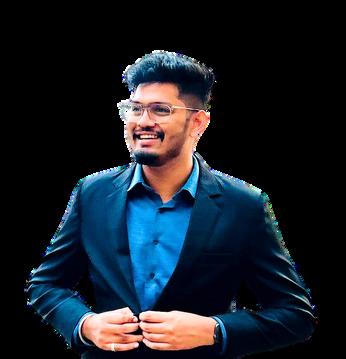
RoshanBade CO-ORDINATOR

YusufKhot CO-HEAD

NishadPawar CO-ORDINATOR

Taniya Raut HEAD

Devyani Kamble CO-HEAD Cultural Team
FelixJabin CO-ORDINATOR




















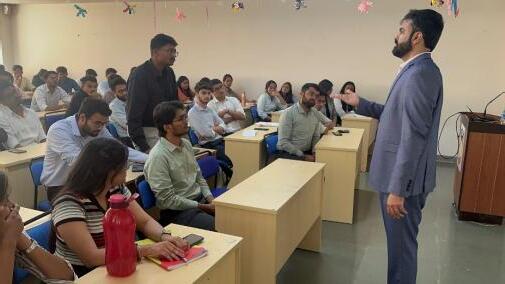
14/02
THE DECODING UNION BUDGET 2025, ORGANIZED BY SLING, AIMED TO PROVIDE A DEEPER UNDERSTANDING OF INDIA’S FINANCIAL POLICIES, TAXATION REFORMS, AND THEIR IMPACT ON KEY SECTORS, PARTICULARLY THE BUILT ENVIRONMENT
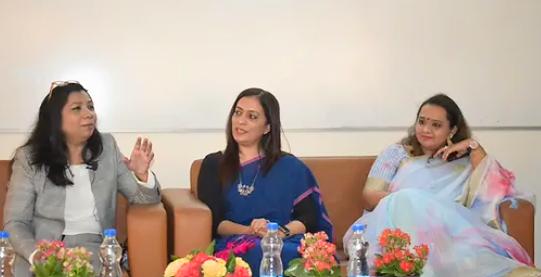
18/03
INTERNATIONAL WOMEN’S DAY WITH THIS YEAR'S THEME, "ACCELERATE ACTION," WE GATHERED FOR AN INSPIRING EVENT FOCUSED ON DRIVING REAL CHANGE AND FOSTERING INCLUSIVITY IN WORKPLACES AND BEYOND. OUR HONERABLE GUESTS, MS RADHIKA SHENAY (MRICS) - HEAD, CORPORATE REAL ESTATE & SERVICES, IDFC FIRST BANK& MS ARPI THAKKER - DIRECTOR, PROJECT & COST MANAGEMENT, GLEEDS
26/11
SPEAKER: MR. SAURABH NAIK (VICE PRESIDENT OF SALES AND OPERATIONS, RUSTOMJEE) "BEYOND THE DEAL," EXPLORING THE WORLD OF BUSINESS DEVELOPMENT, SALES, AND MARKETING IN REAL ESTATE

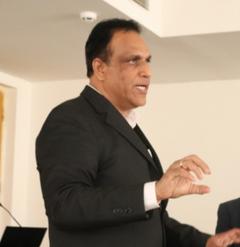
21/02
" DIGITIZATION IN THE NEW ERA OF CONSTRUCTION,"
FEATURED MR. DEEPAK SUVARNA, A SEASONED EXPERT IN HIGH-RISE CONSTRUCTION AND DIGITAL TRANSFORMATION, WHO SHARED HIS KNOWLEDGE ON OVERCOMING TRADITIONAL CONSTRUCTION CHALLENGES THROUGH INNOVATIVE SOLUTIONS.
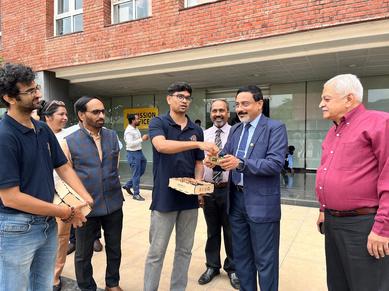
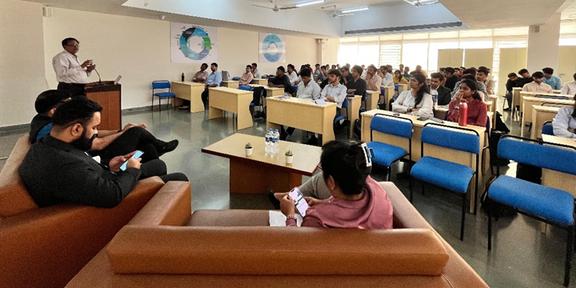
02/05
DIY DRONE WORKSHOP
PARTICIPATED IN A HANDS-ON DIY DRONE WORKSHOP ORGANIZED BY TRILOCHANA AEROSPACE AND DEFENCE TECHNOLOGIES PVT LTD , WHICH FOCUSED ON PROVIDING IN-DEPTH KNOWLEDGE OF DRONE ARCHITECTURE AND ITS DIVERSE APPLICATIONS ACROSS SECTORS
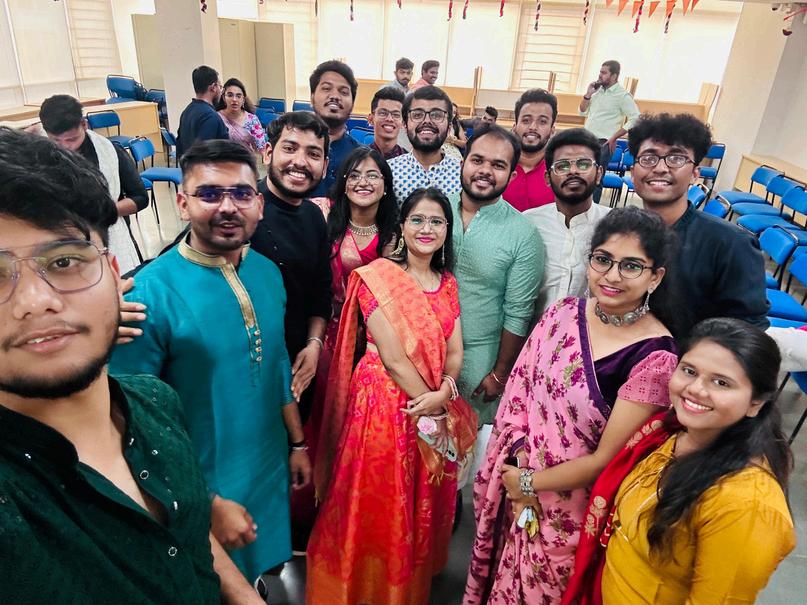
ONAM 17/09
THE EVENT BROUGHT TOGETHER STUDENTS, FACULTY, AND STAFF TO EXPERIENCE THE RICH TRADITIONS OF KERALA THROUGH A DAY FILLED WITH CULTURAL PERFORMANCES, TRADITIONAL ATTIRE, AND FUNFILLED COMPETITIONS
24/09-26/09
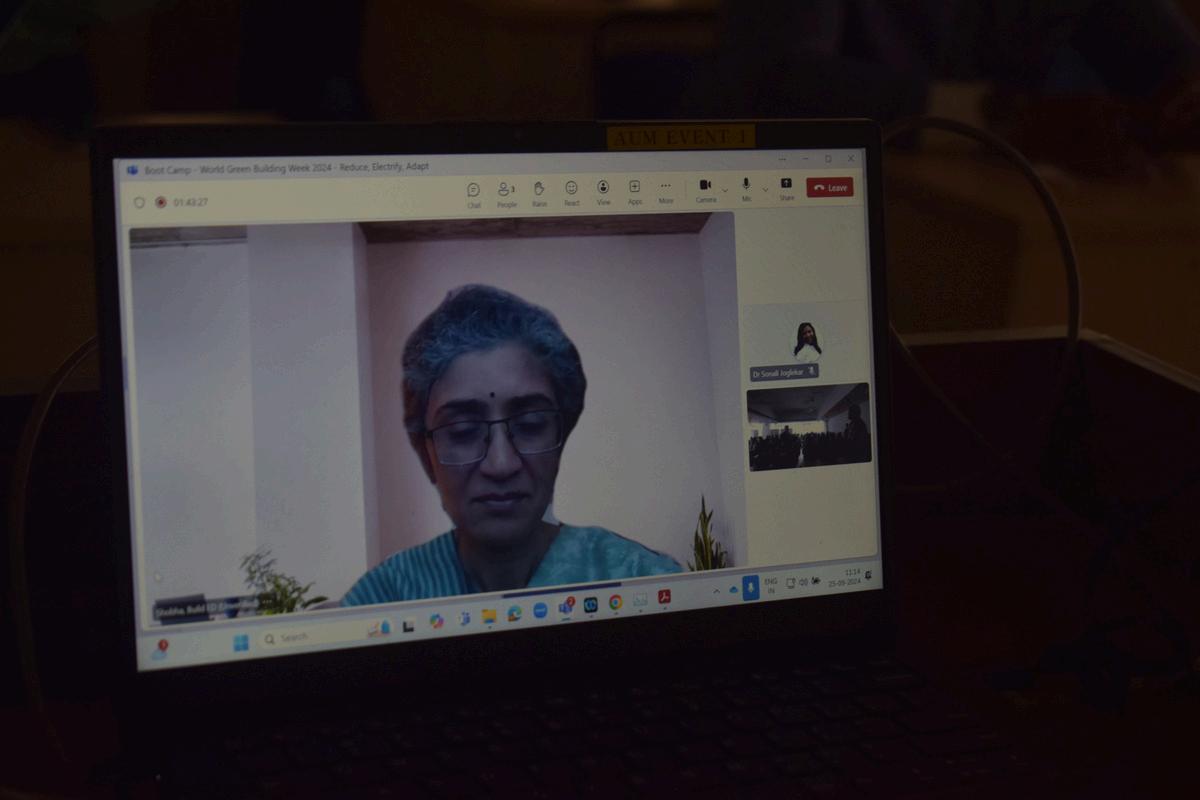
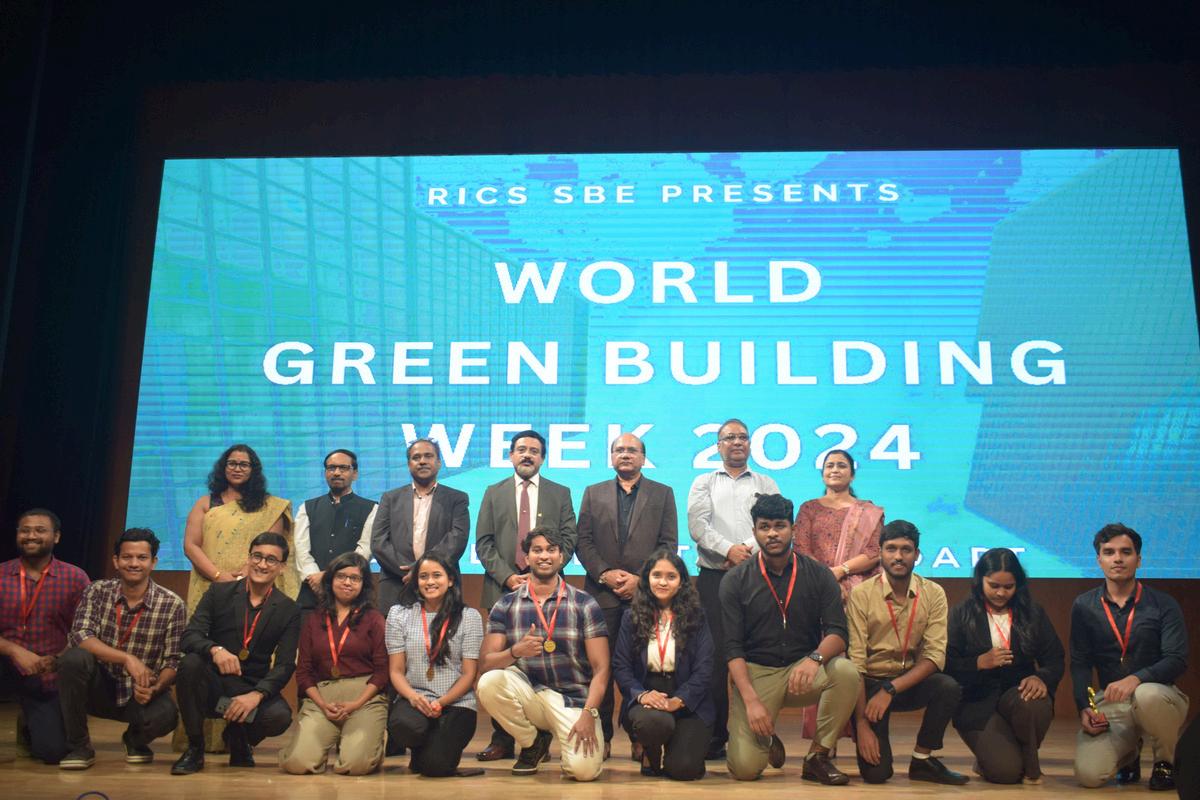
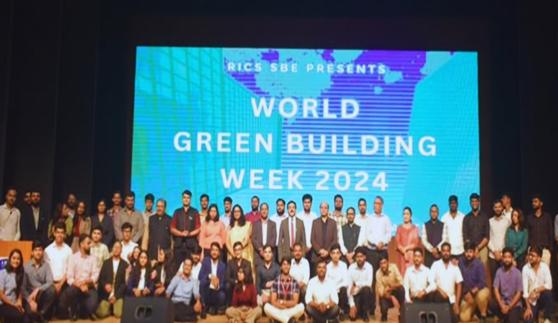
WORLD GREEN BUILDING WEEK
WORLD GREEN BUILDING WEEK (WGBW) WAS AN EVENT LED BY SLING TO RAISE AWARENESS ABOUT SUSTAINABLE BUILDINGS AS A KEY SOLUTION TO CLIMATE CHANGE. IN ALIGNMENT WITH THIS MISSION, WE CELEBRATED WGBW OVER A SPAN OF THREE IMPACTFUL DAYS FILLED WITH ACTIVITIES DESIGNED TO PROMOTE SUSTAINABILITY, INNOVATION, AND STUDENT ENGAGEMENT
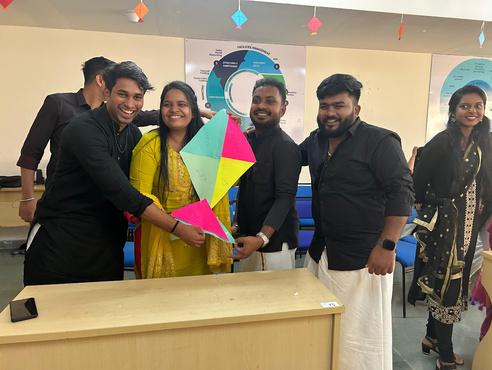
21/01
MAKAR SANKRANTI EVENTTHE EVENT NOT ONLY HONORED THE TRADITIONS OF THE FESTIVAL BUT ALSO PROVIDED A PLATFORM FOR STUDENTS AND FACULTY TO CONNECT AND CELEBRATE TOGETHER
29/04
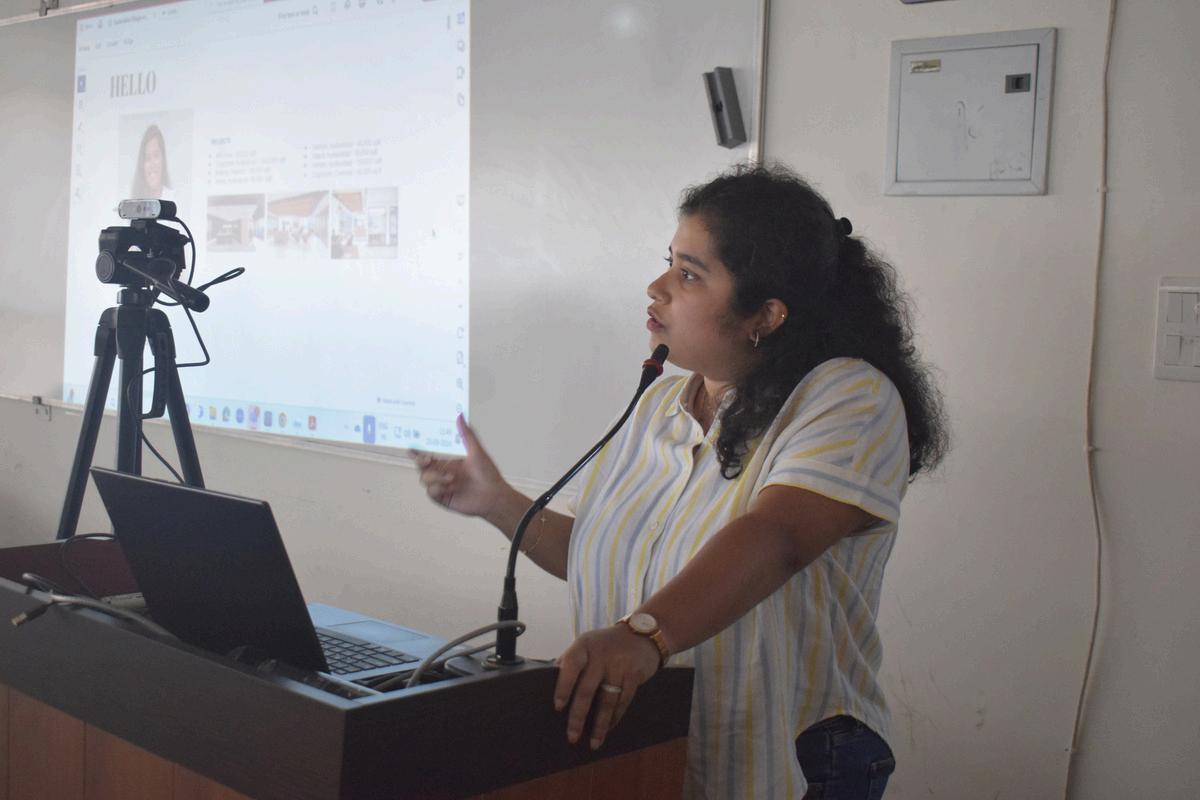
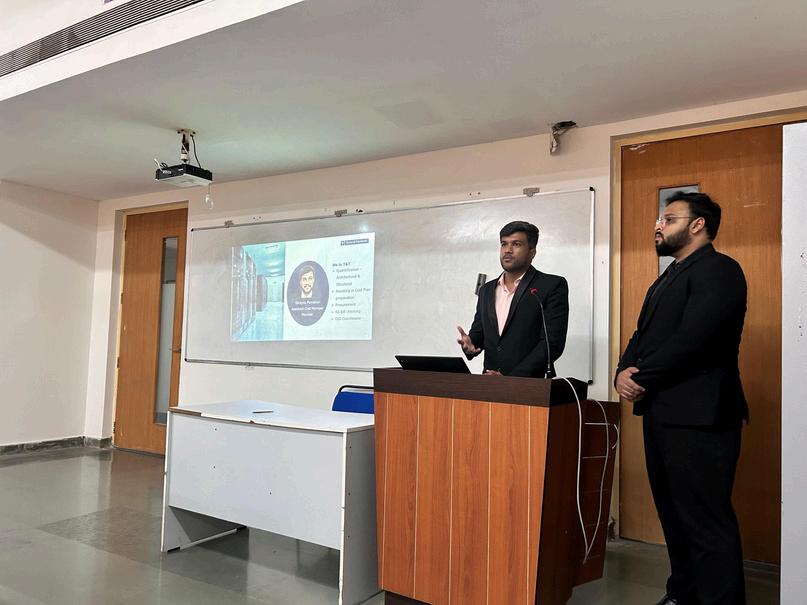
ALUMNI SESSION
ALUMNI SESSION FEATURING MR YASH KOLEKAR AND MR. SHREYAS PAWASKAR FROM THE MBA CPM 2022–2024 BATCH, NOW WITH TURNER & TOWNSEND THEY SHARED PRACTICAL INSIGHTS INTO PROJECT AND COST MANAGEMENT, OFFERING VALUABLE TAKEAWAYS FOR ASPIRING PROFESSIONALS
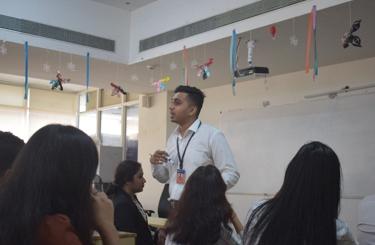
03/12
THE EVENT, PART OF THE SLING LEADERSHIP SERIES, AIMED TO PROVIDE STUDENTS WITH REAL-WORLD INSIGHTS INTO CAREER OPPORTUNITIES, ROLES, AND TRENDS IN THE REAL ESTATE AND INFRASTRUCTURE SECTORS THROUGH FIRSTHAND ACCOUNTS FROM INDUSTRY INTERNS.
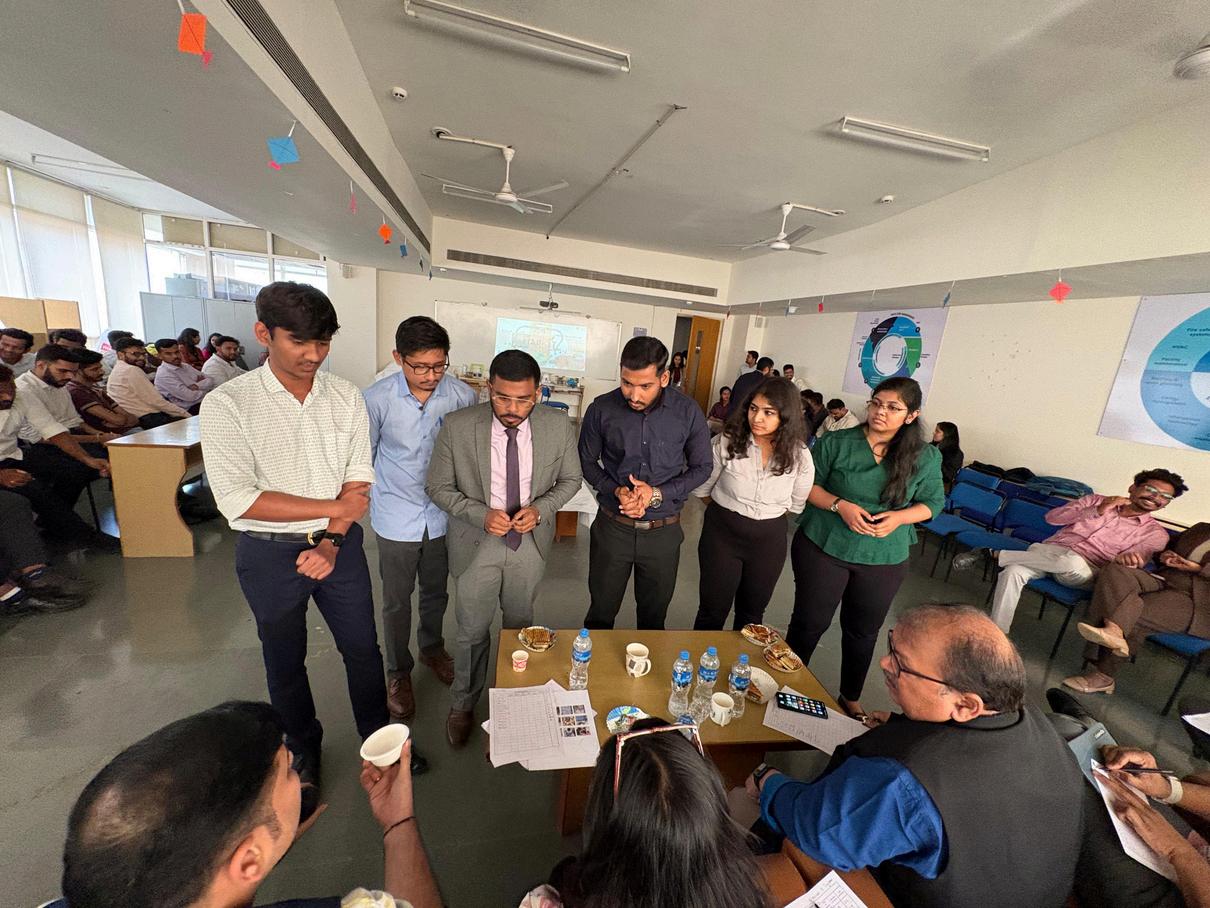
28/01
THE MAD MARKET EVENT TEAMS TURN TRASH INTO TREASURE BY CRAFTING REUSABLE PROTOTYPES AND PITCHING THEM WITH HILARIOUS AD SKITS! A PERFECT BLEND OF FUN AND LEARNING, THIS EVENT SPARKS CREATIVITY, STORYTELLING, AND STRATEGIC BRILLIANCE
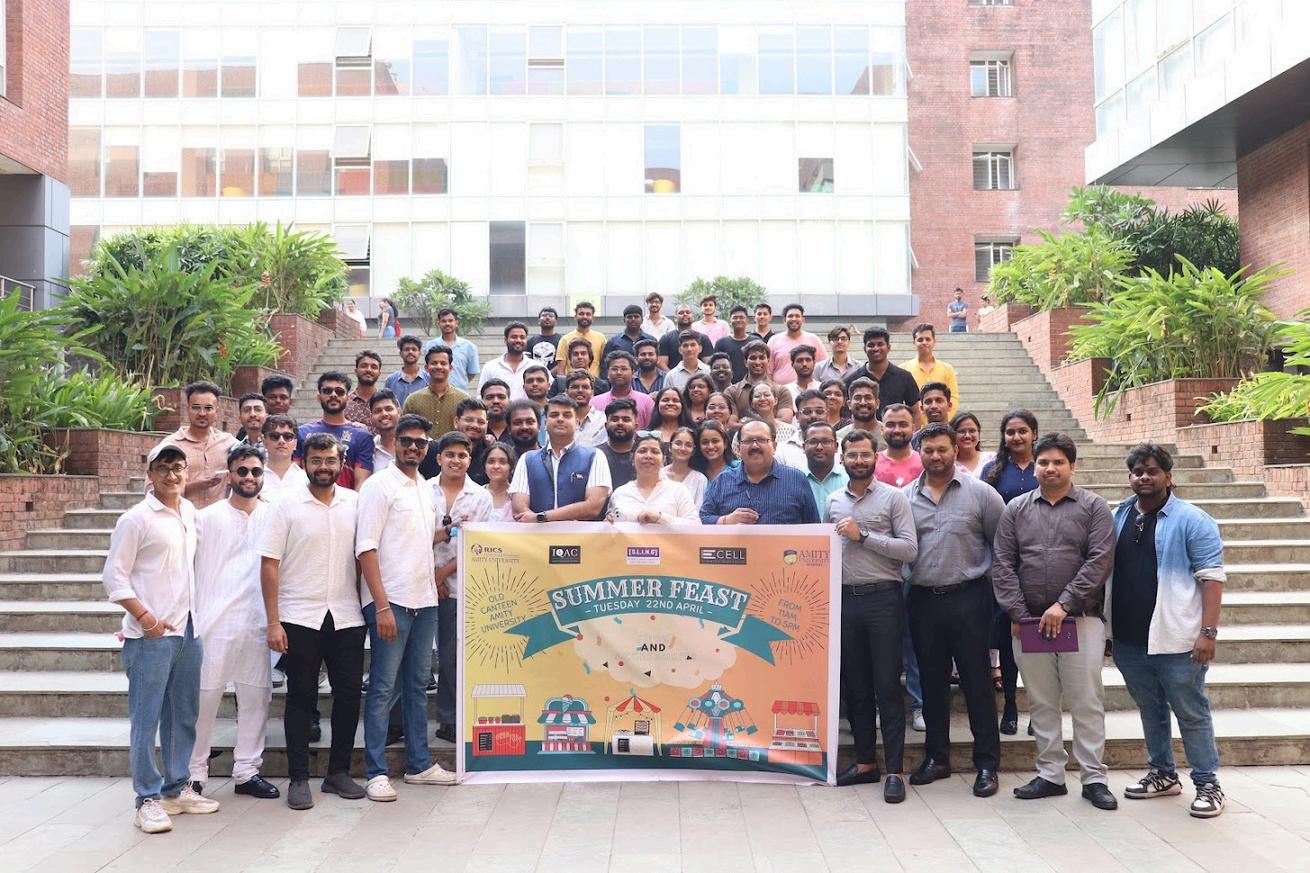
22/04
SUMMER FEAST
OUR SUMMER FEAST 2025 WAS A TESTAMENT TO THE ENTREPRENEURIAL SPIRIT OF OUR MBA CPM, MBA REUI, AND BBA REUI STUDENTS. WITH INNOVATIVE IDEAS, BOLD MARKETING MOVES, AND EXCEPTIONAL TEAMWORK, THEY TURNED CHALLENGES INTO PROFITS AND CLASSROOM LESSONS INTO REALWORLD SUCCESS.
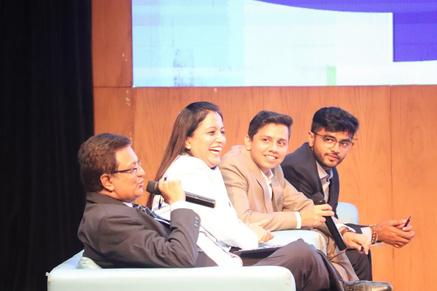
06/05 ISLAND OF SHARKS
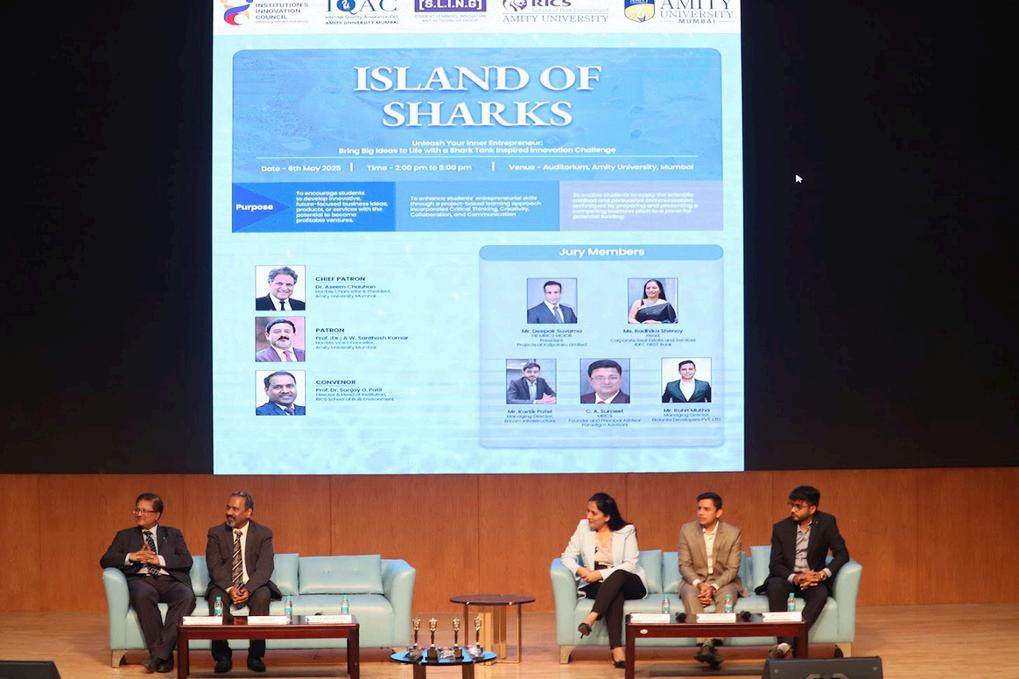
THE EVENT PROVIDED AN EXCITING PLATFORM FOR BUDDING ENTREPRENEURS TO PITCH THEIR STARTUP IDEAS TO A PANEL OF EXPERT JUDGES OUR VERY OWN "SHARKS"—COMPRISING FACULTY MEMBERS AND INDUSTRY MENTORS.
11/02
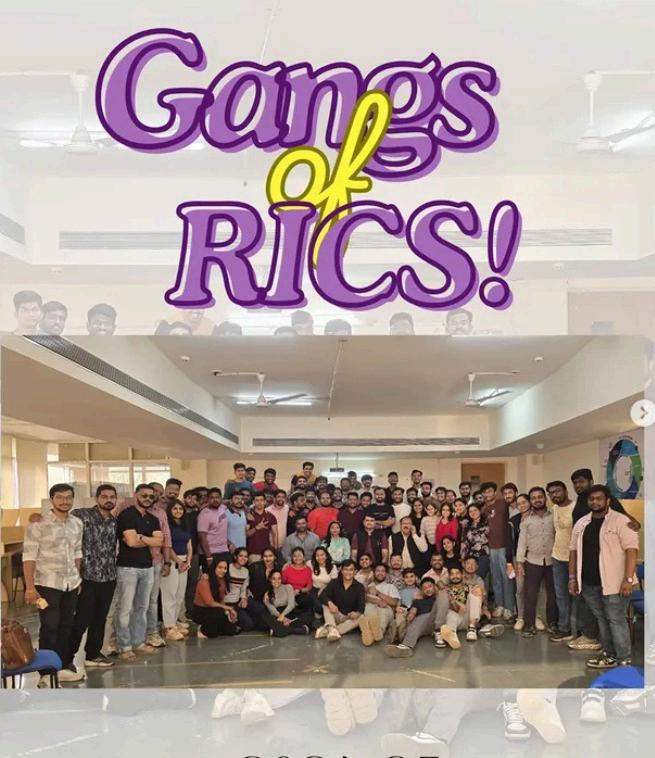
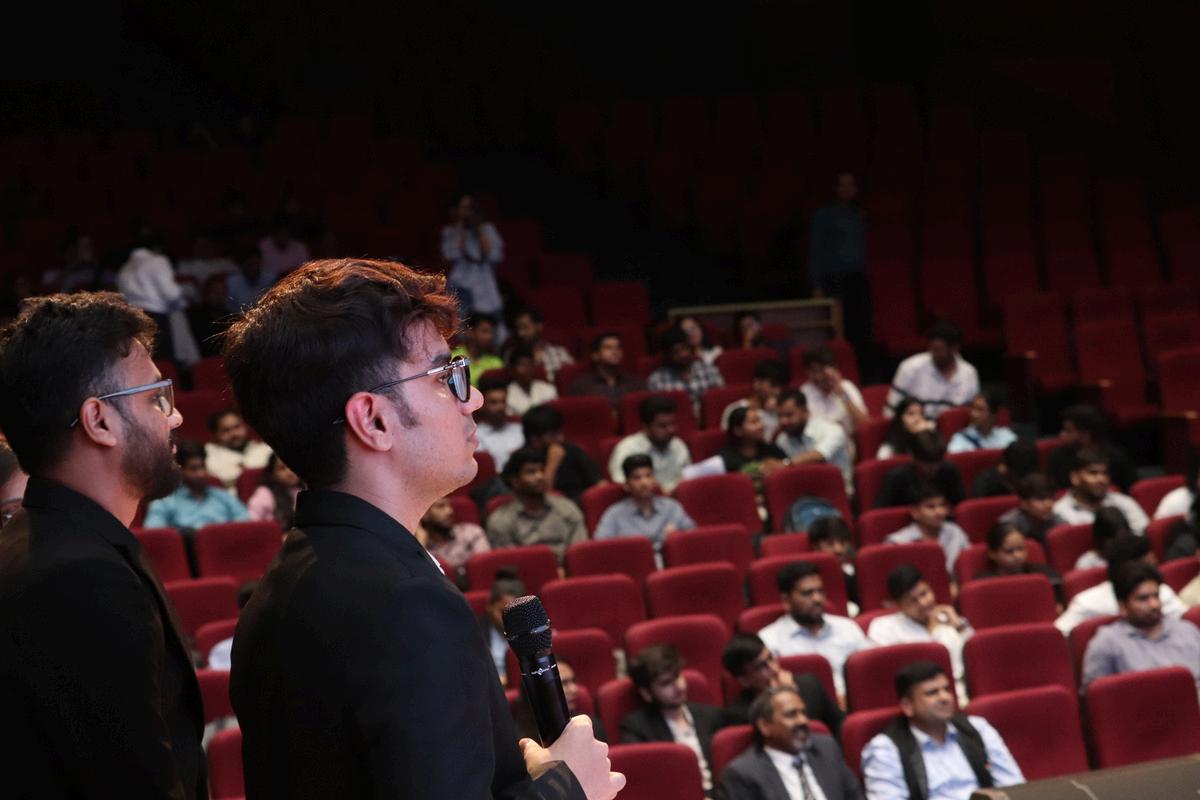
WITH CAREFULLY DESIGNED TEAM-BUILDING EXERCISES, PARTICIPANTS HAD THE OPPORTUNITY TO FORM STRONG BONDS, SHOWCASE THEIR ABILITIES, AND CREATE LASTING MEMORIES. THE EVENT WAS JUST NOT ABOUT COMPETITION BUT ALSO ABOUT FOSTERING CAMARADERIE AND PUSHING LIMITS IN A FUN AND ENERGETIC ENVIRONMENT.
-NIKHIL SINGH, RICS SBE - MUMBAI (MBA CPM-2022-24) ALUMNI, PORTFOLIO MANAGER,RELIOBRIX CONSULTING PVT. LTD.
RICS School of Built Environment (RICS SBE), Amity University, Mumbai Campus, recently celebrated a resounding success at the Amity Sports Meet, Sangathan 2024 Over the course of a month, students showcased their exceptional athleticism, teamwork, and competitive spirit, contributing significantly to the institution’s overall triumph
Sangathan, an annual sports event, provides a platform for students and staff from various academic departments at Amity University to foster camaraderie This year, RICS SBE’s performance was particularly remarkable, with students excelling in multiple sporting events, both in team and individual categories
RICS SBE students achieved gold medals in the boys’ tug of war, volleyball, shot put, and the girls’ carrom Their dominance in both strengthbased and strategic games was evident in these victories The team’s unwavering dedication, rigorous training, and exceptional teamwork played a pivotal role in their triumphs
In addition to team events, several students also received individual accolades, highlighting the depth of talent within RICS SBE. Their successes not only brought pride to the institution but also reinforced its unwavering commitment to providing a well-rounded student experience that integrates academic excellence with extracurricular pursuits
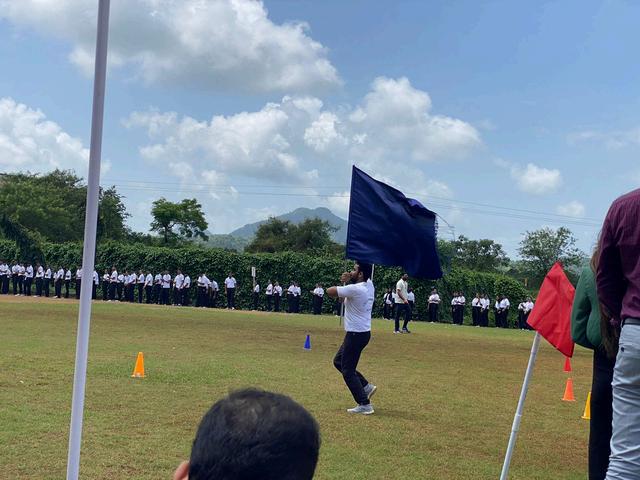
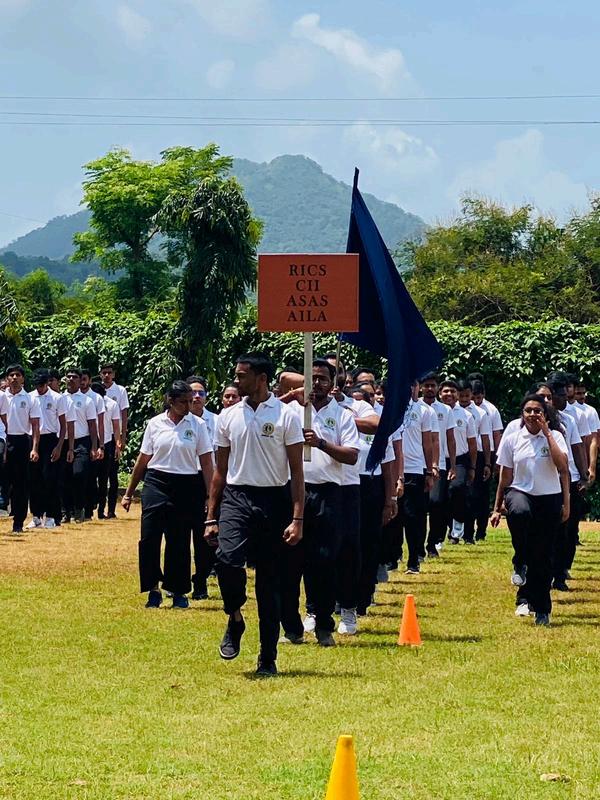

“Fueled by dedication, powered byunity. RICS SBE left a lastingmark at Sangathan 2024.”
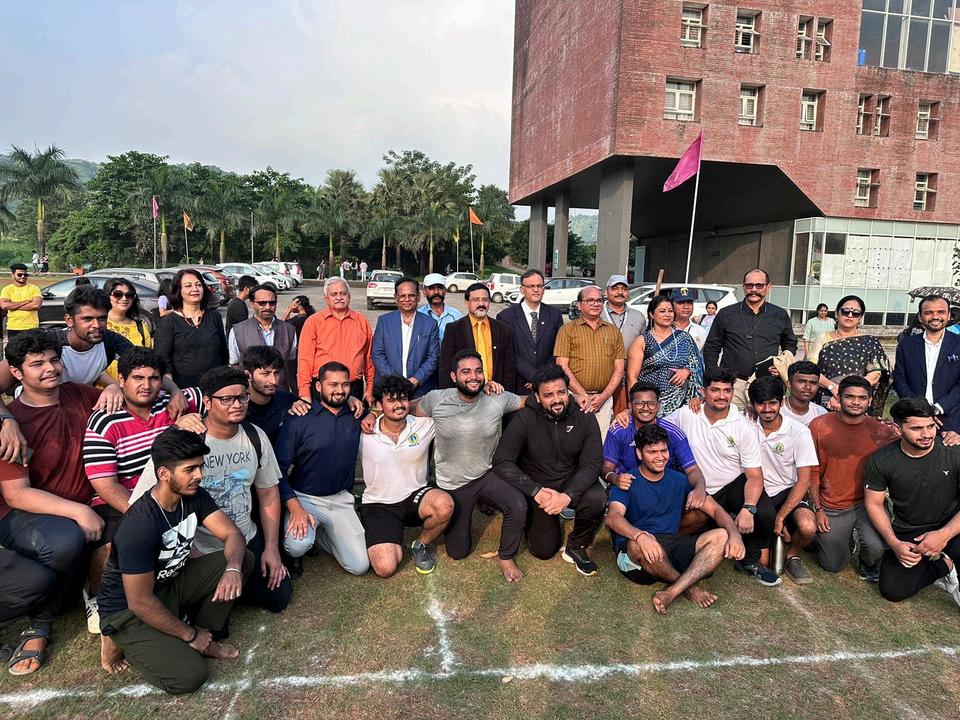
The enthusiastic participation of students, coupled with the unwavering support of faculty and staff, created an electrifying atmosphere throughout the competition Sangathan 2024 served as a testament to the indomitable spirit, sportsmanship, and perseverance that characterize the students of RICS SBE

As Sangathan 2024 draws to a close, the triumphs achieved by RICS SBE stand as a resounding affirmation of the institution’s flourishing sports culture and unwavering dedication to holistic development Through this remarkable performance, the students have set an exceptionally high standard for future endeavors, guaranteeing that RICS SBE remains a formidable force in both academic and athletic endeavors.
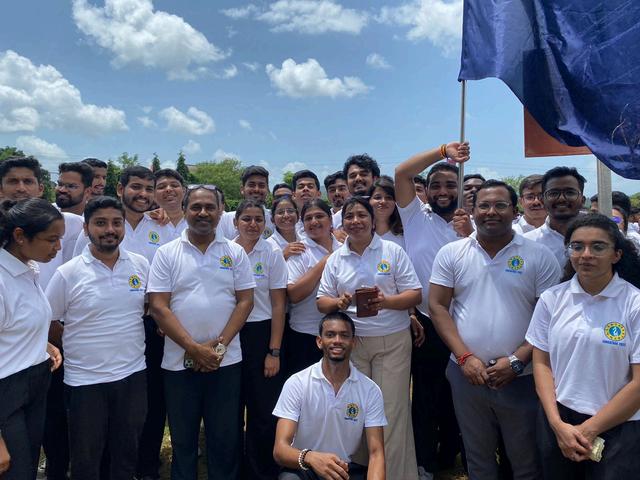
In an era defined by rapid urbanization, climate change, and technological advancements, the construction and real estate industries stand at a crossroads The demand for growth and innovation must be balanced with the need for stability and sustainability Recognizing this challenge, the RICSSthirata Committee emerges as a pioneering initiative aimed at fostering resilience, ethical practices, and long-term sustainability in the built environment


Derived from the Sanskrit word "Sthira" (र), meaning steadiness and firmness, Sthirata embodies the principles of stability, ethical integrity, and resilience In the context of construction and real estate, stability extends beyond just structural soundness it encompasses financial security, environmental responsibility, and professional excellence Ar.Ramya Krishna Kurumaddali
The RICS-Sthirata Committee is envisioned as a global think tank that will establish policies and frameworks to ensure stability across the built environment Its key focus areas include:
Financial Stability – Encouraging long-term investments, reducing economic risks, and promoting transparent financial practices in real estate.
Structural Stability – Designing earthquakeresistant, energy-efficient, and durable buildings that stand the test of time
Ethical Stability – Ensuring transparency, fairness, and accountability in real estate transactions and governance.
Environmental Stability – Advocating for green construction, low-carbon footprints, and sustainable urban planning
The Royal Institution of Chartered Surveyors (RICS) upholds global standards of professionalism, ethics, and sustainability The RICS-Sthirata Committee aligns with these principles by:
��Promoting Transparency & Ethics to eliminate corruption and malpractice in real estate dealings
�� Advocating for Sustainability & Resilience through climate-conscious urban development
�� Enhancing Professionalism & Excellence by training industry leaders in global construction standards
��Integrating Technology such as AI, blockchain, and Building Information Modeling (BIM) for efficiency and accuracy
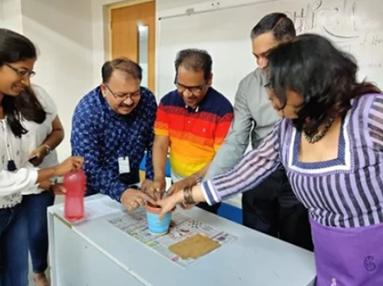
The principles of Sthirata are already being implemented in various global projects:
�� Japan’s Earthquake-Resistant Structures –Incorporating flexible foundations and shockabsorbing technology to withstand seismic events
�� Smart Cities in the UAE – Using AI-powered construction and sustainable urban planning to ensure long-term economic and environmental stability
�� India’s Green Building Revolution – Led by the Indian Green Building Council (IGBC), which promotes energy-efficient materials and solarpowered infrastructure
Looking ahead, the RICS-Sthirata Committee aims to:
1 Influence international construction policies to prioritize stability and sustainability
2 Collaborate with universities and research institutions for advanced studies in built environment stability
3 Develop sustainable investment models that ensure long-term financial and structural integrity
Conclusion: Stability as the Foundation of Progress
The future of construction and real estate must be built on the foundation of stability, sustainability, and ethical governance The RICS-Sthirata Committee is not just an initiative it is a movement toward a more resilient, balanced, and forward-thinking built environment By embracing Sthirata, we can create a world where innovation coexists with integrity, ensuring that every structure we build today stands strong for generations to come
Let’s build a future that is not only visionary but also Stable, Sustainable, and Ethically sound.



Dr Deva Dutta Dubey, FRICS, is an accomplished academic and finance expert currently serving as Associate Professor at the RICS School of Built Environment, Amity University Mumbai With extensive experience in real estate and infrastructure finance across India and the Middle East, he has contributed significantly to both industry and academia Dr Dubey has co-authored several notable research papers, including "Analysing Historical Real Estate Price Trends and Economic Indicators from 2004 to 2023: A Study of Office Properties at CBD Belapur, Navi Mumbai" and "Concept of Proportional Adjustment in Asset Value based on Ease of Accessibility," presented at the International Conference on Real Estate Management and Valuation His work also encompasses studies on nonperforming assets in Indian banks, reflecting his deep engagement with financial stability and policy As a Fellow of the Royal Institution of Chartered Surveyors (FRICS), Dr Dubey continues to shape real estate education, research, and professional mentoring in India and beyond

Shankar Banerjee is a seasoned professional in construction and project management, currently serving as Program Leader for the MBA in Construction Project Management and Research & Teaching Associate at RICS School of Built Environment, Amity University Mumbai. With over nine years of combined industry and academic experience, he has held roles at Simplex Infrastructure Ltd and MAEERS Project & Development An alumnus of Swami Vivekanand Subharti University and MIT College of Management, Pune, Shankar has contributed to research on highway project performance, with publications in international journals His expertise encompasses project planning, scheduling, estimation, and Building Information Modelling (BIM) Recognized for his commitment to education and innovation, he continues to shape future professionals in the built environment sector

Shekhar Vishnu Nagargoje is a dynamic force in urban development, blending academic excellence with real-world impact As Associate Professor and Associate Director of Programmes at RICS School of Built Environment, Amity University Mumbai, Shekhar brings over 15 years of expertise in real estate analytics, urban planning, and infrastructure development A gold medallist from CEPT University, he has led high-impact projects at K Raheja Corp, IL&FS, and Banyan Resources His thought leadership spans smart cities and urban resilience, with publications in top Scopus-indexed journals and international forums Shekhar is also the founder of Planmax, a consultancy firm shaping land use strategies and feasibility studies Honored with teaching excellence awards and global recognition from institutions like Guangzhou University, China, he is also a reviewer for the International Journal of Construction Management Shekhar Nagargoje continues to shape the future of sustainable urban growth through sharp research, industry insight, and academic rigor



Dr Sonali Samuel Joglekar is an esteemed academician and educator known for her innovative approach to management education With a Ph D in Human Resource Management, her research focuses on emotional intelligence and work-life balance, areas in which she has published extensively
As the Program Leader for BBA Real Estate and Urban Infrastructure at RICS School of Built Environment, Amity University Mumbai, Dr. Joglekar blends academic theory with practical application to develop future professionals She is also a certified trainer in soft skills, leadership, and change management, as well as an emotional intelligence coach, guiding individuals through the complexities of modern work environments Her career combines academic rigor and corporate experience, having taught at prestigious institutions and led training programs for organizations like the Insurance Institute of India, Techsignia, and SASMIRA Dr Joglekar’s commitment to leadership development and her research in emotional intelligence continue to inspire and empower the next generation of leaders


Dr. Majid Wahid Shaikh is a seasoned academic and industry expert in real estate, land acquisition, and property transactions With over 14 years of professional experience, he has managed the acquisition of more than 1,600 acres of land across India Holding a Ph D in Management, a Master's in Arts, and a B S L LL B , Dr Shaikh integrates legal, administrative, and psychological insights into his teaching and research
At RICS School of Built Environment, Amity University Mumbai, he leads courses on land management and real estate transactions. His research interests encompass land acquisition, land management, and the sociopsychological aspects of land ownership, particularly their impact on life satisfaction and well-being Dr Shaikh's unique blend of practical experience and academic expertise positions him as a valuable contributor to the field of real estate education and research

Dr. Jayatheja Muktinutalapati is a civil engineering academic with expertise in sustainable construction materials and geotechnical innovation With a Ph D from BITS Pilani and postdoctoral research at IIT Dharwad, his work emphasizes life cycle assessment, recycled materials, and AI in construction He has authored 7 journal articles and 24 conference papers to date His recent contributions include studies on CO₂-exposed, fiberreinforced binders for expansive soil stabilization and the role of geosynthetics in dam failure prevention presented at the Indian Young Geotechnical Conference (2025) and the International Symposium of Offshore Geotechnics (2024), respectively
At RICS SBE, he integrates the RICS Whole Life Carbon Assessment Standard into teaching, preparing students to lead in sustainable infrastructure Dr Muktinutalapati stands at the forefront of green engineering education, combining rigorous research with real-world relevance

SHEKHAR NAGARGOJE
Associate Director Programs
| Associate Professor | REUI, RICS SBE, Amity University
Mumbai
As India steps boldly into its urban future building 100+ smart cities,
-expanding metro networks, and pushing for green infrastructure the traditional ways of managing construction projects are being challenged In this dynamic environment, Agile thinking, once limited to software teams in Bengaluru or Hyderabad, is beginning to shape how we design, build, and transform our built spaces
Born from the need to respond quickly to change, Agile principles are now redefining success in real estate, infrastructure, and architecture And nowhere is this
more critical than in India, where urban development must be fast, flexible, inclusive, and sustainable.
WHY AGILE, WHY NOW ESPECIALLY IN INDIA?
India’s built environment is unlike any other Projects often face shifting government policies, evolving user demands, land acquisition challenges, environmental clearances, and rapid tech disruptions Traditional project management approaches linear, inflexible, and documentation-heavy struggle to cope with these realities
Agile, on the other hand, encourages iteration over rigidity, collaboration over silos, and responsiveness over prediction It allows teams to break large projects into manageable phases, deliver value faster, and adapt continuously based on stakeholder feedback In India, this means:
Adjusting building designs based on local community feedback during early construction stages
Piloting solar rooftops or rainwater harvesting systems before full-scale rollout
Navigating unexpected policy shifts like revised FSI norms or heritage restrictions midproject
Indian firms from large EPC contractors to boutique architecture studios are beginning to apply Agile practices in meaningful ways. Daily standup meetings are replacing weekly status updates Kanban boards and digital collaboration tools are helping project teams spread across cities like Pune, Ahmedabad, and Gurugram stay aligned in real time
In projects like redevelopment of Dharavi, revitalization of Sabarmati Riverfront, or transitoriented development around Metro lines, Agile can enable planners to test components in phases, receive real-time feedback from affected communities, and incorporate changes before scaleup
"The Indian built environment is no longer just about construction it's about transformation."
One Mumbai-based developer recently transformed a mid-rise commercial building into a hybrid work hub post-pandemic by adopting Agile workflows testing floor layouts, touchless entry systems, and energy-efficient materials in iterative phases It not only ensured faster delivery but helped the team meet updated ESG and health compliance standards efficiently
TANGIBLE
Speed with Flexibility: Phased execution reduces delays and absorbs regulatory or environmental changes better critical in India’s everevolving urban scenario
Cost-Efficiency: Early detection of issues minimizes rework, and real-time decision-making prevents costly last-minute changes
Stakeholder Satisfaction: Frequent feedback loops ensure better alignment with both end users and approval authorities, including local municipalities or RERA
Sustainability & Innovation: Agile’s emphasis on testing and learning enables easier integration of green building features, smart tech, and climate-responsive design
AGILE AS A CATALYST FOR INDIA’S SUSTAINABLE URBAN FUTURE
India’s commitment to net-zero targets, smart cities, and resilient infrastructure demands not just new technologies but a new mindset Agile provides exactly that
By placing collaboration, experimentation, and adaptability at the heart of project delivery, Agile allows architects to innovate, engineers to optimize, planners to co-create with communities, and developers to de-risk investments
It also opens doors to deeper engagement with sustainability goals whether it’s LEED Platinum campuses in Bengaluru, net-zero townships in Pune, or urban farming experiments in Chennai. As the Government pushes for Ease of Doing Business, Digital India, and Atmanirbhar Bharat, Agile can also align seamlessly with national priorities by enabling faster, smarter, and more transparent delivery of infrastructure and real estate assets
IN CONCLUSION: AGILITY IS INDIA’S EDGE
The Indian built environment is no longer just about construction it's about transformation And in this journey, Agile principles serve as a compass
They remind us that building better isn’t just about building faster it’s about building with purpose, with people, and with the power to pivot
In a nation as diverse, dynamic, and demanding as India, Agile is not just an approach it’s the future
Dr. DEVA DUTTA DUBEY
PhD, FRICS, Associate Professor at RICS SBE, Amity University Mumbai

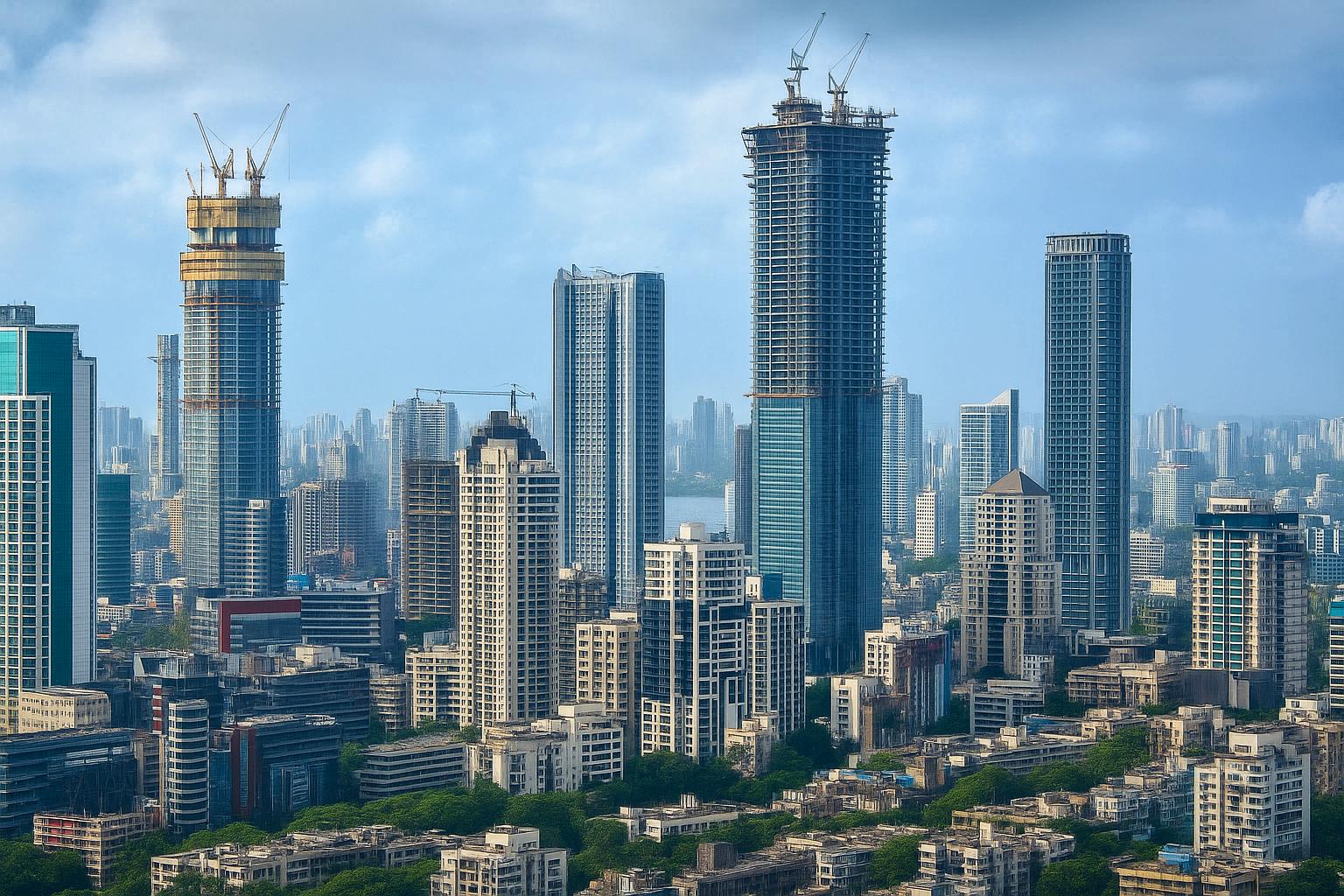
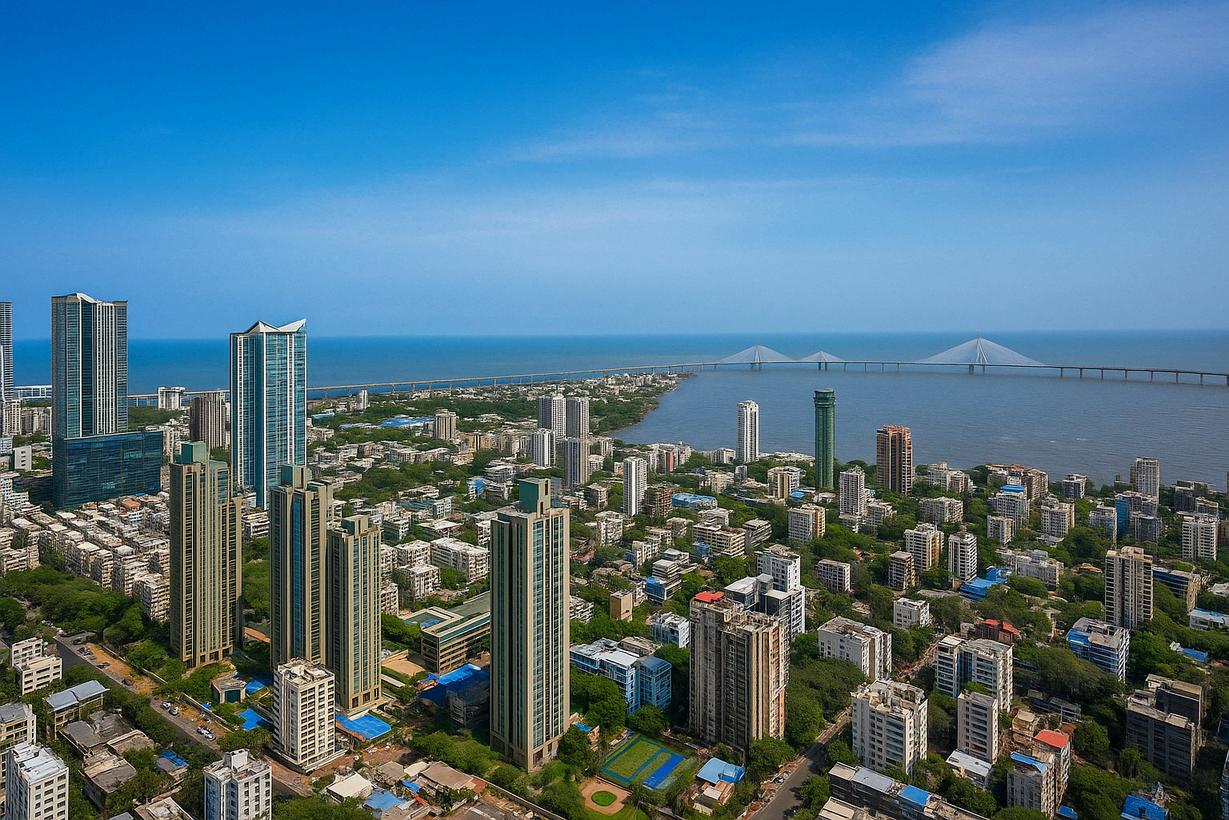
Mumbai's reaching for the sky, and we ' re building those dreams
one floor at a time But let's be real, juggling high-rise projects in our bustling city is no small feat Tight spaces, crazy traffic, and deadlines that seem to shrink by the minute – it's a wild ride! That's why we ' re turning to smart solutions like Lean and Agile construction, inspired by the big ideas from books like "The Machine That Changed the World" Think of it as building smarter, not harder Lean: Cutting the Fluff, Building Efficiently
Imagine a construction site where everything just clicks That's Lean in action It's all about ditching the unnecessary and focusing on what matters
Less Mess, More Progress: In Mumbai, space is gold Prefabrication? That's a secret weapon They build parts off-site, so there's less clutter and less waste on the actual site.
Smooth Sailing: Think of materials arriving just in time and tasks flowing like a well-oiled machine That's the magic of Lean's streamlined workflow
Teamwork Wins: Everyone's in it together! We're talking architects, engineers, workers – all pulling in the same direction Open communication and regular check-ins keep us on track

Agile: Rolling with the Punches, Delivering Results Let's face it, things don't always go as planned Agile's our way of being ready for anything
All Hands On Deck: We're big on teamwork
Quick daily meetings keep everyone in the loop, and digital tools like BIM make it easy to share info
Flexibility is Key: Monsoon rains? Surprise design changes? No problem! Agile lets us adapt fast. We break projects into smaller chunks, so we can keep moving forward, even when things get tricky.
The Power of the Board: Picture a big board that shows every task, step by step That's Kanban It's like a visual to-do list that helps us spot pro
"INMUMBAI,SPACE
Mumbai Style: Lean and Agile in Action
Here's how we ' re making it happen in our city: Kanban boards help keep track of materials and workers, so everything's on time Prefabrication cuts down on waste and makes the most of limited space Quick daily meetings help us tackle any challenges that pop up, especially during the monsoon BIM makes communication smoother, lowering the amount of rework
Real Talk: A Mumbai Success Story
They had this office building project, right? They used prefabrication, Kanban boards, and those quick daily meetings Guess what? They finished faster, wasted less, and made the site safer That's proof that this stuff works!
Building Mumbai's Future, Together Mumbai is growing up, and they're building the future, one floor at a time By using Lean and Agile, they're building smarter, faster, and better Let's keep innovating and working together to make Mumbai's skyline shine!
In the fast-evolving world of construction, traditional project delivery methods often struggle to keep pace with increasing complexity, scale, and demand for flexibility. Enter Agile BIM is a synergistic approach that combines the iterative, collaborative principles of agile methodologies with the precision and data richness of Building Information Modeling (BIM). This fusion transforms the conception, planning, and delivery of construction projects.
Agile is a project management philosophy that emphasizes adaptability, collaboration, and rapid iteration Originating from software development, agile methods focus on breaking large tasks into manageable sprints, encouraging continuous feedback, and correcting courses On the other hand, BIM is a digital representation of the physical and functional characteristics of a facility It enables architects, engineers, and contractors to collaborate using a shared model, offering real-time access to data and simulations throughout the lifecycle of a project
When combined, Agile and BIM create a dynamic framework that empowers project teams to respond to changes quickly, reduce rework, and enhance coordination among stakeholders
Traditional construction projects are typically linear and segmented, often resulting in delays, cost overruns, and communication breakdown Agile BIM challenges this outdated model by introducing flexibility and continuous improvement at every stage of a project
Agile BIM fosters a collaborative culture Teams hold regular standup meetings (such as Agile sprints) to assess progress, resolve conflicts, and adapt their plans

PROF. SHANKAR BANERJEE PROGRAM LEADER, MBA CPM RESEARCH & TEACHING ASSOCIATE
RICS SBE, AMITY UNIVERSITY, MUMBAI
With a centralized BIM model, all stakeholders from designers to contractors work from the same dataset, improving transparency and accountability
BIM tools allow teams to visualize the project in 3D, simulate construction sequences, and identify clashes before work begins onsite Coupled with Agile’s iterative planning, this ensures that issues are addressed early, minimizing costly changes later in the project
In an Agile BIM environment, decision making is data-driven and decentralized Access to realtime information through cloudbased BIM platforms (such as Autodesk BIM 360 and Trimble Connect) enables faster approvals, quicker adaptations, and smoother workflows
The clients were no longer passive observers Agile BIM is a part of this process Frequent design reviews and model walkthroughs ensure that the client’s vision is continuously aligned with project delivery, thereby reducing misunderstandings and lastminute changes
Several forward-thinking companies have already embraced Agile BIM, with remarkable success For instance, infrastructure projects in Europe have applied scrum techniques in tandem with BIM to streamline the coordination between multinational teams Similarly, hospital construction projects in the U S have used Agile BIM to adapt to evolving healthcare regulations mid-project without significant delays or redesign costs.
Of course, integrating agile into the construction environment is not without challenges The construction culture is still rooted in rigid hierarchies and waterfall models Transitioning to Agile requires a mindset shift, training, and often changes to contract structures
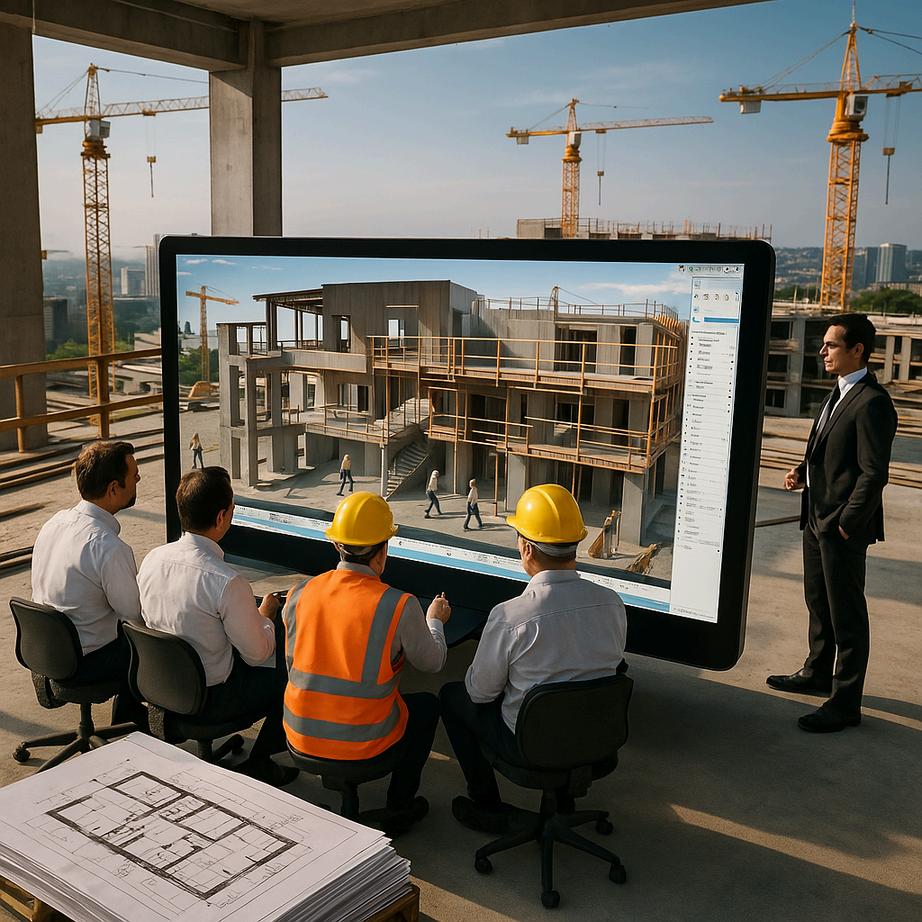
Access to realtime information enables faster approvals, quicker adaptations, and smoother workflows.
Moreover, not all BIM tools are inherently e-friendly Teams must select platforms that support version control, cloud collaboration, and modular design update
However, as the industry becomes more digitized and client expectations evolve, the demand for flexible, transparent, and collaborative delivery methods will grow
Agile BIM is more than a buzzword; it is a blueprint for the future of construction By combining the adaptive strengths of agile with the data-driven power of BIM, this approach offers a transformative path toward delivering smarter, faster, and more sustainable buildings For construction professionals and organizations willing to embrace this change, Agile BIM is not just an opportunity it is a competitive advantage


DR. SONALI S. JOGLEKAR, ASSISTANT PROFESSOR, RICS SBE, MUMBAI & COORDINATOR OF SLING
In today’s fast-paced and competitive world, it’s no longer just IQ or technical expertise that determines success it’s EQ, or Emotional Intelligence,
that gives individuals a lasting edge As an EQ Coach, I’ve witnessed the powerful role that emotional intelligence plays in shaping student success in academics, internships, group projects, and personal growth Emotional Intelligence is the ability to recognize, understand,
manage, and influence emotions both your own and others’ Alongside this, qualities like humility and a positive attitude, though often overlooked, have immense influence on personal and professional development
In campus life, students frequently deal with teamwork, deadlines, peer interactions, feedback, and change In all these situations, emotional intelligence acts as a quiet but crucial driver
● Build Strong Relationships: They are empathetic and emotionally stable, becoming reliable team members and friends
● Communicate Effectively: They listen well, express themselves clearly, and understand others’ perspectives
●Stay Humble and Grounded: They are open to feedback, learn from their mistakes, and earn respect through their humility

● Lead with Empathy: Their leadership is rooted in collaboration, not control
● Bounce Back from Setbacks: Resilience allows them to recover and grow from challenges
● Remain Calm Under Pressure: They manage emotions well during exams, events, and presentations
SLING is more than just a co-curricular platform it is a space where students live and practice EQ Whether they are planning festivals, coordinating with industry professionals, or resolving conflicts within teams, students experience the demands of leadership firsthand Here, they discover that true leadership is about responsibility, not recognition and that setbacks are not failures, but stepping stones
Journal Your Emotions: Reflect daily on how you felt and why.
Ask for Feedback: It helps you understand how others perceive your actions.
Practice Active Listening: Listen to understand, not just to reply
Pause Before Reacting: Especially in emotional situations
Try Role Plays: These develop empathy and people skills in safe settings
Through mentoring and student engagement at RICS
SBE, I see EQ manifest in real, tangible ways:

Self-awareness helps students recognize their strengths and gaps, especially during reflection or goalsetting
Self-regulation allows them to stay composed while managing conflicts or stressful responsibilities
Empathy fosters collaboration and understanding during team activities
Social skills are sharpened through peer interactions, networking, and communication tasks
Motivation is what drives them to take initiative whether starting a club or managing an event
In a world where AI handles routine tasks, human skills like empathy, collaboration, and resilience are becoming invaluable EQ isn’t just a soft skill it’s a life skill As educators, our goal is to create safe, reflective learning spaces. Platforms like SLING bridge the gap between academic knowledge and emotional competence.
As you prepare for your future, let emotional intelligence be your quiet strength shaping not just what you achieve, but how you achieve it

At the core of this shift is a suite of groundbreaking technologies reshaping how transactions are executed and trusted.

DR. MAJID SHAIKH ASSISTANT PROFESSOR RICS SBE, AMITY UNIVERSITY, MUMBAI
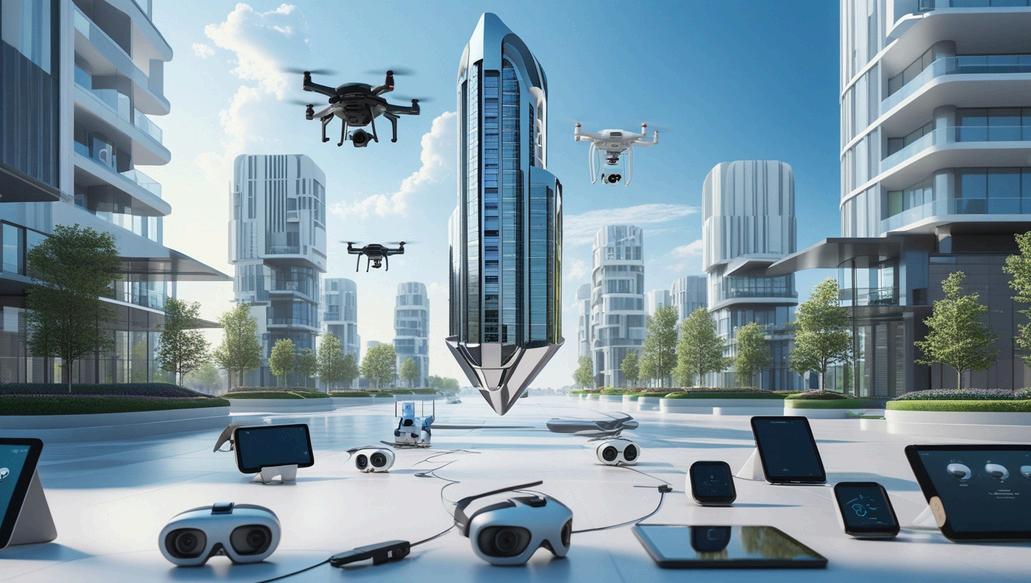
The traditionally paper-heavy real estate industry is undergoing a major transformation s Prop Tech takes centre-
-stage, transactions are becoming smarter, faster, and more transparent
Powered by advances in artificial intelligence, blockchain, big data, and the Internet of Things (IoT), prop-tech is streamlining operations, enhancing decision-making, and reducing transaction times From digital listings and virtual tours to smart contracts and automated due diligence, technology is redefining how properties are bought, sold, and managed Developers, brokers, investors, and buyers are increasingly leveraging these tools to gain a competitive edge, enhance customer experiences, and ensure regulatory compliance PropTech is no longer a disruptor it’s a catalyst for sustainable and scalable growth
At the core of this shift is a suite of groundbreaking technologies reshaping how transactions are executed and trusted
Blockchain ensures secure, transparent digital records, while smart contracts reduce intermediaries, speed up deals, and foster trust As Don Tapscott noted, “Blockchain is going to change the way our financial world operates”
AI is improving market forecasting, property valuation, and customer engagement from realtime chatbots to predictive analytics that support smarter investments Meanwhile, VR and AR enable immersive virtual property tours, offering flexibility and speed IoT-enabled smart buildings provide real-time insights into operations, maintenance, and sustainability aligning with ESG priorities. In this fast-evolving landscape, agility is no longer optional it’s essential As Marc Andreessen famously said, “Software is eating the world,” and real estate is no exception
At RICS SBE Mumbai, we are proud to be part of this dynamic transformation where tradition meets innovation, and the future of real estate is just a tap away
DR. JAYATHEJA MUKTINUTALAPATI
Safety, stability and cost-efficiency of largescale infrastructure projects rely on geotechnical investigations. Construction-
-managers should prioritize the importance of geotechnical site investigations to understand subsurface soil compositions Performing site studies will aid in foundation design, risk mitigation, and overall structural performance The details obtained during geotechnical studies help to avoid unanticipated hazards like unstable soil or concealed voids These events further lead to causing costly delays or catastrophic breakdowns In sloped constructions and excavations, the risk of soil failure can be minimized if we understand soil behavior accurately The 2014 Washington Oso landslide, which killed 43, demonstrates the threats of poor geotechnical assessment Construction managers must prioritize the soil investigations to meet safety standards, prevent legal issues, and safeguard staff and investments An accurate geotechnical investigation report also helps in saving budget as it helps us in designing appropriate foundation elements for a project. The renowned Leaning Tower of Pisa tilted due to poor soil research, requiring millions in repairs
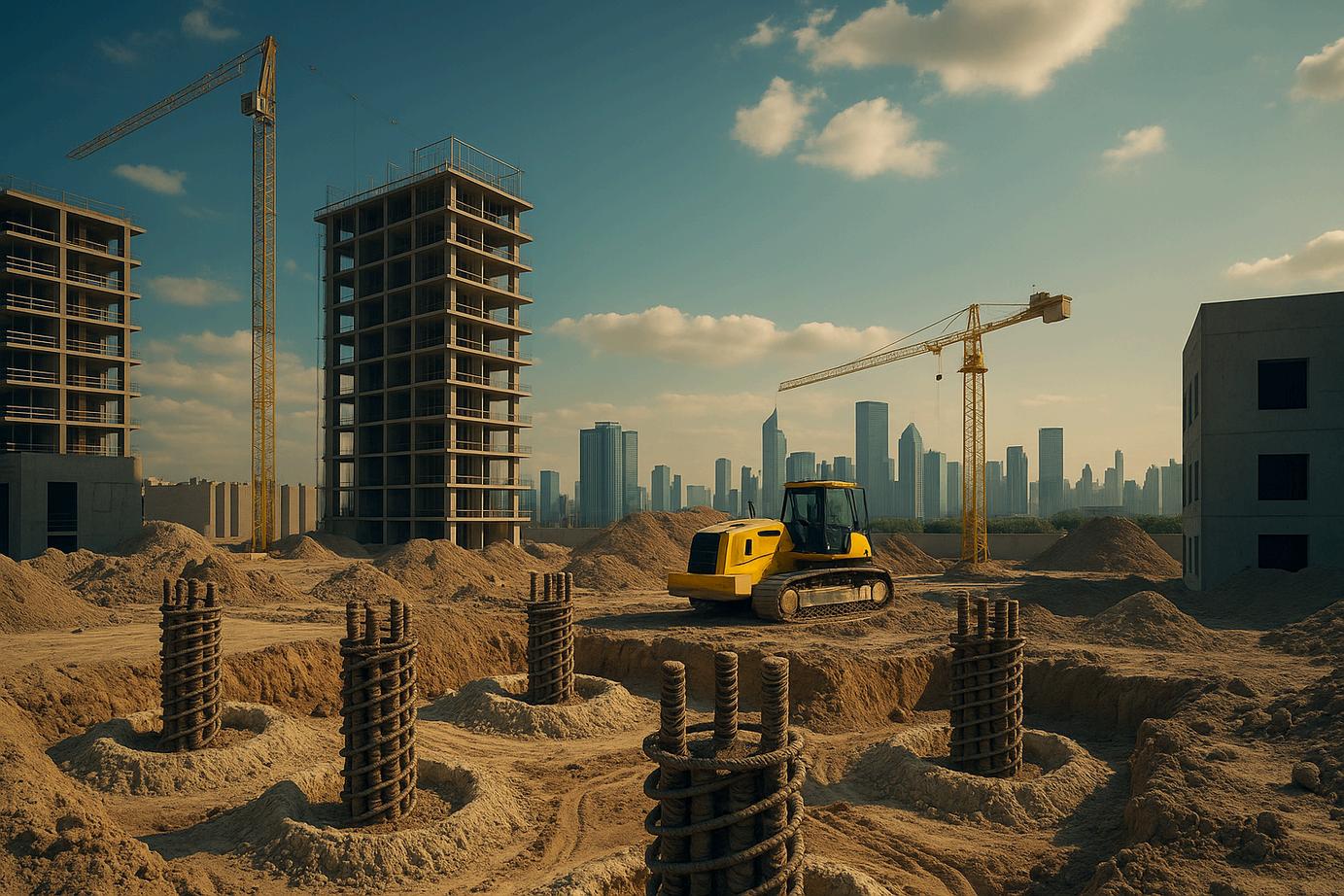
The reputation of the firm that is handling the project depends on geotechnical impact evaluation, which regulatory agencies often request Finally, conducting a proper geotechnical investigation will ensure structure longevity, minimize hazards and prevent delays Construction managers can guarantee project success, resilience, and sustainability by incorporating geotechnical engineering throughout all planning and execution stages
The 2014 Washington Oso landslide which killed 43, demonstrates the threats of poor geotechnical assessment.
ASSISTANT PROFESSOR, RICS SBE AMITY UNIVERSITY, MUMBAI MASTERS IN GEOTECHNICAL ENGINEERING

Welcome to the startup world where everyone wants to be the next Steve Jobs, but most of us are just trying to pay rent -
and not cry into spreadsheets If you ’ re dreaming of building a billion-dollar app and retiring by 30, here’s some tough love:
PROF. SUMER GADGIL RICS SBE-MUMBAI ALUMNI, MBAREUI(2019-2021)
VISITING FACULTY- RICS SBE ,MUMBAI REAL ESTATE DEVELOPER -MAITREE BUILDERS AND DEVELOPERS, NAVI MUMBAI

Put down the pitch deck You don’t need a product You need a *service*
Yes, a service That unsexy, humble gem that doesn’t require funding, fancy tech, or sacrificing your soul to equity gods Whether you ’ re in AI, EdTech, Real Estate, or any other “Tech,” you can start lean, earn real money, and stay sane
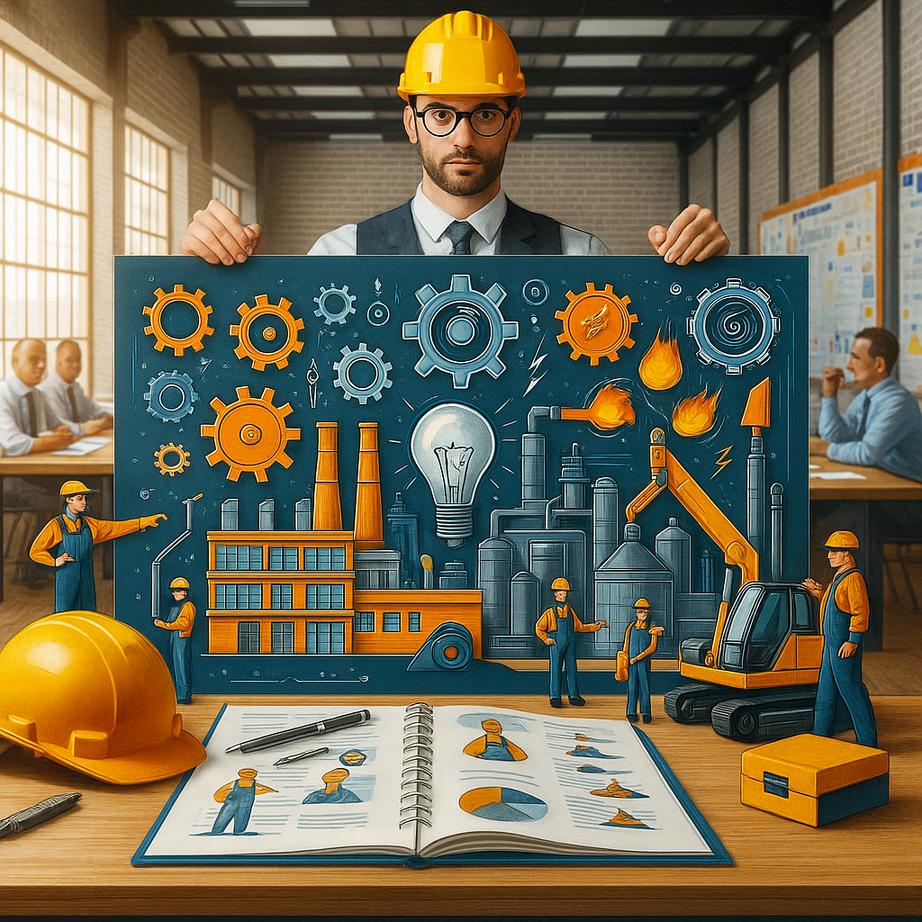

Everyone says, “Startups are about investing capital to generate revenue ” Sounds great until you realize you have zero capital and your bank account looks like a financial crime scene So you think, “I’ll raise money!” Cool Just give away 30% of your company for the price of a used iPhone Or worse, take out a loan at 18% interest like it’s 1990s
The Better Way: Sweat Now, Spend Later
HERE’S A CRAZY IDEA: EARN BEFORE YOU BURN
Start as a broker. Not the Wall Street kind a matchmaker for buyers and sellers. Like Tinder, but with commissions. Want to get into real estate? Don’t buy land broker deals You’ll learn the game, build your network, and maybe even afford oat milk someday
Fortune 500s outsource manufacturing You can outsource risk
1 Low Budget, High Learning
Forget massive startup costs Brokering just takes a phone, some hustle, and maybe a halfway-decent LinkedIn
2 Learn While Getting Paid
Every service is just a solution to someone ’ s problem When you broker, you connect those dots and get paid to learn
3 Sales is King
The ability to sell is more powerful than a perfect product And brokering makes you a sales ninja no invention required
4 No Heartbreak Exits
Capital-heavy startups are bad relationships you stay too long A service? It’s a first date If it flops, ghost and move on
WANT TO BUILD A PRODUCT? BE THE PRODUCT FIRST
1. Break It Down
Every fancy tool just automates a human job. Uber? A digital version of calling your cousin for a ride. Be that human first. Do the job manually. Then automate it after you ’ ve validated it
2 Freelance First Founder Later
Want to build an online school? Teach on Zoom
Building a SaaS HR tool? Help someone hire manually If people pay for your time, they might pay for your tech If not? You just saved two years and $ 40 K
3 Forget MVPs Build Trust
While you ' re perfecting your prototype, someone else is building relationships and closing deals with a Google Sheet Trust beats tech Always
4 Experiment Like a Mad Scientist
Don’t bet everything on one Big Idea™ Run micro-tests Use WhatsApp Ugly landing pages Messy services You don’t need scale you need insight
5 Charge From Day One
You don’t need more features You need more paying customers If you can’t sell the service version, you won’t sell the product version either. Start charging now.
FINAL WORD: EMBRACE THE BOOTSTRAPPED HUSTLE
Big doesn’t mean expensive Many great companies started as scrappy service gigs You don’t need investors, a flashy product, or a fiveyear exit plan
What you do need is to be useful today
Ask yourself: “How can I offer this as a done-foryou service right now?” That’s your starting line The rest comes one hustle at a time
And hey, if it doesn’t work out? No worries You didn’t lose a limb just a finger You’ve got nine more



Shobha Regunathan is an accomplished management consultant and founder of The Build ED, a Bengalurubased firm dedicated to organizational development and learning solutions for the Architecture, Engineering, and Construction (AEC) sector A alumna of IIM Bangalore and a member of the Royal Institution of Chartered Surveyors (MRICS), she brings extensive expertise in business growth strategies, process improvement, and leadership development Through The Build ED, she helps organizations enhance agility and efficiency by refining workflows, clarifying roles, and strengthening decision-making processes.
What was the inspiration behind The Build ED?
In my leadership journey while I was Head of Client Solutions at Cushman & Wakefield and later when I led the Project Management business at Colliers International as the National Director of Project Management, I noticed two sets of problems that seemed to plague the Built Environment Industry While the industry as a whole contributes 16% of India's GDP and has seen phenomenal growth over last 2 decades, it still remains largely unorganised with overall lack of systems, standards, and much lower levels of professionalism than some of the other sectors Productivity is lower than expected and several factors combined lead to project delays and cost escalations.
On the other hand, companies suffer from a lack of skilled manpower, higher rates of attrition and human errors
Technology is slow to make inroads, and efficiency remains low
The Build ED was founded to address these systemic issues by providing management consulting that is focused on people and processes Strong processes and work/ decision flows lead to organized functioning Clear standards and a well-designed organizational structure mean employees have a guideline to follow and know what to expect from the organization
Once processes are clear, employees can be mentored and groomed for next-level roles, thereby leading to better retention and growth
The aim is to create a more productive, efficient, and healthy work environment, ultimately reducing project delays, improving operational efficiency, and tackling high turnover rates by fostering better working conditions. Our custom-created Workshops for mid and senior management as well as the Bridge Program for students aim to eradicate the gap at the skill level preparing a workforce for the future By focusing on Process and People, The Build ED is building capability and capacity in the Built Environment sector at large
and in design generation we have moved from hand drawn plans and renders to 3D visualisation, BIM and in rare cases VR Also, there are changes in the client's expectations, in how sustainable construction is viewed, in contracting structures, in market competition etc The point is that change is rapid and here to stay Companies that want to survive in this environment cannot remain rigid and complain If companies want to thrive, they have to keep pace with the change, be agile, and in fact, be one step ahead of the market This requires a very different approach within the organization.
QHow's the journey so far since the Build ED inception? Share some of the notable success stories that highlight your firm's impact.
In the past five years, we ’ ve had the privilege of working on fascinating assignments, which have challenged us to tackle a wide range of diverse problems In one of our early assignments, we were engaged by a multinational design company to formalize their organizational structure by defining department-specific roles and responsibilities for each position
“Real estate is not just about properties, it's about people, relationships, and building communities.”
Why should PMCs, contracting firms, and construction companies strive for organizational agility? What is the gap and how is external consulting service helpful?
The last decade has seen more rapid changes (socio-politicoeconomic changes) than ever before and this rate of change is only steadily increasing The market dynamics are changing For example, the world requires faster turnaround time, and the time taken from idea to construction and use has shrunk dramatically A building that used to take 24 months to construct now gets occupied in 8 And a big contributing factor is technology Even though Built Environment sector slow to adopt technology, we have seen several disruptions over the last decade - in surveying where drones are increasingly being used, in concrete technology where industry has experimented with quick setting concrete, RMC plants, pre-cast and steel composite structures and now 3D
Unfortunately, there is a big gap, and organisations haven't changed their internal structures that can enable them to remain flexible and adopt practices faster to respond to external needs. Most of the organisations still function with old hierarchical structures, a majority of companies are owner-driven, where every financial decision has to be made by the owners and directors Thereby, current workflows make them slow to respond to client needs This is why many find it hard to remain profitable in the competitive environment and such companies are then reduced to competing on price alone.
At The Build ED, we work with the Senior leadership to firstly study existing problems, current practices, and then diagnose the underlying conditions We then suggest solutions that are systemic and can address deeprooted problems As always, tight implementation with simultaneous monitoring is key and we handhold our clients through this tough phase by acting as the project and change managers
However, midway through the project, the company was acquired by a larger U S -based construction product firm introducing precast technology to India. This shift required us to transform the company ' s nearly flat organizational structure where mid-level management held significant autonomy into a formal, manufacturing-oriented setup characterized by a rigid hierarchy, reduced pay scales, simpler designations, and clearly defined roles The process was both challenging and rewarding By the end, we successfully streamlined approximately 130 designations into 7 pay grades and fewer than 20 titles, achieving alignment between both organizations while securing the buy-in of all staff members It was a remarkable change management effort on our part Another area where we excel is designing efficient and transparent workflows We achieve this through close collaboration with senior and mid-level management, ensuring that all perspectives are considered and buy-in is secured from the outset Additionally, we take pride in our ability to coach,
mentor, and train staff to adopt and adapt to these new standards and processes seamlessly This approach has proven highly effective in implementing appropriate technology solutions whether for design, procurement, or project management and empowering staff to utilize the new technologies effectively
In 2024, we collaborated with a design company to craft their client, business, and people strategies. Over the course of a year, we guided them through the implementation of new systems and processes alongside the refreshed business strategy This led to significant improvements attrition levels dropped, staff morale increased, and the organization benefited from a more robust structure with clearly defined roles and standardized workflows, resulting in reduced rework The biggest success however was that with the new client and business strategy, the Client was able to phenomenally increase the profitability while reducing the workload in new pitches and RFP responses
Q 4 Q 5
Who are the current competitors and How does The Build ED stand out from the rest?
what advice would you give to students aspiring to be industry ready in current market?
Our work involves detailed diagnoses and the implementation can be long drawn and it can take upto 1 year or more to see tangible benefits It demands patience, openness to feedback, and unwavering support from all stakeholders throughout the journey Once these elements align, the outcomes are undeniably rewarding
We occupy a distinctive niche, applying the expertise and strategies typically offered by the Big 5 consulting firms for large conglomerates to medium-scale enterprises With deep insights into this industry, we understand its unique challenges and complexities We work selectively, partnering with only a few carefully chosen clients at a time For us, it’s essential that the senior leadership of the organization is genuinely committed to driving change and fully onboard This approach allows us to deliver highly personalized attention, ensuring that the strategies we develop go beyond theoretical frameworks and are implemented effectively within a clear and timely structure
As students you must strive to be curious, flexible, and committed to lifelong learning. The ability to evolve along with the industry’s needs will ensure you ’ re always one step ahead So, hone technology skills, remain in touch and read up on latest developments in the industry, seek opportunities to gain real world experience by partcipating actively in university projects, case studies, seminars, internships. Meet and seek to learn from industry experts and seniors Finally, learn to prioritise cross functional learning, communication and collaboration through group activities and projects
“THE JOURNEY OF “THE JOURNEY OF BUILD ED IS BUILD ED IS DEEPLY PERSONAL DEEPLY PERSONAL — IT’S ABOUT — IT’S ABOUT PASSION
PURPOSE”, SAYS PURPOSE”, SAYS SHOBHA SHOBHA REGUNATHAN. REGUNATHAN.
It is not always true It is not always true that if neighbour’s that if neighbour’s property sold for high property sold for high price, mine will too. price, mine will too.

SIDDHARTH THITE, A SEASONED VALUATION PROFESSIONAL WITH A STRONG ENGINEERING AND FINANCIAL BACKGROUND, LEADS THITE VALUERS & ENGINEERS WITH PRECISION AND PURPOSE. ARMED WITH DEGREES FROM SINHGAD COLLEGE, OKLAHOMA STATE UNIVERSITY, AND NMIMS, HE BRINGS A RARE BLEND OF TECHNICAL AND FINANCIAL EXPERTISE. UNDER HIS LEADERSHIP, THE FIRM HAS EARNED THE TRUST OF TOP BANKS, NBFCS, AND DEVELOPERS FOR ITS ACCURATE, INSIGHTFUL, AND PURPOSE-DRIVEN VALUATION SERVICES.
Real estate valuation is a complex subject that is often misunderstood by many people There are a lot of misconceptions people have about
property valuation This is because the subject of property valuation is not always discussed scientifically Below are some of the most common misconceptions about property valuation
Cost, Price and Value are same – Cost, price and value are three most important terms in property valuation Though in spoken language we use it interchangeably, they have different meaning when we talk about property valuation Cost is actual cost incurred to build a house or manufacture something, price is cost plus profit or loss and value is worth of anything. It can be more or less than the cost or price 1
Value of property will remain same on a particular date – Value of property always depends upon the purpose for which valuation is done e g value of property for selling will be different that it will for purpose of capital gain tax Similarly, value of property for stamp duty calculation will be different than that value of property for property tax This is because, for every purpose guidelines of doing valuation are different Hence, value of property is purpose specific 2
Valuer can tell value of property just by looking at it / by reading address – for a valuer to do the valuation of property, site visit is important But, site visit is one of the step in entire valuation process Valuer needs to study documents of the property, do his / her market study in that locality etc Hence, it is impossible for valuer to give valuation just by looking at property
Renovations / Furniture always increase value –Value of property depends on location, demand and supply in given locality etc. renovations sometime helps to improve property value but furniture is generally done as per the taste of occupant and is customised for certain requirement Most of the times buyers have different requirement Hence, furniture / renovations does not always increase value
Value of property increases if sold on super builtup area rather than carpet area – This is not true Intrinsic Value of any property will always remain same regardless you value it on the basis of carpet area, builtup area, super built-up area, saleable area or any other type of area E g suppose intrinsic value of a 2BHK flat of 1000 sft in Pune is say 1 5 Cr somebody can say it flat of 1000 sft carpet or 1200 sft built up or 1500 sft super builtup
Value of property always appreciates especially land – value of property depends on various factors such as location, demand & supply, legal rights, development control regulations etc If there is change in any of these factors then it will impact property values Impact can be positive or negative E g Pune got its new UDCPR in 2020 So due to such new rules can impact either positively or negatively on properties
If neighbours property sold for high price, mine will too – again as discussed earlier, value depends on various factors Take this example, in Mumbai suppose there are two flats on same floor One has a sea view and another does not Value of flat having sea view will be more than another flat without sea view Hence, it is not always true that If neighbours property sold for high price, mine will too
Valuation of vacant land take less time than that of flat / office or valuation of vacant land is very easy –value of land depends on its development potential. So what is mean by development potential (DP) DP means, how much you can construct on a particular piece of land To understand this DP various factors such as location, road width, Development control regulations, then legal factors such as zoning, reservations etc needs to be studied On the contrary for ready built property such as flat or office, all these factors are already taken care off Hence it is difficult do valuation of vacant land as compared to ready built properties
8 7

Valuation is a fundamental component of strategic decision-making for businesses, influencing mergers and acquisitions (M&A), investment decisions, financing, and tax assessments. A well-conducted valuation not only determines the market worth of a business or asset but also guides future business strategies and ensures sound financial planning. For businesses, adopting a strategic approach to valuation is essential to align financial goals with market realities.

Prashant Gawali, MBA CPM (2021-2023) RICS SBEMumbai alumnus, is Deputy Manager II at ICICI Bank’s CRFG Specializing in market research and valuation advisory, he’s authored articles like "Time Value of Money" and lectures as a guest Based in Mumbai, he leverages his RICS SBE foundation to innovate in real estate
. Informed Decision-Making
Valuation provides a clear understanding of a company ' s worth, helping business leaders make informed decisions about nvestments, acquisitions, or divestitures Whether expanding into new markets or negotiating a sale, an accurate valuation supports strategic moves with data-driven insights
2 Attracting Investors and Funding Investors and financial institutions rely on valuation to assess the risk and return potential of a business A strategic valuation, performed with an understanding of market trends and financial projections, can attract investors and secure financing under favorable terms
3. Mergers and Acquisitions (M&A)
In M&A transactions, valuation is crucial for determining the price of a target company, negotiating terms, and ensuring the strategic alignment of the acquisition A robust valuation model helps identify synergies, risks, and integration costs, influencing the success of the merger or acquisition
4 Tax Planning and Compliance
Business valuations play a key role in tax planning by helping companies determine the fair value of assets for tax reporting purposes This is especially important in structuring deals, transferring ownership, or handling estate and inheritance taxes

Valuation is not just a financial tool but a strategic asset for businesses.
5 Risk Management
A strategic valuation enables businesses to understand the financial risks associated with their operations, assets, or liabilities. By assessing both the intrinsic value and market conditions, businesses can identify potential risks and take proactive steps to mitigate them
6. Performance Monitoring
Regular business valuations serve as benchmarks for performance monitoring They provide insights into how a company ’ s value evolves over time, reflecting the impact of business strategies, market dynamics, and operational efficiencies
Utilize Multiple Valuation Methods: Relying on one method, such as the income approach, may not fully capture a business's worth A combination of approaches (market, asset, and income-based methods) provides a more comprehensive view Consider Market and Industry Conditions: The broader economic environment and industry-specific trends should be incorporated into the valuation process for greater accuracy. Incorporate Future Projections: Valuations should consider longterm growth projections, particularly for businesses in emerging markets or growth sectors, as these factors heavily influence valuation
Regular Updates: Given market volatility and changing business conditions, regular updates to valuations ensure businesses remain agile and able to respond to new opportunities or risks
Valuation is not just a financial tool but a strategic asset for businesses By adopting a thorough and forward-looking approach to valuation, businesses can align their strategies with market realities, secure the right investments, and manage risk effectively Whether it's for M&A, financing, or tax planning, a well-executed valuation is key to ensuring longterm success and stability

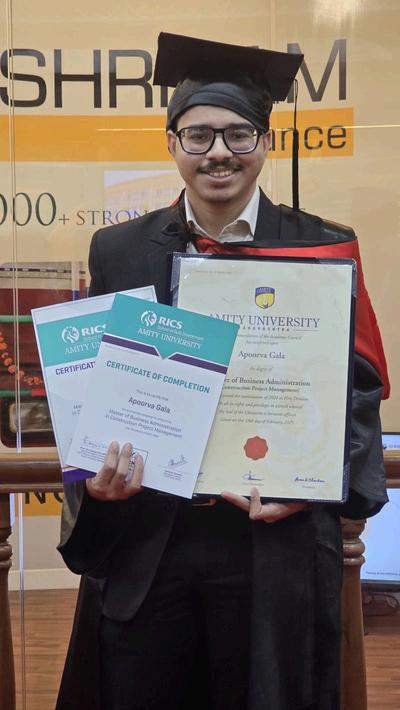
-APOORVA GALA, RICS SBE - MUMBAI
ALUMNI (MBA CPM2022-24), Associate Manager (Design & Cost Optimisation), Lodha
Agility is more than just a buzzword in today’s fastpaced world, it is a mindset that drives efficiency, adaptability, and continuous improvement.
As a graduate of RICS School of Built Environment (RICSSBE) and now an Associate Manager in the Design and Cost Optimisation department at Lodha Group, I have witnessed firsthand how agile principles play a crucial role in shaping the construction and real estate industry During my time at RICSSBE, agility was ingrained in our academic curriculum, preparing us to navigate the complexities of the built environment.
The institution emphasized real-world problem-solving, collaboration, and adaptability values that are deeply aligned with the principles of Agile. Whether it was working on case studies, participating in group discussions, or engaging in live industry projects, we were encouraged to embrace iterative learning, respond to changing circumstances, and continuously refine our approach.
This foundation proved invaluable when I stepped into my professional role at Lodha Group The real estate sector, particularly in a city as dynamic as Mumbai, demands agility in every aspect design, cost management, procurement, and execution Traditional methods of project management often struggle to keep pace with rapid urbanization, evolving customer expectations, and fluctuating market conditions.
This is where Agile principles become essential One of the core Agile values, responding to change over following a fixed plan is particularly relevant in my work
As someone responsible for drafting Bills of Quantities (BOQs), material attachments, budget compilation, and cost optimization, I have to constantly adapt to new project requirements, design modifications, and budget constraints. Instead of rigidly adhering to predefined plans, we follow an iterative approach, making real-time adjustments to ensure cost efficiency without compromising quality.
Technological advancements have further enhanced agility in construction cost management. At Lodha, we leverage tools like CostX, AutoCAD, and SAP to streamline quantity take-offs, automate budget tracking, and improve accuracy in cost estimation..
Agility is a mindset – Embrace change and stay flexible. Practical learning – RICSSBE prepares you for real challenges. Smart tech tools – CostX, SAP, AutoCAD boost efficiency.
Teamwork wins –Collaboration drives better results.
Adapt to optimize – Iterate for cost-effective solutions.
LODHA GROUP IS ONE OF INDIA’S LARGEST REAL ESTATE DEVELOPERS, KNOWN FOR EMBRACING TECH-DRIVEN PROJECT MANAGEMENT AND COST OPTIMIZATION PRACTICES, MAKING IT A PIONEER IN APPLYING AGILE IN THE INDIAN BUILT ENVIRONMENT.
These digital solutions allow for quick modifications and data-driven decisionmaking, ensuring that we stay aligned with project goals even when unexpected changes arise Another key Agile principle, collaboration over silos is integral to my role With a team of over 65 professionals working across Mumbai, Pune & Bengaluru, a seamless communication and cross-functional collaboration are critical Agile frameworks emphasize teamwork, iterative feedback loops, and stakeholder engagement, all of which enhance efficiency in project execution. By fostering open dialogue between design teams, cost consultants, and on-site execution teams, we can proactively address challenges and optimize project outcomes.
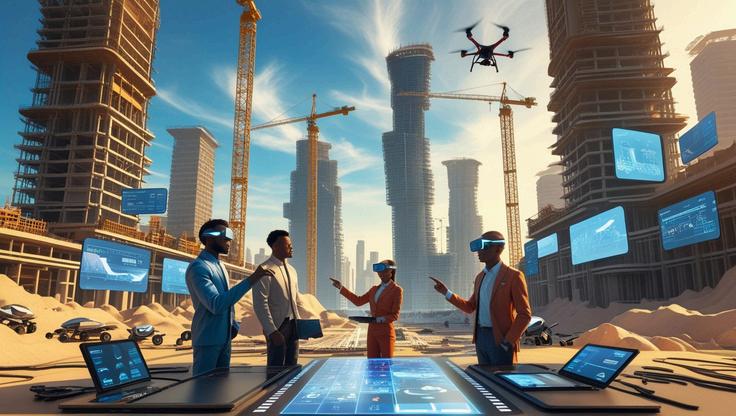
Looking ahead, the integration of Agile methodologies with emerging technologies such as Building Information Modeling (BIM) and Artificial Intelligence (AI) will further transform the industry. Predictive analytics, automated cost forecasting, and digital twin simulations will enable even greater adaptability, ensuring that real estate projects remain resilient in an ever-changing market.
Reflecting on my journey from RICSSBE to Lodha, I realize that agility is not just about project management, it is a mindset that drives innovation and excellence The ability to embrace change, collaborate effectively, and leverage technology is what sets apart successful professionals in the built environment As the industry evolves, following the agile principles will continue to be a guiding force that shapes the future of construction and real estate

The Union Budget 2025-26 introduces significant measures poised to revitalize India's real estate sector
The budget's personal income tax relaxations are set to inject liquidity into the middle class, creating a "perfect storm" for reviving consumption demand This increased buying capacity is expected to directly benefit the housing sector, supporting robust homebuying activity The removal of conditions for holding two self-occupied properties without tax implications further spurs fresh investments in the residential market
With an increased allocation of INR 15,000 crores to the SWAMIH Fund 2, the budget addresses the needs of stuck residential projects This measure aims to reduce buyer stress and indirectly support the "Housing for All" initiative by potentially unlocking an additional 1 lakh housing units The move demonstrates the government's commitment to resolving challenges in the affordable housing segment

With an increased allocation of INR 15,000 crores to the SWAMIH Fund 2, the budget addresses the needs of stuck residential projects This measure aims to reduce buyer stress and indirectly support the "Housing for All" initiative by potentially unlocking an additional 1 lakh housing units The move demonstrates the government's commitment to resolving challenges in the affordable housing segment
The increase in FDI limit for insurance to 100% is expected to attract more global firms and allow greater institutional capital flow into real estate. This change could lead to increased foreign investment in the sector, potentially driving growth and innovation in commercial and residential
The government's recent budget cuts may lead to inflation, overheating the housing market, straining urban infrastructure, raising environmental concerns, and oversupply in the hospitality sector The focus on nuclear energy capacity augmentation may also affect property values The sector's increased FDI limit and focus on attracting global firms may increase vulnerability to global economic fluctuations and geopolitical risks Additionally, the focus on specific sectors and regions may create uneven development, potentially causing imbalances in the real estate market




Why have small construction firms consistently been associated with poor work cultures for workers and employees? Why does the -
-bottom tier of the construction sector always struggle to keep pace with the rapid advancements happening at the top levels of the built environment? And how are the new-age leaders entering the built environment industry ready to tackle these challenges head-on? Let’s discuss this notion through this article
A large portion of the built environment industry in developing regions of Odisha, Jharkhand, Bihar, and other similar states is dominated by small-scale construction firms that continue to operate using traditional, outdated methods and verbal agreements Statistics show that these firms often struggle with poor leadership and lack bureaucratic management systems, resulting in widespread employee dissatisfaction, job insecurity, and a decline in work quality A study made by the National Institute of Labour Economics Research and Development reveals data from Odisha indicates 67 7% of industrial employment is in small-scale industries, out of which around 94% of workers are engaged in unorganized sectors which include construction, as stated by ResearchGate Consequently, the construction industry reported an average employee turnover rate of 57% in 2024

These are clear signs of a non-bureaucratic system which is evident through the absence of a proper HR management system and undefined hierarchical organizational structure. In the end, employee wellbeing and project performance are held backfoot
Firstly, heavy reliance on manual labor, and employing traditional tools and methods limits project productivity and negatively impacts quality Secondly, informal contract management such as verbal agreements and no written documentation makes these firms prone to dispute and contract breach Thirdly, a lack of administration where contractors act as both managers and decisionmakers contributes to inefficiencies Furthermore, lack of formal oversight leads to neglect of safety and welfare measures, exposing workers to hazards Finally, the continuous adaptation of low standards and non-mechanized practices prevents these firms from competing fairly in the changing market
In a non-bureaucratic environment, employees may face ambiguity and confusion about their scope of work leading to potential conflicts and clashes Due to a lack of formal performance evaluation systems and training programs, employees at the bottom level may feel trapped in their positions and unable to get promotions, indicating situations like favouritism and unfairness Without a clear hierarchy and standard operating procedure (SOP), employees may face communication barriers to voice their concerns making them vulnerable to exploitation such as unfair wages, unsafe working conditions, and arbitrary decisions These elements of a hostile and unstable work culture facilitate abusive autocratic leadership to grow into power
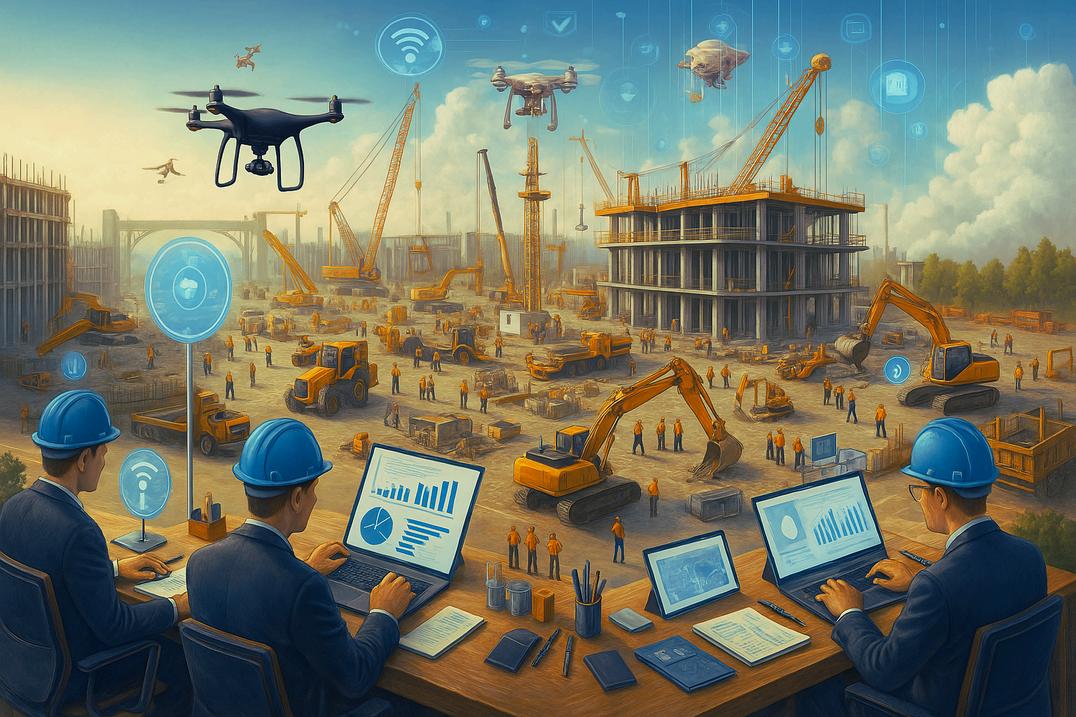
Small construction firms are the foundations of our built environment industry No matter how far we progress in technological advancements, if it is not reaching the grassroots level then it's not fulfilling the intended outcome Whether it’s about bureaucratic hurdles or outdated work culture, issues, if not addressed, can lead to years-long stagnation And leaders who are emotionally intelligent, understand that Thus, these seasoned leaders can influence change from the ground up by diligently addressing the root causes of these critical issues to the authorities and implementing high standards and modern practices This is how emotionally intelligent leaders can bring versatile solutions to challenges that have stopped the growth of the construction industry for decades
To foster a work culture where employees feel valued, understood, and motivated, these leaders can apply emotional intelligence to maintain trust and empathy with the workforce by actively listening to grievances about unfair practices, unsafe conditions, and unclear guidelines, by communicating the negative impacts of unfair practices to seniors in a way that aligns with the organizational values, by breaking the communication barriers from workers and middle management through conducting employee feedback system, by involving employees in decision making in co-creating fair SOPs, by recognizing and rewarding hard work through implementing training programs and providing mentorships, by tactfully addressing the blame-game through promoting merit-based decisions and inclusivity and by advocating for workers’ welfare.
What gives them the Edge
This is where the role of newgeneration leadership comes in. Leaders entering project management fields are uniquely suited to transform the decadeold construction work culture Firstly, because what they bring to the table, is a multifaceted approach that combines project management expertise and emotional intelligence Secondly, because their strategic placement within the organizational structure allows them to operate at the critical intersection of the bottom tier of the construction unit and the top-level decision-makers of the built environment This positioning gives them the ability to navigate the work dynamics and bridge the gap between senior stakeholders and the workforce including engineers, contractors, and the labor force
As an architect, I’ve always been passionate about innovation in construction. After I stumbled upon Runway Technology’s AI chatbot, what started as mere curiosity quickly turned into fascination, and soon, I found myself closely associated with the company, witnessing firsthand how this technology is transforming the industry.


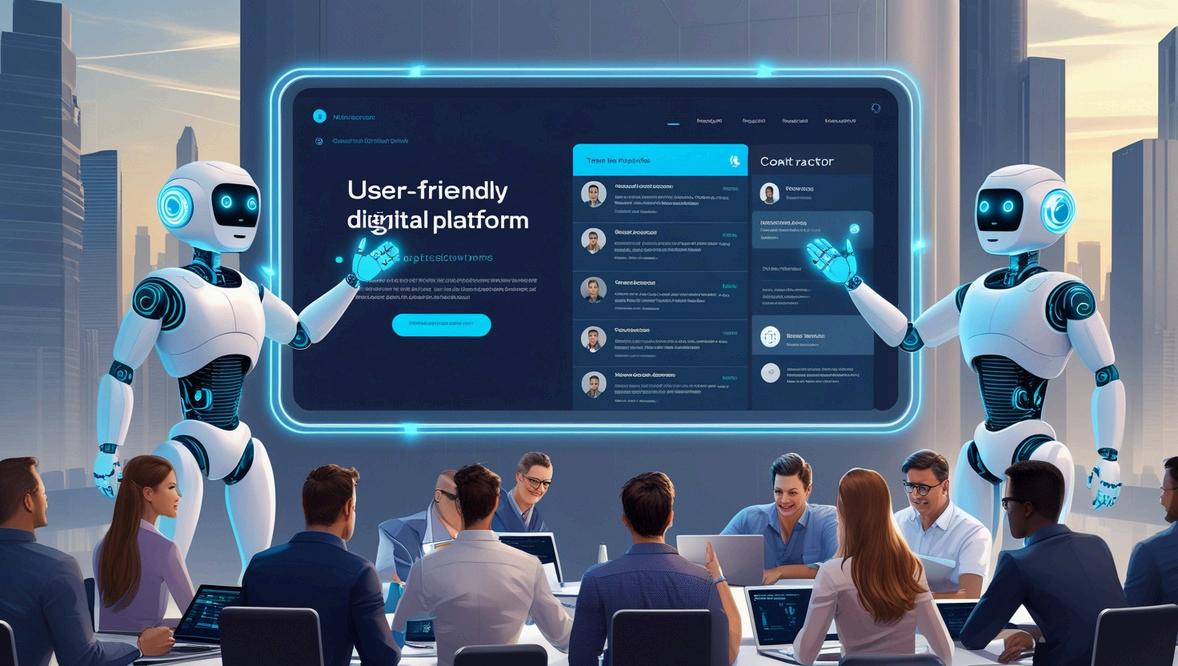
AR SOUBHIK ADHIKARI, MBA CPM, 2023-2025
RICS SBE- MUMBAI
Being a contractor is no easy task Starting from chasing government tenders, dealing to never-ending paperwork, and struggling to find the right suppliers, the daily grind can be overwhelming And let’s not even get started on the financial hurdles getting payments processed on time feels like a battle of its own
I used to think AI was just for big corporations, but Runway Technology’s chatbot is proof that it can transform even small and mid-sized contractors' lives
With this tool, contractors will no longer feel like they're constantly playing catch-up Instead, they’d be ahead of the game more efficient, more organized, and finally able to focus on building, not just battling bureaucracy.
SIMPLIFYING THE BIDDING NIGHTMARE
Navigating the bidding process has always been a challenge Missing deadlines, struggling to understand requirements, and constantly checking for tender notifications it’s a full-time job in itself But with this AI chatbot integrated into WhatsApp,
4
For years, I found contractors buried under mountains of administrative work instead of focusing on what really matters getting the job done.
MATERIAL PROCUREMENT MADE EASY
Now you can get real-time tender alerts and step-by-step guidance on bidding No more missed opportunities, no more confusion Finding the right materials at the right price can be an exhausting task. There’s always the risk of overpaying or delays in delivery that throw off entire project timelines Now, you can simply input your project requirements into the chatbot, and it pulls up the best suppliers, saving you time and effort It works like a personal assistant
FINANCIAL HEADACHES? NOT ANYMORE
Managing finances has always been a major stress point Whether it’s ùkeeping track of payments, securing project funding, or handling banking transactions, it’s a constant struggle The chatbot’s integration with financial services means you can now manage transactions directly through WhatsApp no more running around for banking tasks.
For more information, visit runway org in
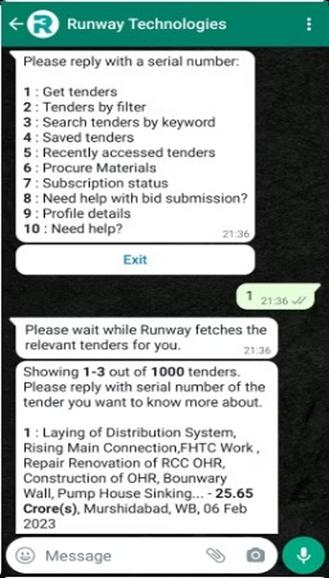

Real estate investment has transformed significantly, offering more accessibility and dynamism than ever before For students specializing in real estate and project management, this field presents vast opportunities to apply modern knowledge and adaptive methods for success Below are ten essential strategies to help navigate real estate investments with confidence and innovation
Real estate no longer requires decades to generate returns Agile investment techniques enable investors to swiftly adjust to market fluctuations These approaches focus on short investment cycles, such as acquiring, developing, or reselling properties in response to emerging trends For instance, in Mumbai, investors capitalize on shortterm rental markets by purchasing small apartments near business districts and listing them on platforms like Airbnb for higher yields than traditional leases
Data-driven strategies are revolutionizing real estate investments Predictive analytics tools help assess property values, rental profitability, and market trends Investors can leverage PropTech platforms for informed decision-making. In Bengaluru, for example, data analytics tools such as PropEquity assist in identifying high-growth areas, helping investors maximize returns
The expansion of urban infrastructure is creating valuable investment prospects Cities with upcoming metro networks, IT hubs, or affordable housing projects present great potential India’s "Smart Cities Mission" is driving growth in secondary cities like Indore and Surat, where property values remain affordable but are expected to rise significantly
Sustainability is reshaping the real estate sector, making eco-friendly designs and green-certified buildings increasingly attractive Investors who prioritize energy-efficient properties and sustainable building materials appeal to environmentally conscious buyers Developers in Delhi, for instance, are incorporating solar panels and water conservation systems to enhance marketability
Investing in high-value properties is no longer limited to those with substantial capital Fractional ownership allows multiple investors to collectively purchase and profit from premium real estate assets Platforms such as Myre Capital enable investors to buy shares in commercial properties for as little as INR 10 lakh, making property investment more accessible.
Government schemes and incentives significantly impact real estate investments Programs like PMAY (Pradhan Mantri Awas Yojana) and tax benefits for affordable housing influence investment choices In Tier-2 cities like Jaipur and Lucknow, investors leveraging PMAY subsidies have successfully reduced costs while benefiting from high demand.
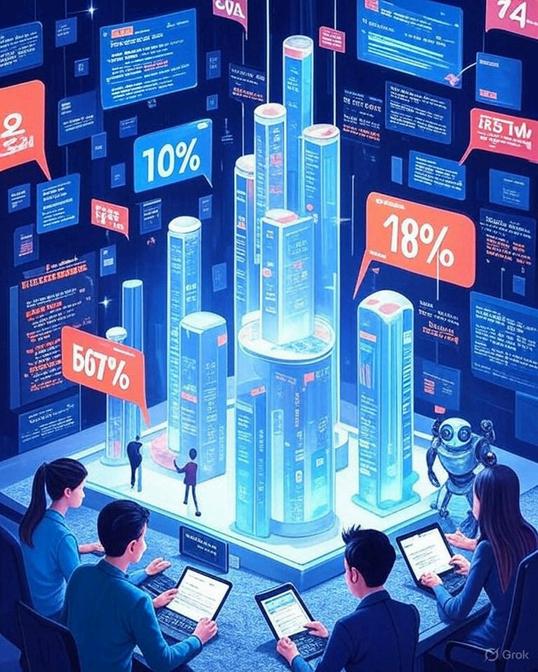
Real Estate Investment Trusts (REITs) offer a simplified way to invest without direct property management Professionally managed and providing regular dividends, REITs are a practical choice for investors with limited time In India, Embassy REIT has delivered consistent returns through its investments in high-grade commercial spaces.
Being adaptable is crucial in real estate If the market shifts in favor of commercial properties over residential, investors should be prepared to pivot accordingly Project management expertise aids in evaluating project timelines, costs, and market risks Post-pandemic trends, for example, have led investors in Hyderabad to shift focus from retail spaces to logistics and warehousing facilities
The real estate investment landscape today is more dynamic and accessible than ever. With agile strategies, technological tools, and market awareness, students and aspiring investors can position themselves for success. Staying informed and adaptable ensures smart, profitable investments. Start small, think strategically, and leverage your expertise to excel in this
Students in real estate studies have access to professors, alumni, and industry professionals who can offer valuable insights and mentorship Networking opens doors to market intelligence, collaborations, and investment opportunities Many students from RICS School of Built Environment, for example, have secured internships and real estate partnerships through active networking in industry events
Technology is streamlining real estate investments, from virtual property tours to blockchain-enabled transactions Digital tools simplify due diligence, financing, and asset management Platforms like NoBroker and MagicBricks, for instance, facilitate remote property transactions and market analysis, reducing logistical challenges

SOHAM PRAJAPATI
MBA CPM, 2023-2025
RICS SBE-MUMBAI
As a student of MBA in Construction Project Management, I have had the opportunity to closely examine one of the most pressing challenges in India’s residential construction sector: the inefficiency of traditional planning and scheduling practices My capstone project, titled “AI-Driven Planning and Scheduling Optimization for Residential Construction Projects in India,” explores how Artificial Intelligence (AI) can serve as a transformative tool to address these long-standing industry inefficiencies
India's residential construction industry continues to struggle with delays, cost overruns, and poor resource utilization While these issues are widely recognized, efforts to modernize project management through technology have been inconsistent My research identifies that most project stakeholders still depend on conventional, manual scheduling tools that are ill-equipped to handle the dynamic nature of modern construction projects Moreover, there is a notable absence of integrated AI frameworks capable of adapting in realtime to site-level changes
To explore the viability of AI in this space, I conducted a structured survey with industry professionals including architects, engineers, contractors, project managers, and government officials Using confirmatory factor analysis, I validated 27 key factors that influence the adoption and effectiveness of AI in construction scheduling
These factors include real-time adaptability, predictive analytics, and automation of resource allocation all of which can significantly enhance project efficiency In fact, literature and survey findings suggest that AI can reduce project durations by up to 30%
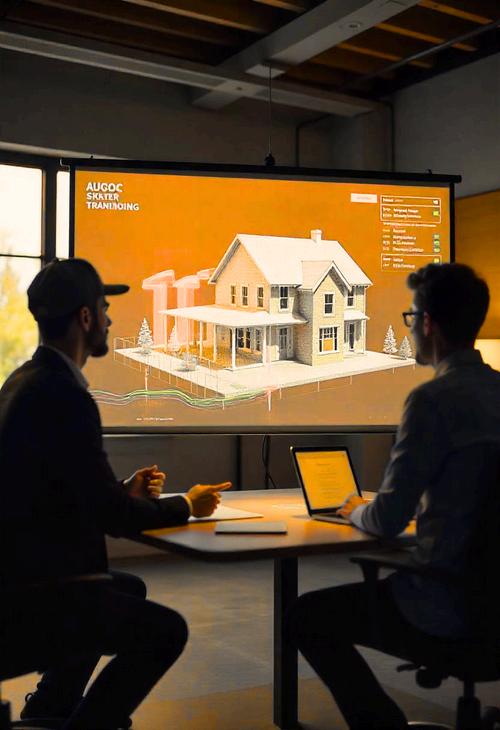
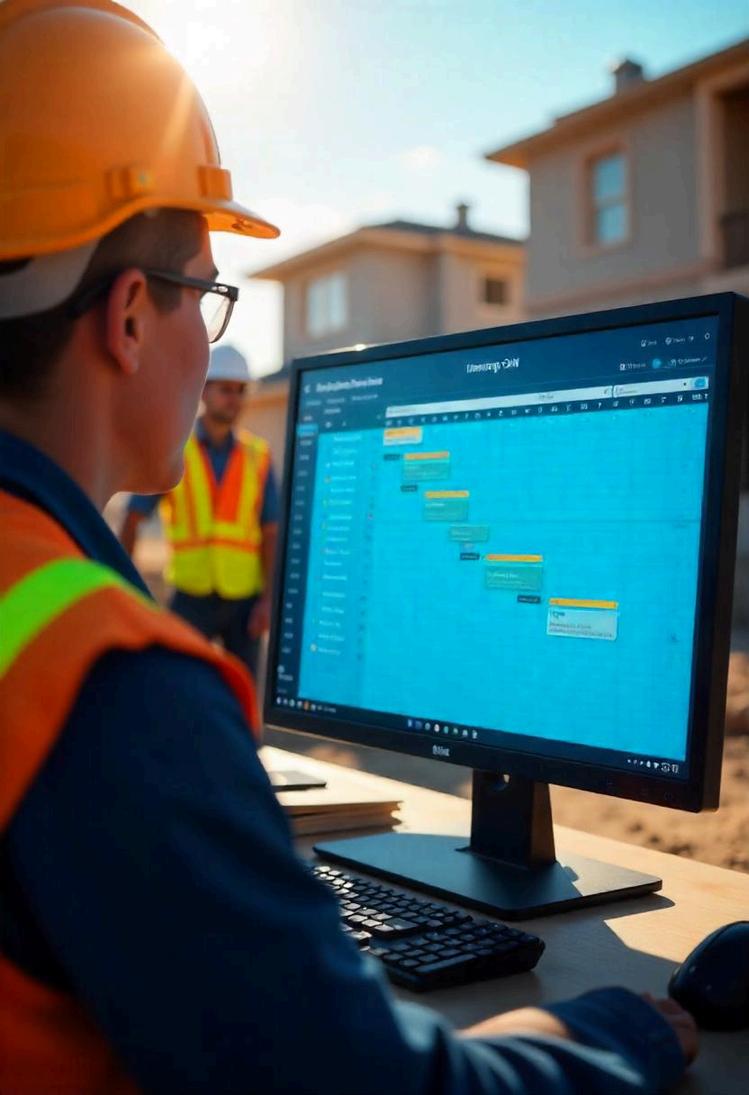
One of the key insights from my study is the potential of AI to transform decision-making in construction By analyzing vast datasets and providing actionable insights, AI can enable more accurate planning and faster response to project deviations This is crucial in a country like India, where urbanization is accelerating and the demand for residential infrastructure continues to rise
However, the path to AI adoption is not without challenges My findings indicate that small and medium-sized enterprises (SMEs) face hurdles such as high implementation costs, lack of skilled personnel, and resistance to technological change To overcome these barriers, I recommend targeted training programs, government-led incentives, and industry-wide collaboration to foster a more receptive ecosystem
In conclusion, I firmly believe that with a phased and well-supported approach, AI can revolutionize residential construction in India Through smarter planning, adaptive scheduling, and data-driven project management, we can build a more efficient, resilient, and futureready construction industry
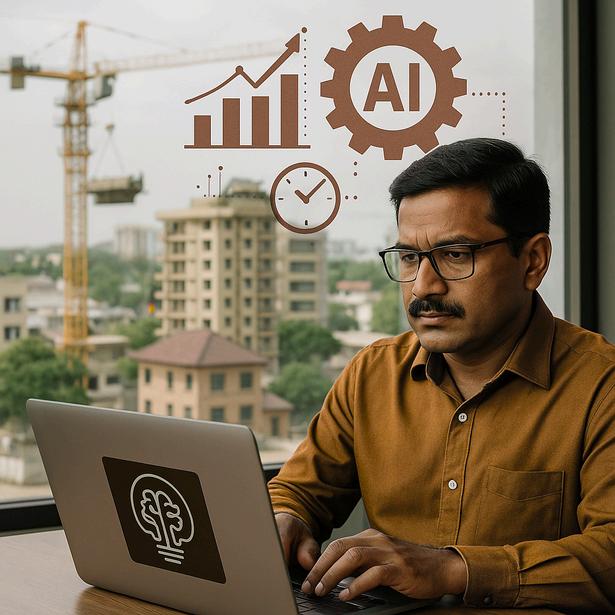

ODIVISTA LIMITED LEVERAGES BIM TO MANAGE THE WORLD’S LARGEST GATHERING, THE MAHA KUMBH MELA—SETTING NEW BENCHMARKS IN COMPLEX LOGISTICS MANAGEMENT.
As the Maha Kumbh Mela 2025 concluded in Prayagraj, Uttar Pradesh,
the city had successfully hosted an influx of millions of pilgrims
Managing this massive congregation demanded advanced planning, particularly for the construction and operation of temporary tent cities ODIVISTA Limited transformed this process using Building Information Modeling (BIM), a technology that significantly improved crowd control, sanitation, electrification, and surveillance.
BIM supported effective crowd management through 3D visualization and crowd simulation
Detailed models of the tent layout helped planners identify congestion points and design efficient pedestrian routes Integration with simulation tools enabled scenario planning for peak crowd times and emergency evacuations Real-time data from -
surveillance systems fed into the BIM model dynamically managed crowd flow and resource deployment This approach, proven during the 2019 Kumbh Mela, enhanced safety and organization at the 2025 event

Detailed models of the tent layout helped planners identify congestion points and design efficient pedestrian routes Integration with simulation tools enabled scenario planning for peak crowd times and emergency evacuations Real-time data fromsurveillance systems fed into the BIM model dynamically managed crowd flow and resource deployment This approach, proven during the 2019 Kumbh Mela, enhanced safety and organization at the 2025 event
Reliable power supply proved essential, and BIM delivered robust solutions Designers created integrated electrical layouts within the BIM model, ensuring compatibility with other infrastructure Energy-efficient options like solar panels and LED lighting, simulated and incorporated, reduced environmental impact and costs BIM assisted emergency responders in quickly accessing electrical layouts during outages or crises, boosting safety

Combining drones with BIM provided real-time, aerial insights into tent city management Drones captured updated aerial maps for the BIM system, tracked crowd movements, and supported emergency response teams with immediate visual assessments of incidents These applications strengthened security and enabled swift, informed decisions
By leveraging BIM and drone technologies, ODIVISTA Limited redefined how temporary urban spaces were designed and operated for the Maha Kumbh Mela 2025 This approach ensured a safe and hygienic environment for millions of pilgrims and set a precedent for managing future large-scale gatherings Embracing innovation in planning and execution delivered a seamless and memorable experience
MBA CPM 2023-25
RICS SBE- MUMBAI
Sustainable construction is essential and Agile and Lean make it possible at every stage.

The construction industry faces growing pressure to reduce its environmental impact, as the built environment significantly contributes to global carbon emissions With urbanization on the rise, sustainable construction practices are essential Agile methodologies, originally from software development, are gaining traction in construction due to their flexibility, iterative approach, and focus on collaboration Paired with sustainability goals, Agile and Lean Construction principles can transform the industry by fostering innovation, enhancing collaboration, and advancing net-zero carbon targets This article explores how these methodologies drive sustainable, energy-efficient, and waste-reducing practices in construction
Net-zero carbon construction aims to minimize emissions during construction and building operations, offsetting them with renewable energy or carbon sequestration Agile methodologies contribute through:
Unlike traditional linear planning, Agile’s iterative approach allows continuous evaluation and adjustment This flexibility enables early identification and modification of carbon-intensive processes, materials, or designs, reducing environmental impact and aligning projects with sustainability goals
Agile emphasizes stakeholder collaboration, involving architects, engineers, contractors, and sustainability experts. This ensures sustainable materials and energy-efficient designs are prioritized early, minimizing waste and enhancing resource efficiency
Lean’s JIT approach delivers materials only when needed, reducing excess inventory, transportation emissions, and waste This optimizes the supply chain, lowering the project’s carbon footprint.
Prefabrication
Lean promotes prefabrication and modular construction, where components are built off-site and assembled on-site This reduces waste, improves quality, and minimizes on-site adjustments Agile’s flexible designs optimize modular assembly, enhancing sustainability by lowering material and energy use Modular construction also supports future adaptability, reducing environmental impact during repurposing
Tools like Building Information Modeling (BIM) and Artificial Intelligence (AI) support Agile by simulating energy use, emissions, and material impacts before construction Real-time feedback from these technologies allows teams to adapt processes, ensuring alignment with sustainability objectives Lean Construction complements Agile by focusing on waste elimination and value maximization, critical for sustainable construction Key Lean principles include:
Both Lean and Agile emphasize continuous improvement through iterative feedback This allows teams to integrate energy-efficient technologies, waste-reducing strategies, and sustainable designs Agile’s adaptability ensures responsiveness to new environmental challenges, maintaining efficiency and sustainability throughout the project

Agile and Lean Construction principles offer a robust framework for sustainable construction by reducing waste, optimizing energy, and cutting emissions. Agile’s flexibility, collaboration, and iterative feedback drive progress toward net-zero carbon goals, while Lean’s focus on waste reduction and efficiency streamlines workflows and resource use. As climate change pressures mount, adopting Agile and Lean methodologies will be crucial for creating resilient, ecofriendly, energy-efficient buildings, shaping a sustainable future for the construction industry.
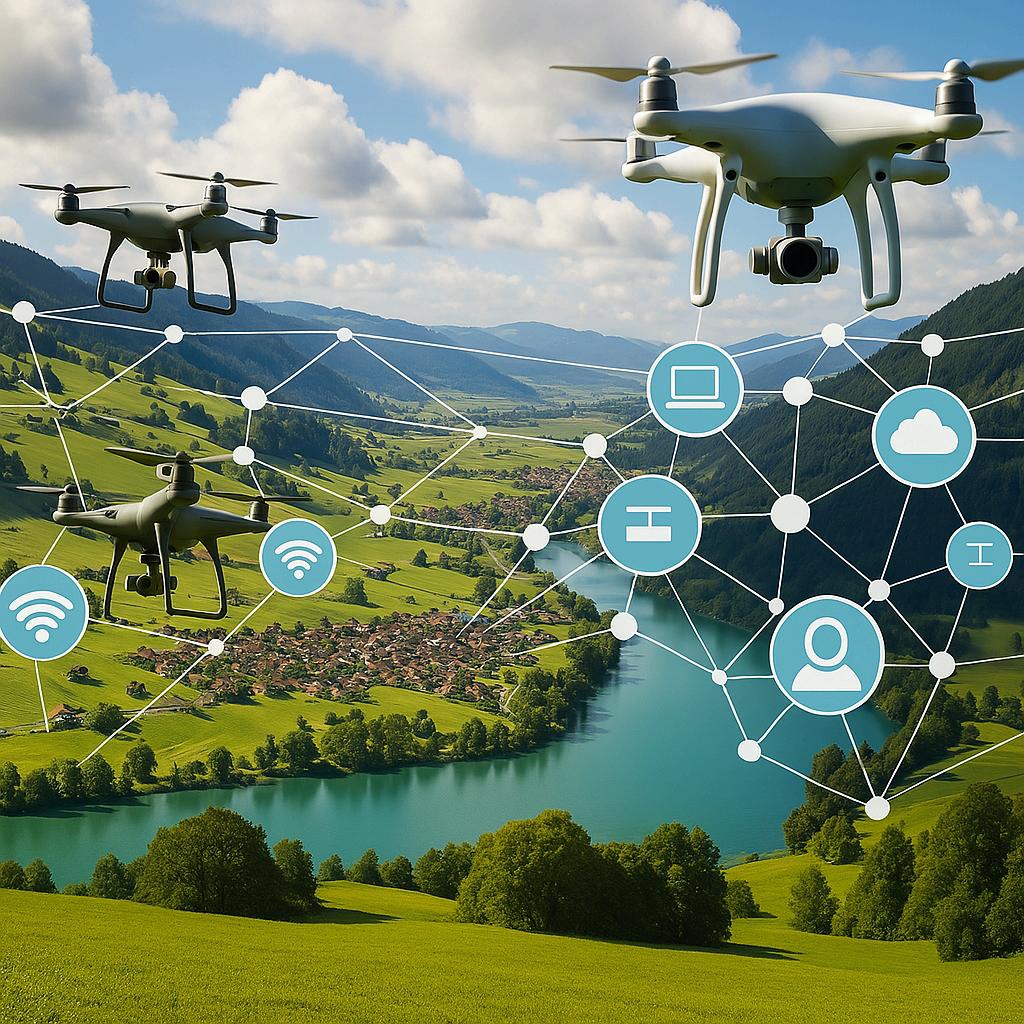




Dubai Uses AI Drones for Inspections Dubai Municipality has drone systems that scan entire skyscrapers for defects, saving millions in maintenance costs.
Drones Are Now Building Skyscrapers Researchers have developed autonomous drones that work like termites, placing bricks without human assistance
China Built a 10-Story Building in 28 Hours Using prefabricated modules and AI-coordinated drones, a company in China assembled an entire building in just over a day!
Swarm Construction is the Future Inspired by bees, scientists are developing self-organizing drone swarms that can 3D-print buildings in real-time
NASA Plans to Use Drones to Build Moon Bases Autonomous drone technology will help construct the first habitable lunar structures on the Moon and Mars
FROM TAKE OFF TO TOUCH DOWN, DRONE TECHNOLOGY IS INCREASING PROJECT EFFICIENCY LIKE NEVER BEFORE
Having recently completed my drone training at the Government Aviation Training Institute (GATI), I’ve come to appreciate how drones are transformi-
-ng construction These flying machines are no longer just cameras in the sky they’re powerful tools bringing unprecedented efficiency and precision across the project lifecycle
PRE-CONSTRUCTION SURVEYING & MORE
Drones, with LiDAR and photogrammetry, enable highly accurate mapping and 3D modelling of sites They capture detailed, highresolution images that help identify terrain undulations, plan material entry points, and spot early obstacles This data-driven approach significantly improves site planning and decision-making
DURING CONSTRUCTION- SITE INSPECTION
For quality inspections, drones equipped with HD optical cameras and thermal sensors are invaluable Facade cracks, insulation gaps, and water ingress are easily detected issues that might be missed during manual inspections Drones extend human capability, ensuring defects are identified and rectified early, enhancing overall build quality
CONSTRUCTION MONITORING- KEEP TRACK
Using 4K cameras and panoramic imaging, drones capture site progress from strategic angles, creating weekly timelapses and reports This visual data helps project teams communicate progress clearly to management and investors, even those with limited technical knowledge Drones simplify complex updates, improving transparency
With volumetric analysis and GPS-enabled surveys, drones accurately quantify onsite materials like aggregates This helps prevent pilferage and ensures better stock control, reducing wastage and keeping construction flow smooth
POST CNSTRUCTION- PERFORMANCE
Post-construction, drones support facility management through infrared thermography, detecting heat-absorbing areas on facades Simple fixes like polarized window films can then be applied to reduce energy consumption, cut costs, and improve building efficiency
THE SKY IS (NOT) THE LIMIT
Drone technology is reshaping the way we approach construction and facilities management It enhances accuracy, boosts safety, improves communication, and saves both time and money As someone who has recently stepped into this fascinating field, I am excited about the endless possibilities drones offer, and I look forward to seeing how they continue to elevate our industry to new heights
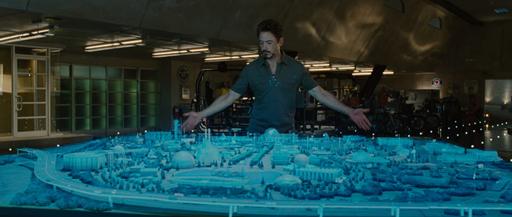
What Exactly is a Digital Twin?
Imagine a building with a live status update a virtual twin constantly fed with real-time data That’s the core of a digital twin Powered by sensors and IoT devices, it mirrors the physical structure dynamically As Dr Miranda Chen of BuildTech Solutions says, “It’s the building’s brain in the cloud, enabling smarter decisions every second”

Digital twin technology can cut construction costs by up to 10% and reduce operational expenses by as much as 25%
McKinsey Report
Ina world where buildings are becoming smarter and cities more connected, a -groundbreaking technology is leading the charge digital twins
These real-time, virtual replicas of physical assets are rapidly transforming the architecture, engineering, and construction (AEC) industries, offering an unprecedented convergence of the digital and physical worlds
Unlike static 3D models, digital twins offer a living, breathing system that can be used for predictive maintenance, performance optimization, and even simulating future events before they occur
Reimagining the Building Lifecycle
From concept and construction to operations and eventual refurbishment, digital twins are reshaping every phase of a building’s life

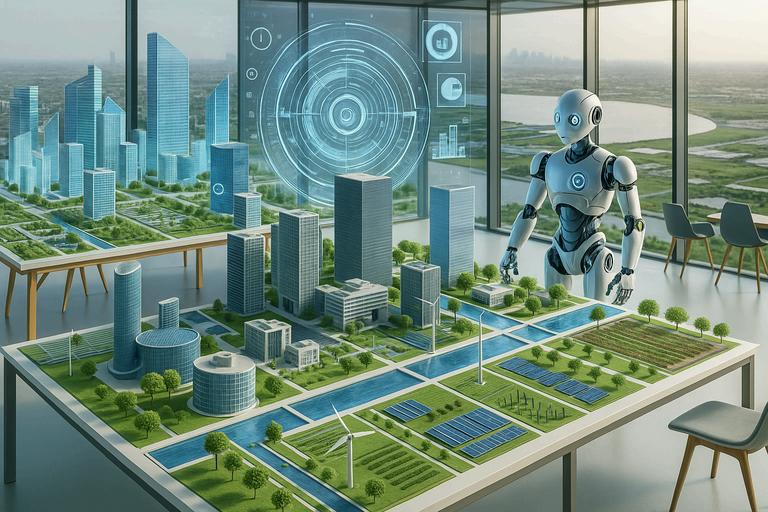
Sarah Chen, Director of Innovation at BuildTech Partners, explains, “With digital twins, we can foresee how buildings will behave, respond to change, and perform over time”
Shanghai Tower, China’s tallest building, runs on a digital twin linked to over 20,000 sensors.
Their predictive power enables early detection of issues, resource optimization, and extended asset lifespan an attractive proposition for developers and facility managers alike Dollars, Data, and the Drive for Sustainability
The business case is equally compelling According to a McKinsey report, digital twin technology can cut construction costs by up to 10% and reduce operational expenses by as much as 25%
Environmentally, the impact is significant digital twins facilitate precise energy use, space efficiency, and reduced waste They’re fast becoming essential tools in sustainability strategies and climate resilience planning Real-World Success Stories
Shanghai Tower, China’s tallest building, runs on a digital twin linked to over 20,000 sensors The result? A 21% reduction in energy usage and a 37% boost in maintenance efficiency During a 2019 typhoon, the system enabled real-time monitoring and system adjustments to ensure occupant safety.
Crossrail’s Elizabeth Line London, leveraged a complete digital replica of its 73-mile network to prevent over £25 million in construction rework and now relies on it for maintenance and passenger flow optimization
The Road Ahead
Challenges remain high initial costs, fragmented legacy systems, and a digital skills gap. Yet the tide is turning Cloud platforms and AI are making the technology more accessible and powerful Even city-scale applications are gaining momentum, helping urban planners simulate traffic patterns, energy consumption, and emergency scenarios with unmatched precision
As standards evolve and success stories multiply, one thing is clear: digital twins aren’t just a trend they’re the future of smart, resilient, and sustainable cities And that future is already being built
Growing up watching sci-fi movies, I was captivated by futuristic technology A scene from Iron Man, where Tony Stark interacts with a virtual model of his suit and lab, left a lasting impression What once seemed like pure science fiction is now a reality through digital twin technology, transforming how we design, build, and manage the built environment.
Sustainable rural tourism promotes balanced development by conserving the environment, strengthening local economies, and safeguarding cultural heritage It encourages eco-friendly practices, enhances local livelihoods through community-based initiatives, and provides authentic cultural experiences By incorporating sustainability, rural tourism transforms into a catalyst for long-term growth, resilience, and responsible travel, benefiting both the destinations and their communities.
Aligned with the principles of the built environment, sustainable rural tourism acts as a significant economic driver in rural areas It creates green job opportunities, fosters climate-responsive infrastructure, and utilizes local craftsmanship and materials, revitalizing rural economies and enhancing community resilience This comprehensive approach ensures development that is inclusive, economically and environmentally, generating lasting value for people and places
Worldwide, sustainable rural tourism is increasingly seen as a key driver of inclusive economic development within the built environment sector It stimulates investments in climate-resilient infrastructure, supports sustainable construction practices, and strengthens local supply chains by blending traditional knowledge with modern sustainable design

As the global market shifts towards genuine and environmentally responsible travel experiences, rural destinations are capitalizing on this trend to attract green investment and develop low-impact, high-value tourism products In harmony with global frameworks such as the UN Sustainable Development Goals, sustainable rural tourism promotes economic diversification and reduces regional disparities while positioning rural areas as essential components of a resilient and equitable global economy.
In India, sustainable rural tourism has the potential to transform the rural economy significantly. By merging traditional knowledge with eco-friendly infrastructure and local architecture, it generates green jobs, supports local businesses, and revitalizes communities. Initiatives like Swadesh Darshan and the RURBAN Mission bolster rural tourism by enhancing infrastructure, reducing migration, and diversifying income streams. With an increasing demand for authentic and responsible travel, India’s villages are becoming key players in driving inclusive, resilient, and sustainable economic growth The global rural tourism market is experiencing substantial growth, with forecasts indicating an increase from USD 97 84 billion in 2024 to USD 131 47 billion by 2028, representing a compound annual growth rate (CAGR) of 7 4% In India, the rural tourism sector is also expanding rapidly, with an expected market size of USD 1,177 9 million in 2024, projected to reach USD 4,911 9 million by 2033, at a CAGR of 17.9%.

In summary, sustainable rural tourism is a vital driver of economic revitalization and environmental responsibility By integrating eco-friendly practices and empowering local communities, it encourages inclusive growth while protecting cultural heritage As global demand for authentic travel experiences continues to rise, the potential of rural tourism to stimulate investment and innovation likewise grows In alignment with frameworks such as the UN Sustainable Development Goals, it positions rural areas as critical contributors to achieving a resilient and equitable economy
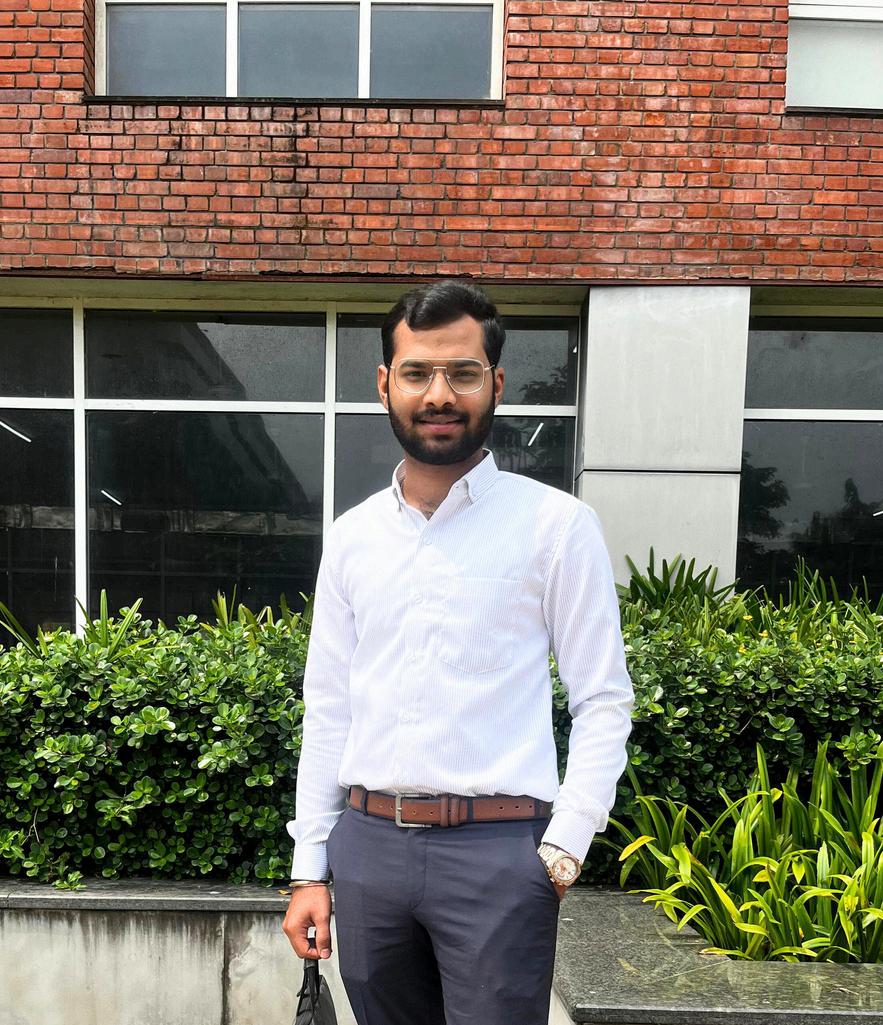

India’s real estate sector, a vital 7% of GDP and projected to reach $1 trillion by 2030, attracted $4 2 billion in private equity (PE) investments in 2024, up 32% from 2023 Despite its growth, market volatility, regulatory hurdles, and illiquidity pose challenges for PE exits This article explores innovative exit strategies, regulatory navigation, and advanced market timing analysis to maximize returns in Indian real estate. (Knight Frank, 2024)
In 2024, PE investments targeted warehousing, residential, and office sectors, driven by e-commerce, urbanization, and workplace recovery Land deals surged to 26% of investments by 2023, with 68% for office projects Illiquid secondary markets and regulatory complexities necessitate innovative exit approaches to achieve optimal risk-adjusted returns (Savills, 2024).
▪ RERA (2016): Enhances transparency via project registration and 70% escrow accounts but risks labeling PE firms as “promoters,” adding compliance burdens (Law Asia, 2024).
▪ GST: Streamlines costs through input tax credits, though complex compliance (5% for non-affordable housing, 1% for affordable) affects exit valuations (GST on Real Estate, 2025)
▪ FEMA: Regulates foreign investments with sectoral caps and repatriation rules; non-compliance risks penalties up to thrice the investment (RBI, 2023)
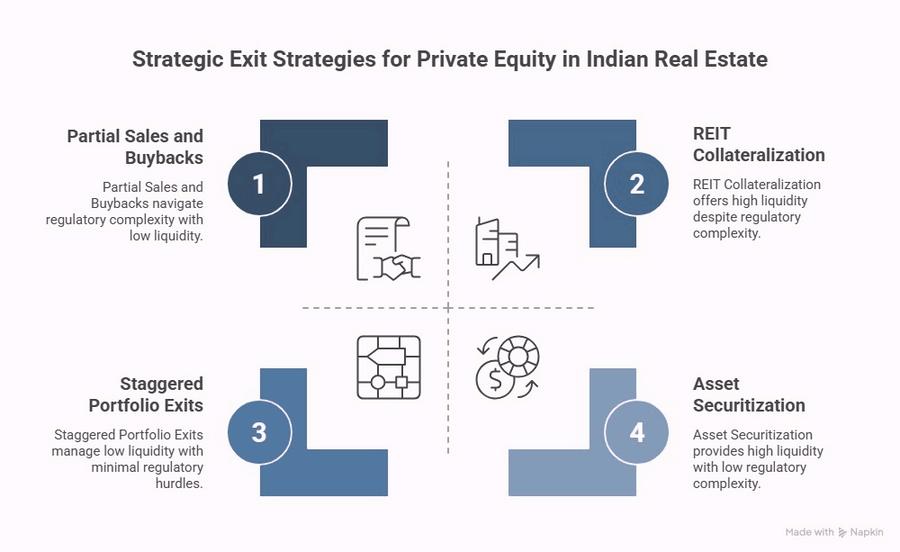
Optimal exits depend on precise timing within India’s cyclical real estate market By analyzing historical price trends, PE firms can identify peak phases for higher valuations Key indicators include GDP growth, rental yields, interest rates, and urbanization rates For instance, 2024’s investment surge signals a growth phase ideal for exits Advanced tools like regression analysis forecast price movements, while moving averages smooth out volatility to pinpoint entry and exit windows. Predictive models incorporating absorption rates, vacancy trends, and infrastructure developments (e g , metro expansions) enhance accuracy Real-time dashboards tracking RERA compliance, sales velocity, and macroeconomic shifts (e g , inflation, credit availability) enable dynamic decision-making, targeting IRRs of 15–25% Scenario analysis further refines timing by simulating exits under economic downturns or regulatory changes, ensuring resilience
To address illiquidity and regulatory challenges, PE firms can adopt
▪ REIT Collateralization: Pledging units in REITs like Embassy Office Parks to secure debt from NBFCs, enabling reinvestment in high-yield assets like coliving or distressed properties This avoids capital gains tax, retains REIT income, and boosts IRR under SEBI guidelines
▪ Partial Sales and Buybacks: Selling minority stakes to co-investors or structuring developer buybacks ensures liquidity while preserving future upside, ideal for residential projects.
▪ Asset Securitization: Monetizing rental or loan cash flows from commercial or affordable housing offers early exits, with securitized pools providing flexibility and partial stake retention
▪Staggered Portfolio Exits: Dividing portfolios into tranches for phased sales to different buyers (e g , REITs, sovereign funds) mitigates market risk and capitalizes on varying demand cycles
▪ IPO: Large-scale developers, platforms, or portfolios whose brand equity and asset base is strong
Innovative exit strategies REIT collateralization, partial sales, securitization, staggered exits, and convertible debt enable PE investors to navigate India’s real estate challenges Advanced market timing analysis, leveraging regression models, predictive analytics, and real-time data, ensures exits align with peak cycles for maximum profitability. By blending these approaches with regulatory compliance, PE firms can thrive in India’s dynamic property market
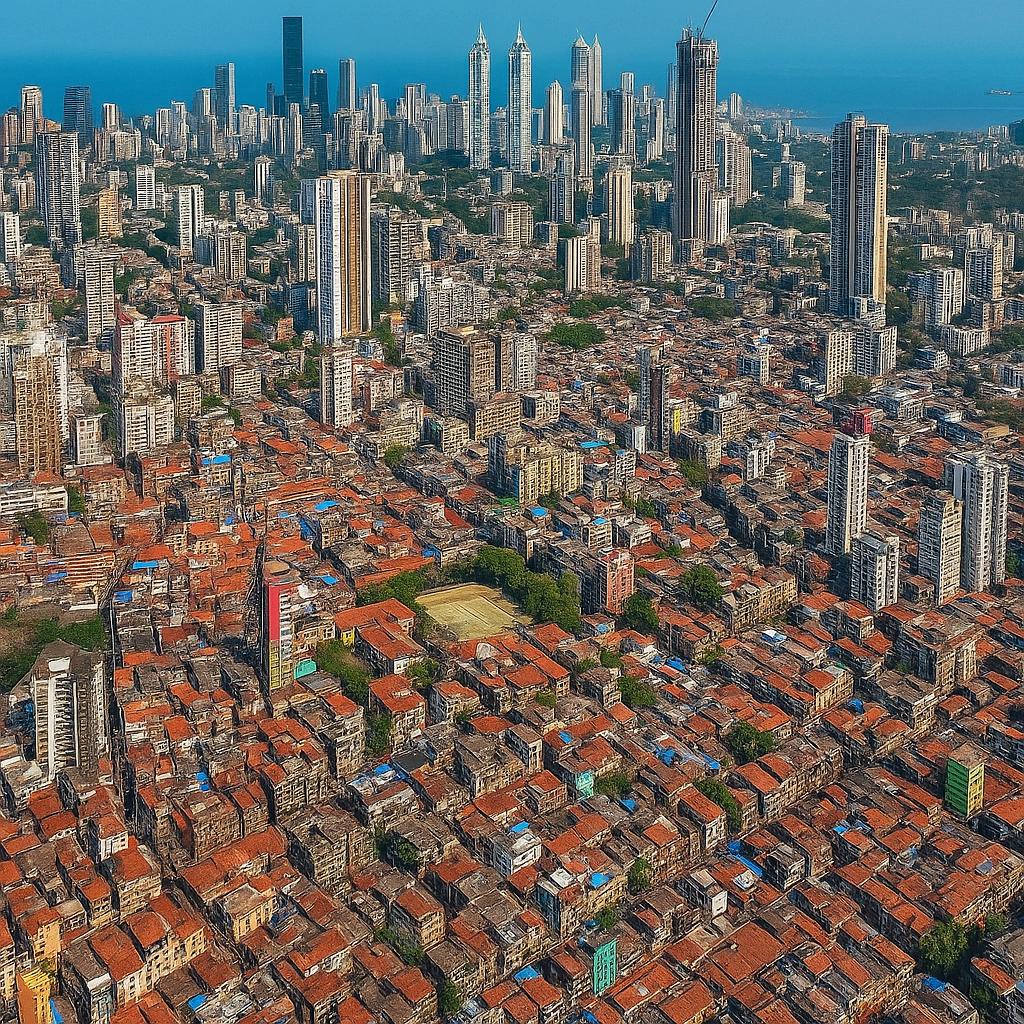
umbai pulses with a chaotic, captivating energy a city where commerce and architecture collide in a vibrant dance As an architect, I see this metropolis as a living canvas, its buildings framing the relentless drive of sales while being shaped by it The numbers tell a story: housing sales soared 16% in early 2024, with 52,896 units registered by April 2025, an 8% jump from last year Luxury is booming too 52 homes above ₹40 crore sold, totaling over ₹2,000 crore These stats aren’t just figures; they’re the blueprint for what we design next
During my internship at Kalpataru, I saw how sales steer architecture A spike in premium demand means larger floor plates, luxe finishes, and experiential spaces Peripheral markets booming? Think vertical growth and transit-oriented designs Take Bandra’s Jio World Plaza its lotus-themed experience center was born from high-end retail sales In Thane, demand for space and greenery fuels wellness-centric projects, while Ghansoli and Vashi, with 4 3 million sq ft leased in Q1 2025, are redefining commercial density Even infrastructure like the Navi Mumbai International Airport is a catalyst, inspiring entire neighborhoods designed around projected sales

AR. KOMAL MOURYA, MBA CPM (2023-25), RICS SBE-MUMBAI.
Mumbai’s streets tell a deeper story. The grand arches of Crawford Market, a 19th-century gem, still hum with vendors selling spices and textiles, its Gothic design naturally supporting the frenzy of commerce Meanwhile, BKC’s sleek towers reflect corporate ambition, but soaring property prices highlight the paradox small businesses get pushed out Looking ahead, e-commerce is shaking things up, nudging us to create experiential stores with interactive displays Sustainability is non-negotiable too Mumbai’s humid climate demands green roofs and crossventilation, all while balancing developers’ obsession with rentable space
In this city that never sleeps, sales are the rhythm, and architecture is the melody Every line we draw adapts to Mumbai’s commercial beat, crafting spaces that are functional, soulful, and timeless
IN THIS CITY THAT NEVER SLEEPS, SALES ARE THE RHYTHM, AND ARCHITECTURE IS THE MELODY.

S. JEEVAN KUMAR
MBA-CPM,2023-2025
RICS SBE-MUMBAI
“Relentless curiosity fuels these emerging ambitious projects, redefining construction's limits in scale, sustainability, and design, forging a more complex and connected future.”
A groundbreaking smart city initiative launched by Saudi Arabia, envisioned as a hub of innovation, sustainability, and futuristic urban living. Spanning across 26,500 sq.km along the Red Sea. It integrates advanced technologies such as AI, robotics, IoT, and is powered entirely by renewable energy.

An ambitious urban project in Johor, Malaysia, spans four man-made islands over 30 sq km Designed as a smart, green city, it features vertical greenery and advanced technology to create a futuristic living environment Recent efforts, like a new duty-free zone, aim to boost occupancy and attract investors
The largest of its kind, transfers water from southern rivers to the arid north This $62 billion undertaking, decades in the making and projected to continue until 2050, will annually redirect 44 8 billion cubic meters of water via three inter-basin transfer routes
The Trans-European Transport Network (TEN-T) is a €600 billion EU initiative to create a seamless, multimodal transport system rail, road, air, and water supporting the single market and sustainability. With €25.8 billion allocated for 2021–2027, over 50% of the core network is underway, aiming for completion by 2030 and full network by 2050. 05 03 04
The Gujarat Hybrid Renewable Energy Park in Kutch, with a 30 GW capacity, is pioneering as the world’s largest hybrid facility, combining solar and wind power Budgeted at ₹1 5 lakh crore, construction began in 2020, with full capacity expected by 2026 Its integration of both energy sources and cutting-edge technologies sets a global benchmark for sustainable energy

AR. AISHWARYA R, Editor,
MBA-CPM,2023-2025
RICS SBE-MUMBAI

future belongs to the skies From the cloud-piercing cities of Star Wars and Avatar, pop culture has long imagined worlds e we might not have Coruscant-style city-planets just yet, we st about land but altitude
d ran
, p y p , d air rights became prime real estate But even the height has limits, and with urban sprawl reaching its breaking point, we turned to the seas Japan’s Dogen City is designed as a self-sufficient floating metropolis for 40,000 residents, complete with renewable energy, farming, and medical centers South Korea’s Oceanix Busan, backed by the UN, is shaping up to be the world’s first floating city, designed to rise and fall with the tides.The Maldives is fighting rising sea levels with The Floating City Project, a honeycomb-like grid of buoyant platforms that offer both housing and commercial hubs
But if we can build floating cities on water, why stop there? The next logical step is taking our urban infrastructure into the air
NASA’s HAVOC (High Altitude Venus Operational Concept) might sound like something straight out of Interstellar, but its research into floating habitats in Venus’ atmosphere could have real-world applications here on Earth. The concept envisions cities suspended at high altitudes, using a mix of aerostatic lift and renewable energy to remain airborne

Closer to home, architects and engineers are designing Cloud Cities floating districts powered by solar aerostats, where commercial hubs, green spaces, and residential zones hover above groundbased urban centers Stratospheric Balloon Cities propose entire neighborhoods tethered to the Earth, swaying gently in the upper atmosphere, providing an escape from pollution and overcrowding below Meanwhile, modular air pods could redefine the idea of mobile homes, drifting along pre-set flight paths like a never-ending cruise in the sky


What happens if your floating home drifts into someone else’s? Would “air traffic” violations become a thing? Will neighborhood disputes now involve altitude rights instead of land encroachments?
As wild as it sounds, these are the kinds of challenges we'll have to tackle building not just stronger structures, but smarter, more agile solutions that can keep up with life in the skies After all, when your front yard is a cloud, a little innovation goes a long way
For airborne cities to work, they need more than just good views The first challenge? Energy Companies like Altaeros are already experimenting with airborne wind turbines, capturing strong high-altitude winds to generate electricity. Wireless energy transmission could beam power between floating districts, making traditional power grids obsolete
Then, there’s transportation With no roads or railways, Urban Air Mobility (UAM) will take center stage Skyports, air taxis, and autonomous drone highways will replace traditional commutes, while floating warehouses could revolutionize e-commerce and logistics Imagine Amazon Prime now delivered via floating blimp hubs
Keeping entire cities airborne is no small feat Stability, airspace regulations, and structural durability will be massive engineering challenges And then there’s the day-to-day realities of sky living
While floating cities might not appear in India’s skyline in the next century or two, the groundwork is already being laid Urban Air Mobility (UAM) trials have already begun in cities like Chennai, Bengaluru, and Hyderabad, setting the stage for a future where flying taxis and aerial transit become everyday reality. With advancements in smart cities, renewable energy, and airspace urbanism, India may one day look skyward for expansion Imagine an aerial tech hub above Bengaluru, floating residential clusters over the congested streets of Mumbai, or highaltitude business parks drifting above Hyderabad’s IT corridors Real estate listings might soon read: “3BHK, West-facing, 500m above sea level, excellent sunrise views, low turbulence”
It might sound like science fiction now, but so did airplanes, skyscrapers, and electric cars once The future of real estate isn’t just about location anymore it’s about altitude
As cities exhaust land and sea, the skies are set to become the next canvas for human ambition—where altitude defines address and the horizon is just the beginning

THE UNEXPLORED CURIOSITY
Once limited to Earth, construction is now stepping boldly into the cosmos, fueled by an unstoppable mix of curiosity and agile thinking
The International Space Station (ISS) humanity’s crowning achievement in orbital construction proved that assembling massive, livable structures in space is not science fiction, but science fact With aluminum alloys, titanium structures, micrometeoroid shielding, and robotic arms like Canadarm2, the ISS taught us how to build under extreme conditions and what it would take to go further
Now, curiosity is pushing us to think bigger: lunar settlements in the 2030s and Martian colonies by the 2040s. To succeed, we need a radical shift from conventional construction methods. Agile practices rapid prototyping, flexible planning, adaptive project management will be essential when you ' re building homes with 3D-printed regolith on the Moon or creating sulfur concrete habitats on Mars, thousands of miles from Earthly supplies Insitu resource utilization (ISRU), solar sintering, and autonomous robotic builders are becoming part of our essential construction kit, not science fiction
For built environment professionals architects, engineers, project managers, real estate developers, and marketers this shift demands a new skillset Designing radiation-proof homes, planning infrastructure without Earth’s luxuries, selling lunar real estate, or branding Martian communities calls for knowledge of robotics, material science, life-support systems, and even space psychology. Agility becomes nonnegotiable: future professionals must embrace flexible thinking, rapid prototyping, and continuous learning in an environment with zero margin for error
“Where gravity fades, curiosity and agility rise to build the impossible.”


engineering rooted in the hedrals and mbitious but tangible Moon bases within two decades, Mars settlements by mid-century Agile teams, equipped with new materials, autonomous construction tech, and cross-disciplinary skills, will be the pioneers of this next frontier.
“That's one small step for man, one giant leap for mankind.”
-Neil Armstrong
From the ISS’s orbiting halls to the dusty plains of Mars, construction is no longer about staying grounded it’s about reaching farther, faster, and smarter The question isn't just can we build in space? it's how fast can our curiosity and agility get us there?

The future is being built with ideas we once only dreamed of let's explore what's reshaping our world
01
Concrete created using planetary soil and minimal water; critical for extraterrestrial construction; tested in NASA’s Moon-to-Mars program concepts.
Bio-based plastics and fungal materials that are biodegradable; used in sustainable panels, insulation, and furniture; The Living’s Hy-Fi Tower (NYC) showcased mycelium bricks
02
03
The lightest material on Earth made from graphene; used for ultralightweight insulation and energy absorption; still mostly in R&D but holds huge promise for building envelopes and prototypes in Masdar City, UAE
3D-printed materials morph with temperature, light, or moisture, enabling dynamic façades that adapt to environmental changes pioneered by MIT’s Self-Assembly Lab.

04
05
Glass that can switch transparency or color at the touch of a button or automatically to save energy, reduce glare, and improve comfort, as seen in Salesforce Tower, San Francisco.
A durable, crystal-clear ceramic material tougher than glass and lighter than steel which is used in military and aerospace prototypes, windows, domes, and impact-resistant structures on Earth and beyond
06
07
bioengineered bricks or concrete grown from microorganisms, offering self-healing, sustainability, and reduced maintenance, with examples like self-mending biocement and self-replicating concrete developed at the University of Colorado Boulder
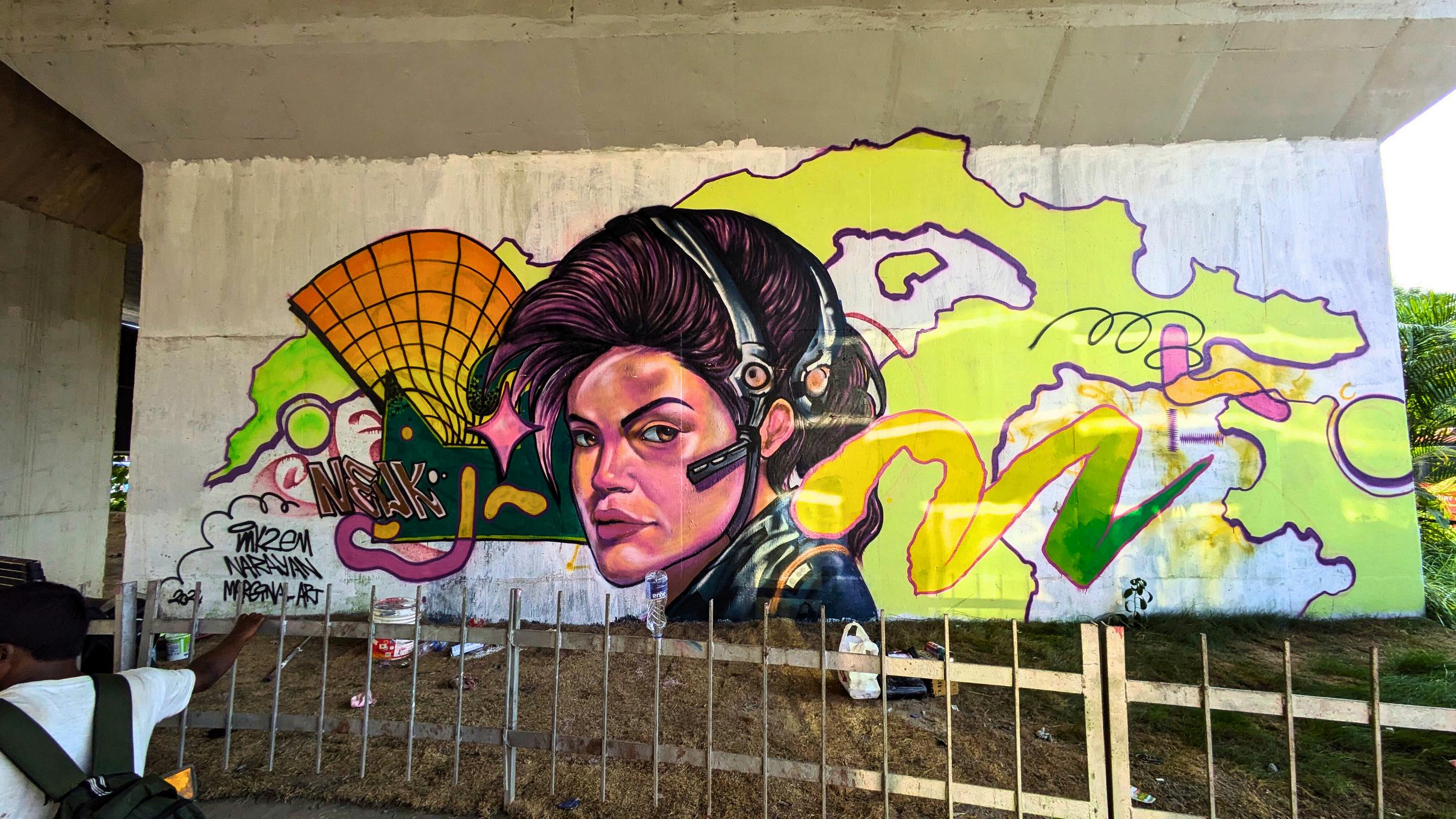

m thrilled by the city’s towering skyline, but let’s talk real: space is scarce, I’ and property prices are astronomical Enter van life a game-changer where your home rolls on wheels, tackling Mumbai’s real estate crunch with flair
Imagine owning a cozy, mobile home, free from rent or

AR. SABNAM DUTTA
MBA CPM 2023-25
RICS SBE-MUMBAI
mortgages, in a city where flats cost a fortune Van life isn’t just a trend; it’s a lifeline With housing shortages and depreciation hitting traditional properties hard, a wellmaintained van holds value, letting you save for your kids’ future Companies like Vahn are bringing global innovation home, converting 4-wheelers into living
spaces with kitchens and solar panels, perfect for Mumbai’s roads Parking’s tough, but creative solutions friends’ driveways or paid lots make it doable


As an architect, I’m obsessed with the design of compact, sustainable van interiors micro-apartments on wheels Van life cuts emissions in polluted Mumbai, aligning with eco-conscious urban needs It reduces construction’s environmental toll, as vans use fewer resources than traditional homes Plus, it eases traffic woes: park near work to slash commute times, freeing up roads
But the real magic? Freedom Picture waking up by Juhu Beach, working your 9-to-5, then parking near Marine Drive for sunset It’s a lifestyle blending travel and real estate, redefining home for Mumbai’s hustle. In India, camper van rentals are booming, appealing to families, retirees, and nomads alike, per Condé Nast Traveller
Van life is more than a trend; it’s a revolution With flats costing over ₹1 5 crore and depreciating, a van (₹10-20 lakh, customized) retains value This out-of-the-box idea could spark a real estate revolution, easing overcrowding and inspiring mobile living zones Why not try it? Rent a van from Wacation on Wheels for a weekend spin, hit the road, and test this nomadic vibe
"AS A GLOBE TROTTER, I’VE SEEN SUCH INNOVATIONS THRIVE GLOBALLY, INSPIRING THIS LOCAL ADAPTATION."

"IT’S NOT ABOUT THE AMOUNT OF ASSETS YOU HAVE; IT’S ABOUT THE AMOUNT OF EXPERIENCE YOU CREATE WITH THIS LIFESTYLE."
With his lifestyle, you can live on wheels and still maintain a 9-to-5 job life, where every morning you wake up at a different location and end your day at another Van life prioritizes experiences over assets, reshaping Mumbai’s future As a globe-trotter, I believe this lifestyle can inspire Mumbaikars to embrace a new way of living, connecting them to the world’s travel culture Because It’s not about the amount of assets you have; it’s about the amount of experience you create with this lifestyle



GEOSHIP’SBIOCERAMICBREAKTHROUGHBRINGSOFF-GRIDLIVING
ASHISH SAMANTARAY, EDITOR, MBA CPM, (2023-2025)
RICS SBE, MUMBAI
Hey, dreamers and builders! Let’s explore the incredible world of geod-esic domes those stunning, spherical structures transforming the built environment These domes are rooted in Buckminster Fuller’s genius principle: do more with less. His design uses interconnected triangles to form a these domes using a “bioceramic composite” that’s “non-toxic, fireproof, and hurricane-resistant” Geoship starts by creating modular panels in a factory, where bioceramic materials are moldedinto lightweight, durable sections These panels are then shipped to the site and assembled into a dome structure, ensuring precision and speed. This sustainable material thrives in India’s varied climates from the humid coasts of Tamil Nadu to the chilly hills of Uttarakhand making homes that last for generations
sphere, making them super strong while keeping material use low It’s a perfect fit for India, where weneed affordable, scalable solutions to house our growing population across diverse landscapes What sets these domes apart is the use of bioceramic materials, and Geoship is leading the way with their innovative process. They craft
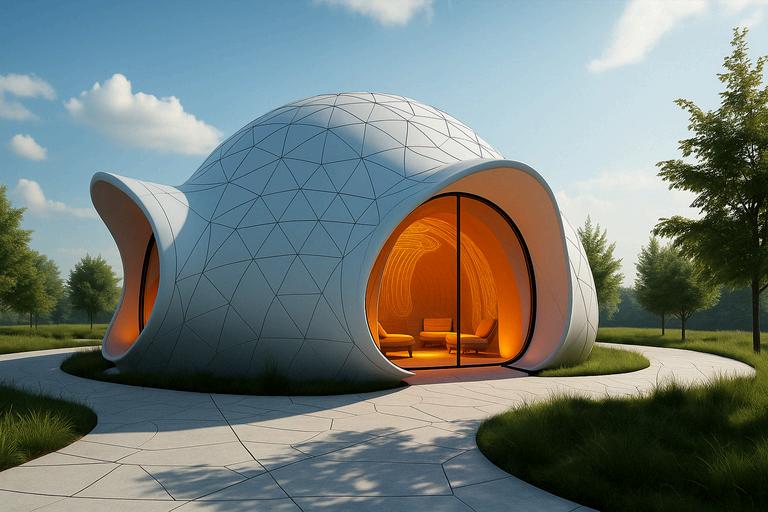
BY GEOSHIP A PARADIGM SHIFT TOWARD REGENERATIVE HOMES
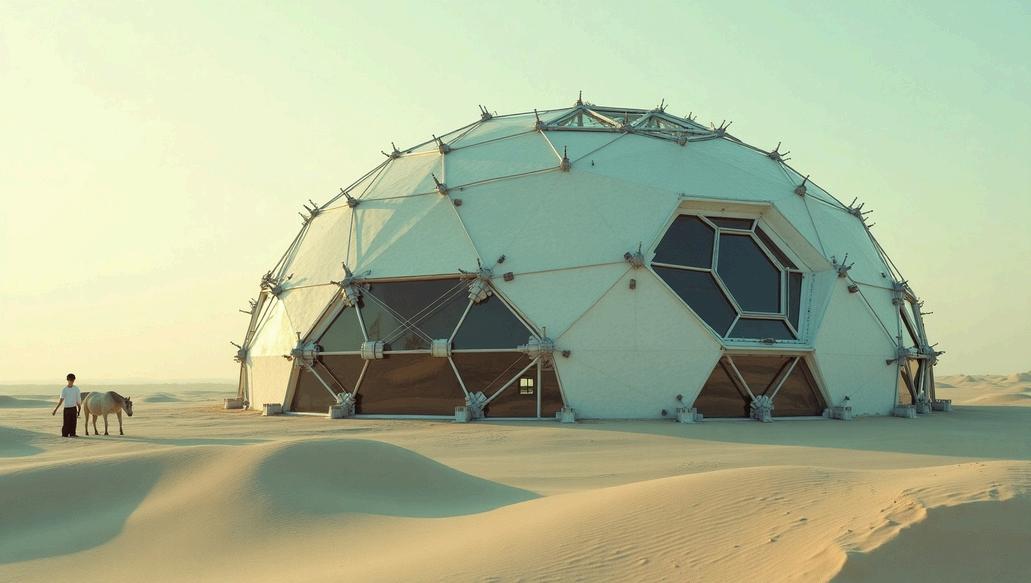
India’s skyline is increasingly vertical, but high-rises aren’t the only answer Geodesic domes offer a complementary approach They can be integrated into urban settings as standalone homes, community centers, or even temporary housing solutions Their modular nature allows for flexibility start with a small dome and expand as needed In rural areas, they could serve as ecofriendly lodging or disasterresistant shelters.
The use of domes in India isn’t entirely new. From glamping sites in Himachal Pradesh to the Matrimandir in Auroville, we ’ ve seen their appeal But Geoship’s bioceramic innovation takes it to the next level, offering a scalable, long-term solution that could reduce reliance on resourceintensive concrete and steel structures
Geoship’s geodesic domes are more than just a quirky architectural trend; they’re a glimpse into the future of housing
They challenge the status quo, offering a sustainable, resilient, and community-focused alternative to traditional buildings. For India, grappling with urbanization, climate challenges, and housing needs, these domes could be a lifeline
As we look ahead, it’s exciting to imagine a landscape dotted with these futuristic homes each one a testament to human ingenuity and our commitment to a better planet So, next time you ’ re dreaming about the future of real estate, think round The revolution is here, and it’s shaping up to be extraordinary
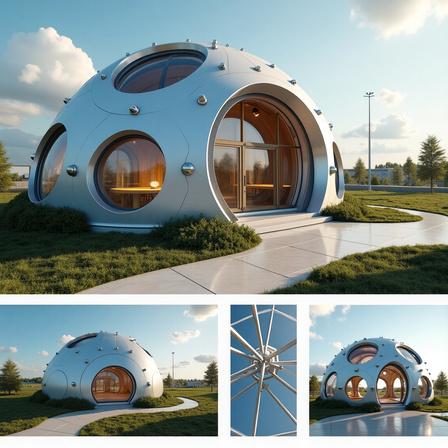
"ANCIENT INDIAN ARCHITECTURE OFTEN INCORPORATED SHAPES LIKE CURVES AND CIRCLES, REFLECTING A BELIEF THAT SPATIAL DESIGN INFLUENCES MENTAL WELL-BEING. WITH MODERN GEODESIC DOME STRUCTURES, WE’LL BE REVISITING THIS PHILOSOPHY, CREATING LIVING SPACES THAT FOSTER POSITIVITY AND HARMONY."
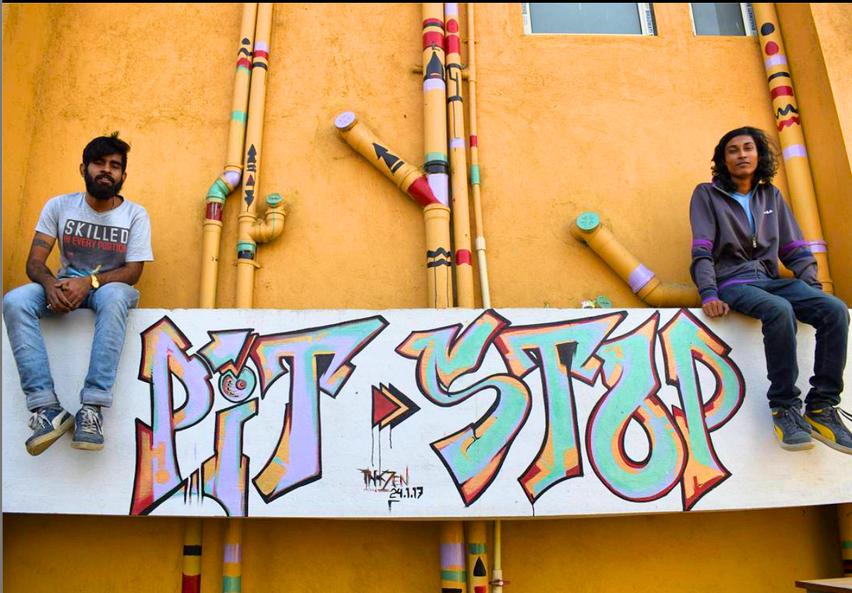
-AR.
CHIRANJIT BHOWMICK, URBAN ARTIST- INKZEN STUDIOS, ASSAM
FFor centuries, public art lived alongside power Statues of emperors in plazas, mosaics-
in cathedrals it told the stories of those in charge But in the latter 20th century, something changed In the center of cities such as New York and London, young voices filled the streets With spray cans and bright color, graffiti and street art exploded Emerging from hip hop, from rebellion, from rhythm and rhyme, these new ones defied the smooth surfaces of the modern city
They weren't asking permission Walls were galleries, train cars were canvases
It was grimy, political and beautiful And while once reduced to vandalism, street art started to speak to a reality cities could no longer deny: art is for the people Now, we see murals recounting forgotten histories, sun-powered sculptures, even digital art that changes as we walk by Public art is no longer just ornamentation it's memory, protest, celebration A city's pulse
And the spaces themselves speak for the larger audience to interact with. Architects and artists now work together, creating spaces that encourage expression, not simply shelter
Look closely at any city and you’ll see it—a quiet conversation between stone and brushes, steel and spray cans. Buildings rise, roads stretch, but it’s the art—often unexpected, sometimes rebellious—that gives these spaces soul.
Parks, transit stops, vacant lots they've become stages for public voices
Through this constant dance between structure and spirit, one thing is certain: when art intersects with public space, cities are awakened not merely as where to live, but as where to feel, to remember, and to belong
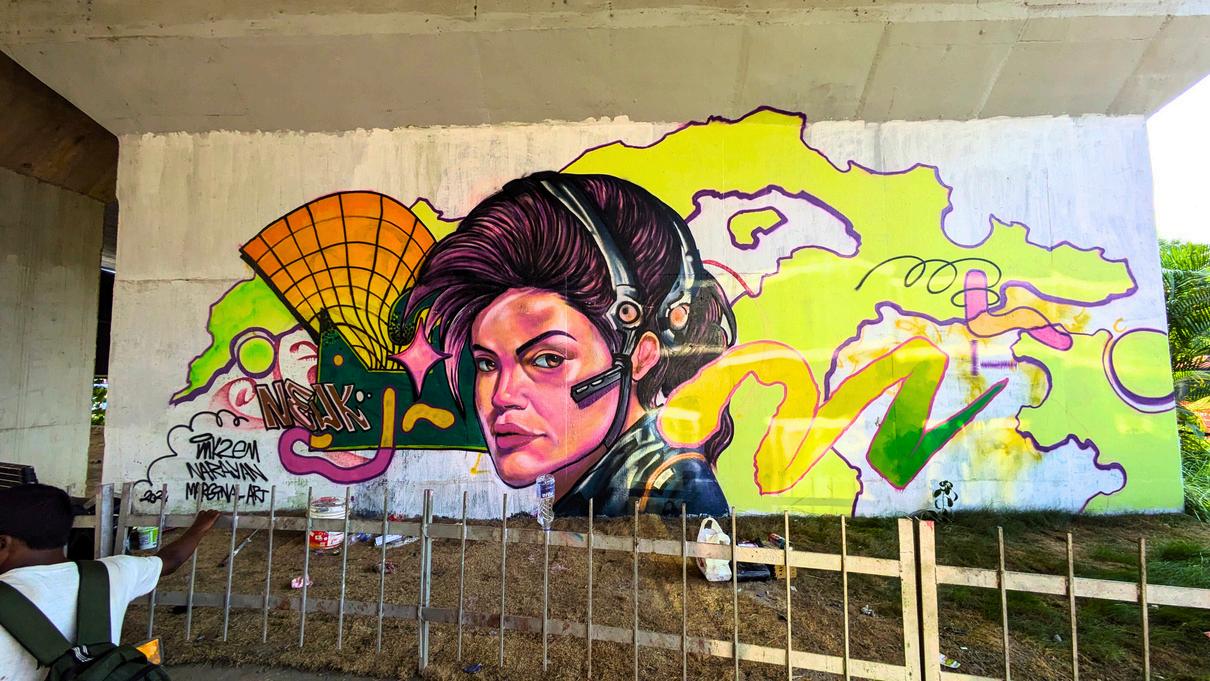
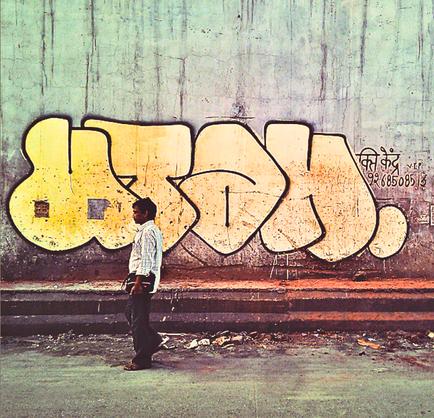
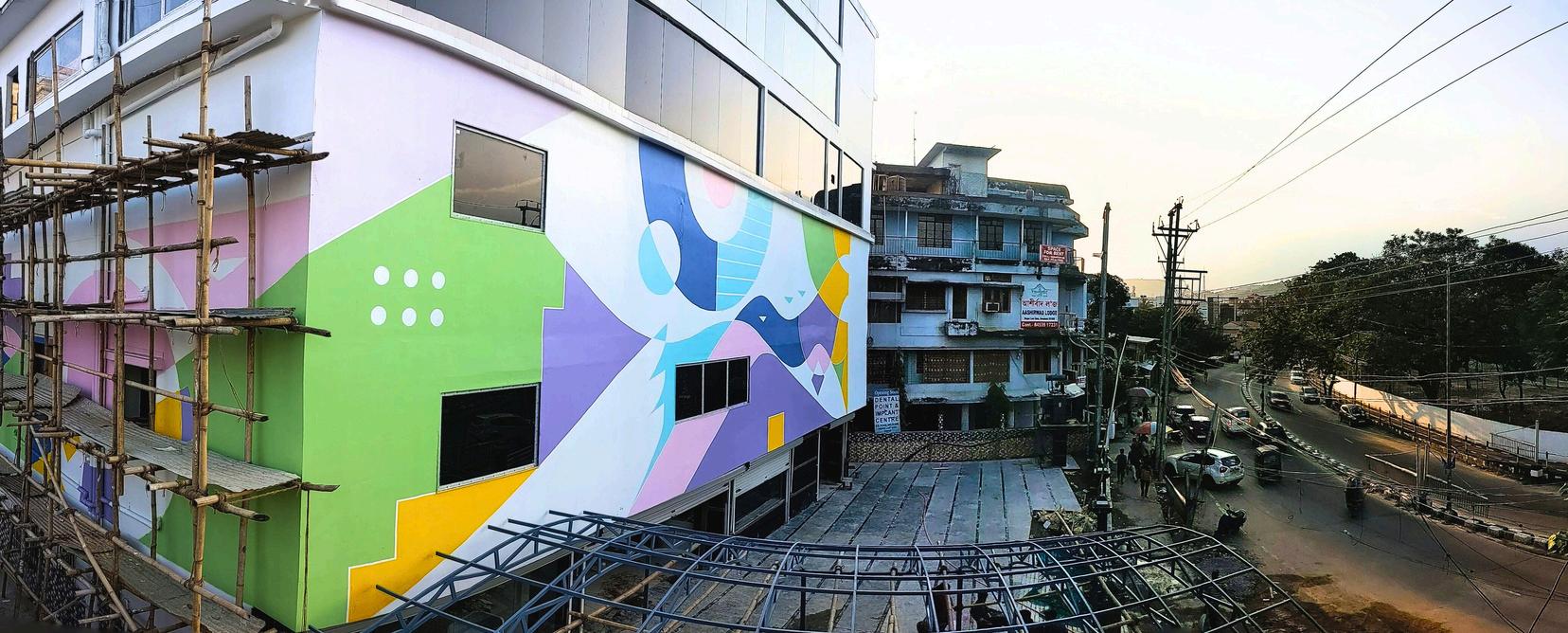

They weren’t asking for permission.
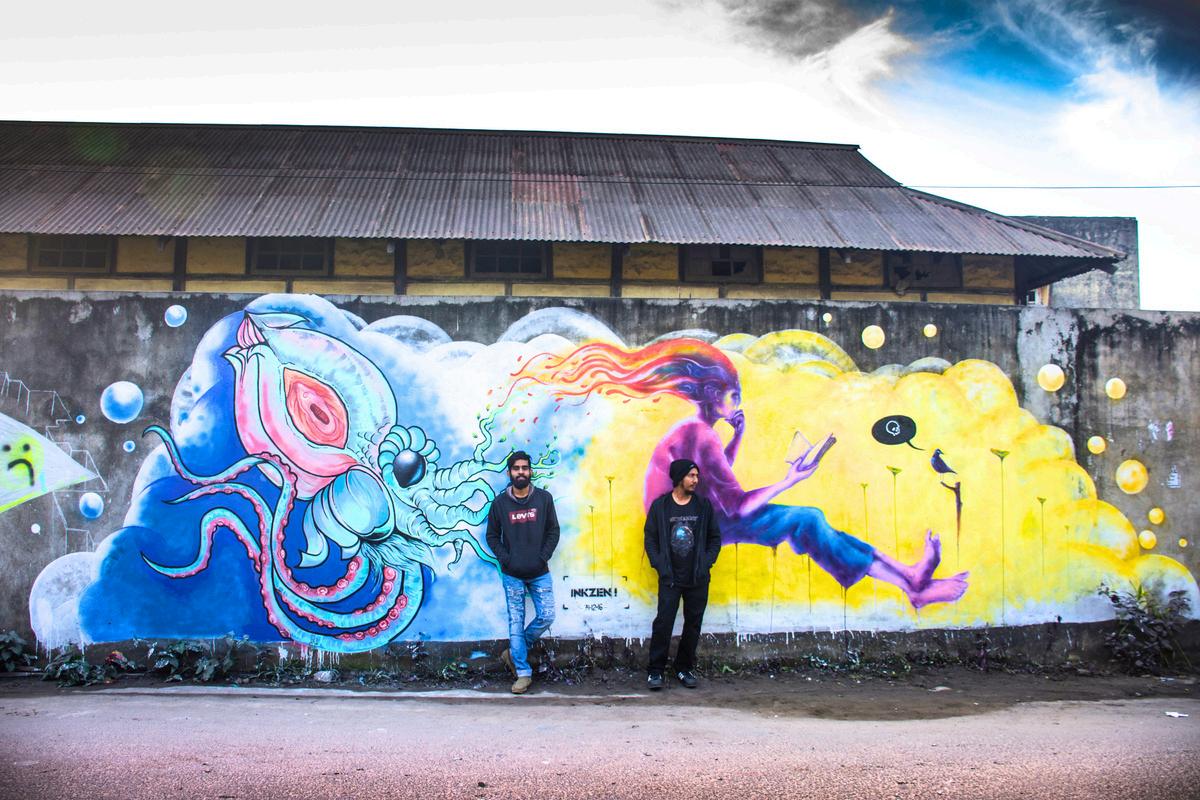


By Hardik Chotalia, MBA CPM (2023-25), RICS SBE MUMBAI
What does it feel like, behind the bars?
Just ask me who dreams for stars, I got the moment, I got an escape, Horizon attracts me i start the race, Enjoying the flight I aim the glory, But the same views made me feel sorry. I peek through a window, won't do it again, I see the giants suffering from a big pain. Fighting over a paper for fun or freedom, Kicking their backs for the sake of stardom. I moved on with a hope of happiness, But found dead queens in a game of chess. Cloth-less girl walking in the streets, Fighting with her mind, begging for sheets. They didn't respond, The way she cried, I am a bird of God and I tried. Human sold human and then did charity, I sold my soul for the sake of humanity. Rich was busy spreading illusion, Poor was following the same confusion. Kings laughed gently holding their breath, Slaves went to graveyard without a death. Poor carried pain, rich carried rage, I went back inside and locked the cage.


In a cityscape marked by rapid urban expansion, Thane now has one of its most ambitious projects a 25‑acre urban oasis that is redefining what a community park can be.
Mofatraj P Munot (MPM), the visionary founder of Kalpataru Group, conceptualised the creation of NaMo Grand Central Park (NaMo GCP) as a legacy project that would redefine urban green spaces in India Inspired by iconic public parks across the globe, MPM envisioned a worldclass, nature-centric recreational hub in the heart of Thane that would offer citizens a serene esca-
-pe while promoting ecological balance His idea was to blend global landscaping elements with local sensibilities thus the inclusion of four themed gardens inspired by Japan, Europe, India, and the Americas, with materials and plant species sourced accordingly from various locations Through meticulous planning, collaboration with Thane Municipal Corporation, and a deep commitment to sustainability,

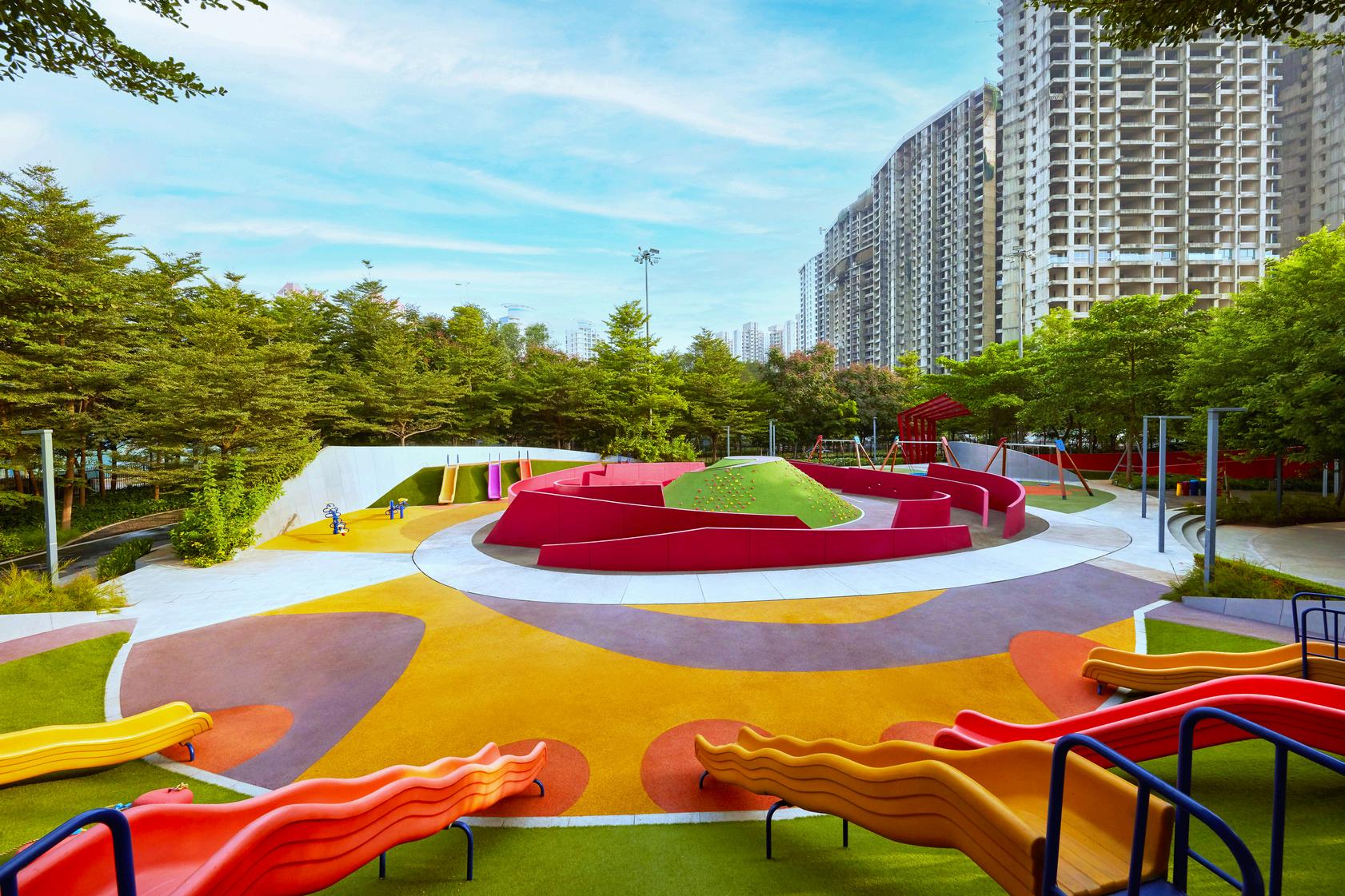
MPM’s vision came to life as NaMo GCP a harmonious confluence of architecture, nature, and community.
In February 2024, Chief Minister Eknath Shinde inaugurated Thane's largest park, the 25-acre NaMo Grand Central Park, named in honor of Prime Minister Narendra Modi
NaMo Grand Central Park (NaMo GCP) is more than a recreational space; it is an engineering and ecological triumph that stands as a testament to sustainable development Conceived to serve as Thane’s “ green lung,” the park meticulously studied and designed using the region’s natural resources as both inspiration and building blocks for a sustainable future
Before construction began, the planning team spent months analyzing the site’s natural hydrology and topography The result was a comprehensive study that identified the park’s inherent natural recharge points crucial for maintaining the local water table Engineers designed a series of small dams and water retention systems, ensuring that water seepage naturally flowed downward, with excess water overflowing in a controlled manner This ingenious system of recharging points not only preserves the water table but also helps mitigate the urban heat island effect by ensuring that the-
park remains a cool, vibrant retreat In fact, post the development of the park adjacent areas indicated a drop in ambient temperature by 2–3 degrees Celsius in and around the park a welcome relief for city dwellers
The sheer scale of NaMo GCP is evident from the outset. Set on a huge parcel of land, the park’s layout divided into four distinct zones: the lake zone, children’s play zone, sports zone, and themed gardens Each zone was conceived with a dual focus user experience and environmental sustainability The stunning lake zone, which spans 03 acres, is the heart of the park and lies at its center, bordered by a picturesque promenade and crossed by the iconic “X” bridge This bridge not -
only adds to the aesthetic appeal but also serves as a functional element, facilitating smooth pedestrian flow and maintenance access across the park’s extensive walkways
One of the most striking features is the park’s largest community walkway a marvel of design and functionality that allows for efficient maintenance and easy public access. Constructed with durable, eco friendly materials, this walkway designed to withstand the test of time while ensuring that the park’s lush landscape is always accessible to visitors With strategically placed seating areas and rest stops along the route, the walkway has become a favourite spot for early morning walkers and evening strollers, contributing significantly to the park’s reputation as a community hub
The park is a vibrant mosaic of attractions, with the themed gardens, inspired by the rich cultural heritage of Morocco, Mughal India, China, and Japan, designed by renowned international architects Within the themed gardens, visitors can explore winding paths that offer both an aesthetic delight and a sensory journey through nature The garden zones are interspersed with recharging points small, engineered depressions that capture rainwater and allow it to percolate slowly into the ground These design elements are a direct outcome of extensive pre construction studies, demonstrating how a deep understanding of natural processes can inform and enhance modern infrastructure

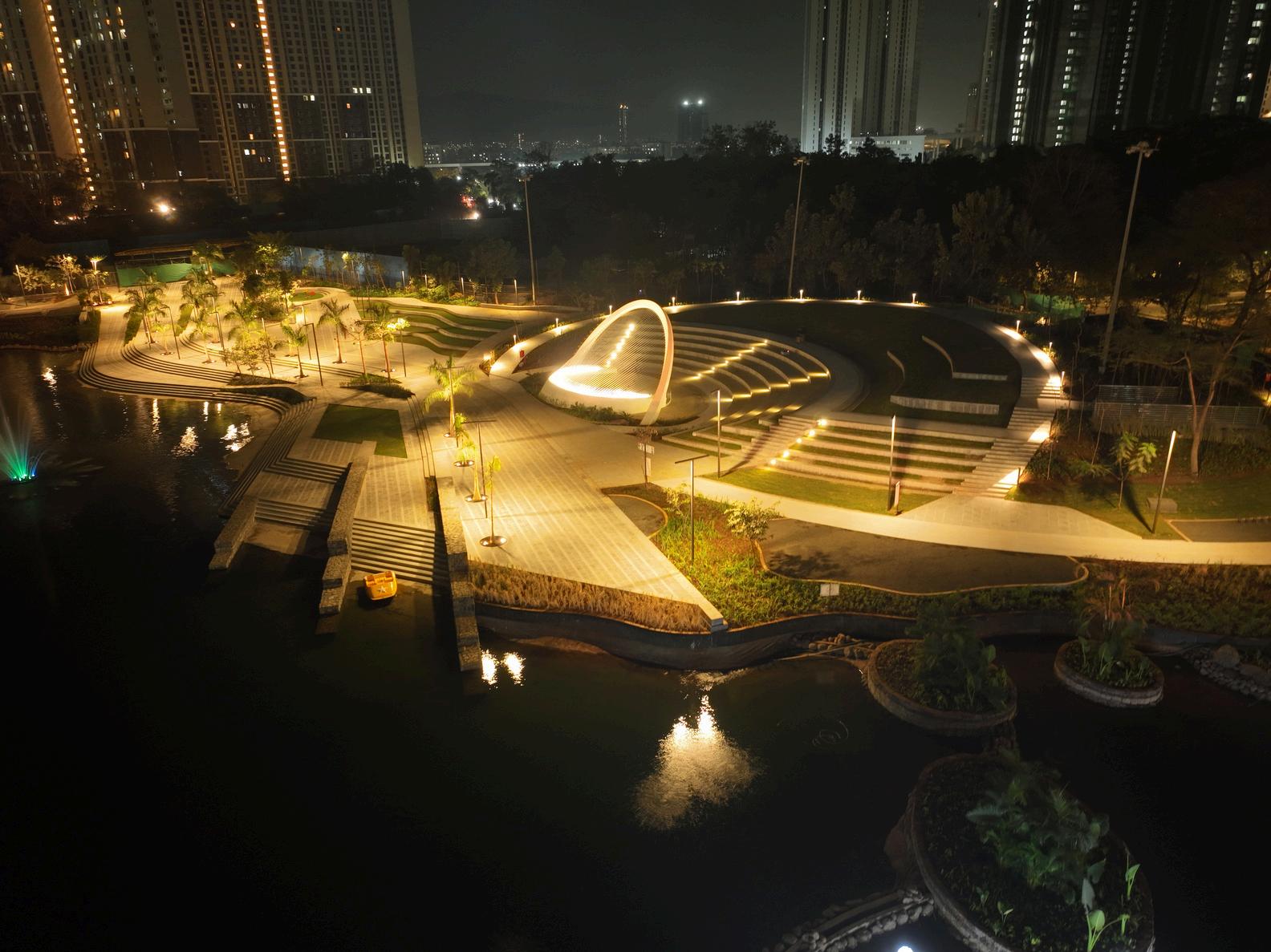
The park is a vibrant mosaic of attractions, with the themed gardens, inspired by the rich cultural heritage of Morocco, Mughal India, China, and Japan, designed by renowned international architects Within the themed gardens, visitors can explore winding paths that offer both an aesthetic delight and a sensory journey through nature The garden zones are interspersed with recharging points small, engineered depressions that capture rainwater and allow it to percolate slowly into the ground.
NaMo Grand Central Park is not just about green spaces; it’s a dynamic environment where modern amenities meet traditional landscaping The park’s play and sports zones have been designed to cater to every age group India’s largest skate park, sprawling over 31,000 square feet, and state‑of‑the‑art facilities like futsal courts, tennis courts, and climbing areas coexist seamlessly with quieter spaces designed for meditation and relaxation In the play zone, adventure play areas, zip lines, and Victory Hill invite children to explore, learn, and grow in a safe, natural setting. Beyond recreational areas, the park’s infrastructure supports a host of community and cultural events. The 400 capacity amphitheater serve as vibrant venues for festivals, concerts, and community gatherings reinforcing the park’s role as a social nucleus for Thane’s residents. Moreover, the design strategically incorporates eco friendly features such as energy efficient lighting, solarpowered amenities, and water‐recycling systems, ensuring that sustainability is not an afterthought but a core principle from day one
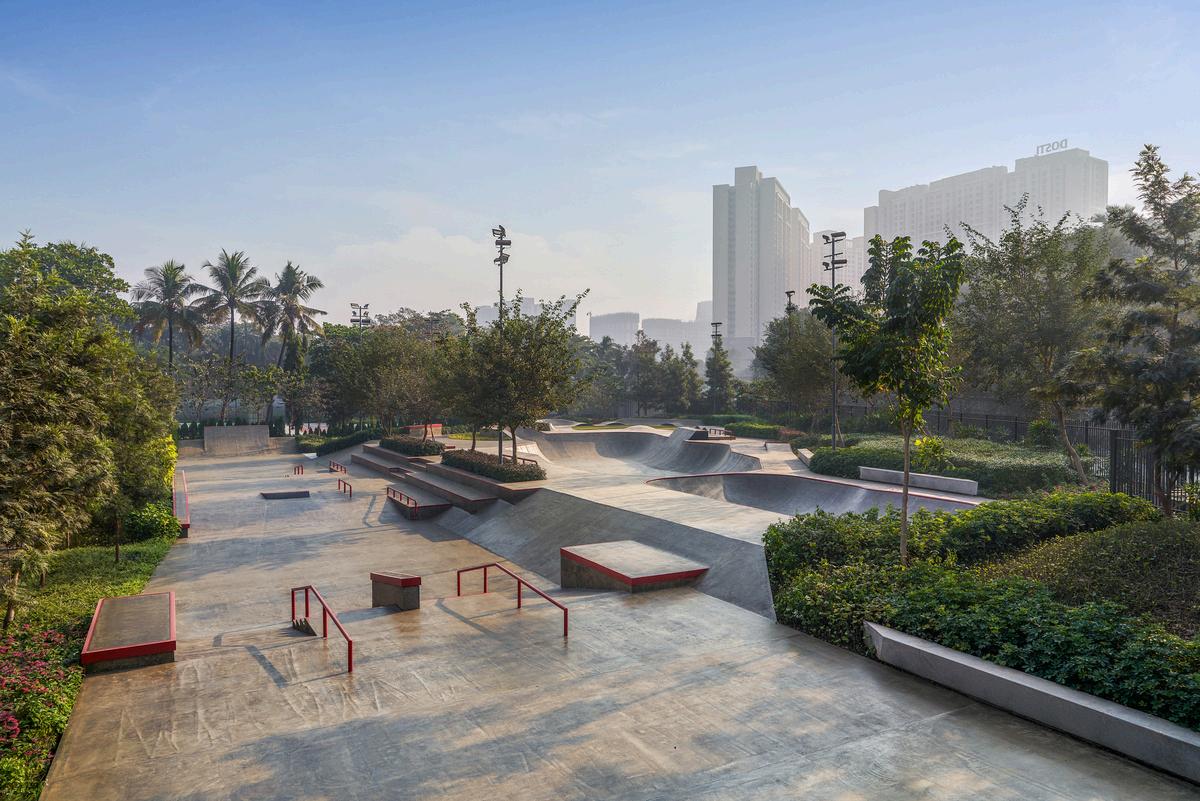
trees have been planted, collectively producing an estimated 8,84,000 pounds of oxygen annually This oxygen boost is a crucial part of Thane’s green vision, ensuring that the park serves as a sustainable, breathable sanctuary amidst the urban sprawl.
The construction of NaMo GCP was as much about preserving nature as it was about creating a community space During development, every decision from the placement of small dams to the design of large, uninterrupted walkways was guided by a commitment to maintaining natural water flow and promoting environmental health The recharging points ensure that rainwater seeps naturally into the ground, thereby sustaining the local water table and providing a constant supply of moisture for the lush vegetation
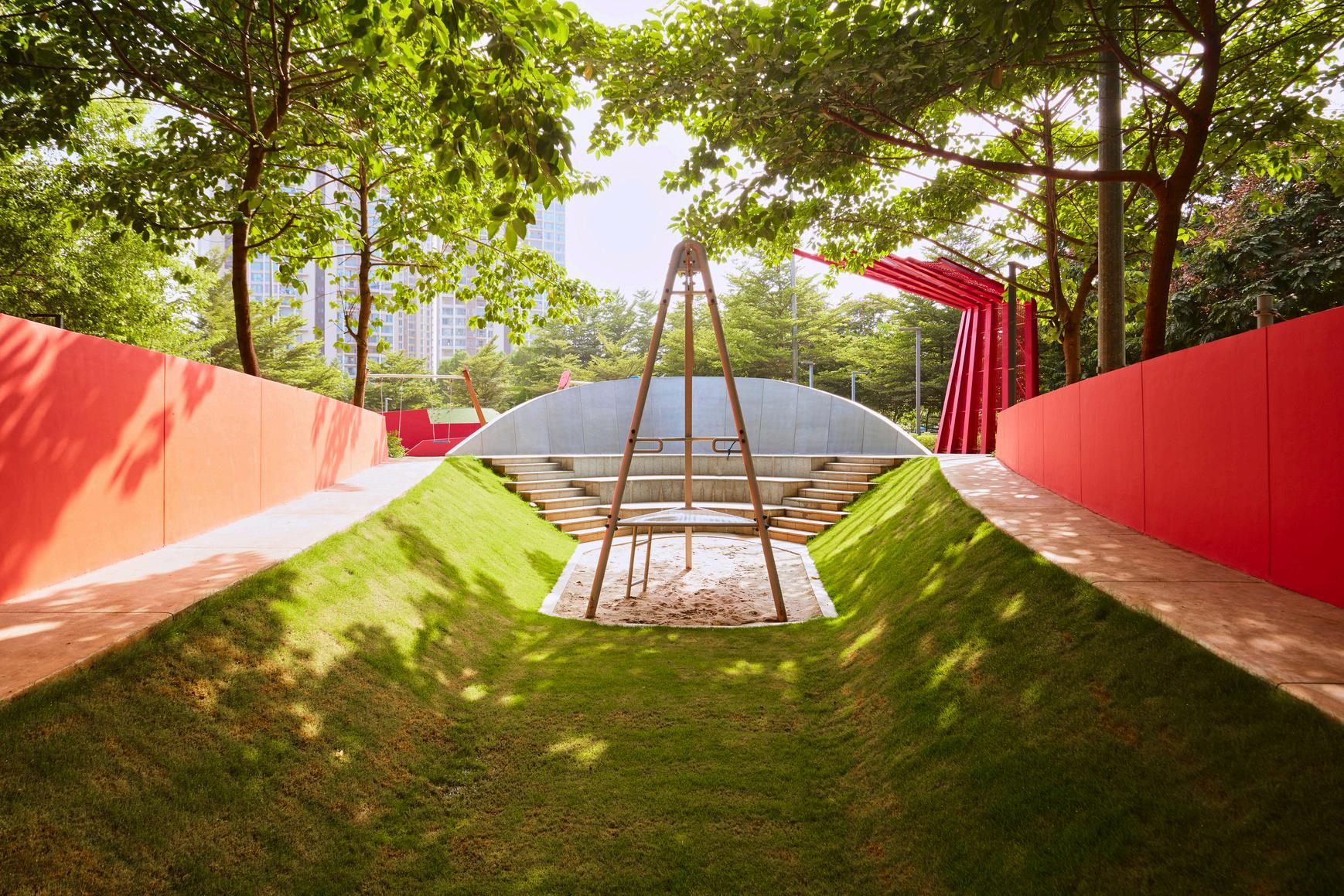
These systems are integrated so seamlessly into the park’s design that they function almost invisibly, yet their impact is palpable in the cooler microclimate and abundant greenery that define the space The park’s layout, which includes meticulously planned drainage systems and eco zones, also supports ongoing maintenance
NaMo Grand Central Park stands as a landmark project that encapsulates the fusion of modern engineering, environmental stewardship, and community-centric design

As the brainchild of MPM, this expansive green sanctuary is a living example of how rigorous scientific study and innovative design can create a space that not only meets the recreational needs of a growing population but also contributes significantly to urban sustainability With recharging points that bolster the water table, temperature regulation that offers respite from the urban heat, and themed gardens that provide both beauty and biodiversity, NaMo GCP is poised to be a transformative presence in Thane a true green lung for the city
Kalpataru Limited and Thane Municipal Corporation have set a new benchmark for public spaces in India. NaMo Grand Central Park is more than just a park; it is an ecosystem engineered to nurture life, foster community engagement, and inspire future urban projects across the country.





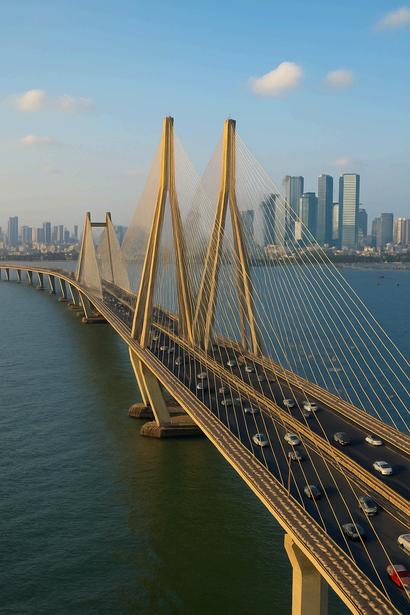
The Bandra-Worli Sea Link, officially the Rajiv Gandhi Sea Link, stands as a defining landmark of Mumbai, gracing the cover of RICS SBE Mumbai’s
magazine for its architectural brilliance and transformative impact on the city’s built environment This 5 6-km cable-stayed bridge, connecting Bandra to Worli, is a testament to engineering ingenuity, reducing travel time from 45-60 minutes to just 7-10 minutes, easing Mumbai’s notorious traffic congestion Its sleek design, with 126-meter-high twin towers and 500-meter-long cables, enhances Mumbai’s skyline, blending modern infrastructure with the Arabian Sea’s natural beauty Construction, completed in 2009, was a global endeavor involving engineers from India, Egypt, China, Canada, and Switzerland. It utilized 36,000 km of steel and 575,000 tonnes of concrete, with innovative pre-cast concrete segments and pre-tension wires ensuring structural resilience. The bridge’s seismic arresters make it earthquake-resistant, a critical feature for Mumbai’s moderate seismic zone. In real estate, the Sea Link has spurred property value surges in Bandra and Worli, fostering commercial growth and luxury housing demand Its environmental design minimizes marine disruption, preserving fisheries and reducing carbon emissions along nearby roads
Featured on the cover, the Sea Link symbolizes Mumbai’s ambition and resilience, reflecting RICS SBE’s focus on innovative urban development Its nighttime illumination and scenic views make it a photographer’s delight, capturing Mumbai’s dynamic spirit
BY ASHISH SAMANTARAY EDITOR VANTAGE, MBA CPM 2023-25,
RICS SBE MUMBAI













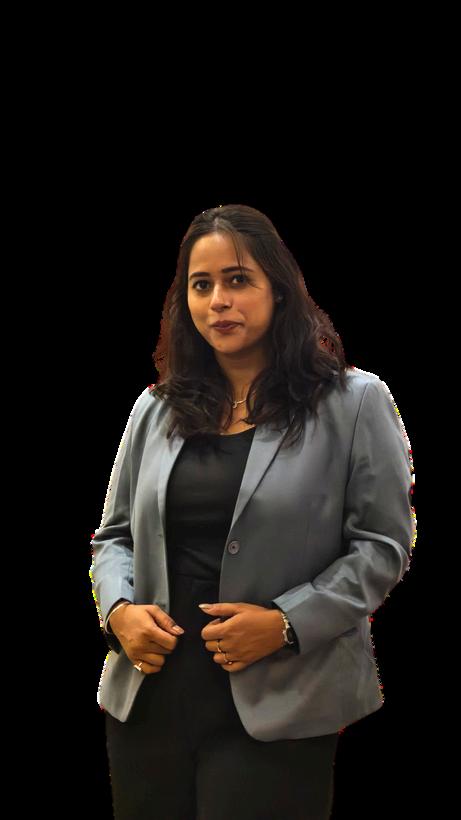


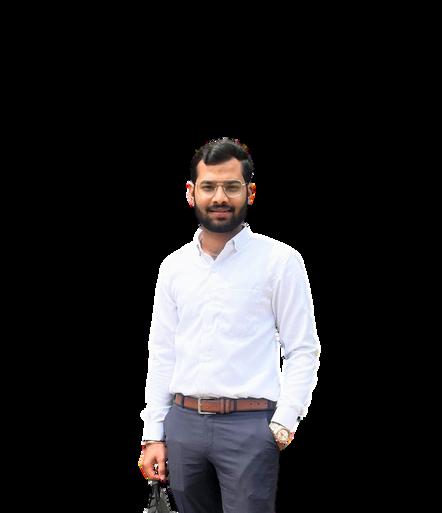










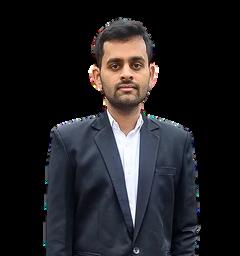





















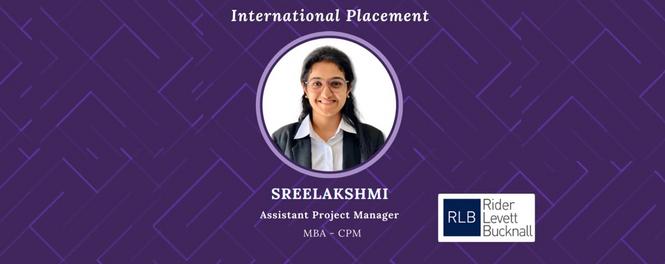


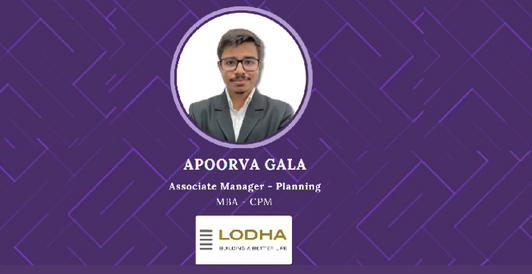
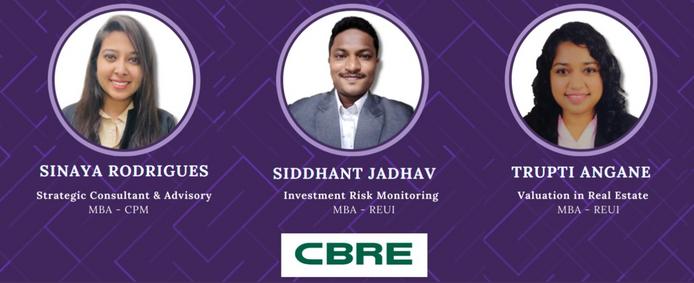
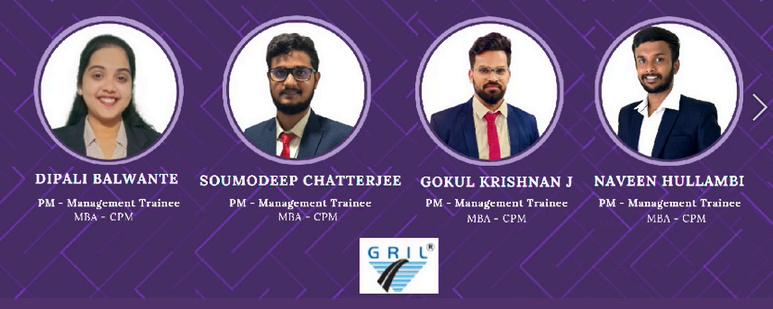
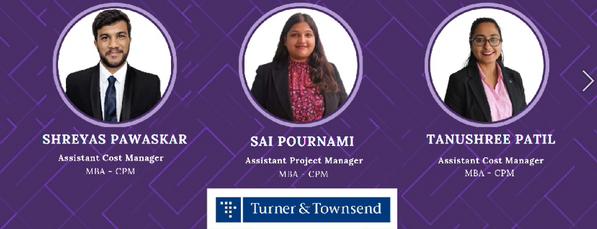
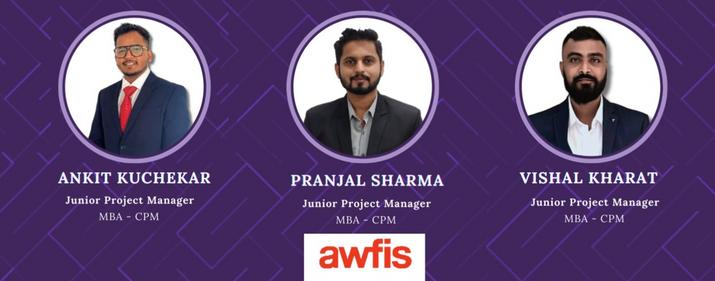
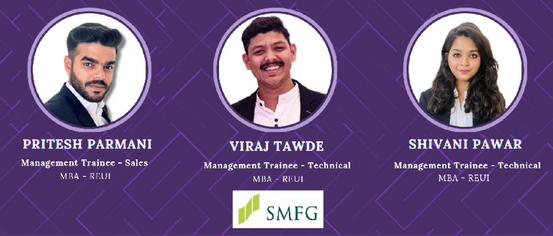

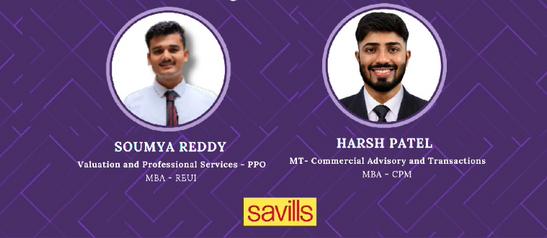
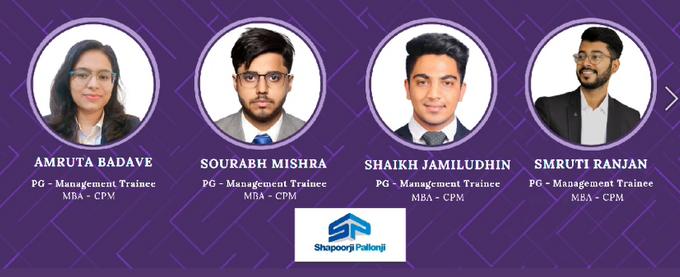
Pursuing my MBA in Construction Project Management at RICS School of Built Environment, Amity University Mumbai, has been an enriching and transformative experience The program ’ s industry-aligned curriculum, expert-led sessions, and case-based learning have significantly enhanced my technical knowledge and leadership skills The mock group discussions and interview sessions provided invaluable practical experience, helping me build confidence and prepare for realworld scenarios These experiences were crucial in securing my placement at JLL The continuous support from faculty and the exposure to industry insights have fully equipped me to tackle challenges in the professional world.
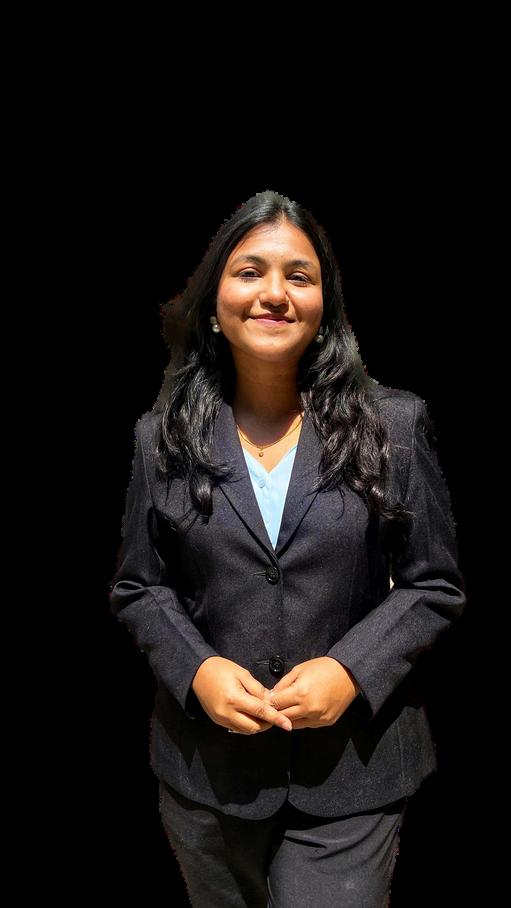

My internship at Mumbai Metro Rail Corporation Limited (MMRCL) was a transformative experience that sharpened my technical knowledge and shaped my understanding of effective leadership I was assigned a comparative analysis between NFPA-130 and NBC, which initially challenged me as a fresher However, my industrial guide’s patience and guidance helped me learn steadily This taught me that true leadership requires patience and humility qualities reinforced by my faculty at college, who emphasized RICS competencies I carried these traits into my interviews, which ultimately helped me succeed in securing a role at Turner & Townsend as an Assistant Project Manager
RICS School of Built Environment played a key role in helping me succeed in the CBRE intership interview The industry-aligned curriculum provided a strong foundation in real estate and infrastructure, while live projects sharpened my analytical and problem-solving skills The experienced faculty offered constant mentorship, bridging the gap between academics and industry expectations RICS SBE’s focus on soft skills and mock interviews greatly enhanced my confidence and communication abilities Additionally, the college’s strong industry network and placement support gave me valuable insights into CBRE’s work culture Overall, RICS shaped me into a technically sound and confident professional, ready for global opportunities

CHINTAMANI ANGADI
MBA-REUI (2024-2026)
RICS SBE- MUMBAI

SUSHANT DEODHAR
MBA CPM (2024-2026)
RICS SBE- MUMBAI
Internship placed at

in Audit & Assurance
Internship placed at
in Consulting and Valuation
As I near the end of my second semester in the Construction Project Management program at RICS School of Built Environment, reflecting on my journey as an Internship Coordinator feels both rewarding and humbling Over the past few months, I’ve had the opportunity to coordinate with companies, guide my peers through application processes, and support them in securing valuable internships It’s been a role filled with responsibility, communication, and constant learning
Being trusted with this role helped me build connections and sharpen my organizational and leadership skills Now, stepping forward, I look ahead to taking on the role of Placement Coordinator in my second year, where I aim to further bridge the gap between our talented student pool and top-tier companies
Adding to this exciting journey, I’m grateful to share that I’ve been selected for an internship at Deloitte one of the Big Four This opportunity motivates me to strive for excellence and represent our institution in the best possible way The journey so far has been inspiring, and I’m looking forward to what’s next
-AR. SUNANDO CHAKRABORTY, MBA REUI (2021-2023), RELATIONSHIP MANAGER
MMen and Woman's Health and Fitness Workout and Diet Plans with Proper Nutrition Focused for Physical Fitness, Sunando is the right person, If You Want to Get Something From Your Life, Sunando Will Help You To Achieve Your Goal For Fat Loss And Muscle Building Or Even If You Want To Maintain Yourself By Just Being Healthy He is Totally Focused on the Future Health Benefits for The People Who are Suffering from Obesity, Weight Gain, Heart Diseases, Diabetes, Cholesterol Problems, Blood Pressure, Cancer Problems and Many More.
He runs 2 fitness channels on platform like YouTube with the name of “The Official Health “and Instagram in the name of “ @ officialhealth” and “ @ officialcoach” He started this channel because he has seen every house and people of India are suffering from various kind of disease and health problems. So, he has a goal, you can say a mission to make our country a healthy and fit country He has also completed his government certification from Mission India Fitness Institute as Fitness Trainer, nutrition specialist, supplement specialist and as well as a CPR AED coach He has also done a govt of India certification in yoga from yoga certification board
Other than that, he has also done the certification from ministry of youth affairs and sports, national health mission, ministry of health and family welfare. He was also awarded and recognised as a “Fitness Icon” and “Student Athlete”
He received the title of appreciation of a national athlete from national sports and physical fitness. He has also performed and played for mixed martial arts for which he also received a bronze and the title of "Best Fighter" for his debut Match He has represented his state as well as Nationwide Being an architect, he never stopped dreaming about his passion He completed his graduation and started a new journey of MBA in real estate and urban infrastructure and completed is studies, but he also believes in following his passion as side hustle


He believes that the passion he carries is inherited genes and in blood since childhood, he has been gifted with 6'1" height and good physique which will stay with him until the last breath. With his Passion, he will make his mother, His Country, and everyone that believes in him proud. And one day he will succeed with his mission of healthy and drugfree India.

But that’s not the end of it. RICS not only helped him to sharpen his skills it has also helped him to get placed in one of the Top national banks (ICICI bank) where he could start his corporate career. But he never stopped following his passion. Rather he has become more responsible with his health and career simultaneously.
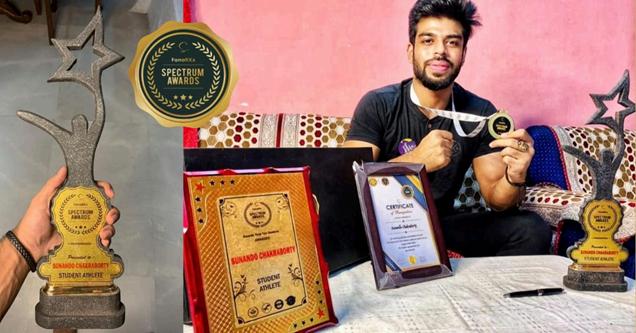

Can you spot all the industry terms? Find the following words hidden across, down, or diagonally in the grid
PROJECT
The Great Wall of China is over 21,000 kilometers long — it would take almost 18 months to walk its full length!
�� The Burj Khalifa in Dubai used enough concrete to fill 1,100 Olympic-sized swimming pools!
�� The Edge in Amsterdam is one of the greenest buildings in the world it can "talk" to you using a smart app!

Sharpen your brain and your vocabulary! Unscramble these mixed-up words from the built environment.
1. I am the document you sign to make a deal final, Without me, your ownership is just an idea, not vital. What am I?
2.I support massive loads but have no legs. I stand tall and underground I beg. What am I?
3.I have walls but no roof. I protect but I do not move. What am I?





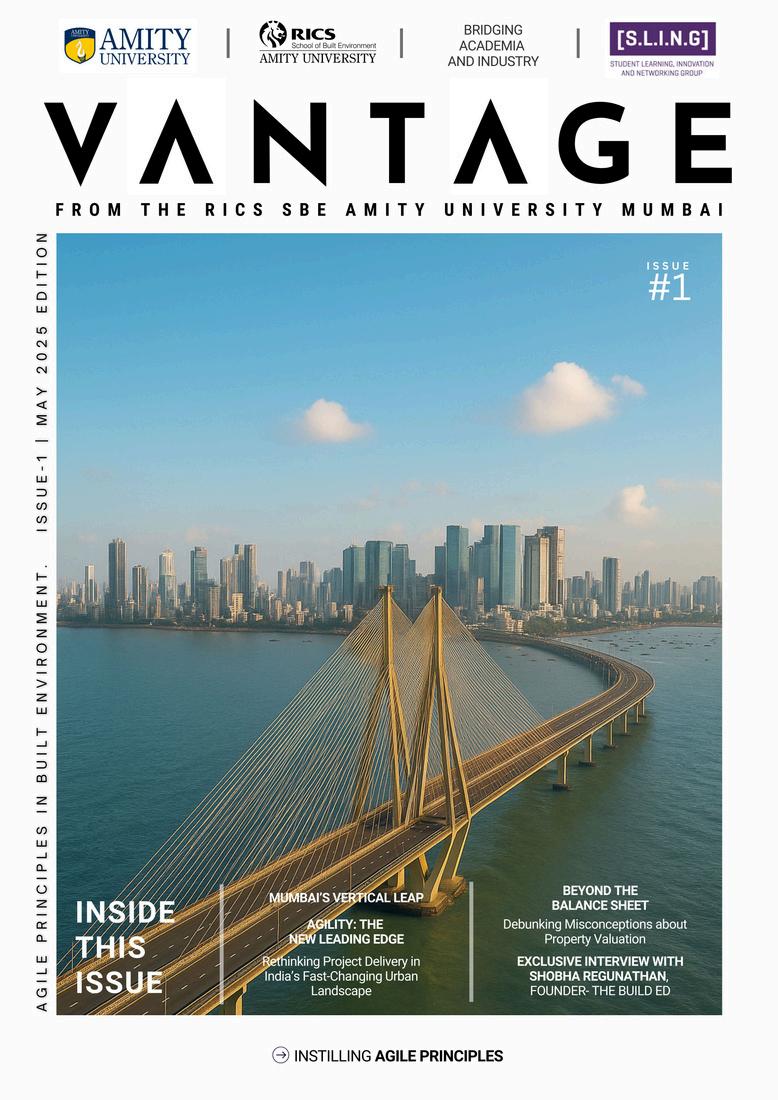


DIGITAL COPY AVAILABEL AT

NATIVE APP

I ENCOURAGE YOU TO EXPLORE THE INSIGHTS, STORIES, AND REFLECTIONS SHARED IN THIS MAGAZINE — A CELEBRATION OF COLLABORATION AND A SOURCE OF INSPIRATION.
-PROF. DR. SANJAY GOVIND PATIL, MRICS DIRECTOR & HEAD, RICS SBE, AMITY UNIVERSITY, MUMBAI