

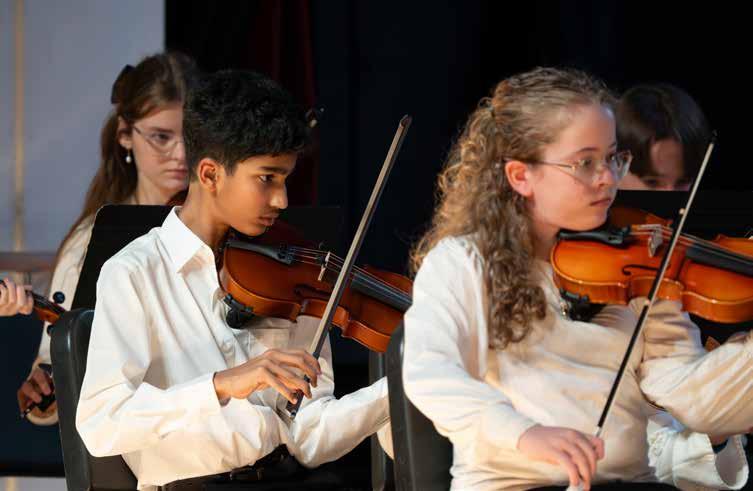
The Asheville Symphony Youth Orchestra (ASYO) offers exceptional musical training for musicians ages 8-19 in Western North Carolina, providing students with comprehensive educational experiences and an inclusive environment where they can grow both as musicians and individuals.
Learn more and check out upcoming audition information at AshevilleSymphony.org/ASYO, or email asyo@ashevillesymphony.org for questions.




(828) 633-6888 or






Dear Friends,
The Asheville Symphony exists to spark connection and inspiration — and it’s your enthusiasm and support that make it all possible.
This season marks several exciting milestones. We are proud to introduce Dr. Brian Allen as our new First Concertmaster and Jackie Tso as our first-ever Second Concertmaster: an expansion of artistic leadership that reflects the growing scope and ambition of our orchestra. We are also thrilled to present the second Asheville Symphony Artist Residency, featuring the incomparable operatic star, Isabel Leonard.
Other major highlights include appearances by Emanuel Ax, and Ben Folds as well as a partnership with the Black Mountain College Museum + Arts Center for Masterworks 2: Convergence, a program that could only authentically take place here in Asheville.
Your Symphony is also experiencing strong growth in subscriptions and philanthropy, even as arts organizations around the country face challenges. Thanks to your support, we are expanding our reach and deepening our artistic excellence, hosting acclaimed soloists on stage and impacting thousands of students across Western North Carolina.
The Asheville Symphony is about so much more than music.
It’s about creating moments of joy, reflection, and unity in a world that deeply needs them. It’s about community. Whether you’re here as a subscriber, a first-time guest, a donor, a volunteer, or a parent of a young musician — we are so glad to welcome you.
There are many ways to engage with your Symphony this season: attend a concert, join the Guild or Chorus, volunteer at events, or support our music education programs. However you choose to connect, know that you are part of something meaningful.
We can’t wait to share this extraordinary season with you.
Warmly,
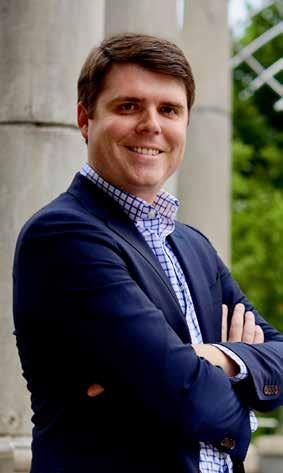
Daniel M. Crupi Executive Director








EXECUTIVE OFFICE
Daniel M. Crupi Executive Director
Ines Lopes Assistant to the Executive Director
DEVELOPMENT
Dana Alward Development Manager
Caitlin Duncan Development Associate
EDUCATION
Tyson Hamrick ASYO General Manager
Mika Hood ASYO Programs & Operations Coordinator
Rodney Workman ASYO Site Coordinator
FINANCE
Allie Lorette Controller
MARKETING & PATRON RELATIONS
Alex Hill Director of Marketing & Patron Relations
Claire M. Allen Art Director
Melissa Starkweather Patron Relations & Communications Manager
Michelle Troszak Patron Relations & Office Coordinator
ORCHESTRA OPERATIONS
Sally J. Keeney Orchestra Manager
Michael Di Trolio Principal Librarian
Paul Stroebel Stage Manager SELECTED IN COLLABORATION WITH

Symphony Office 27 College Place, Suite 100, Asheville, NC 28801 Monday - Friday ∙ 10:00 a.m. - 4:00 p.m. 828.254.7046 info@ashevillesymphony.org

OCT 10, 2025
OPENING NIGHT THE SPHINX VIRTUOSI CHAMBER ORCHESTRA
NOV 13, 2023 CHOPIN THE MASTER OF THE PIANO
DEC 4, 2025
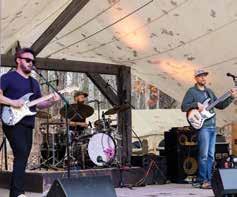
AMERICAN ROOTS with THE WILDWOODS
DEC 9, 2025 HANDEL’S MESSIAH
FEB 10, 2026
STELLA COLE sings THE GREAT AMERICAN SONGBOOK
MAR 18, 2026
A ST. PATRICK’S DAY CELEBRATION with DANÚ
APR 16, 2026
BRAHMS AMONG FRIENDS
MAY 21, 2026
SEASON FINALE with THE ULYSSES QUARTET

OFFICERS
Adarrell Gadsden • President
Sue Luther • Immediate Past President
Sallie Broach • Secretary
G. Edward Towson, II ⁺ • Treasurer
DIRECTORS
Cliff Albertson
Jack Anderson⁺
Michael Andry
Thomas C. Bolton⁺
Sallie Broach
Susan Harrington Butts
Sean Comeaux
Dr. John Cuellar
George Dambach
John W. Ellis
Dr. Bolling Farmer
Adarrell Gadsden
Bill Gettys⁺
Scott Gregg
Fred Groce
Keith Keener
Mary Kirby
Pam Lowe-Hoyte
Sue Luther
Carol McCollum⁺
Kevin Pasarilla
Patrick O’Cain
Jeffrey Owen
Odile Perrenoud
Richard Schaffer
Jayne Schnaars
Kevin Schwab
Rachel Sossoman
James S. Thompson
Ed Towson⁺
Sarah Van Gunten
David Worley
Olivia Zahler



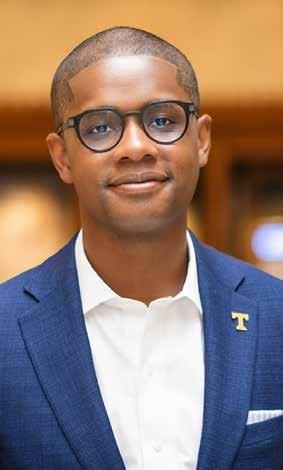
As I begin my first year as President of the Asheville Symphony Board of Directors, I’m filled with a deep sense of gratitude and excitement for the work ahead. To help steward this beloved institution — one that has been a cornerstone of the arts in Asheville for more than 60 years — is both a great honor and a great responsibility.
This year, the Symphony steps into a season that is vibrant, imaginative, and truly reflective of the diverse, creative spirit of our city. Asheville is a city that thrives on creativity — and the Symphony is proud to be part of that energy. From timeless masterworks to fresh and unexpected collaborations, this season is a celebration of both musical excellence and artistic exploration. We are committed to building experiences that inspire — and to ensuring those experiences are welcoming and accessible to all.
I am especially excited about the impact of our education programs, which reach thousands of young people across Western North Carolina each year. Introducing young people to the wonder of live orchestral music is one of the most rewarding parts of what we do. Investing in the next generation of musicians and music lovers ensures that the spirit of the Symphony will continue to thrive well into the future.
I’m incredibly grateful to our board, our dedicated staff, the talented musicians, our amazing volunteers, and, of course, the patrons who make this work possible.
Welcome to the Asheville Symphony’s 2025–2026 season. It is a privilege to share this journey with you as we continue to expand our reach, deepen our impact, and celebrate the transformative power of music together.



DIRECTORS EMERITI
George M. Bilbrey, Jr. M.D.*
J.K. MacKendree Day
Joyce R. Dorr, Ph.D.
George F. Goosmann, III
Gerald C. Kitch
Karl S. Quisenberry, Ph.D.*
John J. Sherman, Jr.
W. Herbert Smith, Jr.
1962-1964: Gaylord Davis
1964-1966: Rudolf Gumpert
1966-1968: John W. Rutland
1968-1970: Robert K. Weiler
1970-1971: Robert Saenger
1971-1972: William C. Spencer, Jr.
1972-1975: John K. Knight
1975-1977: Lawrence D. Ford
1977-1979: Mortimer Ryon
1979-1982: James E. Dooley
1982-1984: J.K. MacKendree Day
1984-1985: George Saenger
1985-1987: Spencer Atwater, M.D.
1987-1989: George Goosmann, III
1989-1992: John J. Sherman, Jr.
1992-1994: G. Edward Towson, II
1994-1995: Stephen L. Barden, III
1995-1997: Joyce R. Dorr, Ph.D.
1997-1999: C. David Pheil
1999-2001: George M. Bilbrey, M.D.
2001-2003: W. Herbert Smith, Jr.
2003-2004: James P. Topp
2004-2006: Thomas C. Bolton
2006-2008: Carol McCollum
2008-2010: Jack Anderson
2010-2012: Carolyn L. Hubbard
2012-2014: William L. Gettys
2014-2017: Irene Stoll
2017-2019: Doris Phillips Loomis
2019-2021: Bolling Farmer
2021-2023: Michael Andry
2023-2025: Sue Luther














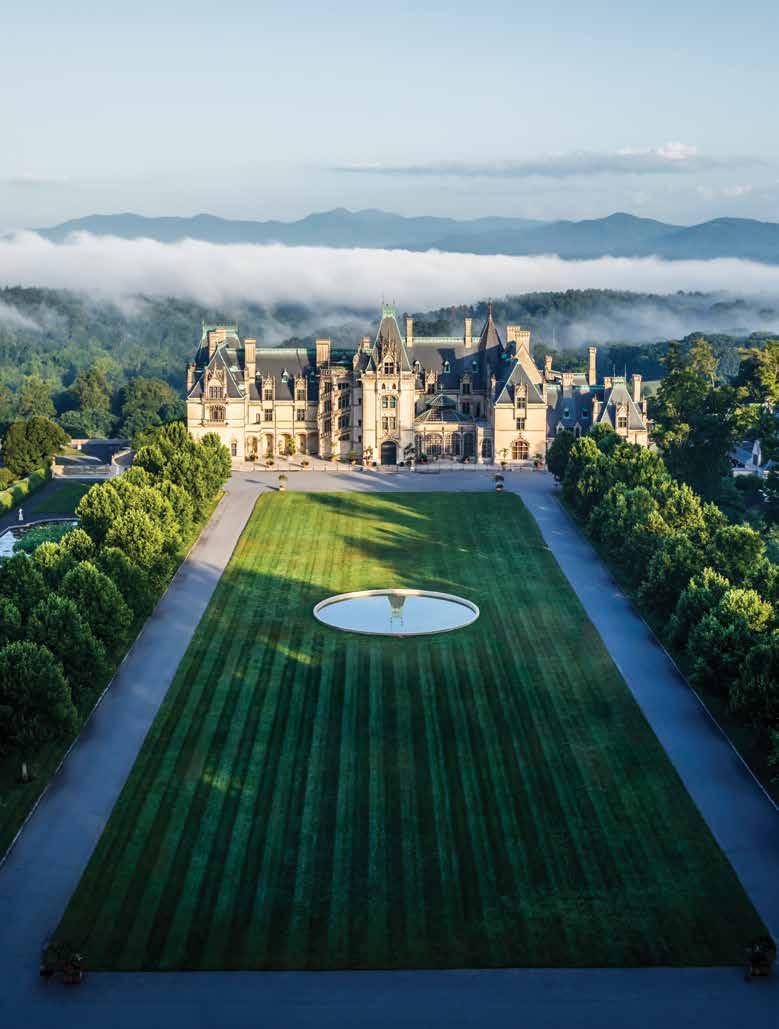
A love of the arts and a sense of hospitality inspired George Vanderbilt’s masterpiece: Biltmore. Share in that legacy today by joining our Annual Passholder family.

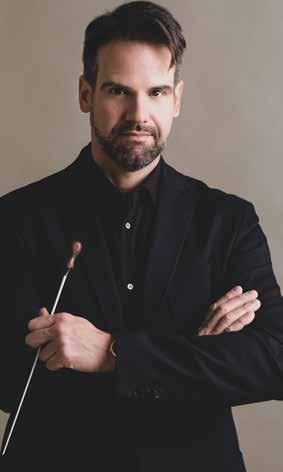
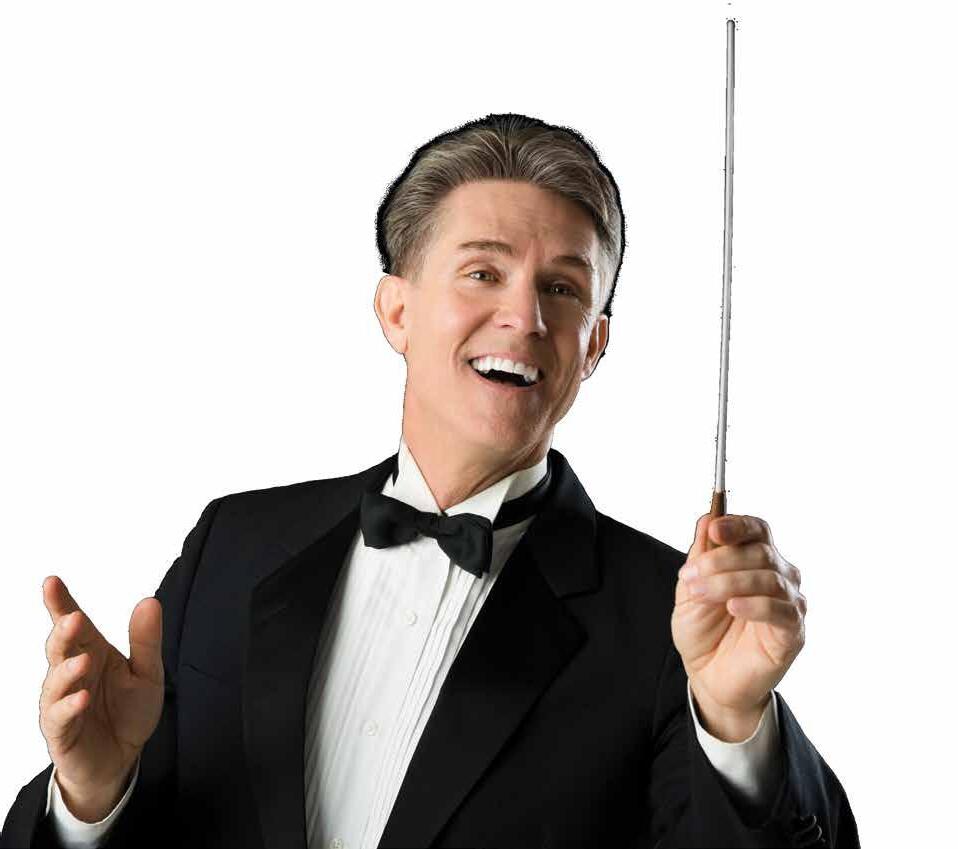
Darko Butorac stands out as one of the most compelling conductors of his generation, praised for his “exceptional combination of passion, elegance, and well-timed pacing” (Westdeutsche Zeitung). He serves as the Music Director of the Asheville Symphony Orchestra, where his innovative programming and dynamic leadership have captivated audiences.
Butorac has guest-conducted numerous prestigious orchestras across Europe, Asia, and the Americas. Notable performances include the Deutsche Kammerphilharmonie Neuss and the Georgische Kammerorchester Ingolstadt (Germany), the Rubinstein Philharmonic of Lodz (Poland), the Xiamen Symphony (China), the Tallinn Sinfonietta (Estonia), the Belgrade Philharmonic, and the Slovenian Radio Symphony Orchestra. His passionate and precise interpretations have earned him widespread acclaim.
He has collaborated with world-renowned artists such as Renée Fleming, Garrick Ohlsson, Olga Kern, Lawrence Brownlee, Jon Kimura Parker, Noah Bendix-Balgley, Anthony McGill, and Oscar-winning actor J.K. Simmons. He has appeared at prestigious venues such as the Vienna Konzerthaus, the Gran Teatro Nacional of Lima, Belgrade’s Kolarac Hall, the Teatro Magnani in Italy, and the Tartu, Aspen, and St. Olav summer music festivals.
In addition to his work in Asheville, Butorac served as the Music Director of the Tallahassee Symphony, where he was known for innovative programming and community engagement. He broadened the orchestra’s reach, introducing eclectic repertoires that attracted new audiences and fostered a deeper appreciation for orchestral music.
A cornerstone of Butorac’s career is his commitment to education and outreach. He has led masterclasses and workshops worldwide, sharing his expertise with the next generation of musicians. During the COVID-19 pandemic, he pioneered virtual formats to keep the orchestral experience alive for audiences and students alike.
As a Grand Prix Laureate of the Vakhtang Jordania International Conducting Competition, Butorac’s accolades reflect his exceptional talent and dedication to the art of conducting. His TEDx talk on leadership and the role of the conductor has garnered nearly 200,000 views, resonating with a wide audience and highlighting his ability to inspire both within and outside the concert hall.
Fluent in multiple languages and deeply rooted in a multicultural background, Butorac brings a unique perspective to his work, blending tradition with innovation. His vision for the future of orchestral music emphasizes inclusivity, accessibility, and artistic integrity, continually striving to break down barriers and bring the transformative power of music to all.
For more about Darko Butorac and his upcoming engagements, visit his official website, www.darkobutorac.com.



Violin
Brian Allen • First Concertmaster
Jackie Tso • Second Concertmaster
Martha Gardner • Associate Concertmaster
⁺Karen Pommerich • Assistant Concertmaster
Kathryn Gardner Triplett Principal Second Violin
Debra L. Anthony
Associate Principal Second Violin
⁺Pedro Oseias Maia
Assistant Principal Second Violin
Marianna Brickle
Teresa M. Curran
Elizabeth Fee-Elliott
Lori G. Hammel
*Dorothy L. Knowles
Virginia Kowal
LuAda Malcom
Ruben Orengo
Mariya S. Potapova
Inez Hullinger Redman
Paul E. Stroebel
Viola
Kara F. Poorbaugh • Principal
Jenny Kozoroz • Associate Principal
Kathryn Bracewell
Hannah Dara
Gina Mashburn Heath
Edward J. Smith
Daphne Waggener
Cello
Daniel Mumm • Principal
J. Franklin Keel • Associate Principal
Paul Maxwell • Assistant Principal
Cherylonda F. Fitzgerald
Paul S. GhostHorse
Katie Hamilton
Patricia Koelling Johnston
E. Sojeong Park
Bass
Flute
Lissie J. Shanahan • Principal
Kellie Henry
Piccolo
Dilshad B. Posnock
Oboe
Alicia Chapman • Principal
*Cara Mia Jenkins
English Horn
Amanda J. LaBrecque
Clarinet
Harry H. “Chip” Hill • Principal
Karen Farah Hill
Bass Clarinet
Shannon Thompson
Bassoon
Michael J. Burns • Principal
Amber Ferenz
Contrabassoon
William L. Peebles
Horn
Jeffery B. Whaley • Principal
*Michael L. Brubaker
Anneka A. Zuehlke
Travis A. Bennett
Trumpet
T. Mark Clodfelter • Principal
Christopher Underwood
Open Chair
Trombone
Justin Croushore • Principal
L. Rienette Davis
Bass Trombone
Jeremy Marks
Tuba
Bethany Wiese • Principal
Timpani
Todd D. Mueller • Principal
Percussion
Open Chair • Principal
Michael Morel
Matthew Richmond
*Brian Tinkel
Harp
Open Chair • Vetust Study Club Chair
Keyboard
Open Chair • Susanne Marcus Collins Chair
Michael Di Trolio • Principal Librarian
Paul Stroebel • Stage Manager
*M. Lee Metcalfe • Co-Principal
Vance M. Reese • Co-Principal
Michael Di Trolio
Matthew P. Waid


* Orchestra Committee Member
⁺ One Year Appointment
Section string players are listed alphabetically. (loa) = Leave of Absence




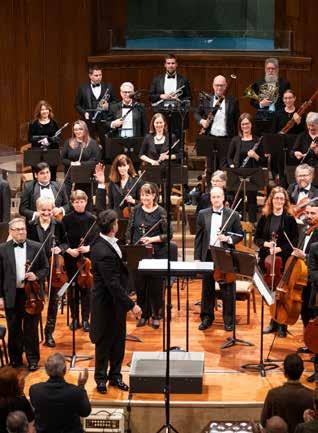
Thank you to our incredible musician hosts!
The generosity and warmth of our musician hosts creates a welcoming home-away-fromhome for our traveling musicians. Thank you for being an integral part of the Asheville Symphony community!
Mary and Jack Anderson
Diana Bilbrey
Georgia Case
Kathy and George Dambach
Linda and Michael Gilpin
Clair Griffith and Geoffrey Mitchell
Suzanne and Steven Hageman
Rita Hayes
Mountaine Jonas
Pam and David Lane
Jill and Joe Lawrence
Susan and David Leader
Sue and George Luther
Carol and Hugh McCollum
Suzanne Neilson
Katie and Phil Osborn
Odile Perrenoud and Bill Schulz
Jayne Schnaars and Donald Gavin
Danielle Thout
Jill Vargo and Tony Sciara
Connie and Gary Wald
Millie Whitney








































Social Security will be a key source of income in retirement. But there are other options that can help add even more. I can help maximize your benefit, make sure other accounts work together, and guide you at every step so you can live your retirement years the way you want.

Marlowe Pasarilla Wealth Management Group 828-210-3806
138 Charlotte St, Ste 200 Asheville, NC 28801 MPWEALTHGROUP@NM.COM www.mpwealthgroup.com














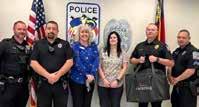














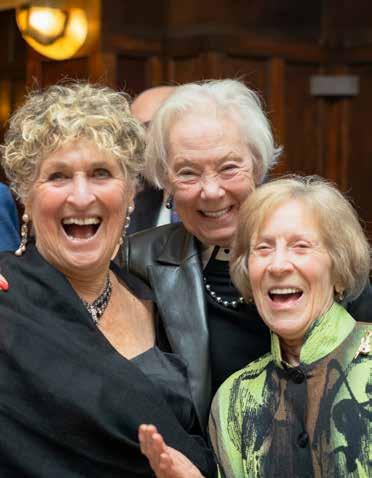
The Asheville Symphony Guild is a volunteer organization that has been supporting the Asheville area by raising funds and sponsoring music education programs in local schools for more than 50 years.
From festive garden parties to elegant evenings with Asheville Symphony soloists, Musical Feasts are a chance to gather with friends, share great food, and support the Symphony you love while hearing from some of the greatest musicians playing today. Each event helps fund the Symphony’s inspiring programs.
The Guild helps bring classical music to thousands of elementary school children across Western North Carolina. Through Music in the Schools, professional musicians visit local classrooms — planting seeds of creativity and joy for the next generation.
Whether it’s the Fall Potluck or the annual Spring Gathering, our members treasure the friendships, laughter, and shared passion for music that the Guild provides.
Make Friends. Make Music Matter.
The Guild unites music lovers who want to give back, stay connected, and enrich our community. As a member, you’ll enjoy meaningful volunteer opportunities, vibrant social events, and the satisfaction of supporting music education for the next generation.
Join the Asheville Symphony Guild and be part of something joyful and lasting.
For more information and to join, visit AshevilleSymphonyGuild.org





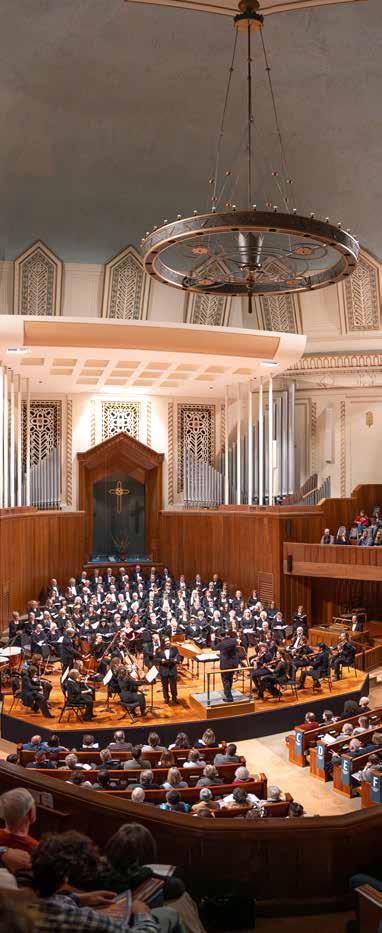
The Asheville Symphony Chorus is a volunteer vocal ensemble that has been performing in the Asheville area for 33 years.
MASTERWORKS 6: REQUIEM
April 18, 2026
First Baptist Church of Asheville
The Chorus joins the Asheville Symphony for a performance of Mozart’s Requiem alongside four incredible soloists. Visit page 58 to learn more.

Join the Asheville Symphony Chorus and help bring the beauty of choral music to WNC. We rehearse once per week on Tuesday nights from 7:00 p.m. - 9:30 p.m. in downtown Asheville. We warm up. We practice hard. We have a lot of fun.
For more information on auditions, performances, and more visit: AshevilleSymphonyChorus.com.
Follow the Asheville Symphony Chorus on both Facebook and Instagram: @AshevilleSymphonyChorus.


The Asheville Symphony Symphonettes is a volunteer organization and high school girls’ service club.




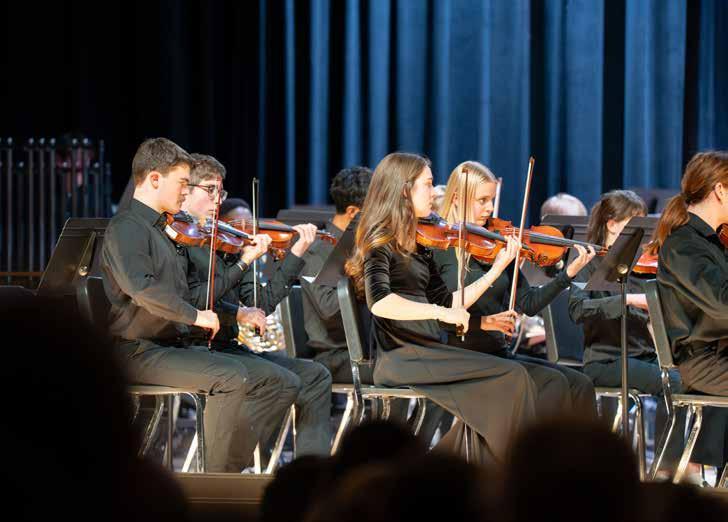
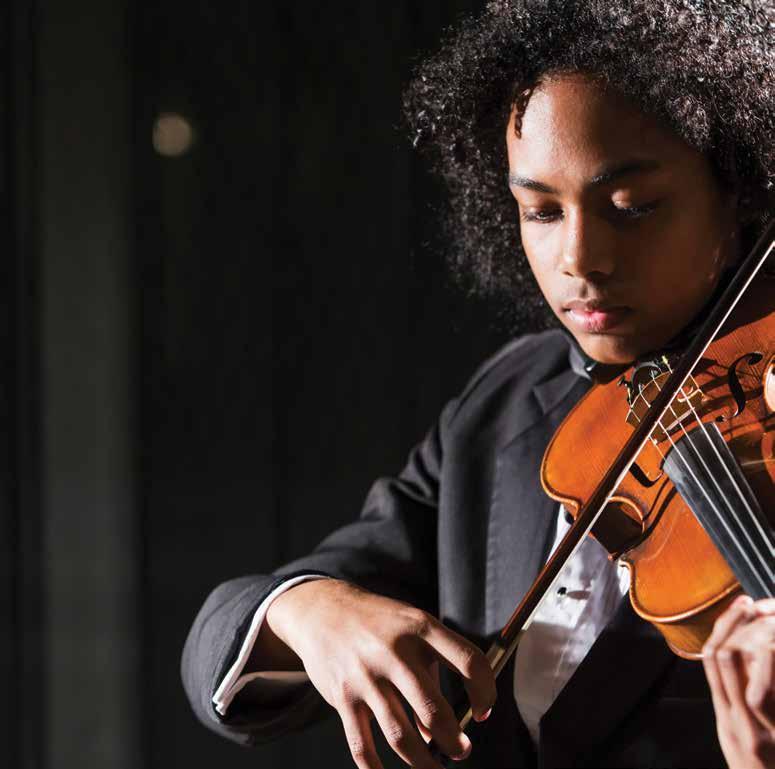
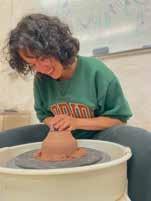
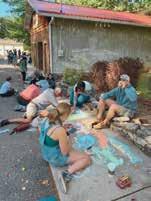
The Asheville Symphony Youth Orchestra (ASYO) is Western North Carolina’s premier orchestral training program, serving approximately 200 students ages 8-19.
With two string orchestras, two full orchestras, a beginning strings class, percussion ensembles, a flute choir, and various chamber groups, the Asheville Symphony Youth Orchestra offers an ensemble for nearly every instrument and experience level.


Throughout the season, ASYO students participate in retreats, masterclasses, and workshops led by professional musicians, guest artists, and some of the top music educators in Western North Carolina. Through these experiences, students grow as individuals, develop ensemble skills, and gain life skills such as perseverance, hard work, planning, self-awareness, creativity, and self-evaluation — skills they can carry with them long after their time in the ASYO.
Visit AshevilleSymphony.org/ASYO to learn more about the Youth Orchestra including details about upcoming performances, audition information, and more.


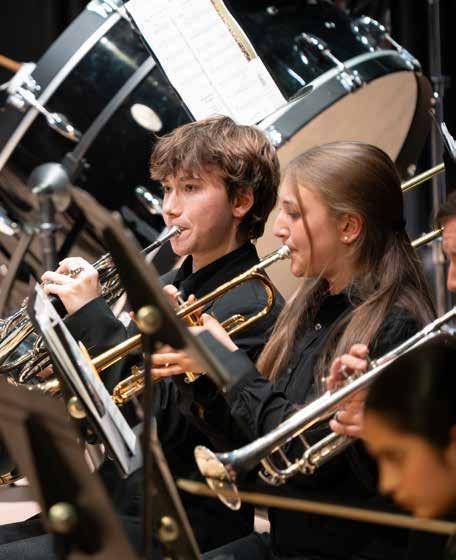

Experience these talented young musicians at one of their performances this season.
ARTIST RESIDENCY CONCERT FEATURING ISABEL LEONARD
March 23, 2026
Asheville High School Auditorium
Featuring the Youth Philharmonic with GRAMMY-award winning vocalist Isabel Leonard as part of the 2026 Artist Residency. See page 50 for details.
SPRING CONCERT: “MAY THE FOURTH BE WITH YOU”
May 4, 2026
Asheville High School Auditorium
Featuring the Overture, Divertimento, Sinfonia, Concert, Youth Philharmonic, Percussion Ensembles, and Flute Choir.
Concert dates and times are subject to change. For more information, please visit AshevilleSymphony.org. To learn more about the ASYO program and how to join, email jthamrick@ashevillesymphony.org or visit AshevilleSymphony.org/ASYO.
Tyson Hamrick ASYO General Manager
ADMINISTRATIVE STAFF
Mika Hood
Operations & Program Coordinator
Rodney Workman Site Coordinator
Jason Posnock Advisor
Cara Jenkins Advisor
Cynthia Roop Advisor
TEACHING STAFF
Dr. Alexandra Dee
Music Director, Youth Philharmonic & Concert Conductor
Amanda Tant
Sinfonia Conductor
Ashlee Booth Divertimento Conductor
Cady Robison
Overture Class Conductor
Dr. Brian Tinkel
Percussion Director
Dr. Sophia Anastasia
Flute Choir Conductor
Dilshad Posnock
Woodwind Coach, Honors Chamber
Ensemble Coach
Franklin Keel
Strings Coach, Honors Chamber
Ensemble Coach
Dr. Jason Slaughter
Brass Coach, Honors Chamber
Ensemble Coach
A special thank you to Drs. Joanne and Tom Parker for their generous support of the ASYO this season. Their financial support will positively enhance music education for hundreds of students across Western North Carolina by providing scholarships, access to instruments, and unique experiences.


Rich and Stacy Ridenour
Judy Murren
Travis Peck
Donald and Brenta Poole
Allison Quigley
Carolyn Ramsey
Robert Randall
Gail Reagan and Jim Graham
Ellen Robbins
Liz Rollins
David Russell
Kevin Scanlon
Brian and Caron Smith
Jillian Smith
Carole Sorrenti
Charles and Sue St. Clair
Barbara and Barry Stagg
Beth Stickle Schoenheit
Paul Stroebel
Kenny Sudnik
Alina Suprunchik
Paige Taylor
Margot Voorhees
Virginia Waymouth
Melanie Welty
Paul B. Williamson
Don Wright
Tuition covers less than half of the Youth Orchestra’s operational costs.
Your gift empowers students to participate in performances, retreats, masterclasses, special workshops, and touring performances regardless of their economic circumstances.
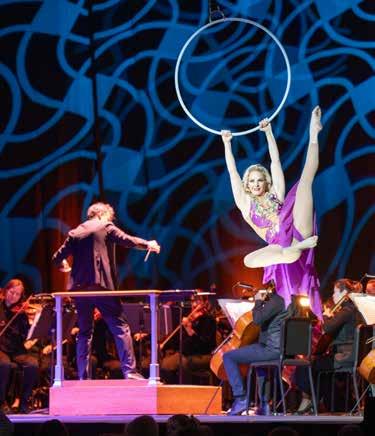
Earlier this season, the Asheville Symphony Youth Philharmonic stepped onto Asheville’s largest stage for a truly unforgettable experience: a side-by-side performance with the Asheville Symphony as part of Cirque de la Symphonie at Harrah’s Cherokee Center – Asheville.
Fifty Youth Philharmonic musicians joined the professional orchestra under the baton of Music Director Darko Butorac, following joint rehearsals that prepared students for the demands of a professional-level production. Conducted by Butorac and guided throughout the season by ASYO Conductor Alexandra Dee, the students performed Strauss’ Unter Donner und Blitz Polka, Tchaikovsky’s exhilarating Trepak from The Nutcracker, selections from Marvin Hamlisch Tyzik’s Chanukah Suite, and a stirring rendition of “O Holy Night.”
Visit AshevilleSymphony.org/friendsof-the-asyo to donate online today.

Sharing the stage amid the visual spectacle of Cirque de la Symphonie, these young musicians rose to the moment with confidence and artistry. Experiences like this embody the Asheville Symphony’s commitment to music education — giving students meaningful opportunities to grow, perform, and take pride in their place within our region’s vibrant arts community.

Thank you for making this unforgettable performance possible.






Please
FALL
Warren
SPRING
First
Please


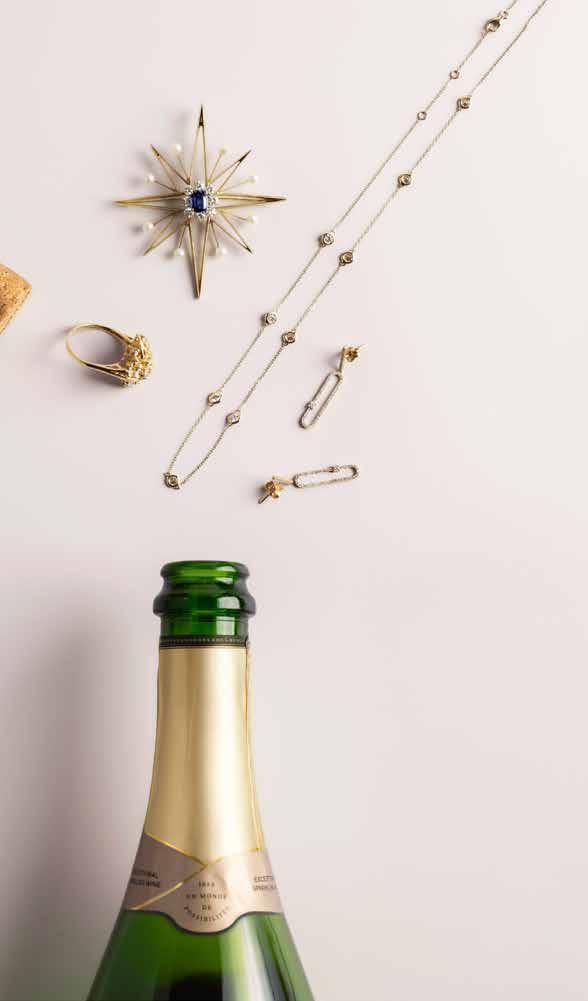


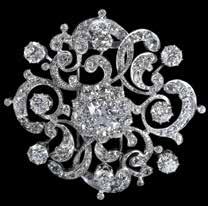
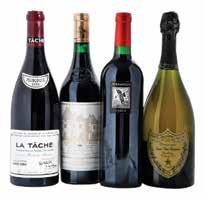
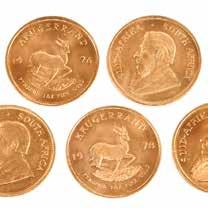
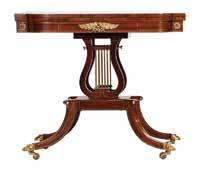
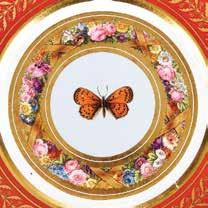
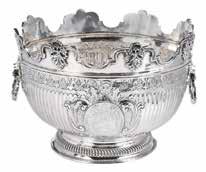
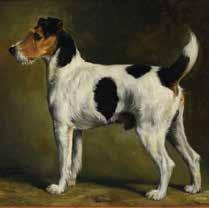
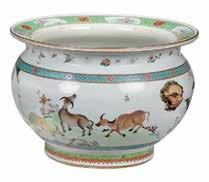
Brunk Auctions has been bringing buyers and sellers together for 40 years. We specialize in the sale of fine art, jewelry, Asian art, antique furniture, coins, and countless other areas of collecting, ranging from contemporary art to antiquities. Excellence in connoisseurship is the hallmark of our specialist staff. Whether buying or selling, our goal is consistent and thoughtful client service and results that will exceed your expectations.
sponsorships have been provided to recognize outstanding Music Performance, Education, and Community Support
The Asheville Symphony, Western North Carolina's cultural gem, for ensuring a legacy of music appreciation in North Carolina through stellar symphonic performances, inclusive outreach programs, and the creation of the Asheville Symphony Youth Orchestra. Learn more: development@ashevillesymphony.org


The Asheville Chamber Music Series, for enthralling audiences for 74 years by presenting chamber ensembles of world renown unrivalled for cohesive and transcendent performance, and for showcasing young talent in the Rising Stars Concert Series. Learn more: support@ashevillechambermusic.org
AmiciMusic, for exemplifying the conversational nature of chamber music through spirited pre-concert colloquia and programs featuring acclaimed soloists and ensembles for audiences in Asheville, Baltimore, and Savannah in select venues. Learn more: daniel@amicimusic.org
Crescendo, for its visionary in-school piano-instruction initiative within an expanding number of schools in McDowell County, North Carolina, for students in grades three to five, at no cost to parents. Students are provided keyboards, music theory and training by expert musicians, and opportunities to perform. Learn more: mcdowellarts@gmail.com

Masterworks Chorus of the Palm Beaches in Palm Beach, Florida, for bringing dynamic classical and inspirational choral music to Florida's audiences and to seasonal visitors from North Carolina and elsewhere, for 47 years. The Chorus' significant cultural presence has expanded to include mentorships and scholarships to students of voice and music. Learn more: masterworkschorus@gmail.com

Jo Edda Rosskamp McDowell is privileged to honor the memory of her husband, and his support of the performing arts.
MASTERWORKS 4
First Baptist Church of Asheville February 14, 2026
2:00 p.m. + 8:00 p.m.
James Lowe
Conductor
Geneva Lewis
Violin
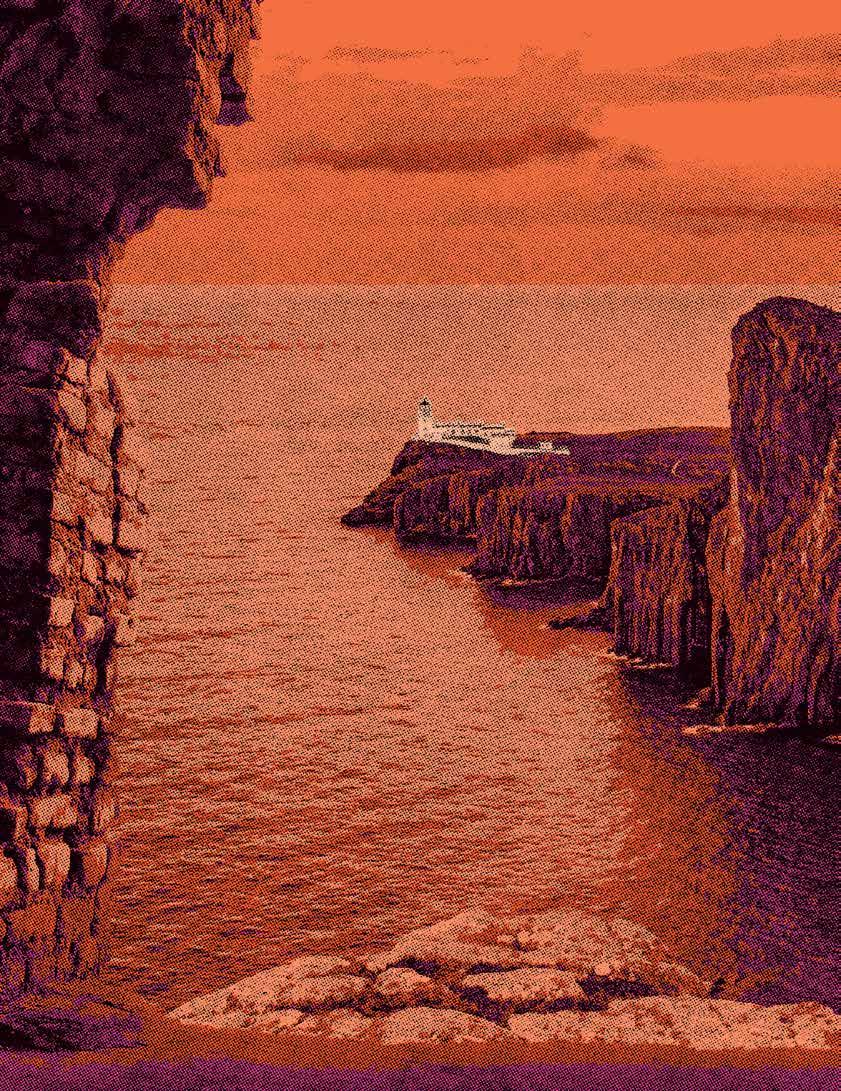
Three composers paint a vivid portrait of rugged Caledonia: Scottish composer
Aileen Sweeney’s Glisk captures moments of fleeting light breaking through everpresent clouds, Bruch’s spirited fantasy for violin reshapes traditional folk melodies, and Mendelssohn’s “Scottish” Symphony brings the dramatic shorelines, ruined castles, and vibrant culture of Scotland to life.
Approximately 4 minutes
A short light-filled work by the young Scottish composer Aileen Sweeney opens this program dedicated to the spirit of Scotland.
Sweeney’s music is rooted in the traditional folk music she grew up with playing the accordion and is often influenced by her interests in the fields of cosmology, nature and folklore alongside an admiration for many different genres of music. Her orchestral work Glisk is a vivid musical evocation of fleeting light, inspired by Scottish landscapes and language. Glisk takes its title from an old Scots word meaning a brief glimmer or flicker — often used to describe sunlight breaking through clouds or, in Shetland dialect, “a glimpse of the good.”
The work captures the sensation of light piercing through darkness, with shimmering orchestral gestures that evoke the unpredictability of Scottish weather. Rapid shifts in timbre and dynamics mirror the fleeting nature of a “glisk,” while moments of brightness dissolve quickly back into shadow. The piece balances delicacy with intensity, reflecting both the fragility and power of natural light. Sweeney’s love of folk music can be detected in figures that sound like the accompaniment to traditional dances such as the Scottish jig.
Critics have praised Sweeney’s remarkable sensitivity to orchestral sound, noting how familiar instruments are used to create fresh, unexpected sonorities. Commissioned by the City of Birmingham Symphony Orchestra, Glisk is scored for a large symphony orchestra. At just four minutes long, Glisk is concise yet impactful — a fleeting musical vision that embodies its title, offering listeners a brief but radiant glimpse of beauty.
Approximately 30 minutes
This program continues with musical evocations of Scotland through the eyes and sensibilities of two German composers.
Max Bruch’s Scottish Fantasy is a lively and dazzling work for violin and orchestra, composed in 1880. This piece captures the spirit of Scotland through its rich melodies and vibrant rhythms. Bruch was inspired by the culture and folklore of Scotland, and he sought to infuse his work with the flavor of the rugged Scottish Highlands.
The Scottish Fantasy is structured in four movements:
Prelude: Grave & I. Adagio cantabile – The opening movement begins with a lively introduction by the orchestra before the solo violin enters with a theme based on a traditional Scottish folk song. It’s marked by a sense of grandeur and mystery, with themes that alternately evoke a feeling of nostalgia and dramatic energy.
II. Allegro – The second movement is fast-paced and lively, featuring a vibrant folk dance-like rhythm. It brings back the energy of the opening, with playful exchanges between the soloist and the orchestra, creating a sense of celebration and joy.
III. Andante sostenuto – This movement is more lyrical and
(continued on next page)
Aileen Sweeney Glisk
Max Bruch
Scottish Fantasy in E-flat major, Op. 46
Geneva Lewis, Violin
Prelude: Grave & I. Adagio cantabile
II. Allegro
III. Andante sostenuto
IV. Finale: Allegro guerriero
INTERMISSION
Felix Mendelssohn
Symphony No. 3 in A Minor, Op. 56, “Scottish”
I. Andante con moto — Allegro un poco agitato
II. Vivace non troppo
III. Adagio
IV. Allegro vivacissimo — Allegro maestoso assai
CONCERT SPONSOR

GUEST ARTIST SPONSOR Dr. Rachel E. Raab & Dr. Francois Archambault
MUSIC SPONSORS ARE LISTED ON PAGE 102
Media partner Blue Ridge Public Radio will air a recording of this performance, featuring conversations with the Asheville Symphony, on BPR Classic and bpr.org on March 17, 2026 at 7:00 p.m. and March 19, 2026 at 9:00 a.m.

PREMIUM SEASON SPONSORS

OF

serene, drawing on the beauty of the violin’s tone. The violin weaves a gentle, melancholic melody that contrasts beautifully with the more spirited character of the first movement.
IV. Finale: Allegro guerriero – The finale is a rousing conclusion to the fantasy, drawing on more traditional Scottish folk melodies. It’s fast, exuberant, and filled with energetic passages for the violin, making it a virtuosic and thrilling conclusion to the work.
The Scottish Fantasy is known for its lush orchestration, virtuosic violin writing, and the way it paints a musical picture of Scotland through both direct and indirect references to folk music. It’s a piece that has remained popular in the violin repertoire, often performed by violinists who enjoy its combination of emotional depth and technical brilliance.
Approximately 40 minutes
This symphony began in 1829 with Felix Mendelssohn’s visit to Scotland. The German composer was utterly captivated by the country’s rugged landscapes and historic ruins.
He was equally enchanted by the romantic aura of Scotland as represented in the novels of Sir Walter Scott, whom he visited during his trip. His letters reveal, however, that Mendelssohn was less impressed with the food and some Scottish people he met along the way!
It wasn’t until 1842, however, that Mendelssohn completed his Third Symphony, which bears the subtitle “Scottish.”
Though it took Mendelssohn more than a dozen years to write his Third Symphony, Mendelssohn began sketching ideas for the “Scottish” Symphony during his visit to the country, particularly after visiting the ruins of Holyrood Chapel in Edinburgh.
In a letter home, Mendelssohn wrote, “The chapel below is now roofless. Grass and ivy thrive there and at the broken altar where Mary was crowned Queen of Scotland. Everything is ruined, decayed, and the clear heavens shine in. I think today I have found there the beginning of my ‘Scottish’ Symphony.” Thus, the initial ideas were forming in Mendelssohn’s mind 13 years before the symphony’s premiere.
The symphony is structured in four movements, though Mendelssohn intended them to be played without pause, creating a continuous narrative flow:
I. Introduction and Allegro agitato – The opening begins with a solemn, brooding theme, evoking the misty ruins of Holyrood. This gradually builds into a turbulent Allegro, full of restless energy and dramatic contrasts.
II. Scherzo assai vivace – Light and fleet-footed, this movement captures Mendelssohn’s characteristic brilliance. Its airy textures and dancing rhythms suggest Scottish folk influences, though without quoting actual tunes.
battle scene, before resolving into a triumphant major-key conclusion. Mendelssohn transforms the opening movement’s somber material into a radiant, hymn-like coda for a glorious conclusion.
The orchestration is relatively modest — two flutes, oboes, clarinets, bassoons, four horns, two trumpets, timpani, and strings — but Mendelssohn uses these forces with remarkable clarity. His textures are transparent, allowing themes to emerge with precision while still creating a rich, atmospheric sound world.
The “Scottish” Symphony demonstrates how landscapes and history could inspire Romantic composers to create music that was both programmatic and abstract. Unlike Beethoven’s explicitly titled Pastoral Symphony, Mendelssohn avoided overt narrative labels, instead weaving impressions into purely musical form.
The symphony’s premiere was a triumph in the composer’s tragically short life. He died five years later, in 1847, at the age of 38.
Mendelssohn’s Symphony No. 3 remains one of Mendelssohn’s most admired orchestral works. It’s not just a tribute to Scotland but a masterwork of Romantic orchestral writing, balancing evocative imagery with structural discipline.
Mendelssohn’s journey, however, was transformative. The composer gave expression to Scotland’s natural grandeur and tragic history through music full of brooding themes, lyrical melodies and triumphant resolutions.
Mendelssohn wrote his Scotlandinspired Hebrides Overture in the year after his visit to the country.
III. Adagio cantabile – A lyrical, contemplative movement, often interpreted as a musical reflection on Scotland’s romantic landscapes and tragic history. Its noble melodies provide emotional depth and contrast to the surrounding energy.
IV. Allegro guerriero – Finale maestoso – The finale begins with martial vigor, almost like a
Program notes by Paul Hyde © 2025
Paul Hyde, a longtime arts journalist, is an English instructor at Tri-County Technical College in South Carolina. He writes regularly for the Greenville Journal, the S.C. Daily Gazette, EarRelevant, ArtsATL, and the Atlanta Journal-Constitution. Readers may write to him at phyde@tctc.edu.

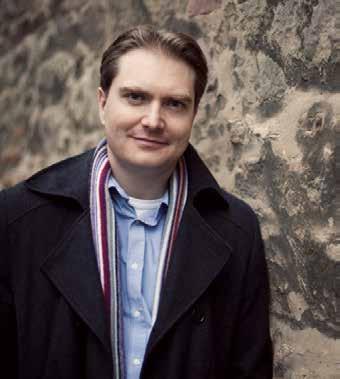
James Lowe began his tenure as the 8th Music Director of the Spokane Symphony in the 2019/20 season. His work as a conductor has ranged over five continents including collaboration with orchestras in the UK and Europe, Japan, Australia and the USA. Passionately committed to the belief that classical music is for everyone, he balances his conducting schedule with his work to engage new audiences and a long-standing commitment to youth music.
His work as Artistic Director of the Hallé Harmony Youth Orchestra was featured in a four-part documentary shown in the UK on Channel 4. A recipient of the Bernard Haitink Fund for Young Talent, Lowe has held the position of Chief Conductor with the Prueßisches Kammerorchester, Germany and the Vaasa City Orchestra, Finland, the position of Associate Conductor with the Royal Scottish National Orchestra and Orchestras Advisor to the National Youth Orchestras of Scotland.
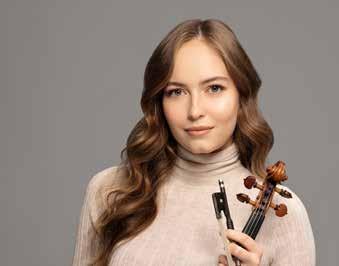
American/New Zealand violinist Geneva Lewis has forged a reputation as a musician of consummate artistry whose performances speak from and to the heart and who has been lauded for the “remarkable mastery of her instrument” (CVNC) and hailed as “clearly one to watch” (Musical America).
Named a BBC New Generation Artist (2022-24), Geneva is also the recipient of a 2022 BorlettiBuitoni Trust Award and a 2021 Avery Fisher Career Grant. She was also Grand Prize winner of the 2020 Concert Artists Guild Competition, the winner of the Kronberg Academy’s Prince of Hesse Prize (2021), Musical America’s New Artist of the Month (June 2021), a Performance Today Young Artist in Residence and a YCAT Concordia Artist.
In 2023, Geneva made her BBC Proms debut in the Royal Albert Hall with the BBC National Orchestra of Wales and Jaime Martin. Additional collaborations have included the BBC Symphony and BBC Scottish Symphony Orchestras, the Orchestre National de Bordeaux Aquitaine, Auckland Philharmonia Orchestra, Scottish Chamber Orchestra, Atlanta Symphony, Indianapolis Symphony, and the Vancouver Symphony Orchestra. The 2025-26 season includes performances with Kremerata Baltica, Baltimore Symphony Orchestra, San Diego Symphony, BBC National Orchestra of Wales, Filharmonia Czěstochowska, Utah Symphony, and Orquesta Filarmónica de Jalisco.

Educated at the University of Edinburgh, Lowe continued his development as Benjamin Zander Conducting Fellow with the Boston Philharmonic, and has studied with leading conductors in master classes, including Jorma Panula, Neeme Järvi, Bernard Haitink and Valery Gergiev. He worked as Assistant Conductor to Haitink in performances with the Concertgebouw Orchestra in Amsterdam.
In addition to his conducting work James is active as an educator, teacher of conducting and is undertaking research exploring ways in which orchestras can meaningfully engage with a wider public.
An advocate of community engagement and music education, Geneva was selected for the New England Conservatory’s Community Performances and Partnerships Program’s Ensemble Fellowship, through which her string quartet created interactive educational programs for audiences throughout Boston. The quartet was also chosen for the Virginia Arts Festival Residency, during which they performed and presented masterclasses in elementary, middle, and high schools.









This performance is presented with additional
from




Experience Grammy, Tony, and Emmy-winning artists, global artistry, daring dance, and music legends.
Highlights include: PILOBOLUS
Oct 10 & 11 A SWANNANOA SOLSTICE
Dec 21
The Acting Company presents A MIDSUMMER NIGHT’S DREAM • Jan 23
GREAT EXPECTATIONS • Jan 24
AILEY II THE NEXT GENERATION OF DANCE
Feb 17 & 18
JANE LYNCH & KATE FLANNERY
Mar 3
NICOLE ZURAITIS 2X Jazz Grammy-winner
Mar 4
ALL THINGS EQUAL: THE LIFE & TRIALS OF RUTH BADER GINSBURG Sponsored by Roberts & Stevens, P.A. Mar 26 & 27
BREABACH Apr 11
STEWART/OWEN DANCE + GUESTS
May 1 & 2


Mar 13 & 14




Asheville Symphony’s Artist Residency is made possible through the generous support of our community. If you’re inspired by this initiative and want to help bring more world-class artists to Asheville, consider joining the Artist Residency Circle or becoming a Residency sponsor. Contact the Asheville Symphony’s Development team at development@ashevillesymphony.org or 828.820.2520 or for more information.
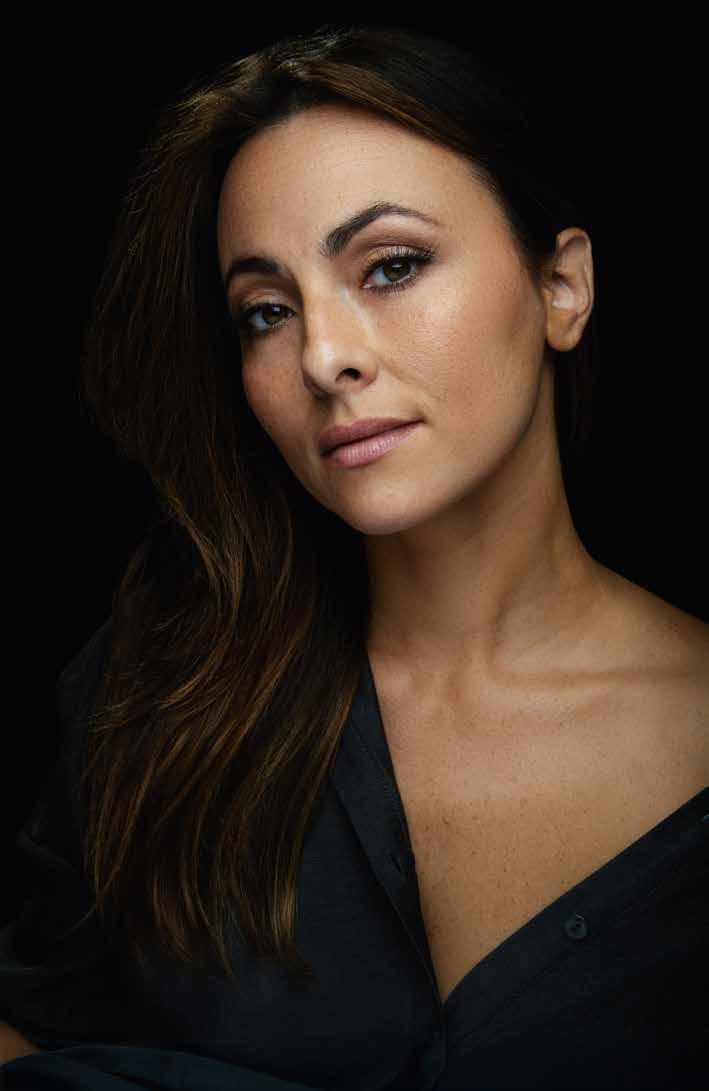

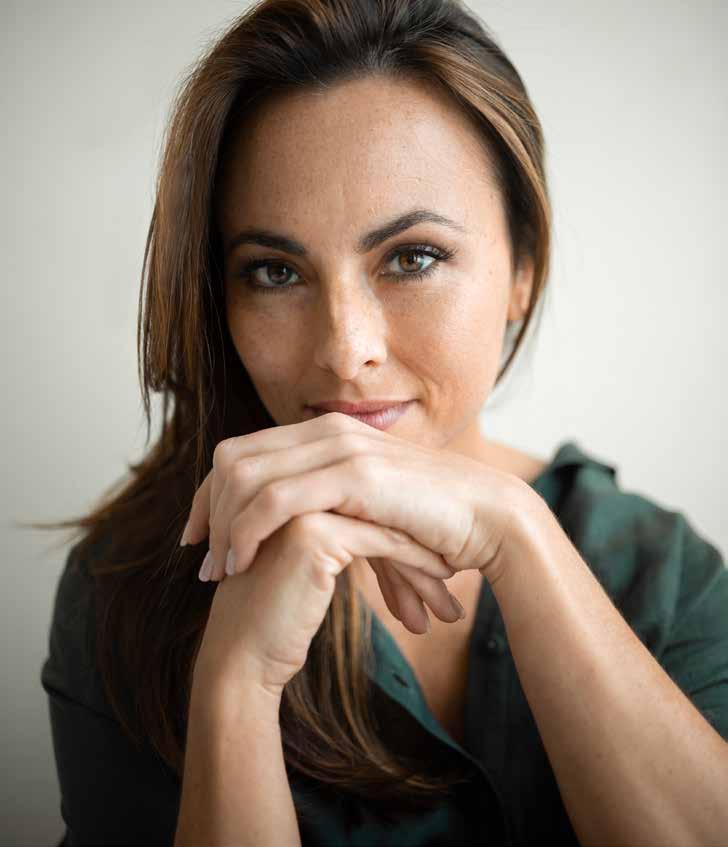

Three-time GRAMMY Award-winning artist Isabel Leonard has established herself as one of the most in-demand performers, a star on the world’s leading stages and screens. Highlights of Ms. Leonard’s career include the title roles in Carmen, La Périchole, Cendrillon, and Marnie, as well as Rosina in Il barbiere di Siviglia, Angelina in La Cenerentola, Cherubino in Le nozze di Figaro, Zerlina and Donna Elvira in Don Giovanni, Charlotte in Werther, Costanza in Griselda, Musetta in La bohème, Maria in West Side Story, and Marguerite in a concert performance of Berlioz’s La damnation de Faust.
The 2025–2026 season sees Ms. Leonard’s return to The Metropolitan Opera for two prominent productions: the title role in Bizet’s Carmen, under the baton of Fabien Gabel, with a production by Carrie Cracknell; and the leading role of Frida in Gabriela Lena Frank’s El Último Sueño de Frida y Diego, in a new production by Deborah Colker making its company premiere, with performances conducted by Yannick Nézet-Séguin. She will also return to Bayerische Staatsoper to sing her signature Angelina in Cenerentola, as well as singing the title role in Ravel’s L’enfant et les sortilèges with the San Diego Symphony.
This season also features Ms. Leonard as a Perspectives Artist at Carnegie Hall, where she will present a series of concerts and performances throughout the season highlighting her perspective as a performing artist. Performances include a recital with pianist John Arida, sing Knoxville: Summer of 1915 with The Met Orchestra, and participate in the prestigious 50th Anniversary of the Concert of the Century Gala.
Visit page 54 to learn more about Isabel Leonard and her performance with the Asheville Symphony. Visit page 50 to learn more about the 2026 Artist Residency: A Celebration of Voice featuring Isabel Leonard.
Pianist and coach John Arida (MM ’13, collaborative piano) has cultivated relationships with some of classical music’s most esteemed performers both on and off the stage including Julia Bullock, Patrick Carfizzi, Anthony Roth Costanzo, Samantha Hankey, Christian Van Horn, Isabel Leonard, Golda Schultz, and Jack Swanson. Arida has appeared as a collaborative pianist across the U.S., Canada, and Mexico at notable venues including Carnegie Hall, the Kennedy Center, Aspen Music Festival, and Tanglewood.
Beyond the concert stage, Arida has assisted conductors including Harry Bicket, Daniela Candilari, John DeMain, Christian Reif, Speranza Scappucci, and Emmanuel Villaume. Arida has been a member of the music staff of the Santa Fe, Washington National, Central City, and Virginia operas; the Lakes Area Music and Castleton festivals; and Juilliard. A strong supporter of grassroots festivals, Arida was the music director for the inaugural seasons of the Emberlight Festival in Ironwood, Michigan, and the Creede (Colorado) Musical Arts Collective.
Arida has recorded two albums with his frequent collaborator mezzosoprano Megan Marino. Their first album, The Traveled Road (Ravello Records), featured the music of Evan Mack. Their second, It’s You I Like (Lexicon Classics), contains songs that celebrate childhood.
Arida has held fellowships at the Aspen Music Festival and Music Academy of the West. In addition to his studies at Juilliard, he earned a bachelor’s degree in vocal performance from SUNY Purchase.
First Baptist Church of Asheville March 17, 2026
7:00 p.m.
Isabel Leonard Voice
John Arida Piano
The incomparable Isabel Leonard will take the stage alongside pianist John Arida for a recital featuring selections by GarciaLorca, Montsalvatge, Bizet, traditional Spanish songs, and more. A classical icon, Isabel is the featured artist for the 2026 Artist Residency (visit page 50 to learn more); she has performed iconic leading roles in every major opera house in the world, including The Met Opera, La Scala, and Wiener Staatsoper. Program information to be announced Spring 2026.


First Baptist Church of Asheville
March 21, 2026
2:00 p.m. + 8:00 p.m.
Darko Butorac
Conductor
Isabel Leonard Voice
Internationally acclaimed vocalist Isabel Leonard — winner of multiple GRAMMY Awards — brings her versatile artistry and raw star power to this flagship event of the 2026 Artist Residency (visit page 50 to learn more). She will showcase the many glittering facets of the human voice, bringing to life a curated selection of her signature roles and iconic works for voice: Barber’s Knoxville: Summer of 1915, highlights from West Side Story, plus works by Georges Bizet, Manuel de Falla, Gabriela Lena Frank, and more. Program information to be announced Spring 2026.
CONCERT SPONSOR
PREMIUM SEASON SPONSORS

Three-time GRAMMY Award-winning artist Isabel Leonard has established herself as one of the most in-demand performers, a star on the world’s leading stages and screens. Highlights of Ms. Leonard’s career include the title roles in Carmen, La Périchole, Cendrillon, and Marnie as well as Rosina in Il barbiere di Siviglia, Angelina in La Cenerentola, Cherubino in Le nozze di Figaro, Dorabella in Così fan tutte, Zerlina and Donna Elvira in Don Giovanni, Sesto in La clemenza di Tito, Charlotte in Werther, Blanche de la Force in Dialogues des Carmélites, Costanza in Griselda, Musetta in La bohème, Der Komponist in Ariadne auf Naxos, Sesto in Giulio Cesare, Maria in West Side Story, and Marguerite in a concert performance of Berlioz’s La damnation de Faust
The 2025–2026 season sees Ms. Leonard’s return to The Metropolitan Opera for two prominent productions: the title role in Bizet’s Carmen, under the baton of Fabien Gabel, with a production by Carrie Cracknell; and the leading role of Frida in Gabriela Lena Frank’s El Último Sueño de Frida y Diego, in a new production by Deborah Colker making its company premiere, with performances conducted by Yannick Nézet-Séguin. She will also return to Bayerische Staatsoper to sing her signature Angelina in the Jean-Pierre Ponnelle production of Cenerentola, as well as singing the title role in Ravel’s L’enfant et les sortilèges with the San Diego Symphony under Music Director Rafael Payare.
This season also features Ms. Leonard as a Perspectives Artist at Carnegie Hall, where she will present a series of concerts and performances throughout the season highlighting her perspective as a performing artist. Performances include a recital in Stern Auditorium with pianist John Arida, sing Knoxville: Summer of 1915 with The Met Orchestra, led by Yannick Nézet-Séguin, and participate in the prestigious 50th Anniversary of the Concert of the Century Gala, also conducted by Yannick Nézet-Séguin. Her Perspectives series closes with a Spanish Song and Dance Recital with vocalist Ismael Fernández and dancer Sonia Olla.



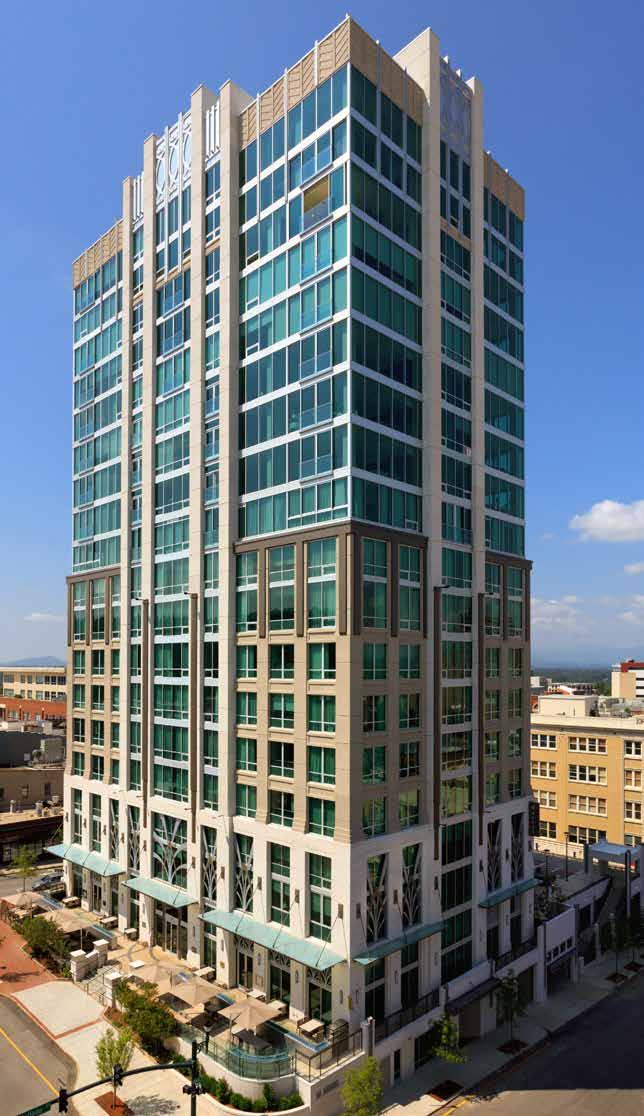





MASTERWORKS 6
First Baptist Church of Asheville April 18, 2026
2:00 p.m. + 8:00 p.m.
Darko Butorac Conductor
Jessica Beebe Soprano
Lisa Marie Rogali Alto
John Ramseyer Tenor
Jonathan Woody Bass
Two deeply personal masterpieces reveal glimpses of the soul: Mozart’s haunting self-eulogy pairs with Tchaikovsky’s luminous serenade, composed from “deep within” as both a tribute to Mozart, his greatest inspiration, and as a purely radiant expression of the heart.

Ilyich Tchaikovsky
Approximately 30 minutes
Remarkably, Tchaikovsky worked on his Serenade for Strings as he was composing his famed 1812 Overture. The difference between the two pieces is striking: the Serenade is elegant and heartfelt while the 1812 Overture explodes with cannon fire, dramatic power and triumphant spectacle.
Tchaikovsky himself loved the warmth, intimacy and artistry of his Serenade but deemed his 1812 Overture too raucous and impersonal. The Serenade was inspired, in part, by Mozart, whom Tchaikovsky adored. That fact nicely links the piece to the latter half of this program.
Tchaikovsky composed the Serenade in 1880, during a period of personal turmoil. He had just returned to Russia from Paris, grieving the death of his father and struggling with depression and alcoholism. Yet, in this state, he produced one of his most radiant works, channeling his emotions into music that is both deeply expressive and structurally refined.
The piece consists of four movements, each with its own character. Lasting about 30 minutes, the Serenade is approximately the length of many of Mozart’s symphonies.
I. Piece in the form of a sonatina (Andante non troppo –Allegro moderato): Tchaikovsky deliberately modeled this opening on Mozart’s classical style. It begins with a noble, hymnlike introduction before moving into a more spirited section. This fusion of classical restraint and Romantic warmth sets the tone for the entire work.
II. Waltz (Moderato, tempo di valse): Perhaps the most famous movement, this graceful waltz exemplifies Tchaikovsky’s gift for dance music. It is elegant yet tinged with melancholy, a characteristic of the Russian composer’s style.
III. Élégie (Larghetto elegiaco): The third movement is deeply lyrical, unfolding with long, singing lines that evoke sorrow and tenderness. It reflects Tchaikovsky’s emotional struggles at the time, offering a moment of introspection.
IV. Finale (Tema russo – Andante – Allegro con spirito): The closing movement draws on Russian folk themes, beginning with a solemn chorale before bursting into spirited dance rhythms. This synthesis of national identity and classical form gives the work its triumphant conclusion.
The Serenade for Strings was premiered in St. Petersburg in 1881 and quickly became a favorite among audiences and performers. Tchaikovsky himself considered it one of his best compositions,
(continued on next page)
Pyotr Ilyich Tchaikovsky
Serenade for Strings in
C major, Op. 48
I. Pezzo in forma di Sonatina
II. Walzer
III. Élégie
IV. Finale (Tema russo)
INTERMISSION
Wolfgang Amadeus
Mozart
Requiem in D minor, K. 626
Jessica Beebe, Soprano
Lisa Marie Rogali, Alto
Jon Ramseyer, Tenor
Jonathan Woody, Bass
I. Introitus — Requiem
II. Kyrie
III. Sequenz
Dies irae
Tuba mirum
Rex tremendae
Recordare
Confutatis
Lacrimosa
IV. Offertorium
Domine Jesu
Hostias
V. Sanctus
VI. Benedictus
VII. Agnus Dei
VIII. Communio
CONCERT SPONSOR
GUEST ARTIST SPONSOR (JESSICA BEEBE)
MUSIC SPONSORS ARE LISTED ON PAGE 102
PREMIUM SEASON SPONSORS
written from “inner conviction,” a reflection of his true artistic voice.
What makes the Serenade enduring is its balance of classical clarity and Romantic emotion. It demonstrates Tchaikovsky’s mastery of string writing, with lush harmonies, soaring melodies, and intricate textures that showcase the expressive potential of the ensemble. At the same time, it reveals his vulnerability, turning personal grief into musical beauty.
Tchaikovsky’s Serenade for Strings is both a homage to Mozart and a deeply personal statement. Its elegance, emotional depth, and national flavor secure its place as one of the greatest works for string orchestra.
Approximately 48 minutes
Mozart’s Requiem is considered one of the masterworks of the choral-andorchestra literature, much loved for its haunting beauty and fiery drama. With tremendous emotional depth, the work explores fundamentals of the human experience — grief, fear, hope and transcendence. The blend of spiritual solemnity with theatrical drama makes it timelessly powerful, resonating with audiences across cultures and eras.
The work is scored for chorus, orchestra and four soloists.
Considerable myth surrounds the creation of the Requiem, some of it promoted in a spirited 1984 biopic, Amadeus. Mozart was not poisoned by his older colleague Antonio Salieri, as the film suggests, nor did Salieri pose as a mysterious masked figure intent on stealing the Requiem.
composition, giving Mozart no credit.
As Mozart worked away at the Requiem later that year amid the decline of his own physical and mental health, he became obsessed with the project, thinking he was writing the Requiem for his own funeral. That even prompted his wife Constanze to take the score away from the composer in October 1791. Mozart returned to it in November of that year, however, and may have been working on it as late as December 3, two days before his death at the age of 35.
Mozart left the work unfinished, but it was completed by Mozart’s student, Franz Xaver Süssmayr, using Mozart’s sketches and deathbed guidance. Süssmayr, though only 25 years old at the time, was probably the right choice to complete the work as he was in steady and close contact with Mozart, working with the composer on the piece in 1791. It is this version of the Requiem that has been mostoften performed through the decades, though sometimes with various alterations by later generations of scholars. Süssmayr perhaps does not get enough credit for his work, even though he wrote virtually entire sections of the Requiem, including the Sanctus, Benedictus, Agnus Dei and Communio.
The Requiem is set as a traditional Roman Catholic Mass for the dead, composed of several sections:
Introitus (“Requiem aeternam”): The piece opens with a somber and majestic theme, introducing the eternal rest motif. The music is dark, prayerful and deeply poignant.
one of the last sections Mozart composed. (Mozart completed the vocal parts and a considerable portion of the string parts in this section.) Throughout this extended sequence, Mozart alternates powerful assertions with poignant pleas.
Offertorium, Sanctus, Benedictus, and Agnus Dei: These movements continue the spiritual journey, with reverent, soaring melodies and rich harmonies. These sections were mostly or entirely written by Süssmayr.
Communio (“Lux aeterna”): For the conclusion, Süssmayr seems to have had clear instructions from Mozart on his deathbed. He returns to Mozart’s themes, including the great fugue from the opening of the work, to create a sense of cyclical peace. Mozart thus has the last word.
Though the Requiem was completed by Süssmayr, its soul unmistakably bears Mozart’s mark. It stands not only as an artistic triumph but also as a poignant farewell from one of the great voices of Western civilization.
In fact, Mozart was commissioned to write a Requiem Mass by the wealthy Count Franz von Walsegg in memory of the Count’s wife Anna, who had passed away at the age of 20 in February 1791. The arrangement was rather secretive, however, as the Count planned to present a public performance of the work as his own
Kyrie: A powerful fugue, perhaps inspired by Handel, showcases Mozart’s command of contrapuntal writing. Mozart demands considerable vocal dexterity from his chorus.
Sequenz: This extraordinarily dramatic section includes the famous Dies irae (Day of Wrath), filled with thunderous urgency and anguish, and the beautifully yearning Lacrimosa, reportedly
Program notes by Paul Hyde © 2025
Paul Hyde, a longtime arts journalist, is an English instructor at Tri-County Technical College in South Carolina. He writes regularly for the Greenville Journal, the S.C. Daily Gazette, EarRelevant, ArtsATL, and the Atlanta Journal-Constitution. Readers may write to him at phyde@tctc.edu.
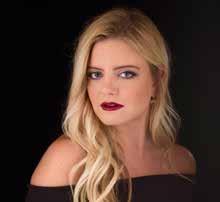


Lauded by Opera News as “evocative and ethereal,” “a honey-colored tone,” and “the most radiant solo singing,” soprano Jessica Beebe is steadily gaining international attention as an affecting interpreter of repertoire spanning over four centuries, ranging from Renaissance music to contemporary American opera. In recent seasons, she has appeared as a guest soloist in concert with The New York City Chamber Orchestra at Carnegie Hall, The Los Angeles Philharmonic at Walt Disney Hall, and more. In the realm of opera, Ms. Beebe has performed a variety of roles including Barbarina in Le nozze di Figaro, Zerlina in Don Giovanni, Despina in Così fan tutte, and more.
Award-winning mezzo-soprano Lisa Marie Rogali has been praised for her “warm, nuanced voice” and “spontaneity” on the stage. This season, she returns to Virginia Opera as Angelina in La Cenerentola and brings her Carmen to Toledo Opera and Gulfshore Opera. She joins Asheville Symphony for Mozart’s Requiem, Virginia Symphony Orchestra for Handel’s Messiah, and New Jersey Symphony Orchestra for Broadway Through the Ages. In recent seasons, she debuted Carmen with Virginia Opera and Florentine Opera and sang Rosina in Il barbiere di Siviglia She made her Carnegie Hall debut in Mozart’s Coronation Mass and was named a Finalist in the Dallas Opera National Vocal Competition.
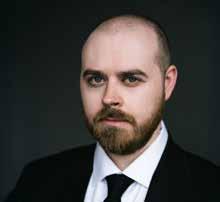
Praised for his “hypnotically lyrical” voice, New York City-based tenor John Ramseyer specializes in concert and chamber music, as well as opera. In May of 2023, he made his Carnegie Hall debut singing the tenor solos in Rachmaninoff’s AllNight Vigil with the Clarion Choir. Other recent highlights include Rachmaninoff’s The Bells with the Baltimore Symphony Orchestra, an international tour of Handel’s Solomon with The English Concert and the Clarion Choir, and the world premiere of Trevor Weston’s American Lamentation. He is a member of the Metropolitan Opera Extra Chorus and a Gentleman of the Choir at Saint Thomas Church Fifth Avenue, as part of the world-renowned Saint Thomas Choir of Men and Boys.
Cited by the Washington Post for singing “with resonance and clarity,” bassbaritone Jonathan Woody appears regularly with historically informed orchestras including Boston Early Music Festival, Apollo’s Fire, and Pacific MusicWorks. An accomplished chamber musician, he performs as a member of the GRAMMYnominated Choir of Trinity Wall Street, where he has earned praise from the New York Times for his “charismatic” solos. Woody’s compositional voice blends 17th and 18th-century inspiration with minimalism and socially conscious subject matter. Since 2020, he has received commissions from Apollo’s Fire, the Choir of Trinity Wall Street, Chanticleer, and the Handel and Haydn Society.
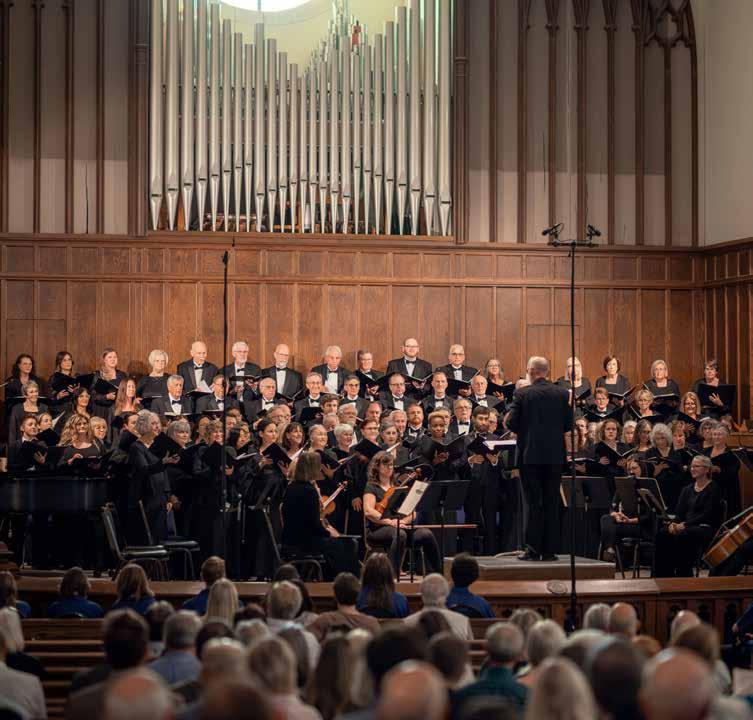
Did you know that Western North Carolina’s premier vocal ensemble lives right here in Asheville?
For over 30 years, the Asheville Symphony Chorus has partnered with the Asheville Symphony to bring to life great works from the world of opera, oratorio, and large-scale choral compositions — Carmina Burana, La Traviata, Vaughn Williams’ Sea Symphony, and last year, three sold-out performances of Handel’s Messiah.
In addition to its performances with the Asheville Symphony, the Chorus presents its own programs each year, celebrating choral music from across the centuries and the globe. This year, join the Asheville Symphony Chorus, under the direction of Kyle Ritter, for one — or both! — of our enchanting choral performances.
Visit page 32 for more information on this season’s performances.
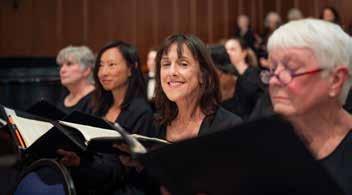
For more information on performances, tickets, and auditions, visit AshevilleSymphonyChorus.com.

If pain in your knees, shoulders, hips or other joints has put your life on hold, how many great memories are you missing out on?
At QC Kinetix, we understand how it feels to be held back by chronic pain. That’s why we offer a revolutionary therapy that uses your body’s own healing agents to revitalize damaged joint tissue and restore your mobility and freedom.
Join tens of thousands of satisfied patients who have found relief and regained the life they thought they had lost. To find out if you’re a candidate for this life-changing therapy, call us before you miss out on another great memory.


“I suffered from shoulder pain for 22 years. I couldn’t even brush my teeth without pain. Now I’m pain free and I want to thank you, QC Kinetix.” - Sophia
“This summer, I’ve been fishing, golfing, batting practice. Last year I couldn’t do any of those things. Thanks to QC Kinetix, I feel healthy and happy again.” - Greg

To find out if you’re a viable candidate, request a FREE CONSULTATION today.







This performance is presented with additional support from


Proud Sponsor of the Asheville Symphony



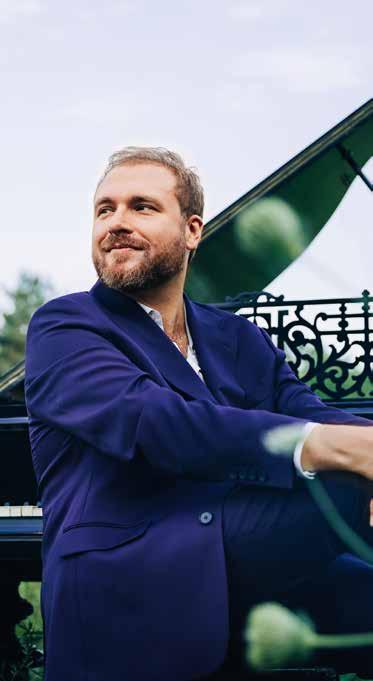
with Adam Golka

First Baptist Church of Asheville May 12, 2026
7:00 p.m.
The first half of our program this evening features two piano sonatas with striking similarities: both use F-sharp as their tonic note, depart from the typical three-movement sonata framework, and are dedicated to powerful women — Beethoven’s to the Countess and educator Therese von Brunsvik, Brahms’s to the virtuoso pianist Clara Schumann. And yet the pieces could hardly be more different in character.
Beethoven’s Piano Sonata No. 24 in F-sharp major, Op. 78, was one of his favorites; he once compared it favorably to the C-minor “Moonlight” Sonata. At just ten minutes long, it is remarkably concise. A slow introduction precedes a brisk sonata form that modulates to the key of C-sharp major — the key that contains every sharp — before proceeding into an uncharacteristically efficient development section. Beethoven playfully evades the recapitulation’s expected cadence on F-sharp until the very last bar of the movement. The odd second movement also avoids the tonic for quite a while: its main theme cadences twice, both times on off-tonic chords. Frequent sixteenth-note passages skip along in pairs, creating an altogether charming and playful effect.
Brahms’s Piano Sonata No. 2 in F-sharp minor, Op. 2, is another thing entirely. Despite its number, it was the first piano sonata Brahms wrote, and was among the pieces he played during his first meeting with Robert and Clara Schumann. They were stunned speechless, leaving the diffident young composer to think he had failed to impress. He needn’t have worried; soon enough, both Schumanns would become his champions. Due to the sonata’s four-movement structure and its efforts to imitate orchestral sounds, the piece often resembles a symphony written for piano alone.
The first movement opens with a motif essential to the entire work:
Described as having “brilliant technique and real emotional depth” by the Washington Post, Adam Golka joins the Asheville Symphony for a solo recital program featuring works by Beethoven, Brahms, Chopin and Schoenberg.

an ascending three-note scale that here builds into the primary theme of a sonata form. An expressive descending scale in the high register of the piano emerges as the secondary theme. After the inventive development, the recapitulation feels truncated; Brahms deliberately withholds

the conventional resolution of the secondary theme to the tonic key, creating a sense of anticlimax.
The inner movements of the sonata are closely intertwined. The second movement presents a B-minor theme for variation that opens with our rising three-note motif in a call and response between the left and right hands. The theme notably closes with a dominant chord, meaning that it never conclusively ends, but must always continue towards the next variation. While the first variation closely mimics the structure of the theme, the second explodes the form, allowing the third and final variation to shift to the parallel major. The Scherzo — a further variation of the previous movement’s theme — follows directly after. The D-major Trio’s ringing, wide-open chords evoke church bells, which reemerge like a fading memory in the final bars of the movement.
The final movement opens with a long and dramatic slow introduction that establishes many of the movement’s most important motifs. The sonata form that follows notably lacks a proper secondary theme; this leaves the form feeling offbalance, as if the gravity of the tonic were too strong to escape. But the return of the introductory material at the end of the sonata suspends this logic; as in the second movement, the explosion of the form enables a move to the major mode, allowing this sonata to end where the Beethoven sonata began: in F-sharp major.
Because Arnold Schoenberg’s Three Piano Pieces, Op. 11 do not have a tonic pitch — a note that supersedes all others, like F-sharp does in the Beethoven and Brahms sonatas — they are usually called “atonal.” (Never mind that Schoenberg hated this word, preferring the term “pantonal.”)
The first two pieces in the op. 11 set were composed in February 1909 and share important similarities. Both draw from Classical formal conventions to organize their modern sounds, using the ternary (ABA) structure to create a sense of logic and flow. In both pieces, you should listen carefully to the first phrases played by the right hand; Schoenberg uses these as the main unifying element that carries each piece through its explosive middle section. The second piece’s main theme is particularly recognizable thanks to its accompanying bass ostinato. Schoenberg described the second piece as representing someone “completely immersed in a certain mood”; he likens one moment in the middle of the piece to “someone suppressing a tear.”
The third piece in the set, written six months later, represents a significant break from the first two. Schoenberg wrote that he was no longer interested in “stylized and sterile protracted emotion,” but wishes for “complete liberation from all forms, from all symbols of cohesion and of logic.”
The third piece therefore presents a rapid sequence of stream-of-
(continued on next page)
Ludwig van Beethoven
Piano Sonata No. 24 in F-sharp minor, Op. 78
Johannes Brahms
Piano Sonata No. 2 in F-sharp minor, Op. 2
INTERMISSION
Arnold Schoenberg
Three Piano Pieces, Op. 11
Frédéric Chopin
Twelve Études, Op. 25
MUSIC SPONSORS ARE LISTED ON PAGE 102
Visit page 75 to learn more about Adam Golka and visit page 72 to learn more about his performance with the Asheville Symphony.
PREMIUM SEASON SPONSORS
consciousness impressions that fly by like thoughts through an anxious mind. Reflecting on his achievement in this piece, Schoenberg wrote that he was quite satisfied with its effect of “Buntheit” — of variegated colors juxtaposed to enhance their effect.
Chopin’s set of Twelve Études, Op. 25, likewise draws on a diverse variety of colors and effects to achieve his goals — in this case, engaging a player’s musical mind even as he pushes their technical skills to the limits. The first étude acts as a statement of purpose for the set: a delicate melody floats above rapid arpeggios in both hands, challenging the pianist to shape legato lines without allowing the thicket of notes to overpower the theme.
The next three études are rhythmic exercises: no. 2 focuses on rapid triplets in the right hand over contrasting rhythms in the bass, while no. 3 presents a rhythmic ostinato with a distinct staccato articulation. Étude no. 4’s offbeat melody creates cross-rhythms against the left hand’s constant jumps across the keyboard.
No. 5 is known as the “wrong note” étude for the dissonant semitones that precede every note of the melody in the main section of the piece. Étude no. 6
is the infamous étude for thirds, which appear mainly in the right hand’s sweeping ornaments.
The C-sharp minor étude, no. 7, stands out from the set because it presents expressive challenges rather than technical ones. To play this étude well, the pianist must convey the drama of the harmony while smoothly voicing hidden melodies and countermelodies.
Étude no. 8 focuses on the interval of the sixth, which is difficult to play smoothly — especially with the variety of articulations Chopin demands.
10 focuses on chromatic octaves, which the pianist must play while sustaining long notes in the middle of the texture.
The famous eleventh étude, sometimes called “Winter Wind,” begins with a plain-spoken statement of a somber melody. Then the fun begins: the bass chases down the melody as the right hand sweeps through complex sixteenth-note counterpoint. The final étude, no. 12, is like a dark mirror of
the first: the pianist must extract a melody in C minor from a thick texture of rapid arpeggios that grow “as loud
as possible” while the music builds towards C major. The strength and assurance of this key bring the set — and our concert — to a close.
No. 9 employs a similar left-hand challenge as no. 4 — jumpy staccato bass motion — while adding a jaunty, lopsided melody. Étude no.











MASTERWORKS 7
First Baptist Church of Asheville May 16, 2026
2:00 p.m. + 8:00 p.m.
Darko Butorac Conductor
Adam Golka Piano
Our season finale opens with Rainn, a newly commissioned work by Karena Ingram, whose music is celebrated for its vivid textures. Mozart’s twelfth piano concerto follows, balancing sophistication with elegance. Finally, Shostakovich’s striking Tenth emerges from darkness into light; searing drama gives way to triumphant resolution as Shostakovich makes a powerful declaration of personal and artistic resilience.


by Karena Ingram
Approximately 4 minutes
RAINN is a new work by composer Karena Ingram, commissioned by the Virginia B. Toulmin Foundation Orchestral Commissions Program, an initiative of the League of American Orchestras in partnership with the American Composers Orchestra. The Asheville Symphony joined a group of 30 orchestras from across the United States to take part in this program, which ensures that new works by women and nonbinary composers will receive multiple performances throughout the country. RAINN was premiered by the Memphis Symphony Orchestra on May 17 and 18, 2025. Alongside Memphis Symphony Orchestra and the Asheville Symphony, RAINN will premiere across the country with the National Symphony Orchestra, Louisiana Philharmonic Orchestra, and the Portland Columbia Symphony. Ingram writes the following description of RAINN in the conductor’s score:
“When I first came across the work of RAINN (Rape, Abuse & Incest National Network) in 2016, they reported that ‘every 98 seconds, an American is sexually assaulted.’ In 2024, that number has dropped to 68 seconds. Sexual violence breaks a victim down, forcing them to grieve a loss of self. They then rebuild a new version of themself, made to endure the harsh realities around them. Approximately every 68 seconds, the audience will be forced to feel that break and rebuild through music. Each section mimics a stage of the grieving process. Each rehearsal mark denotes a specific timestamp, but the orchestra need not strictly adhere to it. I write to honor those who have been forced to break down, grieve, rebuild, and endure. I wrote for survivors whose stories often go untold.”
Ingram is based in Baltimore, Maryland and her music is reputable for its imaginative use of color and textural exploration. Her chamber ensemble and symphonic works have been performed regularly throughout the United States, Europe, and in television and video games.
Approximately 26 minutes
Wolfgang Amadeus Mozart was born in Salzburg, Austria, on January 27, 1756, and died in Vienna on December 5, 1791. He completed the A major concerto, K.488, on March 2, 1786, and presumably played it in Vienna soon after. The orchestra consists of one flute, two clarinets, two bassoons, two horns, and strings. (The composer suggested in a letter that in the absence of clarinets, their lines might be cued into the violin and viola parts.) Mozart wrote his own cadenza into the autograph at the proper place.
Mozart composed the A-major concerto in the spring of 1786, a particularly busy time, when he was hard at work on The Marriage of Figaro (to be performed on May 1 that year), yet still found time to write the little one-act Singspiel The Impresario for a royal party in the imperial palace of Schönbrunn, and no fewer than three piano concertos, almost certainly for his own use. Just at the end of 1785 he had completed the E-flat concerto, K.482. The A-major concerto, K.488, was finished by March 2, 1786, and it is likely that Mozart played it in Vienna soon after that, since he almost never wrote music unless he had a specific performance prospect in view. Then, just three weeks later, with Figaro still pending, he composed the darkly dramatic C-minor concerto, K.491. Of these three works, K.488 is the smallest in scoring, lacking trumpets and drums, which gives it something of the character of chamber music.
Karena Ingram RAINN
Wolfgang Amadeus
Mozart
Piano Concerto No. 23 in A major, K. 488
Adam Golka, Piano
I. Allegro
II. Adagio
III. Allegro assai
INTERMISSION
Dmitri Shostakovich
Symphony No. 10 in E minor, Op. 93
I. Moderato
II. Allegro
III. Allegretto
IV. Andante — Allegro
GUEST ARTIST SPONSOR
Paul & Liz Hosier
MUSIC SPONSORS ARE LISTED ON PAGE 102
PREMIUM SEASON SPONSORS
Moreover, Mozart calls for clarinets but not oboes, and even then he seemed unsure whether clarinets would always be available (they were not yet a standard member of most orchestras), because one of his letters offers the suggestion that, should clarinets be lacking, their parts could be cued into the upper string parts.
The chamber-music character of K.488 is evident throughout the first two movements. The piano part is delicate and modest, rarely taking control of the discourse. Something about the key of A and the use of clarinets always seems to turn Mozart’s musical thoughts in a gentle lyric direction — think
of the Clarinet Quintet and the Clarinet Concerto, both also in A major. There is a gentle sweetness here, as if we are wandering in the garden that forms the scene for the last act of Figaro, which Mozart must have had much on his mind about this time. But the concerto is all songful poignancy; there are no comic high-jinks, no plotting and counterplotting such as we find in the opera.
The opening phrase creates at once a world of order, of classical balance. Yet that very phrase already reveals a subtle tinge of melancholy; the mood continues through the second theme, which is similarly poignant. Each theme begins in the strings, but soon adds the woodwinds — either en masse or one at a time — to enliven the sonority with fresh and varied color.
The slow movement is, unusually for Mozart, an Adagio and in a minor key, and in a rocking 6/8 time, normally the occasion for the expression of gentle pastoral pleasures, though here it suggests a darker, pervading melancholy, especially when the bassoon imitates clarinet and violins, producing the most luscious dissonances. As in the C-major concerto, K.467, the second movement is essentially an operatic aria in which the piano, with its elaborate ornamentation, plays the role of diva and almost literally sings.
After keeping both soloist and orchestra so subdued for two movements, Mozart lets them break out in unrestrained high spirits for his finale, giving the soloist something like a perpetuo moto part and once again displaying his ability to captivate the ear with the delicacy of his scoring.
Program Notes by Steven
Ledbetter
© 2026
10 is an extraordinary work of searing force and ferocity, one of the towering orchestral achievements of the 20th Century. Composed in 1953 shortly after Stalin’s death, the symphony is often read as Shostakovich’s artistic reckoning with years of stark oppression under the Soviet regime. While the composer never confirmed explicit political meaning, the symphony’s turbulent power, biting irony, and moments of profound introspection strongly suggest a deeply personal statement.
The first movement, Moderato, is a vast, brooding soundscape. At almost 30 minutes in length, this movement is longer than the entirety of many Mozart symphonies. Its slow, dark opening unfolds with a sense of suppressed anguish, building gradually into passages of almost brutal intensity. Shostakovich’s orchestration is masterful: low strings and winds create a desolate atmosphere, while sudden climaxes erupt with overwhelming force. The movement’s scale and seriousness evoke the composer’s great wartime symphonies, but its inwardness and psychological depth are uniquely haunting. It concludes quietly in an atmosphere balanced between bleakness and serenity — a characteristically ambivalent way for Shostakovich to end a long movement.
The brief second movement, Allegro, is one of Shostakovich’s most ferocious scherzos. Its relentless rhythmic drive and explosive orchestral writing have often been interpreted as a musical portrait of Stalin himself — violent, brutal, and unyielding. Whether or not this reading is literal, the music’s sheer speed and force suggest an embodiment of tyranny or terror, contrasting with the expansive melancholy of the first movement.
particular tenderness, interwoven with a graceful horn theme thought to symbolize a former student, Elmira Nazirova, with whom Shostakovich carried on a lifetime correspondence. The movement becomes a kind of coded personal narrative, oscillating between self-assertion and vulnerability.
The finale begins in shadows, echoing the weight of the preceding movements, but gradually moves toward a brighter, more celebratory spirit. After a slow, ominous introduction, the main Allegro bursts forth with energy that is by turns playful, defiant, and exuberant. The main theme is a gopak, a dance that is traditionally wild but here it is frenetic, suggesting either a nightmare or hysteric joy — perhaps both. The listener may decide. The tension is briefly broken by a solo bassoon, playing a simplified version of the gopak tune. (As one music observer noted, this is the equivalent of the entry of the drunk in a Russian opera, suggesting the satiric response to tragedy: relentless drinking and dancing.) The DSCH motif returns brilliantly near the end, suggesting a hard-won sense of identity or liberation, the victory of art over oppression. The symphony concludes with a bold, affirmative gesture that feels both cathartic and ambiguous. If the symphony ultimately celebrates the end of Stalin oppression, Shostakovich communicates the message with ambivalence as a triumph marred by the horror of the past.
Taken as a whole, Symphony No. 10 is a deeply human work — one that confronts suffering, fear, and the struggle for selfhood under oppressive circumstances. Its blend of raw emotion, structural clarity, and symbolic richness has made it one of Shostakovich’s most performed and admired creations, a symphony that speaks with undiminished power to audiences today.
Dmitri Shostakovich
(1906-1975)
Approximately 57 minutes
Dmitri Shostakovich’s Symphony No.
With the third movement, Allegretto, the tone shifts to a more enigmatic and introspective world. Central to this movement is the musical motif D–E♭–C–B (in German notation D–S–C–H), representing Shostakovich’s own initials. This autobiographical signature appears throughout his later works, but here it is introduced with
Program Notes by Paul Hyde © 2025

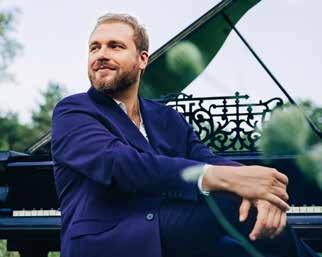
Pianist Adam Golka leads a rich artistic life as an orchestral soloist, recitalist, chamber musician, recording artist, pedagogue, and innovator. A first-generation American born to Polish parents, Adam has performed with major orchestras around the world, including the San Francisco, Houston, Dallas, Atlanta, and Seattle Symphonies; the BBC Scottish Symphony; the National Arts Centre Orchestra (Canada); and the Warsaw and Shanghai Philharmonics.
Ever since winning Second Prize at the China Shanghai International Piano Competition at 16, Adam has been in demand as a recitalist, performing at venues including Alice Tully Hall and Het Concertgebouw’s Kleine Zaal (Amsterdam). He also gave recital debuts at Tonhalle Zürich and Klavier-Festival Ruhr at the invitation of Sir András Schiff, as part of Schiff’s “Building Bridges” concert series. In 2020–21, Adam took on the monumental feat of performing the eleven-hour entirety of Beethoven’s 32 Piano Sonatas live in three different cities, revisiting a challenge he first accomplished at 18. To mark the occasion, he created a film series called “32@32” (available on YouTube).
Adam performs regularly as a chamber musician with the Manhattan Chamber Players, in duo recitals, and at festivals worldwide, including the renowned Marlboro Music Festival, and serves as Artistic Advisor to the Krzyżowa-Music “Music for Europe” Chamber Music Festival in Poland. An Artist-Teacher at the Longy School of Music of Bard College, Adam is passionate about the future of classical music; in addition to formal studies with José Feghali and Leon Fleisher, he was mentored by Alfred Brendel for nearly a decade. He records for First Hand Records (U.K.), with two albums scheduled for early 2026: Chopin sans Chopin and Young Brahms, Steel and Fire.
We applaud the Asheville Symphony Orchestra for sharing one of life’s greatest treasures with our community.
“Where Words Fail, Music Speaks”
– Hans Christian Andersen
The Brookshire Garside Group Private Wealth Management 828-239-8781 BrookshireGarsideGroup.com

©2023 Robert W. Baird & Co. Incorporated. Member SIPC. MC-1279805.
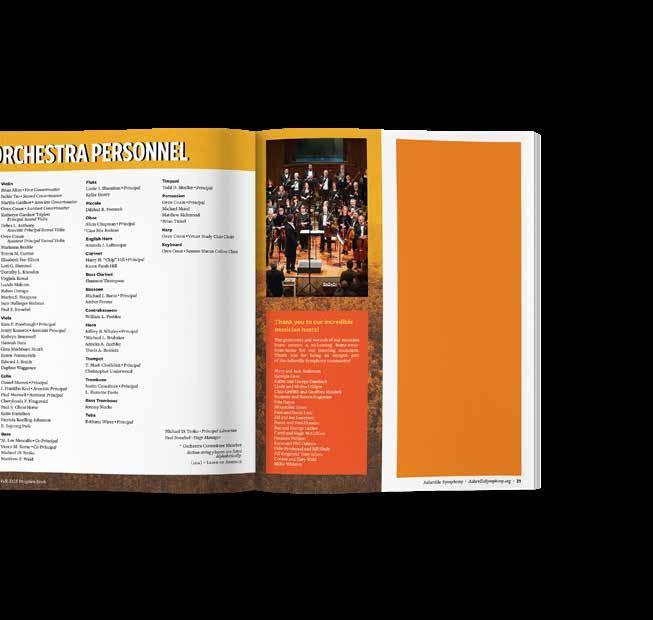
See your ad in the next Asheville Symphony Program Book! Our program book consists of advertisements from sponsors, paid advertisers, and even donated ad space. With over 25 performances during the season, we’ll distribute over 10,000 copies of the program book between September and May.
Interested in seeing your ad in the next program book? Call 828.254.7046 or email info@ashevillesymphony.org for more details on how to advertise or sponsor!







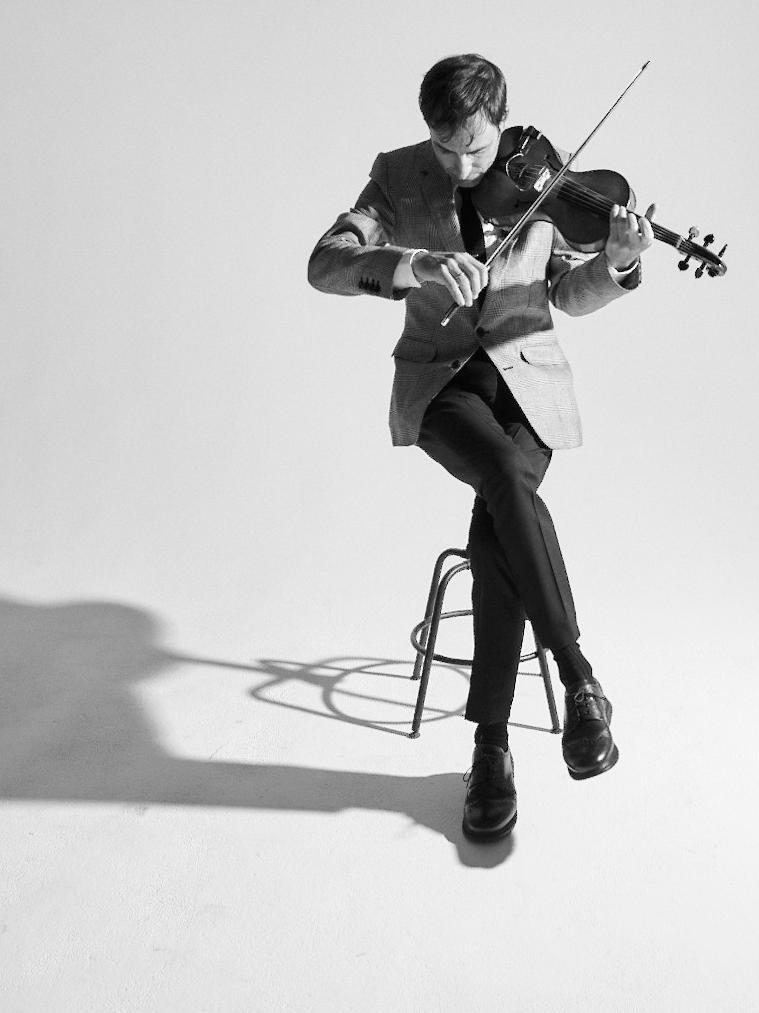

Harrah’s Cherokee Center Asheville Thomas Wolfe Auditorium May 29, 2026 at 8:00 p.m.
Andrew Bird Violin & Voice
With a distinctive sound that resists categorization, GRAMMY nominated violinist, songwriter and multiinstrumentalist, Andrew Bird, makes his debut with the Asheville Symphony. Balancing swelling sounds with jazz, folk, and pop melodies in an unforgettable display of unique virtuosity, Bird celebrates the 20th anniversary of his acclaimed record The Mysterious Production of Eggs. Featuring a top-to-bottom album performance with orchestral arrangements, Bird caps off the performance with a suite of fan-favorite tunes from his near 30-year repertoire.
PREMIUM SEASON SPONSORS



Since beginning his recording career in 1997, Andrew Bird has released 18 albums and performed extensively across the globe, headlining concerts at Carnegie Hall, Sydney Opera House, Walt Disney Concert Hall, Red Rocks Amphitheatre, and festivals worldwide.
Bird has been a featured TED Talks presenter, a New Yorker Festival guest, and an op-ed contributor for the New York Times.
He performed as the Whistling Caruso in Disney’s The Muppets and scored the FX Series Baskets. Shortly after receiving his 2020 GRAMMY nomination for Best Folk Album, Bird made his professional acting debut in the cast of FX’s Fargo.
In 2025, Bird celebrates the 20th anniversary of his acclaimed record The Mysterious Production of Eggs with a limited run of concerts, performing the record for the first time in its entirety alongside a full orchestra.
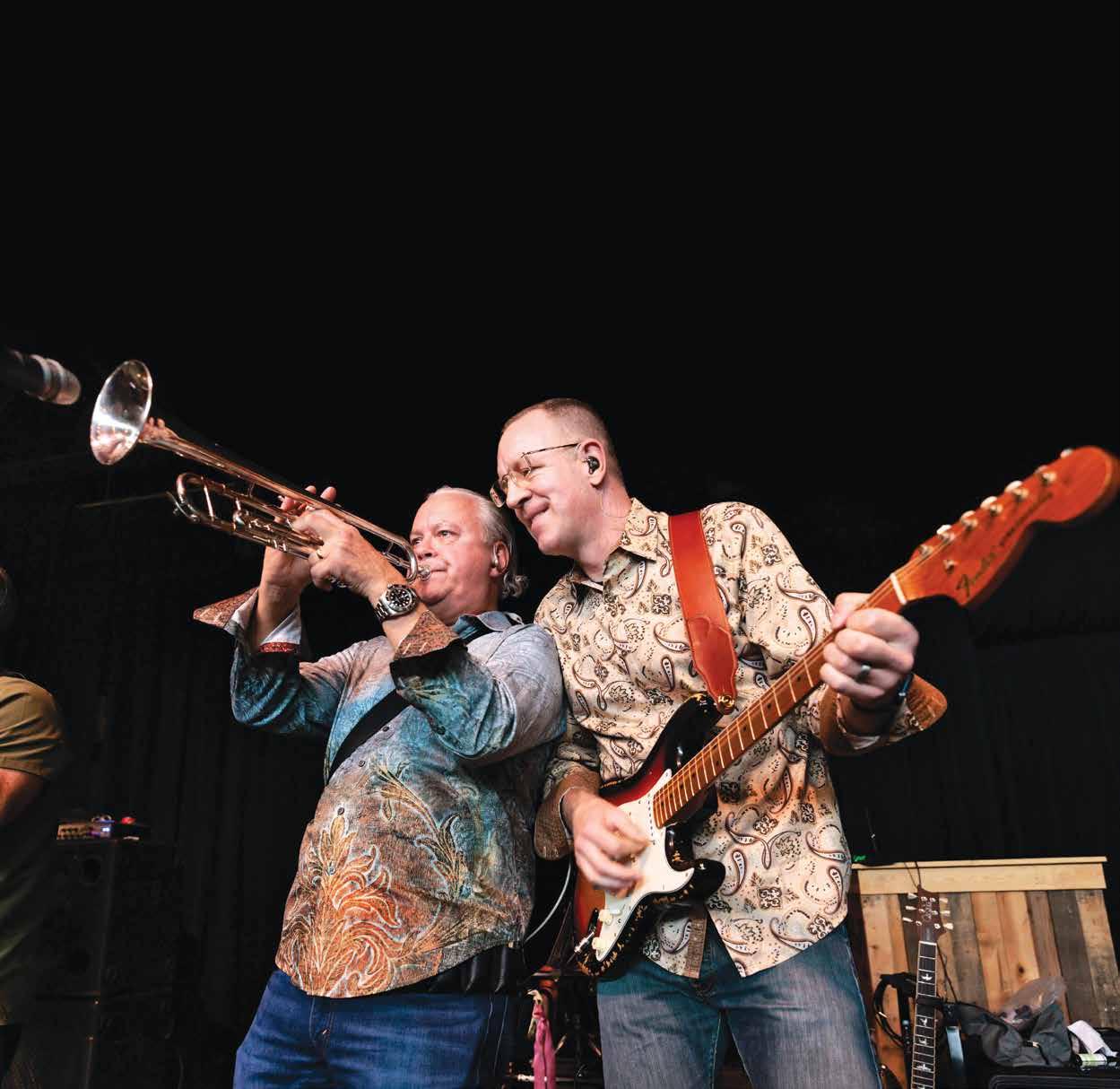



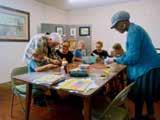

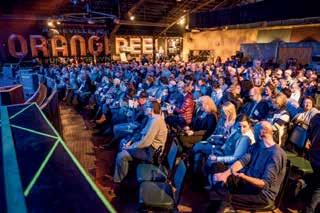
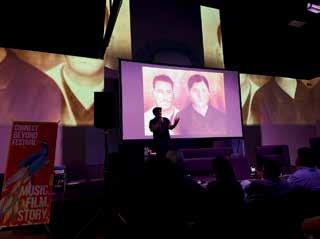





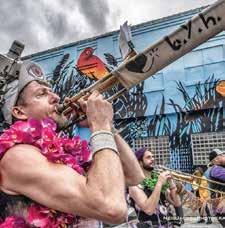









Here’s how we make music with your dollars:
$50
We’re proud to support business owners in Western North Carolina with access to the powerful resources they need to launch, grow and succeed.
$170
Covers the music for one Asheville Symphony Youth Orchestra Honors Strings Ensemble performance
Covers the cost of orchestra folders for ten Asheville Symphony Youth Orchestra students
$450 Pays for one Music in the Schools program (one quintet, one school, one hour)
$750
$1,300
Allows us to offer one masterclass for emerging young musicians with an esteemed guest soloist
Covers the cost of one Asheville Symphony Youth Orchestra student’s participation throughout the school year, including tuition and other program expenses
$5,000 Allows for one workshop for the Asheville Symphony Youth Orchestra
$10,000 Pays the fees and travel for one guest soloist
$40,000
Covers the cost of presenting one Young People’s Concert for Asheville City’s and Buncombe County’s fifth graders
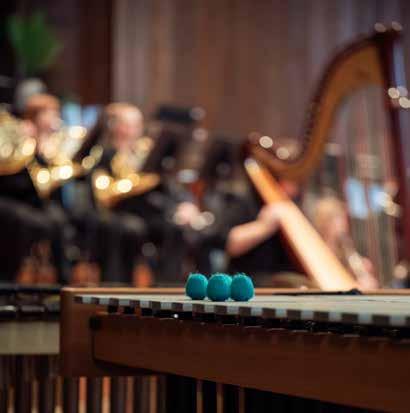
The Asheville Symphony recognizes the following organizations whose generous commitment to the arts in WNC enables us to present top-quality concerts and music education programs in our 2025-2026 season:





PREMIUM SEASON SPONSORS

$25,000+



This project was supported by the North Carolina Arts Council, a division of the department of Natural and Cultural Resources.
$15,000+


$10,000+










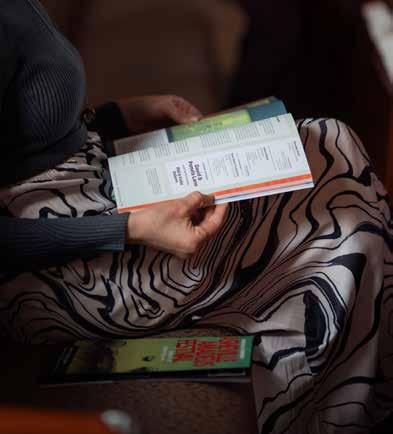




Every Asheville Symphony performance represents an opportunity for meaningful connection with a multigenerational audience of more than 45,000 individuals per year. When you partner with the Asheville Symphony, you support our mission to transform lives with the power of music while engaging with business leaders, community advocates, and local decisionmakers who recognize the organizations that invest in our community’s artistic ecosystem.
Corporate and business sponsorships provide vital support through a variety of dynamic funding opportunities that enable our artistic, community outreach, and music education programs.
Partnering with us will enable your company to:
• Increase brand awareness
• Receive complimentary tickets and discounts
• Entertain clients and reward employees
• Enjoy access to Asheville Symphony artists, leadership, and guest performers
• Market your company in creative ways

Contact the Development team at 828.820.2520 or development@ashevillesymphony.org to learn more about how a partnership can achieve your organization’s goals while strengthening our community’s cultural fabric. We look forward to customizing a sponsorship package that maximizes your impact.













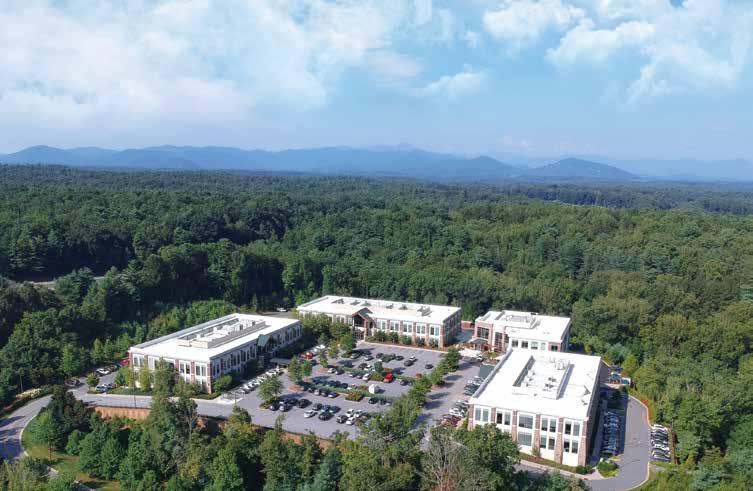

Training physicians, dentists, pharmacists, and other healthcare professionals with a passion for excellence and a heart for service since 1974.


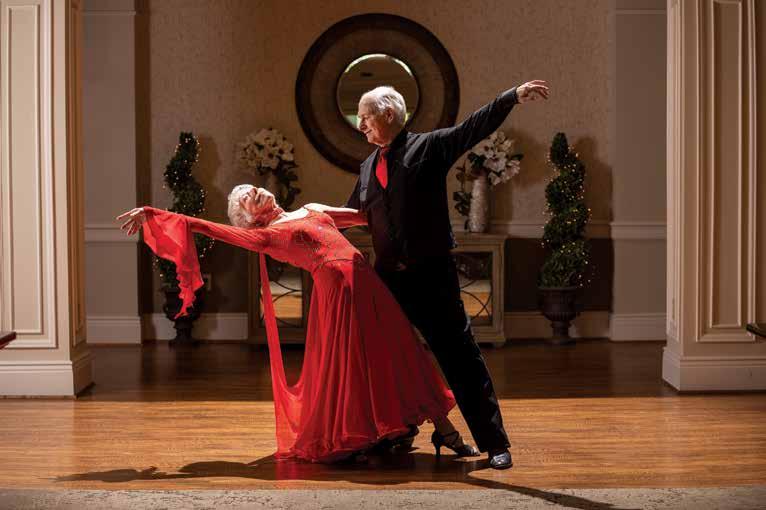





Thank you for supporting your Asheville Symphony.
Contributions to the Asheville Symphony support our artistic and educational programming — everything from the music performed on stage by our highly trained and talented musicians to the education programs our musicians implement when visiting local elementary schools. With ticket sales making up less than one third of our budget, the Asheville Symphony relies on the generosity of community members like you to provide the support we need to continue serving Western North Carolina.
You can choose how to direct your support:
• Annual Fund
• Sponsorship
• Artist Residency
• Asheville Symphony Youth Orchestra
• Music Education Initiatives
• Endowment
Henry A. LaBrun
Jo Edda Rosskamp
Bonnie Stone
$15,000 - $24,999
Michael and Catty Andry
Thomas C. Bolton
Sean and Erika Comeaux
Lynne and John Eramo
Explore Asheville
Givens Communities


Hatchworks Coworking
Keith Keener
Jim and Mary Kirby
David and Pamela Lane
Morgan Stanley Private Wealth
Management: The Andry / Harris Team
The Payne Fund

Ralph Protsik and Susan Wolin
Jayne Schnaars and Donald Gavin
Sarah Van Gunten
Olivia and Gary Zahler
$10,000 - $14,999
Craig Allen and Julie Cowden
ArtsAVL
Audrey Love Charitable Foundation
Rich and Diane Byers
Chaddick Foundation
Jerry and Diane Cunningham
George and Kathy Dambach
Dr. Bolling Farmer
Paul and Patty Gaumond
Helle Creative
Randall and Mary Johnson
Gerald and Nancy Kitch
Amy Loether
William McKenna and Suzanne Landis
Tony McLean Brown and Kelli Darlin
Northwestern Mutual: Marlowe Pasarilla
Wealth Management Group
Phil and Katie Osborn
Kevin Pasarilla and Jennifer Marlowe
Penley Produce Vacation Homes
Bob and Martha Pierce
QC Kinetix
Richard Schaffer and Anastasia Bartlett
Bill Schulz and Odile Perrenoud
Ed and Cindy Towson
Walnut Cove Members Association
Travis Worl & Richard Lindau
David and Dianne Worley
$7,500 - $9,999
Mary and Jack Anderson
Beverly Briedis
Gary and Patty Coleman
HomeTrust Bank
Paul and Liz Hosier
McGuire, Wood & Bissette
Gary and Neesa Warlen
$5,000 - $7,499
Anonymous
Stephen Anderson* and Janine
Anderson-Bays
Awaken Skin & Body
Bank of America
Blue Spiral 1
Buncombe County
Birch Carlson
City of Asheville
Clover CBD Dispensary
Robert & Mercedes Eichholz Foundation
John and Suellyn Felker
First Bank
Adarrell Gadsden and Marcie Ownbey
Fred and Cindy Groce
Richard Hall in memory of his wife Yolanda
Highland Brewing Company
Mountaine Jonas
Kathryn Theodore Travel Advisors
Jill and Joe Lawrence
Dr. and Mrs. Ralph C. Loomis
The Matt & Molly Team
Mercy Urgent Care
National Endowment for the Arts
Russell and Ladene Newton
Nova Kitchen and Bath
Dr. Rachel E. Raab and Dr. Francois
Archambault
B.A. and Gary Schenk
Thomas G. Tachovsky and Lynn G. Baird
James S. Thompson
Steven and Michele Warner
$2,500 - $4,999
Anonymous
Clifford Albertson and Anne Jarema
Diana and Henry Asher
Meredith Balgley and Erik Bendix
Diana Bilbrey
Lucy and Kirk Borland
Ed and Donna Broadwell
Crawley, Lee & Company, PA
Hunting and Mary Deutsch
Jurgen and Leslie Dierks
Nancy and Ron Edgerton
Betty Fox
Anne Gatling
Linda and Michael Gilpin
Clair Griffith and Geoffrey Mitchell
Jon and Ann Kemske
John and Janet Long
Carolyn Marlowe
Billie Marzullo
Robert Maxwell and Shelia Elingburg
Carol and Hugh McCollum
Roberta Moll
Morgan Stanley Foundation
Amy Neel
Ann Perry
Gail Reagan and Jim Graham
Irene Dillingham Richards Family Foundation
Susie and John Ruhl
The Sabri Foundation
Troy Schmidt and Diane Song
Yvonne Smith
J. Howard and Honey Solomon
Irene and Michael Stoll
Constance Wald
Alan and Kathleen Young
$1,000 - $2,499
Anonymous
Don and Nancy Ackermann Cole
Brad and Diane Arnold
David and Sydney Atkinson
Ruth Barnhardt
Bass Charitable Fund
Mike Bauer and Rosaire Nottage
Mr. and Mrs. Robert T. Bayer
William Bond and Johnny Ko
Dr. Jane Bramham
Claude and Sallie Broach
Bill* and Clarita Burton
Nan Buschmann
Linda Bushar
Timothy Butts and Susan Harrington Butts
Amy Campbell
Randy and Martha Carson
Gene and Lee Casey
John and Jeanne Condren
Joel and Carole Hampton Cotter
Daniel and Caroline Crupi
Dr. John and Mrs. Wendy Cuellar
Darilyn Dealy and Lee Pagel
Vincent Devore
Lori Doerr
John and Suzie Donahoe
Karen Dugas
Patricia Eargle
John and Marsha Ellis
Dr. Alan and Suzanne Escovitz
Susan Fisher
Elaine and Michael Fulbright
Neil and Cindy Garroway
Joseph Gigliotti
Clementine Gregory
Stephen Griffith
Michael J. Grillot
Rhonda and Marcus Grimes
Dr. and Mrs. Heinz K. Grohs
Sam and Robin Harben
Ann Hayes
Virginia W. Hayes
Dr. John Hazlehurst
Jill and Dwight Healy
Tom and Patricia Hearron
Jennine Hough
Fred and Heather Hudson
Barbara and Bill Hume
Bill and Kitty Hunt
Stan Ingber and Laura Robbins
Nan Jackson and Heinz Sauer
Suzanne Jones
Sandra Kinzie
Bebe Landis
Susan and David Leader
Tom and Dian Leeper
Nancy Lilly and Marie-Odile Froment
James Losse and Ellen Haack
Linda Lutz and Gary Ticknor
Cynthia MacLeod
Carol and Pedro Martinez
Ann and Jerry McLellan
James H. McMillan and Carol H. Kaufman
Barbara Mueller
Jeffrey and Lisa Owen
Pam and Rex Prosser
Michelle Rippon
Robin T. Rutledge and Karen Keeler Rogers
Wade and Mary Margaret Saunders
Larry and Marilyn Shames
Edward Sims
Evelyn Spies
Beth Stickle Schoenheit
James Storey and Janice Collins
Gary and Jeanne Ann Stroebel
$500 - $999
Cathy Stryker
Jill Tourtellot
Judith Van Horne and Stephen Hendricks
Paul and Valorie Vliek
Betty Walker
Anonymous
Nanette Blandin
Dr. Stephen D. and Mrs. Linda B. Brown
Elizabeth Button
Karen Campbell
Jeannette and Robert Cannon
Michael Cleveland and Maria-Grazia Nunzi
Todd and Paula Clossin
Virginia Craig
Ellie Daniels
Mary Ellen Dendy and Aaron Dahlstrom
Judith Domer
Daniel Dunn and Amy Gordon
Kristen Dusenbery
Drs. Louis Dwarshuis and Marilyn Kolton
Bruce and Day Ann Emory
Bill and Lynnell Goacher
Scott and Sally Gregg
Betty Gumpert
Derek Hoffman
Nancy Houha
Tom and Libby Irwin
Pat Johnston
Elizabeth Justice
Amy and John Kelso
Pat & Bud Kofron
Michael Kryzanek
Rita Lenderman
Virginia and Drew Litzenberger
Chuck Lockwood and Patrick Ryan
Henry and Elizabeth Mainwaring
Gail and Ron Manheimer
Diane and John Martin
Anna and Michael Mazur
The Patricia McCauley Charitable Gift Fund
Ricky McGrath
Anne McKenzie
Barbara McWicker
Leslie Newman
John K. Orr
Amy Plankenhorn
Julene Reese Roberts
Kitti Reynolds
John and Pam Roeth
Frank Rutland
Kenneth and Elizabeth Schapira
Ann H. Skoglund
Robert Stone and Jan Hundhausen
Carol and Terrence Tinkel
Christopher Underwood
Dr. Larry R. Versteegh
Matthew and Sarah Volk
Kathleen Busby and Razz Waff
Donna and Randy Weast
Jeff and Susie Wellington
George Wilds and Steve Connell
Paul B. Williamson
Hank Young
Gregory and Marjorie Zack
$250 - $499
Anonymous
Joshua Aaronson
Brad and Roberta Allen
Dr. Sophia Anastasia and Mr.
Nicholas Tzavaras
Karen Bain
Joseph Beckham
Elizabeth Boys
David G. and Lin Brown
Bob and Bonnie Busby
Jane Caris
Bill and Meg Clontz
Gerald Davies
Kim Eiring
Francis Erckmann
Polly S. Feitzinger
Linda and Jeffrey Fromson
Martha Gettys
Mrs. Edeltraut Gilgan-Hunt
George and Elaine Goosmann
Tom Gurley
Joseph and Debra Hanig
Lorraine Harrison
Peter Wortham Hawes
Sara Y. Henley
Terry Hess
Joel Horwich
Bill Jacobs and Susan Posey
Marian and Thomas Jerdee
Margaret Kelso
Arthur Kirby
Drs. Paul and Hannah Kirschenfeld
Elfi LaPlante
Pamela Lowe-Hoyte and Otho Hoyte
Elwood Miles
David Miller
Martha and Thomas Mills
Kathryn and Peter Muhs
Your gift to the Asheville Symphony’s Annual Fund makes a difference in our community.
A donation to your Symphony makes it possible for you to be a part of the magic that happens in our Masterworks series at First Baptist Church of Asheville and all across our region throughout the year. Ticket and subscription sales cover about 35% of our operating costs, and contributions to the annual fund make up the difference.
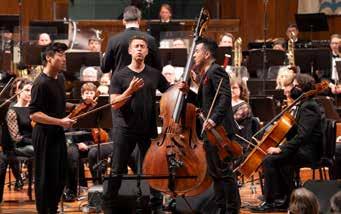

Your donation, no matter the size, directly supports our mission and helps us reach even more people. To learn more about Annual Fund giving, contact the Development office at 828.820.2520 or development@ashevillesymphony.org. Visit AshevilleSymphony.org/ Donate to make gift today.
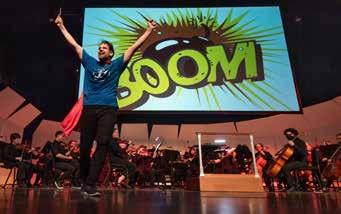
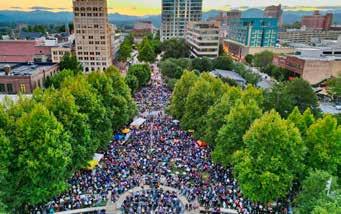

Angie Newsome
Vicki Richards
Don Roberts
David Russell
Ilona and Michael Sena
Barbara and Marty Stickle
Margaret K. Storey
Donald Talbert
Andy and Betsy White
Christy Winer
Marlene and John Yokim
Thomas Young
$100 - $249
Anonymous
Michael Aldredge
Pauline Aridas
Asheville Alumnae Chapter of Sigma
Alpha Iota
Douglas Atchley and Lee Davis
Bill and Sally Atkins
Ann Batchelder and Henri Kieffer
Tom and Kay Beardsley
Marty and Barbara Beckerman
William Berenson
Adlai and Karen Boyd
Rita Nilsen and Carl Brickman
Barbara Brinson
Allan and Jean Brown
Clinton Bugg and Jeff Nucey
Nathan and Anne Burkhardt
Lynne Cannady
John and Gail Carpenter
Carol Carson
Nancy Casey
Gary Clark
Allyson Conner
Kaye Cox-Andrews
Bishop Charles and Karen Crutchfield
Mary Cunningham
Alexa and Rich Dann
Martin and Ivy Dyckman
Linda Engwall
Don and Joy Erbes
Edward and Amy Euler
Cary and Koni Findlay
Stephen and Jackie Finstad
Maralyn Flint
Gayle Freeauf
Alan J. Freedman
Ellenor Frelick
Mary Goodkind
Robert Graf
Michael Groothuis
Carolyn Guthrie
Amanda Hall and Robert Zeid
Gail Harris and John Boneparth
Mark Hornsby
Margaret Hsiao
Steve and Nancy Hurst
Ralph and Sheryl Husby
Thorunn Ivey
John and Karla Jalocha
Susan Jensen and Lew Gelfond
James King
Christopher Keene
Bill Kilpatrick
Mr. and Mrs. Lawrence Koupal
Karen Lachow
Eric and Mala Lapp
Tim Lawler
Jody Lehman
Walter Leginski
Deborah Lewis
Dr. Ken and Mrs. Marjorie Loken
Kathryn Long and Axel Graumann
Rev. Alexandra Lusak
Shane and Sarah Lympany
Suzanne and Jay Mahler
Tonya Maxwell and Kim Stevens
Jerry McAninch
Geeta Jyothi McGahey
Patricia Meckler
Steven Meyerson
Julie Modaff
Robert Moench
Allen and Joyce Moore
Frank Moretz
Gina and Dale Nelson
Francis Nullet
Christopher Okopny
Eric and Lynn Ordnung
Tom Oreck
Betty J. Paine
Nadine Perry
Barbara Pettigrew
Barbara Phelan
Jack and Susan Pierce
Donald and Brenta Poole
Laurie Pulver
Kathleen Quinlan and Marc Parham
Mary Racek
Lynnell W. Reese
Richard and Deborah Reynolds
Sherree Roller and David Janson
Evan and Susan Rosenberg
Carol and Michael Rosenblum
Stephanie Rosener
Jeffrey and Bea Russell
Bob Rymer
Barbara Schrader
Nancy Schuman
Steven Scott
Katina Scudder
Stephen and Carol Sedgwick
Ruth Sieber Johnson
Angela Sherzer
Frederick and Dorothy Smith
Jane and Edward Smith
Jerrold Smith
Bill and Frances Smyth
Robert and Karen Sutton
John and Mary Tadey
Janet Thatcher
The Togar family
Elise Van Audenhove
Jean Veilleux
Robert Weinberg
Sue and Robert White
Calvin and Susan Willis
Larry and Janie Wilson
Barbara Witt
$50 - $99
Margie Armour
Shannon Baggett
Elinor Bowman
Diana Brewster
Anna Broome
Nancy Buchanan
Dr. Sausan Campbell
Marie Chamberlin
Susan Delaloye
Amy Dragon
Deborah Francis
Chowdhary Gondy
Linda Hawkins
John Hoskins
Deborah Klopp
Rosalind Koepke
Jeremy and Susan Lerner
Kathleen Link
Barbara Loeb
Rebekah Lowe
Ferris L. Lyle
Carol Marin
Dagi Murphy
Joanne Neary
Stephen V. Pascale
Judith Polinko
K. Ramaswamy
Philip Ramsey
Norman Ray
Thomas Roman
Colleen and Jimmy Sullivan
James Tober
Norman and Janet Weeks
Melanie Welty
Helen Whitlock

Thomas C. Bolton
Clover CBD Dispensary
*Denotes Deceased
Many companies offer a matching gift program for employee (and retiree!) charitable donations
— this can double or triple your gift! Thank you to the following companies who have recently matched donor gifts:
AIG
Bank of America
Boeing Steelcase Foundation
Shell Oil Company Foundation
Management: The Andry / Harris Team
The Community Foundation of Western North Carolina
Lynne and John Eramo
Bill and Nancy Gettys
Jim and Mary Kirby
Gerald and Nancy Kitch
Henry A. LaBrun
David and Pamela Lane
Northwestern Mutual: Marlowe Pasarilla
Wealth Management Group
Kevin Pasarilla and Jennifer Marlowe
The Payne Fund
Bonnie Stone
James S. Thompson
Barbra and Keith Love
Bob and Martha Pierce
QC Kinetix
Jo Edda Rosskamp
Richard Schaffer and Anastasia Bartlett
Jayne Schnaars and Donald Gavin
David and Dianne Worley
$7,500 - $9,999
Anonymous
Mary and Jack Anderson
Nancy and Ron Edgerton
Carol and Hugh McCollum
McGuire, Wood & Bissette
Phil and Katie Osborn
Ralph Protsik and Susan Wolin
Bill Schulz and Odile Perrenoud
Roberts & Stevens, P.A.
Thomas G. Tachovsky and Lynn G. Baird
Gary and Neesa Warlen
$5,000 - $7,499
Anonymous
Stephen Anderson* and Janine Anderson-Bays
Brad and Diane Arnold
Awaken Skin & Body Bank of America
Ashley Sayre Bell
Diana Bilbrey
Blue Spiral 1
Buncombe County
Birch Carlson
City of Asheville
Gary and Patty Coleman
Dr. John and Mrs. Wendy Cuellar
Robert & Mercedes Eichholz Foundation
First Bank
Adarrell Gadsden and Marcie Ownbey
Highland Brewing Company HomeTrust Bank
Kathryn Theodore Travel Advisors
Jill and Joe Lawrence
The Matt & Molly Team
Kathryn and Peter Muhs
Publix Super Market Charities
B.A. and Gary Schenk
Yvonne Smith
Jill Vargo, MD and Tony Sciara, Ph.D
$2,500 - $4,999
Anonymous
Clifford Albertson and Anne Jarema
The Brookshire Garside Group of BAIRD
Lucy and Kirk Borland
Beverly Briedis
Bill* and Clarita Burton
Linda Bushar
Timothy Butts and Susan Harrington Butts
Gene and Lee Casey
Jane Christiansen*
Crawley, Lee & Company, PA
Jerry and Diane Cunningham
D.R. Horton
John and Suzie Donahoe
Robert Maxwell and Shelia Elingburg
Peter and Jasmin Gentling
Debbie Green
Rhonda and Marcus Grimes
Fred and Cindy Groce
Richard Hall in memory of his wife Yolanda
Paul and Liz Hosier
Bill and Kitty Hunt
Mountaine Jonas
Jon and Ann Kemske
Margarete W. Moon Endowment of the CFWNC
Carolyn Marlowe
Ann and Jerry McLellan
Mercy Urgent Care
Carol Marin, Mosaic Community Lifestyle Realty
Amy Neel
Russell and Ladene Newton
Ann Perry
Jim Reeves
The Sabri Foundation
Troy Schmidt and Diane Song
Irene and Michael Stoll
Walnut Cove Members Association
Alan and Kathleen Young
Hank Young
$1,000 - $2,499
Anonymous
Don and Nancy Ackermann Cole
Mike* and Lorna Anderberg
David and Sydney Atkinson
Mr. and Mrs. Robert T. Bayer
William Bond and Johnny Ko
Claude and Sallie Broach
Ed and Donna Broadwell
Buster and Karen Brown
Amy Campbell
Lynne Cannady
Randy and Martha Carson
Georgia Case
Charles Clogston*
John and Jeanne Condren
Daniel and Caroline Crupi
Darilyn Dealy and Lee Pagel
Jurgen and Leslie Dierks
Gregory Dray
Karen Dugas
Jan Duwelius
Patricia Eargle
Richard and Bridget Eckerd
Travis Elliot
John and Marsha Ellis
Dr. Alan and Suzanne Escovitz
Susan Fisher
Betty Fox
Judy Galloway in memory of Don Galloway
Neil and Cindy Garroway
Anne Gatling
Joseph Gigliotti
Scott and Sally Gregg
Clementine Gregory
Clair Griffith and Geoffrey Mitchell
Michael J. Grillot
Dr. and Mrs. Heinz K. Grohs
Sam and Robin Harben
Dr. John Hazlehurst
Jill and Dwight Healy
Jennine Hough
Fred and Heather Hudson
Barbara and Bill Hume
Stan Ingber and Laura Robbins
Judy and John Johnston
Gail Jolley*
Suzanne Jones
Susan and David Leader
Rita Lenderman
John and Janet Long
Sue and George Luther
Jan Manes
Billie Marzullo
Lois S. Carlson and Jerome Mrowca
Barbara Mueller
Lucille Mueller
Nachos & Beer
Jeffrey and Lisa Owen
Dale and Barbara Phipps
Robin T. Rutledge and Karen Keeler Rogers
Wade and Mary Margaret Saunders
Dianne and Charles Sawyer
Mark and Rachel Sossoman
Gary and Jeanne Ann Stroebel
Cathy Stryker
Kelly Thompson
Jill Tourtellot
Judith Van Horne and Stephen Hendricks
Betty Walker
Steven and Michele Warner
Bonnie Wheeler
Thomas Young
Gregory and Marjorie Zack
$500 - $999
Anonymous
Brad and Roberta Allen
Altura Architects
Susan Arnold
Mrs. Ruth Barnhardt
Mike Bauer and Rosaire Nottage
Tom and Kay Beardsley
Dr. Stephen D. and Mrs. Linda B. Brown
Nan Buschmann
Bill and Meg Clontz
Joel and Carole Hampton Cotter
Virginia Craig
Lynn Crystal
Ellie Daniels
Al and Jamye Davis
Sharron Davis
Lori Doerr
Kristen Dusenbery
Drs. Louis Dwarshuis and Marilyn Kolton
Brad Edmonds
Bruce and Day Ann Emory
Carol Falender
Cary and Koni Findlay
Robin and Gordon Gaiser
Mrs. Edeltraut Gilgan-Hunt
George and Elaine Goosmann
Betty Gumpert
Virginia W. Hayes
Tom and Patricia Hearron
Tom and Libby Irwin
Sean and Kelsey Kelley
Amy and John Kelso
Al and Margareta Koch
Pat & Bud Kofron
Michael Kryzanek
Bebe Landis
Tom and Dian Leeper
Ned and Jane Lesesne
Virginia and Drew Litzenberger
Chuck Lockwood and Patrick Ryan
James Losse and Ellen Haack
Linda Lutz and Gary Ticknor
Henry and Elizabeth Mainwaring
Gail and Ron Manheimer
Diane and John Martin
Carol and Pedro Martinez
Anna and Michael Mazur
The Patricia McCauley Charitable Gift Fund
Anne McKenzie
James H. McMillan and Carol H. Kaufman
Shirley Oltman
Julene Reese Roberts
Irene Dillingham Richards Family
Foundation
Rich and Stacy Ridenour
Susie and John Ruhl
Brent and Lee Ann Russell
David Russell
Frank Rutland
Patrick Ryan
William and Martha Scarborough
Kenneth and Elizabeth Schapira
Larry and Marilyn Shames
Shell Oil Company Foundation
Ann H. Skoglund
Steelcase Foundation
James Storey and Janice Collins
Carol and Terrence Tinkel
Christopher Underwood
Kathleen Busby and Razz Waff
Donna and Randy Weast
Jeff and Susie Wellington
Paul B. Williamson
$250 - $499
Anonymous
David and Ann Bottomy
Elizabeth Boys
Nancy Casey
Michael Cleveland and Maria-Grazia Nunzi
Kay Dambach
Mary Ellen Dendy and Aaron Dahlstrom
Daniel Durand
Kim Eiring
Francis Erckmann
Polly S. Feitzinger
Milton and Murphy Fletcher
Lauren Flickinger
Christine Glaser
Tom Gurley
Peter Wortham Hawes
Nancy Houha
John and Carol Jackson in honor of Doris Harwitz
Bill Jacobs and Susan Posey
Marian and Thomas Jerdee
Ruth Sieber Johnson
Jennifer Jones and Robert Steffen
Katherine and Jon Karraker
Margaret Kelso
Arthur Kirby
Elfi LaPlante
Karen Medeiros
David Miller
Martha and Thomas Mills
John K. Orr
Todd and Kaye Phillips
Pam and Rex Prosser
Donna and Edward Reigner
Vicki Richards
Barbara Robinson
Carol and Michael Rosenblum
Cristian Rubiano
Richard Schaffer Sr.
Nancy Schuman
Ilona and Michael Sena
Courtney Smith
Barbara and Marty Stickle
Robert Stone and Jan Hundhausen
Agnes and Jeff Vandergrift
Andy and Betsy White
George Wilds and Steve Connell
Larry and Janie Wilson
Marlene and John Yokim
$100 - $249
Anonymous
Joshua Aaronson
Frances Alexander
Pauline Aridas
Dennis Ash and Sarah Lashlee
Douglas Atchley and Lee Davis
Bill and Sally Atkins
Betsy G. Atkinson
Don Bafford
Shannon Baggett
Paul Ballard
Viva Banzon & Robert Evans
Drs. Elizabeth and Josh Bernstein
Richard Bogner
James Bond
Richard Brandsma
Rita Nilsen and Carl Brickman
Allan and Jean Brown
David G. and Lin Brown
Clinton Bugg and Jeff Nucey
Lana Burns
Bob and Bonnie Busby
John and Gail Carpenter
Carol Carson
Charles Baker
Gary Clark
Marcia Clarkson
Bishop Charles and Karen Crutchfield
Elizabeth Culbreth
Mary Cunningham
Patti D’Angelo
Alexa and Rich Dann
Casey and Kathryn Daughton
Alan Davis
Mack Day
William N. Dorfman, Ed.D.
Amy Dragon
Martin and Ivy Dyckman
Julie Eckelbarger
Linda Engwall
Edward and Amy Euler
Laura Evans
Stephen and Jackie Finstad
Ellenor Frelick
Mary Goodkind
Margery Greene
Michael Groothuis
Amanda Hall and Robert Zeid
Caprice Hamlinkrout
Dot and Wade Hampton
Gail Harris and John Boneparth
Richard Henderson
Phil and Jolene Hocott
Toby Hollenberg
Joel Horwich
Michael and Laura Hoskins
Steve and Nancy Hurst
Ralph and Sheryl Husby
Lisa Huxley
Christa Hyatt
Thorunn Ivey
John and Karla Jalocha
Susan Jensen and Lew Gelfond
Vinod and Manju Jindal
Edward Joffe
Gayle Petty-Johnson
Walter and Anne Justice
Christopher Keene
Donald Kehrberg
Jess and Phyllis Key
Ann Batchelder and Henri Kieffer
Karen Lachow
Eric and Mala Lapp
Lynn Lederer and Leslie Long
Alan Lipsky and A.J. Rhodes
Barbara Loeb
Rev. Alexandra Lusak
Shane and Sarah Lympany
Suzanne and Jay Mahler
Jerry McAninch
Glenda H. McDaniel
Amy McGuire and Brian Wallace
Elwood Miles
Mr. and Mrs. George Morosani
Gina and Dale Nelson
Thomas Norman
Francis Nullet
Grace Chappell and Patrick O’Cain
Christopher Okopny
Eric and Lynn Ordnung
Lori Oxford and Alberto Centeno-Pulido
Betty J. Paine
Virginia Pett
Cynthia Pierce
Jack and Susan Pierce
Donald and Brenta Poole
Kathleen Quinlan and Marc Parham
Mary Racek
K. Ramaswamy
Gail Reagan and Jim Graham
Lynnell W. Reese
Terry and Sarah Reincke
Meredith Lenell
Michelle Rippon
Don Roberts
John and Pam Roeth
Sherree Roller and David Janson
Liz Rollins
Evan and Susan Rosenberg
Dorothy Sagel
Alexandria Sanford
Bob Sarabia
Wade Scheuritzel
Barbara Schrader
Frie and Liz Schulz
Stephen and Carol Sedgwick
Jane and Edward Smith
Dave and Sue Snook
Gail and Nelson Sobel
Thomas and Christena Southwick
Beth Stickle Schoenheit
Kathy Stiles
Paul Stroebel
Kenny Sudnik
John and Mary Tadey
Janet Thatcher
Matthew and Sarah Volk
Susan and Don Watson
Norman and Janet Weeks
Robert Weinberg
Sue and Robert White
Calvin and Susan Willis
Christy Winer
Barbara Witt
$50 - $99
Brandi Andrade
Francois Archambault
Mary Ault
Anne Babcock
Charles and Stephanie Baer
Eric Bank
Michael Bashaw
Marty and Barbara Beckerman
Diego Blanc
Elizabeth and Kemper Brown
Nancy Buchanan
Elizabeth Button
Marvin Cole
Harriet Cone
Tracy Conte
Tala Dajani
David Daniels
Gerald Davies
Katherine DeGroff
Robert Delfoe
Karen Doerr
Erin and Tom Doyle
Andrew and Jennifer Dukowicz
Mignon Durham
Diane Edwards
Dale England
Katherine Fisher
James and Linda Focareto
Deborah Francis
Brandi Gilliland
Lynn Gilliland
Chowdhary Gondy
Jessie Goodwin
Susan Grabel
Barb Graff
Dante and Cindy Gumucio
Carolyn Guthrie
William Hasskamp
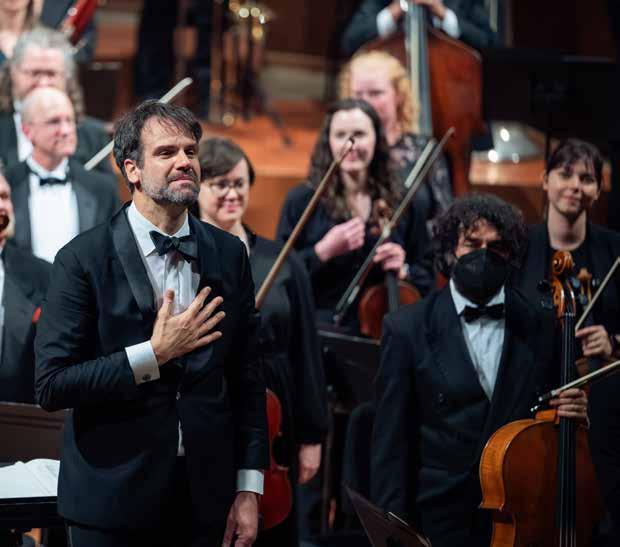
Sherry Heacock
Dennis Hillier
Kelley Hinsley
Kathleen Holmes
Mark Hornsby
Stephanie James
John Johnson
Rebecca Jones
Will and Jennifer Kaylor
Julie Klement
Ms. Judith Kramer
Margaret Krusch
Wendy Lapidus
Walter Leginski
Bruce Leonard
Debra Liles
Amy Little
Thomas E. Lodge
Kathryn Long and Axel Graumann
John and Elaine Maimone
Carol Marin
Canter Martin
Rose Mathis
Barbara Mayer
Thank you for being part of what brings the concert hall to life and builds memories for audiences for years to come.
Your support in action in the 2024-2025 season:
• Welcomed an estimated 10,000 guests at a free Symphony in the Park in Downtown Asheville
• Served thousands of Asheville City and Buncombe County elementary students with music education programs
• Provided nearly $15,000 in scholarships to young musicians in the Asheville Symphony Youth Orchestra
• Distributed over 1,500 complimentary tickets to students, families, and seniors who otherwise might not have been able to attend
Our partnerships with senior living communities, public libraries, and outreach initiatives ensure that music reaches every corner of our city. Whether on stage or in our communities, music brings us together — lifting our spirits, connecting generations, and strengthening the fabric of our community.
Alan Morgan
Swig Mueller
Joanne Neary
Leslie Newman
Frederic Nguyen
Marcy Onieal
Jennifer Ostendorf
Rebecca Pace
Richard Paul
Barbara Phelan
Dr. Rachel E. Raab and Dr. Francois
Archambault
Philip Ramsey
Amanda Ridenhour
Billy Robinson
Michael Robinson
Thomas Roman
Stephanie Rosener
Christopher Rupp and Karine Rupp-Stanko
Jonel Schuster
Christina Sobin
Harold Southern
Barbara and Barry Stagg
John R. Sterling
Jill Stevenson
Thomas Stultz
Margaret Watson
Jennifer Westbrook
Jackie Wintle
Don Wright
*Denotes Deceased
Every effort has been made to ensure the accuracy of this list. If you believe that an error or omission has occurred, please call 828.820.2520 or send an email to development@ ashevillesymphony.org
Masterworks 4: Scottish
Masterworks 6: Requiem
Piano Recital with Awadagin Pratt
Masterworks 7: Unbroken
Johannes Brahms Ballades
Sponsored by Linda and Michael Gilpin
César Franck Choral et Fugue, FWV 21
Sponsored by Penley Produce Vacation Homes - Kelli Darlin & Tony McLean Brown
Karena Ingram Rainn
Sponsored by Joel and Carole Hampton Cotter in memory of Wade Hampton III
W.A. Mozart Piano Concerto No. 12
Sponsored by Jim and Mary Kirby





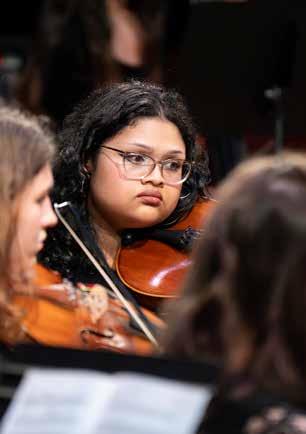
The musicians of the Asheville Symphony Society, Inc., are the lifeblood of your Symphony: uniting our community, lifting hearts, and inspiring with the power of orchestral music. By making a Legacy Society pledge to the Endowment during your lifetime, you are demonstrating a commitment to the Asheville Symphony’s musicians today and our vibrant future.
For more information about joining the Legacy Society and supporting the Endowment (including naming opportunities), contact the Development office by emailing development@ashevillesymphony.org or calling 828.318.8176. If you have already included the Asheville Symphony in your estate plans, please let us know so that we may include you on this list and recognize your generosity.
Dorel Abbott*
Don and Nancy Ackermann Cole
Jack Jones and Katherine Armitage*
Mr.* and Mrs. Stephen Barden III
Dr.* and Mrs. Luther Barnhardt
Mary and Leland Bartholomew*
George* and Diana Bilbrey
Marion Bleyler*
Mr. and Mrs.* Thomas C. Bolton
Joyce Bost Hogan*
Mrs. Charles Butler*
Ken and Alma Chatfield*
Barbra and Beirne Chisolm*
Jane Christiansen*
Mr. and Mrs. Gary Coleman
Nancy Crosby
Dr. and Mrs. John Cuellar
Robert DiDiego
Lori Doerr
Mr. and Mrs. David Dolan
Drs. Joyce and Lawrence* Dorr
William and Nancy Gettys
Lindley Garner* and Mary Goodkind
Mr. and Mrs. George Goosman
Michael J. Grillot
Paula J. Grillot
Mr. and Mrs. Steven Hageman
Dr. and Mrs. Matthew Hahner
Eleanor Hall*
Dick and Yolanda* Hall
Virginia and Emmet* Hayes
Anna and Anthony* Hayward
Joel Horwich
Carolyn L. Hubbard
Bill and Kitty Hunt
Bill Jacobs and Susan Posey
Pat and Doug* Johnston
Gail Jolley*
Mountaine Jonas
James Laird*
Christine Longoria
Dr. and Mrs. Carlo Mainardi
Fred Meyer
Russell and Ladene Newton
Arch and Zeffie Nichols*
Mr. and Mrs. David Pheil
Mary L. Powell Education Fund in memory of Beatrice Wells
Monte Richardson*
Ernest Rosenau*
Dr. and Mrs. Joel Rosenberg
William* and Carole Roskind
August Schmidt*
Jill Vargo and Tony Sciara
John Schuler*
JoAnne Setzer*
Robert Sorton
Jan and Wayne Stanko
Bonnie Stone
Norretta L. Taylor*
Edna Thompson*
Mr. and Mrs. Ed Towson
Sarah Van Gunten
Mrs. C.H. Elmslie
Robert and Jeane* Etter
Dr. Linda Sokalski Farrell
Dr. Bolling Farmer
Francis Fee
Doris Kistler and Fred Wightman
Mabel Marlsbury*
Mr. and Mrs. Arthur Mattson*
Carol and Hugh McCollum
Ann and Gerald McLellan
Manuel* and Karen Medeiros
Ingeborg and Kenneth Meeke*
Albert and Lucia Ward*
Eleanor Weil Schulmon*
*Denotes Deceased


I think that’s really what it’s all about: to leave something behind as you move on, of lasting value, which will bring joy and light into other people’s lives as it has yours.
SARAH VAN GUNTEN Legacy Society Member & Board Member

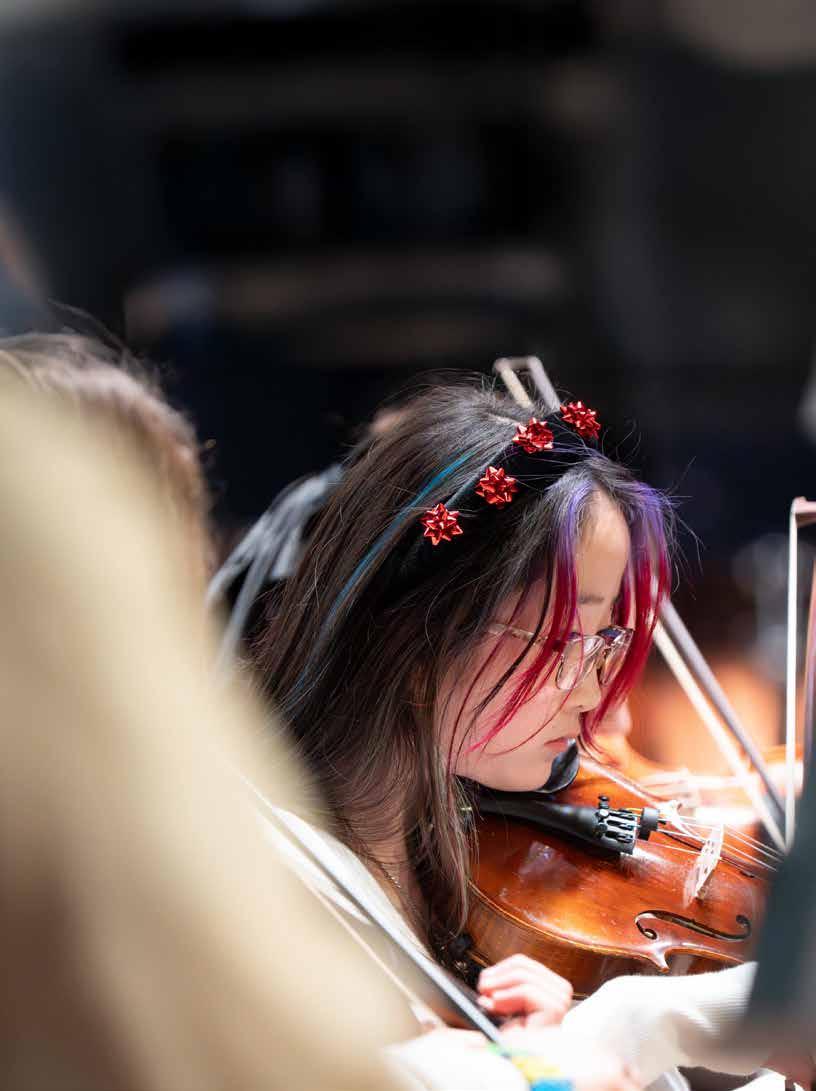
After a fulfilling career as a public-school educator in New Jersey, Sarah Van Gunten, now retired and living in Asheville, continues to make a positive impact and will even after her lifetime.
Like many people entering retirement and looking to relocate, Sarah Van Gunten avidly researched and spent extended time at several possible locations in different states. While considering Asheville as a potential location during a winter stay, she attended an Asheville Symphony performance at Thomas Wolfe Auditorium. She struck up a conversation with the person sitting next to her.
Having spent her career living just outside of the bustling New York City metro, Van Gunten was immediately warmed by the friendliness and impressed with the orchestra’s artistic excellence.
“I loved that I could have a conversation with a stranger, unlike in metro New York City, where that’s uncommon,” Van Gunten said. “Here I was in this vast concert hall, having a very friendly conversation, and hearing the Asheville Symphony.”
By then, she found herself saying, “I think this is a place that I would retire to.”
Van Gunten moved to Asheville on July 1, 2014, just a few months later, and one of the first things she did was buy a season ticket to the Symphony.
“I think the only way to make any place your home is to become involved,” Van Gunten said.
Over the past 11 years, she has become a devoted advocate and ambassador for the Asheville Symphony and an active citizen of Western North Carolina. She would not only join the Asheville Symphony Guild — a volunteer organization that raises funds to support the Symphony and is focused on music education for young people — but also become its president for several years.
The Guild’s president also serves on the Asheville Symphony Board of Directors, and the dual roles strengthened Van Gunten’s connection to the organization even further. During the summer of 2022, as the Symphony ramped up operations for its first post-pandemic season with a
minimal staff, Van Gunten and another Guild member volunteered in the Symphony office, helping to open mail, answer phones, and sell season tickets.
After her term as Guild president ended, she was asked to join the Symphony Board and has served as Chair of the Education Committee for the past three years. With her career background and love of music, Van Gunten finds herself well-suited for the position.
Van Gunten started taking piano lessons at 6 or 7 years old and continued through high school. Inspired by her father, who had a small record collection at their home, she developed an adoration for classical music. She also sang in her school, church, and community choirs — something she still does as a member of the Asheville Senior Chorus and other groups.
She firmly believes in the power of music to change lives and inspire greatness. As the Education Chair of the Symphony Board, she has been able to put that inspiration into action by working on the Music in the Schools and the Asheville Youth Symphony Orchestra programs. Realizing that not everyone grows up with a dad who shares his love of music, she says it’s a matter of introducing young people to everything in the world that might be of interest to them, that they might want to pursue, or enjoy throughout their lives.
She recalled, “After one of the [educational performances], one of the bus drivers said, ‘You probably just don’t understand that the kids on my bus have never heard anything like that before. And they were still talking about it on the bus as he drove them home.’”
There are lessons to be learned through orchestral music, Van Gunten believes. “Watching an ensemble allows kids to learn how to work together, how together you create something beautiful. So much goes into making music with a group of other people that goes far beyond the actual musicianship itself.”
As an educator, Van Gunten spent a lot of time thinking about the future — for others and herself — and she still does.
She says it’s never too early to start planning.
“I remember turning 40, and for the first time saying to myself, ‘You know what? You’re not going to be here forever.’ So fast forward, to nearly another 40 years, and I’m asking myself, ‘What can I do to serve somebody else in the future?’”
For more than a decade, Van Gunten’s involvement with the Asheville Symphony and other organizations has helped make Asheville her home. Citing the Symphony’s progress she’s seen over the years, such as artistic advancement, creative innovation, outstanding leadership, and community engagement, her plans involve leaving a gift to the Asheville Symphony through her will.
She encourages anyone else in a similar situation to do the same, and asserts that joining the Asheville Symphony Legacy Society and making a planned gift doesn’t have to be complex.
“Usually, I think people designate an organization in their will, much like you designate a member of your family — because you love it, you’re passionate about it, you see its potential, you want to see it grow into the future and to begin to impact other people’s lives as it has impacted your own,” she said.
“I think that’s really what it’s all about: to leave something behind as you move on, of lasting value, which will bring joy and light into other people’s lives as it has yours.”
— Written by Nicole Ward Beckley
Are you interested in learning how you can support the Asheville Symphony with an impactful gift?
Let us help you find the right plan for orchestrating your legacy.
Contact the Asheville Symphony Development team by phone at 828254-7046 or email at development@ ashevillesymphony.org.
At Deerfield, life is rich with harmony, purpose, and connection. Located just minutes from downtown Asheville, our warm and welcoming community invites residents 61 and older to embrace each day with creativity and joy. Whether you’re learning a new instrument, painting in the studio, gardening with friends, or strolling through wooded trails, every moment offers an opportunity to grow, connect, and feel inspired. Discover a place where friendships flourish, wellness is nurtured, and each day brings something meaningful.
Discover your rhythm. Schedule a tour today! 828-944-9704 | deerfieldwnc.org
A HOLISTIC APPROACH TO A JOY-FILLED RETIREMENT


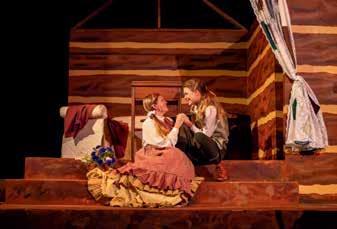
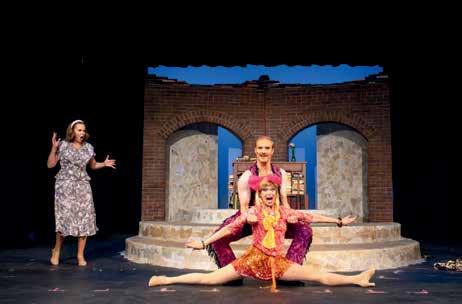
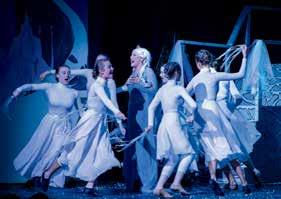




















































Dear Friends of the Asheville Symphony Orchestra, A deeply rooted pillar of Asheville’s creative community, the Asheville Symphony Orchestra has embodied a devotional passion for music since 1960. From innovative collaborations to genre-defying performances, ASO’s ever-evolving programing reflects the pulse of our city — each note captivating audiences and pushing beyond the boundaries of traditional concert experiences.

































































































Explore Asheville is honored to support your mission and talent in capturing the heart of the people of Western North Carolina and its guests. We are dedicated to shining our spotlight on the artists, makers, and musicians who help shape our community's distinct story.



































After all, we wouldn't be Asheville without artists like you.


















































































































Blue Ridge Public Radio is honored to support Asheville Symphony BPR informs, inspires, and connects Western North Carolina with news, classical music and late-night jazz. Learn more at bpr.org.
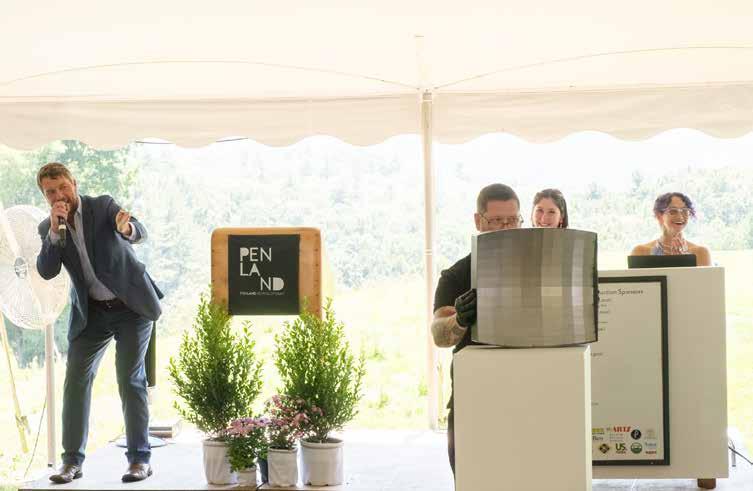

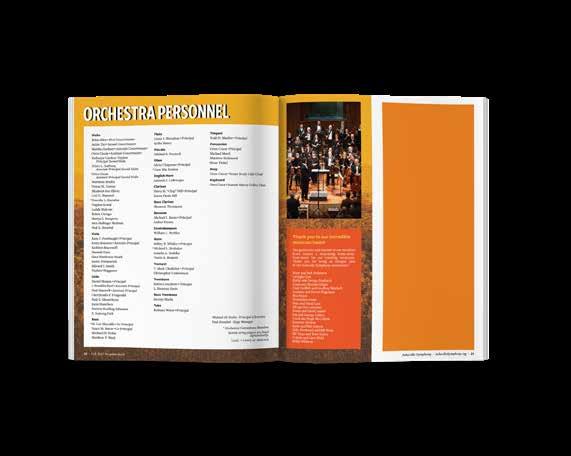
book between September and May.
Interested in seeing your ad in the next program book? Call 828.254.7046 or email info@ashevillesymphony.org for more details on how to advertise or sponsor!