ASCEND
The Climb Never Ends

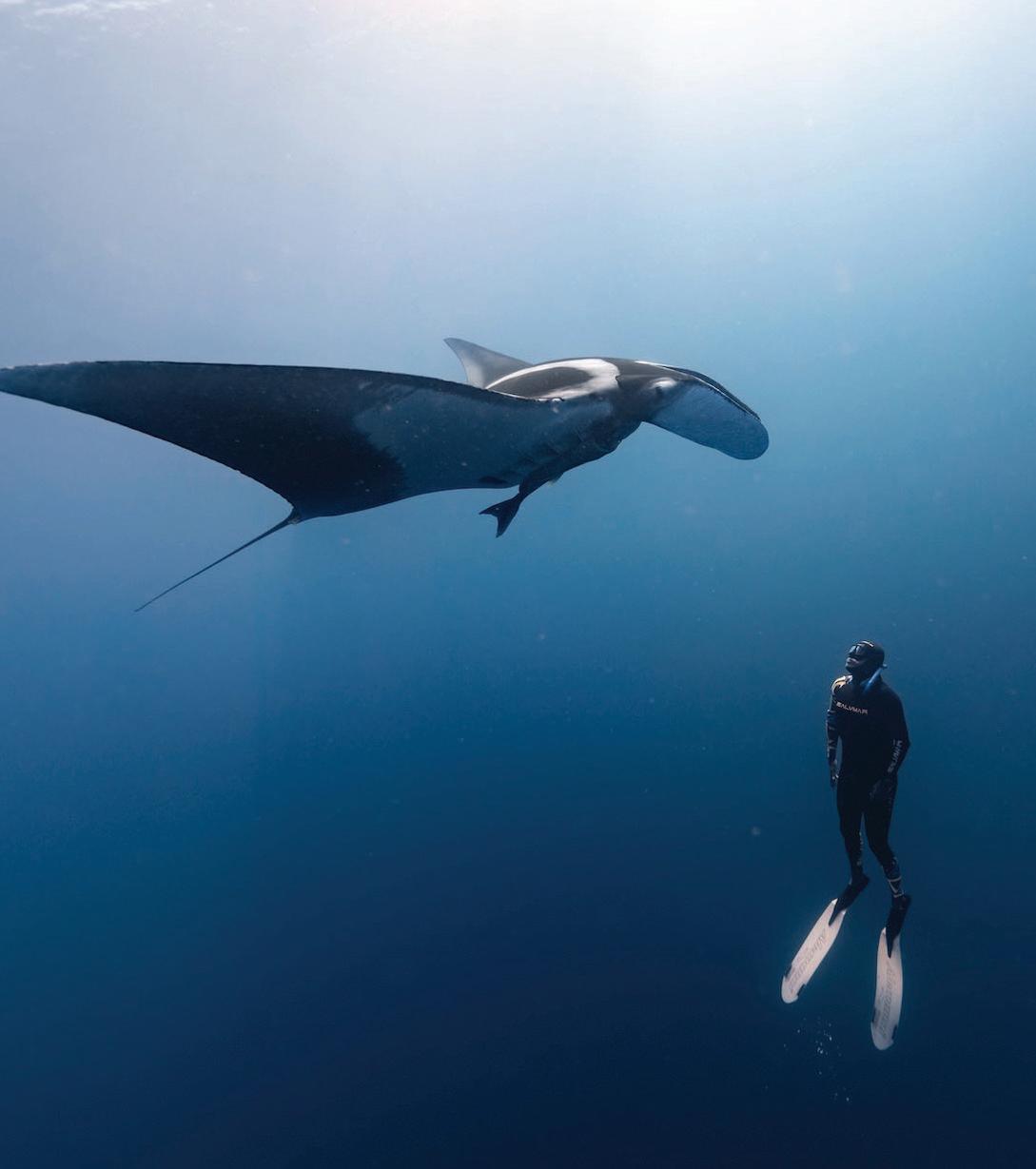
Photo by Daan Verhoeven
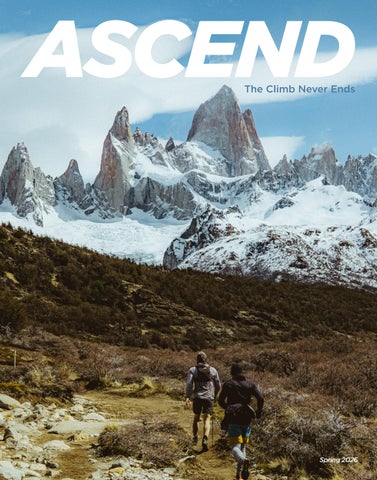
Cover photo by Daniel Teitelbaum
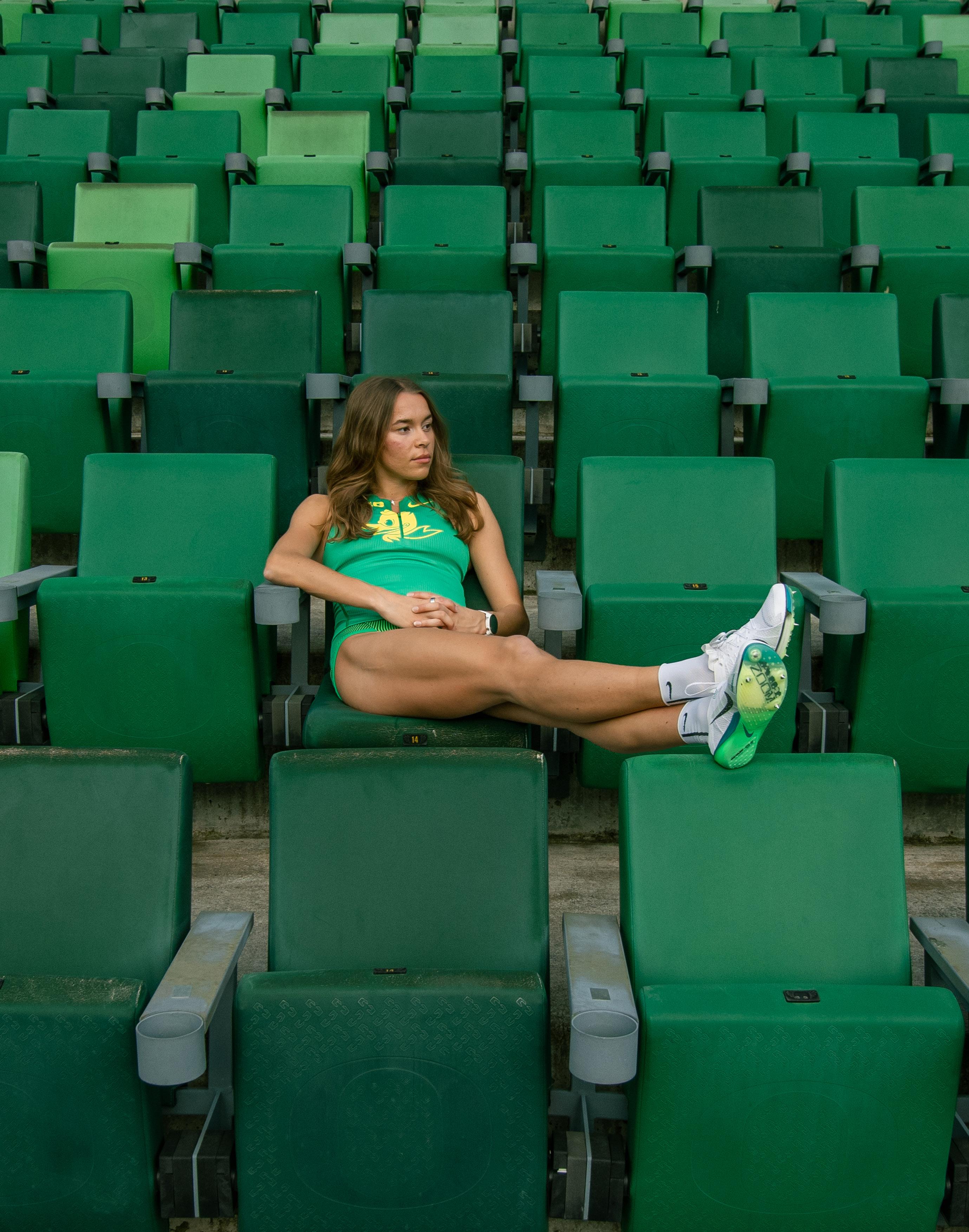
Photo by Russell Taber
TEAM
Editors-in-Chief
Jay Bramhall
Grace Mangali
Copy Editors
Miles Dwyer
Maya McLeroy
Owen Murray
Lily Reese
Writers
Jack Lazarus
Erin Morrison
Ana Narayan
Bayla Orton
Gigi Roddick
Coco Smith
Gretchen Wackler
Creative Director
David Hammel
Designers
Amanda Bell
Rossi Nelson
Charles Northern
Elena Siekmann
Georgia Wool
Photo Editor
Max Unkrich
Photographers
Shane Balian
Vincent Foster
Maia Rosenthal
Russell Taber
Director of Public Relations
McKenzie Leary
Advertising and Public Relations
Lara Clute
Sophie Lucas
Izzy Sowieja
Podcast
Peyton Gast
Gianna Hagopian
Rachel McConaghie
Moses Peet
Janae Puni
Photo Adviser
Sung Park
Adviser
Ivan Miller
GOING PRO
Copy editor Maya McLeroy travels to Alaska and explores themes of humanity and strength.
By Maya McLeroy
by Shane Balian
Icicles formed in my nose as I walked along Anchorage’s Third Avenue. My heart pounding in my chest, I quickly learned that -10 degree weather provided a far more effective wake-up than any cup of coffee could. As cars rolled past, I grew acutely aware of my snow boots striking the icy pavement, hoping not to wipe out. While my friends finished up final projects back in Eugene, I walked with Shane Balian, an Ascend photographer I didn’t really know, to pick up our rental car, a bright orange truck resembling a traffic cone on wheels.
The thought resounded in my head, How did I get here?
Just two days before, I numbly floated through the same routine: check email in the morning, go to class, and plod away at my laptop. After months of living on autopilot, the subzero walk helped me return to my senses. The sky widened to a soft blue as the sun drenched the Chugach Mountain range at first light. In the white expanse of snow, bundled in my mom’s floor-length coat, I felt microscopic. It was like that feeling when hiking a mountain, and you stop to take in the view of all the other surrounding mountains, suddenly aware of your place in the world.
Still figuring out my place in the world, I traveled to Alaska to report on the Iditarod, the 1,000 mile dog sled race that carves across the state. Balian and I were following the lead-up to the race through Jody Potts-Joseph’s eyes. As the first woman of the Han Gwich’in tribe to race in the Iditarod, courage and integrity seemed to seep into everything she did.
I felt like I could learn a thing or two from how Potts-Joseph moved through the world. From the moment I pitched the story in the fall, Ascend’s adviser Ivan Miller said he wanted to send me to Alaska for in-person reporting. I felt a sudden wave of excitement and terror, as Balian raised his hand and said with full confidence he would like to go to Alaska, too.
As weeks passed and the Iditarod crept closer, the promise of media credentials and funding loomed. I remember walking into Miller’s office, unsure that it was worth the effort of sending me 2,500 miles north.
“If it comes down to it, you don’t have to send me. Just send Shane,” I said, trying to fold myself into the shape of my doubt. “He needs to be there to take the photos. I can write the story from home.”
Miller smiled and said, “Not happening. We’re sending you both.”
To say that this was outside of my comfort zone would be an understatement. As a writer, I was starting to feel like a hermit at her desk, writing and rewriting sentences, observing the world pass me by as I searched for the right words instead of actively living them.
Packing all my bravery and enough layers into a duffle bag, facing the unknown head on, I stumbled into the Iditarod’s press conference in Anchorage, wearing a press badge around my neck.
What drew me to sports journalism in the first place was a memory. As a kid, I always brought a tote bag filled with books to my younger brother’s baseball games. But the older I grew the more I paid attention, deeply appreciating how a game of little-league baseball could bring grown men to tears. I still remember one game when my brother hit a ball out of the park. As he rounded the bases, pumping his small arms and legs towards home, I wasn’t looking at him. I watched my dad as he wiped tears from his eyes. And I knew, then, there was a story in that moment.
After my application to another on-campus magazine was lost, I found Ascend through Miller’s feature writing class. I joined as a copy editor and wrote a profile on Nike Run Club coach Chris Bennett.
In five and a half weeks, our team built a 124-page magazine featuring different definitions of what makes up an athlete. I knew before the year ended that I wanted to come back and do it again.
In our second year, we wanted to go bigger: 156 pages. But we’ve built more than just a magazine this past year. We’ve also built a community. And it was that community that encouraged me to fly off to Alaska when I doubted myself.
Photos
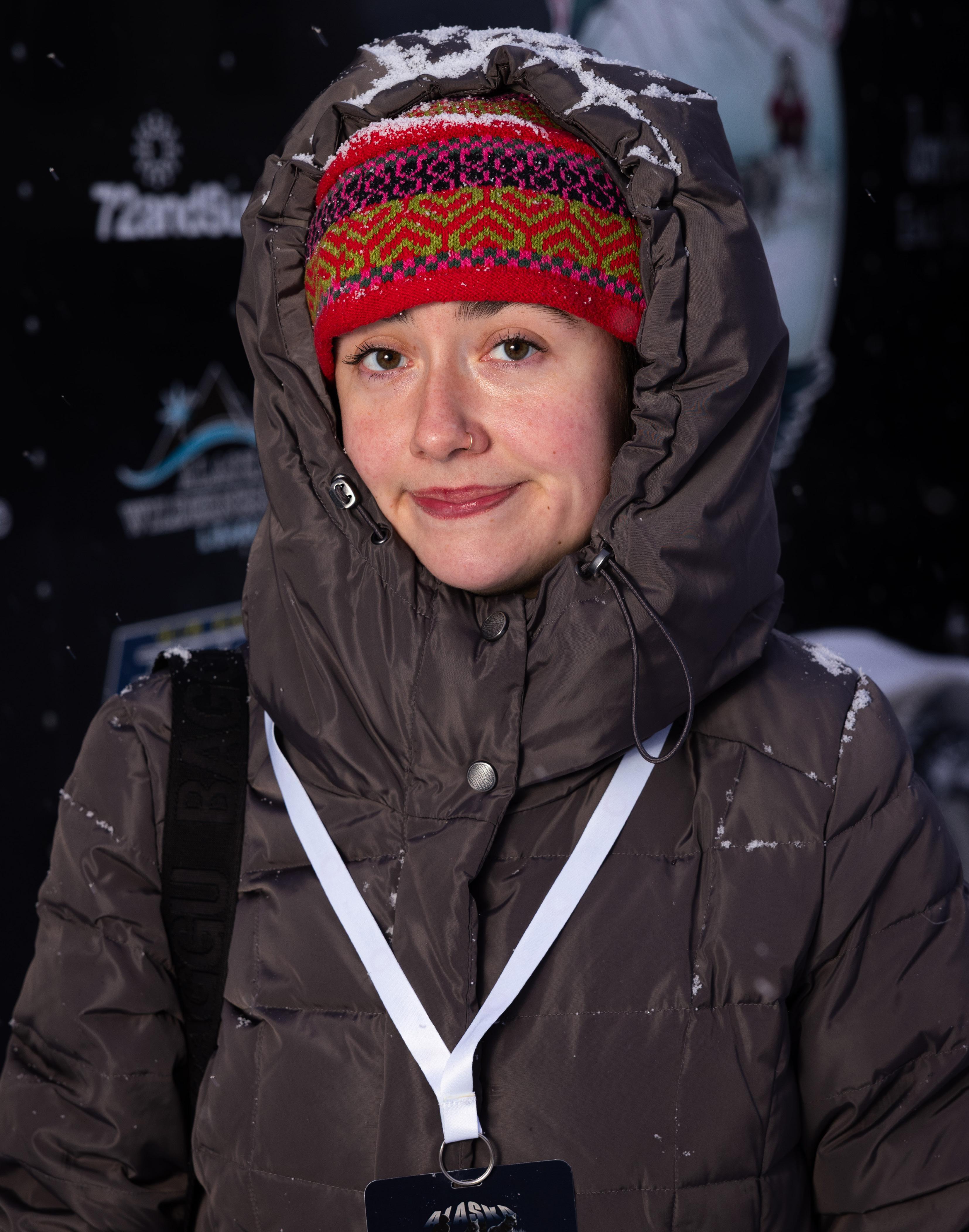
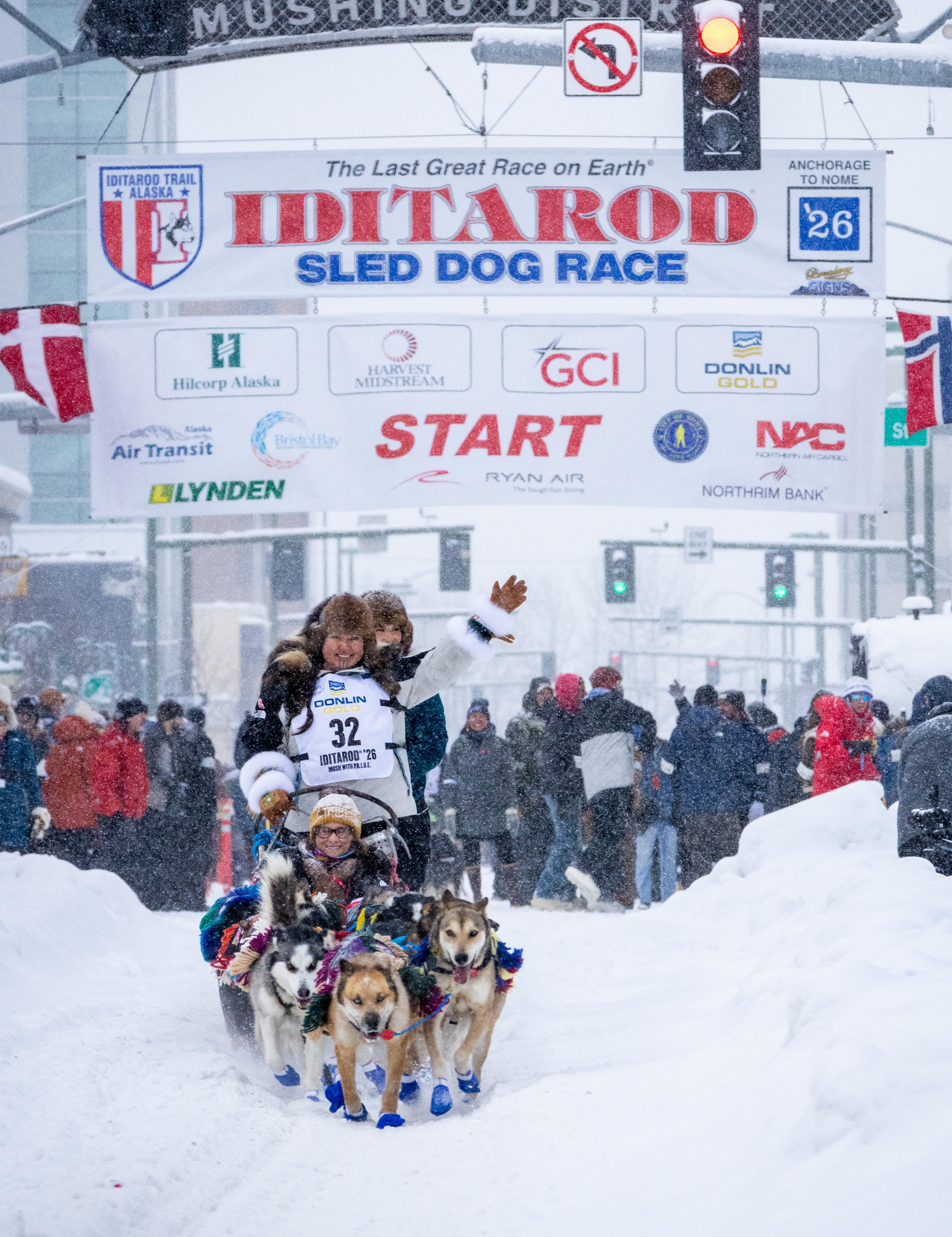
Maya McLeroy stands in front of Jody Potts-Joseph’s mushing trailer at the Iditarod ceremonial start in Anchorage, Alaska.
At the beginning of the trip, Balian and I agreed that we were going to take the next week one step at a time. The days stretched on slowly as I found myself no longer suspended in the same routine. As we drove along Alaska Route 1, I watched moose dot the side of the highway and kids ice skate over frozen lakes. And when the snow started falling, I had time to truly investigate each flake and see the intricate world within each of them.
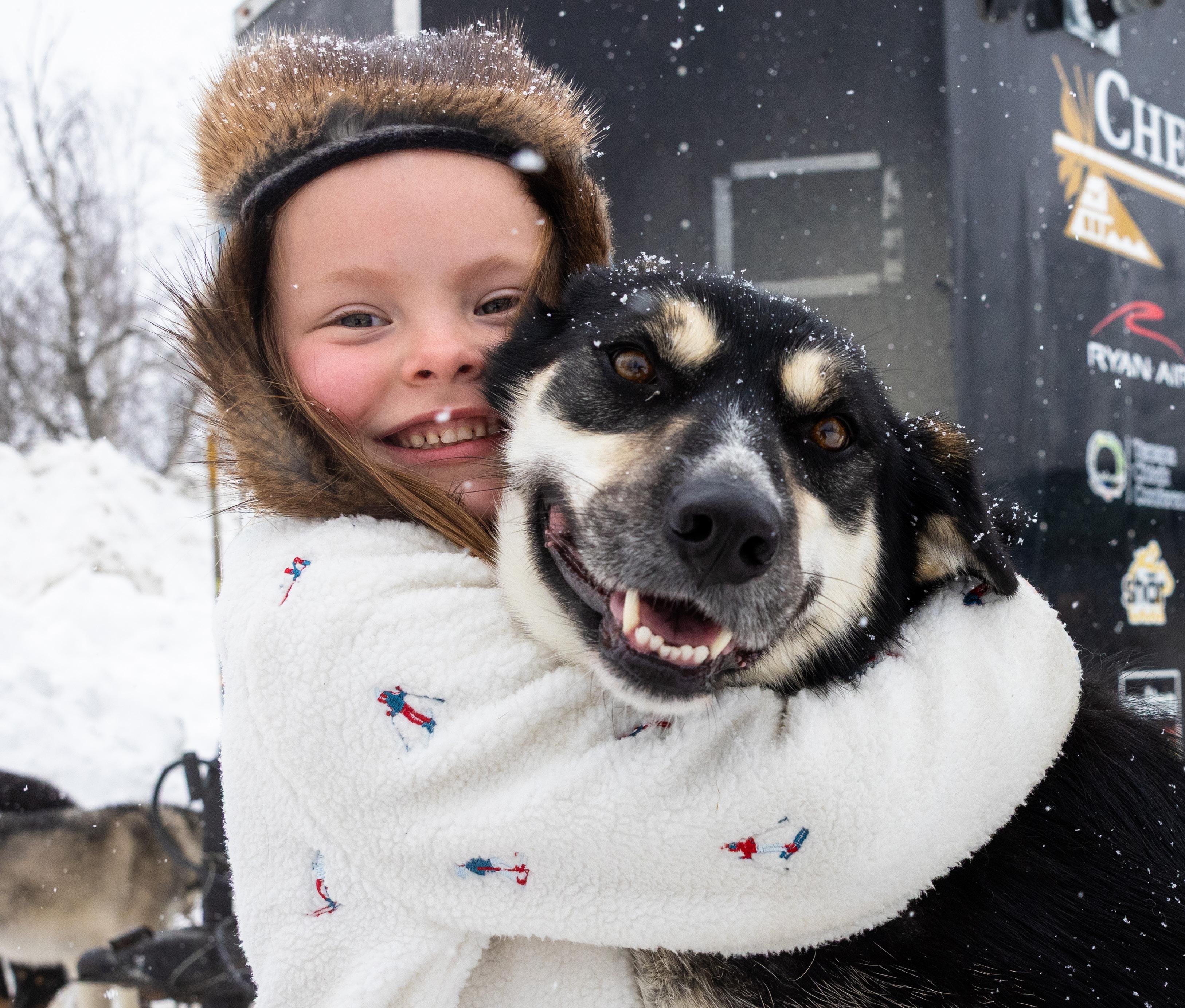
A few days into the trip, after spending time with Potts-Joseph and her family, she asked if we wanted to meet her dogs. As the dogs emerged from the truck, some sat down in the snow while others barked and leaped into the air. Some were cappuccino-colored, others covered with black and white spots. I walked up to Sunny, a dog mostly black with beige markings. I extended a hand for him to sniff, signaling I wanted to be friends. He sniffed, then stood on his hind legs and wrapped his front paws around my coat. When he looked at me, his nose tipping toward the falling snow, I felt something thaw inside.
Two days later, my eyes turned glassy as I watched Potts-Joseph set off on the trail, her dogs pulling her with all their joy and might to set off on an unthinkable journey. I wiped away my tears as soon as they formed, hoping no
one would see. Writing this now, I know the tears were necessary. Because the stories in this book prove that often humanity is what forges our strength.
After working on Ascend the past two years, I can recognize that this deeper sense of humanity creates a through line in all the stories we tell. Potts-Joseph would not be such a great musher without the care she offers her dogs, kneeling on the ground in subzero temperatures in the middle of the night, massaging their legs and wrapping them in blankets before she allowed herself to sleep. This humanity is what kept David Peterson and Katie Fiso afloat, standing on the baseball mound and running down basketball courts amidst their grief. It’s what propelled Dianne Whelan to travel the entirety of Canada, refilling her well of hope.
This book explores the best of humanity — the force that moves people to run marathons or cross vast stretches of wilderness, to push both the mind and body, to overcome hardship and meet new versions of themselves. That force can be found in all of us. It’s what keeps us going. Few of us will go onto the Olympics or race ultramarathons in extreme heat, but within us all runs a similar thread. That thread is what holds these stories together, proof that the people in this book are not superhuman but deeply human.
Evelyn Chakuchin, Jody Potts-Joseph’s niece, hugs Sunny, one of Potts-Joseph’s sled dogs, in Anchorage, Alaska.
FIRST ASCENT
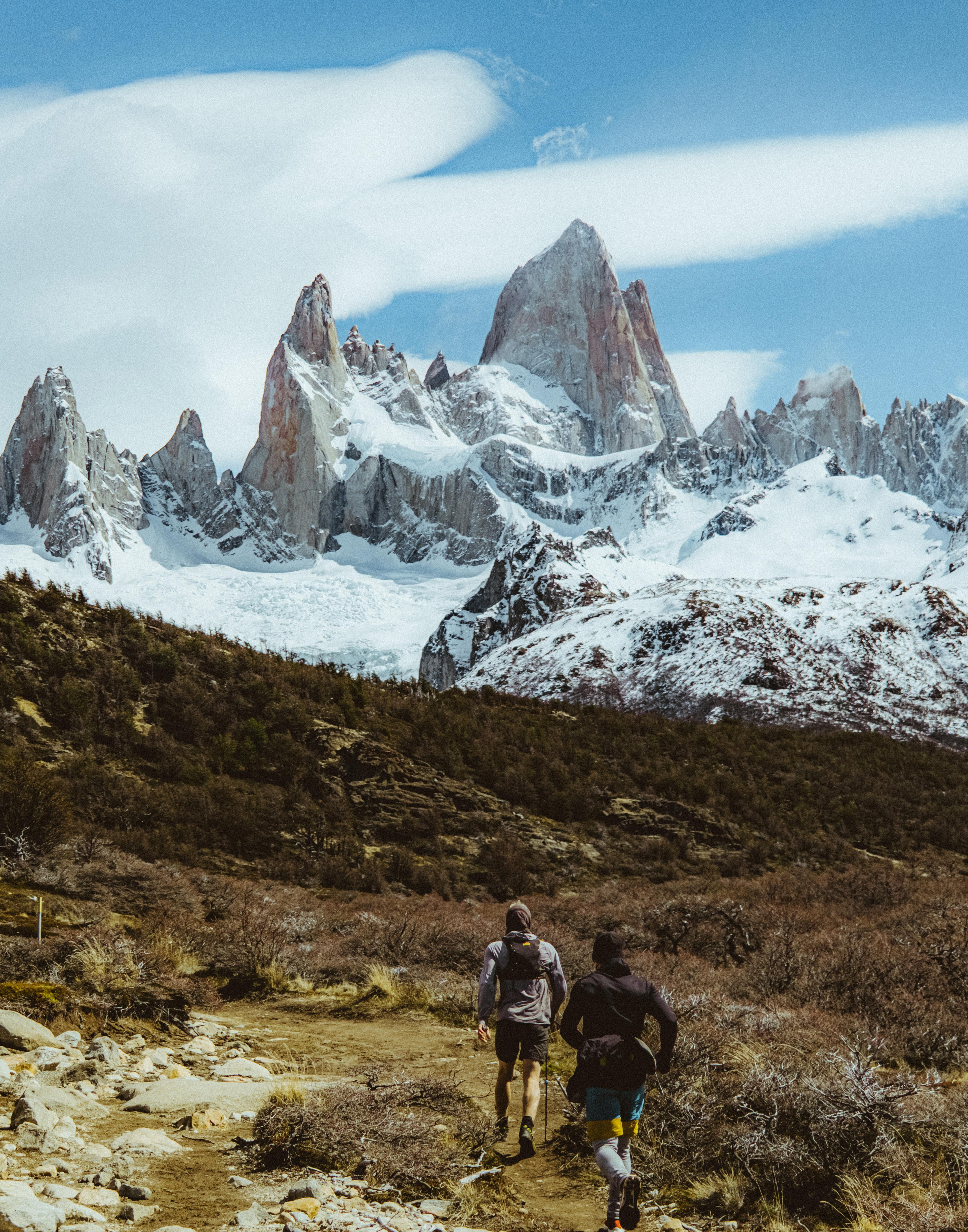
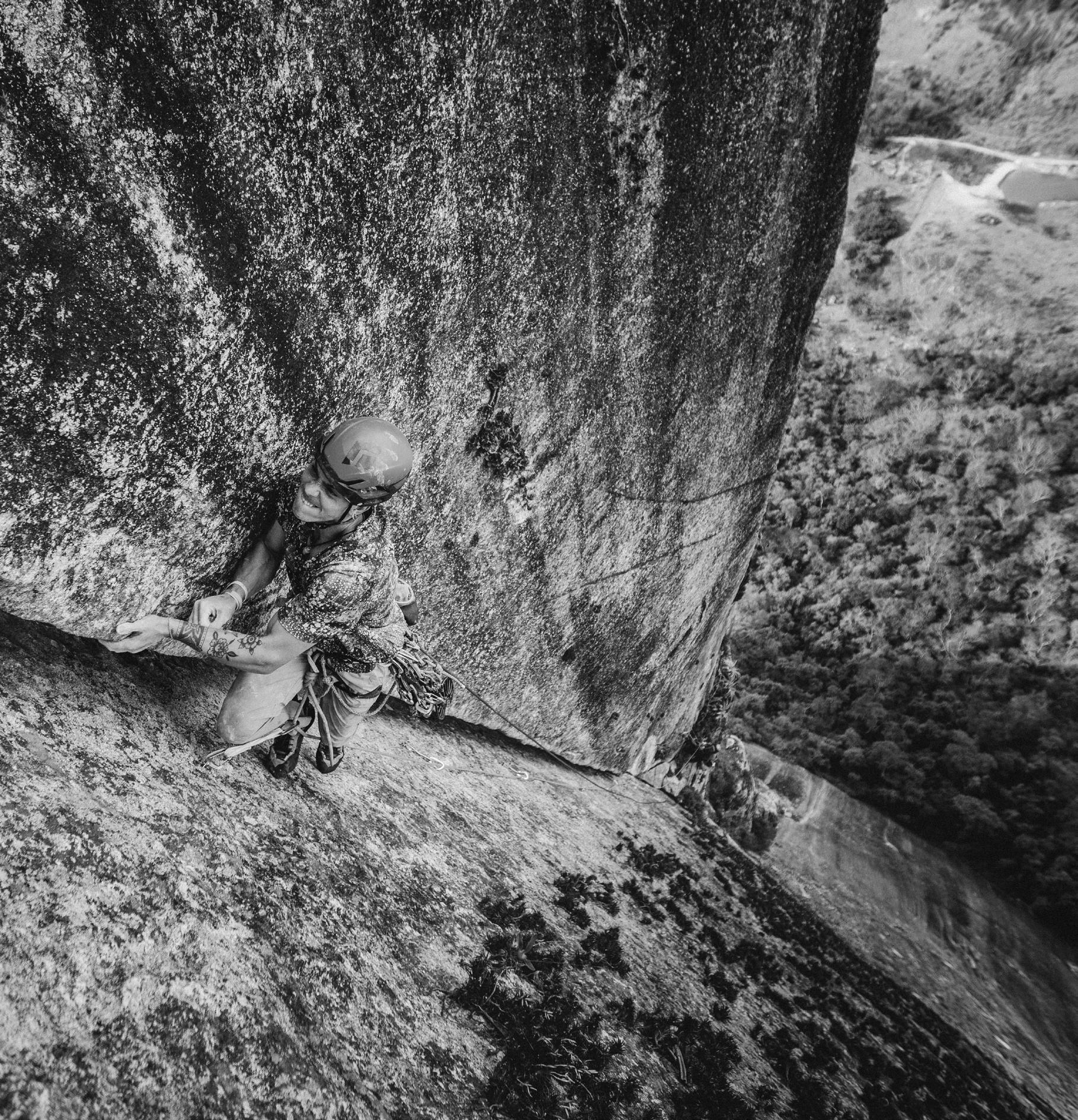
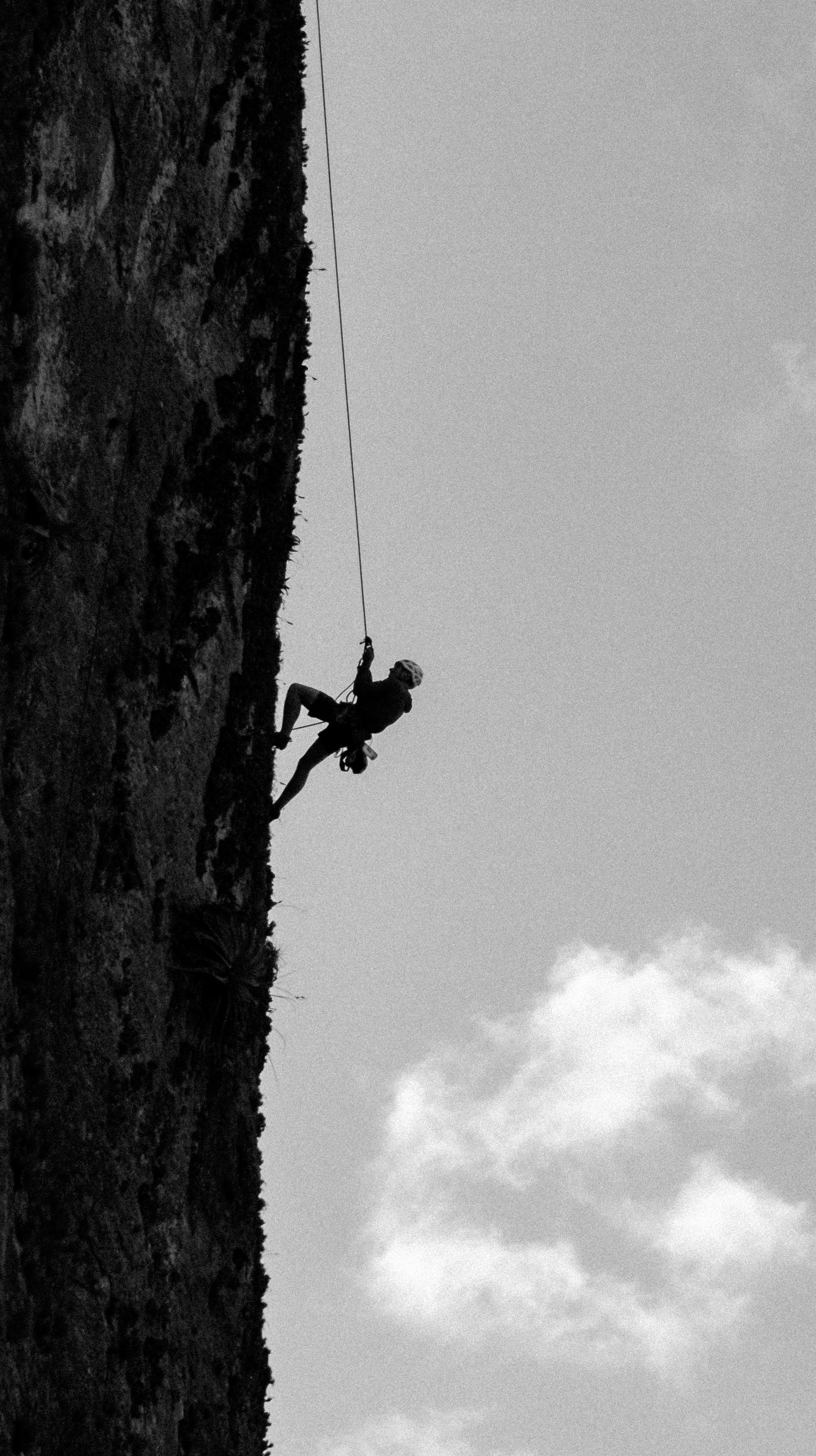
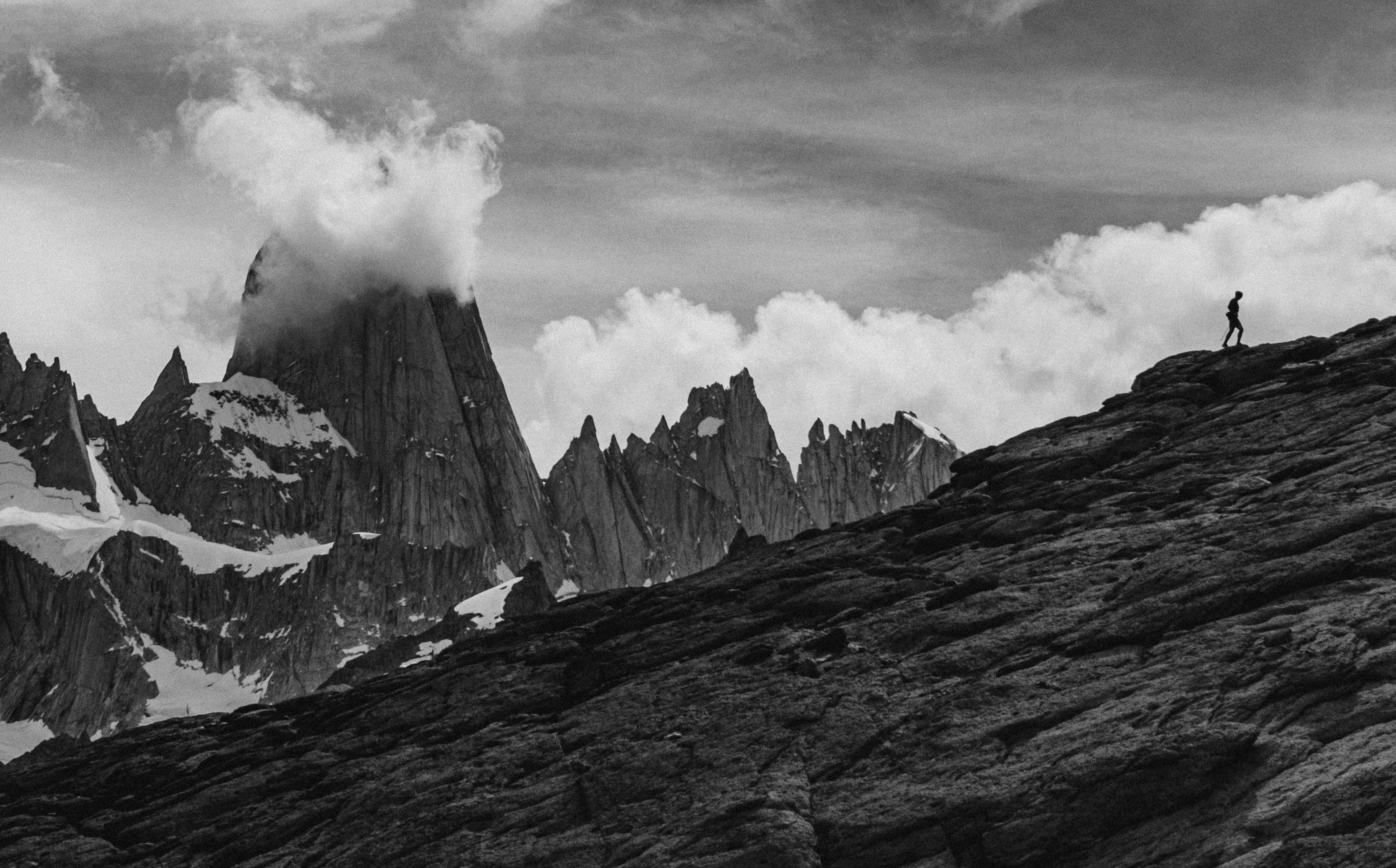
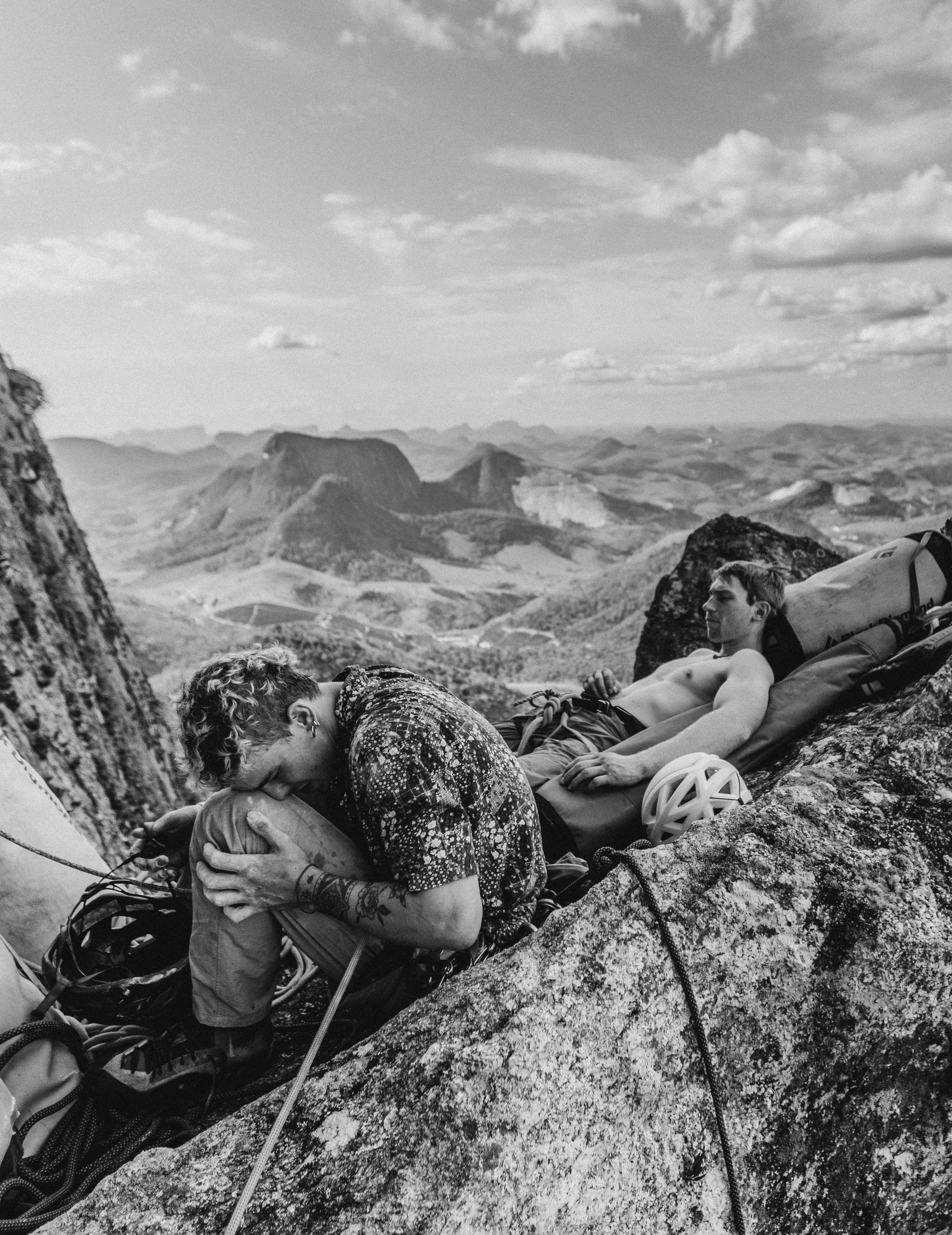
University of Oregon alum Daniel Teitelbaum captures stunning landscapes in South America.
By Bayla Orton
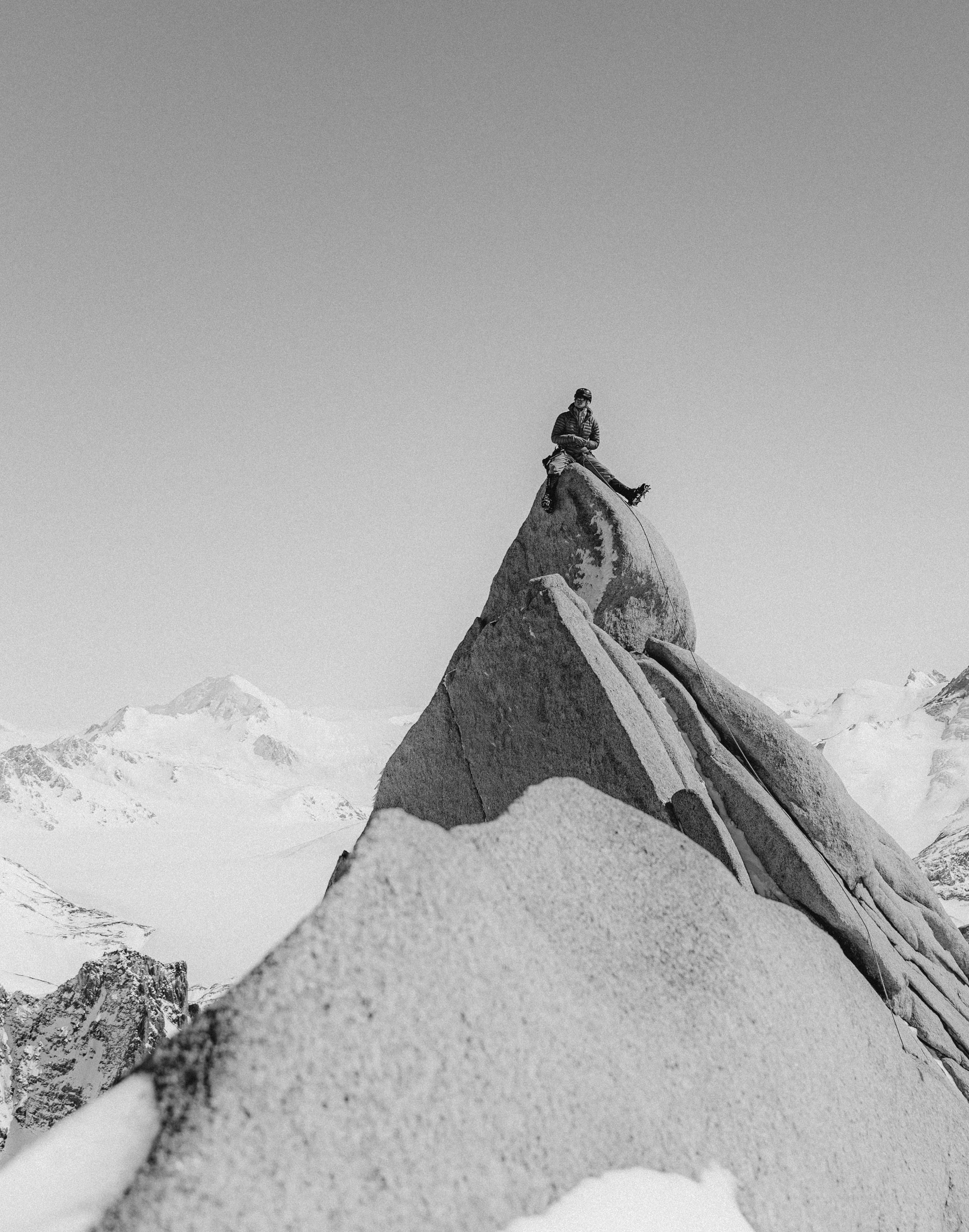
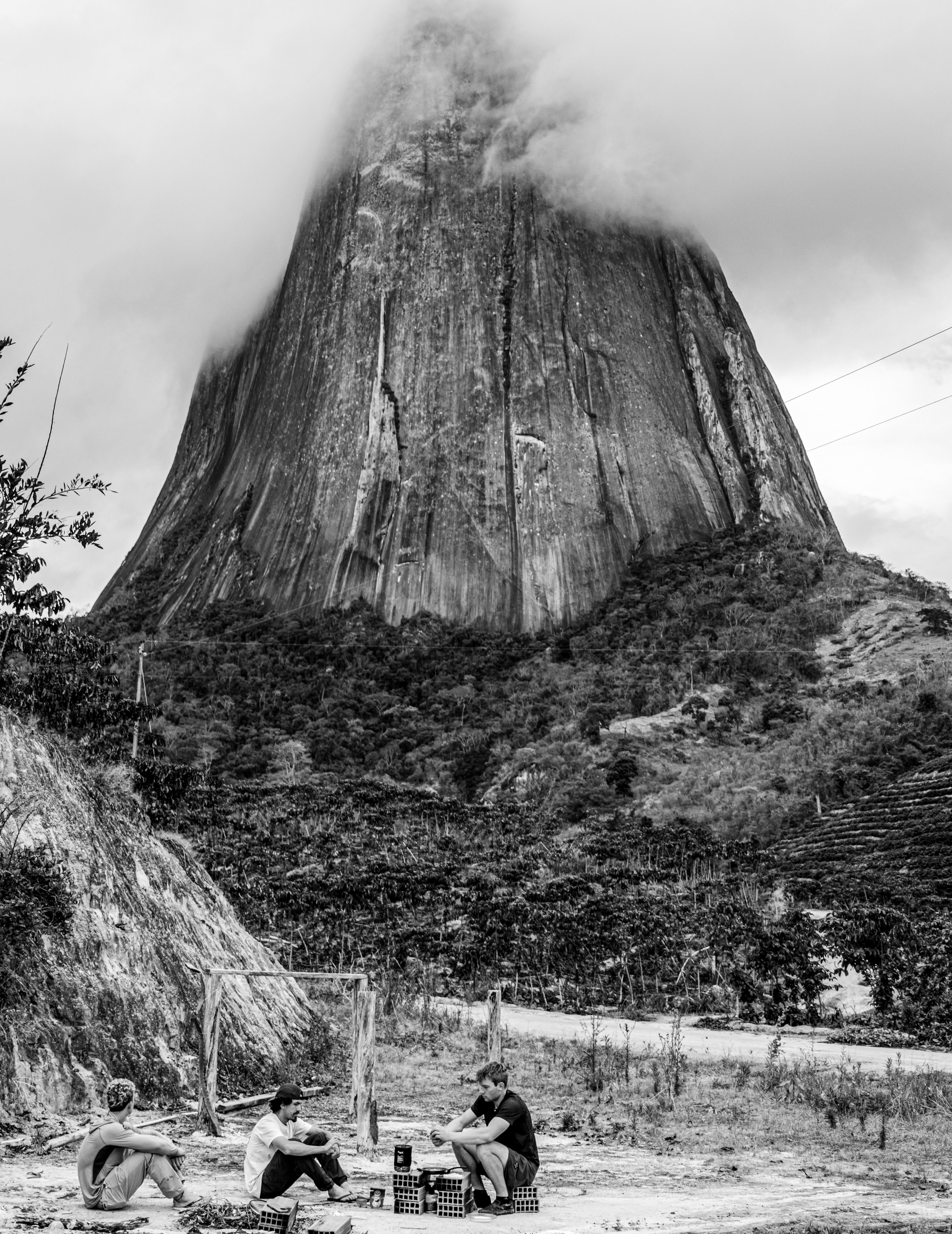
Standing at 2,500 feet, the rocky granite monolith Pedra da Fortaleza casts a lone shadow on Espírito Santo, Brazil, covering surrounding farm lands and broken wooden fences in its silhouette. In September 2025, climbers Chris Deuto, Ben Sotero, Andre Junior and photographer Daniel Teitelbaum, a group of relative strangers, looked up at the rockface, the summit shrouded by stark white clouds for days, waiting for a break in the weather.
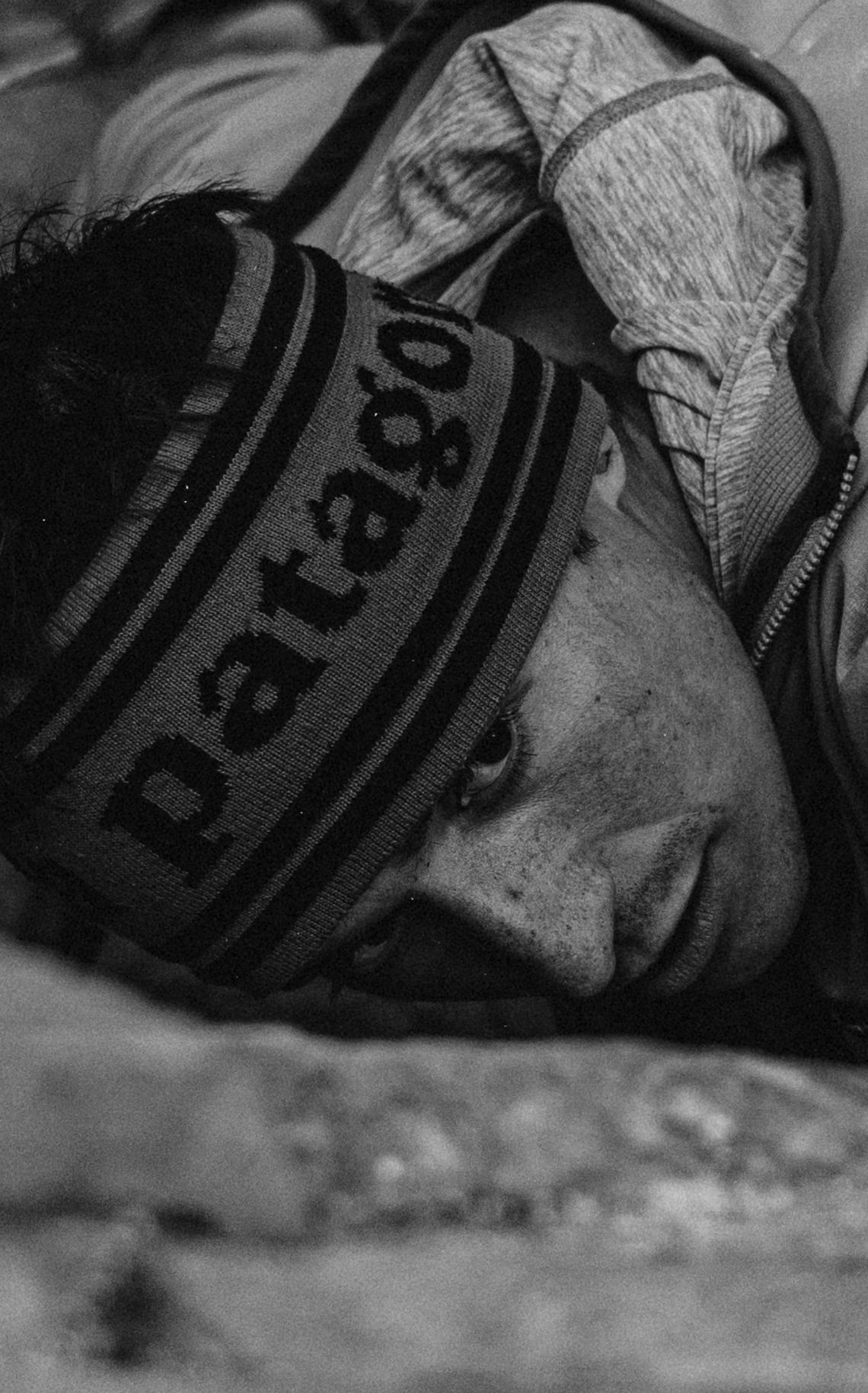
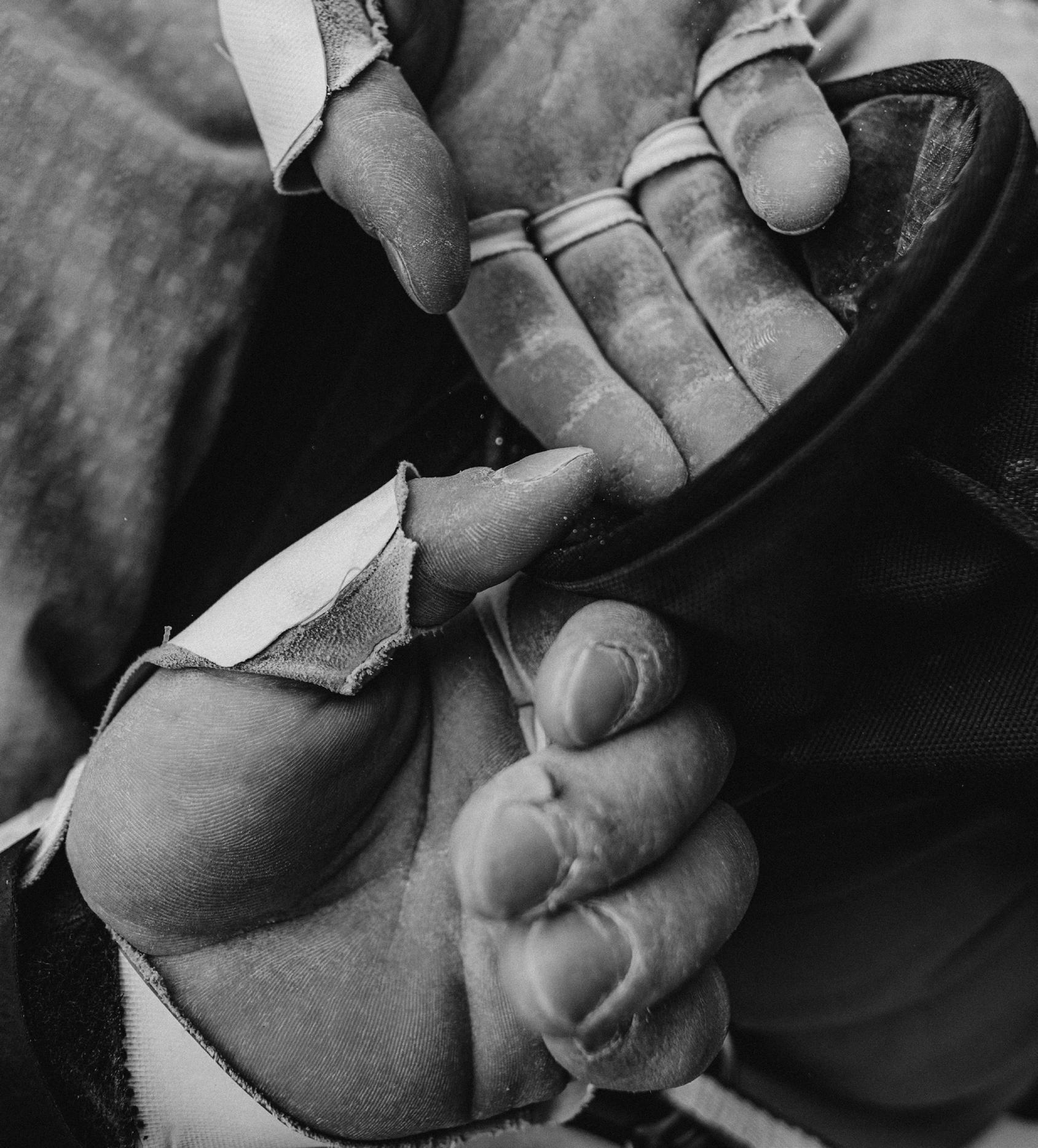
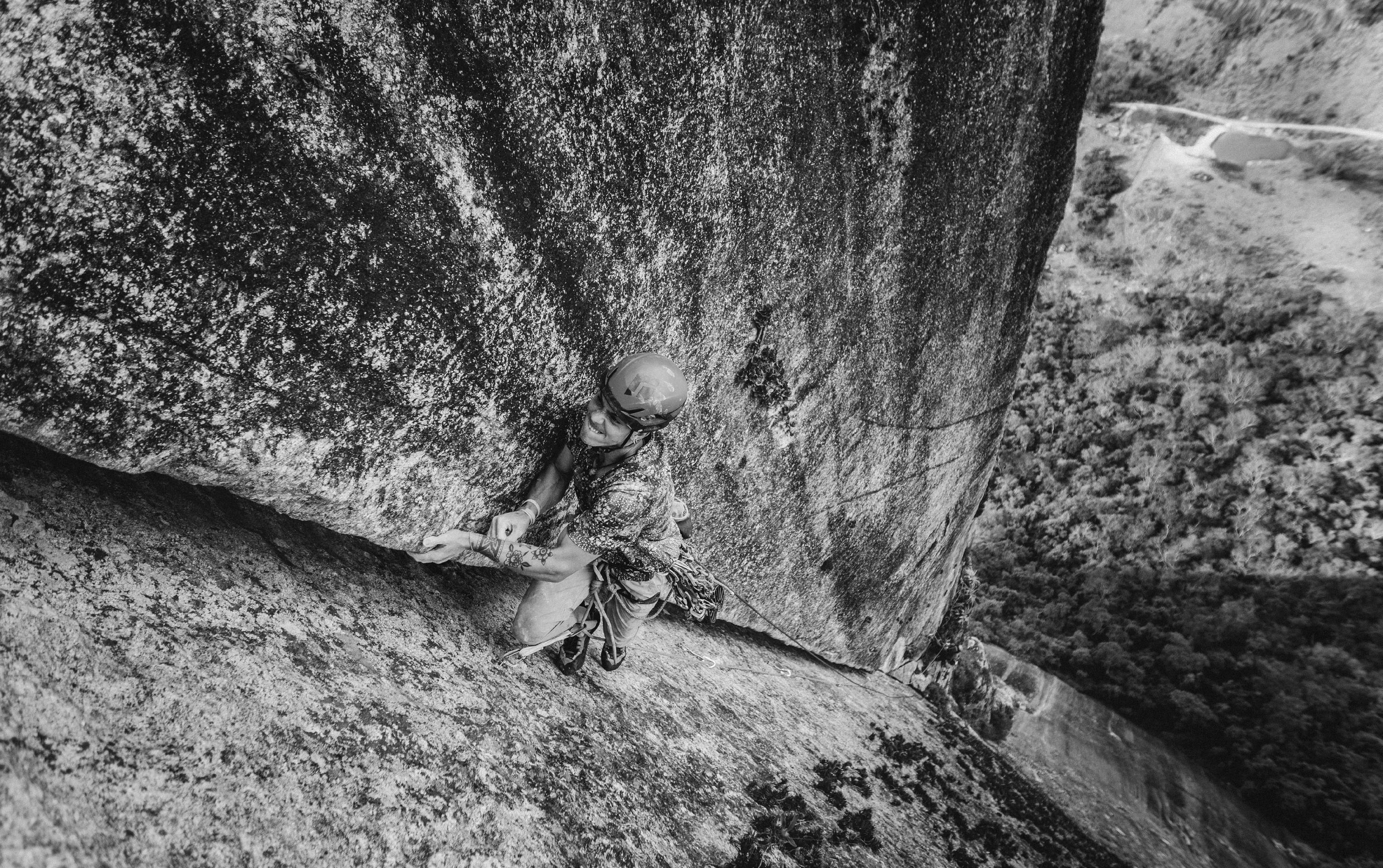
Hauling 500 pounds between them and sleeping thousands of feet above the ground, it took the crew seven days to reach the summit. Testing his limits along the way, University of Oregon alum Teitelbaum captured chalk-filled fingernails clinging to granite, bloody knees, and mangled toes, and the wall’s 20 torturous pitches.
The group of four was the first to ever free-climb and complete Pedra da Fortaleza, a brutal climb that taught Teitelbaum mental toughness, patiently waiting for the perfect shot while withstanding exhaustion.
“I find that mentally I’m far more calm and in tune when I’m in the mountains and when I’m out climbing and doing these things that seem somewhat extraordinary,” says Teitelbaum.
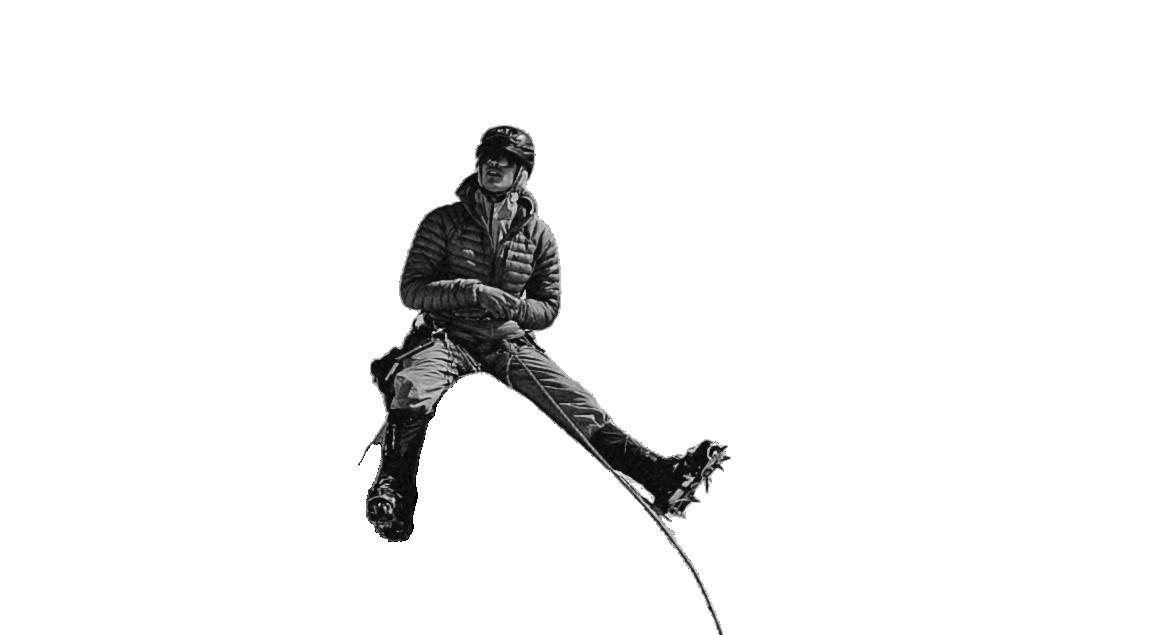
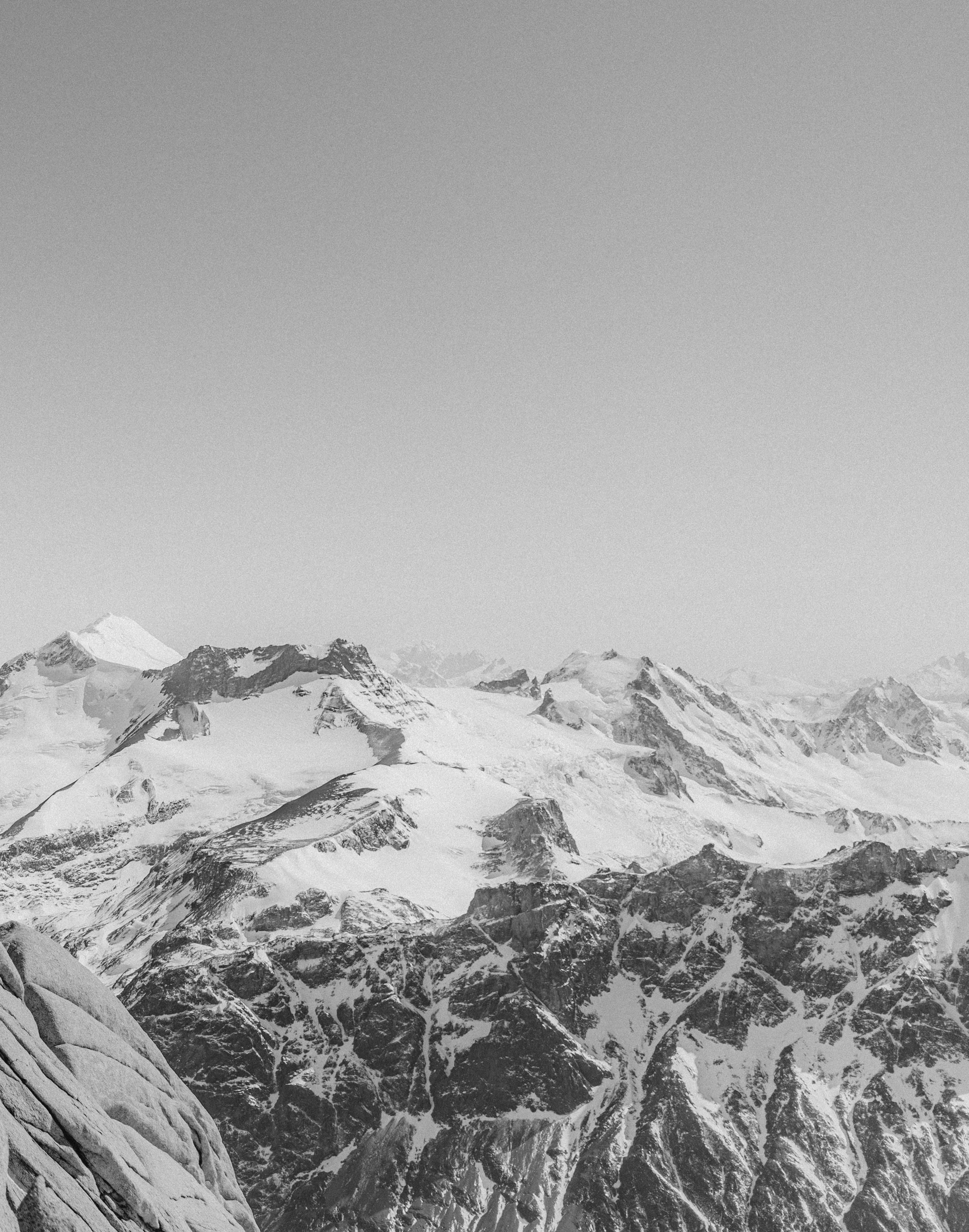
After Brazil, Soltero, Teitelbaum and Dueto booked a flight to Argentina to explore Cerro Torre, Guillaumet, Poincenot and other iconic peaks across Patagonia. Teitelbaum's scale dramatically expanded. For four months, the stark Patagonia peaks became the perfect backdrop for Teitelbaum to test his adventure photography skills, and gain hands-on experience in one of the premier climbing destinations in the world.
Photos by Daniel Teitelbaum
by
Photo
Vincent Foster
ANGLER THE
Patsy Daughters balances the calm of the river and the chaos of the tennis court.
By ANA NARAYAN
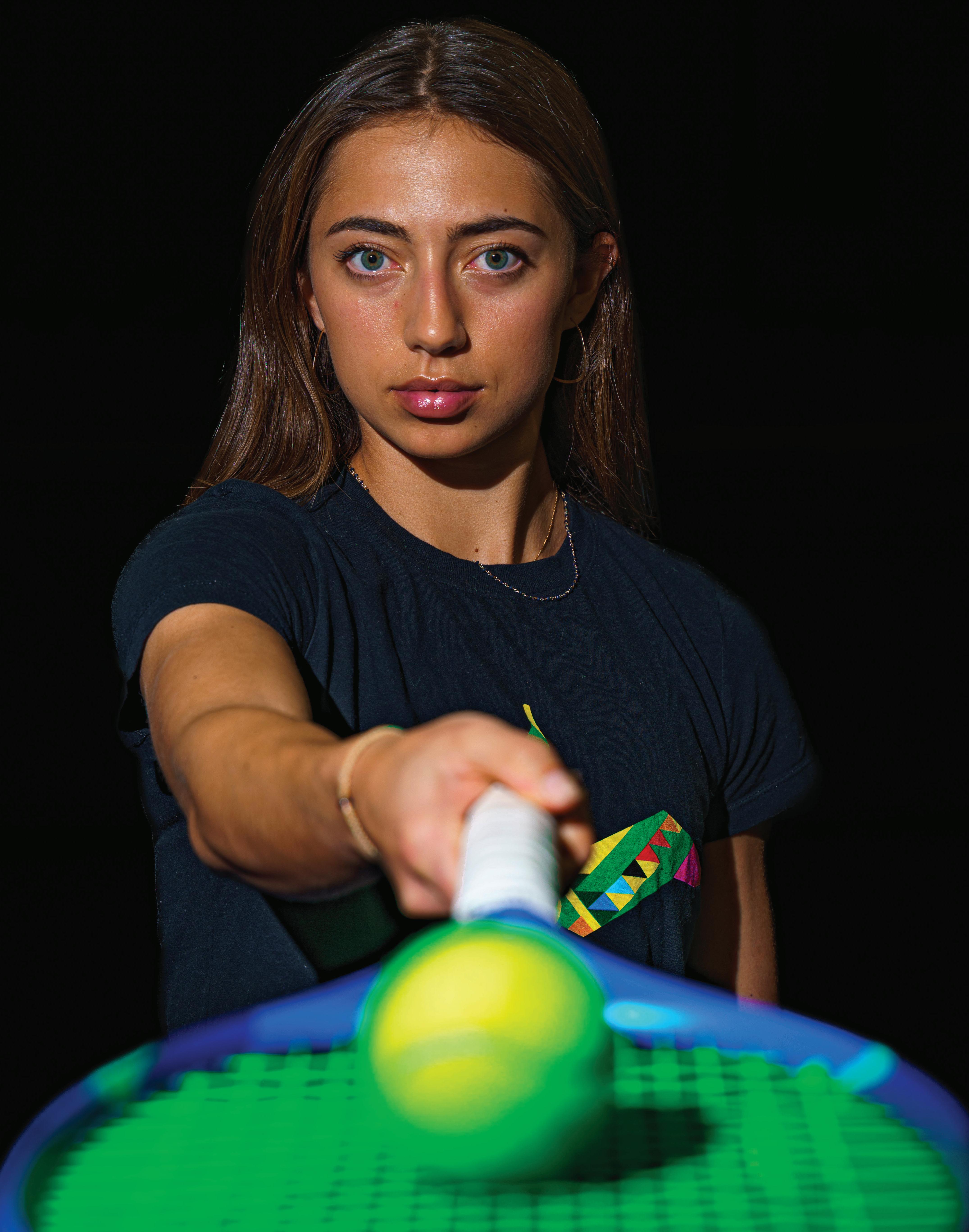
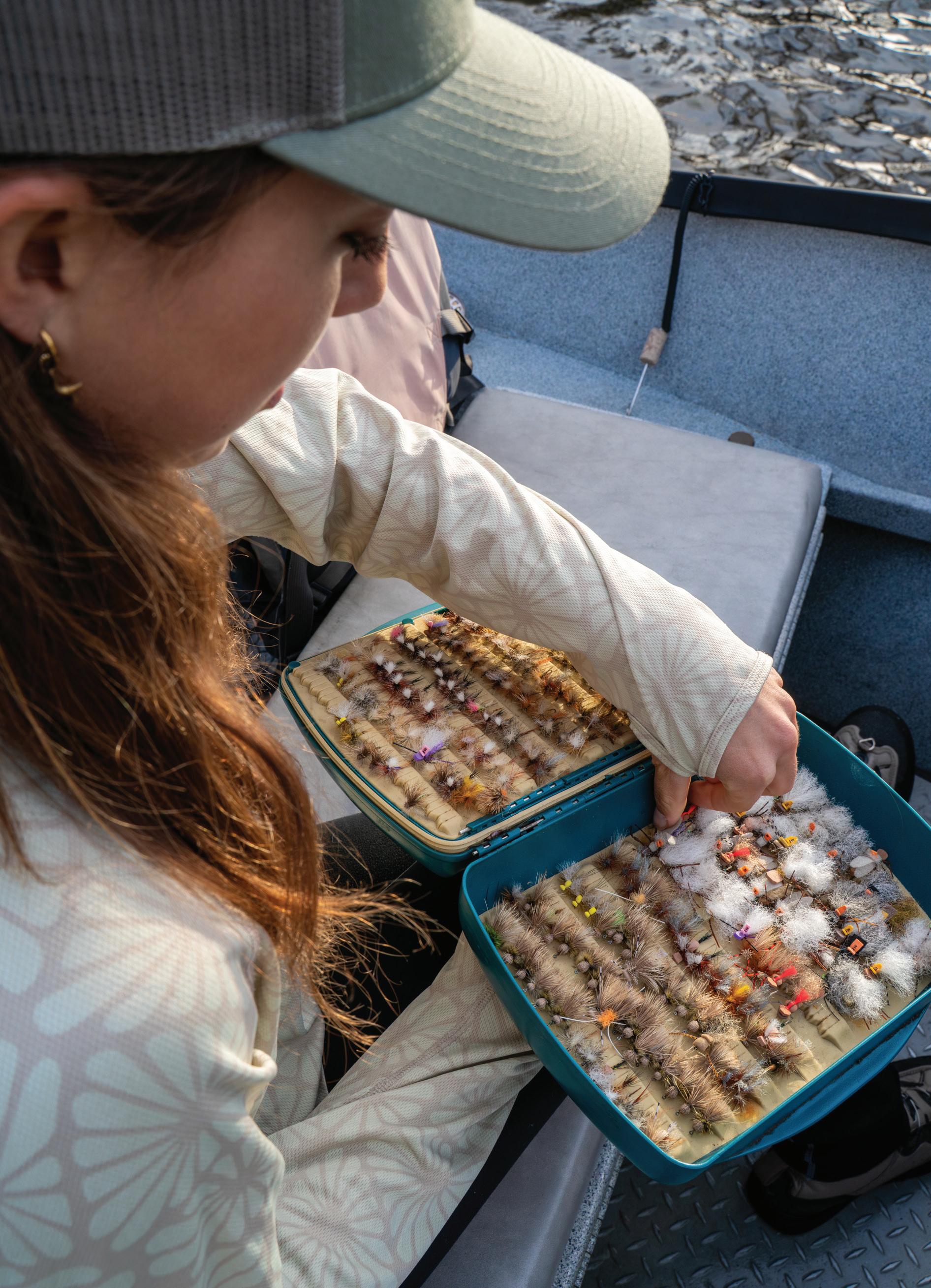
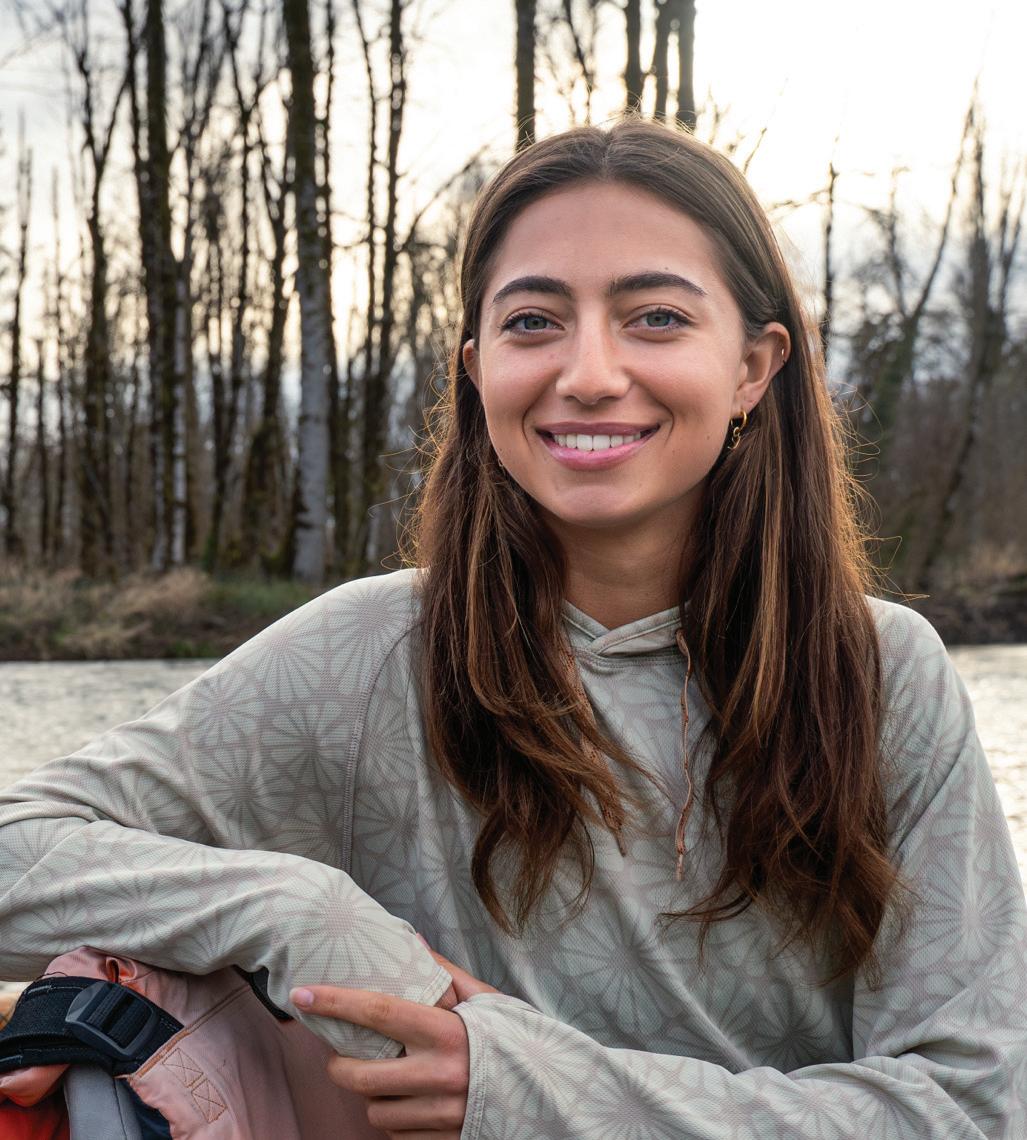
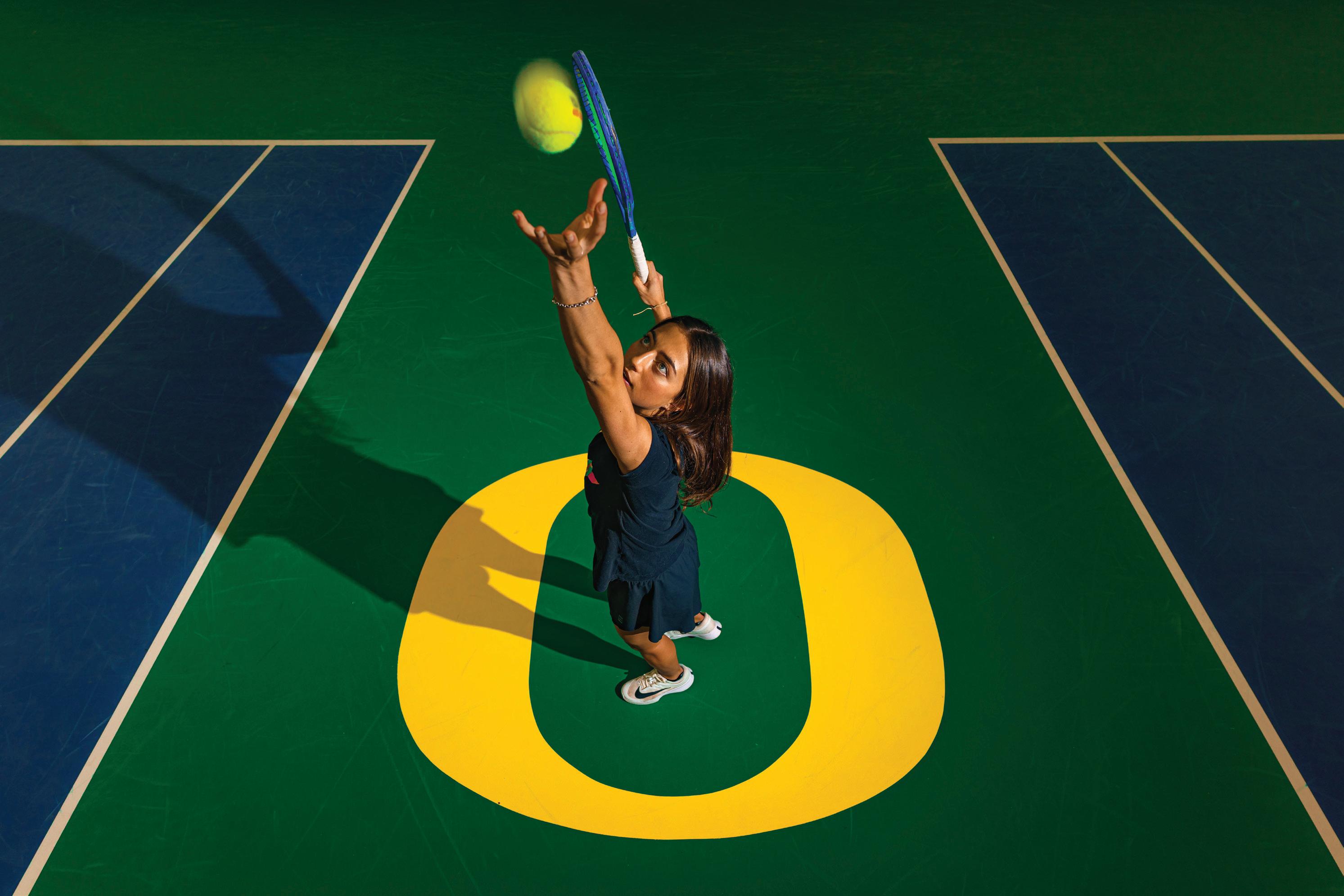
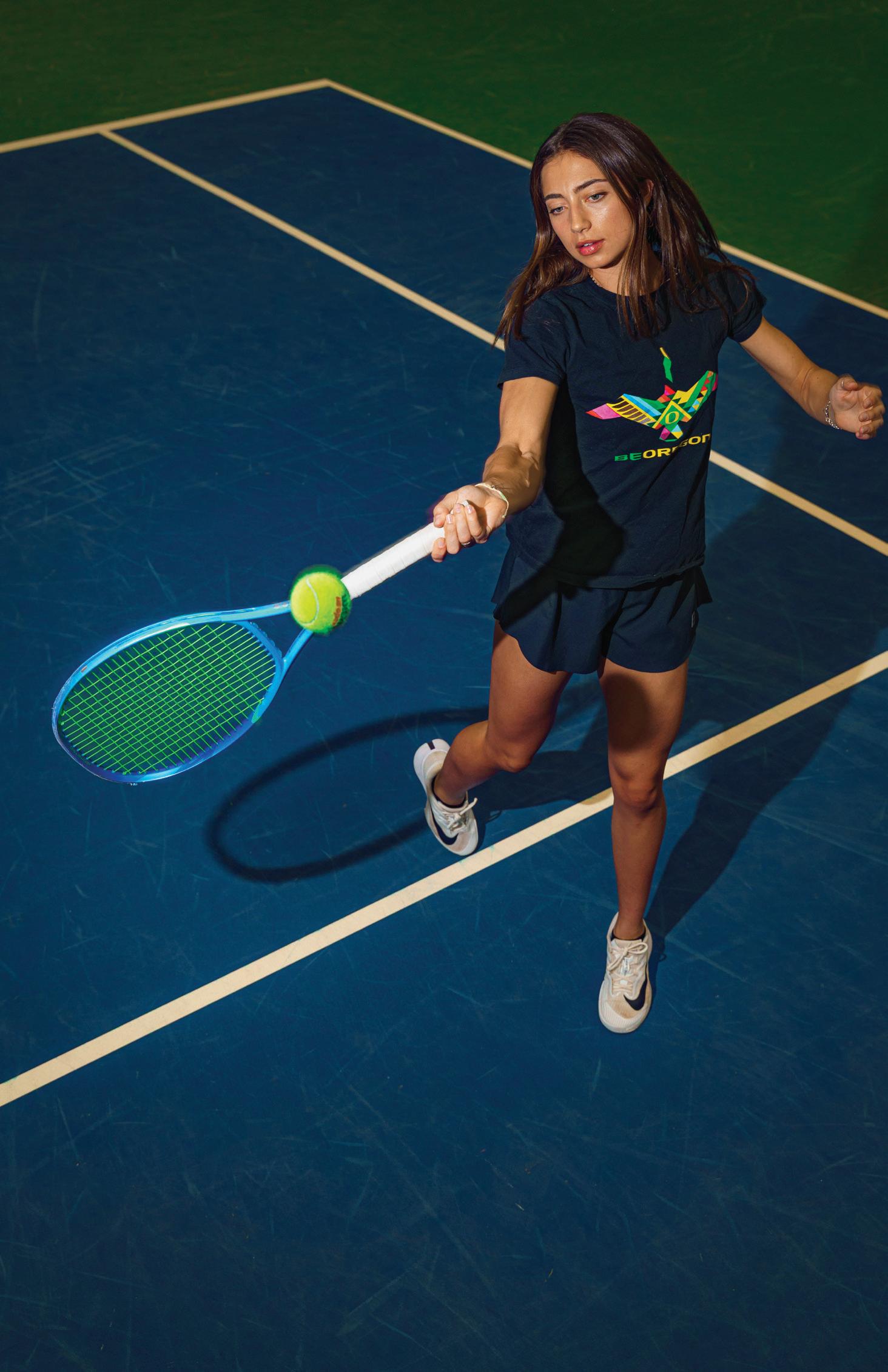
At the edge of the McKenzie River, where fast-streaming currents slip by in late winter, Patsy Daughters moves with a different focus than she’s used to. Meticulously tying a fly onto her line, she has traded her usual Oregon Ducks tennis gear for leggings, a thin grey UV hoodie, and a Caddis Fly Shop hat pulled low. The echoing in her head of crisp, popping tennis balls bouncing off racket strings fades into the fast-moving current of the river. Most days, the 5-foot-9 Oregon tennis player moves up and down the tennis court in a Nike skirt and a bright yellow Dri-FIT Oregon Ducks top.
On a gameday, Daughters fixates her attention on her opponent across the net. Her feet never stay still, constantly moving up and down the court, her ponytail trailing in the air behind as she sprints to each ball. The strength of her backhand sends the little green ball speeding and spinning across the court. Her game is defined by precision and execution. She rarely breaks into a smile, not until she knows she’s won.
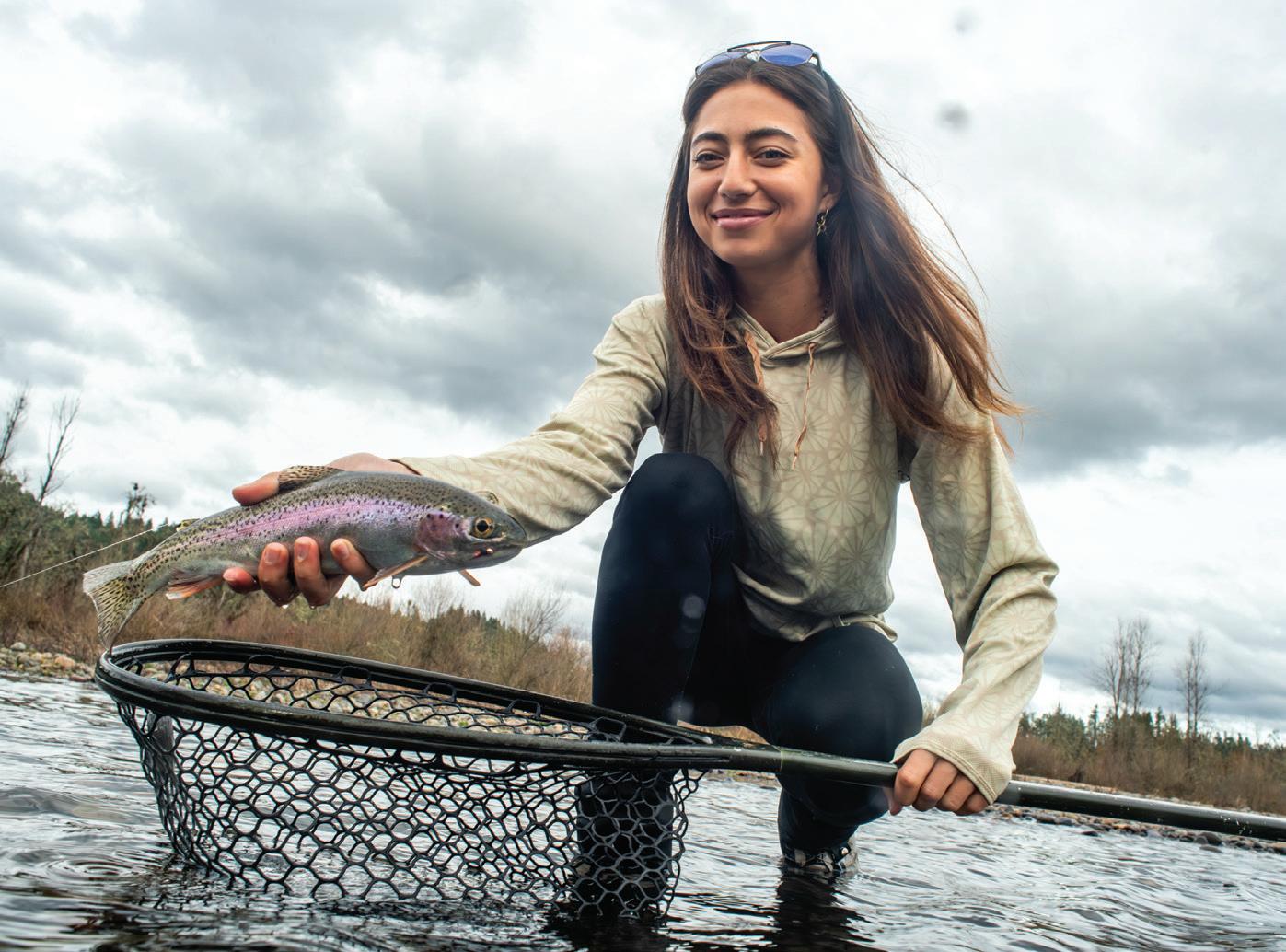
Exhaling, Daughters stands knee-deep in the McKenzie’s current, her blueframed sunglasses over her eyes as she studies the water with the same focus she brings to a serve. Surrounded by a wall of lush Oregon trees, she settles into a landscape miles away from the center court.
Eventually, she hops into her family’s aluminum Koffler boat with her father, Chris, the driver. He’s instructing her just as much as guiding. His mere presence reminds her that nothing is rushed, nothing is out of control.
By the next morning, she’ll step back into the demanding and chaotic rhythms of tennis, where everything is measured and practiced endlessly. But here in the McKenzie River, she craves a different kind of game, one that’s not measured in points but in stillness and patience. She’ll harness the same competitive fire she’s poured into tennis, this time in a more natural environment.
Out here, she transforms into an angler, fully capable of nabbing a fish with nothing more than a hook, line, and reel. In tennis, players chase the same angles with the same intention, analyzing shots in hopes of pulling opponents off the court and setting up their next move. The river lets her drift between both worlds without losing herself in either.
While her future snapped back into focus on tennis, a sport that has taken her from the wilderness of New Zealand to the Eastern Mediterranean Sea, Daughters knew she would always find her way back to the waters. No matter what, the river will be waiting, ready to recharge her at any moment, regardless of any failure or success on or off the court. Her world will feel wide again as she returns to the waters that have carried her since she was a kid.
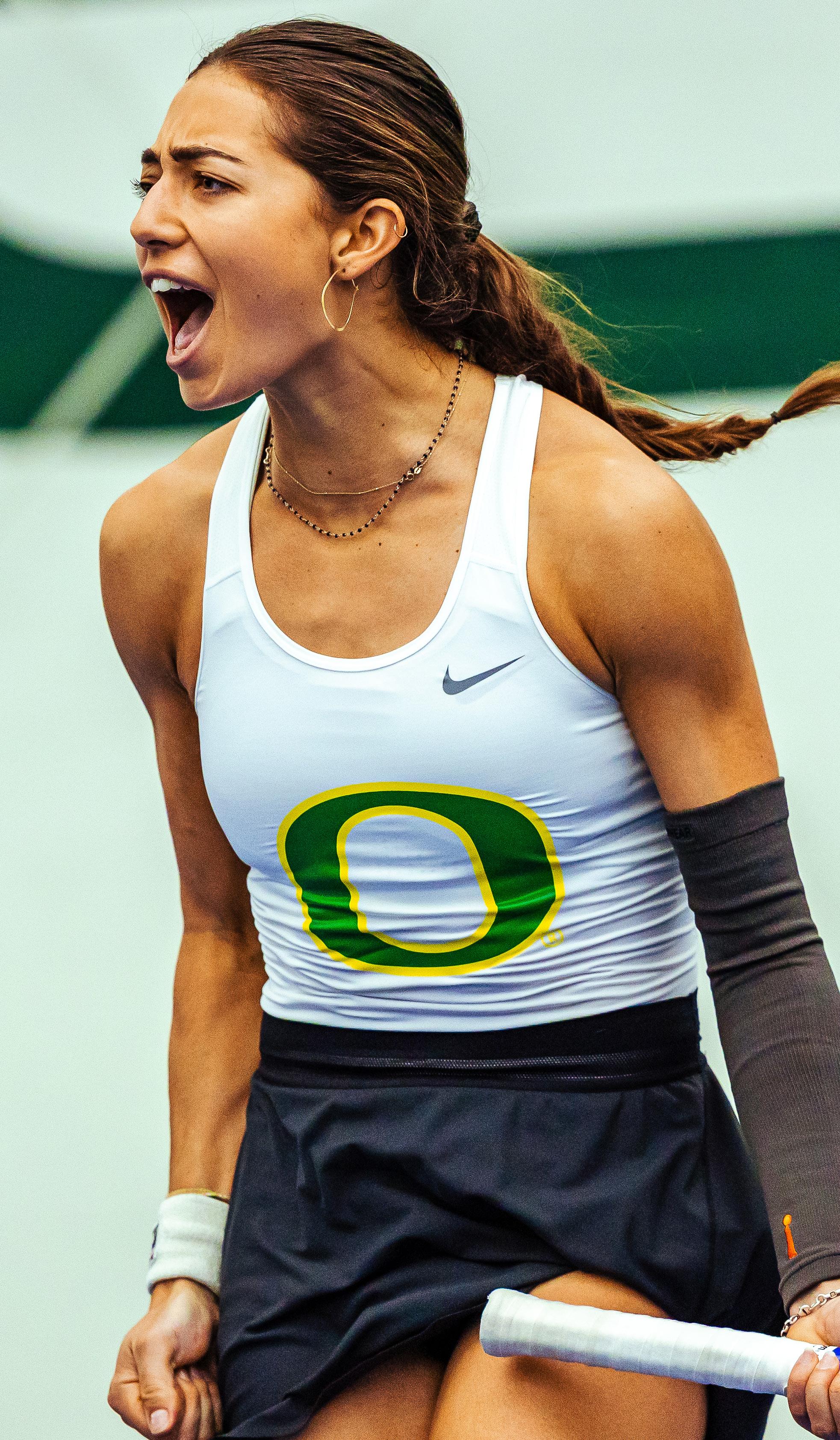
Photo by Sydney Encinosa
All Photos by Vincent Foster
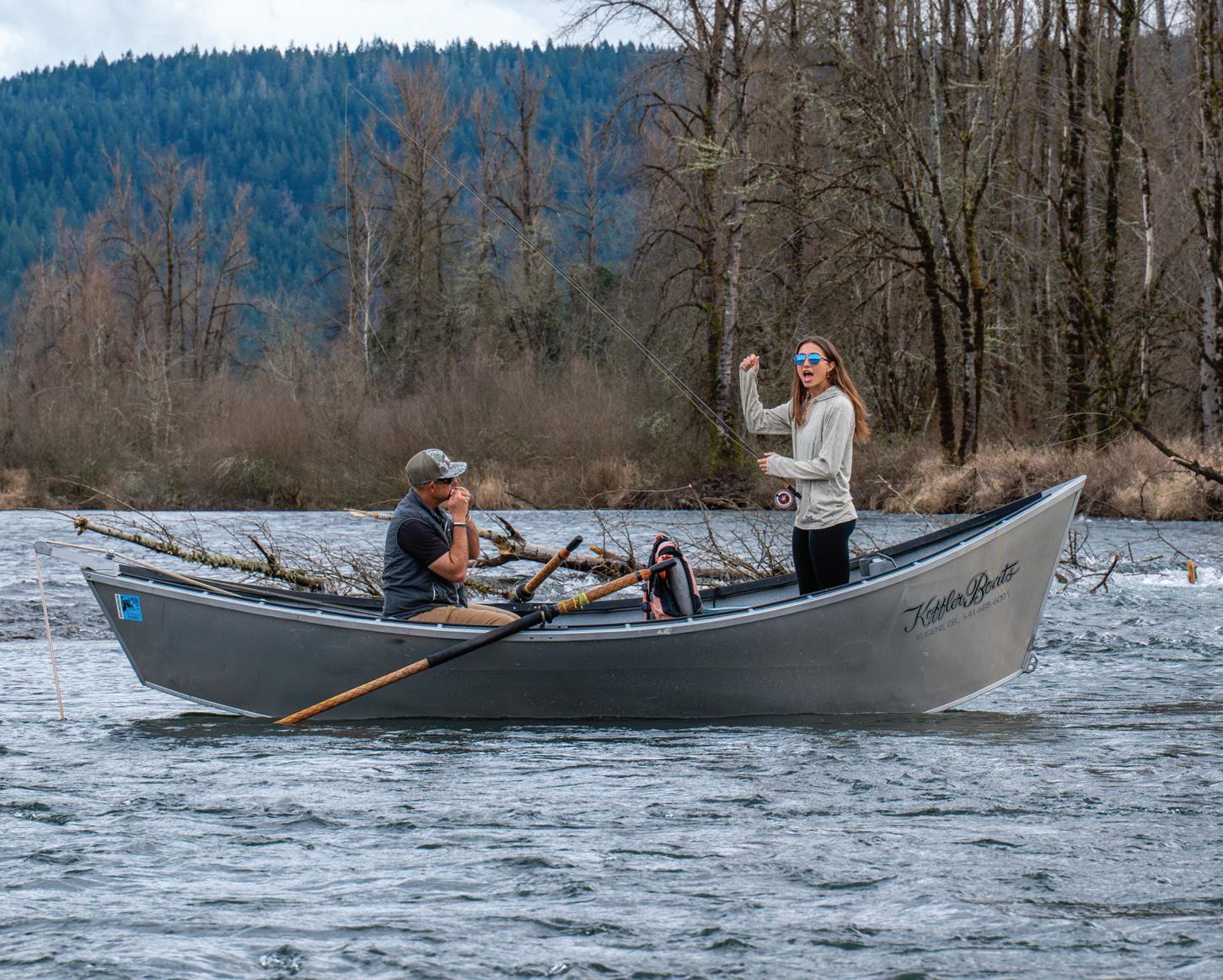
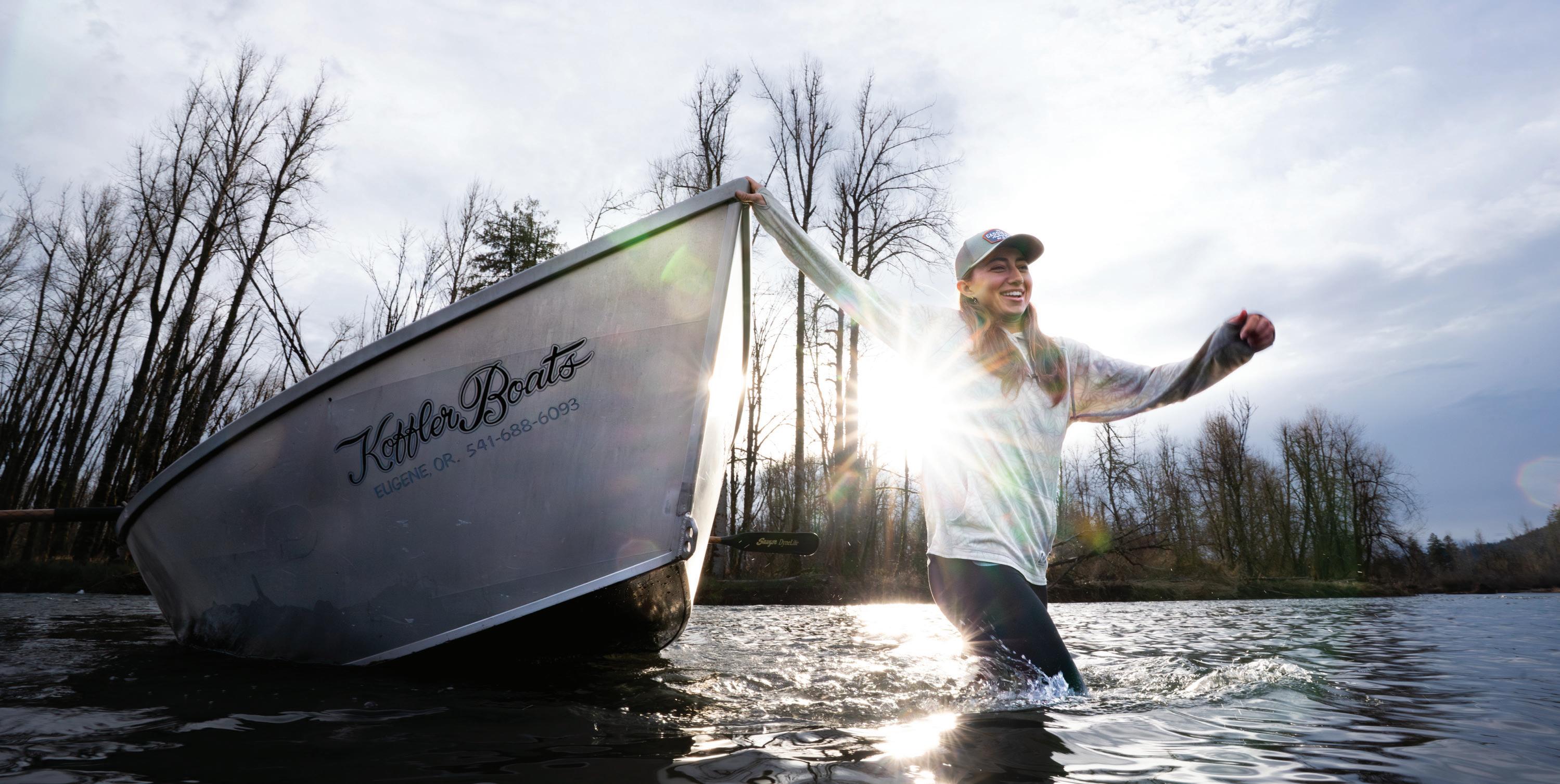
Patsy Daughters pulls her boat to the bank of the McKenzie River after fishing with her dad, Chris.
By Erin Morrison
HWorld champion Adam Ondra redefines what’s possible in climbing.
eavy breathing and the light clinking of rope on a carabiner reverberate through the vast metamorphosed granite cave that was once an ancient seafloor. Tucked into the rocky hills of Trøndelag, Norway, no one can hear the strained grunts and large, tortured shouts from Adam Ondra that erupt from the mouth of the Hanshelleren Cave.
In 2017, Ondra spent over a year in the cave, consumed by the world’s hardest climb — a 45-meter route he dubbed Project Hard. The sharp overhanging route is characterized by three boulder problems with large, sloping handholds, nearly impossible to grip, configured to push the human body into irregular and uncomfortable positions.
The climb starts relatively easily with the Nordic Flower route, 20 meters of small crimp holds, large, easy jugs, and knee bars on a steep overhang. The hard part is not getting tired before crux one: a V15 boulder problem. That level of difficulty might be comparable to someone running a sub-2:05 marathon. This is the last stop to rest before starting the real challenge. Ondra jams his knee against the rock and hangs upside down. He closes his eyes as his arms hang limp, veins bulging in his forearms, and he visualizes the next 14 individual moves, during which he’ll primarily be inverted, his feet leading him up the wall.
Crux two: a short V13 boulder that requires a lot of power. Similar in length to the previous section, almost every hold is a crimp, with only the fingertips gripping the wall. Two dynamic moves are required, in which Ondra must throw his weight out from the wall and onto another small hold.
The third and final crux is a V8 boulder problem, but most of it is spent on the hardest part of the underhang. With tired arms, Ondra spends the last six moves pulling himself out from under the lip and onto the one vertical section of the climb, the final anchor to clip the rope into.
It took Ondra over four years of meticulous planning and 40 days of climbing the route itself to finally complete the route in one go. Just as method actors immerse themselves in their characters, Ondra immerses himself in climbing, displaying an uncanny ability to problem-solve routes previously deemed impossible. In Norway, he spent months engrossed in every aspect of the route, breaking it down into individual moves he would memorize, ingraining each hold and movement into muscle and conscious
memory. This specific route required extreme flexibility, endurance, and unfathomable finger strength because Ondra had to remain inverted almost the entire time.
Known for screaming mid-climb, Ondra was uncharacteristically quiet. Unlike previous times, he entered the first crux sequence more relaxed. Every part of his brain focused on the climb, and he couldn’t process any other stimulation. Settling into a flow state from the ground to the final anchor point, it took him less than 15 minutes to complete the route. Upon returning to the ground, Ondra reiterated that he wanted to cry, having never felt such an emotional release after completing a climb. He named the hardest climb in the world, Silence.
“It’s physically difficult, but the route is very special, as it’s some of the most technical and low percentage climbing that I’ve ever seen,” says Ondra. “To come up with a suitable sequence for the crux was really sort of an enigma that took me many, many days to finally figure out.”
What sets Ondra apart isn’t just what he climbs but how. In a sport defined by control and quiet precision, Ondra is loud. His screams echo across caves and cliffs, a release of breath at the edge of failure. To an outsider, it might sound like something is going wrong. In climbing, it means everything is pushed to its limit. There’s no hiding on the wall. No clock, no teammates. Just rock, body, and gravity.
“I think what I like about climbing in general, is that it’s pretty straightforward: you do it or you don’t do it,” says Ondra. “Gravity either wins or you win. So I think it teaches you to be pretty honest about yourself.”
Ondra adds, “It’s a good life lesson. It is something that, at the beginning, seems so hopeless, so impossible, and if you put enough work into it, you turn it into possible.”
Both of Ondra’s parents are lifelong climbers. Growing up confined by the iron curtain of the USSR, climbing gave them a sense of freedom and an outlet for expression. Living in the Czech Republic, Ondra spent most of his free time at the crag Moravsky Kras. At 6, he entered his first competition. By the time he was 10, he was considered an international climbing prodigy. At 16, he won his first World Cup in climbing. Over the years, Ondra has won five International Federation of Sport Climbing (IFSC) World Championship titles and more than 35 IFSC World Cup titles in both lead climbing and bouldering combined.
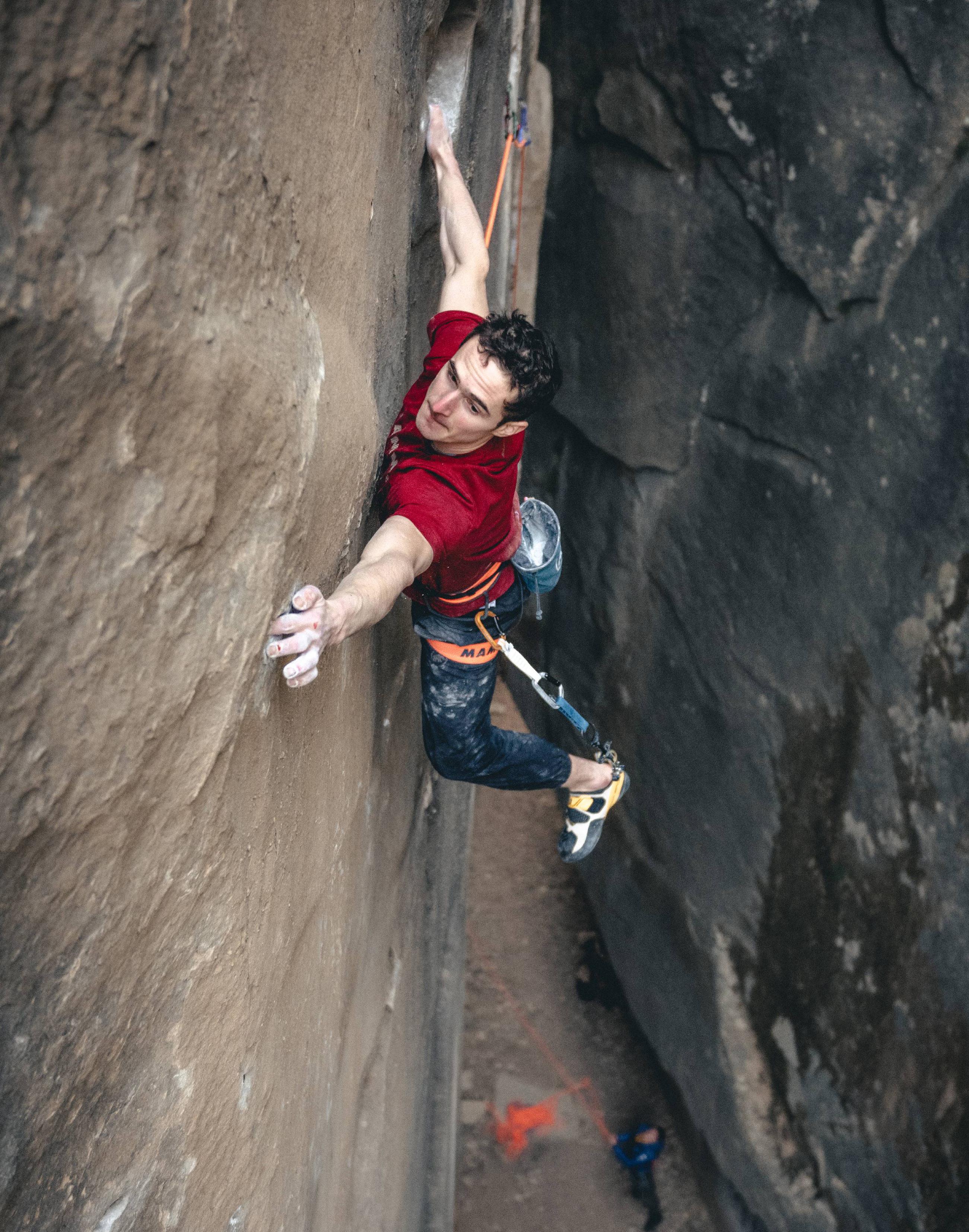
Photo by Petr Chodura Adam Ondra climbs the Bon Voyage 9A trad route in Annot, France.
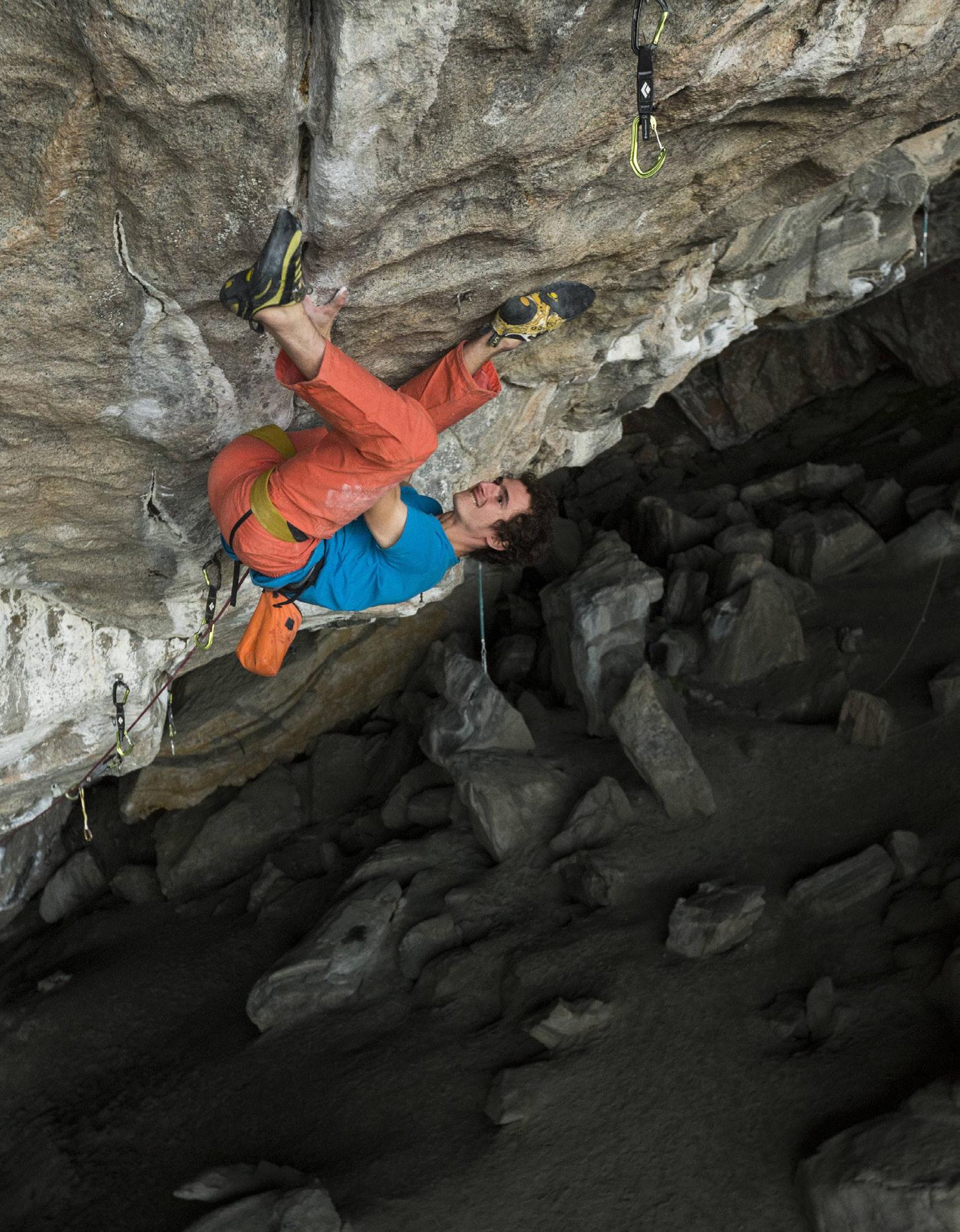
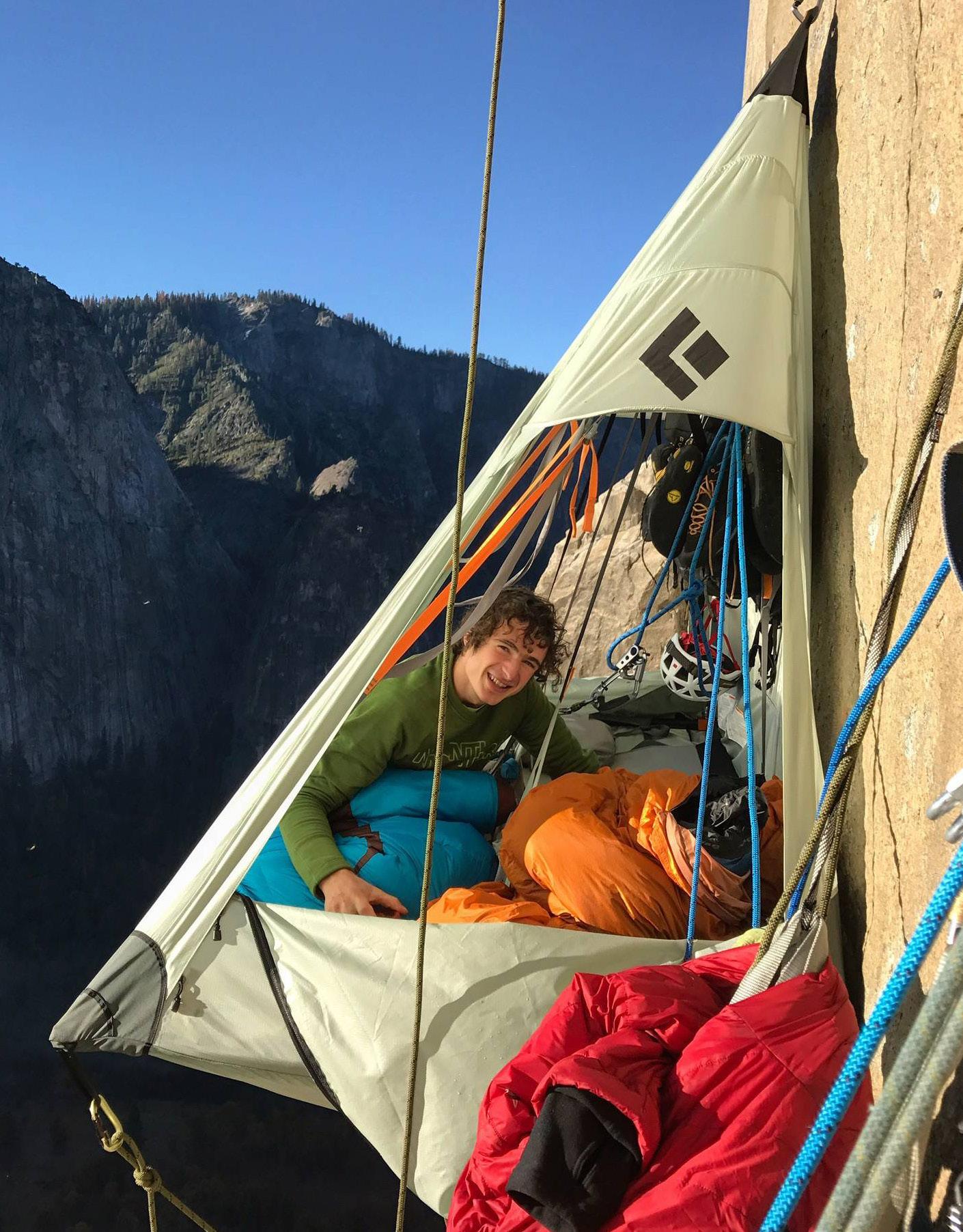
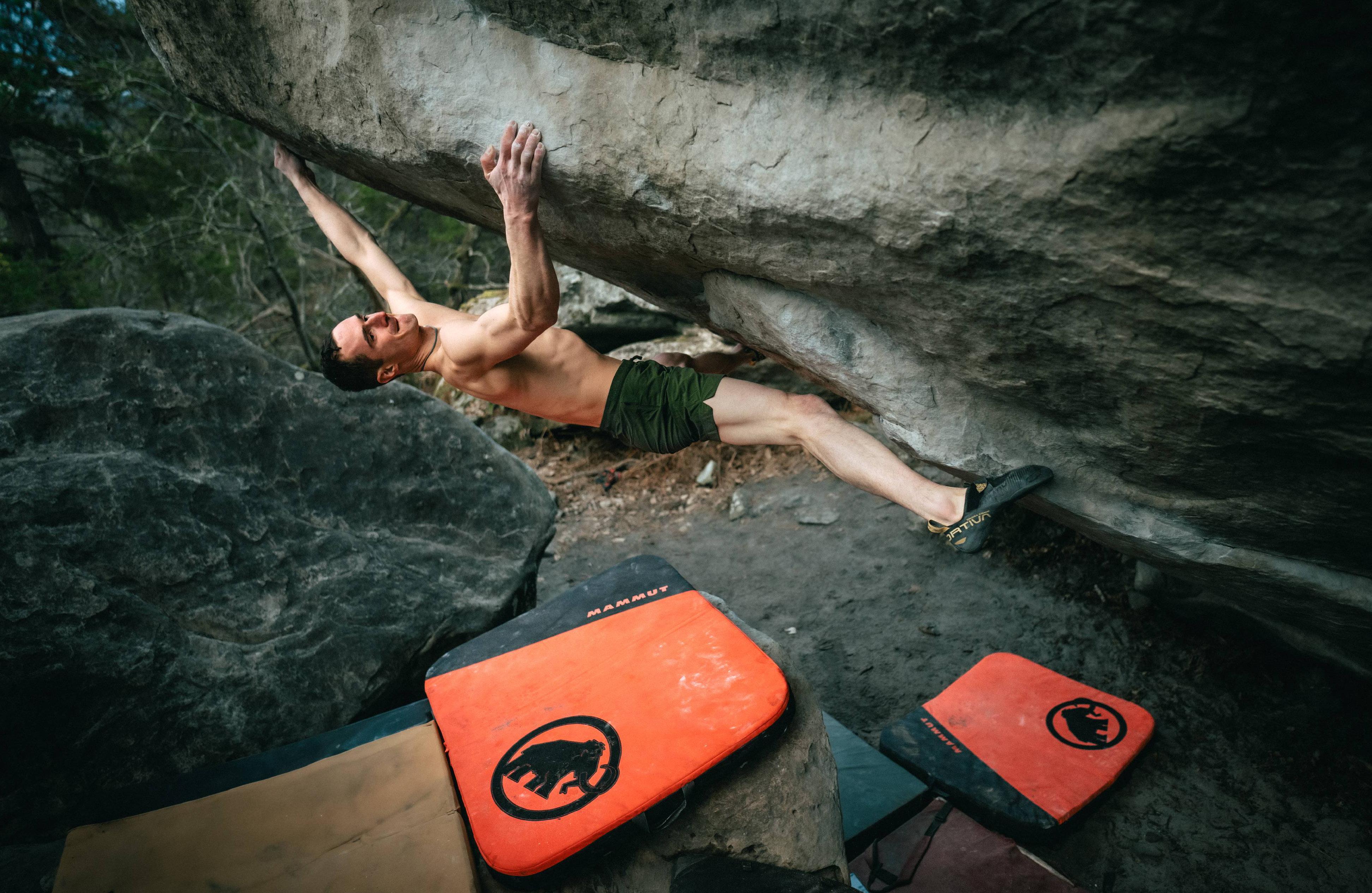
Photo by Bernardo Gimenez
Photo by Pavel Blazek
Photo by Petr Chodura
“The passion is still there, and it has never really changed. I still think climbing is the most cool, maybe not even a sport, activity or lifestyle that I can think of,” says Ondra.
There are three things that characterize Ondra: he isn’t confined to one climbing discipline, he flashes projects, and he’s vocal.
Bouldering involves short, powerful routes climbed without ropes, often ending less than 15 feet off the ground. Success depends on strength, technique, and only a few intense moves. In contrast, sport climbing takes place on taller routes, and climbers use a rope and special carabiners called quickdraws to attach to pre-placed bolts for protection. This type of climbing requires endurance, pacing, and the ability to read sequences over longer distances.
Trad climbing is like sport climbing, except there are no bolts already in the wall. Climbers have to place and remove their own protection while ascending, which demands a deep understanding of rock, risk management, and composure. Alpine climbing combines technical rock or ice climbing with mountaineering challenges like weather, navigation, and long approaches.
Typically, climbers specialize in one of these styles. They may dabble in many across the sport, but unlike Ondra, they aren’t world champions in more than one. Fellow climber and free soloist Alex Honnold has said that Ondra is the best climber in the world, and Ondra has plenty of proof to back up such a claim. He was the first man to win world championships in both bouldering and lead climbing.
The Dawn Wall of El Capitan in Yosemite Valley is the most unwelcoming route on the rock face and was once believed to be impossible to free climb. The wall is over 3,000 feet straight up, consisting of 32 pitches - a single pitch equivalent to a rope length, usually around 150 feet. There are more advanced pitches on this route than any other on El Cap combined. A smooth granite monolith of plutonic rock, carved during the last glacial maximum, El Cap is the premier big wall rock-climbing destination in the world. While the rest of the rock face had been bagged for decades, legends in the climbing community would rely on aid from equipment to hoist themselves up seemingly unclimbable sections of the Dawn Wall route.
American climbers Tommy Caldwell and Kevin Jorgenson were the first to make the ascent in January 2015, in 19 days. Caldwell started dreaming about the Dawn Wall climb in 2007, but it took the power duo of a world-renowned sport climber and an expert boulderer over seven years to learn and perfect the climb. At 16, Caldwell was a climbing prodigy who chased big climbs. In 2000, he was captured and taken hostage for six days with three others on a climbing expedition to Kyrgyzstan. In 2001, he cut off his left index finger in a table saw accident, and a year later, he was climbing routes harder than he had before losing the finger. He found solace in climbing and funneled all of his obsessive focus and trauma. Caldwell was chasing his ultimate limit, and after creating and sending five other routes on El Cap, the Dawn Wall was the biggest whatif. It wasn’t just a climb. It was all-consuming to the point that he put the rest of his life on hold.
In 2016, a 23-year-old Ondra, fresh off his world champion sport-climbing win, made his first trip to Yosemite. To Ondra, the Dawn Wall was the obvious route to tackle on his first voyage to the climbing mecca. With Caldwell’s route beta to guide him, Ondra knew the climb would prove challenging, but had always sought out the hardest climbs he could find. He spent about a month learning the Dawn Wall route.
The two hardest pitches are 14 and 15. In Ondra’s words, “There is nothing fun about them. They’re just pain.”
On his fourth day on the wall, Ondra had six failed attempts on pitch 14. Then, on day five, he completed both pitches back-to-back in one go and continued climbing. In an interview with National Geographic, Ondra explained how, “It was just as hard as I expected, but it took more time than I expected, because I was a total beginner to this style of climbing in Yosemite.”
He demolished the record time, finishing in just eight days. Unlike Caldwell and Jorgenson, who alternated leading pitches, Ondra led each himself.
Ondra is renowned for his ability to flash, successfully climbing a route on first attempt. Bouldering routes are graded on a scale from V0 to V17. While other boulderers spend days to weeks practicing, visualizing, and spending time on the route, Ondra doesn’t. He warms up on a couple of similar routes, gets a feel for the holds, and mimes the moves he’ll make on the boulder while still on the ground. And then he goes for it.
“Flashing boulders feels like a spiritual thing, because you only have one try,” says Ondra.
German climber Yannick Floché became the first man to flash a V15 in July 2025 at Foundations Edge in Valais, Switzerland. Ondra had been thinking about this new challenge for years, and had all the motivation he needed to match Floché. On November 11, 2025, Ondra flashed the same problem.
Then on February 25, 2026, back in Switzerland, Ondra flashed The Lion’s Share, another V15. After navigating the crux of the route, the seemingly calm, smooth, and deliberate demeanor melted away and the excited young man danced at the top, becoming the only climber to flash two V15 boulder problems.
“That’s like a radical performance for me, and I’m pretty happy. So now I feel like I can maybe move on and find some hard sport climb on my own,” says Ondra.
At 33 years old, Ondra knows that the window for his prime is closing, and he wants to tackle projects that won’t be sustainable for much longer.
He’s grappling with the idea of competing in World Cups and at the LA Olympics, but his age and the wear on his body give him pause.
“It’s not that there is nothing to lose," says Ondra. "I just feel like these might be the last few years when I can really push my limits in sport climbing and bouldering.”
While a decision about competing in the Olympics looms, Ondra sees alpine climbing as a good next step in his climbing journey.
“I have no interest in climbing Mount Everest,” says Ondra. “I’m more interested in finding hard rock faces on higher elevation peaks, big walls that are maybe 6,000 meters up. A wall in that environment, where I’m still using climbing shoes, bare hands, and a chalk bag. I would be very interested to bring all the sport climbing skills and level that I have into higher mountains, but that is more in the distant future.”
Now, Ondra lives in Italy with his wife, Iva, and 4-year-old son, Hugo, but plans to move back to his hometown, Brno, in the Czech Republic. Just like his parents long ago, Ondra brings Hugo with him to the crag, hoping to instill the same sense of freedom and passion he inherited.
After a lifetime of traveling to climb whenever and wherever he wanted, Ondra remains open to putting down roots once Hugo starts school. Since having his son, Ondra says the biggest change has been time management and efficiency — completing the increased family responsibilities as fast as possible, so he can climb and can get home to Iva and Hugo. But at his core, Ondra remains driven by climbing. In the coming years, he hopes to share more of his love of climbing with his son.
“Making a multi-pitch route when Hugo is older and climbing it together, thinking about it now, I almost have tears,” says Ondra.
- Original reporting by Sophie Fowler
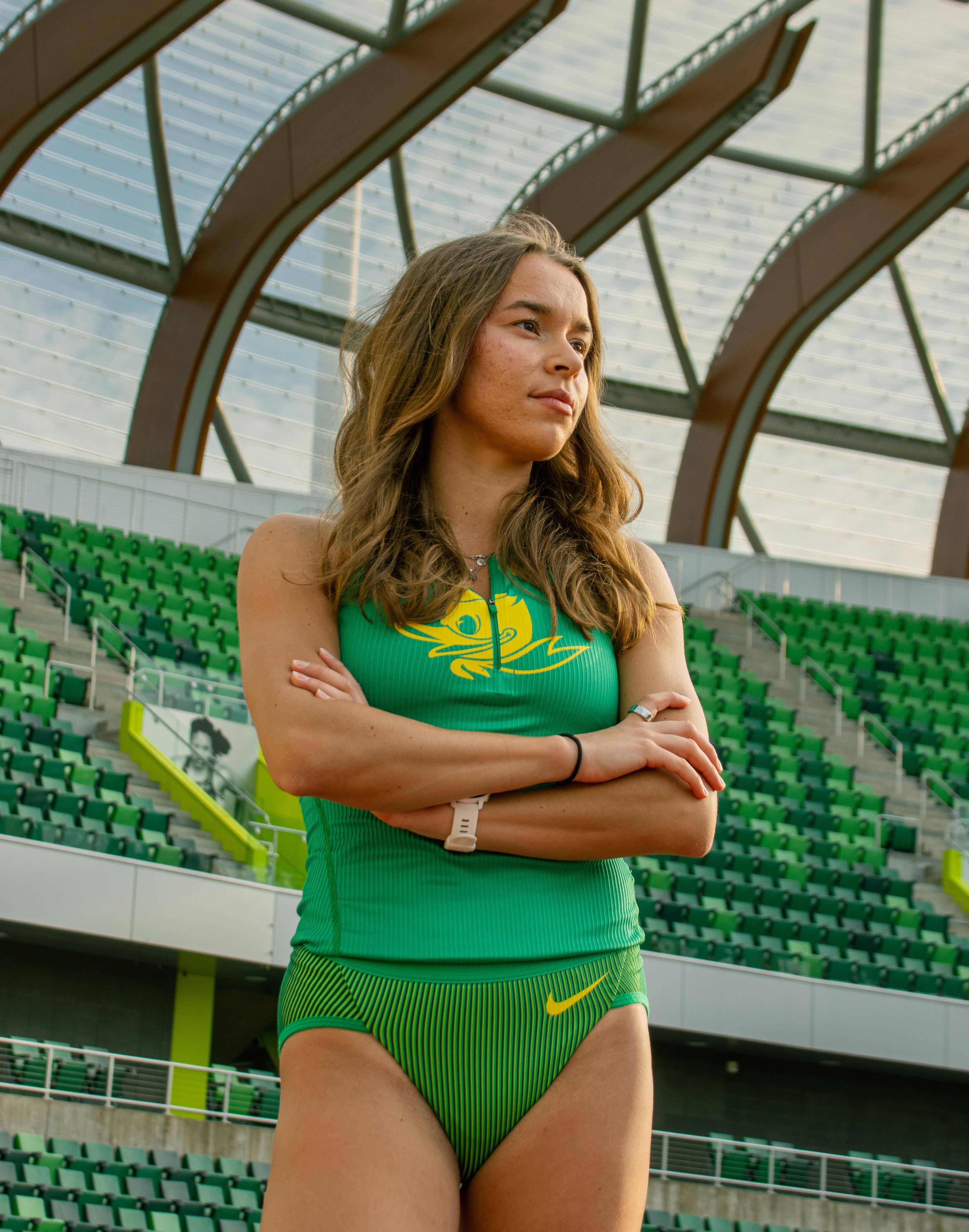
Photo by Russell Taber
Wilma Nielsen looks on at Hayward Field.
FINAL LAP
Three-time national champion Wilma Nielsen chases greatness in her final track season at Oregon.
By Gretchen Wackler
Seconds before the starter’s gun fires, nervous energy has University of Oregon middle-distance runner Wilma Nielsen swaying back and forth, hands on her hips, anticipating the familiar sound. Her bright yellow top and green bottoms stand out in stark contrast to the muted reds and creams of the Randal Tyson Track Center at the University of Arkansas. With the Oregon “O” plastered across her chest, there’s no mistaking who Nielsen represents at the 2026 NCAA Indoor Track and Field Championships.
For Nielsen, these seconds prove the most difficult part of the entire one-mile race. Her competitors consist of record holders, Big Ten champions, and athletes who have traveled from across the globe to share the starting line. But in this race, Nielsen is the defending champion.
The flash of cameras illuminates the track as the crack of the gun finally breaks the anticipatory silence filling the cavernous room. The indoor mile consists of eight laps around a 200-meter track, and the group starts cautiously, the pace slow. Indoor track requires strategy, making early positioning essential and passing difficult. Stuck in the middle of the pack, Nielsen’s chance for a repeat begins to slip from her grasp.
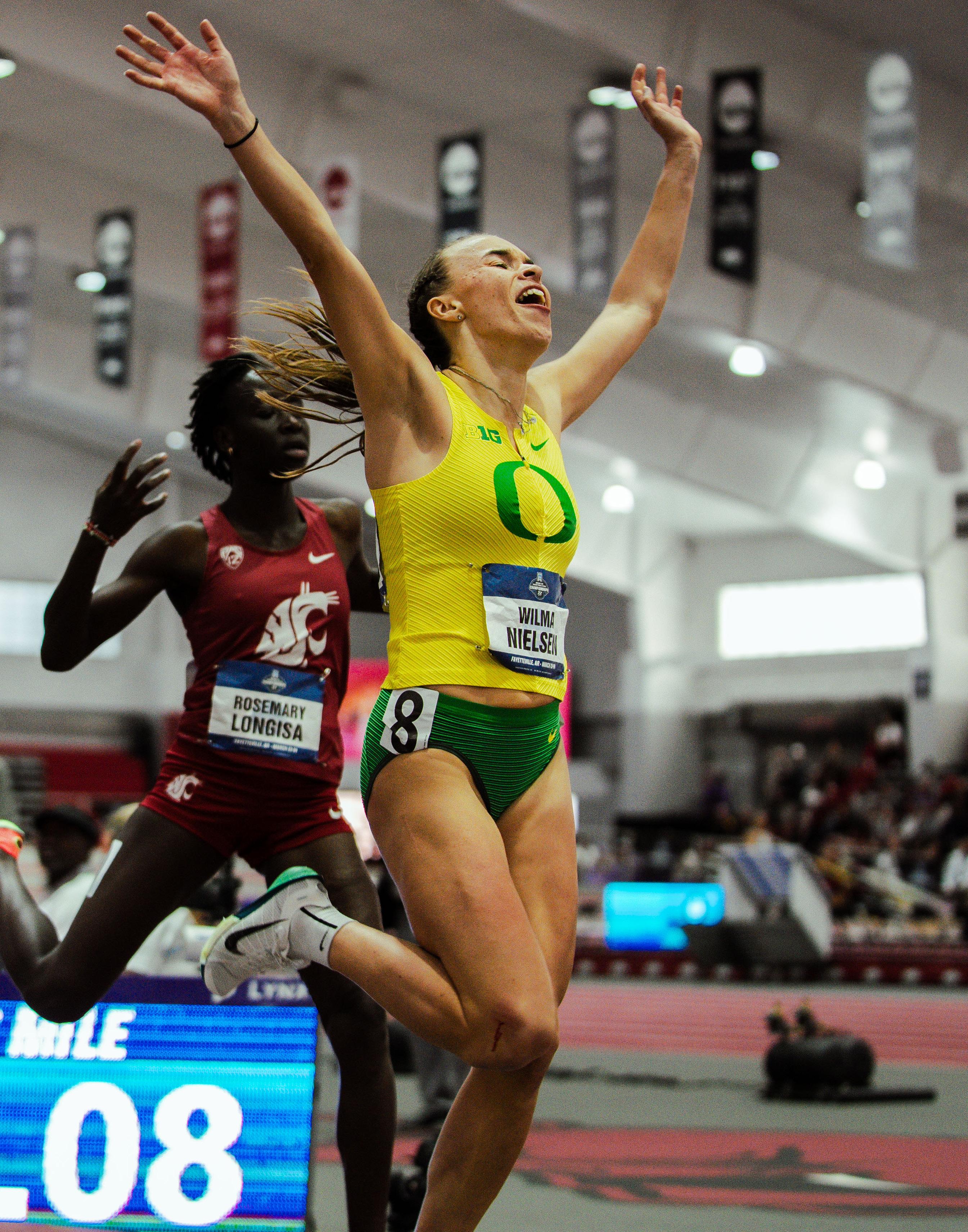
Finally, with just over a lap remaining in the race, something breaks, and all eight competitors kick for the finish line. Nielsen hugs the inside curve of the track, steadily advancing. When the final lap begins, Nielsen sits in third with a mere 200 meters remaining to defend her title. On the final curve, she passes on the outside and bursts through the last 50 meters of the race, leaning forward, arms pumping. In the final stretch, she sneaks a glance at her competitors, knowing her victory is secured.
Nielsen crosses the finish line 15-hundredths of a second before her competitors. She screams, shocking even herself. Relief instantly floods her body. The weight of her own expectations disappears. She grins and shares a hug with teammate Juliet Cherubet before collapsing onto the track and dropping her head into her hands. For the second time in as many years, the mile belongs to Nielsen.
Born 5,000 miles from Eugene, Oregon, on the west coast of Sweden in the city of Gothenburg, Nielsen had a built-in competitor since the day she was born— her twin sister, Julia. With the constant comparison that comes with sharing nearly every aspect of life, it would have been easy for Nielsen and Julia to become each other’s greatest adversaries. Instead, they became each other’s greatest support.
The sisters took inspiration from their older brother, Simon Nielsen, a javelin thrower, and set their sights on the track. Despite their brother’s general indifference to the sport, the twins immediately thrived. In their early years, Nielsen often trailed her twin sister, crossing the finish line on Julia’s heels. The girls’ father, Jimmy Nielsen, an avid track fan, acted as coach during their childhood. When they were small, he sat his daughters down and stressed the importance of focusing inward.
“You can only control your own effort,” Jimmy told his children.
Their efforts led the twins to Bradley University. During her freshman year, Nielsen raced at the historic Hayward Field for the first time at the NCAA Outdoor Track and Field Championships. For runners around the world, the allure of the track is comparable to that of an eighth wonder of the world.
For over 100 years, Hayward Field has acted as a beacon of prestige for track athletes. As the notoriety of TrackTown, USA has grown, Hayward has evolved to meet it. As of 2026, Hayward has hosted five consecutive US Olympic Team Trials. The university’s track and field program has produced 112 Olympians, who collectively boast 27 Olympic medals.
Seeing the stadium for the first time, Nielsen sat in awe. Bradley University, a Division I program located in Peoria, Illinois, had a team culture that Nielsen adored, but facilities that were often inadequate, forcing the team to practice at a local high school. Hayward was a different story.
Instantly, Nielsen knew, “This is the place I want to go.”
The day didn’t end with a victory for Nielsen, but she did start following the University of Oregon on Instagram. In the weeks that followed, her social media feed seemed to whisper like a kind of digital siren song.
After earning her degree from Bradley, Nielsen transferred to the University of Washington, thinking it would elevate her track career. After the team culture wasn’t what she expected, and Julia completed her degree at Bradley, the twins came to Eugene.
Now in her final year as a graduate student, Hayward Field hasn’t lost its allure — even if practicing in the stadium has become second nature to Nielsen. Her fingerprint even unlocks the doors onto the track. But wearing the “O” came with unexpected changes.
Her first competitive mile was almost an accident. When she didn’t get a spot in the 800-meter race at a meet in January 2025, she decided on a whim to try the mile instead. In the scope of her nearly two-decade career on the track, Nielsen’s mile experience was a blip, but on a national stage the transition to a longer distance provided a winning formula. Now, a national championship appearance is no longer a happy surprise. It’s expected.
Though she never saw herself as a miler, Nielsen quickly grew to appreciate its merciful nature. The 800 proves unforgiving, making errors costly. Nielsen felt it firsthand at the 2023 European Athletics U23 Championships. She intended to win, but after running laps two and three too wide, she ended the day in a heartbreaking fifth place.
Just two weeks before the 2025 NCAA Indoor Championships, Nielsen decided to run the mile, not confident in her ability to best her competitors in the 800.
On the morning of the event, Nielsen radiated confidence. Jimmy and Magdalena Nielsen, who had traveled across the world to see their daughter run, attempted to manage her expectations.
“Great, but being in the fight is really good,” they told her.
“No, I’m going to win,” Nielsen told her parents. “It just came to me when I woke up.”
To her credit, Julia shared her sister’s confidence. Watching the race over FaceTime, cradled in the shaking hands of their mother, Julia was certain of Nielsen’s victory. Less than two months after her first competitive attempt at the mile, Nielsen finished the day a champion.
“I always see pressure more as a privilege [because] people around you believe in you,” says Nielsen. “They know you can do great things.”
The Swedish athlete was convinced that the 2025 season would be her final as a collegiate athlete. With a promising spring season approaching, she prepared to finish her time as a Duck on a high note and finally win a race at Hayward Field. Julia was graduating, and Nielsen didn’t intend for them to be separated.
Then, mere weeks after her national championship victory at the indoors, Nielsen was stopped in her tracks by a stress reaction in her femur. She spent the next eight weeks as a spectator. With no running to fill her days, Nielsen watched her teammates pick up victories in front of a home crowd.
Accepting the reality of her injury was a Herculean task. Even saying the words out loud proved near impossible. Running had been a part of Nielsen’s life for nearly two decades, and the weeks off were agonizing. Her only solace came in the form of Julia, who also missed the spring season due to her own injury.
As Nielsen sat in the seats at Hayward, contemplating her future, she kept coming back to her own self-improvement. Nielsen’s burning desire to win the NCAA Outdoor Track and Field Championships at home drew her back for a final year in Eugene.
Now, Nielsen is chasing records. In February of 2026, she found herself in Boston and on the start line next to American indoor mile record holder Elle St. Pierre. Nielsen’s only goal for the day was to stay as close to St. Pierre as possible. The race was 4 minutes and 21 seconds of pure pain, but she shattered her personal best in the event by over two and a half seconds. She also put up the second-best time in NCAA history and became a new Swedish record holder.
But, like everyone else on the hunt for grandeur, Nielsen’s greatness has demanded sacrifice. In the five years she’s spent an ocean away from her home, Nielsen has missed birthdays, milestones, and final goodbyes with family and friends.
She has watched her eldest siblings become parents almost entirely over FaceTime. Her niece and nephew, whom she loves deeply, look completely different each time she sees them.
With Julia now back home in Sweden, the twins often go months without seeing each other. When she’s home, spending time with her family is not something Nielsen takes for granted.
As Nielsen gears up for her final collegiate outdoor season, that sacrifice is always in her mind. Nielsen is already a star, but further greatness is within her grasp.
Her goal is to bring home gold in the 1,500 at the 2026 NCAA Outdoor Track and Field Championships. On the way, though, she plans to hunt a few more records and carve a place in the history books with the rest of the legends of Hayward Field.
- Original reporting by Sophie Fowler
by
Photo
Rian Yamasaki
Wilma Nielsen wins the women’s mile at the 2026 NCAA Indoor Track and Field Championships.
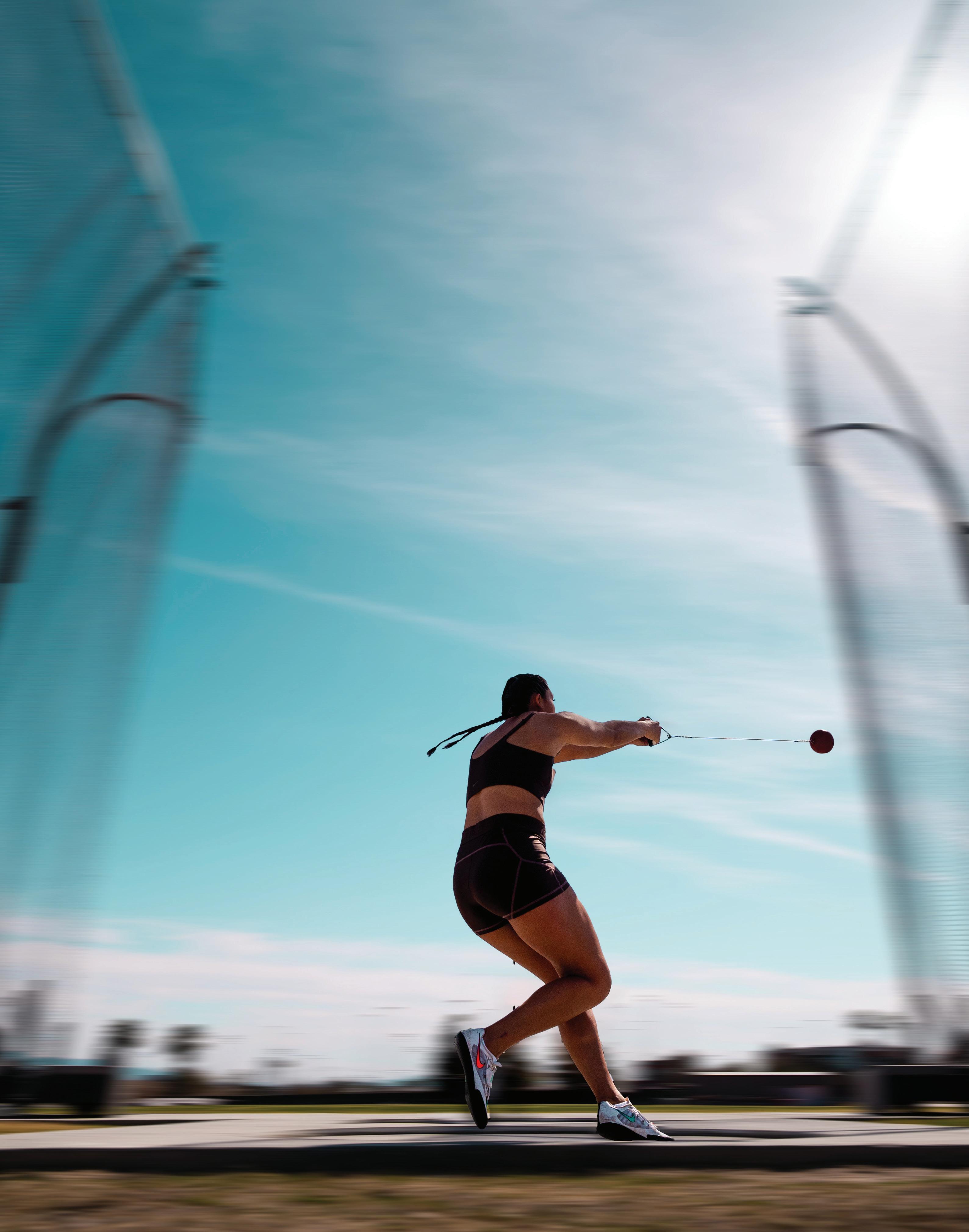
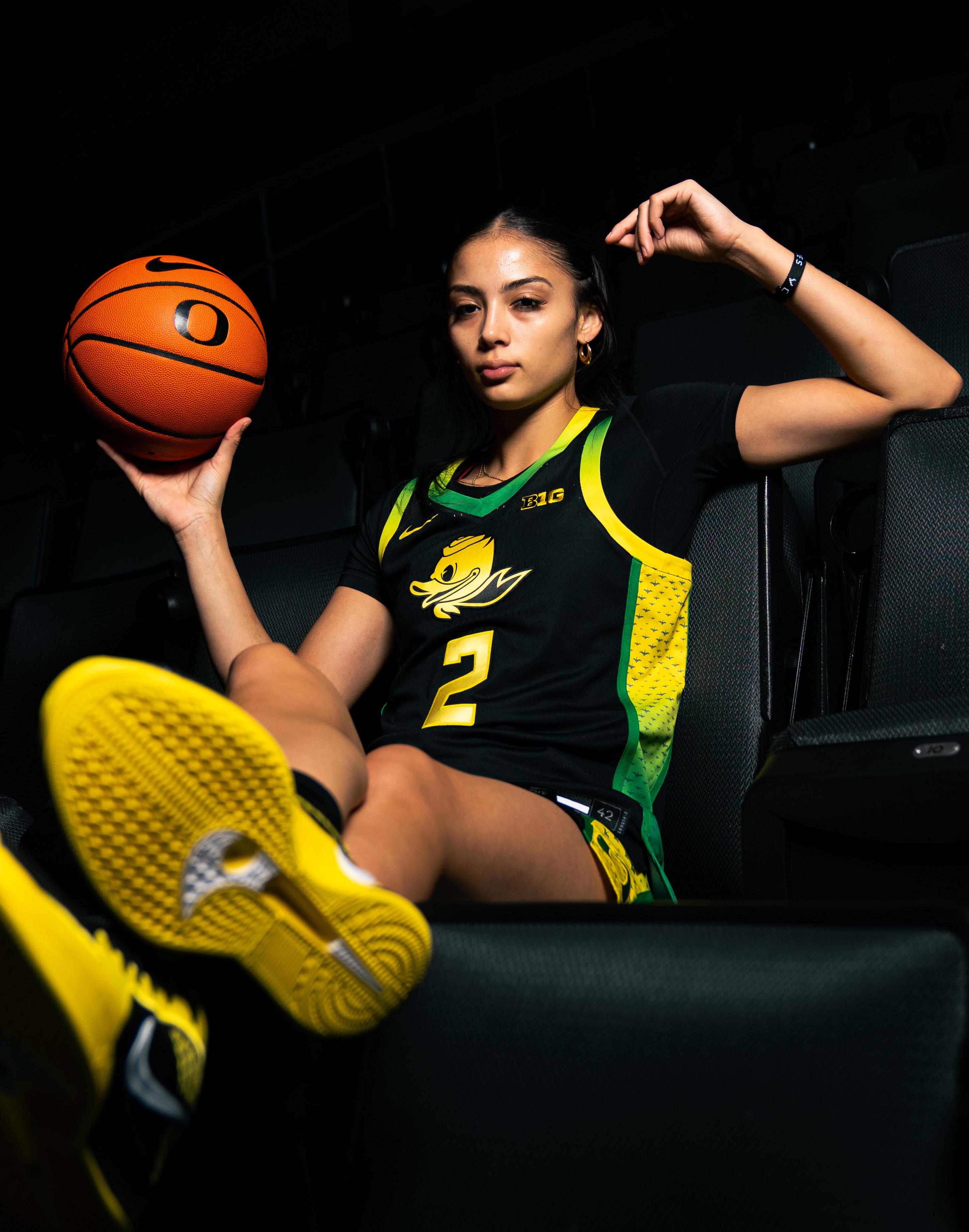
Janee’ Kassanavoid practices the hammer throw in Sarasota, Florida.
Holding onto the Dream
Hammer thrower Janee' Kassanavoid reconnects with her Comanche roots while preparing for a 2028 Olympic run.
By Erin Morrison
Photos by Alec Handlin
Atall, looming cage composed of 30-foot-tall metal posts has taut netting connecting each post, creating a narrow channel that opens out into a sea of meticulously kept grass. In the center sits a seven-foot white ring painted on the light tan concrete. It’s a hot day in late June at Hayward Field in Eugene, Oregon. Janee’ Kassanavoid steps into the ring. Her sleek, dark hair is tied back into two French braids with not a single flyaway.
She carries an 8.8-pound metal ball attached to a three-foot-long metal wire into the ring. The metal handle at the end, designed to withstand immense rotational forces, is rigid enough to rip off all the skin from the palm of a hand or an unlucky finger. With the toes of her shoes only a couple of centimeters away from the backside of the ring, she brings the hammer in front of her body and clasps it with both hands.
Kassanavoid swings the cannonball to the right, arms straight. Then across her body, sending the ball up over her head on the left side. Feet planted, arms fully flexed, quads and hamstrings engaged, she twists the ball over her head two times. Then she starts to spin. The ball seems to drag her twirling body across the ring, closer to the window in the netting with every revolution. Braids swinging wildly behind, Kassanavoid spins six times and lets go with a grunt. The hammer soars through the air, its handle trailing like a comet, as she finishes one more spin without the ball.
The hammer slams into the wall of the cage and drops to the concrete with a resounding crack. Kassanavoid fails to earn a spot in the 2024 Summer Olympics.
Kassanavoid has dedicated more than one-third of her life to the hammer throw, the track and field event believed to have originated in Ireland around 2000 BCE. Though her sport of choice started across the globe, Kassanavoid’s roots are in the United States. A member of the Comanche Nation, Kassanavoid found her culture through her sport. With her sights set on making the 2028 Olympics and a new training strategy showing the promise of success, Kassanavoid remains focused on two things: the hammer throw and her Comanche Nation community.
Growing up in Lawson, Missouri, isolated on a piece of rural property, Kassanavoid’s household focused on sports, with her three older siblings acting as her teammates. Ron Kassanavoid wasn’t just Dad, he was also a coach with high expectations. The sentiment in the household: do everything, be amazing. Ron died of cancer when
Kassanavoid was just 8 years old. Kassanavoid lost a parent and the tether to her Comanche Nation culture. Athletics provided a positive outlet and that allowed the family to work through their grief while also bringing them together.
As the youngest, Kassanavoid always swung up onto her older sisters’ basketball and softball teams. In high school, Kassanavoid lettered in volleyball, softball, basketball, and track and field. During her senior year, Kassanavoid competed in almost every throwing and jumping event. With no throws coach, she still managed to throw a 39-foot shot put from a standing position.
Recruited to throw at Johnson County Community College in Overland Park, Kansas, Kassanavoid’s initial focus was academics, not athletics. Throwing was only supposed to provide the stepping stone to the rest of her life.
At 18, she picked up a hammer for the first time. In a matter of months, Kassanavoid took first at the National Junior College Athletic Association Outdoor Track and Field Championship. Greg Watson, the head throwing coach at nearby Kansas State University, offered her a spot on the team. Playing catch-up in her sophomore season, Kassanavoid put in extra reps and caught up to her peers, placing ninth at the 2016 NCAA Division I Outdoor Track and Field Championship. She placed first in the hammer throw at the Big 12 Outdoor Championships in 2017 and 2018.
At Kansas State, Kassanavoid found herself immersed in a diverse group of athletes from all over the world. Her peers seemed proud, enriched, and in tune with their cultures, but Kassanavoid couldn’t say the same. A decade after losing her dad, she sought out her heritage.
“I knew I was Native American but I didn’t know what that meant,” says Kassanavoid. “I feel like people don’t understand in modern America that we [Native Americans] are still here today and we very much are alive.”
After graduation, Kassanavoid set her sights on the Olympics, choosing to stay in Manhattan, Kansas, and continue training with Watson. Only after all her plans were solidified did she learn Watson had taken a job at Louisiana State University. In the span of a couple of weeks, Kassanavoid went from practicing with a team and receiving in-person coaching to being alone in a field, sending videos to Watson and receiving coaching virtually, all while working 60 hours a week at a full-care housing facility for people with disabilities.
After two years of competing unattached, Kassanavoid made her first U.S. Olympic Trials appearance in 2021 at Hayward Field, surprising the competition with a third-place finish in the qualifying round. Olympian Gwendolyn Berry came out in round one of the finals with a 73.5-meter throw. Five centimeters short, Kassanavoid couldn’t match it. She finished fourth, just missing out on the Olympic team.
From then on, Kassanavoid consistently ranked as one of the top hammer throwers in the world. By signing with Nike, Kassanavoid was officially a professional athlete. At the same time, she rapidly built a global social media presence, reaching up to 609,000 followers on TikTok and 52,000 on Instagram by posting silly wipe-out videos from training sessions, dramatic stills of her handling the hammer with ease, as well as messages of support for Indigenous communities.
“Because I’ve been able to throw a heavy ball far, it’s allowed me to have presence elsewhere and to share my true purpose beyond sport,” says Kassanavoid.
In 2022, Kassanavoid made history by winning a bronze medal at the World Athletics Championships, becoming the first Indigenous woman to win an international medal. That same year, she attended her first Comanche Nation event, the Tribal Nations Fair in Lawton, Oklahoma. Up until that point, Kassanavoid had never been to a powwow, visited the Comanche Nation homeland, or had the privilege to live near her community.
Seeing native dancing in person for the first time, Kassanavoid stood transfixed. Moved to tears, she couldn’t help but feel gratitude. When it came time for a meet and greet, Kassanavoid imagined being tucked away at a folding table in the corner. She was caught off guard when girls of all ages approached the table with tears streaming down their faces.
Every year since, Kassanavoid has returned to the fair with her siblings. They laugh, cry, and embrace traditions that Ron could not fully teach them.
In the fall of 2024, Kassanavoid tore her labrum in her left shoulder during a training session, her Olympic dream suddenly in jeopardy.
The hammer throw rips the body apart, hips and shoulders uneven because throwers only turn one way, weight unevenly distributed, all the strain attacking the joints. Unlike in college, she did not have the support of athletic trainers or a full-time staff.
She trained through the injury, without realizing the full extent of the damage, focused solely on the 2024 Olympic Trials. Riding the high of back-to-back world championship medals, Kassanavoid stepped into the ring as an experienced thrower. Injured or not, she sought redemption.
“The Olympics hold so much weight for you to be valid in your sport. It gives credibility that you are the best of the best,” says Kassanavoid. “In that moment, it literally slipped from my fingertips.”
She finished in sixth, the hammer slamming into the cage for half her throws.
Kassanavoid contemplated the loss. At 29, she had no real career outside of athletics, no savings, and no clear next step, but she decided to make a change and start over completely. Kassanavoid and her longtime coach, Watson, parted ways and she moved to Florida. Instead of having a single coach dedicated to analyzing and refining her throwing technique, she shifted to a two-person coaching team comprising a chiropractic performance coach and a strength and conditioning coach.
Kassanavoid focused on rebuilding the fluid athleticism she had growing up. After a decade of throwing the hammer, Kassanavoid’s body felt worn out, but with the finish line of her career on the horizon, the Olympic dream still possible, she’s already hit new personal records in practice.
“Janee'’s superpower is her athleticism,” says Dr. Eric Keating, Kassanavoid’s chiropractic performance coach. “Our job is to help her maximize athleticism and apply it to throwing.”
Keating and Aaron Riekenberg are Kassanavoid’s new dream team. They don’t mess with her throwing technique, but rather work together to identify structural issues in Kassanavoid’s body.
On the rare occasion that Kassanavoid, Riekenberg, and Keating are in the same state for a training session, the two coaches sit side by side along the gym wall, intently staring and sharing observations as Kassanavoid simultaneously twists and flexes her body. They might note odd movements in the hips, the collapse of an ankle, or any uneven weight distribution.
If a movement isn’t looking quite right, Keating does some mild physiotherapy, checks for any muscle issues, and then works with Riekenberg to create a new workout plan focused solely on the base-level muscle group. By bulking the muscles and then conditioning them for a throwing environment, the team can prevent wear and tear caused by never-ending repetitive movements.
“This first cycle has been to try to make her a more resilient athlete. Not necessarily break everything down and build it back up, but just find the areas where there might be some leaks that need to be fixed,” says Riekenberg. “Now it’s fun because if those leaks are reinforced, we can see how much they can actually hold.”
Keating and Riekenberg have worked with several professional track and field athletes, NFL players, and collegiate athletes. Most professional throwers have a medical team and a throwing coach. But Kassanavoid knows how to throw.
“She makes it easy. I have done this with lots of other athletes, and a lot of them are not diligent. They don’t record the things that need to be recorded for later referencing,” says Riekenberg. “She shows up, she works hard… and from there, together, we can build a structured program.”
With the help of Keating and Riekenberg, Kassanavoid looks to build resilience while embracing the challenges ahead. Instead of workouts with lots of weight and few reps, training is “simple and sinister.” By toeing the line mentally and physically, Kassanavoid hopes to develop a more in-tune athletic intelligence.
Riekenberg pulls out Kassanavoid’s 2024-25 training binder. Every week’s workout plan, updated data sheets, and notes on how Kassanavoid felt during certain training sessions are meticulously organized with scientific analysis at the forefront. Slipped in the clear sleeve on the front of the binder sits a page with four words: Nʉmʉnʉʉ (the people), Today, Tomorrow, Forever.
Riekenberg smiles as he turns to pages with hand-drawn hammer cartoons on the margins of tables or on the back of a rare blank page surrounded by phrases like “Here we come!” and “Dare to rise.” Still flipping through pages, Riekenberg relays how he loves to shift Kassanavoid’s schedule to accommodate her participation in community outreach events.
“The fact that she is able to go, and has continued to do so, highlights the different parts of her heart that a lot of other athletes might not necessarily have,” says Riekenberg.
This March, Kassanavoid was announced as the newest board member of the Sam McCracken Youth Project, a non-profit built around supporting Indigenous youth across America. The more she has learned about her Indigenous identity over the years, the larger the drive to give back.
Wearing her hair in braids at every competition, she pays homage to the people and hopes to drape the Comanche Nation flag across her shoulders on the Olympic podium in LA. Regardless of the outcome of the 2028 Olympic Games, Kassanavoid has left her mark, breaking barriers as an Indigenous woman and inspiring girls to be strong, lead by example, and show the world the beauty of the hammer throw.
“I know if I retired yesterday or today or tomorrow, my presence would still matter,” says Kassanavoid.
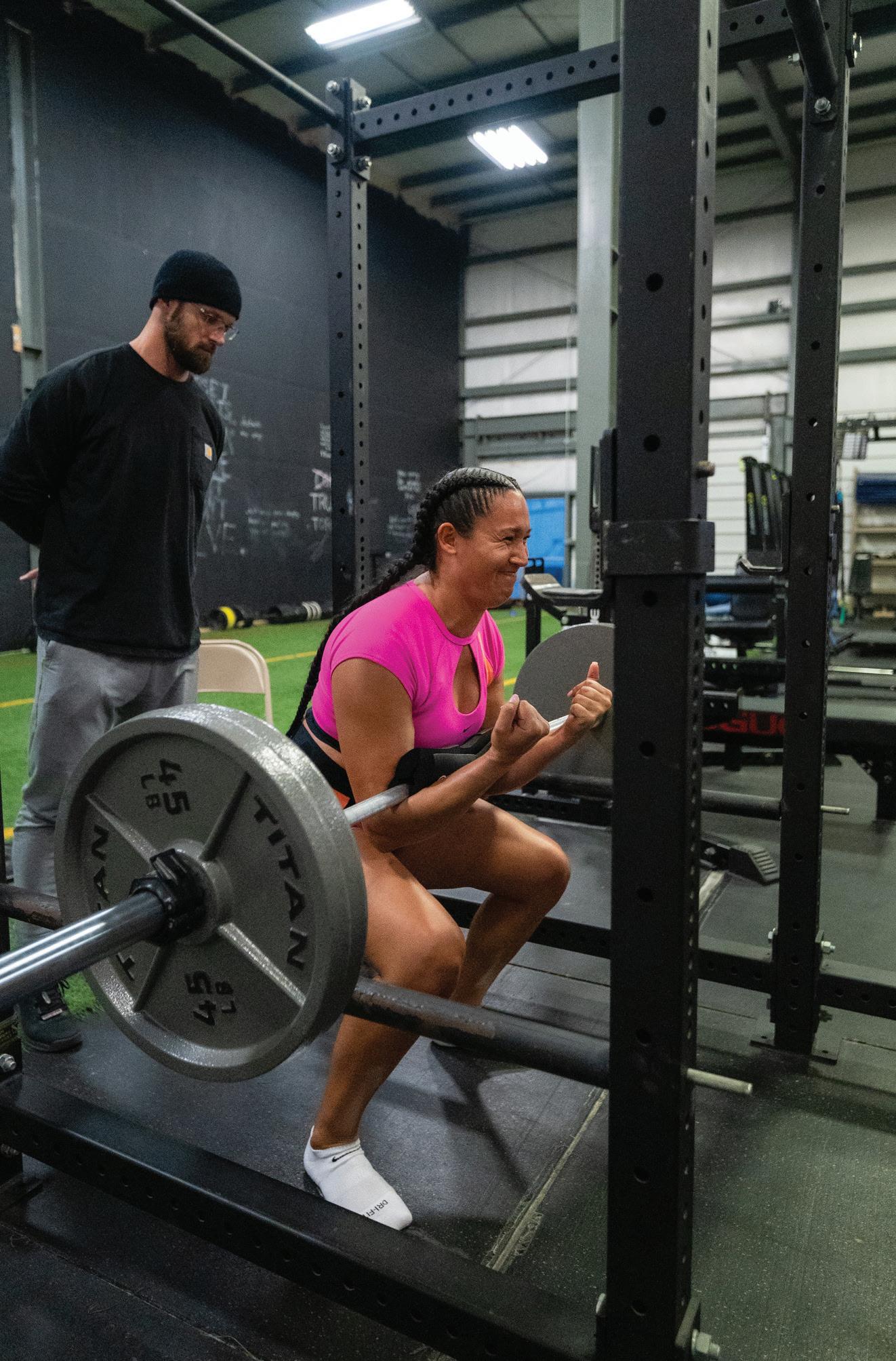
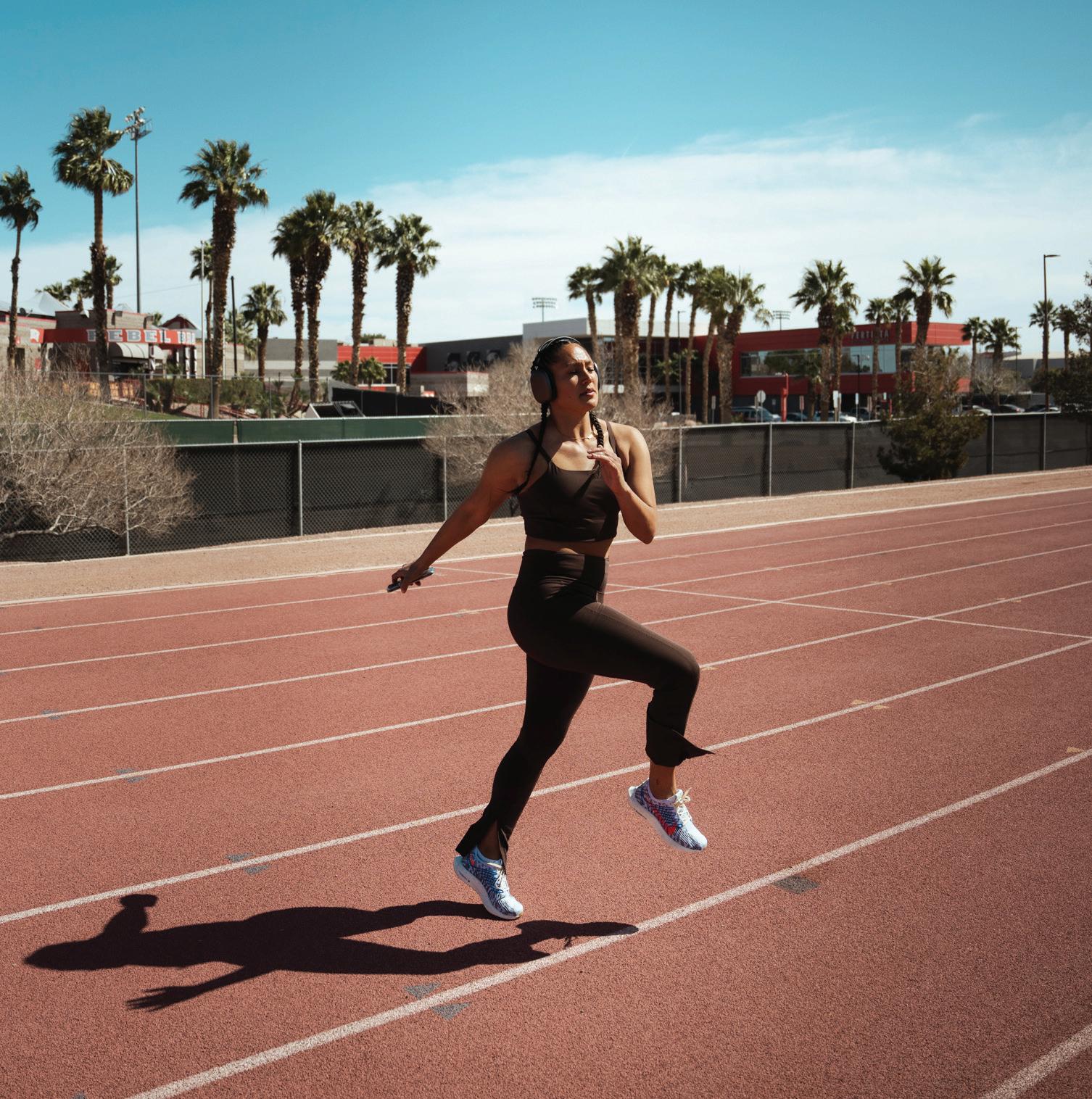
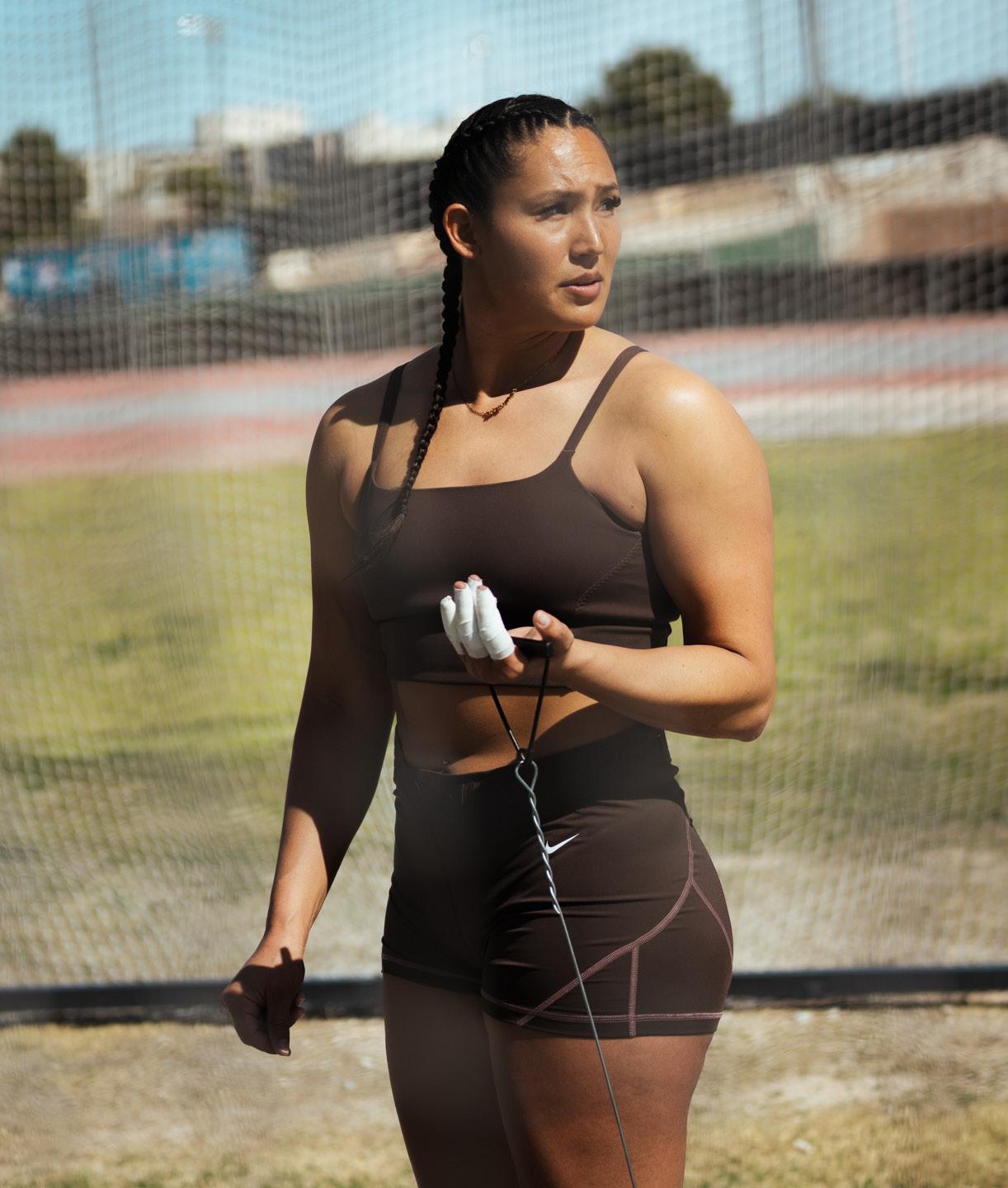
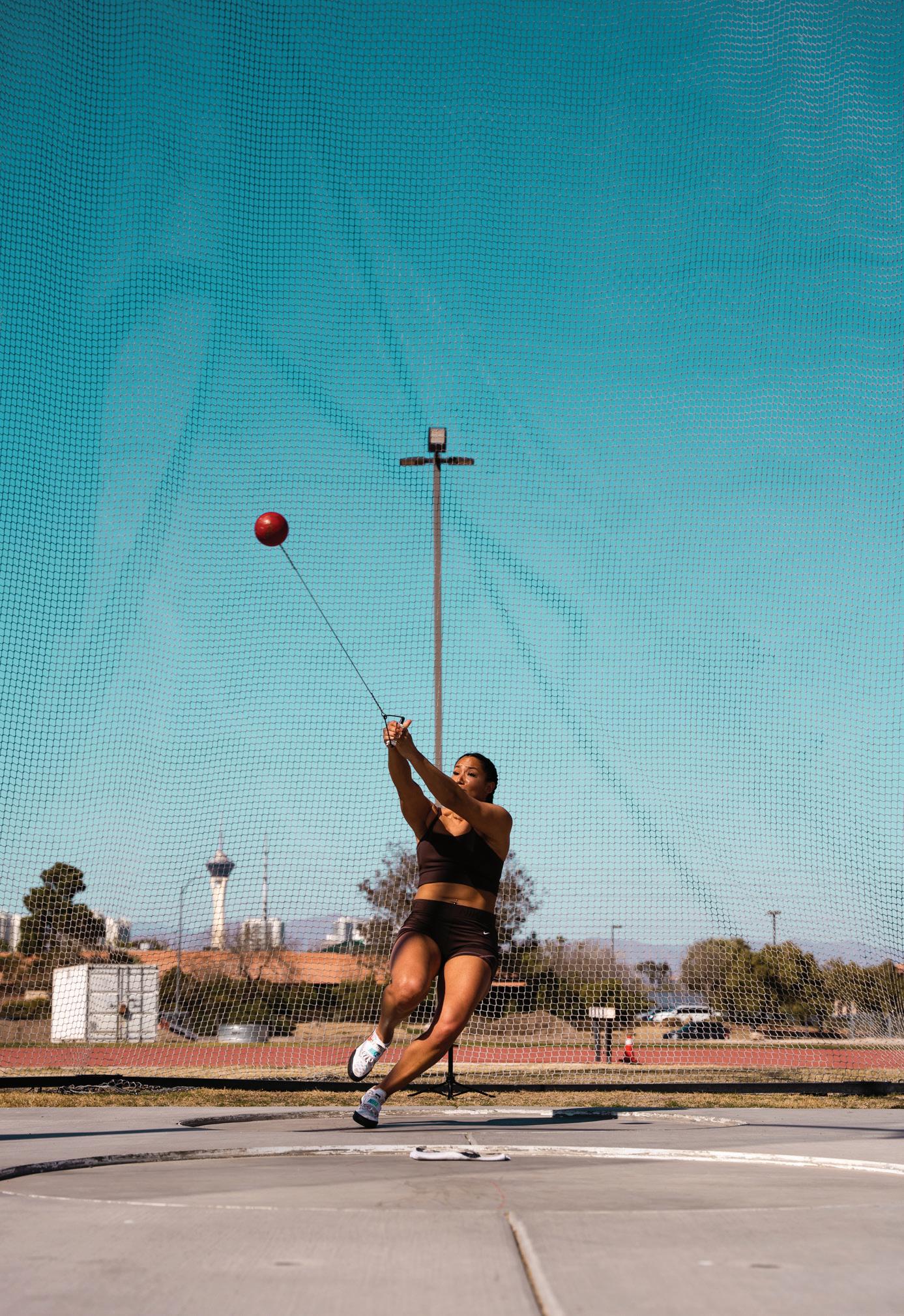
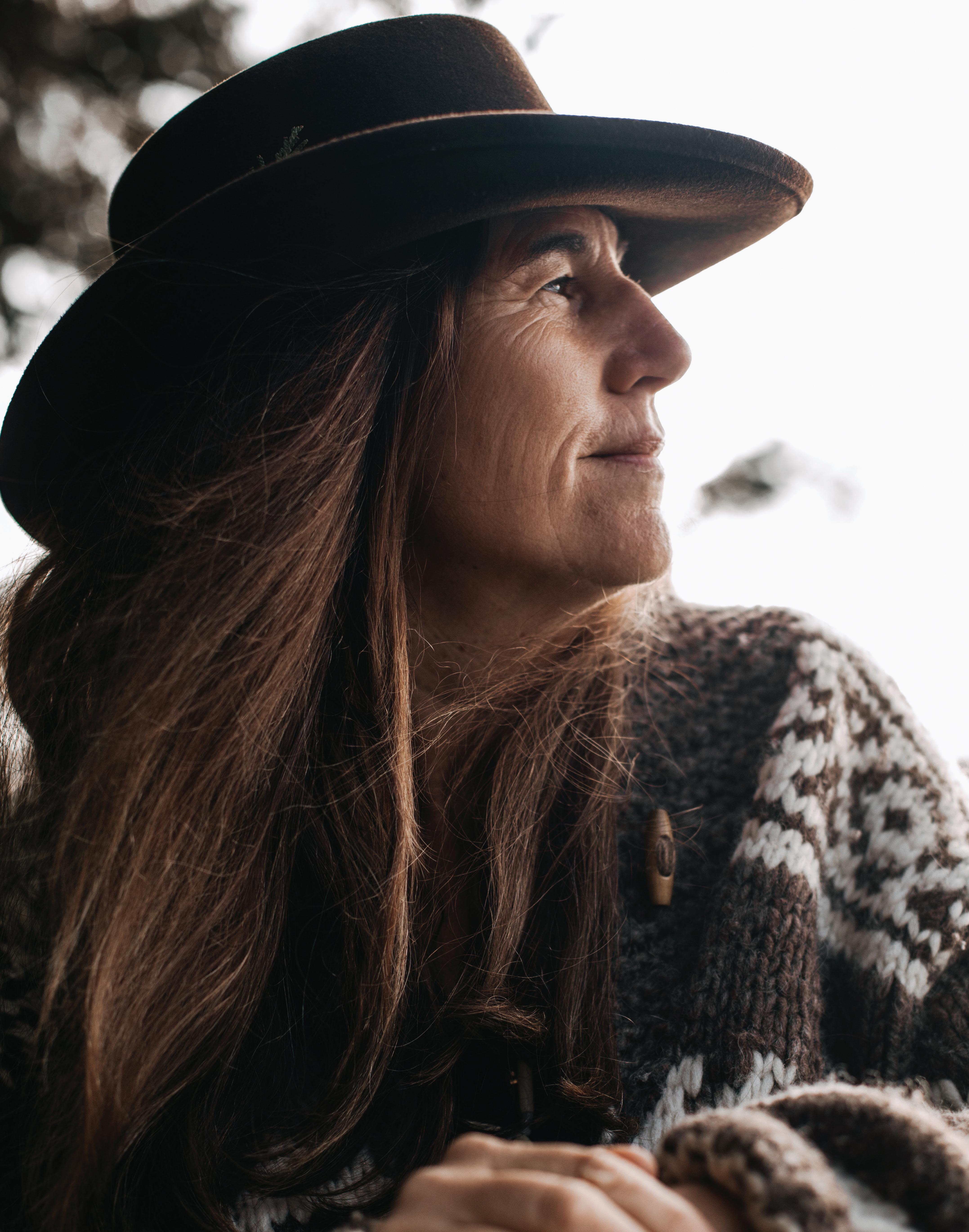
Photo by Chelsea Staver
IH n Search of ope
Documentarian Dianne Whelan weaves connection across 14,900 miles of Canadian wilderness.
By Gigi Roddick
Surrounded by a couple acres of matted green forest and birdsong lies Dianne Whelan’s home, only a few miles from the bobbing marina ramps and lichened docks that dot the Strait of Georgia in British Columbia, Canada. From the coastline land extends in ripples of sun-bleached peaks and shaded gullies, into which Whelan descends to escape the day’s heat.
She travels through ancient trees and thick thatchings of ferns, joined by her goldendoodle, Cedar. Together they skirt round the small lake abutting her property, stopping briefly so Whelan can recline on a warm rock to meditate. Eventually the pair reemerges from the treeline to a sunny backyard and a clear blue sky. Whelan heads for her rustic barn-turned-studio and Cedar follows, contentedly flopping onto the smooth stones surrounding its wood-burning fireplace.
Inside, the small building bursts with ephemera from Whelan’s storied career — stacks of spiral notebooks penned cover to cover, a paddle carved with the image of a hummingbird, a fridge magnet of Johnny Cash. High on the wall is a poster for her latest documentary, 500 Days in the Wild. It shows the outline of Whelan with a backpack and a straw hat, backlit by a roaring orange sunset. The film followed Whelan’s 14,900 mile journey on the Trans Canada Trail. Hiking, biking, snowshoeing, and canoeing, she crossed between the Atlantic, Arctic, and Pacific ocean in six years.
The thread of her travels doubles back over thin strips of land where she portaged her canoe and gear over muggy wetlands. To the north, it spills out with the silt of the Mackenzie River, where Whelan paddled over 1,200 miles to reach the Arctic. Oftentimes, the thread spools leisurely around the homes of strangers who offered her something warm to eat, or a place to rest along the way.
Upon closer inspection, Whelan has built a web extending decades beyond the markings of the Trans Canada Trail. Before it, in 2009, she joined Canadian rangers snowmobiling through the northern desert of Nunavut for her documentary This Land, and in 2010 she spent a climbing season at 17,598 feet to document the culture of Everest in 40 Days at Basecamp. Even then, on the slopes of the world’s highest peak, a thread cut back through continents and time to a photo, soft in the creases, of Edmund Hilary and Tenzing Norgay that an adolescent Whelan stashed in her copy of The Hobbit.
Trace the thread further to Whelan, age 5, adventuring through her backyard. In the wet carpet of British Columbia rested ponds, and in them floated pearly clouds
flecked with the very minutiae of development. During the temperate heat of late summer, beneath Whelan’s peering reflection, these eggy clusters hatched into tadpoles and from tadpoles became frogs. Each day spent crouched over the muddy water revealed more inexplicable development — the firming of back legs from pulpy green flesh, the magical opening of big black eyes.
“I’m a witness to even the smallest things showing incredible intelligence,” she says. “Watching a spider weave a web, watching a caterpillar become a butterfly. These are all incredible things. So for me, all life is sacred.”
Her version of sacred does not involve peddling religious pedagogy, though occasionally her reverence mirrors that of a preacher. Her free spirit isn’t embellished with tie-dye, but rather recognizable by a beaded eagle feather and an email sign-off instructing recipients to “shine on.” She’s undeniably hearty. As a baby, her mother used to bundle her up in a stroller and leave her on the porch of their Toronto home. Even in the dead of winter, putting her outside was the only way to stop her from crying.
Her adolescence blossomed with wonder and exploration. At school she excelled, completing high school before earning a degree in philosophy and political science from McGill University. But her law school plans changed when she came out as gay in her early 20s. The experience was difficult and cast much of her life into limbo. She turned to nature, mountain biking down to Mexico to increase her health and formulate a new path. She settled on studying journalism at Langara College, largely thanks to her love of writing.
Ultimately, it was photography that caught her eye. She first picked up a camera to cover an anti-war rally for a reporting assignment. Though the task was a basic requisite, as soon as Whelan tucked herself behind the lens, she relinquished her grasp on time and space entirely.
“Eight hours went by, and I thought it was like ten seconds,” she says. “I’d dropped into the zone where I suddenly found myself completely enraptured by what I was doing, which was basically narrative and visual storytelling. I loved it — I just got addicted to it.”
Whelan chased the high up to the ski town of Whistler, B.C., dropping out of college a month before graduation. Working as a feature writer, photographer, and darkroom technician for a community newspaper, the Whistler Question,
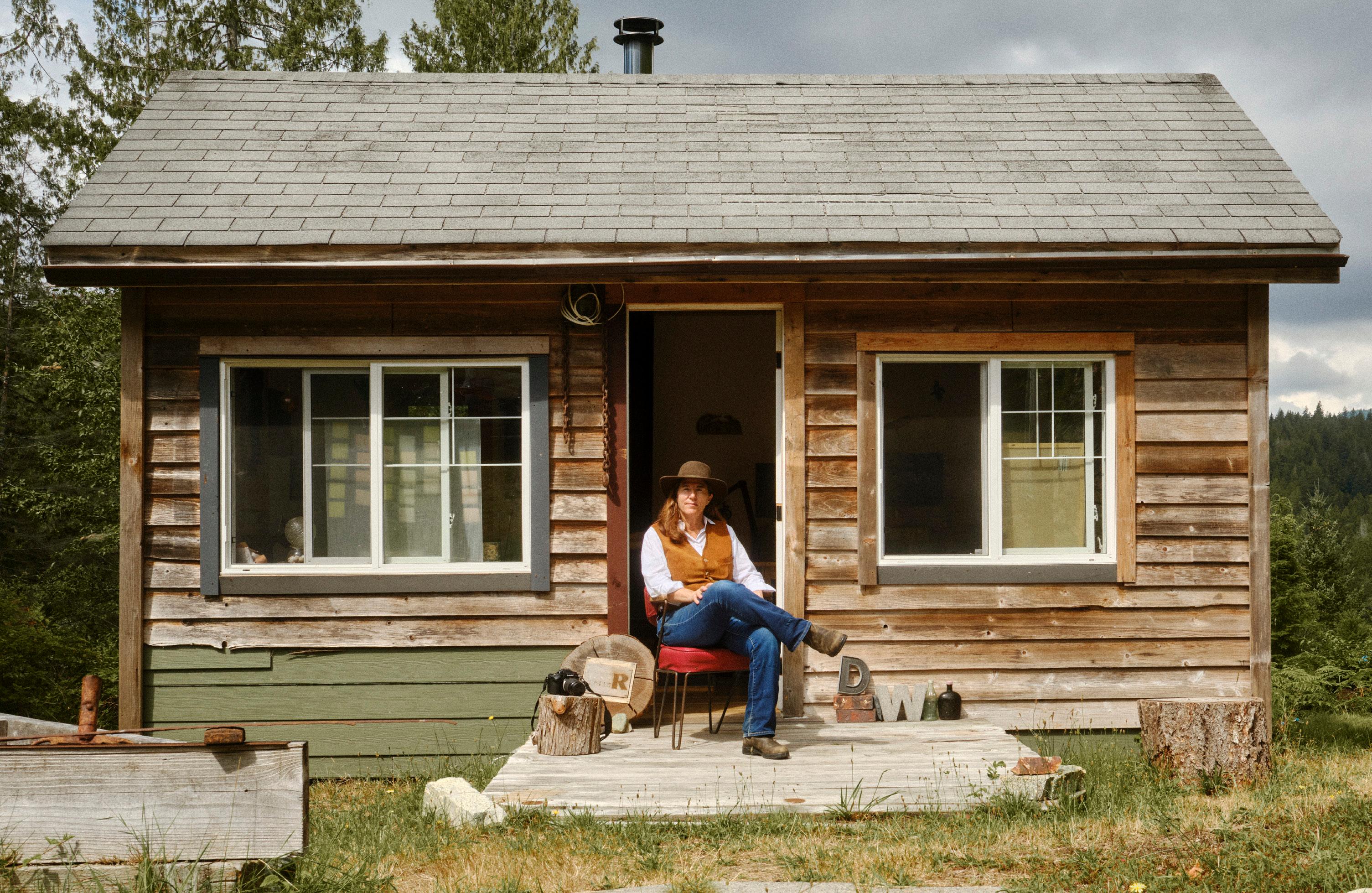
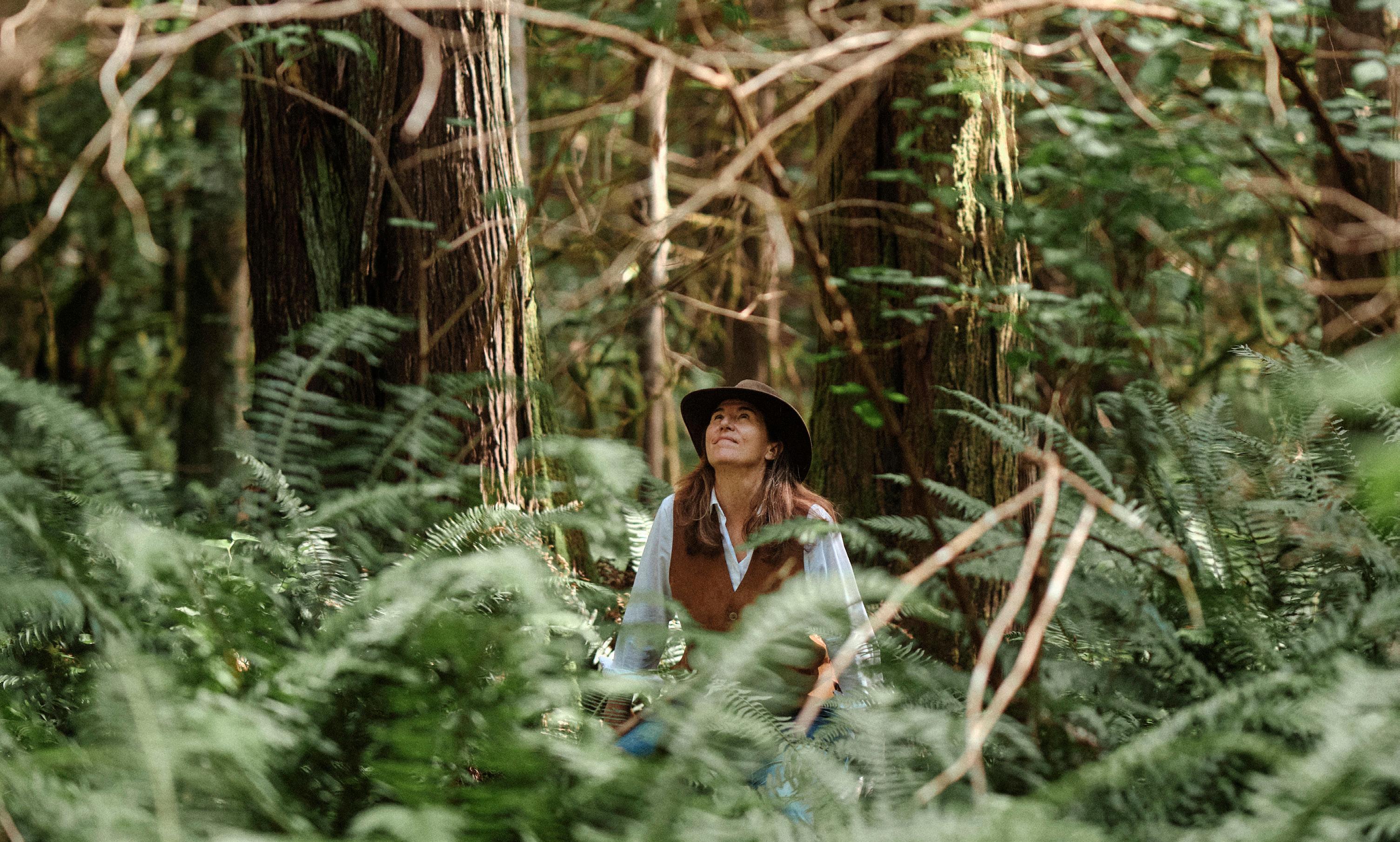
Photos by David Astorga
Dianne Whelan sits in front of her studio on the Sunshine Coast in Canada.
she shot hundreds of rolls of film a month. As she experimented with framing, lenses, and souping, her storytelling developed around the visual communication of a photo. The job’s poor pay was supplemented by a priceless feeling of awe and purpose.
“When you really love something you’re not going to be measuring your hours by how much you make an hour. There’s something deeper and more profound happening to you,” she says. “I’ve just chased that. I’ve spent my whole life chasing that.”
Storytelling isn’t just about entertainment for Whelan. It is an act of healing — for others, the world, and herself. In 2015, Whelan’s marriage of 13 years ended, followed soon after by the death of her 16-year-old dog. Stripped of the pillars defining her adult life, she felt disconnected and unhappy. Amongst her friends and peers she saw a similar discontent, one that reflected the overwhelming despair often plastering the front page of newspapers. Whelan was all too familiar. During her journalism education, ‘if it bleeds it leads’ was a phrase repeated ad nauseam, referring to the practice of running the most violent and unpleasant stories to attract the most attention. Now she witnessed its effects in headlines that bred a culture of fear, in which everything and everyone appeared threatening.
In the midst of turmoil, Whelan returned to storytelling in hopes that its meditative rapture would deliver meaning and clarity. The Trans Canada Trail, a loose idea that had rested in the back of her mind for years, resurfaced as a canvas on which she could display her emotional journey. She hardly considered the record-setting potential of her pilgrimage — upon reaching the trail’s western terminus, she became the first person to ever complete the Trans Canada in its entirety. Now, mention of the accolade brings pause.
She’s honored in a begrudging sort of way, distantly able to understand why her finishing before anyone else is impressive to most people. But while on Everest, she watched climbers storm the mountain like a ballooned parade of obscure Guinness World Record attempters, each with hyper-personalized claims to ‘first.’ Amongst so many people waging conquest on the earth’s extremes, Whelan couldn’t help but wonder if walking with the land might offer a more profound experience.
Her curiosity challenged one of the few conventional comforts she’d permitted on the trail: her schedule. Starting out from St. Johns, Newfoundland, Whelan possessed a daily mileage schedule and a plan to complete the Trans Canada in only 500 days. It wasn’t long before the realities of heavy gear, rough terrain, and the slow art of noticing proved themselves soundly incompatible to her goal. On the tenth day, having not completed the mileage she’d planned to do in three, she burnt her schedule. For the rest of her journey, each movement from when she unzipped her tent in the mornings to when she put out her fire at night was a practice in patience, intention, and relinquished control.
“I wasn’t the boss. I didn’t go out there to conquer anything. I went out there to live with something, which was nature,” she says, “and nature’s the boss.”
Nature certainly had the upper hand when it froze the lake on which Whelan paddled and demanded she be rescued from the remote Ontario woods. It was nature whose sharp elements tore through four of her tents over 600 miles, and who blew her offshore into the choppy whitewater of Bras d’Or Lake. Following the Mackenzie River northwards in 2019, Whelan was reminded once again of the vast and omnipotent land on which she traveled.
This time she wasn’t alone. Joining Whelan’s Arctic-bound paddle was her partner, Louisa Robinson, and a frigid third — a black, 12-gauge shotgun that kept vigilant post at the foot of their tent. Tepid as its company was, there proved few other options for companionship. In the four months Whelan and Robsinon traveled northbound, they didn’t meet a single other paddler.
Good news had awaited their arrival at Great Slave Lake in the Northwest Territories. A week behind them, kayaker and fellow documentarian Thomas Destailleur was beginning his journey. Like Whelan and Robinson, he was also headed to the remote Arctic town of Tuktoyaktuk, almost 1,000 miles away. It seemed inevitable their paths would eventually cross downriver.
But it was not to be. On August 6, an off-shore wind blew on Great Slave Lake. Though the gentle waves appeared harmless, Whelan knew how quickly the breeze could sweep paddlers out to deeper and rougher water. Rather than risk it, the pair spent the day resting and continued their voyage the next morning.
As they departed, the Royal Canadian Air Force and Canadian Coast Guard were responding to calls of a missing paddler. The search effort revealed an overturned kayak and the body of 30-year-old Destailleur, who drowned three miles behind Whelan and Robinson.
Less than three weeks later, Whelan’s satellite phone received a message from her producer, Betsy Carson. She informed them that a man canoeing ahead of them, a composer named Julien Gauthier, had been dragged from his tent and fatally mauled by a bear.
“It just made everything so real and so raw,” Robinson recounted in 500 Days in the Wild.
For Whelan, the news signified a profound change in the journey’s vibration. Until that point, her trip had been unblemished by injury or illness. As tragedy bracketed both sides of the river, the couple’s vulnerable reality became impossible to ignore.
Whelan and Robinson paddled 30 miles a day towards the Arctic. Rapids laced the water, intent on luring their canoe to its freezing depths. When dusk forced them ashore, they camped on isolated silt bars. They strung the banks with trip wire, and built great pyres against the falling darkness — passing hunters advised it would help in keeping the bears away.
“Fear is your friend,” says Whelan. “But panic will kill you.”
To avoid hysteria, she leaned on the teachings of Indigenous Mi’kmaq elder and friend, Danny Paul. They met in Nova Scotia during filming for Whelan’s unfinished documentary, The White Raven. Regarding the Trans Canada Trail, he emphasized traveling with intention and reverence, encapsulated by the phrase “the earth is sacred, the water is sacred.”
Deep in the Canadian wilderness, amidst river rapids, bears, and winter’s approaching chill, staying grounded and alert defined survival. Whelan murmured the words with each paddle stroke, refocusing her mind away from panic and towards self control. After hundreds of miles of repetition, the phrase connected her to the land and to the web of life mapping its surface: moose fording streams, their hooves clicking over fat stones, lazy otters sunning on warm logs, the green brush strokes of northern lights over dark skies. Balancing sensibility with reverence, Whelan regained a sense of home in nature. She and Robinson reached the Arctic Ocean in early October, just ahead of the winter’s first snowstorm.
Whelan reached the shores of Vancouver Island, B.C., in August of 2021, marking the end of her time on the Trans Canada Trail. In addition to her own strength and resilience, she also attributes much of her success to the people she met along the way. Strangers welcomed her into their homes, offering gear replacements and hot showers, Indigenous communities graciously invited her to listen and learn, and hunters she met on back roads offered fresh meat and directions. Over 14,900 miles, a personal search for hope became a lived testament to human kindness. And with 500 Days in the Wild, she had a way to share it.
“That’s really what an artist does,” says Whelan. “It’s searching for meaning in your culture, you know. Any culture — any group of people — is really held together by a shared story. And stories can change.”
Whelan’s upcoming project, a theatrical nature documentary titled "Flight of the Puffins," continues weaving connection alongside her awe of nature. The lives of puffins are defined much like peoples’ — by the themes of love, resilience, and survival. She hopes the film serves as a gentle reminder of humans’ place in the beautiful, ancient fabric of animals, plants, land, water, and air.
“This is what we all share: a living planet, a home,” she says. “This is Eden.”
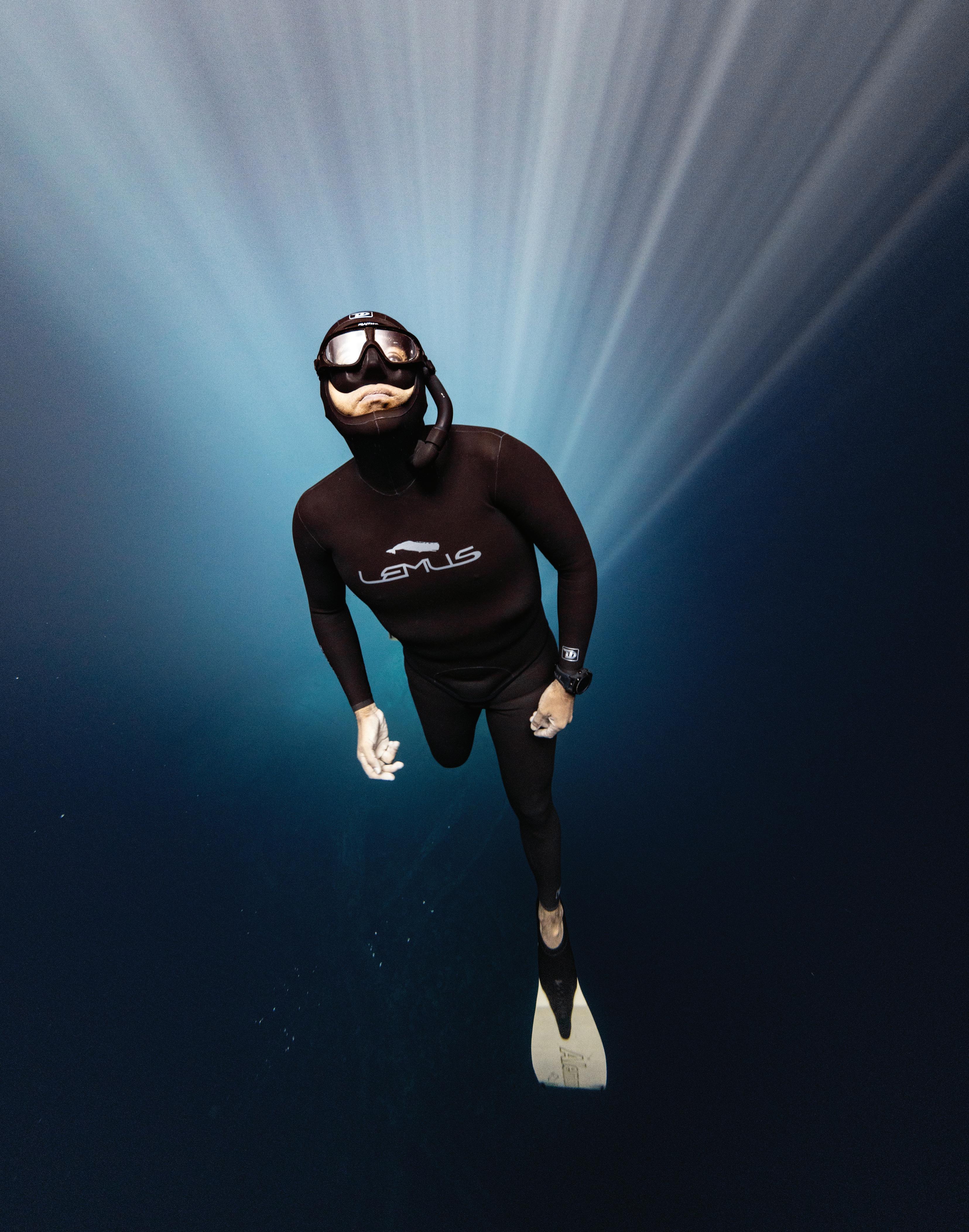
DEEP DIVE
Freediver Alejandro Lemus reaches new depths and lights the way for others.
By Gigi Roddick
by Daan Verhoeven
Deep in the jungle of the Yucatán Peninsula lies a window to the underworld. At the end of a dusty dirt road, Cenote Ucil hides amidst dense foliage at the bottom of three worn steps. Above, the heat is viscous, but beneath the shrubbery and a small break in the earth is a passage with a cool updraft. Walls of heavy grey rock absorb the outside chatter of birdsong and the murmur of leaves in the wind. Ahead, a narrow string of stairs descend deep into darkness.
Millions of years ago, this land was submerged beneath an ancient and shallow ocean. Over time, the bodies of its inhabitants — corals, mollusks, and algae — created a thick sediment layer that compacted and cemented into limestone. When the great sea receded, it left behind a grave of porous bedrock.
Then came acidic rains, whose water bled through the ground in search of cracks and joints to devour, dissolving rock over eons from fissures into tunnels, then to caverns. They remained slumbering beneath the peninsula for thousands of years, waiting for the yawning collapse of erosion to usher in light and air and sky.
The oldest, most weathered of these pit-holes, called cenotes, open fully to the sky. Innumerable others remain sealed beneath the green jungle floor. Cenote Ucil rests somewhere in between.
After descending 13 vertical meters, its hidden entrance spills out into a tall, circular chamber. Greenery crawls over the steep walls, whose inward curve is interrupted by a bright and cloudless sky. Birds wheel about overhead, occasionally plummeting into the cenote to issue clear, bright calls. In the springtime, when the sun’s rising pattern falls just so against the Earth, midday rays crest the opening and dive into the pool’s bright blue water.
Mayan mythology references a universe existing below the Earth’s surface, accessible through caves or still bodies of water. The realm is described as a structured court overseen by cruel and deadly gods. The Mayans called this place Xibalba — the place of fright.
For five days each April, Cenote Ucil awakens as a mystical underworld. Cars and vans and trucks churn up the wet mulch road, filled with bags, ropes, buoys, and people. A group of freedivers stomp down the three worn steps, past the vines, and into the heart of the cenote.
They are here for Xibalba, a competition led by one of Mexico’s most decorated talents, Alejandro Lemus, who grew up 2,240 meters above sea level in Mexico City. Inspired by the underwater documentaries of Jacques Cousteau, he spent his young adulthood scuba diving and studying marine biology at the Universidad Autonoma Metropolitana Iztapalapa.
One day, he observed a man swimming through the university pool with a monofin, a single joined fin reminiscent of a mermaid tale. He was instantly intrigued, and explored freediving for himself, often without the proper techniques, safety precautions, or gear. Even lacking the fundamentals, he quickly found himself addicted to the strange new sport.
After a few years of unguided exploration, an instructor from the Cuban freediver Pippin Ferreras’ International Association of Freediving agency invited him to take a course in Miami. The technical training sharpened Lemus’ organic and arbitrary passion into the beginnings of an athletic career. But even still, freediving lagged behind. Deep dives were reserved for elite athletes, and local competitions were nonexistent.
So, he founded Lemus Underwater School, a freediving and scuba instructor certification and education program, in 2007 to teach advanced methods safely and holistically. Establishing a community of athletes helped pave the way for Xibalba, which Lemus created in 2009 alongside friend and fellow freediver Juan Verduzco. Their inaugural competition welcomed more than 40 divers to the lagoon-side town of Bacalar, Quintana Roo.
A smooth road outfitted with hotels and restaurants paved the three miles to Cenote Azul, whose dark pool was encircled by a thicket of trees, shrubbery, and, at times, a low, barbed-wire fence. For 50 pesos, tourists could enter the cenote through tall, black turnstiles to pose on colorful swings, lounge at the bar, or splash about in the water.
It was at Cenote Azul that Lemus set Mexico’s national record of 70 meters in 2011. In the years prior, he’d struggled with doubt and negative thoughts in the moments preceding his dives. The toll of mental misalignment is acutely felt in freediving — if divers cannot calm their mind, their heart rate increases, using up their limited oxygen more quickly. Often this can result in hyperventilation and blackouts, a temporary loss of consciousness occurring when divers’ blood oxygen levels drop. This typically occurs in the
Photos
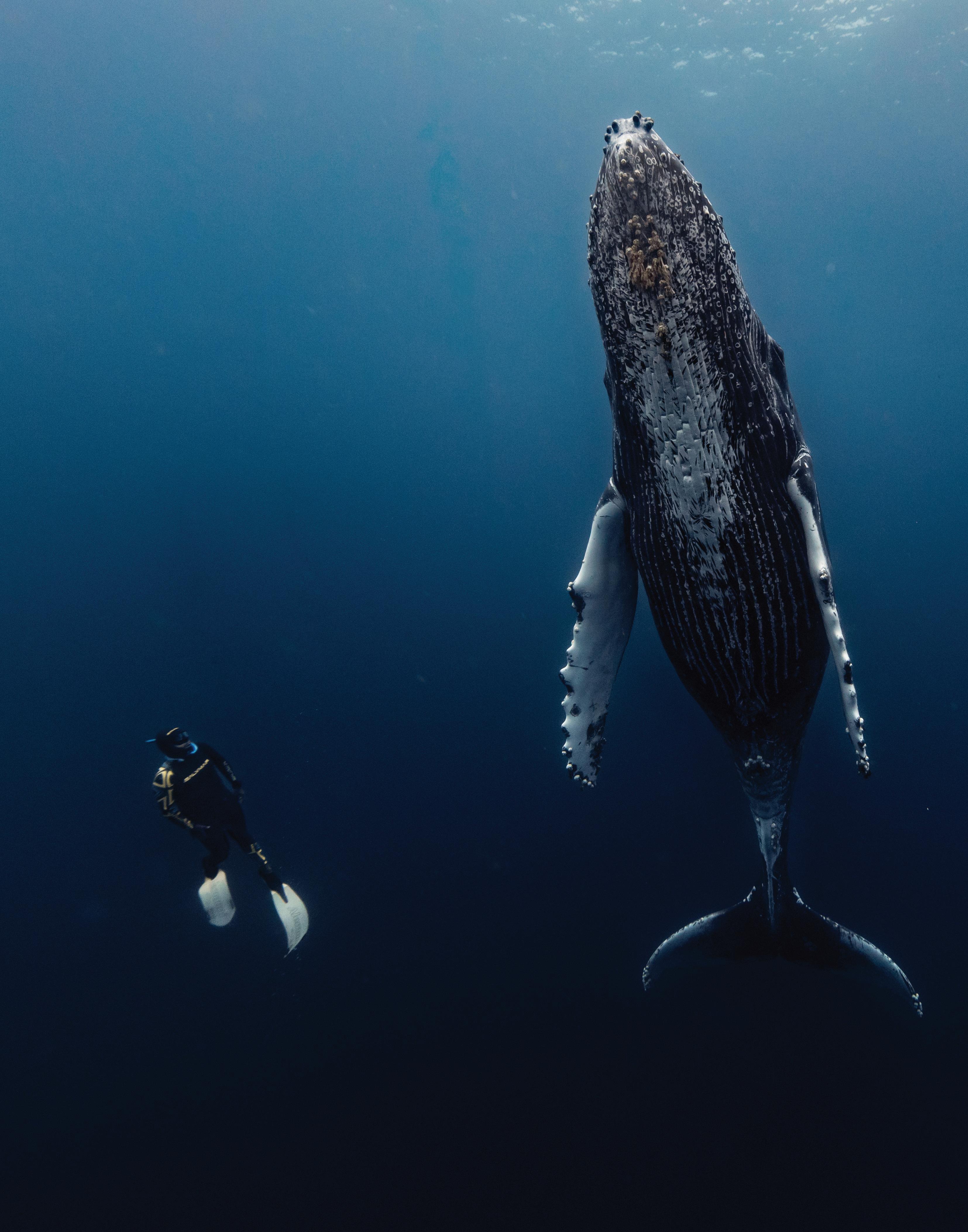
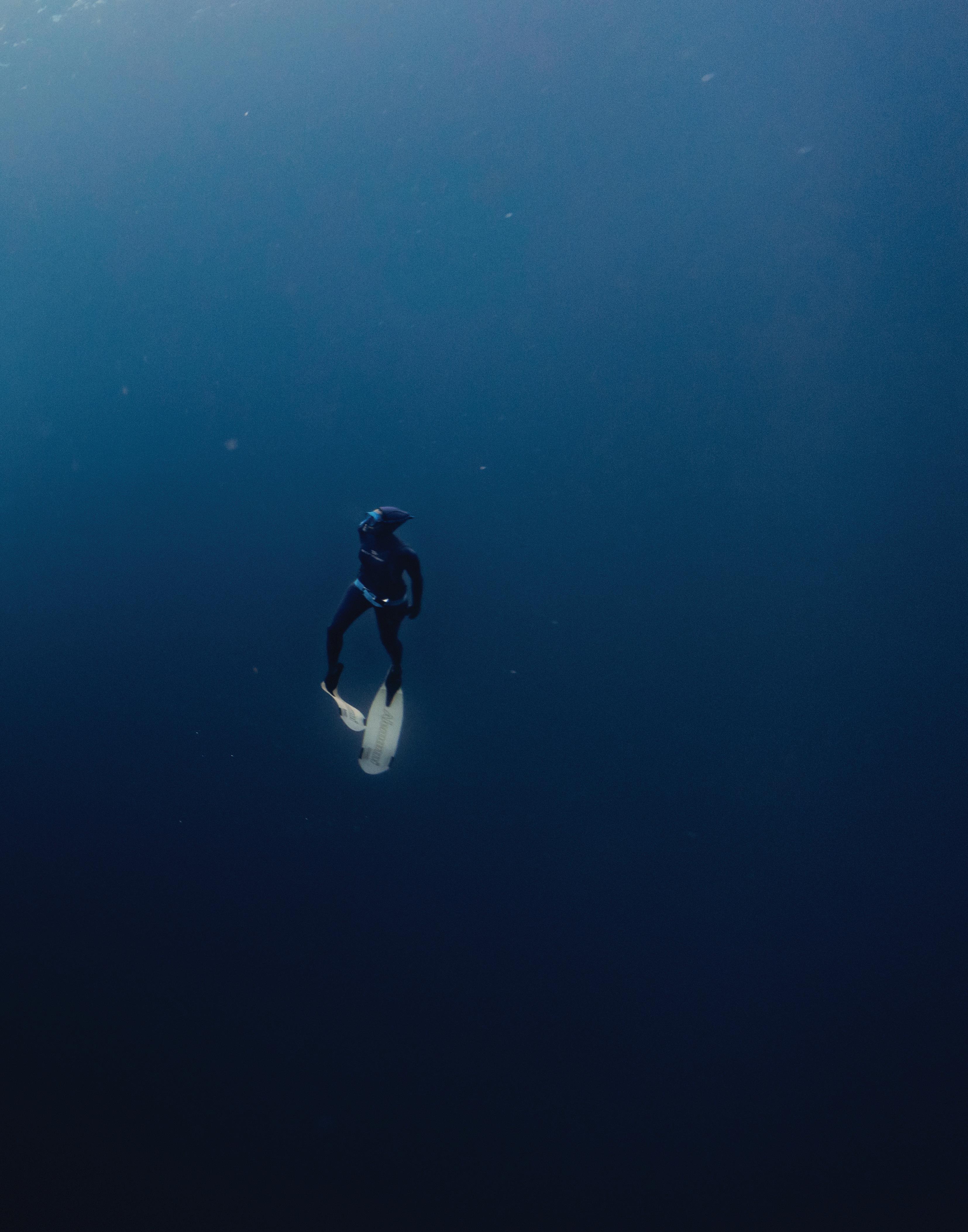
Alejandro Lemus and Surya Moctezuma swim alongside a humpback whale off the coast of Mexico.
final stretch of the dive, as the easing ambient pressure causes lungs to expand and pull oxygen from the blood and away from the brain.
Preserving enough oxygen to withstand blackouts rests on the final seconds above-water. It necessitates complete mental control, which Lemus struggled with especially between 60 and 70 meters. Deconstructing his mental block required psychological training and countless repetitions, many of which ended in blackouts. Over time, his work paid off; he broke his own record in 2012, 2013, and 2014, when he became the first Mexican diver to reach 100 meters.
Bolstered by his previous success, Lemus arrived in Cyprus for the 2015 Freediving World Championship. His goal was 63 meters in the constant weight no fins division, which relies solely on physical propulsion. His dive started strong, and he reached the depth plate and began his ascent without issue. He recalls counting the cycles upwards, the rhythmic stretch, push, kick, towards the surface. Stretch, push, kick. Stretch, push, kick. And then, suddenly, nothing. Lemus experienced a complete blackout.
As he sank downwards, he was treated to flashing vignettes of his life. His mother, father, and brothers. He puzzled over whether he was dead — he knew he was Alejandro Lemus, and therefore, logically, could not be (when a person is dead, he reasons, they do not know who they are). He woke minutes after the safety teams dragged his limp body from the water.
The dive marked his first experience with fear. Unconscious fear, he’s quick to clarify, referring to his hazy determinations of mortality. Still, it wasn’t enough to slow him down. In his conscious mind, the sanctity of depth remained unblemished and magical. He returned to competition three weeks later, hitting 100 meters within two months.
For his loved ones, fear can be harder to shake. Surya Moctezuma, Xibalba’s Chief of Safety and Lemus’ wife, organizes the competition’s team of eight volunteers, called Aluxe after the Mayan creatures of protection. They bridge the gap between worlds, ready to rescue and support divers in the final stretches homeward.
For as long as divers are in the water, safeties must harbor a constant and absolute belief that something will go wrong. Moctezuma watches tirelessly for the faulting rhythm or escaping bubbles that often precede blackouts, visualizing the hand placements and kick patterns necessary to drag patients to safety.
The death rate of competitive freediving is roughly 1 in 50,000. For recreational freedivers, the figures are much bleaker: approximately 1 in 500. Finding success in the sport requires patience — veterans know progress is measured in incremental advancements of two, sometimes one meter. Their progress is calculated and rehearsed.
Now 47 years old, Lemus provides the guidance his early career lacked. Lemus Underwater School champions education and community, using his years of firsthand experience to inform a curriculum accessible to all levels of skill and experience. When people ask about his future in competition, he hedges, saying quite seriously that he’s “almost retired.”
Though he foresees more deep dives in his future, increasingly his attention is drawn to connecting with big marine life. The depth and breath skills of freediving allows him to join manta rays, sharks, and blue whales in their natural environment, sometimes swimming only meters away. The interactions, he says, are magical.
Back on land, organizing Xibalba takes up much of his time. Since 2018, the competition has been hosted in Cenote Ucil. Its clear, currentless water extends 118 meters below a crystal blue surface, give or take a few inches during the rainy season from June to November. For safety purposes, divers are capped by a terminus marker, called a depth plate, at 90 meters — a distance three meters shy of the Statue of Liberty.
Reaching and returning from such depths necessitates a delicate and profound transition. It is, in part, a regression: hundreds of millions of years ago, human’s distant ancestors populated a primordial sea as water dwellers. In seeking dryland, they anchored descendants to a constant and vital supply of oxygen. But the limestone ruins remember. Between their walls, water molds the body into a hybrid of lineage and evolution.
Ten meters from the surface, pressure shrinks the lungs to half their typical volume. The resulting vacuum collapses the trachea, bronchi, and diaphragm into the chest cavity. When divers emulate this process in dryland training, their bellybutton sucks towards the spine and their ribs threaten to burst beneath thin skin.
Eventually, divers are so compacted that their density exceeds that of the surrounding water. They begin to free-fall, descending into an insulated sanctuary of silence.
Or it’s assumed to be, at least. For every human carries an inescapable rhythm — the opening and closing of heart valves rapidly drumming dadum, dadum, dadum. As they descend deeper, the rhythm slows. Da-dum. Da-dum. Da-dum. Tethered to their mortality, divers observe the underworld in finite glimpses.
Each heartbeat also reminds divers that the breath they ferry between worlds is poisonous. On the surface, each inhale consists of about one part oxygen to four parts nitrogen, the latter of which is exhaled. But as divers approach the depth plate, they become subject to pressure ten times stronger than that on land, making it easier for retained nitrogen to dissolve into the bloodstream and travel to the brain. Divers describe this as the martini effect, suggesting that below 30 meters, every additional 10 meters of distance affects the same response as drinking a martini. It’s only part of the addictive chemical cocktail that surges through divers: high levels of oxytocin and endorphins also contribute to distortion, irrationality, and euphoria.
As contortion governs the body, the mind roams in a haze of narcosis and relaxation. Sometimes, during training, Lemus arrives at the depth plate, flips towards the surface, and pauses with one hand on the line. There is no light here. Only Lemus and the gentle, swaying call of the abyss remain. Come on, it says. Come and see.
For a moment, millennia of evolution are ceded to the darkness of an ancient, perfect underworld. Lemus floats silently, suspended between two worlds.
But — Da-dum. Life beckons, one Lemus is tethered by a nylon rope and biological demand for oxygen. And so the abyss must wait.
His return comes in the form of a two-beat rhythm, hands gliding over his head, searching for purchase in the water above. Finding it, his hands push down, leveraging his body upwards in a quick, decisive surge. Against pressure and momentum and gravity, another foot of shining white rope is revealed.
Aquamarine rays begin sifting towards him. His heartbeat quickens, exacerbated by exertion and a dwindling supply of oxygen. His mind is clear and happy.
On the surface, his estimated return time is tracked and the Aluxe dive to staggered depths to meet him. Moctezuma waits amidst the cenote’s murmurings. Holding her breath, she braces for the certain and terrible moment the underworld refuses to relinquish its long-lost inhabitant, when the magical, tenuous connection between these two worlds severs. From a floating dock at the cenote’s back wall, a judge counts the seconds.
The sun blazes a column upwards, lighting the final ascension from Xibalba. When Lemus reappears, shepherded by the gleaming white uniforms of Aluze, Moctezuma breathes again.
He is reborn to the land of the living, gasping into the cenote’s quiet atrium.
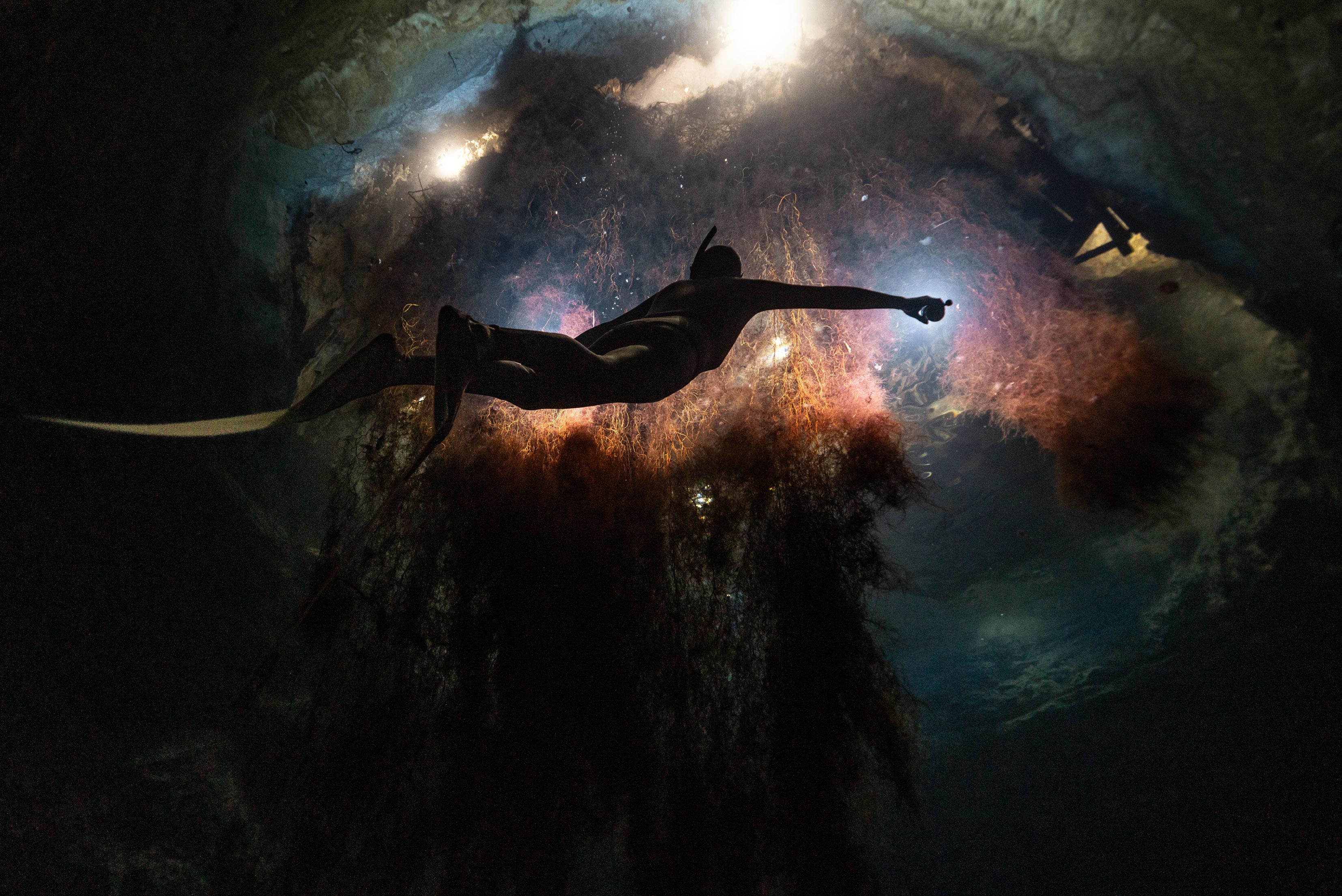
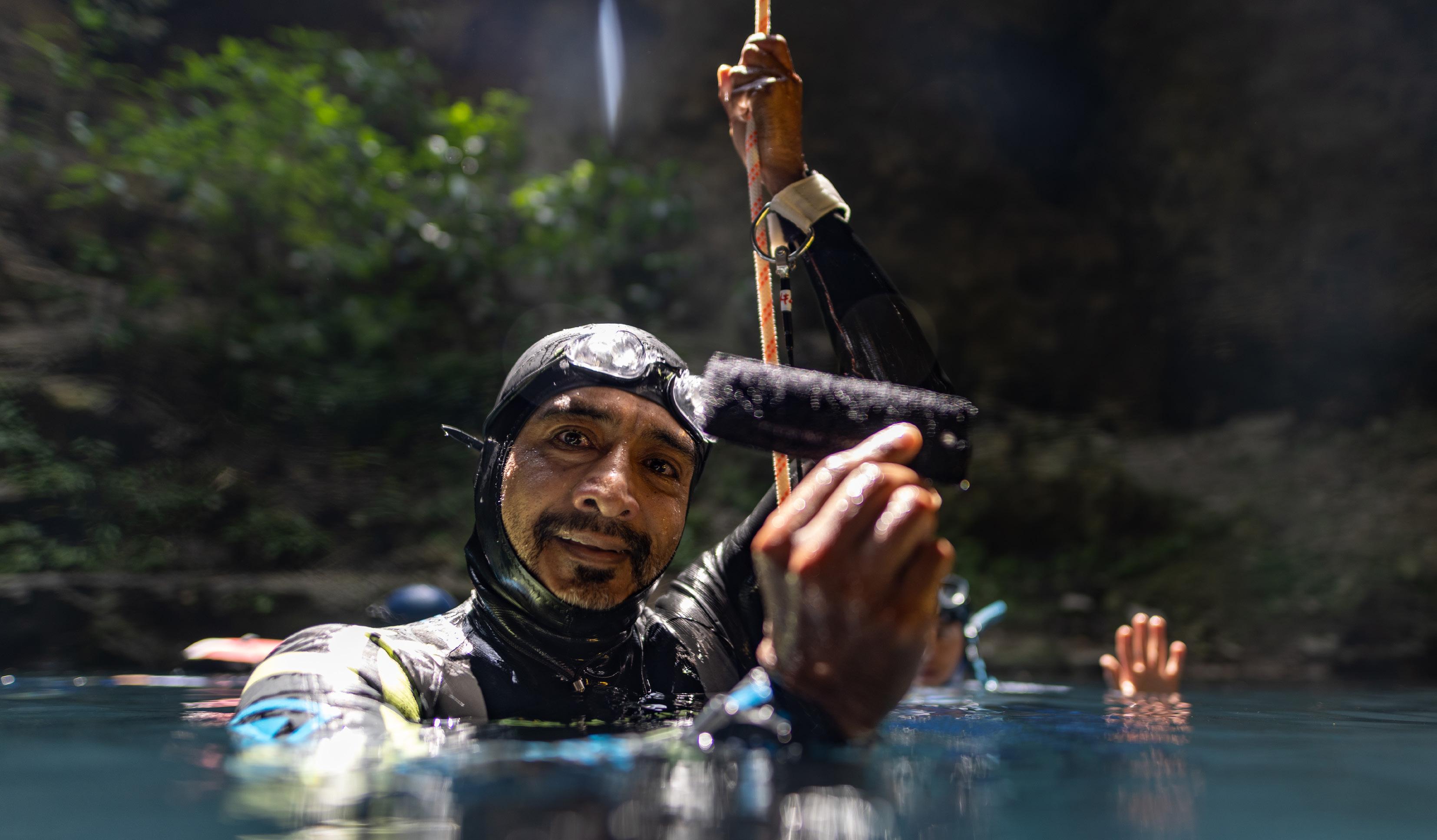
Alejandro Lemus explores the roots of a tree in a cenote in Mexico.
LIFE IN COLOR
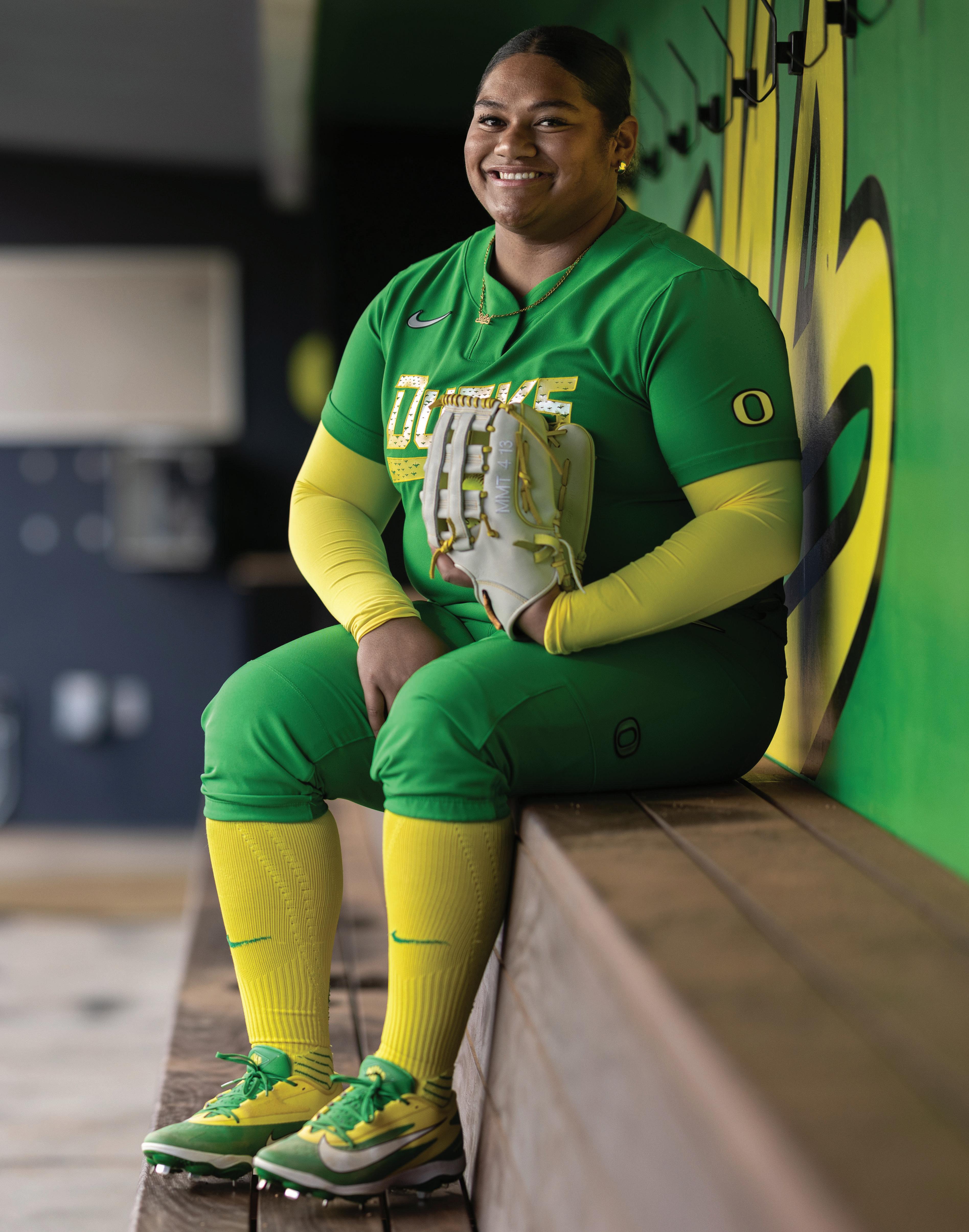
University of Oregon softball player Stefini Ma’ake finds family on the diamond.
By Bayla Orton
Stefini Ma’ake starts every game the same way.
Entering Jane Sanders Stadium in her green and yellow uniform, her cleats echo across empty concrete halls, spilling into the stands and the turf. In her hands, Ma’ake holds a fittingly cheerful Starbucks order.
Whether home or away, she always finishes a 24-ounce Pink Drink and a birthday cake pop before warmups. Ma’ake embodies her entirely pink order, providing joy and warmth to each of her softball teammates. She laughs through cold and rainy winter practices, and even more during games and tournaments. More importantly, she makes her teammates laugh, too.
Pink isn’t the only color driving her sophomore season. In sports psychology, athletes and their mentalities are categorized by colors.
This year, Ma’ake is honing her mind with the entire Oregon softball team, splitting her mental states into primary colors. Red represents self-doubt and let-downs, like a strikeout or missed opportunity on the field. Blue represents the sense of peace that comes with achievement and the happiness that comes after throwing out an opponent or hitting the ball out of the park.
During her freshman year, Ma'ake earned three Big Ten Freshman of the Week awards and hit 14 home runs, ranking second in Oregon history right behind current teammate Rylee McCoy. Despite being one of the greatest freshman players in University of Oregon history, one thing has never wavered for Ma’ake: the importance of family. Her entire life, Ma’ake’s family told her to remember the acronym F.O.E., Family Over Everything.
“Family is my why,” says Ma’ake. “Being with these girls every day, they are literally my sisters. I just take that in. We spend every day together, like I would with my family.”
Months before games start, Oregon softball embeds its hyperconnected and community-oriented values into the freshmen once they arrive for the summer. Sophomores stay in Eugene during
the average student’s three-month break and welcome incoming teammates, taking them under their wings through conditioning sessions and practices. The girls meet to throw and hit outside of scheduled practice time, dedicating themselves to the sport and each other. It’s a tradition Ma’ake fully embraced, now living with freshman pitcher Maddie Milhorn and becoming close friends with infielders Amanda Urbina and Taryn Ho.
“When the freshmen came, I was like, ‘Oh, now I have five siblings,’” says Ma’ake.
With two siblings of her own, little brother Maika and younger sister Alayna, Ma’ake chose Oregon because of its coaches and proximity to San Diego, where the rest of her immediate family lives. From the beginning, sport and family have always been intertwined.
After trying countless other sports growing up, Ma’ake had a bat in hand at 5 years old. She was raised by athletes and taught to think like one. Her mother, Meleohi, played rugby in New Zealand, and her father, Junior, played high school football. As the oldest sibling, Ma’ake recalls competition integrated into each family reunion, a sentiment she continues to use to her advantage at Oregon. Her uncle used to put on races between the young cousins, making them run 40-yard dashes up Hawaiian hills and injecting fun into contests and sports.
Although it requires a 15-hour drive up Interstate 5, her family makes it to almost every game held in Jane Sanders Stadium — her little brother always clutching a large popcorn, lemonade, and a hot dog in the stands.
Trading the rolling green hills of Hawai'i and the sandy beaches of San Diego for Eugene’s parks and verdant trees wasn’t as easy as anticipated. Even though Ma’ake was the same athlete, new environments and pressure reminded her of a previously encountered shade of red.
by
Photo
Max Unkrich
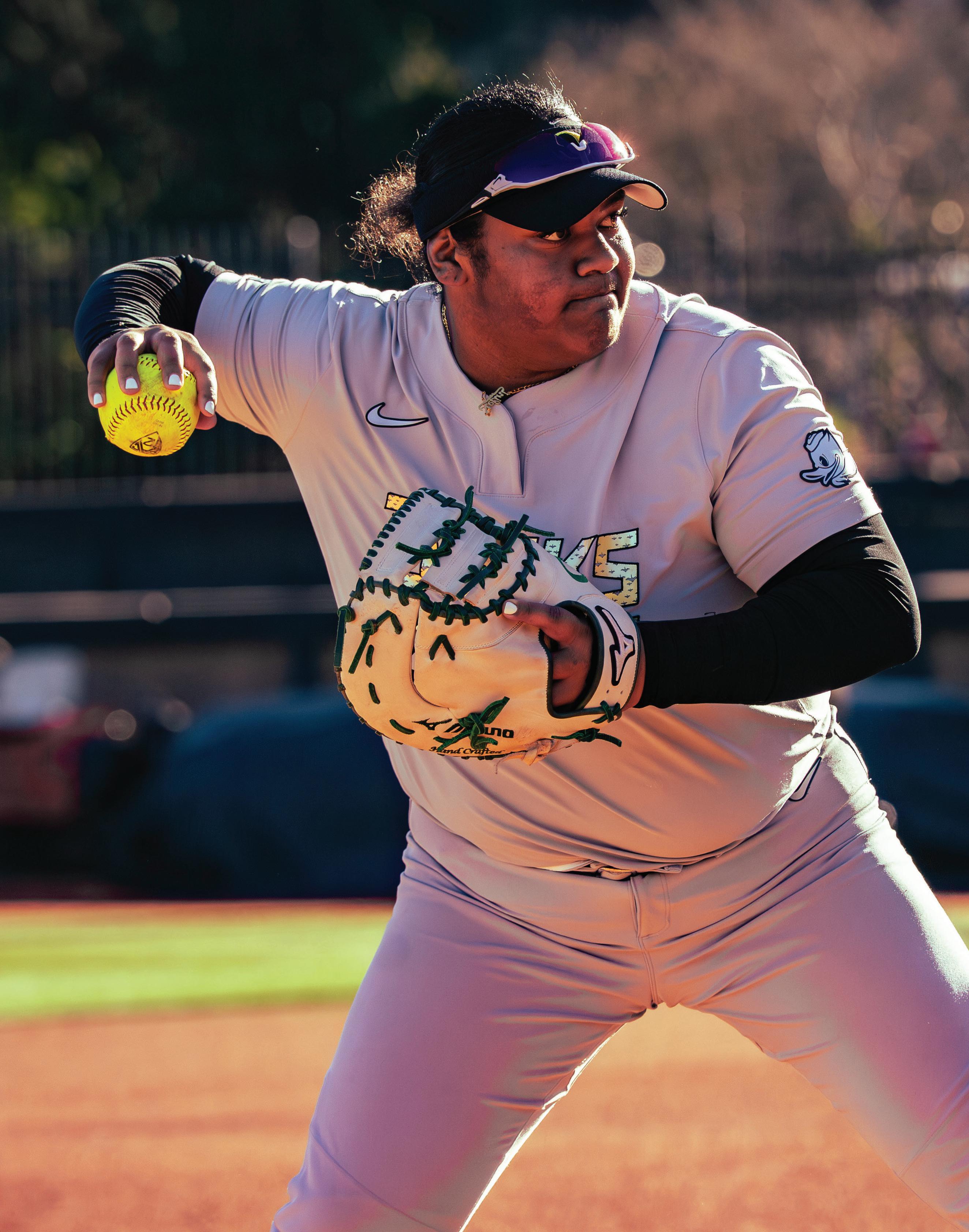
Photo by Amanda Bell
RED
Across all sports, professional athletes feel “the red” creep into their minds, bringing down performance and self-esteem as negative thoughts overtake action. For softball, the red can manifest itself as anxiety and overanalyzing improper swinging mechanics. Shades of crimson appear in Ma’ake’s recollections of her freshman year, in which she often felt overwhelmed by the pressure of Division I softball and sometimes consumed by anger after a bad game. These negative feelings took root after her club coach, Martin Tyson, a former Chicago Cubs player, molded her into a perfectionist, analyzing every wrong swing and catch.
Practicing in the batting cages, doing the same action repeatedly, and hoping for incremental statistical improvement is difficult for Ma’ake. Softball often reduces players to their numbers and fails to consider how hard players work to change them.
The red often finds Ma’ake during practices, slamming a neon ball into the batting cage’s hall of black netting repeatedly, striving for perfection. Sometimes inside Jane Sanders Stadium, negative thoughts take root. Lights dim, and her swings are filled with frustration and anger. In these moments, Ma’ake is brought back to her years before college, swarmed by thoughts of inadequacy as she points out her own flaws.
“If I make a mistake or an error, or I strike out, I try to just come back to my home state and to breathe,” says Ma’ake. “I like to hold things in, especially when I’m angry… or I’m having a terrible day.”
Oregon’s 2025 season started strong, the Ducks making a name for themselves with an almost entirely new roster. Going into the Littlewood Classic in Tempe, the Ducks had won six straight games against Arizona State and were expected to beat the home team.
In the opening game, dark red uniforms filled Farrington
Stadium. Oregon led early, fell behind, and barely batted its way into extra innings. Arizona State’s pitching held off the Ducks. Surrounded by bright yellow walls and lockers packed with green backpacks and spare bats, the Oregon softball team sat on maroon couches after a tough game. Scuffed cleats and dirty uniforms spoke for themselves. Arizona State defeated the Ducks by a single point, but that lone run was enough to discourage a young team previously fueled by confidence. Still early in the season, Oregon softball coaches sat the players down and described how the team felt separated and individualized.
In that moment, Ma’ake said the team “flipped a switch” and decided they “needed to go deeper than softball.” She looked inward, thinking of all her favorite moments with the sport. All the laughter and smiles fueled a brand new mindset.
“One of the phrases that stuck with me growing up since I was 14 is, ‘We before me,’” says Ma’ake. “Reframe what you’re thinking, and dive into your teammates’ success and not just yours.”
Oregon softball advanced to the 2025 NCAA Women’s World College Series but lost in pool play. The coaches decided to further invest in the mental aspects of sports and began discussing sports psychology with their athletes. Through mental training, led by assistant coach Sydney Romero, Ma’ake visualized the optic-yellow softball meeting her bat from different angles. As fastballs, dropchanges, and screwballs speed toward home plate, her response changes with each imagined pitch.
Deep breaths accompany positive memories. Chaotic crowds fade, and Ma’ake thinks of her family in the stands and her laughing teammates circling around her. Anxious red-tinted moments cool down, and Ma’ake finds her blue.
BLUE
Athletes feel “the blue” when they are focused, energized, and calm. Even when crowds are cheering loudly, individuals find silence when they are fully and truly themselves, ready to execute their personal goals and compete with precision. For players like Ma’ake, that sense of blue comes both when the vivid yellow ball collides with her bat and when her friends and family are at the forefront of her mind.
“I tend to see myself always in the red, right? That’s where I try to dive into my teammates’ successes, like cheering them on,” says Ma’ake. “It’s not always about you, and there’s other people around you trying to succeed, just like you.”
Ma’ake’s intentional, positive mindset shows itself on the field through teammate interactions. Playing at home against Penn State on March 13, Oregon shone under the floodlights in grey uniforms, metallic decals, and glittered headbands. As the announcer called out the roster, Ma’ake executed an elaborate handshake with each player, placing an imaginary crown on some and bumping hips with others.
For Ma’ake, blue can also come in day-to-day activities with family and friends. Even after spending seven days a week, for both weight training and practice, the Oregon softball team can’t get enough of each other. They sit in packed apartment living rooms, the smell of freshly baked banana bread wafting through the air, laughing and talking about upcoming tournaments. Hangouts are unprompted and frequent, often revolving around preparing kimchi enchiladas and pizza.
“I have a really good friend, and he was like, ‘softball doesn’t define you and it’s not who you are, it’s what you do,'” says Ma’ake. “I had to figure out a way to reframe that mentality, and so now I do a bunch of other things.”
After realizing that she needed an activity outside of Jane Sanders Stadium, Ma’ake began exploring her creative identity. Surrounded by gemstones, sitting on the floor of her apartment with roommates, continuously placing one jewel after another, Ma’ake bedazzles. Although annoying at first, her fingers deliberately placing tiny sparkles, she has found her rhythm and looks forward to her new hobby every day. Ma’ake bedazzled a poster, studded with her affirmation for the season: “Be kind, be who you are, and be true.”
It’s a statement that leaks into her life outside of sport.
Ma’ake occasionally attends church with close friends and teammates, expanding a tradition her family in San Diego introduced during childhood. As the season becomes busier and travel becomes more frequent, her attendance at services is less common, but the community she built stays with her. In Eugene, Ma’ake has extended her family even further, encouraging residents who have never watched softball to attend home games, always adding blue to all the green and yellow.
When softball players step up to the plate and look out into a sea of opposing colors, it’s easy to feel alone. Facing an entire defense with only a bat in hand means sometimes carrying the weight that a single swing could win or lose a game. When stuck in the red, it’s easy to let anxiety and fear overwhelm the mind and impact performance.
In a blue mindset, Ma’ake is the only player on the field, focused and ready to execute. During her freshman season, Ma’ake finished with a .297 batting average. So far this year, Ma’ake has hit .325. The sports psychology and the expanding community seem to be working.
“Whoever I’m on the team with, whether it’s someone in the past, someone that’s coming, I treat them as family just because they’re going to be with you all four years,” says Ma’ake. “I think the connection that we build is just so important because it plays a big role when you’re on the field.”
At any given time, nine strangers from the opposing team will stare straight at Ma’ake. The crowd may cheer or heckle, but Ma’ake only hears positive chants coming from the Oregon dugout. At times, she smiles, steps out of the batter’s box, and glances upward to the sky, into the blue.
With a single deep breath, Ma’ake shrugs her shoulders, steps her left foot into the batter’s box, her bat methodically swaying up and down, ready to swing for the fence.
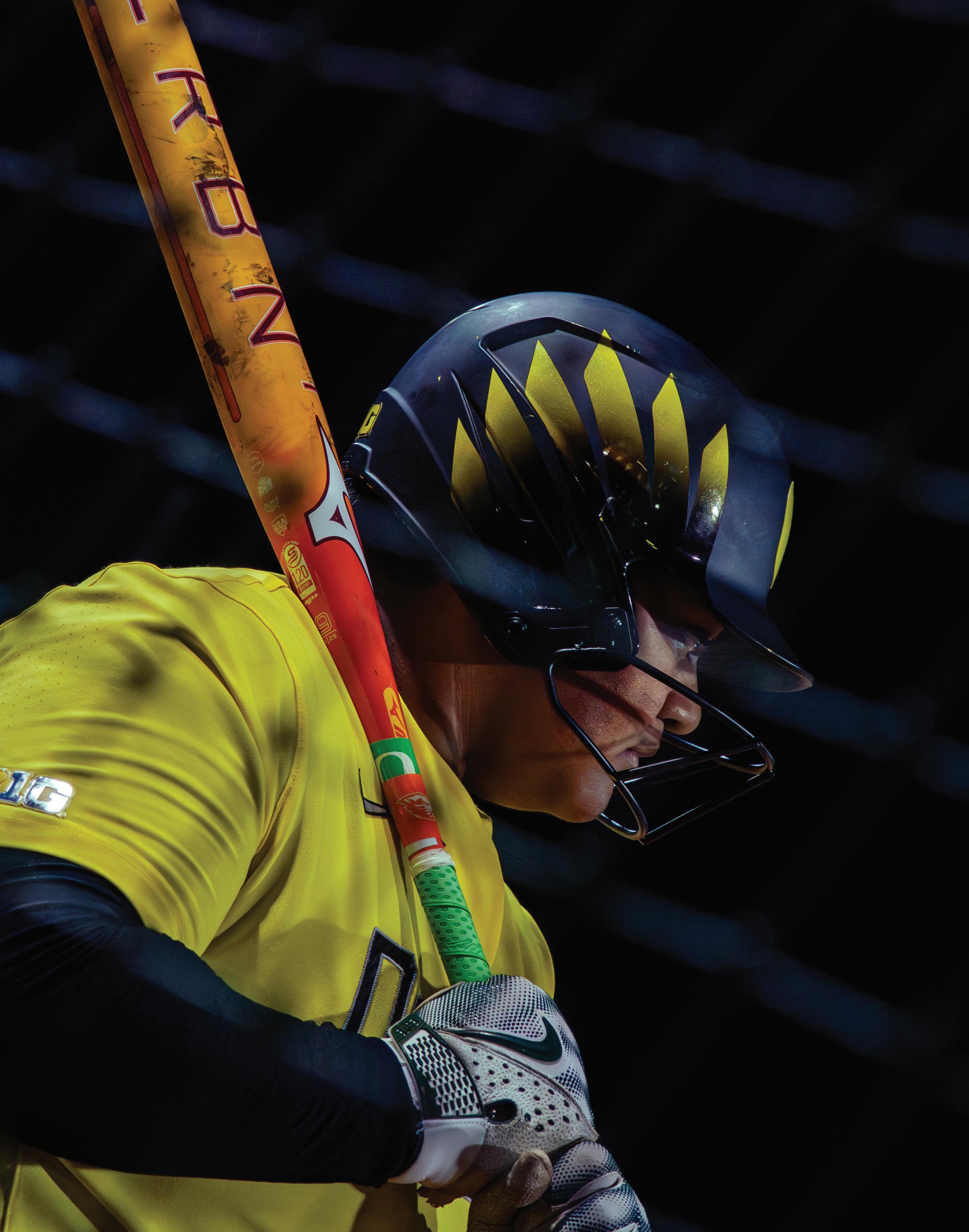
Photo by Amanda Bell
Oregon softball sophomore Stefini Ma'ake steps up to the plate at Jane Sanders Stadium in Eugene, Oregon.

between THE POSTs
Journeyman goalkeeper James Pantemis earns a starting role for the Portland Timbers.
By Jack Lazarus
Photos by Max Unkrich
Portland Timbers goalkeeper James Pantemis stops a shot during the second half against LAFC at Providence Park in Portland, Oregon.
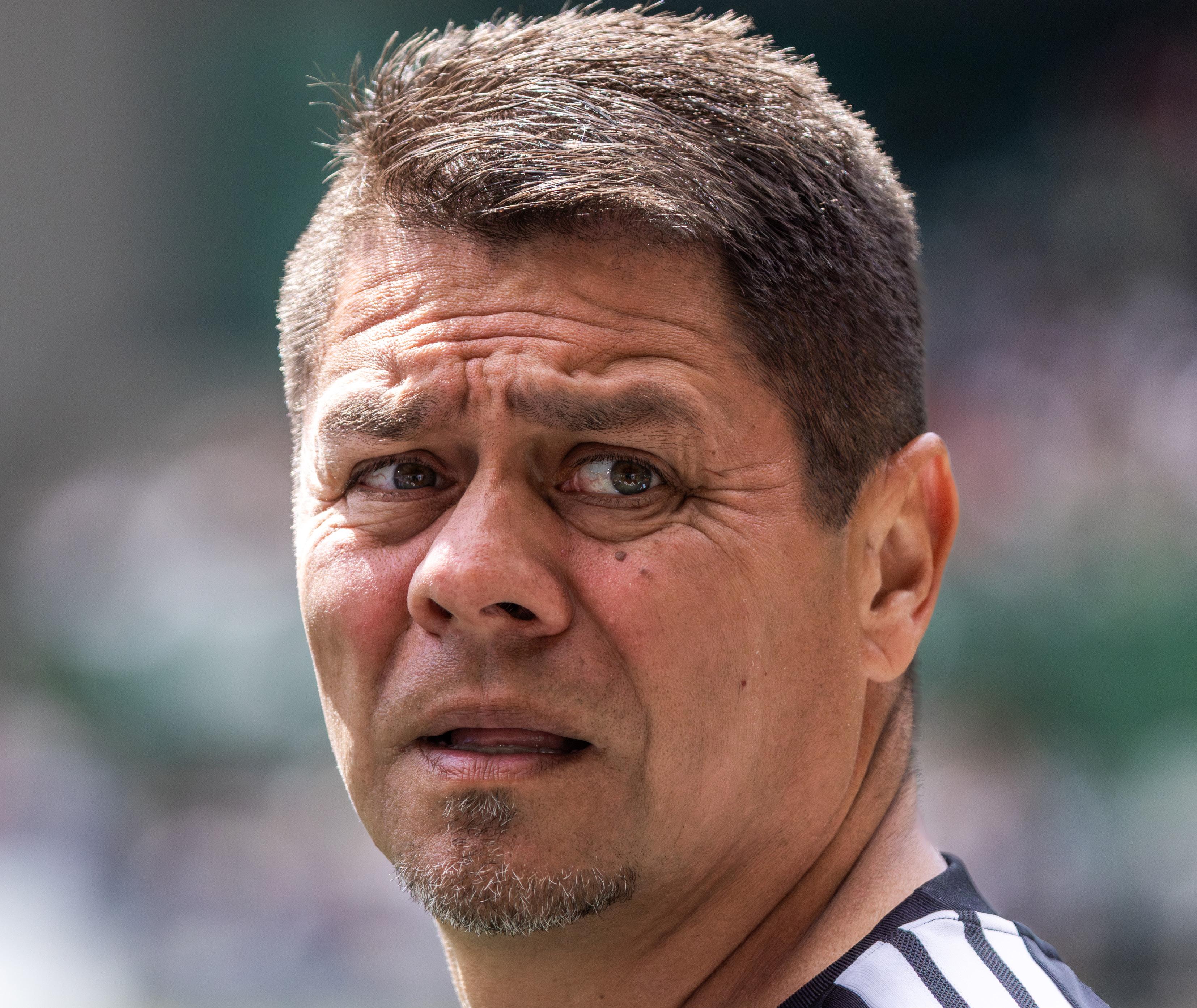
Timbers goalkeeping coach Guillermo Valencia watches before the Timbers play LAFC.
The 109th minute of any match prompts urgency for a rational footballer. After an errant back pass leads to an opposing striker bearing down on goal, the logical reaction looks much different for every goalkeeper. The striker is 10 yards away. Then five, still no defender in sight. At some point, the goalkeeper needs to make a decision, and an aggressive one at that.
This is where Maxime Crépeau, Los Angeles FC’s goalie, found himself during the second half of extra time in the 2022 MLS Cup Final — trophy on the line, tie game, all up to him.
At that moment, Crépeau, the former Portland Timbers keeper, made a quick decision and trusted himself to make a play. One that would all but secure his club’s first MLS Cup. Crépeau remembers the sun, the dry grass, and the ball slowing down. These are all things a goalkeeper must notice.
After the play, he noticed his right leg was broken.
In attempting to foil Philadelphia Union striker Cory Burke, he smashed both his tibia and fibula against the striker at full speed. Crépeau received a red card and dismissal from the game for the foul, the evidence for which lay in a shattered lower leg.
Despite being a man down, LAFC lifted the cup after winning a penalty shootout. Reflecting on the decision, he didn’t hesitate to admit he’d do it all over again. He believes that, in some ways, this kind of split-second decision-making is an essential part of being a goalkeeper — even if it cost him 10 crucial months of his career and a chance at fully celebrating his team’s incredible accomplishment.
“The moment you change those moments and try to be more conservative, you’re dead as a goalkeeper. You have to play with your instinct as well,” says Crépeau.
Crépeau’s injury prevented him from playing in the 2022 World Cup in Qatar. CF Montréal keeper James Pantemis, who Crépeau trained with in the Canadian youth academy and professionally with the Portland Timbers, received the selection instead.
They later split time in net during the 2024 and 2025 seasons in Portland before Crépeau left for Orlando City SC in winter 2026, thrusting greater pressure on Pantemis.
“We were lucky enough to know each other for such a long time, and our relationship obviously outweighed the competitive side as well,” says Pantemis. “I think business is business, but relationships and friends are way more important. I think we had a solid foundation going into [Portland] from years before and we worked really well together. I am happy for him that he has a great setup now in Orlando, and for myself as well here in Portland.”
For the Timbers, that setup starts in Beaverton, Oregon, where the team’s training facility stands.
During the first week of in-season training in March, Portland’s goalies stayed within one 18-yard box of the practice pitch, working on individual drills. Throughout a crossing segment, goalkeeping coach Guillermo Valencia roped in passes in a drill meant to work on
positioning and decision-making. The other keepers served as strikers, while one defended the goal. Valencia focused on doing, not thinking, as each of the goalies jumped out to punch or catch crosses.
Pantemis saw an opportunity and attempted an audacious volley about three yards from the goal line. To the surprise of all watching, he dove forward on his stomach, swung his legs, and connected cleanly, leaving the ball dribbling past goalie Hunter Sulte into the bottom left corner. Pantemis and the backup Trey Muse high-fived and celebrated in Sulte’s face. Instead of letting it go on, the veteran starter Pantemis quickly pivoted the moment into a lesson on positioning while defending lower crosses. Pantemis showed Sulte how he would have defended the cross, by grabbing the ball at the highest point of its arc, and the drill proceeded.
He mentored both Muse and Sulte during the following team segment as well, as the forwards set up counter-attacking drills. Pantemis followed with his eyes, feet, and then body as Portland’s wingers moved the ball in sequence, making a nifty, diving stop on a strong, low shot to his left side.
Muse failed to shut down the drill, but when Sulte stepped up, he mirrored Pantemis to make a stop. While the team’s head coach, Phil Neville, laid into the attackers about the deficiency, Pantemis gave Sulte a nod of approval.
Defending crosses, a specifically daunting part of the position due to the risk of colliding with an attacker, emphasizes the craziness that Valencia noted the position requires. In his two decades of coaching, Valencia has witnessed his fair share of crazy. He spent 11 of his 15 seasons as a professional player in Colombia’s Liga DIMAYOR, among the highest levels of South American football.
While all the three rostered Portland goalies are from North America, Valencia admitted each of them can match that personality, as it’s something he seeks out in his recruitment. He also mentioned aggressiveness and being “the smartest player on the field” as components that he looked for in each of the three goalies.
Despite working under three different head coaches, Valencia’s adaptability and dependability as a coach has kept him with Portland since 2018. Because each player trains in a different way, keeping his coaching job means adapting to and working with a variety of talents and personalities.
Not every keeper can excel with the ball at his feet and become a concrete option within the offense like Pantemis, who’s been with the franchise since 2023, and now steps into his first season as the team’s No. 1 option.
Nor can every keeper be 6-foot-7, like Sulte, the team’s third-string option and the lone homegrown player of the bunch. Growing up in Alaska, Sulte’s height set him up perfectly to become a goalie.
But nothing stops each of them from bringing their share of personality and drive to the locker room, like the light-hearted backup Muse. As the outlier of the group, Muse is the only keeper in Portland who got a taste of NCAA Soccer, winning the 2018 Big Ten Goalkeeper of the Year during his time at Indiana University. Valencia looks to mentality above all in recruiting, as professional
goalies are expected to stop shots and direct a defense. The position became so high-level over recent years that the intangible aspects — mentality, fearlessness, and instinct, to name a few — are the main differentiators between good goalies and the greats.
Valencia looked for that in his scouting of Pantemis in winter 2023, someone he described as high level and outstanding due to his experience at all levels of the professional soccer pyramid. It’s no surprise that Valencia and Pantemis share a lot of the same philosophy about their unique position.
“There’s obviously a time to work and a time to laugh, but I think we have such a tough position mentally that if you are so demanding all the time and so hard on yourself all the time, it’s going to drain you,” says Pantemis.
Pantemis’ rise through the MLS ranks hasn’t been smooth at all. He waited patiently, adding bits and pieces to his game until finally receiving an opportunity to split time at his hometown club CF Montréal before the 2021 season. That’s how it was until the 2023 season, when disaster struck in the club’s MLS opener, with Pantemis dislocating his shoulder.
The backup took over and Montréal decided not to pick up Pantemis’ contract option in 2024, and Pantemis landed in Portland. With Crépeau departing for Orlando in 2026, Pantemis now serves as the elder statesman in the group of goalkeepers. He has managed that responsibility well so far, helping to end a stretch of five winless matches in 2026 with a commanding performance in a 2-1 win over LAFC on April 11.
Tied 1-1 in the 85th minute, the Timbers needed an emotional spark if they hoped to earn a win. LAFC controlled the game, and from 25-yards out Marco Delgado uncorked a laser beam into the bottom right corner.
Pantemis, relying on reflexes, leaped to his left completely outstretched and just reached the ball with his fingertips. Providence Park erupted, the veteran goalie coached his defenders and LAFC stood shocked that Pantemis made the save, allowing the Timbers to score the winning goal 11 minutes later.
Pantemis is the epitome of the modern goalkeeper. He’s listed at just 6-foot-1, but he’s carved out a starting role by becoming an impeccable passer, even from behind his own defense. That doesn’t mean he forfeits any shot-stopping skill. His reflexes are top tier.
“You see in the modern game a lot of change in goalkeepers. For example, boys are asked more to be playing with their feet, like being an extra player. And yes, it’s important to start the attack, but then your job is still to save the ball,” says Pantemis.
In the Timbers’ 3-1 victory over Real Salt Lake during the 2025 MLS Western Conference Wild Card, Pantemis’ play helped Portland advance to the next round. He flared out effective passes to his teammates and helped set up several opportunities. Two quick, diving stops to his left protected the lead in the second half. At
his height, there’s not much margin for error with positioning and reaction time, and each of those stops proved crucial to Portland’s survival in the 2025 MLS Cup Playoffs.
“James, with his composure on the ball especially, was sensational,” said Neville after the match. “He’s a high-level keeper, and I think it was a big game for him.”
Differentiating oneself as a goalie and sticking with it becomes crucial to receiving a starting spot and staying in it. Pantemis noted how an outfield player might get an appearance as a substitute for 20 or 30 minutes in many different matches before earning a concrete opportunity in the starting lineup.
For keepers, those backup chances only come if a guy goes down, which doesn’t happen often. Valencia noted the lack of roster spots has made the position older than the average outfield player, evidenced by Pantemis waiting until he turned 29 to become a true No. 1, while the 26-year-old Muse and 23-year-old Sulte still wait for their chances.
Unwavering perseverance, positivity in the face of constant setbacks, and commitment to the process all remain traits ingrained in all these goalkeepers.
That isolated perseverance, along with the separate training and match preparation, are the reasons why Muse referred to the position as “playing a different sport in the middle of the game.” His mindset about playing goalie, molded by his constant chase for a starting spot, reveals just how lonely it really can be.
“I don’t really care to celebrate goals with the team or anything like that,” says Muse. “I just think in the day-to-day, it’s very different, unique, and not too many people understand a day in the life of a goalkeeper. So that is tough.”
Since 2024, Muse has been contracted to the Timbers but has yet to appear in an MLS match since joining. Now in his first year as the club’s second option, Muse hasn’t been discouraged by his lack of playing time. In fact, it has spurred him to keep going.
“It’s definitely not easy to play,” says Muse. “Everyone out here wants to play every single minute, and it’s no different for myself.”
There’s no margin for error and that added pressure that keeps all three of them on the training field long after the rest of the team has retired to the locker room. This is where Pantemis put himself mentally over the previous two seasons, the 2024 and 2025 campaigns that convinced Portland that he was their guy.
“I think the key, in any position, is to be consistent, to make the least amount of mistakes as possible, to be as effective and dominant as possible as often as you can,” says Pantemis. “And I think that came with me knowing that I had no room for error in the last two years because we had [Crépeau] who was ready to push and ready to play. I think that mentality needs to stay with me the whole time.”
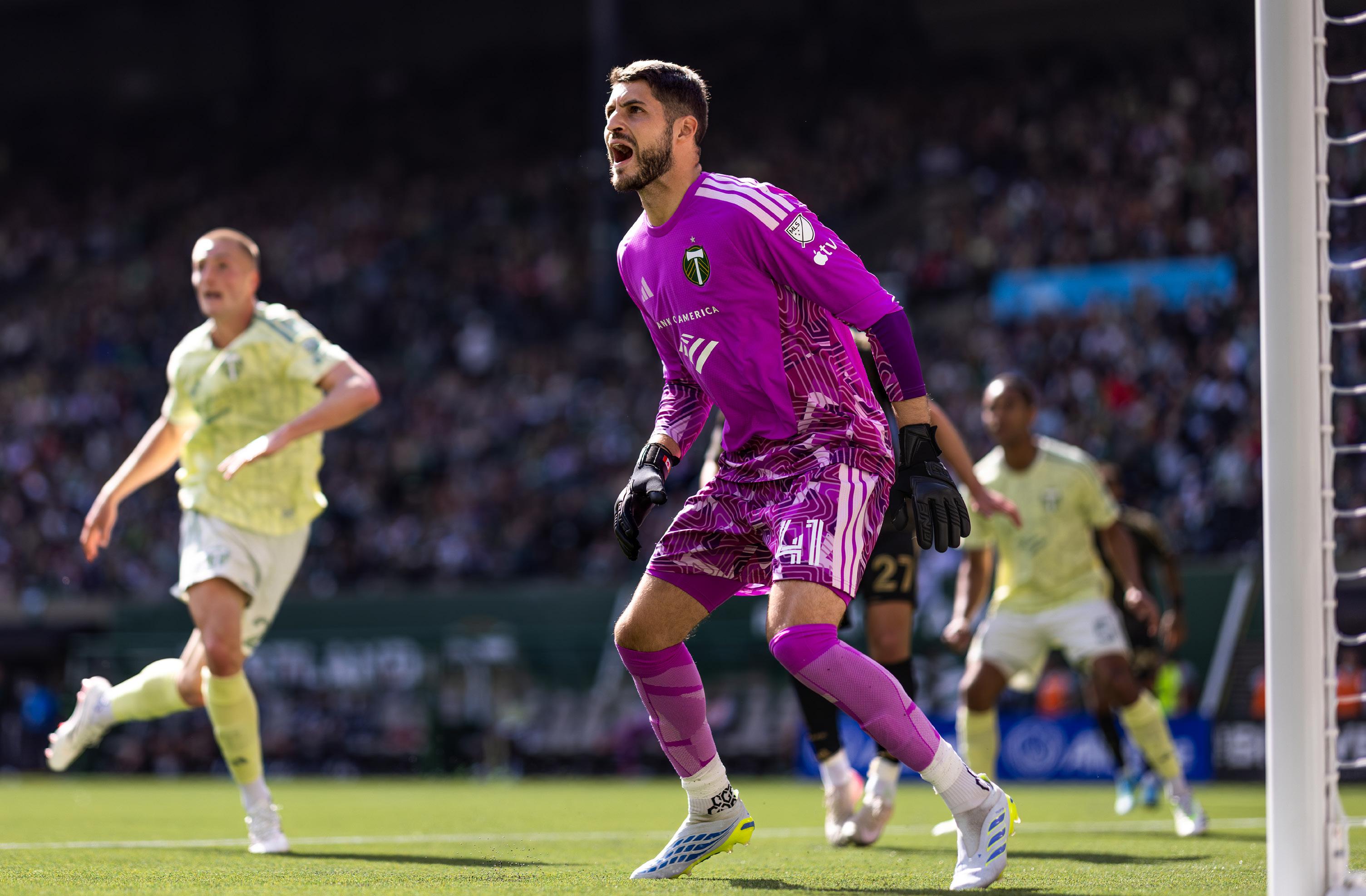
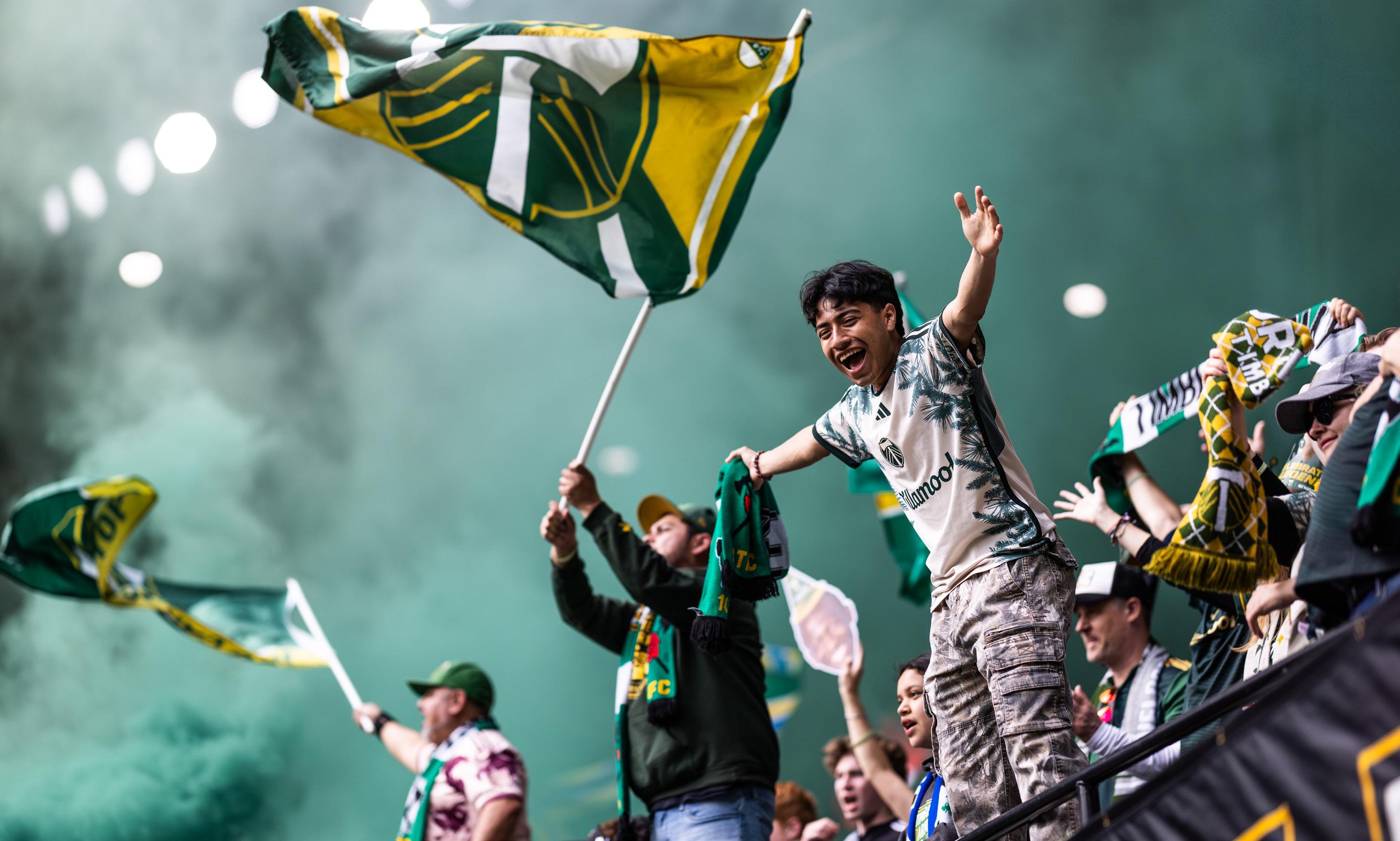
Portland Timbers fans wave flags during a 2-1 win over LAFC.

New York Mets pitcher David Peterson overcomes tragedy and finds strength in family.
By Ana Narayan
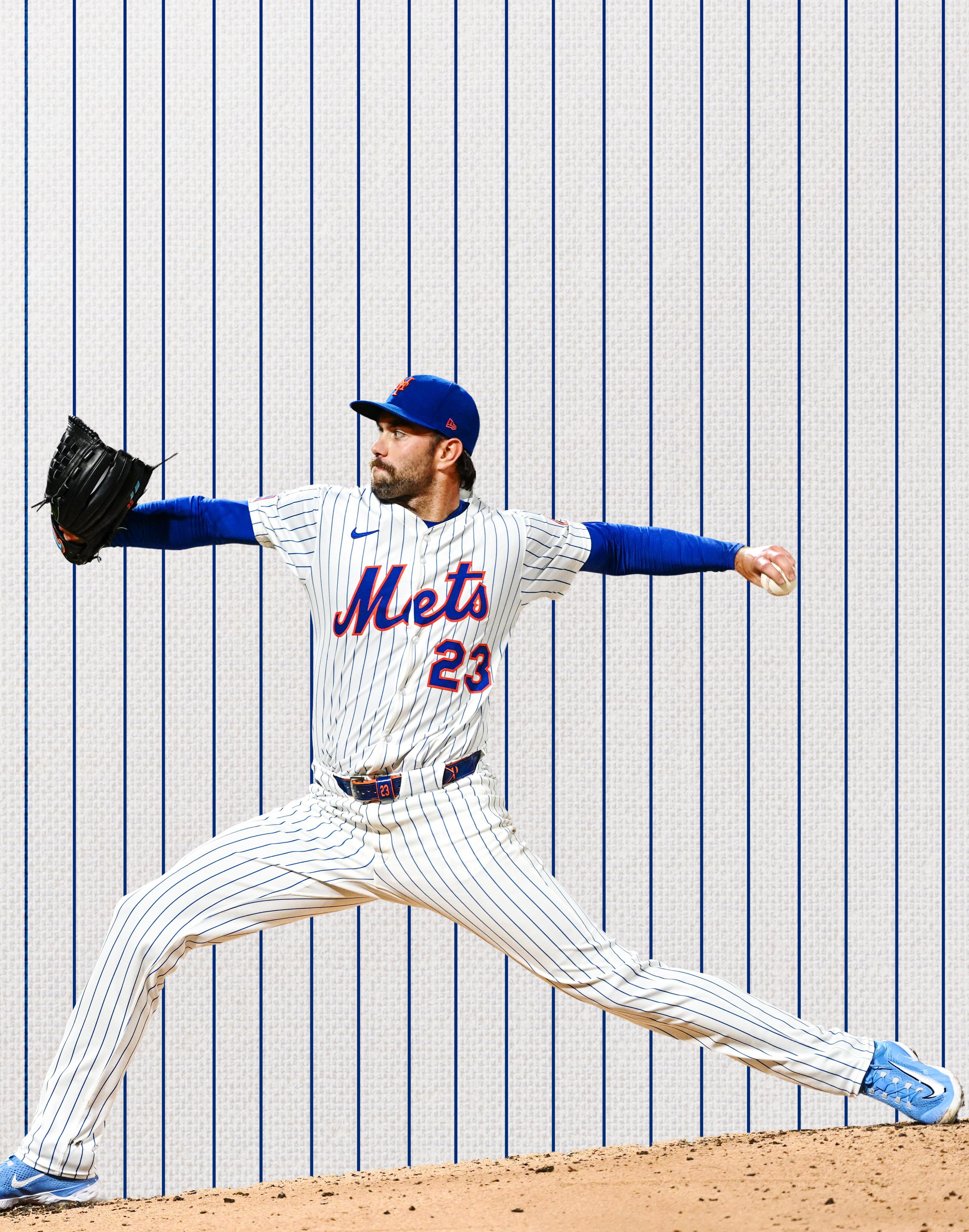
Photo courtesy of the New York Mets
Twenty-one years before David Peterson was pitching at Citi Field for the New York Mets, his legs dangled from an LAX airport chair as he awaited the arrival of his grandparents for Thanksgiving. Then his mother, Shannon, received a phone call that his father had died from an accidental overdose at a Crowne Plaza Hotel near Hollywood Park in Los Angeles. Later that evening, while relatives struggled to process the sudden loss, Peterson did something that felt so instinctive yet defiant. He dressed himself for his baseball game. Peterson’s family gently reminded him that no one expected him to play. He went to the field anyway and threw a no-hitter.
“It felt like his presence was with me, like my dad was with me,” he says. “Baseball has always been this kind of safety net, comfort zone for me. A place that I can detach.”
Peterson grew up watching his dad pour immense hard work and dedication into horses. Peterson’s mornings began long before sunrise in the quiet stillness of his family’s barn. By the time most kids were waking up for school, Peterson was already working alongside his father in near silence, a grind that felt second nature to him.
His father, Doug, a 6-foot-6, 250-pound horse trainer, brought his son along not just to help but to learn about the dedication it required, step by step. As soon as the light crept in, the father-son duo was already cleaned up from the barn and on the road.
Peterson applied that work ethic to sport. At an age when most children were watching cartoons, he was transfixed by baseball.
At only 2 years old, Peterson flipped his cap backward and tugged a baseball glove onto the wrong hand, standing in the kitchen with a charismatic confidence, telling Shannon he was bound for the big leagues. He was so obsessed with pitching that he disassembled the family trampoline and propped it against the backyard fence. The purpose was to hit the center with a throw, which would result in the ball rocketing straight back to him.
That singular focus eventually led to a historic career trajectory. When the New York Mets called his name as the 20th overall pick in 2017, he didn’t just graduate to the pros. Peterson became the first Oregon Duck of the modern era to claim All-American honors, cementing a legacy that began long before he ever stepped onto a college mound.
The Denver-born southpaw grew up in a full house, surrounded by a lively, multi-generational mix of parents, grandparents, and a sister who kept him grounded.
“I was surrounded by a lot of love and people that wanted the best for me and wanted to keep me on the right track and raise me into a quality man and human being,” he says.
After his father’s passing, his grandfather climbed behind the wheel of a U-Haul and drove the family from California to Colorado. When they arrived, Peterson’s aunt and uncle welcomed the family with open arms and provided a foundation.
As he got older, his number one focus was on baseball and someday making it to the major leagues. As a freshman at Regis Jesuit High School, Peterson made the varsity team, playing under MLB legend Walt
Weiss, and led the team to a 5A state championship. That same year, his grandfather requested that two of them go on a drive together.
“Look,” his grandfather told him, “I don’t know anything about baseball, but I know you have this gift. This gift will only get you to a certain point. I don’t know if it’s college, but the talent is only going to get you so far.”
Peterson nodded, taking in every word.
“You’re going to get where you want to be by pairing your work ethic with your talent and being relentless with it,” his grandfather said. “Continue pushing, doing the things that you don’t want to do, making sacrifices.”
Before the start of his senior year of high school in 2014, just six weeks before the baseball season began, Peterson joined his teammates for a weekend retreat at a friend’s home. During a pickup basketball game, he drove to the basket for a layup but came down to the snap of his right fibula, just six weeks before the draft.
“It was very emotional at the moment because I kind of knew that it was probably going to kill my opportunity to go pro out of high school,” says Peterson.
Even while sidelined, he became a guiding force for his team, sitting with his coaches to analyze game film and supporting teammates. Miraculously, Peterson returned to the mound only six weeks after surgery. After graduating, Peterson received a call from the Boston Red Sox, who selected him in the 28th round of the 2014 MLB Draft. Peterson opted to play for the University of Oregon because developing as a young player superseded going pro.
The first time former Oregon head coach George Horton saw Peterson was purely accidental. Horton traveled to UC San Diego to meet recruiters and sat in on a game Peterson was pitching. For a game that felt routine to Peterson, Horton watched closely.
“He threw from different arm angles,” says Horton. “He had different kinds of hold-the-runner picks, the same kind of athleticism that we see in him today, covering line-to-line on bunts and swinging bunts.”
Horton wanted to meet Peterson to gain insight into his character and values. What stayed with the coach wasn’t just what Peterson did on the field, but rather how he carried himself off it. Horton paid close attention to every detail during a lunch meeting with Peterson at a restaurant in Eugene, especially how well Peterson treated his family.
“We were lucky to get him, and to this day, I feel blessed that I got to coach him. That’s how good a young man he is,” he says.
Long before Peterson reached the big show, there were lighter moments that stayed between the player and the coach. During a particularly slow practice day at PK Park, Peterson found himself in the center of a heated moment that he and Horton still laugh about today.
The team worked through a routine drill called bunt defense, designed to sharpen instincts and reflex speed. Horton rolled balls to the pitcher unpredictably, often with a second ball hidden in his hands to force players to react without warning to make the out at home.
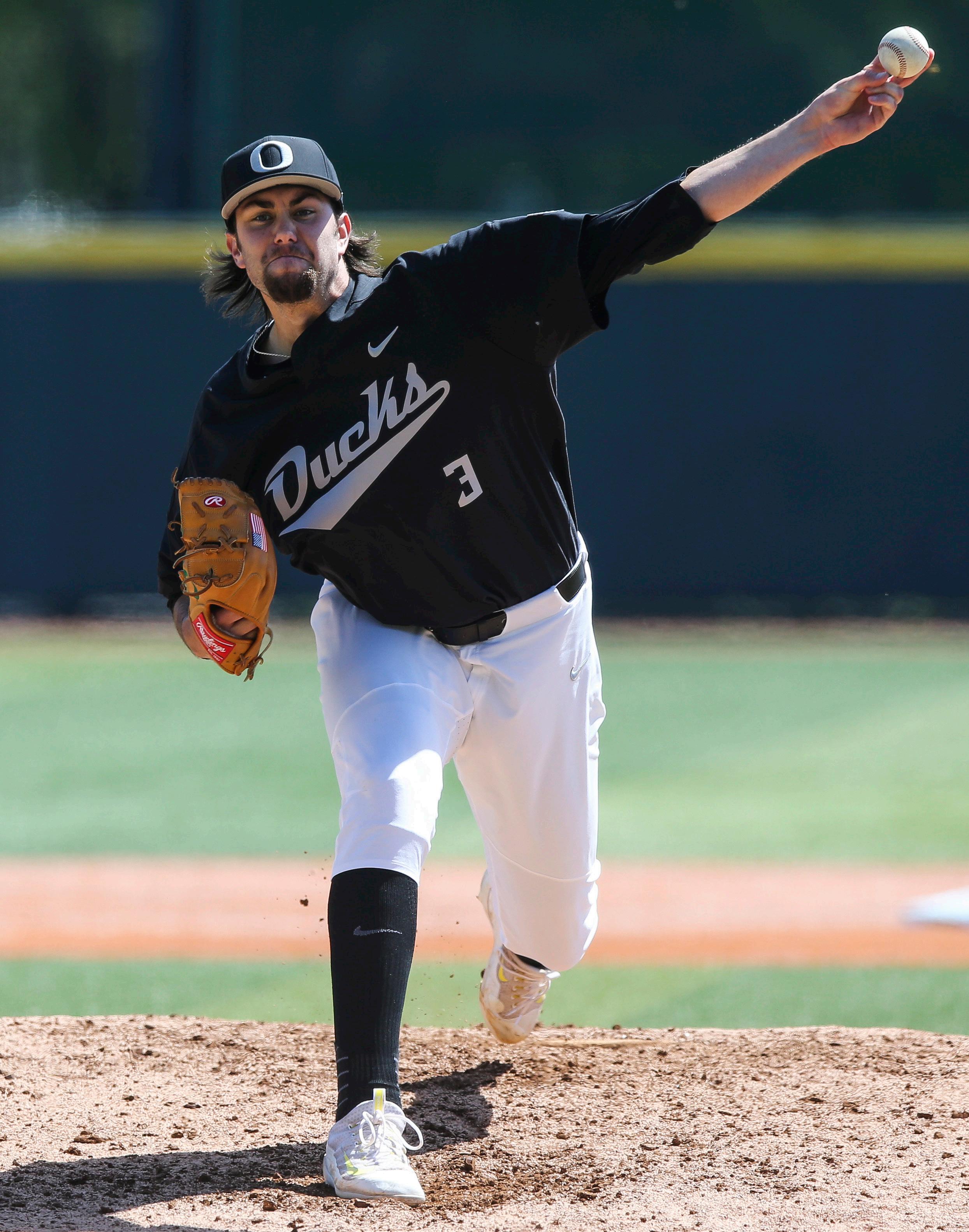
David Peterson pitches at PK Park.
Photo by Eric Evans
When the ball quickly rolled in Peterson’s direction, he handled the first bunt successfully. Instead of moving on to the next player, his coach decided to change plans. The next ball was an absurd toss, an attempt to break Peterson’s rhythm and remind him to be prepared for anything. Peterson improvised.
“I remember I grabbed it with my bare hand and threw it between my legs. It wasn’t the worst throw, but it wasn’t on the money,” he says. “He basically went off on me and threw me out of practice.”
The following day, Horton approached Peterson.
“He’s like, ‘Look, I know you can make that play. I don’t understand why you did it. But you understand why I kicked you out, right?'” says Peterson.
Peterson did understand. The message was less about the throw and more about the importance of accountability. Peterson took the message to heart and worked even harder.
His tenure with the Ducks soon evolved into one of the most dominant pitching stretches in program history. By his junior season in 2017, Peterson earned the Collegiate Baseball National Player of the Week honor in the Pac-12 conference, most notably after throwing a program-best 20 strikeouts in a game versus Arizona State. That season, the numbers told a striking story: Peterson struck out hitters at an impressive rate of 12.6 per nine innings across 15 starts, finishing 11-4 with a 2.51 ERA.
When told he would make his first start in the pros, Peterson recalls the news hitting him like a scene in a movie. He stepped out of the room, made a beeline to the locker room, and sat alone, letting the moment sink in. Peterson enjoyed the gravity of the situation but didn’t want that exhilaration to be short-lived.
“I didn’t grow up wanting to play just once in the big leagues,” he thought. “I wanted to do this for a living. I got here, and now maybe I’m going to stay here.”
When he stepped onto the field for his debut game with the Mets at Fenway Park, he battled through 5 ⅔ innings, allowing two runs on seven hits while striking out three batters. Before his second game with the Mets, somewhere between the hotel and the ballpark, nerves took hold. His phone buzzed. A text from his wife, Alex, and a couple from his family congratulating him, reminded him he was exactly where he was supposed to be.
As the first pitch crept closer, the stadium’s history and noise gradually got louder in his ears. He could feel his heart beating out of his chest. Once
Peterson threw his first pitch, everything snapped into place.
After Peterson’s first win, his teammates stuffed him into a laundry cart and rolled him straight into the showers, all while dousing him in beer. That feeling and several others have stayed with Peterson. He still remembers how the lights at American Family Field seemed to sharpen the night of Game 3 of the 2024 National League Wild Card Series against the Milwaukee Brewers. It was the kind of moment players dream about, the kind that etches itself into the arc of a career. He had been a starter all year, a stable presence in the team’s rotation, until Mets manager Carlos Mendoza made the game-defining decision to shift him to the bullpen before the beginning of the game.
“I don’t know when I’m going to use you,” said Mendoza. “I could use you earlier in the game to get out of a tough situation, or you could close the game.”
Peterson nodded, knowing he had to jump in at any moment. For eight innings, the Mets’ bats stayed quiet. Mendoza then reached for the phone and called bullpen coach José Rosado. When Rosado hung up the phone, he turned, his eyes locking onto Peterson.
“You have the ninth,” said Rosado.
The Mets defeated the Brewers 4-2, thanks to Peterson securing the victory. The stadium erupted into a single roar. The Mets dugout emptied into a wave of bright blue and orange, and catcher Francisco Ávarzez sprinted towards the mound and hugged Peterson.
When the buzz from the night faded, Peterson sat back and found himself thinking about the people who supported him along the way. Peterson has learned to fail forward. With all the deep stings of disappointment he feels in the locker room, replaying every little mistake in his head, he lets the pain move through him. And now, he’s passing those lessons off to his children, Josephine and Callahan.
For Peterson, fatherhood has been an anchor in his fast-paced, demanding career, forcing him to slow his pace and prioritize what’s most important. He realizes his victories and obstacles on the field carry a different weight with his children. He could throw a no-hitter, and his son, Callahan, would have the same reaction as if he went six innings and gave up six runs.
“I’m going to walk out of those doors, and he’s going to yell ‘Daddy’ and come running up to me, and I don’t know how I can be anything but in a good mood,” he says. “It’s taken a lot of stress off of me.”
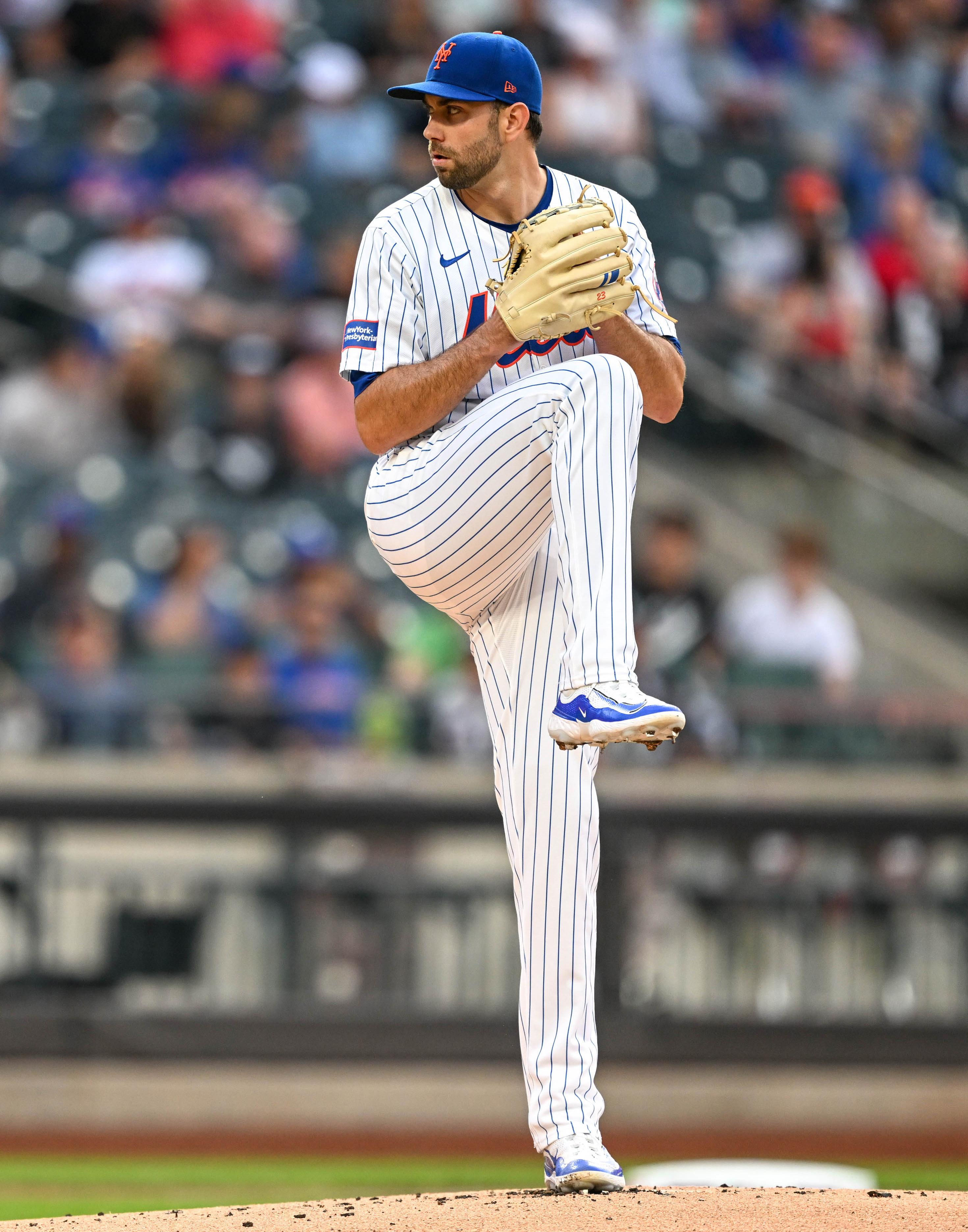
Photo courtesy of the New York Mets
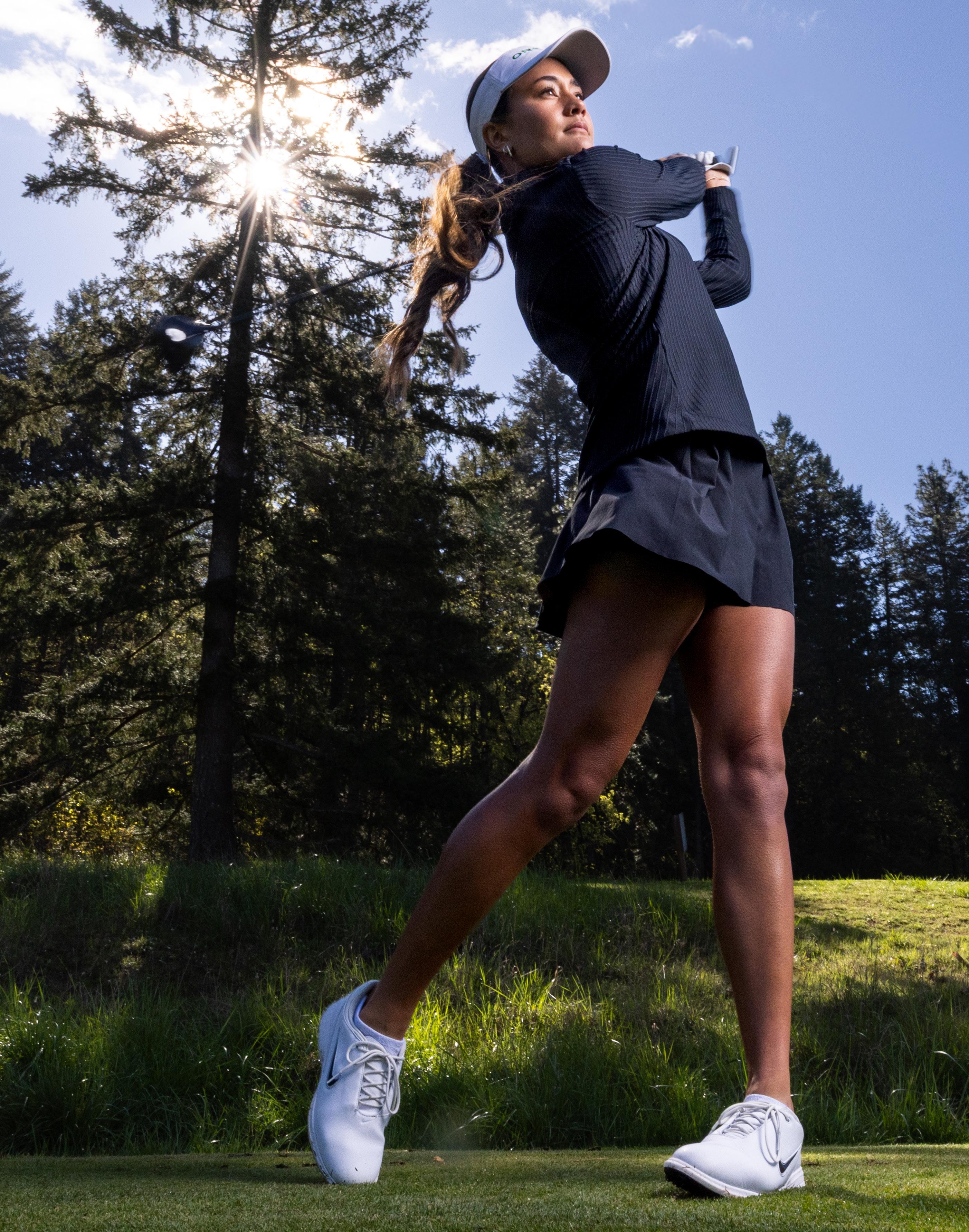
SWEET ESCAPE
Top
By Owen Murray
Photos by Max Unkrich
amateur golfer Kiara Romero drives her way to greatness at the University of Oregon.
There’s a place tucked in an Oregon forest where Kiara Romero goes to escape. Past the outskirts of Eugene, Oregon, her adopted college town, the paved roads separate into gravel, and the shades of green marking the landscape fade from bright and wellmanicured to dark and earthy. On these trips, she swaps the irons and woods in the trunk of her car for clay pigeons and a shotgun.
Out here, she’s free of the inhibitions she bears on the golf course. A junior at the University of Oregon, the 20-year-old Romero is a two-time firstteam All-American with a likely third selection on the way. In 2024, she was named National Freshman of the Year by the Women’s College Golf Coaches Association, and in 2025, she won the McCormack Medal after rising to be the world’s No. 1 amateur golfer.
Her longest drives are close to 300 yards, and she’s as accurate off the tee as she is powerful. The winningest player in Oregon history, she’s a program-changer, a history-maker. Whenever she steps onto the course, she commands the respect of every competitor and spectator, while also experiencing an ever-present pressure to perform. But out in the woods, she’s just a woman with a shotgun trying to blast a clay pigeon.
She loads the car with her siblings, and sometimes the friends she trusts with the location of her sweet escape. Among these trees, the echoing pops and clatters aren’t pulled from golf balls, but from the clays Romero shoots. Nailing the target requires Romero’s absolute focus. The feeling is not unlike what she experiences standing over a tee shot, but Romero isn’t there to train the drives that make her an otherworldly player on the course.
“It’s just completely opposite from golf,” she says.
Escape like this is what has kept Romero atop the world’s amateur golf rankings. She began playing in San Jose, hitting with her siblings until they couldn’t find their balls in the fading light, parlaying that early talent into a U.S. Girls’ Junior Championship in 2023 and three American Junior Golf Association All-American nods. In that 2023 win, Romero went 36 holes of match play in the final round. She overshot the green on her approach, but recovered and made her winning putt. On that hole, she said, she was shaking.
Now, in her best performances, she finds a conscious flow state — a peaceful confidence, says Oregon head coach Derek Radley. Romero hits shots that Radley says only she can. The balance she seeks in competition is the same as the feeling that comes so easily in nature. When it arrives on the course, she feels present.
“I think I play my best golf when I’m doing that,” she says.
When Romero leaves Oregon as its most successful golfer ever, her world will change. Her professional career won’t always provide the immediate access to nature she’s accustomed to. She won’t live in the same city as her two older siblings, whom she describes as best friends. She’ll have the game, but what’s most important to Romero is the new world that it opens to her.
The Ladies Professional Golf Association (LPGA) Tour has been her dream for a while — not to win at the highest level, necessarily, but to enjoy herself as she goes.
“It doesn’t matter if I’m No. 1 or No. 100,” Romero says. “I just want to be playing the game that I love, meeting with people, and traveling around the world.”
When she was 12 years old, golf was Romero’s ticket to her real goal: a dog.
Romero begged her dad, Rick, for a puppy nonstop. Rick had no interest in a dog, but Romero struck a deal ahead of a 2019 tournament. Before leaving for Georgia to play in what was the biggest tournament she had competed in, she pointed a camera at Rick and hit record.
“Kiara. Top five. Puppy,” Rick said on video before he started pacing around the room.
After bogeying the 17th, Romero was on the verge of tears as she slipped out of the top-five going into the final hole. Outside the ropes, her mom, Maricel, asked Rick to look at their distraught daughter, suggesting Rick needed to get the dog anyway.
“He’s like, ‘Nope, top-five,’” says Romero.
Romero recovered, birdying the 18th, but remained on the outside looking in. She needed her playing partner to double-bogey in order to finish in the top-five. Her partner obliged. Kona, her dog, turned six years old last year.
When Romero saw Rick for the first time after the round, he was dying laughing, she remembers. That feeling of joy is what she’s chasing on the course. It’s the engine of her peace, and even though Kona and Rick stayed in San Jose when Romero committed to Oregon in 2023, his laughter still echoes through her rounds.
When Romero, a lauded high school golfer, reclassified two weeks before the deadline to declare for college a year early, it was with one idea. She wanted to go to the tour earlier.
In her first year at Oregon, Romero headed back to Georgia — this time for the 2024 Augusta National Women’s Amateur (ANWA) tournament. One round at Augusta is the envy of golfers around the world, but as Romero played the course alongside her older sister, Kaleiya, as her caddy, the pair’s conversations strayed away from golf and towards siblinghood. Romero wants her time on the course to stay that way.
That year, Romero missed the cut with a five-over. When she returned to the ANWA a year later, she led the field on the final day, improved to a seven-under, and tied for seventh.
Wisconsin’s Erin Hills golf course can be unforgiving. Radley remembers Romero's third round well.
After making the cut with a one-over 73 and an even 72 after the first two days, Romero shot a 12-over 84 on the third, a score she hadn’t fallen to in three years.

Kiara Romero putts at Pine Ridge Golf Club in Springfield, Oregon.
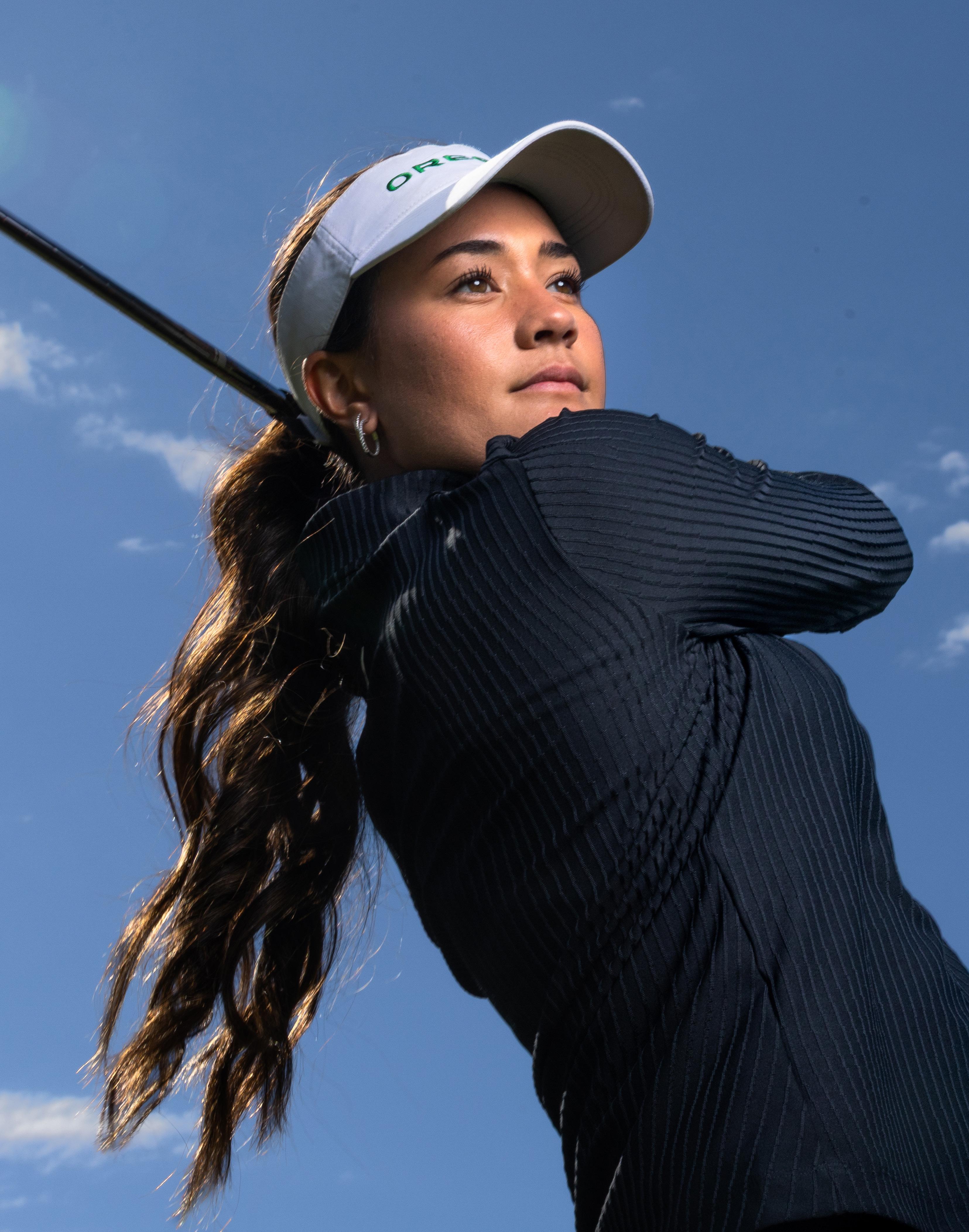
“That was pretty brutal,” says Romero. “I just remember being upset about it during the round, but then after I was like, ‘I’m just gonna let it go, drop it.’”
Romero went to the hotel and watched TV in an effort to do anything but think about that round. The next day, she woke up excited. Romero told herself something that has resonated through her dominant third year at Oregon: “Whatever happens out there, I’m just going to enjoy it.”
Romero teed off at 7:51 a.m. As she skirted down a divot-less, footprintscarce course, she slipped into cruise control. First came a par, then two birdies sandwiching a bogey.
“Those are the moments where you take a step back and realize you’re playing in the U.S. Open,” she says. “It’s just being grateful for the fact that I’m out there.”
Radley compares what it’s like caddying for Romero to playing with Tiger Woods on an old version of an EA Sports’ PGA Tour game.
“It’s just, wherever she needs to aim it, wherever she needs to put it, she does,” he says.
On the par-4 fifth hole, Romero aimed to hit a drive that would split a pair of bunkers on either side of the fairway and set up a straight shot at the green. Instead, she drove into the fairway bunker on the right, underneath a “crazy high” lip and on a downslope.
“I’m just going to rip a five iron out of here,” she said.
Radley could not believe what had just come out of Romero’s mouth, repeating the same words back in the form of a question.
“Yeah,” said Romero. “I’ll just aim it at the middle of the green.”
Moments later, she flushed it up “to the moon,” and covered the left-side bunker that guarded the hole on the back of the green by two yards. Radley started giggling, something Romero still makes fun of him for. The ball rolled to within 60 yards of the hole and Romero two-putted for par.
“No female golfer, pro or amateur, could have hit that long iron out of that shot, except for Kiara Romero,” says Radley.
Radley adds, “I think that’s the separator. She’s the best ball striker in the world, and that day, she just absolutely put on a clinic. And we had so much fun.”
As the sun rose she racked up four more birdies, finishing five-under. Her 67 marked the lowest final round ever by an amateur at the tournament.
Romero, the golfer, isn’t so separate from Romero, the person. Ask her about her horseshoe, which she’s kept in her bag since her first-ever tournament win as a 6-year-old, and she grins. Joke about her love-hate relationship with bananas — she doesn’t love them, but she still eats two or three a round, because they’re good for her — and she laughs. It’s all to say something now that she values: “Playing golf does make me happy.”
She was laughing at The Standard Portland Classic in August 2025 when she spotted her friends at the edge of the course. In between holes, after she had finished and waited for her group to join, she ran ahead to the next tee box, slipping underneath the ropes and chatting with her friends. Later, her agent told her that she’d never seen a golfer outside the ropes during a competition.
“It doesn’t have to be too serious,” says Romero. “It doesn’t have to feel like work. It can be fun.”
She finished the tournament tied for seventh, her highest-ever LPGA finish at the time, with an eight-under 64 final round that included nine birdies. Something was working.
In February 2026, Romero returned from a victory at the Chevron Collegiate, which made her Oregon’s winningest golfer ever. She was encased in the glass-walled John E. Jaqua student-athlete center on the University of Oregon campus when, from across the room, a male golf recruit’s mom, accompanied by Radley, recognized Romero sitting on a couch.
They wanted to meet her, his mom said. They were Filipino, like Romero, and they were hoping to run into her. At risk of being a “fan mom,” she wanted a picture with Romero, who, of course, obliged.
“For being this superstar, she doesn’t act like it,” says Radley. “And I think that’s one of the greatest things about her. She understands the value of going and signing a little girl’s golf glove or ball at a tournament.
The pressure that comes with being a world No. 1, program-defining player will always follow when she tees it up, but Romero knows how to escape when needed. She’s a year, maybe two, from a spot on the tour. The benefactor of all the rounds she’s ever played, Romero understands she cannot always control the scores, just the effort.
“Honestly, it’s obviously fun to play well and compete and win,” she says. “But I think the fact that, when I say I want to go out there and have fun, I mean not to go out there and be life-or-death over every shot.”
When she succeeds, Romero’s head is as far from the clouds as it can be. When she works her way into that world of peace and confidence, Romero might as well be grounded in the woods, among the trees, finding a sweet escape.
Kiara Romero finishes her swing. Thanks to a unique mix of power and accuracy, her drives can travel close to 300 yards.


By Lily Reese
Downhill skier Jacqueline Wiles overcomes career-threatening injury to capture her first Olympic medal.
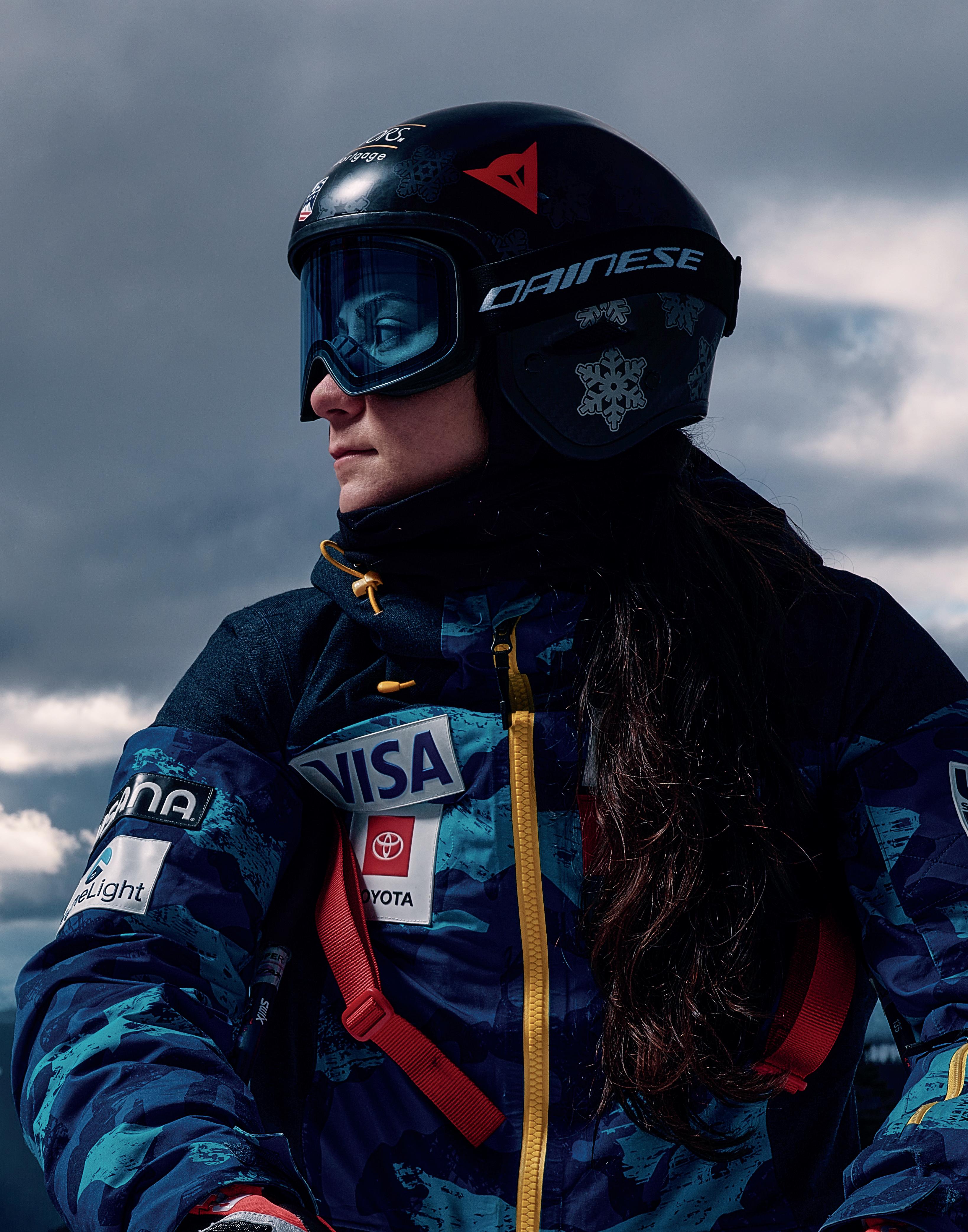
by
Photo
Kristofer Cheng
Aminute before the race, rocking in the start gate, freshly groomed snow crunching under her skis, breath blooming in the cold, Jacqueline Wiles is a silent engine of intention. She has visualized the course, memorized every roll and compression, and watched a handful of competitors ride the course line on the monitor. She knows the track like her own heartbeat.
Then comes the pause, the moment right before gravity grabs the edges of her skis and sends her hurling downward. The moment where fear and readiness collide. Here, she commits. No doubt. Just the pure physics of desire and discipline, turned loose on a sheet of snow at 80 mph.
It’s a sensation almost like flying, grounded in muscle memory and the impossible force of momentum. The wind echoes in her head. The world tilts and smears, and the only thing left to do is trust. There’s a moment in every race, just a split second after she crosses the finish line, when Wiles has no memory of getting there.
She looks up at the scoreboard, chest heaving, legs vibrating, the roar of the mountains echoing through her helmet, bewildered at what she just did.
“It’s almost like this period of time stops,” says Wiles. “It’s super powerful and incredible, this driving force that you’re building upon is really unique.”
Wiles, a 33-year-old Portland native, four-time Olympic alpine skier, and bronze medalist, started skiing by the age of 2. At 5, she bounded down Oregon’s Mt. Hood and straight onto her local youth ski team, which kickstarted her competitive drive. When Wiles was 9 years old and already winning most of her events, her parents packed up the car and drove 12 hours to watch the 2002 Winter Olympics in Salt Lake City. Wiles remembers standing among the crowd, watching Julia Mancuso, a previous gold medalist, tear down the mountain, fearless and fluid on the snow.
“When I was younger, I really just had this feeling of no fear and just wanting to point my skis down and push the limits as much as I could,” says Wiles. “I just loved being out there with my friends and trying to go fast.”
That innocent thrill, the wind on her face, snow in her wake, became the heartbeat of her youth. But inspiration alone wasn’t enough to reach her competitive aspirations.
In high school, Wiles noticed the gap between dreaming about elite competition and reaching it. She wasn’t winning consistently anymore. As the stakes of racing increased, so did the physical demands, and she realized that her raw talent would only take her so far. What she describes as a “self-audit” became a turning point, an honest assessment of what it would take to compete at a professional level.
Wiles transitioned from skiing under the local Pacific Northwest Ski Association to the White Pass Ski Club, an organization famous for developing world-class ski racers.
“It was empowering to take ownership of my career,” she says. “Nobody is going to do it but me.”
In addition to switching teams, she focused on physical transformation. Speed wasn’t the problem, but rather her body. To keep racing at a high level, she needed the strength to handle the intense forces she was putting on herself. This led her trainer, Troy Harvey, to design a demanding workout routine to match her ambitions. She trained three to four hours a day, five to six days a week. Harvey had never worked with skiers before, and his first impression of her caught him off guard.
“I saw this terribly small and scrawny little girl who had these aspirations of being an Olympian and a medalist to boot,” he says. “What I saw with my eyes visually betrayed my understanding of her capability.”
The routine demanded everything: gaining muscle, building power, developing her core, strengthening her legs, and learning to eat healthy.
By the next season, Wiles was significantly stronger and dramatically faster on the slopes. She could take bigger risks, absorb more force, and maintain control at higher speeds.
“It was also eye-opening,” says Wiles. “[If I] keep working, keep fighting and believing, and slowly, as the year went on, I got better.”
Those lessons, forged in exhaustion and persistence, paid off. By the time Wiles graduated from high school, she had climbed the competitive ranks and realized she could hold her own against the best in her circuit.
Her break into elite competition came through the Nor-Am Cup, the North American circuit that sits just below the World Cup. The Nor-Am events are comprised of long courses, inconsistent conditions, and little outside attention, creating a proving ground for rookies. Wiles steadily built experience in downhill events, with her results pushing her into the upper half of the field and, at times, into the top 30. As her placements improved, Wiles moved from developmental status into legitimate contention for higher-level starts. In 2013, she made her World Cup debut, officially stepping into the sport’s highest tier. That same season, she was named to the U.S. Ski Team.
U.S. Ski Team coach Trevor Wagner first noticed Wiles at a race in Canada when she was 19, watching her place near the top of the junior field in a speed event despite challenging conditions. After recruiting her to the U.S. team, he brought her to Europe for the Europa Cup races, where Wiles struggled, pushed, and clawed her way through, every nerve on fire, every muscle screaming. She didn’t crack the top 20, but she finished and knew exactly where she stood. The other racers were simply faster.
“I got my butt kicked,” she says. “It was extremely tough and intimidating, but it was also like that’s what these girls are doing. We’ve got to work harder.”
The following season, Wiles executed a near-perfect run in Cortina, Italy. Crossing the finish line, the scoreboard confirmed it: a spot on the podium and a ticket to the 2014 Sochi Olympic team. Wide-eyed and fearless, Wiles soon found herself in a starting gate with her childhood inspiration, Mancuso.
“Watching her as a kid, having inspired me, and then joining her, being a teammate and a friend at that next Olympics… was a really cool full circle moment,” says Wiles.
After finishing 26th in the women’s downhill in the 2014 Sochi Olympics, Wiles threw herself into the next four years of training, knowing she had to keep working as hard as possible to stay at that level. In February 2018, during a World Cup downhill in Garmisch-Partenkirchen, Germany, Wiles approached a notoriously steep section of the Bavarian Alps nicknamed “Hell.”
The snow was dark under a late afternoon sky, the wind biting. Skidding outside the blue lines, 47 seconds in, Wiles corrected, but then clipped a gate, screaming as she flipped violently onto her right side. Her left leg bent at an unnatural angle, and she slid down the slope before crashing into the boundary gates. Clutching her leg and moaning, medical teams rushed in, and a helicopter whisked Wiles away in a rescue sled. The injuries proved catastrophic: torn ACL, MCL, LCL, POL, lateral meniscus, and tibiofibular joints, a broken fibula, and perineal nerve damage.
Twice-daily physical therapy sessions tested her resolve, and even walking again became a victory. Every day reminded her of what she had lost in a single instant: control, certainty, and her shot at the 2018 Olympics. But amid the chaos, a stubborn vigor flickered. The crash forced Wiles to confront a reality she had never considered: she couldn’t ski forever, and she needed to start imagining life beyond racing.
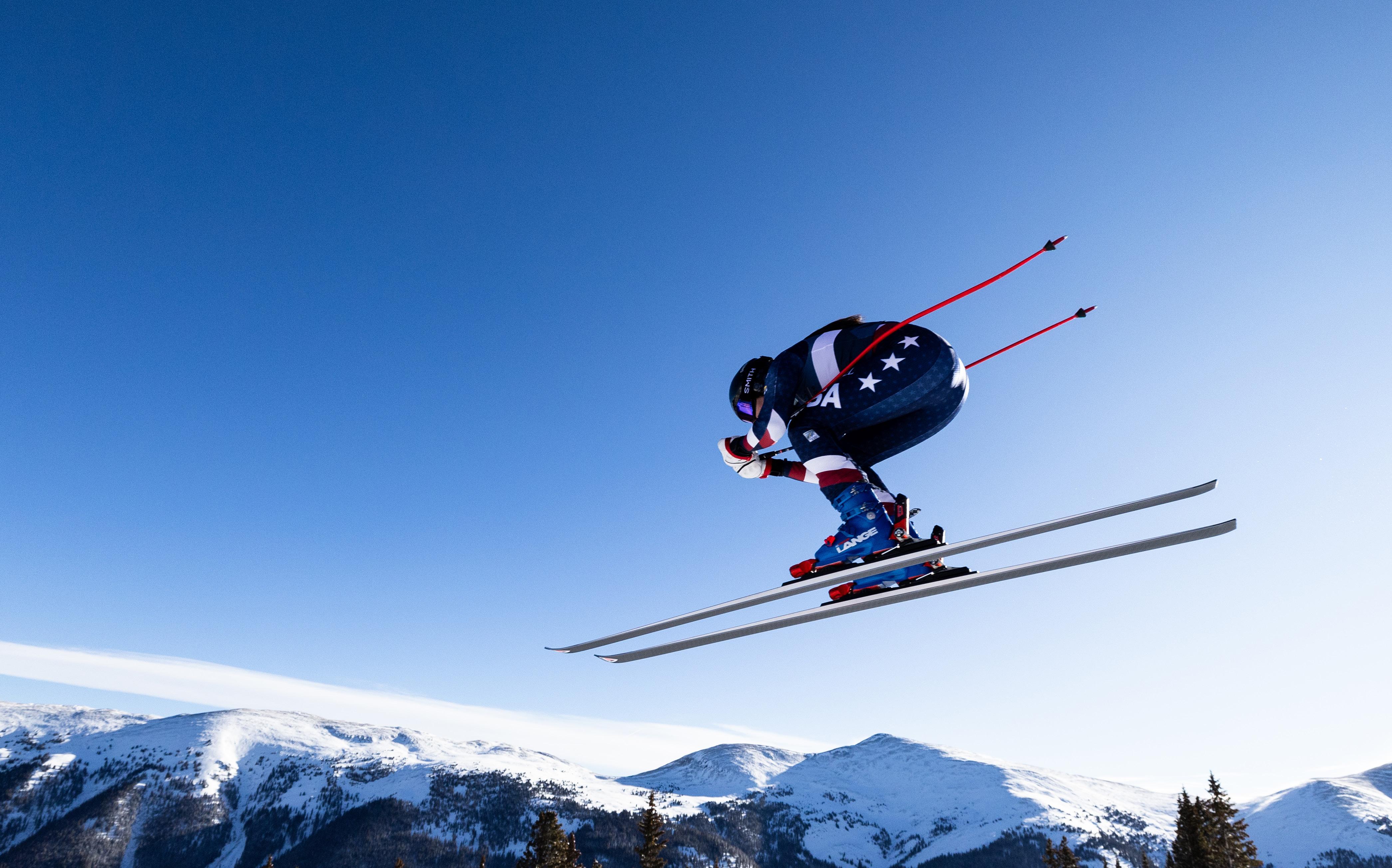
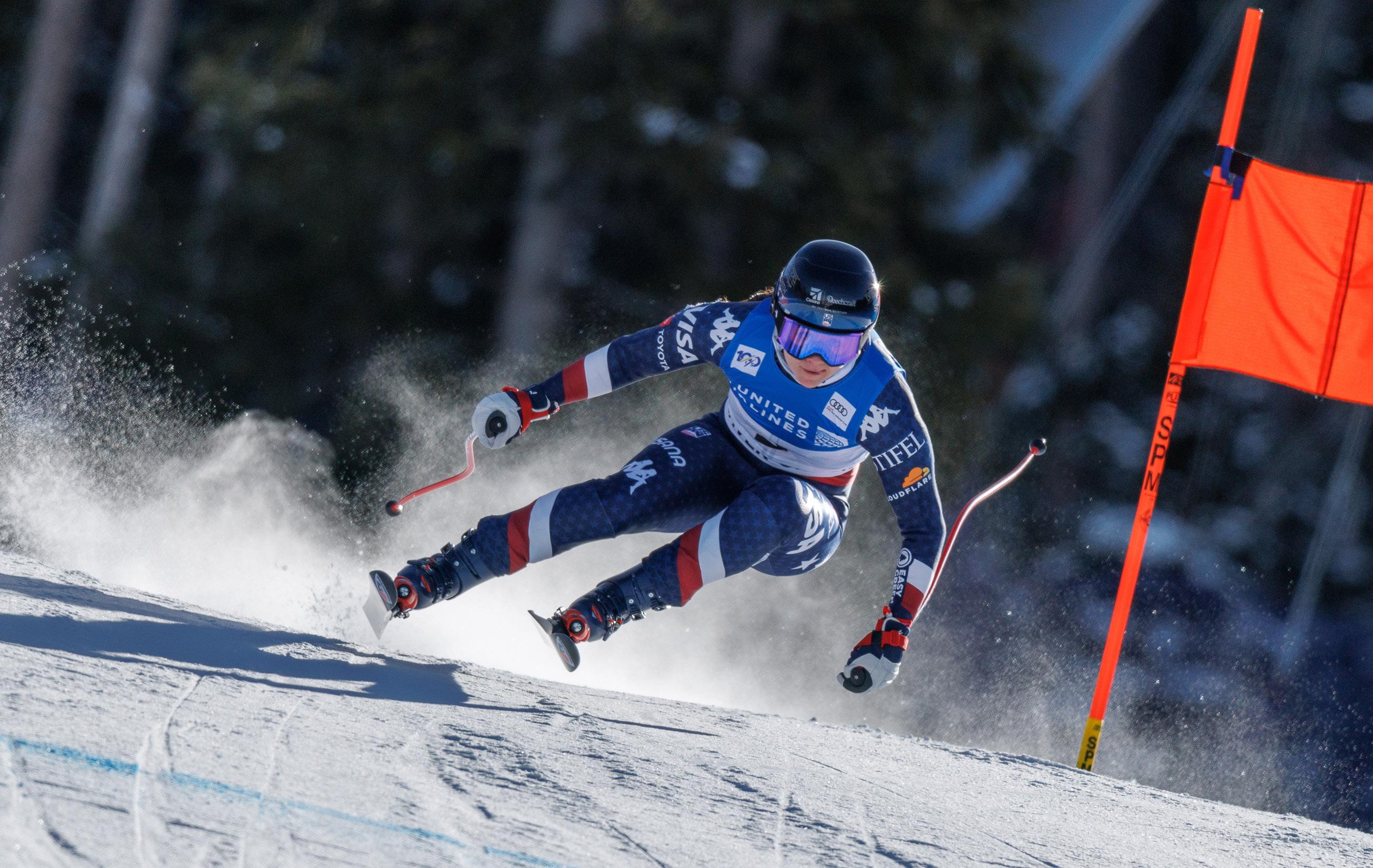
Photos by Dustin Satloff
Jacqueline Wiles turns around a gate during the Birds of Prey World Cup in 2024.


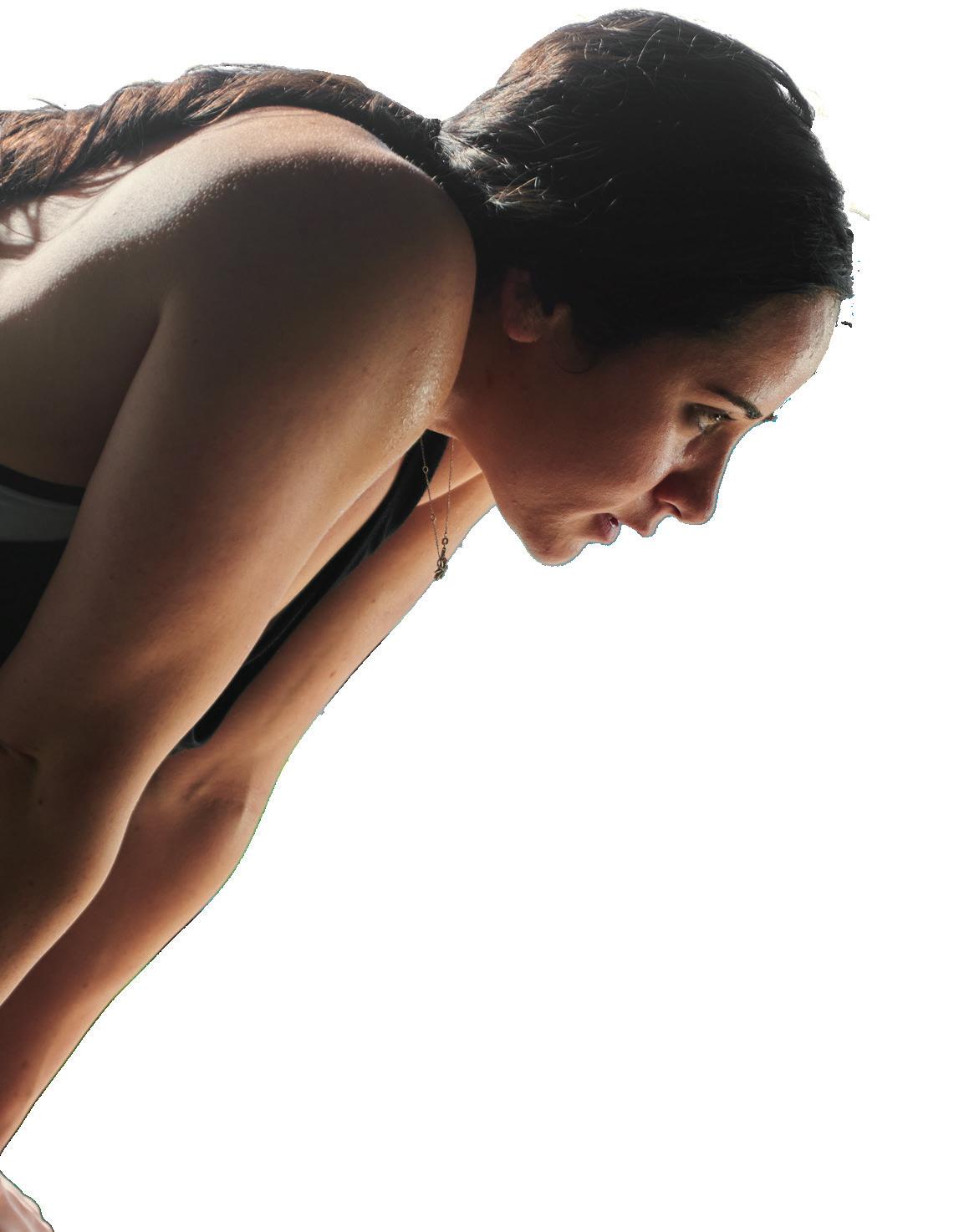
by
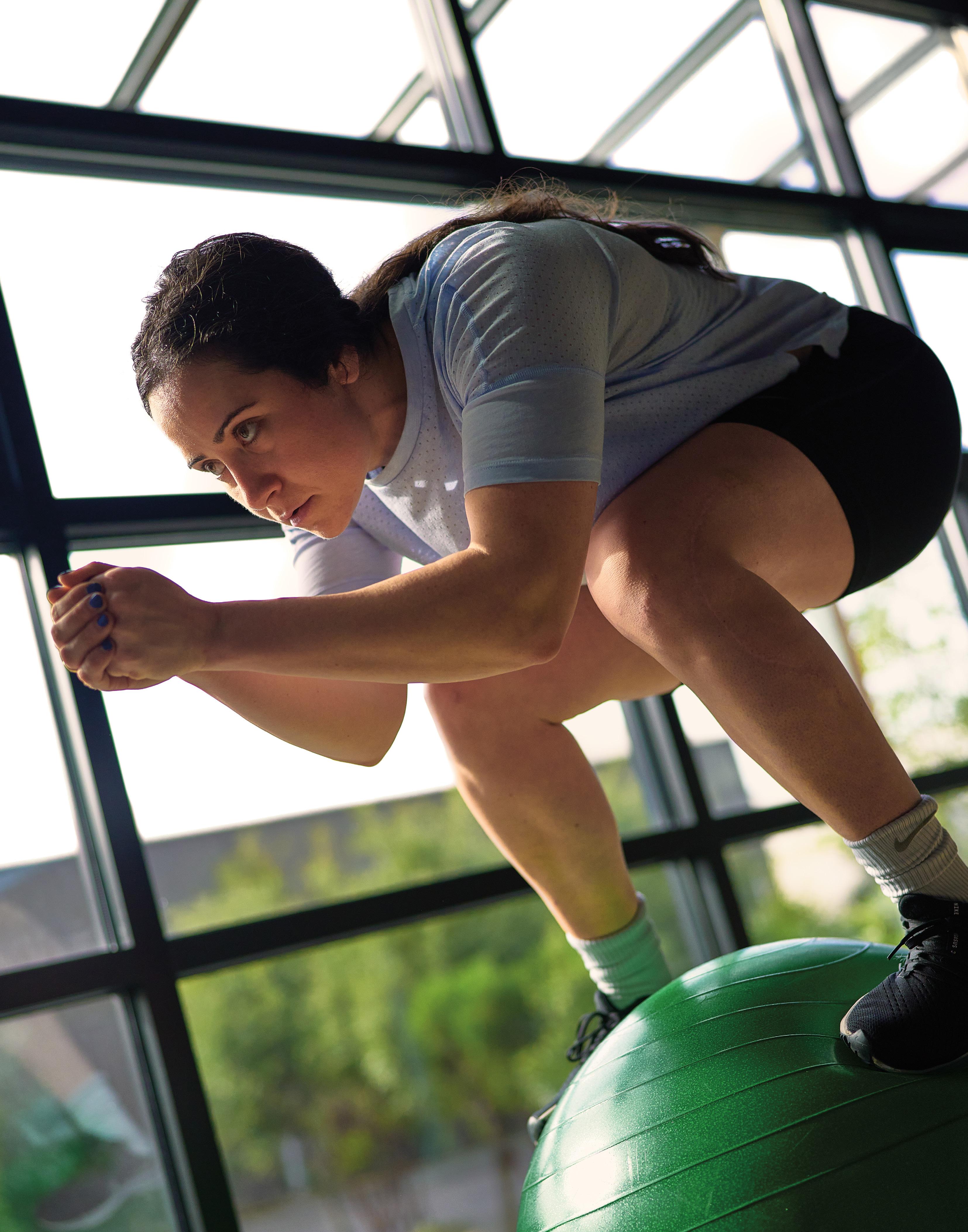


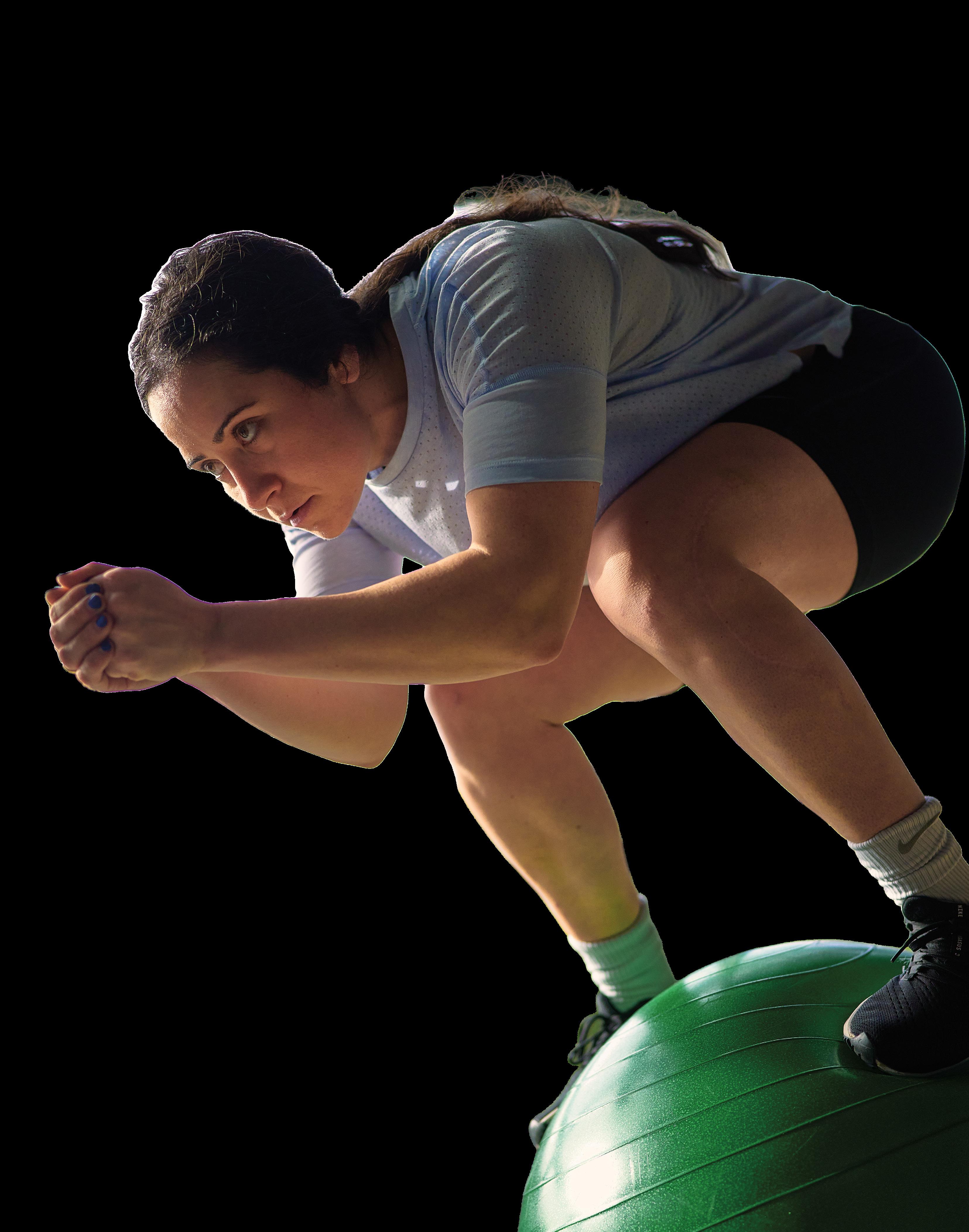
Photos
Kristofer Cheng
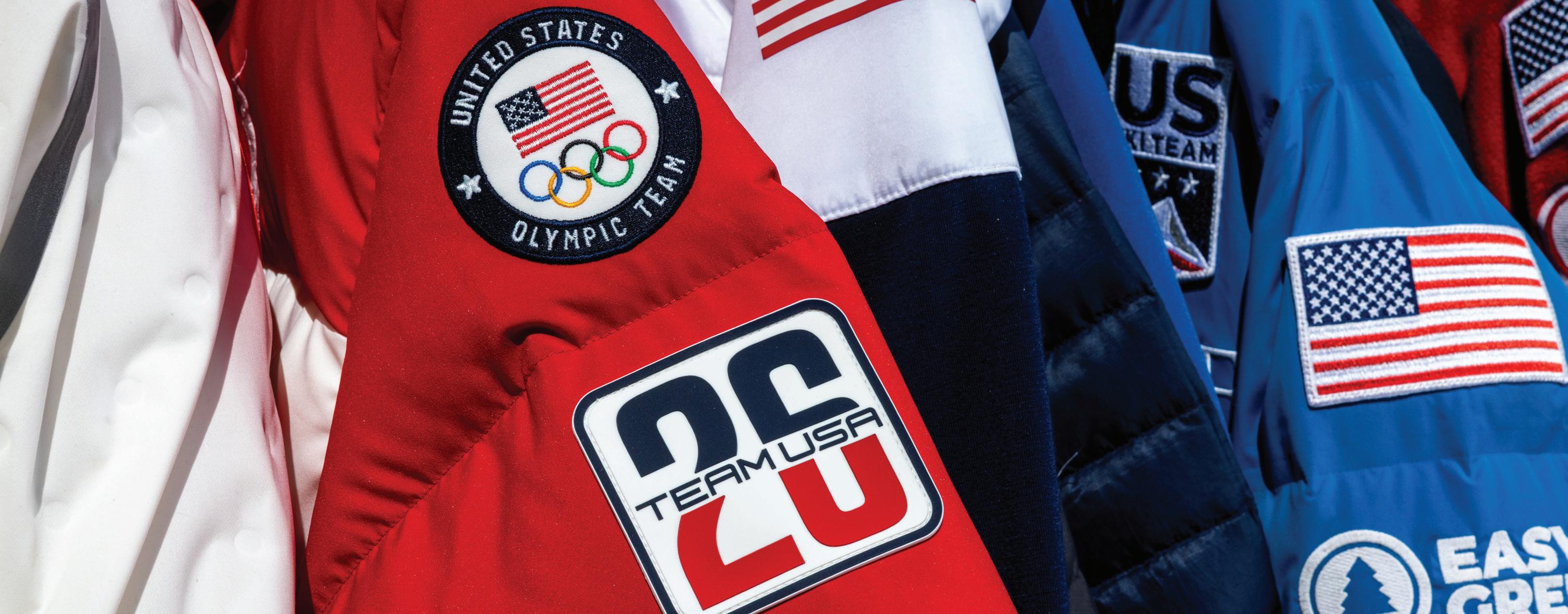
“I had a long time until I got back on snow, so I was just thinking about what other things excited me out there,” says Wiles.
While rehabbing in Utah with the ski team, a pilot friend suggested Wiles try a discovery flight, and a new spark ignited. In the air, she felt the same thrill she loved on the slopes: reading forces, plotting every move, and executing a plan with precision.
“It was this feeling of exploring, seeing the world from a different viewpoint, having to really stimulate myself, to learn something new, and something challenging,” says Wiles.
As her leg healed, she threw herself into aviation, earning her pilot’s license in 2023. Yet even while flying, the pull of the slopes never faded, and returning to snow meant facing old mental scars.
“It was really hard because I would have thought I was trying to push and want to go fast, but it was like my body inherently was holding me back,” she says.
Gone were the reckless, hair-on-fire runs of her early career. Now every turn became deliberate, every line measured. Reading the snow differently, Wiles anticipated each gate and moved with a patience her younger self would have dismissed. The crashes, injuries, and panic attacks didn’t just haunt her. They taught her how to control speed, lean into risk without being consumed by it, and let strategy and precision guide her down the mountain.
After years of grueling rehabilitation and surgeries, Wiles returned to the slopes, not as the fearless racer of her early career, but as a skier who understood the weight of trepidation. She learned to use fear in an empowering way. Over time, Wiles learned to harness it, shaping each descent with awareness and focus. By the time she made the 2022 Olympic team, she wasn’t just chasing a medal, she was proving to herself that she could ski at the highest level again.
On the day of the downhill finals, Wiles moved with intention, her body and mind fully aligned, fear lingering but no longer dictating her actions. She crossed the finish line in 21st place, effectively reclaiming her confidence, speed, and the joy for the sport that had sustained her through years of setbacks.
In February 2026, Wiles returned to the Olympic slopes, racing in the women’s downhill, the team combined, and super-G.
The downhill is measured in milliseconds. One small edge, one slip, and the chance at a medal can vanish. When Wiles crossed the line, she was just under 30 milliseconds off, finishing fourth.
The team combined, a new Olympic event, followed two days later. In the event, two skiers from the same nation combine their times in the downhill and slalom, and the lowest aggregate wins. Wiles took the downhill while Paula Moltzan handled the slalom. Their combined effort earned the U.S. a bronze medal.
“Watching Jackie win that Bronze medal ranks up in the top 10 greatest things I’ve experienced in my life,” says Harvey. “It was almost like watching my little sister accomplish her goal of more than 20 years of training.”
The Olympic schedule pressed forward. Again, two days later, Wiles was back in the start gate for her final event: the super-G.
Conditions were far from ideal. Seventeen of 42 competitors did not make it to the finish line, including two of Wiles’ teammates. Right before her turn, U.S. skier Mary Bocock caught an edge and slammed into the barrier gates, ending her run before it really began. Each crash echoed Wiles’ own tumble in Garmisch, the months of rehab, and the fear she had learned to ski with. But at the gate, Wiles remained calm, just gazing down the course.
The course stretched long and unforgiving, hard snow breaking into a blur of gates and drops at full speed. There was no reset, only rhythm, absorption, and trust. Each turn reverberated heavily in her legs, each compression driving force through her body as she held her line down the mountain.
Wiles crossed the finish line and drifted into the run-out, her chest heaving and legs shaking with deep fatigue. The noise of the arena rose as she slowed, as she felt the force of the descent even after the skis stopped. She finished 13th, the best of any American finisher.
At 33 years old, Wiles had not expected to make it to a fourth Olympics, let alone compete at this level. Her career, which began when she first clicked into race skis at age 5, has stretched across decades of risk, recovery, and persistence. Now, it appears to be nearing it's close.
“Never say never,” says Wiles, pausing. “But I’m pretty sure this is my last Olympics.”
She isn’t stepping away just yet. With another World Cup season ahead, and possibly one final push toward World Championships, Wiles is approaching the end the same way she approached the start, on her own terms.
“I feel extremely fortunate,” she said. “I’m ready for the next chapter, but I’m also trying to absorb every day and give it my best for as long as this lasts.”
Photos by Shane Balian
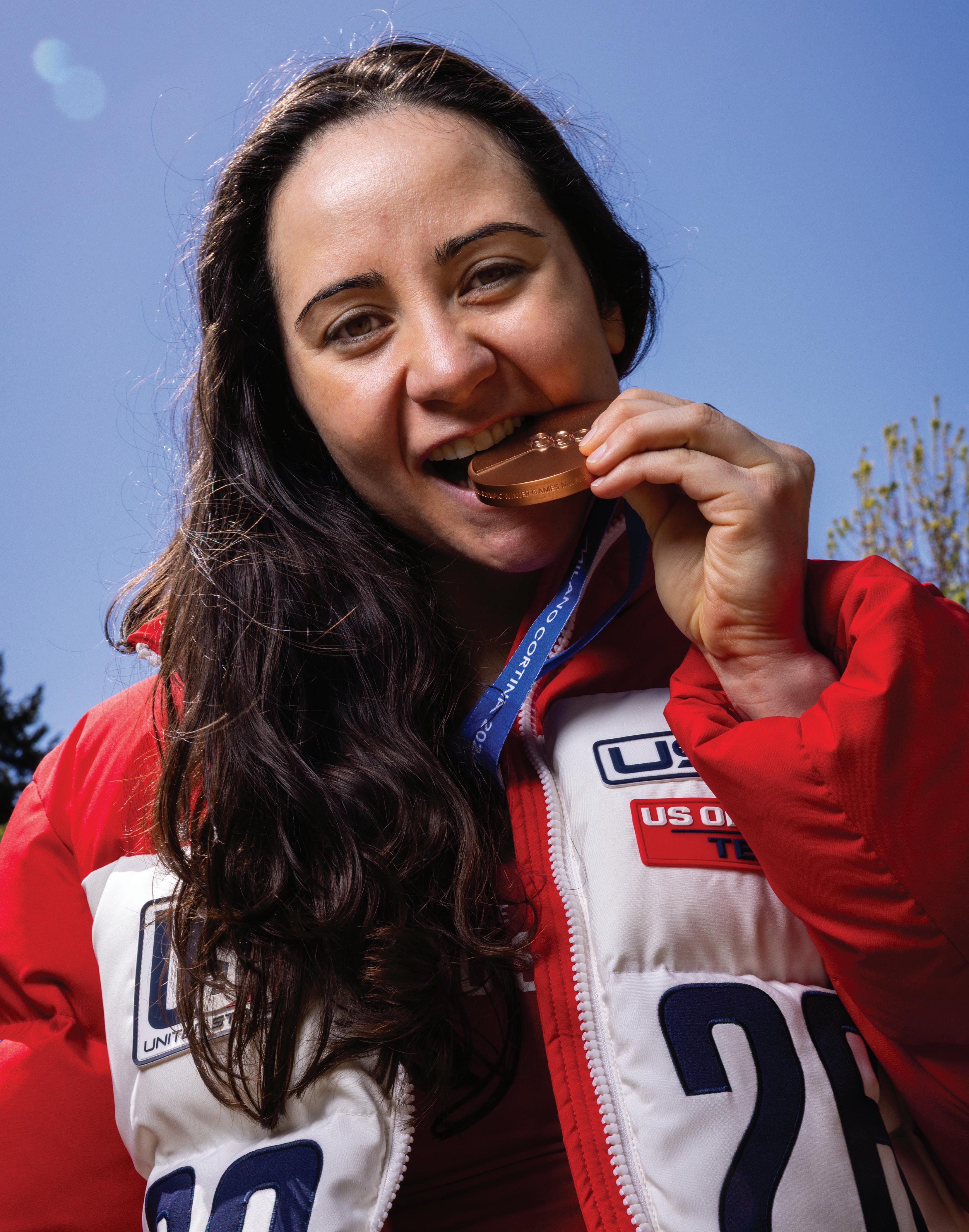
Jacqueline Wiles bites her Olympic bronze medal outside her home in Portland, Oregon.
FINDING MANA
North Shore legend Gerry Lopez discovers balance between yoga and surfing.
By McKenzie Leary
by Max Unkrich
Photo
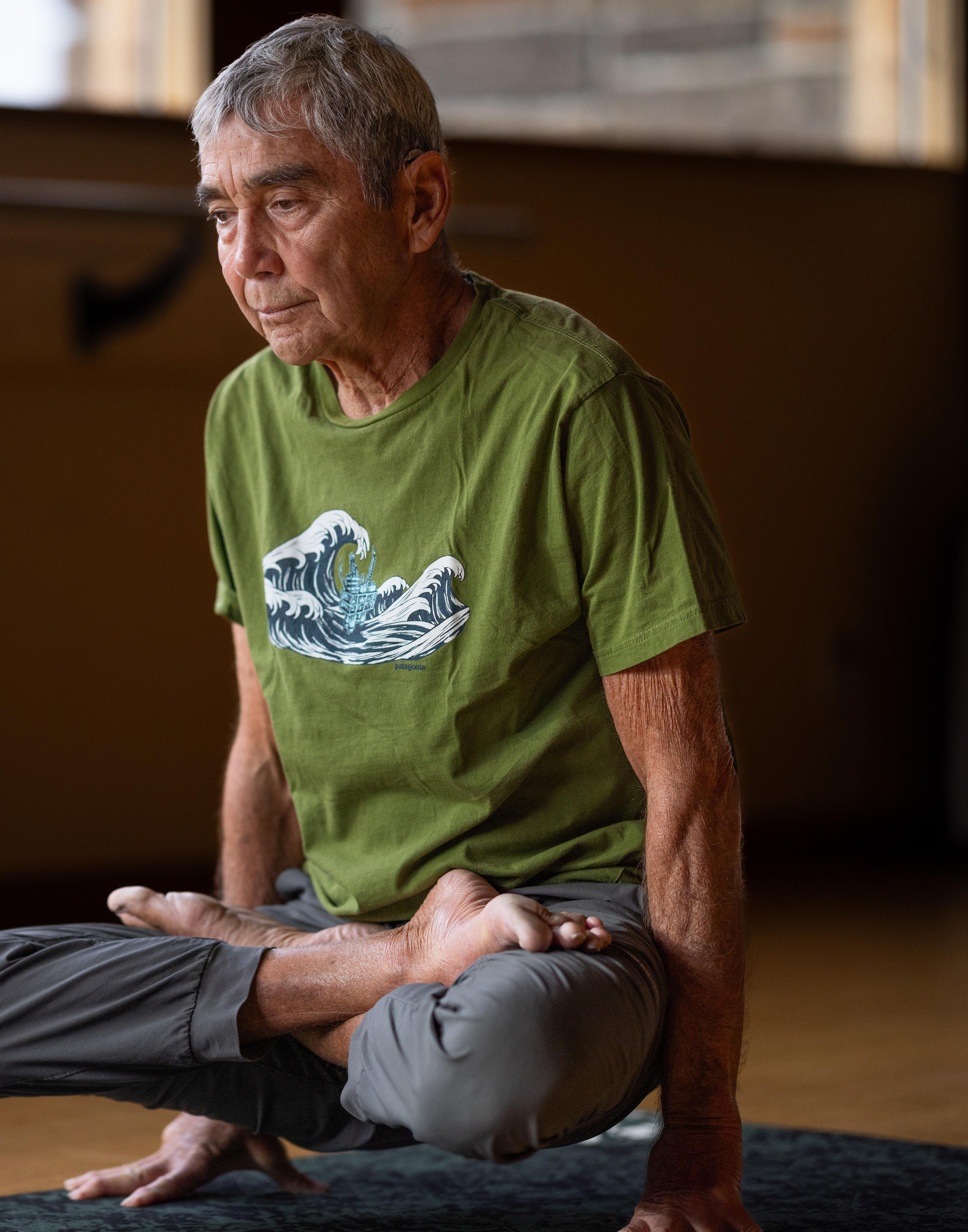
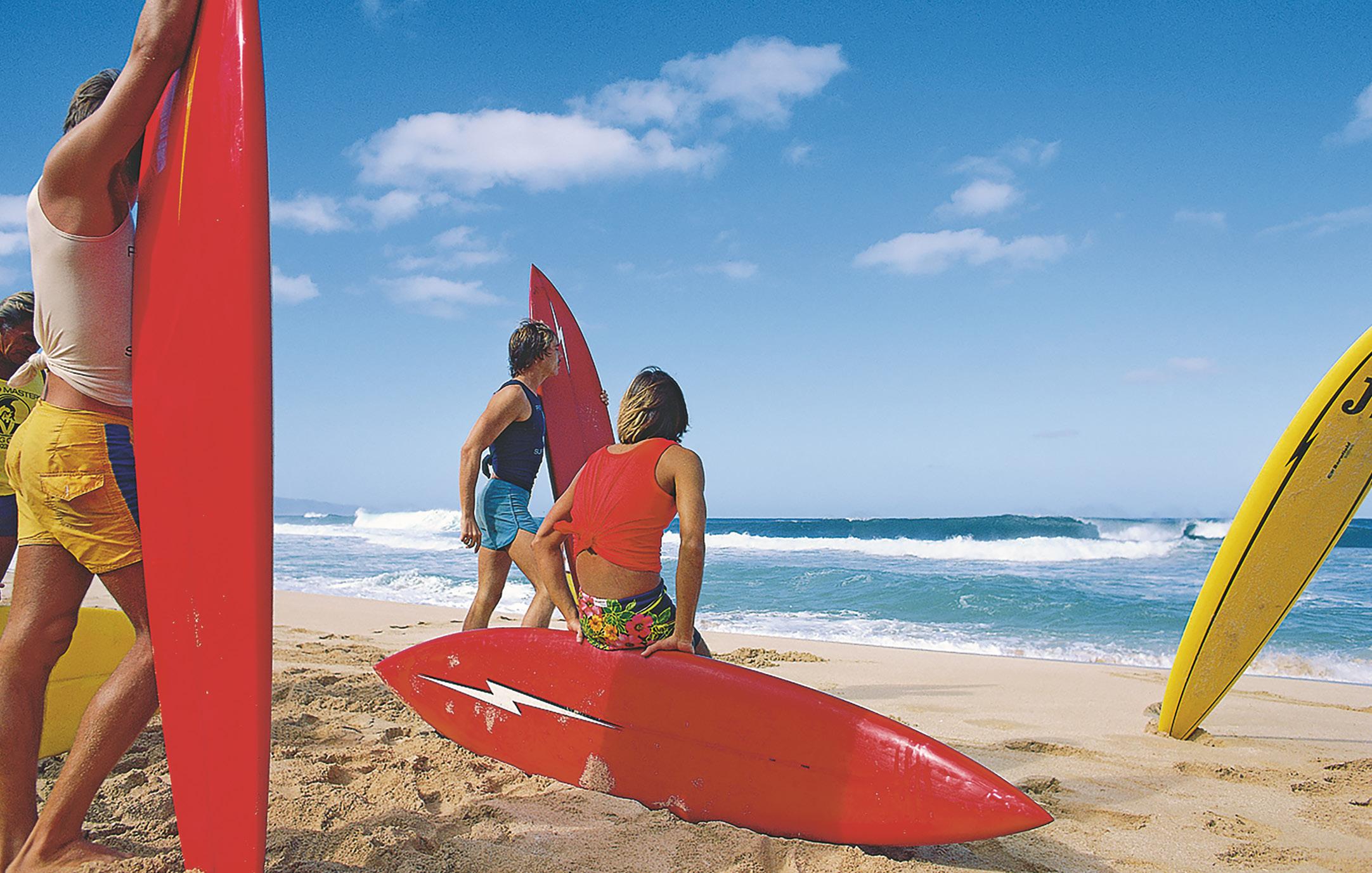
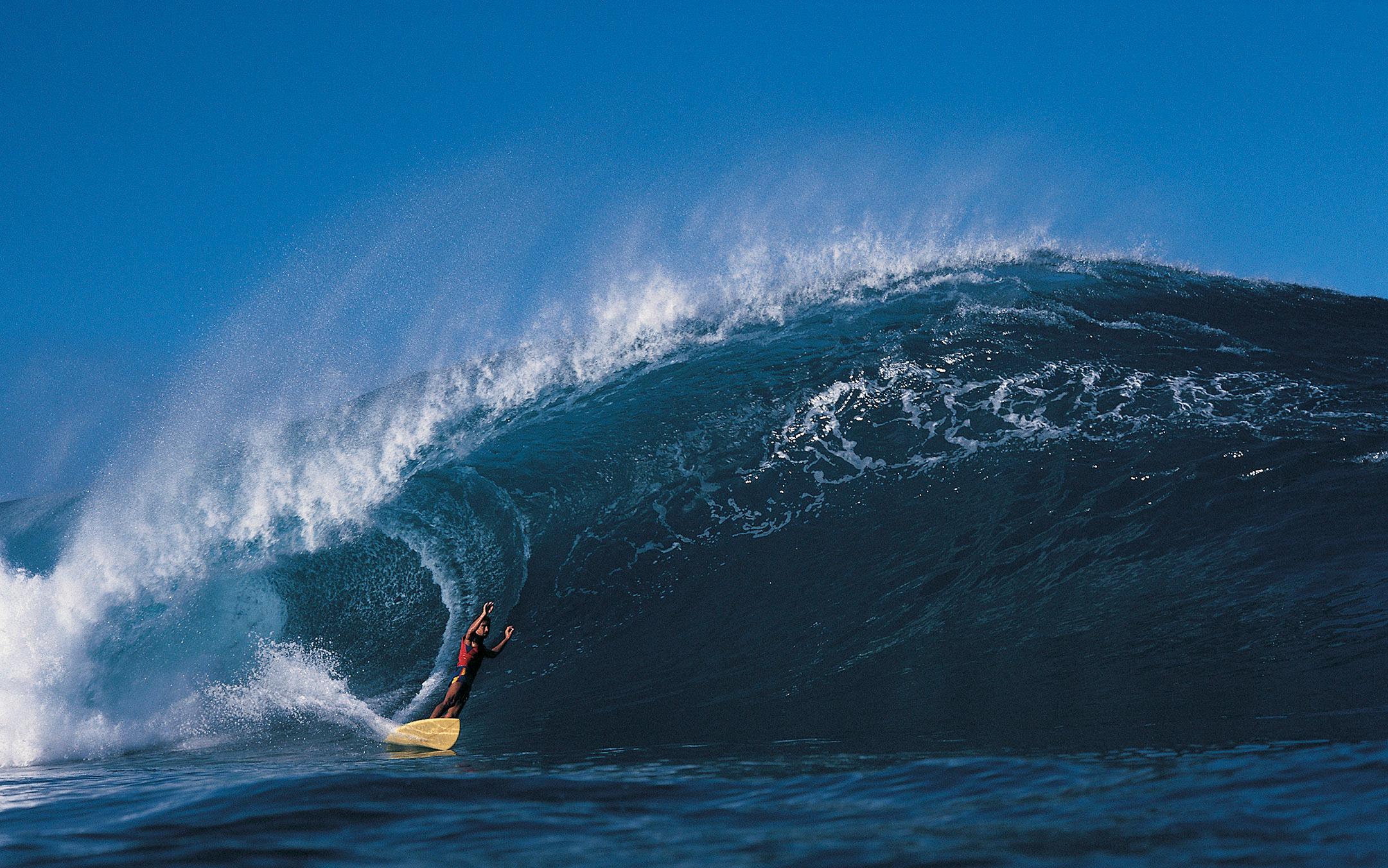
Photos by Dan Merkel
Gerry Lopez first felt mana, the native Hawaiian term for a divine life force capable of guiding someone toward enlightenment, when he picked up a surfboard at 10 years old. On a day off from school, Lopez’s mom took him and his younger brother to Waikiki Beach, where they each rented surfboards.
Waikiki in 1958 was still quiet – no rush of tourists, no surf schools, just open water and some of the best waves on the island. His mother stood between the two boys, one hand on each of their backs. Lying down, their bodies dwarfed by the long surfboards, she pushed them into an approaching wave.
“That was it,” says Lopez. “I was hooked for life.”
Back then, surfing wasn’t a global industry, and Lopez had no ambition to pursue competitive surfing. He simply enjoyed living in the water.
“There wasn't much seriousness about it, especially among young surfers,” says Lopez. “[Surfing] was just something that you did with your friends. It was pure recreation at that point.”
In the 60s, surfers were often dismissed as hippies or beach bums, their way of life in direct contrast to the hegemonic American values of earning a degree and working until retirement. Lopez ended up at Whittier College in California, where he discovered surfing could be more than a community pastime. In California, surfing often represented rebellion against the typical American Dream. Lopez imagined himself as more than a college student, finding his place in a laid-back counterculture.
Feeling a deep connection to the waves back home, he transferred to the University of Hawai'i. Walking around campus one day, Lopez noticed a few girls huddled around a bulletin board. He walked up to them to see what they were looking at – a flyer for a yoga class. They asked if he planned to attend.
Motivated to continue the conversation from the quad, Lopez dragged a friend along to the class. The desire for flirtation quickly faded. In between deep breaths, Lopez was transported away from the yoga mat and onto the board — all he could think about was surfing.
“If [I] could move like that on a surfboard, so smoothly, effortlessly and strongly, I could be a really great surfer,” says Lopez. “That's why I got interested in it.”
Once again, Lopez was ahead of the times. The yoga scene in the late 60s had yet to explode across the West, but for the surfer, yoga represented a more mindful lifestyle.
“Yoga is more than just a bunch of exercises. It was a balance of proper exercise, proper breathing, proper relaxation, proper diet, positive thinking and meditation,” says Lopez.
As his yoga practice deepened, Lopez was drawn to the philosophy that guided those elements, particularly the ancient Indian concept
of prana. The vital energy force that flows through all living things reminded him of the moment he first felt mana. In the ocean, Lopez sees mana as energy in motion. Energy that starts in the wind, transfers into the swells and carries the energy all the way to the shore.
“What we’re doing as surfers is connecting with that mana,” says Lopez.
Over time, he recognized the deep state of meditation yogi masters practice is the same state surfers experience riding a wave. In the water, Lopez centers all of his focus on the wave, just as in yoga, his focus centers on his breathing.
“You don't realize how beautiful that state of mind is, and how fleeting as well,” says Lopez. “That's what you're trying to work for in the practice of yoga. To be able to enter that state at will and stay in that state as long as you want.”
For a little while, Lopez balanced school and surfing, but his calling to the waves grew stronger every day. Studying architecture at the University of Hawai'i, Lopez started playing around with the shape of his boards. Dissatisfied with the long boards that dominated the era, Lopez and his friends wanted something shorter to give them more flexibility in the water. When a board shaper was unavailable, he decided to try making one himself. He took a self-made board out on the water and was approached by an individual who offered to buy it on the spot.
Just like that, Lopez stumbled into the shaping business. During his last semester of senior year, he dropped out of college to pursue shaping and surfing as a full-time career.
“It was the greatest job as a surfer,” says Lopez. “All of our customers knew that if the surf was good, well, they're going to have to wait a little longer for their boards, because we were out surfing.”
Lopez experimented with the size and shape of his boards to adapt to the different personality of waves he was surfing. Lopez and Jack Shipley, his business partner, created the symbol of the lightning bolt. The strike became symbolic of the new energy and style dominating surf culture.
The more confident and fearless Lopez grew, the more he was drawn to the Pipeline, a wave on the North Shore of Oahu known as one of the most challenging surf spots in the world. With waves cresting up to 20 feet tall that create long barrels over a shallow reef, it’s also one of the deadliest.
At Pipeline, there was no room for distraction. One broken moment of focus could result in serious injury, which Lopez learned when the backwash of a wave flipped him and his board into the air. When he came down, the fin of his board pierced his colon, resulting in one of his worst injuries. As a result, he was supposed to stay out of the water for a few months. Yet Lopez continued to surf with a colostomy bag. He chuckled when reflecting on the mess it created.
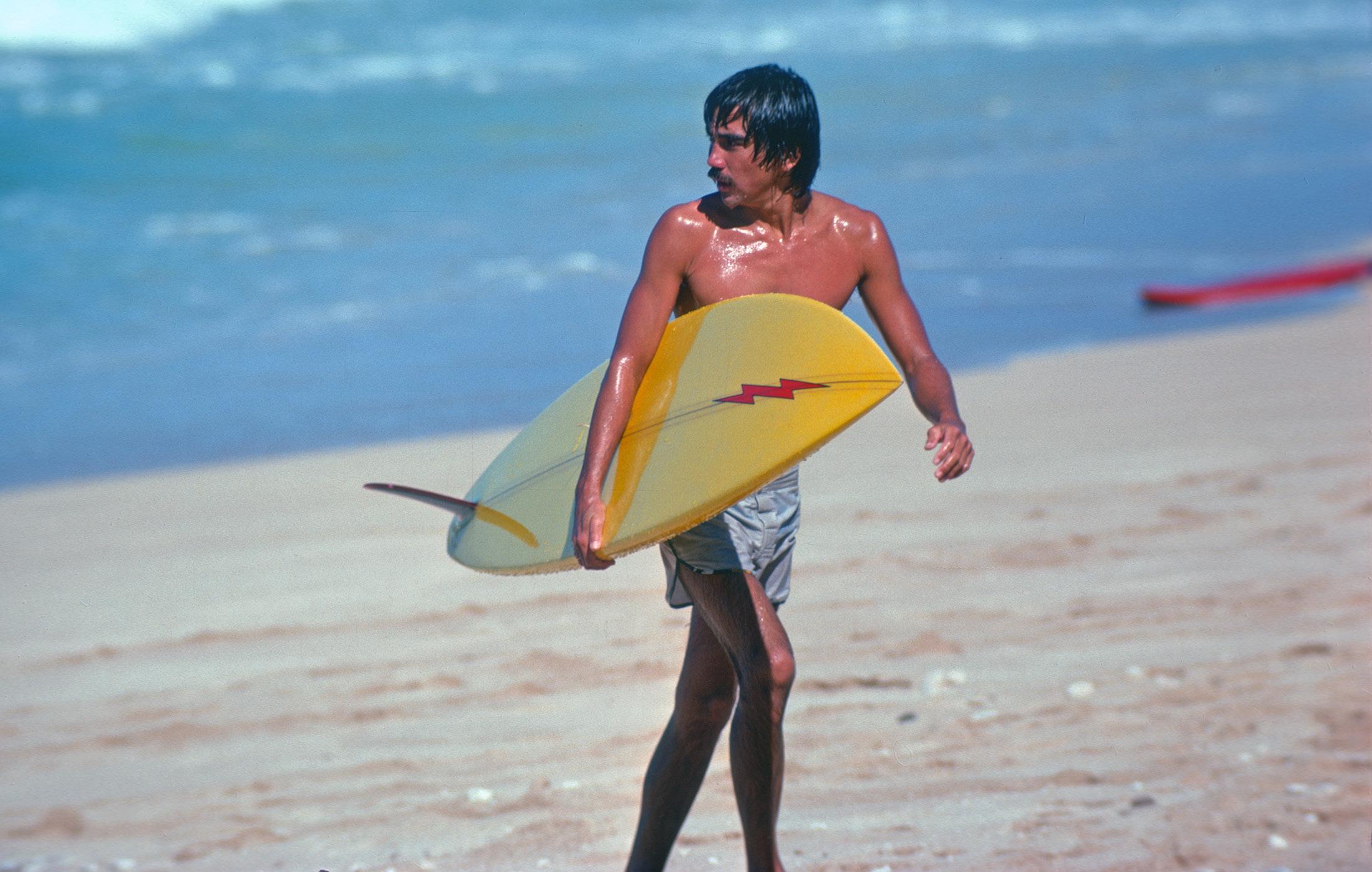
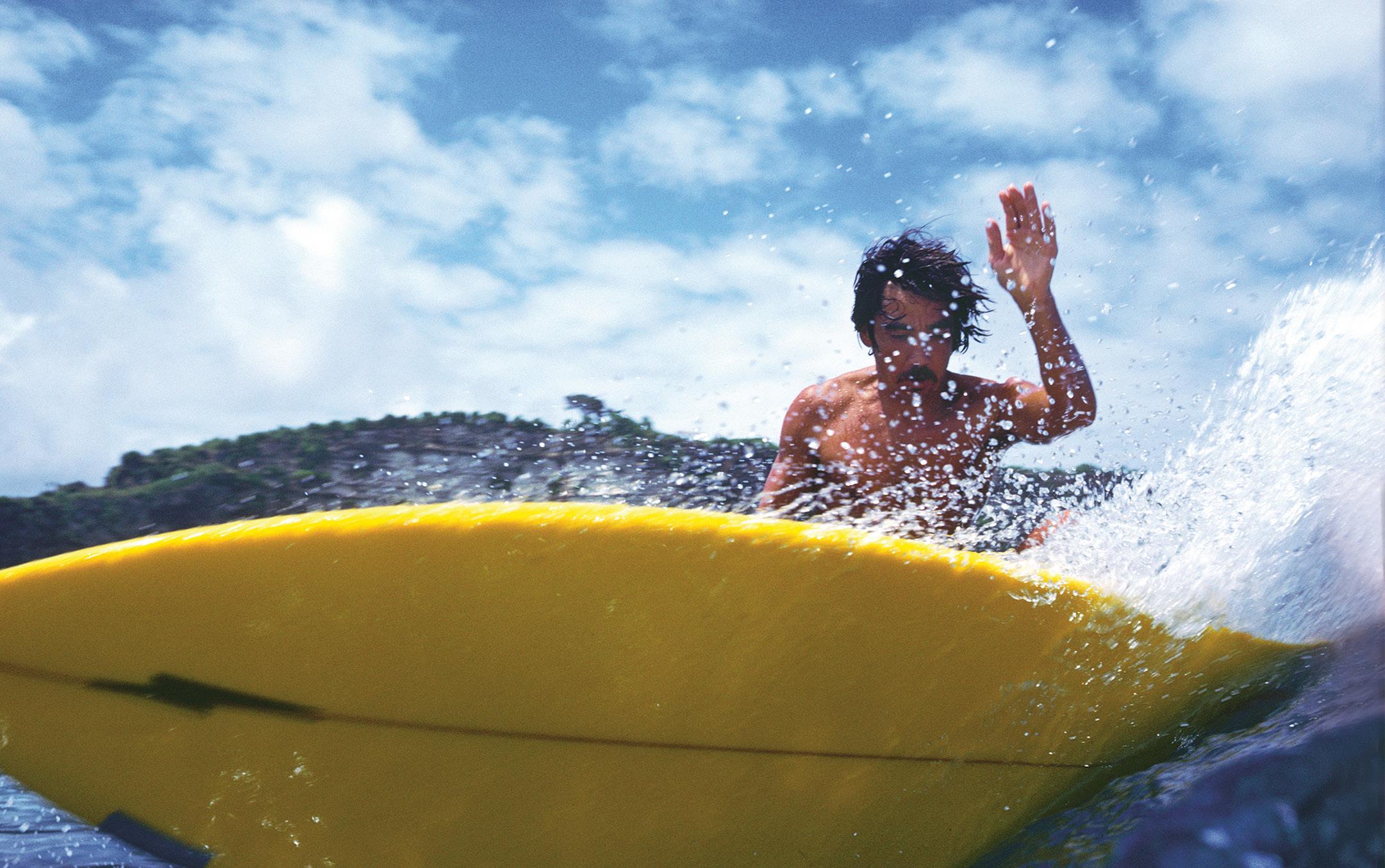
Photo by Dan Merkel
Photo by Dana Edmunds
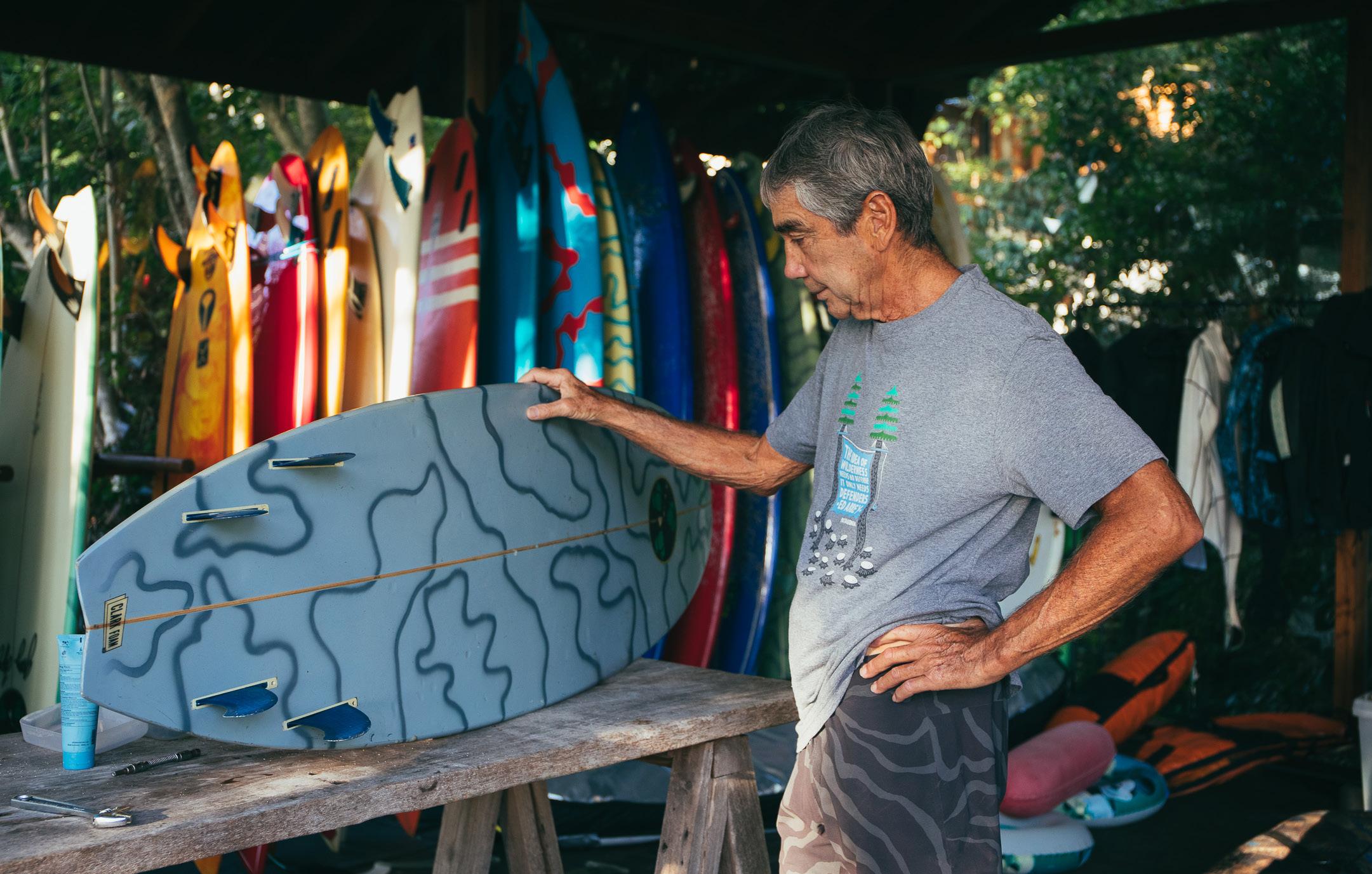
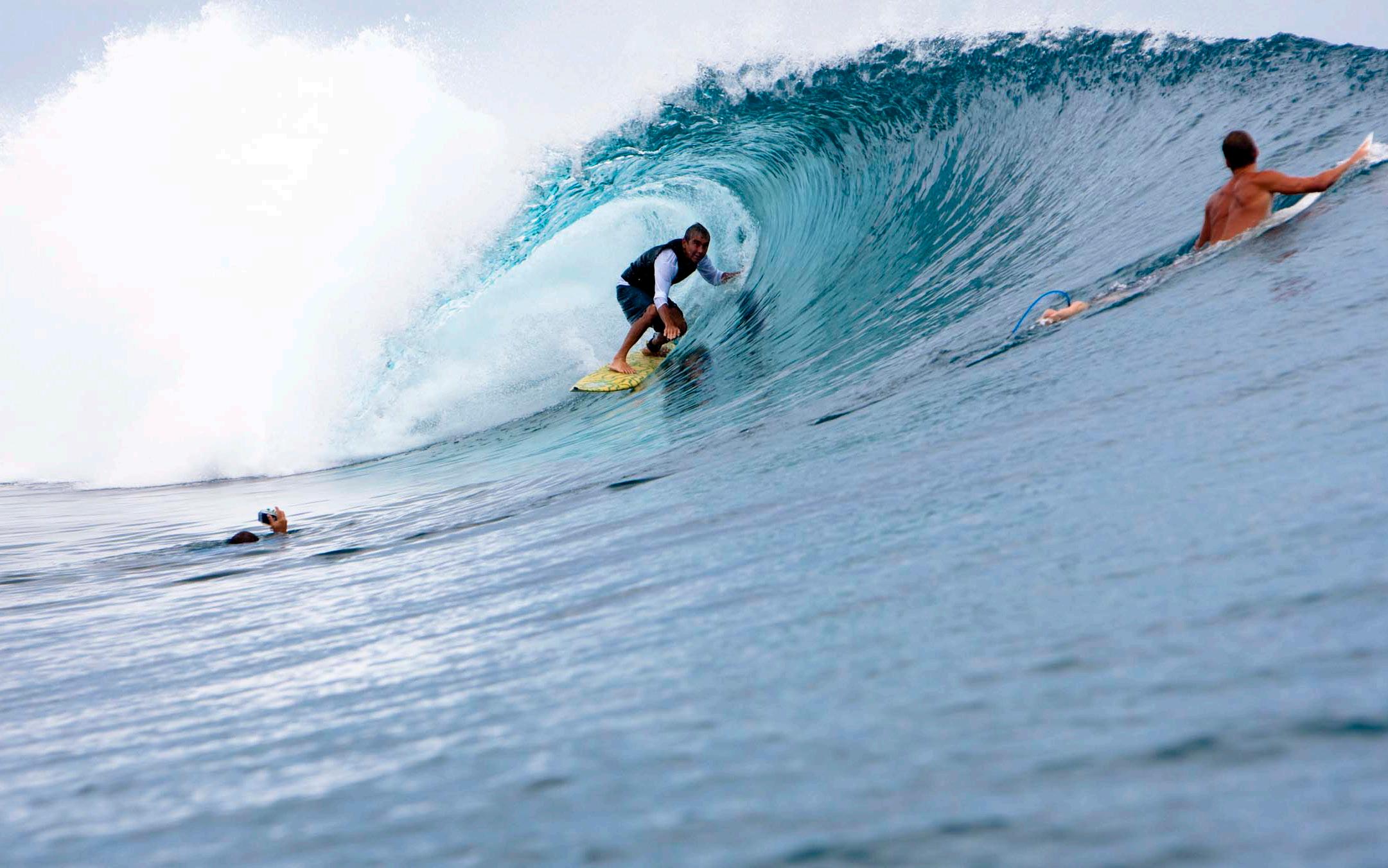
Photo by Tommy Schultz
Photo by Tim Davis
Lopez’s yoga practice helped him with more than his signature physical grace on the board. It taught him how to find stillness during moments of fear, which centered him during harrowing moments of injury.
“Yoga is the science of breathing. What you learn in the process of yoga breathing is how to relax,” says Lopez. “That is able to help you in a situation like being held underwater. If you panic, you're going to run out of air really quick.”
His dedication to the water and his craft led to back-to-back wins in 1972 and 1973 at the Pipeline Masters, one of surfing's most prestigious competitions. He also won the 1966 Hawaiian Junior Surfing Championship and was a state finalist in 1968, 1969, and 1972. These wins cemented his reputation not only as Mr. Pipeline, but also one of the greatest surfers of all time. His lifelong philosophy built equally from yoga and his time spent gliding through the waves defined a legacy far beyond any competition.
Yet, as the sport continued to advance, it also grew less kind.
“In the very beginning, it was a very welcoming sport because there weren't that many guys doing it,” says Lopez. “The guys that knew how to do it, in most cases, would make an effort, if you were really struggling, to help you. And then, as the sport grew and it got really busy people became very territorial at the surf spots and possessive about their waves.”
Lopez, who fell in love with the community that introduced him to the sport and connection he had to the water, traveled the world –Mexico, Australia, Indonesia – in search of something similar to the environment he remembered, ultimately rediscovering that sense of community in the landlocked city of Bend, Oregon. Lopez and his wife, Toni, first traveled to Bend in the summer of 1992, and were immediately struck by the friendliness of the people. Looking to snowboard on the frozen wave-like features of Mount Bachelor’s frosty terrain, they returned that winter and fell in love with the area.
He and his wife now call Oregon home. They raised their son Alex in Bend, hours away from the ocean. And yet, the high desert is where Lopez settled into a new lifestyle, fatherhood. When reflecting on his life, Lopez isn’t most proud of the waves caught or the titles won, but his son.
“When you have a child, it’s something that touches you down deep,” says Lopez. “All that other stuff, it’s just stuff I did when I was young and foolish.”
Despite Lopez’s surfing legacy and his desire to share it, he never pushed his son to follow in his footsteps.
“I've come to understand this all these years later, especially teaching yoga, yoga comes to a person right when it's supposed to,” Lopez says. “And if it's not the right time, it's not going to happen.”
These days, Alex shares his father’s love for snowboarding, surfing, and shaping. In 2025, his son welcomed a daughter, Lucy, making Lopez a grandfather. When he’s not spending time with his growing family, he’s exploring surfing's sister sports – wind surfing, kite surfing, standup paddle boarding, foiling, or snowboarding. Each discipline requires physical strength, balance, and immense coordination, which he still has plenty of at 77.
Now, Lopez still feels mana wherever he goes, though it manifests itself in different ways. Lopez often waits in line, wetsuit on and standing on a rocky island in the middle of the Deschutes River in Bend. Around him strangers help each other, learning from the surfers ahead of them, and their excited chatter fills the air.
Learning to surf the river wave came with a steep learning curve. Contrary to the ocean, river water moves downstream until it hits something at the bottom that sends it briefly upstream in a wave, before ultimately curving back downstream. In contrast, ocean waves follow the same direction until they hit the beach.
Despite decades of experience surfing, Lopez wiped out the first time he attempted the river wave. But Mr. Pipeline was determined to learn a new way of surfing. The older he gets, the more he finds himself rediscovering the initial joy that drew him to surfing in the first place. In Bend, he’s found something special on the river wave.
Lopez says, “These people were really enjoying the real, true aspect of the surfing experience. It was a community experience.”
Off the water, Lopez credits his athleticism to his daily yoga practice. He describes the length of each session as dependent on the day, sometimes lasting five or more hours at a time. Lopez’s yoga practice is as steady as the tides he used to surf on each day.
“I believe that [yoga] is the path to perfect health,” he says. “Perfect mind control. Perfect peace.”
After all these years, Lopez has found a way to be present in every moment.
“Life never holds still for us,” says Lopez. “And if you don’t learn to move with it as it’s moving, life’s going to pass you right by.”
Still surfing decades later, Lopez consciously chooses the same path he started on decades ago, guided by the force of mana.
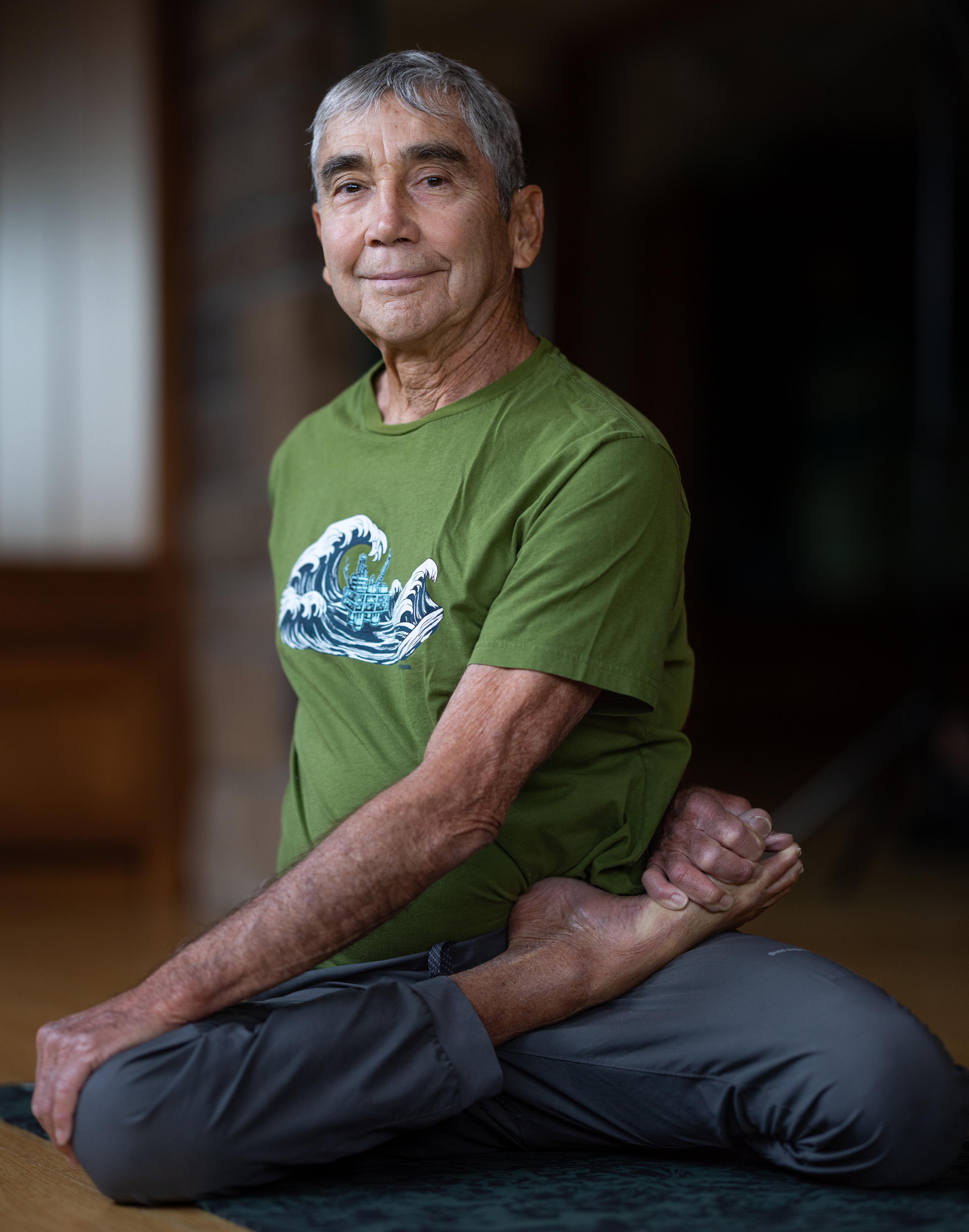
Photo by Max Unkrich
Gerry Lopez sits in Bharadvaja’s Twist
QUICK DRAW
Oregon alum and Boston Celtic Payton Pritchard cements himself as one of the NBA’s top shooters.
By Jack Lazarus
Photos courtesy of Boston Celtics
Athree-on-three game on an outdoor half-court in Debrecen, Hungary, might just be the farthest thing from an NBA court. It operates more like a pickup game, with its half-court, quick turnarounds on possessions and two and three-point shots traded for ones and twos.
On June 6, 2015, it proved part of a span of events that would propel the smallest American there, with his baggy shorts and buzzed head, to the sport’s most prestigious courts.
The 17-year-old, Payton Pritchard, was easily the most unsuspecting member of a four-player group that USA Basketball took to the Fédération Internationale de Basketball (FIBA) U18 three-on-three tournament. Pritchard’s teammates – P.J. Washington, Jalek Felton, and Zach Collins – all stand taller than 6 foot-3. Pritchard wasted no time displaying his almost robotic shot mechanics and smooth touch in the game against Poland. Receiving a pass on the first USA possession, Pritchard caught, shot, and drained a three (counting for two points in this format). From that point on, Pritchard didn’t take his eyes away from the rim.
The format also allowed USA to immediately inbound Poland’s made basket, which created a perfect scenario for Pritchard, who was relatively unknown at the time. Pritchard easily peeled away from his defender. Collins screened, Pritchard jabbed, crossed over, and unleashed a shot straight above the outstretched hand of a defender.
Swish, USA 8-2.
Poland made a layup, and instead of setting up defensively, each of the three players remained stagnant in the paint after crashing for a rebound. Pritchard received the ball with about 10 feet of space behind the right elbow. The opposing big man closed out to no avail.
Swish, 10-3.
Faced with a one-on-one on the perimeter, Pritchard stuck with his man and contested well on a three but gave up the basket. He immediately darted to the exact same spot he hit from the possession before, just a few feet deeper. Pritchard received the pass in rhythm.
Swish, 12-5.
Poland converted another layup but didn’t get back on defense quick enough. Pritchard found an open spot in the left corner as soon as Collins pulled down the made shot, quickly firing a pass to the hot hand, leaving Poland defenseless. Pritchard didn’t hesitate.
Swish, 14-6.

Poland had fewer answers for the USA’s rising shooting star, and Pritchard’s teammates knew exactly what to do. Washington hauled in a miss near the free-throw line, pivoted, saw Pritchard spotting up, and dumped the ball off to him as if it were a hot potato. Pritchard caught it in motion and drained a deep, top-of-the-key three over a larger defender.
Swish, 16-6.
This prompted a rare, emotional outburst from the stoic assassin. He missed a three subsequently, but 15 seconds later, Pritchard rose up to grab a miss and dribbled beyond the arc.
He hesitated, contemplating a signature dribble move. His defender sagged and Pritchard made the split-second decision to just pull up over him.
Swish, 18-6.
Pritchard then jumped the passing lane on the opening dish of Poland’s next possession, stole the ball, and quickly darted out to the three-point line.
Poland stepped up to guard Pritchard, leaving no space for the shifty guard to create. Hesitating, Pritchard crossed through his legs, putting his defender on skates. The lane opened, but Pritchard stepped back farther behind the arc, faded away, and heaved.
Swish, 20-6.
“Let’s go!” Pritchard screamed toward the crowd, getting chest bumps from his teammates, but the USA still needed another basket to win. Everyone on the court knew where the ball was going.
He inbounded, got it right back, and pump faked out of a shot that would have been blocked. He side-stepped left, putting himself almost at half court for the shot. The defender recovered, providing a solid contest on the shot from the smaller Pritchard.
It didn’t matter. The shot looked perfect as soon as it left his hands.
Swish. Game.
Pritchard sank nine three-pointers, none of them touching the rim, in the span of three minutes. Remembering this performance, Pritchard chose to assess this as just another display of his incredibly deep bag and ability to fall into the zone and stay there.
“I’ve been in that zone a bunch in my career,” says Pritchard. “You’re in a flow and you’re hitting shots. Honestly, when I work out in the summertime and stuff like that, I try to get into that mode on a daily basis. Just trying to make it a regular thing.”
Growing up in West Linn, Oregon, Pritchard developed a killer instinct as soon as he started playing. That instinct led his high school to four straight Oregon Class 6A state titles, which earned Pritchard both the Class 6A Player of the Year and Gatorade Oregon Player of the Year in 2015.
Pritchard’s father, Terry, played tight end on the University of Oklahoma football team, winning a national title in his first year. Pritchard, an obsessive worker and outstanding athlete, excelled at every sport he set his mind to, initially thinking he might become a baseball player.
“I always competed at a high level and worked at my game in any sport. It wasn’t just basketball. Anything I tried I was going to be the best. My dad would probably say [I was better at] baseball,” says Pritchard.
There was never any pressure for him to specialize, but also no pressure for him to become a basketball player. Pritchard’s love of basketball came completely on his own.
Former West Linn High School boys’ basketball coach Eric Viuhkola remembered meeting an 11-year-old Pritchard at a summer skills camp that he and Terry ran.
“You could tell he was a really good athlete, but it wasn’t like LeBron coming through the door,” says Viuhkola. “Every drill, he would blow everyone away every single time.”
Viuhkola only had to watch the brace-faced kid do a handful of drills to recognize he was special. He could see it in Pritchard’s eyes. He coached a bevy of incredibly skilled players throughout his career, but he never coached someone with the competitiveness Pritchard carried into each practice.
Even after each of the drills finished, Pritchard wanted to keep score. He wanted to compete. Viuhkola often worries about skilled players not maturing and reaching the level of competitiveness required to excel. He never had to worry about Pritchard.
During a 6:30 a.m. winter practice, Pritchard, still a middle schooler, trained with the varsity high school basketball team. Viuhkola talked to Payton after a scrimmage.
“Hey Payton, you really shot the ball well, you proved you were the second-best shooter in the gym,” said Viuhkola, who constantly joked that he was always the best shooter in the gym. Pritchard disagreed.
“He looked at me with these eyes like, ‘You think you could shoot better than me?’ It didn’t take much to get his competitive fire going,” says Viuhkola.
Shortly after the three-on-three tournament in 2015, Pritchard announced his decommitment from Oklahoma and committed to Oregon. Kickstarting what would become an unprecedented rise through the ranks of both collegiate and professional basketball, Pritchard joined an already stacked Ducks roster. Even as a four-star recruit, playing time didn’t come instantly, but Pritchard made an early impression on head coach Dana Altman. Within the first four games, it became clear to the coach that Pritchard deserved to start over third-year guard Casey Benson.
“Payton practiced day in, day out and was doing a better job [than Casey]. So, we just made the switch, and Payton was there the rest of his career,” says Altman.
Pritchard served as the fifth option on a team that ended up going to the Final Four in 2017. He became the first scoring option for each of his remaining three seasons, each with mixed results.
Altman describes Pritchard's sophomore season as a transition year, mostly because most players from the starting rotation left for the NBA Draft. Pritchard was thrust into a leadership role, and team success didn’t follow. Oregon missed the NCAA Tournament for the first time in seven seasons.
The Ducks’ head coach admits that the season, specifically the lack of winning, proved tough on the point guard, who won four straight high school state titles and had nearly beat eventual NCAA champion North Carolina the year before.
Oregon never appeared in the AP Top-25 in 2017-18 and was relegated to the National Invitation Tournament during the postseason. Pritchard highlighted that season with a two-game stretch in the beginning where he dropped a total of 57 points in games against DePaul and Boise State. In those two games, he also shot 18/32 from the field and 10/20 from beyond the arc.
Photos courtesy
Payton Pritchard yells after his away game-winner against the Washington Huskies in 2020.
Pritchard’s sophomore experience proved valuable. Altman noted that his point guard felt responsible for leading the team and keeping everything going, which meant trying, and failing, to bring his team to the NCAA Tournament.
As he developed into a leader, Pritchard blossomed into an efficient scorer, fierce defender and, most importantly, a big-game player. He led the Ducks on a four-game win streak at the end of the 2019 regular season, which bled into four more wins at the Pac-12 Tournament. Pritchard, having led his team through all four days of the tournament as a 6-seed, was named MVP.
The Ducks needed those wins to clinch an automatic bid in the NCAA Tournament, where they were a 12-seed. Pritchard dazzled in Oregon’s two tournament wins, the first an upset against 5-seed Wisconsin, where he scored 19 points. He added 18 in the Ducks’ victory over 13-seed UC Irvine in the Round of 32.
They fell to the eventual national champion Virginia Cavaliers in the Sweet Sixteen by just four points. Despite the loss, Pritchard caught the eye of NBA scouts and decided to test the waters in the 2019 draft.
He was told if he stayed for a senior season, he’d move up in the draft, according to Altman, who was thrilled to have him back. Pritchard, seeing no guarantee he’d be selected, opted to play his senior season in Eugene, which would be defined by two moments.
He was named an AP First Team All-American and the Pac 12 Player of the Year. Then his historic season ended prematurely due to the COVID-19 pandemic. Pritchard averaged 20.5 points and 5.5 assists while also proving a force on defense with 1.5 steals per game. Pritchard’s shot volume increased as well, which reflected the young group he had around him.
Nowhere was that dynamic more prominently defined than in Alaska Airlines Arena against the Washington Huskies that year. Facing a 16-point deficit in the second half, Pritchard led Oregon back into the game, sinking five threepointers prior to the final eight seconds of overtime. On the final possession, he controlled the ball beyond the arc, but the Huskies swarmed, attempting to make anyone else beat them. From half-court, Pritchard jabbed left, but dribbled right, the entire time blanketed by Washington’s Jamal Bey.
He tried to cross over and create space, nothing. Pritchard backed the ball back out behind the perimeter with five seconds to go, with Bey following. Going behind NBA three-point range Pritchard kept retreating, and Bey stopped.
Pritchard’s head lifted and he saw the nanometers of space he needed. He crossed over between his legs and stepped back to his right onto the Alaska Airlines logo by midcourt. Unfazed, Pritchard rose up over a pair of outstretched hands and unleashed a high-arching shot.
Swish. Game.
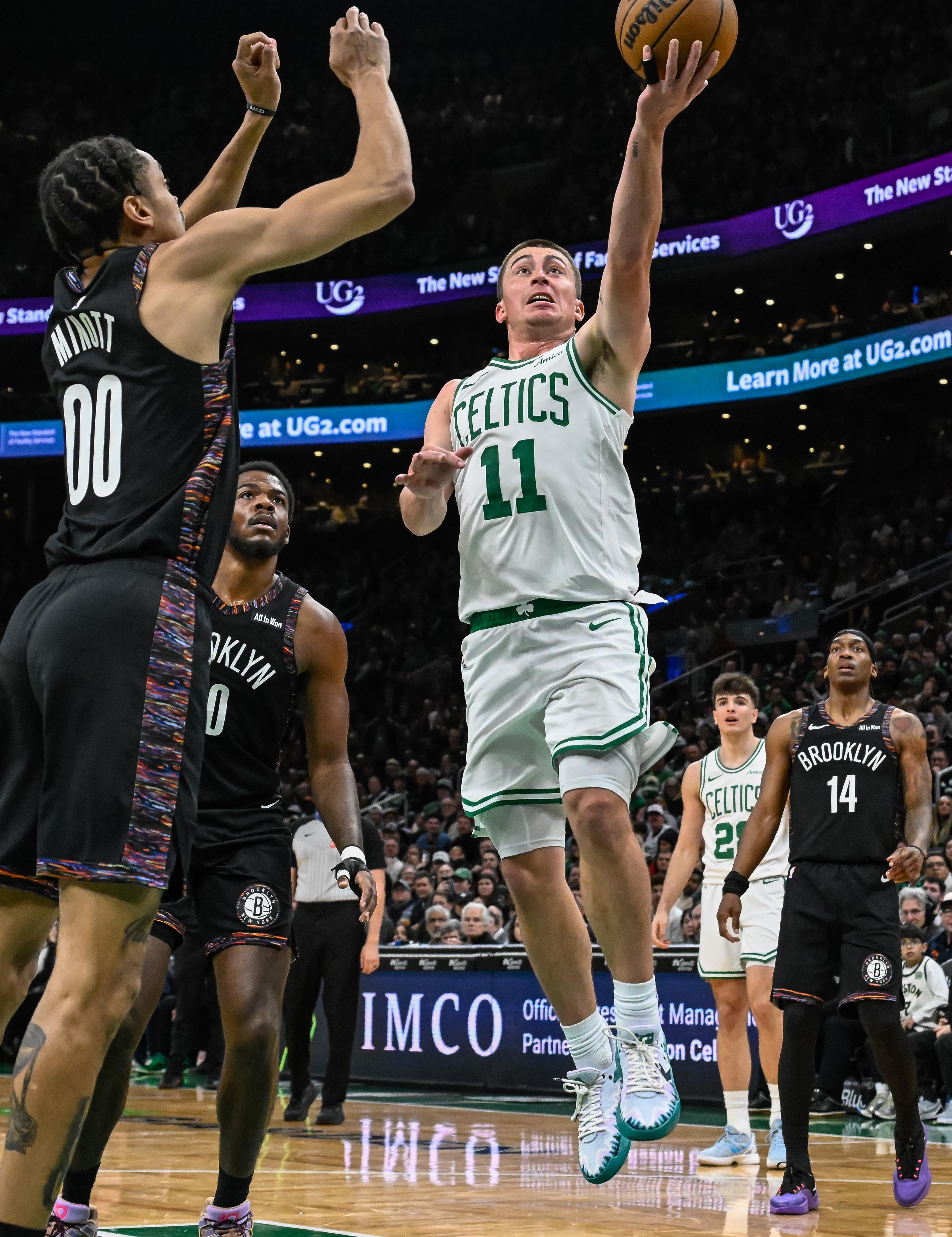
Pritchard’s improved leadership thrust the team into a projected No. 3 seed before the season ended with the pandemic.
“For me it was unfortunate,” says Pritchard. “I thought we could have done something special that year, but I had to quickly move on to getting ready for the draft, so I didn’t get to soak it up. Talking with the guys, we did have a special group, so we would have loved to see what would have happened.”
In the draft process, Pritchard projected as a mid-second round pick, which often means there’s also an equally high chance he might not be drafted. Viuhkola mentioned watching on TV, waiting for Pritchard’s name to be called, knowing that all his star pupil needed was an opportunity.
He didn’t have to wait very long. Pritchard was snatched from the board at the end of the first round, 26th overall by the Boston Celtics, the NBA’s most successful franchise.
“I spoke with the Celtics after his senior year and they asked me about him,” says Altman. “I said, ‘He’s a competitor, he’ll try to guard his position, he’ll be in the gym as much if not more than most. I think worst-case scenario he’ll be a good backup for 10 years.’ He didn’t miss practice here, he never missed a game, so I knew he was durable,” says Altman.
Viuhkola stressed that all Pritchard needed was the door to be cracked open. When Boston starting point guard Kemba Walker went down with an injury, Pritchard moved up the depth chart.
He wasted no time proving his mettle, especially in displaying his clutch gene. In a tie game against Eastern Conference foe Miami in 2021, Pritchard found himself on the floor on the last possession. For just about everyone in the arena, he was an afterthought.
Celtics All-Star Jayson Tatum dished to Marcus Smart at the top of the key, who drove to the rim with five seconds to play.
Pritchard stood in the far corner, his defender taking an eye off him as soon as Smart charged the hoop. Pritchard noticed and started creeping towards the paint while his teammate got downhill.
Smart jump-stopped and pump faked, but his layup bounced awkwardly off the backboard. Pritchard was there, completely unmarked. He swooped in to grab the rebound and, in the same motion, laid the ball right back up off the glass for a Boston win.
In his second season he made the NBA Finals, but a lack of significant playing time seeded doubts in the budding star, ultimately leading him to request a trade in the middle of his third season. That never materialized, Udoka was let go in the offseason, and new head coach Joe Mazulla had his own plan in mind.
“I asked for a trade mid-season in my third year, and then that year they offered a contract extension,” says Pritchard. “I talked to Joe [Mazulla] and Brad [Stevens] and we came to an understanding of what my role could be and stuff like that. That, and obviously being a part of this culture here, [influenced my decision].”
Pritchard received his opportunity — he hasn’t averaged less than 20 minutes per game since — and paid Boston back in droves with his shooting ability. He purposely went through two-on-one practice sessions during offseasons to perfect his ability to hit threes while heavily contested, on the move, or back near half-court.
What’s helped him excel, according to Viuhkola, is his elite competitiveness. His drive to win exceeds all other wants and needs on a basketball court, so he was perfectly fine serving in the sixth-man role, the first player off the bench.
In 2023-24, he played that role as the Celtics throttled the NBA on their way to a dominant Finals win, which gave Pritchard his first NBA Championship. Boston built on that success the next year, most notably averaging an NBArecord 48.2 three-point attempts per game in 2024-25.
His production increased to the tune of 14.3 points per game as the Celtics raced to the Eastern two-seed and a 61-win season, and Pritchard ran away with the Sixth Man of the Year trophy.
Winning an award like that, however, remains ingrained in Boston’s ethos, according to Pritchard, so it proved more of an expectation rather than an incredible accomplishment.
“You get held to a higher standard here, so you have to be at your best at all times. I feel like when you’re put in that situation, it either makes or breaks you,” says Pritchard.
In 2025-26, Pritchard found himself tasked with a much bigger role in the Celtics’ offense. After being led offensively by the forward duo of Jayson Tatum and Jaylen Brown, Tatum’s ruptured Achilles tendon left Mazulla with questions to answer ahead of the season. Working with the absence, Boston’s roster changed a great deal from the group that had won the title just two years earlier.
Expectations for the team heading into the season gave the Celtics little-tono chance to get back to the playoffs, citing this year as a throwaway season. Predictions placed Boston right in the middle of the league with projected win totals around 40.
Pritchard started 50 games, 45 more than he’d ever started before, and the Celtics blew those expectations away, going 56-26 over the regular season and clinching the Eastern Conference two-seed. Stepping into the starting point guard role for the first time in his professional career, Pritchard posted 17 points, 5.2 assists and 3.9 rebounds — all career-highs — in 32.4 minutes per game. He was the team’s second leading scorer until Tatum’s surprising return in March 2026.
Pritchard’s improvement as an on-ball defender eliminated the mismatch that having an under-sized point guard usually entails. That’s part of what Viuhkola noticed about him immediately.
“I think he would like the ball more, but he’s all about winning and doing what’s right,” says Vihukola.
Pritchard’s competitiveness and drive to win have been crucial to the Celtics’ resurgence in 2025-26. The team leaned on those traits in the absence of Tatum this season, and Boston entered the playoffs as a contender.
Nowhere was that more apparent than in Game 4 of Boston’s opening round series against the Philadelphia 76ers. Facing the possibility of relinquishing a 2-1 series lead away from home, in front of a hostile Philly crowd, Pritchard stepped in off the bench and tallied a game-high 32 points on 12/21 shooting, 6/12 from deep, in a team-leading 35 minutes. Boston dominated from start to finish and took a 3-1 series lead after a 128-96 victory.
While the Celtics fell in seven games, Pritchard’s contribution all season helped give them the opportunity to contend for a title.
Tatum, who has known Pritchard since high school, admits this is the same kid he noticed all those years back, just a better version. Boston’s franchise player lauded the hot-shooting Pritchard, specifically his ability to create his own shot in short spaces in an important game.
“It’s a luxury to have a guy like that who can score with the best of them even coming off the bench,” said the six-time All Star Tatum after the Game 4 win.
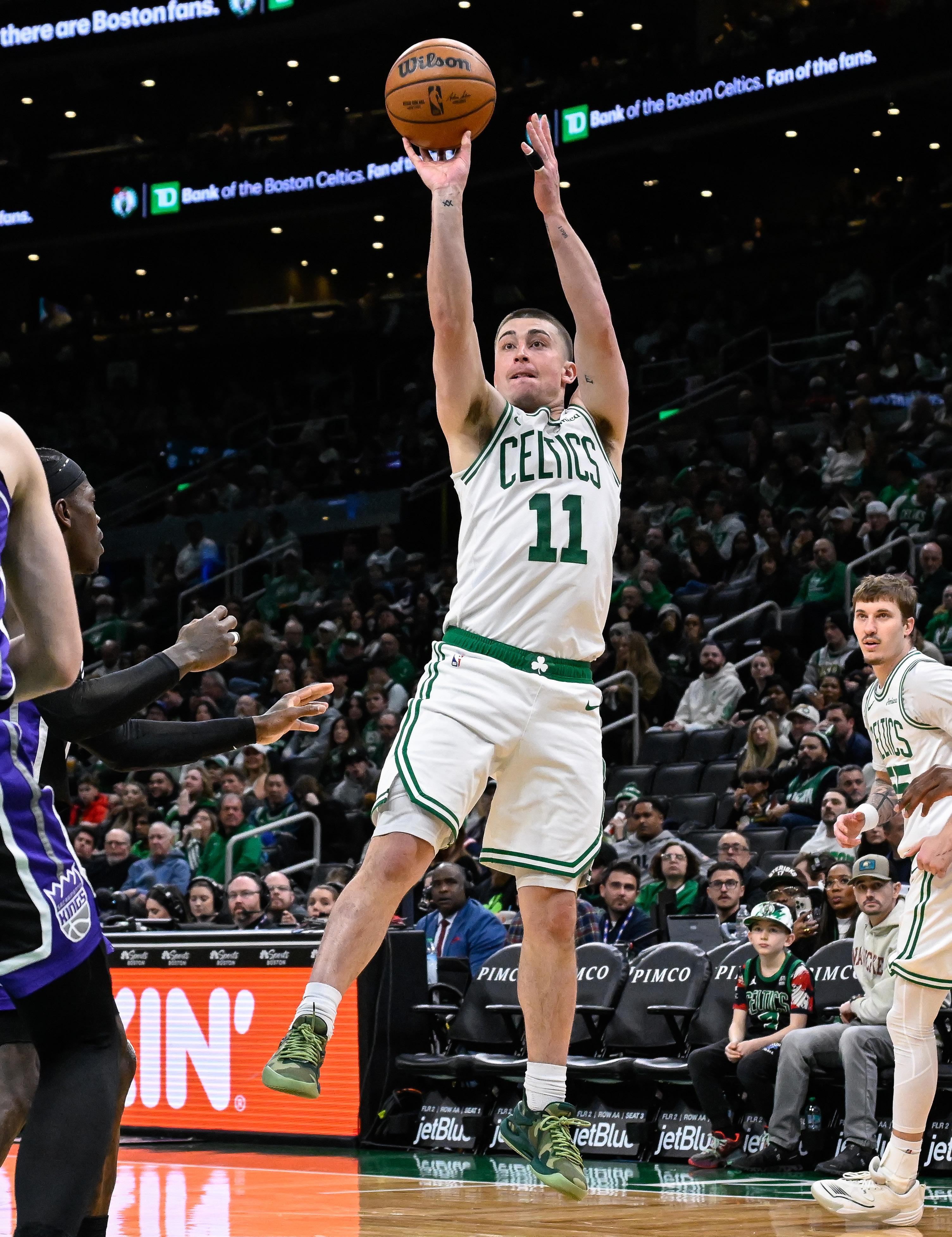
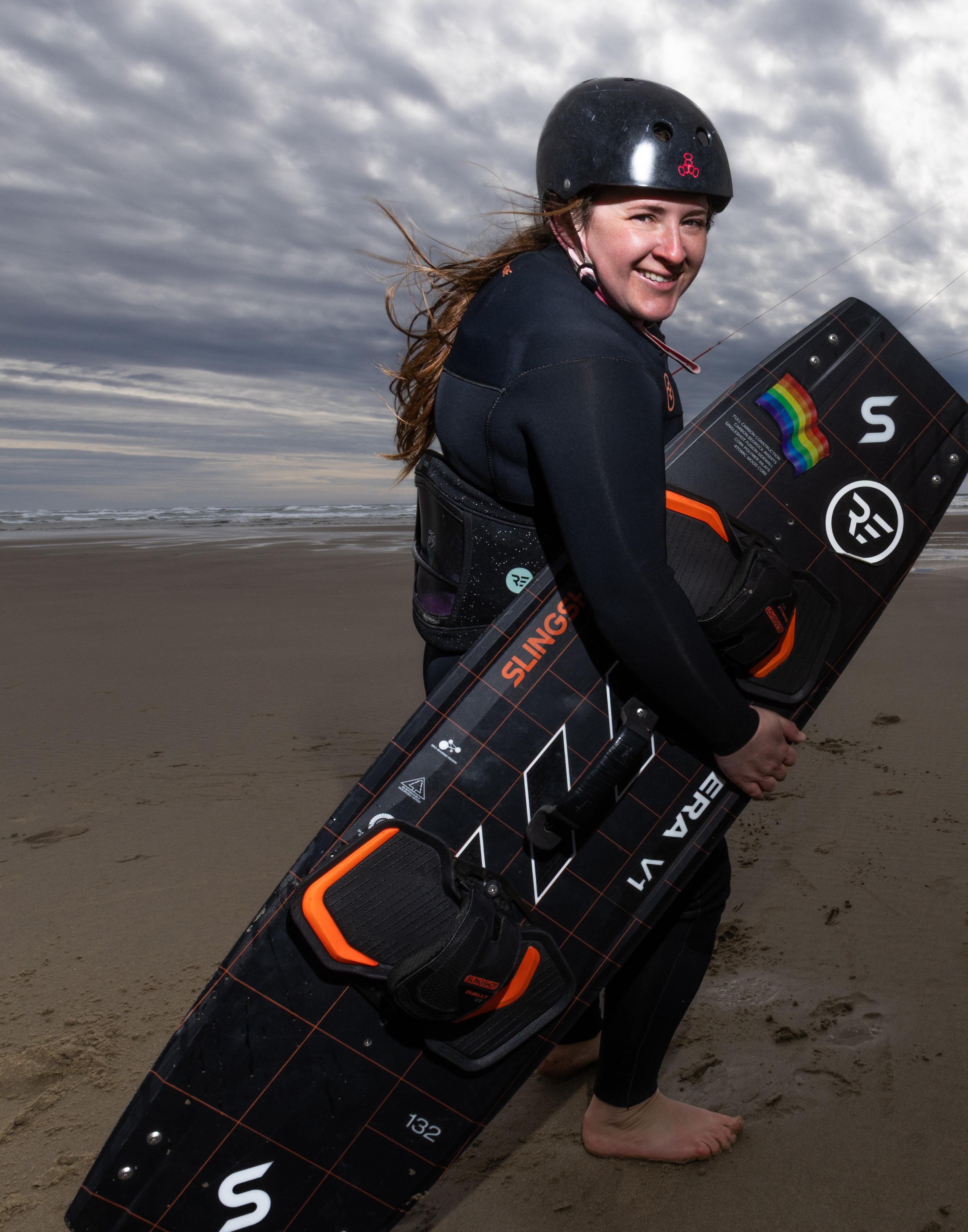
QUEEN AIR & SEA
Big Air kiteboarder Michaela Pilkenton fosters change in wind sports worldwide. of
By Erin Morrison
Photos by Max Unkrich
On a clear November day, the wind roars down the Columbia River Gorge at 40 knots, whipping up whitecaps and sending anything unsecured downriver. It’s cold, loud, and relentless, but people are not hiding from the wind — they’re playing in it.
The deep bass of house music throbs through the speakers of Michaela Pilkenton’s dark gray Jeep Wrangler. The back seat is full of nondescript black bags filled with multicolored kites, ranging from seven to nine meters in length, covered by boards that look like a cross between a snowboard and a wakeboard. Wetsuits and down-fabric ponchos occupy all remaining space, making it impossible to see out the back window. Her wife, Kimmy Gustafson, occupies the passenger seat, her long, dark, wavy hair held back by a green trucker’s hat, creating a curtain over her face as she bends over her phone. As the Jeep crests a hill, Mount Adams appears. Gustafson looks up and, with Pilkenton, catcalls the mountain, which reveals a fresh snow-clad look.
“Don’t look at the wind,” says Gustafson from the passenger seat, still scrolling on her phone.
“I’m looking anyway,” shoots back Pilkenton, already lifting her phone at the stoplight. Her eyes squint as she quickly scans over a complex-looking graph. Crossing the river into Washington state, the car pulls into the East Point Kite Beach parking lot. Above the churning river, flashes of color streak across the sky, and crescent sails trace arcs over the water. Along the river itself, the
Most of the tiny figures stay close to the water, but one, a single green and black sail with an orange S, launches its rider into the air, twisting 50 feet above the surface. Politely disagreeing with gravity, the rider kicks her legs out sideways and grips the board as she descends, before skimming back across the water, spraying foam in her wake.
Hood River is the windsurfing capital of the world and a black diamond in difficulty for any brave windsport athlete. Wedged between the cold Pacific Ocean and the hot desert of Eastern Oregon, the Gorge is a natural wind tunnel. Heat rises in the desert, pressure drops, and the cooler marine air blasts inland to fill the void. By summer and well into fall, the river becomes a gathering place for the world’s best wind athletes.
Pilkenton made a goal for herself this year: prove it’s possible to kiteboard every month in Oregon. As long as the combined temperature of the air and water is at least 100 degrees Fahrenheit, she’s open to heading out. Anything colder and she risks hypothermia. Today, she is shooting footage for her November YouTube video, and it’s a rare day when the water is warmer than the air.
Out on the river, she holds a GoPro between her teeth to give a true first-person perspective of what it’s like to rise, twist, and free-fall through tricks only four
triangular rainbow sails of wind surfers and kiteboarders weave around each other like dancers.
Michaela Pilkenton rides through the surf off the coast of Florence, Oregon.
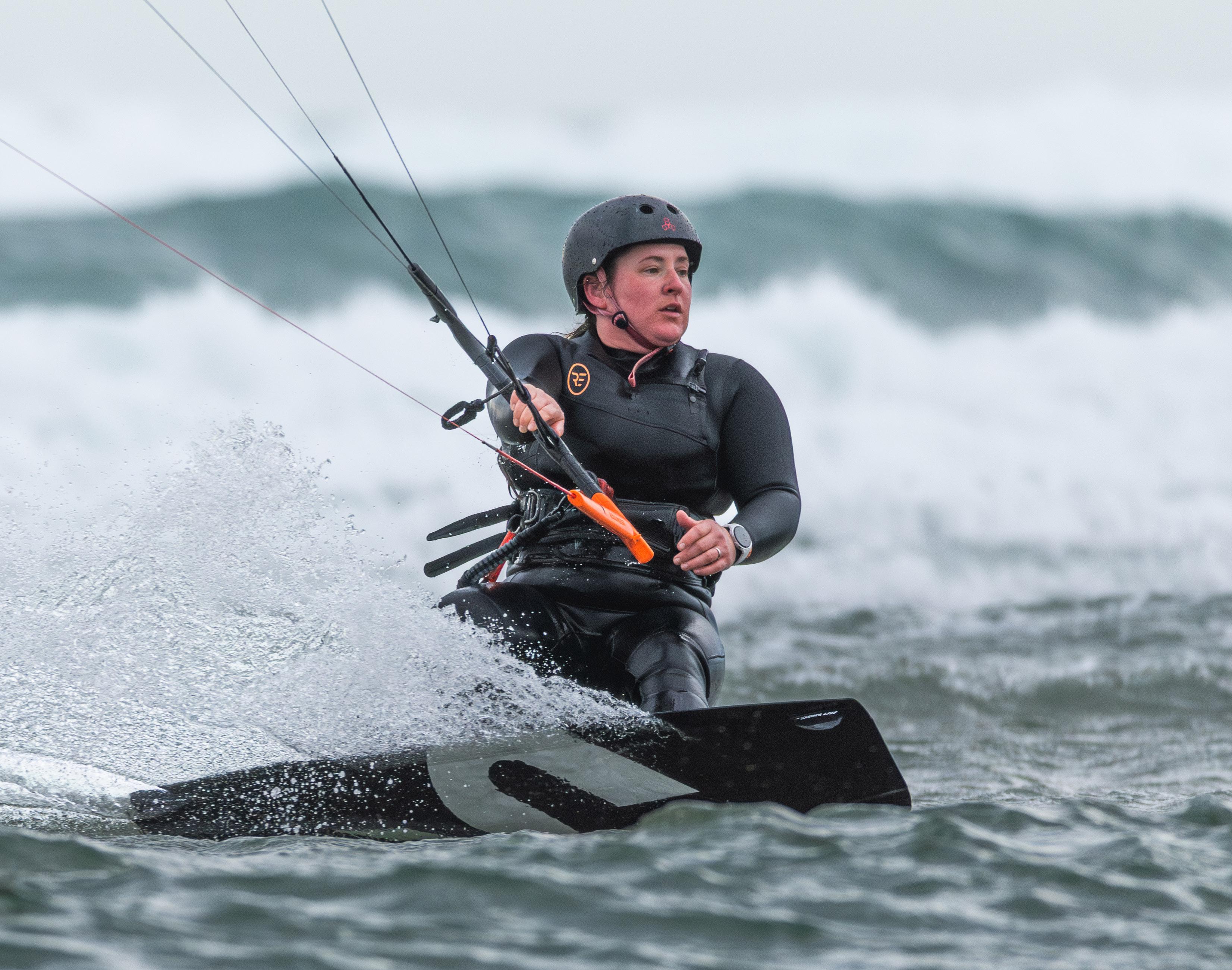
other kiteboarders have been able to land. When she’s satisfied with the footage, Pilkenton shoves the camera into her five-millimeter wetsuit and expertly weaves through the other kitesurfers before catapulting skyward.
A barge comes down the river, and Pilkenton beelines for it.
“She’s thinking about something,” says Gustafson.
Seconds later, Pilkenton is back in the air, racing the ship downriver. Gustafson whoops from the shore, hair whipping around madly by the relentless gusts while she snaps photos with her camera.
Kiteboarding may not have the largest global following, but Pilkenton has made a large impact as a professional athlete, mentor, changemaker, film festival founder, and artist. With waist-length blonde hair, a small frame, and a laidback surfer vibe, Pilkenton has been described as having more stoke per pound than anyone else. Spending her professional career fighting for women to have a place in the community, Pilkenton looks to take on the next phase in her career, kiting in the Oregon backcountry.
Pilkenton, the 2024 Association of Wind and Water Sports Industry Female Kiteboarder of the Year, did not grow up dreaming of surf and sails. Raised in
Sherwood, Oregon, she was a competitive figure skater by 5, intent on chasing Olympic ambitions. In high school, she traded in her skates for soccer cleats and later a snowboard. Still searching for the right fit, she started down the path of becoming a professional skier and mountaineer.
Working as a camp counselor in 2016 to save money for a mountaineering course in Alaska, Pilkenton turned to her mentor, Dan Crowe, for ideas on staying active. An amateur kiteboarder, Crowe directs the University of Oregon Outdoor Pursuits Program, which teaches students how to explore the backcountry safely. He suggested Pilkenton try kiteboarding.
“Go and see these people down at Floras Lake,” explained Crowe. He quickly sketched out a map showing how to get there from Highway 101. “That’s the place to learn. You should go take a lesson.”
Arriving at Floras Lake Windsports on Oregon’s southern coast, Pilkenton announced, “I’m here to learn how to kiteboard.”
She had a vision: she would use kiteboarding to make her a better skier. By turning a sail into a ski lift, she could speedily reach all the best snow at the top of a mountain that would normally take hours of backcountry traversing to reach.
The instructors asked if she’d booked a lesson.
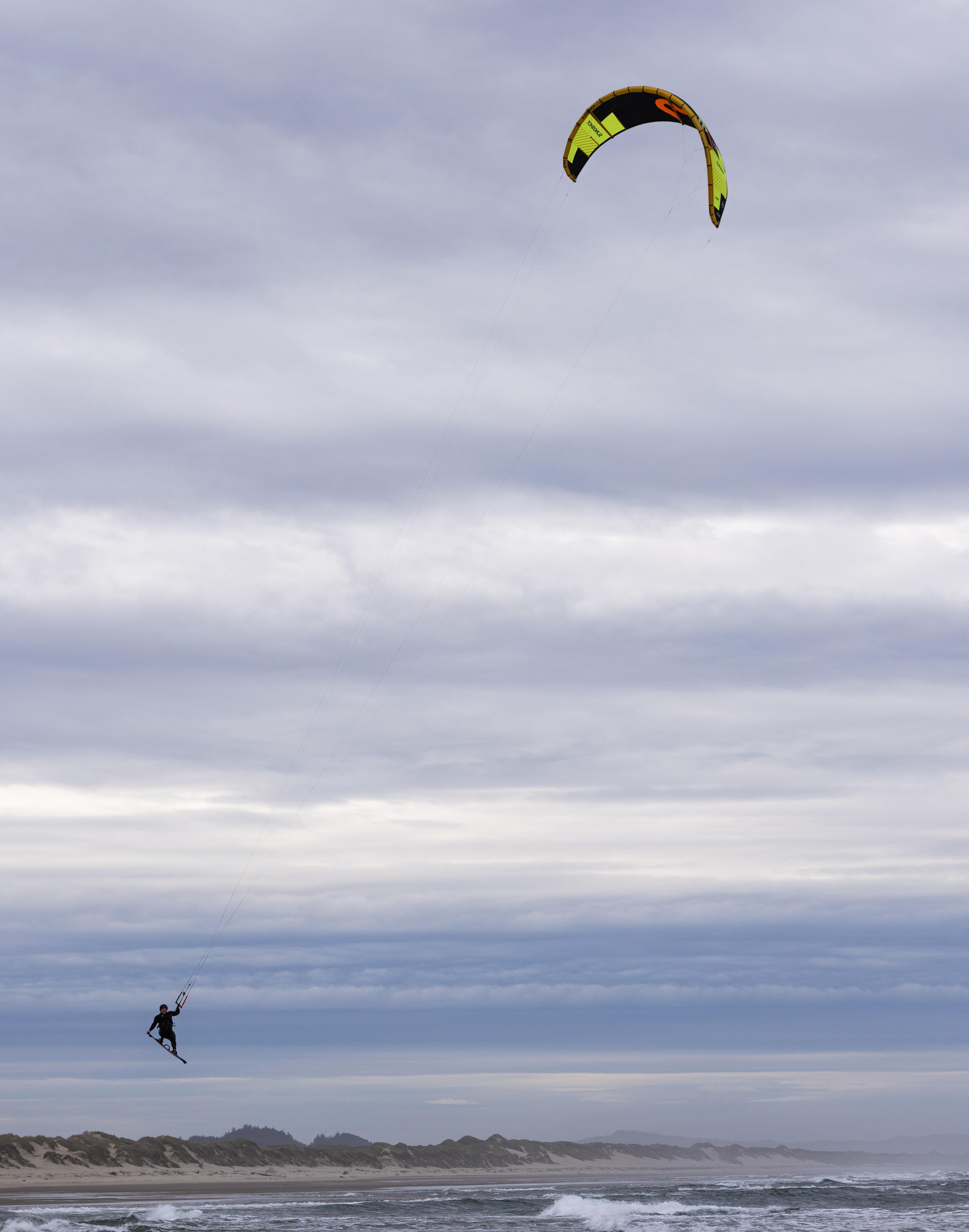
“This is all I’ve got,” said Pilkenton, holding up the map Crowe made. They squeezed her in. Day one of learning to kiteboard is spent on land with the equipment, studying proper body positions and learning when to jump. Students usually do not get on the water, but Pilkenton talked her way onto the lake after a brief morning lesson.
The instructors knew they had just met someone special. Reed Brady, coowner of Floras Lake windsports, mentored and befriended Pilkenton, letting her use the equipment free of charge.
“She just picked it up so quick,” says Brady. “It was always like the sensei and the padawan. Michaela was always trying to chase me.”
Pilkenton stumbled across one of the fastest-growing sports in the world, and she was ready to chart the undiscovered. There weren’t many women kiteboarders in the late 2010’s. She spent the summer of 2017 at Floras Lake and entered the kite park division, which uses ramps and rails to perform tricks similar to those in skateparks. It didn’t stick.
One day, while sitting at Floras Lake with Brady, she told him it was “a bummer women didn’t do Big Air.”
“Bull fucking shit,” said Brady, slapping down a copy of Kite Mag with a cover photo of Angely Bouillot. “Women absolutely do Big Air. Now go learn kite loops.”
Big Air, one of seven kiteboarding disciplines, mixes freestyle and height, sending athletes soaring up to 100 feet in the air with winds strong enough to knock people off their feet. Crowe recalls being out on the water with Pilkenton, watching her jump over his kite, twisting in circles, and spinning her board in her hands in the process.
But before she started soaring over riders, Pilkenton had to learn how to crash and burn.
“It’s like hitting concrete sometimes,” says Pilkenton. “The gear back then wasn’t made for it, so we crashed a lot.”
But the biggest thing she crashed into was a glass ceiling.
Currently, Big Air is the most popular kiteboarding event recognized by viewers, but women were not always included. The modern style of Big Air kiteboarding began in 2003. At a freestyle competition, Dutch kiteboarder Ruben Lenten debuted the Megaloop, a full rotation of the kite in the air before the rider lands back on the water. Red Bull is the main sponsor for high-profile kiteboarding competitions, and in 2013, they brought back the King of the Air competition.
Women’s divisions in kiteboarding competitions began in the late 2010s. Women wanted a place within Big Air, where men already had one. With over a decade of experience, passion wasn’t enough to close the gap and early competitions proved difficult.
“They’d send us out when the wind was too light or dangerous,” says Pilkenton. “At one event in Cape Town, the conditions were bad enough we finally said, ‘We’re not going.’ It was one of the first times we all banded together. That’s when things started to change.”
Right as the women’s movement in Big Air was gaining momentum, COVID sent them back to square one. Competitions paused as the world slowed to a crawl. Pilkenton and her family, living in Australia at the time, left the country the day before the borders closed and returned to Oregon with no plan. Brady called up Pilkenton and offered her a job teaching at Floras Lake
from July to September in 2020. She and Gustafson lived in a tiny trailer, owned by the Brady brothers, at the Boice-Cope Park campground. Equipped with a single bed and a bathroom that didn’t work, they rigged a camp kitchen under a pop-up canopy on the back of the trailer while their then 7-year-old son, Lincoln, slept in the back seat of the Jeep.
“It was appalling,” says Brady. “I just said, ‘Oh my god. I don’t know how you guys are doing that.’ I don’t even think they were running the fridge. But they were happy as clams.”
“I have very fond memories of that summer. I feel like we had the least we’ve ever had and we just had the best time,” says Pilkenton.
Pilkenton spent every day on the water, learning new tricks and teaching classes. Constantly in open-air environments, Lincoln spent all day equipped with a walkie-talkie and a packed lunch, running around with the other kids staying in the campground. While teaching proved fulfilling, Pilkenton never swayed from competing.
Coming out of the pandemic lockdown, Pilkenton was ready to bring women to the professional kiteboarding stage. In 2022, Red Bull still had no women’s divisions in any of its three major kiteboarding competitions. Frustrated, Pilkenton tried rallying other riders to make a statement. The plan was to have a large group of female athletes ride through the competition zone before the men’s heats to show that, regardless of gender, their technical skills could speak for themselves.
“It wasn’t a riot,” says Pilkenton, “just a way to show we were ready.”
The day before the competition, Pilkenton called it off. Only three other female riders were willing to make a public statement, and Pilkenton resigned herself to finding other ways to spur action after the competition. However, word spread fast. Standing in a coffee shop the morning before the King of the Air event, the head organizer of Red Bull South Africa called her and asked if she planned to start a riot.
That conversation opened the door. Soon after, she was invited to the table, with the goal to include women in future events. In 2024, Red Bull introduced its first women’s Big Air competition: Queen of the Air.
Today, the number of female Big Air athletes remains small and scattered. Pilkenton often trains with some of the most experienced wind athletes in Hood River. Still, she only gets to compete against other women at her level when she travels to places like South Africa or Maui.
“For me, skiing and those sports had become really lonely,” says Pilkenton. “Kiting was the way I could be on the water with my friends at my level and theirs. We can share the same wind.”
The sport isn’t without its risks. The highest winds Pilkenton has ever competed in were 55 knots, almost 65 miles per hour, and she has no limit. Pilkenton tries to ride in almost anything. But there was a time when she nearly called it quits.
On September 27, 2022, Pilkenton had just finished a day riding Naish Beach on the North Shore of Maui with close friends and fellow kiters Zach Draper and Avery Nardone. At some point in the afternoon, Nardone headed further up the shore to Kite Beach, where she had met up with Karlie Thoma and the eight-time world champion female Big Air kiteboarder, Mikaili Sol.
As the sun started to set, Pilkenton returned to shore before the wind shifted and began blowing over the land, heading east. Nardone was the last one out on the water when she pulled up in between the rock jetties of Naish Beach, excited to show off the tips she picked up from Thoma and Sol.
Nardone threw herself into the biggest kite loop Pilkenton had ever seen. About 30 feet in the air, the kite flew in front of her, stalling all the momentum and dropping her out of the air. With her kite at the wrong angle, there was nothing to slow the fall. She hit the water. Pilkenton and Draper stood transfixed, unable to react until blood-curdling screams filled the silence.
The force of the landing broke both Nardone’s tibia and fibula, pushing the bone through the squishy flesh of her leg and the rigid carbon fiber of her board. Gustafson was loading up gear with a friend when she heard the screams from the parking lot. As Nardone dragged herself to shore, the small group of friends immediately jumped into action. Pilkenton called 911 and ran out to the access road to lead first responders to Nardone. Draper took off his white T-shirt and tried to wrap the pieces of Nardone’s leg back together while Gustafson held Nardone down. Within minutes, the shirt was deep red and dripping blood onto the sand, all the while Nardone’s screams filled the rapidly descending night.
It was the first time Pilkenton saw up close what a life-altering injury from her sport looked like. She exited the beach shaken, questioning her goals tied to the sport. Six weeks with an extreme sports performance coach and two years of heavy training to regain her confidence later, the guttural screams have stayed with Pilkenton. Now, anytime she hears someone yell on the water, her body jolts with a fight-or-flight response.
“I think that there are a lot of athletes, especially in the extreme sports world, that don’t ever get faced with the consequences of the decisions they’re making, until it’s too late,” says Pilkenton. “And there I was, staring down the consequences of the decisions I make right in the face.”
This past summer, Pilkenton had her own major crash. Her kite lines tangled, preventing her from releasing the safety. She “death looped,” her kite spun in one direction, line tension could not be released, and she hit the water hard on her side.
Most days when Pilkenton is out on the water, Gustafson watches nearby. Sitting on the banks of the Columbia or staring out the Jeep’s front window with the heat cranked up, now it’s hard for Gustafson to lose the image of Pilkenton death looping.
“I thought she was gonna die,” says Gustafson.
Luckily, her impact vest saved her ribs from breaking, which is a common injury in the sport, and she was only left with bruises. Six weeks of rest later, Pilkenton’s passion did not waver. The tools she learned from the performance coach after Nardone’s crash helped her get back out on the water.
As one of the most recognizable faces in the sport and one of Hood River’s local legends, Pilkenton’s natural tendency toward shyness and doubt is overruled by her passion for building community. Onshore, she constantly chats with other riders as they inflate their kites, high-fiving onlookers who recognize her, and graciously accepting compliments when people fawn over the difficulty of the maneuvers she pulls off on the water.
“I’m not famous. Just well known in a niche sport,” says Pilkenton. “I’m also the queen of imposter syndrome.”
Her wife is the other side of that coin. Unafraid to back down, Gustafson says it as she sees it, jumping in and firmly pushing Pilkenton to give herself credit instead of selling herself short. But the one area Pilkenton will never let imposter syndrome bleed into is her queerness.
“Being queer emboldens her,” says Gustafson.
Pilkenton was “pleasantly surprised” by how accepting windsport athletes were overall upon entering the community until a photo of Pilkenton competing with a pride flag and shirt was posted in a worldwide kiteboarding group on Facebook, which was the first time she ever experienced backlash. Gustafson recalls that her wife “got eaten alive” in the comment section with social media users claiming sexuality should be kept out of sport.
Rather than retreat from the anonymous jabs sent over the opaque battlefield of the internet, Pilkenton responded by creating something positive. In 2023, inspired by the ski films she loves and the Banff Film Festival, she founded the Wild Wind Film Fest, a showcase for wind sport films.
“There wasn’t a space for that in kiteboarding,” says Pilkenton. “So I made one.”
Her goal is simple: make wind sports more visible and build a community across the wind sports industry. But that’s easier said than done. In just three months, she and Gustafson turned the idea into a real festival with showings in 10 cities worldwide. Within the first 48 hours, they sold out every show. With a clear audience and desire for the content, the only obstacle is having enough films.
“You ask ten people in Portland if they know what kiteboarding is, and they’ll all stare at you blankly,” says Pilkenton. “It’s huge in Europe, but here, not so much. It’s what I love, and I want people to see it.”
With a lack of entries for the 2025 festival, Pilkenton and Gustafson made their own film inspired by the unharnessed wind in the mountains. Through trial and error with wind prediction, editing, drones, and handheld cameras, they single-handedly produced Thin Air, however, this year the couple made the hard decision to cancel the festival.
“Kimmy [Gustafson] and I’s word for the year is ease,” says Pilkenton. “You need to know what you want to let go and what you want to force.”
Like many of her other experiences in the sport, when Pilkenton approaches a wall, she pivots. Her most recent endeavor is to break new ground in adventure kiting. Armed with a 1980s guidebook, intimate knowledge of wind prediction, and extensive backcountry skills, she’s started conquering alpine lakes across Oregon. Proving that wherever there is wind and water, there is a space for her sport.
“It’s hard to say what the future holds, but I want to get people stoked on kiting and get paid to do that,” says Pilkenton.
Pilkenton isn’t just riding the wind, she’s changing its direction.
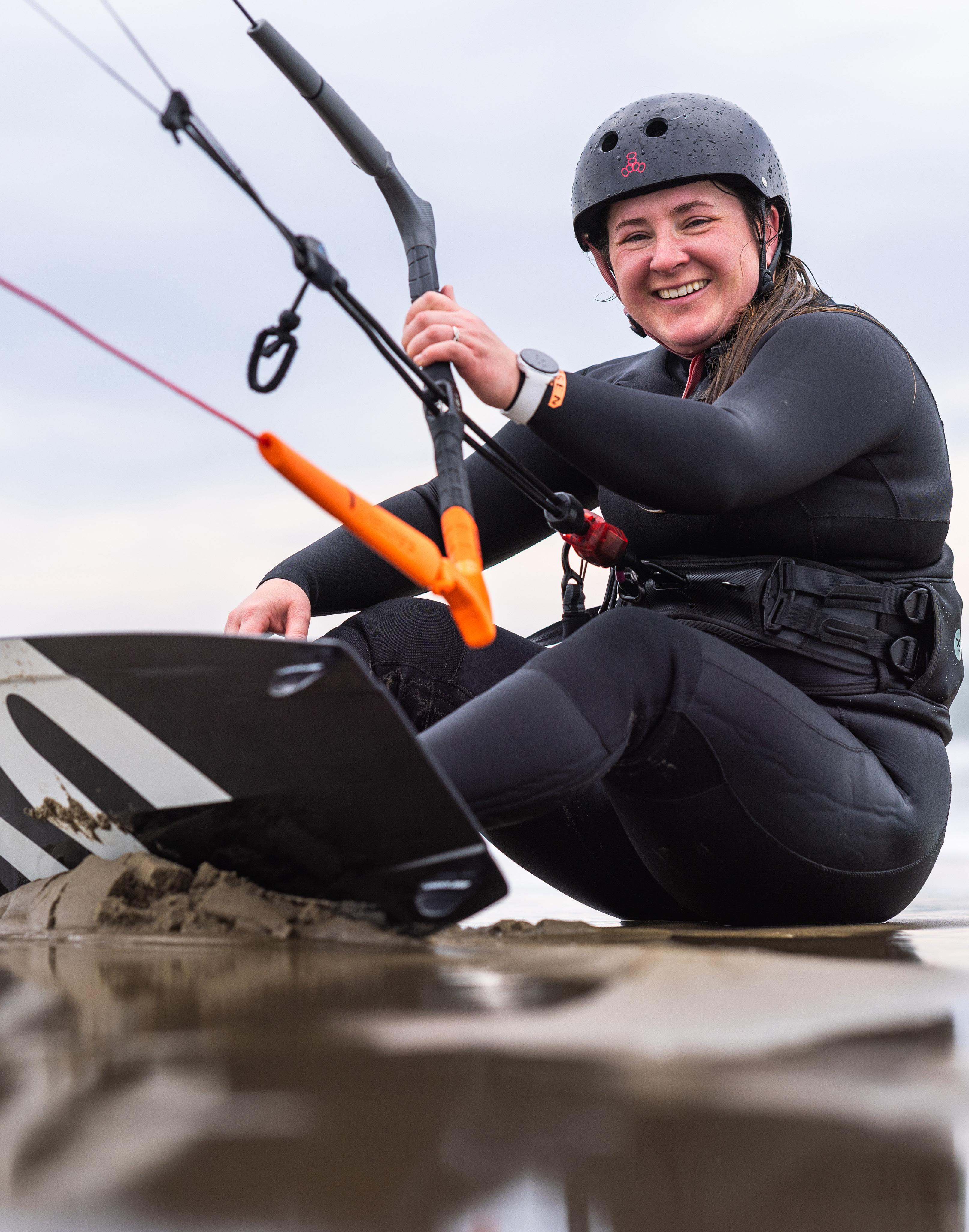
by
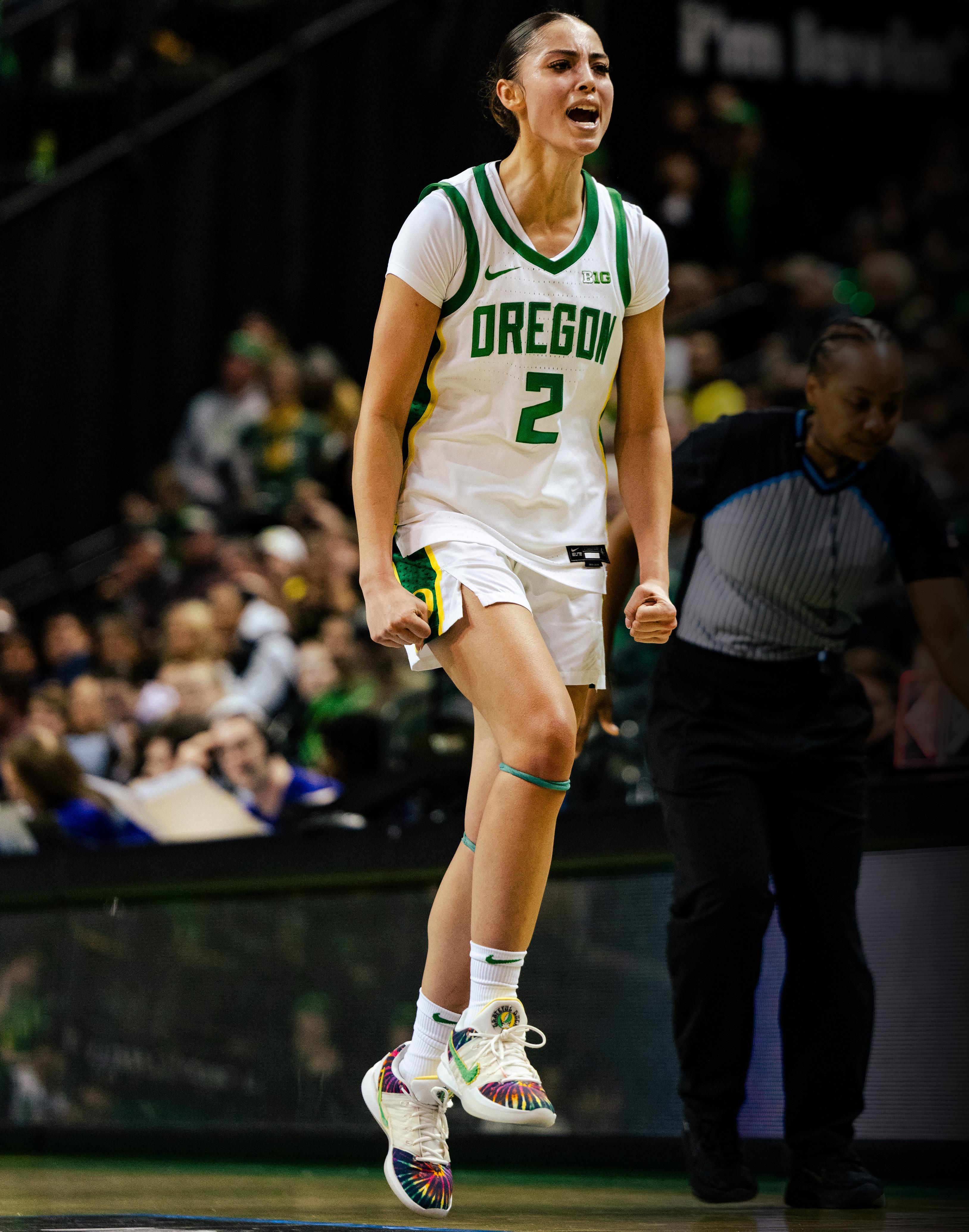
Photo
David Hammel
GOT
SHE GAME
Point guard Katie Fiso navigates loss and strives to leave Oregon an all-time great.
By Grace Mangali
Inside Matthew Knight Arena, artificial spotlights illuminated the University of Oregon women’s basketball players. The bass of an adapted version of “Throw the O” vibrated seats while fluorescent mascots, Grateful Dead bears, sat in the stands, among yellow-and-green decked fans. Meanwhile, sophomore point guard Fiso laced up her tie-dye Nike Sabrina 3s, made custom for Oregon basketball, her gametime alter ego about to take over.
This was a rivalry game, on Oregon turf, against the University of Washington. Seven minutes in, with Washington leading, Fiso dribbled up the left side and saw an opening. With a hesitation dribble, she blew by three defenders for an easy layup. Getting back on defense, she snuck up the help side from the left wing, intercepted a pass, and took it coast to coast for another layup, tying the game 9-9.
Later, Fiso drew two defenders and kicked it out to Sofia Bell, who drained a three. After receiving the ball on the right wing, she drove to the right elbow, got the switch, goaded the bigger defender and dropped in a soft lob pass to Ehis Etute for the layup. But Fiso and the Ducks walked into the locker room trailing 36-27 at the half.
Two and a half minutes into the third quarter, Fiso drove right off a pickand-roll for a lay-up. Washington defenders seemed to stop and stare. A minute later, same thing: hesitation, blow by, basket. Then, Washington started forcing Fiso left, but the shifty guard stopped on a dime, bumped the defender, and hit the quick floater. The score sat at 53-47 at the end of the third quarter.
A minute into the fourth, another blow-by and finish through three defenders cut the deficit by two more points. Playing downhill, Fiso converted another layup and pulled the Ducks within two.
With 20 seconds left, she went to another hesitation dribble, faked the drive, and threw a bounce pass to Etute for the layup, 69-67, giving Oregon its first lead of the game.
After Washington tied it up, Fiso flew up the court, past the defense, around a screen by Etute, and lost control of the ball. Fiso fell hard into a Washington defender, earning an offensive foul.
Fiso scored 19 points without missing a shot in the second half, but her offensive foul sent the Huskies to the line at a critical juncture. After Washington converted one of two at the free throw line, the Huskies closed the door on the Ducks, 70-69.
The loss meant the Ducks would play the first round of the Big Ten tournament, instead of receiving a bye.
A few minutes after the game, Fiso and Etute entered the fluorescent-lit media room under the arena. Playing 37 minutes and scoring a career-high 27 points, Fiso sank into a chair next to Etute. She smiled as a reporter called her name. Without looking any journalists in the eye, she received an all-too-familiar question: “What happened?”
Fiso is above all a student of the game, subscribing to a Mamba Mentality, where practice is church, plays are scripture, and team is family. She lowered her face to the mic, á la Kobe Bryant after Game 6 victory in the 2010 NBA Finals. Sitting against a blue background, shiny trophies littered about, Kobe laughed and rubbed his head. The Lakers had just beaten the Celtics to force a Game 7. A reporter asked if he was happy to be in
that position, if the reason he was successful in high-pressure games was because he did not put pressure on himself.
“I don’t worry about it too much,” he said. “I just go out there and play.”
With the weight of the University of Oregon women’s basketball team on the shoulders of her 5’11 frame, Fiso smiled. She shook her head, shrugged her shoulders.
“Shoot,” she said. “Y’all saw.”
She was asked how she would move on from the loss and maintain positivity going into the Big Ten Tournament.
“Who doesn’t want to play more games?” she said.
Fiso models her game after Oregon head coach Kelly Graves’ great former point guards, Sabrina Ionescu and Courtney Vandersloot. She takes notes from the great Seattle street ballers, Jamal Crawford and Nate Robinson. She fashions her game around legends Kobe Bryant and Kyrie Irving. Above all, it’s her competitiveness, discipline, and winning attitude that set her apart at the collegiate level.
Beep! Beep! Beep! rang the alarm.
A 10-year-old Fiso yawned and rubbed her eyes in her Seattle bedroom before dozing back off. Her dad, Joe, and her twin brother, Matthew, burst through the door and told her to get ready. Joe piled all six of his kids into the car and drove to the local YMCA. Fiso, barely awake, stood on the sidelines holding a basketball with both arms. Her hair was pulled into a ponytail, and a thin band of pre-wrap held her flyaways in place. She rocked back and forth on her heels, shifting the ball from hand to hand, watching her dad drain mid-range shots one after the other.
“Who’s on Joe?” a player yelled. “Someone’s gotta get Joe!”
Fiso lingered on the sidelines, scared to get into the action, but Joe jogged over and told her they could team up. Initially, she bricked shots and turned the ball over, overanalyzing the game. She did not want to let her team down. With some encouragement from her father, Fiso started to make buckets. As time went on, she confidently sprinted down the court, using her speed and agility as an advantage. Soon came the crossovers and hesitation dribbles.
Matthew started taking his sister to open runs at the YMCA and LA Fitness. When the boys watched her approach the court, they’d say, “Man, she’s a girl, she can’t move, bro!”
The trash talk fueled Fiso, who demanded respect. She started blowing past boys twice her size, always seeking the rush that followed the sight of her shots sinking into the basket. Then came her own trash talk.
“I won’t be saying anything crazy,” she admits. “I’m just saying, like, ‘come on, man, you can’t guard me.’”
Joe made sure Fiso stayed grounded. On Friday nights, Joe took Fiso and Matthew to church to clean pews. When they went out after to eat at Dick’s Drive-In, Joe invited his coworkers and paid for everyone’s meal.
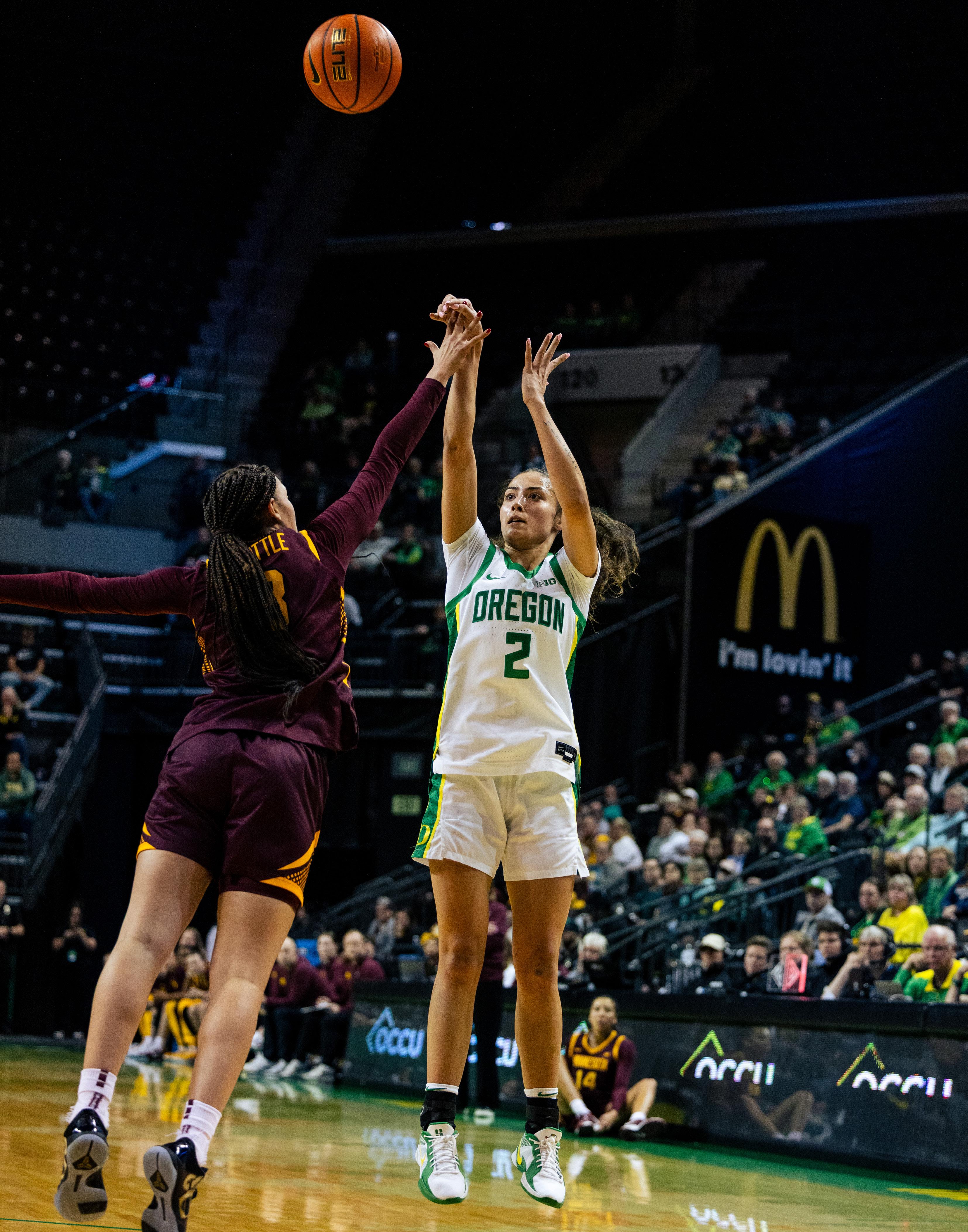
Photo by David Hammel
Katie Fiso sinks a mid-range jump shot over a Minnesota guard.
Driving home, Joe encouraged Fiso to trust in God’s plan for her and use the gifts she had on and off the court.
Choosing to get serious about basketball, Fiso joined the club team Seattle Swish. The club environment required an intense amount of dedication from a 12-year-old. Whether she was tired, hungry, or frustrated, no matter what, she was in the gym with coach Mo Hines at 4:30 p.m.
“He saw something in me that I didn’t really see in myself,” says Fiso.
In sixth grade, she committed to Tree of Hope EYBL (Nike’s Elite Youth Basketball League) and started traveling for games, making an immediate impression on everyone who watched her play. In January 2020, Fiso played at the Mamba Cup tournament in San Diego, playing against Kobe and his daughter Gianna’s team. After losing to Kobe’s team, the five-time NBA champion approached Fiso. Fiso looked up at her idol, shaking with nerves.
“You still got game,” said Kobe.
Fiso was speechless. Kobe asked about her post and mid-range shots. She smiled meekly and said there was work to be done. He encouraged her to practice on those skills, which she still works on today.
Kobe later texted Hines to keep an eye on Fiso, and admitted she was the best eighth-grader he had seen.
As the tournament continued the following day, Fiso screamed for the ball in the Mamba Sports Academy. Before the pass could reach her outstretched hands, whistles blew, and Fiso heard screaming. Everything stopped, as everyone in the gym looked to each other for permission to breathe. Fiso overheard a murmur: Kobe and Gianna had died in a helicopter crash. Tears welled in Fiso’s eyes. The team gathered to pray.
“I just remember my heart dropping,” says Fiso. “I just talked to him.”
Sitting with her team and coaches, they talked about fathers and who fostered the game of basketball for each of them. Fiso’s mind went to Joe, Hines, and Kobe. It was Fiso’s first brush with loss, and walking out of the gym that day, she wanted to prove that she did have game.
Growing up, Fiso watched all the great Seattle-based players at the “Hood Classic,” a legendary battle between Rainier Beach High School and Fiso’s own Garfield High School. Those games, full of technical fouls and coach ejections, reminded Fiso of her own runs at the gym and all the professional players from the Seattle area.
Jason Terry, who played 19 years in the NBA and won Sixth Man of the Year in 2009, attended Franklin High School in Seattle. Brandon Roy, who played six seasons in the NBA, attended Garfield High School and formerly coached at Garfield on the men’s side. Nate Robinson, a former NBA dunk contest champion, attended Rainier Beach High School before attending the University of Washington and playing 11 seasons in the NBA. Jamal Crawford, a three-time Sixth Man of the Year who is regarded as one of the best ball handlers in history, also attended Rainier Beach.
Vandersloot also grew up playing 25 miles away from Seattle in Kent, Washington. She attended Gonzaga University, where she played under Graves and became the first player in Division I history to amass 2,000 career points and 1,000 career assists.
“I feel like every Seattle hooper I know always has that fire,” says Fiso. Fiso won a state championship with Garfield in her sophomore year of high school. She entered her junior year with the mindset to add more to her basketball repertoire, but the team needed a head coach. Tre Simmons,
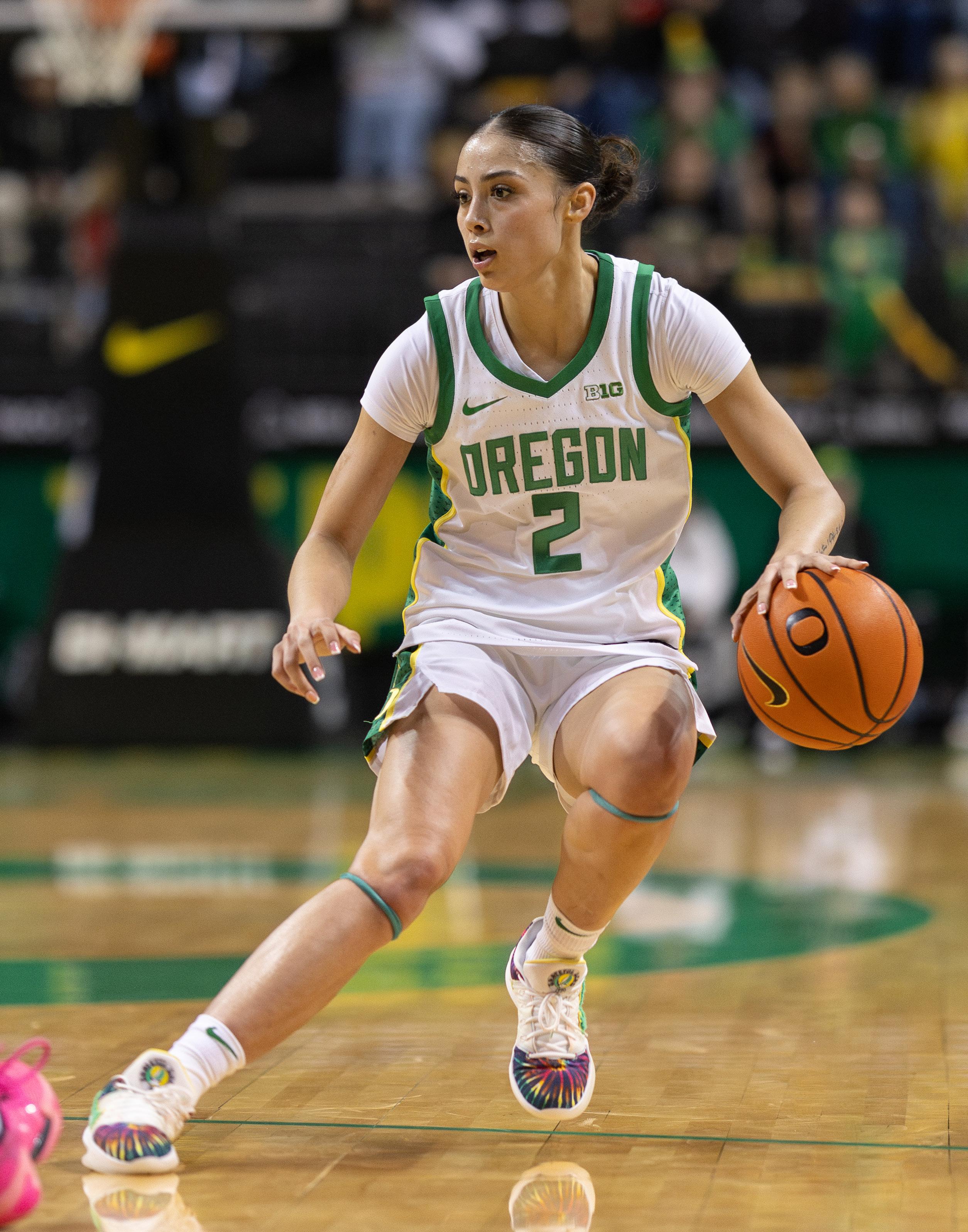
Photo by Max Unkrich
who played professionally overseas from 2005-2018, had coached on the men’s side at Garfield. He stepped in to coach the women’s team for the first week of practice. By the end of that week, the women’s team convinced him to stay permanently.
Simmons afforded his players ample freedom in his system and watched Fiso evolve from street baller to a polished point guard.
“She’s just a learner, she always wants to compete, and she always wants to get better,” says Simmons. “It was a pretty easy transition for her.”
After losing in the district finals her junior year, Fiso walked down the hallway to her room. But Joe stopped her. Fiso expected gentle encouragement, but her dad cut into her, saying she needed to work harder and be a leader. Fiso turned and stormed down the hallway.
With seven minutes to go in the state championship, Garfield led by ten. During a time-out, Fiso was the most vocal, urging her team toward the finish line. Garfield won 58-49. After the game, all the criticism from Joe weeks earlier came flooding back, and she ran to find her dad in the stands.
During her senior season, Fiso was named the Washington Gatorade Player of the Year, averaging 24.6 points, 4.2 rebounds, 4.1 assists, and 2.5 steals. She won three straight state titles and was named MVP in her junior and senior seasons.
Graves had his eye on Fiso since his Gonzaga days, where her brother, Michael, was one of their practice players. Close with the Fiso family, Graves hired Simmons before Fiso’s senior season.
Fiso received offers from many schools, including Ohio State, Alabama, Washington, Vanderbilt, and Penn State, but the relationships she made with the coaching staff before she graduated made it easy to commit to Oregon.
“They really, really believed in me and the vision,” she says. “We had the same vision, we want to win.”
On December 4, 2024, Graves’ phone rang during the pre-game meal with the team. He picked up to find Fiso’s mom, Julie, on the other end. She asked him to bring Fiso over to the hotel her and Joe were staying at in Eugene, intending to watch the Ducks play Washington State that afternoon. Graves stood behind Fiso when she received the news her dad had suddenly died.
Returning to the basketball court helped Fiso process the loss. She played 15 minutes and scored 10 points in a game against the Air Force Academy two weeks later. Then, a month after Joe died, Fiso’s grandfather, Julie’s dad, died.
The team and coaches rallied around Fiso, her teammates cheering her on during practice and reassuring her to keep pushing.
“Those are lifetime relationships that I’ll cherish forever. That’s why basketball is such a unique thing, because it creates more than just stuff on the court,” says Fiso. “Once I realized that I had other people around me to lean on, to help, that’s when we all started to get along, to basically be in a synergy.”
After scoring 22 points in a loss against Michigan, Fiso spent the entire fivehour flight home staring out the window. After touching down in Eugene and busing back to Matthew Knight Arena, she laced up her shoes.
Fiso brought a cart of balls to the free-throw line. The lights were low, and the stadium echoed with every squeak of her shoes and swish of the net. Fiso cranked up her speaker, and her heartbeat kept the tempo as she worked through drills.
“Let’s go!” she shouted into the cavernous empty arena.
Graves’ office overlooks the practice facility in Matthew Knight Arena. Sitting in his chair, late one night during the 2024 season, he heard the familiar percussion of a ball dribbling down the court. He peered out the window and saw Fiso. He looked at the clock, which read 11:59 p.m.
“We actually had to tell her, ‘We don’t want to see you in here,’” says Graves.
In her first taste of the NCAA Tournament last year, the Ducks played Vanderbilt, Fiso playing 19 minutes and finishing with eight points. Oregon won 77-73. Graves has a framed photo in his office of Fiso coming off the court and high-fiving him.
Graves knew Fiso would flourish in her second season. After eight months of training, Fiso earned the Ducks’ starting point guard spot. When Oregon played at Michigan during the regular season, the game went to double overtime. Michigan won 92-87, but Fiso led the Ducks with 24 points, seven assists, and four rebounds.
“Courtney Vandersloot and Sabrina are the ones that come to mind when you look at a talent like Katie,” says Graves.
And perhaps Graves hopes to mold Fiso into a mix of both. In transition, Vandersloot was comfortable pushing the ball in tempo, much like Fiso. But Vandersloot was a pass-first player to the core. In her senior year of college, she had 29 points, seven assists, and seven steals in a Sweet 16 win over Louisville, leading Gonzaga to its first Elite Eight appearance as the 11-seed.
Graves describes Fiso and Ionescu’s similarity as coming down to “not being afraid to miss the big shot.” Like Fiso, Ionescu always wanted the ball in pivotal moments. Both players were inspired by Kobe's late-game heroics.
Ionescu first met Kobe when she came out an hour and a half before a home game at Oregon. They exchanged numbers and formed a connection, bonding over coaching Gianna and running workouts together. While an eighth-grade Fiso watched news coverage of Kobe’s memorial, Ionescu stood shoulder to shoulder with Shaquille O’Neal and Michael Jordan to speak during the Celebration of Life for Kobe and Gianna.
“It’s so strange to describe him or Gigi in the past tense,” said Ionescu. “You don’t get used to that, no one tells you that about grief.”
Grief doesn’t go away, but repetition of getting up and living life makes it easier to cope. Entering her junior year at Oregon, Fiso is not only surviving, she’s thriving as the face of Oregon basketball. After the offensive foul on Washington, and her Kobe-esque press junket, Fiso stood out in the Big Ten Tournament, helping Oregon beat Purdue by 18 points, Maryland by five, before ultimately losing to Iowa. Fiso scored 20, 14, and 22 points in those three games, respectively, and shot 62.5% from the field in the last game.
Fiso played 35 minutes in the first round of the NCAA Tournament this year, scoring 22 points against Virginia Tech, shooting 75%. The Ducks lost to the Texas Longhorns in the second round, and Fiso wasted little time getting back in the gym.
Fiso believes her future is “already written.” She hopes to inspire the incoming class of recruits and transfers, modeling leadership on the floor and leaving some good wherever she goes. The lessons Joe instilled in her – community first, generosity, and leadership – continue to propel Fiso forward.
“Her infectious attitude, it permeates everything she does. People want to be around her,” says Graves. “I think she’s got a chance to be a household name across the country — the best point guard in the nation.”
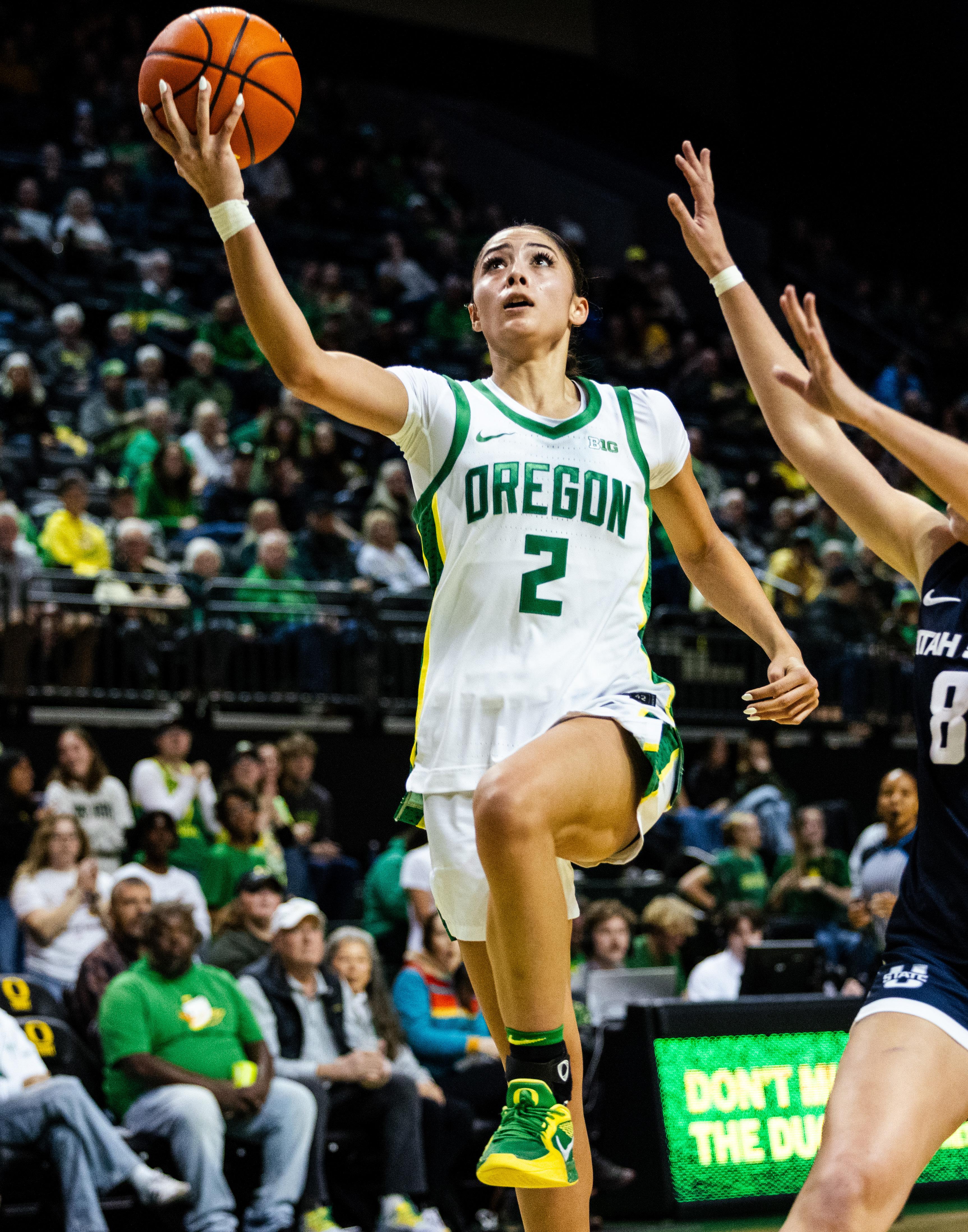
Photo by David Hammel
Ultramarathoner Max Jolliffe toes the line between discipline and obsession.
By Coco Smith
Photos by Shane Balian
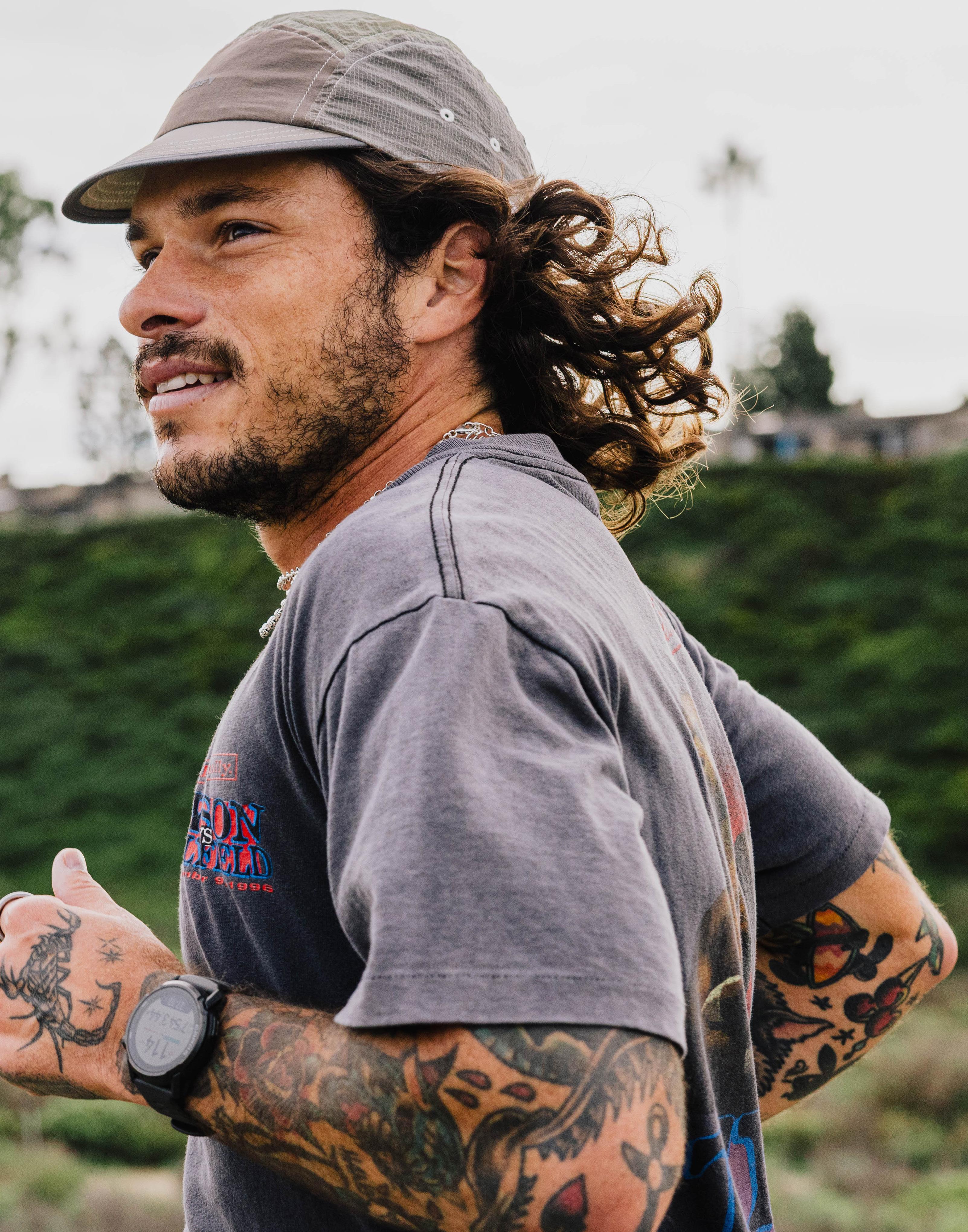
overed in tattoos and a shirt littered with holes, topped with a hat shielding his face from the 12 o’clock desert sun, Max Jolliffe stood at the start of the 2025 Moab 240 ultra-marathon in a sea of over 250 runners with his mind set on the finish line — 240 miles away.
A landscape of sheer sandstone walls and valleys of cracked earth, Moab, Utah, feels like a different planet. The course sends runners plunging into canyons, climbing slick rock ridges, and crossing desert basins where silence takes hold. Starting in the furnace of midday, running through nights dipping into the 30s, it’s one of the hardest ultramarathons on Earth, and for Jolliffe, it was his first time attempting anything beyond 100 miles.
“If I get lost, hurt, or die, it’s my own damn fault,” said Jolliffe along with the entire chorus of runners.
Quickly, Jolliffe emerged through a cloud of dust kicked up from the starting line. Sweat pooled in every crevice of his body, soaking through clothes, socks, and shoes. Over 24 hours later, having run through the night, Jolliffe entered his second aid station at mile 114 in first place.
His rule of never sitting at aid stations crumbled under the pressure building in his feet. Upon removing his shoes, the pustules he taped over at mile 67 had filled back up, pulsing with every step. Opting to re-tape, his bloody skin clung to the sweat-soaked tape.
Shoes laced, Jolliffe focused on summiting Shay Mountain, the highest point of the race with over 4,000 feet of elevation to climb, running through the second night with no sleep. Needing to stop every few steps to ease the weight off his feet and quads, Jolliffe inched along the trail with the support of trekking poles. In the dark hours of the night, Jolliffe ran his slowest mile to the next aid station at marker 170.
Slumped at the aid station, he called past Moab winner Jesse Haynes, who helped prepare Jolliffe for the notoriously confusing desert paths ahead. Jolliffe and his pacer Matt Shapiro set back out to climb up Geyser Pass. A golden sun rose over the desert once again, illuminating the intrusive complexities of the igneous rock. The menacing feelings of exhaustion and defeat faded with the night, while the jagged shadows became gray hills.
The elevation climbs slowed Jolliffe to a glacial pace across the desert at less than one mile an hour. Fallen aspen leaves blanketed the trail, hiding the rocks beneath, turning every step into a gamble. Still, he kept pushing.
Two dead watches and a dead phone led Jolliffe and Shapiro a mile off course. With only one headlamp going into the next sunset, they traversed four miles in two hours, with 40 miles remaining. Jolliffe led Haroldas Subertas, but by the second night, sleep deprivation started to warp everything. He had been awake for nearly two days, climbing through the La Sal Mountains in the dark, his headlamp carving a
narrow tunnel through trees and rock. Beyond that beam, the world dissolved, and even his own breathing began to feel distant.
In his peripheral vision, shadows shifted. Jolliffe would turn his head, thinking he saw something — an animal, a person, a branch swaying — only to find nothing. His thoughts slowed and fractured. Simple decisions began to feel overwhelming. Directions blurred. Distances stretched. He slipped into what he describes as a strange waking dream, suspended somewhere between consciousness and collapse.
Climbing toward 10,000 feet, lungs burning in thin air, his fatigue compounded by altitude and cold, gravity seemed to thicken around him, pressing down on his shoulders and skull. In the middle of the trail, deep in the La Sal Mountains around mile 190, with no aid station in sight, Jolliffe laid down on the dirt, rested his head on his vest, and lost consciousness. It lasted only minutes. But when he woke, panic surged. Jolliffe was alone, exposed, and still miles from help. He stood up and kept moving.
Sleep deprived, his mind faltered and small mistakes multiplied. Batteries died. Equipment went uncharged. A water filter was forgotten. Navigation became uncertain. The walls seemed to cave in.
By the next aid station, mile 200, Jolliffe had slipped into second place, Subertas reclaiming the lead. With 40 minutes of sleep, his legs lay heavy and unmovable on the makeshift bed in the back of the van. Jolliffe prayed for more strength, his mind urging him to continue.
His team faced a choice: keep Shapiro on the trail with Jolliffe through the final 40 miles — risking Shapiro’s health after running the last 30 with little to no sleep — or send Jolliffe out into the night alone.
Mackenzie Ross, Jolliffe’s team leader and fiancée, didn’t tell him to win. Ross made it clear: first place was his choice, but the finish line wasn’t. He was going to make it there either way.
“I took off with a vengeance. I was just determined to just get some distance on this guy. It was just like I had gotten the perfect storm of inspiration, adrenaline, food, hydration. I got some new shoes on. I was like, ‘All right, if we’re going to do this, it’s going to be now,’” says Jolliffe.
With 14 miles separating him from Subertas, Jolliffe closed the gap one labored breath at a time, eventually discovering a shining headlamp, where a pacer stood over Subertas, who was curled in the dust, shoes still on, sleeping.
Jolliffe made his move, momentum taking over. His stride steadied, yet objects on the trail warped under his headlamp beam, branches twisting into patterns, rocks looking like faces in the dirt. Then he caught sight of something carved into a tree. His name. He blinked hard and kept running.
Minutes later, a road sign appeared: Max Lane. He laughed out loud, thinking it had to be a hallucination. Even the desert seemed to be calling him to the finish.
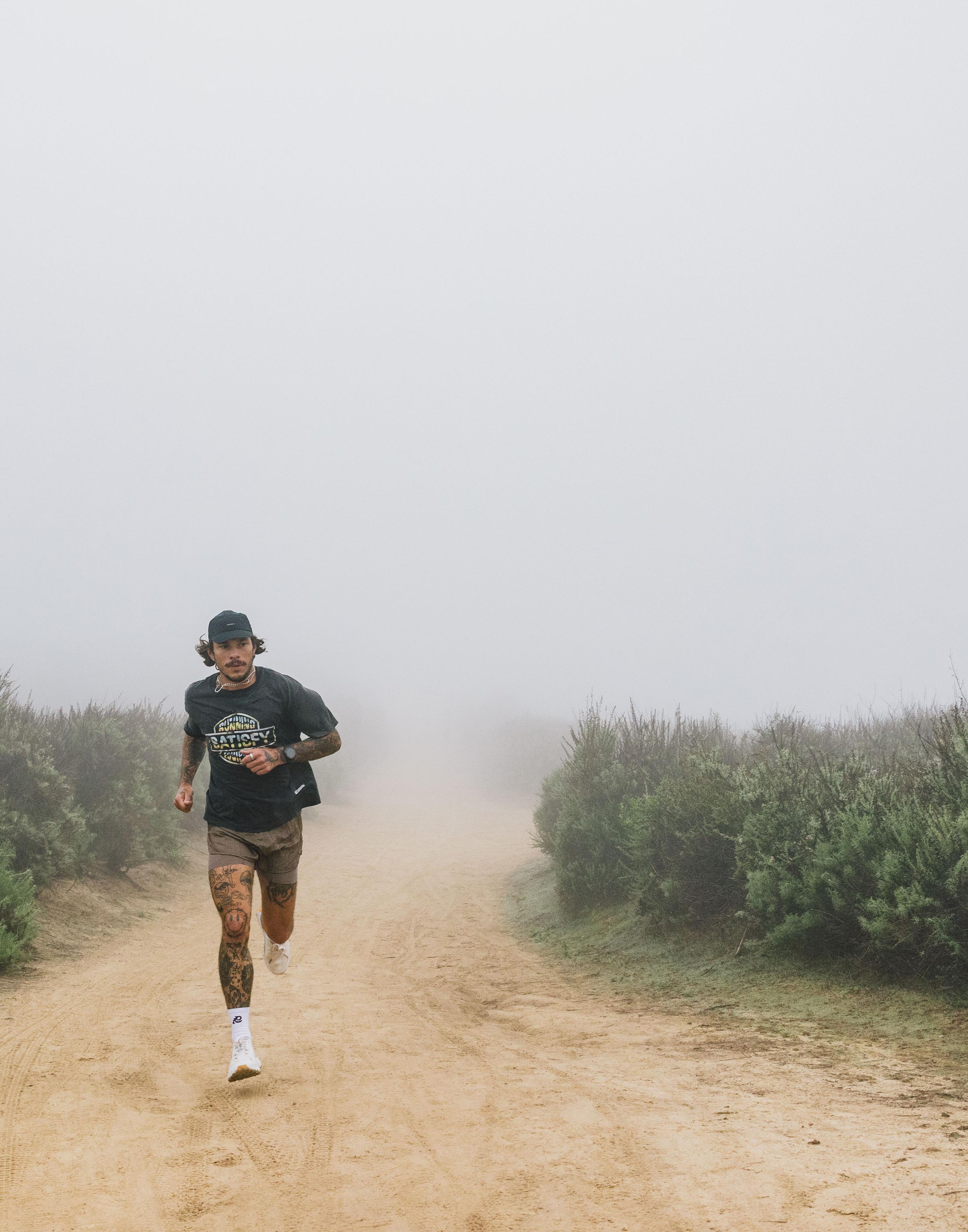
Every ridge he crested, every stretch of trail he cleared, pushed Jolliffe to 240 miles in 69 hours on 45 minutes of sleep, crossing the finish line in first place. He earned the King of Moab title — his crown forged in blisters, blood, and grit.
Five years earlier, Jolliffe wouldn’t have stood a chance at the Moab 240.
Back then, there were no training plans or early mornings, no patience for routine. He often spent his days drifting from one place to the next, skating until his legs burned — not to get anywhere in particular, just to keep moving.
Addiction plagued his family growing up, and Jolliffe succumbed to his environment at a young age, trying to outrun the gravity of his life. Substances became a way to fill the hours, then a way to quiet everything else.
“It just runs in my family,” he says. “Both my parents, grandparents on both sides, uncles, cousins, and even my sister, too.”
Home was unstable, arguments rising and falling without warning. He remembers police cars in his driveway after the neighbors called about the noise. Chaos was something he absorbed without knowing anything different.
“When you’re a kid, that’s traumatic,” says Jolliffe. “You’re always waiting for something bad to happen.”
Fear followed him everywhere as a child. He remembers worrying about getting lost — in grocery stores, parking lots, on long drives when a wrong turn meant unfamiliar streets. The fear wasn’t just about geography. It was about separation, about what might happen if the fragile sense of safety he had disappeared. Without steady ground beneath him, Jolliffe became hyperaware of his surroundings, learning to read moods, anticipate tension, and stay alert. Even as a young boy, Jolliffe constantly braced for impact.
By middle school, substances entered his life quietly — first as curiosity, then as social glue, and eventually as relief. Marijuana and alcohol softened the edges of anxiety, slowed his thoughts, and dulled the background noise of fear.
“I was self-medicating and treating myself with drugs and alcohol to shut this thing off in my brain because I’m just afraid,” says Jolliffe. “I’m afraid of life, I’m afraid of having relationships with people, I’m afraid of succeeding, I’m afraid of failing. It all boils down to fear.”
Attempts at sobriety came and went. A few weeks here. A few months there. Each time he believed he might have figured it out, he slipped back.
“I had no life. I had nothing to live for,” he says. “I had no direction, no guidance. I had nothing going on, really had nothing going for me.”
His first arrest came in 2011, when he was caught with cocaine and marijuana and charged with intent to distribute. It marked the beginning of years spent cycling through probation, failed drug tests, short jail stays, rehabs, and relapse.
It wasn’t until his final arrest on April 6, 2012, at 20-years-old, that something shifted. After failing upwards of 10 drug tests while on formal probation, he was sentenced to a 90-day probation violation at the James A. Musick Facility in Orange County Jail.
“The day I got sober was the day I got arrested for the last time,” he says.
It wasn’t a dramatic sentence. But inside, stripped of distraction and denial, Jolliffe saw his future clearly for the first time. If he didn’t stop, this would be his life. When he walked out, he committed to sobriety,
enrolling in multiple sobriety programs and support groups, building the foundation that he still runs on today.
“Getting sober was by far the hardest thing that I’ve ever done,” he says. “Running the hardest races in the world, it’s still never going to be as hard as getting off heroin.”
Without drugs, and without a clear path, he searched for ways to burn off the restless energy that threatened to pull him back under. He returned to skateboarding, to surfing, and to steady work, chasing motion wherever he could find it.
To complicate matters, Jolliffe broke both his ankles less than a year apart while skateboarding. Joining a gym with a friend to recover, Jolliffe stumbled onto the cardio machines and discovered a strange, intoxicating sensation: running. Soon, he ditched the treadmill for the open road. Routes around his neighborhood stretched into longer loops past sunset. Lungs burning, legs aching, he couldn’t get enough.
“I just kind of fell in love with it,” says Jolliffe. “I have a very addictive personality. If I find something that I really like… I’m going to keep doing it.”
In 2019, Jolliffe toed the line at his first marathon, the Orange County Marathon, and crossed the finish in three hours and 27 minutes, hair long and wild, a grin plastered across his face. Just a few years later, he ran the same course nearly an hour faster, two hours and 48 minutes. From there, the miles increased. Trail ultras, 50 kilometers, 100 kilometers, which eventually led him to the multi-day 200-plus-mile monsters. He was finally going somewhere — with no intention of slowing down.
In 2021, at a climbing gym, Jolliffe hopped off the wall backwards at the wrong moment. Something popped. An MRI confirmed a torn meniscus. For the first time in years, he was benched.
Rest didn’t come naturally to a man who built his life around motion. But when he finally laced up again to run his first mile back, he came back with new determination. He started a run streak that would last more than three and a half years. He ran every single day, no matter what.
Jolliffe’s obsessive approach to running is as much mental as it is physical. Running 240 miles isn’t just about legs or lungs, it’s about mind over matter. For Jolliffe, every mile carries a conversation between doubt and drive. Days bleed into nights, blisters and fatigue set in, but the obsessive part of his personality, honed by years of addiction, keeps him moving. Each step is a negotiation with his limits, a test of whether he can push just a little further, even when the body screams for rest. That same drive that once fueled dangerous habits now fuels a new form of endurance built from sheer willpower.
“I feel like it’s kind of a superpower… the obsession and that addictive personality kind of overrides that voice in your head that’s telling you, like, ‘Ah, you could take it easy today. You could take a day off,’” says Jolliffe. “Whereas in my mind it’s not even an option."
In 2023, he traveled to Arizona to volunteer at Saddles-50, a rugged race through the desert. The night before the event, a spot on the roster opened. Unprepared, not fully rested, and eating expired gels, Jolliffe set out to have a good time.
He placed first overall and earned a pro-contract sponsorship with Satisfy, a premium running apparel brand based out of Paris. Now a full-time professional athlete, Jolliffe measures success by effort. His greatest fear isn’t losing; it’s not giving everything he has, not pushing, not growing. Years of sobriety taught him what it means to show up.
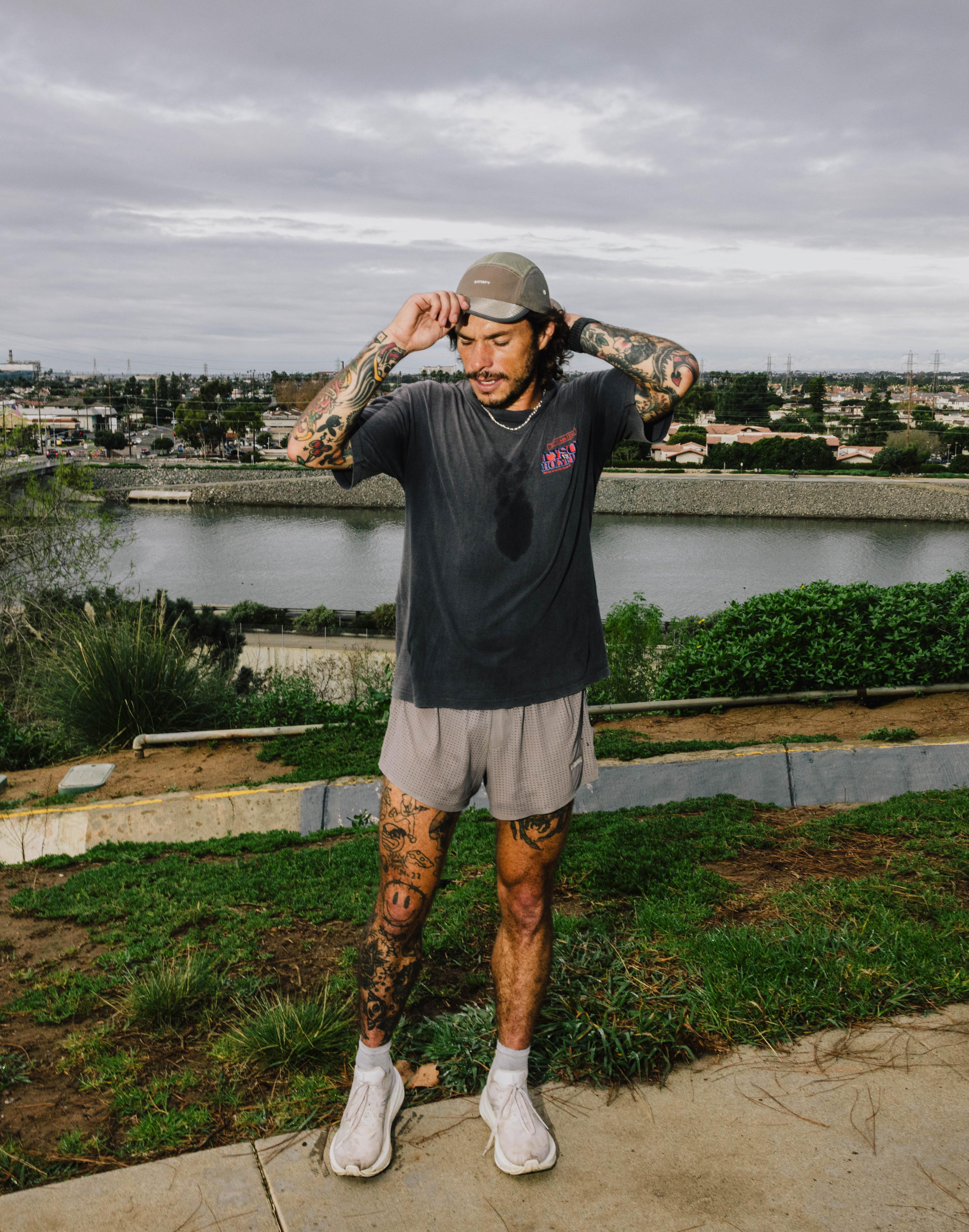
Max Jolliffe finishes a run in Costa Mesa, California.
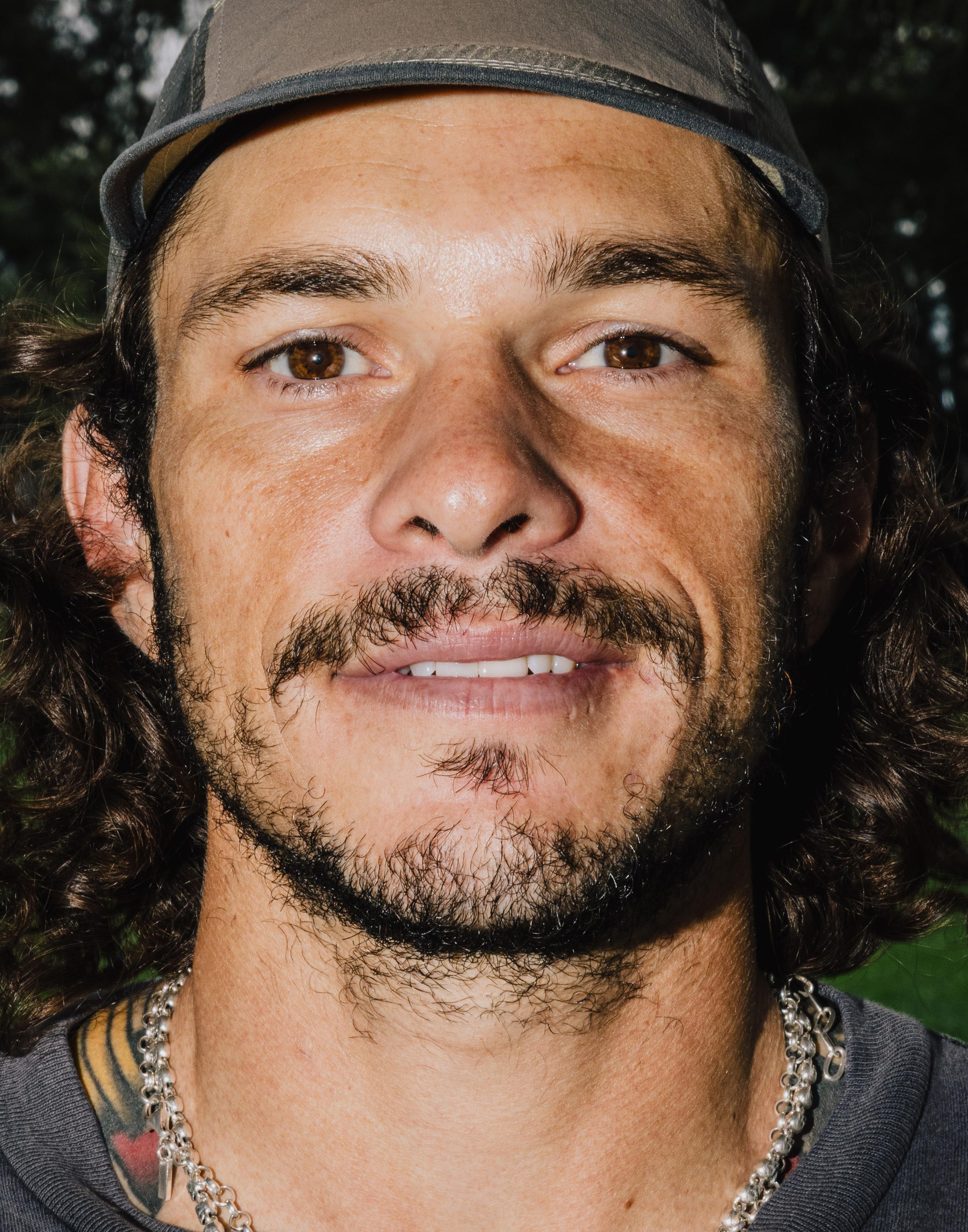
That drive, once reckless and unfocused, hardened with sobriety. Ross, Jolliffe’s fiancée, crew chief, personal trainer, mental coach, and nutritionist, manages everything else so Jolliffe can focus on running. Over time, the urgency that fueled his addiction reshaped itself into discipline, patience, and purpose. Each year he spent clean of substances layered confidence onto what had once been a survival instinct, turning effort into something sustainable rather than destructive.
“I think that each year of sobriety gave him confidence,” says Ross. “You definitely see it in the work that he does and how he just goes for it.”
After meeting in 2012 and dating on and off again, Jolliffe and Ross reconnected in 2022, when Jolliffe invited Ross to help with his first 100mile race, the SAMO 100 Miler in the Santa Monica Mountains.
Unlike many elite ultrarunners, Jolliffe didn’t arrive with a polished team of professionals. Instead, his crew grew organically — friends, coworkers, fellow misfits pulled into the orbit of something bigger than any one race.
What matters most, Ross explains, is trust, knowing who can handle which moments, who can problem-solve on no sleep, and who can keep things light when the race turns dark.
One pacer, Luke McCann, found Jolliffe through a meme post — a fake billboard that read: “I spent the last of my money on this billboard. Come pace me at Moab. Send in your resume and cover letter.”
McCann was the only one who did. Talking about life, love, philosophy, and everything in between, he wondered how Jolliffe would make it to the finish, but miles into the run, he understood why.
“I think the eyes can tell you someone’s entire story. When you look into Max’s eyes, you see a vicious focus, you see purpose and drive,” says McCann.
When pushing through days and nights on shredded feet, the brief moments Jolliffe spends with his crew at aid stations act as emotional resets. The team gives him something steady to return to, something human in the middle of an experience designed to strip everything away.
“Max is fighting for his life,” says Ross. “Because he is fighting himself, his mind, his body, the nature out there, and then he comes in, just this overwhelming feeling of love and happiness is around him again.”
In the spring heat of Flagstaff, Arizona, Jolliffe stood at the start line for Cocodona 2025, a 250-mile desert trail that threads through canyons, pine forests, and sun-baked ridgelines, this time with a respiratory infection sitting heavy in his lungs.
By the time Jolliffe lined up, Ross started to worry about the fine line he was walking. The same traits that fueled his success could also turn against him.
“It can be a double-edged sword,” she says. “You turn one addiction into something else.”
With a film crew waiting, a full team in the desert, and a never-quit mentality wired into everything he did, stopping before the start line wasn’t something his mind would allow. Jolliffe woke before dawn, looked at his crew assembled in the dark, and thought: Fuck it.
It became the mantra for everything that followed. He wasn’t running toward a finish line, but rather on sheer refusal.
In early May, nature had other plans. Despite the leaves starting to decorate the barren trees and dormant flowers sprouting through the ground, the season brings unpredictable weather and conditions. Rain softened the dry ground into sludge that coated Jolliffe’s feet.
“I felt like we had five-pound weights on our ankles,” says McCann.
With each step, the infection seeped deeper and grew stronger, inflating his legs to almost twice their size. Still, he pressed on, using his poles as crutches. A storm rolled through somewhere around mile 80, hail driving sideways, his hands going numb in the cold. His coughs got deeper and more violent. At one point, a thick mass of mucus blocked his airway entirely.
Around mile 230, McCann attempted to run the final miles alongside him. Mount Elden loomed ahead past mile 238.
“Every step was just the worst pain he’s ever felt,” says McCann. “He couldn’t even stand.”
Unable to get his legs beneath him to stand back up, Jolliffe was pulled from the race with 12 miles to go and rushed to the hospital.
The hospital confirmed what his body had been trying to tell him for 238 miles. Fluid in his lungs. Rhabdomyolysis. Cellulitis spread through both legs, causing inflammation. A swollen liver. The doctors laid it out plainly — he could have continued, technically, but at the cost of his future in racing.
For two days after, he couldn’t make it upstairs to his bedroom or bathroom. He slept on the couch and urinated in jugs beside him, his feet swollen like balloons. His skin, stretched tight over his ankles, felt foreign to the touch. The man who had run every single day for three and a half years couldn’t stand up.
“I found out what I’m made of,” he says. “I ran 238 miles, sick as a dog, coughing up blood, legs swollen, failing organs. That’s tough.”
Jolliffe ended his 1,287-day run streak, but Ross saw it less as a failure and more as a release. Watching him finally rest confirmed strength wasn’t just about continuing, sometimes it was about stopping, respecting limits he once ignored. Now, he moves forward cautiously, deliberately, still chasing the thrill of motion, but with a clearer understanding of what it means to finish, and what it means to live.
FREE REIN
Eighteen-year-old world champion Tuli Dowers changes the horse industry from within.
By Miles Dwyer
Photos by Max Unkrich
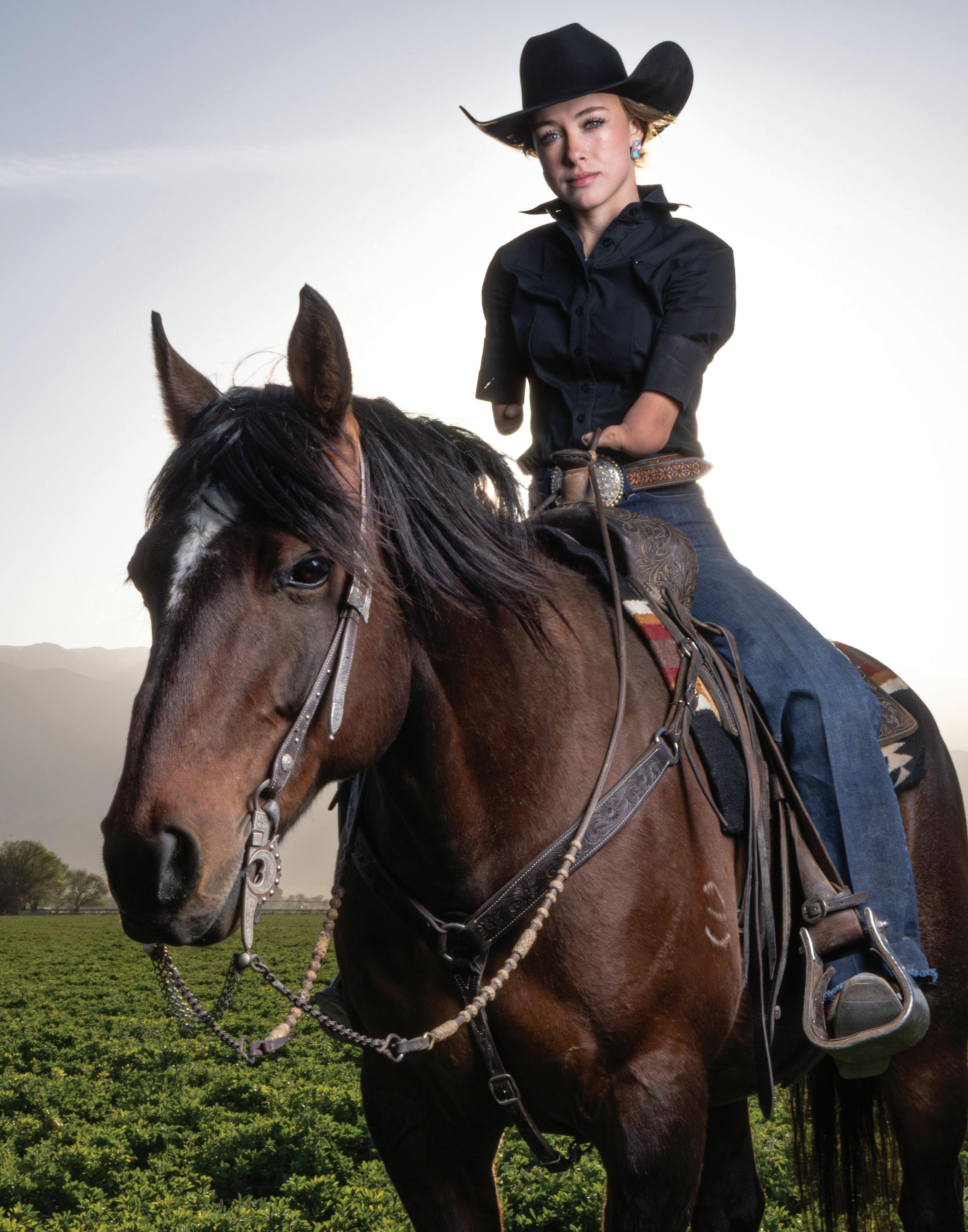
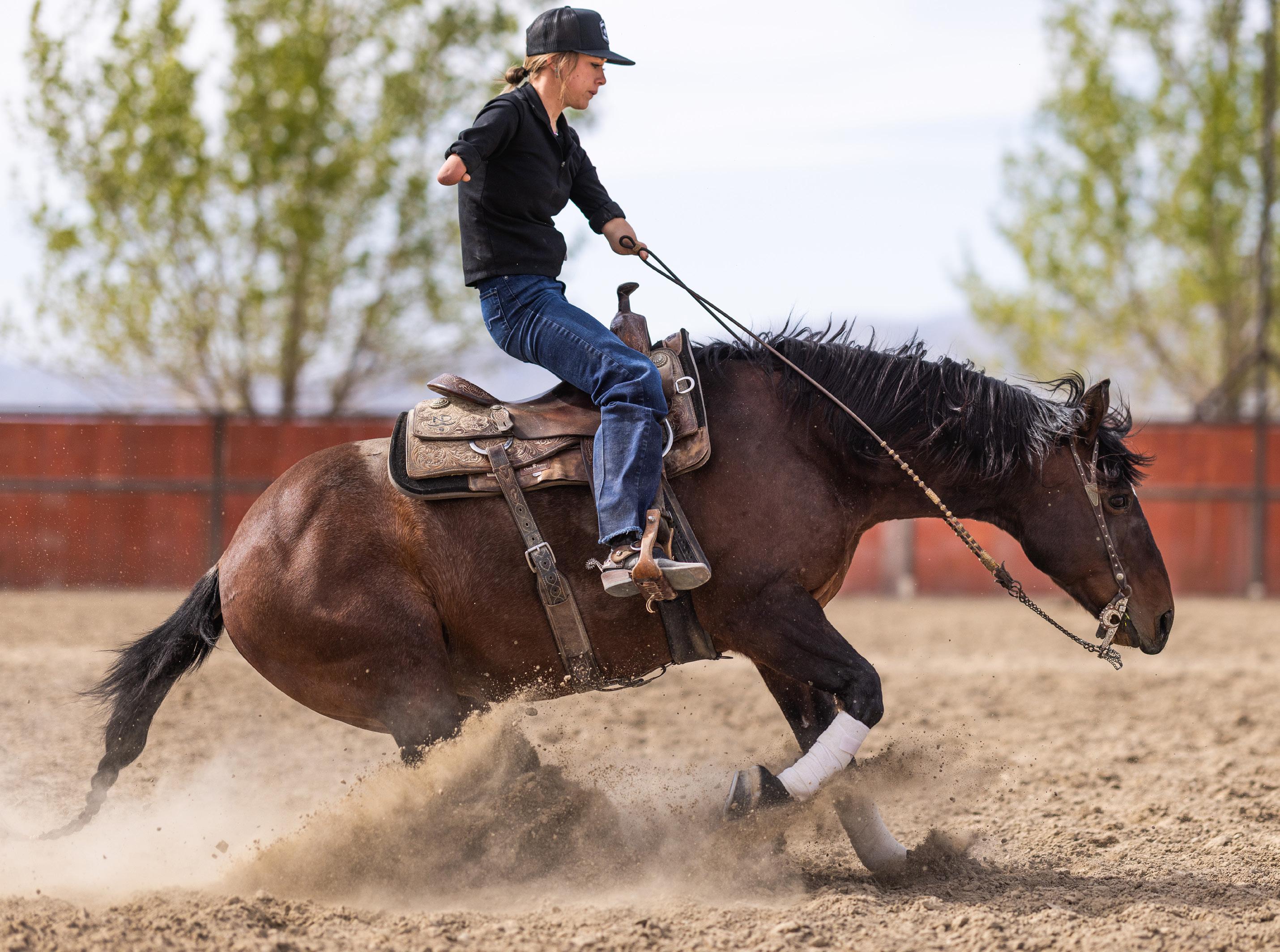
You can’t see Triple D Ranches from the road. Instead, it sits two miles east of State Route 264, the only paved road running through Dyer, Nevada — a town in Esmeralda County with fewer than 300 residents and seemingly more farm machinery than buildings. Tucked between the Sierra Nevada and the Silver Peak Range, a thick layer of dust, kicked up by a quick and steady wind, floats through town. The road through Dyer is not longer than a few street blocks, highlighted by a bar illuminated by a Miller Lite sign and the Esmeralda Market. Passersby, hypnotized by hundreds of miles of highway, may miss the town if they don’t take the time to look. The magic lies in what you can’t see, a few miles east of the road.
Tuli Dowers wakes with the sunrise every day at Triple D, her family’s ranch. She has to feed the cows. Feeding herself always comes later. An 18-year-old high school senior, Dowers’ life revolves around her animals and the ranch she’s lived on her entire life. Each morning, Dowers hauls a flatbed trailer stocked with hundreds of hay bales down a long fenceline, crowded with cows who brim with anticipation. Before she can deliver the hay, Dowers must cut the twine binding the bales, which she does by pinning a 20-inch machete between her arms, slicing down through the twine in one familiar swing. She rushes to finish her chores, so she can spend as much of the day in the saddle with her horses, loping figure-eights and spinning tight circles in a dusty arena under a warm desert sun. Despite these unseen hours of effort on the ranch, she doesn’t see herself as a cowgirl.
“I think my brother is a cowboy,” says Dowers. “I see myself as just a little horse girl who rides her horses and feeds her cows in the morning. I never really wear a cowboy hat, and I don’t like button-ups. I just like to ride.”
She’s also a budding phenom in the sport of reined cow horse, a circuit of horse shows where trainers and riders showcase their horses' abilities in simulated ranching situations. The sport’s top horses, some of whom are trained by Tuli’s father, Nick Dowers, can carry six, sometimes seven, figure price tags. Dowers has shown horses in regional shows since she was 14. In late 2025, she competed in her first national circuit show: the National Reined Cow Horse Association (NRCHA) Snaffle Bit Futurity. It’s the premier western show for 3-year-old horses known as “The Greatest Show on Dirt.”
There, riding one of Nick’s horses, Dowers competed in the Non-Pro Boxing division and won the title. A few months later, at the 2026 NRCHA Celebration of Champions, this time riding one of her own horses, Dowers once again beat out a field much more seasoned than herself and was crowned Limited Non-Pro Boxing World Champion.
Dowers was born with arms that never fully developed beyond her elbows. She refuses to let her disability stand in the way of her many goals, and while it poses some challenges, there are very few tasks for which Dowers hasn’t already constructed her own solution.
Tuli Dowers rides Hot Rod into a sliding stop.
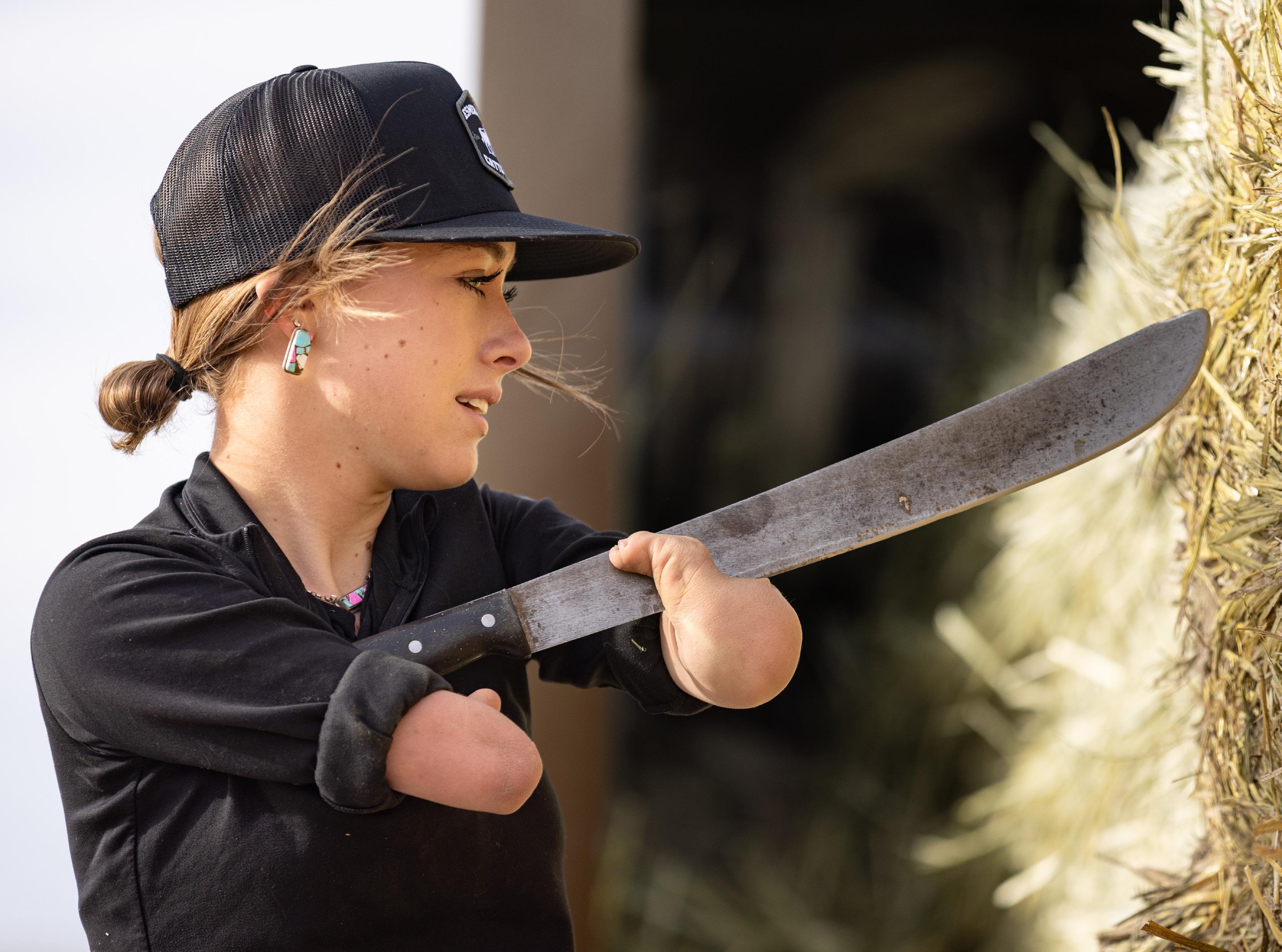
“A lot of people ask if I need help all the time, but I usually don't,” says Dowers. “I'll ask if I really do. People don't have to feel sorry or feel like it must be so hard. It's not that big of a deal, honestly. I just do it.”
Once she finishes her chores, Dowers makes her way to the tack room. There, her go-to mount, High Stressin Cat, a 13-year-old bay-coated gelding known to everyone as “Hot Rod,” stands tall, waiting patiently tied to a wall-mounted ring. Pinning a brush between her arms, Dowers grooms him before tossing her saddle on his back and draping her bridle over his face. At one point, her mom, Jackie, asks Dowers if she wants help grooming Hot Rod, to which Dowers calmly replies, “I got it.”
Once Hot Rod is ready, they walk together to the arena. Dowers warms him up and runs him through different segments of her reining routine — one of three disciplines, along with cutting and cow work, riders demonstrate in Non-Pro Boxing.
Readying their own horses in the tack room, her younger siblings, Crue and Jovi, are chatty while working the ranch. In contrast, Dowers remains hyperfocused on her current objective. In the saddle, she settles into her element, guiding her equine partner with confidence and compassion. Loping around the arena, she and Hot Rod glide in sync. Every so often, she’ll sit back and stop Hot Rod. She’s abrupt but not forceful. She’s making sure he’s still paying attention, like a teacher cold-calling on a student whose eyes have drifted away. Even in the slow-paced valley of her Nevada home, Dowers
remains driven, always striving to accomplish what she couldn’t do the day before.
“She's very serious,” says Jackie. “All of her siblings will be around friends, and she's with her dad studying. She's been the adult her whole life. She’s all business all the time.”
After working through her reining routine with Hot Rod, spinning, loping, and sliding across the arena, Dowers drops her reins to Hot Rod’s neck, surrendering control. It’s a major show of trust, meant to reward Hot Rod for his trust in her. Dowers finds peace riding horses and completing her chores, but in the show pen, she comes alive.
“I’ve always been competitive,” says Dowers. “If I’m not at a horse show, I'm watching a horse show.”
Strutting into the John Justin Arena in Fort Worth, Texas, atop an energetic three-year-old red roan quarterhorse named Tha Rizzler, Tuli Dowers remained calm. In mid-October 2025, Dowers breathed easy in the center of a grand show pen. All eyes in the stands were pinned on the then 17-year-old rider from Dyer. She had never competed in a national reined cow horse competition, let alone The Greatest Show on Dirt, but the weight of the moment was the furthest thing from her mind. She held her focus on her teammate.
Tuli Dowers slices through hay twine with her machete.
Cow horse competitions are divided into three events: reining, cow work, and cutting (also known as herd work) — all of which are designed to mimic real ranching scenarios — with a panel of judges scoring the events. Reining demonstrates a horse's athletic and working traits like speed, control, and the ability to decelerate on a dime via the famous sliding stop. Cow work, or “boxing” in Dowers’ division, tests the ability of horse and rider to run and direct a cow back and forth along a fence line. Cutting is the act of separating a cow from the herd and preventing it from returning, like a lockdown defender keeping a point guard from driving to the basket. Allowing that cow to slip back into the herd usually marks the end of the road for any competitor. For Dowers, a lost cow was the way in.
Just 24 hours earlier, Dowers was not listed as a competitor anticipating her debut on the NRCHA circuit. She was in Fort Worth as a fan, cheering on her dad, a renowned pro horse trainer who entered three horses, including Tha Rizzler, in the Open division of the Futurity. When Nick and Rizz lost a cow in the cutting section of their run, a shocking mistake, his chance to win the Open disappeared. But there was still the Non-Pro Boxing (a competition category for trainers who don’t make their living on the show circuit), and Dowers, Nick’s pupil, made the perfect rider-in-waiting. Dowers and Nick only had a few hours to decide whether to enter the NonPro Boxing event. After some deliberation, Dowers and her family decided to compete with Tha Rizzler the next day.
One night is too little time to build a bond with a horse she’d only ridden a handful of times, but that didn’t stop Dowers from trying. One-on-one with Rizz, Dowers waved and brushed a handheld flag around his body, aiming to acclimate him to her presence, while also trying to better understand his sensitivities. Like many stallion colts, Tha Rizzler is a firecracker, and while his abundance of energy can prove challenging, it’s also what makes him so special. That, and his rare athleticism.
Walking tall and strong to the center of the arena, Dowers and Tha Rizzler looked like a horse and rider that have been attached at the hips for years, not hours. In the reining section, Dowers got off to a hot start, pirouetting Rizz in tight circles and shifting him from a full sprint to a rapid sliding stop like a locomotive pulling into the station. In the cutting prelim, Dowers jumped to a comfortable lead atop the scoreboard.
Horse shows like the Futurity take several weeks to complete, sometimes with days-long breaks in between rounds. Typically, competitors stay on location and prepare for what’s to come. Dowers chose to forgo her chance to rest and booked a flight home to attend her senior homecoming dance, not wanting to disappoint her friends who had spent weeks begging her to go. She returned home to a hero’s welcome.
“Usually, they don't know about the horse show stuff,” says Dowers. “They're just kind of like, ‘Oh, Dowers are at a horse show,’ but since it was so big on social media and my brother was still home, he was watching and telling his friends. When I got back, they were like, ‘That's so cool.’”
After cutting a rug on the dance floor in Nevada, Dowers had to dart back to Fort Worth for the rest of the competition, with the cow work prelim still to run before the finals. As each round passed, the crowd watching Dowers doubled. By the end of the competition, Dowers and Tha Rizzler had packed the stands and sat atop the scoreboard with a wide margin between them and the next pair.
“She competed outside her skillset,” says Nick. “People think we could’ve just plugged and played anybody to ride that horse and do what Tuli did. Not a chance. She competed.”
After fantastic prelim runs, Dowers held a massive lead heading into the final round. It’s common in cow horse shows for riders with large leads
to take conservative approaches in their final rounds, looking to prevent disaster and coast to victory atop their large point cushions. But for Dowers, playing it safe was never an option.
“You have to take risks and expose yourself to do great things,” says Nick. “And I think it would have been really easy for her to just be safe, but she wanted to be great, and so she competed at the level it takes to be exceptional. That's what I was proud of her for.”
Just days after throwing her name into the hat, Dowers and Tha Rizzler were crowned Non-Pro Boxing champions of the Snaffle Bit Futurity, beating out a large crop of older, more experienced, and more prepared trainers in reined cow horse’s top horse show.
“I just know what I want to do,” says Dowers. “I just kind of set my dream goals high, and I know I can do it. So then when it happens, I'm like, ‘Yeah, I knew I could do it.’ I’m proud of myself and all, but I’m on to the next.”
Dowers has been showing elite bridle horses for years, but she wasn’t always cruising to victory like she did at the Futurity. After watching her younger brother Crue compete in several shows, a 13-year-old Dowers was driven to prove that anything her brother could do, so could she.
A year later, she was saddling up Hot Rod, who was not far removed from his time as Nick’s top bridle horse and one of the highest-performing horses in the sport. Dowers and Hot Rod spent plenty of time in the saddle leading up to the Reno Snaffle Bit Futurity, but once Hot Rod found himself back in the show pen, his engine revved up, and Dowers couldn’t handle his higher gear. After her suboptimal rookie run, in which she scored zero points, Dowers walked from the show pen to the stalls. Along the way, she was flooded by people congratulating her and telling her how well she’d done, despite her poor scores.
“That pissed her off,” says Nick. “She was like, ‘I don't want them to tell me good job just because I rode a horse — just because of my hands. I don't want them to tell me good job even though we all know it was crap.’ That probably motivated her more than anything.”
After her stumbles in Reno, Dowers returned to Dyer, determined to find her groove with Hot Rod. After a while, the pair began to sync up and soon found success. These days, the pair are as in sync as two sovereign beings can be, their misstep four years ago in Reno a distant memory.
“I was very mad, for a couple of days, just because I knew I could do better,” says Dowers. “He was a little excited to do his job, and so we had some bobbles, but we learned from it, and now every time I show him I have a good chance at winning if I don't mess up.”
One of those chances to win came in February 2026 at the NRCHA Celebration of Champions, back in Fort Worth, where winners are crowned world champions. Just months after from her improbable win at the NRCHA Snaffle Bit Futurity, Dowers and her family set off for Texas to compete in the opening event of the 2026 show season. This time, Dowers wasn’t scrambling to enter the competition on a horse she barely knew. She and Hot Rod entered prepared to win. A lifelong goal setter, winning a world title with Hot Rod at the Celebration of Champions had always been at the top of Dowers’ list. After two more weeks in Fort Worth, she crossed that goal off her list.
“I didn't know when we were gonna retire him, so I really wanted to win the World on him,” says Dowers. “I'll show Hot Rod a little bit more this year, and probably the World Show next year, and then retire him. He's given his heart to us.”
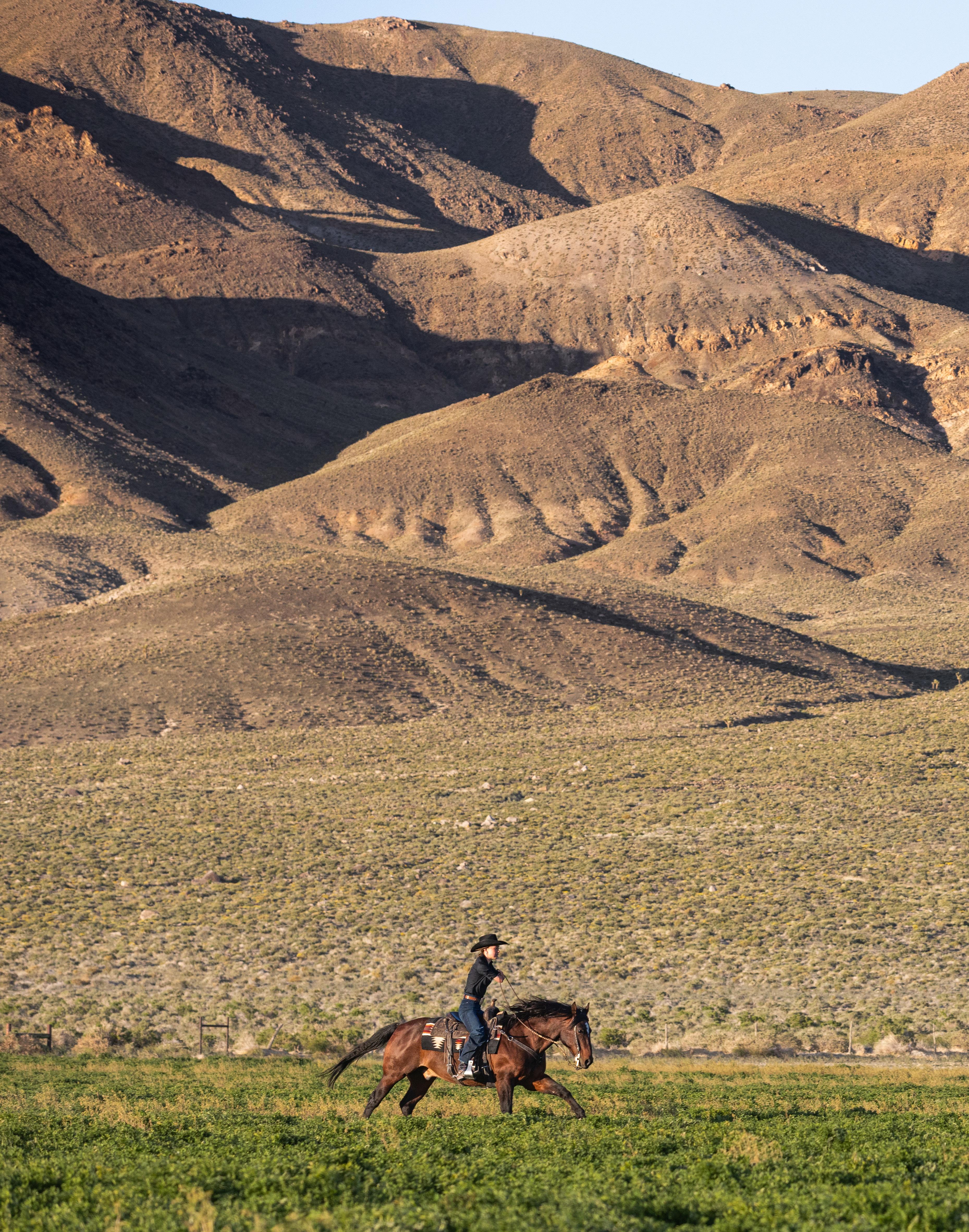
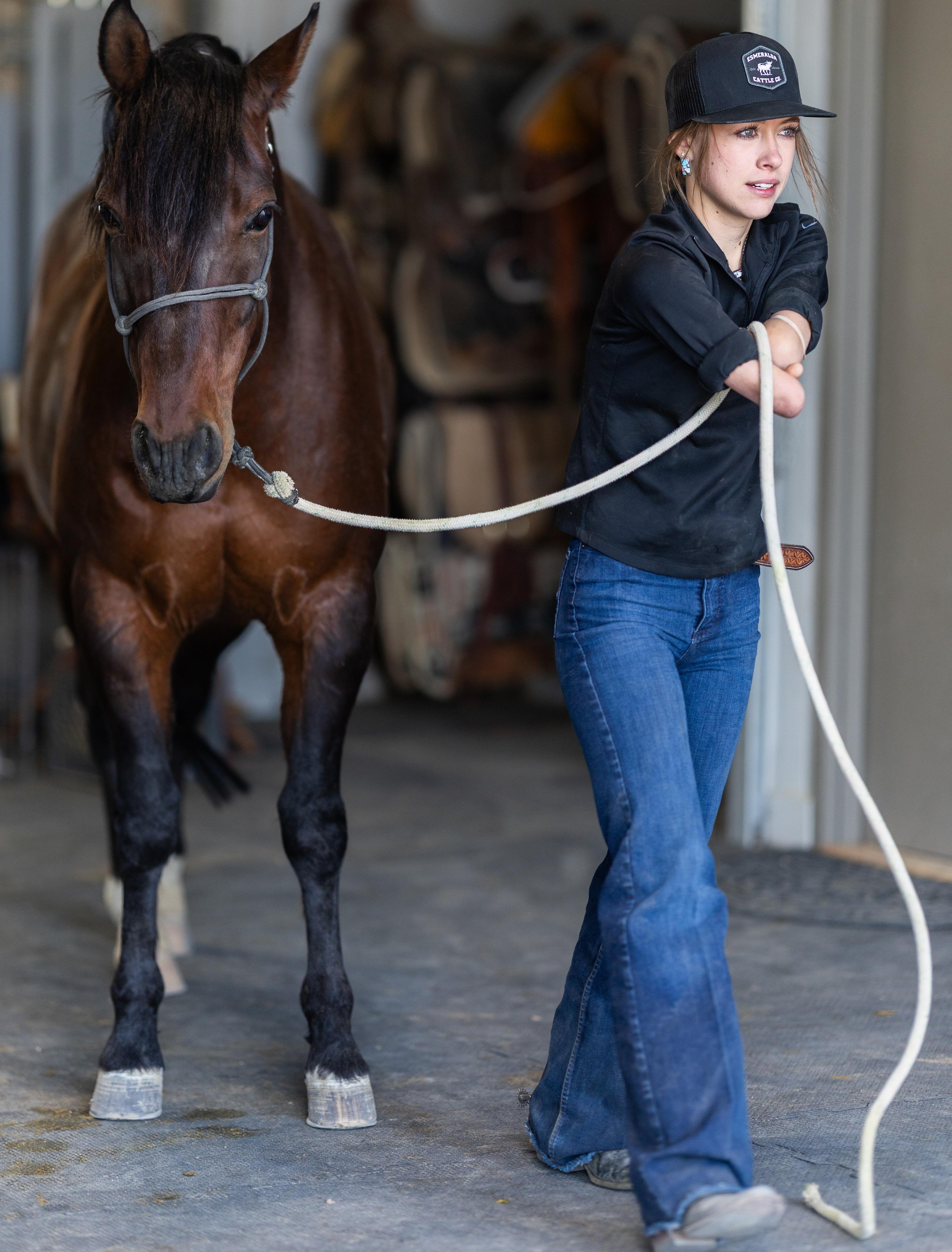
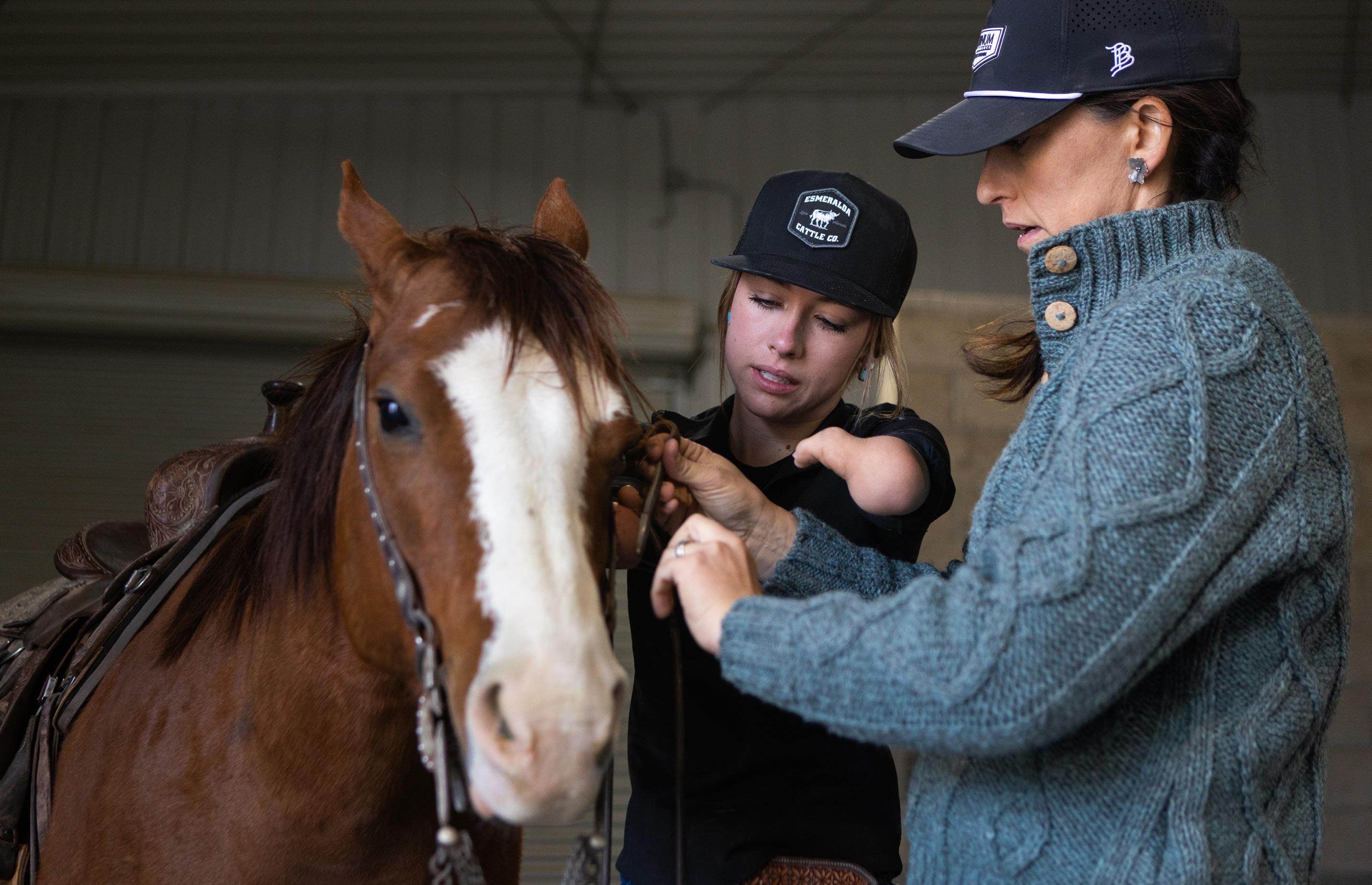
Tuli and Jackie Dowers adjust their horse’s bridle.
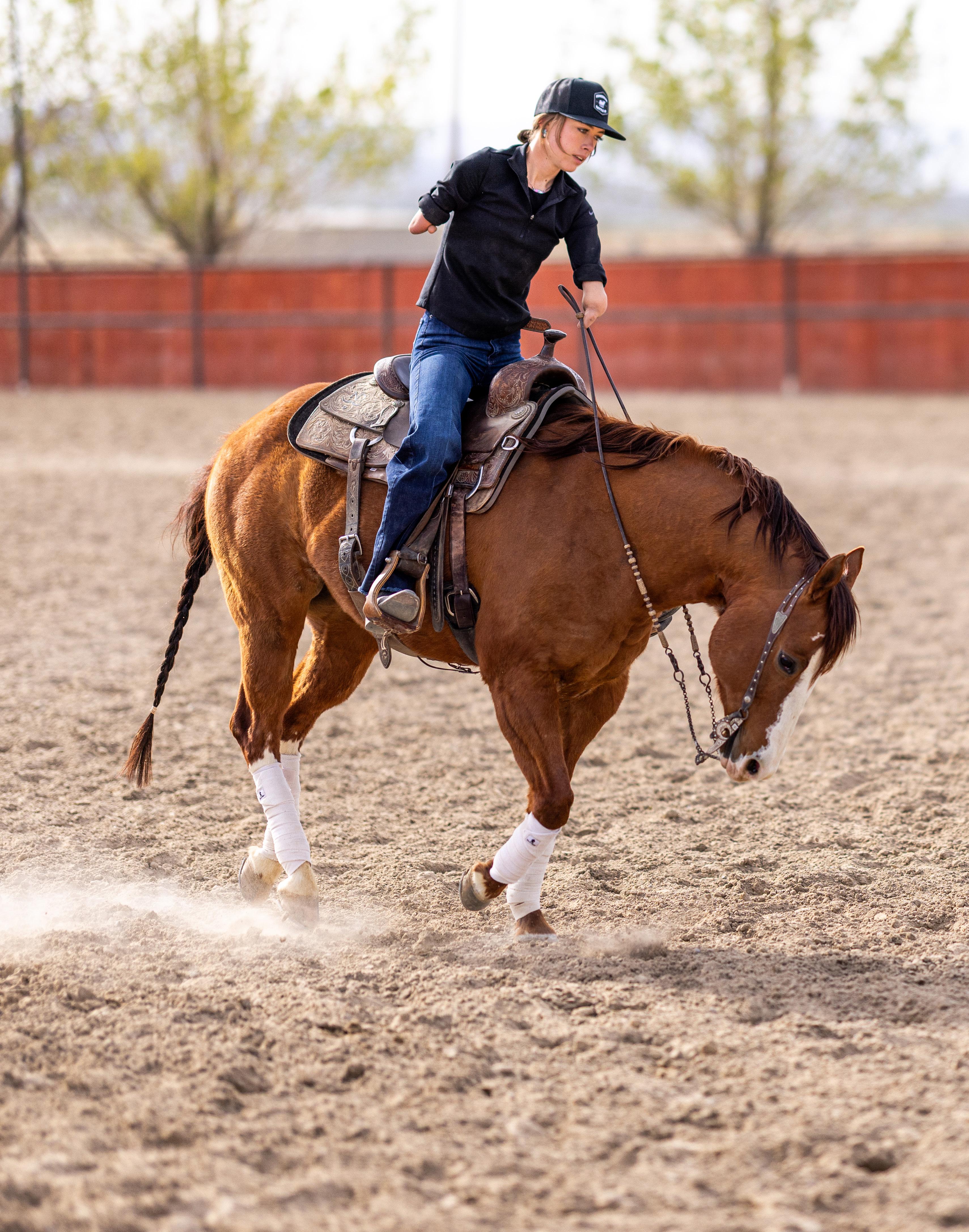
The first lesson many Western riders are taught is how to start and stop their horse, a lesson that can be oversimplified by the phrase, “Kick it in the belly to go, pull back on the reins to stop,” the latter of which has never been an option for Dowers. Sure, she wraps her reins around her arms, but it doesn’t give her the kind of control anyone holding a set of reins with five fingers has. Dowers harnesses control through her legs, guiding the horse through subtle cues, instead of making demands.
“I've been dealt a different situation,” says Dowers. “So these horses have to be so responsive to me in different ways, and when they are, and it comes together, it’s just so special. I definitely use my legs a lot more than my hands. I use my legs more than most people notice or know.”
Riding hasn’t always been a smooth or enjoyable activity for Dowers. One of her first times riding, at 4-years-old, Dowers sat atop an old, laid-back horse named Fudd. Standing in the middle of their arena, Dowers couldn’t convince Fudd to move. No matter how much she kicked or tried to pull, he stood still. She didn’t yet know how to play the hand she was dealt. Soon, her eyes flooded with tears.
With the help of her father, Dowers began to train and mold horses to fit her skillset. She was faced with unique problems, like what to do if she ever dropped her reins, or if her horse saw red and began to charge. As a kid, these uncertainties made Dowers wary of taking some risks in the saddle. Even today, when she asks her horse to do something, she has no backup plan.
A breakthrough came when Dowers was 13, after Nick trained one of their horses, Tachita, to carry a reinless rider. Dowers now had a partner tailored to her skillset. She could ride with nothing more than her feet, and she could ride fast. She didn’t even need a bridle. Soon, Dowers was inseparable from the arena, on track to compete in her first show a year later, and win The Greatest Show on Dirt five years later. After a life of uncertainty in the saddle, she finally had total control.
“She can't bully a horse to do what she wants,” says Nick. “She has to teach it, and the horse has to want to do it. If I need to pull a little harder, I just pull a little harder, whereas in reality, I probably need to just wait a little longer. I can just force it. She can’t.”
As Dowers developed her unique skill set, it became clear that her disability allows her to approach riding differently than anyone else. With no failsafes, she has cultivated a deeper understanding of the relationship each horse has with her, and she’s a better rider for it. Dowers hasn’t been in the cow horse world’s spotlight for long, but she’s already making an impression on the sport that is sure to grow as her success continues.
“That's going to change the industry,” says Nick. “People already talk about it. Tuli's going to open the industry's eyes to how much of a true partnership, how much of a team, horse and rider can be.”
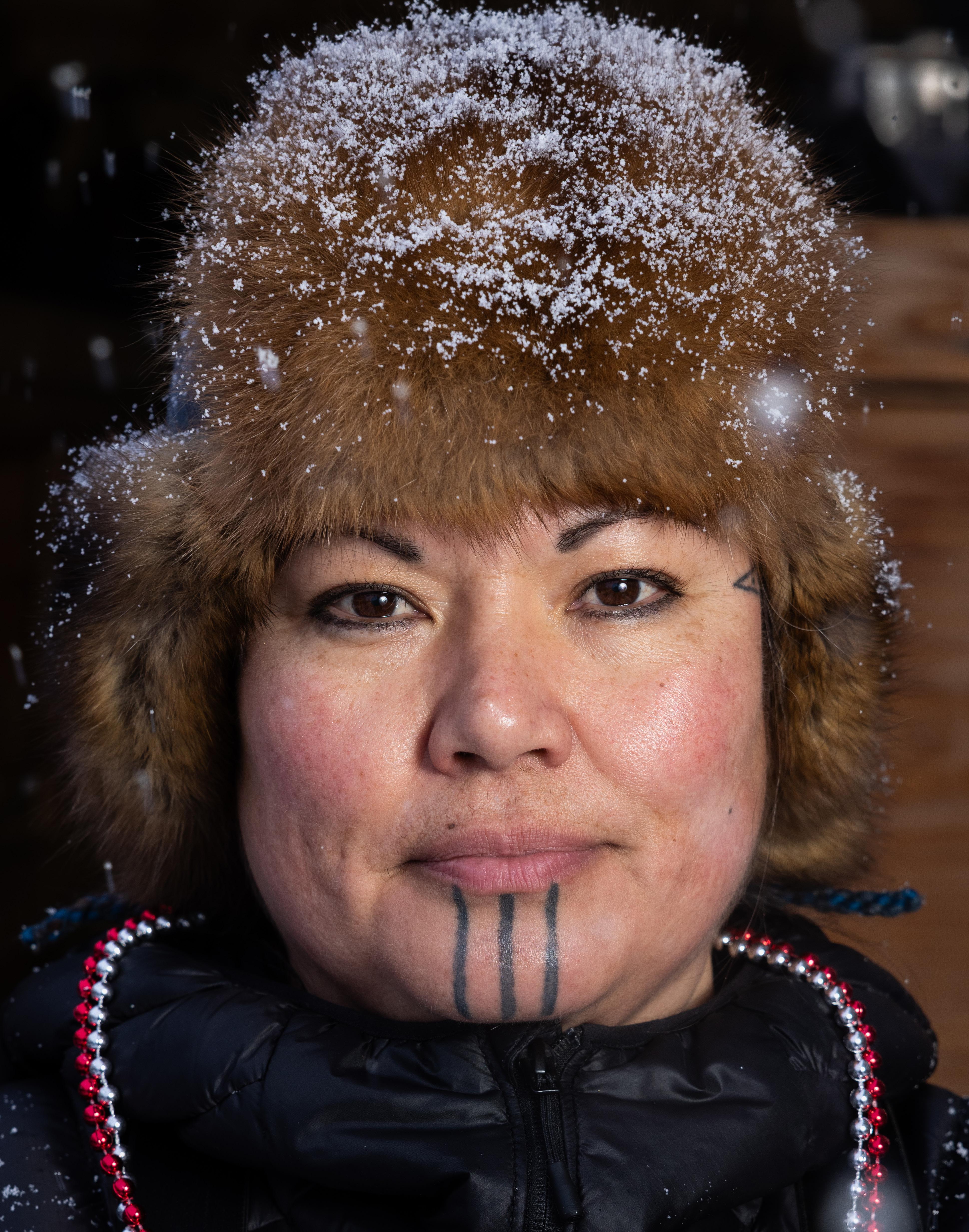
THE
Mother and musher Jody Potts-Joseph blazes a new trail and becomes the first Han Gwich’in woman to race in the Iditarod.
By Maya McLeroy
Photos by Shane Balian
Before reaching the wide expanse of frozen Yukon River, Jody PottsJoseph must take care of her dogs. In a small Alaskan village out in the bush, on the land of the Han Gwich’in people, a yard explodes with excitement. Alaskan Huskies yip and topple all over each other, a whirl of brown fur and pink tongues. When Potts-Joseph approaches them, the yips get louder. She kneels and holds a dog’s face in her hands.
“We’re best friends, huh,” she says, then slides a bright blue bootie on each paw.
With wind blowing and the temperature 40 degrees below, Potts-Joseph is layered in multiple coats and fur hides. Her long black hair falls in a braid down her back. The scene that’s unfolding is a routine one, but this year, every time she clipped her dogs’ harnesses onto her sled, the action carried a different kind of weight.
This year, she trained for the Iditarod, a race nearly 1,000 miles across Alaska.
Potts-Joseph is a mother, hunter, dog musher, and community leader. She is an activist, Ironman, and traditional tattoo practitioner. She has been an English teacher in Mongolia, a wildland firefighter, and a National Geographic reality TV star. And in March 2026, she became the first woman of the Han Gwich’in tribe to race in the Iditarod.
Boasting the slogan of “The Last Great Race on Earth,” the Iditarod carves through open tundra and boreal forests, under the shadow of mountain ranges and along stretches of coast. The race routes alternate between odd and even years, and some years the routes change dramatically due to weather conditions and changing climates. Traditionally, all races start in Anchorage and end in Nome, a small town on Alaska’s most western point that juts against the Bering Sea.
Beginning the first weekend in March and lasting between one and two weeks, the Iditarod occurs just before spring’s arrival. The first race took place in 1973, and followed a similar route from 1925, when mushers relayed life-saving medicine from Anchorage to the people in Nome suffering from a diphtheria outbreak.
For Potts-Joseph, dog mushing is more than just recreation or sport. Living outside of the road system for most of the year, she uses mushing as a mode of transportation. She and her husband Jamey Joseph run dog mushing trips through their business Raven Clan Kennels. Most importantly, it allows her to connect with her indigeneity and the land.
“I always knew [my mom] was going to do the Iditarod,” says Potts-Joseph’s daughter, Quannah Chasinghorse. “For everyone else, it’s a sport. But for us, it’s a way of life.”
Though 2026 may have marked her first Iditarod, Potts-Joseph had been preparing for this race her entire life.
She grew up in the basket of a dog sled. Her parents, Mike Potts and Adeline Juneby Potts, led a subsistence lifestyle. Travelling by dog sled was as normal as suburban kids being strapped into strollers. Despite subzero temperatures, PottsJoseph remembers feeling warm, bundled next to her brother in sleeping bags.
Her mom rarely travelled in the sled. Her chosen mode of transportation was by snowshoe, walking ahead of the dog team and breaking trail, sometimes up to 70 miles at a time.
“We’re a matriarchy, so having strong women is nothing uncommon,” says Potts-Joseph. “My mom has always just been kind of a badass.”
The dream to one day race in the Iditarod appeared in Potts-Joseph’s mind in the 80’s. While living in Eagle Village in the third grade, her school principal Terry McMullin raced in the Iditarod. Seeing someone from her hometown reach that level of competitive mushing made her believe someday she could as well.
In being the first Han Gwich’in woman and sixth Alaska Native woman to ever race in the Iditarod, she hopes to keep mushing alive in Indigenous youth. As reliance on snowmobiles has grown, Potts-Joseph chooses not to abandon this way of life.
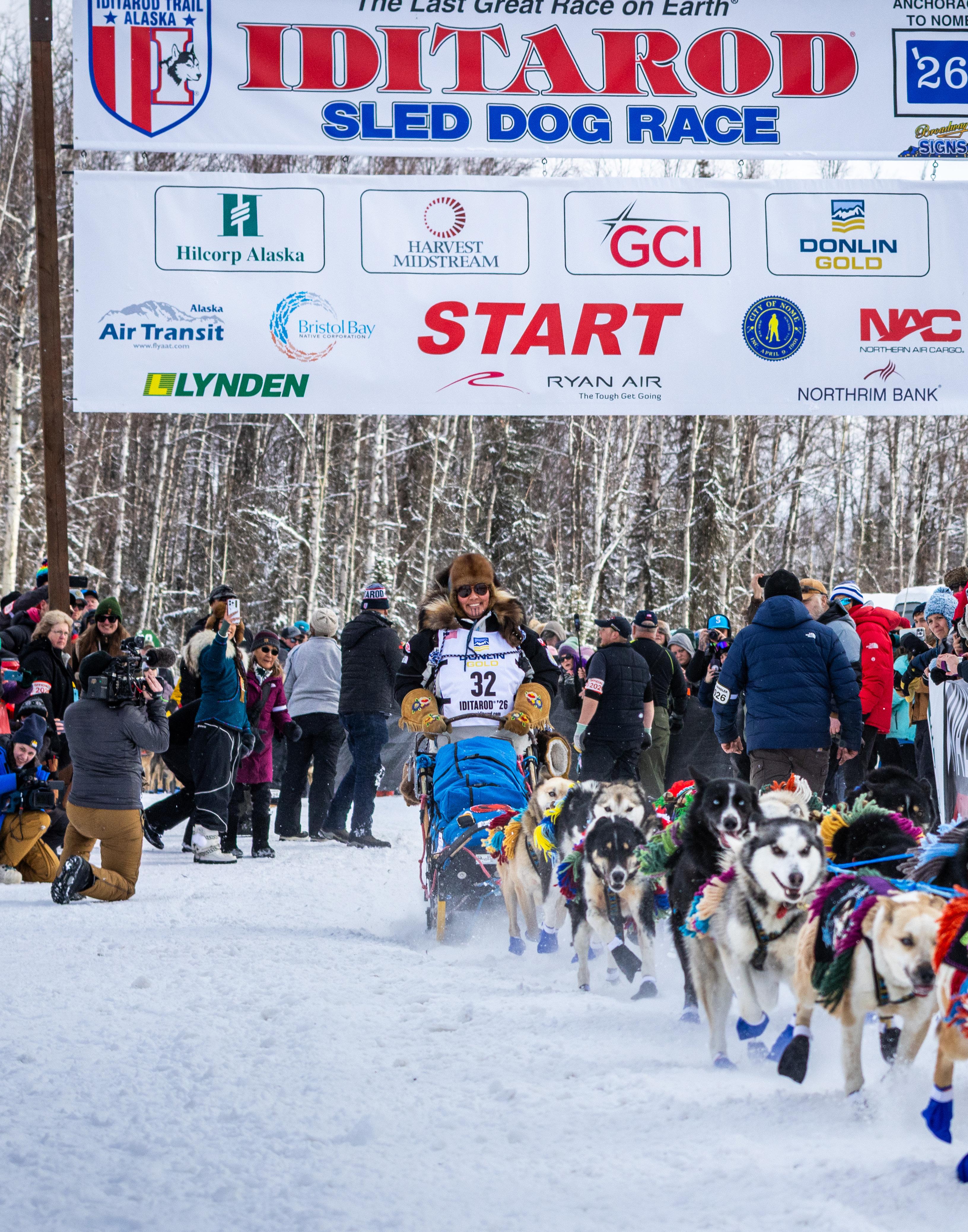
Jody Potts-Joseph sets off at the official restart of the 2026 Iditarod.
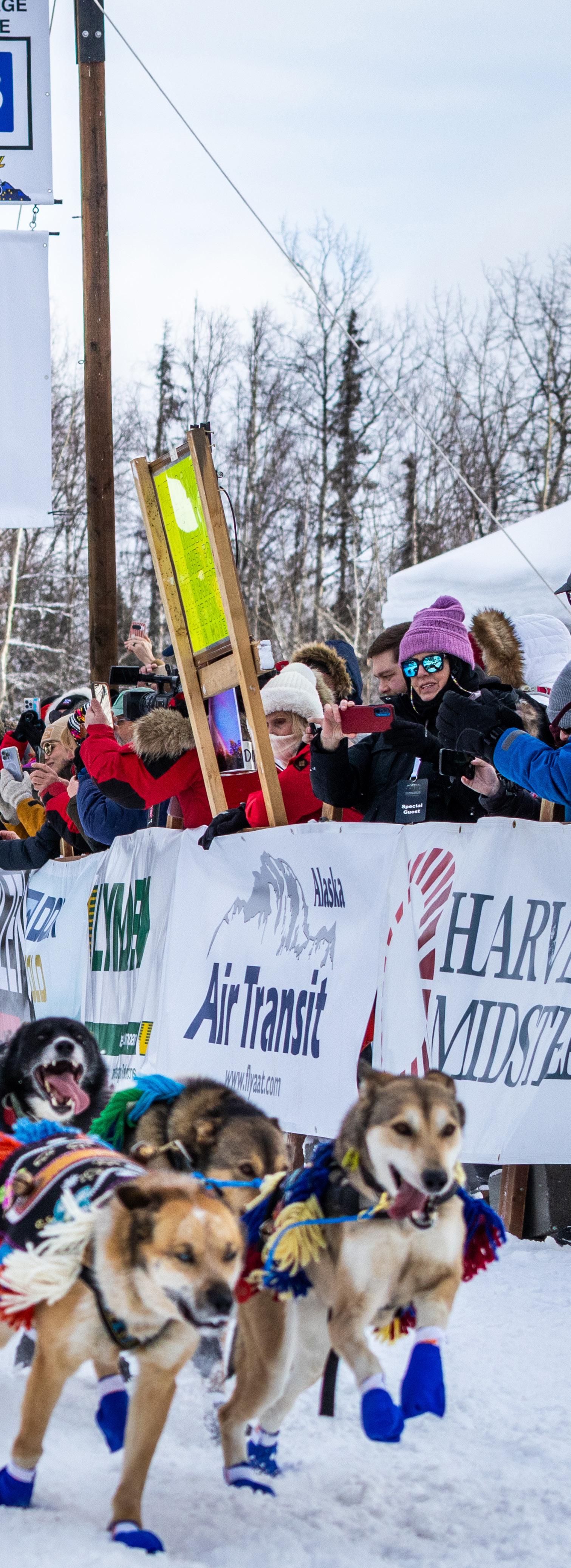
“There’s a lot of really important aspects of our culture, [and one of those] is respect,” she says. “Respect for the land and the animals, relatives, elders, and even respect for ourselves. You know, that can sometimes be harder than anything else, and so I’m going to have to learn to take care of myself on the trail.”
This desire to push her body to cover long distances did not start with the Iditarod. Potts-Joseph says training for the Iditarod made her Ironmans seem “like a cake walk,” but she still remembers an early morning before an Ironman in San Diego. The surf looked unforgiving, with big waves crashing against the shoreline. She wondered how she’d ever make it through that section of tumultuous surf.
Her uncle Dan told her fear was not an option, and she turned his advice into a mantra, repeating the words until she believed they were true.
“Strength is part of my personal constitution,” she says.
Belonging to a long lineage of strong women, Potts-Joseph raised her three children — Denali, Quannah, and Izzy — on her own for most of their lives.
“She’s shaped me into who I am,” says Chasinghorse. “I didn’t grow up with a father figure, so she pulled the weight of both.”
When hunting and fishing, Potts-Joseph and her kids never used ATVs, and instead hiked out for miles, stuffing everything they needed into backpacks. They could be hunting for days, then would carry everything back on foot. According to Chasinghorse, there was no other woman who was doing that on her own.
Taking after her mom, Chasinghorse began to advocate for Indigenous rights from an early age. Her activism was soon recognized by modeling scouts, landing her a gig with Calvin Klein. When Chasinghorse first attended the Met Gala in 2019, her mom accompanied her to New York City. Potts-Joseph wiped tears from her eyes as she watched her daughter draped in gold, turquoise pendants adorning her ears.
Gracing the cover of Vogue and closing runway shows in Paris, Chasinghorse is acutely aware of the lack of Native people in the fashion world. When she feels lost in the concrete walls of Los Angeles, she finds peace coming home to Alaska and her mom.
Their bond can be seen in the three, thin lines that run down their chin. Dating back over 10,000 years, Yidįįłtoo are the traditional stick-and-poke facial tattoos Han Gwich’in women receive as rites of passage. Colonization stripped away this history, banning Alaska Natives from wearing traditional tattoos. Potts-Joseph tattooed Chasinghorse when she was 14 years old, making her the first girl in over 100 years to wear Yidįįłtoo. A few months later, Potts-Joseph received tattoos of her own, given to her by her son.
As a tattoo artist, Potts-Joseph does not charge Native women for their tattoos. Instead, they make trades, exchanging permanent ink for beadwork or medicine. Potts-Joseph begins each tattooing session with intention, having conversations regarding what the tattoos mean, and how to respond to both the ignorance and curiosity that causes people to ask questions.
“[My mom] would tell us, ‘We may not have everything, but we are so rich in our culture,’” says Chasinghorse. “Indigenous knowledge teaches humility. It teaches humanity, which a lot of people seem to have forgotten about. We don’t have the privilege to forget.”
"In Walking Two Worlds", a 2022 documentary produced by The North Face following Chasinghorse, Potts-Joseph says, “I talk to my kids a lot about being raised in two worlds. [There is] our Indigenous way of life and our values but also being able to conform and proceed in this modern world.” Potts-Joseph moved her family to Fairbanks for her kids’ schooling. While living in the city, she met her now husband, Joseph. A few years later, they returned to Eagle Village, and Potts-Joseph's passion returned with it.
“She hadn’t even unpacked all her bags fully before she started mushing again,” says Chasinghorse.
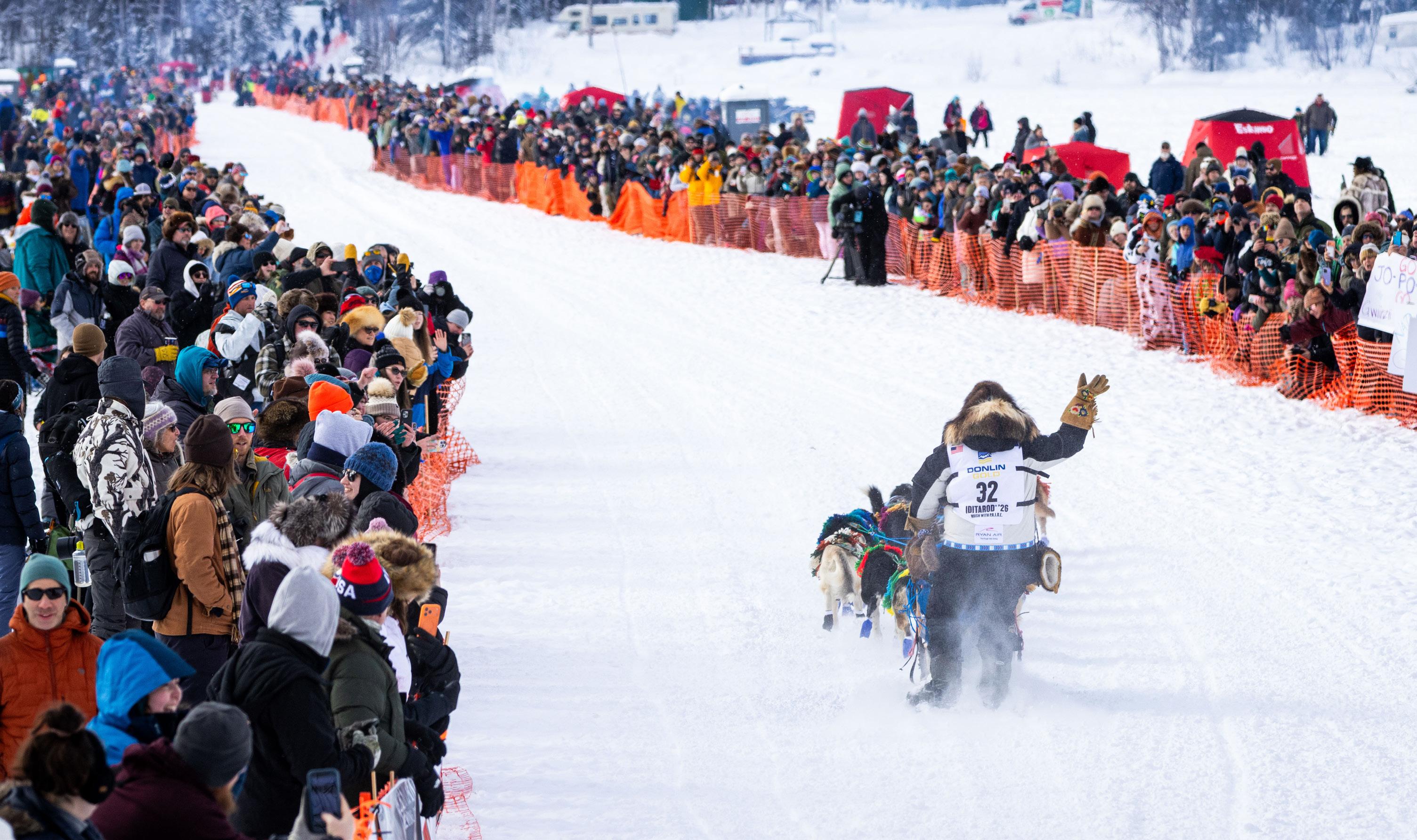
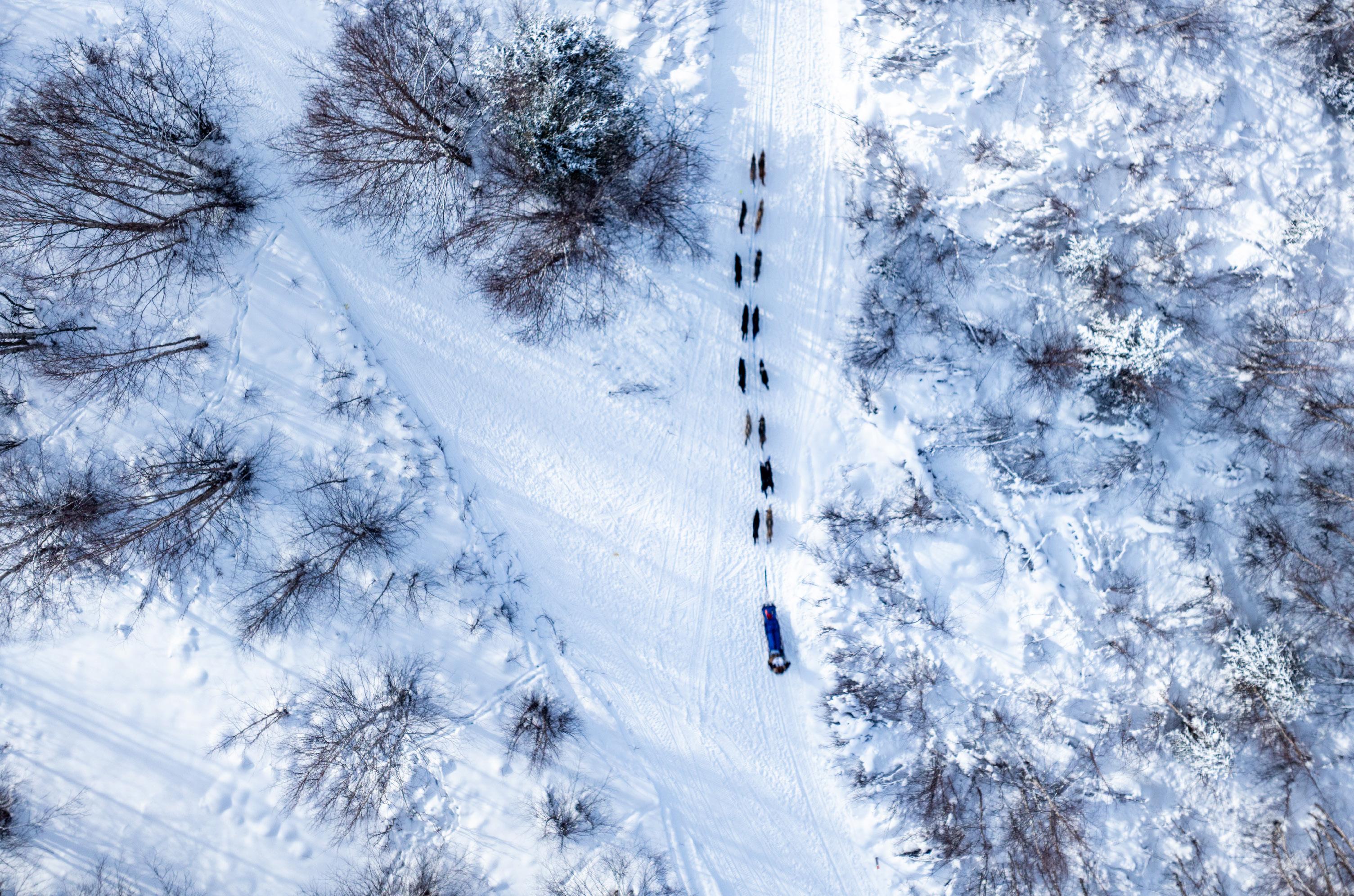
Jody Potts-Joseph mushes towards the Susitna River during the 2026 Iditarod.
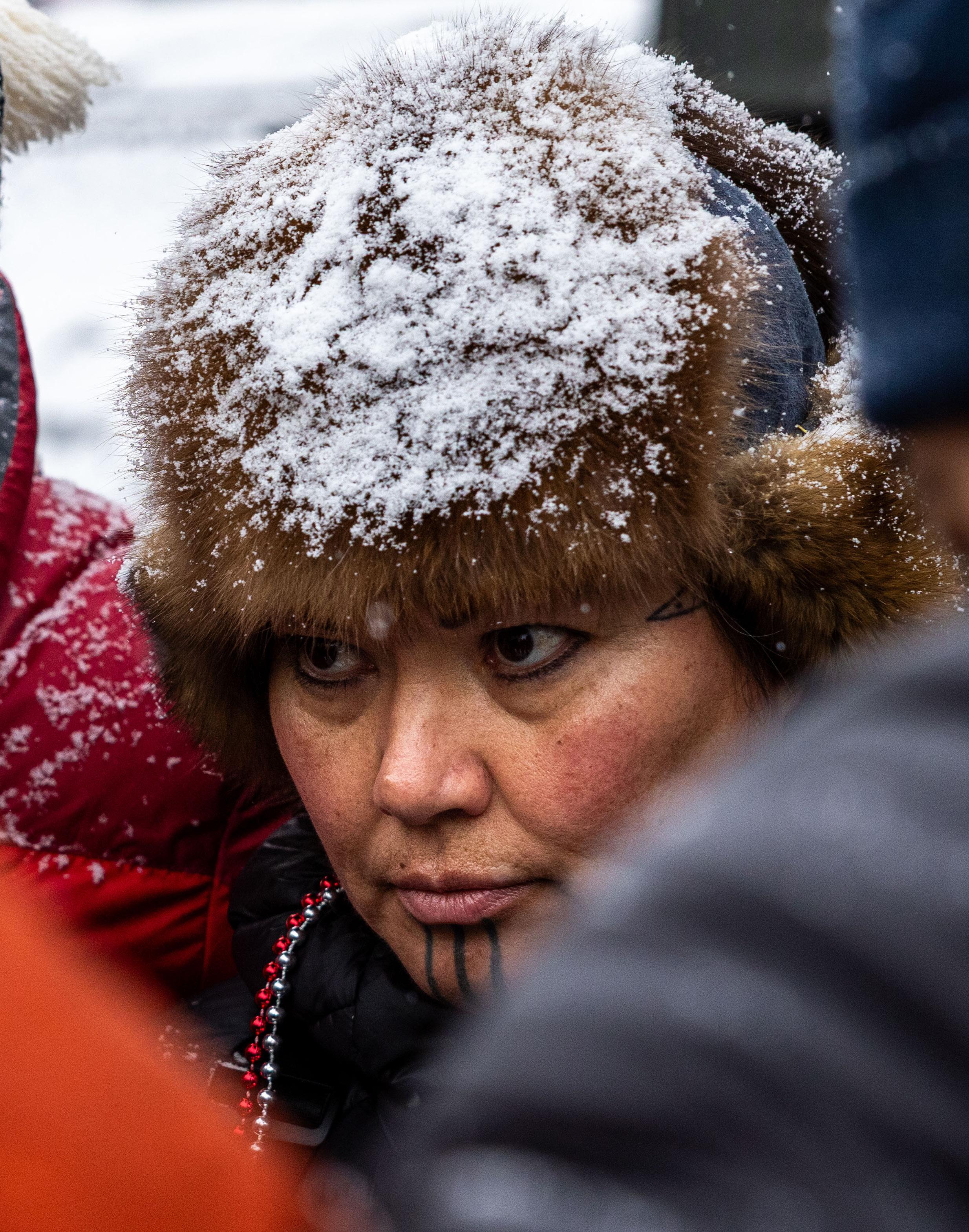
Jody Potts-Joseph prepares for the Iditarod ceremonial start in a prayer circle led by her mom, Adeline Juneby Potts.
The sled is a place Potts-Joseph can truly feel free and return to her senses. Always scanning the environment around her, she actively participates with the world rushing by, looking for next year’s Christmas tree or following fresh tracks in the snow. She watches her dogs’ gaits, listening to the patter of paws hitting the ground.
“One of the reasons I really like dog mushing is because I feel much more connected with our land, and I feel like part of this team with my dogs,” says Potts-Joseph.
She has nearly 30 dogs in her kennel and has raised most of them since birth. The dogs are an amalgamation of multicolored coats, some the shade of sand with piercing blue eyes, others spotted black and white. Potts-Joseph makes up part of the athlete equation, and her dogs the rest.
Coki, Natrah, Loki, Bodil, Lebowski, Stoller, Sunny, Revna, Ninjuu, Freya, Ginger, Anna, Stormy, Kobuk, Coconut, and Blaze made up the team of dogs that set out on the trail with Potts-Joseph.
“I love them like they’re my kids,” says Potts-Joseph. “They need a lot of love but also discipline. It’s good for them to have structure.”
Potts-Joseph and her dogs have developed their own shared language with Potts-Joseph walking a fine line between athlete and coach. Sometimes, she shares pictures and videos of her dogs on social media. In an Instagram post, she filmed two parallel columns of dogs running in unison, the winter sun casting a warm, yellow glow across the snow. In the caption, she wrote, “Do something good for yourself: get outside and just be present. Take it in. Find the magic.”
Mushing is how Potts-Joseph finds the magic.
Two days before the ceremonial start of the Iditarod, over 1,000 people flocked to the Dena'ina Civic and Convention Center in Downtown Anchorage to meet this year’s mushers. Potts-Joseph stood at a small table with her name. In the 90-minute meet and greet, the line to meet her never ended.
Miss Alaska 2025 weaved through the crowd, her glimmering tiara poking above most people’s heads. A fan from Michigan wore a Hawaiian shirt, but instead of hibiscus or plumeria flowers decorating the fabric, the shirt was covered in husky faces overlaid onto a map of Alaska. A woman walked wideeyed through the room, 10 husky plushies attached to her backpack.
On the other side of the room stood Jessie Holmes, the back-to-back winner of the Iditarod. His constant line of fans resembled a tightly packed barricade, each one waiting for his autograph. In the mushing world, Holmes has reached the highest echelon of celebrity. Potts-Joseph and Holmes both appeared on National Geographic’s reality TV show, Life Below Zero: First Alaskans. But their relationship runs deeper than simply being co-stars. For years, the two mushers have learned from and worked with each other’s dog teams. PottsJoseph even made Holmes a pair of mukluk boots for this year’s race.
When Potts-Joseph took a break from mushing while living in Fairbanks, she gave her lead dog to Holmes.
“My dogs go back to her dog, Flash, 15 years ago,” said Holmes. “She’s like a big sister to me.”
On the eve of the Iditarod’s ceremonial start in Anchorage, Potts-Joseph just wanted to get out on the trail.
“I’ve had enough of this town stuff,” she said, smiling.
After dragging her bright blue sled into the hotel lobby, the smell of hay permeated the air. She sewed patches onto her sled, first placing a red circle patch adorned with “No More Stolen Sisters” in capital letters. Potts-Joseph is an advocate for Missing and Murdered Indigenous Women (MMIW), speaking at rallies and sharing information on missing women on her social media pages. Native women face murder rates more than 10 times the national average, and Potts-Joseph has members of her own community who have gone missing.
Potts-Joseph’s mom grabbed a patch and started sewing as well.
“I can’t believe she’s doing this,” said her mom under her breath. “Actually, I can. This is how we raised her.”
As the patches accumulated, Potts-Joseph strapped homemade snowshoes strung together with moose sinew on either side of her sled. Pulling out a pile of beaded, colorful fabric, Potts-Joseph held up the jackets her dogs would wear at the start of the race.
In an Instagram post shared in December, Potts-Joseph asked for artists across Alaska and Canada to make traditional Athabascan dog jackets. In just one post, she received messages from enough women to make jackets for all 16 of her dogs.
The jackets represent the love and care Potts-Joseph has for her dogs, as well as for the villages they pass through. Traditionally, the jackets — each telling a unique story — were used as a display of respect. She plans on passing them on to future Native mushers.
At one point, a woman walked into the hotel lobby holding a dog jacket she made. Adorned in beaded images of caribou, it was a tribute to the animal integral to the Han Gwich’in way of life. Potts-Joseph hugged her, then invited her to join the circle of women making last minute touches on the jackets.
Most of what Potts-Joseph wore during the race, she and her mom made themselves, from beaver mittens to homemade mukluks to a martin hat. If it wasn’t Native made, it was made by The North Face.
“Quannah, don’t judge,” said Potts-Joseph as she shrugged on her custom North Face parka, catwalking through the hotel lobby. She posed, then turned, strutting in the opposite direction. Potts-Joseph looked in her element.
“I’ll put you on my fantasy mushing team!” said a woman wheeling her suitcase through the room.
In the lobby of the Lakefront Hotel, a stream of people came and went, all revolving like planets around Potts-Joseph’s sun.
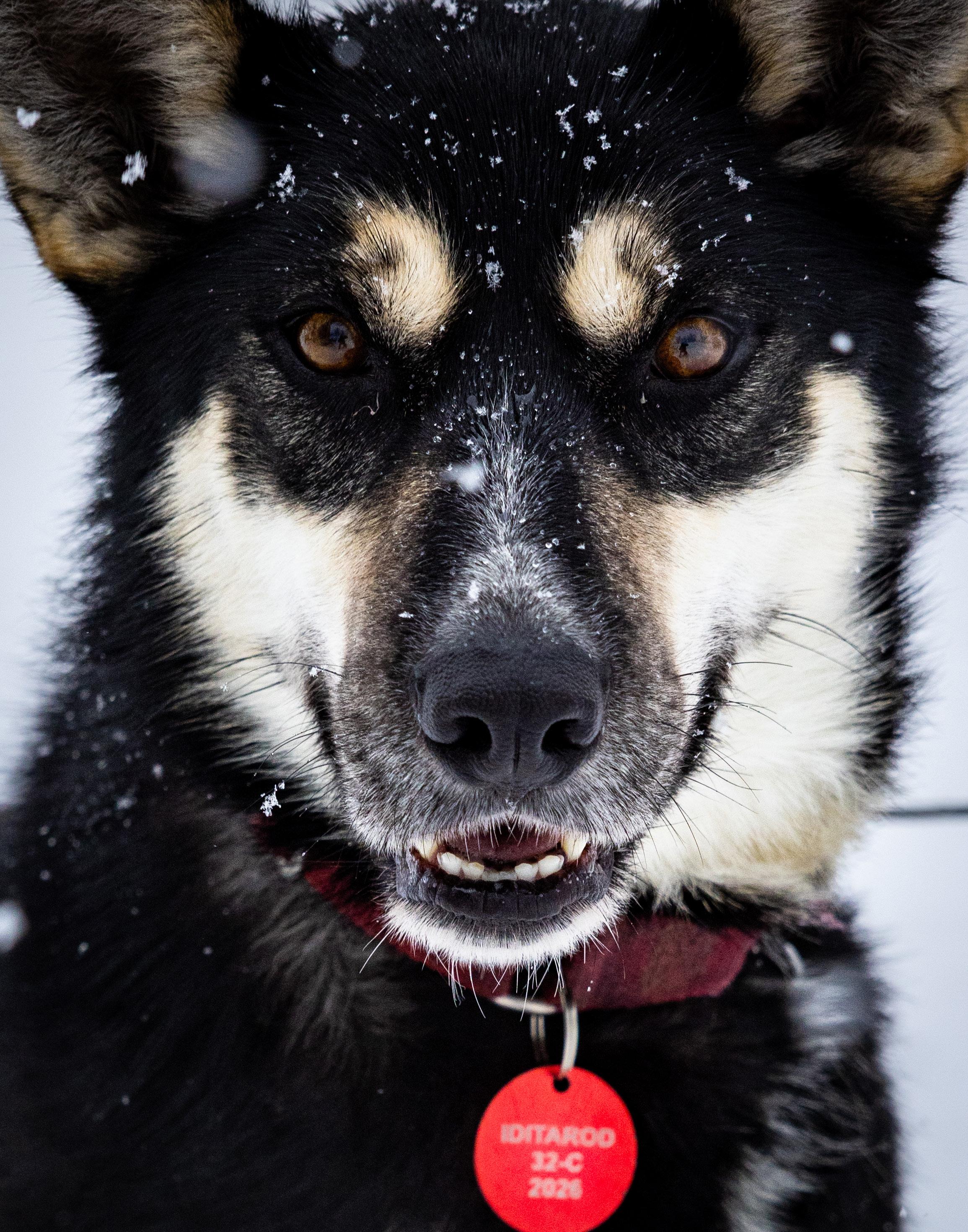
Sunny, one of Jody Potts-Joseph’s Iditarod sled dogs, waits to be fed in the days leading up to the race.
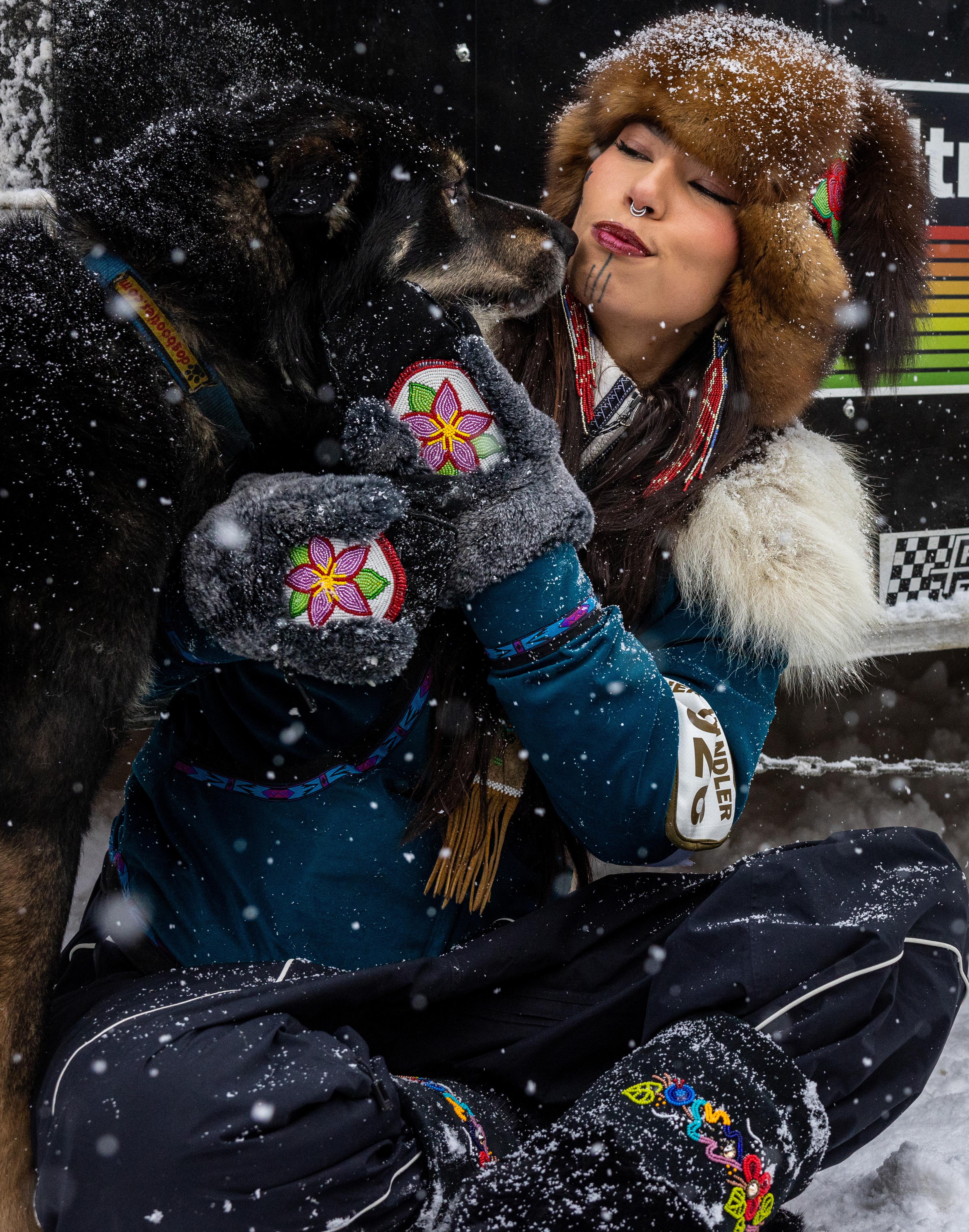
Quannah Chasinghorse, Jody Potts-Joseph’s daughter, shares a moment with sled dog Stormy before the ceremonial start.
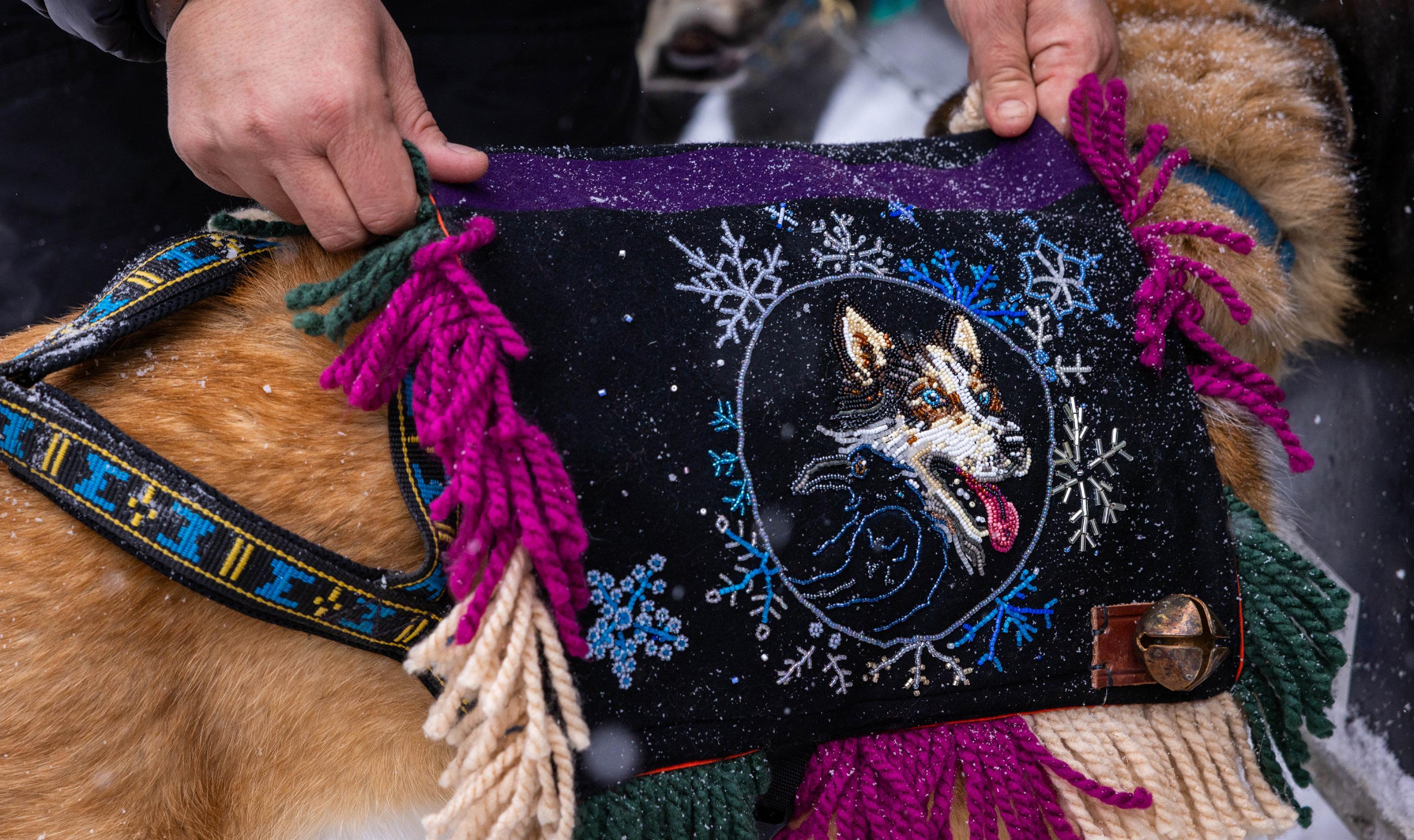
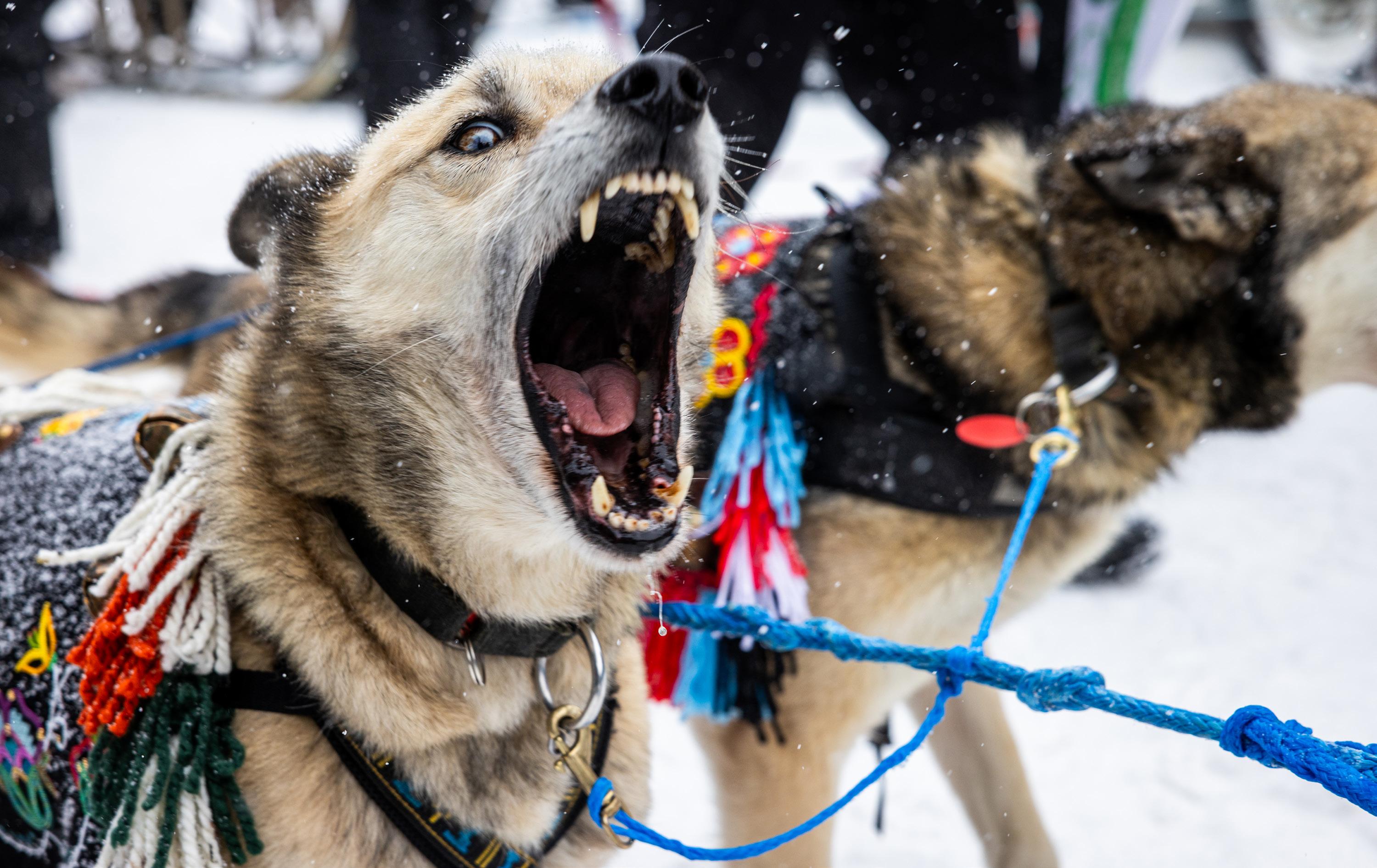
On the morning of the ceremonial start of the Iditarod, downtown Anchorage was coated in a layer of fresh snow. As the mushers headed into their slots, dim morning light clung to the squat downtown buildings. A steady stream of Iditarod volunteers with clipboards and hand-warmers ran up and down the streets, directing traffic, while the musher trucks were getting stuck because of all the snow.
The weather for this year’s start, 18 degrees Fahrenheit and snowing, was light work for Potts-Joseph and her dogs. Some dogs stood outside beneath the falling snow, while others stayed in the truck.
Potts-Joseph’s mom called the group to join in prayer. They clasped arms and hands, forming a circle, snow falling on bowed heads. Asking for protection and safety, voices fell into other voices, all praying for the same thing: that their daughter, mother, friend, and wife have a safe journey.
Potts-Joseph placed sweetgrass and cedar into her sled, calling it medicine. Minutes before mounting her sled to travel 11 miles through downtown Anchorage, Potts-Joseph popped into her truck to do some last-minute sewing on a dog jacket. Since she pulled bib number 32, she was one of the last mushers to set out on the trail, with Chasinghorse following in a sled behind her, waving to throngs of fans lining the streets.
The Iditarod banner was lowered almost as suddenly as it appeared as both tourists and Anchorage natives gathered to commemorate the start of the race. But for Potts-Joseph and the other 36 competitive mushers, the race truly started the next day, 70 miles north on Willow Lake.
At the official restart of the Iditarod, above the din of dogs barking and howling in anticipation of setting off on the trail, bells sounded. Adorned in jewel tones, beaded and tasseled labors of love from Athabascan women across Alaska, the dogs of Raven Clan Kennels sported bells attached to the jackets, clanging as they leaped and lunged in their harnesses.
For a few hours, the air brimmed with anticipation. Potts-Joseph pulled on homemade mukluks over thick socks, followed by snowshoes. She stroked each dog’s head, sipped tea from her thermos, and called her family into the trailer. Potts-Joseph stood with her mother, daughter, and husband in a tight circle, sharing a moment together before she set off on her own.
As the barking built into a crescendo, a volunteer walked over and said, “You have two minutes.”
Potts-Joseph mounted the sled and pulled the brake from the snow. A line of dog handlers held the dogs by their harnesses. It took all their strength to hold the dogs back.
These dogs, like their musher, were ready to race.
The team pulled Potts-Joseph through the parking lot and up to the starting chute. As she passed through the chute, her mom reached both arms out to her.
Almost 1,000 miles stretched out before Potts-Joseph and her dogs. They made up a kaleidoscope of beaded figures as they crossed frozen lakes.
A few days into the race, Potts-Joseph rounded a corner and came face to face with a hulking, brown bison in the middle of the trail. It lowered its head, then pawed at the ground. Charging the dog team, it stopped short and circled. It charged again, and again, and again, always stopping right before reaching the dogs.
Potts-Joseph pulled out her pistol and tried to fire a warning shot, but her gun jammed. All it let out was click, click, click, click.
She leapt off the sled and stood behind a spruce tree, throwing sticks in the animal’s direction, but the bison would not move. Potts-Joseph suddenly remembered a story her grandmother once told her. Once when Potts-Joseph’s mom and her siblings were playing outside a grizzly bear wandered into their backyard. Her grandmother brought her kids inside and then walked straight up to the bear and said a phrase in her native language which translated to, “Go away. Have mercy on us. Leave us alone.”
The bear turned and hauled its body away. So did the bison decades later when Potts-Joseph repeated those words on the Iditarod Trail.
There were more than 20 checkpoints along the trail, all of which were equipped with veterinarians and supplies. Prior to the race, mushers sent drop bags to checkpoints. In Potts-Joseph’s case, the bags were filled with salmon and homemade moose soup. When racing, mushers are mostly in charge of when to rest and when to keep pushing, but the race rules enforced two eight-hour resting stops and one 24-hour stop.
Near the checkpoint in Nikolai, about a third of the way into the race, one of Potts-Joseph’s dogs started showing minor signs of kennel cough, a highly contagious respiratory virus. Veterinarians prescribed the dog antibiotics, and Potts-Joseph and her team continued to push on.
On her way to Unalakleet, Potts-Joseph noticed her dogs lagging. Her lead dogs refused to eat, having contracted a stomach virus. Rolling into checkpoints in the middle of the night, Potts-Joseph would lay down on her stomach and massage her dogs’ legs, give them medicine for their kennel cough, then wrap them in blankets. Only after the dogs were taken care of, could she truly rest.
On the morning of March 17, Potts-Joseph scratched herself from the Iditarod. Her team of 10 remaining dogs were sick. All dogs except one either refused to eat or had developed a severe case of kennel cough. On mile 658, Potts-Joseph decided it was too risky to push her dogs any longer.
Though Potts-Joseph did not make it to the finish line, she still made history by making it to the start. This trail was carved out long before her. For Potts-Joseph, the Iditarod was a continuation, not the starting point. And she already plans on returning to the race next year.
Come late summer, when the light still hangs into the evening, she will be out on the land, mushing her dogs and living in alignment with her vision — not to hold the title of champion, but to continue the tradition of her ancestors, and to keep the trail clear.
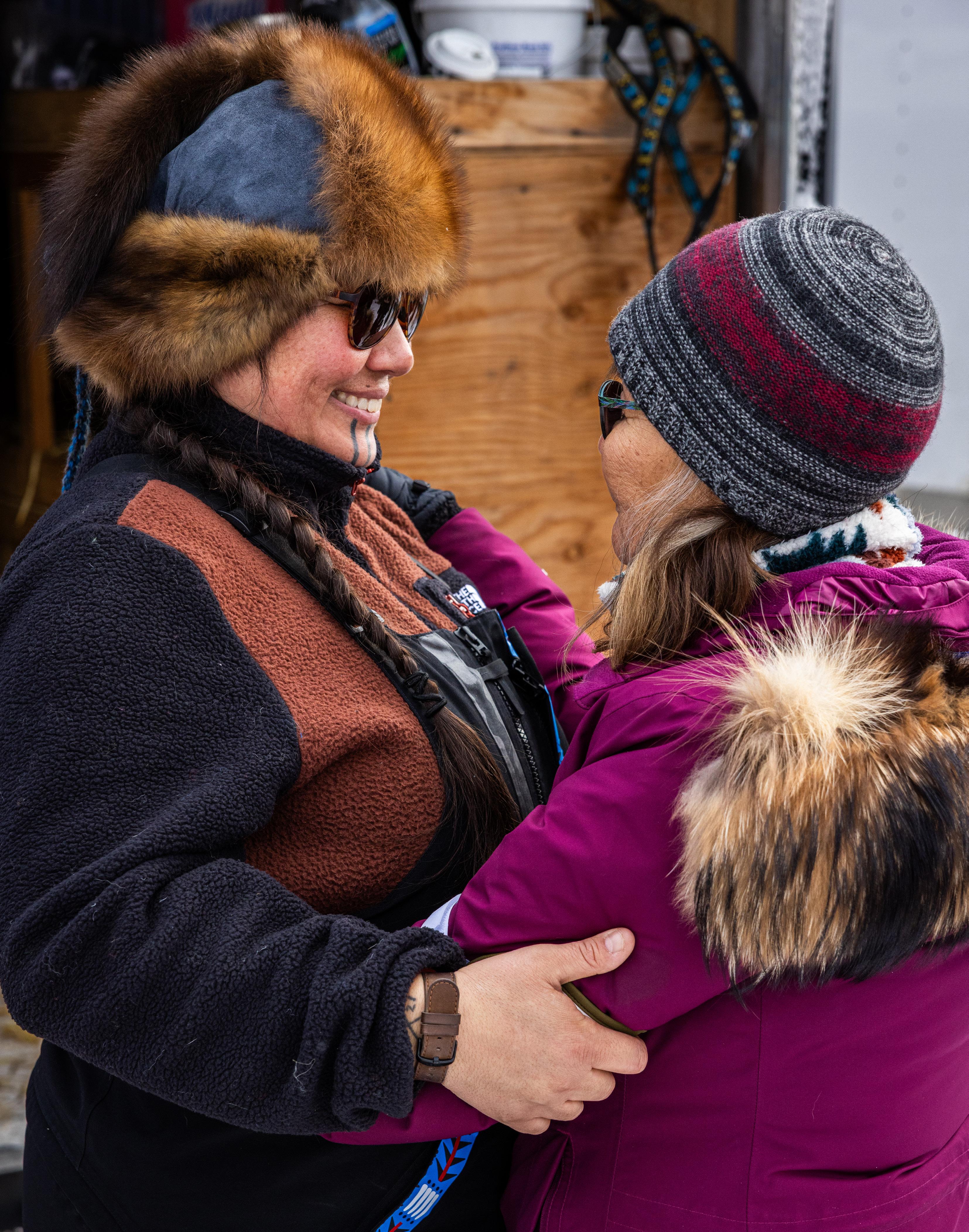
Adeline Juneby Potts says goodbye to her daughter before the official restart.
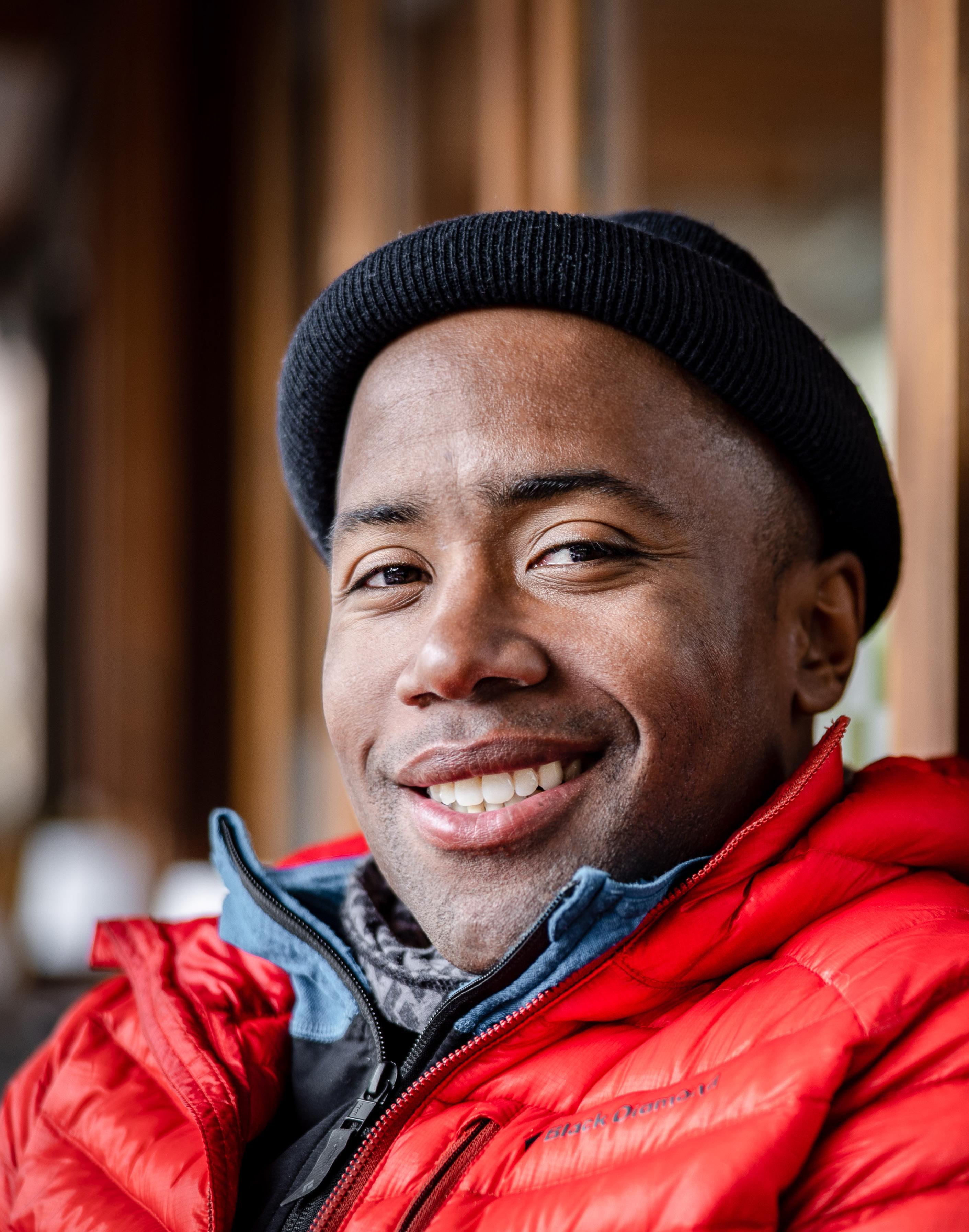
BETWEEN WORLDS
Andrew Alexander King spreads compassion through extreme outdoor pursuits.
By Jay Bramhall
Photos by Jan Virt
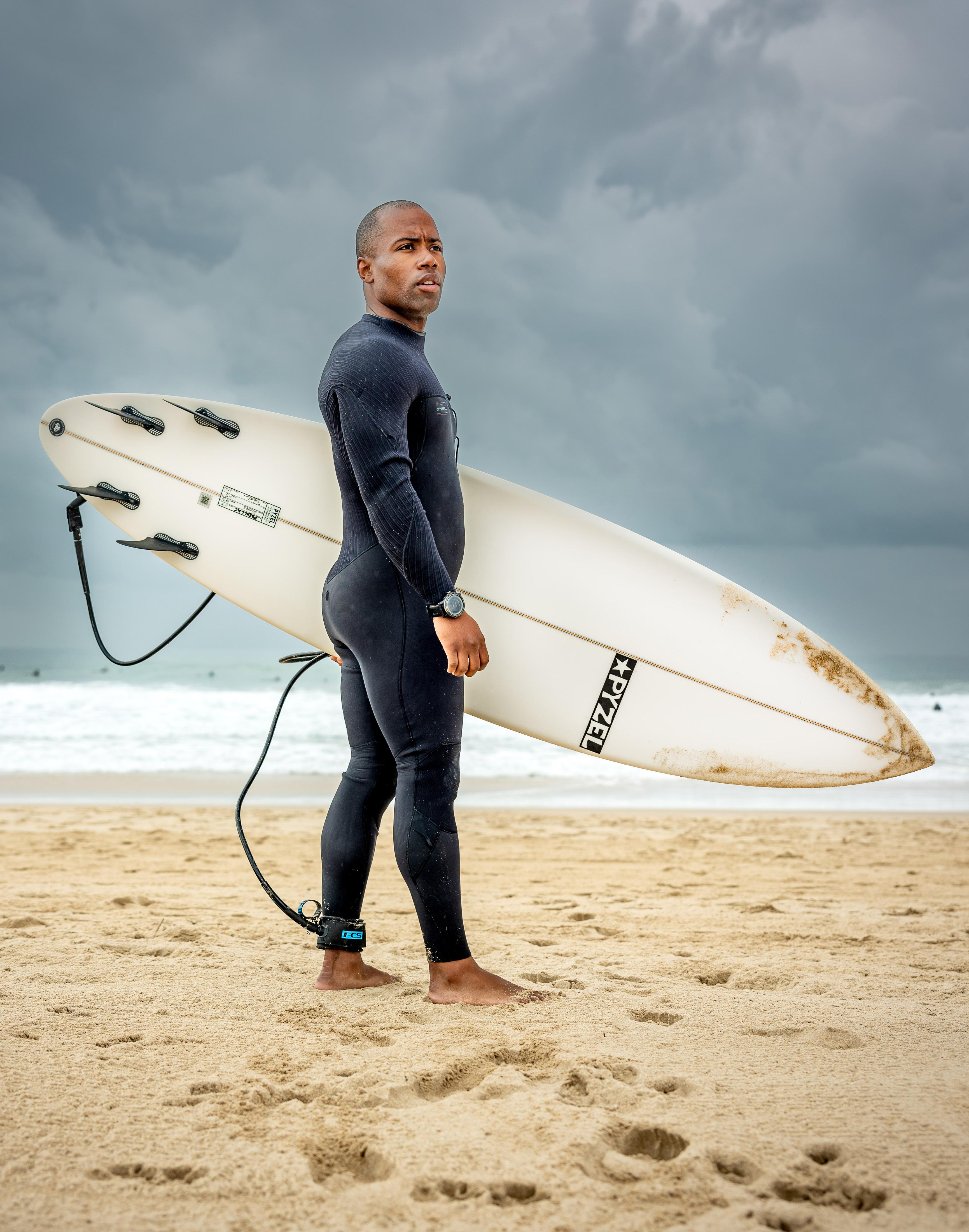
Andrew Alexander King prepares to surf in Ericeira, Portugal.
Exploration is a vowel and a consonant away from exploitation. It’s easy to forget that footprints matter, even on mountain tops. So much is implied by what’s left behind.
Surfer and mountaineer Andrew Alexander King leaves poetry books. Tucked between dog-eared paperbacks and stacked on cluttered coffee tables in cafes around the world are 24 books bound in orange. Seasons is King’s first collection of original poetry, and though its dispersal doesn’t meet the Leave No Trace principles he abides by in nature, he hopes others will find inspiration from the work.
King stretches while he talks about his own inspirations. Just outside the walls behind him rests the French city of Chamonix, situated in the shadow of the tallest of the Alps, Mt. Blanc, where he spends several months each year alpine training. It’s a stark contrast to the Portuguese beaches he visited only months before while training to surf waves bigger than buildings, but it’s no less breathtaking.
The beauty of the mountain isn’t lost on King. In fact, he shares it with over 190,000 followers in pictures and videos on Instagram. While straddling life between the slopes and the sea, patterns of disconnect and disparity in outdoor spaces followed King around the world. Popular sites for recreational tourism, like Kilimanjaro and Nazaré, are often choked with tourists enjoying the natural environment while paying little attention to the communities left behind once the mountain is summited, or the wave surfed. He started the Between Worlds Project to utilize “technology, nature, and ourselves” to combat this disconnect as well as issues like sexism, climate change, poverty, and racism.
In this moment, he’s focused on maneuvering his body this way and that, releasing the tension in tendons and tissue built up from a day spent on Blanc’s icy surface. He’s doing more than training his body and building his brand in Chamonix, though. King’s method of climbing is a reflective practice, and part of that process includes teaching others to share a similar intimacy with the mountains.
A few days earlier, he saw a message on an app connecting outdoor adventurers that asked if anyone wanted to climb the Cosmique Arête — a mixed climbing route involving snow, ice, and rock along Chamonix Valley’s ridgeline. No one answered. King responded to the stranger and made plans to help him with the climb.
As a mentor, King only grades on two things: attitude and how someone packs their gear.
“Everything else we’ll figure out on the way,” he says.
When he showed up at Cosmique Arête, he met Angus Bowden-Smith, a Scottish kid who certainly had a good attitude. The 25-year-old Bowden-Smith admitted it was his first time on a glacier, and he hadn’t found anyone who wanted to climb with him. King understood the feeling.
“I was you years ago, and I needed people to climb with,” he explained. “So I had to start somewhere, and someone had to take a chance on me.”
For King, traversing the saddle of the ridge and belaying chimneys of granite was a warm-up for the rest of his stay in Chamonix, so it was the connection with Bowden-Smith that truly had his blood pumping.
King asked Bowden-Smith if he thought he’d ever be climbing such a route.
“No, Andrew, I was so afraid of life that I was always in my house,” said Bowden-Smith.
He had never traveled by himself until then. He couldn’t have fathomed the terror of putting the nylon strands of his life in someone else’s hands.
“You helped me do something that no one thought I could do today,” said Bowden-Smith.
“I thought you could do it from the moment I saw you,” said King.
King was in the fifth grade when his friend, Shanika King, was murdered in a drive-by shooting. The bullet wasn’t meant for her or her family. She died anyway. The tragedy didn’t top headlines in Detroit, Michigan, where violent crime and homicide rates consistently rank as some of the highest in the United States. There wasn’t enough grief to go around. A child died, and after a few weeks, people moved on.
King did not. The weight of Shanika’s funeral sat heavy in his chest. Kids grow up fast in a city like Detroit, but in proximity to the death of a friend for the first time King stagnated under the fear of dying.
Not all gunshots mark the start of a race, but King used the sound echoing in his ears to prove he was fast. He started running track at 8 years old because it didn’t require expensive equipment that his family could not afford. Detroit’s poverty rates are three times the national average, a statistic made tangible by his home in the projects. His mom gave him Legos on Christmas as well as consistent reminders to keep his head on straight, but she recognized the limits of what she could provide for him in the turbulence and instability of the city. From a young age, he’d shown consistent interest in technology, taking electronics apart just to see how they worked. She knew he needed to be the first in their family to go to college.
Running away from something can look a lot like running towards something depending on perspective. What started as a priceless escape from living in a problem he didn’t create turned into a mission with a price tag attached.
“I knew I was going to be a D-I athlete for a very long time,” says King. “There was no other way. I didn't give myself a choice because I trained my butt off every day for running track, and I knew my family could not pay for college.”
King’s grandparents, a military family, adopted him when he was 11 so that they could take him around the world, beyond the violence of Detroit. His family wanted him to have the academic and athletic support he needed to earn a scholarship to college.
Over two decades later, in 2021, King visited the same house he grew up in Detroit. He says it’s a drug den now.
“I wouldn't have thrived,” says King. “As dramatic as this sounds, I'm pretty sure I would have died there.”
King and his grandparents moved to Snellville, Georgia, where he noticed there weren’t metal detectors at the school gates or bars on windows. He didn’t see parents checking Halloween candy or locking doors before bed. Safety was a presumption, not a priority. King’s feet found solid ground on Georgian soil, but solid did not mean settled.
During his freshman year of high school, a white student called him the N-word. King knocked the kid out, breaking his own hand in the process. The altercation set King’s world akimbo as he struggled to integrate into a community where, for the first time, he was surrounded by more white people than Black people. Disconnected from himself and this new place, violence felt like his only resort for solving conflict. Over 700 miles away from Detroit, King was still running.
Suspended after the fight, King transferred with his grandparents to a military base in Germany, where they enrolled him in Mannheim High School as part of the US Army Europe school system. His grandparents refused to let King waste his talent.
“If I was gonna use my hands, it's more for shaking, holding, hugging, helping people, pulling them up, versus pushing them down,” he says.
At Mannheim, he joined the track and field team. Through the entire first season, King ran in a cast, a weighted reminder every time he positioned himself in starting blocks that violence does not always translate to justice.
His track coach, David Brown, pushed King toward leadership as team captain, which meant more than an extra patch on a varsity jacket. King led by example. At 5-foot-5, he was one of the shortest on the track, but he was the quickest. Each season, he recorded all of his races to guide him towards improvement on the track. King was still running, but this time his feet led him forward, his eyes trained on the future.
His immediate future looked like warm sand and the red rocks of Hawai'i's volcanoes when he moved with his grandparents once again. Hawai'i was King’s first introduction to athletics outside the synthetic world of turf and cement. There, he continued learning about his own athleticism by running the fin-shaped ridge of the volcanic crater Diamond Head on Oahu. The higher he trekked, the quieter his mind felt.
“When I started hiking and climbing in Hawai'i, I did it just to meditate and relax,” he says. “It wasn't to conquer anything. It was just a place to connect with people, and I would say if you did use the word conquer, it's conquer my fears.”
Across Oahu’s bleached sand and waves, King saw native Hawaiians and other people of color surfing, enjoying the outdoors, which gave him the confidence to join them in the water. But first, he needed to learn to swim.
At his grandparents’ house, he literally threw himself into the deep end of the pool. When his chlorine-crinkled toes touched the bottom, he’d use his thick runner’s legs to push his body back to the surface. Once he could hold himself afloat, King harnessed the audacity to surf the North Shore, where he’d watched others ride waves 30 to 40 feet tall.
The waters humbled him, but they also demanded a focus that previously he’d only found on the track. There were no painted lines constantly telling him to stay in his lane. The waves proved unpredictable, and he learned to adapt. There was no starting gun or competition with anyone but himself.

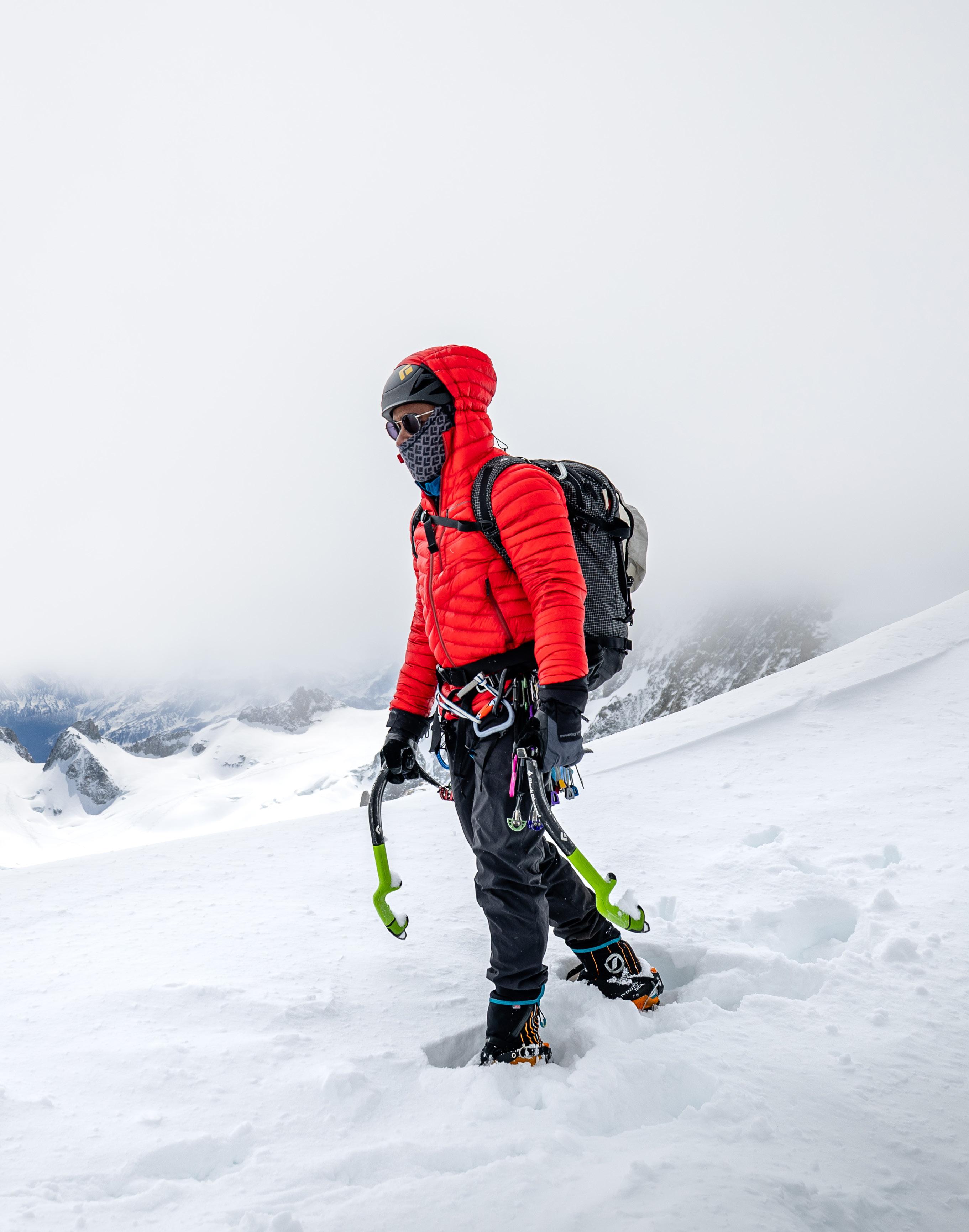
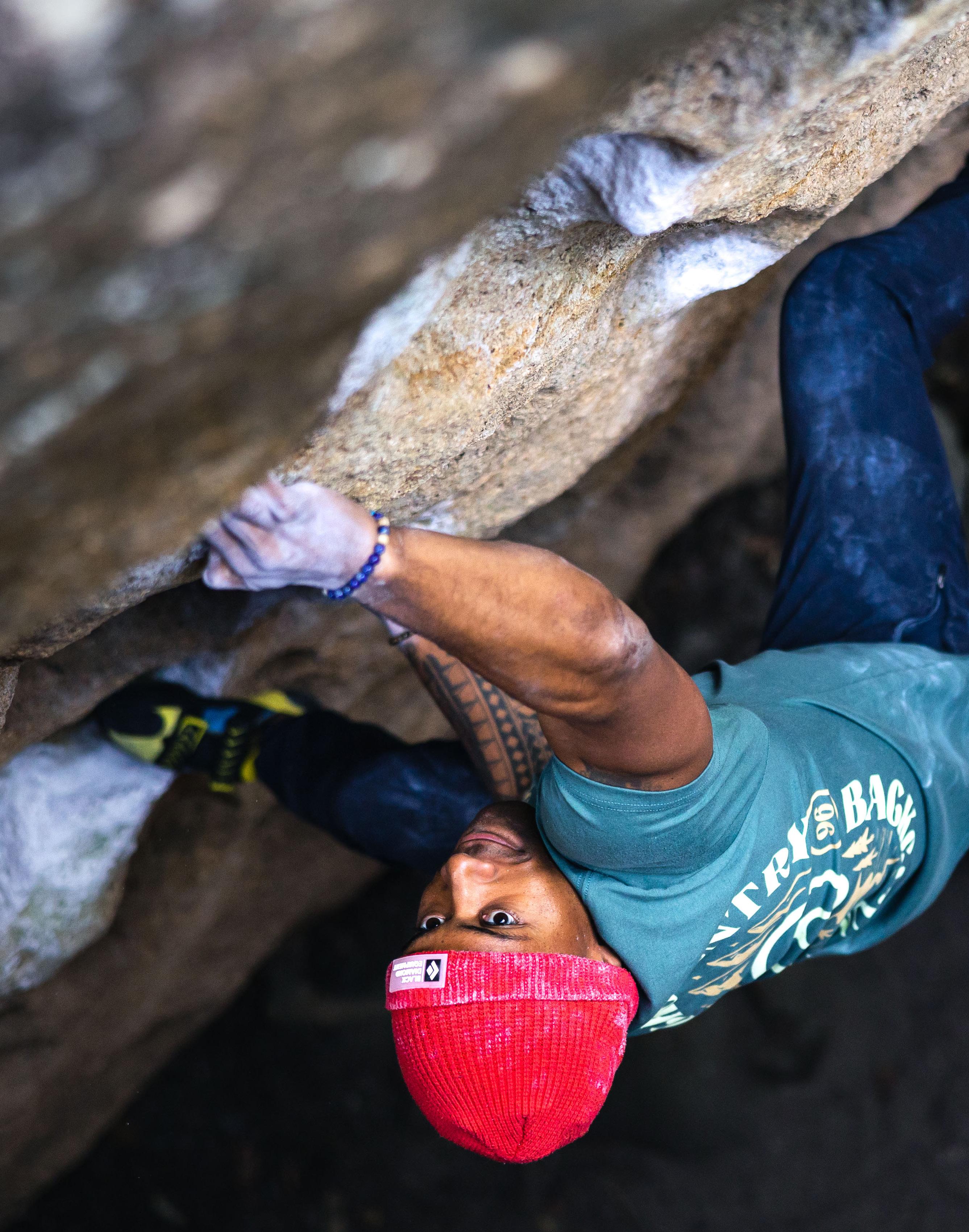
Andrew Alexander King boulders in Ericeira, Portugal.
“The ocean is challenging you. It’s like, ‘I’m sending you this massive power that’s been traveling for days, and I dare you to try to ride it,’” he says.
The ever-changing lashing of waves can be a violent contrast to the steadfast presence of mountains — worlds that don’t often intersect. King understands the conflict. Detroit rounded out his ambitions and empathy in the same breath that it sharpened its own edges through the ache of poverty and marginalization. King knew himself best when he was outdoors, yet he rarely saw people like him celebrated for exploring nature. He needed to make space in the wilderness without conquering it.
Climbing and surfing were never different sports to him. They complimented each other as means of reflection and finding connection. King would wash the salt from his skin and go climb a volcano the same way he would write poetry and journal at the end of the day — as tools to understand himself.
The University of Maine offered King a full ride for track and field, but this newfound freedom had implications for King’s evolving sense of self.
Achieving his goal of becoming the first person in his family to attend college only increased the pressure he put on himself. Years of growing up too fast nipped at his heels, and before he could take a full breath, Detroit and all its baggage loomed large. Despite the unconditional love of his family, he lacked the skills to navigate the complexities of life as an adult.
“There's no playbook for that because your support system is giving you what they didn't have, but at the same time, society is asking you to have more,” says King.
The weight of his legacy as a Black man further dragged him under. Less than two generations away from segregation, King’s passions and his pursuit of a career in technology pulled him into spaces underrepresented by people of color. To this day, Maine’s Black student population is less than 2%. Despite making it further than anyone in his family before him, he struggled to find room for a body like his in these spaces.
As a result, King turned to alcohol. Incapacitated by his own design, he wanted to outdo himself, sprinting from one party to the next. He would make his body give out before his heart’s ambitions did. But he mistook conquering his inner self for understanding it. He gave up so much — clarity, ambitions, and relationships — just to lighten the weight on his shoulders. Alcohol had his head so high in the clouds that he couldn’t tell that he’d traded one burden for another. Yet much like when he threw himself into the deep end of his grandparents pool, King refused to sink.
At 21, King entered a sobriety and rehabilitation facility. He wanted to see how successful he could be without alcohol. He wrote on a note card all the things he wanted to accomplish with sobriety: attend graduate school, learn more about technology and how to code, and cut off the turbulent behaviors of his college life. Trading booze for Shirley Temples, he accomplished every goal within the year.
Sobriety opened King’s world to pursuing his passions again. After graduating, King started a career in technology as a consultant and portfolio manager. He left competitive sports behind, but the blue light of computer screens did not enthrall him like a big wave or the view from a mountaintop. He became more intentional about approaching the outdoors as the waves and mountaintops grew alongside his ambitions. The intensity of the peaks, whether made of stone or water and seafoam, wasn’t a replacement for the dopamine thrill of alcohol, but instead a continuation of his sobriety.
Where drinking provided an adrenaline rush beyond coherence, climbing and surfing forced him to focus. Each twitch of muscle is a breath suspended in time, from straining tendons with a crimp hold on granite to salt-pruned toes navigating the pressure of a wave, there’s little room for mistakes. Every moment counts, just like in sobriety.
“It's not about how many years, it's about showing that I can live a life that I'm authentically proud of,” says King.
In Portugal, Nazaré’s beaches seem plucked straight from a postcard. The sands sparkle, the water glitters, and seven of the ten largest waves ever surfed have crested its shores. It’s where King spends his winters training. The waves in the coastal municipality are large enough to require jet skis to tow surfers into the fast-moving currents that crash into each other without pattern or predictability. The mechanics of tow-in-surfing are much different from the traditional surfing King had done in Hawai'i. Surfers have to account for the torque of the jet ski, different foot positioning on the board, and how and when to maneuver their hands to let go of the line in time to catch a wave.
King couldn’t even stand on the board his first time behind a jet ski. Matching the scale of Nazaré’s waves required more than the underwater swimming he’d taught himself in Hawai'i. He’d trained his body to endure the strain of the waves by teaching himself to swim above the water in the Boston Sports Club pool under Lego’s corporate building. While working for the toy brick company, King spent every morning learning the proper strokes needed to swim horizontally along the waves.
He had substantial lung capacity from climbing in high altitudes, so he practiced keeping his breath steady for the quickly changing conditions of the waves. Using meditation and yoga to loosen the stiffness climbing instilled in his compact frame, he prepared his body for surfing.
Nazaré tested these skills. Now he had to consider the direction of the wave and where it was moving. Despite all of his training, every time he tried standing, the waves would not cooperate. He presumed familiarity with their shape and force, but under their pressure, he buckled. Unable to successfully stand, he left the beach in tears, having never made it beyond the harbor.
“I cried so hard as a grown adult,” says King. “And I have no shame in that because I was so frustrated.”
He went back to the basics. Just like his days as a track athlete, he went through the GoPro footage of his surfing and broke it down piece by piece. He hadn’t been anticipating the pull of the jet ski or the wakes it left behind. He rode it like a wakeboard, which meant he wasn’t sitting back correctly. His hands were positioned more for rock climbing when he needed to pull instead. By considering everything he’d done wrong, King opened the door to understanding how to do it right. The following month, right before Christmas, he went back and caught every single wave.
Big wave surfing is a practice in risk management, and King had already spent his whole life testing the boundaries of his place in the world and treading where traditionally his body wasn’t welcomed. The waves made sure he knew how to pick himself up again.
“[Nazaré] pushed me to be a better version of myself,” he says. The next step was learning about the communities he spent so much time in to better recognize the heavy role of locals as caretakers and stewards of the land. João Macedo is one of those stewards. Born in Connecticut to Portuguese parents, Macedo became the first Portuguese surfer to qualify for the World Surf League’s Big Wave Championship Tour. Now retired, he focuses on the waves themselves instead of what he stands to gain from them.
Macedo cofounded the Hope Zones Foundation, and in November 2025 officially opened the first regenerative seaweed farm in Portugal. Located in Nazaré, the foundation encourages local fishermen to participate in conservation efforts by including them in the construction process. Locals have taken a big hit in Nazaré as the economy’s focus has switched from fishing to tourism. The Hope Zones Foundation believes that local communities will continue to see growth as the seaweed strengthens ocean health and biodiversity, boosting fish populations and revitalizing the profession.
Macedo was one of the people to introduce King to Nazaré, so it made sense to King that he repay the favor by introducing his social media following to the Hope Zones Foundation’s work — and by securing them a check or two.
Utilizing the power of the ocean to launch a message of sustainability and financial support, he founded the Between Worlds Project as a holistic approach to non-profit development and community building. The initiative started with King donating capital from his day job to nonprofits in the regions he visits, from the beaches of California to the peaks of Indonesia. It expanded to securing donations into his brand contracts and sponsorships, alongside stewarding local organizations towards partnerships and content creation, all with the goal of highlighting community stories.
King hopes to leverage his career and social media for connection. Aided by local nonprofits and outreach programs, King feels his online presence fuels the driving forces of change and utilizes it to share his message of tolerance.
“Always leave a place better than when you found it, a place or person better than when you found it,” he says. “Always give more than you take. Be curious, not critical. Be one that's there to learn what is possible versus say what it isn't.”
It’s possible to climb a mountain without conquering it. It’s just not easy.
The largest free-standing mountain in the world, Tanzania’s Mt. Kilimanjaro, is a popular destination for conquerors. Over 19,000 feet of bluster and bluffs, its summit ranges between 20 and -20 degrees Fahrenheit.
During King’s first ascent of Kilimanjaro in 2018, the faces he encountered that looked most like his own were the native porters who aided climbers and often faced unfair wages, inadequate protective equipment, and overloaded pack burdens. Yet, when the basalt under King’s feet transitioned to cobblestone, it was their smiles that welcomed him home.
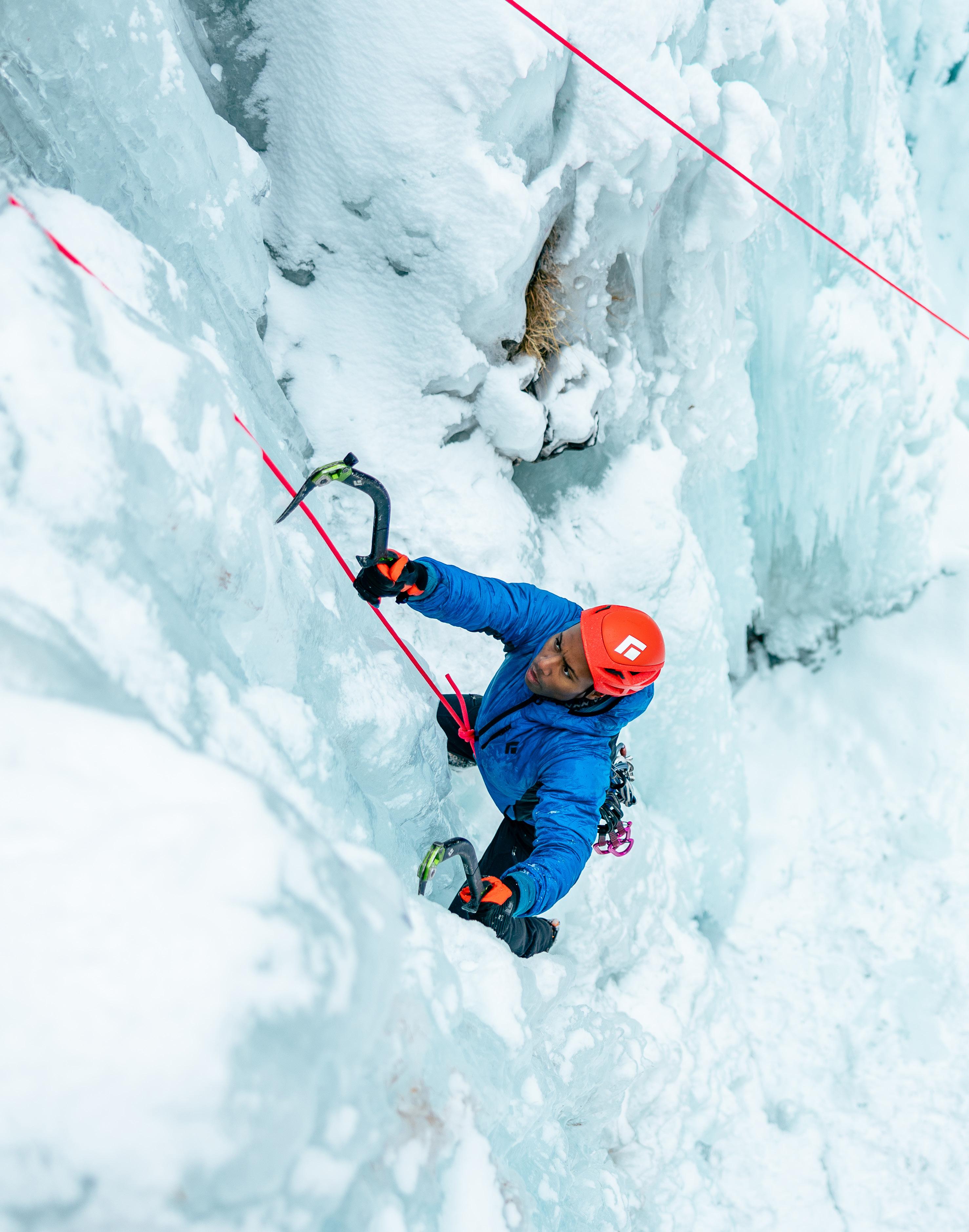
Years later, he started a journey to become the first Black person to climb the highest volcano and mountain on every continent, but the effort toward personal achievement seemed at odds with his mission of connection. The point was to celebrate the natural world he loved by sharing it with those who don’t have the same access. He wanted to make footprints in the rock, ice, and snow for anyone else who’d felt excluded from the outdoors to follow in. The American Alpine Club’s 2019 report found that of 7.7 million climbers in the United States, only 1% were Black. King wanted to carve new space for people of color to be publicly celebrated.
He wants to leave more footprints, but summiting the seven continents doesn’t hold the same urgency it once did. In a world where, according to the Public Policy Institute of California, King is twice as likely to be stopped, searched, and arrested as a white individual, but three times less likely to have close access to green spaces, he wants to build bridges to the outdoors in ways that are fulfilling for him. These days, fulfillment comes from technical climbs like the Alps’ north faces Eiger, the Matterhorn, and Grandes Jorasses.
“It's going to be lifelong,” says King. “And I think I'm going to keep it that way. I'm not going to try to accelerate it. I'm not going to try to do it the fastest.”
King was the first African American to climb Mt. Blanc, the highest peak in western Europe, in 18 hours. After the ascent, he stared into his pasta. There was no gold medal for the accomplishment. There were no news articles or spotlights. Only one of his sponsors bothered to showcase it. He bore the accolade alone.
“I kind of got lost in the sauce of climbing and going after these accolades for that,” says King. “I told myself recently I'm not chasing likes, I'm not chasing views, I'm literally just going to chase creating art and good memories and moments in that space.”
This winter, he finished filming the first of his new documentary projects in Nazaré. The film highlights the friction points of participating in a notoriously white sport as a Black man. The film is a tangible, evergreen production that defines the intersection of technology, outdoors, and representation at the core of the Between Worlds Project. It’s a medium that creates and sustains hope. King and his friends have three other films slated for production this year. His next project covers his preparation to climb the second-highest mountain on Earth, K2, next year. The other two films will cover the humanitarian aspect that brings his passions to fruition, and the friendship that sustains it.
“You want to make art that inspires people to keep going,” he says. “You want to make sure that people see themselves, not in you, but in what you're doing and go beyond that.”
The art isn’t about compiling a highlight reel. It’s just reaching to be a little bit better each day. It's the same philosophy that fueled his sobriety and turned his life into something he could love.
Loving something makes it repeatable. It turns the heartache of the mission, and the tragedy that there’s a need for a mission at all, into a joy worth sharing.
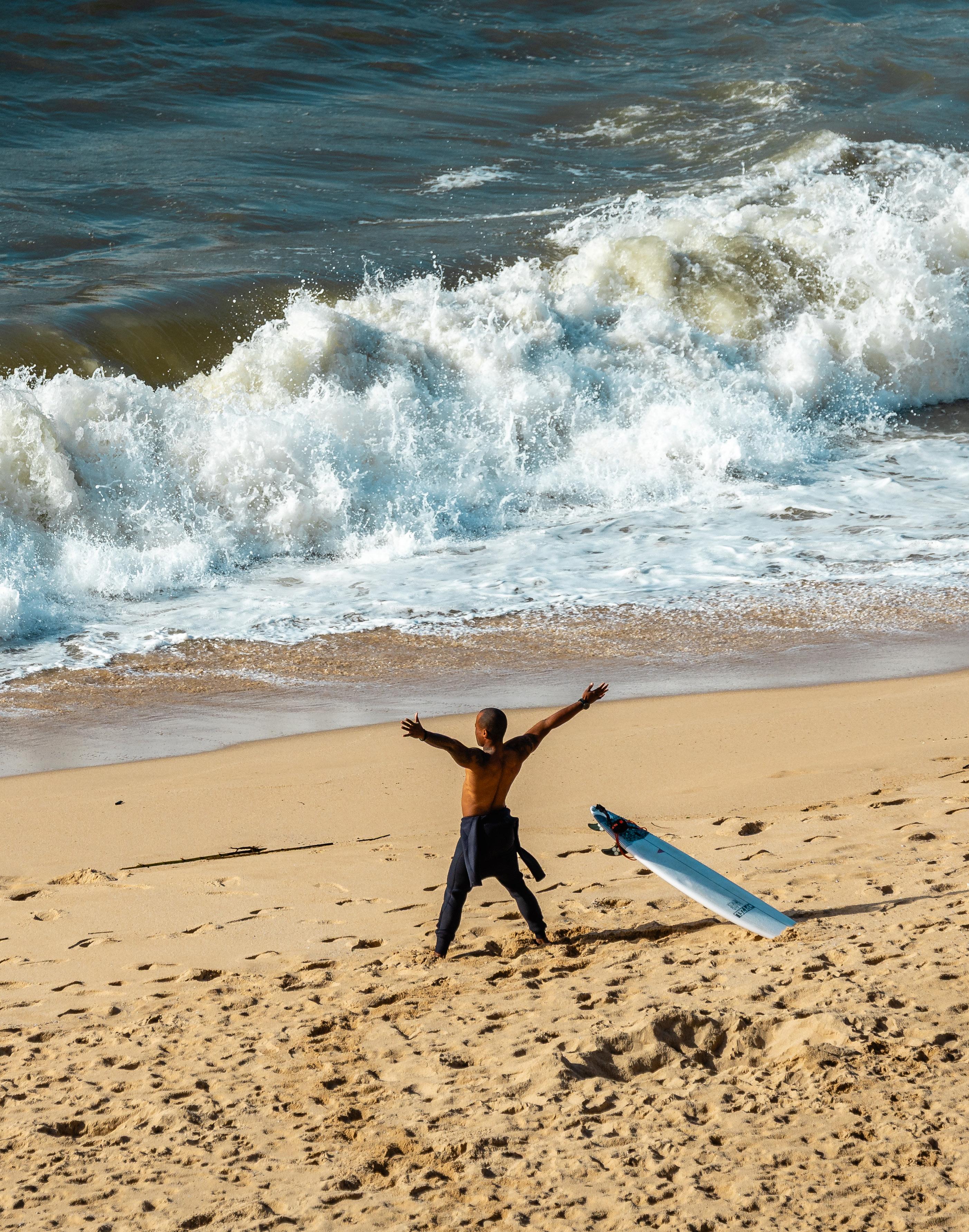
FROM THE PRESS BOX
Copy editor
Lily Reese explores the world of sports through her love of music and journalism.
By Lily Reese
Growing up, I found myself dancing among deadheads, some barefoot, others completely naked, strangers absentmindedly playing with my hair between songs or telling my parents they’d raised a good one.
At home, the music never stopped. I was often wedged into late-night jam sessions on the couch, listening to my uncle’s banjo circle, my aunt’s voice cutting clear above it, my father at the keyboard, my brother hunched over his guitar beside my grandfather. It was constant, almost ambient — the kind of noise you stop noticing until it’s gone. My childhood was a concert that never really ended.
But whenever I tried to join in, every note turned sour, every key slightly off. I couldn’t play music to save my life and eventually stopped trying.
Still, music threaded through everything, through the way we spent our nights, the way conversations stretched and folded into songs. And yet, I found myself on lacrosse fields, on soccer sidelines, sitting next to my dad on the couch as he tried, unsuccessfully, to explain football.
I was never a star on the lacrosse field. I played defense, never holding the ball for long, always avoiding the pressure of doing something spectacular. But I watched, anticipated, understood how players moved and how coaches strategized. I realized I was more drawn to observing the atmosphere around me than trying to stand out within it.
So, I moved between two worlds, music and sport, without ever fully settling into either. One was loose and unspoken, the other structured and exact. I loved both, but I couldn’t find myself completely inside one or the other.
Each required attention for success, like noticing the small shifts of an attacker’s eyes on a spot in goal before they became visible to anyone else, or the way a song changes key without announcing itself. I think that’s what I was looking for in journalism, a place where attention was the job, where I was responsible for turning what I saw into something someone else could understand.
When I ended up securing a credential to cover the biggest NFL game of the 2025 season, I wound up surrounded by reporters who seemed to know exactly what they were looking for. The game pitted the Seattle Seahawks against the Los Angeles Rams for a second time. The talk in the press box
revolved around a critical NFC West Division title-deciding game and a potential preview of the NFC Championship game. The two teams played in Los Angeles five weeks earlier, when Seahawks quarterback Sam Darnold threw four interceptions and Seattle lost by two points.
Lumen Field pulsed with noise the night of the rematch. The air hummed, dense with sound — music built from thousands of voices folding over each other, rising, falling, cresting into something that felt orchestrated even when it wasn’t. Fans danced in the streets, music poured out of bars, and blue and green splattered the night.
The press box brimmed with seasoned sports reporters, those who knew the jargon, the players, and each other. It was a boys’ club, its participants clad in pressed button-downs, sipping on black coffee.
Steady and composed, the Rams controlled the first half, while Seattle felt slightly offbeat, trying to catch up. I followed everything, the ball, the formations, the reactions on the sidelines, trying to hold onto as much as I could at once.
After each drive, the press box seemed to resolve what I had just watched before I fully understood it. Stats appeared in Arial font, summaries provided on silver platters, the game continuously translated via updated stats.
In the third quarter, Seattle briefly pushed back just enough to disrupt the Rams’ momentum, but it didn’t hold. LA answered quickly, building a lead until the game felt out of reach.
When the Seahawks trailed 30–14 in the fourth quarter, fans started to leave. Not all at once, but via small, steady decisions, people stepping into the aisle, glancing back once, then disappearing down the stairs. In the press box, the tone shifted, less anticipation, more conclusion. People began writing as if the ending had already presented itself.
But then, a punt return touchdown cut into the lead. Rams 30-22. On the following drive, the Rams went three and out. Then Darnold threw a 26-yard touchdown pass to AJ Barner, cutting the lead to two. Momentum building, Seattle decided to go for two. On a wide screen pass, Rams edge rusher Jared Verse tipped Darnold’s pass, the ball ricocheting off a defender’s hands and
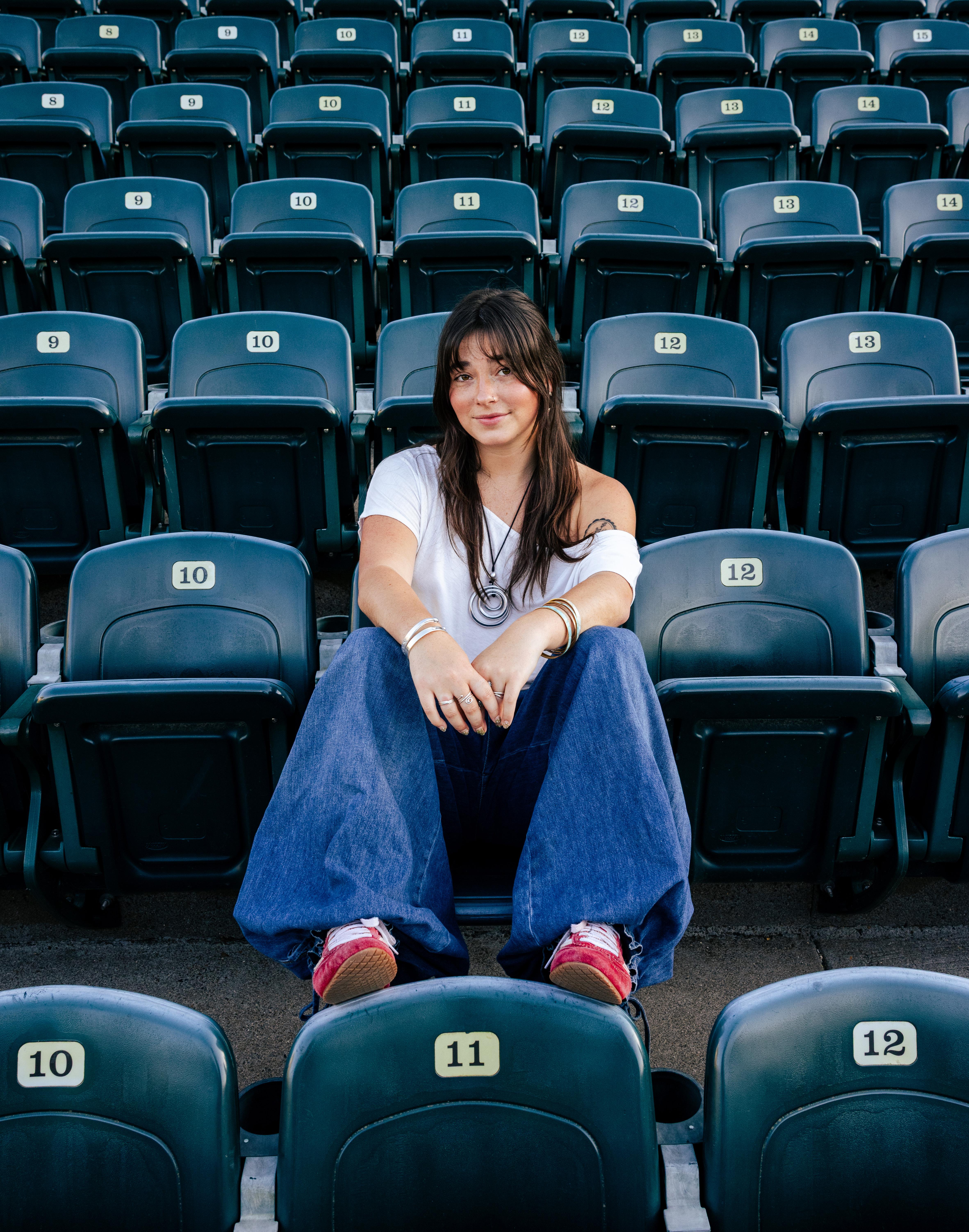
by
Photo
David Hammel
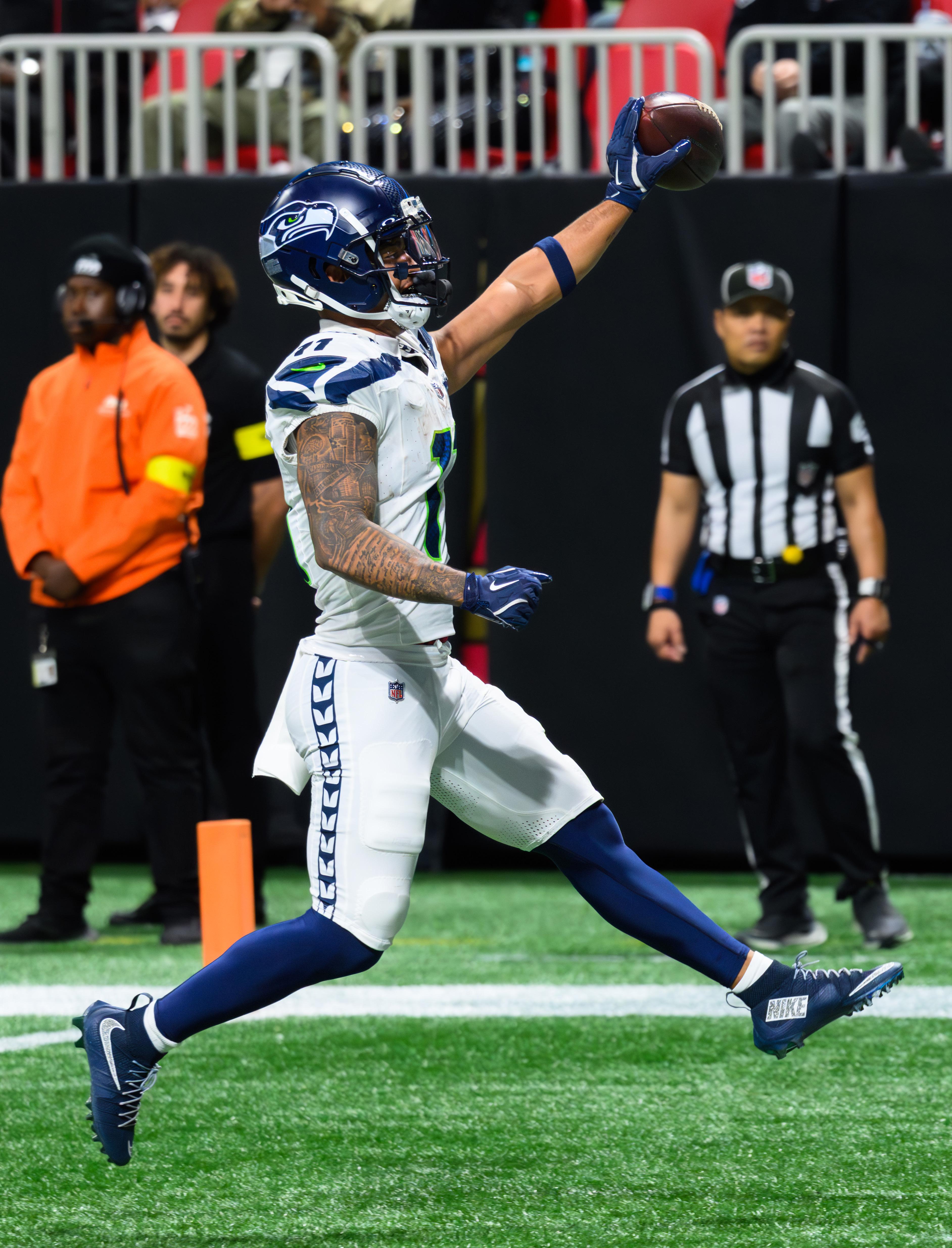
Photos courtesy of the Seattle Seahawks
drifting loose on the ground in the end zone. It floated there awkwardly for a beat, reading like an incomplete pass. On the field, bodies started to peel away and reset. In the press box, heads turned back to printed notes.
The pass looked incomplete when Seattle running back Zach Charbonnet, the closest player to the ball, picked it up without urgency and handed it to an official. No one celebrated. No one even looked twice.
But the pass had gone backward, making it a fumble and a live ball. And in a moment of collective misread certainty, Charbonnet had unknowingly scored two points.
The officials reviewed the play, and the energy in the press box shifted. People who had been settled in their seats suddenly stood, leaning forward, replay screens glowing as everyone tried to make sense of what had just happened. Whispered reactions moved through the room, half disbelief, half calculation. The Seahawks tied the game.
The play was later framed by the football world as a turning point, the spark that carried Seattle to a third converted two-point conversion in overtime and a dramatic comeback victory. Perhaps that single play vaulted the Seahawks to the NFC Championship and eventual Super Bowl win.
In hindsight, it became one of those moments that serves as the keystone of a season, as if everything before it had been building toward it, making everything after it inevitable.
Even then, sitting in that press box, it didn’t feel like destiny. It felt like luck. No one in the press box romanticized it in real time. Everyone in the room knew it was just luck, messy and human in its finality.
But moments like that don’t arrive on their own. They’re carried there by years of failure, constant criticism, steady adjustments, perseverance when things feel like they’re falling apart. Darnold did not transform into a different player in that instant. He didn’t prove the critics wrong with a backwards pass. He had been transforming into a Super Bowl-winning quarterback all along. That play just made it visible.
For a moment, Seattle’s lucky break and gutsy comeback were the talk of the sports world, and rightfully so. Everyone wants to do something they
are proud of, like winning a championship title, breaking a record, making a spectacular play, experiencing something people will keep replaying long after it ends. At Ascend, we want to explore what’s hidden beneath the surface of those incredible moments.
Ascend is more than a sports magazine. It’s a collection of stories, tragedies, and triumphs alike, built on something closer to attention, our writers waiting and watching for the compelling details that never show up in box scores or headlines.
We can say that we covered the game of the year, but what we’re really after are the moments that change the trajectory of a story. The best way to capture those moments is through immersive reporting and the willingness to sit inside someone else’s life. After a 20-hour drive to Dyer, Nevada, writer Miles Dwyer experienced this sitting on a fence rail as world champion cow horse rider Tuli Dowers practiced a reining routine on her family ranch. Dwyer’s presence was not just logistical but interpretive. He watched Dowers use her elbow to hold a machete and cut the twine holding bales of hay, taking notes about her everyday activities, gathering elements that on their own don’t quite make a story but together begin to reveal something much more profound.
I used to think not fully belonging to either the world of music or sports was a kind of failure. But sitting in that press box, listening to the stadium swell and fall like a living thing, it started to feel like something else entirely. It felt like another level of training. Like all those years of watching instead of acting, of listening instead of playing, had turned me into an expert observer, discovering meaning beneath a surface level of experience.
That’s what Ascend asks for. Not certainty, but attention, the patience to sit and see something, even when it looks like nothing at all. Moving forward, every story is the accumulation of collective growth, of adapting stories to life as it naturally unfolds. It’s about unearthing the humanity behind every athlete, well beyond their performance.
Throughout this book, narratives were gathered in -10 degree temperatures, following trail runners with cameras, sitting in the press box for MLS games, and in conversations about loss, addiction, and the enduring human capacity to persevere. Taken together, they form a portrait not just of sport, but of what it means to keep moving through it all, of what it means to be in motion, in struggle, alive.
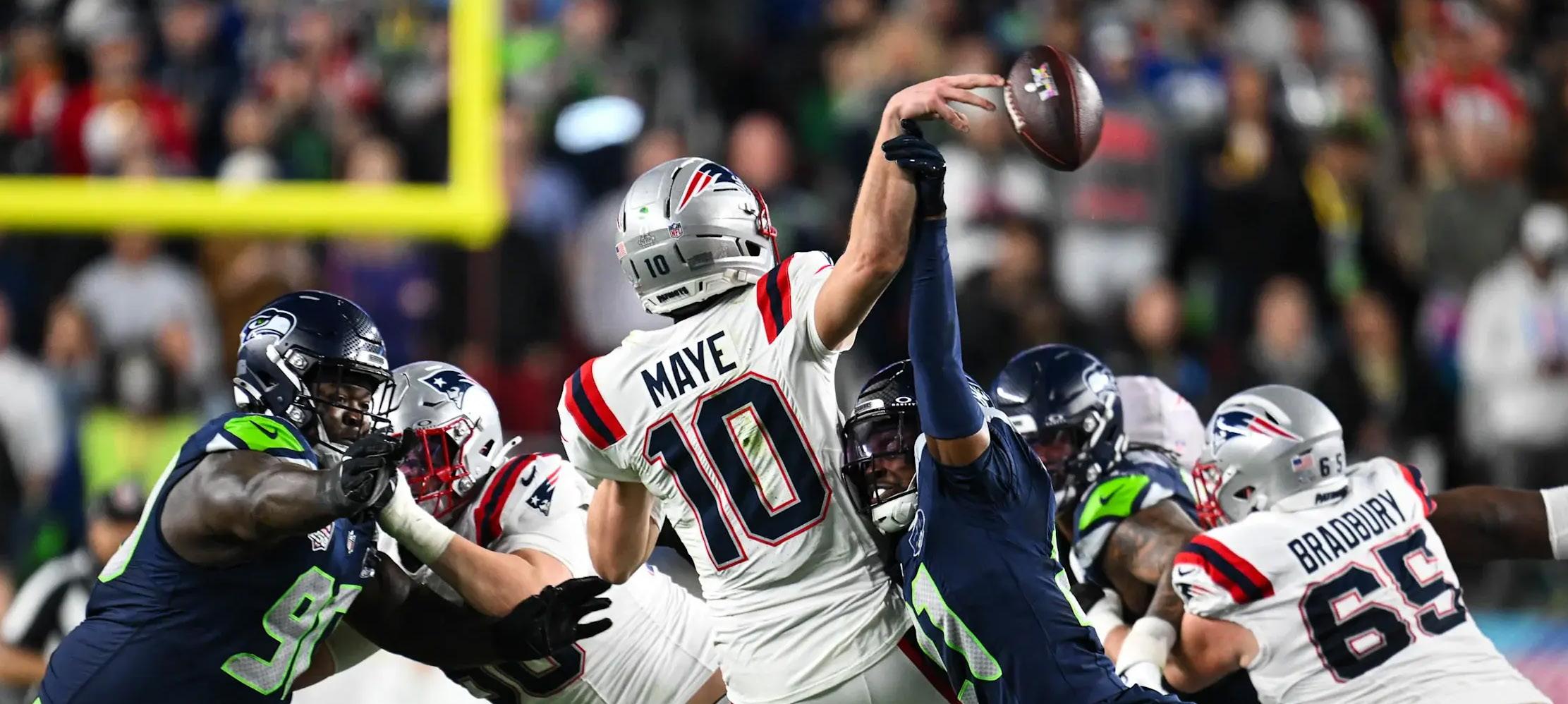
Ascend magazine examines how sports and the outdoors elevate the human spirit and create community. By immersing themselves with subjects and providing in-depth reporting, writers are pushing the boundaries of traditional sports journalism while crafting timeless longform stories and pairing them with stunning photography and design. Operating out of the University of Oregon’s School of Journalism and Communication, Ascend goes beyond stat lines and playing fields and questions what it means to be an athlete, while illuminating how sports and outdoor pursuits bring out the best of humanity.
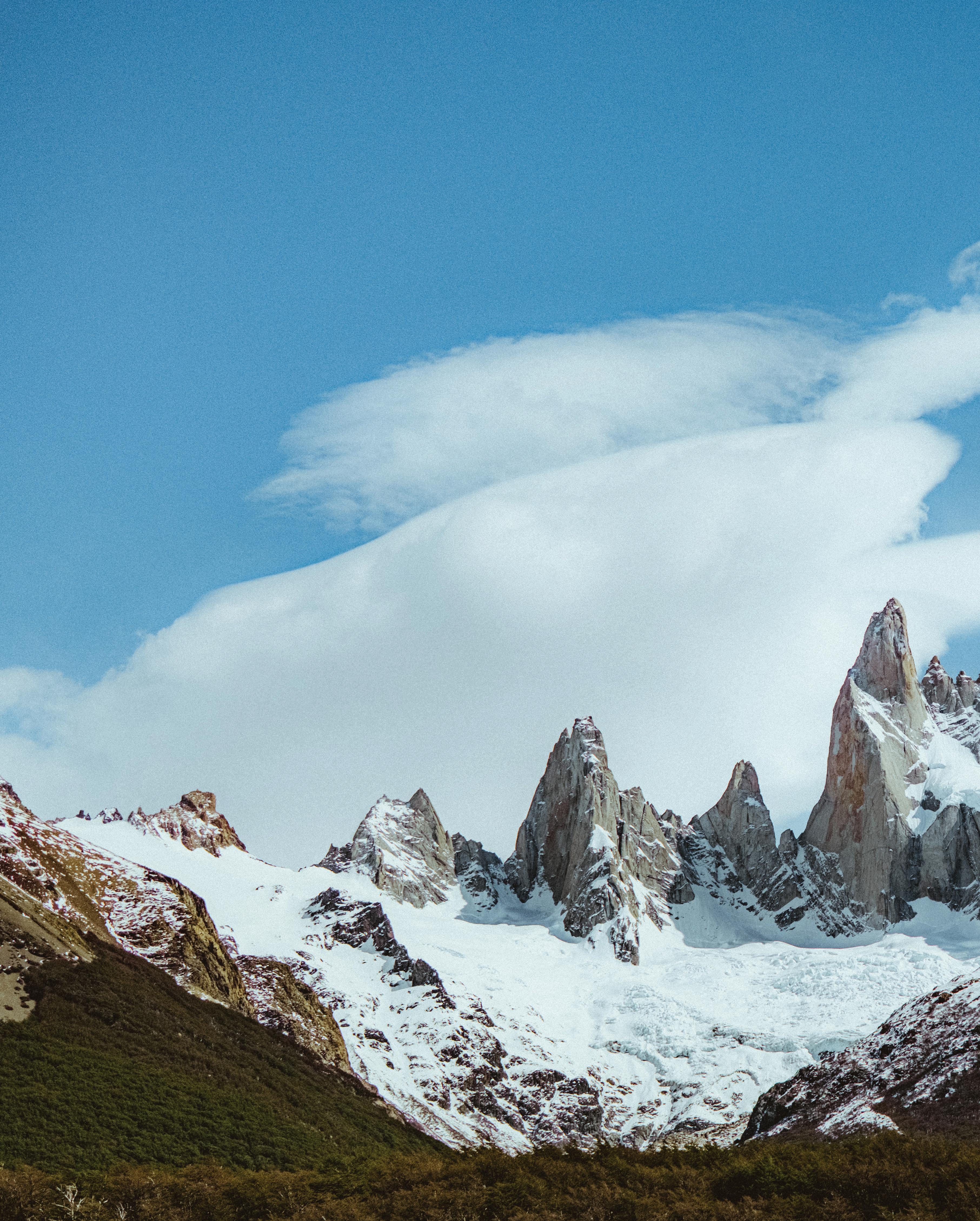
All inquiries should be addressed to Ivan Miller: imiller4@uoregon.edu
Photo by Daniel Teitelbaum
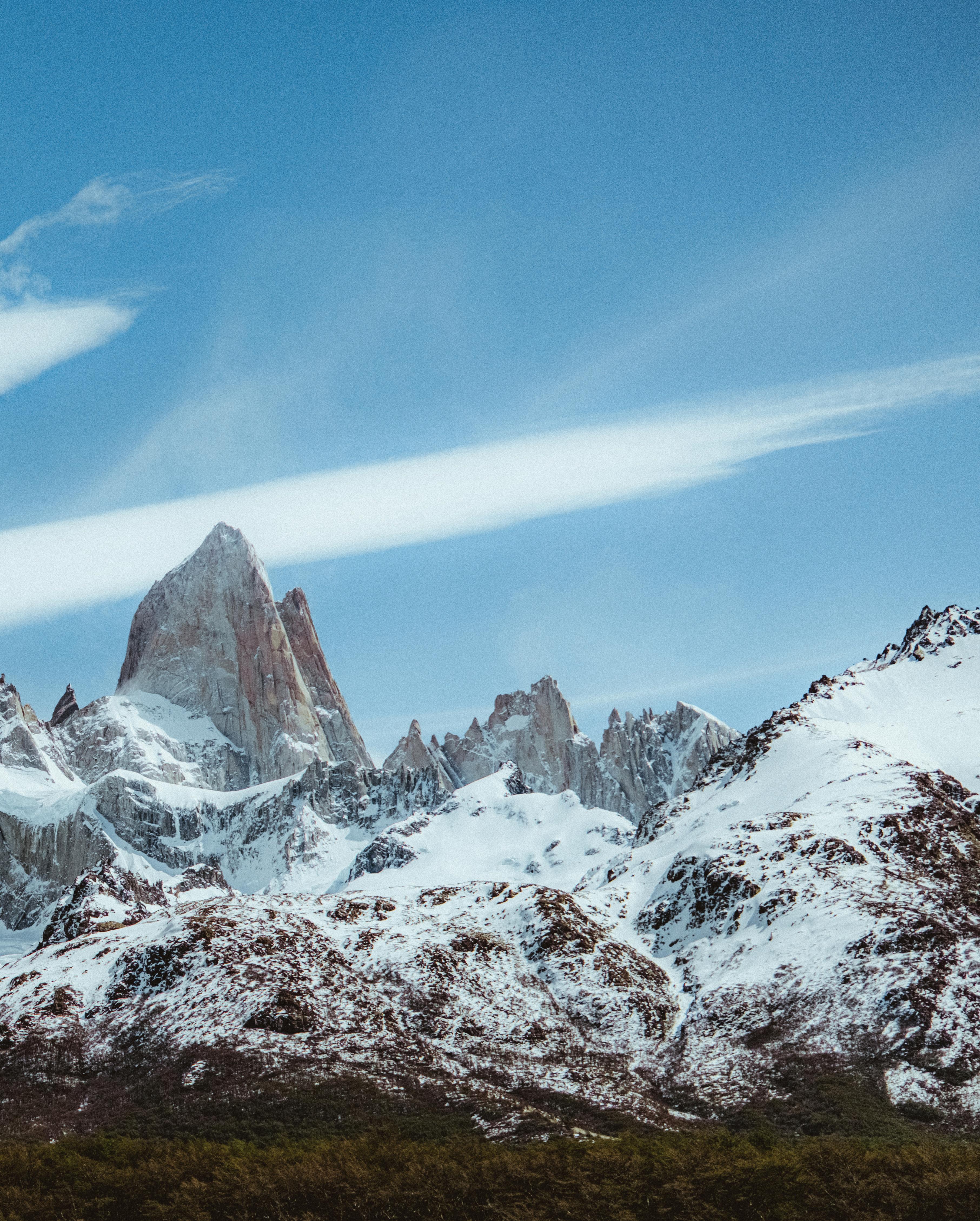
This issue of Ascend was produced with the generous support of donors and friends of the University of Oregon School of Journalism and Communication (SOJC). We thank them for their ongoing investment in student excellence and for providing the resources necessary to bring these stories to life.
SOJC is thankful for:
Julie and Rocky Dixon
The Ancil Payne Scholarship and Journalist in Residence Fund at SOJC
The Robert B. Frazier Distinguished Lectureship in Journalism Writing Fund at SOJC
The Newspaper Capstone Experience Endowment Fund at SOJC
Stephen Baker
Mark and Jan Rothert
Ross Heller
Steve Mowe
Back cover by David Hammel